AB 1414: Landlord-tenant: internet service provider subscriptions.
- Session Year: 2025-2026
- House: Assembly
- Latest Version Date: 2025-10-10
Current Status:
Passed
(2025-10-10: Chaptered by Secretary of State - Chapter 506, Statutes of 2025.)
Introduced
In Committee
Awaiting First Chamber Vote
Passed First Chamber
In Committee
Awaiting Second Chamber Vote
Passed Second Chamber
Enacted
Existing law governs the obligations of tenants and landlords. Existing law authorizes a tenant to deduct the payment made to a public utility or publicly owned utility or a district from the rent, as specified. Existing law prohibits a lessor who has retaliated against a lessee for exercising the lessees prescribed rights from recovering possession of a dwelling, causing the lessee to quit involuntarily, increasing the rent, or decreasing services within 180 days of the occurrence of specified events relating to tenability, if the lessee is not in default on their rent, as specified. Existing law presumes that the hiring of real property is renewed for a specified amount of time, under specified circumstances.
For any residential tenancy commenced, renewed, or continuing on a month-to-month or other periodic basis, on or after January 1, 2026, this bill would require a landlord or their agent to allow the tenant to opt out of paying for any subscription from a third-party internet service provider for specified services in connection with the tenancy. If the landlord or their agent violates this provision, the bill would authorize the tenant to deduct the cost of the subscription from the rent. The bill would prohibit a landlord or their agent from retaliating against a tenant for exercising their rights pursuant to this bill and consistent with the above-described provision on retaliation, as provided.
Existing law governs the obligations of tenants and landlords. Existing law authorizes a tenant to deduct the payment made to a public utility or publicly owned utility or a district from the rent, as specified. Existing law prohibits a lessor who has retaliated against a lessee for exercising the lessees prescribed rights from recovering possession of a dwelling, causing the lessee to quit involuntarily, increasing the rent, or decreasing services within 180 days of the occurrence of specified events relating to tenability, if the lessee is not in default on their rent, as specified. Existing law presumes that the hiring of real property is renewed for a specified amount of time, under specified circumstances.
For any residential tenancy commenced, renewed, or continuing on a month-to-month or other periodic basis, on or after January 1, 2026, this bill would require a landlord or their agent to provide allow the tenant with the option to opt out of paying for any subscription from a third-party internet service provider for specified services in connection with the lease. tenancy. If the landlord or their agent violates this provision, the bill would authorize the tenant to deduct the cost of the subscription from the rent. The bill would prohibit a landlord or their agent from retaliating against a tenant for exercising their rights pursuant to this bill and consistent with the above-described provision on retaliation, as provided.
Existing law governs the obligations of tenants and landlords. Existing law authorizes a tenant to deduct the payment made to a public utility or publicly owned utility or a district from the rent, as specified. Existing law prohibits a lessor who has retaliated against a lessee for exercising the lessees prescribed rights from recovering possession of a dwelling, causing the lessee to quit involuntarily, increasing the rent, or decreasing services within 180 days of the occurrence of specified events relating to tenability, if the lessee is not in default on their rent, as specified. Existing law, the Davis-Stirling Common Interest Development Act, provides for the creation and regulation of common interest developments. Existing law requires an association to manage a common interest development. Existing law presumes that the hiring of real property is renewed for a specified amount of time, under specified circumstances.
For any tenancy commenced or renewed residential tenancy commenced, renewed, or continuing on a month-to-month or other periodic basis, on or after January 1, 2026, this bill would require a landlord, or their agent, or an association landlord or their agent to provide the tenant with the option to opt out of paying for any subscription from a third-party internet service provider for specified services. If the landlord, or their agent, or an association services in connection with the lease. If the landlord or their agent violates this provision, the bill would authorize the tenant to deduct the cost of the subscription from the rent. The bill would prohibit a landlord, or their agent, or an association landlord or their agent from retaliating against a tenant for exercising their rights pursuant to this bill and consistent with the above-described provision on retaliation, as provided.
Existing law governs the obligations of tenants and landlords. Existing law authorizes a tenant to deduct the payment made to a public utility or publicly owned utility or a district from the rent, as specified. Existing law prohibits a lessor who has retaliated against a lessee for exercising the lessees prescribed rights from recovering possession of a dwelling, causing the lessee to quit involuntarily, increasing the rent, or decreasing services within 180 days of the occurrence of specified events relating to tenability, if the lessee is not in default on their rent, as specified. Existing law, the Davis-Stirling Common Interest Development Act, provides for the creation and regulation of common interest developments. Existing law requires an association to manage a common interest development.
This bill would prohibit a landlord from requiring a tenant to subscribe to a specific internet service provider. IfFor any tenancy commenced or renewed on or after January 1, 2026, this bill would require a landlord, or their agent, or an association to provide the tenant with the option to opt out of any subscription from a third-party internet service provider for specified services. If the landlord landlord, or their agent, or an association violates that this provision, the bill would authorize the tenant to deduct the cost of the subscription from the rent. The bill would prohibit a landlord, or their agent, or an association from retaliating against a tenant for exercising their rights pursuant to this bill and consistent with the above-described provision on retaliation, as provided.
Existing law governs the obligations of tenants and landlords. Existing law authorizes a tenant to deduct the payment made to a public utility or publicly owned utility or a district from the rent, as specified.
This bill would prohibit a landlord from requiring a tenant to subscribe to a specific internet service provider. If the landlord violates that provision, the bill would authorize the tenant to deduct the cost of the subscription from the rent.
Existing law requires the Superintendent of Public Instruction to coordinate the development, on a cyclical basis, of model curriculum standards for, among other courses of study, a career technical education course of study. Existing law requires the Superintendent, to the extent applicable, to incorporate the integration of career technical and academic education into the development of those curriculum standards, as provided.This bill would make various nonsubstantive changes to this provision.Existing law requires the Superintendent of Public Instruction to coordinate the development, on a cyclical basis, of model curriculum standards for, among other courses of study, a career technical education course of study. Existing law requires the Superintendent, to the extent applicable, to incorporate the integration of career technical and academic education into the development of those curriculum standards, as provided.
This bill would make various nonsubstantive changes to this provision.
(a)For any residential tenancy commenced, renewed, or continuing on a month-to-month or other periodic basis, on or after January 1, 2026, a landlord or their agent shall allow the tenant to opt out of paying for any subscription from a third-party internet service provider, such as through a bulk-billing arrangement, to provide service for wired internet, cellular, or satellite service that is offered in connection with the tenancy.
(b)A landlord or their agent shall not retaliate against a tenant for exercising the tenants rights under this section, consistent with the protections provided in Section 1942.5.
(c)If the landlord or their agent violates subdivision (a), the tenant may deduct the cost of the subscription to the third-party internet service provider from the rent.
(d)This section does not prevent a landlord or their agent from offering bulk-billing arrangements to their tenants.
(e)For the purposes of this section, internet service provider has the same meaning as that term is defined in Section 3100.
(a)For any residential tenancy commenced, renewed, or continuing on a month-to-month or other periodic basis, on or after January 1, 2026, a landlord or their agent shall provide allow the tenant with the option to opt out of paying for any subscription from a third-party internet service provider, such as through a bulk-billing arrangement, to provide service for wired internet, cellular, or satellite service that is offered in connection with the lease. tenancy.
(b)A landlord or their agent shall not retaliate against a tenant for exercising the tenants rights under this section, consistent with the protections provided in Section 1942.5.
(c)If the landlord or their agent violates subdivision (a), the tenant may deduct the cost of the subscription to the third-party internet service provider from the rent.
(d)This section does not prevent a landlord or their agent from offering bulk-billing arrangements to their tenants.
(e)For the purposes of this section, internet service provider has the same meaning as that term is defined in Section 3100.
(a)For any tenancy commenced or renewed residential tenancy commenced, renewed, or continuing on a month-to-month or other periodic basis, on or after January 1, 2026, a landlord, or their agent, or an association landlord or their agent shall provide the tenant with the option to opt out of paying for any subscription from a third-party internet service provider provider, such as through a bulk-billing arrangement, to provide service for wired internet, cellular, or satellite service that is offered as part of residing in the dwelling unit. in connection with the lease.
(b)A landlord, or their agent, or an association landlord or their agent shall not retaliate against a tenant for exercising the tenants rights under this section, consistent with the protections provided in Section 1942.5.
(c)If the landlord, or their agent, or an association landlord or their agent violates subdivision (a), the tenant may deduct the cost of the subscription to the third-party internet service provider from the rent.
(d)This section does not prevent a landlord, or their agent, landlord or their agent from offering bulk-billing arrangements to their tenants.
(e)For the purposes of this section, the following definitions apply:
(1)Association has the same meaning as defined in Section 4080.(2)Internet internet service provider has the same meaning as that term is defined in Section 3100.
(a)For any tenancy commenced or renewed on or after January 1, 2026, a landlord, or their agent, or an association shall provide the tenant with the option to opt out of any subscription from a third-party internet service provider for wired internet, cellular, or satellite service that is offered as part of residing in the dwelling unit.
(b)A landlord, or their agent, or an association shall not retaliate against a tenant for exercising the tenants rights under this section, consistent with the protections provided in Section 1942.5.
(c)If the landlord, or their agent, or an association violates subdivision (a), the tenant may deduct the cost of the subscription to the third-party internet service provider from the rent.
(d)This section does not prevent a landlord, or their agent, from offering bulk-billing arrangements to their tenants.
(e)For the purposes of this section, the following definitions apply:
(1)Association has the same meaning as defined in Section 4080.
(2)Internet service provider has the same meaning as that term is defined in Section 3100.
SECTION 1.Section 1942.8 is added to the Civil Code, to read:1942.8.(a)A landlord of a dwelling shall not require a tenant to subscribe to a specific internet service provider.(b)If the landlord violates subdivision (a), the tenant may deduct the cost of the subscription to the internet service provider from the rent.(c)For the purposes of this section, internet service provider has the same meaning as defined in Section 3100.(a)A landlord of a dwelling shall not require a tenant to subscribe to a specific internet service provider.
(b)If the landlord violates subdivision (a), the tenant may deduct the cost of the subscription to the internet service provider from the rent.
(c)For the purposes of this section, internet service provider has the same meaning as defined in Section 3100.
SECTION 1.Section 51226 of the Education Code is amended to read:51226.(a)The Superintendent shall coordinate the development, on a cyclical basis, of model curriculum standards for the course of study required by Section 51225.3 and for a career technical education course of study necessary to assist school districts with complying with subdivision (b) of Section 51228. The Superintendent shall set forth these standards in terms of a wide range of specific competencies, including higher level skills, in each academic subject area. The Superintendent shall review currently available textbooks in conjunction with the curriculum standards. The Superintendent shall seek the advice of classroom teachers, school administrators, parents, postsecondary educators, and representatives of business and industry in developing these curriculum standards. The Superintendent shall recommend policies to the state board for its consideration and adoption. However, neither the Superintendent nor the state board shall adopt rules or regulations for course content or methods of instruction.(b)The Superintendent shall, to the extent applicable, incorporate the integration of career technical and academic education into the development of curriculum standards for career technical education courses.(a)The Superintendent of Public Instruction shall coordinate the development, on a cyclical basis, of model curriculum standards for the course of study required by Section 51225.3 and for a career technical education course of study necessary to assist school districts with complying with subdivision (b) of Section 51228. The superintendent Superintendent shall set forth these standards in terms of a wide range of specific competencies, including higher level skills, in each academic subject area. The superintendent Superintendent shall review currently available textbooks in conjunction with the curriculum standards. The superintendent Superintendent shall seek the advice of classroom teachers, school administrators, parents, postsecondary educators, and representatives of business and industry in developing these curriculum standards. The superintendent Superintendent shall recommend policies to the State Board of Education state board for its consideration and adoption by the board. The State Board of Education shall adopt these policies no later than January 1, 1985. adoption. However, neither the superintendent Superintendent nor the state board shall adopt rules or regulations for course content or methods of instruction.
The superintendent(b)The Superintendent shall, to the extent applicable, incorporate the integration of career technical and academic education into the development of curriculum standards for career technical education courses. The standards for a career technical education course of study shall be adopted no later than June 1, 2005.
|
Date
|
Status
|
|---|---|
| Oct 10, 2025 | Chaptered by Secretary of State - Chapter 506, Statutes of 2025. |
| Oct 10, 2025 | Approved by the Governor. |
| Sep 22, 2025 | Enrolled and presented to the Governor at 3 p.m. |
| Sep 10, 2025 | Senate amendments concurred in. To Engrossing and Enrolling. (Ayes 64. Noes 10. Page 3206.). |
| Sep 9, 2025 | In Assembly. Concurrence in Senate amendments pending. |
| Sep 9, 2025 | Read third time. Passed. Ordered to the Assembly. (Ayes 30. Noes 7. Page 2734.). |
| Sep 3, 2025 | Read second time. Ordered to third reading. |
| Sep 2, 2025 | Read third time and amended. Ordered to second reading. |
| Aug 27, 2025 | Read second time. Ordered to third reading. |
| Aug 26, 2025 | Read third time and amended. Ordered to second reading. |
| Jul 3, 2025 | Read second time. Ordered to third reading. |
| Jul 2, 2025 | From committee: Do pass. (Ayes 13. Noes 0.) (July 1). |
| Jun 19, 2025 | From committee chair, with author's amendments: Amend, and re-refer to committee. Read second time, amended, and re-referred to Com. on JUD. |
| May 7, 2025 | Referred to Com. on JUD. |
| Apr 21, 2025 | In Senate. Read first time. To Com. on RLS. for assignment. |
| Apr 21, 2025 | Read third time. Passed. Ordered to the Senate. (Ayes 75. Noes 0. Page 1172.) |
| Apr 9, 2025 | Read second time. Ordered to third reading. |
| Apr 8, 2025 | From committee: Do pass. (Ayes 12. Noes 0.) (April 8). |
| Mar 17, 2025 | Re-referred to Com. on JUD. |
| Mar 13, 2025 | Referred to Com. on JUD. |
| Mar 13, 2025 | From committee chair, with author's amendments: Amend, and re-refer to Com. on JUD. Read second time and amended. |
| Feb 24, 2025 | Read first time. |
| Feb 22, 2025 | From printer. May be heard in committee March 24. |
| Feb 21, 2025 | Introduced. To print. |
|
Date
|
Description
|
Location
|
Votes
|
|
|---|---|---|---|---|
| Sep 10, 2025 | AB 1414 Ransom Concurrence in Senate Amendments | Assembly Floor |
Passed |
|
| Sep 9, 2025 | Assembly 3rd Reading AB1414 Ransom et al. By Wiener | Senate Floor |
Passed |
|
| Jul 1, 2025 | Do pass | Senate Standing Committee on Judiciary |
Passed |
|
| Apr 21, 2025 | AB 1414 Ransom Assembly Third Reading | Assembly Floor |
Passed |
|
| Apr 8, 2025 | Do pass. | Assembly Standing Committee on Judiciary |
Passed |
This list shows positions taken on this bill by organizations on the date displayed, which is linked to the original source.
Positions by individuals are not included.
|
Organization
|
Position
|
Date
|
|---|---|---|
| Bizfed Central Valley | ** Against | |
| Board of Supervisors for the City and County of San Francisco | ** Support | |
| CalBroadband | ** Against | |
| California Apartment Association | ** Support | |
| California Hispanic Chamber Of Commerce | ** Against | |
| Chamber San Mateo County | ** Against | |
| City Of Oakland | ** Support | |
| Consumer Attorneys Of California | ** Support | |
| Consumer Federation Of California | ** Support | |
| Courage California | ** Support | |
| Greater Coachella Valley Chamber of Commerce | ** Against | |
| Long Beach Chamber of Commerce | ** Against | |
| National Rental Home Council | ** Against | |
| Orange County Business Council | ** Against | |
| Power CA Action | ** Support | |
| San Mateo County Economic Development Association | ** Against | |
| Western Center on Law & Poverty, INC. | ** Support |
CONCURRENCE IN SENATE AMENDMENTS
CSA1 Bill Id:AB 1414
Author:(Ransom)
As Amended Ver:September 2, 2025
Majority vote
SUMMARY
Prohibits a landlord from requiring a tenant to use a particular internet service provider and allows a tenant to deduct the cost of the internet subscription from rent if a landlord violates this provision.
Major Provisions
- Prohibits the landlord of a dwelling from requiring a tenant to subscribe to a specific internet service provider, as defined.
- Requires a landlord, for any tenancy commenced, renewed, or continuing on a month-to-month basis, on or after January 1, 2026, to allow the tenant to opt out of any subscription from a third-party internet service provider for specified services. Specifies that if the landlord or their agent violates this provision, the tenant may deduct the cost of the subscription from the rent.
- Prohibits a landlord, or their agent, or an association from retaliating against a tenant for exercising their rights pursuant to this bill and consistent with the above-described provision on retaliation, as provided.
Senate Amendments
- Require a landlord, for any tenancy commenced or renewed on or after January 1, 2026, to allow the tenant to opt out of any subscription from a third-party internet service provider for specified services. Specifies that if the landlord or their agent violates this provision, the tenant may deduct the cost of the subscription from the rent.
- Prohibit a landlord, or their agent, or an association from retaliating against a tenant for exercising their rights pursuant to this bill and consistent with the above-described provision on retaliation, as provided.
COMMENTS
This bill prohibits a landlord from forcing a tenant to use a particular internet service provider (ISP.) If the landlord violates this provision – by not permitting the tenant to obtain services with a different ISP – the tenant may deduct the costs of the internet service from the rent.
The problem, the FCC, and the San Francisco ordinance. It is difficult to know the extent of the problem animating this bill. Most landlords do not provide internet service as part of the rent and tenants routinely arrange to obtain service from the ISP of their choice. As the author's office correctly notes, rules promulgated by the Federal Communications Commission (FCC) prohibit service providers from entering into contracts with landlords that grant a single ISP an exclusive right to access and serve a building. These types of contracts, according to the FCC, harm competition by stopping additional providers from serving tenants in a multi-unit building. However, it is important to note that this FCC rule only prohibits an anti-competitive agreement between the ISP and the landlord to exclude other providers. In the absence of an agreement, there is nothing in existing state law that prevents a landlord from refusing a tenant's request to use a particular ISP, or requiring the landlord to grant all ISPs equal access to the property. As the FCC website puts it, "while a service provider may not enter into an agreement that grants exclusive access to [the rental property], a landlord may still choose the providers it allows into the building, even if that means only one company provides service." (https://www.fcc.gov/consumers/guides/consumer-faq-rules-service-providers-multiple-tenant-environments.)
Based on the developments that have brought this issue to the attention of local governments, the problem that this bill seeks to address arises most often in multi-unit buildings that are already wired for internet service by a single ISP. For example, in 2016, San Francisco passed the "Occupants Right to Choose a Communications Services Provider," also known as Article 52. (San Francisco Police Code, Article 52, Sections 5200 to 5218.) Article 52 provides that "no property owner shall interfere with the right of an occupant to obtain communications services from the communications services provider of the occupant's choice." Article 52 then defines interfering with the occupant's choice to include "refusing to allow a communications services provider to install the facilities and equipment necessary to provide communications services or use any existing wiring to provide communications services." (Id., at Section 5201.) According to most reports, this ordinance was prompted in part by the limitations of the FCC rules prohibiting "agreements" between owners of multi-unit buildings and ISPs. Even if a building owner did not violate FCC rules by entering into an exclusive arrangement with an ISP, the owner could still contract with say, Comcast, to install wiring and equipment, and then refuse to grant access to other providers. While this practice did not violate the letter of the FCC rules (so long as there was no agreement to exclude), it nonetheless undermined the spirit of the rules seeking to facilitate market competition by allowing tenants to choose their own provider. The San Francisco ordinance effectively closed the loophole in the FCC rules by requiring the building owner to grant access to an ISP provider, so long as at least one or more of the building occupants had requested the service and the ISP was authorized and licensed to provide communication services in San Francisco. (See e.g. Electronic Frontier Foundation, "San Francisco Passes Ordinance to Protect ISP Competition," at https://www.eff.org/deeplinks/2016/12/san-francisco-passes-ordinance-protect-isp-competition.)
In addition to giving tenants more choice, the San Francisco ordinance also included reasonable protections for the building owner. For example, a building owner is not required to grant access to a provider if no occupant has requested it. And the ordinance allows building owners to impose reasonable conditions on the manner of installation, including any that the owner deemed "necessary to protect the safety, functioning, and appearance of the property and the convenience and well-being of the occupants." (Id., at Sections 5206 to 5208.) According to a 2020 column in the San Francisco Examiner, the ordinance has worked quite well and as intended, generally providing tenants with more options at lower prices, especially in larger multi-unit apartment buildings. ("San Francisco's communications choice ordinance is working," San Francisco Examiner, February 21, 2020.)
This bill would require a landlord, for any tenancy commenced or renewed on or after January 1, 2026, to provide the tenant with the option to opt out of any subscription from a third-party internet service provider for specified services. If the landlord or their agent violates this provision, the bill would authorize the tenant deduct the cost of the subscription from the rent. Finally, the bill would prohibit a landlord or their agency from retaliating against a tenant for exercising their rights pursuant to this bill.
According to the Author
According to the author, existing law "does not clearly establish a specified requirement that landlords do not inhibit the ability of their tenants to seek out alternative internet service provider (ISP), namely in lease arrangements often referred to as 'bundles,' whereby an established ISP is provided as a comprehensive lease package, based on contractual agreements between a given landlord and their given ISP." The author contends this type of "bundling" inhibits the tenant's right to seek out alternative ISPs. The author observes that this is "particularly difficult for tenants entering into a bundled lease agreement, who are forced into paying for internet services in a non-discretionary manner, and at a rate that is subject to the landlord's discretion."
Arguments in Support
The Consumer Federation of California supports this bill because it "protects consumers by providing them with the flexibility to choose the internet service providers that best fit their needs and budgets, rather than being forced into a contract with a provider by their landlords. In the case that a landlord violates this provision, the bill grants consumers the right to deduct the cost of the subscription from the rent. . . Through this measure tenants can select the broadband provider that best suits their needs, promoting competitions and access to high-quality, affordable internet services."
Arguments in Opposition
A coalition of apartment and property owners associations oppose the bill because it would "require housing providers or associations to offer residents the ability to opt out of broadband subscriptions from third-party providers—effectively targeting bulk billing arrangements. The bulk billing model, which is widely used and well-proven, plays a critical role in lowering costs, enabling always-on service, and expanding broadband access—particularly in historically underserved rental properties like affordable, student, and senior housing. We encourage you to join bipartisan federal, state and local policy makers as well as housing providers and digital equity advocates across the country in supporting the use of the bulk billing model to drive improved access and affordability to broadband services for renters."
FISCAL COMMENTS
None.
VOTES:
ASM JUDICIARY: 12-0-0
YES: Kalra, Dixon, Wicks, Bryan, Connolly, Harabedian, Pacheco, Papan, Sanchez, Stefani, Zbur, Tangipa
ASSEMBLY FLOOR: 75-0-4
YES: Addis, Aguiar-Curry, Ahrens, Alanis, Alvarez, Arambula, Ávila Farías, Bains, Bauer‑Kahan, Bennett, Berman, Boerner, Bonta, Bryan, Calderon, Caloza, Carrillo, Castillo, Chen, Connolly, Davies, DeMaio, Dixon, Elhawary, Ellis, Flora, Fong, Gabriel, Garcia, Gipson, Jeff Gonzalez, Mark González, Hadwick, Haney, Harabedian, Hart, Hoover, Irwin, Jackson, Kalra, Krell, Lackey, Lee, Lowenthal, Macedo, McKinnor, Muratsuchi, Nguyen, Ortega, Pacheco, Patel, Patterson, Pellerin, Petrie-Norris, Quirk-Silva, Ransom, Celeste Rodriguez, Michelle Rodriguez, Rogers, Blanca Rubio, Sanchez, Schiavo, Schultz, Solache, Soria, Stefani, Ta, Tangipa, Valencia, Wallis, Ward, Wicks, Wilson, Zbur, Rivas
ABS, ABST OR NV: Gallagher, Papan, Ramos, Sharp-Collins
UPDATED
VERSION: September 2, 2025
CONSULTANT: Tom Clark / JUD. / (916) 319-2334 FN: 0001667
SENATE RULES COMMITTEE Office of Senate Floor Analyses (916) 651-1520 Fax: (916) 327-4478 | AB 1414 |
THIRD READING
Bill No: AB 1414
Author: Ransom (D), et al.
Amended: 9/2/25 in Senate
Vote: 21
SENATE JUDICIARY COMMITTEE: 13-0, 7/1/25
AYES: Umberg, Niello, Allen, Arreguín, Ashby, Caballero, Durazo, Laird, Stern, Valladares, Wahab, Weber Pierson, Wiener
ASSEMBLY FLOOR: 75-0, 4/21/25 - See last page for vote
SUBJECT: Landlord-tenant: internet service provider subscriptions
SOURCE: Author
DIGEST:
This bill requires a landlord or the agent to permit a tenant to opt out of paying for any subscription from a third-party internet service provider for wired internet, cellular, or satellite service that is offered in connection with the lease, as provided.
Senate Floor Amendments of 9/2/25 revise the requirement that a landlord or their agent provide a tenant with the option to opt out of paying for any subscription from a third-party internet service provider that is offered in connection with the lease, to instead specify that a landlord or their agent must allow a tenant to opt out of paying for any subscription from a third-party internet service provider that is offered in connection with the tenancy.
ANALYSIS:
Existing federal law:
- Establishes the Telecommunications Act to regulate interstate telephone, telegraph, television, radio, and internet communications across the United States. Establishes the Federal Communications Commission to implement and enforce the Act. (47 United States Code §§ 151 et seq.)
- Prohibits an Internet Services Provider (ISP) from entering into or enforcing a contract with a landlord of a residential multi-tenant environment (MTE) that provides the ISP the exclusive access to the MTE for internet services. (47 Code of Federal Regulations (C.F.R.) § 64.2500(b).)
- Prohibits an ISP from entering into or enforcing a contract regarding the provision of communications service in a MTE that gives the MTE owner compensation on a graduated basis or in return for access to the MTE and its tenants. (47 C.F.R. § 64.2500(c)-(d).)
- Requires an ISP to disclose the existence of any contract for the exclusive right to market its services to a tenant of a MTE, as specified. 947 C.F.R. § 64.2500(e).)
Existing state law governs the relations between, and sets forth the rights and responsibilities of, landlords and tenants in a residential dwelling. (Civil Code §§ 1940 et seq.)
This bill:
- Requires, for any residential tenancy commenced, renewed, or continuing on a month-to-month or other periodic basis, on or after January 1, 2026, that a landlord or their agent allow a tenant to opt out of paying for any subscription from a third-party internet service provider for wired-internet, cellular, or satellite service that is offered in connection with the tenancy.
- Specifies that, if the landlord or their agent violates the provision described in (1), above, the tenant may deduct the cost of the subscription from their rent.
- Specifies that nothing in the bill’s provisions prevent a landlord or their agent from offering bulk billing arrangements to their tenants.
- Prohibits a landlord or their agent from retaliating against a tenant for exercising their rights under this bill’s provisions, consistent with specified tenant protections against retaliation.
- Defines, for the purposes of the provisions of this bill, “internet service provider” to be the definition of that term provided in Section 3100 of the Civil Code, which defines it as a business that provides broadband internet access service to an individual, corporation, government, or other customer in California.
FISCAL EFFECT: Appropriation: No Fiscal Com.: No Local: No
SUPPORT: (Verified 8/25/25)
Board of Supervisors of the City and County of San Francisco
California Apartment Association
City of Oakland
Consumer Attorneys of California
Courage California
Power CA Action
Western Center on Law & Poverty, Inc.
OPPOSITION: (Verified 8/25/25)
Bizfed Central Valley
Calbroadband
California Hispanic Chamber of Commerce
Chamber San Mateo County
Greater Coachella Valley Chamber of Commerce
Long Beach Chamber of Commerce
National Rental Home Council
Orange County Business Council
San Mateo County Economic Development Association
The Greater Coachella Valley Chamber of Commerce
ARGUMENTS IN SUPPORT:
According to the Western Center on Law and Poverty, which supports AB 1414:
The pandemic exemplified to people across the globe the importance of a high-quality, reliable, and affordable home internet connection. Tens of thousands of Californians rely on their home internet for work, education, healthcare, and more. Californians deserve the right to select an internet service provider (ISP) and a service plan that best suits their needs and their price point.
While many Californians are free to find service plans and providers that suit their needs, California law needs clarification to ensure that tenants are free from undue limitations places on their choices. Many housing providers, while not outright banning their tenants from seeking alternative service providers, use a variety of arrangements to heavily discourage their tenants from finding service providers other than those contracting with the housing provider. California law does not prevent a landlord from refusing their tenant’s request to utilize an alternative internet service provider.
The Western Center on Law and Poverty supports this bill because exclusive ISP agreements often benefit landlords and providers. While limiting consumer choice is a practice that can disproportionately harm marginalized communities, especially in areas already lacking broadband competition. AB 1414 levels the playing field by disrupting monopolistic control.
ARGUMENTS IN OPPOSITION:
According to the National Rental Home Council, which opposes AB 1414:
AB 1414 addresses a problem that has already been solved. Federal law already protects the right of a tenant to access the cable provider of its choice by prohibiting a cable operator from enforcing or executing “any provision in a contract that grants to it the exclusive right to provide any video programming service (alone or in combination with other services) to a MDU [multiple dwelling unit]. All such exclusivity clauses are null and void.” 47 CFR 76.2000 (a).
In short, tenants already have choice under federal law. AB 1414, however, goes much further by eliminating legitimate, pro-consumer arrangements that lower costs and expand access.
AB 1414 Threatens Affordable Broadband in Multi-Tenant Housing
Property owners are permitted however, to enter bulk service agreements, which provide consumers with great value:
Loss of Negotiated Discounts and Incentives: AB 1414 could prevent landlords from negotiating exclusive volume-based contracts that offer lower prices and additional financial incentives, benefits which are routinely passed through to tenants. Without these bulk agreements, tenants will be left to purchase retail services at higher rates.
Increased Upfront Costs for Tenants: Bulk agreements often eliminate costly upfront fees like installation charges, equipment deposits, and credit check fees. Without them, tenants would be subject to these avoidable costs, making broadband less accessible for many.
Complicated Service and Maintenance Logistics: Bulk agreements typically allow for centralized broadband service setup and maintenance, simplifying the process for tenants. AB 1414 would likely have the consequence of requiring each tenant to coordinate individually with service providers, complicating service setup and potentially delaying repairs—particularly burdensome in multi-tenant environments.
Loss of Provider Incentives and Increased Rents: Landlords would lose access to exclusive incentives offered by ISPs, which could result in higher operational costs. These costs could ultimately be passed onto tenants through increased rents, compounding the financial impact on residents.
Reduced Infrastructure Investment and Tenant Choice: Prohibiting bulk agreements discourages broadband providers from investing in new network infrastructure, especially in multi-tenant properties. The loss of financial viability for such investments would reduce competition and tenant choice, and disproportionately harm residents of affordable housing communities.
In summary, AB 1414 could have the consequence of eliminating a vital tool for delivering affordable broadband service, especially to low-income families.
ASSEMBLY FLOOR: 75-0, 4/21/25
AYES: Addis, Aguiar-Curry, Ahrens, Alanis, Alvarez, Arambula, Ávila Farías, Bains, Bauer-Kahan, Bennett, Berman, Boerner, Bonta, Bryan, Calderon, Caloza, Carrillo, Castillo, Chen, Connolly, Davies, DeMaio, Dixon, Elhawary, Ellis, Flora, Fong, Gabriel, Garcia, Gipson, Jeff Gonzalez, Mark González, Hadwick, Haney, Harabedian, Hart, Hoover, Irwin, Jackson, Kalra, Krell, Lackey, Lee, Lowenthal, Macedo, McKinnor, Muratsuchi, Nguyen, Ortega, Pacheco, Patel, Patterson, Pellerin, Petrie-Norris, Quirk-Silva, Ransom, Celeste Rodriguez, Michelle Rodriguez, Rogers, Blanca Rubio, Sanchez, Schiavo, Schultz, Solache, Soria, Stefani, Ta, Tangipa, Valencia, Wallis, Ward, Wicks, Wilson, Zbur, Rivas
NO VOTE RECORDED: Gallagher, Papan, Ramos, Sharp-Collins
Prepared by: Ian Dougherty / JUD. / (916) 651-4113
9/3/25 18:31:33
SENATE RULES COMMITTEE Office of Senate Floor Analyses (916) 651-1520 Fax: (916) 327-4478 | AB 1414 |
THIRD READING
Bill No: AB 1414
Author: Ransom (D), et al.
Amended: 8/26/25 in Senate
Vote: 21
SENATE JUDICIARY COMMITTEE: 13-0, 7/1/25
AYES: Umberg, Niello, Allen, Arreguín, Ashby, Caballero, Durazo, Laird, Stern, Valladares, Wahab, Weber Pierson, Wiener
ASSEMBLY FLOOR: 75-0, 4/21/25 - See last page for vote
SUBJECT: Landlord-tenant: internet service provider subscriptions
SOURCE: Author
DIGEST:
This bill requires a landlord or the agent to permit a tenant to opt out of paying for any subscription from a third-party internet service provider for wired internet, cellular, or satellite service that is offered in connection with the lease, as provided.
Senate Floor Amendments of 8/26/25 specifies that its provisions apply to residential tenancies, removes references to associations, and makes other clarifying changes.
ANALYSIS:
Existing federal law:
- Establishes the Telecommunications Act to regulate interstate telephone, telegraph, television, radio, and internet communications across the United States. Establishes the Federal Communications Commission to implement and enforce the Act. (47 United States Code §§ 151 et seq.)
- Prohibits an Internet Services Provider (ISP) from entering into or enforcing a contract with a landlord of a residential multi-tenant environment (MTE) that provides the ISP the exclusive access to the MTE for internet services. (47 Code of Federal Regulations (C.F.R.) § 64.2500(b).)
- Prohibits an ISP from entering into or enforcing a contract regarding the provision of communications service in a MTE that gives the MTE owner compensation on a graduated basis or in return for access to the MTE and its tenants. (47 C.F.R. § 64.2500(c)-(d).)
- Requires an ISP to disclose the existence of any contract for the exclusive right to market its services to a tenant of a MTE, as specified. 947 C.F.R. § 64.2500(e).)
Existing state law governs the relations between, and sets forth the rights and responsibilities of, landlords and tenants in a residential dwelling. (Civil Code §§ 1940 et seq.)
This bill:
- Requires, for any residential tenancy commenced, renewed, or continuing on a month-to-month or other periodic basis, on or after January 1, 2026, that a landlord or their agent provide a tenant the option to opt out of paying for any subscription from a third-party internet service provider for wired-internet, cellular, or satellite service that is offered in connection with the lease.
- Specifies that, if the landlord or their agent violates the provision described in (1), above, the tenant may deduct the cost of the subscription from their rent.
- Specifies that nothing in this bill’s provisions prevent a landlord or their agent from offering bulk billing arrangements to their tenants.
- Prohibits a landlord or their agent from retaliating against a tenant for exercising their rights under this bill’s provisions, consistent with specified tenant protections against retaliation.
- Defines, for the purposes of the provisions of this bill, “internet service provider” to be the definition of that term provided in Section 3100 of the Civil Code, which defines it as a business that provides broadband internet access service to an individual, corporation, government, or other customer in California.
FISCAL EFFECT: Appropriation: No Fiscal Com.: No Local: No
SUPPORT: (Verified 8/25/25)
Board of Supervisors of the City and County of San Francisco
California Apartment Association
City of Oakland
Consumer Attorneys of California
Courage California
Power CA Action
Western Center on Law & Poverty, Inc.
OPPOSITION: (Verified 8/25/25)
Bizfed Central Valley
Calbroadband
California Hispanic Chamber of Commerce
Chamber San Mateo County
Greater Coachella Valley Chamber of Commerce
Long Beach Chamber of Commerce
National Rental Home Council
Orange County Business Council
San Mateo County Economic Development Association
The Greater Coachella Valley Chamber of Commerce
ARGUMENTS IN SUPPORT: According to the Western Center on Law and Poverty, which supports this bill:
The pandemic exemplified to people across the globe the importance of a high-quality, reliable, and affordable home internet connection. Tens of thousands of Californians rely on their home internet for work, education, healthcare, and more. Californians deserve the right to select an internet service provider (ISP) and a service plan that best suits their needs and their price point.
While many Californians are free to find service plans and providers that suit their needs, California law needs clarification to ensure that tenants are free from undue limitations places on their choices. Many housing providers, while not outright banning their tenants from seeking alternative service providers, use a variety of arrangements to heavily discourage their tenants from finding service providers other than those contracting with the housing provider. California law does not prevent a landlord from refusing their tenant’s request to utilize an alternative internet service provider.
The Western Center on Law and Poverty supports this bill because exclusive ISP agreements often benefit landlords and providers. While limiting consumer choice is a practice that can disproportionately harm marginalized communities, especially in areas already lacking broadband competition. AB 1414 levels the playing field by disrupting monopolistic control.
ARGUMENTS IN OPPOSITION: According to the National Rental Home Council, which opposes this bill:
AB 1414 addresses a problem that has already been solved. Federal law already protects the right of a tenant to access the cable provider of its choice by prohibiting a cable operator from enforcing or executing “any provision in a contract that grants to it the exclusive right to provide any video programming service (alone or in combination with other services) to a MDU [multiple dwelling unit]. All such exclusivity clauses are null and void.” 47 CFR 76.2000 (a).
In short, tenants already have choice under federal law. AB 1414, however, goes much further by eliminating legitimate, pro-consumer arrangements that lower costs and expand access.
AB 1414 Threatens Affordable Broadband in Multi-Tenant Housing
Property owners are permitted however, to enter bulk service agreements, which provide consumers with great value:
Loss of Negotiated Discounts and Incentives: AB 1414 could prevent landlords from negotiating exclusive volume-based contracts that offer lower prices and additional financial incentives, benefits which are routinely passed through to tenants. Without these bulk agreements, tenants will be left to purchase retail services at higher rates.
Increased Upfront Costs for Tenants: Bulk agreements often eliminate costly upfront fees like installation charges, equipment deposits, and credit check fees. Without them, tenants would be subject to these avoidable costs, making broadband less accessible for many.
Complicated Service and Maintenance Logistics: Bulk agreements typically allow for centralized broadband service setup and maintenance, simplifying the process for tenants. AB 1414 would likely have the consequence of requiring each tenant to coordinate individually with service providers, complicating service setup and potentially delaying repairs—particularly burdensome in multi-tenant environments.
Loss of Provider Incentives and Increased Rents: Landlords would lose access to exclusive incentives offered by ISPs, which could result in higher operational costs. These costs could ultimately be passed onto tenants through increased rents, compounding the financial impact on residents.
Reduced Infrastructure Investment and Tenant Choice: Prohibiting bulk agreements discourages broadband providers from investing in new network infrastructure, especially in multi-tenant properties. The loss of financial viability for such investments would reduce competition and tenant choice, and disproportionately harm residents of affordable housing communities.
In summary, AB 1414 could have the consequence of eliminating a vital tool for delivering affordable broadband service, especially to low-income families.
ASSEMBLY FLOOR: 75-0, 4/21/25
AYES: Addis, Aguiar-Curry, Ahrens, Alanis, Alvarez, Arambula, Ávila Farías, Bains, Bauer-Kahan, Bennett, Berman, Boerner, Bonta, Bryan, Calderon, Caloza, Carrillo, Castillo, Chen, Connolly, Davies, DeMaio, Dixon, Elhawary, Ellis, Flora, Fong, Gabriel, Garcia, Gipson, Jeff Gonzalez, Mark González, Hadwick, Haney, Harabedian, Hart, Hoover, Irwin, Jackson, Kalra, Krell, Lackey, Lee, Lowenthal, Macedo, McKinnor, Muratsuchi, Nguyen, Ortega, Pacheco, Patel, Patterson, Pellerin, Petrie-Norris, Quirk-Silva, Ransom, Celeste Rodriguez, Michelle Rodriguez, Rogers, Blanca Rubio, Sanchez, Schiavo, Schultz, Solache, Soria, Stefani, Ta, Tangipa, Valencia, Wallis, Ward, Wicks, Wilson, Zbur, Rivas
NO VOTE RECORDED: Gallagher, Papan, Ramos, Sharp-Collins
Prepared by: Ian Dougherty / JUD. / (916) 651-4113
8/27/25 16:28:46
SENATE RULES COMMITTEE Office of Senate Floor Analyses (916) 651-1520 Fax: (916) 327-4478 | AB 1414 |
THIRD READING
Bill No: AB 1414
Author: Ransom (D), et al.
Amended: 6/19/25 in Senate
Vote: 21
SENATE JUDICIARY COMMITTEE: 13-0, 7/1/25
AYES: Umberg, Niello, Allen, Arreguín, Ashby, Caballero, Durazo, Laird, Stern, Valladares, Wahab, Weber Pierson, Wiener
ASSEMBLY FLOOR: 75-0, 4/21/25 - See last page for vote
SUBJECT: Landlord-tenant: internet service provider subscriptions
SOURCE: Author
DIGEST:
This bill requires a landlord or association to permit a tenant to opt out of any subscription from a third-party internet service provider for internet services that is offered as part of residing in the dwelling unit, as provided.
ANALYSIS:
Existing federal law:
- Establishes the Telecommunications Act to regulate interstate telephone, telegraph, television, radio, and internet communications across the United States. Establishes the Federal Communications Commission to implement and enforce the Act. (47 United States Code (U.S.C.) §§ 151 et seq.)
- Prohibits an Internet Services Provider (ISP) from entering into or enforcing a contract with a landlord of a residential multi-tenant environment (MTE) that provides the ISP the exclusive access to the MTE for internet services. (47 Code of Federal Regulations (C.F.R.) § 64.2500(b).)
- Prohibits an ISP from entering into or enforcing a contract regarding the provision of communications service in a MTE that gives the MTE owner compensation on a graduated basis or in return for access to the MTE and its tenants. (47 C.F.R. § 64.2500(c)-(d).)
- Requires an ISP to disclose the existence of any contract for the exclusive right to market its services to a tenant of a MTE, as specified. 947 C.F.R. § 64.2500(e).)
Existing state law, governs the relations between, and sets forth the rights and responsibilities of, landlords and tenants in a residential dwelling. (Civil Code (Civ. Code) §§ 1940 et seq.)
This bill:
- Requires, for any new or renewed tenancies on or after January 1, 2026, a landlord or association, as defined, to provide a tenant the option to opt out of any subscription from a third-party internet service provider for wired-internet, cellular, or satellite service that is offered as part of residing in the dwelling unit.
- Specifies that, if the landlord violates the provision described in (1), above, the tenant may deduct the cost of the subscription from their rent.
- Specifies that nothing in this bill’s provisions prevent a landlord from offering bulk billing arrangements to their tenants.
- Prohibits a property owner from retaliating in any manner against a tenant for exercising their rights under this bill, consistent with specified tenant protections against retaliation.
- Defines, for the purposes of its provisions, the following terms:
- “internet service provider” to be the definition of that term provided in Section 3100 of the Civil Code, which defines it as a business that provides broadband internet access service to an individual, corporation, government, or other customer in California;
- “association” as the same as is defined in Section 4080 of the Civil Code.
FISCAL EFFECT: Appropriation: No Fiscal Com.: No Local: No
SUPPORT: (Verified 7/3/25)
California Apartment Association
City and County of San Francisco, Board of Supervisors
Consumer Attorneys of California
City of Oakland
Power CA Action
Western Center on Law & Poverty, Inc.
OPPOSITION: (Verified 7/3/25)
Bizfed Central Valley
Calbroadband
California Hispanic Chamber of Commerce
Chamber San Mateo County
Greater Coachella Valley Chamber of Commerce
Long Beach Chamber of Commerce
National Rental Home Council
Orange County Business Council
San Mateo County Economic Development Association (SAMCEDA)
The Greater Coachella Valley Chamber of Commerce
ARGUMENTS IN SUPPORT:
According to the Center for Accessible Technology, which supports AB 1414:
Assembly Bill 1414 advances many of the goals of the state.
1. Ubiquitous Connectivity – The state’s motto is “Broadband For All”. In order to secure broadband for all, it is necessary for state residents, regardless of their living situation, to be able to utilize any service willing to serve their residence in order to secure the price point and service level that meets their needs. As with any service, one size does not fit all. People have different needs depending on their financial situation, occupational needs, family size, the kind of online activities they favor, and preferences regarding privacy policies. If the market is able to meet their needs, there should not be barriers preventing people from using the companies and services that they prefer.
2. Affordability – California continues to have a broadband affordability problem. Affordability and making a dent in California’s expensive cost of living is a legislative priority in 2025. Tenants, in particular, are facing significant rent burdens. Saving $10 or $20 or $30 on the cost of an Internet subscription every month by using an alternate provider can be a huge help to struggling families on a tight budget. No one should be locked into a costly or inadequate Internet subscription because it is more convenient for their landlord or for their HOA.
3. Competition – Any theory of market economics stresses that competition is a key lever on prices. The ability of consumers to seek out more affordable services is what keeps markets healthy. California’s Internet marketplace has not been characterized by robust competition and many consumers have only one or two choices available to them. Internet Choice policies help to build more competition and thus long-term more affordable options, by not artificially restricting consumer choices and helping more Internet providers to enter and survive in the marketplace.
4. No Bureaucracy – AB 1414 does not create a costly bureaucracy or enforcement regime. It simply empowers Californians of all stripes to fully participate in the consumer marketplace to meet their own needs to the best of their ability. Californians that are perfectly happy with the choice provided for them by a property owner or HOA can continue to use that service. Californians that are not so happy can investigate other options without unnecessary barriers or impediments.
Assembly 1414 is compatible with and supplements federal law. The Federal Communications Commission issued apartment internet regulations in 2024 emphasizing the importance of Internet Choice. Those rules govern Internet Service Providers and prohibit ISP’s from entering into service agreements that grant exclusive rights to access and service a building. The FCC’s rules state “These types of contracts can harm competition by stopping additional providers from serving tenants in a building, and limit consumer choice”.
The FCC also prohibits revenue-sharing agreements with property owners that incentivize property owners to limit access by providing financial incentives when occupants sign up for a particular ISP’s services.
However, as the FCC acknowledges, despite their observations that exclusive use agreements harm competition and limit consumer choice, the federal rules do not regulate landlords and property owners from restricting access.
FCC rules only apply to certain service providers and not to landlords, so a landlord may refuse to allow other service providers to offer service to tenants. While a service provider may not enter into an agreement that grants exclusive access to an MTE property, a landlord may still choose the providers it allows into the building, even if that means only one company provides service.
Assembly 1414 closes that gap and ensures that the intent of federal law to enhance competition and consumer choice is not blocked.
To be clear, AB 1414 does not ban or prevent bulk billing arrangements when they provide quality broadband service at an affordable price. It simply gives Californians the opportunity to decide if those mass arrangements work for them and their particular household situation – or not.
ARGUMENTS IN OPPOSITION:
According to the National Rental Home Council, which opposes AB 1414:
AB 1414 addresses a problem that has already been solved. Federal law already protects the right of a tenant to access the cable provider of its choice by prohibiting a cable operator from enforcing or executing “any provision in a contract that grants to it the exclusive right to provide any video programming service (alone or in combination with other services) to a MDU [multiple dwelling unit]. All such exclusivity clauses are null and void.” 47 CFR 76.2000 (a).
In short, tenants already have choice under federal law. AB 1414, however, goes much further by eliminating legitimate, pro-consumer arrangements that lower costs and expand access.
AB 1414 Threatens Affordable Broadband in Multi-Tenant Housing
Property owners are permitted however, to enter bulk service agreements, which provide consumers with great value:
Loss of Negotiated Discounts and Incentives: AB 1414 could prevent landlords from negotiating exclusive volume-based contracts that offer lower prices and additional financial incentives, benefits which are routinely passed through to tenants. Without these bulk agreements, tenants will be left to purchase retail services at higher rates.
Increased Upfront Costs for Tenants: Bulk agreements often eliminate costly upfront fees like installation charges, equipment deposits, and credit check fees. Without them, tenants would be subject to these avoidable costs, making broadband less accessible for many.
Complicated Service and Maintenance Logistics: Bulk agreements typically allow for centralized broadband service setup and maintenance, simplifying the process for tenants. AB 1414 would likely have the consequence of requiring each tenant to coordinate individually with service providers, complicating service setup and potentially delaying repairs—particularly burdensome in multi-tenant environments.
Loss of Provider Incentives and Increased Rents: Landlords would lose access to exclusive incentives offered by ISPs, which could result in higher operational costs. These costs could ultimately be passed onto tenants through increased rents, compounding the financial impact on residents.
Reduced Infrastructure Investment and Tenant Choice: Prohibiting bulk agreements discourages broadband providers from investing in new network infrastructure, especially in multi-tenant properties. The loss of financial viability for such investments would reduce competition and tenant choice, and disproportionately harm residents of affordable housing communities.
In summary, AB 1414 could have the consequence of eliminating a vital tool for delivering affordable broadband service, especially to low-income families.
ASSEMBLY FLOOR: 75-0, 4/21/25
AYES: Addis, Aguiar-Curry, Ahrens, Alanis, Alvarez, Arambula, Ávila Farías, Bains, Bauer-Kahan, Bennett, Berman, Boerner, Bonta, Bryan, Calderon, Caloza, Carrillo, Castillo, Chen, Connolly, Davies, DeMaio, Dixon, Elhawary, Ellis, Flora, Fong, Gabriel, Garcia, Gipson, Jeff Gonzalez, Mark González, Hadwick, Haney, Harabedian, Hart, Hoover, Irwin, Jackson, Kalra, Krell, Lackey, Lee, Lowenthal, Macedo, McKinnor, Muratsuchi, Nguyen, Ortega, Pacheco, Patel, Patterson, Pellerin, Petrie-Norris, Quirk-Silva, Ransom, Celeste Rodriguez, Michelle Rodriguez, Rogers, Blanca Rubio, Sanchez, Schiavo, Schultz, Solache, Soria, Stefani, Ta, Tangipa, Valencia, Wallis, Ward, Wicks, Wilson, Zbur, Rivas
NO VOTE RECORDED: Gallagher, Papan, Ramos, Sharp-Collins
Prepared by: Ian Dougherty / JUD. / (916) 651-4113
7/8/25 9:23:42
**** END ****
Senator Thomas Umberg, Chair
2025-2026 Regular Session
Bill No: AB 1414 (Author:Ransom)
Version: June 19, 2025
Hearing Date: July 1, 2025
Fiscal: No
Urgency: No
Consultant: ID
SUBJECT
Landlord-tenant: internet service provider subscriptions
DIGEST
This bill requires a landlord or association to permit a tenant to opt out of any subscription from a third-party internet service provider for internet services that is offered as part of residing in the dwelling unit, as provided.
EXECUTIVE SUMMARY
Almost 17 million Californians rent their apartments or homes, accounting for about 44 percent of all individuals in the state. Landlords sometimes charge tenants fees for what are called “bulk billing arrangements” in which a landlord contracts with an internet service provider (ISP) to provide internet to all tenants in the building for a set fee. Similarly, landlords may provide tenants with “bundling” services where the landlord charges the tenant a set monthly fee for a variety of bundled services, often including internet. While landlord groups argue that these arrangements result in discounted internet services for tenants, they also may mandate that tenants pay for the service, regardless of whether they want the service, want to use a different ISP, or have no need for internet whatsoever. Given these concerns, the Federal Communications Commission (FCC) adopted a rule in 2008 that prohibited an ISP from entering into or enforcing a contract with a landlord of a residential multi-tenant environment (MTE) that provided the ISP the exclusive access to the MTE for internet services. However, this rule did not prohibit a landlord from nonetheless restricting a tenant’s ability to select the ISP of their choice, or to choose to opt out of internet services altogether.
AB 1414 seeks to do just that, by requiring that landlords and associations provide tenants with the ability to opt out of a subscription for internet that is offered as part of residing in the tenant’s unit. AB 1414 is author-sponsored and is supported by the California Apartment Association, Consumer Attorneys of California, the City of San Francisco, and a number of other nonprofits, and is opposed by business groups.
PROPOSED CHANGES TO THE LAW
Existing federal law:
- Establishes the Telecommunications Act to regulate interstate telephone, telegraph, television, radio, and internet communications across the United States. Establishes the Federal Communications Commission to implement and enforce the Act. (47 U.S.C. §§ 151 et seq.)
- Prohibits an Internet Services Provider (ISP) from entering into or enforcing a contract with a landlord of a residential multi-tenant environment (MTE) that provides the ISP the exclusive access to the MTE for internet services. (47 C.F.R. § 64.2500(b).)
- Prohibits an ISP from entering into or enforcing a contract regarding the provision of communications service in a MTE that gives the MTE owner compensation on a graduated basis or in return for access to the MTE and its tenants. (47 C.F.R. § 64.2500(c)-(d).)
- Requires an ISP to disclose the existence of any contract for the exclusive right to market its services to a tenant of a MTE, as specified. 947 C.F.R. § 64.2500(e).)
Existing state law:
- Governs the relations between, and sets forth the rights and responsibilities of, landlords and tenants in a residential dwelling. (Civ. Code §§ 1940 et seq.)
This bill:
- Requires, for any new or renewed tenancies on or after January 1, 2026, a landlord or association, as defined, to provide a tenant the option to opt out of any subscription from a third-party internet service provider for wired-internet, cellular, or satellite service that is offered as part of residing in the dwelling unit.
- Specifies that, if the landlord violates the provision described in (1), above, the tenant may deduct the cost of the subscription from their rent.
- Specifies that nothing in the bill’s provisions prevent a landlord from offering bulk billing arrangements to their tenants.
- Prohibits a property owner from retaliating in any manner against a tenant for exercising their rights under this bill, consistent with specified tenant protections against retaliation.
- Defines, for the purposes of its provisions, the following terms:
- “internet service provider” to be the definition of that term provided in Section 3100 of the Civil Code, which defines it as a business that provides broadband internet access service to an individual, corporation, government, or other customer in California;
- “association” as the same as is defined in Section 4080 of the Civil Code.
COMMENTS
- Author’s statement
According to the author:
Access to reliable internet is a fundamental right that plays a crucial role in fostering equity across our communities. In today’s digital age, access to fast, dependable internet is essential for work, school, and staying connected with loved ones. Yet, when tenants are denied or discouraged from choosing an internet provider that best fits their needs and budget, it severely limits their ability to work, learn, and connect. This problem hits lower-income and disadvantaged communities the hardest. AB 1414 empowers tenants by ensuring they can freely explore different internet options without encountering unfair or illegal barriers. In a state like California, internationally recognized for its tech leadership and diversity, ensuring a fair market and healthy competition among providers leads to better, more affordable internet for everyone.
- Bulk billing agreements and consumer choice in internet service providers
Almost 17 million Californians rent their apartments or homes, accounting for about 44 percent of all individuals in the state.[1] Significant numbers of California renters pay a disproportionate amount of their income toward rent and struggle to make ends meet, as California has a housing crisis that has resulted in some of the highest rents across the nation. In 2019, 51.8 percent of California renters were cost-burdened, in which their rent costs exceeded 30 percent of their household income, and 27.3 percent were severely cost-burdened, in which their rent costs exceeded 50 percent of their household income.[2] Considering the significant impact of such high rents on California renters, additional fees and charges, often called “junk fees” that landlords often tack on top of rent, only further increase the financial strain and burden faced by renters in California.
Landlords sometimes charge tenants fees for what are called “bulk billing arrangements” in which a landlord contracts with an internet service provider (ISP) to provide internet to all tenants in the building for a set fee. Similarly, landlords may provide tenants with “bundling” services, where the landlord charges the tenant a set monthly fee for a variety of bundled services, often including internet. While landlord groups argue that these arrangements result in discounted internet services for tenants, they also may mandate that tenants pay for the service, regardless of whether they want the service, want to use a different ISP, or have no need for internet whatsoever. The services provided under such arrangements may be insufficient for a tenant’s needs, and a tenant may find a cheaper option but nonetheless still be required by their lease to pay for and use the landlord-provided service. In these scenarios, bulk billing arrangements that require tenants to pay for internet from an ISP designated by the landlord locks the tenant into additional fees and internet that they do not want. Additionally, because bulk billing arrangements provide one ISP for all tenants in the landlord’s building, they are anti-competitive and provide the ISP a monopoly on internet service in the building.
- Current Federal Communications Commission rules and its proposed bulk billing ban
Given these concerns, the Federal Communications Commission (FCC), under its authority by the Telecommunications Acts of 1934 and 1996, has adopted various regulations limiting agreements between ISPs and landlords of multi-tenant environments (MTEs). In 2008, the FCC adopted a rule that prohibited an ISP from entering into or enforcing a contract with a landlord of a residential MTE that provided the ISP the exclusive access to the MTE for internet services. (In re: Promotion of Competitive Networks in Local Telecommunications Markets, (Mar. 21, 2008) WT Docket No. 99-217, FCC 08-87.) More recently, the FCC adopted additional rules that aimed to end practices perceived to amount to de facto exclusive access agreements in contravention of the 2008 rule. Specifically, it prohibited ISPs from entering into revenue-sharing agreements with landlords of MTEs, required ISPs to disclose the existence of any exclusive marketing arrangements they have with the MTE owner to tenants of the MTE, and clarified FCC rules regarding arrangements that effectively denied alternative ISPs access to MTEs through “sale-and-leaseback” arrangements. (In re: Improving Competitive Broadband Access to Multiple Tenant Environments, (Feb. 15, 2022) GC Docket No. 17-142, FCC 22-12.)
However, these rules have their limits. Specifically, they apply to ISPs and the agreements made between ISPs and landlords, not specifically to the relationship between the landlord and tenant. Thus, they do not prohibit a landlord from requiring the tenant use the landlord’s preferred ISP, and they do not prohibit a landlord from choosing the providers it allows into the building, even if that is only one provider. Thus, despite the prohibition on exclusive access agreements, landlords can still effectively prohibit tenants from having access to any other ISP than the one with which they have a bulk billing arrangement.
Given these limitations, the FCC announced proposed rules in 2024 that would have required landlords of MTEs to allow tenants to “opt out” of bulk billing arrangements.[3] This rule was meant to build upon the 2022 FCC rule. However, before it could be adopted, the proposal was shelved.
Inaction by the FCC has not prevented other localities from enacting their own rules to ensure tenants can choose the ISP of their choice. The city of San Francisco, for example, enacted an ordinance in 2017 that prohibits a landlord from interfering with the right of an occupant to obtain communications services from the provider of their choice, which the ordinance specified can occur by refusing to allow a communications services provider to install the facilities and equipment necessary or use any existing wiring. (S.F. Police Code § 5201 (Ord. 250-16 (2017).)
- AB 1414 proposes to prohibit a landlord from requiring a tenant to pay for internet from a specific ISP
AB 1414 furthers, and effectuates, the FCC’s rules regarding exclusive use contracts between ISPs and landlords and its purpose of ensuring competition and choice of ISPs for tenants in California. It does this by requiring, for any new or renewed tenancies on or after January 1, 2026, that landlords allow tenants to opt out of any subscription from an ISP of internet that is offered as part of their tenancy. AB 1414 also specifies that a landlord may not retaliate against a tenant for exercising their right to use the ISP of their choosing. To ensure compliance with this requirement, AB 1414 permits a tenant to deduct the cost of the subscription to the ISP from their rent if a landlord violates the bill’s provisions.
Opposition argues that AB 1414 would ban bulk billing arrangements and consequently increase costs for tenants. However, AB 1414 specifies that it does not prevent a landlord from offering bulk billing arrangements to their tenants. And by its language, it does not prohibit such arrangements; a landlord and an ISP may still enter into a bulk billing arrangement for the provision of internet to the landlord’s tenants, but they must allow a tenant to opt out if the tenant so chooses. Most likely, in the real world, a majority of tenants will remain with the ISP providing the service through the bulk billing arrangement, particularly if the internet service is high quality and meets the tenants’ needs. Bulk billing also provides the benefit of convenience, which may be enough to entice most tenants to accept such arrangements. Thus, bulk billing arrangements can still provide ISPs with some guarantee of customers, even if it may not be 100 percent of the landlord’s tenants.
Moreover, while the opposition contends that bulk billing arrangements provide tenants with discounted, industry-competitive rates for internet, in today’s world in which there are a wide variety of options for internet services, this contention may not necessarily be true. Even if it is true for comparable services, different tenants may have different needs, and thus may wish to have a simpler service or a different type of service that is cheaper because it provides narrower broadband or lower internet speeds. That bulk billing arrangements save tenants money also certainly would not be true for tenants who simply have no use for internet, or who use their cellular data plan for all their internet needs.
Most fundamentally, AB 1414 is about choice and providing a competitive market for internet services. While it does not prevent landlords from offering arranged internet services through a selected ISP, or from having a preferred ISP for tenants, it does prohibit a landlord from requiring their tenants to use and pay for the services of one particular ISP.
- Arguments in support
According to the Center for Accessible Technology, which supports AB 1414:
Assembly Bill 1414 advances many of the goals of the state.
1. Ubiquitous Connectivity – The state’s motto is “Broadband For All”. In order to secure broadband for all, it is necessary for state residents, regardless of their living situation, to be able to utilize any service willing to serve their residence in order to secure the price point and service level that meets their needs. As with any service, one size does not fit all. People have different needs depending on their financial situation, occupational needs, family size, the kind of online activities they favor, and preferences regarding privacy policies. If the market is able to meet their needs, there should not be barriers preventing people from using the companies and services that they prefer.
2. Affordability – California continues to have a broadband affordability problem. Affordability and making a dent in California’s expensive cost of living is a legislative priority in 2025. Tenants, in particular, are facing significant rent burdens. Saving $10 or $20 or $30 on the cost of an Internet subscription every month by using an alternate provider can be a huge help to struggling families on a tight budget. No one should be locked into a costly or inadequate Internet subscription because it is more convenient for their landlord or for their HOA.
3. Competition – Any theory of market economics stresses that competition is a key lever on prices. The ability of consumers to seek out more affordable services is what keeps markets healthy. California’s Internet marketplace has not been characterized by robust competition and many consumers have only one or two choices available to them. Internet Choice policies help to build more competition and thus long-term more affordable options, by not artificially restricting consumer choices and helping more Internet providers to enter and survive in the marketplace.
4. No Bureaucracy – AB 1414 does not create a costly bureaucracy or enforcement regime. It simply empowers Californians of all stripes to fully participate in the consumer marketplace to meet their own needs to the best of their ability. Californians that are perfectly happy with the choice provided for them by a property owner or HOA can continue to use that service. Californians that are not so happy can investigate other options without unnecessary barriers or impediments.
Assembly 1414 is compatible with and supplements federal law. The Federal Communications Commission issued apartment internet regulations in 2024 emphasizing the importance of Internet Choice. Those rules govern Internet Service Providers and prohibit ISP’s from entering into service agreements that grant exclusive rights to access and service a building. The FCC’s rules state “These types of contracts can harm competition by stopping additional providers from serving tenants in a building, and limit consumer choice”.
The FCC also prohibits revenue-sharing agreements with property owners that incentivize property owners to limit access by providing financial incentives when occupants sign up for a particular ISP’s services.
However, as the FCC acknowledges, despite their observations that exclusive use agreements harm competition and limit consumer choice, the federal rules do not regulate landlords and property owners from restricting access.
FCC rules only apply to certain service providers and not to landlords, so a landlord may refuse to allow other service providers to offer service to tenants. While a service provider may not enter into an agreement that grants exclusive access to an MTE property, a landlord may still choose the providers it allows into the building, even if that means only one company provides service.
Assembly 1414 closes that gap and ensures that the intent of federal law to enhance competition and consumer choice is not blocked.
To be clear, AB 1414 does not ban or prevent bulk billing arrangements when they provide quality broadband service at an affordable price. It simply gives Californians the opportunity to decide if those mass arrangements work for them and their particular household situation – or not.
- Arguments in opposition
According to the National Rental Home Council, which opposes AB 1414:
AB 1414 addresses a problem that has already been solved. Federal law already protects the right of a tenant to access the cable provider of its choice by prohibiting a cable operator from enforcing or executing “any provision in a contract that grants to it the exclusive right to provide any video programming service (alone or in combination with other services) to a MDU [multiple dwelling unit]. All such exclusivity clauses are null and void.” 47 CFR 76.2000 (a).
In short, tenants already have choice under federal law. AB 1414, however, goes much further by eliminating legitimate, pro-consumer arrangements that lower costs and expand access.
AB 1414 Threatens Affordable Broadband in Multi-Tenant Housing
Property owners are permitted however, to enter bulk service agreements, which provide consumers with great value:
Loss of Negotiated Discounts and Incentives: AB 1414 could prevent landlords from negotiating exclusive volume-based contracts that offer lower prices and additional financial incentives, benefits which are routinely passed through to tenants. Without these bulk agreements, tenants will be left to purchase retail services at higher rates.
Increased Upfront Costs for Tenants: Bulk agreements often eliminate costly upfront fees like installation charges, equipment deposits, and credit check fees. Without them, tenants would be subject to these avoidable costs, making broadband less accessible for many.
Complicated Service and Maintenance Logistics: Bulk agreements typically allow for centralized broadband service setup and maintenance, simplifying the process for tenants. AB 1414 would likely have the consequence of requiring each tenant to coordinate individually with service providers, complicating service setup and potentially delaying repairs—particularly burdensome in multi-tenant environments.
Loss of Provider Incentives and Increased Rents: Landlords would lose access to exclusive incentives offered by ISPs, which could result in higher operational costs. These costs could ultimately be passed onto tenants through increased rents, compounding the financial impact on residents.
Reduced Infrastructure Investment and Tenant Choice: Prohibiting bulk agreements discourages broadband providers from investing in new network infrastructure, especially in multi-tenant properties. The loss of financial viability for such investments would reduce competition and tenant choice, and disproportionately harm residents of affordable housing communities.
In summary, AB 1414 could have the consequence of eliminating a vital tool for delivering affordable broadband service, especially to low-income families.
SUPPORT
California Apartment Association
City and County of San Francisco, Board of Supervisors
Consumer Attorneys of California
Power CA Action
Western Center on Law & Poverty, Inc.
OPPOSITION
Bizfed Central Valley
Calbroadband
California Hispanic Chamber of Commerce
Chamber San Mateo County
Greater Coachella Valley Chamber of Commerce
Long Beach Chamber of Commerce
National Rental Home Council
Orange County Business Council
San Mateo County Economic Development Association (SAMCEDA)
The Greater Coachella Valley Chamber of Commerce
RELATED LEGISLATION
Pending Legislation:
716 (Durazo, 2025) requires the Public Utilities Commission to include broadband internet access service as a class of lifeline service available for a lifeline subsidy under the Universal Lifeline Telephone Service program, and specifies that an ISP would be eligible for a lifeline subsidy if it offers at least one internet service plan that meets specified criteria, as specified, and makes various other changes to the lifeline program. SB 716 is currently pending in the Assembly Communications and Conveyance Committee.
AB 1271 (Bonta, 2025) requires a broadband internet service provider, on or before January 1, 2027 and annually thereafter, and upon funding, to submit to a specified department a report regarding the provider’s pricing and speed data, as specified, requires the department to publish an annual report on broadband internet access service affordability and speed, and would require a broadband internet service provider to establish and maintain a dedicated consumer complaint resolution process, as specified. AB 1271 was held in the Assembly Appropriations Committee.
AB 693 (Boerner, 2025) establishes the Broadband and Digital Equity Commission and the Department of Broadband and Digital Equity to promote ubiquitous and universal broadband in unserved and underserved areas of the state and increase broadband adoption throughout the state, and requires the Commission to advise and assist the Department, Agency, and the Legislature in formulating state policies for broadband and digital equity programs, and to advocate in federal rulemaking for the department’s and state’s interests. AB 693 was held in the Assembly Appropriations Committee.
AB 353 (Boerner, 2025) requires every California ISP to offer for purchase to eligible households within their service territory an affordable home internet service that meets minimum speed requirements, as specified, requires every California ISP to make commercially reasonable efforts to promote and advertise the affordable home internet service for eligible households, and requires ISPs to annually provide a report relating to their affordable home internet service plans to the Department of Technology. AB 353 is currently pending before the Senate Energy, Utilities, and Communications Committee.
Prior Legislation:
SB 1383 (Bradford, 2024) would have modified the Broadband Public Housing Account (BPHA) program to allow applicants to provide low-cost broadband service, instead of no-cost broadband service, and permitted funds to be used to enhance existing broadband services, for low-income communities. SB 1383 was vetoed by the Governor because it undermined the primary intent and purpose of the program.
AB 2575 (Boerner, 2024) would have established the Broadband and Digital Equity Commission and the Department of Broadband and Digital Equity to promote ubiquitous and universal broadband in unserved and underserved areas of the state and increase broadband adoption throughout the state, and would have required the Commission to advise and assist the Department, Agency, and the Legislature in formulating state policies for broadband and digital equity programs, and to advocate in federal rulemaking for the department’s and state’s interests. AB 2575 was held in the Assembly Appropriations Committee.
AB 414 (Reyes, Ch. 436, Stats. 2023) established the Digital Equity Bill of Rights, stating that it is the principle of the state to ensure digital equity for all residents of the state, that all residents shall have access to broadband that meets specific requirements, and that it is the policy of the state that broadband internet subscribers benefit from equal access to broadband internet service.
AB 34 (Muratsuchi, 2021) would have enacted the Broadband for All Act of 2022 to authorize, if approved by the voters, the issuance of bonds in the amount of $10 billion to support the 2022 Broadband for All Program that would have provided financial assistance for projects to deploy broadband infrastructure and broadband internet access services. AB 34 was held in the Assembly Appropriations Committee.
SB 822 (Weiner, Ch. 976, Stats. 2018) enacted the California Internet Consumer Protection and Net Neutrality Act of 2018 to prohibit fixed and mobile ISPs from blocking lawful internet content, applications, services, or non-harmful devices, or from decreasing lawful internet traffic on the basis of the content.
AB 1999 (Chau, Ch. 963, Stats. 2018) permitted local government entities to provide broadband internet access services and established net neutrality requirements for local governments providing broadband internet.
PRIOR VOTES:
Assembly Floor (Ayes 75, Noes 0)
Assembly Judiciary Committee (Ayes 12, Noes 0)
**************
Monica Davalos et al, California’s 17 Million Renters Face Housing Instability and Inequity Before and After COVID-19, California Budget & Policy Center (Jan. 2021), available at https://calbudgetcenter.org/resources/renters-face-housing-instability-and-inequity-before-and-after-covid-19/. ↑
Davalos supra note 1, p. 3. ↑
Fed. Comm. Comms’n., “Press Release: FCC Chairwoman announces push to lower broadband costs & increase choice for families living in apartment buildings,” (Mar. 5, 2024), ↑
ASSEMBLY THIRD READING
ATR Bill Id:AB 1414
Author:(Ransom)
As Amended Ver:March 13, 2025
Majority vote
SUMMARY
Prohibits a landlord from requiring a tenant to use a particular internet service provider and allows a tenant to deduct the cost of the internet subscription from rent if a landlord violates this provision.
Major Provisions
- Prohibits the landlord of a dwelling from requiring a tenant to subscribe to a specific internet service provider, as defined.
- Provides that if the landlord violates the provision above, the tenant may deduct the cost of the subscription to the internet service provider from the rent.
COMMENTS
This bill prohibits a landlord from forcing a tenant to use a particular internet service provider (ISP.) If the landlord violates this provision – by not permitting the tenant to obtain services with a different ISP – the tenant may deduct the costs of the internet service from the rent.
The problem, the FCC, and the San Francisco ordinance. It is difficult to know the extent of the problem animating this bill. Most landlords do not provide internet service as part of the rent and tenants routinely arrange to obtain service from the ISP of their choice. As the author's office correctly notes, rules promulgated by the Federal Communications Commission (FCC) prohibit service providers from entering into contracts with landlords that grant a single ISP an exclusive right to access and serve a building. These types of contracts, according to the FCC, harm competition by stopping additional providers from serving tenants in a multi-unit building. However, it is important to note that this FCC rule only prohibits an anti-competitive agreement between the ISP and the landlord to exclude other providers. In the absence of an agreement, there is nothing in existing state law that prevents a landlord from refusing a tenant's request to use a particular ISP, or requiring the landlord to grant all ISPs equal access to the property. As the FCC website puts it, "while a service provider may not enter into an agreement that grants exclusive access to [the rental property], a landlord may still choose the providers it allows into the building, even if that means only one company provides service." (https://www.fcc.gov/consumers/guides/consumer-faq-rules-service-providers-multiple-tenant-environments.)
Based on the developments that have brought this issue to the attention of local governments, the problem that this bill seeks to address arises most often in multi-unit buildings that are already wired for internet service by a single ISP. For example, in 2016, San Francisco passed the "Occupants Right to Choose a Communications Services Provider," also known as Article 52. (San Francisco Police Code, Article 52, Sections 5200 to 5218.) Article 52 provides that "no property owner shall interfere with the right of an occupant to obtain communications services from the communications services provider of the occupant's choice." Article 52 then defines interfering with the occupant's choice to include "refusing to allow a communications services provider to install the facilities and equipment necessary to provide communications services or use any existing wiring to provide communications services." (Id., at Section 5201.) According to most reports, this ordinance was prompted in part by the limitations of the FCC rules prohibiting "agreements" between owners of multi-unit buildings and ISPs. Even if a building owner did not violate FCC rules by entering into an exclusive arrangement with an ISP, the owner could still contract with say, Comcast, to install wiring and equipment, and then refuse to grant access to other providers. While this practice did not violate the letter of the FCC rules (so long as there was no agreement to exclude), it nonetheless undermined the spirit of the rules seeking to facilitate market competition by allowing tenants to choose their own provider. The San Francisco ordinance effectively closed the loophole in the FCC rules by requiring the building owner to grant access to an ISP provider, so long as at least one or more of the building occupants had requested the service and the ISP was authorized and licensed to provide communication services in San Francisco. (See e.g. Electronic Frontier Foundation, "San Francisco Passes Ordinance to Protect ISP Competition," at https://www.eff.org/deeplinks/2016/12/san-francisco-passes-ordinance-protect-isp-competition.)
In addition to giving tenants more choice, the San Francisco ordinance also included reasonable protections for the building owner. For example, a building owner is not required to grant access to a provider if no occupant has requested it. And the ordinance allows building owners to impose reasonable conditions on the manner of installation, including any that the owner deemed "necessary to protect the safety, functioning, and appearance of the property and the convenience and well-being of the occupants." (Id., at Sections 5206 to 5208.) According to a 2020 column in the San Francisco Examiner, the ordinance has worked quite well and as intended, generally providing tenants with more options at lower prices, especially in larger multi-unit apartment buildings. ("San Francisco's communications choice ordinance is working," San Francisco Examiner, February 21, 2020.)
According to the Author
According to the author, existing law "does not clearly establish a specified requirement that landlords do not inhibit the ability of their tenants to seek out alternative internet service provider (ISP), namely in lease arrangements often referred to as 'bundles,' whereby an established ISP is provided as a comprehensive lease package, based on contractual agreements between a given landlord and their given ISP." The author contends this type of "bundling" inhibits the tenant's right to seek out alternative ISPs. The author observes that this is "particularly difficult for tenants entering into a bundled lease agreement, who are forced into paying for internet services in a non-discretionary manner, and at a rate that is subject to the landlord's discretion."
Arguments in Support
The Consumer Federation of California supports this bill because it "protects consumers by providing them with the flexibility to choose the internet service providers that best fit their needs and budgets, rather than being forced into a contract with a provider by their landlords. In the case that a landlord violates this provision, the bill grants consumers the right to deduct the cost of the subscription from the rent. . . Through this measure tenants can select the broadband provider that best suits their needs, promoting competitions and access to high-quality, affordable internet services."
Arguments in Opposition Unless Amended
The National Rental Home Council (NRHC) oppose the bill unless it is amended "to allow for the pooling of residents for the purpose of offering discounted internet service." According to NRHC, some landlords may have negotiated pooled discounts that secure quality services at lower rates, and they believe that the bill should take account of these arrangements.
FISCAL COMMENTS
None
VOTES
ASM JUDICIARY: 12-0-0
YES: Kalra, Dixon, Wicks, Bryan, Connolly, Harabedian, Pacheco, Papan, Sanchez, Stefani, Zbur, Tangipa
UPDATED
VERSION: March 13, 2025
CONSULTANT: Tom Clark / JUD. / (916) 319-2334 FN: 0000217
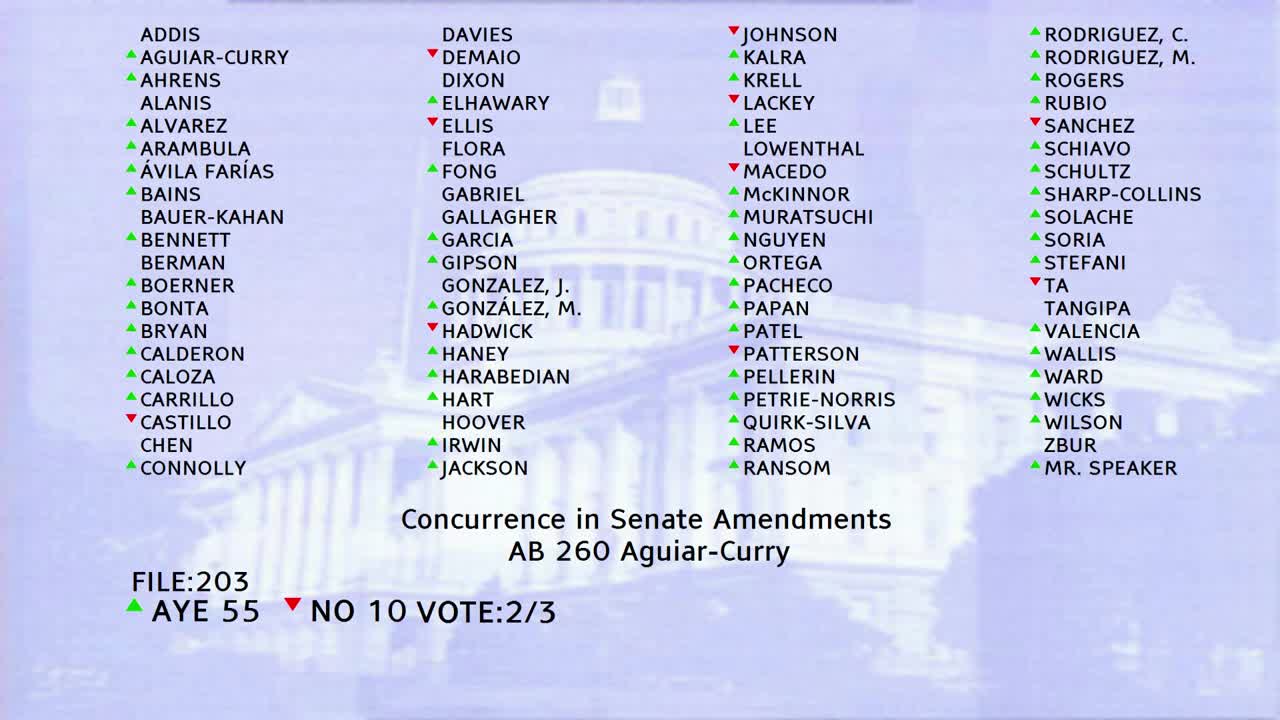
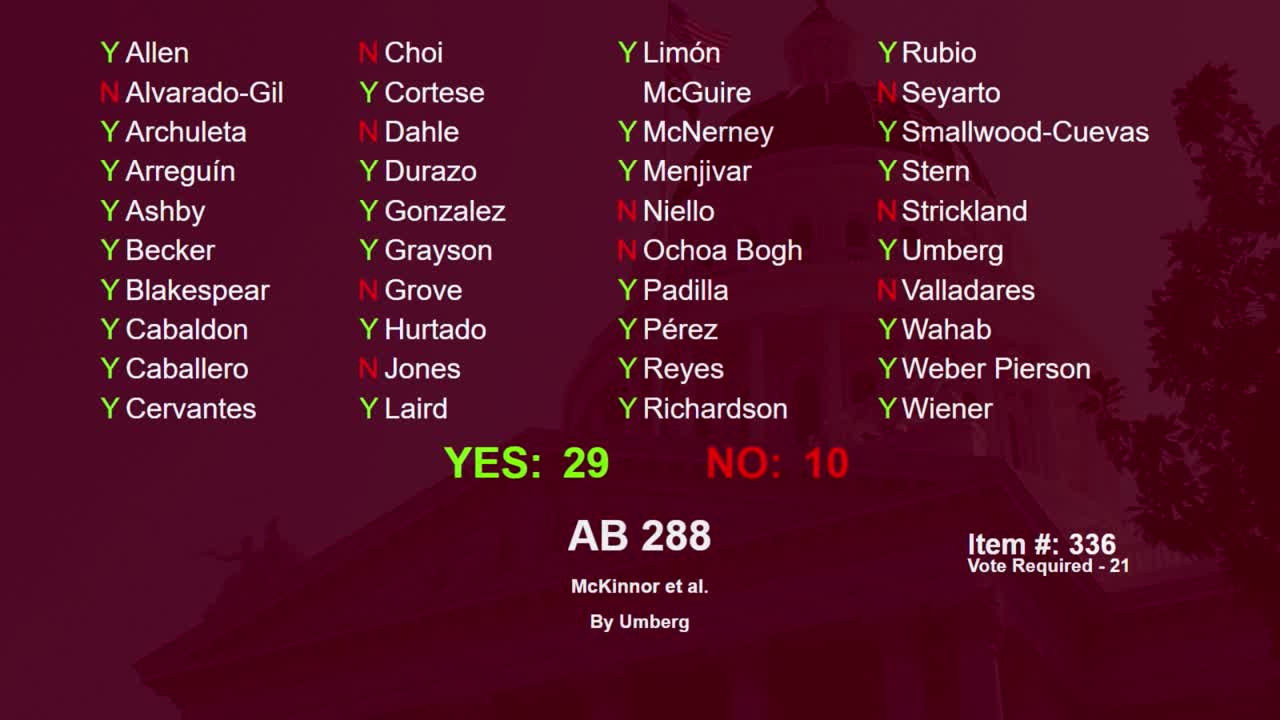
Bill Author

Bill Co-Author(s):
