AB 1455: State Board of Forestry and Fire Protection: defensible space requirements: ember-resistant zones: emergency regulations: California Environmental Quality Act.
- Session Year: 2025-2026
- House: Assembly
- Latest Version Date: 2025-10-13
Current Status:
Passed
(2025-10-13: Chaptered by Secretary of State - Chapter 731, Statutes of 2025.)
Introduced
In Committee
Awaiting First Chamber Vote
Passed First Chamber
In Committee
Awaiting Second Chamber Vote
Passed Second Chamber
Enacted
Existing law requires the State Fire Marshal to identify areas in the state as moderate, high, and very high fire hazard severity zones based on consistent statewide criteria and the severity of the fire hazard. Existing law requires a person who owns, leases, controls, operates, or maintains (1) a building or structure in the state responsibility area, or (2) an occupied dwelling or structure within a very high fire hazard severity zone as designated by a local agency, to, among other defensible space requirements, maintain a defensible space of 100 feet from each side and from the front and rear of the structure, as specified. Under existing law, one of these defensible space requirements is the requirement to create an ember-resistant zone within 5 feet of the structure, based on regulations promulgated by the State Board of Forestry and Fire Protection, to consider the elimination of materials in the ember-resistant zone that would likely be ignited by embers, as provided. A violation of these defensible space requirements is a crime.
This bill would revise and recast the defensible space requirements applicable to a very high fire hazard severity zone as designated by a local agency by explicitly requiring the state board to adopt regulations to implement all of the above-described defensible space requirements. The bill would authorize local agencies responsible for fire protection to designate, by ordinance, defensible space requirements based on the defensible space regulations promulgated by the state board, as provided, and would authorize the local agency to consider local variations in local fire hazards, geography, development, and other conditions and authorize alternative practices to those in the state board regulations, if the alternative practices provide for substantially similar practical effects as those stated in the state board regulations. The bill would provide that a property owner, as defined, in compliance with the applicable alternative practices adopted by the local agency shall not be deemed to have violated the defensible space requirements adopted by the state board, as provided. To the extent that this expands the duties of a local agency, the bill would impose a state-mandated local program.
Existing law, known as the Administrative Procedure Act, governs the procedures for the adoption, amendment, or repeal of regulations by state agencies and for the review of those regulatory actions by the Office of Administrative Law. Existing law establishes procedures for the adoption of emergency regulations, including requiring that the state agency make a finding that the adoption of a regulation or order of repeal is necessary to address an emergency, as defined. Under existing law, a regulation, amendment, or order of repeal adopted as an emergency regulatory action may only remain in effect for up to 180 days, unless the adopting agency complies with specified requirements relating to notice of regulatory action and public comment.
By Executive Order No. N-18-25, Governor Gavin Newsom directed the state board to complete the formal rulemaking process applicable to these ember-resistant zone requirements no later than December 31, 2025. Existing law requires the state board, on or before January 1, 2023, and in consultation with the Office of the State Fire Marshal, to update a guidance document on fuels management to include suggestions for creating an ember-resistant zone within 5 feet of a structure based on regulations promulgated by the state board, to consider the elimination of materials in the ember-resistant zone that would likely be ignited by embers.
The California Environmental Quality Act (CEQA) requires a lead agency, as defined, to prepare, or cause to be prepared, and certify the completion of, an environmental impact report on a project that it proposes to carry out or approve that may have a significant effect on the environment or to adopt a negative declaration if it finds that the project will not have that effect.
This bill would require the state board to adopt regulations to implement the above-described defensible space requirements for an ember-resistant zone required within 5 feet of a structure in the state responsibility area and a very high fire hazard severity zone as designated by a local agency, as specified. If adopting the regulations through the regular rulemaking process of the Administrative Procedure Act would inhibit compliance with the deadline in Executive Order No. N-18-25, the bill would require the regulations to be adopted as emergency regulations and would require the Office of Administrative Law to consider the adoption of initial regulations as necessary for the immediate preservation of the public peace, health, safety, and general welfare. The bill would authorize the state board to readopt any of these emergency regulations, as provided, and would make any of these adopted or readopted emergency regulations effective until revised by the state board. The bill would provide that the adoption or readoption of these regulations does not constitute a project for purposes of CEQA. The bill would revise and recast the provisions applicable to the guidance document by requiring the state board, no later than one year after adopting regulations in compliance with the deadline in Executive Order No. N-18-25, to update the guidance document to reflect the new regulations.
This bill would incorporate additional changes to Section 4291 of the Public Resources Code proposed by SB 326 to be operative only if this bill and SB 326 are enacted and this bill is enacted last.
The California Constitution requires the state to reimburse local agencies and school districts for certain costs mandated by the state. Statutory provisions establish procedures for making that reimbursement.
This bill would provide that, if the Commission on State Mandates determines that the bill contains costs mandated by the state, reimbursement for those costs shall be made pursuant to the statutory provisions noted above.
This bill would declare that it is to take effect immediately as an urgency statute.
Existing law requires the State Fire Marshal to identify areas in the state as moderate, high, and very high fire hazard severity zones based on consistent statewide criteria and the severity of the fire hazard. Existing law requires a person who owns, leases, controls, operates, or maintains (1) a building or structure in the state responsibility area, or (2) an occupied dwelling or structure within a very high fire hazard severity zone as designated by a local agency, to, among other defensible space requirements, maintain a defensible space of 100 feet from each side and from the front and rear of the structure, as specified. Under existing law, one of these defensible space requirements is the requirement to create an ember-resistant zone within 5 feet of the structure, based on regulations promulgated by the State Board of Forestry and Fire Protection, to consider the elimination of materials in the ember-resistant zone that would likely be ignited by embers, as provided. A violation of these defensible space requirements is a crime.
This bill would revise and recast the defensible space requirements applicable to a very high fire hazard severity zone as designated by a local agency by explicitly requiring the state board to adopt regulations to implement all of the above-described defensible space requirements. The bill would authorize local agencies responsible for fire protection to designate, by ordinance, defensible space requirements based on the defensible space regulations promulgated by the state board, as provided, and would authorize the local agency to consider local variations in local fire hazards hazards, geography, development, and other conditions and authorize alternative practices to those in the state board regulations, if the alternative practices provide for substantially similar practical effects as those stated in the state board regulations. The bill would establish that a property owner, as defined, in compliance with the applicable alternative practices adopted by the local agency shall not be deemed to have violated the defensible space requirements adopted by the state board, as provided. To the extent that this expands the duties of a local agency, the bill would impose a state-mandated local program.
Existing law, known as the Administrative Procedure Act, governs the procedures for the adoption, amendment, or repeal of regulations by state agencies and for the review of those regulatory actions by the Office of Administrative Law. Existing law establishes procedures for the adoption of emergency regulations, including requiring that the state agency make a finding that the adoption of a regulation or order of repeal is necessary to address an emergency, as defined. Under existing law, a regulation, amendment, or repeal adopted as an emergency regulatory action may only remain in effect for up to 180 days, unless the adopting agency complies with specified requirements relating to notice of regulatory action and public comment.
By Executive Order No. N-18-25, Governor Gavin Newsom directed the state board to complete the formal rulemaking process applicable to these ember-resistant zone requirements no later than December 31, 2025. Existing law requires the state board, on or before January 1, 2023, and in consultation with the Office of the State Fire Marshal, to update a guidance document on fuels management to include suggestions for creating an ember-resistant zone within 5 feet of a structure based on regulations promulgated by the state board, to consider the elimination of materials in the ember-resistant zone that would likely be ignited by embers.
The California Environmental Quality Act (CEQA) requires a lead agency, as defined, to prepare, or cause to be prepared, and certify the completion of, an environmental impact report on a project that it proposes to carry out or approve that may have a significant effect on the environment or to adopt a negative declaration if it finds that the project will not have that effect.
This bill would require the state board to adopt regulations to implement the above-described defensible space requirements for an ember-resistant zone required within 5 feet of a structure in the state responsibility area and a very high fire hazard severity zone as designated by a local agency, as specified. If adopting the regulations through the regular rulemaking process of the Administrative Procedure Act would inhibit compliance with the deadline in Executive Order No. N-18-25, the bill would require the regulations to be adopted as emergency regulations and would require the Office of Administrative Law to consider the adoption of initial regulations as necessary for the immediate preservation of the public peace, health, safety, and general welfare. The bill would authorize the state board to readopt any of these emergency regulations, as provided, and would make any of these adopted or readopted emergency regulations effective until revised by the state board. The bill would establish that the adoption or readoption of these regulations does not constitute a project for purposes of CEQA. The bill would revise and recast the provisions applicable to the guidance document by requiring the state board, no later than one year after adopting regulations in compliance with the deadline in Executive Order No. N-18-25, to update the guidance document to reflect the new regulations.
This bill would incorporate additional changes to Section 4291 of the Public Resources Code proposed by SB 326 to be operative only if this bill and SB 326 are enacted and this bill is enacted last.
The California Constitution requires the state to reimburse local agencies and school districts for certain costs mandated by the state. Statutory provisions establish procedures for making that reimbursement.
This bill would provide that, if the Commission on State Mandates determines that the bill contains costs mandated by the state, reimbursement for those costs shall be made pursuant to the statutory provisions noted above.
This bill would declare that it is to take effect immediately as an urgency statute.
Existing law requires the State Fire Marshal to identify areas in the state as moderate, high, and very high fire hazard severity zones based on consistent statewide criteria and the severity of the fire hazard. Existing law requires a person who owns, leases, controls, operates, or maintains (1) a building or structure in the state responsibility area, or (2) an occupied dwelling or structure within a very high fire hazard severity zone as designated by a local agency, to, among other defensible space requirements, maintain a defensible space of 100 feet from each side and from the front and rear of the structure, as specified. Under existing law, one of these defensible space requirements is the requirement to create an ember-resistant zone within 5 feet of the structure, based on regulations promulgated by the State Board of Forestry and Fire Protection, in consultation with the Office of the State Fire Marshal, to consider the elimination of materials in the ember-resistant zone that would likely be ignited by embers, as provided. A violation of these defensible space requirements is a crime.
This bill would revise and recast the defensible space requirements applicable to a very high fire hazard severity zone as designated by a local agency by explicitly requiring the state board to adopt regulations to (1) implement all of the above-described defensible space requirements, and (2) require the creation of an ember-resistant zone, in which materials that would likely be ignited by embers are required to be eliminated, within 5 feet of the structure, as provided. By expanding the scope of a crime, the bill would impose a state-mandated local program. requirements. The bill would authorize local agencies to designate, by ordinance, defensible space requirements based on the defensible space regulations promulgated by the state board, as provided, and would authorize the local agency to consider local fire hazards and other conditions and authorize alternative practices to those in the state board regulations, if the alternative practices provide for substantially similar practical effects as those stated in the state board regulations. The bill would establish that a property owner, as defined, in compliance with the applicable alternative practices adopted by the local agency shall not be deemed to have violated the defensible space requirements adopted by the state board, as provided. To the extent that this expands the duties of a local agency, the bill would impose a state-mandated local program.
Existing law, known as the Administrative Procedure Act, governs the procedures for the adoption, amendment, or repeal of regulations by state agencies and for the review of those regulatory actions by the Office of Administrative Law. Existing law establishes procedures for the adoption of emergency regulations, including requiring that the state agency make a finding that the adoption of a regulation or order of repeal is necessary to address an emergency, as defined. Under existing law, a regulation, amendment, or repeal adopted as an emergency regulatory action may only remain in effect for up to 180 days, unless the adopting agency complies with specified requirements relating to notice of regulatory action and public comment.
By Executive Order No. N-18-25, Governor Gavin Newsom directed the state board to complete the formal rulemaking process applicable to these ember-resistant zone requirements no later than December 31, 2025. Existing law requires the state board, on or before January 1, 2023, and in consultation with the Office of the State Fire Marshal, to update a guidance document on fuels management to include suggestions for creating an ember-resistant zone within 5 feet of a structure based on regulations promulgated by the state board, in consultation with the Office of the State Fire Marshal, to consider the elimination of materials in the ember-resistant zone that would likely be ignited by embers.
The California Environmental Quality Act (CEQA) requires a lead agency, as defined, to prepare, or cause to be prepared, and certify the completion of, an environmental impact report on a project that it proposes to carry out or approve that may have a significant effect on the environment or to adopt a negative declaration if it finds that the project will not have that effect.
This bill would require the state board to adopt regulations to implement the above-described defensible space requirements for an ember-resistant zone required within 5 feet of a structure in a the state responsibility area and a very high fire hazard severity zone as designated by a local agency, as specified. If adopting the regulations through the regular rulemaking process of the Administrative Procedure Act would inhibit compliance with the deadline in Executive Order No. N-18-25, the bill would require the regulations to be adopted as emergency regulations and would require the Office of Administrative Law to consider the adoption of initial regulations as necessary for the immediate preservation of the public peace, health, safety, and general welfare. The bill would authorize the state board to readopt any of these emergency regulations, as provided, and would make any of these adopted or readopted emergency regulations effective until revised by the state board. The bill would establish that the adoption or readoption of these regulations does not constitute a project for purposes of CEQA. The bill would revise and recast the provisions applicable to the guidance document by requiring the state board, no later than one year after adopting regulations in compliance with the deadline in Executive Order No. N-18-25, to update the guidance document to reflect the new regulations.
The California Constitution requires the state to reimburse local agencies and school districts for certain costs mandated by the state. Statutory provisions establish procedures for making that reimbursement.This bill would provide that no reimbursement is required by this act for a specified reason.The California Constitution requires the state to reimburse local agencies and school districts for certain costs mandated by the state. Statutory provisions establish procedures for making that reimbursement.
This bill would provide that, if the Commission on State Mandates determines that the bill contains costs mandated by the state, reimbursement for those costs shall be made pursuant to the statutory provisions noted above.
This bill would declare that it is to take effect immediately as an urgency statute.
Existing law requires the State Fire Marshal to identify areas in the state as moderate, high, and very high fire hazard severity zones based on consistent statewide criteria and the severity of the fire hazard. Existing law requires a person who owns, leases, controls, operates, or maintains (1) a building or structure in the state responsibility area, or (2) an occupied dwelling or structure within a very high fire hazard severity zone as designated by a local agency, to to, among other defensible space requirements, maintain a defensible space of 100 feet from each side and from the front and rear of the structure, as specified. Under existing law, one of these defensible space requirements is the requirement to create an ember-resistant zone within 5 feet of the structure, based on regulations promulgated by the State Board of Forestry and Fire Protection, in consultation with the Office of the State Fire Marshal, to consider the elimination of materials in the ember-resistant zone that would likely be ignited by embers, as provided. A violation of these defensible space requirements is a crime. Executive Order No. N-18-25 directs the board to complete the formal rulemaking process applicable to these ember-resistant zone requirements no later than December 31, 2025.
This bill would revise and recast the defensible space requirements applicable to a very high fire hazard severity zone as designated by a local agency by explicitly requiring the state board to adopt regulations to (1) implement all of the above-described defensible space requirements, and (2) require the creation of an ember-resistant zone, in which materials that would likely be ignited by embers are required to be eliminated, within 5 feet of the structure, as provided. By expanding the scope of a crime, the bill would impose a state-mandated local program.
Existing law, known as the Administrative Procedure Act, governs the procedures for the adoption, amendment, or repeal of regulations by state agencies and for the review of those regulatory actions by the Office of Administrative Law. Existing law establishes procedures for the adoption of emergency regulations, including requiring that the state agency make a finding that the adoption of a regulation or order of repeal is necessary to address an emergency, as defined. Under existing law, a regulation, amendment, or repeal adopted as an emergency regulatory action may only remain in effect for up to 180 days, unless the adopting agency complies with specified requirements relating to notice of regulatory action and public comment.
By Executive Order No. N-18-25, Governor Gavin Newsom directed the state board to complete the formal rulemaking process applicable to these ember-resistant zone requirements no later than December 31, 2025. Existing law requires the state board, on or before January 1, 2023, and in consultation with the Office of the State Fire Marshal, to update a guidance document on fuels management to include suggestions for creating an ember-resistant zone within 5 feet of a structure based on regulations promulgated by the state board, in consultation with the Office of the State Fire Marshal, to consider the elimination of materials in the ember-resistant zone that would likely be ignited by embers.
This bill would require the State Board of Forestry and Fire Protection state board to adopt regulations to implement the above-described defensible space requirements for an ember-resistant zone required within 5 feet of a structure in a state responsibility area and a very high fire hazard severity zone as designated by a local agency, as specified. The bill would revise and recast the defensible space requirements applicable to a very high fire hazard severity zone as designated by a local agency by explicitly requiring the state board, in consultation with the State Fire Marshal, to promulgate regulations to require the creation of an ember-resistant zone, in which materials that would likely be ignited by embers are required to be eliminated, within 5 feet of the structure, as provided. By expanding the scope of a crime, the bill would impose a state-mandated local program. The If adopting the regulations through the regular rulemaking process of the Administrative Procedure Act would inhibit compliance with the deadline in Executive Order No. N-18-25, the bill would require the regulations applicable to both a state responsibility area and a very high fire hazard severity zone as designated by a local agency to be adopted as emergency regulations and would require the Office of Administrative Law to consider the adoption of initial regulations as necessary for the immediate preservation of the public peace, health, safety, and general welfare. The bill would authorize the state board to readopt any of these emergency regulations, as provided, and would make any of these adopted or readopted emergency regulations effective until revised by the state board. The bill would revise and recast the provisions applicable to the guidance document by requiring the state board, no later than one year after adopting regulations in compliance with the deadline in Executive Order No. N-18-25, to update the guidance document to reflect the new regulations.
The California Constitution requires the state to reimburse local agencies and school districts for certain costs mandated by the state. Statutory provisions establish procedures for making that reimbursement.
This bill would provide that no reimbursement is required by this act for a specified reason.
Existing law requires the State Fire Marshal to identify areas in the state as moderate, high, and very high fire hazard severity zones based on consistent statewide criteria and the severity of the fire hazard. Existing law requires a person who owns, leases, controls, operates, or maintains (1) a building or structure in the state responsibility area, or (2) an occupied dwelling or structure within a very high fire hazard severity zone as designated by a local agency, to maintain a defensible space of 100 feet from each side and from the front and rear of the structure, as specified. Under existing law, one of these defensible space requirements is the requirement to create an ember-resistant zone within 5 feet of the structure, based on regulations promulgated by the State Board of Forestry and Fire Protection, in consultation with the Office of the State Fire Marshal, to consider the elimination of materials in the ember-resistant zone that would likely be ignited by embers, as provided. A violation of these defensible space requirements is a crime. Executive Order No. N-18-25 directs the board to complete the formal rulemaking process applicable to these ember-resistant zone requirements no later than December 31, 2025.
Existing law, known as the Administrative Procedure Act, governs the procedures for the adoption, amendment, or repeal of regulations by state agencies and for the review of those regulatory actions by the Office of Administrative Law. Existing law establishes procedures for the adoption of emergency regulations, including requiring that the state agency make a finding that the adoption of a regulation or order of repeal is necessary to address an emergency, as defined. Under existing law, a regulation, amendment, or repeal adopted as an emergency regulatory action may only remain in effect for up to 180 days, unless the adopting agency complies with specified requirements relating to notice of regulatory action and public comment.
Existing law, the Zberg-Nejedly Forest Practice Act of 1973, specifies rulemaking processes for the State Board of Forestry and Fire Protection, as provided.This bill would require the State Board of Forestry and Fire Protection to adopt regulations to implement the above-described defensible space requirements for an ember-resistant zone required within 5 feet of a structure in a state responsibility area and a very high fire hazard severity zone as designated by a local agency, as specified. The bill would revise and recast the defensible space requirements applicable to a very high fire hazard severity zone as designated by a local agency by explicitly requiring the state board, in consultation with the State Fire Marshal, to promulgate regulations to require the creation of an ember-resistant zone, in which materials that would likely be ignited by embers are required to be eliminated, within 5 feet of the structure, as provided. By expanding the scope of a crime, the bill would impose a state-mandated local program. The bill would require the regulations applicable to both a state responsibility area and a very high fire hazard severity zone as designated by a local agency to follow the rulemaking process of the Zberg-Nejedly Forest Practice Act of 1973 and be adopted as emergency regulations. The bill regulations and would require the Office of Administrative Law to consider the adoption of initial regulations as necessary for the immediate preservation of the public peace, health, safety, and general welfare. The bill would authorize the state board to readopt any of these emergency regulations, as provided, and would make any of these adopted or readopted emergency regulations effective until revised by the state board.
The California Constitution requires the state to reimburse local agencies and school districts for certain costs mandated by the state. Statutory provisions establish procedures for making that reimbursement.
This bill would provide that no reimbursement is required by this act for a specified reason.
Existing law requires the State Fire Marshal to identify areas in the state as moderate, high, and very high fire hazard severity zones based on consistent statewide criteria and the severity of the fire hazard. Existing law requires a person who owns, leases, controls, operates, or maintains (1) a building or structure in the state responsibility area, or (2) an occupied dwelling or structure within a very high fire hazard severity zone as designated by a local agency, to maintain a defensible space of 100 feet from each side and from the front and rear of the structure, as specified. Under existing law, one of these defensible space requirements is the requirement to create an ember-resistant zone within 5 feet of the structure, based on regulations promulgated by the State Board of Forestry and Fire Protection, as provided. Executive Order No. N-18-25 directs the board to complete the formal rulemaking process applicable to these ember-resistant zone requirements no later than December 31, 2025.
Existing law, known as the Administrative Procedure Act, governs the procedures for the adoption, amendment, or repeal of regulations by state agencies and for the review of those regulatory actions by the Office of Administrative Law. Existing law establishes procedures for the adoption of emergency regulations, including requiring that the state agency make a finding that the adoption of a regulation or order of repeal is necessary to address an emergency, as defined. Under existing law, a regulation, amendment, or repeal adopted as an emergency regulatory action may only remain in effect for up to 180 days, unless the adopting agency complies with specified requirements relating to notice of regulatory action and public comment.
Existing law, the Zberg-Nejedly Forest Practice Act of 1973, specifies rulemaking processes for the State Board of Forestry and Fire Protection, as provided.
This bill would require the State Board of Forestry and Fire Protection to adopt regulations to implement the above-described defensible space requirements for an ember-resistant zone required within 5 feet of a structure in a state responsibility area and a very high fire hazard severity zone, zone as designated by a local agency, as specified. The bill would require the regulations to follow a specified the rulemaking process of the Zberg-Nejedly Forest Practice Act of 1973 and be adopted as emergency regulations. The bill would require the Office of Administrative Law to consider the adoption of initial regulations as necessary for the immediate preservation of the public peace, health, safety, and general welfare. The bill would require the Secretary of the Natural Resources Agency to verify the regulations as a certified regulatory program for purposes of CEQA, as specified. authorize the state board to readopt any of these emergency regulations, as provided, and would make any of these adopted or readopted emergency regulations effective until revised by the state board.
The California Environmental Quality Act (CEQA) requires a lead agency, as defined, to prepare, or cause to be prepared, and certify the completion of an environmental impact report on a project that it proposes to carry out or approve that may have a significant effect on the environment or to adopt a negative declaration if it finds that the project will not have that effect. CEQA also requires a lead agency to prepare a mitigated negative declaration for a project that may have a significant effect on the environment if revisions in the project would avoid or mitigate that effect and there is no substantial evidence that the project, as revised, would have a significant effect on the environment.
Under CEQA, when a regulatory program of a state agency requires a plan or other written documentation containing environmental information, includes a description of the proposed activity with alternatives to the activity, and mitigation measures, as specified, and is available for a reasonable time for review and comment, as specified, that plan or other written documentation may be submitted in lieu of an environmental impact report if the Secretary of the Natural Resources Agency has certified the regulatory program, as provided.
This bill would require the State Board of Forestry and Fire Protection to adopt regulations to implement defensible space requirements for an ember-resistant zone required within 5 feet of a structure in a state responsibility area and a very high fire hazard severity zone, as specified. The bill would require the regulations to follow a specified rulemaking process and be adopted as emergency regulations. The bill would require the Office of Administrative Law to consider the adoption of initial regulations as necessary for the immediate preservation of the public peace, health, safety, and general welfare. The bill would require the Secretary of the Natural Resources Agency to verify the regulations as a certified regulatory program for purposes of CEQA, as specified.
Existing law establishes the Office of Land Use and Climate Innovation (office) in the Governors office for the purpose of serving the Governor and the Governors cabinet as staff for long-range planning and research and constituting the comprehensive state planning agency. Existing law requires the office, by July 1, 2020, and in consultation with the Department of Forestry and Fire Protection, the State Board of Forestry and Fire Protection, and other fire and safety experts, to update the guidance document entitled Fire Hazard Planning, General Plan Technical Advice Series, and to subsequently update that document not less than once every 8 years.This bill would, beginning January 1, 2026, require the office to update the above-described document not less than once every 5 years.Existing law establishes the Office of Land Use and Climate Innovation (office) in the Governors office for the purpose of serving the Governor and the Governors cabinet as staff for long-range planning and research and constituting the comprehensive state planning agency. Existing law requires the office, by July 1, 2020, and in consultation with the Department of Forestry and Fire Protection, the State Board of Forestry and Fire Protection, and other fire and safety experts, to update the guidance document entitled Fire Hazard Planning, General Plan Technical Advice Series, and to subsequently update that document not less than once every 8 years.
This bill would, beginning January 1, 2026, require the office to update the above-described document not less than once every 5 years.
(a)The State Board of Forestry and Fire Protection shall adopt regulations to implement the rules described in this subdivision. Pursuant to these regulations, a person who owns, leases, controls, operates, or maintains an occupied dwelling or occupied structure within a very high fire hazard severity zone designated by the local agency pursuant to Section 51179, shall at all times do all of the following:
(1)(A)Maintain defensible space of 100 feet from each side and from the front and rear of the structure, but not beyond the property line except as provided in subparagraph (B). The amount of fuel modification necessary shall consider the flammability of the structure as affected by building material, building standards, location, and type of vegetation. Fuels shall be maintained and spaced in a condition so that a wildfire would be unlikely to ignite the structure. This subparagraph does not apply to single specimens of trees or other vegetation that are well-pruned and maintained so as to effectively manage fuels and not form a means of rapidly transmitting fire from other nearby vegetation to a structure or from a structure to other nearby vegetation or to interrupt the advance of embers toward a structure. The intensity of fuels management may vary within the 100-foot perimeter of the structure, with more intense fuel reductions being used between 5 and 30 feet around the structure, and an ember-resistant zone being required within 5 feet of the structure, based on regulations promulgated by the State Board of Forestry and Fire Protection, in consultation with the Office of the State Fire Marshal, to consider the elimination of materials in the ember-resistant zone that would likely be ignited by embers. The regulations may also alter the fuel reduction required between 5 and 30 feet to integrate the ember-resistant zone into the requirements of this section. Consistent with fuels management objectives, steps should be taken to minimize erosion, soil disturbance, and the spread of flammable nonnative grasses and weeds.
(B)A greater distance than that required under subparagraph (A) may be required by state law, local ordinance, rule, or regulation. Fuel modification beyond the property line may only be required by state law, local ordinance, rule, or regulation in order to maintain 100 feet of defensible space from a structure. Fuel modification on adjacent property shall only be conducted following written consent by the adjacent landowner. Any local ordinance related to fuel modification shall be in compliance with all applicable state laws, regulations, and policies. Any local ordinance may include provisions to allocate costs for any fuel modification beyond the property line.
(C)An insurance company that insures an occupied dwelling or occupied structure may require a greater distance than that required under subparagraph (A) if a fire expert, designated by the fire chief or fire official from the authority having jurisdiction, provides findings that the fuel modification is necessary to significantly reduce the risk of transmission of flame or heat sufficient to ignite the structure, and there is no other feasible mitigation measure possible to reduce the risk of ignition or spread of wildfire to the structure. The greater distance may not be beyond the property line unless allowed by state law, local ordinance, rule, or regulation.
(2)Remove that portion of a tree that extends within 10 feet of the outlet of a chimney or stovepipe.
(3)Maintain a tree, shrub, or other plant adjacent to or overhanging a building free of dead or dying wood.
(4)Maintain the roof of a structure free of leaves, needles, or other vegetative materials.
(5)Before constructing a new dwelling or structure that will be occupied or rebuilding an occupied dwelling or occupied structure damaged by a fire in that zone, the construction or rebuilding of which requires a building permit, the owner shall obtain a certification from the local building official that the dwelling or structure, as proposed to be built, complies with all applicable state and local building standards, including those described in subdivision (b) of Section 51189, and shall provide a copy of the certification, upon request, to the insurer providing course of construction insurance coverage for the building or structure. Upon completion of the construction or rebuilding, the owner shall obtain from the local building official a copy of the final inspection report that demonstrates that the dwelling or structure was constructed in compliance with all applicable state and local building standards, including those described in subdivision (b) of Section 51189, and shall provide a copy of the report, upon request, to the property insurance carrier that insures the dwelling or structure.
(b)A person is not required under this section to manage fuels on land if that person does not have the legal right to manage fuels, nor is a person required to enter upon or to alter property that is owned by any other person without the consent of the owner of the property.
(c)(1)The State Board of Forestry and Fire Protection, in consultation with the Office of the State Fire Marshal, shall develop, periodically update, and post on its internet website a guidance document on fuels management pursuant to this chapter. The guidance document shall include, but not be limited to, regionally appropriate vegetation management suggestions that preserve and restore native species that are fire resistant or drought tolerant, or both, minimize erosion, minimize the spread of flammable nonnative grasses and weeds, minimize water consumption, and permit trees and shrubs near homes for shade, aesthetics, and habitat; and suggestions to minimize or eliminate the risk of flammability of nonvegetative sources of combustion such as woodpiles, propane tanks, decks, and outdoor lawn furniture.
(2)No later than one year after the State Board of Forestry and Fire Protection adopts regulations in compliance with the deadline in Executive Order No. N-18-25, the State Board of Forestry and Fire Protection shall, in consultation with the Office of the State Fire Marshal, update the guidance document to reflect the new regulations.
(d)Existing and new structures shall meet the same standard for the ember-resistant zone, but the regulations adopted by the State Board of Forestry and Fire Protection pursuant to this section shall allow the staging of work for existing structures to support implementation of the ember-resistant zone and address the costs of compliance.
(e)For purposes of this section, a structure for the purpose of an ember-resistant zone shall include any attached deck. This section does not limit the authority of the State Board of Forestry and Fire Protection or the Office of the State Fire Marshal to require the removal of fuel or vegetation on top of or underneath a deck pursuant to this section.
(f)(1)A local agency responsible for fire protection may designate, by ordinance, defensible space requirements based on regulations promulgated by the State Board of Forestry and Fire Protection pursuant to subdivision (a). In developing the ordinance, a local agency may, in order to meet the intent of the State Board of Forestry and Fire Protection regulations, consider local variations in local fire hazards, geography, development, and other conditions and authorize alternative practices to those in the State Board of Forestry and Fire Protection regulations, if the alternative practices provide for substantially similar practical effects as those stated in the State Board of Forestry and Fire Protection regulations. This subdivision does not preclude a local agency from adopting an ordinance designating defensible space requirements that are more stringent than the regulations adopted by the State Board of Forestry and Fire Protection pursuant to subdivision (a).
(2)For purposes of Sections 51185, 51186, 51187, and any other laws imposing penalties for violations of this section, or any other laws otherwise requiring compliance with this section, a property owner in compliance with the applicable alternative practices adopted by that property owners local agency in an ordinance described in paragraph (1) shall not be deemed to have violated this section.
(3)For purposes of this subdivision, property owner means a person who owns, leases, controls, operates, or maintains an occupied dwelling or occupied structure within a very high fire hazard severity zone designated by the local agency pursuant to Section 51179, as described in subdivision (a).
SEC. 2.Section 51182.4 is added to the Government Code, to read:51182.4.(a)The State Board of Forestry and Fire Protection shall adopt regulations to implement defensible space requirements for an ember-resistant zone required within five feet of a structure in the state responsibility area pursuant to Section 4291 of the Public Resources Code and a very high fire hazard severity zone pursuant to Section 51182 of this code.
(b)If adopting the regulations described in subdivision (a) through the regular rulemaking process pursuant to Chapter 3.5 (commencing with Section 11340) of Part 1 of Division 3 of Title 2 would inhibit compliance with the December 31, 2025, deadline in Executive Order No. N-18-25, the regulations shall instead be adopted as emergency regulations, in which case the adoption of initial regulations shall be deemed in response to an emergency and the Office of Administrative Law shall consider the adoption of initial regulations as necessary for the immediate preservation of the public peace, health, safety, and general welfare.
(c)The State Board of Forestry and Fire Protection may readopt any emergency regulation authorized by this section that is the same as or substantially equivalent to an emergency regulation previously adopted pursuant to this section.
(d)Notwithstanding Chapter 3.5 (commencing with Section 11340) of Part 1 of Division 3 of Title 2, any emergency regulations adopted or readopted pursuant to this section shall remain in effect until revised by the State Board of Forestry and Fire Protection.
(e)The adoption or readoption of the regulations described in this section shall not constitute a project for purposes of Division 13 (commencing with Section 21000) of the Public Resources Code.
SEC. 3.Section 4291 of the Public Resources Code is amended to read:4291.(a)A person who owns, leases, controls, operates, or maintains a building or structure in the state responsibility area shall at all times do all of the following:
(1)(A)Maintain defensible space of 100 feet from each side and from the front and rear of the structure, but not beyond the property line, except as provided in subparagraph (B). The amount of fuel modification necessary shall consider the flammability of the structure as affected by building material, building standards, location, and type of vegetation. Fuels shall be maintained and spaced in a condition so that a wildfire would be unlikely to ignite the structure. This subparagraph does not apply to single specimens of trees or other vegetation that are well-pruned and maintained so as to effectively manage fuels and not form a means of rapidly transmitting fire from other nearby vegetation to a structure or from a structure to other nearby vegetation or to interrupt the advance of embers toward a structure. The intensity of fuels management may vary within the 100-foot perimeter of the structure, with more intense fuel reductions being utilized between 5 and 30 feet around the structure, and an ember-resistant zone being required within 5 feet of the structure, based on regulations promulgated by the board, in consultation with the department, to consider the elimination of materials in the ember-resistant zone that would likely be ignited by embers. The regulations may also alter the fuel reduction required between 5 and 30 feet to integrate the ember-resistant zone into the requirements of this section. Consistent with fuels management objectives, steps should be taken to minimize erosion, soil disturbance, and the spread of flammable nonnative grasses and weeds. For purposes of this subparagraph, fuel means any combustible material, including petroleum-based products, cultivated landscape plants, grasses, and weeds, and wildland vegetation.
(B)A greater distance than that required under subparagraph (A) may be required by state law, local ordinance, rule, or regulation. Fuel modification beyond the property line may only be required by state law, local ordinance, rule, or regulation in order to maintain 100 feet of defensible space from a structure. Fuel modification on adjacent property shall only be conducted following written consent by the adjacent landowner. Any local ordinance related to fuel modification shall be in compliance with all applicable state laws, regulations, and policies. Any local ordinance may include provisions to allocate costs for any fuel modification beyond the property line.
(C)An insurance company that insures an occupied dwelling or occupied structure may require a greater distance than that required under subparagraph (A) if a fire expert, designated by the director, provides findings that the fuel modification is necessary to significantly reduce the risk of transmission of flame or heat sufficient to ignite the structure, and there is no other feasible mitigation measure possible to reduce the risk of ignition or spread of wildfire to the structure. The greater distance may not be beyond the property line unless allowed by state law, local ordinance, rule, or regulation.
(2)Remove that portion of a tree that extends within 10 feet of the outlet of a chimney or stovepipe.
(3)Maintain a tree, shrub, or other plant adjacent to or overhanging a building free of dead or dying wood.
(4)Maintain the roof of a structure free of leaves, needles, or other vegetative materials.
(5)Before constructing a new building or structure or rebuilding a building or structure damaged by a fire in an area subject to this section, the construction or rebuilding of which requires a building permit, the owner shall obtain a certification from the local building official that the dwelling or structure, as proposed to be built, complies with all applicable state and local building standards, including those described in subdivision (b) of Section 51189 of the Government Code, and shall provide a copy of the certification, upon request, to the insurer providing course of construction insurance coverage for the building or structure. Upon completion of the construction or rebuilding, the owner shall obtain from the local building official a copy of the final inspection report that demonstrates that the dwelling or structure was constructed in compliance with all applicable state and local building standards, including those described in subdivision (b) of Section 51189 of the Government Code, and shall provide a copy of the report, upon request, to the property insurance carrier that insures the dwelling or structure.
(b)A person is not required under this section to manage fuels on land if that person does not have the legal right to manage fuels, nor is a person required to enter upon or to alter property that is owned by any other person without the consent of the owner of the property.
(c)(1)Except as provided in Section 18930 of the Health and Safety Code, the State Fire Marshal may adopt regulations exempting a structure with an exterior constructed entirely of nonflammable materials, or, conditioned upon the contents and composition of the structure, the director may vary the requirements respecting the removing or clearing away of flammable vegetation or other combustible growth with respect to the area surrounding those structures.
(2)An exemption or variance under paragraph (1) shall not apply unless and until the occupant of the structure, or if there is not an occupant, the owner of the structure, files with the State Fire Marshal, in a form as the State Fire Marshal shall prescribe, a written consent to the inspection of the interior and contents of the structure to ascertain whether this section and the regulations adopted under this section are complied with at all times.
(d)The State Fire Marshal may authorize the removal of vegetation that is not consistent with the standards of this section. The State Fire Marshal may prescribe a procedure for the removal of that vegetation and make the expense a lien upon the building, structure, or grounds, in the same manner that is applicable to a legislative body under Section 51186 of the Government Code.
(e)(1)The board, in consultation with the State Fire Marshal, shall develop, periodically update, and post on its internet website a guidance document on fuels management pursuant to this chapter. The guidance document shall include, but not be limited to, regionally appropriate vegetation management suggestions that preserve and restore native species that are fire resistant or drought tolerant, or both, minimize erosion, minimize water consumption, and permit trees near homes for shade, aesthetics, and habitat; and suggestions to minimize or eliminate the risk of flammability of nonvegetative sources of combustion, such as woodpiles, propane tanks, decks, outdoor furniture, barbecue equipment, and outdoor fire pits.
(2)No later than one year after the board adopts regulations in compliance with the deadline in Executive Order No. N-18-25, the board shall, in consultation with the State Fire Marshal, update the guidance document to reflect the new regulations. Existing and new structures shall meet the same standard for the ember-resistant zone, but regulations adopted by the board pursuant to this section shall allow the staging of work for existing structures to support implementation of the ember-resistant zone and address the costs of compliance.
(f)The State Fire Marshal shall do both of the following:
(1)Recommend to the board the types of vegetation or fuel that are to be excluded from an ember-resistant zone based on the probability that vegetation and fuel will lead to ignition by ember of a structure as a part of the update to the guidance document pursuant to paragraph (2) of subdivision (e).
(2)Make reasonable efforts to provide notice to affected residents describing the requirements added by the amendments to paragraph (1) of subdivision (a) made in Assembly Bill 3074 of the 201920 Regular Session before the imposition of penalties for violating those requirements.
(g)(1)The requirement for an ember-resistant zone pursuant to paragraph (1) of subdivision (a) shall not take effect for new structures until the board updates the regulations, pursuant to paragraph (1) of subdivision (a), and the guidance document, pursuant to paragraph (2) of subdivision (e).
(2)The requirement for an ember-resistant zone pursuant to paragraph (1) of subdivision (a) shall take effect for existing structures three years after the effective date for the new structures.
(h)The department shall not change defensible space inspection practices and forms or enforcement to implement the requirement for an ember-resistant zone until the State Fire Marshal makes a written finding, which the State Fire Marshal shall post on the departments internet website, that the Legislature has appropriated sufficient resources to do so.
(i)For purposes of this section, a structure for the purpose of an ember-resistant zone shall include any attached deck. This section does not limit the authority of the board or the department to require the removal of fuel or vegetation on top of or underneath a deck pursuant to this section.
(j)As used in this section, person means a private individual, organization, partnership, limited liability company, or corporation.
SEC. 3.5.Section 4291 of the Public Resources Code is amended to read:4291.(a)A person who owns, leases, controls, operates, or maintains a building or structure in the state responsibility area shall at all times do all of the following:
(1)(A)Maintain defensible space of 100 feet from each side and from the front and rear of the structure, but not beyond the property line, except as provided in subparagraph (B). The amount of fuel modification necessary shall consider the flammability of the structure as affected by building material, building standards, location, and type of vegetation. Fuels shall be maintained and spaced in a condition so that a wildfire would be unlikely to ignite the structure. This subparagraph does not apply to single specimens of trees or other vegetation that are well-pruned and maintained so as to effectively manage fuels and not form a means of rapidly transmitting fire from other nearby vegetation to a structure or from a structure to other nearby vegetation or to interrupt the advance of embers toward a structure. The intensity of fuels management may vary within the 100-foot perimeter of the structure, with more intense fuel reductions being utilized between 5 and 30 feet around the structure, and an ember-resistant zone being required within 5 feet of the structure, based on regulations promulgated by the board, in consultation with the department, to consider the elimination of materials in the ember-resistant zone that would likely be ignited by embers. The regulations may also alter the fuel reduction required between 5 and 30 feet to integrate the ember-resistant zone into the requirements of this section. Consistent with fuels management objectives, steps should be taken to minimize erosion, soil disturbance, and the spread of flammable nonnative grasses and weeds. For purposes of this subparagraph, fuel means any combustible material, including petroleum-based products, cultivated landscape plants, grasses, and weeds, and wildland vegetation.
(B)A greater distance than that required under subparagraph (A) may be required by state law, local ordinance, rule, or regulation. Fuel modification beyond the property line may only be required by state law, local ordinance, rule, or regulation in order to maintain 100 feet of defensible space from a structure. Fuel modification on adjacent property shall only be conducted following written consent by the adjacent landowner. Any local ordinance related to fuel modification shall be in compliance with all applicable state laws, regulations, and policies. Any local ordinance may include provisions to allocate costs for any fuel modification beyond the property line.
(C)An insurance company that insures an occupied dwelling or occupied structure may require a greater distance than that required under subparagraph (A) if a fire expert, designated by the director, provides findings that the fuel modification is necessary to significantly reduce the risk of transmission of flame or heat sufficient to ignite the structure, and there is no other feasible mitigation measure possible to reduce the risk of ignition or spread of wildfire to the structure. The greater distance may not be beyond the property line unless allowed by state law, local ordinance, rule, or regulation.
(2)Remove that portion of a tree that extends within 10 feet of the outlet of a chimney or stovepipe.
(3)Maintain a tree, shrub, or other plant adjacent to or overhanging a building free of dead or dying wood.
(4)Maintain the roof of a structure free of leaves, needles, or other vegetative materials.
(5)Before constructing a new building or structure or rebuilding a building or structure damaged by a fire in an area subject to this section, the construction or rebuilding of which requires a building permit, the owner shall obtain a certification from the local building official that the dwelling or structure, as proposed to be built, complies with all applicable state and local building standards, including those described in subdivision (b) of Section 51189 of the Government Code, and shall provide a copy of the certification, upon request, to the insurer providing course of construction insurance coverage for the building or structure. Upon completion of the construction or rebuilding, the owner shall obtain from the local building official a copy of the final inspection report that demonstrates that the dwelling or structure was constructed in compliance with all applicable state and local building standards, including those described in subdivision (b) of Section 51189 of the Government Code, and shall provide a copy of the report, upon request, to the property insurance carrier that insures the dwelling or structure.
(b)A person is not required under this section to manage fuels on land if that person does not have the legal right to manage fuels, nor is a person required to enter upon or to alter property that is owned by any other person without the consent of the owner of the property.
(c)(1)Except as provided in Section 18930 of the Health and Safety Code, the State Fire Marshal may adopt regulations exempting a structure with an exterior constructed entirely of nonflammable materials, or, conditioned upon the contents and composition of the structure, the director may vary the requirements respecting the removing or clearing away of flammable vegetation or other combustible growth with respect to the area surrounding those structures.
(2)An exemption or variance under paragraph (1) shall not apply unless and until the occupant of the structure, or if there is not an occupant, the owner of the structure, files with the State Fire Marshal, in a form as the State Fire Marshal shall prescribe, a written consent to the inspection of the interior and contents of the structure to ascertain whether this section and the regulations adopted under this section are complied with at all times.
(d)The State Fire Marshal may authorize the removal of vegetation that is not consistent with the standards of this section. The State Fire Marshal may prescribe a procedure for the removal of that vegetation and make the expense a lien upon the building, structure, or grounds, in the same manner that is applicable to a legislative body under Section 51186 of the Government Code.
(e)(1)The board, in consultation with the State Fire Marshal, shall develop, periodically update, and post on its internet website a guidance document on fuels management pursuant to this chapter. The guidance document shall include, but not be limited to, regionally appropriate vegetation management suggestions that preserve and restore native species that are fire resistant or drought tolerant, or both, minimize erosion, minimize water consumption, and permit trees near homes for shade, aesthetics, and habitat; and suggestions to minimize or eliminate the risk of flammability of nonvegetative sources of combustion, such as woodpiles, propane tanks, decks, outdoor furniture, barbecue equipment, and outdoor fire pits.
(2)No later than one year after the board adopts regulations in compliance with the deadline in Executive Order No. N-18-25, the board shall, in consultation with the State Fire Marshal, update the guidance document to reflect the new regulations. Existing and new structures shall meet the same standard for the ember-resistant zone, but regulations adopted by the board pursuant to this section shall allow the staging of work for existing structures to support implementation of the ember-resistant zone and address the costs of compliance.
(f)The State Fire Marshal shall do both of the following:
(1)Recommend to the board the types of vegetation or fuel that are to be excluded from an ember-resistant zone based on the probability that vegetation and fuel will lead to ignition by ember of a structure as a part of the update to the guidance document pursuant to paragraph (2) of subdivision (e).
(2)Make reasonable efforts to provide notice to affected residents describing the requirements added by the amendments to paragraph (1) of subdivision (a) made in Assembly Bill 3074 of the 201920 Regular Session before the imposition of penalties for violating those requirements.
(g)(1)The requirement for an ember-resistant zone pursuant to paragraph (1) of subdivision (a) shall not take effect for a new structure until the board updates the regulations, pursuant to paragraph (1) of subdivision (a), and the guidance document, pursuant to paragraph (2) of subdivision (e).
(2)(A)The requirement for an ember-resistant zone pursuant to paragraph (1) of subdivision (a) shall take effect for an existing structure three years after the effective date for a new structure, as described in paragraph (1).
(B)Notwithstanding subparagraph (A), for existing structures described in this subparagraph, the requirement for an ember-resistant zone pursuant to paragraph (1) of subdivision (a) shall take effect as follows:
(i)For an existing structure for sale that is not used as a rental property, once the requirement for an ember-resistant zone pursuant to paragraph (1) of subdivision (a) takes effect for new structures, the requirement for an ember-resistant zone pursuant to paragraph (1) of subdivision (a) shall apply either upon the sale of the existing structure or three years after the effective date for a new structure, as described in paragraph (1), whichever comes first.
(ii)For an existing structure that is used as a rental property, the requirement for an ember-resistant zone pursuant to paragraph (1) of subdivision (a) shall take effect upon the effective date for a new structure, as described in paragraph (1).
(h)The department shall not change defensible space inspection practices and forms or enforcement to implement the requirement for an ember-resistant zone until the State Fire Marshal makes a written finding, which the State Fire Marshal shall post on the departments internet website, that the Legislature has appropriated sufficient resources to do so.
(i)For purposes of this section, a structure for the purpose of an ember-resistant zone shall include any attached deck. This section does not limit the authority of the board or the department to require the removal of fuel or vegetation on top of or underneath a deck pursuant to this section.
(j)As used in this section, person means a private individual, organization, partnership, limited liability company, or corporation.
SEC. 4.Section 3.5 of this bill incorporates amendments to Section 4291 of the Public Resources Code proposed by both this bill and Senate Bill 326. That section of this bill shall only become operative if (1) both bills are enacted and become effective on or before January 1, 2026, but this bill becomes operative first, (2) each bill amends Section 4291 of the Public Resources Code, and (3) this bill is enacted after Senate Bill 326, in which case Section 4291 of the Public Resources Code, as amended by Section 3 of this bill, shall remain operative only until the operative date of Senate Bill 326, at which time Section 3.5 of this bill shall become operative.
SEC. 5.If the Commission on State Mandates determines that this act contains costs mandated by the state, reimbursement to local agencies and school districts for those costs shall be made pursuant to Part 7 (commencing with Section 17500) of Division 4 of Title 2 of the Government Code.
SEC. 6.This act is an urgency statute necessary for the immediate preservation of the public peace, health, or safety within the meaning of Article IV of the California Constitution and shall go into immediate effect. The facts constituting the necessity are:
The Governors Executive Order No. N-18-25 directs the State Board of Forestry and Fire Protection to complete the formal rulemaking process for the ember-resistant (Zone 0) defensible space regulations by December 31, 2025. In the absence of an urgency clause, the provisions of this bill that further govern that formal rulemaking process would not go into effect until January 1, 2026. These provisions are necessary to protect homes from windborne embers and reduce the risk of structural damage by wildfire to the greatest extent possible.
(a)The State Board of Forestry and Fire Protection shall adopt regulations to implement the rules described in this subdivision. Pursuant to these regulations, a person who owns, leases, controls, operates, or maintains an occupied dwelling or occupied structure within a very high fire hazard severity zone designated by the local agency pursuant to Section 51179, shall at all times do all of the following:
(1)(A)Maintain defensible space of 100 feet from each side and from the front and rear of the structure, but not beyond the property line except as provided in subparagraph (B). The amount of fuel modification necessary shall consider the flammability of the structure as affected by building material, building standards, location, and type of vegetation. Fuels shall be maintained and spaced in a condition so that a wildfire would be unlikely to ignite the structure. This subparagraph does not apply to single specimens of trees or other vegetation that are well-pruned and maintained so as to effectively manage fuels and not form a means of rapidly transmitting fire from other nearby vegetation to a structure or from a structure to other nearby vegetation or to interrupt the advance of embers toward a structure. The intensity of fuels management may vary within the 100-foot perimeter of the structure, with more intense fuel reductions being used between 5 and 30 feet around the structure, and an ember-resistant zone being required within 5 feet of the structure, based on regulations promulgated by the State Board of Forestry and Fire Protection, in consultation with the Office of the State Fire Marshal, to consider the elimination of materials in the ember-resistant zone that would likely be ignited by embers. The regulations may also alter the fuel reduction required between 5 and 30 feet to integrate the ember-resistant zone into the requirements of this section. Consistent with fuels management objectives, steps should be taken to minimize erosion, soil disturbance, and the spread of flammable nonnative grasses and weeds.
(B)A greater distance than that required under subparagraph (A) may be required by state law, local ordinance, rule, or regulation. Fuel modification beyond the property line may only be required by state law, local ordinance, rule, or regulation in order to maintain 100 feet of defensible space from a structure. Fuel modification on adjacent property shall only be conducted following written consent by the adjacent landowner. Any local ordinance related to fuel modification shall be in compliance with all applicable state laws, regulations, and policies. Any local ordinance may include provisions to allocate costs for any fuel modification beyond the property line.
(C)An insurance company that insures an occupied dwelling or occupied structure may require a greater distance than that required under subparagraph (A) if a fire expert, designated by the fire chief or fire official from the authority having jurisdiction, provides findings that the fuel modification is necessary to significantly reduce the risk of transmission of flame or heat sufficient to ignite the structure, and there is no other feasible mitigation measure possible to reduce the risk of ignition or spread of wildfire to the structure. The greater distance may not be beyond the property line unless allowed by state law, local ordinance, rule, or regulation.
(2)Remove that portion of a tree that extends within 10 feet of the outlet of a chimney or stovepipe.
(3)Maintain a tree, shrub, or other plant adjacent to or overhanging a building free of dead or dying wood.
(4)Maintain the roof of a structure free of leaves, needles, or other vegetative materials.
(5)Before constructing a new dwelling or structure that will be occupied or rebuilding an occupied dwelling or occupied structure damaged by a fire in that zone, the construction or rebuilding of which requires a building permit, the owner shall obtain a certification from the local building official that the dwelling or structure, as proposed to be built, complies with all applicable state and local building standards, including those described in subdivision (b) of Section 51189, and shall provide a copy of the certification, upon request, to the insurer providing course of construction insurance coverage for the building or structure. Upon completion of the construction or rebuilding, the owner shall obtain from the local building official a copy of the final inspection report that demonstrates that the dwelling or structure was constructed in compliance with all applicable state and local building standards, including those described in subdivision (b) of Section 51189, and shall provide a copy of the report, upon request, to the property insurance carrier that insures the dwelling or structure.
(b)A person is not required under this section to manage fuels on land if that person does not have the legal right to manage fuels, nor is a person required to enter upon or to alter property that is owned by any other person without the consent of the owner of the property.
(c)(1)The State Board of Forestry and Fire Protection, in consultation with the Office of the State Fire Marshal, shall develop, periodically update, and post on its internet website a guidance document on fuels management pursuant to this chapter. The guidance document shall include, but not be limited to, regionally appropriate vegetation management suggestions that preserve and restore native species that are fire resistant or drought tolerant, or both, minimize erosion, minimize the spread of flammable nonnative grasses and weeds, minimize water consumption, and permit trees and shrubs near homes for shade, aesthetics, and habitat; and suggestions to minimize or eliminate the risk of flammability of nonvegetative sources of combustion such as woodpiles, propane tanks, decks, and outdoor lawn furniture.
(2)No later than one year after the State Board of Forestry and Fire Protection adopts regulations in compliance with the deadline in Executive Order No. N-18-25, the State Board of Forestry and Fire Protection shall, in consultation with the Office of the State Fire Marshal, update the guidance document to reflect the new regulations.
(d)Existing and new structures shall meet the same standard for the ember-resistant zone, but the regulations adopted by the State Board of Forestry and Fire Protection pursuant to this section shall allow the staging of work for existing structures to support implementation of the ember-resistant zone and address the costs of compliance.
(e)For purposes of this section, a structure for the purpose of an ember-resistant zone shall include any attached deck. This section does not limit the authority of the State Board of Forestry and Fire Protection or the Office of the State Fire Marshal to require the removal of fuel or vegetation on top of or underneath a deck pursuant to this section.
(f)(1)A local agency responsible for fire protection may designate, by ordinance, defensible space requirements based on regulations promulgated by the State Board of Forestry and Fire Protection pursuant to subdivision (a). In developing the ordinance, a local agency may, in order to meet the intent of the State Board of Forestry and Fire Protection regulations, consider local variations in local fire hazards hazards, geography, development, and other conditions and authorize alternative practices to those in the State Board of Forestry and Fire Protection regulations, if the alternative practices provide for substantially similar practical effects as those stated in the State Board of Forestry and Fire Protection regulations. This subdivision does not preclude a local agency from adopting an ordinance designating defensible space requirements that are more stringent than the regulations adopted by the State Board of Forestry and Fire Protection pursuant to subdivision (a).
(2)For purposes of Sections 51185, 51186, 51187, and any other laws imposing penalties for violations of this section, or any other laws otherwise requiring compliance with this section, a property owner in compliance with the applicable alternative practices adopted by that property owners local agency in an ordinance described in paragraph (1) shall not be deemed to have violated this section.
(3)For purposes of this subdivision, property owner means a person who owns, leases, controls, operates, or maintains an occupied dwelling or occupied structure within a very high fire hazard severity zone designated by the local agency pursuant to Section 51179, as described in subdivision (a).
SEC. 2.Section 51182.4 is added to the Government Code, to read:51182.4.(a)The State Board of Forestry and Fire Protection shall adopt regulations to implement defensible space requirements for an ember-resistant zone required within five feet of a structure in the state responsibility area pursuant to Section 4291 of the Public Resources Code and a very high fire hazard severity zone pursuant to Section 51182 of this code.
(b)If adopting the regulations described in subdivision (a) through the regular rulemaking process pursuant to Chapter 3.5 (commencing with Section 11340) of Part 1 of Division 3 of Title 2 would inhibit compliance with the December 31, 2025, deadline in Executive Order No. N-18-25, the regulations shall instead be adopted as emergency regulations, in which case the adoption of initial regulations shall be deemed in response to an emergency and the Office of Administrative Law shall consider the adoption of initial regulations as necessary for the immediate preservation of the public peace, health, safety, and general welfare.
(c)The State Board of Forestry and Fire Protection may readopt any emergency regulation authorized by this section that is the same as or substantially equivalent to an emergency regulation previously adopted pursuant to this section.
(d)Notwithstanding Chapter 3.5 (commencing with Section 11340) of Part 1 of Division 3 of Title 2, any emergency regulations adopted or readopted pursuant to this section shall remain in effect until revised by the State Board of Forestry and Fire Protection.
(e)The adoption or readoption of the regulations described in this section shall not constitute a project for purposes of Division 13 (commencing with Section 21000) of the Public Resources Code.
SEC. 3.Section 4291 of the Public Resources Code is amended to read:4291.(a)A person who owns, leases, controls, operates, or maintains a building or structure in the state responsibility area shall at all times do all of the following:
(1)(A)Maintain defensible space of 100 feet from each side and from the front and rear of the structure, but not beyond the property line, except as provided in subparagraph (B). The amount of fuel modification necessary shall consider the flammability of the structure as affected by building material, building standards, location, and type of vegetation. Fuels shall be maintained and spaced in a condition so that a wildfire would be unlikely to ignite the structure. This subparagraph does not apply to single specimens of trees or other vegetation that are well-pruned and maintained so as to effectively manage fuels and not form a means of rapidly transmitting fire from other nearby vegetation to a structure or from a structure to other nearby vegetation or to interrupt the advance of embers toward a structure. The intensity of fuels management may vary within the 100-foot perimeter of the structure, with more intense fuel reductions being utilized between 5 and 30 feet around the structure, and an ember-resistant zone being required within 5 feet of the structure, based on regulations promulgated by the board, in consultation with the department, to consider the elimination of materials in the ember-resistant zone that would likely be ignited by embers. The regulations may also alter the fuel reduction required between 5 and 30 feet to integrate the ember-resistant zone into the requirements of this section. Consistent with fuels management objectives, steps should be taken to minimize erosion, soil disturbance, and the spread of flammable nonnative grasses and weeds. For purposes of this subparagraph, fuel means any combustible material, including petroleum-based products, cultivated landscape plants, grasses, and weeds, and wildland vegetation.
(B)A greater distance than that required under subparagraph (A) may be required by state law, local ordinance, rule, or regulation. Fuel modification beyond the property line may only be required by state law, local ordinance, rule, or regulation in order to maintain 100 feet of defensible space from a structure. Fuel modification on adjacent property shall only be conducted following written consent by the adjacent landowner. Any local ordinance related to fuel modification shall be in compliance with all applicable state laws, regulations, and policies. Any local ordinance may include provisions to allocate costs for any fuel modification beyond the property line.
(C)An insurance company that insures an occupied dwelling or occupied structure may require a greater distance than that required under subparagraph (A) if a fire expert, designated by the director, provides findings that the fuel modification is necessary to significantly reduce the risk of transmission of flame or heat sufficient to ignite the structure, and there is no other feasible mitigation measure possible to reduce the risk of ignition or spread of wildfire to the structure. The greater distance may not be beyond the property line unless allowed by state law, local ordinance, rule, or regulation.
(2)Remove that portion of a tree that extends within 10 feet of the outlet of a chimney or stovepipe.
(3)Maintain a tree, shrub, or other plant adjacent to or overhanging a building free of dead or dying wood.
(4)Maintain the roof of a structure free of leaves, needles, or other vegetative materials.
(5)Before constructing a new building or structure or rebuilding a building or structure damaged by a fire in an area subject to this section, the construction or rebuilding of which requires a building permit, the owner shall obtain a certification from the local building official that the dwelling or structure, as proposed to be built, complies with all applicable state and local building standards, including those described in subdivision (b) of Section 51189 of the Government Code, and shall provide a copy of the certification, upon request, to the insurer providing course of construction insurance coverage for the building or structure. Upon completion of the construction or rebuilding, the owner shall obtain from the local building official a copy of the final inspection report that demonstrates that the dwelling or structure was constructed in compliance with all applicable state and local building standards, including those described in subdivision (b) of Section 51189 of the Government Code, and shall provide a copy of the report, upon request, to the property insurance carrier that insures the dwelling or structure.
(b)A person is not required under this section to manage fuels on land if that person does not have the legal right to manage fuels, nor is a person required to enter upon or to alter property that is owned by any other person without the consent of the owner of the property.
(c)(1)Except as provided in Section 18930 of the Health and Safety Code, the State Fire Marshal may adopt regulations exempting a structure with an exterior constructed entirely of nonflammable materials, or, conditioned upon the contents and composition of the structure, the director may vary the requirements respecting the removing or clearing away of flammable vegetation or other combustible growth with respect to the area surrounding those structures.
(2)An exemption or variance under paragraph (1) shall not apply unless and until the occupant of the structure, or if there is not an occupant, the owner of the structure, files with the State Fire Marshal, in a form as the State Fire Marshal shall prescribe, a written consent to the inspection of the interior and contents of the structure to ascertain whether this section and the regulations adopted under this section are complied with at all times.
(d)The State Fire Marshal may authorize the removal of vegetation that is not consistent with the standards of this section. The State Fire Marshal may prescribe a procedure for the removal of that vegetation and make the expense a lien upon the building, structure, or grounds, in the same manner that is applicable to a legislative body under Section 51186 of the Government Code.
(e)(1)The board, in consultation with the State Fire Marshal, shall develop, periodically update, and post on its internet website a guidance document on fuels management pursuant to this chapter. The guidance document shall include, but not be limited to, regionally appropriate vegetation management suggestions that preserve and restore native species that are fire resistant or drought tolerant, or both, minimize erosion, minimize water consumption, and permit trees near homes for shade, aesthetics, and habitat; and suggestions to minimize or eliminate the risk of flammability of nonvegetative sources of combustion, such as woodpiles, propane tanks, decks, outdoor furniture, barbecue equipment, and outdoor fire pits.
(2)No later than one year after the board adopts regulations in compliance with the deadline in Executive Order No. N-18-25, the board shall, in consultation with the State Fire Marshal, update the guidance document to reflect the new regulations. Existing and new structures shall meet the same standard for the ember-resistant zone, but regulations adopted by the board pursuant to this section shall allow the staging of work for existing structures to support implementation of the ember-resistant zone and address the costs of compliance.
(f)The State Fire Marshal shall do both of the following:
(1)Recommend to the board the types of vegetation or fuel that are to be excluded from an ember-resistant zone based on the probability that vegetation and fuel will lead to ignition by ember of a structure as a part of the update to the guidance document pursuant to paragraph (2) of subdivision (e).
(2)Make reasonable efforts to provide notice to affected residents describing the requirements added by the amendments to paragraph (1) of subdivision (a) made in Assembly Bill 3074 of the 201920 Regular Session before the imposition of penalties for violating those requirements.
(g)(1)The requirement for an ember-resistant zone pursuant to paragraph (1) of subdivision (a) shall not take effect for new structures until the board updates the regulations, pursuant to paragraph (1) of subdivision (a), and the guidance document, pursuant to paragraph (2) of subdivision (e).
(2)The requirement for an ember-resistant zone pursuant to paragraph (1) of subdivision (a) shall take effect for existing structures three years after the effective date for the new structures.
(h)The department shall not change defensible space inspection practices and forms or enforcement to implement the requirement for an ember-resistant zone until the State Fire Marshal makes a written finding, which the State Fire Marshal shall post on the departments internet website, that the Legislature has appropriated sufficient resources to do so.
(i)For purposes of this section, a structure for the purpose of an ember-resistant zone shall include any attached deck. This section does not limit the authority of the board or the department to require the removal of fuel or vegetation on top of or underneath a deck pursuant to this section.
(j)As used in this section, person means a private individual, organization, partnership, limited liability company, or corporation.
SEC. 3.5.Section 4291 of the Public Resources Code is amended to read:4291.(a)A person who owns, leases, controls, operates, or maintains a building or structure in the state responsibility area shall at all times do all of the following:
(1)(A)Maintain defensible space of 100 feet from each side and from the front and rear of the structure, but not beyond the property line, except as provided in subparagraph (B). The amount of fuel modification necessary shall consider the flammability of the structure as affected by building material, building standards, location, and type of vegetation. Fuels shall be maintained and spaced in a condition so that a wildfire would be unlikely to ignite the structure. This subparagraph does not apply to single specimens of trees or other vegetation that are well-pruned and maintained so as to effectively manage fuels and not form a means of rapidly transmitting fire from other nearby vegetation to a structure or from a structure to other nearby vegetation or to interrupt the advance of embers toward a structure. The intensity of fuels management may vary within the 100-foot perimeter of the structure, with more intense fuel reductions being utilized between 5 and 30 feet around the structure, and an ember-resistant zone being required within 5 feet of the structure, based on regulations promulgated by the board, in consultation with the department, to consider the elimination of materials in the ember-resistant zone that would likely be ignited by embers. The regulations may also alter the fuel reduction required between 5 and 30 feet to integrate the ember-resistant zone into the requirements of this section. Consistent with fuels management objectives, steps should be taken to minimize erosion, soil disturbance, and the spread of flammable nonnative grasses and weeds. For purposes of this subparagraph, fuel means any combustible material, including petroleum-based products, cultivated landscape plants, grasses, and weeds, and wildland vegetation.
(B)A greater distance than that required under subparagraph (A) may be required by state law, local ordinance, rule, or regulation. Fuel modification beyond the property line may only be required by state law, local ordinance, rule, or regulation in order to maintain 100 feet of defensible space from a structure. Fuel modification on adjacent property shall only be conducted following written consent by the adjacent landowner. Any local ordinance related to fuel modification shall be in compliance with all applicable state laws, regulations, and policies. Any local ordinance may include provisions to allocate costs for any fuel modification beyond the property line.
(C)An insurance company that insures an occupied dwelling or occupied structure may require a greater distance than that required under subparagraph (A) if a fire expert, designated by the director, provides findings that the fuel modification is necessary to significantly reduce the risk of transmission of flame or heat sufficient to ignite the structure, and there is no other feasible mitigation measure possible to reduce the risk of ignition or spread of wildfire to the structure. The greater distance may not be beyond the property line unless allowed by state law, local ordinance, rule, or regulation.
(2)Remove that portion of a tree that extends within 10 feet of the outlet of a chimney or stovepipe.
(3)Maintain a tree, shrub, or other plant adjacent to or overhanging a building free of dead or dying wood.
(4)Maintain the roof of a structure free of leaves, needles, or other vegetative materials.
(5)Before constructing a new building or structure or rebuilding a building or structure damaged by a fire in an area subject to this section, the construction or rebuilding of which requires a building permit, the owner shall obtain a certification from the local building official that the dwelling or structure, as proposed to be built, complies with all applicable state and local building standards, including those described in subdivision (b) of Section 51189 of the Government Code, and shall provide a copy of the certification, upon request, to the insurer providing course of construction insurance coverage for the building or structure. Upon completion of the construction or rebuilding, the owner shall obtain from the local building official, official a copy of the final inspection report that demonstrates that the dwelling or structure was constructed in compliance with all applicable state and local building standards, including those described in subdivision (b) of Section 51189 of the Government Code, and shall provide a copy of the report, upon request, to the property insurance carrier that insures the dwelling or structure.
(b)A person is not required under this section to manage fuels on land if that person does not have the legal right to manage fuels, nor is a person required to enter upon or to alter property that is owned by any other person without the consent of the owner of the property.
(c)(1)Except as provided in Section 18930 of the Health and Safety Code, the State Fire Marshal may adopt regulations exempting a structure with an exterior constructed entirely of nonflammable materials, or, conditioned upon the contents and composition of the structure, the director may vary the requirements respecting the removing or clearing away of flammable vegetation or other combustible growth with respect to the area surrounding those structures.
(2)An exemption or variance under paragraph (1) shall not apply unless and until the occupant of the structure, or if there is not an occupant, the owner of the structure, files with the State Fire Marshal, in a form as the State Fire Marshal shall prescribe, a written consent to the inspection of the interior and contents of the structure to ascertain whether this section and the regulations adopted under this section are complied with at all times.
(d)The State Fire Marshal may authorize the removal of vegetation that is not consistent with the standards of this section. The State Fire Marshal may prescribe a procedure for the removal of that vegetation and make the expense a lien upon the building, structure, or grounds, in the same manner that is applicable to a legislative body under Section 51186 of the Government Code.
(e)(1)The board, in consultation with the State Fire Marshal, shall develop, periodically update, and post on its internet website a guidance document on fuels management pursuant to this chapter. The guidance document shall include, but not be limited to, regionally appropriate vegetation management suggestions that preserve and restore native species that are fire resistant or drought tolerant, or both, minimize erosion, minimize water consumption, and permit trees near homes for shade, aesthetics, and habitat; and suggestions to minimize or eliminate the risk of flammability of nonvegetative sources of combustion, such as woodpiles, propane tanks, decks, outdoor furniture, barbecue equipment, and outdoor fire pits.
(2)On or before January 1, 2023, the board, in No later than one year after the board adopts regulations in compliance with the deadline in Executive Order No. N-18-25, the board shall, in consultation with the State Fire Marshal, shall update the guidance document to include suggestions for creating an ember-resistant zone within five feet of a structure, based on regulations promulgated by the board, in consultation with the department, to consider the elimination of materials in the ember-resistant zone that would likely be ignited by embers. reflect the new regulations. Existing and new structures shall meet the same standard for the ember-resistant zone, but regulations adopted by the board pursuant to this section shall allow the staging of work for existing structures to support implementation of the ember-resistant zone and address the costs of compliance.
(f)The State Fire Marshal shall do both of the following:
(1)Recommend to the board the types of vegetation or fuel that are to be excluded from an ember-resistant zone based on the probability that vegetation and fuel will lead to ignition by ember of a structure as a part of the update to the guidance document pursuant to paragraph (2) of subdivision (e).
(2)Make reasonable efforts to provide notice to affected residents describing the requirements added by the amendments to paragraph (1) of subdivision (a) made in Assembly Bill 3074 of the 201920 Regular Session before the imposition of penalties for violating those requirements.
(g)(1)The requirement for an ember-resistant zone pursuant to paragraph (1) of subdivision (a) shall not take effect for a new structures structure until the board updates the regulations, pursuant to paragraph (1) of subdivision (a), and the guidance document, pursuant to paragraph (2) of subdivision (e).
(2)(A)The requirement for an ember-resistant zone pursuant to paragraph (1) of subdivision (a) shall take effect for an existing structures structure three years after the effective date for the new structures. a new structure, as described in paragraph (1).
(B)Notwithstanding subparagraph (A), for existing structures described in this subparagraph, the requirement for an ember-resistant zone pursuant to paragraph (1) of subdivision (a) shall take effect as follows:
(i)For an existing structure for sale that is not used as a rental property, once the requirement for an ember-resistant zone pursuant to paragraph (1) of subdivision (a) takes effect for new structures, the requirement for an ember-resistant zone pursuant to paragraph (1) of subdivision (a) shall apply either upon the sale of the existing structure or three years after the effective date for a new structure, as described in paragraph (1), whichever comes first.
(ii)For an existing structure that is used as a rental property, the requirement for an ember-resistant zone pursuant to paragraph (1) of subdivision (a) shall take effect upon the effective date for a new structure, as described in paragraph (1).
(h)The department shall not change defensible space inspection practices and forms or enforcement to implement the requirement for an ember-resistant zone until the State Fire Marshal makes a written finding, which the State Fire Marshal shall post on the departments internet website, that the Legislature has appropriated sufficient resources to do so.
(i)For purposes of this section, a structure for the purpose of an ember-resistant zone shall include any attached deck. This section does not limit the authority of the board or the department to require the removal of fuel or vegetation on top of or underneath a deck pursuant to this section.
(j)As used in this section, person means a private individual, organization, partnership, limited liability company, or corporation.
SEC. 4.Section 3.5 of this bill incorporates amendments to Section 4291 of the Public Resources Code proposed by both this bill and Senate Bill 326. That section of this bill shall only become operative if (1) both bills are enacted and become effective on or before January 1, 2026, but this bill becomes operative first, (2) each bill amends Section 4291 of the Public Resources Code, and (3) this bill is enacted after Senate Bill 326, in which case Section 4291 of the Public Resources Code, as amended by Section 3 of this bill, shall remain operative only until the operative date of Senate Bill 326, at which time Section 3.5 of this bill shall become operative.
SEC. 4.SEC. 5.If the Commission on State Mandates determines that this act contains costs mandated by the state, reimbursement to local agencies and school districts for those costs shall be made pursuant to Part 7 (commencing with Section 17500) of Division 4 of Title 2 of the Government Code.
SEC. 5.SEC. 6.This act is an urgency statute necessary for the immediate preservation of the public peace, health, or safety within the meaning of Article IV of the California Constitution and shall go into immediate effect. The facts constituting the necessity are:
The Governors Executive Order No. N-18-25 directs the State Board of Forestry and Fire Protection to complete the formal rulemaking process for the ember-resistant (Zone 0) defensible space regulations by December 31, 2025. In the absence of an urgency clause, the provisions of this bill that further govern that formal rulemaking process would not go into effect until January 1, 2026. These provisions are necessary to protect homes from windborne embers and reduce the risk of structural damage by wildfire to the greatest extent possible.
(a)The State Board of Forestry and Fire Protection shall adopt regulations to implement the rules described in this subdivision. Pursuant to these regulations, a person who owns, leases, controls, operates, or maintains an occupied dwelling or occupied structure within a very high fire hazard severity zone designated by the local agency pursuant to Section 51179, shall at all times do all of the following:
(1)(A)Maintain defensible space of 100 feet from each side and from the front and rear of the structure, but not beyond the property line except as provided in subparagraph (B). The amount of fuel modification necessary shall consider the flammability of the structure as affected by building material, building standards, location, and type of vegetation. Fuels shall be maintained and spaced in a condition so that a wildfire would be unlikely to ignite the structure. This subparagraph does not apply to single specimens of trees or other vegetation that are well-pruned and maintained so as to effectively manage fuels and not form a means of rapidly transmitting fire from other nearby vegetation to a structure or from a structure to other nearby vegetation or to interrupt the advance of embers toward a structure. The intensity of fuels management may vary within the 100-foot perimeter of the structure, with more intense fuel reductions being used between 5 and 30 feet around the structure, and an ember-resistant zone, in which materials that would likely be ignited by embers are required to be eliminated, zone being required within 5 feet of the structure. structure, based on regulations promulgated by the State Board of Forestry and Fire Protection, in consultation with the Office of the State Fire Marshal, to consider the elimination of materials in the ember-resistant zone that would likely be ignited by embers. The regulations may also alter the fuel reduction required between 5 and 30 feet to integrate the ember-resistant zone into the requirements of this section. Consistent with fuels management objectives, steps should be taken to minimize erosion, soil disturbance, and the spread of flammable nonnative grasses and weeds.
(B)A greater distance than that required under subparagraph (A) may be required by state law, local ordinance, rule, or regulation. Fuel modification beyond the property line may only be required by state law, local ordinance, rule, or regulation in order to maintain 100 feet of defensible space from a structure. Fuel modification on adjacent property shall only be conducted following written consent by the adjacent landowner. Any local ordinance related to fuel modification shall be in compliance with all applicable state laws, regulations, and policies. Any local ordinance may include provisions to allocate costs for any fuel modification beyond the property line.
(C)An insurance company that insures an occupied dwelling or occupied structure may require a greater distance than that required under subparagraph (A) if a fire expert, designated by the fire chief or fire official from the authority having jurisdiction, provides findings that the fuel modification is necessary to significantly reduce the risk of transmission of flame or heat sufficient to ignite the structure, and there is no other feasible mitigation measure possible to reduce the risk of ignition or spread of wildfire to the structure. The greater distance may not be beyond the property line unless allowed by state law, local ordinance, rule, or regulation.
(2)Remove that portion of a tree that extends within 10 feet of the outlet of a chimney or stovepipe.
(3)Maintain a tree, shrub, or other plant adjacent to or overhanging a building free of dead or dying wood.
(4)Maintain the roof of a structure free of leaves, needles, or other vegetative materials.
(5)Before constructing a new dwelling or structure that will be occupied or rebuilding an occupied dwelling or occupied structure damaged by a fire in that zone, the construction or rebuilding of which requires a building permit, the owner shall obtain a certification from the local building official that the dwelling or structure, as proposed to be built, complies with all applicable state and local building standards, including those described in subdivision (b) of Section 51189, and shall provide a copy of the certification, upon request, to the insurer providing course of construction insurance coverage for the building or structure. Upon completion of the construction or rebuilding, the owner shall obtain from the local building official, official a copy of the final inspection report that demonstrates that the dwelling or structure was constructed in compliance with all applicable state and local building standards, including those described in subdivision (b) of Section 51189, and shall provide a copy of the report, upon request, to the property insurance carrier that insures the dwelling or structure.
(b)A person is not required under this section to manage fuels on land if that person does not have the legal right to manage fuels, nor is a person required to enter upon or to alter property that is owned by any other person without the consent of the owner of the property.
(c)(1)The State Board of Forestry and Fire Protection, in consultation with the Office of the State Fire Marshal, shall develop, periodically update, and post on its internet website a guidance document on fuels management pursuant to this chapter. The guidance document shall include, but not be limited to, regionally appropriate vegetation management suggestions that preserve and restore native species that are fire resistant or drought tolerant, or both, minimize erosion, minimize the spread of flammable nonnative grasses and weeds, minimize water consumption, and permit trees and shrubs near homes for shade, aesthetics, and habitat; and suggestions to minimize or eliminate the risk of flammability of nonvegetative sources of combustion such as woodpiles, propane tanks, decks, and outdoor lawn furniture.
(2)No later than one year after the State Board of Forestry and Fire Protection adopts regulations in compliance with the deadline in Executive Order No. N-18-25, the State Board of Forestry and Fire Protection shall, in consultation with the Office of the State Fire Marshal, update the guidance document to reflect the new regulations.
(d)Existing and new structures shall meet the same standard for the ember-resistant zone, but the regulations adopted by the State Board of Forestry and Fire Protection pursuant to this section shall allow the staging of work for existing structures to support implementation of the ember-resistant zone and address the costs of compliance.
(e)For purposes of this section, a structure for the purpose of an ember-resistant zone shall include any attached deck. This section does not limit the authority of the State Board of Forestry and Fire Protection or the Office of the State Fire Marshal to require the removal of fuel or vegetation on top of or underneath a deck pursuant to this section.
(f)(1)A local agency may designate, by ordinance, defensible space requirements based on regulations promulgated by the State Board of Forestry and Fire Protection pursuant to subdivision (a). In developing the ordinance, a local agency may, in order to meet the intent of the State Board of Forestry and Fire Protection regulations, consider local fire hazards and other conditions and authorize alternative practices to those in the State Board of Forestry and Fire Protection regulations, if the alternative practices provide for substantially similar practical effects as those stated in the State Board of Forestry and Fire Protection regulations. This subdivision does not preclude a local agency from adopting an ordinance designating defensible space requirements that are more stringent than the regulations adopted by the State Board of Forestry and Fire Protection pursuant to subdivision (a).
(2)For purposes of Sections 51185, 51186, 51187, and any other laws imposing penalties for violations of this section, or any other laws otherwise requiring compliance with this section, a property owner in compliance with the applicable alternative practices adopted by that property owners local agency in an ordinance described in paragraph (1) shall not be deemed to have violated this section.
(3)For purposes of this subdivision, property owner means a person who owns, leases, controls, operates, or maintains an occupied dwelling or occupied structure within a very high fire hazard severity zone designated by the local agency pursuant to Section 51179, as described in subdivision (a).
SEC. 2.Section 51182.5 is added to the Government Code, to read:51182.5.SEC. 2.Section 51182.4 is added to the Government Code, to read:51182.4.(a)The State Board of Forestry and Fire Protection shall adopt regulations to implement defensible space requirements for an ember-resistant zone required within five feet of a structure in a the state responsibility area pursuant to Section 4291 of the Public Resources Code and a very high fire hazard severity zone pursuant to Section 51182 of this code.
(b)If adopting the regulations described in subdivision (a) through the regular rulemaking process pursuant to Chapter 3.5 (commencing with Section 11340) of Part 1 of Division 3 of Title 2 would inhibit compliance with the December 31, 2025, deadline in Executive Order No. N-18-25, the regulations shall instead be adopted as emergency regulations, in which case the adoption of initial regulations shall be deemed in response to an emergency and the Office of Administrative Law shall consider the adoption of initial regulations as necessary for the immediate preservation of the public peace, health, safety, and general welfare.
(c)The State Board of Forestry and Fire Protection may readopt any emergency regulation authorized by this section that is the same as or substantially equivalent to an emergency regulation previously adopted pursuant to this section.
(d)Notwithstanding Chapter 3.5 (commencing with Section 11340) of Part 1 of Division 3 of Title 2, any emergency regulations adopted or readopted pursuant to this section shall remain in effect until revised by the State Board of Forestry and Fire Protection.
(e)The adoption or readoption of the regulations described in this section shall not constitute a project for purposes of Division 13 (commencing with Section 21000) of the Public Resources Code.
SEC. 3.Section 4291 of the Public Resources Code is amended to read:4291.(a)A person who owns, leases, controls, operates, or maintains a building or structure in the state responsibility area shall at all times do all of the following:
(1)(A)Maintain defensible space of 100 feet from each side and from the front and rear of the structure, but not beyond the property line, except as provided in subparagraph (B). The amount of fuel modification necessary shall consider the flammability of the structure as affected by building material, building standards, location, and type of vegetation. Fuels shall be maintained and spaced in a condition so that a wildfire would be unlikely to ignite the structure. This subparagraph does not apply to single specimens of trees or other vegetation that are well-pruned and maintained so as to effectively manage fuels and not form a means of rapidly transmitting fire from other nearby vegetation to a structure or from a structure to other nearby vegetation or to interrupt the advance of embers toward a structure. The intensity of fuels management may vary within the 100-foot perimeter of the structure, with more intense fuel reductions being utilized between 5 and 30 feet around the structure, and an ember-resistant zone being required within 5 feet of the structure, based on regulations promulgated by the board, in consultation with the department, to consider the elimination of materials in the ember-resistant zone that would likely be ignited by embers. The regulations may also alter the fuel reduction required between 5 and 30 feet to integrate the ember-resistant zone into the requirements of this section. Consistent with fuels management objectives, steps should be taken to minimize erosion, soil disturbance, and the spread of flammable nonnative grasses and weeds. For purposes of this subparagraph, fuel means any combustible material, including petroleum-based products, cultivated landscape plants, grasses, and weeds, and wildland vegetation.
(B)A greater distance than that required under subparagraph (A) may be required by state law, local ordinance, rule, or regulation. Fuel modification beyond the property line may only be required by state law, local ordinance, rule, or regulation in order to maintain 100 feet of defensible space from a structure. Fuel modification on adjacent property shall only be conducted following written consent by the adjacent landowner. Any local ordinance related to fuel modification shall be in compliance with all applicable state laws, regulations, and policies. Any local ordinance may include provisions to allocate costs for any fuel modification beyond the property line.
(C)An insurance company that insures an occupied dwelling or occupied structure may require a greater distance than that required under subparagraph (A) if a fire expert, designated by the director, provides findings that the fuel modification is necessary to significantly reduce the risk of transmission of flame or heat sufficient to ignite the structure, and there is no other feasible mitigation measure possible to reduce the risk of ignition or spread of wildfire to the structure. The greater distance may not be beyond the property line unless allowed by state law, local ordinance, rule, or regulation.
(2)Remove that portion of a tree that extends within 10 feet of the outlet of a chimney or stovepipe.
(3)Maintain a tree, shrub, or other plant adjacent to or overhanging a building free of dead or dying wood.
(4)Maintain the roof of a structure free of leaves, needles, or other vegetative materials.
(5)Before constructing a new building or structure or rebuilding a building or structure damaged by a fire in an area subject to this section, the construction or rebuilding of which requires a building permit, the owner shall obtain a certification from the local building official that the dwelling or structure, as proposed to be built, complies with all applicable state and local building standards, including those described in subdivision (b) of Section 51189 of the Government Code, and shall provide a copy of the certification, upon request, to the insurer providing course of construction insurance coverage for the building or structure. Upon completion of the construction or rebuilding, the owner shall obtain from the local building official, official a copy of the final inspection report that demonstrates that the dwelling or structure was constructed in compliance with all applicable state and local building standards, including those described in subdivision (b) of Section 51189 of the Government Code, and shall provide a copy of the report, upon request, to the property insurance carrier that insures the dwelling or structure.
(b)A person is not required under this section to manage fuels on land if that person does not have the legal right to manage fuels, nor is a person required to enter upon or to alter property that is owned by any other person without the consent of the owner of the property.
(c)(1)Except as provided in Section 18930 of the Health and Safety Code, the State Fire Marshal may adopt regulations exempting a structure with an exterior constructed entirely of nonflammable materials, or, conditioned upon the contents and composition of the structure, the director may vary the requirements respecting the removing or clearing away of flammable vegetation or other combustible growth with respect to the area surrounding those structures.
(2)An exemption or variance under paragraph (1) shall not apply unless and until the occupant of the structure, or if there is not an occupant, the owner of the structure, files with the State Fire Marshal, in a form as the State Fire Marshal shall prescribe, a written consent to the inspection of the interior and contents of the structure to ascertain whether this section and the regulations adopted under this section are complied with at all times.
(d)The State Fire Marshal may authorize the removal of vegetation that is not consistent with the standards of this section. The State Fire Marshal may prescribe a procedure for the removal of that vegetation and make the expense a lien upon the building, structure, or grounds, in the same manner that is applicable to a legislative body under Section 51186 of the Government Code.
(e)(1)The board, in consultation with the State Fire Marshal, shall develop, periodically update, and post on its internet website a guidance document on fuels management pursuant to this chapter. The guidance document shall include, but not be limited to, regionally appropriate vegetation management suggestions that preserve and restore native species that are fire resistant or drought tolerant, or both, minimize erosion, minimize water consumption, and permit trees near homes for shade, aesthetics, and habitat; and suggestions to minimize or eliminate the risk of flammability of nonvegetative sources of combustion, such as woodpiles, propane tanks, decks, outdoor furniture, barbecue equipment, and outdoor fire pits.
(2)No later than one year after the board adopts regulations in compliance with the deadline in Executive Order No. N-18-25, the board shall, in consultation with the State Fire Marshal, update the guidance document to reflect the new regulations. Existing and new structures shall meet the same standard for the ember-resistant zone, but regulations adopted by the board pursuant to this section shall allow the staging of work for existing structures to support implementation of the ember-resistant zone and address the costs of compliance.
(f)The State Fire Marshal shall do both of the following:
(1)Recommend to the board the types of vegetation or fuel that are to be excluded from an ember-resistant zone based on the probability that vegetation and fuel will lead to ignition by ember of a structure as a part of the update to the guidance document pursuant to paragraph (2) of subdivision (e).
(2)Make reasonable efforts to provide notice to affected residents describing the requirements added by the amendments to paragraph (1) of subdivision (a) made in Assembly Bill 3074 of the 201920 Regular Session before the imposition of penalties for violating those requirements.
(g)(1)The requirement for an ember-resistant zone pursuant to paragraph (1) of subdivision (a) shall not take effect for new structures until the board updates the regulations, pursuant to paragraph (1) of subdivision (a), and the guidance document, pursuant to paragraph (2) of subdivision (e).
(2)The requirement for an ember-resistant zone pursuant to paragraph (1) of subdivision (a) shall take effect for existing structures three years after the effective date for the new structures.
(h)The department shall not change defensible space inspection practices and forms or enforcement to implement the requirement for an ember-resistant zone until the State Fire Marshal makes a written finding, which the State Fire Marshal shall post on the departments internet website, that the Legislature has appropriated sufficient resources to do so.
(i)For purposes of this section, a structure for the purpose of an ember-resistant zone shall include any attached deck. This section does not limit the authority of the board or the department to require the removal of fuel or vegetation on top of or underneath a deck pursuant to this section.
(j)As used in this section, person means a private individual, organization, partnership, limited liability company, or corporation.
SEC. 4.No reimbursement is required by this act pursuant to Section 6 of Article XIIIB of the California Constitution because the only costs that may be incurred by a local agency or school district will be incurred because this act creates a new crime or infraction, eliminates a crime or infraction, or changes the penalty for a crime or infraction, within the meaning of Section 17556 of the Government Code, or changes the definition of a crime within the meaning of Section 6 of Article XIIIB of the California Constitution.SEC. 4.If the Commission on State Mandates determines that this act contains costs mandated by the state, reimbursement to local agencies and school districts for those costs shall be made pursuant to Part 7 (commencing with Section 17500) of Division 4 of Title 2 of the Government Code.
SEC. 5.This act is an urgency statute necessary for the immediate preservation of the public peace, health, or safety within the meaning of Article IV of the California Constitution and shall go into immediate effect. The facts constituting the necessity are:
The Governors Executive Order No. N-18-25 directs the State Board of Forestry and Fire Protection to complete the formal rulemaking process for the ember-resistant (Zone 0) defensible space regulations by December 31, 2025. In the absence of an urgency clause, the provisions of this bill that further govern that formal rulemaking process would not go into effect until January 1, 2026. These provisions are necessary to protect homes from windborne embers and reduce the risk of structural damage by wildfire to the greatest extent possible.
(a)A The State Board of Forestry and Fire Protection shall adopt regulations to implement the rules described in this subdivision. Pursuant to these regulations, a person who owns, leases, controls, operates, or maintains an occupied dwelling or occupied structure within a very high fire hazard severity zone designated by the local agency pursuant to Section 51179, shall at all times do all of the following:
(1)(A)Maintain defensible space of 100 feet from each side and from the front and rear of the structure, but not beyond the property line except as provided in subparagraph (B). The amount of fuel modification necessary shall consider the flammability of the structure as affected by building material, building standards, location, and type of vegetation. Fuels shall be maintained and spaced in a condition so that a wildfire would be unlikely to ignite the structure. This subparagraph does not apply to single specimens of trees or other vegetation that are well-pruned and maintained so as to effectively manage fuels and not form a means of rapidly transmitting fire from other nearby vegetation to a structure or from a structure to other nearby vegetation or to interrupt the advance of embers toward a structure. The intensity of fuels management may vary within the 100-foot perimeter of the structure, with more intense fuel reductions being used between 5 and 30 feet around the structure, and an ember-resistant zone, in which materials that would likely be ignited by embers are required to be eliminated, being required within 5 feet of the structure, based on regulations promulgated by the State Board of Forestry and Fire Protection, in consultation with the Office of the State Fire Marshal, as described in paragraph (3) of subdivision (c). structure. The regulations may also alter the fuel reduction required between 5 and 30 feet to integrate the ember-resistant zone into the requirements of this section. Consistent with fuels management objectives, steps should be taken to minimize erosion, soil disturbance, and the spread of flammable nonnative grasses and weeds.
(B)A greater distance than that required under subparagraph (A) may be required by state law, local ordinance, rule, or regulation. Fuel modification beyond the property line may only be required by state law, local ordinance, rule, or regulation in order to maintain 100 feet of defensible space from a structure. Fuel modification on adjacent property shall only be conducted following written consent by the adjacent landowner. Any local ordinance related to fuel modification shall be in compliance with all applicable state laws, regulations, and policies. Any local ordinance may include provisions to allocate costs for any fuel modification beyond the property line.
(C)An insurance company that insures an occupied dwelling or occupied structure may require a greater distance than that required under subparagraph (A) if a fire expert, designated by the fire chief or fire official from the authority having jurisdiction, provides findings that the fuel modification is necessary to significantly reduce the risk of transmission of flame or heat sufficient to ignite the structure, and there is no other feasible mitigation measure possible to reduce the risk of ignition or spread of wildfire to the structure. The greater distance may not be beyond the property line unless allowed by state law, local ordinance, rule, or regulation.
(2)Remove that portion of a tree that extends within 10 feet of the outlet of a chimney or stovepipe.
(3)Maintain a tree, shrub, or other plant adjacent to or overhanging a building free of dead or dying wood.
(4)Maintain the roof of a structure free of leaves, needles, or other vegetative materials.
(5)Before constructing a new dwelling or structure that will be occupied or rebuilding an occupied dwelling or occupied structure damaged by a fire in that zone, the construction or rebuilding of which requires a building permit, the owner shall obtain a certification from the local building official that the dwelling or structure, as proposed to be built, complies with all applicable state and local building standards, including those described in subdivision (b) of Section 51189, and shall provide a copy of the certification, upon request, to the insurer providing course of construction insurance coverage for the building or structure. Upon completion of the construction or rebuilding, the owner shall obtain from the local building official, a copy of the final inspection report that demonstrates that the dwelling or structure was constructed in compliance with all applicable state and local building standards, including those described in subdivision (b) of Section 51189, and shall provide a copy of the report, upon request, to the property insurance carrier that insures the dwelling or structure.
(b)A person is not required under this section to manage fuels on land if that person does not have the legal right to manage fuels, nor is a person required to enter upon or to alter property that is owned by any other person without the consent of the owner of the property.
(c)(1)The State Board of Forestry and Fire Protection, in consultation with the Office of the State Fire Marshal, shall develop, periodically update, and post on its internet website a guidance document on fuels management pursuant to this chapter. The guidance document shall include, but not be limited to, regionally appropriate vegetation management suggestions that preserve and restore native species that are fire resistant or drought tolerant, or both, minimize erosion, minimize the spread of flammable nonnative grasses and weeds, minimize water consumption, and permit trees and shrubs near homes for shade, aesthetics, and habitat; and suggestions to minimize or eliminate the risk of flammability of nonvegetative sources of combustion such as woodpiles, propane tanks, decks, and outdoor lawn furniture.
(2)On or before January 1, 2023, No later than one year after the State Board of Forestry and Fire Protection, Protection adopts regulations in compliance with the deadline in Executive Order No. N-18-25, the State Board of Forestry and Fire Protection shall, in consultation with the Office of the State Fire Marshal, shall update the guidance document to include suggestions for creating an ember-resistant zone within five feet of a structure based on regulations promulgated by the State Board of Forestry and Fire Protection as described in paragraph (3). Existing reflect the new regulations.
(d)Existing and new structures shall meet the same standard for the ember-resistant zone, but the regulations adopted by the State Board of Forestry and Fire Protection pursuant to this section shall allow the staging of work for existing structures to support implementation of the ember-resistant zone and address the costs of compliance.
(3)The State Board of Forestry and Fire Protection shall, in consultation with the Office of the State Fire Marshal and pursuant to subparagraph (A) of paragraph (1) of subdivision (a), promulgate regulations to require the creation of an ember-resistant zone, in which materials that would likely be ignited by embers are required to be eliminated, within five feet of the structure, applicable to a person described in subdivision (a).(d)(e)For purposes of this section, a structure for the purpose of an ember-resistant zone shall include any attached deck. This section does not limit the authority of the State Board of Forestry and Fire Protection or the Office of the State Fire Marshal to require the removal of fuel or vegetation on top of or underneath a deck pursuant to this section.
SEC. 2.Section 51182.5 is added to the Government Code, to read:51182.5.(a)The State Board of Forestry and Fire Protection shall adopt regulations to implement defensible space requirements for an ember-resistant zone required within five feet of a structure in a state responsibility area pursuant to Section 4291 of the Public Resources Code and a very high fire hazard severity zone pursuant to Section 51182 of this code.
(b)The regulations adopted pursuant to this section shall be adopted as emergency regulations If adopting the regulations through the regular rulemaking process pursuant to Chapter 3.5 (commencing with Section 11340) of Part 1 of Division 3 of Title 2. The 2 would inhibit compliance with the December 31, 2025, deadline in Executive Order No. N-18-25, the regulations shall instead be adopted as emergency regulations, in which case the adoption of initial regulations is shall be deemed in response to an emergency and the Office of Administrative Law shall consider the adoption of initial regulations as necessary for the immediate preservation of the public peace, health, safety, and general welfare.
(c)The State Board of Forestry and Fire Protection may readopt any emergency regulation authorized by this section that is the same as or substantially equivalent to an emergency regulation previously adopted pursuant to this section.
(d)Notwithstanding Chapter 3.5 (commencing with Section 11340) of Part 1 of Division 3 of Title 2, any emergency regulations adopted or readopted pursuant to this section shall remain in effect until revised by the State Board of Forestry and Fire Protection.
SEC. 3.Section 4291 of the Public Resources Code is amended to read:4291.(a)A person who owns, leases, controls, operates, or maintains a building or structure in the state responsibility area shall at all times do all of the following:
(1)(A)Maintain defensible space of 100 feet from each side and from the front and rear of the structure, but not beyond the property line, except as provided in subparagraph (B). The amount of fuel modification necessary shall consider the flammability of the structure as affected by building material, building standards, location, and type of vegetation. Fuels shall be maintained and spaced in a condition so that a wildfire would be unlikely to ignite the structure. This subparagraph does not apply to single specimens of trees or other vegetation that are well-pruned and maintained so as to effectively manage fuels and not form a means of rapidly transmitting fire from other nearby vegetation to a structure or from a structure to other nearby vegetation or to interrupt the advance of embers toward a structure. The intensity of fuels management may vary within the 100-foot perimeter of the structure, with more intense fuel reductions being utilized between 5 and 30 feet around the structure, and an ember-resistant zone being required within 5 feet of the structure, based on regulations promulgated by the board, in consultation with the department, to consider the elimination of materials in the ember-resistant zone that would likely be ignited by embers. The regulations may also alter the fuel reduction required between 5 and 30 feet to integrate the ember-resistant zone into the requirements of this section. Consistent with fuels management objectives, steps should be taken to minimize erosion, soil disturbance, and the spread of flammable nonnative grasses and weeds. For purposes of this subparagraph, fuel means any combustible material, including petroleum-based products, cultivated landscape plants, grasses, and weeds, and wildland vegetation.
(B)A greater distance than that required under subparagraph (A) may be required by state law, local ordinance, rule, or regulation. Fuel modification beyond the property line may only be required by state law, local ordinance, rule, or regulation in order to maintain 100 feet of defensible space from a structure. Fuel modification on adjacent property shall only be conducted following written consent by the adjacent landowner. Any local ordinance related to fuel modification shall be in compliance with all applicable state laws, regulations, and policies. Any local ordinance may include provisions to allocate costs for any fuel modification beyond the property line.
(C)An insurance company that insures an occupied dwelling or occupied structure may require a greater distance than that required under subparagraph (A) if a fire expert, designated by the director, provides findings that the fuel modification is necessary to significantly reduce the risk of transmission of flame or heat sufficient to ignite the structure, and there is no other feasible mitigation measure possible to reduce the risk of ignition or spread of wildfire to the structure. The greater distance may not be beyond the property line unless allowed by state law, local ordinance, rule, or regulation.
(2)Remove that portion of a tree that extends within 10 feet of the outlet of a chimney or stovepipe.
(3)Maintain a tree, shrub, or other plant adjacent to or overhanging a building free of dead or dying wood.
(4)Maintain the roof of a structure free of leaves, needles, or other vegetative materials.
(5)Before constructing a new building or structure or rebuilding a building or structure damaged by a fire in an area subject to this section, the construction or rebuilding of which requires a building permit, the owner shall obtain a certification from the local building official that the dwelling or structure, as proposed to be built, complies with all applicable state and local building standards, including those described in subdivision (b) of Section 51189 of the Government Code, and shall provide a copy of the certification, upon request, to the insurer providing course of construction insurance coverage for the building or structure. Upon completion of the construction or rebuilding, the owner shall obtain from the local building official, a copy of the final inspection report that demonstrates that the dwelling or structure was constructed in compliance with all applicable state and local building standards, including those described in subdivision (b) of Section 51189 of the Government Code, and shall provide a copy of the report, upon request, to the property insurance carrier that insures the dwelling or structure.
(b)A person is not required under this section to manage fuels on land if that person does not have the legal right to manage fuels, nor is a person required to enter upon or to alter property that is owned by any other person without the consent of the owner of the property.
(c)(1)Except as provided in Section 18930 of the Health and Safety Code, the State Fire Marshal may adopt regulations exempting a structure with an exterior constructed entirely of nonflammable materials, or, conditioned upon the contents and composition of the structure, the director may vary the requirements respecting the removing or clearing away of flammable vegetation or other combustible growth with respect to the area surrounding those structures.
(2)An exemption or variance under paragraph (1) shall not apply unless and until the occupant of the structure, or if there is not an occupant, the owner of the structure, files with the State Fire Marshal, in a form as the State Fire Marshal shall prescribe, a written consent to the inspection of the interior and contents of the structure to ascertain whether this section and the regulations adopted under this section are complied with at all times.
(d)The State Fire Marshal may authorize the removal of vegetation that is not consistent with the standards of this section. The State Fire Marshal may prescribe a procedure for the removal of that vegetation and make the expense a lien upon the building, structure, or grounds, in the same manner that is applicable to a legislative body under Section 51186 of the Government Code.
(e)(1)The board, in consultation with the State Fire Marshal, shall develop, periodically update, and post on its internet website a guidance document on fuels management pursuant to this chapter. The guidance document shall include, but not be limited to, regionally appropriate vegetation management suggestions that preserve and restore native species that are fire resistant or drought tolerant, or both, minimize erosion, minimize water consumption, and permit trees near homes for shade, aesthetics, and habitat; and suggestions to minimize or eliminate the risk of flammability of nonvegetative sources of combustion, such as woodpiles, propane tanks, decks, outdoor furniture, barbecue equipment, and outdoor fire pits.
(2)On or before January 1, 2023, No later than one year after the board, board adopts regulations in compliance with the deadline in Executive Order No. N-18-25, the board shall, in consultation with the State Fire Marshal, shall update the guidance document to include suggestions for creating an ember-resistant zone within five feet of a structure, based on regulations promulgated by the board, in consultation with the department, to consider the elimination of materials in the ember-resistant zone that would likely be ignited by embers. reflect the new regulations. Existing and new structures shall meet the same standard for the ember-resistant zone, but regulations adopted by the board pursuant to this section shall allow the staging of work for existing structures to support implementation of the ember-resistant zone and address the costs of compliance.
(f)The State Fire Marshal shall do both of the following:
(1)Recommend to the board the types of vegetation or fuel that are to be excluded from an ember-resistant zone based on the probability that vegetation and fuel will lead to ignition by ember of a structure as a part of the update to the guidance document pursuant to paragraph (2) of subdivision (e).
(2)Make reasonable efforts to provide notice to affected residents describing the requirements added by the amendments to paragraph (1) of subdivision (a) made in Assembly Bill 3074 of the 201920 Regular Session before the imposition of penalties for violating those requirements.
(g)(1)The requirement for an ember-resistant zone pursuant to paragraph (1) of subdivision (a) shall not take effect for new structures until the board updates the regulations, pursuant to paragraph (1) of subdivision (a), and the guidance document, pursuant to paragraph (2) of subdivision (e).
(2)The requirement for an ember-resistant zone pursuant to paragraph (1) of subdivision (a) shall take effect for existing structures three years after the effective date for the new structures.
(h)The department shall not change defensible space inspection practices and forms or enforcement to implement the requirement for an ember-resistant zone until the State Fire Marshal makes a written finding, which the State Fire Marshal shall post on the departments internet website, that the Legislature has appropriated sufficient resources to do so.
(i)For purposes of this section, a structure for the purpose of an ember-resistant zone shall include any attached deck. This section does not limit the authority of the board or the department to require the removal of fuel or vegetation on top of or underneath a deck pursuant to this section.
(j)As used in this section, person means a private individual, organization, partnership, limited liability company, or corporation.
SEC. 3.SEC. 4.No reimbursement is required by this act pursuant to Section 6 of Article XIIIB of the California Constitution because the only costs that may be incurred by a local agency or school district will be incurred because this act creates a new crime or infraction, eliminates a crime or infraction, or changes the penalty for a crime or infraction, within the meaning of Section 17556 of the Government Code, or changes the definition of a crime within the meaning of Section 6 of Article XIIIB of the California Constitution.
(a)A person who owns, leases, controls, operates, or maintains an occupied dwelling or occupied structure within a very high fire hazard severity zone designated by the local agency pursuant to Section 51179, shall at all times do all of the following:
(1)(A)Maintain defensible space of 100 feet from each side and from the front and rear of the structure, but not beyond the property line except as provided in subparagraph (B). The amount of fuel modification necessary shall consider the flammability of the structure as affected by building material, building standards, location, and type of vegetation. Fuels shall be maintained and spaced in a condition so that a wildfire would be unlikely to ignite the structure. This subparagraph does not apply to single specimens of trees or other vegetation that are well-pruned and maintained so as to effectively manage fuels and not form a means of rapidly transmitting fire from other nearby vegetation to a structure or from a structure to other nearby vegetation or to interrupt the advance of embers toward a structure. The intensity of fuels management may vary within the 100-foot perimeter of the structure, with more intense fuel reductions being used between 5 and 30 feet around the structure, and an ember-resistant zone zone, in which materials that would likely be ignited by embers are required to be eliminated, being required within 5 feet of the structure, based on regulations promulgated by the State Board of Forestry and Fire Protection, in consultation with the Office of the State Fire Marshal, to consider the elimination of materials in the ember-resistant zone that would likely be ignited by embers. Marshal, as described in paragraph (3) of subdivision (c). The regulations may also alter the fuel reduction required between 5 and 30 feet to integrate the ember-resistant zone into the requirements of this section. Consistent with fuels management objectives, steps should be taken to minimize erosion, soil disturbance, and the spread of flammable nonnative grasses and weeds.
(B)A greater distance than that required under subparagraph (A) may be required by state law, local ordinance, rule, or regulation. Fuel modification beyond the property line may only be required by state law, local ordinance, rule, or regulation in order to maintain 100 feet of defensible space from a structure. Fuel modification on adjacent property shall only be conducted following written consent by the adjacent landowner. Any local ordinance related to fuel modification shall be in compliance with all applicable state laws, regulations, and policies. Any local ordinance may include provisions to allocate costs for any fuel modification beyond the property line.
(C)An insurance company that insures an occupied dwelling or occupied structure may require a greater distance than that required under subparagraph (A) if a fire expert, designated by the fire chief or fire official from the authority having jurisdiction, provides findings that the fuel modification is necessary to significantly reduce the risk of transmission of flame or heat sufficient to ignite the structure, and there is no other feasible mitigation measure possible to reduce the risk of ignition or spread of wildfire to the structure. The greater distance may not be beyond the property line unless allowed by state law, local ordinance, rule, or regulation.
(2)Remove that portion of a tree that extends within 10 feet of the outlet of a chimney or stovepipe.
(3)Maintain a tree, shrub, or other plant adjacent to or overhanging a building free of dead or dying wood.
(4)Maintain the roof of a structure free of leaves, needles, or other vegetative materials.
(5)Before constructing a new dwelling or structure that will be occupied or rebuilding an occupied dwelling or occupied structure damaged by a fire in that zone, the construction or rebuilding of which requires a building permit, the owner shall obtain a certification from the local building official that the dwelling or structure, as proposed to be built, complies with all applicable state and local building standards, including those described in subdivision (b) of Section 51189, and shall provide a copy of the certification, upon request, to the insurer providing course of construction insurance coverage for the building or structure. Upon completion of the construction or rebuilding, the owner shall obtain from the local building official, a copy of the final inspection report that demonstrates that the dwelling or structure was constructed in compliance with all applicable state and local building standards, including those described in subdivision (b) of Section 51189, and shall provide a copy of the report, upon request, to the property insurance carrier that insures the dwelling or structure.
(b)A person is not required under this section to manage fuels on land if that person does not have the legal right to manage fuels, nor is a person required to enter upon or to alter property that is owned by any other person without the consent of the owner of the property.
(c)(1)The State Board of Forestry and Fire Protection, in consultation with the Office of the State Fire Marshal, shall develop, periodically update, and post on its internet website a guidance document on fuels management pursuant to this chapter. The guidance document shall include, but not be limited to, regionally appropriate vegetation management suggestions that preserve and restore native species that are fire resistant or drought tolerant, or both, minimize erosion, minimize the spread of flammable nonnative grasses and weeds, minimize water consumption, and permit trees and shrubs near homes for shade, aesthetics, and habitat; and suggestions to minimize or eliminate the risk of flammability of nonvegetative sources of combustion such as woodpiles, propane tanks, decks, and outdoor lawn furniture.
(2)On or before January 1, 2023, the State Board of Forestry and Fire Protection, in consultation with the Office of the State Fire Marshal, shall update the guidance document to include suggestions for creating an ember-resistant zone within five feet of a structure based on regulations promulgated by the State Board of Forestry and Fire Protection, in consultation with the Office of the State Fire Marshal, to consider the elimination of materials in the ember-resistant zone that would likely be ignited by embers. Protection as described in paragraph (3). Existing and new structures shall meet the same standard for the ember-resistant zone, but regulations shall allow the staging of work for existing structures to support implementation of the ember-resistant zone and address the costs of compliance.
(3)The State Board of Forestry and Fire Protection shall, in consultation with the Office of the State Fire Marshal and pursuant to subparagraph (A) of paragraph (1) of subdivision (a), promulgate regulations to require the creation of an ember-resistant zone, in which materials that would likely be ignited by embers are required to be eliminated, within five feet of the structure, applicable to a person described in subdivision (a).
(d)For purposes of this section, a structure for the purpose of an ember-resistant zone shall include any attached deck. This section does not limit the authority of the State Board of Forestry and Fire Protection or the Office of the State Fire Marshal to require the removal of fuel or vegetation on top of or underneath a deck pursuant to this section.
SECTION 1.SEC. 2.Section 51182.5 is added to the Government Code, to read:51182.5.(a)The State Board of Forestry and Fire Protection shall adopt regulations to implement defensible space requirements for an ember-resistant zone required within five feet of a structure in a state responsibility area pursuant to Section 4291 of the Public Resources Code and a very high fire hazard severity zone pursuant to Section 51182 of this code.
(b)The regulations adopted pursuant to this section shall do both of the following:
(1)Follow a rulemaking process that is consistent with the rulemaking processes contained in the Zberg-Nejedly Forest Practice Act of 1973 (Chapter 8 (commencing with Section 4511) of Part 2 of Division 4 of the Public Resources Code).(2)Be be adopted as emergency regulations pursuant to Chapter 3.5 (commencing with Section 11340) of Part 1 of Division 3 of Title 2. The adoption of initial regulations is in response to an emergency and the Office of Administrative Law shall consider the adoption of initial regulations as necessary for the immediate preservation of the public peace, health, safety, and general welfare.
(c)The State Board of Forestry and Fire Protection may readopt any emergency regulation authorized by this section that is the same as or substantially equivalent to an emergency regulation previously adopted pursuant to this section.
(d)Notwithstanding Chapter 3.5 (commencing with Section 11340) of Part 1 of Division 3 of Title 2, any emergency regulations adopted or readopted pursuant to this section shall remain in effect until revised by the State Board of Forestry and Fire Protection.
SEC. 3.No reimbursement is required by this act pursuant to Section 6 of Article XIIIB of the California Constitution because the only costs that may be incurred by a local agency or school district will be incurred because this act creates a new crime or infraction, eliminates a crime or infraction, or changes the penalty for a crime or infraction, within the meaning of Section 17556 of the Government Code, or changes the definition of a crime within the meaning of Section 6 of Article XIIIB of the California Constitution.
(a)The State Board of Forestry and Fire Protection shall adopt regulations to implement defensible space requirements for an ember-resistant zone required within five feet of a structure in a state responsibility area pursuant to Section 4291 of the Public Resources Code and a very high fire hazard severity zone pursuant to Section 51182 of this code and Section 4291 of the Public Resources Code. code.
(b)The regulations adopted pursuant to this section shall do both of the following:
(1)Follow a rulemaking process that is consistent with the rulemaking processes contained in the Zberg-Nejedly Forest Practice Act of 1973 (Chapter 8 (commencing with Section 4511) of Part 2 of Division 4 of the Public Resources Code).
(2)Be adopted as emergency regulations pursuant to Chapter 3.5 (commencing with Section 11340) of Part 1 of Division 3 of Title 2. The adoption of initial regulations is in response to an emergency and the Office of Administrative Law shall consider the adoption of initial regulations as necessary for the immediate preservation of the public peace, health, safety, and general welfare.
(c)The State Board of Forestry and Fire Protection may readopt any emergency regulation authorized by this section that is the same as or substantially equivalent to an emergency regulation previously adopted pursuant to this section.
(d)Notwithstanding Chapter 3.5 (commencing with Section 11340) of Part 1 of Division 3 of Title 2, any emergency regulations adopted or readopted pursuant to this section shall remain in effect until revised by the State Board of Forestry and Fire Protection.
(e)The Secretary of the Natural Resources Agency shall certify the regulations adopted pursuant to this section as a certified regulatory program pursuant to Section 21080.5 of the Public Resources Code.(a)The State Board of Forestry and Fire Protection shall adopt regulations to implement defensible space requirements for an ember-resistant zone required within five feet of a structure in a state responsibility area and a very high fire hazard severity zone pursuant to Section 51182 of this code and Section 4291 of the Public Resources Code.
(b)The regulations adopted pursuant to this section shall do both of the following:
(1)Follow a rulemaking process that is consistent with the rulemaking processes contained in the Zberg-Nejedly Forest Practice Act of 1973 (Chapter 8 (commencing with Section 4511) of Part 2 of Division 4 of the Public Resources Code).
(2)Be adopted as emergency regulations pursuant to Chapter 3.5 (commencing with Section 11340) of Part 1 of Division 3 of Title 2. The adoption of initial regulations is in response to an emergency and the Office of Administrative Law shall consider the adoption of initial regulations as necessary for the immediate preservation of the public peace, health, safety, and general welfare.
(c)The State Board of Forestry and Fire Protection may readopt any emergency regulation authorized by this section that is the same as or substantially equivalent to an emergency regulation previously adopted pursuant to this section.
(d)Notwithstanding Chapter 3.5 (commencing with Section 11340) of Part 1 of Division 3 of Title 2, any emergency regulations adopted or readopted pursuant to this section shall remain in effect until revised by the State Board of Forestry and Fire Protection.
(e)The Secretary of the Natural Resources Agency shall certify the regulations adopted pursuant to this section as a certified regulatory program pursuant to Section 21080.5 of the Public Resources Code.
SECTION 1.Section 65040.21 of the Government Code, as added by Section 4 of Chapter 641 of the Statutes of 2018, is amended to read:65040.21.By July 1, 2020, the office shall, in consultation with the Department of Forestry and Fire Protection, the State Board of Forestry and Fire Protection, and other fire and safety experts, update the guidance document entitled Fire Hazard Planning, General Plan Technical Advice Series. The guidance document shall include specific land use strategies to reduce fire risk to buildings, infrastructure, and communities. The office shall, beginning January 1, 2026, update the guidance document not less than once every five years.By July 1, 2020, the office shall, in consultation with the Department of Forestry and Fire Protection, the State Board of Forestry and Fire Protection, and other fire and safety experts, update the guidance document entitled Fire Hazard Planning, General Plan Technical Advice Series. The guidance document shall include specific land use strategies to reduce fire risk to buildings, infrastructure, and communities. The office shall, on and after July 1, 2020, beginning January 1, 2026, update the guidance document not less than once every eight five years.
|
Date
|
Status
|
|---|---|
| Oct 13, 2025 | Chaptered by Secretary of State - Chapter 731, Statutes of 2025. |
| Oct 13, 2025 | Approved by the Governor. |
| Sep 22, 2025 | Enrolled and presented to the Governor at 3 p.m. |
| Sep 10, 2025 | Urgency clause adopted. Senate amendments concurred in. To Engrossing and Enrolling. (Ayes 74. Noes 1. Page 3206.). |
| Sep 9, 2025 | In Assembly. Concurrence in Senate amendments pending. |
| Sep 9, 2025 | Read third time. Urgency clause adopted. Passed. Ordered to the Assembly. (Ayes 39. Noes 0. Page 2728.). |
| Sep 8, 2025 | Read second time. Ordered to third reading. |
| Sep 5, 2025 | Read third time and amended. Ordered to second reading. |
| Sep 4, 2025 | Read second time. Ordered to third reading. |
| Sep 3, 2025 | Read third time and amended. Ordered to second reading. |
| Aug 26, 2025 | Read second time. Ordered to third reading. |
| Aug 25, 2025 | From committee: Be ordered to second reading pursuant to Senate Rule 28.8. |
| Aug 13, 2025 | In committee: Hearing postponed by committee. |
| Jul 10, 2025 | Read second time and amended. Re-referred to Com. on APPR. |
| Jul 9, 2025 | From committee: Amend, and do pass as amended and re-refer to Com. on APPR. (Ayes 6. Noes 0.) (July 8). |
| Jun 25, 2025 | From committee chair, with author's amendments: Amend, and re-refer to committee. Read second time, amended, and re-referred to Com. on N.R. & W. |
| Jun 18, 2025 | Referred to Com. on N.R. & W. |
| Jun 4, 2025 | In Senate. Read first time. To Com. on RLS. for assignment. |
| Jun 3, 2025 | Read third time. Passed. Ordered to the Senate. (Ayes 72. Noes 1. Page 2019.) |
| May 27, 2025 | Read second time. Ordered to third reading. |
| May 23, 2025 | Read second time and amended. Ordered returned to second reading. |
| May 23, 2025 | From committee: Amend, and do pass as amended. (Ayes 13. Noes 0.) (May 23). |
| May 23, 2025 | Assembly Rule 63 suspended. (Ayes 51. Noes 16. Page 1644.) |
| Apr 23, 2025 | In committee: Set, first hearing. Referred to suspense file. |
| Apr 8, 2025 | From committee: Do pass and re-refer to Com. on APPR. (Ayes 12. Noes 0.) (April 7). Re-referred to Com. on APPR. |
| Mar 25, 2025 | Re-referred to Com. on NAT. RES. |
| Mar 24, 2025 | Referred to Com. on NAT. RES. |
| Mar 24, 2025 | From committee chair, with author's amendments: Amend, and re-refer to Com. on NAT. RES. Read second time and amended. |
| Feb 24, 2025 | Read first time. |
| Feb 22, 2025 | From printer. May be heard in committee March 24. |
| Feb 21, 2025 | Introduced. To print. |
|
Date
|
Description
|
Location
|
Votes
|
|
|---|---|---|---|---|
| Sep 10, 2025 | AB 1455 Bryan Concurrence - Urgency Added | Assembly Floor |
Passed |
|
| Sep 9, 2025 | Assembly 3rd Reading AB1455 Bryan By Becker Urgency Clause | Senate Floor |
Passed |
|
| Jul 8, 2025 | Do pass as amended, but first amend, and re-refer to the Committee on [Appropriations] | Senate Standing Committee on Natural Resources and Water |
Passed |
|
| Jun 3, 2025 | AB 1455 Bryan Assembly Third Reading | Assembly Floor |
Passed |
|
| May 23, 2025 | Do pass as amended. | Assembly Standing Committee on Appropriations |
Passed |
|
| Apr 7, 2025 | Do pass and be re-referred to the Committee on [Appropriations] | Assembly Standing Committee on Natural Resources |
Passed |
This list shows positions taken on this bill by organizations on the date displayed, which is linked to the original source.
Positions by individuals are not included.
CONCURRENCE IN SENATE AMENDMENTS
CSA1 Bill Id:AB 1455
Author:(Bryan)
As Amended Ver:September 5, 2025
2/3 vote. Urgency
SUMMARY
Requires the State Board of Forestry and Fire Protection (Board) to adopt regulations to implement the Zone 0 defensible regulations in the State Responsibility Area (SRA) and very high fire hazard severity zone (VHFHSZ) in the Local Responsibility Area (LRA), and authorizes the Board to adopt those regulations as emergency regulations.
Senate Amendments
- Clarify the Board's authority and mandate to adopt Zone 0 regulations in the LRA.
- Require the state's guidance document on fuels management to be updated within one year of the Zone 0 regulations being adopted.
- Authorize a local agency responsible for fire protection to adopt a local ordinance comparable to the Board's Zone 0 regulations in consideration of local variations in local fire hazards, geography, development, and other conditions.
- Authorize the Board to adopt the Zone 0 regulations under emergency regulatory authority if the regulations are not adopted by the Governor's December 31, 2025, deadline under regular regulatory authority.
- Add an urgency clause.
COMMENTS
AB 3074 (Friedman), Chapter 259, Statutes of 2020, required the Board to adopt regulations, by January 1, 2023, to create an ember-resistant zone. The Board has not yet promulgated regulations effectuating that defensible space requirement for Zone 0. Since AB 3074 was adopted, the Board receive $3.2 million one-time funds in the 2021-2022 budget; no additional funding has been provided to the Board for regulation development since then.
On February 6, Governor Newsom signed EO N-18-25 directing the Board to accelerate its work to adopt Zone 0 regulations. The EO requires the Board to post a pre-rulemaking draft regulation on its website and hold a public workshops to gather public input on its draft regulation 45 days from date of the EO, and requires the formal rulemaking to be completed by December 31, 2025.
According to the Author
The state is more than two years past the deadline for having regulations in place to protect homes from flying embers. That's two years too late. If these regulations had been in place, imagine the homes that could have been better protected or even saved during the LA fires last January. After the fires, the governor called on the Board of Forestry to promulgate those regulations by the end of this year. AB 1455 clarifies the Board's authority to adopt the regulations and includes a trigger to authorize the Board to adopt emergency regulations.
Arguments in Support
None on file
Arguments in Opposition
None on file
FISCAL COMMENTS
The Senate Appropriations Committee approved this bill pursuant to Senate Rule 28.8, citing negligible state costs.
VOTES:
ASM NATURAL RESOURCES: 12-0-2
YES: Bryan, Connolly, Ellis, Flora, Garcia, Haney, Kalra, Muratsuchi, Pellerin, Schultz, Wicks, Zbur
ABS, ABST OR NV: Alanis, Hoover
ASM APPROPRIATIONS: 13-0-2
YES: Wicks, Arambula, Calderon, Caloza, Dixon, Elhawary, Fong, Mark González, Hart, Pacheco, Pellerin, Solache, Tangipa
ABS, ABST OR NV: Sanchez, Ta
ASSEMBLY FLOOR: 72-1-6
YES: Addis, Aguiar-Curry, Ahrens, Alanis, Alvarez, Arambula, Ávila Farías, Bains, Bauer‑Kahan, Bennett, Berman, Boerner, Bonta, Bryan, Calderon, Caloza, Carrillo, Chen, Connolly, Davies, Dixon, Elhawary, Ellis, Flora, Fong, Gabriel, Gallagher, Garcia, Gipson, Mark González, Hadwick, Haney, Harabedian, Hart, Hoover, Jackson, Kalra, Krell, Lee, Lowenthal, Macedo, McKinnor, Muratsuchi, Nguyen, Ortega, Pacheco, Papan, Patel, Patterson, Pellerin, Petrie-Norris, Quirk-Silva, Ramos, Ransom, Celeste Rodriguez, Michelle Rodriguez, Rogers, Blanca Rubio, Schiavo, Schultz, Sharp-Collins, Solache, Soria, Stefani, Tangipa, Valencia, Wallis, Ward, Wicks, Wilson, Zbur, Rivas
NO: DeMaio
ABS, ABST OR NV: Castillo, Jeff Gonzalez, Irwin, Lackey, Sanchez, Ta
UPDATED
VERSION: September 5, 2025
CONSULTANT: Paige Brokaw / NAT. RES. / (916) 319-2092 FN: 0001837
SENATE RULES COMMITTEE Office of Senate Floor Analyses (916) 651-1520 Fax: (916) 327-4478 | AB 1455 |
THIRD READING
Bill No: AB 1455
Author: Bryan (D)
Amended: 9/3/25 in Senate
Vote: 27 - Urgency
SENATE NATURAL RES. & WATER COMMITTEE: 6-0, 7/8/25
AYES: Limón, Seyarto, Grove, Hurtado, Laird, Stern
NO VOTE RECORDED: Allen
SENATE APPROPRIATIONS COMMITTEE: Senate Rule 28.8
ASSEMBLY FLOOR: 72-1, 6/3/25 - See last page for vote
SUBJECT: State Board of Forestry and Fire Protection: defensible space requirements: ember-resistant zones: emergency regulations: California Environmental Quality Act
SOURCE: Author
DIGEST:
This bill would require the State Board of Forestry and Fire Protection (Board) to adopt regulations to implement the Zone 0 defensible regulations in the State Responsibility Area (SRA) and very high fire hazard severity zone (VHFHSZ) in the Local Responsibility Area (LRA). This bill authorizes the Board to adopt those regulations as emergency regulations.
Senate Floor Amendments of 9/3/25 establish criteria for local government adoption of the Board’s regulations, establish that these regulations are exempt from the California Environmental Quality Act (CEQA), and establish an urgency clause.
Senate Floor amendments of 9/5/25 provide greater specificity to local governments wishing to adopt defensible space standards that are different from the Board’s, and eliminate conflicts with SB 326 (Becker) if both bills are chaptered.
ANALYSIS:
Existing law:
- Requires the Board to classify all lands within the state for the purpose of determining areas in which the financial responsibility of preventing and suppressing fires is primarily the responsibility of the state. This is the SRA.
- Requires the Department to identify certain areas as fire hazard severity zones (FHSZ) based upon statewide criteria and the severity of the fire hazard that is expected in those areas.
- Requires a person who owns, leases, controls, operators, or maintains a building or structure on land that is covered with flammable material in the SRA or LRA VHFHSZ to maintain 100 feet of defensible space around the structure.
- The most intense fuels management is required within 30 feet of the structure.
- Within the first five feet around a structure, the Board is required to consider eliminating materials that are likely to be ignited by embers.
- Requires the Board, in consultation with the state fire marshal (SFM), to develop a guidance document on fuels management that addresses:
- Regionally appropriate vegetation management suggestions that preserve and restore native species that are fire resistant or drought tolerant, or both,
- The minimization of erosion, minimize water consumption, and permit trees near homes for shade, aesthetics, and habitat; and
- Suggestions to minimize or eliminate the risk of flammability of nonvegetative sources of combustion, such as woodpiles, propane tanks, decks, outdoor furniture, barbecue equipment, and outdoor fire pits.
- Establishes that an ember-resistant zone shall not take effect for existing structures until three years after the effective date for new structures.
- The regulations establishing the ember-resistant zone may also allow for the staging of work for existing structures to address the costs of compliance.
This bill:
- Requires the Board to write regulations to establish defensible space standards for an ember resistant zone in the first five feet around a structure in the LRA VHFHSZ and SRA.
- Authorizes the Board to adopt those regulations as emergency regulations.
- Specifies the Board may readopt any emergency regulation under this bill that is the same as or substantially equivalent to an emergency regulation previously adopted under this bill.
- Specifies that emergency regulations adopted or readopt pursuant to this bill shall remain in effect under revised by the Board.
- Establishes criteria for local governments responsible for fire protection wishing to designate defensible space requirements by ordinance.
- Those requirements may include alternative practices to the Board’s regulations if those practices provide for “substantially similar practical effects” as the Board’s.
- Those requirements may be more stringent than the Board’s.
- Exempts the Board’s regulations from the California Environmental Quality Act (CEQA).
- Establishes this bill will take effect as an urgency measure.
- Makes nonsubstantive conforming changes.
Background
Zone 0, Los Angeles Wildfires, and Executive Order (EO) N-18-25. Defensible space in California generally consists of two zones: Zone 1 extends from the structure out to 30 feet, and Zone 2 extends from the edge of Zone 1 to 100 feet from the structure. The closer the zones are to the structure, the less vegetation is allowed.
AB 3074 (Friedman, Chapter 259, Statutes of 2020) added a new “Zone 0” to defensible space requirements. In Zone 0, property owners are required to remove flammable materials likely to be ignited by embers in the first five feet around a structure. The Board was required to write regulations establishing the standards for Zone 0 and update a guidebook to incorporate those new standards by January 1, 2023.
When the January 2025 Palisades and Eaton Fires burned in Los Angeles City and County, respectively, they burned approximately 16,000 structures. At the time, the Zone 0 regulations and guidebook had not yet been completed. The media drew attention to this delay, and Governor Newsom issued EO N-18-25, requiring the Board to finalize the regulations by the end of this year. When the EO was issued on February 6, the Board was still holding public meetings to revise and refine the amendments. In particular, the Board was taking pains to navigate the balance between effective fire safety and costs to home and landowners.
As of this writing, the Board has not submitted regulations to the office of administrative law (OAL) to begin the regular rulemaking process. At a minimum, the regular rulemaking process takes three months, and can take up to a year.
The process for the Board’s regulations was initially delayed due to responding to the COVID-19 pandemic, and then was further postponed as the Board conferred with the public, the SFM’s defensible space program, fire and engineering scientists, insurance industry experts, and local governments. The Board created several workgroups and held workshops and public meetings attended by hundreds of people. This engagement was happening at all levels of the state’s Administration.
Existing lack of clarity causes confusion. Although the Board writes defensible space regulations under its implicit authority to adopt regulations applicable to the SRA under Division 4 of the PRC, it is unclear whether the Board’s authority extends to writing defensible space regulations for the LRA VHFHSZ under GOV §51182. This bill would make changes to specify that the Board’s regulations regarding the new “ember-resistant zone” promulgated pursuant to AB 3074 (Friedman, Chapter 259, Statutes of 2020) extend to the LRA VHFHSZ.
Cannot continue the delay. As noted by the author, the Board is two years behind – almost three – on delivering the Zone 0 ember resistant zone regulations.
In acknowledgment of the substantial public engagement to this point, and the directive in EO N-18-25, the emergency rulemaking process is the most appropriate method by which to adopt these regulations.
This bill authorizes the Board to use the emergency rulemaking process and aligns the required guidance document updates with the deadline established in EO N-18-25 to reduce confusion and provide greater clarity to the Board. Senate floor amendments of September 3, 2025, also specify that these regulations are exempt from analysis under CEQA, providing clarity to the Board regarding the regulations’ status as a “project” under CEQA.
Author addresses urgency of the issue. Given that the Governor, in EO N-18-25, directed the Board to adopt regulations by December 31, 2025, and this bill authorizing emergency regulations will not be in effect until January 1, 2026, the Senate floor amendments of September 3, 2025, add an urgency clause.
FISCAL EFFECT: Appropriation: No Fiscal Com.: Yes Local: Yes
None received
OPPOSITION: (Verified 9/5/25)
None received
ARGUMENTS IN SUPPORT: According to the author, “The state is more than two years past the deadline for having regulations in place to protect homes from flying embers. That’s two years too late. If these regulations had been in place, imagine the homes that could have been better protected or even saved during the LA fires last January. After the fires, the [G]overnor called on the Board of Forestry to promulgate those regulations by the end of this year. To facilitate meeting that deadline, AB 1455 will authorize the Board to adopt emergency regulations […].”
ASSEMBLY FLOOR: 72-1, 6/3/25
AYES: Addis, Aguiar-Curry, Ahrens, Alanis, Alvarez, Arambula, Ávila Farías, Bains, Bauer-Kahan, Bennett, Berman, Boerner, Bonta, Bryan, Calderon, Caloza, Carrillo, Chen, Connolly, Davies, Dixon, Elhawary, Ellis, Flora, Fong, Gabriel, Gallagher, Garcia, Gipson, Mark González, Hadwick, Haney, Harabedian, Hart, Hoover, Jackson, Kalra, Krell, Lee, Lowenthal, Macedo, McKinnor, Muratsuchi, Nguyen, Ortega, Pacheco, Papan, Patel, Patterson, Pellerin, Petrie-Norris, Quirk-Silva, Ramos, Ransom, Celeste Rodriguez, Michelle Rodriguez, Rogers, Blanca Rubio, Schiavo, Schultz, Sharp-Collins, Solache, Soria, Stefani, Tangipa, Valencia, Wallis, Ward, Wicks, Wilson, Zbur, Rivas
NOES: DeMaio
NO VOTE RECORDED: Castillo, Jeff Gonzalez, Irwin, Lackey, Sanchez, Ta
Prepared by: Edith Hannigan / N.R. & W. / (916) 651-4116
9/8/25 21:44:06
SENATE RULES COMMITTEE Office of Senate Floor Analyses (916) 651-1520 Fax: (916) 327-4478 | AB 1455 |
THIRD READING
Bill No: AB 1455
Author: Bryan (D)
Amended: 7/10/25 in Senate
Vote: 21
SENATE NATURAL RES. & WATER COMMITTEE: 6-0, 7/8/25
AYES: Limón, Seyarto, Grove, Hurtado, Laird, Stern
NO VOTE RECORDED: Allen
SENATE APPROPRIATIONS COMMITTEE: Senate Rule 28.8
ASSEMBLY FLOOR: 72-1, 6/3/25 - See last page for vote
SUBJECT: State Board of Forestry and Fire Protection: defensible space requirements: ember-resistant zones: emergency regulations
SOURCE: Author
DIGEST:
This bill requires the State Board of Forestry and Fire Protection (Board) to adopt regulations to implement the Zone 0 defensible regulations in the State Responsibility Area (SRA) and very high fire hazard severity zone (VHFHSZ) in the Local Responsibility Area (LRA). This bill authorizes the Board to adopt those regulations as emergency regulations.
ANALYSIS:
Existing law:
- Requires the Board to classify all lands within the state for the purpose of determining areas in which the financial responsibility of preventing and suppressing fires is primarily the responsibility of the state. This is the SRA.
- Requires the Department to identify certain areas as fire hazard severity zones (FHSZ) based upon statewide criteria and the severity of the fire hazard that is expected in those areas.
- Requires a person who owns, leases, controls, operators, or maintains a building or structure on land that is covered with flammable material in the SRA or LRA VHFHSZ to maintain 100 feet of defensible space around the structure.
- The most intense fuels management is required within 30 feet of the structure.
- Within the first five feet around a structure, the Board is required to consider eliminating materials that are likely to be ignited by embers.
- Requires the Board, in consultation with the State Fire Marshal (SFM), to develop a guidance document on fuels management that addresses:
- Regionally appropriate vegetation management suggestions that preserve and restore native species that are fire resistant or drought tolerant, or both,
- The minimization of erosion, minimize water consumption, and permit trees near homes for shade, aesthetics, and habitat; and
- Suggestions to minimize or eliminate the risk of flammability of nonvegetative sources of combustion, such as woodpiles, propane tanks, decks, outdoor furniture, barbecue equipment, and outdoor fire pits.
- Establishes that an ember-resistant zone shall not take effect for existing structures until three years after the effective date for new structures.
- The regulations establishing the ember-resistant zone may also allow for the staging of work for existing structures to address the costs of compliance.
This bill:
- Requires the Board to write regulations to establish defensible space standards for an ember resistant zone in the first five feet around a structure in the LRA VHFHSZ and SRA.
- Authorizes the Board to adopt those regulations as emergency regulations.
- Specifies the Board may readopt any emergency regulation under this bill that is the same as or substantially equivalent to an emergency regulation previously adopted under this bill.
- Specifies that emergency regulations adopted or readopt pursuant to this bill shall remain in effect under revised by the Board.
- Makes nonsubstantive conforming changes.
Zone 0, Los Angeles Wildfires, and Executive Order (EO) N-18-25. Defensible space in California generally consists of two zones: Zone 1 extends from the structure out to 30 feet, and Zone 2 extends from the edge of Zone 1 to 100 feet from the structure. The closer the zones are to the structure, the less vegetation is allowed.
AB 3074 (Friedman, Chapter 259, Statutes of 2020) added a new “Zone 0” to defensible space requirements. In Zone 0, property owners are required to remove flammable materials likely to be ignited by embers in the first five feet around a structure. The Board was required to write regulations establishing the standards for Zone 0 and update a guidebook to incorporate those new standards by January 1, 2023.
When the January 2025 Palisades and Eaton Fires burned in Los Angeles City and County, respectively, they burned approximately 16,000 structures. At the time, the Zone 0 regulations and guidebook had not yet been completed. The media drew attention to this delay, and Governor Newsom issued EO N-18-25, requiring the Board to finalize the regulations by the end of this year. When the EO was issued on February 6, the Board was still holding public meetings to revise and refine the amendments. In particular, the Board was taking pains to navigate the balance between effective fire safety and costs to home and landowners.
As of this writing, the Board has not submitted regulations to the Office of Administrative Law to begin the regular rulemaking process. At a minimum, the regular rulemaking process takes three months, and can take up to a year.
The process for the Board’s regulations was initially delayed due to responding to the COVID-19 pandemic, and then was further postponed as the Board conferred with the public, the SFM’s defensible space program, fire and engineering scientists, insurance industry experts, and local governments. The Board created several workgroups and held workshops and public meetings attended by hundreds of people. This engagement was happening at all levels of the state’s Administration.
Existing lack of clarity causes confusion. Although the Board writes defensible space regulations under its implicit authority to adopt regulations applicable to the SRA under Division 4 of the Public Resources Code, it is unclear whether the Board’s authority extends to writing defensible space regulations for the LRA VHFHSZ under Government Code §51182. This bill would make changes to specify that the Board’s regulations regarding the new “ember-resistant zone” promulgated pursuant to AB 3074 (Friedman, Chapter 259, Statutes of 2020) extend to the LRA VHFHSZ.
Cannot continue the delay. As noted by the author, the Board is two years behind – almost three – on delivering the Zone 0 ember resistant zone regulations.
In acknowledgment of the substantial public engagement to this point, and the directive in EO N-18-25, the emergency rulemaking process is the most appropriate method by which to adopt these regulations.
This bill authorizes the Board to use the emergency rulemaking process and aligns the required guidance document updates with the deadline established in EO N-18-25 to reduce confusion and provide greater clarity to the Board.
Author may wish to address urgency of the issue. Given that the Governor, in EO N-18-25, directed the Board to adopt regulations by December 31, 2025, and this bill authorizing emergency regulations will not be in effect until January 1, 2026, the author may wish to consider adding an urgency clause to this bill.
FISCAL EFFECT: Appropriation: No Fiscal Com.: Yes Local: Yes
SUPPORT: (Verified 8/25/25)
None received
OPPOSITION: (Verified 8/25/25)
None received
ARGUMENTS IN SUPPORT: According to the author, “The state is more than two years past the deadline for having regulations in place to protect homes from flying embers. That’s two years too late. If these regulations had been in place, imagine the homes that could have been better protected or even saved during the LA fires last January. After the fires, the [G]overnor called on the Board of Forestry to promulgate those regulations by the end of this year. To facilitate meeting that deadline, AB 1455 will authorize the Board to adopt emergency regulations […].”
ASSEMBLY FLOOR: 72-1, 6/3/25
AYES: Addis, Aguiar-Curry, Ahrens, Alanis, Alvarez, Arambula, Ávila Farías, Bains, Bauer-Kahan, Bennett, Berman, Boerner, Bonta, Bryan, Calderon, Caloza, Carrillo, Chen, Connolly, Davies, Dixon, Elhawary, Ellis, Flora, Fong, Gabriel, Gallagher, Garcia, Gipson, Mark González, Hadwick, Haney, Harabedian, Hart, Hoover, Jackson, Kalra, Krell, Lee, Lowenthal, Macedo, McKinnor, Muratsuchi, Nguyen, Ortega, Pacheco, Papan, Patel, Patterson, Pellerin, Petrie-Norris, Quirk-Silva, Ramos, Ransom, Celeste Rodriguez, Michelle Rodriguez, Rogers, Blanca Rubio, Schiavo, Schultz, Sharp-Collins, Solache, Soria, Stefani, Tangipa, Valencia, Wallis, Ward, Wicks, Wilson, Zbur, Rivas
NOES: DeMaio
NO VOTE RECORDED: Castillo, Jeff Gonzalez, Irwin, Lackey, Sanchez, Ta
Prepared by: Edith Hannigan / N.R. & W. / (916) 651-4116
8/26/25 16:22:48
**** END ****
ASSEMBLY THIRD READING
ATR Bill Id:AB 1455
Author:(Bryan)
As Amended Ver:May 23, 2025
Majority vote
SUMMARY
Requires the State Board of Forestry and Fire Protection (Board) to adopt emergency regulations to implement defensible space requirements for an ember-resistant zone required within 5 feet of a structure (known as "Zone 0").
Major Provisions
- Requires the Board to adopt regulations to implement defensible space requirements for ember-resistance consistent with a rulemaking process pursuant to Z’berg-Nejedly Forest Practice Act
- Requires the regulations to be adopted as emergency regulations and authorizes re-adoption of the emergency regulation, as needed.
COMMENTS
AB 3074 (Friedman), Chapter 259, Statutes of 2020, required the Board to adopt regulations, by January 1, 2023, to create an ember-resistant zone. The Board has not yet promulgated regulations effectuating that defensible space requirement for Zone 0. Since AB 3074 was adopted, the Board receive $3.2 million one-time funds in the 2021-2022 budget; no additional funding has been provided to the Board for regulation development since then.
On February 6, Governor Newsom signed EO N-18-25 directing the Board to accelerate its work to adopt Zone 0 regulations. The EO requires the Board to post a pre-rulemaking draft regulation on its website and hold a public workshops to gather public input on its draft regulation 45 days from date of the EO, and requires the formal rulemaking to be completed by December 31, 2025.
According to the Author
The state is more than two years past the deadline for having regulations in place to protect homes from flying embers. That's two years too late. If these regulations had been in place, imagine the homes that could have been better protected or even saved during the LA fires last January. After the fires, the governor called on the Board of Forestry to promulgate those regulations by the end of this year. To facilitate meeting that deadline, AB 1455 will authorize the Board to adopt emergency regulations to streamline changes to the regulations in the future.
Arguments in Support
None on file
Arguments in Opposition
None on file
FISCAL COMMENTS
According to the Assembly Appropriations Committee, costs to the Board to adopt emergency regulations are likely absorbable within existing resources. As described in the background, BOF is statutorily required to adopt Zone 0 regulations. In addition, a recent executive order (EO) directs BOF to accelerate its work to adopt Zone 0 regulations and complete the formal rulemaking by the end of the year. BOF reports it is on track to complete the rulemaking by the end of the year.
VOTES
ASM NATURAL RESOURCES: 12-0-2
YES: Bryan, Connolly, Ellis, Flora, Garcia, Haney, Kalra, Muratsuchi, Pellerin, Schultz, Wicks, Zbur
ABS, ABST OR NV: Alanis, Hoover
ASM APPROPRIATIONS: 13-0-2
YES: Wicks, Arambula, Calderon, Caloza, Dixon, Elhawary, Fong, Mark González, Hart, Pacheco, Pellerin, Solache, Tangipa
ABS, ABST OR NV: Sanchez, Ta
UPDATED
VERSION: May 23, 2025
CONSULTANT: Paige Brokaw / NAT. RES. / (916) 319-2092 FN: 0000712
Date of Hearing: April 23, 2025
ASSEMBLY COMMITTEE ON APPROPRIATIONS
Buffy Wicks, Chair
ABPCA Bill Id:AB 1455
Author:(Bryan) – As Amended Ver:March 24, 2025
Policy Committee: | Natural Resources | Vote: | 12 - 0 |
|
| ||
|
|
Urgency: No State Mandated Local Program: No Reimbursable: No
SUMMARY:
This bill primarily (1) directs the State Board of Forestry and Fire Protection (BOF) to adopt emergency regulations, as defined, to implement defensible space requirements that mandate an ember-resistant zone within five feet of any structure (known as “Zone 0”) in either a state responsibility area or a very high fire hazard severity zone, and (2) requires the Secretary of the California Natural Resources Agency (CNRA) to certify the regulations as a certified regulatory program.
In addition, this bill:
- Requires the regulations adopted pursuant to this bill to follow a rulemaking process consistent with the rulemaking processes contained in the Z’berg-Nejedly Forest Practice Act of 1973.
- Authorizes BOF to readopt any emergency regulation authorized by this bill that is the same or substantially equivalent to an emergency regulation previously adopted pursuant to this bill. Requires any emergency regulations adopted or readopted pursuant to this bill to remain in effect until revised by BOF.
FISCAL EFFECT:
1) One-time General Fund costs of an unknown amount, likely in excess of $150,000, for CNRA to certify the Zone 0 regulations developed by BOF as a certified regulatory program. This will require extensive legal analysis and review of the regulation to determine if it meets all the qualifications for certification set forth in Public Resources Code section 21080.5.
2) Costs to BOF to adopt emergency regulations are likely absorbable within existing resources. As described in the background below, BOF is statutorily required to adopt Zone 0 regulations. In addition, a recent executive order (EO) directs BOF to accelerate its work to adopt Zone 0 regulations and complete the formal rulemaking by the end of the year. BOF reports it is on track to complete the rulemaking by the end of the year.
COMMENTS:
1) Purpose. According to the author:
The state is more than two years past the deadline for having regulations in place to protect homes from flying embers. That’s two years too late. If these regulations had been in place, imagine the homes that could have been better protected or even saved during the LA fires last January. After the fires, the governor called on the Board of Forestry to promulgate those regulations by the end of this year. To facilitate meeting that deadline, AB 1455 will authorize the Board to adopt emergency regulations and enable the rulemaking process to be approved as a certified regulatory program to streamline changes to the regulations in the future.
2) Background. Governor Newsom issued EO N-05-19 on January 9, 2019, which directed CAL FIRE, in consultation with other state agencies and departments, to recommend immediate, medium-, and long-term actions to help prevent destructive wildfires in the state. The subsequent report by CAL FIRE recommends that state laws governing defensible space be updated to consider, among other things, the home and the zero- to five- feet around the home as the most critical aspects of home hardening and defensible space, and consider requiring ignition-resistant materials in this area.
While BOF had the discretion to address Zone 0 under its own authority, AB 3074 (Friedman), Chapter 259, Statutes of 2020, required BOF to adopt Zone 0 regulations by January 1, 2023. BOF has not yet promulgated these regulations. CAL FIRE and BOF received $3.2 million in one-time funding in the 2021-2022 budget to implement AB 3074 – $1.2 million of this was for BOF to promulgate Zone 0 regulations and $2 million was for CAL FIRE to launch a Zone 0 public education campaign.
On February 6 of this year, in the aftermath of the intensely destructive wildfires that burned through the Los Angeles area, Governor Newsom signed EO N-18-25 directing BOF to accelerate its work to adopt Zone 0 regulations and complete the formal rulemaking by December 31, 2025. BOF reports it is on track to complete the rulemaking by the end of the year.
Title 14 of the California Code of Regulations subchapter 2 (sec. 1141 et seq.) establishes BOF’s rulemaking processes under the Forest Practice Act and establishes a public process that BOF must follow. According to the Assembly Natural Resources Committee analysis of this bill, given the existing process required by the Forest Practice Act, emergency regulations can facilitate a faster adoption of the Zone 0 regulations while maintaining public processes.
A public agency with a regulatory program may prepare a plan or other written documentation in lieu of an environmental impact report or negative declaration once CNRA certifies the regulatory program. This certification exempts the agency from chapters three and four of the California Environmental Quality Act (CEQA) because the environmental analysis involved in the regulatory program is deemed to be the functional equivalent of traditional CEQA documentation. The author contends that requiring CNRA to certify the rulemaking process for the Zone 0 regulations would allow BOF to complete its work more efficiently.
Analysis Prepared by: Nikita Koraddi / APPR. / (916) 319-2081
Date of Hearing: April 7, 2025
ASSEMBLY COMMITTEE ON NATURAL RESOURCES
Isaac G. Bryan, Chair
ABPCA Bill Id:AB 1455 (
Author:Bryan) – As Amended Ver:March 24, 2025
SUBJECT: California Environmental Quality Act: certified regulatory program: State Board of Forestry and Fire Protection: ember-resistant zone
SUMMARY: Requires the State Board of Forestry and Fire Protection (Board) to adopt emergency regulations to implement defensible space requirements for an ember-resistant zone required within 5 feet of a structure (known as “Zone 0”).
EXISTING LAW:
- Requires a person who owns, leases, controls, operates, or maintains an occupied dwelling or occupied structure in, upon, or adjoining a mountainous area, forest-covered land, shrub-covered land, grass-covered land, or land that is covered with flammable material, which area or land is within a very high fire hazard severity zone designated by the local agency to, at all times, maintain a defensible space of 100 feet from each side and from the front and rear of the structure, as provided. Requires the Board to adopt regulations for an ember-resistant zone for the elimination of materials that would likely be ignited by embers. (Government Code (GC) 51182 (a))
- Requires, on or before January 1, 2023, the Board, in consultation with the Department of Forestry and Fire Protection (CAL FIRE), to update the guidance document to include suggestions for creating an ember-resistant zone within five feet of a structure based on regulations promulgated by Board to consider the elimination of materials in the ember-resistant zone that would likely be ignited by embers. (GC 51182 (c))
- Provides that implementation of the requirement for an ember-resistant zone regulations is contingent upon an appropriation by the Legislature in the annual Budget Act or another statute for this purpose. (GC 51182 (c)(2))
- Provides that the requirements for an ember-resistant zone shall take effect for existing structures one year after the effective date for the new structures. (GC 51186 (b))
- Requires CAL FIRE to recommend to the Board the types of vegetation or fuel that are to be excluded from an ember-resistant zone based on the probability that vegetation and fuel will lead to ignition by ember of a structure as a part of the update to the guidance document. (Public Resources Code (PRC) 4291 (f))
- Authorizes, under the California Environmental Quality Act (CEQA), when the regulatory program of a state agency requires a plan or other written documentation containing environmental information to be submitted in support of a specified activity, the plan or other written documentation to be submitted in lieu of the environmental impact report if the Secretary of the Natural Resources Agency (NRA) has certified the regulatory program. (PRC 21080.5)
THIS BILL:
- Requires the Board to adopt regulations to implement defensible space requirements for ember-resistance consistent with a rulemaking process pursuant to Z’berg-Nejedly Forest Practice Act
- Requires the secretary of NRA to certify those regulations as a Certified Regulatory Program.
- Requires the regulations to be adopted as emergency regulations and authorizes re-adoption of the emergency regulation, as needed.
FISCAL EFFECT: Unknown
COMMENTS:
- Fire risk. The 2020 fire season broke numerous records. Five of California’s six largest fires in modern history burned at the same time, with more than 4.3 million acres burned across the state, double the previous record. The Los Angeles (LA) fires this year burned an area nearly the size of Washington, D.C., killed 28 people, and damaged or destroyed nearly 16,000 structures, according to CAL FIRE.
Those LA Fires were fanned by the Santa Ana Winds blowing at hurricane force speeds, spreading embers and igniting structure fires miles beyond the limits of the active fires. Ember casts were flying in several directions, sometimes switching course throughout the day. During intense windstorms, embers become fiery invaders of homes. According to CAL FIRE, embers spread wildfire because they can travel long distances in the wind and ignite vegetation, roofs, attics (by getting into vents), and decks and can be responsible for igniting a majority of fires in homes. Homes that are ignited by embers can also then contribute to even more ember generation, and that’s typical with wildland-urban interface fires.
According to the LA Fire Department, the embers could also get caught up in the “eves of a house, get in through the attic vent or gather up under an exposed wooden deck – and then the house is burning and another potential ember cast is created.”
- Ember-resistant defensible space (Zone 0). Governor Newsom issued Executive Order (EO) N-05-19 on January 9, 2019, which directed CAL FIRE, in consultation with other state agencies and departments, to recommend immediate, medium and long-term actions to help prevent destructive wildfires. The subsequent report recommends that state laws governing defensible space be updated to consider, among other things, the home and the 0 – 5 feet zone around the home as the most critical and hardened aspect of home hardening and defensible space, and consider requiring ignition-resistant materials in this area – such as bark and hardscape, not trees or shrubs.
The Board’s Resource Protection Committee prioritized addressing the 0 – 5 feet ember-resistant zone for possible regulatory action in 2020 or 2021. While the Board had the discretion to address Zone 0 under its own authority, AB 3074 (Friedman), Chapter 259, Statutes of 2020, required the Board to adopt regulations, by January 1, 2023, to create an ember-resistant zone.
The Board has not yet promulgated regulations effectuating that defensible space requirement for Zone 0. Since AB 3074 was adopted, the Board receive $3.2 million one-time funds in the 2021-2022 budget; no additional funding has been provided to the Board for regulation development since then.
- Governor’s EO. On February 6, Governor Newsom signed EO N-18-25 directing the Board to accelerate its work to adopt Zone 0 regulations. The EO requires the Board to post a pre-rulemaking draft regulation on its website and hold a public workshops to gather public input on its draft regulation 45 days from date of the EO, and requires the formal rulemaking to be completed by December 31, 2025.
- Public input. Title 14 of the California Code of Regulations subchapter 2 (sec. 1141 et seq.), establishes the Board’s rulemaking processes under the Z’berg-Nejedly Forest Practice Act and establishes a public process that the Board must follow. Specifically, the Board is required to provide a Statements of Reasons for the regulations that identifies the possible significant adverse environmental effects and any mitigation measures available to minimize the significant adverse environmental impacts; establishes a process for evaluating proposals and comments from CAL FIRE, District Technical Advisory Committees, other public agencies, and the public; and, requires the Board to prepare written responses to significant environmental points raised during the evaluation process and shall make the responses part of the rulemaking file. Finally, the Board is required to file a Notice of Decision with the secretary of NRA to be available for public inspection and remain posted for a period of 30 days.
- This bill. Given the existing process required by the Forest Practice Act, emergency regulations can facilitate a faster adoption of the Zone 0 regulations while maintaining public processes.
State agencies may develop their own CEQA-equivalent regulatory programs, and may seek certification of those programs by NRA. This certification exempts agencies from Chapters 3 and 4 of CEQA because the environmental analysis involved in the regulatory program is deemed to be the functional equivalent of traditional CEQA documentation. (14 California Code of Regulations 15250-53.)
The Forest Practices Act rulemaking is a Certified Regulatory Program. Requiring the Secretary of NRA to certify the rulemaking process for the Zone 0 regulations would provide the Board with greater efficiency in getting the work completed.
- Author’s statement:
The state is more than two years past the deadline for having regulations in place to protect homes from flying embers. That’s two years too late. If these regulations had been in place, imagine the homes that could have been better protected or even saved during the LA fires last January. After the fires, the governor called on the Board of Forestry to promulgate those regulations by the end of this year. To facilitate meeting that deadline, AB 1455 will authorize the Board to adopt emergency regulations and enable the rulemaking process to be approved as a certified regulatory program to streamline changes to the regulations in the future.
REGISTERED SUPPORT / OPPOSITION:
Support
None on file
Opposition
None on file
Analysis Prepared by: Paige Brokaw / NAT. RES. /
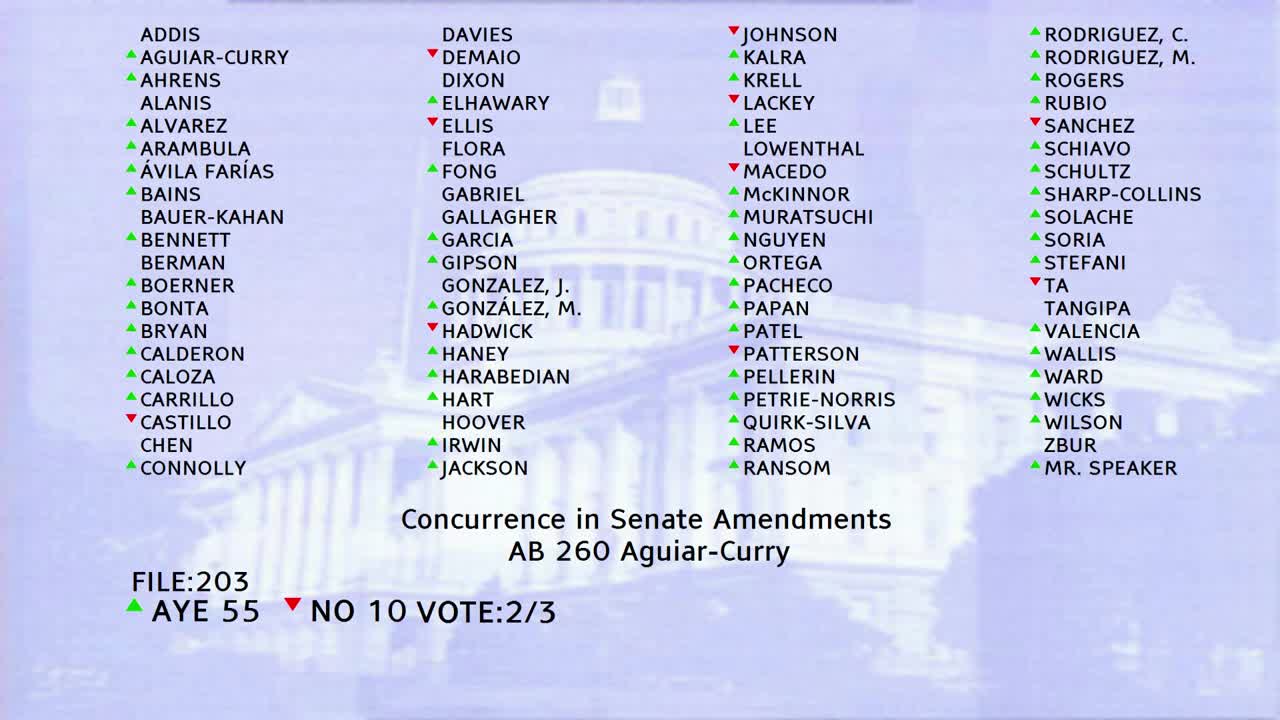
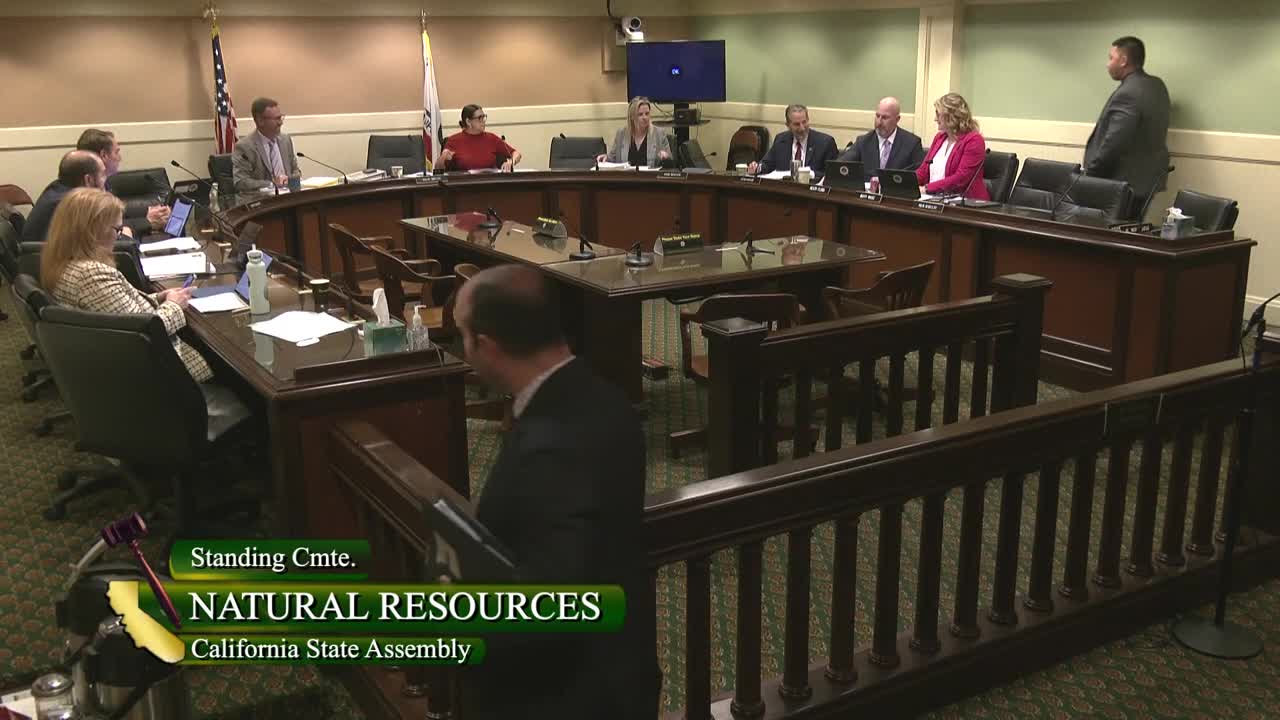
Bill Author

Bill Co-Author(s):