AB 1485: Property tax: documentary transfer tax: exemptions: Native American tribes.
- Session Year: 2025-2026
- House: Assembly
- Latest Version Date: 2026-02-10
Current Status:
Passed
(2026-02-10: Chaptered by Secretary of State - Chapter 2, Statutes of 2026.)
Introduced
In Committee
Awaiting First Chamber Vote
Passed First Chamber
In Committee
Awaiting Second Chamber Vote
Passed Second Chamber
Enacted
What does this bill do?
This bill lets federally recognized tribes and their tribe-owned entities get a property tax exemption when land is used to preserve native plants or animals, tribal traditional knowledge, or open space for recreation, as long as a conservation management plan guides the use. It also exempts local documentary transfer taxes (the county tax charged when land ownership is recorded) for qualifying transfers that return land to a tribe with limits on commercial use, and requires an annual state report on the number, value, and acres of exempted transfers.
The summary is provided by generative AI which can make mistakes. For original language, please view the details in the table below.
(1)The California Constitution authorizes the Legislature to exempt from taxation, in whole or in part, property that is used exclusively for religious, hospital, or charitable purposes, and is owned or held in trust by a nonprofit entity. Pursuant to that authority, existing law provides for a welfare exemption under which property used exclusively for an exempt purpose and owned and operated by specified entities, including foundations, limited liability companies, or corporations meeting certain statutory requirements, is exempt from taxation. Existing law, until the lien date in 2027, also provides that property used exclusively for the preservation of specified natural resources or open-space lands owned or operated by a specified entity meeting specified criteria is deemed to be included within the welfare exemption.
This bill would provide that, for purposes of the exemption for property used exclusively for the preservation of specified natural resources or open-space lands, for the property tax lien dates for the 202627 fiscal year to the 203132 fiscal year, inclusive, property may be owned and operated by a federally recognized Indian tribe or a wholly owned subsidiary of a federally recognized Indian tribe meeting certain requirements. By expanding the duties of local tax officials, this bill would impose a state-mandated local program.
(2)Existing law authorizes counties and cities and counties to impose a documentary transfer tax at a specified rate upon deeds, instruments, or other writings by which specified property is transferred. Existing law exempts certain transfers from the imposition of that tax, as specified.
This bill would, until January 1, 2031, exempt from that tax the transfer of any deed, instrument, or other writing that makes effective a tribal land return transaction, as defined.
(3)Existing law requires any bill authorizing a new tax expenditure to contain, among other things, specific goals, purposes, and objectives that the tax expenditure will achieve, detailed performance indicators, and data collection requirements.
This bill would include additional information required for any bill authorizing a new tax expenditure.
(4)The California Constitution requires the state to reimburse local agencies and school districts for certain costs mandated by the state. Statutory provisions establish procedures for making that reimbursement.
This bill would provide that, if the Commission on State Mandates determines that the bill contains costs mandated by the state, reimbursement for those costs shall be made pursuant to the statutory provisions noted above.
(5)This bill would take effect immediately as a tax levy.
(1)The California Constitution authorizes the Legislature to exempt from taxation, in whole or in part, property that is used exclusively for religious, hospital, or charitable purposes, and is owned or held in trust by a nonprofit entity. Pursuant to that authority, existing law provides for a welfare exemption under which property used exclusively for an exempt purpose and owned and operated by specified entities, including foundations, limited liability companies, or corporations meeting certain statutory requirements, is exempt from taxation. Existing law, until the lien date in 2027, also provides that property used exclusively for the preservation of specified natural resources or open-space lands owned or operated by a specified entity meeting specified criteria is deemed to be included within the welfare exemption.
This bill would provide that, for purposes of the exemption for property used exclusively for the preservation of specified natural resources or open-space lands, for the property tax lien dates for the 202627 fiscal year to the 203132 fiscal year, inclusive, property may be owned and operated by a federally recognized Indian tribe, a corporation chartered pursuant to tribal law, tribe or a wholly owned subsidiary of a federally recognized Indian tribe meeting certain requirements. By expanding the duties of local tax officials, this bill would impose a state-mandated local program.
(2)Existing law authorizes counties and cities and counties to impose a documentary transfer tax at a specified rate upon deeds, instruments, or other writings by which specified property is transferred. Existing law exempts certain transfers from the imposition of that tax, as specified.
This bill would, until January 1, 2031, exempt from that tax the transfer of any deed, instrument, or other writing that makes effective a tribal land return transaction, as defined.
(3)Existing law requires any bill authorizing a new tax expenditure to contain, among other things, specific goals, purposes, and objectives that the tax expenditure will achieve, detailed performance indicators, and data collection requirements.
This bill would include additional information required for any bill authorizing a new tax expenditure.
(4)The California Constitution requires the state to reimburse local agencies and school districts for certain costs mandated by the state. Statutory provisions establish procedures for making that reimbursement.
This bill would provide that, if the Commission on State Mandates determines that the bill contains costs mandated by the state, reimbursement for those costs shall be made pursuant to the statutory provisions noted above.
(5)This bill would take effect immediately as a tax levy.
(1)The California Constitution authorizes the Legislature to exempt from taxation, in whole or in part, property that is used exclusively for religious, hospital, or charitable purposes, and is owned or held in trust by a nonprofit entity. Pursuant to that authority, existing law provides for a welfare exemption under which property used exclusively for an exempt purpose and owned and operated by specified entities, including foundations, limited liability companies, or corporations meeting certain statutory requirements, is exempt from taxation. Existing law, until the lien date in 2027, also provides that property used exclusively for the preservation of specified natural resources or open-space lands owned or operated by a specified entity meeting specified criteria is deemed to be included within the welfare exemption.
This bill would provide that, for purposes of the exemption for property used exclusively for the preservation of specified natural resources or open-space lands, for the property tax lien dates for the 202627 fiscal year to the 203132 fiscal year, inclusive, property may be owned and operated by a federally recognized Indian tribe tribe, a corporation chartered pursuant to tribal law, or a wholly owned subsidiary of a federally recognized Indian tribe meeting certain requirements. By expanding the duties of local tax officials, this bill would impose a state-mandated local program.
(2)Existing law authorizes counties and cities and counties to impose a documentary transfer tax at a specified rate upon deeds, instruments, or other writings by which specified property is transferred. Existing law exempts certain transfers from the imposition of that tax, as specified.
This bill would, until January 1, 2031, exempt from that tax the transfer of any deed, instrument, or other writing that makes effective a tribal land return transaction, as defined.
(3)Existing law requires any bill authorizing a new tax expenditure to contain, among other things, specific goals, purposes, and objectives that the tax expenditure will achieve, detailed performance indicators, and data collection requirements.
This bill would include additional information required for any bill authorizing a new tax expenditure.
(4)The California Constitution requires the state to reimburse local agencies and school districts for certain costs mandated by the state. Statutory provisions establish procedures for making that reimbursement.
This bill would provide that, if the Commission on State Mandates determines that the bill contains costs mandated by the state, reimbursement for those costs shall be made pursuant to the statutory provisions noted above.
(5)This bill would take effect immediately as a tax levy.
(1)The California Constitution authorizes the Legislature to exempt from taxation, in whole or in part, property that is used exclusively for religious, hospital, or charitable purposes, and is owned or held in trust by a nonprofit entity. Pursuant to that authority, existing law provides for a welfare exemption under which property used exclusively for an exempt purpose and owned and operated by specified entities, including foundations, limited liability companies, or corporations meeting certain statutory requirements requirements, is exempt from taxation. Existing law, until the lien date in 2027, also provides that property used exclusively for the preservation of specified natural resources or open-space lands owned or operated by a specified entity meeting specified criteria is deemed to be included within the welfare exemption.
This bill would provide that, for purposes of the exemption for property used exclusively for the preservation of specified natural resources or open-space lands, until the above-described provision is repealed or until January 1, 2031, whichever is earlier, for the property tax lien dates for the 202627 fiscal year to the 203132 fiscal year, inclusive, property may be owned and operated by a federally recognized Indian tribe or wholly owned subsidiary of a federally recognized Indian tribe meeting certain requirements. By expanding the duties of local tax officials, this bill would impose a state-mandated local program.
(2)Existing law authorizes counties and cities and counties to impose a documentary transfer tax at a specified rate upon deeds, instruments, or other writings by which specified property is transferred. Existing law exempts certain transfers from the imposition of that tax, as specified.
This bill would, until January 1, 2031, exempt from that tax the transfer of any deed, instrument, or other writing that makes effective a tribal land return transaction, as defined.
(3)Existing law requires any bill authorizing a new tax expenditure to contain, among other things, specific goals, purposes, and objectives that the tax expenditure will achieve, detailed performance indicators, and data collection requirements.
This bill would include additional information required for any bill authorizing a new tax expenditure.
(4)The California Constitution requires the state to reimburse local agencies and school districts for certain costs mandated by the state. Statutory provisions establish procedures for making that reimbursement.
This bill would provide that, if the Commission on State Mandates determines that the bill contains costs mandated by the state, reimbursement for those costs shall be made pursuant to the statutory provisions noted above.
(5)This bill would take effect immediately as a tax levy.
(1)The California Constitution authorizes the Legislature to exempt from taxation, in whole or in part, property that is used exclusively for religious, hospital, or charitable purposes, and is owned or held in trust by a nonprofit entity. Pursuant to that authority, existing law provides for a welfare exemption under which property used exclusively for an exempt purpose and owned and operated by specified entities, including foundations, limited liability companies, or corporations meeting certain statutory requirements is exempt from taxation. Existing law, until the lien date in 2027, also provides that property used exclusively for the preservation of specified natural resources or open-space lands owned or operated by a specified entity meeting specified criteria is deemed to be included within the welfare exemption.
This bill would provide that, for purposes of the exemption for property used exclusively for the preservation of specified natural resources or open-space lands, real until the above-described provision is repealed or until January 1, 2031, whichever is earlier, property may be owned and operated by a federally recognized Indian tribe or wholly owned subsidiary of a federally recognized Indian tribe meeting certain statutory requirements. By expanding the duties of local tax officials, this bill would impose a state-mandated local program.
(2)Existing law authorizes counties and cities and counties to impose a documentary transfer tax at a specified rate upon deeds, instruments, or other writings by which specified property is transferred. Existing law exempts certain transfers from the imposition of that tax, as specified.
This bill would would, until January 1, 2031, exempt from that tax the transfer of any deed, instrument, or other writing that makes effective a tribal land return transaction, as defined.
(3)Existing law requires any bill authorizing a new tax expenditure to contain, among other things, specific goals, purposes, and objectives that the tax expenditure will achieve, detailed performance indicators, and data collection requirements.
This bill would include additional information required for any bill authorizing a new tax expenditure.
(3)(4)The California Constitution requires the state to reimburse local agencies and school districts for certain costs mandated by the state. Statutory provisions establish procedures for making that reimbursement.
This bill would provide that, if the Commission on State Mandates determines that the bill contains costs mandated by the state, reimbursement for those costs shall be made pursuant to the statutory provisions noted above.
(4)(5)This bill would take effect immediately as a tax levy.
(1)The California Constitution authorizes the Legislature to exempt from taxation, in whole or in part, property that is used exclusively for religious, hospital, or charitable purposes, and is owned or held in trust by a nonprofit entity. Pursuant to that authority, existing law provides for a welfare exemption under which property used exclusively for an exempt purpose and owned and operated by specified entities, including foundations, limited liability companies, or corporations meeting certain statutory requirements is exempt from taxation. Existing law, until the lien date in 2027, also provides that property used exclusively for the preservation of specified natural resources or open-space lands owned or operated by a specified entity meeting specified criteria is deemed to be included within the welfare exemption.
This bill would provide that, for purposes of the exemption for property used exclusively for the preservation of specified natural resources or open-space lands, real property may be owned and operated by a federally recognized Indian tribe or wholly owned subsidiary of a federally recognized Indian tribe meeting certain statutory requirements. By expanding the duties of local tax officials, this bill would impose a state-mandated local program.
(2)Existing law authorizes counties and cities and counties to impose a documentary transfer tax at a specified rate upon deeds, instruments, or other writings by which specified property is transferred. Existing law exempts certain transfers from the imposition of that tax, as specified.
This bill would exempt from that tax the transfer of any deed, instrument, or other writing that makes effective a tribal land return transaction, as defined.
(3)The California Constitution requires the state to reimburse local agencies and school districts for certain costs mandated by the state. Statutory provisions establish procedures for making that reimbursement.
This bill would provide that, if the Commission on State Mandates determines that the bill contains costs mandated by the state, reimbursement for those costs shall be made pursuant to the statutory provisions noted above.
(4)This bill would take effect immediately as a tax levy.
(a)Property that is used exclusively for the preservation of native plants or animals, biotic communities, geological or geographical formations of scientific or educational interest, tribal traditional knowledge, as defined in subdivision (p) of Section 8012 of the Health and Safety Code, or open-space lands used solely for recreation and for the enjoyment of scenic beauty, is open to the general public subject to reasonable restrictions concerning the needs of the land, and is owned and operated by a federally recognized Indian tribe or a wholly owned subsidiary of a federally recognized Indian tribe shall be deemed to be within the exemption provided for in subdivision (b) of Section 4 and in Section 5 of Article XIII of the California Constitution and in Section 214.
(b)The exemption provided by this section shall not apply to property that is reserved for future development.
(c)(1)For the purposes of determining whether the property is used for the actual operation of the exempt activity as required by subdivision (a), consideration shall not be given to the use of the property for either of the following:
(A)Activities resulting in direct or in-kind revenues, provided that the activities further the conservation objectives of the property as provided in a qualified conservation management plan for the property. These revenues include those revenues derived from grazing leases, hunting and camping permits, rents from persons performing caretaking activities who reside in dwellings on the property, and parking and admission fees collected for purposes of public enjoyment.
(B)Any lease of the property for a purpose that furthers the conservation objectives of the property, as provided in a qualified conservation management plan for the property.
(2)The activities and lease described in paragraph (1) may not generate unrelated business income.
(3)For purposes of this subdivision, a qualified conservation management plan means a plan that satisfies all of the following:
(A)Identifies both of the following:
(i)That the foremost purpose and use of the property is for the preservation of native plants or animals, biotic communities, geological or geographical formations of scientific or educational interest, tribal traditional knowledge, or as open-space lands used solely for recreation and for the enjoyment of scenic beauty.
(ii)The overall conservation management goals, including, but not limited to, identification of permitted activities, and actions necessary to achieve those goals.
(B)Describes both of the following:
(i)The natural resources, tribal traditional knowledge, and recreational attributes of the property.
(ii)Potential threats to the conservation values or areas of special concern.
(C)Contains a timeline for planned management activities and for regular inspections of the property, including existing structures and improvements.
(d)This section shall apply to property tax lien dates for the 202627 fiscal year to the 203132 fiscal year, inclusive.
(e)This section shall remain in effect only until January 1, 2033, and as of that date is repealed.
SEC. 2.Section 11930.5 is added to the Revenue and Taxation Code, to read:11930.5.(a)Any tax imposed pursuant to this part shall not apply with respect to any deed, instrument, or other writing to make effective a tribal land return transaction.
(b)For purposes of this section, tribal land return transaction means a land return acquisition that transfers ownership of land to a federally recognized tribe or a wholly owned subsidiary of a federally recognized Indian tribe in fee simple and that includes restrictive covenants that prohibit that tribe from engaging in commercial activities on the land and restricts the uses to cultural, educational, recreational, or conservation purposes.
(c)This section shall remain in effect only until January 1, 2031, and as of that date is repealed.
SEC. 3.It is the intent of the Legislature to apply the requirements of Section 41 of the Revenue and Taxation Code to this act. Therefore, the Legislature finds and declares the following with respect to the tax exemptions provided by Section 214.03 of the Revenue and Taxation Code, as added by Section 1 of this act, and by Section 11930.5 of the Revenue and Taxation Code, as added by Section 2 of this act:
(a)The specific goals, purposes, and objectives of these exemptions are to do all of the following:
(1)Eliminate financial barriers that inhibit federally recognized tribes from reclaiming and preserving ancestral lands and tribal traditional knowledge.
(2)Ensure equitable access to existing tax exemptions for land conservation.
(3)Facilitate the return of land to tribal stewardship for cultural, environmental, educational, and recreational purposes.
(4)Promote tribal self-determination and long-term environmental preservation by enabling tribes to hold and maintain land in its natural state without incurring additional transactional tax burdens.
(b)Detailed performance indicators for the Legislature to use in determining whether the exemptions provided by Sections 1 and 2 of this act meet the goals, purposes, and objectives described in subdivision (a) shall be all of the following:
(1)The total number and total assessed value of tribal land return transactions that qualify for an exemption under Section 2 of this act.
(2)The total dollar amount of taxes exempted under Section 2 of this act.
(3)The total acreage of land reclaimed by federally recognized Indian tribes granted an exemption under Section 1 of this act.
(4)The rate of year-over-year growth in the number of qualifying land transfers and acreage.
(c)The data collection requirements for determining whether the exemptions provided by Sections 1 and 2 of this act are meeting the specific goals, purposes, and objectives described in subdivision (a) are as follows:
(1)On or before March 1, 2028, and every March 1 thereafter, the Board of Equalization shall publish, and make available to the relevant committees of the Legislature, an annual report that does both of the following:
(A)Summarizes the total acreage of land exempted under Section 1 of this act that is owned and operated by federally recognized Indian tribes or their wholly owned subsidiaries, to the extent that the data is available from counties.
(B)Summarizes all of the following, to the extent that the data is available from counties:
(i)Total number of tribal land return transactions qualifying for an exemption under Section 2 of this act.
(ii)Total dollar value of the land transferred through transactions qualifying for an exemption under Section 2 of this act.
(iii)Total amount of documentary transfer taxes exempted under Section 2 of this act.
(2)A report required under this subdivision shall include baseline measurements from the year prior to the effective date.
SEC. 4.If the Commission on State Mandates determines that this act contains costs mandated by the state, reimbursement to local agencies and school districts for those costs shall be made pursuant to Part 7 (commencing with Section 17500) of Division 4 of Title 2 of the Government Code.
SEC. 5.This act provides for a tax levy within the meaning of Article IV of the California Constitution and shall go into immediate effect.
(a)Property that is used exclusively for the preservation of native plants or animals, biotic communities, geological or geographical formations of scientific or educational interest, tribal traditional knowledge, as defined in subdivision (p) of Section 8012 of the Health and Safety Code, or open-space lands used solely for recreation and for the enjoyment of scenic beauty, is open to the general public subject to reasonable restrictions concerning the needs of the land, and is owned and operated by a federally recognized Indian tribe, a corporation chartered pursuant to tribal law, tribe or a wholly owned subsidiary of a federally recognized Indian tribe shall be deemed to be within the exemption provided for in subdivision (b) of Section 4 and in Section 5 of Article XIII of the California Constitution and in Section 214.
(b)The exemption provided by this section shall not apply to property that is reserved for future development.
(c)(1)For the purposes of determining whether the property is used for the actual operation of the exempt activity as required by subdivision (a), consideration shall not be given to the use of the property for either of the following:
(A)Activities resulting in direct or in-kind revenues, provided that the activities further the conservation objectives of the property as provided in a qualified conservation management plan for the property. These revenues include those revenues derived from grazing leases, hunting and camping permits, rents from persons performing caretaking activities who reside in dwellings on the property, and parking and admission fees collected for purposes of public enjoyment.
(B)Any lease of the property for a purpose that furthers the conservation objectives of the property, as provided in a qualified conservation management plan for the property.
(2)The activities and lease described in paragraph (1) may not generate unrelated business income.
(3)For purposes of this subdivision, a qualified conservation management plan means a plan that satisfies all of the following:
(A)Identifies both of the following:
(i)That the foremost purpose and use of the property is for the preservation of native plants or animals, biotic communities, geological or geographical formations of scientific or educational interest, tribal traditional knowledge, or as open-space lands used solely for recreation and for the enjoyment of scenic beauty.
(ii)The overall conservation management goals, including, but not limited to, identification of permitted activities, and actions necessary to achieve those goals.
(B)Describes both of the following:
(i)The natural resources, tribal traditional knowledge, and recreational attributes of the property.
(ii)Potential threats to the conservation values or areas of special concern.
(C)Contains a timeline for planned management activities and for regular inspections of the property, including existing structures and improvements.
(d)This section shall apply to property tax lien dates for the 202627 fiscal year to the 203132 fiscal year, inclusive.
(e)This section shall remain in effect only until January 1, 2033, and as of that date is repealed.
SEC. 2.Section 11930.5 is added to the Revenue and Taxation Code, to read:11930.5.(a)Any tax imposed pursuant to this part shall not apply with respect to any deed, instrument, or other writing to make effective a tribal land return transaction.
(b)For purposes of this section, tribal land return transaction means a land return acquisition that transfers ownership of land to a California Native American tribe, a corporation chartered pursuant to tribal law, federally recognized tribe or a wholly owned subsidiary of a federally recognized Indian tribe in fee simple and that includes restrictive covenants that prohibit that tribe from engaging in commercial activities on the land and restricts the uses to cultural, educational, recreational, or conservation purposes. For purposes of this subdivision, California Native American tribe means a Native American tribe located in California that is on the contact list maintained by the Native American Heritage Commission for the purposes of Chapter 905 of the Statutes of 2004.
(c)This section shall remain in effect only until January 1, 2031, and as of that date is repealed.
SEC. 3.It is the intent of the Legislature to apply the requirements of Section 41 of the Revenue and Taxation Code to this act. Therefore, the Legislature finds and declares the following with respect to the tax exemptions provided by Section 214.03 of the Revenue and Taxation Code, as added by Section 1 of this act, and by Section 11930.5 of the Revenue and Taxation Code, as added by Section 2 of this act:
(a)The specific goals, purposes, and objectives of these exemptions are to do all of the following:
(1)Eliminate financial barriers that inhibit federally recognized tribes from reclaiming and preserving ancestral lands and tribal traditional knowledge.
(2)Ensure equitable access to existing tax exemptions for land conservation.
(3)Facilitate the return of land to tribal stewardship for cultural, environmental, educational, and recreational purposes.
(4)Promote tribal self-determination and long-term environmental preservation by enabling tribes to hold and maintain land in its natural state without incurring additional transactional tax burdens.
(b)Detailed performance indicators for the Legislature to use in determining whether the exemptions provided by Sections 1 and 2 of this act meet the goals, purposes, and objectives described in subdivision (a) shall be all of the following:
(1)The total number and total assessed value of tribal land return transactions that qualify for an exemption under Section 2 of this act.
(2)The total dollar amount of taxes exempted under Section 2 of this act.
(3)The total acreage of land reclaimed by federally recognized Indian tribes granted an exemption under Section 1 of this act.
(4)The rate of year-over-year growth in the number of qualifying land transfers and acreage.
(c)The data collection requirements for determining whether the exemptions provided by Sections 1 and 2 of this act are meeting the specific goals, purposes, and objectives described in subdivision (a) are as follows:
(1)On or before March 1, 2028, and every March 1 thereafter, the Board of Equalization shall publish, and make available to the relevant committees of the Legislature, an annual report that does both of the following:
(A)Summarizes the total acreage of land exempted under Section 1 of this act that is owned and operated by corporations chartered pursuant to tribal law, federally recognized Indian tribes, tribes or their wholly owned subsidiaries, to the extent that the data is available from counties.
(B)Summarizes all of the following, to the extent that the data is available from counties:
(i)Total number of tribal land return transactions qualifying for an exemption under Section 2 of this act.
(ii)Total dollar value of the land transferred through transactions qualifying for an exemption under Section 2 of this act.
(iii)Total amount of documentary transfer taxes exempted under Section 2 of this act.
(2)A report required under this subdivision shall include baseline measurements from the year prior to the effective date.
SEC. 4.If the Commission on State Mandates determines that this act contains costs mandated by the state, reimbursement to local agencies and school districts for those costs shall be made pursuant to Part 7 (commencing with Section 17500) of Division 4 of Title 2 of the Government Code.
SEC. 5.This act provides for a tax levy within the meaning of Article IV of the California Constitution and shall go into immediate effect.
(a)Property that is used exclusively for the preservation of native plants or animals, biotic communities, geological or geographical formations of scientific or educational interest, tribal traditional knowledge, as defined in subdivision (p) of Section 8012 of the Health and Safety Code, or open-space lands used solely for recreation and for the enjoyment of scenic beauty, is open to the general public subject to reasonable restrictions concerning the needs of the land, and is owned and operated by a federally recognized Indian tribe tribe, a corporation chartered pursuant to tribal law, or a wholly owned subsidiary of a federally recognized Indian tribe shall be deemed to be within the exemption provided for in subdivision (b) of Section 4 and in Section 5 of Article XIII of the California Constitution and in Section 214.
(b)The exemption provided by this section shall not apply to property that is reserved for future development.
(c)(1)For the purposes of determining whether the property is used for the actual operation of the exempt activity as required by subdivision (a), consideration shall not be given to the use of the property for either of the following:
(A)Activities resulting in direct or in-kind revenues, provided that the activities further the conservation objectives of the property as provided in a qualified conservation management plan for the property. These revenues include those revenues derived from grazing leases, hunting and camping permits, rents from persons performing caretaking activities who reside in dwellings on the property, and parking and admission fees collected for purposes of public enjoyment.
(B)Any lease of the property for a purpose that furthers the conservation objectives of the property, as provided in a qualified conservation management plan for the property.
(2)The activities and lease described in paragraph (1) may not generate unrelated business income.
(3)For purposes of this subdivision, a qualified conservation management plan means a plan that satisfies all of the following:
(A)Identifies both of the following:
(i)That the foremost purpose and use of the property is for the preservation of native plants or animals, biotic communities, geological or geographical formations of scientific or educational interest, tribal traditional knowledge, or as open-space lands used solely for recreation and for the enjoyment of scenic beauty.
(ii)The overall conservation management goals, including, but not limited to, identification of permitted activities, and actions necessary to achieve those goals.
(B)Describes both of the following:
(i)The natural resources resources, tribal traditional knowledge, and recreational attributes of the property.
(ii)Potential threats to the conservation values or areas of special concern.
(C)Contains a timeline for planned management activities and for regular inspections of the property, including existing structures and improvements.
(d)This section shall apply to property tax lien dates for the 202627 fiscal year to the 203132 fiscal year, inclusive.
(e)This section shall remain in effect only until January 1, 2033, and as of that date is repealed.
SEC. 2.Section 11930.5 is added to the Revenue and Taxation Code, to read:11930.5.(a)Any tax imposed pursuant to this part shall not apply with respect to any deed, instrument, or other writing to make effective a tribal land return transaction.
(b)For purposes of this section, tribal land return transaction means a land return acquisition that transfers ownership of land to a federally recognized California Native American tribe, a corporation chartered pursuant to tribal law, or a wholly owned subsidiary of a federally recognized Indian tribe in fee simple, is not federal trust land pursuant to Section 1151 of Title 18 of the United States Code, simple and that includes restrictive covenants that prohibit that tribe from engaging in commercial activities on the land and restricts the uses to cultural, educational, recreational, or conservation purposes. For purposes of this subdivision, California Native American tribe means a Native American tribe located in California that is on the contact list maintained by the Native American Heritage Commission for the purposes of Chapter 905 of the Statutes of 2004.
(c)This section shall remain in effect only until January 1, 2031, and as of that date is repealed.
SEC. 3.It is the intent of the Legislature to apply the requirements of Section 41 of the Revenue and Taxation Code to this act. Therefore, the Legislature finds and declares the following with respect to the tax exemptions provided by Section 214.03 of the Revenue and Taxation Code, as added by Section 1 of this act, and by Section 11930.5 of the Revenue and Taxation Code, as added by Section 2 of this act:
(a)The specific goals, purposes, and objectives of these exemptions are to do all of the following:
(1)Eliminate financial barriers that inhibit federally recognized tribes from reclaiming and preserving ancestral lands. lands and tribal traditional knowledge.
(2)Ensure equitable access to existing tax exemptions for land conservation.
(3)Facilitate the return of land to tribal stewardship for cultural, environmental, educational, and recreational purposes.
(4)Promote tribal self-determination and long-term environmental preservation by enabling tribes to hold and maintain land in its natural state without incurring additional transactional tax burdens.
(b)Detailed performance indicators for the Legislature to use in determining whether the exemptions provided by Sections 1 and 2 of this act meet the goals, purposes, and objectives described in subdivision (a) shall be all of the following:
(1)The total number and total assessed value of tribal land return transactions that qualify for an exemption under Section 2 of this act.
(2)The total dollar amount of taxes exempted under Section 2 of this act.
(3)The total acreage of land reclaimed by federally recognized Indian tribes granted an exemption under Section 1 of this act.
(4)The rate of year-over-year growth in the number of qualifying land transfers and acreage.
(c)The data collection requirements for determining whether the exemptions provided by Sections 1 and 2 of this act are meeting the specific goals, purposes, and objectives described in subdivision (a) are as follows:
(1)On or before March 1 of each year, 1, 2028, and every March 1 thereafter, the Board of Equalization shall publish, and make available to the relevant committees of the Legislature, an annual report summarizing that does both of the following:
(A)Summarizes the total acreage of land exempted under Section 1 of this act that is owned and operated by corporations chartered pursuant to tribal law, federally recognized Indian tribes tribes, or their wholly owned subsidiaries. subsidiaries, to the extent that the data is available from counties.
(2)On or before March of each year, the Legislative Analysts Office shall publish, and make available to the relevant committees of the Legislature, an annual report summarizing(B)Summarizes all of the following: following, to the extent that the data is available from counties:
(A)(i)Total number of tribal land return transactions qualifying for an exemption under Section 2 of this act.
(B)(ii)Total dollar value of the land transferred through transactions qualifying for an exemption under Section 2 of this act.
(C)(iii)Total amount of documentary transfer taxes exempted under Section 2 of this act.
(3)(2)A report required under this subdivision shall include baseline measurements from the year prior to the effective date.
SEC. 4.If the Commission on State Mandates determines that this act contains costs mandated by the state, reimbursement to local agencies and school districts for those costs shall be made pursuant to Part 7 (commencing with Section 17500) of Division 4 of Title 2 of the Government Code.
SEC. 5.This act provides for a tax levy within the meaning of Article IV of the California Constitution and shall go into immediate effect.
(a)Property that is used exclusively for the preservation of native plants or animals, biotic communities, geological or geographical formations of scientific or educational interest, or open-space lands used solely for recreation and for the enjoyment of scenic beauty, is open to the general public subject to reasonable restrictions concerning the needs of the land, and is owned and operated by a federally recognized Indian tribe or wholly owned subsidiary of a federally recognized Indian tribe shall be deemed to be within the exemption provided for in subdivision (b) of Section 4 and in Section 5 of Article XIII of the California Constitution and in Section 214.
(b)The exemption provided by this section shall not apply to property that is reserved for future development.
(c)(1)For the purposes of determining whether the property is used for the actual operation of the exempt activity as required by subdivision (a), consideration shall not be given to the use of the property for either of the following:
(A)Activities resulting in direct or in-kind revenues, provided that the activities further the conservation objectives of the property as provided in a qualified conservation management plan for the property. These revenues include those revenues derived from grazing leases, hunting and camping permits, rents from persons performing caretaking activities who reside in dwellings on the property, and admission fees collected for purposes of public enjoyment.
(B)Any lease of the property for a purpose that furthers the conservation objectives of the property, as provided in a qualified conservation management plan for the property.
(2)The activities and lease described in paragraph (1) may not generate unrelated business income.
(3)For purposes of this subdivision, a qualified conservation management plan means a plan that satisfies all of the following:
(A)Identifies both of the following:
(i)That the foremost purpose and use of the property is for the preservation of native plants or animals, biotic communities, geological or geographical formations of scientific or educational interest, or as open-space lands used solely for recreation and for the enjoyment of scenic beauty.
(ii)The overall conservation management goals, including, but not limited to, identification of permitted activities, and actions necessary to achieve those goals.
(B)Describes both of the following:
(i)The natural resources and recreational attributes of the property.
(ii)Potential threats to the conservation values or areas of special concern.
(C)Contains a timeline for planned management activities and for regular inspections of the property, including existing structures and improvements.
(d)This section shall be operative so long as Section 214.02 is operative. apply to property tax lien dates for the 202627 fiscal year to the 203132 fiscal year, inclusive.
(e)This section shall remain in effect only until January 1, 2031, or the repeal date specified in subdivision (e) of Section 214.02, whichever is earlier, 2033, and as of that date is repealed.
SEC. 2.Section 11930.5 is added to the Revenue and Taxation Code, to read:11930.5.(a)Any tax imposed pursuant to this part shall not apply with respect to any deed, instrument, or other writing to make effective a tribal land return transaction.
(b)For purposes of this section, tribal land return transaction means a land return acquisition that transfers ownership of land to a federally recognized tribe in fee simple, is not federal trust land pursuant to Section 1151 of Title 18 of the United States Code, and that includes restrictive covenants that prohibit that tribe from engaging in commercial activities on the land and restricts the uses to cultural, educational, recreational, or conservation purposes.
(c)This section shall remain in effect only until January 1, 2031, and as of that date is repealed.
SEC. 3.It is the intent of the Legislature to apply the requirements of Section 41 of the Revenue and Taxation Code to this act. Therefore, the Legislature finds and declares the following with respect to the tax exemptions provided by Section 214.03 of the Revenue and Taxation Code, as amended added by Section 1 of this act, and by Section 11930.5 of the Revenue and Taxation Code, as added by Section 2 of this act:
(a)The specific goals, purposes, and objectives of these exemptions are to do all of the following:
(1)Eliminate financial barriers that inhibit federally recognized tribes from reclaiming and preserving ancestral lands.
(2)Ensure equitable access to existing tax exemptions for land conservation.
(3)Facilitate the return of land to tribal stewardship for cultural, environmental, educational, and recreational purposes.
(4)Promote tribal self-determination and long-term environmental preservation by enabling tribes to hold and maintain land in its natural state without incurring additional transactional tax burdens.
(b)Detailed performance indicators for the Legislature to use in determining whether the exemptions provided by Sections 1 and 2 of this act meet the goals, purposes, and objectives described in subdivision (a) shall be all of the following:
(1)The total number and total assessed value of tribal land return transactions that qualify for an exemption under Section 2 of this act.
(2)The total dollar amount of taxes exempted under Section 2 of this act.
(3)The total acreage of land reclaimed by federally recognized Indian tribes granted an exemption under Section 1 of this act.
(4)The rate of year-over-year growth in the number of qualifying land transfers and acreage.
(c)The data collection requirements for determining whether the exemptions provided by Sections 1 and 2 of this act are meeting the specific goals, purposes, and objectives described in subdivision (a) are as follows:
(1)On or before March 1 of each year, the Board of Equalization shall publish, and make available to the relevant committees of the Legislature, an annual report summarizing the total acreage of land exempted under Section 1 of this act that is owned and operated by federally recognized Indian tribes or their wholly owned subsidiaries.
(2)On or before March of each year, the Legislative Analysts Office shall publish, and make available to the relevant committees of the Legislature, an annual report summarizing all of the following:
(A)Total number of tribal land return transactions qualifying for an exemption under Section 2 of this act.
(B)Total dollar value of the land transferred through transactions qualifying for an exemption under Section 2 of this act.
(C)Total amount of documentary transfer taxes exempted under Section 2 of this act.
(3)A report required under this subdivision shall include baseline measurements from the year prior to the effective date.
SEC. 4.If the Commission on State Mandates determines that this act contains costs mandated by the state, reimbursement to local agencies and school districts for those costs shall be made pursuant to Part 7 (commencing with Section 17500) of Division 4 of Title 2 of the Government Code.
SEC. 5.This act provides for a tax levy within the meaning of Article IV of the California Constitution and shall go into immediate effect.
(a)Property that is used exclusively for the preservation of native plants or animals, biotic communities, geological or geographical formations of scientific or educational interest, or open-space lands used solely for recreation and for the enjoyment of scenic beauty, is open to the general public subject to reasonable restrictions concerning the needs of the land, and is owned and operated by a federally recognized Indian tribe or wholly owned subsidiary of a federally recognized Indian tribe shall be deemed to be within the exemption provided for in subdivision (b) of Section 4 and in Section 5 of Article XIII of the California Constitution and in Section 214.
(b)The exemption provided by this section shall not apply to property that is reserved for future development.
(c)(1)For the purposes of determining whether the property is used for the actual operation of the exempt activity as required by subdivision (a), consideration shall not be given to the use of the property for either of the following:
(A)Activities resulting in direct or in-kind revenues, provided that the activities further the conservation objectives of the property as provided in a qualified conservation management plan for the property. These revenues include those revenues derived from grazing leases, hunting and camping permits, rents from persons performing caretaking activities who reside in dwellings on the property, and admission fees collected for purposes of public enjoyment.
(B)Any lease of the property for a purpose that furthers the conservation objectives of the property, as provided in a qualified conservation management plan for the property.
(2)The activities and lease described in paragraph (1) may not generate unrelated business income.
(3)For purposes of this subdivision, a qualified conservation management plan means a plan that satisfies all of the following:
(A)Identifies both of the following:
(i)That the foremost purpose and use of the property is for the preservation of native plants or animals, biotic communities, geological or geographical formations of scientific or educational interest, or as open-space lands used solely for recreation and for the enjoyment of scenic beauty.
(ii)The overall conservation management goals, including, but not limited to, identification of permitted activities, and actions necessary to achieve those goals.
(B)Describes both of the following:
(i)The natural resources and recreational attributes of the property.
(ii)Potential threats to the conservation values or areas of special concern.
(C)Contains a timeline for planned management activities and for regular inspections of the property, including existing structures and improvements.
(d)This section shall be operative so long as Section 214.02 is operative.
(e)This section shall remain in effect only until January 1, 2031, or the repeal date specified in subdivision (e) of Section 214.02, whichever is earlier, and as of that date is repealed.
SEC. 2.Section 11930.5 is added to the Revenue and Taxation Code, to read:11930.5.(a)Any tax imposed pursuant to this part shall not apply with respect to any deed, instrument, or other writing to make effective a tribal land return transaction.
(b)For purposes of this section, tribal land return transaction means a land return acquisition that transfers ownership of land to a federally recognized tribe in fee simple, is not federal trust land pursuant to Section 1151 of Title 18 of the United States Code, and that includes restrictive covenants that prohibit that tribe from engaging in commercial activities on the land and restricts the uses to cultural, educational, recreational, or conservation purposes.
(c)This section shall remain in effect only until January 1, 2031, and as of that date is repealed.
SEC. 3.It is the intent of the Legislature to apply the requirements of Section 41 of the Revenue and Taxation Code to this act. Therefore, the Legislature finds and declares the following with respect to the tax exemptions provided by Section 214.03 of the Revenue and Taxation Code, as amended by Section 1 of this act, and by Section 11930.5 of the Revenue and Taxation Code, as added by Section 2 of this act:
(a)The specific goals, purposes, and objectives of these exemptions are to do all of the following:
(1)Eliminate financial barriers that inhibit federally recognized tribes from reclaiming and preserving ancestral lands.
(2)Ensure equitable access to existing tax exemptions for land conservation.
(3)Facilitate the return of land to tribal stewardship for cultural, environmental, educational, and recreational purposes.
(4)Promote tribal self-determination and long-term environmental preservation by enabling tribes to hold and maintain land in its natural state without incurring additional transactional tax burdens.
(b)Detailed performance indicators for the Legislature to use in determining whether the exemptions provided by Sections 1 and 2 of this act meet the goals, purposes, and objectives described in subdivision (a) shall be all of the following:
(1)The total number and total assessed value of tribal land return transactions that qualify for an exemption under Section 2 of this act.
(2)The total dollar amount of taxes exempted under Section 2 of this act.
(3)The total acreage of land reclaimed by federally recognized Indian tribes granted an exemption under Section 1 of this act.
(4)The rate of year-over-year growth in the number of qualifying land transfers and acreage.
(c)The data collection requirements for determining whether the exemptions provided by Sections 1 and 2 of this act are meeting the specific goals, purposes, and objectives described in subdivision (a) are as follows:
(1)On or before March 1 of each year, the Board of Equalization shall publish, and make available to the relevant committees of the Legislature, an annual report summarizing the total acreage of land exempted under Section 1 of this act that is owned and operated by federally recognized Indian tribes or their wholly owned subsidiaries.
(2)On or before March of each year, the Legislative Analysts Office shall publish, and make available to the relevant committees of the Legislature, an annual report summarizing all of the following:
(A)Total number of tribal land return transactions qualifying for an exemption under Section 2 of this act.
(B)Total dollar value of the land transferred through transactions qualifying for an exemption under Section 2 of this act.
(C)Total amount of documentary transfer taxes exempted under Section 2 of this act.
(3)A report required under this subdivision shall include baseline measurements from the year prior to the effective date.
SEC. 3.SEC. 4.If the Commission on State Mandates determines that this act contains costs mandated by the state, reimbursement to local agencies and school districts for those costs shall be made pursuant to Part 7 (commencing with Section 17500) of Division 4 of Title 2 of the Government Code.
SEC. 4.SEC. 5.This act provides for a tax levy within the meaning of Article IV of the California Constitution and shall go into immediate effect.
(a)Except as provided in subdivision (b) or (c), property that is used exclusively for the preservation of native plants or animals, biotic communities, geological or geographical formations of scientific or educational interest, or open-space lands used solely for recreation and for the enjoyment of scenic beauty, is open to the general public subject to reasonable restrictions concerning the needs of the land, and is owned and operated by a scientific or charitable fund, foundation, limited liability company, federally recognized Indian tribe or wholly owned subsidiary of a federally recognized Indian tribe, or corporation, the primary interest of which is to preserve those natural areas, and that meets all the requirements of Section 214, shall be deemed to be within the exemption provided for in subdivision (b) of Sections 4 and 5 of Article XIII of the Constitution of the State of California and Section 214.
(b)(1)The exemption provided by this section shall not apply to any property of an organization that owns in the aggregate 30,000 acres or more in one county that were exempt under this section prior to March 1, 1983, or that are proposed to be exempt, unless the nonprofit organization that holds the property is fully independent of the owner of any taxable real property that is adjacent to the property otherwise qualifying for tax exemption under this section. For purposes of this section, the nonprofit organization that holds the property shall be considered fully independent if the exempt property is not used or operated by that organization or by any other person so as to benefit any officer, trustee, director, shareholder, member, employee, contributor or bondholder of the exempt organization or operator, or the owner of any adjacent property, or any other person, through the distribution of profits, payment of excessive charges or compensations, or the more advantageous pursuit of their business or profession.
(2)This subdivision shall not apply to a federally recognized Indian tribe or wholly owned subsidiary of a federally recognized Indian tribe.
(c)The exemption provided by this section shall not apply to property that is reserved for future development.
(d)(1)For the purposes of determining whether the property is used for the actual operation of the exempt activity as required by subdivision (a), consideration shall not be given to the use of the property for either of the following:
(A)Activities resulting in direct or in-kind revenues provided that the activities further the conservation objectives of the property as provided in a qualified conservation management plan for the property. These revenues include those revenues derived from grazing leases, hunting and camping permits, rents from persons performing caretaking activities who reside in dwellings on the property, and admission fees collected for purposes of public enjoyment.
(B)Any lease of the property for a purpose that furthers the conservation objectives of the property as provided in a qualified conservation management plan for the property.
(2)The activities and lease described in paragraph (1) may not generate unrelated business income.
(3)For purposes of this subdivision, a qualified conservation management plan means a plan that satisfies all of the following:
(A)Identifies both of the following:
(i)That the foremost purpose and use of the property is for the preservation of native plants or animals, biotic communities, geological or geographical formations of scientific or educational interest, or as open-space lands used solely for recreation and for the enjoyment of scenic beauty.
(ii)The overall conservation management goals, including, but not limited to, identification of permitted activities, and actions necessary to achieve the goals.
(B)Describes both of the following:
(i)The natural resources and recreational attributes of the property.
(ii)Potential threats to the conservation values or areas of special concern.
(C)Contains a timeline for planned management activities and for regular inspections of the property, including existing structures and improvements.
(e)This section shall be operative from the lien date in 1983 to and including the lien date in 2027, after which date this section shall become inoperative, and as of January 1, 2028, this section is repealed.
(f)The amendments made by Section 4 of Chapter 354 of the Statutes of 2004 shall apply with respect to lien dates occurring on and after January 1, 2005.
(g)The amendments made to this section by the act adding this subdivision shall apply commencing with the lien date for the 201314 fiscal year.
SEC. 2.Section 11930.5 is added to the Revenue and Taxation Code, to read:11930.5.(a)Any tax imposed pursuant to this part shall not apply with respect to any deed, instrument, or other writing to make effective a tribal land return transaction.
(b)For purposes of this section, the following definitions shall apply:(1)California Native American tribe means a federally recognized Native American tribe or a nonfederally recognized tribe, whose name is included on the contact list maintained by the Native American Heritage Commission.(2)Tribal(b)For purposes of this section, tribal land return transaction means a land return acquisition that transfers ownership of land to a California Native American federally recognized tribe in fee simple, is not federal trust land pursuant to Section 1151 of Title 18 of the United States Code, and that includes restrictive covenants that prohibit that tribe from engaging in commercial activities on the land and restricts the uses to cultural, educational, recreational recreational, or conservation purposes.
SEC. 3.If the Commission on State Mandates determines that this act contains costs mandated by the state, reimbursement to local agencies and school districts for those costs shall be made pursuant to Part 7 (commencing with Section 17500) of Division 4 of Title 2 of the Government Code.
SEC. 4.This act provides for a tax levy within the meaning of Article IV of the California Constitution and shall go into immediate effect.
(a)Except as provided in subdivision (b) or (c), property that is used exclusively for the preservation of native plants or animals, biotic communities, geological or geographical formations of scientific or educational interest, or open-space lands used solely for recreation and for the enjoyment of scenic beauty, is open to the general public subject to reasonable restrictions concerning the needs of the land, and is owned and operated by a scientific or charitable fund, foundation, limited liability company, federally recognized Indian tribe or wholly owned subsidiary of a federally recognized Indian tribe, or corporation, the primary interest of which is to preserve those natural areas, and that meets all the requirements of Section 214, shall be deemed to be within the exemption provided for in subdivision (b) of Sections 4 and 5 of Article XIII of the Constitution of the State of California and Section 214.
(b)(1)The exemption provided by this section shall not apply to any property of an organization that owns in the aggregate 30,000 acres or more in one county that were exempt under this section prior to March 1, 1983, or that are proposed to be exempt, unless the nonprofit organization that holds the property is fully independent of the owner of any taxable real property that is adjacent to the property otherwise qualifying for tax exemption under this section. For purposes of this section, the nonprofit organization that holds the property shall be considered fully independent if the exempt property is not used or operated by that organization or by any other person so as to benefit any officer, trustee, director, shareholder, member, employee, contributor or bondholder of the exempt organization or operator, or the owner of any adjacent property, or any other person, through the distribution of profits, payment of excessive charges or compensations, or the more advantageous pursuit of their business or profession.
(2)This subdivision shall not apply to a federally recognized Indian tribe or wholly owned subsidiary of a federally recognized Indian tribe.
(c)The exemption provided by this section shall not apply to property that is reserved for future development.
(d)(1)For the purposes of determining whether the property is used for the actual operation of the exempt activity as required by subdivision (a), consideration shall not be given to the use of the property for either of the following:
(A)Activities resulting in direct or in-kind revenues provided that the activities further the conservation objectives of the property as provided in a qualified conservation management plan for the property. These revenues include those revenues derived from grazing leases, hunting and camping permits, rents from persons performing caretaking activities who reside in dwellings on the property, and admission fees collected for purposes of public enjoyment.
(B)Any lease of the property for a purpose that furthers the conservation objectives of the property as provided in a qualified conservation management plan for the property.
(2)The activities and lease described in paragraph (1) may not generate unrelated business income.
(3)For purposes of this subdivision, a qualified conservation management plan means a plan that satisfies all of the following:
(A)Identifies both of the following:
(i)That the foremost purpose and use of the property is for the preservation of native plants or animals, biotic communities, geological or geographical formations of scientific or educational interest, or as open-space lands used solely for recreation and for the enjoyment of scenic beauty.
(ii)The overall conservation management goals, including, but not limited to, identification of permitted activities, and actions necessary to achieve the goals.
(B)Describes both of the following:
(i)The natural resources and recreational attributes of the property.
(ii)Potential threats to the conservation values or areas of special concern.
(C)Contains a timeline for planned management activities and for regular inspections of the property, including existing structures and improvements.
(e)This section shall be operative from the lien date in 1983 to and including the lien date in 2027, after which date this section shall become inoperative, and as of January 1, 2028, this section is repealed.
(f)The amendments made by Section 4 of Chapter 354 of the Statutes of 2004 shall apply with respect to lien dates occurring on and after January 1, 2005.
(g)The amendments made to this section by the act adding this subdivision shall apply commencing with the lien date for the 201314 fiscal year.
SEC. 2.Section 11930.5 is added to the Revenue and Taxation Code, to read:11930.5.(a)Any tax imposed pursuant to this part shall not apply with respect to any deed, instrument, or other writing to make effective a tribal land return transaction.
(b)For purposes of this section, the following definitions shall apply:
(1)California Native American tribe means a federally recognized Native American tribe or a nonfederally recognized tribe, whose name is included on the contact list maintained by the Native American Heritage Commission.
(2)Tribal land return transaction means a land return acquisition that transfers ownership of land to a California Native American tribe in fee simple, is not federal trust land pursuant to Section 1151 of Title 18 of the United States Code, and that includes restrictive covenants that prohibit that tribe from engaging in commercial activities on the land and restricts the uses to cultural, educational, recreational or conservation purposes.
SEC. 3.If the Commission on State Mandates determines that this act contains costs mandated by the state, reimbursement to local agencies and school districts for those costs shall be made pursuant to Part 7 (commencing with Section 17500) of Division 4 of Title 2 of the Government Code.
SEC. 4.This act provides for a tax levy within the meaning of Article IV of the California Constitution and shall go into immediate effect.
|
Date
|
Status
|
|---|---|
| Feb 10, 2026 | Chaptered by Secretary of State - Chapter 2, Statutes of 2026. |
| Feb 10, 2026 | Approved by the Governor. |
| Feb 5, 2026 | Enrolled and presented to the Governor at 2:30 p.m. |
| Jan 29, 2026 | Senate amendments concurred in. To Engrossing and Enrolling. (Ayes 74. Noes 0. Page 3884.). |
| Sep 12, 2025 | In Assembly. Concurrence in Senate amendments pending. |
| Sep 11, 2025 | Read third time. Passed. Ordered to the Assembly. (Ayes 40. Noes 0. Page 2933.). |
| Sep 9, 2025 | Ordered to special consent calendar. |
| Sep 8, 2025 | Read second time. Ordered to third reading. |
| Sep 5, 2025 | Read third time and amended. Ordered to second reading. |
| Sep 2, 2025 | Read second time. Ordered to third reading. |
| Aug 29, 2025 | Read second time and amended. Ordered returned to second reading. |
| Aug 29, 2025 | From committee: Amend, and do pass as amended. (Ayes 7. Noes 0.) (August 29). |
| Aug 18, 2025 | In committee: Referred to suspense file. |
| Jul 15, 2025 | Read second time and amended. Re-referred to Com. on APPR. |
| Jul 14, 2025 | From committee: Amend, and do pass as amended and re-refer to Com. on APPR. (Ayes 5. Noes 0.) (July 9). |
| Jun 18, 2025 | Referred to Com. on REV. & TAX. |
| Jun 4, 2025 | In Senate. Read first time. To Com. on RLS. for assignment. |
| Jun 3, 2025 | Read third time. Passed. Ordered to the Senate. (Ayes 77. Noes 0. Page 2005.) |
| May 27, 2025 | Read second time. Ordered to third reading. |
| May 23, 2025 | From committee: Do pass. (Ayes 14. Noes 0.) (May 23). |
| May 21, 2025 | Joint Rule 62(a), file notice suspended. (Page 1627.) |
| May 21, 2025 | In committee: Set, first hearing. Referred to APPR. suspense file. |
| May 14, 2025 | In committee: Hearing postponed by committee. |
| May 6, 2025 | From committee: Do pass and re-refer to Com. on APPR. (Ayes 7. Noes 0.) (May 5). Re-referred to Com. on APPR. |
| Apr 28, 2025 | Re-referred to Com. on REV. & TAX. |
| Apr 24, 2025 | From committee chair, with author's amendments: Amend, and re-refer to Com. on REV. & TAX. Read second time and amended. |
| Apr 7, 2025 | In committee: Set, first hearing. Referred to REV. & TAX. suspense file. |
| Apr 2, 2025 | Re-referred to Com. on REV. & TAX. |
| Apr 1, 2025 | From committee chair, with author's amendments: Amend, and re-refer to Com. on REV. & TAX. Read second time and amended. |
| Mar 13, 2025 | Referred to Com. on REV. & TAX. |
| Feb 24, 2025 | Read first time. |
| Feb 22, 2025 | From printer. May be heard in committee March 24. |
| Feb 21, 2025 | Introduced. To print. |
|
Date
|
Description
|
Location
|
Votes
|
|
|---|---|---|---|---|
| Jan 29, 2026 | AB 1485 Macedo Concurrence in Senate Amendments | Assembly Floor |
Passed |
|
| Sep 11, 2025 | Special Consent AB1485 Macedo et al. By Rubio | Senate Floor |
Passed |
|
| Aug 29, 2025 | Do pass as amended | Senate Standing Committee on Appropriations |
Passed |
|
| Aug 18, 2025 | Placed on suspense file | Senate Standing Committee on Appropriations |
Passed |
|
| Jul 9, 2025 | Do pass as amended, but first amend, and re-refer to the Committee on [Appropriations] | Senate Standing Committee on Revenue and Taxation |
Passed |
|
| Jun 3, 2025 | AB 1485 Macedo Assembly Third Reading | Assembly Floor |
Passed |
|
| May 23, 2025 | Do pass. | Assembly Standing Committee on Appropriations |
Passed |
|
| May 5, 2025 | Do pass and be re-referred to the Committee on [Appropriations] | Assembly Standing Committee on Revenue and Taxation |
Passed |
This list shows positions taken on this bill by organizations on the date displayed, which is linked to the original source.
Positions by individuals are not included.
|
Organization
|
Position
|
Date
|
|---|---|---|
| Agua Caliente Band Of Cahuilla Indians | ** Support | |
| Big Sandy Rancheria Band of Western Mono Indians | ** Support | |
| Big Valley Band of Pomo Indians | ** Support | |
| California Assessors Association | ** Support | |
| California Nations Indian Gaming Association | ** Support | |
| Enterprise Rancheria | ** Support | |
| Habematolel Pomo Of Upper Lake | ** Support | |
| Karuk Tribe | ** Support | |
| Mooretown Rancheria | ** Support | |
| Pit River Tribe | ** Support | |
| potter valley tribe | ** Support | |
| Pulikla Tribe of Yurok People | ** Support | |
| Rincon Band of Luiseo Indians | ** Support | |
| Tolowa Dee-ni Nation | ** Support | |
| Viejas Band of Kumeyaay Indians | ** Support |
CONCURRENCE IN SENATE AMENDMENTS
CSA1 Bill Id:AB 1485
Author:(Macedo)
As Amended Ver:September 5, 2025
Majority vote. Tax Levy
SUMMARY
Provides that certain uses of property owned by a federally recognized Indian tribe, or its wholly owned subsidiary, are exempt from taxation, and exempts a "tribal land return transaction" from any documentary transfer tax until January 1, 2031.
Senate Amendments
- Provide that this bill's provisions apply to property tax lien dates for the 2026-27 fiscal year (FY), to the 2031-2032 fiscal year, inclusive, and repeal these provisions on January 1, 2033.
- Add the preservation of tribal traditional knowledge, as defined in existing law, as an eligible exempt use.
- Add parking fees to the type of direct or in-kind revenues that are prohibited from being considered when determining whether the property is used for the actual operation of the exempt activity.
- Clarify that only a federally recognized tribe, or its wholly owned subsidiary, may qualify for this bill's definition of a "tribal land return transaction."
- Modify this bill's reporting provisions to remove the requirement of the Legislative Analyst's Office, and specify that the State Board of Equalization must begin its reporting of required information on or before March 1, 2028, and every March 1 thereafter.
- Provide that reporting requirements are contingent upon the availability of data.
COMMENTS
- "Manifest destiny" and its origin: Throughout the 19th Century, the relationship between Native American tribes and various jurisdictions of the United States was openly hostile. Spurred on by the concept of "manifest destiny," or the dogmatic belief that the United States and its citizens were manifestly destined to expand across North America, settlers began migrating westward in an effort to realize this belief. Manifest destiny, however, sprang from an earlier legal doctrine first carried to the Americas by European colonial settlers. The "Doctrine of Discovery" was a set of international legal principles that, in essence, automatically granted property rights in native lands to Europeans as they settled. On what could be described as a "first-come, first-serve" basis, Europeans arriving in and settling an area granted those settlers governmental, political, and commercial rights over the land and its indigenous inhabitants, without those inhabitants' consent. Thus, the physical acts of planting a flag or setting up boundary markers to delineate a plot were not simply symbolic or practical; those acts held legal weight. In fact, the "doctrine of discovery" remains international law to this day[1].
- Taxation of tribes: Pursuant to the Commerce Clause in Article 1, Section 8, Clause 3 of the United States Constitution, Congress is vested with the power "to regulate commerce with foreign nations, among states, and with the Indian tribes." Thus, states generally do not have jurisdiction to tax tribal land on reservations. Additionally, existing law exempts from taxation lands held in trust by the United States for the benefit of a Native American tribe or individual Native Americans. Generally, however, Indian lands not held in trust or not on a reservation are taxable. Ruling in favor of the defendants, the United States Court of Appeals for the Ninth Circuit affirmed the lower court's ruling that the ad valorem real and personal property taxes imposed on an off-reservation property were constitutional, if the taxes were nondiscriminatory[2].
- California acts to redress historical inequities: In 2020, the Governor signed Executive Order N-82-20, which directed certain agencies to partner with various entities, including California tribes, to combat the biodiversity and climate crises. Subsequently, the Legislature enacted SB 101 (Committee on Budget and Fiscal Review), Chapter 12, Statutes of 2023, which directed the California Natural Resources Agency (CNRA) to develop a Tribal Nature-Based Solutions program, and appropriated $41 million across the CNRA and the California Conservation Corps for the purpose of supporting tribal programs and activities that promote conservancy. Last year, the Legislature appropriated an additional $10 million for the Tribal Nature-Based Solutions Program by authorizing SB 867 (Allen), Chapter 83, Statutes of 2024. These appropriations augmented a separate allocation to the CNRA of $175 million across fiscal years 2022-23 and 2023-24 to support nature-based conservancy solutions generally. As a result, the CNRA has announced nearly $108 million available to fund 33 projects and support the return of approximately 39,000 acres of land to California Native American tribes.
- Documentary Transfer Tax Act (DTTA): A county board of supervisors is authorized to, by ordinance, impose a tax on each document that transfers real property within a county. The tax is limited to a rate of $0.55 for each $500 of property transferred if the price of the transferred property exceeds $100. Statute provides for a number of exemptions to the DTTA, including documents to secure debt, documents transferring assets in bankruptcy, and documents transferring community property, among others
According to the Author
Supporting the preservation of Indian ancestral lands is important to California's rich history. AB 1485 is a step in the right direction to ensure that federally recognized Indian tribes receive the same property tax exemptions as other entities engaged in conservation efforts. This bill removes financial barriers that currently make it more difficult for tribes to reclaim ancestral lands for cultural, educational, and conservation purposes. AB 1485 strengthens California's commitment to tribal sovereignty and environmental preservation.
Arguments in Support
None on file
Arguments in Opposition
None on file
FISCAL COMMENTS
The Senate Committee on Appropriations states the following in its analysis of a previous, but substantially similar, version of this bill:
- The State Board of Equalization (BOE) indicates that this bill would reduce annual property tax revenues by $4.7 million. Reductions in local property tax revenues, in turn, can increase General Fund Proposition 98 spending by up to roughly 50 percent (the exact amount depends on the specific amount of the annual Proposition 98 guarantee, which in turn depends upon a variety of economic, demographic and budgetary factors). The BOE would incur minor administrative costs to implement the provisions of the bill.
- By expanding the duties of local tax officials, this bill creates a state-mandated local program. To the extent the Commission on State Mandates determines that the provisions of this bill create a new program or impose a higher level of service on local agencies, local agencies could claim reimbursement of those costs. The magnitude is unknown (General Fund).
VOTES:
ASM REVENUE AND TAXATION: 7-0-0
YES: Gipson, Ta, Carrillo, DeMaio, Garcia, McKinnor, Quirk-Silva
ASM APPROPRIATIONS: 14-0-1
YES: Wicks, Arambula, Calderon, Caloza, Dixon, Elhawary, Fong, Mark González, Hart, Pacheco, Pellerin, Solache, Ta, Tangipa
ABS, ABST OR NV: Sanchez
ASSEMBLY FLOOR: 77-0-2
YES: Addis, Aguiar-Curry, Ahrens, Alanis, Alvarez, Arambula, Ávila Farías, Bains, Bauer‑Kahan, Bennett, Berman, Boerner, Bonta, Bryan, Calderon, Caloza, Carrillo, Castillo, Chen, Connolly, Davies, DeMaio, Dixon, Elhawary, Ellis, Flora, Fong, Gabriel, Gallagher, Garcia, Gipson, Jeff Gonzalez, Mark González, Hadwick, Haney, Harabedian, Hart, Hoover, Irwin, Jackson, Kalra, Krell, Lackey, Lowenthal, Macedo, McKinnor, Muratsuchi, Nguyen, Pacheco, Papan, Patel, Patterson, Pellerin, Petrie-Norris, Quirk-Silva, Ramos, Ransom, Celeste Rodriguez, Michelle Rodriguez, Rogers, Blanca Rubio, Sanchez, Schiavo, Schultz, Sharp-Collins, Solache, Soria, Stefani, Ta, Tangipa, Valencia, Wallis, Ward, Wicks, Wilson, Zbur, Rivas
ABS, ABST OR NV: Lee, Ortega
UPDATED
VERSION: September 5, 2025
CONSULTANT: Harrison Bowlby / REV. & TAX. / (916) 319-2098 FN: 0002066
SENATE RULES COMMITTEE Office of Senate Floor Analyses (916) 651-1520 Fax: (916) 327-4478 | AB 1485 |
THIRD READING
Bill No: AB 1485
Author: Macedo (R), et al.
Amended: 9/5/25 in Senate
Vote: 21
SENATE REVENUE AND TAXATION COMMITTEE: 5-0, 7/9/25
AYES: McNerney, Valladares, Ashby, Grayson, Umberg
ASSEMBLY FLOOR: 77-0, 6/3/25 - See last page for vote
SUBJECT: Property tax: documentary transfer tax: exemptions: Native American tribes
SOURCE: Author
DIGEST:
This bill exempts tribal land return transactions as defined from the documentary tax; enacts a property tax exemption parallel to the current exemption for open space lands for properties owned and operated by a federally recognized Indian tribe, or its wholly owned subsidiary.
Senate Floor Amendments of 9/5/25 remove corporations chartered under tribal law from the measure’s new welfare exemption from property tax and documentary transfer tax, and limit its documentary transfer tax exemption to federally-recognized tribes by removing references to California Native American tribes.
ANALYSIS:
Existing law:
- Vests Congress with the authority to engage in relations with Indian tribes, sovereign nations that existed long before the founding of the Republic (United States Constitution, Article One, Section Eight).
- Provides that all property is taxable unless explicitly exempted by the Constitution or federal law (California Constitution, Article XIII, Section One.)
- Limits the maximum amount of any ad valorem tax on real property at 1% of full cash value, plus any locally-authorized bonded indebtedness, and caps a property’s annual inflationary increase in taxable value to 2%. Provides that assessors reappraise property whenever it is purchased, newly constructed, or when ownership changes (California Constitution, Article XIIIA, as added by Proposition 13, 1978).
- Sets, generally, a property’s value as its sales price when purchased or, when there is no sales price, at its fair market value when ownership changes.
- Allows the Legislature to exempt property used exclusively for charitable purposes, so long as it is owned by non-profit corporations or other entities organized and operated for charitable purposes, such as universities, hospitals, and libraries, commonly known as the “welfare exemption” (California Constitution, Article XIII, Section Four).
- Applies the welfare exemption to property used exclusively for the preservation of native plants and animals, biotic communities, geological or geographical formations of scientific or educational interest, or open-space lands used solely for recreation and for the enjoyment of scenic beauty. The land must be open to the public subject to reasonable restrictions, and the exemption cannot apply to property that is reserved for future development. In 2022, the Legislature extended the exemption until the 2027 lien date (SB 825, Committee on Governance & Finance, Chapter 433, Statutes of 2022).
- Enacts the Documentary Transfer Tax Act, which allows counties to levy a tax upon the recording of documents that transfer interests in real property. All 58 counties impose a documentary transfer tax (DTT), which is levied at a rate of 55 cents per $500 (or 0.11%) of the value of the real property or interest being transferred.
- Under the Act, permits a city within a county that has adopted a DTT to impose a DTT at one-half of the county rate, where the amount of tax paid to a city is a credit against the amount of the tax owed to a county. More than 450 cities levy a DTT pursuant to the Act, including some charter cities, which can apply the tax at rates that exceed the Act’s limits on the DTT.
- Directs county recorders to administer documentary transfer taxes, and prohibits a recorder from recording a document subject to the DTT unless the tax is paid at the time of recording.
This bill:
- Enacts a property tax exemption parallel to the current exemption for open space lands owned and operated by a federally recognized Indian tribe or a wholly owned subsidiary of a federally recognized Indian tribe, which also applies to property used exclusively for traditional tribal knowledge.
- Exempts “tribal land return transactions” from the documentary tax, defined as a land return acquisition that transfers ownership of land to a federally recognized Indian tribe, or a wholly owned subsidiary of a federally recognized Indian tribe in fee simple, and that includes restrictive covenants that prohibit that tribe from engaging in commercial activities on the land, instead restricting its uses to cultural, educational, recreational, or conservation purposes.
- Provides that both exemptions take effect immediately as tax levies.
- Sunsets the DTT exemption on January 1, 2031;
- Provides that the property tax exemption applies commencing on the lien date in the 2026-27 fiscal year and ends on the lien date after the 2031-32 fiscal year, with the exemption repealed on January 1, 2033.
- Makes legislative findings and declarations to comply with Section 41 of the Revenue & Taxation Code, specifically to:
- State as its goal, purpose, and objective to eliminate financial barriers that inhibit federally recognized tribes from reclaiming and preserving ancestral lands; ensure equitable access to existing tax exemptions for land conservation; facilitate the return of land to tribal stewardship for cultural, environmental, educational, and recreational purposes; and promote tribal self-determination and long-term environmental preservation by enabling tribes to hold and maintain land in its natural state without incurring additional transactional tax burdens.
- Set as its detailed performance indicators:
- The total number and total assessed value of tribal land return transactions that qualify its property tax exemption, and the total dollar amount of taxes exempted.
- The total acreage of land reclaimed by federally recognized Indian tribes granted a DTT exemption under the bill, and the rate of year-over-year growth in the number of qualifying land transfers and acreage.
- Directs the State Board of Equalization to submit a report to the Legislature on or before March 1, 2028, and every March 1st thereafter, that includes:
- Annual summaries of the total acreage of land exempted that is owned and operated by federally recognized Indian tribes or their wholly owned subsidiaries, to the extent data is available from counties.
- The number of tribal land return transactions qualifying for a DTT exemption, the total dollar value of the land transferred through transactions qualifying for an exemption, and the total amount of documentary transfer taxes exempted, to the extent data is available from counties.
Background
California is home to 110 federally recognized tribes and more than 60 aboriginal tribes that are not federally recognized. However, the State’s history with tribes is a tumultuous and violent one, filled with dispossessions of tribal lands, violations of human rights, and unlawful termination of federal recognition as tribal sovereigns. Further, the Homestead Act, the Dawes Act, and the Rancheria Act, among other actions by federal, state, and local governments, resulted in vast land takings from California tribes.
In recent years, California has enacted policies that encourage the return of tribal land to California Tribes and support co-management of ancestral lands by California Tribal Nations. In 2020, Governor Newsom signed Executive Order N-82-20, which directed certain agencies to partner with various entities, including California tribes, to combat the biodiversity and climate crises. Subsequently, the Legislature enacted SB 101 (Committee on Budget & Fiscal Review, Chapter 12, Statutes of 2023), which directed the California Natural Resources Agency (CNRA) to develop a Tribal Nature-Based Solutions program, and appropriated $41 million to state agencies to support the return of ancestral lands to tribal ownership and stewardship, as well as habitat restoration projects, coast and ocean protection, wildfire resiliency and cultural fire, among other purposes. As a result, the CNRA has announced nearly $108 million available to fund 33 projects and support the return of approximately 39,000 acres of land to California Native American tribes.
When a tribe conveys land to the United States Government to be held in trust, it is exempt from property tax as federally-owned property. However, this process can often take several years to obtain federal government approval. When a tribe purchases land in fee, the only other property tax exemption available specifically to tribes is the tribal low-income housing tax exemption that applies to rental housing owned and operated by a federally recognized Indian tribe, or its tribally designated housing entity. As a result, most property purchased by tribes becomes taxable in the same way as property owned by anyone else.
AB 1485 would facilitate tribal land return transactions by reducing the up-front cost of acquisition by exempting qualifying transactions from the DTT. The measure should also reduce ongoing tax obligations resulting from the transactions by enacting a welfare exemption for tribally-owned lands used for qualifying purposes.
FISCAL EFFECT: Appropriation: No Fiscal Com.: Yes Local: Yes
According to the Senate Appropriations Committee:
- The Board of Equalization (BOE) indicates that this bill would reduce annual property tax revenues by $4.7 million. Reductions in local property tax revenues, in turn, can increase General Fund Proposition 98 spending by up to roughly 50 percent (the exact amount depends on the specific amount of the annual Proposition 98 guarantee, which in turn depends upon a variety of economic, demographic and budgetary factors). BOE would incur minor administrative costs to implement the provisions of the bill.
- By expanding the duties of local tax officials, this bill creates a state-mandated local program. To the extent the Commission on State Mandates determines that the provisions of this bill create a new program or impose a higher level of service on local agencies, local agencies could claim reimbursement of those costs. The magnitude is unknown (General Fund).
SUPPORT: (Verified 9/8/25)
Agua Caliente Band of Cahuilla Indians
Big Sandy Rancheria Band of Western Mono Indians
Big Valley Band of Pomo Indians
California Assessors’ Association
California Nations Indian Gaming Association
Enterprise Rancheria
Habematolel Pomo of Upper Lake
Karuk Tribe
Mooretown Rancheria
Pit River Tribe
Potter Valley Tribe
Pulikla Tribe of Yurok People
Rincon Band of Luiseño Indians
Tolowa Dee-ni’ Nation
Viejas Band of Kumeyaay Indians
OPPOSITION: (Verified 9/8/25)
None received
ARGUMENTS IN SUPPORT: According to the author, “supporting the preservation of Indian ancestral lands is important to California’s rich history. AB 1485 is a step in the right direction to ensure that federally recognized Indian tribes receive the same property tax exemptions as other entities engaged in conservation efforts. This bill removes financial barriers that currently make it more difficult for tribes to reclaim ancestral lands for cultural, educational, and conservation purposes. AB 1485 strengthens California’s commitment to tribal sovereignty and environmental preservation.”
ASSEMBLY FLOOR: 77-0, 6/3/25
AYES: Addis, Aguiar-Curry, Ahrens, Alanis, Alvarez, Arambula, Ávila Farías, Bains, Bauer-Kahan, Bennett, Berman, Boerner, Bonta, Bryan, Calderon, Caloza, Carrillo, Castillo, Chen, Connolly, Davies, DeMaio, Dixon, Elhawary, Ellis, Flora, Fong, Gabriel, Gallagher, Garcia, Gipson, Jeff Gonzalez, Mark González, Hadwick, Haney, Harabedian, Hart, Hoover, Irwin, Jackson, Kalra, Krell, Lackey, Lowenthal, Macedo, McKinnor, Muratsuchi, Nguyen, Pacheco, Papan, Patel, Patterson, Pellerin, Petrie-Norris, Quirk-Silva, Ramos, Ransom, Celeste Rodriguez, Michelle Rodriguez, Rogers, Blanca Rubio, Sanchez, Schiavo, Schultz, Sharp-Collins, Solache, Soria, Stefani, Ta, Tangipa, Valencia, Wallis, Ward, Wicks, Wilson, Zbur, Rivas
NO VOTE RECORDED: Lee, Ortega
Prepared by: Colin Grinnell / REV. & TAX. / (916) 651-4117
9/8/25 21:46:06
**** END ****
SENATE RULES COMMITTEE Office of Senate Floor Analyses (916) 651-1520 Fax: (916) 327-4478 | AB 1485 |
THIRD READING
Bill No: AB 1485
Author: Macedo (R), et al.
Amended: 8/29/25 in Senate
Vote: 21
SENATE REVENUE AND TAXATION COMMITTEE: 5-0, 7/9/25
AYES: McNerney, Valladares, Ashby, Grayson, Umberg
SENATE APPROPRIATIONS COMMITTEE: 7-0, 8/29/25
AYES: Caballero, Seyarto, Cabaldon, Dahle, Grayson, Richardson, Wahab
ASSEMBLY FLOOR: 77-0, 6/3/25 - See last page for vote
SUBJECT: Property tax: documentary transfer tax: exemptions: Native American tribes
SOURCE: Author
DIGEST:
This bill exempts tribal land return transactions as defined from the documentary tax; enacts a property tax exemption parallel to the current exemption for open space lands for properties owned and operated by a federally recognized Indian tribe, or its wholly owned subsidiary, or a corporation chartered under tribal law.
ANALYSIS:
Existing law:
- Vests Congress with the authority to engage in relations with Indian tribes, sovereign nations that existed long before the founding of the Republic (United States Constitution, Article One, Section Eight).
- Provides that all property is taxable unless explicitly exempted by the Constitution or federal law (California Constitution, Article XIII, Section One.)
- Limits the maximum amount of any ad valorem tax on real property at 1% of full cash value, plus any locally-authorized bonded indebtedness, and caps a property’s annual inflationary increase in taxable value to 2%. Provides that assessors reappraise property whenever it is purchased, newly constructed, or when ownership changes (California Constitution, Article XIIIA, as added by Proposition 13, 1978).
- Sets, generally, a property’s value as its sales price when purchased or, when there is no sales price, at its fair market value when ownership changes.
- Allows the Legislature to exempt property used exclusively for charitable purposes, so long as it is owned by non-profit corporations or other entities organized and operated for charitable purposes, such as universities, hospitals, and libraries, commonly known as the “welfare exemption” (California Constitution, Article XIII, Section Four).
- Applies the welfare exemption to property used exclusively for the preservation of native plants and animals, biotic communities, geological or geographical formations of scientific or educational interest, or open-space lands used solely for recreation and for the enjoyment of scenic beauty. The land must be open to the public subject to reasonable restrictions, and the exemption cannot apply to property that is reserved for future development. In 2022, the Legislature extended the exemption until the 2027 lien date (SB 825, Committee on Governance & Finance, Chapter 433. Statutes of 2022).
- Enacts the Documentary Transfer Tax Act, which allows counties to levy a tax upon the recording of documents that transfer interests in real property. All 58 counties impose a documentary transfer tax (DTT), which is levied at a rate of 55 cents per $500 (or 0.11%) of the value of the real property or interest being transferred.
- Permits, under the Act, a city within a county that has adopted a DTT to impose a DTT at one-half of the county rate, where the amount of tax paid to a city is a credit against the amount of the tax owed to a county. More than 450 cities levy a DTT pursuant to the Act, including some charter cities, which can apply the tax at rates that exceed the Act’s limits on the DTT.
- Directs county recorders to administer documentary transfer taxes, and prohibits a recorder from recording a document subject to the DTT unless the tax is paid at the time of recording.
This bill:
- Enacts a property tax exemption parallel to the current exemption for open space lands owned and operated by a federally recognized Indian tribe, a corporation chartered pursuant to tribal law, or a wholly owned subsidiary of a federally recognized Indian tribe, that also applies to property used exclusively for traditional tribal knowledge.
- Exempts “tribal land return transactions” from the documentary tax, defined as a land return acquisition that transfers ownership of land to a California Native American Tribe, a corporation chartered pursuant to tribal law, or a wholly owned subsidiary of a federally recognized Indian tribe in fee simple, and that includes restrictive covenants that prohibit that tribe from engaging in commercial activities on the land, instead restricting its uses to cultural, educational, recreational, or conservation purposes.
- Defines “California Native American Tribe” as a Native American Tribe located in California that is on the contact list maintained by the Native American Heritage Commission.
- Provides that both exemptions take effect immediately as tax levies.
- Sunsets the DTT exemption on January 1, 2031;
- Provides that the property tax exemption applies commencing with the lien date in the 2026-27 and ends on the lien date after the 2031-32 fiscal year, with the exemption repealed on January 1, 2033.
- Makes legislative findings and declarations to comply with Section 41 of the Revenue & Taxation Code, specifically to:
- State as its goal, purpose, and objective to eliminate financial barriers that inhibit federally recognized tribes from reclaiming and preserving ancestral lands; ensure equitable access to existing tax exemptions for land conservation; facilitate the return of land to tribal stewardship for cultural, environmental, educational, and recreational purposes; and promote tribal self-determination and long-term environmental preservation by enabling tribes to hold and maintain land in its natural state without incurring additional transactional tax burdens.
- Set as its detailed performance indicators:
- The total number and total assessed value of tribal land return transactions that qualify its property tax exemption, and the total dollar amount of taxes exempted.
- The total acreage of land reclaimed by federally recognized Indian tribes granted a DTT exemption under the bill, and the rate of year-over-year growth in the number of qualifying land transfers and acreage.
- Directs the State Board of Equalization to submit a report to the Legislature on or before March 1, 2028, and every March 1 thereafter, that includes:
- Annual summaries of the total acreage of land exempted that is owned and operated by federally recognized Indian tribes, corporations chartered under tribal law, or their wholly owned subsidiaries, to the extent data is available from counties.
- The number of tribal land return transactions qualifying for a DTT exemption, the total dollar value of the land transferred through transactions qualifying for an exemption, and the total amount of documentary transfer taxes exempted, to the extent data is available from counties.
Background
California is home to 110 federally recognized tribes and more than 60 aboriginal tribes that are not federally recognized. However, the State’s history with tribes is a tumultuous and violent one, filled with dispossessions of tribal lands, violations of human rights, and unlawful termination of federal recognition as tribal sovereigns. Further, the Homestead Act, the Dawes Act, and the Rancheria Act, among other actions by federal, state, and local governments, resulted in vast land takings from California tribes.
In recent years, California has enacted policies that encourage the return of tribal land to California Tribes and support co-management of ancestral lands by California Tribal Nations. In 2020, Governor Newsom signed Executive Order N-82-20, which directed certain agencies to partner with various entities, including California tribes, to combat the biodiversity and climate crises. Subsequently, the Legislature enacted SB 101 (Committee on Budget & Fiscal Review, Chapter 12, Statutes of 2023), which directed the California Natural Resources Agency (CNRA) to develop a Tribal Nature-Based Solutions program, and appropriated $41 million to state agencies to support the return of ancestral lands to tribal ownership and stewardship, as well as habitat restoration projects, coast and ocean protection, wildfire resiliency and cultural fire, among other purposes. As a result, the CNRA has announced nearly $108 million available to fund 33 projects and support the return of approximately 39,000 acres of land to California Native American tribes.
When a tribe conveys land to the United States Government to be held in trust, it is exempt from property tax as federally-owned property. However, this process can often take several years to obtain federal government approval. When a tribe purchases land in fee, the only other property tax exemption available specifically to tribes is the tribal low-income housing tax exemption that applies to rental housing owned and operated by a federally recognized Indian tribe, or its tribally designated housing entity. As a result, most property purchased by tribes becomes taxable in the same way as property owned by anyone else.
AB 1485 would facilitate tribal land return transactions by reducing the up-front cost of acquisition by exempting qualifying transactions from the DTT. The measure should also reduce ongoing tax obligations resulting from the transactions by enacting a welfare exemption for tribally-owned lands used for qualifying purposes.
FISCAL EFFECT: Appropriation: No Fiscal Com.: Yes Local: Yes
According to the Senate Appropriations Committee:
- The Board of Equalization (BOE) indicates that this bill would reduce annual property tax revenues by $4.7 million. Reductions in local property tax revenues, in turn, can increase General Fund Proposition 98 spending by up to roughly 50 percent (the exact amount depends on the specific amount of the annual Proposition 98 guarantee, which in turn depends upon a variety of economic, demographic and budgetary factors). BOE would incur minor administrative costs to implement the provisions of the bill.
- By expanding the duties of local tax officials, this bill creates a state-mandated local program. To the extent the Commission on State Mandates determines that the provisions of this bill create a new program or impose a higher level of service on local agencies, local agencies could claim reimbursement of those costs. The magnitude is unknown (General Fund).
SUPPORT: (Verified 8/29/25)
Agua Caliente Band of Cahuilla Indians
Big Sandy Rancheria Band of Western Mono Indians
Big Valley Band of Pomo Indians
California Assessors’ Association
California Nations Indian Gaming Association
Habematolel Pomo of Upper Lake
Karuk Tribe
Mooretown Rancheria
Pit River Tribe
Potter Valley Tribe
Pulikla Tribe of Yurok People
Rincon Band of Luiseño Indians
Tolowa Dee-ni’ Nation
Viejas Band of Kumeyaay Indians
OPPOSITION: (Verified 8/29/25)
None received
ARGUMENTS IN SUPPORT: According to the author, “supporting the preservation of Indian ancestral lands is important to California’s rich history. AB 1485 is a step in the right direction to ensure that federally recognized Indian tribes receive the same property tax exemptions as other entities engaged in conservation efforts. This bill removes financial barriers that currently make it more difficult for tribes to reclaim ancestral lands for cultural, educational, and conservation purposes. AB 1485 strengthens California’s commitment to tribal sovereignty and environmental preservation.”
ASSEMBLY FLOOR: 77-0, 6/3/25
AYES: Addis, Aguiar-Curry, Ahrens, Alanis, Alvarez, Arambula, Ávila Farías, Bains, Bauer-Kahan, Bennett, Berman, Boerner, Bonta, Bryan, Calderon, Caloza, Carrillo, Castillo, Chen, Connolly, Davies, DeMaio, Dixon, Elhawary, Ellis, Flora, Fong, Gabriel, Gallagher, Garcia, Gipson, Jeff Gonzalez, Mark González, Hadwick, Haney, Harabedian, Hart, Hoover, Irwin, Jackson, Kalra, Krell, Lackey, Lowenthal, Macedo, McKinnor, Muratsuchi, Nguyen, Pacheco, Papan, Patel, Patterson, Pellerin, Petrie-Norris, Quirk-Silva, Ramos, Ransom, Celeste Rodriguez, Michelle Rodriguez, Rogers, Blanca Rubio, Sanchez, Schiavo, Schultz, Sharp-Collins, Solache, Soria, Stefani, Ta, Tangipa, Valencia, Wallis, Ward, Wicks, Wilson, Zbur, Rivas
NO VOTE RECORDED: Lee, Ortega
Prepared by: Colin Grinnell / REV. & TAX. / (916) 651-4117
9/2/25 18:22:38
**** END ****
SENATE COMMITTEE ON APPROPRIATIONS
Senator Anna Caballero, Chair
2025 - 2026 Regular Session
AB 1485 (Macedo) - Property tax: documentary transfer tax: exemptions: Native American tribes
Version: July 15, 2025 | Policy Vote: REV. & TAX. 5 - 0 |
Urgency: No | Mandate: Yes |
Hearing Date: August 29, 2025 | Consultant: Robert Ingenito |
Bill Summary:
AB 1485 would (1) exempt tribal land return transactions from the documentary transfer tax (DTT), and (2) enact a property tax exemption, parallel to the current exemption for open space lands, for properties owned and operated by a federally recognized Indian tribe or its wholly owned subsidiary.
*********** ANALYSIS ADDENDUM – SUSPENSE FILE ***********
The following information is revised to reflect amendments
adopted by the committee on August 29, 2025
Fiscal Impact:
- The Board of Equalization (BOE) indicates that this bill would reduce annual property tax revenues by $4.7 million. Reductions in local property tax revenues, in turn, can increase General Fund Proposition 98 spending by up to roughly 50 percent (the exact amount depends on the specific amount of the annual Proposition 98 guarantee, which in turn depends upon a variety of economic, demographic and budgetary factors). BOE would incur minor administrative costs to implement the provisions of the bill.
- The Legislative Analyst’s Office (LAO) would likely incur absorbable costs to prepare its required report. The LAO’s funding comes from the Legislature’s budget, which is capped by Proposition 140 (1990). Thus, to the extent the LAO would be required to perform the duties required by the bill, less resources would be available for other LAO workload.
- By expanding the duties of local tax officials, this bill creates a state-mandated local program. To the extent the Commission on State Mandates determines that the provisions of this bill create a new program or impose a higher level of service on local agencies, local agencies could claim reimbursement of those costs. The magnitude is unknown (General Fund).
Author Amendments:
- Add "Traditional Tribal Knowledge" definition language.
- Revised the definition of a tribe, as specified, to be more inclusive of non-federally recognized tribes.
- Add parking as an allowable revenue source.
- Align all reporting responsibilities with BOE, as specified.
- Provide that reporting responsibilities are contingent to the extent that data is available.
- Add coauthors.
-- END --
SENATE COMMITTEE ON APPROPRIATIONS
Senator Anna Caballero, Chair
2025 - 2026 Regular Session
AB 1485 (Macedo) - Property tax: documentary transfer tax: exemptions: Native American tribes
Version: July 15, 2025 | Policy Vote: REV. & TAX. 5 - 0 |
Urgency: No | Mandate: Yes |
Hearing Date: August 18, 2025 | Consultant: Robert Ingenito |
Bill Summary:
AB 1485 would (1) exempt tribal land return transactions from the documentary transfer tax (DTT), and (2) enact a property tax exemption, parallel to the current exemption for open space lands, for properties owned and operated by a federally recognized Indian tribe or its wholly owned subsidiary.
Fiscal Impact:
- The Board of Equalization (BOE) indicates that this bill would reduce annual property tax revenues by $4.7 million. Reductions in local property tax revenues, in turn, can increase General Fund Proposition 98 spending by up to roughly 50 percent (the exact amount depends on the specific amount of the annual Proposition 98 guarantee, which in turn depends upon a variety of economic, demographic and budgetary factors). BOE would incur minor administrative costs to implement the provisions of the bill.
- The Legislative Analyst’s Office (LAO) would likely incur absorbable costs to prepare its required report. The LAO’s funding comes from the Legislature’s budget, which is capped by Proposition 140 (1990). Thus, to the extent the LAO would be required to perform the duties required by the bill, less resources would be available for other LAO workload.
- By expanding the duties of local tax officials, this bill creates a state-mandated local program. To the extent the Commission on State Mandates determines that the provisions of this bill create a new program or impose a higher level of service on local agencies, local agencies could claim reimbursement of those costs. The magnitude is unknown (General Fund).
Background:
On April 26, 2024, the Governor announced that the State awarded more than $100 million in funding appropriated as part of the 2022-23 and 2023-24 state budgets for 33 tribal land projects, including ancestral land return.
The California Constitution exempts from property taxes, in whole or in part, property used exclusively for religious, hospital, or charitable purposes and owned or held in trust by corporations or other entities (1) that are organized and operating for those purposes, (2) that are nonprofit, and (3) no part of whose net earnings inures to the benefit of any private shareholder or individual. Current law authorizes, until the 2027 lien date, the welfare exemption for property used exclusively for specified preservation or open-space purposes that is open to the general public and owned and operated by a scientific or charitable fund with a primary interest to preserve such natural areas.
Existing law authorizes a county board of supervisors to enact an ordinance to impose a tax on each document that transfers real property within the county. The DTT is a local government revenue source. Current law additionally, provides for a number of DTT exemptions, such as for documents to secure debt, transfer assets in bankruptcy, and transfer community property. County recorders administer DTTs, and state law prohibits a recorder from recording a document subject to the DTT unless the tax is paid at the time of recording.
California is home to 110 federally recognized tribes and more than 60 aboriginal tribes that are not federally recognized. In recent years, California has enacted policies that encourage the return of tribal land to California Tribes and support co-management of ancestral lands by California Tribal Nations. In 2020, Governor Newsom signed Executive Order N-82-20, which directed certain agencies to partner with various entities, including California tribes, to combat the biodiversity and climate crises. Subsequently, the Legislature enacted SB 101 (Committee on Budget & Fiscal Review, 2023), which directed the California Natural Resources Agency (CNRA) to develop a Tribal Nature-Based Solutions program, and appropriated $41 million to state agencies to support the return of ancestral lands to tribal ownership and stewardship, as well as habitat restoration projects, coast and ocean protection, wildfire resiliency and cultural fire, among other purposes. Consequently, CNRA has announced nearly $108 million available to fund 33 projects and support the return of approximately 39,000 acres of land to California Native American tribes. Among them, the Program helped the Hoopa Valley Tribe fund the recent reacquisition of more than 10,000 acres, the tribe’s largest acquisition since its reservation was established in 1864.
When a tribe conveys land to the United States Government to be held in trust, it is exempt from property tax as federally-owned property. However, this process can often take several years to obtain federal government approval. When a tribe purchases land in fee, the only other property tax exemption available specifically to tribes is the tribal low-income housing tax exemption that applies to rental housing owned and operated by a federally recognized Indian tribe, or its tribally designated housing entity. As a result, most property purchased by tribes becomes taxable in the same way as property owned by anyone else.
In March 2024, the Berkeley City Council unanimously approved an ordinance that authorized purchasing the West Berkeley Shellmound and Village Site with funds raised by Sogorea Te’ Land Trust. The land is among the most culturally significant sites for the Lisjan people, so the land return acquisition was imperative to the Tribe’s ability to protect its culture. However, the purchase price was more than $25 million, which results in $250,000 in annual property tax payments at the one percent rate, unless an exemption applies. The tribal land trust also paid DTTs.
Proposed Law:
This bill would do the following:
- Exempt "tribal land return transactions" from the DTT, defined as a land return acquisition that transfers ownership of land to a federally recognized tribe in fee simple, is not in federal trust, and that includes restrictive covenants that prohibit that tribe from engaging in commercial activities on the land, instead restricting its uses to cultural, educational, recreational, or conservation purposes.
- Enact a property tax exemption parallel to the current exemption for open space lands owned and operated by a federally recognized Indian tribe or wholly owned subsidiary of a federally recognized Indian tribe.
Both exemptions would take effect immediately as tax levies. The DTT exemption would sunset on January 1, 2031; the property tax exemption would last for the property tax lien dates for 2026–27 through 2031–32.
Staff Comments:
BOE assumes that this bill would be applicable to 35,000 acres in the State. United States Department of Agriculture (USDA) 2024 data indicate that the average California farm real estate value per acre is $13,400. Assuming that this would reflect the land buy-back transactions, BOE computes total market value to be $469 million.
-- END --
ASSEMBLY THIRD READING
ATR Bill Id:AB 1485
Author:(Macedo)
As Amended Ver:April 24, 2025
Majority vote
SUMMARY
Provides that certain uses of property by a federally recognized Indian tribe, as defined, are exempt from taxation, and exempts a "tribal land return transaction" from any documentary transfer tax until January 1, 2031.
Major Provisions
- Provides that property owned by a federally recognized Indian tribe, or a subsidiary the tribe wholly owns, and used exclusively for the preservation of natural resources or open space lands, as provided, qualifies under the welfare exemption. This authorization remains effective only until January 1, 2031, or the repeal date specified in existing law for exempt conservation properties, whichever is earlier.
- Excludes property reserved for future development from this bill's authorization.
- Provides that, for the purposes of determining whether the property is used for the actual operation of the exempt activity, consideration shall not be given to the use of the property for either:
- Activities resulting in direct or in-kind revenues, provided that the activities further the conservation objectives of the property as provided in a qualified conservation management plant for the property. These revenues not subject to consideration include those derived from grazing leases, hunting and camping permits, rents from persons performing caretaking activities who reside in dwellings on the property, and admission fees collected for the purposes of public enjoyment; and,
- Any lease of the property for a purpose that furthers the conservation objectives of the property, as provided in a qualified conservation management plan for the property.
- Provides that the above described activities and lease may not generate unrelated business income.
- Defines a "qualified conservation management plan" as a plan that:
- Identifies the foremost purpose and use of the property as the preservation of native plants or animals, biotic communities, geological or geographical formations of scientific or educational interest, or as open-space lands used solely for recreation and enjoyment of scenic beauty;
- Identities the overall conservation management goals, including, but not limited to, identification of permitted activities, and actions necessary to achieve those goals;
- Describes the natural resources and recreational attributes of the property, and potential threats to conservation values or areas of special concern; and,
- Contains a timeline for planned management activities and for regular inspections of the property, including existing structures and improvements.
- Exempts a "tribal land return transaction" from any documentary transfer tax until January 1, 2031.
- Defines "tribal land return transaction" as a land return acquisition that transfers ownership of land to a federally recognized tribe in fee simple, is not federal trust land pursuant to Section 1151 of title 18 of the United Sates Code, and that includes restrictive covenants that prohibit the tribe from engaging in commercial activities on the land, and restricts the uses to cultural, educational, recreational, or conservation purposes.
- Provides that this bill remains operative so long as Revenue and Taxation Code Section 214.02 is operative.
COMMENTS
- "Manifest destiny" and its origin: Throughout the 19th Century, the relationship between Native American tribes and various jurisdictions of the United States was openly hostile. Spurred on by the concept of "manifest destiny," or the dogmatic belief that the United States and its citizens were manifestly destined to expand across North America, settlers began migrating westward in an effort to realize this belief. Manifest destiny, however, sprang from an earlier legal doctrine first carried to the Americas by European colonial settlers. The "Doctrine of Discovery" was a set of international legal principles that, in essence, automatically granted property rights in native lands to Europeans as they settled. On what could be described as a "first-come, first-serve" basis, Europeans arriving in and settling an area granted those settlers governmental, political, and commercial rights over the land and its indigenous inhabitants, without those inhabitants' consent. Thus, the physical acts of planting a flag or setting up boundary markers to delineate a plot were not simply symbolic or practical; those acts held legal weight. In fact, the "doctrine of discovery" remains international law to this day.
- Taxation of tribes: Pursuant to the Commerce Clause in Article 1, Section 8, Clause 3 of the United States Constitution, Congress is vested with the power "to regulate commerce with foreign nations, among states, and with the Indian tribes." Thus, states generally do not have jurisdiction to tax tribal land on reservations. Additionally, existing law exempts from taxation lands held in trust by the United States for the benefit of a Native American tribe or individual Native Americans. Generally, however, Indian lands not held in trust or not on a reservation are not exempt from taxation. Ruling in favor of the defendants, the United States Court of Appeals for the Ninth Circuit affirmed the lower court's ruling that the ad valorem real and personal property taxes imposed on an off-reservation property were constitutional, if the taxes were nondiscriminatory[1].
- California acts to redress historical inequities: In 2020, the Governor signed Executive Order N-82-20, which directed certain agencies to partner with various entities, including California tribes, to combat the biodiversity and climate crises. Subsequently, the Legislature enacted SB 101 (Committee on Budget and Fiscal Review), Chapter 12, Statutes of 2023, which directed the California Natural Resources Agency (CNRA) to develop a Tribal Nature-Based Solutions program, and appropriated $41 million across the CNRA and the California Conservation Corps for the purpose of supporting tribal programs and activities that promote conservancy. Last year, the Legislature appropriated an additional $10 million for the Tribal Nature-Based Solutions Program by authorizing SB 867 (Allen), Chapter 83, Statutes of 2024. These appropriations augmented a separate allocation to the CNRA of $175 million across fiscal years 2022-23 and 2023-24 to support nature-based conservancy solutions generally. As a result, the CNRA has announced nearly $108 million available to fund 33 projects and support the return of approximately 39,000 acres of land to California Native American tribes.
- Documentary Transfer Tax Act (DTTA): A county board of supervisors is authorized to, by ordinance, impose a tax on each document that transfers real property within a county. The tax is limited to a rate of $0.55 for each $500 of property transferred if the price of the transferred property exceeds $100. Statute provides for a number of exemptions to the DTTA, including documents to secure debt, documents transferring assets in bankruptcy, and documents transferring community property, among others.
According to the Author
The author has submitted the following statement in support of this bill:
Supporting the preservation of Indian ancestral lands is important to California's rich history. AB 1485 is a step in the right direction to ensure that federally recognized Indian tribes receive the same property tax exemptions as other entities engaged in conservation efforts. This bill removes financial barriers that currently make it more difficult for tribes to reclaim ancestral lands for cultural, educational, and conservation purposes. AB 1485 strengthens California's commitment to tribal sovereignty and environmental preservation.
Arguments in Support
The Pit River Tribe, writing in support of this bill, states, in part:
WE have been reacquiring our lands that were unjustly and illegally taken from us during the 1800's. However, we are often required to pay a very high purchase price to buy back our traditional homelands and village sites, which results in a much higher property tax rate than the prior owner. AB 1485 would establish a land return property tax exemption for lands reacquired for non-commercial purposes and an exemption from documentary transfer tax on acquisition.
Arguments in Opposition
None on file
FISCAL COMMENTS
The Assembly Committee on Appropriations, in its analysis of this bill, states:
- Annual property tax revenue loss of approximately $4.7 million by expanding the welfare exemption to additional properties. For purposes of this revenue estimate, the BOE assumed the intent of this bill is to exempt the ongoing return of land to tribes by [CNRA's] Tribal Nature-Based Solutions Program, which recently announced the award of $107.7 million to fund 33 projects and support the return of approximately 38,950 acres of tribal land. Although property tax is a local government revenue source, reductions in property tax revenues increase Proposition 98 General Fund (GF) spending by up to roughly 50% (the exact amount depends on the specific amount of the annual Proposition 98 guarantee).
- Costs of approximately $8,500 in fiscal year (FY) 2025-26, $18,000 in FY 2026-27, and $17,900 in FY 2027-28 to the BOE to update informational materials, provide guidance to county assessors, and produce the annual report (GF).
- Costs of an unknown, but likely absorbable, amount to the [Legislative Analyst's Office] (LAO) to prepare the annual [Documentary Transfer Tax] DTT report (GF). However, this committee sees a wide array of bills that require the LAO to measure different tax expenditures. Generally, a request to prepare an individual report would not generate significant new workload for the LAO. But, taken together, these proposals strain the ability of the LAO fulfill other existing or future legislative mandates and requests, as the LAO's budget is subject to the Legislature's constitutional spending cap.
- Costs of an unknown, but potentially absorbable, amount to county assessors to revise welfare exemption administration and county tax recorders to revise DTT administration. If the Commission on State Mandates determines the provisions of this bill create a new program or impose a higher level of service for which the state must reimburse local costs, counties could claim reimbursement from the state (GF).
VOTES
ASM REVENUE AND TAXATION: 7-0-0
YES: Gipson, Ta, Carrillo, DeMaio, Garcia, McKinnor, Quirk-Silva
ASM APPROPRIATIONS: 14-0-1
YES: Wicks, Arambula, Calderon, Caloza, Dixon, Elhawary, Fong, Mark González, Hart, Pacheco, Pellerin, Solache, Ta, Tangipa
ABS, ABST OR NV: Sanchez
UPDATED
VERSION: April 24, 2025
CONSULTANT: Harrison Bowlby / REV. & TAX. / (916) 319-2098 FN: 0000815
Salt River Pima-Maricopa Indian Community v. Yavapai County, 50 F.3d 739 (9th Cir. 1995). ↑
Date of Hearing: May 21, 2025
ASSEMBLY COMMITTEE ON APPROPRIATIONS
Buffy Wicks, Chair
ABPCA Bill Id:AB 1485
Author:(Macedo) – As Amended Ver:April 24, 2025
Policy Committee: | Revenue and Taxation | Vote: | 7 - 0 |
|
| ||
|
|
Urgency: No State Mandated Local Program: Yes Reimbursable: Yes
SUMMARY:
This bill provides that certain uses of property by a Native American tribe are exempt from property tax, and exempts the transfer of a deed that makes effective a tribal land return transaction from the local documentary transfer tax.
Specifically, this bill:
- Provides that property owned by a federally recognized tribe and used exclusively for the preservation of natural resources or open space lands qualifies for the welfare exemption. The authorization is effective until January 1, 2031, or until existing law that authorizes, until the 2027 lien date, the welfare exemption for property used exclusively for the preservation of certain natural resources or open-space lands owned by certain entities is repealed, whichever is earlier. The exemption does not apply to property reserved for future development or activities and leases that generate unrelated business income.
- Exempts a tribal land return transaction from documentary transfer tax (DTT) until January 1, 2031. The transaction must include restrictive covenants that prohibit the tribe from engaging in commercial activities on the land and restricts uses to cultural, educational, recreational, or conservation purposes.
- Declares the goals and performance indicators for the tax expenditure and requires the Board of Equalization (BOE) to provide an annual report to the Legislature summarizing the total acreage of welfare-exempt land and requires the Legislative Analyst’s Office (LAO) to publish an annual report regarding the number and value of DTT-exempt transactions.
FISCAL EFFECT:
- Annual property tax revenue loss of approximately $4.7 million by expanding the welfare exemption to additional properties. For purposes of this revenue estimate, the BOE assumed the intent of this bill is to exempt the ongoing return of land to tribes by the California Natural Resources Agency’s Tribal Nature-Based Solutions Program, which recently announced the award of $107.7 million to fund 33 projects and support the return of approximately 38,950 acres of tribal land. Although property tax is a local government revenue source, reductions in property tax revenues increase Proposition 98 General Fund (GF) spending by up to roughly 50% (the exact amount depends on the specific amount of the annual Proposition 98 guarantee).
- Costs of approximately $8,500 in fiscal year (FY) 2025-26, $18,000 in FY 2026-27, and $17,900 in FY 2027-28 to the BOE to update informational materials, provide guidance to county assessors, and produce the annual report (GF).
- Costs of an unknown, but likely absorbable, amount to the LAO to prepare the annual DTT report (GF). However, this committee sees a wide array of bills that require the LAO to measure different tax expenditures. Generally, a request to prepare an individual report would not generate significant new workload for the LAO. But, taken together, these proposals strain the ability of the LAO fulfill other existing or future legislative mandates and requests, as the LAO’s budget is subject to the Legislature’s constitutional spending cap.
- Costs of an unknown, but potentially absorbable, amount to county assessors to revise welfare exemption administration and county tax recorders to revise DTT administration. If the Commission on State Mandates determines the provisions of this bill create a new program or impose a higher level of service for which the state must reimburse local costs, counties could claim reimbursement from the state (GF).
COMMENTS:
- Purpose. According to the author, this bill ensures that “tribes receive the same property tax exemptions as other entities engaged in conservation efforts” and “removes financial barriers that currently make it more difficult for tribes to reclaim ancestral lands for cultural, educational, and conservation purposes.” The author contends this bill “strengthens California’s commitment to tribal sovereignty and environmental preservation.” This bill is supported by various tribes.
- Background. Return of Native American Ancestral Lands. On September 25, 2020, Governor Newsom issued a Statement of Administration Policy that stated:
[I]t is the policy of this administration to encourage every State agency, department, board and commission subject to my executive control to seek opportunities to support California tribes’ co-management of and access to natural lands that are within a California tribe’s ancestral land and under the ownership or control of the State of California, and to work cooperatively with California tribes that are interested in acquiring natural lands in excess of State needs.
On April 26, 2024, Governor Newsom announced the state awarded more than $100 million in funding appropriated as part of the fiscal years 2022-23 and 2023-24 state budgets for 33 tribal land projects, including ancestral land return.
Welfare Exemption and DTT. The California Constitution exempts from property taxes, in whole or in part, property used exclusively for religious, hospital, or charitable purposes and owned or held in trust by corporations or other entities (a) that are organized and operating for those purposes, (b) that are nonprofit, and (c) no part of whose net earnings inures to the benefit of any private shareholder or individual. Existing law authorizes, until the 2027 lien date, the welfare exemption for property used exclusively for specified preservation or open-space purposes that is open to the general public and owned and operated by a scientific or charitable fund with a primary interest to preserve such natural areas. This bill allows similar property owned by a Native American tribe to qualify for the welfare exemption.
Existing law authorizes a county board of supervisors to enact an ordinance to impose a tax on each document that transfers real property within the county. The DTT is a local government revenue source. Existing law also provides for a number of DTT exemptions, such as for documents to secure debt, transfer assets in bankruptcy, and transfer community property. This bill exempts a tribal land return transaction from DTT.
Analysis Prepared by: Irene Ho / APPR. / (916) 319-2081
Date of Hearing: May 5, 2025
ASSEMBLY COMMITTEE ON REVENUE AND TAXATION
Mike Gipson, Chair
ABPCA Bill Id:AB 1485 (
Author:Macedo) – As Amended Ver:April 24, 2025
SUSPENSE
Majority vote. Tax levy. Fiscal committee.
SUBJECT: Property tax: documentary transfer tax: exemptions: Native American tribes
SUMMARY: Provides that certain uses of property by a federally recognized Indian tribe, as defined, are exempt from taxation, and provides that certain transfers of property to a "California Native American tribe" are exempt from the documentary transfer tax. Specifically, this bill:
- Provides that property owned by a federally recognized Indian tribe, or a subsidiary the tribe wholly owns, and used exclusively for the preservation of natural resources or open space lands, as provided, qualifies under the welfare exemption. This authorization remains effective only until January 1, 2031, or the repeal date specified in existing law for exempt conservation properties, whichever is earlier.
- Excludes property reserved for future development from this bill's authorization.
- Provides that, for the purposes of determining whether the property is used for the actual operation of the exempt activity, consideration shall not be given to the use of the property for either:
- Activities resulting in direct or in-kind revenues, provided that the activities further the conservation objectives of the property as provided in a qualified conservation management plant for the property. These revenues not subject to consideration include those derived from grazing leases, hunting and camping permits, rents from persons performing caretaking activities who reside in dwellings on the property, and admission fees collected for the purposes of public enjoyment; and,
- Any lease of the property for a purpose that furthers the conservation objectives of the property, as provided in a qualified conservation management plan for the property.
- Provides that the above described activities and lease may not generate unrelated business income.
- Defines a "qualified conservation management plan" as a plan that:
- Identifies the foremost purpose and use of the property as the preservation of native plants or animals, biotic communities, geological or geographical formations of scientific or educational interest, or as open-space lands used solely for recreation and enjoyment of scenic beauty;
- Identities the overall conservation management goals, including, but not limited to, identification of permitted activities, and actions necessary to achieve those goals;
- Describes the natural resources and recreational attributes of the property, and potential threats to conservation values or areas of special concern; and,
- Contains a timeline for planned management activities and for regular inspections of the property, including existing structures and improvements.
- Exempts a "tribal land return transaction" from any documentary transfer tax until January 1, 2031.
- Defines "tribal land return transaction" as a land return acquisition that transfers ownership of land to a federally recognized tribe in fee simple, is not federal trust land pursuant to Section 1151 of title 18 of the United Sates Code, and that includes restrictive covenants that prohibit the tribe from engaging in commercial activities on the land, and restricts the uses to cultural, educational, recreational, or conservation purposes.
- Finds and declares, for the purposes of applying the requirements of Revenue and Taxation Code (R&TC) Section 41, that the specific goals, purposes, and objectives of this bill is to eliminate financial barriers that inhibit federally recognized tribes from reclaiming and preserving ancestral lands; ensure equitable access to existing tax exemptions for land conservation; facilitate the return of land to tribal stewardship for cultural, environmental, educational, and recreational purpose; and promote tribal self-determination and long-term preservation by enabling tribes to hold and maintain land in its natural state without incurring additional transactional tax burdens. The performance indicators by which the Legislature may measure whether this bill meets its stated goals, purposes, and objectives are the total number and total assessed value of tribal land return transactions resulting from this bill, the total dollar amount of documentary transfer taxes exempt under this bill, the total acreage of land reclaimed by federally recognized Indian tribes granted a property tax exemption, and the rate of the year-over-year growth in the number of land transfers and acreage qualifying for this bill. The State Board of Equalization must annually report the total acreage of land exempt pursuant to this bill to the Legislature on or before March 1, and the Legislative Analyst's office must annually report to the Legislature, on or before March, the total number of tribal land return transactions qualifying under this bill, the total dollar value of land transferred, and the total amount of exempt documentary transfer taxes. Any report issued pursuant to this bill must include baseline measurements from the year prior to the effective date.
- Provides that this bill remains operative so long as R&TC Section 214.02 is operative.
- Requires the reimbursement of local agencies and school districts if the Commission on State Mandates determines that this bill contains costs mandated by the state.
- Takes immediate effect as a tax levy.
EXISTING FEDERAL LAW provides that land taken in trust for a Native American tribe or individual Native American shall be exempt from State and local taxation. (United States Code, Title 25, Section 5108.)
EXISTING STATE LAW:
- Provides that all property is taxable unless otherwise provided by the California Constitution or the laws of the United States. (California Constitution, Article XIII, Section 1.)
- Authorizes the Legislature to partially or fully exempt property used for certain purposes, including charitable purposes, owned by a nonprofit organization organized and operated for those certain purposes if no part of the organization's earnings inure to the benefit of any private shareholder or individual. (California Constitution, Article XIII, Section 4.) Properties with buildings under construction, land required for convenient use of the buildings, and equipment in the buildings qualify for the exemption. (California Constitution, Article XIII, Section 5.) Existing statute implements this authorization by requiring that eligible property is irrevocably dedicated, and used, for the exempt purpose, and that property is used in an amount reasonably necessary to accomplish the exempt purpose. This exemption is commonly referred to as the "welfare exemption." (R&TC Section 214(a).)
- Provides that property is eligible for the welfare exemption if that property:
- Is used exclusively for the preservation of native plants or animals, biotic communities, geological or geographical formations of scientific or educational interest, or open-space lands used solely for recreation and the enjoyment of scenic beauty;
- Is open to the general public, as restricted, and is owned and operated by a scientific or charitable fund, foundation, limited liability company, or corporation, the primary interest of which is to preserve those natural areas; and,
- Complies with existing law governing the welfare exemption.
An organization is limited to a maximum of 30,000 aggregate exempt acres under this exemption, unless the nonprofit organization holding the property is fully independent, as prescribed, from the owner of any taxable real property that is adjacent to the property otherwise eligible for this exemption. (R&TC Section 214.02)
- Authorizes, under the Documentary Transfer Tax Act (DTTA), the board of supervisors of any county or city and county to enact an ordinance imposing a $0.55 tax for each $500 of value of a property that is transferred through a deed, instrument, or other writing transferring real property within the county. Cities may also impose a tax under the DTTA at $0.275 for each $500 of value. The total value of the property transferred must exceed $100 to be subject to the tax. (R&TC Section 11911.)
FISCAL EFFECT: A revenue estimate by the State Board of Equalization is pending, but Committee Staff notes that this bill likely results in a revenue loss in excess of this Committee's Suspense File threshold.
COMMENTS:
- The author has submitted the following statement in support of this bill:
Supporting the preservation of Indian ancestral lands is important to California's rich history. AB 1485 is a step in the right direction to ensure that federally recognized Indian tribes receive the same property tax exemptions as other entities engaged in conservation efforts. This bill removes financial barriers that currently make it more difficult for tribes to reclaim ancestral lands for cultural, educational, and conservation purposes. AB 1485 strengthens California's commitment to tribal sovereignty and environmental preservation.
- Committee Staff Comments:
- "Manifest destiny" and its origin: Throughout the 19th Century, the relationship between Native American tribes and various jurisdictions of the United States was openly hostile. Spurred on by the concept of "manifest destiny," or the dogmatic belief that the United States and its citizens were manifestly destined to expand across North America, settlers began migrating westward in an effort to realize this belief. Manifest destiny, however, sprang from an earlier legal doctrine first carried to the Americas by European colonial settlers. The "Doctrine of Discovery" was a set of international legal principles that, in essence, automatically granted property rights in native lands to Europeans as they settled. On what could be described as a "first-come, first-serve" basis, Europeans arriving in and settling an area granted those settlers governmental, political, and commercial rights over the land and its indigenous inhabitants, without those inhabitants' consent. Thus, the physical acts of planting a flag or setting up boundary markers to delineate a plot were not simply symbolic or practical; those acts held legal weight. In fact, the "doctrine of discovery" remains international law to this day[1].
- Taxation of tribes: Pursuant to the Commerce Clause in Article 1, Section 8, Clause 3 of the United States Constitution, Congress is vested with the power "to regulate commerce with foreign nations, among states, and with the Indian tribes." Thus, states generally do not have jurisdiction to tax tribal land on reservations. Additionally, existing law exempts from taxation lands held in trust by the United States for the benefit of a Native American tribe or individual Native Americans. Generally, however, Indian lands not held in trust or not on a reservation are not exempt from taxation. Ruling in favor of the defendants, the United States Court of Appeals for the Ninth Circuit affirmed the lower court's ruling that the ad valorem real and personal property taxes imposed on an off-reservation property were constitutional, if the taxes were nondiscriminatory[2].
- California acts to redress historical inequities: In 2020, the Governor signed Executive Order N-82-20, which directed certain agencies to partner with various entities, including California tribes, to combat the biodiversity and climate crises. Subsequently, the Legislature enacted SB 101 (Committee on Budget and Fiscal Review), Chapter 12, Statutes of 2023, which directed the California Natural Resources Agency (CNRA) to develop a Tribal Nature-Based Solutions program, and appropriated $41 million across the CNRA and the California Conservation Corps for the purpose of supporting tribal programs and activities that promote conservancy. Last year, the Legislature appropriated an additional $10 million for the Tribal Nature-Based Solutions Program by authorizing SB 867 (Allen), Chapter 83, Statutes of 2024. These appropriations augmented a separate allocation to the CNRA of $175 million across fiscal years 2022-23 and 2023-24 to support nature-based conservancy solutions generally. As a result, the CNRA has announced nearly $108 million available to fund 33 projects and support the return of approximately 39,000 acres of land to California Native American tribes.
- DTTA: A county board of supervisors is authorized to, by ordinance, impose a tax on each document that transfers real property within a county. The tax is limited to a rate of $0.55 for each $500 of property transferred if the price of the transferred property exceeds $100. Statute provides for a number of exemptions to the DTTA, including documents to secure debt, documents transferring assets in bankruptcy, and documents transferring community property, among others.
- Committee's tax expenditure policy: SB 1335 (Leno), Chapter 845, Statutes of 2014, added R&TC Section 41, which recognized that the Legislature should apply the same level of review used for government spending programs to tax credits introduced on or after January 1, 2015. AB 263 (Burke), Chapter 743, Statutes of 2019, extended the requirements in R&TC Section 41 to all tax expenditure measures under the Personal Income Tax Law, the Corporation Tax Law, and the Sales and Use Tax Law introduced on or after January 1, 2020. While existing statute does not require that property tax expenditures be subject to the same treatment, this Committee's policy requires application of R&TC Section 41 to property tax expenditures. A tax expenditure proposal must outline specific goals, purposes, and objectives that the tax expenditure will achieve, along with detailed performance indicators for the Legislature to use when measuring whether the tax expenditure meets those stated goals, purposes, and objectives. In addition to the R&TC Section 41 requirements, this Committee's policy also requires that all tax expenditure proposals contain an appropriate sunset provision to be eligible for a vote[3]. Sunsets are required because eliminating a tax expenditure generally requires a 2/3 vote. These requirements must be satisfied before a bill can receive a vote in this Committee. This bill complies with both requirements.
- Previous legislation: SB 155 (Committee on Budget and Fiscal Review), Chapter 258, Statutes of 2021, allocated $175 million to CNRA for the purposes of developing nature-based conservancy programs.
REGISTERED SUPPORT / OPPOSITION:
Support
None on file
Opposition
None on file
Analysis Prepared by: Harrison Bowlby / REV. & TAX. / (916) 319-2098
Miller, American Indians, the Doctrine of Discovery, and Manifest Destiny, Wyoming Law Review: Vol. 11: No. 2, article 2. ↑
Salt River Pima-Maricopa Indian Community v. Yavapai County, 50 F.3d 739 (9th Cir. 1995). ↑
An "appropriate sunset provision" shall mean five years, except in the case of a tax expenditure measure providing relief to California veterans, in which case "appropriate sunset provision" shall mean 10 years. ↑
Date of Hearing: April 7, 2025
ASSEMBLY COMMITTEE ON REVENUE AND TAXATION
Mike Gipson, Chair
ABPCA Bill Id:AB 1485 (
Author:Macedo) – As Amended Ver:April 1, 2025
Majority vote. Tax levy. Fiscal committee.
SUBJECT: Real property tax: documentary transfer tax: exemptions: Native American tribes
SUMMARY: Provides that certain uses of property by a federally recognized Indian tribe, as defined, are exempt from taxation, and provides that certain transfers of property to a "California Native American tribe" are exempt from the documentary transfer tax. Specifically, this bill:
- Provides that property owned by a federally recognized Indian tribe, or a subsidiary the tribe wholly owns, and used exclusively for the preservation of natural resources or open space lands, as provided, qualifies under the welfare exemption.
- Prohibits application of the restriction on the aggregate amount of welfare exempt conservation land, with certain exceptions, to a federally recognized Indian tribe, or its wholly owned subsidiary.
- Exempts a "tribal land return transaction" from any documentary transfer tax.
- Defines "tribal land return transaction" as a land return acquisition that transfers ownership of land to a federally recognized tribe in fee simple, is not federal trust land pursuant to Section 1151 of title 18 of the United Sates Code, and that includes restrictive covenants that prohibit the tribe from engaging in commercial activities on the land, and restricts the uses to cultural, educational, recreational, or conservation purposes.
- Requires the reimbursement of local agencies and school districts if the Commission on State Mandates determines that this bill contains costs mandated by the state.
- Takes immediate effect as a tax levy.
EXISTING FEDERAL LAW provides that land taken in trust for a Native American tribe or individual Native American shall be exempt from State and local taxation. (United States Code, Title 25, Section 5108.)
EXISTING STATE LAW:
- Provides that all property is taxable unless otherwise provided by the California Constitution or the laws of the United States. (California Constitution, Article XIII, Section 1.)
- Authorizes the Legislature to partially or fully exempt property used for certain purposes, including charitable purposes, owned by a nonprofit organization organized and operated for those certain purposes if no part of the organization's earnings inure to the benefit of any private shareholder or individual. (California Constitution, Article XIII, Section 4.) Properties with buildings under construction, land required for convenient use of the buildings, and equipment in the buildings qualify for the exemption. (California Constitution, Article XIII, Section 5.) Existing statute implements this authorization by requiring that eligible property is irrevocably dedicated, and used, for the exempt purpose, and that property is used in an amount reasonably necessary to accomplish the exempt purpose. This exemption is commonly referred to as the "welfare exemption." (Revenue and Taxation Code (R&TC) Section 214(a).)
- Provides that property is eligible for the welfare exemption if that property:
- Is used exclusively for the preservation of native plants or animals, biotic communities, geological or geographical formations of scientific or educational interest, or open-space lands used solely for recreation and the enjoyment of scenic beauty;
- Is open to the general public, as restricted, and is owned and operated by a scientific or charitable fund, foundation, limited liability company, or corporation, the primary interest of which is to preserve those natural areas; and,
- Complies with existing law governing the welfare exemption.
An organization is limited to a maximum of 30,000 aggregate exempt acres under this exemption, unless the nonprofit organization holding the property is fully independent, as prescribed, from the owner of any taxable real property that is adjacent to the property otherwise eligible for this exemption. (R&TC Section 214.02)
- Authorizes, under the Documentary Transfer Tax Act (DTTA), the board of supervisors of any county or city and county to enact an ordinance imposing a $0.55 tax for each $500 of value of a property that is transferred through a deed, instrument, or other writing transferring real property within the county. Cities may also impose a tax under the DTTA at $0.275 for each $500 of value. The total value of the property transferred must exceed $100 to be subject to the tax. (R&TC Section 11911.)
FISCAL EFFECT: A revenue estimate by the State Board of Equalization is pending, but Committee Staff notes that this bill likely results in a revenue loss in excess of this Committee's Suspense File threshold.
COMMENTS:
- The author has submitted the following statement in support of this bill:
Supporting the preservation of Indian ancestral lands is important to California's rich history. AB 1485 is a step in the right direction to ensure that federally recognized Indian tribes receive the same property tax exemptions as other entities engaged in conservation efforts. This bill removes financial barriers that currently make it more difficult for tribes to reclaim ancestral lands for cultural, educational, and conservation purposes. AB 1485 strengthens California's commitment to tribal sovereignty and environmental preservation.
- Committee Staff Comments:
- "Manifest destiny" and its origin: Throughout the 19th Century, the relationship between Native American tribes and various jurisdictions of the United States was openly hostile. Spurred on by the concept of "manifest destiny," or the dogmatic belief that the United States and its citizens were manifestly destined to expand across North America, settlers began migrating westward in an effort to realize this belief. Manifest destiny, however, sprang from an earlier legal doctrine first carried to the Americas by European colonial settlers. The "Doctrine of Discovery" was a set of international legal principles that, in essence, automatically granted property rights in native lands to Europeans as they settled. On what could be described as a "first-come, first-serve" basis, Europeans arriving in and settling an area granted those settlers governmental, political, and commercial rights over the land and its indigenous inhabitants, without those inhabitants' consent. Thus, the physical acts of planting a flag or setting up boundary markers to delineate a plot were not simply symbolic or practical; those acts held legal weight. In fact, the "doctrine of discovery" remains international law to this day[1].
- Taxation of tribes: Pursuant to the Commerce Clause in Article 1, Section 8, Clause 3 of the United States Constitution, Congress is vested with the power "to regulate commerce with foreign nations, among states, and with the Indian tribes." Thus, states generally do not have jurisdiction to tax tribal land on reservations. Additionally, existing law exempts from taxation lands held in trust by the United States for the benefit of a Native American tribe or individual Native Americans. Generally, however, Indian lands not held in trust or not on a reservation are not exempt from taxation. Ruling in favor of the defendants, the United States Court of Appeals for the Ninth Circuit affirmed the lower court's ruling that the ad valorem real and personal property taxes imposed on an off-reservation property were constitutional, if the taxes were nondiscriminatory[2].
- California acts to redress historical inequities: In 2020, the Governor signed Executive Order N-82-20, which directed certain agencies to partner with various entities, including California tribes, to combat the biodiversity and climate crises. Subsequently, the Legislature enacted SB 101 (Committee on Budget and Fiscal Review), Chapter 12, Statutes of 2023, which directed the California Natural Resources Agency (CNRA) to develop a Tribal Nature-Based Solutions program, and appropriated $41 million across the CNRA and the California Conservation Corps for the purpose of supporting tribal programs and activities that promote conservancy. Last year, the Legislature appropriated an additional $10 million for the Tribal Nature-Based Solutions Program by authorizing SB 867 (Allen), Chapter 83, Statutes of 2024. These appropriations augmented a separate allocation to the CNRA of $175 million across fiscal years 2022-23 and 2023-24 to support nature-based conservancy solutions generally. As a result, the CNRA has announced nearly $108 million available to fund 33 projects and support the return of approximately 39,000 acres of land to California Native American tribes.
- DTTA: A county board of supervisors is authorized to, by ordinance, impose a tax on each document that transfers real property within a county. The tax is limited to a rate of $0.55 for each $500 of property transferred if the price of the transferred property exceeds $100. Statute provides for a number of exemptions to the DTTA, including documents to secure debt, documents transferring assets in bankruptcy, and documents transferring community property, among others.
- This bill: As currently drafted, this bill makes two changes to existing law. The first adds a federally recognized Indian tribe, or its wholly owned subsidiary, to the list of entities eligible for the welfare exemption on property used for conservation purposes, and exempts those entities from the aggregate acreage restriction that an entity may exempt under the conservation welfare exemption. The second exempts any tribal land return transaction from the DTTA.
The author intends for this bill to promote the general redress of historical inequities currently ongoing with the CNRA's land returns under the Tribal Nature-Based Solutions Program by exempting these transfers from property taxation and documentary transfer taxes. The existing property tax exemption for conservation of open space lands rests within the welfare exemption. The welfare exemption requires that, in order for a property to qualify, that property must meet certain criteria, including that the property be used exclusively for the exempt purpose, that the property is owned by a qualifying nonprofit, and that no private benefit inure to any person. Thus, it is unclear whether simply adding a federally recognized Indian tribe, or its wholly owned subsidiary, would qualify under the general provisions of the welfare exemption even if the transferred property otherwise complies with the requirements of the welfare exemption.
- Committee's tax expenditure policy: SB 1335 (Leno), Chapter 845, Statutes of 2014, added R&TC Section 41, which recognized that the Legislature should apply the same level of review used for government spending programs to tax credits introduced on or after January 1, 2015. AB 263 (Burke), Chapter 743, Statutes of 2019, extended the requirements in R&TC Section 41 to all tax expenditure measures under the Personal Income Tax Law, the Corporation Tax Law, and the Sales and Use Tax Law introduced on or after January 1, 2020. While existing statute does not require that property tax expenditures be subject to the same treatment, this Committee's policy requires application of R&TC Section 41 to property tax expenditures. A tax expenditure proposal must outline specific goals, purposes, and objectives that the tax expenditure will achieve, along with detailed performance indicators for the Legislature to use when measuring whether the tax expenditure meets those stated goals, purposes, and objectives. In addition to the R&TC Section 41 requirements, this Committee's policy also requires that all tax expenditure proposals contain an appropriate sunset provision to be eligible for a vote[3]. Sunsets are required because eliminating a tax expenditure generally requires a 2/3 vote. These requirements must be satisfied before a bill can receive a vote in this Committee. This bill does not comply with either requirement.
- Previous legislation: SB 155 (Committee on Budget and Fiscal Review), Chapter 258, Statutes of 2021, allocated $175 million to CNRA for the purposes of developing nature-based conservancy programs.
REGISTERED SUPPORT / OPPOSITION:
Support
None on file
Opposition
None on file
Analysis Prepared by: Harrison Bowlby / REV. & TAX. / (916) 319-2098
Miller, American Indians, the Doctrine of Discovery, and Manifest Destiny, Wyoming Law Review: Vol. 11: No. 2, article 2. ↑
Salt River Pima-Maricopa Indian Community v. Yavapai County, 50 F.3d 739 (9th Cir. 1995). ↑
An "appropriate sunset provision" shall mean five years, except in the case of a tax expenditure measure providing relief to California veterans, in which case "appropriate sunset provision" shall mean 10 years. ↑
Discussed in Hearing
 1MIN
Assembly Floor
 2MIN
Senate Standing Committee on Appropriations
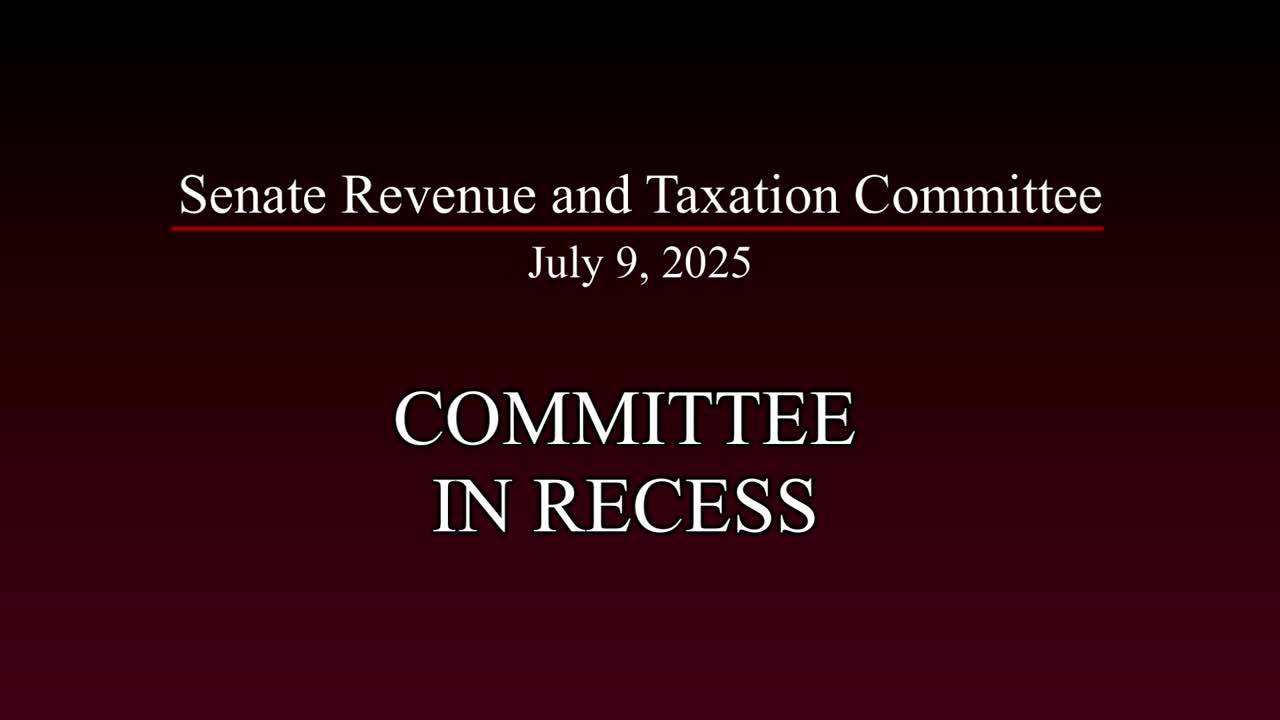 12MIN
Senate Standing Committee on Revenue and Taxation
 2MIN
Assembly Floor
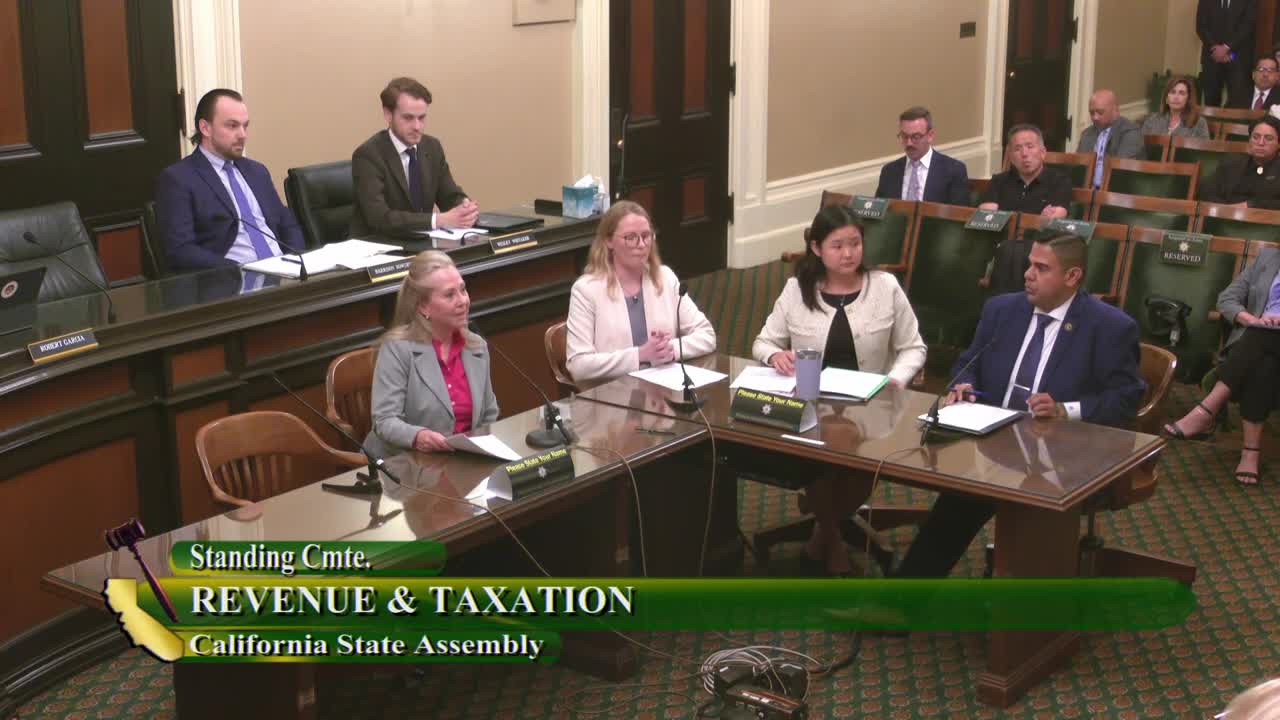 14MIN
Assembly Standing Committee on Revenue and Taxation
Bill Author