AB 1525: Attorneys: discipline: sensitive services.
- Session Year: 2025-2026
- House: Assembly
- Latest Version Date: 2025-09-26
Current Status:
Passed
(2025-09-26: Chaptered by Secretary of State - Chapter 137, Statutes of 2025.)
Introduced
In Committee
Awaiting First Chamber Vote
Passed First Chamber
In Committee
Awaiting Second Chamber Vote
Passed Second Chamber
Enacted
The State Bar Act provides for the licensure and regulation of attorneys by the State Bar of California (State Bar), a public corporation governed by a board of trustees. The act provides for the investigation and discipline of members of the State Bar and authorizes the Supreme Court to suspend or disbar an attorney for specified causes, including for a conviction under the laws of another state or territory of the United States that is deemed a felony. Existing law provides that specified evidence that a licensee of the State Bar committed professional misconduct in another jurisdiction is conclusive evidence that the licensee is culpable of professional misconduct.
This bill would provide that an excluded event shall not be grounds for disciplinary action or require an attorney or applicant to report the excluded event to the State Bar, supply evidence that an attorney is culpable of professional misconduct in this state, or serve as grounds to deny admission to the State Bar to an applicant. The bill would define excluded event to mean certain actions taken when based on the application of another states law that interferes with any persons right to receive, provide, recommend, enable, or advocate for sensitive services, as defined, that would be lawful in this state.
Existing law generally provides for the establishment, review, and termination of conservatorships. Existing law specifies the persons who may be appointed as a conservator and sets forth their powers and duties, including filing a care plan for the care, custody, and control of a conservatee. Existing law requires a conservator, upon appointment, to determine the appropriate level of care for the conservatee and to make that determination in the care plan. Existing law requires a conservator to evaluate the conservatees placement and level of care if there is a material change in circumstances affecting the conservatees needs for placement and care.This bill would exempt a limited conservator appointed for a developmentally disabled adult from the above-described requirements relating to determining the level of care if the limited conservator is a relative within the first degree of the conservatee.Existing law generally provides for the establishment, review, and termination of conservatorships. Existing law specifies the persons who may be appointed as a conservator and sets forth their powers and duties, including filing a care plan for the care, custody, and control of a conservatee. Existing law requires a conservator, upon appointment, to determine the appropriate level of care for the conservatee and to make that determination in the care plan. Existing law requires a conservator to evaluate the conservatees placement and level of care if there is a material change in circumstances affecting the conservatees needs for placement and care.
This bill would exempt a limited conservator appointed for a developmentally disabled adult from the above-described requirements relating to determining the level of care if the limited conservator is a relative within the first degree of the conservatee.
(a)For purposes of this section, the following definitions shall apply:
(1)Applicant means an applicant for admission to practice law in this state.
(2)Attorney means an attorney admitted to practice law in this state.
(3)Excluded event means any of the following, when based on the application of another states law that interferes with any persons right to receive, provide, recommend, enable, or advocate for sensitive services that would be lawful in this state, regardless of the location in which the event takes place and regardless of the location of the attorney or applicant:
(A)The entry of judgment against the attorney or applicant in a civil action.(B)The imposition of judicial sanctions against an attorney or applicant.(C)The bringing of an indictment or information charging a felony against the attorney or applicant, or the conviction of the attorney or applicant, including any verdict of guilty, or plea of guilty or no contest, of a felony, or a misdemeanor committed in the course of the practice of law.(D)The imposition of discipline or a finding of professional misconduct against the attorney or applicant by a professional or occupational disciplinary agency or licensing board.(4)Sensitive services has the same meaning as in Section 56.05 of the Civil Code.
(b)Notwithstanding Section 6049.1, 6101, 6102, 6103, or 6106, an excluded event shall not be grounds under this chapter for suspension, disbarment, or other disciplinary action, nor shall it require an attorney or applicant to report the excluded event to the State Bar, supply evidence that an attorney is culpable of professional misconduct in this state, nor serve as grounds to deny admission for any applicant for admission to practice law.
(c)This section does not apply to an event that would subject an attorney or applicant subject to this chapter to a similar claim, charge, or action under the laws of this state.
(a)For purposes of this section, the following definitions shall apply:
(1)Applicant means an applicant for admission to practice law in this state.
(2)Attorney means an attorney admitted to practice law in this state.
(3)Excluded event means any of the following, when based on the application of another states law that interferes with any persons right to receive, provide, recommend, enable, or advocate for sensitive services that would be lawful in this state, regardless of the location in which the event takes place and regardless of the location of the attorney or applicant:
(4)Sensitive services has the same meaning as in Section 56.05 of the Civil Code.(A)The entry of judgment against the attorney or applicant in a civil action.(B)The imposition of judicial sanctions against an attorney or applicant.(C)The bringing of an indictment or information charging a felony against the attorney or applicant, or the conviction of the attorney or applicant, including any verdict of guilty, or plea of guilty or no contest, of a felony, or a misdemeanor committed in the course of the practice of law.(D)The imposition of discipline or a finding of professional misconduct against the attorney or applicant by a professional or occupational disciplinary agency or licensing board.(4)Sensitive services has the same meaning as in Section 56.05 of the Civil Code.
(b)Notwithstanding Section 6049.1, 6101, 6102, 6103, or 6106, an excluded event shall not be grounds under this chapter for suspension, disbarment, or other disciplinary action, nor shall it require an attorney or applicant to report the excluded event to the State Bar, supply evidence that an attorney is culpable of professional misconduct in this state, nor serve as grounds to deny admission for any applicant for admission to practice law.
(c)This section does not apply to an event that would subject an attorney or applicant subject to this chapter to a similar claim, charge, or action under the laws of this state.
(a)For purposes of this section, the following definitions shall apply:
(1)Applicant means an applicant for admission to practice law in this state.
(2)Attorney means an attorney admitted to practice law in this state.
(3)Excluded event means any of the following, when based on the application of another states law that interferes with any persons right to receive, provide, recommend, enable, or advocate for sensitive services that would be lawful in this state, regardless of the location in which the event takes place and regardless of the location of the attorney or applicant:
(4)Sensitive services has the same meaning as in Section 56.05 of the Civil Code.
(A)The entry of judgment against the attorney or applicant in a civil action.
(B)The imposition of judicial sanctions against an attorney or applicant.
(C)The bringing of an indictment or information charging a felony against the attorney or applicant, or the conviction of the attorney or applicant, including any verdict of guilty, or plea of guilty or no contest, of a felony, or a misdemeanor committed in the course of the practice of law.
(D)The imposition of discipline or a finding of professional misconduct against the attorney or applicant by a professional or occupational disciplinary agency or licensing board.
(b)Notwithstanding Section 6049.1, 6101, 6102, 6103, or 6106, an excluded event shall not be grounds under this chapter for suspension, disbarment, or other disciplinary action, nor shall it require an attorney or applicant to report the excluded event to the State Bar, supply evidence that an attorney is culpable of professional misconduct in this state, nor serve as grounds to deny admission for any applicant for admission to practice law.
(c)This section does not apply to an event that would subject an attorney or applicant subject to this chapter to a similar claim, charge, or action under the laws of this state.
SECTION 1.Section 2352.5 of the Probate Code is amended to read:2352.5.(a)It shall be presumed that the personal residence of the conservatee at the time of commencement of the proceeding is the least restrictive appropriate residence for the conservatee. In any hearing to determine if removal of the conservatee from the conservatees personal residence is appropriate, that presumption may be overcome by clear and convincing evidence.(b)Upon appointment, the conservator shall determine the appropriate level of care for the conservatee.(1)That determination shall include an evaluation of the level of care existing at the time of commencement of the proceeding and the measures that would be necessary to keep the conservatee in their personal residence.(2)If the conservatee is living at a location other than the conservatees personal residence at the commencement of the proceeding, that determination shall either include a plan to return the conservatee to their personal residence or an explanation of the limitations or restrictions on a return of the conservatee to their personal residence in the foreseeable future.(c)The determination made by the conservator pursuant to subdivision (b) shall be included in the care plan as required by Section 2351.2.(d)The conservator shall evaluate the conservatees placement and level of care if there is a material change in circumstances affecting the conservatees needs for placement and care.(e)(1)This section shall not apply to a conservatee with developmental disabilities for whom the Director of Developmental Services or a regional center for the developmentally disabled, established pursuant to Chapter 5 (commencing with Section 4620) of Division 4.5 of the Welfare and Institutions Code, acts as the conservator and who receives services from a regional center pursuant to the Lanterman Developmental Disabilities Act (Division 4.5 (commencing with Section 4500) of the Welfare and Institutions Code).(2)Services, including residential placement, for a conservatee described in paragraph (1) who is a consumer, as defined in Section 4512 of the Welfare and Institutions Code, shall be identified, delivered, and evaluated consistent with the individual program plan process described in Article 2 (commencing with Section 4640) of Chapter 5 of Division 4.5 of the Welfare and Institutions Code.(f)Subdivisions (b) to (d), inclusive, do not apply to a limited conservator appointed for a developmentally disabled adult, as set forth in subdivision (d) of Section 1801, if the limited conservator is a relative within the first degree of the conservatee.(a)It shall be presumed that the personal residence of the conservatee at the time of commencement of the proceeding is the least restrictive appropriate residence for the conservatee. In any hearing to determine if removal of the conservatee from the conservatees personal residence is appropriate, that presumption may be overcome by clear and convincing evidence.
(b)Upon appointment, the conservator shall determine the appropriate level of care for the conservatee.
(1)That determination shall include an evaluation of the level of care existing at the time of commencement of the proceeding and the measures that would be necessary to keep the conservatee in their personal residence.
(2)If the conservatee is living at a location other than the conservatees personal residence at the commencement of the proceeding, that determination shall either include a plan to return the conservatee to their personal residence or an explanation of the limitations or restrictions on a return of the conservatee to their personal residence in the foreseeable future.
(c)The determination made by the conservator pursuant to subdivision (b) shall be included in the care plan as required by Section 2351.2.
(d)The conservator shall evaluate the conservatees placement and level of care if there is a material change in circumstances affecting the conservatees needs for placement and care.
(e)(1)This section shall not apply to a conservatee with developmental disabilities for whom the Director of Developmental Services or a regional center for the developmentally disabled, established pursuant to Chapter 5 (commencing with Section 4620) of Division 4.5 of the Welfare and Institutions Code, acts as the conservator and who receives services from a regional center pursuant to the Lanterman Developmental Disabilities Act (Division 4.5 (commencing with Section 4500) of the Welfare and Institutions Code).
(2)Services, including residential placement, for a conservatee described in paragraph (1) who is a consumer, as defined in Section 4512 of the Welfare and Institutions Code, shall be identified, delivered, and evaluated consistent with the individual program plan process described in Article 2 (commencing with Section 4640) of Chapter 5 of Division 4.5 of the Welfare and Institutions Code.
(f)Subdivisions (b) to (d), inclusive, do not apply to a limited conservator appointed for a developmentally disabled adult, as set forth in subdivision (d) of Section 1801, if the limited conservator is a relative within the first degree of the conservatee.
|
Date
|
Status
|
|---|---|
| Sep 26, 2025 | Chaptered by Secretary of State - Chapter 137, Statutes of 2025. |
| Sep 26, 2025 | Approved by the Governor. |
| Sep 22, 2025 | Enrolled and presented to the Governor at 3 p.m. |
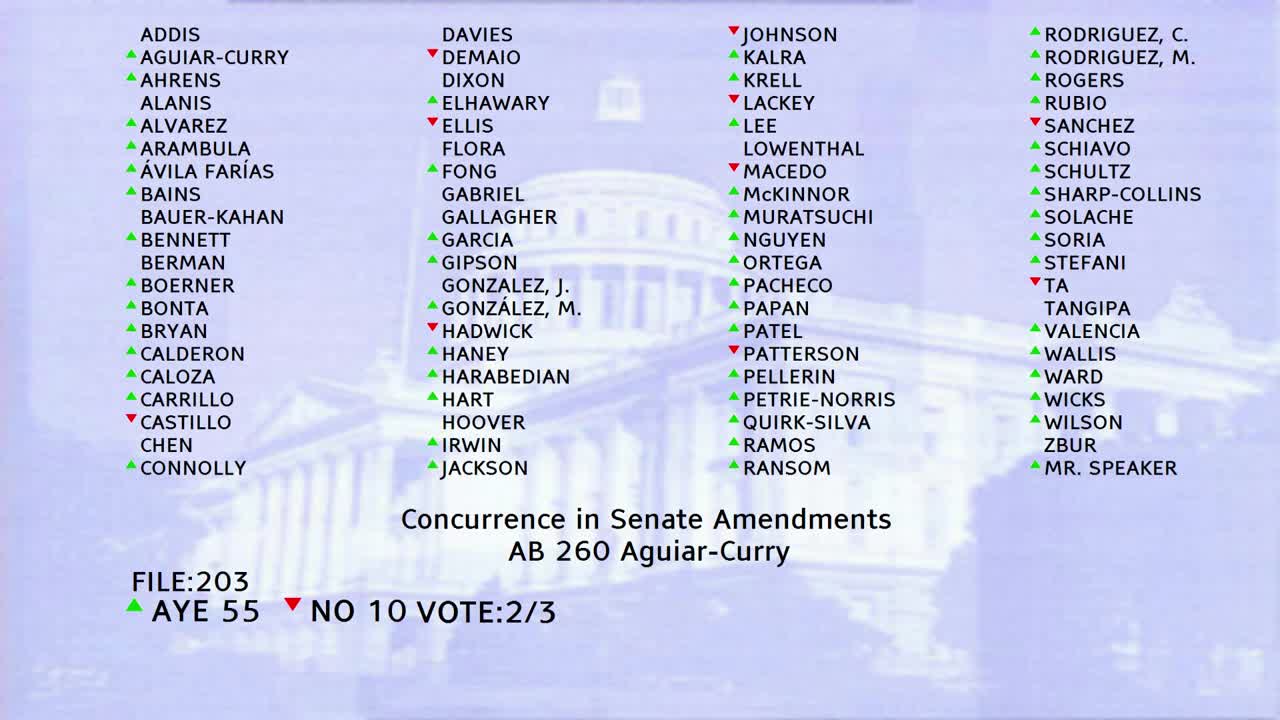
| Sep 10, 2025 | Senate amendments concurred in. To Engrossing and Enrolling. (Ayes 62. Noes 15. Page 3209.). |
| Sep 9, 2025 | In Assembly. Concurrence in Senate amendments pending. |
| Sep 9, 2025 | Read third time. Passed. Ordered to the Assembly. (Ayes 30. Noes 10. Page 2747.). |
| Sep 8, 2025 | Read second time. Ordered to third reading. |
| Sep 4, 2025 | Read third time and amended. Ordered to second reading. |
| Jul 10, 2025 | Read second time. Ordered to third reading. |
| Jul 9, 2025 | From committee: Do pass. (Ayes 11. Noes 1.) (July 8). |
| Jun 23, 2025 | From committee chair, with author's amendments: Amend, and re-refer to committee. Read second time, amended, and re-referred to Com. on JUD. |
| May 7, 2025 | Referred to Com. on JUD. |
| Apr 29, 2025 | In Senate. Read first time. To Com. on RLS. for assignment. |
| Apr 28, 2025 | Read third time. Passed. Ordered to the Senate. (Ayes 76. Noes 0. Page 1321.) |
| Apr 23, 2025 | Read second time. Ordered to Consent Calendar. |
| Apr 22, 2025 | From committee: Do pass. To Consent Calendar. (Ayes 12. Noes 0.) (April 22). |
| Mar 24, 2025 | Referred to Com. on JUD. |
| Mar 19, 2025 | From printer. May be heard in committee April 18. |
| Mar 18, 2025 | Read first time. To print. |
|
Date
|
Description
|
Location
|
Votes
|
|
|---|---|---|---|---|
| Sep 10, 2025 | AB 1525 JUD. Concurrence in Senate Amendments By KALRA | Assembly Floor |
Passed |
|
| Sep 9, 2025 | Assembly 3rd Reading AB1525 JUD. (Kalra) By Reyes | Senate Floor |
Passed |
|
| Jul 8, 2025 | Do pass | Senate Standing Committee on Judiciary |
Passed |
|
| Apr 28, 2025 | AB 1525 Judiciary Consent Calendar Second Day Regular Session | Assembly Floor |
Passed |
|
| Apr 22, 2025 | Do pass. To Consent Calendar. | Assembly Standing Committee on Judiciary |
Passed |
This list shows positions taken on this bill by organizations on the date displayed, which is linked to the original source.
Positions by individuals are not included.
CONCURRENCE IN SENATE AMENDMENTS
CSA1 Bill Id:AB 1525
Author:(Committee on Judiciary)
As Amended Ver:September 4, 2025
Majority vote
SUMMARY
Clarifies the disciplinary rules for attorneys providing advice related to sensitive services, and provides that a California attorney cannot be disciplined for providing accurate legal advice about the provision of sensitive services in California.
Major Provisions
- Defines for the purpose of 2) through 4) the following:
- "Attorney" means an attorney admitted to practice law in this state;
- "Applicant" means an applicant for admission to practice law in this state;
- "Sensitive Services" means all health care services related to mental or behavioral health, sexual and reproductive health, sexually transmitted infections, substance use disorder, gender-affirming care, and intimate partner violence, obtained by a patient at or above the minimum age specified for consenting to the service, as specified; and
- "Excluded event" means the entry of a judgment, imposition of sanctions, filing of an indictment or criminal charges or implementation of professional discipline against an attorney or applicant that is based on the application of another state's law that interferes with any person's right to receive, provide, recommend, enable, or advocate for sensitive services that would be lawful in this state, regardless of the location in which the event takes place and regardless of the location of the attorney or applicant.
- Prohibits an excluded event from being grounds for suspension, disbarment, or other disciplinary action.
- Provides that no attorney or applicant is required to report the excluded event to the State Bar, supply evidence that an attorney is culpable of professional misconduct in this state, and that an excluded event cannot serve as grounds to deny admission for any applicant for admission to practice law.
- Provides that the provisions of 1) through 3) do not apply to events that would subject an attorney or applicant to a similar claim, charge, or action under the laws of this state.
Senate Amendments
Delete the contents of the bill and add provisions of AB 1522 (Committee on Judiciary) which was previously approved by the Assembly.
COMMENTS
Following the United States Supreme Court's overturning of constitutional protections to abortion services (Dobbs v. Jackson Women's Health Organization (2021) 597 U.S. 215), a number of states have enacted draconian criminal and civil statutes targeting those who assist women in need of abortion services. For example, following the enactment of the Texas' civilly enforced "fetal heartbeat" law that targets those who "aid and abet" a person seeking an abortion (Texas Health and Safety Code Section 171.208), several Texas law firms were targeted by the state legislature and the state's Attorney General. For example, after the law firm of Sidley Austin, LLP offered staff in its Houston and Dallas offices time off to seek reproductive healthcare services, the Freedom Caucus of the Texas Legislature threatened to sue the firm under the fetal heartbeat law. (Jacqueline Thomsen, Texas lawmakers target law firms for aiding abortion access, Reuters (July 8, 2022) available at: https://www.reuters.com/legal/legalindustry/texas-lawmakers-target-law-firms-aiding-abortion-access-2022-07-08/.) Similar threats were made against other large law firms, including Vinson & Elkins; Morgan, Lewis & Bockius; and McDermott, Will & Emery. (Ibid.)
Under existing California law (Business and Professions Code Section 606877(o)), an attorney is required to notify the State Bar of California of criminal and civil charges files against the attorney in another jurisdiction, as well as any professional misconduct charges levied against the attorney by a sister state's regulatory body. Although it does not appear that any lawsuits or criminal charges were ever filed against the Texas firms, or their managing partners, should such actions have taken place, and if those attorneys were simultaneously licensed in California, the attorneys would have a duty to report the information to the State Bar, which would then be obligated to investigate.
Recognizing that the actions of these Texas law firms and their senior managing attorneys are wholly legal in California, this bill seeks to protect California licensed attorneys from discipline in this state for their actions in another state related to sensitive services that are legal in California, if another jurisdiction seeks to discipline the attorney. Building on existing protections for medical professionals offering sensitive services, this bill provides that an attorney is not obligated to inform the State Bar of out-of-state charges related to legal advice provided, or other actions taken, related to the provision of sensitive services that are legal in California. The bill clarifies that even if the State Bar learns of such discipline, the State Bar is precluded from taking action, unless the claim would be sustainable under California law. These provisions should protect California attorneys who provide valid legal advice regarding the laws of this state and ensure that the State Bar is not forced to utilize its limited resources pursuing claims that lack merit under California law.
According to the Author
As a new administration has taken hold in Washington, dedicated legal professionals are finding themselves targeted for retaliation, retribution, and job losses. This bill protects California attorneys who provide legitimate legal advice to clients even if another jurisdiction believes such advice violates laws preventing a person from assisting another in seeking specified medical care. This proposal will strengthen and protect the legal profession in California from attacks from outside of the state.
Arguments in Support
None on file
Arguments in Opposition
None on file
FISCAL COMMENTS
None
VOTES:
ASM JUDICIARY: 12-0-0
YES: Kalra, Dixon, Bauer-Kahan, Bryan, Connolly, Harabedian, Macedo, Pacheco, Lee, Sanchez, Stefani, Zbur
ASSEMBLY FLOOR: 76-0-3
YES: Addis, Aguiar-Curry, Ahrens, Alanis, Alvarez, Arambula, Ávila Farías, Bains, Bauer-Kahan, Bennett, Berman, Boerner, Bonta, Bryan, Calderon, Caloza, Carrillo, Castillo, Chen, Connolly, Davies, DeMaio, Dixon, Elhawary, Ellis, Fong, Gabriel, Gallagher, Garcia, Gipson, Jeff Gonzalez, Mark González, Hadwick, Haney, Harabedian, Hart, Hoover, Irwin, Jackson, Kalra, Lackey, Lee, Lowenthal, Macedo, McKinnor, Muratsuchi, Nguyen, Ortega, Pacheco, Papan, Patel, Patterson, Pellerin, Petrie-Norris, Quirk-Silva, Ramos, Ransom, Celeste Rodriguez, Michelle Rodriguez, Rogers, Blanca Rubio, Schiavo, Schultz, Sharp-Collins, Solache, Soria, Stefani, Ta, Tangipa, Valencia, Wallis, Ward, Wicks, Wilson, Zbur, Rivas
ABS, ABST OR NV: Flora, Krell, Sanchez
UPDATED
VERSION: September 4, 2025
CONSULTANT: Nicholas Liedtke / JUD. / (916) 319-2334 FN: 0001786
+SENATE RULES COMMITTEE Office of Senate Floor Analyses (916) 651-1520 Fax: (916) 327-4478 | AB 1525 |
THIRD READING
Bill No: AB 1525
Author: Committee on Judiciary
Amended: 9/4/25 in Senate
Vote: 21
SENATE JUDICIARY COMMITTEE: 11-1, 7/8/25
AYES: Umberg, Allen, Arreguín, Ashby, Caballero, Durazo, Laird, Stern, Wahab, Weber Pierson, Wiener
NOES: Niello
NO VOTE RECORDED: Valladares
ASSEMBLY FLOOR: 76-0, 4/28/25 (Consent) - See last page for vote
SUBJECT: Attorneys: discipline: sensitive services
SOURCE: Author
DIGEST:
This bill provides that an excluded event is not grounds for disciplinary action by the State Bar of California (State Bar), nor does it require an attorney or applicant to report that event to the State Bar. This bill provides that an excluded event does not supply evidence that an attorney is culpable of professional misconduct in this state or serve as grounds to deny admission of an applicant to the State Bar. This bill defines “excluded event” to mean certain actions taken when based on the application of another state’s law that interferes with any person’s right to receive, provide, recommend, enable, or advocate for sensitive services, as defined, that would be lawful in California.
Senate floor amendments of 9/4/25 make a technical, nonsubstantive change to fix a drafting error in the bill.
ANALYSIS:
Existing law:
- Requires all attorneys who practice law in California to be licensed by the State Bar and establishes the State Bar, within the judicial branch of state government, for the purpose of regulating the legal profession. (California Constituion, art. VI, § 9; Bus. & Prof. Code §§ 6000 et seq.)
- Establishes that protection of the public, which includes support for greater access to, and inclusion in, the legal system, is the highest priority for the State Bar in exercising their licensing, regulatory, and disciplinary functions. (Business & Professions (Bus. & Prof.) Code § 6001.1.)
- Provides that conviction of a felony or misdemeanor, involving moral turpitude, constitutes a cause for disbarment or suspension. In any proceeding to disbar or suspend an attorney because of that conviction, the record of conviction constitutes conclusive evidence of guilt of the crime of which they have been convicted. (Bus. & Prof. Code § 6101.)
- Provides that a willful disobedience or violation of an order of the court requiring any attorney to do or forbear an act connected with or in the course of their profession, which they ought in good faith to do or forbear, and any violation of the oath taken by them or of their duties as such attorney, constitute causes for disbarment or suspension. (Bus. & Prof. Code § 6103.)
- Provides that the commission of any act involving moral turpitude, dishonesty, or corruption, whether the act is committed in the course of their relations as an attorney or otherwise, and whether the act is a felony or misdemeanor or not, constitutes a cause for disbarment or suspension. (Bus. & Prof. Code § 6106.)
- Requires a licensee of the State to report to the State Bar, within 30 days of the licensee gaining knowledge of any of the following:
- the filing of three or more lawsuits in a 12-month period against the attorney for malpractice or other wrongful conduct committed in a professional capacity;
- the entry of judgment against the attorney in a civil action for fraud, misrepresentation, breach of fiduciary duty, or gross negligence committed in a professional capacity;
- the imposition of judicial sanctions against the attorney, except for sanctions for failure to make discovery or monetary sanctions of less than one thousand dollars ($1,000);
- the bringing of an indictment or information charging a felony against the attorney;
- the conviction of the attorney, including any verdict of guilty, or plea of guilty or no contest, of a felony, or a misdemeanor committed in the course of the practice of law, or in a manner in which a client of the attorney was the victim, as specified;
- the imposition of discipline against the attorney by a professional or occupational disciplinary agency or licensing board, whether in California or elsewhere; and
- reversal of judgment in a proceeding based in whole or in part upon misconduct, grossly incompetent representation, or willful misrepresentation by an attorney. (Bus. & Prof. Code § 6068(o).)
- Provides that a certified copy of a final order made by any court of record or any body authorized by law or by rule of court to conduct disciplinary proceedings against attorneys, of the United States or of any state or territory of the United States or of the District of Columbia, determining that a licensee of the State Bar committed professional misconduct in such other jurisdiction, is conclusive evidence that the licensee is culpable of professional misconduct in this state. (Bus. & Prof. Code §6049.1.)
- Requires the California Supreme Court, upon receipt of the certified copy of the record of conviction where it appears therefrom that the crime of which the attorney was convicted involved, or that there is probable cause to believe that it involved, moral turpitude or is a felony under the laws of California, the United States, or any state or territory thereof, to suspend the he attorney until the time for appeal has elapsed, if no appeal has been taken, or until the judgment of conviction has been affirmed on appeal, or has otherwise become final, and until the further order of the court. (Bus. & Prof. Code § 6102.)
This bill:
- Prohibits an excluded event from being grounds for suspension, disbarment, or other disciplinary action.
- Provides that no attorney or applicant is required to report the excluded event to the State Bar, or supply evidence that an attorney is culpable of professional misconduct in this state, and that an excluded event cannot serve as grounds to deny admission for any applicant for admission to practice law.
- Provides that the provisions of 1) through 2) do not apply to events that would subject an attorney or applicant to a similar claim, charge, or action under the laws of this state.
- Defines, for these purposes, the following terms:
- “attorney” means an attorney admitted to practice law in this state;
- “applicant” means an applicant for admission to practice law in this state;
- “excluded event” means the entry of a judgment, imposition of sanctions, filing of an indictment or criminal charges or implementation of professional discipline against an attorney or applicant that is based on the application of another state’s law that interferes with any person’s right to receive, provide, recommend, enable, or advocate for sensitive services that would be lawful in this state, regardless of the location in which the event takes place and regardless of the location of the attorney or applicant; and
- “sensitive services” means all health care services related to mental or behavioral health, sexual and reproductive health, sexually transmitted infections, substance use disorder, gender-affirming care, and intimate partner violence, obtained by a patient at or above the minimum age specified for consenting to the service, as specified.
Comments
In 2022, the U.S. Supreme Court published its opinion in Dobbs v. Jackson Women’s Health (2022) 597 U.S. 215.), overturning 50 years of precedent and revoking a constitutional right. Prior to Dobbs, the Supreme Court had continuously upheld the holding of Roe v. Wade, that found the implied constitutional right to privacy extended to a person’s decision whether to terminate a pregnancy, while allowing some state regulation of abortion access as permissible. ((1973) 410 U.S. 113.) As a result of the Dobbs decision, people in roughly half the country may lose access to abortion services or have them severely restricted. In addition, a growing number of states have been passing laws putting residents who seek essential gender-affirming care at risk of being prosecuted. States are attempting to classify the provision and seeking of gender-affirming health care as a crime warranting prison time and are threatening parents with criminal penalties if they attempt to travel to another state in order to secure life-saving gender-affirming care for their child. California has enacted laws to protect health care professionals providing sensitive healthcare services from disciplinary action by their licensing entity. This bill seeks to provide similar protections for attorneys providing legal advice and other services related to the provision of sensitive services.
In the wake of the Dobbs decision, many states have enacted statutes targeting providers of abortions or those who “aid and bet” a person in receiving an abortion. For example, a Texas law prohibits a physician from knowingly performing or inducing an abortion on a pregnant woman if the physician detected a fetal heartbeat, as specified, or failed to perform a test to detect a fetal heartbeat[1] and prohibits anyone from “aiding and abetting” a person in obtaining such abortion (see Tex. Health & Safety Code § 171.201 et seq.; 171.208.) In the wake of the enactment of this law, the international law firm of Sidley Austin, LLP offered staff in its Houston and Dallas offices travel reimbursement policies to seek reproductive healthcare services if needed.[2] In response to this, the Texas Freedom Caucus sent a letter to the firm stating that it believed the firm is complicit in providing illegal abortions and wrote that “[l]itigation is already underway to uncover the identity of those who aided or abetted these and other illegal abortions.”[3] The letter further detailed that the caucus was seeking further legislation to require the state to disbar any attorney licensed in Texas who assists someone in obtaining an abortion.[4] Additionally, some states have begun targeting transgender individuals and providers of gender affirming care, particularly when it comes to transgender youth. According to Human Rights Watch, as of February 2023, legislatures nationwide had introduced over 340 anti-LGBTQ+ bills, over 150 of which specifically targeted transgender people.[5]
The Legislature has enacted several bills over the past years to protect not only those seeking sensitive services, but also those providing those services and assisting individuals in obtaining those services.[6] These bills demonstrate California’s commitment to protecting individuals’ rights to both reproductive freedom and access to gender-affirming care. In 2019, Governor Newsom issued a proclamation reaffirming California’s commitment to making reproductive freedom a fundamental right in response to the numerous attacks on reproductive rights across the nation.[7] Additionally, Governor Newsom’s signing message of SB 107 (Wiener, Chapter 810, Statutes of 2022) stated “[i]n California we believe in equality and acceptance. We believe that no one should be prosecuted or persecuted for getting the care they need—including gender-affirming care.”[8] This bill furthers these policies by providing protections to California licensed attorneys from discipline by the State Bar for actions in another state related to sensitive services that are legal in California.
Attorneys who wish to practice law in California generally must be admitted and licensed by the State Bar. (Cal. Const., art. VI, Sec. 9.) The State Bar of California is a public corporation. The Office of Chief Trial Counsel is charged with receiving complaints against attorneys, conducting investigations, determining whether to file formal charges, and prosecuting cases in the State Bar Court. Under existing law, conviction of a felony or misdemeanor involving moral turpitude constitutes a cause for disbarment or suspension, and the record of such conviction constitutes conclusive evidence of guilt of that crime in any proceeding to disbar or suspend an attorney. (Bus. & Prof. Code § 6101.) A licensed attorney is required to notify the State Bar of California of criminal and civil charges files against the attorney in another jurisdiction, as well as any professional misconduct charges levied against the attorney by a sister state’s regulatory body. (Bus. & Prof. Code § 6068(o).) This bill prohibits an excluded event from being used to discipline an attorney licensed in this state or deny an application for licensure in this state. An “excluded event” means the entry of a judgment, imposition of sanctions, filing of an indictment or criminal charges or implementation of professional discipline against an attorney or applicant that is based on the application of another state’s law that interferes with any person’s right to receive, provide, recommend, enable, or advocate for sensitive services that would be lawful in this state.
FISCAL EFFECT: Appropriation: No Fiscal Com.: No Local: No
SUPPORT: (Verified 9/4/25)
None received
OPPOSITION: (Verified 9/4/25)
None received
ARGUMENTS IN SUPPORT: The author writes:
As a new administration has taken hold in Washington D.C., dedicated legal professionals are finding themselves targeted for retaliation, retribution, and job losses. From unfairly laid off federal attorneys to large law firms being cowered by threats of loss of business and legal sanctions.
However, these challenges provide opportunities for California to reaffirm its commitment to justice and the rule of law. Building on prior protections for medical professionals, this bill protects California attorneys who provide legitimate legal advice to clients even if another jurisdiction believes such advice violates laws preventing a person from assisting another in seeking specified medical care. Jointly, these proposals will strengthen and protect the legal profession in California from attacks from outside of the state.
ASSEMBLY FLOOR: 76-0, 4/28/25
AYES: Addis, Aguiar-Curry, Ahrens, Alanis, Alvarez, Arambula, Ávila Farías, Bains, Bauer-Kahan, Bennett, Berman, Boerner, Bonta, Bryan, Calderon, Caloza, Carrillo, Castillo, Chen, Connolly, Davies, DeMaio, Dixon, Elhawary, Ellis, Fong, Gabriel, Gallagher, Garcia, Gipson, Jeff Gonzalez, Mark González, Hadwick, Haney, Harabedian, Hart, Hoover, Irwin, Jackson, Kalra, Lackey, Lee, Lowenthal, Macedo, McKinnor, Muratsuchi, Nguyen, Ortega, Pacheco, Papan, Patel, Patterson, Pellerin, Petrie-Norris, Quirk-Silva, Ramos, Ransom, Celeste Rodriguez, Michelle Rodriguez, Rogers, Blanca Rubio, Schiavo, Schultz, Sharp-Collins, Solache, Soria, Stefani, Ta, Tangipa, Valencia, Wallis, Ward, Wicks, Wilson, Zbur, Rivas
NO VOTE RECORDED: Flora, Krell, Sanchez
Prepared by: Amanda Mattson / JUD. / (916) 651-4113
9/8/25 21:46:09
**** END ****
Committee staff notes that the application of the term “fetal heartbeat” as applied in restrictive abortion laws, such as ones in Texas, may be misleading. See Kaitlin Sullivan, Heartbeat bills: Is there a fetal heartbeat at six weeks of pregnancy?, NBC News, (Apr. 17, 2022) https://www.nbcnews.com/health/womens-health/heartbeat-bills-called-fetal-heartbeat-six-weeks-pregnancy-rcna24435. ↑
Jacqueline Thomsen, Texas lawmakers target law firms for aiding abortion access, Reuters (July 8, 2022) available at https://www.reuters.com/legal/legalindustry/texas-lawmakers-target-law-firms-aiding-abortion-access-2022-07-08/. ↑
Ibid. ↑
Ibid. ↑
Human Rights Watch, Press Release, Human Rights Campaign Working to Defeat 340 Anti-LGBTQ+ Bills at State Level Already, 150 of Which Target Transgender People – Highest Number on Record (Feb. 15, 2023), https://www.hrc.org/press-releases/human-rights-campaign-working-to-defeat-340-anti-lgbtq-bills-at-state-level-already-150-of-which-target-transgender-people-highest-number-on-record (all links current as of June 20, 2022). ↑
See Prior Legislation section, below. ↑
California Proclamation on Reproductive Freedom (May 31, 2019) available at https://www.gov.ca.gov/wp-content/uploads/2019/05/Proclamation-on-Reproductive-Freedom.pdf. ↑
Governor’s signing message on Sen. Bill No. 107 (Sep. 29, 2022), available at https://www.gov.ca.gov/wp-content/uploads/2022/09/SB-107-SIGNING.pdf?emrc=1a80c5. ↑
+SENATE RULES COMMITTEE Office of Senate Floor Analyses (916) 651-1520 Fax: (916) 327-4478 | AB 1525 |
THIRD READING
Bill No: AB 1525
Author: Committee on Judiciary
Amended: 6/23/25 in Senate
Vote: 21
SENATE JUDICIARY COMMITTEE: 11-1, 7/8/25
AYES: Umberg, Allen, Arreguín, Ashby, Caballero, Durazo, Laird, Stern, Wahab, Weber Pierson, Wiener
NOES: Niello
NO VOTE RECORDED: Valladares
ASSEMBLY FLOOR: 76-0, 4/28/25 (Consent) - See last page for vote
SUBJECT: Attorneys: discipline: sensitive services
SOURCE: Author
DIGEST:
This bill provides that an excluded event is not grounds for disciplinary action by the State Bar of California (State Bar), nor does it require an attorney or applicant to report that event to the State Bar. This bill provides that an excluded event does not supply evidence that an attorney is culpable of professional misconduct in this state or serve as grounds to deny admission of an applicant to the State Bar. This bill defines “excluded event” to mean certain actions taken when based on the application of another state’s law that interferes with any person’s right to receive, provide, recommend, enable, or advocate for sensitive services, as defined, that would be lawful in California.
ANALYSIS:
Existing law:
- Requires all attorneys who practice law in California to be licensed by the State Bar and establishes the State Bar, within the judicial branch of state government, for the purpose of regulating the legal profession. (California Constituion, art. VI, § 9; Business & Professions Code (Bus. & Prof. Code) §§ 6000 et seq.)
- Establishes that protection of the public, which includes support for greater access to, and inclusion in, the legal system, is the highest priority for the State Bar in exercising their licensing, regulatory, and disciplinary functions. (Bus. & Prof. Code § 6001.1.)
- Provides that conviction of a felony or misdemeanor, involving moral turpitude, constitutes a cause for disbarment or suspension. In any proceeding to disbar or suspend an attorney because of that conviction, the record of conviction constitutes conclusive evidence of guilt of the crime of which they have been convicted. (Bus. & Prof. Code § 6101.)
- Provides that a willful disobedience or violation of an order of the court requiring any attorney to do or forbear an act connected with or in the course of their profession, which they ought in good faith to do or forbear, and any violation of the oath taken by them or of their duties as such attorney, constitute causes for disbarment or suspension. (Bus. & Prof. Code § 6103.)
- Provides that the commission of any act involving moral turpitude, dishonesty, or corruption, whether the act is committed in the course of their relations as an attorney or otherwise, and whether the act is a felony or misdemeanor or not, constitutes a cause for disbarment or suspension. (Bus. & Prof. Code § 6106.)
- Requires a licensee of the State to report to the State Bar, within 30 days of the licensee gaining knowledge of any of the following:
- The filing of three or more lawsuits in a 12-month period against the attorney for malpractice or other wrongful conduct committed in a professional capacity;
- The entry of judgment against the attorney in a civil action for fraud, misrepresentation, breach of fiduciary duty, or gross negligence committed in a professional capacity;
- The imposition of judicial sanctions against the attorney, except for sanctions for failure to make discovery or monetary sanctions of less than one thousand dollars ($1,000);
- The bringing of an indictment or information charging a felony against the attorney;
- The conviction of the attorney, including any verdict of guilty, or plea of guilty or no contest, of a felony, or a misdemeanor committed in the course of the practice of law, or in a manner in which a client of the attorney was the victim, as specified;
- The imposition of discipline against the attorney by a professional or occupational disciplinary agency or licensing board, whether in California or elsewhere; and
- Reversal of judgment in a proceeding based in whole or in part upon misconduct, grossly incompetent representation, or willful misrepresentation by an attorney. (Bus. & Prof. Code § 6068(o).)
- Provides that a certified copy of a final order made by any court of record or anybody authorized by law or by rule of court to conduct disciplinary proceedings against attorneys, of the United States or of any state or territory of the United States or of the District of Columbia, determining that a licensee of the State Bar committed professional misconduct in such other jurisdiction, is conclusive evidence that the licensee is culpable of professional misconduct in this state. (Bus. & Prof. Code §6049.1.)
- Requires the California Supreme Court, upon receipt of the certified copy of the record of conviction where it appears therefrom that the crime of which the attorney was convicted involved, or that there is probable cause to believe that it involved, moral turpitude or is a felony under the laws of California, the United States, or any state or territory thereof, to suspend the he attorney until the time for appeal has elapsed, if no appeal has been taken, or until the judgment of conviction has been affirmed on appeal, or has otherwise become final, and until the further order of the court. (Bus. & Prof. Code § 6102.)
This bill:
- Prohibits an excluded event from being grounds for suspension, disbarment, or other disciplinary action.
- Provides that no attorney or applicant is required to report the excluded event to the State Bar, or supply evidence that an attorney is culpable of professional misconduct in this state, and that an excluded event cannot serve as grounds to deny admission for any applicant for admission to practice law.
- Provides that the provisions of 1) through 2) do not apply to events that would subject an attorney or applicant to a similar claim, charge, or action under the laws of this state.
- Defines, for these purposes, the following terms:
- “Attorney” means an attorney admitted to practice law in this state;
- “Applicant” means an applicant for admission to practice law in this state;
- “Excluded event” means the entry of a judgment, imposition of sanctions, filing of an indictment or criminal charges or implementation of professional discipline against an attorney or applicant that is based on the application of another state’s law that interferes with any person’s right to receive, provide, recommend, enable, or advocate for sensitive services that would be lawful in this state, regardless of the location in which the event takes place and regardless of the location of the attorney or applicant; and
- “Sensitive services” means all health care services related to mental or behavioral health, sexual and reproductive health, sexually transmitted infections, substance use disorder, gender-affirming care, and intimate partner violence, obtained by a patient at or above the minimum age specified for consenting to the service, as specified.
Comments
In 2022, the U.S. Supreme Court published its opinion in Dobbs v. Jackson Women’s Health (2022) 597 U.S. 215.), overturning 50 years of precedent and revoking a constitutional right. Prior to Dobbs, the Supreme Court had continuously upheld the holding of Roe v. Wade, that found the implied constitutional right to privacy extended to a person’s decision whether to terminate a pregnancy, while allowing some state regulation of abortion access as permissible. ((1973) 410 U.S. 113.) As a result of the Dobbs decision, people in roughly half the country may lose access to abortion services or have them severely restricted. In addition, a growing number of states have been passing laws putting residents who seek essential gender-affirming care at risk of being prosecuted. States are attempting to classify the provision and seeking of gender-affirming health care as a crime warranting prison time and are threatening parents with criminal penalties if they attempt to travel to another state in order to secure life-saving gender-affirming care for their child. California has enacted laws to protect health care professionals providing sensitive healthcare services from disciplinary action by their licensing entity. This bill seeks to provide similar protections for attorneys providing legal advice and other services related to the provision of sensitive services.
In the wake of the Dobbs decision, many states have enacted statutes targeting providers of abortions or those who “aid and bet” a person in receiving an abortion. For example, a Texas law prohibits a physician from knowingly performing or inducing an abortion on a pregnant woman if the physician detected a fetal heartbeat, as specified, or failed to perform a test to detect a fetal heartbeat[1] and prohibits anyone from “aiding and abetting” a person in obtaining such abortion (see Tex. Health & Safety Code § 171.201 et seq.; 171.208.) In the wake of the enactment of this law, the international law firm of Sidley Austin, LLP offered staff in its Houston and Dallas offices travel reimbursement policies to seek reproductive healthcare services if needed.[2] In response to this, the Texas Freedom Caucus sent a letter to the firm stating that it believed the firm is complicit in providing illegal abortions and wrote that “[l]itigation is already underway to uncover the identity of those who aided or abetted these and other illegal abortions.”[3] The letter further detailed that the caucus was seeking further legislation to require the state to disbar any attorney licensed in Texas who assists someone in obtaining an abortion.[4] Additionally, some states have begun targeting transgender individuals and providers of gender affirming care, particularly when it comes to transgender youth. According to Human Rights Watch, as of February 2023, legislatures nationwide had introduced over 340 anti-LGBTQ+ bills, over 150 of which specifically targeted transgender people.[5]
The Legislature has enacted several bills over the past years to protect not only those seeking sensitive services, but also those providing those services and assisting individuals in obtaining those services.[6] These bills demonstrate California’s commitment to protecting individuals’ rights to both reproductive freedom and access to gender-affirming care. In 2019, Governor Newsom issued a proclamation reaffirming California’s commitment to making reproductive freedom a fundamental right in response to the numerous attacks on reproductive rights across the nation.[7] Additionally, Governor Newsom’s signing message of SB 107 (Wiener, Chapter. 810, Statutes, 2022) stated “[i]n California we believe in equality and acceptance. We believe that no one should be prosecuted or persecuted for getting the care they need—including gender-affirming care.”[8] This bill furthers these policies by providing protections to California licensed attorneys from discipline by the State Bar for actions in another state related to sensitive services that are legal in California.
Attorneys who wish to practice law in California generally must be admitted and licensed by the State Bar. (Cal. Const., art. VI, Sec. 9.) The State Bar of California is a public corporation. The Office of Chief Trial Counsel is charged with receiving complaints against attorneys, conducting investigations, determining whether to file formal charges, and prosecuting cases in the State Bar Court. Under existing law, conviction of a felony or misdemeanor involving moral turpitude constitutes a cause for disbarment or suspension, and the record of such conviction constitutes conclusive evidence of guilt of that crime in any proceeding to disbar or suspend an attorney. (Bus. & Prof. Code § 6101.) A licensed attorney is required to notify the State Bar of California of criminal and civil charges files against the attorney in another jurisdiction, as well as any professional misconduct charges levied against the attorney by a sister state’s regulatory body. (Bus. & Prof. Code § 6068(o).) This bill prohibits an excluded event from being used to discipline an attorney licensed in this state or deny an application for licensure in this state. An “excluded event” means the entry of a judgment, imposition of sanctions, filing of an indictment or criminal charges or implementation of professional discipline against an attorney or applicant that is based on the application of another state’s law that interferes with any person’s right to receive, provide, recommend, enable, or advocate for sensitive services that would be lawful in this state.
FISCAL EFFECT: Appropriation: No Fiscal Com.: No Local: No
SUPPORT: (Verified 7/9/25)
None received
OPPOSITION: (Verified 7/9/25)
None received
ARGUMENTS IN SUPPORT: The author writes:
As a new administration has taken hold in Washington D.C., dedicated legal professionals are finding themselves targeted for retaliation, retribution, and job losses. From unfairly laid off federal attorneys to large law firms being cowered by threats of loss of business and legal sanctions.
However, these challenges provide opportunities for California to reaffirm its commitment to justice and the rule of law. Building on prior protections for medical professionals, this bill protects California attorneys who provide legitimate legal advice to clients even if another jurisdiction believes such advice violates laws preventing a person from assisting another in seeking specified medical care. Jointly, these proposals will strengthen and protect the legal profession in California from attacks from outside of the state.
ASSEMBLY FLOOR: 76-0, 4/28/25
AYES: Addis, Aguiar-Curry, Ahrens, Alanis, Alvarez, Arambula, Ávila Farías, Bains, Bauer-Kahan, Bennett, Berman, Boerner, Bonta, Bryan, Calderon, Caloza, Carrillo, Castillo, Chen, Connolly, Davies, DeMaio, Dixon, Elhawary, Ellis, Fong, Gabriel, Gallagher, Garcia, Gipson, Jeff Gonzalez, Mark González, Hadwick, Haney, Harabedian, Hart, Hoover, Irwin, Jackson, Kalra, Lackey, Lee, Lowenthal, Macedo, McKinnor, Muratsuchi, Nguyen, Ortega, Pacheco, Papan, Patel, Patterson, Pellerin, Petrie-Norris, Quirk-Silva, Ramos, Ransom, Celeste Rodriguez, Michelle Rodriguez, Rogers, Blanca Rubio, Schiavo, Schultz, Sharp-Collins, Solache, Soria, Stefani, Ta, Tangipa, Valencia, Wallis, Ward, Wicks, Wilson, Zbur, Rivas
NO VOTE RECORDED: Flora, Krell, Sanchez
Prepared by: Amanda Mattson / JUD. / (916) 651-4113
7/10/25 15:52:57
**** END ****
Committee staff notes that the application of the term “fetal heartbeat” as applied in restrictive abortion laws, such as ones in Texas, may be misleading. See Kaitlin Sullivan, Heartbeat bills: Is there a fetal heartbeat at six weeks of pregnancy?, NBC News, (Apr. 17, 2022) https://www.nbcnews.com/health/womens-health/heartbeat-bills-called-fetal-heartbeat-six-weeks-pregnancy-rcna24435. ↑
Jacqueline Thomsen, Texas lawmakers target law firms for aiding abortion access, Reuters (July 8, 2022) available at https://www.reuters.com/legal/legalindustry/texas-lawmakers-target-law-firms-aiding-abortion-access-2022-07-08/. ↑
Ibid. ↑
Ibid. ↑
Human Rights Watch, Press Release, Human Rights Campaign Working to Defeat 340 Anti-LGBTQ+ Bills at State Level Already, 150 of Which Target Transgender People – Highest Number on Record (Feb. 15, 2023), https://www.hrc.org/press-releases/human-rights-campaign-working-to-defeat-340-anti-lgbtq-bills-at-state-level-already-150-of-which-target-transgender-people-highest-number-on-record (all links current as of June 20, 2022). ↑
See Prior Legislation section, below. ↑
California Proclamation on Reproductive Freedom (May 31, 2019) available at https://www.gov.ca.gov/wp-content/uploads/2019/05/Proclamation-on-Reproductive-Freedom.pdf. ↑
Governor’s signing message on Sen. Bill No. 107 (Sep. 29, 2022), available at https://www.gov.ca.gov/wp-content/uploads/2022/09/SB-107-SIGNING.pdf?emrc=1a80c5. ↑
Date of Hearing: April 22, 2025
ASSEMBLY COMMITTEE ON JUDICIARY
Ash Kalra, Chair
ABPCA Bill Id:AB 1525
Author:(Committee on Judiciary) – As Introduced Ver:March 18, 2025
proposed consent
SUBJECT: Duties of a limited conservator
KEY ISSUE: Should a limited conservator appointed for a developmentally disabled adult be exempt from certain requirements if the limited conservator is a relative within the first degree of the conservatee?
SYNOPSIS
This bill is a follow up to SB 280 (Laird, Chap. 705, Stats. 2023) which required probate conservators to submit to the probate court comprehensive “care plans” for the care of their conservatees. In response to concerns raised by ARC of California and United Cerebral Palsy California Collaboration – groups that work with persons with developmental disabilities and their families – the author amended SB 280 when it came before this Committee in 2023 in order to exempt a “limited conservator” appointed for a developmentally disabled adult, but only if the conservator is a relative of the conservatee “within the first degree” (parents, siblings, and children). The Judicial Council of California notified this Committee earlier this year that, since the enactment of SB 280, practitioners and probate judges have expressed confusion about the exact scope of the exemption, specifically whether it only applies to a “care plan” required by Section 2351.2, or if it also applies to Section 2352.5, which requires the conservator to determine the “appropriate level of care” for the conservatee. This was especially confusing because the information on the “appropriate level of care” required by Section 2352.5 is information that must be included with the “care plan” required by Section 2351.2.
According to the author of SB 280, as well as the groups that advocated for the exemption, the intent of SB 280 was to exempt immediate family members from the requirements of both sections. ARC and Cerebral Palsy California Collaboration stress that parents and siblings of developmentally disabled adults already face extraordinary burdens and, unlike professional conservators, often lack the resources, experience, and expertise to readily take on additional burdens. Given that existing policy favors the appointment of family members as conservators, imposing too many administrative burdens on close family members may make them more reluctant to take on another considerable burden.
This bill clarifies that the intent of the amendments to SB 280 were to exempt a limited conservator appointed for a developmentally disabled adult from the requirements of both sections, but only if the limited conservator is a relative within the first degree of the conservatee. There is no registered support or opposition to this bill.
SUMMARY: Exempts a limited conservator appointed for a developmentally disabled adult from certain requirements if the limited conservator is a relative within the first degree of the conservatee.
EXISTING LAW:
- Permits a court to appoint a conservator of the person for a person who is unable to provide properly for their personal needs for physical health, food, clothing, or shelter, as provided. Permits a court to appoint a conservator of the estate for a person who is substantially unable to manage their own financial resources or resist fraud or undue influence, except as provided. Provides that a conservatorship cannot be granted unless the court makes an express finding that the conservatorship is the least restrictive alternative needed for protection of the conservatee. (Probate Code Sections 1800.3, 1801. Unless otherwise stated, all further statutory references are to the Probate Code.)
- Requires a conservator, within 90 days of appointment as provided, to submit an inventory and appraisal of the conservatee’s estate to the court, the conservatee and the conservatee’s spouse or registered domestic partner and relatives within the first degree. If the conservatee does not have a spouse, registered domestic partner, or relatives within the first degree, requires the inventory and appraisal to be submitted to the conservatee’s relatives within the second degree, unless the court determines that the submission will result in harm to the conservatee. (Section 2610.)
- Requires a conservator, within 120 days of appointment by the court and within 10 days before a hearing to continue or terminate an existing conservatorship, to file with the court clerk a plan for the care, custody, and control of the conservatee. (Section 2351.2.)
- Establishes a presumption that the personal residence of a conservatee is the least restrictive appropriate residence for the conservatee. Provides that this presumption may be overcome by clear and convincing evidence. (Section 2352.5 (a).)
- Provides that, upon appointment, a conservator must determine the appropriate level of care for the conservatee, which includes information related to the plan for keeping them in, or returning them to, their personal residence or an explanation of the limitations or restrictions on a return of the conservatee to their personal residence in the foreseeable future. Requires the conservator to submit this information to the court in writing, signed under penalty of perjury, within 60 days of appointment. (Section 2352.5 (b), (c).)
- Requires that the probate court review conservatorships at a noticed hearing six months after appointment of the conservator and annually thereafter, as specified, and requires the court to terminate the conservatorship unless the conservatee still meets the criteria for appointment of a conservator and the conservatorship remains the least restrictive alternative. Specifies, however, that the court is not required to implement these requirements until the Legislature makes an appropriation identified for that purpose. (Sections 1850, 1863.)
- Requires the court investigator to investigate a conservatorship prior to every court review, as provided. (Section 1851.)
- Requires the petition for appointment of a conservator, or appointment of a temporary conservator, if filed by or on behalf of a professional fiduciary, to include, among other things, the petitioner’s proposed hourly fee schedule or other statement of their proposed compensation. (Sections 1821, 2250.)
- Requires a professional fiduciary, who is serving as a guardian or conservator, to file, concurrently with the required inventory and appraisal, the fiduciary’s proposed hourly fee schedule or other statement of their proposed compensation, but this does not preclude the court from later reducing the fiduciary’s fees or other compensation. (Section 2614.7.)
FISCAL EFFECT: As currently in print this bill is keyed non-fiscal.
COMMENTS: This bill is a follow up to SB 280 (Chap. 705, Stats. 2023), which required a probate conservator to submit to the probate court a comprehensive “care plan” for the care of their conservatee. In response to concerns raised by ARC of California and United Cerebral Palsy California Collaboration – groups that work with persons with developmental disabilities and their families – the author amended SB 280 in order to exempt a “limited conservator” appointed for a developmentally disabled adult, but only if the limited conservator is a relative of the conservatee “within the first degree” (parents, siblings, and children). The Judicial Council of California notified this Committee earlier this year that, since the enactment of SB 280, some practitioners and probate judges have expressed confusion about the exact scope of the exemption, specifically whether it only applies to a “care plan” required by Section 2351.2, or if it also applies to Section 2352.5, which requires the conservator to determine “appropriate level of care” for the conservatee. This was especially confusing because the information on the “appropriate level of care” required by Section 2352.5 is information that must be included with the “care plan” required by Section 2351.2. However, SB 280 only included the exemption language in Section 2351.2.
According to the author of SB 280, as well as the groups that advocated for the exemption, the intent of SB 280 was to exempt immediate family members from the requirements of both sections. ARC and Cerebral Palsy California Collaboration stress that parents and siblings of developmentally disabled adults already face extraordinary burdens and, unlike professional conservators, often lack the resources, experience, and expertise to readily take on additional burdens. Given that existing policy favors the appointment of family members as conservators, imposing too many administrative burdens on family members may make them more reluctant to take on another heavy burden.
This bill seeks to clarify the apparent intent of the amendments to SB 280 by adding to Probate Code Section 2352.5 the same language that SB 280 added to Section 2351.2. This means that a limited conservator appointed for a developmentally disabled adult, if the conservator is also a relative within the first degree of the conservatee, will be exempted both from the requirement to submit a care plan to the Probate Court and from the requirement to make the “appropriate level of care” determination that must be included within the care plan.
REGISTERED SUPPORT / OPPOSITION:
Support
None on file
Opposition
None on file
Analysis Prepared by: Tom Clark / JUD. / (916) 319-2334
Discussed in Hearing
 42SEC
Assembly Floor
 2MIN
Senate Floor
 1MIN
Senate Standing Committee on Judiciary
Bill Author
Bill Co-Author(s):