AB 1560: Lobbyist certification.
- Session Year: 2025-2026
- House: Assembly
- Latest Version Date: 2026-08-12
Current Status:
In Progress
(2026-08-31: In Assembly. Concurrence in Senate amendments pending.)
Introduced
In Committee
Awaiting First Chamber Vote
Passed First Chamber
In Committee
Awaiting Second Chamber Vote
Passed Second Chamber
Enacted
The Political Reform Act of 1974 requires individual lobbyists to prepare certifications, as specified, for filing with the Secretary of State. The act also requires lobbying firms and certain lobbyist employers to register with the Secretary of State. The act makes a violation of these provisions a misdemeanor. Under existing law, a person who violates the act is prohibited from acting as a lobbyist for a period of four years following the date of conviction, except as specified.
This bill would prohibit a person who has been convicted of a crime of public corruption, as defined, from serving as a lobbyist for 12 years following the date of the conviction. The bill would prohibit the Secretary of State from accepting a lobbying certification from a person who indicates such a conviction on the lobbying certification. The bill would void an existing lobbying certification in the event of such a conviction. The bill would require a registered lobbyist, upon conviction for a crime of public corruption, to immediately terminate their registration with the Secretary of State. The bill would require a lobbying certification to include a statement that the applicant has not been convicted of a crime of public corruption within the previous 12 years.
This bill would incorporate additional changes to Section 86103 of the Government Code proposed by AB 2592 to be operative only if this bill and AB 2592 are enacted and this bill is enacted last.
The Political Reform Act of 1974, an initiative measure, provides that the Legislature may amend the act to further the acts purposes upon a 2/3 vote of each house of the Legislature and compliance with specified procedural requirements.
This bill would declare that it furthers the purposes of the act.
A violation of the Political Reform Act of 1974 is punishable as a misdemeanor. By creating a new crime, this bill would impose a state-mandated local program.
The California Constitution requires the state to reimburse local agencies and school districts for certain costs mandated by the state. Statutory provisions establish procedures for making that reimbursement.
This bill would provide that no reimbursement is required by this act for a specified reason.
The Political Reform Act of 1974 requires individual lobbyists to prepare certifications, as specified, for filing with the Secretary of State. The act also requires lobbying firms and certain lobbyist employers to register with the Secretary of State. The act makes a violation of these provisions a misdemeanor. Under existing law, a person who violates the act is prohibited from acting as a lobbyist for a period of four years following the date of conviction, except as specified.
This bill would prohibit a person who has been convicted of a crime of public corruption, as defined, from serving as a lobbyist for 12 years following the date of the conviction. The bill would prohibit the Secretary of State from accepting a lobbying certification from such a person, and it would also a person who indicates such a conviction on the lobbying certification. The bill would void an existing lobbying certification in the event of such a conviction. The bill would require a registered lobbyist, upon conviction for a crime of public corruption, to immediately terminate their registration with the Secretary of State. The bill would require a lobbying certification to include a statement that the applicant has not been convicted of a crime of public corruption within the previous 12 years.
The Political Reform Act of 1974, an initiative measure, provides that the Legislature may amend the act to further the acts purposes upon a 2/3 vote of each house of the Legislature and compliance with specified procedural requirements.
This bill would declare that it furthers the purposes of the act.
A violation of the Political Reform Act of 1974 is punishable as a misdemeanor. By creating a new crime, this bill would impose a state-mandated local program.
The California Constitution requires the state to reimburse local agencies and school districts for certain costs mandated by the state. Statutory provisions establish procedures for making that reimbursement.
This bill would provide that no reimbursement is required by this act for a specified reason.
The Political Reform Act of 1974 requires individual lobbyists to prepare certifications, as specified, for filing with the Secretary of State. The act also requires lobbying firms and certain lobbyist employers to register with the Secretary of State. The act makes a violation of these provisions a misdemeanor. Under existing law, a person who violates the act is prohibited from acting as a lobbyist for a period of four years following the date of conviction, except as specified.
This bill would prohibit a person who has been convicted of a crime of public corruption, as defined, from serving as a lobbyist. lobbyist for 12 years following the date of the conviction. The bill would prohibit the Secretary of State from accepting a lobbying certification from such a person, and it would also void an existing lobbying certification in the event of such a conviction. The bill would require a lobbying certification to include a statement that the applicant has not been convicted of a crime of public corruption. corruption within the previous 12 years.
The Political Reform Act of 1974, an initiative measure, provides that the Legislature may amend the act to further the acts purposes upon a 2/3 vote of each house of the Legislature and compliance with specified procedural requirements.
This bill would declare that it furthers the purposes of the act.
A violation of the Political Reform Act of 1974 is punishable as a misdemeanor. By creating a new crime, this bill would impose a state-mandated local program.
The California Constitution requires the state to reimburse local agencies and school districts for certain costs mandated by the state. Statutory provisions establish procedures for making that reimbursement.
This bill would provide that no reimbursement is required by this act for a specified reason.
The Political Reform Act of 1974 requires individual lobbyists to prepare certifications, as specified, for filing with the Secretary of State. The act also requires lobbying firms and certain lobbyist employers to register with the Secretary of State. The act makes a violation of these provisions a misdemeanor. Under existing law, a person who violates the act is prohibited from acting as a lobbyist for a period of four years following the date of conviction, except as specified.
This bill would prohibit a person who has been convicted of a crime of public corruption, as defined, from serving as a lobbyist. The bill would prohibit the Secretary of State from accepting a lobbying certification from such a person, and it would also void an existing lobbying certification in the event of such a conviction. The bill would require a lobbying certification to include a statement that the applicant has not been convicted of a crime of public corruption.
The Political Reform Act of 1974, an initiative measure, provides that the Legislature may amend the act to further the acts purposes upon a 2/3 vote of each house of the Legislature and compliance with specified procedural requirements.
This bill would declare that it furthers the purposes of the act.
A violation of the Political Reform Act of 1974 is punishable as a misdemeanor. By creating a new crime, this bill would impose a state-mandated local program.
The California Constitution requires the state to reimburse local agencies and school districts for certain costs mandated by the state. Statutory provisions establish procedures for making that reimbursement.
This bill would provide that no reimbursement is required by this act for a specified reason.
(a)The following persons shall register with the Secretary of State:
(1)Lobbying firms.
(2)Lobbyist employers under subdivision (a) of Section 82039.5 who employ one or more in-house lobbyists.
(3)Lobbying coalitions who employ at least one in-house lobbyist.
(b)(1)Each individual lobbyist shall submit a lobbyist certification under Section 86103 for filing with the Secretary of State as part of the registration of the lobbying firm in which the lobbyist is a partner, owner, officer, or employee, or as part of the registration of the lobbyist employer that employs the lobbyist.
(2)The Secretary of State shall not accept a lobbying certification from a person who has indicated on the lobbying certification that they have been convicted of a crime of public corruption within the previous 12 years, as described in Section 86207.
(c)Lobbyist employers under subdivision (b) of Section 82039.5 who contract only for a lobbying firms services, lobbying coalitions who contract for a lobbying firms services and do not employ an in-house lobbyist, and persons described in subdivision (b) of Section 86115, are not required to register with the Secretary of State, but shall maintain records and file quarterly reports under this chapter.
(d)(1)Except as provided in paragraph (2), a registration statement shall be filed both by online or electronic means and physically, submitting the original statement in paper format.
(2)Upon certification by the Secretary of State of an online filing and disclosure system pursuant to paragraph (7) of subdivision (b) of Section 84602, a registration statement shall be filed by online or electronic means.
SEC. 2.Section 86103 of the Government Code, as amended by Section 178 of Chapter 50 of the Statutes of 2021, is amended to read:86103.A lobbyist certification shall include all of the following:
(a)A recent photograph of the lobbyist, the size of which shall be prescribed by the Secretary of State.
(b)The full name, business address, and telephone number of the lobbyist.
(c)A statement that the lobbyist has read and understands the prohibitions contained in Sections 86203 and 86205.
(d)(1)In the case of a lobbyist who filed a completed lobbyist certification in connection with the last regular session of the Legislature, a statement that the lobbyist has completed, within the previous 12 months or will complete no later than June 30 of the following year, the course described in subdivision (b) of Section 8956. If the lobbyist certification states that the lobbyist will complete the course no later than June 30 of the following year, the certification shall be accepted on a conditional basis. Thereafter, if the lobbyist completes the course no later than June 30 of the following year, the lobbyist shall file a new lobbyist certification with the Secretary of State which shall replace the conditional lobbyist certification previously filed. If the lobbyist certification states that the lobbyist will complete the course no later than June 30 of the following year and the lobbyist fails to do so, the conditional lobbyist certification shall be void and the individual shall not act as a lobbyist pursuant to this title until the individual has completed the course and filed with the Secretary of State a lobbyist certification stating that the individual has completed the course and the date of completion. It shall be a violation of this section for any individual to act as a lobbyist pursuant to this title once that individuals conditional certification is void.
(2)If, in the case of a new lobbyist certification, the lobbyist has not completed the course within the previous 12 months, the lobbyist certification shall include a statement that the lobbyist will complete a scheduled course within 12 months, and the lobbyist certification shall be accepted on a conditional basis. Following the lobbyists completion of the ethics course, the lobbyist shall file a new lobbyist certification with the Secretary of State which shall replace the conditional lobbyist certification previously filed. If the new lobbyist certification states that the lobbyist will complete the course within 12 months and the lobbyist fails to do so, the conditional lobbyist certification shall be void and the individual shall not act as a lobbyist pursuant to this title until that individual has completed the course and filed with the Secretary of State a lobbyist certification stating the individual has completed the course and the date of completion. It shall be a violation of this section for any individual to act as a lobbyist pursuant to this title once that individuals conditional certification is void.
(e)A statement that the lobbyist has not been convicted of a crime of public corruption within the previous 12 years, as described in Section 86207.
(f)Any other information required by the commission consistent with the purposes and provisions of this chapter.
(g)Pursuant to Chapter 662 of the Statutes of 2018, this section shall become inoperative when the Secretary of State certifies an online filing and disclosure system pursuant to paragraph (7) of subdivision (b) of Section 84602 of the Government Code.
SEC. 3.Section 86103 of the Government Code, as amended by Section 179 of Chapter 50 of the Statutes of 2021, is amended to read:86103.A lobbyist certification shall include all of the following:
(a)A recent photograph of the lobbyist, in a size prescribed by the Secretary of State.
(b)The lobbyists full name, business address, email address, and telephone number.
(c)A statement that the lobbyist has read and understands the prohibitions contained in Sections 86203 and 86205.
(d)A statement regarding the lobbyists completion of the ethics course described in subdivision (b) of Section 8956 as follows:
(1)For a lobbyist who filed a completed lobbyist certification in connection with the last regular session of the Legislature, either of the following statements:
(A)That the lobbyist has completed the ethics course within the previous 12 months.
(B)That the lobbyist will complete the ethics course no later than June 30 of the following year, in which case the certification shall be accepted on a conditional basis.
(2)In the case of a new lobbyist certification, if the lobbyist has not completed the course within the previous 12 months, the lobbyist certification shall include a statement that the lobbyist will complete the course within 12 months. The lobbyist certification shall be accepted on a conditional basis.
(3)If a lobbyist certification is accepted on a conditional basis, the lobbyist shall timely complete the ethics course and file a new lobbyist certification to replace the conditional lobbyist certification. If the lobbyist fails to timely complete the ethics course, the conditional lobbyist certification shall be void and the individual shall not act as a lobbyist under this title until the individual completes the course and files a lobbyist certification stating the date of completion. It is a violation of this section for any individual to act as a lobbyist under this title once that individuals conditional certification is void.
(4)The date and confirmation that an individual has completed the ethics course may be transmitted to the Secretary of State by the legislative ethics committee.
(e)A statement that the lobbyist has not been convicted of a crime of public corruption within the previous 12 years, as described in Section 86207.
(f)Any other information required by the commission consistent with the purposes and provisions of this chapter.
(g)Registration fees required by Section 86102 shall be paid online at the time a lobbyist certification is submitted for registration to be active.
(h)Pursuant to Chapter 662 of the Statutes of 2018, this section shall not become operative until the Secretary of State certifies an online filing and disclosure system pursuant to paragraph (7) of subdivision (b) of Section 84602 of the Government Code.
SEC. 3.5.Section 86103 of the Government Code, as amended by Section 179 of Chapter 50 of the Statutes of 2021, is amended to read:86103.A lobbyist certification shall include all of the following:
(a)A recent photograph of the lobbyist, in a size prescribed by the Secretary of State.
(b)The lobbyists full name, business address, email address, and telephone number.
(c)A statement that the lobbyist has read and understands the prohibitions contained in Sections 86203 and 86205.
(d)A statement regarding the lobbyists completion of the ethics course described in subdivision (b) of Section 8956 (a) of Section 86102.5 as follows:
(1)For a lobbyist who filed a completed lobbyist certification in connection with the last regular session of the Legislature, either of the following statements:
(A)That the lobbyist has completed the ethics course within the previous 12 months.
(B)That the lobbyist will complete the ethics course no later than June 30 of the following year, in which case the certification shall be accepted on a conditional basis.
(2)In the case of a new lobbyist certification, if the lobbyist has not completed the course within the previous 12 months, the lobbyist certification shall include a statement that the lobbyist will complete the course within 12 months. The lobbyist certification shall be accepted on a conditional basis.
(3)If a lobbyist certification is accepted on a conditional basis, the lobbyist shall timely complete the ethics course and file a new lobbyist certification to replace the conditional lobbyist certification. If the lobbyist fails to timely complete the ethics course, the conditional lobbyist certification shall be void and the individual shall not act as a lobbyist under this title until the individual completes the course and files a lobbyist certification stating the date of completion. It is a violation of this section for any individual to act as a lobbyist under this title once that individuals conditional certification is void.
(4)The date and confirmation that an individual has completed the ethics course may be transmitted to the Secretary of State by the legislative ethics committee.
(e)A statement that the lobbyist has not been convicted of a crime of public corruption within the previous 12 years, as described in Section 86207.
(e)(f)Any other information required by the commission consistent with the purposes and provisions of this chapter.
(f)(g)Registration fees required by Section 86102 shall be paid online at the time a lobbyist certification is submitted for registration to be active.
(h)This section shall become operative on January 1, 2029.
SEC. 4.Section 86207 is added to the Government Code, to read:86207.(a)(1)A person who is convicted of a crime of public corruption shall not act as a lobbyist pursuant to this title for 12 years following the date of the conviction.
(2)If a person convicted of a crime of public corruption is already a registered lobbyist, the certification pursuant to this chapter shall be void upon the persons conviction.
(3)A registered lobbyist shall, upon conviction for a crime of public corruption, immediately terminate their registration with the Secretary of State.
(b)For purposes of this chapter, a crime of public corruption means a crime described in Section 20 of the Elections Code.
SEC. 5.Section 3.5 of this bill incorporates amendments to Section 86103 of the Government Code proposed by both this bill and Assembly Bill 2592. That section of this bill shall become operative on January 1, 2029, if (1) both bills are enacted and become effective on or before January 1, 2027, (2) each bill amends Section 86103 of the Government Code, and (3) this bill is enacted after Assembly Bill 2592, in which case Section 3 of this bill shall be operative only until January 1, 2029, and as of that date is repealed, at which time Section 3.5 of this bill shall become operative.
SEC. 5.SEC. 6.The Legislature finds and declares that this bill furthers the purposes of the Political Reform Act of 1974 within the meaning of subdivision (a) of Section 81012 of the Government Code.
SEC. 6.SEC. 7.No reimbursement is required by this act pursuant to Section 6 of Article XIIIB of the California Constitution because the only costs that may be incurred by a local agency or school district will be incurred because this act creates a new crime or infraction, eliminates a crime or infraction, or changes the penalty for a crime or infraction, within the meaning of Section 17556 of the Government Code, or changes the definition of a crime within the meaning of Section 6 of Article XIIIB of the California Constitution.
(a)The following persons shall register with the Secretary of State:
(1)Lobbying firms.
(2)Lobbyist employers under subdivision (a) of Section 82039.5 who employ one or more in-house lobbyists.
(3)Lobbying coalitions who employ at least one in-house lobbyist.
(b)(1)Each individual lobbyist shall submit a lobbyist certification under Section 86103 for filing with the Secretary of State as part of the registration of the lobbying firm in which the lobbyist is a partner, owner, officer, or employee, or as part of the registration of the lobbyist employer that employs the lobbyist.
(2)The Secretary of State shall not accept a lobbying certification from a person who has indicated on the lobbying certification that they have been convicted of a crime of public corruption for 12 years following the date of the conviction, within the previous 12 years, as described in Section 86207.
(c)Lobbyist employers under subdivision (b) of Section 82039.5 who contract only for a lobbying firms services, lobbying coalitions who contract for a lobbying firms services and do not employ an in-house lobbyist, and persons described in subdivision (b) of Section 86115, are not required to register with the Secretary of State, but shall maintain records and file quarterly reports under this chapter.
(d)(1)Except as provided in paragraph (2), a registration statement shall be filed both by online or electronic means and physically, submitting the original statement in paper format.
(2)Upon certification by the Secretary of State of an online filing and disclosure system pursuant to paragraph (7) of subdivision (b) of Section 84602, a registration statement shall be filed by online or electronic means.
SEC. 2.Section 86103 of the Government Code, as amended by Section 178 of Chapter 50 of the Statutes of 2021, is amended to read:86103.A lobbyist certification shall include all of the following:
(a)A recent photograph of the lobbyist, the size of which shall be prescribed by the Secretary of State.
(b)The full name, business address, and telephone number of the lobbyist.
(c)A statement that the lobbyist has read and understands the prohibitions contained in Sections 86203 and 86205.
(d)(1)In the case of a lobbyist who filed a completed lobbyist certification in connection with the last regular session of the Legislature, a statement that the lobbyist has completed, within the previous 12 months or will complete no later than June 30 of the following year, the course described in subdivision (b) of Section 8956. If the lobbyist certification states that the lobbyist will complete the course no later than June 30 of the following year, the certification shall be accepted on a conditional basis. Thereafter, if the lobbyist completes the course no later than June 30 of the following year, the lobbyist shall file a new lobbyist certification with the Secretary of State which shall replace the conditional lobbyist certification previously filed. If the lobbyist certification states that the lobbyist will complete the course no later than June 30 of the following year and the lobbyist fails to do so, the conditional lobbyist certification shall be void and the individual shall not act as a lobbyist pursuant to this title until the individual has completed the course and filed with the Secretary of State a lobbyist certification stating that the individual has completed the course and the date of completion. It shall be a violation of this section for any individual to act as a lobbyist pursuant to this title once that individuals conditional certification is void.
(2)If, in the case of a new lobbyist certification, the lobbyist has not completed the course within the previous 12 months, the lobbyist certification shall include a statement that the lobbyist will complete a scheduled course within 12 months, and the lobbyist certification shall be accepted on a conditional basis. Following the lobbyists completion of the ethics course, the lobbyist shall file a new lobbyist certification with the Secretary of State which shall replace the conditional lobbyist certification previously filed. If the new lobbyist certification states that the lobbyist will complete the course within 12 months and the lobbyist fails to do so, the conditional lobbyist certification shall be void and the individual shall not act as a lobbyist pursuant to this title until that individual has completed the course and filed with the Secretary of State a lobbyist certification stating the individual has completed the course and the date of completion. It shall be a violation of this section for any individual to act as a lobbyist pursuant to this title once that individuals conditional certification is void.
(e)A statement that the lobbyist has not been convicted of a crime of public corruption for 12 years following the date of the conviction, within the previous 12 years, as described in Section 86207.
(f)Any other information required by the commission consistent with the purposes and provisions of this chapter.
SEC. 3.Section 86103 of the Government Code, as amended by Section 179 of Chapter 50 of the Statutes of 2021, is amended to read:86103.A lobbyist certification shall include all of the following:
(a)A recent photograph of the lobbyist, in a size prescribed by the Secretary of State.
(b)The lobbyists full name, business address, email address, and telephone number.
(c)A statement that the lobbyist has read and understands the prohibitions contained in Sections 86203 and 86205.
(d)A statement regarding the lobbyists completion of the ethics course described in subdivision (b) of Section 8956 as follows:
(1)For a lobbyist who filed a completed lobbyist certification in connection with the last regular session of the Legislature, either of the following statements:
(A)That the lobbyist has completed the ethics course within the previous 12 months.
(B)That the lobbyist will complete the ethics course no later than June 30 of the following year, in which case the certification shall be accepted on a conditional basis.
(2)In the case of a new lobbyist certification, if the lobbyist has not completed the course within the previous 12 months, the lobbyist certification shall include a statement that the lobbyist will complete the course within 12 months. The lobbyist certification shall be accepted on a conditional basis.
(3)If a lobbyist certification is accepted on a conditional basis, the lobbyist shall timely complete the ethics course and file a new lobbyist certification to replace the conditional lobbyist certification. If the lobbyist fails to timely complete the ethics course, the conditional lobbyist certification shall be void and the individual shall not act as a lobbyist under this title until the individual completes the course and files a lobbyist certification stating the date of completion. It is a violation of this section for any individual to act as a lobbyist under this title once that individuals conditional certification is void.
(4)The date and confirmation that an individual has completed the ethics course may be transmitted to the Secretary of State by the legislative ethics committee.
(e)A statement that the lobbyist has not been convicted of a crime of public corruption for 12 years following the date of the conviction, within the previous 12 years, as described in Section 86207.
(f)Any other information required by the commission consistent with the purposes and provisions of this chapter.
(g)Registration fees required by Section 86102 shall be paid online at the time a lobbyist certification is submitted for registration to be active.
SEC. 4.Section 86207 is added to the Government Code, to read:86207.(a)(1)A person who is convicted of a crime of public corruption shall not act as a lobbyist pursuant to this title for 12 years following the date of the conviction.
(2)If a person convicted of a crime of public corruption is already a registered lobbyist, the certification pursuant to this chapter shall be void upon the persons conviction.
(3)A registered lobbyist shall, upon conviction for a crime of public corruption, immediately terminate their registration with the Secretary of State.
(b)For purposes of this chapter, a crime of public corruption means a crime described in Section 20 of the Elections Code.
SEC. 5.The Legislature finds and declares that this bill furthers the purposes of the Political Reform Act of 1974 within the meaning of subdivision (a) of Section 81012 of the Government Code.
SEC. 6.No reimbursement is required by this act pursuant to Section 6 of Article XIIIB of the California Constitution because the only costs that may be incurred by a local agency or school district will be incurred because this act creates a new crime or infraction, eliminates a crime or infraction, or changes the penalty for a crime or infraction, within the meaning of Section 17556 of the Government Code, or changes the definition of a crime within the meaning of Section 6 of Article XIIIB of the California Constitution.
(a)The following persons shall register with the Secretary of State:
(1)Lobbying firms.
(2)Lobbyist employers under subdivision (a) of Section 82039.5 who employ one or more in-house lobbyists.
(3)Lobbying coalitions who employ at least one in-house lobbyist.
(b)(1)Each individual lobbyist shall submit a lobbyist certification under Section 86103 for filing with the Secretary of State as part of the registration of the lobbying firm in which the lobbyist is a partner, owner, officer, or employee, or as part of the registration of the lobbyist employer that employs the lobbyist.
(2)The Secretary of State shall not accept a lobbying certification from a person who has been convicted of a crime of public corruption, corruption for 12 years following the date of the conviction, as described in Section 86207.
(c)Lobbyist employers under subdivision (b) of Section 82039.5 who contract only for a lobbying firms services, lobbying coalitions who contract for a lobbying firms services and do not employ an in-house lobbyist, and persons described in subdivision (b) of Section 86115, are not required to register with the Secretary of State, but shall maintain records and file quarterly reports under this chapter.
(d)(1)Except as provided in paragraph (2), a registration statement shall be filed both by online or electronic means and physically, submitting the original statement in paper format.
(2)Upon certification by the Secretary of State of an online filing and disclosure system pursuant to paragraph (7) of subdivision (b) of Section 84602, a registration statement shall be filed by online or electronic means.
SEC. 2.Section 86103 of the Government Code, as amended by Section 178 of Chapter 50 of the Statutes of 2021, is amended to read:86103.A lobbyist certification shall include all of the following:
(a)A recent photograph of the lobbyist, the size of which shall be prescribed by the Secretary of State.
(b)The full name, business address, and telephone number of the lobbyist.
(c)A statement that the lobbyist has read and understands the prohibitions contained in Sections 86203 and 86205.
(d)(1)In the case of a lobbyist who filed a completed lobbyist certification in connection with the last regular session of the Legislature, a statement that the lobbyist has completed, within the previous 12 months or will complete no later than June 30 of the following year, the course described in subdivision (b) of Section 8956. If the lobbyist certification states that the lobbyist will complete the course no later than June 30 of the following year, the certification shall be accepted on a conditional basis. Thereafter, if the lobbyist completes the course no later than June 30 of the following year, the lobbyist shall file a new lobbyist certification with the Secretary of State which shall replace the conditional lobbyist certification previously filed. If the lobbyist certification states that the lobbyist will complete the course no later than June 30 of the following year and the lobbyist fails to do so, the conditional lobbyist certification shall be void and the individual shall not act as a lobbyist pursuant to this title until the individual has completed the course and filed with the Secretary of State a lobbyist certification stating that the individual has completed the course and the date of completion. It shall be a violation of this section for any individual to act as a lobbyist pursuant to this title once that individuals conditional certification is void.
(2)If, in the case of a new lobbyist certification, the lobbyist has not completed the course within the previous 12 months, the lobbyist certification shall include a statement that the lobbyist will complete a scheduled course within 12 months, and the lobbyist certification shall be accepted on a conditional basis. Following the lobbyists completion of the ethics course, the lobbyist shall file a new lobbyist certification with the Secretary of State which shall replace the conditional lobbyist certification previously filed. If the new lobbyist certification states that the lobbyist will complete the course within 12 months and the lobbyist fails to do so, the conditional lobbyist certification shall be void and the individual shall not act as a lobbyist pursuant to this title until that individual has completed the course and filed with the Secretary of State a lobbyist certification stating the individual has completed the course and the date of completion. It shall be a violation of this section for any individual to act as a lobbyist pursuant to this title once that individuals conditional certification is void.
(e)A statement that the lobbyist has not been convicted of a crime of public corruption, corruption for 12 years following the date of the conviction, as described in Section 86207.
(f)Any other information required by the commission consistent with the purposes and provisions of this chapter.
SEC. 3.Section 86103 of the Government Code, as amended by Section 179 of Chapter 50 of the Statutes of 2021, is amended to read:86103.A lobbyist certification shall include all of the following:
(a)A recent photograph of the lobbyist, in a size prescribed by the Secretary of State.
(b)The lobbyists full name, business address, email address, and telephone number.
(c)A statement that the lobbyist has read and understands the prohibitions contained in Sections 86203 and 86205.
(d)A statement regarding the lobbyists completion of the ethics course described in subdivision (b) of Section 8956 as follows:
(1)For a lobbyist who filed a completed lobbyist certification in connection with the last regular session of the Legislature, either of the following statements:
(A)That the lobbyist has completed the ethics course within the previous 12 months.
(B)That the lobbyist will complete the ethics course no later than June 30 of the following year, in which case the certification shall be accepted on a conditional basis.
(2)In the case of a new lobbyist certification, if the lobbyist has not completed the course within the previous 12 months, the lobbyist certification shall include a statement that the lobbyist will complete the course within 12 months. The lobbyist certification shall be accepted on a conditional basis.
(3)If a lobbyist certification is accepted on a conditional basis, the lobbyist shall timely complete the ethics course and file a new lobbyist certification to replace the conditional lobbyist certification. If the lobbyist fails to timely complete the ethics course, the conditional lobbyist certification shall be void and the individual shall not act as a lobbyist under this title until the individual completes the course and files a lobbyist certification stating the date of completion. It is a violation of this section for any individual to act as a lobbyist under this title once that individuals conditional certification is void.
(4)The date and confirmation that an individual has completed the ethics course may be transmitted to the Secretary of State by the legislative ethics committee.
(e)A statement that the lobbyist has not been convicted of a crime of public corruption, corruption for 12 years following the date of the conviction, as described in Section 86207.
(f)Any other information required by the commission consistent with the purposes and provisions of this chapter.
(g)Registration fees required by Section 86102 shall be paid online at the time a lobbyist certification is submitted for registration to be active.
SEC. 4.Section 86207 is added to the Government Code, to read:86207.(a)(1)A person who is convicted of a crime of public corruption shall not thereafter act as a lobbyist pursuant to this title. title for 12 years following the date of the conviction.
(2)If a person convicted of a crime of public corruption is already a registered lobbyist, the certification pursuant to this chapter shall be void upon the persons conviction.
(b)For purposes of this chapter, a crime of public corruption means a crime described in Section 20 of the Elections Code.
SEC. 5.The Legislature finds and declares that this bill furthers the purposes of the Political Reform Act of 1974 within the meaning of subdivision (a) of Section 81012 of the Government Code.
SEC. 6.No reimbursement is required by this act pursuant to Section 6 of Article XIIIB of the California Constitution because the only costs that may be incurred by a local agency or school district will be incurred because this act creates a new crime or infraction, eliminates a crime or infraction, or changes the penalty for a crime or infraction, within the meaning of Section 17556 of the Government Code, or changes the definition of a crime within the meaning of Section 6 of Article XIIIB of the California Constitution.
(a)The following persons shall register with the Secretary of State:
(1)Lobbying firms.
(2)Lobbyist employers under subdivision (a) of Section 82039.5 who employ one or more in-house lobbyists.
(3)Lobbying coalitions who employ at least one in-house lobbyist.
(b)(1)Each individual lobbyist shall submit a lobbyist certification under Section 86103 for filing with the Secretary of State as part of the registration of the lobbying firm in which the lobbyist is a partner, owner, officer, or employee, or as part of the registration of the lobbyist employer that employs the lobbyist.
(2)The Secretary of State shall not accept a lobbying certification from a person who has been convicted of a crime of public corruption, as described in Section 86207.
(c)Lobbyist employers under subdivision (b) of Section 82039.5 who contract only for a lobbying firms services, lobbying coalitions who contract for a lobbying firms services and do not employ an in-house lobbyist, and persons described in subdivision (b) of Section 86115, are not required to register with the Secretary of State, but shall maintain records and file quarterly reports under this chapter.
(d)(1)Except as provided in paragraph (2), a registration statement shall be filed both by online or electronic means and physically, submitting the original statement in paper format.
(2)Upon certification by the Secretary of State of an online filing and disclosure system pursuant to paragraph (7) of subdivision (b) of Section 84602, a registration statement shall be filed by online or electronic means.
SEC. 2.Section 86103 of the Government Code, as amended by Section 178 of Chapter 50 of the Statutes of 2021, is amended to read:86103.A lobbyist certification shall include all of the following:
(a)A recent photograph of the lobbyist, the size of which shall be prescribed by the Secretary of State.
(b)The full name, business address, and telephone number of the lobbyist.
(c)A statement that the lobbyist has read and understands the prohibitions contained in Sections 86203 and 86205.
(d)(1)In the case of a lobbyist who filed a completed lobbyist certification in connection with the last regular session of the Legislature, a statement that the lobbyist has completed, within the previous 12 months or will complete no later than June 30 of the following year, the course described in subdivision (b) of Section 8956. If the lobbyist certification states that the lobbyist will complete the course no later than June 30 of the following year, the certification shall be accepted on a conditional basis. Thereafter, if the lobbyist completes the course no later than June 30 of the following year, the lobbyist shall file a new lobbyist certification with the Secretary of State which shall replace the conditional lobbyist certification previously filed. If the lobbyist certification states that the lobbyist will complete the course no later than June 30 of the following year and the lobbyist fails to do so, the conditional lobbyist certification shall be void and the individual shall not act as a lobbyist pursuant to this title until the individual has completed the course and filed with the Secretary of State a lobbyist certification stating that the individual has completed the course and the date of completion. It shall be a violation of this section for any individual to act as a lobbyist pursuant to this title once that individuals conditional certification is void.
(2)If, in the case of a new lobbyist certification, the lobbyist has not completed the course within the previous 12 months, the lobbyist certification shall include a statement that the lobbyist will complete a scheduled course within 12 months, and the lobbyist certification shall be accepted on a conditional basis. Following the lobbyists completion of the ethics course, the lobbyist shall file a new lobbyist certification with the Secretary of State which shall replace the conditional lobbyist certification previously filed. If the new lobbyist certification states that the lobbyist will complete the course within 12 months and the lobbyist fails to do so, the conditional lobbyist certification shall be void and the individual shall not act as a lobbyist pursuant to this title until that individual has completed the course and filed with the Secretary of State a lobbyist certification stating the individual has completed the course and the date of completion. It shall be a violation of this section for any individual to act as a lobbyist pursuant to this title once that individuals conditional certification is void.
(e)A statement that the lobbyist has not been convicted of a crime of public corruption, as described in Section 86207.
(e)(f)Any other information required by the commission consistent with the purposes and provisions of this chapter.
SEC. 3.Section 86103 of the Government Code, as amended by Section 179 of Chapter 50 of the Statutes of 2021, is amended to read:86103.A lobbyist certification shall include all of the following:
(a)A recent photograph of the lobbyist, in a size prescribed by the Secretary of State.
(b)The lobbyists full name, business address, email address, and telephone number.
(c)A statement that the lobbyist has read and understands the prohibitions contained in Sections 86203 and 86205.
(d)A statement regarding the lobbyists completion of the ethics course described in subdivision (b) of Section 8956 as follows:
(1)For a lobbyist who filed a completed lobbyist certification in connection with the last regular session of the Legislature, either of the following statements:
(A)That the lobbyist has completed the ethics course within the previous 12 months.
(B)That the lobbyist will complete the ethics course no later than June 30 of the following year, in which case the certification shall be accepted on a conditional basis.
(2)In the case of a new lobbyist certification, if the lobbyist has not completed the course within the previous 12 months, the lobbyist certification shall include a statement that the lobbyist will complete the course within 12 months. The lobbyist certification shall be accepted on a conditional basis.
(3)If a lobbyist certification is accepted on a conditional basis, the lobbyist shall timely complete the ethics course and file a new lobbyist certification to replace the conditional lobbyist certification. If the lobbyist fails to timely complete the ethics course, the conditional lobbyist certification shall be void and the individual shall not act as a lobbyist under this title until the individual completes the course and files a lobbyist certification stating the date of completion. It is a violation of this section for any individual to act as a lobbyist under this title once that individuals conditional certification is void.
(4)The date and confirmation that an individual has completed the ethics course may be transmitted to the Secretary of State by the legislative ethics committee.
(e)A statement that the lobbyist has not been convicted of a crime of public corruption, as described in Section 86207.
(e)(f)Any other information required by the commission consistent with the purposes and provisions of this chapter.
(f)(g)Registration fees required by Section 86102 shall be paid online at the time a lobbyist certification is submitted for registration to be active.
SEC. 4.Section 86207 is added to the Government Code, to read:86207.(a)(1)A person who is convicted of a crime of public corruption shall not thereafter act as a lobbyist pursuant to this title.
(2)If a person convicted of a crime of public corruption is already a registered lobbyist, the certification pursuant to this chapter shall be void upon the persons conviction.
(b)For purposes of this chapter, a crime of public corruption means a crime described in Section 20 of the Elections Code.
SEC. 5.The Legislature finds and declares that this bill furthers the purposes of the Political Reform Act of 1974 within the meaning of subdivision (a) of Section 81012 of the Government Code.
SEC. 6.No reimbursement is required by this act pursuant to Section 6 of Article XIIIB of the California Constitution because the only costs that may be incurred by a local agency or school district will be incurred because this act creates a new crime or infraction, eliminates a crime or infraction, or changes the penalty for a crime or infraction, within the meaning of Section 17556 of the Government Code, or changes the definition of a crime within the meaning of Section 6 of Article XIIIB of the California Constitution.
|
Date
|
Status
|
|---|---|
| Aug 31, 2026 | In Assembly. Concurrence in Senate amendments pending. |
| Aug 31, 2026 | Read third time. Passed. Ordered to the Assembly. (Ayes 39. Noes 0.). |
| Aug 13, 2026 | Read second time. Ordered to third reading. |
| Aug 12, 2026 | Read third time and amended. Ordered to second reading. |
| Aug 12, 2026 | Ordered to third reading. |
| Aug 12, 2026 | From Consent Calendar. |
| Aug 11, 2026 | Read second time. Ordered to Consent Calendar. |
| Aug 10, 2026 | From committee: Be ordered to second reading file pursuant to Senate Rule 28.8 and ordered to Consent Calendar. |
| Jul 29, 2026 | In committee: Hearing postponed by committee. |
| Jun 30, 2026 | From committee: Do pass and re-refer to Com. on APPR. with recommendation: To Consent Calendar. (Ayes 5. Noes 0.) (June 30). Re-referred to Com. on APPR. |
| Jun 22, 2026 | From committee chair, with author's amendments: Amend, and re-refer to committee. Read second time, amended, and re-referred to Com. on E. & C.A. |
| Jun 10, 2026 | Referred to Com. on E. & C.A. |
| Jun 1, 2026 | In Senate. Read first time. To Com. on RLS. for assignment. |
| May 28, 2026 | Read third time. Passed. Ordered to the Senate. (Ayes 65. Noes 0.) |
| May 28, 2026 | Read third time. Passed. Ordered to the Senate. (Ayes 65. Noes 0. Page 5546.) |
| Apr 23, 2026 | Read third time and amended. Ordered to third reading. (Page 4813.) |
| Apr 23, 2026 | Read third time and amended. Ordered to third reading. |
| Apr 16, 2026 | Read second time. Ordered to third reading. |
| Apr 15, 2026 | From committee: Do pass. (Ayes 13. Noes 0.) (April 15). |
| Mar 25, 2026 | From committee: Do pass and re-refer to Com. on APPR. (Ayes 8. Noes 0.) (March 25). Re-referred to Com. on APPR. |
| Mar 2, 2026 | Referred to Com. on ELECTIONS. |
| Jan 9, 2026 | From printer. May be heard in committee February 8. |
| Jan 8, 2026 | Read first time. To print. |
|
Date
|
Description
|
Location
|
Votes
|
|
|---|---|---|---|---|
| Aug 31, 2026 | Assembly 3rd Reading AB1560 Tangipa et al. By Valladares | Senate Floor |
Passed |
|
| Jun 30, 2026 | Do pass, but first be re-referred to the Committee on [Appropriations] with the recommendation: To Consent Calendar | Senate Standing Committee on Elections and Constitutional Amendments |
Passed |
|
| May 28, 2026 | AB 1560 Tangipa Assembly Third Reading | Assembly Floor |
Passed |
|
| Apr 15, 2026 | Do pass. | Assembly Standing Committee on Appropriations |
Passed |
|
| Mar 25, 2026 | Do pass and be re-referred to the Committee on [Appropriations] | Assembly Standing Committee on Elections |
Passed |
This list shows positions taken on this bill by organizations on the date displayed, which is linked to the original source.
Positions by individuals are not included.
|
Organization
|
Position
|
Date
|
|---|---|---|
| California Common Cause | ** Support | |
| City of Bishop | ** Support | |
| County of Fresno | ** Support | |
| County of Inyo Board of Supervisors | ** Support | |
| Fresno Chamber of Commerce | ** Support | |
| Fresno County District Attorney’s Office | ** Support | |
| Jerry P. Dyer | ** Support | |
| Jerry P. Dyer, Mayor, City of Fresno | ** Support | |
| Nick Richardson, Fresno City Councilmember, District 6 | ** Support |
CONCURRENCE IN SENATE AMENDMENTS
CSA1 Bill Id:AB 1560
Author:(Tangipa)
As Amended Ver:August 12, 2026
2/3 vote
SUMMARY
Prohibits a person who has been convicted of a crime of public corruption from serving as a lobbyist for 12 years following the date of the conviction.
Senate Amendments
- Require a registered lobbyist, upon conviction for a crime of public corruption, to immediately terminate their registration with the Secretary of State (SOS).
- Add double-jointing language to avoid chaptering problems with AB 2592 (Pacheco) of the current legislative session.
- Make technical clarifying changes.
COMMENTS
Under the Political Reform Act (PRA), a lobbyist is an individual who is compensated to communicate directly with any elective state, state agency, or legislative official to influence legislative or administrative action on behalf of their employer or client. The PRA requires any person who qualifies as a lobbyist to register with the SOS and submit a lobbyist certification, as specified. Any lobbyist who violates these provisions may be subject to substantial fines and criminal penalties.
Elections Code Section 20 lists various types of felony convictions that prevent a person from being eligible to be elected to office. The disqualifying crimes are ones that are sometimes referred to as "public trust" crimes – that is, illegal acts that involve the breach of the ethical obligation that a public servant is expected to exercise their public responsibilities in a manner that prioritizes the public interest over private gain. Elections Code Section 20 is also, to some extent, an implementing statute for Article VII, Section 8 of the California Constitution, which provides in part "Laws shall be made to exclude persons convicted of bribery, perjury, forgery, malfeasance in office, or other high crimes from office or serving on juries."
Court cases relating to the interpretation of Article VII, Section 8 of the California Constitution pertaining to public officers and disqualification from holding office illustrate that same sentiment.
This bill applies this ethical standard to a lobbyist and prohibits a person convicted of a public trust crime from serving as a lobbyist for 12 years following the date of the conviction. The author contends that a lobbyist plays a direct role in influencing public policy and allowing individuals convicted of public corruption to participate in that process undermines public trust. Conversely, one could argue that a lobbyist's role is distinctly different from a public official. As mentioned above, a public official is entrusted and expected to prioritize the broader public's interests. In contrast, a lobbyist is hired to advocate for the specific interests of their clients or certain groups.
California voters passed an initiative, Proposition 9, in 1974 that created the Fair Political Practices Commission and codified significant restrictions and prohibitions on candidates, officeholders and lobbyists. That initiative is commonly known as the PRA. Amendments to the PRA that are not submitted to the voters, such as those contained in this bill, must further the purposes of the initiative and require a two-thirds vote of both houses of the Legislature.
The Senate amendments require a registered lobbyist, upon conviction for a crime of public corruption, to immediately terminate their registration with the SOS. Additionally, the Senate amendments add double-jointing language to avoid chaptering problems with AB 2592 (Pacheco) of the current legislative session and make clarifying changes. This bill, as amended in the Senate, is consistent with prior Assembly actions
According to the Author
"California law already recognizes that certain crimes of public corruption, including offenses involving the misuse or theft of public funds, are serious enough to prevent someone from running for public office for life. Yet under current law, those same individuals can still register as lobbyists and be paid to influence the decisions of the Legislature. That double standard undermines public confidence in government."
Arguments in Support
In support of a prior version of this bill, the County of Fresno, wrote: "Over the years, our state has seen several high-profile cases in which individuals found guilty of public corruption-related charges continue working in an industry where public trust is essential. Allowing those facing such serious charges to lobby only encourages the problem. California cannot afford to let individuals with a record of unethical behavior influence policy and shape decisions that affect all Californians."
Arguments in Opposition
None received.
FISCAL COMMENTS
According to the Senate Appropriations Committee, pursuant to Senate Rule 28.8, negligible state costs.
VOTES:
ASM ELECTIONS: 8-0-0
YES: Pellerin, Gallagher, Addis, Berman, Elhawary, Johnson, Solache, Stefani
ASM APPROPRIATIONS: 13-0-2
YES: Wicks, Hoover, Arambula, Calderon, Caloza, Dixon, Fong, Mark González, Krell, Pacheco, Solache, Ta, Tangipa
ABS, ABST OR NV: Muratsuchi, Pellerin
ASSEMBLY FLOOR: 65-0-15
YES: Addis, Aguiar-Curry, Ahrens, Alanis, Alvarez, Arambula, Ávila Farías, Bains, Bauer-Kahan, Bennett, Berman, Boerner, Bryan, Calderon, Caloza, Carrillo, Castillo, Chen, Connolly, Davies, DeMaio, Dixon, Ellis, Flora, Fong, Gabriel, Gallagher, Gipson, Jeff Gonzalez, Mark González, Hadwick, Haney, Harabedian, Hoover, Irwin, Johnson, Krell, Lackey, Lowenthal, Macedo, Muratsuchi, Nguyen, Ortega, Pacheco, Papan, Patel, Patterson, Petrie-Norris, Ransom, Michelle Rodriguez, Rogers, Blanca Rubio, Sanchez, Schiavo, Schultz, Solache, Soria, Stefani, Ta, Tangipa, Valencia, Wallis, Wicks, Zbur, Rivas
ABS, ABST OR NV: Bonta, Elhawary, Garcia, Hart, Jackson, Kalra, Lee, McKinnor, Pellerin, Quirk-Silva, Ramos, Celeste Rodriguez, Sharp-Collins, Ward, Wilson
UPDATED
VERSION: August 12, 2026
CONSULTANT: Nichole Becker / ELECTIONS / (916) 319-2094 FN: 0003774
SENATE RULES COMMITTEE Office of Senate Floor Analyses (916) 651-4171 | AB 1560 |
THIRD READING
Bill No: AB 1560
Author: Tangipa (R), et al.
Amended: 8/12/26 in Senate
Vote: 27
SENATE ELECTIONS & C.A. COMMITTEE: 5-0, 6/30/26
AYES: Wiener, Choi, Allen, Cervantes, Umberg
SENATE APPROPRIATIONS COMMITTEE: Senate Rule 28.8
ASSEMBLY FLOOR: 65-0, 5/28/26 - See last page for vote
SUBJECT: Lobbyist certification
SOURCE: Author
DIGEST:
This bill prohibits a person from serving as a lobbyist for 12 years after a conviction for a crime of public corruption.
Senate Floor Amendments of 8/12/26 resolve chaptering conflicts with AB 2592 (Pacheco).
ANALYSIS:
Existing law:
- Regulates lobbyists through the Political Reform Act (PRA), including by requiring lobbying firms and lobbyist employers to register with the Secretary of State (SOS) and file periodic reports disclosing their activities.
- Requires, as part of the registration process, that each lobbyist submit a lobbyist certification with the SOS. This certification shall include:
- A recent photograph;
- The full name, business address, and telephone number of the lobbyist;
- A statement that the lobbyist understands the statutory gift limit; and
- A statement that the lobbyist has or will complete an ethics course.
- Specifies administrative, civil, and criminal penalties for violating provisions of the PRA, including making any person who knowingly or willingly violates the PRA guilty of a misdemeanor. Conviction of a misdemeanor under the PRA precludes a person from being a candidate for office or acting as a lobbyist for four years, unless the court at sentencing determines this provision is not applicable.
- Prohibits a person from being a candidate for office or serving in elected office in California if the person has been convicted of a felony involving accepting, giving or offering to give any bribe, the embezzlement of public money, extortion or theft of public money, perjury, or conspiracy to commit any of these crimes.
This bill:
- Prohibits a person from serving as a lobbyist for 12 years after a felony conviction for a crime of public corruption, defined in 4) of existing law. If a person is already a registered lobbyist and is convicted of such a crime, then the person’s certification as a lobbyist shall be void upon the conviction, and the lobbyist is required to terminate their registration immediately upon conviction.
- Requires a lobbyist certification submitted to the SOS to include a statement that the lobbyist has not been convicted of a crime of public corruption within the previous 12 years.
- Prohibits the SOS from accepting a lobbying certification from a person who has indicated on the lobbying certification that they have been convicted of a crime of public corruption within the previous 12 years.
Background
Proposition 9, which appeared on the June 1974 ballot, created the PRA and established California’s system of regulating lobbying activity, campaign finance, and conflicts of interest for public officials. Proposition 9 created the Fair Political Practices Commission (FPPC) to implement, administer, and enforce the PRA. The PRA regulates lobbyists, including requiring lobbying firms and lobbyist employers to register with the SOS and file periodic reports disclosing their activities.
The PRA requires any person who qualifies as a lobbyist, and thus works for a lobbying firm or a lobbyist employer, to submit a lobbyist certification and include a recent photograph of the lobbyist. The SOS makes a list, with photographs, of all lobbyists publicly available on its website, which also provides lists of registered lobbying firms and lobbyist employers. The SOS publishes a directory of registered individual lobbyists, lobbying firms, and lobbyist employers.
Comments
Author’s Statement. Public trust in government depends on accountability and integrity in the policymaking process. California law already recognizes that certain crimes of public corruption, including offenses involving the misuse or theft of public funds, are serious enough to prevent someone from running for public office for life. Yet under current law, those same individuals can still register as lobbyists and be paid to influence the decisions of the Legislature. That double standard undermines public confidence in government. This bill closes this loophole by prohibiting individuals convicted of public corruption from serving as lobbyists in California.
If someone has been convicted of corrupting the public process, they should not be allowed to profit from influencing it. This bill is a commonsense step to restore integrity, strengthen transparency, and ensure that Sacramento holds lobbyists to the same ethical standard expected of those who seek elected office.
FISCAL EFFECT: Appropriation: No Fiscal Com.: Yes Local: Yes
SUPPORT: (Verified 8/11/26)
Jerry P. Dyer, Mayor, City of Fresno
Nick Richardson, Fresno City Councilmember, District 6
California Common Cause
City of Bishop
County of Fresno Board of Supervisors
County of Inyo Board of Supervisors
Fresno Chamber of Commerce
Fresno County District Attorney’s Office
OPPOSITION: (Verified 8/11/26)
None received
ARGUMENTS IN SUPPORT: Fresno County, the Fresno County District Attorney, the Fresno Chamber of Commerce, and the County of Inyo write in support of the bill:
Over the years, our state has seen several high-profile cases in which individuals found guilty of public corruption-related charges continue working in an industry where public trust is essential. Allowing those facing such serious charges to lobby only encourages the problem. California cannot afford to let individuals with a record of unethical behavior influence policy and shape decisions that affect all Californians.
[This bill] is a straightforward, common-sense reform that protects the integrity of our government. By keeping those with corruption charges out of the lobbying process, this bill will help to restore public trust, promote fairness, and ensure that decisions are guided by the public interest, not what benefits individuals with questionable morals.
ASSEMBLY FLOOR: 65-0, 5/28/26
AYES: Addis, Aguiar-Curry, Ahrens, Alanis, Alvarez, Arambula, Ávila Farías, Bains, Bauer-Kahan, Bennett, Berman, Boerner, Bryan, Calderon, Caloza, Carrillo, Castillo, Chen, Connolly, Davies, DeMaio, Dixon, Ellis, Flora, Fong, Gabriel, Gallagher, Gipson, Jeff Gonzalez, Mark González, Hadwick, Haney, Harabedian, Hoover, Irwin, Johnson, Krell, Lackey, Lowenthal, Macedo, Muratsuchi, Nguyen, Ortega, Pacheco, Papan, Patel, Patterson, Petrie-Norris, Ransom, Michelle Rodriguez, Rogers, Blanca Rubio, Sanchez, Schiavo, Schultz, Solache, Soria, Stefani, Ta, Tangipa, Valencia, Wallis, Wicks, Zbur, Rivas
NO VOTE RECORDED: Bonta, Elhawary, Garcia, Hart, Jackson, Kalra, Lee, McKinnor, Pellerin, Quirk-Silva, Ramos, Celeste Rodriguez, Sharp-Collins, Ward, Wilson
Prepared by: Carrie Cornwell / E. & C.A. / (916) 651-4106
8/18/26 13:09:31
**** END ****
SENATE RULES COMMITTEE Office of Senate Floor Analyses (916) 651-4171 | AB 1560 |
THIRD READING
Bill No: AB 1560
Author: Tangipa (R), et al.
Amended: 8/12/26 in Senate
Vote: 27
SENATE ELECTIONS & C.A. COMMITTEE: 5-0, 6/30/26
AYES: Wiener, Choi, Allen, Cervantes, Umberg
SENATE APPROPRIATIONS COMMITTEE: Senate Rule 28.8
ASSEMBLY FLOOR: 65-0, 5/28/26 - See last page for vote
SUBJECT: Lobbyist certification
SOURCE: Author
DIGEST:
This bill prohibits a person from serving as a lobbyist for 12 years after a conviction for a crime of public corruption.
Senate Floor Amendments of 8/12/26 resolve chaptering conflicts with AB 2592 (Pacheco).
ANALYSIS:
Existing law:
- Regulates lobbyists through the Political Reform Act (PRA), including by requiring lobbying firms and lobbyist employers to register with the Secretary of State (SOS) and file periodic reports disclosing their activities.
- Requires, as part of the registration process, that each lobbyist submit a lobbyist certification with the SOS. This certification shall include:
- A recent photograph;
- The full name, business address, and telephone number of the lobbyist;
- A statement that the lobbyist understands the statutory gift limit; and
- A statement that the lobbyist has or will complete an ethics course.
- Specifies administrative, civil, and criminal penalties for violating provisions of the PRA, including making any person who knowingly or willingly violates the PRA guilty of a misdemeanor. Conviction of a misdemeanor under the PRA precludes a person from being a candidate for office or acting as a lobbyist for four years, unless the court at sentencing determines this provision is not applicable.
- Prohibits a person from being a candidate for office or serving in elected office in California if the person has been convicted of a felony involving accepting, giving or offering to give any bribe, the embezzlement of public money, extortion or theft of public money, perjury, or conspiracy to commit any of these crimes.
This bill:
- Prohibits a person from serving as a lobbyist for 12 years after a felony conviction for a crime of public corruption, defined in 4) of existing law. If a person is already a registered lobbyist and is convicted of such a crime, then the person’s certification as a lobbyist shall be void upon the conviction, and the lobbyist is required to terminate their registration immediately upon conviction.
- Requires a lobbyist certification submitted to the SOS to include a statement that the lobbyist has not been convicted of a crime of public corruption within the previous 12 years.
- Prohibits the SOS from accepting a lobbying certification from a person who has indicated on the lobbying certification that they have been convicted of a crime of public corruption within the previous 12 years.
Background
Proposition 9, which appeared on the June 1974 ballot, created the PRA and established California’s system of regulating lobbying activity, campaign finance, and conflicts of interest for public officials. Proposition 9 created the Fair Political Practices Commission (FPPC) to implement, administer, and enforce the PRA. The PRA regulates lobbyists, including requiring lobbying firms and lobbyist employers to register with the SOS and file periodic reports disclosing their activities.
The PRA requires any person who qualifies as a lobbyist, and thus works for a lobbying firm or a lobbyist employer, to submit a lobbyist certification and include a recent photograph of the lobbyist. The SOS makes a list, with photographs, of all lobbyists publicly available on its website, which also provides lists of registered lobbying firms and lobbyist employers. The SOS publishes a directory of registered individual lobbyists, lobbying firms, and lobbyist employers.
Comments
Author’s Statement. Public trust in government depends on accountability and integrity in the policymaking process. California law already recognizes that certain crimes of public corruption, including offenses involving the misuse or theft of public funds, are serious enough to prevent someone from running for public office for life. Yet under current law, those same individuals can still register as lobbyists and be paid to influence the decisions of the Legislature. That double standard undermines public confidence in government. This bill closes this loophole by prohibiting individuals convicted of public corruption from serving as lobbyists in California.
If someone has been convicted of corrupting the public process, they should not be allowed to profit from influencing it. This bill is a commonsense step to restore integrity, strengthen transparency, and ensure that Sacramento holds lobbyists to the same ethical standard expected of those who seek elected office.
FISCAL EFFECT: Appropriation: No Fiscal Com.: Yes Local: Yes
SUPPORT: (Verified 8/11/26)
Jerry P. Dyer, Mayor, City of Fresno
Nick Richardson, Fresno City Councilmember, District 6
California Common Cause
City of Bishop
County of Fresno Board of Supervisors
County of Inyo Board of Supervisors
Fresno Chamber of Commerce
Fresno County District Attorney’s Office
OPPOSITION: (Verified 8/11/26)
None received
ARGUMENTS IN SUPPORT: Fresno County, the Fresno County District Attorney, the Fresno Chamber of Commerce, and the County of Inyo write in support of the bill:
Over the years, our state has seen several high-profile cases in which individuals found guilty of public corruption-related charges continue working in an industry where public trust is essential. Allowing those facing such serious charges to lobby only encourages the problem. California cannot afford to let individuals with a record of unethical behavior influence policy and shape decisions that affect all Californians.
[This bill] is a straightforward, common-sense reform that protects the integrity of our government. By keeping those with corruption charges out of the lobbying process, this bill will help to restore public trust, promote fairness, and ensure that decisions are guided by the public interest, not what benefits individuals with questionable morals.
ASSEMBLY FLOOR: 65-0, 5/28/26
AYES: Addis, Aguiar-Curry, Ahrens, Alanis, Alvarez, Arambula, Ávila Farías, Bains, Bauer-Kahan, Bennett, Berman, Boerner, Bryan, Calderon, Caloza, Carrillo, Castillo, Chen, Connolly, Davies, DeMaio, Dixon, Ellis, Flora, Fong, Gabriel, Gallagher, Gipson, Jeff Gonzalez, Mark González, Hadwick, Haney, Harabedian, Hoover, Irwin, Johnson, Krell, Lackey, Lowenthal, Macedo, Muratsuchi, Nguyen, Ortega, Pacheco, Papan, Patel, Patterson, Petrie-Norris, Ransom, Michelle Rodriguez, Rogers, Blanca Rubio, Sanchez, Schiavo, Schultz, Solache, Soria, Stefani, Ta, Tangipa, Valencia, Wallis, Wicks, Zbur, Rivas
NO VOTE RECORDED: Bonta, Elhawary, Garcia, Hart, Jackson, Kalra, Lee, McKinnor, Pellerin, Quirk-Silva, Ramos, Celeste Rodriguez, Sharp-Collins, Ward, Wilson
Prepared by: Carrie Cornwell / E. & C.A. / (916) 651-4106
8/17/26 10:54:39
**** END ****
SENATE COMMITTEE ON
ELECTIONS AND CONSTITUTIONAL AMENDMENTS
Senator Scott Wiener, Chair
2025 - 2026 Regular
Bill No: Hearing Date: 6/30/26
Author: | |||
Version: |
| ||
Urgency: | Fiscal: | ||
Consultant: | |||
Subject:
DIGEST
This bill prohibits a person from serving as a lobbyist for 12 years after a conviction for a crime of public corruption.
ANALYSIS
Existing law:
- Regulates lobbyists through the Political Reform Act (PRA), including by requiring lobbying firms and lobbyist employers to register with the Secretary of State (SOS) and file periodic reports disclosing their activities.
- Requires, as part of the registration process, that each lobbyist submit a lobbyist certification with the SOS. This certification shall include:
- A recent photograph;
- The full name, business address, and telephone number of the lobbyist;
- A statement that the lobbyist understands the statutory gift limit; and
- A statement that the lobbyist has or will complete an ethics course.
- Specifies administrative, civil, and criminal penalties for violating provisions of the PRA, including making any person who knowingly or willingly violates the PRA guilty of a misdemeanor. Conviction of a misdemeanor under the PRA precludes a person from being a candidate for office or acting as a lobbyist for four years, unless the court at sentencing determines this provision is not applicable.
- Prohibits a person from being a candidate for office or serving in elected office in California if the person has been convicted of a felony involving accepting, giving or offering to give any bribe, the embezzlement of public money, extortion or theft of public money, perjury, or conspiracy to commit any of these crimes.
This bill:
- Prohibits a person from serving as a lobbyist for 12 years after a felony conviction for a crime of public corruption, defined in 4) of existing law. If a person is already a registered lobbyist and is convicted of such a crime, then the person’s certification as a lobbyist shall be void upon the conviction, and the lobbyist is required to terminate their registration immediately upon conviction.
- Requires a lobbyist certification submitted to the SOS to include a statement that the lobbyist has not been convicted of a crime of public corruption within the previous 12 years.
- Prohibits the SOS from accepting a lobbying certification from a person who has indicated on the lobbying certification that they have been convicted of a crime of public corruption within the previous 12 years.
BACKGROUND
Proposition 9, which appeared on the June 1974 ballot, created the PRA and established California’s system of regulating lobbying activity, campaign finance, and conflicts of interest for public officials. Proposition 9 created the Fair Political Practices Commission (FPPC) to implement, administer, and enforce the PRA. The PRA regulates lobbyists, including requiring lobbying firms and lobbyist employers to register with the SOS and file periodic reports disclosing their activities.
The PRA requires any person who qualifies as a lobbyist, and thus works for a lobbying firm or a lobbyist employer, to submit a lobbyist certification and include a recent photograph of the lobbyist. The SOS makes a list, with photographs, of all lobbyists publicly available on its website, which also provides lists of registered lobbying firms and lobbyist employers. The SOS publishes a directory of registered individual lobbyists, lobbying firms, and lobbyist employers.
COMMENTS
- Author’s Statement. Public trust in government depends on accountability and integrity in the policymaking process. California law already recognizes that certain crimes of public corruption, including offenses involving the misuse or theft of public funds, are serious enough to prevent someone from running for public office for life. Yet under current law, those same individuals can still register as lobbyists and be paid to influence the decisions of the Legislature. That double standard undermines public confidence in government. This bill closes this loophole by prohibiting individuals convicted of public corruption from serving as lobbyists in California.
If someone has been convicted of corrupting the public process, they should not be allowed to profit from influencing it. This bill is a commonsense step to restore integrity, strengthen transparency, and ensure that Sacramento holds lobbyists to the same ethical standard expected of those who seek elected office.
- Arguments in Support. Fresno County, the Fresno County District Attorney, the Fresno Chamber of Commerce, and the County of Inyo write in support of the bill:
Over the years, our state has seen several high-profile cases in which individuals found guilty of public corruption-related charges continue working in an industry where public trust is essential. Allowing those facing such serious charges to lobby only encourages the problem. California cannot afford to let individuals with a record of unethical behavior influence policy and shape decisions that affect all Californians.
[This bill] is a straightforward, common-sense reform that protects the integrity of our government. By keeping those with corruption charges out of the lobbying process, this bill will help to restore public trust, promote fairness, and ensure that decisions are guided by the public interest, not what benefits individuals with questionable morals.
PRIOR ACTION
Assembly Floor: | 65 - 0 |
Assembly Appropriations Committee: | |
Assembly Committee: |
|
POSITIONS
Sponsor: Author
Support: Jerry P. Dyer, Mayor, City of Fresno
Nick Richardson, Fresno City Councilmember, District 6
California Common Cause
City of Bishop
County of Fresno Board of Supervisors
County of Inyo Board of Supervisors
Fresno Chamber of Commerce
Fresno County District Attorney’s Office
Oppose: None received
-- END --
ASSEMBLY THIRD READING
ATR Bill Id:AB 1560
Author:(Tangipa)
As Amended Ver:April 23, 2026
2/3 vote
SUMMARY
Prohibits a person who has been convicted of a crime of public corruption from serving as a lobbyist during the 12 years following the date of the conviction.
Major Provisions
- Prohibits a person who is convicted of a crime of public corruption from acting as a lobbyist pursuant to the Political Reform Act (PRA) during the 12 years following the date of the conviction. Provides that if a person convicted of a crime of public corruption is already a registered lobbyist, the certification shall be void upon the person's conviction.
- Provides, for the purposes of this bill, that a "crime of public corruption" means a person has been convicted of a felony involving accepting or giving, or offering to give, any bribe, the embezzlement of public money, extortion or theft of public money, perjury, or conspiracy to commit any of those crimes.
- Prohibits the Secretary of State (SOS) from accepting a lobbying certification from a person who has been convicted of a crime of public corruption during the 12 years following the date of the conviction.
- Requires a lobbyist certification to include a statement that the lobbyist has not been convicted of a crime of public corruption within the previous 12 years.
COMMENTS
Under the PRA, a lobbyist is an individual who is compensated to communicate directly with any elective state, state agency, or legislative official to influence legislative or administrative action on behalf of their employer or client. The PRA requires any person who qualifies as a lobbyist to register with the SOS and submit a lobbyist certification, as specified. Any lobbyist who violates these provisions may be subject to substantial fines and criminal penalties.
Elections Code Section 20 lists various types of felony convictions that prevent a person from being eligible to be elected to office. The disqualifying crimes are ones that are sometimes referred to as "public trust" crimes – that is, illegal acts that involve the breach of the ethical obligation that a public servant is expected to exercise their public responsibilities in a manner that prioritizes the public interest over private gain. Elections Code Section 20 is also, to some extent, an implementing statute for Article VII, Section 8 of the California Constitution, which provides in part "Laws shall be made to exclude persons convicted of bribery, perjury, forgery, malfeasance in office, or other high crimes from office or serving on juries."
Court cases relating to the interpretation of Article VII, Section 8 of the California Constitution pertaining to public officers and disqualification from holding office illustrate that same sentiment.
This bill applies this ethical standard to a lobbyist and prohibits a person convicted of a public trust crime from serving as a lobbyist during the 12 years following the date of the conviction. The author contends that a lobbyist plays a direct role in influencing public policy and allowing individuals convicted of public corruption to participate in that process undermines public trust. Conversely, one could argue that a lobbyist's role is distinctly different from a public official. As mentioned above, a public official is entrusted and expected to prioritize the broader public's interests. In contrast, a lobbyist is hired to advocate for the specific interests of their clients or certain groups. Additionally, a ban could be considered unreasonable as it unfairly blocks career opportunities and may raise political speech first amendment concerns as it restricts who can lobby.
California voters passed an initiative, Proposition 9, in 1974 that created the Fair Political Practices Commission and codified significant restrictions and prohibitions on candidates, officeholders and lobbyists. That initiative is commonly known as the PRA. Amendments to the PRA that are not submitted to the voters, such as those contained in this bill, must further the purposes of the initiative and require a two-thirds vote of both houses of the Legislature.
Please see the policy committee analysis for a full discussion of this bill.
According to the Author
"California law already recognizes that certain crimes of public corruption, including offenses involving the misuse or theft of public funds, are serious enough to prevent someone from running for public office for life. Yet under current law, those same individuals can still register as lobbyists and be paid to influence the decisions of the Legislature. That double standard undermines public confidence in government.
"AB 1560 closes this loophole by prohibiting individuals convicted of public corruption from serving as lobbyists in California. The bill requires lobbyists to certify that they have not been convicted of such crimes and prevents the Secretary of State from accepting a lobbying certification from individuals who have abused the public trust."
Arguments in Support
In support of a prior version of this bill, the County of Fresno, wrote: "Over the years, our state has seen several high-profile cases in which individuals found guilty of public corruption-related charges continue working in an industry where public trust is essential. Allowing those facing such serious charges to lobby only encourages the problem. California cannot afford to let individuals with a record of unethical behavior influence policy and shape decisions that affect all Californians."
Arguments in Opposition
With an oppose unless amended position, California Common Cause, writes: "[As] currently drafted, the bill raises significant concerns related to proportionality, enforceability, and constitutional durability that must be addressed... First, the bill lacks a clear enforcement and verification mechanism…As drafted, the bill relies heavily on self-certification, and it is unclear whether the Secretary of State or FPPC has access to the criminal records necessary to ensure compliance. Without a clear verification process or interagency framework, the prohibition risks being under-enforced or inconsistently applied, undermining both its deterrent effect and legal defensibility.
"Second, the bill should be further tailored to withstand potential legal challenges. Because lobbying constitutes a form of political advocacy and petitioning activity, restrictions on who may engage in lobbying must be carefully structured. While the shift to a 12-year ban is a significant improvement, additional tailoring—such as clarifying scope, ensuring appropriate nexus to lobbying activity, addressing expungement, and considering whether distinctions should be drawn based on offense severity or recency—would further strengthen the bill's constitutional footing.
"Finally, additional clarity is needed to ensure consistent application. The bill would benefit from clearer standards regarding whether all enumerated offenses warrant identical treatment and whether distinctions should be drawn based on severity or nexus to lobbying activity. Providing such clarity would improve implementation and reduce ambiguity in enforcement."
FISCAL COMMENTS
According to the Assembly Appropriations Committee, the SOS anticipates one-time costs in the mid thousands of dollars (General Fund) associated with software modifications, and no ongoing costs.
VOTES
ASM ELECTIONS: 8-0-0
YES: Pellerin, Gallagher, Addis, Berman, Elhawary, Johnson, Solache, Stefani
ASM APPROPRIATIONS: 13-0-2
YES: Wicks, Hoover, Arambula, Calderon, Caloza, Dixon, Fong, Mark González, Krell, Pacheco, Solache, Ta, Tangipa
ABS, ABST OR NV: Muratsuchi, Pellerin
UPDATED
VERSION: April 23, 2026
CONSULTANT: Nichole Becker / ELECTIONS / (916) 319-2094 FN: 0002414
ASSEMBLY THIRD READING
ATR Bill Id:AB 1560
Author:(Tangipa)
As Amended Ver:April 23, 2026
2/3 vote
SUMMARY
Prohibits a person who has been convicted of a crime of public corruption from serving as a lobbyist during the 12 years following the date of the conviction.
Major Provisions
- Prohibits a person who is convicted of a crime of public corruption from acting as a lobbyist pursuant to the Political Reform Act (PRA) during the 12 years following the date of the conviction. Provides that if a person convicted of a crime of public corruption is already a registered lobbyist, the certification shall be void upon the person's conviction.
- Provides, for the purposes of this bill, that a "crime of public corruption" means a person has been convicted of a felony involving accepting or giving, or offering to give, any bribe, the embezzlement of public money, extortion or theft of public money, perjury, or conspiracy to commit any of those crimes.
- Prohibits the Secretary of State (SOS) from accepting a lobbying certification from a person who has been convicted of a crime of public corruption during the 12 years following the date of the conviction.
- Requires a lobbyist certification to include a statement that the lobbyist has not been convicted of a crime of public corruption within the previous 12 years.
COMMENTS
Under the PRA, a lobbyist is an individual who is compensated to communicate directly with any elective state, state agency, or legislative official to influence legislative or administrative action on behalf of their employer or client. The PRA requires any person who qualifies as a lobbyist to register with the SOS and submit a lobbyist certification, as specified. Any lobbyist who violates these provisions may be subject to substantial fines and criminal penalties.
Elections Code Section 20 lists various types of felony convictions that prevent a person from being eligible to be elected to office. The disqualifying crimes are ones that are sometimes referred to as "public trust" crimes – that is, illegal acts that involve the breach of the ethical obligation that a public servant is expected to exercise their public responsibilities in a manner that prioritizes the public interest over private gain. Elections Code Section 20 is also, to some extent, an implementing statute for Article VII, Section 8 of the California Constitution, which provides in part "Laws shall be made to exclude persons convicted of bribery, perjury, forgery, malfeasance in office, or other high crimes from office or serving on juries."
Court cases relating to the interpretation of Article VII, Section 8 of the California Constitution pertaining to public officers and disqualification from holding office illustrate that same sentiment.
Under the PRA, a lobbyist is an individual who is compensated to communicate directly with any elective state, state agency, or legislative official to influence legislative or administrative action on behalf of their employer or client. The PRA requires any person who qualifies as a lobbyist to register with the SOS and submit a lobbyist certification, as specified. Any lobbyist who violates these provisions may be subject to substantial fines and criminal penalties.
Elections Code Section 20 lists various types of felony convictions that prevent a person from being eligible to be elected to office. The disqualifying crimes are ones that are sometimes referred to as "public trust" crimes – that is, illegal acts that involve the breach of the ethical obligation that a public servant is expected to exercise their public responsibilities in a manner that prioritizes the public interest over private gain. Elections Code Section 20 is also, to some extent, an implementing statute for Article VII, Section 8 of the California Constitution, which provides in part "Laws shall be made to exclude persons convicted of bribery, perjury, forgery, malfeasance in office, or other high crimes from office or serving on juries."
Court cases relating to the interpretation of Article VII, Section 8 of the California Constitution pertaining to public officers and disqualification from holding office illustrate that same sentiment.
This bill applies this ethical standard to a lobbyist and prohibits a person convicted of a public trust crime from serving as a lobbyist during the 12 years following the date of the conviction. The author contends that a lobbyist plays a direct role in influencing public policy and allowing individuals convicted of public corruption to participate in that process undermines public trust. Conversely, one could argue that a lobbyist's role is distinctly different from a public official. As mentioned above, a public official is entrusted and expected to prioritize the broader public's interests. In contrast, a lobbyist is hired to advocate for the specific interests of their clients or certain groups. Additionally, a ban could be considered unreasonable as it unfairly blocks career opportunities and may raise political speech first amendment concerns as it restricts who can lobby.
California voters passed an initiative, Proposition 9, in 1974 that created the Fair Political Practices Commission and codified significant restrictions and prohibitions on candidates, officeholders and lobbyists. That initiative is commonly known as the PRA. Amendments to the PRA that are not submitted to the voters, such as those contained in this bill, must further the purposes of the initiative and require a two-thirds vote of both houses of the Legislature.
Please see the policy committee analysis for a full discussion of this bill.
According to the Author
"California law already recognizes that certain crimes of public corruption, including offenses involving the misuse or theft of public funds, are serious enough to prevent someone from running for public office for life. Yet under current law, those same individuals can still register as lobbyists and be paid to influence the decisions of the Legislature. That double standard undermines public confidence in government.
"AB 1560 closes this loophole by prohibiting individuals convicted of public corruption from serving as lobbyists in California. The bill requires lobbyists to certify that they have not been convicted of such crimes and prevents the Secretary of State from accepting a lobbying certification from individuals who have abused the public trust."
Arguments in Support
In support of a prior version of this bill, the County of Fresno, wrote: "Over the years, our state has seen several high-profile cases in which individuals found guilty of public corruption-related charges continue working in an industry where public trust is essential. Allowing those facing such serious charges to lobby only encourages the problem. California cannot afford to let individuals with a record of unethical behavior influence policy and shape decisions that affect all Californians."
Arguments in Opposition
None received.
FISCAL COMMENTS
According to the Assembly Appropriations Committee, the SOS anticipates one-time costs in the mid thousands of dollars (General Fund) associated with software modifications, and no ongoing costs.
VOTES
ASM ELECTIONS: 8-0-0
YES: Pellerin, Gallagher, Addis, Berman, Elhawary, Johnson, Solache, Stefani
ASM APPROPRIATIONS: 13-0-2
YES: Wicks, Hoover, Arambula, Calderon, Caloza, Dixon, Fong, Mark González, Krell, Pacheco, Solache, Ta, Tangipa
ABS, ABST OR NV: Muratsuchi, Pellerin
UPDATED
VERSION: April 23, 2026
CONSULTANT: Nichole Becker / ELECTIONS / (916) 319-2094 FN: 0002414
ASSEMBLY THIRD READING
ATR Bill Id:AB 1560
Author:(Tangipa)
As Introduced Ver:January 8, 2026
2/3 vote
SUMMARY
Prohibits a person who has been convicted of a crime of public corruption from serving as a lobbyist.
Major Provisions
- Prohibits a person who is convicted of a crime of public corruption from thereafter acting as a lobbyist pursuant to the Political Reform Act (PRA). Provides that if a person convicted of a crime of public corruption is already a registered lobbyist, the certification shall be void upon the person's conviction.
- Provides, for the purposes of this bill, that a "crime of public corruption" means a person has been convicted of a felony involving accepting or giving, or offering to give, any bribe, the embezzlement of public money, extortion or theft of public money, perjury, or conspiracy to commit any of those crimes.
- Prohibits the Secretary of State (SOS) from accepting a lobbying certification from a person who has been convicted of a crime of public corruption.
- Requires a lobbyist certification to include a statement that the lobbyist has not been convicted of a crime of public corruption.
COMMENTS
Under the PRA, a lobbyist is an individual who is compensated to communicate directly with any elective state, state agency, or legislative official to influence legislative or administrative action on behalf of their employer or client. The PRA requires any person who qualifies as a lobbyist to register with the SOS and submit a lobbyist certification, as specified. Any lobbyist who violates these provisions may be subject to substantial fines and criminal penalties.
Elections Code Section 20 lists various types of felony convictions that prevent a person from being eligible to be elected to office. The disqualifying crimes are ones that are sometimes referred to as "public trust" crimes – that is, illegal acts that involve the breach of the ethical obligation that a public servant is expected to exercise their public responsibilities in a manner that prioritizes the public interest over private gain. Elections Code Section 20 is also, to some extent, an implementing statute for Article VII, Section 8 of the California Constitution, which provides in part "Laws shall be made to exclude persons convicted of bribery, perjury, forgery, malfeasance in office, or other high crimes from office or serving on juries."
Court cases relating to the interpretation of Article VII, Section 8 of the California Constitution pertaining to public officers and disqualification from holding office illustrate that same sentiment.
This bill applies this ethical standard to a lobbyist and prohibits a person convicted of a public trust crime from serving as a lobbyist. The author contends that a lobbyist plays a direct role in influencing public policy and allowing individuals convicted of public corruption to participate in that process undermines public trust. Conversely, one could argue that a lobbyist's role is distinctly different from a public official. As mentioned above, a public official is entrusted and expected to prioritize the broader public's interests. In contrast, a lobbyist is hired to advocate for the specific interests of their clients or certain groups. Additionally, a permanent ban could be considered unreasonable as it unfairly blocks career opportunities and may raise political speech first amendment concerns as it restricts who can lobby.
California voters passed an initiative, Proposition 9, in 1974 that created the Fair Political Practices Commission and codified significant restrictions and prohibitions on candidates, officeholders and lobbyists. That initiative is commonly known as the PRA. Amendments to the PRA that are not submitted to the voters, such as those contained in this bill, must further the purposes of the initiative and require a two-thirds vote of both houses of the Legislature.
Please see the policy committee analysis for a full discussion of this bill.
According to the Author
"California law already recognizes that certain crimes of public corruption, including offenses involving the misuse or theft of public funds, are serious enough to prevent someone from running for public office for life. Yet under current law, those same individuals can still register as lobbyists and be paid to influence the decisions of the Legislature. That double standard undermines public confidence in government.
"AB 1560 closes this loophole by prohibiting individuals convicted of public corruption from serving as lobbyists in California. The bill requires lobbyists to certify that they have not been convicted of such crimes and prevents the Secretary of State from accepting a lobbying certification from individuals who have abused the public trust."
Arguments in Support
In support, the County of Fresno, writes: "Over the years, our state has seen several high-profile cases in which individuals found guilty of public corruption-related charges continue working in an industry where public trust is essential. Allowing those facing such serious charges to lobby only encourages the problem. California cannot afford to let individuals with a record of unethical behavior influence policy and shape decisions that affect all Californians.
"AB 1560 is a straightforward, common-sense reform that protects the integrity of our government. By keeping those with corruption charges out of the lobbying process, this bill will help to restore public trust, promote fairness, and ensure that decisions are guided by the public interest, not what benefits individuals with questionable morals."
Arguments in Opposition
None received.
FISCAL COMMENTS
According to the Assembly Appropriations Committee, the SOS anticipates one-time costs in the mid thousands of dollars (General Fund) associated with software modifications, and no ongoing costs.
VOTES
ASM ELECTIONS: 8-0-0
YES: Pellerin, Gallagher, Addis, Berman, Elhawary, Johnson, Solache, Stefani
ASM APPROPRIATIONS: 13-0-2
YES: Wicks, Hoover, Arambula, Calderon, Caloza, Dixon, Fong, Mark González, Krell, Pacheco, Solache, Ta, Tangipa
ABS, ABST OR NV: Muratsuchi, Pellerin
UPDATED
VERSION: January 8, 2026
CONSULTANT: Nichole Becker / ELECTIONS / (916) 319-2094 FN: 0002367
Date of Hearing: April 15, 2026
ASSEMBLY COMMITTEE ON APPROPRIATIONS
Buffy Wicks, Chair
ABPCA Bill Id:AB 1560
Author:(Tangipa) – As Introduced Ver:January 8, 2026
Policy Committee: | Elections | Vote: | 8 - 0 |
|
| ||
|
|
Urgency: No State Mandated Local Program: Yes Reimbursable: No
SUMMARY:
This bill prohibits a person convicted of a crime of public corruption from acting as a lobbyist.
Specifically, this bill:
- Explicitly states that a person who is convicted of a crime of public corruption, as described in existing state law, shall not thereafter act as a lobbyist in California and declares void the lobbyist certification (referred to in the bill as the “lobbying certification”) of a person who is already a registered lobbyist upon that person’s convictions of a crime of public corruption.
- Bars the Secretary of State (SOS) from accepting a lobbyist certification from a person who has been convicted of a crime of public corruption.
- Requires a lobbyist certification to include a statement that the lobbyist has not been convicted of a crime of public corruption.
FISCAL EFFECT:
The SOS anticipates one-time costs in the mid thousands of dollars (General Fund) associated with software modifications, and no ongoing costs.
COMMENTS:
- Purpose. The author notes that state law prohibits a person convicted of certain crimes generally characterized as “public corruption” from running for public office; yet the law does not prohibit such a person from lobbying public officials. According to the author, this is a problem because “Lobbyists play a direct role in shaping legislation, budgets, and regulatory decisions. Allowing individuals convicted of public corruption to participate in that process undermines public trust and creates a double standard in California law.”
- Background. In 1974, California voters approved Proposition 9, thereby enacting the Political Reform Act (PRA). The act made several findings and declarations, among them:
- Public officials, whether elected or appointed, should perform their duties in an impartial manner, free from bias caused by their own financial interests or the financial interests of persons who have supported them.
- The influence of large campaign contributors is increased because existing laws for disclosure of campaign receipts and expenditures have proved to be inadequate.
- The wealthy individuals and organizations which make large campaign contributions frequently extend their influence by employing lobbyists and spending large amounts to influence legislative and administrative actions.
- Previous laws regulating political practices have suffered from inadequate enforcement by state and local authorities.
Accordingly, the PRA instituted legal requirements for reporting campaign expenditures and contributions, the financial interests of public officials and the activities and financing of lobbyists, which the PRA defines as:
Any individual who receives two thousand dollars ($2,000) or more in economic consideration in a calendar month, other than reimbursement for reasonable travel expenses, or whose principal duties as an employee are, to communicate directly or through that individual’s agents with any elective state official, agency official, or legislative official for the purpose of influencing legislative or administrative action.
In addition, the PRA created the Fair Political Practices Committee (FPPC)—a five-member body of Governor’s appointees—and charged it with enforcing the act.
The PRA makes several requirements specific to lobbyists. For example, the PRA requires each lobbying firm, lobbyist employer and lobbying coalition that employs at least one in-house lobbyist to register with the SOS. The act further requires each lobbyist to submit to the SOS a lobbyist certification, which is to include, among other things, a statement that the lobbyist has read and understands certain legal requirements—including limitations on lobbyists making gifts of value to any person and prohibitions against placing obligations on or deceiving public officials—and the need to attend orientation courses presented by legislative ethics committees on the relevant statutes and regulations governing official conduct. Statute authorizes the SOS to charge each lobbyist and each lobbyist employer a yearly fee of $50 for each lobbyist required to be listed on its registration statement, the proceeds of which are to be split evenly between the Political Disclosure, Accountability, Transparency and Access Fund (which funds the work of the FPPC) and the state General Fund. In addition, statute authorizes the legislative ethics committees to charge a fee on lobbyists for attending the orientation course.
Both statute and the California Constitution prohibit a person convicted of certain crimes of public corruption from holding public office. For example, the constitution disqualifies from public office any person who has been convicted of having given or offered a bribe to procure personal election or appointment. Similarly, statute bars a person from consideration as a candidate for any state or local elective office if the person has been convicted of a felony involving accepting or giving, or offering to give, any bribe, the embezzlement of public money, extortion or theft of public money, perjury, or conspiracy to commit any of those crimes. Neither the state constitution nor statute provide equivalent limitations on the ability of a lobbyist convicted of crimes of public corruption from holding public office.
Analysis Prepared by: Jay Dickenson / APPR. / (916) 319-2081
Date of Hearing: March 25, 2026
ASSEMBLY COMMITTEE ON ELECTIONS
Gail Pellerin, Chair
ABPCA Bill Id:AB 1560 (
Author:Tangipa) – As Introduced Ver:January 8, 2026
SUBJECT: Lobbyist certification.
SUMMARY: Prohibits a person who has been convicted of a crime of public corruption from serving as a lobbyist. Specifically, this bill:
- Prohibits a person who is convicted of a crime of public corruption from thereafter acting as a lobbyist pursuant to the Political Reform Act (PRA). Provides that if a person convicted of a crime of public corruption is already a registered lobbyist, the certification shall be void upon the person’s conviction.
- Provides, for the purposes of this bill, that a “crime of public corruption” means a person has been convicted of a felony involving accepting or giving, or offering to give, any bribe, the embezzlement of public money, extortion or theft of public money, perjury, or conspiracy to commit any of those crimes.
- Prohibits the Secretary of State (SOS) from accepting a lobbying certification from a person who has been convicted of a crime of public corruption.
- Requires a lobbyist certification to include a statement that the lobbyist has not been convicted of a crime of public corruption.
EXISTING LAW:
- Creates the Fair Political Practices Commission (FPPC), and makes it responsible for the impartial, effective administration and implementation of the PRA. (Government Code §§81000 et seq.)
- Makes violations of the PRA subject to administrative, civil, and criminal penalties. (Government Code §§83116, 91000-91005.5)
- Provides that a person convicted of a misdemeanor under the PRA is prohibited from being a candidate for any elective office or acting as a lobbyist for a period of four years following the date of conviction, except as specified. (Government Code §91002)
- Defines a “lobbyist” to mean any individual who receives $2,000 or more in economic consideration in a calendar month, or whose principal duties as an employee are, to communicate directly or indirectly with any elective state official, state agency official, or legislative official for the purpose of influencing legislative or administrative action, and anyone serving as a placement agent, as specified. (Government Code §82039)
- Requires a lobbyist to attend an ethics course as a condition of registration. Provides that the Senate Committee on Legislative Ethics and Assembly Legislative Ethics Committee jointly conduct ethics courses for lobbyists. (Government Code §§8956, 86103)
- Makes it unlawful for a lobbyist, or lobbying firm, to make gifts to one person aggregating more than $10 in a calendar month, or to act as an agent or intermediary in the making of any gift, or to arrange for the making of any gift by any other person. (Government Code §86203)
- Provides that no lobbyist or lobbying firm shall:
- Do anything with the purpose of placing any elected state officer, legislative official, agency official, or state candidate under personal obligation to the lobbyist, the lobbying firm, or the lobbyist’s or the firm’s employer.
- Deceive or attempt to deceive any elected state officer, legislative official, agency official, or state candidate with regard to any material fact pertinent to any pending or proposed legislative or administrative action.
- Cause or influence the introduction of any bill or amendment thereto for the purpose of thereafter being employed to secure its passage or defeat.
- Attempt to create a fictitious appearance of public favor or disfavor of any proposed legislative or administrative action or to cause any communication to be sent to any elected state officer, legislative official, agency official, or state candidate in the name of any fictitious person or in the name of any real person, except with the consent of such real person.
- Represent falsely, either directly or indirectly, that the lobbyist or the lobbying firm can control the official action of any elected state officer, legislative official, or agency official.
- Accept or agree to accept any payment in any way contingent upon the defeat, enactment, or outcome of any proposed legislative or administrative action. (Government Code §86205)
- Do anything with the purpose of placing any elected state officer, legislative official, agency official, or state candidate under personal obligation to the lobbyist, the lobbying firm, or the lobbyist’s or the firm’s employer.
- Requires each individual lobbyist to submit a lobbyist certification with the SOS. Requires that lobbyist certification to include all of the following:
- A recent photograph of the lobbyist, in a size prescribed by the SOS.
- The lobbyist’s full name, business address, email address, and telephone number.
- A statement that the lobbyist has read and understands the existing prohibitions listed above in 6) and 7).
- A statement regarding the lobbyist’s completion of the ethics course, as specified. (Government Code §§86100, 86103)
- A recent photograph of the lobbyist, in a size prescribed by the SOS.
- Prohibits a person from being considered a candidate for, or from being elected to, any state or local elective office if the person has been convicted of a felony involving accepting or giving, or offering to give, any bribe, the embezzlement of public money, extortion or theft of public money, perjury, or conspiracy to commit any of those crimes. (Elections Code §20)
- Provides that a person who is convicted of giving or offering a bribe to procure personal election or appointment is disqualified from holding elected office. Provides that laws shall be made to exclude persons convicted of bribery, perjury, forgery, malfeasance in office, or other high crimes from office or serving on juries. (California Constitution Article VII, Section 8)
- Specifies that one of the purposes of the PRA is that the activities of lobbyists should be regulated and their finances disclosed in order that improper influences will not be directed at public officials. (Government Code §81002(b))
FISCAL EFFECT: Unknown. State-mandated local program; contains a crimes and infractions disclaimer.
COMMENTS:
- Purpose of the Bill: According to the author:
Public trust in government depends on accountability and integrity in the policymaking process. California law already recognizes that certain crimes of public corruption, including offenses involving the misuse or theft of public funds, are serious enough to prevent someone from running for public office for life. Yet under current law, those same individuals can still register as lobbyists and be paid to influence the decisions of the Legislature. That double standard undermines public confidence in government.
AB 1560 closes this loophole by prohibiting individuals convicted of public corruption from serving as lobbyists in California. The bill requires lobbyists to certify that they have not been convicted of such crimes and prevents the Secretary of State from accepting a lobbying certification from individuals who have abused the public trust.
If someone has been convicted of corrupting the public process, they should not be allowed to profit from influencing it. AB 1560 is a commonsense step to restore integrity, strengthen transparency, and ensure that Sacramento holds lobbyists to the same ethical standard expected of those who seek elected office.
- Lobbyists and the PRA: Under the PRA, a lobbyist is an individual who is compensated to communicate directly with any elective state, state agency, or legislative official to influence legislative or administrative action on behalf of their employer or client. The PRA requires any person who qualifies as a lobbyist to register with the SOS and submit a lobbyist certification that includes a recent photograph of the lobbyist; the full name, business address, and telephone number of the lobbyist; a statement that the lobbyist has read and understands the prohibitions in law; and, a statement that the lobbyist has completed or will complete the lobbyist ethics course. Any lobbyist who violates these provisions may be subject to substantial fines and criminal penalties. All lobbyist registrations are publicly available on the SOS’s website, and the SOS publishes a directory of registered individual lobbyists, lobbying firms, and lobbyist employers.
- Public Crimes: Elections Code Section 20 lists various types of felony convictions that prevent a person from being eligible to be elected to office. The disqualifying crimes are ones that are sometimes referred to as “public trust” crimes – that is, illegal acts that involve the breach of the ethical obligation that a public servant is expected to exercise their public responsibilities in a manner that prioritizes the public interest over private gain. Elections Code Section 20 is also, to some extent, an implementing statute for Article VII, Section 8 of the California Constitution, which provides in part “Laws shall be made to exclude persons convicted of bribery, perjury, forgery, malfeasance in office, or other high crimes from office or serving on juries.”
Court cases relating to the interpretation of Article VII, Section 8 of the California Constitution pertaining to public officers and disqualification from holding office illustrate that same sentiment. One such case is Lubin v. Wilson (1991) 232 Cal.App.3d 1422, a case involving former state Senator Paul B. Carpenter who unsuccessfully attempted to appeal his disqualification and forfeiture of public office on the Board of Equalization after being convicted of racketeering, extortion, and conspiracy. The court's opinion acknowledged that the “[r]emoval from public office is simply a consequence of a reasonable and sound public policy, and a condition imposed upon a public official in furtherance of the public interest in good government. Public officials are elected for the benefit of the community and can and should be removed, irrespective of detriment to the individuals involved if the interests of the community so require (State v. Twitchell, supra, 367 P.2d at p. 992.)."
In addition, the court opinion stated that, “[a] person holds office subject to conditions imposed by the state and, where cause for removal is provided by law, the person is deemed to have accepted the office on condition he or she could be removed for cause and in the manner provided (Cline v. Superior Court (1920) 184 Cal. 331, 336)."
This bill applies this ethical standard to a lobbyist and prohibits a person convicted of a public trust crime from serving as a lobbyist. The author contends that a lobbyist plays a direct role in influencing public policy and allowing individuals convicted of public corruption to participate in that process undermines public trust. Conversely, one could argue that a lobbyist’s role is distinctly different from a public official. As mentioned above, a public official is entrusted and expected to prioritize the broader public’s interests. In contrast, a lobbyist is hired to advocate for the specific interests of their clients or certain groups. Additionally, a permanent ban could be considered unreasonable as it unfairly blocks career opportunities and may raise political speech first amendment concerns as it restricts who can lobby.
- Enforcement: The FPPC is responsible for administering, interpreting, and enforcing the PRA and thus would be required to prosecute an individual who violates this bill and registers as a lobbyist knowing they have been convicted of a public trust crime.
The FPPC’s Enforcement Division analyzes and processes thousands of complaints and referrals per year about potential violations of the PRA. Generally, complaints and referrals are received from citizens, other government agencies, and the media. In order for the FPPC to investigate whether an individual has been convicted of a crime of public corruption, they would likely need access to a lobbyist’s criminal records.
Similarly, in order for the SOS to reject a lobbyist certification from a person who has been convicted of a crime of public corruption, the SOS would need access to a lobbyist’s criminal records. It is unclear whether the FPPC or the SOS have access to criminal records necessary to effectively enforce the provisions of this bill. - Other States: According to the National Conference of State Legislatures (NCSL), in every Legislature in the United States, professional lobbyists must register before lobbying. The form and contents of lobbyist registration forms vary substantially by state. Required information generally includes contact information, business address, client information, and what subject matters or government actions the lobbyist expects to work on. A few states also require photos for identification cards, lists of any subcontracted lobbyists, honesty and completeness pledges, and terms of compensation for lobbying work, among other information. Some states put ethics commissions, SOS offices, or other entities in charge of developing and enforcing lobbyist registration requirements instead of providing details in statute.
According to NCSL, at least two states require a sworn affirmation that a lobbyist has not been previously convicted of a certain crime. Alaska requires a lobbyist registration to include a sworn affirmation that the lobbyist has not been previously convicted of a felony involving moral turpitude, and Georgia requires a lobbyist registration to include a statement verifying that the applicant has not been convicted of a felony involving moral turpitude and requires, if an applicant has been so convicted, a statement identifying such conviction, the date thereof, a copy of the person's sentence, and a statement that more than ten years have elapsed since the completion of their sentence.
Additionally, Massachusetts generally prohibits an individual convicted of crimes related to public corruption from registering as a lobbyist for a period of 10 years. This restriction is part of the state's efforts to regulate lobbying activities and maintain ethical standards in government.
- Federal Law: In January 2019, President Trump signed into law the Justice Against Corruption on K Street Act of 2018, also referred to as the JACK Act, to force greater transparency regarding the criminal history of federal lobbyists. The JACK Act amends the Lobbying Disclosure Act of 1995 and requires a federal lobbyist to file a report that discloses whether they have been convicted in a federal or state court of an offense involving bribery, extortion, embezzlement, an illegal kickback, tax evasion, fraud, conflict of interest, making a false statement, perjury, or money laundering.
- Arguments in Support: In support, the County of Fresno, writes:
Over the years, our state has seen several high-profile cases in which individuals found guilty of public corruption-related charges continue working in an industry where public trust is essential. Allowing those facing such serious charges to lobby only encourages the problem. California cannot afford to let individuals with a record of unethical behavior influence policy and shape decisions that affect all Californians.
AB 1560 is a straightforward, common-sense reform that protects the integrity of our government. By keeping those with corruption charges out of the lobbying process, this bill will help to restore public trust, promote fairness, and ensure that decisions are guided by the public interest, not what benefits individuals with questionable morals.
Passing AB 1560 is a critical step toward a more transparent and accountable government. California deserves a lobbying system that reflects our values, not one that rewards misconduct.
- Political Reform Act of 1974: California voters passed an initiative, Proposition 9, in 1974 that created the FPPC and codified significant restrictions and prohibitions on candidates, officeholders and lobbyists. That initiative is commonly known as the PRA. Amendments to the PRA that are not submitted to the voters, such as those contained in this bill, must further the purposes of the initiative and require a two-thirds vote of both houses of the Legislature.
REGISTERED SUPPORT / OPPOSITION:
Support
County of Fresno
Opposition
None on file.
Analysis Prepared by: Nichole Becker / ELECTIONS / (916) 319-2094
Discussed in Hearing
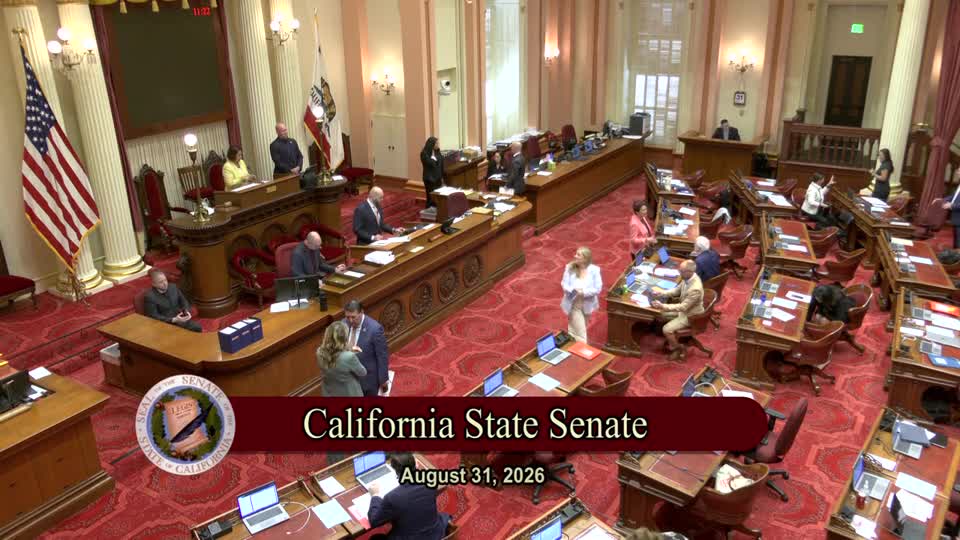 1MIN
Senate Floor
 10MIN
Assembly Floor
 5MIN
Assembly Standing Committee on Elections
Bill Author