AB 1586: Opioid overdose reversal medication: school resource officers.
- Session Year: 2025-2026
- House: Assembly
- Latest Version Date: 2026-09-18
Current Status:
Passed
(2026-09-18: Chaptered by Secretary of State - Chapter 268, Statutes of 2026.)
Introduced
In Committee
Awaiting First Chamber Vote
Passed First Chamber
In Committee
Awaiting Second Chamber Vote
Passed Second Chamber
Enacted
What does this bill do?
The bill requires school resource officers (police officers assigned to schools) to complete opioid overdose recognition and response training when assigned and at least every two years, and allows them to volunteer to give naloxone or another opioid antagonist to someone who appears to be overdosing. It protects those officers and their employers from civil or criminal liability for giving an opioid antagonist at a school unless their actions are grossly negligent (serious carelessness) or willful and wanton misconduct (intentional wrongdoing). Officers must report how many doses they received and used, and the State Department of Public Health and POST will publish data and provide guidance on access and planning.
The summary is provided by generative AI which can make mistakes. For original language, please view the details in the table below.
Existing law authorizes a school district, county office of education, and charter school to provide emergency naloxone hydrochloride or another opioid antagonist to school nurses and trained personnel who have volunteered, and authorizes school nurses and trained personnel to use naloxone hydrochloride or another opioid antagonist to provide emergency medical aid to persons suffering, or reasonably believed to be suffering, from an opioid overdose.
This bill, to be known as the School Safety and Opioid Overdose Prevention Act, and commencing with the 202728 school year, would require a school resource officer, as defined, to (1) upon assignment to a schoolsite, and at least every 2 years thereafter, complete an opioid overdose recognition and response training, as specified, and (2) report, on or before July 1, 2028, and annually thereafter until July 1, 2030, to the State Department of Public Health, among other things, the number of times the school resource officer administered an opioid antagonist, and the types of opioid antagonist received and administered, while serving at a schoolsite. The bill would prohibit a school resource officer who administers an opioid antagonist while assigned to a schoolsite, and their employing or contracting entity, from being held liable in a civil action or being subject to criminal prosecution for the school resource officers acts or omissions, unless those acts or omissions constitute gross negligence or willful and wanton misconduct, as provided.
The bill would require the Commission on Peace Officer Standards and Training, in consultation with the State Department of Education, to provide implementation guidance to local educational agencies and law enforcement agencies on accessing opioid antagonists at low or no cost and integrating overdose response into school safety planning. The bill would require the State Department of Public Health, on or before July 1, 2031, to submit a report to the Legislature with the information annually reported by school resource officers, and post specified information on the departments internet website, as provided.
Existing law authorizes a school district, county office of education, and charter school to provide emergency naloxone hydrochloride or another opioid antagonist to school nurses and trained personnel who have volunteered, and authorizes school nurses and trained personnel to use naloxone hydrochloride or another opioid antagonist to provide emergency medical aid to persons suffering, or reasonably believed to be suffering, from an opioid overdose.
This bill, to be known as the School Safety and Opioid Overdose Prevention Act, and commencing with the 202728 school year, would require a school resource officer, as defined, to (1) upon assignment to a schoolsite, and at least every 2 years thereafter, complete an opioid overdose recognition and response training, as specified, and (2) report, on or before July 1, 2028, and annually thereafter until July 1, 2030, to the State Department of Public Health, among other things, the number of times the school resource officer administered an opioid antagonist antagonist, and the types of opioid antagonist received and administered, while serving at a schoolsite. The bill would prohibit a school resource officer who administers an opioid antagonist while assigned to a schoolsite, and their employing or contracting entity, from being held liable in a civil action or being subject to criminal prosecution for the school resource officers acts or omissions, unless those acts or omissions constitute gross negligence or willful and wanton misconduct, as provided.
The bill would require the State Department of Health Care Services, Commission on Peace Officer Standards and Training, in consultation with the State Department of Education and the commission, Education, to provide implementation guidance to local educational agencies and law enforcement agencies on accessing opioid antagonists at low or no cost and integrating overdose response into school safety planning. The bill would require the State Department of Public Health, on or before July 1, 2031, to submit a report to the Legislature with the information annually reported by school resource officers, and incorporate the post specified information into a specified statewide dashboard, on the departments internet website, as provided.
Existing law authorizes a school district, county office of education, and charter school to provide emergency naloxone hydrochloride or another opioid antagonist to school nurses and trained personnel who have volunteered, and authorizes school nurses and trained personnel to use naloxone hydrochloride or another opioid antagonist to provide emergency medical aid to persons suffering, or reasonably believed to be suffering, from an opioid overdose.
This bill, to be known as the School Safety and Opioid Overdose Prevention Act, and commencing with the 202728 school year, would require a school resource officer, as defined, to (1) upon assignment to a schoolsite, and at least every 2 years thereafter, complete an opioid overdose recognition and response training, as specified, and (2) report, on or before July 1, 2028, and annually thereafter until July 1, 2030, to the State Department of Public Health, among other things, the number of times the school resource officer administered an opioid antagonist while serving at a schoolsite. The bill would prohibit a school resource officer who administers an opioid antagonist while assigned to a schoolsite, and their employing or contracting entity, from being held liable in a civil action or being subject to criminal prosecution for the school resource officers acts or omissions, unless those acts or omissions constitute gross negligence or willful and wanton misconduct, as provided.
The bill would require the State Department of Health Care Services, in consultation with the State Department of Education and the commission, to provide implementation guidance to local educational agencies and law enforcement agencies on accessing opioid antagonists at low or no cost and integrating overdose response into school safety planning. The bill would require the State Department of Public Health, on or before July 1, 2031, to submit a report to the Legislature with the information annually reported by school resource officers, and incorporate the information into a specified statewide dashboard, as provided.
Existing law authorizes a school district, county office of education, and charter school to provide emergency naloxone hydrochloride or another opioid antagonist to school nurses and trained personnel who have volunteered, and authorizes school nurses and trained personnel to use naloxone hydrochloride or another opioid antagonist to provide emergency medical aid to persons suffering, or reasonably believed to be suffering, from an opioid overdose.
This bill, to be known as the School Safety and Opioid Overdose Prevention Act, and commencing with the 202728 school year, would require a school resource officer, as defined, to (1) upon assignment to a schoolsite, and at least every 2 years thereafter, complete an opioid overdose recognition and response training, as specified, and (2) annually report report, on or before July 1, 2028, and annually thereafter until July 1, 2030, to the State Department of Public Health, among other things, the number of times the school resource officer administered an opioid antagonist while serving at a schoolsite. The bill would prohibit a school resource officer who administers an opioid antagonist while assigned to a schoolsite, and their employing or contracting entity, from being held liable in a civil action or being subject to criminal prosecution for the school resource officers acts or omissions, unless those acts or omissions constitute gross negligence or willful and wanton misconduct, as provided.
The bill would require the State Department of Health Care Services, in consultation with the State Department of Education and the commission, to provide implementation guidance to local educational agencies and law enforcement agencies on accessing opioid antagonists at low or no cost and integrating overdose response into school safety planning. The bill would require the State Department of Public Health, on or before January July 1, 2031, to submit a report to the Legislature with the information annually reported by school resource officers, and incorporate the information into a specified statewide dashboard, as provided.
Existing law authorizes a school district, county office of education, and charter school to provide emergency naloxone hydrochloride or another opioid antagonist to school nurses and trained personnel who have volunteered, and authorizes school nurses and trained personnel to use naloxone hydrochloride or another opioid antagonist to provide emergency medical aid to persons suffering, or reasonably believed to be suffering, from an opioid overdose.
This bill, to be known as the School Safety and Opioid Overdose Prevention Act, and commencing with the 202728 school year, would require a school resource officer, as defined, to (1) upon assignment to a schoolsite, and at least every 2 years thereafter, complete an opioid overdose recognition and response training, as specified, and (2) annually report to the Commission on Peace Officer Standards and Training, State Department of Public Health, among other things, the number of times the school resource officer administered an opioid antagonist while serving at a schoolsite. The bill would prohibit a school resource officer who administers an opioid antagonist while assigned to a schoolsite, and their employing or contracting entity, from being held liable in a civil action or being subject to criminal prosecution for the school resource officers acts or omissions, unless those acts or omissions constitute gross negligence or willful and wanton misconduct, as provided.
The bill would require the State Department of Health Care Services, in consultation with the State Department of Education and the commission, to provide implementation guidance to local educational agencies and law enforcement agencies on accessing opioid antagonists at low or no cost and integrating overdose response into school safety planning. The bill would require the commission, State Department of Public Health, on or before January 1, 2031, and in cooperation with the State Department of Public Health, as needed, to submit a report to the Legislature with the information annually reported by school resource officers. officers, and incorporate the information into a specified statewide dashboard, as provided.
Existing law authorizes a school district, county office of education, and charter school to provide emergency naloxone hydrochloride or another opioid antagonist to school nurses and trained personnel who have volunteered, and authorizes school nurses and trained personnel to use naloxone hydrochloride or another opioid antagonist to provide emergency medical aid to persons suffering, or reasonably believed to be suffering, from an opioid overdose.
This bill, to be known as the School Safety and Opioid Overdose Prevention Act, and commencing with the 202728 school year, would require a school district, county office of education, or charter school to ensure that (A) each school resource officer, as defined, while on duty at a school campus or school-sponsored activity, carries an opioid antagonist to provide emergency treatment to persons who are suffering, or reasonably believed to be suffering, from an opioid overdose and (B) each school resource officer, to (1) upon assignment to a schoolsite, and at least every 2 years thereafter, completes complete an opioid overdose recognition and response training, as specified. By imposing additional duties on local educational agencies, the bill would impose a state-mandated local program. specified, and (2) annually report to the Commission on Peace Officer Standards and Training, among other things, the number of times the school resource officer administered an opioid antagonist while serving at a schoolsite. The bill would prohibit a school resource officer who administers an opioid antagonist while assigned to a schoolsite, and their employing or contracting entity, from being held liable in a civil action or being subject to criminal prosecution for the school resource officers acts or omissions, unless those acts or omissions constitute gross negligence or willful and wanton misconduct, as provided.
The bill would require the State Department of Health Care Services, in consultation with the State Department of Education and the Commission on Peace Officer Standards and Training, commission, to provide implementation guidance to local educational agencies and law enforcement agencies on accessing opioid antagonists at low or no cost and integrating overdose response into school safety planning. The bill would require the commission, on or before January 1, 2031, and in cooperation with the State Department of Public Health, as needed, to submit a report to the Legislature with the information annually reported by school resource officers.
(2)The California Constitution requires the state to reimburse local agencies and school districts for certain costs mandated by the state. Statutory provisions establish procedures for making that reimbursement.This bill would provide that, if the Commission on State Mandates determines that the bill contains costs mandated by the state, reimbursement for those costs shall be made pursuant to the statutory provisions noted above.(1)Existing law authorizes a school district, county office of education, and charter school to provide emergency naloxone hydrochloride or another opioid antagonist to school nurses and trained personnel who have volunteered, and authorizes school nurses and trained personnel to use naloxone hydrochloride or another opioid antagonist to provide emergency medical aid to persons suffering, or reasonably believed to be suffering, from an opioid overdose.
This bill, to be known as the School Safety and Opioid Overdose Prevention Act, would require a school district, county office of education, or charter school to ensure that (A) each school resource officer, as defined, while on duty at a school campus or school-sponsored activity, carries an opioid antagonist to provide emergency treatment to persons who are suffering, or reasonably believed to be suffering, from an opioid overdose and (B) each school resource officer, upon assignment to a schoolsite, and at least every 2 years thereafter, completes an opioid overdose recognition and response training, as specified. By imposing additional duties on local educational agencies, the bill would impose a state-mandated local program. The bill would prohibit a school resource officer who administers an opioid antagonist while assigned to a schoolsite, and their employing or contracting entity, from being held liable in a civil action or being subject to criminal prosecution for the school resource officers acts or omissions, unless those acts or omissions constitute gross negligence or willful and wanton misconduct, as provided.
The bill would require the State Department of Health Care Services, in consultation with the State Department of Education and the Commission on Peace Officer Standards and Training, to provide implementation guidance to local educational agencies and law enforcement agencies on accessing opioid antagonists at low or no cost and integrating overdose response into school safety planning.
(2)The California Constitution requires the state to reimburse local agencies and school districts for certain costs mandated by the state. Statutory provisions establish procedures for making that reimbursement.
This bill would provide that, if the Commission on State Mandates determines that the bill contains costs mandated by the state, reimbursement for those costs shall be made pursuant to the statutory provisions noted above.
This act shall be known, and may be cited, as the School Safety and Opioid Overdose Prevention Act.
SEC. 2.Section 49414.37 is added to the Education Code, to read:49414.37.(a)For purposes of this section, the following definitions apply:
(1)Local educational agency means a school district, county office of education, or charter school serving pupils in kindergarten or any of grades 1 to 12, inclusive.
(2)Opioid antagonist means naloxone hydrochloride or another drug approved by the federal Food and Drug Administration that, when administered, negates or neutralizes in whole or in part the pharmacological effects of an opioid in the body, and has been approved for the treatment of an opioid overdose.
(3)School resource officer means an individual who is a peace officer, as defined in Chapter 4.5 (commencing with Section 830) of Title 3 of Part 2 of the Penal Code, and who is employed by, or contracts with, a local educational agency, city, county, or other law enforcement agency to act in a school assignment.
(4)Schoolsite means an individual school campus of a local educational agency or an area where a school-sponsored activity of a local educational agency is currently being held.
(b)(1)(A)Notwithstanding any other law and commencing with the 202728 school year, a school resource officer, upon assignment to a schoolsite, and at least every two years thereafter, shall complete opioid overdose recognition and response training that is approved by the Commission on Peace Officer Standards and Training (POST) or the Board of State and Community Corrections (BSCC). The training may be integrated into existing continuing professional training requirements for POST or BSCC standards and training for corrections to minimize administrative burden and ensure consistency across agencies.
(B)Training completed by a school resource officer pursuant to subparagraph (A) shall also fulfill the training requirements of subdivision (d) of Section 49414.3.
(2)Pursuant to Section 49414.3, a school resource officer may volunteer to administer an opioid antagonist to a person who appears to be experiencing an opioid overdose.
(c)Notwithstanding any other law, a school resource officer, while assigned to a schoolsite, who administers an opioid antagonist, in good faith and not for compensation, to a person who appears to be experiencing an opioid overdose constitutes the rendering of emergency care. The school resource officer, or the entity employing or contracting with the school resource officer, shall not be liable in a civil action or be subject to criminal prosecution for the school resource officers acts or omissions in administering the opioid antagonist, unless an act or omission of the school resource officer constitutes gross negligence or willful or wanton misconduct connected to the administration of the opioid antagonist.
(d)POST, in consultation with the department, shall provide implementation guidance to local educational agencies and law enforcement agencies on accessing opioid antagonists at low or no cost and integrating overdose response into school safety planning.
(e)(1)A school resource officer shall report, on or before July 1, 2028, and annually thereafter until July 1, 2030, to the State Department of Public Health, in a form and manner prescribed by the State Department of Public Health, all of the following:
(A)The number of units of opioid antagonists received.
(B)The number of times the school resource officer administered an opioid antagonist while serving at a schoolsite.
(C)The number of times the school resource officer needed an opioid antagonist but did not have one available.
(D)The types of opioid antagonists received and administered.
(E)The name and contact information of the school resource officer and the individual completing the form.
(F)Schoolsite information, including the name of the school, the local educational agency, and the city and county where the school is located.
(2)The State Department of Public Health shall post the data reported pursuant to subparagraphs (A) to (C), inclusive, of paragraph (1) on the State Department of Public Healths internet website to ensure the data is publicly accessible.
(f)(1)On or before July 1, 2031, the State Department of Public Health shall submit a report to the Legislature in compliance with Section 9795 of the Government Code with the information collected pursuant to paragraph (1) of subdivision (e).
(2)Pursuant to Section 10231.5 of the Government Code, this subdivision is inoperative on January 1, 2035.
(g)This section may be implemented using existing state and local resources, including, but not limited to, the Naloxone Distribution Project administered by the State Department of Health Care Services, opioid settlement funds, federal grants, and private or philanthropic donations to procure opioid antagonists and support opioid overdose recognition and response training.
This act shall be known, and may be cited, as the School Safety and Opioid Overdose Prevention Act.
SEC. 2.Section 49414.37 is added to the Education Code, to read:49414.37.(a)For purposes of this section, the following definitions apply:
(1)Local educational agency means a school district, county office of education, or charter school serving pupils in kindergarten or any of grades 1 to 12, inclusive.
(2)Opioid antagonist means naloxone hydrochloride or another drug approved by the federal Food and Drug Administration that, when administered, negates or neutralizes in whole or in part the pharmacological effects of an opioid in the body, and has been approved for the treatment of an opioid overdose.
(3)School resource officer means an individual who is a peace officer, as defined in Chapter 4.5 (commencing with Section 830) of Title 3 of Part 2 of the Penal Code, and who is employed by, or contracts with, a local educational agency, city, county, or other law enforcement agency to act in a school assignment.
(4)Schoolsite means an individual school campus of a local educational agency or an area where a school-sponsored activity of a local educational agency is currently being held.
(b)(1)(A)Notwithstanding any other law and commencing with the 202728 school year, a school resource officer, upon assignment to a schoolsite, and at least every two years thereafter, shall complete opioid overdose recognition and response training that is approved by the Commission on Peace Officer Standards and Training (POST), the State Department of Health Care Services, (POST) or the Board of State and Community Corrections (BSCC). The training may be integrated into existing continuing professional training requirements for POST or BSCC standards and training for corrections to minimize administrative burden and ensure consistency across agencies.
(B)Training completed by a school resource officer pursuant to subparagraph (A) shall also fulfill the training requirements of subdivision (d) of Section 49414.3.
(2)Pursuant to Section 49414.3, a school resource officer may volunteer to administer an opioid antagonist to a person who appears to be experiencing an opioid overdose.
(c)Notwithstanding any other law, a school resource officer, while assigned to a schoolsite, who administers an opioid antagonist, in good faith and not for compensation, to a person who appears to be experiencing an opioid overdose constitutes the rendering of emergency care. The school resource officer, or the entity employing or contracting with the school resource officer, shall not be liable in a civil action or be subject to criminal prosecution for the school resource officers acts or omissions in administering the opioid antagonist, unless an act or omission of the school resource officer constitutes gross negligence or willful or wanton misconduct connected to the administration of the opioid antagonist.
(d)The State Department of Health Care Services, POST, in consultation with the department and POST, department, shall provide implementation guidance to local educational agencies and law enforcement agencies on accessing opioid antagonists at low or no cost and integrating overdose response into school safety planning.
(e)(1)A school resource officer shall report, on or before July 1, 2028, and annually thereafter until July 1, 2030, to the State Department of Public Health, in a form and manner prescribed by the State Department of Public Health, the all of the following:
(A)The number of units of opioid antagonists received, the received.
(B)The number of times the school resource officer administered an opioid antagonist while serving at a schoolsite, and the schoolsite.
(C)The number of times the school resource officer needed an opioid antagonist but did not have one available.
(D)The types of opioid antagonists received and administered.
(E)The name and contact information of the school resource officer and the individual completing the form.
(F)Schoolsite information, including the name of the school, the local educational agency, and the city and county where the school is located.
(2)The State Department of Public Health shall incorporate post the data reported pursuant to subparagraphs (A) to (C), inclusive, of paragraph (1) into the statewide opioid overdose surveillance dashboard maintained by the on the State Department of Public Health, or its successor statewide opioid surveillance platform, Healths internet website to ensure the data is publicly accessible and integrated with statewide opioid overdose surveillance efforts. accessible.
(f)(1)On or before July 1, 2031, the State Department of Public Health shall submit a report to the Legislature in compliance with Section 9795 of the Government Code with the information collected pursuant to paragraph (1) of subdivision (e).
(2)Pursuant to Section 10231.5 of the Government Code, this subdivision is inoperative on January 1, 2035.
(g)This section may be implemented using existing state and local resources, including, but not limited to, the Naloxone Distribution Project administered by the State Department of Health Care Services, opioid settlement funds, federal grants, and private or philanthropic donations to procure opioid antagonists and support opioid overdose recognition and response training.
This act shall be known, and may be cited, as the School Safety and Opioid Overdose Prevention Act.
SEC. 2.Section 49414.37 is added to the Education Code, to read:49414.37.(a)For purposes of this section, the following definitions apply:
(1)Local educational agency means a school district, county office of education, or charter school serving pupils in kindergarten or any of grades 1 to 12, inclusive.
(2)Opioid antagonist means naloxone hydrochloride or another drug approved by the federal Food and Drug Administration that, when administered, negates or neutralizes in whole or in part the pharmacological effects of an opioid in the body, and has been approved for the treatment of an opioid overdose.
(3)School resource officer means an individual who is a peace officer, as defined in Chapter 4.5 (commencing with Section 830) of Title 3 of Part 2 of the Penal Code, and who is employed by, or contracts with, a local educational agency, city, county, or other law enforcement agency to act in a school assignment.
(4)Schoolsite means an individual school campus of a local educational agency or an area where a school-sponsored activity of a local educational agency is currently being held.
(b)(1)(A)Notwithstanding any other law and commencing with the 202728 school year, a school resource officer, upon assignment to a schoolsite, and at least every two years thereafter, shall complete opioid overdose recognition and response training that is approved by the Commission on Peace Officer Standards and Training (POST) or (POST), the State Department of Health Care Services. Services, or the Board of State and Community Corrections (BSCC). The training may be integrated into existing POST continuing professional training requirements for POST or BSCC standards and training for corrections to minimize administrative burden and ensure consistency across agencies.
(B)Training completed by a school resource officer pursuant to subparagraph (A) shall also fulfill the training requirements of subdivision (d) of Section 49414.3.
(2)Pursuant to Section 49414.3, a school resource officer may volunteer to administer an opioid antagonist to a person who appears to be experiencing an opioid overdose.
(c)Notwithstanding any other law, a school resource officer, while assigned to a schoolsite, who administers an opioid antagonist, in good faith and not for compensation, to a person who appears to be experiencing an opioid overdose constitutes the rendering of emergency care. The school resource officer, or the entity employing or contracting with the school resource officer, shall not be liable in a civil action or be subject to criminal prosecution for the school resource officers acts or omissions in administering the opioid antagonist, unless an act or omission of the school resource officer constitutes gross negligence or willful or wanton misconduct connected to the administration of the opioid antagonist.
(d)The State Department of Health Care Services, in consultation with the department and POST, shall provide implementation guidance to local educational agencies and law enforcement agencies on accessing opioid antagonists at low or no cost and integrating overdose response into school safety planning.
(e)(1)A school resource officer shall report, on or before July 1, 2028, and annually thereafter until July 1, 2030, to the State Department of Public Health, in a form and manner prescribed by the State Department of Public Health, the number of units of opioid antagonists received, the number of times the school resource officer administered an opioid antagonist while serving at a schoolsite, and the number of times the school resource officer needed an opioid antagonist but did not have one available.
(2)The State Department of Public Health shall incorporate the data reported pursuant to paragraph (1) into the statewide opioid overdose surveillance dashboard maintained by the State Department of Public Health, or its successor statewide opioid surveillance platform, to ensure the data is publicly accessible and integrated with statewide opioid overdose surveillance efforts.
(f)(1)On or before July 1, 2031, the State Department of Public Health shall submit a report to the Legislature in compliance with Section 9795 of the Government Code with the information collected pursuant to paragraph (1) of subdivision (e).
(2)Pursuant to Section 10231.5 of the Government Code, this subdivision is inoperative on January 1, 2035.
(g)This section may be implemented using existing state and local resources, including, but not limited to, the Naloxone Distribution Project administered by the State Department of Health Care Services, opioid settlement funds, federal grants, and private or philanthropic donations to procure opioid antagonists and support opioid overdose recognition and response training.
This act shall be known, and may be cited, as the School Safety and Opioid Overdose Prevention Act.
SEC. 2.Section 49414.37 is added to the Education Code, to read:49414.37.(a)For purposes of this section, the following definitions apply:
(1)Local educational agency means a school district, county office of education, or charter school serving pupils in kindergarten or any of grades 1 to 12, inclusive.
(2)Opioid antagonist means naloxone hydrochloride or another drug approved by the federal Food and Drug Administration that, when administered, negates or neutralizes in whole or in part the pharmacological effects of an opioid in the body, and has been approved for the treatment of an opioid overdose.
(3)School resource officer means an individual who is a peace officer, as defined in Chapter 4.5 (commencing with Section 830) of Title 3 of Part 2 of the Penal Code, and who is employed by, or contracts with, a local educational agency, city, county, or other law enforcement agency to act in a school assignment.
(4)Schoolsite means an individual school campus of a local educational agency or an area where a school-sponsored activity of a local educational agency is currently being held.
(b)(1)(A)Notwithstanding any other law and commencing with the 202728 school year, a school resource officer, upon assignment to a schoolsite, and at least every two years thereafter, shall complete opioid overdose recognition and response training that is approved by the Commission on Peace Officer Standards and Training (POST) or the State Department of Health Care Services. The training may be integrated into existing POST continuing professional training requirements to minimize administrative burden and ensure consistency across agencies.
(B)Training completed by a school resource officer pursuant to subparagraph (A) shall also fulfill the training requirements of subdivision (d) of Section 49414.3.
(C)(2)Pursuant to Section 49414.3, a school resource officer may volunteer to administer an opioid antagonist to a person who appears to be experiencing an opioid overdose.
(c)Notwithstanding any other law, a school resource officer, while assigned to a schoolsite, who administers an opioid antagonist, in good faith and not for compensation, to a person who appears to be experiencing an opioid overdose constitutes the rendering of emergency care. The school resource officer, or the entity employing or contracting with the school resource officer, shall not be liable in a civil action or be subject to criminal prosecution for the school resource officers acts or omissions in administering the opioid antagonist, unless an act or omission of the school resource officer constitutes gross negligence or willful or wanton misconduct connected to the administration of the opioid antagonist.
(d)The State Department of Health Care Services, in consultation with the department and POST, shall provide implementation guidance to local educational agencies and law enforcement agencies on accessing opioid antagonists at low or no cost and integrating overdose response into school safety planning.
(e)(1)A school resource officer shall annually report report, on or before July 1, 2028, and annually thereafter until July 1, 2030, to the State Department of Public Health, in a form and manner prescribed by the State Department of Public Health, the number of units of opioid antagonists received, the number of times the school resource officer administered an opioid antagonist while serving at a schoolsite, and the number of times the school resource officer needed an opioid antagonist but did not have one available.
(2)The State Department of Public Health shall incorporate the data reported pursuant to paragraph (1) into the statewide opioid overdose surveillance dashboard maintained by the State Department of Public Health, or its successor statewide opioid surveillance platform, to ensure the data is publicly accessible and integrated with statewide opioid overdose surveillance efforts.
(f)(1)On or before January July 1, 2031, the State Department of Public Health shall submit a report to the Legislature in compliance with Section 9795 of the Government Code with the information collected pursuant to paragraph (1) of subdivision (e).
(2)Pursuant to Section 10231.5 of the Government Code, this subdivision is inoperative on January 1, 2035.
(g)This section may be implemented using existing state and local resources, including, but not limited to, the Naloxone Distribution Project administered by the State Department of Health Care Services, opioid settlement funds, federal grants, and private or philanthropic donations to procure opioid antagonists and support opioid overdose recognition and response training.
This act shall be known, and may be cited, as the School Safety and Opioid Overdose Prevention Act.
SEC. 2.Section 49414.37 is added to the Education Code, to read:49414.37.(a)For purposes of this section, the following definitions apply:
(1)Local educational agency means a school district, county office of education, or charter school serving pupils in kindergarten or any of grades 1 to 12, inclusive.
(2)Opioid antagonist means naloxone hydrochloride or another drug approved by the federal Food and Drug Administration that, when administered, negates or neutralizes in whole or in part the pharmacological effects of an opioid in the body, and has been approved for the treatment of an opioid overdose.
(3)School resource officer means an individual who is a peace officer, as defined in Chapter 4.5 (commencing with Section 830) of Title 3 of Part 2 of the Penal Code, and who is employed by, or contracts with, a local educational agency, city, county, or other law enforcement agency to act in a school assignment.
(4)Schoolsite means an individual school campus of a local educational agency or an area where a school-sponsored activity of a local educational agency is currently being held.
(b)(1)(A)Notwithstanding any other law and commencing with the 202728 school year, a school resource officer, upon assignment to a schoolsite, and at least every two years thereafter, shall complete opioid overdose recognition and response training that is approved by the Commission on Peace Officer Standards and Training (POST) or the State Department of Health Care Services. The training may be integrated into existing POST continuing professional training requirements to minimize administrative burden and ensure consistency across agencies.
(B)Training completed by a school resource officer pursuant to subparagraph (A) shall also fulfill the training requirements of subdivision (d) of Section 49414.3.
(C)Pursuant to Section 49414.3, a school resource officer may volunteer to administer an opioid antagonist to a person who appears to be experiencing an opioid overdose.
(c)Notwithstanding any other law, a school resource officer, while assigned to a schoolsite, who administers an opioid antagonist, in good faith and not for compensation, to a person who appears to be experiencing an opioid overdose constitutes the rendering of emergency care. The school resource officer, or the entity employing or contracting with the school resource officer, shall not be liable in a civil action or be subject to criminal prosecution for the school resource officers acts or omissions in administering the opioid antagonist, unless an act or omission of the school resource officer constitutes gross negligence or willful or wanton misconduct connected to the administration of the opioid antagonist.
(d)The State Department of Health Care Services, in consultation with the department and POST, shall provide implementation guidance to local educational agencies and law enforcement agencies on accessing opioid antagonists at low or no cost and integrating overdose response into school safety planning.
(e)(1)A school resource officer shall annually report to POST the State Department of Public Health, in a form and manner prescribed by the State Department of Public Health, the number of units of opioid antagonists received, the number of times the school resource officer administered an opioid antagonist while serving at a schoolsite, and the number of times the school resource officer needed an opioid antagonist but did not have one available.
(2)The State Department of Public Health shall incorporate the data reported pursuant to paragraph (1) into the statewide opioid overdose surveillance dashboard maintained by the State Department of Public Health, or its successor statewide opioid surveillance platform, to ensure the data is publicly accessible and integrated with statewide opioid overdose surveillance efforts.
(f)(1)On or before January 1, 2031, POST shall, in cooperation with the State Department of Public Health, as needed, Health shall submit a report to the Legislature in compliance with Section 9795 of the Government Code with the information collected pursuant to paragraph (1) of subdivision (e).
(2)Pursuant to Section 10231.5 of the Government Code, this subdivision is inoperative on January 1, 2035.
(g)This section may be implemented using existing state and local resources, including, but not limited to, the Naloxone Distribution Project administered by the State Department of Health Care Services, opioid settlement funds, federal grants, and private or philanthropic donations to procure opioid antagonists and support opioid overdose recognition and response training.
This act shall be known, and may be cited, as the School Safety and Opioid Overdose Prevention Act.
SEC. 2.Section 49414.37 is added to the Education Code, to read:49414.37.(a)For purposes of this section, the following definitions apply:
(1)Local educational agency means a school district, county office of education, or charter school serving pupils in kindergarten or any of grades 1 to 12, inclusive.
(2)Opioid antagonist means naloxone hydrochloride or another drug approved by the federal Food and Drug Administration that, when administered, negates or neutralizes in whole or in part the pharmacological effects of an opioid in the body, and has been approved for the treatment of an opioid overdose.
(3)School resource officer means an individual who is a peace officer, as defined in Chapter 4.5 (commencing with Section 830) of Title 3 of Part 2 of the Penal Code, and who is employed by, or contracts with, a local educational agency, city, county, or other law enforcement agency to act in a school assignment.
(4)Schoolsite means an individual school campus of a local educational agency or an area where a school-sponsored activity of a local educational agency is currently being held.
(b)Notwithstanding any other law, a local educational agency shall ensure both of the following:(1)Each school resource officer assigned to a schoolsite shall carry on their person, while on duty, an opioid antagonist for the purpose of providing emergency treatment to persons who are suffering, or reasonably believed to be suffering, from an opioid overdose.(2)Each school(b)(1)(A)Notwithstanding any other law and commencing with the 202728 school year, a school resource officer, upon assignment to a schoolsite, and at least every two years thereafter, shall complete opioid overdose recognition and response training that is approved by the Commission on Peace Officer Standards and Training (POST) or the State Department of Health Care Services. The training may be integrated into existing POST continuing professional training requirements to minimize administrative burden and ensure consistency across agencies.
(B)Training completed by a school resource officer pursuant to subparagraph (A) shall also fulfill the training requirements of subdivision (d) of Section 49414.3.
(C)Pursuant to Section 49414.3, a school resource officer may volunteer to administer an opioid antagonist to a person who appears to be experiencing an opioid overdose.
(c)Notwithstanding any other law, a school resource officer, while assigned to a schoolsite, who administers an opioid antagonist, in good faith and not for compensation, to a person who appears to be experiencing an opioid overdose constitutes the rendering of emergency care. The school resource officer, or the entity employing or contracting with the school resource officer, shall not be liable in a civil action or be subject to criminal prosecution for the school resource officers acts or omissions in administering the opioid antagonist, unless an act or omission of the school resource officer constitutes gross negligence or willful or wanton misconduct connected to the administration of the opioid antagonist.
(d)The State Department of Health Care Services, in consultation with the department and POST, shall provide implementation guidance to local educational agencies and law enforcement agencies on accessing opioid antagonists at low or no cost and integrating overdose response into school safety planning.
(e)A school resource officer shall annually report to POST the number of units of opioid antagonists received, the number of times the school resource officer administered an opioid antagonist while serving at a schoolsite, and the number of times the school resource officer needed an opioid antagonist but did not have one available.
(f)(1)On or before January 1, 2031, POST shall, in cooperation with the State Department of Public Health, as needed, submit a report to the Legislature in compliance with Section 9795 of the Government Code with the information collected pursuant to subdivision (e).
(2)Pursuant to Section 10231.5 of the Government Code, this subdivision is inoperative on January 1, 2035.
(e)(g)This section may be implemented using existing state and local resources, including, but not limited to, the Naloxone Distribution Project administered by the State Department of Health Care Services, opioid settlement funds, federal grants, and private or philanthropic donations to procure opioid antagonists and support opioid overdose recognition and response training.
SEC. 3.If the Commission on State Mandates determines that this act contains costs mandated by the state, reimbursement to local agencies and school districts for those costs shall be made pursuant to Part 7 (commencing with Section 17500) of Division 4 of Title 2 of the Government Code.This act shall be known, and may be cited, as the School Safety and Opioid Overdose Prevention Act.
SEC. 2.Section 49414.37 is added to the Education Code, to read:49414.37.(a)For purposes of this section, the following definitions apply:
(1)Local educational agency means a school district, county office of education, or charter school serving pupils in kindergarten or any of grades 1 to 12, inclusive.
(2)Opioid antagonist means naloxone hydrochloride or another drug approved by the federal Food and Drug Administration that, when administered, negates or neutralizes in whole or in part the pharmacological effects of an opioid in the body, and has been approved for the treatment of an opioid overdose.
(3)School resource officer means an individual who is a peace officer, as defined in Chapter 4.5 (commencing with Section 830) of Title 3 of Part 2 of the Penal Code, and who is employed by, or contracts with, a local educational agency, city, county, or other law enforcement agency to act in a school assignment.
(4)Schoolsite means an individual school campus of a local educational agency or an area where a school-sponsored activity of a local educational agency is currently being held.
(b)Notwithstanding any other law, a local educational agency shall ensure both of the following:
(1)Each school resource officer assigned to a schoolsite shall carry on their person, while on duty, an opioid antagonist for the purpose of providing emergency treatment to persons who are suffering, or reasonably believed to be suffering, from an opioid overdose.
(2)Each school resource officer, upon assignment to a schoolsite, and at least every two years thereafter, shall complete opioid overdose recognition and response training that is approved by the Commission on Peace Officer Standards and Training (POST) or the State Department of Health Care Services. The training may be integrated into existing POST continuing professional training requirements to minimize administrative burden and ensure consistency across agencies.
(c)Notwithstanding any other law, a school resource officer, while assigned to a schoolsite, who administers an opioid antagonist, in good faith and not for compensation, to a person who appears to be experiencing an opioid overdose constitutes the rendering of emergency care. The school resource officer, or the entity employing or contracting with the school resource officer, shall not be liable in a civil action or be subject to criminal prosecution for the school resource officers acts or omissions in administering the opioid antagonist, unless an act or omission of the school resource officer constitutes gross negligence or willful or wanton misconduct connected to the administration of the opioid antagonist.
(d)The State Department of Health Care Services, in consultation with the department and POST, shall provide implementation guidance to local educational agencies and law enforcement agencies on accessing opioid antagonists at low or no cost and integrating overdose response into school safety planning.
(e)This section may be implemented using existing state and local resources, including, but not limited to, the Naloxone Distribution Project administered by the State Department of Health Care Services, opioid settlement funds, federal grants, and private or philanthropic donations to procure opioid antagonists and support opioid overdose recognition and response training.
SEC. 3.If the Commission on State Mandates determines that this act contains costs mandated by the state, reimbursement to local agencies and school districts for those costs shall be made pursuant to Part 7 (commencing with Section 17500) of Division 4 of Title 2 of the Government Code.
|
Date
|
Status
|
|---|---|
| Sep 18, 2026 | Chaptered by Secretary of State - Chapter 268, Statutes of 2026. |
| Sep 18, 2026 | Approved by the Governor. |
| Sep 8, 2026 | Enrolled and presented to the Governor at 3:30 p.m. |
| Aug 28, 2026 | Senate amendments concurred in. To Engrossing and Enrolling. (Ayes 77. Noes 0.). |
| Aug 28, 2026 | Senate amendments concurred in. To Engrossing and Enrolling. (Ayes 77. Noes 0. Page 6789.). |
| Aug 27, 2026 | In Assembly. Concurrence in Senate amendments pending. |
| Aug 27, 2026 | Read third time. Passed. Ordered to the Assembly. (Ayes 39. Noes 0.). |
| Aug 25, 2026 | Ordered to special consent calendar. |
| Aug 17, 2026 | Read second time. Ordered to third reading. |
| Aug 13, 2026 | Read second time and amended. Ordered returned to second reading. |
| Aug 13, 2026 | From committee: Amend, and do pass as amended. (Ayes 7. Noes 0.) (August 13). |
| Aug 3, 2026 | In committee: Referred to APPR. suspense file. |
| Jul 2, 2026 | Read second time and amended. Re-referred to Com. on APPR. |
| Jul 1, 2026 | From committee: Amend, and do pass as amended and re-refer to Com. on APPR. with recommendation: To Consent Calendar. (Ayes 6. Noes 0.) (June 30). |
| Jun 18, 2026 | Read second time and amended. Re-referred to Com. on PUB. S. |
| Jun 17, 2026 | From committee: Amend, and do pass as amended and re-refer to Com. on PUB. S. (Ayes 7. Noes 0.) (June 17). |
| Jun 4, 2026 | From committee chair, with author's amendments: Amend, and re-refer to committee. Read second time, amended, and re-referred to Com. on ED. |
| Jun 3, 2026 | Referred to Coms. on ED. and PUB. S. |
| May 14, 2026 | In Senate. Read first time. To Com. on RLS. for assignment. |
| May 14, 2026 | Read third time. Passed. Ordered to the Senate. (Ayes 77. Noes 0.) |
| May 14, 2026 | Read third time. Passed. Ordered to the Senate. (Ayes 77. Noes 0. Page 5043.) |
| May 7, 2026 | Read second time. Ordered to third reading. |
| May 6, 2026 | From committee: Do pass. (Ayes 14. Noes 0.) (May 6). |
| Mar 24, 2026 | Re-referred to Com. on APPR. |
| Mar 23, 2026 | Read second time and amended. |
| Mar 19, 2026 | From committee: Amend, and do pass as amended and re-refer to Com. on APPR. (Ayes 8. Noes 0.) (March 18). |
| Mar 9, 2026 | Referred to Com. on ED. |
| Jan 15, 2026 | From printer. May be heard in committee February 14. |
| Jan 14, 2026 | Read first time. To print. |
|
Date
|
Description
|
Location
|
Votes
|
|
|---|---|---|---|---|
| Aug 28, 2026 | AB 1586 Ramos Concurrence in Senate Amendments | Assembly Floor |
Passed |
|
| Aug 27, 2026 | Special Consent AB1586 Ramos By Gonzalez | Senate Floor |
Passed |
|
| Aug 13, 2026 | Do pass as amended | Senate Standing Committee on Appropriations |
Passed |
|
| Aug 3, 2026 | Placed on suspense file | Senate Standing Committee on Appropriations |
Passed |
|
| Jun 30, 2026 | Do pass as amended, but first amend, and re-refer to the Committee on [Appropriations] with the recommendation: To Consent Calendar | Senate Standing Committee on Public Safety |
Passed |
|
| Jun 17, 2026 | Do pass as amended, but first amend, and re-refer to the Committee on [Public Safety] | Senate Standing Committee on Education |
Passed |
|
| May 14, 2026 | AB 1586 Ramos Assembly Third Reading | Assembly Floor |
Passed |
|
| May 6, 2026 | Do pass. | Assembly Standing Committee on Appropriations |
Passed |
|
| Mar 18, 2026 | Do pass as amended and be re-referred to the Committee on [Appropriations] | Assembly Standing Committee on Education |
Passed |
This list shows positions taken on this bill by organizations on the date displayed, which is linked to the original source.
Positions by individuals are not included.
|
Organization
|
Position
|
Date
|
|---|---|---|
| 8 Individuals | ** Support | |
| Addiction Counselor Certification Board of California | ** Support | |
| Alameda County Office Of Education | ** Support | |
| American Academy Of Pediatrics, California | ** Support | |
| Arcadia Police Officers' Association | ** Support | |
| Brea Police Association | ** Support | |
| Burbank Police Officers' Association | ** Support | |
| California Association For Alcohol/Drug Educators | ** Support | |
| California Association For Health, Physical Education, Recreation & Dance | ** Support | |
| California Association of Alcohol and Drug Program Executives | ** Support | |
| California Association Of Marriage And Family Therapists | ** Support | |
| California Association of School Police Chiefs | ** Support | |
| California Behavioral Health Association | ** Support | |
| California Coalition of School Safety Professionals | ** Support | |
| California Consortium of Addiction Programs and Professionals | ** Support | |
| California Medical Association | ** Support | |
| California Narcotic Officers' Association | ** Support | |
| California Opioid Maintenance Providers | ** Support | |
| California Reserve Peace Officers Association | ** Support | |
| California School Nurses Organization | ** Support | |
| California Teachers Association | ** Support | |
| California Youth Empowerment Network | ** Support | |
| CFT – a Union of Educators & Classified Professionals, AFT, AFL-CIO | ** Support | |
| City of Fontana | ** Support | |
| Claremont Police Officers' Association | ** Support | |
| Corona Police Officers Association | ** Support | |
| County Behavioral Health Directors Association | ** Support | |
| Culver City Police Officers' Association | ** Support | |
| Drug Policy Alliance | ** Support | |
| Fullerton Police Officers' Association | ** Support | |
| Los Angeles School Police Management Association | ** Support | |
| los angeles school police officers association | ** Support | |
| Murrieta Police Officers' Association | ** Support | |
| Newport Beach Police Association | ** Support | |
| One individual | ** Support | |
| Palos Verdes Police Officers' Association | ** Support | |
| PLACER COUNTY DEPUTY SHERIFFS ASSOCIATION | ** Support | |
| Pomona Police Officers' Association | ** Support | |
| Racial and Ethnic Mental Health Disparities Coalition | ** Support | |
| Riverside Police Officers' Association | ** Support | |
| Riverside Sheriffs' Association | ** Support | |
| Schools Excess Liability Fund | ** Support | |
| The California Association of Local Behavioral Health Boards and Commissions | ** Support |
CONCURRENCE IN SENATE AMENDMENTS
CSA1 Bill Id:AB 1586
Author:(Ramos)
As Amended Ver:August 13, 2026
Majority vote
SUMMARY
Requires all school resource officers (SROs) to complete trainings approved by the Commission on Peace Officer Standards (POST) or the Board of State and Community Corrections (BSCC) on opioid overdose recognition and response, and to annually report their opioid antagonist administration to the California Department of Public Health (CDPH). Requires POST and the California Department of Education (CDE) to provide implementation guidance to local educational agencies (LEAs) and law enforcement agencies on opioid antagonist procurement and use. Requires the CDPH to submit a report to the Legislature by July 1, 2031, that details opioid antagonist administration by SROs at schoolsites.
Senate Amendments
- Authorize the Board of State and Community Correction (BSCC), in addition to POST, to approve an opioid overdose training for purposes of this bill.
- Remove the requirement that the State Department of Health Care Services (DHCS) approve trainings and provide implementation guidance, and assign these responsibilities to POST, BSCC, CDPH, or CDE.
- Specify that school resource officers shall report opioid antagonist receivership and administration on or before July 1, 2028, and annually thereafter until July 1, 2030.
- Require SROs to include additional information in their annual report, including the types of opioid antagonists received and administered, the name and contact information of the SRO and the individual completing the form, and the name and address of the schoolsite and LEA.
- Requires the CDPH to post information on the number of opioid antagonists received, the number of antagonists used, and the number of times and SRO needed an antagonist but did not have one available on its website.
- Requires the CDPH to submit a summative report of the information it receives to the Legislature by July 1, 2031, rather than January 1, 2031, and removes the involvement of POST in the final report.
COMMENTS
Recent amendments. Recent amendments remove DHCS from the bill, and reassign their responsibilities primarily to CDPH. They also clarify the reporting timeline and include SRO and school contact information be included in the reporting requirements. They require data collected by the CDPH to be posted on a dedicated webpage, and extend the timeline for CDPH to submit its final report.
Existing programs for managing opioid overdoses in schools. Currently, all public middle schools, junior high schools, high schools, and adult schools must maintain at least two units of opioid antagonists and have at least two employees who are trained in their use. Staff who volunteer to provide opioid antagonists must undergo a training developed by the Superintendent of Public Instruction, and are protected from liability or retaliation in the event that they do or do not administer opioid antagonists. Additionally, any individual over the age of 12 is allowed to carry opioid antagonists while on school property and be held harmless if they are used in good faith.
There is anecdotal evidence that many SROs, as well as school nurses, are already prepared to administer opioid antagonists under this existing framework. This bill would clarify that SROs must be trained to administer opioid antagonists, and that they may then volunteer to use opioid antagonists and be subject to the existing protections.
The extent of opioid antagonist use on school sites, and by SROs, is currently unclear. There is currently limited data on the frequency at which opioid antagonists are deployed on school properties. Similarly, the number of instances where an opioid antagonist was needed but not available at a school is currently unknown. According to the Naloxone Distribution Project, schools and colleges submit the highest number of applications for naloxone, but less than 1% of reported overdose reversals occur on school properties. This would suggest that the current supply of opioid antagonists is far greater than the need. Further, there is currently no central count of how many SROs are deployed in schools, and of those, how many are trained to use or actually use opioid antagonists in a schools.
The reporting requirements of this bill would likely add clarity to the extent of SRO opioid antagonist administration at schoolsites, and whether additional resources or support are needed.
According to the Author
School Resource Officers have been a crucial part of our students' safety. Ensuring that they have naloxone on hand and are properly trained to use it will provide schools with someone on site who can safely intervene when an incident occurs. Because every minute counts, making sure more people have access to this life-saving drug is essential to protecting our students.
Arguments in Support
According to the California Association of Alcohol and Drug Program Executives, "Our members work on the front lines of the opioid epidemic and regularly see the devastating consequences of overdose, including among young people exposed to illicit fentanyl. In many cases, overdoses occur unexpectedly and in settings where immediate medical response is not available. Rapid access to naloxone and individuals trained to administer it can mean the difference between life and death."
Arguments in Opposition
None on file.
FISCAL COMMENTS
According to the Assembly Appropriations Committee, "Minor and absorbable costs to POST. A cost estimate from DHCS was not available as of the publishing of this analysis but the bill creates likely minor and absorbable costs for DHCS to provide required guidance."
VOTES:
ASM EDUCATION: 8-0-0
YES: Patel, Hoover, Alvarez, Bonta, Castillo, Garcia, Lowenthal, Zbur
ASM APPROPRIATIONS: 14-0-1
YES: Wicks, Hoover, Aguiar-Curry, Caloza, Dixon, Fong, Mark González, Krell, Pacheco, Pellerin, Sharp-Collins, Solache, Ta, Tangipa
ABS, ABST OR NV: Arambula
ASSEMBLY FLOOR: 77-0-3
YES: Addis, Aguiar-Curry, Ahrens, Alanis, Alvarez, Ávila Farías, Bains, Bauer-Kahan, Bennett, Berman, Boerner, Bonta, Bryan, Calderon, Caloza, Carrillo, Castillo, Chen, Connolly, Davies, DeMaio, Dixon, Elhawary, Ellis, Fong, Gabriel, Gallagher, Garcia, Gipson, Jeff Gonzalez, Mark González, Hadwick, Haney, Harabedian, Hart, Hoover, Irwin, Jackson, Johnson, Kalra, Krell, Lackey, Lee, Lowenthal, Macedo, McKinnor, Muratsuchi, Nguyen, Ortega, Pacheco, Papan, Patel, Patterson, Pellerin, Petrie-Norris, Quirk-Silva, Ramos, Ransom, Michelle Rodriguez, Rogers, Blanca Rubio, Sanchez, Schiavo, Schultz, Sharp-Collins, Solache, Soria, Stefani, Ta, Tangipa, Valencia, Wallis, Ward, Wicks, Wilson, Zbur, Rivas
ABS, ABST OR NV: Arambula, Flora, Celeste Rodriguez
UPDATED
VERSION: August 13, 2026
CONSULTANT: Sarah Cate Hawthorne / ED. / (916) 319-2087 FN: 0004237
SENATE RULES COMMITTEE Office of Senate Floor Analyses (916) 651-4171 | AB 1586 |
THIRD READING
Bill No: AB 1586
Author: Ramos (D)
Amended: 8/13/26 in Senate
Vote: 21
SENATE EDUCATION COMMITTEE: 7-0, 6/17/26
AYES: Pérez, Ochoa Bogh, Cabaldon, Choi, Cortese, Gonzalez, Reyes
SENATE PUBLIC SAFETY COMMITTEE: 6-0, 6/30/26
AYES: Arreguín, Seyarto, Caballero, Cortese, Pérez, Wiener
SENATE APPROPRIATIONS COMMITTEE: 7-0, 8/13/26
AYES: Cervantes, Seyarto, Cabaldon, Dahle, Grayson, Richardson, Wahab
ASSEMBLY FLOOR: 77-0, 5/14/26 - See last page for vote
SUBJECT: Opioid overdose reversal medication: school resource officers
SOURCE: California Association of Alcohol and Drug Program Executives, Inc.
DIGEST:
This bill (1) requires school resource officers (SRO), commencing with the 2027–28 school year, and at least every two years thereafter, to complete opioid overdose recognition and response training that is approved by the Commission on Peace Officer Standards and Training (POST) or the Board of State and Community Corrections (BSCC); (2) clarifies existing authorizations and liability protections for SROs to administer emergency opioid antagonists to persons believed to be experiencing an opioid overdose; (3) requires SROs to annually report on opioid antagonist usage, as specified; and (4) requires California Department of Public Health (CDPH) to submit a report to the Legislature on the SRO reported information.
ANALYSIS:
Existing law:
- Requires county offices of education (COEs) to purchase and distribute at least two units of emergency opioid antagonists to each middle school, junior high school, high school, and adult school schoolsite within their jurisdiction. Requires at least two staff members per schoolsite be trained to administer emergency opioid antagonists. (Education Code (EC) § 49414.8)
- Authorizes school districts, COEs, and charter schools to provide naloxone hydrochloride or another opioid antagonist to school nurses or trained personnel who have volunteered, as specified, and authorizes school nurses or trained personnel to use naloxone hydrochloride or another opioid antagonist to provide emergency medical aid to persons suffering, or reasonably believed to be suffering, from an opioid overdose. (EC § 49414.3)
- Requires the State Superintendent of Public Instruction (SPI) to establish minimum training standards for the administration of naloxone or another opioid antagonist, and refresh those standards as necessary, every 5 years. Requires that training to include the following:
- Techniques for recognizing symptoms of an opioid overdose.
- Standards and procedures for the storage, restocking, and emergency use of naloxone hydrochloride or another opioid antagonist.
- Basic emergency follow up procedures, including, but not limited to, a requirement for the school or charter school administrator or, if the administrator is not available, another school staff member to call the emergency 911 telephone number and to contact the pupil’s parent or guardian.
- Recommendations on the necessity of instruction and certification in cardiopulmonary resuscitation.
- Written materials covering specified information. (EC § 49414.3)
- Authorizes each public and private elementary and secondary school in the state to voluntarily determine whether or not to make emergency naloxone hydrochloride or another opioid antagonist and trained personnel available at its school. Requires schools, in making this determination, to evaluate the emergency medical response time to the school and determine whether initiating emergency medical services is an acceptable alternative to naloxone hydrochloride or another opioid antagonist and trained personnel. (EC § 49414.3)
- States that a volunteer who has received specified training and administers naloxone hydrochloride or another opioid antagonist, in good faith and not for compensation, to a person who appears to be experiencing an opioid overdose shall not be subject to professional review, be liable in a civil action, or be subject to criminal prosecution for his or her acts or omissions in administering the naloxone hydrochloride or another opioid antagonist. (EC § 49414.3)
- Encourages COEs to establish a County Working Group on Fentanyl Education in Schools for the purposes of outreach, building awareness, and collaborating with local health agencies regarding fentanyl overdoses. (EC § 49428.16)
- Requires the California Department of Education (CDE) to curate and maintain on its website, information on opioid overdose awareness and safety advice, the provision of opioid antagonists, and the statewide programs related to naloxone hydrochloride distribution. (EC § 49428.16)
- Requires schools serving pupils in any of grades 7 to 12, inclusive, to include within its comprehensive school safety plan (CSSP), a protocol in the event a pupil is suffering or is reasonably believed to be suffering from an opioid overdose. (EC § 32282)
- Requires any school police officer first employed by a K–12 public school district to successfully complete a basic course of training before exercising the powers of a peace officer. Requires POST to prepare a specialized course of instruction for the training of school peace officers to meet the unique safety needs of a school environment and for such officers to complete the specialized training within two years of the date of first employment. (Penal Code (PEN) § 832.3)
- Provides that any peace officer employed by a K-12 public school district who has completed training as prescribed shall be designated a school police officer. (PEN § 830.32)
This bill:
- Requires, beginning with the 2027-28 school year, an SRO, upon assignment to a schoolsite, and at least every two years thereafter, to complete opioid overdose recognition and response training that is approved by POST or BSCC.
- Authorizes the inclusion of the training requirement above into existing POST continuing professional training requirements or BSCC standards and training for corrections.
- Clarifies that a trained SRO may volunteer to administer an opioid antagonist to a person who appears to be experiencing an opioid overdose, pursuant to existing statute.
- Provides that an SRO who, while assigned to a schoolsite, administers an opioid antagonist in good faith and not for compensation, to a person who appears to be experiencing an opioid overdose constitutes the rendering of emergency care. Provides that an SRO or the entity employing or contracting with the SRO shall not be liable in a civil action or be subject to criminal prosecution for the SRO’s acts or omissions in administering the opioid antagonist, unless an act or omission of the SRO constitutes gross negligence or willful or wanton misconduct connected to the administration of the opioid antagonist.
- Requires POST, in consultation with CDE, to provide implementation guidance to local educational agencies (LEAs) and law enforcement agencies on accessing opioid antagonists at low or no cost and integrating overdose response into school safety planning.
- Requires an SRO to report all of the following information to the CDPH, on or before July 1, 2028, and annually thereafter until July 1, 2030:
- The number of units of opioid antagonists they received.
- The number of times the SRO administered an opioid antagonist while serving at a schoolsite.
- The number of times the SRO needed an opioid antagonist but did not have one available.
- The types of opioid antagonists received and administered.
- The name and contact information of the SRO and individual completing the form.
- Schoolsite information, including the name of the school, the LEA, and the city and county where the school is located.
- Requires the CDPH to post the data reported pursuant to items a) to c) of #5 above on the CDPH’s internet website to ensure the data is publicly accessible.
- Requires the CDPH, on or before January 1, 2031, to submit a report to the Legislature, as specified.
- Authorizes the provisions of this bill to be implemented using existing state and local resources, including but not limited to the Naloxone Distribution Project (NDP) administered by the DHCS, opioid settlement funds, federal grants, and private or philanthropic donations to procure opioid antagonists and support opioid overdose recognition and response training.
- Establishes the following definitions for the purposes of this bill:
- “Local educational agency” means a school district, COE, or charter school serving pupils in kindergarten or any of grades 1 to 12, inclusive.
- “Opioid antagonist” means naloxone hydrochloride or another drug approved by the federal Food and Drug Administration that, when administered, negates or neutralizes in whole or in part the pharmacological effects of an opioid in the body, and has been approved for the treatment of an opioid overdose.
- “School resource officer” means an individual who is a peace officer, as defined in Chapter 4.5 (commencing with Section 830) of Title 3 of Part 2 of the Penal Code, and who is employed by, or contracts with, an LEA, city, county, or other law enforcement agency to act in a school assignment.
- “Schoolsite” means an individual school campus of an LEA or an area where a school-sponsored activity of an LEA is currently being held.
Comments
- Need for the bill. According to the author, “School Resource Officers have been a crucial part of our students’ safety. Ensuring that they have naloxone on hand and are properly trained to use it will provide schools with someone on site who can safely intervene when an incident occurs. Because every minute counts, making sure more people have access to this life saving drug is essential to protecting our students.”
- Opioids and naloxone. According to the Centers for Disease Control and Prevention (CDC), opioids are a class of drugs used to reduce pain. Opioids such as oxycodone (OxyContin), hydrocodone (Vicodin), morphine, and methadone may be prescribed by a physician. Fentanyl is a synthetic opioid pain reliever that is many times more powerful than other opioids and is approved for treating severe pain, typically advanced cancer pain. Illegally made and distributed fentanyl has been on the rise in several states. Heroin is an illegal opioid. Symptoms of opioid intoxication may include confusion or delirium, very slow breathing, extreme sleepiness, vomiting, and small pupils.
According to the DHCS, naloxone is a life-saving medication that reverses an opioid overdose while having little to no effect on an individual if opioids are not present in their system. Naloxone works by blocking the opioid receptor sites and reversing the toxic effects of the overdose. It has few known adverse effects and no potential for abuse. Naloxone is administered when an individual is showing signs of opioid overdose. The medication can be given by intranasal spray, intramuscularly (into the muscle), subcutaneously (under the skin), or by intravenous injection.
- Addressing fentanyl among K-12 students. According to the CDPH, fentanyl-related overdose deaths increased by 625% among ages 10-19 from 2018 to 2020, and there were 177 fentanyl-related overdose deaths, and 1,165 opioid-related overdose emergency department visits among youth ages 10 to 19 years old in 2022. State statute requires the SPI to establish minimum training standards for school employees who volunteer to administer naloxone or another opioid antagonist. In addition to setting minimum training standards, the CDE must maintain on its website, a clearinghouse for best practices in training nonmedical personnel to administer naloxone or another opioid antagonist to pupils.
The CDE, in conjunction with the CDPH, also provides LEAs with resources and information that they can readily share with parents and students to help keep them safe. The shareable Fentanyl Awareness and Prevention toolkit page offers information about the risks of fentanyl and how to prevent teen use and overdoses. In addition to the toolkit, the CDPH’s Substance and Addiction Prevention branch also provides resources for parents, guardians, caretakers, educators, schools, and youth-serving providers.
- School resource officers. SROs are members of a school district police department or officers assigned to a school site by a local law enforcement agency. SROs are sworn peace officers who have successfully completed a minimum of 800-1,200 hours of training in a police academy program in order to initially qualify as a peace officer and to carry firearms. The decision of whether to employ an SRO and how many SROs an LEA chooses to employ is a determination made at the local level. Current law in California requires SROs to take additional POST-developed and certified training on topics specific to law enforcement in an educational setting.
Beyond the training required for basic peace officer and SRO certification, state statutes and regulations also require officers to complete continued professional training courses and refresher courses at various intervals to build and maintain proficiency in areas of an officer’s duties.
This bill requires an SRO, upon assignment to a schoolsite, and at least every two years thereafter, to complete opioid overdose recognition and response training that is approved by POST or DHCS.
FISCAL EFFECT: Appropriation: No Fiscal Com.: Yes Local: No
According to Senate Appropriations Committee:
- The Department of Public Health estimates annual General Fund costs of $360,000 for 2.0 positions and an annual data analysis software subscription to complete data analysis responsibilities as a result of this bill.
- The POST may incur additional General Fund costs in the low hundreds of thousands of dollars to provide implementation guidance for integrating overdose response into school safety planning.
- Any costs for DHCS and CDE are expected to be minor and absorbable within existing resources.
SUPPORT: (Verified 8/15/26)
California Association of Alcohol and Drug Program Executives, Inc. (source)
Addiction Counselor Certification Board of California
Alameda County Office of Education
California Association for Alcohol/Drug Educators
California Association of Marriage and Family Therapists
California Behavioral Health Association
California Consortium of Addiction Programs and Professionals
California Medical Association
California Opioid Maintenance Providers
California School Nurses Organization
California Teachers Association
California Youth Empowerment Network
CFT – A Union of Educators & Classified Professionals, AFT, AFL-CIO
City of Fontana
County Behavioral Health Directors Association
Drug Policy Alliance
Racial and Ethnic Mental Health Disparities Coalition
Schools Excess Liability Fund
The California Association of Local Behavioral Health Boards and Commissions
One Individual
OPPOSITION: (Verified 8/15/26)
None received
ASSEMBLY FLOOR: 77-0, 5/14/26
AYES: Addis, Aguiar-Curry, Ahrens, Alanis, Alvarez, Ávila Farías, Bains, Bauer-Kahan, Bennett, Berman, Boerner, Bonta, Bryan, Calderon, Caloza, Carrillo, Castillo, Chen, Connolly, Davies, DeMaio, Dixon, Elhawary, Ellis, Fong, Gabriel, Gallagher, Garcia, Gipson, Jeff Gonzalez, Mark González, Hadwick, Haney, Harabedian, Hart, Hoover, Irwin, Jackson, Johnson, Kalra, Krell, Lackey, Lee, Lowenthal, Macedo, McKinnor, Muratsuchi, Nguyen, Ortega, Pacheco, Papan, Patel, Patterson, Pellerin, Petrie-Norris, Quirk-Silva, Ramos, Ransom, Michelle Rodriguez, Rogers, Blanca Rubio, Sanchez, Schiavo, Schultz, Sharp-Collins, Solache, Soria, Stefani, Ta, Tangipa, Valencia, Wallis, Ward, Wicks, Wilson, Zbur, Rivas
NO VOTE RECORDED: Arambula, Flora, Celeste Rodriguez
Prepared by: Therresa Austin / ED. / (916) 651-4105
8/17/26 10:38:01
**** END ****
SENATE COMMITTEE ON
Senator Sabrina Cervantes, Chair
2025 - 2026 Regular Session
AB 1586 (Ramos) - Opioid overdose reversal medication: school resource officers
Version: | Policy Vote: |
Urgency: | Mandate: |
Hearing Date: | Consultant: |
Bill Summary:
This bill requires the Department of Health Care Services (DHCS) to consult with the Commission on Peace Officer Standards and Training (POST) and develop, standardize, and approve a training program for School Resource Officers (SROs) on opioid overdose recognition and response. The bill also requires DHCS to collaborate with the California Department of Education (CDE) and POST to execute school safety planning.
*********** ANALYSIS ADDENDUM – SUSPENSE FILE ***********
The following information is revised to reflect amendments
adopted by the committee on August 13, 2026
Fiscal Impact:
- The Department of Public Health estimates annual General Fund costs of $360,000 for 2.0 positions and an annual data analysis software subscription to complete data analysis responsibilities as a result of this bill.
- The POST may incur additional General Fund costs in the low hundreds of thousands of dollars to provide implementation guidance for integrating overdose response into school safety planning.
- Any costs for DHCS and CDE are expected to be minor and absorbable within existing resources.
Author Amendments:
Shift the responsibilities for providing implementation guidance from DHCS to POST, require additional reporting requirements for school resource officers, and make clarifying changes.
-- END --
SENATE COMMITTEE ON
Senator Sabrina Cervantes, Chair
2025 - 2026 Regular Session
AB 1586 (Ramos) - Opioid overdose reversal medication: school resource officers
Version: | Policy Vote: |
Urgency: | Mandate: |
Hearing Date: | Consultant: |
Bill Summary:
This bill requires the Department of Health Care Services (DHCS) to consult with the Commission on Peace Officer Standards and Training (POST) and develop, standardize, and approve a training program for School Resource Officers (SROs) on opioid overdose recognition and response. The bill also requires DHCS to collaborate with the California Department of Education (CDE) and POST to execute school safety planning.
Fiscal Impact:
- The DHCS estimates General Fund costs of $169,000 in the 2027-28 fiscal year and $160,000 thereafter for one Health Program Specialist I (HPS I) to handle responsibilities such as consulting with POST and CDE, tracking the entities required for reporting, developing, and standardizing new opioid overdose recognition and response training programs, and coordinating and collaborating with the CDE. The position would also be responsible for monitoring the SROs’ training biennially and documenting their completion and status updates.
- The costs for POST are expected to be minor and absorbable within existing resources.
Background:
Existing law requires county offices of education (COEs) to purchase and distribute at least two units of emergency opioid antagonists to each middle school, junior high school, high school, and adult school schoolsite within their jurisdiction. It requires at least two staff members per schoolsite be trained to administer emergency opioid antagonists.
Existing law authorizes school districts, COEs, and charter schools to provide naloxone hydrochloride or another opioid antagonist to school nurses or trained personnel who have volunteered, as specified, and authorizes school nurses or trained personnel to use naloxone hydrochloride or another opioid antagonist to provide emergency medical aid to persons suffering, or reasonably believed to be suffering, from an opioid overdose.
Existing law requires the State Superintendent of Public Instruction to establish minimum training standards for the administration of naloxone or another opioid antagonist, and refresh those standards as necessary, every 5 years.
Proposed Law:
This bill requires, commencing with the 2027-2028 school year, an SRO, upon assignment to a schoolsite and at least every two years thereafter, to complete opioid overdose recognition and response training that is approved by POST, DHCS, or the Board of State and Community Corrections. The bill provides that the training may be integrated into existing POST continuing professional training requirements to minimize administrative burden and ensure consistency across agencies.
This bill specifies that training completed by an SRO shall fulfill training requirements for specified training for the administration of naloxone hydrochloride or another opioid antagonist.
This bill specifies that an SRO may volunteer to administer an opioid antagonist to a person who appears to be experiencing an opioid overdose.
This bill provides that an SRO, while assigned to a schoolsite, who administers an opioid antagonist, in good faith and not for compensation, to a person who appears to be experiencing an opioid overdose constitutes the rendering of emergency care.
This bill provides that the SRO, or the entity employing or contracting with the SRO, shall not be liable in a civil action or be subject to criminal prosecution for the SRO’s acts or omissions in administering the opioid antagonist, unless an act or omission of the SRO constitutes gross negligence or willful or wanton misconduct connected to the administration of the opioid antagonist.
This bill requires the DHCS, in consultation with the CDE and POST, to provide implementation guidance to local educational agencies and law enforcement agencies on accessing opioid antagonists at low or no cost and integrating overdose response into school safety planning.
This bill requires an SRO to annually report to CDPH the number of units of opioid antagonists received, the number of times the school resource officer administered an opioid antagonist while serving at a schoolsite, and the number of times the school resource officer needed an opioid antagonist but did not have one available. The bill requires CDPH to incorporate the reported data into the statewide opioid overdose surveillance dashboard or its successor statewide opioid surveillance platform, to ensure the data is publicly accessible and integrated with statewide opioid overdose surveillance efforts.
This bill requires CDPH, on or before January 1, 2031, to submit a report to the Legislature with the information collected pursuant to this report.
Staff Comments:
SROs are members of a school district police department or officers assigned to a school site by a local law enforcement agency. SROs are sworn peace officers who have successfully completed a minimum of 800-1,200 hours of training in a police academy program in order to initially qualify as a peace officer and to carry firearms. The decision of whether to employ an SRO and how many SROs an LEA chooses to employ is a determination made at the local level. SROs are required to take additional POST developed and certified training on topics specific to law enforcement in an educational setting. This bill requires an SRO, upon assignment to a schoolsite, and at least every two years thereafter, to complete opioid overdose recognition and response training that is approved by POST, DHCS or the Board of State and Community Corrections. According to the author, “School Resource Officers have been a crucial part of our students’ safety. Ensuring that they have naloxone on hand and are properly trained to use it will provide schools with someone on site who can safely intervene when an incident occurs. Because every minute counts, making sure more people have access to this life saving drug is essential to protecting our students.”
-- END --
SENATE COMMITTEE ON PUBLIC SAFETY
Senator Jesse Arreguín, Chair
2025 - 2026 Regular
Bill No: AB 1586 Hearing Date: June 30, 2026
Author: | Ramos | ||
Version: | June 18, 2026 | ||
Urgency: | No | Fiscal: | Yes |
Consultant: | AB | ||
Subject: Opioid overdose reversal medication: school resource officers
HISTORY
Source: California Association of Alcohol and Drug Program Executives
Prior Legislation: AB 2998 (McKinnor), Ch. 974, Stats. of 2024
AB 3271 (Patterson), held in Assembly Appropriations, 2024
AB 1915 (Arambula), held in Assembly Appropriations, 2024
SB 10 (Cortese), Ch. 856, Stats. of 2923
AB (Mayes), Ch. 557, Stats. of 2016
Support: Addiction Counselor Certification Board of California; Alameda County Office of Education; California Association for Alcohol/Drug Educators; California Association of Marriage and Family Therapists; California Behavioral Health Association; California Consortium of Addiction Programs and Professionals; California Medical Association; California School Nurses Organization; California Teachers Association; California Youth Empowerment Network; City of Fontana; County Behavioral Health Directors Association; Drug Policy Alliance; Racial and Ethnic Mental Health Disparities Coalition; Schools Excess Liability Fund; The California Association of Local Behavioral Health Boards and Commissions
Opposition: None known
Assembly Floor Vote: 77 - 0
PURPOSE
The purpose of this bill is to require, commencing with the 2027-28 school year, a School Resource Officer (SRO) to, upon assignment to a schoolsite, and at least every 2 years thereafter, complete an opioid overdose recognition and response training and annually report to the California Department of Public Health (CDPH) the number of times the SRO administered an opioid antagonist while serving a schoolsite.
Existing law Asserts that all students and staff of public primary, elementary, junior high, and senior high schools, and community colleges, colleges, and universities have the inalienable right to attend campuses that are safe, secure, and peaceful. (Cal Const., art. I, § 28.)
Existing law authorizes the governing board of a school district to establish a security department under the supervision of a chief of security, as specified, and authorizes the employment of personnel in the security department. (Ed. Code, § 38000, subds. (a)-(b).)
Existing law provides that the governing board of a school district that establishes a security department or a police department shall set minimum qualifications of employment for the chief of security or school chief of police, respectively, including, but not limited to, prior employment as a peace officer or completion of a peace officer training course approved by the Commission on Peace Officer Standards and Training (POST). (Ed. Code, § 38000, subd. (c).)
Existing law expresses the intent of the Legislature to consider encouraging local educational agencies to use school resources currently allocated to such personnel, including school police departments and contracts with local police or sheriff departments, for pupil support services, such as mental health services and professional development for school employees on cultural competency and restorative justice, as needed, if found to be a more appropriate use of resources based upon the needs of the pupils and campuses that serve them. (Ed. Code, § 38000, subd. (e).)
Existing law provides for the qualification and training of school security officers. (Ed. Code, §38001.5)
Existing law requires each school district or county office of education to be responsible for the overall development of all comprehensive school safety plans for its schools, and provides that the schoolsite council or a school safety planning committee is responsible for developing the comprehensive school safety plan. (Ed. Code, § 32281.)
Existing law provides that school safety plans must include specified elements, including, for schools that serve pupils in any of grades 7 to 12, inclusive, a protocol in the event a pupil is suffering or is reasonably believed to be suffering from an opioid overdose. (Ed. Code, § 32282, subd(a)(2)(O).)
Existing law requires county offices of education (COEs) to purchase and distribute at least two units of emergency opioid antagonists to each middle school, junior high school, high school, and adult school schoolsite within their jurisdiction. Requires at least two staff members per schoolsite be trained to administer emergency opioid antagonists. (Ed. Code, § 49414.8.)
Existing law authorizes school districts, COEs, and charter schools to provide naloxone hydrochloride or another opioid antagonist to school nurses or trained personnel who have volunteered, as specified, and authorizes school nurses or trained personnel to use naloxone hydrochloride or another opioid antagonist to provide emergency medical aid to persons suffering, or reasonably believed to be suffering, from an opioid overdose. (Ed. Code, § 49414.3.)
Existing law authorizes each public and private elementary and secondary school in the state to voluntarily determine whether or not to make emergency naloxone hydrochloride or another opioid antagonist and trained personnel available at its school, and requires schools, in making this determination, to evaluate the emergency medical response time to the school and determine whether initiating emergency medical services is an acceptable alternative to naloxone hydrochloride or another opioid antagonist and trained personnel. (Ed. Code, § 49414.3, subd. (c).)
Existing law requires the State Superintendent of Public Instruction (SPI) to establish minimum training standards for the administration of naloxone or another opioid antagonist, and refresh those standards as necessary, every 5 years, as specified. (Ed. Code, § 49414.3, subd. (e).)
Existing law establishes POST to set minimum standards for the recruitment and training of peace officers, develop training courses and curriculum, and establish a professional certificate program that awards different levels of certification based on training, education, experience, and other relevant prerequisites. Authorizes POST to cancel a certificate that was awarded in error or fraudulently obtained; however, POST is prohibited from canceling a properly-issued certificate. (Pen. Code, §§ 830-832.10, 13500 et seq.)
Existing law requires POST to develop and deliver training courses for peace officers on a wide array of topics, including, the use of tear gas, SWAT operations, elder abuse, persons with disabilities, behavioral health, technology crimes, sexual assault, first aid, missing persons, gang and drug enforcement, use of force and human trafficking, among others. (Pen. Code, §§ 13514-13519.15.)
Existing law provides that persons employed as members of a police department of a school district are peace officers whose authority extends to any place in the state for the purpose of performing their primary duty or when making an arrest, as specified, as to any public offense with respect to which there is immediate danger to person or property, or of the escape of the perpetrator of that offense, and that such officers may carry firearms only if authorized under terms and conditions specified by their employing agency. (Pen. Code, § 830.32, subd. (b).)
Existing law provides that any peace officer employed by a K-12 public school district or California Community College district who has completed training, as specified, shall be designated a school police officer. (Ibid.)
Existing law requires every school police reserve officer to complete a course of training approved by the POST relating directly to the role of school police reserve officers. (Pen. Code, § 832.2.)
Existing law requires any school police officer first employed by a K–12 public school district or California Community College district after July 1, 1999 to successfully complete a basic course of training prescribed by POST before exercising the powers of a peace officer, as specified. (Pen. Code, § 832.3, subd. (f).)
Existing law requires POST to prepare a specialized course of instruction for the training of school peace officers to meet the unique safety needs of a school environment. This course is intended to supplement any other training requirements. (Pen. Code, § 832.3, subd. (g).)
Existing law requires any school police officer first employed by a K-12 public school district or California Community College district to successfully complete the specialized course of training prescribed above within two years of the date of first employment. (Pen. Code, §832.3, subd. (h).)
This bill provides that commencing with the 2027-2028 school year, an SRO, upon assignment to a schoolsite, and at least every two years thereafter, shall complete opioid overdose recognition and response training that is approved by POST or the State Department of Health Care Services (DHCS).
This bill provides that the training may be integrated into existing POST continuing professional training requirements to minimize administrative burden and ensure consistency across agencies.
This bill specifies that training completed by an SRO pursuant to the above shall fulfill training requirements for specified training for the administration of naloxone hydrochloride or another opioid antagonist.
This bill specifies that pursuant to existing law, an SRO may volunteer to administer an opioid antagonist to a person who appears to be experiencing an opioid overdose.
This bill provides that an SRO, while assigned to a schoolsite, who administers an opioid antagonist, in good faith and not for compensation, to a person who appears to be experiencing an opioid overdose constitutes the rendering of emergency care.
This bill provides that the SRO, or the entity employing or contracting with the SRO, shall not be liable in a civil action or be subject to criminal prosecution for the SRO’s acts or omissions in administering the opioid antagonist, unless an act or omission of the SRO constitutes gross negligence or willful or wanton misconduct connected to the administration of the opioid antagonist.
This bill provides that DHCS, in consultation with the Department of Education and POST, shall provide implementation guidance to local educational agencies and law enforcement agencies on accessing opioid antagonists at low or no cost and integrating overdose response into school safety planning.
This bill requires an SRO to annually report to CDPH the number of units of opioid antagonists received, the number of times the school resource officer administered an opioid antagonist while serving at a schoolsite, and the number of times the school resource officer needed an opioid antagonist but did not have one available.
This bill requires CDPH to incorporate the reported data into the statewide opioid overdose surveillance dashboard or its successor statewide opioid surveillance platform, to ensure the data is publicly accessible and integrated with statewide opioid overdose surveillance efforts.
This bill requires CDPH, on or before January 1, 2031, to submit a report to the Legislature with the information collected pursuant to this report.
This bill defines the following terms as follows:
- “Local educational agency” means a school district, county office of education, or charter school serving pupils in kindergarten or any of grades 1 to 12, inclusive.
- “Opioid antagonist” means naloxone hydrochloride or another drug approved by the federal Food and Drug Administration that, when administered, negates or neutralizes in whole or in part the pharmacological effects of an opioid in the body, and has been approved for the treatment of an opioid overdose.
- “School resource officer” means an individual who is a peace officer, as defined, and who is employed by, or contracts with, a local educational agency, city, county, or other law enforcement agency to act in a school assignment.
- “Schoolsite” means an individual school campus of a local educational agency or an area where a school-sponsored activity of a local educational agency is currently being held.
COMMENTS
- Need for This Bill
According to the author:
School resource officers have been a crucial part of our students’ safety. Ensuring that they have naloxone on hand and are properly trained to use it will provide schools with someone on site who can safely intervene when an incident occurs. Because every minute counts, making sure more people have access to this life saving drug is essential to protecting our students.
- Background on Opioid Crisis and Opioid Antagonists
The opioid epidemic that has had a grip on this country for decades continues to ravage communities nationwide, and California is no exception. The number of overdose deaths in California and nationwide rose dramatically in the past decade. According to the Centers for Disease Control, nearly 105,000 people died from drug overdose in 2023 (11% of them in California) and approximately 80,000 of those deaths involved opioids (about 76%).[1] The number of people who died from an opioid overdose in 2023 was 10 times the number in 1999. Partly because of numerous public health efforts at the state and national level to address the problem, deaths have finally started to level off or decline – opioid overdose death rates declined slightly from 2022 to 2023.[2] The rate of overdose deaths involving synthetic opioids other than methadone (primarily illegally made fentanyl and fentanyl analogs) decreased approximately 2% in 2022-23.[3] Opioids account for the vast majority of overdose deaths in people aged 15-24, a statistic that has skyrocketed since the early 2010s.[4] The total number of opioid overdose deaths in 2012 was 2,344, but peaked in 2021 at 6,312, before coming down slightly the following year.[5]
An opioid overdose is characterized by central nervous system and respiratory depression, leading to coma and death. Opioid antagonists attach to opioid receptors and block the effects of opioids, enabling the ability to counteract depression of the central nervous and respiratory system caused by an opioid overdose. An opioid antagonist has no effect if administered to a person who is not experiencing an opioid overdose (because there are no opioid receptors to bind to) and is not effective in treating a range of overdoses related to other narcotics, including benzodiazepines, barbiturates, cocaine, amphetamine, and ketamine.[6] Moreover, the safety profile of naloxone is remarkably high – it does not produce clinical effects in individuals who are not opioid intoxicated or dependent, and the rapid opioid withdrawal it causes, while unpleasant, is not life threatening.[7] The medication can be given by intranasal spray, intramuscularly (into the muscle), subcutaneously (under the skin), or by intravenous injection.
In the past decade, California statues have expanded policies to make naloxone and other opioid antagonists more accessible, and to ensure certain classes of individuals are trained in their use. In the context of schools, California requires that school safety plans include a protocol in the event a pupil is suffering or is reasonably believed to be suffering from an opioid overdose.[8] Moreover, local education agencies are required to purchase and distribute at lease two units of emergency opioid antagonist to each school above junior high school in their jurisdiction, and must have at least 2 staff members per schoolsite trained in their administration. Personnel who volunteer to be trained to administer naloxone or another opioid antagonist, in good faith and not for compensation, to a person who appears to be experiencing an opioid overdose are not subject to professional review, liable in a civil action, or subject to criminal prosecution for his or her acts or omissions in administering the opioid antagonist.[9] A pharmacist may furnish an FDA-approved opioid antagonist to a school district, county office of education, or charter school if the opioid antagonist is furnished exclusively for use at the school and a physician and surgeon provides a written order that specifies the quantity of opioid antagonist to be furnished.[10]
- POST Training, SROs and Effect of This Bill
POST was established by the Legislature in 1959 to develop minimum recruitment and training standards for California peace officers. As of 1989, all peace officers in California are required to complete an introductory course of training prescribed by POST, and demonstrate completion of that course by passing an examination. According to the POST Web site, the Regular Basic Course Training includes 43 separate topics, ranging from juvenile law and procedure to search and seizure, taught over the course of a minimum of 664 hours of training.[11] Over the course of the training, individuals are trained not only in policing skills such as crowd control, evidence collection and patrol techniques, they are also given instruction in criminal law, requiring specific knowledge of various Penal Code and constitutional provisions. In addition to developing training courses, POST develops guidelines on an array of police topics for use by state and local law enforcement agencies, such as child abuse and domestic violence investigations, hate crimes, high speed pursuits, and drug and gang enforcement.[12]
POST generally includes training on recognizing and responding to opioid overdoses as part of its officer safety, first aid and emergency response curricula. POST’s basic course workbook on first aid, CPR, and AED outlines the basic procedure officers are instructed on with regard to the administration of naloxone:
- Officers may assist in the administration of this medication if it is consistent with their department policy.
- Prior to assisting with administering naloxone, an officer should request additional EMS resources.
- Continue to monitor the victim’s ABCs (Airway, Breathing, Circulation).
- Naloxone administration may result in an immediate violent reaction by the victim. Officers should consider precautionary actions to take, which may require restraints, prior to assisting with administration of naloxone.
- NOTE: Victims treated with naloxone may require additional doses, so EMS follow up is essential.[13]
Under California law, school-based law enforcement refers to situations in which one or more trained police officers work full-time or part-time on school property. A school district may choose to have its own dedicated police department or may establish a relationship with a local law enforcement agency to have one or more SROs assigned to one or more school properties.[14] Both members of a school district police department or SROs assigned to a school site by a local law enforcement agency are sworn peace officers who have full arrest authority and may carry a firearm if authorized by their agency.[15] POST provides a specialized training course for SROs that is designed to meet the unique safety needs of a school environment, which all SROs are required to complete within 2 years of their school-based assignment.[16]
This bill requires SROs upon assignment to a schoolsite, and every two years thereafter, to complete an opioid overdose recognition and response training approved by POST or DHCS, which may be integrated into existing POST continuing professional training requirements. Additionally, the bill provides immunity from civil liability and criminal prosecution to an SRO and their employer or contracting entity for the SROs acts or omissions in administering the opioid antagonist, unless the act or omission constitutes gross negligence or willful or wanton misconduct. Finally, the bill requires the SRO to annually report to CDPH certain information about opioid antagonists, including: the number of units of opioid antagonists received, the number of times the school resource officer administered an opioid antagonist while serving at a schoolsite, and the number of times the school resource officer needed an opioid antagonist but did not have one available.
- Argument in Support
According to the County Behavioral Health Directors Association:
In 2023, the U.S. Food and Drug Administration (FDA) approved naloxone hydrochloride nasal spray, a life-saving opioid reversal medication, for over-the-counter (OTC) use. CBHDA sponsored legislation last year, AB 1037 (Elhawary, 2025), which updated state law to clarify its OTC status to improve access to this critical tool. And currently, we know that SROs are not required to carry naloxone, nor do they receive standardized overdose-response training. This results in varied access and general unpreparedness across school districts, which could lead to delays in response times and ultimately put the life of students experiencing overdoses at serious risk.
According to the Centers for Disease Control and Prevention (CDC), data indicates that adolescent overdose deaths have more than doubled in the last seven years and still have not fallen back to levels seen in 2019. And these are not limited to private settings, they are increasingly occurring in everyday school environments such as bathrooms, parking lots, and athletic facilities whether it be before, during, or after school. This bill would ensure that California school resource officers complete opioid overdose recognition and response trainings, so they are better equipped to deliver immediate, lifesaving intervention and strengthen campus emergency preparedness without disrupting current training curriculum. The Department of Health Care Services (DHCS), the Department of Education (CDE) and the Commission on Peace Officer Standards and Training (POST) would be tasked with working together to bring school-based safety practices into alignment with California’s existing emergency medication and public health standards.
-- END --
California State Unintentional Drug Overdose Reporting System (SUDORS): 2023 Data Snapshot - https://www.cdph.ca.gov/Programs/CCDPHP/sapb/CDPH%20Document%20Library/SUDORS_2023_DataSnapshot.pdf; “Understanding the Opioid Overdose Epidemic.” Centers for Disease Control. (June 9, 2025), available at https://www.cdc.gov/overdose-prevention/about/understanding-the-opioid-overdose-epidemic.html. ↑
Ibid. ↑
Ibid. ↑
“Drug Use Among Youth: Facts & Statistics.” National Center for Drug Abuse Statistics. ↑
Ibid. ↑
“SAMHSA Opioid Overdose Prevention Toolkit,” U.S. Department of Health and Human Services Substance Abuse and Mental Health Services Administration (SAMHSA), 2018, p. 2; https://store.samhsa.gov/sites/default/files/d7/priv/sma18-4742.pdf ↑
Ibid. at 13 ↑
Ed. Code, § 32282, subd. (a)(2)(O). ↑
Ed. Code, § 49414.3, subd. (j). ↑
Bus. & Prof. Code, § 4119.8, subd. (a). ↑
http://post.ca.gov/regular-basic-course-training-specifications.aspx ↑
Many of these guidelines are published on POST’s website, available at https://post.ca.gov/Publication-List; POST requirements related to training and guidelines development can be found in Penal Code §§ 13510 et. seq. ↑
“Learning Domain 34 First Aid, CPR, and AED, Version 7.0.” POST Student Workbook Series. https://post.ca.gov/portals/0/post_docs/basic_course_resources/workbooks/LD_34-V7.0.pdf ↑
Ed. Code, § 38000. ↑
Pen. Code, §§ 830.32, 830.3. ↑
Pen. Code, § 832.3, subd. (g). ↑
SENATE COMMITTEE ON EDUCATION
Senator Sasha Renée Pérez, Chair
2025 - 2026 Regular
Bill No: Hearing Date: June 17, 2026
Author: | |||
Version: |
| ||
Urgency: | Fiscal: | ||
Consultant: | |||
Subject:
Note: This bill has been referred to the Committees on Education and Public Safety. A “do pass” motion should include referral to the Committee on Public Safety.
SUMMARY
This bill requires (1) school resource officers (SRO), commencing with the 2027–28 school year, and at least every two years thereafter, to complete opioid overdose recognition and response training that is approved by the Commission on Peace Officer Standards and Training (POST) or the California Department of Health Care Services (DHCS); (2) clarifies existing authorizations and liability protections for SROs to administer emergency opioid antagonists to persons believed to be experiencing an opioid overdose; (3) requires SROs to annually report on opioid antagonist usage, as specified; and (4) requires California Department of Public Health (CDPH) to submit a report to the Legislature on the SRO reported information.
BACKGROUND
Existing law:
- Requires county offices of education (COEs) to purchase and distribute at least two units of emergency opioid antagonists to each middle school, junior high school, high school, and adult school schoolsite within their jurisdiction. Requires at least two staff members per schoolsite be trained to administer emergency opioid antagonists. (Education Code (EC) § 49414.8)
- Authorizes school districts, COEs, and charter schools to provide naloxone hydrochloride or another opioid antagonist to school nurses or trained personnel who have volunteered, as specified, and authorizes school nurses or trained personnel to use naloxone hydrochloride or another opioid antagonist to provide emergency medical aid to persons suffering, or reasonably believed to be suffering, from an opioid overdose. (EC § 49414.3)
- Requires the State Superintendent of Public Instruction (SPI) to establish minimum training standards for the administration of naloxone or another opioid antagonist, and refresh those standards as necessary, every 5 years. Requires that training to include the following:
- Techniques for recognizing symptoms of an opioid overdose.
- Standards and procedures for the storage, restocking, and emergency use of naloxone hydrochloride or another opioid antagonist.
- Basic emergency follow up procedures, including, but not limited to, a requirement for the school or charter school administrator or, if the administrator is not available, another school staff member to call the emergency 911 telephone number and to contact the pupil’s parent or guardian.
- Recommendations on the necessity of instruction and certification in cardiopulmonary resuscitation.
- Written materials covering specified information. (EC § 49414.3)
- Authorizes each public and private elementary and secondary school in the state to voluntarily determine whether or not to make emergency naloxone hydrochloride or another opioid antagonist and trained personnel available at its school. Requires schools, in making this determination, to evaluate the emergency medical response time to the school and determine whether initiating emergency medical services is an acceptable alternative to naloxone hydrochloride or another opioid antagonist and trained personnel. (EC § 49414.3)
- States that a volunteer who has received specified training and administers naloxone hydrochloride or another opioid antagonist, in good faith and not for compensation, to a person who appears to be experiencing an opioid overdose shall not be subject to professional review, be liable in a civil action, or be subject to criminal prosecution for his or her acts or omissions in administering the naloxone hydrochloride or another opioid antagonist. (EC § 49414.3)
- Encourages COE to establish a County Working Group on Fentanyl Education in Schools for the purposes of outreach, building awareness, and collaborating with local health agencies regarding fentanyl overdoses. (EC § 49428.16)
- Requires the California Department of Education (CDE) to curate and maintain on its website, information on opioid overdose awareness and safety advice, the provision of opioid antagonists, and the statewide programs related to naloxone hydrochloride distribution. (EC § 49428.16)
- Requires any school police officer first employed by a K–12 public school district to successfully complete a basic course of training before exercising the powers of a peace officer. Requires POST to prepare a specialized course of instruction for the training of school peace officers to meet the unique safety needs of a school environment and for such officers to complete the specialized training within two years of the date of first employment. (Penal Code (PEN) § 832.3)
- Provides that any peace officer employed by a K-12 public school district who has completed training as prescribed shall be designated a school police officer. (PEN § 830.32)
- Requires schools serving pupils in any of grades 7 to 12, inclusive, to include within its comprehensive school safety plan (CSSP), a protocol in the event a pupil is suffering or is reasonably believed to be suffering from an opioid overdose. (EC § 32282)
ANALYSIS
This bill:
- Requires, beginning with the 2027-28 school year, an SRO upon assignment to a schoolsite, and at least every two years thereafter, to complete opioid overdose recognition and response training that is approved by POST or DHCS.
- Authorizes the inclusion of the training requirement above into existing POST continuing professional training requirements.
- Clarifies that a trained SRO may volunteer to administer an opioid antagonist to a person who appears to be experiencing an opioid overdose, pursuant to existing statute.
- Provides that an SRO who, while assigned to a schoolsite, administers an opioid antagonist in good faith and not for compensation, to a person who appears to be experiencing an opioid overdose constitutes the rendering of emergency care. Provides that an SRO or the entity employing or contracting with the SRO shall not be liable in a civil action or be subject to criminal prosecution for the SRO’s acts or omissions in administering the opioid antagonist, unless an act or omission of the SRO constitutes gross negligence or willful or wanton misconduct connected to the administration of the opioid antagonist.
- Requires the DHCS, in consultation with the CDE and POST, to provide implementation guidance to local educational agencies (LEAs) and law enforcement agencies on accessing opioid antagonists at low or no cost and integrating overdose response into school safety planning.
- Requires an SRO to annually report to the CDPH, the number of units of opioid antagonists they received, the number of times the SRO administered an opioid antagonist while serving at a school site, and the number of times the SRO needed an opioid antagonist but did not have one available.
- Authorizes the CDPH to incorporate the data reported pursuant to #5 above into the statewide opioid dashboard maintained by the CDPH, or its successor statewide opioid surveillance platform, to ensure the data is publicly accessible and integrated with statewide opioid overdose surveillance orders.
- Requires the CDPH, on or before January 1, 2031, to submit a report to the Legislature, as specified.
- States that the provisions of this bill may be implemented using existing state and local resources, including but not limited to the Naloxone Distribution Project (NDP) administered by the DHCS, opioid settlement funds, federal grants, and private or philanthropic donations to procure opioid antagonists and support opioid overdose recognition and response training.
- Establishes the following definitions for the purposes of this bill:
- “Local educational agency” means a school district, COE, or charter school serving pupils in kindergarten or any of grades 1 to 12, inclusive.
- “Opioid antagonist” means naloxone hydrochloride or another drug approved by the federal Food and Drug Administration that, when administered, negates or neutralizes in whole or in part the pharmacological effects of an opioid in the body, and has been approved for the treatment of an opioid overdose.
- “School resource officer” means an individual who is a peace officer, as defined in Chapter 4.5 (commencing with Section 830) of Title 3 of Part 2 of the Penal Code, and who is employed by, or contracts with, an LEA, city, county, or other law enforcement agency to act in a school assignment.
- “Schoolsite” means an individual school campus of an LEA or an area where a school-sponsored activity of an LEA is currently being held.
STAFF COMMENTS
- Need for the bill. According to the author, “School Resource Officers have been a crucial part of our students’ safety. Ensuring that they have naloxone on hand and are properly trained to use it will provide schools with someone on site who can safely intervene when an incident occurs. Because every minute counts, making sure more people have access to this life saving drug is essential to protecting our students.”
- Opioids and naloxone. According to the Centers for Disease Control and Prevention (CDC), opioids are a class of drugs used to reduce pain. Opioids such as oxycodone (OxyContin), hydrocodone (Vicodin), morphine, and methadone may be prescribed by a physician. Fentanyl is a synthetic opioid pain reliever that is many times more powerful than other opioids and is approved for treating severe pain, typically advanced cancer pain. Illegally made and distributed fentanyl has been on the rise in several states. Heroin is an illegal opioid. Symptoms of opioid intoxication may include confusion or delirium, very slow breathing, extreme sleepiness, vomiting, and small pupils.
According to the DHCS, naloxone is a life-saving medication that reverses an opioid overdose while having little to no effect on an individual if opioids are not present in their system. Naloxone works by blocking the opioid receptor sites and reversing the toxic effects of the overdose. It has few known adverse effects and no potential for abuse. Naloxone is administered when an individual is showing signs of opioid overdose. The medication can be given by intranasal spray, intramuscularly (into the muscle), subcutaneously (under the skin), or by intravenous injection.
- Addressing fentanyl among K-12 students. According to the CDPH, fentanyl-related overdose deaths increased by 625% among ages 10-19 from 2018 to 2020, and there were 177 fentanyl-related overdose deaths, and 1,165 opioid-related overdose emergency department visits among youth ages 10 to 19 years old in 2022. State statute requires the SPI to establish minimum training standards for school employees who volunteer to administer naloxone or another opioid antagonist. In addition to setting minimum training standards, the CDE must maintain on its website, a clearinghouse for best practices in training nonmedical personnel to administer naloxone or another opioid antagonist to pupils.
The CDE, in conjunction with the CDPH, also provides LEAs with resources and information that they can readily share with parents and students to help keep them safe. The shareable Fentanyl Awareness and Prevention toolkit page offers information about the risks of fentanyl and how to prevent teen use and overdoses. In addition to the toolkit, the CDPH’s Substance and Addiction Prevention branch also provides resources for parents, guardians, caretakers, educators, schools, and youth-serving providers.
- Naloxone Distribution Project. The NDP is administered by the DHCS to combat opioid overdose-related deaths throughout California by distributing free naloxone and fentanyl test strips to eligible entities like schools and law enforcement partners. Since the program began in October 2018, the NDP has distributed more than 8,587,000 kits of naloxone, which have been used to reverse more than 442,400 overdoses.
Of the 19,499 applications that have been approved between the inception of the program and June 1, 2026, 3,466 have been from schools and colleges—the highest number of approved applications across 13 eligibility categories.
- School resource officers. SROs are members of a school district police department or officers assigned to a school site by a local law enforcement agency. SROs are sworn peace officers who have successfully completed a minimum of 800-1,200 hours of training in a police academy program in order to initially qualify as a peace officer and to carry firearms. The decision of whether to employ an SRO and how many SROs an LEA chooses to employ is a determination made at the local level. Current law in California requires SROs to take additional POST-developed and certified training on topics specific to law enforcement in an educational setting, including:
- Foundations of School-Based Law Enforcement
- Ethics and the SRO
- The SRO as a Teacher/Guest Speaker
- Diversity
- Understanding Special Needs Students
- Social Media
- School Law
- The SRO as an Informal Counselor/Mentor
- Understanding the Teen Brain
- Violence and Victimization: Challenges to Development
- Sex Trafficking of Youth
- Effects of Youth Trends and Drugs on the School Culture and Environment
- Threat Response: Preventing Violence in School Settings
- School Safety and Emergency Operations Plans
- Crime Prevention through Environmental Design.
Beyond the training required for basic peace officer and SRO certification, state statutes and regulations also require officers to complete continued professional training courses and refresher courses at various intervals to build and maintain proficiency in areas of an officer’s duties.
This bill requires an SRO, upon assignment to a schoolsite, and at least every two years thereafter, to complete opioid overdose recognition and response training that is approved by POST or DHCS.
- Current availability of naloxone and opioid antagonists on K-12 campuses. Under existing law, LEAs are required to have at least two employees per school site who are trained in the use of opioid antagonists and keep unexpired antagonists on site. Staff who volunteer to provide opioid antagonists must undergo training developed by the SPI and are protected from liability or retaliation in the event that they do or do not administer opioid antagonists. Statutes also allow pupils over the age of 12 to carry opioid antagonists while on school property and be held harmless if they use opioid antagonists in good faith.
This bill would clarify existing law by explicitly bringing SROs in line with existing provisions of law that authorize trained volunteer LEA personnel to use naloxone hydrochloride or another opioid antagonist to provide emergency medical aid to persons suffering, or reasonably believed to be suffering, from an opioid overdose.
As previously discussed, schools and colleges have the highest number of NDP application approvals—however, the naloxone distributed has resulted in less than 1% of opioid overdose reversals reported to the NDP.
In the interest of better understanding the impact of SRO opioid antagonist utilization across the state, the bill was amended in the Assembly Education Committee to require SROs to annually report to CDPH the number of units of opioid antagonists they receive, the number of times the school resource officer administered an opioid antagonist while serving at a schoolsite, and the number of times the school resource officer needed an opioid antagonist but did not have one available. This reporting requirement was assigned to the SRO because, in many cases, SROs are not employees of an LEA and are instead contracted through a local law enforcement agency.
While the legislative report compiled by the CDPH using the SRO reported data is due on or before January 1, 2031, the bill, as written, would continue to require SROs to individually report to the CDPH in perpetuity.
In the interest of maintaining alignment with CDPH’s final report to the Legislature and the typical school year calendar, the Committee staff recommends, and the author agrees, to amend the bill to adjust the reporting timelines as follows:
- Specify that the reporting requirements of individual SROs shall conclude on July 1, 2030.
- Adjust the deadline for the CDPH to submit its report to the Legislature to July 1, 2031.
- Prior and related legislation.
AB 2998 (McKinnor, Chapter 974, Statutes of 2024) prohibits school districts, COE, and charter schools from preventing a student 12 years of age or older from carrying or administering federally approved over-the-counter opioid reversal medication.
AB 3271 (Joe Patterson, 2024) would have required each public school that has chosen to permit school nurses or voluntarily trained personnel to use naloxone hydrochloride or another opioid antagonist to provide emergency medical aid to persons suffering from an opioid overdose, to maintain at least two units of naloxone hydrochloride or another opioid antagonist on its site. This bill was held in the Assembly Appropriations Committee.
AB 1915 (Arambula, 2024) would have required the CDPH, by July 1, 2026, to establish a certification training program for high school students in grades 9 through 12 to gain skills to identify and respond to an opioid overdose. The training is to include information about how to administer opioid overdose reversal medication. The bill would have also required an LEA serving students in any grade of 9 through 12 that voluntarily makes naloxone hydrochloride or another opioid antagonist available on campus to ensure the opioid antagonist is placed in an appropriate location widely known and easily accessible, during school hours and after school hours. This bill was held in the Assembly Appropriations Committee.
SB 10 (Cortese, Chapter 856, Statutes of 2023) (1) requires school safety plans of schools, including charter schools, serving students in grades 7 to 12, to include a protocol for responding to a student’s opioid overdose; (2) requires the CDE to post informational materials on its website on opioid overdose prevention; and, (3) encourages COEs to establish working groups on fentanyl education in schools.
AB 1748 (Mayes, Chapter 557, Statutes of 2016) authorizes LEAs to provide an emergency opioid antagonist to school nurses or trained personnel and authorizes a school nurse or trained personnel to administer an opioid antagonist to a person suffering from an opioid overdose.
SUPPORT
California Association of Alcohol and Drug Program Executives, Inc. (sponsor)
Addiction Counselor Certification Board of California
Alameda County Office of Education
California Association for Alcohol/Drug Educators
California Association of Marriage and Family Therapists
California Consortium of Addiction Programs and Professionals
California Medical Association
California Opioid Maintenance Providers
California School Nurses Organization
California Teachers Association
California Youth Empowerment Network
County Behavioral Health Directors Association
Drug Policy Alliance
Racial and Ethnic Mental Health Disparities Coalition
Schools Excess Liability Fund
The California Association of Local Behavioral Health Boards and Commissions
OPPOSITION
None received
-- END --
ASSEMBLY THIRD READING
ATR Bill Id:AB 1586
Author:(Ramos)
As Amended Ver:March 23, 2026
Majority vote
SUMMARY
Requires all school resource officers (SROs) to complete trainings approved by the Commission on Peace Officer Standards (POST) or the State Department of Health Care Services (DHCS) on opioid overdose recognition and response, and to annually report their opioid antagonist administration to POST. Requires POST and the DHCS to submit a report to the Legislature by January 1, 2031, that details opioid antagonist administration by SROs at schoolsites.
Major Provisions
- Requires all SROs to complete a POST- or DHCS-approved training in opioid overdose recognition and response upon assignment to a schoolsite and at least every two years thereafter. Clarifies that trainings may be integrated into existing POST continuing professional training requirements to minimize administrative burden.
- Clarifies that an SRO may voluntarily administer opioid antagonists to a person who appears to be experiencing an overdose under the existing volunteer program, and that the trainings provided by POST or DHCS satisfy the training requirement for the volunteer program.
- Prohibits an SRO or their employer from being held civilly or criminally liable for administering an opioid antagonist in good faith, unless there is related gross negligence or willful or wanton misconduct.
- Requires the DHCS, in consultation with POST, to provide implementation guidance to local education agencies (LEAs) and law enforcement agencies on accessing opioid antagonists at low or no cost and integrating overdose response into school safety planning.
- Requires SROs to annually report to POST the number of units of opioid antagonist they received; the number of times the SRO administered an opioid antagonist while serving at a schoolsite; and the number of times the SRO needed an opioid antagonist but did not have one available. Requires POST, in collaboration with the DHCS as needed, to submit a report to the Legislature by January 1, 2031, with this aggregated information.
- Encourages existing state and local resources to be used to provide opioid antagonists and support training programs, such as the Naloxone Distribution Project administered by the DHCS, opioid settlement funds, federal grants, and private or philanthropic donations.
COMMENTS
Opioids, especially fentanyl, are a threat to the lives of California youth. According to the California Department of Public Health (CDPH), fentanyl-related overdose deaths increased by 625% among ages 10-19 from 2018 to 2020. Fentanyl is a potent synthetic opioid approximately 50 times stronger than heroin and 100 times stronger than morphine. This increase in strength makes it far easier to experience a potentially life-threatening overdose while using fentanyl. In youth aged 10-19, the CDPH reported 177 fentanyl-related overdose deaths and 1,165 opioid-related overdose emergency departments in 2022.
Opioid antagonists can reverse overdoses. Opioid antagonists are drugs that can rapidly reverse the effects of an opioid overdose and potentially deliver life-saving care. One of the most common opioid antagonists is naloxone hydrochloride, often found under the brand name Narcan. Naloxone attaches to opioid receptors and reverses and blocks the effects of other opioids. Naloxone can quickly restore normal breathing to a person if their breathing has slowed or stopped because of an opioid overdose.
The FDA has approved an injectable form of naloxone and a prepackaged nasal spray. The nasal spray was approved for over-the-counter use in 2023, allowing it to be sold directly to consumers in drug stores, grocery stores, and online.
Existing programs for managing opioid overdoses in schools. Currently, all public middle schools, junior high schools, high schools, and adult schools must maintain at least two units of opioid antagonists and have at least two employees who are trained in their use. Staff who volunteer to provide opioid antagonists must undergo a training developed by the Superintendent of Public Instruction, and are protected from liability or retaliation in the event that they do or do not administer opioid antagonists. Additionally, any individual over the age of 12 is allowed to carry opioid antagonists while on school property and be held harmless if they are used in good faith. There is anecdotal evidence that many SROs, as well as school nurses, are already prepared to administer opioid antagonists under this existing framework. This bill would clarify that SROs must be trained to administer opioid antagonists, and that they may then volunteer to use opioid antagonists and be subject to the existing protections.
The extent of opioid antagonist use on school sites, and by SROs, is currently unclear. There is currently limited data on the frequency at which opioid antagonists are deployed on school properties. Similarly, the number of instances where an opioid antagonist was needed but not available at a school is currently unknown. According to the Naloxone Distribution Project, schools and colleges submit the highest number of applications for naloxone, but less than 1% of reported overdose reversals occur on school properties. This would suggest that the current supply of opioid antagonists is far greater than the need. Further, there is currently no central count of how many SROs are deployed in schools, and of those, how many are trained to use or actually use opioid antagonists in a schools.
The reporting requirements of this bill would likely add clarity to the extent of SRO opioid antagonist administration at schoolsites, and whether additional resources or support are needed.
According to the Author
School Resource Officers have been a crucial part of our students′ safety. Ensuring that they have naloxone on hand and are properly trained to use it will provide schools with someone on site who can safely intervene when an incident occurs. Because every minute counts, making sure more people have access to this life-saving drug is essential to protecting our students.″
Arguments in Support
According to the California Association of Alcohol and Drug Program Executives, ″Our members work on the front lines of the opioid epidemic and regularly see the devastating consequences of overdose, including among young people exposed to illicit fentanyl. In many cases, overdoses occur unexpectedly and in settings where immediate medical response is not available. Rapid access to naloxone and individuals trained to administer it can mean the difference between life and death.
Arguments in Opposition
None on file.
FISCAL COMMENTS
According to the Assembly Appropriations Committee, ″Minor and absorbable costs to POST. A cost estimate from DHCS was not available as of the publishing of this analysis but the bill creates likely minor and absorbable costs for DHCS to provide required guidance.″
VOTES
ASM EDUCATION: 8-0-0
YES: Patel, Hoover, Alvarez, Bonta, Castillo, Garcia, Lowenthal, Zbur
ASM APPROPRIATIONS: 14-0-1
YES: Wicks, Hoover, Aguiar-Curry, Caloza, Dixon, Fong, Mark González, Krell, Pacheco, Pellerin, Sharp-Collins, Solache, Ta, Tangipa
ABS, ABST OR NV: Arambula
UPDATED
VERSION: March 23, 2026
CONSULTANT: Sarah Cate Hawthorne / ED. / (916) 319-2087 FN: 0002517
Date of Hearing: May 6, 2026
ASSEMBLY COMMITTEE ON APPROPRIATIONS
Buffy Wicks, Chair
ABPCA Bill Id:AB 1586
Author:(Ramos) – As Amended Ver:March 23, 2026
Policy Committee: | Education | Vote: | 8 - 0 |
|
| ||
|
|
Urgency: No State Mandated Local Program: No Reimbursable: No
SUMMARY:
This bill requires, beginning with the 2027-28 school year, a school resource office (SRO) to complete, upon initial placement at a schoolsite and at least every two years thereafter, opioid overdose recognition and response training provided by the Commission on Peace Officer Standards and Training (POST) or the State Department of Health Care Services (DHCS).
Additionally, the bill requires the DHCS, in consultation with the California Department of Education (CDE) and POST, to provide implementation guidance to local educational agencies (LEAs) and law enforcement agencies. The bill also requires, on or before January 1, 2031, POST to submit a report to the Legislature, in cooperation with POST, with information reported from SROs regarding the number of opioid antagonists received, number of times an SRO administered the antagonist, and number of times the SRO needed an antagonist but none was available.
FISCAL EFFECT:
Minor and absorbable costs to POST.
A cost estimate from DHCS was not available as of the publishing of this analysis but the bill creates likely minor and absorbable costs for DHCS to provide required guidance.
COMMENTS:
- Purpose. According to the author:
School Resource Officers have been a crucial part of our students’ safety. Ensuring that they have naloxone on hand and are properly trained to use it will provide schools with someone on site who can safely intervene when an incident occurs. Because every minute counts, making sure more people have access to this life-saving drug is essential to protecting our students.
- Background. Under current law, an LEA must have at least two employees at each school site trained for use of opioid antagonists and stock unexpired antagonists on site. Such employees must undergo specified opioid overdose prevention and treatment training available on the State Department of Public Health’s internet website. Additionally, since the 2023-24 fiscal year, county offices of education statewide receive a total of $3.5 million annually to use for purchasing, maintaining, and distributing sufficient stock of emergency opioid antagonists for each of the schools within each of the LEAs in their county. This bill requires an SRO to complete training provided by POST or by DHCS on opioid overdose recognition and response upon placement at a schoolsite and at least every two years thereafter.
Analysis Prepared by: Aaron Heredia / APPR. / (916) 319-2081
Date of Hearing: March 18, 2026
ASSEMBLY COMMITTEE ON EDUCATION
Darshana R. Patel, Chair
ABPCA Bill Id:AB 1586 (
Author:Ramos) – As Introduced Ver:January 14, 2026
SUBJECT: Opioid overdose reversal medication: school resource officers
SUMMARY: Requires all school resource officers to carry opioid overdose medication and be trained in responding to opioid overdoses. Specifically, this bill:
- Requires all school resource officers to carry an opioid antagonist, such as naloxone hydrochloride (NH) or another drug approved by the U.S. Food and Drug Administration (FDA) that negates or neutralizes the effects of opioids.
- Requires all school resource officers to complete a training in opioid overdose recognition and response that has been approved by the Commission on Peace Officer Standards and Training (POST) or the State Department of Health Care Services (DHCS). Requires trainings be completed upon assignment to a school site and repeated at least every two years. States that trainings may be integrated into existing POST continuing professional training requirements to minimize administrative burden.
- Clarifies that school resource officers who administer opioid antagonists in good faith to a person who appears to be experiencing an opioid overdose constitutes the rendering of emergency care. Prohibits a school resource officer or the entity employing or contracting them from being held civilly or criminally liable, unless there is related gross negligence or willful or wanton misconduct.
- Requires the DCHS, in consultation with POST, to provide implementation guidance to local education agencies and law enforcement agencies on accessing opioid antagonists at low or no cost and integrating overdose response into school safety planning.
- Encourages existing state and local resources to be used to produce opioid antagonists and support training programs, such as the Naloxone Distribution Project (NDP) administered by the DHCS, opioid settlement funds, federal grants, and private or philanthropic donations.
EXISTING LAW:
- Requires County Offices of Education (COEs) to purchase and distribute at least two units of emergency opioid antagonists to each middle school, junior high school, high school, and adult school schoolsite within their jurisdiction. Requires at least two staff members per schoolsite be trained to administer emergency opioid antagonists. (Education Code (EC) 49414.8)
- Appropriates $3.5 million annually from the General Fund for the purpose of maintaining sufficient opioid antagonist stock, which may complement funding received by the DHCS NDP. (EC 49414.8)
- Authorizes school districts, COEs, and charter schools to provide emergency NH or another opioid antagonist to school nurses or trained volunteer personnel for the purpose of providing emergency medical aid to persons suffering, or reasonably believed to be suffering, from an opioid overdose. Requires trainings to include specified content and be developed by the Superintendent in consultation with expert organizations, such as the California Society of Addiction Medicine and the Emergency Medical Services Authority. Requires the California Department of Education (CDE) to post best practices in training nonmedical personnel to administer opioid antagonists to pupils. Opioid antagonists shall be provided to participating school sites via prescription from an authorizing physician. (EC 49414.3)
- States a Local Education Agency (LEA) shall not prohibit a pupil 12 years of age or older from carrying an opioid antagonist or administering it to a person who appears to be suffering from an opioid overdose (EC 4914.35)
- Requires CDE to post on its website information on providing emergency opioid antagonists. (EC 49428.16)
FISCAL EFFECT: This bill has been keyed as a possible state-mandated local program by the Office of Legislative Counsel.
COMMENTS:
Need for the bill: According to the author, “School Resource Officers have been a crucial part of our students’ safety. Ensuring that they have naloxone on hand and are properly trained to use it will provide schools with someone on site who can safely intervene when an incident occurs. Because every minute counts, making sure more people have access to this life-saving drug is essential to protecting our students.”
Opioids, especially fentanyl, are a critical threat to the lives of California youth. Fentanyl is a potent synthetic opioid approved by the FDA for use as an analgesic and anesthetic. Compared to other common opioids, fentanyl is approximately 50 times stronger than heroin and 100 times stronger than morphine. This increase in strength makes it far easier to experience a potentially life-threatening overdose while using fentanyl.
According to the California Department of Public Health (CDPH), fentanyl-related overdose deaths increased by 625% among ages 10-19 from 2018 to 2020, and there were 177 fentanyl-related overdose deaths and 1,165 opioid-related overdose emergency departments visits among youth ages 10 to 19 years old in 2022.
Opioid antagonists can reverse overdoses. Opioid antagonists are drugs that can rapidly reverse the effects of an opioid overdose and potentially deliver life-saving care. One of the most commonly used opioid antagonists is naloxone hydrochloride (NH) (often found under the brand name Narcan). It attaches to opioid receptors and reverses and blocks the effects of other opioids. NH can quickly restore normal breathing to a person if their breathing has slowed or stopped because of an opioid overdose.
The FDA has approved two forms, an injectable and a prepackaged nasal spray. The nasal spray was approved for over-the-counter use in 2023. This allows this form of Narcan to be sold directly to consumers in drug stores, grocery stores, as well as online.
The Naloxone Distribution Project (NDP). A distribution program administered through the DHCS, the NDP allows various entities, including schools and law enforcement, to apply for and obtain NH at no cost to the institution. As of March 9, 2026, the NDP has distributed over 8 million NH kits across California, of which nearly half a million (6%) went to schools and colleges.
It is unclear how many school resource officers would be affected by this bill. Currently, the number of school resource officers a district employs is a local decision. Some schools have chosen not to have school resource officers at all. Some larger districts, such as Los Angeles Unified, have formed their own school police departments, which may or may not already have an opioid antagonist policy. There is currently no central count of how many school resource officers are deployed in schools, and of those, how many do not already carry opioid antagonists. Thus, it is unknown how many additional units of opioid antagonists would be needed under this bill, and whether existing resources (including the NDP) can sufficiently cover them. In order to ensure enough time to identify and distribute the number of additional opioid antagonists now needed, staff recommends the bill be amended to state the implementation will begin in the 2027-2028 school year.
The need for more opioid antagonists on school campuses is currently unclear. Currently, all LEAs must have at least two employees per school site who are trained in the use of opioid antagonists and keep unexpired antagonists on site. Staff who volunteer to provide opioid antagonists must undergo a training developed by the Superintendent of Public Instruction, and are protected from liability or retaliation in the event that they do or do not administer opioid antagonists. Additionally, any individual over the age of 12 is allowed to carry opioid antagonists while on school property and be held harmless if they are used in good faith. There is anecdotal evidence that many school resource officers, as well as school nurses, are already prepared to administer opioid antagonists if necessary. Staff recommends the bill be amended to remove the requirement that SROs carry opioid antagonists, and clarify that they may voluntarily do so subject to the current volunteer program.
There is currently limited data on the frequency at which opioid antagonists are deployed on school properties. Similarly, the number of instances where an opioid antagonist was needed but not available at a school is currently unknown. According to the NDP, schools and colleges submit the highest number of applications for Narcan, but less than 1% of reported NH reversals occur on school properties. This would suggest that the current supply of opioid antagonists is far greater than the need.
To gauge the effectiveness of equipping school resource officers with opioid antagonists, staff recommends the bill be amended to include a report in five years, developed by POST in collaboration with CDPH, on how many SROs received opioid antagonists, how often they were used, and how often they were needed but unavailable.
Arguments in support: According to the California Association of Alcohol and Drug Program Executives (sponsor), “Our members work on the front lines of the opioid epidemic and regularly see the devastating consequences of overdose, including among young people exposed to illicit fentanyl. In many cases, overdoses occur unexpectedly and in settings where immediate medical response is not available. Rapid access to naloxone and individuals trained to administer it can mean the difference between life and death.
Youth overdose risk has increased dramatically in recent years due to the proliferation of fentanyl in counterfeit pills and other substances. Adolescents may unknowingly ingest fentanyl, leading to sudden overdose situations that require immediate intervention. School campuses are increasingly encountering these emergencies, and in many cases school resource officers or other school safety personnel are among the first adults present who could respond. Ensuring these personnel have standardized training and access to naloxone is a commonsense step to improve school safety and protect student health in everyday school environments—bathrooms, parking lots, athletic facilities, and before- or after-school activities—often in the presence of peers or adults. Reports indicate that bystanders that were present in these overdose situations did not intervene in time. This bill will strengthen campus emergency preparedness at minimal cost and without disrupting current training structures while also bringing school-based safety practices into alignment with California’s existing emergency medication and public health standards.”
Related legislation. AB 2998 (McKinnor) of the 2023-24 Session would prohibit school districts, COEs, and charter schools, from preventing a student from carrying or administering an opioid reversal medication.
AB 3271 (Joe Patterson) of the 2023-24 Session would have required each public school that has chosen to permit school nurses or voluntarily trained personnel to use naloxone hydrochloride or another opioid antagonist to provide emergency medical aid to persons suffering from an opioid overdose, to maintain at least two units of naloxone hydrochloride or another opioid antagonist on its site. This bill was held in the Assembly Appropriations Committee.
AB 1915 (Arambula) of the 2023-24 Session would have required the CDPH to develop, by July 1, 2026, a training program and toolkit for public school students in grades nine to 12, to gain skills in how to identify and respond to an opioid overdose, including the administering of a federally approved opioid overdose reversal medication. This bill was held in the Assembly Appropriations Committee.
SB 10 (Cortese), Chapter 856, Statutes of 2023, adds to the list of requirements for a comprehensive school safety plan, a protocol in the event a pupil is suffering or is reasonably believed to be suffering from an opioid overdose.
AB 889 (Joe Patterson), Chapter 123, Statutes of 2023, requires a school district, COE, and charter school to annually inform parents or guardians of the dangers associated with using synthetic drugs at the beginning of the first semester or quarter of the regular school term and to post this information on their websites.
AB 19 (Joe Patterson) of the 2023-24 Session would have required public schools to maintain at least two doses of naloxone hydrochloride or another opioid antagonist to provide emergency medical aid to a person suffering from an opioid overdose. This bill was held in the Senate Appropriations Committee.
SB 472 (Hurtado) of the 2023-24 Session would have required each campus of a public school operated by an LEA, COE, or charter school to maintain at least two doses on its campus, and distribute naloxone hydrochloride or another opioid antagonist pursuant to the standing order for naloxone hydrochloride and would have required LEAs, COEs, and charter schools to report to the DHCS for failure to distribute naloxone hydrochloride. This bill was held in the Senate Appropriations Committee.
AB 1748 (Mayes), Chapter 557, Statutes of 2016, authorizes LEAs to provide an emergency opioid antagonist to school nurses or trained personnel and authorizes a school nurse or trained personnel to administer an opioid antagonist to a person suffering from an opioid overdose.
Recommended Committee amendments. Staff recommends that the bill be amended as follows:
- Remove the requirement that all SROs must carry opioid antagonists.
- Clarify that the training provided by POST qualifies all SROs to voluntarily administer opioid antagonists under the current school opioid antagonist volunteer program, as defined in EC 49414.3, and be subject to all protections therein.
- State that implementation of these provisions will begin in the 2027-2028 school year.
- Include a provision that requires SROs to report opioid antagonist receivership and usage to POST, who, in collaboration with CDPH as needed, will provide a report to the legislature in five years that includes:
- The number of opioid antagonists distributed to SROs;
- The number of incidents in which SROs used opioid antagonists on school campuses; and
- The number of incidents in which an SRO needed an opioid antagonist and one was not available.
REGISTERED SUPPORT / OPPOSITION:
Support
Alameda County Office of Education
American Academy of Pediatrics, California
Arcadia Police Officers' Association
Brea Police Association
Burbank Police Officers' Association
California Association for Health, Physical Education, Recreation & Dance
California Association of Alcohol and Drug Program Executives, INC.
California Association of School Police Chiefs
California Coalition of School Safety Professionals
California Consortium of Addiction Programs and Professionals
California Narcotic Officers' Association
California Reserve Peace Officers Association
California Youth Empowerment Network
California Federation of Teachers
Claremont Police Officers Association
Corona Police Officers Association
County Behavioral Health Directors Association
Culver City Police Officers' Association
Fullerton Police Officers' Association
Los Angeles School Police Management Association
Los Angeles School Police Officers Association
Murrieta Police Officers' Association
Newport Beach Police Association
Palos Verdes Police Officers Association
Placer County Deputy Sheriffs' Association
Pomona Police Officers' Association
Riverside Police Officers Association
Riverside Sheriffs' Association
8 individuals
Opposition
None on file.
Analysis Prepared by: Sarah Cate Hawthorne / ED. / (916) 319-2087
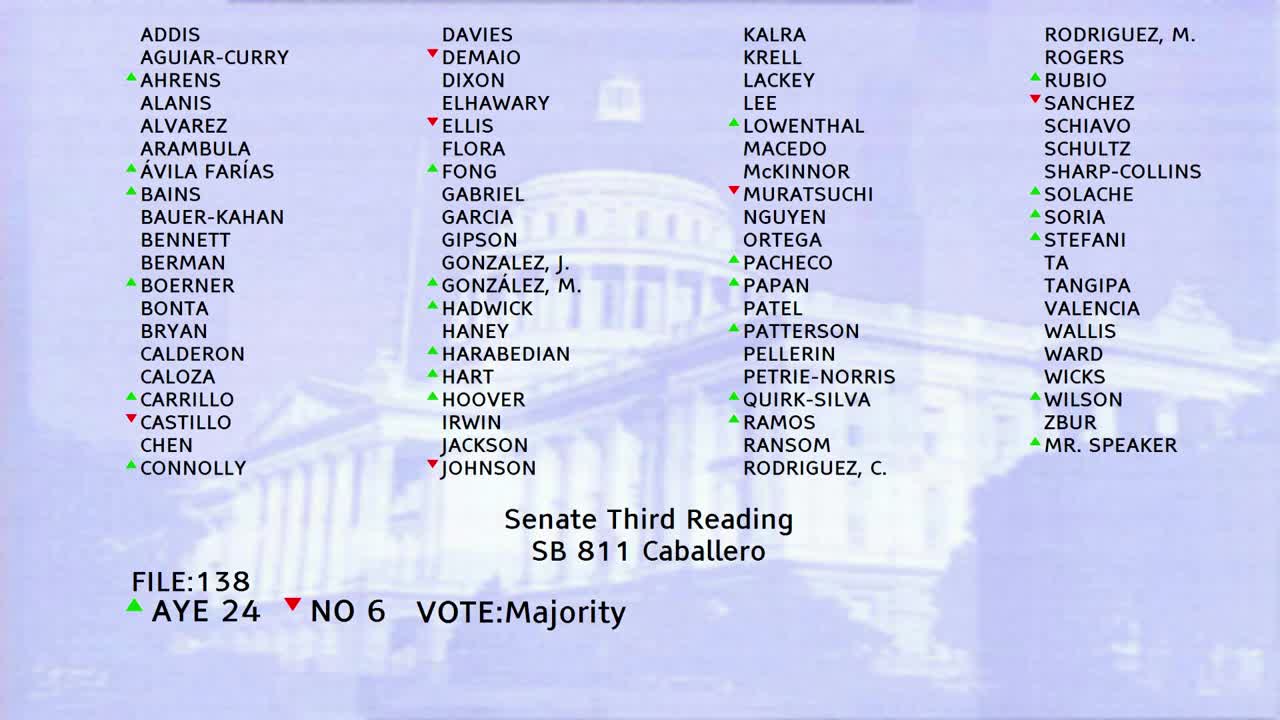
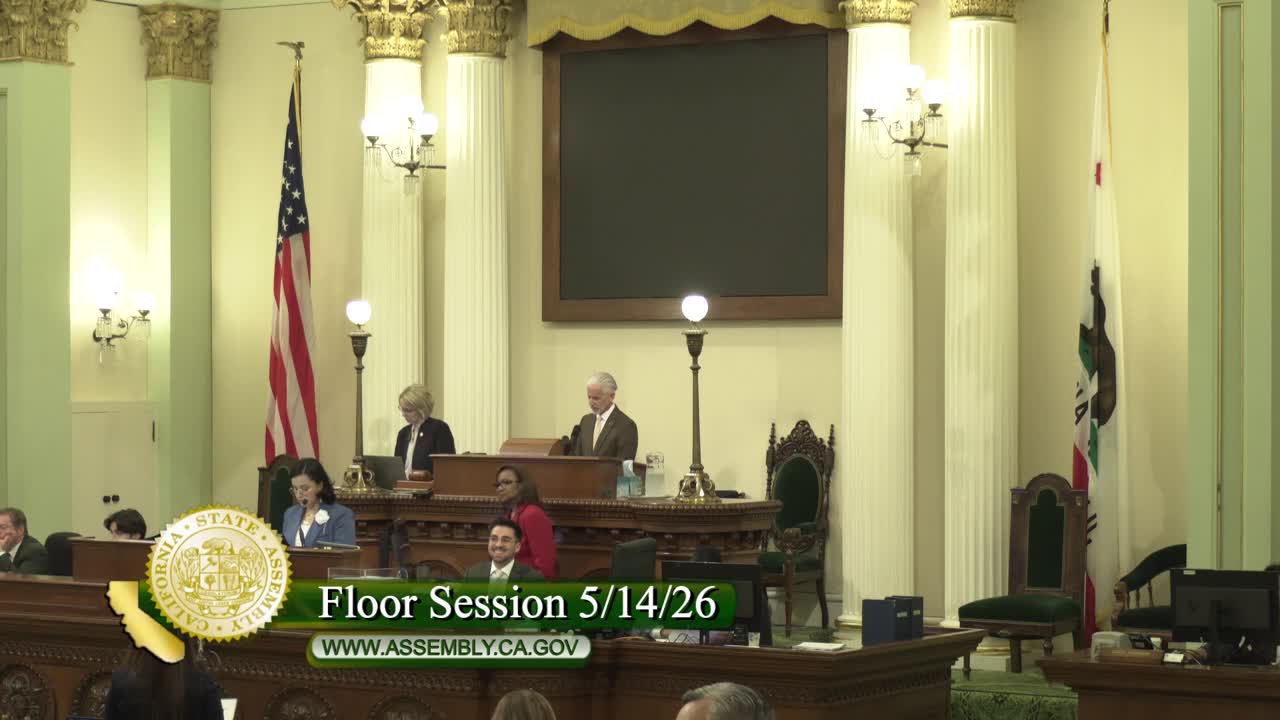
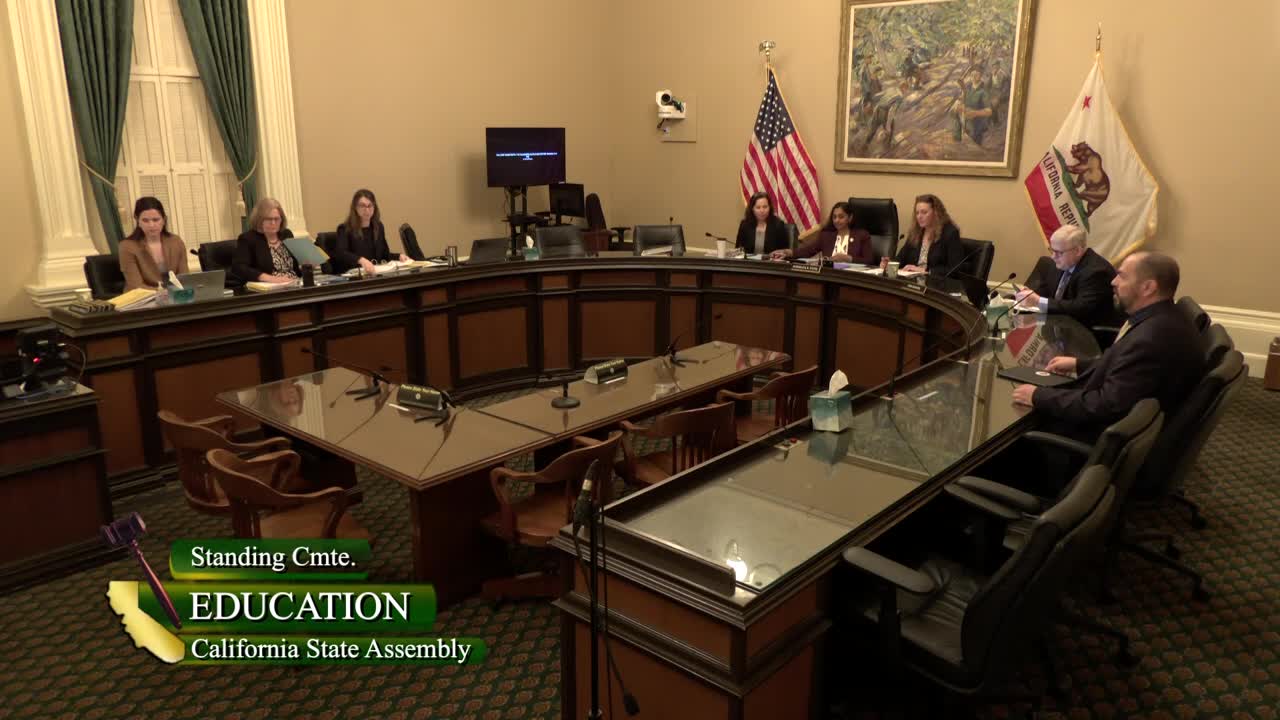
Bill Author

Bill Co-Author(s):