AB 1597: Notary public: service fees.
- Session Year: 2025-2026
- House: Assembly
- Latest Version Date: 2026-06-30
Current Status:
Passed
(2026-06-30: Chaptered by Secretary of State - Chapter 39, Statutes of 2026.)
Introduced
In Committee
Awaiting First Chamber Vote
Passed First Chamber
In Committee
Awaiting Second Chamber Vote
Passed Second Chamber
Enacted
Existing law authorizes the Secretary of State to appoint and commission notaries public in the number that the secretary deems necessary for the public convenience. Existing law prohibits fees charged by a notary public for certain services, including taking an acknowledgment or proof of a deed, from exceeding specified amounts.
This bill would increase those amounts, as specified, and make findings and declarations related to these provisions.
The Legislature finds and declares all of the following:
(a)The recent inflationary cycle has significantly increased the cost of living and doing business in California.
(b)Notaries public incur various expenses in the course of performing their duties, including costs for supplies, transportation, insurance, and continuing education.
(c)To ensure that notaries public can continue to provide essential services to the public, it is necessary to adjust the maximum fees they may charge for certain services.
SEC. 2.Section 8211 of the Government Code is amended to read:8211.Fees charged by a notary public for the following services shall not exceed the fees prescribed by this section.
(a)For taking an acknowledgment or proof of a deed, or other instrument, to include the seal and the writing of the certificate, the sum of twenty dollars ($20) for each signature taken.
(b)For administering an oath or affirmation to one person and executing the jurat, including the seal, the sum of twenty dollars ($20).
(c)For all services rendered in connection with the taking of any deposition, the sum of thirty-five dollars ($35), and in addition thereto, the sum of twelve dollars ($12) for administering the oath to the witness and the sum of twelve dollars ($12) for the certificate to the deposition.
(d)No fee may be charged to notarize signatures on vote by mail ballot identification envelopes or other voting materials.
(e)For certifying a copy of a power of attorney under Section 4307 of the Probate Code, the sum of twenty dollars ($20).
(f)In accordance with Section 6107, no fee may be charged to a United States military veteran for notarization of an application or a claim for a pension, allotment, allowance, compensation, insurance, or any other veterans benefit.
The Legislature finds and declares all of the following:
(a)The recent inflationary cycle has significantly increased the cost of living and doing business in California.
(b)Notaries public incur various expenses in the course of performing their duties, including costs for supplies, transportation, insurance, and continuing education.
(c)To ensure that notaries public can continue to provide essential services to the public, it is necessary to adjust the maximum fees they may charge for certain services.
SEC. 2.Section 8211 of the Government Code is amended to read:8211.Fees charged by a notary public for the following services shall not exceed the fees prescribed by this section.
(a)For taking an acknowledgment or proof of a deed, or other instrument, to include the seal and the writing of the certificate, the sum of fifteen twenty dollars ($15) ($20) for each signature taken.
(b)For administering an oath or affirmation to one person and executing the jurat, including the seal, the sum of fifteen twenty dollars ($15). ($20).
(c)For all services rendered in connection with the taking of any deposition, the sum of thirty thirty-five dollars ($30), ($35), and in addition thereto, the sum of seven twelve dollars ($7) ($12) for administering the oath to the witness and the sum of seven twelve dollars ($7) ($12) for the certificate to the deposition.
(d)No fee may be charged to notarize signatures on vote by mail ballot identification envelopes or other voting materials.
(e)For certifying a copy of a power of attorney under Section 4307 of the Probate Code Code, the sum of fifteen twenty dollars ($15). ($20).
(f)In accordance with Section 6107, no fee may be charged to a United States military veteran for notarization of an application or a claim for a pension, allotment, allowance, compensation, insurance, or any other veterans benefit.
|
Date
|
Status
|
|---|---|
| Jun 30, 2026 | Chaptered by Secretary of State - Chapter 39, Statutes of 2026. |
| Jun 30, 2026 | Approved by the Governor. |
| Jun 24, 2026 | Enrolled and presented to the Governor at 11:30 a.m. |
| Jun 18, 2026 | In Assembly. Ordered to Engrossing and Enrolling. |
| Jun 18, 2026 | Read third time. Passed. Ordered to the Assembly. (Ayes 37. Noes 0.). |
| Jun 18, 2026 | Read third time. Passed. Ordered to the Assembly. (Ayes 37. Noes 0. Page 4859.). |
| Jun 11, 2026 | Read second time. Ordered to Consent Calendar. |
| Jun 10, 2026 | From committee: Do pass. To Consent Calendar. (Ayes 12. Noes 0.) (June 9). |
| May 6, 2026 | Referred to Com. on JUD. |
| Mar 17, 2026 | In Senate. Read first time. To Com. on RLS. for assignment. |
| Mar 16, 2026 | Read third time. Passed. Ordered to the Senate. (Ayes 75. Noes 0.) |
| Mar 16, 2026 | Read third time. Passed. Ordered to the Senate. (Ayes 75. Noes 0. Page 4253.) |
| Mar 11, 2026 | Read second time. Ordered to Consent Calendar. |
| Mar 10, 2026 | From committee: Do pass. To Consent Calendar. (Ayes 12. Noes 0.) (March 10). |
| Feb 2, 2026 | Referred to Com. on JUD. |
| Jan 17, 2026 | From printer. May be heard in committee February 16. |
| Jan 16, 2026 | Read first time. To print. |
|
Date
|
Description
|
Location
|
Votes
|
|
|---|---|---|---|---|
| Jun 18, 2026 | Consent Calendar 2nd AB1597 Castillo By Ochoa Bogh | Senate Floor |
Passed |
|
| Jun 9, 2026 | Do pass and be ordered to the Consent Calendar | Senate Standing Committee on Judiciary |
Passed |
|
| Mar 16, 2026 | AB 1597 Castillo Consent Calendar Second Day | Assembly Floor |
Passed |
|
| Mar 10, 2026 | Do pass. To Consent Calendar. | Assembly Standing Committee on Judiciary |
Passed |
This list shows positions taken on this bill by organizations on the date displayed, which is linked to the original source.
Positions by individuals are not included.
|
Organization
|
Position
|
Date
|
|---|---|---|
| American Guild of Notaries Public | ** Support | |
| California League of Independent Notaries | ** Support | |
| National Notary Association | ** Support | |
| Notarize, Inc. | ** Support | |
| Over 1,900 individuals | ** Support | |
| The California Baptist Capitol Ministry | ** Support | |
| UPS | ** Support |
SENATE RULES COMMITTEE Office of Senate Floor Analyses (916) 651-4171 | AB 1597 |
CONSENT
Bill No: AB 1597
Author: Castillo (R)
Introduced: 1/16/26
Vote: 21
SENATE JUDICIARY COMMITTEE: 12-0, 6/9/26
AYES: Umberg, Niello, Allen, Ashby, Caballero, Durazo, Laird, Reyes, Valladares, Wahab, Weber Pierson, Wiener
NO VOTE RECORDED: Stern
ASSEMBLY FLOOR: 75-0, 3/16/26 (Consent) - See last page for vote
SUBJECT: Notary public: service fees
SOURCE: California League of Independent Notaries
DIGEST:
This bill increases the maximum amount notary publics can charge for certain services by $5.
ANALYSIS: Existing law:
- Authorizes the Secretary of State to appoint and commission notaries public who have met education, examination, and ethical requirements as specified. (Government (Gov.) Code §§ 8200-8201.5.)
- Provides that fees charged by a notary public for the following services cannot exceed the following amounts:
- $15 for each signature taken for taking an acknowledgment or proof of a deed, or other instrument, to include the seal and the writing of the certificate, ten dollars ($10) for each signature taken;
- $15 for administering an oath or affirmation to one person and executing the jurat, including the seal;
- $30 for providing all services rendered in connection with taking a deposition, and in addition thereto, $7 for administering the oath to the witness and $7 for the certificate to the deposition; and
- $15 for certifying a copy of a power of attorney under Section 4307 of the Probate Code. (Gov. Code § 8211.)
This bill increases all the fees described in 2), above, by $5.
Comments
Under existing law, there is a statutory cap on the fees that a notary public may charge for certain services provided. For example, under current law a notary public may charge up to $15 for each signature taken for an acknowledgement or proof of a deed. The last time the cap on these fees was increased was in 2017. (AB 2217 (Hadley, Chapter 133, Statutes of 2016.)) This bill raises the maximum amount notary publics can charge for these services by $5. This bill is sponsored by the California League of Independent Notaries and supported by the National Notary Association, UPS, and numerous individual notaries and other individuals. The Committee received no timely opposition.
A notary public is a public officer appointed and commissioned by the Secretary of State to serve the public in non-contentious matters generally concerning estates, deeds, powers-of-attorney, foreign and international business, and other written instruments. Occasionally, an individual who is party to a more sensitive formal agreement, such as a child custody agreement, a confidential marriage license, or an advance healthcare directive, must have the agreement notarized before it can enter into force. A notary’s main functions are to take acknowledgements of various written instruments, administer oaths and affirmations, take depositions and affidavits, certify copies of powers of attorney under the Probate Code, demand acceptance and payment of foreign and inland bills of exchange or promissory notes, and to protest nonpayment and nonacceptance of bills and notes. (Gov. Code § 8205.) The maximum amount a notary public can charge for certain services is set by statute. (Gov. Code § 8211.) These amounts have not increased since 2017. (AB 2217 (Hadley, Chapter 133, Statutes of 2016).) The sponsor of this bill, the California League of Independent Notaries, states that “the cost of living in California has increased by more than 30 percent” since 2017 yest “notarial fee limits have remained static.” They note that California has “experienced a decline of more than 22,000 active notaries public” in recent years and that the modest increase in fees will help stabilize the notary workforce while preserving consumer choice.
FISCAL EFFECT: Appropriation: No Fiscal Com.: No Local: No
SUPPORT: (Verified 6/10/26)
California League of Independent Notaries (source)
American Guild of Notaries Public
National Notary Association
Notarize, Inc.
The California Baptist Capitol Ministry
UPS
Over 1,900 individuals
OPPOSITION: (Verified 6/10/26)
None received
ARGUMENTS IN SUPPORT: The author writes:
AB 1597 modernizes California’s notary public fee schedule in an effort to preserve public access to essential notarial services. Notaries act as guardians of trust and serve as California’s frontline safeguard against fraud and abuse in critical transactions involving housing, healthcare, estate planning, business, education, and legal affairs.
Current law caps many core notarial acts at $15. That cap has remained unchanged since January 1, 2017, even though the cost of living and the costs of providing service have increased more than 30%. (See U.S. Dept. of Labor, Bureau of Labor Statistics Inflation Calculator https://www.bls.gov/data/inflation_calculator.htm [as of April 30, 2026]). As a result, the existing fee structure no longer reflects the economic realities of providing notarial services in California.
AB 1597 raises certain maximum statutory fees from $15 to $20 and makes corresponding updates to deposition-related fees. The bill does not require any notary to charge more, nor does it eliminate consumer choice. It simply updates the statutory ceiling so commissioned notaries may recover a more realistic portion of the costs of serving the public.
This bill is fundamentally about access. Since the last fee adjustment, California has lost more than 22,000 active notaries public, reducing service availability in rural, low-income, high-travel, and mobility-limited communities. Seniors, individuals with disabilities, wildfire survivors, hospital patients, and residents without reliable transportation often depend on mobile and independent notaries to complete time-sensitive documents.
Without a sustainable fee framework, California risks further contraction of the notary workforce. That contraction will harm consumers, delay critical transactions, and weaken the practical infrastructure that helps Californians safely execute important legal and financial documents.
AB 1597 provides a modest, targeted, and market-sensitive update. It maintains existing consumer protections, preserves no-fee notarizations where required by law, and helps ensure that notarial services remain available throughout the state.
The California League of Independent Notaries, the sponsor of the bill, writes in support stating:
AB 1597 provides a measured modernization of the statutory notary fee caps set forth in Government Code 8211, which have remained unchanged since January l, 2017. During that time, the cost of living in California has increased by more than 30 percent, while notarial fee limits have remained static.
Notaries serve as frontline safeguards against fraud and abuse, performing legally required acts that underpin real estate transactions, powers of attorney, advance health care directives, court filings, business agreements, and numerous other essential legal transactions. When notarial services are unavailable or inaccessible, Californians experience delays in exercising basic legal and economic rights. […]
In recent years, California has experienced a decline of more than 22,000 active notaries public. This contraction in the notary workforce has materially restricted service availability, particularly in rural communities, geographically dispersed regions, and areas requiring significant travel. […]
California is not alone in confronting this issue. Numerous states have modernized their fee structures in recent years in response to similar economic conditions, including Virginia (2024), Washington (2024), Texas (2023), Colorado (2023), Maryland (2024), and South Dakota (2025). AB 1597 aligns California with a broader national trend toward ensuring that notarial compensation reflects contemporary service delivery realities. […]
ASSEMBLY FLOOR: 75-0, 3/16/26
AYES: Addis, Aguiar-Curry, Ahrens, Alanis, Alvarez, Arambula, Ávila Farías, Bains, Bauer-Kahan, Bennett, Berman, Boerner, Bonta, Bryan, Calderon, Caloza, Carrillo, Castillo, Chen, Connolly, Davies, DeMaio, Dixon, Elhawary, Ellis, Flora, Fong, Gabriel, Gallagher, Garcia, Gipson, Mark González, Hadwick, Haney, Harabedian, Hart, Hoover, Jackson, Johnson, Kalra, Krell, Lackey, Lowenthal, Macedo, McKinnor, Muratsuchi, Nguyen, Ortega, Pacheco, Papan, Patel, Pellerin, Petrie-Norris, Quirk-Silva, Ramos, Ransom, Michelle Rodriguez, Rogers, Blanca Rubio, Sanchez, Schiavo, Schultz, Sharp-Collins, Solache, Soria, Stefani, Ta, Tangipa, Valencia, Wallis, Ward, Wicks, Wilson, Zbur, Rivas
NO VOTE RECORDED: Jeff Gonzalez, Irwin, Lee, Patterson, Celeste Rodriguez
Prepared by: Amanda Mattson / JUD. / (916) 651-4113
6/12/26 12:49:59
**** END ****
Senator Thomas Umberg, Chair
2025-2026 Regular Session
Bill No: AB 1597 (Author:Castillo)
Version: January 16, 2026
Hearing Date: June 9, 2026
Fiscal: No
Urgency: No
Consultant: AM
SUBJECT
Notary public: service fees
DIGEST
This bill increases the maximum amount notary publics can charge for certain services by $5.
EXECUTIVE SUMMARY
Under existing law, there is a statutory cap on the fees that a notary public may charge for certain services provided. For example, under current law a notary public may charge up to $15 for each signature taken for an acknowledgement or proof of a deed. The last time the cap on these fees was increased was in 2017. (AB 2217 (Hadley, Ch. 133, Stats. 2016.)) This bill raises the maximum amount notary publics can charge for these services by $5. The bill is sponsored by the California League of Independent Notaries and supported by the National Notary Association, UPS, and numerous individual notaries and other individuals. The Committee received no timely opposition.
PROPOSED CHANGES TO THE LAW
Existing law:
- Authorizes the Secretary of State to appoint and commission notaries public who have met education, examination, and ethical requirements as specified. (Gov. Code §§ 8200-8201.5.)
- []
- Provides that fees charged by a notary public for the following services cannot exceed the following amounts:
- $15 for each signature taken for taking an acknowledgment or proof of a deed, or other instrument, to include the seal and the writing of the certificate, ten dollars ($10) for each signature taken;
- $15 for administering an oath or affirmation to one person and executing the jurat, including the seal;
- $30 for providing all services rendered in connection with taking a deposition, and in addition thereto, $7 for administering the oath to the witness and $7 for the certificate to the deposition; and
- $15 for certifying a copy of a power of attorney under Section 4307 of the Probate Code. (Gov. Code § 8211.)
This bill increases all the fees described in 2), above, by $5.
COMMENTS
- Stated need for the bill
The author writes:
AB 1597 modernizes California’s notary public fee schedule in an effort to preserve public access to essential notarial services. Notaries act as guardians of trust and serve as California’s frontline safeguard against fraud and abuse in critical transactions involving housing, healthcare, estate planning, business, education, and legal affairs.
Current law caps many core notarial acts at $15. That cap has remained unchanged since January 1, 2017, even though the cost of living and the costs of providing service have increased more than 30%. (See U.S. Dept. of Labor, Bureau of Labor Statistics Inflation Calculator https://www.bls.gov/data/inflation_calculator.htm [as of April 30, 2026]). As a result, the existing fee structure no longer reflects the economic realities of providing notarial services in California.
AB 1597 raises certain maximum statutory fees from $15 to $20 and makes corresponding updates to deposition-related fees. The bill does not require any notary to charge more, nor does it eliminate consumer choice. It simply updates the statutory ceiling so commissioned notaries may recover a more realistic portion of the costs of serving the public.
This bill is fundamentally about access. Since the last fee adjustment, California has lost more than 22,000 active notaries public, reducing service availability in rural, low-income, high-travel, and mobility-limited communities. Seniors, individuals with disabilities, wildfire survivors, hospital patients, and residents without reliable transportation often depend on mobile and independent notaries to complete time-sensitive documents.
Without a sustainable fee framework, California risks further contraction of the notary workforce. That contraction will harm consumers, delay critical transactions, and weaken the practical infrastructure that helps Californians safely execute important legal and financial documents.
AB 1597 provides a modest, targeted, and market-sensitive update. It maintains existing consumer protections, preserves no-fee notarizations where required by law, and helps ensure that notarial services remain available throughout the state.
- Notary public statutory fee caps
A notary public is a public officer appointed and commissioned by the Secretary of State to serve the public in non-contentious matters generally concerning estates, deeds, powers-of-attorney, foreign and international business, and other written instruments. Occasionally, an individual who is party to a more sensitive formal agreement, such as a child custody agreement, a confidential marriage license, or an advance healthcare directive, must have the agreement notarized before it can enter into force. A notary’s main functions are to take acknowledgements of various written instruments, administer oaths and affirmations, take depositions and affidavits, certify copies of powers of attorney under the Probate Code, demand acceptance and payment of foreign and inland bills of exchange or promissory notes, and to protest nonpayment and nonacceptance of bills and notes. (Gov. Code § 8205.) The maximum amount a notary public can charge for certain services is set by statute. (Gov. Code § 8211.) These amounts have not increased since 2017. (AB 2217 (Hadley, Ch. 133, Stats. 2016).) The sponsor of the bill, the California League of Independent Notaries, states that “the cost of living in California has increased by more than 30 percent” since 2017 yest “notarial fee limits have remained static.” They note that California has “experienced a decline of more than 22,000 active notaries public” in recent years and that the modest increase in fees will help stabilize the notary workforce while preserving consumer choice.
- Statements in support
The California League of Independent Notaries, the sponsor of the bill, writes in support stating:
AB 1597 provides a measured modernization of the statutory notary fee caps set forth in Government Code 8211, which have remained unchanged since January l, 2017. During that time, the cost of living in California has increased by more than 30 percent, while notarial fee limits have remained static.
Notaries serve as frontline safeguards against fraud and abuse, performing legally required acts that underpin real estate transactions, powers of attorney, advance health care directives, court filings, business agreements, and numerous other essential legal transactions. When notarial services are unavailable or inaccessible, Californians experience delays in exercising basic legal and economic rights. […]
In recent years, California has experienced a decline of more than 22,000 active notaries public. This contraction in the notary workforce has materially restricted service availability, particularly in rural communities, geographically dispersed regions, and areas requiring significant travel. […]
California is not alone in confronting this issue. Numerous states have modernized their fee structures in recent years in response to similar economic conditions, including Virginia (2024), Washington (2024), Texas (2023), Colorado (2023), Maryland (2024), and South Dakota (2025). AB 1597 aligns California with a broader national trend toward ensuring that notarial compensation reflects contemporary service delivery realities. […]
SUPPORT
California League of Independent Notaries (sponsor)
National Notary Association
UPS
Over 1,900 individuals
OPPOSITION
None received
RELATED LEGISLATION
Pending Legislation: None known.
Prior Legislation:
AB 2217 (Hadley, Ch. 133, Stats. 2016) raised the statutory fee cap for specified notary services between 25% and 50%.
AB 1408 (Hadley 2015) would have removed the statutory fee cap for specified notary services. This bill died in the Assembly Committee on Judiciary.
PRIOR VOTES
Assembly Floor (Ayes 75, Noes 0)
Assembly Judiciary Committee (Ayes 12, Noes 0)
**************
Date of Hearing: March 10, 2026
ASSEMBLY COMMITTEE ON JUDICIARY
Ash Kalra, Chair
ABPCA Bill Id:AB 1597
Author:(Castillo) – As Introduced Ver:January 16, 2026
PROPOSED CONSENT
SUBJECT: Notary public: service fees
KEY ISSUE: SHOULD the maximum notary service fee, which has not changed since 2016, be increased to reflect inflation?
SYNOPSIS
Existing law authorizes the Secretary of State to appoint and commission notaries public, in numbers deemed necessary for public convenience, and prohibits a notary public from charging fees that exceed certain amounts for specified services. The maximum fees were last changed in 2016, and according to the Consumer Price Index (CPI) prices for goods and services have increased, on average, about 34% over the past decade. This bill would raise the maximum fee for each category of service by $5. As discussed in the analysis, this is consistent with the CPI.
This bill is sponsored by the California League of Independent Notaries and supported by the major national associations of notaries public, as well as several individual notaries public and associated professionals. There is no registered opposition.
SUMMARY: Increases the maximum fee that a notary public may charge for various services. Specifically, this bill:
- Increases the fees for specified notary services as follows:
- For taking an acknowledgment or proof of a deed, or other instrument, to include the seal and the writing of the certificate, from $15 to $20 for each signature taken.
- For administering an oath or affirmation to one person and executing the jurat, including the seal, from $15 to $20.
- For services rendered in connection with deposition services, from $30 to $35, and related thereto, from $7 to $12 for administering the oath to the witness and from $7 to $12 for the certificate to the deposition.
- For certifying the power of attorney under the Probate Code from $15 to $20.
EXISTING LAW:
- Authorizes the Secretary of State to appoint and commission notaries public in the number deemed necessary for the public convenience and establishes minimum requirements that a person must meet to serve as a notary public. (Government Code Sections 8200 et seq.)
- Provides that fees charged by a notary public shall not exceed the following:
- For taking an acknowledgment or proof of a deed, or other instrument, to include the seal and the writing of the certificate, the sum of $15 for each signature taken.
- For administering an oath or affirmation to one person and executing the jurat, including the seal, the sum of $15.
- For all services rendered in connection with the taking of any deposition, the sum of $30, and in addition thereto, the sum of $7 for administering the oath to the witness and the sum of $7 for the certificate to the deposition.
- No fee may be charged to notarize signatures on vote by mail ballot identification envelopes or other voting materials.
- For certifying a copy of a power of attorney under Section 4307 of the Probate Code the sum of $15.
- No fee may be charged to a United States military veteran for notarization of an application or a claim for a pension, allotment, allowance, compensation, insurance, or any other veteran’s benefit. (Government Code Section 8211.)
FISCAL EFFECT: As currently in print this bill is keyed non-fiscal.
COMMENTS: According to the author, notaries public “are California’s frontline safeguard against financial fraud and abuse, supporting critical transactions ranging from housing and healthcare to estate planning and business activities. However, the statutory fee cap governing notarial services has remained unchanged since January 1, 2017, while the cost of living has increased more than 30 percent. . . The purpose of this bill is to modernize California’s notary fee schedule to ensure continued access to reliable, professional, and widely available notarial services throughout the state.”
Notary Public Fees. A notary public plays a key role in our legal system by serving as an impartial witness to the signing of legal documents, thereby ensuring the authenticity of the signature and safeguarding against fraud or coercion. In California, the Secretary of State issues notary commissions – in numbers based on need – and ensures the qualifications and integrity of the persons granted a commission. According to the sponsor, the California League of Independent Notaries, the number of notaries operating in the state has decreased by 22,000 since 2017, and some of this decrease may reflect the lack of appropriate remuneration of the services rendered. The author notes that this decline especially impacts rural communities and geographically isolated areas that require extensive travel.
Existing law establishes maximum fees that notaries public may charge for each type of service provided. Specifically, Government Code Section 8011 establishes maximum fee amounts that fall into one of three amounts: $7, $15, and $30. For example, a notary public cannot charge more than $7 for taking an oath, more than $15 for certifying an acknowledgement for proof of deed, or more than $30 for services rendered in connection with the taking of a deposition. The original fee structure was established in 1993 and raised to current levels in 2016. This bill seeks to raise the fees once more to account for inflation over the past decade.
According to the U.S. Bureau of Labor Statistics Consumer Price Index (CPI) Calculator, on average, the price of goods and services have increased by about 34% since 2016. Although today’s rate of inflation is relatively low, the rate increased considerably during the Covid epidemic, accounting for much of the increase that occurred between 2016 and 2026. Applying the CPI Calculator to the maximum fee levels for notary services, the $7 fee in 2016 dollars would equal $9.68 in 2026 dollars; the $15 fee would rise to $20.09, and the $30 fee would rise to $40.18. If the author wished to hew more exactly to the CPI, the bill could, rounding off, raise the $7 fee to $10, the $15 to $20, and the $30 fee to $40. Rather than raise each fee to these amounts, the author, for simplicity’s sake, proposes raising each fee by $5. Raising the lowest fee from $7 to $12 slightly exceeds the CPI; raising the $15 fee to $20 corresponds almost exactly to the CPI; and raising the $30 fee to $35 is less than what the CPI would justify. Taken together, however, the $5 increase for each fee reasonably reflects the rate of inflation.
ARGUMENTS IN SUPPORT: The California League of Independent Notaries (CLIN), the bill’s sponsor, writes in support:
AB 1597 provides a measured modernization of the statutory notary fee caps set forth in Government Code 8211, which have remained unchanged since January l, 2017. During that time, the cost of living in California has increased by more than 30 percent, while notarial fee limits have remained static.
Notaries serve as frontline safeguards against fraud and abuse, performing legally required acts that underpin real estate transactions, powers of attorney, advance health care directives, court filings, business agreements, and numerous other essential legal transactions. When notarial services are unavailable or inaccessible, Californians experience delays in exercising basic legal and economic rights.
Under Government Code 8200, the Secretary of State is charged with appointing and commissioning notaries public in such number as deemed necessary for the public convenience. That statutory mandate cannot be effectively fulfilled if the economic structure governing notarial services discourages participation and undermines sustainability of the notary workforce.
In recent years, California has experienced a decline of more than 22,000 active notaries public. This contraction in the notary workforce has materially restricted service availability, particularly in rural communities, geographically dispersed regions, and areas requiring significant travel. . . At its core, AB 1597 is about maintaining access to an essential public function. A sustainable notary workforce supports equitable participation in the legal and financial systems and ensures that Californians can execute the documents required to protect their property, health, and business interests.
REGISTERED SUPPORT / OPPOSITION:
Support
California League of Independent Notaries (sponsor)
American Guild of Notaries Public
National Notary Association
Proof
Many Individuals
Opposition
None on file
Analysis Prepared by: Tom Clark / JUD. / (916) 319-2334
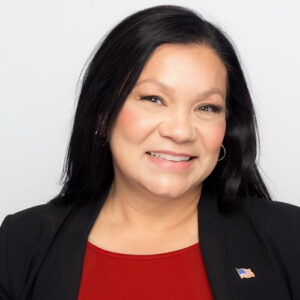
Bill Author
Bill Co-Author(s):