AB 1600: Disadvantaged communities: farmworker communities.
- Session Year: 2025-2026
- House: Assembly
- Latest Version Date: 2026-09-27
Current Status:
Passed
(2026-09-27: Chaptered by Secretary of State - Chapter 529, Statutes of 2026.)
Introduced
In Committee
Awaiting First Chamber Vote
Passed First Chamber
In Committee
Awaiting Second Chamber Vote
Passed Second Chamber
Enacted
Existing law defines disadvantaged communities and requires the California Environmental Protection Agency to identify disadvantaged communities for investment opportunities from the Greenhouse Gas Reduction Fund and for other purposes.
This bill would require the agency to do specified things regarding farmworker communities for purposes of identifying disadvantaged communities including, among other things, assessing whether designating farmworker communities as disadvantaged communities would increase those communities access to investment opportunities and identifying potential barriers faced by low-income farmworker communities in accessing investment opportunities, as specified. The bill would require the agency to make its findings publicly available on its internet website and consider those findings when identifying disadvantaged communities. The bill would require the agency and the Office of Environmental Health Hazard Assessment to develop and implement a strategy for engaging with farmworker communities on environmental, health, and socioeconomic burdens, as provided.
Existing law defines disadvantaged communities and requires the California Environmental Protection Agency to identify disadvantaged communities for investment opportunities from the Greenhouse Gas Reduction Fund and for other purposes.
This bill would expand the definition of disadvantaged communities by explicitly authorizing the inclusion of farmworker communities that meet certain requirements.o require the agency to do specified things regarding farmworker communities for purposes of identifying disadvantaged communities including, among other things, assessing whether designating farmworker communities as disadvantaged communities would increase those communities access to investment opportunities and identifying potential barriers faced by low-income farmworker communities in accessing investment opportunities, as specified. The bill would require the agency to make its findings publicly available on its internet website and consider those findings when identifying disadvantaged communities. The bill would require the agency and the Office of Environmental Health Hazard Assessment to develop and implement a strategy for engaging with farmworker communities on environmental, health, and socioeconomic burdens, as provided.
Existing law defines disadvantaged communities and requires the California Environmental Protection Agency to identify disadvantaged communities for investment opportunities from the Greenhouse Gas Reduction Fund and for other purposes.
This bill would expand the definition of disadvantaged communities by explicitly authorizing the inclusion of farmworker communities that meet certain requirements. The bill would require the agency, in consultation with the Department of Community Services and Development and the State Department of Public Health, to revise applicable screening tools and guidance documents to ensure the inclusion of farmworker communities as disadvantaged communities in all relevant program eligibility determinations and benefit calculations.
(a)(1)The California Environmental Protection Agency shall identify disadvantaged communities for investment opportunities related to this chapter. These communities shall be identified based on geographic, socioeconomic, public health, and environmental hazard criteria, and may include, but are not limited to, any of the following:
(A)Areas disproportionately affected by environmental pollution and other hazards that can lead to negative public health effects, exposure, or environmental degradation.
(B)Areas with concentrations of people that are of low income, high unemployment, low levels of home ownership, high rent burden, sensitive populations, or low levels of educational attainment.
(2)The California Environmental Protection Agency shall additionally consider the findings described in subdivision (c) for purposes of identifying disadvantaged communities.
(b)The California Environmental Protection Agency shall hold at least one public workshop before the identification of disadvantaged communities pursuant to this section.
(c)The California Environmental Protection Agency shall do all of the following, in accordance with subdivision (d):
(1)Assess whether designating farmworker communities as disadvantaged communities would increase those communities access to investment opportunities related to this chapter.
(2)Determine, in consultation with the Office of Environmental Health Hazard Assessment, whether there exists public statewide data of sufficient quality and spatial granularity to determine areas with a significant presence of farmworker communities, particularly those engaged in seasonal or migrant labor, for purposes of subdivision (a).
(3)Identify potential barriers faced by low-income farmworker communities in accessing investment opportunities related to this chapter, including, but not limited to, potential barriers based on eligibility criteria or lack of technical support in accessing funding for which those communities are eligible.
(4)Make its findings from paragraphs (1) to (3), inclusive, of this subdivision publicly available on its internet website and consider those findings for purposes of implementing subdivision (a).
(d)(1)The California Environmental Protection Agency and the Office of Environmental Health Hazard Assessment shall develop and implement a strategy for engaging with farmworker communities on environmental, health, and socioeconomic burdens for purposes of paragraph (2) of subdivision (a) and subdivision (c).
(2)The strategy developed and implemented pursuant to paragraph (1) may include conducting outreach and engagement with farmworker communities and with entities that serve or conduct research on farmworker communities, including, but not limited to, community-based organizations, academic or public research institutions, and governmental entities.
(e)Chapter 3.5 (commencing with Section 11340) of the Part 1 of Division 3 of Title 2 of the Government Code does not apply to the identification of disadvantaged communities pursuant to this section.
(a)(1)The California Environmental Protection Agency shall identify disadvantaged communities for investment opportunities related to this chapter. These communities shall be identified based on geographic, socioeconomic, public health, and environmental hazard criteria, and may include, but are not limited to, any of the following:
(A)Areas disproportionately affected by environmental pollution and other hazards that can lead to negative public health effects, exposure, or environmental degradation.
(B)Areas with concentrations of people that are of low income, high unemployment, low levels of homeownership, home ownership, high rent burden, sensitive populations, or low levels of educational attainment.
(C)Farmworker communities that meet both of the following requirements:(i)The communities are located in geographic areas with a significant presence of agricultural workers, particularly those engaged in seasonal or migrant labor.(ii)Residents in the communities are disproportionately exposed to environmental pollutants related to agricultural or industrial operations.(2)The California Environmental Protection Agency may use data that the Department of Community Services and Development collects regarding farmworker communities to support identifying all relevant communities as shall additionally consider the findings described in subdivision (c) for purposes of identifying disadvantaged communities.
(b)The California Environmental Protection Agency shall hold at least one public workshop before the identification of disadvantaged communities pursuant to this section.
(c)The California Environmental Protection Agency shall do all of the following, in accordance with subdivision (d):
(1)Assess whether designating farmworker communities as disadvantaged communities would increase those communities access to investment opportunities related to this chapter.
(2)Determine, in consultation with the Office of Environmental Health Hazard Assessment, whether there exists public statewide data of sufficient quality and spatial granularity to determine areas with a significant presence of farmworker communities, particularly those engaged in seasonal or migrant labor, for purposes of subdivision (a).
(3)Identify potential barriers faced by low-income farmworker communities in accessing investment opportunities related to this chapter, including, but not limited to, potential barriers based on eligibility criteria or lack of technical support in accessing funding for which those communities are eligible.
(4)Make its findings from paragraphs (1) to (3), inclusive, of this subdivision publicly available on its internet website and consider those findings for purposes of implementing subdivision (a).
(d)(1)The California Environmental Protection Agency and the Office of Environmental Health Hazard Assessment shall develop and implement a strategy for engaging with farmworker communities on environmental, health, and socioeconomic burdens for purposes of paragraph (2) of subdivision (a) and subdivision (c).
(2)The strategy developed and implemented pursuant to paragraph (1) may include conducting outreach and engagement with farmworker communities and with entities that serve or conduct research on farmworker communities, including, but not limited to, community-based organizations, academic or public research institutions, and governmental entities.
(c)(e)Chapter 3.5 (commencing with Section 11340) of the Part 1 of Division 3 of Title 2 of the Government Code does not apply to the identification of disadvantaged communities pursuant to this section.
(a)(1)The California Environmental Protection Agency shall identify disadvantaged communities for investment opportunities related to this chapter. These communities shall be identified based on geographic, socioeconomic, public health, and environmental hazard criteria, and may include, but are not limited to, any of the following:
(1)(A)Areas disproportionately affected by environmental pollution and other hazards that can lead to negative public health effects, exposure, or environmental degradation.
(2)(B)Areas with concentrations of people that are of low income, high unemployment, low levels of homeownership, high rent burden, sensitive populations, or low levels of educational attainment.
(3)(C)Farmworker communities that meet all both of the following: following requirements:
(A)(i)The communities are located in geographic areas with a significant presence of agricultural workers, particularly those engaged in seasonal or migrant labor.
(B)(ii)Residents in the communities are disproportionately exposed to environmental pollutants related to agricultural or industrial operations.
(2)The California Environmental Protection Agency may use data that the Department of Community Services and Development collects regarding farmworker communities to support identifying all relevant communities as disadvantaged communities.
(b)(1)The California Environmental Protection Agency shall hold at least one public workshop before the identification of disadvantaged communities pursuant to this section.
(2)The California Environmental Protection Agency, in consultation with the Department of Community Services and Development and the State Department of Public Health, shall revise applicable screening tools and guidance documents to ensure the inclusion of farmworker communities as disadvantaged communities in all relevant program eligibility determinations and benefit calculations.(c)Chapter 3.5 (commencing with Section 11340) of the Part 1 of Division 3 of Title 2 of the Government Code does not apply to the identification of disadvantaged communities pursuant to this section.
(a)The California Environmental Protection Agency shall identify disadvantaged communities for investment opportunities related to this chapter. These communities shall be identified based on geographic, socioeconomic, public health, and environmental hazard criteria, and may include, but are not limited to, any of the following:
(1)Areas disproportionately affected by environmental pollution and other hazards that can lead to negative public health effects, exposure, or environmental degradation.
(2)Areas with concentrations of people that are of low income, high unemployment, low levels of homeownership, high rent burden, sensitive populations, or low levels of educational attainment.
(3)Farmworker communities that meet all of the following:
(A)The communities are located in geographic areas with a significant presence of agricultural workers, particularly those engaged in seasonal or migrant labor.
(B)Residents in the communities are disproportionately exposed to environmental pollutants related to agricultural or industrial operations.
(C)Households in the communities experience persistent economic hardship, limited access to affordable housing, or inadequate access to energy-efficient infrastructure or services.(b)(1)The California Environmental Protection Agency shall hold at least one public workshop before the identification of disadvantaged communities pursuant to this section.
(2)The California Environmental Protection Agency, in consultation with the Department of Community Services and Development and the State Department of Public Health, shall revise applicable screening tools and guidance documents to ensure the inclusion of farmworker communities as disadvantaged communities in all relevant program eligibility determinations and benefit calculations.
(c)Chapter 3.5 (commencing with Section 11340) of the Part 1 of Division 3 of Title 2 of the Government Code does not apply to the identification of disadvantaged communities pursuant to this section.
(a)The California Environmental Protection Agency shall identify disadvantaged communities for investment opportunities related to this chapter. These communities shall be identified based on geographic, socioeconomic, public health, and environmental hazard criteria, and may include, but are not limited to, either any of the following:
(1)Areas disproportionately affected by environmental pollution and other hazards that can lead to negative public health effects, exposure, or environmental degradation.
(2)Areas with concentrations of people that are of low income, high unemployment, low levels of homeownership, high rent burden, sensitive populations, or low levels of educational attainment.
(3)Farmworker communities that meet all of the following:
(A)The communities are located in geographic areas with a significant presence of agricultural workers, particularly those engaged in seasonal or migrant labor.
(B)Residents in the communities are disproportionately exposed to environmental pollutants related to agricultural or industrial operations.
(C)Households in the communities experience persistent economic hardship, limited access to affordable housing, or inadequate access to energy-efficient infrastructure or services.
(b)(1)The California Environmental Protection Agency shall hold at least one public workshop prior to before the identification of disadvantaged communities pursuant to this section.
(2)The California Environmental Protection Agency, in consultation with the Department of Community Services and Development and the State Department of Public Health, shall revise applicable screening tools and guidance documents to ensure the inclusion of farmworker communities as disadvantaged communities in all relevant program eligibility determinations and benefit calculations.
(c)Chapter 3.5 (commencing with Section 11340) of the Part 1 of Division 3 of Title 2 of the Government Code does not apply to the identification of disadvantaged communities pursuant to this section.
|
Date
|
Status
|
|---|---|
| Sep 27, 2026 | Chaptered by Secretary of State - Chapter 529, Statutes of 2026. |
| Sep 27, 2026 | Approved by the Governor. |
| Sep 9, 2026 | Enrolled and presented to the Governor at 1 p.m. |
| Aug 30, 2026 | Senate amendments concurred in. To Engrossing and Enrolling. (Ayes 64. Noes 12.). |
| Aug 30, 2026 | Senate amendments concurred in. To Engrossing and Enrolling. (Ayes 64. Noes 12. Page 6886.). |
| Aug 30, 2026 | Senate amendments concurred in. To Engrossing and Enrolling. |
| Aug 28, 2026 | In Assembly. Concurrence in Senate amendments pending. |
| Aug 27, 2026 | Read third time. Passed. Ordered to the Assembly. (Ayes 39. Noes 0.). |
| Aug 27, 2026 | Read third time. Passed. Ordered to the Assembly. (Ayes 39. Noes 0. Page 6011.). |
| Aug 24, 2026 | Read second time. Ordered to third reading. |
| Aug 21, 2026 | Read third time and amended. Ordered to second reading. |
| Aug 17, 2026 | Read second time. Ordered to third reading. |
| Aug 13, 2026 | Read second time and amended. Ordered returned to second reading. |
| Aug 13, 2026 | From committee: Amend, and do pass as amended. (Ayes 7. Noes 0.) (August 13). |
| Aug 3, 2026 | In committee: Referred to APPR. suspense file. |
| Jul 2, 2026 | From committee: Do pass and re-refer to Com. on APPR. (Ayes 7. Noes 0.) (July 1). Re-referred to Com. on APPR. |
| Jun 3, 2026 | Referred to Com. on E.Q. |
| May 27, 2026 | In Senate. Read first time. To Com. on RLS. for assignment. |
| May 26, 2026 | Read third time. Passed. Ordered to the Senate. (Ayes 60. Noes 10.) |
| May 26, 2026 | Read third time. Passed. Ordered to the Senate. (Ayes 60. Noes 10. Page 5294.) |
| May 26, 2026 | Read third time. Passed. Ordered to the Senate. |
| May 18, 2026 | Read second time. Ordered to third reading. |
| May 14, 2026 | From committee: Do pass. (Ayes 11. Noes 4.) (May 14). |
| Apr 8, 2026 | In committee: Set, first hearing. Referred to APPR. suspense file. |
| Mar 25, 2026 | From committee: Do pass and re-refer to Com. on APPR. (Ayes 5. Noes 1.) (March 24). Re-referred to Com. on APPR. |
| Mar 18, 2026 | Re-referred to Com. on E.S & T.M. |
| Mar 17, 2026 | From committee chair, with author's amendments: Amend, and re-refer to Com. on E.S & T.M. Read second time and amended. |
| Feb 9, 2026 | Referred to Com. on E.S & T.M. |
| Jan 17, 2026 | From printer. May be heard in committee February 16. |
| Jan 16, 2026 | Read first time. To print. |
|
Date
|
Description
|
Location
|
Votes
|
|
|---|---|---|---|---|
| Aug 30, 2026 | AB 1600 Arambula Concurrence in Senate Amendments | Assembly Floor |
Passed |
|
| Aug 27, 2026 | Assembly 3rd Reading AB1600 Arambula et al. By Reyes | Senate Floor |
Passed |
|
| Aug 13, 2026 | Do pass as amended | Senate Standing Committee on Appropriations |
Passed |
|
| Aug 3, 2026 | Placed on suspense file | Senate Standing Committee on Appropriations |
Passed |
|
| Jul 1, 2026 | Do pass, but first be re-referred to the Committee on [Appropriations] | Senate Standing Committee on Environmental Quality |
Passed |
|
| May 26, 2026 | AB 1600 Arambula Assembly Third Reading | Assembly Floor |
Passed |
|
| May 14, 2026 | Do pass. | Assembly Standing Committee on Appropriations |
Passed |
|
| Mar 24, 2026 | Do pass and be re-referred to the Committee on [Appropriations] | Assembly Standing Committee on Environmental Safety and Toxic Materials |
Passed |
This list shows positions taken on this bill by organizations on the date displayed, which is linked to the original source.
Positions by individuals are not included.
|
Organization
|
Position
|
Date
|
|---|---|---|
| California Human Development | ** Support | |
| Center for Employment Training | ** Support | |
| Central Valley Opportunity Center | ** Support | |
| Central Valley Opportunity Center (CVOC) | ** Support | |
| Central Valley Opportunity Center (CVOC) | ** Support | |
| Comité De Acción Del Valle INC | ** Support | |
| la Cooperativa Campesina de California | ** Support | |
| LA Cooperativa Campesina De California (Sponsor) | ** Support | |
| Los Amigos De LA Comunidad, INC. | ** Support | |
| Proteus Inc. | ** Support |
CONCURRENCE IN SENATE AMENDMENTS
CSA1 Bill Id:AB 1600
Author:(Arambula)
As Amended Ver:August 21, 2026
Majority vote
SUMMARY
Requires the California Environmental Protection Agency (CalEPA) to assess whether designating farmworker communities as disadvantaged communities would increase their access to Greenhouse Gas Reduction Fund (GGRF) investment opportunities, publicly post its findings, and consider these findings when identifying disadvantaged communities.
Senate Amendments
- Delete an authorization for CalEPA to identify disadvantaged communities based on their status as farmworker communities, as specified.
- Require CalEPA to do all of the following:
- Assess whether designating farmworker communities as disadvantaged communities would increase their access to GGRF investment opportunities;
- Determine, in consultation with the Office of Environmental Health Hazard Assessment (OEHHA), whether there are public statewide data of sufficient quality and spatial granularity that would allow for the identification of areas that have a significant presence of farmworker communities, especially those engaged in seasonal or migrant labor; and,
- Identify potential barriers faced by low-income farmworker communities in accessing GGRF investment opportunities, including, but not limited to, potential barriers based on eligibility criteria or lack of technical support in accessing funding.
- Require CalEPA to publicly post, on its internet website, findings from the work described above and to consider these findings in identifying disadvantaged communities, as specified.
- Require CalEPA and OEHHA to develop and implement a strategy for engaging with farmworker communities on environmental, health, and socioeconomic burdens, as specified; authorizes this strategy to include conducting outreach and engagement with farmworker communities, and with entities that serve or conduct research on farmworker communities, including, but not limited to community-based organizations, academic or public research institutions, and governmental agencies.
COMMENTS
California Climate Investments, GGRF, and investments in priority populations: Since 2014, the Legislature has appropriated billions of dollars in California Climate Investments—funded by auction proceeds from the state's Cap-and-Invest Program, deposited into the GGRF—to fund projects that reduce harmful emissions, protect public health, strengthen local economies, and support natural environments.
State law established under Senate Bill SB 535 (De León, Chapter 830, Statutes of 2012) and Assembly Bill 1550 (Gomez, Chapter 369, Statutes of 2016) targets a portion of these investments to frontline communities, by requiring CalEPA to identify disadvantaged communities and mandating the allocation of 35% of GGRF dollars to disadvantaged communities, low-income communities, and low-income households, which the state collectively refers to as priority populations. Disadvantaged communities are comprised of:
- The top 25% of census tracts experiencing disproportionate amounts of pollution, environmental degradation, and socioeconomic and public health conditions according to CalEnviroScreen (described below);
- Census tracts lacking overall scores in CalEnviroScreen due to data gaps, but receiving the highest 5% of CalEnviroScreen "Pollution Burden" composite scores;
- Census tracts identified in 2017 as disadvantaged, regardless of their CalEnviroScreen scores; and,
- Lands under the control of federally recognized Tribes.
CalEnviroScreen: CalEnviroScreen is a science-based mapping tool developed by OEHHA and CalEPA, to help identify California communities that are most affected by multiple sources of pollution, as well as communities that may be especially vulnerable to pollution’s effects. Among other things, the state uses the tool to identify California’s most environmentally burdened and vulnerable communities; assist CalEPA’s boards and departments with decisions involving grant allocations and prioritization of resources and cleanup activities; and target GGRF dollars to disadvantaged communities.
CalEnviroScreen 5.0, released in July 2026, is the most current version of the tool. According to OEHHA, the updated version incorporates recent census tract and data updates, refined methodologies, and input from community-based organizations. In addition, CalEnviroScreen 5.0 adds two new indicators—diabetes prevalence and small air toxic sites—and, pursuant to requirements in AB 1059 (Garcia, Chapter 584, Statutes of 2015), brings in information to incorporate pollution concerns from the California-Mexico border region.
Farmworkers face multiple socioeconomic and environmental burdens: Surveys of California's farmworkers reveal that they face major challenges, including pesticide exposure, poverty, educational barriers, linguistic isolation, housing and food insecurity, difficult working conditions, and poor healthcare access. A number of these factors are captured as indicators in CalEnviroScreen, suggesting that farmworker communities may be at the nexus of many of the pollution and socioeconomic indicators that the state uses to identify disadvantaged communities.
This bill: AB 1600 requires CalEPA to assess whether designating farmworker communities as disadvantaged communities would increase their access to GGRF investment opportunities, publicly post its findings, and consider these findings when identifying disadvantaged communities. In doing so, this bill aims to initiate a much needed, publicly transparent examination of the multiple burdens that farmworker communities face and their ability to access state resources.
According to the Author
"Farmworkers should be treated with dignity and respect reflective of the essential contribution they make to California’s agricultural economy. Every day, they face the compounding burdens of extreme heat, pesticide exposure, substandard housing, and environmental degradation, conditions that are only worsening as climate change intensifies. However, some farmworker communities remain structurally excluded from climate investments that are designed to help communities like theirs.
For example, California’s climate investment framework prioritizes disadvantaged communities (DACs) for investments from the Greenhouse Gas Reduction Fund (GGRF). Even though farmworkers face clear environmental and socioeconomic vulnerability, many rural and unincorporated farmworker communities fall outside the eligibility boundaries for DAC designation. AB 1600 resolves this gap by directing CalEPA and OEHHA to identify potential barriers that low-income communities face in accessing investment opportunities, evaluate if DAC designation would expand community funding, and develop a strategy to engage with farmworker communities throughout this process."
Arguments in Support
Writing on a prior version of AB 1600, La Cooperativa Campesina de California states:
"Every day, California’s farmworkers face the compounding burdens of extreme heat, pesticide exposure, substandard housing, and environmental degradation—conditions that are only worsening as climate change intensifies. These are the workers who sustain California's over $100 billion agricultural economy, yet they remain structurally excluded from the very climate programs designed to help communities like theirs…While CalEnviroScreen was built to capture urban pollution burdens, it was not designed to reflect the realities of farmworker life: agricultural labor concentration, rural pesticide exposure, substandard housing in unincorporated areas, and extreme heat vulnerability. As a result, many farmworker dense communities in counties such as Monterey, Napa, Sonoma, and Mendocino do not score high enough to qualify for the [GGRF] benefits they deserve. AB 1600 does not replace or dismantle CalEnviroScreen; instead, it corrects a structural gap by explicitly including farmworker communities in the statutory definition of [disadvantaged communities]."
Arguments in Opposition
None on file.
FISCAL COMMENTS
According to the Senate Appropriations Committee, writing on a prior version of AB 1600, enactment of this bill would likely result in cost pressures in the hundreds of thousands or low millions of dollars annually, so that OEHHA, the California Air Resources Board, and other state entities could incorporate farmworker communities into the disadvantaged community designation.
VOTES:
ASM ENVIRONMENTAL SAFETY AND TOXIC MATERIALS: 5-1-1
YES: Connolly, Bauer-Kahan, Lee, McKinnor, Papan
NO: Ellis
ABS, ABST OR NV: Castillo
ASM APPROPRIATIONS: 11-4-0
YES: Wicks, Aguiar-Curry, Calderon, Caloza, Fong, Mark González, Krell, Pacheco, Pellerin, Sharp-Collins, Solache
NO: Hoover, Dixon, Ta, Tangipa
ASSEMBLY FLOOR: 60-10-10
YES: Addis, Aguiar-Curry, Ahrens, Alvarez, Arambula, Ávila Farías, Bains, Bauer-Kahan, Bennett, Berman, Boerner, Bonta, Bryan, Calderon, Caloza, Carrillo, Connolly, Elhawary, Fong, Gabriel, Gallagher, Garcia, Gipson, Mark González, Haney, Harabedian, Hart, Irwin, Jackson, Kalra, Krell, Lee, Lowenthal, Macedo, McKinnor, Nguyen, Ortega, Pacheco, Papan, Patel, Pellerin, Petrie-Norris, Quirk-Silva, Ramos, Ransom, Michelle Rodriguez, Rogers, Blanca Rubio, Schiavo, Schultz, Sharp-Collins, Solache, Soria, Stefani, Valencia, Ward, Wicks, Wilson, Zbur, Rivas
NO: Davies, Dixon, Ellis, Hadwick, Hoover, Johnson, Patterson, Sanchez, Ta, Tangipa
ABS, ABST OR NV: Alanis, Castillo, Chen, DeMaio, Flora, Jeff Gonzalez, Lackey, Muratsuchi, Celeste Rodriguez, Wallis
UPDATED
VERSION: August 21, 2026
CONSULTANT: Naomi Ondrasek / E.S. & T.M. / (916) 319-3965 FN: 0004249
SENATE RULES COMMITTEE Office of Senate Floor Analyses (916) 651-4171 | AB 1600 |
THIRD READING
Bill No: AB 1600
Author: Arambula (D)
Amended: 8/21/26 in Senate
Vote: 21
SENATE ENVIRONMENTAL QUALITY COMMITTEE: 7-0, 7/1/26
AYES: Blakespear, Valladares, Allen, Dahle, Gonzalez, Hurtado, Menjivar
SENATE APPROPRIATIONS COMMITTEE: 7-0, 8/13/26
AYES: Cervantes, Seyarto, Cabaldon, Dahle, Grayson, Richardson, Wahab
ASSEMBLY FLOOR: 60-10, 5/26/26 - See last page for vote
SUBJECT: Disadvantaged communities: farmworker communities
SOURCE: La Cooperativa de Campesina
DIGEST:
This bill requires California Environmental Protection Agency (CalEPA) to make findings on barriers to investment opportunities in farmworker communities and to consider identifying these communities as disadvantaged pursuant to those findings.
Senate Floor Amendments of 8/21/26 remove farmworker communities from the definition of disadvantaged communities and instead require that the CalEPA considers identifying farmworker communities as disadvantaged communities after making specified determinations.
ANALYSIS:
Existing law:
- Establishes the Greenhouse Gas Reduction Fund (GGRF), and requires all moneys collected by the California Air Resources Board (CARB) under the state's Cap-and-Invest Program to be deposited into the GGRF. (Government Code (GOV) § 16428.8)
- Provides that it is the intent of the Legislature that GGRF moneys shall only be appropriated in a manner consistent with state laws governing the GGRF, including the GGRF Investment Plan and Communities Revitalization Act. (Health and Safety Code (HSC) § 39712(a)(1))
- Requires the California Environmental Protection Agency (CalEPA) to identify disadvantaged communities for GGRF investment opportunities; requires these communities to be identified based on geographic, socioeconomic, public health, and environmental hazard criteria; provides that the criteria may include, but are not limited to, either of the following:
- Areas disproportionately affected by environmental pollution and other hazards that can lead to negative public health effects, exposure, or environmental degradation; and,
- Areas with concentrations of people that are of low-income, high unemployment, low levels of homeownership, high rent burden, sensitive populations, or low levels of educational attainment. (HSC § 39711)
- Requires that the GGRF investment plan allocate a minimum of 25% of GGRF moneys to projects located within the boundaries of, and benefiting individuals living in, disadvantaged communities identified by CalEPA, as specified:
- a minimum of 5% to projects that benefit low-income households or to projects located within the boundaries of, and benefiting individuals living in, low-income communities located anywhere in the state; and
- a minimum of 5% to projects that either benefit low-income households that are outside of, but within one-half mile of, disadvantaged communities, or to projects located within the boundaries of, and benefiting individuals living in, low-income communities that are outside of, but within one-half mile of, disadvantaged communities. (HSC § 39713(a-c))
- Requires CARB to ensure that greenhouse gas (GHG) emission reduction rules, regulations, programs, mechanisms, and incentives under its jurisdiction, where applicable and to the extent feasible, direct public and private investment toward the most disadvantaged communities in California and provide an opportunity for small businesses, schools, affordable housing associations, and other community institutions to participate in and benefit from statewide efforts to reduce GHG emissions. (HSC § 38565)
- Establishes the California Department of Community Services and Development (CSD) to provide services to impoverished communities, including overseeing federal block grants, funding and technical assistance to community action agencies, coordinate antipoverty efforts, and plan and evaluate long-range and short-range strategies for overcoming poverty in the state. (GOV § 12085 et seq.)
- Requires the CSD to develop and administer the Energy Efficiency Low-Income Weatherization Program (LIWP); authorizes CSD to develop requirements, guidelines, and subgrantee contract provisions for LIWP, as specified; requires, before a subgrantee contract is executed for the provision of local service, CSD to post draft program guidelines on CSD's website and to hold a public hearing to obtain public input on the draft program guidelines, as specified. (GOV § 12087.5)
- Requires that $10 million of Proposition (Prop) 4 funds be made available, upon appropriation by the Legislature, as part of the Farmworker Housing Component of LIWP, to low-income farmworker households for no-cost energy efficiency upgrades designed to reduce GHG emissions by saving energy; requires that these upgrades include, but are not limited to, insulation, central heating and cooling system upgrades, lighting upgrades, and window replacement. (Public Resources Code (PRC) § 93580)
This bill:
- Requires CalEPA to:
- Assess the following:
- Whether designating farmworker communities would increase investment opportunities;
- Whether there is sufficient data to identify farmworker communities; and
- Potential barriers to investment opportunities in farmworker communities.
- Make the above findings available on its website.
- Consider identifying farmworker communities as disadvantaged communities pursuant to those findings.
- Assess the following:
- Requires the Office of Environmental Health Hazard Assessment to develop a strategy to engage with farmworker communities on environmental, health, and socioeconomic burdens.
Background
The Greenhouse Gas Reduction Fund. The GGRF was created in the 2012 budget (SB 1018, Budget Committee, Chapter 39, Statutes of 2012) to use funds collected from Cap-and-Invest auctions to further the goals in the Global Warming Solutions Act of 2006 (AB 32, Nunez, Chapter 488, Statutes of 2006). GGRF funds essential programs such as the Affordable Housing and Sustainable Communities Program, the Community Air Protection Program, wildfire and forest resilience, and the Safe and Affordable Drinking Water Program.[1]
State law established under SB 535 (De León, Chapter 830, Statutes of 2012) and AB 1550 (Gomez, Chapter 369, Statutes of 2016) targets a portion of these investments to frontline communities, by requiring CalEPA to identify disadvantaged communities and mandating the allocation of 35% of GGRF dollars to disadvantaged communities, low-income communities, and low-income households, which the state collectively refers to as priority populations. Priority populations include all of the following:
- Disadvantaged communities, comprised of:
- The top 25% of census tracts experiencing disproportionate amounts of pollution, environmental degradation, and socioeconomic and public health conditions according to CalEnviroScreen (described below);
- Census tracts lacking overall scores in CalEnviroScreen due to data gaps, but receiving the highest 5% of CalEnviroScreen “Pollution Burden” composite scores;
- Census tracts identified in 2017 as disadvantaged, regardless of their CalEnviroScreen scores; and,
- Lands under the control of federally recognized Tribes.
- Low-income communities and households, which have incomes either at or below 80% of the statewide median, or below a threshold designated as "low-income" by the California Department of Housing and Community Development.
- Disadvantaged communities, comprised of:
Farmworker communities. California farmworkers face major challenges, including pesticide exposure, poverty, educational barriers, linguistic isolation, housing and food insecurity, difficult working conditions, and poor healthcare access. As noted above, a number of these factors are captured as indicators in CalEnviroScreen, suggesting that farmworker communities may be at the nexus of many of the pollution and socioeconomic indicators that the state uses to identify disadvantaged communities.
In a 2022 study, researchers from the University of California, Riverside state that pesticides “contribute to poor health conditions among farmworkers who have considerably higher exposure to pesticides than non-agricultural workers, increasing their risk for skin disease, vision problems, and respiratory-associated illness.”[2]
In 2022, the United States Department of Labor released "California Findings from the National Agricultural Workers Survey (NAWS) 2015-2019” which found that 96% of California farmworkers were Hispanic, 84% could not speak English well or at all, 35% lived in crowed dwellings, and the average income was less than $25,000.[3] Another 2022 survey conducted by CDPH and UC Merced found that 42% of California farmworkers reported very low or low food security, more than one third reported difficulties keeping their home cool, 40 to 50% had health testing indicating pre-diabetes, diabetes, or chronic inflammatory conditions, and nearly half did not have health insurance at some point in the last 12 months.[4]
The Low-Income Weatherization Program. Funded by GGRF, LIWP reduces household energy costs and GHG emissions by funding energy efficiency upgrades and rooftop solar photovoltaic systems, at no cost to low-income households.[5] Since its inception in 2014, LIWP has received funding from GGRF, the state's General Fund, and, most recently, Prop 4, the Safe Drinking Water, Wildfire Prevention, Drought Preparedness, and Clean Air Bond Act of 2024, which authorized the issuance of $10 million to the Farmworker Housing Component of LIWP.
Farmworker families spend a larger share of their annual income on home energy and often cut back on other critical needs to pay their energy bills. Launched in 2019, the LIWP Farmworker Housing Component provides services to low-income farmworker households and is administered by La Cooperativa Campesina de California to install energy saving and solar measures in single-family dwellings and buildings of 2-4 units of eligible farmworker households.[6]
Comments
Purpose of Bill. According to the author, “Farmworkers should be treated with dignity and respect reflective of the essential contribution they make to California’s agricultural economy. Every day, they face the compounding burdens of extreme heat, pesticide exposure, substandard housing, and environmental degradation, conditions that are only worsening as climate change intensifies. However, some farmworker communities remain structurally excluded from climate investments that are designed to help communities like theirs.
For example, California’s climate investment framework prioritizes disadvantaged communities (DACs) for investments from the Greenhouse Gas Reduction Fund (GGRF). Even though farmworkers face clear environmental and socioeconomic vulnerability, many rural and unincorporated farmworker communities fall outside the eligibility boundaries for DAC designation. AB 1600 resolves this gap by directing CalEPA and OEHHA to identify potential barriers that low-income communities face in accessing investment opportunities, evaluate if DAC designation would expand community funding, and develop a strategy to engage with farmworker communities throughout this process.”
Lack of support for farmworker communities. Understanding that the agricultural industry is essential for California’s food security and economy, farmworker communities deserve additional support. Designating farmworker communities as disadvantaged communities could provide additional support. However, CalEPA could choose not to identify farmworker communities as disadvantaged due to a lack of data, rather than a lack of need. Additionally, there is no provision in the bill to obtain the data that may be necessary to identify disadvantaged farmworker communities.
FISCAL EFFECT: Appropriation: No Fiscal Com.: Yes Local: No
According to the Senate Appropriations Committee:
- Cost pressures likely in the hundreds of thousands or low millions of dollars annually (General Fund or Greenhouse Gas Reduction Fund) for the Office of Environmental Health Hazard Assessment, California Air Resources Board, and other state entities to incorporate farmworker communities into the DAC designation as encouraged by this bill.
FISCAL EFFECT: Appropriation: No Fiscal Com.: Yes Local: No
SUPPORT: (Verified 8/20/26)
LA Cooperativa Campesina De California (source) California Human Development |
Center for Employment Training |
Central Valley Opportunity Center |
Los Amigos De LA Comunidad, INC. |
Proteus INC. |
OPPOSITION: (Verified 8/20/26)
None received
ASSEMBLY FLOOR: 60-10, 5/26/26
AYES: Addis, Aguiar-Curry, Ahrens, Alvarez, Arambula, Ávila Farías, Bains, Bauer-Kahan, Bennett, Berman, Boerner, Bonta, Bryan, Calderon, Caloza, Carrillo, Connolly, Elhawary, Fong, Gabriel, Gallagher, Garcia, Gipson, Mark González, Haney, Harabedian, Hart, Irwin, Jackson, Kalra, Krell, Lee, Lowenthal, Macedo, McKinnor, Nguyen, Ortega, Pacheco, Papan, Patel, Pellerin, Petrie-Norris, Quirk-Silva, Ramos, Ransom, Michelle Rodriguez, Rogers, Blanca Rubio, Schiavo, Schultz, Sharp-Collins, Solache, Soria, Stefani, Valencia, Ward, Wicks, Wilson, Zbur, Rivas
NOES: Davies, Dixon, Ellis, Hadwick, Hoover, Johnson, Patterson, Sanchez, Ta, Tangipa
NO VOTE RECORDED: Alanis, Castillo, Chen, DeMaio, Flora, Jeff Gonzalez, Lackey, Muratsuchi, Celeste Rodriguez, Wallis
Prepared by: Alyssa Poletti / E.Q. / (916) 651-4108
8/24/26 11:31:03
**** END ****
LAO (2025) Overview of New Updates to The Cap‑and‑Invest Program, https://lao.ca.gov/Publications/Report/5097 ↑
Cheney, A.M., et al. (2022) The intersection of workplace and environmental exposure on health in Latinx farm working communities in rural inland southern California, International Journal of Environmental Research and Public Health. https://pmc.ncbi.nlm.nih.gov/articles/PMC9566176/ ↑
US Department of Labor (2022) California Findings from the National Agricultural Workers Survey. https://www.dol.gov/agencies/eta/research/publications/findings-national-agricultural-workers-survey-naws-2015-2019 ↑
UC Merced (2023) Community and Labor Center's New Study Highlights Farmworkers' Health Challenges.
https://news.ucmerced.edu/news/2023/community-and-labor-centers-new-study-highlights-farmworkers-health-challenges ↑
CSD, Low-Income Weatherization Program. https://www.csd.ca.gov/Pages/Low-Income-Weatherization-Program.aspx ↑
CSD, Farmworker Housing Energy Efficiency and Solar PV. https://www.csd.ca.gov/Pages/Farmworker-Housing-Component.aspx ↑
SENATE RULES COMMITTEE Office of Senate Floor Analyses (916) 651-4171 | AB 1600 |
THIRD READING
Bill No: AB 1600
Author: Arambula (D)
Amended: 8/13/26 in Senate
Vote: 21
SENATE ENVIRONMENTAL QUALITY COMMITTEE: 7-0, 7/1/26
AYES: Blakespear, Valladares, Allen, Dahle, Gonzalez, Hurtado, Menjivar
SENATE APPROPRIATIONS COMMITTEE: 7-0, 8/13/26
AYES: Cervantes, Seyarto, Cabaldon, Dahle, Grayson, Richardson, Wahab
ASSEMBLY FLOOR: 60-10, 5/26/26 - See last page for vote
SUBJECT: Disadvantaged communities: farmworker communities
SOURCE: Author
DIGEST:
This bill expands the definition of "disadvantaged communities" (DACs) in the Health and Safety Code by explicitly authorizing the inclusion of farmworker communities that meet certain requirements.
ANALYSIS:
Existing law:
- Establishes the Greenhouse Gas Reduction Fund (GGRF), and requires all moneys collected by the California Air Resources Board (CARB) under the state's Cap-and-Invest Program to be deposited into the GGRF. (Government Code (GOV) § 16428.8)
- Provides that it is the intent of the Legislature that GGRF moneys shall only be appropriated in a manner consistent with state laws governing the GGRF, including the GGRF Investment Plan and Communities Revitalization Act. (Health and Safety Code (HSC) § 39712(a)(1))
- Requires the California Environmental Protection Agency (CalEPA) to identify disadvantaged communities for GGRF investment opportunities; requires these communities to be identified based on geographic, socioeconomic, public health, and environmental hazard criteria; provides that the criteria may include, but are not limited to, either of the following:
- Areas disproportionately affected by environmental pollution and other hazards that can lead to negative public health effects, exposure, or environmental degradation; and,
- Areas with concentrations of people that are of low-income, high unemployment, low levels of homeownership, high rent burden, sensitive populations, or low levels of educational attainment. (HSC § 39711)
- Requires that the GGRF investment plan allocate a minimum of 25% of GGRF moneys to projects located within the boundaries of, and benefiting individuals living in, disadvantaged communities identified by CalEPA, as specified:
- a minimum of 5% to projects that benefit low-income households or to projects located within the boundaries of, and benefiting individuals living in, low-income communities located anywhere in the state; and
- a minimum of 5% to projects that either benefit low-income households that are outside of, but within one-half mile of, disadvantaged communities, or to projects located within the boundaries of, and benefiting individuals living in, low-income communities that are outside of, but within one-half mile of, disadvantaged communities. (HSC § 39713(a-c))
- Requires CARB to ensure that greenhouse gas (GHG) emission reduction rules, regulations, programs, mechanisms, and incentives under its jurisdiction, where applicable and to the extent feasible, direct public and private investment toward the most disadvantaged communities in California and provide an opportunity for small businesses, schools, affordable housing associations, and other community institutions to participate in and benefit from statewide efforts to reduce GHG emissions. (HSC § 38565)
- Establishes the California Department of Community Services and Development (CSD) to provide services to impoverished communities, including overseeing federal block grants, funding and technical assistance to community action agencies, coordinate antipoverty efforts, and plan and evaluate long-range and short-range strategies for overcoming poverty in the state. (GOV § 12085 et seq.)
- Requires the CSD to develop and administer the Energy Efficiency Low-Income Weatherization Program (LIWP); authorizes CSD to develop requirements, guidelines, and subgrantee contract provisions for LIWP, as specified; requires, before a subgrantee contract is executed for the provision of local service, CSD to post draft program guidelines on CSD's website and to hold a public hearing to obtain public input on the draft program guidelines, as specified. (GOV § 12087.5)
- Requires that $10 million of Proposition (Prop) 4 funds be made available, upon appropriation by the Legislature, as part of the Farmworker Housing Component of LIWP, to low-income farmworker households for no-cost energy efficiency upgrades designed to reduce GHG emissions by saving energy; requires that these upgrades include, but are not limited to, insulation, central heating and cooling system upgrades, lighting upgrades, and window replacement. (Public Resources Code (PRC) § 93580)
This bill:
- Adds, to existing state law that requires CalEPA to identify disadvantaged communities for GGRF investment opportunities based on specified criteria, an authorization for CalEPA to include farmworker communities that meet both of the following:
- The communities are located in geographic areas with a significant presence of agricultural workers, particularly those engaged in seasonal or migrant labor; and,
- Residents in the communities are disproportionately exposed to environmental pollutants related to agricultural or industrial operations.
- Allows CalEPA to use data from CSD regarding farmworker communities to identify all relevant communities.
Background
The Greenhouse Gas Reduction Fund. The GGRF was created in the 2012 budget (SB 1018, Budget Committee, Chapter 39, Statutes of 2012) to use funds collected from Cap-and-Invest auctions to further the goals in the Global Warming Solutions Act of 2006 (AB 32, Nunez, Chapter 488, Statutes of 2006). GGRF funds essential programs such as the Affordable Housing and Sustainable Communities Program, the Community Air Protection Program, wildfire and forest resilience, and the Safe and Affordable Drinking Water Program.[1]
State law established under SB 535 (De León, Chapter 830, Statutes of 2012) and AB 1550 (Gomez, Chapter 369, Statutes of 2016) targets a portion of these investments to frontline communities, by requiring CalEPA to identify disadvantaged communities and mandating the allocation of 35% of GGRF dollars to disadvantaged communities, low-income communities, and low-income households, which the state collectively refers to as priority populations. Priority populations include all of the following:
- Disadvantaged communities, comprised of:
- The top 25% of census tracts experiencing disproportionate amounts of pollution, environmental degradation, and socioeconomic and public health conditions according to CalEnviroScreen (described below);
- Census tracts lacking overall scores in CalEnviroScreen due to data gaps, but receiving the highest 5% of CalEnviroScreen “Pollution Burden” composite scores;
- Census tracts identified in 2017 as disadvantaged, regardless of their CalEnviroScreen scores; and,
- Lands under the control of federally recognized Tribes.
- Low-income communities and households, which have incomes either at or below 80% of the statewide median, or below a threshold designated as "low-income" by the California Department of Housing and Community Development.
- Disadvantaged communities, comprised of:
Farmworker communities. California farmworkers face major challenges, including pesticide exposure, poverty, educational barriers, linguistic isolation, housing and food insecurity, difficult working conditions, and poor healthcare access. As noted above, a number of these factors are captured as indicators in CalEnviroScreen, suggesting that farmworker communities may be at the nexus of many of the pollution and socioeconomic indicators that the state uses to identify disadvantaged communities.
In a 2022 study, researchers from the University of California, Riverside state that pesticides “contribute to poor health conditions among farmworkers who have considerably higher exposure to pesticides than non-agricultural workers, increasing their risk for skin disease, vision problems, and respiratory-associated illness.”[2]
In 2022, the United States Department of Labor released "California Findings from the National Agricultural Workers Survey (NAWS) 2015-2019” which found that 96% of California farmworkers were Hispanic, 84% could not speak English well or at all, 35% lived in crowed dwellings, and the average income was less than $25,000.[3] Another 2022 survey conducted by CDPH and UC Merced found that 42% of California farmworkers reported very low or low food security, more than one third reported difficulties keeping their home cool, 40 to 50% had health testing indicating pre-diabetes, diabetes, or chronic inflammatory conditions, and nearly half did not have health insurance at some point in the last 12 months.[4]
The Low-Income Weatherization Program. Funded by GGRF, LIWP reduces household energy costs and GHG emissions by funding energy efficiency upgrades and rooftop solar photovoltaic systems, at no cost to low-income households.[5] Since its inception in 2014, LIWP has received funding from GGRF, the state's General Fund, and, most recently, Prop 4, the Safe Drinking Water, Wildfire Prevention, Drought Preparedness, and Clean Air Bond Act of 2024, which authorized the issuance of $10 million to the Farmworker Housing Component of LIWP.
Farmworker families spend a larger share of their annual income on home energy and often cut back on other critical needs to pay their energy bills. Launched in 2019, the LIWP Farmworker Housing Component provides services to low-income farmworker households and is administered by La Cooperativa Campesina de California to install energy saving and solar measures in single-family dwellings and buildings of 2-4 units of eligible farmworker households.[6]
Comments
Purpose of Bill. According to the author, “Farmworkers make essential contributions to California and our economy. Their efforts help to feed the state, nation, and the world, while their contributions have made California’s agricultural sector a $49 million dollar industry that generates $100 million dollars in related economic activity. Even as farmworkers actively contribute so much to our state, they simultaneously confront the compounding burdens of extreme heat, pesticide exposure, substandard housing, and environmental degradation.
“California’s climate investment framework specifically exists to support communities that face such challenges, and the disadvantaged communities designation (DAC) was implemented to prioritize their ability to receive funding from the Greenhouse Gas Reduction Fund (GGRF). However, under the current framework, many rural and unincorporated farmworker communities consistently fall outside the eligibility boundaries this tool identifies, even though it is well documented that these communities face multifaceted socioeconomic and environmental burdens. AB 1600 resolves this gap by expressly designating farmworker communities as DACs, giving them access to vital funding to improve infrastructure and the quality of life.”
Current representation of farmworkers in CalEnviroScreen. Understanding that the agricultural industry is essential for California’s food security and economy, farmworker communities deserve additional support. While the bill provides this support by adding farmworker communities to the definition of disadvantaged communities, the bill does not revise the applicable screening tool: CalEnviroScreen. Several indicators used by CalEnviroScreen to identify disadvantaged communities overlap with the difficulties faced by farmworker communities: pesticide use, asthma, educational attainment, housing burden, linguistic isolation, and poverty. However, most of these indicators fall under “Population characteristic indicators” whereas pesticide use is just one consideration under “Pollution burden indicators.” Therefore, it’s possible that communities with substantial exposure to pesticide use, in the absence of other forms of pollution, may not be identified by CalEnviroScreen. Additionally, farmworker communities are further at risk due to lack of access to healthcare,7 extreme heat exposure,[7] energy burden,7 and immigration status.[8] These data points are not currently considered under CalEnviroScreen.
FISCAL EFFECT: Appropriation: No Fiscal Com.: Yes Local: No
According to the Senate Appropriations Committee:
- Cost pressures likely in the hundreds of thousands or low millions of dollars annually (General Fund or Greenhouse Gas Reduction Fund) for the Office of Environmental Health Hazard Assessment, California Air Resources Board, and other state entities to incorporate farmworker communities into the DAC designation as encouraged by this bill.
SUPPORT: (Verified 8/13/26)
California Human Development |
Center for Employment Training |
Central Valley Opportunity Center |
LA Cooperativa Campesina De California |
Los Amigos De LA Comunidad, INC. |
Proteus INC. |
OPPOSITION: (Verified 8/13/26)
None received
ASSEMBLY FLOOR: 60-10, 5/26/26
AYES: Addis, Aguiar-Curry, Ahrens, Alvarez, Arambula, Ávila Farías, Bains, Bauer-Kahan, Bennett, Berman, Boerner, Bonta, Bryan, Calderon, Caloza, Carrillo, Connolly, Elhawary, Fong, Gabriel, Gallagher, Garcia, Gipson, Mark González, Haney, Harabedian, Hart, Irwin, Jackson, Kalra, Krell, Lee, Lowenthal, Macedo, McKinnor, Nguyen, Ortega, Pacheco, Papan, Patel, Pellerin, Petrie-Norris, Quirk-Silva, Ramos, Ransom, Michelle Rodriguez, Rogers, Blanca Rubio, Schiavo, Schultz, Sharp-Collins, Solache, Soria, Stefani, Valencia, Ward, Wicks, Wilson, Zbur, Rivas
NOES: Davies, Dixon, Ellis, Hadwick, Hoover, Johnson, Patterson, Sanchez, Ta, Tangipa
NO VOTE RECORDED: Alanis, Castillo, Chen, DeMaio, Flora, Jeff Gonzalez, Lackey, Muratsuchi, Celeste Rodriguez, Wallis
Prepared by: Alyssa Poletti / E.Q. / (916) 651-4108
8/17/26 10:38:02
LAO (2025) Overview of New Updates to The Cap‑and‑Invest Program, https://lao.ca.gov/Publications/Report/5097 ↑
Cheney, A.M., et al. (2022) The intersection of workplace and environmental exposure on health in Latinx farm working communities in rural inland southern California, International Journal of Environmental Research and Public Health. https://pmc.ncbi.nlm.nih.gov/articles/PMC9566176/ ↑
US Department of Labor (2022) California Findings from the National Agricultural Workers Survey. https://www.dol.gov/agencies/eta/research/publications/findings-national-agricultural-workers-survey-naws-2015-2019 ↑
UC Merced (2023) Community and Labor Center's New Study Highlights Farmworkers' Health Challenges.
https://news.ucmerced.edu/news/2023/community-and-labor-centers-new-study-highlights-farmworkers-health-challenges ↑
CSD, Low-Income Weatherization Program. https://www.csd.ca.gov/Pages/Low-Income-Weatherization-Program.aspx ↑
CSD, Farmworker Housing Energy Efficiency and Solar PV. https://www.csd.ca.gov/Pages/Farmworker-Housing-Component.aspx ↑
Borunda, A (2026) A California study has lessons for efforts to protect workers from excessive heat, NPR. https://www.npr.org/2026/01/01/nx-s1-5660893/california-study-protect-workers-from-excessive-heat ↑
Valenzuela, L. (2025) ‘They still need care’: Why California migrant workers are avoiding medical clinics, CalMatters. https://calmatters.org/economy/2025/12/immigrant-farmworker-medical-clinic/ ↑
SENATE COMMITTEE ON
Senator Sabrina Cervantes, Chair
2025 - 2026 Regular Session
AB 1600 (Arambula) - Disadvantaged communities: farmworker communities
Version: | Policy Vote: |
Urgency: | Mandate: |
Hearing Date: | Consultant: |
Bill Summary:
This bill would expand the definition of "disadvantaged communities" (DACs) in the Health and Safety Code by explicitly authorizing the inclusion of farmworker communities that meet certain requirements.
*********** ANALYSIS ADDENDUM – SUSPENSE FILE ***********
The following information is revised to reflect amendments
adopted by the committee on August 13, 2026
Fiscal Impact:
- Cost pressures likely in the hundreds of thousands or low millions of dollars annually (General Fund or Greenhouse Gas Reduction Fund) for the Office of Environmental Health Hazard Assessment, California Air Resources Board, and other state entities to incorporate farmworker communities into the DAC designation as encouraged by this bill.
Author Amendments:
Author amendments would strike the requirement for CalEPA to revise applicable screening tools and guidance documents to ensure the inclusion of farmworker communities as DACs in all relevant program eligibility determinations and benefit calculations. These amendments would also allow CalEPA to use existing data collected by other agencies to support identifying all relevant communities s DACs.
-- END --
SENATE COMMITTEE ON
Senator Sabrina Cervantes, Chair
2025 - 2026 Regular Session
AB 1600 (Arambula) - Disadvantaged communities: farmworker communities
Version: | Policy Vote: |
Urgency: | Mandate: |
Hearing Date: | Consultant: |
Bill Summary:
This bill would expand the definition of "disadvantaged communities" (DACs) in the Health and Safety Code by explicitly authorizing the inclusion of farmworker communities that meet certain requirements.
Fiscal Impact:
- The Office of Environmental Health Hazard Assessment (OEHHA) estimates ongoing costs of $205,000 annually and one-time costs of $300,0000 (likely General Fund) to implement the provisions of this bill and support the initial incorporation of farmworker communities into CalEnviroScreen (CES) and the DAC designation. This would involve support for CES methods development, identification and integration of appropriate data sets if available, and for engagement with environmental justice and farmworker communities.
- The California Air Resources Board (CARB) estimates ongoing costs of approximately $779,000 (Greenhouse Gas Reduction Fund [GGRF] or other fund) to hire staff to implement this bill in coordination with CalEPA. Current law requires CARB to develop funding guidelines and include guidance to agencies that administer “California Climate Investments” (CCI) programs on how to maximize benefits to DACs. CARB also develops criteria and tools to ensure administering agencies accurately report the benefits of GGRF-funded projects to priority populations. ARB is also responsible for conducting outreach in DACs to inform community members about investment opportunities available through CCIs. Therefore, CARB contends it would require dedicated staff to update existing materials, develop new materials specific to farmworker communities, provide guidance to administering agencies as they navigate reporting under the updated DAC criteria, and engage in outreach and engagement with farmworker communities.
- The California Department of Community Services and Development (CSD) and the California Department of Public Health (CDPH) anticipate minor and absorbable costs to consult with CalEPA.
Background:
CalEnviroScreen. CES is a science-based mapping tool developed by OEHHA and CalEPA to help identify California communities most affected by multiple sources of pollution, as well as communities that may be especially vulnerable to the effects of pollution. The state uses the tool to, among other things, identify California’s most environmentally burdened and vulnerable communities; assist CalEPA’s boards and departments with decisions involving grant allocations and prioritization of resources and cleanup activities; and target GGRF dollars to DACs. CES 4.0, released in October 2021, is the most current version of the tool, although OEHHA announced in January 2026 the release of a draft CES 5.0 update.
CCIs. Since 2014, the Legislature has appropriated billions of dollars in CCIs – funded by auction proceeds from the state's cap-and-invest program, deposited into GGRF – to fund projects that reduce harmful emissions, protect public health, strengthen local economies, and support natural environments. State law targets a portion of these investments to DACs by requiring CalEPA to identify DACs and mandating the allocation of 35% of GGRF dollars to DACs, low-income communities, and low-income households.
Farmworkers. Surveys of California's farmworkers reveal they face major challenges, including pesticide exposure, poverty, educational barriers, linguistic isolation, housing and food insecurity, difficult working conditions, groundwater threats, and poor healthcare access. A number of these factors are captured as indicators in CES, suggesting that farmworker communities may be at the nexus of many of the pollution and socioeconomic indicators the state uses to identify DACs.
Low-Income Weatherization Program (LIWP). LIWP reduces household energy costs and greenhouse gas emissions by funding energy efficiency upgrades and rooftop solar photovoltaic systems, at no cost to low-income households. Since its inception in 2014, LIWP has received funding from GGRF and the General Fund, and, most recently, the Proposition 4 climate bond authorized the issuance of $10 million to the Farmworker Housing Component of LIWP. The LIWP Farmworker Housing Component focuses on the direct installation of energy efficiency measures and solar photovoltaic systems for eligible farmworker households at no cost to the household. The LIWP Farmworker Housing Component is administered by La Cooperativa Campesina de California and currently provides services in 18 counties that have the highest farmworker populations. According to CSD, this program does not use CES to determine project or household eligibility. The 2021, 2022, and 2023 budget acts appropriated a combined $105 million in GGRF and General Fund resources to support the Farmworker Housing and Multifamily Housing Components of LIWP.
Proposed Law:
This bill would expand the definition of DACs in the Health and Safety Code by explicitly authorizing the inclusion of farmworker communities that meet certain requirements.
Specifically, this bill would:
- Authorize the California Environmental Protection Agency (CalEPA) — as part of an existing requirement to identify DACs for Greenhouse Gas Reduction Fund (GGRF) investment opportunities — to include farmworker communities that would meet the following requirements: a) The communities would be located in geographic areas with a significant presence of agricultural workers, particularly those engaged in seasonal or migrant labor. b) Residents in the communities would be disproportionately exposed to environmental pollutants related to agricultural or industrial operations.
- Require CalEPA, in consultation with the California Department of Community Services and Development (CSD) and the California Department of Public Health (CDPH), to revise applicable screening tools and guidance documents to ensure the inclusion of farmworker communities as DACs in all relevant program eligibility determinations and benefit calculations.
Related Legislation:
SB 867 (Allen, Chapter 83, Statutes of 2024) enacted the Safe Drinking Water, Wildfire Prevention, Drought Preparedness, and Clean Air Bond Act of 2024, which, once approved by voters (via Prop 4), authorized the issuance of bonds in the amount of $10 billion, including $10 million for the Farmworker Housing Component of the LIWP.
AB 1232 (Gloria, Chapter 754, Statutes of 2019) directed the Department of Community Services and Development (CSD), by January 1, 2021, to provide an action plan that, among other things, ensures greater cross-referral between public health agencies, CDPH's Office of Health Equity, and the LIWP for comprehensive energy and healthy home improvements for low-income multifamily residents in disadvantaged communities.
AB 2715 (E. Garcia, 2016) would have directed CSD to develop and administer an Agricultural Working Poor Energy Efficient Housing Program to improve energy efficiency in farmworker-owned housing. This bill died in this committee.
AB 862 (Committee on Budget and Fiscal Review, Chapter 36, Statutes of 2014) required CSD to develop and administer LIWP.
AB 32 (Núñez, Chapter 488, Statutes of 2006) requires, among other things, that CARB ensure that greenhouse gas emission reduction rules, regulations, programs, mechanisms, and incentives under its jurisdiction direct public and private investment toward the most disadvantaged communities in California and provide an opportunity for small businesses, schools, affordable housing associations, and other community institutions to participate in and benefit from statewide efforts to reduce emissions.
-- END --
SENATE COMMITTEE ON ENVIRONMENTAL QUALITY
Senator Blakespear, Chair
2025 - 2026 Regular
Bill No: AB 1600
Author: | Arambula | ||
Version: | 3/17/2026 | Hearing Date: | 7/1/2026 |
Urgency: | No | Fiscal: | Yes |
Consultant: | Alyssa Poletti | ||
SUBJECT: Disadvantaged communities: farmworker communities
DIGEST: This bill requires the California Environmental Protection Agency (CalEPA) to include farmworker communities in identifying disadvantaged communities for Greenhouse Gas Reduction Fund (GGRF) investment opportunities.
ANALYSIS:
Existing law:
- Establishes the Greenhouse Gas Reduction Fund (GGRF), and requires all moneys collected by the California Air Resources Board (CARB) under the state's Cap-and-Invest Program to be deposited into the GGRF. (Government Code (GOV) § 16428.8)
- Provides that it is the intent of the Legislature that GGRF moneys shall only be appropriated in a manner consistent with state laws governing the GGRF, including the GGRF Investment Plan and Communities Revitalization Act. (Health and Safety Code (HSC) § 39712(a)(1))
- Requires the California Environmental Protection Agency (CalEPA) to identify disadvantaged communities for GGRF investment opportunities; requires these communities to be identified based on geographic, socioeconomic, public health, and environmental hazard criteria; provides that the criteria may include, but are not limited to, either of the following:
- Areas disproportionately affected by environmental pollution and other hazards that can lead to negative public health effects, exposure, or environmental degradation; and,
- Areas with concentrations of people that are of low-income, high unemployment, low levels of homeownership, high rent burden, sensitive populations, or low levels of educational attainment. (HSC § 39711)
- Requires that the GGRF investment plan allocate a minimum of 25% of GGRF moneys to projects located within the boundaries of, and benefiting individuals living in, disadvantaged communities identified by CalEPA, as specified:
- a minimum of 5% to projects that benefit low-income households or to projects located within the boundaries of, and benefiting individuals living in, low-income communities located anywhere in the state; and
- a minimum of 5% to projects that either benefit low-income households that are outside of, but within one-half mile of, disadvantaged communities, or to projects located within the boundaries of, and benefiting individuals living in, low-income communities that are outside of, but within one-half mile of, disadvantaged communities. (HSC § 39713(a-c))
- Requires CARB to ensure that greenhouse gas (GHG) emission reduction rules, regulations, programs, mechanisms, and incentives under its jurisdiction, where applicable and to the extent feasible, direct public and private investment toward the most disadvantaged communities in California and provide an opportunity for small businesses, schools, affordable housing associations, and other community institutions to participate in and benefit from statewide efforts to reduce GHG emissions. (HSC § 38565)
- Establishes the California Department of Community Services and Development (CSD) to provide services to impoverished communities, including overseeing federal block grants, funding and technical assistance to community action agencies, coordinate antipoverty efforts, and plan and evaluate long-range and short-range strategies for overcoming poverty in the state. (GOV § 12085 et seq.)
- Requires the CSD to develop and administer the Energy Efficiency Low-Income Weatherization Program (LIWP); authorizes CSD to develop requirements, guidelines, and subgrantee contract provisions for LIWP, as specified; requires, before a subgrantee contract is executed for the provision of local service, CSD to post draft program guidelines on CSD's website and to hold a public hearing to obtain public input on the draft program guidelines, as specified. (GOV § 12087.5)
- Requires that $10 million of Proposition (Prop) 4 funds be made available, upon appropriation by the Legislature, as part of the Farmworker Housing Component of LIWP, to low-income farmworker households for no-cost energy efficiency upgrades designed to reduce GHG emissions by saving energy; requires that these upgrades include, but are not limited to, insulation, central heating and cooling system upgrades, lighting upgrades, and window replacement. (Public Resources Code (PRC) § 93580)
This bill:
- Adds, to existing state law that requires CalEPA to identify disadvantaged communities for GGRF investment opportunities based on specified criteria, an authorization for CalEPA to include farmworker communities that meet both of the following:
- The communities are located in geographic areas with a significant presence of agricultural workers, particularly those engaged in seasonal or migrant labor; and,
- Residents in the communities are disproportionately exposed to environmental pollutants related to agricultural or industrial operations.
- Requires CalEPA, in consultation with CSD and the California Department of Public Health (CDPH), to revise applicable screening tools and guidance documents, to ensure the inclusion of farmworker communities as disadvantaged communities in all relevant program eligibility determinations and benefit calculations.
Background
- The Greenhouse Gas Reduction Fund. The GGRF was created in the 2012 budget (SB 1018, Budget Committee, Chapter 39, Statutes of 2012) to use funds collected from Cap-and-Invest auctions to further the goals in the Global Warming Solutions Act of 2006 (AB 32, Nunez, Chapter 488, Statutes of 2006). GGRF funds essential programs such as the Affordable Housing and Sustainable Communities Program, the Community Air Protection Program, wildfire and forest resilience, and the Safe and Affordable Drinking Water Program.[1]
State law established under SB 535 (De León, Chapter 830, Statutes of 2012) and AB 1550 (Gomez, Chapter 369, Statutes of 2016) targets a portion of these investments to frontline communities, by requiring CalEPA to identify disadvantaged communities and mandating the allocation of 35% of GGRF dollars to disadvantaged communities, low-income communities, and low-income households, which the state collectively refers to as priority populations. Priority populations include all of the following:
- Disadvantaged communities, comprised of:
- The top 25% of census tracts experiencing disproportionate amounts of pollution, environmental degradation, and socioeconomic and public health conditions according to CalEnviroScreen (described below);
- Census tracts lacking overall scores in CalEnviroScreen due to data gaps, but receiving the highest 5% of CalEnviroScreen “Pollution Burden” composite scores;
- Census tracts identified in 2017 as disadvantaged, regardless of their CalEnviroScreen scores; and,
- Lands under the control of federally recognized Tribes.
- Low-income communities and households, which have incomes either at or below 80% of the statewide median, or below a threshold designated as "low-income" by the California Department of Housing and Community Development.
- Disadvantaged communities, comprised of:
- CalEnviroScreen. CalEnviroScreen is a science-based mapping tool developed by the Office of Environmental Health Hazard Assessment (OEHHA) and CalEPA, to help identify California communities that are most affected by multiple sources of pollution, as well as communities that may be especially vulnerable to pollution’s effects.[2] Among other things, the state uses the tool to identify California’s most environmentally burdened and vulnerable communities; assist CalEPA’s boards and departments with decisions involving grant allocations and prioritization of resources and cleanup activities; and target GGRF dollars to disadvantaged communities.
CalEnviroScreen uses environmental, health, and socioeconomic data (compiled as “indicators”) to produce a numerical score for each census tract in the state.[3] Scores are intended to show relative pollution burdens among communities, with higher scores indicating greater levels of pollution burden and vulnerability. CalEnviroScreen relies on two groups of indicators:
- Pollution burden indicators: air quality (ozone and PM2.5), children’s lead risk from housing, diesel particulate matter, drinking water contaminants, pesticide use, toxic releases from facilities, traffic impacts, cleanup sites, groundwater threats, hazardous waste generators and facilities, impaired water bodies, and solid waste sites and facilities.
- Population characteristic indicators: asthma, cardiovascular disease, low birth weight infants, educational attainment, housing burden, linguistic isolation, poverty, and unemployment.
CalEnviroScreen 4.0, released in October 2021, is the most current version of the tool, although OEHHA announced in January 2026 the release of a draft CalEnviroScreen 5.0 update. According to OEHHA, the draft incorporates recent census tract and data updates, refined methodologies, and input from community-based organizations. In addition, the draft 5.0 update introduces two new indicators (diabetes prevalence and small air toxic sites) and, pursuant to requirements in AB 1059 (Garcia, Chapter 584, Statutes of 2015), brings in information to incorporate pollution concerns from the California-Mexico border region.[4]
- Farmworker communities. California farmworkers face major challenges, including pesticide exposure, poverty, educational barriers, linguistic isolation, housing and food insecurity, difficult working conditions, and poor healthcare access. As noted above, a number of these factors are captured as indicators in CalEnviroScreen, suggesting that farmworker communities may be at the nexus of many of the pollution and socioeconomic indicators that the state uses to identify disadvantaged communities.
In a 2022 study, researchers from the University of California, Riverside state that pesticides “contribute to poor health conditions among farmworkers who have considerably higher exposure to pesticides than non-agricultural workers, increasing their risk for skin disease, vision problems, and respiratory-associated illness.”[5]
In 2022, the United States Department of Labor released "California Findings from the National Agricultural Workers Survey (NAWS) 2015-2019” which found that 96% of California farmworkers were Hispanic, 84% could not speak English well or at all, 35% lived in crowed dwellings, and the average income was less than $25,000.[6] Another 2022 survey conducted by CDPH and UC Merced found that 42% of California farmworkers reported very low or low food security, more than one third reported difficulties keeping their home cool, 40 to 50% had health testing indicating pre-diabetes, diabetes, or chronic inflammatory conditions, and nearly half did not have health insurance at some point in the last 12 months.[7]
- The Low-Income Weatherization Program. Funded by GGRF, LIWP reduces household energy costs and GHG emissions by funding energy efficiency upgrades and rooftop solar photovoltaic systems, at no cost to low-income households.[8] Since its inception in 2014, LIWP has received funding from GGRF, the state's General Fund, and, most recently, Prop 4, the Safe Drinking Water, Wildfire Prevention, Drought Preparedness, and Clean Air Bond Act of 2024, which authorized the issuance of $10 million to the Farmworker Housing Component of LIWP.
Farmworker families spend a larger share of their annual income on home energy and often cut back on other critical needs to pay their energy bills. Launched in 2019, the LIWP Farmworker Housing Component provides services to low-income farmworker households and is administered by La Cooperativa Campesina de California, which collaborates with a team of partner organizations to enroll eligible farmworker households and install energy saving and solar measures in single-family dwellings and buildings of 2-4 units.[9] To be eligible, a household must a) live in a single-family home or stand-alone building with two to four units; b) include a verified farmworker or farmworker family; and c ) meet the definition of a low-income household (i.e., a household that does not exceed the higher of either 80% of the Area Median Income for its county, or 80% of the State Median Income), or have verified enrollment in certain public assistance programs.9 CSD's guidelines specify that LIWP's service delivery area is made up of the following 18 counties, selected to target resources to areas of the state with the highest populations of farmworkers, including San Joaquin County and San Diego counties, among others.
Comments
- Purpose of Bill. According to the author, “Farmworkers make essential contributions to California and our economy. Their efforts help to feed the state, nation, and the world, while their contributions have made California’s agricultural sector a $49 billion dollar industry that generates $100 billion dollars in related economic activity. Even as farmworkers actively contribute so much to our state, they simultaneously confront the compounding burdens of extreme heat, pesticide exposure, substandard housing, and environmental degradation.
“California’s climate investment framework specifically exists to support communities that face such challenges, and the disadvantaged communities designation (DAC) was implemented to prioritize their ability to receive funding from the Greenhouse Gas Reduction Fund (GGRF). However, under the current framework, many rural and unincorporated farmworker communities consistently fall outside the eligibility boundaries this tool identifies, even though it is well documented that these communities face multifaceted socioeconomic and environmental burdens. AB 1600 resolves this gap by expressly designating farmworker communities as DACs, giving them access to vital funding to improve infrastructure and the quality of life.”
- Current representation of farmworkers in CalEnviroScreen. Several indicators used by CalEnviroScreen to identify disadvantaged communities overlap with the difficulties faced by farmworker communities: pesticide use, asthma, educational attainment, housing burden, linguistic isolation, and poverty. However, most of these indicators fall under “Population characteristic indicators” whereas pesticide use is just one consideration under “Pollution burden indicators.” Therefore, it’s possible that communities with substantial exposure to pesticide use, in the absence of other forms of pollution, may not be designated as a disadvantaged community. Additionally, farmworker communities are further at risk due to lack of access to healthcare,7 extreme heat exposure,[10] energy burden,7 and immigration status.[11] These data points are not currently considered under CalEnviroScreen. Understanding that the agricultural industry is essential for California’s food security and economy, farmworker communities deserve additional support, as this bill provides.
Related/Prior Legislation
SB 867 (Allen, Chapter 83, Statutes of 2024) enacted the Safe Drinking Water, Wildfire Prevention, Drought Preparedness, and Clean Air Bond Act of 2024, which, once approved by voters (via Prop 4), authorized the issuance of bonds in the amount of $10 billion, including $10 million for the Farmworker Housing Component of the LIWP.
AB 1232 (Gloria, Chapter 754, Statutes of 2019) directed the Department of Community Services and Development (CSD), by January 1, 2021, to provide an action plan that, among other things, ensures greater cross-referral between public health agencies, CDPH's Office of Health Equity, and the LIWP for comprehensive energy and healthy home improvements for low-income multifamily residents in disadvantaged communities.
AB 2715 (E. Garcia, 2016) would have directed CSD to develop and administer an Agricultural Working Poor Energy Efficient Housing Program to improve energy efficiency in farmworker-owned housing. This bill died on the suspense file in the Senate Appropriations Committee.
AB 862 (Committee on Budget and Fiscal Review, Chapter 36, Statutes of 2014) required CSD to develop and administer LIWP.
AB 32 (Núñez, Chapter 488, Statutes of 2006) requires, among other things, that CARB ensure that greenhouse gas emission reduction rules, regulations, programs, mechanisms, and incentives under its jurisdiction direct public and private investment toward the most disadvantaged communities in California and provide an opportunity for small businesses, schools, affordable housing associations, and other community institutions to participate in and benefit from statewide efforts to reduce emissions.
SOURCE:
La Cooperativa de Campesina
SUPPORT:
California Human Development
Center for Employment Training
Central Valley Opportunity Center (CVOC)
LA Cooperativa Campesina De California
Los Amigos De LA Comunidad, INC.
Proteus INC.
OPPOSITION:
None received
-- END --
LAO (2025) Overview of New Updates to The Cap‑and‑Invest Program, https://lao.ca.gov/Publications/Report/5097 ↑
OEHHA, CalEnviroScreen. https://oehha.ca.gov/calenviroscreen ↑
OEHHA, CalEnviroScreen: Indicators Overview. https://oehha.ca.gov/calenviroscreen/indicators-overview ↑
OEHHA. Draft CalEnviroScreen 5.0. https://oehha.ca.gov/calenviroscreen/report/draft-calenviroscreen-50 ↑
Cheney, A.M., et al. (2022) The intersection of workplace and environmental exposure on health in Latinx farm working communities in rural inland southern California, International Journal of Environmental Research and Public Health. https://pmc.ncbi.nlm.nih.gov/articles/PMC9566176/ ↑
US Department of Labor (2022) California Findings from the National Agricultural Workers Survey. https://www.dol.gov/agencies/eta/research/publications/findings-national-agricultural-workers-survey-naws-2015-2019 ↑
UC Merced (2023) Community and Labor Center's New Study Highlights Farmworkers' Health Challenges.
https://news.ucmerced.edu/news/2023/community-and-labor-centers-new-study-highlights-farmworkers-health-challenges ↑
CSD, Low-Income Weatherization Program. https://www.csd.ca.gov/Pages/Low-Income-Weatherization-Program.aspx ↑
CSD, Farmworker Housing Energy Efficiency and Solar PV. https://www.csd.ca.gov/Pages/Farmworker-Housing-Component.aspx ↑
Borunda, A (2026) A California study has lessons for efforts to protect workers from excessive heat, NPR. https://www.npr.org/2026/01/01/nx-s1-5660893/california-study-protect-workers-from-excessive-heat ↑
Valenzuela, L. (2025) ‘They still need care’: Why California migrant workers are avoiding medical clinics, CalMatters. https://calmatters.org/economy/2025/12/immigrant-farmworker-medical-clinic/ ↑
SENATE COMMITTEE ON ENVIRONMENTAL QUALITY
Senator Blakespear, Chair
2025 - 2026 Regular
Bill No: AB 1600
Author: | Arambula | ||
Version: | 3/17/2026 | Hearing Date: | 7/1/2026 |
Urgency: | No | Fiscal: | Yes |
Consultant: | Alyssa Poletti | ||
SUBJECT: Disadvantaged communities: farmworker communities
DIGEST: This bill requires the California Environmental Protection Agency (CalEPA) to include farmworker communities in identifying disadvantaged communities for Greenhouse Gas Reduction Fund (GGRF) investment opportunities.
ANALYSIS:
Existing law:
- Establishes the Greenhouse Gas Reduction Fund (GGRF), and requires all moneys collected by the California Air Resources Board (CARB) under the state's Cap-and-Invest Program to be deposited into the GGRF. (Government Code (GOV) § 16428.8)
- Provides that it is the intent of the Legislature that GGRF moneys shall only be appropriated in a manner consistent with state laws governing the GGRF, including the GGRF Investment Plan and Communities Revitalization Act. (Health and Safety Code (HSC) § 39712(a)(1))
- Requires the California Environmental Protection Agency (CalEPA) to identify disadvantaged communities for GGRF investment opportunities; requires these communities to be identified based on geographic, socioeconomic, public health, and environmental hazard criteria; provides that the criteria may include, but are not limited to, either of the following:
- Areas disproportionately affected by environmental pollution and other hazards that can lead to negative public health effects, exposure, or environmental degradation; and,
- Areas with concentrations of people that are of low-income, high unemployment, low levels of homeownership, high rent burden, sensitive populations, or low levels of educational attainment. (HSC § 39711)
- Requires that the GGRF investment plan allocate a minimum of 25% of GGRF moneys to projects located within the boundaries of, and benefiting individuals living in, disadvantaged communities identified by CalEPA, as specified:
- a minimum of 5% to projects that benefit low-income households or to projects located within the boundaries of, and benefiting individuals living in, low-income communities located anywhere in the state; and
- a minimum of 5% to projects that either benefit low-income households that are outside of, but within one-half mile of, disadvantaged communities, or to projects located within the boundaries of, and benefiting individuals living in, low-income communities that are outside of, but within one-half mile of, disadvantaged communities. (HSC § 39713(a-c))
- Requires CARB to ensure that greenhouse gas (GHG) emission reduction rules, regulations, programs, mechanisms, and incentives under its jurisdiction, where applicable and to the extent feasible, direct public and private investment toward the most disadvantaged communities in California and provide an opportunity for small businesses, schools, affordable housing associations, and other community institutions to participate in and benefit from statewide efforts to reduce GHG emissions. (HSC § 38565)
- Establishes the California Department of Community Services and Development (CSD) to provide services to impoverished communities, including overseeing federal block grants, funding and technical assistance to community action agencies, coordinate antipoverty efforts, and plan and evaluate long-range and short-range strategies for overcoming poverty in the state. (GOV § 12085 et seq.)
- Requires the CSD to develop and administer the Energy Efficiency Low-Income Weatherization Program (LIWP); authorizes CSD to develop requirements, guidelines, and subgrantee contract provisions for LIWP, as specified; requires, before a subgrantee contract is executed for the provision of local service, CSD to post draft program guidelines on CSD's website and to hold a public hearing to obtain public input on the draft program guidelines, as specified. (GOV § 12087.5)
- Requires that $10 million of Proposition (Prop) 4 funds be made available, upon appropriation by the Legislature, as part of the Farmworker Housing Component of LIWP, to low-income farmworker households for no-cost energy efficiency upgrades designed to reduce GHG emissions by saving energy; requires that these upgrades include, but are not limited to, insulation, central heating and cooling system upgrades, lighting upgrades, and window replacement. (Public Resources Code (PRC) § 93580)
This bill:
- Adds, to existing state law that requires CalEPA to identify disadvantaged communities for GGRF investment opportunities based on specified criteria, an authorization for CalEPA to include farmworker communities that meet both of the following:
- The communities are located in geographic areas with a significant presence of agricultural workers, particularly those engaged in seasonal or migrant labor; and,
- Residents in the communities are disproportionately exposed to environmental pollutants related to agricultural or industrial operations.
- Requires CalEPA, in consultation with CSD and the California Department of Public Health (CDPH), to revise applicable screening tools and guidance documents, to ensure the inclusion of farmworker communities as disadvantaged communities in all relevant program eligibility determinations and benefit calculations.
Background
- The Greenhouse Gas Reduction Fund. The GGRF was created in the 2012 budget (SB 1018, Budget Committee, Chapter 39, Statutes of 2012) to use funds collected from Cap-and-Invest auctions to further the goals in the Global Warming Solutions Act of 2006 (AB 32, Nunez, Chapter 488, Statutes of 2006). GGRF funds essential programs such as the Affordable Housing and Sustainable Communities Program, the Community Air Protection Program, wildfire and forest resilience, and the Safe and Affordable Drinking Water Program.[1]
State law established under SB 535 (De León, Chapter 830, Statutes of 2012) and AB 1550 (Gomez, Chapter 369, Statutes of 2016) targets a portion of these investments to frontline communities, by requiring CalEPA to identify disadvantaged communities and mandating the allocation of 35% of GGRF dollars to disadvantaged communities, low-income communities, and low-income households, which the state collectively refers to as priority populations. Priority populations include all of the following:
- Disadvantaged communities, comprised of:
- The top 25% of census tracts experiencing disproportionate amounts of pollution, environmental degradation, and socioeconomic and public health conditions according to CalEnviroScreen (described below);
- Census tracts lacking overall scores in CalEnviroScreen due to data gaps, but receiving the highest 5% of CalEnviroScreen “Pollution Burden” composite scores;
- Census tracts identified in 2017 as disadvantaged, regardless of their CalEnviroScreen scores; and,
- Lands under the control of federally recognized Tribes.
- Low-income communities and households, which have incomes either at or below 80% of the statewide median, or below a threshold designated as "low-income" by the California Department of Housing and Community Development.
- Disadvantaged communities, comprised of:
- CalEnviroScreen. CalEnviroScreen is a science-based mapping tool developed by the Office of Environmental Health Hazard Assessment (OEHHA) and CalEPA, to help identify California communities that are most affected by multiple sources of pollution, as well as communities that may be especially vulnerable to pollution’s effects.[2] Among other things, the state uses the tool to identify California’s most environmentally burdened and vulnerable communities; assist CalEPA’s boards and departments with decisions involving grant allocations and prioritization of resources and cleanup activities; and target GGRF dollars to disadvantaged communities.
CalEnviroScreen uses environmental, health, and socioeconomic data (compiled as “indicators”) to produce a numerical score for each census tract in the state.[3] Scores are intended to show relative pollution burdens among communities, with higher scores indicating greater levels of pollution burden and vulnerability. CalEnviroScreen relies on two groups of indicators:
- Pollution burden indicators: air quality (ozone and PM2.5), children’s lead risk from housing, diesel particulate matter, drinking water contaminants, pesticide use, toxic releases from facilities, traffic impacts, cleanup sites, groundwater threats, hazardous waste generators and facilities, impaired water bodies, and solid waste sites and facilities.
- Population characteristic indicators: asthma, cardiovascular disease, low birth weight infants, educational attainment, housing burden, linguistic isolation, poverty, and unemployment.
CalEnviroScreen 4.0, released in October 2021, is the most current version of the tool, although OEHHA announced in January 2026 the release of a draft CalEnviroScreen 5.0 update. According to OEHHA, the draft incorporates recent census tract and data updates, refined methodologies, and input from community-based organizations. In addition, the draft 5.0 update introduces two new indicators (diabetes prevalence and small air toxic sites) and, pursuant to requirements in AB 1059 (Garcia, Chapter 584, Statutes of 2015), brings in information to incorporate pollution concerns from the California-Mexico border region.[4]
- Farmworker communities. California farmworkers face major challenges, including pesticide exposure, poverty, educational barriers, linguistic isolation, housing and food insecurity, difficult working conditions, and poor healthcare access. As noted above, a number of these factors are captured as indicators in CalEnviroScreen, suggesting that farmworker communities may be at the nexus of many of the pollution and socioeconomic indicators that the state uses to identify disadvantaged communities.
In a 2022 study, researchers from the University of California, Riverside state that pesticides “contribute to poor health conditions among farmworkers who have considerably higher exposure to pesticides than non-agricultural workers, increasing their risk for skin disease, vision problems, and respiratory-associated illness.”[5]
In 2022, the United States Department of Labor released "California Findings from the National Agricultural Workers Survey (NAWS) 2015-2019” which found that 96% of California farmworkers were Hispanic, 84% could not speak English well or at all, 35% lived in crowed dwellings, and the average income was less than $25,000.[6] Another 2022 survey conducted by CDPH and UC Merced found that 42% of California farmworkers reported very low or low food security, more than one third reported difficulties keeping their home cool, 40 to 50% had health testing indicating pre-diabetes, diabetes, or chronic inflammatory conditions, and nearly half did not have health insurance at some point in the last 12 months.[7]
- The Low-Income Weatherization Program. Funded by GGRF, LIWP reduces household energy costs and GHG emissions by funding energy efficiency upgrades and rooftop solar photovoltaic systems, at no cost to low-income households.[8] Since its inception in 2014, LIWP has received funding from GGRF, the state's General Fund, and, most recently, Prop 4, the Safe Drinking Water, Wildfire Prevention, Drought Preparedness, and Clean Air Bond Act of 2024, which authorized the issuance of $10 million to the Farmworker Housing Component of LIWP.
Farmworker families spend a larger share of their annual income on home energy and often cut back on other critical needs to pay their energy bills. Launched in 2019, the LIWP Farmworker Housing Component provides services to low-income farmworker households and is administered by La Cooperativa Campesina de California, which collaborates with a team of partner organizations to enroll eligible farmworker households and install energy saving and solar measures in single-family dwellings and buildings of 2-4 units.[9] To be eligible, a household must a) live in a single-family home or stand-alone building with two to four units; b) include a verified farmworker or farmworker family; and c ) meet the definition of a low-income household (i.e., a household that does not exceed the higher of either 80% of the Area Median Income for its county, or 80% of the State Median Income), or have verified enrollment in certain public assistance programs.9 CSD's guidelines specify that LIWP's service delivery area is made up of the following 18 counties, selected to target resources to areas of the state with the highest populations of farmworkers, including San Joaquin County and San Diego counties, among others.
Comments
- Purpose of Bill. According to the author, “Farmworkers make essential contributions to California and our economy. Their efforts help to feed the state, nation, and the world, while their contributions have made California’s agricultural sector a $49 dollar industry that generates $100 dollars in related economic activity. Even as farmworkers actively contribute so much to our state, they simultaneously confront the compounding burdens of extreme heat, pesticide exposure, substandard housing, and environmental degradation.
“California’s climate investment framework specifically exists to support communities that face such challenges, and the disadvantaged communities designation (DAC) was implemented to prioritize their ability to receive funding from the Greenhouse Gas Reduction Fund (GGRF). However, under the current framework, many rural and unincorporated farmworker communities consistently fall outside the eligibility boundaries this tool identifies, even though it is well documented that these communities face multifaceted socioeconomic and environmental burdens. AB 1600 resolves this gap by expressly designating farmworker communities as DACs, giving them access to vital funding to improve infrastructure and the quality of life.”
- Current representation of farmworkers in CalEnviroScreen. Several indicators used by CalEnviroScreen to identify disadvantaged communities overlap with the difficulties faced by farmworker communities: pesticide use, asthma, educational attainment, housing burden, linguistic isolation, and poverty. However, most of these indicators fall under “Population characteristic indicators” whereas pesticide use is just one consideration under “Pollution burden indicators.” Therefore, it’s possible that communities with substantial exposure to pesticide use, in the absence of other forms of pollution, may not be designated as a disadvantaged community. Additionally, farmworker communities are further at risk due to lack of access to healthcare,7 extreme heat exposure,[10] energy burden,7 and immigration status.[11] These data points are not currently considered under CalEnviroScreen. Understanding that the agricultural industry is essential for California’s food security and economy, farmworker communities deserve additional support, as this bill provides.
Related/Prior Legislation
SB 867 (Allen, Chapter 83, Statutes of 2024) enacted the Safe Drinking Water, Wildfire Prevention, Drought Preparedness, and Clean Air Bond Act of 2024, which, once approved by voters (via Prop 4), authorized the issuance of bonds in the amount of $10 billion, including $10 million for the Farmworker Housing Component of the LIWP.
AB 1232 (Gloria, Chapter 754, Statutes of 2019) directed the Department of Community Services and Development (CSD), by January 1, 2021, to provide an action plan that, among other things, ensures greater cross-referral between public health agencies, CDPH's Office of Health Equity, and the LIWP for comprehensive energy and healthy home improvements for low-income multifamily residents in disadvantaged communities.
AB 2715 (E. Garcia, 2016) would have directed CSD to develop and administer an Agricultural Working Poor Energy Efficient Housing Program to improve energy efficiency in farmworker-owned housing. This bill died on the suspense file in the Senate Appropriations Committee.
AB 862 (Committee on Budget and Fiscal Review, Chapter 36, Statutes of 2014) required CSD to develop and administer LIWP.
AB 32 (Núñez, Chapter 488, Statutes of 2006) requires, among other things, that CARB ensure that greenhouse gas emission reduction rules, regulations, programs, mechanisms, and incentives under its jurisdiction direct public and private investment toward the most disadvantaged communities in California and provide an opportunity for small businesses, schools, affordable housing associations, and other community institutions to participate in and benefit from statewide efforts to reduce emissions.
SOURCE:
La Cooperativa de Campesina
SUPPORT:
California Human Development
Center for Employment Training
Central Valley Opportunity Center (CVOC)
LA Cooperativa Campesina De California
Los Amigos De LA Comunidad, INC.
Proteus INC.
OPPOSITION:
None received
-- END --
LAO (2025) Overview of New Updates to The Cap‑and‑Invest Program, https://lao.ca.gov/Publications/Report/5097 ↑
OEHHA, CalEnviroScreen. https://oehha.ca.gov/calenviroscreen ↑
OEHHA, CalEnviroScreen: Indicators Overview. https://oehha.ca.gov/calenviroscreen/indicators-overview ↑
OEHHA. Draft CalEnviroScreen 5.0. https://oehha.ca.gov/calenviroscreen/report/draft-calenviroscreen-50 ↑
Cheney, A.M., et al. (2022) The intersection of workplace and environmental exposure on health in Latinx farm working communities in rural inland southern California, International Journal of Environmental Research and Public Health. https://pmc.ncbi.nlm.nih.gov/articles/PMC9566176/ ↑
US Department of Labor (2022) California Findings from the National Agricultural Workers Survey. https://www.dol.gov/agencies/eta/research/publications/findings-national-agricultural-workers-survey-naws-2015-2019 ↑
UC Merced (2023) Community and Labor Center's New Study Highlights Farmworkers' Health Challenges.
https://news.ucmerced.edu/news/2023/community-and-labor-centers-new-study-highlights-farmworkers-health-challenges ↑
CSD, Low-Income Weatherization Program. https://www.csd.ca.gov/Pages/Low-Income-Weatherization-Program.aspx ↑
CSD, Farmworker Housing Energy Efficiency and Solar PV. https://www.csd.ca.gov/Pages/Farmworker-Housing-Component.aspx ↑
Borunda, A (2026) A California study has lessons for efforts to protect workers from excessive heat, NPR. https://www.npr.org/2026/01/01/nx-s1-5660893/california-study-protect-workers-from-excessive-heat ↑
Valenzuela, L. (2025) ‘They still need care’: Why California migrant workers are avoiding medical clinics, CalMatters. https://calmatters.org/economy/2025/12/immigrant-farmworker-medical-clinic/ ↑
ASSEMBLY THIRD READING
ATR Bill Id:AB 1600
Author:(Arambula)
As Amended Ver:March 17, 2026
Majority vote
SUMMARY
Authorizes the California Environmental Protection Agency (CalEPA) to include farmworker communities, as specified, in its criteria for identifying disadvantaged communities for Greenhouse Gas Reduction Fund (GGRF) investment opportunities.
Major Provisions
- Adds to existing state law that requires CalEPA to identify disadvantaged communities for GGRF investment opportunities based on specified criteria—an authorization for CalEPA to include, in its criteria, farmworker communities that meet both of the following:
- The communities are located in geographic areas with a significant presence of agricultural workers, particularly those engaged in seasonal or migrant labor; and,
- Residents in the communities are disproportionately exposed to environmental pollutants related to agricultural or industrial operations.
- Requires CalEPA, in consultation with the California Department of Community Services and Development (CSD) and the California Department of Public Health (CDPH), to revise applicable screening tools and guidance documents, to ensure the inclusion of farmworker communities as disadvantaged communities in all relevant program eligibility determinations and benefit calculations.
COMMENTS
California Climate Investments, GGRF, and investments in priority populations: Since 2014, the Legislature has appropriated billions of dollars in California Climate Investments—funded by auction proceeds from the state′s Cap-and-Invest Program, deposited into the GGRF—to fund projects that reduce harmful emissions, protect public health, strengthen local economies, and support natural environments.
State law established under SB 535 (De León, Chapter 830, Statutes of 2012) and AB 1550 (Gomez, Chapter 369, Statutes of 2016) targets a portion of these investments to frontline communities, by requiring CalEPA to identify disadvantaged communities and mandating the allocation of 35% of GGRF dollars to disadvantaged communities, low-income communities, and low-income households, which the state collectively refers to as priority populations. Disadvantaged communities are comprised of:
- The top 25% of census tracts experiencing disproportionate amounts of pollution, environmental degradation, and socioeconomic and public health conditions according to CalEnviroScreen (described below);
- Census tracts lacking overall scores in CalEnviroScreen due to data gaps, but receiving the highest 5% of CalEnviroScreen "Pollution Burden" composite scores;
- Census tracts identified in 2017 as disadvantaged, regardless of their CalEnviroScreen scores; and,
- Lands under the control of federally recognized Tribes.
CalEnviroScreen: CalEnviroScreen is a science-based mapping tool developed by the Office of Environmental Health Hazard Assessment (OEHHA) and CalEPA, to help identify California communities that are most affected by multiple sources of pollution, as well as communities that may be especially vulnerable to pollution′s effects. Among other things, the state uses the tool to identify California′s most environmentally burdened and vulnerable communities; assist CalEPA′s boards and departments with decisions involving grant allocations and prioritization of resources and cleanup activities; and target GGRF dollars to disadvantaged communities.
CalEnviroScreen 4.0, released in October 2021, is the most current version of the tool, although OEHHA announced in January 2026 the release of a draft CalEnviroScreen 5.0 update. According to OEHHA, the draft incorporates recent census tract and data updates, refined methodologies, and input from community-based organizations. In addition, the draft 5.0 update introduces two new indicators—diabetes prevalence and small air toxic sites—and, pursuant to requirements in AB 1059 (Garcia, Chapter 584, Statutes of 2015), brings in information to incorporate pollution concerns from the California-Mexico border region.
Farmworkers face multiple socioeconomic and environmental burdens: Surveys of California′s farmworkers reveal that they face major challenges, including pesticide exposure, poverty, educational barriers, linguistic isolation, housing and food insecurity, difficult working conditions, and poor healthcare access. A number of these factors are captured as indicators in CalEnviroScreen, suggesting that farmworker communities may be at the nexus of many of the pollution and socioeconomic indicators that the state uses to identify disadvantaged communities.
Investments in farmworker households via the Low-Income Weatherization Program (LIWP): One of the California Climate Investments, LIWP reduces household energy costs and greenhouse gas emissions by funding energy efficiency upgrades and rooftop solar photovoltaic systems, at no cost to low-income households.
Launched in 2019, the LIWP Farmworker Housing Component provides services to low-income farmworker households and is administered by La Cooperativa Campesina de California, which collaborates with a team of partner organizations to enroll eligible farmworker households and install energy saving and solar measures in single-family dwellings and buildings of 2-4 units. To be eligible, a household must 1) live in a single-family home or stand-alone building with two to four units; 2) include a verified farmworker or farmworker family; and 3) meet the definition of a low-income household (i.e., a household that does not exceed the higher of either 80% of the Area Median Income for its county, or 80% of the State Median Income), or have verified enrollment in certain public assistance programs. According to CSD, LIWP does not use CalEnviroScreen to determine project or household eligibility.
CSD′s guidelines specify that LIWP′s service delivery area is made up of the following 18 counties, selected to target resources to areas of the state with the highest populations of farmworkers: Sonoma, Napa, San Joaquin, Stanislaus, Merced, Madera, Fresno, Kings, Tulare, Monterey, San Luis Obispo, Santa Barbara, Santa Cruz, Kern, Ventura, Riverside, San Diego, and Imperial counties. Altogether, these counties represent 80% of California′s farmworker population. From 2017-2025, cumulative LIWP investments in these counties ranged from $745,318 (Napa County) to $7.4 million (Riverside County).
This bill: AB 1600 authorizes CalEPA to include farmworker communities in its criteria for identifying disadvantaged communities for GGRF investment opportunities. In addition, AB 1600 requires CalEPA to revise applicable screening tools to ensure the inclusion of farmworker communities as disadvantaged communities in program eligibility and benefit determinations. Proponents of the bill state that, among other things, AB 1600 would expand farmworkers′ access to California Climate Investments by ensuring that the multiple pollution and socioeconomic burdens farmworkers face are taken into consideration in CalEnviroScreen and its use as a tool for identifying disadvantaged communities. As AB 1600 moves forward, it may be worth considering how this bill might expand farmworkers′ access to programs such as LIWP, which allocates funds to priority populations based on low-income status, rather than their designation as disadvantaged communities.
According to the Author
"Farmworkers should be treated with dignity and respect reflective of the essential contribution they make to California′s agricultural economy and local communities. Every day, they face the compounding burdens of extreme heat, pesticide exposure, substandard housing, and environmental degradation, conditions that are only worsening as climate change intensifies. These are the workers who sustain California′s over $100 billion agricultural economy, yet they remain structurally excluded from some of the very climate programs designed to help communities like theirs.
For example, California′s climate investment framework prioritizes disadvantaged communities (DACs) for funding through the Greenhouse Gas Reduction Fund (GGRF). However, because DAC designation is tied to CalEnviroScreen scoring thresholds, many rural and unincorporated farmworker communities fall outside eligibility boundaries, even when facing clear environmental and socioeconomic vulnerability. This bill addresses this deficiency in state law by expressly designating farmworker housing as DACs, making them eligible for funding that can be used to improve their communities."
Arguments in Support
According to a coalition writing in support:
"While CalEnviroScreen was built to capture urban pollution burdens, it was not designed to reflect the realities of farmworker life: agricultural labor concentration, rural pesticide exposure, substandard housing in unincorporated areas, and extreme heat vulnerability. As a result, many farmworker dense communities in counties such as Monterey, Napa, Sonoma, and Mendocino do not score high enough to qualify for the Greenhouse Gas Reduction Fund (GGRF) benefits they deserve.
AB 1600 does not replace or dismantle CalEnviroScreen; instead, it corrects a structural gap by explicitly including farmworker communities in the statutory definition of [disadvantaged communities]. This simple but powerful change would:
- Expand access to the Low-Income Weatherization Program and other energy efficiency investments that reduce utility costs for farmworker families;
- Improve eligibility for climate resilience programs in rural agricultural regions experiencing rising temperatures and prolonged fire seasons;
- Increase access to clean transportation options that reduce both emissions and financial burden for farmworkers;
- Strengthen water infrastructure for communities relying on small water systems vulnerable to contamination and drought."
Arguments in Opposition
None on file.
FISCAL COMMENTS
According to the Assembly Appropriations Committee, CalEPA expects to work through the California Air Resources Board (CARB) to implement this bill. CARB estimates ongoing annual costs of $779,000. In addition, OEHHA estimates ongoing annual costs of $205,000 and a one-time contracting cost of $300,000; CSD anticipates minor and absorbable costs; and CDPH anticipates unknown, but likely minor costs.
VOTES
ASM ENVIRONMENTAL SAFETY AND TOXIC MATERIALS: 5-1-1
YES: Connolly, Bauer-Kahan, Lee, McKinnor, Papan
NO: Ellis
ABS, ABST OR NV: Castillo
ASM APPROPRIATIONS: 11-4-0
YES: Wicks, Aguiar-Curry, Calderon, Caloza, Fong, Mark González, Krell, Pacheco, Pellerin, Sharp-Collins, Solache
NO: Hoover, Dixon, Ta, Tangipa
UPDATED
VERSION: March 17, 2026
CONSULTANT: Naomi Ondrasek / E.S. & T.M. / (916) 319-3965 FN: 0002608
Date of Hearing: April 8, 2026
ASSEMBLY COMMITTEE ON APPROPRIATIONS
Buffy Wicks, Chair
ABPCA Bill Id:AB 1600
Author:(Arambula) – As Amended Ver:March 17, 2026
Policy Committee: | Environmental Safety and Toxic Materials | Vote: | 5 - 1 |
|
| ||
|
|
Urgency: No State Mandated Local Program: No Reimbursable: No
SUMMARY:
This bill expands the definition of “disadvantaged communities” (DACs) in the Health and Safety Code by explicitly authorizing the inclusion of farmworker communities that meet certain requirements.
Specifically, this bill:
- Authorizes the California Environmental Protection Agency (CalEPA) – as part of an existing requirement to identify DACs for Greenhouse Gas Reduction Fund (GGRF) investment opportunities – to include farmworker communities that meet the following requirements:
- The communities are located in geographic areas with a significant presence of agricultural workers, particularly those engaged in seasonal or migrant labor.
- Residents in the communities are disproportionately exposed to environmental pollutants related to agricultural or industrial operations.
- Requires CalEPA, in consultation with the California Department of Community Services and Development (CSD) and the California Department of Public Health (CDPH), to revise applicable screening tools and guidance documents, to ensure the inclusion of farmworker communities as DACs in all relevant program eligibility determinations and benefit calculations.
FISCAL EFFECT:
1) CalEPA will incur costs to revise applicable screening tools and guidance documents to ensure the inclusion of farmworker communities as DACs in all relevant program eligibility determinations and benefit calculations. While the agency will almost certainly incur costs to do this work in the near term, it is not clear to this committee that the agency will incur the same level of costs to do the work ongoing.
For its part, CalEPA notes it expects to work through the Air Resources Board (ARB) to implement this bill. ARB estimates ongoing annual staff workload costs of approximately $779,000 (GGRF) to hire staff to implement this bill in coordination with CalEPA. Current law requires ARB to develop funding guidelines and include guidance to agencies that administer “California Climate Investments” (CCI) programs on how to maximize benefits to DACs. ARB also develops criteria and tools to ensure administering agencies accurately report the benefits of GGRF-funded projects to priority populations. ARB is also responsible for conducting outreach in DACs to inform community members about investment opportunities available through CCIs. Therefore, ARB contends it will require dedicated staff to update existing materials, develop new materials specific to farmworker communities, provide guidance to administering agencies as they navigate reporting under the updated DAC criteria, and engage in outreach and engagement with farmworker communities.
2) The Office of Environmental Health Hazard Assessment (OEHHA), which created and manages CalEnviroScreen (CES) – a science-based mapping tool to identify DACs based on geographic, socioeconomic, public health, and environmental hazard criteria – will incur costs to implement this bill. While the office will almost certainly incur costs to do this work in the near term, it is not clear to this committee that the office will incur the same level of cost ongoing.
For its part, OEHHA estimates ongoing annual costs of approximately $205,000 for one position and $300,000 in one-time contracting funds (GGRF) to incorporate farmworker communities in the definition of DAC and to update CES. Tasks include identifying and integrating appropriate data sets and methods for accurately identifying farmworker communities, engaging with environmental justice and farmworker communities and academic experts, and conducting an off-cycle update to CES. As discussed below, OEHHA released a draft of CES 5.0 in January 2026 after hosting multiple workshops and webinars and engaging with diverse stakeholders. OEHHA is in the process of responding to public comment and plans to finalize the tool for release in late spring or early summer. This bill may require OEHHA to redo or restart the CES update process to reflect the changes proposed by this bill.
3) CSD anticipates minor and absorbable costs to consult with CalEPA.
4) Costs of an unknown, likely minor, amount for CDPH to consult with CalEPA.
COMMENTS:
1) Purpose. According to the author:
[Farmworker] remain structurally excluded from some of the very climate programs designed to help communities like theirs. For example, California’s climate investment framework prioritizes [DACs] for funding through [GGRF]. However, because DAC designation is tied to CalEnviroScreen scoring thresholds, many rural and unincorporated farmworker communities fall outside eligibility boundaries, even when facing clear environmental and socioeconomic vulnerability. This bill addresses this deficiency in state law by expressly designating farmworker housing as DACs, making them eligible for funding that can be used to improve their communities.
2) Background. CES. CES is a science-based mapping tool developed by OEHHA and CalEPA to help identify California communities most affected by multiple sources of pollution, as well as communities that may be especially vulnerable to the effects of pollution. The state uses the tool to, among other things, identify California’s most environmentally burdened and vulnerable communities; assist CalEPA’s boards and departments with decisions involving grant allocations and prioritization of resources and cleanup activities; and target GGRF dollars to DACs. CES 4.0, released in October 2021, is the most current version of the tool, although OEHHA announced in January 2026 the release of a draft CES 5.0 update.
CCIs. Since 2014, the Legislature has appropriated billions of dollars in CCIs – funded by auction proceeds from the state's cap-and-invest program, deposited into GGRF – to fund projects that reduce harmful emissions, protect public health, strengthen local economies, and support natural environments. State law targets a portion of these investments to DACs by requiring CalEPA to identify DACs and mandating the allocation of 35% of GGRF dollars to DACs, low-income communities, and low-income households.
Farmworkers. Surveys of California's farmworkers reveal they face major challenges, including pesticide exposure, poverty, educational barriers, linguistic isolation, housing and food insecurity, difficult working conditions, groundwater threats, and poor healthcare access. A number of these factors are captured as indicators in CES, suggesting that farmworker communities may be at the nexus of many of the pollution and socioeconomic indicators the state uses to identify DACs.
Low-Income Weatherization Program (LIWP). LIWP reduces household energy costs and greenhouse gas emissions by funding energy efficiency upgrades and rooftop solar photovoltaic systems, at no cost to low-income households. Since its inception in 2014, LIWP has received funding from GGRF and the General Fund, and, most recently, the Proposition 4 climate bond authorized the issuance of $10 million to the Farmworker Housing Component of LIWP. The LIWP Farmworker Housing Component focuses on the direct installation of energy efficiency measures and solar photovoltaic systems for eligible farmworker households at no cost to the household. The LIWP Farmworker Housing Component is administered by La Cooperativa Campesina de California and currently provides services in 18 counties that have the highest farmworker populations. According to CSD, this program does not use CES to determine project or household eligibility. The 2021, 2022, and 2023 budget acts appropriated a combined $105 million in GGRF and General Fund resources to support the Farmworker Housing and Multifamily Housing Components of LIWP.
This bill is sponsored by La Cooperativa Campesina de California, which argues farmworker communities “are structurally excluded from the very climate programs designed to help communities like theirs.” The organization contends the root of this inequity lies in CES:
While [CES] was built to capture urban pollution burdens, it was not designed to reflect the realities of farmworker life: agricultural labor concentration, rural pesticide exposure, substandard housing in unincorporated areas, and extreme heat vulnerability. As a result, many farmworker-dense communities in counties such as Monterey, Napa, Sonoma, and Mendocino do not score high enough to qualify for the [GGRF] benefits they deserve.
Analysis Prepared by: Nikita Koraddi / APPR. / (916) 319-2081
Date of Hearing: March 24, 2026
ASSEMBLY COMMITTEE ON ENVIRONMENTAL SAFETY AND TOXIC MATERIALS
Damon Connolly, Chair
ABPCA Bill Id:AB 1600 (
Author:Arambula) – As Introduced Ver:January 16, 2026
SUBJECT: Disadvantaged communities: farmworker communities
SUMMARY: Adds—to existing state law that requires the California Environmental Protection Agency (CalEPA) to identify disadvantaged communities for Greenhouse Gas Reduction Fund (GGRF) investment opportunities—an authorization for CalEPA to include farmworker communities, as specified, in its criteria. Specifically, this bill:
- Adds—to existing state law that requires CalEPA to identify disadvantaged communities for GGRF investment opportunities based on specified criteria—an authorization for CalEPA to include, in its criteria, farmworker communities that meet both of the following:
- The communities are located in geographic areas with a significant presence of agricultural workers, particularly those engaged in seasonal or migrant labor; and,
- Residents in the communities are disproportionately exposed to environmental pollutants related to agricultural or industrial operations.
- Requires CalEPA, in consultation with the California Department of Community Services and Development (CSD) and the California Department of Public Health (CDPH), to revise applicable screening tools and guidance documents, to ensure the inclusion of farmworker communities as disadvantaged communities in all relevant program eligibility determinations and benefit calculations.
EXISTING LAW:
- Establishes the GGRF, and requires all moneys collected by the California Air Resources Board (CARB) under the state's Cap-and-Invest Program to be deposited into the GGRF. (Government Code (GC) § 16428.8)
- Provides that it is the intent of the Legislature that GGRF moneys shall only be appropriated in a manner consistent with state laws governing the GGRF, including the GGRF Investment Plan and Communities Revitalization Act. (Health and Safety Code (HSC) § 39712(a)(1))
- Requires CalEPA to identify disadvantaged communities for GGRF investment opportunities; requires these communities to be identified based on geographic, socioeconomic, public health, and environmental hazard criteria; provides that the criteria may include, but are not limited to, either of the following:
- Areas disproportionately affected by environmental pollution and other hazards that can lead to negative public health effects, exposure, or environmental degradation; and,
- Areas with concentrations of people that are of low-income, high unemployment, low levels of homeownership, high rent burden, sensitive populations, or low levels of educational attainment. (HSC § 39711)
- Requires that the GGRF investment plan allocate a minimum of 25% of GGRF moneys to projects located within the boundaries of, and benefiting individuals living in, disadvantaged communities identified by CalEPA, as specified; a minimum of 5% to projects that benefit low-income households or to projects located within the boundaries of, and benefiting individuals living in, low-income communities located anywhere in the state; and a minimum of 5% to projects that either benefit low-income households that are outside of, but within one-half mile of, disadvantaged communities, or to projects located within the boundaries of, and benefiting individuals living in, low-income communities that are outside of, but within one-half mile of, disadvantaged communities. (HSC § 39713(a-c))
- Requires CARB to ensure that greenhouse gas emission reduction rules, regulations, programs, mechanisms, and incentives under its jurisdiction, where applicable and to the extent feasible, direct public and private investment toward the most disadvantaged communities in California and provide an opportunity for small businesses, schools, affordable housing associations, and other community institutions to participate in and benefit from statewide efforts to reduce greenhouse gas emissions. (HSC § 38565)
- Requires CSD to develop and administer the Energy Efficiency Low-Income Weatherization Program (LIWP); authorizes CSD to develop requirements, guidelines, and subgrantee contract provisions for LIWP, as specified; requires, before a subgrantee contract is executed for the provision of local service, CSD to post draft program guidelines on CSD's website and to hold a public hearing to obtain public input on the draft program guidelines, as specified. (GC § 12087.5)
- Requires that $10 million of Proposition (Prop) 4 funds be made available, upon appropriation by the Legislature, as part of the Farmworker Housing Component of LIWP, to low-income farmworker households for no-cost energy efficiency upgrades designed to reduce greenhouse gas emissions by saving energy; requires that these upgrades include, but are not limited to, insulation, central heating and cooling system upgrades, lighting upgrades, and window replacement. (Public Resources Code § 93580)
FISCAL EFFECT: Unknown.
COMMENTS:
Need for the bill: According to the author:
"Farmworkers should be treated with dignity and respect reflective of the essential contribution they make to California’s agricultural economy and local communities. Every day, they face the compounding burdens of extreme heat, pesticide exposure, substandard housing, and environmental degradation, conditions that are only worsening as climate change intensifies. These are the workers who sustain California's over $100 billion agricultural economy, yet they remain structurally excluded from some of the very climate programs designed to help communities like theirs.
For example, California’s climate investment framework prioritizes disadvantaged communities (DACs) for funding through the Greenhouse Gas Reduction Fund (GGRF). However, because DAC designation is tied to CalEnviroScreen scoring thresholds, many rural and unincorporated farmworker communities fall outside eligibility boundaries, even when facing clear environmental and socioeconomic vulnerability. This bill addresses this deficiency in state law by expressly designating farmworker housing as DACs, making them eligible for funding that can be used to improve their communities."
California Climate Investments, GGRF, and investments in priority populations: Since 2014, the Legislature has appropriated billions of dollars in California Climate Investments—funded by auction proceeds from the state's Cap-and-Invest Program, deposited into the GGRF—to fund projects that reduce harmful emissions, protect public health, strengthen local economies, and support natural environments.
State law established under SB 535 (De León, Chapter 830, Statutes of 2012) and AB 1550 (Gomez, Chapter 369, Statutes of 2016) targets a portion of these investments to frontline communities, by requiring CalEPA to identify disadvantaged communities and mandating the allocation of 35% of GGRF dollars to disadvantaged communities, low-income communities, and low-income households, which the state collectively refers to as priority populations. Priority populations include all of the following:
- Disadvantaged communities, comprised of:
- The top 25% of census tracts experiencing disproportionate amounts of pollution, environmental degradation, and socioeconomic and public health conditions according to CalEnviroScreen (described below);
- Census tracts lacking overall scores in CalEnviroScreen due to data gaps, but receiving the highest 5% of CalEnviroScreen "Pollution Burden" composite scores;
- Census tracts identified in 2017 as disadvantaged, regardless of their CalEnviroScreen scores; and,
- Lands under the control of federally recognized Tribes.
- Low-income communities and households, which have incomes either at or below 80% of the statewide median, or below a threshold designated as "low-income" by the California Department of Housing and Community Development.
CalEnviroScreen: CalEnviroScreen is a science-based mapping tool developed by the Office of Environmental Health Hazard Assessment (OEHHA) and CalEPA, to help identify California communities that are most affected by multiple sources of pollution, as well as communities that may be especially vulnerable to pollution’s effects. Among other things, the state uses the tool to identify California’s most environmentally burdened and vulnerable communities; assist CalEPA’s boards and departments with decisions involving grant allocations and prioritization of resources and cleanup activities; and target GGRF dollars to disadvantaged communities.
CalEnviroScreen uses environmental, health, and socioeconomic data—compiled in the form of "indicators"—from state and federal government sources to produce a numerical score for each census tract in the state. Scores are intended to show relative pollution burdens among communities, with higher scores indicating greater levels of pollution burden and vulnerability. CalEnviroScreen relies on two groups of indicators, listed below, to generate these scores.
Pollution burden indicators | Air quality (ozone), air quality (PM2.5), children's lead risk from housing, diesel particulate matter, drinking water contaminants, pesticide use, toxic releases from facilities, traffic impacts, cleanup sites, groundwater threats, hazardous waste generators and facilities, impaired water bodies, and solid waste sites and facilities |
Population characteristic indicators | Asthma, cardiovascular disease, low birth weight infants, educational attainment, housing burden, linguistic isolation, poverty, and unemployment |
CalEnviroScreen 4.0, released in October 2021, is the most current version of the tool, although OEHHA announced in January 2026 the release of a draft CalEnviroScreen 5.0 update. According to OEHHA, the draft incorporates recent census tract and data updates, refined methodologies, and input from community-based organizations. In addition, the draft 5.0 update introduces two new indicators—diabetes prevalence and small air toxic sites—and, pursuant to requirements in AB 1059 (Garcia, Chapter 584, Statutes of 2015), brings in information to incorporate pollution concerns from the California-Mexico border region.
Notably, for CalEnviroScreen 5.0, OEHHA partnered with community-based organizations to co-design key updates and support meaningful community engagement in the development process. In the report, "Mapping local knowledge and experiences: Co-designing proposed updates to CalEnviroScreen with California communities," OEHHA makes the following statement about the outcomes and value of this co-design process:
"This co-design process marked a major step forward in how OEHHA works with communities. Instead of just asking for feedback, OEHHA partnered with [community-based organizations (CBOs)] as equal collaborators to inform proposed updates to CalEnviroScreen. This helps ensure that CalEnviroScreen 5.0 better reflects the real environmental and health experiences faced by communities across California. Together, OEHHA and our partner CBOs worked on three key projects: identifying proposed updates to CalEnviroScreen’s data and indicators, improving its reach and accessibility, and creating a community engagement plan for the Version 5.0 update. These efforts led to several proposed changes to CalEnviroScreen for continued public feedback, including a new indicator that combines oil and gas well data with small air pollution sources, a larger buffer zone around hazardous waste facilities, and the addition of diabetes prevalence as a health indicator."
Farmworkers face multiple socioeconomic and environmental burdens: Surveys of California's farmworkers reveal that they face major challenges, including pesticide exposure, poverty, educational barriers, linguistic isolation, housing and food insecurity, difficult working conditions, and poor healthcare access. As noted above, a number of these factors are captured as indicators in CalEnviroScreen, suggesting that farmworker communities may be at the nexus of many of the pollution and socioeconomic indicators that the state uses to identify disadvantaged communities.
In one 2022 study, "The intersection of workplace and environmental exposure on health in Latinx farm working communities in rural inland southern California" (published in the International Journal of Environmental Research and Public Health), researchers from the University of California, Riverside state that pesticides, "while contributing to increases in crop yields, also contribute to poor health conditions among farmworkers who have considerably higher exposure to pesticides than non-agricultural workers, increasing their risk for skin disease, vision problems, and respiratory-associated illness." Drawing on interviews from their study participants, the authors also state:
"Participants extensively discussed the impact agricultural labor has on their physical health, ranging from headaches to hearing loss from noisy machinery to musculoskeletal conditions (e.g., foot and knee injuries from standing or kneeling for extensive hours; pain, swelling, heel spurs, knee effusions, trouble walking, etc.), back and sciatic nerve pain from heavy lifting, deviated discs, muscle sprains, and fractures. They also discussed skin conditions related to workplace exposures (e.g., itchiness, rashes, eczema, warts from sharing gloves at work, skin allergies, and skin cancers). Although the consensus was that working long hours in the heat and under the sun’s rays was a major contributor to chronic health conditions, participants agreed that exposure to dust, soil, pesticides and chemicals used on the fields either caused or exacerbated these skin conditions and contributed to the respiratory and vision problems they and their families experienced (e.g., asthma, nasal allergies, infections, bronchitis, burning eyes, etc.)."
In 2022, the United States Department of Labor released "California Findings from the National Agricultural Workers Survey (NAWS) 2015-2019," (NAWS Report) a report detailing findings based on data collected from face-to-face interviews with 3,582 California farmworkers between October 2015 and September 2019. Among its findings, the NAWS Report showed that:
- 96% of California farmworkers were Hispanic;
- 80% said they felt most comfortable conversing in Spanish, and 84% said either that they could not speak English "at all" or that they could speak English "a little" or "somewhat";
- 35% lived in crowded dwellings; and,
- Farmworkers' average personal income was between $20,000-$24,999, although one third of surveyed farmworkers stated that they had earned less than $20,000 in the previous year.
In another 2022 survey—"Farmworker health in California: Health in a time of contagion, drought, and climate change," conducted by CDPH and the University of California, Merced—researchers found that:
- Almost one in five farmworkers experienced, at one point or another, not being paid wages they had earned by an employer;
- 42% reported very low or low food security;
- More than one in three reported difficulties keeping their home cool;
- More than half exhibited blood test results indicating pre-diabetic or diabetic conditions;
- 42% had blood test values indicating concerning chronic inflammatory changes; and,
- Nearly half reported being without health insurance at some point within the last 12 months.
Investments in farmworker households via LIWP: One of the California Climate Investments, LIWP reduces household energy costs and greenhouse gas emissions by funding energy efficiency upgrades and rooftop solar photovoltaic systems, at no cost to low-income households. Since its inception in 2014, LIWP has received funding from GGRF, the state's General Fund, and, most recently, the Safe Drinking Water, Wildfire Prevention, Drought Preparedness, and Clean Air Bond Act of 2024, which, once approved by voters (via Proposition 4), authorized the issuance of $10 million to the Farmworker Housing Component of LIWP.
According to CSD, which oversees LIWP, farmworkers are one of the most vulnerable populations in the state because of seasonal employment and low wages. Farmworker families also spend a larger share of their annual income on home energy, and often cut back on other critical needs to pay their energy bills. Launched in 2019, the LIWP Farmworker Housing Component provides services to low-income farmworker households and is administered by La Cooperativa Campesina de California, which collaborates with a team of partner organizations to enroll eligible farmworker households and install energy saving and solar measures in single-family dwellings and buildings of 2-4 units. To be eligible, a household must 1) live in a single-family home or stand-alone building with two to four units; 2) include a verified farmworker or farmworker family; and 3) meet the definition of a low-income household (i.e., a household that does not exceed the higher of either 80% of the Area Median Income for its county, or 80% of the State Median Income), or have verified enrollment in certain public assistance programs.
CSD's guidelines specify that LIWP's service delivery area is made up of the following 18 counties, selected to target resources to areas of the state with the highest populations of farmworkers: Sonoma, Napa, San Joaquin, Stanislaus, Merced, Madera, Fresno, Kings, Tulare, Monterey, San Luis Obispo, Santa Barbara, Santa Cruz, Kern, Ventura, Riverside, San Diego, and Imperial counties. Altogether, these counties represent 80% of California's farmworker population. From 2017-2025, cumulative LIWP investments in these counties ranged from $745,318 (Napa County) to $7.4 million (Riverside County). Total LIWP investment in the Farmworker Housing Component for this time period was $50.2 million.
This bill: AB 1600 authorizes CalEPA to include farmworker communities in its criteria for identifying disadvantaged communities for GGRF investment opportunities. In addition, AB 1600 requires CalEPA to revise applicable screening tools to ensure the inclusion of farmworker communities as disadvantaged communities in program eligibility and benefit determinations. Proponents of the bill state that, among other things, AB 1600 would expand farmworkers' access to California Climate Investments by ensuring that the multiple pollution and socioeconomic burdens farmworkers face are taken into consideration in CalEnviroScreen and its use as a tool for identifying disadvantaged communities. As AB 1600 moves forward, it may be worth considering how this bill might expand farmworkers' access to programs such as LIWP, which allocates funds to priority populations based on low-income status, rather than their designation as disadvantaged communities.
Arguments in support: According to La Cooperativa Campesina de California:
"Every day, California’s farmworkers face the compounding burdens of extreme heat, pesticide exposure, substandard housing, and environmental degradation—conditions that are only worsening as climate change intensifies…While CalEnviroScreen was built to capture urban pollution burdens, it was not designed to reflect the realities of farmworker life: agricultural labor concentration, rural pesticide exposure, substandard housing in unincorporated areas, and extreme heat vulnerability. As a result, many farmworker dense communities in counties such as Monterey, Napa, Sonoma, and Mendocino do not score high enough to qualify for the Greenhouse Gas Reduction Fund (GGRF) benefits they deserve.
AB 1600 does not replace or dismantle CalEnviroScreen; instead, it corrects a structural gap by explicitly including farmworker communities in the statutory definition of [disadvantaged communities]. This simple but powerful change would:
- Expand access to the Low-Income Weatherization Program and other energy efficiency investments that reduce utility costs for farmworker families;
- Improve eligibility for climate resilience programs in rural agricultural regions experiencing rising temperatures and prolonged fire seasons;
- Increase access to clean transportation options that reduce both emissions and financial burden for farmworkers;
- Strengthen water infrastructure for communities relying on small water systems vulnerable to contamination and drought.
California has long been at the forefront of the nation regarding climate action and environmental justice. However, leadership is insignificant if its benefits do not extend to the populations most vulnerable to climate change's adverse effects. Assembly Bill 1600 represents both a moral obligation and a concrete measure towards realizing the commitments established by AB 32 (Núñez, 2006), SB 535 (De León, 2012), and AB 1550 (Gómez, 2016)."
Arguments in opposition: None on file.
Related legislation:
- SB 867 (Allen, Chapter 83, Statutes of 2024). Enacted the Safe Drinking Water, Wildfire Prevention, Drought Preparedness, and Clean Air Bond Act of 2024, which, once approved by voters (via Prop 4), authorized the issuance of bonds in the amount of $10 billion, including $10 million for the Farmworker Housing Component of the LIWP.
- AB 1232 (Gloria, Chapter 754, Statutes of 2019). Directed CSD, by January 1, 2021, to provide an action plan that, among other things, ensures greater cross-referral between public health agencies, CDPH's Office of Health Equity, and the LIWP for comprehensive energy and healthy home improvements for low-income multifamily residents in disadvantaged communities; directed CSD, by January 1, 2023 and in coordination with relevant agencies, to provide an assessment of the effectiveness of the Multi-Family Energy Efficiency and Renewables program component of LIWP; and clarified that an eligible expenditure of GGRF money appropriated to the CSD may occur over multiple fiscal years and that CSD may make multiyear funding commitments.
- AB 1550 (Gómez, Chapter 369, Statutes of 2016). Requires that at least 25% of GGRF be allocated toward disadvantaged communities; at least 5% toward projects within low-income communities or benefiting low-income households; and at least 5% toward projects within and benefiting low-income communities, or low-income households, that are outside of, but within one half mile of, a disadvantaged community.
- AB 2715 (E. Garcia, 2016). Would have directed CSD to develop and administer an Agricultural Working Poor Energy Efficient Housing Program to improve energy efficiency in farmworker-owned housing. This bill died on the suspense file in the Senate Appropriations Committee.
- AB 1059 (E. Garcia, Chapter 584, Statutes of 2015). Required OEHHA, in its next CalEnviroScreen update, or not later than January 1, 2017, to report to the Legislature on specified data necessary for updating CalEnviroScreen indicators for communities in the California-Mexico border region; requires OEHHA, when such data of sufficient quality are available, to include the data in the next CalEnviroScreen update.
- AB 862 (Committee on Budget and Fiscal Review, Chapter 36, Statutes of 2014). Required CSD to develop and administer LIWP.
- SB 535 (De León, Chapter 830, Statutes of 2012). Requires CalEPA to identify disadvantaged communities for GGRF investment opportunities, as specified; required the GGRF investment plan to allocate at least 25% of available moneys in the fund to projects that provide benefits to identified disadvantaged communities, and at least 10% of available moneys to projects located within identified disadvantaged communities.
- AB 32 (Núñez, Chapter 488, Statutes of 2006). Requires, among other things, that CARB ensure that greenhouse gas emission reduction rules, regulations, programs, mechanisms, and incentives under its jurisdiction direct public and private investment toward the most disadvantaged communities in California and provide an opportunity for small businesses, schools, affordable housing associations, and other community institutions to participate in and benefit from statewide efforts to reduce emissions.
REGISTERED SUPPORT / OPPOSITION:
Support
LA Cooperativa Campesina De California (Sponsor)
California Human Development
Center for Employment Training
Central Valley Opportunity Center
Comité De Acción Del Valle INC
Los Amigos De LA Comunidad, INC.
Proteus INC.
Opposition
None on file.
Analysis Prepared by: Naomi Ondrasek / E.S. & T.M. / (916) 319-3965
Discussed in Hearing
 1MIN
Assembly Floor
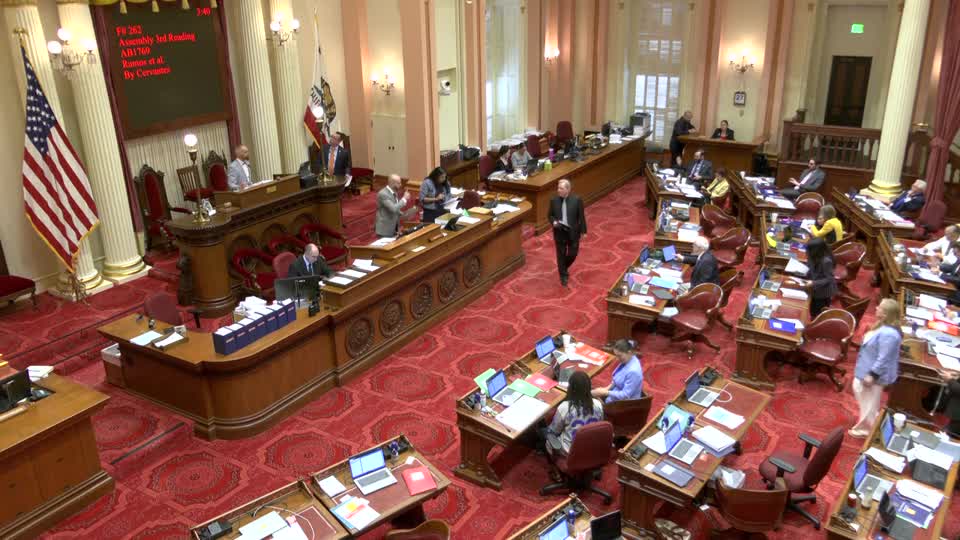 2MIN
Senate Floor
 39SEC
Senate Standing Committee on Appropriations
 4MIN
Senate Standing Committee on Environmental Quality
 1MIN
Assembly Floor
 7MIN
Assembly Standing Committee on Environmental Safety and Toxic Materials
Bill Author