AB 1607: Emergency medical services.
- Session Year: 2025-2026
- House: Assembly
- Latest Version Date: 2026-09-30
Current Status:
Passed
(2026-09-30: Chaptered by Secretary of State - Chapter 883, Statutes of 2026.)
Introduced
In Committee
Awaiting First Chamber Vote
Passed First Chamber
In Committee
Awaiting Second Chamber Vote
Passed Second Chamber
Enacted
What does this bill do?
The bill extends until January 1, 2037 the county option to add a $2 per $10 court penalty to fund the Maddy Emergency Medical Services (EMS) Fund and keeps the rule that 15% of that money must support pediatric trauma centers and children’s emergency care. It also continues limits on how much of the fund can be used for administration and keeps the existing split of remaining money to reimburse doctors, hospitals, and other local emergency services.
The summary is provided by generative AI which can make mistakes. For original language, please view the details in the table below.
Existing law establishes the Maddy Emergency Medical Services (EMS) Fund and authorizes each county to establish an emergency medical services fund for reimbursement of costs related to emergency medical services. Existing law, until January 1, 2027, requires 15% of the fund to be used to, among other things, improve access to, and coordination of, pediatric trauma and emergency services, with specified preferences, and requires the cost of administering money deposited into the EMS Fund to be reimbursed from the money collected, as specified.
Existing law, until January 1, 2027, authorizes county boards of supervisors to elect to levy an additional penalty, for deposit into the EMS Fund, in the amount of $2 for every $10 upon fines, penalties, and forfeitures collected for criminal offenses. Existing law, until January 1, 2027, requires 15% of the funds collected pursuant to that provision to be used to provide funding for pediatric trauma centers.
This bill would extend the operative date of these provisions until January 1, 2037.
Existing law establishes the Maddy Emergency Medical Services (EMS) Fund and authorizes each county to establish an emergency medical services fund for reimbursement of costs related to emergency medical services. Existing law, until January 1, 2027, requires 15% of the fund to be used to, among other things, improve access to, and coordination of, pediatric trauma and emergency services, with specified preferences, and requires the cost of administering money deposited into the EMS Fund to be reimbursed from the money collected, as specified.
Existing law, until January 1, 2027, authorizes county boards of supervisors to elect to levy an additional penalty, for deposit into the EMS Fund, in the amount of $2 for every $10 upon fines, penalties, and forfeitures collected for criminal offenses. Existing law, until January 1, 2027, requires 15% of the funds collected pursuant to that provision to be used to provide funding for pediatric trauma centers.
This bill would extend the operative date of these provisions until January 1, 2037.
Existing law establishes the Maddy Emergency Medical Services (EMS) Fund and authorizes each county to establish an emergency medical services fund for reimbursement of costs related to emergency medical services. Existing law, until January 1, 2027, requires 15% of the fund to be used to, among other things, improve access to, and coordination of, pediatric trauma and emergency services, with specified preferences, and requires the cost of administering money deposited into the EMS Fund to be reimbursed from the money collected, as specified.
Existing law, until January 1, 2027, authorizes county boards of supervisors to elect to levy an additional penalty, for deposit into the EMS Fund, in the amount of $2 for every $10 upon fines, penalties, and forfeitures collected for criminal offenses. Existing law, until January 1, 2027, requires 15% of the funds collected pursuant to that provision to be used to provide funding for pediatric trauma centers.
This bill would extend the operative date of these provisions indefinitely. until January 1, 2037.
Existing law establishes the Maddy Emergency Medical Services (EMS) Fund and authorizes each county to establish an emergency medical services fund for reimbursement of costs related to emergency medical services. Existing law, until January 1, 2027, requires 15% of the fund to be used to, among other things, improve access to, and coordination of, pediatric trauma and emergency services, with specified preferences, and requires the cost of administering money deposited into the EMS Fund to be reimbursed from the money collected, as specified.
Existing law, until January 1, 2027, authorizes county boards of supervisors to elect to levy an additional penalty, for deposit into the EMS Fund, in the amount of $2 for every $10 upon fines, penalties, and forfeitures collected for criminal offenses. Existing law, until January 1, 2027, requires 15% of the funds collected pursuant to that provision to be used to provide funding for pediatric trauma centers.
This bill would extend the operative date of these provisions indefinitely.
(a)(1)Except as otherwise provided in this section, for purposes of supporting emergency medical services pursuant to Chapter 2.5 (commencing with Section 1797.98a) of Division 2.5 of the Health and Safety Code, in addition to the penalties set forth in Section 76000, the county board of supervisors may elect to levy an additional penalty in the amount of two dollars ($2) for every ten dollars ($10), or part of ten dollars ($10), upon every fine, penalty, or forfeiture imposed and collected by the courts for all criminal offenses, including violations of Division 9 (commencing with Section 23000) of the Business and Professions Code relating to the control of alcoholic beverages, and all offenses involving a violation of the Vehicle Code or a local ordinance adopted pursuant to the Vehicle Code. This penalty shall be collected together with and in the same manner as the amounts established by Section 1464 of the Penal Code.
(2)This additional penalty does not apply to the following:
(A)A restitution fine.
(B)A penalty authorized by Section 1464 of the Penal Code or this chapter.
(C)A parking offense subject to Article 3 (commencing with Section 40200) of Chapter 1 of Division 17 of the Vehicle Code.
(D)The state surcharge authorized by Section 1465.7 of the Penal Code.
(b)Funds shall be collected pursuant to subdivision (a) only if the county board of supervisors provides that the increased penalties do not offset or reduce the funding of other programs from other sources, but that these additional revenues result in increased funding to those programs.
(c)Moneys collected pursuant to subdivision (a) shall be taken from fines and forfeitures deposited with the county treasurer prior to any division pursuant to Section 1463 of the Penal Code.
(d)Funds collected pursuant to this section shall be deposited into the Maddy Emergency Medical Services (EMS) Fund established pursuant to Section 1797.98a of the Health and Safety Code.
(e)This section shall remain in effect until January 1, 2037.
SEC. 2.Section 1797.98a of the Health and Safety Code is amended to read:1797.98a.(a)The fund provided for in this chapter shall be known as the Maddy Emergency Medical Services (EMS) Fund.
(b)(1)Each county may establish an emergency medical services fund, upon the adoption of a resolution by the board of supervisors. The moneys in the fund shall be available for the reimbursements required by this chapter. The fund shall be administered by each county, except that a county electing to have the state administer its medically indigent services program may also elect to have its emergency medical services fund administered by the state.
(2)Costs of administering the fund shall be reimbursed by the fund in an amount that does not exceed the actual administrative costs or 10 percent of the amount of the fund, whichever amount is lower.
(3)All interest earned on moneys in the fund shall be deposited in the fund for disbursement as specified in this section.
(4)Each administering agency may maintain a reserve of up to 15 percent of the amount in the portions of the fund reimbursable to physicians and surgeons, pursuant to subparagraph (A) of, and to hospitals, pursuant to subparagraph (B) of, paragraph (5). Each administering agency may maintain a reserve of any amount in the portion of the fund that is distributed for other emergency medical services purposes as determined by each county, pursuant to subparagraph (C) of paragraph (5).
(5)The amount in the fund, reduced by the amount for administration and the reserve, shall be utilized to reimburse physicians and surgeons and hospitals for patients who do not make payment for emergency medical services and for other emergency medical services purposes as determined by each county according to the following schedule:
(A)Fifty-eight percent of the balance of the fund shall be distributed to physicians and surgeons for emergency services provided by all physicians and surgeons, except those physicians and surgeons employed by county hospitals, in general acute care hospitals that provide basic, comprehensive, or standby emergency services pursuant to paragraph (3) or (5) of subdivision (f) of Section 1797.98e up to the time the patient is stabilized.
(B)Twenty-five percent of the fund shall be distributed only to hospitals providing disproportionate trauma and emergency medical care services.
(C)Seventeen percent of the fund shall be distributed for other emergency medical services purposes as determined by each county, including, but not limited to, the funding of regional poison control centers. Funding may be used for purchasing equipment and for capital projects only to the extent that these expenditures support the provision of emergency services and are consistent with the intent of this chapter.
(c)The source of the moneys in the fund shall be the penalty assessment made for this purpose, as provided in Section 76000 of the Government Code.
(d)A physician and surgeon may be reimbursed for up to 50 percent of the amount claimed pursuant to subdivision (a) of Section 1797.98c for the initial cycle of reimbursements made by the administering agency in a given year pursuant to Section 1797.98e. All funds remaining at the end of the fiscal year in excess of any reserve held and rolled over to the next year pursuant to paragraph (4) of subdivision (b) shall be distributed proportionally based on the dollar amount of claims submitted and paid to all physicians and surgeons who submitted qualifying claims during that year.
(e)Of the money deposited into the fund pursuant to Section 76000.5 of the Government Code, 15 percent shall be utilized to provide funding for all pediatric trauma centers throughout the county, both publicly and privately owned and operated. The expenditure of money shall be limited to reimbursement to physicians and surgeons, and to hospitals for patients who do not make payment for emergency care services in hospitals up to the point of stabilization, or to hospitals for expanding the services provided to pediatric trauma patients at trauma centers and other hospitals providing care to pediatric trauma patients, or at pediatric trauma centers, including the purchase of equipment. Local emergency medical services (EMS) agencies may conduct a needs assessment of pediatric trauma services in the county to allocate these expenditures. Counties that do not maintain a pediatric trauma center shall utilize the money deposited into the fund pursuant to Section 76000.5 of the Government Code to improve access to, and coordination of, pediatric trauma and emergency services in the county, with preference for funding given to hospitals that specialize in services to children, and physicians and surgeons who provide emergency care for children. Funds spent for the purposes of this section shall be known as Richies Fund. This subdivision shall remain operative until January 1, 2037.
(f)Costs of administering money deposited into the fund pursuant to Section 76000.5 of the Government Code shall be reimbursed from the money collected in an amount that does not exceed the actual administrative costs or 10 percent of the money collected, whichever amount is lower. This subdivision shall remain operative until January 1, 2037.
(a)(1)Except as otherwise provided in this section, for purposes of supporting emergency medical services pursuant to Chapter 2.5 (commencing with Section 1797.98a) of Division 2.5 of the Health and Safety Code, in addition to the penalties set forth in Section 76000, the county board of supervisors may elect to levy an additional penalty in the amount of two dollars ($2) for every ten dollars ($10), or part of ten dollars ($10), upon every fine, penalty, or forfeiture imposed and collected by the courts for all criminal offenses, including violations of Division 9 (commencing with Section 23000) of the Business and Professions Code relating to the control of alcoholic beverages, and all offenses involving a violation of the Vehicle Code or a local ordinance adopted pursuant to the Vehicle Code. This penalty shall be collected together with and in the same manner as the amounts established by Section 1464 of the Penal Code.
(2)This additional penalty does not apply to the following:
(A)A restitution fine.
(B)A penalty authorized by Section 1464 of the Penal Code or this chapter.
(C)A parking offense subject to Article 3 (commencing with Section 40200) of Chapter 1 of Division 17 of the Vehicle Code.
(D)The state surcharge authorized by Section 1465.7 of the Penal Code.
(b)Funds shall be collected pursuant to subdivision (a) only if the county board of supervisors provides that the increased penalties do not offset or reduce the funding of other programs from other sources, but that these additional revenues result in increased funding to those programs.
(c)Moneys collected pursuant to subdivision (a) shall be taken from fines and forfeitures deposited with the county treasurer prior to any division pursuant to Section 1463 of the Penal Code.
(d)Funds collected pursuant to this section shall be deposited into the Maddy Emergency Medical Services (EMS) Fund established pursuant to Section 1797.98a of the Health and Safety Code.
(e)This section shall remain in effect until January 1, 2037.
SEC. 2.Section 1797.98a of the Health and Safety Code is amended to read:1797.98a.(a)The fund provided for in this chapter shall be known as the Maddy Emergency Medical Services (EMS) Fund.
(b)(1)Each county may establish an emergency medical services fund, upon the adoption of a resolution by the board of supervisors. The moneys in the fund shall be available for the reimbursements required by this chapter. The fund shall be administered by each county, except that a county electing to have the state administer its medically indigent services program may also elect to have its emergency medical services fund administered by the state.
(2)Costs of administering the fund shall be reimbursed by the fund in an amount that does not exceed the actual administrative costs or 10 percent of the amount of the fund, whichever amount is lower.
(3)All interest earned on moneys in the fund shall be deposited in the fund for disbursement as specified in this section.
(4)Each administering agency may maintain a reserve of up to 15 percent of the amount in the portions of the fund reimbursable to physicians and surgeons, pursuant to subparagraph (A) of, and to hospitals, pursuant to subparagraph (B) of, paragraph (5). Each administering agency may maintain a reserve of any amount in the portion of the fund that is distributed for other emergency medical services purposes as determined by each county, pursuant to subparagraph (C) of paragraph (5).
(5)The amount in the fund, reduced by the amount for administration and the reserve, shall be utilized to reimburse physicians and surgeons and hospitals for patients who do not make payment for emergency medical services and for other emergency medical services purposes as determined by each county according to the following schedule:
(A)Fifty-eight percent of the balance of the fund shall be distributed to physicians and surgeons for emergency services provided by all physicians and surgeons, except those physicians and surgeons employed by county hospitals, in general acute care hospitals that provide basic, comprehensive, or standby emergency services pursuant to paragraph (3) or (5) of subdivision (f) of Section 1797.98e up to the time the patient is stabilized.
(B)Twenty-five percent of the fund shall be distributed only to hospitals providing disproportionate trauma and emergency medical care services.
(C)Seventeen percent of the fund shall be distributed for other emergency medical services purposes as determined by each county, including, but not limited to, the funding of regional poison control centers. Funding may be used for purchasing equipment and for capital projects only to the extent that these expenditures support the provision of emergency services and are consistent with the intent of this chapter.
(c)The source of the moneys in the fund shall be the penalty assessment made for this purpose, as provided in Section 76000 of the Government Code.
(d)A physician and surgeon may be reimbursed for up to 50 percent of the amount claimed pursuant to subdivision (a) of Section 1797.98c for the initial cycle of reimbursements made by the administering agency in a given year pursuant to Section 1797.98e. All funds remaining at the end of the fiscal year in excess of any reserve held and rolled over to the next year pursuant to paragraph (4) of subdivision (b) shall be distributed proportionally based on the dollar amount of claims submitted and paid to all physicians and surgeons who submitted qualifying claims during that year.
(e)Of the money deposited into the fund pursuant to Section 76000.5 of the Government Code, 15 percent shall be utilized to provide funding for all pediatric trauma centers throughout the county, both publicly and privately owned and operated. The expenditure of money shall be limited to reimbursement to physicians and surgeons, and to hospitals for patients who do not make payment for emergency care services in hospitals up to the point of stabilization, or to hospitals for expanding the services provided to pediatric trauma patients at trauma centers and other hospitals providing care to pediatric trauma patients, or at pediatric trauma centers, including the purchase of equipment. Local emergency medical services (EMS) agencies may conduct a needs assessment of pediatric trauma services in the county to allocate these expenditures. Counties that do not maintain a pediatric trauma center shall utilize the money deposited into the fund pursuant to Section 76000.5 of the Government Code to improve access to, and coordination of, pediatric trauma and emergency services in the county, with preference for funding given to hospitals that specialize in services to children, and physicians and surgeons who provide emergency care for children. Funds spent for the purposes of this section shall be known as Richies Fund. This subdivision shall remain operative until January 1, 2037.
(f)Costs of administering money deposited into the fund pursuant to Section 76000.5 of the Government Code shall be reimbursed from the money collected in an amount that does not exceed the actual administrative costs or 10 percent of the money collected, whichever amount is lower. This subdivision shall remain operative until January 1, 2037.
(a)(1)Except as otherwise provided in this section, for purposes of supporting emergency medical services pursuant to Chapter 2.5 (commencing with Section 1797.98a) of Division 2.5 of the Health and Safety Code, in addition to the penalties set forth in Section 76000, the county board of supervisors may elect to levy an additional penalty in the amount of two dollars ($2) for every ten dollars ($10), or part of ten dollars ($10), upon every fine, penalty, or forfeiture imposed and collected by the courts for all criminal offenses, including violations of Division 9 (commencing with Section 23000) of the Business and Professions Code relating to the control of alcoholic beverages, and all offenses involving a violation of the Vehicle Code or a local ordinance adopted pursuant to the Vehicle Code. This penalty shall be collected together with and in the same manner as the amounts established by Section 1464 of the Penal Code.
(2)This additional penalty does not apply to the following:
(A)A restitution fine.
(B)A penalty authorized by Section 1464 of the Penal Code or this chapter.
(C)A parking offense subject to Article 3 (commencing with Section 40200) of Chapter 1 of Division 17 of the Vehicle Code.
(D)The state surcharge authorized by Section 1465.7 of the Penal Code.
(b)Funds shall be collected pursuant to subdivision (a) only if the county board of supervisors provides that the increased penalties do not offset or reduce the funding of other programs from other sources, but that these additional revenues result in increased funding to those programs.
(c)Moneys collected pursuant to subdivision (a) shall be taken from fines and forfeitures deposited with the county treasurer prior to any division pursuant to Section 1463 of the Penal Code.
(d)Funds collected pursuant to this section shall be deposited into the Maddy Emergency Medical Services (EMS) Fund established pursuant to Section 1797.98a of the Health and Safety Code.
(e)This section shall remain in effect until January 1, 2037.
SEC. 2.Section 1797.98a of the Health and Safety Code is amended to read:1797.98a.(a)The fund provided for in this chapter shall be known as the Maddy Emergency Medical Services (EMS) Fund.
(b)(1)Each county may establish an emergency medical services fund, upon the adoption of a resolution by the board of supervisors. The moneys in the fund shall be available for the reimbursements required by this chapter. The fund shall be administered by each county, except that a county electing to have the state administer its medically indigent services program may also elect to have its emergency medical services fund administered by the state.
(2)Costs of administering the fund shall be reimbursed by the fund in an amount that does not exceed the actual administrative costs or 10 percent of the amount of the fund, whichever amount is lower.
(3)All interest earned on moneys in the fund shall be deposited in the fund for disbursement as specified in this section.
(4)Each administering agency may maintain a reserve of up to 15 percent of the amount in the portions of the fund reimbursable to physicians and surgeons, pursuant to subparagraph (A) of, and to hospitals, pursuant to subparagraph (B) of, paragraph (5). Each administering agency may maintain a reserve of any amount in the portion of the fund that is distributed for other emergency medical services purposes as determined by each county, pursuant to subparagraph (C) of paragraph (5).
(5)The amount in the fund, reduced by the amount for administration and the reserve, shall be utilized to reimburse physicians and surgeons and hospitals for patients who do not make payment for emergency medical services and for other emergency medical services purposes as determined by each county according to the following schedule:
(A)Fifty-eight percent of the balance of the fund shall be distributed to physicians and surgeons for emergency services provided by all physicians and surgeons, except those physicians and surgeons employed by county hospitals, in general acute care hospitals that provide basic, comprehensive, or standby emergency services pursuant to paragraph (3) or (5) of subdivision (f) of Section 1797.98e up to the time the patient is stabilized.
(B)Twenty-five percent of the fund shall be distributed only to hospitals providing disproportionate trauma and emergency medical care services.
(C)Seventeen percent of the fund shall be distributed for other emergency medical services purposes as determined by each county, including, but not limited to, the funding of regional poison control centers. Funding may be used for purchasing equipment and for capital projects only to the extent that these expenditures support the provision of emergency services and are consistent with the intent of this chapter.
(c)The source of the moneys in the fund shall be the penalty assessment made for this purpose, as provided in Section 76000 of the Government Code.
(d)A physician and surgeon may be reimbursed for up to 50 percent of the amount claimed pursuant to subdivision (a) of Section 1797.98c for the initial cycle of reimbursements made by the administering agency in a given year pursuant to Section 1797.98e. All funds remaining at the end of the fiscal year in excess of any reserve held and rolled over to the next year pursuant to paragraph (4) of subdivision (b) shall be distributed proportionally based on the dollar amount of claims submitted and paid to all physicians and surgeons who submitted qualifying claims during that year.
(e)Of the money deposited into the fund pursuant to Section 76000.5 of the Government Code, 15 percent shall be utilized to provide funding for all pediatric trauma centers throughout the county, both publicly and privately owned and operated. The expenditure of money shall be limited to reimbursement to physicians and surgeons, and to hospitals for patients who do not make payment for emergency care services in hospitals up to the point of stabilization, or to hospitals for expanding the services provided to pediatric trauma patients at trauma centers and other hospitals providing care to pediatric trauma patients, or at pediatric trauma centers, including the purchase of equipment. Local emergency medical services (EMS) agencies may conduct a needs assessment of pediatric trauma services in the county to allocate these expenditures. Counties that do not maintain a pediatric trauma center shall utilize the money deposited into the fund pursuant to Section 76000.5 of the Government Code to improve access to, and coordination of, pediatric trauma and emergency services in the county, with preference for funding given to hospitals that specialize in services to children, and physicians and surgeons who provide emergency care for children. Funds spent for the purposes of this section shall be known as Richies Fund. This subdivision shall remain operative until January 1, 2037.
(f)Costs of administering money deposited into the fund pursuant to Section 76000.5 of the Government Code shall be reimbursed from the money collected in an amount that does not exceed the actual administrative costs or 10 percent of the money collected, whichever amount is lower. This subdivision shall remain operative until January 1, 2037.
(a)(1)Except as otherwise provided in this section, for purposes of supporting emergency medical services pursuant to Chapter 2.5 (commencing with Section 1797.98a) of Division 2.5 of the Health and Safety Code, in addition to the penalties set forth in Section 76000, the county board of supervisors may elect to levy an additional penalty in the amount of two dollars ($2) for every ten dollars ($10), or part of ten dollars ($10), upon every fine, penalty, or forfeiture imposed and collected by the courts for all criminal offenses, including violations of Division 9 (commencing with Section 23000) of the Business and Professions Code relating to the control of alcoholic beverages, and all offenses involving a violation of the Vehicle Code or a local ordinance adopted pursuant to the Vehicle Code. This penalty shall be collected together with and in the same manner as the amounts established by Section 1464 of the Penal Code.
(2)This additional penalty does not apply to the following:
(A)A restitution fine.
(B)A penalty authorized by Section 1464 of the Penal Code or this chapter.
(C)A parking offense subject to Article 3 (commencing with Section 40200) of Chapter 1 of Division 17 of the Vehicle Code.
(D)The state surcharge authorized by Section 1465.7 of the Penal Code.
(b)Funds shall be collected pursuant to subdivision (a) only if the county board of supervisors provides that the increased penalties do not offset or reduce the funding of other programs from other sources, but that these additional revenues result in increased funding to those programs.
(c)Moneys collected pursuant to subdivision (a) shall be taken from fines and forfeitures deposited with the county treasurer prior to any division pursuant to Section 1463 of the Penal Code.
(d)Funds collected pursuant to this section shall be deposited into the Maddy Emergency Medical Services (EMS) Fund established pursuant to Section 1797.98a of the Health and Safety Code.
(e)This section shall remain in effect until January 1, 2027.SEC. 2.Section 1797.98a of the Health and Safety Code is amended to read:1797.98a.(a)The fund provided for in this chapter shall be known as the Maddy Emergency Medical Services (EMS) Fund.
(b)(1)Each county may establish an emergency medical services fund, upon the adoption of a resolution by the board of supervisors. The moneys in the fund shall be available for the reimbursements required by this chapter. The fund shall be administered by each county, except that a county electing to have the state administer its medically indigent services program may also elect to have its emergency medical services fund administered by the state.
(2)Costs of administering the fund shall be reimbursed by the fund in an amount that does not exceed the actual administrative costs or 10 percent of the amount of the fund, whichever amount is lower.
(3)All interest earned on moneys in the fund shall be deposited in the fund for disbursement as specified in this section.
(4)Each administering agency may maintain a reserve of up to 15 percent of the amount in the portions of the fund reimbursable to physicians and surgeons, pursuant to subparagraph (A) of, and to hospitals, pursuant to subparagraph (B) of, paragraph (5). Each administering agency may maintain a reserve of any amount in the portion of the fund that is distributed for other emergency medical services purposes as determined by each county, pursuant to subparagraph (C) of paragraph (5).
(5)The amount in the fund, reduced by the amount for administration and the reserve, shall be utilized to reimburse physicians and surgeons and hospitals for patients who do not make payment for emergency medical services and for other emergency medical services purposes as determined by each county according to the following schedule:
(A)Fifty-eight percent of the balance of the fund shall be distributed to physicians and surgeons for emergency services provided by all physicians and surgeons, except those physicians and surgeons employed by county hospitals, in general acute care hospitals that provide basic, comprehensive, or standby emergency services pursuant to paragraph (3) or (5) of subdivision (f) of Section 1797.98e up to the time the patient is stabilized.
(B)Twenty-five percent of the fund shall be distributed only to hospitals providing disproportionate trauma and emergency medical care services.
(C)Seventeen percent of the fund shall be distributed for other emergency medical services purposes as determined by each county, including, but not limited to, the funding of regional poison control centers. Funding may be used for purchasing equipment and for capital projects only to the extent that these expenditures support the provision of emergency services and are consistent with the intent of this chapter.
(c)The source of the moneys in the fund shall be the penalty assessment made for this purpose, as provided in Section 76000 of the Government Code.
(d)Any A physician and surgeon may be reimbursed for up to 50 percent of the amount claimed pursuant to subdivision (a) of Section 1797.98c for the initial cycle of reimbursements made by the administering agency in a given year, year pursuant to Section 1797.98e. All funds remaining at the end of the fiscal year in excess of any reserve held and rolled over to the next year pursuant to paragraph (4) of subdivision (b) shall be distributed proportionally, proportionally based on the dollar amount of claims submitted and paid to all physicians and surgeons who submitted qualifying claims during that year.
(e)Of the money deposited into the fund pursuant to Section 76000.5 of the Government Code, 15 percent shall be utilized to provide funding for all pediatric trauma centers throughout the county, both publicly and privately owned and operated. The expenditure of money shall be limited to reimbursement to physicians and surgeons, and to hospitals for patients who do not make payment for emergency care services in hospitals up to the point of stabilization, or to hospitals for expanding the services provided to pediatric trauma patients at trauma centers and other hospitals providing care to pediatric trauma patients, or at pediatric trauma centers, including the purchase of equipment. Local emergency medical services (EMS) agencies may conduct a needs assessment of pediatric trauma services in the county to allocate these expenditures. Counties that do not maintain a pediatric trauma center shall utilize the money deposited into the fund pursuant to Section 76000.5 of the Government Code to improve access to, and coordination of, pediatric trauma and emergency services in the county, with preference for funding given to hospitals that specialize in services to children, and physicians and surgeons who provide emergency care for children. Funds spent for the purposes of this section shall be known as Richies Fund. This subdivision shall remain in effect until January 1, 2027.
(f)Costs of administering money deposited into the fund pursuant to Section 76000.5 of the Government Code shall be reimbursed from the money collected in an amount that does not exceed the actual administrative costs or 10 percent of the money collected, whichever amount is lower. This subdivision shall remain in effect until January 1, 2027.
|
Date
|
Status
|
|---|---|
| Sep 30, 2026 | Chaptered by Secretary of State - Chapter 883, Statutes of 2026. |
| Sep 30, 2026 | Approved by the Governor. |
| Aug 25, 2026 | Enrolled and presented to the Governor at 4 p.m. |
| Aug 19, 2026 | In Assembly. Ordered to Engrossing and Enrolling. |
| Aug 19, 2026 | Read third time. Passed. Ordered to the Assembly. (Ayes 38. Noes 0.). |
| Aug 19, 2026 | Read third time. Passed. Ordered to the Assembly. (Ayes 38. Noes 0. Page 5547.). |
| Jul 2, 2026 | Read second time. Ordered to third reading. |
| Jul 1, 2026 | From committee: Do pass. (Ayes 6. Noes 0.) (June 30). |
| Jun 18, 2026 | From committee: Do pass and re-refer to Com. on PUB. S. (Ayes 11. Noes 0.) (June 17). Re-referred to Com. on PUB. S. |
| May 6, 2026 | Referred to Coms. on HEALTH and PUB. S. |
| Apr 20, 2026 | In Senate. Read first time. To Com. on RLS. for assignment. |
| Apr 20, 2026 | Read third time. Passed. Ordered to the Senate. (Ayes 72. Noes 1. Page 4726.) |
| Apr 20, 2026 | Read third time. Passed. Ordered to the Senate. |
| Apr 16, 2026 | Read second time. Ordered to third reading. |
| Apr 15, 2026 | From committee: Do pass. (Ayes 9. Noes 0.) (April 14). |
| Apr 6, 2026 | Re-referred to Com. on PUB. S. |
| Mar 26, 2026 | Read second time and amended. |
| Mar 25, 2026 | From committee: Amend, and do pass as amended and re-refer to Com. on PUB. S. (Ayes 16. Noes 0.) (March 24). |
| Mar 2, 2026 | Referred to Coms. on HEALTH and PUB. S. |
| Jan 21, 2026 | From printer. May be heard in committee February 20. |
| Jan 20, 2026 | Read first time. To print. |
|
Date
|
Description
|
Location
|
Votes
|
|
|---|---|---|---|---|
| Aug 19, 2026 | Assembly 3rd Reading AB1607 Mark González et al. By Grayson | Senate Floor |
Passed |
|
| Jun 30, 2026 | Do pass | Senate Standing Committee on Public Safety |
Passed |
|
| Jun 17, 2026 | Do pass, but first be re-referred to the Committee on [Public Safety] | Senate Standing Committee on Health |
Passed |
|
| Apr 20, 2026 | AB 1607 Mark González Assembly Third Reading | Assembly Floor |
Passed |
|
| Apr 14, 2026 | Do pass. | Assembly Standing Committee on Public Safety |
Passed |
|
| Mar 24, 2026 | Do pass as amended and be re-referred to the Committee on [Public Safety] | Assembly Standing Committee on Health |
Passed |
This list shows positions taken on this bill by organizations on the date displayed, which is linked to the original source.
Positions by individuals are not included.
|
Organization
|
Position
|
Date
|
|---|---|---|
| American Academy Of Pediatrics, California | ** Support | |
| American Civil Liberties Union California Action | ** Against | |
| American College of Surgeons: Southern and San Diego Chapters | ** Support | |
| American College of Surgeons: Southern and San Diego Chapters (co-sponsor) | ** Support | |
| American Medical Response West | ** Support | |
| California Ambulance Association | ** Support | |
| California Chapter of the American College of Emergency Physicians | ** Support | |
| California Children'S Hospital Association | ** Support | |
| California Children’s Hospital Association | ** Support | |
| California Fire Chiefs Association | ** Support | |
| California Hospital Association | ** Support | |
| California Medical Association | ** Support | |
| California State Association Of Counties | ** Support | |
| California State Sheriffs' Association | ** Support | |
| California State Sheriffs’ Association | ** Support | |
| Children'S Specialty Care Coalition | ** Support | |
| Children’s Specialty Care Coalition | ** Support | |
| Cottage Health | ** Support | |
| County Health Executives Association Of California | ** Support | |
| County Of Alameda | ** Support | |
| County of Contra Costa | ** Support | |
| County Of Kern | ** Support | |
| County of Napa | ** Support | |
| County of Riverside | ** Support | |
| County Of San Diego | ** Support | |
| County of San Mateo | ** Support | |
| County of Ventura | ** Support | |
| County of Yolo | ** Support | |
| County of Yuba | ** Support | |
| County of Yuba - Office of Emergency Services | ** Support | |
| Debt Free Justice California | ** Against | |
| Dignity Health Marian Regional Medical Center | ** Support | |
| Ella Baker Center For Human Rights | ** Against | |
| Emergency Medical Services Administrators Association of California | ** Support | |
| Emergency Medical Services Administrators' Association of California | ** Support | |
| Emergency Medical Services Administrators' Association of California (EMSAAC) (co-sponsor) | ** Support | |
| Emergency Medical Services Administrators’ Association of California | ** Support | |
| Health Officers Association Of California | ** Support | |
| Napa County Board of Supervisors | ** Support | |
| National Association of EMS Physicians | ** Support | |
| None on File | ** Against | |
| North Coast EMS | ** Support | |
| Northern California Ems, INC. | ** Support | |
| Santa Barbara Cottage Hospital | ** Support | |
| Sharp Healthcare | ** Support | |
| Sierra - Sacramento Valley EMS Agency | ** Support |
SENATE RULES COMMITTEE Office of Senate Floor Analyses (916) 651-4171 | AB 1607 |
THIRD READING
Bill No: AB 1607
Author: Mark González (D), et al.
Amended: 3/26/26 in Assembly
Vote: 21
SENATE HEALTH COMMITTEE: 11-0, 6/17/26
AYES: Weber Pierson, Valladares, Caballero, Durazo, Gonzalez, Grove, Menjivar, Padilla, Pérez, Rubio, Smallwood-Cuevas
SENATE PUBLIC SAFETY COMMITTEE: 6-0, 6/30/26
AYES: Arreguín, Seyarto, Caballero, Cortese, Pérez, Wiener
ASSEMBLY FLOOR: 72-1, 4/20/26 - See last page for vote
SUBJECT: Emergency medical services
SOURCE: California Chapter of the American College of Emergency Physicians
Emergency Medical Services Administrators' Association of California
DIGEST:
This bill extends the sunset date, from January 1, 2027 to January 1, 2037, on both the portion of the Maddy Emergency Medical Services (EMS) Fund that provides funding for pediatric trauma centers, and on a provision that authorizes counties to levy an additional penalty in the amount of $2 for every $10 on fines and penalties imposed on all criminal offenses for deposit in the Maddy EMS Fund.
ANALYSIS:
Existing federal law: Establishes the Emergency Medical Treatment and Labor Act (EMTALA), which requires hospitals with an emergency department (ED) to provide an appropriate medical screening examination to determine whether or not an emergency medical condition exists to any requesting individual. Requires, if the hospital determines that the individual has an emergency medical condition, to provide either:
- Within the staff and facilities available at the hospital, further medical examination and treatment as required to stabilize the medical treatment; or,
- Transfer of the individual to another medical facility that can provide the appropriate treatment. [42 U.S. Code §1395dd]
Existing state law:
- Establishes provisions similar to the federal EMTALA law that require a hospital with an ED to provide emergency services and care to any person regardless of their ability to pay. [Health and Safety Code (HSC) §1317]
- Establishes the Maddy EMS Fund, which authorizes each county to establish an EMS fund, upon the adoption of a resolution by the board of supervisors. [HSC §1797.98a]
- Requires the amount in a Maddy EMS Fund, reduced for administration and a reserve, to be utilized to reimburse physicians and surgeons and hospitals for patients who do not make payment for EMS and for other EMS purposes as determined by each county, according to the following schedule:
- 58% of the balance of the fund distributed to physicians for emergency services provided by all physicians, except those employed by county hospitals, in general acute care hospitals that provide basic, comprehensive, or standby emergency services up to the time the patient is stabilized;
- 25% of the fund distributed only to hospitals providing disproportionate trauma and emergency medical care services; and,
- 17% of the fund distributed for other EMS purposes as determined by each county, including, but not limited to, the funding of regional poison control centers. Authorizes funding to be used for purchasing equipment and for capital projects only to the extent that these expenditures support the provision of emergency services and are consistent with the intent of the fund. [HSC §1797.98a(b)(5)]
- Requires each county to levy an additional penalty in the amount of $7 for every $10, or part of $10, upon every fine, penalty, or forfeiture imposed and collected by the courts for all criminal offenses, including all offenses involving a violation of the Vehicle Code. Re quires a portion of these additional penalty funds to support the Maddy EMS Fund. [Government Code (GOV) §76000(a) and HSC §1797.98a(c)]
- Authorizes, in addition to the penalties in Existing Law 4) above, the county board of supervisors to levy an additional penalty in the amount of $2 for every $10, or part of $10, upon every fine, penalty, or forfeiture imposed and collected by the courts for all criminal offenses, including violations related to the control of alcoholic beverages, and all offenses involving a violation of the Vehicle Code, for purposes of supporting the Maddy EMS Fund. Sunsets this additional penalty on January 1, 2027. [GOV §76000.5]
- Requires, of the penalty funds collected from the additional $2 penalty, 15% to be utilized to provide funding for all pediatric trauma centers throughout the county, both publicly and privately owned and operated. This is known as “Richie’s Fund.” Requires the expenditure of this money to be limited to reimbursement to physicians, and to hospitals for patients who do not make payment for emergency care services provided to pediatric trauma patients at trauma centers and other hospitals providing care to pediatric trauma patients, or at pediatric trauma centers, including the purchase of equipment. Authorizes local EMS agencies to conduct a needs assessment of pediatric trauma services in the county to allocate these expenditures. Requires counties that do not maintain a pediatric trauma center to utilize Richie’s Fund to improve access to, and coordination of, pediatric trauma and emergency services in the county, with preference for funding given to hospitals that specialize in services to children, and physicians who provide emergency care for children. Sunsets the provisions establishing Richie’s Fund on January 1, 2027. [HSC §1797.98a(e)]
- Requires each county establishing a Maddy EMS fund to report to the California EMS Authority (EMSA) on the implementation and status of the EMS fund. Requires EMSA to compile and forward a summary of each county’s report to the Legislature. [HSC §1797.98b]
This bill:
- Extends the sunset date, from January 1, 2027 to January 1, 2037, on the portion of the Maddy EMS Fund that provides funding for reimbursement to physicians and hospitals for pediatric trauma care.
- Extends the sunset date, from January 1, 2027 to January 1, 2037, on the provisions in law that authorize counties to levy an additional penalty in the amount of $2 for every $10, or part of $10, upon every fine, penalty, or forfeiture imposed and collected by the courts for all criminal offenses for purposes of deposit in the Maddy EMS Fund.
Comments
According to the author of this bill:
California’s EDs are the health care safety net and the front lines of any public health emergency. With numbers on the rise, over 15 million Californians visit an ED across the state each year. The Maddy Fund was designed to support patients and providers, ensuring those who need care can receive it and those who provide care can be reimbursed for it. Without the Maddy Fund, we will see ED across this state, including at rural hospitals, shutter their doors.
Background
EMTALA. According to the U.S. Department of Health and Human Services, Congress enacted EMTALA in 1986 to ensure public access to emergency services regardless of ability to pay. EMTALA requires that anyone coming to an ED requesting evaluation or treatment of a medical condition receives a medical screening examination. If a patient has an emergency medical condition, the hospital must provide stabilizing treatment, irrespective of the patient’s insurance status or ability to pay. If the hospital does not have the capabilities required to stabilize the patient, then the hospital is required to provide an appropriate transfer to a hospital that can provide the necessary treatment. A hospital that has the needed specialized capabilities and capacity may not refuse to accept the transfer. This requirement to provide emergency care also applies to undocumented immigrants and unhoused individuals. Once the hospital admits the individual as an inpatient for further treatment, however, the hospital’s obligation under EMTALA ends.
Emergency physicians. The American Board of Medical Specialties defines emergency physicians as physicians who focus on the immediate decision making and action necessary to prevent death, or any further disability, both in the pre-hospital setting by directing emergency medical technicians and in the ED. Emergency physicians provide immediate recognition, evaluation, care, stabilization, and disposition of adult and pediatric patients in response to acute illness and injury. The Medical Board of California states that the Corporate Practice of Medicine doctrine prohibits the direct employment of physicians by hospitals, with some exceptions. This prohibition is intended to minimize undue influence or interference with the physician’s judgement and physician-patient relationship. Hospitals instead contract with emergency medicine practice groups or third-party management organizations to staff their EDs. Therefore, emergency physicians bill separately from the hospital for their specialty services. The California Medical Billing & Revenue Management highlights that the urgent and unpredictable nature of emergency services often leads to issues such as out-of-network billing and challenges in collecting payments from uninsured or underinsured patients.
Maddy EMS Fund. According to EMSA, in 1987, the Legislature concluded that EMS providers, “bore higher costs for their services but often received only partial or no payments from patients.” In response, SB 12 (Maddy, Chapter 1240, Statutes of 1987) established the Maddy EMS Fund to allow counties to help provide reimbursement to physicians and hospitals for treating uninsured patients seeking emergency services. SB 12 permits participating counties to levy an additional penalty of $7 for every $10 upon every fine, penalty, or forfeiture imposed and collected by the courts for all criminal offenses, including all offenses that involve a violation of the Vehicle Code, to provide funding for the Maddy EMS Fund.
Richie’s Fund. SB 1773 (Alarcon, Chapter 841, Statutes of 2006) built onto SB 12 by adding an additional penalty assessment of two dollars for every ten dollars on applicable fines, penalties, and forfeitures, and requires, of the money deposited from this additional penalty assessment, 15% to provide funding for all pediatric trauma centers, including reimbursement to physicians and hospitals providing care to pediatric trauma patients, with a sunset date of January 1, 2009. This portion of the Maddy EMS Fund is known as “Richie’s Fund.” The Legislature has since then extended the authorization for counties to continue collecting for the Richie’s Fund several times. Currently, this authorization extends through January 1, 2027.
Maddy EMS Fund Statewide Report Summary. Each county with an established Maddy EMS Fund is required to report to the EMSA annually on the implementation and status of the fund. The most recent Maddy EMS Fund Statewide Report of FY 2022-23 states that 51 counties have established the Maddy EMS Fund, and 37 of those counties have established the Richie’s Fund. Alameda, Modoc, Mono, and Nevada Counties did not submit reports to the EMSA and are therefore not included in the reported data. At the start of the fiscal year on July 1, 2022, the balance reported was $32 million. The total penalty revenue deposited, reimbursements, interest, and other deposits totaled $46.7 million. Combined with the beginning balance, as well as with the maintained reserve, the total funds available for disbursement in fiscal year (FY) 2022-23 were approximately $80 million. In the FY 2022-23, the distributions totaled $47.9 million. Of that amount, $3 million was allocated to the Richie’s Fund, $23 million to physicians, and $9 million to hospitals. The remaining amount was used for county administration costs and other discretionary EMS. The fiscal year ending balance on June 30, 2023, totaled $34 million.
Pediatric trauma care. A statistical briefing from the Agency for Healthcare Research and Quality titled “Overview of Pediatric ED Visits, 2015” states that pediatric ED visits constitute roughly 20% of all ED visits in the U.S. Moreover, KidsData by the Population Reference Bureau found that there were over 1.5 million pediatric ED visits in California in 2020. The briefing further notes that more than 60% of pediatric ED visits in the U.S. in 2015 were covered by Medicaid. Pediatric ED visits for patients without insurance were less common, constituting 6.4% and 2.7% of treat-and-release and admitted pediatric ED visits, respectively.
A 2025 journal article in JAMA Pediatrics titled, “Pediatric Readiness and Trauma Center Access for Children,” found in their cross-sectional study of children in the U.S. that access to pediatric trauma care was not universal, and that children living in rural areas were less likely to have access to timely care at a pediatric trauma center. Their analysis also found that pediatric trauma centers continue to be concentrated in metropolitan areas. In fact, the 2025 news article in the San Francisco Chronicle reported that Providence Santa Rosa Memorial Hospital, a major trauma center with the only full-time inpatient pediatric unit between the North Bay and the Oregon Border, closed in March of 2026. While the hospital’s ED will continue providing pediatric care, those who need to be admitted will be transferred to pediatric-ready hospitals in San Francisco, Oakland, or Sacramento. The chief medical officer for Northern California for Providence Medical Group and Clinical Network stated that, “As a not-for-profit health care organization primarily serving Medicare and Medi-Cal patients, repurposing the inpatient pediatric unit to expand adult inpatient capacity, where demand is significantly higher, enables us to align our limited resources with the evolving needs of the community.” This closure follows recent trends across the U.S. According to the 2024 research letter, “National Trends in Pediatric Inpatient Capacity,” in JAMA Pediatrics, U.S. hospitals closed nearly 30% of pediatric units, compared to 4% of inpatient adult units, between 2008 and 2022.
H.R. 1. H.R. 1, a vast budget reconciliation bill, makes a number of changes primarily to lower taxes, increase funding for immigration control and national defense, and restrict access to, and funding for, SNAP and Medicaid. Medicaid payments were reduced by defunding family planning providers that provide abortions, prohibiting new or increased provider taxes to fund Medicaid and requiring a gradual reduction of existing provider taxes, capping the rate the state may set for certain services, reducing the federal share of payment for emergency services to adults with unqualified immigration status, and making changes in allowable payments under federal waiver programs. H.R.1 also made a number of changes to the Medicaid eligibility rules, which were enacted to reduce the number of people receiving assistance through the Medicaid program.
The UC Berkeley Labor Center estimates that 1.87 million adults in the state will lose coverage due to the work requirements, and 270,000 will lose coverage due to the semiannual eligibility redeterminations. The most recent estimate from the Department of Health Care Services (DHCS) in the Implementation Plan for New Federal Eligibility and Enrollment Changes Under H.R. 1, released on January 29, 2026, estimates up to 1.8 million will lose coverage due to work requirements, increased renewals, and the normal churn of individuals transitioning from Medi-Cal to Covered California. DHCS has also shared that approximately 200,000 immigrants will no longer have satisfactory immigration status due to the H.R. 1 change regarding immigrant eligibility and, according to the current Governor’s budget proposal, will lose full-scope Medi-Cal. This means that emergency physicians and hospitals will likely see an increase of patients without insurance as the federal changes come into effect.
FISCAL EFFECT: Appropriation: No Fiscal Com.: No Local: No
SUPPORT: (Verified 7/1/26)
California Chapter of the American College of Emergency Physicians (co-source)
Emergency Medical Services Administrators' Association of California (co-source)
American Academy of Pediatrics, California
American College of Surgeons: Southern and San Diego Chapters
American Medical Response West
California Ambulance Association
California Children's Hospital Association
California Fire Chiefs Association
California Hospital Association
California Medical Association
California State Association of Counties
California State Sheriffs' Association
Children's Specialty Care Coalition
County Health Executives Association of California
County of Alameda
County of Contra Costa
County of Kern
County of Napa
County of San Diego
County of Ventura
County of Yolo
County of Yuba
Dignity Health Marian Regional Medical Center
Health Officers Association of California
National Association of EMS Physicians
North Coast EMS
Northern California EMS, Inc.
Santa Barbara Cottage Hospital
SHARP Healthcare
Sierra - Sacramento Valley EMS Agency
OPPOSITION: (Verified 7/1/26)
American Civil Liberties Union California Action
Debt Free Justice California
ARGUMENTS IN SUPPORT: The co-sources of this bill, the California Chapter of the American College of Emergency Physicians and the Emergency Medical Services Administrators’ Association of California, write that emergency care in this state is in crisis. In the past decade, ED visits are up, and wait times continue to increase. ED closures are also on the rise, with closures like Glenn Medical Center leaving entire counties without access to emergency care. The U.S. Census Bureau reported California’s uninsured rate for 2024 was 5.9%, or 2.3 million individuals. However, the proportion of uninsured patients can be much higher in the ED, as it is often the only place that these individuals can access care. Changes to Medi-Cal as a result of H.R.1 are estimated to drastically increase the number of uninsured over its implementation period. This massive loss of coverage as a result in the changes in eligibility would likely raise the proportion of uninsured ED visits. The co-sponsors add that in order to help offset the increasing costs of uninsured ED visits in California, it is important to preserve each county’s ability to supplement their Maddy EMS Fund. The County of Alameda asserts that within their county, this funding supports a healthcare system that faces substantial emergency care demand. Across all hospitals in their county, EDs provide an estimated 350,000 emergency visits annually, reflecting the vital role emergency services play in protecting public health and responding to urgent medical needs. The County of Alameda states that allowing the Maddy EMS Fund provisions to sunset would increase uncompensated care burdens on hospitals and emergency physicians, placing additional financial strain on safety-net providers and potentially affecting physician staffing levels, trauma care capacity, ED operations, and patient access to care. The American Academy of Pediatrics (Academy) furthers that in California alone, there were over 1.5 million ED visits among children ages 0-17 in a single year. Many of these visits involve injuries or acute conditions requiring rapid access to appropriately equipped facilities and trained personnel. The Academy states that trauma remains the leading cause of death and disability among children in the U.S., and outcomes are significantly improved when children receive care at designated pediatric trauma centers. The current requirement that 15% of the funds from the additional penalties are directed toward pediatric trauma and emergency services has helped strengthen pediatric readiness, improve coordination, and support regional systems of care. Without sustained funding, children, particularly those in rural or underserved communities, may face longer transport times and reduced access to specialized care.
ARGUMENTS IN OPPOSITION: Both American Civil Liberties Union California Action (ACLU) and Debt Free Justice California (DFJC) oppose this bill unless it is amended to fund the Maddy EMS Fund through more sustainable means, such as through general fund dollars or a progressive excise tax. Although ACLU and DFJC support the accessibility of EMS, they oppose this bill as the funding source for the Maddy EMS Fund is an ineffective and regressive revenue source for these essential medical services. They note the California Supreme Court’s recent ruling in People v. Kopp, which held that fees assessed to individuals must consider those individuals’ ability to pay such fees; concluding that this will likely reduce the revenue previously generated from the EMS Fund fee and will necessitate additional funding for EMS to allow services to continue operating at their current capacity. California’s persistent poverty crisis and the People v. Kopp decision will make collections for the Maddy EMS Fund increasingly unstable. Furthermore, ACLU and DFJC add that research demonstrates that criminal fees cause lasting financial and emotional harm to individuals impacted by the judicial system and their families, often forcing many to choose between putting food on the table and paying their debt.
ASSEMBLY FLOOR: 72-1, 4/20/26
AYES: Addis, Aguiar-Curry, Ahrens, Alanis, Alvarez, Arambula, Ávila Farías, Bains, Bauer-Kahan, Bennett, Berman, Boerner, Bryan, Calderon, Caloza, Carrillo, Castillo, Chen, Connolly, Davies, Dixon, Elhawary, Ellis, Fong, Gabriel, Gallagher, Garcia, Gipson, Jeff Gonzalez, Mark González, Hadwick, Haney, Harabedian, Hart, Hoover, Irwin, Jackson, Johnson, Kalra, Krell, Lee, Lowenthal, Macedo, McKinnor, Muratsuchi, Nguyen, Ortega, Pacheco, Papan, Patel, Pellerin, Petrie-Norris, Quirk-Silva, Ramos, Ransom, Michelle Rodriguez, Rogers, Blanca Rubio, Sanchez, Schiavo, Schultz, Sharp-Collins, Solache, Soria, Stefani, Ta, Valencia, Wallis, Wicks, Wilson, Zbur, Rivas
NOES: DeMaio
NO VOTE RECORDED: Bonta, Flora, Lackey, Patterson, Celeste Rodriguez, Tangipa, Ward
Prepared by: Margarita Niemann / HEALTH / (916) 651-4111
7/30/26 14:49:17
**** END ****
SENATE COMMITTEE ON PUBLIC SAFETY
Senator Jesse Arreguín, Chair
2025 - 2026 Regular
Bill No: AB 1607 Hearing Date: June 30, 2026
Author: | Mark González | ||
Version: | March 26, 2026 | ||
Urgency: | No | Fiscal: | No |
Consultant: | ML | ||
Subject: EMS
HISTORY
Source: California Chapter of the American College of Emergency Physicians
Prior Legislation: AB 177 (2021) Ch. 257, Stats. of 2021
SB 144 (Mitchell), not heard in Assembly Public Safety, 2019
SB 867 (Roth), Ch. 147, Stats. of 2016
SB 191 (Padilla), Ch. 600, Stats. of 2013
SB 1773 (Alarcón), Ch. 841, Stats. of 2006
Support: American College of Surgeons: Southern and San Diego Chapters; California Children’s Hospital Association; California Hospital Association; California State Association of Counties; California State Sheriffs’ Association; Children’s Specialty Care Coalition; Contra Costa County; Cottage Health; County Health Executives Association of California; County of Alameda; County of Kern; County of Riverside; County of San Diego; County of San Mateo; County of Yolo; Emergency Medical Services Administrators’ Association of California;
Health Officers Association of California; Sierra - Sacramento Valley EMS Agency
Opposition: Ella Baker Center for Human Rights
Assembly Floor Vote: 72 - 1
PURPOSE
The purpose of this bill is to extend the sunset date, until January 1, 2037, for the Maddy Emergency Medical Services (EMS) Fund, which authorizes each county to levy an additional $2 for every $10, or part of $10, upon criminal fines to support an EMS fund for reimbursement of costs related to patients who do not make payment for EMS.
Existing law states that for the purposes of supporting EMS as specified, in addition to other specified criminal penalties, a county board of supervisors may elect to levy an additional penalty in the amount of $2 for every $10, or part of $10, upon every fine, penalty, or forfeiture imposed and collected by the courts for all criminal offenses. (Gov. Code, § 76000.5, subd. (a)(1).)
Existing law specifies that the additional penalty for EMS does not apply to the restitution fine, parking violations, the state surcharge, and specified penalty assessments. (Gov. Code, § 76000.5, subd. (a)(2).)
Existing law provides that the EMS funds shall be collected only if the county board of supervisors provides that the increased penalties do not offset or reduce the funding of other programs from other sources, but that these additional revenues result in increased funding to those programs. (Gov. Code, § 76000.5, subd. (b).)
Existing law states that moneys collected for the EMS fund shall be taken from fines and forfeitures deposited with the county treasurer prior to any division. (Gov. Code, § 76000.5, subd. (c).)
Existing law specifies that funds collected pursuant to this section shall be deposited into the Maddy EMS Fund. (Gov. Code, § 76000.5, subd. (d).)
Existing law states that the EMS Fund sunsets on January 1, 2027. (Gov. Code, § 76000.5, subd. (e).)
Existing law provides that each county may establish an EMS fund upon the adoption of a resolution by the board of supervisors. (Health & Saf. Code, § 1797.98a, subd. (b)(1).)
Existing law specifies that the costs of administering the fund shall be reimbursed by the fund in an amount that does not exceed the actual administrative costs or 10 percent of the amount of the fund, whichever amount is lower. (Health & Saf. Code, § 1797.98a, subd. (b)(2).)
Existing law states that all interest earned on moneys in the fund shall be deposited in the fund for disbursement as specified in this section. (Health & Saf. Code, § 1797.98a, subd. (b)(3).)
Existing law states that the amount in the fund, reduced by the amount for administration and the reserve, shall be utilized to reimburse physicians, surgeons, and hospitals for patients who do not make payment for EMS and for other EMS purposes as determined by each county according to the following schedule:
- 58 percent of the balance of the fund shall be distributed to physicians and surgeons for emergency services provided by all physicians and surgeons, except those physicians and surgeons employed by county hospitals, in general acute care hospitals that provide basic, comprehensive, or standby emergency services, as specified, up to the time the patient is stabilized. (Health & Saf. Code, § 1797.98a, subd. (b)(5)(A).)
- 25 percent of the fund shall be distributed only to hospitals providing disproportionate trauma and emergency medical care services. (Health & Saf. Code, § 1797.98a, subd. (b)(5)(B).)
- 17 percent of the fund shall be distributed for other EMS purposes as determined by each county, including, but not limited to, the funding of regional poison control centers. Funding may be used for purchasing equipment and for capital projects only to the extent that these expenditures support the provision of emergency services and are consistent with the intent of this chapter. (Health & Saf. Code, § 1797.98a, subd. (b)(5)(C).)
Existing law states that the source of the moneys in the fund shall derive from the penalty assessment made for this purpose. (Health & Saf. Code, § 1797.98a, subd. (c).)
Existing law specifies that, of the money deposited into the fund as specified, 15 percent shall be utilized to provide funding for all pediatric trauma centers throughout the county, both publicly and privately owned and operated. (Health & Saf. Code, § 1797.98a, subd. (e).)
Existing law states that counties that do not maintain a pediatric trauma center shall utilize the money deposited into the fund to improve access to, and coordination of, pediatric trauma and emergency services in the county, with preference for funding given to hospitals that specialize in services to children, and physicians and surgeons who provide emergency care for children. (Health & Saf. Code, § 1797.98a, subd. (e).)
This bill extends the sunset date, until January 1, 2037, for the Maddy EMS (EMS) Fund, which authorizes each county to levy an additional $2 for every $10, or part of $10, upon criminal fines to support an EMS fund for reimbursement of costs related to patients who do not make payment for EMS.
COMMENTS
- Need for This Bill
The author writes:
California’s Emergency Departments are the health care safety net and the front lines of any public health emergency. With numbers on the rise, over 15 million Californians visit an ED across the state each year. The Maddy Fund was designed to support patients and providers, ensuring those who need care can receive it and those who provide care can be reimbursed for it. Without the Maddy Fund, we will see ED across this state, including at rural hospitals, shutter their doors.
- Maddy EMS Fund
In 1987, the Legislature approved the establishment of the Maddy EMS Fund, and although counties are not required to establish EMS funds, almost all counties have done so. (Health & Saf. Code, § 1797.98a, subd. (b)(1).) The Legislature intended the EMS funds to reimburse physicians, hospitals, and other providers of emergency services, specifically for patients who do not have health insurance coverage for emergency services and care, cannot afford to pay for those services, and for whom payment will not be made through any private coverage or by any program funded in whole or in part by the federal government, as specified. (Health & Saf. Code, § 1797.98c, subd. (c).)
SB 1773 (Alarcon), Chapter 841, Statutes of 2006, further authorized county boards of supervisors to levy an additional penalty in the amount of $2 for every $10, or part of $10, for criminal offenses, violations relating to the Vehicle Code, and alcoholic beverages, to finance county EMS funds. Under SB 1773, 15 percent of the funds collected must be utilized to fund pediatric trauma centers in the county, both publicly and privately owned and operated. The expenditure of money is limited to reimbursement to physicians, surgeons, and hospitals for patients who do not make payment for emergency care services in hospitals up to the point of stabilization, or to hospitals for expanding the services provided to pediatric trauma patients at trauma centers, other hospitals providing care to pediatric trauma patients, or at pediatric trauma centers, including the purchase of equipment. The remaining 75 percent of these funds are distributed in accordance with the specified formula. SB 1773 set the fund to originally sunset in 2009 but was extended to January 1, 2014 under SB 1236 (Padilla), Chapter 60, Statutes of 2008. SB 191 (Padilla), Chapter 600, Statutes of 2013, extended the sunset date until January 1, 2017. SB 867 (Roth), Chapter 147, Statutes of 2016, extended the sunset date until January 1, 2027. This bill extends the sunset date for the Maddy EMS Fund until January 1, 2037.
- Existing Penalty Assessments
There are penalty assessments and fees added on the base fine the court imposes on a defendant for a criminal conviction. The penalty for the Maddy EMS Fund is one of several additional fees added to a defendant’s base fine. In the past several years, numerous changes to the law have eliminated penalty assessments on convictions as these fees can create a cycle of poverty for historically marginalized communities.[1] Currently, penalty assessments may amount to thousands of dollars and ultimately act as a bar to services, and may even result in a violation of probation, resulting in jail time. Assuming a defendant was fined $1,000, the following penalty assessments could be imposed pursuant to the Penal Code and the Government Code:
Pen. Code, § 1464 state penalty on fines: 1,000 ($10 for every $10)
Pen. Code, § 1465.7 state surcharge: 200 ($2 for every $10)
Pen. Code, § 1465.8 court operation assessment: 40 ($40 fee per criminal offense)
Gov. Code, § 70372 court construction penalty: 500 ($5 for every $10)
Gov. Code, § 70373 assessment: 30 ($30 for felony or misdemeanor)
Gov. Code, § 76000 penalty: 700 ($7 for every $10)
Gov. Code, § 76000.5 EMS penalty: 200 ($2 for every $10)
Gov. Code, § 76104.6 DNA fund penalty: 100 ($1 for every $10)
Gov. Code, § 76104.7 additional DNA fund penalty: 400 ($4 for every $10)
Total Fine with Assessments: $4,170
It should be noted that this figure does not include victim restitution or the restitution fine, and that other fines and fees, such as the jail booking fee, attorney fees, and probation department fees, are also excluded.
- Criminal Fines are Not a Reliable Funding Source
Criminal fines and penalties have climbed steadily in recent decades, while these fines have realized diminishing returns from collection efforts. In a recent Legislative Analyst’s Office (LAO) report on criminal fines and fees, they report that, “total amount of fine and fee revenue distributed to state and local governments has steadily declined since 2010-11. This has resulted in the state taking various actions to address a number of state funds (and the programs they support) facing insolvency.”[2] Furthermore, often times, counties spend more money attempting to collect criminal fines and fees than the value of the fees themselves. The ACLU of Southern California writes that in Los Angeles County, for example:
The county collects a minimal amount—less than 4 percent—of the fees it assesses, because people cannot afford to pay. The county spends millions to collect that amount, in addition to using unmeasured criminal legal system resources to enforce payment. Imposing fees also results in social costs that threaten overall economic wellbeing in the county.[3]
In a recent landmark decision by the California Second District Court of Appeal, the Court held that “[i]mposing unpayable fines on indigent defendants is not only unfair, it serves no rational purpose, fails to further the legislative intent, and may be counterproductive.” (People v. Dueñas (2019) 30 Cal.App.5th 1157, 1167.) Further, in another recent decision by the California Supreme Court, the Court recognized that imposing significant fines and fees on indigent defendants raises serious due process concerns and may be inappropriate absent an ability-to-pay determination. (People v. Kopp (2019) 19 Cal.5th 1, 30.)
Given some of the problems identified by the LAO and California courts, the Legislature should consider whether continuing to use criminal fines and fees that individuals often struggle to pay is the best way to fund the Maddy EMS Fund and other important programs that generate revenues through assessment of criminal penalties.
- Effect of This Bill
This bill extends the sunset date until January 1, 2037, for the Maddy EMS (EMS) Fund, which authorizes each county to levy an additional $2 for every $10, or part of $10, upon criminal fines to support an EMS fund for reimbursement of costs related to patients who do not make payment for EMS.
- Argument in Support
The Alameda County Board of Supervisors writes:
The Maddy EMS Fund provides essential reimbursement support for hospitals and physicians delivering emergency care to uninsured patients, helping sustain physician staffing, trauma readiness, pediatric emergency services, and rapid emergency response systems throughout California. By removing the sunset date, AB 1607 provides needed continuity and long-term stability for this vital public health and safety program.
Within Alameda County, this funding supports a healthcare system that faces substantial emergency care demand. Alameda Health System operates emergency departments at Highland Hospital, Alameda Hospital, and San Leandro Hospital, collectively serving more than 100,000 emergency department visits annually. Highland Hospital serves as the East Bay’s only Level I Adult Trauma Center, treating more than 2,600 trauma patients each year and providing critical care to residents from Alameda County and neighboring jurisdictions. Across all hospitals in the county, emergency departments provide an estimated 350,000 emergency visits annually, reflecting the vital role emergency services play in protecting public health and responding to urgent medical needs.
AB 1607 also supports the broader emergency medical infrastructure coordinated through Alameda County Health’s EMS Agency, including ambulance transport systems, trauma system planning, specialty emergency care networks, stroke and cardiac receiving centers, and behavioral health emergency response services. Programs such as John George Psychiatric Hospital’s Psychiatric Emergency Services and regional pediatric emergency care providers depend on a stable emergency care network to coordinate treatment, patient transfers, staffing, and emergency readiness.
- Argument in Opposition
The Ella Baker Center for Human Rights writes:
If passed, AB 1607 would authorize county boards of supervisors to assess an additional 20% penalty to all criminal legal system fines and fees to fund emergency medical services until January 1, 2037. While EBC wholeheartedly supports the accessibility of emergency medical services, we oppose AB 1607 because the EMS Fund fee is an ineffective and regressive revenue source for these essential medical services, especially in light of the California Supreme Court’s recent holding in People v. Kopp. Kopp—which held that fees assessed to individuals must consider those individuals’ ability to pay such fees—will drastically reduce any revenue previously generated from the EMS Fund fee and will necessitate additional funding for emergency medical services if such services are to operate at current capacity.
California’s persistent poverty crisis and the People v. Kopp decision will make EMS Fund collections increasingly unstable. Although the EMS Fund fee is discretionary, virtually all counties throughout California assess this tax. Research demonstrates that criminal fees cause lasting financial and emotional harm to system-impacted people and their families, often forcing families to choose between putting food on the table and paying their debt. This impossible choice has become the reality for an increasing number of low-income individuals as poverty rates in California have soared past pre-pandemic rates. Moreover, because of Kopp, the California Supreme Court ruled that courts must consider individuals’ ability to pay fees like the EMS Fund fee. As approximately 80% of criminal defendants in California are indigent, forcing California courts to consider an individual’s ability to pay such fees will necessarily decrease the amount of fees assessed, resulting in significantly less overall revenue available to counties that operate an EMS Fund. Given the reality of California's affordability crisis and post-Kopp collections, the legislature must transition emergency medical services to more stable sources of funding that do not severely burden the very low-income Californians who are most in need of such essential services.
-- END --
Ending Criminal Administrative Fees in California (December 2024) University of California, Berkeley, School of Law, Policy Advocacy Clinic <https://www.law.berkeley.edu/experiential/clinics/policy-advocacy-clinic/adult-fees/> [as of June 18, 2026]. ↑
California’s Legislative Analyst’s Office (LAO), Overview of Criminal Fine and Fee System and Notable Related Actions (June 23, 2023) < https://lao.ca.gov/handouts/crimjust/2023/Criminal-Fine-and-Fee-Actions-062323.pdf> [as of June 23, 2026]. ↑
ACLU of Southern California, Costs of Injustice (Nov. 2019) <https://www.aclusocal.org/app/uploads/2019/11/aclu_socal_costs_of_injustice.pdf> [as of June 23, 2026]. ↑
SENATE COMMITTEE ON HEALTH
Senator Akilah Weber Pierson, Chair
BILL NO: AB 1607
AUTHOR: | Mark González | ||
VERSION: | March 26, 2026 | ||
HEARING DATE: | June 17, 2026 | ||
CONSULTANT: | Margarita Niemann | ||
SUBJECT: Emergency medical services
SUMMARY:
Extends the sunset date, from January 1, 2027 to January 1, 2037, on both the portion of the Maddy Emergency Medical Services (EMS) Fund that provides funding for pediatric trauma centers, and on a provision that authorizes counties to levy an additional penalty in the amount of $2 for every $10 on fines and penalties imposed on all criminal offenses for deposit in the Maddy EMS Fund.
Existing federal law: Establishes the Emergency Medical Treatment and Labor Act (EMTALA), which requires hospitals with an emergency department (ED) to provide an appropriate medical screening examination to determine whether or not an emergency medical condition exists to any requesting individual. Requires, if the hospital determines that the individual has an emergency medical condition, to provide either:
- Within the staff and facilities available at the hospital, further medical examination and treatment as required to stabilize the medical treatment; or,
- Transfer of the individual to another medical facility that can provide the appropriate treatment. [42 U.S. Code §1395dd]
Existing state law:
- Establishes provisions similar to the federal EMTALA law that require a hospital with an ED to provide emergency services and care to any person regardless of their ability to pay. [HSC §1317]
- Establishes the Maddy EMS Fund, which authorizes each county to establish an EMS fund, upon the adoption of a resolution by the board of supervisors. [HSC §1797.98a]
- Requires the amount in a Maddy EMS Fund, reduced for administration and a reserve, to be utilized to reimburse physicians and surgeons and hospitals for patients who do not make payment for EMS and for other EMS purposes as determined by each county, according to the following schedule:
- 58% of the balance of the fund distributed to physicians for emergency services provided by all physicians, except those employed by county hospitals, in general acute care hospitals that provide basic, comprehensive, or standby emergency services up to the time the patient is stabilized;
- 25% of the fund distributed only to hospitals providing disproportionate trauma and emergency medical care services; and,
- 17% of the fund distributed for other EMS purposes as determined by each county, including, but not limited to, the funding of regional poison control centers. Authorizes funding to be used for purchasing equipment and for capital projects only to the extent that these expenditures support the provision of emergency services and are consistent with the intent of the fund. [HSC §1797.98a(b)(5)]
- Requires each county to levy an additional penalty in the amount of $7 for every $10, or part of $10, upon every fine, penalty, or forfeiture imposed and collected by the courts for all criminal offenses, including all offenses involving a violation of the Vehicle Code. Re quires a portion of these additional penalty funds to support the Maddy EMS Fund. [GOV §76000(a) and HSC §1797.98a(c)]
- Authorizes, in addition to the penalties in Existing Law 4) above, the county board of supervisors to levy an additional penalty in the amount of $2 for every $10, or part of $10, upon every fine, penalty, or forfeiture imposed and collected by the courts for all criminal offenses, including violations related to the control of alcoholic beverages, and all offenses involving a violation of the Vehicle Code, for purposes of supporting the Maddy EMS Fund. Sunsets this additional penalty on January 1, 2027. [GOV §76000.5]
- Requires, of the penalty funds collected from the additional $2 penalty, 15% to be utilized to provide funding for all pediatric trauma centers throughout the county, both publicly and privately owned and operated. This is known as “Richie’s Fund.” Requires the expenditure of this money to be limited to reimbursement to physicians, and to hospitals for patients who do not make payment for emergency care services provided to pediatric trauma patients at trauma centers and other hospitals providing care to pediatric trauma patients, or at pediatric trauma centers, including the purchase of equipment. Authorizes local EMS agencies to conduct a needs assessment of pediatric trauma services in the county to allocate these expenditures. Requires counties that do not maintain a pediatric trauma center to utilize Richie’s Fund to improve access to, and coordination of, pediatric trauma and emergency services in the county, with preference for funding given to hospitals that specialize in services to children, and physicians who provide emergency care for children. Sunsets the provisions establishing Richie’s Fund on January 1, 2027. [HSC §1797.98a(e)]
- Requires each county establishing a Maddy EMS fund to report to the California EMS Authority (EMSA) on the implementation and status of the EMS fund. Requires EMSA to compile and forward a summary of each county’s report to the Legislature. [HSC §1797.98b]
This bill:
- Extends the sunset date, from January 1, 2027 to January 1, 2037, on the portion of the Maddy EMS Fund that provides funding for reimbursement to physicians and hospitals for pediatric trauma care.
- Extends the sunset date, from January 1, 2027 to January 1, 2037, on the provisions in law that authorize counties to levy an additional penalty in the amount of $2 for every $10, or part of $10, upon every fine, penalty, or forfeiture imposed and collected by the courts for all criminal offenses for purposes of deposit in the Maddy EMS Fund.
FISCAL EFFECT:
This bill is keyed non-fiscal.
PRIOR VOTES:
Assembly Floor: | 72 - 1 |
Assembly Public Safety | 9 - 0 |
Assembly Health Committee: | 16 - 0 |
COMMENTS:
- Author’s statement. According to the author, California’s EDs are the health care safety net and the front lines of any public health emergency. With numbers on the rise, over 15 million Californians visit an ED across the state each year. The Maddy Fund was designed to support patients and providers, ensuring those who need care can receive it and those who provide care can be reimbursed for it. Without the Maddy Fund, we will see ED across this state, including at rural hospitals, shutter their doors.
- EMTALA. According to the U.S. Department of Health and Human Services, Congress enacted EMTALA in 1986 to ensure public access to emergency services regardless of ability to pay. EMTALA requires that anyone coming to an ED requesting evaluation or treatment of a medical condition receives a medical screening examination. If a patient has an emergency medical condition, the hospital must provide stabilizing treatment, irrespective of the patient’s insurance status or ability to pay. If the hospital does not have the capabilities required to stabilize the patient, then the hospital is required to provide an appropriate transfer to a hospital that can provide the necessary treatment. A hospital that has the needed specialized capabilities and capacity may not refuse to accept the transfer. This requirement to provide emergency care also applies to undocumented immigrants and unhoused individuals. Once the hospital admits the individual as an inpatient for further treatment, however, the hospital’s obligation under EMTALA ends.
- Emergency physicians. The American Board of Medical Specialties defines emergency physicians as physicians who focus on the immediate decision making and action necessary to prevent death, or any further disability, both in the pre-hospital setting by directing emergency medical technicians and in the ED. Emergency physicians provide immediate recognition, evaluation, care, stabilization, and disposition of adult and pediatric patients in response to acute illness and injury. The Medical Board of California states that the Corporate Practice of Medicine doctrine prohibits the direct employment of physicians by hospitals, with some exceptions. This prohibition is intended to minimize undue influence or interference with the physician’s judgement and physician-patient relationship. Hospitals instead contract with emergency medicine practice groups or third-party management organizations to staff their EDs. Therefore, emergency physicians bill separately from the hospital for their specialty services. The California Medical Billing & Revenue Management highlights that the urgent and unpredictable nature of emergency services often leads to issues such as out-of-network billing and challenges in collecting payments from uninsured or underinsured patients.
- Maddy EMS Fund. According to EMSA, in 1987, the Legislature concluded that EMS providers, “bore higher costs for their services but often received only partial or no payments from patients.” In response, SB 12 (Maddy, Chapter 1240, Statutes of 1987) established the Maddy EMS Fund to allow counties to help provide reimbursement to physicians and hospitals for treating uninsured patients seeking emergency services. SB 12 permits participating counties to levy an additional penalty of $7 for every $10 upon every fine, penalty, or forfeiture imposed and collected by the courts for all criminal offenses, including all offenses that involve a violation of the Vehicle Code, to provide funding for the Maddy EMS Fund.
- Richie’s Fund. SB 1773 (Alarcon, Chapter 841, Statutes of 2006) built onto SB 12 by adding an additional penalty assessment of two dollars for every ten dollars on applicable fines, penalties, and forfeitures, and requires, of the money deposited from this additional penalty assessment, 15% to provide funding for all pediatric trauma centers, including reimbursement to physicians and hospitals providing care to pediatric trauma patients, with a sunset date of January 1, 2009. This portion of the Maddy EMS Fund is known as “Richie’s Fund.” The Legislature has since then extended the authorization for counties to continue collecting for the Richie’s Fund several times. Currently, this authorization extends through January 1, 2027.
- Maddy EMS Fund Statewide Report Summary. Each county with an established Maddy EMS Fund is required to report to the EMSA annually on the implementation and status of the fund. The most recent Maddy EMS Fund Statewide Report of FY 2022-23 states that 51 counties have established the Maddy EMS Fund, and 37 of those counties have established the Richie’s Fund. Alameda, Modoc, Mono, and Nevada Counties did not submit reports to the EMSA and are therefore not included in the reported data. At the start of the fiscal year on July 1, 2022, the balance reported was $32 million. The total penalty revenue deposited, reimbursements, interest, and other deposits totaled $46.7 million. Combined with the beginning balance, as well as with the maintained reserve, the total funds available for disbursement in FY 2022-23 were approximately $80 million. In the FY 2022-23, the distributions totaled $47.9 million. Of that amount, $3 million was allocated to the Richie’s Fund, $23 million to physicians, and $9 million to hospitals. The remaining amount was used for county administration costs and other discretionary EMS. The fiscal year ending balance on June 30, 2023, totaled $34 million.
- Pediatric trauma care. A statistical briefing from the Agency for Healthcare Research and Quality titled “Overview of Pediatric ED Visits, 2015” states that pediatric ED visits constitute roughly 20% of all ED visits in the U.S. Moreover, KidsData by PRB found that there were over 1.5 million pediatric ED visits in California in 2020. The briefing further notes that more than 60% of pediatric ED visits in the U.S. in 2015 were covered by Medicaid. Pediatric ED visits for patients without insurance were less common, constituting 6.4% and 2.7% of treat-and-release and admitted pediatric ED visits, respectively.
A 2025 journal article in JAMA Pediatrics titled, “Pediatric Readiness and Trauma Center Access for Children,” found in their cross-sectional study of children in the U.S. that access to pediatric trauma care was not universal, and that children living in rural areas were less likely to have access to timely care at a pediatric trauma center. Their analysis also found that pediatric trauma centers continue to be concentrated in metropolitan areas. In fact, the 2025 news article in the San Francisco Chronicle reported that Providence Santa Rosa Memorial Hospital, a major trauma center with the only full-time inpatient pediatric unit between the North Bay and the Oregon Border, closed in March of 2026. While the hospital’s ED will continue providing pediatric care, those who need to be admitted will be transferred to pediatric-ready hospitals in San Francisco, Oakland, or Sacramento. The chief medical officer for Northern California for Providence Medical Group and Clinical Network stated that, “As a not-for-profit health care organization primarily serving Medicare and Medi-Cal patients, repurposing the inpatient pediatric unit to expand adult inpatient capacity, where demand is significantly higher, enables us to align our limited resources with the evolving needs of the community.” This closure follows recent trends across the U.S. According to the 2024 research letter, “National Trends in Pediatric Inpatient Capacity,” in JAMA Pediatrics, U.S. hospitals closed nearly 30% of pediatric units, compared to 4% of inpatient adult units, between 2008 and 2022.
- H.R. 1. H.R. 1, a vast budget reconciliation bill, makes a number of changes primarily to lower taxes, increase funding for immigration control and national defense, and restrict access to, and funding for, SNAP and Medicaid. Medicaid payments were reduced by defunding family planning providers that provide abortions, prohibiting new or increased provider taxes to fund Medicaid and requiring a gradual reduction of existing provider taxes, capping the rate the state may set for certain services, reducing the federal share of payment for emergency services to adults with unqualified immigration status, and making changes in allowable payments under federal waiver programs. H.R.1 also made a number of changes to the Medicaid eligibility rules, which were enacted to reduce the number of people receiving assistance through the Medicaid program.
The UC Berkeley Labor Center estimates that 1.87 million adults in the state will lose coverage due to the work requirements, and 270,000 will lose coverage due to the semiannual eligibility redeterminations. The most recent estimate from DHCS in the Implementation Plan for New Federal Eligibility and Enrollment Changes Under H.R. 1, released on January 29, 2026, estimates up to 1.8 million will lose coverage due to work requirements, increased renewals, and the normal churn of individuals transitioning from Medi-Cal to Covered California. DHCS has also shared that approximately 200,000 immigrants will no longer have satisfactory immigration status due to the H.R. 1 change regarding immigrant eligibility and, according to the current Governor’s budget proposal, will lose full-scope Medi-Cal. This means that emergency physicians and hospitals will likely see an increase of patients without insurance as the federal changes come into effect.
- Double referral. This bill is double referred. Should it pass out of this Committee, it will be referred to the Senate Committee on Public Safety.
- Prior legislation. SB 867 (Roth, Chapter 147, Statutes of 2016) extends the sunset date of these two portions of law from January 1, 2017 until January 1, 2027.
SB 191 (Padilla, Chapter 600, Statutes of 2013) extended the sunset date of these two portions of law from January 1, 2014 until January 1, 2017.
SB 1236 (Padilla, Chapter 60, Statutes of 2008) extended the sunset date of these two portions of law from January 1, 2009 until January 1, 2014.
- Support. The co-sponsors of this bill, the California Chapter of the American College of Emergency Physicians and the Emergency Medical Services Administrators’ Association of California, write that emergency care in this state is in crisis. In the past decade, ED visits are up, and wait times continue to increase. ED closures are also on the rise, with closures like Glenn Medical Center leaving entire counties without access to emergency care. The U.S. Census Bureau reported California’s uninsured rate for 2024 was 5.9%, or 2.3 million individuals. However, the proportion of uninsured patients can be much higher in the ED, as it is often the only place that these individuals can access care. Changes to Medi-Cal as a result of H.R.1 are estimated to drastically increase the number of uninsured over its implementation period. This massive loss of coverage as a result in the changes in eligibility would likely raise the proportion of uninsured ED visits. The co-sponsors add that in order to help offset the increasing costs of uninsured ED visits in California, it is important to preserve each county’s ability to supplement their Maddy EMS Fund. The County of Alameda asserts that within their county, this funding supports a healthcare system that faces substantial emergency care demand. Across all hospitals in their county, EDs provide an estimated 350,000 emergency visits annually, reflecting the vital role emergency services play in protecting public health and responding to urgent medical needs. The County of Alameda states that allowing the Maddy EMS Fund provisions to sunset would increase uncompensated care burdens on hospitals and emergency physicians, placing additional financial strain on safety-net providers and potentially affecting physician staffing levels, trauma care capacity, ED operations, and patient access to care. The American Academy of Pediatrics (Academy) furthers that in California alone, there were over 1.5 million ED visits among children ages 0-17 in a single year. Many of these visits involve injuries or acute conditions requiring rapid access to appropriately equipped facilities and trained personnel. The Academy states that trauma remains the leading cause of death and disability among children in the U.S., and outcomes are significantly improved when children receive care at designated pediatric trauma centers. The current requirement that 15% of the funds from the additional penalties are directed toward pediatric trauma and emergency services has helped strengthen pediatric readiness, improve coordination, and support regional systems of care. Without sustained funding, children, particularly those in rural or underserved communities, may face longer transport times and reduced access to specialized care.
- Oppose unless amended. Both American Civil Liberties Union California Action (ACLU) and Debt Free Justice California (DFJC) oppose this bill unless it is amended to fund the Maddy EMS Fund through more sustainable means, such as through general fund dollars or a progressive excise tax. Although ACLU and DFJC support the accessibility of EMS, they oppose this bill as the funding source for the Maddy EMS Fund is an ineffective and regressive revenue source for these essential medical services. They note the California Supreme Court’s recent ruling in People v. Kopp, which held that fees assessed to individuals must consider those individuals’ ability to pay such fees; concluding that this will likely reduce the revenue previously generated from the EMS Fund fee and will necessitate additional funding for EMS to allow services to continue operating at their current capacity. California’s persistent poverty crisis and the People v. Kopp decision will make collections for the Maddy EMS Fund increasingly unstable. Furthermore, ACLU and DFJC add that research demonstrates that criminal fees cause lasting financial and emotional harm to individuals impacted by the judicial system and their families, often forcing many to choose between putting food on the table and paying their debt.
SUPPORT AND OPPOSITION:
Support: California Chapter of the American College of Emergency Physicians (co-sponsor)
Emergency Medical Services Administrators' Association of California (co-sponsor)
American Academy of Pediatrics, California
American College of Surgeons: Southern and San Diego Chapters
American Medical Response West
California Ambulance Association
California Children's Hospital Association
California Fire Chiefs Association
California Hospital Association
California Medical Association
California State Association of Counties
California State Sheriffs' Association
Children's Specialty Care Coalition
County Health Executives Association of California
County of Alameda
County of Contra Costa
County of Kern
County of Napa
County of Ventura
County of Yolo
County of Yuba
Dignity Health Marian Regional Medical Center
Health Officers Association of California
National Association of EMS Physicians
North Coast EMS
Northern California EMS, Inc.
Santa Barbara Cottage Hospital
SHARP Healthcare
Sierra - Sacramento Valley EMS Agency
Oppose: American Civil Liberties Union California Action (unless amended)
Debt Free Justice California (unless amended)
-- END --
ASSEMBLY THIRD READING
ATR Bill Id:AB 1607
Author:(Mark González)
As Amended Ver:March 26, 2026
Majority vote
SUMMARY
Extends both the January 1, 2027 sunset date on the Maddy Emergency Medical Services (EMS) Fund (which provides reimbursements for EMS), and the January 1, 2027 sunset on provisions in law that authorize county boards of supervisors to elect to levy an additional penalty in the amount of $2 for every $10 upon fines, penalties, and forfeitures collected for criminal offenses (which provide funding for pediatric trauma services) until January 1, 2037.
Major Provisions
COMMENTS
Emergency Departments (EDs). According to the California Health Care Foundations' (CHCF) 2025 Emergency Departments' Almanac, EDs provide a critical source of health care to people with acute medical conditions and those who have experienced trauma or injury. EDs treat all patients regardless of their ability to pay. They also provide an important entry point for inpatient hospital care. In 2023, 330 acute care hospitals in California operated a licensed ED. Between 2013 and 2023, the number of EDs remained relatively stable, but visits increased by 17%, with 14.9 million visits in 2023. This growth in ED visits far outpaced the state's overall population increase of 2%.
Effects of H.R. 1 on California's EDs. The passage of H.R. 1 creates Medicaid eligibility requirements that will result in many people losing Medi-Cal coverage due to either immigration status, work requirements, or administrative burden. In California the Medi-Cal program covers more than half of the state's children, 2.2 million seniors and people with disabilities, one in five working Californians, and millions of other people with low incomes. H.R. 1 is expected to cut $30 billion a year in federal funding from Medi-Cal, reducing overall access to care and possibly pushing some safety net providers into dire straits, according to the California Budget and Policy Center. As noted in the CHCF report, some immigrants lawfully living in California, including victims of human trafficking and domestic violence, will lose Medi-Cal eligibility starting Oct. 1, 2026. They will retain eligibility only for emergency Medi-Cal benefits and lose benefits for preventive care, primary care, specialty care, and other nonemergency medical services. As the uninsured population rises, more medical bills will go unpaid, cutting revenue for California's health care safety net, including EDs.
Maddy EMS Funds. Current law authorizes counties to establish a Maddy EMS Fund, through the adoption of a resolution by the board of supervisors, to reimburse physicians/surgeons and hospitals for the cost of uncompensated emergency care and for other discretionary EMS purposes. The Maddy EMS Fund is administered by each county, except when a county elects to have the state administer its medically indigent services program, then the county may also elect to have its Maddy EMS Fund administered by the state.
Current law also authorizes counties that have established the supplemental assessment, to establish a Richie's Fund, as part of the Maddy EMS Fund. The Richie's Fund provides funding for pediatric trauma centers throughout the county. Counties that do not maintain a pediatric trauma center must utilize the money deposited into the fund to improve access to, and coordination of, pediatric trauma and emergency services in the county, with preference for funding given to hospitals that specialize in services to children, and physicians and surgeons who provide emergency care for children. The expenditure of the Richie's Fund is limited to reimbursement to physicians/surgeons and hospitals for the cost of uncompensated emergency care.
2022-23 Maddy EMS Fund Report. Each county with an established Maddy EMS Fund is required to report to the California Emergency Medical Services Authority (EMSA) annually on the implementation and status of the fund for the immediately preceding fiscal year and requires EMSA to forward a summary of each county's report to the appropriate policy and fiscal committees of the Legislature.
Fifty-one counties have established the Maddy EMS Fund (Original Assessment), and 37 of these counties have established Richie's Fund (Supplemental Assessment). For Fiscal Year (FY) 2022-23, 47 counties submitted reports to the EMSA in accordance with current requirements. Alameda, Modoc, Mono, and Nevada Counties did not submit reports; therefore, their data is not included. The beginning balance on July 1, 2022, was $32 million. That amount, combined with interest, other deposits, penalty collection deposits, and reimbursements from both physicians/surgeons and hospitals, provided for a combined total of $80.5 million in the fund statewide. Expenditures for FY 2022-23 totaled $46.2 million, leaving a balance of $34.4 million in the fund on June 30, 2023.
According to the Author
California's Emergency Departments (EDs) are the health care safety net and the front lines of any public health emergency. With numbers on the rise, over 15 million Californians visit an ED across the state each year. The Maddy EMS Fund was designed to support patients and providers, ensuring those who need care can receive it and those who provide care can be reimbursed for it. Without the Maddy EMS Fund, we will see EDs across this state, including at rural hospitals, shutter their doors.
Arguments in Support
The Emergency Medical Services Administrators Association of California and the California Chapter of the American College of Emergency Physicians are the co-sponsors of this bill and states EDs are required to treat people regardless of whether they have insurance. The co-sponsors note that the Maddy EMS Fund is a mechanism that allows hospitals and physicians to apply to their county for reimbursement. Due to recent changes at the federal level, it is expected that more people will lack medical coverage and still seek medical care, and likely at higher rates due to lack of preventative healthcare.
Arguments in Opposition
Debt Free Justice California (DFJC), is opposed to this bill unless it is amended to fund the Maddy EMS Fund fee through more sustainable means. DFJC states this bill would permanently authorize county boards of supervisors to assess an additional 20% penalty to all criminal legal system fines and fees to fund emergency medical services. DFJC notes that they wholeheartedly support the accessibility of EMS, however, they oppose this bill because the Maddy EMS Fund fee is an ineffective and regressive revenue source for these essential medical services, especially in light of the California Supreme Court's recent holding in People v. Kopp. Kopp, which held that fees assessed to individuals must consider those individuals' ability to pay such fees, will drastically reduce any revenue previously generated from the Maddy EMS Fund fee and will necessitate additional funding for EMS if such services are to operate at current capacity. California's persistent poverty crisis and the People v. Kopp decision will make collections for the Maddy EMS Fund increasingly unstable. Although the Maddy EMS Fund fee is discretionary, virtually all counties throughout California assess this tax. DFJC states that research demonstrates that criminal fees cause lasting financial and emotional harm to system-impacted people and their families, often forcing families to choose between putting food on the table and paying their debt.
FISCAL COMMENTS
None.
VOTES
ASM HEALTH: 16-0-0
YES: Bonta, Chen, Addis, Aguiar-Curry, Pacheco, Caloza, Carrillo, Mark González, Johnson, Patel, Patterson, Rogers, Sanchez, Schiavo, Sharp-Collins, Stefani
ASM PUBLIC SAFETY: 9-0-0
YES: Schultz, Alanis, Mark González, Haney, Harabedian, Lackey, Nguyen, Ramos, Sharp-Collins
UPDATED
VERSION: March 26, 2026
CONSULTANT: Lara Flynn / HEALTH / (916) 319-2097 FN: 0002372
Date of Hearing:
Chief Counsel: Andrew Ironside
ASSEMBLY COMMITTEE ON
Nick Schultz, Chair
ABPCA Bill Id:
Author:() – As Ver:
SUMMARY:
Extends the sunset date until January 1, 2037, for the Maddy Emergency Medical Services (EMS) Fund, which authorizes each county to levy an additional $2 for every $10, or part of $10, upon criminal fines to support an emergency medical services fund for reimbursement of costs related to patients who do not make payment for emergency medical services.
EXISTING LAW:
- States that for the purposes of supporting emergency medical services as specified, in addition to other specified criminal penalties, the county board of supervisors may elect to levy an additional penalty in the amount of $2 for every $10, or part of $10, upon every fine, penalty, or forfeiture imposed and collected by the courts for all criminal offenses. (Gov. Code, § 76000.5, subd. (a)(1).)
- Specifies that the additional penalty for emergency medical services does not apply to the restitution fine, parking violations, the state surcharge and specified penalty assessments. (Gov. Code, § 76000.5, subd., (a)(2).)
- Provides that the emergency medical services funds shall be collected only if the county board of supervisors provides that the increased penalties do not offset or reduce the funding of other programs from other sources, but that these additional revenues result in increased funding to those programs. (Gov. Code, § 76000.5, subd. (b).)
- States that moneys collected for the emergency medical services fund shall be taken from fines and forfeitures deposited with the county treasurer prior to any division. (Gov. Code, § 76000.5, subd. (c).)
- Specifies that funds collected pursuant to this section shall be deposited into the Maddy EMS Fund. (Gov. Code, § 76000.5, subd. (d).)
- States the EMS Fund sunsets on January 1, 2027. (Gov. Code, § 76000.5, subd. (e).)
- Provides that each county may establish an emergency medical services fund, upon the adoption of a resolution by the board of supervisors. (Health & Saf. Code, § 1797.98a, subd. (b)(1).)
- Specifies that the costs of administering the fund shall be reimbursed by the fund in an amount that does not exceed the actual administrative costs or 10 percent of the amount of the fund, whichever amount is lower. (Health & Saf. Code, § 1797.98a, subd. (b)(2).)
- States that all interest earned on moneys in the fund shall be deposited in the fund for disbursement as specified in this section. (Health & Saf. Code, § 1797.98a, subd. (b)(3).)
- States that the amount in the fund, reduced by the amount for administration and the reserve, shall be utilized to reimburse physicians and surgeons and hospitals for patients who do not make payment for emergency medical services and for other emergency medical services purposes as determined by each county according to the following schedule:
- Fifty-eight percent of the balance of the fund shall be distributed to physicians and surgeons for emergency services provided by all physicians and surgeons, except those physicians and surgeons employed by county hospitals, in general acute care hospitals that provide basic, comprehensive, or standby emergency services, as specified, up to the time the patient is stabilized. (Health & Saf. Code, § 1797.98a, subd. (b)(5)(A).)
- Twenty-five percent of the fund shall be distributed only to hospitals providing disproportionate trauma and emergency medical care services. (Health & Saf. Code, § 1797.98a, subd. (b)(5)(B).)
- Seventeen percent of the fund shall be distributed for other emergency medical services purposes as determined by each county, including, but not limited to, the funding of regional poison control centers. Funding may be used for purchasing equipment and for capital projects only to the extent that these expenditures support the provision of emergency services and are consistent with the intent of this chapter. (Health & Saf. Code, § 1797.98a, subd. (b)(5)(C).)
- Fifty-eight percent of the balance of the fund shall be distributed to physicians and surgeons for emergency services provided by all physicians and surgeons, except those physicians and surgeons employed by county hospitals, in general acute care hospitals that provide basic, comprehensive, or standby emergency services, as specified, up to the time the patient is stabilized. (Health & Saf. Code, § 1797.98a, subd. (b)(5)(A).)
- States that the source of the moneys in the fund shall derive from the penalty assessment made for this purpose. (Health & Saf. Code, § 1797.98a, subd. (c).)
- Specifies that of the money deposited into the fund as specified, 15 percent shall be utilized to provide funding for all pediatric trauma centers throughout the county, both publicly and privately owned and operated. (Health & Saf. Code, § 1797.98a, subd. (e).)
- States that counties that do not maintain a pediatric trauma center shall utilize the money deposited into the fund to improve access to, and coordination of, pediatric trauma and emergency services in the county, with preference for funding given to hospitals that specialize in services to children, and physicians and surgeons who provide emergency care for children. (Health & Saf. Code, § 1797.98a, subd. (e).)
FISCAL EFFECT:
Unknown
COMMENTS:
- Author's Statement: According to the author, "California’s Emergency Departments are the health care safety net and the front lines of any public health emergency. With numbers on the rise, over 15 million Californians visit an ED across the state each year. The Maddy Fund was designed to support patients and providers, ensuring those who need care can receive it and those who provide care can be reimbursed for it. Without the Maddy Fund, we will see ED across this state, including at rural hospitals, shutter their doors.”
- Maddy EMS Fund: In 1987, the Legislature approved the establishment of the Maddy EMS Fund, and although counties are not required to establish EMS Funds, almost all counties have done so. The Legislature intended the EMS Funds to reimburse physicians, hospitals, and other providers of emergency services, specifically for patients who do not have health insurance coverage for emergency services and care, cannot afford to pay for those services, and for whom payment will not be made through any private coverage or by any program funded in whole or in part by the federal government, as specified.
SB 1773 (Alarcon), Chapter 841, Statutes of 2006, further authorized county Boards of Supervisors to levy an additional penalty in the amount of $2 for every $10, or part of $10 for criminal offenses, violations relating to the Vehicle Code and alcohol beverages. Under SB 1773, 15% of the funds collected must be utilized to fund pediatric trauma centers in the county, both publicly and privately owned and operated. The expenditure of money is limited to reimbursement to physicians and surgeons, and to hospitals for patients who do not make payment for emergency care services in hospitals up to the point of stabilization, or to hospitals for expanding the services provided to pediatric trauma patients at trauma centers, other hospitals providing care to pediatric trauma patients, or at pediatric trauma centers, including the purchase of equipment. The remaining 75% of these funds are distributed in accordance with the specified formula. SB 1773 was set to originally sunset in 2009, but was extended to January 1, 2014 under SB 1236 (Padilla), Chapter 60, Statutes of 2008. SB 191 (Padilla), Chapter 600, Statutes of 2013, extended the sunset date until January 1, 2017. SB 867 (Roth), Chapter 147, Statutes of 2016, extended the sunset date until January 1, 2027. This bill extends the sunset date for the Maddy EMS Fund until January 1, 2027.
- Existing Penalty Assessments: There are penalty assessments and fees added on the base fine the court imposes on a defendant for a criminal conviction. The penalty for the Maddy EMS Fund is one of several additional fees added to a defendant’s base fine. In the past several years, numerous changes to the law have eliminated penalty assessments on convictions as these fees can create a cycle of poverty for historically marginalized communities.[1] Currently, penalty assessments may amount to thousands of dollars and ultimately act as a bar to services, and may even result in a violation of probation, resulting in jail time. Assuming a defendant was fined $1000, the following penalty assessments could be imposed pursuant to the Penal Code and the Government Code:
Penal Code § 1464 state penalty on fines | $1,000 ($10 for every $10). |
Penal Code § 1465.7 state surcharge | $200 (20%) |
Penal Code §1465.8 court operations assessment | $40 ($40 per criminal offense) |
Government Code §70372 court construction penalty | $500 ($5 for every $10). |
Government Code §70373 assessment | $30 ($30 for any felony or misdemeanor |
Government Code §76000 penalty | $700 ($7 for every $10) |
Government Code §76000.5 EMS penalty | $200 ($2 for every $10) |
Government Code §76104.6 DNA fund penalty | $100 ($1 for every $10 |
Government Code §76104.7 additional DNA fund penalty | $400 ($4 for every $10) |
Total Fine with Assessments: | $4,170. |
It should be noted that this figure does not include victim restitution, or the restitution fine, and that other fines and fees, such as the jail booking fee, attorney fees, and probation department fees.
- Criminal Fines are Not a Reliable Funding Source: Criminal fines and penalties have climbed steadily in recent decades, while these fines have realized diminishing returns from collection efforts. In a recent Legislative Analyst’s Office (LAO) report on criminal fines and fees, they report that, “total amount of fine and fee revenue distributed to state and local governments has steadily declined since 2010-11. This has resulted in the state taking various actions to address a number of state funds (and the programs they support) facing insolvency.”[2] The LAO report further finds:
The 2021-22 budget package eliminated about 17 fees generally related to diversion programs as well as to the collection of restitution and other criminal assessments as of January 2022. It also provided $50 million annually to counties from the General Fund to backfill lost revenue. Additionally, the 2022-23 budget provided $10.3 million annually to the judicial branch from the General Fund to backfill their share of lost revenue. The 2020-21 budget package eliminated about 20 criminal justice administrative fees generally related to arrest and booking, indigent criminal defense, and alternative to incarceration programs (such as work release or electronic monitoring) as of July 2021. It also provided $65 million annually to counties from the General Fund for five years beginning in 2021-22 to backfill lost revenue.[3]
In a recent landmark decision by the California Second District Court of Appeal, the Court held that “[i]mposing unpayable fines on indigent defendants is not only unfair, it serves no rational purpose, fails to further the legislative intent, and may be counterproductive.” (People v. Dueñas (2019) 30 Cal.App.5th 1157, 1167.)
Further, in another recent decision by the California Supreme Court, the Court recognized that imposing significant fines and fees on indigent defendants raises serious due process concerns and may be inappropriate absent an ability-to-pay determination. (People v. Kopp (2019) 38 Cal.App.5th 47, 97.)
Given some of the problems identified by the LAO, and the California courts, the Legislature should consider whether continuing to use criminal fines and fees that individuals often struggle to pay is the best way to fund the Maddy EMS Fund and other important programs that generate revenues through assessment of criminal penalties.
- Argument in Support: According to the California Hospitals Association, “California’s Emergency Departments (EDs) are experiencing unprecedented strain as a symptom of broader, systemwide challenges like limited inpatient capacity, discharge barriers and delays, shortages in post-acute and behavioral health placements, inadequate access to primary and preventive care, and increasing reliance on the 911 system for non-emergent needs. Despite these pressures, EDs remain open and provide care to all patients at all times. With ED visits at an all-time high — and approximately 2.1 million Californians estimated to lose health coverage by 2034 because of the One Big Beautiful Bill Act (OBBBA) — protecting emergency care is more challenging and essential than ever.
“The Maddy Fund is used to reimburse physicians and hospitals who treat uninsured patients in the ED, while also supporting other EMS-related efforts. In addition, 15% of the funds collected are allocated to the “Richie Fund,” which supports pediatric trauma centers. When uninsured patients are unable to pay for emergency services, a hospital or physician may submit a reimbursement request to their respective county’s Maddy Fund. While this funding does not cover the full cost of care, it helps EDs remain open and continue providing essential services to their communities. AB 1607 would make the Maddy Fund permanent, preserving a long-standing funding mechanism that supports emergency care delivery across California.”
- Argument in Opposition: According to Debt Free Justice California (DFJC), “DFJC is a statewide coalition focused on ending the ways in which the criminal legal system extracts wealth and resources from people and communities. If passed, AB 1607 would authorize county boards of supervisors to assess an additional 20% penalty to all criminal legal system fines and fees to fund emergency medical services until 2037. DFJC wholeheartedly supports the accessibility of emergency medical services, and we oppose AB 1607 because the EMS Fund fee is an ineffective and regressive revenue source for these essential medical services, especially in light of the California Supreme Court’s recent holding in People v. Kopp.1 Kopp—which held that fees assessed to individuals must consider those individuals’ ability to pay such fees—will drastically reduce any revenue previously generated from the EMS Fund fee and will necessitate additional funding for emergency medical services if such services are to operate at current capacity.2
“California’s persistent poverty crisis and the People v. Kopp decision will make collections for the EMS Fund increasingly unstable. Although the EMS Fund fee is discretionary, virtually all counties throughout California assess this tax.3 Research demonstrates that criminal fees cause lasting financial and emotional harm to system-impacted people and their families, often forcing families to choose between putting food on the table and paying their debt.4 This impossible choice has become the reality for an increasing number of low-income individuals as poverty rates in California have soared past pre-pandemic rates.5 Moreover, because of Kopp, the California Supreme Court ruled that courts must consider individuals’ ability to pay fees like the EMS Fund fee.6 As approximately 80% of criminal defendants in California are indigent, forcing California courts to consider an individual’s ability to pay such fees will necessarily decrease the amount of fees assessed, resulting in significantly less overall revenue available to counties that operate an EMS Fund.7 Given the reality of California's affordability crisis and post-Kopp collections, the legislature must transition emergency medical services to more stable sources of funding that do not severely burden the very low-income Californians who are most in need of such essential services.
“Finally, there have been numerous efforts to reform California’s reliance on criminal fines and fees. Since 2018, California has repealed 46 criminal fees and discharged over $6.9 billion.8 We strongly believe that a broader discussion on California’s existing criminal fine and fee practices should take place among key legislators and a wide array of stakeholders to possibly identify a more comprehensive and balanced approach to this larger policy issue. We encourage this author and others to help bring us together for this convening.” (Citations omitted)
- Related Legislation: AB 2428 (Rodriguez) would allow specified governing bodies to accept personal checks for court-ordered debt relating to a criminal proceeding. The bill also prohibits specified governing bodies from charging a fee for returned checks or insufficient funds, and eliminates returned check fees for payments for court-ordered debt relating to a criminal proceeding by declaring past fees unenforceable and uncollectible beginning January 1, 2027. AB 2428 is pending a hearing in this Committee.
- Prior Legislation:
- AB 177 (2021) Chapter 257, Statutes of 2021, repealed the authority to collect many criminal penalty assessments, made the unpaid balance of many court-imposed costs unenforceable and uncollectible and required any portion of a judgment imposing those costs to be vacated, and ended the collection of 17 administrative fees charged to people who come into contact with the criminal justice system.
- SB 144 (Mitchell) of the 2019-2020 Legislative Session, would have eliminated a number of administrative fees imposed on a person related to involvement in the criminal justice system. SB 144 was referred to, but never heard in this Committee.
- SB 867 (Roth), Chapter 147, Statutes of 2016, extended counties’ authority to impose the penalty assessment on criminal fines to fund the EMS Fund, until January 1, 2027.
- SB 191 (Padilla), Chapter 600, Statutes of 2013, extended the EMS Fund by continuing penalty assessments on criminal fines, until January 1, 2017.
- SB 1773 (Alarcón), Chapter 841, Statutes of 2006, established the penalty assessment on criminal fines to create and fund the EMS Fund, until January 1, 2014.
REGISTERED SUPPORT / OPPOSITION:
Support
California Chapter of the American College of Emergency Physicians (Sponsor)
American Academy of Pediatrics, California
American College of Surgeons: Southern and San Diego Chapters
American Medical Response West
California Ambulance Association
California Children's Hospital Assn
California Hospital Association
California State Sheriffs' Association
Children's Specialty Care Coalition
County Health Executives Association of California (CHEAC)
County of Yolo
County of Yuba - Office of Emergency Services
Dignity Health Marian Regional Medical Center
Napa County Board of Supervisors
National Association of EMS Physicians
Northern California Ems, INC.
Sharp Healthcare
Sierra - Sacramento Valley EMS Agency
Opposition
Debt Free Justice California
Analysis Prepared by:
Ending Criminal Administrative Fees in California (December, 2024) University of California, Berkeley, School of Law, Policy Advocacy Clinic <https://www.law.berkeley.edu/experiential/clinics/policy-advocacy-clinic/adult-fees/> [as of Apr. 6, 2026]. ↑
Overview of Criminal Fine and Fee System and Notable Related Actions (June 23, 2023) California’s Legislative Analyst’s Office (LAO) < https://lao.ca.gov/handouts/crimjust/2023/Criminal-Fine-and-Fee-Actions-062323.pdf> [as of Apr. 6, 2026]. ↑
Id. at pg. 8. ↑
Date of Hearing: March 24, 2026
ASSEMBLY COMMITTEE ON HEALTH
Mia Bonta, Chair
ABPCA Bill Id:AB 1607
Author:(Mark González) – As Introduced Ver:January 20, 2026
SUBJECT: Emergency medical services.
SUMMARY: Deletes the January 1, 2027 sunset date on the Maddy Emergency Medical Services (EMS) Fund (which provides reimbursements for EMS), and the January 1, 2027 sunset on provisions in law that authorize county boards of supervisors to elect to levy an additional penalty in the amount of $2 for every $10 upon fines, penalties, and forfeitures collected for criminal offenses (which provide funding for pediatric trauma services).
EXISTING LAW:
- States that for the purposes of supporting emergency medical services as specified, in addition to other specified criminal penalties, a county board of supervisors may levy an additional penalty in the amount of two dollars ($2) for every ten dollars ($10), or part of ten dollars ($10), upon every fine, penalty, or forfeiture imposed and collected by the courts for all criminal offenses. [Government Code (GOV) § 76000.5 (a)(1)]
- Specifies that the additional penalty for EMS does not apply to the restitution fine, parking violations, state surcharge and specified penalty assessments. [GOV § 76000.5 (a)(2)]
- Requires the EMS funds to be collected only if the county board of supervisors provides that the increased penalties do not offset or reduce the funding of other programs from other sources, and that these additional revenues result in increased funding to those programs. [GOV § 76000.5 (b)]
- Requires that moneys collected for the emergency medical services fund be taken from fines and forfeitures deposited with the county treasurer prior to any division. [GOV § 76000.5(c)]
- Requires funds collected pursuant to the provisions above be deposited into the EMS Fund. [GOV § 76000.5 (d)
- States the EMS Fund will be repealed on January 1, 2027. [GOV § 76000.5 (e)]
- Authorizes each county to establish an EMS fund, upon the adoption of a resolution by the board of supervisors. (Health & Safety Code (HSC) § 1797.98a (b)(1))
- Requires the costs of administering the EMS fund to be reimbursed by the fund in an amount that does not exceed the actual administrative costs or 10% of the amount of the fund, whichever amount is lower. [HSC § 1797.98a (b)(2)]
- Requires that the amount in the EMS Fund, reduced by the amount for administration and the reserve, to be utilized to reimburse physicians and surgeons and hospitals for patients who do not make payment for EMS and for other EMS purposes as determined by each county according to the following schedule:
- Fifty-eight percent of the balance of the EMS Fund to be distributed to physicians and surgeons for emergency services provided by all physicians and surgeons, except those physicians and surgeons employed by county hospitals, in general acute care hospitals that provide basic, comprehensive, or standby emergency services. [HSC § 1797.98a (b)(5)(A)]
- Twenty-five percent of the EMS Fund to be distributed only to hospitals providing disproportionate trauma and emergency medical care services. [HSC § 1797.98a (b)(5)(B)]
- Seventeen percent of the EMS Fund to be distributed for other emergency medical services purposes as determined by each county, including, but not limited to, the funding of regional poison control centers. Authorizes funding to be used for purchasing equipment and for capital projects only to the extent that these expenditures support the provision of EMS [HSC § 1797.98a, subd. (b)(5)(C)]
- Requires, that of the money deposited into the EMS Fund, 15% must be utilized to provide funding for all pediatric trauma centers throughout the county, both publicly and privately owned and operated. [HSC § 1797.98a (e)]
- Requires counties that do not maintain a pediatric trauma center to utilize the money deposited into the EMS Fund to improve access to, and coordination of, pediatric trauma and emergency services in the county, with preference for funding given to hospitals that specialize in services to children, and physicians and surgeons who provide emergency care for children. [HSC § 1797.98a (e)]
FISCAL EFFECT: Unknown. This bill has not been analyzed by a fiscal committee.
COMMENTS:
- PURPOSE OF THIS BILL. According to the author, California’s Emergency Departments (ED) are the health care safety net and the front lines of any public health emergency. With numbers on the rise, over 15 million Californians visit an ED across the state each year. The Maddy EMS Fund was designed to support patients and providers, ensuring those who need care can receive it and those who provide care can be reimbursed for it. Without the Maddy EMS Fund, we will see EDs across this state, including at rural hospitals, shutter their doors.
- BACKGROUND.
- EDs. According to the California Health Care Foundations’ (CHCF) 2025 Emergency Departments’ Almanac, EDs provide a critical source of health care to people with acute medical conditions and those who have experienced trauma or injury. EDs treat all patients regardless of their ability to pay. They also provide an important entry point for inpatient hospital care. In 2023, 330 acute care hospitals in California operated a licensed ED. Between 2013 and 2023, the number of EDs remained relatively stable, but visits increased by 17%, with 14.9 million visits in 2023. This growth in ED visits far outpaced the state’s overall population increase of 2%.
- Effects of H.R. 1 on California’s EDs. The passage of H.R. 1 creates Medicaid eligibility requirements that will result in many people losing Medi-Cal coverage due to either immigration status, work requirements, or administrative burden. In California the Medi-Cal program covers more than half of the state’s children, 2.2 million seniors and people with disabilities, one in five working Californians, and millions of other people with low incomes. H.R. 1 is expected to cut $30 billion a year in federal funding from Medi-Cal, reducing overall access to care and possibly pushing some safety net providers into dire straits, according to the California Budget and Policy Center. As noted in the CHCF report, some immigrants lawfully living in California, including victims of human trafficking and domestic violence, will lose Medi-Cal eligibility starting Oct. 1, 2026. They will retain eligibility only for emergency Medi-Cal benefits and lose benefits for preventive care, primary care, specialty care, and other nonemergency medical services. As the uninsured population rises, more medical bills will go unpaid, cutting revenue for California’s health care safety net, including EDs.
- Maddy EMS Funds. Current law authorizes counties to establish a Maddy EMS Fund, through the adoption of a resolution by the board of supervisors, to reimburse physicians/surgeons and hospitals for the cost of uncompensated emergency care and for other discretionary EMS purposes. The Maddy EMS Fund is administered by each county, except when a county elects to have the state administer its medically indigent services program, then the county may also elect to have its Maddy EMS Fund administered by the state.
Current law also authorizes counties that have established the supplemental assessment, to establish a Richie’s Fund, as part of the Maddy EMS Fund. The Richie’s Fund provides funding for pediatric trauma centers throughout the county. Counties that do not maintain a pediatric trauma center must utilize the money deposited into the fund to improve access to, and coordination of, pediatric trauma and emergency services in the county, with preference for funding given to hospitals that specialize in services to children, and physicians and surgeons who provide emergency care for children. The expenditure of the Richie’s Fund is limited to reimbursement to physicians/surgeons and hospitals for the cost of uncompensated emergency care.
- 2022-23 Maddy EMS Fund Report. Each county with an established Maddy EMS Fund is required to report to the California Emergency Medical Services Authority (EMSA) annually on the implementation and status of the fund for the immediately preceding fiscal year and requires EMSA to forward a summary of each county’s report to the appropriate policy and fiscal committees of the Legislature.
Fifty-one counties have established the Maddy EMS Fund (Original Assessment), and 37 of these counties have established Richie’s Fund (Supplemental Assessment). For Fiscal Year (FY) 2022-23, 47 counties submitted reports to the EMSA in accordance with current requirements. Alameda, Modoc, Mono, and Nevada Counties did not submit reports; therefore, their data is not included. The beginning balance on July 1, 2022, was $32 million. That amount, combined with interest, other deposits, penalty collection deposits, and reimbursements from both physicians/surgeons and hospitals, provided for a combined total of $80.5 million in the fund statewide. Expenditures for FY 2022-23 totaled $46.2 million, leaving a balance of $34.4 million in the fund on June 30, 2023.
- SUPPORT. The Emergency Medical Services Administrators Association of California (EMSAAC), representing the administrative and physician medical director interests of all 34 California Local EMS Agencies (LEMSAs) covering all 58 California is a co-sponsor of this bill and states EDs are required to treat people regardless of whether they have insurance. EMSAAC notes that the Maddy EMS Fund is a mechanism that allows hospitals and physicians to apply to their county for reimbursement. Due to recent changes at the federal level, it is expected that more people will lack medical coverage and still seek medical care, and likely at higher rates due to lack of preventative healthcare. Removing the sunset on the Maddy Fund (that has already been extended numerous times) would provide the medical infrastructure assurances of ongoing support.
The Southern California and San Diego Chapters of the American College of Surgeons (ACS) are a co-sponsor of this bill and note that Maddy EMS funds are a crucial funding stream that allows for a stable and well-trained workforce to provide lifesaving care for pediatric trauma and emergency services. These funds also support vital access to specialized resources, enhance injury-prevention efforts, and improve outcomes for our community members. Currently this funding is set to expire January 1, 2027. A child injured in a motor vehicle crash is immediately evaluated by prehospital emergency medical services and receives life-saving care in the field regardless of insurance status. This child is then transferred to a trauma center and may receive necessary blood transfusions, advanced airways, and even life-saving emergency surgery. Access to this advanced specialized care is possible due to California’s investment in the Maddy EMS Funds. ACS concludes that continued investments ensure that trauma centers continue to deliver uninterrupted high-quality and equitable care to protect children and adults across California.
- OPPOSE UNLESS AMENDED. Debt Free Justice California (DFJC), is opposed to this bill unless it is amended to fund the Maddy EMS Fund fee through more sustainable means. DFJC states this bill would permanently authorize county boards of supervisors to assess an additional 20% penalty to all criminal legal system fines and fees to fund emergency medical services. DFJC notes that they wholeheartedly support the accessibility of EMS, however, they oppose AB this bill because the Maddy EMS Fund fee is an ineffective and regressive revenue source for these essential medical services, especially in light of the California Supreme Court’s recent holding in People v. Kopp. Kopp, which held that fees assessed to individuals must consider those individuals’ ability to pay such fees, will drastically reduce any revenue previously generated from the Maddy EMS Fund fee and will necessitate additional funding for EMS if such services are to operate at current capacity. California’s persistent poverty crisis and the People v. Kopp decision will make collections for the Maddy EMS Fund increasingly unstable. Although the Maddy EMS Fund fee is discretionary, virtually all counties throughout California assess this tax. DFJC states that research demonstrates that criminal fees cause lasting financial and emotional harm to system-impacted people and their families, often forcing families to choose between putting food on the table and paying their debt.
- PREVIOUS LEGISLATION.
- SB 867 (Roth), Chapter 147, Statutes of 2016, extends until January 1, 2027, the Maddy EMS Fund, which authorizes each county to levy an additional $2 for every $10 of criminal fines to establish an emergency medical services fund for reimbursement of costs related to emergency medical services based on fees on criminal convictions.
- SB 191 (Padilla), Chapter 600, Statutes of 2013, extended the Maddy EMS fund until January 1, 2017.
- SB 1236 (Padilla), Chapter 60, Statutes of 2008, extended from January 1, 2009 to January 1, 2014, existing provisions allowing a county Board of Supervisors to levy additional penalties on criminal offenses, for purposes of the Maddy EMS Fund, and allocate 15% of the funds collected to pediatric trauma centers, as specified.
- SB 1773 (Alarcon), Chapter 841, Statutes of 2006, authorized a county Board of Supervisors, until January 1, 2009, to elect to levy an additional $2 for every $10 in base funds for purposes of supporting EMS, and requires the additional assessment to be deposited in local Maddy EMS Funds, with 15% to be directed to pediatric trauma services and authorizes up to 10% to be used for administrative expenses.
- AB 1475 (Solorio), Chapter 537, Statutes of 2009, provided that the costs of administering the EMS Fund that are reimbursed by the fund are not to exceed the actual costs of administering the Maddy EMS Fund or 10% of the amount of the fund, whichever amount is lower.
- SB 12 (Maddy), Chapter 1240, Statutes of 1987, authorizes counties to establish a Maddy EMS Fund, through the adoption of a resolution by the board of supervisors, to reimburse physicians/surgeons and hospitals for the cost of uncompensated emergency care and for other discretionary EMS purposes.
- DOUBLE REFERRAL. This bill is double referred, upon passage of this committee, it will be referred to the Assembly Committee on Public Safety.
- SUGGESTED AMENDMENT. According to the UC Berkeley Law Policy Advocacy Clinic 2025 report, “Ending Unjust and Ineffective Criminal Fees in California,” since 2018, California has repealed 46 criminal fees and discharged over $6.9 billion in debt. As noted by DFJC in Concerns, above, the recent Supreme Court decision will reduce any revenue previously generated from the Maddy EMS Fund fee and will necessitate additional funding for EMS if such services are to operate at current capacity. The Committee may wish to amend this bill to extend the current sunset on the Maddy EMS Fund to January 1, 2037, to allow time to identify an alternative funding source for EMS funds, rather than deleting the current sunset altogether.
REGISTERED SUPPORT / OPPOSITION:
Support
California Chapter of the American College of Emergency Physicians (co-sponsor)
Emergency Medical Services Administrators' Association of California (EMSAAC) (co-sponsor)
American Academy of Pediatrics, California
American College of Surgeons: Southern and San Diego Chapters
California Children's Hospital Association
California Hospital Association
California State Sheriffs' Association
Children's Specialty Care Coalition
County Health Executives Association of California (CHEAC)
County of Yolo
County of Yuba - Office of Emergency Services
Sharp Healthcare
Sierra - Sacramento Valley EMS Agency
Opposition
None on file
Analysis Prepared by: Lara Flynn / HEALTH / (916) 319-2097
Date of Hearing: March 24, 2026
ASSEMBLY COMMITTEE ON HEALTH
Mia Bonta, Chair
ABPCA Bill Id:AB 1607
Author:(Mark González) – As Introduced Ver:January 20, 2026
SUBJECT: Emergency medical services.
SUMMARY: Deletes the January 1, 2027 sunset date on the Maddy Emergency Medical Services (EMS) Fund (which provides reimbursements for EMS), and the January 1, 2027 sunset on provisions in law that authorize county boards of supervisors to elect to levy an additional penalty in the amount of $2 for every $10 upon fines, penalties, and forfeitures collected for criminal offenses (which provide funding for pediatric trauma services).
EXISTING LAW:
- States that for the purposes of supporting emergency medical services as specified, in addition to other specified criminal penalties, a county board of supervisors may levy an additional penalty in the amount of two dollars ($2) for every ten dollars ($10), or part of ten dollars ($10), upon every fine, penalty, or forfeiture imposed and collected by the courts for all criminal offenses. [Government Code (GOV) § 76000.5 (a)(1)]
- Specifies that the additional penalty for EMS does not apply to the restitution fine, parking violations, state surcharge and specified penalty assessments. [GOV § 76000.5 (a)(2)]
- Requires the EMS funds to be collected only if the county board of supervisors provides that the increased penalties do not offset or reduce the funding of other programs from other sources, and that these additional revenues result in increased funding to those programs. [GOV § 76000.5 (b)]
- Requires that moneys collected for the emergency medical services fund be taken from fines and forfeitures deposited with the county treasurer prior to any division. [GOV § 76000.5(c)]
- Requires funds collected pursuant to the provisions above be deposited into the EMS Fund. [GOV § 76000.5 (d)
- States the EMS Fund will be repealed on January 1, 2027. [GOV § 76000.5 (e)]
- Authorizes each county to establish an EMS fund, upon the adoption of a resolution by the board of supervisors. (Health & Safety Code (HSC) § 1797.98a (b)(1))
- Requires the costs of administering the EMS fund to be reimbursed by the fund in an amount that does not exceed the actual administrative costs or 10% of the amount of the fund, whichever amount is lower. [HSC § 1797.98a (b)(2)]
- Requires that the amount in the EMS Fund, reduced by the amount for administration and the reserve, to be utilized to reimburse physicians and surgeons and hospitals for patients who do not make payment for EMS and for other EMS purposes as determined by each county according to the following schedule:
- Fifty-eight percent of the balance of the EMS Fund to be distributed to physicians and surgeons for emergency services provided by all physicians and surgeons, except those physicians and surgeons employed by county hospitals, in general acute care hospitals that provide basic, comprehensive, or standby emergency services. [HSC § 1797.98a (b)(5)(A)]
- Twenty-five percent of the EMS Fund to be distributed only to hospitals providing disproportionate trauma and emergency medical care services. [HSC § 1797.98a (b)(5)(B)]
- Seventeen percent of the EMS Fund to be distributed for other emergency medical services purposes as determined by each county, including, but not limited to, the funding of regional poison control centers. Authorizes funding to be used for purchasing equipment and for capital projects only to the extent that these expenditures support the provision of EMS [HSC § 1797.98a, subd. (b)(5)(C)]
- Requires, that of the money deposited into the EMS Fund, 15% must be utilized to provide funding for all pediatric trauma centers throughout the county, both publicly and privately owned and operated. [HSC § 1797.98a (e)]
- Requires counties that do not maintain a pediatric trauma center to utilize the money deposited into the EMS Fund to improve access to, and coordination of, pediatric trauma and emergency services in the county, with preference for funding given to hospitals that specialize in services to children, and physicians and surgeons who provide emergency care for children. [HSC § 1797.98a (e)]
FISCAL EFFECT: Unknown. This bill has not been analyzed by a fiscal committee.
COMMENTS:
- PURPOSE OF THIS BILL. According to the author, California’s Emergency Departments (ED) are the health care safety net and the front lines of any public health emergency. With numbers on the rise, over 15 million Californians visit an ED across the state each year. The Maddy EMS Fund was designed to support patients and providers, ensuring those who need care can receive it and those who provide care can be reimbursed for it. Without the Maddy EMS Fund, we will see EDs across this state, including at rural hospitals, shutter their doors.
- BACKGROUND.
- EDs. According to the California Health Care Foundations’ (CHCF) 2025 Emergency Departments’ Almanac, EDs provide a critical source of health care to people with acute medical conditions and those who have experienced trauma or injury. EDs treat all patients regardless of their ability to pay. They also provide an important entry point for inpatient hospital care. In 2023, 330 acute care hospitals in California operated a licensed ED. Between 2013 and 2023, the number of EDs remained relatively stable, but visits increased by 17%, with 14.9 million visits in 2023. This growth in ED visits far outpaced the state’s overall population increase of 2%.
- Effects of H.R. 1 on California’s EDs. The passage of H.R. 1 creates Medicaid eligibility requirements that will result in many people losing Medi-Cal coverage due to either immigration status, work requirements, or administrative burden. In California the Medi-Cal program covers more than half of the state’s children, 2.2 million seniors and people with disabilities, one in five working Californians, and millions of other people with low incomes. H.R. 1 is expected to cut $30 billion a year in federal funding from Medi-Cal, reducing overall access to care and possibly pushing some safety net providers into dire straits, according to the California Budget and Policy Center. As noted in the CHCF report, some immigrants lawfully living in California, including victims of human trafficking and domestic violence, will lose Medi-Cal eligibility starting Oct. 1, 2026. They will retain eligibility only for emergency Medi-Cal benefits and lose benefits for preventive care, primary care, specialty care, and other nonemergency medical services. As the uninsured population rises, more medical bills will go unpaid, cutting revenue for California’s health care safety net, including EDs.
- Maddy EMS Funds. Current law authorizes counties to establish a Maddy EMS Fund, through the adoption of a resolution by the board of supervisors, to reimburse physicians/surgeons and hospitals for the cost of uncompensated emergency care and for other discretionary EMS purposes. The Maddy EMS Fund is administered by each county, except when a county elects to have the state administer its medically indigent services program, then the county may also elect to have its Maddy EMS Fund administered by the state.
Current law also authorizes counties that have established the supplemental assessment, to establish a Richie’s Fund, as part of the Maddy EMS Fund. The Richie’s Fund provides funding for pediatric trauma centers throughout the county. Counties that do not maintain a pediatric trauma center must utilize the money deposited into the fund to improve access to, and coordination of, pediatric trauma and emergency services in the county, with preference for funding given to hospitals that specialize in services to children, and physicians and surgeons who provide emergency care for children. The expenditure of the Richie’s Fund is limited to reimbursement to physicians/surgeons and hospitals for the cost of uncompensated emergency care.
- 2022-23 Maddy EMS Fund Report. Each county with an established Maddy EMS Fund is required to report to the California Emergency Medical Services Authority (EMSA) annually on the implementation and status of the fund for the immediately preceding fiscal year and requires EMSA to forward a summary of each county’s report to the appropriate policy and fiscal committees of the Legislature.
Fifty-one counties have established the Maddy EMS Fund (Original Assessment), and 37 of these counties have established Richie’s Fund (Supplemental Assessment). For Fiscal Year (FY) 2022-23, 47 counties submitted reports to the EMSA in accordance with current requirements. Alameda, Modoc, Mono, and Nevada Counties did not submit reports; therefore, their data is not included. The beginning balance on July 1, 2022, was $32 million. That amount, combined with interest, other deposits, penalty collection deposits, and reimbursements from both physicians/surgeons and hospitals, provided for a combined total of $80.5 million in the fund statewide. Expenditures for FY 2022-23 totaled $46.2 million, leaving a balance of $34.4 million in the fund on June 30, 2023.
- SUPPORT. The Emergency Medical Services Administrators Association of California (EMSAAC), representing the administrative and physician medical director interests of all 34 California Local EMS Agencies (LEMSAs) covering all 58 California is a co-sponsor of this bill and states EDs are required to treat people regardless of whether they have insurance. EMSAAC notes that the Maddy EMS Fund is a mechanism that allows hospitals and physicians to apply to their county for reimbursement. Due to recent changes at the federal level, it is expected that more people will lack medical coverage and still seek medical care, and likely at higher rates due to lack of preventative healthcare. Removing the sunset on the Maddy Fund (that has already been extended numerous times) would provide the medical infrastructure assurances of ongoing support.
The Southern California and San Diego Chapters of the American College of Surgeons (ACS) are a co-sponsor of this bill and note that Maddy EMS funds are a crucial funding stream that allows for a stable and well-trained workforce to provide lifesaving care for pediatric trauma and emergency services. These funds also support vital access to specialized resources, enhance injury-prevention efforts, and improve outcomes for our community members. Currently this funding is set to expire January 1, 2027. A child injured in a motor vehicle crash is immediately evaluated by prehospital emergency medical services and receives life-saving care in the field regardless of insurance status. This child is then transferred to a trauma center and may receive necessary blood transfusions, advanced airways, and even life-saving emergency surgery. Access to this advanced specialized care is possible due to California’s investment in the Maddy EMS Funds. ACS concludes that continued investments ensure that trauma centers continue to deliver uninterrupted high-quality and equitable care to protect children and adults across California.
- OPPOSE UNLESS AMENDED. Debt Free Justice California (DFJC), is opposed to this bill unless it is amended to fund the Maddy EMS Fund fee through more sustainable means. DFJC states this bill would permanently authorize county boards of supervisors to assess an additional 20% penalty to all criminal legal system fines and fees to fund emergency medical services. DFJC notes that they wholeheartedly support the accessibility of EMS, however, they oppose AB this bill because the Maddy EMS Fund fee is an ineffective and regressive revenue source for these essential medical services, especially in light of the California Supreme Court’s recent holding in People v. Kopp. Kopp, which held that fees assessed to individuals must consider those individuals’ ability to pay such fees, will drastically reduce any revenue previously generated from the Maddy EMS Fund fee and will necessitate additional funding for EMS if such services are to operate at current capacity. California’s persistent poverty crisis and the People v. Kopp decision will make collections for the Maddy EMS Fund increasingly unstable. Although the Maddy EMS Fund fee is discretionary, virtually all counties throughout California assess this tax. DFJC states that research demonstrates that criminal fees cause lasting financial and emotional harm to system-impacted people and their families, often forcing families to choose between putting food on the table and paying their debt.
- PREVIOUS LEGISLATION.
- SB 867 (Roth), Chapter 147, Statutes of 2016, extends until January 1, 2027, the Maddy EMS Fund, which authorizes each county to levy an additional $2 for every $10 of criminal fines to establish an emergency medical services fund for reimbursement of costs related to emergency medical services based on fees on criminal convictions.
- SB 191 (Padilla), Chapter 600, Statutes of 2013, extended the Maddy EMS fund until January 1, 2017.
- SB 1236 (Padilla), Chapter 60, Statutes of 2008, extended from January 1, 2009 to January 1, 2014, existing provisions allowing a county Board of Supervisors to levy additional penalties on criminal offenses, for purposes of the Maddy EMS Fund, and allocate 15% of the funds collected to pediatric trauma centers, as specified.
- SB 1773 (Alarcon), Chapter 841, Statutes of 2006, authorized a county Board of Supervisors, until January 1, 2009, to elect to levy an additional $2 for every $10 in base funds for purposes of supporting EMS, and requires the additional assessment to be deposited in local Maddy EMS Funds, with 15% to be directed to pediatric trauma services and authorizes up to 10% to be used for administrative expenses.
- AB 1475 (Solorio), Chapter 537, Statutes of 2009, provided that the costs of administering the EMS Fund that are reimbursed by the fund are not to exceed the actual costs of administering the Maddy EMS Fund or 10% of the amount of the fund, whichever amount is lower.
- SB 12 (Maddy), Chapter 1240, Statutes of 1987, authorizes counties to establish a Maddy EMS Fund, through the adoption of a resolution by the board of supervisors, to reimburse physicians/surgeons and hospitals for the cost of uncompensated emergency care and for other discretionary EMS purposes.
- DOUBLE REFERRAL. This bill is double referred, upon passage of this committee, it will be referred to the Assembly Committee on Public Safety.
- SUGGESTED AMENDMENT. According to the UC Berkeley Law Policy Advocacy Clinic 2025 report, “Ending Unjust and Ineffective Criminal Fees in California,” since 2018, California has repealed 46 criminal fees and discharged over $6.9 billion in debt. As noted by DFJC in Concerns, above, the recent Supreme Court decision will reduce any revenue previously generated from the Maddy EMS Fund fee and will necessitate additional funding for EMS if such services are to operate at current capacity. The Committee may wish to amend this bill to extend the current sunset on the Maddy EMS Fund to January 1, 2037, to allow time to identify an alternative funding source for EMS funds, rather than deleting the current sunset altogether.
REGISTERED SUPPORT / OPPOSITION:
Support
American College of Surgeons: Southern and San Diego Chapters (co-sponsor)
Emergency Medical Services Administrators' Association of California (EMSAAC) (co-sponsor)
American Academy of Pediatrics, California
California Chapter of the American College of Emergency Physicians
California Children's Hospital Association
California Hospital Association
California State Sheriffs' Association
Children's Specialty Care Coalition
County Health Executives Association of California (CHEAC)
County of Yolo
County of Yuba - Office of Emergency Services
Sharp Healthcare
Sierra - Sacramento Valley EMS Agency
Opposition
None on file
Analysis Prepared by: Lara Flynn / HEALTH / (916) 319-2097
Discussed in Hearing
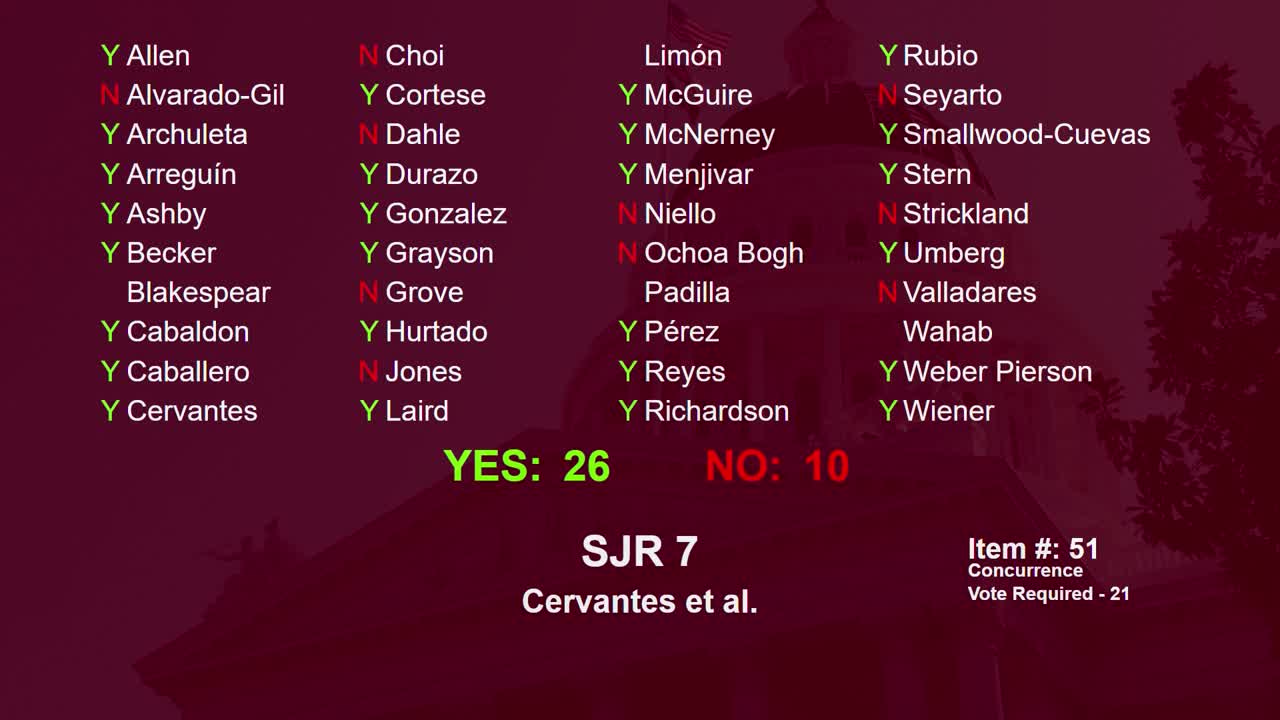 2MIN
Senate Floor
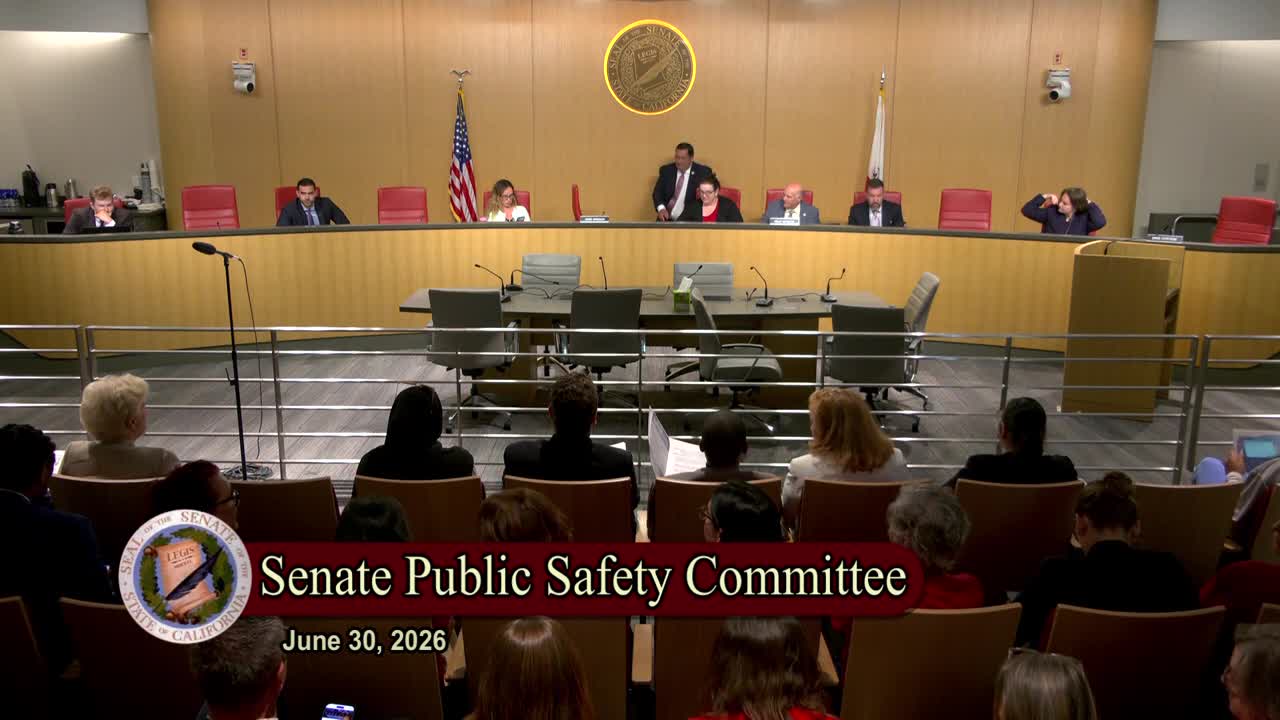 8MIN
Senate Standing Committee on Public Safety
 17MIN
Senate Standing Committee on Health
 4MIN
Assembly Floor
 11MIN
Assembly Standing Committee on Public Safety
 11MIN
Assembly Standing Committee on Health
Bill Author
Bill Co-Author(s):