AB 1626: Interscholastic athletics: youth sports: coaches: behavioral and mental health training.
- Session Year: 2025-2026
- House: Assembly
- Latest Version Date: 2026-09-30
Current Status:
Passed
(2026-09-30: Chaptered by Secretary of State - Chapter 884, Statutes of 2026.)
Introduced
In Committee
Awaiting First Chamber Vote
Passed First Chamber
In Committee
Awaiting Second Chamber Vote
Passed Second Chamber
Enacted
Existing law requires the governing board of each school district to have general control of, and be responsible for, all aspects of the interscholastic athletic policies, programs, and activities in its school district, as provided, and requires the governing board of a school district to ensure that all interscholastic policies, programs, and activities in the school district are in compliance with state and federal law. Existing law authorizes the governing board of a school district to enter into associations or consortia with other governing boards for purposes of governing regional or statewide interscholastic athletics, as provided.
Existing law describes the California Interscholastic Federation (CIF) as a voluntary organization that consists of school and school-related personnel with responsibility for administering interscholastic athletic activities in secondary schools and states the intent of the Legislature that the CIF, in consultation with the State Department of Education, implement specified policies relating to interscholastic athletics.
Existing law, the 1998 California High School Coaching Education and Training Program, declares the intent of the Legislature to establish a California High School Coaching Education and Training Program, to be administered by school districts with an emphasis on specific components, including, among other components, sports psychology. Existing law requires every high school sports coach to complete, at their own expense, a coaching education program that meets the guidelines established by the California High School Coaching Education and Training Program.
This bill would require specified trainings for coaches described in AB 1665 of the 202526 Regular Session to cover specified mental-health related topics, including, among other topics, trauma-informed care, as provided, and strategies of creating a positive team culture, as provided.
The bill would require the department, on or before September 1, 2027, to identify existing training or develop a model youth athletics behavioral and mental health training, as specified, for persons who serve as coaches in youth sports organizations, both for recreational leagues and competitive or club leagues. The bill would require the department to post the training on its internet website and work with local partners to disseminate the training to appropriate youth athletic leagues, youth coaching entities, and relevant statewide organizations and associations.
This bill would incorporate additional changes to Section 35179.1 of the Education Code proposed by AB 1665 to be operative only if this bill and AB 1665 are enacted and this bill is enacted last.
This bill would make the operation of its provisions contingent upon the enactment of AB 1665 of the 202526 Regular Session.
Existing law requires the governing board of each school district to have general control of, and be responsible for, all aspects of the interscholastic athletic policies, programs, and activities in its school district, as provided, and requires the governing board of a school district to ensure that all interscholastic policies, programs, and activities in the school district are in compliance with state and federal law. Existing law authorizes the governing board of a school district to enter into associations or consortia with other governing boards for purposes of governing regional or statewide interscholastic athletics, as provided.
Existing law describes the California Interscholastic Federation (CIF) as a voluntary organization that consists of school and school-related personnel with responsibility for administering interscholastic athletic activities in secondary schools and states the intent of the Legislature that the CIF, in consultation with the State Department of Education, implement specified policies relating to interscholastic athletics.
Existing law, the 1998 California High School Coaching Education and Training Program, declares the intent of the Legislature to establish a California High School Coaching Education and Training Program, to be administered by school districts with an emphasis on specific components, including, among other components, sports psychology. Existing law requires every high school sports coach to complete, at their own expense, a coaching education program that meets the guidelines established by the California High School Coaching Education and Training Program.
This bill would require specified trainings for coaches described in AB 1665 of the 202526 Regular Session to cover specified mental-health related topics, including, among other topics, trauma-informed care, as provided, and strategies of creating a positive team culture, as provided.
The bill would require the department, on or before September 1, 2027, to identify existing training or develop a model youth athletics behavioral and mental health training, as specified, for persons who serve as coaches in youth sports organizations, both for recreational leagues and competitive or club leagues. The bill would require the department to post the training on its internet website and work with local partners to disseminate the training to appropriate youth athletic leagues, youth coaching entities, and relevant statewide organizations and associations.
Existing law requires the governing board of each school district to have general control of, and be responsible for, all aspects of the interscholastic athletic policies, programs, and activities in its school district, as provided, and requires the governing board of a school district to ensure that all interscholastic policies, programs, and activities in the school district are in compliance with state and federal law. Existing law authorizes the governing board of a school district to enter into associations or consortia with other governing boards for purposes of governing regional or statewide interscholastic athletics, as provided.
Existing law describes the California Interscholastic Federation (CIF) as a voluntary organization that consists of school and school-related personnel with responsibility for administering interscholastic athletic activities in secondary schools and states the intent of the Legislature that the CIF, in consultation with the State Department of Education, implement specified policies relating to interscholastic athletics.
Existing law, the 1998 California High School Coaching Education and Training Program, declares the intent of the Legislature to establish a California High School Coaching Education and Training Program, to be administered by school districts with an emphasis on specific components, including, among other components, sports psychology. Existing law requires every high school sports coach to complete, at their own expense, a coaching education program that meets the guidelines established by the California High School Coaching Education and Training Program.
This bill would add a component on behavioral and mental health and trauma-informed care, as specified, to the list of components to be emphasized by the 1998 California High School Coaching Education and Training Program. The bill would, commencing with the 202728 school year, as a condition of employment or volunteer service, require all persons who serve as coaches in interscholastic athletic programs at high schools, including private high schools, that are members of the CIF to complete initial training, and subsequent training every 2 years, that covers specified mental health-related topics. require specified trainings for coaches described in AB 1665 of the 202526 Regular Session to cover specified mental-health related topics, including, among other topics, trauma-informed care, as provided, and strategies of creating a positive team culture, as provided.
The bill would require the department, on or before September 1, 2027, to identify existing training or develop a model youth athletics behavioral and mental health training, as specified, for persons who serve as coaches in youth sports organizations, both for recreational leagues and competitive or club leagues. The bill would require the department to post the training on its internet website and work with local partners to disseminate the training to appropriate youth athletic leagues, youth coaching entities, and relevant statewide organizations and associations.
Existing law requires the governing board of each school district to have general control of, and be responsible for, all aspects of the interscholastic athletic policies, programs, and activities in its school district, as provided, and requires the governing board of a school district to ensure that all interscholastic policies, programs, and activities in the school district are in compliance with state and federal law. Existing law authorizes the governing board of a school district to enter into associations or consortia with other governing boards for purposes of governing regional or statewide interscholastic athletics, as provided.
Existing law describes the California Interscholastic Federation (CIF) as a voluntary organization that consists of school and school-related personnel with responsibility for administering interscholastic athletic activities in secondary schools and states the intent of the Legislature that the CIF, in consultation with the State Department of Education, implement specified policies relating to interscholastic athletics.
Existing law, the 1998 California High School Coaching Education and Training Program, declares the intent of the Legislature to establish a California High School Coaching Education and Training Program, to be administered by school districts with an emphasis on specific components, including, among other components, sports psychology. Existing law requires every high school sports coach to complete, at their own expense, a coaching education program that meets the guidelines established by the California High School Coaching Education and Training Program.
This bill would add a component on behavioral and mental health and trauma-informed care, as specified, to the list of components to be emphasized by the 1998 California High School Coaching Education and Training Program. The bill would, commencing with the 202728 school year, as a condition of employment or volunteer service, require all persons who serve as coaches in interscholastic athletic programs at high schools, including private high schools, that are members of the CIF to complete initial training, and subsequent training every 2 years, that covers specified mental health-related topics.
The bill would require the department, on or before September 1, 2027, to develop a model youth athletics behavioral and mental health training, as specified, for persons who serve as coaches in youth sports organizations, both for recreational leagues and competitive or club leagues. The bill would require the department to post the training on its internet website and work with local partners to disseminate the training to appropriate youth athletic leagues, youth coaching entities, and relevant statewide organizations and associations.
Existing law, commencing January 1, 2027, requires a youth sports organization to ensure that its coaches are certified, and recertified every 2 years to, among other things, perform cardiopulmonary resuscitation, as specified.This bill would state the intent of the Legislature to enact legislation relating to mental health training for youth sports coaches.Existing law, commencing January 1, 2027, requires a youth sports organization to ensure that its coaches are certified, and recertified every 2 years to, among other things, perform cardiopulmonary resuscitation, as specified.
This bill would state the intent of the Legislature to enact legislation relating to mental health training for youth sports coaches.
(a)This section shall be known, and may be cited, as the 1998 California High School Coaching Education and Training Program.
(b)The Legislature finds and declares all of the following:
(1)The exploding demand in girls athletics, and an increase in the number of pupils participating in both boys and girls athletics, are causing an increase in the number of coaches needed statewide.
(2)Well-trained coaches are vital to the success of the experience of a pupil in sports and interscholastic athletic activities.
(3)Coaches are often trusted adults who maintain regular contact with youth and are well positioned to observe changes in behavior, mood, or functioning that may indicate a need for behavioral health support.
(4)Improvement in coaching is a primary need identified by hundreds of principals, superintendents, and school board members who participated in the development of a strategic plan for the California Interscholastic Federation (CIF) in 1993 and 1994.
(5)There are many concerns about safety, training, organization, philosophy, communications, and general management in coaching that need to be addressed.
(6)It is a conservative estimate that at least 25,000 coaches annually need training and an orientation just to meet current coaching regulations contained in Title 5 of the California Code of Regulations, including basic safety and CPR requirements.
(7)School districts, in conjunction with the California Interscholastic Federation, have taken the initial first steps toward building a statewide coaching education program by assembling a faculty of statewide trainers composed of school district administrators, coaches, and athletic directors using a national program being used in several states.
(c)It is, therefore, the intent of the Legislature to establish a California High School Coaching Education and Training Program. It is the intent of the Legislature that the program be administered by school districts, be updated and rehearsed annually, and emphasize the following components:
(1)Development of coaching philosophies consistent with school, school district, and governing board of a school district goals.
(2)Sport psychology: emphasizing communication, reinforcement of the efforts of pupils, effective delivery of coaching regarding technique, and motivation of the pupil athlete.
(3)Sport pedagogy: how pupil athletes learn, and how to teach sport skills.
(4)Sport physiology: principles of training, fitness for sport, development of a training program, nutrition for athletes, and the harmful effects associated with the use of steroids and performance-enhancing dietary supplements by adolescents.
(5)Sport management: team management, risk management, and working within the context of an entire school program.
(6)Training: certification in CPR, use of an automated external defibrillator (AED), and first aid that includes, but is not limited to, training in recognizing the signs and symptoms of, and responding to, concussions, heat illness, and, by July 1, 2024, cardiac arrest. Certification in CPR and use of an AED shall be consistent with national evidence-based emergency cardiovascular care guidelines. Concussion, heat illness, and cardiac arrest training may be provided by entities offering free, online, or other types of training courses. For purposes of this section, heat illness includes heat cramps, heat syncope, heat exhaustion, and exertional heat stroke.
(7)Knowledge of, and adherence to, statewide rules and regulations, as well as school regulations, including, but not necessarily limited to, eligibility, gender equity, and discrimination.
(8)Sound planning and goal setting.
(d)This section does not endorse a particular coaching education or training program.
SEC. 1.5.Section 35179.1 of the Education Code is amended to read:35179.1.(a)This section shall be known, and may be cited, as the 1998 California High School Coaching Education and Training Program.
(b)The Legislature finds and declares all of the following:
(1)The exploding demand in girls athletics, and an increase in the number of pupils participating in both boys and girls athletics, are causing an increase in the number of coaches needed statewide.
(2)Well-trained coaches are vital to the success of the experience of a pupil in sports and interscholastic athletic activities.
(3)Coaches are often trusted adults who maintain regular contact with youth and are well positioned to observe changes in behavior, mood, or functioning that may indicate a need for behavioral health support.
(4)Improvement in coaching is a primary need identified by hundreds of principals, superintendents, and school board members who participated in the development of a strategic plan for the California Interscholastic Federation (CIF) in 1993 and 1994.
(5)There are many concerns about safety, training, organization, philosophy, communications, and general management in coaching that need to be addressed.
(6)It is a conservative estimate that at least 25,000 coaches annually need training and an orientation just to meet current coaching regulations contained in Title 5 of the California Code of Regulations, including basic safety and CPR requirements.
(7)School districts, in conjunction with the California Interscholastic Federation, have taken the initial first steps toward building a statewide coaching education program by assembling a faculty of statewide trainers composed of school district administrators, coaches, and athletic directors using a national program being used in several states.
(c)It is, therefore, the intent of the Legislature to establish a California High School Coaching Education and Training Program. It is the intent of the Legislature that the program be administered by school districts, be updated and rehearsed annually, and emphasize the following components:
(1)Development of coaching philosophies consistent with school, school district, and governing board of a school district goals.
(2)Sport psychology: emphasizing communication, reinforcement of the efforts of pupils, effective delivery of coaching regarding technique, and motivation of the pupil athlete.
(3)Sport pedagogy: how pupil athletes learn, and how to teach sport skills.
(4)Sport physiology: principles of training, fitness for sport, development of a training program, nutrition for athletes, and the harmful effects associated with the use of steroids and performance-enhancing dietary supplements by adolescents.
(5)Sport management: team management, risk management, and working within the context of an entire school program.
(6)Training: certification in CPR, use of an automated external defibrillator (AED), and first aid that includes, but is not limited to, training in recognizing the signs and symptoms of, and responding to, concussions, heat illness, and, by July 1, 2024, cardiac arrest. Certification in CPR and use of an AED shall be consistent with national evidence-based emergency cardiovascular care guidelines. Concussion, heat illness, and cardiac arrest training may be provided by entities offering free, online, or other types of training courses. For purposes of this section, heat illness includes heat cramps, heat syncope, heat exhaustion, and exertional heat stroke.
(7)Commencing July 1, 2027, mental health: age appropriate training that covers all topics specified in Section 35179.85, as added by Assembly Bill 1626 of the 202526 Regular Session. This training may be provided by entities offering free, online, or other types of training courses.
(8)Knowledge of, and adherence to, statewide rules and regulations, and school regulations, including, but not limited to, eligibility, gender equity, and discrimination.
(9)Sound planning and goal setting.
(d)This section does not endorse a particular coaching education or training program.
SEC. 2.Section 35179.85 is added to the Education Code, immediately following Section 35179.8, to read:35179.85.(a)The trainings described in Sections 33315.7 and 49032.1, as added by Assembly Bill 1665 of the 202526 Regular Session, shall cover, but are not limited to, all of the following topics:
(1)Substantive awareness of behavioral and mental health challenges specific to pupil athletes, including, but not limited to, performance anxiety, injury-related behavioral and mental health impacts, and the pressures of competition and recruitment.
(2)Trauma-informed care and recognizing signs and symptoms of common behavioral and mental health conditions in adolescents, including, but not limited to, suicide risk and prevention, crisis deescalation, mental distress, anxiety, depression, self-harm, substance use disorder, and eating disorders.
(3)Strategies for creating a positive team culture that promotes behavioral and mental well-being, reduces stigma around behavioral and mental health, and encourages help-seeking behavior among pupil athletes.
(4)Appropriate communication techniques for approaching and supporting pupil athletes who may be experiencing behavioral and mental health difficulties.
(5)Procedures for referring pupil athletes to appropriate mental health resources, including school counselors, psychologists, and community behavioral and mental health services.
(6)Understanding of the coachs role and limitations in supporting pupil behavioral and mental health, including, but not limited to, ethical boundaries and the importance of professional behavioral and mental health care.
(b)This section does not permit coaches to provide mental health counseling or therapy, or to substitute for the services of licensed behavioral and mental health professionals. The purpose of the training required pursuant to this section is to enhance coaches awareness and ability to recognize potential mental health concerns and connect pupil athletes with appropriate professional resources.
(c)The training required pursuant to this section may be provided by entities offering free, online, or other types of training courses.
SEC. 3.Section 35179.87 is added to the Education Code, immediately following Section 35179.85, to read:35179.87.(a)(1)On or before September 1, 2027, the department shall identify existing training or develop a model youth athletics behavioral and mental health training for persons who serve as coaches in youth sports organizations, both for recreational leagues and competitive or club leagues.
(2)The training shall cover, but not be limited to, all of the following topics:
(A)Strategies for creating a positive team culture that promotes healthy behavioral and mental well-being.
(B)Protective factors that promote youth resilience, well-being, and positive mental health.
(C)Awareness of behavioral and mental health challenges specific to youth athletes.
(D)Recognition of signs and symptoms of common behavioral and mental health conditions in youth and adolescents.
(E)Appropriate communication techniques for approaching and supporting youth athletes who may be experiencing behavioral and mental health difficulties.
(F)Appropriate referral pathways, including how to connect youth and families to school-based behavioral health services, community-based organizations, crisis support, and emergency resources when necessary.
(G)Understanding of the coachs role and limitations in supporting youth athletes behavioral and mental health, including ethical boundaries and the importance of professional behavioral and mental health care.
(b)The training content developed pursuant to subdivision (a) may be aligned with statewide youth mental health and school wellness initiatives.
(c)The department shall post the training identified or developed pursuant to subdivision (a) on its internet website and work with local partners to disseminate the training to appropriate youth athletic leagues, youth coaching entities, and relevant statewide organizations and associations.
SEC. 4.(a)Section 1.5 of this bill incorporates amendments to Section 35179.1 of the Education Code proposed by both this bill and Assembly Bill 1665. That section of this bill shall only become operative if (1) both bills are enacted and become effective on or before January 1, 2027, (2) each bill amends Section 35179.1 of the Education Code, and (3) this bill is enacted after Assembly Bill 1665, in which case Section 1 of this bill shall not become operative.
(b)This act shall become operative only if Assembly Bill 1665 of the 202526 Regular Session is enacted and becomes effective on or before January 1, 2027.
(a)This section shall be known, and may be cited, as the 1998 California High School Coaching Education and Training Program.
(b)The Legislature finds and declares all of the following:
(1)The exploding demand in girls athletics, and an increase in the number of pupils participating in both boys and girls athletics, are causing an increase in the number of coaches needed statewide.
(2)Well-trained coaches are vital to the success of the experience of a pupil in sports and interscholastic athletic activities.
(3)Coaches are often trusted adults who maintain regular contact with youth and are well positioned to observe changes in behavior, mood, or functioning that may indicate a need for behavioral health support.
(4)Improvement in coaching is a primary need identified by hundreds of principals, superintendents, and school board members who participated in the development of a strategic plan for the California Interscholastic Federation (CIF) in 1993 and 1994.
(5)There are many concerns about safety, training, organization, philosophy, communications, and general management in coaching that need to be addressed.
(6)It is a conservative estimate that at least 25,000 coaches annually need training and an orientation just to meet current coaching regulations contained in Title 5 of the California Code of Regulations, including basic safety and CPR requirements.
(7)School districts, in conjunction with the California Interscholastic Federation, have taken the initial first steps toward building a statewide coaching education program by assembling a faculty of statewide trainers composed of school district administrators, coaches, and athletic directors using a national program being used in several states.
(c)It is, therefore, the intent of the Legislature to establish a California High School Coaching Education and Training Program. It is the intent of the Legislature that the program be administered by school districts, be updated and rehearsed annually, and emphasize the following components:
(1)Development of coaching philosophies consistent with school, school district, and governing board of a school district goals.
(2)Sport psychology: emphasizing communication, reinforcement of the efforts of pupils, effective delivery of coaching regarding technique, and motivation of the pupil athlete.
(3)Sport pedagogy: how pupil athletes learn, and how to teach sport skills.
(4)Sport physiology: principles of training, fitness for sport, development of a training program, nutrition for athletes, and the harmful effects associated with the use of steroids and performance-enhancing dietary supplements by adolescents.
(5)Sport management: team management, risk management, and working within the context of an entire school program.
(6)Training: certification in CPR, use of an automated external defibrillator (AED), and first aid that includes, but is not limited to, training in recognizing the signs and symptoms of, and responding to, concussions, heat illness, and, by July 1, 2024, cardiac arrest. Certification in CPR and use of an AED shall be consistent with national evidence-based emergency cardiovascular care guidelines. Concussion, heat illness, and cardiac arrest training may be provided by entities offering free, online, or other types of training courses. For purposes of this section, heat illness includes heat cramps, heat syncope, heat exhaustion, and exertional heat stroke.
(7)Knowledge of, and adherence to, statewide rules and regulations, as well as school regulations, including, but not necessarily limited to, eligibility, gender equity, and discrimination.
(8)Sound planning and goal setting.
(d)This section does not endorse a particular coaching education or training program.
SEC. 1.5.Section 35179.1 of the Education Code is amended to read:35179.1.(a)This section shall be known, and may be cited, as the 1998 California High School Coaching Education and Training Program.
(b)The Legislature finds and declares all of the following:
(1)The exploding demand in girls athletics, and an increase in the number of pupils participating in both boys and girls athletics, are causing an increase in the number of coaches needed statewide.
(2)Well-trained coaches are vital to the success of the experience of a pupil in sports and interscholastic athletic activities.
(3)Coaches are often trusted adults who maintain regular contact with youth and are well positioned to observe changes in behavior, mood, or functioning that may indicate a need for behavioral health support.
(3)(4)Improvement in coaching is a primary need identified by hundreds of principals, superintendents, and school board members who participated in the development of a strategic plan for the California Interscholastic Federation (CIF) in 1993 and 1994.
(4)(5)There are many concerns about safety, training, organization, philosophy, communications, and general management in coaching that need to be addressed.
(5)(6)It is a conservative estimate that at least 25,000 coaches annually need training and an orientation just to meet current coaching regulations contained in Title 5 of the California Code of Regulations, including basic safety and CPR requirements.
(6)(7)School districts, in conjunction with the California Interscholastic Federation, have taken the initial first steps toward building a statewide coaching education program by assembling a faculty of statewide trainers composed of school district administrators, coaches, and athletic directors using a national program being used in several states.
(c)It is, therefore, the intent of the Legislature to establish a California High School Coaching Education and Training Program. It is the intent of the Legislature that the program be administered by school districts, be updated and rehearsed annually, and emphasize the following components:
(1)Development of coaching philosophies consistent with school, school district, and governing board of a school district goals.
(2)Sport psychology: emphasizing communication, reinforcement of the efforts of pupils, effective delivery of coaching regarding technique, and motivation of the pupil athlete.
(3)Sport pedagogy: how pupil athletes learn, and how to teach sport skills.
(4)Sport physiology: principles of training, fitness for sport, development of a training program, nutrition for athletes, and the harmful effects associated with the use of steroids and performance-enhancing dietary supplements by adolescents.
(5)Sport management: team management, risk management, and working within the context of an entire school program.
(6)Training: certification in CPR, use of an automated external defibrillator (AED), and first aid that includes, but is not limited to, training in recognizing the signs and symptoms of, and responding to, concussions, heat illness, and, by July 1, 2024, cardiac arrest. Certification in CPR and use of an AED shall be consistent with national evidence-based emergency cardiovascular care guidelines. Concussion, heat illness, and cardiac arrest training may be provided by entities offering free, online, or other types of training courses. For purposes of this section, heat illness includes heat cramps, heat syncope, heat exhaustion, and exertional heat stroke.
(7)Commencing July 1, 2027, mental health: age appropriate training that covers all topics specified in Section 35179.85, as added by Assembly Bill 1626 of the 202526 Regular Session. This training may be provided by entities offering free, online, or other types of training courses.
(7)(8)Knowledge of, and adherence to, statewide rules and regulations, as well as and school regulations, including, but not necessarily limited to, eligibility, gender equity, and discrimination.
(8)(9)Sound planning and goal setting.
(d)This section does not endorse a particular coaching education or training program.
SEC. 2.Section 35179.85 is added to the Education Code, immediately following Section 35179.8, to read:35179.85.(a)The trainings described in Sections 33315.7 and 49032.1, as added by Assembly Bill 1665 of the 202526 Regular Session, shall cover, but are not limited to, all of the following topics:
(1)Substantive awareness of behavioral and mental health challenges specific to pupil athletes, including, but not limited to, performance anxiety, injury-related behavioral and mental health impacts, and the pressures of competition and recruitment.
(2)Trauma-informed care and recognizing signs and symptoms of common behavioral and mental health conditions in adolescents, including, but not limited to, suicide risk and prevention, crisis deescalation, mental distress, anxiety, depression, self-harm, substance use disorder, and eating disorders.
(3)Strategies for creating a positive team culture that promotes behavioral and mental well-being, reduces stigma around behavioral and mental health, and encourages help-seeking behavior among pupil athletes.
(4)Appropriate communication techniques for approaching and supporting pupil athletes who may be experiencing behavioral and mental health difficulties.
(5)Procedures for referring pupil athletes to appropriate mental health resources, including school counselors, psychologists, and community behavioral and mental health services.
(6)Understanding of the coachs role and limitations in supporting pupil behavioral and mental health, including, but not limited to, ethical boundaries and the importance of professional behavioral and mental health care.
(b)This section does not permit coaches to provide mental health counseling or therapy, or to substitute for the services of licensed behavioral and mental health professionals. The purpose of the training required pursuant to this section is to enhance coaches awareness and ability to recognize potential mental health concerns and connect pupil athletes with appropriate professional resources.
(c)The training required pursuant to this section may be provided by entities offering free, online, or other types of training courses.
SEC. 3.Section 35179.87 is added to the Education Code, immediately following Section 35179.85, to read:35179.87.(a)(1)On or before September 1, 2027, the department shall identify existing training or develop a model youth athletics behavioral and mental health training for persons who serve as coaches in youth sports organizations, both for recreational leagues and competitive or club leagues.
(2)The training shall cover, but not be limited to, all of the following topics:
(A)Strategies for creating a positive team culture that promotes healthy behavioral and mental well-being.
(B)Protective factors that promote youth resilience, well-being, and positive mental health.
(C)Awareness of behavioral and mental health challenges specific to youth athletes.
(D)Recognition of signs and symptoms of common behavioral and mental health conditions in youth and adolescents.
(E)Appropriate communication techniques for approaching and supporting youth athletes who may be experiencing behavioral and mental health difficulties.
(F)Appropriate referral pathways, including how to connect youth and families to school-based behavioral health services, community-based organizations, crisis support, and emergency resources when necessary.
(G)Understanding of the coachs role and limitations in supporting youth athletes behavioral and mental health, including ethical boundaries and the importance of professional behavioral and mental health care.
(b)The training content developed pursuant to subdivision (a) may be aligned with statewide youth mental health and school wellness initiatives.
(c)The department shall post the training identified or developed pursuant to subdivision (a) on its internet website and work with local partners to disseminate the training to appropriate youth athletic leagues, youth coaching entities, and relevant statewide organizations and associations.
SEC. 4.(a)Section 1.5 of this bill incorporates amendments to Section 35179.1 of the Education Code proposed by both this bill and Assembly Bill 1665. That section of this bill shall only become operative if (1) both bills are enacted and become effective on or before January 1, 2027, (2) each bill amends Section 35179.1 of the Education Code, and (3) this bill is enacted after Assembly Bill 1665, in which case Section 1 of this bill shall not become operative.
(b)This act shall become operative only if Assembly Bill 1665 of the 202526 Regular Session is enacted and becomes effective on or before January 1, 2027.
(a)This section shall be known, and may be cited, as the 1998 California High School Coaching Education and Training Program.
(b)The Legislature finds and declares all of the following:
(1)The exploding demand in girls athletics, and an increase in the number of pupils participating in both boys and girls athletics, are causing an increase in the number of coaches needed statewide.
(2)Well-trained coaches are vital to the success of the experience of a pupil in sports and interscholastic athletic activities.
(3)Coaches are often trusted adults who maintain regular contact with youth and are well positioned to observe changes in behavior, mood, or functioning that may indicate a need for behavioral health support.
(4)Improvement in coaching is a primary need identified by hundreds of principals, superintendents, and school board members who participated in the development of a strategic plan for the California Interscholastic Federation (CIF) in 1993 and 1994.
(5)There are many concerns about safety, training, organization, philosophy, communications, and general management in coaching that need to be addressed.
(6)It is a conservative estimate that at least 25,000 coaches annually need training and an orientation just to meet current coaching regulations contained in Title 5 of the California Code of Regulations, including basic safety and CPR requirements.
(7)School districts, in conjunction with the California Interscholastic Federation, have taken the initial first steps toward building a statewide coaching education program by assembling a faculty of statewide trainers composed of school district administrators, coaches, and athletic directors using a national program being used in several states.
(c)It is, therefore, the intent of the Legislature to establish a California High School Coaching Education and Training Program. It is the intent of the Legislature that the program be administered by school districts, be updated and rehearsed annually, and emphasize the following components:
(1)Development of coaching philosophies consistent with school, school district, and governing board of a school district goals.
(2)Sport psychology: emphasizing communication, reinforcement of the efforts of pupils, effective delivery of coaching regarding technique, and motivation of the pupil athlete.
(3)Sport pedagogy: how pupil athletes learn, and how to teach sport skills.
(4)Sport physiology: principles of training, fitness for sport, development of a training program, nutrition for athletes, and the harmful effects associated with the use of steroids and performance-enhancing dietary supplements by adolescents.
(5)Sport management: team management, risk management, and working within the context of an entire school program.
(6)Training: certification in CPR, use of an automated external defibrillator (AED), and first aid that includes, but is not limited to, training in recognizing the signs and symptoms of, and responding to, concussions, heat illness, and, by July 1, 2024, cardiac arrest. Certification in CPR and use of an AED shall be consistent with national evidence-based emergency cardiovascular care guidelines. Concussion, heat illness, and cardiac arrest training may be provided by entities offering free, online, or other types of training courses. For purposes of this section, heat illness includes heat cramps, heat syncope, heat exhaustion, and exertional heat stroke.
(7)Knowledge of, and adherence to, statewide rules and regulations, as well as school regulations, including, but not necessarily limited to, eligibility, gender equity, and discrimination.
(8)Sound planning and goal setting.
(d)This section does not endorse a particular coaching education or training program.
SEC. 2.Section 35179.85 is added to the Education Code, immediately following Section 35179.8, to read:35179.85.(a)The trainings described in Sections 33315.7 and 49032.1, as added by Assembly Bill 1665 of the 202526 Regular Session, shall cover, but are not limited to, all of the following topics:
(1)Substantive awareness of behavioral and mental health challenges specific to pupil athletes, including, but not limited to, performance anxiety, injury-related behavioral and mental health impacts, and the pressures of competition and recruitment.
(2)Trauma-informed care and recognizing signs and symptoms of common behavioral and mental health conditions in adolescents, including, but not limited to, suicide risk and prevention, crisis deescalation, mental distress, anxiety, depression, self-harm, substance use disorder, and eating disorders.
(3)Awareness of behavioral and mental health challenges specific to pupil athletes, including, but not limited to, performance anxiety, injury-related behavioral and mental health impacts, and the pressures of competition and recruitment.(4)(3)Strategies for creating a positive team culture that promotes behavioral and mental well-being, reduces stigma around behavioral and mental health, and encourages help-seeking behavior among pupil athletes.
(5)(4)Appropriate communication techniques for approaching and supporting pupil athletes who may be experiencing behavioral and mental health difficulties.
(6)(5)Procedures for referring pupil athletes to appropriate mental health resources, including school counselors, psychologists, and community behavioral and mental health services.
(7)(6)Understanding of the coachs role and limitations in supporting pupil behavioral and mental health, including, but not limited to, ethical boundaries and the importance of professional behavioral and mental health care.
(b)This section does not permit coaches to provide mental health counseling or therapy, or to substitute for the services of licensed behavioral and mental health professionals. The purpose of the training required pursuant to this section is to enhance coaches awareness and ability to recognize potential mental health concerns and connect pupil athletes with appropriate professional resources.
(c)The training required pursuant to this section may be provided by entities offering free, online, or other types of training courses.
SEC. 3.Section 35179.87 is added to the Education Code, immediately following Section 35179.85, to read:35179.87.(a)(1)On or before September 1, 2027, the department shall identify existing training or develop a model youth athletics behavioral and mental health training for persons who serve as coaches in youth sports organizations, both for recreational leagues and competitive or club leagues.
(2)The training shall cover, but not be limited to, all of the following topics:
(A)Strategies for creating a positive team culture that promotes healthy behavioral and mental well-being.
(B)Protective factors that promote youth resilience, well-being, and positive mental health.
(C)Awareness of behavioral and mental health challenges specific to youth athletes.
(D)Recognition of signs and symptoms of common behavioral and mental health conditions in youth and adolescents.
(E)Appropriate communication techniques for approaching and supporting youth athletes who may be experiencing behavioral and mental health difficulties.
(F)Appropriate referral pathways, including how to connect youth and families to school-based behavioral health services, community-based organizations, crisis support, and emergency resources when necessary.
(G)Understanding of the coachs role and limitations in supporting youth athletes behavioral and mental health, including ethical boundaries and the importance of professional behavioral and mental health care.
(b)The training content developed pursuant to subdivision (a) may be aligned with statewide youth mental health and school wellness initiatives.
(c)The department shall post the training identified or developed pursuant to subdivision (a) on its internet website and work with local partners to disseminate the training to appropriate youth athletic leagues, youth coaching entities, and relevant statewide organizations and associations.
(a)This section shall be known, and may be cited, as the 1998 California High School Coaching Education and Training Program.
(b)The Legislature finds and declares all of the following:
(1)The exploding demand in girls athletics, and an increase in the number of pupils participating in both boys and girls athletics, are causing an increase in the number of coaches needed statewide.
(2)Well-trained coaches are vital to the success of the experience of a pupil in sports and interscholastic athletic activities.
(3)Coaches are often trusted adults who maintain regular contact with youth and are well positioned to observe changes in behavior, mood, or functioning that may indicate a need for behavioral health support.
(4)Improvement in coaching is a primary need identified by hundreds of principals, superintendents, and school board members who participated in the development of a strategic plan for the California Interscholastic Federation (CIF) in 1993 and 1994.
(5)There are many concerns about safety, training, organization, philosophy, communications, and general management in coaching that need to be addressed.
(6)It is a conservative estimate that at least 25,000 coaches annually need training and an orientation just to meet current coaching regulations contained in Title 5 of the California Code of Regulations, including basic safety and CPR requirements.
(7)School districts, in conjunction with the California Interscholastic Federation, have taken the initial first steps toward building a statewide coaching education program by assembling a faculty of statewide trainers composed of school district administrators, coaches, and athletic directors using a national program being used in several states.
(c)It is, therefore, the intent of the Legislature to establish a California High School Coaching Education and Training Program. It is the intent of the Legislature that the program be administered by school districts, be updated and rehearsed annually, and emphasize the following components:
(1)Development of coaching philosophies consistent with school, school district, and governing board of a school district goals.
(2)Sport psychology: emphasizing communication, reinforcement of the efforts of pupils, effective delivery of coaching regarding technique, and motivation of the pupil athlete.
(3)Sport pedagogy: how pupil athletes learn, and how to teach sport skills.
(4)Sport physiology: principles of training, fitness for sport, development of a training program, nutrition for athletes, and the harmful effects associated with the use of steroids and performance-enhancing dietary supplements by adolescents.
(5)Sport management: team management, risk management, and working within the context of an entire school program.
(6)Training: certification in CPR, use of an automated external defibrillator (AED), and first aid that includes, but is not limited to, training in recognizing the signs and symptoms of, and responding to, concussions, heat illness, and, by July 1, 2024, cardiac arrest. Certification in CPR and use of an AED shall be consistent with national evidence-based emergency cardiovascular care guidelines. Concussion, heat illness, and cardiac arrest training may be provided by entities offering free, online, or other types of training courses. For purposes of this section, heat illness includes heat cramps, heat syncope, heat exhaustion, and exertional heat stroke.
(7)Behavioral and mental health and trauma-informed care: suicide risk and prevention, crisis deescalation, recognizing signs of mental distress, including, but not limited to, anxiety, depression, self-harm, and substance use disorder, and recognizing symptoms of eating disorders.(8)(7)Knowledge of, and adherence to, statewide rules and regulations, as well as school regulations, including, but not necessarily limited to, eligibility, gender equity, and discrimination.
(9)(8)Sound planning and goal setting.
(d)This section does not endorse a particular coaching education or training program.
SEC. 2.Section 35179.85 is added to the Education Code, immediately following Section 35179.8, to read:35179.85.(a)Commencing with the 202728 school year, as a condition of employment or volunteer service, all persons who serve as coaches in interscholastic athletic programs at high schools, including private high schools, that are members of the California Interscholastic Federation shall be required to complete initial training, and subsequent training every two years, that covers at least The trainings described in Sections 33315.7 and 49032.1, as added by Assembly Bill 1665 of the 202526 Regular Session, shall cover, but are not limited to, all of the following topics:
(1)Substantive awareness of behavioral and mental health challenges specific to pupil athletes, including, but not limited to, performance anxiety, injury-related behavioral and mental health impacts, and the pressures of competition and recruitment.
(1)(2)Trauma-informed care and recognizing signs and symptoms of common behavioral and mental health conditions in adolescents, including, but not limited to, depression, anxiety, eating disorders, substance use disorder, and suicidal ideation. suicide risk and prevention, crisis deescalation, mental distress, anxiety, depression, self-harm, substance use disorder, and eating disorders.
(2)(3)Awareness of behavioral and mental health challenges specific to pupil athletes, including, but not limited to, performance anxiety, injury-related behavioral and mental health impacts, and the pressures of competition and recruitment.
(3)(4)Strategies for creating a positive team culture that promotes behavioral and mental well-being, reduces stigma around behavioral and mental health, and encourages help-seeking behavior among pupil athletes.
(4)(5)Appropriate communication techniques for approaching and supporting pupil athletes who may be experiencing behavioral and mental health difficulties.
(5)(6)Procedures for referring pupil athletes to appropriate mental health resources, including school counselors, psychologists, and community behavioral and mental health services.
(6)(7)Understanding of the coachs role and limitations in supporting pupil behavioral and mental health, including, but not limited to, ethical boundaries and the importance of professional behavioral and mental health care.
(b)This section does not permit coaches to provide mental health counseling or therapy, or to substitute for the services of licensed behavioral and mental health professionals. The purpose of the training required pursuant to this section is to enhance coaches awareness and ability to recognize potential mental health concerns and connect pupil athletes with appropriate professional resources.
(c)The training required pursuant to this section may be provided by entities offering free, online, or other types of training courses.
SEC. 3.Section 35179.87 is added to the Education Code, immediately following Section 35179.85, to read:35179.87.(a)(1)On or before September 1, 2027, the department shall identify existing training or develop a model youth athletics behavioral and mental health training for persons who serve as coaches in youth sports organizations, both for recreational leagues and competitive or club leagues.
(2)The training shall cover, but not be limited to, all of the following topics:
(A)Strategies for creating a positive team culture that promotes healthy behavioral and mental well-being.
(B)Protective factors that promote youth resilience, well-being, and positive mental health.
(C)Awareness of behavioral and mental health challenges specific to youth athletes.
(D)Recognition of signs and symptoms of common behavioral and mental health conditions in youth and adolescents.
(E)Appropriate communication techniques for approaching and supporting youth athletes who may be experiencing behavioral and mental health difficulties.
(F)Appropriate referral pathways, including how to connect youth and families to school-based behavioral health services, community-based organizations, crisis support, and emergency resources when necessary.
(G)Understanding of the coachs role and limitations in supporting youth athletes behavioral and mental health, including ethical boundaries and the importance of professional behavioral and mental health care.
(b)The training content developed pursuant to subdivision (a) may be aligned with statewide youth mental health and school wellness initiatives.
(c)The department shall post the training identified or developed pursuant to subdivision (a) on its internet website and work with local partners to disseminate the training to appropriate youth athletic leagues, youth coaching entities, and relevant statewide organizations and associations.
REVISIONS: HeadingLine 6.(a)This section shall be known, and may be cited, as the 1998 California High School Coaching Education and Training Program.
(b)The Legislature finds and declares all of the following:
(1)The exploding demand in girls athletics, and an increase in the number of pupils participating in both boys and girls athletics, are causing an increase in the number of coaches needed statewide.
(2)Well-trained coaches are vital to the success of the experience of a pupil in sports and interscholastic athletic activities.
(3)Coaches are often trusted adults who maintain regular contact with youth and are well positioned to observe changes in behavior, mood, or functioning that may indicate a need for behavioral health support.
(3)(4)Improvement in coaching is a primary need identified by hundreds of principals, superintendents, and school board members who participated in the development of a strategic plan for the California Interscholastic Federation (CIF) in 1993 and 1994.
(4)(5)There are many concerns about safety, training, organization, philosophy, communications, and general management in coaching that need to be addressed.
(5)(6)It is a conservative estimate that at least 25,000 coaches annually need training and an orientation just to meet current coaching regulations contained in Title 5 of the California Code of Regulations, including basic safety and CPR requirements.
(6)(7)School districts, in conjunction with the California Interscholastic Federation, have taken the initial first steps toward building a statewide coaching education program by assembling a faculty of statewide trainers composed of school district administrators, coaches, and athletic directors using a national program being used in several states.
(c)It is, therefore, the intent of the Legislature to establish a California High School Coaching Education and Training Program. It is the intent of the Legislature that the program be administered by school districts, be updated and rehearsed annually, and emphasize the following components:
(1)Development of coaching philosophies consistent with school, school district, and governing board of a school district goals.
(2)Sport psychology: emphasizing communication, reinforcement of the efforts of pupils, effective delivery of coaching regarding technique, and motivation of the pupil athlete.
(3)Sport pedagogy: how pupil athletes learn, and how to teach sport skills.
(4)Sport physiology: principles of training, fitness for sport, development of a training program, nutrition for athletes, and the harmful effects associated with the use of steroids and performance-enhancing dietary supplements by adolescents.
(5)Sport management: team management, risk management, and working within the context of an entire school program.
(6)Training: certification in CPR, use of an automated external defibrillator (AED), and first aid that includes, but is not limited to, training in recognizing the signs and symptoms of, and responding to, concussions, heat illness, and, by July 1, 2024, cardiac arrest. Certification in CPR and use of an AED shall be consistent with national evidence-based emergency cardiovascular care guidelines. Concussion, heat illness, and cardiac arrest training may be provided by entities offering free, online, or other types of training courses. For purposes of this section, heat illness includes heat cramps, heat syncope, heat exhaustion, and exertional heat stroke.
(7)Behavioral and mental health and trauma-informed care: suicide risk and prevention, crisis deescalation, recognizing signs of mental distress, including, but not limited to, anxiety, depression, self-harm, and substance use disorder, and recognizing symptoms of eating disorders.
(7)(8)Knowledge of, and adherence to, statewide rules and regulations, as well as school regulations, including, but not necessarily limited to, eligibility, gender equity, and discrimination.
(8)(9)Sound planning and goal setting.
(d)This section does not endorse a particular coaching education or training program.
SEC. 2.Section 35179.85 is added to the Education Code, immediately following Section 35179.8, to read:35179.85.(a)Commencing with the 202728 school year, as a condition of employment or volunteer service, all persons who serve as coaches in interscholastic athletic programs at high schools, including private high schools, that are members of the California Interscholastic Federation shall be required to complete initial training, and subsequent training every two years, that covers at least all of the following topics:
(1)Trauma-informed care and recognizing signs and symptoms of common behavioral and mental health conditions in adolescents, including, but not limited to, depression, anxiety, eating disorders, substance use disorder, and suicidal ideation.
(2)Awareness of behavioral and mental health challenges specific to pupil athletes, including, but not limited to, performance anxiety, injury-related behavioral and mental health impacts, and the pressures of competition and recruitment.
(3)Strategies for creating a positive team culture that promotes behavioral and mental well-being, reduces stigma around behavioral and mental health, and encourages help-seeking behavior among pupil athletes.
(4)Appropriate communication techniques for approaching and supporting pupil athletes who may be experiencing behavioral and mental health difficulties.
(5)Procedures for referring pupil athletes to appropriate mental health resources, including school counselors, psychologists, and community behavioral and mental health services.
(6)Understanding of the coachs role and limitations in supporting pupil behavioral and mental health, including, but not limited to, ethical boundaries and the importance of professional behavioral and mental health care.
(b)This section does not permit coaches to provide mental health counseling or therapy, or to substitute for the services of licensed behavioral and mental health professionals. The purpose of the training required pursuant to this section is to enhance coaches awareness and ability to recognize potential mental health concerns and connect pupil athletes with appropriate professional resources.
SEC. 3.Section 35179.87 is added to the Education Code, immediately following Section 35179.85, to read:35179.87.(a)(1)On or before September 1, 2027, the department shall develop a model youth athletics behavioral and mental health training for persons who serve as coaches in youth sports organizations, both for recreational leagues and competitive or club leagues.
(2)The training shall cover, but not be limited to, all of the following topics:
(A)Strategies for creating a positive team culture that promotes healthy behavioral and mental well-being.
(B)Protective factors that promote youth resilience, well-being, and positive mental health.
(C)Awareness of behavioral and mental health challenges specific to youth athletes.
(D)Recognition of signs and symptoms of common behavioral and mental health conditions in youth and adolescents.
(E)Appropriate communication techniques for approaching and supporting youth athletes who may be experiencing behavioral and mental health difficulties.
(F)Appropriate referral pathways, including how to connect youth and families to school-based behavioral health services, community-based organizations, crisis support, and emergency resources when necessary.
(G)Understanding of the coachs role and limitations in supporting youth athletes behavioral and mental health, including ethical boundaries and the importance of professional behavioral and mental health care.
(b)The training content developed pursuant to subdivision (a) may be aligned with statewide youth mental health and school wellness initiatives.
(c)The department shall post the training developed pursuant to subdivision (a) on its internet website and work with local partners to disseminate the training to appropriate youth athletic leagues, youth coaching entities, and relevant statewide organizations and associations.
SECTION 1.It is the intent of the Legislature to enact legislation relating to mental health training for youth sports coaches.It is the intent of the Legislature to enact legislation relating to mental health training for youth sports coaches.
|
Date
|
Status
|
|---|---|
| Sep 30, 2026 | Chaptered by Secretary of State - Chapter 884, Statutes of 2026. |
| Sep 30, 2026 | Approved by the Governor. |
| Sep 4, 2026 | Enrolled and presented to the Governor at 4 p.m. |
| Aug 27, 2026 | Senate amendments concurred in. To Engrossing and Enrolling. (Ayes 77. Noes 0.). |
| Aug 27, 2026 | Senate amendments concurred in. To Engrossing and Enrolling. (Ayes 77. Noes 0. Page 6725.). |
| Aug 26, 2026 | In Assembly. Concurrence in Senate amendments pending. |
| Aug 26, 2026 | Read third time. Passed. Ordered to the Assembly. (Ayes 38. Noes 0.). |
| Aug 24, 2026 | Read second time. Ordered to third reading. |
| Aug 21, 2026 | Read third time and amended. Ordered to second reading. |
| Aug 21, 2026 | Action rescinded whereby the bill was read third time, passed, and to Assembly. |
| Aug 21, 2026 | Ordered to third reading. |
| Aug 20, 2026 | In Senate. Held at Desk. |
| Aug 20, 2026 | Ordered to the Senate. |
| Jul 2, 2026 | In Assembly. Concurrence in Senate amendments pending. |
| Jul 2, 2026 | Read third time. Passed. Ordered to the Assembly. (Ayes 37. Noes 0.). |
| Jul 2, 2026 | Read third time. Passed. Ordered to the Assembly. (Ayes 37. Noes 0. Page 5188.). |
| Jun 30, 2026 | Read second time. Ordered to Consent Calendar. |
| Jun 29, 2026 | From committee: Be ordered to second reading file pursuant to Senate Rule 28.8 and ordered to Consent Calendar. |
| Jun 11, 2026 | Read second time and amended. Re-referred to Com. on APPR. |
| Jun 10, 2026 | From committee: Amend, and do pass as amended and re-refer to Com. on APPR. with recommendation: To Consent Calendar. (Ayes 7. Noes 0.) (June 10). |
| May 27, 2026 | Referred to Com. on ED. |
| May 14, 2026 | In Senate. Read first time. To Com. on RLS. for assignment. |
| May 14, 2026 | Read third time. Passed. Ordered to the Senate. (Ayes 77. Noes 0.) |
| May 14, 2026 | Read third time. Passed. Ordered to the Senate. (Ayes 77. Noes 0. Page 5053.) |
| May 7, 2026 | Read second time. Ordered to Consent Calendar. |
| May 6, 2026 | From committee: Do pass. To Consent Calendar. (Ayes 14. Noes 0.) (May 6). |
| Apr 23, 2026 | From committee: Do pass and re-refer to Com. on APPR. with recommendation: To Consent Calendar. (Ayes 9. Noes 0.) (April 22). Re-referred to Com. on APPR. |
| Apr 23, 2026 | Coauthors revised. |
| Apr 9, 2026 | Re-referred to Com. on ED. |
| Apr 8, 2026 | Read second time and amended. |
| Apr 7, 2026 | From committee: Amend, and do pass as amended and re-refer to Com. on ED. (Ayes 8. Noes 0.) (April 7). |
| Mar 17, 2026 | Re-referred to Com. on A.,E.,S., & T. |
| Mar 16, 2026 | Referred to Coms. on A.,E.,S., & T. and ED. |
| Mar 16, 2026 | From committee chair, with author's amendments: Amend, and re-refer to Com. on A.,E.,S., & T. Read second time and amended. |
| Jan 27, 2026 | From printer. May be heard in committee February 26. |
| Jan 26, 2026 | Read first time. To print. |
|
Date
|
Description
|
Location
|
Votes
|
|
|---|---|---|---|---|
| Aug 27, 2026 | AB 1626 Gabriel Concurrence in Senate Amendments | Assembly Floor |
Passed |
|
| Aug 26, 2026 | Assembly 3rd Reading AB1626 Gabriel et al. By Stern | Senate Floor |
Passed |
|
| Jul 2, 2026 | Consent Calendar 2nd AB1626 Gabriel et al. | Senate Floor |
Passed |
|
| Jun 10, 2026 | Do pass as amended, but first amend, and re-refer to the Committee on [Appropriations] with the recommendation: To Consent Calendar | Senate Standing Committee on Education |
Passed |
|
| May 14, 2026 | AB 1626 Gabriel Consent Calendar Second Day Regular Session | Assembly Floor |
Passed |
|
| May 6, 2026 | Do pass. To Consent Calendar. | Assembly Standing Committee on Appropriations |
Passed |
|
| Apr 22, 2026 | Do pass and be re-referred to the Committee on [Appropriations] with recommendation: To Consent Calendar | Assembly Standing Committee on Education |
Passed |
|
| Apr 7, 2026 | Do pass as amended and be re-referred to the Committee on [Education] | Assembly Standing Committee on Arts, Entertainment, Sports, and Tourism |
Passed |
This list shows positions taken on this bill by organizations on the date displayed, which is linked to the original source.
Positions by individuals are not included.
|
Organization
|
Position
|
Date
|
|---|---|---|
| A World Fit For Kids | ** Support | |
| Affirmative Athletics | ** Support | |
| AIDS Healthcare Foundation / Impulse Group | ** Support | |
| All for Kids | ** Support | |
| American Academy Of Pediatrics, California | ** Support | |
| Association Of California School Administrators | ** Support | |
| Cal Voices | ** Support | |
| California Afterschool Network | ** Support | |
| California Alliance of Boys & Girls Clubs | ** Support | |
| California Alliance of Boys & Girls Clubs INC. | ** Support | |
| California Alliance Of Child And Family Services | ** Support | |
| California Association Of Alcohol And Drug Program Executives, Inc. | ** Support | |
| California Association Of Marriage And Family Therapists | ** Support | |
| California Association of Mental Health Peer Run Organizations | ** Support | |
| California Association of Student Councils | ** Support | |
| California Behavioral Health Association | ** Support | |
| California Behavioral Health Planning Council | ** Support | |
| California Commission on the Status of Women and Girls | ** Support | |
| California Department of Education | ** Support | |
| California Hospital Association | ** Support | |
| California Interscholastic Federation (CIF) | ** Support | |
| California Medical Association | ** Support | |
| CALIFORNIA PRIMARY CARE ASSOCIATION ADVOCATES | ** Support | |
| California School Employees Association | ** Support | |
| California School-Based Health Alliance | ** Support | |
| California Youth Empowerment Network | ** Support | |
| California Youth Football Alliance | ** Support | |
| Calpride | ** Support | |
| Center for Healing and Justice Through Sport | ** Support | |
| Children Now | ** Support | |
| cleanearth4kids.org | ** Support | |
| County Behavioral Health Directors Association | ** Support | |
| County Behavioral Health Directors Association, (CBHDA) | ** Support | |
| Disability Rights California | ** Support | |
| Equality California | ** Support | |
| Forty Niners Football Company LLC, a Delaware Limited Liability Company | ** Support | |
| Game Plan Life Foundation | ** Support | |
| Gente Organizada | ** Support | |
| Helpline Youth Counseling, INC. | ** Support | |
| Hillsides | ** Support | |
| Home Field Advantage | ** Support | |
| Human Response Network | ** Support | |
| Informed Policy Advocates | ** Support | |
| LA Waves | ** Support | |
| Laureus Sport for Good Foundation USA | ** Support | |
| LGBTQ Connection | ** Support | |
| LGBTQ+ Inclusivity, Visibility, and Empowerment | ** Support | |
| LGBTQ+ Inclusivity, Visibility, and Empowerment (LIVE) | ** Support | |
| Los Angeles Unified School District | ** Support | |
| Mental Health America of California | ** Support | |
| Mopride | ** Support | |
| MoPride Center | ** Support | |
| Movember Foundation | ** Support | |
| National Alliance on Mental Illness (NAMI-CA) | ** Support | |
| National Center for Youth Law | ** Support | |
| National Health Law Program | ** Support | |
| north county lgbtq resource center | ** Support | |
| On the Margins, INC | ** Support | |
| On the Margins, Inc. | ** Support | |
| Pacific Clinics | ** Support | |
| Peer Voices United-sacramento | ** Support | |
| Play Equity Fund (co-source) | ** Support | |
| Positive Images | ** Support | |
| Racial and Ethnic Mental Health Disparities Coalition | ** Support | |
| Rainbow Families Action Bay Area | ** Support | |
| REACH LA | ** Support | |
| San Francisco Giants | ** Support | |
| State Superintendent of Public Instruction Tony Thurmond | ** Support | |
| Stonewall Alliance of Chico | ** Support | |
| The Children's Partnership | ** Support | |
| The Children’s Partnership | ** Support | |
| Vietnamese American Arts & Letters Association | ** Support | |
| YMCA of Greater San Francisco | ** Support | |
| YMCA of Metropolitan Los Angeles | ** Support | |
| YMCA of San Diego County | ** Support | |
| YMCA of Silicon Valley | ** Support | |
| Youth Leadership Institute | ** Support |
CONCURRENCE IN SENATE AMENDMENTS
CSA1 Bill Id:AB 1626
Author:(Gabriel, et al.)
As Amended Ver:August 21, 2026
Majority vote
SUMMARY
AB 1626 establishes training content areas related to behavioral and mental health challenges specific to pupil athletes, to be used as for training for coaches of interscholastic athletic programs, non-interscholastic athletic programs, and youth sports organizations. This bill requires the California Department of Education (CDE), by September 1, 2027, to identify an existing training or develop a model youth athletics behavioral and mental health training, as specified, for coaches in youth sports organizations.
Senate Amendments
Senate amendments added contingent enactment language with AB 1665 (Pacheco), of the current legislative session, and corrected a drafting error by removing a duplicative reference to training topics related to the awareness of behavioral and mental health challenges specific to pupil athletes.
COMMENTS
Background. California Interscholastic Federation (CIF) was organized at a high school athletic convention on March 28, 1914, as a voluntary association of schools. Since 1914, CDE has allowed the CIF to regulate interscholastic athletics, and the CIF has been the rule-making body for all of California's K-12 athletics programs since 1917. In 1981, that rule-making authority was expanded to include control over all interscholastic athletics, replacing the CDE in that role.
The Federation consists of ten regional sections, each of which is divided into several "leagues," for purposes of scheduling athletic contests, assigning referees, etc. Similar organizations exist in other states. Almost all public, private, and parochial schools in California are CIF members.
The primary responsibilities of CIF are to administer high school athletic programs and to promulgate and enforce rules relating to a student's involvement in athletics - age, semesters in school, scholarship, residence, transfer status, and amateur standing. Such regulations, which are generated by the 1,628 member base of secondary schools, prevent undesirable exploitation of high school students, provide for the welfare of participants, and ensure that interscholastic athletics offer major benefits to students in a safe, rewarding environment.
1998 California High School Coaching Education and Training Program. Currently, CIF offers training programs to high school coaches who receive a certificate upon course completion. The completed certificate is transferable between school districts. CIF's mandated coaches training program, under the High School Coaching Education and Training Program (HSCTP), currently includes instruction on CPR, first aid, concussions and heat illness. CIF offers a free online concussion and heat illness training course for coaches where they receive an immediate printed certification upon completion. There is also a free online course for sudden cardiac arrest.
Currently, coaches must complete a CPR/First Aid/Concussion/Heat Illness course and renew that training every two years. Because this bill includes training on cardiac arrest as part of the mandatory training requirement, coaches will be required to receive updated cardiac arrest training every two years as well.
CIF Bylaw 22.B. (9) states: "Definition of a coach, paid or unpaid: Any individual that the school/district is required to approve under Title V, California Code of Regulations, Section 5593 and 5594 and/or under California Education Code 33190-33192, 45125.01 and 45125.1." Simply stated, the law applies to anyone who is required to be fingerprinted and/or is approved by their local school board/directors to have contact with students. This applies to all CIF member schools, public and private.
According to the Author
"Coaches are uniquely positioned to make a real difference in the lives of young people. They see our kids every day - under pressure, in moments of failure, and in moments of triumph. AB 1626 gives coaches the practical tools they need to recognize when a young athlete is struggling and to connect them with the help they deserve. This bill is about creating safer, more supportive environments for every student or child who steps onto a field or a court."
Arguments in Support
According to a coalition of youth-centered, education, and behavioral health advocates, including Mental Health America of California, Equality California, and Disability Rights California, in support, "Coaches spend significant time with student athletes and are often present during moments of stress, failure, and vulnerability. This proximity places them in a unique position to notice early warning signs of mental health distress. Yet studies show that only one in five coaches feel highly confident in their ability to support youth facing mental health challenges, and California law currently does not require mental health training for youth sports coaches.
"By requiring mental health-informed training for coaches, AB 1626 would equip them to recognize signs of distress, engage in supportive communication, and connect students to appropriate school and community resources. This training would help reduce stigma, encourage early intervention, and foster safer, more supportive athletic environments for all student athletes."
Arguments in Opposition
None on file.
FISCAL COMMENTS
According to the Assembly Committee on Appropriations, this bill will create a minor and absorbable cost to CDE. The bill passed on consent from the Senate Committee Appropriations pursuant to Senate Rule 28.8.
VOTES:
ASM ARTS, ENTERTAINMENT, SPORTS, AND TOURISM: 8-0-1
YES: Ward, Lackey, Elhawary, Jeff Gonzalez, McKinnor, Ortega, Valencia, Zbur
ABS, ABST OR NV: Quirk-Silva
ASM EDUCATION: 9-0-0
YES: Patel, Hoover, Alvarez, Bonta, Castillo, Garcia, Lowenthal, Pellerin, Zbur
ASM APPROPRIATIONS: 14-0-1
YES: Wicks, Hoover, Aguiar-Curry, Caloza, Dixon, Fong, Mark González, Krell, Pacheco, Pellerin, Sharp-Collins, Solache, Ta, Tangipa
ABS, ABST OR NV: Arambula
ASSEMBLY FLOOR: 77-0-3
YES: Addis, Aguiar-Curry, Ahrens, Alanis, Alvarez, Ávila Farías, Bains, Bauer-Kahan, Bennett, Berman, Boerner, Bonta, Bryan, Calderon, Caloza, Carrillo, Castillo, Chen, Connolly, Davies, DeMaio, Dixon, Elhawary, Ellis, Fong, Gabriel, Gallagher, Garcia, Gipson, Jeff Gonzalez, Mark González, Hadwick, Haney, Harabedian, Hart, Hoover, Irwin, Jackson, Johnson, Kalra, Krell, Lackey, Lee, Lowenthal, Macedo, McKinnor, Muratsuchi, Nguyen, Ortega, Pacheco, Papan, Patel, Patterson, Pellerin, Petrie-Norris, Quirk-Silva, Ramos, Ransom, Michelle Rodriguez, Rogers, Blanca Rubio, Sanchez, Schiavo, Schultz, Sharp-Collins, Solache, Soria, Stefani, Ta, Tangipa, Valencia, Wallis, Ward, Wicks, Wilson, Zbur, Rivas
ABS, ABST OR NV: Arambula, Flora, Celeste Rodriguez
SENATE FLOOR: 37-0-3
YES: Allen, Archuleta, Arreguín, Ashby, Becker, Blakespear, Cabaldon, Caballero, Cervantes, Choi, Cortese, Dahle, Durazo, Gonzalez, Grayson, Grove, Hurtado, Jones, Laird, Limón, McGuire, McNerney, Menjivar, Niello, Ochoa Bogh, Padilla, Pérez, Reyes, Seyarto, Smallwood-Cuevas, Stern, Strickland, Umberg, Valladares, Wahab, Weber Pierson, Wiener
ABS, ABST OR NV: Alvarado-Gil, Richardson, Rubio
UPDATED
VERSION: August 21, 2026
CONSULTANT: Brian V. Anderson, Jr. / A.,E.,S., & T. / (916) 319-3450 FN: 0004211
SENATE RULES COMMITTEE Office of Senate Floor Analyses (916) 651-4171 | AB 1626 |
THIRD READING
Bill No: AB 1626
Author: Gabriel (D), Irwin (D) and Pacheco (D), et al.
Amended: 8/21/26 in Senate
Vote: 21
SENATE EDUCATION COMMITTEE: 7-0, 6/10/26
AYES: Pérez, Ochoa Bogh, Cabaldon, Choi, Cortese, Menjivar, Reyes
SENATE APPROPRIATIONS COMMITTEE: Senate Rule 28.8
SENATE FLOOR: 37-0, 7/2/26 (Consent)
AYES: Allen, Archuleta, Arreguín, Ashby, Becker, Blakespear, Cabaldon, Caballero, Cervantes, Choi, Cortese, Dahle, Durazo, Gonzalez, Grayson, Grove, Hurtado, Jones, Laird, Limón, McGuire, McNerney, Menjivar, Niello, Ochoa Bogh, Padilla, Pérez, Reyes, Seyarto, Smallwood-Cuevas, Stern, Strickland, Umberg, Valladares, Wahab, Weber Pierson, Wiener
NO VOTE RECORDED: Alvarado-Gil, Richardson, Rubio
ASSEMBLY FLOOR: 77-0, 5/14/26 (Consent) - See last page for vote
SUBJECT: Interscholastic athletics: youth sports: coaches: behavioral and mental health training
SOURCE: California Alliance of Child and Family Services
California Commission on the Status of Women and Girls
Mental Health America of California
Play Equity Fund
DIGEST:
This bill (1) establishes training content areas, related to behavioral and mental health challenges specific to pupil athletes, to be used for trainings for coaches of interscholastic athletic programs, non-interscholastic athletic programs, and youth sports organizations; (2) requires the California Department of Education (CDE), by September 1, 2027, to identify an existing training or develop a model youth athletics behavioral and mental health training, as specified, for coaches in youth sports organizations.
Senate floor amendments of 8/21/26 add double jointing language for this bill and AB 1665 (Pacheco, 2026).
ANALYSIS:
Existing law:
- Defines “interscholastic athletics” is defined as those policies, programs, and activities that are formulated or executed in conjunction with, or in contemplation of, athletic contests between two or more schools, either public or private. (Education Code (EC) § 35179)
- Defines “athletic activity”, for purposes of the Eric Paredes Sudden Cardiac Arrest Prevention Act, as all of the following: a) interscholastic athletics, b) an athletic contest or competition, other than interscholastic athletics, that is sponsored by a school, including club-sponsored sports activities, c) noncompetitive cheerleading that is sponsored by a school, d) practices, interscholastic practices, and scrimmages for all of the aforementioned activities listed in this definition. (EC § 33479.1)
- Establishes the California High School Coaching Education and Training Program and states it is the intent of the Legislature that the program be administered by school districts, be updated and rehearsed annually, and emphasize the following components:
- Development of coaching philosophies consistent with school, school district, and governing board of a school district goals.
- Sport psychology: emphasizing communication, reinforcement of the efforts of pupils, effective delivery of coaching regarding technique, and motivation of the pupil athlete.
- Sport pedagogy: how pupil athletes learn, and how to teach sport skills.
- Sport physiology: principles of training, fitness for sport, development of a training program, nutrition for athletes, and the harmful effects associated with the use of steroids and performance-enhancing dietary supplements by adolescents.
- Sport management: team management, risk management, and working within the context of an entire school program.
- Training: certification in cardiopulmonary resuscitation (CPR), use of an automated external defibrillator (AED), and first aid that includes, but is not limited to, training in recognizing the signs and symptoms of, and responding to, concussions, heat illness, and cardiac arrest. Training on concussion, heat illness, and cardiac arrest may be provided by entities offering free, online, or other types of training courses.
- Knowledge of, and adherence to, statewide rules and regulations, as well as school regulations, including, but not necessarily limited to, eligibility, gender equity, and discrimination.
- Sound planning and goal setting. (EC § 35179.1)
- Requires each high school coach to have completed a coaching education program developed by their school district or the California Interscholastic Federation (CIF) that meets the guidelines established by the California High School Coaching Education and Training Program. Requires that the coaching education program count toward the continuing education required for the renewal of the teaching credential of a coach who is also a certificated employee. (EC § 49032)
- Establishes the Eric Paredes Sudden Cardiac Arrest Prevention Act, which requires a coach of an athletic activity to complete a specified sudden cardiac arrest training course every two years. (EC §§ 33479 and 33479.6)
- Requires the CIF to report to the appropriate policy committees of the Legislature and the Governor on its evaluation and accountability activities on or before January 1, 2023, and on or before January 1 every seven years thereafter, and shall include, but not be limited to, the goals and objectives of the CIF with regard to, and the status of, all of the following:
- The governing structure of the CIF, and the effectiveness of that governance structure in providing leadership for interscholastic athletics in secondary schools.
- Methods to facilitate communication with agencies, organizations, and public entities whose functions and interests interface with the CIF.
- The quality of coaching and officiating, including, but not limited to, professional development for coaches and athletic administrators, and parent education programs.
- Gender equity in interscholastic athletics, including, but not limited to, the number of male and female pupils participating in interscholastic athletics in secondary schools, and action taken by the CIF in order to ensure compliance with Title IX of the federal Education Amendments of 1972. (20 United States Code § 1681 et seq.)
- Health and safety of pupils, coaches, officials, and spectators.
- The economic viability of interscholastic athletics in secondary schools, including, but not limited to, the promotion and marketing of interscholastic athletics.
- New and continuing programs available to pupil athletes.
- Awareness and understanding of emerging issues related to interscholastic athletics in secondary schools. (EC § 33353)
This bill:
- Requires that trainings for a coach of an interscholastic athletic program and a coach of an athletic program other than an interscholastic athletic program, as specified in AB 1665 (Pacheco, 2026), cover, but are not limited to, all of the following topics:
- Substantive awareness of behavioral and mental health challenges specific to pupil athletes.
- Trauma-informed care and recognizing signs and symptoms of common behavioral and mental health conditions in adolescents.
- Strategies for creating a positive team culture that promotes behavior and mental well-being, reduces stigma around behavioral and mental health, and encourages help-seeking behavior among pupil athletes.
- Appropriate communication techniques for approaching and supporting pupil athletes who may be experiencing behavioral and mental health difficulties.
- Procedures for referring pupil athletes to appropriate mental health resources.
- Understanding of the coach’s role and limitations in supporting pupil behavioral and mental health.
- Prohibits coaches from providing mental health counseling or therapy or to substitute for the services of licensed behavioral and mental health professionals.
- Provides that the training required by this bill may be provided by entities offering free, online, or other types of training courses.
- Requires CDE, by September 1, 2027, to identify existing training or develop a model youth athletics behavioral and mental health training for persons who serve as coaches in youth sports organizations, both for recreational leagues and competitive or club leagues, and requires the training to cover, but not be limited to, all of the following topics:
- Strategies for creating a positive team culture that promotes healthy behavioral and mental well-being.
- Protective factors that promote youth resilience, well-being, and positive mental health.
- Awareness of behavioral and mental health challenges specific to youth athletes.
- Recognition of signs and symptoms of common behavioral and mental health conditions in youth and adolescents.
- Appropriate communication techniques for approaching and supporting youth athletes who may be experiencing behavioral and mental health difficulties.
- Appropriate referral pathways.
- Understanding of the coach’s role and limitations in supporting youth athletes’ behavioral and mental health.
- Allows the training content developed by CDE be aligned with statewide youth mental health and school wellness initiatives.
- Requires CDE to post the training it identifies or develops on its website and to work with local partners to disseminate the training to approach youth athletic leagues, youth coaching entities, and relevant statewide organizations and associations.
- Includes double jointing language for this bill and AB 1665 (Pacheco, 2026).
Comments
Need for the bill. According to the author, “Unfortunately, studies show that only 1 in 5 coaches report being highly confident in their ability to support youth with mental health and substance use challenges. Without guidance, coaches may miss opportunities for early intervention, positive reinforcement or, at worst, even contribute to harm. The unaddressed mental health stigma in sports further complicates the potential support system a coach can offer. Student-athletes may fear being perceived as weak or losing playing time, and coaches worry about team performance, recruitment, or unintentionally making a situation worse. Existing law does not have a requirement for California’s youth coaches to take training on supporting the mental health needs of their young athletes.
Assembly Bill (AB) 1626 would enshrine a critical mental health and substance use disorder training for school coaches and create model training for youth sports coaches. Through this training, coaches will learn practical and potentially lifesaving tools to support California’s young athletes.”
This bill is a response to Governor Newsom’s recent executive order to address rising suicide rates in young men and boys. In July 2025, Governor Newsom issued an executive order urging action to address rising suicide rates and growing disconnection in young men and boys within the state. The order specifically states that “lack of mental health support and gender stereotypes have perpetuated a culture where men and boys feel unable to ask for assistance or support.” The order directs a coordinated statewide response to improve mental health outcomes, reduce stigma, and expand access to meaningful education, work, and mentorship opportunities.
This bill, along with AB 1665 (Pacheco, 2026) and AB 1985 (Irwin, 2026), recognizes the unique role that athletic coaches have in young athletes’ lives and aims to equip coaches with the tools and the understanding so that they can appropriately respond and provide support to young men and women during an age when this support is critical. This bill and AB 1665 (Pacheco, 2026) address providing mental health training for athletic coaches in K-12 schools and youth organizations, while AB 1985 (Irwin, 2026) aims to provide mental health training for athletic coaches at the collegiate level.
CIF’s structure and role in interscholastic athletics. The CIF, founded in 1914, is a voluntary organization consisting of over 1,600 public, public charter, and private high schools and over 750,000 student-athletes, for the purpose of governing education-based athletics in grades 9 through 12. Almost all public and private high schools in California are CIF members. The CIF is organized under CDE, and CDE has allowed the CIF to regulate interscholastic athletics and be the rulemaking body for these programs.
The CIF consists of ten regional sections, each of which is divided into several local leagues, for purposes of developing sports, scheduling athletic contests, and assigning referees. Each league elects a representative to their respective CIF section’s governing body, which is called a Board of Managers or Council. Each CIF section’s governing body elects officers, establishes section policies, develops section playoff sports and schedules, and CIF members adhere to these rules and regulations adopted by their section.
Currently, CIF offers training programs to high school coaches who earn a certificate upon course completion that is transferable between school districts. These training programs are part of the California High School Coaching Education and Training Program and currently include instruction on CPR and first aid, concussions, sudden cardiac arrest, and heat illness. According to CIF’s website, coaches who are part of CIF member schools must complete these training courses every two years.
Bill targets interscholastic athletic programs, non-interscholastic athletic programs, and youth sports organizations, and is closely related to AB 1665 (Pacheco, 2026). This bill and AB 1665 are closely interlinked, and both require training for athletic program coaches to promote awareness of, and strategies to address, behavioral and mental health challenges for pupil athletes. This bill specifically puts forward training topics in this area, including awareness of performance anxiety and injury-related behavioral and mental health impacts; strategies for creating a positive team culture; and appropriate communication techniques for approaching and supporting pupil athletes.
This bill requires CDE to identify an existing training or develop a model youth athletics behavioral and mental health training for coaches in youth sports organizations on these training topics. In addition, AB 1665 requires that the training topics specified in AB 1626 be used for trainings for coaches for interscholastic athletic programs and non-interscholastic athletic programs offered by a school district, county office of education, or charter school.
This bill doesn’t define athletics programs that aren’t interscholastic programs, nor does it define youth sports organizations. However, non-interscholastic athletic programs could include athletic programs operated by local educational agencies (LEAs) that are not CIF members, or athletic programs for K-8 pupils operated by LEAs. Youth sports organizations could include for-profit or non-profit entities organizing youth sports leagues or club sports, separate from those operated by LEAs.
FISCAL EFFECT: Appropriation: No Fiscal Com.: Yes Local: No
SUPPORT: (Verified 8/24/26)
California Alliance of Child and Family Services (co-source)
California Commission on the Status of Women and Girls (co-source)
Mental Health America of California (co-source)
AIDS Healthcare Foundation / Impulse Group
All for Kids
Association of California School Administrators
Cal Voices
California Alliance of Boys & Girls Clubs
California Association of Mental Health Peer Run Organizations
California Association of Student Councils
California Behavioral Health Association
California Behavioral Health Planning Council
California Department of Education
California Hospital Association
California Medical Association
California Primary Care Association Advocates
California School Employees Association
California Youth Empowerment Network
CalPride
CleanEarth4Kids.org
County Behavioral Health Directors Association
Disability Rights California
Equality California
Gente Organizada
Human Response Network
Informed Policy Advocates
LA Waves
LGBTQ Connection
LGBTQ+ Inclusivity, Visibility, and Empowerment
Los Angeles Unified School District
MoPride
National Center for Youth Law
North County LGBTQ Resource Center
On the Margins, Inc.
Peer Voices United-Sacramento
Positive Images
Reach LA
San Francisco Giants
Stonewall Alliance of Chico
The Children's Partnership
Vietnamese American Arts & Letters Association
Youth Leadership Institute
OPPOSITION: (Verified 8/24/26)
None received
ASSEMBLY FLOOR: 77-0, 5/14/26
AYES: Addis, Aguiar-Curry, Ahrens, Alanis, Alvarez, Ávila Farías, Bains, Bauer-Kahan, Bennett, Berman, Boerner, Bonta, Bryan, Calderon, Caloza, Carrillo, Castillo, Chen, Connolly, Davies, DeMaio, Dixon, Elhawary, Ellis, Fong, Gabriel, Gallagher, Garcia, Gipson, Jeff Gonzalez, Mark González, Hadwick, Haney, Harabedian, Hart, Hoover, Irwin, Jackson, Johnson, Kalra, Krell, Lackey, Lee, Lowenthal, Macedo, McKinnor, Muratsuchi, Nguyen, Ortega, Pacheco, Papan, Patel, Patterson, Pellerin, Petrie-Norris, Quirk-Silva, Ramos, Ransom, Michelle Rodriguez, Rogers, Blanca Rubio, Sanchez, Schiavo, Schultz, Sharp-Collins, Solache, Soria, Stefani, Ta, Tangipa, Valencia, Wallis, Ward, Wicks, Wilson, Zbur, Rivas
NO VOTE RECORDED: Arambula, Flora, Celeste Rodriguez
Prepared by: Michelle Nguyen / ED. / (916) 651-4105
8/24/26 12:18:46
**** END ****
CONCURRENCE IN SENATE AMENDMENTS
CSA1 Bill Id:AB 1626
Author:(Gabriel, et al.)
As Amended Ver:June 11, 2026
Majority vote
SUMMARY
AB 1626 establishes training content areas related to behavioral and mental health challenges specific to pupil athletes, to be used as for training for coaches of interscholastic athletic programs, non-interscholastic athletic programs, and youth sports organizations. This bill requires the California Department of Education (CDE), by September 1, 2027, to identify an existing training or develop a model youth athletics behavioral and mental health training, as specified, for coaches in youth sports organizations.
Senate Amendments
Senate amendments corrected a drafting error by removing a duplicative reference to training topics related to the awareness of behavioral and mental health challenges specific to pupil athletes.
COMMENTS
Background. California Interscholastic Federation (CIF) was organized at a high school athletic convention on March 28, 1914, as a voluntary association of schools. Since 1914, CDE has allowed the CIF to regulate interscholastic athletics, and the CIF has been the rule-making body for all of California's K-12 athletics programs since 1917. In 1981, that rule-making authority was expanded to include control over all interscholastic athletics, replacing the CDE in that role.
The Federation consists of ten regional sections, each of which is divided into several ″leagues,″ for purposes of scheduling athletic contests, assigning referees, etc. Similar organizations exist in other states. Almost all public, private, and parochial schools in California are CIF members.
The primary responsibilities of CIF are to administer high school athletic programs and to promulgate and enforce rules relating to a student's involvement in athletics - age, semesters in school, scholarship, residence, transfer status, and amateur standing. Such regulations, which are generated by the 1,628 member base of secondary schools, prevent undesirable exploitation of high school students, provide for the welfare of participants, and ensure that interscholastic athletics offer major benefits to students in a safe, rewarding environment.
1998 California High School Coaching Education and Training Program. Currently, CIF offers training programs to high school coaches who receive a certificate upon course completion. The completed certificate is transferable between school districts. CIF's mandated coaches training program, under the High School Coaching Education and Training Program (HSCTP), currently includes instruction on CPR, first aid, concussions and heat illness. CIF offers a free online concussion and heat illness training course for coaches where they receive an immediate printed certification upon completion. There is also a free online course for sudden cardiac arrest.
Currently, coaches must complete a CPR/First Aid/Concussion/Heat Illness course and renew that training every two years. Because this bill includes training on cardiac arrest as part of the mandatory training requirement, coaches will be required to receive updated cardiac arrest training every two years as well.
CIF Bylaw 22.B. (9) states: ″Definition of a coach, paid or unpaid: Any individual that the school/district is required to approve under Title V, California Code of Regulations, Section 5593 and 5594 and/or under California Education Code 33190-33192, 45125.01 and 45125.1.″ Simply stated, the law applies to anyone who is required to be fingerprinted and/or is approved by their local school board/directors to have contact with students. This applies to all CIF member schools, public and private.
According to the Author
″Coaches are uniquely positioned to make a real difference in the lives of young people. They see our kids every day - under pressure, in moments of failure, and in moments of triumph. AB 1626 gives coaches the practical tools they need to recognize when a young athlete is struggling and to connect them with the help they deserve. This bill is about creating safer, more supportive environments for every student or child who steps onto a field or a court.″
Arguments in Support
According to a coalition of youth-centered, education, and behavioral health advocates, including Mental Health America of California, Equality California, and Disability Rights California, in support, ″Coaches spend significant time with student athletes and are often present during moments of stress, failure, and vulnerability. This proximity places them in a unique position to notice early warning signs of mental health distress. Yet studies show that only one in five coaches feel highly confident in their ability to support youth facing mental health challenges, and California law currently does not require mental health training for youth sports coaches.
″By requiring mental health-informed training for coaches, AB 1626 would equip them to recognize signs of distress, engage in supportive communication, and connect students to appropriate school and community resources. This training would help reduce stigma, encourage early intervention, and foster safer, more supportive athletic environments for all student athletes.″
Arguments in Opposition
None on file
FISCAL COMMENTS
According to the Assembly Committee on Appropriations, this bill will create a minor and absorbable cost to CDE. The bill passed on consent from the Senate Committee Appropriations pursuant to Senate Rule 28.8.
VOTES:
ASM ARTS, ENTERTAINMENT, SPORTS, AND TOURISM: 8-0-1
YES: Ward, Lackey, Elhawary, Jeff Gonzalez, McKinnor, Ortega, Valencia, Zbur
ABS, ABST OR NV: Quirk-Silva
ASM EDUCATION: 9-0-0
YES: Patel, Hoover, Alvarez, Bonta, Castillo, Garcia, Lowenthal, Pellerin, Zbur
ASM APPROPRIATIONS: 14-0-1
YES: Wicks, Hoover, Aguiar-Curry, Caloza, Dixon, Fong, Mark González, Krell, Pacheco, Pellerin, Sharp-Collins, Solache, Ta, Tangipa
ABS, ABST OR NV: Arambula
ASSEMBLY FLOOR: 77-0-3
YES: Addis, Aguiar-Curry, Ahrens, Alanis, Alvarez, Ávila Farías, Bains, Bauer-Kahan, Bennett, Berman, Boerner, Bonta, Bryan, Calderon, Caloza, Carrillo, Castillo, Chen, Connolly, Davies, DeMaio, Dixon, Elhawary, Ellis, Fong, Gabriel, Gallagher, Garcia, Gipson, Jeff Gonzalez, Mark González, Hadwick, Haney, Harabedian, Hart, Hoover, Irwin, Jackson, Johnson, Kalra, Krell, Lackey, Lee, Lowenthal, Macedo, McKinnor, Muratsuchi, Nguyen, Ortega, Pacheco, Papan, Patel, Patterson, Pellerin, Petrie-Norris, Quirk-Silva, Ramos, Ransom, Michelle Rodriguez, Rogers, Blanca Rubio, Sanchez, Schiavo, Schultz, Sharp-Collins, Solache, Soria, Stefani, Ta, Tangipa, Valencia, Wallis, Ward, Wicks, Wilson, Zbur, Rivas
ABS, ABST OR NV: Arambula, Flora, Celeste Rodriguez
SENATE FLOOR: 37-0-3
YES: Allen, Archuleta, Arreguín, Ashby, Becker, Blakespear, Cabaldon, Caballero, Cervantes, Choi, Cortese, Dahle, Durazo, Gonzalez, Grayson, Grove, Hurtado, Jones, Laird, Limón, McGuire, McNerney, Menjivar, Niello, Ochoa Bogh, Padilla, Pérez, Reyes, Seyarto, Smallwood-Cuevas, Stern, Strickland, Umberg, Valladares, Wahab, Weber Pierson, Wiener
ABS, ABST OR NV: Alvarado-Gil, Richardson, Rubio
UPDATED
VERSION: June 11, 2026
CONSULTANT: Brian V. Anderson, Jr. / A.,E.,S., & T. / (916) 319-3450 FN: 0003283
SENATE RULES COMMITTEE Office of Senate Floor Analyses (916) 651-4171 | AB 1626 |
CONSENT
Bill No: AB 1626
Author: Gabriel (D), Irwin (D) and Pacheco (D), et al.
Amended: 6/11/26 in Senate
Vote: 21
SENATE EDUCATION COMMITTEE: 7-0, 6/10/26
AYES: Pérez, Ochoa Bogh, Cabaldon, Choi, Cortese, Menjivar, Reyes
SENATE APPROPRIATIONS COMMITTEE: Senate Rule 28.8
ASSEMBLY FLOOR: 77-0, 5/14/26 (Consent) - See last page for vote
SUBJECT: Interscholastic athletics: youth sports: coaches: behavioral and mental health training
SOURCE: California Alliance of Child and Family Services
California Commission on the Status of Women and Girls
Mental Health America of California
Play Equity Fund
DIGEST:
This bill (1) establishes training content areas, related to behavioral and mental health challenges specific to pupil athletes, to be used for trainings for coaches of interscholastic athletic programs, non-interscholastic athletic programs, and youth sports organizations; (2) requires the California Department of Education (CDE), by September 1, 2027, to identify an existing training or develop a model youth athletics behavioral and mental health training, as specified, for coaches in youth sports organizations.
ANALYSIS:
Existing law:
- Defines “interscholastic athletics” is defined as those policies, programs, and activities that are formulated or executed in conjunction with, or in contemplation of, athletic contests between two or more schools, either public or private. (Education Code (EC) § 35179)
- Defines “athletic activity”, for purposes of the Eric Paredes Sudden Cardiac Arrest Prevention Act, as all of the following: a) interscholastic athletics, b) an athletic contest or competition, other than interscholastic athletics, that is sponsored by a school, including club-sponsored sports activities, c) noncompetitive cheerleading that is sponsored by a school, d) practices, interscholastic practices, and scrimmages for all of the aforementioned activities listed in this definition. (EC § 33479.1)
- Establishes the California High School Coaching Education and Training Program and states it is the intent of the Legislature that the program be administered by school districts, be updated and rehearsed annually, and emphasize the following components:
- Development of coaching philosophies consistent with school, school district, and governing board of a school district goals.
- Sport psychology: emphasizing communication, reinforcement of the efforts of pupils, effective delivery of coaching regarding technique, and motivation of the pupil athlete.
- Sport pedagogy: how pupil athletes learn, and how to teach sport skills.
- Sport physiology: principles of training, fitness for sport, development of a training program, nutrition for athletes, and the harmful effects associated with the use of steroids and performance-enhancing dietary supplements by adolescents.
- Sport management: team management, risk management, and working within the context of an entire school program.
- Training: certification in cardiopulmonary resuscitation (CPR), use of an automated external defibrillator (AED), and first aid that includes, but is not limited to, training in recognizing the signs and symptoms of, and responding to, concussions, heat illness, and cardiac arrest. Training on concussion, heat illness, and cardiac arrest may be provided by entities offering free, online, or other types of training courses.
- Knowledge of, and adherence to, statewide rules and regulations, as well as school regulations, including, but not necessarily limited to, eligibility, gender equity, and discrimination.
- Sound planning and goal setting. (EC § 35179.1)
- Requires each high school coach to have completed a coaching education program developed by their school district or the California Interscholastic Federation (CIF) that meets the guidelines established by the California High School Coaching Education and Training Program. Requires that the coaching education program count toward the continuing education required for the renewal of the teaching credential of a coach who is also a certificated employee. (EC § 49032)
- Establishes the Eric Paredes Sudden Cardiac Arrest Prevention Act, which requires a coach of an athletic activity to complete a specified sudden cardiac arrest training course every two years. (EC §§ 33479 and 33479.6)
- Requires the CIF to report to the appropriate policy committees of the Legislature and the Governor on its evaluation and accountability activities on or before January 1, 2023, and on or before January 1 every seven years thereafter, and shall include, but not be limited to, the goals and objectives of the CIF with regard to, and the status of, all of the following:
- The governing structure of the CIF, and the effectiveness of that governance structure in providing leadership for interscholastic athletics in secondary schools.
- Methods to facilitate communication with agencies, organizations, and public entities whose functions and interests interface with the CIF.
- The quality of coaching and officiating, including, but not limited to, professional development for coaches and athletic administrators, and parent education programs.
- Gender equity in interscholastic athletics, including, but not limited to, the number of male and female pupils participating in interscholastic athletics in secondary schools, and action taken by the CIF in order to ensure compliance with Title IX of the federal Education Amendments of 1972. (20 United States Code § 1681 et seq.)
- Health and safety of pupils, coaches, officials, and spectators.
- The economic viability of interscholastic athletics in secondary schools, including, but not limited to, the promotion and marketing of interscholastic athletics.
- New and continuing programs available to pupil athletes.
- Awareness and understanding of emerging issues related to interscholastic athletics in secondary schools. (EC § 33353)
This bill:
- Requires that trainings for a coach of an interscholastic athletic program and a coach of an athletic program other than an interscholastic athletic program, as specified in AB 1665 (Pacheco, 2026), cover, but are not limited to, all of the following topics:
- Substantive awareness of behavioral and mental health challenges specific to pupil athletes.
- Trauma-informed care and recognizing signs and symptoms of common behavioral and mental health conditions in adolescents.
- Strategies for creating a positive team culture that promotes behavior and mental well-being, reduces stigma around behavioral and mental health, and encourages help-seeking behavior among pupil athletes.
- Appropriate communication techniques for approaching and supporting pupil athletes who may be experiencing behavioral and mental health difficulties.
- Procedures for referring pupil athletes to appropriate mental health resources.
- Understanding of the coach’s role and limitations in supporting pupil behavioral and mental health.
- Prohibits coaches from providing mental health counseling or therapy or to substitute for the services of licensed behavioral and mental health professionals.
- Provides that the training required by this bill may be provided by entities offering free, online, or other types of training courses.
- Requires CDE, by September 1, 2027, to identify existing training or develop a model youth athletics behavioral and mental health training for persons who serve as coaches in youth sports organizations, both for recreational leagues and competitive or club leagues, and requires the training to cover, but not be limited to, all of the following topics:
- Strategies for creating a positive team culture that promotes healthy behavioral and mental well-being.
- Protective factors that promote youth resilience, well-being, and positive mental health.
- Awareness of behavioral and mental health challenges specific to youth athletes.
- Recognition of signs and symptoms of common behavioral and mental health conditions in youth and adolescents.
- Appropriate communication techniques for approaching and supporting youth athletes who may be experiencing behavioral and mental health difficulties.
- Appropriate referral pathways.
- Understanding of the coach’s role and limitations in supporting youth athletes’ behavioral and mental health.
- Allows the training content developed by CDE be aligned with statewide youth mental health and school wellness initiatives.
- Requires CDE to post the training it identifies or develops on its website and to work with local partners to disseminate the training to approach youth athletic leagues, youth coaching entities, and relevant statewide organizations and associations.
Comments
Need for the bill. According to the author, “Unfortunately, studies show that only 1 in 5 coaches report being highly confident in their ability to support youth with mental health and substance use challenges. Without guidance, coaches may miss opportunities for early intervention, positive reinforcement or, at worst, even contribute to harm. The unaddressed mental health stigma in sports further complicates the potential support system a coach can offer. Student-athletes may fear being perceived as weak or losing playing time, and coaches worry about team performance, recruitment, or unintentionally making a situation worse. Existing law does not have a requirement for California’s youth coaches to take training on supporting the mental health needs of their young athletes.
Assembly Bill (AB) 1626 would enshrine a critical mental health and substance use disorder training for school coaches and create model training for youth sports coaches. Through this training, coaches will learn practical and potentially lifesaving tools to support California’s young athletes.”
This bill is a response to Governor Newsom’s recent executive order to address rising suicide rates in young men and boys. In July 2025, Governor Newsom issued an executive order urging action to address rising suicide rates and growing disconnection in young men and boys within the state. The order specifically states that “lack of mental health support and gender stereotypes have perpetuated a culture where men and boys feel unable to ask for assistance or support.” The order directs a coordinated statewide response to improve mental health outcomes, reduce stigma, and expand access to meaningful education, work, and mentorship opportunities.
This bill, along with AB 1665 (Pacheco, 2026) and AB 1985 (Irwin, 2026), recognizes the unique role that athletic coaches have in young athletes’ lives and aims to equip coaches with the tools and the understanding so that they can appropriately respond and provide support to young men and women during an age when this support is critical. This bill and AB 1665 (Pacheco, 2026) address providing mental health training for athletic coaches in K-12 schools and youth organizations, while AB 1985 (Irwin, 2026) aims to provide mental health training for athletic coaches at the collegiate level.
CIF’s structure and role in interscholastic athletics. The CIF, founded in 1914, is a voluntary organization consisting of over 1,600 public, public charter, and private high schools and over 750,000 student-athletes, for the purpose of governing education-based athletics in grades 9 through 12. Almost all public and private high schools in California are CIF members. The CIF is organized under CDE, and CDE has allowed the CIF to regulate interscholastic athletics and be the rulemaking body for these programs.
The CIF consists of ten regional sections, each of which is divided into several local leagues, for purposes of developing sports, scheduling athletic contests, and assigning referees. Each league elects a representative to their respective CIF section’s governing body, which is called a Board of Managers or Council. Each CIF section’s governing body elects officers, establishes section policies, develops section playoff sports and schedules, and CIF members adhere to these rules and regulations adopted by their section.
Currently, CIF offers training programs to high school coaches who earn a certificate upon course completion that is transferable between school districts. These training programs are part of the California High School Coaching Education and Training Program and currently include instruction on CPR and first aid, concussions, sudden cardiac arrest, and heat illness. According to CIF’s website, coaches who are part of CIF member schools must complete these training courses every two years.
Bill targets interscholastic athletic programs, non-interscholastic athletic programs, and youth sports organizations, and is closely related to AB 1665 (Pacheco, 2026). This bill and AB 1665 are closely interlinked, and both require training for athletic program coaches to promote awareness of, and strategies to address, behavioral and mental health challenges for pupil athletes. This bill specifically puts forward training topics in this area, including awareness of performance anxiety and injury-related behavioral and mental health impacts; strategies for creating a positive team culture; and appropriate communication techniques for approaching and supporting pupil athletes.
This bill requires CDE to identify an existing training or develop a model youth athletics behavioral and mental health training for coaches in youth sports organizations on these training topics. In addition, AB 1665 requires that the training topics specified in AB 1626 be used for trainings for coaches for interscholastic athletic programs and non-interscholastic athletic programs offered by a school district, county office of education, or charter school.
This bill doesn’t define athletics programs that aren’t interscholastic programs, nor does it define youth sports organizations. However, non-interscholastic athletic programs could include athletic programs operated by local educational agencies (LEAs) that are not CIF members, or athletic programs for K-8 pupils operated by LEAs. Youth sports organizations could include for-profit or non-profit entities organizing youth sports leagues or club sports, separate from those operated by LEAs.
Related and Prior Legislation
AB 1665 (Pacheco, 2026) would require, commencing July 1, 2027: (1) a coach for an interscholastic athletic program at a high school that is a member of the CIF to complete an initial training, and subsequent training every two years, on a coaching education and training program on mental health, and (2) that a LEA ensure a coach of a non-interscholastic athletic program complete an initial training, and subsequent training every two years, covering sudden cardiac arrest and youth athletics behavioral and mental health, if the LEA chooses to offer a non-interscholastic athletic program.
AB 1985 (Irwin, 2026) would require, by July 1, 2028, the California State University, the California Community Colleges Chancellor’s Office, and each private postsecondary educational institution and independent institution of higher education that receives state financial assistance, and requests of the University of California, to identify and compile a list of mental health programs that can be used to train athletic coaches.
AB 245 (McKinnor, Chapter 422, Statutes of 2023) requires the High School Coaching Education and Training Program to include training in recognizing the signs and symptoms of concussions, heat illness, and cardiac arrest.
FISCAL EFFECT: Appropriation: No Fiscal Com.: Yes Local: No
SUPPORT: (Verified 6/29/26)
California Alliance of Child and Family Services (co-source)
California Commission on the Status of Women and Girls (co-source)
Mental Health America of California (co-source)
Play Equity Fund (co-source)
AIDS Healthcare Foundation / Impulse Group
All for Kids
Association of California School Administrators
Cal Voices
California Alliance of Boys & Girls Clubs
California Association of Mental Health Peer Run Organizations
California Association of Student Councils
California Behavioral Health Association
California Behavioral Health Planning Council
California Department of Education
California Hospital Association
California Medical Association
California Primary Care Association Advocates
California School Employees Association
California Youth Empowerment Network
CalPride
County Behavioral Health Directors Association
Disability Rights California
Equality California
Gente Organizada
Human Response Network
LA Waves
LGBTQ Connection
LGBTQ+ Inclusivity, Visibility, and Empowerment
Los Angeles Unified School District
MoPride
National Center for Youth Law
North County LGBTQ Resource Center
On the Margins, Inc.
Peer Voices United-Sacramento
Positive Images
Reach LA
Stonewall Alliance of Chico
The Children’s Partnership
Vietnamese American Arts & Letters Association
Youth Leadership Institute
OPPOSITION: (Verified 6/29/26)
None received
ASSEMBLY FLOOR: 77-0, 5/14/26
AYES: Addis, Aguiar-Curry, Ahrens, Alanis, Alvarez, Ávila Farías, Bains, Bauer-Kahan, Bennett, Berman, Boerner, Bonta, Bryan, Calderon, Caloza, Carrillo, Castillo, Chen, Connolly, Davies, DeMaio, Dixon, Elhawary, Ellis, Fong, Gabriel, Gallagher, Garcia, Gipson, Jeff Gonzalez, Mark González, Hadwick, Haney, Harabedian, Hart, Hoover, Irwin, Jackson, Johnson, Kalra, Krell, Lackey, Lee, Lowenthal, Macedo, McKinnor, Muratsuchi, Nguyen, Ortega, Pacheco, Papan, Patel, Patterson, Pellerin, Petrie-Norris, Quirk-Silva, Ramos, Ransom, Michelle Rodriguez, Rogers, Blanca Rubio, Sanchez, Schiavo, Schultz, Sharp-Collins, Solache, Soria, Stefani, Ta, Tangipa, Valencia, Wallis, Ward, Wicks, Wilson, Zbur, Rivas
NO VOTE RECORDED: Arambula, Flora, Celeste Rodriguez
Prepared by: Michelle Nguyen / ED. / (916) 651-4105
7/1/26 16:54:57
**** END ****
SENATE COMMITTEE ON EDUCATION
Senator Sasha Renée Pérez, Chair
2025 - 2026 Regular
Bill No: Hearing Date: June 10, 2026
Author: | |||
Version: |
| ||
Urgency: | Fiscal: | ||
Consultant: | |||
Subject:
SUMMARY
This bill establishes training content areas, related to behavioral and mental health challenges specific to pupil athletes, to be used for trainings for coaches of interscholastic athletic programs, non-interscholastic athletic programs, and youth sports organizations. This bill requires the California Department of Education (CDE), by September 1, 2027, to identify an existing training or develop a model youth athletics behavioral and mental health training, as specified, for coaches in youth sports organizations.
BACKGROUND
Existing law:
- Defines “interscholastic athletics” is defined as those policies, programs, and activities that are formulated or executed in conjunction with, or in contemplation of, athletic contests between two or more schools, either public or private. (Education Code (EC) § 35179)
- Defines “athletic activity”, for purposes of the Eric Paredes Sudden Cardiac Arrest Prevention Act, as all of the following: a) interscholastic athletics, b) an athletic contest or competition, other than interscholastic athletics, that is sponsored by a school, including club-sponsored sports activities, c) noncompetitive cheerleading that is sponsored by a school, d) practices, interscholastic practices, and scrimmages for all of the aforementioned activities listed in this definition. (EC § 33479.1)
- Establishes the California High School Coaching Education and Training Program and states it is the intent of the Legislature that the program be administered by school districts, be updated and rehearsed annually, and emphasize the following components:
- Development of coaching philosophies consistent with school, school district, and governing board of a school district goals.
- Sport psychology: emphasizing communication, reinforcement of the efforts of pupils, effective delivery of coaching regarding technique, and motivation of the pupil athlete.
- Sport pedagogy: how pupil athletes learn, and how to teach sport skills.
- Sport physiology: principles of training, fitness for sport, development of a training program, nutrition for athletes, and the harmful effects associated with the use of steroids and performance-enhancing dietary supplements by adolescents.
- Sport management: team management, risk management, and working within the context of an entire school program.
- Training: certification in cardiopulmonary resuscitation (CPR), use of an automated external defibrillator (AED), and first aid that includes, but is not limited to, training in recognizing the signs and symptoms of, and responding to, concussions, heat illness, and cardiac arrest. Training on concussion, heat illness, and cardiac arrest may be provided by entities offering free, online, or other types of training courses.
- Knowledge of, and adherence to, statewide rules and regulations, as well as school regulations, including, but not necessarily limited to, eligibility, gender equity, and discrimination.
- Sound planning and goal setting. (EC § 35179.1)
- Requires each high school coach to have completed a coaching education program developed by their school district or the California Interscholastic Federation (CIF) that meets the guidelines established by the California High School Coaching Education and Training Program. Requires that the coaching education program count toward the continuing education required for the renewal of the teaching credential of a coach who is also a certificated employee. (EC § 49032)
- Establishes the Eric Paredes Sudden Cardiac Arrest Prevention Act, which requires a coach of an athletic activity to complete a specified sudden cardiac arrest training course every two years. (EC §§ 33479 and 33479.6)
- Requires the CIF to report to the appropriate policy committees of the Legislature and the Governor on its evaluation and accountability activities on or before January 1, 2023, and on or before January 1 every seven years thereafter, and shall include, but not be limited to, the goals and objectives of the CIF with regard to, and the status of, all of the following:
- The governing structure of the CIF, and the effectiveness of that governance structure in providing leadership for interscholastic athletics in secondary schools.
- Methods to facilitate communication with agencies, organizations, and public entities whose functions and interests interface with the CIF.
- The quality of coaching and officiating, including, but not limited to, professional development for coaches and athletic administrators, and parent education programs.
- Gender equity in interscholastic athletics, including, but not limited to, the number of male and female pupils participating in interscholastic athletics in secondary schools, and action taken by the CIF in order to ensure compliance with Title IX of the federal Education Amendments of 1972. (20 United States Code § 1681 et seq.)
- Health and safety of pupils, coaches, officials, and spectators.
- The economic viability of interscholastic athletics in secondary schools, including, but not limited to, the promotion and marketing of interscholastic athletics.
- New and continuing programs available to pupil athletes.
- Awareness and understanding of emerging issues related to interscholastic athletics in secondary schools. (EC § 33353)
ANALYSIS
This bill:
- Requires that trainings for a coach of an interscholastic athletic program and a coach of an athletic program other than an interscholastic athletic program, as specified in AB 1665 (Pacheco, 2026), cover, but are not limited to, all of the following topics:
- Substantive awareness of behavioral and mental health challenges specific to pupil athletes.
- Trauma-informed care and recognizing signs and symptoms of common behavioral and mental health conditions in adolescents.
- Strategies for creating a positive team culture that promotes behavior and mental well-being, reduces stigma around behavioral and mental health, and encourages help-seeking behavior among pupil athletes.
- Appropriate communication techniques for approaching and supporting pupil athletes who may be experiencing behavioral and mental health difficulties.
- Procedures for referring pupil athletes to appropriate mental health resources.
- Understanding of the coach’s role and limitations in supporting pupil behavioral and mental health.
- Prohibits coaches from providing mental health counseling or therapy or to substitute for the services of licensed behavioral and mental health professionals.
- Provides that the training required by this bill may be provided by entities offering free, online, or other types of training courses.
- Requires CDE, by September 1, 2027, to identify existing training or develop a model youth athletics behavioral and mental health training for persons who serve as coaches in youth sports organizations, both for recreational leagues and competitive or club leagues, and requires the training to cover, but not be limited to, all of the following topics:
- Strategies for creating a positive team culture that promotes healthy behavioral and mental well-being.
- Protective factors that promote youth resilience, well-being, and positive mental health.
- Awareness of behavioral and mental health challenges specific to youth athletes.
- Recognition of signs and symptoms of common behavioral and mental health conditions in youth and adolescents.
- Appropriate communication techniques for approaching and supporting youth athletes who may be experiencing behavioral and mental health difficulties.
- Appropriate referral pathways.
- Understanding of the coach’s role and limitations in supporting youth athletes’ behavioral and mental health.
- Allows the training content developed by CDE be aligned with statewide youth mental health and school wellness initiatives.
- Requires CDE to post the training it identifies or develops on its website and to work with local partners to disseminate the training to approach youth athletic leagues, youth coaching entities, and relevant statewide organizations and associations.
STAFF COMMENTS
- Need for the bill. According to the author, “Unfortunately, studies show that only 1 in 5 coaches report being highly confident in their ability to support youth with mental health and substance use challenges. Without guidance, coaches may miss opportunities for early intervention, positive reinforcement or, at worst, even contribute to harm. The unaddressed mental health stigma in sports further complicates the potential support system a coach can offer. Student-athletes may fear being perceived as weak or losing playing time, and coaches worry about team performance, recruitment, or unintentionally making a situation worse. Existing law does not have a requirement for California’s youth coaches to take training on supporting the mental health needs of their young athletes.
Assembly Bill (AB) 1626 would enshrine a critical mental health and substance use disorder training for school coaches and create model training for youth sports coaches. Through this training, coaches will learn practical and potentially lifesaving tools to support California’s young athletes.”
- This bill is a response to Governor Newsom’s recent executive order to address rising suicide rates in young men and boys. In July 2025, Governor Newsom issued an executive order urging action to address rising suicide rates and growing disconnection in young men and boys within the state. The order specifically states that “lack of mental health support and gender stereotypes have perpetuated a culture where men and boys feel unable to ask for assistance or support.” The order directs a coordinated statewide response to improve mental health outcomes, reduce stigma, and expand access to meaningful education, work, and mentorship opportunities.
This bill, along with AB 1665 (Pacheco, 2026) and AB 1985 (Irwin, 2026), recognizes the unique role that athletic coaches have in young athletes’ lives and aims to equip coaches with the tools and the understanding so that they can appropriately respond and provide support to young men and women during an age when this support is critical. This bill and AB 1665 (Pacheco, 2026) address providing mental health training for athletic coaches in K-12 schools and youth organizations, while AB 1985 (Irwin, 2026) aims to provide mental health training for athletic coaches at the collegiate level.
- CIF’s structure and role in interscholastic athletics. The CIF, founded in 1914, is a voluntary organization consisting of over 1,600 public, public charter, and private high schools and over 750,000 student-athletes, for the purpose of governing education-based athletics in grades 9 through 12. Almost all public and private high schools in California are CIF members. The CIF is organized under CDE, and CDE has allowed the CIF to regulate interscholastic athletics and be the rulemaking body for these programs.
The CIF consists of ten regional sections, each of which is divided into several local leagues, for purposes of developing sports, scheduling athletic contests, and assigning referees. Each league elects a representative to their respective CIF section’s governing body, which is called a Board of Managers or Council. Each CIF section’s governing body elects officers, establishes section policies, develops section playoff sports and schedules, and CIF members adhere to these rules and regulations adopted by their section.
Currently, CIF offers training programs to high school coaches who earn a certificate upon course completion that is transferable between school districts. These training programs are part of the California High School Coaching Education and Training Program and currently include instruction on CPR and first aid, concussions, sudden cardiac arrest, and heat illness. According to CIF’s website, coaches who are part of CIF member schools must complete these training courses every two years.
- Bill targets interscholastic athletic programs, non-interscholastic athletic programs, and youth sports organizations, and is closely related to AB 1665 (Pacheco, 2026). This bill and AB 1665 are closely interlinked, and both require training for athletic program coaches to promote awareness of, and strategies to address, behavioral and mental health challenges for pupil athletes. This bill specifically puts forward training topics in this area, including awareness of performance anxiety and injury-related behavioral and mental health impacts; strategies for creating a positive team culture; and appropriate communication techniques for approaching and supporting pupil athletes.
This bill requires CDE to identify an existing training or develop a model youth athletics behavioral and mental health training for coaches in youth sports organizations on these training topics. In addition, AB 1665 requires that the training topics specified in AB 1626 be used for trainings for coaches for interscholastic athletic programs and non-interscholastic athletic programs offered by a school district, county office of education, or charter school.
This bill doesn’t define athletics programs that aren’t interscholastic programs, nor does it define youth sports organizations. However, non-interscholastic athletic programs could include athletic programs operated by local educational agencies (LEAs) that are not CIF members, or athletic programs for K-8 pupils operated by LEAs. Youth sports organizations could include for-profit or non-profit entities organizing youth sports leagues or club sports, separate from those operated by LEAs.
- Committee amendment. To address a drafting error, committee staff recommends, and the author agrees, to make an amendment to remove a duplicative reference to a training topic related to the awareness of behavioral and mental health challenges specific to pupil athletes.
- Related and Prior Legislation.
AB 1665 (Pacheco, 2026) would require, commencing July 1, 2027: (1) a coach for an interscholastic athletic program at a high school that is a member of the CIF to complete an initial training, and subsequent training every two years, on a coaching education and training program on mental health, and (2) that a LEA ensure a coach of a non-interscholastic athletic program complete an initial training, and subsequent training every two years, covering sudden cardiac arrest and youth athletics behavioral and mental health, if the LEA chooses to offer a non-interscholastic athletic program.
AB 1985 (Irwin, 2026) would require, by July 1, 2028, the California State University, the California Community Colleges Chancellor’s Office, and each private postsecondary educational institution and independent institution of higher education that receives state financial assistance, and requests of the University of California, to identify and compile a list of mental health programs that can be used to train athletic coaches.
AB 245 (McKinnor, Chapter 422, Statutes of 2023) requires the High School Coaching Education and Training Program to include training in recognizing the signs and symptoms of concussions, heat illness, and cardiac arrest.
SUPPORT
California Alliance of Child and Family Services (co-sponsor)
California Commission on the Status of Women and Girls (co-sponsor)
Mental Health America of California (co-sponsor)
AIDS Healthcare Foundation / Impulse Group
All for Kids
Association of California School Administrators
Cal Voices
California Association of Mental Health Peer Run Organizations
California Association of Student Councils
California Behavioral Health Planning Council
California Department of Education
California Hospital Association
California Medical Association
California School Employees Association
California Youth Empowerment Network
CalPride
County Behavioral Health Directors Association
Disability Rights California
Equality California
Gente Organizada
Human Response Network
LA Waves
LGBTQ Connection
LGBTQ+ Inclusivity, Visibility, and Empowerment
Los Angeles Unified School District
MoPride
National Center for Youth Law
North County LGBTQ Resource Center
On the Margins, Inc.
Peer Voices United-Sacramento
Positive Images
Reach LA
Stonewall Alliance of Chico
Vietnamese American Arts & Letters Association
Youth Leadership Institute
OPPOSITION
None received
-- END --
Date of Hearing: May 6, 2026
ASSEMBLY COMMITTEE ON APPROPRIATIONS
Buffy Wicks, Chair
ABPCA Bill Id:AB 1626
Author:(Gabriel) – As Amended Ver:April 8, 2026
Policy Committee: | Arts, Entertainment, Sports, and Tourism | Vote: | 8 - 0 |
Education | 9 - 0 | ||
|
|
Urgency: No State Mandated Local Program: No Reimbursable: No
SUMMARY:
This bill requires the California Department of Education (CDE), on or before September 1, 2027, to identify existing training or develop a model youth athletics behavioral and mental health training for coaches in youth sports organizations, post it on the department’s internet website, and work with local partners to disseminate the training. The bill also describes the mental and behavioral health education topics that may be covered in training required by AB 1665 (Pacheco) of the current legislative session.
FISCAL EFFECT:
Minor and absorbable costs to CDE.
COMMENTS:
- Purpose. According to the author:
Coaches are uniquely positioned to make a real difference in the lives of young people. They see our kids every day — under pressure, in moments of failure, and in moments of triumph. AB 1626 gives coaches the practical tools they need to recognize when a young athlete is struggling and to connect them with the help they deserve. This bill is about creating safer, more supportive environments for every student or child who steps onto a field or a court.
- Background. The California Interscholastic Federation (CIF) governs competitive athletics in California for grades nine through twelve. The CIF is organized under CDE and is governed by a council consisting of high school superintendents, principals, athletic directors, educators, and other organizations. Amongst other duties, the CIF adopts rules and regulations for school athletics and enforces them. 1,600 schools are members of CIF, meaning the schools adhere to CIF rules and regulations. Over 760,000 student-athletes participate in athletics at CIF member schools annually. CIF views the development of guidelines such as those required in this bill as part of its core mission.
Currently, CIF offers training programs to high school coaches who earn a certificate upon course completion that is transferable between school districts. CIF's mandated coaches training program under the High School Coaches Training Program (HSCTP) currently includes instruction on CPR, First Aid, concussions, sudden cardiac arrest, and heat illness, among other topics. Coaches must complete a CPR/First Aid/Concussion course and renew that training every two years. This applies to all CIF member schools, public and private.
With the exception of some one-time funding during the COVID-19 pandemic, the CIF receives no state funding. The CIF is funded primarily from (a) membership fees from member schools ($0.88 per student), which likely comes from member schools’ Proposition 98 General Fund general purpose funding, (b) corporate sponsorships, and (c) CIF event ticket sales.
- Related Legislation. AB 1665 (Pacheco), of the current legislative session, requires a CIF high school coach to complete an initial mental health education training, and every two years thereafter. AB 1665 is pending hearing in this committee.
Analysis Prepared by: Aaron Heredia / APPR. / (916) 319-2081
Date of Hearing: April 22, 2026
ASSEMBLY COMMITTEE ON EDUCATION
Darshana R. Patel, Chair
ABPCA Bill Id:AB 1626 (
Author:Gabriel) – As Amended Ver:April 8, 2026
[Note: This bill was double referred from the Assembly Arts, Entertainment, Sports & Tourism Committee and was heard by that Committee as it relates to issues under its jurisdiction.]
SUBJECT: Interscholastic athletics: youth sports: coaches: behavioral and mental health training
SUMMARY: Establishes training content areas for interscholastic athletic coaches and youth sports organization coaches. Specifically, this bill:
- Requires the interscholastic athletic coaches training, as added by AB 1665 (Pacheco) of the 2025–26 Session, to cover, but not be limited to, all of the following topics:
- Substantive awareness of behavioral and mental health challenges specific to pupil athletes, including, but not limited to, performance anxiety, injury-related behavioral and mental health impacts, and the pressures of competition and recruitment;
- Trauma-informed care and recognizing signs and symptoms of common behavioral and mental health conditions in adolescents, including, but not limited to, suicide risk and prevention, crisis deescalation, mental distress, anxiety, depression, self-harm, substance use disorder, and eating disorders;
- Awareness of behavioral and mental health challenges specific to pupil athletes, including, but not limited to, performance anxiety, injury-related behavioral and mental health impacts, and the pressures of competition and recruitment;
- Strategies for creating a positive team culture that promotes behavioral and mental well-being, reduces stigma around behavioral and mental health, and encourages help-seeking behavior among pupil athletes;
- Appropriate communication techniques for approaching and supporting pupil athletes who may be experiencing behavioral and mental health difficulties;
- Procedures for referring pupil athletes to appropriate mental health resources, including school counselors, psychologists, and community behavioral and mental health services; and
- Understanding of the coach’s role and limitations in supporting pupil behavioral and mental health, including, but not limited to, ethical boundaries and the importance of professional behavioral and mental health care.
- States that this measure does not permit coaches to provide mental health counseling or therapy, or to substitute for the services of licensed behavioral and mental health professionals. States the purpose of the training is to enhance coaches’ awareness and ability to recognize potential mental health concerns and connect pupil athletes with appropriate professional resources.
- Requires on or before September 1, 2027, the California Department of Education (CDE) to identify existing training or develop a model youth athletics behavioral and mental health training for coaches in youth sports organizations, both for recreational leagues and competitive or club leagues. States the training shall cover, but not be limited to, all of the following topics:
- Strategies for creating a positive team culture that promotes healthy behavioral and mental well-being;
- Protective factors that promote youth resilience, well-being, and positive mental health;
- Awareness of behavioral and mental health challenges specific to youth athletes;
- Recognition of signs and symptoms of common behavioral and mental health conditions in youth and adolescents;
- Appropriate communication techniques for approaching and supporting youth athletes who may be experiencing behavioral and mental health difficulties;
- Appropriate referral pathways, including how to connect youth and families to school-based behavioral health services, community-based organizations, crisis support, and emergency resources when necessary; and
- Understanding of the coach’s role and limitations in supporting youth athletes’ behavioral and mental health, including ethical boundaries and the importance of professional behavioral and mental health care.
- Requires the CDE to post the training identified or developed on its internet website and work with local partners to disseminate the training to appropriate youth athletic leagues, youth coaching entities, and relevant statewide organizations and associations.
EXISTING LAW:
- Establishes the California High School Coaching Education and Training Program and states it is the intent of the Legislature that the program be administered by school districts, be updated and rehearsed annually, and emphasize the following components:
- Development of coaching philosophies consistent with school, school district, and governing board of a school district goals;
- Sport psychology: emphasizing communication, reinforcement of the efforts of pupils, effective delivery of coaching regarding technique, and motivation of the pupil athlete;
- Sport pedagogy: how pupil athletes learn, and how to teach sport skills;
- Sport physiology: principles of training, fitness for sport, development of a training program, nutrition for athletes, and the harmful effects associated with the use of steroids and performance-enhancing dietary supplements by adolescents;
- Sport management: team management, risk management, and working within the context of an entire school program;
- Training: certification in Cardiopulmonary Resuscitation (CPR), use of an automated external defibrillator (AED), and first aid that includes, but is not limited to, training in recognizing the signs and symptoms of, and responding to, concussions, heat illness, and cardiac arrest. Concussion, heat illness, and cardiac arrest training may be provided by entities offering free, online, or other types of training courses;
- Knowledge of, and adherence to, statewide rules and regulations, as well as school regulations, including, but not necessarily limited to, eligibility, gender equity, and discrimination; and
- Sound planning and goal setting. (Education Code (EC) 35179.1)
- Requires the California Interscholastic Federation (CIF) to report to the appropriate policy committees of the Legislature and the Governor on its evaluation and accountability activities on or before January 1, 2023, and on or before January 1 every seven years thereafter. Requires the report to include, but not be limited to, the goals and objectives of the CIF with regard to, and the status of, all of the following:
- The governing structure of the CIF, and the effectiveness of that governance structure in providing leadership for interscholastic athletics in secondary schools;
- Methods to facilitate communication with agencies, organizations, and public entities whose functions and interests interface with the CIF;
- The quality of coaching and officiating, including, but not limited to, professional development for coaches and athletic administrators, and parent education programs;
- Gender equity in interscholastic athletics, including, but not limited to, the number of male and female pupils participating in interscholastic athletics in secondary schools, and action taken by the CIF in order to ensure compliance with Title IX of the federal Education Amendments of 1972 (20 U.S.C. Sec. 1681 et seq.);
- Health and safety of pupils, coaches, officials, and spectators;
- The economic viability of interscholastic athletics in secondary schools, including, but not limited to, the promotion and marketing of interscholastic athletics;
- New and continuing programs available to pupil athletes; and
- Awareness and understanding of emerging issues related to interscholastic athletics in secondary schools.
FISCAL EFFECT: Unknown
COMMENTS:
Need for the bill. According to the author, “Coaches are uniquely positioned to make a real difference in the lives of young people. They see our kids every day — under pressure, in moments of failure, and in moments of triumph. AB 1626 gives coaches the practical tools they need to recognize when a young athlete is struggling and to connect them with the help they deserve. This bill is about creating safer, more supportive environments for every student or child who steps onto a field or a court.”
What does this bill do? This bill establishes the content areas for high school interscholastic athletic coaches and youth sport organization coaches related to athlete mental health training focused on awareness of behavioral and mental health challenges, communication strategies and positive team culture, in coordination with AB 1665 (Pacheco).
High school coaches training. Currently, CIF offers training programs to high school coaches who receive a certificate upon course completion. The completed certificate is transferable between school districts. CIF's mandated coaches training program under the High School Coaches Training Program (HSCTP) currently includes instruction on CPR, First Aid, concussions, sudden cardiac arrest, and heat illness, among other topics. Currently, coaches must complete a CPR/First Aid/Concussion course and renew that training every two years. This applies to all CIF member schools, public and private.
CIF offers a free online concussion training course for coaches where they receive an immediate printed certification upon completion. The free CIF online training course in heat illness prevention includes sections that explore the principles of Heat Illness Awareness, Adequate Hydration, Gradual Acclimatization, Hydration Status Record Keeping, and offers Additional Prevention Measures.
Arguments in support. The Association of California School Administrators states, “Mental health training for coaches is an important step towards helping more students gain access to mental health support. Athletes deal with additional stress beyond the typical academic pressure and coaches often know these students best and can help intervene. Additional training for coaches will leave coaches better equipped to recognize the signs of behavioral and mental health difficulties experienced by athletes and help connect them to appropriate professional resources.”
Related legislation. AB 1665 (Pacheco) of the 2025-26 Session would require coaches in elementary schools, middle schools and interscholastic sports to complete a training in student mental health every two years.
AB 245 (McKinnor), Chapter 422, Statutes of 2023, requires the High School Coaching Education and Training Program to include training in recognizing the signs and symptoms of cardiac arrest.
AB 1653 (Sanchez), Chapter 589, Statutes of 2023, requires the California Interscholastic Foundation (CIF), in consultation with the California Department of Education (CDE), to develop guidelines, procedures and safety standards for monitoring the safety of practice and play when wet bulb globe thermometer (WBGT) readings reach specified levels, no later than July 1, 2024; and requires the governing board of the school district or the governing body of the charter school to ensure that there is a written emergency action plan in place that describes the location and procedures to be followed in the event of heat illness related to the athletic program’s activities or events.
AB 1327 (Weber), Chapter 366, Statutes of 2023, requires CIF to report to the Legislature annually; requires the CIF report to include instances of hate violence; and, requires CIF to develop, in consultation with community organizations that represent the interests of ethnic groups and communities of color, a standardized incident form to track hate violence that occurs at high school sporting games or sporting events, and annually post those results on their website.
AB 2800 (Chu), Chapter 21, Statutes of 2021, adds basic understanding of the signs and symptoms of, and appropriate responses to, heat illness, to the training component of the 1998 HSCTP.
AB 2009 (Maienschein), Chapter 646, Statutes of 2018, requires, commencing July 1, 2019 that any school district or charter school which offers any interscholastic athletic program, must ensure that there is an emergency action plan in place that describes the location and procedures to be followed in the event of sudden cardiac arrest or other medical emergencies related to the athletic program’s activities or events, and acquire at least one AED for each school within the school district or the charter school, for the purpose of rendering emergency care or treatment, as specified. The bill would also expressly state that an employee is not liable for civil damages resulting from the rendering of emergency care or treatment pursuant to the bill’s provisions, except as provided, nor a public school, school district, or charter school, except as provided.
AB 141 (Hayashi), Chapter 173, Statutes of 2012, adds requirements to the California High School Coaching Education and Training Program (HSCTP) for training on understanding the signs and symptoms of concussions and the appropriate response to concussions.
AB 1646 (Hayashi) of the 2009-10 Session would have required training for coaches to be able to identify symptoms of head and neck injury. The additional training would have been incorporated into coaches' first aid certification renewal. This bill was held in the Assembly Appropriations Committee.
AB 1893 (Hayashi) of the 2009-10 Session would have required all high school spirit activities (HSSA) coaches to have valid certification in CPR and first aid, including an understanding of signs, symptoms, and appropriate emergency action steps regarding potentially catastrophic injury, including but not limited to, head and neck injury and concussion. Pupils participating in HSSA who experience or show signs of trauma or other injury would have needed to obtain a release from the treating provider before resuming spirit activities. This bill was held in the Assembly Education Committee.
AB 533 (Hayashi) of the 2009-10 Session would have required training for coaches to be able to identify symptoms of head and neck injury. The training would have been incorporated into coaches' first aid certification renewal. This bill was held in the Assembly Appropriations Committee.
AB 2741 (Miller) Chapter 744, Statutes of 1998, establishes the 1998 California High School Coaching and Education Program to be administered by school districts and to emphasize, among other things, sport psychology, sport pedagogy, sport physiology, CPR, and first aid.
REGISTERED SUPPORT / OPPOSITION:
Support
A World Fit for Kids
Affirmative Athletics
Aids Healthcare Foundation / Impulse Group
American Academy of Pediatrics, California
Association of California School Administrators
Cal Voices
California Afterschool Network
California Alliance of Boys & Girls Clubs INC.
California Alliance of Child and Family Services
California Association of Alcohol and Drug Program Executives, INC.
California Association of Marriage and Family Therapists
California Association of Mental Health Peer Run Organizations
California Association of Student Councils
California Behavioral Health Planning Council
California Hospital Association
California School Employees Association
California School-based Health Alliance
California Youth Empowerment Network
California Youth Football Alliance
Calpride
Center for Healing and Justice Through Sport
Children Now
County Behavioral Health Directors Association, (CBHDA)
Disability Rights California
Equality California
Forty Niners Football Company Llc, a Delaware Limited Liability Company
Game Plan Life Foundation
Gente Organizada
Helpline Youth Counseling, INC.
Hillsides
Home Field Advantage
Human Response Network
LA Waves
Laureus Sport for Good Foundation USA
Lgbtq Connection
Lgbtq+ Inclusivity, Visibility, and Empowerment (LIVE)
Los Angeles Unified School District
Mental Health America of California
Mopride
Movember Foundation
National Alliance on Mental Illness (NAMI-CA)
National Center for Youth Law
National Health Law Program
North County Lgbtq Resource Center
On the Margins, INC
Pacific Clinics
Peer Voices United-sacramento
Positive Images
Racial and Ethnic Mental Health Disparities Coalition
Rainbow Families Action Bay Area
Reach LA
State Superintendent of Public Instruction Tony Thurmond
Stonewall Alliance of Chico
The Children's Partnership
Vietnamese American Arts & Letters Association
YMCA of Greater San Francisco
YMCA of Metropolitan Los Angeles
YMCA of San Diego County
YMCA of Silicon Valley
Youth Leadership Institute
Opposition
None on file
Analysis Prepared by: Chelsea Kelley / ED. / (916) 319-2087
Date of Hearing: April 7, 2026
ASSEMBLY COMMITTEE ON ARTS, ENTERTAINMENT, SPORTS, AND TOURISM
Christopher M. Ward, Chair
ABPCA Bill Id:AB 1626 (
Author:Gabriel) – As Amended Ver:March 16, 2026
SUBJECT: Interscholastic athletics: youth sports: coaches: behavioral and mental health training.
SUMMARY: AB 1626 requires coaches for interscholastic athletic programs at California Interscholastic Federation (CIF) member high schools to complete initial training, and subsequent training every 2 years, that covers specified mental health-related topics.
Specifically, this bill:
- Adds a component on behavioral and mental health and trauma-informed care to the list of components to be emphasized by the 1998 California High School Coaching Education and Training Program.
- Requires all persons who serve as coaches in interscholastic athletic programs at high schools, including private high schools, that are members of the CIF, as a condition of employment or volunteer service commencing with the 2027-28 school year, to complete initial training, and subsequent training every two years, that covers at least all of the following topics:
- Trauma-informed care and recognizing signs and symptoms of common behavioral and mental health conditions in adolescents, including, but not limited to, depression, anxiety, eating disorders, substance use disorder, and suicidal ideation.
- Awareness of behavioral and mental health challenges specific to pupil athletes, including, but not limited to, performance anxiety, injury-related behavioral and mental health impacts, and the pressures of competition and recruitment.
- Strategies for creating a positive team culture that promotes behavioral and mental well-being, reduces stigma around behavioral and mental health, and encourages help-seeking behavior among pupil athletes.
- Appropriate communication techniques for approaching and supporting pupil athletes who may be experiencing behavioral and mental health difficulties.
- Procedures for referring pupil athletes to appropriate mental health resources, including school counselors, psychologists, and community behavioral and mental health services.
- Understanding of the coach’s role and limitations in supporting pupil behavioral and mental health, including, but not limited to, ethical boundaries and the importance of professional behavioral and mental health care.
- Requires the California Department of Education (CDE), on or before September 1, 2027, to develop a model youth athletics behavioral and mental health training for persons who serve as coaches in youth sports organizations, both for recreational leagues and competitive or club leagues. This training will cover, but not be limited to, all of the following:
- Strategies for creating a positive team culture that promotes healthy behavior and mental well-being.
- Protective factors that promote youth resilience, well-being, and positive mental health.
- Awareness of behavioral and mental health challenges specific to youth athletes.
- Recognition of signs and symptoms of common behavioral and mental health conditions in youth and adolescents.
- Appropriate communication techniques for approaching and supporting youth athletes who may be experiencing behavioral and mental health difficulties.
- Appropriate referral pathways, including how to connect youth and families to school-based behavioral health services, community-based organizations, crisis support, and emergency resources when necessary.
- Understanding of the coach’s role and limitations in supporting youth athletes’ behavioral and mental health, including ethical boundaries and the importance of professional behavioral and mental health care.
- Requires CDE to post this training on their website, and to work with local partners to disseminate the training to appropriate youth athletic leagues, youth coaching entities, and relevant statewide organizations and associations.
EXISTING LAW:
- Establishes the 1998 California High School Coaching Education and Training Program, administered by school districts, updated and rehearsed annually, and emphasizing the following components (Education Code (EDC) 35179.1):
a) Development of coaching philosophies consistent with school, school district, and governing board of a school district's goals.
b) Sport psychology: emphasizing communication, reinforcement of the efforts of pupils, effective delivery of coaching regarding technique and motivation of the pupil athlete.
c) Sport pedagogy: how pupil athletes learn, and how to teach sport skills.
d) Sport physiology: principles of training, fitness for sport, development of a training program, nutrition for athletes, and the harmful effects associated with the use of steroids and performance-enhancing dietary supplements by adolescents.
e) Sport management: team management, risk management, and working within the context of an entire school program.
f) Training: certification in CPR, use of an automated external defibrillator (AED), and first aid, including, but not limited to, training in recognizing the signs and symptoms of, and responding to, concussions, heat illness, and, by July 1, 2024, cardiac arrest. Certification in CPR and use of an AED shall be consistent with national evidence-based emergency cardiovascular care guidelines. Concussion, heat illness, and cardiac arrest training may be provided by entities offering free, online, or other types of training courses. For purposes of this section, “heat illness” includes heat cramps, heat syncope, heat exhaustion, and exertional heat stroke.
g) Knowledge of, and adherence to, statewide rules and regulations, as well as school regulations, including, but not necessarily limited to, eligibility, gender equity, and discrimination.
h) Sound planning and goal setting.
- Requires CIF to report to the appropriate policy committees of the Legislature and the Governor on its evaluation and accountability activities on or before January 1, 2023, and on or before January 1 every seven years thereafter. The report is required to include, but not be limited to, the goals and objectives of CIF with regard to, and the status of, all of the following (Education Code (EDC) 33353):
- The governing structure of CIF, and the effectiveness of that governance structure in providing leadership for interscholastic athletics in secondary schools.
- Methods to facilitate communication with agencies, organizations, and public entities whose functions and interests interface with CIF.
- The quality of coaching and officiating, including, but not limited to, professional development for coaches and athletic administrators, and parent education programs.
- Gender equity in interscholastic athletics, including, but not limited to, the number of male and female pupils participating in interscholastic athletics in secondary schools, and action taken by CIF in order to ensure compliance with Title IX of the federal Education Amendments of 1972 (20 U.S.C. Sec. 1681 et seq.).
- Health and safety of pupils, coaches, officials, and spectators.
- The economic viability of interscholastic athletics in secondary schools, including, but not limited to, the promotion and marketing of interscholastic athletics.
- New and continuing programs available to pupil athletes.
- Awareness and understanding of emerging issues related to interscholastic athletics in secondary schools.
- States the intent of the Legislature that CIF accomplish all of the following (EDC 33353):
- During years in which CIF is not required to report to the Legislature and the Governor pursuant to paragraph (1), it shall hold a public comment period relating to that report at three regularly scheduled federation council meetings per year.
- Annually allow public comment on the policies and practices of CIF at a regularly scheduled federation council meeting.
- Require sections of CIF to allow public comment on the policies and practices of the CIF and its sections, and the report required pursuant to paragraph (1), at each regularly scheduled section meeting.
- Engage in a comprehensive outreach effort to promote the public hearings described in subparagraphs (a) and (c).
FISCAL EFFECT: Unknown. This bill was keyed fiscal by Legislative Counsel.
COMMENTS:
- Author’s statement. According to the author, “Coaches are uniquely positioned to make a real difference in the lives of young people. They see our kids every day - under pressure, in moments of failure, and in moments of triumph. AB 1626 gives coaches the practical tools they need to recognize when a young athlete is struggling and to connect them with the help they deserve. This bill is about creating safer, more supportive environments for every student or child who steps onto a field or a court.”
- Background. California Interscholastic Federation (CIF) was organized at a high school athletic convention on March 28, 1914, as a voluntary association of schools. Since 1914, the California Department of Education (CDE) has allowed the CIF to regulate interscholastic athletics, and the CIF has been the rule-making body for all of California's K-12 athletics programs since 1917. In 1981, that rule-making authority was expanded to include control over all interscholastic athletics, replacing the CDE in that role.
The Federation consists of ten regional sections, each of which is divided into several "leagues," for purposes of scheduling athletic contests, assigning referees, etc. Similar organizations exist in other states. Almost all public, private, and parochial schools in California are CIF members.
The primary responsibilities of CIF are to administer high school athletic programs and to promulgate and enforce rules relating to a student's involvement in athletics - age, semesters in school, scholarship, residence, transfer status, and amateur standing. Such regulations, which are generated by the 1,628 member base of secondary schools, prevent undesirable exploitation of high school students, provide for the welfare of participants, and ensure that interscholastic athletics offer major benefits to students in a safe, rewarding environment.
- 1998 California High School Coaching Education and Training Program. Currently, CIF offers training programs to high school coaches who receive a certificate upon course completion. The completed certificate is transferable between school districts. CIF's mandated coaches training program, under the High School Coaching Education and Training Program (HSCTP), currently includes instruction on CPR, first aid, concussions and heat illness. CIF offers a free online concussion and heat illness training course for coaches where they receive an immediate printed certification upon completion. There is also a free online course for sudden cardiac arrest.
Currently, coaches must complete a CPR/First Aid/Concussion/Heat Illness course and renew that training every two years. Because this bill includes training on cardiac arrest as part of the mandatory training requirement, coaches will be required to receive updated cardiac arrest training every two years as well.
CIF Bylaw 22.B. (9) states: “Definition of a coach, paid or unpaid: Any individual that the school/district is required to approve under Title V, California Code of Regulations, Section 5593 and 5594 and/or under California Education Code 33190-33192, 45125.01 and 45125.1.” Simply stated, the law applies to anyone who is required to be fingerprinted and/or is approved by their local school board/directors to have contact with students. This applies to all CIF member schools, public and private.
- Arguments in support. According to a coalition of youth-centered, education, and behavioral health advocates, including Mental Health America of California, Equality California, and Disability Rights California, in support, “Coaches spend significant time with student athletes and are often present during moments of stress, failure, and vulnerability. This proximity places them in a unique position to notice early warning signs of mental health distress. Yet studies show that only one in five coaches feel highly confident in their ability to support youth facing mental health challenges, and California law currently does not require mental health training for youth sports coaches.
“By requiring mental health-informed training for coaches, AB 1626 would equip them to recognize signs of distress, engage in supportive communication, and connect students to appropriate school and community resources. This training would help reduce stigma, encourage early intervention, and foster safer, more supportive athletic environments for all student athletes.”
- Double-referral. Should the bill pass from this committee, it will be re-referred to the Assembly Committee on Education.
- Amendments and policy considerations. The proposed committee amendments align the mental health training provisions of this bill with the changes to the California High School Coaching and Education Training Program from AB 1665 (Pacheco) that was previously passed by this committee. The amendments also point out that there are entities offering free online training that would satisfy the training requirements in the bill.
- Prior and related legislation:
- AB 1572 (Alanis), of 2026, would require the California Interscholastic Federation (CIF) to annually verify the eligibility of its officials to officiate CIF contests by requiring those officials to annually register through a platform. The bill is currently on Assembly Third Reading (Consent).
- AB 1665 (Pacheco), of 2026, would enact legislation relating to mental health training for youth sports coaches. This bill is in the Assembly Committee on Education.
- AB 1985 (Irwin), of 2026, would be known as Sarah Shulze’s Law, and would require the Surgeon General to identify and compile a list of age-appropriate mental health training programs that local educational agencies and post-secondary educational institutions can use to train athletic coaches that meet minimum standards. This bill is currently in the Assembly Committee on Health.
- AB 245 (McKinnor), Chapter 422, Statutes of 2023, requires coaches to complete training in CPR, recognizing the signs and symptoms of sudden cardiac arrest, and how to use an automated external defibrillator (AED). It also requires emergency action plans and rehearsal of procedures to be followed in the event of a medical emergency related to athletic program activities.
- AB 1327 (Weber), Chapter 172, Statutes of 2023, requires CDE to develop a standardized incident form to track racial discrimination, harassment, or hazing that occurs at high school sporting games or sporting events.
REGISTERED SUPPORT / OPPOSITION:
Support
A World Fit for Kids
Affirmative Athletics
Aids Healthcare Foundation / Impulse Group
Association of California School Administrators
Cal Voices
California Afterschool Network
California Alliance of Boys & Girls Clubs INC.
California Alliance of Child and Family Services
California Association of Alcohol and Drug Program Executives, INC.
California Association of Marriage and Family Therapists
California Association of Mental Health Peer Run Organizations
California Association of Student Councils
California Behavioral Health Planning Council
California School Employees Association
California School-based Health Alliance
California Youth Empowerment Network
California Youth Football Alliance
CALPRIDE
Center for Healing and Justice Through Sport
Children Now
County Behavioral Health Directors Association, (CBHDA)
Disability Rights California
Equality California
Forty Niners Football Company LLC, a Delaware Limited Liability Company
Game Plan Life Foundation
Gente Organizada
Helpline Youth Counseling, INC.
Hillsides
Home Field Advantage
Human Response Network
LA Waves
Laureus Sport for Good Foundation USA
LGBTQ Connection
LGBTQ+ Inclusivity, Visibility, and Empowerment (LIVE)
Mental Health America of California
MoPride Center
Movember Foundation
National Alliance on Mental Illness (NAMI-CA)
National Center for Youth Law
National Health Law Program
North County LGBTQ Resource Center
On the Margins, INC
Pacific Clinics
Peer Voices United-sacramento
Positive Images
Racial and Ethnic Mental Health Disparities Coalition
Rainbow Families Action Bay Area
Reach LA
State Superintendent of Public Instruction Tony Thurmond
Stonewall Alliance of Chico
The Children's Partnership
Vietnamese American Arts & Letters Association
YMCA of Greater San Francisco
YMCA of Metropolitan Los Angeles
YMCA of San Diego County
YMCA of Silicon Valley
Youth Leadership Institute
1 Individual
Opposition
None on file.
Analysis Prepared by: Brian V. Anderson, Jr. / A.,E.,S., & T. / (916) 319-3450
Discussed in Hearing
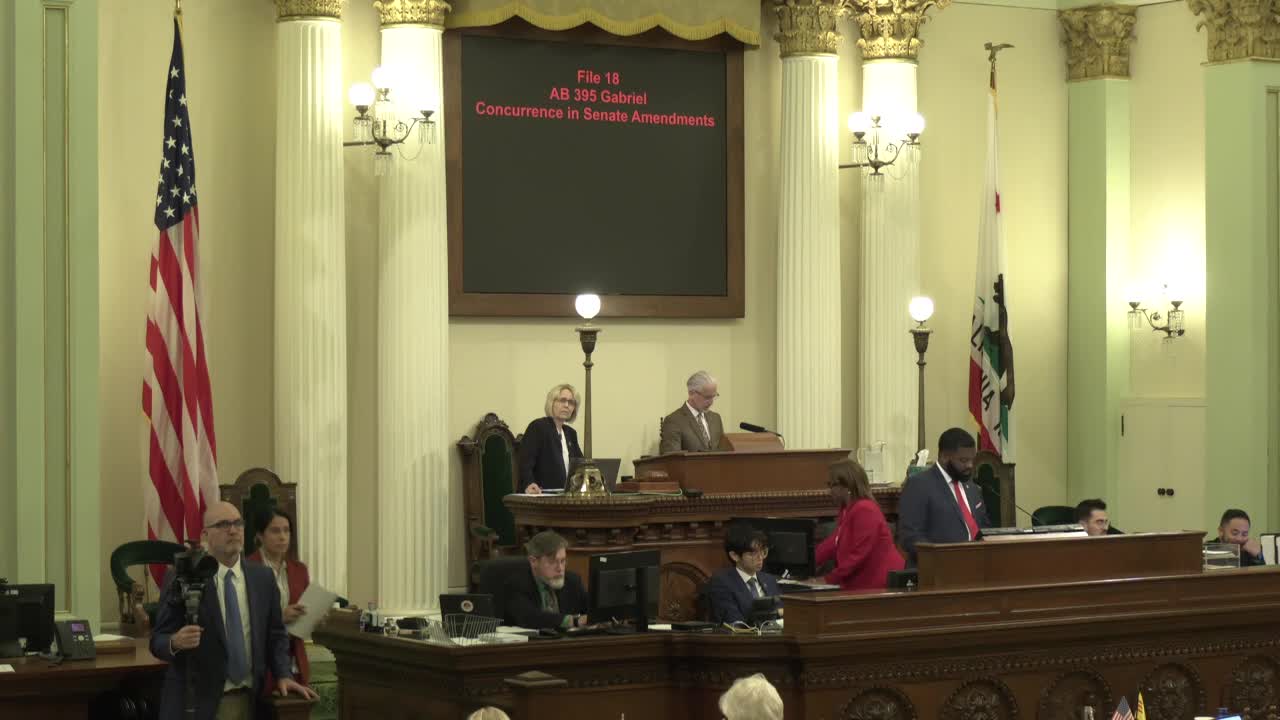 32SEC
Assembly Floor
 1MIN
Assembly Floor
 46SEC
Senate Floor
 13MIN