AB 1669: Student health: medical leaves of absence: mental health.
- Session Year: 2025-2026
- House: Assembly
- Latest Version Date: 2026-09-20
Current Status:
Passed
(2026-09-20: Chaptered by Secretary of State - Chapter 370, Statutes of 2026.)
Introduced
In Committee
Awaiting First Chamber Vote
Passed First Chamber
In Committee
Awaiting Second Chamber Vote
Passed Second Chamber
Enacted
What does this bill do?
The bill requires California colleges and universities — including UC, CSU, community colleges, and private and independent schools — to adopt a written policy allowing students to take a voluntary medical leave of absence for a school-defined period or for up to one academic year, whichever is longer. The policy must not force students to officially withdraw, must allow students to return to their prior program in good academic standing (except in narrow safety cases), may allow extensions for medical necessity with doctor documentation, and must be posted online and emailed to students and faculty.
The summary is provided by generative AI which can make mistakes. For original language, please view the details in the table below.
The Donahoe Higher Education Act sets forth, among other things, the missions and functions of Californias public and independent segments of higher education and their respective institutions of higher education. The act requests the Regents of the University of California, and requires the Trustees of the California State University, to require each campus in their respective segments to grant students the right to reenroll in their baccalaureate degree program after withdrawing or stopping out, if the student was in good academic standing with the university.
This bill, commencing with the 202728 academic year, would require a campus of the University of California, the California State University, or the California Community Colleges, a private postsecondary educational institution, or an independent institution of higher education to adopt a written policy to allow a student to take a voluntary medical leave of absence for a period to be determined by the postsecondary educational institution, or for a period of up to one academic year, whichever is longer. The bill would prohibit the leave of absence policy from, among other things, requiring a student who takes a medical leave of absence to submit an official notice of withdrawal to the postsecondary educational institution. The bill would require a postsecondary educational institution, among other things, to post the medical leave of absence policy on the institutions internet website and notify students and faculty of the location of the posted policy on its internet website by sending an email at the beginning of each academic semester or term. These provisions would apply to the University of California only to the extent that the regents, by appropriate resolution, make them applicable. By imposing additional duties on community college districts, the bill would impose a state-mandated local program.
The California Constitution requires the state to reimburse local agencies and school districts for certain costs mandated by the state. Statutory provisions establish procedures for making that reimbursement.
This bill would provide that, if the Commission on State Mandates determines that the bill contains costs mandated by the state, reimbursement for those costs shall be made pursuant to the statutory provisions noted above.
The Donahoe Higher Education Act sets forth, among other things, the missions and functions of Californias public and independent segments of higher education and their respective institutions of higher education. The act requests the Regents of the University of California, and requires the Trustees of the California State University, to require each campus in their respective segments to grant students the right to reenroll in their baccalaureate degree program after withdrawing or stopping out, if the student was in good academic standing with the university.
This bill, commencing with the 202728 academic year, would require a campus of the University of California, the California State University, or the California Community Colleges, a private postsecondary educational institution, or an independent institution of higher education to (1) adopt a written policy to allow a student to take a voluntary medical leave of absence for a period to be determined by the postsecondary educational institution, or for a period of up to one academic year, whichever is longer, and (2) provide reasonable accommodations to a student facing a medical challenge, without requiring the student to provide documentation of the medical challenge, so that the student is able complete their course of study and research. longer. The bill would prohibit the leave of absence policy from, among other things, requiring a student who takes a medical leave of absence to submit an official notice of withdrawal to the postsecondary educational institution. The bill would require a postsecondary educational institution, among other things, to provide post the medical leave of absence policy to students and all employees on the institutions internet website and notify students and faculty of the location of the posted policy on its internet website by sending an email at the beginning of each academic semester or term. These provisions would apply to the University of California only to the extent that the regents, by appropriate resolution, make them applicable. By imposing additional duties on community college districts, the bill would impose a state-mandated local program.
The California Constitution requires the state to reimburse local agencies and school districts for certain costs mandated by the state. Statutory provisions establish procedures for making that reimbursement.
This bill would provide that, if the Commission on State Mandates determines that the bill contains costs mandated by the state, reimbursement for those costs shall be made pursuant to the statutory provisions noted above.
The Donahoe Higher Education Act sets forth, among other things, the missions and functions of Californias public and independent segments of higher education and their respective institutions of higher education. The act requests the Regents of the University of California, and requires the Trustees of the California State University, to require each campus in their respective segments to grant students the right to reenroll in their baccalaureate degree program after withdrawing or stopping out, if the student was in good academic standing with the university.
This bill, commencing with the 202728 academic year, would require a campus of the University of California, the California State University, or the California Community Colleges, a private postsecondary educational institution, or an independent institution of higher education to (1) adopt a written policy to allow a student to take a voluntary medical leave of absence for a period to be determined by the postsecondary educational institution, or for a period of up to one academic year, whichever is longer, and (2) reasonably accommodate provide reasonable accommodations to a student facing a medical challenges so challenge, without requiring the student to provide documentation of the medical challenge, so that the student is able complete their courses course of study and research. The bill would prohibit the leave of absence policy from, among other things, requiring a student who takes a medical leave of absence to withdraw from submit an official notice of withdrawal to the postsecondary educational institution. The bill would require a postsecondary educational institution to make institution, among other things, to provide the medical leave of absence policy available to faculty, staff, to students and all employees in a required training and available to students at an orientation session. by sending an email at the beginning of each academic semester or term. These provisions would apply to the University of California only to the extent that the regents, by appropriate resolution, make them applicable. By imposing additional duties on community college districts, the bill would impose a state-mandated local program.
The California Constitution requires the state to reimburse local agencies and school districts for certain costs mandated by the state. Statutory provisions establish procedures for making that reimbursement.
This bill would provide that, if the Commission on State Mandates determines that the bill contains costs mandated by the state, reimbursement for those costs shall be made pursuant to the statutory provisions noted above.
The Donahoe Higher Education Act sets forth, among other things, the missions and functions of Californias public and independent segments of higher education and their respective institutions of higher education. The act requests the Regents of the University of California, and requires the Trustees of the California State University, to require each campus in their respective segments to grant students the right to reenroll in their baccalaureate degree program after withdrawing or stopping out, if the student was in good academic standing with the university.
This bill would state the intent of the Legislature to enact subsequent legislation that would allow students to take a mental health leave of absence at a postsecondary educational institution and to return to the institution without needing to reapply for admission.This bill, commencing with the 202728 academic year, would require a campus of the University of California, the California State University, or the California Community Colleges, a private postsecondary educational institution, or an independent institution of higher education to (1) adopt a written policy to allow a student to take a voluntary medical leave of absence for a period to be determined by the postsecondary educational institution, or for a period of one academic year, whichever is longer, and (2) reasonably accommodate a student facing medical challenges so the student is able complete their courses of study and research. The bill would prohibit the leave of absence policy from, among other things, requiring a student who takes a leave of absence to withdraw from the postsecondary educational institution. The bill would require a postsecondary educational institution to make the leave of absence policy available to faculty, staff, and employees in a required training and available to students at an orientation session. These provisions would apply to the University of California only to the extent that the regents, by appropriate resolution, make them applicable. By imposing additional duties on community college districts, the bill would impose a state-mandated local program.
The California Constitution requires the state to reimburse local agencies and school districts for certain costs mandated by the state. Statutory provisions establish procedures for making that reimbursement.
This bill would provide that, if the Commission on State Mandates determines that the bill contains costs mandated by the state, reimbursement for those costs shall be made pursuant to the statutory provisions noted above.
The Donahoe Higher Education Act sets forth, among other things, the missions and functions of Californias public and independent segments of higher education and their respective institutions of higher education. The act requests the Regents of the University of California, and requires the Trustees of the California State University, to require each campus in their respective segments to grant students the right to reenroll in their baccalaureate degree program after withdrawing or stopping out, if the student was in good academic standing with the university.
This bill would state the intent of the Legislature to enact subsequent legislation that would allow students to take a mental health leave of absence at a postsecondary educational institution and to return to the institution without needing to reapply for admission.
(a)The Legislature finds and declares all of the following:
(1)Nearly one-half of college students endure mental health challenges.
(2)These mental health challenges include struggles with depression, anxiety, eating disorders, substance use disorders, and other challenges.
(3)Research indicates that poor mental health significantly affects a persons day-to-day functioning and impedes academic performance.
(4)Student mental and physical health are vital to a students educational success.
(5)College students do not have easy access to appropriate tools or institutional support to manage these mental health challenges.
(6)A mental health disorder is a protected class under the Americans with Disabilities Act of 1990 (42 U.S.C. Sec. 12101 et seq.) and Section 504 of the Rehabilitation Act of 1973 (29 U.S.C. Sec. 794).
(7)A leave of absence can allow a student facing medical or mental health challenges to address those challenges and return to school ready to complete their studies.
(8)Students deserve a clear, equitable, and accessible pathway to focus on recovery and return without facing academic consequences or the need to reapply to the postsecondary educational institution.
(b)Commencing with the 202728 academic year, a postsecondary educational institution shall adopt a written policy to allow a student to take a voluntary medical leave of absence for a period to be determined by the postsecondary educational institution, or for a period of up to one academic year, whichever is longer. The adopted policy shall adhere to all of the following requirements:
(1)Not require a student who takes a medical leave of absence to submit an official notice of withdrawal to the institution and not send an official notice of withdrawal to the student for taking a leave of absence. For purposes of this subparagraph, withdraw means to no longer recognize the person as a student who may enroll in coursework at the institution.
(2)(A)Not deny a student returning from a medical leave of absence the ability to enroll in courses offered by the institution or a program of study that the student was previously eligible for upon the students return from taking a medical leave of absence.
(B)Subparagraph (A) shall not be interpreted as prohibiting an institution from imposing conditions upon a students return to campus after taking a medical leave of absence if, before taking the medical leave of absence, the student posed a direct threat to the health or safety of others.
(3)Allow an enrolled student in good academic standing who voluntarily takes a medical leave of absence to return to the students program of study in good academic standing following the medical leave of absence.
(4)(A)Allow for a medical leave of absence to exceed the period allowed under the adopted policy if there is a medical necessity, as determined by the students physician or medical provider.
(B)A postsecondary educational institution may require documentation from the students physician or medical provider before granting an extension of the medical leave of absence described in this paragraph.
(5)Include procedures for how students may notify the institution of the need to take a medical leave of absence.
(6)Consider whether a student who takes a medical leave of absence may be permitted on campus and may participate in campus activities during the medical leave of absence. In making this consideration, the institutions primary concern shall be student safety and shall not modify any requirements for participation in campus activities for a student who takes a medical leave of absence.
(c)If a postsecondary educational institution has an existing leave of absence policy, the postsecondary educational institution shall ensure the policy adheres to the requirements of this section.
(d)After a policy is adopted pursuant to subdivision (b), the postsecondary educational institution shall do all of the following, as applicable:
(1)Provide, as part of established campus orientations, a copy of the medical leave of absence policy to students at all campuses of their respective segments.
(2)Post the medical leave of absence policy on the postsecondary educational institutions internet website.
(3)Notify students and faculty of the location of the medical leave of absence policy on the postsecondary educational institutions internet website by sending an email at the beginning of each academic semester or term.
(4)For a postsecondary educational institution with an on-campus medical center, require the medical center to provide a copy of the medical leave of absence policy to a student who requests information regarding policies or protections for students facing health and mental health challenges and when otherwise appropriate.
(5)Require the registrars office and the campus administrators office to provide a copy of the medical leave of absence policy to a student who requests information on withdrawing from the institution.
(e)If, on or after the date of implementation, any provision of this section conflicts with federal law or regulations, that provision shall be rendered inoperative for the duration of the conflict and without affecting the whole.
(f)This section shall not be construed or implemented in a manner that would prevent a postsecondary educational institution from adjudicating, pursuant to the institutions adjudication procedures, an alleged violation of the student code of conduct by a student who has taken, or is currently on, a medical leave of absence from the institution.
(g)This section does not waive competency, clinical, laboratory, or other graduation or licensure requirements established by a postsecondary educational institution, accrediting agency, or governmental licensing authority, and does not supersede federal student aid regulations.
(h)For purposes of this section, the following definitions apply:
(1)Adjudication procedures means a postsecondary educational institutions established process to determine if a student has violated the student code of conduct and the established process to respond when violations are sustained.
(2)Medical includes health- and mental health-related issues, including, but not limited to, anxiety, depression, eating disorders, and substance use disorders.
(3)Postsecondary educational institution means a campus of the University of California, the California State University, or the California Community Colleges, a private postsecondary educational institution, as defined in Section 94858, or an independent institution of higher education, as defined in Section 66010.
(4)Student means an undergraduate or graduate student, as recognized by the postsecondary educational institution, that is enrolled in coursework at the institution.
(5)Student code of conduct means any rules or policies adopted by a postsecondary educational institution regarding the expectations or standards of student behavior on campus, including, but not limited to, standards related to academics, athletics, and sex discrimination.
SEC. 2.If the Commission on State Mandates determines that this act contains costs mandated by the state, reimbursement to local agencies and school districts for those costs shall be made pursuant to Part 7 (commencing with Section 17500) of Division 4 of Title 2 of the Government Code.
(a)The Legislature finds and declares all of the following:
(1)Nearly one-half of college students endure mental health challenges.
(2)These mental health challenges include struggles with depression, anxiety, eating disorders, substance use disorders, and other challenges.
(3)Research indicates that poor mental health significantly affects a persons day-to-day functioning and impedes academic performance.
(4)Student mental and physical health are vital to a students educational success.
(5)College students do not have easy access to appropriate tools or institutional support to manage these mental health challenges.
(6)A mental health disorder is a protected class under the Americans with Disabilities Act of 1990 (42 U.S.C. Sec. 12101 et seq.) and Section 504 of the Rehabilitation Act of 1973 (29 U.S.C. Sec. 794).
(7)A leave of absence can allow a student facing medical or mental health challenges to address those challenges and return to school ready to complete their studies.
(8)Students deserve a clear, equitable, and accessible pathway to focus on recovery and return without facing academic consequences or the need to reapply to the postsecondary educational institution.
(b)Commencing with the 202728 academic year, a postsecondary educational institution shall adopt a written policy to allow a student to take a voluntary medical leave of absence for a period to be determined by the postsecondary educational institution institution, or for a period of up to one academic year, whichever is longer. The adopted policy shall adhere to all of the following requirements:
(1)Not require a student who takes a medical leave of absence to submit an official notice of withdrawal to the institution and not send an official notice of withdrawal to the student for taking a leave of absence. For purposes of this subparagraph, withdraw means to no longer recognize the person as a student who may enroll in coursework at the institution.
(2)(A)Not deny a student returning from a medical leave of absence the ability to enroll in courses offered by the institution or a program of study that the student was previously eligible for upon the students return from taking a medical leave of absence.
(B)Subparagraph (A) shall not be interpreted as prohibiting an institution from imposing conditions upon a students return to campus after taking a medical leave of absence if, before taking the medical leave of absence, the student posed a direct threat to the health or safety of others.
(3)Allow an enrolled student in good academic standing who voluntarily takes a medical leave of absence to return to the students program of study in good academic standing following the medical leave of absence.
(4)(A)Allow for a medical leave of absence to exceed the period allowed under the adopted policy if there is a medical necessity, as determined by the students physician or medical provider.
(B)A postsecondary educational institution may require documentation from the students physician or medical provider before granting an extension of the medical leave of absence described in this paragraph.
(5)Include procedures for how students may notify the institution of the need to take a medical leave of absence.
(6)Consider whether a student who takes a medical leave of absence may be permitted on campus and may participate in campus activities during the medical leave of absence. In making this consideration, the institutions primary concern shall be student safety and shall not modify any requirements for participation in campus activities for a student who takes a medical leave of absence.
(c)If a postsecondary educational institution has an existing leave of absence policy, the postsecondary educational institution shall ensure the policy adheres to the requirements of this section.
(d)After a policy is adopted pursuant to subdivision (b), the postsecondary educational institution shall do all of the following, as applicable:
(1)Provide, as part of established campus orientations, a copy of the medical leave of absence policy to students at all campuses of their respective segments.
(2)Post the medical leave of absence policy on the postsecondary educational institutions internet website.
(3)Notify students and faculty of the location of the medical leave of absence policy on the postsecondary educational institutions internet website by sending an email at the beginning of each academic semester or term.
(4)For a postsecondary educational institution with an on-campus medical center, require the medical center to provide a copy of the medical leave of absence policy to a student who requests information regarding policies or protections for students facing health and mental health challenges and when otherwise appropriate.
(5)Require the registrars office and the campus administrators office to provide a copy of the medical leave of absence policy to a student who requests information on withdrawing from the institution.
(e)If, on or after the date of implementation, any provision of this section conflicts with federal law or regulations, that provision shall be rendered inoperative for the duration of the conflict and without affecting the whole.
(f)This section shall not be construed or implemented in a manner that would prevent a postsecondary educational institution from adjudicating, pursuant to the institutions adjudication procedures, an alleged violation of the student code of conduct by a student who has taken, or is currently on, a medical leave of absence from the institution.
(g)This section does not waive competency, clinical, laboratory, or other graduation or licensure requirements established by a postsecondary educational institution, accrediting agency, or governmental licensing authority, and does not supersede federal student aid regulations.
(g)(h)For purposes of this section, the following definitions apply:
(1)Adjudication procedures means a postsecondary educational institutions established process to determine if a student has violated the student code of conduct and the established process to respond when violations are sustained.
(2)Medical includes health- and mental health-related issues, including, but not limited to, anxiety, depression, eating disorders, and substance use disorders.
(3)Postsecondary educational institution means a campus of the University of California, the California State University, or the California Community Colleges, a private postsecondary educational institution, as defined in Section 94858, or an independent institution of higher education, as defined in Section 66010.
(4)Student means an undergraduate or graduate student, as recognized by the postsecondary educational institution, that is enrolled in coursework at the institution.
(5)Student code of conduct means any rules or policies adopted by a postsecondary educational institution regarding the expectations or standards of student behavior on campus, including, but not limited to, standards related to academics, athletics, and sex discrimination.
SEC. 2.If the Commission on State Mandates determines that this act contains costs mandated by the state, reimbursement to local agencies and school districts for those costs shall be made pursuant to Part 7 (commencing with Section 17500) of Division 4 of Title 2 of the Government Code.
(a)The Legislature finds and declares all of the following:
(1)Nearly one-half of college students endure mental health challenges.
(2)These mental health challenges include struggles with depression, anxiety, eating disorders, substance use disorders, and other challenges.
(3)Research indicates that poor mental health significantly affects a persons day-to-day functioning and impedes academic performance.
(4)Student mental and physical health are vital to a students educational success.
(5)College students do not have easy access to appropriate tools or institutional support to manage these mental health challenges.
(6)A mental health disorder is a protected class under the Americans with Disabilities Act of 1990 (42 U.S.C. Sec. 12101 et seq.) and Section 504 of the Rehabilitation Act of 1973 (29 U.S.C. Sec. 794).
(7)A leave of absence can allow a student facing medical or mental health challenges to address those challenges and return to school ready to complete their studies.
(8)Students deserve a clear, equitable, and accessible pathway to focus on recovery and return without facing academic consequences or the need to reapply to the postsecondary educational institution.
(b)Commencing with the 202728 academic year, a postsecondary educational institution shall do both of the following:
(1)Adopt shall adopt a written policy to allow a student to take a voluntary medical leave of absence for a period to be determined by the postsecondary educational institution or for a period of up to one academic year, whichever is longer. The adopted policy shall adhere to all of the following requirements:
(A)(1)Not require a student who takes a medical leave of absence to submit an official notice of withdrawal to the institution and not send an official notice of withdrawal to the student. student for taking a leave of absence. For purposes of this subparagraph, withdraw means to no longer recognize the person as a student who may enroll in coursework at the institution.
(B)(2)(A)Not deny a student returning from a medical leave of absence the ability to enroll in courses offered by the institution or a program of study that the student was previously eligible for upon the students return from taking a medical leave of absence.
(B)Subparagraph (A) shall not be interpreted as prohibiting an institution from imposing conditions upon a students return to campus after taking a medical leave of absence if, before taking the medical leave of absence, the student posed a direct threat to the health or safety of others.
(C)(3)Allow an enrolled student in good academic standing who voluntarily takes a medical leave of absence to return to the students program of study in good academic standing following the medical leave of absence.
(D)(i)(4)(A)Allow for a medical leave of absence to exceed the period allowed under the adopted policy if there is a medical necessity, as determined by the students physician or medical provider.
(ii)(B)A postsecondary educational institution may require documentation from the students physician or medical provider before granting an extension of the medical leave of absence described in this subparagraph. paragraph.
(E)(5)Include procedures for how students may notify the institution of the need to take a medical leave of absence.
(F)(6)Consider whether a student who takes a medical leave of absence may be permitted on campus and may participate in campus activities during the medical leave of absence. In making this consideration, the institutions primary concern shall be student safety and shall not modify any requirements for participation in campus activities for a student who takes a medical leave of absence.
(2)(A)Provide reasonable accommodations to a student facing a medical challenge that substantially limits one or more major life activities so that the student is able to complete their course of study and research. Reasonable accommodations shall be provided without requiring the student to provide documentation of the medical challenge and shall meet the individual needs of the student. Reasonable accommodations may include, but are not limited to, any of the following:(i)Extended testing time in a reduced distraction environment.(ii)A reduced course load.(iii)Allowing the student to make up work, without penalty, and excusing late arrivals and absences if the student misses a class due to a medical appointment or when symptoms of their medical challenge hinder the students ability to complete their work.(B)An accommodation that a postsecondary educational institution can demonstrate would fundamentally alter an academic requirement that the institution can demonstrate is essential to (i) the instruction being pursued by the student, or (ii) any directly related licensing requirement, shall not be regarded as a reasonable accommodation within the meaning of this section.(c)If a postsecondary educational institution has an existing leave of absence policy, the postsecondary educational institution shall ensure the policy adheres to the requirements of this section.
(d)After a policy is adopted pursuant to paragraph (1) of subdivision (b), the postsecondary educational institution shall do all of the following, as applicable:
(1)Provide, as part of established campus orientations, a copy of the medical leave of absence policy to students at all campuses of their respective segments.
(2)Provide a copy of the medical leave of absence policy to students and all employees by sending an email at the beginning of each academic semester or term.(3)Notify students of the protections provided by the medical leave of absence policy for their health and mental health by prominently posting the(2)Post the medical leave of absence policy on the postsecondary educational institutions internet website.
(3)Notify students and faculty of the location of the medical leave of absence policy on the postsecondary educational institutions internet website by sending an email at the beginning of each academic semester or term.
(4)For a postsecondary educational institution with an on-campus medical center, require the medical center to provide a copy of the medical leave of absence policy to a student who requests information regarding policies or protections for students facing health and mental health challenges and when otherwise appropriate.
(5)Require the registrars office and the campus administrators office to provide a copy of the medical leave of absence policy to a student who requests information on withdrawing from the institution.
(e)If, on or after the date of implementation, any provision of this section conflicts with federal law or regulations, that provision shall be rendered inoperative for the duration of the conflict and without affecting the whole.
(f)This section shall not be construed or implemented in a manner that would prevent a postsecondary educational institution from adjudicating, pursuant to the institutions adjudication procedures, an alleged violation of the student code of conduct by a student who has taken, or is currently on, a medical leave of absence from the institution.
(e)(g)For purposes of this section, the following definitions apply:
(1)Adjudication procedures means a postsecondary educational institutions established process to determine if a student has violated the student code of conduct and the established process to respond when violations are sustained.
(1)(2)Medical includes health- and mental health-related issues, including, but not limited to, anxiety, depression, eating disorders, and substance use disorders.
(2)(3)Postsecondary educational institution means a campus of the University of California, the California State University, or the California Community Colleges, a private postsecondary educational institution, as defined in Section 94858, or an independent institution of higher education, as defined in Section 66010.
(4)Student means an undergraduate or graduate student, as recognized by the postsecondary educational institution, that is enrolled in coursework at the institution.
(5)Student code of conduct means any rules or policies adopted by a postsecondary educational institution regarding the expectations or standards of student behavior on campus, including, but not limited to, standards related to academics, athletics, and sex discrimination.
SEC. 2.If the Commission on State Mandates determines that this act contains costs mandated by the state, reimbursement to local agencies and school districts for those costs shall be made pursuant to Part 7 (commencing with Section 17500) of Division 4 of Title 2 of the Government Code.
(a)The Legislature finds and declares all of the following:
(1)Nearly one-half of college students endure mental health challenges.
(2)These mental health challenges include struggles with depression, anxiety, eating disorders, substance use disorders, and other challenges.
(3)Research indicates that poor mental health significantly affects a persons day-to-day functioning and impedes academic performance.
(4)Student mental and physical health are vital to a students educational success.
(5)College students do not have easy access to appropriate tools or institutional support to manage these mental health challenges.
(6)A mental health disorder is a protected class under the Americans with Disabilities Act of 1990 (42 U.S.C. Sec. 12101 et seq.) and Section 504 of the Rehabilitation Act of 1973 (29 U.S.C. Sec. 794).
(6)(7)A leave of absence can allow a student facing medical or mental health challenges to address those challenges and return to school ready to complete their studies.
(7)(8)Students deserve a clear, equitable, and accessible pathway to focus on recovery and return without facing academic consequences or the need to reapply to the postsecondary educational institution.
(b)Commencing with the 202728 academic year, a postsecondary educational institution shall do both of the following:
(1)Adopt a written policy to allow a student to take a voluntary medical leave of absence for a period to be determined by the postsecondary educational institution or for a period of up to one academic year, whichever is longer. The adopted policy shall adhere to all of the following requirements:
(A)Not require a student who takes a medical leave of absence to withdraw from submit an official notice of withdrawal to the institution. institution and not send an official notice of withdrawal to the student. For purposes of this subparagraph, withdraw means to no longer recognize the person as a student who may enroll in coursework at the institution.
(B)Not deny a student readmission to the ability to enroll in courses offered by the institution or a program of study upon returning the students return from a medical leave of absence.
(C)Allow an enrolled student in good academic standing who voluntarily takes a medical leave of absence to return to the students program of study in good academic standing following the medical leave of absence.
(D)(i)Allow for a medical leave of absence to exceed the period allowed under the adopted policy if there is a medical necessity. necessity, as determined by the students physician or medical provider.
(ii)A postsecondary educational institution may require documentation from the students physician or medical provider before granting an extension of the medical leave of absence described in this subparagraph.
(E)Include procedures for how students on how to may notify the institution of the need to take a medical leave of absence.
(F)Consider whether a student who takes a medical leave of absence may be permitted on campus and may participate in campus activities during the medical leave of absence. In making this consideration, the institutions primary concern shall be student safety and shall not modify any requirements for participation in campus activities for a student who takes a medical leave of absence.
(2)Reasonably accommodate a(2)(A)Provide reasonable accommodations to a student facing a medical challenges challenge that substantially limits one or more major life activities so that the student is able to complete their courses course of study and research. Reasonable accommodations shall be provided without requiring the student to provide documentation of the medical challenge and shall meet the individual needs of the student. Reasonable accommodations may include, but are not be limited to, allowing the student to do any of the following:
(A)Maintain involvement in campus activities, workplaces, and organizations.(B)Make up tests and assignments that are missed for medically related reasons.(C)Take a leave of absence pursuant to the leave of absence policy.(i)Extended testing time in a reduced distraction environment.
(ii)A reduced course load.
(iii)Allowing the student to make up work, without penalty, and excusing late arrivals and absences if the student misses a class due to a medical appointment or when symptoms of their medical challenge hinder the students ability to complete their work.
(B)An accommodation that a postsecondary educational institution can demonstrate would fundamentally alter an academic requirement that the institution can demonstrate is essential to (i) the instruction being pursued by the student, or (ii) any directly related licensing requirement, shall not be regarded as a reasonable accommodation within the meaning of this section.
(c)If a postsecondary educational institution has an existing leave of absence policy, the postsecondary educational institution shall ensure the policy adheres to the requirements of this section.
(d)After a policy is adopted pursuant to paragraph (1) of subdivision (b), the postsecondary educational institution shall do all of the following, as applicable:
(1)Make the leave of absence policy available to faculty, staff, and employees in a required training and available to students at an orientation session.(1)Provide, as part of established campus orientations, a copy of the medical leave of absence policy to students at all campuses of their respective segments.
(2)Provide a copy of the medical leave of absence policy to students and all employees by sending an email at the beginning of each academic semester or term.
(2)(3)Notify students of the protections provided by the medical leave of absence policy for their health and mental health by prominently posting the medical leave of absence policy on the postsecondary educational institutions internet website.
(3)(4)For a postsecondary educational institution with an on-campus medical center, require the medical center to provide a copy of the medical leave of absence policy to a student who requests information regarding policies or protections for students facing health and mental health challenges and when otherwise appropriate.
(5)Require the registrars office and the campus administrators office to provide a copy of the medical leave of absence policy to a student who requests information on withdrawing from the institution.
(e)For purposes of this section, the following definitions apply:
(1)Medical includes health- and mental health-related issues, including, but not limited to, anxiety, depression, eating disorders, and substance use disorders.
(2)Postsecondary educational institution means a campus of the University of California, the California State University, or the California Community Colleges, a private postsecondary educational institution, as defined in Section 94858, or an independent institution of higher education, as defined in Section 66010.
SEC. 2.If the Commission on State Mandates determines that this act contains costs mandated by the state, reimbursement to local agencies and school districts for those costs shall be made pursuant to Part 7 (commencing with Section 17500) of Division 4 of Title 2 of the Government Code.
REVISIONS: HeadingLine 2.(a)The Legislature finds and declares all of the following:
(1)Nearly one-half of college students endure mental health challenges.
(2)These mental health challenges include struggles with depression, anxiety, eating disorders, substance use disorders, and other challenges.
(3)Research indicates that poor mental health significantly affects a persons day-to-day functioning and impedes academic performance.
(4)Student mental and physical health are vital to a students educational success.
(5)College students do not have easy access to appropriate tools or institutional support to manage these mental health challenges.
(6)A leave of absence can allow a student facing medical or mental health challenges to address those challenges and return to school ready to complete their studies.
(7)Students deserve a clear, equitable, and accessible pathway to focus on recovery and return without facing academic consequences or the need to reapply to the postsecondary educational institution.
(b)Commencing with the 202728 academic year, a postsecondary educational institution shall do both of the following:
(1)Adopt a written policy to allow a student to take a voluntary medical leave of absence for a period to be determined by the postsecondary educational institution or for a period of one academic year, whichever is longer. The adopted policy shall adhere to all of the following requirements:
(A)Not require a student who takes a leave of absence to withdraw from the institution.
(B)Not deny a student readmission to the institution or a program of study upon returning from a leave of absence.
(C)Allow an enrolled student in good academic standing who takes a leave of absence to return to the students program of study in good academic standing following the leave of absence.
(D)Allow for a leave of absence to exceed the period allowed under the adopted policy if there is a medical necessity.
(E)Include procedures for students on how to take a leave of absence.
(F)Consider whether a student who takes a leave of absence may be permitted on campus and may participate in campus activities during the leave of absence.
(2)Reasonably accommodate a student facing medical challenges so the student is able complete their courses of study and research. Reasonable accommodations may include, but not be limited to, allowing the student to do any of the following:
(A)Maintain involvement in campus activities, workplaces, and organizations.
(B)Make up tests and assignments that are missed for medically related reasons.
(C)Take a leave of absence pursuant to the leave of absence policy.
(c)If a postsecondary educational institution has an existing leave of absence policy, the postsecondary educational institution shall ensure the policy adheres to the requirements of this section.
(d)After a policy is adopted pursuant to paragraph (1) of subdivision (b), the postsecondary educational institution shall do all of the following, as applicable:
(1)Make the leave of absence policy available to faculty, staff, and employees in a required training and available to students at an orientation session.
(2)Notify students of the protections provided by the leave of absence policy for their health and mental health by prominently posting the leave of absence policy on the postsecondary educational institutions internet website.
(3)For a postsecondary educational institution with an on-campus medical center, require the medical center to provide a copy of the leave of absence policy to a student who requests information regarding policies or protections for students facing health and mental health challenges and when otherwise appropriate.
(e)For purposes of this section, the following definitions apply:
(1)Medical includes health- and mental health-related issues, including, but not limited to, anxiety, depression, eating disorders, and substance use disorders.
(2)Postsecondary educational institution means a campus of the University of California, the California State University, or the California Community Colleges, a private postsecondary educational institution, as defined in Section 94858, or an independent institution of higher education, as defined in Section 66010.
SEC. 2.If the Commission on State Mandates determines that this act contains costs mandated by the state, reimbursement to local agencies and school districts for those costs shall be made pursuant to Part 7 (commencing with Section 17500) of Division 4 of Title 2 of the Government Code.
SECTION 1.It is the intent of the Legislature to enact subsequent legislation that would allow students to take a mental health leave of absence at a postsecondary educational institution and to return to the institution without needing to reapply for admission.It is the intent of the Legislature to enact subsequent legislation that would allow students to take a mental health leave of absence at a postsecondary educational institution and to return to the institution without needing to reapply for admission.
|
Date
|
Status
|
|---|---|
| Sep 20, 2026 | Chaptered by Secretary of State - Chapter 370, Statutes of 2026. |
| Sep 20, 2026 | Approved by the Governor. |
| Sep 3, 2026 | Enrolled and presented to the Governor at 4 p.m. |
| Aug 26, 2026 | Senate amendments concurred in. To Engrossing and Enrolling. (Ayes 79. Noes 0.). |
| Aug 26, 2026 | Senate amendments concurred in. To Engrossing and Enrolling. (Ayes 79. Noes 0. Page 6568.). |
| Aug 25, 2026 | In Assembly. Concurrence in Senate amendments pending. |
| Aug 25, 2026 | Read third time. Passed. Ordered to the Assembly. (Ayes 38. Noes 0.). |
| Aug 17, 2026 | Read second time. Ordered to third reading. |
| Aug 13, 2026 | Read second time and amended. Ordered returned to second reading. |
| Aug 13, 2026 | From committee: Amend, and do pass as amended. (Ayes 6. Noes 1.) (August 13). |
| Aug 3, 2026 | In committee: Referred to APPR. suspense file. |
| Jun 25, 2026 | From committee: Do pass and re-refer to Com. on APPR. (Ayes 6. Noes 0.) (June 24). Re-referred to Com. on APPR. |
| Jun 15, 2026 | From committee chair, with author's amendments: Amend, and re-refer to committee. Read second time, amended, and re-referred to Com. on ED. |
| Jun 3, 2026 | Referred to Com. on ED. |
| May 21, 2026 | In Senate. Read first time. To Com. on RLS. for assignment. |
| May 21, 2026 | Read third time. Passed. Ordered to the Senate. (Ayes 74. Noes 0.) |
| May 21, 2026 | Read third time. Passed. Ordered to the Senate. (Ayes 74. Noes 0. Page 5192.) |
| May 18, 2026 | Read second time. Ordered to third reading. |
| May 14, 2026 | From committee: Do pass. (Ayes 15. Noes 0.) (May 14). |
| May 14, 2026 | Coauthors revised. |
| May 6, 2026 | In committee: Set, first hearing. Referred to APPR. suspense file. |
| Apr 20, 2026 | Re-referred to Com. on APPR. |
| Apr 16, 2026 | Read second time and amended. |
| Apr 15, 2026 | From committee: Amend, and do pass as amended and re-refer to Com. on APPR. (Ayes 9. Noes 0.) (April 14). |
| Mar 10, 2026 | Re-referred to Com. on HIGHER ED. |
| Mar 9, 2026 | Referred to Com. on HIGHER ED. |
| Mar 9, 2026 | From committee chair, with author's amendments: Amend, and re-refer to Com. on HIGHER ED. Read second time and amended. |
| Feb 3, 2026 | From printer. May be heard in committee March 5. |
| Feb 2, 2026 | Read first time. To print. |
|
Date
|
Description
|
Location
|
Votes
|
|
|---|---|---|---|---|
| Aug 26, 2026 | AB 1669 Pacheco Concurrence in Senate Amendments | Assembly Floor |
Passed |
|
| Aug 25, 2026 | Assembly 3rd Reading AB1669 Pacheco et al. By Reyes | Senate Floor |
Passed |
|
| Aug 13, 2026 | Do pass as amended | Senate Standing Committee on Appropriations |
Passed |
|
| Aug 3, 2026 | Placed on suspense file | Senate Standing Committee on Appropriations |
Passed |
|
| Jun 24, 2026 | Do pass, but first be re-referred to the Committee on [Appropriations] | Senate Standing Committee on Education |
Passed |
|
| May 21, 2026 | AB 1669 Pacheco Assembly Third Reading | Assembly Floor |
Passed |
|
| May 14, 2026 | Do pass. | Assembly Standing Committee on Appropriations |
Passed |
|
| Apr 14, 2026 | Do pass as amended and be re-referred to the Committee on [Appropriations] | Assembly Standing Committee on Higher Education |
Passed |
This list shows positions taken on this bill by organizations on the date displayed, which is linked to the original source.
Positions by individuals are not included.
|
Organization
|
Position
|
Date
|
|---|---|---|
| Cal State Student Association | ** Support | |
| Cal Voices | ** Support | |
| California Academy of Child and Adolescent Psychiatry | ** Support | |
| California Alliance Of Child And Family Services | ** Support | |
| California Behavioral Health Association | ** Support | |
| California Hospital Association | ** Support | |
| California Youth Empowerment Network | ** Support | |
| Generationup, Incorporated | ** Support | |
| Mental Health America of California | ** Support | |
| San Francisco Women’s Political Committee | ** Support | |
| University Of California Student Association | ** Support | |
| Youth for Neurodiversity Inc. | ** Support |
CONCURRENCE IN SENATE AMENDMENTS
CSA1 Bill Id:AB 1669
Author:(Pacheco)
As Amended Ver:August 13, 2026
Majority vote
SUMMARY
Establishes a leave of absence policy requirement for postsecondary education institutions for all students who are experiencing a medical or mental health condition.
Senate Amendments
- Removes the requirement that each postsecondary education institution must provide reasonable accommodations to a student who is facing a medical challenge so that the student may complete their course of study and research.
- Clarifies that a postsecondary education institution may impose conditions upon the student’s return from medical leave to a campus if the student was a direct threat to the safety or health of others.
- Clarifies that the measure does not prevent a postsecondary education institution from investigating and adjudicating a violation of the student code of conduct even if the student has taken or currently on a medical leave from the institution.
- Stipulates that if any provision of the measure conflicts with federal law or federal regulations, the conflicting provision is rendered inoperative for the duration of the conflict without affecting the totality of the whole of the measure.
- Clarifies that nothing in the measure will require a postsecondary education institution to waive competency, clinical, laboratory, or other graduation or licensure requirements established by a postsecondary education institution, accrediting agency or government licensing authority.
- Defines "adjudication procedures", "student,", and "student code of conduct" for purposes of the measure.
COMMENTS
Leave of absence policies at California postsecondary education institutions. Each of the public higher education segments provides mental health services to their students; however, none of the segments have a systemwide policy to permit a student to take a leave of absence for a medical or mental-health condition.
There are two provisions of State law which permit certain students the ability to take a sanctioned leave of absence and return to the institution with the same academic standing: (1) parental leave for graduate students who have either just given birth or whose partner has just given birth; and (2) military leave for students who are called to active duty by the Armed Forces.
Despite the gap in State law and the lack of a systemwide policy, some campuses have taken it upon themselves to provide students with the ability to take a medical leave. The policies of the campuses vary in the duration of the leave and the terms of eligibility for the leave. Some California State University campuses allow for up to four weeks of medical leave; while others allow for up to two semesters of leave if the student was in good academic standing prior to the medical leave. Some UC campuses allow for medical withdraw with no guarantee of readmission to the student’s program of study.
California Community Colleges are considered an open-access institution; and therefore, while students are required to be "admitted" through an application process, the system is not allowed to deny anyone re-entry or re-access to the system as a whole. The Board of Governors of the California Community Colleges adopts regulations for the operation of all 73 community college districts. Each community college district must adopt and implement the regulations as district policies and procedures. California Code of Regulations Title 5, Section 550204 permits a student to withdraw from a course by the fourth week of an academic term without penalty to their transcript or grade point average. The student who seeks to withdraw after the fourth week is permitted an excused withdraw if the student has an extenuating circumstance which includes accidents, illness, or other circumstances beyond the student’s control. A community college district is permitted to refund tuition for any student who is granted a withdraw from a course due to an extenuating circumstance.
This measure will provide continuity in postsecondary education institution’s medical leave policies across the State by ensuring all students are afforded the ability to take a medical leave without academic penalties or prescriptive medical documentation demonstrating the medical condition. Furthermore, this measure will provide equitable access for all students by permitting students to seamlessly return to coursework after a medical leave without having to re-apply for admission to their campus or academic program.
According to the Author
As delineated by the author, "nearly half of college students endure mental health challenges, including 37% who struggle with depression and nearly one-third who experience anxiety. While research indicates that poor mental health impedes academic performance, college students don’t always have easy access to appropriate tools or institutional support to manage these challenges. In some situations, the best solution for a student may be to take a leave of absence from school to focus on their mental or physical health. However, not all California colleges and universities offer a clear leave-of-absence framework. While some schools allow a student to take a medical leave of absence, others require that a student facing a mental health crisis completely withdraw. In some cases, students must reapply with no guaranteed pathway to readmission."
Arguments in Support
The Cal State Student Association is supportive of the measure as "mental health challenges continue to be one of the leading barriers to student success. When students are unable to access the flexibility they need during periods of illness or crisis, they may withdraw permanently, lose academic momentum, or face unnecessary financial and administrative burdens. By establishing written medical leave policies, protecting students from being required to formally withdraw in order to take leave, and ensuring students are informed of available options, AB 1669 will help students remain connected to their educational goals while prioritizing their health. For CSU students, predictable and transparent leave policies can improve retention and support successful degree completion. Students who take time away for legitimate medical or mental health reasons should have confidence that they can return to continue their education without unnecessary obstacles. AB 1669 advances that goal while promoting greater consistency across California's public and private institutions of higher education."
Arguments in Opposition
None on file.
FISCAL COMMENTS
According to the Senate Committee on Appropriations:
- The University of California estimates one-time General Fund costs of up to $2 million for administrative and technical startup costs and approximately $1 million ongoing for maintenance and administrative costs. These costs include the updating of programming for new policy definitions and to allow students to drop all classes without providing an official notice of withdrawal.
- The California State University estimates ongoing General Fund costs in the mid-hundreds of thousands of dollars each year for campuses to provide ongoing case management compliance monitoring, and additional one-time General Fund costs of $440,000 or $20,000 per campus to update systemwide leave policies, computer systems and procedures, and systems/process updates and website changes.
- The Chancellor's Office estimates one-time Proposition 98 General Fund costs ranging between $2.4 million to $5.4 million for community college districts statewide to develop and implement a new medical leave of absence policy, including the adoption of a formal medical leave of absence status that preserves a student's enrollment, academic standing, and guaranteed right to return without reapplication.
VOTES:
ASM HIGHER EDUCATION: 9-0-1
YES: Fong, DeMaio, Boerner, Jeff Gonzalez, Jackson, Muratsuchi, Patel, Sharp-Collins, Tangipa
ABS, ABST OR NV: Celeste Rodriguez
ASM APPROPRIATIONS: 15-0-0
YES: Wicks, Hoover, Aguiar-Curry, Calderon, Caloza, Dixon, Fong, Mark González, Krell, Pacheco, Pellerin, Sharp-Collins, Solache, Ta, Tangipa
ASSEMBLY FLOOR: 74-0-6
YES: Addis, Aguiar-Curry, Ahrens, Alanis, Alvarez, Ávila Farías, Bains, Bauer-Kahan, Bennett, Berman, Boerner, Bonta, Bryan, Calderon, Caloza, Carrillo, Castillo, Connolly, Davies, DeMaio, Dixon, Elhawary, Ellis, Flora, Fong, Gabriel, Gallagher, Gipson, Jeff Gonzalez, Mark González, Hadwick, Haney, Harabedian, Hart, Hoover, Irwin, Jackson, Johnson, Kalra, Krell, Lee, Lowenthal, Macedo, McKinnor, Muratsuchi, Nguyen, Ortega, Pacheco, Papan, Patel, Patterson, Pellerin, Petrie-Norris, Quirk-Silva, Ransom, Michelle Rodriguez, Rogers, Blanca Rubio, Sanchez, Schiavo, Schultz, Sharp-Collins, Solache, Soria, Stefani, Ta, Tangipa, Valencia, Wallis, Ward, Wicks, Wilson, Zbur, Rivas
ABS, ABST OR NV: Arambula, Chen, Garcia, Lackey, Ramos, Celeste Rodriguez
UPDATED
VERSION: August 13, 2026
CONSULTANT: Ellen Cesaretti-Monroy / HIGHER ED. / (916) 319-3960 FN: 0004189
SENATE RULES COMMITTEE Office of Senate Floor Analyses (916) 651-4171 | AB 1669 |
THIRD READING
Bill No: AB 1669
Author: Pacheco (D), et al.
Amended: 8/13/26 in Senate
Vote: 21
SENATE EDUCATION COMMITTEE: 6-0, 6/24/26
AYES: Pérez, Ochoa Bogh, Choi, Cortese, Gonzalez, Reyes
NO VOTE RECORDED: Cabaldon
SENATE APPROPRIATIONS COMMITTEE: 6-1, 8/13/26
AYES: Cervantes, Seyarto, Dahle, Grayson, Richardson, Wahab
NOES: Cabaldon
ASSEMBLY FLOOR: 74-0, 5/21/26 - See last page for vote
SUBJECT: Student health: medical leaves of absence: mental health
SOURCE: Author
DIGEST:
This bill requires, commencing with the 2027-28 academic year, private and public postsecondary educational institutions to adopt a written policy allowing students to take a voluntary medical leave of absence for at least a period of up to one academic year and specifies criteria for inclusion in the adopted policy.
ANALYSIS:
Existing federal law:
1) States, in Section 504 of the Rehabilitation Act, no person with a disability in the United States will be denied benefits or be subjected to discrimination based on their disability in any program or activity that receives federal financial assistance. This applies to postsecondary education institutions who receive federal funding and therefore, the institutions are subject to the regulations promulgated by the Federal Government to address and prevent discrimination of people with disabilities. (United States Code (USC), Title 29, Chapter 16, Subchapter V, Section 794, colloquially known as “Section 504 of the Rehabilitation Act)
2) Prohibits, via the Americans with Disabilities Act, discrimination against people with disabilities in everyday activities. Establishes people with disabilities as a protected class and prohibits discrimination in the same manner as prohibitions against racial or sex discrimination. This law guarantees that people with disabilities have the same employment opportunities, ability to access goods and services, and the ability to participate in state and local government programs. (USC Title 42, Chapter 126)
Existing state law:
1) States, via the Unruh Civil Rights Act, all people in California are free and equal and no matter their sex, race, color, religion, ancestry, national origin, disability, medical condition, genetic condition, marital status, sexual orientation, citizenship, primary language, or immigration status and are entitled to the full and equal accommodations, advantages, facilities, privileges, or services in all business establishments of every kind. (Civil Code § 51)
2) Defines disability for the Equity in Higher Education Act to mean a mental or physical disability. (Education Code (EC) § 66260.5)
3) Prohibits a postsecondary education institution that receives state funding from discriminating against anyone on the basis of disability, gender, gender identity, gender expression, nationality, race or ethnicity, religion, sexual orientation, or any characteristic listed or defined in Section 11135 of the Government Code (this includes medical conditions) or any other characteristic that is contained in the prohibition of hate crimes set forth in subdivision (a) of Section 422.6 of the Penal Code, including immigration status. (EC § 66270)
4) Each postsecondary education institution in the state of California is prohibited from requiring a graduate student from taking a leave of absence or withdrawing from the program or limiting the student’s graduate studies based on the fact the student is pregnant or experiencing pregnancy-related issues. A postsecondary education institution is required to provide reasonable accommodations to the pregnant graduate student so the student may complete their graduate program. Provides the terms and conditions for leaves of absence for graduate students, who are pregnant or have recently given birth and provides a separate leave of absence for non-birthing partners. Current law also requires the policies regarding pregnancy protections to be posted in various locations on campus and requires employees to be trained on the policies. (EC § 66281.7)
This bill:
- Requires, commencing with the 2027-28 academic year, a postsecondary educational institution adopt a written policy to allow a student to take a voluntary medical leave of absence for a period to be determined by the institution or for a period of up to one academic year, whichever is longer.
- Requires that the adopted policy adhere to all of the following requirements:
- Not require the submission of an official notice of withdrawal, as defined, nor send an official notice of withdrawal, as defined, to a student who takes a medical leave of absence and does not deny a student returning from medical leave of absence the ability to enroll in courses or a program of study that they were previously eligible for. The bill specifies that these provisions are not to be interpreted as prohibiting an institution from imposing conditions upon a student’s return to campus after taking a medical leave of absence if, before taking the absence, the student posed a direct threat to the health or safety of others.
- Allow an enrolled student in good academic standing who voluntarily takes a medical leave of absence to return to the student’s program of study in good academic standing following the medical leave of absence.
- Allow for a medical leave of absence to exceed the period allowed under the adopted policy if there is a medical necessity, as determined by the student’s medical provider. An institution is authorized to require documentation from the student’s medical provider before granting an extension of the medical leave absence.
- Include procedures for how students may notify the institution of the need to take a medical leave of absence.
- Consider whether a student who takes a medical leave of absence may be permitted on campus and may participate in campus activities during the medical leave of absence. The bill requires that in making this consideration, an institution’s primary concern be student safety and is prohibited from modifying any requirements for participation in campus activities for a student who takes a medical leave of absence.
- Requires the institution, if it has an existing leave of absence policy, to ensure the policy adheres to the requirements of the bill.
- Requires, after the medical leave of absence policy is adopted, the institution to do all of the following, as applicable:
- Provide, as part of established campus orientations, with a copy of the policy to students at all campuses of their respective segments.
- Post the policy on the institution’s website.
- Notify students and faculty of the location of the policy on the institution’s website by sending an email at the beginning of each academic semester or term.
- For an institution with an on-campus medical center, require the medical center to provide a copy of the policy to a student upon request or when otherwise, appropriate.
- Require the registrar’s office and the campus administrator’s office to provide a copy of the policy to a student who requests information on withdrawing from the institution.
- Provides that, if upon implementation of this bill’s provisions conflicts with federal law or regulations, that provision is to be rendered inoperative for the duration of the conflict and without affecting the whole.
- Provides that this bill is not to be construed or implemented in a manner that would prevent an institution from adjudicating, pursuant to the institution’s adjudication procedures, an alleged violation of the student code of conduct by a student who has taken, or is currently on, a medical leave of absence from the institution.
- Provides that this bill does not waive competency, clinical, laboratory, or other graduation or licensure requirements established by a postsecondary educational institution, accrediting agency, or governmental licensing authority, and does not supersede federal student aid regulations
- Defines various terms for the purposes of this bill including:
- “Medical” to includes health- and mental health-related issues, including, but not limited to, anxiety, depression, eating disorders, and substance use disorders.
- “Postsecondary educational institution” to mean a campus of the University of California (UC), the California State University (CSU), or the California Community Colleges (CCC), a private postsecondary educational institution, as defined in Section 94858, or an independent institution of higher education, as defined in Section 66010.
- “Student” to mean an undergraduate or graduate student, as recognized by the postsecondary educational institution, that is enrolled in coursework at the institution.
- States various findings and declarations related to student mental health challenges.
Comments
Need for the bill. According to the author, “Nearly half of college students endure mental health challenges, including 37% who struggle with depression and nearly one-third who experience anxiety. While research indicates that poor mental health impedes academic performance, college students don’t always have easy access to appropriate tools or institutional support to manage these challenges. In some situations, the best solution for a student may be to take a leave of absence from school to focus on their mental or physical health.
“However, not all California colleges and universities offer a clear leave-of-absence framework. While some schools allow a student to take a medical leave of absence, others require that a student facing a mental health crisis completely withdraw. In some cases, students must reapply with no guaranteed pathway to readmission.
“AB 1669 gives students the flexibility to step away when necessary to focus on medical or mental health treatment by creating a clear, equitable, and protected pathway for students to return to their studies where they left off – without having to face academic consequences or reapply. The bill supports student health and well-being while helping more students stay on track to complete their education.”
Establishes minimum standards for medical leaves of absence. Typically, once admitted students are expected to enroll in consecutive academic terms unless approved to take a leave of absence. A leave of absence is essentially a pause in enrollment, whereas a withdrawal is generally treated as leaving the institution. Institutions have policies allowing students to take leaves of absence for various reasons, including medical or mental health reasons. For example, at Calfifronia State University (CSU), Long Beach students may take an educational leave for personal, educational, financial, medical, or other reasons for up to two semesters. University of California (UC) Davis permits students to temporarily suspend academic work at UC Davis during the academic term. The leave is permitted for three consecutive quarters; the student must apply for the leave by the 10th day of instruction or withdraw and then re-apply for admission. The author argues that those policies vary across institutions. Some institutions permit students to take a medical leave and return to their studies, while others may require students to withdraw and subsequently seek readmission. This bill establishes minimum requirements for voluntary medical leave policies, including protections related to enrollment status, academic standing, return to study, and notice to students. The bill attempts to provide students with a more consistent process for taking a medical leave of absence across public and private postsecondary institutions.
Community college withdrawal policies. California Community Colleges (CCCs) operate as an open access system and generally permit students to re-enroll after leaving the institution without a selective admissions process. The CCC Board of Governors adopts regulations governing community college operations, including student withdrawal policies. Under current Title 5 regulations, students may withdraw from courses during designated withdrawal periods and may receive an Excused Withdrawal (EW) at any time when illness, accident, or other circumstances beyond the student’s control prevent course completion. An EW does not count against enrollment attempts or academic progress calculations. This bill establishes a separate framework specifically for institutional medical leaves of absence and specifies that students taking a medical leave may not be treated as withdrawal from the institution. This is in addition to existing CCC withdrawal policies, which already provide students with relatively flexible withdrawal and reenrollment pathways.
Return to enrollment following a medical leave of absence. This bill prohibits an institution from denying a returning student the ability to enroll in courses or a program of study for which the student was previously eligible. This bill also requires institutions to permit students in good academic standing who take a voluntary medical leave to return to their program in good academic standing. Some institutions require students to withdraw rather than take a leave. Proponents of this measure contend that while some institutions provide a formal leave process that preserves a student’s pathway back to the institution, others may require students to withdraw and subsequently seek readmission or reentry into their program of study. This bill seeks to establish minimum safeguards for students who temporarily step away from their studies due to medical or mental health challenges. Competency, clinical, laboratory, or other graduation or licensure requirements are not waived under this measure, and its provisions do not supersede federal student aid regulations
Student conduct on campus. While this bill establishes minimum protections for students taking a medical leave of absence, it does not prohibit institutions from imposing conditions on a student’s return when the student poses a direct threat to the health and/or safety of others prior to taking leave. This bill further clarifies that institutions retain authority to investigate and adjudicate alleged violations of student conduct policies while a student is on a medical leave of absence. These provisions attempt to preserve existing campus safety and disciplinary processes.
FISCAL EFFECT: Appropriation: No Fiscal Com.: Yes Local: Yes
According to the Senate Appropriations Committee, analysis this bill would have the following fiscal impact:
- The University of California estimates one-time General Fund costs of up to $2 million for administrative and technical startup costs and approximately $1 million ongoing for maintenance and administrative costs. These costs include the updating of programming for new policy definitions and to allow students to drop all classes without providing an official notice of withdrawal.
- The California State University estimates ongoing General Fund costs in the mid-hundreds of thousands of dollars each year for campuses to provide ongoing case management compliance monitoring, and additional one-time General Fund costs of $440,000 or $20,000 per campus to update systemwide leave policies, computer systems and procedures, and systems/process updates and website changes.
- The Chancellor’s Office estimates one-time Proposition 98 General Fund costs ranging between $2.4 million to $5.4 million for community college districts statewide to develop and implement a new medical leave of absence policy, including the adoption of a formal medical leave of absence status that preserves a student’s enrollment, academic standing, and guaranteed right to return without reapplication.
SUPPORT: (Verified 8/15/26)
Cal State Student Association
Cal Voices
California Academy of Child and Adolescent Psychiatry
California Alliance of Child and Family Services
California Behavioral Health Association
California Hospital Association
California Youth Empowerment Network
Mental Health America of California
San Francisco Women’s Political Committee
University of California Student Association
Youth for Neurodiversity INC.
OPPOSITION: (Verified 8/15/26)
None received
ASSEMBLY FLOOR: 74-0, 5/21/26
AYES: Addis, Aguiar-Curry, Ahrens, Alanis, Alvarez, Ávila Farías, Bains, Bauer-Kahan, Bennett, Berman, Boerner, Bonta, Bryan, Calderon, Caloza, Carrillo, Castillo, Connolly, Davies, DeMaio, Dixon, Elhawary, Ellis, Flora, Fong, Gabriel, Gallagher, Gipson, Jeff Gonzalez, Mark González, Hadwick, Haney, Harabedian, Hart, Hoover, Irwin, Jackson, Johnson, Kalra, Krell, Lee, Lowenthal, Macedo, McKinnor, Muratsuchi, Nguyen, Ortega, Pacheco, Papan, Patel, Patterson, Pellerin, Petrie-Norris, Quirk-Silva, Ransom, Michelle Rodriguez, Rogers, Blanca Rubio, Sanchez, Schiavo, Schultz, Sharp-Collins, Solache, Soria, Stefani, Ta, Tangipa, Valencia, Wallis, Ward, Wicks, Wilson, Zbur, Rivas
NO VOTE RECORDED: Arambula, Chen, Garcia, Lackey, Ramos, Celeste Rodriguez
Prepared by: Olgalilia Ramirez / ED. / (916) 651-4105
8/17/26 10:38:08
SENATE COMMITTEE ON
Senator Sabrina Cervantes, Chair
2025 - 2026 Regular Session
AB 1669 (Pacheco) - Student health: medical leaves of absence: mental health
Version: | Policy Vote: |
Urgency: | Mandate: |
Hearing Date: | Consultant: |
Bill Summary:
This bill requires, commencing with the 2027-28 academic year, private and public postsecondary educational institutions to adopt a written policy allowing students to take a voluntary medical leave of absence for at least a period of up to one academic year and specifies criteria for inclusion in the adopted policy.
*********** ANALYSIS ADDENDUM – SUSPENSE FILE ***********
The following information is revised to reflect amendments
adopted by the committee on August 13, 2026
Fiscal Impact:
- The University of California estimates one-time General Fund costs of up to $2 million for administrative and technical startup costs and approximately $1 million ongoing for maintenance and administrative costs. These costs include the updating of programming for new policy definitions and to allow students to drop all classes without providing an official notice of withdrawal.
- The California State University estimates ongoing General Fund costs in the mid-hundreds of thousands of dollars each year for campuses to provide ongoing case management compliance monitoring, and additional one-time General Fund costs of $440,000 or $20,000 per campus to update systemwide leave policies, computer systems and procedures, and systems/process updates and website changes.
- The Chancellor’s Office estimates one-time Proposition 98 General Fund costs ranging between $2.4 million to $5.4 million for community college districts statewide to develop and implement a new medical leave of absence policy, including the adoption of a formal medical leave of absence status that preserves a student’s enrollment, academic standing, and guaranteed right to return without reapplication.
Author Amendments:
Provide that the bill does not waive competency, clinical, laboratory, or other graduation or licensure requirements established by a postsecondary educational institution, accrediting agency, or governmental licensing authority, and does not supersede federal student aid regulations.
-- END --
SENATE COMMITTEE ON
Senator Sabrina Cervantes, Chair
2025 - 2026 Regular Session
AB 1669 (Pacheco) - Student health: medical leaves of absence: mental health
Version: | Policy Vote: |
Urgency: | Mandate: |
Hearing Date: | Consultant: |
Bill Summary:
This bill requires, commencing with the 2027-28 academic year, private and public postsecondary educational institutions to adopt a written policy allowing students to take a voluntary medical leave of absence for at least a period of up to one academic year and specifies criteria for inclusion in the adopted policy.
Fiscal Impact:
- The University of California estimates one-time General Fund costs of up to $2 million for administrative and technical startup costs and approximately $1 million ongoing for maintenance and administrative costs. These costs include the updating of programming for new policy definitions and to allow students to drop all classes without providing an official notice of withdrawal.
- The California State University estimates ongoing General Fund costs in the mid-hundreds of thousands of dollars each year for campuses to provide ongoing case management compliance monitoring, and additional one-time General Fund costs of $440,000 or $20,000 per campus to update systemwide leave policies, computer systems and procedures, and systems/process updates and website changes.
- The Chancellor’s Office estimates one-time Proposition 98 General Fund costs ranging between $2.4 million to $5.4 million for community college districts statewide to develop and implement a new medical leave of absence policy, including the adoption of a formal medical leave of absence status that preserves a student’s enrollment, academic standing, and guaranteed right to return without reapplication.
Background:
Existing law prohibits a postsecondary education institution that receives state funding from discriminating against anyone on the basis of disability, gender, gender identity, gender expression, nationality, race or ethnicity, religion, sexual orientation, or any characteristic listed or defined in Section 11135 of the Government Code (this includes medical conditions) or any other characteristic that is contained in the prohibition of hate crimes set forth in subdivision (a) of Section 422.6 of the Penal Code, including immigration status.
Existing law provides that each postsecondary education institution is prohibited from requiring a graduate student from taking a leave of absence or withdrawing from the program or limiting the student’s graduate studies based on the fact the student is pregnant or experiencing pregnancy-related issues. A postsecondary education institution is required to provide reasonable accommodations to the pregnant graduate student so the student may complete their graduate program. The law provides the terms and conditions for leaves of absence for graduate students, who are pregnant or have recently given birth and provides a separate leave of absence for non-birthing partners. Existing law also requires the policies regarding pregnancy protections to be posted in various locations on campus and requires employees to be trained on the policies.
Proposed Law:
This bill requires, commencing with the 2027-28 academic year, a postsecondary educational institution adopt a written policy to allow a student to take a voluntary medical leave of absence for a period to be determined by the institution or for a period of up to one academic year, whichever is longer.
This bill requires that the adopted policy adhere to all of the following requirements:
- Not require the submission of an official notice of withdrawal, as defined, nor send an official notice of withdrawal, as defined, to a student who takes a medical leave of absence and does not deny a student returning from medical leave of absence the ability to enroll in courses or a program of study that they were previously eligible for. The bill specifies that these provisions are not to be interpreted as prohibiting an institution from imposing conditions upon a student’s return to campus after taking a medical leave of absence if, before taking the absence, the student posed a direct threat to the health or safety of others.
- Allow an enrolled student in good academic standing who voluntarily takes a medical leave of absence to return to the student’s program of study in good academic standing following the medical leave of absence.
- Allow for a medical leave of absence to exceed the period allowed under the adopted policy if there is a medical necessity, as determined by the student’s physician or medical provider. An institution is authorized to require documentation from the student’s physician or medical provider before granting an extension of the medical leave absence.
- Include procedures for how students may notify the institution of the need to take a medical leave of absence.
- Consider whether a student who takes a medical leave of absence may be permitted on campus and may participate in campus activities during the medical leave of absence. The bill requires that in making this consideration, an institution’s primary concern be student safety and is prohibited from modifying any requirements for participation in campus activities for a student who takes a medical leave of absence.
This bill requires the institution, if it has an existing leave of absence policy, to ensure the policy adheres to the requirements of the bill.
This bill requires, after the medical leave of absence policy is adopted, the institution to do all of the following:
- Provide, as part of established campus orientations, with a copy of the policy to students at all campuses of their respective segments.
- Post the policy on the institution’s website.
- Notify students and faculty of the location of the policy on the institution’s website by sending an email at the beginning of each academic semester or term.
- For an institution with an on-campus medical center, require the medical center to provide a copy of the policy to a student upon request or when otherwise, appropriate.
- Require the registrar’s office and the campus administrator’s office to provide a copy of the policy to a student who requests information on withdrawing from the institution.
This bill provides that, if upon implementation of the bill’s provisions conflicts with federal law or regulations, that provision is to be rendered inoperative for the duration of the conflict and without affecting the whole. It also provides that the bill is not to be construed or implemented in a manner that would prevent an institution from adjudicating, pursuant to the institution’s adjudication procedures, an alleged violation of the student code of conduct by a student who has taken, or is currently on, a medical leave of absence from the institution.
This bill defines “medical” to include health- and mental health-related issues, including, but not limited to, anxiety, depression, eating disorders, and substance use disorders.
Staff Comments:
This bill establishes minimum requirements for voluntary medical leave policies. Specifically, this bill prohibits an institution from denying a returning student the ability to enroll in courses or a program of study for which the student was previously eligible. The bill also requires institutions to permit students in good academic standing who take a voluntary medical leave to return to their program in good academic standing. According to the author, “Nearly half of college students endure mental health challenges, including 37% who struggle with depression and nearly one-third who experience anxiety. While research indicates that poor mental health impedes academic performance, college students don’t always have easy access to appropriate tools or institutional support to manage these challenges. In some situations, the best solution for a student may be to take a leave of absence from school to focus on their mental or physical health. However, not all California colleges and universities offer a clear leave-of-absence framework. While some schools allow a student to take a medical leave of absence, others require that a student facing a mental health crisis completely withdraw. In some cases, students must reapply with no guaranteed pathway to readmission. AB 1669 gives students the flexibility to step away when necessary to focus on medical or mental health treatment by creating a clear, equitable, and protected pathway for students to return to their studies where they left off – without having to face academic consequences or reapply. The bill supports student health and well-being while helping more students stay on track to complete their education.”
-- END --
SENATE COMMITTEE ON EDUCATION
Senator Sasha Renée Pérez, Chair
2025 - 2026 Regular
Bill No: Hearing Date: June 24, 2026
Author: | |||
Version: |
| ||
Urgency: | Fiscal: | ||
Consultant: | |||
Subject: .
SUMMARY
This bill requires, commencing with the 2027-28 academic year, private and public postsecondary educational institutions to adopt a written policy allowing students to take a voluntary medical leave of absence for at least a period of up to one academic year and specifies criteria for inclusion in the adopted policy.
BACKGROUND
Existing federal law:
1) Section 504 of the Rehabilitation Act states no person with a
disability in the United States will be denied benefits or be subjected to discrimination based on their disability in any program or activity that receives federal financial assistance. This applies to postsecondary education institutions who receive federal funding and therefore, the institutions are subject to the regulations promulgated by the Federal Government to address and prevent discrimination of people with disabilities. (United States Code (USC), Title 29, Chapter 16, Subchapter V, Section 794, colloquially known as “Section 504 of the Rehabilitation Act)
2) The Americans with Disabilities Act prohibits discrimination against people with disabilities in everyday activities. Establishes people with disabilities as a protected class and prohibits discrimination in the same manner as prohibitions against racial or sex discrimination. This law guarantees that people with disabilities have the same employment opportunities, ability to access goods and services, and the ability to participate in state and local government programs. (USC Title 42, Chapter 126)
Existing state law:
1) The Unruh Civil Rights Act, states all people in California are free and equal and no matter their sex, race, color, religion, ancestry, national origin, disability, medical condition, genetic condition, marital status, sexual orientation, citizenship, primary language, or immigration status and are entitled to the full and equal accommodations, advantages, facilities, privileges, or services in all business establishments of every kind. (Civil Code § 51)
2) Defines disability for the Equity in Higher Education Act to mean a mental or physical disability. (Education Code (EC) § 66260.5)
3) Prohibits a postsecondary education institution that receives state funding from discriminating against anyone on the basis of disability, gender, gender identity, gender expression, nationality, race or ethnicity, religion, sexual orientation, or any characteristic listed or defined in Section 11135 of the Government Code (this includes medical conditions) or any other characteristic that is contained in the prohibition of hate crimes set forth in subdivision (a) of Section 422.6 of the Penal Code, including immigration status. (EC § 66270)
4) Each postsecondary education institution in the state of California is prohibited
from requiring a graduate student from taking a leave of absence or withdrawing from the program or limiting the student’s graduate studies based on the fact the student is pregnant or experiencing pregnancy-related issues. A postsecondary education institution is required to provide reasonable accommodations to the pregnant graduate student so the student may complete their graduate program. Provides the terms and conditions for leaves of absence for graduate students, who are pregnant or have recently given birth and provides a separate leave of absence for non-birthing partners. Current law also requires the policies regarding pregnancy protections to be posted in various locations on campus and requires employees to be trained on the policies. (EC § 66281.7)
ANALYSIS
This bill:
- Requires, commencing with the 2027-28 academic year, a postsecondary educational institution adopt a written policy to allow a student to take a voluntary medical leave of absence for a period to be determined by the institution or for a period of up to one academic year, whichever is longer.
- Requires that the adopted policy adhere to all of the following requirements:
- Not require the submission of an official notice of withdrawal, as defined,
nor send an official notice of withdrawal, as defined, to a student who takes a medical leave of absence and does not deny a student returning from medical leave of absence the ability to enroll in courses or a program of study that they were previously eligible for. The bill specifies that these provisions are not to be interpreted as prohibiting an institution from imposing conditions upon a student’s return to campus after taking a medical leave of absence if, before taking the absence, the student posed a direct threat to the health or safety of others.
- Allow an enrolled student in good academic standing who voluntarily takes
a medical leave of absence to return to the student’s program of study in good academic standing following the medical leave of absence.
- Allow for a medical leave of absence to exceed the period allowed under
the adopted policy if there is a medical necessity, as determined by the student’s physician or medical provider. An institution is authorized to require documentation from the student’s physician or medical provider before granting an extension of the medical leave absence.
- Include procedures for how students may notify the institution of the need
to take a medical leave of absence.
- Consider whether a student who takes a medical leave of absence may be
permitted on campus and may participate in campus activities during the medical leave of absence. The bill requires that in making this consideration, an institution’s primary concern be student safety and is prohibited from modifying any requirements for participation in campus activities for a student who takes a medical leave of absence.
- Requires the institution, if it has an existing leave of absence policy, to ensure the policy adheres to the requirements of the bill.
- Requires, after the medical leave of absence policy is adopted, the institution to do all of the following, as applicable:
- Provide, as part of established campus orientations, with a copy of the
policy to students at all campuses of their respective segments.
- Post the policy on the institution’s website.
- Notify students and faculty of the location of the policy on the institution’s
website by sending an email at the beginning of each academic semester or term.
- For an institution with an on-campus medical center, require the medical
center to provide a copy of the policy to a student upon request or when
otherwise, appropriate.
- Require the registrar’s office and the campus administrator’s office to
provide a copy of the policy to a student who requests information on withdrawing from the institution.
- Provides that, if upon implementation of the bill’s provisions conflicts with federal law or regulations, that provision is to be rendered inoperative for the duration of the conflict and without affecting the whole.
- Provides that the bill is not to be construed or implemented in a manner that would prevent an institution from adjudicating, pursuant to the institution’s adjudication procedures, an alleged violation of the student code of conduct by a student who has taken, or is currently on, a medical leave of absence from the institution.
- Defines all of the following terms for the purposes of the bill:
- “Adjudication procedures” to mean a postsecondary educational
institution’s established process to determine if a student has violated the student code of conduct and the established process to respond when violations are sustained.
- “Medical” to includes health- and mental health-related issues, including,
but not limited to, anxiety, depression, eating disorders, and substance use disorders.
- “Postsecondary educational institution” to mean a campus of the
University of California (UC), the California State University (CSU), or the California Community Colleges (CCC), a private postsecondary educational institution, as defined in Section 94858, or an independent institution of higher education, as defined in Section 66010.
- “Student” to mean an undergraduate or graduate student, as recognized
by the postsecondary educational institution, that is enrolled in coursework at the institution.
- “Student code of conduct” to mean any rules or policies adopted by a
postsecondary educational institution regarding the expectations or standards of student behavior on campus, including, but not limited to, standards related to academics, athletics, and sex discrimination.
- States various findings and declarations related to student mental health challenges.
STAFF COMMENTS
- Need for the bill. According to the author, “Nearly half of college students endure mental health challenges, including 37% who struggle with depression and nearly one-third who experience anxiety. While research indicates that poor mental health impedes academic performance, college students don’t always have easy access to appropriate tools or institutional support to manage these challenges. In some situations, the best solution for a student may be to take a leave of absence from school to focus on their mental or physical health.
“However, not all California colleges and universities offer a clear leave-of-absence framework. While some schools allow a student to take a medical leave of absence, others require that a student facing a mental health crisis completely withdraw. In some cases, students must reapply with no guaranteed pathway to readmission.
“AB 1669 gives students the flexibility to step away when necessary to focus on medical or mental health treatment by creating a clear, equitable, and protected pathway for students to return to their studies where they left off – without having to face academic consequences or reapply. The bill supports student health and well-being while helping more students stay on track to complete their education.”
- Establishes minimum standards for medical leaves of absence. Typically, once admitted students are expected to enroll in consecutive academic terms unless approved to take a leave of absence. A leave of absence is essentially a pause in enrollment, whereas a withdrawal is generally treated as leaving the institution. Institutions have policies allowing students to take leaves of absence for various reasons including medical or mental health reasons. For example, at CSU, Long Beach students may take an educational leave for personal, educational, financial, medical, or other reasons for up to two semesters. UC Davis permits students to temporarily suspend academic work at UC Davis during the academic term. The leave is permitted for three consecutive quarters; the student must apply for the leave by the 10th day of instruction or withdraw and then re-apply for admission. The author argues that those policies vary across institutions. Some institutions permit students to take a medical leave and return to their studies, while others may require students to withdraw and subsequently seek readmission. This bill establishes minimum requirements for voluntary medical leave policies, including protections related to enrollment status, academic standing, return to study and notice to students. The bill attempts to provide students with a more consistent process for taking a medical leave of absence across public and private postsecondary institutions.
- Community college withdrawal policies. CCCs operate as an open access system and generally permit students to reenroll after leaving the institutions without a selective admissions process. The Board of Governors of the CCC adopts regulations governing community college operations, including student withdrawal policies. Under current Title 5 regulations, students may withdraw from courses during designated withdrawal periods and may receive an Excused Withdrawal (EW) at any time when illness, accident, or other circumstances beyond the student’s control prevent course completion. An EW does not count against enrollment attempts or academic progress calculations. This bill establishes a separate framework specifically for institutional medical leaves of absence and specifies that students taking a medical leave may not be treated as withdrawal from the institution. This is in addition to existing CCC withdrawal polices which already provide students with relatively flexible withdrawal and reenrollment pathways.
- Return to enrollment following a medical leave of absence. The bill prohibits an institution from denying a returning student the ability to enroll in courses or a program of study for which the student was previously eligible. The bill also requires institutions to permit students in good academic standing who take a voluntary medical leave to return to their program in good academic standing. Some institutions require students to withdraw rather than take a leave. Proponents of this measure contend that while some institutions provide a formal leave process that preserves a student’s pathway back to the institution, others may require students to withdraw and subsequently seek readmission or reentry into their program of study. This bill seeks to establish minimum safeguards for students who temporarily step away from their studies due to medical or mental health challenges.
- Student mental health challenges. The Health Minds Network conducts an annual national study of student mental health. The 2024-2025 survey included 84,000 student responses from 135 colleges and universities. According to their report, approximately 37 percent of college students have symptoms of depression, 33 percent report symptoms of anxiety, 50 percent have lifetime diagnoses of mental disorders, and 38 percent receive some form of mental health services. The author also cites research findings that nearly one half of college aged individuals experienced a psychiatric disorder during the previous year. Research cited by the author further shows that mental health challenges may affect students’ daily functioning, academic performance, and educational motivation. Seemingly, a temporary leave of absence may provide students with an opportunity to address medical or mental health challenges and return prepared to continue their studies.
- Student conduct on campus. While the bill establishes minimum protections for students taking a medical leave of absence, it does not prohibit institutions from imposing conditions on a student’s return when the student poses a direct threat to the health and/or safety of others prior to taking leave. The bill further clarifies that institutions retain authority to investigate and adjudicate alleged violations of student conduct policies while a student is on a medical leave of absence. These provisions attempt to preserve existing campus safety and disciplinary processes.
SUPPORT
Cal Voices
California Alliance of Child and Family Services
California Behavioral Health Association
California Hospital Association
California Youth Empowerment Network
Mental Health America of California
University of California Student Association
OPPOSITION
None received
-- END --
ASSEMBLY THIRD READING
ATR Bill Id:AB 1669
Author:(Pacheco)
As Amended Ver:April 16, 2026
Majority vote
SUMMARY
Establishes a reasonable accommodation standard for students who are experiencing medical or mental health conditions and establishes a leave of absence policy at postsecondary education institutions for all students who are experiencing a medical or mental health condition.
Major Provisions
- Requires each postsecondary education institution (institution) by the beginning of the 2027-2028 academic year to do the following:
- Adopt a policy to allow a student to take a voluntary medical leave of absence (medical leave) for a period of time either as determined by the postsecondary education institution or for one academic year, whichever is longer. The adopted policy will:
- Prohibit anyone from requiring a student, who elects to take a medical leave, to formally withdraw from the institution. Defines withdraw as a student who is unable to enroll in coursework at the institution;
- Prohibit anyone from denying a student, who elects to take a medical leave, the ability to re-enroll in coursework at the institution or in a program of study upon returning from the medical leave;
- Permits the student to return from medical leave with the same good academic standing the student enjoyed prior to the medical leave;
- Allows a student to take a longer medical leave than as permitted by the policy if there is a medical necessity. Permits an institution the ability to request documentation from the student if a request is made to extend the medical leave;
- Include procedures for how the student may access and use the medical leave policy; and,
- Require the postsecondary education institution to consider whether the student on medical leave is permitted on campus and whether the student can partake and participate in campus activities during the medical leave.
- Requires a postsecondary education institution to provide reasonable accommodations to a student facing a medical challenge that substantially limits one or more major life activity. The purpose of the reasonable accommodation is to ensure the student is able to complete their courses of study and research. The reasonable accommodation may include any of the following:
- Extended testing time in a reduced distraction environment;
- A reduced courseload; and,
- Allowing the student to make up work without penalty, providing for excused absences if the student misses class due to a medical appointment.
- Defines when a requested accommodation is no longer deemed reasonable.
- Adopt a policy to allow a student to take a voluntary medical leave of absence (medical leave) for a period of time either as determined by the postsecondary education institution or for one academic year, whichever is longer. The adopted policy will:
- Permits a postsecondary education institution to maintain an existing medical leave policy if the components of (a) of this analysis are incorporated.
- Requires a postsecondary education institution to:
- Provide documentation of the medical leave to students during their campus orientations and provide the medical leave policy in an email to all students and employees at the beginning of each academic semester or term;
- Post the medical leave policy, as described in (a) of this analysis, on the postsecondary education institution's internet website;
- Requires the registrar's office and the campus administrator's office to provide a copy of the medical leave policy if a student requests information on how to withdraw from the institution, and,
- Require the medical center on campus to provide a copy of the medical leave policy, as described in (a) of this analysis, to a student who requests information on protections for students facing health and mental health challenges and when otherwise appropriate.
COMMENTS
Rights for disabled students and those suffering medical conditions. Postsecondary education institutions in California are prohibited by both state and federal law from discriminating against a student or applicant with a mental or physical disability. Despite providing student's protection from discrimination by postsecondary education institutions on the basis of their disability, the California Education Code does not enumerate how the institution shall prevent or address discrimination based on a mental health condition.
The measure seeks to rectify this oversight by providing all students with the ability to take a medical leave from the courses without fear of retaliation from the institution in the form of forced withdrawal. The measure also requires postsecondary education institutions to provide reasonable accommodations to students experiencing mental-health or health condition, to ensure the student maintains access to their coursework.
The provisions of measure are similar in nature to the responsibilities required of a postsecondary education institution in the Federal Regulations for Section 504 of the Rehabilitation Act (regulations). Subpart E of the Regulations pertains to postsecondary education institutions and states each institution is prohibited from excluding a student from any education or activity solely on the basis of a mental or emotional illness. Each postsecondary education institution is then further required to provide modifications for students with an emotional or mental illness to help the student maintain the ability to complete the academic requirements of the course or program. Section 104.44 of the Regulations spells out permissive accommodations as "changes in the length of time permitted for the completion of degree requirements, substitution of specific courses required for the completion of degree requirements, and adaptation of the manner in which specific courses are conducted."
Guidance produced by the U.S. Department of Education states that "under Section 504, a student with an anxiety disorder can be a student with a disability for purposes of Section 504 if the student's anxiety disorder substantially limits one or more of the student's major life activities." The guidance states a college or university may accept a student has an anxiety disorder without any documentation or medical test. Once the student self-identifies as having the anxiety disorder, the postsecondary education institutions must provide reasonable accommodations for the student.
This measure seeks to implement the U.S. Department of Education's guidance for anxiety disorders for any student who is experiencing a health or mental health related condition. The provisions of the measure require any accommodation provided by the postsecondary education institutions to be targeted to help the student maintain enrollment and successfully complete their chosen degree or field of study.
Leave of absence policies at California postsecondary education institutions. As explained earlier, each of the public higher education segments provides mental health services to their students; however, none of the segments have a systemwide policy to permit a student to take a leave of absence for a medical or mental-health condition.
Despite the gap in State law and the lack of a systemwide policy, some campuses have taken it upon themselves to provide students with the ability to take a medical leave. The policies of the campuses vary in the duration of the leave and the terms of eligibility for the leave. Some campuses at the California State University (CSU) and University of California (UC) allow a student to take up to two semesters off without penalty to their academic enrollment; however, all of the UC and CSU campus-based policies reviewed include restrictions on when a student must apply and the reasons for which a student may be permitted a leave of absence.
California Code of Regulations Title 5, Section 550204 permits a community college student to withdraw from a course by the fourth week of an academic term without penalty to their transcript or grade point average. The student who seeks to withdraw after the fourth week is permitted an excused withdraw if the student has an extenuating circumstance which includes accidents, illness, or other circumstances beyond the student’s control. A community college district is permitted to refund tuition for any student who is granted a withdraw from a course due to an extenuating circumstance.
This measure will provide continuity in postsecondary education institution's medical leave policies across the State by ensuring all students are afforded the ability to take a medical leave without academic penalties or prescriptive medical documentation demonstrating the medical condition. This measure will provide equitable access for all students by permitting students to seamlessly return to coursework after a medical leave without having to re-apply for admission to their campus or academic program.
According to the Author
As delineated by the author, "nearly half of college students endure mental health challenges, including 37% who struggle with depression and nearly one-third who experience anxiety. While research indicates that poor mental health impedes academic performance, college students don't always have easy access to appropriate tools or institutional support to manage these challenges. In some situations, the best solution for a student may be to take a leave of absence from school to focus on their mental or physical health. However, not all California colleges and universities offer a clear leave-of-absence framework. While some schools allow a student to take a medical leave of absence, others require that a student facing a mental health crisis completely withdraw. In some cases, students must reapply with no guaranteed pathway to readmission."
As further explained by the author, "AB 1669 gives students the flexibility to step away when necessary to focus on medical or mental health treatment by creating a clear, equitable, and protected pathway for students to return to their studies where they left off – without having to face academic consequences or reapply. The bill supports student health and well-being while helping more students stay on track to complete their education."
Arguments in Support
As stated by the co-sponsors of the measure, the University of California Student Association (UCSA), "students should be able to easily access mental and physical health resources necessary to achieve their personal and academic goals, yet college students lack the appropriate tools and institutional support to manage these challenges. In some situations, the best solution for a student may be stepping away from school to focus on their mental or physical health. Following a leave of absence, a student may return to school ready to complete their studies after addressing any mental and physical health challenges. However, campuses across the University of California system do not offer a streamlined, clear leave-of-absence framework. While some UC's allow a student to take a leave of absence, others ask students facing a mental health crisis to completely withdraw. In some cases, students may be required to reapply with no guaranteed readmission–even if they already have begun their studies. AB 1669 gives students the flexibility they deserve to step away from school to focus on medical or mental health treatment. The bill creates a clear, accessible, equitable, and protected pathway for students to return to their studies where they left off–without having to face academic consequences."
Arguments in Opposition
None on file.
FISCAL COMMENTS
According to the Assembly Committee on Appropriations:
- One-time General Fund costs of approximately up to $2 million and up to $1 million ongoing annually for campus of the UC, collectively statewide, to facilitate updating policies and programming as necessary and provide ongoing case management compliance monitoring.
- Ongoing General Fund costs of an unknown amount but possibly in the hundreds of thousands of dollars annually for campuses of the CSU, collectively statewide, to facilitate updating policies and programming as necessary and provide ongoing case management compliance monitoring.
- One-time Proposition 98 General Fund costs ranging from approximately $2.4 million to $5.4 million for CCC districts, collectively statewide, to develop and implement new medical leave of absence policies.
VOTES
ASM HIGHER EDUCATION: 9-0-1
YES: Fong, DeMaio, Boerner, Jeff Gonzalez, Jackson, Muratsuchi, Patel, Sharp-Collins, Tangipa
ABS, ABST OR NV: Celeste Rodriguez
ASM APPROPRIATIONS: 15-0-0
YES: Wicks, Hoover, Aguiar-Curry, Calderon, Caloza, Dixon, Fong, Mark González, Krell, Pacheco, Pellerin, Sharp-Collins, Solache, Ta, Tangipa
UPDATED
VERSION: April 16, 2026
CONSULTANT: Ellen Cesaretti-Monroy / HIGHER ED. / (916) 319-3960 FN: 0002764
Date of Hearing: May 6, 2026
ASSEMBLY COMMITTEE ON APPROPRIATIONS
Buffy Wicks, Chair
ABPCA Bill Id:AB 1669
Author:(Pacheco) – As Amended Ver:April 16, 2026
Policy Committee: | Higher Education | Vote: | 9 - 0 |
|
| ||
|
|
Urgency: No State Mandated Local Program: Yes Reimbursable: Yes
SUMMARY:
This bill requires a postsecondary educational institution, defined as a University of California (UC) campus, a California State University (CSU) campus, a California Community College (CCC) campus, or a private or independent institution, to adopt a written student medical leave of absence policy, as specified, and to provide reasonable accommodations to a student facing a medical challenge limiting the student’s ability to complete their course of study and research. For purposes of reasonable accommodations and adopted policies the bill defines medical to include health and mental-health related issues, as specified.
FISCAL EFFECT:
- One-time General Fund costs of approximately up to $2 million and up to $1 million ongoing annually for campus of the UC, collectively statewide, to facilitate updating policies and programming as necessary and provide ongoing case management compliance monitoring.
- Ongoing General Fund costs of an unknown amount but possibly in the hundreds of thousands of dollars annually for campuses of the CSU, collectively statewide, to facilitate updating policies and programming as necessary and provide ongoing case management compliance monitoring.
- One-time Proposition 98 General Fund costs ranging from approximately $2.4 million to $5.4 million for CCC districts, collectively statewide, to develop and implement new medical leave of absence policies.
COMMENTS:
- Purpose. According to the author:
While research indicates that poor mental health impedes academic performance, college students don’t always have easy access to appropriate tools or institutional support to manage these challenges. In some situations, the best solution for a student may be to take a leave of absence from school to focus on their mental or physical health. However, not all California colleges and universities offer a clear leave-of-absence framework. AB 1669 gives students the flexibility to step away when necessary to focus on medical or mental health treatment by creating a clear, equitable, and protected pathway for students to return to their studies where they left off – without having to face academic consequences or reapply.
- Background. Existing law prohibits a postsecondary education institution from prohibiting a graduate student to take a leave of absence for pregnancy or pregnancy-related issues and also compels a postsecondary education institution to provide reasonable accommodations for such a student. Evidence of these provisions must be contained within written policies posted in various locations on campus and in training for employees. State and federal law also provide several protections against discrimination for students with disabilities, which, pursuant to California Education Code, may include a mental or psychological disorder or condition, such as an emotional or mental illness. However, current law does not explicitly contemplate conditions such as anxiety, depression, eating disorders, and substance use disorders within the definition of mental disorders, nor does it prescribe how a postsecondary education institution must prevent or address discrimination based on a mental illness. This bill requires a postsecondary education institution to adopt a written medical leave of absence policy and provide reasonable accommodations to a student experiencing a mental health-related medical challenge.
- Related Legislation. AB 1784 (Pellerin), of the current legislative session, expands reasonable accommodation and nondiscrimination policy provisions to include undergraduate students experiencing pregnancy or pregnancy-related conditions and provides for a leave of absence from course work at a postsecondary education institution for both a student who has given birth or a student whose partner has given birth. AB 1784 is pending hearing in this committee.
Analysis Prepared by: Aaron Heredia / APPR. / (916) 319-2081
Date of Hearing: April 14, 2026
ASSEMBLY COMMITTEE ON HIGHER EDUCATION
Mike Fong, Chair
ABPCA Bill Id:AB 1669 (
Author:Pacheco) – As Amended Ver:March 9, 2026
SUBJECT: Student health: leaves of absence: mental health
SUMMARY: Establishes a reasonable accommodation standard for students who are experiencing medical or mental health conditions and establishes a leave of absence policy at postsecondary education institutions for all students who are experiencing a medical or mental health condition. Specifically, this bill:
- Defines for purposes of the measure the following:
- “Medical” to include health and mental health related issues, including, but not limited to anxiety, depression, eating disorders, and substance use disorders; and,
- “Postsecondary education institution” to include a campus of the University of California (UC), a campus of the California State University (CSU), a campus of the California Community Colleges (CCC), a private postsecondary education institution, as defined, and an independent institution of higher education, as defined.
- Requires each postsecondary education institution by the beginning of the 2027-2028 academic year to do the following:
- Adopt a policy to allow a student to take a voluntary medical leave of absence (medical leave) for a period of time either as determined by the postsecondary education institution or for one academic year, whichever is longer. The adopted policy will:
- Prohibit anyone from requiring a student, who elects to take a medical leave, to formally withdraw from the institution;
- Prohibit anyone from denying a student, who elects to take a medical leave, readmission to the institution or a program of study upon returning from the medical leave;
- Permit the student to return from medical leave with the same good academic standing the student enjoyed prior to the medical leave;
- Permit the student to take a longer medical leave than as permitted by the policy if the there is a medical necessity;
- Include procedures for how the student may access and use the medical leave policy; and,
- Require the postsecondary education institution to consider whether the student on medical leave is permitted on campus and whether the student can partake and participate in campus activities during the medical leave.
- Requires a postsecondary education institution to provide reasonable accommodations to a student facing a medical challenge. The purpose of the reasonable accommodation is to ensure the student is able to complete their courses of study and research. The reasonable accommodation may include any of the following:
- Permitting students to maintain involvement in campus activities, workplaces, and organizations;
- Make up tests and assignments that are missed for medical related reasons; and,
- Take a leave of absence pursuant to the policy adopted in (a) of this analysis.
- Adopt a policy to allow a student to take a voluntary medical leave of absence (medical leave) for a period of time either as determined by the postsecondary education institution or for one academic year, whichever is longer. The adopted policy will:
- Permits a postsecondary education institution to maintain an existing medical leave policy if the components of (a) of this analysis are incorporated.
- Requires a postsecondary education institution to:
- Make the medical leave policy, as described in (a) of this analysis, available to all employees during the required training and available to all students during orientation;
- Post the medical leave policy, as described in (a) of this analysis, on the postsecondary education institution’s internet website; and,
- Require the medical center on campus to provide a copy of the medical leave policy, as described in (a) of this analysis, to a student who requests information on protections for students facing health and mental health challenges and when otherwise appropriate.
- Finds and declares the following:
- Nearly one-half of college students endure mental health challenges;
- These mental health challenges include struggles with depression, anxiety, eating disorders, substance use disorders, and other challenges;
- Research indicates that poor mental health significantly affects a person’s day-to-day functioning and impedes academic performance;
- Student mental and physical health are vital to a student’s educational success;
- College students do not have easy access to appropriate tools or institutional support to manage these mental health challenge;
- A leave of absence can allow a student facing medical or mental health challenges to address those challenges and return to school ready to complete their studies; and,
- Students deserve a clear, equitable, and accessible pathway to focus on recovery and return without facing academic consequences or the need to reapply to the postsecondary educational institution.
- States if the Commission on State Mandates determines there is a cost associated with the implementation of the measure, the State will reimburse local agencies and school districts for the determined cost.
EXISTING LAW: Federal law.
- Section 504 of the Rehabilitation Act states no person with a disability in the United States will be denied benefits or be subjected to discrimination based on their disability in any program or activity that receives federal financial assistance. This applies to postsecondary education institutions who receive federal funding and therefore, the institutions are subject to the regulations promulgated by the Federal Government to address and prevent discrimination of people with disabilities (United States Code (USC), Title 29, Chapter 16, Subchapter V, Section 794, colloquially known as “Section 504 of the Rehabilitation Act).
- The American with Disabilities Act prohibits discrimination against people with disabilities in everyday activities. Establishes people with disabilities as a protected class and prohibits discrimination in the same manner as prohibitions against racial or sex discrimination. This law guarantees that people with disabilities have the same employment opportunities, ability to access goods and services, and the ability to participate in state and local government programs (USC Title 42, Chapter 126).
State law.
- The Unruh Civil Rights Act, states all people in California are free and equal and no matter their sex, race, color, religion, ancestry, national origin, disability, medical condition, genetic condition, marital status, sexual orientation, citizenship, primary language, or immigration status and are entitled to the full and equal accommodations, advantages, facilities, privileges, or services in all business establishments of every kind (Civil Code section 51).
- Defines disability for the Equity in Higher Education Act to mean a mental or physical disability (Education Code (EDC) Section 66260.5).
- Prohibits a postsecondary education institution that receives state funding from discriminating against anyone on the basis of disability, gender, gender identity, gender expression, nationality, race or ethnicity, religion, sexual orientation, or any characteristic listed or defined in Section 11135 of the Government Code (this includes medical conditions) or any other characteristic that is contained in the prohibition of hate crimes set forth in subdivision (a) of Section 422.6 of the Penal Code, including immigration status (EDC Section 66270).
- Each postsecondary education institution in the state of California is prohibited from requiring a graduate student from taking a leave of absence or withdrawing from the program or limiting the student’s graduate studies based on the fact the student is pregnant or experiencing pregnancy-related issues. A postsecondary education institution is required to provide reasonable accommodations to the pregnant graduate student so the student may complete their graduate program. Provides the terms and conditions for leaves of absences for graduate students, who are pregnant or have recently given birth and provides a separate leave of absence for non-birthing partners. Requires the policies regarding pregnancy protections to be posted in various locations on campus and requires employees to be trained on the policies (EDC Section 66281.7).
FISCAL EFFECT: Unknown.
COMMENTS: Terms and trigger warning. Throughout this analysis, the Committee staff will use the terms mental disability, mental-health condition, and mental illness interchangeably. The Committee staff understands this may be triggering to some individuals and the use of the multiple terms is due to the need to provide continuity in how the terms are listed in California Education Code, federal law, federal Regulations, and federal guidance. Furthermore, at the end of the analysis there is reference to loss of life. If anyone after reading this analysis is triggered, the Committee staff urges the reader to call 855-600-9276 (California Peer Run Warm Line) or 988 (Suicide and Crisis Lifeline).
Purpose of the measure. As delineated by the author, “nearly half of college students endure mental health challenges, including 37% who struggle with depression and nearly one-third who experience anxiety. While research indicates that poor mental health impedes academic performance, college students don’t always have easy access to appropriate tools or institutional support to manage these challenges. In some situations, the best solution for a student may be to take a leave of absence from school to focus on their mental or physical health. However, not all California colleges and universities offer a clear leave-of-absence framework. While some schools allow a student to take a medical leave of absence, others require that a student facing a mental health crisis completely withdraw. In some cases, students must reapply with no guaranteed pathway to readmission.”
As further explained by the author, “AB 1669 gives students the flexibility to step away when necessary to focus on medical or mental health treatment by creating a clear, equitable, and protected pathway for students to return to their studies where they left off – without having to face academic consequences or reapply. The bill supports student health and well-being while helping more students stay on track to complete their education.”
State of student’s mental health on collegiate campuses. Each year the Healthy Minds Network conducts a national study of student mental health.[1] The 2024-2025 survey included 84,000 student responses from 135 colleges and universities and yielded the following results:
- 37% of students surveyed had moderate or severe depression symptoms;
- 33% of students surveyed had moderate or severe anxiety symptoms;
- 50% of students surveyed had lifetime diagnoses of mental disorders; and,
- 38% of students surveyed received some form of mental health services.[2]
According to a press release by UCLA, one of the research partners for the survey, the data from the survey demonstrated that for the third year in a row the rates of depression, anxiety, and suicidal thoughts among college students have declined.[3] Specifically, “student survey results show continuing declines, including severe depression dropping to 18% in 2025 from 23% in 2022 and suicidal thoughts decreasing to 11% this year from 15% three years ago.”3 The survey also found that while the number of mental health diagnoses are dropping, the number of students expressing mental health concerns to faculty is increasing. In a survey conducted amongst faculty by the Healthy Minds Network, it was found that, “about half of [the]faculty and staff surveyed said they have conversations with students about mental health, and most recognize worsening trends.”3
National data trends may indicate formal diagnoses of mental health conditions amongst college – age students are on the decline, however, a recent survey conducted amongst California youth, indicated an upward trend for mental health conditions. In October 2025, Blue Shield of California and Children Now published a report that surveyed 750 people ranging in ages 14 to 24. The survey determined 94% of youth reported frequent mental health challenges.[4]
Each year, the State provides funding for mental health services for students at the CCC, CSU, and UC. In their annual reports to the State Legislature each public higher education institution outlines how the funding was spent in support of students. In the latest report available, the CCC reported that in 2023-2024, 13,199 received mental health services.[5] In their annual report to the Legislature, the CSU did not include a systemwide figure of students served and instead opted to have each campus highlight how the funding was used to support students.[6] In the UC’s annual report to the Legislature, the system reported 212,136 were served by the mental health services across all UC campuses.[7]
Rights for disabled students and those suffering medical conditions. Postsecondary education institutions in California are prohibited by both state and federal law from discriminating against a student or applicant with a mental or physical disability. The California Education Code defines mental disability as all the following:
- A mental or psychological disorder or condition, such as intellectual disability, organic brain syndrome, emotional or mental illness, or specific learning disabilities, that limits a major life activity;
- Any other mental or psychological disorder or condition that requires special education or related services;
- Having a record or history of a mental or psychological disorder which is known to a postsecondary education institution; and,
- Being regarded or treated by a postsecondary education institution for a mental or psychological disorder or for symptoms which may lead to a mental or psychological disorder.
While not explicitly listed in the definition in the California Education Code, according to the Mayo Clinic, anxiety, depression, eating disorders, and substance use disorders are all included in a clinical diagnosis of mental illness.[8] However, despite providing student’s protection from discrimination by postsecondary education institutions on the basis of their disability, the California Education Code does not enumerate how the institution shall prevent or address discrimination based on a mental health condition.
AB 1669 (Pacheco) seeks to rectify this oversight by providing all students with the ability to take a medical leave from the courses without fear of retaliation from the institution in the form of forced withdrawal. The measure also requires postsecondary education institutions to provide reasonable accommodations to students experiencing mental-health or health condition, to ensure the student maintains access to their coursework.
The provisions of AB 1669 (Pacheco) are similar in nature to the responsibilities required of a postsecondary education institution in the Federal Regulations for Section 504 of the Rehabilitation Act (regulations).[9] Subpart E of the regulations pertains to postsecondary education institutions and states each institution is prohibited from excluding a student from any education or activity solely on the basis of a mental or emotional illness. Each postsecondary education institution is then further required to provide modifications for students with an emotional or mental illness to help the student maintain the ability to complete the academic requirements of the course or program. Section 104.44 of the Regulations spells out permissive accommodations as “changes in the length of time permitted for the completion of degree requirements, substitution of specific courses required for the completion of degree requirements, and adaptation of the manner in which specific courses are conducted.”[10]
Guidance produced by the U.S. Department of Education states that “under Section 504, a student with an anxiety disorder can be a student with a disability for purposes of Section 504 if the student’s anxiety disorder substantially limits one or more of the student’s major life activities.”[11] The guidance states a college or university may accept a student has an anxiety disorder without any documentation or medical test. Once the student self-identifies as having the anxiety disorder, the postsecondary education institutions must provide reasonable accommodations for the student. Some of the examples of reasonable accommodations provided by the U.S. Department of Education include, but are not limited to:
- Extended testing time;
- A single room in a dormitory, at the reduced double room rate;
- A reduction in courses to be considered a full-time student;
- Allowing the student to make up coursework;
- Excusing late arrivals;
- Excusing absences for medical appointment or when symptoms of their anxiety disorder hinder a student’s ability to attend courses; and,
- Long-term voluntary medical leave from school to receive treatment.”11
AB 1669 (Pacheco) seeks to implement the U.S. Department of Education’s guidance for anxiety disorders for any student who is experiencing a health or mental health related condition. The provisions of the measure require any accommodation provided by the postsecondary education institutions to be targeted to help the student maintain enrollment and successfully complete their chosen degree or field of study.
Leave of absence policies at California postsecondary education institutions. As explained earlier, each of the public higher education segments provides mental health services to their students; however, none of the segments have a systemwide policy to permit a student to take a leave of absence for a medical or mental-health condition.
Committee staff note there are two provisions of State law which permit certain students the ability to take a sanctioned leave of absence and return to the institution with the same academic standing: (1) parental leave for graduate students who have either just given birth or whose partner has just given birth; and (2) military leave for students who are called to active duty by the Armed Forces.
Despite the gap in State law and the lack of a systemwide policy, some campuses have taken it upon themselves to provide students with the ability to take a medical leave. The policies of the campuses vary in the duration of the leave and the terms of eligibility for the leave. Below are some examples from some of the more generous and more stringent policies currently provided by California postsecondary education institutions.
- CSU Long Beach – permits a student to take an educational leave for personal, educational, financial, or medical reasons. The leave policy allows for up to two semesters if the student had good academic standing prior to the leave.[12]
- Cal State Los Angeles – States an undergraduate student will lose their continuing student status if they are absent for two consecutive semesters. A student is permitted up to four semesters of leave, but the semesters may not be consecutive. If a student is gone for more than two consecutive semesters, the student may request a return from educational leave; however, this request can be denied.[13]
- CSU Fresno – Permits a student to take up to four consecutive semesters of medical leave if the student was in good academic standing.[14]
- UC Berkeley – Provides students with a medical withdraw which requires a student to complete a form and be approved for a medical withdraw with no guarantee for readmission unless the student provides medical documentation that their condition has been stabilized or resolved. The withdraw policy also provides students with the ability to seek accommodations to maintain enrollment. The withdrawal can be applied retroactively to a previous semester if the student needed to stop attending courses due to a medical or mental health condition.[15]
- UC Merced – Requires students to formally request a withdrawal if the student is unable to complete their courses and then requires the student to apply for re-admission to the University.[16]
- UC Davis – Permits students to temporarily suspend academic work at UC Davis during the academic term. The leave is permitted for three consecutive quarters; however, the student must apply for the leave by the 10th day of instruction. If a student seeks a leave of absence after the 10th day, they will need to withdraw and then re-apply for admission to the campus.[17]
California Community Colleges are considered an open-access institution; and therefore, while students are required to be “admitted” through an application process, the system is not allowed to deny anyone re-entry or re-access to the system as a whole. The Board of Governors of the California Community Colleges adopts regulations for the operation of all 73 community college districts. Each community college district must adopt and implement the regulations as district policies and procedures. California Code of Regulations Title 5, Section 550204 permits a student to withdraw from a course by the fourth week of an academic term without penalty to their transcript or grade point average. The student who seeks to withdraw after the fourth week is permitted an excused withdraw if the student has an extenuating circumstance which includes accidents, illness, or other circumstances beyond the student’s control.[18] A community college district is permitted to refund tuition for any student who is granted a withdraw from a course due to an extenuating circumstance.[19]
AB 1669 (Pacheco) will provide continuity in postsecondary education institution’s medical leave policies across the State by ensuring all students are afforded the ability to take a medical leave without academic penalties or prescriptive medical documentation demonstrating the medical condition. AB 1669 (Pacheco) will provide equitable access for all students by permitting students to seamlessly return to coursework after a medical leave without having to re-apply for admission to their campus or academic program.
Arguments in support. As stated by the co-sponsors of the measure, the University of California Student Association (UCSA), “students should be able to easily access mental and physical health resources necessary to achieve their personal and academic goals, yet college students lack the appropriate tools and institutional support to manage these challenges. In some situations, the best solution for a student may be stepping away from school to focus on their mental or physical health. Following a leave of absence, a student may return to school ready to complete their studies after addressing any mental and physical health challenges. However, campuses across the University of California system do not offer a streamlined, clear leave-of-absence framework. While some UC’s allow a student to take a leave of absence, others ask students facing a mental health crisis to completely withdraw. In some cases, students may be required to reapply with no guaranteed readmission–even if they already have begun their studies. AB 1669 gives students the flexibility they deserve to step away from school to focus on medical or mental health treatment. The bill creates a clear, accessible, equitable, and protected pathway for students to return to their studies where they left off–without having to face academic consequences.”
As articulated by GenerationUP, the need for AB 1669 (Pacheco) is imperative as “not all California colleges and universities offer a clear leave-of-absence framework. While some schools allow a student to take a leave of absence, others ask that a student facing a mental health crisis completely withdraw. In some cases, students may be required to reapply entirely with no guaranteed pathway to readmission – even if they already have begun their studies. AB 1669 gives students the flexibility they deserve to step away from school to focus on medical or mental health treatment. The bill creates a clear, accessible, equitable, and protected pathway for students to return to their studies where they left off – without having to face academic consequences or reapply.”
Committee comments. As indicated by the author’s office, the impetus for this measure was a lawsuit against Yale University (Yale) which resulted in a change in the Yale’s leave of absence policies to include medical leave for mental health conditions. In November 2022, Elis for Rachael, a nonprofit led by Yale alumni, sued Yale alleging the University failed to provide reasonable accommodations for students with mental health conditions; and therefore, discriminated against the students in violation of federal law.[20] The impetus for the lawsuits was decades of students who when faced with mental health crisis were met with stringent leave policies often denying them the ability to address their mental health without suffering academic consequences. This led students to make the ultimate choice, leave and get help, or put on a stoic face and keep the struggle internal. Many chose to leave, some chose to stay, and some lost their lives.[21] The lawsuit was settled by Yale in August 2023, whereby Yale agreed to “modify various university policies regarding mental health, including allowing part-time study for students with urgent medical needs and making it easier for students to return from medical leave.”[22]
No student should ever have to face a mental health condition alone nor should the postsecondary education institutions be forced into legal proceedings before it amends the institutional policies to be student-centered and trauma informed. AB 1669 (Pacheco) seeks to prevent what transpired in Connecticut from transpiring in California. AB 1669 (Pacheco) provides a minimum standard for all medical leave policies at California-based postsecondary education institutions, that are informed by the best practices enumerated in the Yale settlement.
To ensure the recommended medical leave policy is aligned with best practices and with federal law and guidance, the Committee has suggested, and the author has agreed to the following amendments:
- Amends the findings and declarations to include language stating that a mental health disorder is a protected class pursuant to federal law. Adds to Section 66025.2 subdivision (a), paragraph (6) to read as follows:
(6) A mental health disorder is a protected class under the Americans with Disabilities Act and Section 504 of the Rehabilitation Act.
- Makes clarifying changes to the medical leave policy to be instituted by the measure to align with the author’s intent. Amends Section 66025.2, subdivision (b), paragraph (1) to read as follows:
(1) Adopt a written policy to allow a student to take a voluntary medical leave of absence for a period to be determined by the postsecondary educational institution or up to one academic year, whichever period is longer, for a period of one academic year, whichever is longer. The adopted policy shall adhere to all of the following requirements:
(A) Not require a student who takes a medical leave of absence to submit an official notice or to receive an official notice of withdraw from the institution. For purposes of this paragraph, withdraw shall mean to remove the person from being recognized as a student who may enroll in coursework at the institution.
(B) Not deny a student to the ability to enroll in courses offered by readmission to the institution or a program of study upon the student’s return returning from a leave of absence.
(C) Allow an enrolled student in good academic standing who voluntarily takes a medical leave of absence to return to the student’s program of study in good academic standing following medical leave of absence.
(D) Allow for a medical leave of absence to exceed the period allowed under the adopted policy if there is a medically necessity, as determined by the student’s physician or medical provider. A postsecondary education institution may require documentation from the student’s physician or medical provider prior to granting an extension of the medical leave of absence as described in this paragraph.
(E) Include procedures for how students may notify the institution of the need to take on how to take a medical leave of absence.
(F) Consider whether a student who takes a medical leave of absence may be permitted on campus and may participate in campus activities during the medical leave of absence. In determining whether a student who takes a medical leave of absence may be permitted on campus and may participate in campus activities, the institution’s primary concern shall be student safety and shall not modify any requirements for participation in campus activities for the student who takes the medical leave of absence.
- Aligns the reasonable accommodation provisions with federal requirements for modifications required for a student with a disability. Removes and Replaces Section 66025.2, subdivision (b), paragraph (2) to read as follows:
(2) (A) Provide reasonable accommodation to a student facing a medical challenge, which substantially limits one or more major life activity, so the student is able to complete their course of study and research. The reasonable accommodation shall be provided without requiring the student to provide documentation of the medical challenge and reasonable accommodation shall meet the individual needs of the student. The reasonable accommodations may include, but are not limited to any of the following:
(i) Extended testing time in a reduced distraction environment.
(ii) A reduced courseload.
(iii) Allowing the student to make up work, without penalty, and excusing late arrivals and absences when they miss class due to a medical appointment or when symptoms of their medical challenge hinder a student’s ability to complete their work.
(B) For purposes of this section an accommodation that a postsecondary educational institution can demonstrate would fundamentally alter an academic requirement that the institution can demonstrate are essential to the instruction being pursued by such student or to any directly related licensing requirement will not be regarded as reasonable accommodation within the meaning of this section.
Reasonably accommodate a student facing medical challenges so the student is able complete their courses of study and research. Reasonable accommodations may include, but not be limited to, allowing the student to do any of the following:
(A) Maintain involvement in campus activities, workplaces, and organizations.
(B) Make up tests and assignments that are missed for medically related reasons.
(C) Take a leave of absence pursuant to the leave of absence policy.
- Amends subdivision (d) address concerns raised by the public higher education institutions as to the training requirements. Amends Section 66025.2, subdivision (d) to read as follows:
(d) After a policy is adopted pursuant to paragraph (1) of subdivision (b), the postsecondary educational institution shall do all of the following, as applicable:
(1)Provide, as part of established campus orientations, a copy of the leave of absence policy to students at all campuses of their respective segments.
(2) Provide an annual copy of the leave of absence policy to students, by sending an email at the beginning of each academic semester or term.
(3) Provide an annual copy of the leave of absence policy to all employees, by sending an email at the beginning of each academic semester or term.
(1) Make the leave of absence policy available to faculty, staff, and employees in a required training and available to students at an orientation session.
(4) (2) Notify students of the protections provided by the leave of absence policy for their health and mental health by prominently posting the leave of absence policy on the postsecondary educational institution’s internet website.
(5) (3) For a postsecondary educational institution with an on-campus medical center, require the medical center to provide a copy of the leave of absence policy to a student who requests information regarding policies or protections for students facing health and mental health challenges and when otherwise appropriate.
(6) Require the registrar’s office and the campus administrator’s office to provide a copy of the leave of absence policy to a student who requests information on withdrawing from the university.
- Makes technical and conforming amendments.
REGISTERED SUPPORT / OPPOSITION:
Support
University of California Student Association (Co-Sponsor)
Cal Voices
California Hospital Association
California Youth Empowerment Network
Generationup, Incorporated
Mental Health America of California
Opposition
None on file.
Analysis Prepared by: Ellen Cesaretti-Monroy / HIGHER ED. / (916) 319-3960
https://healthymindsnetwork.org/ ↑
Healthy Minds Network (2026). Healthy Minds Study among Colleges and Universities, 2024-2025) [Data set]. Healthy Minds Network, University of Michigan, University of California Los Angeles, Boston University, and Wayne State University. https://healthymindsnetwork.org/research/data-for-researchers. ↑
https://newsroom.ucla.edu/releases/college-students-mental-health-report-ucla ↑
https://iprsoftwaremedia.com/347/files/20258/FINAL_2025%20BlueSky%20Youth%20Mental%20Health%20Survey%20Summary%20Report..pdf ↑
https://www.cccco.edu/-/media/CCCCO-Website/docs/report/202324basicneedscentersreport13a11y.pdf?la=en&hash=10CAFE63AF544C10C7168DE8EF0C691867C3D8B7 ↑
https://www.calstate.edu/impact-of-the-csu/government/Advocacy-and-State-Relations/legislativereports1/Mental-Health-and-Basic-Needs-signed.pdf ↑
https://www.ucop.edu/operating-budget/_files/legreports/2526/uc_basic_needs_legrpt.pdf ↑
https://www.mayoclinic.org/diseases-conditions/mental-illness/symptoms-causes/syc-20374968 ↑
Federal Code of Regulations, Title 34, Subtitle B, Chapter 1, Part 104. ↑
https://www.ecfr.gov/current/title-34/part-104/subpart-E ↑
Section 504 Protections for Students with Anxiety Disorders ↑
https://www.csulb.edu/student-records/educational-leave#eligibility ↑
https://www.calstatela.edu/registrar/academic-status and https://www.calstatela.edu/academicsenate/handbook/ch5#status ↑
https://studentaffairs.fresnostate.edu/registrar/student-records/planned-ed-leave.html#:~:text=Regulations%20for%20leaves%20of%20absence%20include:%20*,the%20student%20plans%20to%20attend%20another%20institution ↑
https://uhs.berkeley.edu/mental-health/social-services/academic-adjustments-and-medical-withdrawals ↑
https://catalog.ucmerced.edu/content.php?catoid=24&navoid=2564#Reinstatement ↑
https://registrar.ucdavis.edu/registration/leave ↑
5 CCR § 55024 ↑
5 CCR § 58509 ↑
https://www.disrightsct.org/yale-university-violates-federal-law-in-treatment-of-students-with-mental-health-disabilities ↑
https://marychristieinstitute.org/mary-christie-quarterly/with-elis-for-rachael-yale-alumni-use-their-power-to-influence-mental-health-policy/ ↑
https://www.cnn.com/2023/08/28/us/yale-mental-health-lawsuit-settlement/index.html ↑
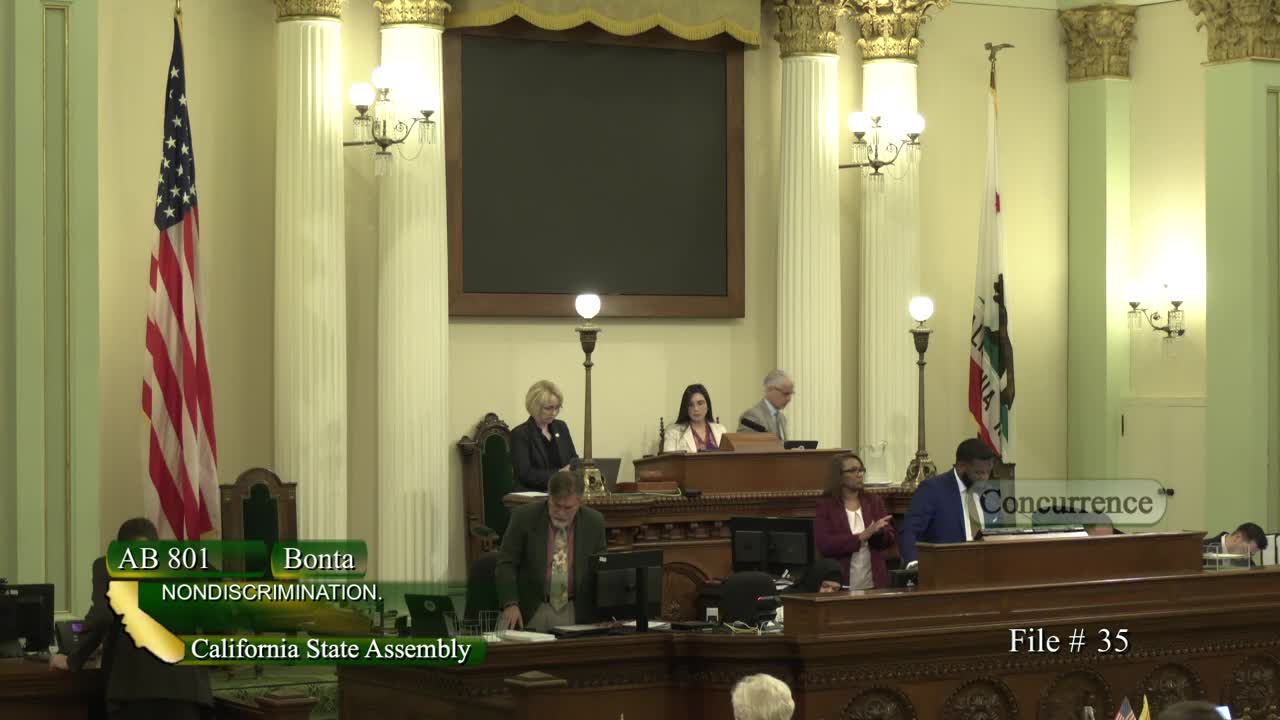
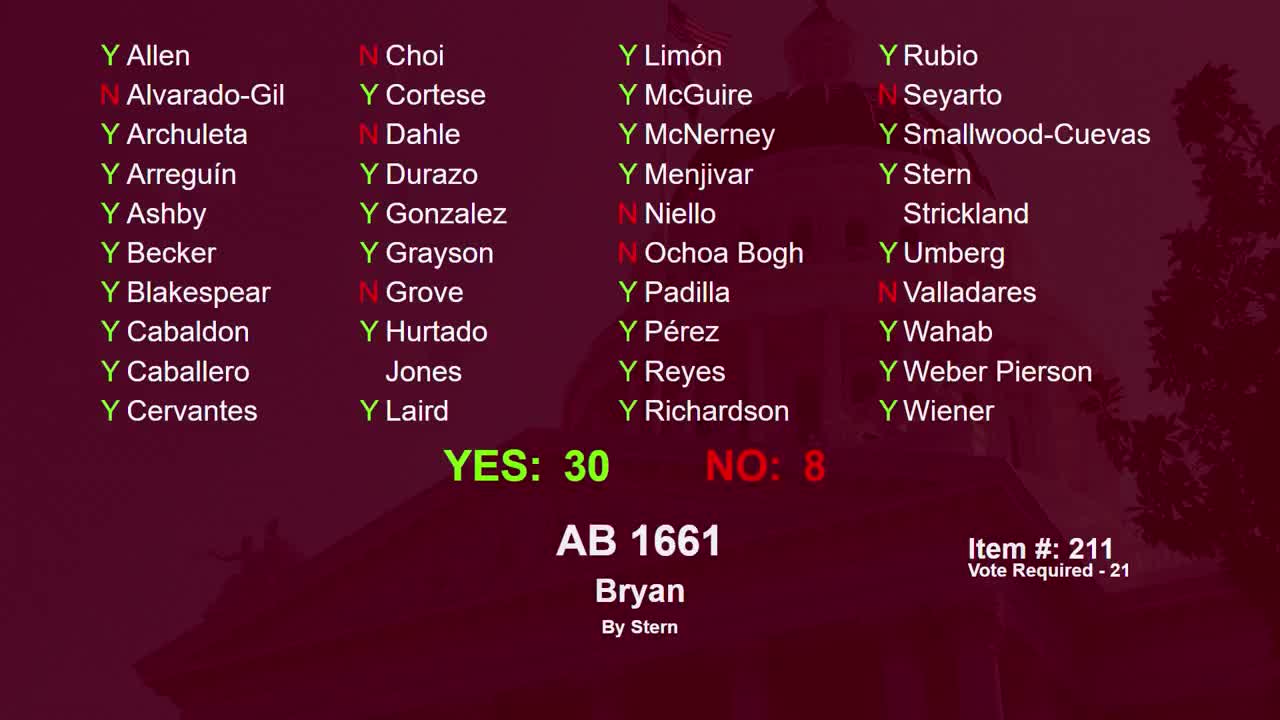
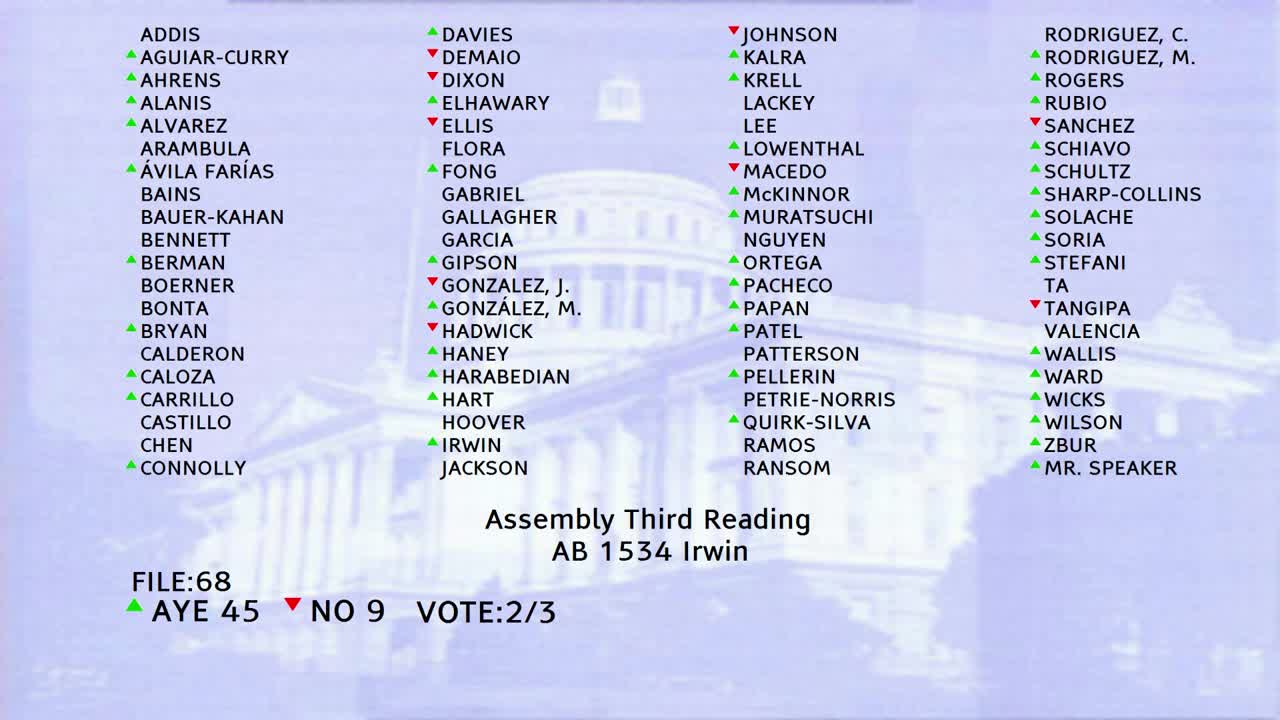
Bill Author