AB 1680: California FAIR Plan Association.
- Session Year: 2025-2026
- House: Assembly
- Latest Version Date: 2026-09-27
Current Status:
Passed
(2026-09-27: Chaptered by Secretary of State - Chapter 540, Statutes of 2026.)
Introduced
In Committee
Awaiting First Chamber Vote
Passed First Chamber
In Committee
Awaiting Second Chamber Vote
Passed Second Chamber
Enacted
The California FAIR Plan Association is a joint reinsurance association in which all insurers licensed to write basic property insurance participate to administer a program for the equitable apportionment of basic property insurance for persons who are unable to obtain that coverage through normal channels. Existing law requires the Insurance Commissioner to approve the associations plan of operation and authorizes the commissioner to examine the associations books, records, files, papers, and documents that relate to its operation. Existing law authorizes the commissioner to impose civil penalties for various violations of the Insurance Code.
This bill would require the association to take corrective actions, as specified by the commissioner or their designee, to rectify violations of applicable statutes, regulations, accounting principles, the plan of operation, or other legally binding applicable rules identified in a report of examination or other operational report. The bill would subject the association to a penalty of not more than $20,000 for failing to take the specified corrective action within a timeframe agreed upon by the commissioner or their designee. The bill would set other civil penalty amounts for violations of provisions relative to the association as not to exceed $10,000 for each act in violation or not to exceed $20,000 if the act was willful, and would require the commissioner to impose those penalties, as specified.
The bill would also authorize the commissioner to require the association to both adjust the policy limits available under programs underwritten by the association and make additional coverage offerings available for fair rental value coverage under the associations renters property insurance program.
This bill would incorporate additional changes to Section 10095 of the Insurance Code proposed by AB 69 to be operative only if this bill and AB 69 are enacted and this bill is enacted last.
The California FAIR Plan Association is a joint reinsurance association in which all insurers licensed to write basic property insurance participate to administer a program for the equitable apportionment of basic property insurance for persons who are unable to obtain that coverage through normal channels. Existing law requires the Insurance Commissioner to approve the associations plan of operation and authorizes the commissioner to examine the associations books, records, files, papers, and documents that relate to its operation. Existing law authorizes the commissioner to impose civil penalties for various violations of the Insurance Code.
This bill would require the association to take corrective actions, as specified by the commissioner or their designee, to rectify violations of applicable statutes, regulations, accounting principles, the plan of operation, or other legally binding applicable rules identified in a report of examination or other operational report. The bill would subject the association to a penalty of not more than $20,000 for failing to take the specified corrective action within a timeframe agreed upon by the commissioner or their designee. The bill would set other civil penalty amounts for violations of provisions relative to the association as not to exceed $10,000 for each act in violation or not to exceed $20,000 if the act was willful, and would require the commissioner to impose those penalties, as specified.
The bill would also authorize the commissioner to require the association to both adjust the policy limits available under programs underwritten by the association and make additional coverage offerings available for fair rental value coverage under the associations renters property insurance program.
This bill would incorporate additional changes to Section 10095 of the Insurance Code proposed by AB 69 to be operative only if this bill and AB 69 are enacted and this bill is enacted last.
The California FAIR Plan Association is a joint reinsurance association in which all insurers licensed to write basic property insurance participate to administer a program for the equitable apportionment of basic property insurance for persons who are unable to obtain that coverage through normal channels. Existing law requires the Insurance Commissioner to approve the associations plan of operation and authorizes the commissioner to examine the associations books, records, files, papers, and documents that relate to its operation. Existing law authorizes the commissioner to impose civil penalties for various violations of the Insurance Code.
This bill would require the association to take corrective actions, as specified by the commissioner or their designee, to rectify violations of applicable statutes, regulations, accounting principles, the plan of operation, or other legally binding applicable rules identified in a report of examination or other operational report. The bill would subject the association to a penalty of not more than $20,000 for failing to take the specified corrective action within a timeframe agreed upon by the commissioner or their designee. The bill would set other civil penalty amounts for violations of provisions relative to the association as not to exceed $10,000 for each act in violation or not to exceed $20,000 if the act was willful, and would require the commissioner to impose those penalties, as specified.
The bill would also authorize the commissioner to require the association to both adjust the policy limits available under programs underwritten by the association and make additional coverage offerings available for fair rental value coverage under the associations renters property insurance program.
This bill would incorporate additional changes to Section 10095 of the Insurance Code proposed by AB 69 to be operative only if this bill and AB 69 are enacted and this bill is enacted last.
The California FAIR Plan Association is a joint reinsurance association in which all insurers licensed to write basic property insurance participate to administer a program for the equitable apportionment of basic property insurance for persons who are unable to obtain that coverage through normal channels. Existing law requires the Insurance Commissioner to approve the associations plan of operation and authorizes the commissioner to examine the associations books, records, files, papers, and documents that relate to its operation. Existing law authorizes the commissioner to impose civil penalties for various violations of the Insurance Code.
This bill would require the association to take corrective actions, as specified by the commissioner or their designee, to rectify violations of applicable statutes, regulations, accounting principles, the plan of operation, or other legally binding applicable rules and guidelines prescribed by the commissioner or their designee and identified in a report of examination or other operational report. The bill would subject the association to a penalty of not more than $20,000 for failing to take the specified corrective action within a timeframe agreed upon by the commissioner or their designee. The bill would set other civil penalty amounts for violations of provisions relative to the association as not to exceed $10,000 for each act in violation or not to exceed $20,000 if the act was willful, and would require the commissioner to impose those penalties, as specified.
The bill would also authorize the commissioner to require the association to both adjust the policy limits available under programs underwritten by the association and make additional coverage offerings available for fair rental value coverage under the associations renters property insurance program.
The California FAIR Plan Association is a joint reinsurance association in which all insurers licensed to write basic property insurance participate to administer a program for the equitable apportionment of basic property insurance for persons who are unable to obtain that coverage through normal channels. Existing law requires the Insurance Commissioner to approve the associations plan of operation and authorizes the commissioner to examine the associations books, records, files, papers, and documents that relate to its operation. Existing law authorizes the commissioner to impose civil penalties for various violations of the Insurance Code.
This bill would require the association to take corrective actions, as specified by the commissioner or their designee, to rectify violations of applicable statutes, regulations, accounting principles, or other applicable rules and guidelines prescribed by the commissioner or their designee and identified in a report of examination or other operational report. The bill would subject the association to a penalty of not more than $20,000 for failing to take the specified corrective action within a timeframe agreed upon by the commissioner or their designee. The bill would set other civil penalty amounts for violations of provisions relative to the association as not to exceed $10,000 for each act in violation or not to exceed $20,000 if the act was willful, and would require the commissioner to impose those penalties, as specified.
The bill would also authorize the commissioner to require the association to both adjust the policy limits available under programs underwritten by the association and make additional coverage offerings available for fair rental value coverage under the associations renters property insurance program.
The California FAIR Plan Association is a joint reinsurance association in which all insurers licensed to write basic property insurance participate to administer a program for the equitable apportionment of basic property insurance for persons who are unable to obtain that coverage through normal channels. Existing law requires the Insurance Commissioner to approve the associations plan of operation and authorizes the commissioner to examine the associations books, records, files, papers, and documents that relate to its operation. Existing law authorizes the commissioner to impose civil penalties for various violations of the Insurance Code.
This bill would require the association to take corrective actions to correct actions, as specified by the commissioner or their designee, to rectify violations of applicable statutes, regulations, statutory accounting principles, or other applicable rules and guidelines prescribed by the commissioner or their designee and identified in a report of examination or other operational report. The bill would subject the association to a fine penalty of not more than $20,000 for failing to take correction the specified corrective action within a timeframe agreed upon by the commissioner or a person designated by the commissioner. their designee. The bill would set other civil penalty amounts for violations of provisions relative to the association as not to exceed $10,000 for each act in violation or not to exceed $20,000 if the act was willful, and would require the commissioner to impose those penalties, as specified.
The bill would also authorize the commissioner to require the association to both adjust the policy limits available under programs underwritten by the association and make additional coverage offerings available for fair rental value coverage under the associations renters property insurance program.
The California FAIR Plan Association is a joint reinsurance association in which all insurers licensed to write basic property insurance participate to administer a program for the equitable apportionment of basic property insurance for persons who are unable to obtain that coverage through normal channels. Existing law requires the Insurance Commissioner to approve the associations plan of operation and authorizes the commissioner to examine the associations books, records, files, papers, and documents that relate to its operation. Existing law authorizes the commissioner to impose civil penalties for various violations of the Insurance Code.
This bill would require the association to comply with the recommendations of take corrective actions to correct violations of applicable statutes, regulations, statutory accounting principles, or other applicable rules identified in a report of examination or other operational report and report. The bill would subject the association to a fine of not more than $20,000 for each violation of failing to adopt the recommendations failing to take correction action within a timeframe agreed upon by the commissioner or a person designated by the commissioner. The bill would set other civil penalty amounts for violations of provisions relative to the association as not to exceed $10,000 for each act in violation or not to exceed $20,000 if the act was willful, and would require the commissioner to impose those penalties, as specified. The
The bill would also authorize the commissioner to require the association to both adjust the policy limits available under programs underwritten by the association and make additional coverage offerings available for fair rental value coverage under the associations renters property insurance program.
The California FAIR Plan Association is a joint reinsurance association in which all insurers licensed to write basic property insurance participate to administer a program for the equitable apportionment of basic property insurance for persons who are unable to obtain that coverage through normal channels. Existing law requires the Insurance Commissioner to approve the associations plan of operation and authorizes the commissioner to examine the associations books, records, files, papers, and documents that relate to its operation. Existing law authorizes the commissioner to impose civil penalties for various violations of the Insurance Code.
This bill would require the association to comply with the recommendations of a report of examination or other operational report and would subject the association to civil penalties for violating statutes relative to the association, including if it fails a fine of not more than $20,000 for each violation of failing to adopt the recommendations within a timeframe agreed upon by the commissioner or a person designated by the commissioner. The bill would set the other civil penalty amounts for violations of provisions relative to the association as not to exceed $10,000 for each act in violation or not to exceed $20,000 if the act was willful, and would require the commissioner to impose those penalties, as specified. The bill would also authorize the commissioner to require the association to both adjust the policy limits available under programs underwritten by the association and make additional coverage offerings available under programs underwritten by the association. for fair rental value coverage under the associations renters property insurance program.
The California FAIR Plan Association is a joint reinsurance association in which all insurers licensed to write basic property insurance participate to administer a program for the equitable apportionment of basic property insurance for persons who are unable to obtain that coverage through normal channels. Existing law requires the Insurance Commissioner to approve the associations plan of operation and authorizes the commissioner to examine the associations books, records, files, papers, and documents that relate to its operation. Existing law authorizes the commissioner to impose civil penalties for various violations of the Insurance Code.
This bill would require the association to comply with the recommendations of a report of examination or other operational report and would subject the association to civil penalties for violating statutes relative to the association, including if it fails to adopt the recommendations within a timeframe agreed upon by the commissioner or a person designated by the commissioner. The bill would set the civil penalty amounts for violations of provisions relative to the association as not to exceed $10,000 for each act in violation or not to exceed $20,000 if the act was willful, and would require the commissioner to impose those penalties, as specified. The bill would also authorize the commissioner to require the association to both adjust the policy limits available under programs underwritten by the association and make additional coverage offerings available under programs underwritten by the association.
(a)Within 30 days following the effective date of this chapter, the association shall submit to the commissioner, for the commissioners review, a proposed plan of operation, consistent with this chapter, creating an association consisting of all insurers licensed to write and engaged in writing in this state, on a direct basis, basic property insurance or any component of basic property insurance in homeowners or other dwelling multiperil policies. An insurer described in this subdivision shall be a member of the association and shall remain a member as a condition of its authority to transact those kinds of insurance in this state.
(b)The proposed plan shall authorize the association to assume and cede reinsurance on risks written by insurers in conformity with the program.
(c)Under the plan, an insurer shall participate in the writings, expenses, profits, and losses of the association in the proportion that its premiums written during the second preceding calendar year bear to the aggregate premiums written by all insurers in the program, excluding that portion of the premiums written attributable to the operation of the association. Premiums written on a policy of basic residential earthquake insurance issued by the California Earthquake Authority pursuant to Section 10089.6 shall be attributed to the insurer that writes the underlying policy of residential property insurance.
(d)The plan shall provide for administration by a governing committee under rules to be adopted by the governing committee with the approval of the commissioner. Voting on administrative questions of the association and facility shall be weighted in accordance with each insurers premiums written during the second preceding calendar year as disclosed in the reports filed by the insurer with the commissioner.
(e)The plan shall provide for a plan to encourage persons to secure basic property insurance through normal channels from an admitted insurer or a licensed surplus line broker by informing those persons what steps they must take in order to secure the insurance through normal channels.
(f)The plan shall be subject to the approval of the commissioner and shall go into effect upon the tentative approval of the commissioner. The commissioner may, at any time, withdraw tentative approval or the commissioner may, at any time after giving final approval, revoke that approval if the commissioner feels it is necessary to carry out the purposes of the chapter. The withdrawal or revocation of that approval shall not affect the validity of any policies executed before the date of the withdrawal. If the commissioner disapproves or withdraws or revokes their approval to all or any part of the plan of operation, the association shall, within 30 days, submit for review an appropriately revised plan or part of a revised plan, and, if the association fails to do so, or if the revised plan is unacceptable, the commissioner shall promulgate a plan of operation or part of a plan as the commissioner may deem necessary to carry out this chapter.
(g)(1)The association may, on its own initiative or at the request of the commissioner, amend the plan of operation, subject to prior approval by the commissioner, who shall have supervision of the inspection bureau, the facility, and the association. The commissioner, or their designee, shall have the power of visitation of and examination into the operation and free access to all the books, records, files, papers, and documents that relate to operation of the facility and association, and may summon, qualify, and examine as witnesses all persons having knowledge of those operations, including officers, agents, or employees thereof. The association shall take corrective actions, as specified by the commissioner or their designee, to rectify violations of applicable statutes, regulations, accounting principles, the plan of operation, or other legally binding applicable rules identified in the report of examination or any other operational report conducted pursuant to this section. If the association fails to take the specified corrective action within a timeframe agreed upon by the commissioner or their designee, the association shall be subject to a penalty of not more than twenty thousand dollars ($20,000) for each failure to take corrective action. These penalties may be in addition to any other penalties provided by law.
(2)The association may request additional extensions of 30 calendar days or other greater extensions approved by the commissioner, for good cause, in order to comply. The commissioner or their designee may deny a request for an extension of time if it is determined the request is not made in good faith or there has not been a good faith effort to comply. For purposes of this subdivision, good cause shall include circumstances beyond the associations control, a showing that the association has made a good faith effort to comply, or other factors agreed to by the commissioner.
(3)For purposes of this subdivision, a failure to take corrective action shall be determined per specific category of corrective action requested as described in the examination.
(h)An insurer member of the association shall provide to an applicant who is denied coverage, or a policyholder whose policy is canceled or not renewed, the internet website address and statewide toll-free telephone number for the association established pursuant to Section 10095.5 for the purpose of obtaining information and assistance in obtaining basic property insurance.
(i)To reduce the associations concentration and number of policies, and to encourage maximum use of the normal insurance market consistent with subdivision (c) of Section 10090, the association shall develop and implement a clearinghouse program on or before July 1, 2021, to help reduce the number of existing FAIR Plan policies and provide the opportunity for admitted insurers to offer homeowners insurance policies to FAIR Plan policyholders. An insurer that participates in the clearinghouse program shall sign an agreement with the association that sets forth the terms and conditions for the insurer to offer homeowners insurance through the policys listed agent or broker of record, if any. The clearinghouse program may include a provision to include nonadmitted insurers if admitted insurers have the first option.
(j)To reduce the associations concentration and number of commercial policies, and to encourage maximum use of the normal insurance market consistent with subdivision (c) of Section 10090, the association shall develop and implement a commercial insurance policy clearinghouse program on or before July 1, 2024, to help reduce the number of existing FAIR Plan commercial policies and provide the opportunity for admitted insurers to offer commercial insurance policies to FAIR Plan policyholders. An insurer that participates in the commercial policy clearinghouse program shall sign an agreement with the association that sets forth the terms and conditions for the insurer to offer commercial insurance through the policys listed agent or broker of record, if any. The commercial policy clearinghouse program may include a provision to include nonadmitted insurers if admitted insurers have the first option.
(k)(1)With respect to the clearinghouse programs referenced in subdivisions (i) and (j), the association shall comply with the Insurance Information and Privacy Protection Act (Article 6.6 (commencing with Section 791) of Chapter 1 of Part 2 of Division 1) and regulations on the Privacy of Nonpublic Personal Information (Subchapter 5.9 (commencing with Section 2689.1) of Chapter 5 of Title 10 of the California Code of Regulations).
(2)The association shall provide all policyholders with notice of each of the following:
(A)The manner in which the association shall share policyholders personal information to facilitate offers of private insurance through the clearinghouse programs.
(B)A method to opt out of the sharing of policyholders personal information in connection with the clearinghouse programs.
SEC. 1.5.Section 10095 of the Insurance Code is amended to read:10095.(a)Within 30 days following the effective date of this chapter, the association shall submit to the commissioner, for the commissioners review, a proposed plan of operation, consistent with this chapter, creating an association consisting of all insurers licensed to write and engaged in writing in this state, on a direct basis, basic property insurance or any component of basic property insurance in homeowners or other dwelling multiperil policies. An insurer described in this subdivision shall be a member of the association and shall remain a member as a condition of its authority to transact those kinds of insurance in this state.
(b)The proposed plan shall authorize the association to assume and cede reinsurance on risks written by insurers in conformity with the program.
(c)Under the plan, an insurer shall participate in the writings, expenses, profits, and losses of the association in the proportion that its premiums written during the second preceding calendar year bear to the aggregate premiums written by all insurers in the program, excluding that portion of the premiums written attributable to the operation of the association. Premiums written on a policy of basic residential earthquake insurance issued by the California Earthquake Authority pursuant to Section 10089.6 shall be attributed to the insurer that writes the underlying policy of residential property insurance.
(d)The plan shall provide for administration by a governing committee under rules to be adopted by the governing committee with the approval of the commissioner. Voting on administrative questions of the association and facility shall be weighted in accordance with each insurers premiums written during the second preceding calendar year as disclosed in the reports filed by the insurer with the commissioner.
(e)(1)The plan shall provide for a plan to encourage persons to secure basic property insurance through normal channels from an admitted insurer or a licensed surplus line broker by informing those persons what steps they must take in order to secure the insurance through normal channels.
(2)The association shall require registered agents and brokers to complete the associations department-approved Brokers and FAIR Plan course, which provides training on the associations and the brokers responsibility to advise policyholders on the voluntary market options.
(f)The plan shall be subject to the approval of the commissioner and shall go into effect upon the tentative approval of the commissioner. The commissioner may, at any time, withdraw tentative approval or the commissioner may, at any time after giving final approval, revoke that approval if the commissioner feels it is necessary to carry out the purposes of the chapter. The withdrawal or revocation of that approval shall not affect the validity of any policies executed before the date of the withdrawal. If the commissioner disapproves or withdraws or revokes their approval to all or any part of the plan of operation, the association shall, within 30 days, submit for review an appropriately revised plan or part of a revised plan, and, if the association fails to do so, or if the revised plan is unacceptable, the commissioner shall promulgate a plan of operation or part of a plan as the commissioner may deem necessary to carry out this chapter.
(g)(1)The association may, on its own initiative or at the request of the commissioner, amend the plan of operation, subject to prior approval by the commissioner, who shall have supervision of the inspection bureau, the facility, and the association. The commissioner, or their designee, shall have the power of visitation of and examination into the operation and free access to all the books, records, files, papers, and documents that relate to operation of the facility and association, and may summon, qualify, and examine as witnesses all persons having knowledge of those operations, including officers, agents, or employees thereof. The association shall take corrective actions, as specified by the commissioner or their designee, to rectify violations of applicable statutes, regulations, accounting principles, the plan of operation, or other legally binding applicable rules identified in the report of examination or any other operational report conducted pursuant to this section. If the association fails to take the specified corrective action within a timeframe agreed upon by the commissioner or their designee, the association shall be subject to a penalty of not more than twenty thousand dollars ($20,000) for each failure to take corrective action. These penalties may be in addition to any other penalties provided by law.
(2)The association may request additional extensions of 30 calendar days or other greater extensions approved by the commissioner, for good cause, in order to comply. The commissioner or their designee may deny a request for an extension of time if it is determined the request is not made in good faith or there has not been a good faith effort to comply. For purposes of this subdivision, good cause shall include circumstances beyond the associations control, a showing that the association has made a good faith effort to comply, or other factors agreed to by the commissioner.
(3)For purposes of this subdivision, a failure to take corrective action shall be determined per specific category of corrective action requested as described in the examination.
(h)An insurer member of the association shall provide to an applicant who is denied coverage, or a policyholder whose policy is canceled or not renewed, the internet website address and statewide toll-free telephone number for the association established pursuant to Section 10095.5 for the purpose of obtaining information and assistance in obtaining basic property insurance.
(i)(1)To reduce the associations concentration and number of policies, and to encourage maximum use of the normal insurance market consistent with subdivision (c) of Section 10090, the association shall develop and implement a clearinghouse program on or before July 1, 2021, to help reduce the number of existing FAIR Plan policies and provide the opportunity for admitted insurers to offer homeowners insurance policies to FAIR Plan policyholders. An insurer that participates in the clearinghouse program shall sign an agreement with the association that sets forth the terms and conditions for the insurer to offer homeowners insurance through the policys listed agent or broker of record, if any. The clearinghouse program may include a provision to include nonadmitted insurers if admitted insurers have the first option.
(2)On and after January 1, 2028, to increase availability of consumer choice, the association may share with those insurers participating in the clearinghouse program relevant policyholder information, including any agent or broker of record listed on the policy, that allows a participating insurer to offer a homeowners insurance policy to a FAIR Plan policyholder. If there is an agent or broker of record listed on the policy, an insurer shall make an offer simultaneously to the agent or broker of record and the FAIR Plan policyholder.
(j)(1)To reduce the associations concentration and number of commercial policies, and to encourage maximum use of the normal insurance market consistent with subdivision (c) of Section 10090, the association shall develop and implement a commercial insurance policy clearinghouse program on or before July 1, 2024, to help reduce the number of existing FAIR Plan commercial policies and provide the opportunity for admitted insurers to offer commercial insurance policies to FAIR Plan policyholders. An insurer that participates in the commercial policy clearinghouse program shall sign an agreement with the association that sets forth the terms and conditions for the insurer to offer commercial insurance through the policys listed agent or broker of record, if any. The commercial policy clearinghouse program may include a provision to include nonadmitted insurers if admitted insurers have the first option.
(2)On and after January 1, 2028, to increase availability of consumer choice, the association may share with those insurers participating in the clearinghouse program relevant policyholder information, including any agent or broker of record listed on the policy, that allows a participating insurer to offer a commercial insurance policy to a FAIR Plan policyholder. If there is an agent or broker of record listed on the policy, an insurer shall make an offer simultaneously to the agent or broker of record and the FAIR Plan policyholder.
(k)(1)With respect to the clearinghouse programs referenced in subdivisions (i) and (j), the association shall comply with the Insurance Information and Privacy Protection Act (Article 6.6 (commencing with Section 791) of Chapter 1 of Part 2 of Division 1) and regulations on the Privacy of Nonpublic Personal Information (Subchapter 5.9 (commencing with Section 2689.1) of Chapter 5 of Title 10 of the California Code of Regulations).
(2)The association shall provide all policyholders with notice of each of the following:
(A)The manner in which the association shall share policyholders personal information to facilitate offers of private insurance through the clearinghouse programs.
(B)A method to opt out of the sharing of policyholders personal information in connection with the clearinghouse programs.
(l)Commencing May 1, 2027, every admitted and nonadmitted insurer that participates in the clearinghouse programs referenced in subdivisions (i) and (j) shall report to the association on a quarterly basis the number of policies it has issued to policyholders in the association as a result of that participation. The association shall report aggregated numbers within 30 days to the commissioner, the Assembly Committee on Insurance, and the Senate Committee on Insurance, and post the aggregated numbers on the associations public internet website.
SEC. 2.Section 10100.4 is added to the Insurance Code, immediately following Section 10100.3, to read:10100.4.To meet the needs of policyholders, the commissioner may require the association to do both of the following:
(a)Adjust the policy limits available under programs underwritten by the association.
(b)Make additional coverage offerings available for fair rental value coverage under the associations renters property insurance program.
SEC. 3.Section 10100.5 is added to the Insurance Code, to read:10100.5.(a)A person who violates this chapter is liable to the state for a civil penalty not to exceed ten thousand dollars ($10,000) for each act, or, if the act was willful, a civil penalty not to exceed twenty thousand dollars ($20,000) for each act in violation. The commissioner shall have the discretion to establish what constitutes an act.
(b)A penalty imposed pursuant to this section shall be imposed by and determined by the commissioner. The penalty imposed by this section is appealable by means of any remedy provided by Section 12940 or by the Administrative Procedure Act (Chapter 5 (commencing with Section 11500) of Part 1 of Division 3 of Title 2 of the Government Code).
(c)(1)If the commissioner has reason to believe that a person has violated this chapter, or that the association has violated subdivision (g) of Section 10095, and that a proceeding by the commissioner regarding that violation would be in the public interest, the commissioner shall issue and serve upon the person an order to show cause for the purpose of determining if the commissioner should order that person to pay a penalty imposed pursuant to this section and to cease and desist in the violation. The order to show cause shall include a statement of the charges, a statement of the persons potential liability under this section, and a notice of a hearing to be held at a time and place fixed in the notice, which shall not be less than 30 days after the service of the notice.
(2)If the charges are found to be justified, the commissioner shall issue and serve upon the person an order requiring the person to pay a penalty imposed pursuant to this section and to cease and desist in the violation. The hearing shall be conducted in accordance with the Administrative Procedure Act (Chapter 5 (commencing with Section 11500) of Part 1 of Division 3 of Title 2 of the Government Code), except that the hearings may be conducted by an administrative law judge in the administrative law bureau if the proceedings involve a common question of law or fact with another proceeding arising under other provisions of the Insurance Code that may be conducted by administrative law judges in the administrative law bureau. The commissioner and the appointed administrative law judge shall have all the powers granted under the Administrative Procedure Act. The person shall be entitled to have the proceedings and the order reviewed by means of any remedy provided by Section 12940 of this code or by the Administrative Procedure Act.
(d)The powers granted to the commissioner by this section are in addition to any other powers to enforce penalties, fines, or forfeitures, or denials, suspensions, or revocations of licenses or certificates.
SEC. 4.Section 1.5 of this bill incorporates amendments to Section 10095 of the Insurance Code proposed by both this bill and Assembly Bill 69. That section of this bill shall only become operative if (1) both bills are enacted and become effective on or before January 1, 2027, (2) each bill amends Section 10095 of the Insurance Code, and (3) this bill is enacted after Assembly Bill 69, in which case Section 1 of this bill shall not become operative.
(a)Within 30 days following the effective date of this chapter, the association shall submit to the commissioner, for the commissioners review, a proposed plan of operation, consistent with this chapter, creating an association consisting of all insurers licensed to write and engaged in writing in this state, on a direct basis, basic property insurance or any component of basic property insurance in homeowners or other dwelling multiperil policies. An insurer described in this subdivision shall be a member of the association and shall remain a member as a condition of its authority to transact those kinds of insurance in this state.
(b)The proposed plan shall authorize the association to assume and cede reinsurance on risks written by insurers in conformity with the program.
(c)Under the plan, an insurer shall participate in the writings, expenses, profits, and losses of the association in the proportion that its premiums written during the second preceding calendar year bear to the aggregate premiums written by all insurers in the program, excluding that portion of the premiums written attributable to the operation of the association. Premiums written on a policy of basic residential earthquake insurance issued by the California Earthquake Authority pursuant to Section 10089.6 shall be attributed to the insurer that writes the underlying policy of residential property insurance.
(d)The plan shall provide for administration by a governing committee under rules to be adopted by the governing committee with the approval of the commissioner. Voting on administrative questions of the association and facility shall be weighted in accordance with each insurers premiums written during the second preceding calendar year as disclosed in the reports filed by the insurer with the commissioner.
(e)The plan shall provide for a plan to encourage persons to secure basic property insurance through normal channels from an admitted insurer or a licensed surplus line broker by informing those persons what steps they must take in order to secure the insurance through normal channels.
(f)The plan shall be subject to the approval of the commissioner and shall go into effect upon the tentative approval of the commissioner. The commissioner may, at any time, withdraw tentative approval or the commissioner may, at any time after giving final approval, revoke that approval if the commissioner feels it is necessary to carry out the purposes of the chapter. The withdrawal or revocation of that approval shall not affect the validity of any policies executed before the date of the withdrawal. If the commissioner disapproves or withdraws or revokes their approval to all or any part of the plan of operation, the association shall, within 30 days, submit for review an appropriately revised plan or part of a revised plan, and, if the association fails to do so, or if the revised plan is unacceptable, the commissioner shall promulgate a plan of operation or part of a plan as the commissioner may deem necessary to carry out this chapter.
(g)(1)The association may, on its own initiative or at the request of the commissioner, amend the plan of operation, subject to prior approval by the commissioner, who shall have supervision of the inspection bureau, the facility, and the association. The commissioner, or their designee, shall have the power of visitation of and examination into the operation and free access to all the books, records, files, papers, and documents that relate to operation of the facility and association, and may summon, qualify, and examine as witnesses all persons having knowledge of those operations, including officers, agents, or employees thereof. The association shall take corrective actions, as specified by the commissioner or their designee, to rectify violations of applicable statutes, regulations, accounting principles, the plan of operation, or other legally binding applicable rules identified in the report of examination or any other operational report conducted pursuant to this section. If the association fails to take the specified corrective action within a timeframe agreed upon by the commissioner or their designee, the association shall be subject to a penalty of not more than twenty thousand dollars ($20,000) for each failure to take corrective action. These penalties may be in addition to any other penalties provided by law.
(2)The association may request additional extensions of 30 calendar days or other greater extensions approved by the commissioner, for good cause, in order to comply. The commissioner or their designee may deny a request for an extension of time if it is determined the request is not made in good faith or there has not been a good faith effort to comply. For purposes of this subdivision, good cause shall include circumstances beyond the associations control, a showing that the association has made a good faith effort to comply, or other factors agreed to by the commissioner.
(3)For purposes of this subdivision, a failure to take corrective action shall be determined per specific category of corrective action requested as described in the examination.
(h)An insurer member of the association shall provide to an applicant who is denied coverage, or a policyholder whose policy is canceled or not renewed, the internet website address and statewide toll-free telephone number for the association established pursuant to Section 10095.5 for the purpose of obtaining information and assistance in obtaining basic property insurance.
(i)To reduce the associations concentration and number of policies, and to encourage maximum use of the normal insurance market consistent with subdivision (c) of Section 10090, the association shall develop and implement a clearinghouse program on or before July 1, 2021, to help reduce the number of existing FAIR Plan policies and provide the opportunity for admitted insurers to offer homeowners insurance policies to FAIR Plan policyholders. An insurer that participates in the clearinghouse program shall sign an agreement with the association that sets forth the terms and conditions for the insurer to offer homeowners insurance through the policys listed agent or broker of record, if any. The clearinghouse program may include a provision to include nonadmitted insurers if admitted insurers have the first option.
(j)To reduce the associations concentration and number of commercial policies, and to encourage maximum use of the normal insurance market consistent with subdivision (c) of Section 10090, the association shall develop and implement a commercial insurance policy clearinghouse program on or before July 1, 2024, to help reduce the number of existing FAIR Plan commercial policies and provide the opportunity for admitted insurers to offer commercial insurance policies to FAIR Plan policyholders. An insurer that participates in the commercial policy clearinghouse program shall sign an agreement with the association that sets forth the terms and conditions for the insurer to offer commercial insurance through the policys listed agent or broker of record, if any. The commercial policy clearinghouse program may include a provision to include nonadmitted insurers if admitted insurers have the first option.
(k)(1)With respect to the clearinghouse programs referenced in subdivisions (i) and (j), the association shall comply with the Insurance Information and Privacy Protection Act (Article 6.6 (commencing with Section 791) of Chapter 1 of Part 2 of Division 1) and regulations on the Privacy of Nonpublic Personal Information (Subchapter 5.9 (commencing with Section 2689.1) of Chapter 5 of Title 10 of the California Code of Regulations).
(2)The association shall provide all policyholders with notice of each of the following:
(A)The manner in which the association shall share policyholders personal information to facilitate offers of private insurance through the clearinghouse programs.
(B)A method to opt out of the sharing of policyholders personal information in connection with the clearinghouse programs.
SEC. 1.5.Section 10095 of the Insurance Code is amended to read:10095.(a)Within 30 days following the effective date of this chapter, the association shall submit to the commissioner, for the commissioners review, a proposed plan of operation, consistent with this chapter, creating an association consisting of all insurers licensed to write and engaged in writing in this state, on a direct basis, basic property insurance or any component of basic property insurance in homeowners or other dwelling multiperil policies. An insurer described in this subdivision shall be a member of the association and shall remain a member as a condition of its authority to transact those kinds of insurance in this state.
(b)The proposed plan shall authorize the association to assume and cede reinsurance on risks written by insurers in conformity with the program.
(c)Under the plan, an insurer shall participate in the writings, expenses, profits, and losses of the association in the proportion that its premiums written during the second preceding calendar year bear to the aggregate premiums written by all insurers in the program, excluding that portion of the premiums written attributable to the operation of the association. Premiums written on a policy of basic residential earthquake insurance issued by the California Earthquake Authority pursuant to Section 10089.6 shall be attributed to the insurer that writes the underlying policy of residential property insurance.
(d)The plan shall provide for administration by a governing committee under rules to be adopted by the governing committee with the approval of the commissioner. Voting on administrative questions of the association and facility shall be weighted in accordance with each insurers premiums written during the second preceding calendar year as disclosed in the reports filed by the insurer with the commissioner.
(e)(1)The plan shall provide for a plan to encourage persons to secure basic property insurance through normal channels from an admitted insurer or a licensed surplus line broker by informing those persons what steps they must take in order to secure the insurance through normal channels.
(2)The association shall require registered agents and brokers to complete the associations department-approved Brokers and FAIR Plan course, which provides training on the associations and the brokers responsibility to advise policyholders on the voluntary market options.
(f)The plan shall be subject to the approval of the commissioner and shall go into effect upon the tentative approval of the commissioner. The commissioner may, at any time, withdraw tentative approval or the commissioner may, at any time after giving final approval, revoke that approval if the commissioner feels it is necessary to carry out the purposes of the chapter. The withdrawal or revocation of that approval shall not affect the validity of any policies executed before the date of the withdrawal. If the commissioner disapproves or withdraws or revokes their approval to all or any part of the plan of operation, the association shall, within 30 days, submit for review an appropriately revised plan or part of a revised plan, and, if the association fails to do so, or if the revised plan is unacceptable, the commissioner shall promulgate a plan of operation or part of a plan as the commissioner may deem necessary to carry out this chapter.
(g)(1)The association may, on its own initiative or at the request of the commissioner, amend the plan of operation, subject to prior approval by the commissioner, who shall have supervision of the inspection bureau, the facility, and the association. The commissioner, or their designee, shall have the power of visitation of and examination into the operation and free access to all the books, records, files, papers, and documents that relate to operation of the facility and association, and may summon, qualify, and examine as witnesses all persons having knowledge of those operations, including officers, agents, or employees thereof. The association shall take corrective actions, as specified by the commissioner or their designee, to rectify violations of applicable statutes, regulations, accounting principles, the plan of operation, or other legally binding applicable rules identified in the report of examination or any other operational report conducted pursuant to this section. If the association fails to take the specified corrective action within a timeframe agreed upon by the commissioner or their designee, the association shall be subject to a penalty of not more than twenty thousand dollars ($20,000) for each failure to take corrective action. These penalties may be in addition to any other penalties provided by law.
(2)The association may request additional extensions of 30 calendar days or other greater extensions approved by the commissioner, for good cause, in order to comply. The commissioner or their designee may deny a request for an extension of time if it is determined the request is not made in good faith or there has not been a good faith effort to comply. For purposes of this subdivision, good cause shall include circumstances beyond the associations control, a showing that the association has made a good faith effort to comply, or other factors agreed to by the commissioner.
(3)For purposes of this subdivision, a failure to take corrective action shall be determined per specific category of corrective action requested as described in the examination.
(h)An insurer member of the association shall provide to an applicant who is denied coverage, or a policyholder whose policy is canceled or not renewed, the internet website address and statewide toll-free telephone number for the association established pursuant to Section 10095.5 for the purpose of obtaining information and assistance in obtaining basic property insurance.
(i)(1)To reduce the associations concentration and number of policies, and to encourage maximum use of the normal insurance market consistent with subdivision (c) of Section 10090, the association shall develop and implement a clearinghouse program on or before July 1, 2021, to help reduce the number of existing FAIR Plan policies and provide the opportunity for admitted insurers to offer homeowners insurance policies to FAIR Plan policyholders. An insurer that participates in the clearinghouse program shall sign an agreement with the association that sets forth the terms and conditions for the insurer to offer homeowners insurance through the policys listed agent or broker of record, if any. The clearinghouse program may include a provision to include nonadmitted insurers if admitted insurers have the first option.
(2)On and after January 1, 2028, to increase availability of consumer choice, the association may share with those insurers participating in the clearinghouse program relevant policyholder information, including any agent or broker of record listed on the policy, that allows a participating insurer to offer a homeowners insurance policy to a FAIR Plan policyholder. If there is an agent or broker of record listed on the policy, an insurer shall make an offer simultaneously to the agent or broker of record and the FAIR Plan policyholder.
(j)(1)To reduce the associations concentration and number of commercial policies, and to encourage maximum use of the normal insurance market consistent with subdivision (c) of Section 10090, the association shall develop and implement a commercial insurance policy clearinghouse program on or before July 1, 2024, to help reduce the number of existing FAIR Plan commercial policies and provide the opportunity for admitted insurers to offer commercial insurance policies to FAIR Plan policyholders. An insurer that participates in the commercial policy clearinghouse program shall sign an agreement with the association that sets forth the terms and conditions for the insurer to offer commercial insurance through the policys listed agent or broker of record, if any. The commercial policy clearinghouse program may include a provision to include nonadmitted insurers if admitted insurers have the first option.
(2)On and after January 1, 2028, to increase availability of consumer choice, the association may share with those insurers participating in the clearinghouse program relevant policyholder information, including any agent or broker of record listed on the policy, that allows a participating insurer to offer a commercial insurance policy to a FAIR Plan policyholder. If there is an agent or broker of record listed on the policy, an insurer shall make an offer simultaneously to the agent or broker of record and the FAIR Plan policyholder.
(k)(1)With respect to the clearinghouse programs referenced in subdivisions (i) and (j), the association shall comply with the Insurance Information and Privacy Protection Act (Article 6.6 (commencing with Section 791) of Chapter 1 of Part 2 of Division 1) and regulations on the Privacy of Nonpublic Personal Information (Subchapter 5.9 (commencing with Section 2689.1) of Chapter 5 of Title 10 of the California Code of Regulations).
(2)The association shall provide all policyholders with notice of each of the following:
(A)The manner in which the association shall share policyholders personal information to facilitate offers of private insurance through the clearinghouse programs.
(B)A method to opt out of the sharing of policyholders personal information in connection with the clearinghouse programs.
(l)Commencing May 1, 2027, every admitted and nonadmitted insurer that participates in the clearinghouse programs referenced in subdivisions (i) and (j) shall report to the association on a quarterly basis the number of policies it has issued to policyholders in the association as a result of that participation. The association shall report aggregated numbers within 30 days to the commissioner, the Assembly Committee on Insurance, and the Senate Committee on Insurance, and post the aggregated numbers on the associations public internet website.
SEC. 2.Section 10100.4 is added to the Insurance Code, immediately following Section 10100.3, to read:10100.4.To meet the needs of policyholders, the commissioner may require the association to do both of the following:
(a)Adjust the policy limits available under programs underwritten by the association.
(b)Make additional coverage offerings available for fair rental value coverage under the associations renters property insurance program.
SEC. 3.Section 10100.5 is added to the Insurance Code, to read:10100.5.(a)A person who violates this chapter is liable to the state for a civil penalty not to exceed ten thousand dollars ($10,000) for each act, or, if the act was willful, a civil penalty not to exceed twenty thousand dollars ($20,000) for each act in violation. The commissioner shall have the discretion to establish what constitutes an act.
(b)A penalty imposed pursuant to this section shall be imposed by and determined by the commissioner. The penalty imposed by this section is appealable by means of any remedy provided by Section 12940 or by the Administrative Procedure Act (Chapter 5 (commencing with Section 11500) of Part 1 of Division 3 of Title 2 of the Government Code).
(c)(1)If the commissioner has reason to believe that a person has violated this chapter, or that the association has violated subdivision (g) of Section 10095, and that a proceeding by the commissioner regarding that violation would be in the public interest, the commissioner shall issue and serve upon the person an order to show cause for the purpose of determining if the commissioner should order that person to pay a penalty imposed pursuant to this section and to cease and desist in the violation. The order to show cause shall include a statement of the charges, a statement of the persons potential liability under this section, and a notice of a hearing to be held at a time and place fixed in the notice, which shall not be less than 30 days after the service of the notice.
(2)If the charges are found to be justified, the commissioner shall issue and serve upon the person an order requiring the person to pay a penalty imposed pursuant to this section and to cease and desist in the violation. The hearing shall be conducted in accordance with the Administrative Procedure Act (Chapter 5 (commencing with Section 11500) of Part 1 of Division 3 of Title 2 of the Government Code), except that the hearings may be conducted by an administrative law judge in the administrative law bureau if the proceedings involve a common question of law or fact with another proceeding arising under other provisions of the Insurance Code that may be conducted by administrative law judges in the administrative law bureau. The commissioner and the appointed administrative law judge shall have all the powers granted under the Administrative Procedure Act. The person shall be entitled to have the proceedings and the order reviewed by means of any remedy provided by Section 12940 of this code or by the Administrative Procedure Act.
(d)The powers granted to the commissioner by this section are in addition to any other powers to enforce penalties, fines, or forfeitures, or denials, suspensions, or revocations of licenses or certificates.
SEC. 4.Section 1.5 of this bill incorporates amendments to Section 10095 of the Insurance Code proposed by both this bill and Assembly Bill 69. That section of this bill shall only become operative if (1) both bills are enacted and become effective on or before January 1, 2027, (2) each bill amends Section 10095 of the Insurance Code, and (3) this bill is enacted after Assembly Bill 69, in which case Section 1 of this bill shall not become operative.
(a)Within 30 days following the effective date of this chapter, the association shall submit to the commissioner, for the commissioners review, a proposed plan of operation, consistent with this chapter, creating an association consisting of all insurers licensed to write and engaged in writing in this state, on a direct basis, basic property insurance or any component of basic property insurance in homeowners or other dwelling multiperil policies. An insurer described in this subdivision shall be a member of the association and shall remain a member as a condition of its authority to transact those kinds of insurance in this state.
(b)The proposed plan shall authorize the association to assume and cede reinsurance on risks written by insurers in conformity with the program.
(c)Under the plan, an insurer shall participate in the writings, expenses, profits, and losses of the association in the proportion that its premiums written during the second preceding calendar year bear to the aggregate premiums written by all insurers in the program, excluding that portion of the premiums written attributable to the operation of the association. Premiums written on a policy of basic residential earthquake insurance issued by the California Earthquake Authority pursuant to Section 10089.6 shall be attributed to the insurer that writes the underlying policy of residential property insurance.
(d)The plan shall provide for administration by a governing committee under rules to be adopted by the governing committee with the approval of the commissioner. Voting on administrative questions of the association and facility shall be weighted in accordance with each insurers premiums written during the second preceding calendar year as disclosed in the reports filed by the insurer with the commissioner.
(e)The plan shall provide for a plan to encourage persons to secure basic property insurance through normal channels from an admitted insurer or a licensed surplus line broker by informing those persons what steps they must take in order to secure the insurance through normal channels.
(f)The plan shall be subject to the approval of the commissioner and shall go into effect upon the tentative approval of the commissioner. The commissioner may, at any time, withdraw tentative approval or the commissioner may, at any time after giving final approval, revoke that approval if the commissioner feels it is necessary to carry out the purposes of the chapter. The withdrawal or revocation of that approval shall not affect the validity of any policies executed before the date of the withdrawal. If the commissioner disapproves or withdraws or revokes their approval to all or any part of the plan of operation, the association shall, within 30 days, submit for review an appropriately revised plan or part of a revised plan, and, if the association fails to do so, or if the revised plan is unacceptable, the commissioner shall promulgate a plan of operation or part of a plan as the commissioner may deem necessary to carry out this chapter.
(g)(1)The association may, on its own initiative or at the request of the commissioner, amend the plan of operation, subject to prior approval by the commissioner, who shall have supervision of the inspection bureau, the facility, and the association. The commissioner, or their designee, shall have the power of visitation of and examination into the operation and free access to all the books, records, files, papers, and documents that relate to operation of the facility and association, and may summon, qualify, and examine as witnesses all persons having knowledge of those operations, including officers, agents, or employees thereof. The association shall take corrective actions, as specified by the commissioner or their designee, to rectify violations of applicable statutes, regulations, accounting principles, the plan of operation, or other legally binding applicable rules identified in the report of examination or any other operational report conducted pursuant to this section. If the association fails to take the specified corrective action within a timeframe agreed upon by the commissioner or their designee, the association shall be subject to a penalty of not more than twenty thousand dollars ($20,000) for each failure to take corrective action. These penalties may be in addition to any other penalties provided by law.
(2)The association may request additional extensions of 30 calendar days or other greater extensions approved by the commissioner, for good cause, in order to comply. The commissioner or their designee may deny a request for an extension of time if it is determined the request is not made in good faith or there has not been a good faith effort to comply. For purposes of this subdivision, good cause shall include circumstances beyond the associations control, a showing that the association has made a good faith effort to comply, or other factors agreed to by the commissioner.
(3)For purposes of this subdivision, a failure to take corrective action shall be determined per specific category of corrective action requested as described in the examination.
(h)An insurer member of the association shall provide to an applicant who is denied coverage, or a policyholder whose policy is canceled or not renewed, the internet website address and statewide toll-free telephone number for the association established pursuant to Section 10095.5 for the purpose of obtaining information and assistance in obtaining basic property insurance.
(i)To reduce the associations concentration and number of policies, and to encourage maximum use of the normal insurance market consistent with subdivision (c) of Section 10090, the association shall develop and implement a clearinghouse program on or before July 1, 2021, to help reduce the number of existing FAIR Plan policies and provide the opportunity for admitted insurers to offer homeowners insurance policies to FAIR Plan policyholders. An insurer that participates in the clearinghouse program shall sign an agreement with the association that sets forth the terms and conditions for the insurer to offer homeowners insurance through the policys listed agent or broker of record, if any. The clearinghouse program may include a provision to include nonadmitted insurers if admitted insurers have the first option.
(j)To reduce the associations concentration and number of commercial policies, and to encourage maximum use of the normal insurance market consistent with subdivision (c) of Section 10090, the association shall develop and implement a commercial insurance policy clearinghouse program on or before July 1, 2024, to help reduce the number of existing FAIR Plan commercial policies and provide the opportunity for admitted insurers to offer commercial insurance policies to FAIR Plan policyholders. An insurer that participates in the commercial policy clearinghouse program shall sign an agreement with the association that sets forth the terms and conditions for the insurer to offer commercial insurance through the policys listed agent or broker of record, if any. The commercial policy clearinghouse program may include a provision to include nonadmitted insurers if admitted insurers have the first option.
(k)(1)With respect to the clearinghouse programs referenced in subdivisions (i) and (j), the association shall comply with the Insurance Information and Privacy Protection Act (Article 6.6 (commencing with Section 791) of Chapter 1 of Part 2 of Division 1) and regulations on the Privacy of Nonpublic Personal Information (Subchapter 5.9 (commencing with Section 2689.1) of Chapter 5 of Title 10 of the California Code of Regulations).
(2)The association shall provide all policyholders with notice of each of the following:
(A)The manner in which the association shall share policyholders personal information to facilitate offers of private insurance through the clearinghouse programs.
(B)A method to opt out of the sharing of policyholders personal information in connection with the clearinghouse programs.
SEC. 1.5.Section 10095 of the Insurance Code is amended to read:10095.(a)Within 30 days following the effective date of this chapter, the association shall submit to the commissioner, for the commissioners review, a proposed plan of operation, consistent with this chapter, creating an association consisting of all insurers licensed to write and engaged in writing in this state, on a direct basis, basic property insurance or any component of basic property insurance in homeowners homeowners or other dwelling multiperil policies. An insurer described in this subdivision shall be a member of the association and shall remain a member as a condition of its authority to transact those kinds of insurance in this state.
(b)The proposed plan shall authorize the association to assume and cede reinsurance on risks written by insurers in conformity with the program.
(c)Under the plan, an insurer shall participate in the writings, expenses, profits, and losses of the association in the proportion that its premiums written during the second preceding calendar year bear to the aggregate premiums written by all insurers in the program, excluding that portion of the premiums written attributable to the operation of the association. Premiums written on a policy of basic residential earthquake insurance issued by the California Earthquake Authority pursuant to Section 10089.6 shall be attributed to the insurer that writes the underlying policy of residential property insurance.
(d)The plan shall provide for administration by a governing committee under rules to be adopted by the governing committee with the approval of the commissioner. Voting on administrative questions of the association and facility shall be weighted in accordance with each insurers premiums written during the second preceding calendar year as disclosed in the reports filed by the insurer with the commissioner.
(e)(1)The plan shall provide for a plan to encourage persons to secure basic property insurance through normal channels from an admitted insurer or a licensed surplus line broker by informing those persons what steps they must take in order to secure the insurance through normal channels.
(2)The association shall require registered agents and brokers to complete the associations department-approved Brokers and FAIR Plan course, which provides training on the associations and the brokers responsibility to advise policyholders on the voluntary market options.
(f)The plan shall be subject to the approval of the commissioner and shall go into effect upon the tentative approval of the commissioner. The commissioner may, at any time, withdraw tentative approval or the commissioner may, at any time after giving final approval, revoke that approval if the commissioner feels it is necessary to carry out the purposes of the chapter. The withdrawal or revocation of that approval shall not affect the validity of any policies executed before the date of the withdrawal. If the commissioner disapproves or withdraws or revokes their approval to all or any part of the plan of operation, the association shall, within 30 days, submit for review an appropriately revised plan or part of a revised plan, and, if the association fails to do so, or if the revised plan is unacceptable, the commissioner shall promulgate a plan of operation or part of a plan as the commissioner may deem necessary to carry out this chapter.
(g)(1)The association may, on its own initiative or at the request of the commissioner, amend the plan of operation, subject to prior approval by the commissioner, who shall have supervision of the inspection bureau, the facility, and the association. The commissioner, or any person designated by the commissioner, their designee, shall have the power of visitation of and examination into the operation and free access to all the books, records, files, papers, and documents that relate to operation of the facility and association, and may summon, qualify, and examine as witnesses all persons having knowledge of those operations, including officers, agents, or employees thereof. The association shall take corrective actions, as specified by the commissioner or their designee, to rectify violations of applicable statutes, regulations, accounting principles, the plan of operation, or other legally binding applicable rules identified in the report of examination or any other operational report conducted pursuant to this section. If the association fails to take the specified corrective action within a timeframe agreed upon by the commissioner or their designee, the association shall be subject to a penalty of not more than twenty thousand dollars ($20,000) for each failure to take corrective action. These penalties may be in addition to any other penalties provided by law.
(2)The association may request additional extensions of 30 calendar days or other greater extensions approved by the commissioner, for good cause, in order to comply. The commissioner or their designee may deny a request for an extension of time if it is determined the request is not made in good faith or there has not been a good faith effort to comply. For purposes of this subdivision, good cause shall include circumstances beyond the associations control, a showing that the association has made a good faith effort to comply, or other factors agreed to by the commissioner.
(3)For purposes of this subdivision, a failure to take corrective action shall be determined per specific category of corrective action requested as described in the examination.
(h)An insurer member of the plan association shall provide to an applicant who is denied coverage, or a policyholder whose policy is canceled or not renewed, the internet website address and statewide toll-free telephone number for the plan association established pursuant to Section 10095.5 for the purpose of obtaining information and assistance in obtaining basic property insurance.
(i)(1)To reduce the associations concentration and number of policies, and to encourage maximum use of the normal insurance market consistent with subdivision (c) of Section 10090, the association shall develop and implement a clearinghouse program on or before July 1, 2021, to help reduce the number of existing FAIR Plan policies and provide the opportunity for admitted insurers to offer homeowners insurance policies to FAIR Plan policyholders. An insurer that participates in the clearinghouse program shall sign an agreement with the association that sets forth the terms and conditions for the insurer to offer homeowners homeowners insurance through the policys listed agent or broker of record, if any. The clearinghouse program may include a provision to include nonadmitted insurers if admitted insurers have the first option.
(2)On and after January 1, 2028, to increase availability of consumer choice, the association may share with those insurers participating in the clearinghouse program relevant policyholder information, including any agent or broker of record listed on the policy, that allows a participating insurer to offer a homeowners insurance policy to a FAIR Plan policyholder. If there is an agent or broker of record listed on the policy, an insurer shall make an offer simultaneously to the agent or broker of record and the FAIR Plan policyholder.
(j)(1)To reduce the associations concentration and number of commercial policies, and to encourage maximum use of the normal insurance market consistent with subdivision (c) of Section 10090, the association shall develop and implement a commercial insurance policy clearinghouse program on or before July 1, 2024, to help reduce the number of existing FAIR Plan commercial policies and provide the opportunity for admitted insurers to offer commercial insurance policies to FAIR Plan policyholders. An insurer that participates in the commercial policy clearinghouse program shall sign an agreement with the association that sets forth the terms and conditions for the insurer to offer commercial insurance through the policys listed agent or broker of record, if any. The commercial policy clearinghouse program may include a provision to include nonadmitted insurers if admitted insurers have the first option.
(2)On and after January 1, 2028, to increase availability of consumer choice, the association may share with those insurers participating in the clearinghouse program relevant policyholder information, including any agent or broker of record listed on the policy, that allows a participating insurer to offer a commercial insurance policy to a FAIR Plan policyholder. If there is an agent or broker of record listed on the policy, an insurer shall make an offer simultaneously to the agent or broker of record and the FAIR Plan policyholder.
(k)(1)With respect to the clearinghouse programs referenced in subdivisions (i) and (j), the association shall comply with the Insurance Information and Privacy Protection Act (Article 6.6 (commencing with Section 791) of Chapter 1 of Part 2 of Division 1) and regulations on the Privacy of Nonpublic Personal Information (Subchapter 5.9 (commencing with Section 2689.1) of Chapter 5 of Title 10 of the California Code of Regulations).
(2)The association shall provide all policyholders with notice of each of the following:
(A)The manner in which the association shall share policyholders personal information to facilitate offers of private insurance through the clearinghouse programs.
(B)A method to opt out of the sharing of policyholders personal information in connection with the clearinghouse programs.
(l)Commencing May 1, 2027, every admitted and nonadmitted insurer that participates in the clearinghouse programs referenced in subdivisions (i) and (j) shall report to the association on a quarterly basis the number of policies it has issued to policyholders in the association as a result of that participation. The association shall report aggregated numbers within 30 days to the commissioner, the Assembly Committee on Insurance, and the Senate Committee on Insurance, and post the aggregated numbers on the associations public internet website.
SEC. 2.Section 10100.4 is added to the Insurance Code, immediately following Section 10100.3, to read:10100.4.To meet the needs of policyholders, the commissioner may require the association to do both of the following:
(a)Adjust the policy limits available under programs underwritten by the association.
(b)Make additional coverage offerings available for fair rental value coverage under the associations renters property insurance program.
SEC. 3.Section 10100.5 is added to the Insurance Code, to read:10100.5.(a)A person who violates this chapter is liable to the state for a civil penalty not to exceed ten thousand dollars ($10,000) for each act, or, if the act was willful, a civil penalty not to exceed twenty thousand dollars ($20,000) for each act in violation. The commissioner shall have the discretion to establish what constitutes an act.
(b)A penalty imposed pursuant to this section shall be imposed by and determined by the commissioner. The penalty imposed by this section is appealable by means of any remedy provided by Section 12940 or by the Administrative Procedure Act (Chapter 5 (commencing with Section 11500) of Part 1 of Division 3 of Title 2 of the Government Code).
(c)(1)If the commissioner has reason to believe that a person has violated this chapter, or that the association has violated subdivision (g) of Section 10095, and that a proceeding by the commissioner regarding that violation would be in the public interest, the commissioner shall issue and serve upon the person an order to show cause for the purpose of determining if the commissioner should order that person to pay a penalty imposed pursuant to this section and to cease and desist in the violation. The order to show cause shall include a statement of the charges, a statement of the persons potential liability under this section, and a notice of a hearing to be held at a time and place fixed in the notice, which shall not be less than 30 days after the service of the notice.
(2)If the charges are found to be justified, the commissioner shall issue and serve upon the person an order requiring the person to pay a penalty imposed pursuant to this section and to cease and desist in the violation. The hearing shall be conducted in accordance with the Administrative Procedure Act (Chapter 5 (commencing with Section 11500) of Part 1 of Division 3 of Title 2 of the Government Code), except that the hearings may be conducted by an administrative law judge in the administrative law bureau if the proceedings involve a common question of law or fact with another proceeding arising under other provisions of the Insurance Code that may be conducted by administrative law judges in the administrative law bureau. The commissioner and the appointed administrative law judge shall have all the powers granted under the Administrative Procedure Act. The person shall be entitled to have the proceedings and the order reviewed by means of any remedy provided by Section 12940 of this code or by the Administrative Procedure Act.
(d)The powers granted to the commissioner by this section are in addition to any other powers to enforce penalties, fines, or forfeitures, or denials, suspensions, or revocations of licenses or certificates.
SEC. 4.Section 1.5 of this bill incorporates amendments to Section 10095 of the Insurance Code proposed by both this bill and Assembly Bill 69. That section of this bill shall only become operative if (1) both bills are enacted and become effective on or before January 1, 2027, (2) each bill amends Section 10095 of the Insurance Code, and (3) this bill is enacted after Assembly Bill 69, in which case Section 1 of this bill shall not become operative.
(a)Within 30 days following the effective date of this chapter, the association shall submit to the commissioner, for the commissioners review, a proposed plan of operation, consistent with this chapter, creating an association consisting of all insurers licensed to write and engaged in writing in this state, on a direct basis, basic property insurance or any component of basic property insurance in homeowners or other dwelling multiperil policies. An insurer described in this subdivision shall be a member of the association and shall remain a member as a condition of its authority to transact those kinds of insurance in this state.
(b)The proposed plan shall authorize the association to assume and cede reinsurance on risks written by insurers in conformity with the program.
(c)Under the plan, an insurer shall participate in the writings, expenses, profits, and losses of the association in the proportion that its premiums written during the second preceding calendar year bear to the aggregate premiums written by all insurers in the program, excluding that portion of the premiums written attributable to the operation of the association. Premiums written on a policy of basic residential earthquake insurance issued by the California Earthquake Authority pursuant to Section 10089.6 shall be attributed to the insurer that writes the underlying policy of residential property insurance.
(d)The plan shall provide for administration by a governing committee under rules to be adopted by the governing committee with the approval of the commissioner. Voting on administrative questions of the association and facility shall be weighted in accordance with each insurers premiums written during the second preceding calendar year as disclosed in the reports filed by the insurer with the commissioner.
(e)The plan shall provide for a plan to encourage persons to secure basic property insurance through normal channels from an admitted insurer or a licensed surplus line broker by informing those persons what steps they must take in order to secure the insurance through normal channels.
(f)The plan shall be subject to the approval of the commissioner and shall go into effect upon the tentative approval of the commissioner. The commissioner may, at any time, withdraw tentative approval or the commissioner may, at any time after giving final approval, revoke that approval if the commissioner feels it is necessary to carry out the purposes of the chapter. The withdrawal or revocation of that approval shall not affect the validity of any policies executed before the date of the withdrawal. If the commissioner disapproves or withdraws or revokes their approval to all or any part of the plan of operation, the association shall, within 30 days, submit for review an appropriately revised plan or part of a revised plan, and, if the association fails to do so, or if the revised plan is unacceptable, the commissioner shall promulgate a plan of operation or part of a plan as the commissioner may deem necessary to carry out this chapter.
(g)(1)The association may, on its own initiative or at the request of the commissioner, amend the plan of operation, subject to prior approval by the commissioner, who shall have supervision of the inspection bureau, the facility, and the association. The commissioner, or their designee, shall have the power of visitation of and examination into the operation and free access to all the books, records, files, papers, and documents that relate to operation of the facility and association, and may summon, qualify, and examine as witnesses all persons having knowledge of those operations, including officers, agents, or employees thereof. The association shall take corrective actions, as specified by the commissioner or their designee, to rectify violations of applicable statutes, regulations, accounting principles, the plan of operation, or other legally binding applicable rules and guidelines prescribed by the commissioner or their designee and identified in the report of examination or any other operational report conducted pursuant to this section. If the association fails to take the specified corrective action within a timeframe agreed upon by the commissioner or their designee, the association shall be subject to a penalty of not more than twenty thousand dollars ($20,000) for each failure to take corrective action. These penalties may be in addition to any other penalties provided by law.
(2)The association may request additional extensions of 30 calendar days or other greater extensions approved by the commissioner, for good cause, in order to comply. The commissioner or their designee may deny a request for an extension of time if it is determined the request is not made in good faith or there has not been a good faith effort to comply. For purposes of this subdivision, good cause shall include circumstances beyond the associations control, a showing that the association has made a good faith effort to comply, or other factors agreed to by the commissioner.
(3)For purposes of this subdivision, a failure to take corrective action shall be determined per specific category of corrective action requested as described in the examination.
(h)An insurer member of the association shall provide to an applicant who is denied coverage, or a policyholder whose policy is canceled or not renewed, the internet website address and statewide toll-free telephone number for the association established pursuant to Section 10095.5 for the purpose of obtaining information and assistance in obtaining basic property insurance.
(i)To reduce the associations concentration and number of policies, and to encourage maximum use of the normal insurance market consistent with subdivision (c) of Section 10090, the association shall develop and implement a clearinghouse program on or before July 1, 2021, to help reduce the number of existing FAIR Plan policies and provide the opportunity for admitted insurers to offer homeowners insurance policies to FAIR Plan policyholders. An insurer that participates in the clearinghouse program shall sign an agreement with the association that sets forth the terms and conditions for the insurer to offer homeowners insurance through the policys listed agent or broker of record, if any. The clearinghouse program may include a provision to include nonadmitted insurers if admitted insurers have the first option.
(j)To reduce the associations concentration and number of commercial policies, and to encourage maximum use of the normal insurance market consistent with subdivision (c) of Section 10090, the association shall develop and implement a commercial insurance policy clearinghouse program on or before July 1, 2024, to help reduce the number of existing FAIR Plan commercial policies and provide the opportunity for admitted insurers to offer commercial insurance policies to FAIR Plan policyholders. An insurer that participates in the commercial policy clearinghouse program shall sign an agreement with the association that sets forth the terms and conditions for the insurer to offer commercial insurance through the policys listed agent or broker of record, if any. The commercial policy clearinghouse program may include a provision to include nonadmitted insurers if admitted insurers have the first option.
(k)(1)With respect to the clearinghouse programs referenced in subdivisions (i) and (j), the association shall comply with the Insurance Information and Privacy Protection Act (Article 6.6 (commencing with Section 791) of Chapter 1 of Part 2 of Division 1) and regulations on the Privacy of Nonpublic Personal Information (Subchapter 5.9 (commencing with Section 2689.1) of Chapter 5 of Title 10 of the California Code of Regulations).
(2)The association shall provide all policyholders with notice of each of the following:
(A)The manner in which the association shall share policyholders personal information to facilitate offers of private insurance through the clearinghouse programs.
(B)A method to opt out of the sharing of policyholders personal information in connection with the clearinghouse programs.
SEC. 2.Section 10100.4 is added to the Insurance Code, immediately following Section 10100.3, to read:10100.4.To meet the needs of policyholders, the commissioner may require the association to do both of the following:
(a)Adjust the policy limits available under programs underwritten by the association.
(b)Make additional coverage offerings available for fair rental value coverage under the associations renters property insurance program.
SEC. 3.Section 10100.5 is added to the Insurance Code, to read:10100.5.(a)A person who violates this chapter is liable to the state for a civil penalty not to exceed ten thousand dollars ($10,000) for each act, or, if the act was willful, a civil penalty not to exceed twenty thousand dollars ($20,000) for each act in violation. The commissioner shall have the discretion to establish what constitutes an act.
(b)A penalty imposed pursuant to this section shall be imposed by and determined by the commissioner. The penalty imposed by this section is appealable by means of any remedy provided by Section 12940 or by the Administrative Procedure Act (Chapter 5 (commencing with Section 11500) of Part 1 of Division 3 of Title 2 of the Government Code).
(c)(1)If the commissioner has reason to believe that a person has violated this chapter, or that the association has violated subdivision (g) of Section 10095, and that a proceeding by the commissioner regarding that violation would be in the public interest, the commissioner shall issue and serve upon the person an order to show cause for the purpose of determining if the commissioner should order that person to pay a penalty imposed pursuant to this section and to cease and desist in the violation. The order to show cause shall include a statement of the charges, a statement of the persons potential liability under this section, and a notice of a hearing to be held at a time and place fixed in the notice, which shall not be less than 30 days after the service of the notice.
(2)If the charges are found to be justified, the commissioner shall issue and serve upon the person an order requiring the person to pay a penalty imposed pursuant to this section and to cease and desist in the violation. The hearing shall be conducted in accordance with the Administrative Procedure Act (Chapter 5 (commencing with Section 11500) of Part 1 of Division 3 of Title 2 of the Government Code), except that the hearings may be conducted by an administrative law judge in the administrative law bureau if the proceedings involve a common question of law or fact with another proceeding arising under other provisions of the Insurance Code that may be conducted by administrative law judges in the administrative law bureau. The commissioner and the appointed administrative law judge shall have all the powers granted under the Administrative Procedure Act. The person shall be entitled to have the proceedings and the order reviewed by means of any remedy provided by Section 12940 of this code or by the Administrative Procedure Act.
(d)The powers granted to the commissioner by this section are in addition to any other powers to enforce penalties, fines, or forfeitures, or denials, suspensions, or revocations of licenses or certificates.
(a)Within 30 days following the effective date of this chapter, the association shall submit to the commissioner, for the commissioners review, a proposed plan of operation, consistent with this chapter, creating an association consisting of all insurers licensed to write and engaged in writing in this state, on a direct basis, basic property insurance or any component of basic property insurance in homeowners or other dwelling multiperil policies. An insurer described in this subdivision shall be a member of the association and shall remain a member as a condition of its authority to transact those kinds of insurance in this state.
(b)The proposed plan shall authorize the association to assume and cede reinsurance on risks written by insurers in conformity with the program.
(c)Under the plan, an insurer shall participate in the writings, expenses, profits, and losses of the association in the proportion that its premiums written during the second preceding calendar year bear to the aggregate premiums written by all insurers in the program, excluding that portion of the premiums written attributable to the operation of the association. Premiums written on a policy of basic residential earthquake insurance issued by the California Earthquake Authority pursuant to Section 10089.6 shall be attributed to the insurer that writes the underlying policy of residential property insurance.
(d)The plan shall provide for administration by a governing committee under rules to be adopted by the governing committee with the approval of the commissioner. Voting on administrative questions of the association and facility shall be weighted in accordance with each insurers premiums written during the second preceding calendar year as disclosed in the reports filed by the insurer with the commissioner.
(e)The plan shall provide for a plan to encourage persons to secure basic property insurance through normal channels from an admitted insurer or a licensed surplus line broker by informing those persons what steps they must take in order to secure the insurance through normal channels.
(f)The plan shall be subject to the approval of the commissioner and shall go into effect upon the tentative approval of the commissioner. The commissioner may, at any time, withdraw tentative approval or the commissioner may, at any time after giving final approval, revoke that approval if the commissioner feels it is necessary to carry out the purposes of the chapter. The withdrawal or revocation of that approval shall not affect the validity of any policies executed before the date of the withdrawal. If the commissioner disapproves or withdraws or revokes their approval to all or any part of the plan of operation, the association shall, within 30 days, submit for review an appropriately revised plan or part of a revised plan, and, if the association fails to do so, or if the revised plan is unacceptable, the commissioner shall promulgate a plan of operation or part of a plan as the commissioner may deem necessary to carry out this chapter.
(g)(1)The association may, on its own initiative or at the request of the commissioner, amend the plan of operation, subject to prior approval by the commissioner, who shall have supervision of the inspection bureau, the facility, and the association. The commissioner, or their designee, shall have the power of visitation of and examination into the operation and free access to all the books, records, files, papers, and documents that relate to operation of the facility and association, and may summon, qualify, and examine as witnesses all persons having knowledge of those operations, including officers, agents, or employees thereof. The association shall take corrective actions, as specified by the commissioner or their designee, to rectify violations of applicable statutes, regulations, accounting principles, or other applicable rules and guidelines prescribed by the commissioner or their designee and identified in the report of examination or any other operational report conducted pursuant to this section. If the association fails to take the specified corrective action within a timeframe agreed upon by the commissioner or their designee, the association shall be subject to a penalty of not more than twenty thousand dollars ($20,000) for each violation. failure to take corrective action. These penalties may be in addition to any other penalties provided by law.
(2)The association may request additional extensions of 30 calendar days or other greater extensions approved by the commissioner, for good cause, in order to comply. The commissioner or their designee may deny a request for an extension of time if it is determined the request is not made in good faith or there has not been a good faith effort to comply. For purposes of this subdivision, good cause shall include circumstances beyond the associations control, a showing that the association has made a good faith effort to comply, or other factors agreed to by the commissioner.
(3)For purposes of this subdivision, a failure to take corrective action shall be determined per specific category of corrective action requested as described in the examination.
(h)An insurer member of the association shall provide to an applicant who is denied coverage, or a policyholder whose policy is canceled or not renewed, the internet website address and statewide toll-free telephone number for the association established pursuant to Section 10095.5 for the purpose of obtaining information and assistance in obtaining basic property insurance.
(i)To reduce the associations concentration and number of policies, and to encourage maximum use of the normal insurance market consistent with subdivision (c) of Section 10090, the association shall develop and implement a clearinghouse program on or before July 1, 2021, to help reduce the number of existing FAIR Plan policies and provide the opportunity for admitted insurers to offer homeowners insurance policies to FAIR Plan policyholders. An insurer that participates in the clearinghouse program shall sign an agreement with the association that sets forth the terms and conditions for the insurer to offer homeowners insurance through the policys listed agent or broker of record, if any. The clearinghouse program may include a provision to include nonadmitted insurers if admitted insurers have the first option.
(j)To reduce the associations concentration and number of commercial policies, and to encourage maximum use of the normal insurance market consistent with subdivision (c) of Section 10090, the association shall develop and implement a commercial insurance policy clearinghouse program on or before July 1, 2024, to help reduce the number of existing FAIR Plan commercial policies and provide the opportunity for admitted insurers to offer commercial insurance policies to FAIR Plan policyholders. An insurer that participates in the commercial policy clearinghouse program shall sign an agreement with the association that sets forth the terms and conditions for the insurer to offer commercial insurance through the policys listed agent or broker of record, if any. The commercial policy clearinghouse program may include a provision to include nonadmitted insurers if admitted insurers have the first option.
(k)(1)With respect to the clearinghouse programs referenced in subdivisions (i) and (j), the association shall comply with the Insurance Information and Privacy Protection Act (Article 6.6 (commencing with Section 791) of Chapter 1 of Part 2 of Division 1) and regulations on the Privacy of Nonpublic Personal Information (Subchapter 5.9 (commencing with Section 2689.1) of Chapter 5 of Title 10 of the California Code of Regulations).
(2)The association shall provide all policyholders with notice of each of the following:
(A)The manner in which the association shall share policyholders personal information to facilitate offers of private insurance through the clearinghouse programs.
(B)A method to opt out of the sharing of policyholders personal information in connection with the clearinghouse programs.
SEC. 2.Section 10100.4 is added to the Insurance Code, immediately following Section 10100.3, to read:10100.4.To meet the needs of policyholders, the commissioner may require the association to do both of the following:
(a)Adjust the policy limits available under programs underwritten by the association.
(b)Make additional coverage offerings available for fair rental value coverage under the associations renters property insurance program.
SEC. 3.Section 10100.5 is added to the Insurance Code, to read:10100.5.(a)A person who violates this chapter is liable to the state for a civil penalty not to exceed ten thousand dollars ($10,000) for each act, or, if the act was willful, a civil penalty not to exceed twenty thousand dollars ($20,000) for each act in violation. The commissioner shall have the discretion to establish what constitutes an act.
(b)A penalty imposed pursuant to this section shall be imposed by and determined by the commissioner. The penalty imposed by this section is appealable by means of any remedy provided by Section 12940 or by the Administrative Procedure Act (Chapter 5 (commencing with Section 11500) of Part 1 of Division 3 of Title 2 of the Government Code).
(c)(1)If the commissioner has reason to believe that a person has violated this chapter, or that the association has violated subdivision (g) of Section 10095, and that a proceeding by the commissioner regarding that violation would be in the public interest, the commissioner shall issue and serve upon the person an order to show cause for the purpose of determining if the commissioner should order that person to pay a penalty imposed pursuant to this section and to cease and desist in the violation. The order to show cause shall include a statement of the charges, a statement of the persons potential liability under this section, and a notice of a hearing to be held at a time and place fixed in the notice, which shall not be less than 30 days after the service of the notice.
(2)If the charges are found to be justified, the commissioner shall issue and serve upon the person an order requiring the person to pay a penalty imposed pursuant to this section and to cease and desist in the violation. The hearing shall be conducted in accordance with the Administrative Procedure Act (Chapter 5 (commencing with Section 11500) of Part 1 of Division 3 of Title 2 of the Government Code), except that the hearings may be conducted by an administrative law judge in the administrative law bureau if the proceedings involve a common question of law or fact with another proceeding arising under other provisions of the Insurance Code that may be conducted by administrative law judges in the administrative law bureau. The commissioner and the appointed administrative law judge shall have all the powers granted under the Administrative Procedure Act. The person shall be entitled to have the proceedings and the order reviewed by means of any remedy provided by Section 12940 of this code or by the Administrative Procedure Act.
(d)The powers granted to the commissioner by this section are in addition to any other powers to enforce penalties, fines, or forfeitures, or denials, suspensions, or revocations of licenses or certificates.
(a)Within 30 days following the effective date of this chapter, the association shall submit to the commissioner, for the commissioners review, a proposed plan of operation, consistent with this chapter, creating an association consisting of all insurers licensed to write and engaged in writing in this state, on a direct basis, basic property insurance or any component of basic property insurance in homeowners or other dwelling multiperil policies. An insurer described in this subdivision shall be a member of the association and shall remain a member as a condition of its authority to transact those kinds of insurance in this state.
(b)The proposed plan shall authorize the association to assume and cede reinsurance on risks written by insurers in conformity with the program.
(c)Under the plan, an insurer shall participate in the writings, expenses, profits, and losses of the association in the proportion that its premiums written during the second preceding calendar year bear to the aggregate premiums written by all insurers in the program, excluding that portion of the premiums written attributable to the operation of the association. Premiums written on a policy of basic residential earthquake insurance issued by the California Earthquake Authority pursuant to Section 10089.6 shall be attributed to the insurer that writes the underlying policy of residential property insurance.
(d)The plan shall provide for administration by a governing committee under rules to be adopted by the governing committee with the approval of the commissioner. Voting on administrative questions of the association and facility shall be weighted in accordance with each insurers premiums written during the second preceding calendar year as disclosed in the reports filed by the insurer with the commissioner.
(e)The plan shall provide for a plan to encourage persons to secure basic property insurance through normal channels from an admitted insurer or a licensed surplus line broker by informing those persons what steps they must take in order to secure the insurance through normal channels.
(f)The plan shall be subject to the approval of the commissioner and shall go into effect upon the tentative approval of the commissioner. The commissioner may, at any time, withdraw tentative approval or the commissioner may, at any time after giving final approval, revoke that approval if the commissioner feels it is necessary to carry out the purposes of the chapter. The withdrawal or revocation of that approval shall not affect the validity of any policies executed before the date of the withdrawal. If the commissioner disapproves or withdraws or revokes their approval to all or any part of the plan of operation, the association shall, within 30 days, submit for review an appropriately revised plan or part of a revised plan, and, if the association fails to do so, or if the revised plan is unacceptable, the commissioner shall promulgate a plan of operation or part of a plan as the commissioner may deem necessary to carry out this chapter.
(g)The association may, on its own initiative or at the request of the commissioner, amend the plan of operation, subject to prior approval by the commissioner, who shall have supervision of the inspection bureau, the facility, and the association. The commissioner, or any person designated by the commissioner, their designee, shall have the power of visitation of and examination into the operation and free access to all the books, records, files, papers, and documents that relate to operation of the facility and association, and may summon, qualify, and examine as witnesses all persons having knowledge of those operations, including officers, agents, or employees thereof. The association shall take corrective actions to correct actions, as specified by the commissioner or their designee, to rectify violations of applicable statutes, regulations, statutory accounting principles, or other applicable rules and guidelines prescribed by the commissioner or their designee and identified in the report of examination or any other operational report conducted by the commissioner or a person designated by the commissioner. pursuant to this section. If the association fails to take the specified corrective action within a timeframe agreed upon by the commissioner or a person designated by the commissioner, their designee, the association shall be fined subject to a penalty of not more than twenty thousand dollars ($20,000) for each violation. These fines penalties may be in addition to any other fines or penalties provided by law.
(h)An insurer member of the association shall provide to an applicant who is denied coverage, or a policyholder whose policy is canceled or not renewed, the internet website address and statewide toll-free telephone number for the association established pursuant to Section 10095.5 for the purpose of obtaining information and assistance in obtaining basic property insurance.
(i)To reduce the associations concentration and number of policies, and to encourage maximum use of the normal insurance market consistent with subdivision (c) of Section 10090, the association shall develop and implement a clearinghouse program on or before July 1, 2021, to help reduce the number of existing FAIR Plan policies and provide the opportunity for admitted insurers to offer homeowners insurance policies to FAIR Plan policyholders. An insurer that participates in the clearinghouse program shall sign an agreement with the association that sets forth the terms and conditions for the insurer to offer homeowners insurance through the policys listed agent or broker of record, if any. The clearinghouse program may include a provision to include nonadmitted insurers if admitted insurers have the first option.
(j)To reduce the associations concentration and number of commercial policies, and to encourage maximum use of the normal insurance market consistent with subdivision (c) of Section 10090, the association shall develop and implement a commercial insurance policy clearinghouse program on or before July 1, 2024, to help reduce the number of existing FAIR Plan commercial policies and provide the opportunity for admitted insurers to offer commercial insurance policies to FAIR Plan policyholders. An insurer that participates in the commercial policy clearinghouse program shall sign an agreement with the association that sets forth the terms and conditions for the insurer to offer commercial insurance through the policys listed agent or broker of record, if any. The commercial policy clearinghouse program may include a provision to include nonadmitted insurers if admitted insurers have the first option.
(k)(1)With respect to the clearinghouse programs referenced in subdivisions (i) and (j), the association shall comply with the Insurance Information and Privacy Protection Act (Article 6.6 (commencing with Section 791) of Chapter 1 of Part 2 of Division 1) and regulations on the Privacy of Nonpublic Personal Information (Subchapter 5.9 (commencing with Section 2689.1) of Chapter 5 of Title 10 of the California Code of Regulations).
(2)The association shall provide all policyholders with notice of each of the following:
(A)The manner in which the association shall share policyholders personal information to facilitate offers of private insurance through the clearinghouse programs.
(B)A method to opt out of the sharing of policyholders personal information in connection with the clearinghouse programs.
SEC. 2.Section 10100.4 is added to the Insurance Code, immediately following Section 10100.3, to read:10100.4.To meet the needs of policyholders, the commissioner may require the association to do both of the following:
(a)Adjust the policy limits available under programs underwritten by the association.
(b)Make additional coverage offerings available for fair rental value coverage under the associations renters property insurance program.
SEC. 3.Section 10100.5 is added to the Insurance Code, to read:10100.5.(a)A person who violates this chapter is liable to the state for a civil penalty not to exceed ten thousand dollars ($10,000) for each act, or, if the act was willful, a civil penalty not to exceed twenty thousand dollars ($20,000) for each act in violation. The commissioner shall have the discretion to establish what constitutes an act.
(b)A penalty imposed pursuant to this section shall be imposed by and determined by the commissioner. The penalty imposed by this section is appealable by means of any remedy provided by Section 12940 or by the Administrative Procedure Act (Chapter 5 (commencing with Section 11500) of Part 1 of Division 3 of Title 2 of the Government Code).
(c)(1)If the commissioner has reason to believe that a person has violated this chapter, or that the association has violated subdivision (g) of Section 10095, and that a proceeding by the commissioner regarding that violation would be in the public interest, the commissioner shall issue and serve upon the person an order to show cause for the purpose of determining if the commissioner should order that person to pay a penalty imposed pursuant to this section and to cease and desist in the violation. The order to show cause shall include a statement of the charges, a statement of the persons potential liability under this section, and a notice of a hearing to be held at a time and place fixed in the notice, which shall not be less than 30 days after the service of the notice.
(2)If the charges are found to be justified, the commissioner shall issue and serve upon the person an order requiring the person to pay a penalty imposed pursuant to this section and to cease and desist in the violation. The hearing shall be conducted in accordance with the Administrative Procedure Act (Chapter 5 (commencing with Section 11500) of Part 1 of Division 3 of Title 2 of the Government Code), except that the hearings may be conducted by an administrative law judge in the administrative law bureau if the proceedings involve a common question of law or fact with another proceeding arising under other provisions of the Insurance Code that may be conducted by administrative law judges in the administrative law bureau. The commissioner and the appointed administrative law judge shall have all the powers granted under the Administrative Procedure Act. The person shall be entitled to have the proceedings and the order reviewed by means of any remedy provided by Section 12940 of this code or by the Administrative Procedure Act.
(d)The powers granted to the commissioner by this section are in addition to any other powers to enforce penalties, fines, or forfeitures, or denials, suspensions, or revocations of licenses or certificates.
(a)Within 30 days following the effective date of this chapter, the association shall submit to the commissioner, for the commissioners review, a proposed plan of operation, consistent with this chapter, creating an association consisting of all insurers licensed to write and engaged in writing in this state, on a direct basis, basic property insurance or any component of basic property insurance in homeowners or other dwelling multiperil policies. An insurer described in this subdivision shall be a member of the association and shall remain a member as a condition of its authority to transact those kinds of insurance in this state.
(b)The proposed plan shall authorize the association to assume and cede reinsurance on risks written by insurers in conformity with the program.
(c)Under the plan, an insurer shall participate in the writings, expenses, profits, and losses of the association in the proportion that its premiums written during the second preceding calendar year bear to the aggregate premiums written by all insurers in the program, excluding that portion of the premiums written attributable to the operation of the association. Premiums written on a policy of basic residential earthquake insurance issued by the California Earthquake Authority pursuant to Section 10089.6 shall be attributed to the insurer that writes the underlying policy of residential property insurance.
(d)The plan shall provide for administration by a governing committee under rules to be adopted by the governing committee with the approval of the commissioner. Voting on administrative questions of the association and facility shall be weighted in accordance with each insurers premiums written during the second preceding calendar year as disclosed in the reports filed by the insurer with the commissioner.
(e)The plan shall provide for a plan to encourage persons to secure basic property insurance through normal channels from an admitted insurer or a licensed surplus line broker by informing those persons what steps they must take in order to secure the insurance through normal channels.
(f)The plan shall be subject to the approval of the commissioner and shall go into effect upon the tentative approval of the commissioner. The commissioner may, at any time, withdraw tentative approval or the commissioner may, at any time after giving final approval, revoke that approval if the commissioner feels it is necessary to carry out the purposes of the chapter. The withdrawal or revocation of that approval shall not affect the validity of any policies executed before the date of the withdrawal. If the commissioner disapproves or withdraws or revokes their approval to all or any part of the plan of operation, the association shall, within 30 days, submit for review an appropriately revised plan or part of a revised plan, and, if the association fails to do so, or if the revised plan is unacceptable, the commissioner shall promulgate a plan of operation or part of a plan as the commissioner may deem necessary to carry out this chapter.
(g)The association may, on its own initiative or at the request of the commissioner, amend the plan of operation, subject to approval by the commissioner, who shall have supervision of the inspection bureau, the facility, and the association. The commissioner, or any person designated by the commissioner, shall have the power of visitation of and examination into the operation and free access to all the books, records, files, papers, and documents that relate to operation of the facility and association, and may summon, qualify, and examine as witnesses all persons having knowledge of those operations, including officers, agents, or employees thereof. The association shall comply with the recommendations of take corrective actions to correct violations of applicable statutes, regulations, statutory accounting principles, or other applicable rules identified in the report of examination or any other operational report conducted by the commissioner or a person designated by the commissioner. If the association fails to adopt the recommendations take corrective action within a timeframe agreed upon by the commissioner or a person designated by the commissioner, the association shall be fined not more than twenty thousand dollars ($20,000) for each violation. These penalties fines may be in addition to any other fines or penalties provided by law.
(h)An insurer member of the association shall provide to an applicant who is denied coverage, or a policyholder whose policy is canceled or not renewed, the internet website address and statewide toll-free telephone number for the association established pursuant to Section 10095.5 for the purpose of obtaining information and assistance in obtaining basic property insurance.
(i)To reduce the associations concentration and number of policies, and to encourage maximum use of the normal insurance market consistent with subdivision (c) of Section 10090, the association shall develop and implement a clearinghouse program on or before July 1, 2021, to help reduce the number of existing FAIR Plan policies and provide the opportunity for admitted insurers to offer homeowners insurance policies to FAIR Plan policyholders. An insurer that participates in the clearinghouse program shall sign an agreement with the association that sets forth the terms and conditions for the insurer to offer homeowners insurance through the policys listed agent or broker of record, if any. The clearinghouse program may include a provision to include nonadmitted insurers if admitted insurers have the first option.
(j)To reduce the associations concentration and number of commercial policies, and to encourage maximum use of the normal insurance market consistent with subdivision (c) of Section 10090, the association shall develop and implement a commercial insurance policy clearinghouse program on or before July 1, 2024, to help reduce the number of existing FAIR Plan commercial policies and provide the opportunity for admitted insurers to offer commercial insurance policies to FAIR Plan policyholders. An insurer that participates in the commercial policy clearinghouse program shall sign an agreement with the association that sets forth the terms and conditions for the insurer to offer commercial insurance through the policys listed agent or broker of record, if any. The commercial policy clearinghouse program may include a provision to include nonadmitted insurers if admitted insurers have the first option.
(k)(1)With respect to the clearinghouse programs referenced in subdivisions (i) and (j), the association shall comply with the Insurance Information and Privacy Protection Act (Article 6.6 (commencing with Section 791) of Chapter 1 of Part 2 of Division 1) and regulations on the Privacy of Nonpublic Personal Information (Subchapter 5.9 (commencing with Section 2689.1) of Chapter 5 of Title 10 of the California Code of Regulations).
(2)The association shall provide all policyholders with notice of each of the following:
(A)The manner in which the association shall share policyholders personal information to facilitate offers of private insurance through the clearinghouse programs.
(B)A method to opt out of the sharing of policyholders personal information in connection with the clearinghouse programs.
SEC. 2.Section 10100.4 is added to the Insurance Code, immediately following Section 10100.3, to read:10100.4.To meet the needs of policyholders, the commissioner may require the association to do both of the following:
(a)Adjust the policy limits available under programs underwritten by the association.
(b)Make additional coverage offerings available for fair rental value coverage under the associations renters property insurance program.
SEC. 3.Section 10100.5 is added to the Insurance Code, to read:10100.5.(a)A person who violates this chapter is liable to the state for a civil penalty not to exceed ten thousand dollars ($10,000) for each act, or, if the act was willful, a civil penalty not to exceed twenty thousand dollars ($20,000) for each act in violation. The commissioner shall have the discretion to establish what constitutes an act.
(b)A penalty imposed pursuant to this section shall be imposed by and determined by the commissioner. The penalty imposed by this section is appealable by means of any remedy provided by Section 12940 or by the Administrative Procedure Act (Chapter 5 (commencing with Section 11500) of Part 1 of Division 3 of Title 2 of the Government Code).
(c)(1)If the commissioner has reason to believe that a person has violated this chapter, or that the association has violated subdivision (g) of Section 10095, and that a proceeding by the commissioner regarding that violation would be in the public interest, the commissioner shall issue and serve upon the person an order to show cause for the purpose of determining if the commissioner should order that person to pay a penalty imposed pursuant to this section and to cease and desist in the violation. The order to show cause shall include a statement of the charges, a statement of the persons potential liability under this section, and a notice of a hearing to be held at a time and place fixed in the notice, which shall not be less than 30 days after the service of the notice.
(2)If the charges are found to be justified, the commissioner shall issue and serve upon the person an order requiring the person to pay a penalty imposed pursuant to this section and to cease and desist in the violation. The hearing shall be conducted in accordance with the Administrative Procedure Act (Chapter 5 (commencing with Section 11500) of Part 1 of Division 3 of Title 2 of the Government Code), except that the hearings may be conducted by an administrative law judge in the administrative law bureau if the proceedings involve a common question of law or fact with another proceeding arising under other provisions of the Insurance Code that may be conducted by administrative law judges in the administrative law bureau. The commissioner and the appointed administrative law judge shall have all the powers granted under the Administrative Procedure Act. The person shall be entitled to have the proceedings and the order reviewed by means of any remedy provided by Section 12940 of this code or by the Administrative Procedure Act.
(d)The powers granted to the commissioner by this section are in addition to any other powers to enforce penalties, fines, or forfeitures, or denials, suspensions, or revocations of licenses or certificates.
(a)Within 30 days following the effective date of this chapter, the association shall submit to the commissioner, for the commissioners review, a proposed plan of operation, consistent with this chapter, creating an association consisting of all insurers licensed to write and engaged in writing in this state, on a direct basis, basic property insurance or any component of basic property insurance in homeowners homeowners or other dwelling multiperil policies. An insurer described in this subdivision shall be a member of the association and shall remain a member as a condition of its authority to transact those kinds of insurance in this state.
(b)The proposed plan shall authorize the association to assume and cede reinsurance on risks written by insurers in conformity with the program.
(c)Under the plan, an insurer shall participate in the writings, expenses, profits, and losses of the association in the proportion that its premiums written during the second preceding calendar year bear to the aggregate premiums written by all insurers in the program, excluding that portion of the premiums written attributable to the operation of the association. Premiums written on a policy of basic residential earthquake insurance issued by the California Earthquake Authority pursuant to Section 10089.6 shall be attributed to the insurer that writes the underlying policy of residential property insurance.
(d)The plan shall provide for administration by a governing committee under rules to be adopted by the governing committee with the approval of the commissioner. Voting on administrative questions of the association and facility shall be weighted in accordance with each insurers premiums written during the second preceding calendar year as disclosed in the reports filed by the insurer with the commissioner.
(e)The plan shall provide for a plan to encourage persons to secure basic property insurance through normal channels from an admitted insurer or a licensed surplus line broker by informing those persons what steps they must take in order to secure the insurance through normal channels.
(f)The plan shall be subject to the approval of the commissioner and shall go into effect upon the tentative approval of the commissioner. The commissioner may, at any time, withdraw tentative approval or the commissioner may, at any time after giving final approval, revoke that approval if the commissioner feels it is necessary to carry out the purposes of the chapter. The withdrawal or revocation of that approval shall not affect the validity of any policies executed before the date of the withdrawal. If the commissioner disapproves or withdraws or revokes their approval to all or any part of the plan of operation, the association shall, within 30 days, submit for review an appropriately revised plan or part of a revised plan, and, if the association fails to do so, or if the revised plan is unacceptable, the commissioner shall promulgate a plan of operation or part of a plan as the commissioner may deem necessary to carry out this chapter.
(g)The association may, on its own initiative or at the request of the commissioner, amend the plan of operation, subject to approval by the commissioner, who shall have supervision of the inspection bureau, the facility, and the association. The commissioner, or any person designated by the commissioner, shall have the power of visitation of and examination into the operation and free access to all the books, records, files, papers, and documents that relate to operation of the facility and association, and may summon, qualify, and examine as witnesses all persons having knowledge of those operations, including officers, agents, or employees thereof. The association shall comply with the recommendations of the report of examination or any other operational report conducted by the commissioner or a person designated by the commissioner. If the association fails to adopt the recommendations within a timeframe agreed upon by the commissioner or a person designated by the commissioner, or otherwise violates this chapter, the association shall be subject to penalties pursuant to this chapter. the association shall be fined not more than twenty thousand dollars ($20,000) for each violation. These penalties may be in addition to any other penalties provided by law.
(h)An insurer member of the association shall provide to an applicant who is denied coverage, or a policyholder whose policy is canceled or not renewed, the internet website address and statewide toll-free telephone number for the association established pursuant to Section 10095.5 for the purpose of obtaining information and assistance in obtaining basic property insurance.
(i)To reduce the associations concentration and number of policies, and to encourage maximum use of the normal insurance market consistent with subdivision (c) of Section 10090, the association shall develop and implement a clearinghouse program on or before July 1, 2021, to help reduce the number of existing FAIR Plan policies and provide the opportunity for admitted insurers to offer homeowners insurance policies to FAIR Plan policyholders. An insurer that participates in the clearinghouse program shall sign an agreement with the association that sets forth the terms and conditions for the insurer to offer homeowners homeowners insurance through the policys listed agent or broker of record, if any. The clearinghouse program may include a provision to include nonadmitted insurers if admitted insurers have the first option.
(j)To reduce the associations concentration and number of commercial policies, and to encourage maximum use of the normal insurance market consistent with subdivision (c) of Section 10090, the association shall develop and implement a commercial insurance policy clearinghouse program on or before July 1, 2024, to help reduce the number of existing FAIR Plan commercial policies and provide the opportunity for admitted insurers to offer commercial insurance policies to FAIR Plan policyholders. An insurer that participates in the commercial policy clearinghouse program shall sign an agreement with the association that sets forth the terms and conditions for the insurer to offer commercial insurance through the policys listed agent or broker of record, if any. The commercial policy clearinghouse program may include a provision to include nonadmitted insurers if admitted insurers have the first option.
(k)(1)With respect to the clearinghouse programs referenced in subdivisions (i) and (j), the association shall comply with the Insurance Information and Privacy Protection Act (Article 6.6 (commencing with Section 791) of Chapter 1 of Part 2 of Division 1) and regulations on the Privacy of Nonpublic Personal Information (Subchapter 5.9 (commencing with Section 2689.1) of Chapter 5 of Title 10 of the California Code of Regulations).
(2)The association shall provide all policyholders with notice of each of the following:
(A)The manner in which the association shall share policyholders personal information to facilitate offers of private insurance through the clearinghouse programs.
(B)A method to opt out of the sharing of policyholders personal information in connection with the clearinghouse programs.
SEC. 2.Section 10100.4 is added to the Insurance Code, immediately following Section 10100.3, to read:10100.4.To meet the needs of policyholders, the commissioner may require the association to do both of the following:
(a)Adjust the policy limits available under programs underwritten by the association.
(b)Make additional coverage offerings available under programs underwritten by the association, including both of the following: for fair rental value coverage under the associations renters property insurance program.
(1)Fair rental value coverage under the associations renters property insurance program.(2)In addition to a basic property insurance program, a comprehensive homeowners insurance policy for a person with an insurable interest in real or tangible personal property on policy forms and conditions approved by the commissioner.SEC. 3.Section 10100.5 is added to the Insurance Code, to read:10100.5.(a)A person who violates this chapter is liable to the state for a civil penalty not to exceed ten thousand dollars ($10,000) for each act, or, if the act was willful, a civil penalty not to exceed twenty thousand dollars ($20,000) for each act in violation. The commissioner shall have the discretion to establish what constitutes an act.
(b)A penalty imposed pursuant to this section shall be imposed by and determined by the commissioner. The penalty imposed by this section is appealable by means of any remedy provided by Section 12940 or by the Administrative Procedure Act (Chapter 5 (commencing with Section 11500) of Part 1 of Division 3 of Title 2 of the Government Code).
(c)(1)If the commissioner has reason to believe that a person has violated this chapter chapter, or that the association has violated subdivision (g) of Section 10095, and that a proceeding by the commissioner regarding that violation would be in the public interest, the commissioner shall issue and serve upon the person an order to show cause for the purpose of determining if the commissioner should order that person to pay a penalty imposed pursuant to this section and to cease and desist in the violation. The order to show cause shall include a statement of the charges, a statement of the persons potential liability under this section, and a notice of a hearing to be held at a time and place fixed in the notice, which shall not be less than 30 days after the service of the notice.
(2)If the charges are found to be justified, the commissioner shall issue and serve upon the person an order requiring the person to pay a penalty imposed pursuant to this section and to cease and desist in the violation. The hearing shall be conducted in accordance with the Administrative Procedure Act (Chapter 5 (commencing with Section 11500) of Part 1 of Division 3 of Title 2 of the Government Code), except that the hearings may be conducted by an administrative law judge in the administrative law bureau if the proceedings involve a common question of law or fact with another proceeding arising under other provisions of the Insurance Code that may be conducted by administrative law judges in the administrative law bureau. The commissioner and the appointed administrative law judge shall have all the powers granted under the Administrative Procedure Act. The person shall be entitled to have the proceedings and the order reviewed by means of any remedy provided by Section 12940 of this code or by the Administrative Procedure Act.
(d)The powers granted to the commissioner by this section are in addition to any other powers to enforce penalties, fines, or forfeitures, or denials, suspensions, or revocations of licenses or certificates.
(a)Within 30 days following the effective date of this chapter, the association shall submit to the commissioner, for the commissioners review, a proposed plan of operation, consistent with this chapter, creating an association consisting of all insurers licensed to write and engaged in writing in this state, on a direct basis, basic property insurance or any component of basic property insurance in homeowners or other dwelling multiperil policies. An insurer described in this subdivision shall be a member of the association and shall remain a member as a condition of its authority to transact those kinds of insurance in this state.
(b)The proposed plan shall authorize the association to assume and cede reinsurance on risks written by insurers in conformity with the program.
(c)Under the plan, an insurer shall participate in the writings, expenses, profits, and losses of the association in the proportion that its premiums written during the second preceding calendar year bear to the aggregate premiums written by all insurers in the program, excluding that portion of the premiums written attributable to the operation of the association. Premiums written on a policy of basic residential earthquake insurance issued by the California Earthquake Authority pursuant to Section 10089.6 shall be attributed to the insurer that writes the underlying policy of residential property insurance.
(d)The plan shall provide for administration by a governing committee under rules to be adopted by the governing committee with the approval of the commissioner. Voting on administrative questions of the association and facility shall be weighted in accordance with each insurers premiums written during the second preceding calendar year as disclosed in the reports filed by the insurer with the commissioner.
(e)The plan shall provide for a plan to encourage persons to secure basic property insurance through normal channels from an admitted insurer or a licensed surplus line broker by informing those persons what steps they must take in order to secure the insurance through normal channels.
(f)The plan shall be subject to the approval of the commissioner and shall go into effect upon the tentative approval of the commissioner. The commissioner may, at any time, withdraw tentative approval or the commissioner may, at any time after giving final approval, revoke that approval if the commissioner feels it is necessary to carry out the purposes of the chapter. The withdrawal or revocation of that approval shall not affect the validity of any policies executed before the date of the withdrawal. If the commissioner disapproves or withdraws or revokes their approval to all or any part of the plan of operation, the association shall, within 30 days, submit for review an appropriately revised plan or part of a revised plan, and, if the association fails to do so, or if the revised plan is unacceptable, the commissioner shall promulgate a plan of operation or part of a plan as the commissioner may deem necessary to carry out this chapter.
(g)The association may, on its own initiative or at the request of the commissioner, amend the plan of operation, subject to approval by the commissioner, who shall have supervision of the inspection bureau, the facility, and the association. The commissioner, or any person designated by the commissioner, shall have the power of visitation of and examination into the operation and free access to all the books, records, files, papers, and documents that relate to operation of the facility and association, and may summon, qualify, and examine as witnesses all persons having knowledge of those operations, including officers, agents, or employees thereof. The association shall comply with the recommendations of the report of examination or any other operational report conducted by the commissioner or a person designated by the commissioner. If the association fails to adopt the recommendations within a timeframe agreed upon by the commissioner or a person designated by the commissioner, or otherwise violates this chapter, the association shall be subject to penalties pursuant to this chapter.
(h)An insurer member of the plan association shall provide to an applicant who is denied coverage, or a policyholder whose policy is canceled or not renewed, the internet website address and statewide toll-free telephone number for the plan association established pursuant to Section 10095.5 for the purpose of obtaining information and assistance in obtaining basic property insurance.
(i)To reduce the associations concentration and number of policies, and to encourage maximum use of the normal insurance market consistent with subdivision (c) of Section 10090, the association shall develop and implement a clearinghouse program on or before July 1, 2021, to help reduce the number of existing FAIR Plan policies and provide the opportunity for admitted insurers to offer homeowners insurance policies to FAIR Plan policyholders. An insurer that participates in the clearinghouse program shall sign an agreement with the association that sets forth the terms and conditions for the insurer to offer homeowners insurance through the policys listed agent or broker of record, if any. The clearinghouse program may include a provision to include nonadmitted insurers if admitted insurers have the first option.
(j)To reduce the associations concentration and number of commercial policies, and to encourage maximum use of the normal insurance market consistent with subdivision (c) of Section 10090, the association shall develop and implement a commercial insurance policy clearinghouse program on or before July 1, 2024, to help reduce the number of existing FAIR Plan commercial policies and provide the opportunity for admitted insurers to offer commercial insurance policies to FAIR Plan policyholders. An insurer that participates in the commercial policy clearinghouse program shall sign an agreement with the association that sets forth the terms and conditions for the insurer to offer commercial insurance through the policys listed agent or broker of record, if any. The commercial policy clearinghouse program may include a provision to include nonadmitted insurers if admitted insurers have the first option.
(k)(1)With respect to the clearinghouse programs referenced in subdivisions (i) and (j), the association shall comply with the Insurance Information and Privacy Protection Act (Article 6.6 (commencing with Section 791) of Chapter 1 of Part 2 of Division 1) and regulations on the Privacy of Nonpublic Personal Information (Subchapter 5.9 (commencing with Section 2689.1) of Chapter 5 of Title 10 of the California Code of Regulations).
(2)The association shall provide all policyholders with notice of each of the following:
(A)The manner in which the association shall share policyholders personal information to facilitate offers of private insurance through the clearinghouse programs.
(B)A method to opt out of the sharing of policyholders personal information in connection with the clearinghouse programs.
SEC. 2.Section 10100.4 is added to the Insurance Code, immediately following Section 10100.3, to read:10100.4.To meet the needs of policyholders, the commissioner may require the association to do both of the following:
(a)Adjust the policy limits available under programs underwritten by the association.
(b)Make additional coverage offerings available under programs underwritten by the association, including both of the following:
(1)Fair rental value coverage under the associations renters property insurance program.
(2)In addition to a basic property insurance program, a comprehensive homeowners insurance policy for a person with an insurable interest in real or tangible personal property on policy forms and conditions approved by the commissioner.
SEC. 3.Section 10100.5 is added to the Insurance Code, to read:10100.5.(a)A person who violates this chapter is liable to the state for a civil penalty not to exceed ten thousand dollars ($10,000) for each act, or, if the act was willful, a civil penalty not to exceed twenty thousand dollars ($20,000) for each act in violation. The commissioner shall have the discretion to establish what constitutes an act.
(b)A penalty imposed pursuant to this section shall be imposed by and determined by the commissioner. The penalty imposed by this section is appealable by means of any remedy provided by Section 12940 or by the Administrative Procedure Act (Chapter 5 (commencing with Section 11500) of Part 1 of Division 3 of Title 2 of the Government Code).
(c)(1)If the commissioner has reason to believe that a person has violated this chapter and that a proceeding by the commissioner regarding that violation would be in the public interest, the commissioner shall issue and serve upon the person an order to show cause for the purpose of determining if the commissioner should order that person to pay a penalty imposed pursuant to this section and to cease and desist in the violation. The order to show cause shall include a statement of the charges, a statement of the persons potential liability under this section, and a notice of a hearing to be held at a time and place fixed in the notice, which shall not be less than 30 days after the service of the notice.
(2)If the charges are found to be justified, the commissioner shall issue and serve upon the person an order requiring the person to pay a penalty imposed pursuant to this section and to cease and desist in the violation. The hearing shall be conducted in accordance with the Administrative Procedure Act (Chapter 5 (commencing with Section 11500) of Part 1 of Division 3 of Title 2 of the Government Code), except that the hearings may be conducted by an administrative law judge in the administrative law bureau if the proceedings involve a common question of law or fact with another proceeding arising under other provisions of the Insurance Code that may be conducted by administrative law judges in the administrative law bureau. The commissioner and the appointed administrative law judge shall have all the powers granted under the Administrative Procedure Act. The person shall be entitled to have the proceedings and the order reviewed by means of any remedy provided by Section 12940 of this code or by the Administrative Procedure Act.
(d)The powers granted to the commissioner by this section are in addition to any other powers to enforce penalties, fines, or forfeitures, or denials, suspensions, or revocations of licenses or certificates.
|
Date
|
Status
|
|---|---|
| Sep 27, 2026 | Chaptered by Secretary of State - Chapter 540, Statutes of 2026. |
| Sep 27, 2026 | Approved by the Governor. |
| Sep 14, 2026 | Enrolled and presented to the Governor at 1:30 p.m. |
| Aug 31, 2026 | Senate amendments concurred in. To Engrossing and Enrolling. (Ayes 72. Noes 1.). |
| Aug 31, 2026 | Senate amendments concurred in. To Engrossing and Enrolling. (Ayes 72. Noes 1. Page 7002.). |
| Aug 31, 2026 | Senate amendments concurred in. To Engrossing and Enrolling. |
| Aug 31, 2026 | In Assembly. Concurrence in Senate amendments pending. |
| Aug 31, 2026 | Read third time. Passed. Ordered to the Assembly. (Ayes 39. Noes 0.). |
| Aug 20, 2026 | Read second time. Ordered to third reading. |
| Aug 19, 2026 | Read third time and amended. Ordered to second reading. |
| Aug 13, 2026 | Read second time. Ordered to third reading. |
| Aug 13, 2026 | From committee: Do pass. (Ayes 7. Noes 0.) (August 13). |
| Aug 3, 2026 | In committee: Referred to APPR. suspense file. |
| Jun 25, 2026 | From committee: Do pass and re-refer to Com. on APPR. (Ayes 6. Noes 0.) (June 24). Re-referred to Com. on APPR. |
| Jun 22, 2026 | From committee chair, with author's amendments: Amend, and re-refer to committee. Read second time, amended, and re-referred to Com. on INS. |
| Jun 15, 2026 | From committee chair, with author's amendments: Amend, and re-refer to committee. Read second time, amended, and re-referred to Com. on INS. |
| Jun 4, 2026 | From committee chair, with author's amendments: Amend, and re-refer to committee. Read second time, amended, and re-referred to Com. on INS. |
| Jun 3, 2026 | Referred to Com. on INS. |
| May 21, 2026 | In Senate. Read first time. To Com. on RLS. for assignment. |
| May 21, 2026 | Read third time. Passed. Ordered to the Senate. (Ayes 62. Noes 8.) |
| May 21, 2026 | Read third time. Passed. Ordered to the Senate. (Ayes 62. Noes 8. Page 5192.) |
| May 18, 2026 | Read second time. Ordered to third reading. |
| May 14, 2026 | From committee: Do pass. (Ayes 12. Noes 1.) (May 14). |
| Apr 29, 2026 | In committee: Set, first hearing. Referred to APPR. suspense file. |
| Apr 15, 2026 | From committee: Do pass and re-refer to Com. on APPR. (Ayes 14. Noes 1.) (April 15). Re-referred to Com. on APPR. |
| Apr 14, 2026 | Re-referred to Com. on INS. |
| Apr 13, 2026 | From committee chair, with author's amendments: Amend, and re-refer to Com. on INS. Read second time and amended. |
| Mar 26, 2026 | Re-referred to Com. on INS. |
| Mar 25, 2026 | From committee chair, with author's amendments: Amend, and re-refer to Com. on INS. Read second time and amended. |
| Feb 23, 2026 | Referred to Com. on INS. |
| Feb 3, 2026 | From printer. May be heard in committee March 5. |
| Feb 2, 2026 | Read first time. To print. |
|
Date
|
Description
|
Location
|
Votes
|
|
|---|---|---|---|---|
| Aug 31, 2026 | AB 1680 Calderon Concurrence in Senate Amendments | Assembly Floor |
Passed |
|
| Aug 31, 2026 | Assembly 3rd Reading AB1680 Calderon et al. By Allen | Senate Floor |
Passed |
|
| Aug 13, 2026 | Do pass | Senate Standing Committee on Appropriations |
Passed |
|
| Aug 3, 2026 | Placed on suspense file | Senate Standing Committee on Appropriations |
Passed |
|
| Jun 24, 2026 | Do pass, but first be re-referred to the Committee on [Appropriations] | Senate Standing Committee on Insurance |
Passed |
|
| May 21, 2026 | AB 1680 Calderon Assembly Third Reading | Assembly Floor |
Passed |
|
| May 14, 2026 | Do pass. | Assembly Standing Committee on Appropriations |
Passed |
|
| Apr 15, 2026 | Do pass and be re-referred to the Committee on [Appropriations] | Assembly Standing Committee on Insurance |
Passed |
This list shows positions taken on this bill by organizations on the date displayed, which is linked to the original source.
Positions by individuals are not included.
|
Organization
|
Position
|
Date
|
|---|---|---|
| California Department of Insurance | ** Support | |
| California FAIR Plan | ** Against | |
| City Of Lake Forest | ** Support | |
| City of Los Alamitos | ** Support | |
| LAGUNA BEACH; CITY OF | ** Support | |
| LAKE FOREST; CITY OF | ** Support | |
| Los Alamitos; City of | ** Support | |
| Los Angeles; City Of | ** Support | |
| Ricardo Lara | ** Support | |
| San Gabriel Valley Economic Partnership | ** Support | |
| TULARE; CITY OF | ** Support | |
| United Policyholders | ** Support |
CONCURRENCE IN SENATE AMENDMENTS
CSA1 Bill Id:AB 1680
Author:(Calderon)
As Amended Ver:August 19, 2026
Majority vote
SUMMARY
Establishes the "Make it Fair" Access to Insurance Requirements (FAIR) Act.
Major Provisions
- Authorizes the Insurance Commissioner (IC) to require the FAIR Plan adjust the policy limits available under programs underwritten by the FAIR Plan and make additional coverage offerings available for fair rental value coverage under the FAIR Plan's renters' property insurance program.
- Provides for civil penalties not to exceed $10,000 for each act in violation or not to exceed $20,000 if the act was willful and would require the IC to impose those penalties.
- Requires the FAIR Plan to take corrective actions, as specified by the IC or their designee, to correct violations of applicable statutes, regulations, accounting principles, the plan of operation, or other legally binding applicable rules and identified in a report of examination or other operational report. Failure to take these actions will subject the FAIR Pan to up to $20,000 for each unaddressed violation.
- Allows the FAIR Plan to request additional extensions of 30 calendar days, or other greater extensions approved by the IC, for good cause, to comply. The IC or their designee may deny a request for an extension of time if it is determined the request is not made in good faith or there has not been a good faith effort to comply, as specified.
- Includes the provisions of AB 69 (Calderon), of the current legislative session, to address chaptering issues with that bill.
Senate Amendments
- Add the provisions of AB 69 (Calderon) to address chaptering issues with that bill.
- Allow the FAIR Plan to request additional extensions of 30 calendar days, or other greater extensions approved by the IC, for good cause, to comply. The IC or their designee may deny a request for an extension of time if it is determined the request is not made in good faith or there has not been a good faith effort to comply, as specified.
- Make non-substantive and clarifying changes.
COMMENTS
AB 1680 provides additional coverage options and improves claims handling by the California FAIR Plan. The legislation would enact reforms outlined in the comprehensive Report of Examination completed by the California Department of Insurance. The comprehensive examination evaluated the FAIR Plan's financial conditions, corporate governance, and controls to protect policyholders across 32 areas – finding that in more than half of them, the FAIR Plan had not started or fully implemented the recommendations. The legislation would require the FAIR Plan to make significant operational and governance changes to meet Californians' needs, while market improvements take hold, such as:
- Implementing a more comprehensive homeowners coverage option like other insurance companies. Current FAIR Plan residential policyholders must buy a separate insurance policy – at an additional cost – to have coverage for water damage, liability if someone is injured on their property, and other standard coverages.
- Hiring more staff to manage its increasing operational needs and workload as well as expeditiously address consumer claims and complaints.
- Expediting policyholders in returning to the regular market by improving clearinghouse programs.
- Improving transparency by providing public access to meetings and documents of the FAIR Plan to enhance and improve policyholder service and related metrics.
- Prioritizing policyholders' resilience from climate change by adopting a formal climate risk assessment, while reporting climate-related financial risks in line with how more than 85% of the national insurance markets report risks based on the standards established through the National Association of Insurance Commissioners.
- Creating a formal capital and liquidity management plan like other insurance companies to protect from unexpected events such as major wildfires or storms.
According to the Author
"The California FAIR Plan is our property insurance safety net and we need this association to work for all Californians. As market conditions change, the FAIR Plan needs to evolve to meet these needs. This measure tackles accountability and oversight of the FAIR Plan as California's insurance market continues to recover."
Arguments in Support
The sponsor of the measure, Insurance Commissioner Ricardo Lara states "this measure modernizes governance, establishes meaningful enforcement tools, and authorizes additional coverage options to better serve homeowners and renters in high-risk areas."
Arguments in Opposition
None on file.
FISCAL COMMENTS
According to the Assembly Appropriations Committee, CDI anticipates no fiscal impact from this bill. However, it is possible for this bill to result in significant costs, in excess of $150,000, if the IC hires additional staff to pursue enhanced enforcement of FAIR Plan statutes, regulations, and rules, partially offset by increased civil penalty revenue (Insurance Fund). The magnitude of costs depends on the number of violations and the staff workload required to agree upon a corrective action timeframe and follow other adjudication procedures. If the IC does not pursue such enforcement, CDI would likely not incur any costs.
VOTES:
ASM INSURANCE: 14-1-2
YES: Calderon, Wallis, Addis, Alvarez, Ávila Farías, Berman, Gipson, Harabedian, Krell, Nguyen, Ortega, Petrie-Norris, Michelle Rodriguez, Valencia
NO: Hadwick
ABS, ABST OR NV: Chen, Ellis
ASM APPROPRIATIONS: 12-1-2
YES: Wicks, Aguiar-Curry, Calderon, Caloza, Dixon, Fong, Mark González, Krell, Pacheco, Pellerin, Sharp-Collins, Solache
NO: Tangipa
ABS, ABST OR NV: Hoover, Ta
ASSEMBLY FLOOR: 62-8-10
YES: Addis, Aguiar-Curry, Ahrens, Alvarez, Ávila Farías, Bains, Bauer-Kahan, Bennett, Berman, Boerner, Bonta, Bryan, Calderon, Caloza, Carrillo, Castillo, Connolly, Davies, Dixon, Elhawary, Fong, Gabriel, Gallagher, Gipson, Mark González, Haney, Harabedian, Hart, Irwin, Jackson, Kalra, Krell, Lee, Lowenthal, McKinnor, Muratsuchi, Nguyen, Ortega, Pacheco, Papan, Patel, Pellerin, Petrie-Norris, Quirk-Silva, Ransom, Michelle Rodriguez, Rogers, Blanca Rubio, Sanchez, Schiavo, Schultz, Sharp-Collins, Solache, Soria, Stefani, Valencia, Wallis, Ward, Wicks, Wilson, Zbur, Rivas
NO: Alanis, DeMaio, Ellis, Jeff Gonzalez, Hadwick, Johnson, Patterson, Tangipa
ABS, ABST OR NV: Arambula, Chen, Flora, Garcia, Hoover, Lackey, Macedo, Ramos, Celeste Rodriguez, Ta
UPDATED
VERSION: August 19, 2026
CONSULTANT: Kathleen O'Malley / INS. / (916) 319-2086 FN: 0004270
SENATE RULES COMMITTEE Office of Senate Floor Analyses (916) 651-4171 | AB 1680 |
THIRD READING
Bill No: AB 1680
Author: Calderon (D), et al.
Amended: 8/19/26 in Senate
Vote: 21
SENATE INSURANCE COMMITTEE: 6-0, 6/24/26
AYES: Padilla, Niello, Becker, Menjivar, Richardson, Rubio
NO VOTE RECORDED: Jones
SENATE APPROPRIATIONS COMMITTEE: 7-0, 8/13/26
AYES: Cervantes, Seyarto, Cabaldon, Dahle, Grayson, Richardson, Wahab
ASSEMBLY FLOOR: 62-8, 5/21/26 - See last page for vote
SUBJECT: California FAIR Plan Association
SOURCE: Insurance Commissioner Ricardo Lara / California Department of Insurance
DIGEST:
This bill aims to create greater ability for the California Department of Insurance (CDI) to ensure accountability and coverage options in the operations of the California Fair Access to Insurance Requirements Plan Association (FAIR Plan).
Senate Floor amendments of 8/19/26 address chaptering issues with AB 69 (Calderon).
ANALYSIS:
Existing law:
- Establishes the FAIR Plan to assure the stability of the property insurance market, to assure the availability of basic property insurance, as defined, to encourage maximum use of the normal insurance market in obtaining basic property insurance provided by admitted insurers and licensed surplus line brokers.
- Allows the Insurance Commissioner (Commissioner) to conduct an examination of any company as often as the Insurance Commissioner in his or her discretion deems appropriate but shall, at a minimum, conduct an examination of every insurer admitted in this state not less frequently than once every five years.
- Requires the Commissioner to approve the FAIR Plan’s plan of operation and authorizes the Commissioner to examine the FAIR Plan’s books, records, files, papers, and documents that relate to its operation.
- Specifies that rates for the FAIR Plan shall not be excessive, inadequate, or unfairly discriminatory, shall be actuarially sound so that premiums are adequate to cover expected losses, expenses and taxes, and shall reflect investment income of the plan.
- Requires all members of the FAIR Plan to participate in the writings, expenses, profits, and losses of the FAIR Plan in the proportion that its premiums written during the second preceding calendar year bear to the aggregate premiums written by all insurers.
This bill:
- Requires the FAIR Plan to take corrective actions, as specified by the Commissioner or their designee, to correct violations of applicable statutes, regulations, accounting principles, the plan of operation, or other legally binding applicable rules and identified in a report of examination or other operational report. Failure to take these actions will subject the FAIR Pan to up to $20,000 for each unaddressed violation.
- Allows the FAIR Plan to request additional extensions of 30 calendar days, or other greater extensions approved by the Commissioner, for good cause, to comply. The Commissioner or their designee may deny a request for an extension of time if it is determined the request is not made in good faith or there has not been a good faith effort to comply, as specified.
- Specifies that the Commissioner may require the FAIR Plan to adjust the policy limits available under the programs it underwrites, and make additional coverage offerings available under the FAIR Plan to include fair rental value coverage under the FAIR Plan’s renters’ property insurance program.
- Provides for civil penalties not to exceed $10,000 for each act in violation or not to exceed $20,000 if the act was willful and would require the Commissioner to impose those penalties.
- Includes the provisions of AB 69 (Calderon) to address chaptering issues with that bill.
Related/Prior Legislation
AB 69 (Calderon). Enacts various provisions to assist California Fair Access to Insurance Requirements Plan Association (FAIR Plan) policyholders in securing coverage outside of the FAIR Plan. These provisions include providing policyholder information to interested insurers and agents or brokers of record simultaneously, while also making policyholders aware of additional coverage options. Pending on the Senate Floor.
AB 2061 (Chen). Requires the FAIR Plan to post quarterly on its website, the number of policies it issued in each ZIP Code and its risk exposure. Additionally, deletes the requirement that the FAIR Plan publish its telephone number in all general distribution telephone directories in the state. Pending on the Senate Floor.
AB 234 (Calderon, Chapter 474, Statutes of 2025). Required the Speaker of the Assembly and the Chairperson of the Senate Committee on Rules to serve as nonvoting, ex officio members of the governing committee, and authorized each to name a designee to serve in their place.
FISCAL EFFECT: Appropriation: No Fiscal Com.: Yes Local: No
According to the Senate Appropriations Committee:
The California Department of Insurance does not anticipate a fiscal impact from the bill (Insurance Fund).
Staff notes there may be an unknown potential increase in enforcement workload for CDI to address noncompliance with the Commissioner’s specified corrective actions, which may be offset to some extent by penalty revenue (Insurance Fund). It is possible that higher aggregate penalties may incentivize the FAIR Plan to contest enforcement actions through the administrative hearing process rather than opting for immediate compliance, which may increase administrative and adjudicatory workload. The magnitude of this workload would depend on the number and scope of violations, as well as any attached penalties.
SUPPORT: (Verified 8/13/26)
Insurance Commissioner Ricardo Lara / California Department of Insurance (source)
Laguna Beach; City of
Lake Forest; City of
Los Alamitos; City of
Los Angeles; City of
San Gabriel Valley Economic Partnership
Tulare; City of
United Policyholders
OPPOSITION: (Verified 8/13/26)
None received
ARGUMENTS IN SUPPORT:
According to Insurance Commissioner Ricardo Lara, sponsor of this bill:
“In recent years, wildfire risks, insurer withdrawals, and widespread nonrenewals have driven unprecedented growth in FAIR Plan enrollment. As the FAIR Plan increasingly functions as a major insurer rather than a limited backstop, gaps have emerged in its coverage offerings, operational flexibility, and accountability mechanisms. The statutory framework has not kept pace with the scale of the FAIR Plan’s responsibilities or the needs of policyholders who rely on it.
In addition, the California Department of Insurance’s Report of Examination - the most comprehensive review of the FAIR Plan in decades – revealed systemic problems that have left wildfire survivors struggling with delays, denials, and inconsistent claims decisions, particularly after the 2025 Los Angeles wildfires, the largest urban wildfire disaster in state history. The examination evaluated the FAIR Plan’s financial conditions, corporate governance, and controls to protect policyholders across 32 areas – finding that in more than half of them, the FAIR Plan had not started or fully implemented the Department’s recommendations. The legislation would require the FAIR Plan to make significant operational and governance changes to meet Californians’ needs.
The FAIR Plan’s policy count and exposure levels have grown dramatically, creating financial and operational risks that extend beyond the program’s original purpose. Many policyholders require coverage options that exceed the FAIR Plan’s basic offerings, particularly renters and homeowners who require more complete protection. Commercial policyholders lack a mechanism to transition back into the admitted market, leaving many businesses dependent on the FAIR Plan for extended periods. The Commissioner’s oversight tools must be strengthened to ensure timely compliance with examination findings and statutory requirements. Without a penalty structure, there is limited deterrence for violations.
AB 1680 modernizes the FAIR Plan to reflect current market conditions and strengthen consumer protections. It clarifies and reinforces the Commissioner’s authority to approve, revoke, or require revisions to the FAIR Plan’s plan of operation and ensures that the Plan must adopt statutory and other legally binding examination recommendations within agreed-upon timelines.”
ASSEMBLY FLOOR: 62-8, 5/21/26
AYES: Addis, Aguiar-Curry, Ahrens, Alvarez, Ávila Farías, Bains, Bauer-Kahan, Bennett, Berman, Boerner, Bonta, Bryan, Calderon, Caloza, Carrillo, Castillo, Connolly, Davies, Dixon, Elhawary, Fong, Gabriel, Gallagher, Gipson, Mark González, Haney, Harabedian, Hart, Irwin, Jackson, Kalra, Krell, Lee, Lowenthal, McKinnor, Muratsuchi, Nguyen, Ortega, Pacheco, Papan, Patel, Pellerin, Petrie-Norris, Quirk-Silva, Ransom, Michelle Rodriguez, Rogers, Blanca Rubio, Sanchez, Schiavo, Schultz, Sharp-Collins, Solache, Soria, Stefani, Valencia, Wallis, Ward, Wicks, Wilson, Zbur, Rivas
NOES: Alanis, DeMaio, Ellis, Jeff Gonzalez, Hadwick, Johnson, Patterson, Tangipa
NO VOTE RECORDED: Arambula, Chen, Flora, Garcia, Hoover, Lackey, Macedo, Ramos, Celeste Rodriguez, Ta
Prepared by: Brandon Seto / INS. / (916) 651-4110
8/20/26 10:40:53
**** END ****
SENATE RULES COMMITTEE Office of Senate Floor Analyses (916) 651-4171 | AB 1680 |
THIRD READING
Bill No: AB 1680
Author: Calderon (D), et al.
Amended: 6/22/26 in Senate
Vote: 21
SENATE INSURANCE COMMITTEE: 6-0, 6/24/26
AYES: Padilla, Niello, Becker, Menjivar, Richardson, Rubio
NO VOTE RECORDED: Jones
SENATE APPROPRIATIONS COMMITTEE: 7-0, 8/13/26
AYES: Cervantes, Seyarto, Cabaldon, Dahle, Grayson, Richardson, Wahab
ASSEMBLY FLOOR: 62-8, 5/21/26 - See last page for vote
SUBJECT: California FAIR Plan Association
SOURCE: Insurance Commissioner Ricardo Lara / California Department of Insurance
DIGEST:
This bill aims to create greater ability for the California Department of Insurance (CDI) to ensure accountability and coverage options in the operations of the California Fair Access to Insurance Requirements Plan Association (FAIR Plan).
ANALYSIS:
Existing law:
- Establishes the FAIR Plan to assure the stability of the property insurance market, to assure the availability of basic property insurance, as defined, to encourage maximum use of the normal insurance market in obtaining basic property insurance provided by admitted insurers and licensed surplus line brokers.
- Allows the Insurance Commissioner (Commissioner) to conduct an examination of any company as often as the Insurance Commissioner in his or her discretion deems appropriate but shall, at a minimum, conduct an examination of every insurer admitted in this state not less frequently than once every five years.
- Requires the Commissioner to approve the FAIR Plan’s plan of operation and authorizes the Commissioner to examine the FAIR Plan’s books, records, files, papers, and documents that relate to its operation.
- Specifies that rates for the FAIR Plan shall not be excessive, inadequate, or unfairly discriminatory, shall be actuarially sound so that premiums are adequate to cover expected losses, expenses and taxes, and shall reflect investment income of the plan.
- Requires all members of the FAIR Plan to participate in the writings, expenses, profits, and losses of the FAIR Plan in the proportion that its premiums written during the second preceding calendar year bear to the aggregate premiums written by all insurers.
This bill:
- Requires the FAIR Plan to take corrective actions, as specified by the Commissioner or their designee, to correct violations of applicable statutes, regulations, accounting principles, the plan of operation, or other legally binding applicable rules and identified in a report of examination or other operational report. Failure to take these actions will subject the FAIR Pan to up to $20,000 for each unaddressed violation.
- Allows the FAIR Plan to request additional extensions of 30 calendar days, or other greater extensions approved by the Commissioner, for good cause, to comply. The Commissioner or their designee may deny a request for an extension of time if it is determined the request is not made in good faith or there has not been a good faith effort to comply, as specified.
- Specifies that the Commissioner may require the FAIR Plan to adjust the policy limits available under the programs it underwrites, and make additional coverage offerings available under the FAIR Plan to include fair rental value coverage under the FAIR Plan’s renters’ property insurance program.
- Provides for civil penalties not to exceed $10,000 for each act in violation or not to exceed $20,000 if the act was willful and would require the Commissioner to impose those penalties.
Related/Prior Legislation
AB 69 (Calderon). Enacts various provisions to assist California Fair Access to Insurance Requirements Plan Association (FAIR Plan) policyholders in securing coverage outside of the FAIR Plan. These provisions include providing policyholder information to interested insurers and agents or brokers of record simultaneously, while also making policyholders aware of additional coverage options. Pending on the Senate Floor.
AB 2061 (Chen). Requires the FAIR Plan to post quarterly on its website, the number of policies it issued in each ZIP Code and its risk exposure. Additionally, deletes the requirement that the FAIR Plan publish its telephone number in all general distribution telephone directories in the state. Pending on the Senate Floor.
AB 234 (Calderon, Chapter 474, Statutes of 2025). Required the Speaker of the Assembly and the Chairperson of the Senate Committee on Rules to serve as nonvoting, ex officio members of the governing committee, and authorized each to name a designee to serve in their place.
FISCAL EFFECT: Appropriation: No Fiscal Com.: Yes Local: No
According to the Senate Appropriations Committee:
The California Department of Insurance does not anticipate a fiscal impact from the bill (Insurance Fund).
Staff notes there may be an unknown potential increase in enforcement workload for CDI to address noncompliance with the Commissioner’s specified corrective actions, which may be offset to some extent by penalty revenue (Insurance Fund). It is possible that higher aggregate penalties may incentivize the FAIR Plan to contest enforcement actions through the administrative hearing process rather than opting for immediate compliance, which may increase administrative and adjudicatory workload. The magnitude of this workload would depend on the number and scope of violations, as well as any attached penalties.
SUPPORT: (Verified 8/13/26)
Insurance Commissioner Ricardo Lara / California Department of Insurance (source)
Laguna Beach; City of
Lake Forest; City of
Los Alamitos; City of
Los Angeles; City of
San Gabriel Valley Economic Partnership
Tulare; City of
United Policyholders
OPPOSITION: (Verified 8/13/26)
None received
ARGUMENTS IN SUPPORT:
According to Insurance Commissioner Ricardo Lara, sponsor of the bill:
“In recent years, wildfire risks, insurer withdrawals, and widespread nonrenewals have driven unprecedented growth in FAIR Plan enrollment. As the FAIR Plan increasingly functions as a major insurer rather than a limited backstop, gaps have emerged in its coverage offerings, operational flexibility, and accountability mechanisms. The statutory framework has not kept pace with the scale of the FAIR Plan’s responsibilities or the needs of policyholders who rely on it.
In addition, the California Department of Insurance’s Report of Examination - the most comprehensive review of the FAIR Plan in decades – revealed systemic problems that have left wildfire survivors struggling with delays, denials, and inconsistent claims decisions, particularly after the 2025 Los Angeles wildfires, the largest urban wildfire disaster in state history. The examination evaluated the FAIR Plan’s financial conditions, corporate governance, and controls to protect policyholders across 32 areas – finding that in more than half of them, the FAIR Plan had not started or fully implemented the Department’s recommendations. The legislation would require the FAIR Plan to make significant operational and governance changes to meet Californians’ needs.
The FAIR Plan’s policy count and exposure levels have grown dramatically, creating financial and operational risks that extend beyond the program’s original purpose. Many policyholders require coverage options that exceed the FAIR Plan’s basic offerings, particularly renters and homeowners who require more complete protection. Commercial policyholders lack a mechanism to transition back into the admitted market, leaving many businesses dependent on the FAIR Plan for extended periods. The Commissioner’s oversight tools must be strengthened to ensure timely compliance with examination findings and statutory requirements. Without a penalty structure, there is limited deterrence for violations.
AB 1680 modernizes the FAIR Plan to reflect current market conditions and strengthen consumer protections. It clarifies and reinforces the Commissioner’s authority to approve, revoke, or require revisions to the FAIR Plan’s plan of operation and ensures that the Plan must adopt statutory and other legally binding examination recommendations within agreed-upon timelines.”
ASSEMBLY FLOOR: 62-8, 5/21/26
AYES: Addis, Aguiar-Curry, Ahrens, Alvarez, Ávila Farías, Bains, Bauer-Kahan, Bennett, Berman, Boerner, Bonta, Bryan, Calderon, Caloza, Carrillo, Castillo, Connolly, Davies, Dixon, Elhawary, Fong, Gabriel, Gallagher, Gipson, Mark González, Haney, Harabedian, Hart, Irwin, Jackson, Kalra, Krell, Lee, Lowenthal, McKinnor, Muratsuchi, Nguyen, Ortega, Pacheco, Papan, Patel, Pellerin, Petrie-Norris, Quirk-Silva, Ransom, Michelle Rodriguez, Rogers, Blanca Rubio, Sanchez, Schiavo, Schultz, Sharp-Collins, Solache, Soria, Stefani, Valencia, Wallis, Ward, Wicks, Wilson, Zbur, Rivas
NOES: Alanis, DeMaio, Ellis, Jeff Gonzalez, Hadwick, Johnson, Patterson, Tangipa
NO VOTE RECORDED: Arambula, Chen, Flora, Garcia, Hoover, Lackey, Macedo, Ramos, Celeste Rodriguez, Ta
Prepared by: Brandon Seto / INS. / (916) 651-4110
8/14/26 10:48:33
**** END ****
SENATE COMMITTEE ON
Senator Sabrina Cervantes, Chair
2025 - 2026 Regular Session
AB 1680 (Calderon) - California FAIR Plan Association
Version: | Policy Vote: |
Urgency: | Mandate: |
Hearing Date: | Consultant: |
Bill Summary:
AB 1680 requires the California FAIR Plan Association (FAIR Plan) to take corrective action to rectify violations identified by the Insurance Commissioner in an examination or other operational report, and imposes civil penalties for noncompliance. AB 1680 also authorizes the Commissioner to require the FAIR Plan to adjust its policy limits and offer specified additional coverage options.
Fiscal Impact:
The California Department of Insurance (CDI) does not anticipate a fiscal impact from the bill (Insurance Fund).
Staff notes there may be an unknown potential increase in enforcement workload for CDI to address noncompliance with the Commissioner’s specified corrective actions, which may be offset to some extent by penalty revenue (Insurance Fund). It is possible that higher aggregate penalties may incentivize the FAIR Plan to contest enforcement actions through the administrative hearing process rather than opting for immediate compliance, which may increase administrative and adjudicatory workload. The magnitude of this workload would depend on the number and scope of violations, as well as any attached penalties.
Background:
Although operated by the insurance industry rather than the state, the FAIR Plan is legally mandated to provide basic property coverage when traditional market options are unavailable, and it remains fully subject to California's consumer protection and claims-handling laws. Under current law, the Insurance Commissioner has the authority to examine the FAIR Plan's books, records, files, and operations to ensure this compliance.
Exercising this oversight, CDI initiated formal legal action on July 31, 2025, against the FAIR Plan by filing an Order to Show Cause. This enforcement action stemmed from a multi-year investigation and consumer complaints alleging that the FAIR Plan systematically denied or limited smoke damage claims, most notably following the Palisades and Eaton fires. CDI contends that the FAIR Plan based these denials on an arbitrary internal requirement for "permanent physical damage," resulting in at least 418 documented violations of Insurance Code section 790.03 for misrepresenting policy terms, failing to conduct fair investigations, and denying claims without a reasonable basis.
Following this legal action, the Commissioner filed a comprehensive examination of the FAIR Plan on December 22, 2025 (covering the period of October 1, 2020, to September 30, 2023). This examination evaluated the FAIR Plan’s financial condition, assessed corporate governance, and evaluated system controls used to mitigate risks. Crucially, the examination provided an update on the Department's 2022 Operational Assessment, which had required significant institutional changes and identified 32 specific recommendations. The 2025 examination revealed that the FAIR Plan had still not started or fully implemented 17 of those prior directives.
These regulatory actions against the FAIR Plan are part of a wider administrative effort by CDI to standardize and enforce property insurance compliance across California's broader market.
Proposed Law:
- Requires the FAIR Plan to take corrective action, as specified by the Commissioner, to rectify violations of applicable statutes, regulations, accounting principles, the plan of operation, or other legally binding rules identified in the report of examination or any other operational report.
- Provides that if the FAIR Plan fails to take the specified corrective action within an agreed-upon timeframe, it shall be subject to a penalty of up to $20,000 for each failure to take correction action.
- Authorizes the FAIR Plan to request 30-day extensions (or other greater extension approved by the Commissioner) for good cause in order to rectify violations. Authorizes the Commissioner to deny an extension request if it is deemed that the request was not made in good faith or that a good-faith effort to comply has not been made.
- Provides that failure to take corrective action shall be determined per specific category of corrective action requested, as described in the examination.
- Authorizes the Commissioner to require the FAIR Plan to do both of the following:
- Adjust the policy limits available under programs underwritten by the FAIR Plan.
- Make additional coverage offerings available for fair rental value coverage under the FAIR Plan’s renters’ property insurance program.
- Provides for civil penalties not to exceed $10,000 for each act in violation, or not to exceed $20,000 if the act was willful, and requires the Commissioner to impose those penalties. Provides that the Commissioner has discretion to establish what constitutes an act.
- Makes technical, nonsubstantive changes.
-- END --
SENATE COMMITTEE ON INSURANCE
Senator Stephen Padilla, Chair
2025 - 2026 Regular
Bill No: AB 1680 Hearing Date: June 24, 2026
Author: | Calderon | ||
Version: | June 22, 2026 Amended | ||
Urgency: | No | Fiscal: | Yes |
Consultant: | Brandon Seto | ||
SUBJECT: California FAIR Plan Association
DIGEST:
Creates greater ability for the California Department of Insurance (CDI) to ensure accountability and coverage options in the operations of the California Fair Access to Insurance Requirements Plan Association (FAIR Plan).
ANALYSIS:
Existing law:
- Establishes the FAIR Plan to assure the stability of the property insurance market, to assure the availability of basic property insurance, as defined, to encourage maximum use of the normal insurance market in obtaining basic property insurance provided by admitted insurers and licensed surplus line brokers.
- Allows the Insurance Commissioner (Commissioner) to conduct an examination of any company as often as the Insurance Commissioner in his or her discretion deems appropriate but shall, at a minimum, conduct an examination of every insurer admitted in this state not less frequently than once every five years.
- Requires the Commissioner to approve the FAIR Plan’s plan of operation and authorizes the Commissioner to examine the FAIR Plan’s books, records, files, papers, and documents that relate to its operation.
- Specifies that rates for the FAIR Plan shall not be excessive, inadequate, or unfairly discriminatory, shall be actuarially sound so that premiums are adequate to cover expected losses, expenses and taxes, and shall reflect investment income of the plan.
- Requires all members of the FAIR Plan to participate in the writings, expenses, profits, and losses of the FAIR Plan in the proportion that its premiums written during the second preceding calendar year bear to the aggregate premiums written by all insurers.
This bill:
- Requires the FAIR Plan to take corrective actions, as specified by the Commissioner or their designee, to correct violations of applicable statutes, regulations, accounting principles, the plan of operation, or other legally binding applicable rules and identified in a report of examination or other operational report. Failure to take these actions will subject the FAIR Pan to up to $20,000 for each unaddressed violation.
- Allows the FAIR Plan to request additional extensions of 30 calendar days, or other greater extensions approved by the Commissioner, for good cause, to comply. The Commissioner or their designee may deny a request for an extension of time if it is determined the request is not made in good faith or there has not been a good faith effort to comply, as specified.
- Specifies that the Commissioner may require the FAIR Plan to adjust the policy limits available under the programs it underwrites, and make additional coverage offerings available under the FAIR Plan to include fair rental value coverage under the FAIR Plan’s renters’ property insurance program.
- Provides for civil penalties not to exceed $10,000 for each act in violation or not to exceed $20,000 if the act was willful and would require the Commissioner to impose those penalties.
Background
According to the author:
“Property insurance isn’t a luxury in California, it’s a necessity. Californians need a reliable and dependable source of insurance in good times and bad times. The California FAIR Plan is our property insurance safety net and we need this association to work for all Californians. As market conditions change, the FAIR Plan needs to evolve to meet these needs. This measure tackles accountability and oversight of the FAIR Plan as California’s insurance market continues to recover.”
Related/Prior Legislation
AB 69 (Calderon). Enacts various provisions to assist California Fair Access to Insurance Requirements Plan Association (FAIR Plan) policyholders in securing coverage outside of the FAIR Plan. These provisions include providing policyholder information to interested insurers and agents or brokers of record simultaneously, while also making policyholders aware of additional coverage options. Pending in Senate Insurance Committee.
AB 2061 (Chen). Requires the FAIR Plan to post quarterly on its website, the number of policies it issued in each ZIP Code and its risk exposure. Additionally, deletes the requirement that the FAIR Plan publish its telephone number in all general distribution telephone directories in the state. Pending in Senate Insurance Committee.
AB 234 (Calderon, Chapter 474, Statutes of 2025). Required the Speaker of the Assembly and the Chairperson of the Senate Committee on Rules to serve as nonvoting, ex officio members of the governing committee, and authorized each to name a designee to serve in their place.
ARGUMENTS IN SUPPORT:
According to Insurance Commissioner Ricardo Lara, sponsor of the bill:
“In recent years, wildfire risks, insurer withdrawals, and widespread nonrenewals have driven unprecedented growth in FAIR Plan enrollment. As the FAIR Plan increasingly functions as a major insurer rather than a limited backstop, gaps have emerged in its coverage offerings, operational flexibility, and accountability mechanisms. The statutory framework has not kept pace with the scale of the FAIR Plan’s responsibilities or the needs of policyholders who rely on it.
In addition, the California Department of Insurance’s Report of Examination - the most comprehensive review of the FAIR Plan in decades – revealed systemic problems that have left wildfire survivors struggling with delays, denials, and inconsistent claims decisions, particularly after the 2025 Los Angeles wildfires, the largest urban wildfire disaster in state history. The examination evaluated the FAIR Plan’s financial conditions, corporate governance, and controls to protect policyholders across 32 areas – finding that in more than half of them, the FAIR Plan had not started or fully implemented the Department’s recommendations. The legislation would require the FAIR Plan to make significant operational and governance changes to meet Californians’ needs.
The FAIR Plan’s policy count and exposure levels have grown dramatically, creating financial and operational risks that extend beyond the program’s original purpose. Many policyholders require coverage options that exceed the FAIR Plan’s basic offerings, particularly renters and homeowners who require more complete protection. Commercial policyholders lack a mechanism to transition back into the admitted market, leaving many businesses dependent on the FAIR Plan for extended periods. The Commissioner’s oversight tools must be strengthened to ensure timely compliance with examination findings and statutory requirements. Without a penalty structure, there is limited deterrence for violations.
AB 1680 modernizes the FAIR Plan to reflect current market conditions and strengthen consumer protections. It clarifies and reinforces the Commissioner’s authority to approve, revoke, or require revisions to the FAIR Plan’s plan of operation and ensures that the Plan must adopt statutory and other legally binding examination recommendations within agreed-upon timelines.”
ARGUMENTS IN OPPOSITION:
None received.
SUPPORT:
Insurance Commissioner Ricardo Lara / California Department of Insurance (Sponsor)
City of Lake Forest
City of Los Alamitos
Laguna Beach; City of
Los Angeles; City of
San Gabriel Valley Economic Partnership
Tulare; City of
United Policyholders
OPPOSITION:
None.
-- END --
ASSEMBLY THIRD READING
ATR Bill Id:AB 1680
Author:(Calderon)
As Amended Ver:April 13, 2026
Majority vote
SUMMARY
Establishes the "Make it Fair" Access to Insurance Requirements (FAIR) Act.
Major Provisions
- Requires the FAIR Plan take actions to correct violations of applicable statutes, regulations, or rules identified by the Insurance Commissioner (IC) after an examination or other operational report conducted by the IC, and requires the FAIR Plan be fined up to $20,000 for each violation if the FAIR Plan fails to take corrective action within the timeframe agreed upon with the IC.
- Authorizes the IC to require the FAIR Plan adjust the policy limits available under programs underwritten by the FAIR Plan and make additional coverage offerings available for fair rental value coverage under the FAIR Plan's renters' property insurance program.
- Imposes a civil penalty of up to $10,000 for each violation ($20,000 if the violation was willful) of the FAIR Plan's enabling statute, grants the IC discretion to establish what constitutes a violation and the penalty amount, and sets related hearing procedures.
COMMENTS
AB 1680 provides additional coverage options and improves claims handling by the California FAIR Plan. The legislation would enact reforms outlined in the comprehensive Report of Examination [https://www.insurance.ca.gov/0250-insurers/0300-insurers/0400-reports-examination/upload/California-Fair-Plan-Association-Exam-Report-Final-as-of-9-30-2023.pdf] completed by the California Department of Insurance. The comprehensive examination evaluated the FAIR Plan's financial conditions, corporate governance, and controls to protect policyholders across 32 areas – finding that in more than half of them, the FAIR Plan had not started or fully implemented the recommendations. The legislation would require the FAIR Plan to make significant operational and governance changes to meet Californians' needs, while market improvements take hold, such as:
- Implementing a more comprehensive homeowners coverage option like other insurance companies. Current FAIR Plan residential policyholders must buy a separate insurance policy – at an additional cost – to have coverage for water damage, liability if someone is injured on their property, and other standard coverages.
- Hiring more staff to manage its increasing operational needs and workload as well as expeditiously address consumer claims and complaints.
- Expediting policyholders in returning to the regular market by improving clearinghouse programs.
- Improving transparency by providing public access to meetings and documents of the FAIR Plan to enhance and improve policyholder service and related metrics.
- Prioritizing policyholders’ resilience from climate change by adopting a formal climate risk assessment, while reporting climate-related financial risks in line with how more than 85% of the national insurance markets report risks based on the standards established through the National Association of Insurance Commissioners.
- Creating a formal capital and liquidity management plan like other insurance companies to protect from unexpected events such as major wildfires or storms.
According to the Author
The California FAIR Plan is our property insurance safety net and we need this association to work for all Californians. As market conditions change, the FAIR Plan needs to evolve to meet these needs. This measure tackles accountability and oversight of the FAIR Plan as California's insurance market continues to recover.
Arguments in Support
The sponsor of the measure, Insurance Commissioner Ricardo Lara states "this measure modernizes governance, establishes meaningful enforcement tools, and authorizes additional coverage options to better serve homeowners and renters in high-risk areas."
Arguments in Opposition
The California FAIR Plan states, "CDI already has broad authority to conduct examinations, identify violations of law, and take enforcement action where appropriate. Expanding enforcement authority to include mandatory compliance with all recommendations, regardless of whether a violation of law exists, represents a significant policy shift that warrants careful consideration."
FISCAL COMMENTS
According to the Assembly Appropriations Committee, CDI anticipates no fiscal impact from this bill. However, it is possible for this bill to result in significant costs, in excess of $150,000, if the IC hires additional staff to pursue enhanced enforcement of FAIR Plan statutes, regulations, and rules, partially offset by increased civil penalty revenue (Insurance Fund). The magnitude of costs depends on the number of violations and the staff workload required to agree upon a corrective action timeframe and follow other adjudication procedures. If the IC does not pursue such enforcement, CDI would likely not incur any costs.
VOTES
ASM INSURANCE: 14-1-2
YES: Calderon, Wallis, Addis, Alvarez, Ávila Farías, Berman, Gipson, Harabedian, Krell, Nguyen, Ortega, Petrie-Norris, Michelle Rodriguez, Valencia
NO: Hadwick
ABS, ABST OR NV: Chen, Ellis
ASM APPROPRIATIONS: 12-1-2
YES: Wicks, Aguiar-Curry, Calderon, Caloza, Dixon, Fong, Mark González, Krell, Pacheco, Pellerin, Sharp-Collins, Solache
NO: Tangipa
ABS, ABST OR NV: Hoover, Ta
UPDATED
VERSION: April 13, 2026
CONSULTANT: Kathleen O'Malley / INS. / (916) 319-2086 FN: 0002610
Date of Hearing: April 29, 2026
ASSEMBLY COMMITTEE ON APPROPRIATIONS
Buffy Wicks, Chair
ABPCA Bill Id:AB 1680
Author:(Calderon) – As Amended Ver:April 13, 2026
Policy Committee: | Insurance | Vote: | 14 - 1 |
|
| ||
|
|
Urgency: No State Mandated Local Program: No Reimbursable: No
SUMMARY:
This bill requires the California FAIR Plan Association (FAIR Plan) take corrective actions to address operational violations identified by the Insurance Commissioner (IC) and authorizes the IC to require the FAIR Plan offer certain levels and types of property insurance coverage.
Specifically, this bill:
- Requires the FAIR Plan take actions to correct violations of applicable statutes, regulations, or rules identified by the IC after an examination or other operational report conducted by the IC, and requires the FAIR Plan be fined up to $20,000 for each violation if the FAIR Plan fails to take corrective action within the timeframe agreed upon with the IC.
- Authorizes the IC to require the FAIR Plan adjust the policy limits available under programs underwritten by the FAIR Plan and make additional coverage offerings available for fair rental value coverage under the FAIR Plan’s renters’ property insurance program.
- Imposes a civil penalty of up to $10,000 for each violation ($20,000 if the violation was willful) of the FAIR Plan’s enabling statute, grants the IC discretion to establish what constitutes a violation and the penalty amount, and sets related hearing procedures.
FISCAL EFFECT:
The Department of Insurance (CDI) anticipates no fiscal impact from this bill. However, it is possible for this bill to result in significant costs, in excess of $150,000, if the IC hires additional staff to pursue enhanced enforcement of FAIR Plan statutes, regulations, and rules, partially offset by increased civil penalty revenue (Insurance Fund). The magnitude of costs depends on the number of violations and the staff workload required to agree upon a corrective action timeframe and follow other adjudication procedures. If the IC does not pursue such enforcement, CDI would likely not incur any costs.
COMMENTS:
- Purpose. According to the author:
The California FAIR Plan is our property insurance safety net and we need this association to work for all Californians. As market conditions change, the FAIR Plan needs to evolve to meet these needs. This measure tackles accountability and oversight of the FAIR Plan as California’s insurance market continues to recover.
- Background. Evolution of the FAIR Plan. The FAIR Plan is a private association of all licensed insurance companies created by the Legislature in 1968 to serve as the “insurer of last resort” for basic property insurance in the event of a market failure. Although originally envisioned to cover urban commercial property following the Watts Riots, the FAIR Plan expanded to include homeowners’ insurance across the state and, more recently, due to the continued risk of catastrophic wildfires and admitted market withdrawal, expanded to commercial coverage of farms, ranches, and other agricultural businesses. In many places, the FAIR Plan is the only insurer available to property owners. As of December 2025, the FAIR Plan’s policies in force reached over 668,000, representing a 4% increase since September 2025, and a 146% increase since September 2022.
FAIR Plan policies are capped at $3.3 million for a residential property and $20 million per structure, up to $100 million, total, for commercial properties. Pursuant to existing law, a FAIR Plan policy is not as broad as a traditional homeowner’s insurance policy, but is a fully sound and guaranteed policy that satisfies a lender’s security requirements and protects the property against the primary risk factor of fire. A FAIR Plan policyholder can obtain a “difference-in-conditions” policy in the market to secure wraparound coverage that, when coupled with a FAIR Plan policy, results in the same protection provided by a standard homeowner’s insurance policy.
2025 Report of Examination. Existing law provides the IC the power of examination into the books, records, files, papers, and documents that relate to the operation of the FAIR Plan. Most recently, the IC conducted an examination between October 1, 2020, and September 30, 2023, which was filed on December 22, 2025. The examination evaluated the FAIR Plan’s financial condition, assessed corporate governance, identified current and prospective risks, and evaluated system controls and procedures used to mitigate those risks. Notably, the examination provided an update from the IC’s 2022 operational assessment of the FAIR Plan, which identified 32 findings, recommendations, and best practices that the IC concluded the FAIR Plan should implement. The 2025 examination found the FAIR Plan had not started or fully implemented 17 of those prior recommendations.
This bill requires the FAIR Plan to take actions to correct violations of applicable statutes, regulations, or rules identified in the report of examination or other operational report conducted by the IC and imposes a fine on the FAIR Plan if the FAIR Plan fails to take corrective action within a timeframe agreed upon by the IC. While this bill acknowledges the operational complexities of implementing certain recommendations by penalizing the FAIR Plan’s failure to take corrective action within an agreed upon timeframe, and not the occurrence of the violation itself, it is unclear how such timeframes will be set when there is disagreement between the two parties. For example, the IC has issued orders requiring the FAIR Plan to offer policyholders additional homeowner’s coverage, including theft, on-property liability, water damage, and snow damage, resulting in litigation by the FAIR Plan and a December 2025 court of appeals decision finding that the FAIR Plan is not required to offer expanded liability coverage due to legislative intent and ambiguity.
- Support and Opposition. This bill is sponsored by IC Ricardo Lara, who argues “this measure modernizes governance, establishes meaningful enforcement tools, and authorizes additional coverage options to better serve homeowners and renters in high-risk areas.” This bill is also supported by United Policyholders and various cities.
This bill is opposed by the FAIR Plan, unless amended to strike penalty language, arguing:
CDI already has broad authority to conduct examinations, identify violations of law, and take enforcement action where appropriate. Expanding enforcement authority to include mandatory compliance with all recommendations, regardless of whether a violation of law exists, represents a significant policy shift that warrants careful consideration.
Analysis Prepared by: Irene Ho / APPR. / (916) 319-2081
Date of Hearing: April 15, 2026
ASSEMBLY COMMITTEE ON INSURANCE
Lisa Calderon, Chair
ABPCA Bill Id:AB 1680 (
Author:Calderon) – As Amended Ver:April 13, 2026
SUBJECT: California FAIR Plan Association
SUMMARY: Establishes the “Make it Fair” Access to Insurance Requirements (FAIR) Act. Specifically, this bill:
- Requires the FAIR Plan to comply with recommendations of the report or examination of any other operational report conducted by the Insurance Commissioner or a person designated by the Insurance Commissioner.
- Provides that if the FAIR Plan fails to take corrective action within an agreed upon timeframe, that the FAIR Plan will be subject to fines.
- Allows the Insurance Commissioner to require the FAIR Plan to do both of the following to meet the needs of policyholders:
- Adjust the policy limits available under the programs underwritten by the FAIR Plan; and,
- Make additional coverage offerings available under programs underwritten by the FAIR plan to include FAIR rental value coverage under the FAIR Plan’s renters’ property insurance program.
- Provides for civil penalties not to exceed $10,000 for each act in violation or not to exceed $20,000 if the act was willful and would require the Insurance Commissioner to impose those penalties.
EXISTING LAW:
- Allows the Insurance Commissioner to conduct an examination of any company as often as the Insurance Commissioner in his or her discretion deems appropriate but shall, at a minimum, conduct an examination of every insurer admitted in this state not less frequently than once every five years. (Insurance (Ins.) Code, Section 730)
- States that the FAIR Plan was established to assure stability, to assure the availability, to encourage maximum use, and to provide for equitable distribution among admitted insurers of the responsibility for insuring qualified property for which basic property insurance cannot be obtained through the normal insurance market. (Ins. Code, Section 10090)
- Requires the Insurance Commissioner to approve the FAIR Plan’s plan of operation and authorizes the Insurance Commissioner to examine the FAIR Plan’s books, records, files, papers, and documents that relate to its operation. (Ins. Code, Section 10095)
- Specifies that rates for the FAIR Plan shall not be excessive, inadequate, or unfairly discriminatory, shall be actuarially sound so that premiums are adequate to cover expected losses, expenses and taxes, and shall reflect investment income of the plan. (Ins. Code, Section 10100.2)
- Allows the FAIR Plan, with approval from the Insurance Commissioner, to assess all members in amounts sufficient to operate the facility. (Ins. Code, Section 10094)
- Requires all members of the FAIR Plan to participate in the writings, expenses, profits, and losses of the FAIR Plan in the proportion that its premiums written during the second preceding calendar year bear to the aggregate premiums written by all insurers. (Ins. Code, Section 10095)
FISCAL EFFECT: Unknown.
COMMENTS:
- Purpose of bill: “Property insurance isn’t a luxury in California, it’s a necessity. Californians need a reliable and dependable source of insurance in good times and bad times. The California FAIR Plan is our property insurance safety net and we need this association to work for all Californians. As market conditions change, the FAIR Plan needs to evolve to meet these needs. This measure tackles accountability and oversight of the FAIR Plan as California’s insurance market continues to recover.”
- AB 1680: AB 1680 provides additional coverage options and improves claims handling by the California FAIR Plan. The legislation would enact reforms outlined in the comprehensive Report of Examination completed by the California Department of Insurance. The comprehensive examination evaluated the FAIR Plan’s financial conditions, corporate governance, and controls to protect policyholders across 32 areas – finding that in more than half of them, the FAIR Plan had not started or fully implemented the recommendations. The legislation would require the FAIR Plan to make significant operational and governance changes to meet Californians’ needs, while market improvements take hold, such as:
- Implementing a more comprehensive homeowners coverage option like other insurance companies. Current FAIR Plan residential policyholders must buy a separate insurance policy – at an additional cost – to have coverage for water damage, liability if someone is injured on their property, and other standard coverages.
- Hiring more staff to manage its increasing operational needs and workload as well as expeditiously address consumer claims and complaints.
- Expediting policyholders in returning to the regular market by improving clearinghouse programs.
- Improving transparency by providing public access to meetings and documents of the FAIR Plan to enhance and improve policyholder service and related metrics.
- Prioritizing policyholders’ resilience from climate change by adopting a formal climate risk assessment, while reporting climate-related financial risks in line with how more than 85% of the national insurance markets report risks based on the standards established through the National Association of Insurance Commissioners.
- Creating a formal capital and liquidity management plan like other insurance companies to protect from unexpected events such as major wildfires or storms.
- Background: The California FAIR Plan is an association of all insurance companies licensed by CDI that provide basic property and casualty insurance in California. It was created in response to urban disturbances, notably the Watts Riots in Los Angeles.
The purpose of the FAIR Plan is to provide “basic” property insurance in the event of a market failure. At inception, that was essentially urban commercial property. Ultimately, it has expanded to include homeowners’ insurance anywhere in the state, provided that such insurance “cannot be obtained” in the normal manner in the market.
The FAIR Plan was established to ensure that urban property owners, mostly businesses, would have “fair access” to the property insurance necessary to continue to operate in a market that insurers viewed as too risky to cover. That risk evaluation resulted in a substantial market withdrawal by insurers from the urban property market. Despite its initial creation as an urban/business “insurer of last resort,” the FAIR Plan expanded to provide coverage in “designated” brush fire regions of the state. It operated fairly well in this manner until the mid-1990’s, when, as a consequence of the genuine homeowners’ insurance crisis that followed the Northridge earthquake in 1994, the entire state was designated as the appropriate FAIR Plan coverage region.
FAIR Plan policies are capped at limits of $3.3 million for residential properties, and $20 million per structure (up to $100 million) for commercial properties. These caps were increased by the Insurance Commissioner in 2020 for residential and 2023 for commercial. Commercial went from $8.4 million per location in 2021, to $20 million per location in 2023, to $20 million per structure with a $100 million max, finalized in July 2025 and set to sunset in 2028.
FAIR Plan residential dwelling policies now cover manufactured homes and mobile homes. FAIR Plan commercial policies can also cover homeowners’ associations, condo associations, farms, and businesses.
By statute, the FAIR Plan policy is not as broad as traditional homeowners’ policies. Nonetheless, it is a fully sound and guaranteed policy that satisfies lenders’ security requirements and protects the property against the primary risk factor faced by homeowners: [wild]fire. Other coverages should be readily available in the market (typically through the purchase of a “difference-in-conditions” or “DIC” policy), which provide wraparound coverage that, coupled with a FAIR Plan policy, results in the same protection provided by a standard homeowner’s policy.
According to the FAIR Plan, as of December 2025, the FAIR Plan’s total exposure in California is $724 billion, reflecting a 4% increase since September 2025 and a 230% increase since September 2022.
As of December 2025, the FAIR Plan’s policies in force reached 668,609, a 4% increase since September 2025, and a 146% increase since September 2022. The FAIR Plan updates these statistics quarterly, on their website.
- Related Legislation: AB 69 (Calderon) requires the FAIR Plan to provide all policyholders with a notice regarding their coverage options at least annually, including with the initial policy issuance and upon each renewal. Pending before the Senate Insurance Committee.
AB 2061 (Chen) requires the FAIR Plan to post quarterly, specified information, on its internet website. Pending before the Assembly Insurance Committee.
- Previous legislation: AB 226 (Calderon & Alvarez) Chapter 473, Statutes of 2025, creates the FAIR Plan Stabilization Act, which authorizes the California Infrastructure and Economic Development Bank, upon the request of the California Fair Access to Insurance Requirements Plan to issue bonds to finance the costs of claims, to increase liquidity, and claims-paying capacity of the FAIR Plan, and to refund bonds previously issued for that purpose.
AB 234 (Calderon) Chapter 474, Statutes of 2025, requires the Speaker of the Assembly and the Chairperson of the Senate Committee on Rules to serve as nonvoting, ex officio members of the governing committee, and would authorize each to name a designee to serve in their place.
AB 290 (Bauer-Kahan) Chapter 475, Statutes of 2025, requires the FAIR Plan to accept automatic payments for policyholder premiums and provides a policyholder with a 10-day grace period to pay an outstanding installment premium.
SB 525 (Jones) Chapter 476, Statutes of 2025, expands “basic property insurance” offered through the FAIR Plan to include manufactured homes insurance that is comparable to basic property insurance sold for residential dwellings.
SB 11 (Rubio) Chapter 128, Statues of 2021, authorizes the FAIR Plan to sell commercial coverage to farms.
SB 505 (Rubio) Chapter 180, Statutes of 2023, requires, by July 1, 2024, the FAIR Plan to establish a clearinghouse program for commercial insurance policies.
AB 3012 (Daly & Wood) Chapter 258, Statutes of 2020, directs the FAIR Plan to implement a clearinghouse program whereby property insurers will be provided information about FAIR Plan policies, for the purpose of encouraging those insurers to offer regular private insurance to FAIR Plan policyholders.
AB 1816 (Daly) Chapter 833, Statutes of 2019, expands the regions of the state in which an insurer can accrue "writeout credits" to include areas designated by CalFire as high or very high fire risk. Also, requires the FAIR Plan to periodically provide data regarding the use of writeout credits by insurers to the Legislature, the Governor, and CDI.
REGISTERED SUPPORT / OPPOSITION:
Support
City of Los Alamitos
Insurance Commissioner Ricardo Lara / California Department of Insurance
Laguna Beach; City of
Los Angeles; City of
United Policyholders
Oppose Unless Amended
California Fair Plan Association
Analysis Prepared by: Kathleen O'Malley / INS. / (916) 319-2086
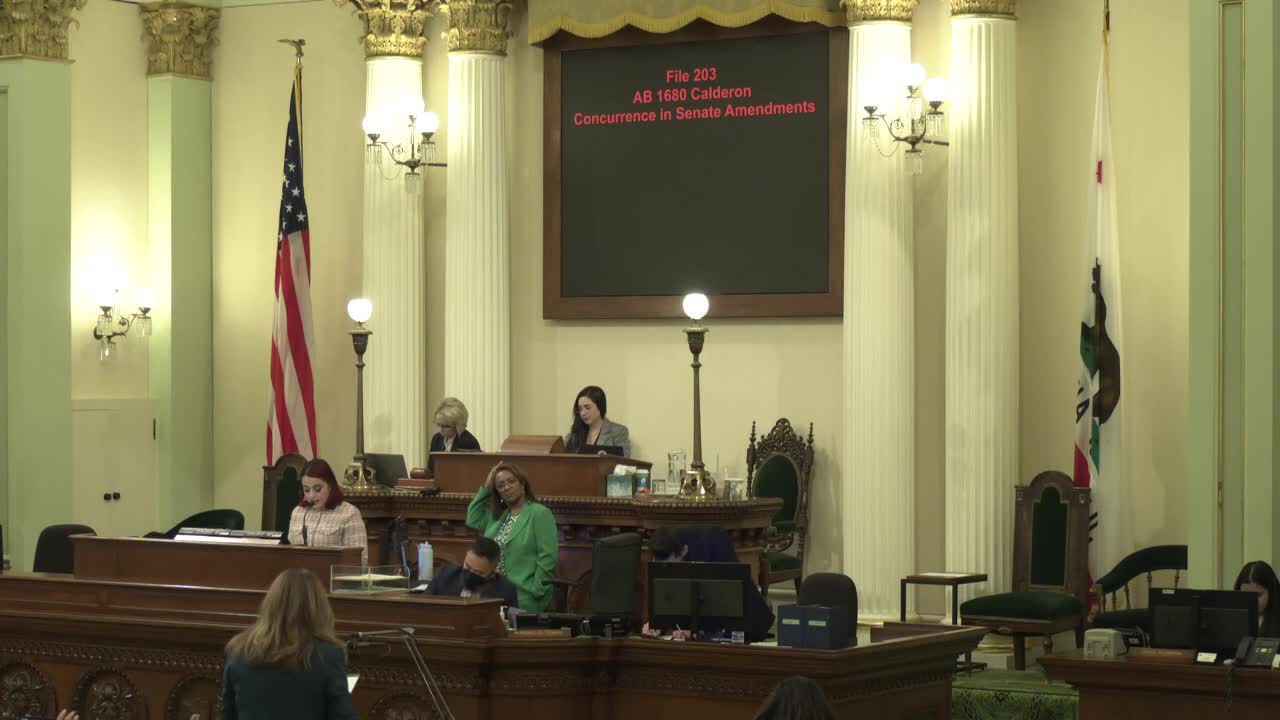
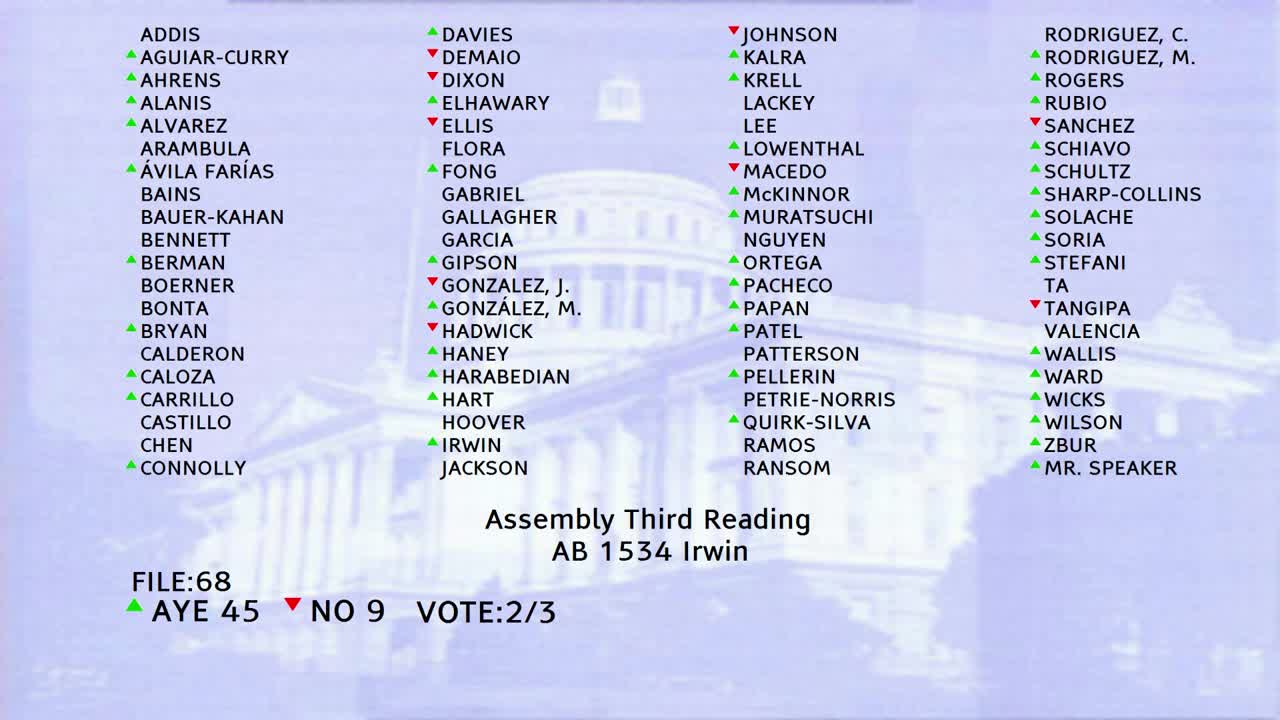
Bill Author