AB 1711: Fairs: funding.
- Session Year: 2025-2026
- House: Assembly
- Latest Version Date: 2026-09-18
Current Status:
Passed
(2026-09-18: Chaptered by Secretary of State - Chapter 270, Statutes of 2026.)
Introduced
In Committee
Awaiting First Chamber Vote
Passed First Chamber
In Committee
Awaiting Second Chamber Vote
Passed Second Chamber
Enacted
Existing law appropriates certain unallocated moneys and other specified moneys deposited into the Fair and Exposition Fund, a continuously appropriated fund, to the Secretary of Food and Agriculture for capital outlay to California fairs for, among other things, fair projects involving public health and safety, fair projects involving major and deferred maintenance, and fair projects necessary due to any emergency, as specified.
This bill would instead appropriate those moneys described above to the secretary for capital outlay to California fairs for fair projects involving public health, fire and life safety, and emergency services improvement projects at fairs, California Code of Regulations compliance projects, and maintenance projects at fairgrounds, as specified. By expanding the purposes for which those moneys may be used, the bill would make an appropriation. The bill would require moneys deposited into the fund after November 1 of each year to be allocated within 90 days of the receipt of the moneys, as provided. The bill would require all available moneys in the fund to be allocated to the network of California fairs pursuant to an approved expenditure plan no later than December 31 of each calendar year, except that beginning January 1, 2027, and every year thereafter, a reasonable amount may be retained from year to year as a prudent reserve for contingencies, as specified.
Existing law appropriates certain unallocated moneys and other specified moneys deposited into the Fair and Exposition Fund, a continuously appropriated fund, to the Secretary of Food and Agriculture for capital outlay to California fairs for, among other things, fair projects involving public health and safety, fair projects involving major and deferred maintenance, and fair projects necessary due to any emergency, as specified.
This bill would instead appropriate those moneys described above to the secretary for capital outlay to California fairs for fair projects involving public health, fire and life safety, and emergency services improvement projects at fairs, California Code of Regulations compliance projects, and maintenance projects at fairgrounds, as specified. By expanding the purposes for which those moneys may be used, the bill would make an appropriation. The bill would provide that not more than 5% of the moneys in the fund may be retained in the fund from year to year as a prudent reserve for contingencies. require moneys deposited into the fund after November 1 of each year to be allocated within 90 days of the receipt of the moneys, as provided. The bill would require all available moneys in the fund to be allocated to the network of California fairs pursuant to an approved expenditure plan no later than December 31 of each calendar year. year, except that beginning January 1, 2027, and every year thereafter, a reasonable amount may be retained from year to year as a prudent reserve for contingencies, as specified.
Existing law appropriates certain unallocated moneys and other specified moneys deposited into the Fair and Exposition Fund, a continuously appropriated fund, to the Secretary of Food and Agriculture for capital outlay to California fairs for, among other things, fair projects involving public health and safety, fair projects involving major and deferred maintenance, and fair projects necessary due to any emergency, as specified.
This bill would instead appropriate those moneys described above to the secretary for capital outlay to California fairs for fair projects involving public health, fire and life safety, and emergency services improvement projects at fairs, California Code of Regulations compliance projects, and maintenance projects at fairgrounds, as specified. By expanding the purposes for which those moneys may be used, the bill would make an appropriation. The bill would provide that not more than 5% of the moneys in the fund may be used during any fiscal year to augment the budget of the Department of Food and Agriculture to develop and administer an operational and policy framework for the network of California fairs. retained in the fund from year to year as a prudent reserve for contingencies. The bill would require all available funds moneys in the fund to be allocated to the network of California fairs pursuant to an approved expenditure plan no later than December 31 of each calendar year.
Existing law appropriates certain unallocated moneys and other specified moneys deposited into the Fair and Exposition Fund, a continuously appropriated fund, to the Secretary of Food and Agriculture for capital outlay to California fairs for, among other things, fair projects involving public health and safety, fair projects involving major and deferred maintenance, and fair projects necessary due to any emergency, as specified.
This bill would instead appropriate those moneys described above to the secretary for capital outlay to California fairs for fair projects involving public health, fire and life safety, and emergency services improvement projects at fairs, California Code of Regulations compliance projects, and maintenance projects at fairgrounds, as specified. By expanding the purposes for which those moneys may be used, the bill would make an appropriation. The bill would provide that not more than 5% of the moneys in the fund may be used during any fiscal year to augment the budget of the Department of Food and Agriculture to develop and administer an operational and policy framework for the network of California fairs. The bill would require all available funds in the fund to be allocated to the network of California fairs pursuant to an approved expenditure plan no later than December 31 of each calendar year.
(a)Any unallocated balance from Section 3202, 3203, or 3205, revenue deposited into the Fair and Exposition Fund pursuant to Section 19614 of the Business and Professions Code, and funding appropriated by the Legislature or otherwise designated for California fairs pursuant to this chapter or any other law is hereby appropriated without regard to fiscal years for allocation by the secretary for capital outlay to California fairs for fair projects involving public health, fire and life safety, and emergency services improvement projects at fairs, California Code of Regulations compliance projects, and maintenance projects at fairgrounds, for projects that are required by physical changes to the fair site, for projects that are required to protect the fair property or installation, such as fencing and flood protection, and for the acquisition or improvement of any property or facility that will serve to enhance the operation of the fair.
(b)A portion of the moneys subject to allocation pursuant to subdivision (a) may be allocated to California fairs for general operational support. It is the intent of the Legislature that these moneys be used primarily for those fairs whose sources of revenue may be limited for purposes specified in this section.
(c)Except as provided in subdivision (e), moneys deposited into the Fair and Exposition Fund after November 1 of each year shall be allocated for purposes of subdivisions (a) and (b) within 90 days of the receipt of the moneys.
(d)Except as provided in subdivision (e), all available moneys in the Fair and Exposition Fund shall be allocated to the network of California fairs pursuant to an approved expenditure plan no later than December 31 of each calendar year.
(e)Beginning January 1, 2027, and every year thereafter, from the total moneys deposited into the Fair and Exposition Fund and subject to allocation pursuant to subdivision (a), including moneys appropriated pursuant to subdivision (e) of Section 3203, a reasonable amount may be retained from year to year as a prudent reserve for contingencies. The remainder of the moneys shall be allocated annually as specified in subdivision (d).
(a)Any unallocated balance from Section 3202, 3203, or 3205, revenue deposited into the Fair and Exposition Fund pursuant to Section 19614 of the Business and Professions Code, and funding appropriated by the Legislature or otherwise designated for California fairs pursuant to this chapter or any other law is hereby appropriated without regard to fiscal years for allocation by the secretary for capital outlay to California fairs for fair projects involving public health, fire and life safety, and emergency services improvement projects at fairs, California Code of Regulations compliance projects, and maintenance projects at fairgrounds, for projects that are required by physical changes to the fair site, for projects that are required to protect the fair property or installation, such as fencing and flood protection, and for the acquisition or improvement of any property or facility that will serve to enhance the operation of the fair.
(b)A portion of the moneys subject to allocation pursuant to subdivision (a) may be allocated to California fairs for general operational support. It is the intent of the Legislature that these moneys be used primarily for those fairs whose sources of revenue may be limited for purposes specified in this section.
(c)Not more than 5 percent of the moneys in the Fair and Exposition Fund may be retained in the fund from year to year as a prudent reserve for contingencies. The remainder of the fund shall be allocated annually as specified in subdivision (d).(c)Except as provided in subdivision (e), moneys deposited into the Fair and Exposition Fund after November 1 of each year shall be allocated for purposes of subdivisions (a) and (b) within 90 days of the receipt of the moneys.
(d)All Except as provided in subdivision (e), all available moneys in the Fair and Exposition Fund shall be allocated to the network of California fairs pursuant to an approved expenditure plan no later than December 31 of each calendar year.
(e)Beginning January 1, 2027, and every year thereafter, from the total moneys deposited into the Fair and Exposition Fund and subject to allocation pursuant to subdivision (a), including moneys appropriated pursuant to subdivision (e) of Section 3203, a reasonable amount may be retained from year to year as a prudent reserve for contingencies. The remainder of the moneys shall be allocated annually as specified in subdivision (d).
(a)Any unallocated balance from Section 3202, 3203, or 3205, revenue deposited into the Fair and Exposition Fund pursuant to Section 19614 of the Business and Professions Code, and funding appropriated by the Legislature or otherwise designated for California fairs pursuant to this chapter or any other law is hereby appropriated without regard to fiscal years for allocation by the secretary for capital outlay to California fairs for fair projects involving public health, fire and life safety, and emergency services improvement projects at fairs, California Code of Regulations compliance projects, and maintenance projects at fairgrounds, for projects that are required by physical changes to the fair site, for projects that are required to protect the fair property or installation, such as fencing and flood protection, and for the acquisition or improvement of any property or facility that will serve to enhance the operation of the fair.
(b)A portion of the funds moneys subject to allocation pursuant to subdivision (a) may be allocated to California fairs for general operational support. It is the intent of the Legislature that these moneys be used primarily for those fairs whose sources of revenue may be limited for purposes specified in this section.
(c)No Not more than 5 percent of the moneys in the Fair and Exposition Fund may be used during any fiscal year to augment the budget of the department to develop and administer an operational and policy framework for the network of California fairs. retained in the fund from year to year as a prudent reserve for contingencies. The remainder of the fund shall be allocated annually as specified in subdivision (d).(d)All available funds moneys in the Fair and Exposition Fund shall be allocated to the network of California fairs pursuant to an approved expenditure plan no later than December 31 of each calendar year.
REVISIONS: HeadingLine 2.(a)Any unallocated balance from Section 3202, 3203, or 3205, revenue deposited into the Fair and Exposition Fund pursuant to Section 19614 of the Business and Professions Code, and funding appropriated by the Legislature or otherwise designated for California fairs pursuant to this chapter or any other law is hereby appropriated without regard to fiscal years for allocation by the Secretary of Food and Agriculture secretary for capital outlay to California fairs for fair projects involving public health and safety, for fair projects involving major and deferred maintenance, for fair projects necessary due to any emergency, health, fire and life safety, and emergency services improvement projects at fairs, California Code of Regulations compliance projects, and maintenance projects at fairgrounds, for projects that are required by physical changes to the fair site, for projects that are required to protect the fair property or installation, such as fencing and flood protection, and for the acquisition or improvement of any property or facility that will serve to enhance the operation of the fair.
(b)A portion of the funds subject to allocation pursuant to subdivision (a) may be allocated to California fairs for general operational support. It is the intent of the Legislature that these moneys be used primarily for those fairs whose sources of revenue may be limited for purposes specified in this section.
(c)No more than 5 percent of the moneys in the Fair and Exposition Fund may be used during any fiscal year to augment the budget of the department to develop and administer an operational and policy framework for the network of California fairs.
(d)All available funds in the Fair and Exposition Fund shall be allocated to the network of California fairs pursuant to an approved expenditure plan no later than December 31 of each calendar year.
|
Date
|
Status
|
|---|---|
| Sep 18, 2026 | Chaptered by Secretary of State - Chapter 270, Statutes of 2026. |
| Sep 18, 2026 | Approved by the Governor. |
| Aug 27, 2026 | Enrolled and presented to the Governor at 4 p.m. |
| Aug 20, 2026 | Senate amendments concurred in. To Engrossing and Enrolling. (Ayes 77. Noes 0.). |
| Aug 20, 2026 | Senate amendments concurred in. To Engrossing and Enrolling. (Ayes 77. Noes 0. Page 6315.). |
| Aug 20, 2026 | Senate amendments concurred in. To Engrossing and Enrolling. |
| Aug 19, 2026 | In Assembly. Concurrence in Senate amendments pending. |
| Aug 19, 2026 | Read third time. Passed. Ordered to the Assembly. (Ayes 38. Noes 0. Page 5559.). |
| Aug 19, 2026 | Read third time. Passed. Ordered to the Assembly. (Ayes 37. Noes 0.). |
| Aug 17, 2026 | Read second time. Ordered to third reading. |
| Aug 13, 2026 | Read second time and amended. Ordered returned to second reading. |
| Aug 13, 2026 | From committee: Amend, and do pass as amended. (Ayes 7. Noes 0.) (August 13). |
| Aug 3, 2026 | In committee: Referred to APPR. suspense file. |
| Jun 30, 2026 | From committee: Do pass and re-refer to Com. on APPR. with recommendation: To Consent Calendar. (Ayes 5. Noes 0.) (June 30). Re-referred to Com. on APPR. |
| Jun 3, 2026 | Referred to Com. on AGRI. |
| May 21, 2026 | In Senate. Read first time. To Com. on RLS. for assignment. |
| May 21, 2026 | Read third time. Passed. Ordered to the Senate. (Ayes 74. Noes 0.) |
| May 21, 2026 | Read third time. Passed. Ordered to the Senate. (Ayes 74. Noes 0. Page 5193.) |
| May 18, 2026 | Read second time. Ordered to third reading. |
| May 14, 2026 | From committee: Do pass. (Ayes 15. Noes 0.) (May 14). |
| Apr 29, 2026 | In committee: Set, first hearing. Referred to APPR. suspense file. |
| Apr 16, 2026 | From committee: Do pass and re-refer to Com. on APPR. (Ayes 8. Noes 0.) (April 15). Re-referred to Com. on APPR. |
| Apr 16, 2026 | Coauthors revised. |
| Apr 9, 2026 | Re-referred to Com. on AGRI. |
| Apr 8, 2026 | From committee chair, with author's amendments: Amend, and re-refer to Com. on AGRI. Read second time and amended. |
| Feb 23, 2026 | Referred to Com. on AGRI. |
| Feb 5, 2026 | From printer. May be heard in committee March 7. |
| Feb 4, 2026 | Read first time. To print. |
|
Date
|
Description
|
Location
|
Votes
|
|
|---|---|---|---|---|
| Aug 20, 2026 | AB 1711 Connolly Concurrence in Senate Amendments | Assembly Floor |
Passed |
|
| Aug 19, 2026 | Assembly 3rd Reading AB1711 Connolly et al. By McNerney | Senate Floor |
Passed |
|
| Aug 13, 2026 | Do pass as amended | Senate Standing Committee on Appropriations |
Passed |
|
| Aug 3, 2026 | Placed on suspense file | Senate Standing Committee on Appropriations |
Passed |
|
| Jun 30, 2026 | Do pass, but first be re-referred to the Committee on [Appropriations] with the recommendation: To Consent Calendar | Senate Standing Committee on Agriculture |
Passed |
|
| May 21, 2026 | AB 1711 Connolly Assembly Third Reading | Assembly Floor |
Passed |
|
| May 14, 2026 | Do pass. | Assembly Standing Committee on Appropriations |
Passed |
|
| Apr 15, 2026 | Do pass and be re-referred to the Committee on [Appropriations] | Assembly Standing Committee on Agriculture |
Passed |
This list shows positions taken on this bill by organizations on the date displayed, which is linked to the original source.
Positions by individuals are not included.
|
Organization
|
Position
|
Date
|
|---|---|---|
| California Fair Alliance | ** Support | |
| California Fairs Alliance | ** Support | |
| California Farm Bureau Federation | ** Support | |
| Rural County Representatives of California | ** Support | |
| Western Fairs Association | ** Support |
CONCURRENCE IN SENATE AMENDMENTS
CSA1 Bill Id:AB 1711
Author:(Connolly)
As Amended Ver:August 13, 2026
2/3 vote
SUMMARY
Would divert certain unallocated and other specified monies deposited into the Fair and Exposition Fund (FEF) for fair projects involving public health, fire and life safety, and emergency services improvement projects at fairs, California Code of Regulations compliance projects, and maintenance projects at fairgrounds, as specified.
Senate Amendments
Change the amount of the FEF that may be retained every year from, "not more than 5%" to a "reasonable amount". The amendments also stipulate that any funds received after November 1 must be allocated (except any reserve) within 90 days of receipt and that all funds must be allocated (except any reserve) by December 31 of each year.
COMMENTS
Changing the reserve requirement will give the California Department of Food and Agriculture (CDFA) and the Network of Fairs more flexibility in the reserve. Additionally, the amendments create a predictable schedule for the distribution of funds.
According to the Author
"California's fairs play a vital role in every community by serving as emergency and evacuation sites during natural disasters. Unfortunately, fairgrounds are experiencing a growing backlog of deferred maintenance that presents a significant public safety threat to California. AB 1711 will ensure that the revenue generated by fairs and approved in the State Budget is allocated by a date certain so fairgrounds can appropriately plan to utilize those funds."
Arguments in Support
The Western Fairs Association and the California Fair Alliance wrote a joint letter in which they stated, "AB 1711 ensures that the sales tax revenue intended to assist California's fairs is distributed expeditiously for fairground improvement. These funds will allow California fairs to address the growing backlog of deferred maintenance projects and begin fairground improvement projects to address public health and safety, infrastructure, and emergency management."
Arguments in Opposition
None on File.
FISCAL COMMENTS
According to the Senate Committee on Appropriations, the costs to CDFA would likely be minor and absorbable.
VOTES:
ASM AGRICULTURE: 8-0-0
YES: Soria, Hadwick, Aguiar-Curry, Alanis, Connolly, Jeff Gonzalez, Irwin, Ransom
ASM APPROPRIATIONS: 15-0-0
YES: Wicks, Hoover, Aguiar-Curry, Calderon, Caloza, Dixon, Fong, Mark González, Krell, Pacheco, Pellerin, Sharp-Collins, Solache, Ta, Tangipa
ASSEMBLY FLOOR: 74-0-6
YES: Addis, Aguiar-Curry, Ahrens, Alanis, Alvarez, Ávila Farías, Bains, Bauer-Kahan, Bennett, Berman, Boerner, Bonta, Bryan, Calderon, Caloza, Carrillo, Castillo, Connolly, Davies, DeMaio, Dixon, Elhawary, Ellis, Flora, Fong, Gabriel, Gallagher, Gipson, Jeff Gonzalez, Mark González, Hadwick, Haney, Harabedian, Hart, Hoover, Irwin, Jackson, Johnson, Kalra, Krell, Lee, Lowenthal, Macedo, McKinnor, Muratsuchi, Nguyen, Ortega, Pacheco, Papan, Patel, Patterson, Pellerin, Petrie-Norris, Quirk-Silva, Ransom, Michelle Rodriguez, Rogers, Blanca Rubio, Sanchez, Schiavo, Schultz, Sharp-Collins, Solache, Soria, Stefani, Ta, Tangipa, Valencia, Wallis, Ward, Wicks, Wilson, Zbur, Rivas
ABS, ABST OR NV: Arambula, Chen, Garcia, Lackey, Ramos, Celeste Rodriguez
UPDATED
VERSION: August 13, 2026
CONSULTANT: Jim Houston / AGRI. / (916) 319-2084 FN: 0003712
SENATE RULES COMMITTEE Office of Senate Floor Analyses (916) 651-4171 | AB 1711 |
THIRD READING
Bill No: AB 1711
Author: Connolly (D), et al.
Amended: 8/13/26 in Senate
Vote: 27
SENATE AGRICULTURE COMMITTEE: 5-0, 6/30/26
AYES: Caballero, Alvarado-Gil, Ashby, McNerney, Padilla
SENATE APPROPRIATIONS COMMITTEE: 7-0, 8/13/26
AYES: Cervantes, Seyarto, Cabaldon, Dahle, Grayson, Richardson, Wahab
ASSEMBLY FLOOR: 74-0, 5/21/26 - See last page for vote
SUBJECT: Fairs: funding
SOURCE: Author
DIGEST:
This bill diverts certain unallocated and other specified moneys deposited into the Fair and Exposition Fund (FEF) for fair projects involving public health, fire and life safety, and emergency services improvement projects at fairs, California Code of Regulations compliance projects, and maintenance projects at fairgrounds, as specified.
ANALYSIS:
Existing law:
- Establishes the California Fairs and Expositions through the California Department of Food and Agriculture (CDFA) to enrich the lives of California’s citizens by ensuring the Network of California’s Fairs continue to exist as viable, recreational, and cultural facilities of general public interest.
- Establishes FEF for the support of the state’s fairs.
- Appropriates certain unallocated moneys and other specified moneys deposited into the FEF, a continuously appropriated fund, to the CDFA for capital outlay to California fairs for, among other things, fair projects involving public health and safety, fair projects involving major and deferred maintenance, and fair projects necessary due to any emergency, as specified.
This bill:
- States any unallocated balance revenue deposited into the Fair and Exposition Fund pursuant to Section 19614 of the Business and Professions Code, and funding appropriated by the Legislature or otherwise designated for California fairs pursuant to this chapter or any other law is hereby appropriated without regard to fiscal years for allocation by the secretary for capital outlay to California fairs for fair projects involving public health, fire and life safety, and emergency services improvement projects at fairs, California Code of Regulations compliance projects, and maintenance projects at fairgrounds, for projects that are required by physical changes to the fair site, for projects that are required to protect the fair property or installation, such as fencing and flood protection, and for the acquisition or improvement of any property or facility that will serve to enhance the operation of the fair.
- States except as provided in subdivision (e), moneys deposited into the Fair and Exposition Fund after November 1 of each year shall be allocated for purposes of subdivisions (a) and (b) within 90 days of the receipt of the moneys.
- States except as provided in subdivision (e), all available moneys in the Fair and Exposition Fund shall be allocated to the network of California fairs pursuant to an approved expenditure plan no later than December 31 of each calendar year.
- States beginning January 1, 2027 and every year thereafter, from the total moneys being deposited into the Fair and Exposition Fund and subject to allocation pursuant to subdivision (a), including moneys appropriated pursuant to subdivision (e) of Section 3203, a reasonable amount may be retained from year to year as a prudent reserve for contingencies. The remainder of the moneys shall be allocated annually as specified in subdivision (d).
FISCAL EFFECT: Appropriation: Yes Fiscal Com.: Yes Local: No
According to the Senate Committee on Appropriations: “The California Department of Food and Agriculture (CDFA) would likely incur minor and absorbable costs to implement the provisions of the bill.”
SUPPORT: (Verified 8/13/26)
California Fairs Alliance
California Farm Bureau Federation
Rural County Representatives of California
Western Fairs Association
OPPOSITION: (Verified 8/13/26)
None received
ARGUMENTS IN SUPPORT:
According to the author:
"California’s fairs play a vital role in every community by serving as emergency and evacuation sites during natural disasters. Unfortunately, fairgrounds are experiencing a growing backlog of deferred maintenance that presents a significant public safety threat to California. AB 1711 will ensure that the revenue generated by fairs and approved in the State Budget is allocated by a date certain so fairgrounds can appropriately plan to utilize those funds.”
The Western Affairs Association and the California Fairs Alliance, sponsors of the legislation, write in support stating California’s 76 state-designated fairs play a vital role in their communities and are aging and in desperate need of modernization. Their letter states:
“To date, funds generated through this mechanism have generated over $20 million, however, because of bureaucratic hurdles, these funds have not been released. AB 1711 ensures that the sales tax revenue intended to assist California’s fairs is distributed expeditiously for fairground improvement. These funds will allow California fairs to address the growing backlog of deferred maintenance projects and begin fairground improvement projects to address public health and safety, infrastructure, and emergency management.
For these reasons, we support AB 1711 and appreciate Assemblymember Connolly’s ongoing efforts to help California’s fair network be as successful as possible.”
ARGUMENTS IN OPPOSITION: None received
ASSEMBLY FLOOR: 74-0, 5/21/26
AYES: Addis, Aguiar-Curry, Ahrens, Alanis, Alvarez, Ávila Farías, Bains, Bauer-Kahan, Bennett, Berman, Boerner, Bonta, Bryan, Calderon, Caloza, Carrillo, Castillo, Connolly, Davies, DeMaio, Dixon, Elhawary, Ellis, Flora, Fong, Gabriel, Gallagher, Gipson, Jeff Gonzalez, Mark González, Hadwick, Haney, Harabedian, Hart, Hoover, Irwin, Jackson, Johnson, Kalra, Krell, Lee, Lowenthal, Macedo, McKinnor, Muratsuchi, Nguyen, Ortega, Pacheco, Papan, Patel, Patterson, Pellerin, Petrie-Norris, Quirk-Silva, Ransom, Michelle Rodriguez, Rogers, Blanca Rubio, Sanchez, Schiavo, Schultz, Sharp-Collins, Solache, Soria, Stefani, Ta, Tangipa, Valencia, Wallis, Ward, Wicks, Wilson, Zbur, Rivas
NO VOTE RECORDED: Arambula, Chen, Garcia, Lackey, Ramos, Celeste Rodriguez
Prepared by: Reichel Everhart / AGRI. / (916) 651-1508
8/17/26 10:42:47
**** END ****
SENATE COMMITTEE ON
Senator Sabrina Cervantes, Chair
2025 - 2026 Regular Session
AB 1711 (Connolly) - Fairs: funding
Version: | Policy Vote: |
Urgency: | Mandate: |
Hearing Date: | Consultant: |
Bill Summary:
AB 1711 would divert certain unallocated and other specified moneys deposited into the Fair and Exposition Fund (FEF) for specified fair projects.
*********** ANALYSIS ADDENDUM – SUSPENSE FILE ***********
The following information is revised to reflect amendments
adopted by the committee on August 13, 2026
Fiscal Impact: The California Department of Food and Agriculture (CDFA) would likely incur minor and absorbable costs to implement the provisions of the bill.
Author Amendments:
- Remove the 5 percent administrative cap and require moneys deposited into FEF after November 1 of each year to be allocated within 90 days of the receipt of the moneys, as provided.
- Beginning January 1, 2027, permit CDFA to retain a reasonable amount of funds for contingencies, as specified.
-- END --
SENATE COMMITTEE ON
Senator Sabrina Cervantes, Chair
2025 - 2026 Regular Session
AB 1711 (Connolly) - Fairs: funding
Version: | Policy Vote: |
Urgency: | Mandate: |
Hearing Date: | Consultant: |
Bill Summary:
AB 1711 would divert certain unallocated and other specified moneys deposited into the Fair and Exposition Fund (FEF) for specified fair projects.
Fiscal Impact:
By limiting CDFA to retaining no more than 5 percent of the FEF as a reserve for contingencies, this bill could create ongoing cost pressures of an unknown but significant magnitude, possibly reaching the low millions of dollars annually (FEF, General Fund). According to CDFA, maintaining adequate reserve balances allows the department to respond to unforeseen financial needs within the state's fair network, including providing emergency and bridge loans to financially distressed fairs. Restricting the reserve could reduce the department's ability to respond to unexpected circumstances, increasing fiscal risk and potentially creating pressure for additional state financial assistance.
Background:
Current law establishes a network of California-designated fairs, composed of 52 district agricultural associations, 23 county fairs, two citrus fruit fairs, and the California Exposition and State Fair. Fairs are most known for their annual fairs but they also operate year-round, offering agricultural education and environmental leadership and hosting smaller events like trade shows, concerts, and private events that generate millions of dollars in state and local revenues. Many fairs are also part of the state’s emergency response network. The Division of Fairs and Expositions within CDFA provides fiscal and policy oversight for the network of California fairs.
Prior to 2009, funding for California fairs was supported by licensing fees imposed on horse racing wagers. SBx2 16 (Ashburn, 2009) ended this practice and provided a continuous General Fund appropriation of $32 million for fairs, until this appropriation was eliminated in 2011-12. AB 1499 (Gray, 2017) provided a new mechanism for funding fairs by requiring the California Department of Tax and Fee Administration to develop a form to segregate sales at state-designated fairs and annually report to the Department of Finance the total gross receipts segregated the prior fiscal year. An amount equal to 2 percent of such reported receipts must then be included in the next annual Governor’s budget for CDFA to allocate to the fairs. However, the actual transfer of designated General Fund revenue to FEF is still subject to legislative appropriation during the budget process. Also, while transfers from gross receipts comprise the primary revenue source for FEF, the fund also includes revenues from other sources, such as horse racing handles, loan principal and interest payments, and proceeds from sales of real property. Fairs are the only recipients of funding from the FEF.
Proposed Law:
This bill would do the following:
- State any unallocated balance revenue deposited into the Fair and Exposition Fund pursuant to Section 19614 of the Business and Professions Code, and funding appropriated by the Legislature or otherwise designated for California fairs pursuant to this chapter or any other law is hereby appropriated without regard to fiscal years for allocation by the secretary for capital outlay to California fairs for fair projects involving public health, fire and life safety, and emergency services improvement projects at fairs, California Code of Regulations compliance projects, and maintenance projects at fairgrounds, for projects that are required by physical changes to the fair site, for projects that are required to protect the fair property or installation, such as fencing and flood protection, and for the acquisition or improvement of any property or facility that will serve to enhance the operation of the fair.
- State a portion of the funds moneys subject to allocation pursuant to subdivision (a) may be allocated to California fairs for general operational support. It is the intent of the Legislature that these moneys be used primarily for those fairs whose sources of revenue may be limited for purposes specified in this section.
- State that no more than 5 percent of the moneys in the Fair and Exposition Fund may be retained in the fund from year to year as a prudent reserve for contingencies. The remainder of the fund shall be allocated annually as specified in subdivision (d).
- State all available funds moneys in the Fair and Exposition Fund shall be allocated to the network of California fairs pursuant to an approved expenditure plan no later than December 31 of each calendar year.
Related Legislation:
AB 2143 (Connolly, Chapter 559, Statutes of 2024) repealed and recast provisions referencing the Division of Fairs and Expositions in the Business and Professions Code into the Food and Agricultural Code. This bill also established the California Fairs Trust Account within the Fair and Exposition Fund to continuously appropriate monies from license fees from satellite wagering for specified projects, including fire and life safety improvements, among others.
Staff Comments:
The 2025-26 budget included a transfer (from sales tax revenue) of nearly $5 million to FEF. CDFA notes that as of March 31, 2026, FEF, after reconciling for pending transfers and adjustments, maintained a balance of approximately $7 million.
-- END --
SENATE COMMITTEE ON AGRICULTURE
Senator Anna Caballero, Chair
2025 - 2026 Regular
Bill No: AB 1711 Hearing Date: 6/30/26
Author: | Connolly | ||
Version: | 4/8/26 | ||
Urgency: | No | Fiscal: | Yes |
Consultant: | Reichel Everhart | ||
Subject: Fairs: funding
SUMMARY
:
This bill would divert certain unallocated and other specified moneys deposited into the Fair and Exposition Fund (FEF) for fair projects involving public health, fire and life safety, and emergency services improvement projects at fairs, California Code of Regulations compliance projects, and maintenance projects at fairgrounds, as specified.
BACKGROUND AND EXISTING LAW
:
Existing law:
- Appropriates certain unallocated moneys and other specified moneys deposited into the FEF, a continuously appropriated fund, to the CDFA for capital outlay to California fairs for, among other things, fair projects involving public health and safety, fair projects involving major and deferred maintenance, and fair projects necessary due to any emergency, as specified (Food and Agricultural Code Section 3204).
- Business and Professions Code Section 19614 states:
- Notwithstanding Sections 19611 and 19612, and except for an association that qualifies pursuant to Section 19612.6, for a fair conducting a live racing meeting, 1 percent of the total amount handled on live races, excluding wagering at a satellite facility, shall be retained by the fair association for payment to the state as a license fee.
- Additionally, 0.48 percent of the total amount handled on live racing, excluding wagering at a satellite facility, shall be deposited with the official registering agency pursuant to subdivision (a) of Section 19617.2, and shall thereafter be distributed in accordance with subdivisions (b), (c), and (d) of Section 19617.2.
- (1) After distribution of the applicable amounts as set forth in subdivisions (a) and (b) and the payments made pursuant to other relevant sections of this chapter, all funds remaining from the deductions provided in Section 19610 shall be distributed 47.5 percent as commissions and 52.5 percent as purses. From the amount distributed as thoroughbred purses, a sum equal to 0.07 percent of the total handle shall be held by the association to be deposited with the official registering agency pursuant to subdivision (a) of Section 19617.2, and shall thereafter be distributed in accordance with subdivisions (b), (c), and (d) of Section 19617.2.
Any additional amount generated for purses and not distributed during the previous corresponding meeting shall be added to the purses at the current meeting.
- In addition to the amounts deducted pursuant to Section 19610, any fair racing association shall deduct 1 percent from the total amount handled in its daily conventional and exotic parimutuel pools. The additional 1 percent shall be deposited into the Fair and Exposition Fund and is hereby appropriated for the purposes specified in Section 3204 of the Food and Agricultural Code, except as specified in subdivision (e).
- (1) A fair conducting a live racing meeting at a fair in the northern zone or a joint powers authority designated by a fair racing association in the northern zone involved in conducting live racing meetings at fairs in the northern zone may retain the funds described in subdivision (d) for the purposes of improving a fair enclosure, racetrack maintenance, safety at fairs, or other similar activities if both of the following conditions are satisfied:
- The administrative costs do not exceed 7.5 percent of the funds retained.
- An annual audit of the funds is conducted by an independent third party to ensure compliance with the law and approved standards and policies that shall be filed with the Department of Food and Agriculture, the board, and the Senate and Assembly Committees on Governmental Organization.
(2) This subdivision shall apply retroactively to January 1, 2016.
PROPOSED LAW
:
This bill:
- States any unallocated balance revenue deposited into the Fair and Exposition Fund pursuant to Section 19614 of the Business and Professions Code, and funding appropriated by the Legislature or otherwise designated for California fairs pursuant to this chapter or any other law is hereby appropriated without regard to fiscal years for allocation by the secretary for capital outlay to California fairs for fair projects involving public health, fire and life safety, and emergency services improvement projects at fairs, California Code of Regulations compliance projects, and maintenance projects at fairgrounds, for projects that are required by physical changes to the fair site, for projects that are required to protect the fair property or installation, such as fencing and flood protection, and for the acquisition or improvement of any property or facility that will serve to enhance the operation of the fair.
- States a portion of the funds moneys subject to allocation pursuant to subdivision (a) may be allocated to California fairs for general operational support. It is the intent of the Legislature that these moneys be used primarily for those fairs whose sources of revenue may be limited for purposes specified in this section.
- States that no more than 5 percent of the moneys in the Fair and Exposition Fund may be retained in the fund from year to year as a prudent reserve for contingencies. The remainder of the fund shall be allocated annually as specified in subdivision (d).
- States all available funds moneys in the Fair and Exposition Fund shall be allocated to the network of California fairs pursuant to an approved expenditure plan no later than December 31 of each calendar year.
ARGUMENTS IN SUPPORT: According to the author:
"California’s fairs play a vital role in every community by serving as emergency and evacuation sites during natural disasters. Unfortunately, fairgrounds are experiencing a growing backlog of deferred maintenance that presents a significant public safety threat to California. AB 1711 will ensure that the revenue generated by fairs and approved in the State Budget is allocated by a date certain so fairgrounds can appropriately plan to utilize those funds.”
The Western Affairs Association and the California Fairs Alliance, sponsors of the legislation, write in support stating California’s 76 state-designated fairs play a vital role in their communities and are aging and in desperate need of modernization. Their letter states:
“To date, funds generated through this mechanism have generated over $20 million, however, because of bureaucratic hurdles, these funds have not been released. AB 1711 ensures that the sales tax revenue intended to assist California’s fairs is distributed expeditiously for fairground improvement. These funds will allow California fairs to address the growing backlog of deferred maintenance projects and begin fairground improvement projects to address public health and safety, infrastructure, and emergency management.
For these reasons, we support AB 1711 and appreciate Assemblymember Connolly’s ongoing efforts to help California’s fair network be as successful as possible.”
ARGUMENTS IN OPPOSITION:
None received
RELATED LEGISLATION
:
AB 2143 (Version: 94 - Chaptered Sep 25, 2024): This bill repealed and recast provisions referencing the Division of Fairs and Expositions in the Business and Professions Code into the Food and Agricultural Code. This bill also established the California Fairs Trust Account within the Fair and Exposition Fund to continuously appropriate monies from license fees from satellite wagering for specified projects, including fire and life safety improvements, among others.
PRIOR ACTIONS
:
Assembly Floor: | 74 - 0 |
Assembly Appropriations Committee: | 15 - 0 |
Assembly Agriculture Committee: | 8 - 0 |
SUPPORT
:
California Fairs Alliance
California Farm Bureau Federation
Rural County Representatives of California (RCRC)
Western Fairs Association
OPPOSITION
:
None received
-- END --
ASSEMBLY THIRD READING
ATR Bill Id:AB 1711
Author:(Connolly)
As Amended Ver:April 8, 2026
2/3 vote
SUMMARY
Expands and clarifies how money in the Fair and Exposition Fund (FEF) can be used by allowing broader spending on safety, compliance, maintenance, property improvements, and fair operations, while capping administrative costs and requiring that all available funds be allocated each year by December 31.
Major Provisions
- Expands the following to receive capital outlay from the FEF, fire and life safety, and emergency services improvement projects at fairs, California Code of Regulations compliance projects, and maintenance projects at fairgrounds.
- Requires that no more than 5 percent of the moneys in the FEF may be used during any fiscal year to augment the budget of the Department of Food and Agriculture (CDFA) to develop and administer an operational and policy framework for the network of California fairs.
- Requires all available funds in the FEF to be allocated to the network of California fairs pursuant to an approved expenditure plan no later than December 31 of each calendar year.
COMMENTS
The Division of Fairs and Expositions (DFE) within the CDFA provides fiscal and policy oversight for the network of California fairs. The Department of General Services provides oversight for the use of state property, procurement, and services contracts. Prior to 2009, license fees imposed on horse racing wagers were deposited into the Fairs and Exposition Fund and the Satellite Wagering Account, which supported the annual budget of the California Horse Racing Board and California fairs. In 2009, the Legislature shifted away from this approach and instead provided an annual continuous appropriation of $32 million from the General Fund to support fairs. However, the 2011-12 Budget Act eliminated this General Fund contribution to the Fairs and Exposition Fund and instead required DAAs and state fairs to be financially self-sufficient starting January 1, 2012.
Seeking a new funding source for capital projects at fairs, the Legislature created a novel mechanism under AB 1499. AB 1499 became effective on July 1, 2018, and forms the basis of current state law, which requires retailers to separate, on their sales-tax returns, the gross receipts from any tangible good sold or used on state fairgrounds and directs the Governor's annual budget to propose allocating 0.75% of the amount of those gross receipts to CDFA for state fairs.
AB 2143 (Connolly) Chapter 559, Statutes of 2024 repealed and recast provisions referring to DFE in the Business and Professions Code into the Food and Agricultural Code. Segregation of sales on fairgrounds, and the requirement that 0.75% of prior-year gross receipts be proposed in the Governor's Budget are still required. However, AB 1499 applied to “state-designated fairs," while AB 2143 uses the broader term "fair."
The amount proposed and appropriated under the 0.75% requirement declined to $3.1 million in 2022-23 but rebounded to $5.1 million in 2023-24 and 2024-25. $4.9 million is proposed for 2025-26. These amounts remain below the funding levels from before the Legislature redistributed license fees on horse racing wagers to the General Fund.
This bill provided a reliable funding source for fairs to address capitol improvement projects, however, it did not set a clear deadline on when CDFA must distribute those funds. AB 1711 provides a clear timeline for the distribution of funds by requiring allocation no later than December 31 of each calendar year.
According to the Author
California's fairs play a vital role in every community by serving as emergency and evacuation sites during natural disasters. Unfortunately, fairgrounds are experiencing a growing backlog of deferred maintenance that presents a significant public safety threat to California. This bill will ensure that the revenue generated by fairs and approved in the State Budget is allocated by a date certain so fairgrounds can appropriately plan to utilize those funds.
Arguments in Support
Rural communities are home to a majority of District Agricultural Associations and county fair facilities, all of which serve as economic drivers, conveners of local agricultural uses and businesses, emergency response mobilization sites, and cultural hotspots. These sites have seen increased usage with the COVID-19 pandemic, wildfire and natural disasters, with the unique ability to house livestock and pets during these events. Despite providing these year-round economic benefits and public safety "centers", funding has dropped precipitously for these sites with the loss of horse racing license fees in 2009, and the elimination of the continuous appropriation at the end of 2011. While efforts have been made to reintroduce funding to the Network of Fairs through legislation such as Assembly Bill 1499 (Chaptered, 2017) and Assembly Bill 258 (Chaptered 2025), funding is still not back to 2009 levels and costs have only increased. Increased requirements on these fair facilities, combined with deferred maintenance and aging public infrastructure, present a unique challenge that cannot be met locally through county budgets and/or non-profit organizations. This bill provides clarity to a funding process that ensures our fairgrounds can continue operating as economic drivers, emergency management centers, and conveners.
Arguments in Opposition
None on file.
FISCAL COMMENTS
By prohibiting CDFA from retaining more than 5% of moneys in the F&E Fund from year to year as a prudent reserve for contingencies, this bill creates ongoing cost pressures of an unknown but potentially significant amount, likely in the low millions of dollars annually (F&E Fund, General Fund). CDFA notes this provision is likely to severely impair the department's ability to address issues that may arise within the state's network of fairs that are typically resolved utilizing F&E Fund reserves (by providing emergency and bridge loans, for example) – potentially creating inefficiencies and risks for the state.
The fiscal year (FY) 2025-26 budget included a transfer (from sales tax revenue) of approximately $4.9 million to the F&E Fund (see background for more information about this funding mechanism). According to CDFA, as of March 31, 2026, the F&E Fund, after reconciling for pending transfers and adjustments, maintained a balance of approximately $7 million. The department notes this amount has significantly fluctuated over the past decade but has generally been declining over the past few years because the department has been supplementing the annual sales tax allocation to the fairs and providing targeted industry support.
VOTES
ASM AGRICULTURE: 8-0-0
YES: Soria, Hadwick, Aguiar-Curry, Alanis, Connolly, Jeff Gonzalez, Irwin, Ransom
ASM APPROPRIATIONS: 15-0-0
YES: Wicks, Hoover, Aguiar-Curry, Calderon, Caloza, Dixon, Fong, Mark González, Krell, Pacheco, Pellerin, Sharp-Collins, Solache, Ta, Tangipa
UPDATED
VERSION: April 8, 2026
CONSULTANT: Victor Francovich / AGRI. / (916) 319-2084 FN: 0002616
Date of Hearing: April 29, 2026
ASSEMBLY COMMITTEE ON APPROPRIATIONS
Buffy Wicks, Chair
ABPCA Bill Id:AB 1711
Author:(Connolly) – As Amended Ver:April 8, 2026
Policy Committee: | Agriculture | Vote: | 8 - 0 |
|
| ||
|
|
Urgency: No State Mandated Local Program: No Reimbursable: No
SUMMARY:
This bill provides that not more than 5% of the moneys in the Fair and Exposition (F&E) Fund may be retained in the fund from year to year as a prudent reserve for contingencies and requires that all available moneys in the F&E Fund be allocated to the network of California fairs pursuant to an approved expenditure plan no later than December 31 of each calendar year.
The bill also expands a provision in existing law that appropriates certain moneys deposited into the continuously appropriated F&E Fund for allocation by CDFA for capital outlay to California fairs for fair projects involving fire and life safety as well as emergency services improvement projects, California Code of Regulations compliance projects, and maintenance projects at fairgrounds, as specified.
FISCAL EFFECT:
By prohibiting CDFA from retaining more than 5% of moneys in the F&E Fund from year to year as a prudent reserve for contingencies, this bill creates ongoing cost pressures of an unknown but potentially significant amount, likely in the low millions of dollars annually (F&E Fund, General Fund). CDFA notes this provision is likely to severely impair the department’s ability to address issues that may arise within the state’s network of fairs that are typically resolved utilizing F&E Fund reserves (by providing emergency and bridge loans, for example) – potentially creating inefficiencies and risks for the state.
The fiscal year (FY) 2025-26 budget included a transfer (from sales tax revenue) of approximately $4.9 million to the F&E Fund (see background for more information about this funding mechanism). According to CDFA, as of March 31, 2026, the F&E Fund, after reconciling for pending transfers and adjustments, maintained a balance of approximately $7 million. The department notes this amount has significantly fluctuated over the past decade but has generally been declining over the past few years because the department has been supplementing the annual sales tax allocation to the fairs and providing targeted industry support.
COMMENTS:
1) Purpose. According to the author:
California’s fairs play a vital role in every community by serving as emergency and evacuation sites during natural disasters. Unfortunately, fairgrounds are experiencing a growing backlog of deferred maintenance that presents a significant public safety threat to California. AB 1711 will ensure that the revenue generated by fairs and approved in the State Budget is allocated by a date certain so fairgrounds can appropriately plan to utilize those funds.
2) Background. Current law establishes a network of California-designated fairs, composed of 52 district agricultural associations, 23 county fairs, two citrus fruit fairs, and the California Exposition and State Fair. Fairs are most known for their annual fairs but they also operate year-round, offering agricultural education and environmental leadership and hosting smaller events like trade shows, concerts, and private events that generate millions of dollars in state and local revenues. Many fairs are also part of the state’s emergency response network. The Division of Fairs and Expositions within CDFA provides fiscal and policy oversight for the network of California fairs.
Prior to 2009, funding for California fairs was supported by licensing fees imposed on horse racing wagers. SBx2 16 (Ashburn), Chapter 12, Statutes of 2009, ended this practice and provided a continuous General Fund appropriation of $32 million for fairs, until this appropriation was eliminated in FY 2011-12. AB 1499 (Gray), Chapter 798, Statutes of 2017, provided a new mechanism for funding fairs by requiring the California Department of Tax and Fee Administration to develop a form to segregate sales at state-designated fairs and annually report to the Department of Finance the total gross receipts segregated the prior FY. An amount equal to 2% of such reported receipts must then be included in the next annual Governor’s budget for CDFA to allocate to the fairs. However, the actual transfer of designated General Fund revenue to the F&E Fund is still subject to legislative appropriation during the budget process. Also, while transfers from gross receipts comprise the primary revenue source for the F&E Fund, the fund also includes revenues from other sources, such as horse racing handles, loan principal and interest payments, and proceeds from sales of real property. Fairs are the only recipients of funding from the F&E Fund.
According to the Western Fairs Association (WFA) and the California Fairs Alliance (CFA), the sponsors of this bill, to date, funds generated through the sales tax revenue mechanism have generated over $20 million, however, because of bureaucratic hurdles, these funds have not been released. WFA and CFA contend this bill ensures sales tax revenue intended to assist California’s fairs is distributed expeditiously for fairground improvement, writing these funds “will allow California fairs to address the growing backlog of deferred maintenance projects and begin fairground improvement projects to address public health and safety, infrastructure, and emergency management.”
CDFA notes it already has a policy in place to distribute funds to the state’s fairs by the fourth quarter of each calendar year. During the COVID-19 pandemic, CDFA received approximately $90 million in one-time General Fund support to assist fairs with operational stabilization. During this period, CDFA limited the use of revenues deposited into the F&E Fund while monitoring the financial condition of the industry and prioritizing the distribution of emergency General Fund resources. This approach resulted in an increase in F&E Fund reserves. With this pandemic-era funding now exhausted, CDFA has begun gradually utilizing F&E Fund reserve balances to supplement annual allocations to the fairs, provide targeted assistance, and stabilize distributions as revenues fluctuate.
Analysis Prepared by: Nikita Koraddi / APPR. / (916) 319-2081
Date of Hearing: April 15, 2026
ASSEMBLY COMMITTEE ON AGRICULTURE
Esmeralda Soria, Chair
ABPCA Bill Id:AB 1711
Author:Connolly – As Amended Ver:April 8, 2026
SUBJECT: Fairs: funding
SUMMARY: Expands and clarifies how money in the Fair and Exposition Fund (FEF) can be used by allowing broader spending on safety, compliance, maintenance, property improvements, and fair operations, while capping administrative costs and requiring that all available funds be allocated each year by December 31. Specifically, this bill:
- Expands the following to receive capital outlay from the FEF, fire and life safety, and emergency services improvement projects at fairs, California Code of Regulations compliance projects, and maintenance projects at fairgrounds.
- Requires that no more than 5 percent of the moneys in the FEF may be used during any fiscal year to augment the budget of the Department of Food and Agriculture (CDFA) to develop and administer an operational and policy framework for the network of California fairs.
- Requires all available funds in the FEF to be allocated to the network of California fairs pursuant to an approved expenditure plan no later than December 31 of each calendar year.
EXISTING LAW: Appropriates certain unallocated moneys and other specified moneys deposited into the FEF, a continuously appropriated fund, to the CDFA for capital outlay to California fairs for, among other things, fair projects involving public health and safety, fair projects involving major and deferred maintenance, and fair projects necessary due to any emergency, as specified. (Food and Agriculture Code (FAC) 3204)
FISCAL EFFECT: Unknown
COMMENTS: District Agriculture Associations (DAA)s are state government entities governed by a nine-member governor-appointed boards of directors; county fairs are either directly operated by counties or not-for-profit organizations; citrus fruit fairs are not-for-profit organizations; and Cal Expo is a state agency.
The Division of Fairs and Expositions (DFE) within the CDFA provides fiscal and policy oversight for the network of California fairs. The Department of General Services provides oversight for the use of state property, procurement, and services contracts. Prior to 2009, license fees imposed on horse racing wagers were deposited into the Fairs and Exposition Fund and the Satellite Wagering Account, which supported the annual budget of the California Horse Racing Board and California fairs. In 2009, the Legislature shifted away from this approach and instead provided an annual continuous appropriation of $32 million from the General Fund to support fairs. However, the 2011-12 Budget Act eliminated this General Fund contribution to the Fairs and Exposition Fund and instead required DAAs and state fairs to be financially self-sufficient starting January 1, 2012.
Seeking a new funding source for capital projects at fairs, the Legislature created a novel mechanism under AB 1499. AB 1499 became effective on July 1, 2018, and forms the basis of current state law, which requires retailers to separate, on their sales-tax returns, the gross receipts from any tangible good sold or used on state fairgrounds and directs the Governor’s annual budget to propose allocating 0.75% of the amount of those gross receipts to CDFA for state fairs.
AB 2143 (Connolly, Chapter 559, Statutes of 2024) repealed and recast provisions referring to DFE in the Business and Professions Code into the Food and Agricultural Code. Segregation of sales on fairgrounds, and the requirement that 0.75% of prior-year gross receipts be proposed in the Governor’s Budget are still required. However, AB 1499 applied to “state-designated fairs,” while AB 2143 uses the broader term “fair.”
The amount proposed and appropriated under the 0.75% requirement declined to $3.1 million in 2022-23 but rebounded to $5.1 million in 2023-24 and 2024-25. $4.9 million is proposed for 2025-26. These amounts remain below the funding levels from before the Legislature redistributed license fees on horse racing wagers to the General Fund.
This bill provided a reliable funding source for fairs to address capitol improvement projects, however, it did not set a clear deadline on when CDFA must distribute those funds. AB 1711 provides a clear timeline for the distribution of funds by requiring allocation no later than December 31 of each calendar year.
According to the author, California’s fairs play a vital role in every community by serving as emergency and evacuation sites during natural disasters. Unfortunately, fairgrounds are experiencing a growing backlog of deferred maintenance that presents a significant public safety threat to California. This bill will ensure that the revenue generated by fairs and approved in the State Budget is allocated by a date certain so fairgrounds can appropriately plan to utilize those funds.
Supporters state, rural communities are home to a majority of District Agricultural Associations and county fair facilities, all of which serve as economic drivers, conveners of local agricultural uses and businesses, emergency response mobilization sites, and cultural hotspots. These sites have seen increased usage with the COVID-19 pandemic, wildfire and natural disasters, with the unique ability to house livestock and pets during these events. Despite providing these year-round economic benefits and public safety “centers”, funding has dropped precipitously for these sites with the loss of horse racing license fees in 2009, and the elimination of the continuous appropriation at the end of 2011. While efforts have been made to reintroduce funding to the Network of Fairs through legislation such as Assembly Bill 1499 (Chaptered, 2017) and Assembly Bill 258 (Chaptered 2025), funding is still not back to 2009 levels and costs have only increased. Increased requirements on these fair facilities, combined with deferred maintenance and aging public infrastructure, present a unique challenge that cannot be met locally through county budgets and/or non-profit organizations. This bill provides clarity to a funding process that ensures our fairgrounds can continue operating as economic drivers, emergency management centers, and conveners.
RELATED LEGISLATION
AB 258 (Connolly, 2025): This bill increases, from 0.75% to 2%, the amount of segregated gross receipts from fair sales that the Governor must propose to distribute to the California Department of Food and Agriculture (CDFA) for allocation to fairs in the annual Governor’s Proposed Budget. (Signed by the Governor)
SB 1261 (Alvarado Gil, 2024): This bill increases, from 0.75% to 3%, the percentage of gross receipts from sales at state-designated fairs used to calculate the annual budget augmentation to support fairs. (Died in Rev and Tax committee)
AB 1499 (Gray, 2017): The bill directs retailers to segregate the amount of gross receipts from sales at fairs; require the California Department of Tax and Fee Administration (CDTFA) to calculate three-fourths of one percent of these gross receipts and report this amount to the Department of Finance; require the Governor's Budget to include these amounts in the Budget for allocation to the Department of Food and Agriculture (CDFA) for allocation to state-designated fairs, for among other things, fair projects involving public health and safety, and projects that are required to protect fair property. (Signed by the Governor)
REGISTERED SUPPORT / OPPOSITION:
Support
California Fairs Alliance (Sponsor)
California Farm Bureau Federation
Rural County Representatives of California (RCRC)
Western Fairs Association (Sponsor)
Opposition
None on file
Analysis Prepared by: Victor Francovich / AGRI. / (916) 319-2084
Discussed in Hearing
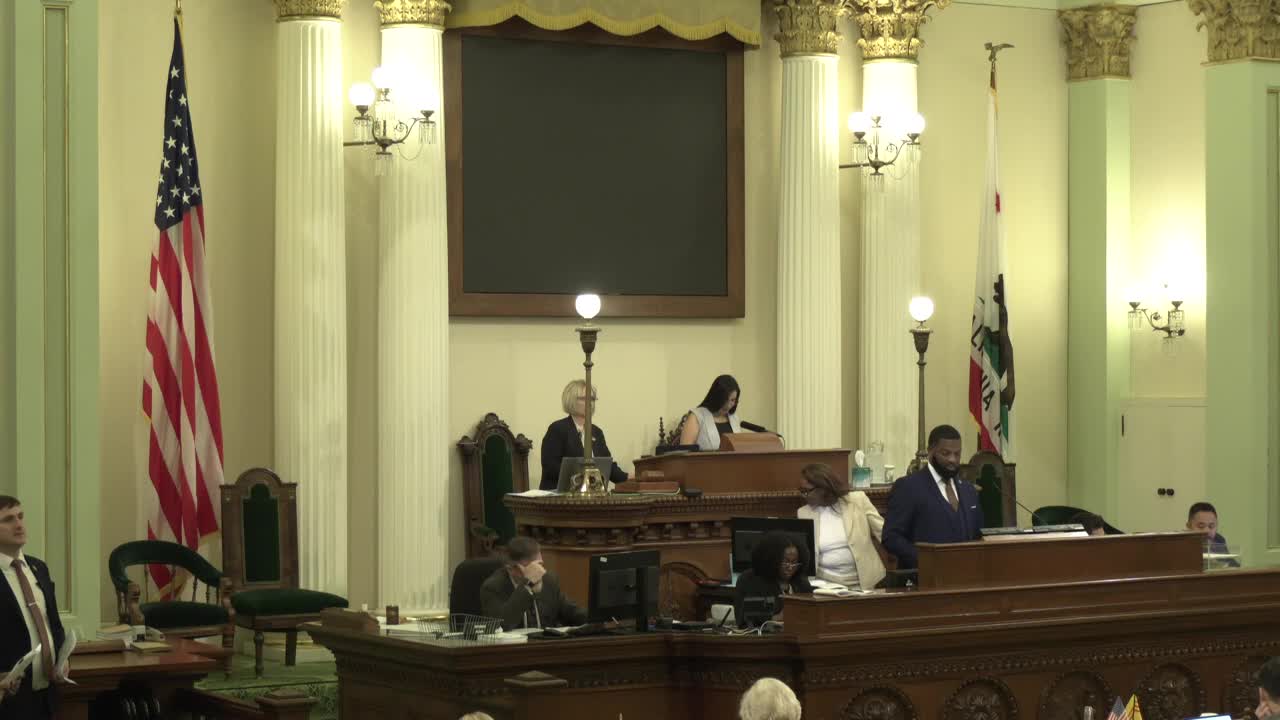 57SEC
Assembly Floor
 1MIN
Senate Floor
 1MIN
Assembly Floor
 12MIN
Assembly Standing Committee on Agriculture
Bill Author