AB 1806: Department of Justice.
- Session Year: 2025-2026
- House: Assembly
- Latest Version Date: 2026-09-29
Current Status:
Passed
(2026-09-29: Chaptered by Secretary of State - Chapter 745, Statutes of 2026.)
Introduced
In Committee
Awaiting First Chamber Vote
Passed First Chamber
In Committee
Awaiting Second Chamber Vote
Passed Second Chamber
Enacted
Existing law requires law enforcement agencies to report to the Department of Justice, as specified, any incident in which a peace officer is involved in a shooting or use of force that results in death or serious bodily injury. Existing law requires the state prosecutor to investigate incidents involving a shooting by a peace officer resulting in the death of an unarmed civilian. Existing law authorizes the state prosecutor to criminally prosecute any officer that, pursuant to an investigation, is found to have violated state law. Existing law provides that the Attorney General is the state prosecutor unless otherwise specified or named.
This bill would require the state prosecutor to conduct an independent, transparent, and thorough investigation into incidents of an immigration enforcement officer-involved shooting resulting in the death of an unarmed civilian. The bill would authorize the state prosecutor to criminally prosecute an immigration enforcement officer that, pursuant to an investigation, is found to have violated state law. The bill would require the state prosecutor to post and maintain on a public internet website each written report, as specified. The bill provides that the Attorney General is the state prosecutor unless otherwise specified or named.
This bill would provide that the provisions of this bill are severable.
Existing law requires law enforcement agencies to report to the Department of Justice, as specified, any incident in which a peace officer is involved in a shooting or use of force that results in death or serious bodily injury. Existing law requires the state prosecutor to investigate incidents involving a shooting by a peace officer resulting in the death of an unarmed civilian. Existing law authorizes the state prosecutor to criminally prosecute any officer that, pursuant to an investigation, is found to have violated state law. Existing law provides that the Attorney General is the state prosecutor unless otherwise specified or named.
This bill would require the state prosecutor to conduct an independent, transparent, and thorough investigation into incidents of a federal an immigration enforcement officer-involved shooting resulting in the death of a an unarmed civilian. The bill would authorize the state prosecutor to criminally prosecute a federal an immigration enforcement officer that, pursuant to an investigation, is found to have violated state law. The bill would require the state prosecutor to post and maintain on a public internet website each written report, as specified. The bill provides that the Attorney General is the state prosecutor unless otherwise specified or named.
This bill would provide that the provisions of this bill are severable.
Existing law requires law enforcement agencies to report to the Department of Justice, as specified, any incident in which a peace officer is involved in a shooting or use of force that results in death or serious bodily injury. Existing law requires the state prosecutor to investigate incidents involving a shooting by a peace officer resulting in the death of an unarmed civilian. Existing law authorizes the state prosecutor to criminally prosecute any officer that, pursuant to an investigation, is found to have violated state law. Existing law provides that the Attorney General is the state prosecutor unless otherwise specified or named.
This bill would require the state prosecutor to conduct an independent, transparent, and thorough investigation into incidents of a federal immigration enforcement officer-involved shooting resulting in the death of a civilian. The bill would authorize the state prosecutor to criminally prosecute a federal immigration enforcement officer that, pursuant to an investigation, is found to have violated state law. The bill would require the state prosecutor to post and maintain on a public internet website each written report, as specified. The bill provides that the Attorney General is the state prosecutor unless otherwise specified or named.
This bill would provide that the provisions of this bill are severable.
Existing law requires law enforcement agencies to report to the Department of Justice, as specified, any incident in which a peace officer is involved in a shooting or use of force that results in death or serious bodily injury. Existing law requires the state prosecutor to investigate incidents involving a shooting by a peace officer resulting in the death of an unarmed civilian. Existing law authorizes the state prosecutor to criminally prosecute any officer that, pursuant to an investigation, is found to have violated state law. Existing law provides that the Attorney General is the state prosecutor unless otherwise specified or named.
This bill would require the state prosecutor to conduct an independent, transparent, and thorough investigation into incidents of a federal immigration enforcement officer-involved shooting of a civilian. The bill would authorize the state prosecutor to criminally prosecute a federal immigration enforcement officer that, pursuant to an investigation, is found to have violated state law. The bill would require the state prosecutor to post and maintain on a public internet website each written report, as specified. The bill provides that the Attorney General is the state prosecutor unless otherwise specified or named.
This bill would provide that the provisions of this bill are severable.
Existing law requires a state prosecutor to investigate incidents of an officer-involved shooting resulting in the death of an unarmed civilian. Under existing law, the Attorney General is the state prosecutor unless otherwise specified or named.This bill would state the intent of the Legislature to enact legislation to require that the Attorney General conduct an independent, transparent, and thorough investigation into any incident involving the shooting of a civilian by federal immigration enforcement agents.Existing law requires a state prosecutor to investigate incidents of an officer-involved shooting resulting in the death of an unarmed civilian. Under existing law, the Attorney General is the state prosecutor unless otherwise specified or named.
This bill would state the intent of the Legislature to enact legislation to require that the Attorney General conduct an independent, transparent, and thorough investigation into any incident involving the shooting of a civilian by federal immigration enforcement agents.
It is the intent of the Legislature that the Attorney General shall exercise all lawful power and authority to provide transparency and protect constitutional rights in situations involving immigration enforcement officer-involved shootings that result in the death of unarmed civilians.
SEC. 2.Section 12525.4 is added to the Government Code, to read:12525.4.(a)A state prosecutor shall conduct an independent, transparent, and thorough investigation into incidents of an immigration enforcement officer-involved shooting resulting in the death of an unarmed civilian. The Attorney General is the state prosecutor unless otherwise specified or named.
(b)Consistent with the procedures outlined in subdivision (a) to clause (ii) of subparagraph (B) of paragraph (2) of subdivision (b), inclusive, of Section 12525.3, the state prosecutor shall do all of the following:
(1)Investigate and gather facts in an incident involving a shooting resulting in the death of an unarmed civilian by an immigration enforcement officer.
(2)For all investigations conducted, prepare and submit a written report. The written report shall include, at a minimum, both of the following:
(A)A statement of the facts.
(B)A detailed analysis and conclusion for each investigatory issue.
(3)If criminal charges against the involved officer are found to be warranted, initiate and prosecute a criminal action against the officer.
(4)If the state prosecutor is prevented from accessing witnesses, documents, or evidence, such that an independent, transparent, and thorough investigation is not possible, the state prosecutor shall document those facts.
(c)The state prosecutor shall post and maintain on a public internet website each written report prepared by the state prosecutor pursuant to this subdivision, appropriately redacting any information in the report that is required by law to be kept confidential.
(d)This section does not limit the Attorney Generals authority under the California Constitution or any applicable state law.
(e)This section shall not be interpreted to regulate the conduct of federal agents or to in any way impose obligations that would violate the Supremacy Clause of the United States Constitution. In all respects this section shall be interpreted to comply with the Supremacy Clause of the United States Constitution.
SEC. 3.The provisions of this act are severable. If any provision of this act or its application is held invalid, that invalidity shall not affect other provisions or applications that can be given effect without the invalid provision or application.
It is the intent of the Legislature that the Attorney General shall exercise all lawful power and authority to provide transparency and protect constitutional rights in situations involving immigration enforcement officer-involved shootings that result in the death of unarmed civilians.
SECTION 1.SEC. 2.Section 12525.4 is added to the Government Code, to read:12525.4.(a)A state prosecutor shall conduct an independent, transparent, and thorough investigation into incidents of a federal an immigration enforcement officer-involved shooting resulting in the death of a an unarmed civilian. The Attorney General is the state prosecutor unless otherwise specified or named.
(b)The Consistent with the procedures outlined in subdivision (a) to clause (ii) of subparagraph (B) of paragraph (2) of subdivision (b), inclusive, of Section 12525.3, the state prosecutor shall do all of the following:
(1)Investigate and gather facts in an incident involving a shooting resulting in the death of a an unarmed civilian by a federal an immigration enforcement officer.
(2)For all investigations conducted, prepare and submit a written report. The written report shall include, at a minimum, both of the following:
(A)A statement of the facts.
(B)A detailed analysis and conclusion for each investigatory issue.
(3)If criminal charges against the involved officer are found to be warranted, initiate and prosecute a criminal action against the officer.
(4)If the state prosecutor is prevented from accessing witnesses, documents, or evidence, such that an independent, transparent, and thorough investigation is not possible, the state prosecutor shall document those facts.
(c)The state prosecutor shall post and maintain on a public internet website each written report prepared by the state prosecutor pursuant to this subdivision, appropriately redacting any information in the report that is required by law to be kept confidential.
(d)This section does not limit the Attorney Generals authority under the California Constitution or any applicable state law.
(e)This section shall not be interpreted to regulate the conduct of federal agents or to in any way impose obligations that would violate the Supremacy Clause of the United States Constitution. In all respects this section shall be interpreted to comply with the Supremacy Clause of the United States Constitution.
SEC. 2.SEC. 3.The provisions of this act are severable. If any provision of this act or its application is held invalid, that invalidity shall not affect other provisions or applications that can be given effect without the invalid provision or application.
(a)A state prosecutor shall conduct an independent, transparent, and thorough investigation into incidents of a federal immigration enforcement officer-involved shooting resulting in the death of a civilian. The Attorney General is the state prosecutor unless otherwise specified or named.
(b)The state prosecutor shall do all of the following:
(1)Investigate and gather facts in an incident involving a shooting resulting in the death of a civilian by a federal immigration enforcement officer.
(2)For all investigations conducted, prepare and submit a written report. The written report shall include, at a minimum, both of the following:
(A)A statement of the facts.
(B)A detailed analysis and conclusion for each investigatory issue.
(3)If criminal charges against the involved officer are found to be warranted, initiate and prosecute a criminal action against the officer.
(c)The state prosecutor shall post and maintain on a public internet website each written report prepared by the state prosecutor pursuant to this subdivision, appropriately redacting any information in the report that is required by law to be kept confidential.
(d)This section does not limit the Attorney Generals authority under the California Constitution or any applicable state law.
SEC. 2.The provisions of this act are severable. If any provision of this act or its application is held invalid, that invalidity shall not affect other provisions or applications that can be given effect without the invalid provision or application.
(a)A state prosecutor shall conduct an independent, transparent, and thorough investigation into incidents of a federal immigration enforcement officer-involved shooting of a civilian. The Attorney General is the state prosecutor unless otherwise specified or named.
(b)The state prosecutor shall do all of the following:
(1)Investigate and gather facts in an incident involving a shooting by a federal immigration enforcement officer.
(2)For all investigations conducted, prepare and submit a written report. The written report shall include, at a minimum, both of the following:
(A)A statement of the facts.
(B)A detailed analysis and conclusion for each investigatory issue.
(3)If criminal charges against the involved officer are found to be warranted, initiate and prosecute a criminal action against the officer.
(c)The state prosecutor shall post and maintain on a public internet website each written report prepared by the state prosecutor pursuant to this subdivision, appropriately redacting any information in the report that is required by law to be kept confidential.
(d)This section does not limit the Attorney Generals authority under the California Constitution or any applicable state law.
SEC. 2.The provisions of this act are severable. If any provision of this act or its application is held invalid, that invalidity shall not affect other provisions or applications that can be given effect without the invalid provision or application.
SECTION 1.It is the intent of the Legislature to enact legislation to require that the Attorney General conduct an independent, transparent, and thorough investigation into any incident involving the shooting of a civilian by federal immigration enforcement agents.It is the intent of the Legislature to enact legislation to require that the Attorney General conduct an independent, transparent, and thorough investigation into any incident involving the shooting of a civilian by federal immigration enforcement agents.
|
Date
|
Status
|
|---|---|
| Sep 29, 2026 | Chaptered by Secretary of State - Chapter 745, Statutes of 2026. |
| Sep 29, 2026 | Approved by the Governor. |
| Sep 3, 2026 | Enrolled and presented to the Governor at 4 p.m. |
| Aug 26, 2026 | Senate amendments concurred in. To Engrossing and Enrolling. (Ayes 60. Noes 19.). |
| Aug 26, 2026 | Senate amendments concurred in. To Engrossing and Enrolling. (Ayes 60. Noes 19. Page 6595.). |
| Aug 25, 2026 | In Assembly. Concurrence in Senate amendments pending. |
| Aug 25, 2026 | Read third time. Passed. Ordered to the Assembly. (Ayes 30. Noes 10. Page 5769.). |
| Aug 25, 2026 | Read third time. Passed. Ordered to the Assembly. (Ayes 30. Noes 9.). |
| Aug 19, 2026 | Read second time. Ordered to third reading. |
| Aug 18, 2026 | Read third time and amended. Ordered to second reading. |
| Aug 13, 2026 | Read second time. Ordered to third reading. |
| Aug 13, 2026 | From committee: Do pass. (Ayes 5. Noes 2.) (August 13). |
| Aug 3, 2026 | In committee: Referred to APPR. suspense file. |
| Jun 24, 2026 | From committee: Do pass and re-refer to Com. on APPR. (Ayes 5. Noes 1.) (June 23). Re-referred to Com. on APPR. |
| Jun 10, 2026 | Referred to Com. on PUB. S. |
| May 28, 2026 | In Senate. Read first time. To Com. on RLS. for assignment. |
| May 27, 2026 | Read third time. Passed. Ordered to the Senate. (Ayes 59. Noes 20.) |
| May 27, 2026 | Read third time. Passed. Ordered to the Senate. (Ayes 59. Noes 20. Page 5435.) |
| May 27, 2026 | Read third time. Passed. Ordered to the Senate. |
| May 19, 2026 | Read second time. Ordered to third reading. |
| May 18, 2026 | Read second time and amended. Ordered returned to second reading. |
| May 14, 2026 | Joint Rule 62(a), file notice suspended. (Page 5030.) |
| May 14, 2026 | Joint Rule 62(a), file notice suspended. |
| May 14, 2026 | From committee: Amend, and do pass as amended. (Ayes 11. Noes 4.) (May 14). |
| May 13, 2026 | In committee: Set, first hearing. Referred to APPR. suspense file. |
| Apr 22, 2026 | From committee: Do pass and re-refer to Com. on APPR. (Ayes 7. Noes 2.) (April 21). Re-referred to Com. on APPR. |
| Apr 9, 2026 | In committee: Set, first hearing. Hearing canceled at the request of author. |
| Mar 17, 2026 | Re-referred to Com. on PUB. S. |
| Mar 16, 2026 | Referred to Com. on PUB. S. |
| Mar 16, 2026 | From committee chair, with author's amendments: Amend, and re-refer to Com. on PUB. S. Read second time and amended. |
| Feb 11, 2026 | From printer. May be heard in committee March 13. |
| Feb 10, 2026 | Read first time. To print. |
|
Date
|
Description
|
Location
|
Votes
|
|
|---|---|---|---|---|
| Aug 26, 2026 | AB 1806 Gabriel Concurrence in Senate Amendments | Assembly Floor |
Passed |
|
| Aug 25, 2026 | Assembly 3rd Reading AB1806 Gabriel et al. By Menjivar | Senate Floor |
Passed |
|
| Aug 13, 2026 | Do pass | Senate Standing Committee on Appropriations |
Passed |
|
| Aug 3, 2026 | Placed on suspense file | Senate Standing Committee on Appropriations |
Passed |
|
| Jun 23, 2026 | Do pass, but first be re-referred to the Committee on [Appropriations] | Senate Standing Committee on Public Safety |
Passed |
|
| May 27, 2026 | AB 1806 Gabriel Assembly Third Reading | Assembly Floor |
Passed |
|
| May 14, 2026 | Do pass as amended. | Assembly Standing Committee on Appropriations |
Passed |
|
| Apr 21, 2026 | Do pass and be re-referred to the Committee on [Appropriations] | Assembly Standing Committee on Public Safety |
Passed |
This list shows positions taken on this bill by organizations on the date displayed, which is linked to the original source.
Positions by individuals are not included.
|
Organization
|
Position
|
Date
|
|---|---|---|
| AAPIs for Civic Empowerment | ** Support | |
| Alliance for A Better Community | ** Support | |
| Alliance for Boys and Men of Color | ** Support | |
| Asian Law Alliance | ** Support | |
| Buen Vecino | ** Support | |
| California Coalition of Women Prisoners | ** Support | |
| California Community Foundation | ** Support | |
| California Faculty Association | ** Support | |
| California Immigrant Policy Center | ** Support | |
| California League of United Latin American Citizens (ca Lulac) | ** Support | |
| California Lulac State Organization | ** Support | |
| California Rural Legal Assistance Foundation | ** Support | |
| Californians for Safety and Justice (CSJ) | ** Support | |
| Center for Empowering Refugees and Immigrants | ** Support | |
| Center for Human Rights and Constitutional Law | ** Support | |
| Central Valley Immigrant Integration Collaborative | ** Support | |
| Change Begins With Me (INDIVISIBLE) | ** Support | |
| CHISPA | ** Support | |
| Coastside United Indivisible | ** Support | |
| Communities United for Restorative Youth Justice | ** Support | |
| Courage California | ** Support | |
| Drug Policy Alliance | ** Support | |
| East Valley Indivisibles | ** Support | |
| Education and Leadership Foundation | ** Support | |
| Ella Baker Center For Human Rights | ** Support | |
| Empowering Marginalized Asian Communities | ** Support | |
| End Child Poverty CA | ** Support | |
| Episcopal Diocese of San Joaquin | ** Support | |
| Felony Murder Elimination Project | ** Support | |
| Friends Committee On Legislation Of California | ** Support | |
| Glide Foundation | ** Support | |
| Immigrant Defenders Law Center | ** Support | |
| Immigrants Rising | ** Support | |
| Inclusive Action for the City | ** Support | |
| Indivisible Alta-Pasadena | ** Support | |
| Indivisible Ca Statestrong | ** Support | |
| Indivisible Healdsburg | ** Support | |
| Indivisible Marin | ** Support | |
| Indivisible Media City Burbank | ** Support | |
| Indivisible Mid-Peninsula | ** Support | |
| Indivisible San Pedro | ** Support | |
| Indivisible Santa Barbara | ** Support | |
| Indivisible Tri-Valley | ** Support | |
| Indivisible West Marin | ** Support | |
| Indivisible Westside Los Angeles | ** Support | |
| Inland Coalition for Immigrant Justice | ** Support | |
| Inland Empire Immigrant Youth Collective | ** Support | |
| Jewish Center for Justice | ** Support | |
| Justice2jobs Coalition | ** Support | |
| Khmer Girls in Action | ** Support | |
| LA Defensa | ** Support | |
| Latino Community Foundation | ** Support | |
| Livermore Indivisible | ** Support | |
| Madera Coalition for Community Justice | ** Support | |
| Majdal Arab Community Center of San Diego | ** Support | |
| NextGen California | ** Support | |
| Orange County Equality Coalition | ** Support | |
| Orange County Justice Fund | ** Support | |
| Orange County Rapid Response Network | ** Support | |
| Rising Juntos | ** Support | |
| Rubicon Programs | ** Support | |
| Sacramento County Young Democrats | ** Support | |
| Sacramento Mayor Kevin McCarty | ** Support | |
| San Bernardino Community Service Center, INC | ** Support | |
| Secure Justice | ** Support | |
| SEIU California | ** Support | |
| SFV Alliance | ** Against | |
| Southeast Asia Resource Action Center | ** Support | |
| Survivor Justice Center | ** Support | |
| The Black Alliance for Just Immigration | ** Support | |
| the san diego lgbt community center | ** Support | |
| The Translatin@ Coalition | ** Support | |
| Valorus | ** Support | |
| Venice Resistance | ** Support | |
| western center on law & poverty | ** Support | |
| Working Partnerships USA | ** Support |
CONCURRENCE IN SENATE AMENDMENTS
CSA1 Bill Id:AB 1806
Author:(Gabriel and Carrillo)
As Amended Ver:August 18, 2026
Majority vote
SUMMARY
Requires a state prosecutor to conduct an independent investigation into an immigration enforcement officer-involved shooting resulting in the death of an unarmed civilian.
Senate Amendments
- State that the Legislature intends that the Attorney General (AG) shall exercise all lawful power and authority to provide transparency and protect constitutional rights in situations involving immigration enforcement officer-involved shootings that result in the death of unarmed civilians.
- Broaden the scope of this bill to apply to investigations of immigration enforcement officer-involved shootings generally, rather than only federal immigration enforcement officer-involved shootings.
- Specify that investigations of immigration enforcement officer-involved shootings resulting in the death of a civilian are required only when the civilian was unarmed.
- Require any state prosecutor investigation of an immigration enforcement officer-involved shooting to be consistent with specified existing procedures that apply to a state prosecutor investigation into incidents of an officer-involved shooting resulting in the death of an unarmed civilian.
- State that if the state prosecutor is prevented from accessing witnesses, documents, or evidence, such that an independent, transparent, and thorough investigation is not possible, the state prosecutor shall document those facts.
- State that this bill shall not be interpreted to regulate the conduct of federal agents or to in any way impose obligations that would violate the Supremacy Clause of the United States Constitution, and in all respects this bill shall be interpreted to comply with the Supremacy Clause of the United States Constitution.
- Add a severability clause.
COMMENTS
As Passed by the Assembly, this bill: Required a state prosecutor to conduct an independent investigation into a federal immigration enforcement officer-involved shooting resulting in the death of a civilian.
Major Provisions
- Required a state prosecutor to conduct an independent, transparent, and thorough investigation into incidents of a federal immigration enforcement officer-involved shooting resulting in the death of a civilian.
- Required the state prosecutor to do all of the following:
- Investigate and gather facts in an incident involving a shooting resulting in the death of a civilian by a federal immigration enforcement officer.
- For all investigations conducted, prepare and submit a written report, which shall include, at a minimum, a statement of the facts and a detailed analysis and conclusion for each investigatory issue.
- If criminal charges against the involved officer are found to be warranted, initiate and prosecute a criminal action against the officer.
- Required the state prosecutor to post and maintain on a public internet website each written report prepared by the state prosecutor, as specified, appropriately redacting any information in the report that is required by law to be kept confidential.
- Specified that the Attorney General (AG) is the state prosecutor unless otherwise specified or named.
- Specified that this does not limit the AG's authority under the California Constitution or any applicable state law.
- Included a severability clause.
According to the Author
"California must take decisive action to ensure accountability when federal immigration agents use deadly force against civilians. AB 1806 would grant the California Attorney General clear authority to investigate any shooting incidents involving federal immigration agents and members of the public. The state has both a moral and legal obligation to protect its residents and uphold the rule of law."
Arguments in Support
According to Service Employees International Union (SEIU) California, "[AB 1806] would require that the California Attorney General conduct an independent, transparent, and thorough investigation into any incident involving a shooting of a civilian by federal immigration enforcement agents.
"SEIU's workforce has identified protecting the civil and human rights of immigrants broadly and immigrant workers specifically as a top legislative priority. Immigration and Customs Enforcement (ICE) raids continue to adversely affect the lives of our members, their workplaces, and the communities in which they live, and it is imperative that state authorities investigate the types of incidents covered under this bill to ensure impartiality under the law.
"The 2025 immigration enforcement surge has led to an unprecedented increase in civilian shootings by immigration agents. An investigative report by the Wall Street Journal identified 13 instances of immigration agents firing at or into civilian vehicles across the country since July 2025. These incidents resulted in four deaths and at least five of those shot were U.S. citizens.
"Two of the most high-profile cases involve the deaths of two American citizens in Minneapolis, Minnesota. Renee Nicole Good, a 37-year-old mother of three, was fatally shot by an ICE agent on January 7th, and Alex Pretti, an ICU nurse, was fatally shot by a Customs and Border Patrol (CBP) officer on January 24th. The U.S. Department of Justice declined to open an investigation into the agent that killed Renee Good, and state officials reported being barred from receiving any evidence from the FBI. Similarly, in Alex Pretti's case, state authorities were blocked from accessing the crime scene by Homeland Security officials.
"In both the Good and Pretti cases, the federal government defended the shootings, characterizing the victims as violent agitators. These claims were publicly disputed by video evidence, local law enforcement, and independent analyses. The Trump administration has signaled to agents that they have "federal immunity," creating a culture of few checks on the use of deadly force during enforcement operations.
"California has already established a framework for independent investigation of officer-involved shootings. AB 1806 extends that same proven framework to shootings by federal immigration agents operating in California."
Arguments in Opposition
According to the SFV Alliance, "This legislation only applies to immigration enforcement officers involved shootings. No other suspected crimes of Federal Law enforcement agents.
"We see this legislation as a continuous attack by the legislators on those enforcing federal Immigration laws. We could go into the many reasons why we see enforcement of immigration laws to be power struggles of party politics but it would not be relevant to this legislation.
"Criminal investigations can be complex. The state creating its own investigation could lead to the undermining of the integrity of the federal Department of Justice's legal process. We feel that the state investigation would be motivated by punishment for immigration officers for enforcement of federal laws and not to find criminal behavior. State Attorney General participation may result in proprietorial misconduct, as they might not adhere to the same standards and obligations as federal prosecutors, potentially jeopardizing the fairness of the case and ultimately allowing those who violated the law under the color of authority to evade justice that the Federal investigators could have impose.
"The author stated in the Assembly Public Safety Committee that “the Federal Government not only failed to investigate, but it also apparently attempted to thwart other agencies from doing so"
"Witnessing federal investigations, we have seen that they do take a longer time to investigate a case and bring the perpetrators to justice. While we appreciate the desire to bring swift prosecutions, it is not always in the best interest of the people to move too quickly. We would encourage the legislators and members of the public to have patience in the investigations by allowing Federal investigators their process and not try to help when it can be detrimental to the prosecutions of those that deserve justice.
"State prosecutors should avoid involvement in the legal policies of federal investigations. With the current State administration and attorney general, we view any investigation into federal immigration agents as being bias with an emotional desire for punishment when logically none should or could be warranted."
FISCAL COMMENTS
According to the Senate Appropriations Committee, "Estimated $5 million in FY 2026-27 and $10 million annually thereafter to hire, train and be prepared to respond promptly to up to ten shootings anywhere in the state, as well as anticipated litigation that may arise out of the state’s efforts to investigate and prosecute federal agents. (General Fund)"
VOTES:
ASM PUBLIC SAFETY: 7-2-0
YES: Schultz, Mark González, Haney, Harabedian, Nguyen, Ramos, Sharp-Collins
NO: Alanis, Lackey
ASM APPROPRIATIONS: 11-4-0
YES: Wicks, Aguiar-Curry, Calderon, Caloza, Fong, Mark González, Krell, Pacheco, Pellerin, Sharp-Collins, Solache
NO: Hoover, Dixon, Ta, Tangipa
ASSEMBLY FLOOR: 59-20-1
YES: Addis, Aguiar-Curry, Ahrens, Alvarez, Arambula, Ávila Farías, Bains, Bauer-Kahan, Bennett, Berman, Boerner, Bonta, Bryan, Calderon, Caloza, Carrillo, Connolly, Elhawary, Fong, Gabriel, Garcia, Gipson, Mark González, Haney, Harabedian, Hart, Irwin, Jackson, Kalra, Krell, Lee, Lowenthal, McKinnor, Muratsuchi, Nguyen, Ortega, Pacheco, Papan, Patel, Pellerin, Petrie-Norris, Quirk-Silva, Ramos, Ransom, Michelle Rodriguez, Rogers, Blanca Rubio, Schiavo, Schultz, Sharp-Collins, Solache, Soria, Stefani, Valencia, Ward, Wicks, Wilson, Zbur, Rivas
NO: Alanis, Castillo, Chen, Davies, DeMaio, Dixon, Ellis, Flora, Gallagher, Jeff Gonzalez, Hadwick, Hoover, Johnson, Lackey, Macedo, Patterson, Sanchez, Ta, Tangipa, Wallis
ABS, ABST OR NV: Celeste Rodriguez
UPDATED
VERSION: August 18, 2026
CONSULTANT: Ilan Zur / PUB. S. / (916) 319-3744 FN: 0004168
SENATE RULES COMMITTEE Office of Senate Floor Analyses (916) 651-4171 | AB 1806 |
THIRD READING
Bill No: AB 1806
Author: Gabriel (D) and Carrillo (D), et al.
Amended: 8/18/26 in Senate
Vote: 21
SENATE PUBLIC SAFETY COMMITTEE: 5-1, 6/23/26
AYES: Arreguín, Caballero, Cortese, Pérez, Wiener
NOES: Seyarto
SENATE APPROPRIATIONS COMMITTEE: 5-2, 8/13/26
AYES: Cervantes, Cabaldon, Grayson, Richardson, Wahab
NOES: Seyarto, Dahle
ASSEMBLY FLOOR: 59-20, 5/27/26 - See last page for vote
SUBJECT: Department of Justice
SOURCE: Author
DIGEST:
This bill requires a state prosecutor to investigate and potentially prosecute incidents of an immigration enforcement officer-involved shooting resulting in the death of an unarmed civilian, as specified.
Senate Floor Amendments of 8/18/26 strike references to “federal” officers, specify that investigations shall occur only if the civilian is unarmed, and requires the state prosecutor to document if it is prevented from accessing specified materials.
ANALYSIS:
Existing federal law:
- Provides that a civil or criminal prosecution that is commenced in a state court and that is against or directed to any of the following, among others, may be removed by them to the district court of the United States under specified circumstances. (28 United States Code (U.S.C.) § 1442, subd. (a)(1).)
- Provides that for the purposes of removal pursuant to the above, a law enforcement officer who is the defendant in a criminal prosecution, shall be deemed to have been acting under the color of his office if the officer engaged in specified conduct. (28 U.S.C. § 1442, subd. (c).)
Existing state law:
- Specifies that, subject to the powers and duties of the Governor, the Attorney General (AG) shall be the chief law officer of the State. (California Constitution (Cal. Const.), art. 5, § 13.)
- States that it shall be the duty of the AG to see that the laws of the State are uniformly and adequately enforced. (Cal. Const., art. 5, § 13.)
- Provides that the AG shall have direct supervision over every district attorney and sheriff and over such other law enforcement officers as may be designated by law, in all matters pertaining to the duties of their respective offices, and may require any of said officers to make reports concerning the investigation, detection, prosecution, and punishment of crime in their perspective jurisdictions as to the AG may seem advisable. (Cal. Const., art. 5, § 13.)
- Specifies, whenever in the opinion of the AG any law of the State is not being adequately enforced in any county, it shall be the duty of the AG to prosecute any violations of law of which the superior court shall have jurisdiction, and in such cases the AG shall have all the powers of a district attorney. (Cal. Const., art. 5, § 13.)
- Provides that United States Immigration and Customs Enforcement (ICE) officers and United States Customs and Border Protection (CBP) officers are not California peace officers. (Penal (Pen.) Code, § 830.85)
- Specifies that when the AG deems it advisable or necessary in the public interest, or when directed to do so by the Governor, the AG shall assist any district attorney in the discharge of the district attorney’s duties, and may, if deemed necessary, take full charge of any investigation or prosecution of violations of law of which the superior court has jurisdiction, and that in this respect the AG has all the powers of a district attorney, including the power to issue or cause to be issued subpoenas or other process. (Government (Gov.) Code, § 12550.)
- Provides that the AG has direct supervision over the sheriffs of the several counties of the state, and may require of them written reports concerning the investigation, detection, and punishment of crime in their respective jurisdictions, and provides, whenever the AG deems it necessary in the public interest the AG shall direct the activities of any sheriff relative to the investigation or detection of crime within the jurisdiction of the sheriff, and may direct the service of subpoenas, warrants of arrest, or other processes of court in connection therewith. (Gov. Code, § 12560.)
- Requires a state prosecutor to investigate incidents of an officer-involved shooting resulting in the death of an unarmed civilian and specifies that the AG is the state prosecutor unless otherwise specified or named. (Gov. Code, § 12525.3, subd. (b)(1).)
- Existing law authorizes the state prosecutor to do all of the following:
- Investigate and gather facts in an incident involving a shooting by a peace officer that results in the death of a civilian if the civilian was unarmed or if there is a reasonable dispute as to whether the civilian was armed.
- For all investigations conducted, prepare and submit a written report, which shall include, at a minimum, a statement of the facts, a detailed analysis and conclusion for each investigatory issue, and recommendations to modify the policies and practices of the law enforcement agency, as applicable.
- If criminal charges against the involved officer are found to be warranted, initiate and prosecute a criminal action against the officer. (Gov. Code, § 12525.3, subd. (b)(2).)
- Requires the state prosecutor to post and maintain on a public internet website each written report prepared by the state prosecutor, as specified, appropriately redacting any information in the report that is required by law to be kept confidential. (Gov. Code, § 12525.3, subd. (b)(3).)
- Requires the AG to operate a Police Practices Division within the Department of Justice (DOJ) to, upon request of a local law enforcement agency, review the use of deadly force policies of that law enforcement agency. (Gov. Code, § 12525.3, subd. (c)(1).)
- Requires the Police Practices Division to make specific and customized recommendations to any law enforcement agency that requests a review, based on those policies identified as recommended best practices. (Gov. Code, § 12525.3, subd. (c)(2).)
- Requires each law enforcement agency to monthly furnish to the DOJ, in a manner defined and prescribed by the AG, a report of all instances when a peace officer employed by that agency is involved in any of the following:
- An incident involving the shooting of a civilian by a peace officer.
- An incident involving the shooting of a peace officer by a civilian.
- An incident in which the use of force by a peace officer against a civilian results in serious bodily injury or death.
- An incident in which the use of force by a civilian against a peace officer results in serious bodily injury or death. (Gov. Code, § 12525.2, subd. (a).)
- Requires, for each incident described above, the information reported to the DOJ to include specified information including the gender, race, and age of each individual who was shot, injured, or killed, the date, time, and location of the incident, the type of force used against the officer, the civilian, or both, the reason for using force, the injuries sustained, and if any medical aid was rendered, among other categories of information. (Gov. Code, § 12525.2, subd. (b).)
This bill:
- Requires a state prosecutor to conduct an independent, transparent, and thorough investigation into incidents of an immigration enforcement officer-involved shooting resulting in the death of an unarmed civilian.
- Specifies that the Attorney General is the state prosecutor unless otherwise specified or named.
- Requires the state prosecutor, consistent with similar existing law regarding other officer involved shooting investigations, to do all of the following:
- Investigate and gather facts in an incident involving a shooting resulting in the death of an unarmed civilian by an immigration enforcement officer.
- For all investigations conducted, prepare and submit a written report. The written report shall include, at a minimum, both a statement of facts and a detailed analysis and conclusion for each investigatory issue.
- Provides that if criminal charges against the involved officer are found to be warranted, the state prosecutor shall initiate and prosecute a criminal action against the officer.
- Provides that if the state prosecutor is prevented from accessing witnesses, documents, or evidence, such that an independent, transparent, and thorough investigation is not possible, the state prosecutor shall document those facts.
- Requires the state prosecutor to post and maintain on a public internet website each written report prepared by the state prosecutor pursuant to this bill, appropriately redacting any information in the report that is required by law to be kept confidential.
- Specifies that it does not limit the Attorney General’s authority under the California Constitution or any applicable state law.
Comments
After the murder of George Floyd sparked nationwide protests against police brutality, the Legislature passed AB 1506 (McCarty Chapter 326, Statutes of 2020), which required the AG operate a Police Practices Division to review a local law enforcement agency’s use of deadly force policy upon request, and to investigate incidents of an officer involved shooting (OIS) resulting in the death of an unarmed civilian. Pursuant to AB 1506, the AG is authorized to investigate and gather facts in an incident involving a shooting by a peace officer that results in the death of a civilian if the civilian was unarmed or if there is a reasonable dispute as to whether the civilian was armed, and to submit a written report, which must include specified information. Moreover, AB 1506 authorizes the AG to initiate and prosecute a criminal action against the officer, if criminal charges are found to be warranted. As of June 11, 2026, the Attorney General has issued 41 reports pursuant to AB 1506.
This bill adapts the statutory language enacted by AB 1506 into a separate statute that applies to incidents of an immigration enforcement OIS resulting in the death of an unarmed civilian. Specifically, under this bill, the AG is required to investigate and gather facts in an incident involving a shooting resulting in the death of an unarmed civilian by an immigration enforcement officer and prepare and submit a written report. The report, like the one issued under AB 1506, must include a statement of facts and a detailed analysis and conclusion for each investigatory issue. This bill also authorizes the AG to initiate and prosecute a criminal action against the officer if criminal charges are found to be warranted. In addition, the AG must post on its website each written report prepared pursuant to the above provisions.
According to materials submitted by the author, this bill is at least in part motivated by recent civilian shootings by federal immigration officers in California, most notably the killing of Keith Porter Jr. by an off-duty immigration agent in Northridge on December 31, 2025, and the shooting of Carlos Hernandez in Patterson on April 7, 2026. While the AG has not launched an independent probe into either of these shootings, he did issue guidance to California district attorneys and law enforcement agencies in January 2026 regarding investigations of potential state law violations by federal agents or officers, specifically stating:
Where potential criminal conduct occurs while a federal agent or officer is carrying out federal duties, joint investigations and information sharing agreements continue to be best practices if feasible for investigating such instances. However, in light of the federal government’s recent actions, it is important to recognize that the interests of the state are not subordinate to federal interests when it comes to regulating local crime. State and local law enforcement agencies maintain independent authority to investigate all potential violations of California state law even in instances where federal authorities may decline to cooperate [bold in original]. […] California law enforcement agencies are not obligated to defer to federal law enforcement in any incident involving conduct by federal agents that may implicate state criminal law. However, conflict should be minimized, and communication and de-escalation should be of paramount importance in any interaction.
For a discussion of this bill’s constitutional implications, see the analysis prepared by the Senate Committee on Public Safety.
Related/Prior Legislation
AB 1506 (McCarty, Chapter 326, Statutes of 2020).
FISCAL EFFECT: Appropriation: No Fiscal Com.: Yes Local: No
According to the Senate Appropriations Committee:
Estimated $5 million in FY 2026-27 and $10 million annually thereafter to hire, train and be prepared to respond promptly to up to ten shootings anywhere in the state, as well as anticipated litigation that may arise out of the state’s efforts to investigate and prosecute federal agents. (General Fund)
SUPPORT: (Verified 8/18/26)
AAPIs for Civic Empowerment
Alliance for a Better Community
Alliance for Boys and Men of Color
Asian Law Alliance
Buen Vecino
California Coalition of Women Prisoners
California Community Foundation
California Faculty Association
California Immigrant Policy Center
California Immigrant Policy Center
California League of United Latin American Citizens (ca Lulac)
California Rural Legal Assistance Foundation
Center for Empowering Refugees and Immigrants
Center for Human Rights and Constitutional Law
Central Valley Immigrant Integration Collaborative
Change Begins With Me (INDIVISIBLE)
Chispa
Coastside United Indivisible
Communities United for Restorative Youth Justice
Courage California
Drug Policy Alliance
Drug Policy Alliance
East Valley Indivisibles
Education and Leadership Foundation
Ella Baker Center for Human Rights
End Child Poverty CA
Episcopal Diocese of San Joaquin
Felony Murder Elimination Project
Friends Committee on Legislation of California
Glide Foundation
Immigrant Defenders Law Center
Immigrants Rising
Inclusive Action for the City
Indivisible Alta-Pasadena
Indivisible CA Statestrong
Indivisible Healdsburg
Indivisible Marin
Indivisible Media City Burbank
Indivisible Mid-peninsula
Indivisible San Pedro
Indivisible Santa Barbara
Indivisible Tri-valley
Indivisible West Marin
Indivisible Westside Los Angeles
Inland Coalition for Immigrant Justice
Inland Empire Immigrant Youth Collective
Justice2jobs Coalition
Khmer Girls in Action
LA Defensa
Livermore Indivisible
Madera Coalition for Community Justice
Majdal Arab Community Center of San Diego
Nextgen California
Orange County Equality Coalition
Orange County Justice Fund
Orange County Rapid Response Network
Rising Juntos
Sacramento County Young Democrats
Sacramento Mayor Kevin McCarty
San Bernardino Community Service Center, INC
Secure Justice
SEIU California
Southeast Asia Resource Action Center
Survivor Justice Center
The Black Alliance for Just Immigration
The Translatin@ Coalition
Valorus
Venice Resistance
Western Center on Law & Poverty
Working Partnerships USA
OPPOSITION: (Verified 8/13/26)
ASSEMBLY FLOOR: 59-20, 5/27/26
AYES: Addis, Aguiar-Curry, Ahrens, Alvarez, Arambula, Ávila Farías, Bains, Bauer-Kahan, Bennett, Berman, Boerner, Bonta, Bryan, Calderon, Caloza, Carrillo, Connolly, Elhawary, Fong, Gabriel, Garcia, Gipson, Mark González, Haney, Harabedian, Hart, Irwin, Jackson, Kalra, Krell, Lee, Lowenthal, McKinnor, Muratsuchi, Nguyen, Ortega, Pacheco, Papan, Patel, Pellerin, Petrie-Norris, Quirk-Silva, Ramos, Ransom, Michelle Rodriguez, Rogers, Blanca Rubio, Schiavo, Schultz, Sharp-Collins, Solache, Soria, Stefani, Valencia, Ward, Wicks, Wilson, Zbur, Rivas
NOES: Alanis, Castillo, Chen, Davies, DeMaio, Dixon, Ellis, Flora, Gallagher, Jeff Gonzalez, Hadwick, Hoover, Johnson, Lackey, Macedo, Patterson, Sanchez, Ta, Tangipa, Wallis
NO VOTE RECORDED: Celeste Rodriguez
Prepared by: Alex Barnett / PUB. S. /
8/19/26 21:37:08
SENATE RULES COMMITTEE Office of Senate Floor Analyses (916) 651-4171 | AB 1806 |
THIRD READING
Bill No: AB 1806
Author: Gabriel (D) and Carrillo (D), et al.
Amended: 5/18/26 in Assembly
Vote: 21
SENATE PUBLIC SAFETY COMMITTEE: 5-1, 6/23/26
AYES: Arreguín, Caballero, Cortese, Pérez, Wiener
NOES: Seyarto
SENATE APPROPRIATIONS COMMITTEE: 5-2, 8/13/26
AYES: Cervantes, Cabaldon, Grayson, Richardson, Wahab
NOES: Seyarto, Dahle
ASSEMBLY FLOOR: 59-20, 5/27/26 - See last page for vote
SUBJECT: Department of Justice
SOURCE: Author
DIGEST:
This bill requires a state prosecutor to investigate and potentially prosecute incidents of a federal immigration enforcement officer-involved shooting resulting in the death of a civilian, as specified.
ANALYSIS:
Existing federal law:
- Provides that a civil or criminal prosecution that is commenced in a state court and that is against or directed to any of the following, among others, may be removed by them to the district court of the United States under specified circumstances. (28 United States Code (U.S.C.) § 1442, subd. (a)(1).)
- Provides that for the purposes of removal pursuant to the above, a law enforcement officer who is the defendant in a criminal prosecution, shall be deemed to have been acting under the color of his office if the officer engaged in specified conduct. (28 U.S.C. § 1442, subd. (c).)
Existing state law:
- Specifies that, subject to the powers and duties of the Governor, the Attorney General (AG) shall be the chief law officer of the State. (California Constitution (Cal. Const.), art. 5, § 13.)
- States that it shall be the duty of the AG to see that the laws of the State are uniformly and adequately enforced. (Cal. Const., art. 5, § 13.)
- Provides that the AG shall have direct supervision over every district attorney and sheriff and over such other law enforcement officers as may be designated by law, in all matters pertaining to the duties of their respective offices, and may require any of said officers to make reports concerning the investigation, detection, prosecution, and punishment of crime in their perspective jurisdictions as to the AG may seem advisable. (Cal. Const., art. 5, § 13.)
- Specifies, whenever in the opinion of the AG any law of the State is not being adequately enforced in any county, it shall be the duty of the AG to prosecute any violations of law of which the superior court shall have jurisdiction, and in such cases the AG shall have all the powers of a district attorney. (Cal. Const., art. 5, § 13.)
- Provides that United States Immigration and Customs Enforcement (ICE) officers and United States Customs and Border Protection (CBP) officers are not California peace officers. (Penal (Pen.) Code, § 830.85)
- Specifies that when the AG deems it advisable or necessary in the public interest, or when directed to do so by the Governor, the AG shall assist any district attorney in the discharge of the district attorney’s duties, and may, if deemed necessary, take full charge of any investigation or prosecution of violations of law of which the superior court has jurisdiction, and that in this respect the AG has all the powers of a district attorney, including the power to issue or cause to be issued subpoenas or other process. (Government (Gov.) Code, § 12550.)
- Provides that the AG has direct supervision over the sheriffs of the several counties of the state, and may require of them written reports concerning the investigation, detection, and punishment of crime in their respective jurisdictions, and provides, whenever the AG deems it necessary in the public interest the AG shall direct the activities of any sheriff relative to the investigation or detection of crime within the jurisdiction of the sheriff, and may direct the service of subpoenas, warrants of arrest, or other processes of court in connection therewith. (Gov. Code, § 12560.)
- Requires a state prosecutor to investigate incidents of an officer-involved shooting resulting in the death of an unarmed civilian and specifies that the AG is the state prosecutor unless otherwise specified or named. (Gov. Code, § 12525.3, subd. (b)(1).)
- Existing law authorizes the state prosecutor to do all of the following:
- Investigate and gather facts in an incident involving a shooting by a peace officer that results in the death of a civilian if the civilian was unarmed or if there is a reasonable dispute as to whether the civilian was armed.
- For all investigations conducted, prepare and submit a written report, which shall include, at a minimum, a statement of the facts, a detailed analysis and conclusion for each investigatory issue, and recommendations to modify the policies and practices of the law enforcement agency, as applicable.
- If criminal charges against the involved officer are found to be warranted, initiate and prosecute a criminal action against the officer. (Gov. Code, § 12525.3, subd. (b)(2).)
- Requires the state prosecutor to post and maintain on a public internet website each written report prepared by the state prosecutor, as specified, appropriately redacting any information in the report that is required by law to be kept confidential. (Gov. Code, § 12525.3, subd. (b)(3).)
- Requires the AG to operate a Police Practices Division within the Department of Justice (DOJ) to, upon request of a local law enforcement agency, review the use of deadly force policies of that law enforcement agency. (Gov. Code, § 12525.3, subd. (c)(1).)
- Requires the Police Practices Division to make specific and customized recommendations to any law enforcement agency that requests a review, based on those policies identified as recommended best practices. (Gov. Code, § 12525.3, subd. (c)(2).)
- Requires each law enforcement agency to monthly furnish to the DOJ, in a manner defined and prescribed by the AG, a report of all instances when a peace officer employed by that agency is involved in any of the following:
- An incident involving the shooting of a civilian by a peace officer.
- An incident involving the shooting of a peace officer by a civilian.
- An incident in which the use of force by a peace officer against a civilian results in serious bodily injury or death.
- An incident in which the use of force by a civilian against a peace officer results in serious bodily injury or death. (Gov. Code, § 12525.2, subd. (a).)
- Requires, for each incident described above, the information reported to the DOJ to include specified information including the gender, race, and age of each individual who was shot, injured, or killed, the date, time, and location of the incident, the type of force used against the officer, the civilian, or both, the reason for using force, the injuries sustained, and if any medical aid was rendered, among other categories of information. (Gov. Code, § 12525.2, subd. (b).)
This bill:
- Requires a state prosecutor to conduct an independent, transparent, and thorough investigation into incidents of a federal immigration enforcement officer-involved shooting resulting in the death of a civilian.
- Specifies that the Attorney General is the state prosecutor unless otherwise specified or named.
- Requires the state prosecutor to do the following:
- Investigate and gather facts in an incident involving a shooting resulting in the death of a civilian by a federal immigration enforcement officer.
- For all investigations conducted, prepare and submit a written report. The written report shall include, at a minimum, both a statement of facts and a detailed analysis and conclusion for each investigatory issue.
- Provides that if criminal charges against the involved officer are found to be warranted, the state prosecutor shall initiate and prosecute a criminal action against the officer.
- Requires the state prosecutor to post and maintain on a public internet website each written report prepared by the state prosecutor pursuant to this bill, appropriately redacting any information in the report that is required by law to be kept confidential.
- Specifies that it does not limit the Attorney General’s authority under the California Constitution or any applicable state law.
Comments
After the murder of George Floyd sparked nationwide protests against police brutality, the Legislature passed AB 1506 (McCarty Chapter 326, Statutes of 2020), which required the AG operate a Police Practices Division to review a local law enforcement agency’s use of deadly force policy upon request, and to investigate incidents of an officer involved shooting (OIS) resulting in the death of an unarmed civilian. Pursuant to AB 1506, the AG is authorized to investigate and gather facts in an incident involving a shooting by a peace officer that results in the death of a civilian if the civilian was unarmed or if there is a reasonable dispute as to whether the civilian was armed, and to submit a written report, which must include specified information. Moreover, AB 1506 authorizes the AG to initiate and prosecute a criminal action against the officer, if criminal charges are found to be warranted. As of June 11, 2026, the Attorney General has issued 41 reports pursuant to AB 1506.
This bill adapts the statutory language enacted by AB 1506 into a separate statute that applies to incidents of a federal immigration enforcement OIS resulting in the death of a civilian. Specifically, under this bill, the AG is required to investigate and gather facts in an incident involving a shooting resulting in the death of a civilian by a federal immigration enforcement officer and prepare and submit a written report. The report, like the one issued under AB 1506, must include a statement of facts and a detailed analysis and conclusion for each investigatory issue. This bill also authorizes the AG to initiate and prosecute a criminal action against the officer if criminal charges are found to be warranted. In addition, the AG must post on its website each written report prepared pursuant to the above provisions.
According to materials submitted by the author, this bill is at least in part motivated by recent civilian shootings by federal immigration officers in California, most notably the killing of Keith Porter Jr. by an off-duty immigration agent in Northridge on December 31, 2025, and the shooting of Carlos Hernandez in Patterson on April 7, 2026. While the AG has not launched an independent probe into either of these shootings, he did issue guidance to California district attorneys and law enforcement agencies in January 2026 regarding investigations of potential state law violations by federal agents or officers, specifically stating:
Where potential criminal conduct occurs while a federal agent or officer is carrying out federal duties, joint investigations and information sharing agreements continue to be best practices if feasible for investigating such instances. However, in light of the federal government’s recent actions, it is important to recognize that the interests of the state are not subordinate to federal interests when it comes to regulating local crime. State and local law enforcement agencies maintain independent authority to investigate all potential violations of California state law even in instances where federal authorities may decline to cooperate [bold in original]. […] California law enforcement agencies are not obligated to defer to federal law enforcement in any incident involving conduct by federal agents that may implicate state criminal law. However, conflict should be minimized, and communication and de-escalation should be of paramount importance in any interaction.
For a discussion of this bill’s constitutional implications, see the analysis prepared by the Senate Committee on Public Safety.
Related/Prior Legislation
AB 1506 (McCarty, Chapter 326, Statutes of 2020).
FISCAL EFFECT: Appropriation: No Fiscal Com.: Yes Local: No
According to the Senate Appropriations Committee:
Estimated $5 million in FY 2026-27 and $10 million annually thereafter to hire, train and be prepared to respond promptly to up to ten shootings anywhere in the state, as well as anticipated litigation that may arise out of the state’s efforts to investigate and prosecute federal agents. (General Fund)
SUPPORT: (Verified 8/13/26)
AAPIs for Civic Empowerment
Alliance for a Better Community
Alliance for Boys and Men of Color
Asian Law Alliance
Buen Vecino
California Coalition of Women Prisoners
California Community Foundation
California Faculty Association
California Immigrant Policy Center
California Immigrant Policy Center
California League of United Latin American Citizens (ca Lulac)
California Rural Legal Assistance Foundation
Center for Empowering Refugees and Immigrants
Center for Human Rights and Constitutional Law
Central Valley Immigrant Integration Collaborative
Change Begins With Me (INDIVISIBLE)
Chispa
Coastside United Indivisible
Communities United for Restorative Youth Justice
Courage California
Drug Policy Alliance
Drug Policy Alliance
East Valley Indivisibles
Education and Leadership Foundation
Ella Baker Center for Human Rights
End Child Poverty CA
Episcopal Diocese of San Joaquin
Felony Murder Elimination Project
Friends Committee on Legislation of California
Glide Foundation
Immigrant Defenders Law Center
Immigrants Rising
Inclusive Action for the City
Indivisible Alta-Pasadena
Indivisible CA Statestrong
Indivisible Healdsburg
Indivisible Marin
Indivisible Media City Burbank
Indivisible Mid-peninsula
Indivisible San Pedro
Indivisible Santa Barbara
Indivisible Tri-valley
Indivisible West Marin
Indivisible Westside Los Angeles
Inland Coalition for Immigrant Justice
Inland Empire Immigrant Youth Collective
Justice2jobs Coalition
Khmer Girls in Action
LA Defensa
Livermore Indivisible
Madera Coalition for Community Justice
Majdal Arab Community Center of San Diego
Nextgen California
Orange County Equality Coalition
Orange County Justice Fund
Orange County Rapid Response Network
Rising Juntos
Sacramento County Young Democrats
Sacramento Mayor Kevin McCarty
San Bernardino Community Service Center, INC
Secure Justice
SEIU California
Southeast Asia Resource Action Center
Survivor Justice Center
The Black Alliance for Just Immigration
The Translatin@ Coalition
Valorus
Venice Resistance
Western Center on Law & Poverty
Working Partnerships USA
OPPOSITION: (Verified 8/13/26)
ASSEMBLY FLOOR: 59-20, 5/27/26
AYES: Addis, Aguiar-Curry, Ahrens, Alvarez, Arambula, Ávila Farías, Bains, Bauer-Kahan, Bennett, Berman, Boerner, Bonta, Bryan, Calderon, Caloza, Carrillo, Connolly, Elhawary, Fong, Gabriel, Garcia, Gipson, Mark González, Haney, Harabedian, Hart, Irwin, Jackson, Kalra, Krell, Lee, Lowenthal, McKinnor, Muratsuchi, Nguyen, Ortega, Pacheco, Papan, Patel, Pellerin, Petrie-Norris, Quirk-Silva, Ramos, Ransom, Michelle Rodriguez, Rogers, Blanca Rubio, Schiavo, Schultz, Sharp-Collins, Solache, Soria, Stefani, Valencia, Ward, Wicks, Wilson, Zbur, Rivas
NOES: Alanis, Castillo, Chen, Davies, DeMaio, Dixon, Ellis, Flora, Gallagher, Jeff Gonzalez, Hadwick, Hoover, Johnson, Lackey, Macedo, Patterson, Sanchez, Ta, Tangipa, Wallis
NO VOTE RECORDED: Celeste Rodriguez
Prepared by: Alex Barnett / PUB. S. /
8/14/26 16:24:18
SENATE COMMITTEE ON
Senator Sabrina Cervantes, Chair
2025 - 2026 Regular Session
AB 1806 (Gabriel) - Department of Justice
Version: | Policy Vote: |
Urgency: | Mandate: |
Hearing Date: | Consultant: |
Bill Summary:
AB 1806 would require the Attorney General (AG), as the state prosecutor, to investigate incidents of a federal immigration enforcement officer-involved shooting resulting in the death of a civilian and permits the state prosecutor to criminally prosecute the federal immigration enforcement officer. The bill also requires the state prosecutor to post and maintain each written report regarding the incident on a public website.
Fiscal Impact:
Estimated $5 million in FY 2026-27 and $10 million annually thereafter to hire, train and be prepared to respond promptly to up to ten shootings anywhere in the state, as well as anticipated litigation that may arise out of the state’s efforts to investigate and prosecute federal agents. (General Fund)
Proposed Law:
This bill would require the AG to do all the following:
1) Investigate and gather facts in an incident involving a shooting resulting in the death of a civilian by a federal immigration enforcement officer.
2) For all investigations conducted, prepare and submit a written report. The written report shall include, at a minimum, both of the following:
a) A statement of the facts.
b) A detailed analysis and conclusion for each investigatory issue.
3) If criminal charges against the involved officer are found to be warranted, initiate and prosecute a criminal action against the officer.
Related Legislation:
AB 1807 (Gabriel) would prohibit the use of state-owned property for purposes of immigration enforcement. The bill would require state agencies to develop procedures to ensure that the use of state-owned property for immigration enforcement purposes is documented and that the Attorney General’s office is notified. The bill would require the Attorney General’s office to design standardized signage and to make the signage available to download free of charge. AB 1807 is pending in this committee.
SENATE COMMITTEE ON PUBLIC SAFETY
Senator Jesse Arreguín, Chair
2025 - 2026 Regular
Bill No: AB 1806 Hearing Date: June 23, 2026
Author: | Gabriel | ||
Version: | May 18, 2026 | ||
Urgency: | No | Fiscal: | Yes |
Consultant: | AB | ||
Subject: Department of Justice
HISTORY
Source: Author
Prior Legislation: AB 807 (McCarty), held in Assembly Appropriations, 2023
SB 715 (Portantino), Ch. 250, Stats. of 2021
AB 1506 (McCarty), Ch. 326, Stats. of 2020
AB 392 (Weber), Ch. 170, Stats. of 2019
SB 230 (Caballero), Ch. 285, Stats. of 2019
AB 86 (McCarty), held in Assembly Appropriations, 2015
Support: California Faculty Association; California Immigrant Policy Center; Drug Policy Alliance; Ella Baker Center for Human Rights; Indivisible Alta-Pasadena; Justice2jobs Coalition; LA Defensa; Sacramento Mayor Kevin McCarty; SEIU California
Opposition: None known
Assembly Floor Vote: 59 - 20
PURPOSE
The purpose of this bill is to require a state prosecutor to investigate and potentially prosecute incidents of a federal immigration enforcement officer-involved shooting resulting in the death of a civilian, as specified.
Existing federal law provides that a civil or criminal prosecution that is commenced in a state court and that is against or directed to any of the following, among others, may be removed by them to the district court of the United States, as specified:
- The United States or any agency or officer thereof, or any officer of any agency thereof, in an official or individual capacity, for or relating to any act under color of such office or on account of any right, title or authority claimed under any Act of Congress for the apprehension or punishment of criminals or the collection of the revenue. (28 U.S.C. § 1442, subd. (a)(1).)
Existing federal law provides that for the purposes of removal pursuant to the above, a law enforcement officer who is the defendant in a criminal prosecution, shall be deemed to have been acting under the color of his office if the officer did any of the following:
- Protected an individual in the presence of the officer from a crime of violence;
- Provided immediate assistance to an individual who suffered, or who was threatened with, bodily harm; or
- Prevented the escape of any individual who the officer reasonably believed to have committed, or was about to commit, in the presence of the officer, a crime of violence that resulted in, or was likely to result in, death or serious bodily injury. (28 U.S.C. § 1442, subd. (c).)
Existing California law specifies that, subject to the powers and duties of the Governor, the Attorney General (AG) shall be the chief law officer of the State. (Cal. Const., art. 5, § 13.)
Existing law states that it shall be the duty of the AG to see that the laws of the State are uniformly and adequately enforced. (Cal. Const., art. 5, § 13.)
Existing law provides that the AG shall have direct supervision over every district attorney and sheriff and over such other law enforcement officers as may be designated by law, in all matters pertaining to the duties of their respective offices, and may require any of said officers to make reports concerning the investigation, detection, prosecution, and punishment of crime in their perspective jurisdictions as to the AG may seem advisable. (Cal. Const., art. 5, § 13.)
Existing law specifies, whenever in the opinion of the AG any law of the State is not being adequately enforced in any county, it shall be the duty of the AG to prosecute any violations of law of which the superior court shall have jurisdiction, and in such cases the AG shall have all the powers of a district attorney. (Cal. Const., art. 5, § 13.)
Existing law provides that United States Immigration and Customs Enforcement (ICE) officers and United States Customs and Border Protection (CBP) officers are not California peace officers. (Pen. Code, § 830.85)
Existing law specifies that when the AG deems it advisable or necessary in the public interest, or when directed to do so by the Governor, the AG shall assist any district attorney in the discharge of the district attorney’s duties, and may, if deemed necessary, take full charge of any investigation or prosecution of violations of law of which the superior court has jurisdiction, and that in this respect the AG has all the powers of a district attorney, including the power to issue or cause to be issued subpoenas or other process. (Gov. Code, § 12550.)
Existing law provides that the AG has direct supervision over the sheriffs of the several counties of the state, and may require of them written reports concerning the investigation, detection, and punishment of crime in their respective jurisdictions, and provides, whenever the AG deems it necessary in the public interest the AG shall direct the activities of any sheriff relative to the investigation or detection of crime within the jurisdiction of the sheriff, and may direct the service of subpoenas, warrants of arrest, or other processes of court in connection therewith. (Gov. Code, § 12560.)
Existing law requires a state prosecutor to investigate incidents of an officer-involved shooting resulting in the death of an unarmed civilian and specifies that the AG is the state prosecutor unless otherwise specified or named. (Gov. Code, § 12525.3, subd. (b)(1).)
Existing law authorizes the state prosecutor to do all of the following:
- Investigate and gather facts in an incident involving a shooting by a peace officer that results in the death of a civilian if the civilian was unarmed or if there is a reasonable dispute as to whether the civilian was armed.
- For all investigations conducted, prepare and submit a written report, which shall include, at a minimum, a statement of the facts, a detailed analysis and conclusion for each investigatory issue, and recommendations to modify the policies and practices of the law enforcement agency, as applicable.
- If criminal charges against the involved officer are found to be warranted, initiate and prosecute a criminal action against the officer. (Gov. Code, § 12525.3, subd. (b)(2).)
Existing law requires the state prosecutor to post and maintain on a public internet website each written report prepared by the state prosecutor, as specified, appropriately redacting any information in the report that is required by law to be kept confidential. (Gov. Code, § 12525.3, subd. (b)(3).)
Existing law requires the AG to operate a Police Practices Division within the DOJ to, upon request of a local law enforcement agency, review the use of deadly force policies of that law enforcement agency. (Gov. Code, § 12525.3, subd. (c)(1).)
Existing law requires the Police Practices Division to make specific and customized recommendations to any law enforcement agency that requests a review, based on those policies identified as recommended best practices. (Gov. Code, § 12525.3, subd. (c)(2).)
Existing law requires each law enforcement agency to monthly furnish to the DOJ, in a manner defined and prescribed by the AG, a report of all instances when a peace officer employed by that agency is involved in any of the following:
- An incident involving the shooting of a civilian by a peace officer.
- An incident involving the shooting of a peace officer by a civilian.
- An incident in which the use of force by a peace officer against a civilian results in serious bodily injury or death.
- An incident in which the use of force by a civilian against a peace officer results in serious bodily injury or death. (Gov. Code, § 12525.2, subd. (a).)
Existing law requires, for each incident described above, the information reported to the DOJ to include specified information including the gender, race, and age of each individual who was shot, injured, or killed, the date, time, and location of the incident, the type of force used against the officer, the civilian, or both, the reason for using force, the injuries sustained, and if any medical aid was rendered, among other categories of information. (Gov. Code, § 12525.2, subd. (b).)
This bill requires a state prosecutor to conduct an independent, transparent, and thorough investigation into incidents of a federal immigration enforcement officer-involved shooting resulting in the death of a civilian.
This bill specifies that the Attorney General is the state prosecutor unless otherwise specified or named.
This bill requires the state prosecutor to do the following:
- Investigate and gather facts in an incident involving a shooting resulting in the death of a civilian by a federal immigration enforcement officer.
- For all investigations conducted, prepare and submit a written report. The written report shall include, at a minimum, both a statement of facts and a detailed analysis and conclusion for each investigatory issue.
This bill provides that if criminal charges against the involved officer are found to be warranted, the state prosecutor shall initiate and prosecute a criminal action against the officer.
This bill requires the state prosecutor to post and maintain on a public internet website each written report prepared by the state prosecutor pursuant to this bill, appropriately redacting any information in the report that is required by law to be kept confidential.
This bill specifies that it does not limit the Attorney General’s authority under the California Constitution or any applicable state law.
COMMENTS
- Need for This Bill
According to the author:
California must take decisive action to ensure accountability when federal immigration agents use deadly force against civilians. AB 1806 would grant the California Attorney General clear authority to investigate any fatal shooting incidents involving federal immigration agents and members of the public. The state has both a moral and legal obligation to protect its residents and uphold the rule of law.
- Recent Federal Immigration Enforcement Actions
From the outset of President Trump’s second term, his Administration has expanded immigration enforcement and altered the immigration system at an unprecedented scale. Through various executive actions, President Trump has declared a national emergency at the southern border to limit lawful entries, halted refugee admission, expanded who immigration enforcement officers can prioritize for deportation, expanded expedited removal, increased the hiring of immigration officers, expanded immigration detention, and attempted to significantly curtail the availability of various immigration visas and statuses.[1] On January 25, 2025, ICE field offices were told that each office must detain at least 75 noncitizens every day, or more than 1,800 per day nationwide.[2] To hold more detainees, the Trump Administration opened Guantanamo Bay and sent detained individuals there in February, and has also started sending detained individuals to a mega-prison in El Salvador, in many cases before their due process rights can be vindicated.[3] On July 4, 2025, President Trump signed the One Big Beautiful (OBB) Act, a gargantuan domestic policy bill that, among other provisions, allocates more than $170 billion for immigration enforcement through 2029. The OBB Act increases the annual budget of Immigration and Customs Enforcement (ICE) from $8.7 billion to approximately $27.7 billion, with $75 billion appropriated to the agency over the next four years. With this unprecedented budget increase, ICE is slated to have a higher annual budget than the militaries of Italy, Brazil, Israel, and nearly 20 other countries in the top 40 of military spenders.[4] This funding will go almost exclusively toward immigration enforcement, detention and deportation operations.[5] On June 10, 2026, President Trump signed a bill authorizing another $70 billion in funding for immigration enforcement.[6]
The Trump Administration’s ramp-up of immigration enforcement has been accompanied by aggressive recruitment efforts, including attempts by federal immigration agencies to lure state peace officers.[7] ICE has taken steps to significantly expand hiring, such as giving out $50,000 signing bonuses, offering student loan forgiveness, lowering the age limit for recruits from 21 to 18, and waiving the 37-year-old hiring cap, among others.[8] But amid this hiring surge, evidence has surfaced that ICE had misrepresented the rigor of its training for new officers, including legal training over whether they are permitted to use deadly force. According to a recent whistleblower account, training for new officers has been pared down to the point where it is “deficient, defective and broken.”[9] Moreover, a recent review by the Associated Press found that at least two dozen ICE employees and contractors have been charged with crimes since 2020, including 9 such instances in 2025 alone.[10] According to the report, while most cases happened before the passage of the OBB Act, “experts say such crimes could accelerate given the volume of new employees and their empowerment to use aggressive tactics to deport people.”[11]
Aggressive tactics have been one of the hallmarks of federal immigration enforcement during President Trump’s second term, and were on full display during Operation Metro Surge, a joint operation of ICE and CBP that took place throughout Minnesota (though primarily in the Twin Cities area) beginning in December 2025 and concluding early February 2026. During this operation, federal immigration officials employed harsh, confrontational, and arguably illegal tactics to make arrests, serve warrants, conduct raids and contain protesters.[12] Operation Metro Surge also resulted in the shooting of three civilians by federal immigration agents, two of which were fatal. On January 7, 2026, ICE agent Jonathan Ross fired three shots into the vehicle of Renee Good, killing her, and on January 24, 2026, CBP agents shot and killed Alex Pretti, who was filming immigration agents and standing between agents and a woman they had pushed to the ground.[13] Minnesota state investigators were blocked from participating in the investigation into both of these shootings. The third shooting occurred on January 14, 2026, when Julio Cesar Sosa-Celis was shot in the leg by an ICE agent after a vehicle chase and struggle outside his residence. After multiple conflicting accounts of the incident were advanced by the government, which were themselves contested by accounts provided by Sosa-Celis’ family who were inside the residence, federal prosecutors dismissed criminal charges against Sosa-Celis, and the ICE agents involved were suspended pending a criminal probe into whether they lied to a grand jury.[14] After an investigation into the shooting, on May 18, 2026, prosecutors in Hennepin County, MN charged the agent, Christian Castro, with assault and falsely reporting a crime, and on May 29, Castro was taken into custody in Texas.[15]
- California Use of Force Standards and Officer-Involved Shooting (OIS) Investigations
In 1989, the U.S. Supreme Court set the standard for reasonable use of force in law enforcement. The general rule for how much force a law enforcement officer can use in response to a given situation is determined by a reasonableness test, requiring the careful balancing of the force against the countervailing government interest at stake.[16] In 2019, California refined its use of force statutes in order to provide clearer guidance to law enforcement and the public, specifically regarding the when the use of deadly force is appropriate. Namely, AB 392 (Weber), Chapter 170, Statutes of 2019, specified the circumstances in which deadly force is and is not appropriate, and SB 230 (Caballero), Chapter 285, Statutes of 2019, required law enforcement agencies to update their training and policies with specific requirements regarding use of force, including a requirement that an officer may only use a level of force that they reasonably believe is proportional to the seriousness of the suspected offense or the reasonably perceived level of actual or threatened resistance.[17]
The following year, after the murder of George Floyd sparked nationwide protests against police brutality, the Legislature passed AB 1506 (McCarty) Chapter 326, Statutes of 2020, which required the AG operate a Police Practices Division to review a local law enforcement agency’s use of deadly force policy upon request, and to investigate incidents of an OIS resulting in the death of an unarmed civilian. Pursuant to AB 1506, the AG is authorized to investigate and gather facts in an incident involving a shooting by a peace officer that results in the death of a civilian if the civilian was unarmed or if there is a reasonable dispute as to whether the civilian was armed, and to submit a written report, which must include specified information. Moreover, AB 1506 authorizes the AG to initiate and prosecute a criminal action against the officer, if criminal charges are found to be warranted.[18] As of June 11, 2026, the Attorney General has issued 41 reports pursuant to AB 1506.[19]
This bill adapts the statutory language enacted by AB 1506 into a separate statute that applies to incidents of a federal immigration enforcement OIS resulting in the death of a civilian. Specifically, under this bill, the AG is required to investigate and gather facts in an incident involving a shooting resulting in the death of a civilian by a federal immigration enforcement officer and prepare and submit a written report. [20] The report, like the one issued under AB 1506, must include a statement of facts and a detailed analysis and conclusion for each investigatory issue. The bill also authorizes the AG to initiate and prosecute a criminal action against the officer if criminal charges are found to be warranted. In addition, the AG must post on its website each written report prepared pursuant to the above provisions.
According to materials submitted by the author, this bill is at least in part motivated by recent civilian shootings by federal immigration officers in California, most notably the killing of Keith Porter Jr. by an off-duty immigration agent in Northridge on December 31, 2025, and the shooting of Carlos Hernandez in Patterson on April 7, 2026. While the AG has not launched an independent probe into either of these shootings, he did issue guidance to California district attorneys and law enforcement agencies in January 2026 regarding investigations of potential state law violations by federal agents or officers, specifically stating:
Where potential criminal conduct occurs while a federal agent or officer is carrying out federal duties, joint investigations and information sharing agreements continue to be best practices if feasible for investigating such instances. However, in light of the federal government’s recent actions, it is important to recognize that the interests of the state are not subordinate to federal interests when it comes to regulating local crime. State and local law enforcement agencies maintain independent authority to investigate all potential violations of California state law even in instances where federal authorities may decline to cooperate [bold in original]. […] California law enforcement agencies are not obligated to defer to federal law enforcement in any incident involving conduct by federal agents that may implicate state criminal law. However, conflict should be minimized, and communication and de-escalation should be of paramount importance in any interaction.[21]
- State Prosecution of a Federal Officer – Federal Law and Constitutional Considerations
The prosecution of a federal officer by the Attorney General, while technically permissible under the law, is likely to face several legal hurdles. The first is procedural – under federal law, any state criminal prosecution of a federal officer, for any act under color of such office, or on account of any right, title or authority claimed under federal law, may be “removed” to a United States district court from a state court in which the prosecution is initiated.[22] Under this law, the defendant federal officer in such a case is deemed to have been acting under the color of their office if they 1) protected an individual in the presence of the officer from a crime of violence, 2) provided immediate assistance to an individual who suffered, or who was threatened with, bodily harm, or 3) prevented the escape of any individual who the officer reasonably believed to have committed, or was about to commit, in the presence of the officer, a crime of violence that resulted in, or was likely to result in, death or serious bodily injury.[23] Practically, this means that it is not enough that the defendant is a federal officer; for the case to be removed to federal court, the defendant must also offer some rational defense based in federal law and tethered to the specific facts of the case.
California’s authority to prosecute crime generally is rooted in the Tenth Amendment to the United States Constitution, which provides that “the powers not delegated to the United States by the Constitution, nor prohibited by it to the states, are reserved to the states respectively, or to the people.”[24] Among these powers reserved to the states is the “police power,” which traditionally has been defined as the authority to define the criminal law and to provide for the public health, safety, morals and welfare.[25] It is well-established that the “states are independent sovereigns possessing inherent police power to criminally punish conduct inimical to the public welfare, even when that same conduct is also prohibited under federal law,” and that “foremost among the prerogatives of sovereignty is the power to create and enforce a criminal law.”[26]
However, when the state seeks to prosecute a federal officer, that authority is circumscribed by the Supremacy Clause (discussed further below), and in particular, a doctrine of that constitutional provision called “Supremacy Clause immunity” This doctrine traces its roots back to a Supreme Court case from 1890 called In Re Neagle (1890) 135 U.S. 1, in which the sheriff of San Joaquin County arrested a federal agent that had killed a former California Supreme Court justice who the agent believed was attacking a third party he was assigned to protect.[27] The Court ultimately held that “if the prisoner is held in the state court to answer for an act which he was authorized to do by the law of the United States, which it was his duty to do as marshal of the United States, and if, in doing that act, he did no more than what was necessary and proper for him to do, he cannot be guilty of a crime under the law of the state of California.”[28] More recently, that holding as been rearticulated as protecting a federal officer from state prosecution if the acts are both authorized by the laws of the United States and necessary and proper to the execution of his responsibilities.[29] This necessary and proper standard requires a showing that the defendant “had an honest and reasonable belief that what he did was necessary in the performance of his duty.”[30] As referenced at the beginning of comment 3, the touchstone in state prosecutions of federal officers, as is the case with most use of force cases, will be reasonableness, which is generally thought to be a relatively easy standard to meet.[31] The Committee should consider this immunity doctrine and its impact on the likelihood (or unlikelihood, as the case may be) of successful prosecutions of federal officers under the bill.
Intergovernmental Immunity
Because this bill explicitly applies to federal immigration officer involved shootings, it likely implicates the Supremacy Clause of the United States Constitution, which provides that federal law “shall be the supreme Law of the Land; and the Judges in every State shall be bound thereby, any Thing in the Constitution or Laws of any State to the Contrary notwithstanding.”[32] The doctrine of intergovernmental immunity is derived from the Supremacy Clause of the Constitution, and demands that “the activities of the Federal Government are free from regulation by any state.”[33] This makes a state regulation invalid if it “regulates the United States directly or discriminates against the Federal Government or those with whom it deals.”[34] Whether a state law “directly regulates” the federal government demands a functional inquiry into whether the regulations at issue “interfere with or control the operations of the federal government.”[35] Moreover, “a state or local law discriminates against the federal government if it treats a state entity more favorably than it treats a comparable federal entity.”[36] Critically, there is no de minimis exception to a discriminatory burden – any such burden is impermissible.[37] Nevertheless, it is well settled that generally applicable state laws can apply to federal entities.[38] It should be noted that “the scope of a federal contractor’s protection from state law under the Supremacy Clause is substantially narrower than that of a federal employee or other federal instrumentality.”[39]
While it is less likely that a court would scrutinize this bill as a “direct regulation” of the federal government, given that the bill does not impose any affirmative requirements on the federal government or clearly interfere with federal operations, certain differences between this bill and AB 1506 support an argument that this bill discriminates against the federal government under the standard articulated in the preceding paragraph. As noted previously, whereas AB 1506 authorizes the DOJ to investigate and report on OIS resulting in the death of an unarmed civilian, this bill requires the DOJ to investigate and report on OIS resulting in the death of any civilian. Additionally, though a distinction of lesser importance, AB 1806 requires the AG to conduct an “independent, transparent and thorough” investigation, while existing law includes none of this descriptive language. Because the AB 1506 statute makes a reference to “peace officers,” which is generally how California law enforcement officers are described in existing law, it arguably does not apply to federal law enforcement officers. However, because “peace officer” is not defined in the statute, an argument may be made that it does in fact give the AG authority to investigate federal OIS. To make this especially clear, instead of creating a standalone section related to federal immigration-related OIS the author and Committee may wish to consider amending the bill to instead define “peace officer” for the purposes of the existing OIS investigation statute to include federal, state, and local law enforcement officers. Such an amendment would eliminate the distinctions outlined above that make the current bill susceptible to an argument under the Supremacy Clause that it discriminates against the federal government, arguably making the bill more constitutionally durable.
- Argument in Support
According to La Defensa:
The 2025 immigration enforcement surge has led to an unprecedented increase in civilian shootings by immigration agents. An investigative report by the Wall Street Journal identified 13 instances of immigration agents firing at or into civilian vehicles across the country since July 2025. These incidents resulted in four deaths and at least five of those shot were U.S. Citizens.
Two of the most high-profile cases involve the deaths of two American citizens in Minneapolis, Minnesota. Renee Nicole Good, a 37-year-old mother of three was fatally shot by an Immigration and Customs Enforcement (ICE) agent on January 7th and Alex Pretti, an ICU nurse was fatally shot by a Customs and Border Patrol (CBP) officer on January 24th. The U.S. Department of Justice declined to open an investigation into the agent that killed Renee Good and state officials reported being barred from receiving any evidence from the FBI. Similarly in Alex Pretti’s case state authorities were blocked from accessing the crime scene by Homeland Security officials.
In both the Good and Pretti cases, the federal government defended the shootings, characterizing the victims as violent agitators. These claims were publicly disputed by video evidence, local law enforcement, and independent analyses. The Trump administration has signaled to agents that they have “federal immunity” creating a culture of few checks on the use of deadly force during enforcement operations. California has already established a framework for independent investigation of officer-involved shootings. AB 1806 extends that same proven framework to fatal shootings by federal immigration agents operating in California.
-- END --
Proclamation 10888. 20 January 2025. 90 Fed. Register 8333-8336; U.S. Const. Art. IV, Section 4.
Executive Order 14159. 20 January 2025. 90 Fed. Register 8443. https://www.whitehouse.gov/presidential-actions/2025/01/protecting-the-american-people-against-invasion/ ↑
Washington Post, Trump Officials Issue Quotas to ICE Officers to Ramp up Arrests, January 26, 2025, https://www.washingtonpost.com/immigration/2025/01/26/ice-arrests-raids-trump-quota ↑
M. Lee, AP News, Immigration Officials Defend Authority to Hold Migrants at Guantanamo Bay, March 10, 2025, https://apnews.com/article/us-immigration-detention-guantanamo-bay-d4fe8f0d051e0cd7e3f04ce02c8e7564; M. Aleman, AP News, Venezuelan Migrants Deported by the US Ended up in a Salvadoran Prison. This is Their Legal Status, March 25, 2025, https://apnews.com/article/el-salvador-trump-tren-de-aragua-venezuela-dde4259e5dcd502101b7b8fbd3c03659 ↑
“ICE Budget Now Bigger Than Most of the World's Militaries.” Newsweek. 2 July 2025. https://www.newsweek.com/immigration-ice-bill-trump-2093456 ↑
“Explainer: One Big Beautiful Bill Act: Immigration Provisions.” Immigration Forum. 7 July 2025. https://forumtogether.org/article/one-big-beautiful-bill-act-immigration-provisions/ ↑
“Trump signs bill giving nearly $70B to his immigration enforcement agenda through end of his term.” 10 June 2026. Associated Press. https://apnews.com/article/trump-immigration-enforcement-dhs-ice-deportation-9eef2e24fede3e4d593be462cbcf31f2 ↑
“ICE offers big bucks – but California police officers prove tough to poach.” Los Angeles Times 22 September 2025, available at: https://www.latimes.com/california/story/2025-09-22/ice-poaching-cops ↑
Ray and Sanchez, “ICE expansion has outpaced accountability. What are the remedies?” Brookings 26 January 2026. Available at: https://www.brookings.edu/articles/ice-expansion-has-outpaced-accountability-what-are-the-remedies/ ↑
“ICE whistleblower accuses agency of ‘deficient, defective and broken’ training amid hiring surge.” The Hill. 23 February 2026. https://thehill.com/homenews/administration/5751455-ice-officer-training-whistleblower/ ↑
“Takeaways from AP’s review of recent criminal cases against ICE employees and contractors.” Associated Press. 10 February 2026. https://apnews.com/article/ice-agents-arrested-misconduct-abuse-corruption-charged-d3aeb8c20191fa357f87078fc169cc17 ↑
Ibid. ↑
For instance, see https://www.ilrc.org/immigration-enforcement/federal-tracking/large-scale-raids/minneapolis-mn-operation-metro-surge and https://www.jurist.org/news/2026/01/judge-partially-blocks-operation-metro-surge-tactics-against-protesters-in-minnesota/ ↑
“Minneapolis ICE shooting: A minute-by-minute timeline of how Renee Nicole Good died.”
ABC News. 9 January 2026 https://abcnews.com/US/minneapolis-ice-shooting-minute-minute-timeline-renee-nicole/story?id=129021809 ; “A minute-by-minute timeline of the fatal shooting of Alex Pretti involving federal agents.” ABC News 26 January 2026, https://abcnews.com/Politics/minute-minute-timeline-fatal-shooting-alex-pretti-federal/story?id=129547199 ↑
“ICE Tried to Justify a Minneapolis Shooting. Its Story Unraveled.” New York Times. 14 February 2026. https://www.nytimes.com/2026/02/14/us/julio-sosa-celis-ice-minneapolis-shooting.html ↑
“ICE officer wanted in the shooting of a man during the Minneapolis crackdown is arrested in Texas.” Associated Press. 29 May 2026. https://apnews.com/article/minneapolis-immigration-crackdown-arrest-sosacelis-811eca576b7b7088694cc3a646999d51 ↑
Graham v. Connor (1989) 490 U.S. 386, 396. ↑
Gov. Code, § 7286, subd. (b). ↑
AB 1506 is codified at Gov. Code, § 12525.3. ↑
“AB 1506 Case Archive.” Department of Justice. https://oag.ca.gov/ois-incidents/case-archive ↑
Recall that under AB 1506, the AG is only “authorized” to conduct this investigation and such investigations may only be conducted of OIS involving “unarmed civilians.” ↑
“Investigations of Potential State Law Violations By Federal Agents or Officers.” Law Enforcement Guidance Statement. Rob Bonta, Attorney General. Issued 27 January 2026. https://oag.ca.gov/system/files/media/2026-dle-07.pdf ↑
28 U.S.C § 1442, subd. (a). ↑
28 U.S.C § 1442, subd. (c). ↑
U.S. Const., 10th Amend. ↑
Berman v. Parker (1954) 348 U.S. 26, 28; Gonzales v. Raich (2005) 545 U.S. 1, 29-30. ↑
In re Jose C. (2009) 45 Cal.4th 534, 544; Heath v. Alabama (1985) 474 U.S. 82, 93. ↑
Id. at 52-53 ↑
Id. at 75. ↑
Morgan v. California (9th Cir. 1984) 743 F.2d 728, 731 ↑
Clifton v. Cox (9th Cir. 1977) 549 F.2d 722, 728-729. ↑
“Raising the Standard for Using Force.” Stanford Center for Racial Justice, Stanford Law School. Policy Brief. February 2026. https://law.stanford.edu/wp-content/uploads/2026/02/Raising-the-Standard-for-Using-Force.pdf ↑
U.S. Const., art. VI, Cl 2. ↑
United States v. California (9th Cir. 2019) 921 F.3d 865, 879. ↑
N.D. v. United States (1990) 495 U.S. 423, 435; Boeing Co. v. Movassaghi (9th Cir. 2014) 768 F.3d 832, 839. ↑
United States v. Washington, (2022) 596 U.S. 832, 838. ↑
Boeing, supra, 768 F.3d at p. 842, quoting United States v. City of Arcata (9th Cir. 2010) 629 F.3d 986, 991. ↑
United States v. California, supra, 921 F.3d at 880. ↑
See United States ex rel. Drury v. Lewis, 200 U.S. 1, 7-8 (1906); Johnson v. Maryland, 254 U.S. 51, 56 (1920). ↑
Geo Grp., Inc. v. Newsom (2022) 50 F.4th 745, 755. ↑
ASSEMBLY THIRD READING
ATR Bill Id:AB 1806
Author:(Gabriel and Carrillo)
As Amended Ver:May 18, 2026
Majority vote
SUMMARY
Requires a state prosecutor to conduct an independent investigation into a federal immigration enforcement officer-involved shooting resulting in the death of a civilian.
Major Provisions
- Requires a state prosecutor to conduct an independent, transparent, and thorough investigation into incidents of a federal immigration enforcement officer-involved shooting resulting in the death of a civilian.
- Requires the state prosecutor to do all of the following:
- Investigate and gather facts in an incident involving a shooting resulting in the death of a civilian by a federal immigration enforcement officer.
- For all investigations conducted, prepare and submit a written report, which shall include, at a minimum, a statement of the facts and a detailed analysis and conclusion for each investigatory issue.
- If criminal charges against the involved officer are found to be warranted, initiate and prosecute a criminal action against the officer.
- Requires the state prosecutor to post and maintain on a public internet website each written report prepared by the state prosecutor, as specified, appropriately redacting any information in the report that is required by law to be kept confidential.
- Specifies that the Attorney General (AG) is the state prosecutor unless otherwise specified or named.
- Specifies that this does not limit the AG's authority under the California Constitution or any applicable state law.
- Includes a severability clause.
COMMENTS
According to the Author
"California must take decisive action to ensure accountability when federal immigration agents use deadly force against civilians. AB 1806 would grant the California Attorney General clear authority to investigate any shooting incidents involving federal immigration agents and members of the public. The state has both a moral and legal obligation to protect its residents and uphold the rule of law."
Arguments in Support
According to SEIU California, "[AB 1806] would require that the California Attorney General conduct an independent, transparent, and thorough investigation into any incident involving a shooting of a civilian by federal immigration enforcement agents.
"SEIU's workforce has identified protecting the civil and human rights of immigrants broadly and immigrant workers specifically as a top legislative priority. ICE raids continue to adversely affect the lives of our members, their workplaces, and the communities in which they live, and it is imperative that state authorities investigate the types of incidents covered under this bill to ensure impartiality under the law.
"The 2025 immigration enforcement surge has led to an unprecedented increase in civilian shootings by immigration agents. An investigative report by the Wall Street Journal identified 13 instances of immigration agents firing at or into civilian vehicles across the country since July 2025. These incidents resulted in four deaths and at least five of those shot were U.S. citizens.
"Two of the most high-profile cases involve the deaths of two American citizens in Minneapolis, Minnesota. Renee Nicole Good, a 37-year-old mother of three, was fatally shot by an Immigration and Customs Enforcement (ICE) agent on January 7th, and Alex Pretti, an ICU nurse, was fatally shot by a Customs and Border Patrol (CBP) officer on January 24th. The U.S. Department of Justice declined to open an investigation into the agent that killed Renee Good, and state officials reported being barred from receiving any evidence from the FBI. Similarly, in Alex Pretti's case, state authorities were blocked from accessing the crime scene by Homeland Security officials.
"In both the Good and Pretti cases, the federal government defended the shootings, characterizing the victims as violent agitators. These claims were publicly disputed by video evidence, local law enforcement, and independent analyses. The Trump administration has signaled to agents that they have "federal immunity," creating a culture of few checks on the use of deadly force during enforcement operations.
"California has already established a framework for independent investigation of officer-involved shootings. AB 1806 extends that same proven framework to shootings by federal immigration agents operating in California."
Arguments in Opposition
None submitted.
FISCAL COMMENTS
According to the Assembly Appropriations Committee:
- Ongoing costs (General Fund) of an unknown amount to the Department of Justice (DOJ) to conduct independent investigations of federal immigration enforcement officer-involved shootings resulting in death, prepare and publish written reports, and pursue criminal prosecution where warranted. As a point of reference, the comparable state and local peace officer investigation framework established by AB 1506 (McCarty), Chapter 326, Statutes of 2020, received an initial appropriation of $15.3 million General Fund in fiscal year (FY) 2021-22, increasing to $15.6 million annually beginning in FY 2022-23, to support four investigative teams as well as legal, victim, and other services. As of May 2026, DOJ has completed and publicly posted 39 investigations under AB 1506.
- Cost pressures (Trial Court Trust Fund, General Fund) of an unknown but likely minor amount to the trial courts to the extent the AG initiates state criminal prosecution against federal officers and any prosecution proceeds in state court before removal to federal court. Although courts are not funded on the basis of workload, increased pressure on the Trial Court Trust Fund may create a need for increased funding for courts from the General Fund.
The state budget provides annual General Fund backfills to the Trial Court Trust Fund to offset revenue reductions, totaling approximately $117.3 million in 2025-26. The Legislative Analyst's Office recently warned of General Fund structural deficits of around $35 billion per year beginning in the 2027-28 fiscal year.
VOTES
ASM PUBLIC SAFETY: 7-2-0
YES: Schultz, Mark González, Haney, Harabedian, Nguyen, Ramos, Sharp-Collins
NO: Alanis, Lackey
ASM APPROPRIATIONS: 11-4-0
YES: Wicks, Aguiar-Curry, Calderon, Caloza, Fong, Mark González, Krell, Pacheco, Pellerin, Sharp-Collins, Solache
NO: Hoover, Dixon, Ta, Tangipa
UPDATED
VERSION: May 18, 2026
CONSULTANT: Ilan Zur / PUB. S. / (916) 319-3744 FN: 0002933
Date of Hearing: May 13, 2026
ASSEMBLY COMMITTEE ON APPROPRIATIONS
Buffy Wicks, Chair
ABPCA Bill Id:AB 1806
Author:(Gabriel) – As Amended Ver:March 16, 2026
Policy Committee: | Public Safety | Vote: | 7 - 2 |
|
| ||
|
|
Urgency: No State Mandated Local Program: No Reimbursable: No
SUMMARY:
This bill requires a state prosecutor to conduct an independent investigation into a federal immigration enforcement officer-involved shooting of a civilian.
Specifically, this bill:
- Requires the prosecutor to prepare and submit a written report, which must include, at a minimum, a statement of the facts and a detailed analysis and conclusion for each investigatory issue, and to post the report on a public website.
- Permits the report to include redacted information as required by law to be kept confidential.
- Requires the state prosecutor to initiate and prosecute a criminal action against the officer, if warranted.
FISCAL EFFECT:
- Significant ongoing costs (General Fund) of an unknown amount to the Department of Justice (DOJ) to conduct independent investigations of federal immigration enforcement officer-involved shootings, prepare and publish written reports, and pursue criminal prosecution where warranted. As a point of reference, the comparable state and local peace officer investigation framework established by AB 1506 (McCarty), Chapter 326, Statutes of 2020, received an initial appropriation of $15.3 million General Fund in fiscal year (FY) 2021-22, increasing to $15.6 million annually beginning in FY 2022-23, to support four investigative teams as well as legal, victim, and other services. As of May 2026, DOJ has completed and publicly posted 39 investigations under AB 1506. This bill’s framework is similar, except unlike AB 1506, which requires investigations of shootings that result in the death of an unarmed civilian, this bill applies to all federal immigration enforcement shootings of civilians, regardless of outcome. The committee is unable to estimate the precise size of the possible universe of qualifying incidents, though press reporting indicates that since July 2025, federal immigration agents have fired at or into civilian vehicles in at least 13 instances nationwide, and California has been the location of multiple federal immigration enforcement officer-involved shootings of civilians during this period. To the extent these incidents reflect a continuing pattern, DOJ would face recurring annual investigative workload of meaningful magnitude. DOJ was unable to provide a fiscal estimate at the time this analysis was written.
- Cost pressures (Trial Court Trust Fund, General Fund) of an unknown but likely minor amount to the trial courts to the extent the AG initiates state criminal prosecution against federal officers and any prosecution proceeds in state court before removal to federal court. Although courts are not funded on the basis of workload, increased pressure on the Trial Court Trust Fund may create a need for increased funding for courts from the General Fund.
The state budget provides annual General Fund backfills to the Trial Court Trust Fund to offset revenue reductions, totaling approximately $117.3 million in 2025-26. The Legislative Analyst’s Office recently warned of General Fund structural deficits of around $35 billion per year beginning in the 2027-28 fiscal year.
COMMENTS:
- Purpose. According to the author:
California must take decisive action to ensure accountability when federal immigration agents use deadly force against civilians. AB 1806 would grant the California Attorney General clear authority to investigate any shooting incidents involving federal immigration agents and members of the public. The state has both a moral and legal obligation to protect its residents and uphold the rule of law.
- Background. Existing law requires the Attorney General (AG) to investigate incidents of officer-involved shootings resulting in the death of an unarmed civilian. Specifically, the AG is authorized to investigate and gather facts in an incident involving a shooting by a peace officer that results in the death of a civilian if the civilian was unarmed or if there is a reasonable dispute as to whether the civilian was armed, prepare a written report that includes specified information, and prosecute a criminal action against the officer if criminal charges against the involved officer are found to be warranted. This bill establishes substantially similar provisions, specific to shootings by federal immigration officers.
As discussed in the policy committee’s analysis, the prosecution requirement of this bill raises Supremacy Clause, intergovernmental immunity, and federal officer immunity concerns, particularly because state criminal prosecutions of federal officers may be removed to federal court and federal-officer immunity may bar prosecution where the officer reasonably believed their conduct was necessary to perform their federal duty. To the extent the bill is challenged in court, any defense costs would be borne by the Department of Justice.
Analysis Prepared by: Shiran Zohar / APPR. / (916) 319-2081
Date of Hearing:
Counsel: Ilan Zur
ASSEMBLY COMMITTEE ON
Nick Schultz, Chair
ABPCA Bill Id:
Author:() – As Ver:
SUMMARY:
- Requires a state prosecutor to conduct an independent investigation into a federal immigration enforcement officer-involved shooting of a civilian. Specifically, this bill:
- Requires a state prosecutor to conduct an independent, transparent, and thorough investigation into incidents of a federal immigration enforcement officer-involved shooting of a civilian.
- Requires the state prosecutor to do all of the following:
- Investigate and gather facts in an incident involving a shooting by a federal immigration enforcement officer.
- For all investigations conducted, prepare and submit a written report, which shall include, at a minimum, a statement of the facts and a detailed analysis and conclusion for each investigatory issue.
- If criminal charges against the involved officer are found to be warranted, initiate and prosecute a criminal action against the officer.
- Requires the state prosecutor to post and maintain on a public internet website each written report prepared by the state prosecutor, as specified, appropriately redacting any information in the report that is required by law to be kept confidential.
- Specifies that the Attorney General (AG) is the state prosecutor unless otherwise specified or named.
- Specifies that this does not limit the AG’s authority under the California Constitution or any applicable state law.
- Includes a severability clause.
EXISTING FEDERAL LAW
- Provides that in any civil action or criminal prosecution that is commenced in a state court and that is against the United States (U.S.) or any officer of the U.S., in an official or individual capacity, for any act under color of such office or on account of any right or authority claimed under any Act of Congress for the apprehension or punishment of criminals or the collection of the revenue, may be removed by them to the district court of the U.S., as specified (28 U.S.C. § 1442(a).)
- Provides, solely for purposes of determining removal, a law enforcement officer, who is the defendant in a criminal prosecution, shall be deemed to have been acting under the color of his office if the officer:
- Protected an individual in the presence of the officer from a crime of violence.
- Provided immediate assistance to an individual who suffered, or who was threatened with, bodily harm; or
- Prevented the escape of any individual whom the officer reasonably believed to have committed, or was about to commit, in the presence of the officer, a crime of violence that resulted in, or was likely to result in, death or serious bodily injury. (28 U.S.C. § 1442(c).)
EXISTING STATE LAW:
- Specifies that, subject to the powers and duties of the Governor, the AG shall be the chief law officer of the State. (Cal. Const., art. 5, § 13.)
- States that it shall be the duty of the AG to see that the laws of the State are uniformly and adequately enforced. (Cal. Const., art. 5, § 13.)
- Provides that the AG shall have direct supervision over every district attorney and sheriff and over such other law enforcement officers as may be designated by law, in all matters pertaining to the duties of their respective offices, and may require any of said officers to make reports concerning the investigation, detection, prosecution, and punishment of crime in their perspective jurisdictions as to the AG may seem advisable. (Cal. Const., art. 5, § 13.)
- Specifies, whenever in the opinion of the AG any law of the State is not being adequately enforced in any county, it shall be the duty of the AG to prosecute any violations of law of which the superior court shall have jurisdiction, and in such cases the AG shall have all the powers of a district attorney. (Cal. Const., art. 5, § 13.)
- Specifies that when the AG deems it advisable or necessary in the public interest, or when directed to do so by the Governor, the AG shall assist any district attorney in the discharge of the district attorney’s duties, and may, if deemed necessary, take full charge of any investigation or prosecution of violations of law of which the superior court has jurisdiction, and that in this respect the AG has all the powers of a district attorney, including the power to issue or cause to be issued subpoenas or other process. (Gov. Code, § 12550.)
- Provides that the AG has direct supervision over the sheriffs of the several counties of the state, and may require of them written reports concerning the investigation, detection, and punishment of crime in their respective jurisdictions, and provides, whenever the AG deems it necessary in the public interest the AG shall direct the activities of any sheriff relative to the investigation or detection of crime within the jurisdiction of the sheriff, and may direct the service of subpoenas, warrants of arrest, or other processes of court in connection therewith. (Gov. Code, § 12560.)
- Requires a state prosecutor to investigate incidents of an officer-involved shooting resulting in the death of an unarmed civilian and specifies that the AG is the state prosecutor unless otherwise specified or named. (Gov. Code, § 12525.3, subd. (b)(1).)
- Authorizes the state prosecutor to do all of the following:
- Investigate and gather facts in an incident involving a shooting by a peace officer that results in the death of a civilian if the civilian was unarmed or if there is a reasonable dispute as to whether the civilian was armed.
- For all investigations conducted, prepare and submit a written report, which shall include, at a minimum, a statement of the facts, a detailed analysis and conclusion for each investigatory issue, and recommendations to modify the policies and practices of the law enforcement agency, as applicable. (Gov. Code, § 12525.3, subd. (b)(2)(A)-(B).)
- If criminal charges against the involved officer are found to be warranted, initiate and prosecute a criminal action against the officer. (Gov. Code, § 12525.3, subd. (b)(2)(C).)
- Requires the state prosecutor to post and maintain on a public internet website each written report prepared by the state prosecutor, as specified, appropriately redacting any information in the report that is required by law to be kept confidential. (Gov. Code, § 12525.3, subd. (b)(3).)
- Specifies that commencing on July 1, 2023, the AG shall operate a Police Practices Division within the DOJ to, upon request of a local law enforcement agency, review the use of deadly force policies of that law enforcement agency. (Gov. Code, § 12525.3, subd. (c)(1).)
- Requires the Police Practices Division to make specific and customized recommendations to any law enforcement agency that requests a review, based on those policies identified as recommended best practices. (Gov. Code, § 12525.3, subd. (c)(2).)
- Provides that none of the above limits the AG's authority under the California Constitution or any applicable state law. (Gov. Code, § 12525.3, subd. (d).)
- Requires each law enforcement agency to monthly furnish to the DOJ, in a manner defined and prescribed by the AG, a report of all instances when a peace officer employed by that agency is involved in any of the following:
- An incident involving the shooting of a civilian by a peace officer.
- An incident involving the shooting of a peace officer by a civilian.
- An incident in which the use of force by a peace officer against a civilian results in serious bodily injury or death.
- An incident in which the use of force by a civilian against a peace officer results in serious bodily injury or death. (Gov. Code, § 12525.2, subd. (a).)
- Requires, for each incident described above, the information reported to the DOJ to include specified information including the gender, race, and age of each individual who was shot, injured, or killed, the date, time, and location of the incident, the type of force used against the officer, the civilian, or both, the reason for using force, the injuries sustained, and if any medical aid was rendered, among other categories of information. (Gov. Code, § 12525.2, subd. (b).)
- Provides that, notwithstanding any other law, United States Immigration and Customs Enforcement (ICE) officers and United States Customs and Border Protection (CBP) officers are not California peace officers. (Pen. Code, § 830.85.)
FISCAL EFFECT:
Unknown
COMMENTS:
- Author's Statement: According to the author, “California must take decisive action to ensure accountability when federal immigration agents use deadly force against civilians. AB 1806 would grant the California Attorney General clear authority to investigate any shooting incidents involving federal immigration agents and members of the public. The state has both a moral and legal obligation to protect its residents and uphold the rule of law.”
- Effect of this Bill: This bill is modelled after a provision of California law that requires the AG to investigate peace officer-involved shootings. Under current law, the AG is required to investigate incidents of officer-involved shootings resulting in the death of an unarmed civilian. (Gov. Code, § 12525.3, subd. (b)(1).) Specifically, the AG is authorized to investigate and gather facts in an incident involving a shooting by a peace officer that results in the death of a civilian if the civilian was unarmed or if there is a reasonable dispute as to whether the civilian was armed, prepare a written report that includes specified information, and prosecute a criminal action against the officer if criminal charges against the involved officer are found to be warranted. (Gov. Code, § 12525.3, subd. (b)(2)(A)-(C).) This investigatory authority generally applies to “an officer-involved shooting,” although later, the statute refers to the investigation of a “shooting by a peace officer.” This suggests that this investigation authority is limited to shootings committed by California peace officers. United States Immigration and Customs Enforcement (ICE) officers and United States Customs and Border Protection (CBP) officers are not California peace officers. (Pen. Code, § 830.85.)
This bill establishes substantially similar provisions, specific to shootings by federal immigration officers. It requires the AG to conduct an independent, transparent, and thorough investigation into incidents of a federal immigration enforcement officer-involved shooting of a civilian. This broadly applies to any federal immigration officer-involved shooting. Unlike the AG investigations of peace officer shootings, this bill does not require that the federal immigration officer-involved shooting result in death, or that the civilian be unarmed. To maintain consistency in the law and to protect against a possible discrimination-based Supremacy Clause claim that this bill treats federal officers differently than state peace officers, the author may wish to limit this investigation requirement to shootings involving the deaths of unarmed civilians.
It additionally requires the AG to investigate and gather facts in an incident involving a shooting by a federal immigration enforcement officer and prepare and submit a written report that includes a statement of the facts and a detailed analysis and conclusion for each investigatory issue. If criminal charges against the involved officer are found to be warranted, the AG would be required to initiate and prosecute a criminal action against the officer. Unlike the existing provision relating to AG investigations of peace officer-involved shootings, this bill makes it mandatory, rather than discretionary, for the AG to investigate and gather facts for the incident, prepare and submit a written report, and prosecute criminal action against the officer if criminal charges are warranted. Again, to maximize the likelihood of this bill surviving a potential legal challenge, the author may wish to align the provisions of this bill with comparable provisions that apply to California peace officers. Doing so may avoid creating a more stringent mandate to prosecute federal officer-involved shootings, while giving discretion over whether to prosecute state peace officer-involved shootings.
Finally, this bill requires the AG to post and maintain on a public internet website each written report prepared by the AG, as specified, redacting any information in the report that is required by law to be kept confidential. It also provides that this does not limit the AG’s authority under the California Constitution or any applicable state law.
- State Prosecution of a Federal Officer-Involved Shooting: An AG’s effort to prosecute a federal immigration enforcement officer for a shooting committed during their immigration enforcement duties may end up being litigated in federal court. Under federal law, any state criminal prosecution of a federal officer, for any act under color of such offense, may be removed to a U.S. district court. (28 U.S.C. § 1442(a).) For purposes of determining whether removal is permitted, a defendant officer is deemed to have been acting under color of their office if they: 1) protected an individual in the presence of the officer from violence; 2) provided immediate assistance to an individual who suffered, or was threated with bodily harm; or 3) prevented the escape of an individual the officer reasonably believed committed, or was going to commit, a crime of violence that resulted in, or was likely to result in, death or serious bodily injury. (28 U.S.C. § 1442(c).)
Whether the AG will be able to effectively prosecute federal immigration officer-involved shootings, as required by this bill when criminal charges are warranted, will depend upon the facts of the specific case and the reasonableness of the immigration officer’s actions. The ability of state prosecutors to prosecute federal law enforcement officers is largely governed by the Supremacy Clause immunity established by a 1890 Supreme Court Case called In Re Neagle. In that case, a local California sheriff arrested a federal marshal assigned to protect a federal judge, who shot and killed a man who attacked the judge he was assigned to protect. (In re Neagle (1890) 135 U.S. 1, 52-53.) The U.S. Supreme Court ultimately ruled that he was immune from prosecution and could not be guilty of a crime under California law because he did “no more than what was necessary and proper for him to do.” (Id. at p. 75) Phrased differently, federal immunity will protect a federal agent from state prosecution if the “acts are both (1) authorized by the laws of the United States and (2) necessary and proper to the execution of his responsibilities.” (Morgan v. California (9th Cir. 1984) 743 F.2d 728, 731.) The necessary and proper standard requires a showing that the defendant “had an honest and reasonable belief that what he did was necessary in the performance of his duty.” (Clifton v. Cox (9th Cir. 1977) 549 F.2d 722, 728-729) (quoting Petition of McShane (N.D. Miss. 1964) 235 F.Supp. 262, 274.) Supremacy Clause immunity is available if the defendant “reasonably believed that his actions were necessary to perform that job…and had no motive other than to do his job.” (Whitehead v. Senkowski (2d Cir. 1991) 943 F.2d 230, 234.) A federal officer’s error of judgement in what they conceive to be their legal duty will not alone create criminal responsibility on that officer. (Morgan v. California, supra, 743 F.2d at p. 731.) Under this relatively permissive federal immunity standard, it may be difficult for the AG to successfully prosecute federal immigration officer-involved shootings that are considered to have reasonably occurred during the performance of the officer’s duties. However, unjustified and unreasonable shootings, or shootings that occur outside the scope of an immigration officer’s duties, may be subject to successful AG prosecution.
- Constitutional Concerns: Irrespective of whether an immigration officer can successfully establish Supremacy Clause immunity in a required prosecution under this bill, because this bill applies solely to federal immigration enforcement officers, and applies more expansively than similar investigation and prosecution requirements for peace officers, this bill may be subject to a legal challenge under the Supremacy Clause.
State laws that conflict with federal laws or attempt to regulate the federal government may be invalidated for several reasons. The Supremacy Clause of the U.S. Constitution provides that federal law “shall be the supreme Law of the Land; and the Judges in every State shall be bound thereby, any Thing in the Constitution or Laws of any State to the Contrary notwithstanding.” (U.S. Const., art. VI, cl. 2.)
The doctrine of intergovernmental immunity is derived from the Supremacy Clause of the Constitution. Intergovernmental immunity demands that “the activities of the Federal Government are free from regulation by any state.” (United States v. California (9th Cir. 2019) 921 F.3d 865, 878 (citations omitted.) This makes a state regulation invalid if it “regulates the United States directly or discriminates against the Federal Government or those with whom it deals.” (N.D. v. United States (1990) 495 U.S. 423, 435); Boeing Co. v. Movassaghi (9th Cir. 2014) 768 F.3d 832, 839.) This prohibition against directly regulating the federal government prohibits states from “interfering with or controlling the operations of the Federal Government.” (United States v. Washington (2022) 596 U.S. 832, 838.) In contrast, “‘[a] state or local law discriminates against the federal government if it treats someone else better than it treats the government.’” (Boeing, supra, 768 F.3d at p. 842, quoting United States v. City of Arcata (9th Cir. 2010) 629 F.3d 986, 991.) Notably, “any discriminatory burden on the federal government” is prohibited. (United States v. California, supra, 921 F.3d at p. 880) (emphasis in original). However, generally applicable state laws can apply to federal entities. (See Johnson v. Maryland (1920) 254 U.S. 51, 56; N.D, supra, 495 U.S. at pp. 435-438; United States v. Washington, supra, 596 U.S. at p. 839.)
A related doctrine is conflict preemption, whereby state laws that conflict with federal law are preempted. (U.S. v. California, supra, F.3d at pp. 878-879.) “This includes cases where compliance with both federal and state regulations is a physical impossibility, and those instances where the challenged state law stands as an obstacle to the accomplishment and execution of the full purposes and objectives of Congress.” (Arizona v. United States (2012) 567 U.S. 387, 399.) For example, in United States v. California (2019) 921 F.3d 865, the Ninth Circuit Court of Appeals upheld the provisions of the California Values Act relating to law enforcement cooperation with ICE. The court of appeals had “no doubt that SB 54 makes the jobs of federal immigration authorities more difficult.” (Id. at 886.) But the court concluded that “this frustration does not constitute obstacle preemption,” because federal law “does not require any particular action on the part of California or its political subdivisions.” (Id. at p. 889.) “Even if SB 54 obstructs federal immigration enforcement,” the court stated, “the United States’ position that such obstruction is unlawful runs directly afoul of the Tenth Amendment and the anticommandeering rule.” (Id. at p. 888.) “California has the right, pursuant to the anticommandeering rule, to refrain from assisting with federal efforts.” (Id. at p. 891.) The court concluded that SB 54 does not violate the United States’ intergovernmental immunity for similar reasons. (Ibid.)
Here, this bill requires the AG to investigate incidents of a federal immigration enforcement officer-involved shooting of a civilian, and mandates the AG to initiate criminal charges against those officers if such charges are warranted, which could lead to a lawsuit alleging that it discriminates against the federal government in violation of intergovernmental immunity. The likelihood of success of such a claim is unclear.
California already requires the AG to investigate incidents of officer-involved shootings resulting in the death of an unarmed civilian, which supports the argument that this law is generally applicable to any law enforcement-officer involved shooting. However, an argument that this law is generally applicable may be undermined by the distinctions between the AG’s requirement to investigate peace officers and the requirements to investigate federal immigration officers under this bill. As previously noted, this bill is broader than the current requirement to investigate peace officer shootings because it is not limited to shootings resulting in the deaths of unarmed civilians. It also mandates the AG, upon investigating the shooting, to gather facts, submit a written report, and prosecute the officer if charges are warranted, while those actions are discretionary if the investigation involves a shooting by a peace officer.
To protect against a claim that this law discriminates against the federal government because it establishes more expansive and mandatory obligations to investigate federal officer shootings, the author may wish to align the provisions of this bill with existing statutory provisions pertaining to investigating peace officers.
- Argument in Support: According to SEIU California, “[AB 1806] would require that the California Attorney General conduct an independent, transparent, and thorough investigation into any incident involving a shooting of a civilian by federal immigration enforcement agents.
“SEIU’s workforce has identified protecting the civil and human rights of immigrants broadly and immigrant workers specifically as a top legislative priority. ICE raids continue to adversely affect the lives of our members, their workplaces, and the communities in which they live, and it is imperative that state authorities investigate the types of incidents covered under this bill to ensure impartiality under the law.
“The 2025 immigration enforcement surge has led to an unprecedented increase in civilian shootings by immigration agents. An investigative report by the Wall Street Journal identified 13 instances of immigration agents firing at or into civilian vehicles across the country since July 2025. These incidents resulted in four deaths and at least five of those shot were U.S. citizens.
“Two of the most high-profile cases involve the deaths of two American citizens in Minneapolis, Minnesota. Renee Nicole Good, a 37-year-old mother of three, was fatally shot by an Immigration and Customs Enforcement (ICE) agent on January 7th, and Alex Pretti, an ICU nurse, was fatally shot by a Customs and Border Patrol (CBP) officer on January 24th. The U.S. Department of Justice declined to open an investigation into the agent that killed Renee Good, and state officials reported being barred from receiving any evidence from the FBI. Similarly, in Alex Pretti’s case, state authorities were blocked from accessing the crime scene by Homeland Security officials.
“In both the Good and Pretti cases, the federal government defended the shootings, characterizing the victims as violent agitators. These claims were publicly disputed by video evidence, local law enforcement, and independent analyses. The Trump administration has signaled to agents that they have “federal immunity,” creating a culture of few checks on the use of deadly force during enforcement operations.
“California has already established a framework for independent investigation of officer-involved shootings. AB 1806 extends that same proven framework to shootings by federal immigration agents operating in California.”
- Argument in Opposition: None submitted.
- Prior Legislation:
- AB 807 (McCarty), of the 2023-2024 Legislative Session, would have required the DOJ to investigate additional types of use-of-force incidents resulting in death and eliminate a requirement that the DOJ operate a division to review law enforcement agencies’ deadly use-of-force policies. AB 807 was held in the Assembly Appropriations Committee.
- SB 715 (Portantino), Chapter 250, Statutes of 2021, clarified what qualifies as an “unarmed” civilian to trigger investigations of officer-involved shootings by the AG’s Office.
- AB 1506 (McCarty), Chapter 326, Statutes of 2020, provided that a state prosecutor shall investigate any officer-involved shooting that resulted in the death of an unarmed civilian, as specified.
- AB 392 (Weber), Chapter 170, Statutes of 2019, revised the standards for use of force by police officers.
- SB 230 (Caballero), Chapter 285, Statutes of 2019, required law enforcement agencies to maintain a policy that provides guidelines on the use of force, utilizing de-escalation techniques and other alternatives to use of force, specific guidelines for the application of deadly force, and factors for evaluating and reviewing all use of force incidents
- AB 2917 (McCarty), of the 2019-2020 Legislative Session, would have required the AG, commencing on July 1, 2023, to create a program within the DOJ to review the policies on the use of deadly force of any law enforcement agency, as specified, that requests a review, and to make recommendations. AB 2917 was not set for a hearing in this Committee.
- AB 284 (McCarty), of the 2017-2018 Legislative Session, would have required DOJ, upon appropriation, to conduct a study of peace officer-involved shootings resulting in death or serious injury within a specified two-year period. AB 284 was held in the Senate Appropriations Committee.
- AB 86 (McCarty), of the 2015-2016 Legislative Session, would have required the Attorney General to appoint a special prosecutor to direct an independent investigation if a peace officer, in the performance of his or her duties, uses deadly physical force upon another person and that person dies as a result of the use of that deadly physical force. AB 86 was held on the Assembly Appropriations Suspense File.
- SB 227 (Mitchell), Chapter 175, Statutes of 2015, prohibited a grand jury from inquiring into an offense or misconduct that involves a shooting or use of excessive force by a peace officer, as specified, that led to the death of a person being detained or arrested by the peace officer. SB 227 was held unconstitutional by the Third Appellate District Court of Appeal.
REGISTERED SUPPORT / OPPOSITION:
Support
California Community Foundation
California Immigrant Policy Center
California Lulac State Organization
California State Council of Service Employees International Union (seiu California)
Californians for Safety and Justice (CSJ)
Center for Human Rights and Constitutional Law
Communities United for Restorative Youth Justice (CURYJ)
Drug Policy Alliance
East Valley Indivisibles
Ella Baker Center for Human Rights
Empowering Marginalized Asian Communities
Jewish Center for Justice
Justice2jobs Coalition
LA Defensa
Latino Community Foundation
Rubicon Programs
The Black Alliance for Just Immigration
The San Diego Lgbt Community Center
Opposition
None submitted.
Analysis Prepared by:
Discussed in Hearing
 1MIN
Assembly Floor
 3MIN
Senate Floor
 2MIN
Senate Standing Committee on Appropriations
 10MIN
Senate Standing Committee on Public Safety
 2MIN
Assembly Floor
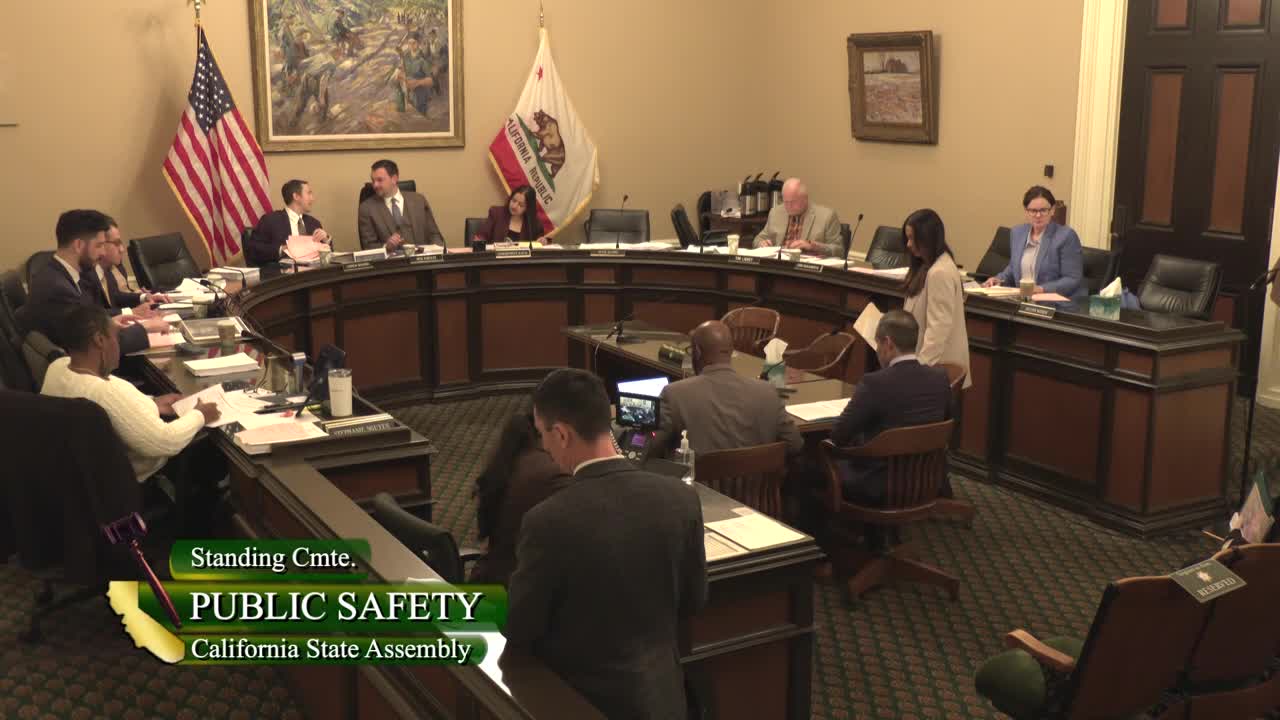 12MIN