AB 1817: Mobilehome parks: termination of tenancy: failure to comply with a rule or regulation.
- Session Year: 2025-2026
- House: Assembly
- Latest Version Date: 2026-09-29
Current Status:
Passed
(2026-09-29: Chaptered by Secretary of State - Chapter 793, Statutes of 2026.)
Introduced
In Committee
Awaiting First Chamber Vote
Passed First Chamber
In Committee
Awaiting Second Chamber Vote
Passed Second Chamber
Enacted
Existing law prohibits mobilehome park management from terminating a tenancy except for specified reasons, including, among other reasons, failure of the homeowner or resident to comply with a reasonable rule or regulation of the park that is part of the rental agreement. Existing law provides that an act or omission of a homeowner or resident does not constitute a failure to comply with a reasonable rule or regulation until management has given the homeowner written notice of the alleged rule or regulation violation and the homeowner or resident has failed to adhere to the rule or regulation within seven days. Existing law further provides these provisions do not relieve management from its obligations to demonstrate that a rule or regulation has in fact been violated.
This bill would, instead, require that the management serve the homeowner with the written notice, as prescribed, and would require the notice to include the language of each rule or regulation for which the homeowner is alleged to be in violation, along with specific facts, as provided, and any action required to adhere to the rule or regulation. The bill would, instead, provide that these provisions do not relieve the management from its burden of demonstrating that a rule or regulation has in fact been in fact violated.
Existing law prohibits mobilehome park management from terminating a tenancy except for specified reasons, including, among other reasons, failure of the homeowner or resident to comply with a reasonable rule or regulation of the park that is part of the rental agreement. Existing law provides that an act or omission of a homeowner or resident does not constitute a failure to comply with a reasonable rule or regulation until management has given the homeowner written notice of the alleged rule or regulation violation and the homeowner or resident has failed to adhere to the rule or regulation within seven days. Existing law further provides these provisions do not relieve management from it obligations to demonstrate that a rule or regulation has in fact been violated.
This bill would, instead, require that the management serve the homeowner with the written notice, as prescribed, and would require the notice to include the language of each rule or regulation for which the homeowner is alleged to be in violation, along with specific facts, as provided, and any action required to adhere to the rule or regulation. The bill would, instead, provide that these provisions do not relieve the management from its burden of demonstrating that a rule or regulation has in fact been in fact violated.
(a)A tenancy shall be terminated by the management only for one or more of the following reasons:
(1)Failure of the homeowner or resident to comply with a local ordinance or state law or regulation relating to mobilehomes within a reasonable time after the homeowner receives a notice of noncompliance from the appropriate governmental agency.
(2)Conduct by the homeowner or resident, upon the park premises, that constitutes a substantial annoyance to other homeowners or residents.
(3)(A)Conviction of the homeowner or resident for prostitution, for a violation of subdivision (d) of Section 243, paragraph (2) of subdivision (a), or subdivision (b), of Section 245, Section 288, or Section 451, of the Penal Code, or a felony controlled substance offense, if the act resulting in the conviction was committed anywhere on the premises of the mobilehome park, including, but not limited to, within the homeowners mobilehome.
(B)However, the tenancy shall not be terminated for the reason specified in this paragraph if the person convicted of the offense has permanently vacated, and does not subsequently reoccupy, the mobilehome.
(4)(A)Failure of the homeowner or resident to comply with a reasonable rule or regulation of the park that is part of the rental agreement or any amendment thereto.
(B)An act or omission of the homeowner or resident shall not constitute a failure to comply with a reasonable rule or regulation unless and until the management has served the homeowner in the manner prescribed by Section 1162 of the Code of Civil Procedure with written notice in compliance with this paragraph of the alleged rule or regulation violation and the homeowner or resident has failed to adhere to the rule or regulation within seven days. The notice shall recite the language of each rule or regulation for which the homeowner is alleged to be in violation, along with the specific facts to permit determination by the homeowner or resident of the date, place, or circumstances concerning the alleged violation, as well as any action required to adhere to or comply with the rule or regulation. However, if a homeowner has been given a written notice of an alleged violation of the same rule or regulation on three or more occasions within a 12-month period after the homeowner or resident has violated that rule or regulation, no written notice shall be required for a subsequent violation of the same rule or regulation.
(C)This paragraph does not relieve the management from its burden of demonstrating that a rule or regulation has in fact been violated.
(5)(A)Nonpayment of rent, utility charges, or reasonable incidental service charges; provided that the amount due has been unpaid for a period of at least five days from its due date, and provided that the homeowner shall be given a three-day written notice subsequent to that five-day period to pay the amount due or to vacate the tenancy. For purposes of this paragraph, the five-day period does not include the date the payment is due. The three-day written notice shall be given to the homeowner in the manner prescribed by Section 1162 of the Code of Civil Procedure. A copy of this notice shall be sent to the persons or entities specified in subdivision (b) of Section 798.55 within 10 days after notice is delivered to the homeowner. If the homeowner cures the default, the notice need not be sent. The notice may be given at the same time as the 60 days notice required for termination of the tenancy. A three-day notice given pursuant to this paragraph shall contain the following provisions printed in at least 12-point boldface type at the top of the notice, with the appropriate number written in the blank:
Warning: This notice is the (insert number) three-day notice for nonpayment of rent, utility charges, or other reasonable incidental services that has been served upon you in the last 12 months. Pursuant to Civil Code Section 798.56 (a)(5)(E), if you have been given a three-day notice to either pay rent, utility charges, or other reasonable incidental services or to vacate your tenancy on three or more occasions within a 12-month period, management is not required to give you a further three-day period to pay rent or vacate the tenancy before your tenancy can be terminated.
(B)Payment by the homeowner prior to the expiration of the three-day notice period shall cure a default under this paragraph. If the homeowner does not pay prior to the expiration of the three-day notice period, the homeowner shall remain liable for all payments due up until the time the tenancy is vacated.
(C)Payment by the legal owner, as defined in Section 18005.8 of the Health and Safety Code, any junior lienholder, as defined in Section 18005.3 of the Health and Safety Code, or the registered owner, as defined in Section 18009.5 of the Health and Safety Code, if other than the homeowner, on behalf of the homeowner prior to the expiration of 30 calendar days following the mailing of the notice to the legal owner, each junior lienholder, and the registered owner provided in subdivision (b) of Section 798.55, shall cure a default under this subdivision with respect to that payment.
(D)Cure of a default of rent, utility charges, or reasonable incidental service charges by the legal owner, any junior lienholder, or the registered owner, if other than the homeowner, as provided by this paragraph, shall not be exercised more than twice during a 12-month period.
(E)If a homeowner has been given a three-day notice to pay the amount due or to vacate the tenancy on three or more occasions within the preceding 12-month period and each notice includes the provisions specified in subparagraph (A) no written three-day notice shall be required in the case of a subsequent nonpayment of rent, utility charges, or reasonable incidental service charges.
In that event, the management shall give written notice to the homeowner in the manner prescribed by Section 1162 of the Code of Civil Procedure to remove the mobilehome from the park within a period of not less than 60 days, which period shall be specified in the notice. A copy of this notice shall be sent to the legal owner, each junior lienholder, and the registered owner of the mobilehome, if other than the homeowner, as specified in subdivision (b) of Section 798.55, by certified or registered mail, return receipt requested, within 10 days after notice is sent to the homeowner.
(F)When a copy of the 60 days notice described in subparagraph (E) is sent to the legal owner, each junior lienholder, and the registered owner of the mobilehome, if other than the homeowner, the default may be cured by any of them on behalf of the homeowner prior to the expiration of 30 calendar days following the mailing of the notice, if all of the following conditions exist:
(i)A copy of a three-day notice sent pursuant to subdivision (b) of Section 798.55 to a homeowner for the nonpayment of rent, utility charges, or reasonable incidental service charges was not sent to the legal owner, junior lienholder, or registered owner, of the mobilehome, if other than the homeowner, during the preceding 12-month period.
(ii)The legal owner, junior lienholder, or registered owner of the mobilehome, if other than the homeowner, has not previously cured a default of the homeowner during the preceding 12-month period.
(iii)The legal owner, junior lienholder, or registered owner, if other than the homeowner, is not a financial institution or mobilehome dealer.
If the default is cured by the legal owner, junior lienholder, or registered owner within the 30-day period, the notice to remove the mobilehome from the park described in subparagraph (E) shall be rescinded.
(6)Condemnation of the park.
(7)Change of use of the park or any portion thereof, provided:
(A)The management gives the homeowners at least 60 days written notice that the management will be appearing before a local governmental board, commission, or body to request permits for a change of use of the mobilehome park.
(B)(i)After all required permits requesting a change of use have been approved by the local governmental board, commission, or body, the management shall give the homeowners six months or more written notice of termination of tenancy.
(ii)If the change of use requires no local governmental permits, then notice shall be given 12 months or more prior to the managements determination that a change of use will occur. The management in the notice shall disclose and describe in detail the nature of the change of use.
(C)The management gives each proposed homeowner written notice thereof prior to the inception of the proposed homeowners tenancy that the management is requesting a change of use before local governmental bodies or that a change of use request has been granted.
(D)The notice requirements for termination of tenancy set forth in this section and Section 798.57 shall be followed if the proposed change actually occurs.
(E)A notice of a proposed change of use given prior to January 1, 1980, that conforms to the requirements in effect at that time shall be valid. The requirements for a notice of a proposed change of use imposed by this paragraph shall be governed by the law in effect at the time the notice was given.
(b)The report required pursuant to subdivisions (b) and (i) of Section 65863.7 of the Government Code shall be given to the homeowners or residents at the same time that notice is required pursuant to paragraph (7) of subdivision (a).
(c)A tenancy shall not be terminated pursuant to paragraph (5) or (7) of subdivision (a) and a notice of termination based thereon shall not be issued pursuant to Section 798.55 unless the park has a valid permit to operate issued by the enforcement agency pursuant to Chapter 4 (commencing with Section 18500) of Part 2.1 of Division 13 of the Health and Safety Code.
(d)For purposes of this section, financial institution means a state or national bank, state or federal savings and loan association or credit union, or similar organization, and mobilehome dealer as defined in Section 18002.6 of the Health and Safety Code or any other organization that, as part of its usual course of business, originates, owns, or provides loan servicing for loans secured by a mobilehome.
(a)A tenancy shall be terminated by the management only for one or more of the following reasons:
(1)Failure of the homeowner or resident to comply with a local ordinance or state law or regulation relating to mobilehomes within a reasonable time after the homeowner receives a notice of noncompliance from the appropriate governmental agency.
(2)Conduct by the homeowner or resident, upon the park premises, that constitutes a substantial annoyance to other homeowners or residents.
(3)(A)Conviction of the homeowner or resident for prostitution, for a violation of subdivision (d) of Section 243, paragraph (2) of subdivision (a), or subdivision (b), of Section 245, Section 288, or Section 451, of the Penal Code, or a felony controlled substance offense, if the act resulting in the conviction was committed anywhere on the premises of the mobilehome park, including, but not limited to, within the homeowners mobilehome.
(B)However, the tenancy shall not be terminated for the reason specified in this paragraph if the person convicted of the offense has permanently vacated, and does not subsequently reoccupy, the mobilehome.
(4)(A)Failure of the homeowner or resident to comply with a reasonable rule or regulation of the park that is part of the rental agreement or any amendment thereto.
No(B)An act or omission of the homeowner or resident shall not constitute a failure to comply with a reasonable rule or regulation unless and until the management has given the homeowner served the homeowner in the manner prescribed by Section 1162 of the Code of Civil Procedure with written notice in compliance with this paragraph of the alleged rule or regulation violation and the homeowner or resident has failed to adhere to the rule or regulation within seven days. The notice shall recite the language of each rule or regulation for which the homeowner is alleged to be in violation, along with the specific facts to permit determination by the homeowner or resident of the date, place, or circumstances concerning the alleged violation, as well as any action required to adhere to or comply with the rule or regulation. However, if a homeowner has been given a written notice of an alleged violation of the same rule or regulation on three or more occasions within a 12-month period after the homeowner or resident has violated that rule or regulation, no written notice shall be required for a subsequent violation of the same rule or regulation.
This(C)This paragraph does not relieve the management from its obligation to demonstrate burden of demonstrating that a rule or regulation has in fact been violated.
(5)(A)Nonpayment of rent, utility charges, or reasonable incidental service charges; provided that the amount due has been unpaid for a period of at least five days from its due date, and provided that the homeowner shall be given a three-day written notice subsequent to that five-day period to pay the amount due or to vacate the tenancy. For purposes of this paragraph, the five-day period does not include the date the payment is due. The three-day written notice shall be given to the homeowner in the manner prescribed by Section 1162 of the Code of Civil Procedure. A copy of this notice shall be sent to the persons or entities specified in subdivision (b) of Section 798.55 within 10 days after notice is delivered to the homeowner. If the homeowner cures the default, the notice need not be sent. The notice may be given at the same time as the 60 days notice required for termination of the tenancy. A three-day notice given pursuant to this paragraph shall contain the following provisions printed in at least 12-point boldface type at the top of the notice, with the appropriate number written in the blank:
Warning: This notice is the (insert number) three-day notice for nonpayment of rent, utility charges, or other reasonable incidental services that has been served upon you in the last 12 months. Pursuant to Civil Code Section 798.56 (a)(5)(E), if you have been given a three-day notice to either pay rent, utility charges, or other reasonable incidental services or to vacate your tenancy on three or more occasions within a 12-month period, management is not required to give you a further three-day period to pay rent or vacate the tenancy before your tenancy can be terminated.
(B)Payment by the homeowner prior to the expiration of the three-day notice period shall cure a default under this paragraph. If the homeowner does not pay prior to the expiration of the three-day notice period, the homeowner shall remain liable for all payments due up until the time the tenancy is vacated.
(C)Payment by the legal owner, as defined in Section 18005.8 of the Health and Safety Code, any junior lienholder, as defined in Section 18005.3 of the Health and Safety Code, or the registered owner, as defined in Section 18009.5 of the Health and Safety Code, if other than the homeowner, on behalf of the homeowner prior to the expiration of 30 calendar days following the mailing of the notice to the legal owner, each junior lienholder, and the registered owner provided in subdivision (b) of Section 798.55, shall cure a default under this subdivision with respect to that payment.
(D)Cure of a default of rent, utility charges, or reasonable incidental service charges by the legal owner, any junior lienholder, or the registered owner, if other than the homeowner, as provided by this paragraph, shall not be exercised more than twice during a 12-month period.
(E)If a homeowner has been given a three-day notice to pay the amount due or to vacate the tenancy on three or more occasions within the preceding 12-month period and each notice includes the provisions specified in subparagraph (A) no written three-day notice shall be required in the case of a subsequent nonpayment of rent, utility charges, or reasonable incidental service charges.
In that event, the management shall give written notice to the homeowner in the manner prescribed by Section 1162 of the Code of Civil Procedure to remove the mobilehome from the park within a period of not less than 60 days, which period shall be specified in the notice. A copy of this notice shall be sent to the legal owner, each junior lienholder, and the registered owner of the mobilehome, if other than the homeowner, as specified in subdivision (b) of Section 798.55, by certified or registered mail, return receipt requested, within 10 days after notice is sent to the homeowner.
(F)When a copy of the 60 days notice described in subparagraph (E) is sent to the legal owner, each junior lienholder, and the registered owner of the mobilehome, if other than the homeowner, the default may be cured by any of them on behalf of the homeowner prior to the expiration of 30 calendar days following the mailing of the notice, if all of the following conditions exist:
(i)A copy of a three-day notice sent pursuant to subdivision (b) of Section 798.55 to a homeowner for the nonpayment of rent, utility charges, or reasonable incidental service charges was not sent to the legal owner, junior lienholder, or registered owner, of the mobilehome, if other than the homeowner, during the preceding 12-month period.
(ii)The legal owner, junior lienholder, or registered owner of the mobilehome, if other than the homeowner, has not previously cured a default of the homeowner during the preceding 12-month period.
(iii)The legal owner, junior lienholder, or registered owner, if other than the homeowner, is not a financial institution or mobilehome dealer.
If the default is cured by the legal owner, junior lienholder, or registered owner within the 30-day period, the notice to remove the mobilehome from the park described in subparagraph (E) shall be rescinded.
(6)Condemnation of the park.
(7)Change of use of the park or any portion thereof, provided:
(A)The management gives the homeowners at least 60 days written notice that the management will be appearing before a local governmental board, commission, or body to request permits for a change of use of the mobilehome park.
(B)(i)After all required permits requesting a change of use have been approved by the local governmental board, commission, or body, the management shall give the homeowners six months or more written notice of termination of tenancy.
(ii)If the change of use requires no local governmental permits, then notice shall be given 12 months or more prior to the managements determination that a change of use will occur. The management in the notice shall disclose and describe in detail the nature of the change of use.
(C)The management gives each proposed homeowner written notice thereof prior to the inception of the proposed homeowners tenancy that the management is requesting a change of use before local governmental bodies or that a change of use request has been granted.
(D)The notice requirements for termination of tenancy set forth in this section and Section 798.57 shall be followed if the proposed change actually occurs.
(E)A notice of a proposed change of use given prior to January 1, 1980, that conforms to the requirements in effect at that time shall be valid. The requirements for a notice of a proposed change of use imposed by this paragraph shall be governed by the law in effect at the time the notice was given.
(b)The report required pursuant to subdivisions (b) and (i) of Section 65863.7 of the Government Code shall be given to the homeowners or residents at the same time that notice is required pursuant to paragraph (7) of subdivision (a) of this section. (a).
(c)A tenancy shall not be terminated pursuant to paragraph (5) or (7) of subdivision (a) and a notice of termination based thereon shall not be issued pursuant to Section 798.55 unless the park has a valid permit to operate issued by the enforcement agency pursuant to Chapter 4 (commencing with Section 18500) of Part 2.1 of Division 13 of the Health and Safety Code.
(d)For purposes of this section, financial institution means a state or national bank, state or federal savings and loan association or credit union, or similar organization, and mobilehome dealer as defined in Section 18002.6 of the Health and Safety Code or any other organization that, as part of its usual course of business, originates, owns, or provides loan servicing for loans secured by a mobilehome.
(e)This section shall become operative on February 1, 2025.|
Date
|
Status
|
|---|---|
| Sep 29, 2026 | Chaptered by Secretary of State - Chapter 793, Statutes of 2026. |
| Sep 29, 2026 | Approved by the Governor. |
| Aug 24, 2026 | Enrolled and presented to the Governor at 4:30 p.m. |
| Aug 17, 2026 | In Assembly. Ordered to Engrossing and Enrolling. |
| Aug 17, 2026 | Read third time. Passed. Ordered to the Assembly. (Ayes 39. Noes 0.). |
| Aug 17, 2026 | Read third time. Passed. Ordered to the Assembly. (Ayes 39. Noes 0. Page 5491.). |
| Jun 18, 2026 | Ordered to third reading. |
| Jun 18, 2026 | From Consent Calendar. |
| Jun 11, 2026 | Read second time. Ordered to Consent Calendar. |
| Jun 10, 2026 | From committee: Do pass. To Consent Calendar. (Ayes 12. Noes 0.) (June 9). |
| May 13, 2026 | Referred to Com. on JUD. |
| May 5, 2026 | In Senate. Read first time. To Com. on RLS. for assignment. |
| May 4, 2026 | Read third time. Passed. Ordered to the Senate. (Ayes 73. Noes 0.) |
| May 4, 2026 | Read third time. Passed. Ordered to the Senate. (Ayes 73. Noes 0. Page 4919.) |
| May 4, 2026 | Read third time. Passed. Ordered to the Senate. |
| Apr 29, 2026 | Read second time. Ordered to Consent Calendar. |
| Apr 28, 2026 | From committee: Do pass. To Consent Calendar. (Ayes 12. Noes 0.) (April 28). |
| Apr 15, 2026 | From committee: Do pass and re-refer to Com. on JUD. with recommendation: To Consent Calendar. (Ayes 12. Noes 0.) (April 15). Re-referred to Com. on JUD. |
| Feb 23, 2026 | Referred to Coms. on H. & C.D. and JUD. |
| Feb 11, 2026 | From printer. May be heard in committee March 13. |
| Feb 10, 2026 | Read first time. To print. |
|
Date
|
Description
|
Location
|
Votes
|
|
|---|---|---|---|---|
| Aug 17, 2026 | Assembly 3rd Reading AB1817 Addis By Reyes | Senate Floor |
Passed |
|
| Jun 9, 2026 | Do pass and be ordered to the Consent Calendar | Senate Standing Committee on Judiciary |
Passed |
|
| May 4, 2026 | AB 1817 Addis Consent Calendar Second Day Regular Session | Assembly Floor |
Passed |
|
| Apr 28, 2026 | Do pass. To Consent Calendar. | Assembly Standing Committee on Judiciary |
Passed |
|
| Apr 15, 2026 | Do pass and be re-referred to the Committee on [Judiciary] with recommendation: To Consent Calendar | Assembly Standing Committee on Housing and Community Development |
Passed |
This list shows positions taken on this bill by organizations on the date displayed, which is linked to the original source.
Positions by individuals are not included.
|
Organization
|
Position
|
Date
|
|---|---|---|
| Aids Healthcare Foundation | ** Support | |
| California Legal Rural Assistance Foundation | ** Support | |
| California Rural Legal Assistance Foundation | ** Support | |
| Golden State Manufactured-home Owners League, INC | ** Support | |
| National Housing Law Project | ** Support | |
| Public Interest Law Project | ** Support | |
| Western Manufactured Housing Association | ** Support | |
| Western Manufactured Housing Communities Association | ** Support |
SENATE RULES COMMITTEE Office of Senate Floor Analyses (916) 651-4171 | AB 1817 |
THIRD READING
Bill No: AB 1817
Author: Addis (D)
Introduced: 2/10/26
Vote: 21
SENATE JUDICIARY COMMITTEE: 12-0, 6/9/26
AYES: Umberg, Niello, Allen, Ashby, Caballero, Durazo, Laird, Reyes, Valladares, Wahab, Weber Pierson, Wiener
NO VOTE RECORDED: Stern
ASSEMBLY FLOOR: 73-0, 5/4/26 (Consent) - See last page for vote
SUBJECT: Mobilehome parks: termination of tenancy: failure to comply with a rule or regulation
SOURCE: Golden State Manufactured-home Owners League, Inc.
DIGEST:
This bill requires the written notice that mobilehome park management must serve a homeowner for a termination of tenancy for failing to comply with a reasonable rule or regulation of the park to include the language of each rule or regulation for which the homeowner is alleged to be in violation, specific facts relating to the alleged violation, and any action required to adhere to the rule or regulation, and requires that this written notice be served upon the homeowner according to specified law.
ANALYSIS:
Existing law:
- Establishes the Mobilehome Residency Law (MRL) to regulate the relationship between mobilehome park management and park residents, and establishes various rights, responsibilities, and limits of both groups. (Civil (Civ.) Code §§ 798 et seq.)
- Prohibits mobilehome park management from terminating or refusing to renew a tenancy of a mobilehome owner within the park, unless it is pursuant to one of the permitted reasons described in (3), below, and management provides the homeowner with written notice in a manner described by Code of Civil Procedure section 1162 to sell or remove their mobilehome from the park within a period of no less than 60 days. Specifies that a copy of this notice must be sent to the legal owner of the mobilehome, each junior lienholder, and the registered owner of the mobilehome within 10 days after this notice is given to the homeowner. (Civ. Code § 798.55.) Specifies that this 60-day notice exclusively controls over the general unlawful detainer provisions in the Code of Civil Procedure for unlawful detainer proceedings for termination of mobilehome tenancies. (Palmer v. Agee (1978) 87 Cal. App. 3d 377, 386.)
- Specifies that a mobilehome park may only evict a resident for: failing to comply with a local or state law or regulation on mobilehomes within a reasonable time after the mobilehome owner receives notice of noncompliance; conduct of the resident that amounts to a substantial annoyance of other mobilehome owners or residents; conviction for certain crimes; failure to comply with a reasonable rule of the park; nonpayment of rent, utilities, or other reasonable incidental services charged by the park; condemnation of the park; or change of use of the park or any portion thereof, as specified. (Civ. Code § 798.56.)
- Specifies that no act or omission of the mobilehome owner or resident constitutes a failure to comply with a reasonable rule or regulation unless and until park management has given the homeowner written notice of the alleged rule or regulation violation and the homeowner has failed to adhere to the rule or regulation within seven days. Specifies that, if a homeowner has been given a written notice of an alleged violation of the same rule or regulation on three or more occasions within a 12-month period after the homeowner or resident has violated that rule or regulation, no written notice is required for a subsequent violation of the same rule or regulation. (Civ. Code § 798.56(a)(4).)
- Specifies that the above-described paragraph does not relieve park management from the obligation to demonstrate that a rule or regulation has in fact been violated. (Civ. Code § 798.56(a)(4).)
- Specifies that park management must set forth in a notice of termination the reason it relied upon for the termination with specific facts to permit determination of the date, place, witnesses, and circumstances concerning that reason. (Civ. Code § 798.57.)
- Permits specified three-day notices to vacate a homeowner’s mobilehome site to be served upon the homeowner by: delivering a copy to the homeowner personally; by leaving a copy with a person of suitable age and discretion at the homeowner’s place of residence or usual place of business, if they are absent, and sending a copy by mail to their place of residence; or by affixing a copy in a conspicuous place on the property, delivering a copy to a person on the property, and mailing a copy to the homeowner at the place where the property is situated, if no place of residence or business can be ascertained, or a person of suitable age or discretion cannot be found. (Code of Civil Procedure (Civ. Proc.) § 1162(a).)
- Requires, when park management proposes an amendment to the park’s rules and regulations, that management meet and consult with the homeowners in the park, their representatives, or both, after written notice has been given to all homeowners in the park 10 days or more before the meeting.
- Specifies that, after the meeting and consultation with homeowners, the park may implement the noticed amendment to the park’s rules and regulations with the consent of the homeowner, or without the homeowner’s consent upon written notice of not less than six months, except in specified circumstances. (Civ. Code § 798.25.)
- Specifies that any amendment to the park’s rules and regulations that creates a new fee payable by the homeowner that has not been expressly agreed upon by the homeowner and management in the written rental agreement or lease shall be void and unenforceable. (Civ. Code § 798.25(e).)
- Specifies that any rule or regulation of a mobilehome park that is: unilaterally adopted by management; implemented without the consent of the homeowners; or by its terms purports to deny homeowners the right to a trial by jury or which would mandate binding arbitration of any dispute between the management and homeowners, is void and unenforceable. (Civ. Code § 798.25.5.)
- Specifies a variety of limitations on the rules and regulations that a mobilehome park may implement, including: that park management may not prohibit a homeowner or resident from installing accommodations for the disabled; management may not prohibit or restrict a homeowner or resident from installing or using a solar energy system on their mobilehome or mobilehome site; and management may not prohibit or restrict a homeowner or resident from installing, upgrading, replacing, or using a cooling system in their mobilehome, as specified. (Civ. Code §§ 798.29.6; 798.44.1; 798.44.2.)
- Permits, in addition to the authority to terminate the tenancy of a homeowner, any person in violation of a reasonable rule or regulation of the mobilehome park to be enjoined from the violation of that rule or regulation, as specified. (Civ. Code § 798.88.)
This bill:
- Requires that, for (4), above, management must serve the homeowner with written notice of the alleged violation of a reasonable park rule or regulation in the manner prescribed by Civ. Proc. section 1162.
- Requires this notice to recite the language of each rule or regulation for which the homeowner is alleged to be in violation, specific facts that permit the homeowner or resident to determine the date, place, or circumstances concerning the alleged violation, and any action required to adhere to or comply with the rule or regulation.
- Amends the provision described in (5), above, to specify that the requirements of (4), above, do not relieve park management from its burden of demonstrating that a rule or regulation has in fact been violated.
FISCAL EFFECT: Appropriation: No Fiscal Com.: No Local: No
SUPPORT: (Verified 6/11/26)
Golden State Manufactured-home Owners League, INC (sponsor)
Aids Healthcare Foundation
California Rural Legal Assistance Foundation
National Housing Law Project
Public Interest Law Project
Western Manufactured Housing Communities Association
OPPOSITION: (Verified 6/11/26)
None received
ARGUMENTS IN SUPPORT:
According to the Golden State Manufactured-home Owners League, Inc.:
As you know, existing law allows for the termination of a mobilehome tenancy for failure to comply with a reasonable rule or regulation of the park. However, the current notification process is often vague and fails to provide homeowners with the needed information about the alleged violation. This can lead to confusion and unjust termination of a tenancy.
AB 1817 directly addresses this issue by requiring that management provide homeowners with a written notice that includes the specific language of the rule or regulation that has allegedly been violated, as well as the specific facts of the violation, including the date, place, and circumstances. It calls for any eviction notice issued, including a 7-day notice for failure to comply with a rule or regulation which could result in an eviction, to be clearly communicated and to include the language of each park rule or regulation allegedly violated.
The majority of mobilehome residents are both tenants (their space in a mobilehome park) and owners (of their actual mobilehome). Eviction carries far more serious consequences for them.
The bill ensures mobilehome residents receive a fair opportunity to resolve eviction issues before they are forced to forfeit their mobilehome. It will also prevent park management from using vague or unsubstantiated claims to harass or intimidate residents.
ASSEMBLY FLOOR: 73-0, 5/4/26
AYES: Addis, Aguiar-Curry, Ahrens, Alanis, Alvarez, Ávila Farías, Bains, Bauer-Kahan, Berman, Boerner, Bonta, Bryan, Calderon, Carrillo, Castillo, Connolly, Davies, DeMaio, Dixon, Elhawary, Ellis, Fong, Gabriel, Gallagher, Garcia, Gipson, Jeff Gonzalez, Mark González, Hadwick, Haney, Harabedian, Hart, Hoover, Irwin, Jackson, Johnson, Kalra, Krell, Lackey, Lee, Lowenthal, Macedo, McKinnor, Muratsuchi, Nguyen, Ortega, Pacheco, Papan, Patel, Patterson, Pellerin, Petrie-Norris, Quirk-Silva, Ramos, Ransom, Celeste Rodriguez, Michelle Rodriguez, Rogers, Blanca Rubio, Sanchez, Schiavo, Schultz, Sharp-Collins, Solache, Soria, Stefani, Ta, Tangipa, Valencia, Ward, Wicks, Zbur, Rivas
NO VOTE RECORDED: Arambula, Bennett, Caloza, Chen, Flora, Wallis, Wilson
Prepared by: Ian Dougherty / JUD. / (916) 651-4113
6/18/26 11:45:03
SENATE RULES COMMITTEE Office of Senate Floor Analyses (916) 651-4171 | AB 1817 |
CONSENT
Bill No: AB 1817
Author: Addis (D)
Introduced: 2/10/26
Vote: 21
SENATE JUDICIARY COMMITTEE: 12-0, 6/9/26
AYES: Umberg, Niello, Allen, Ashby, Caballero, Durazo, Laird, Reyes, Valladares, Wahab, Weber Pierson, Wiener
NO VOTE RECORDED: Stern
ASSEMBLY FLOOR: 73-0, 5/4/26 (Consent) - See last page for vote
SUBJECT: Mobilehome parks: termination of tenancy: failure to comply with a rule or regulation
SOURCE: Golden State Manufactured-home Owners League, Inc.
DIGEST:
This bill requires the written notice that mobilehome park management must serve a homeowner for a termination of tenancy for failing to comply with a reasonable rule or regulation of the park to include the language of each rule or regulation for which the homeowner is alleged to be in violation, specific facts relating to the alleged violation, and any action required to adhere to the rule or regulation, and requires that this written notice be served upon the homeowner according to specified law.
ANALYSIS:
Existing law:
- Establishes the Mobilehome Residency Law (MRL) to regulate the relationship between mobilehome park management and park residents, and establishes various rights, responsibilities, and limits of both groups. (Civil (Civ.) Code §§ 798 et seq.)
- Prohibits mobilehome park management from terminating or refusing to renew a tenancy of a mobilehome owner within the park, unless it is pursuant to one of the permitted reasons described in (3), below, and management provides the homeowner with written notice in a manner described by Code of Civil Procedure section 1162 to sell or remove their mobilehome from the park within a period of no less than 60 days. Specifies that a copy of this notice must be sent to the legal owner of the mobilehome, each junior lienholder, and the registered owner of the mobilehome within 10 days after this notice is given to the homeowner. (Civ. Code § 798.55.) Specifies that this 60-day notice exclusively controls over the general unlawful detainer provisions in the Code of Civil Procedure for unlawful detainer proceedings for termination of mobilehome tenancies. (Palmer v. Agee (1978) 87 Cal. App. 3d 377, 386.)
- Specifies that a mobilehome park may only evict a resident for: failing to comply with a local or state law or regulation on mobilehomes within a reasonable time after the mobilehome owner receives notice of noncompliance; conduct of the resident that amounts to a substantial annoyance of other mobilehome owners or residents; conviction for certain crimes; failure to comply with a reasonable rule of the park; nonpayment of rent, utilities, or other reasonable incidental services charged by the park; condemnation of the park; or change of use of the park or any portion thereof, as specified. (Civ. Code § 798.56.)
- Specifies that no act or omission of the mobilehome owner or resident constitutes a failure to comply with a reasonable rule or regulation unless and until park management has given the homeowner written notice of the alleged rule or regulation violation and the homeowner has failed to adhere to the rule or regulation within seven days. Specifies that, if a homeowner has been given a written notice of an alleged violation of the same rule or regulation on three or more occasions within a 12-month period after the homeowner or resident has violated that rule or regulation, no written notice is required for a subsequent violation of the same rule or regulation. (Civ. Code § 798.56(a)(4).)
- Specifies that the above-described paragraph does not relieve park management from the obligation to demonstrate that a rule or regulation has in fact been violated. (Civ. Code § 798.56(a)(4).)
- Specifies that park management must set forth in a notice of termination the reason it relied upon for the termination with specific facts to permit determination of the date, place, witnesses, and circumstances concerning that reason. (Civ. Code § 798.57.)
- Permits specified three-day notices to vacate a homeowner’s mobilehome site to be served upon the homeowner by: delivering a copy to the homeowner personally; by leaving a copy with a person of suitable age and discretion at the homeowner’s place of residence or usual place of business, if they are absent, and sending a copy by mail to their place of residence; or by affixing a copy in a conspicuous place on the property, delivering a copy to a person on the property, and mailing a copy to the homeowner at the place where the property is situated, if no place of residence or business can be ascertained, or a person of suitable age or discretion cannot be found. (Code of Civil Procedure (Civ. Proc.) § 1162(a).)
- Requires, when park management proposes an amendment to the park’s rules and regulations, that management meet and consult with the homeowners in the park, their representatives, or both, after written notice has been given to all homeowners in the park 10 days or more before the meeting.
- Specifies that, after the meeting and consultation with homeowners, the park may implement the noticed amendment to the park’s rules and regulations with the consent of the homeowner, or without the homeowner’s consent upon written notice of not less than six months, except in specified circumstances. (Civ. Code § 798.25.)
- Specifies that any amendment to the park’s rules and regulations that creates a new fee payable by the homeowner that has not been expressly agreed upon by the homeowner and management in the written rental agreement or lease shall be void and unenforceable. (Civ. Code § 798.25(e).)
- Specifies that any rule or regulation of a mobilehome park that is: unilaterally adopted by management; implemented without the consent of the homeowners; or by its terms purports to deny homeowners the right to a trial by jury or which would mandate binding arbitration of any dispute between the management and homeowners, is void and unenforceable. (Civ. Code § 798.25.5.)
- Specifies a variety of limitations on the rules and regulations that a mobilehome park may implement, including: that park management may not prohibit a homeowner or resident from installing accommodations for the disabled; management may not prohibit or restrict a homeowner or resident from installing or using a solar energy system on their mobilehome or mobilehome site; and management may not prohibit or restrict a homeowner or resident from installing, upgrading, replacing, or using a cooling system in their mobilehome, as specified. (Civ. Code §§ 798.29.6; 798.44.1; 798.44.2.)
- Permits, in addition to the authority to terminate the tenancy of a homeowner, any person in violation of a reasonable rule or regulation of the mobilehome park to be enjoined from the violation of that rule or regulation, as specified. (Civ. Code § 798.88.)
This bill:
- Requires that, for (4), above, management must serve the homeowner with written notice of the alleged violation of a reasonable park rule or regulation in the manner prescribed by Civ. Proc. section 1162.
- Requires this notice to recite the language of each rule or regulation for which the homeowner is alleged to be in violation, specific facts that permit the homeowner or resident to determine the date, place, or circumstances concerning the alleged violation, and any action required to adhere to or comply with the rule or regulation.
- Amends the provision described in (5), above, to specify that the requirements of (4), above, do not relieve park management from its burden of demonstrating that a rule or regulation has in fact been violated.
FISCAL EFFECT: Appropriation: No Fiscal Com.: No Local: No
SUPPORT: (Verified 6/11/26)
Golden State Manufactured-home Owners League, INC (sponsor)
Aids Healthcare Foundation
California Rural Legal Assistance Foundation
National Housing Law Project
Public Interest Law Project
Western Manufactured Housing Communities Association
OPPOSITION: (Verified 6/11/26)
None received
ARGUMENTS IN SUPPORT:
According to the Golden State Manufactured-home Owners League, Inc.:
As you know, existing law allows for the termination of a mobilehome tenancy for failure to comply with a reasonable rule or regulation of the park. However, the current notification process is often vague and fails to provide homeowners with the needed information about the alleged violation. This can lead to confusion and unjust termination of a tenancy.
AB 1817 directly addresses this issue by requiring that management provide homeowners with a written notice that includes the specific language of the rule or regulation that has allegedly been violated, as well as the specific facts of the violation, including the date, place, and circumstances. It calls for any eviction notice issued, including a 7-day notice for failure to comply with a rule or regulation which could result in an eviction, to be clearly communicated and to include the language of each park rule or regulation allegedly violated.
The majority of mobilehome residents are both tenants (their space in a mobilehome park) and owners (of their actual mobilehome). Eviction carries far more serious consequences for them.
The bill ensures mobilehome residents receive a fair opportunity to resolve eviction issues before they are forced to forfeit their mobilehome. It will also prevent park management from using vague or unsubstantiated claims to harass or intimidate residents.
ASSEMBLY FLOOR: 73-0, 5/4/26
AYES: Addis, Aguiar-Curry, Ahrens, Alanis, Alvarez, Ávila Farías, Bains, Bauer-Kahan, Berman, Boerner, Bonta, Bryan, Calderon, Carrillo, Castillo, Connolly, Davies, DeMaio, Dixon, Elhawary, Ellis, Fong, Gabriel, Gallagher, Garcia, Gipson, Jeff Gonzalez, Mark González, Hadwick, Haney, Harabedian, Hart, Hoover, Irwin, Jackson, Johnson, Kalra, Krell, Lackey, Lee, Lowenthal, Macedo, McKinnor, Muratsuchi, Nguyen, Ortega, Pacheco, Papan, Patel, Patterson, Pellerin, Petrie-Norris, Quirk-Silva, Ramos, Ransom, Celeste Rodriguez, Michelle Rodriguez, Rogers, Blanca Rubio, Sanchez, Schiavo, Schultz, Sharp-Collins, Solache, Soria, Stefani, Ta, Tangipa, Valencia, Ward, Wicks, Zbur, Rivas
NO VOTE RECORDED: Arambula, Bennett, Caloza, Chen, Flora, Wallis, Wilson
Prepared by: Ian Dougherty / JUD. / (916) 651-4113
6/12/26 12:50:03
Senator Thomas Umberg, Chair
2025-2026 Regular Session
Bill No: AB 1817 (Author:Addis)
Version: February 10, 2026
Hearing Date: June 9, 2026
Fiscal: No
Urgency: No
Consultant: ID
SUBJECT
Mobilehome parks: termination of tenancy: failure to comply with a rule or regulation
DIGEST
This bill requires the written notice that mobilehome park management must serve a homeowner for a termination of tenancy for failing to comply with a reasonable rule or regulation of the park to include the language of each rule or regulation for which the homeowner is alleged to be in violation, specific facts relating to the alleged violation, and any action required to adhere to the rule or regulation, and would require that this written notice be served upon the homeowner according to specified law.
EXECUTIVE SUMMARY
Mobilehome parks are an important source of affordable housing in California. State law specifies that mobilehome park management may not terminate or refuse to renew the tenancy of a homeowner within the park, except for specified reasons, including the homeowner’s noncompliance with a reasonable rule or regulation of the park. Current law does not permit management to terminate a tenancy for noncompliance with a reasonable park rule or regulation unless management provides the homeowner with written notice of the alleged rule or regulation violation and the homeowner fails to adhere to the rule or regulation within seven days. Current law specifies that this requirement does not relieve management from its obligation to demonstrate that a rule or regulation was in fact violated. AB 1817 specifies that this written notice must recite the language of each rule or regulation alleged to have been violated, provide specific facts related to the alleged violation, and specify any action required to adhere to or comply with the rule or regulation. AB 1817 also specifies that this notice must be served upon the homeowner though a manner specified in existing law, and clarifies that the notice requirements do not relieve management from its burden of demonstrating that a rule or regulation was violated. AB 1817 is sponsored by the Golden State Manufactured-home Owners League, Inc., and is supported by a number of nonprofits. The Committee has received no timely letters of opposition.
PROPOSED CHANGES TO THE LAW
Existing law:
- Establishes the Mobilehome Residency Law (MRL) to regulate the relationship between mobilehome park management and park residents, and establishes various rights, responsibilities, and limits of both groups. (Civ. Code §§ 798 et seq.)
- Prohibits mobilehome park management from terminating or refusing to renew a tenancy of a mobilehome owner within the park, unless it is pursuant to one of the permitted reasons described in (3), below, and management provides the homeowner with written notice in a manner described by Code of Civil Procedure section 1162 to sell or remove their mobilehome from the park within a period of no less than 60 days. Specifies that a copy of this notice must be sent to the legal owner of the mobilehome, each junior lienholder, and the registered owner of the mobilehome within 10 days after this notice is given to the homeowner. (Civ. Code § 798.55.) Specifies that this 60-day notice exclusively controls over the general unlawful detainer provisions in the Code of Civil Procedure for unlawful detainer proceedings for termination of mobilehome tenancies. (Palmer v. Agee (1978) 87 Cal. App. 3d 377, 386.)
- Specifies that a mobilehome park may only evict a resident for: failing to comply with a local or state law or regulation on mobilehomes within a reasonable time after the mobilehome owner receives notice of noncompliance; conduct of the resident that amounts to a substantial annoyance of other mobilehome owners or residents; conviction for certain crimes; failure to comply with a reasonable rule of the park; nonpayment of rent, utilities, or other reasonable incidental services charged by the park; condemnation of the park; or change of use of the park or any portion thereof, as specified. (Civ. Code § 798.56.)
- Specifies that no act or omission of the mobilehome owner or resident constitutes a failure to comply with a reasonable rule or regulation unless and until park management has given the homeowner written notice of the alleged rule or regulation violation and the homeowner has failed to adhere to the rule or regulation within seven days. Specifies that, if a homeowner has been given a written notice of an alleged violation of the same rule or regulation on three or more occasions within a 12-month period after the homeowner or resident has violated that rule or regulation, no written notice is required for a subsequent violation of the same rule or regulation. (Civ. Code § 798.56(a)(4).)
- Specifies that the above-described paragraph does not relieve park management from the obligation to demonstrate that a rule or regulation has in fact been violated. (Civ. Code § 798.56(a)(4).)
- Specifies that park management must set forth in a notice of termination the reason it relied upon for the termination with specific facts to permit determination of the date, place, witnesses, and circumstances concerning that reason. (Civ. Code § 798.57.)
- Permits specified three-day notices to vacate a homeowner’s mobilehome site to be served upon the homeowner by: delivering a copy to the homeowner personally; by leaving a copy with a person of suitable age and discretion at the homeowner’s place of residence or usual place of business, if they are absent, and sending a copy by mail to their place of residence; or by affixing a copy in a conspicuous place on the property, delivering a copy to a person on the property, and mailing a copy to the homeowner at the place where the property is situated, if no place of residence or business can be ascertained, or a person of suitable age or discretion cannot be found. (Code Civ. Proc. § 1162(a).)
- Requires, when park management proposes an amendment to the park’s rules and regulations, that management meet and consult with the homeowners in the park, their representatives, or both, after written notice has been given to all homeowners in the park 10 days or more before the meeting. Specifies that, after the meeting and consultation with homeowners, the park may implement the noticed amendment to the park’s rules and regulations with the consent of the homeowner, or without the homeowner’s consent upon written notice of not less than six months, except in specified circumstances. (Civ. Code § 798.25.)
- Specifies that any amendment to the park’s rules and regulations that creates a new fee payable by the homeowner that has not been expressly agreed upon by the homeowner and management in the written rental agreement or lease shall be void and unenforceable. (Civ. Code § 798.25(e).)
- Specifies that any rule or regulation of a mobilehome park that is: unilaterally adopted by management; implemented without the consent of the homeowners; or by its terms purports to deny homeowners the right to a trial by jury or which would mandate binding arbitration of any dispute between the management and homeowners, is void and unenforceable. (Civ. Code § 798.25.5.)
- Specifies a variety of limitations on the rules and regulations that a mobilehome park may implement, including: that park management may not prohibit a homeowner or resident from installing accommodations for the disabled; management may not prohibit or restrict a homeowner or resident from installing or using a solar energy system on their mobilehome or mobilehome site; and management may not prohibit or restrict a homeowner or resident from installing, upgrading, replacing, or using a cooling system in their mobilehome, as specified. (Civ. Code §§ 798.29.6; 798.44.1; 798.44.2.)
- Permits, in addition to the authority to terminate the tenancy of a homeowner, any person in violation of a reasonable rule or regulation of the mobilehome park to be enjoined from the violation of that rule or regulation, as specified. (Civ. Code § 798.88.)
This bill:
- Requires that, for (4), above, management must serve the homeowner with written notice of the alleged violation of a reasonable park rule or regulation in the manner prescribed by Code of Civil Procedure section 1162.
- Requires this notice to recite the language of each rule or regulation for which the homeowner is alleged to be in violation, specific facts that permit the homeowner or resident to determine the date, place, or circumstances concerning the alleged violation, and any action required to adhere to or comply with the rule or regulation.
- Amends the provision described in (5), above, to specify that the requirements of (4), above, do not relieve park management from its burden of demonstrating that a rule or regulation has in fact been violated.
COMMENTS
- Author’s statement
According to the author:
Receiving a 7-day notice is an extremely stressful event for a homeowner because, if they are unable to remedy the situation, it could cause them to lose their home. With many residents of mobilehome parks being part of vulnerable communities, being evicted is an especially devastating situation. Many residents are living on fixed incomes or are low-income individuals, leaving them with few alternatives for permanent housing.
We must ensure that mobile home park residents do not abruptly lose their homes because of vague 7-day notices and delivery procedures. Rules violations should be addressed, but they should be done in a way that will not unnecessarily lead to eviction.
- Mobilehomes are an important source of affordable housing in California
Mobilehomes represent an important source of affordable housing in California. There are an estimated 508,589 mobilehome units in California, providing housing to about 1.5 million Californians.[1] The median price of a mobilehome in 2022 was $82,600, making mobilehome ownership one of the most significant, un-subsidized sources of affordable housing.[2]
Mobilehomes are pre-fabricated homes that are designed to be able to be transported and moved between locations. Because mobilehomes are transportable, they are considered personal property instead of real property like traditionally built homes, and are not tied to the land on which they sit. Thus, mobilehomes are unique among all residential options. However, while they are technically mobile, a significant amount of time, effort, and money is often required to actually move a mobilehome. Costs for moving a mobilehome range from a few thousand to tens of thousands of dollars. Mobilehomes are also unique because many mobilehome residents own their mobilehome, but lease the land upon which their home is located from a mobilehome park. In this arrangement, the mobilehome sits on a lot within a park of mobilehomes and common space. The mobilehome park and the lots on which the mobilehomes sit are usually privately owned and managed by a mobilehome park company.
Thus, while residents technically own their mobilehome, they pay rent to the park management, are subject to the rules of the mobilehome park set by the ownership of the park, and often rely on the park for the provision of utilities. If they fall behind on their rent payments to the park for their mobilehome’s lot, or if they violate a rule of the park, they can be evicted from the park. Considering that they may have invested a large amount of money in a mobilehome that they can no longer live in, they could lose the equity they’ve accumulated in their mobilehome upon eviction by the park, either by having to sell the mobilehome quickly, or spend thousands of dollars to move their mobilehome elsewhere. These circumstances and the difficulty in moving a mobilehome often mean that mobilehome park owners hold an unequal bargaining position in relation to the mobilehome owners within their park.
- The Mobilehome Residency Law and mobilehome park evictions
In light of this and the unique nature of mobilehome parks, the Legislature passed the Mobilehome Residency Law (MRL) in 1978 to regulate the relationship between mobilehome park management and park residents, and to establish various rights, responsibilities, and limits of both groups. (Civ. Code §§ 798 et seq.) The MRL covers a variety of areas, including: permissible rental and lease contract terms; park rules and mandatory notices to residents; limits on fees and charges, as well as increases to them; and conditions and limits related to mobilehome park evictions.
Provisions of the MRL specify that a park may evict a resident only for: failing to comply with a local or state law or regulation on mobilehomes within a reasonable time after the homeowner receives notice of noncompliance; conduct of the resident that amounts to a substantial annoyance of other mobilehome owners or residents; conviction for certain crimes; failure to comply with a reasonable rule of the park; condemnation of the park; a change of use of the park or any portion of it, as specified; or nonpayment of rent, utilities, or other reasonable incidental service charged by the park. (Civ. Code § 798.56.) If management is evicting the homeowner for noncompliance with a rule or regulation of the park, management must give the homeowner written notice of the alleged rule or regulation violation and seven days to adhere to the rule or regulation. However, if a homeowner has been given a written notice of an alleged violation of the same rule or regulation on three or more occasions within a 12-month period, management is not required to provide written notice for a subsequent violation of the same rule or regulation.
When the seven-day period has expired or a homeowner is subject to eviction under any of the other permissible grounds for eviction, management must then give written notice to the homeowner to either sell their mobilehome or remove it from the park within no less than 60 days. (Civ. Code § 798.55.) If the homeowner fails to do so, the park may initiate an unlawful detainer action in court to require the homeowner to vacate the park.
- AB 1817 clarifies the notice required for noncompliance with a reasonable rule or regulation of the park
According to the author, the current provisions relating to the seven-day notice when a homeowner violates a rule or regulation of the park are vague and risk unnecessary evictions. They point out that the statute currently does not require that this notice includes key information for a homeowner to understand the alleged violation or how to remedy the violation, and does not specify the method by which the notice must be provided to the homeowner. This risks evictions that could have been prevented through corrective action, preventing homeowners from ensuring they comply with park rules or regulations, and creating uncertainty regarding whether park management complied with the notice requirements of the law.
AB 1817 aims to provide additional clarity regarding the seven-day notice. Specifically, it requires the notice to recite the language of each park rule or regulation that the park alleges the homeowner violated, along with the specific facts related to the date, place, or circumstances of the alleged violation. It also requires that the notice recite any action required by the homeowner to adhere to or comply with the rule or regulation alleged to have been violated.
AB 1817 also specifies the method of service by which management must serve the seven-day notice. It aligns the method of service with the method required for a 60-day eviction notice. This method requires notice to be served by one of three ways: 1) providing a copy of the notice to the homeowner personally; 2) leaving a copy with a person of suitable age and discretion at the homeowner’s place of residence or usual place of business if the homeowner is absent, and sending a copy by mail to their place of residence; or 3), if no place of residence or business can be ascertained, or a person of suitable age or discretion cannot be found, by affixing a copy of the notice in a conspicuous place on the property, delivering a copy to a person on the property, and mailing a copy addressed to the homeowner at the place where the property is situated.
SUPPORT
Golden State Manufactured-home Owners League, Inc. (co-sponsor)
Aids Healthcare Foundation
California Rural Legal Assistance Foundation
National Housing Law Project
Public Interest Law Project
OPPOSITION
None received
RELATED LEGISLATION
Pending Legislation: None known.
Prior Legislation:
AB 813 (Solache, 2025) would have authorized mobilehome park management to terminate a tenancy for conduct by the homeowner or resident upon park premises that constitutes a substantial annoyance to park employees, or other individuals who have contracted with, or regularly provide services for, the park. AB 813 died in the Assembly Housing and Community Development Committee.
AB 806 (Connolly, Ch. 343, Stats. 2025) prohibited mobilehome park management or ownership from prohibiting or restricting a homeowner or resident from installing, upgrading, replacing, or using a cooling system in their mobilehome, and prohibited the termination of a tenancy for the installation, upgrade, replacement, or use of a cooling system.
AB 2373 (Rendon, Ch. 395, Stats. 2024) prohibited a mobilehome park tenancy from being terminated and a notice of termination from being issued when the mobilehome park does not have a current permit to operate issued by the enforcement agency.
AB 682 (Corbett, Ch. 561, Stats. 2003) added the provision that permitted a homeowner within a mobilehome park to sell their mobilehome, not just remove it, at their election, within 60 days of termination of their tenancy.
PRIOR VOTES:
Assembly Floor (Ayes 73, Noes 0)
Assembly Judiciary Committee (Ayes 12, Noes 0)
Assembly Housing and Community Development Committee (Ayes 12, Noes 0)
**************
U.S. Census Bureau, 2021 American Community Survey 1-Year Estimates (2021), available at https://data.census.gov/. ↑
U.S. Census Bureau, Manufactured Housing Survey (Jun. 2022), available at https://www.census.gov/data/tables/time-series/econ/mhs/annual-data.html. ↑
Date of Hearing: April 28, 2026
ASSEMBLY COMMITTEE ON JUDICIARY
Ash Kalra, Chair
ABPCA Bill Id:AB 1817
Author:(Addis) – As Introduced Ver:February 10, 2026
proposed consent
SUBJECT: Mobilehome parks: termination of tenancy: failure to comply with a rule or regulation
KEY ISSUE: Should the manager of a mobilehome park, when serving a park resident with notice of an alleged failure to comply with a park rule or regulation, include in the notice the language of each rule or regulation allegedly violated, the specific facts supporting the allegation, and the action that the resident must take to comply with the rule of regulation?
SYNOPSIS
The Mobilehome Residency Law (MRL) governs the respective rights and responsibilities of park owners and residents of the park. The relationship between park owners and residents, where the latter typically own the mobilehome but rent the space on which it sits. (Although some residents of a park may rent the mobilehome as well.) As communities that share common space, residents of the parks are subject to rules and regulations contained in or attached to the rental agreement. Existing law allows park management to terminate a tenancy for failure to comply with reasonable rules and regulations. Supporters of this bill contend that the existing notice process is “often vague and fails to provide homeowners with the needed information about the alleged violation,” which can lead to confusion and an unjust eviction.
This bill addresses the “vagueness” problem by requiring management to provide a notice that includes the specific language of the rule or regulation that the resident has allegedly violated, states the specific facts and circumstances that give rise to the alleged violation, and set forth the steps which the resident must take to comply with the rule or regulation. In addition, while existing law simply states that management must provide the resident with a written notice, with no further guidance, this bill specifies that the notice must be served in the manner provided in Section 1162 of the Code of Civil Procedure, which outlines the manner in which a landlord must serve the 3-day eviction notice upon a tenant. As applied to mobilehome parks, this would require management to do one of the following: (1) deliver the notice to the resident personally; (2) leave the notice with a person of suitable age and discretion if the resident is absent; or (3) if the place of residence cannot be ascertained, or if there is no suitable person to receive the notice, then by posting a copy of the notice in a conspicuous place on the property and also sending a copy of notice by mail to the resident at the place where the mobilehome is situated.
This bill is supported by the Golden State Manufactured Homeowners Association, the Western Manufactured Housing Association, California Legal Rural Assistance Foundation, the National Housing Law Project, the Public Interest Law Project, and the AIDS Healthcare Foundation. There is no registered opposition. The bill recently passed out of the Assembly Housing & Community Development Committee on consent.
SUMMARY: Specifies the manner in which management of a mobile home park must serve a mobilehome owner or resident with written notice of an alleged failure to comply with a reasonable rule or regulation of the park, that is part of the rental agreement, prior to terminating the tenancy. Specifically, this bill:
- Requires mobilehome park management to provide written notice to a mobilehome owner or resident of an alleged failure to comply with a reasonable rule or regulation of the park that is part of the rental agreement prior to termination of a tenancy by any of the following methods:
- By delivering a copy to the mobilehome owner personally.
- If the owner is absent from the place of residence, and from their place of business, by leaving a copy with a person of suitable age and discretion at either place, and sending a copy through the mail addressed to the owner at their place of residence.
- If the place of residence and business cannot be ascertained, or a person of suitable age or discretion there cannot be found, then by affixing a copy in a conspicuous place on the property and also delivering a copy to a person residing in the mobile home, if such person can be found; and also sending a copy through the mail addressed to the owner or resident at the place where the mobilehome is situated.
- Requires the written notice to include the language of each rule or regulation for which the homeowner is alleged to be in violation.
- Requires the written notice to include the specific facts to permit determination by the homeowner or resident of the date, place, or circumstances concerning the alleged violation.
- Requires the written notice to include any action required to adhere to or comply with the rule or regulation.
EXISTING LAW:
- Establishes the Mobilehome Residency Law (MRL), which governs the rights, responsibilities, and relationships between mobilehome park management and park residents. (Civil Code Section 798 et seq. Subsequent citations refer to the Civil Code unless otherwise indicated.)
- Specifies all notices required pursuant to MRL, unless otherwise provided, shall be delivered either personally to the homeowner and resident, or deposited in the United States mail, postage prepaid, addressed to the homeowner and resident at their site within the mobilehome park. (Section 798.14 (b).)
- Prohibits mobilehome park management from terminating a tenancy except for one, or more, of seven possible reasons, including failure of the homeowner or resident to comply with a reasonable rule or regulation of the park that is part of the rental agreement or any amendment thereto. (Section 798.56 (a)(4).)
- Specifies no act or omission shall constitute a failure to comply with a reasonable rule or regulation unless and until management has given the homeowner written notice of the alleged rule or regulation violation and the homeowner or resident has failed to adhere to the rule or regulation within seven days. (Section 798.56 (a)(4).)
- Specifies that if a homeowner has been given written notice of an alleged violation of the same rule or regulation on three or more occasions within a 12-month period after the homeowner or resident has violated that rule or regulation, no written notice shall be required for a subsequent violation of the same rule or regulation. (Section 798.56 (a)(4).)
- States 4) and 5) above do not relieve the management of its obligation to demonstrate that a rule or regulation has in fact been violated. (Section 798.56 (a)(4).)
- Specifies the methods by which required notice of an unlawful detainer is served, including any of the following:
- By delivering a copy to the tenant personally.
- By leaving a copy with a person of suitable age and discretion at either the tenant’s residence or usual place of business if the tenant is absent from either location.
- By affixing a copy in a conspicuous place on the property, delivering a copy to a person residing on the property, and sending a copy through the mail if a place of residence and business cannot be ascertained. (Code of Civil Procedure Section 1162).
FISCAL EFFECT: As currently in print this bill is keyed non-fiscal.
COMMENTS: According to the author:
AB 1817 will help improve due process for mobile home parkowners and homeowners by requiring the 7-day notices to include the specific rule or regulation the homeowner is in violation of, the facts supporting the determination of violation, and any action required to adhere to or comply with the rule or regulation. Additionally, it would require the parkowners to serve the 7-day notice in the same way they serve 60-day notices (in accordance with Section 1162 of the Code of Civil Procedure). This will ensure that parkowners follow a proven, pre-established process to make sure homeowners properly receive the notice and therefore get the time they are allotted to remedy the alleged violation.
This solution benefits both the parkowners and the homeowners by establishing a standard procedure and ensuring due process is carried out. By adding specificity to statute, homeowners will be more likely to receive the 7-day notices in a timely manner and be more informed about how they can clearly resolve the alleged rule violation. Furthermore, park owner liability is reduced because they can argue they followed all of the proper procedures outlined in the code section should a bad actor try to contest the delivery of the notice.
The problem in existing law. The Mobilehome Residency Law (MRL) governs the respective rights and responsibilities of park owners and residents of the park. The relationship between park owners and residents, where the latter typically own the mobilehome but rent the space on which it sits. (Although some residents of a park may rent the mobilehome as well.) As communities that share common space, residents of the parks are subject to rules and regulations contained in or attached to the rental agreement. Existing law allows park management to terminate a tenancy for failure to comply with reasonable rules and regulations. Supporters of this bill contend that the existing notice process is “often vague and fails to provide homeowners with the needed information about the alleged violation,” which can lead to confusion and an unjust eviction.
This bill addresses the “vagueness” problem by requiring management to provide a notice that includes the specific language of the rule or regulation that the resident has allegedly violated, states the specific facts and circumstances that give rise to the alleged violation, and sets forth the steps which the resident must take to comply with the rule or regulation. In addition, while existing law simply states that management must provide the resident with a written notice, with no further guidance, this bill specifies that the notice must be served in the manner provided in Section 1162 of the Code of Civil Procedure, which outlines the manner in which a landlord must serve the 3-day eviction notice upon a tenant. As applied to mobilehome parks, this would require management to do one of the following: (1) deliver the notice to the resident personally; (2) leave the notice with a person of suitable age and discretion if the resident is absent; or (3) if the place of residence cannot be ascertained, or if there is no suitable person to receive the notice, then by posting a copy of the notice in a conspicuous place on the property and also sending a copy of notice by mail to the resident at the place where the mobilehome is situated.
This bill is one of the few instances in which the Golden State Manufactured Homeowners Association (GSMOL), which represents park residents, and the Western Manufactured Housing Association (WMA), which represents park owners and management, have both supported a bill that substantively amends the MRL. The consensus reflects the fact that this is a common sense measure that provides meaningful notice to park residents of what they have allegedly done and what they must do, and usefully makes it clear to management the specific steps that they must take to provide notice.
ARGUMENTS IN SUPPORT: The Golden State Manufactured Homeowners League (GSMOL) writes in support:
Existing law allows for the termination of a mobilehome tenancy for failure to comply with a reasonable rule or regulation of the park. However, the current notification process is often vague and fails to provide homeowners with the needed information about the alleged violation. This can lead to confusion and unjust termination of a tenancy.
AB 1817 directly addresses this issue by requiring that management provide homeowners with a written notice that includes the specific language of the rule or regulation that has allegedly been violated, as well as the specific facts of the violation, including the date, place, and circumstances. It calls for any eviction notice issued, including a 7-day notice for failure to comply with a rule or regulation which could result in an eviction, to be clearly communicated and to include the language of each park rule or regulation allegedly violated.
The majority of mobilehome residents are both tenants (their space in a mobilehome park) and owners (of their actual mobilehome). Eviction carries far more serious consequences for them.
The bill ensures mobilehome residents receive a fair opportunity to resolve eviction issues before they are forced to forfeit their mobilehome. It will also prevent park management from using vague or unsubstantiated claims to harass or intimidate residents.
REGISTERED SUPPORT / OPPOSITION:
Support
Aids Healthcare Foundation
California Rural Legal Assistance Foundation, INC.
Golden State Manufactured-home Owners League, INC. (GSMOL)
National Housing Law Project
Public Interest Law Project
Western Manufactured Housing Communities Association
Opposition
None on file
Analysis Prepared by: Tom Clark / JUD. / (916) 319-2334
Date of Hearing: April 15, 2026
ASSEMBLY COMMITTEE ON HOUSING AND COMMUNITY DEVELOPMENT
Matt Haney, Chair
ABPCA Bill Id:AB 1817 (
Author:Addis) – As Introduced Ver:February 10, 2026
SUBJECT: Mobilehome parks: termination of tenancy: failure to comply with a rule or regulation
SUMMARY: Specifies the manner in which management of a mobilehome park must serve a mobilehome owner or resident with written notice of an alleged failure to comply with a reasonable rule or regulation of the park, that is part of the rental agreement, prior to terminating tenancy. Specifically, this bill:
- Requires mobilehome park management to provide written notice to a mobilehome owner or resident of an alleged failure to comply with a reasonable rule or regulation of the park that is part of the rental agreement prior to termination of a tenancy by any of the following methods:
- By delivering a copy to the mobilehome owner personally;
- If the owner is absent from the place of residence, and from their place of business, by leaving a copy with a person of suitable age and discretion at either place, and sending a copy through the mail addressed to the owner at their place of residence; and
- If the place of residence and business cannot be ascertained, or a person of suitable age or discretion there can not be found, then by affixing a copy in a conspicuous place on the property, and also delivering a copy to a person residing in the mobilehome, if such person can be found; and also sending a copy through the mail addressed to the owner or resident at the place where the mobilehome is situated.
- Requires the written notice to include the language of each rule or regulation for which the homeowner is alleged to be in violation.
- Requires the written notice to include the specific facts to permit determination by the homeowner or resident of the date, place, or circumstances concerning the alleged violation.
- Requires the written notice to include any action required to adhere to or comply with the rule or regulation.
EXISTING LAW:
- Establishes the Mobilehome Residency Law (MRL), which governs the rights, responsibilities, and relationships between mobilehome park management and park residents. (Civil Code (CIV) 798 et seq.)
- Specifies all notices required pursuant to MRL, unless otherwise provided, shall be delivered either personally to the homeowner and resident, or deposited in the United States mail, postage prepaid, addressed to the homeowner and resident at their site within the mobilehome park. (CIV 798.14(b))
- Prohibits mobilehome park management from terminating a tenancy except for one, or more, of seven possible reasons, including failure of the homeowner or resident to comply with a reasonable rule or regulation of the park that is part of the rental agreement or any amendment thereto. (CIV 798.56(a)(4))
- Specifies no act or omission shall constitute a failure to comply with a reasonable rule or regulation unless and until management has given the homeowner written notice of the alleged rule or regulation violation and the homeowner or resident has failed to adhere to the rule or regulation within seven days. (CIV 798.56(a)(4))
- Specifies that if a homeowner has been given written notice of an alleged violation of the same rule or regulation on three or more occasions within a 12-month period after the homeowner or resident has violated that rule or regulation, no written notice shall be required for a subsequent violation of the same rule or regulation. (CIV 798.56(a)(4))
- States 4) and 5) above do not relieve the management from its obligation to demonstrate that a rule or regulation has in fact been violated. (CIV 798.56(a)(4))
- Specifies the methods by which required notice of an unlawful detainer is served, including any of the following:
- By delivering a copy to the tenant personally;
- By leaving a copy with a person of suitable age and discretion at either the tenant’s residence or usual place of business if the tenant is absent from either location; or,
- By affixing a copy in a conspicuous place on the property, delivering a copy to a person residing on the property, and sending a copy through the mail if a place of residence and business cannot be ascertained. (Code of Civil Procedure (CCP) 1162).
FISCAL EFFECT: Unknown. This bill is keyed non-fiscal by the Legislative Counsel.
COMMENTS:
Author’s Statement: According to the author, “Receiving a 7-day notice is an extremely stressful event for a homeowner because, if they are unable to remedy the situation, it could cause them to lose their home. Because many residents of mobilehome parks are part of vulnerable communities, being evicted is an especially devastating situation. Many residents are living on fixed-incomes or are low-income individuals, leaving them few alternatives for permanent housing. We must ensure that mobile home park residents do not abruptly lose their homes because of vague 7-day notices and delivery procedures. Rules violations should be addressed, but they should be done in a way that will not unnecessarily cause eviction.”
Housing affordability: Californians across the state continue to experience a housing affordability crisis. Due to years of underproduction, the number of low-income households significantly exceeds the number of affordable and available homes in California. According to the California Housing Partnership’s (CHP) Housing Needs Dashboard, 1,306,149 low-income renter households in California do not have access to an affordable home in today’s market. In the absence of affordable housing, renters are forced to secure housing that leaves little flexibility to fulfill other obligations, such as food, child care, or transportation. Renters are cost-burdened when they must pay more than 30 percent of their income towards rent. According to the CHP dashboard, 68% of low-income renter households in California are cost-burdened by their rent. The numbers of very low-income households and extremely low-income households that are cost-burdened by housing costs are even greater, with 85% and 90% of households being cost-burdened, respectively.
Mobilehomes in California: Mobilehomes are pre-fabricated homes that are designed to be able to be transported and moved between locations. In practice, however, significant costs associated with relocation make it much more difficult to move a mobilehome. Because of their method of construction, mobilehomes are one of the most affordable types of housing, both as a pathway to homeownership and for tenants renting park-owned mobilehomes. In the latter arrangement, the relationship between a park resident and park management is similar to that of a traditional tenant-landlord relationship in other housing types. The resident leases the park-owned mobilehome and the park management maintains the mobilehome and other facilities in the park. However, in the former example, the relationship is unique in that a resident may own their mobilehome yet still pay rent to park management to lease the space upon which the mobilehome rests. More than one million people live in California's approximately 4,500 mobilehome parks.
Notification requirements under the MRL: There are a variety of notices that the MRL requires be delivered by park management to homeowners and residents, including a full copy of the MRL itself as well as notices regarding planned utility shutoffs, information about whether spaces in the park are or are not covered by rent control ordinances, notices of any changes to the park’s rules and regulations, rent increase notices, and more. Last year, AB 391 (Rodriguez, Chapter 339, Statutes of 2025) authorized notices required under the MRL to be delivered to a homeowner by February 1 of each year by electronic mail, if the homeowner or resident has provided affirmative, written consent to receive notices by electronic mail. This bill would prescribe the method by which park management delivers written notice of an alleged violation of a park rule or regulation prior to termination of a tenancy. Notably, the methods prescribed by the bill are the same methods of delivery required for service of eviction notices to tenants in possession of other types of rental housing (CCP 1162(a)).
Termination of tenancy in mobilehome parks: Because of the high cost of moving mobilehomes, the potential for damage resulting from the move, the requirements relating to installation of mobilehomes, and the cost of landscaping or lot preparation, the State has established unique protections for owners of mobilehomes occupied within mobilehome parks. The MRL limits park management’s ability to terminate tenancy to at least one of the following seven reasons:
- Failure of the homeowner or resident to comply with a local ordinance or state law or regulation relating to mobilehomes within a reasonable time after the homeowner receives notice of noncompliance from the appropriate governmental agency;
- Conduct by the homeowner or resident, upon the park premises, that constitutes a substantial annoyance to other homeowners or residents;
- Conviction of the homeowner or resident for prostitution, battery (PEN 243(d)), assault with a firearm (PEN 245 (a)(2)), assault with a semiautomatic firearm (PEN 245 (b)), lewd or lascivious act upon a child who is under the age of 15 years or is a dependent person, as defined (PEN 288), or arson (PEN 451), as specified;
- Failure of the homeowner or resident to comply with a reasonable rule or regulation of the park that is part of the rental agreement or any amendment;
- Nonpayment of rent, utility charges, or reasonable incidental service charges, as specified;
- Condemnation of the park; and
- Change of use of the park or any portion thereof, as specified.
This bill focuses on the failure of the homeowner or resident to comply with a reasonable rule or regulation of the park that is part of the rental agreement or any amendment. Under existing law, no act or omission of the homeowner or resident shall constitute a failure to comply with a reasonable rule or regulation until the management has given the homeowner written notice of the alleged rule or regulation violation, and the homeowner has failed to adhere to the rule or regulation within seven days. However, if a homeowner has been given a written notice of an alleged violation of the same rule or regulation on three or more occasions within a 12-month period after the homeowner or resident has violated that rule or regulation, no written notice is required for a subsequent violation of the same rule or regulation.
This bill also requires management to recite each rule or regulation for which the homeowner is alleged to be in violation. Stakeholders provided the committee with a redacted notice a resident received from the mobilehome park management. The notice lists alleged actions in violation of park rules and regulations. The notice also states a follow-up inspection will take place by a specified date with the expectation that corrective action will have been taken by the inspection date. The author notes, “[…] the document lacks clarity regarding what specific details led to this determination, the regulation language that is explicitly being violated, and what the homeowner can do to remedy the situation.”
Arguments in support: According to the Golden State Manufactured-home Owners League, the bill’s sponsor, “the current notification process is often vague and fails to provide homeowners with the needed information about the alleged violation. This can lead to confusion and unjust termination of a tenancy. AB 1817 directly addresses this issue by requiring that management provide homeowners with a written notice that includes the specific language of the rule or regulation that has allegedly been violated, as well as the specific facts of the violation, including the date, place, and circumstances.”
According to the California Rural Legal Assistance Foundation and the National Housing Law Project, “Working with mobilehome park residents and advocates throughout the state, we regularly encounter evictions from mobilehome parks for violations of vague rules or regulations, without clear information on how to cure any alleged violation. Requiring concrete service process and specificity regarding written notice are critical to ensuring due process and fairness for mobilehome park residents. The bill also helps reduce the risk of pretextual evictions by unscrupulous park managers. These are basic and necessary protections for mobilehome owners and park residents.”
According to the Western Manufactured Housing Communities Association (WMA), “WMA appreciates the intent behind AB 1817 as it will provide clarity about what rule or regulation is being violated. It seems appropriate to have a resident know precisely why he or she is facing an eviction to be served a notice in the manner prescribed by Section 1162 of the Code of Civil Procedure.”
According to the AIDS Healthcare Foundation, “California law relative to residential real property is expansive when describing the eviction process for landlords and tenants. A landlord is required to provide notice in compliance with existing law to allow a tenant to cure the violation that is prompting the potential eviction. The eviction language relative to mobilehome parks is not as robust. That law is particularly weak when outlining the notice responsibility of the park itself. Current law provides little direction to the park, and thus, it provides little protection to the tenant who has been accused of violating parking rules. Housing access, especially for low-income and middle-income Californians, is particularly challenging in the middle of California’s ongoing housing crisis. While there is no question that parks have an obligation to protect the park and its residents from a person who violates park rules, there is equally no question that a resident be afforded very clear information about any alleged violation and be given every opportunity to cure that violation. AB 1817 provides more of that protection for the resident than current law allows.”
Arguments in Opposition: None on file.
Related legislation:
AB 391 (Rodriguez), Chapter 339, Statutes of 2025: Authorizes notices required by the MRL to be delivered to a homeowner by February 1 of each year by electronic mail, if the homeowner or resident has provided affirmative, written consent to receive notices by electronic mail, as specified.
Double-referred: This bill is also referred to the Assembly Committee on Judiciary where it will be heard should it pass out of this committee
REGISTERED SUPPORT / OPPOSITION:
Support
Golden State Manufactured-home Owners League (Sponsor)
AIDS Healthcare Foundation
California Rural Legal Assistance Foundation
National Housing Law Project
Public Interest Law Project
Western Manufactured Housing Communities Association
Opposition
None on file
Analysis Prepared by: Juan Reyes / H. & C.D. / (916) 319-2085
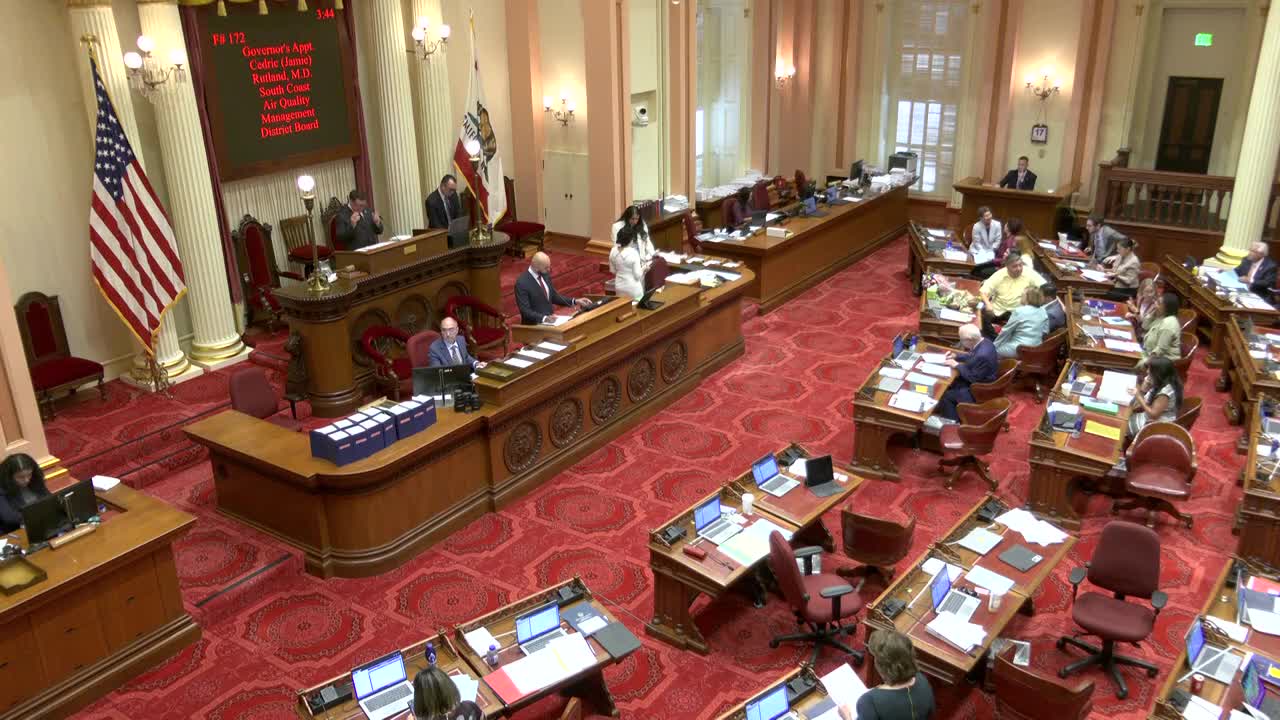
Bill Author

Bill Co-Author(s):