AB 1821: California Public Records Act: agency response time.
- Session Year: 2025-2026
- House: Assembly
- Latest Version Date: 2026-09-30
Current Status:
Passed
(2026-09-30: Chaptered by Secretary of State - Chapter 899, Statutes of 2026.)
Introduced
In Committee
Awaiting First Chamber Vote
Passed First Chamber
In Committee
Awaiting Second Chamber Vote
Passed Second Chamber
Enacted
What does this bill do?
This bill changes California’s public records rules so state and local agencies must decide and notify a requester within 10 business days whether records can be released, and may extend that response by up to 14 business days. Extensions are allowed only for specified “unusual circumstances,” such as searching remote locations, handling very large requests, consulting other agencies, creating computer routines to pull data, cyberattacks, or delays from a declared state of emergency.
The summary is provided by generative AI which can make mistakes. For original language, please view the details in the table below.
Existing law, the California Public Records Act, requires each state or local agency, upon a request for a copy of records that reasonably describes an identifiable record or records, to make the records promptly available to any person upon payment of fees covering direct costs of duplication, or a statutory fee if applicable, except with respect to public records exempt from disclosure by express provisions of law.
Existing law requires each agency, within 10 days of a request for a copy of records, to determine whether the request seeks copies of disclosable public records in possession of the agency and to promptly notify the person of the determination and the reasons therefor. Existing law authorizes that time limit to be extended by no more than 14 days under unusual circumstances, as defined.
This bill would instead require each agency to determine whether the request seeks copies of disclosable public records in possession of the agency and to promptly notify the person as described above within 10 business days of a request for a copy of records. The bill would instead authorize the time period for each agency to respond to be extended by no more than 14 business days.
The California Constitution requires local agencies, for the purpose of ensuring public access to the meetings of public bodies and the writings of public officials and agencies, to comply with a statutory enactment that amends or enacts laws relating to public records or open meetings and contains findings demonstrating that the enactment furthers the constitutional requirements relating to this purpose.
This bill would make legislative findings to that effect.
Existing constitutional provisions require that a statute that limits the right of access to the meetings of public bodies or the writings of public officials and agencies be adopted with findings demonstrating the interest protected by the limitation and the need for protecting that interest.
This bill would make legislative findings to that effect.
Existing law, the California Public Records Act, requires each state or local agency, upon a request for a copy of records that reasonably describes an identifiable record or records, to make the records promptly available to any person upon payment of fees covering direct costs of duplication, or a statutory fee if applicable, except with respect to public records exempt from disclosure by express provisions of law.
This bill would require an agency to designate a physical office location and a specified email address for the submission of requests, and authorize an agency to designate other reasonable methods for the submission of requests, including submission to a physical mailing address, subject to certain requirements, including that the agency accept upon receipt any request that is submitted at the designated physical office location or through the designated email address during the agencys normal business hours. If an agency designates any method for the submission of requests, the bill would deem a request as properly requested for purposes of specified provisions only if the request was submitted through a method of submission that was designated by the agency. If the agency finds that a request was not submitted through a method of submission that was designated by the agency, the bill would deem the request as not properly requested at the time of submission and not subject to specified timelines otherwise applicable to the request had it been properly requested, except as specified. The bill would require an agency to provide notice to the public of any updates or changes to any method for the submission of requests designated by the agency by posting the updates or changes on its internet website.If an agency determines that a request is a commercial use request, as defined, the bill would require a requester to submit to the agency, in addition to any other applicable fees, a payment of fees to cover the search and review time, as defined, for the request. The bill would exempt from that fee requirement any request made by an educational or noncommercial scientific institution, as specified, a government agency, and a representative of the news media, as defined. The bill would authorize an agency to petition the superior court for a determination that a requester submitted a request with malicious intent, as specified. If the court determines that the request was submitted with malicious intent, the bill would authorize the agency to impose on the requester, in addition to any other applicable fees, a payment of fees to cover the search and review time for the request. The bill would suspend an agencys duty to respond to a request during the pendency of any court proceeding under that provision. The bill would specify that the payment of fees by a requester to cover the search and review time for a request for these purposes includes an administrative fee and a professional fee, as specified.Existing law requires each agency, within 10 days of a request for a copy of records, to determine whether the request seeks copies of disclosable public records in possession of the agency and to promptly notify the person of the determination and the reasons therefor. Existing law authorizes that time limit to be extended by no more than 14 days under unusual circumstances, as defined.
This bill would instead require each agency to determine whether the request seeks copies of disclosable public records in possession of the agency and to promptly notify the person as described above within 10 business days of a request for a copy of records. The bill would instead authorize the time period for each agency to respond to be extended by no more than 14 business days.
The California Constitution requires local agencies, for the purpose of ensuring public access to the meetings of public bodies and the writings of public officials and agencies, to comply with a statutory enactment that amends or enacts laws relating to public records or open meetings and contains findings demonstrating that the enactment furthers the constitutional requirements relating to this purpose.
This bill would make legislative findings to that effect.
Existing constitutional provisions require that a statute that limits the right of access to the meetings of public bodies or the writings of public officials and agencies be adopted with findings demonstrating the interest protected by the limitation and the need for protecting that interest.
This bill would make legislative findings to that effect.
Existing law, the California Public Records Act, requires each state or local agency, upon a request for a copy of records that reasonably describes an identifiable record or records, to make the records promptly available to any person upon payment of fees covering direct costs of duplication, or a statutory fee if applicable, except with respect to public records exempt from disclosure by express provisions of law.
This bill would require an agency to designate a physical office location and a specified email address for the submission of requests, and authorize an agency to designate other reasonable methods for the submission of requests, including submission to a physical mailing address, subject to certain requirements, including that the agency accept upon receipt any request that is submitted at the designated physical office location or through the designated email address during the agencys normal business hours. If an agency designates any method for the submission of requests, the bill would deem a request as properly requested for purposes of specified provisions only if the request was submitted through a method of submission that was designated by the agency. If the agency finds that a request was not submitted through a method of submission that was designated by the agency, the bill would deem the request as not properly requested at the time of submission and not subject to specified timelines otherwise applicable to the request had it been properly requested, except as specified. The bill would require an agency to provide notice to the public of any updates or changes to any method for the submission of requests designated by the agency by posting the updates or changes on its internet website.
If an agency determines that a request is a commercial use request, as defined, the bill would require a requester to submit to the agency, in addition to any other applicable fees, a payment of fees to cover the search and review time, as defined, for the request. The bill would exempt from that fee requirement any request made by an educational or noncommercial scientific institution, as specified, a government agency, and a representative of the news media, as defined. The bill would authorize an agency to petition the superior court for a determination that a requester submitted a request with malicious intent, as specified. If the court determines that the request was submitted with malicious intent, the bill would authorize the agency to impose on the requester, in addition to any other applicable fees, a payment of fees to cover the search and review time for the request. The bill would suspend an agencys duty to respond to a request during the pendency of any court proceeding under that provision. The bill would specify that the payment of fees by a requester to cover the search and review time for a request for these purposes includes an administrative fee and a professional fee, as specified.
Existing law requires each agency, within 10 days of a request for a copy of records, to determine whether the request seeks copies of disclosable public records in possession of the agency and to promptly notify the person of the determination and the reasons therefor. Existing law authorizes that time limit to be extended by no more than 14 days under unusual circumstances, as defined.
This bill would instead require each agency to determine whether the request seeks copies of disclosable public records in possession of the agency and to promptly notify the person as described above within 10 business days of a request for a copy of records. The bill would instead authorize the time period for each agency to respond to be extended by no more than 14 business days.
The California Constitution requires local agencies, for the purpose of ensuring public access to the meetings of public bodies and the writings of public officials and agencies, to comply with a statutory enactment that amends or enacts laws relating to public records or open meetings and contains findings demonstrating that the enactment furthers the constitutional requirements relating to this purpose.
This bill would make legislative findings to that effect.
Existing constitutional provisions require that a statute that limits the right of access to the meetings of public bodies or the writings of public officials and agencies be adopted with findings demonstrating the interest protected by the limitation and the need for protecting that interest.
This bill would make legislative findings to that effect.
Existing law, the California Public Records Act, requires each state or local agency, upon a request for a copy of records that reasonably describes an identifiable record or records, to make the records promptly available to any person upon payment of fees covering direct costs of duplication, or a statutory fee if applicable, except with respect to public records exempt from disclosure by express provisions of law.
This bill would require, if a single request exceeds 2 hours of search time, or if the total requests by a requestor exceed 10 hours of search time in one month, the requestor to also submit to the agency a payment of fees in an amount determined by the agency as reasonable to compensate the agency for the administrative time of completing the requests. The bill would exempt from that requirement a journalist, a newspaper, and an educational or noncommercial scientific institution, as specified. The bill would define search for purposes of that requirement to mean to review, either manually or by automated means, agency records for the purpose of locating those records that are responsive to a request.Existing law requires each agency, within 10 days of a request for a copy of records, to determine whether the request seeks copies of disclosable public records in possession of the agency and to promptly notify the person of the determination and the reasons therefor. Existing law authorizes that time limit to be extended by no more than 14 days under unusual circumstances, as defined.
This bill would instead require each agency to determine whether the request seeks copies of disclosable public records in possession of the agency and to promptly notify the person as described above within 10 business days of a request for a copy of records. The bill would instead authorize the time period for each agency to respond to be extended by no more than 14 business days.
The California Constitution requires local agencies, for the purpose of ensuring public access to the meetings of public bodies and the writings of public officials and agencies, to comply with a statutory enactment that amends or enacts laws relating to public records or open meetings and contains findings demonstrating that the enactment furthers the constitutional requirements relating to this purpose.
This bill would make legislative findings to that effect.
Existing constitutional provisions require that a statute that limits the right of access to the meetings of public bodies or the writings of public officials and agencies be adopted with findings demonstrating the interest protected by the limitation and the need for protecting that interest.
This bill would make legislative findings to that effect.
Existing law, the California Public Records Act, requires each state or local agency, upon a request for a copy of records that reasonably describes an identifiable record or records, to make the records promptly available to any person upon payment of fees covering direct costs of duplication, or a statutory fee if applicable, except with respect to public records exempt from disclosure by express provisions of law.
This bill would require, if a single request exceeds 2 hours of search time, or if the total requests by a requestor exceed 10 hours of search time in one month, the requestor to also submit to the agency a payment of fees in an amount determined by the agency as reasonable to compensate the agency for the administrative time of completing the requests. The bill would exempt from that requirement a journalist, a newspaper, and an educational or noncommercial scientific institution, as specified. The bill would define search for purposes of that requirement to mean to review, either manually or by automated means, agency records for the purpose of locating those records that are responsive to a request.
Existing law requires each agency, within 10 days of a request for a copy of records, to determine whether the request seeks copies of disclosable public records in possession of the agency and to promptly notify the person of the determination and the reasons therefor. Existing law authorizes that time limit to be extended by no more than 14 days under unusual circumstances, as defined.
This bill would instead require each agency to determine whether the request seeks copies of disclosable public records in possession of the agency and to promptly notify the person as described above within 10 business days of a request for a copy of records. The bill would instead authorize the time period for each agency to respond to be extended by no more than 14 business days.
The California Constitution requires local agencies, for the purpose of ensuring public access to the meetings of public bodies and the writings of public officials and agencies, to comply with a statutory enactment that amends or enacts laws relating to public records or open meetings and contains findings demonstrating that the enactment furthers the constitutional requirements relating to this purpose.
This bill would make legislative findings to that effect.
Existing constitutional provisions require that a statute that limits the right of access to the meetings of public bodies or the writings of public officials and agencies be adopted with findings demonstrating the interest protected by the limitation and the need for protecting that interest.
This bill would make legislative findings to that effect.
Existing law, the California Public Records Act, requires state and local agencies to make their records available for public inspection, unless an exemption from disclosure applies. This bill would make a nonsubstantive change to the provision establishing the title of the act.Existing law, the California Public Records Act, requires state and local agencies to make their records available for public inspection, unless an exemption from disclosure applies.
This bill would make a nonsubstantive change to the provision establishing the title of the act.
(a)Each agency, upon a request for a copy of records, shall, within 10 business days from receipt of the request, determine whether the request, in whole or in part, seeks copies of disclosable public records in the possession of the agency and shall promptly notify the person making the request of the determination and the reasons therefor. If the agency determines that the request seeks disclosable public records, the agency shall also state the estimated date and time when the records will be made available.
(b)In unusual circumstances, the time limit prescribed in this article and Article 1 (commencing with Section 7922.500) may be extended by written notice from the head of the agency or a designee to the person making the request, setting forth the reasons for the extension and the date on which a determination is expected to be dispatched. The notice shall not specify a date that would result in an extension for more than 14 business days.
(c)As used in this section, unusual circumstances means the following, but only to the extent reasonably necessary to the proper processing of the particular request:
(1)The need to search for and collect the requested records from field facilities or other establishments that are separate from the office processing the request.
(2)The need to search for, collect, and appropriately examine a voluminous amount of separate and distinct records that are demanded in a single request.
(3)The need for consultation, which shall be conducted with all practicable speed, with another agency having substantial interest in the determination of the request or among two or more components of the agency having substantial subject matter interest therein.
(4)The need to compile data, to write programming language or a computer program, or to construct a computer report to extract data.
(5)The inability of the agency, because of a cyberattack, to access its electronic servers or systems in order to search for and obtain a record that the agency believes is responsive to a request and is maintained on the servers or systems in an electronic format.
(A)This paragraph does not relieve the agency of its obligation to comply with subdivision (a) when the requested record is maintained in a location other than on the electronic server or system affected by the cyberattack, or maintained in a nonelectronic format.
(B)This paragraph applies only until the agency regains its ability to access its electronic servers or systems and search for and obtain electronic records that may be responsive to a request.
(6)The need to search for, collect, and appropriately examine records during a state of emergency proclaimed by the Governor in the jurisdiction where the agency is located when the state of emergency currently and directly affects, due to the state of emergency, the agencys ability to timely respond to requests due to staffing shortages or closure of facilities where the requested records are located.
(A)This paragraph shall not apply to a request for records created during and related to the state of emergency proclaimed by the Governor.
(B)For purposes of this paragraph, state of emergency means a state of emergency proclaimed pursuant to Section 8625 of the California Emergency Services Act (Chapter 7 (commencing with Section 8550) of Division 1 of Title 2).
SEC. 2.The Legislature finds and declares that Section 1 of this act, which amends Section 7922.535 of the Government Code, furthers, within the meaning of paragraph (7) of subdivision (b) of Section 3 of Article I of the California Constitution, the purposes of that constitutional section as it relates to the right of public access to the meetings of local public bodies or the writings of local public officials and local agencies. Pursuant to paragraph (7) of subdivision (b) of Section 3 of Article I of the California Constitution, the Legislature makes the following findings:
This act balances the right of the public to access public records in a timely manner while acknowledging that state and local agencies provide a variety of public services and may need additional time to properly respond to requests.
SEC. 3.The Legislature finds and declares that Section 1 of this act, which amends Section 7922.535 of the Government Code, imposes a limitation on the publics right of access to the meetings of public bodies or the writings of public officials and agencies within the meaning of Section 3 of Article I of the California Constitution. Pursuant to that constitutional provision, the Legislature makes the following findings to demonstrate the interest protected by this limitation and the need for protecting that interest:
This act balances the right of the public to access public records in a timely manner while acknowledging that state and local agencies provide a variety of public services and may need additional time to properly respond to requests.
(a)Each agency, upon a request for a copy of records, shall, within 10 business days from receipt of the request, determine whether the request, in whole or in part, seeks copies of disclosable public records in the possession of the agency and shall promptly notify the person making the request of the determination and the reasons therefor. If the agency determines that the request seeks disclosable public records, the agency shall also state the estimated date and time when the records will be made available.
(b)In unusual circumstances, the time limit prescribed in this article and Article 1 (commencing with Section 7922.500) may be extended by written notice from the head of the agency or a designee to the person making the request, setting forth the reasons for the extension and the date on which a determination is expected to be dispatched. The notice shall not specify a date that would result in an extension for more than 14 business days.
(c)As used in this section, unusual circumstances means the following, but only to the extent reasonably necessary to the proper processing of the particular request:
(1)The need to search for and collect the requested records from field facilities or other establishments that are separate from the office processing the request.
(2)The need to search for, collect, and appropriately examine a voluminous amount of separate and distinct records that are demanded in a single request.
(3)The need for consultation, which shall be conducted with all practicable speed, with another agency having substantial interest in the determination of the request or among two or more components of the agency having substantial subject matter interest therein.
(4)The need to compile data, to write programming language or a computer program, or to construct a computer report to extract data.
(5)The inability of the agency, because of a cyberattack, to access its electronic servers or systems in order to search for and obtain a record that the agency believes is responsive to a request and is maintained on the servers or systems in an electronic format.
(A)This paragraph does not relieve the agency of its obligation to comply with subdivision (a) when the requested record is maintained in a location other than on the electronic server or system affected by the cyberattack, or maintained in a nonelectronic format.
(B)This paragraph applies only until the agency regains its ability to access its electronic servers or systems and search for and obtain electronic records that may be responsive to a request.
(6)The need to search for, collect, and appropriately examine records during a state of emergency proclaimed by the Governor in the jurisdiction where the agency is located when the state of emergency currently and directly affects, due to the state of emergency, the agencys ability to timely respond to requests due to staffing shortages or closure of facilities where the requested records are located.
(A)This paragraph shall not apply to a request for records created during and related to the state of emergency proclaimed by the Governor.
(B)For purposes of this paragraph, state of emergency means a state of emergency proclaimed pursuant to Section 8625 of the California Emergency Services Act (Chapter 7 (commencing with Section 8550) of Division 1 of Title 2).
SEC. 3.SEC. 2.The Legislature finds and declares that Section 1 of this act, which amends Section 7922.530 of the Government Code, and Section 2 of this act, which amends Section 7922.535 of the Government Code, further, furthers, within the meaning of paragraph (7) of subdivision (b) of Section 3 of Article I of the California Constitution, the purposes of that constitutional section as it relates to the right of public access to the meetings of local public bodies or the writings of local public officials and local agencies. Pursuant to paragraph (7) of subdivision (b) of Section 3 of Article I of the California Constitution, the Legislature makes the following findings:
This act balances the right of the public to access public records in a timely manner while providing public agencies the ability to designate methods to receive, obtain proper compensation for, and sufficient time to respond to, public record requests. acknowledging that state and local agencies provide a variety of public services and may need additional time to properly respond to requests.
SEC. 4.SEC. 3.The Legislature finds and declares that Section 1 of this act, which amends Section 7922.530 of the Government Code, and Section 2 of this act, which amends Section 7922.535 of the Government Code, impose imposes a limitation on the publics right of access to the meetings of public bodies or the writings of public officials and agencies within the meaning of Section 3 of Article I of the California Constitution. Pursuant to that constitutional provision, the Legislature makes the following findings to demonstrate the interest protected by this limitation and the need for protecting that interest:
This act balances the right of the public to access public records in a timely manner while providing public agencies the ability to designate methods to receive, obtain proper compensation for, and sufficient time to respond to, public record requests. acknowledging that state and local agencies provide a variety of public services and may need additional time to properly respond to requests.
(a)(1)Except with respect to public records exempt from disclosure by express provisions of law, each state or local agency, upon a request for a copy of records that reasonably describes an identifiable record or records, shall make the records promptly available to any person upon payment of fees covering direct costs of duplication, duplication and any fees to cover the search and review time for a request described in paragraph (3), or a statutory fee if applicable. Upon request, an exact copy shall be provided unless impracticable to do so.
(2)(A)An agency shall designate a physical office location and a specified email address for the submission of requests, and may designate other reasonable methods for the submission of requests, including, but not limited to, submission to a specified physical mailing address or through a specified online portal, subject to both of the following requirements:
(i)The agency shall accept upon receipt any request that is submitted in person at the designated physical office location or through the designated email address during the agencys normal business hours.
(ii)An agency shall make any method of submission that was designated by the agency clearly available on its internet website.
(B)(i)If an agency designates any method for the submission of requests, a request shall be deemed as properly requested for purposes of this chapter only if the request was submitted through a method of submission that was designated by the agency.
(ii)If the agency finds that a request was not submitted through a method of submission that was designated by the agency, the request shall not be deemed as properly requested at the time of submission and shall not be subject to any timelines under this chapter otherwise applicable to the request had it been properly requested. This clause shall not apply if the agency had a reasonable basis to be aware of the request.
(C)An agency shall provide notice to the public of any updates or changes to any method for the submission of requests designated by the agency by posting the updates or changes on its internet website.
(3)(A)(i)If an agency determines that a request is a commercial use request, the requester shall submit to the agency, in addition to any other applicable fees, a payment of fees to cover cost of the search and review time for the request.
(ii)Clause (i) shall not apply to any request made by any of the following:
(I)An educational or noncommercial scientific institution whose purpose is scholarly or scientific research.
(II)A government agency.
(III)A representative of the news media.
(B)An agency may petition the superior court for a determination that a requester submitted a request with malicious intent, including for the purpose of delaying the agency. If the court determines that the request was submitted with malicious intent, the agency may impose on the requester, in addition to any other applicable fees, a payment of fees to cover the search and review time for the request. The agencys duty to respond to the request shall be suspended during the pendency of any court proceedings under this subparagraph.
(C)The payment of fees by a requester to cover the search and review time for a request pursuant to subparagraphs (A) and (B) shall be as follows:
(i)The payment of fees shall include both of the following fees:
(I)An administrative fee in the amount of twenty-two dollars and thirty-five cents ($22.35) per hour, which may be increased by a cost-of-living adjustment.
(II)A professional fee in the amount of sixty-six dollars and twenty-six cents ($66.26) per hour, which may be increased by a cost-of-living adjustment.
(ii)For purposes of clause (i), both of the following shall apply:
(I)Any charges that are for less than a full hour shall be billed in quarter-hour segments.
(II)The United States city average of the Consumer Price Index for all Urban Consumers, as published by the United States Bureau of Statistics, shall be used as the basis for determining changes in the cost of living.
(D)For purposes of this paragraph, all of the following definitions apply:
(i)Commercial use request means a request from or on behalf of a person who seeks information for a use or purpose that furthers the commercial, trade, or profit interests of the requester or the person on whose behalf the request is made. In determining whether a requester properly belongs in this category, the agency may ask the requester to provide information regarding the use to which a requester will put the documents requested. If the requester does not promptly provide this information, the agency may infer that the records have been requested for commercial use. When the agency has reasonable cause to doubt the requesters stated use of the records sought, or where the use is not clear from the request itself, the agency will seek additional clarification before assigning the request to a category.
(ii)Representative of the news media means a person who regularly gathers, prepares, collects, photographs, records, writes, edits, reports, or publishes news or information that concerns local, national, or international events or other matters of public interest for dissemination to the public for a substantial portion of the persons livelihood or for substantial financial gain.
(iii)Search and review time means the actual time spent identifying and locating records, including material within documents, responsive to a request, determining whether any portions are exempt from disclosure, and performing all tasks necessary to prepare the records for disclosure, including redacting portions exempt from disclosure.
(b)A requester who inspects a disclosable record on the premises of the agency has the right to use the requesters equipment on those premises, without being charged any fees or costs, to photograph or otherwise copy or reproduce the record in a manner that does not require the equipment to make physical contact with the record, unless the means of copy or reproduction would result in either of the following:
(1)Damage to the record.
(2)Unauthorized access to the agencys computer systems or secured networks by using software, equipment, or any other technology capable of accessing, altering, or compromising the agencys electronic records.
(c)The agency may impose any reasonable limits on the use of the requesters equipment that are necessary to protect the safety of the records or to prevent the copying of records from being an unreasonable burden to the orderly function of the agency and its employees. In addition, the agency may impose any limit that is necessary to maintain the integrity of, or ensure the long-term preservation of, historic or high-value records.
SECTION 1.SEC. 2.Section 7922.535 of the Government Code is amended to read:7922.535.(a)Each agency, upon a request for a copy of records, shall, within 10 business days from receipt of the request, determine whether the request, in whole or in part, seeks copies of disclosable public records in the possession of the agency and shall promptly notify the person making the request of the determination and the reasons therefor. If the agency determines that the request seeks disclosable public records, the agency shall also state the estimated date and time when the records will be made available.
(b)In unusual circumstances, the time limit prescribed in this article and Article 1 (commencing with Section 7922.500) may be extended by written notice from the head of the agency or a designee to the person making the request, setting forth the reasons for the extension and the date on which a determination is expected to be dispatched. The notice shall not specify a date that would result in an extension for more than 14 business days.
(c)As used in this section, unusual circumstances means the following, but only to the extent reasonably necessary to the proper processing of the particular request:
(1)The need to search for and collect the requested records from field facilities or other establishments that are separate from the office processing the request.
(2)The need to search for, collect, and appropriately examine a voluminous amount of separate and distinct records that are demanded in a single request.
(3)The need for consultation, which shall be conducted with all practicable speed, with another agency having substantial interest in the determination of the request or among two or more components of the agency having substantial subject matter interest therein.
(4)The need to compile data, to write programming language or a computer program, or to construct a computer report to extract data.
(5)The inability of the agency, because of a cyberattack, to access its electronic servers or systems in order to search for and obtain a record that the agency believes is responsive to a request and is maintained on the servers or systems in an electronic format.
(A)This paragraph does not relieve the agency of its obligation to comply with subdivision (a) when the requested record is maintained in a location other than on the electronic server or system affected by the cyberattack, or maintained in a nonelectronic format.
(B)This paragraph applies only until the agency regains its ability to access its electronic servers or systems and search for and obtain electronic records that may be responsive to a request.
(6)The need to search for, collect, and appropriately examine records during a state of emergency proclaimed by the Governor in the jurisdiction where the agency is located when the state of emergency currently and directly affects, due to the state of emergency, the agencys ability to timely respond to requests due to staffing shortages or closure of facilities where the requested records are located.
(A)This paragraph shall not apply to a request for records created during and related to the state of emergency proclaimed by the Governor.
(B)For purposes of this paragraph, state of emergency means a state of emergency proclaimed pursuant to Section 8625 of the California Emergency Services Act (Chapter 7 (commencing with Section 8550) of Division 1 of Title 2).
SEC. 2.SEC. 3.The Legislature finds and declares that Section 1 of this act, which amends Section 7922.530 of the Government Code, and Section 2 of this act, which amends Section 7922.535 of the Government Code, furthers, further, within the meaning of paragraph (7) of subdivision (b) of Section 3 of Article I of the California Constitution, the purposes of that constitutional section as it relates to the right of public access to the meetings of local public bodies or the writings of local public officials and local agencies. Pursuant to paragraph (7) of subdivision (b) of Section 3 of Article I of the California Constitution, the Legislature makes the following findings:
This act balances the right of the public to access public records in a timely manner while acknowledging that state and local agencies provide a variety of public services and may need additional time to properly respond to requests. providing public agencies the ability to designate methods to receive, obtain proper compensation for, and sufficient time to respond to, public record requests.
SEC. 3.SEC. 4.The Legislature finds and declares that Section 1 of this act, which amends Section 7922.530 of the Government Code, and Section 2 of this act, which amends Section 7922.535 of the Government Code, imposes impose a limitation on the publics right of access to the meetings of public bodies or the writings of public officials and agencies within the meaning of Section 3 of Article I of the California Constitution. Pursuant to that constitutional provision, the Legislature makes the following findings to demonstrate the interest protected by this limitation and the need for protecting that interest:
This act balances the right of the public to access public records in a timely manner while acknowledging that state and local agencies provide a variety of public services and may need additional time to properly respond to requests. providing public agencies the ability to designate methods to receive, obtain proper compensation for, and sufficient time to respond to, public record requests.
(a)Each agency, upon a request for a copy of records, shall, within 10 business days from receipt of the request, determine whether the request, in whole or in part, seeks copies of disclosable public records in the possession of the agency and shall promptly notify the person making the request of the determination and the reasons therefor. If the agency determines that the request seeks disclosable public records, the agency shall also state the estimated date and time when the records will be made available.
(b)In unusual circumstances, the time limit prescribed in this article and Article 1 (commencing with Section 7922.500) may be extended by written notice from the head of the agency or a designee to the person making the request, setting forth the reasons for the extension and the date on which a determination is expected to be dispatched. The notice shall not specify a date that would result in an extension for more than 14 business days.
(c)As used in this section, unusual circumstances means the following, but only to the extent reasonably necessary to the proper processing of the particular request:
(1)The need to search for and collect the requested records from field facilities or other establishments that are separate from the office processing the request.
(2)The need to search for, collect, and appropriately examine a voluminous amount of separate and distinct records that are demanded in a single request.
(3)The need for consultation, which shall be conducted with all practicable speed, with another agency having substantial interest in the determination of the request or among two or more components of the agency having substantial subject matter interest therein.
(4)The need to compile data, to write programming language or a computer program, or to construct a computer report to extract data.
(5)The inability of the agency, because of a cyberattack, to access its electronic servers or systems in order to search for and obtain a record that the agency believes is responsive to a request and is maintained on the servers or systems in an electronic format.
(A)This paragraph does not relieve the agency of its obligation to comply with subdivision (a) when the requested record is maintained in a location other than on the electronic server or system affected by the cyberattack, or maintained in a nonelectronic format.
(B)This paragraph applies only until the agency regains its ability to access its electronic servers or systems and search for and obtain electronic records that may be responsive to a request.
(6)The need to search for, collect, and appropriately examine records during a state of emergency proclaimed by the Governor in the jurisdiction where the agency is located when the state of emergency currently and directly affects, due to the state of emergency, the agencys ability to timely respond to requests due to staffing shortages or closure of facilities where the requested records are located.
(A)This paragraph shall not apply to a request for records created during and related to the state of emergency proclaimed by the Governor.
(B)For purposes of this paragraph, state of emergency means a state of emergency proclaimed pursuant to Section 8625 of the California Emergency Services Act (Chapter 7 (commencing with Section 8550) of Division 1 of Title 2).
SEC. 3.SEC. 2.The Legislature finds and declares that Section 1 of this act, which amends Section 7922.530 of the Government Code, and Section 2 of this act, which amends Section 7922.535 of the Government Code, further, furthers, within the meaning of paragraph (7) of subdivision (b) of Section 3 of Article I of the California Constitution, the purposes of that constitutional section as it relates to the right of public access to the meetings of local public bodies or the writings of local public officials and local agencies. Pursuant to paragraph (7) of subdivision (b) of Section 3 of Article I of the California Constitution, the Legislature makes the following findings:
This act balances the right of the public to access public records in a timely manner while providing public agencies proper compensation and protection from convoluted requests. acknowledging that state and local agencies provide a variety of public services and may need additional time to properly respond to requests.
SEC. 4.SEC. 3.The Legislature finds and declares that Section 1 of this act, which amends Section 7922.530 of the Government Code, and Section 2 of this act, which amends Section 7922.535 of the Government Code, impose imposes a limitation on the publics right of access to the meetings of public bodies or the writings of public officials and agencies within the meaning of Section 3 of Article I of the California Constitution. Pursuant to that constitutional provision, the Legislature makes the following findings to demonstrate the interest protected by this limitation and the need for protecting that interest:
This act balances the right of the public to access public records in a timely manner while providing public agencies proper compensation and protection from convoluted requests. acknowledging that state and local agencies provide a variety of public services and may need additional time to properly respond to requests.
(a)(1)Except with respect to public records exempt from disclosure by express provisions of law, each state or local agency, upon a request for a copy of records that reasonably describes an identifiable record or records, shall make the records promptly available to any person upon payment of fees covering direct costs of duplication, or a statutory fee if applicable. Upon request, an exact copy shall be provided unless impracticable to do so.
(2)(A)If a single request exceeds 2 hours of search time, or if the total requests by a requestor exceed 10 hours of search time in one month, the requestor shall submit to the agency a payment of fees in an amount determined by the agency as reasonable to compensate the agency for the administrative time of completing the requests.
(B)Subparagraph (A) shall not apply to any of the following:
(i)A journalist.
(ii)A newspaper.
(iii)An educational or noncommercial scientific institution whose purpose is scholarly or scientific research.
(C)For purposes of subparagraph (A), search means to review, either manually or by automated means, agency records for the purpose of locating those records that are responsive to a request.
(b)A requester who inspects a disclosable record on the premises of the agency has the right to use the requesters equipment on those premises, without being charged any fees or costs, to photograph or otherwise copy or reproduce the record in a manner that does not require the equipment to make physical contact with the record, unless the means of copy or reproduction would result in either of the following:
(1)Damage to the record.
(2)Unauthorized access to the agencys computer systems or secured networks by using software, equipment, or any other technology capable of accessing, altering, or compromising the agencys electronic records.
(c)The agency may impose any reasonable limits on the use of the requesters equipment that are necessary to protect the safety of the records or to prevent the copying of records from being an unreasonable burden to the orderly function of the agency and its employees. In addition, the agency may impose any limit that is necessary to maintain the integrity of, or ensure the long-term preservation of, historic or high-value records.
SEC. 2.Section 7922.535 of the Government Code is amended to read:7922.535.(a)Each agency, upon a request for a copy of records, shall, within 10 business days from receipt of the request, determine whether the request, in whole or in part, seeks copies of disclosable public records in the possession of the agency and shall promptly notify the person making the request of the determination and the reasons therefor. If the agency determines that the request seeks disclosable public records, the agency shall also state the estimated date and time when the records will be made available.
(b)In unusual circumstances, the time limit prescribed in this article and Article 1 (commencing with Section 7922.500) may be extended by written notice from the head of the agency or a designee to the person making the request, setting forth the reasons for the extension and the date on which a determination is expected to be dispatched. The notice shall not specify a date that would result in an extension for more than 14 business days.
(c)As used in this section, unusual circumstances means the following, but only to the extent reasonably necessary to the proper processing of the particular request:
(1)The need to search for and collect the requested records from field facilities or other establishments that are separate from the office processing the request.
(2)The need to search for, collect, and appropriately examine a voluminous amount of separate and distinct records that are demanded in a single request.
(3)The need for consultation, which shall be conducted with all practicable speed, with another agency having substantial interest in the determination of the request or among two or more components of the agency having substantial subject matter interest therein.
(4)The need to compile data, to write programming language or a computer program, or to construct a computer report to extract data.
(5)The inability of the agency, because of a cyberattack, to access its electronic servers or systems in order to search for and obtain a record that the agency believes is responsive to a request and is maintained on the servers or systems in an electronic format.
(A)This paragraph does not relieve the agency of its obligation to comply with subdivision (a) when the requested record is maintained in a location other than on the electronic server or system affected by the cyberattack, or maintained in a nonelectronic format.
(B)This paragraph applies only until the agency regains its ability to access its electronic servers or systems and search for and obtain electronic records that may be responsive to a request.
(6)The need to search for, collect, and appropriately examine records during a state of emergency proclaimed by the Governor in the jurisdiction where the agency is located when the state of emergency currently and directly affects, due to the state of emergency, the agencys ability to timely respond to requests due to staffing shortages or closure of facilities where the requested records are located.
(A)This paragraph shall not apply to a request for records created during and related to the state of emergency proclaimed by the Governor.
(B)For purposes of this paragraph, state of emergency means a state of emergency proclaimed pursuant to Section 8625 of the California Emergency Services Act (Chapter 7 (commencing with Section 8550) of Division 1 of Title 2).
SEC. 3.The Legislature finds and declares that Section 1 of this act, which amends Section 7922.530 of the Government Code, and Section 2 of this act, which amends Section 7922.535 of the Government Code, further, within the meaning of paragraph (7) of subdivision (b) of Section 3 of Article I of the California Constitution, the purposes of that constitutional section as it relates to the right of public access to the meetings of local public bodies or the writings of local public officials and local agencies. Pursuant to paragraph (7) of subdivision (b) of Section 3 of Article I of the California Constitution, the Legislature makes the following findings:
This act balances the right of the public to access public records in a timely manner while providing public agencies proper compensation and protection from convoluted requests.
SEC. 4.The Legislature finds and declares that Section 1 of this act, which amends Section 7922.530 of the Government Code, and Section 2 of this act, which amends Section 7922.535 of the Government Code, impose a limitation on the publics right of access to the meetings of public bodies or the writings of public officials and agencies within the meaning of Section 3 of Article I of the California Constitution. Pursuant to that constitutional provision, the Legislature makes the following findings to demonstrate the interest protected by this limitation and the need for protecting that interest:
This act balances the right of the public to access public records in a timely manner while providing public agencies proper compensation and protection from convoluted requests.
SECTION 1.Section 7920.000 of the Government Code is amended to read:7920.000.This division is known and may be cited as the California Public Records Act.This division shall be is known and may be cited as the California Public Records Act.
|
Date
|
Status
|
|---|---|
| Sep 30, 2026 | Chaptered by Secretary of State - Chapter 899, Statutes of 2026. |
| Sep 30, 2026 | Approved by the Governor. |
| Aug 31, 2026 | Enrolled and presented to the Governor at 4 p.m. |
| Aug 25, 2026 | Senate amendments concurred in. To Engrossing and Enrolling. (Ayes 50. Noes 3.). |
| Aug 25, 2026 | Senate amendments concurred in. To Engrossing and Enrolling. (Ayes 50. Noes 3. Page 6506.). |
| Aug 25, 2026 | In Assembly. Concurrence in Senate amendments pending. |
| Aug 25, 2026 | Read third time. Passed. Ordered to the Assembly. (Ayes 39. Noes 0.). |
| Aug 4, 2026 | Read second time. Ordered to third reading. |
| Aug 3, 2026 | From committee: Be ordered to second reading pursuant to Senate Rule 28.8. |
| Jul 1, 2026 | From committee: Do pass and re-refer to Com. on APPR. (Ayes 12. Noes 0.) (June 30). Re-referred to Com. on APPR. |
| Jun 25, 2026 | From committee chair, with author's amendments: Amend, and re-refer to committee. Read second time, amended, and re-referred to Com. on JUD. |
| Jun 10, 2026 | Referred to Com. on JUD. |
| Jun 10, 2026 | From committee chair, with author's amendments: Amend, and re-refer to committee. Read second time, amended, and re-referred to Com. on JUD. |
| May 28, 2026 | In Senate. Read first time. To Com. on RLS. for assignment. |
| May 27, 2026 | Read third time. Passed. Ordered to the Senate. (Ayes 55. Noes 12.) |
| May 27, 2026 | Read third time. Passed. Ordered to the Senate. (Ayes 55. Noes 12. Page 5439.) |
| May 27, 2026 | Read third time. Passed. Ordered to the Senate. |
| Apr 23, 2026 | Read second time. Ordered to third reading. |
| Apr 22, 2026 | From committee: Do pass. (Ayes 11. Noes 2.) (April 22). |
| Apr 15, 2026 | From committee: Do pass and re-refer to Com. on APPR. (Ayes 8. Noes 2.) (April 14). Re-referred to Com. on APPR. |
| Apr 7, 2026 | Re-referred to Com. on JUD. |
| Apr 6, 2026 | From committee chair, with author's amendments: Amend, and re-refer to Com. on JUD. Read second time and amended. |
| Mar 17, 2026 | Re-referred to Com. on JUD. |
| Mar 16, 2026 | Referred to Com. on JUD. |
| Mar 16, 2026 | From committee chair, with author's amendments: Amend, and re-refer to Com. on JUD. Read second time and amended. |
| Feb 12, 2026 | From printer. May be heard in committee March 14. |
| Feb 11, 2026 | Read first time. To print. |
|
Date
|
Description
|
Location
|
Votes
|
|
|---|---|---|---|---|
| Aug 25, 2026 | AB 1821 Pacheco Concurrence in Senate Amendments | Assembly Floor |
Passed |
|
| Aug 25, 2026 | Assembly 3rd Reading AB1821 Pacheco By Cabaldon | Senate Floor |
Passed |
|
| Jun 30, 2026 | Do pass, but first be re-referred to the Committee on [Appropriations] | Senate Standing Committee on Judiciary |
Passed |
|
| May 27, 2026 | AB 1821 Pacheco Assembly Third Reading | Assembly Floor |
Passed |
|
| Apr 22, 2026 | Do pass. | Assembly Standing Committee on Appropriations |
Passed |
|
| Apr 14, 2026 | Do pass and be re-referred to the Committee on [Appropriations] | Assembly Standing Committee on Judiciary |
Passed |
This list shows positions taken on this bill by organizations on the date displayed, which is linked to the original source.
Positions by individuals are not included.
|
Organization
|
Position
|
Date
|
|---|---|---|
| Aclu California Action | ** Against | |
| ADU Rights.org | ** Against | |
| Alameda County Office Of Education | ** Support | |
| Alliance for Boys and Men of Color | ** Against | |
| Alliance of Californians for Community Empowerment (ACCE) Action | ** Against | |
| American Friends Service Committee | ** Against | |
| Anti Police-Terror Project | ** Against | |
| Association of Alternative Newsmedia Publishers | ** Against | |
| Association Of California School Administrators | ** Support | |
| Bend the Arc: Jewish Action, California | ** Against | |
| Black Lives Matter California | ** Against | |
| Buen Vecino | ** Against | |
| Cair California | ** Against | |
| California Advocates for Nursing Home Reform | ** Against | |
| California Association Of Recreation & Park Districts | ** Support | |
| California Association Of School Business Officials | ** Support | |
| California Clerk Of The Board Of Supervisors Association | ** Support | |
| California Coalition for Sheriff Oversight | ** Against | |
| California Common Cause | ** Against | |
| California Faculty Association | ** Against | |
| California League of United Latin American Citizens | ** Against | |
| California Municipal Clerks Association | ** Support | |
| California News Publishers Association | ** Against | |
| California Rural Legal Assistance Foundation | ** Against | |
| California Special Districts Association | ** Support | |
| California State Association Of Counties | ** Support | |
| California State Sheriffs' Association | ** Support | |
| Californians for Pesticide Reform | ** Against | |
| Cancel the Contract | ** Against | |
| Carceral Ecologies | ** Against | |
| Care First California | ** Against | |
| Center for Juvenile Law and Policy, Loyola Law School | ** Against | |
| Center for Policing Equity | ** Against | |
| Center on Juvenile and Criminal Justice | ** Against | |
| Check the Sheriff | ** Against | |
| Child Care Law Center | ** Against | |
| City of Bakersfield | ** Support | |
| City of Bellflower | ** Support | |
| City of Buena Park | ** Support | |
| City of Canyon Lake | ** Support | |
| City of Capitola | ** Support | |
| city of carlsbad | ** Support | |
| City of Cloverdale | ** Support | |
| City of Concord | ** Support | |
| City of Corona | ** Support | |
| City of Coronado | ** Support | |
| City Of Cupertino | ** Support | |
| City Of Eastvale | ** Support | |
| City Of El Cajon | ** Support | |
| City of El Cerrito | ** Support | |
| City of Fontana | ** Support | |
| City of Foster City | ** Support | |
| City of Grass Valley | ** Support | |
| City of Hesperia | ** Support | |
| City of La Verne | ** Support | |
| City of Los Alamitos | ** Support | |
| City of Modesto | ** Support | |
| City of Monterey Park | ** Support | |
| City of Moorpark | ** Support | |
| City of Mountain View | ** Support | |
| City of Needles | ** Support | |
| City of Newport Beach | ** Support | |
| City of Norwalk | ** Support | |
| City Of Oakland | ** Support | |
| City of Oxnard | ** Support | |
| city of paramount | ** Support | |
| City of Pico Rivera | ** Support | |
| City of Rancho Cucamonga | ** Support | |
| City of Redding | ** Support | |
| City of Riverside | ** Support | |
| City of Rohnert Park | ** Support | |
| City Of Rolling Hills | ** Support | |
| City of Rolling Hills Estates | ** Support | |
| City Of San Bernardino | ** Support | |
| City of San Jose | ** Support | |
| City of Santa Monica | ** Support | |
| City of Scotts Valley | ** Support | |
| City of St. Helena | ** Support | |
| City of Sunnyvale | ** Support | |
| City of Thousand Oaks | ** Support | |
| City of Tulare | ** Support | |
| City Of Upland | ** Support | |
| City of Vacaville | ** Support | |
| City of Woodland | ** Support | |
| cleanearth4kids.org | ** Against | |
| Coachella Valley Water District | ** Support | |
| Communities United for Restorative Youth Justice (CURYJ) | ** Against | |
| Community Legal Services in East Palo Alto | ** Against | |
| Construction Industry Force Account Council | ** Against | |
| Corporation For Supportive Housing | ** Against | |
| County of Fresno | ** Support | |
| County of Inyo | ** Support | |
| County Of Kern | ** Support | |
| County of Mendocino | ** Support | |
| County of Monterey | ** Support | |
| County of Napa | ** Support | |
| County of Riverside | ** Support | |
| County of Solano | ** Support | |
| Courage California | ** Against | |
| CPRA Processors Working Group | ** Support | |
| Dignity and Power Now | ** Against | |
| Disability Rights California | ** Against | |
| Disability Rights Education & Defense Fund (DREDF) | ** Against | |
| Dublin San Ramon Services District | ** Support | |
| East Bay Sanctuary Covenant | ** Against | |
| Environmental Working Group | ** Against | |
| Family Violence Appellate Project | ** Against | |
| Fight For The Future | ** Against | |
| First Amendment Coalition | ** Against | |
| Friends Committee On Legislation Of California | ** Against | |
| Friends of the Eel River | ** Against | |
| Gente Organizada | ** Against | |
| Get the Flock Out - Santa Cruz County | ** Against | |
| Howard Jarvis Taxpayers Association | ** Against | |
| Humboldt Waterkeeper | ** Against | |
| In Our Care San Mateo County | ** Against | |
| Inland Coalition for Immigrant Justice | ** Against | |
| Justice in Aging | ** Against | |
| Justice Teams Network | ** Against | |
| Justice2jobs Coalition | ** Against | |
| LA Defensa | ** Against | |
| LA Voice | ** Against | |
| Leadership Counsel for Justice and Accountability | ** Against | |
| League Of California Cities | ** Support | |
| League of United Latin American Citizens (LULAC) | ** Against | |
| Legal Aid Association Of California | ** Against | |
| Local 148 Los Angeles County Public Defender's Union | ** Against | |
| Los Angeles Community Action Network | ** Against | |
| Los Angeles Press Club | ** Against | |
| Los Angeles Unified School District | ** Support | |
| McKinleyville Community Service District | ** Support | |
| Mexican-American Legal Defense and Ed Fund (MALDEF) | ** Against | |
| Mexican-american Legal Defense and Ed Fund [maldef] | ** Against | |
| National Housing Law Project | ** Against | |
| National Lawyers Guild - Los Angeles (NLG-LA) | ** Against | |
| Oakland Privacy | ** Against | |
| Orale: Organizing Rooted in Abolition Liberation and Empowerment | ** Against | |
| Orange County Council of Governments | ** Support | |
| Orange County Fire Authority | ** Support | |
| Orange County Rapid Response Network | ** Against | |
| Parents Against Child Sexual Abuse | ** Against | |
| Partnership for the Advancement of New Americans | ** Against | |
| Pillars of the Community | ** Against | |
| Public Counsel | ** Against | |
| Public Interest Law Project | ** Against | |
| Reform Whittier | ** Against | |
| Rural County Representatives of California | ** Support | |
| Rural County Representatives of California s | ** Support | |
| San Bernardino County | ** Support | |
| San Diego Pro Chapter of The Society of Professional Journalists | ** Against | |
| Saving Lives in Custody California | ** Against | |
| Secure Justice | ** Against | |
| Services, Immigrant Rights and Education Network (SIREN) | ** Against | |
| Shasta County Board of Supervisors | ** Support | |
| Sister Warriors Freedom Coalition | ** Against | |
| Starting Over Strong | ** Against | |
| Stop LAPD Spying Coalition | ** Against | |
| Surfrider Foundation | ** Against | |
| The Ark | ** Against | |
| The Black Alliance for Just Immigration | ** Against | |
| The Daily Californian | ** Against | |
| The Impact Fund | ** Against | |
| The San Benito Blueprint | ** Against | |
| The Wage Justice Center | ** Against | |
| Town of Hillsborough | ** Support | |
| Transparent California | ** Against | |
| Trial Impact Project | ** Against | |
| UNITE HERE Local 11 | ** Against | |
| University of Florida, College of Journalism and Communications | ** Against | |
| University of San Francisco Racial Justice Clinic | ** Against | |
| Urban Counties of California | ** Support | |
| Western Center on Law & Poverty, INC. | ** Against | |
| Western Electrical Contractors Association | ** Against | |
| Youth Justice Coalition | ** Against | |
| Youth Law Center | ** Against | |
| Youth Law Center (UNREG) | ** Against |
CONCURRENCE IN SENATE AMENDMENTS
CSA1 Bill Id:AB 1821
Author:(Pacheco)
As Amended Ver:June 25, 2026
Majority vote
SUMMARY
Extends the deadlines for public agencies to provide an initial response to a public records request, by converting the current "calendar day" deadlines to a "business day" standard.
Major Provisions
- Requires agencies to determine whether a public record request seeks copies of disclosable public records in possession of the agency and to promptly notify the person as described above within 10 business days of a request for a copy of records.
- Provides that an agency's deadline to determine whether a public record request seeks copies of disclosable public records in possession of the agency may be extended by written notice, in specified unusual circumstances, within no more than 14 business days of the above-mentioned ten-day period.
Senate Amendments
Add amendments that made substantive changes to the California Public Records Act (CPRA) then subsequently remove all of those same provisions, leaving only those amendments previously approved by the Assembly in the bill.
COMMENTS
Existing law requires a public agency to determine whether it has disclosable public records in its possession within ten days of receiving a request from the public for those records or, in specified unusual circumstances, within 14 days. This bill extends those deadlines by specifying that public agencies can provide this response within ten business days, and 14 business days of the ten-day period, in specified unusual circumstances.
Public Access to Public Records. Access to information concerning the conduct of the people's business is a fundamental and necessary right of every person in this state. (Government Code Section 7921.000. All further references are to this code unless otherwise noted.) In 2004, the right of public access was enshrined in the California Constitution with the passage of Proposition 59 (November 3, 2004, statewide general election), placed on the ballot by a unanimous vote of both houses of the Legislature. Senate Constitutional Amendment (SCA) 1 (Burton) Chapter 1, Statutes of 2004, amended the California Constitution to specifically protect the right of the public to access and obtain government records: "The people have the right of access to information concerning the conduct of the people's business, and therefore . . . the writings of public officials and agencies shall be open to public scrutiny." (California Constitution, article I, section 3 (b)(1).) In 2014, voters approved Proposition 42 (June 3, 2014, statewide direct primary election), placed on the ballot by a unanimous vote of both houses of the Legislature, (SCA 3 (Leno) Chapter 123, Statutes of 2013), to further increase public access to government records by requiring local agencies to comply with the CPRA and the Ralph M. Brown Act, and with any subsequent statutory enactment amending either act, as provided. (California Constitution, article I, section 3 (b)(7).)
Under the California Public Records Act (CPRA), public records are open to inspection at all times during the office hours of a public agency for inspection by the public, unless exempted. (Section 7922.525.) A public record is defined as any writing containing information relating to the conduct of the public's business prepared, owned, used, or retained by any public agency regardless of physical form or characteristics. (Section 7920.530.) Despite the CPRA's general rule that public records are open to inspection and subject to disclosure, the CPRA provides exceptions providing that a document, or a portion thereof, is not subject to public disclosure. An exemption can be explicit in the CPRA itself, pursuant to another law, or justified by the agency's determination that, based on the facts of the particular case, the public interest served by not disclosing the record clearly outweighs the public interest served by disclosure of the record. (See Sections 7922.000, 7922.525, 7922.530.)
Currently, the CPRA allows a public agency 10 days or, in specified unusual circumstances, an additional 14 days after the 10-day period to respond to a request for the requested public record. (Section 7922.535 (a) – (c).) In its initial response, an agency does not have to provide the public records being requested, but it must determine whether a given request seeks copies of disclosable records in its possession and notify the requester of its determination and the underlying reasons for its determination. (Ibid.)
This bill extends the deadlines for agencies to provide this initial response by converting the current calendar-day deadlines to a business-day standard. Specifically, an agency would be required to make its determination regarding whether it has disclosable records and notify the requester of its determination and the reasons for that determination, within ten business days of receiving the request. Similarly, agencies would be allowed to extend this deadline by 14 business days of the ten-day period, in specified unusual circumstances.
Under existing law, these deadlines continue to toll without accounting for weekends when most public staff are given leave, reducing the number of working days agencies have to provide their initial response. Because of this dynamic, if an agency receives a request for records on a Friday shortly before the close of business, agency staff are unlikely to be able to begin reviewing and analyzing the request until the following Monday, leaving staff with two fewer working days to provide a response. By acknowledging that most agency staff are likely to review requests on working days only, this bill better aligns the CPRA with the operational realities of most agencies.
According to the Author
The California Public Records Act (CPRA) serves as a tool for transparency and accountability in government. By allowing the public to access records related to official actions and decision-making, the CPRA empowers communities to hold government accountable and helps ensure public institutions remain responsive.
In recent years, public agencies have seen a significant increase in public records requests. As digital communication has expanded, submitting requests – often in high volume – has become easier than ever. Some requests are unusually large or require substantial staff time to fulfill. When a small number of requests consume a disproportionate share of resources, agencies can face challenges keeping up with all requests in a timely manner while still providing essential services.
AB 1821 specifies that processing agencies' response times should be tied to business days rather than calendar days. This small change ensures that agencies' timelines actually align with the hours they work. As a result, agencies may continue to respond to requests in a timely manner without being held to timelines that fall outside of standard business or processing hours.
Arguments in Support
The California State Association of Counties, League of California Cities, California Municipal Clerks Association, Rural County Representatives of California, and Urban Counties of California write in support of this bill. Collectively, they submit:
AB 1821 provides an important and practical clarification to CPRA response timelines. The bill's shift from "calendar days" to "business days" for initial determinations and extensions is a common‑sense update that reflects the operational realities of local agencies. Public agencies generally do not have staff available on weekends or holidays, yet current law continues to toll CPRA deadlines during these periods. A business‑day standard ensures agencies have the full, intended number of working days to conduct thorough and accurate searches for disclosable records.
Under existing law, agencies must determine within 10 days whether a request seeks disclosable records, with a possible 14‑day extension in unusual circumstances. Neither timeframe accounts for weekends or holidays when staff are unavailable. AB 1821 corrects this discrepancy by converting these periods to business days, helping agencies comply with the law more effectively and consistently.
Arguments in Opposition
Disability Rights California states the following in opposition to the bill:
AB 1821's proposed shift from a calendar to a business day timeline would normalize delay and further disadvantage communities that depend on timely access to information. This erodes the value of time‑sensitive information and weakens public oversight. The Legislature has repeatedly recognized that prompt access is essential to democratic accountability, especially in areas like policing, incarceration, and public spending where transparency gaps disproportionately harm marginalized communities. Extending response times would compound existing inequities, making it harder for people to challenge government decisions, participate in civic life, and advocate for justice.
FISCAL COMMENTS
According to the Senate Appropriations Committee, pursuant to Senate Rule 28.8, negligible state costs.
VOTES:
ASM JUDICIARY: 8-2-2
YES: Kalra, Bauer-Kahan, Connolly, Harabedian, Pacheco, Papan, Stefani, Zbur
NO: Macedo, Sanchez
ABS, ABST OR NV: Bryan, Dixon
ASM APPROPRIATIONS: 11-2-2
YES: Wicks, Arambula, Caloza, Dixon, Fong, Mark González, Krell, Pacheco, Pellerin, Solache, Tangipa
NO: Hoover, Ta
ABS, ABST OR NV: Calderon, Muratsuchi
ASSEMBLY FLOOR: 55-12-13
YES: Addis, Aguiar-Curry, Ahrens, Alanis, Alvarez, Arambula, Ávila Farías, Bauer-Kahan, Berman, Boerner, Bonta, Calderon, Caloza, Carrillo, Connolly, Dixon, Ellis, Garcia, Gipson, Jeff Gonzalez, Mark González, Haney, Harabedian, Hart, Irwin, Kalra, Krell, Lee, Lowenthal, McKinnor, Muratsuchi, Nguyen, Pacheco, Papan, Patel, Pellerin, Petrie-Norris, Quirk-Silva, Ramos, Ransom, Michelle Rodriguez, Rogers, Blanca Rubio, Schiavo, Schultz, Sharp-Collins, Solache, Soria, Stefani, Tangipa, Valencia, Wicks, Wilson, Zbur, Rivas
NO: Bains, Davies, DeMaio, Gallagher, Hoover, Johnson, Lackey, Macedo, Patterson, Sanchez, Ta, Wallis
ABS, ABST OR NV: Bennett, Bryan, Castillo, Chen, Elhawary, Flora, Fong, Gabriel, Hadwick, Jackson, Ortega, Celeste Rodriguez, Ward
UPDATED
VERSION: June 25, 2026
CONSULTANT: Kristian Wright / JUD. / (916) 319-2334 FN: 0003348
SENATE RULES COMMITTEE Office of Senate Floor Analyses (916) 651-4171 | AB 1821 |
THIRD READING
Bill No: AB 1821
Author: Pacheco (D)
Amended: 6/25/26 in Senate
Vote: 21
SENATE JUDICIARY COMMITTEE: 12-0, 6/30/26
AYES: Umberg, Niello, Allen, Ashby, Caballero, Durazo, Laird, Reyes, Stern, Valladares, Weber Pierson, Wiener
NO VOTE RECORDED: Wahab
SENATE APPROPRIATIONS COMMITTEE: Senate Rule 28.8
ASSEMBLY FLOOR: 55-12, 5/27/26 - See last page for vote
SUBJECT: California Public Records Act: agency response time
SOURCE: Author
DIGEST:
This bill specifies that the number of days an agency has to make a determination on a request for records of whether the agency is in possession of the requested records and whether they will be disclosed is 10 business days, and that this 10-day period can be extended for specified unusual circumstances for 14 business days.
ANALYSIS: Existing law:
- Provides, pursuant to the California Constitution, that the people have the right of access to information concerning the conduct of the people’s business, and, therefore, the meetings of public bodies and the writings of public officials and agencies are required to be open to public scrutiny. (California Constitution, art. I, § 3(b)(1).)
- Requires a statute to be broadly construed if it furthers the people’s right of access, and narrowly construed if it limits the right of access. (Cal. const. art. I, § 3(b)(1).)
- Requires a statute that limits the public’s right of access to be adopted with findings demonstrating the interest protected by the limitation and the need for protecting that interest. (Cal. const. art. I, § 3(b)(1).)
- Governs the disclosure of information collected and maintained by public agencies pursuant to the California Public Records Act (CPRA). (Government Code §§ 792.000 et seq.)
- States that, the Legislature, mindful of the right of individuals to privacy, finds and declares that access to information concerning the conduct of the people’s business is a fundamental and necessary right of every person in this state. (Gov. Code § 7921.000.)
- Defines “public records” as any writing containing information relating to the conduct of the public’s business prepared, owned, used, or retained by any state or local agency regardless of physical form or characteristics. (Gov. Code § 7920.530.)
- Defines “public agency” as any state or local agency. (Gov. Code § 7920.525(a).)
- Provides that all public records are open to inspection at all times during the office hours of a state or local agency and every person has a right to inspect any public record, unless the record is exempt from public disclosure. Any reasonably segregable portion of a record shall be available for inspection by any person requesting the record after deletion of the portions that are exempted by law. (Gov. Code § 7922.525.)
- Some records are prohibited from being disclosed and other records are permissively exempted from being disclosed. (See e.g. Gov. Code §§ 7920.505 & 7922.200.)
- There are several general categories of documents or information that are permissively exempt from disclosure under the CPRA essentially due to the character of the information. The exempt information can be withheld by the public agency with custody of the information, but it also may be disclosed if it is shown that the public’s interest in disclosure outweighs the public’s interest in non-disclosure of the information. (CBS, Inc. v. Block (1986) 42 Cal.3d 646, at 652.).
- Requires a public agency to make a determination within 10 days of a records request on whether the agency is in possession of the requested records and whether they are disclosable records, either in part or full, including an explanation for the agency’s determination and an estimated date and time the records will be made available. (Gov. Code § 7922.535(a).)
- Authorizes an agency to extend the response period in 4), above, by 14 days in specified “unusual circumstances.” (Id. at subd. (b)(1)-(6).)
This bill:
- Specifies that the response period in 4), above, is 10 business days.
- Specifies that the response period in 5), above, is 14 business days.
Comments
Access to information concerning the conduct of the people’s business is a fundamental and necessary right of every person in this state. (Gov. Code § 7921.000.) In 2004, the right of public access was enshrined in the California Constitution with the passage of Proposition 59 (Nov. 3, 2004, statewide general election),[1] which amended the California Constitution to specifically protect the right of the public to access and obtain government records: “The people have the right of access to information concerning the conduct of the people’s business, and therefore . . . the writings of public officials and agencies shall be open to public scrutiny.” (Cal. Const., art. I, sec. 3 (b)(1).) In 2014, voters approved Proposition 42 (Jun. 3, 2014, statewide direct primary election)[2] to further increase public access to government records by requiring local agencies to comply with the CPRA and the Ralph M. Brown Act[3], and with any subsequent statutory enactment amending either act, as provided. (Cal. Const., art. I, sec. 3 (b)(7).)
Under the CPRA, public records are open to inspection by the public at all times during the office hours of the agency, unless exempted from disclosure. (Gov. Code § 7922.252.) A public record is defined as any writing containing information relating to the conduct of the public’s business prepared, owned, used, or retained by any public agency regardless of physical form or characteristics. (Gov. Code § 7920.530.) The California Supreme Court stated in City of San Jose v. Superior Court ((2017) 2 Cal.5th 608, at 617):
Given the strong public policy of the people's right to information concerning the people's business [Gov. Code § 7921.000] and the constitutional mandate to construe statutes limiting the right of access narrowly (Cal. Const. art. I, § 3, subd. (b)(2)), all public records are subject to disclosure unless the Legislature has expressly provided to the contrary.
The courts have also held that the CPRA “was enacted for the purpose of increasing freedom of information by giving members of the public access to information in the possession of public agencies.” (Filarsky v. Superior Court (2002) 28 Cal.4th 419, at 425.)
The CPRA requires a public agency to make a determination within 10 days of a records request on whether the agency is in possession of the requested records and whether they are disclosable records, either in part or full, including an explanation for the agency’s determination and an estimated date and time the records will be made available. (Gov. Code § 7922.535(a).) The CPRA allows an agency to extend that response period by 14 days in specified “unusual circumstances.” (Id. at subd. (b).) These “unusual circumstances” are: (1) needing to search for and collect the requested records from facilities that are separate from the office processing the request; (2) needing to search for, collect, and appropriately examine a voluminous amount of separate and distinct records that are demanded in a single request; (3) needing to consult with another agency having substantial interest in the determination of the request or among two or more components of the agency having substantial subject matter interest therein; (4) needing to compile data, to write programming language or a computer program, or to construct a computer report to extract data; (5) when the agency is unable to access its electronic servers or systems, due to a cyberattack, in order to search for and obtain a record that the agency believes is responsive to a request and is maintained on the servers or systems in an electronic format; or (6) when needed to search for, collect, and appropriately examine records during a state of emergency proclaimed by the Governor in the jurisdiction where the agency is located. (Id. at subd. (b)(1)-(6).)
This bill provides that the number of days an agency has to respond as described above, is 10 business days and for unusual circumstances, an additional 14 business days to respond. Proponents argue that a business-day standard ensures agencies have the full intended amount of working days to prepare initial responses to record requests. Some opponents contend that the current calendar-day deadlines do not present an undue burden to agencies, and any further extensions will slow down a process that many advocates argue is already severely delayed.
Widespread reports of burdensome delays in accessing public records has been a problem reported to the Committee by advocates for many years. Unnecessary delays undermine the important public policy goals of transparency and accountability that the CPRA promotes to ensure a robust and healthy democracy. However, specifying that the response time is business days recognizes that most agencies are not open on weekends and holidays and provides breathing room to agencies in managing their day-to-day operations.
FISCAL EFFECT: Appropriation: No Fiscal Com.: Yes Local: No
SUPPORT: (Verified 8/4/26)
Alameda County Office of Education
Association of California School Administrators
California Association of Recreation & Park Districts
California Association of School Business Officials
California Clerk of the Board of Supervisors Association
California Municipal Clerks Association
California Special Districts Association
California State Association of Counties
City of Bakersfield
City of Bellflower
City of Buena Park
City of Canyon Lake
City of Capitola
City of Carlsbad
City of Cloverdale
City of Concord
City of Corona
City of Coronado
City of Cupertino
City of El Cajon
City of El Cerrito
City of Fontana
City of Foster City
City of Grass Valley
City of Hesperia
City of Los Alamitos
City of Modesto
City of Monterey Park
City of Moorpark
City of Mountain View
City of Needles
City of Norwalk
City of Oakland
City of Oxnard
City of Paramount
City of Pico Rivera
City of Rancho Cucamonga
City of Redding
City of Riverside
City of Rohnert Park
City of Rolling Hills
City of Rolling Hills Estates
City of San Jose
City of Santa Monica
City of Scotts Valley
City of St. Helena
City of Sunnyvale
City of Thousand Oaks
City of Tulare
City of Vacaville
City of Woodland
Coachella Valley Water District
County of Fresno
County of Inyo
County of Kern
County of Mendocino
County of Monterey
County of Napa
County of Riverside
County of Solano
CPRA Processors Working Group
Dublin San Ramon Services District
League of California Cities
Los Angeles Unified School District
Mckinleyville Community Service District
Orange County Council of Governments
Orange County Fire Authority
Rural County Representatives of California s
San Bernardino County
Shasta County Board of Supervisors
Town of Hillsborough
Urban Counties of California
OPPOSITION: (Verified 8/4/26)
Adu Rights.org
Alliance for Boys and Men of Color
Alliance of Californians for Community Empowerment (ACCE) Action
American Friends Service Committee
Anti Police-terror Project
Association of Alternative Newsmedia Publishers
Bend the Arc: Jewish Action, California
Black Lives Matter California
CAIR California
California Advocates for Nursing Home Reform
California Coalition for Sheriff Oversight
California Faculty Association
California League of United Latin American Citizens
California News Publishers Association
California Rural Legal Assistance Foundation
Californians for Pesticide Reform
Cancel the Contract
Care First California
Center for Juvenile Law and Policy, Loyola Law School
Center for Policing Equity
Check the Sheriff
Child Care Law Center
Cleanearth4kids.org
Communities United for Restorative Youth Justice (CURYJ)
Community Legal Services in East Palo Alto
Courage California
Dignity and Power Now
Disability Rights California
Disability Rights Education & Defense Fund (DREDF)
East Bay Sanctuary Covenant
Environmental Working Group
Family Violence Appellate Project
Fight for the Future
Friends of the Eel River
Gente Organizada
Humboldt Waterkeeper
In Our Care San Mateo County
Inland Coalition for Immigrant Justice
Justice Teams Network
Justice2jobs Coalition
LA Defensa
LA Voice
Leadership Counsel for Justice and Accountability
League of United Latin American Citizens (LULAC)
Local 148 Los Angeles County Public Defender's Union
Los Angeles Community Action Network
Los Angeles Press Club
Mexican-american Legal Defense and Ed Fund [maldef]
National Housing Law Project
National Lawyers Guild - Los Angeles (NLG-LA)
Orale: Organizing Rooted in Abolition Liberation and Empowerment
Orange County Rapid Response Network
Parents Against Child Sexual Abuse
Partnership for the Advancement of New Americans
Pillars of the Community
Public Counsel
Public Interest Law Project
Reform Whittier
San Diego Pro Chapter of the Society of Professional Journalists
Saving Lives in Custody California
Secure Justice
Services, Immigrant Rights and Education Network (SIREN)
Sister Warriors Freedom Coalition
Starting Over Strong
Stop Lapd Spying Coalition
Surfrider Foundation
The Ark
The Black Alliance for Just Immigration
The Daily Californian
The Wage Justice Center
Transparent California
Trial Impact Project
Unite Here Local 11
University of Florida, College of Journalism and Communications
University of San Francisco Racial Justice Clinic
Western Electrical Contractors Association
Youth Justice Coalition (note - There Is No Drop Down List Available.)
Youth Law Center (UNREG)
18 individuals
ARGUMENTS IN SUPPORT: The author writes:
The California Public Records Act (CPRA) serves as a tool for transparency and accountability in government. By allowing the public to access records related to official actions and decision-making, the CPRA empowers communities to hold government accountable and helps ensure public institutions remain responsive.
In recent years, public agencies have seen a significant increase in public records requests. As digital communication has expanded, submitting requests – often in high volume – has become easier than ever. Some requests are unusually large or require substantial staff time to fulfill. When a small number of requests consume a disproportionate share of resources, agencies can face challenges keeping up with all requests in a timely manner while still providing essential services.
AB 1821 specifies that processing agencies' response times should be tied to business days rather than calendar days. This small change ensures that agencies' timelines actually align with the hours they work. As a result, agencies may continue to respond to requests in a timely manner without being held to timelines that fall outside of standard business or processing hours.
The California Special Districts Association writes:
[…] Under current law, requests made pursuant to the California Public Records Act (CPRA) require that a public agency, within 10 days from receipt of the request, determine whether the request, in whole or in part, seeks copies of disclosable public records in the possession of the agency. In unusual circumstances, an agency is permitted to extend that time, but they remain prohibited from specifying a date that would result in an extension for more than 14 days. Neither of these timeframes account for the fact that public agencies generally grant staff weekends and holidays off; during those periods, the time an agency has remaining to respond to a CPRA request continues tolling, notwithstanding the fact that there are no staff members available to be responsive to a request or search for records. AB 1821 would rectify this discrepancy by providing that the 10-day and 14-day periods referenced above span business days rather than calendar days, thereby solving the issue encountered when weekends and holidays fall within the timeframe of a CPRA request. […]
ARGUMENTS IN OPPOSITION: Disability Rights California writes in opposition, stating:
AB 1821’s proposed shift from a calendar to a business day timeline would normalize delay and further disadvantage communities that depend on timely access to information. This erodes the value of time‑sensitive information and weakens public oversight. The Legislature has repeatedly recognized that prompt access is essential to democratic accountability, especially in areas like policing, incarceration, and public spending where transparency gaps disproportionately harm marginalized communities. Extending response times would compound existing inequities, making it harder for people to challenge government decisions, participate in civic life, and advocate for justice.
ASSEMBLY FLOOR: 55-12, 5/27/26
AYES: Addis, Aguiar-Curry, Ahrens, Alanis, Alvarez, Arambula, Ávila Farías, Bauer-Kahan, Berman, Boerner, Bonta, Calderon, Caloza, Carrillo, Connolly, Dixon, Ellis, Garcia, Gipson, Jeff Gonzalez, Mark González, Haney, Harabedian, Hart, Irwin, Kalra, Krell, Lee, Lowenthal, McKinnor, Muratsuchi, Nguyen, Pacheco, Papan, Patel, Pellerin, Petrie-Norris, Quirk-Silva, Ramos, Ransom, Michelle Rodriguez, Rogers, Blanca Rubio, Schiavo, Schultz, Sharp-Collins, Solache, Soria, Stefani, Tangipa, Valencia, Wicks, Wilson, Zbur, Rivas
NOES: Bains, Davies, DeMaio, Gallagher, Hoover, Johnson, Lackey, Macedo, Patterson, Sanchez, Ta, Wallis
NO VOTE RECORDED: Bennett, Bryan, Castillo, Chen, Elhawary, Flora, Fong, Gabriel, Hadwick, Jackson, Ortega, Celeste Rodriguez, Ward
Prepared by: Amanda Mattson / JUD. / (916) 651-4113
8/5/26 15:04:20
**** END ****
Prop. 59 was placed on the ballot by a unanimous vote of both houses of the Legislature. (SCA 1 (Burton, Ch. 1, Stats. 2004)). ↑
Prop. 42 was placed on the ballot by a unanimous vote of both houses of the Legislature. (SCA 3 (Leno, Ch. 123, Stats. 2013)). ↑
The Ralph M. Brown Act is the open meetings laws that applies to local agencies. (Gov. Code §§ 59450 et. seq.) ↑
Senator Thomas Umberg, Chair
2025-2026 Regular Session
Bill No: AB 1821 (Author:Pacheco)
Version: June 25, 2026
Hearing Date: June 30, 2026
Fiscal: Yes
Urgency: No
Consultant: AM
SUBJECT
California Public Records Act: agency response time
DIGEST
This bill specifies that the number of days an agency has to make a determination on a request for records of whether the agency is in possession of the requested records and whether they will be disclosed is 10 business days, and that this 10-day period can be extended for specified unusual circumstances for 14 business days.
EXECUTIVE SUMMARY
The California Public Records Act (CPRA) makes all public records of a public agency open to public inspection upon request and grants the public the right to obtain a copy of any public record, unless the records are otherwise exempt from public disclosure. Under the CPRA, a public agency is required to make a determination within 10 days of a records request on whether the agency is in possession of the requested records and whether those records are disclosable. The agency must also provide an estimated date and time the requested records will be made available to the requester. An agency may extend that 10-day response period by an additional 14 days in specified “unusual circumstances.”
The bill is author-sponsored. The bill is supported by numerous local governments and associations representing governments. A prior version of this bill was opposed by numerous organizations that advocate for open and transparent government, journalists, legal advocates, immigrant rights groups, police accountability advocates, environmental advocacy organizations, and other advocacy organizations. However, on June 25, 2026, the author took amendments to the bill which pares it back substantially. A lot of the prior opposition has moved to neutral as a result of these amendments. It is unclear if the remaining opposition’s concerns are fully addressed by the amendments.
PROPOSED CHANGES TO THE LAW
Existing law:
- Provides, pursuant to the California Constitution, that the people have the right of access to information concerning the conduct of the people’s business, and, therefore, the meetings of public bodies and the writings of public officials and agencies are required to be open to public scrutiny. (Cal. const. art. I, § 3(b)(1).)
- Requires a statute to be broadly construed if it furthers the people’s right of access, and narrowly construed if it limits the right of access. (Cal. const. art. I, § 3(b)(1).)
- Requires a statute that limits the public’s right of access to be adopted with findings demonstrating the interest protected by the limitation and the need for protecting that interest. (Cal. const. art. I, § 3(b)(1).)
- Governs the disclosure of information collected and maintained by public agencies pursuant to the CPRA. (Gov. Code §§ 792.000 et seq.)
- States that, the Legislature, mindful of the right of individuals to privacy, finds and declares that access to information concerning the conduct of the people’s business is a fundamental and necessary right of every person in this state. (Gov. Code § 7921.000.)
- Defines “public records” as any writing containing information relating to the conduct of the public’s business prepared, owned, used, or retained by any state or local agency regardless of physical form or characteristics. (Gov. Code § 7920.530.)
- Defines “public agency” as any state or local agency. (Gov. Code § 7920.525(a).)
- Provides that all public records are open to inspection at all times during the office hours of a state or local agency and every person has a right to inspect any public record, unless the record is exempt from public disclosure. Any reasonably segregable portion of a record shall be available for inspection by any person requesting the record after deletion of the portions that are exempted by law. (Gov. Code § 7922.525.)
- Some records are prohibited from being disclosed and other records are permissively exempted from being disclosed. (See e.g. Gov. Code §§ 7920.505 & 7922.200.)
- There are several general categories of documents or information that are permissively exempt from disclosure under the CPRA essentially due to the character of the information. The exempt information can be withheld by the public agency with custody of the information, but it also may be disclosed if it is shown that the public’s interest in disclosure outweighs the public’s interest in non-disclosure of the information. (CBS, Inc. v. Block (1986) 42 Cal.3d 646, at 652.).
- Requires a public agency to make a determination within 10 days of a records request on whether the agency is in possession of the requested records and whether they are disclosable records, either in part or full, including an explanation for the agency’s determination and an estimated date and time the records will be made available. (Gov. Code § 7922.535(a).)
- Authorizes an agency to extend the response period in 4), above, by 14 days in specified “unusual circumstances.”
- These “unusual circumstances” are:
- needing to search for and collect the requested records from facilities that are separate from the office processing the request;
- needing to search for, collect, and appropriately examine a voluminous amount of separate and distinct records that are demanded in a single request;
- needing to consult with another agency having substantial interest in the determination of the request or among two or more components of the agency having substantial subject matter interest therein;
- needing to compile data, to write programming language or a computer program, or to construct a computer report to extract data;
- when the agency is unable to access its electronic servers or systems, due to a cyberattack, in order to search for and obtain a record that the agency believes is responsive to a request and is maintained on the servers or systems in an electronic format; and
- when needed to search for, collect, and appropriately examine records during a state of emergency proclaimed by the Governor in the jurisdiction where the agency is located. (Id. at subd. (b)(1)-(6).)
- These “unusual circumstances” are:
This bill:
- Specifies that the response period in 4), above, is 10 business days.
- Specifies that the response period in 5), above, is 14 business days.
COMMENTS
- Stated need for the bill
The author writes:
The California Public Records Act (CPRA) serves as a tool for transparency and accountability in government. By allowing the public to access records related to official actions and decision-making, the CPRA empowers communities to hold government accountable and helps ensure public institutions remain responsive.
In recent years, public agencies have seen a significant increase in public records requests. As digital communication has expanded, submitting requests – often in high volume – has become easier than ever. Some requests are unusually large or require substantial staff time to fulfill. When a small number of requests consume a disproportionate share of resources, agencies can face challenges keeping up with all requests in a timely manner while still providing essential services.
AB 1821 specifies that processing agencies' response times should be tied to business days rather than calendar days. This small change ensures that agencies' timelines actually align with the hours they work. As a result, agencies may continue to respond to requests in a timely manner without being held to timelines that fall outside of standard business or processing hours.
- Access to information concerning the conduct of the people’s business is a fundamental and constitutional right of every person in this state
Access to information concerning the conduct of the people’s business is a fundamental and necessary right of every person in this state. (Gov. Code § 7921.000.) In 2004, the right of public access was enshrined in the California Constitution with the passage of Proposition 59 (Nov. 3, 2004, statewide general election),[1] which amended the California Constitution to specifically protect the right of the public to access and obtain government records: “The people have the right of access to information concerning the conduct of the people’s business, and therefore . . . the writings of public officials and agencies shall be open to public scrutiny.” (Cal. Const., art. I, sec. 3 (b)(1).) In 2014, voters approved Proposition 42 (Jun. 3, 2014, statewide direct primary election)[2] to further increase public access to government records by requiring local agencies to comply with the CPRA and the Ralph M. Brown Act[3], and with any subsequent statutory enactment amending either act, as provided. (Cal. Const., art. I, sec. 3 (b)(7).)
Under the CPRA, public records are open to inspection by the public at all times during the office hours of the agency, unless exempted from disclosure. (Gov. Code § 7922.252.) A public record is defined as any writing containing information relating to the conduct of the public’s business prepared, owned, used, or retained by any public agency regardless of physical form or characteristics. (Gov. Code § 7920.530.) The California Supreme Court stated in City of San Jose v. Superior Court ((2017) 2 Cal.5th 608, at 617):
Given the strong public policy of the people's right to information concerning the people's business [Gov. Code § 7921.000] and the constitutional mandate to construe statutes limiting the right of access narrowly (Cal. Const. art. I, § 3, subd. (b)(2)), all public records are subject to disclosure unless the Legislature has expressly provided to the contrary.
The courts have also held that the CPRA “was enacted for the purpose of increasing freedom of information by giving members of the public access to information in the possession of public agencies.” (Filarsky v. Superior Court (2002) 28 Cal.4th 419, at 425.)
The CPRA requires a public agency to make a determination within 10 days of a records request on whether the agency is in possession of the requested records and whether they are disclosable records, either in part or full, including an explanation for the agency’s determination and an estimated date and time the records will be made available. (Gov. Code § 7922.535(a).) The CPRA allows an agency to extend that response period by 14 days in specified “unusual circumstances.” (Id. at subd. (b).) These “unusual circumstances” are: (1) needing to search for and collect the requested records from facilities that are separate from the office processing the request; (2) needing to search for, collect, and appropriately examine a voluminous amount of separate and distinct records that are demanded in a single request; (3) needing to consult with another agency having substantial interest in the determination of the request or among two or more components of the agency having substantial subject matter interest therein; (4) needing to compile data, to write programming language or a computer program, or to construct a computer report to extract data; (5) when the agency is unable to access its electronic servers or systems, due to a cyberattack, in order to search for and obtain a record that the agency believes is responsive to a request and is maintained on the servers or systems in an electronic format; or (6) when needed to search for, collect, and appropriately examine records during a state of emergency proclaimed by the Governor in the jurisdiction where the agency is located. (Id. at subd. (b)(1)-(6).)
This bill provides that the number of days an agency has to respond as described above, is 10 business days and for unusual circumstances, an additional 14 business days to respond. Proponents argue that a business-day standard ensures agencies have the full intended amount of working days to prepare initial responses to record requests. Some opponents contend that the current calendar-day deadlines do not present an undue burden to agencies, and any further extensions will slow down a process that many advocates argue is already severely delayed.
Widespread reports of burdensome delays in accessing public records has been a problem reported to the Committee by advocates for many years. Unnecessary delays undermine the important public policy goals of transparency and accountability that the CPRA promotes to ensure a robust and healthy democracy. However, specifying that the response time is business days recognizes that most agencies are not open on weekends and holidays and provides a modicum of breathing room to agencies in managing their day-to-day operations.
- Stakeholder statements
The California Special Districts Association writes:
[…] Under current law, requests made pursuant to the California Public Records Act (CPRA) require that a public agency, within 10 days from receipt of the request, determine whether the request, in whole or in part, seeks copies of disclosable public records in the possession of the agency. In unusual circumstances, an agency is permitted to extend that time, but they remain prohibited from specifying a date that would result in an extension for more than 14 days. Neither of these timeframes account for the fact that public agencies generally grant staff weekends and holidays off; during those periods, the time an agency has remaining to respond to a CPRA request continues tolling, notwithstanding the fact that there are no staff members available to be responsive to a request or search for records. AB 1821 would rectify this discrepancy by providing that the 10-day and 14-day periods referenced above span business days rather than calendar days, thereby solving the issue encountered when weekends and holidays fall within the timeframe of a CPRA request. […]
Disability Rights California writes in opposition, stating:
AB 1821’s proposed shift from a calendar to a business day timeline would normalize delay and further disadvantage communities that depend on timely access to information. This erodes the value of time‑sensitive information and weakens public oversight. The Legislature has repeatedly recognized that prompt access is essential to democratic accountability, especially in areas like policing, incarceration, and public spending where transparency gaps disproportionately harm marginalized communities. Extending response times would compound existing inequities, making it harder for people to challenge government decisions, participate in civic life, and advocate for justice.
SUPPORT
Alameda County Office of Education
California Association of Recreation & Park Districts
California Association of School Business Officials
California Municipal Clerks Association
California Special Districts Association
City of Bakersfield
City of Bellflower
City of Buena Park
City of Canyon Lake
City of Carlsbad
City of Concord
City of Corona
City of Eastvale
City of El Cerrito
City of Fontana
City of Grass Valley
City of Hesperia
City of Los Alamitos
City of Monterey Park
City of Norwalk
City of Rancho Cucamonga
City of Redding
City of Riverside
City of Rohnert Park
City of San Bernardino
City of Scotts Valley
City of St. Helena
City of Sunnyvale
City of Thousand Oaks
City of Vacaville
City of Woodland
County of Inyo
County of Mendocino
County of Monterey
County of Riverside
Los Angeles Unified School District
McKinleyville Community Service District
OPPOSITION
ADU Rights.org
Alliance for Boys and Men of Color
Alliance of Californians for Community Empowerment (ACCE) Action
American Friends Service Committee
Anti Police-terror Project
Association of Alternative Newsmedia Publishers
Bend the Arc: Jewish Action, California
Black Lives Matter California
CAIR California
California Advocates for Nursing Home Reform
California Coalition for Sheriff Oversight
California Faculty Association
California League of United Latin American Citizens
California News Publishers Association
California Rural Legal Assistance Foundation
Californians for Pesticide Reform
Cancel the Contract
Carceral Ecologies
Care First California
Center for Juvenile Law and Policy, Loyola Law School
Center for Policing Equity
Check the Sheriff
Communities United for Restorative Youth Justice
Community Legal Services in East Palo Alto
Courage California
Dignity and Power Now
Disability Rights California
Disability Rights Education & Defense Fund
East Bay Sanctuary Covenant
Environmental Working Group
Family Violence Appellate Project
Fight for the Future
Friends Committee on Legislation of California
Friends of the Eel River
Gente Organizada
Get the Flock Out - Santa Cruz County
Humboldt Waterkeeper
In Our Care San Mateo County
Inland Coalition for Immigrant Justice
Justice Teams Network
Justice2jobs Coalition
LA Defensa
LA Voice
League of United Latin American Citizens (LULAC)
Legal Aid Association of California
Local 148 Los Angeles County Public Defender's Union
Los Angeles Community Action Network
Los Angeles Press Club
Mexican-American Legal Defense and Ed Fund (MALDEF)
National Housing Law Project
National Lawyers Guild - Los Angeles (NLG-LA)
ORALE: Organizing Rooted in Abolition Liberation and Empowerment
Orange County Rapid Response Network
Parents Against Child Sexual Abuse
Partnership for the Advancement of New Americans
Pillars of the Community
Public Counsel
Public Interest Law Project
San Diego Pro Chapter of the Society of Professional Journalists
Saving Lives in Custody California
Secure Justice
Services, Immigrant Rights and Education Network (SIREN)
Sister Warriors Freedom Coalition
Starting Over Strong
Stop LAPD Spying Coalition
Surfrider Foundation
The Ark
The Black Alliance for Just Immigration
The Daily Californian
The Impact Fund
The San Benito Blueprint
The Wage Justice Center
Transparent California
Trial Impact Project
Unite Here Local 11
University of Florida, College of Journalism and Communications
University of San Francisco Racial Justice Clinic
Youth Justice Coalition
Youth Law Center
RELATED LEGISLATION
Pending Legislation: None known.
Prior Legislation: AB 370 (Carillo, Ch. 34, Stats. 2025) added an additional unusual circumstance under which the initial response time to a public records request may be extended by an agency for an additional 14 days to include the inability of the agency, because of a cyberattack, to access its electronic servers or systems in order to search for and obtain a record that the agency believes is responsive to a request and is maintained on the servers or systems in an electronic format.
PRIOR VOTES
Assembly Floor (Ayes 55, Noes 12)
Assembly Appropriations Committee (Ayes 11, Noes 2)
Assembly Judiciary Committee (Ayes 8, Noes 2)
**************
Prop. 59 was placed on the ballot by a unanimous vote of both houses of the Legislature. (SCA 1 (Burton, Ch. 1, Stats. 2004)). ↑
Prop. 42 was placed on the ballot by a unanimous vote of both houses of the Legislature. (SCA 3 (Leno, Ch. 123, Stats. 2013)). ↑
The Ralph M. Brown Act is the open meetings laws that applies to local agencies. (Gov. Code §§ 59450 et. seq.) ↑
ASSEMBLY THIRD READING
ATR Bill Id:AB 1821
Author:(Pacheco)
As Amended Ver:April 6, 2026
Majority vote
SUMMARY
Extends the deadlines for public agencies to provide an initial response to a public records request, by converting the current "calendar day" deadlines to a "business day" standard.
Major Provisions
- Requires agencies to determine whether a public record request seeks copies of disclosable public records in possession of the agency and to promptly notify the person as described above within 10 business days of a request for a copy of records.
- Provides that an agency's deadline to determine whether a public record request seeks copies of disclosable public records in possession of the agency may be extended by written notice, in specified unusual circumstances, within no more than 14 business days of the above-mentioned ten-day period.
COMMENTS
Existing law requires a public agency to determine whether it has disclosable public records in its possession within ten days of receiving a request from the public for those records or, in specified unusual circumstances, within 14 days. This bill extends those deadlines by specifying that public agencies can provide this response within ten business days, and 14 business days of the ten-day period, in specified unusual circumstances.
Public Access to Public Records. Access to information concerning the conduct of the people's business is a fundamental and necessary right of every person in this state. (Government Code Section 7921.000. All further references are to this code unless otherwise noted.) In 2004, the right of public access was enshrined in the California Constitution with the passage of Proposition 59 (Nov. 3, 2004, statewide general election), placed on the ballot by a unanimous vote of both houses of the Legislature. SCA 1 (Burton) Chapter 1, Statutes of 2004, amended the California Constitution to specifically protect the right of the public to access and obtain government records: "The people have the right of access to information concerning the conduct of the people's business, and therefore . . . the writings of public officials and agencies shall be open to public scrutiny." (Cal. Const., art. I, sec. 3 (b)(1).) In 2014, voters approved Proposition 42 (Jun. 3, 2014, statewide direct primary election), placed on the ballot by a unanimous vote of both houses of the Legislature, (SCA 3 (Leno) Chapter 123, Statutes of 2013), to further increase public access to government records by requiring local agencies to comply with the CPRA and the Ralph M. Brown Act, and with any subsequent statutory enactment amending either act, as provided. (Cal. Const., art. I, sec. 3 (b)(7).)
Under the California Public Records Act (CPRA), public records are open to inspection at all times during the office hours of a public agency for inspection by the public, unless exempted. (Section 7922.525.) A public record is defined as any writing containing information relating to the conduct of the public's business prepared, owned, used, or retained by any public agency regardless of physical form or characteristics. (Section 7920.530.) Despite the CPRA's general rule that public records are open to inspection and subject to disclosure, the CPRA provides exceptions providing that a document, or a portion thereof, is not subject to public disclosure. An exemption can be explicit in the CPRA itself, pursuant to another law, or justified by the agency's determination that, based on the facts of the particular case, the public interest served by not disclosing the record clearly outweighs the public interest served by disclosure of the record. (See Sections 7922.000, 7922.525, 7922.530.)
Currently, the CPRA allows a public agency 10 days or, in specified unusual circumstances, an additional 14 days after the 10-day period to respond to a request for the requested public record. (Section 7922.535 (a) – (c).) In its initial response, an agency does not have to provide the public records being requested, but it must determine whether a given request seeks copies of disclosable records in its possession and notify the requester of its determination and the underlying reasons for its determination. (Ibid.)
This bill extends the deadlines for agencies to provide this initial response by converting the current calendar-day deadlines to a business-day standard. Specifically, an agency would be required to make its determination regarding whether it has disclosable records and notify the requester of its determination and the reasons for that determination, within ten business days of receiving the request. Similarly, agencies would be allowed to extend this deadline by 14 business days of the ten-day period, in specified unusual circumstances.
Under existing law, these deadlines continue to toll without accounting for weekends when most public staff are given leave, reducing the number of working days agencies have to provide their initial response. Because of this dynamic, if an agency receives a request for records on a Friday shortly before the close of business, agency staff are unlikely to be able to begin reviewing and analyzing the request until the following Monday, leaving staff with two fewer working days to provide a response. By acknowledging that most agency staff are likely to review requests on working days only, this bill better aligns the CPRA with the operational realities of most agencies.
Despite recent amendments, opponents contend that this bill would permit agencies to further delay responding to Public Records Requests. This bill is opposed by a coalition of journalists and government watchdogs. Despite recent amendments that dramatically narrowed the scope of the bill, the opponents contend that the current calendar-day deadlines do not present an undue burden to agencies and further extensions slow a process that is already severely delayed without consequence. However, it appears that many of these concerns are rooted in the provision of existing law, and local agencies’ reluctance to comply with the law in good faith.
The Judiciary Committee concedes that widespread delays in complying with Public Record Act requests are a valid problem. However, recognizing that weekends exist and that many local agencies do not have the budgetary flexibility to pay overtime to handle public records requests, the extensions provided for in this bill are modest and reflect the current day-to-day operations of agencies, which must continually provide a wide variety of other essential services to the public.
According to the Author
The California Public Records Act (CPRA) serves as a tool for transparency and accountability in government. By allowing the public to access records related to official actions and decision-making, the CPRA empowers communities to hold government accountable and helps ensure public institutions remain responsive.
In recent years, public agencies have seen a significant increase in public records requests. As digital communication has expanded, submitting requests – often in high volume – has become easier than ever. Some requests are unusually large or require substantial staff time to fulfill. When a small number of requests consume a disproportionate share of resources, agencies can face challenges keeping up with all requests in a timely manner while still providing essential services.
AB 1821 specifies that processing agencies' response times should be tied to business days rather than calendar days. This small change ensures that agencies' timelines actually align with the hours they work. As a result, agencies may continue to respond to requests in a timely manner without being held to timelines that fall outside of standard business or processing hours.
Arguments in Support
The California State Association of Counties, League of California Cities, California Municipal Clerks Association, Rural County Representatives of California, and Urban Counties of California write in support of this bill. Collectively, they submit:
AB 1821 provides an important and practical clarification to CPRA response timelines. The bill's shift from "calendar days" to "business days" for initial determinations and extensions is a common‑sense update that reflects the operational realities of local agencies. Public agencies generally do not have staff available on weekends or holidays, yet current law continues to toll CPRA deadlines during these periods. A business‑day standard ensures agencies have the full, intended number of working days to conduct thorough and accurate searches for disclosable records.
Under existing law, agencies must determine within 10 days whether a request seeks disclosable records, with a possible 14‑day extension in unusual circumstances. Neither timeframe accounts for weekends or holidays when staff are unavailable. AB 1821 corrects this discrepancy by converting these periods to business days, helping agencies comply with the law more effectively and consistently.
Arguments in Opposition
A coalition of organizations, including the First Amendment Coalition, ACLU California Action, Oakland Privacy, Howard Jarvis Taxpayers Association, California News Publishers Association, Buen Vecino, and the National Housing Law Project in opposition to the bill state:
AB 1821, as amended, would give all agencies covered by the act more time — 10 business days instead of calendar days — to provide an initial threshold response to a records request. That response need only state whether the agency is in possession of disclosable records and an estimated date of production. Agencies can already extend that response by up to 14 days in specified unusual circumstances. AB 1821 would similarly convert that extension to 14 business days.
This existing 10-or-24-calendar-day timeline does not pose an undue burden on agencies. Converting these periods to business days would often, however, allow agencies to take well over a month simply to inform a requester whether responsive records exist. For example, a request submitted on a Thursday evening or Friday morning would effectively gain four additional days across two weekends. And when agencies invoke the 14-day extension — as they often do — the initial response could stretch to 34 days from the date of the request, even without holidays. This delay is especially untenable for time-sensitive records, where the value of the information diminishes quickly and timely oversight depends on prompt confirmation that records exist.
The current timeline reflects the Legislature’s recognition that agencies should be able to make this basic determination quickly. Extending the time to provide that routine response would normalize delay at the very outset of the request process, postponing accountability before the public even knows whether records are in the agency’s possession. These early delays also compound downstream: requesters cannot effectively narrow requests, challenge improper withholdings, or plan for oversight when agencies are permitted to take longer simply to acknowledge whether responsive records exist.
FISCAL COMMENTS
According to the Assembly Appropriations Committee, no known state impact. To the extent the bill reduces overtime costs or litigation exposure associated with missed deadlines, savings would accrue to affected state agencies (various funds) and are likely minor and not quantifiable.
VOTES
ASM JUDICIARY: 8-2-2
YES: Kalra, Bauer-Kahan, Connolly, Harabedian, Pacheco, Papan, Stefani, Zbur
NO: Macedo, Sanchez
ABS, ABST OR NV: Bryan, Dixon
ASM APPROPRIATIONS: 11-2-2
YES: Wicks, Arambula, Caloza, Dixon, Fong, Mark González, Krell, Pacheco, Pellerin, Solache, Tangipa
NO: Hoover, Ta
ABS, ABST OR NV: Calderon, Muratsuchi
UPDATED
VERSION: April 6, 2026
CONSULTANT: Kristian Wright / JUD. / (916) 319-2334 FN: 0002405
Date of Hearing: April 22, 2026
ASSEMBLY COMMITTEE ON APPROPRIATIONS
Buffy Wicks, Chair
ABPCA Bill Id:AB 1821
Author:(Pacheco) – As Amended Ver:April 6, 2026
Policy Committee: | Judiciary | Vote: | 8 - 2 |
|
| ||
|
|
Urgency: No State Mandated Local Program: No Reimbursable: No
SUMMARY:
This bill converts the California Public Records Act’s (CPRA) 10-day and 14-day response deadlines from calendar days to business days.
FISCAL EFFECT:
No known state impact. To the extent the bill reduces overtime costs or litigation exposure associated with missed deadlines, savings would accrue to affected state agencies (various funds) and are likely minor and not quantifiable.
COMMENTS:
- Purpose. As explained by the author:
In recent years, public agencies have seen a significant increase in public records requests. As digital communication has expanded, submitting requests – often in high volume – has become easier than ever. Some requests are unusually large or require substantial staff time to fulfill. When a small number of requests consume a disproportionate share of resources, agencies can face challenges keeping up with all requests in a timely manner while still providing essential services.
AB 1821 specifies that processing agencies' response times should be tied to business days rather than calendar days. This small change ensures that agencies' timelines actually align with the hours they work. As a result, agencies may continue to respond to requests in a timely manner without being held to timelines that fall outside of standard business or processing hours.
- Background. The right of public access to government records is enshrined in the California Constitution. The California Public Records Act provides that public records are open to inspection during office hours of a public agency, unless exempted. Under existing law, upon receiving a request for public records, an agency must determine within 10 calendar days whether the request seeks copies of disclosable records in its possession and promptly notify the requester of its determination. In unusual circumstances — such as the need to search field facilities, examine voluminous records, consult with other agencies, or compile data — an agency may extend this deadline by up to 14 additional calendar days.
Under the current calendar-day standard, weekend and holidays continue to toll against the agency’s response deadline, even though most staff responsible for responding to the request are not working. A request received late on a Friday, for example, effectively reduces the agency’s response deadline from 10 days to eight days. This bill addresses this discrepancy by converting both the 10-day and 14-day calendar day deadlines to business day deadlines.
- Support and Opposition. This author-sponsored bill is supported by several cities and organizations that represent public agencies, who argue that the change from calendar to business days will help agencies comply with CPRA more effectively and consistently, especially as the number and scope of requests continue to grow. The opposition to this bill spans the political spectrum, including the First Amendment Coalition, ACLU California Action, Howard Jarvis Taxpayers Association, government accountability groups, and others. They argue that the existing timeline does not present an undue burden, and that extending initial-response deadlines undermines the intent of the CPRA, and compounds downstream delays.
Analysis Prepared by: Shiran Zohar / APPR. / (916) 319-2081
Date of Hearing: April 14, 2026
ASSEMBLY COMMITTEE ON JUDICIARY
Ash Kalra, Chair
ABPCA Bill Id:AB 1821
Author:(Pacheco) – As Amended Ver:April 6, 2026
SUBJECT: California Public Records Act: agency response time
KEY ISSUE: Should the legislature provide public agencies with a modest extension to the deadlines for an agency’s Initial response to public records requests?
SYNOPSIS
Under the California Public Records Act (CPRA), public records are open to inspection at all times during the office hours of a public agency, unless exempted. Existing law requires a public agency to determine whether it has disclosable public records within ten calendar days of receiving a request from the public for those records or, in specified unusual circumstances, within 14 calendar days. Currently, these deadlines continue to run over the weekend, despite Saturday and Sunday being non-working days for most public agencies. To align the CPRA’s existing deadlines for initial responses to record requests with the operational realities of public agencies, this bill requires agencies to provide these responses within a specified amount of business days, instead of the current calendar-day standard.
This author-sponsored bill is supported by a number of cities, and organizations that represent public agencies. In support of the bill, these groups contend that the bill’s business-day standard ensures agencies have the full intended amount of working days to prepare initial responses to record requests. This bill is opposed by First Amendment advocacy groups, representatives of news media organizations, and various civil rights organizations. These groups argue that the timelines for responses to record requests in existing law do not present an undue burden to public agencies and existing law’s current provisions permitting some extensions to the above described timeline normalize delays at the outset of the request process.
SUMMARY: Extends the deadlines for public agencies to provide an initial response to a public records request, by converting the current “calendar day” deadlines to a “business day” standard. Specifically, this bill:
- Requires agencies to determine whether a public record request seeks copies of disclosable public records in possession of the agency and to promptly notify the person as described above within 10 business days of a request for a copy of records.
- Provides that an agency’s deadline to determine whether a public record request seeks copies of disclosable public records in possession of the agency may be extended by written notice, in specified unusual circumstances, within no more than 14 business days of the above-mentioned ten-day period.
EXISTING LAW:
- Provides that the people have the right of access to information concerning the conduct of the people’s business and, therefore, the writings of public officials and agencies shall be open to public scrutiny. Specifies that any law or rule that limits the public right of access shall be adopted with findings demonstrating the interest protected by the limitation. (California Constitution, art. I, Section 3.)
- Provides that, in enacting the California Public Records Act (CPRA), the Legislature, mindful of the right of individuals to privacy, finds and declares that access to information concerning the conduct of the people’s business is a fundamental and necessary right of every person in this state. (Government Code Section 7921.000. All further references are to this code unless otherwise noted.)
- Defines “public records” to include any writing containing information relating to the conduct of the public’s business prepared, owned, used, or retained by any state or local agency regardless of physical form or characteristics and those in the custody of, or maintained by, the Governor’s office means any writing prepared on or after January 6, 1975. (Section 7920.530.)
- Provides that public records are open to inspection at all times during the office hours of a state or local agency and every person has a right to inspect any public record, exempted as otherwise provided; and that any reasonably segregable portion of a record shall be available for inspection by any person requesting the record after deletion of the portions that are exempted by law. (Section 7922.525.)
- Requires a public agency to determine whether it has disclosable public records in its possession within ten days or, in specified “unusual circumstances,” within 14 days of the ten-day period, of its receipt of a request for public records and to promptly notify the person making the request of the determination and the reasons therefor. (Section 7922.535 (a).)
- Defines, for the purposes of 5) “unusual circumstances” to mean the following, to the extent reasonably necessary to the proper processing of the particular request:
- The need to search for and collect the requested records from field facilities or other establishments that are separate from the office processing the request.
- The need to search for, collect, and appropriately examine a voluminous amount of separate and distinct records that are demanded in a single request.
- The need for consultation, which shall be conducted with all practicable speed, with another agency having substantial interest in the determination of the request or among two or more components of the agency having substantial subject matter interest therein.
- The need to compile data, to write programming language or a computer program, or to construct a computer report to extract data.
- The inability of the agency, because of a cyberattack, to access its electronic servers or systems in order to search for and obtain a record that the agency believes is responsive to a request and is maintained on the servers or systems in an electronic format. (Section 7922.535 (c).)
- Requires a public agency to justify withholding any record by demonstrating that the record in question is exempt under express provisions of this division, or that on the facts of the particular case the public interest served by not disclosing the record clearly outweighs the public interest served by disclosure of the record. (Section 7922.000.)
- Provides that an agency may, in addition to maintaining public records for public inspection during its office hours, comply with its obligations to make its records open for inspection by posting any public record on its internet website and, in response to a request for a public record posted on the internet website, directing a member of the public to the location on the internet website where the public record is posted. (Section 7922.545 (a).)
FISCAL EFFECT: As currently in print this bill is keyed fiscal.
COMMENTS: Existing law requires a public agency to determine whether it has disclosable public records in its possession within ten days of receiving a request from the public for those records or, in specified unusual circumstances, within 14 days. This bill extends those deadlines by specifying that public agencies can provide this response within ten business days, and 14 business days of the ten-day period, in specified unusual circumstances. According to the author:
The California Public Records Act (CPRA) serves as a tool for transparency and accountability in government. By allowing the public to access records related to official actions and decision-making, the CPRA empowers communities to hold government accountable and helps ensure public institutions remain responsive.
In recent years, public agencies have seen a significant increase in public records requests. As digital communication has expanded, submitting requests – often in high volume – has become easier than ever. Some requests are unusually large or require substantial staff time to fulfill. When a small number of requests consume a disproportionate share of resources, agencies can face challenges keeping up with all requests in a timely manner while still providing essential services.
AB 1821 specifies that processing agencies' response times should be tied to business days rather than calendar days. This small change ensures that agencies' timelines actually align with the hours they work. As a result, agencies may continue to respond to requests in a timely manner without being held to timelines that fall outside of standard business or processing hours.
Public Access to Public Records. Access to information concerning the conduct of the people’s business is a fundamental and necessary right of every person in this state. (Section 7921.000.) In 2004, the right of public access was enshrined in the California Constitution with the passage of Proposition 59 (Nov. 3, 2004, statewide general election), placed on the ballot by a unanimous vote of both houses of the Legislature. SCA 1 (Burton) Chap. 1, Stats. 2004, amended the California Constitution to specifically protect the right of the public to access and obtain government records: “The people have the right of access to information concerning the conduct of the people’s business, and therefore . . . the writings of public officials and agencies shall be open to public scrutiny.” (Cal. Const., art. I, sec. 3 (b)(1).) In 2014, voters approved Proposition 42 (Jun. 3, 2014, statewide direct primary election), placed on the ballot by a unanimous vote of both houses of the Legislature, (SCA 3 (Leno) Chap. 123, Stats. 2013), to further increase public access to government records by requiring local agencies to comply with the CPRA and the Ralph M. Brown Act, and with any subsequent statutory enactment amending either act, as provided. (Cal. Const., art. I, sec. 3 (b)(7).)
Under the California Public Records Act (CPRA), public records are open to inspection at all times during the office hours of a public agency for inspection by the public, unless exempted. (Section 7922.525.) A public record is defined as any writing containing information relating to the conduct of the public’s business prepared, owned, used, or retained by any public agency regardless of physical form or characteristics. (Section 7920.530.) Despite the CPRA’s general rule that public records are open to inspection and subject to disclosure, the CPRA provides exceptions providing that a document, or a portion thereof, is not subject to public disclosure. An exemption can be explicit in the CPRA itself, pursuant to another law, or justified by the agency’s determination that, based on the facts of the particular case, the public interest served by not disclosing the record clearly outweighs the public interest served by disclosure of the record. (See Sections 7922.000, 7922.525, 7922.530.)
Currently, the CPRA allows a public agency 10 days or, in specified unusual circumstances, an additional 14 days after the 10-day period to respond to a request for the requested public record. (Section 7922.535 (a) – (c).) In its initial response, an agency does not have to provide the public records being requested, but it must determine whether a given request seeks copies of disclosable records in its possession and notify the requester of its determination and the underlying reasons for its determination. (Ibid.)
This bill extends the deadlines for agencies to provide this initial response by converting the current calendar-day deadlines to a business-day standard. Specifically, an agency would be required to make its determination regarding whether it has disclosable records and notify the requester of its determination and the reasons for that determination, within ten business days of receiving the request. Similarly, agencies would be allowed to extend this deadline by 14 business days of the ten-day period, in specified unusual circumstances.
Under existing law, these deadlines continue to toll without accounting for weekends when most public staff are given leave, reducing the number of working days agencies have to provide their initial response. Because of this dynamic, if an agency receives a request for records on a Friday shortly before the close of business, agency staff are unlikely to be able to begin reviewing and analyzing the request until the following Monday, leaving staff with two fewer working days to provide a response. By acknowledging that most agency staff are likely to review requests on working days only, this bill better aligns the CPRA with the operational realities of most agencies.
Despite recent amendments, opponents contend that this bill would permit agencies to further delay responding to Public Records Requests. This bill is opposed by a coalition of journalists and government watchdogs. Despite recent amendments that dramatically narrowed the scope of the bill, the opponents contend that the current calendar-day deadlines do not present an undue burden to agencies and further extensions slow a process that is already severely delayed without consequence. However, it appears that many of these concerns are rooted in the provision of existing law, and local agencies’ reluctance to comply with the law in good faith.
The Committee concedes that widespread delays in complying with Public Record Act requests are a valid problem. However, recognizing that weekends exist and that many local agencies do not have the budgetary flexibility to pay overtime to handle public records requests, the extensions provided for in this bill are modest and reflect the current day-to-day operations of agencies, which must continually provide a wide variety of other essential services to the public.
ARGUMENTS IN SUPPORT: The California State Association of Counties, League of California Cities, California Municipal Clerks Association, Rural County Representatives of California, and Urban Counties of California write in support of this bill. Collectively, they submit:
AB 1821 provides an important and practical clarification to CPRA response timelines. The bill’s shift from “calendar days” to “business days” for initial determinations and extensions is a common‑sense update that reflects the operational realities of local agencies. Public agencies generally do not have staff available on weekends or holidays, yet current law continues to toll CPRA deadlines during these periods. A business‑day standard ensures agencies have the full, intended number of working days to conduct thorough and accurate searches for disclosable records.
Under existing law, agencies must determine within 10 days whether a request seeks disclosable records, with a possible 14‑day extension in unusual circumstances. Neither timeframe accounts for weekends or holidays when staff are unavailable. AB 1821 corrects this discrepancy by converting these periods to business days, helping agencies comply with the law more effectively and consistently.
ARGUMENTS IN OPPOSITION: A coalition of organizations, including the First Amendment Coalition, ACLU California Action, Oakland Privacy, Howard Jarvis Taxpayers Association, California News Publishers Association, Buen Vecino, and the National Housing Law Project in opposition to the bill state:
AB 1821, as amended, would give all agencies covered by the act more time — 10 business days instead of calendar days — to provide an initial threshold response to a records request. That response need only state whether the agency is in possession of disclosable records and an estimated date of production. Agencies can already extend that response by up to 14 days in specified unusual circumstances. AB 1821 would similarly convert that extension to 14 business days.
This existing 10-or-24-calendar-day timeline does not pose an undue burden on agencies. Converting these periods to business days would often, however, allow agencies to take well over a month simply to inform a requester whether responsive records exist. For example, a request submitted on a Thursday evening or Friday morning would effectively gain four additional days across two weekends. And when agencies invoke the 14-day extension — as they often do — the initial response could stretch to 34 days from the date of the request, even without holidays. This delay is especially untenable for time-sensitive records, where the value of the information diminishes quickly and timely oversight depends on prompt confirmation that records exist.
The current timeline reflects the Legislature’s recognition that agencies should be able to make this basic determination quickly. Extending the time to provide that routine response would normalize delay at the very outset of the request process, postponing accountability before the public even knows whether records are in the agency’s possession. These early delays also compound downstream: requesters cannot effectively narrow requests, challenge improper withholdings, or plan for oversight when agencies are permitted to take longer simply to acknowledge whether responsive records exist.
REGISTERED SUPPORT / OPPOSITION:
Support
Alameda County Office of Education
Association of California School Administrators
California Association of School Business Officials (CASBO)
California Municipal Clerks Association (CMCA)
California Special Districts Association
California State Association of Counties
California State Sheriffs' Association
City of Buena Park
City of LA Verne
League of California Cities
Newport Beach; City of
Rural County Representatives of California (RCRC)
Upland; City of
Urban Counties of California (UCC)
Opposition
ACLU California Action
Buen Vecino
California Common CAUSE
California News Publishers Association
Center on Juvenile and Criminal Justice
Construction Industry Force Account Council,
Corporation for Supportive Housing
Disability Rights California
First Amendment Coalition
Justice in Aging
Justice2jobs Coalition
LA Defensa
Western Center on Law & Poverty, INC.
2 Individuals
Analysis Prepared by: Kristian Wright / JUD. / (916) 319-2334
Discussed in Hearing
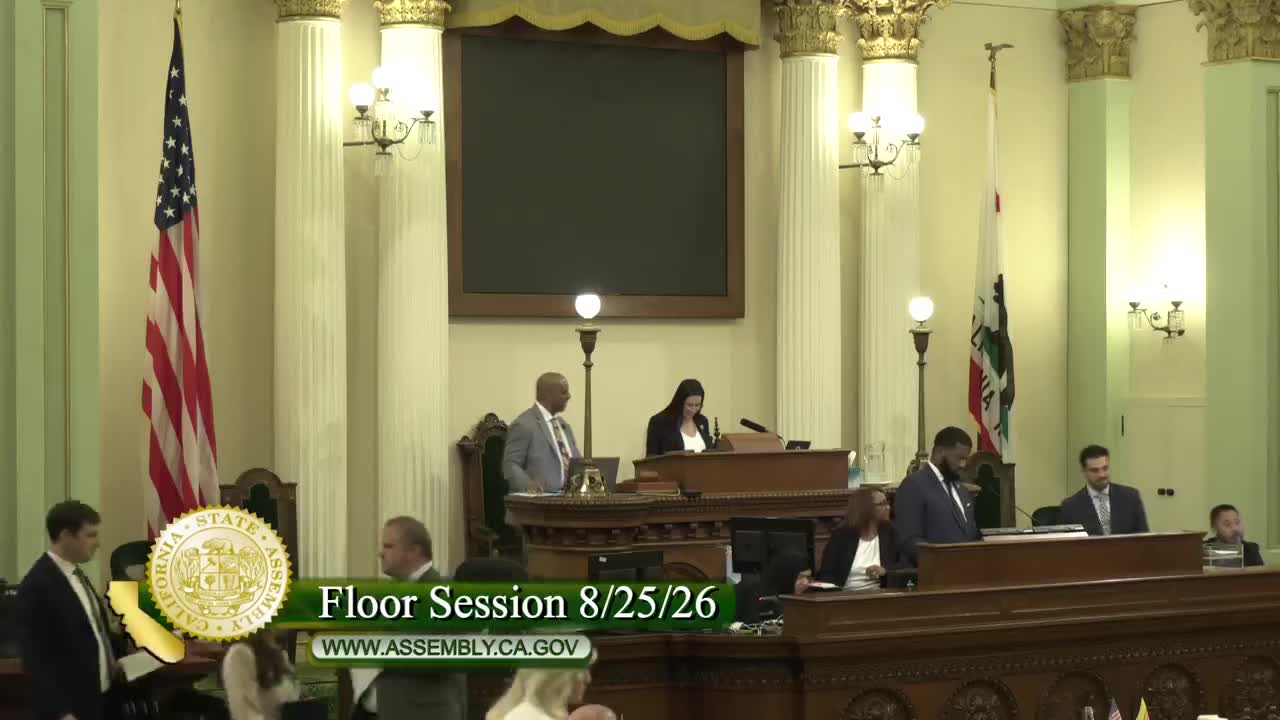 3MIN
Assembly Floor
 2MIN
Senate Floor
 11MIN
Senate Standing Committee on Judiciary
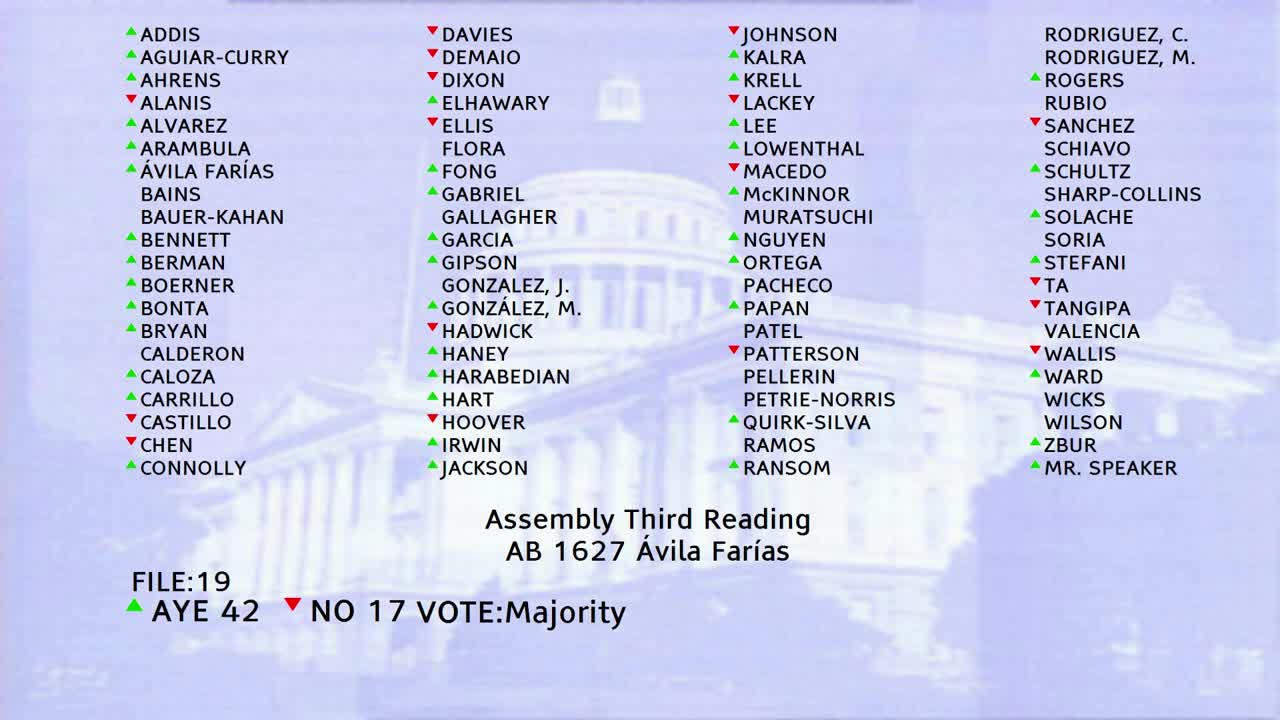 3MIN
Assembly Floor
 32MIN
Assembly Standing Committee on Appropriations
 23MIN
Assembly Standing Committee on Judiciary
Bill Author

Bill Co-Author(s):