AB 1941: Organized metal theft.
- Session Year: 2025-2026
- House: Assembly
- Latest Version Date: 2026-09-30
Current Status:
Passed
(2026-09-30: Chaptered by Secretary of State - Chapter 838, Statutes of 2026.)
Introduced
In Committee
Awaiting First Chamber Vote
Passed First Chamber
In Committee
Awaiting Second Chamber Vote
Passed Second Chamber
Enacted
Existing law makes a person who is a dealer in or collector of junk, metals, or secondhand materials, or their agent, employee, or representative, who buys or receives any wire, cable, copper, lead, solder, mercury, iron, or brass that the person knows or reasonably should know is used by or belongs to specified entities, including a railroad, certain utility companies, or a public entity engaged in furnishing public utility service, without using due diligence to ascertain that the person selling or delivering that material has a legal right to do so, guilty of criminally receiving that property and, in addition to imprisonment, makes that act punishable by a fine of not more than $5,000.
This bill would prohibit organized metal theft, described as acting in concert with one or more persons to steal metal materials from one or more of specified materials and items with the intent to sell, exchange, or return those metal materials for value, acting in concert with 2 or more persons to receive, purchase, or possess those metal materials knowing or believing it to have been stolen, acting as an agent of another to steal those metal materials as part of an organized plan to commit theft, or recruiting, coordinating, organizing, supervising, directing, managing, or financing another to undertake acts of theft of metal. The bill would make a violation of organized metal theft punishable as either a misdemeanor or a felony. The bill would make related findings and declarations and state the intent of the Legislature. By creating new crimes, the bill would impose a state-mandated local program.
The California Constitution requires the state to reimburse local agencies and school districts for certain costs mandated by the state. Statutory provisions establish procedures for making that reimbursement.
This bill would provide that no reimbursement is required by this act for a specified reason.
Existing law makes a person who is a dealer in or collector of junk, metals, or secondhand materials, or their agent, employee, or representative, who buys or receives any wire, cable, copper, lead, solder, mercury, iron, or brass that the person knows or reasonably should know is used by or belongs to specified entities, including a railroad, certain utility companies, or a public entity engaged in furnishing public utility service, without using due diligence to ascertain that the person selling or delivering that material has a legal right to do so, guilty of criminally receiving that property and, in addition to imprisonment, makes that act punishable by a fine of not more than $5,000.
This bill would prohibit organized metal theft, described as acting in concert with one or more persons to steal metal materials from one or more of specified materials and items with the intent to sell, exchange, or return those metal materials for value, acting in concert with 2 or more persons to receive, purchase, or possess those metal materials knowing or believing it to have been stolen, acting as an agent of another to steal those metal materials as part of an organized plan to commit theft, or recruiting, coordinating, organizing, supervising, directing, managing, or financing another to undertake acts of theft of metal. The bill would make a violation of organized metal theft punishable as either a misdemeanor or a felony. The bill would make related findings and declarations and state the intent of the Legislature. By creating new crimes, the bill would impose a state-mandated local program.
Existing law encourages local law enforcement agencies to report thefts of commodity metals that have occurred within their jurisdiction to a specified privately maintained theft alert system to ensure that persons using the system receive timely and thorough information regarding metal thefts.This bill would authorize local law enforcement agencies, public agencies, and private entities to provide information about theft of commodity metals to the Department of Justice and would require the department to make this information available to such local law enforcement agencies, public agencies, and private entities.The California Constitution requires the state to reimburse local agencies and school districts for certain costs mandated by the state. Statutory provisions establish procedures for making that reimbursement.
This bill would provide that no reimbursement is required by this act for a specified reason.
Existing law makes a person who is a dealer in or collector of junk, metals, or secondhand materials, or their agent, employee, or representative, who buys or receives any wire, cable, copper, lead, solder, mercury, iron, or brass that the person knows or reasonably should know is used by or belongs to specified entities, including a railroad, certain utility companies, or a public entity engaged in furnishing public utility service, without using due diligence to ascertain that the person selling or delivering that material has a legal right to do so, guilty of criminally receiving that property and, in addition to imprisonment, makes that act punishable by a fine of not more than $5,000.
This bill would prohibit organized metal theft, described as acting in concert with one or more persons to steal metal materials from one or more of specified materials and items with the intent to sell, exchange, or return those metal materials for value, acting in concert with 2 or more persons to receive, purchase, or possess those metal materials knowing or believing it to have been stolen, acting as an agent of another to steal those metal materials as part of an organized plan to commit theft, or recruiting, coordinating, organizing, supervising, directing, managing, or financing another to undertake acts of theft of metal. The bill would make a violation of organized metal theft punishable as either a misdemeanor or a felony. The bill would make related findings and declarations and state the intent of the Legislature. By creating new crimes, the bill would impose a state-mandated local program.
Existing law encourages local law enforcement agencies to report thefts of commodity metals that have occurred within their jurisdiction to a specified privately maintained theft alert system to ensure that persons using the system receive timely and thorough information regarding metal thefts.
This bill would authorize local law enforcement agencies, public agencies, and private entities to provide information about theft of commodity metals to the Department of Justice and would require the department to make this information available to such local law enforcement agencies, public agencies, and private entities.
The California Constitution requires the state to reimburse local agencies and school districts for certain costs mandated by the state. Statutory provisions establish procedures for making that reimbursement.
This bill would provide that no reimbursement is required by this act for a specified reason.
Existing law makes a person who is a dealer in or collector of junk, metals, or secondhand materials, or their agent, employee, or representative, who buys or receives any wire, cable, copper, lead, solder, mercury, iron, or brass that the person knows or reasonably should know is used by or belongs to specified entities, including a railroad, certain utility companies, or a public entity engaged in furnishing public utility service, without using due diligence to ascertain that the person selling or delivering that material has a legal right to do so, guilty of criminally receiving that property and, in addition to imprisonment, makes that act punishable by a fine of not more than $5,000.
This bill would prohibit organized metal theft, described as acting in concert with one or more persons to steal metal materials from one or more of specified materials and items, items with the intent to sell, exchange, or return those metal materials for value, acting in concert with 2 or more persons to receive, purchase, or possess those metal materials knowing or believing it to have been stolen, acting as an agent of another to steal those metal materials as part of an organized plan to commit theft, or recruiting, coordinating, organizing, supervising, directing, managing, or financing another to undertake acts of theft of metal. The bill would make a violation of organized metal theft punishable as either a misdemeanor or a felony. The bill would make related findings and declarations and state the intent of the Legislature. By creating new crimes, the bill would impose a state-mandated local program.
Existing law encourages local law enforcement agencies to report thefts of commodity metals that have occurred within their jurisdiction to a specified privately maintained theft alert system to ensure that persons using the system receive timely and thorough information regarding metal thefts.
This bill would authorize local law enforcement agencies, public agencies, and private entities to provide information about theft of commodity metals to the Department of Justice and would require the department to make this information available to such local law enforcement agencies, public agencies, and private entities.
The California Constitution requires the state to reimburse local agencies and school districts for certain costs mandated by the state. Statutory provisions establish procedures for making that reimbursement.
This bill would provide that no reimbursement is required by this act for a specified reason.
Existing law makes a person who is a dealer in or collector of junk, metals, or secondhand materials, or their agent, employee, or representative, who buys or receives any wire, cable, copper, lead, solder, mercury, iron, or brass that the person knows or reasonably should know is used by or belongs to specified entities, including a railroad, certain utility companies, or a public entity engaged in furnishing public utility service, without using due diligence to ascertain that the person selling or delivering that material has a legal right to do so, guilty of criminally receiving that property and, in addition to imprisonment, makes that act punishable by a fine of not more than $5,000.
This bill would prohibit organized metal theft, described as acting in concert with one or more persons to steal metal materials from one or more of specified materials and items, acting in concert with 2 or more persons to receive, purchase, or possess those metal materials knowing or believing it to have been stolen, acting as an agent of another to steal those metal materials as part of an organized plan to commit theft, or recruiting, coordinating, organizing, supervising, directing, managing, or financing another to undertake acts of theft of metal. The bill would make a violation of organized metal theft punishable as either a misdemeanor or a felony. The bill would make related findings and declarations and state the intent of the Legislature. By creating new crimes, the bill would impose a state-mandated local program.
Existing law encourages local law enforcement agencies to report thefts of commodity metals that have occurred within their jurisdiction to a specified privately maintained theft alert system to ensure that persons using the system receive timely and thorough information regarding metal thefts.
This bill would authorize local law enforcement agencies, public agencies, and private entities to provide information about theft of commodity metals to the Department of Justice and would require the department to make this information available to such local law enforcement agencies, public agencies, and private entities.
The California Constitution requires the state to reimburse local agencies and school districts for certain costs mandated by the state. Statutory provisions establish procedures for making that reimbursement.
This bill would provide that no reimbursement is required by this act for a specified reason.
The Legislature finds and declares the following:
(a)California is facing a statewide surge in organized metal theft, particularly involving copper wire and other high-value metals used in public infrastructure, communication networks, and utility systems.
(b)Driven by soaring global copper prices and gaps in enforcement and regulation, criminals have increasingly targeted essential public assets, including streetlights, bridges, rail systems, telecommunications lines, and electrical infrastructure, to strip and resell stolen metal for profit.
(c)This epidemic of metal theft has caused widespread public safety hazards, power outages, and costly disruptions to critical infrastructure. The resulting repair costs are borne by taxpayers and local agencies, often exceeding millions of dollars for damage that yields thieves only a fraction of that amount in illicit sales.
(d)Recent incidents illustrate the scope and severity of the problem across California:
(1)In Los Angeles, copper wire theft has repeatedly plunged entire neighborhoods and landmarks, including the Sixth Street Viaduct known as the Ribbon of Light, into darkness with repair costs exceeding $2,500,000 and thousands of feet of wire stolen in broad daylight.
(2)The Los Angeles Bureau of Street Lighting has reported unprecedented levels of streetlight outages, with nearly 46,000 service requests in 2024, of which approximately 40 percent were theft related.
(3)Telecommunications providers, including Frontier, have been forced to suspend service to residents due to repeated copper theft cutting off access to 911 emergency systems and leaving seniors and vulnerable populations without reliable communication.
(4)In northern California, copper theft has caused power outages severe enough to close public schools and disrupt essential services.
(e)Law enforcement agencies have made arrests and seized tens of thousands of pounds of stolen copper. Despite these efforts, organized theft rings and unscrupulous recyclers continue to profit from the resale of stolen metal, often exploiting loopholes in existing laws and insufficient oversight of scrap metal transactions.
(f)The financial burden of repairing damaged infrastructure continues to escalate. Municipalities have been forced to divert scarce public resources and propose increased property assessments to fund streetlight repairs and security improvements.
(g)Metal theft undermines public safety by darkening streets, disabling traffic signals, and jeopardizing emergency communications and thus creates conditions that endanger residents, first responders, and essential workers.
(h)The Legislature recognizes that, while local task forces and ordinances have been established to combat this growing threat, a statewide response is necessary to deter theft, strengthen penalties for organized operations, and enhance accountability for metal recyclers and dealers who knowingly purchase stolen materials.
(i)It is the intent of the Legislature to support local governments and law enforcement agencies through enhanced penalties targeting organized theft networks and protect public infrastructure, utilities, and community safety from the escalating economic and social harms caused by metal theft.
SEC. 2.Section 496f is added to the Penal Code, to read:496f.(a)A person who commits any of the following acts is guilty of organized metal theft and shall be punished pursuant to subdivision (b):
(1)Acts in concert with one or more persons to steal metal materials from one or more of the items described in subdivision (a) of Section 496a or subdivision (a) of Section 496e with the intent to sell, exchange, or return the metal materials for value.
(2)Acts in concert with two or more persons to receive, purchase, or possess metal materials described in subdivision (a) of Section 496a or subdivision (a) of Section 496e knowing or believing it to have been stolen.
(3)Acts as an agent of another individual or group of individuals to steal metal materials described in subdivision (a) of Section 496a or subdivision (a) of Section 496e as part of an organized plan to commit metal theft.
(4)Recruits, coordinates, organizes, supervises, directs, manages, or finances another to undertake any of the acts described in paragraph (1) or (2) or any other statute defining theft of metal.
(b)Organized metal theft is punishable as follows:
(1)If violations of paragraph (1), (2), or (3) of subdivision (a) are committed on two or more separate occasions within a 12-month period, and if the aggregated value of the metal stolen, received, purchased, or possessed within that 12-month period exceeds nine hundred fifty dollars ($950), the offense is punishable by imprisonment in a county jail not exceeding one year or pursuant to subdivision (h) of Section 1170.
(2)Any other violation of paragraph (1), (2), or (3) of subdivision (a) that is not described in paragraph (1) of this subdivision is punishable by imprisonment in a county jail not exceeding one year.
(3)A violation of paragraph (4) of subdivision (a) is punishable by imprisonment in a county jail not exceeding one year or pursuant to subdivision (h) of Section 1170.
(c)For the purpose of determining whether the defendant acted in concert with another person or persons in any proceeding, the trier of fact may consider any competent evidence, including, but not limited to, all of the following:
(1)The defendant has previously acted in concert with another person or persons in committing acts constituting theft, or any related offense, including any conduct that occurred in counties other than the county of the current offense, if relevant to demonstrate a fact other than the defendants disposition to commit the act.
(2)That the defendant used or possessed an artifice, instrument, container, device, or other article capable of facilitating the removal of metal from materials described in subdivision (a) of Section 496a or subdivision (a) of Section 496e without permission or authorization and use of the artifice, instrument, container, or device or other article is part of an organized plan to commit metal theft.
(3)The property involved in the offense is of a type or quantity that would not normally be collected or purchased for personal use, the property consists of metal materials bearing markings, tags, or other identifying characteristics of a telecommunications provider, railroad, public utility, or public entity engaged in furnishing public utility service, and the property is intended for resale. However, evidence that a licensed scrap recycler purchased metal materials for resale in the ordinary course of business shall not, by itself, establish that the recycler acted in concert with another person or persons.
(d)In a prosecution under this section, the prosecutor shall not be required to charge any other coparticipant of the organized metal theft.
(e)This section does not preclude or prohibit prosecution pursuant to Section 594 or charging an enhancement pursuant to Sections 12022.6 or 12022.65.
SEC. 3.No reimbursement is required by this act pursuant to Section 6 of Article XIIIB of the California Constitution because the only costs that may be incurred by a local agency or school district will be incurred because this act creates a new crime or infraction, eliminates a crime or infraction, or changes the penalty for a crime or infraction, within the meaning of Section 17556 of the Government Code, or changes the definition of a crime within the meaning of Section 6 of Article XIIIB of the California Constitution.
The Legislature finds and declares the following:
(a)California is facing a statewide surge in organized metal theft, particularly involving copper wire and other high-value metals used in public infrastructure, communication networks, and utility systems.
(b)Driven by soaring global copper prices and gaps in enforcement and regulation, criminals have increasingly targeted essential public assets, including streetlights, bridges, rail systems, telecommunications lines, and electrical infrastructure, to strip and resell stolen metal for profit.
(c)This epidemic of metal theft has caused widespread public safety hazards, power outages, and costly disruptions to critical infrastructure. The resulting repair costs are borne by taxpayers and local agencies, often exceeding millions of dollars for damage that yields thieves only a fraction of that amount in illicit sales.
(d)Recent incidents illustrate the scope and severity of the problem across California:
(1)In Los Angeles, copper wire theft has repeatedly plunged entire neighborhoods and landmarks, including the Sixth Street Viaduct known as the Ribbon of Light, into darkness with repair costs exceeding $2,500,000 and thousands of feet of wire stolen in broad daylight.
(2)The Los Angeles Bureau of Street Lighting has reported unprecedented levels of streetlight outages, with nearly 46,000 service requests in 2024, of which approximately 40 percent were theft related.
(3)Telecommunications providers, including Frontier, have been forced to suspend service to residents due to repeated copper theft cutting off access to 911 emergency systems and leaving seniors and vulnerable populations without reliable communication.
(4)In northern California, copper theft has caused power outages severe enough to close public schools and disrupt essential services.
(e)Law enforcement agencies have made arrests and seized tens of thousands of pounds of stolen copper. Despite these efforts, organized theft rings and unscrupulous recyclers continue to profit from the resale of stolen metal, often exploiting loopholes in existing laws and insufficient oversight of scrap metal transactions.
(f)The financial burden of repairing damaged infrastructure continues to escalate. Municipalities have been forced to divert scarce public resources and propose increased property assessments to fund streetlight repairs and security improvements.
(g)Metal theft undermines public safety by darkening streets, disabling traffic signals, and jeopardizing emergency communications and thus creates conditions that endanger residents, first responders, and essential workers.
(h)The Legislature recognizes that, while local task forces and ordinances have been established to combat this growing threat, a coordinated statewide response is necessary to deter theft, strengthen penalties for organized operations, and enhance accountability for metal recyclers and dealers who knowingly purchase stolen materials.
(i)It is the intent of the Legislature to support local governments and law enforcement agencies through enhanced coordination and penalties targeting organized theft networks and protect public infrastructure, utilities, and community safety from the escalating economic and social harms caused by metal theft.
SEC. 2.Section 496f is added to the Penal Code, to read:496f.(a)A person who commits any of the following acts is guilty of organized metal theft and shall be punished pursuant to subdivision (b):
(1)Acts in concert with one or more persons to steal metal materials from one or more of the items described in subdivision (a) of Section 496a or subdivision (a) of Section 496e with the intent to sell, exchange, or return the metal materials for value.
(2)Acts in concert with two or more persons to receive, purchase, or possess metal materials described in subdivision (a) of Section 496a or subdivision (a) of Section 496e knowing or believing it to have been stolen.
(3)Acts as an agent of another individual or group of individuals to steal metal materials described in subdivision (a) of Section 496a or subdivision (a) of Section 496e as part of an organized plan to commit metal theft.
(4)Recruits, coordinates, organizes, supervises, directs, manages, or finances another to undertake any of the acts described in paragraph (1) or (2) or any other statute defining theft of metal.
(b)Organized metal theft is punishable as follows:
(1)If violations of paragraph (1), (2), or (3) of subdivision (a) are committed on two or more separate occasions within a 12-month period, and if the aggregated value of the metal stolen, received, purchased, or possessed within that 12-month period exceeds nine hundred fifty dollars ($950), the offense is punishable by imprisonment in a county jail not exceeding one year or pursuant to subdivision (h) of Section 1170.
(2)Any other violation of paragraph (1), (2), or (3) of subdivision (a) that is not described in paragraph (1) of this subdivision is punishable by imprisonment in a county jail not exceeding one year.
(3)A violation of paragraph (4) of subdivision (a) is punishable by imprisonment in a county jail not exceeding one year or pursuant to subdivision (h) of Section 1170.
(c)For the purpose of determining whether the defendant acted in concert with another person or persons in any proceeding, the trier of fact may consider any competent evidence, including, but not limited to, all of the following:
(1)The defendant has previously acted in concert with another person or persons in committing acts constituting theft, or any related offense, including any conduct that occurred in counties other than the county of the current offense, if relevant to demonstrate a fact other than the defendants disposition to commit the act.
(2)That the defendant used or possessed an artifice, instrument, container, device, or other article capable of facilitating the removal of metal from materials described in subdivision (a) of Section 496a or subdivision (a) of Section 496e without permission or authorization and use of the artifice, instrument, container, or device or other article is part of an organized plan to commit metal theft.
(3)The property involved in the offense is of a type or quantity that would not normally be collected or purchased for personal use, and the property is intended for resale. However, evidence that a licensed scrap recycler purchased metal materials for resale in the ordinary course of business shall not, by itself, establish that the recycler acted in concert with another person or persons.
(d)In a prosecution under this section, the prosecutor shall not be required to charge any other coparticipant of the organized metal theft.
(e)This section does not preclude or prohibit prosecution pursuant to Section 594 or charging an enhancement pursuant to Sections 12022.6 or 12022.65.
SEC. 3.Section 11199.6 is added to the Penal Code, immediately following Section 11199.5, to read:11199.6.Local law enforcement agencies, public agencies, and private entities, including, but not limited to, telecommunication companies, recycling companies, and private utility companies, may provide information about theft of commodity metals, including, but not limited to, ferrous metal, copper, brass, aluminum, nickel, stainless steel, and alloys, to the Department of Justice. The department shall make this information available to such local law enforcement agencies, public agencies, and private entities.SEC. 4.SEC. 3.No reimbursement is required by this act pursuant to Section 6 of Article XIIIB of the California Constitution because the only costs that may be incurred by a local agency or school district will be incurred because this act creates a new crime or infraction, eliminates a crime or infraction, or changes the penalty for a crime or infraction, within the meaning of Section 17556 of the Government Code, or changes the definition of a crime within the meaning of Section 6 of Article XIIIB of the California Constitution.
The Legislature finds and declares the following:
(a)California is facing a statewide surge in organized metal theft, particularly involving copper wire and other high-value metals used in public infrastructure, communication networks, and utility systems.
(b)Driven by soaring global copper prices and gaps in enforcement and regulation, criminals have increasingly targeted essential public assets, including streetlights, bridges, rail systems, telecommunications lines, and electrical infrastructure, to strip and resell stolen metal for profit.
(c)This epidemic of metal theft has caused widespread public safety hazards, power outages, and costly disruptions to critical infrastructure. The resulting repair costs are borne by taxpayers and local agencies, often exceeding millions of dollars for damage that yields thieves only a fraction of that amount in illicit sales.
(d)Recent incidents illustrate the scope and severity of the problem across California:
(1)In Los Angeles, copper wire theft has repeatedly plunged entire neighborhoods and landmarks, including the Sixth Street Viaduct known as the Ribbon of Light, into darkness with repair costs exceeding $2,500,000 and thousands of feet of wire stolen in broad daylight.
(2)The Los Angeles Bureau of Street Lighting has reported unprecedented levels of streetlight outages, with nearly 46,000 service requests in 2024, of which approximately 40 percent were theft related.
(3)Telecommunications providers, including Frontier, have been forced to suspend service to residents due to repeated copper theft cutting off access to 911 emergency systems and leaving seniors and vulnerable populations without reliable communication.
(4)In northern California, copper theft has caused power outages severe enough to close public schools and disrupt essential services.
(e)Law enforcement agencies have made arrests and seized tens of thousands of pounds of stolen copper. Despite these efforts, organized theft rings and unscrupulous recyclers continue to profit from the resale of stolen metal, often exploiting loopholes in existing laws and insufficient oversight of scrap metal transactions.
(f)The financial burden of repairing damaged infrastructure continues to escalate. Municipalities have been forced to divert scarce public resources and propose increased property assessments to fund streetlight repairs and security improvements.
(g)Metal theft undermines public safety by darkening streets, disabling traffic signals, and jeopardizing emergency communications and thus creates conditions that endanger residents, first responders, and essential workers.
(h)The Legislature recognizes that, while local task forces and ordinances have been established to combat this growing threat, a coordinated statewide response is necessary to deter theft, strengthen penalties for organized operations, and enhance accountability for metal recyclers and dealers who knowingly purchase stolen materials.
(i)It is the intent of the Legislature to support local governments and law enforcement agencies through enhanced coordination and penalties targeting organized theft networks and protect public infrastructure, utilities, and community safety from the escalating economic and social harms caused by metal theft.
SEC. 2.Section 496f is added to the Penal Code, to read:496f.(a)A person who commits any of the following acts is guilty of organized metal theft and shall be punished pursuant to subdivision (b):
(1)Acts in concert with one or more persons to steal metal materials from one or more of the items described in subdivision (a) of Section 496a or subdivision (a) of Section 496e with the intent to sell, exchange, or return the metal materials for value.
(2)Acts in concert with two or more persons to receive, purchase, or possess metal materials described in subdivision (a) of Section 496a or subdivision (a) of Section 496e knowing or believing it to have been stolen.
(3)Acts as an agent of another individual or group of individuals to steal metal materials described in subdivision (a) of Section 496a or subdivision (a) of Section 496e as part of an organized plan to commit metal theft.
(4)Recruits, coordinates, organizes, supervises, directs, manages, or finances another to undertake any of the acts described in paragraph (1) or (2) or any other statute defining theft of metal.
(b)Organized metal theft is punishable as follows:
(1)If violations of paragraph (1), (2), or (3) of subdivision (a) are committed on two or more separate occasions within a 12-month period, and if the aggregated value of the metal stolen, received, purchased, or possessed within that 12-month period exceeds nine hundred fifty dollars ($950), the offense is punishable by imprisonment in a county jail not exceeding one year or pursuant to subdivision (h) of Section 1170.
(2)Any other violation of paragraph (1), (2), or (3) of subdivision (a) that is not described in paragraph (1) of this subdivision is punishable by imprisonment in a county jail not exceeding one year.
(3)A violation of paragraph (4) of subdivision (a) is punishable by imprisonment in a county jail not exceeding one year or pursuant to subdivision (h) of Section 1170.
(c)For the purpose of determining whether the defendant acted in concert with another person or persons in any proceeding, the trier of fact may consider any competent evidence, including, but not limited to, all of the following:
(1)The defendant has previously acted in concert with another person or persons in committing acts constituting theft, or any related offense, including any conduct that occurred in counties other than the county of the current offense, if relevant to demonstrate a fact other than the defendants disposition to commit the act.
(2)That the defendant used or possessed an artifice, instrument, container, device, or other article capable of facilitating the removal of metal from materials described in subdivision (a) of Section 496a or subdivision (a) of Section 496e without permission or authorization and use of the artifice, instrument, container, or device or other article is part of an organized plan to commit metal theft.
(3)The property involved in the offense is of a type or quantity that would not normally be collected or purchased for personal use, and the property is intended for resale. However, evidence that a licensed scrap recycler purchased metal materials for resale in the ordinary course of business shall not, by itself, establish that the recycler acted in concert with another person or persons.
(d)In a prosecution under this section, the prosecutor shall not be required to charge any other coparticipant of the organized metal theft.
(e)This section does not preclude or prohibit prosecution pursuant to Section 594 or charging an enhancement pursuant to Sections 12022.6 or 12022.65.
SEC. 3.Section 11199.6 is added to the Penal Code, immediately following Section 11199.5, to read:11199.6.Local law enforcement agencies, public agencies, and private entities, including, but not limited to, telecommunication companies, recycling companies, and private utility companies, may provide information about theft of commodity metals, including, but not limited to, ferrous metal, copper, brass, aluminum, nickel, stainless steel, and alloys, to the Department of Justice. The department shall make this information available to such local law enforcement agencies, public agencies, and private entities.
SEC. 4.No reimbursement is required by this act pursuant to Section 6 of Article XIIIB of the California Constitution because the only costs that may be incurred by a local agency or school district will be incurred because this act creates a new crime or infraction, eliminates a crime or infraction, or changes the penalty for a crime or infraction, within the meaning of Section 17556 of the Government Code, or changes the definition of a crime within the meaning of Section 6 of Article XIIIB of the California Constitution.
The Legislature finds and declares the following:
(a)California is facing a statewide surge in organized metal theft, particularly involving copper wire and other high-value metals used in public infrastructure, communication networks, and utility systems.
(b)Driven by soaring global copper prices and gaps in enforcement and regulation, criminals have increasingly targeted essential public assets, including streetlights, bridges, rail systems, telecommunications lines, and electrical infrastructure, to strip and resell stolen metal for profit.
(c)This epidemic of metal theft has caused widespread public safety hazards, power outages, and costly disruptions to critical infrastructure. The resulting repair costs are borne by taxpayers and local agencies, often exceeding millions of dollars for damage that yields thieves only a fraction of that amount in illicit sales.
(d)Recent incidents illustrate the scope and severity of the problem across California:
(1)In Los Angeles, copper wire theft has repeatedly plunged entire neighborhoods and landmarks, including the Sixth Street Viaduct known as the Ribbon of Light, into darkness with repair costs exceeding $2,500,000 and thousands of feet of wire stolen in broad daylight.
(2)The Los Angeles Bureau of Street Lighting has reported unprecedented levels of streetlight outages, with nearly 46,000 service requests in 2024, of which approximately 40 percent were theft related.
(3)Telecommunications providers, including Frontier, have been forced to suspend service to residents due to repeated copper theft cutting off access to 911 emergency systems and leaving seniors and vulnerable populations without reliable communication.
(4)In northern California, copper theft has caused power outages severe enough to close public schools and disrupt essential services.
(e)Law enforcement agencies have made arrests and seized tens of thousands of pounds of stolen copper. Despite these efforts, organized theft rings and unscrupulous recyclers continue to profit from the resale of stolen metal, often exploiting loopholes in existing laws and insufficient oversight of scrap metal transactions.
(f)The financial burden of repairing damaged infrastructure continues to escalate. Municipalities have been forced to divert scarce public resources and propose increased property assessments to fund streetlight repairs and security improvements.
(g)Metal theft undermines public safety by darkening streets, disabling traffic signals, and jeopardizing emergency communications and thus creates conditions that endanger residents, first responders, and essential workers.
(h)The Legislature recognizes that, while local task forces and ordinances have been established to combat this growing threat, a coordinated statewide response is necessary to deter theft, strengthen penalties for organized operations, and enhance accountability for metal recyclers and dealers who knowingly purchase stolen materials.
(i)It is the intent of the Legislature to support local governments and law enforcement agencies through enhanced coordination and penalties targeting organized theft networks and protect public infrastructure, utilities, and community safety from the escalating economic and social harms caused by metal theft.
SEC. 2.Section 496f is added to the Penal Code, to read:496f.(a)A person who commits any of the following acts is guilty of organized metal theft and shall be punished pursuant to subdivision (b):
(1)Acts in concert with one or more persons to steal metal materials from one or more of the items described in subdivision (a) of Section 496a or subdivision (a) of Section 496e. 496e with the intent to sell, exchange, or return the metal materials for value.
(2)Acts in concert with two or more persons to receive, purchase, or possess metal materials described in subdivision (a) of Section 496a or subdivision (a) of Section 496e knowing or believing it to have been stolen.
(3)Acts as an agent of another individual or group of individuals to steal metal materials described in subdivision (a) of Section 496a or subdivision (a) of Section 496e as part of an organized plan to commit metal theft.
(4)Recruits, coordinates, organizes, supervises, directs, manages, or finances another to undertake any of the acts described in paragraph (1) or (2) or any other statute defining theft of metal.
(b)Organized metal theft is punishable as follows:
(1)If violations of paragraph (1), (2), or (3) of subdivision (a) are committed on two or more separate occasions within a 12-month period, and if the aggregated value of the metal stolen, received, purchased, or possessed within that 12-month period exceeds nine hundred fifty dollars ($950), the offense is punishable by imprisonment in a county jail not exceeding one year or pursuant to subdivision (h) of Section 1170.
(2)Any other violation of paragraph (1), (2), or (3) of subdivision (a) that is not described in paragraph (1) of this subdivision is punishable by imprisonment in a county jail not exceeding one year.
(3)A violation of paragraph (4) of subdivision (a) is punishable by imprisonment in a county jail not exceeding one year or pursuant to subdivision (h) of Section 1170.
(c)For the purpose of determining whether the defendant acted in concert with another person or persons in any proceeding, the trier of fact may consider any competent evidence, including, but not limited to, all of the following:
(1)The defendant has previously acted in concert with another person or persons in committing acts constituting theft, or any related offense, including any conduct that occurred in counties other than the county of the current offense, if relevant to demonstrate a fact other than the defendants disposition to commit the act.
(2)That the defendant used or possessed an artifice, instrument, container, device, or other article capable of facilitating the removal of metal from materials described in subdivision (a) of Section 496a or subdivision (a) of Section 496e without permission or authorization and use of the artifice, instrument, container, or device or other article is part of an organized plan to commit metal theft.
(3)The property involved in the offense is of a type or quantity that would not normally be collected or purchased for personal use, and the property is intended for resale.
(d)In a prosecution under this section, the prosecutor shall not be required to charge any other coparticipant of the organized metal theft.
(e)This section does not preclude or prohibit prosecution pursuant to Section 594 or charging an enhancement pursuant to Sections 12022.6 or 12022.65.
SEC. 3.Section 11199.6 is added to the Penal Code, immediately following Section 11199.5, to read:11199.6.Local law enforcement agencies, public agencies, and private entities, including, but not limited to, telecommunication companies, recycling companies, and private utility companies, may provide information about theft of commodity metals, including, but not limited to, ferrous metal, copper, brass, aluminum, nickel, stainless steel, and alloys, to the Department of Justice. The department shall make this information available to such local law enforcement agencies, public agencies, and private entities.
SEC. 4.No reimbursement is required by this act pursuant to Section 6 of Article XIIIB of the California Constitution because the only costs that may be incurred by a local agency or school district will be incurred because this act creates a new crime or infraction, eliminates a crime or infraction, or changes the penalty for a crime or infraction, within the meaning of Section 17556 of the Government Code, or changes the definition of a crime within the meaning of Section 6 of Article XIIIB of the California Constitution.
The Legislature finds and declares the following:
(a)California is facing a statewide surge in organized metal theft, particularly involving copper wire and other high-value metals used in public infrastructure, communication networks, and utility systems.
(b)Driven by soaring global copper prices and gaps in enforcement and regulation, criminals have increasingly targeted essential public assets, including streetlights, bridges, rail systems, telecommunications lines, and electrical infrastructure, to strip and resell stolen metal for profit.
(c)This epidemic of metal theft has caused widespread public safety hazards, power outages, and costly disruptions to critical infrastructure. The resulting repair costs are borne by taxpayers and local agencies, often exceeding millions of dollars for damage that yields thieves only a fraction of that amount in illicit sales.
(d)Recent incidents illustrate the scope and severity of the problem across California:
(1)In Los Angeles, copper wire theft has repeatedly plunged entire neighborhoods and landmarks, including the Sixth Street Viaduct known as the Ribbon of Light, into darkness with repair costs exceeding $2,500,000 and thousands of feet of wire stolen in broad daylight.
(2)The Los Angeles Bureau of Street Lighting has reported unprecedented levels of streetlight outages, with nearly 46,000 service requests in 2024, of which approximately 40 percent were theft related.
(3)Telecommunications providers, including Frontier, have been forced to suspend service to residents due to repeated copper theft cutting off access to 911 emergency systems and leaving seniors and vulnerable populations without reliable communication.
(4)In northern California, copper theft has caused power outages severe enough to close public schools and disrupt essential services.
(e)Law enforcement agencies have made arrests and seized tens of thousands of pounds of stolen copper. Despite these efforts, organized theft rings and unscrupulous recyclers continue to profit from the resale of stolen metal, often exploiting loopholes in existing laws and insufficient oversight of scrap metal transactions.
(f)The financial burden of repairing damaged infrastructure continues to escalate. Municipalities have been forced to divert scarce public resources and propose increased property assessments to fund streetlight repairs and security improvements.
(g)Metal theft undermines public safety by darkening streets, disabling traffic signals, and jeopardizing emergency communications and thus creates conditions that endanger residents, first responders, and essential workers.
(h)The Legislature recognizes that, while local task forces and ordinances have been established to combat this growing threat, a coordinated statewide response is necessary to deter theft, strengthen penalties for organized operations, and enhance accountability for metal recyclers and dealers who knowingly purchase stolen materials.
(i)It is the intent of the Legislature to support local governments and law enforcement agencies through enhanced coordination and penalties targeting organized theft networks and protect public infrastructure, utilities, and community safety from the escalating economic and social harms caused by metal theft.
SEC. 2.Section 496f is added to the Penal Code, to read:496f.(a)A person who commits any of the following acts is guilty of organized metal theft and shall be punished pursuant to subdivision (b):
(1)Acts in concert with one or more persons to steal metal materials from one or more of the items described in subdivision (a) of Section 496a or subdivision (a) of Section 496e.
(2)Acts in concert with two or more persons to receive, purchase, or possess metal materials described in subdivision (a) of Section 496a or subdivision (a) of Section 496e knowing or believing it to have been stolen.
(3)Acts as an agent of another individual or group of individuals to steal metal materials described in subdivision (a) of Section 496a or subdivision (a) of Section 496e as part of an organized plan to commit metal theft.
(4)Recruits, coordinates, organizes, supervises, directs, manages, or finances another to undertake any of the acts described in paragraph (1) or (2) or any other statute defining theft of metal.
(b)Organized metal theft is punishable as follows:
(1)If violations of paragraph (1), (2), or (3) of subdivision (a) are committed on two or more separate occasions within a 12-month period, and if the aggregated value of the metal stolen, received, purchased, or possessed within that 12-month period exceeds nine hundred fifty dollars ($950), the offense is punishable by imprisonment in a county jail not exceeding one year or pursuant to subdivision (h) of Section 1170.
(2)Any other violation of paragraph (1), (2), or (3) of subdivision (a) that is not described in paragraph (1) of this subdivision is punishable by imprisonment in a county jail not exceeding one year.
(3)A violation of paragraph (4) of subdivision (a) is punishable by imprisonment in a county jail not exceeding one year or pursuant to subdivision (h) of Section 1170.
(c)For the purpose of determining whether the defendant acted in concert with another person or persons in any proceeding, the trier of fact may consider any competent evidence, including, but not limited to, all of the following:
(1)The defendant has previously acted in concert with another person or persons in committing acts constituting theft, or any related offense, including any conduct that occurred in counties other than the county of the current offense, if relevant to demonstrate a fact other than the defendants disposition to commit the act.
(2)That the defendant used or possessed an artifice, instrument, container, device, or other article capable of facilitating the removal of metal from materials described in subdivision (a) of Section 496a or subdivision (a) of Section 496e without permission or authorization and use of the artifice, instrument, container, or device or other article is part of an organized plan to commit metal theft.
(3)The property involved in the offense is of a type or quantity that would not normally be collected or purchased for personal use, and the property is intended for resale.
(d)In a prosecution under this section, the prosecutor shall not be required to charge any other coparticipant of the organized metal theft.
(e)This section does not preclude or prohibit prosecution pursuant to Section 594 or charging an enhancement pursuant to Sections 12022.6 or 12022.65.
SEC. 3.Section 11199.6 is added to the Penal Code, immediately following Section 11199.5, to read:11199.6.Local law enforcement agencies, public agencies, and private entities, including, but not limited to, telecommunication companies, recycling companies, and private utility companies, may provide information about theft of commodity metals, including, but not limited to, ferrous metal, copper, brass, aluminum, nickel, stainless steel, and alloys, to the Department of Justice. The department shall make this information available to such local law enforcement agencies, public agencies, and private entities.
SEC. 4.No reimbursement is required by this act pursuant to Section 6 of Article XIIIB of the California Constitution because the only costs that may be incurred by a local agency or school district will be incurred because this act creates a new crime or infraction, eliminates a crime or infraction, or changes the penalty for a crime or infraction, within the meaning of Section 17556 of the Government Code, or changes the definition of a crime within the meaning of Section 6 of Article XIIIB of the California Constitution.
|
Date
|
Status
|
|---|---|
| Sep 30, 2026 | Chaptered by Secretary of State - Chapter 838, Statutes of 2026. |
| Sep 30, 2026 | Approved by the Governor. |
| Aug 31, 2026 | Enrolled and presented to the Governor at 4 p.m. |
| Aug 25, 2026 | Senate amendments concurred in. To Engrossing and Enrolling. (Ayes 72. Noes 0.). |
| Aug 25, 2026 | Senate amendments concurred in. To Engrossing and Enrolling. (Ayes 72. Noes 0. Page 6454.). |
| Aug 24, 2026 | In Assembly. Concurrence in Senate amendments pending. |
| Aug 24, 2026 | Read third time. Passed. Ordered to the Assembly. (Ayes 39. Noes 0.). |
| Aug 19, 2026 | Read second time. Ordered to third reading. |
| Aug 18, 2026 | Read third time and amended. Ordered to second reading. |
| Aug 17, 2026 | Read second time. Ordered to third reading. |
| Aug 13, 2026 | Read second time and amended. Ordered returned to second reading. |
| Aug 13, 2026 | From committee: Amend, and do pass as amended. (Ayes 7. Noes 0.) (August 13). |
| Aug 3, 2026 | In committee: Referred to APPR. suspense file. |
| Jun 24, 2026 | From committee: Do pass and re-refer to Com. on APPR. (Ayes 6. Noes 0.) (June 23). Re-referred to Com. on APPR. |
| Jun 4, 2026 | From committee chair, with author's amendments: Amend, and re-refer to committee. Read second time, amended, and re-referred to Com. on PUB. S. |
| Jun 3, 2026 | Referred to Com. on PUB. S. |
| May 22, 2026 | In Senate. Read first time. To Com. on RLS. for assignment. |
| May 22, 2026 | Read third time. Passed. Ordered to the Senate. (Ayes 71. Noes 0.) |
| May 22, 2026 | Read third time. Passed. Ordered to the Senate. (Ayes 71. Noes 0. Page 5260.) |
| May 18, 2026 | Read second time. Ordered to third reading. |
| May 14, 2026 | From committee: Do pass. (Ayes 15. Noes 0.) (May 14). |
| Apr 15, 2026 | In committee: Set, first hearing. Referred to APPR. suspense file. |
| Apr 6, 2026 | Re-referred to Com. on APPR. |
| Mar 26, 2026 | Read second time and amended. |
| Mar 25, 2026 | From committee: Amend, and do pass as amended and re-refer to Com. on APPR. (Ayes 8. Noes 0.) (March 24). |
| Mar 2, 2026 | Referred to Com. on PUB. S. |
| Feb 14, 2026 | From printer. May be heard in committee March 16. |
| Feb 13, 2026 | Read first time. To print. |
|
Date
|
Description
|
Location
|
Votes
|
|
|---|---|---|---|---|
| Aug 25, 2026 | AB 1941 Mark González Concurrence in Senate Amendments | Assembly Floor |
Passed |
|
| Aug 24, 2026 | Assembly 3rd Reading AB1941 Mark González et al. By Rubio | Senate Floor |
Passed |
|
| Aug 13, 2026 | Do pass as amended | Senate Standing Committee on Appropriations |
Passed |
|
| Aug 3, 2026 | Placed on suspense file | Senate Standing Committee on Appropriations |
Passed |
|
| Jun 23, 2026 | Do pass, but first be re-referred to the Committee on [Appropriations] | Senate Standing Committee on Public Safety |
Passed |
|
| May 22, 2026 | AB 1941 Mark González Assembly Third Reading | Assembly Floor |
Passed |
|
| May 14, 2026 | Do pass. | Assembly Standing Committee on Appropriations |
Passed |
|
| Mar 24, 2026 | Do pass as amended and be re-referred to the Committee on [Appropriations] | Assembly Standing Committee on Public Safety |
Passed |
This list shows positions taken on this bill by organizations on the date displayed, which is linked to the original source.
Positions by individuals are not included.
|
Organization
|
Position
|
Date
|
|---|---|---|
| Aclu California Action | ** Against | |
| Advance SF | ** Support | |
| Almond Alliance | ** Support | |
| Arcadia Police Officers' Association | ** Support | |
| Asian Pacific American Community Center | ** Support | |
| At&T | ** Support | |
| Bay Area Council | ** Support | |
| Bizfed Central Valley | ** Support | |
| Brea Police Association | ** Support | |
| Burbank Police Officers' Association | ** Support | |
| BURBANK/BURBANK REDEVELOPMENT AGENCY; CITY OF | ** Support | |
| CalAsian Chamber of Commerce | ** Support | |
| Calcom Association | ** Support | |
| California Asian Pacific Chamber Of Commerce | ** Support | |
| California Association of School Police Chiefs | ** Support | |
| CALIFORNIA ASSOCIATION OF SHEET METAL & AIR CONDITIONING CONTRACTORS NATIONAL ASSOCIATION | ** Support | |
| California Attorneys For Criminal Justice | ** Against | |
| California Broadband and Video Association | ** Support | |
| California Central Valley Flood Control Association | ** Support | |
| California Chapters of The Solid Waste Association of North America's Legislative Task Force | ** Support | |
| California Chapters of the Solid Waste Association of North America’s Legislative Task Force | ** Support | |
| California Coalition of School Safety Professionals | ** Support | |
| California Contract Cities Association | ** Support | |
| California Downtown Association | ** Support | |
| California Electric Transportation Coalition | ** Support | |
| California Legislative Conference Of Plumbing, Heating & Piping Industry | ** Support | |
| California Municipal Utilities Association | ** Support | |
| California Municipal Utilities Association (CMUA) | ** Support | |
| California Narcotic Officers' Association | ** Support | |
| California Police Chiefs Association | ** Support | |
| California Public Defenders Association | ** Against | |
| California Reserve Peace Officers Association | ** Support | |
| California State Sheriffs' Association | ** Support | |
| California State Sheriffs’ Association | ** Support | |
| California Transit Association | ** Support | |
| California Water Association | ** Support | |
| Californians United for a Responsible Budget | ** Against | |
| Cameron House | ** Support | |
| Central City Association Of Los Angeles | ** Support | |
| Central Valley Business Federation | ** Support | |
| Chamber San Mateo County | ** Support | |
| Chinese Chamber of Commerce of San Francisco | ** Support | |
| Choice in Aging | ** Support | |
| City of El Cerrito | ** Support | |
| City of Hidden Hills | ** Support | |
| City of Long Beach | ** Support | |
| City Of Los Angeles | ** Support | |
| City of Norwalk | ** Support | |
| City of Pico Rivera | ** Support | |
| City of San Jose | ** Support | |
| City of San Jose (Co-Sponsor) | ** Support | |
| City of Thousand Oaks | ** Support | |
| CLAREMONT POLICE OFFICERS ASSOCIATION | ** Support | |
| Community Works West | ** Against | |
| Construction Employers Association | ** Support | |
| Corona Police Officers Association | ** Support | |
| County of Yolo | ** Support | |
| Ctia - The Wireless Association | ** Support | |
| Culver City Police Officers' Association | ** Support | |
| Curry Senior Center | ** Support | |
| East Bay Economic Development Alliance | ** Support | |
| Fairfield-Suisun Chamber of Commerce | ** Support | |
| Finishing Contractors Association Of Southern California | ** Support | |
| Fremont Chamber of Commerce | ** Support | |
| Fresno Chamber of Commerce | ** Support | |
| Fullerton Police Officers' Association | ** Support | |
| Greater Stockton Chamber of Commerce | ** Support | |
| Hayward Chamber of Commerce | ** Support | |
| Initiate Justice | ** Against | |
| Joint Venture Silicon Valley | ** Support | |
| Justice2jobs Coalition | ** Against | |
| LA Defensa | ** Against | |
| LAKEWOOD; CITY OF | ** Support | |
| League Of California Cities | ** Support | |
| Legal Services for Prisoners with Children | ** Against | |
| Local 148 Los Angeles County Public Defender's Union | ** Against | |
| Los Angeles County Business Federation | ** Support | |
| Los Angeles County District Attorney'S Office | ** Support | |
| Los Angeles County Metropolitan Transportation Authority | ** Support | |
| Los Angeles County Sanitation Districts | ** Support | |
| Los Angeles County Sheriff'S Department | ** Support | |
| Los Angeles County Sheriff’s Department | ** Support | |
| Los Angeles School Police Management Association | ** Support | |
| los angeles school police officers association | ** Support | |
| Los Angeles Unified School District | ** Support | |
| Mayor Matt Mahan, City of San Jose | ** Support | |
| Mayor of San Jose, Matt Mahan | ** Support | |
| Milpitas Chamber of Commerce | ** Support | |
| Mission Bit | ** Support | |
| Monterey Bay Economic Partnership | ** Support | |
| Monterey County Board of Supervisors | ** Support | |
| Monterey County District Attorney's Office - ODA - Salinas, CA | ** Support | |
| Monterey County Farm Bureau | ** Support | |
| Murrieta Police Officers' Association | ** Support | |
| Napa Chamber of Commerce | ** Support | |
| Napa County Farm Bureau | ** Support | |
| National Electrical Contractors Association | ** Support | |
| Newport Beach Police Association | ** Support | |
| North Bay Leadership Council | ** Support | |
| Northern California Allied Trades | ** Support | |
| Oakland Chamber of Commerce | ** Support | |
| Pacific Gas And Electric Company And Its Affiliated Entities | ** Support | |
| Palo Alto Chamber of Commerce | ** Support | |
| Palos Verdes Police Officers Association | ** Support | |
| Peninsula Corridor Joint Powers Board | ** Support | |
| Placer County Deputy Sheriffs' Assocation | ** Support | |
| Pomona Police Officers' Association | ** Support | |
| Port of Redwood City | ** Support | |
| Recycled Materials Association - West Coast Chapter | ** Support | |
| Recycled Materials Association-West Coast Chapter | ** Support | |
| Renaissance Entrepreneurship Center | ** Support | |
| RIVERSIDE POLICE OFFICERS ASSOCIATION | ** Support | |
| Riverside Sheriffs' Association | ** Support | |
| Roseville; City of | ** Support | |
| Sacramento Hispanic Chamber of Commerce | ** Support | |
| Sacramento Metro Chamber of Commerce | ** Support | |
| San Bruno Education Foundation | ** Support | |
| San Francisco African American Chamber of Commerce | ** Support | |
| San Francisco Chamber of Commerce | ** Support | |
| San Francisco Police Officers Association | ** Support | |
| San Francisco Public Defender | ** Against | |
| San Francisco Tech Council | ** Support | |
| San Jose Downtown Association | ** Support | |
| San Mateo County Economic Development Association (SAMCEDA) | ** Support | |
| San Mateo County Transit District | ** Support | |
| San Rafael Chamber of Commerce | ** Support | |
| Santa Cruz Area Chamber of Commerce | ** Support | |
| Santa Rosa Metro Chamber | ** Support | |
| Self-Help for the Elderly | ** Support | |
| sf.citi | ** Support | |
| Silicon Valley Leadership Group | ** Support | |
| Smart Justice California | ** Against | |
| Southern California Public Power Authority (Scppa) | ** Support | |
| Sunline Transit Agency | ** Support | |
| town of portola valley | ** Support | |
| TULARE; CITY OF | ** Support | |
| U.S. Telecom | ** Support | |
| United Contractors | ** Support | |
| UNITED STATES TELECOM ASSOCIATION DBA USTELECOM - THE BROADBAND ASSOCIATION | ** Support | |
| US-Telecom | ** Support | |
| Valley Ag Water Coalition | ** Support | |
| Vera Institute Of Justice | ** Against | |
| VERIZON COMMUNICATIONS | ** Support | |
| Wall and Ceiling Alliance | ** Support | |
| Western Line Constructors Chapter | ** Support | |
| Western Painting and Coating Contractors Association | ** Support | |
| Western Wall And Ceiling Contractors Association | ** Support | |
| wireless infrastructure association | ** Support |
CONCURRENCE IN SENATE AMENDMENTS
CSA1 Bill Id:AB 1941
Author:(Mark González)
As Amended Ver:August 18, 2026
Majority vote
SUMMARY
Creates new crimes of organized metal theft.
Senate Amendments
- Specify, for the purpose of determining if the defendant acted in concert with another person, that evidence that a licensed scrap recycler purchased metal materials for resale in the ordinary course of business shall not, by itself, establish that the recycler acted in concert with another person or persons.
- Specify that competent evidence that may be considered for the purpose of determining if the defendant acted in concert with another person includes property consisting of metal materials bearing markings, tags, or other identifying characteristics of a telecommunications provider, railroad, public utility, or public entity engaged in furnishing public utility service that is intended for resale.
- Remove a provision of the bill authorizing law enforcement agencies, public agencies, and private agencies, as specified, to provide information about theft of commodity metals, as specified, to the Department of Justice (DOJ), and requiring the DOJ to make this information available to such local law enforcement agencies, public agencies, and private entities.
COMMENTS
As Passed by the Assembly, this bill: Created new crimes of metal theft.
Major Provisions:
- Made a person who commits any of the following acts guilty of organized metal theft:
- Acts in concert with one or more people to steal metal materials from wire, cable, copper, lead, solder, mercury, iron or brass which a person knows or reasonably should know is ordinarily used by or ordinarily belongs to a railroad or other transportation, telephone, telegraph, gas, water, electric light company, or a county or city engaged in furnishing public utility service, as specified, or from items owned or previously owned by a public agency, city, county, special district, or private utility, as specified, including a fire hydrant, fire department connection, maintenance hole cover or lid, backflow device or connection, or reasonably recognizable street light, traffic signal, and their reasonably recognizable related equipment (hereafter, "specified utility metal materials,") with the intent to sell, exchange, or return the metal materials for value.
- Acts in concert with two or more persons to receive, purchase, or possess specified utility metal materials knowing or believing it to have been stolen.
- Acts as an agent of another individual or group of individuals to steal specified utility metal materials as part of an organized plan to commit metal theft.
- Recruits, coordinates, organizes, supervises, directs, manages, or finances another to undertake any of the acts described above or acts described in any other statute defining theft of metal, except for the conduct of acting as an agent to steal specified utility metal materials.
- Punished organized metal theft as follows:
- If any of the above violations, except for recruiting, organizing, or financing another to undertake specified organized metal theft acts, are committed on two or more separate occasions within a 12-month period, and if the aggregated value of the metal stolen, received, purchased, or possessed within that 12-month period exceeds $950, the offense is punishable as an alternate-felony misdemeanor (wobbler) by imprisonment in a county jail not exceeding one year or by imprisonment for 16 months, or two or three years.
- Any other violation that is not described in the immediately preceding paragraph, except for recruiting, organizing, or financing another to undertake specified organized metal theft acts, is punishable by imprisonment in a county jail not exceeding one year.
- A violation of recruiting, organizing, or financing another to undertake specified organized metal theft acts, as specified, is punishable as a wobbler by imprisonment in a county jail not exceeding one year or as a jail-eligible felony by imprisonment for 16 months, or two or three years.
- Provided that for the purpose of determining if the defendant acted in concert with another person, the trier of fact may consider any competent evidence, including, but not limited to:
- The defendant has previously acted in concert with another person in committing acts constituting theft, or any related offense, including any conduct that occurred in counties other than the county of the current offense, if relevant to demonstrate a fact other than the defendant's disposition to commit the act.
- That the defendant used or possessed an artifice, instrument, container, device, or other article capable of facilitating the removal of metal from specified utility metal materials without permission or authorization, and the use of the artifice, instrument, container, or device, or other article is part of an organized plan to commit metal theft.
- The property involved in the offense is of a type or quantity that would not normally be collected or purchased for personal use, and the property is intended for resale.
- Prohibited, in a prosecution under this bill, a prosecutor from being required to charge any other co-participant of the organized metal theft.
- Provided that this bill does not preclude or prohibit prosecution for vandalism or the charging of specified sentence enhancements.
- Authorized local law enforcement agencies, public agencies, and private entities, including, but not limited to, telecommunication companies, recycling companies, and private utility companies, to provide information about theft of commodity metals, including, but not limited to, ferrous metal, copper, brass, aluminum, nickel, stainless steel, and alloys, to the Department of Justice (DOJ), and requires the DOJ make this information available to such local law enforcement agencies, public agencies, and private entities.
According to the Author
According to the author, "Copper wire theft continues to plague communities across the state—leaving neighborhoods in the dark, draining taxpayer resources, and creating significant public safety hazards.
"Copper wire theft is not a victimless crime, it is a crime that leaves Abuelitas without power for A/C or heat, brings our public transportation to a halt, blackouts phone service to rural community members, and leaves our neighborhoods in the dark. AB 1941 sends a clear message. If you treat our neighborhoods as salvage, if you destroy our infrastructure for some quick cash, if you endanger our community with these senseless crimes, there will be consequences."
Arguments in Support
According to the California Broadband and Video Association and US-Telecom, "[t]he rising market value of copper, which is used in many communications facilities, has created a powerful incentive for criminal theft and vandalism targeting communications and other infrastructure across California. Bad actors steal copper and related communications equipment for resale—in the indiscriminate search for copper, they also sabotage modern communications facilities that may contain little or no copper, including fiber-optic transmission lines, underground vaults, and wireless communications sites. These attacks can cause widespread outages, disrupt emergency communications, and jeopardize public safety.
"As documented in the Critical Attacks on Communications Infrastructure report, organized metal theft is no longer a nuisance crime – it is a direct threat to public safety. Between January and June 2025, communications companies across the country reported 9,770 incidents of intentional theft and/or vandalism targeting their infrastructure. California accounted for 6,003 incidents, representing 61% of all recorded intentional theft or vandalism incidents nationwide.
"AB 1941 builds upon previous efforts to tackle copper wire theft by establishing a new tool of "organized metal theft", allowing prosecutors to bring enhanced charges for coordinated or repeated thefts. The bill also supports improved information sharing among law enforcement agencies, public agencies, and private entities such as telecommunication companies and junk dealers and recyclers through a statewide database to help identify patterns, connect cases, and dismantle theft rings.
"These incidents of theft and vandalism have become increasingly common and cause unnecessary service disruptions that threaten California consumers and businesses. AB 1941 gives California added tools needed to stop coordinated theft rings that cut off 911 access, disrupt essential services, and endanger communities."
Arguments in Opposition
According to Californians United for a Responsible Budget, "Metal theft, by an individual or a group, is already criminalized under existing law. Under the general grand theft statute, any theft of materials whose value exceeds $950 is punishable up to a year in prison. Theft of less than $950 in materials would lead to a petty theft charge, carrying up to six months of incarcerations and $1000 fine. If multiple petty thefts occur in line with one intention, impulse, or plan, the thefts may be aggregated into a grand theft charge. When this theft is in concert with others, each individual faces the full punishment available under the relevant statute for aiding and abetting the crime. This addition is unnecessary and redundant given current law.
"AB 1941's increased punishment schemes for group theft of metals will not deter crime. AB 1941 would double the maximum punishment for certain misdemeanors, ratchet up certain misdemeanors into potential felonies, and create a 12-month-long aggregation window for grand theft of metals. Evidence indicates that applying longer criminal sentences has failed to deter crime. Other studies demonstrate that the severity of punishment does not generally have an increased effect on deterrence. Rather, studies have concluded that certainty of punishment, that someone will be punished for a particular crime, has a greater deterrence effect than the severity of the punishment itself.
"Finally, local officials are already identifying non-carceral solutions to copper metal theft. Los Angeles city Councilmember Eunisses Hernandez has invested $500,000 from her discretionary fund to have solar-powered lights installed in Lincoln Heights and Cypress Park to keep the neighborhoods bright and prevent copper wire theft."
FISCAL COMMENTS
According to the Senate Committee Appropriations, "Unknown costs to the counties to incarcerate if a sentence of 16 months, two years or three years is imposed. The average annual cost to incarcerate one person in county jail is approximately $78,000. In 2021 Los Angeles County budgeted $1.3 billion for jail costs with $90,000 per incarcerated person. Actual incarceration costs to counties will depend on the number of convictions and the length of each sentence. Generally, county incarceration costs are not reimbursable state mandates pursuant to Proposition 30 (2012).
"Unknown, potentially significant costs to the courts to adjudicate new penalties depending on many unknowns, including the numbers of people charged and the factors unique to each case. An eight-hour court day costs approximately $10,500 based on the hourly rate of court personnel including at minimum the judge, clerk, bailiff, court reporter, jury administrator, administrative staff, and jury per-diems. While the courts are not funded on a workload basis, an increase in workload could result in delayed court services and would put pressure on the General Fund to fund additional staff and resources. The fiscal year (FY) 2026-27 Budget appropriated $70 million General Fund for this purpose (Trial Court Trust Fund, General Fund)."
VOTES:
ASM PUBLIC SAFETY: 8-0-1
YES: Schultz, Alanis, Mark González, Harabedian, Lackey, Nguyen, Ramos, Sharp-Collins
ABS, ABST OR NV: Haney
ASM APPROPRIATIONS: 15-0-0
YES: Wicks, Hoover, Aguiar-Curry, Calderon, Caloza, Dixon, Fong, Mark González, Krell, Pacheco, Pellerin, Sharp-Collins, Solache, Ta, Tangipa
ASSEMBLY FLOOR: 71-0-9
YES: Addis, Aguiar-Curry, Ahrens, Alanis, Alvarez, Ávila Farías, Bains, Bauer-Kahan, Bennett, Berman, Boerner, Bryan, Calderon, Caloza, Carrillo, Castillo, Connolly, Davies, DeMaio, Dixon, Elhawary, Ellis, Flora, Fong, Gallagher, Garcia, Gipson, Jeff Gonzalez, Mark González, Hadwick, Haney, Harabedian, Hoover, Irwin, Jackson, Johnson, Krell, Lackey, Lee, Lowenthal, Macedo, McKinnor, Muratsuchi, Nguyen, Ortega, Pacheco, Papan, Patel, Patterson, Pellerin, Petrie-Norris, Quirk-Silva, Ramos, Ransom, Michelle Rodriguez, Rogers, Blanca Rubio, Sanchez, Schiavo, Schultz, Sharp-Collins, Solache, Soria, Stefani, Tangipa, Valencia, Wallis, Ward, Wilson, Zbur, Rivas
ABS, ABST OR NV: Arambula, Bonta, Chen, Gabriel, Hart, Kalra, Celeste Rodriguez, Ta, Wicks
SENATE FLOOR: 40-0-0
YES: Allen, Alvarado-Gil, Archuleta, Arreguín, Ashby, Becker, Blakespear, Cabaldon, Caballero, Cervantes, Choi, Cortese, Dahle, Durazo, Gonzalez, Grayson, Grove, Hurtado, Jones, Laird, Limón, McGuire, McNerney, Menjivar, Niello, Ochoa Bogh, Padilla, Pérez, Reyes, Richardson, Rubio, Seyarto, Smallwood-Cuevas, Stern, Strickland, Umberg, Valladares, Wahab, Weber Pierson, Wiener
UPDATED
VERSION: June 4, 2026
CONSULTANT: Ilan Zur / PUB. S. / (916) 319-3744 FN: 0004074
CONCURRENCE IN SENATE AMENDMENTS
CSA1 Bill Id:AB 1941
Author:(Mark González)
As Amended Ver:August 18, 2026
Majority vote
SUMMARY
Creates new crimes of organized metal theft.
Senate Amendments
- Specify, for the purpose of determining if the defendant acted in concert with another person, that evidence that a licensed scrap recycler purchased metal materials for resale in the ordinary course of business shall not, by itself, establish that the recycler acted in concert with another person or persons.
- Specify that competent evidence that may be considered for the purpose of determining if the defendant acted in concert with another person includes property consisting of metal materials bearing markings, tags, or other identifying characteristics of a telecommunications provider, railroad, public utility, or public entity engaged in furnishing public utility service that is intended for resale.
- Remove a provision of the bill authorizing law enforcement agencies, public agencies, and private agencies, as specified, to provide information about theft of commodity metals, as specified, to the Department of Justice (DOJ), and requiring the DOJ to make this information available to such local law enforcement agencies, public agencies, and private entities.
COMMENTS
As Passed by the Assembly, this bill: Created new crimes of metal theft.
Major Provisions:
- Made a person who commits any of the following acts guilty of organized metal theft:
- Acts in concert with one or more people to steal metal materials from wire, cable, copper, lead, solder, mercury, iron or brass which a person knows or reasonably should know is ordinarily used by or ordinarily belongs to a railroad or other transportation, telephone, telegraph, gas, water, electric light company, or a county or city engaged in furnishing public utility service, as specified, or from items owned or previously owned by a public agency, city, county, special district, or private utility, as specified, including a fire hydrant, fire department connection, maintenance hole cover or lid, backflow device or connection, or reasonably recognizable street light, traffic signal, and their reasonably recognizable related equipment (hereafter, "specified utility metal materials,") with the intent to sell, exchange, or return the metal materials for value.
- Acts in concert with two or more persons to receive, purchase, or possess specified utility metal materials knowing or believing it to have been stolen.
- Acts as an agent of another individual or group of individuals to steal specified utility metal materials as part of an organized plan to commit metal theft.
- Recruits, coordinates, organizes, supervises, directs, manages, or finances another to undertake any of the acts described above or acts described in any other statute defining theft of metal, except for the conduct of acting as an agent to steal specified utility metal materials.
- Punished organized metal theft as follows:
- If any of the above violations, except for recruiting, organizing, or financing another to undertake specified organized metal theft acts, are committed on two or more separate occasions within a 12-month period, and if the aggregated value of the metal stolen, received, purchased, or possessed within that 12-month period exceeds $950, the offense is punishable as an alternate-felony misdemeanor (wobbler) by imprisonment in a county jail not exceeding one year or by imprisonment for 16 months, or two or three years.
- Any other violation that is not described in the immediately preceding paragraph, except for recruiting, organizing, or financing another to undertake specified organized metal theft acts, is punishable by imprisonment in a county jail not exceeding one year.
- A violation of recruiting, organizing, or financing another to undertake specified organized metal theft acts, as specified, is punishable as a wobbler by imprisonment in a county jail not exceeding one year or as a jail-eligible felony by imprisonment for 16 months, or two or three years.
- Provided that for the purpose of determining if the defendant acted in concert with another person, the trier of fact may consider any competent evidence, including, but not limited to:
- The defendant has previously acted in concert with another person in committing acts constituting theft, or any related offense, including any conduct that occurred in counties other than the county of the current offense, if relevant to demonstrate a fact other than the defendant's disposition to commit the act.
- That the defendant used or possessed an artifice, instrument, container, device, or other article capable of facilitating the removal of metal from specified utility metal materials without permission or authorization, and the use of the artifice, instrument, container, or device, or other article is part of an organized plan to commit metal theft.
- The property involved in the offense is of a type or quantity that would not normally be collected or purchased for personal use, and the property is intended for resale.
- Prohibited, in a prosecution under this bill, a prosecutor from being required to charge any other co-participant of the organized metal theft.
- Provided that this bill does not preclude or prohibit prosecution for vandalism or the charging of specified sentence enhancements.
- Authorized local law enforcement agencies, public agencies, and private entities, including, but not limited to, telecommunication companies, recycling companies, and private utility companies, to provide information about theft of commodity metals, including, but not limited to, ferrous metal, copper, brass, aluminum, nickel, stainless steel, and alloys, to the Department of Justice (DOJ), and requires the DOJ make this information available to such local law enforcement agencies, public agencies, and private entities.
According to the Author
According to the author, "Copper wire theft continues to plague communities across the state—leaving neighborhoods in the dark, draining taxpayer resources, and creating significant public safety hazards.
"Copper wire theft is not a victimless crime, it is a crime that leaves Abuelitas without power for A/C or heat, brings our public transportation to a halt, blackouts phone service to rural community members, and leaves our neighborhoods in the dark. AB 1941 sends a clear message. If you treat our neighborhoods as salvage, if you destroy our infrastructure for some quick cash, if you endanger our community with these senseless crimes, there will be consequences."
Arguments in Support
According to the California Broadband and Video Association and US-Telecom, "[t]he rising market value of copper, which is used in many communications facilities, has created a powerful incentive for criminal theft and vandalism targeting communications and other infrastructure across California. Bad actors steal copper and related communications equipment for resale—in the indiscriminate search for copper, they also sabotage modern communications facilities that may contain little or no copper, including fiber-optic transmission lines, underground vaults, and wireless communications sites. These attacks can cause widespread outages, disrupt emergency communications, and jeopardize public safety.
"As documented in the Critical Attacks on Communications Infrastructure report, organized metal theft is no longer a nuisance crime – it is a direct threat to public safety. Between January and June 2025, communications companies across the country reported 9,770 incidents of intentional theft and/or vandalism targeting their infrastructure. California accounted for 6,003 incidents, representing 61% of all recorded intentional theft or vandalism incidents nationwide.
"AB 1941 builds upon previous efforts to tackle copper wire theft by establishing a new tool of "organized metal theft", allowing prosecutors to bring enhanced charges for coordinated or repeated thefts. The bill also supports improved information sharing among law enforcement agencies, public agencies, and private entities such as telecommunication companies and junk dealers and recyclers through a statewide database to help identify patterns, connect cases, and dismantle theft rings.
"These incidents of theft and vandalism have become increasingly common and cause unnecessary service disruptions that threaten California consumers and businesses. AB 1941 gives California added tools needed to stop coordinated theft rings that cut off 911 access, disrupt essential services, and endanger communities."
Arguments in Opposition
According to Californians United for a Responsible Budget, "Metal theft, by an individual or a group, is already criminalized under existing law. Under the general grand theft statute, any theft of materials whose value exceeds $950 is punishable up to a year in prison. Theft of less than $950 in materials would lead to a petty theft charge, carrying up to six months of incarcerations and $1000 fine. If multiple petty thefts occur in line with one intention, impulse, or plan, the thefts may be aggregated into a grand theft charge. When this theft is in concert with others, each individual faces the full punishment available under the relevant statute for aiding and abetting the crime. This addition is unnecessary and redundant given current law.
"AB 1941's increased punishment schemes for group theft of metals will not deter crime. AB 1941 would double the maximum punishment for certain misdemeanors, ratchet up certain misdemeanors into potential felonies, and create a 12-month-long aggregation window for grand theft of metals. Evidence indicates that applying longer criminal sentences has failed to deter crime. Other studies demonstrate that the severity of punishment does not generally have an increased effect on deterrence. Rather, studies have concluded that certainty of punishment, that someone will be punished for a particular crime, has a greater deterrence effect than the severity of the punishment itself.
"Finally, local officials are already identifying non-carceral solutions to copper metal theft. Los Angeles city Councilmember Eunisses Hernandez has invested $500,000 from her discretionary fund to have solar-powered lights installed in Lincoln Heights and Cypress Park to keep the neighborhoods bright and prevent copper wire theft."
FISCAL COMMENTS
According to the Senate Committee Appropriations, "Unknown costs to the counties to incarcerate if a sentence of 16 months, two years or three years is imposed. The average annual cost to incarcerate one person in county jail is approximately $78,000. In 2021 Los Angeles County budgeted $1.3 billion for jail costs with $90,000 per incarcerated person. Actual incarceration costs to counties will depend on the number of convictions and the length of each sentence. Generally, county incarceration costs are not reimbursable state mandates pursuant to Proposition 30 (2012).
"Unknown, potentially significant costs to the courts to adjudicate new penalties depending on many unknowns, including the numbers of people charged and the factors unique to each case. An eight-hour court day costs approximately $10,500 based on the hourly rate of court personnel including at minimum the judge, clerk, bailiff, court reporter, jury administrator, administrative staff, and jury per-diems. While the courts are not funded on a workload basis, an increase in workload could result in delayed court services and would put pressure on the General Fund to fund additional staff and resources. The fiscal year (FY) 2026-27 Budget appropriated $70 million General Fund for this purpose (Trial Court Trust Fund, General Fund)."
VOTES:
ASM PUBLIC SAFETY: 8-0-1
YES: Schultz, Alanis, Mark González, Harabedian, Lackey, Nguyen, Ramos, Sharp-Collins
ABS, ABST OR NV: Haney
ASM APPROPRIATIONS: 15-0-0
YES: Wicks, Hoover, Aguiar-Curry, Calderon, Caloza, Dixon, Fong, Mark González, Krell, Pacheco, Pellerin, Sharp-Collins, Solache, Ta, Tangipa
ASSEMBLY FLOOR: 71-0-9
YES: Addis, Aguiar-Curry, Ahrens, Alanis, Alvarez, Ávila Farías, Bains, Bauer-Kahan, Bennett, Berman, Boerner, Bryan, Calderon, Caloza, Carrillo, Castillo, Connolly, Davies, DeMaio, Dixon, Elhawary, Ellis, Flora, Fong, Gallagher, Garcia, Gipson, Jeff Gonzalez, Mark González, Hadwick, Haney, Harabedian, Hoover, Irwin, Jackson, Johnson, Krell, Lackey, Lee, Lowenthal, Macedo, McKinnor, Muratsuchi, Nguyen, Ortega, Pacheco, Papan, Patel, Patterson, Pellerin, Petrie-Norris, Quirk-Silva, Ramos, Ransom, Michelle Rodriguez, Rogers, Blanca Rubio, Sanchez, Schiavo, Schultz, Sharp-Collins, Solache, Soria, Stefani, Tangipa, Valencia, Wallis, Ward, Wilson, Zbur, Rivas
ABS, ABST OR NV: Arambula, Bonta, Chen, Gabriel, Hart, Kalra, Celeste Rodriguez, Ta, Wicks
UPDATED
VERSION: June 4, 2026
CONSULTANT: Ilan Zur / PUB. S. / (916) 319-3744 FN: 0004074
SENATE RULES COMMITTEE Office of Senate Floor Analyses (916) 651-4171 | AB 1941 |
THIRD READING
Bill No: AB 1941
Author: Mark González (D), et al.
Amended: 8/18/26 in Senate
Vote: 21
SENATE PUBLIC SAFETY COMMITTEE: 6-0, 6/23/26
AYES: Arreguín, Seyarto, Caballero, Cortese, Pérez, Wiener
ASSEMBLY FLOOR: 71-0, 5/22/26 - See last page for vote
SUBJECT: Organized metal theft
SOURCE: CalBroadband; League of California Cities; Mayor of San Jose, Matt Mahan; U.S. Telecom
DIGEST:
This bill creates a new crime punishing organized metal theft as a wobbler.
Senate Floor Amendments of 8/18/26 add the specification that the property consists of metal materials bearing markings, tags, or other identifying characteristics of a telecommunications provider, railroad, public utility, or public entity engaged in furnishing public utility service, to the consideration of whether or not the property involved in the offense is of a type or quality that would not normally be collected or purchased for personal use and that the property is intended for resale.
ANALYSIS:
Existing law:
- States that every person who feloniously steals, takes, carries, leads, or drives away the personal property of another, or who fraudulently appropriates property which has been entrusted to them, or who knowingly and designedly, by any false or fraudulent representation or pretense, defrauds any other person of money, labor or real or personal property, is guilty of theft. (Penal (Pen.) Code, § 484, subd. (a).)
- Divides theft into two degrees: petty theft and grand theft. (Pen. Code, § 486.)
- Punishes petty theft as a misdemeanor, punishable by fine not exceeding $1,000, or by imprisonment in the county jail not exceeding six months, or both. (Pen. Code, § 490.)
- Defines grand theft as theft of money, labor, real or personal property of a value exceeding $950, and punishes grand theft as a wobbler – subject to imprisonment in county jail not exceeding one year, or by imprisonment in county jail for 16 months, two years, or three years. (Pen. Code, §§ 487, 489.)
- Provides that in any case involving one or more acts of theft or shoplifting, including but not limited to, shoplifting, theft, and petty theft, the value of property or merchandise stolen may be aggregated into a single count or charge, with the sum of the value of all property or merchandise being the values considered in determining the degree of theft. (Pen. Code, § 490.3.)
- Provides that it is a crime to buy or receive stolen property.
- If the value of the property is less than $950, the offense is a misdemeanor punishable by imprisonment in county jail for one year.
- If the value of the property is over $950, the offense is punishable as a wobbler – subject to imprisonment in a county jail not exceeding one year, or by imprisonment in county jail for 16 months, two years, or three years. (Pen. Code, §§ 487, 489, 496.)
- Provides that a person who has two or more prior convictions for specified theft offenses, including petty theft, grand theft, shoplifting, or receipt of stolen property, and who is convicted of petty theft or shoplifting, is punishable by imprisonment in county jail for up to one year, or by 16 months, or two or three years, and makes a second or subsequent conviction of petty theft with two priors punishable by imprisonment in the county jail not exceeding one year or by imprisonment in state prison. (Pen. Code, § 666.1, subd. (a).)
- Makes it a wobbler, punishable by a fine not exceeding $2,500 or imprisonment in a county jail not exceeding one year, or by 16 months, or two, or three years in county jail, and a $10,000 fine, for any person to steal, carry, or take away copper materials of another, including, but not limited to copper wire, copper cable, copper tubing and copper piping, which are of a value exceeding $950. (Pen. Code, § 487j.)
- Makes it a crime to unlawfully purchase or receive certain metal materials, as follows:
- Prohibits a dealer or collector of junk, metals, or secondhand materials, from buying or receiving any wire, cable, copper, lead, solder, mercury, iron, or brass which they know or reasonably should know is ordinarily used by or ordinarily belongs to a county, city, or a public utility or transportation company, as specified, without using due diligence to ascertain that the person selling or delivering the property has legal right to do so.
- Makes this crime a wobbler, punishable by up to one year in county jail, or 16 months, or two, or three years in county jail, or by a fine not more than $5,000. (Pen. Code, § 496a, subd. (a).)
- Makes it a crime to possess certain stolen public agency-related materials, as follows:
- Prohibits any person who is engaged in the salvage, recycling, purchase, or sale of scrap metal from possessing specified items that were owned or previously owned by any public agency, city, county, city and county, special district, or private utility that have been stolen or obtained in any manner constituting theft or extortion, knowing the property to be so stolen or obtained, or failing to report possession of the items.
- Punishes this offense by up to a $5,000 fine, in addition to any other penalty provided by law. (Pen. Code, § 496e.)
This bill:
- Makes a person who commits any of the following acts guilty of organized metal theft:
- Acts in concert with one or more people to steal metal materials from wire, cable, copper, lead, solder, mercury, iron or brass which a person knows or reasonably should know is ordinarily used by or ordinarily belongs to a railroad or other transportation, telephone, telegraph, gas, water, electric light company, or a county or city engaged in furnishing public utility service, as specified, or from items owned or previously owned by a public agency, city, county, special district, or private utility, as specified, including a fire hydrant, fire department connection, maintenance hole cover or lid, backflow device or connection, or reasonably recognizable street light, traffic signal, and their reasonably recognizable related equipment (hereafter, “specified utility metal materials,”) with the intent to sell, exchange, or return the metal materials for value.
- Acts in concert with two or more persons to receive, purchase, or possess specified utility metal materials knowing or believing it to have been stolen.
- Acts as an agent of another individual or group of individuals to steal specified utility metal materials as part of an organized plan to commit metal theft.
- Recruits, coordinates, organizes, supervises, directs, manages, or finances another to undertake any of the acts described above or acts described in any other statute defining theft of metal, except for the conduct of acting as an agent to steal specified utility metal materials.
- Punishes organized metal theft as follows:
- If any of the above violations, except for recruiting, organizing, or financing another to undertake specified organized metal theft acts, are committed on two or more separate occasions within a 12-month period, and if the aggregated value of the metal stolen, received, purchased, or possessed within that 12-month period exceeds $950, the offense is punishable as an alternate-felony misdemeanor (wobbler) by imprisonment in a county jail not exceeding one year or by imprisonment for 16 months, or two or three years.
- Any other violation that is not described in the immediately preceding paragraph, except for recruiting, organizing, or financing another to undertake specified organized metal theft acts, is punishable by imprisonment in a county jail not exceeding one year.
- A violation of recruiting, organizing, or financing another to undertake specified organized metal theft acts, as specified, is punishable as a wobbler by imprisonment in a county jail not exceeding one year or as a jail-eligible felony by imprisonment for 16 months, or two or three years.
- Provides that for the purpose of determining if the defendant acted in concert with another person, the trier of fact may consider any competent evidence, including, but not limited to:
- The defendant has previously acted in concert with another person in committing acts constituting theft, or any related offense, including any conduct that occurred in counties other than the county of the current offense, if relevant to demonstrate a fact other than the defendant’s disposition to commit the act.
- That the defendant used or possessed an artifice, instrument, container, device, or other article capable of facilitating the removal of metal from specified utility metal materials without permission or authorization, and the use of the artifice, instrument, container, or device, or other article is part of an organized plan to commit metal theft.
- The property involved in the offense is of a type or quantity that would not normally be collected or purchased for personal use, and the property is intended for resale, as specified.
Background
In 2020, the average price for copper was approximately $2.80 per pound; as of October 2024, the price of copper is approximately $4.55 per pound, which represents nearly a 62.5% increase over the past four years. (National Cable & Telecommunications Association (Nov. 2024). Protecting the Nation’s Critical Communications Infrastructure from Theft & Vandalism https://www.ncta.com/wpcontent/uploads/2025/10/CriticalAttacksReportOct25.pdf.) This demand is seen by many as the reason for the escalation of metal theft.
Recent reports suggest that theft of copper wiring from certain public utility infrastructure has led to significant interruptions in telecommunications services and other public utility services such as street lighting. For example, in response to increases in metal theft, LA City leaders created the Heavy Metal Task Force in early 2024, and early enforcement actions led to 82 arrests and the recovery of more than 2,000 pounds of copper wire. (ABC Eyewitness News (Aug. 2024). More than 80 arrests made in new effort to battle theft of copper, metal in LA https://abc7.com/post/los-angeles-efforts-battle-theft-copper-scrap-metal-have-led-80-arrests-metal-recovery-officials-say/15128029/; Los Angeles Times (July 2024). ‘Significant victory’: More than 80 arrested in copper wire theft crackdown https://www.latimes.com/california/story/2024-07-30/copper-wire-arrests.) Sixty of those arrested individuals were charged with felonies. In this case, officials reported that the organizers of the metal theft ring were exploiting indigent and at-risk individuals, having those individuals commit the metal theft and metal stripping.
In addition, on June 5, 2025, the Attorney General issued an information bulletin to all California law enforcement agencies, noting the spike in copper theft and summarizing relevant theft statutes and laws governing junk dealer or recyclers’ obligations to collect and report information regarding the receipt, purchase, and sale of copper wire. (California Department of Justice, (June 2025). 2025-DLE-12: State Statutes Applicable to Copper Wire Theft https://oag.ca.gov/system/files/media/2025-dle-12.pdf; California Department of Justice (June 2025). Attorney General Bonta: Copper Wire Theft Leaves Californians in the Dark, We Must Ensure the Lights Stay On https://oag.ca.gov/news/press-releases/attorney-general-bonta-copper-wire-theft-leaves-californians-dark-we-must-ensure.) The bulletin listed existing laws that can be used to prosecute copper wire theft.
FISCAL EFFECT: Appropriation: No Fiscal Com.: Yes Local: Yes
According to the Senate Committee on Appropriations:
Unknown costs to the counties to incarcerate if a sentence of 16 months, two years or three years is imposed. The average annual cost to incarcerate one person in county jail is approximately $78,000. In 2021 Los Angeles County budgeted $1.3 billion for jail costs with $90,000 per incarcerated person. Actual incarceration costs to counties will depend on the number of convictions and the length of each sentence. Generally, county incarceration costs are not reimbursable state mandates pursuant to Proposition 30 (2012).
Unknown, potentially significant costs to the courts to adjudicate new penalties depending on many unknowns, including the numbers of people charged and the factors unique to each case. An eight-hour court day costs approximately $10,500 based on the hourly rate of court personnel including at minimum the judge, clerk, bailiff, court reporter, jury administrator, administrative staff, and jury per-diems. While the courts are not funded on a workload basis, an increase in workload could result in delayed court services and would put pressure on the General Fund to fund additional staff and resources. The FY 2026-27 Budget appropriated $70 million General Fund for this purpose (Trial Court Trust Fund, General Fund).
SUPPORT: (Verified 8/18/26)
Calbroadband (co-source)
League of California Cities (co-source)
Mayor of San Jose, Matt Mahan (co-source)
U.S. Telecom (co-source)
Almond Alliance
AT&T
Bay Area Council
Bizfed Central Valley
Calasian Chamber of Commerce
Calcom Association
California Association of Sheet Metal & Air Conditioning Contractors National Association
California Central Valley Flood Control Association
California Chapters of the Solid Waste Association of North America's Legislative Task Force
California Contract Cities Association
California Downtown Association
California Electric Transportation Coalition
California Legislative Conference of Plumbing, Heating & Piping Industry
California Municipal Utilities Association
California Municipal Utilities Association (CMUA)
California State Sheriffs' Association
California Transit Association
California Water Association
Choice in Aging
City of El Cerrito
City of Long Beach
City of Los Angeles
City of Norwalk
City of San Jose
City of Thousand Oaks
Construction Employers Association
CTIA - the Wireless Association
Curry Senior Center
East Bay Economic Development Alliance
Finishing Contractors Association of Southern California
Fresno Chamber of Commerce
Los Angeles County Business Federation
Los Angeles County District Attorney's Office
Los Angeles County Sanitation Districts
Los Angeles County Sheriff's Department
Los Angeles Unified School District
Napa Chamber of Commerce
Napa County Farm Bureau
National Electrical Contractors Association
North Bay Leadership Council
Northern California Allied Trades
Pacific Gas and Electric Company and its Affiliated Entities
Palo Alto Chamber of Commerce
Peninsula Corridor Joint Powers Board
Recycled Materials Association - West Coast Chapter
Roseville; City of
Sacramento Hispanic Chamber of Commerce
Sacramento Metro Chamber of Commerce
San Francisco Chamber of Commerce
San Francisco Tech Council
San Mateo County Economic Development Association (SAMCEDA)
San Mateo County Transit District
Self-help for the Elderly
Southern California Public Power Authority (SCPPA)
Sunline Transit Agency
Town of Portola Valley
Tulare; City of
United Contractors
United States Telecom Association Dba Ustelecom - the Broadband Association
Valley Ag Water Coalition
Verizon Communications
Wall and Ceiling Alliance
Western Line Constructors Chapter
Western Painting and Coating Contractors Association
Western Wall and Ceiling Contractors Association
Wireless Infrastructure Association
OPPOSITION: (Verified 8/18/26)
ACLU California Action
California Attorneys for Criminal Justice
California Public Defenders Association
Californians United for a Responsible Budget
Initiate Justice
Justice2jobs Coalition
LA Defensa
Local 148 Los Angeles County Public Defender's Union
San Francisco Public Defender
Smart Justice California
Vera Institute of Justice
ASSEMBLY FLOOR: 71-0, 5/22/26
AYES: Addis, Aguiar-Curry, Ahrens, Alanis, Alvarez, Ávila Farías, Bains, Bauer-Kahan, Bennett, Berman, Boerner, Bryan, Calderon, Caloza, Carrillo, Castillo, Connolly, Davies, DeMaio, Dixon, Elhawary, Ellis, Flora, Fong, Gallagher, Garcia, Gipson, Jeff Gonzalez, Mark González, Hadwick, Haney, Harabedian, Hoover, Irwin, Jackson, Johnson, Krell, Lackey, Lee, Lowenthal, Macedo, McKinnor, Muratsuchi, Nguyen, Ortega, Pacheco, Papan, Patel, Patterson, Pellerin, Petrie-Norris, Quirk-Silva, Ramos, Ransom, Michelle Rodriguez, Rogers, Blanca Rubio, Sanchez, Schiavo, Schultz, Sharp-Collins, Solache, Soria, Stefani, Tangipa, Valencia, Wallis, Ward, Wilson, Zbur, Rivas
NO VOTE RECORDED: Arambula, Bonta, Chen, Gabriel, Hart, Kalra, Celeste Rodriguez, Ta, Wicks
Prepared by: Natalia DaSilva Telles / PUB. S. /
8/19/26 9:55:51
**** END ****
SENATE RULES COMMITTEE Office of Senate Floor Analyses (916) 651-4171 | AB 1941 |
THIRD READING
Bill No: AB 1941
Author: Mark González (D), et al.
Amended: 8/13/26 in Senate
Vote: 21
SENATE PUBLIC SAFETY COMMITTEE: 6-0, 6/23/26
AYES: Arreguín, Seyarto, Caballero, Cortese, Pérez, Wiener
SENATE APPROPRIATIONS COMMITTEE: 7-0, 8/13/26
AYES: Cervantes, Seyarto, Cabaldon, Dahle, Grayson, Richardson, Wahab
ASSEMBLY FLOOR: 71-0, 5/22/26 - See last page for vote
SUBJECT: Organized metal theft
SOURCE: CalBroadband; League of California Cities; Mayor of San Jose, Matt Mahan; U.S. Telecom
DIGEST:
This bill creates a new crime punishing organized metal theft as a wobbler.
ANALYSIS:
Existing law:
- States that every person who feloniously steals, takes, carries, leads, or drives away the personal property of another, or who fraudulently appropriates property which has been entrusted to them, or who knowingly and designedly, by any false or fraudulent representation or pretense, defrauds any other person of money, labor or real or personal property, is guilty of theft. (Penal (Pen.) Code, § 484, subd. (a).)
- Divides theft into two degrees: petty theft and grand theft. (Pen. Code, § 486.)
- Punishes petty theft as a misdemeanor, punishable by fine not exceeding $1,000, or by imprisonment in the county jail not exceeding six months, or both. (Pen. Code, § 490.)
- Defines grand theft as theft of money, labor, real or personal property of a value exceeding $950, and punishes grand theft as a wobbler – subject to imprisonment in county jail not exceeding one year, or by imprisonment in county jail for 16 months, two years, or three years. (Pen. Code, §§ 487, 489.)
- Provides that in any case involving one or more acts of theft or shoplifting, including but not limited to, shoplifting, theft, and petty theft, the value of property or merchandise stolen may be aggregated into a single count or charge, with the sum of the value of all property or merchandise being the values considered in determining the degree of theft. (Pen. Code, § 490.3.)
- Provides that it is a crime to buy or receive stolen property.
- If the value of the property is less than $950, the offense is a misdemeanor punishable by imprisonment in county jail for one year.
- If the value of the property is over $950, the offense is punishable as a wobbler – subject to imprisonment in a county jail not exceeding one year, or by imprisonment in county jail for 16 months, two years, or three years. (Pen. Code, §§ 487, 489, 496.)
- Provides that a person who has two or more prior convictions for specified theft offenses, including petty theft, grand theft, shoplifting, or receipt of stolen property, and who is convicted of petty theft or shoplifting, is punishable by imprisonment in county jail for up to one year, or by 16 months, or two or three years, and makes a second or subsequent conviction of petty theft with two priors punishable by imprisonment in the county jail not exceeding one year or by imprisonment in state prison. (Pen. Code, § 666.1, subd. (a).)
- Makes it a wobbler, punishable by a fine not exceeding $2,500 or imprisonment in a county jail not exceeding one year, or by 16 months, or two, or three years in county jail, and a $10,000 fine, for any person to steal, carry, or take away copper materials of another, including, but not limited to copper wire, copper cable, copper tubing and copper piping, which are of a value exceeding $950. (Pen. Code, § 487j.)
- Makes it a crime to unlawfully purchase or receive certain metal materials, as follows:
- Prohibits a dealer or collector of junk, metals, or secondhand materials, from buying or receiving any wire, cable, copper, lead, solder, mercury, iron, or brass which they know or reasonably should know is ordinarily used by or ordinarily belongs to a county, city, or a public utility or transportation company, as specified, without using due diligence to ascertain that the person selling or delivering the property has legal right to do so.
- Makes this crime a wobbler, punishable by up to one year in county jail, or 16 months, or two, or three years in county jail, or by a fine not more than $5,000. (Pen. Code, § 496a, subd. (a).)
- Makes it a crime to possess certain stolen public agency-related materials, as follows:
- Prohibits any person who is engaged in the salvage, recycling, purchase, or sale of scrap metal from possessing specified items that were owned or previously owned by any public agency, city, county, city and county, special district, or private utility that have been stolen or obtained in any manner constituting theft or extortion, knowing the property to be so stolen or obtained, or failing to report possession of the items.
- Punishes this offense by up to a $5,000 fine, in addition to any other penalty provided by law. (Pen. Code, § 496e.)
This bill:
- Makes a person who commits any of the following acts guilty of organized metal theft:
- Acts in concert with one or more people to steal metal materials from wire, cable, copper, lead, solder, mercury, iron or brass which a person knows or reasonably should know is ordinarily used by or ordinarily belongs to a railroad or other transportation, telephone, telegraph, gas, water, electric light company, or a county or city engaged in furnishing public utility service, as specified, or from items owned or previously owned by a public agency, city, county, special district, or private utility, as specified, including a fire hydrant, fire department connection, maintenance hole cover or lid, backflow device or connection, or reasonably recognizable street light, traffic signal, and their reasonably recognizable related equipment (hereafter, “specified utility metal materials,”) with the intent to sell, exchange, or return the metal materials for value.
- Acts in concert with two or more persons to receive, purchase, or possess specified utility metal materials knowing or believing it to have been stolen.
- Acts as an agent of another individual or group of individuals to steal specified utility metal materials as part of an organized plan to commit metal theft.
- Recruits, coordinates, organizes, supervises, directs, manages, or finances another to undertake any of the acts described above or acts described in any other statute defining theft of metal, except for the conduct of acting as an agent to steal specified utility metal materials.
- Punishes organized metal theft as follows:
- If any of the above violations, except for recruiting, organizing, or financing another to undertake specified organized metal theft acts, are committed on two or more separate occasions within a 12-month period, and if the aggregated value of the metal stolen, received, purchased, or possessed within that 12-month period exceeds $950, the offense is punishable as an alternate-felony misdemeanor (wobbler) by imprisonment in a county jail not exceeding one year or by imprisonment for 16 months, or two or three years.
- Any other violation that is not described in the immediately preceding paragraph, except for recruiting, organizing, or financing another to undertake specified organized metal theft acts, is punishable by imprisonment in a county jail not exceeding one year.
- A violation of recruiting, organizing, or financing another to undertake specified organized metal theft acts, as specified, is punishable as a wobbler by imprisonment in a county jail not exceeding one year or as a jail-eligible felony by imprisonment for 16 months, or two or three years.
- Provides that for the purpose of determining if the defendant acted in concert with another person, the trier of fact may consider any competent evidence, including, but not limited to:
- The defendant has previously acted in concert with another person in committing acts constituting theft, or any related offense, including any conduct that occurred in counties other than the county of the current offense, if relevant to demonstrate a fact other than the defendant’s disposition to commit the act.
- That the defendant used or possessed an artifice, instrument, container, device, or other article capable of facilitating the removal of metal from specified utility metal materials without permission or authorization, and the use of the artifice, instrument, container, or device, or other article is part of an organized plan to commit metal theft.
- The property involved in the offense is of a type or quantity that would not normally be collected or purchased for personal use, and the property is intended for resale, as specified.
Background
In 2020, the average price for copper was approximately $2.80 per pound; as of October 2024, the price of copper is approximately $4.55 per pound, which represents nearly a 62.5% increase over the past four years. (National Cable & Telecommunications Association (Nov. 2024). Protecting the Nation’s Critical Communications Infrastructure from Theft & Vandalism https://www.ncta.com/wpcontent/uploads/2025/10/CriticalAttacksReportOct25.pdf.) This demand is seen by many as the reason for the escalation of metal theft.
Recent reports suggest that theft of copper wiring from certain public utility infrastructure has led to significant interruptions in telecommunications services and other public utility services such as street lighting. For example, in response to increases in metal theft, LA City leaders created the Heavy Metal Task Force in early 2024, and early enforcement actions led to 82 arrests and the recovery of more than 2,000 pounds of copper wire. (ABC Eyewitness News (Aug. 2024). More than 80 arrests made in new effort to battle theft of copper, metal in LA https://abc7.com/post/los-angeles-efforts-battle-theft-copper-scrap-metal-have-led-80-arrests-metal-recovery-officials-say/15128029/; Los Angeles Times (July 2024). ‘Significant victory’: More than 80 arrested in copper wire theft crackdown https://www.latimes.com/california/story/2024-07-30/copper-wire-arrests.) Sixty of those arrested individuals were charged with felonies. In this case, officials reported that the organizers of the metal theft ring were exploiting indigent and at-risk individuals, having those individuals commit the metal theft and metal stripping.
In addition, on June 5, 2025, the Attorney General issued an information bulletin to all California law enforcement agencies, noting the spike in copper theft and summarizing relevant theft statutes and laws governing junk dealer or recyclers’ obligations to collect and report information regarding the receipt, purchase, and sale of copper wire. (California Department of Justice, (June 2025). 2025-DLE-12: State Statutes Applicable to Copper Wire Theft https://oag.ca.gov/system/files/media/2025-dle-12.pdf; California Department of Justice (June 2025). Attorney General Bonta: Copper Wire Theft Leaves Californians in the Dark, We Must Ensure the Lights Stay On https://oag.ca.gov/news/press-releases/attorney-general-bonta-copper-wire-theft-leaves-californians-dark-we-must-ensure.) The bulletin listed existing laws that can be used to prosecute copper wire theft.
FISCAL EFFECT: Appropriation: No Fiscal Com.: Yes Local: Yes
According to the Senate Committee on Appropriations:
Unknown costs to the counties to incarcerate if a sentence of 16 months, two years or three years is imposed. The average annual cost to incarcerate one person in county jail is approximately $78,000. In 2021 Los Angeles County budgeted $1.3 billion for jail costs with $90,000 per incarcerated person. Actual incarceration costs to counties will depend on the number of convictions and the length of each sentence. Generally, county incarceration costs are not reimbursable state mandates pursuant to Proposition 30 (2012).
Unknown, potentially significant costs to the courts to adjudicate new penalties depending on many unknowns, including the numbers of people charged and the factors unique to each case. An eight-hour court day costs approximately $10,500 based on the hourly rate of court personnel including at minimum the judge, clerk, bailiff, court reporter, jury administrator, administrative staff, and jury per-diems. While the courts are not funded on a workload basis, an increase in workload could result in delayed court services and would put pressure on the General Fund to fund additional staff and resources. The FY 2026-27 Budget appropriated $70 million General Fund for this purpose (Trial Court Trust Fund, General Fund).
SUPPORT: (Verified 8/13/26)
CalBroadband (source)
League of California Cities (source)
Mayor of San Jose, Matt Mahan (source)
U.S. Telecom (source)
Almond Alliance
AT&T
Bay Area Council
Bizfed Central Valley
California Association of Sheet Metal & Air Conditioning Contractors National Association
California Central Valley Flood Control Association
California Chapters of the Solid Waste Association of North America's Legislative Task Force
California Contract Cities Association
California Downtown Association
California Electric Transportation Coalition
California Legislative Conference of Plumbing, Heating & Piping Industry
California Municipal Utilities Association
California Municipal Utilities Association (CMUA)
California State Sheriffs' Association
California Transit Association
California Water Association
City of El Cerrito
City of Long Beach
City of Los Angeles
City of Norwalk
City of San Jose
City of Thousand Oaks
Construction Employers Association
East Bay Economic Development Alliance
Finishing Contractors Association of Southern California
Fresno Chamber of Commerce
League of California Cities
Los Angeles County Business Federation
Los Angeles County District Attorney's Office
Los Angeles County Sanitation Districts
Los Angeles County Sheriff's Department
Los Angeles Unified School District
Napa County Farm Bureau
National Electrical Contractors Association
Northern California Allied Trades
Pacific Gas and Electric Company and its Affiliated Entities
Peninsula Corridor Joint Powers Board
Recycled Materials Association - West Coast Chapter
Roseville; City of
San Mateo County Transit District
Southern California Public Power Authority (SCPPA)
Sunline Transit Agency
Town of Portola Valley
Tulare; City of
United Contractors
Valley Ag Water Coalition
Verizon Communications
Wall and Ceiling Alliance
Western Line Constructors Chapter
Western Painting and Coating Contractors Association
Western Wall and Ceiling Contractors Association
OPPOSITION: (Verified 8/13/26)
ACLU California Action
California Attorneys for Criminal Justice
California Public Defenders Association
Californians United for a Responsible Budget
Initiate Justice
Justice2jobs Coalition
LA Defensa
Local 148 Los Angeles County Public Defender's Union
San Francisco Public Defender
Smart Justice California
Vera Institute of Justice
ASSEMBLY FLOOR: 71-0, 5/22/26
AYES: Addis, Aguiar-Curry, Ahrens, Alanis, Alvarez, Ávila Farías, Bains, Bauer-Kahan, Bennett, Berman, Boerner, Bryan, Calderon, Caloza, Carrillo, Castillo, Connolly, Davies, DeMaio, Dixon, Elhawary, Ellis, Flora, Fong, Gallagher, Garcia, Gipson, Jeff Gonzalez, Mark González, Hadwick, Haney, Harabedian, Hoover, Irwin, Jackson, Johnson, Krell, Lackey, Lee, Lowenthal, Macedo, McKinnor, Muratsuchi, Nguyen, Ortega, Pacheco, Papan, Patel, Patterson, Pellerin, Petrie-Norris, Quirk-Silva, Ramos, Ransom, Michelle Rodriguez, Rogers, Blanca Rubio, Sanchez, Schiavo, Schultz, Sharp-Collins, Solache, Soria, Stefani, Tangipa, Valencia, Wallis, Ward, Wilson, Zbur, Rivas
NO VOTE RECORDED: Arambula, Bonta, Chen, Gabriel, Hart, Kalra, Celeste Rodriguez, Ta, Wicks
Prepared by: Natalia DaSilva Telles / PUB. S. /
8/17/26 10:47:32
**** END ****
SENATE COMMITTEE ON
Senator Sabrina Cervantes, Chair
2025 - 2026 Regular Session
AB 1941 (Mark González) - Organized metal theft
Version: | Policy Vote: |
Urgency: | Mandate: |
Hearing Date: | Consultant: |
Bill Summary:
AB 1941 would create the crime of organized metal theft.
*********** ANALYSIS ADDENDUM – SUSPENSE FILE ***********
The following information is revised to reflect amendments
adopted by the committee on August 13, 2026
Fiscal Impact:
Unknown costs to the counties to incarcerate if a sentence of 16 months, two years or three years is imposed. The average annual cost to incarcerate one person in county jail is approximately $78,000. In 2021 Los Angeles County budgeted $1.3 billion for jail costs with $90,000 per incarcerated person. Actual incarceration costs to counties will depend on the number of convictions and the length of each sentence. Generally, county incarceration costs are not reimbursable state mandates pursuant to Proposition 30 (2012).
Unknown, potentially significant costs to the courts to adjudicate new penalties depending on many unknowns, including the numbers of people charged and the factors unique to each case. An eight-hour court day costs approximately $10,500 based on the hourly rate of court personnel including at minimum the judge, clerk, bailiff, court reporter, jury administrator, administrative staff, and jury per-diems. While the courts are not funded on a workload basis, an increase in workload could result in delayed court services and would put pressure on the General Fund to fund additional staff and resources. The FY 2026-27 Budget appropriated $70 million General Fund for this purpose (Trial Court Trust Fund, General Fund).
Author Amendments:
Strike Section 3 from the bill in its entirety to delete provision requiring DOJ to make information available to local law enforcement agencies, public agencies, and private entities.
-- END --
SENATE COMMITTEE ON
Senator Sabrina Cervantes, Chair
2025 - 2026 Regular Session
AB 1941 (Mark González) - Organized metal theft
Version: | Policy Vote: |
Urgency: | Mandate: |
Hearing Date: | Consultant: |
Bill Summary:
AB 1941 would create the crime of organized metal theft. The Department of Justice (DOJ) would be required to make available voluntarily reported information about the theft of commodity materials to reporting agencies.
Fiscal Impact:
Significant annual costs to DOJ to receive information about theft of commodity metals from public and private sources and to make that information available. (General Fund)
Unknown costs to the counties to incarcerate if a sentence of 16 months, two years or three years is imposed. The average annual cost to incarcerate one person in county jail is approximately $78,000. In 2021 Los Angeles County budgeted $1.3 billion for jail costs with $90,000 per incarcerated person. Actual incarceration costs to counties will depend on the number of convictions and the length of each sentence. Generally, county incarceration costs are not reimbursable state mandates pursuant to Proposition 30 (2012).
Unknown, potentially significant costs to the courts to adjudicate new penalties depending on many unknowns, including the numbers of people charged and the factors unique to each case. An eight-hour court day costs approximately $10,500 based on the hourly rate of court personnel including at minimum the judge, clerk, bailiff, court reporter, jury administrator, administrative staff, and jury per-diems. While the courts are not funded on a workload basis, an increase in workload could result in delayed court services and would put pressure on the General Fund to fund additional staff and resources. The FY 2026-27 Budget appropriated $70 million General Fund for this purpose (Trial Court Trust Fund, General Fund).
Background:
This bill would create the crime of organized metal theft, similar to the organized retail theft statutes in AB 1065 (Jones-Sawyer) Chapter 803/2018.
Proposed Law: This bill makes a person who commits any of the following acts guilty of organized metal theft:
- Acts in concert with one or more people to steal metal materials with the intent to sell, exchange, or return the metal materials for value.
- Acts in concert with two or more persons to receive, purchase, or possess specified utility metal materials knowing or believing it to have been stolen.
- Acts as an agent of another individual or group of individuals to steal specified utility metal materials as part of an organized plan to commit metal theft.
- Recruits, coordinates, organizes, supervises, directs, manages, or finances another to undertake any of the acts described above or acts described in any other statute defining theft of metal, except for the conduct of acting as an agent to steal specified utility metal materials.
This bill punishes organized metal theft as follows:
- If any of the above violations, except for recruiting, organizing, or financing another to undertake specified organized metal theft acts, are committed on two or more separate occasions within a 12-month period, and if the aggregated value of the metal stolen, received, purchased, or possessed within that 12-month period exceeds $950, the offense is punishable as an alternate-felony misdemeanor (wobbler) by imprisonment in a county jail not exceeding one year or by imprisonment for 16 months, or two or three years.
- Any other violation, except for recruiting, organizing, or financing another to undertake organized metal theft acts, is punishable by imprisonment in jail not exceeding one year.
- A violation of recruiting, organizing, or financing another to undertake specified organized metal theft acts, as specified, is punishable as a wobbler by imprisonment in a county jail not exceeding one year or as a jail-eligible felony by imprisonment for 16 months, or two or three years.
This bill provides that for the purpose of determining if the defendant acted in concert with another person, the trier of fact may consider any competent evidence, including whether the defendant has previously acted in concert with another person in committing acts constituting theft, or any related offense, including any conduct that occurred in counties other than the county of the current offense, if relevant to demonstrate a fact other than the defendant’s disposition to commit the act.
Related Legislation:
SB 1266 (Stern) would amend Proposition 47 to instead of using fair market scrap value, “value” would be calculated as the cost to the victim to repair and replace, excluding the cost of labor, the stolen materials, including equipment that was damaged or destroyed by the stealing, taking, or carrying away. SB1266 is awaiting hearing in the Assembly Appropriations Committee.
Proposed Author Amendments: The author has suspense file amendments which would delete Section 3 of the bill (which proposed adding Penal Code 11199.6), to read:
11199.6 Local law enforcement agencies, public agencies, and private entities, including, but not limited to, telecommunication companies, recycling companies, and private utility companies, may provide information about theft of commodity metals, including, but not limited to, ferrous metal, copper, brass, aluminum, nickel, stainless steel, and alloys, to the Department of Justice. The department shall make this information available to such local law enforcement agencies, public agencies, and private entities.
SENATE COMMITTEE ON PUBLIC SAFETY
Senator Jesse Arreguín, Chair
2025 - 2026 Regular
Bill No: AB 1941 Hearing Date: June 23, 2026
Author: | Mark González | ||
Version: | June 4, 2026 | ||
Urgency: | No | Fiscal: | Yes |
Consultant: | NDT | ||
Subject: Organized metal theft
HISTORY
Source: CalBroadband; League of California Cities; Mayor of San Jose, Matt Mahan;
U.S. Telecom
Prior Legislation: AB 476 (Mark González) Ch. 694, Stats. of 2025
AB 1218 (Soria), not heard in Assembly Public Safety, 2025
AB 2943 (Zbur), Ch. 168, Stats. of 2024
AB 1802 (Jones-Sawyer), Ch. 166, Stats. of 2024
SB 982 (Wahab), Ch. 982, Stats. of 2024
AB 331 (Jones-Sawyer), Ch. 113, Stats. of 2021
AB 2356 (Rodriguez), Ch. 22, Stats. of 2022
AB 1065 (Jones-Sawyer), Ch. 803, Stats. of 2018
SB 1387 (Berryhill), Ch. 656, Stats. of 2012
AB 316 (Carter), Ch. 317, Stats. of 2011
AB 1859 (Adams), Ch. 659, Stats. of 2008
Support: Almond Alliance; AT&T; Bizfed Central Valley; California Association of Sheet Metal & Air Conditioning Contractors National Association; California Central Valley Flood Control Association; California Chapters of the Solid Waste Association of North America’s Legislative Task Force; California Contract Cities Association; California Downtown Association; California Electric Transportation Coalition; California Legislative Conference of Plumbing, Heating & Piping Industry; California State Sheriffs’ Association; California Transit Association; California Water Association; City of El Cerrito; City of Long Beach ; City of Norwalk; City of San Jose; City of Thousand Oaks; Construction Employers Association; East Bay Economic Development Alliance; Finishing Contractors Association of Southern California; Fresno Chamber of Commerce; Los Angeles County Business Federation; Los Angeles County District Attorney’s Office; Los Angeles County Sanitation Districts; Los Angeles County Sheriff’s Department; Los Angeles Unified School District; Napa County Farm Bureau; National Electrical Contractors Association; Northern California Allied Trades; Peninsula Corridor Joint Powers Board; Recycled Materials Association-West Coast Chapter; San Mateo County Transit District; Sunline Transit Agency; Town of Portola Valley; United Contractors; Valley Ag Water Coalition; Verizon Communications; Wall and Ceiling Alliance; Western Line Constructors Chapter; Western Painting and Coating Contractors Association; Western Wall and Ceiling Contractors Association
Opposition: ACLU California Action; California Attorneys for Criminal Justice; California Public Defenders Association; Californians United for a Responsible Budget; Justice2Jobs Coalition; LA Defensa; Local 148 Los Angeles County Public Defender’s Union; San Francisco Public Defender; Vera Institute of Justice; Smart Justice California; Vera Institute of Justice
Assembly Floor Vote: 71 - 0
PURPOSE
The purpose of this bill is to create a new crime punishing organized metal theft a wobbler.
Existing law states that every person who feloniously steals, takes, carries, leads, or drives away the personal property of another, or who fraudulently appropriates property which has been entrusted to them, or who knowingly and designedly, by any false or fraudulent representation or pretense, defrauds any other person of money, labor or real or personal property, is guilty of theft. (Pen. Code, § 484, subd. (a).)
Existing law divides theft into two degrees: petty theft and grand theft. (Pen. Code, § 486.)
Existing law punishes petty theft as a misdemeanor, punishable by fine not exceeding $1,000, or by imprisonment in the county jail not exceeding six months, or both. (Pen. Code, § 490.)
Existing law defines grand theft as theft of money, labor, real or personal property of a value exceeding $950, and punishes grand theft as a wobbler – subject to imprisonment in county jail not exceeding one year, or by imprisonment in county jail for 16 months, two years, or three years. (Pen. Code, §§ 487, 489.)
Existing law provides that in any case involving one or more acts of theft or shoplifting, including but not limited to, shoplifting, theft, and petty theft, the value of property or merchandise stolen may be aggregated into a single count or charge, with the sum of the value of all property or merchandise being the values considered in determining the degree of theft. (Pen. Code, § 490.3.)
Existing law makes it a crime to buy or receive stolen property.
- If the value of the property is less than $950, the offense is a misdemeanor punishable by imprisonment in county jail for one year.
- If the value of the property is over $950, the offense is punishable as a wobbler – subject to imprisonment in a county jail not exceeding one year, or by imprisonment in county jail for 16 months, two years, or three years.(Pen. Code, §§ 487, 489, 496.)
Existing law provides that a person who has two or more prior convictions for specified theft offenses, including petty theft, grand theft, shoplifting, or receipt of stolen property, and who is convicted of petty theft or shoplifting, is punishable by imprisonment in county jail for up to one year, or by 16 months, or two or three years, and makes a second or subsequent conviction of petty theft with two priors punishable by imprisonment in the county jail not exceeding one year or by imprisonment in state prison. (Pen. Code, § 666.1, subd. (a).)
Existing law provides that any person that: acts in concert with one or more persons to steal merchandise with the intent to sell, exchange, or return the merchandise for value; acts in concert with two or more persons to receive, purchase, or possess merchandise knowing or believing it to have been stolen; acts as the agent of another individual or group to steal merchandise from one or more merchants as part of an organized plan to commit theft; or, recruits, coordinates, organizes, supervises, directs, manages, or finances another to undertake acts of retail theft, is guilty of organized retail theft. (Pen. Code, § 490.4, subd. (a).)
Existing law punishes organized retail theft as follows:
- If violations of the above provisions, except the recruiting, organizing or financing another to engage in retail theft, are committed on two or more separate occasions within one year, and if the aggregated value of the merchandise stolen, received, purchased, or possessed within that period exceeds $950 the offense is punishable as a misdemeanor by imprisonment in a county jail not exceeding one year or as a jail-eligible felony.
- Any other violation of the above provisions, except the recruiting, organizing, or financing of another to engage in retail theft, is punishable as a misdemeanor by imprisonment in a county jail not exceeding one year.
- Recruiting, organizing, or financing another to undertake acts of organized retail theft is punishable as either a misdemeanor by imprisonment in a county jail not exceeding one year or as a jail-eligible felony. (Pen. Code, § 490.4, subd. (b).)
Existing law makes it a wobbler, punishable by a fine not exceeding $2,500 or imprisonment in a county jail not exceeding one year, or by 16 months, or two, or three years in county jail, and a $10,000 fine, for any person to steal, carry, or take away copper materials of another, including, but not limited to copper wire, copper cable, copper tubing and copper piping, which are of a value exceeding $950. (Pen. Code, § 487j.)
Existing law makes it a crime to unlawfully purchase or receive certain metal materials, as follows:
- Prohibits a dealer or collector of junk, metals, or secondhand materials, from buying or receiving any wire, cable, copper, lead, solder, mercury, iron, or brass which they know or reasonably should know is ordinarily used by or ordinarily belongs to a county, city, or a public utility or transportation company, as specified, without using due diligence to ascertain that the person selling or delivering the property has legal right to do so.
- Makes this crime a wobbler, punishable by up to one year in county jail, or 16 months, or two, or three years in county jail, or by a fine not more than $5,000. (Pen. Code, § 496a, subd. (a).)
Existing law makes it a crime to possess certain stolen public agency-related materials, as follows:
- Prohibits any person who is engaged in the salvage, recycling, purchase, or sale of scrap metal from possessing specified items that were owned or previously owned by any public agency, city, county, city and county, special district, or private utility that have been stolen or obtained in any manner constituting theft or extortion, knowing the property to be so stolen or obtained, or failing to report possession of the items.
- Punishes this offense by up to a $5,000 fine, in addition to any other penalty provided by law. (Pen. Code, § 496e.)
This bill makes a person who commits any of the following acts guilty of organized metal theft:
- Acts in concert with one or more people to steal metal materials from wire, cable, copper, lead, solder, mercury, iron or brass which a person knows or reasonably should know is ordinarily used by or ordinarily belongs to a railroad or other transportation, telephone, telegraph, gas, water, electric light company, or a county or city engaged in furnishing public utility service, as specified, or from items owned or previously owned by a public agency, city, county, special district, or private utility, as specified, including a fire hydrant, fire department connection, maintenance hole cover or lid, backflow device or connection, or reasonably recognizable street light, traffic signal, and their reasonably recognizable related equipment (hereafter, “specified utility metal materials,”) with the intent to sell, exchange, or return the metal materials for value.
- Acts in concert with two or more persons to receive, purchase, or possess specified utility metal materials knowing or believing it to have been stolen.
- Acts as an agent of another individual or group of individuals to steal specified utility metal materials as part of an organized plan to commit metal theft.
- Recruits, coordinates, organizes, supervises, directs, manages, or finances another to undertake any of the acts described above or acts described in any other statute defining theft of metal, except for the conduct of acting as an agent to steal specified utility metal materials.
This bill punishes organized metal theft as follows:
- If any of the above violations, except for recruiting, organizing, or financing another to undertake specified organized metal theft acts, are committed on two or more separate occasions within a 12-month period, and if the aggregated value of the metal stolen, received, purchased, or possessed within that 12-month period exceeds $950, the offense is punishable as an alternate-felony misdemeanor (wobbler) by imprisonment in a county jail not exceeding one year or by imprisonment for 16 months, or two or three years.
- Any other violation that is not described in the immediately preceding paragraph, except for recruiting, organizing, or financing another to undertake specified organized metal theft acts, is punishable by imprisonment in a county jail not exceeding one year.
- A violation of recruiting, organizing, or financing another to undertake specified organized metal theft acts, as specified, is punishable as a wobbler by imprisonment in a county jail not exceeding one year or as a jail-eligible felony by imprisonment for 16 months, or two or three years.
This bill provides that for the purpose of determining if the defendant acted in concert with another person, the trier of fact may consider any competent evidence, including, but not limited to:
- The defendant has previously acted in concert with another person in committing acts constituting theft, or any related offense, including any conduct that occurred in counties other than the county of the current offense, if relevant to demonstrate a fact other than the defendant’s disposition to commit the act.
- That the defendant used or possessed an artifice, instrument, container, device, or other article capable of facilitating the removal of metal from specified utility metal materials without permission or authorization, and the use of the artifice, instrument, container, or device, or other article is part of an organized plan to commit metal theft.
- The property involved in the offense is of a type or quantity that would not normally be collected or purchased for personal use, and the property is intended for resale, as specified.
This bill prohibits, in a prosecution under this bill, a prosecutor from being required to charge any other co-participant of the organized metal theft.
This bill provides that this bill does not preclude or prohibit prosecution for vandalism or the charging of specified sentence enhancements.
This bill authorizes local law enforcement agencies, public agencies, and private entities, including, but not limited to, telecommunication companies, recycling companies, and private utility companies, to provide information about theft of commodity metals, including, but not limited to, ferrous metal, copper, brass, aluminum, nickel, stainless steel, and alloys, to the Department of Justice (DOJ), and requires the DOJ make this information available to such local law enforcement agencies, public agencies, and private entities.
COMMENTS
Need for This Bill
According to the author:
Copper wire theft continues to plague communities across the state—leaving neighborhoods in the dark, draining taxpayer resources, and creating significant public safety hazards. Copper wire theft is not a victimless crime, it is a crime that leaves Abuelitas without power for A/C or heat, brings our public transportation to a halt, blackouts phone service to rural community members, and leaves our neighborhoods in the dark. AB 1941 sends a clear message. If you treat our neighborhoods as salvage, if you destroy our infrastructure for some quick cash, if you endanger our community with these senseless crimes, there will be consequences.
Metal Theft Generally
In 2020, the average price for copper was approximately $2.80 per pound; as of October 2024, the price of copper is approximately $4.55 per pound, which represents nearly a 62.5% increase over the past four years.[1] This demand is seen by many as the reason for the escalation of metal theft.
Recent reports suggest that theft of copper wiring from certain public utility infrastructure has led to significant interruptions in telecommunications services and other public utility services such as street lighting. According to the Bureau of Street Lighting, which maintains over 223,000 streetlights in the City of Los Angeles (LA):[2]
Over several years, a dramatic increase in the number of theft and vandalism incidents has significantly impacted the street lighting network. In the span of just four years between Fiscal Year 2017/2018 (where the Bureau saw 607 theft-related incidents) and FY2021/2022 (where the Bureau saw 6344 [Copper Wire & Power Theft] CWPT theft-related incidents) was a 10-fold increase in reported issues. And while these types of incidents are endemic to electrical and lighting systems due to the value of metals and electricity, the cumulative damage – and the time and resources required to fix such an issue – has led to months-long backlogs of lighting outages.
Generally speaking, routine maintenance requires a couple hours of work. In comparison, copper theft may take several days, and in some cases, weeks to repair. It is akin to rewiring your house, rather than replacing a light bulb.
Copper Wire necessitates proper coordination among different disciplines (Wire Pulling Crews, Cement Crews, and Welding Crews). Secondly, circuit configurations and existing pole types can influence the repair times and complicate electrical repairs. Welders might need to fabricate vandal-proof doors for ornamental poles, and in some instances, the need to procure materials can result in further delays. Lastly, encampments, field conditions, and other obstructions might prevent crews from completing work in a timely manner…
The increasing incidents of theft and vandalism create unsafe conditions by leaving communities in the dark for extended periods of time, which can contribute to community safety issues like crime, pedestrian safety, and vehicle collisions. These types of repairs are extensive and costly, which contributes to the backlog, requires additional resources, and exacerbates repair timelines.[3]
In response to increases in metal theft, LA City leaders created the Heavy Metal Task Force in early 2024, and early enforcement actions led to 82 arrests and the recovery of more than 2,000 pounds of copper wire.[4] Sixty of those arrested individuals were charged with felonies. In this case, officials reported that the organizers of the metal theft ring were exploiting indigent and at-risk individuals, having those individuals commit the metal theft and metal stripping. Officials reported that abandoned RVs were being used to store stolen metal and heavy equipment.
In addition, on June 5, 2025, the Attorney General issued an information bulletin to all California law enforcement agencies, noting the spike in copper theft and summarizing relevant theft statutes and laws governing junk dealer or recyclers’ obligations to collect and report information regarding the receipt, purchase, and sale of copper wire.[5] Notably, the bulletin listed existing laws that can be used to prosecute copper wire theft.
Effect of This Bill
This bill creates a new crime. This bill is substantially similar to the organized retail theft statute that the Legislature passed in 2018.[6] However, instead of applying to theft of merchandise from merchants’ premises, it applies to theft of specified utility metal materials.
This bill makes any of the following organized metal theft: 1) acting in concert with one or more people to steal metal materials from specified public utility metal materials, with the intent to sell, exchange, or return the metal materials for value; 2) acting in concert with two or more persons to receive, purchase, or possess specified utility metal materials knowing or believing it to have been stolen; 3) acting as an agent of another individual or group to steal specified utility metal materials as part of an organized plan to commit metal theft; and 4) recruiting, coordinating, organizing, supervising, directing, managing, or financing another to undertake specified organized metal theft acts.
The threshold in the bill of $950 would equal approximately 148 pounds of copper. In order to collect that amount of metal, offenders would need equipment and transportation to deliver the metal to unlicensed and illicit scrap dealers and recyclers who would accept the metal. This should prevent low-level offenders from being charged under this bill.
Like the organized retail theft statute, if organized metal theft violations, except for the financing and directing provision, are committed on two or more separate occasions within twelve months, and the aggregated value of metal stolen, received, purchased, or possessed within that period exceeds $950, the offense is a wobbler. (Pen. Code, § 490.4, subd. (b)(1).) For example, a person who acts with another to steal $500 in copper wire from a streetlight, and six months later knowingly receives $500 in specified metal utility materials stolen by two co-conspirators, may be charged with a felony. Similar to organized retail theft, this bill makes the specific offense of recruiting, organizing, or financing another to undertake specified metal theft acts a wobbler.
This bill, therefore, applies not only to the individuals stripping and stealing the metal, but also to the network of recyclers that are knowingly buying stolen metal. However, this bill prohibits a prosecutor from being required to charge any other co-participant in the organized metal theft.
Additionally, like the organized retail theft statute, this bill outlines certain information that may be considered in determining if a defendant acted in concert with another person. Specifically, it provides that the trier of fact may consider any competent evidence which includes: the defendant has previously acted in concert with another person in committing acts constituting theft, or any related offense, as specified; the defendant used a specified device capable of facilitating the removal of metal from specified utility metal materials without permission or authorization, and the use of the device is part of an organized plan to commit metal theft; and property involved in the offense is of a type or quantity that would not normally be collected or purchased for personal use, and the property is intended for resale.
Finally, this bill authorizes the sharing of certain metal theft information between law enforcement agencies. Specifically, it authorizes local law enforcement agencies, public agencies, and private entities, including, but not limited to, telecommunication companies, recycling companies, and private utility companies, to provide information about theft of commodity metals, including, but not limited to, ferrous metal, copper, brass, aluminum, nickel, stainless steel, and alloys, to the DOJ. If such information is shared, the DOJ must make this information available to such local law enforcement agencies, public agencies, and private entities.
Pending Legislation
Existing law, the Safe Neighborhoods and Schools Act, enacted by Proposition 47, as approved by the voters in 2014, requires the theft of property that does not exceed $950 to be punished as a misdemeanor, except as specified. Under existing law, it is grand theft to steal, take, or carry away copper materials of another valued at more than $950.
SB 1266 (Stern) amends Proposition 47 to require the value to be calculated as the full cost to the victim to repair and replace the stolen materials, including labor and equipment, rather than the fair market scrap value.
Argument in Support
According to the League of California Cities:
Metal theft has become a costly issue for cities across California and the nation, severely impacting critical infrastructure components such as streetlights, fire hydrants and fire department connections, manhole covers, electric vehicle (EV) charging stations, and backflow prevention devices. Thieves often target these public assets due to the high value of precious metal, specifically copper, leaving behind significant damage that endangers public safety and imposes burdensome repair costs on local governments and businesses.
The consequences of metal theft are far-reaching:
•Streetlight Tampering: Stolen copper wiring from streetlights creates hazardous conditions by leaving streets and neighborhoods in darkness, increasing risks for pedestrians, motorists, and law enforcement.
•Fire Protection System Compromise: The theft of metal components from fire hydrants or fire department connections weakens emergency response capabilities, endangering lives and property in the event of a fire.
•Manhole Cover Theft: The removal of manhole covers poses severe hazards to drivers, bicyclists, and pedestrians, leading to potential accidents and injuries.
•Backflow Device Damage: Backflow prevention devices protect drinking water supplies from contamination, and theft-related damages compromise water quality and public health.
Local governments are not the only entity plagued by this issue. Telecommunication companies are also facing the devastating consequences of metal theft crime. AT&T reported 2,200 separate incidents of copper wire theft in 2024, more than a 3000% increase since 2021. They have also spent millions on copper wire theft repairs due to theft and vandalism to their network.
The financial burden of repairing and replacing stolen infrastructure components falls on taxpayers, utility providers, and municipalities, draining resources that could otherwise be used for community development and essential services.
AB 1941 would protect vital public infrastructure from ongoing damage by allowing prosecutors to bring enhanced charges for coordinated or repeated thefts and enable a more robust information sharing system to tackle this issue.
Argument in Opposition
According to the Vera Institute of Justice:
Metal theft, by an individual or a group, is already criminalized under existing law. Under the general grand theft statute, any theft of materials whose value exceeds $950 is punishable for up to a year in prison. Theft of less than $950 in materials would lead to a petty theft charge, carrying up to six months of incarcerations and $1000 fine. If multiple petty thefts occur in line with one intention, impulse, or plan, the thefts may be aggregated into a grand theft charge. When this theft is in concert with others, each individual faces the full punishment available under the relevant statute for aiding and abetting the crime. This addition of a new category of crime is unnecessary and redundant given current law.
AB 1941’s increased punishment schemes for group theft of metals will not deter crime. AB 1941 would double the maximum punishment for certain misdemeanors, ratchet up certain misdemeanors into potential felonies, and create a 12-month-long aggregation window for grand theft of metals. Evidence indicates that applying longer criminal sentences has failed to deter crime. Other studies demonstrate that the severity of punishment does not generally have an increased effect on deterrence. Rather, studies have concluded that certainty of punishment, that someone will be punished for a particular crime, has a greater deterrence effect than the severity of the punishment itself.
Finally, there are smarter solutions to this problem. For example, local officials are already identifying non-carceral solutions to copper metal theft. Los Angeles City Councilmember Eunisses Hernandez has invested $500,000 from her discretionary fund to have solar-powered lights installed in Lincoln Heights and Cypress Park to keep the neighborhoods bright and prevent copper wire theft.
-- END --
National Cable & Telecommunications Association (Nov. 2024). Protecting the Nation’s Critical Communications Infrastructure from Theft & Vandalism https://www.ncta.com/wp-content/uploads/2025/10/CriticalAttacksReport_Oct25.pdf ↑
LA Lights (2025). About https://lalights.lacity.org/about/ ↑
LA Lights, (2025). Outages and Issues https://lalights.lacity.org/residents/outages_and_issues.html ↑
ABC Eyewitness News (Aug. 2024). More than 80 arrests made in new effort to battle theft of copper, metal in LA https://abc7.com/post/los-angeles-efforts-battle-theft-copper-scrap-metal-have-led-80-arrests-metal-recovery-officials-say/15128029/; Los Angeles Times (July 2024). ‘Significant victory’: More than 80 arrested in copper wire theft crackdown https://www.latimes.com/california/story/2024-07-30/copper-wire-arrests ↑
California Department of Justice, (June 2025). 2025-DLE-12: State Statutes Applicable to Copper Wire Theft https://oag.ca.gov/system/files/media/2025-dle-12.pdf; California Department of Justice (June 2025) Attorney General Bonta: Copper Wire Theft Leaves Californians in the Dark, We Must Ensure the Lights Stay On https://oag.ca.gov/news/press-releases/attorney-general-bonta-copper-wire-theft-leaves-californians-dark-we-must-ensure ↑
AB 1065 (Jones-Sawyer) Ch. 803, Stats. of 2018 ↑
ASSEMBLY THIRD READING
ATR Bill Id:AB 1941
Author:(Mark González)
As Amended Ver:March 26, 2026
Majority vote
SUMMARY
Creates new crimes of organized metal theft.
Major Provisions
- Makes a person who commits any of the following acts guilty of organized metal theft.
- Acts in concert with one or more people to steal metal materials from wire, cable, copper, lead, solder, mercury, iron or brass which a person knows or reasonably should know is ordinarily used by or ordinarily belongs to a railroad or other transportation, telephone, telegraph, gas, water, electric light company, or a county or city engaged in furnishing public utility service, as specified, or from items owned or previously owned by a public agency, city, county, special district, or private utility, as specified, including a fire hydrant, fire department connection, maintenance hole cover or lid, backflow device or connection, or reasonably recognizable street light, traffic signal, and their reasonably recognizable related equipment (hereafter, "specified utility metal materials,") with the intent to sell, exchange, or return the metal materials for value.
- Acts in concert with two or more persons to receive, purchase, or possess specified utility metal materials knowing or believing it to have been stolen.
- Acts as an agent of another individual or group of individuals to steal specified utility metal materials as part of an organized plan to commit metal theft.
- Recruits, coordinates, organizes, supervises, directs, manages, or finances another to undertake any of the acts described above or acts described in any other statute defining theft of metal, except for the conduct of acting as an agent to steal specified utility metal materials.
- Punishes organized metal theft as follows:
- If any of the above violations, except for recruiting, organizing, or financing another to undertake specified organized metal theft acts, are committed on two or more separate occasions within a 12-month period, and if the aggregated value of the metal stolen, received, purchased, or possessed within that 12-month period exceeds $950, the offense is punishable as an alternate-felony misdemeanor (wobbler) by imprisonment in a county jail not exceeding one year or by imprisonment for 16 months, or two or three years.
- Any other violation that is not described in the immediately preceding paragraph, except for recruiting, organizing, or financing another to undertake specified organized metal theft acts, is punishable by imprisonment in a county jail not exceeding one year.
- A violation of recruiting, organizing, or financing another to undertake specified organized metal theft acts, as specified, is punishable as a wobbler by imprisonment in a county jail not exceeding one year or as a jail-eligible felony by imprisonment for 16 months, or two or three years.
- Provides that for the purpose of determining if the defendant acted in concert with another person, the trier of fact may consider any competent evidence, including, but not limited to:
- The defendant has previously acted in concert with another person in committing acts constituting theft, or any related offense, including any conduct that occurred in counties other than the county of the current offense, if relevant to demonstrate a fact other than the defendant's disposition to commit the act.
- That the defendant used or possessed an artifice, instrument, container, device, or other article capable of facilitating the removal of metal from specified utility metal materials without permission or authorization, and the use of the artifice, instrument, container, or device, or other article is part of an organized plan to commit metal theft.
- The property involved in the offense is of a type or quantity that would not normally be collected or purchased for personal use, and the property is intended for resale.
- Prohibits, in a prosecution under this bill, a prosecutor from being required to charge any other co-participant of the organized metal theft.
- Provides that this bill does not preclude or prohibit prosecution for vandalism or the charging of specified sentence enhancements.
- Authorizes local law enforcement agencies, public agencies, and private entities, including, but not limited to, telecommunication companies, recycling companies, and private utility companies, to provide information about theft of commodity metals, including, but not limited to, ferrous metal, copper, brass, aluminum, nickel, stainless steel, and alloys, to the Department of Justice (DOJ), and requires the DOJ make this information available to such local law enforcement agencies, public agencies, and private entities.
COMMENTS
According to the Author
According to the author, "Copper wire theft continues to plague communities across the state—leaving neighborhoods in the dark, draining taxpayer resources, and creating significant public safety hazards.
"Copper wire theft is not a victimless crime, it is a crime that leaves Abuelitas without power for A/C or heat, brings our public transportation to a halt, blackouts phone service to rural community members, and leaves our neighborhoods in the dark. AB 1941 sends a clear message. If you treat our neighborhoods as salvage, if you destroy our infrastructure for some quick cash, if you endanger our community with these senseless crimes, there will be consequences."
Arguments in Support
According to the California Broadband and Video Association and US-Telecom, "[t]he rising market value of copper, which is used in many communications facilities, has created a powerful incentive for criminal theft and vandalism targeting communications and other infrastructure across California. Bad actors steal copper and related communications equipment for resale—in the indiscriminate search for copper, they also sabotage modern communications facilities that may contain little or no copper, including fiber-optic transmission lines, underground vaults, and wireless communications sites. These attacks can cause widespread outages, disrupt emergency communications, and jeopardize public safety.
"As documented in the Critical Attacks on Communications Infrastructure report, organized metal theft is no longer a nuisance crime – it is a direct threat to public safety. Between January and June 2025, communications companies across the country reported 9,770 incidents of intentional theft and/or vandalism targeting their infrastructure. California accounted for 6,003 incidents, representing 61% of all recorded intentional theft or vandalism incidents nationwide.
"AB 1941 builds upon previous efforts to tackle copper wire theft by establishing a new tool of "organized metal theft", allowing prosecutors to bring enhanced charges for coordinated or repeated thefts. The bill also supports improved information sharing among law enforcement agencies, public agencies, and private entities such as telecommunication companies and junk dealers and recyclers through a statewide database to help identify patterns, connect cases, and dismantle theft rings.
"These incidents of theft and vandalism have become increasingly common and cause unnecessary service disruptions that threaten California consumers and businesses. AB 1941 gives California added tools needed to stop coordinated theft rings that cut off 911 access, disrupt essential services, and endanger communities."
Arguments in Opposition
According to Californians United for a Responsible Budget, AB 1941 "Metal theft, by an individual or a group, is already criminalized under existing law. Under the general grand theft statute, any theft of materials whose value exceeds $950 is punishable up to a year in prison. Theft of less than $950 in materials would lead to a petty theft charge, carrying up to six months of incarcerations and $1000 fine. If multiple petty thefts occur in line with one intention, impulse, or plan, the thefts may be aggregated into a grand theft charge. When this theft is in concert with others, each individual faces the full punishment available under the relevant statute for aiding and abetting the crime. This addition is unnecessary and redundant given current law.
"AB 1941's increased punishment schemes for group theft of metals will not deter crime. AB 1941 would double the maximum punishment for certain misdemeanors, ratchet up certain misdemeanors into potential felonies, and create a 12-month-long aggregation window for grand theft of metals. Evidence indicates that applying longer criminal sentences has failed to deter crime. Other studies demonstrate that the severity of punishment does not generally have an increased effect on deterrence. Rather, studies have concluded that certainty of punishment, that someone will be punished for a particular crime, has a greater deterrence effect than the severity of the punishment itself.
"Finally, local officials are already identifying non-carceral solutions to copper metal theft. Los Angeles city Councilmember Eunisses Hernandez has invested $500,000 from her discretionary fund to have solar-powered lights installed in Lincoln Heights and Cypress Park to keep the neighborhoods bright and prevent copper wire theft."
FISCAL COMMENTS
According to the Assembly Appropriations Committee:
- Incarceration costs (local funds, General Fund) to the counties and the California Department of Corrections and Rehabilitation. Actual incarceration costs will depend on the number of convictions, the length of each sentence, and whether each sentence must be served in county jail or state prison. The average annual cost to incarcerate one person in county jail is approximately $29,000, though costs are higher in larger counties. The Legislative Analyst's Office estimates the average annual cost to incarcerate one person in state prison is $128,000. CDCR estimates the annual cost is $135,921. County incarceration costs are not subject to reimbursement by the state. However, overcrowding in county jails creates cost pressure on the General Fund because the state has historically granted new funding to counties to offset overcrowding resulting from public safety realignment. If this bill results in only a handful of new convictions per year, the resulting cost of incarceration to the state could be in the hundreds of thousands of dollars.
- Unknown costs to the Department of Justice to implement the reporting requirements in this bill.
The Legislative Analyst's Office recently warned of General Fund structural deficits of around $35 billion per year in the 2027-28 fiscal year and ongoing.
VOTES
ASM PUBLIC SAFETY: 8-0-1
YES: Schultz, Alanis, Mark González, Harabedian, Lackey, Nguyen, Ramos, Sharp-Collins
ABS, ABST OR NV: Haney
ASM APPROPRIATIONS: 15-0-0
YES: Wicks, Hoover, Aguiar-Curry, Calderon, Caloza, Dixon, Fong, Mark González, Krell, Pacheco, Pellerin, Sharp-Collins, Solache, Ta, Tangipa
UPDATED
VERSION: March 26, 2026
CONSULTANT: Ilan Zur / PUB. S. / (916) 319-3744 FN: 0002830
Date of Hearing: April 15, 2026
ASSEMBLY COMMITTEE ON APPROPRIATIONS
Buffy Wicks, Chair
ABPCA Bill Id:AB 1941
Author:(Mark González) – As Amended Ver:March 26, 2026
Policy Committee: | Public Safety | Vote: | 8 - 0 |
|
| ||
|
|
Urgency: No State Mandated Local Program: Yes Reimbursable: No
SUMMARY:
This bill creates the crime of organized metal theft and establishes an information-sharing framework between law enforcement and the Department of Justice for metal theft data.
Specifically, this bill:
- Makes it a crime to act in concert with others to steal, receive, or possess specified utility metal materials with the intent to sell or exchange them for value, or to recruit, organize, or finance others to commit metal theft.
- Punishes organized metal theft as a wobbler if violations are committed on two or more occasions within 12 months and the aggregated value exceeds $950; punishes recruiting or financing organized metal theft as a wobbler regardless of value.
- Authorizes local law enforcement, public agencies, and private entities to share metal theft information with DOJ, and requires DOJ to make that information available to participating agencies and entities.
FISCAL EFFECT:
- Incarceration costs (local funds, General Fund) to the counties and the California Department of Corrections and Rehabilitation. Actual incarceration costs will depend on the number of convictions, the length of each sentence, and whether each sentence must be served in county jail or state prison. The average annual cost to incarcerate one person in county jail is approximately $29,000, though costs are higher in larger counties. The Legislative Analyst’s Office estimates the average annual cost to incarcerate one person in state prison is $128,000. CDCR estimates the annual cost is $135,921. County incarceration costs are not subject to reimbursement by the state. However, overcrowding in county jails creates cost pressure on the General Fund because the state has historically granted new funding to counties to offset overcrowding resulting from public safety realignment. If this bill results in only a handful of new convictions per year, the resulting cost of incarceration to the state could be in the hundreds of thousands of dollars.
- Unknown costs to the Department of Justice to implement the reporting requirements in this bill.
The Legislative Analyst’s Office recently warned of General Fund structural deficits of around $35 billion per year in the 2027-28 fiscal year and ongoing
COMMENTS:
California has experienced a significant increase in metal theft targeting public infrastructure, particularly copper wire used in streetlights, telecommunications lines, and electrical systems. The City of Los Angeles reported a tenfold increase in theft-related streetlight incidents between fiscal year 2017-18 and 2021-22. California accounted for approximately 61 percent of all reported intentional theft or vandalism incidents targeting communications infrastructure nationwide in the first half of 2025, according to industry data cited in the policy committee analysis.
The bill is modeled on the organized retail theft statute (Penal Code Section 490.4), which was created in 2018 and made permanent in 2024. It applies the same structure — acting in concert, aggregation of value over a 12-month period, wobbler penalties — to theft of specified utility metal materials rather than retail merchandise. Prosecution and conviction data suggest Section 490.4 has given prosecutors a useful charging tool, but no study has isolated the statute’s independent effect on retail theft rates.
The policy committee analysis notes that the conduct targeted by this bill is already prosecutable under numerous existing statutes, including grand theft, theft of copper materials, receipt of stolen property, vandalism, and cutting or disconnecting utility lines, as well as Proposition 36’s enhanced aggregation rules and sentence enhancements for property crimes exceeding $50,000.
Analysis Prepared by: Shiran Zohar / APPR. / (916) 319-2081
Date of Hearing:
Counsel: Ilan Zur
ASSEMBLY COMMITTEE ON
Nick Schultz, Chair
ABPCA Bill Id:
Author:() – As Ver:
As Proposed to be Amended in Committee
SUMMARY:
Creates new crimes of organized metal theft. Specifically, this bill:
- Makes a person who commits any of the following acts guilty of organized metal theft.
- Acts in concert with one or more people to steal metal materials from wire, cable, copper, lead, solder, mercury, iron or brass which a person knows or reasonably should know is ordinarily used by or ordinarily belongs to a railroad or other transportation, telephone, telegraph, gas, water, electric light company, or a county or city engaged in furnishing public utility service, as specified, or from items owned or previously owned by a public agency, city, county, special district, or private utility, as specified, including a fire hydrant, fire department connection, maintenance hole cover or lid, backflow device or connection, or reasonably recognizable street light, traffic signal, and their reasonably recognizable related equipment (hereafter, “specified utility metal materials,”) with the intent to sell, exchange, or return the metal materials for value.
- Acts in concert with two or more persons to receive, purchase, or possess specified utility metal materials knowing or believing it to have been stolen.
- Acts as an agent of another individual or group of individuals to steal specified utility metal materials as part of an organized plan to commit metal theft.
- Recruits, coordinates, organizes, supervises, directs, manages, or finances another to undertake any of the acts described above or acts described in any other statute defining theft of metal, except for the conduct of acting as an agent to steal specified utility metal materials.
- Punishes organized metal theft as follows:
- If any of the above violations, except for recruiting, organizing, or financing another to undertake specified organized metal theft acts, are committed on two or more separate occasions within a 12-month period, and if the aggregated value of the metal stolen, received, purchased, or possessed within that 12-month period exceeds $950, the offense is punishable as an alternate-felony misdemeanor (wobbler) by imprisonment in a county jail not exceeding one year or by imprisonment for 16 months, or two or three years.
- Any other violation that is not described in the immediately preceding paragraph, except for recruiting, organizing, or financing another to undertake specified organized metal theft acts, is punishable by imprisonment in a county jail not exceeding one year.
- A violation of recruiting, organizing, or financing another to undertake specified organized metal theft acts, as specified, is punishable as a wobbler by imprisonment in a county jail not exceeding one year or as a jail-eligible felony by imprisonment for 16 months, or two or three years.
- Provides that for the purpose of determining if the defendant acted in concert with another person, the trier of fact may consider any competent evidence, including, but not limited to:
- The defendant has previously acted in concert with another person in committing acts constituting theft, or any related offense, including any conduct that occurred in counties other than the county of the current offense, if relevant to demonstrate a fact other than the defendant’s disposition to commit the act.
- That the defendant used or possessed an artifice, instrument, container, device, or other article capable of facilitating the removal of metal from specified utility metal materials without permission or authorization, and the use of the artifice, instrument, container, or device, or other article is part of an organized plan to commit metal theft.
- The property involved in the offense is of a type or quantity that would not normally be collected or purchased for personal use, and the property is intended for resale.
- Prohibits, in a prosecution under this bill, a prosecutor from being required to charge any other co-participant of the organized metal theft.
- Provides that this bill does not preclude or prohibit prosecution for vandalism or the charging of specified sentence enhancements.
- Authorizes local law enforcement agencies, public agencies, and private entities, including, but not limited to, telecommunication companies, recycling companies, and private utility companies, to provide information about theft of commodity metals, including, but not limited to, ferrous metal, copper, brass, aluminum, nickel, stainless steel, and alloys, to the Department of Justice (DOJ), and requires the DOJ make this information available to such local law enforcement agencies, public agencies, and private entities.
EXISTING LAW:
- States that every person who feloniously steals, takes, carries, leads, or drives away the personal property of another, or who fraudulently appropriates property which has been entrusted to them, or who knowingly and designedly, by any false or fraudulent representation or pretense, defrauds any other person of money, labor or real or personal property, is guilty of theft. Divides theft into two degrees: petty theft and grand theft. (Pen. Code §§ 484, subd. (a) 486.)
- Punishes petty theft as a misdemeanor, punishable by fine not exceeding $1,000, or by imprisonment in the county jail not exceeding six months, or both. (Pen. Code, § 490.)
- Defines grand theft as theft of money, labor, real or personal property of a value exceeding $950, and punishes grand theft as a wobbler – subject to imprisonment in county jail not exceeding one year, or by imprisonment in county jail for 16 months, two years, or three years (Pen. Code, §§ 487, 489.)
- Provides that in any case involving one or more acts of theft or shoplifting, including but not limited to, shoplifting, theft, and petty theft, the value of property or merchandise stolen may be aggregated into a single count or charge, with the sum of the value of all property or merchandise being the values considered in determining the degree of theft. (Pen. Code, § 490.3.)
- Makes it a crime to buy or receive stolen property. If the value of the property is less than $950, the offense is a misdemeanor punishable by imprisonment in county jail for one year. If the value of the property is over $950, the offense is punishable as a wobbler – subject to imprisonment in a county jail not exceeding one year, or by imprisonment in county jail for 16 months, two years, or three years (Pen. Code, §§ 487, 489, 496.)
- Provides that a person who has two or more prior convictions for specified theft offenses, including petty theft, grand theft, shoplifting, or receipt of stolen property, and who is convicted of petty theft or shoplifting, is punishable by imprisonment in county jail for up to one year, or by 16 months, or two or three years, and makes a second or subsequent conviction of petty theft with two priors punishable by imprisonment in the county jail not exceeding one year or by imprisonment in state prison. (Pen. Code, § 666.1, subd. (a).
- Provides that any person that: 1) acts in concert with one or more persons to steal merchandise with the intent to sell, exchange, or return the merchandise for value; 2) acts in concert with two or more persons to receive, purchase, or possess merchandise knowing or believing it to have been stolen; 3) acts as the agent of another individual or group to steal merchandise from one or more merchants as part of an organized plan to commit theft; or, 4) recruits, coordinates, organizes, supervises, directs, manages, or finances another to undertake acts of retail theft, is guilty of organized retail theft. (Pen. Code, § 490.4, subd. (a).
- Punishes organized retail theft as follows:
- If violations of the above provisions, except the recruiting, organizing or financing another to engage in retail theft, are committed on two or more separate occasions within one year, and if the aggregated value of the merchandise stolen, received, purchased, or possessed within that period exceeds $950 the offense is punishable as a misdemeanor by imprisonment in a county jail not exceeding one year or as a jail-eligible felony.
- Any other violation of the above provisions, except the recruiting, organizing, or financing of another to engage in retail theft, is punishable as a misdemeanor by imprisonment in a county jail not exceeding one year.
- Recruiting, organizing, or financing another to undertake acts of organized retail theft is punishable as either a misdemeanor by imprisonment in a county jail not exceeding one year or as a jail-eligible felony. (Pen. Code, § 490.4, subd. (b).)
- Establishes additional penalties for theft of certain metals, including copper:
- Makes it a wobbler, punishable by a fine not exceeding $2,500 or imprisonment in a county jail not exceeding one year, or by 16 months, or two, or three years in county jail, and a $10,000 fine, for any person to steal, carry, or take away copper materials of another, including, but not limited to copper wire, copper cable, copper tubing and copper piping, which are of a value exceeding $950. (Pen. Code, § 487j.)
- Makes it a crime to unlawfully purchase or receive certain metal materials, as follows:
- Prohibits a dealer or collector of junk, metals, or secondhand materials, from buying or receiving any wire, cable, copper, lead, solder, mercury, iron, or brass which they know or reasonably should know is ordinarily used by or ordinarily belongs to a county, city, or a public utility or transportation company, as specified, without using due diligence to ascertain that the person selling or delivering the property has legal right to do so.
- Makes this crime a wobbler, punishable by up to one year in county jail, or 16 months, or two, or three years in county jail, or by a fine not more than $5,000. (Pen. Code, § 496a, subd. (a).)
- Makes it a crime to possess certain stolen public agency-related materials, as follows:
- Prohibits any person who is engaged in the salvage, recycling, purchase, or sale of scrap metal from possessing specified items that were owned or previously owned by any public agency, city, county, city and county, special district, or private utility that have been stolen or obtained in any manner constituting theft or extortion, knowing the property to be so stolen or obtained, or failing to report possession of the items.
- Punishes this offense by up to a $5,000 fine, in addition to any other penalty provided by law. (Pen. Code, § 496e.)
FISCAL EFFECT:
Unknown
COMMENTS:
- Author's Statement: According to the author, “Copper wire theft continues to plague communities across the state—leaving neighborhoods in the dark, draining taxpayer resources, and creating significant public safety hazards.
“Copper wire theft is not a victimless crime, it is a crime that leaves Abuelitas without power for A/C or heat, brings our public transportation to a halt, blackouts phone service to rural community members, and leaves our neighborhoods in the dark. AB 1941 sends a clear message. If you treat our neighborhoods as salvage, if you destroy our infrastructure for some quick cash, if you endanger our community with these senseless crimes, there will be consequences.”
- Need for this Bill: Recent reports suggest that theft of copper wiring from certain public utility infrastructure has led to significant interruptions in telecommunications services and other public utility services such as street lighting. According to the Bureau of Street Lighting, which maintains over 223,000 streetlights in the City of Los Angeles (LA):[1]
Over several years, a dramatic increase in the number of theft and vandalism incidents has significantly impacted the street lighting network. In the span of just four years between Fiscal Year 2017/2018 (where the Bureau saw 607 theft-related incidents) and FY2021/2022 (where the Bureau saw 6344 [Copper Wire & Power Theft] CWPT theft-related incidents) was a 10-fold increase in reported issues. And while these types of incidents are endemic to electrical and lighting systems due to the value of metals and electricity, the cumulative damage – and the time and resources required to fix such an issue – has led to months-long backlogs of lighting outages.
Generally speaking, routine maintenance requires a couple hours of work. In comparison, copper theft may take several days, and in some cases, weeks to repair. It is akin to rewiring your house, rather than replacing a light bulb.
Copper Wire necessitates proper coordination among different disciplines (Wire Pulling Crews, Cement Crews, and Welding Crews). Secondly, circuit configurations and existing pole types can influence the repair times and complicate electrical repairs. Welders might need to fabricate vandal-proof doors for ornamental poles, and in some instances, the need to procure materials can result in further delays. Lastly, encampments, field conditions, and other obstructions might prevent crews from completing work in a timely manner…
The increasing incidents of theft and vandalism create unsafe conditions by leaving communities in the dark for extended periods of time, which can contribute to community safety issues like crime, pedestrian safety, and vehicle collisions. These types of repairs are extensive and costly, which contributes to the backlog, requires additional resources, and exacerbates repair timelines.[2]
In response to increases in metal theft, LA City leaders created the Heavy Metal Task Force in early 2024, and early enforcement actions led to 82 arrests and the recovery of more than 2,000 pounds of copper wire.[3] In addition, on June 5, 2025, the Attorney General issued an information bulletin to all California law enforcement agencies, noting the spike in copper theft and summarizing relevant theft statutes and laws governing junk dealer or recyclers’ obligations to collect and report information regarding the receipt, purchase, and sale of copper wire.[4]
- Effect of this Bill: In 2018, in response to increases in retail theft across the state, the Legislature passed AB 1065 (Jones-Sawyer) Chapter 803, Statutes of 2018, which created the crime of organized retail theft and allowed the crime to be punished as a wobbler. AB 1065 contained a sunset date, which was extended multiple times since its enactment, and was removed in 2024, making the crime of organized retail theft permanent. (SB 92 (Wahab), Chapter 982, Statutes of 2024.) The crime of organized retail theft generally prohibits acting in concert to steal retail merchandise, acting in concert to receive or possess merchandise knowing it to be stolen, acting as an agent of another to steal merchandise as part of an organized plan, or recruiting, organizing, or financing another to undertake specified retail theft acts. (Pen. Code, § 490.4, subd. (b).) If organized retail theft violations, except for the financing and directing provision, are committed on two or more separate occasions within twelve months, and the aggregated value of stolen merchandise within that period exceeds $950, the offense is a wobbler. (Pen. Code, § 490.4, subd. (b)(1).) The specific offense of recruiting, organizing, or financing another to undertake specified organized retail theft acts is itself punishable as a wobbler. (Pen. Code, § 490.4, subd. (b)(4).)
This bill is substantially similar to the organized retail theft statute. However, instead of applying to theft of merchandise from merchants’ premises, it applies to theft of specified utility metal materials. This bill makes any of the following organized metal theft: 1) acting in concert with one or more people to steal metal materials from specified public utility metal materials, with the intent to sell, exchange, or return the metal materials for value; 2) acting in concert with two or more persons to receive, purchase, or possess specified utility metal materials knowing or believing it to have been stolen; 3) acting as an agent of another individual or group to steal specified utility metal materials as part of an organized plan to commit metal theft; and 4) recruiting, coordinating, organizing, supervising, directing, managing, or financing another to undertake specified organized metal theft acts. Like the organized retail theft statute, if organized metal theft violations, except for the financing and directing provision, are committed on two or more separate occasions within twelve months, and the aggregated value of metal stolen, received, purchased, or possessed within that period exceeds $950, the offense is a wobbler. (Pen. Code, § 490.4, subd. (b)(1).) For example, a person who acts with another to steal $500 in copper wire from a streetlight, and six months later knowingly receives $500 in specified metal utility materials stolen by two co-conspirators, may be charged with a felony. Similar to organized retail theft, this bill makes the specific offense of recruiting, organizing, or financing another to undertake specified metal theft acts a wobbler. This bill prohibits a prosecutor from being required to charge any other co-participant in the organized metal theft.
Additionally, like the organized retail theft statute, this bill outlines certain information that may be considered in determining if a defendant acted in concert with another person. Specifically, it provides that the trier of fact may consider any competent evidence which includes: 1) the defendant has previously acted in concert with another person in committing acts constituting theft, or any related offense, as specified; 2) the defendant used a specified device capable of facilitating the removal of metal from specified utility metal materials without permission or authorization, and the use of the device is part of an organized plan to commit metal theft; and 3) property involved in the offense is of a type or quantity that would not normally be collected or purchased for personal use, and the property is intended for resale.
Finally, this bill authorizes the sharing of certain metal theft information between law enforcement agencies. Specifically, it authorizes local law enforcement agencies, public agencies, and private entities, including, but not limited to, telecommunication companies, recycling companies, and private utility companies, to provide information about theft of commodity metals, including, but not limited to, ferrous metal, copper, brass, aluminum, nickel, stainless steel, and alloys, to the DOJ. If such information is shared, the DOJ must make this information available to such local law enforcement agencies, public agencies, and private entities.
- Existing Penalties for Conduct Prohibited by this Bill: Numerous criminal penalties can already be leveraged against the type of metal theft from public agency infrastructure or public utility materials at issue in this bill. Given the availability of such existing tools, the need for an additional criminal statute tailored to metal theft is somewhat unclear. Available tools include the following:
- Theft
A person who feloniously steals or takes away the personal property of another, or who knowingly and designedly, by any false or fraudulent representation or pretense, defrauds any other person of money, labor or real or personal property, is guilty of theft. (Pen. Code §§ 484, subd. (a) 486.) If the value of the property is under $950, it is petty theft punishable by imprisonment in county jail for one year. If the value of stolen property exceeds $950, the offense can be charged as grand theft, punishable by imprisonment in a county jail for up to one year, or by imprisonment in the county jail for 16 months, two years, or three years. (Pen. Code, §§ 487, 489, 496.) Here, a person who directly steals copper wire from a streetlamp or telecommunications line could be prosecuted for petty theft or grand theft, depending on the amount of copper stolen.
Notably, after the passage of Prop 36 in November of 2024, it is now easier for prosecutors to charge persons with grand, rather than petty theft. First, Prop 36 targeted repeat theft offenders, by making a conviction for petty theft, where that person has two prior theft convictions, punishable by imprisonment in county jail for up to one year or by 16 months, or two or three years; and it made a second or subsequent conviction of petty theft with two priors punishable by imprisonment in the county jail not exceeding one year or by imprisonment in state prison. (Pen. Code, § 666.1, subd. (a).) Here, a person with two prior theft convictions who is arrested for petty theft for stealing copper wire from public utility infrastructure, such as a telecommunications line, can face up to three years in county jail. (Pen. Code, § 666.1, subd. (a).)
Second, Prop 36 made it easier to aggregate the value of stolen property in order to trigger the $950 grand theft threshold. Previously, the value of stolen property could be aggregated to charge grand theft where the acts were motivated by one intention, one impulse, and one plan. (Pen. Code, § 487, subd. (e).) However, Prop 36 authorized a more generous method of aggregation by stating that, in multiple cases of theft, the value of property may be aggregated into a single charge, with the sum of the value of all property or merchandise being the value considered in determining the degree of theft. (Pen. Code, § 490.3.) As such, pursuant to Prop 36’s aggregation standard, prosecutors now have greater leeway to aggregate all theft associated with the type of copper wire theft at issue in this bill, making it easier to charge such persons with grand theft.
- Theft of Copper Materials
The Penal Code contains a separate copper wire theft statute that imposes higher criminal fines for misdemeanor theft of copper wire than for misdemeanor theft more generally. Specifically, existing law makes it wobbler, punishable by a fine not exceeding $2,500 or imprisonment in a county jail not exceeding one year, or by 16 months, or two, or three years in county jail, or a $10,000 fine, for any person to steal, carry, or take away copper materials of another, including, but not limited to, copper wire, copper cable, copper tubing and copper piping, which are of a value exceeding $950. (Pen. Code, § 487j.) As such, a prosecutor may charge a person who steals copper wire from a telecommunications line as regular theft or theft of copper wire. Notably, a person prosecuted for misdemeanor theft of copper wire may be subject to a higher fine ($2,500) than if charged for regular petty theft ($1,000). (Pen. Code, §§ 487j. 490.)
- Receipt of Stolen Property
Existing law makes it a crime to buy or receive stolen property with knowledge that the property is stolen. (Pen. Code, 496, subd. (a).) To convict a person for buying or receiving stolen property, the prosecution must prove: 1) the defendant bought, received, or sold property that had been stolen or obtained by extortion; 2) the defendant knew that the property had been stolen or obtained by extortion; and 3) the defendant actually knew of the presence of the property. (1 CALCRIM 1750 (2025).) If the value of the stolen property is under $950, this crime is a misdemeanor, punishable by imprisonment in a county jail not exceeding one year or up to a $1,000 fine. If the value of received stolen property exceeds $950, it is punishable as a wobbler – subject to imprisonment in a county jail not exceeding one year (or up to a $1,000 fine), or by imprisonment in county jail for 16 months, two years, or three years, or a fine up to $10,000. (Pen. Code, §§ 487, 489, 496.) As such, individuals who are not directly involved in the theft of metal materials from public utility infrastructure, but receive over $950 in copper wire with knowledge that it was stolen, can be prosecuted with a felony for receipt of stolen property.
- Receipt of Copper or Specified Materials Belonging to a Public Agency
Additionally, a person engaged in the salvage, recycling, purchase, or sale of scrap metal is already prohibited from possessing specified public utility-related materials, such as fire hydrant parts, reasonably recognizable streetlights, and irrigation wiring, among others, that have been stolen, with knowledge that the property was stolen. (Pen. Code, § 496e, subd. (a).) A violation of this prohibition is, in addition to any other penalty, punishable by up to a $5,000 fine. (Pen. Code, § 496e, subd. (b).) Similarly, dealers or collectors of junk and metals are also prohibited from purchasing or receiving certain metal materials they know ordinarily belong to certain public agencies, without using due diligence to determine that the seller lawfully owns the property. (Pen. Code, § 496e, subd. (a).) This offense is a wobbler, punishable by up to three years in county jail or a fine of up to $5,000.
- Cutting or Disconnecting A Utility Line
There have been reports that individuals have damaged telecommunications lines during efforts to steal the copper wire contained within such infrastructure. Notably, it is already a crime for a person to take down, remove, injure, disconnect, cut, or obstruct a line of a telephone, cable television, or any line used to conduct electricity. (Pen. Code, § 591.) This crime is punishable as a misdemeanor by up to one year in county jail or a fine of up to $1,000, or as a felony by 16 months, two, or three years in county jail, and a fine not more than $10,000. (Ibid.) As such, an individual who damages or cuts an electrical line in the process of stealing copper wire from that line can face up to three years in county jail.
- Vandalism
A person who steals copper wire from public utility infrastructure, damaging that infrastructure in the process, may also be charged with vandalism. Vandalism requires that the defendant maliciously defaced with graffiti or damaged, or destroyed, real or personal property, and the defendant did not own the property. (Pen. Code, § 594, subd. (a); 2 CALCRIM 2900 (2025).) When a person commits vandalism with respect to real property, vehicles, signs, fixtures, furnishings, or property belonging to a public entity, it creates an inference that the person did not own the property or have permission to damage the property. (Ibid.) The value threshold to charge a person with felony vandalism is lower than the threshold to charge a person with grand theft. If the amount damaged is less than $400, vandalism is punishable by imprisonment in county jail for up to one year, or by a fine of $1,000. (Pen. Code, § 594, subd. (b)(2)(A).) However, if the amount of damage is over $400, it is punishable as a wobbler – subject to imprisonment in a county jail not exceeding one year or by imprisonment in county jail for 16 months, two years, or three years, or a fine up to $10,000. (Pen. Code, § 594, subd. (b)(1).) If the amount of damage is $10,000 or more, a person can receive a fine of up to $50,000. (Ibid.) In sum, if a person steals $100 of copper wire from a streetlight or telecommunications line, an amount that would only constitute petty theft, but creates over $400 in damage in the process, that person can be charged with felony vandalism.
- Sentence Enhancements for Theft and Damage to Property
Further, a person who steals copper wire, or receives stolen wire, where the ultimate value of the amount stolen or damaged exceeds $50,000, can be subject to additional sentence enhancements created by Prop. 36. Specifically, Prop. 36 provided that, if a person takes or damages property in the attempted commission of a felony, or commits a felony violation of buying or receiving stolen property, a court is required to impose additional sentence enhancements of between one year and four years, depending on the value of the property taken. (Pen. Code, § 12022.6.) As such, a person, or group of persons, who steal copper wire from a telecommunications line in excess of $50,000 in value, or causes over $50,000 in damages to the line, could not only be prosecuted with felony grand theft but also could be subject to multi-year enhancements depending on the amount stolen or damaged.
Similarly, any person who acts in concert with two or more persons to take, attempt to take, damage, or destroy property, in the commission or attempted commission of a felony, shall be punished by an additional and consecutive term of imprisonment of one, two, or three years. (Pen. Code, § 12022.65.) Accordingly, if a person acts in concert to steal public utility materials, where the property stolen or damaged does not meet the $50,000 threshold mentioned above, they can still be subject to a sentence enhancement under this provision.
- Argument in Support: According to the California Broadband and Video Association and US-Telecom, “[t]he rising market value of copper, which is used in many communications facilities, has created a powerful incentive for criminal theft and vandalism targeting communications and other infrastructure across California. Bad actors steal copper and related communications equipment for resale—in the indiscriminate search for copper, they also sabotage modern communications facilities that may contain little or no copper, including fiber-optic transmission lines, underground vaults, and wireless communications sites. These attacks can cause widespread outages, disrupt emergency communications, and jeopardize public safety.
“As documented in the Critical Attacks on Communications Infrastructure report, organized metal theft is no longer a nuisance crime – it is a direct threat to public safety. Between January and June 2025, communications companies across the country reported 9,770 incidents of intentional theft and/or vandalism targeting their infrastructure. California accounted for 6,003 incidents, representing 61% of all recorded intentional theft or vandalism incidents nationwide.
“AB 1941 builds upon previous efforts to tackle copper wire theft by establishing a new tool of “organized metal theft”, allowing prosecutors to bring enhanced charges for coordinated or repeated thefts. The bill also supports improved information sharing among law enforcement agencies, public agencies, and private entities such as telecommunication companies and junk dealers and recyclers through a statewide database to help identify patterns, connect cases, and dismantle theft rings.
“These incidents of theft and vandalism have become increasingly common and cause unnecessary service disruptions that threaten California consumers and businesses. AB 1941 gives California added tools needed to stop coordinated theft rings that cut off 911 access, disrupt essential services, and endanger communities.”
- Argument in Opposition: According to Californians United for a Responsible Budget, AB 1941 “Metal theft, by an individual or a group, is already criminalized under existing law. Under the general grand theft statute, any theft of materials whose value exceeds $950 is punishable up to a year in prison. Theft of less than $950 in materials would lead to a petty theft charge, carrying up to six months of incarcerations and $1000 fine. If multiple petty thefts occur in line with one intention, impulse, or plan, the thefts may be aggregated into a grand theft charge. When this theft is in concert with others, each individual faces the full punishment available under the relevant statute for aiding and abetting the crime. This addition is unnecessary and redundant given current law.
“AB 1941’s increased punishment schemes for group theft of metals will not deter crime. AB 1941 would double the maximum punishment for certain misdemeanors, ratchet up certain misdemeanors into potential felonies, and create a 12-month-long aggregation window for grand theft of metals. Evidence indicates that applying longer criminal sentences has failed to deter crime. Other studies demonstrate that the severity of punishment does not generally have an increased effect on deterrence. Rather, studies have concluded that certainty of punishment, that someone will be punished for a particular crime, has a greater deterrence effect than the severity of the punishment itself.
“Finally, local officials are already identifying non-carceral solutions to copper metal theft. Los Angeles city Councilmember Eunisses Hernandez has invested $500,000 from her discretionary fund to have solar-powered lights installed in Lincoln Heights and Cypress Park to keep the neighborhoods bright and prevent copper wire theft.”
- Related Legislation: AB 2337 (Lackey) makes theft of property taken without lawful authority by a public officer under color of authority grand theft, among other changes. AB 2337 is pending a hearing in this Committee.
- Prior Legislation:
- AB 476 (González), Chapter 694, Statutes of 2025, increases fines for crimes related to the possession or purchase of specified items previously owned by a public utility provider or public agency; expands the list of items that a junk dealer is prohibited from possessing to include specified items previously owned by a public agency or local government; and expands record-keeping requirements for junk dealers, as specified.
- AB 1218 (Soria), of the 2024-2025 Legislative Session, would make it a wobbler for a person to possess certain copper materials without written proof of lawful ownership. The hearing on AB 1218 was cancelled at the request of the author.
- AB 2943 (Zbur), Chapter 168, Statutes of 2024, creates a new crime of unlawful deprivation of a retail business opportunity and makes various changes to provisions of law on arrest authority, aggregation, and probation terms for theft-related offenses.
- AB 1802 (Jones-Sawyer), Chapter 166, Statutes of 2024, eliminates the sunset date for the crime of organized retail theft and for the existence of a task force established by the California Highway Patrol to analyze organized retail theft and vehicle burglary and to assist local law enforcement in counties identified as having elevated property crime.
- SB 982 (Wahab), Chapter 982, Statutes of 2024, bill removes the sunset date on the organized retail theft statute, thereby making the operation of the law permanent.
- AB 331 (Jones-Sawyer), Chapter 113, Statutes of 2021, extended the sunset date for organized retail theft through January 1, 2026.
- AB 2356 (Rodriguez), Chapter 22, Statues of 2022, expanded the definition of “grand theft” where the aggregate amount taken by all participants exceeds $950.
- AB 1065 (Jones-Sawyer), Chapter 803, Statutes of 2018, created the crime of organized retail theft and expanded jurisdiction to prosecute cases of theft, as specified.
- SB 1387 (Berryhill), Chapter 656, Statutes of 2012, this bill prohibits junk dealers and recyclers from possessing fire hydrants, manhole covers or backflow devices without proper certification, as specified; and provides that possession of stolen fire hydrants, manhole covers or backflow devices by persons engaged in the salvage, recycling, purchase or sale of scrap metal, shall be punishable by an additional fine up to $3000.
- AB 316 (Carter), Chapter 317, Statutes of 2011, creates a section for grand theft of copper materials and adds a fine of up to $2,500 on to the existing penalties as specified.
- AB 1859 (Adams), Chapter 659, Statutes of 2008, creates a fine of not more than $3,000 for any person who knowingly receives any part of a fire hydrant, including bronze or brass fittings and parts.
REGISTERED SUPPORT / OPPOSITION:
Support
City of San Jose (Co-Sponsor)
Advance Sf
Arcadia Police Officers' Association
Asian Pacific American Community Center
At&t
Bizfed Central Valley
Brea Police Association
Burbank Police Officers' Association
Burbank/burbank Redevelopment Agency; City of
Calbroadband
Calcom Association
California Asian Pacific Chamber of Commerce
California Association of School Police Chiefs
California Coalition of School Safety Professionals
California Narcotic Officers' Association
California Police Chiefs Association
California Reserve Peace Officers Association
California State Sheriffs' Association
Cameron House
Central City Association of Los Angeles
Central Valley Business Federation
Chamber San Mateo County
Chinese Chamber of Commerce of San Francisco
City of Hidden Hills
City of Pico Rivera
Claremont Police Officers Association
Corona Police Officers Association
County of Yolo
CTIA - the Wireless Association
Culver City Police Officers' Association
Curry Senior Center
Fairfield-suisun Chamber of Commerce
Fremont Chamber of Commerce
Fresno Chamber of Commerce
Fullerton Police Officers' Association
Greater Stockton Chamber of Commerce
Hayward Chamber of Commerce
Joint Venture Silicon Valley
Lakewood; City of
League of California Cities
Los Angeles County District Attorney's Office
Los Angeles County Metropolitan Transportation Authority
Los Angeles School Police Management Association
Los Angeles School Police Officers Association
Los Angeles; City of
Mayor Matt Mahan, City of San Jose
Milpitas Chamber of Commerce
Mission Bit
Monterey Bay Economic Partnership
Monterey County Board of Supervisors
Monterey County District Attorney's Office - ODA - Salinas, CA
Monterey County Farm Bureau
Murrieta Police Officers' Association
Napa Chamber of Commerce
Napa County Farm Bureau
Newport Beach Police Association
Oakland Chamber of Commerce
Palo Alto Chamber of Commerce
Palos Verdes Police Officers Association
Placer County Deputy Sheriffs' Assocation
Pomona Police Officers' Association
Port of Redwood City
Renaissance Entrepreneurship Center
Riverside Police Officers Association
Riverside Sheriffs' Association
Sacramento Hispanic Chamber of Commerce
Sacramento Metro Chamber of Commerce
San Bruno Education Foundation
San Francisco African American Chamber of Commerce
San Francisco Chamber of Commerce
San Francisco Police Officers Association
San Francisco Tech Council
San Jose Downtown Association
San Mateo County Economic Development Association (SAMCEDA)
San Rafael Chamber of Commerce
Santa Cruz Area Chamber of Commerce
Santa Rosa Metro Chamber
Self-help for the Elderly
Sf.citi
Silicon Valley Leadership Group
United States Telecom Association Dba Ustelecom - the Broadband Association
Wireless Infrastructure Association
Opposition
ACLU California Action
California Public Defenders Association
Californians United for a Responsible Budget
Community Works West
Initiate Justice
Justice2jobs Coalition
LA Defensa
Legal Services for Prisoners With Children
San Francisco Public Defender
Smart Justice California, a Project of Beyond Impact
Vera Institute of Justice
Analysis Prepared by:
LA Lights, About (accessed April 22, 2025), available at: https://lalights.lacity.org/about/ ↑
LA Lights, Outages and Issues (Accessed April 22, 2025), available at: https://lalights.lacity.org/residents/outages_and_issues.html ↑
Stallworth, More than 80 arrests made in new effort to battle theft of copper, metal in LA, ABC Eye Witness News (Aug. 1, 2024), available at: <https://abc7.com/post/los-angeles-efforts-battle-theft-copper-scrap-metal-have-led-80-arrests-metal-recovery-officials-say/15128029/> ↑
California Department of Justice, 2025-DLE-12: State Statutes Applicable to Copper Wire Theft (June 5, 2025), available at: https://oag.ca.gov/system/files/media/2025-dle-12.pdf ↑
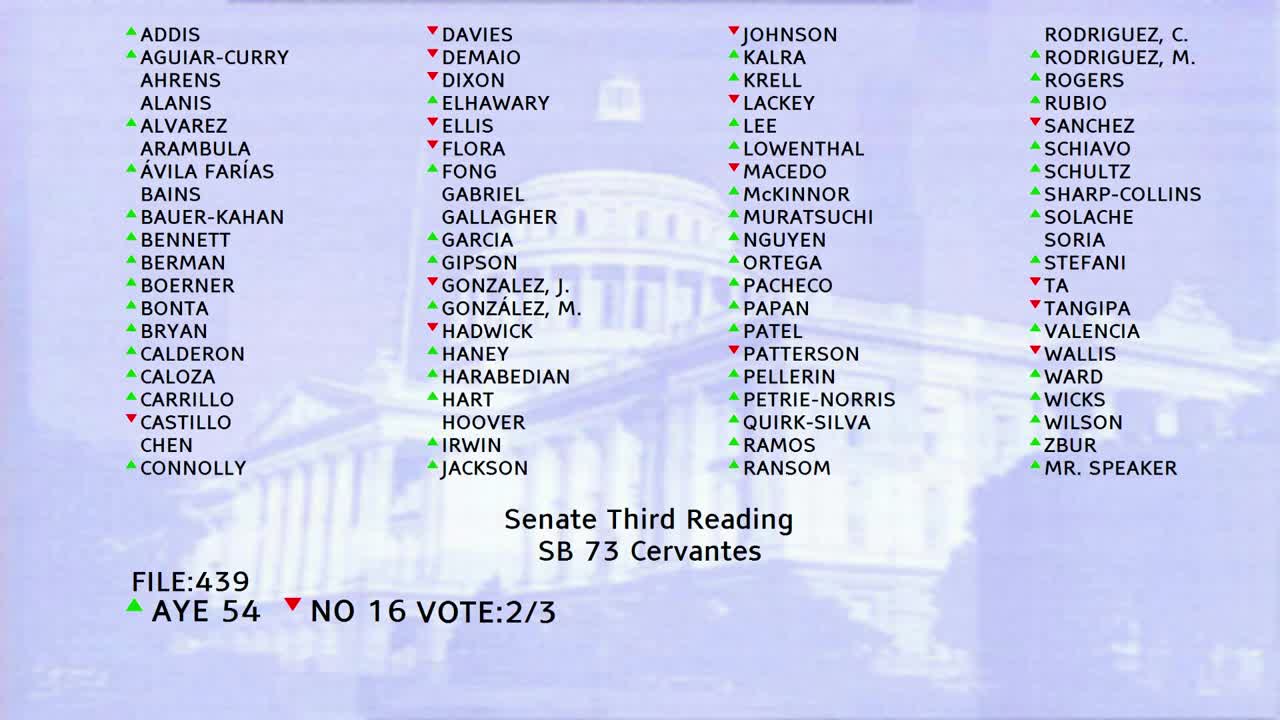
Bill Author

Bill Co-Author(s):