AB 1974: Firearms: voluntary firearm storage program.
- Session Year: 2025-2026
- House: Assembly
- Latest Version Date: 2026-09-26
Current Status:
Passed
(2026-09-26: Chaptered by Secretary of State - Chapter 460, Statutes of 2026.)
Introduced
In Committee
Awaiting First Chamber Vote
Passed First Chamber
In Committee
Awaiting Second Chamber Vote
Passed Second Chamber
Enacted
Existing law requires a person, who claims title to a firearm that is in the custody of a court or law enforcement agency and wishes to have it returned, to make an application for a determination by the Department of Justice as to whether the applicant is eligible to possess a firearm. Under existing law, a law enforcement agency or court that has taken custody of a firearm is prohibited from returning the firearm to an individual unless specified requirements are met, including, but not limited to, requiring the person to be eligible to possess a firearm and verifying that the firearm is not listed as stolen and the firearm has been recorded in the Automated Firearms System in the name of the person, as specified. Existing law requires any weapon that was carried unlawfully for specified crimes to be surrendered to specified law enforcement entities. Existing law requires weapons surrendered pursuant to these provisions to be destroyed by the law enforcement entity.
This bill would authorize a law enforcement agency, as defined, to create a voluntary firearm storage program that allows a person to voluntarily transfer custody of their firearm to the local law enforcement agency for temporary safekeeping purposes to prevent firearm violence, suicide, and other injury. The bill would require a law enforcement agency adopting this program to provide clear instructions on the procedure to voluntarily transfer custody of a firearm and to provide clear instructions on the process for requesting return of the firearm, as specified. Upon receipt of a firearm, the bill would require a law enforcement agency to, among other things, check a certain database to ensure the firearm has not previously been reported lost, stolen, or involved in a crime and ensure that the requesting person is eligible to possess firearms when the firearm is returned to the person. The bill would require a law enforcement agency to destroy a firearm that a person failed to retrieve at the end of a time period specified by the law enforcement agency, except as provided.
Existing law prohibits the carrying of a concealed firearm or the open carrying of a firearm, as specified. Existing law provides certain exemptions to these prohibitions, including exemptions for peace officers, retired peace officers, and persons possessing a valid license to carry a concealed firearm. Existing law generally regulates the sale and transfer of firearms, including, among other requirements and subject to exceptions, that the transfer of a firearm be conducted through a firearms dealer.
This bill would exempt the voluntary transfer of a firearm to a local law enforcement agency pursuant to the provisions above from these prohibitions and regulations.
Existing law requires a person, who claims title to a firearm that is in the custody of a court or law enforcement agency and wishes to have it returned, to make an application for a determination by the Department of Justice as to whether the applicant is eligible to possess a firearm. Under existing law, a law enforcement agency or court that has taken custody of a firearm is prohibited from returning the firearm to an individual unless specified requirements are met, including, but not limited to, requiring the person to be eligible to possess a firearm and verifying that the firearm is not listed as stolen and the firearm has been recorded in the Automated Firearms System in the name of the person, as specified. Existing law requires any weapon that was carried unlawfully for specified crimes to be surrendered to specified law enforcement entities. Existing law requires weapons surrendered pursuant to these provisions to be destroyed by the law enforcement entity.
This bill would authorize a law enforcement agency, as defined, to create a voluntary firearm storage program that allows a person to voluntarily transfer custody of their firearm to the local law enforcement agency for temporary safekeeping purposes to prevent firearm violence, suicide, and other injury. The bill would authorize require a law enforcement agency adopting this program to provide clear instructions on the procedure to voluntarily transfer custody of a firearm and to provide explicit clear instructions on the process for requesting return of the firearm, as specified. Upon receipt of a firearm, the bill would authorize require a law enforcement agency to, among other things, check a certain database to ensure the firearm has not previously been reported lost, stolen, or involved in a crime and ensure that the requesting person is eligible to possess firearms when the firearm is returned to the person. The bill would require a law enforcement agency to destroy a firearm that a person failed to retrieve at the end of a time period specified by the law enforcement agency, except as provided.
Existing law prohibits the carrying of a concealed firearm or the open carrying of a firearm, as specified. Existing law provides certain exemptions to these prohibitions, including exemptions for peace officers, retired peace officers, and persons possessing a valid license to carry a concealed firearm. Existing law generally regulates the sale and transfer of firearms, including, among other requirements and subject to exceptions, that the transfer of a firearm be conducted through a firearms dealer.
This bill would exempt the voluntary transfer of a firearm to a local law enforcement agency pursuant to the provisions above from these prohibitions and regulations.
Existing law requires a person, who claims title to a firearm that is in the custody of a court or law enforcement agency and wishes to have it returned, to make an application for a determination by the Department of Justice as to whether the applicant is eligible to possess a firearm. Under existing law, a law enforcement agency or court that has taken custody of a firearm is prohibited from returning the firearm to an individual unless specified requirements are met, including, but not limited to, requiring the person to be eligible to possess a firearm and verifying that the firearm is not listed as stolen and the firearm has been recorded in the Automated Firearms System in the name of the person, as specified. Existing law requires any weapon that was carried unlawfully for specified crimes to be surrendered to specified law enforcement entities. Existing law requires weapons surrendered pursuant to these provisions to be destroyed by the law enforcement entity.
This bill would authorize a law enforcement agency, as defined, to create a voluntary firearm storage program that allows a person to voluntarily transfer custody of their firearm to the local law enforcement agency for temporary safekeeping purposes to prevent firearm violence, suicide, and other injury. The bill would authorize a law enforcement agency adopting this program to provide clear instructions on the procedure to voluntarily transfer custody of a firearm and to provide explicit instructions on the process for requesting return of the firearm, as specified. Upon receipt of a firearm, the bill would authorize a law enforcement agency to, among other things, check a certain database to ensure the firearm has not previously been reported lost, stolen, or involved in a crime and ensure that the requesting person is eligible to possess firearms when the firearm is returned to the person. The bill would require a law enforcement agency to destroy a firearm that a person failed to retrieve at the end of a time period specified by the law enforcement agency. agency, except as provided.
Existing law prohibits the carrying of a concealed firearm or the open carrying of a firearm, as specified. Existing law provides certain exemptions to these prohibitions, including exemptions for peace officers, retired peace officers, and persons possessing a valid license to carry a concealed firearm. Existing law generally regulates the sale and transfer of firearms, including, among other requirements and subject to exceptions, that the transfer of a firearm be conducted through a firearms dealer.
This bill would exempt the voluntary transfer of a firearm to a local law enforcement agency pursuant to the provisions above from these prohibitions and regulations.
Existing law requires a person, who claims title to a firearm that is in the custody of a court or law enforcement agency and wishes to have it returned, to make an application for a determination by the Department of Justice as to whether the applicant is eligible to possess a firearm. Under existing law, a law enforcement agency or court that has taken custody of a firearm is prohibited from returning the firearm to an individual unless specified requirements are met, including, but not limited to, requiring the person to be eligible to possess a firearm and verifying that the firearm is not listed as stolen and the firearm has been recorded in the Automated Firearms System in the name of the person, as specified. Existing law requires any weapon that was carried unlawfully for specified crimes to be surrendered to specified law enforcement entities. Existing law requires weapons surrendered pursuant to these provisions to be destroyed by the law enforcement entity.
This bill would authorize a law enforcement agency, as defined, to create a voluntary firearm storage program that allows a person to voluntarily transfer custody of their firearm to the local law enforcement agency for temporary safekeeping purposes to prevent firearm violence, suicide, and other injury. The bill would authorize a law enforcement agency adopting this program to provide clear instructions on the procedure to voluntarily transfer custody of a firearm and to provide explicit instructions on the process for requesting return of the firearm, as specified. Upon receipt of a firearm, the bill would authorize a law enforcement agency to, among other things, check a certain database to ensure the firearm has not previously been reported lost, stolen, or involved in a crime and ensure that the requesting person is eligible to possess firearms when the firearm is returned to the person. The bill would require a law enforcement agency to destroy a firearm that a person failed to retrieve at the end of a time period specified by the law enforcement agency.
It is the intent of the Legislature to encourage law enforcement agencies to make family law advocates and veterans outreach programs aware of programs created by the law enforcement agencies that allow a person to voluntarily transfer custody of their firearm to a law enforcement agency for temporary safekeeping purposes to prevent firearm violence, suicide, and other injury.
SEC. 2.Section 25010 is added to the Penal Code, to read:25010.(a)A law enforcement agency may create a voluntary firearm storage program that allows a person to voluntarily transfer custody of their firearm to the local law enforcement agency for temporary safekeeping purposes to prevent firearm violence, suicide, and other injury.
(b)A law enforcement agency adopting a program pursuant to this section shall not be held liable for damage to the firearms while the firearms are in the temporary custody of the agency.
(c)All of the following shall be required as part of the program:
(1)A law enforcement agency shall have the capability to store a firearm for a duration of one year.
(2)A law enforcement agency shall do all of the following as part of the program:
(A)Provide clear instructions on the procedure for a person to voluntarily transfer custody of their firearm to the law enforcement agency, and make the procedure available to the public on the agencys internet website in a manner that is consistent with the information that shall be posted in accordance with subdivision (h) of Section 13667.
(B)Provide clear instructions on the process for requesting return of the firearms in accordance with Chapter 2 (commencing with Section 33850) of Division 11, including, but not limited to, by electronically submitting a Law Enforcement Release application for the return of a firearm via the California Firearms Application Reporting System. Instructions on the process for requesting the return of surrendered firearms shall be made available to the public on the agencys internet website.
(C)Provide clear information on the maximum amount of time that the law enforcement agency may store a firearm and on the disposition of a firearm after the firearm has exceeded the maximum storage time allowed by the local law enforcement agency. This information shall notify the person that their firearm or firearms shall be destroyed, returned to the person, or donated to a public or private nonprofit historical society, museum, or institutional collection.
(D)Provide clear information on how people using the safe storage program, if they decide they no longer want their firearm at any point during the firearm storage period, can elect to have the firearm destroyed, donated to a public or private nonprofit historical society, museum, or institutional collection, or, pursuant to the provisions and procedures set forth in subdivision (b) of Section 33850, can sell or transfer title of the firearm to a licensed dealer or a third party that is not prohibited from possessing that firearm. Instructions on the process for requesting destruction, donation, or transfer of surrendered firearms shall be made available to the public on the agencys internet website.
(E)Upon receipt of a firearm:
(i)Check the Automated Firearms System to ensure the firearm has not previously been reported as lost or stolen or otherwise involved in a crime pursuant to Section 33855.
(ii)Update the Automated Firearms System to record the current disposition of the firearm pursuant to Section 11108.2.
(iii)Prior to the return of a firearm to a person requesting its return, the law enforcement agency shall ensure that the requesting person is eligible to possess firearms when the firearm is returned to the person pursuant to Section 33855.
(iv)Upon return, donation, transfer, or destruction of the firearm, a law enforcement agency shall update the Automated Firearms System to reflect the change in disposition pursuant to the agencys policy under Section 18005.
(d)(1)Failure to retrieve the firearm at the end of a time period specified by the law enforcement agency shall result in the firearm being destroyed pursuant to the agencys policy under Section 18005. Destruction of the firearm authorized by this paragraph shall not be executed if the person who surrendered the firearm has submitted a Law Enforcement Release application for the return of their firearm via the California Firearms Application Reporting System and the person is awaiting an eligibility determination.
(2)A firearm subject to destruction pursuant to this section may, in lieu of destruction, be donated to a public or private nonprofit historical society, museum, or institutional collection, subject to the provisions of Section 27855, including, but not limited to, that the firearm be deactivated or rendered inoperable before delivery. Donation of the firearm authorized by this paragraph shall not be executed if the person who surrendered the firearm has submitted a Law Enforcement Release application for the return of their firearm via the California Firearms Application Reporting System and the person is awaiting an eligibility determination.
(e)It is encouraged that a law enforcement agency makes family law advocates and veterans outreach programs aware of the program.
(f)This section does not limit a law enforcement agencys ability to accept firearms for voluntary temporary firearm storage pursuant to any other authority, program, or services the law enforcement agency offers.
(g)For purposes of this section, a law enforcement agency means a police department or sheriffs department.
SEC. 3.Section 25570 of the Penal Code is amended to read:25570.Section 25400 does not apply to, or affect, any of the following:
(a)The transportation of a firearm by a person who finds the firearm, if the person is transporting the firearm in order to comply with Article 1 (commencing with Section 2080) of Chapter 4 of Title 6 of Part 4 of Division 3 of the Civil Code as it pertains to that firearm, and, if the person is transporting the firearm to a law enforcement agency, the person gives prior notice to the law enforcement agency that the person is transporting the firearm to the law enforcement agency.
(b)The transportation of a firearm by a person who finds the firearm and is transporting it to a law enforcement agency for disposition according to law, if the person gives prior notice to the law enforcement agency that the person is transporting the firearm to the law enforcement agency for disposition according to law.
(c)The transportation of a firearm by a person who took the firearm from a person who was committing a crime against the person who took the firearm, and is transporting it to a law enforcement agency for disposition according to law, if the person gives prior notice to the law enforcement agency that the person is transporting the firearm to the law enforcement agency for disposition according to law.
(d)The transportation of a firearm by a person to a law enforcement agency pursuant to Section 25010, if the person gives prior notice to the law enforcement agency that they are transporting the firearm to the law enforcement agency.
SEC. 4.Section 26392 of the Penal Code is amended to read:26392.Paragraph (1) of subdivision (a) of Section 26350 does not apply to, or affect, the open carrying of an unloaded handgun in any of the following circumstances:
(a)By a person who finds that handgun, if the person is transporting the handgun in order to comply with Article 1 (commencing with Section 2080) of Chapter 4 of Title 6 of Part 4 of Division 3 of the Civil Code as it pertains to that firearm, and, if the person is transporting the firearm to a law enforcement agency, the person gives prior notice to the law enforcement agency that the person is transporting the handgun to the law enforcement agency.
(b)By a person who finds that handgun and is transporting it to a law enforcement agency for disposition according to law, if the person gives prior notice to the law enforcement agency that the person is transporting the firearm to the law enforcement agency for disposition according to law.
(c)By a person who took the firearm from a person who was committing a crime against the person and is transporting it to a law enforcement agency for disposition according to law, if the person gives prior notice to the law enforcement agency that the person is transporting that handgun to the law enforcement agency for disposition according to law.
(d)By a person who is transporting it to a law enforcement agency pursuant to Section 25010, if the person gives prior notice to the law enforcement agency that they are transporting the firearm to the law enforcement agency.
SEC. 5.Section 26406 of the Penal Code is amended to read:26406.Section 26400 does not apply to, or affect, the carrying of an unloaded firearm that is not a handgun in any of the following circumstances:
(a)By a person who finds that firearm, if the person is carrying the firearm in order to comply with Article 1 (commencing with Section 2080) of Chapter 4 of Title 6 of Part 4 of Division 3 of the Civil Code as it pertains to that firearm, and, if the person is transporting the firearm to a law enforcement agency, the person gives prior notice to the law enforcement agency that the person is transporting the firearm to the law enforcement agency.
(b)By a person who finds that firearm and is transporting it to a law enforcement agency for disposition according to law, if the person gives prior notice to the law enforcement agency that the person is transporting the firearm to the law enforcement agency for disposition according to law.
(c)By a person who took the firearm from a person who was committing a crime against the person and is transporting it to a law enforcement agency for disposition according to law, if the person gives prior notice to the law enforcement agency that the person is transporting the firearm to the law enforcement agency for disposition according to law.
(d)By a person who is transporting the firearm to a law enforcement agency pursuant to Section 25010, if the person gives prior notice to the law enforcement agency that they are transporting the firearm to the law enforcement agency.
SEC. 6.Section 26577 of the Penal Code is amended to read:26577.(a)Section 26500 does not apply to a delivery or transfer of firearms made to a dealer pursuant to Section 26892 or 29830 for storage by that dealer.
(b)Section 26500 does not apply to a delivery or transfer of firearms made to a law enforcement agency pursuant to Section 25010.
SEC. 7.Section 27922 of the Penal Code is amended to read:27922.(a)Section 27545 does not apply to a person who takes possession of a firearm and subsequently delivers that firearm to a law enforcement agency if all of the following requirements are met:
(1)The person found the firearm or took the firearm from a person who was committing a crime against the person who took the firearm.
(2)The person taking possession of that firearm subsequently delivers the firearm to a law enforcement agency.
(3)The person gives prior notice to the law enforcement agency that the person is transporting the firearm to the law enforcement agency for disposition according to law.
(b)Except as provided in paragraph (4) of subdivision (a) of Section 27920, any firearms that are delivered to a law enforcement agency pursuant to this section that are not subject to the applicable provisions of Sections 18000, 18005, or 34000, shall, if the person has requested the firearm and is eligible to receive it, be returned to that person in accordance with Chapter 2 (commencing with Section 33850) of Division 11.
(c)Section 27545 does not apply to the delivery or transfer of a firearm to a law enforcement agency by a person pursuant to Section 25010, if the person gives prior notice to the law enforcement agency that the person is transporting the firearm to the law enforcement agency.
It is the intent of the Legislature to encourage law enforcement agencies to make family law advocates and veterans outreach programs aware of programs created by the law enforcement agencies that allow a person to voluntarily transfer custody of their firearm to a law enforcement agency for temporary safekeeping purposes to prevent firearm violence, suicide, and other injury.
SEC. 2.Section 25010 is added to the Penal Code, to read:25010.(a)A law enforcement agency may create a voluntary firearm storage program that allows a person to voluntarily transfer custody of their firearm to the local law enforcement agency for temporary safekeeping purposes to prevent firearm violence, suicide, and other injury.
(b)A law enforcement agency adopting a program pursuant to this section shall not be held liable for damage to the firearms while the firearms are in the temporary custody of the agency.
(c)All of the following may shall be required as part of the program:
(1)A law enforcement agency shall have the capability to store a firearm for a minimum duration of one year.
(2)A law enforcement agency may shall do all of the following: following as part of the program:
(A)Provide clear instructions on the procedure for a person to voluntarily transfer custody of their firearm to the law enforcement agency, and make the procedure available to the public on the agencys internet website in a manner that is consistent with the information that shall be posted in accordance with subdivision (h) of Section 13667.
(B)Provide explicit clear instructions on the process for requesting return of the firearms in accordance with Chapter 2 (commencing with Section 33850) of Division 11, including, but not limited to, by electronically submitting a Law Enforcement Release application for the return of a firearm via the California Firearms Application Reporting System. Instructions on the process for requesting the return of surrendered firearms shall be made available to the public on the agencys internet website.
(C)Provide clear information on the maximum amount of time that the law enforcement agency may store a firearm and on the disposition of a firearm after the firearm has exceeded the maximum storage time allowed by the local law enforcement agency. This information shall notify the person that their firearm or firearms shall be destroyed, returned to the person, or transferred to a federal firearms licensee to be sold. donated to a public or private nonprofit historical society, museum, or institutional collection.
(D)Provide clear information on how people using the safe storage program, if they decide they no longer want their firearm at any point during the firearm storage period, can elect to have the firearm destroyed, donated to a public or private nonprofit historical society, museum, or institutional collection, or, pursuant to subdivision (b) of Section 33850, can sell or transfer title of the firearm to a licensed dealer or a third party that is not prohibited from possessing that firearm. Instructions on the process for requesting destruction, donation, or transfer of surrendered firearms shall be made available to the public on the agencys internet website.
(D)(E)Upon receipt of a firearm:
(i)Check the Automated Firearms System to ensure the firearm has not previously been reported as lost or stolen or otherwise involved in a crime pursuant to Section 33855.
(ii)Update the Automated Firearms System to record the current disposition of the firearm pursuant to Section 11108.2.
(iii)Prior to the return of a firearm to a person requesting its return, the law enforcement agency shall ensure that the requesting person is eligible to possess firearms when the firearm is returned to the person pursuant to Section 33855.
(iv)Upon return return, donation, transfer, or destruction of the firearm, a law enforcement agency shall update the Automated Firearms System to reflect the change in disposition pursuant to the agencys policy under Section 18005.
(d)(1)Failure to retrieve the firearm at the end of a time period specified by the law enforcement agency shall result in the firearm being destroyed pursuant to the agencys policy under Section 18005. Destruction of the firearm authorized by this paragraph shall not be executed if the person who surrendered the firearm has submitted a Law Enforcement Release application for the return of their firearm via the California Firearms Application Reporting System and the person is awaiting an eligibility determination.
(2)A firearm subject to destruction pursuant to this section may, in lieu of destruction, be donated to a public or private nonprofit historical society, museum, or institutional collection, subject to the provisions of Section 27855, including, but not limited to, that the firearm be deactivated or rendered inoperable before delivery. Donation of the firearm authorized by this paragraph shall not be executed if the person who surrendered the firearm has submitted a Law Enforcement Release application for the return of their firearm via the California Firearms Application Reporting System and the person is awaiting an eligibility determination.
(e)It is encouraged that a law enforcement agency makes family law advocates and veterans outreach programs aware of the program.
(f)This section does not limit a law enforcement agencys ability to accept firearms for voluntary temporary firearm storage pursuant to any other authority. authority, program, or services the law enforcement agency offers.
(g)For purposes of this section, a law enforcement agency means a police department or sheriffs department.
SEC. 3.Section 25570 of the Penal Code is amended to read:25570.Section 25400 does not apply to, or affect, any of the following:
(a)The transportation of a firearm by a person who finds the firearm, if the person is transporting the firearm in order to comply with Article 1 (commencing with Section 2080) of Chapter 4 of Title 6 of Part 4 of Division 3 of the Civil Code as it pertains to that firearm, and, if the person is transporting the firearm to a law enforcement agency, the person gives prior notice to the law enforcement agency that the person is transporting the firearm to the law enforcement agency.
(b)The transportation of a firearm by a person who finds the firearm and is transporting it to a law enforcement agency for disposition according to law, if the person gives prior notice to the law enforcement agency that the person is transporting the firearm to the law enforcement agency for disposition according to law.
(c)The transportation of a firearm by a person who took the firearm from a person who was committing a crime against the person who took the firearm, and is transporting it to a law enforcement agency for disposition according to law, if the person gives prior notice to the law enforcement agency that the person is transporting the firearm to the law enforcement agency for disposition according to law.
(d)The transportation of a firearm by a person to a law enforcement agency pursuant to Section 25010, if the person gives prior notice to the law enforcement agency that they are transporting the firearm to the law enforcement agency.
SEC. 4.Section 26392 of the Penal Code is amended to read:26392.Paragraph (1) of subdivision (a) of Section 26350 does not apply to, or affect, the open carrying of an unloaded handgun in any of the following circumstances:
(a)By a person who finds that handgun, if the person is transporting the handgun in order to comply with Article 1 (commencing with Section 2080) of Chapter 4 of Title 6 of Part 4 of Division 3 of the Civil Code as it pertains to that firearm, and, if the person is transporting the firearm to a law enforcement agency, the person gives prior notice to the law enforcement agency that the person is transporting the handgun to the law enforcement agency.
(b)By a person who finds that handgun and is transporting it to a law enforcement agency for disposition according to law, if the person gives prior notice to the law enforcement agency that the person is transporting the firearm to the law enforcement agency for disposition according to law.
(c)By a person who took the firearm from a person who was committing a crime against the person and is transporting it to a law enforcement agency for disposition according to law, if the person gives prior notice to the law enforcement agency that the person is transporting that handgun to the law enforcement agency for disposition according to law.
(d)By a person who is transporting it to a law enforcement agency pursuant to Section 25010, if the person gives prior notice to the law enforcement agency that they are transporting the firearm to the law enforcement agency.
SEC. 5.Section 26406 of the Penal Code is amended to read:26406.Section 26400 does not apply to, or affect, the carrying of an unloaded firearm that is not a handgun in any of the following circumstances:
(a)By a person who finds that firearm, if the person is carrying the firearm in order to comply with Article 1 (commencing with Section 2080) of Chapter 4 of Title 6 of Part 4 of Division 3 of the Civil Code as it pertains to that firearm, and, if the person is transporting the firearm to a law enforcement agency, the person gives prior notice to the law enforcement agency that the person is transporting the firearm to the law enforcement agency.
(b)By a person who finds that firearm and is transporting it to a law enforcement agency for disposition according to law, if the person gives prior notice to the law enforcement agency that the person is transporting the firearm to the law enforcement agency for disposition according to law.
(c)By a person who took the firearm from a person who was committing a crime against the person and is transporting it to a law enforcement agency for disposition according to law, if the person gives prior notice to the law enforcement agency that the person is transporting the firearm to the law enforcement agency for disposition according to law.
(d)By a person who is transporting the firearm to a law enforcement agency pursuant to Section 25010, if the person gives prior notice to the law enforcement agency that they are transporting the firearm to the law enforcement agency.
SEC. 6.Section 26577 of the Penal Code is amended to read:26577.(a)Section 26500 does not apply to a delivery or transfer of firearms made to a dealer pursuant to Section 26892 or 29830 for storage by that dealer.
(b)Section 26500 does not apply to a delivery or transfer of firearms made to a law enforcement agency pursuant to Section 25010.
SEC. 7.Section 27922 of the Penal Code is amended to read:27922.(a)Section 27545 does not apply to a person who takes possession of a firearm and subsequently delivers that firearm to a law enforcement agency if all of the following requirements are met:
(1)The person found the firearm or took the firearm from a person who was committing a crime against the person who took the firearm.
(2)The person taking possession of that firearm subsequently delivers the firearm to a law enforcement agency.
(3)The person gives prior notice to the law enforcement agency that the person is transporting the firearm to the law enforcement agency for disposition according to law.
(b)Except as provided in paragraph (4) of subdivision (a) of Section 27920, any firearms that are delivered to a law enforcement agency pursuant to this section that are not subject to the applicable provisions of Sections 18000, 18005, or 34000, shall, if the person has requested the firearm and is eligible to receive it, be returned to that person in accordance with Chapter 2 (commencing with Section 33850) of Division 11.
(c)Section 27545 does not apply to the delivery or transfer of a firearm to a law enforcement agency by a person pursuant to Section 25010, if the person gives prior notice to the law enforcement agency that the person is transporting the firearm to the law enforcement agency.
It is the intent of the Legislature to encourage law enforcement agencies to make family law advocates and veterans outreach programs aware of programs created by the law enforcement agencies that allow a person to voluntarily transfer custody of their firearm to a law enforcement agency for temporary safekeeping purposes to prevent firearm violence, suicide, and other injury.
SEC. 2.Section 25010 is added to the Penal Code, to read:25010.(a)A law enforcement agency may create a voluntary firearm storage program that allows a person to voluntarily transfer custody of their firearm to the local law enforcement agency for temporary safekeeping purposes to prevent firearm violence, suicide, and other injury.
(b)A law enforcement agency adopting a program pursuant to this section shall not be held liable for damage to the firearms while the firearms are in the temporary custody of the agency.
(c)All of the following may be required as part of the program:
(1)A law enforcement agency shall have the capability to store a firearm for a minimum duration of one year.
(2)A law enforcement agency may do all of the following:
(A)Provide clear instructions on the procedure for a person to voluntarily transfer custody of their firearm to the law enforcement agency, and make the procedure available to the public on the agencys internet website in a manner that is consistent with the information that shall be posted in accordance with subdivision (h) of Section 13667.
(B)Provide explicit instructions on the process for requesting return of the firearms in accordance with Chapter 2 (commencing with Section 33850) of Division 11, including, but not limited to, by electronically submitting a Law Enforcement Release application for the return of a firearm via the California Firearms Application Reporting System.
(C)Provide clear information on the maximum amount of time that the law enforcement agency may store a firearm and on the disposition of a firearm after the firearm has exceeded the maximum storage time allowed by the local law enforcement agency. This information shall notify the person that their firearm or firearms shall be destroyed, returned to the person, or transferred to a federal firearms licensee to be sold.
(D)Upon receipt of a firearm:
(i)Check the Automated Firearms System to ensure the firearm has not previously been reported as lost or stolen or otherwise involved in a crime pursuant to Section 33855.
(ii)Update the Automated Firearms System to record the current disposition of the firearm pursuant to Section 11108.2.
(iii)Prior to the return of a firearm to a person requesting its return, the law enforcement agency shall ensure that the requesting person is eligible to possess firearms when the firearm is returned to the person pursuant to Section 33855.
(iv)Upon return or destruction of the firearm, a law enforcement agency shall update the Automated Firearms System to the reflect the change in disposition pursuant to the agencys policy under Section 18005.
(d)(1)Failure to retrieve the firearm at the end of a time period specified by the law enforcement agency shall result in the firearm being destroyed pursuant to the agencys policy under Section 18005.
(2)A firearm subject to destruction pursuant to this section may, in lieu of destruction, be donated to a public or private nonprofit historical society, museum, or institutional collection, subject to the provisions of Section 27855, including, but not limited to, that the firearm be deactivated or rendered inoperable before delivery.
(e)It is encouraged that a law enforcement agency makes family law advocates and veterans outreach programs aware of the program.
(f)This section does not limit a law enforcement agencys ability to accept firearms for voluntary temporary firearm storage pursuant to any other authority.
(g)For purposes of this section, a law enforcement agency means a police department or sheriffs department.
SEC. 3.Section 25570 of the Penal Code is amended to read:25570.Section 25400 does not apply to, or affect, any of the following:
(a)The transportation of a firearm by a person who finds the firearm, if the person is transporting the firearm in order to comply with Article 1 (commencing with Section 2080) of Chapter 4 of Title 6 of Part 4 of Division 3 of the Civil Code as it pertains to that firearm, and, if the person is transporting the firearm to a law enforcement agency, the person gives prior notice to the law enforcement agency that the person is transporting the firearm to the law enforcement agency.
(b)The transportation of a firearm by a person who finds the firearm and is transporting it to a law enforcement agency for disposition according to law, if the person gives prior notice to the law enforcement agency that the person is transporting the firearm to the law enforcement agency for disposition according to law.
(c)The transportation of a firearm by a person who took the firearm from a person who was committing a crime against the person who took the firearm, and is transporting it to a law enforcement agency for disposition according to law, if the person gives prior notice to the law enforcement agency that the person is transporting the firearm to the law enforcement agency for disposition according to law.
(d)The transportation of a firearm by a person to a law enforcement agency pursuant to Section 25010, if the person gives prior notice to the law enforcement agency that they are transporting the firearm to the law enforcement agency.
SEC. 4.Section 26392 of the Penal Code is amended to read:26392.Paragraph (1) of subdivision (a) of Section 26350 does not apply to, or affect, the open carrying of an unloaded handgun in any of the following circumstances:
(a)By a person who finds that handgun, if the person is transporting the handgun in order to comply with Article 1 (commencing with Section 2080) of Chapter 4 of Title 6 of Part 4 of Division 3 of the Civil Code as it pertains to that firearm, and, if the person is transporting the firearm to a law enforcement agency, the person gives prior notice to the law enforcement agency that the person is transporting the handgun to the law enforcement agency.
(b)By a person who finds that handgun and is transporting it to a law enforcement agency for disposition according to law, if the person gives prior notice to the law enforcement agency that the person is transporting the firearm to the law enforcement agency for disposition according to law.
(c)By a person who took the firearm from a person who was committing a crime against the person and is transporting it to a law enforcement agency for disposition according to law, if the person gives prior notice to the law enforcement agency that the person is transporting that handgun to the law enforcement agency for disposition according to law.
(d)By a person who is transporting it to a law enforcement agency pursuant to Section 25010, if the person gives prior notice to the law enforcement agency that they are transporting the firearm to the law enforcement agency.
SEC. 5.Section 26406 of the Penal Code is amended to read:26406.Section 26400 does not apply to, or affect, the carrying of an unloaded firearm that is not a handgun in any of the following circumstances:
(a)By a person who finds that firearm, if the person is carrying the firearm in order to comply with Article 1 (commencing with Section 2080) of Chapter 4 of Title 6 of Part 4 of Division 3 of the Civil Code as it pertains to that firearm, and, if the person is transporting the firearm to a law enforcement agency, the person gives prior notice to the law enforcement agency that the person is transporting the firearm to the law enforcement agency.
(b)By a person who finds that firearm and is transporting it to a law enforcement agency for disposition according to law, if the person gives prior notice to the law enforcement agency that the person is transporting the firearm to the law enforcement agency for disposition according to law.
(c)By a person who took the firearm from a person who was committing a crime against the person and is transporting it to a law enforcement agency for disposition according to law, if the person gives prior notice to the law enforcement agency that the person is transporting the firearm to the law enforcement agency for disposition according to law.
(d)By a person who is transporting the firearm to a law enforcement agency pursuant to Section 25010, if the person gives prior notice to the law enforcement agency that they are transporting the firearm to the law enforcement agency.
SEC. 6.Section 26577 of the Penal Code is amended to read:26577.(a)Section 26500 does not apply to a delivery or transfer of firearms made to a dealer pursuant to Section 26892 or 29830 for storage by that dealer.
(b)Section 26500 does not apply to a delivery or transfer of firearms made to a law enforcement agency pursuant to Section 25010.
SEC. 7.Section 27922 of the Penal Code is amended to read:27922.(a)Section 27545 does not apply to a person who takes possession of a firearm and subsequently delivers that firearm to a law enforcement agency if all of the following requirements are met:
(1)The person found the firearm or took the firearm from a person who was committing a crime against the person who took the firearm.
(2)The person taking possession of that firearm subsequently delivers the firearm to a law enforcement agency.
(3)The person gives prior notice to the law enforcement agency that the person is transporting the firearm to the law enforcement agency for disposition according to law.
(b)Except as provided in paragraph (4) of subdivision (a) of Section 27920, any firearms that are delivered to a law enforcement agency pursuant to this section that are not subject to the applicable provisions of Sections 18000, 18005, or 34000, shall, if the person has requested the firearm and is eligible to receive it, be returned to that person in accordance with Chapter 2 (commencing with Section 33850) of Division 11.
(c)Section 27545 does not apply to the delivery or transfer of a firearm to a law enforcement agency by a person pursuant to Section 25010, if the person gives prior notice to the law enforcement agency that the person is transporting the firearm to the law enforcement agency.
It is the intent of the Legislature to encourage law enforcement agencies to make family law advocates and veterans outreach programs aware of programs created by the law enforcement agencies that allow a person to voluntarily transfer custody of their firearm to a law enforcement agency for temporary safekeeping purposes to prevent firearm violence, suicide, and other injury.
SEC. 2.Section 25010 is added to the Penal Code, to read:25010.(a)A law enforcement agency may create a voluntary firearm storage program that allows a person to voluntarily transfer custody of their firearm to the local law enforcement agency for temporary safekeeping purposes to prevent firearm violence, suicide, and other injury.
(b)A law enforcement agency adopting a program pursuant to this section shall not be held liable for damage to the firearms while the firearms are in the temporary custody of the agency.
(c)All of the following may be required as part of the program:
(1)A law enforcement agency shall have the capability to store a firearm for a minimum duration of one year.
(2)A law enforcement agency may do all of the following:
(A)Provide clear instructions on the procedure for a person to voluntarily transfer custody of their firearm to the law enforcement agency, and make the procedure available to the public on the agencys internet website in a manner that is consistent with the information that shall be posted in accordance with subdivision (h) of Section 13667.
(B)Provide explicit instructions on the process for requesting return of the firearms in accordance with Chapter 2 (commencing with Section 33850) of Division 11, including, but not limited to, by electronically submitting a Law Enforcement Release application for the return of a firearm via the California Firearms Application Reporting System.
(C)Provide clear information on the maximum amount of time that the law enforcement agency may store a firearm and on the disposition of a firearm after the firearm has exceeded the maximum storage time allowed by the local law enforcement agency. This information shall notify the person that their firearm or firearms shall be destroyed, returned to the person, or transferred to a federal firearms licensee to be sold.
(D)Upon receipt of a firearm:
(i)Check the Automated Firearms System to ensure the firearm has not previously been reported as lost or stolen or otherwise involved in a crime pursuant to Section 33855.
(ii)Update the Automated Firearms System to record the current disposition of the firearm pursuant to Section 11108.2.
(iii)Prior to the return of a firearm to a person requesting its return, the law enforcement agency shall ensure that the requesting person is eligible to possess firearms when the firearm is returned to the person pursuant to Section 33855.
(iv)Upon return or destruction of the firearm, a law enforcement agency shall update the Automated Firearms System to the reflect the change in disposition pursuant to the agencys policy under Section 18005.
(d)Failure to retrieve the firearm at the end of a time period specified by the law enforcement agency shall result in the firearm being destroyed pursuant to the agencys policy under Section 18005.
(e)It is encouraged that a law enforcement agency makes family law advocates and veterans outreach programs aware of the program.
(f)This section does not limit a law enforcement agencys ability to accept firearms for voluntary temporary firearm storage pursuant to any other authority.
(g)For purposes of this section, a law enforcement agency means a police department or sheriffs department.
|
Date
|
Status
|
|---|---|
| Sep 26, 2026 | Chaptered by Secretary of State - Chapter 460, Statutes of 2026. |
| Sep 26, 2026 | Approved by the Governor. |
| Sep 10, 2026 | Enrolled and presented to the Governor at 3 p.m. |
| Aug 30, 2026 | Senate amendments concurred in. To Engrossing and Enrolling. (Ayes 73. Noes 2.). |
| Aug 30, 2026 | Senate amendments concurred in. To Engrossing and Enrolling. (Ayes 73. Noes 2. Page 6866.). |
| Aug 30, 2026 | Senate amendments concurred in. To Engrossing and Enrolling. |
| Aug 28, 2026 | In Assembly. Concurrence in Senate amendments pending. |
| Aug 28, 2026 | Read third time. Passed. Ordered to the Assembly. (Ayes 36. Noes 0.). |
| Jun 10, 2026 | Read second time. Ordered to third reading. |
| Jun 9, 2026 | From committee: Do pass. (Ayes 6. Noes 0.) (June 9). |
| May 28, 2026 | From committee chair, with author's amendments: Amend, and re-refer to committee. Read second time, amended, and re-referred to Com. on PUB. S. |
| May 6, 2026 | Referred to Com. on PUB. S. |
| Apr 20, 2026 | In Senate. Read first time. To Com. on RLS. for assignment. |
| Apr 20, 2026 | Read third time. Passed. Ordered to the Senate. (Ayes 71. Noes 2. Page 4724.) |
| Apr 20, 2026 | Read third time. Passed. Ordered to the Senate. |
| Apr 13, 2026 | Read second time. Ordered to third reading. |
| Apr 9, 2026 | Read second time and amended. Ordered returned to second reading. |
| Apr 8, 2026 | From committee: Amend, and do pass as amended. (Ayes 9. Noes 0.) (April 7). |
| Mar 26, 2026 | Re-referred to Com. on PUB. S. |
| Mar 25, 2026 | From committee chair, with author's amendments: Amend, and re-refer to Com. on PUB. S. Read second time and amended. |
| Mar 2, 2026 | Referred to Com. on PUB. S. |
| Feb 14, 2026 | From printer. May be heard in committee March 16. |
| Feb 13, 2026 | Read first time. To print. |
|
Date
|
Description
|
Location
|
Votes
|
|
|---|---|---|---|---|
| Aug 30, 2026 | AB 1974 Stefani Concurrence in Senate Amendments | Assembly Floor |
Passed |
|
| Aug 28, 2026 | Assembly 3rd Reading AB1974 Stefani By Blakespear | Senate Floor |
Passed |
|
| Jun 9, 2026 | Do pass | Senate Standing Committee on Public Safety |
Passed |
|
| Apr 20, 2026 | AB 1974 Stefani Assembly Third Reading | Assembly Floor |
Passed |
|
| Apr 7, 2026 | Do pass as amended. | Assembly Standing Committee on Public Safety |
Passed |
This list shows positions taken on this bill by organizations on the date displayed, which is linked to the original source.
Positions by individuals are not included.
|
Organization
|
Position
|
Date
|
|---|---|---|
| Association of Riverside County Chiefs of Police and Riverside Sheriff | ** Support | |
| Brady California | ** Support | |
| Brady United Against Gun Violence | ** Support | |
| California Academy of Child and Adolescent Psychiatry | ** Support | |
| California Chapter of the American College of Emergency Physicians | ** Support | |
| California District Attorneys Association | ** Support | |
| California Rifle and Pistol Association | ** Against | |
| City and County of San Francisco | ** Support | |
| Everytown for Gun Safety Action Fun | ** Support | |
| Everytown for Gun Safety Action Fund | ** Support | |
| Giffords Gun Owners for Safety, California | ** Support | |
| Giffords Law Center To Prevent Gun Violence | ** Support | |
| Moms Demand Action | ** Support | |
| palm springs police department | ** Support | |
| Peace Officers Research Association Of California | ** Support | |
| San Francisco Board of Supervisors | ** Support | |
| san francisco marin medical society | ** Support | |
| Students Demand Action | ** Support |
CONCURRENCE IN SENATE AMENDMENTS
CSA1 Bill Id:AB 1974
Author:(Stefani)
As Amended Ver:May 28, 2026
Majority vote
SUMMARY
Authorizes a law enforcement agency (LEA) to create a voluntary firearm storage program that allows transfer of firearms to the LEA for temporary safekeeping.
Senate Amendments
Make technical change.
COMMENTS
As passed by the Assembly: This bill authorized a law enforcement agency (LEA) to create a voluntary firearm storage program that allows transfer of firearms to the LEA for temporary safekeeping.
Major Provisions:
- Stated that an LEA may create a voluntary firearm storage program that allows a person to voluntarily transfer custody of their firearm to the local law enforcement agency for temporary safekeeping purposes to prevent firearm violence, suicide, and other injury.
- Provided that an LEA adopting a temporary safekeeping program shall not be held liable for damage to the firearms while the firearms are in LEA custody.
- Specified that all of the following may be required as part of the program:
- An LEA shall have the capability to store a firearm for a minimum duration of one year.
- An LEA may do all of the following:
- Provide clear instructions on the procedure for a person to voluntarily transfer custody of their firearm to the LEA and make the procedure available to the public on the agency's internet website.
- Provide explicit instructions on the process for requesting return of the firearms, including, but not limited to, by electronically submitting a Law Enforcement Release application for the return of a firearm via the California Firearms Application Reporting System (CFARS).
- Provide clear information on the maximum amount of time that LEA's may store a firearm and on the disposition of a firearm after the firearm has exceeded the maximum storage time. This information shall notify the person that their firearm or firearms shall be destroyed, returned to the person, or transferred to a federal firearms licensee to be sold.
- Provide clear information on how people using the safe storage program, if they elect they no longer want their firearm at any point during the firearm storage period, can elect to have the firearm destroyed or donated, as specified, can sell or transfer title of the firearm to a licensed dealer or third party that is not prohibited from possessing a firearm. Instructions on these processes shall be made available on the agency's website.
- Upon receipt of a firearm:
- Check the Automated Firearms System (AFS) to ensure the firearm has not previously been reported as lost or stolen or otherwise involved in a crime.
- Update the AFS to record the current disposition of the firearm.
- Prior to the return of a firearm to a person requesting its return, LEA shall ensure that the requesting person is eligible to possess firearms when the firearm is returned.
- Upon return or destruction of the firearm, an LEA shall update the AFS to reflect the change in disposition pursuant to the agency's policy.
- Established that failure to retrieve the firearm by the LEA shall result in the firearm being destroyed.
- Stated that a firearm subject to destruction may, in lieu of destruction, be donated to a public or private nonprofit historical society, museum, or institutional collection, including that the firearm be deactivated or rendered inoperable before delivery.
- Provided that specified laws restricting openly carrying an unloaded firearm, carrying an unloaded firearm, and delivering or transferring a firearm, do not apply to, or affect, the transportation of a firearm by a person to a law enforcement, if the person gives prior notice to the LEA that they are transporting the firearm to the law enforcement agency.
- Specified that it is encouraged that a law enforcement agency makes family law advocates and veterans' outreach programs aware of the program.
- Stated that this change to the law does not limit an LEA's ability to accept firearms for voluntary temporary firearm storage pursuant to any other authority.
- Defined "law enforcement agency" as a police department or sheriff's department.
According to the Author
"AB 1974 This bill will establish guidelines for law enforcement agencies that choose to create a temporary voluntary safe firearm storage program for the public. This bill builds upon the success of a few local jurisdictions that have implemented similar programs that have both improved public safety and given people the flexibility to ensure the safe storage of their firearms during times of uncertainty. Finally, this bill ensures there are proper procedures to make sure any stored firearm is handled properly, with multiple checks in place so they don't end up in the wrong hands or are returned to someone who may no longer legally own a firearm."
Arguments in Support
According to the California District Attorney's Association, "On behalf of the California District Attorneys Association (CDAA), I write in support of your measure, AB 1974, which seeks to enhance public safety by reducing access to guns. This bill authorized law enforcement agencies to create a voluntary firearm storage program to allow persons to transfer custody of their firearm(s) to these agencies to prevent firearm violence, suicide, and other injury. The records checks conducted upon receipt and return of firearms will ensure that firearms that are lost, stolen, or involved in crimes are identified and that persons to whom firearms are returned may safely and validly receive them. Since this bill will encourage participating law enforcement agencies to do outreach on this program with family advocates and veterans' programs, we support AB 1974."
Arguments in Opposition
According to the California Rifle and Pistol Association (CRPA), "While framed as a purely "voluntary" program allowing individuals to temporarily surrender firearms to local law enforcement agencies for safekeeping, AB 1974 creates a new statutory framework that raises serious practical, liability, and constitutional concerns. The bill authorizes law enforcement to establish procedures for accepting firearms, checking databases for lost/stolen status and possessor eligibility, providing instructions for return, and exempts these transfers from certain transfer and dealer regulations."
"CRPA supports responsible firearm storage and suicide prevention efforts through education, secure storage solutions, and voluntary programs run by private retailers, ranges, and nonprofits. However, inserting government agencies—particularly law enforcement—into temporary firearm custody creates multiple risks:"
"Liability and due process issues: Law enforcement agencies already face backlogs with firearms in custody. Delays in return, lost or damaged firearms, or disputes over eligibility upon retrieval could lead to costly litigation and erode public trust."
"Potential for abuse or 'soft confiscation': What begins as voluntary can quickly become pressured, especially during welfare checks, domestic disputes, or mental health crises. Once in government hands, firearms may face bureaucratic hurdles, administrative holds, or permanent loss if the owner encounters any legal complication."
"Resource strain on law enforcement: In a time of strained budgets and staffing shortages, diverting officers and storage facilities to manage private property storage diverts resources from core public safety duties."
"Chilling effect on Second Amendment rights: Even voluntary programs risk normalizing government custody of lawfully owned firearms and could discourage ownership or prompt unnecessary surrenders out of fear of complications in retrieval."
"California already provides numerous tools for safe storage, temporary relinquishment during restraining orders, and mental health interventions. AB 1974 adds another layer of government involvement without addressing root causes of violence or suicide and without adequate safeguards against misuse."
FISCAL COMMENTS
Unknown. This bill is keyed non-fiscal by Legislative Counsel.
VOTES:
ASM PUBLIC SAFETY: 9-0-0
YES: Schultz, Alanis, Mark González, Haney, Harabedian, Lackey, Nguyen, Ramos, Sharp-Collins
ASSEMBLY FLOOR: 71-2-7
YES: Addis, Aguiar-Curry, Ahrens, Alanis, Alvarez, Arambula, Ávila Farías, Bains, Bauer-Kahan, Bennett, Berman, Boerner, Bryan, Calderon, Caloza, Carrillo, Chen, Connolly, Davies, DeMaio, Dixon, Elhawary, Ellis, Flora, Fong, Gabriel, Gallagher, Garcia, Gipson, Jeff Gonzalez, Mark González, Haney, Harabedian, Hart, Hoover, Irwin, Jackson, Johnson, Kalra, Krell, Lackey, Lee, Lowenthal, McKinnor, Muratsuchi, Nguyen, Ortega, Pacheco, Papan, Patel, Pellerin, Petrie-Norris, Quirk-Silva, Ramos, Ransom, Michelle Rodriguez, Rogers, Blanca Rubio, Sanchez, Schiavo, Schultz, Sharp-Collins, Solache, Soria, Stefani, Ta, Valencia, Wicks, Wilson, Zbur, Rivas
NO: Hadwick, Tangipa
ABS, ABST OR NV: Bonta, Castillo, Macedo, Patterson, Celeste Rodriguez, Wallis, Ward
UPDATED
VERSION: May 28, 2026
CONSULTANT: Dustin Weber / PUB. S. / (916) 319-3744 FN: 0004430
SENATE RULES COMMITTEE Office of Senate Floor Analyses (916) 651-4171 | AB 1974 |
THIRD READING
Bill No: AB 1974
Author: Stefani (D)
Amended: 5/28/26 in Senate
Vote: 21
SENATE PUBLIC SAFETY COMMITTEE: 6-0, 6/9/26
AYES: Arreguín, Seyarto, Caballero, Cortese, Pérez, Wiener
ASSEMBLY FLOOR: 71-2, 4/20/26 - See last page for vote
SUBJECT: Firearms: voluntary firearm storage program
SOURCE: Giffords Law Center to Prevent Gun Violence
DIGEST:
This bill authorizes a law enforcement agency to create a voluntary firearm storage program that allows a person to voluntarily transfer custody of their firearm to the local law enforcement agency for temporary safekeeping purposes to prevent firearm violence, suicide, and other injury, as provided.
ANALYSIS:
Existing law:
- Generally prohibits the sale, lease or transfer of firearms unless the person has been issued a license by the Department of Justice (DOJ) and establishes various exceptions to this prohibition. (Penal (Pen.) Code, §§ 26500-26625.)
- Provides that a license to sell firearms is subject to forfeiture for any violation of a number of specified prohibitions and requirements, with limited exceptions. (Pen. Code, § 26800, subd. (a).)
- Includes several exemptions from the requirement that transfers go through a licensed dealer, including for the transfer of a firearm by bequest or intestate succession, or to a surviving spouse, or transfers by a person acting pursuant to operation of law, a court order, or pursuant to other specified laws. (Pen. Code, §§ 26505, 26515.)
- Provides that persons convicted of felonies and certain violent misdemeanors are prohibited from owning or possessing a firearm. (Pen. Code, §§ 29800, 29805.)
- Provides that where neither party to a firearms transaction holds a dealer’s license (i.e. a “private party transaction”), the parties shall complete the transaction through a licensed firearms dealer. (Pen. Code, § 27545.)
- Provides that the above provision does not apply to a firearm transfer if all of the following conditions are satisfied:
- The firearm is voluntarily and temporarily transferred to another person who is 18 years of age or older for safekeeping to prevent it from being accessed or used to attempt suicide by the transferor or another person that may gain access to it in the transferor’s household.
- The transferee does not use the firearm for any purpose and, except when transporting the firearm to the transferee’s residence or when returning it to the transferor, keeps the firearm unloaded and securely stored in the transferee’s residence.
- The duration of the loan is limited to that amount of time reasonably necessary to prevent harm.
- The individual receiving the firearm is not prohibited by state or federal law from possessing, receiving, owning, or purchasing a firearm. (Pen. Code, § 27882, subd. (a).)
- Provides that if a firearm transferred pursuant to the above cannot be returned to the owner because the owner is prohibited from possessing a firearm, the person in possession of the firearm shall deliver the firearm to a law enforcement agency without delay. (Pen. Code, § 27882, subd. (b).)
- Establishes procedures for the transfer of a firearm to a dealer or a third party in order to prevent it from being accessed or used by the transferor or other persons that may gain access to it in the transferor’s household to cause significant danger of personal injury to themselves or others. (Pen. Code, §§ 27882, 26892.)
- Prohibits firearm dealers from delivering newly purchased firearms within 10 days of the application to purchase a firearm, as specified. (Pen. Code, § 26815.)
- Provides that any person who claims title to any firearm, ammunition feeding device, or ammunition that is in the custody or control of a court or law enforcement agency and who wishes to have the firearm, ammunition feeding device, or ammunition returned shall make application, including specified information, for a determination by the Department of Justice as to whether the applicant is eligible to possess a firearm, ammunition feeding device, or ammunition, as provided. (Pen. Code, § 33850, subd. (a).)
- Provides that a person who owns a firearm that is in the custody of a court or law enforcement agency and who does not wish to obtain possession of the firearm, and the firearm is an otherwise legal firearm, and the person otherwise has right to title of the firearm, shall be entitled to sell or transfer title of the firearm to a licensed dealer or a third party that is not prohibited from possessing that firearm. (Pen. Code, § 33850, subd. (b).)
- Specifies several requirements that must be satisfied before a law enforcement agency or court that has taken custody of any firearm, ammunition feeding device, or ammunition may be returned to an individual claiming said items. (Pen. Code, § 33855.)
- Specifies that when DOJ receives a completed application for return of a firearm, it shall conduct an eligibility check of the applicant to determine whether the applicant is eligible to possess a firearm, ammunition feeding device, or ammunition. (Pen. Code, § 33865, subd. (a).)
- Provides that if a law enforcement agency determines that an applicant requesting the return of a firearm, ammunition feeding device, or ammunition is the legal owner of said items, the applicant shall be entitled to sell or transfer those items to a licensed firearm or ammunition vendor, as applicable. (Pen. Code, § 33870.)
- Requires a law enforcement agency to enter into the DOJ’s Automated Firearm System each firearm that has been reported stolen, lost, found, recovered, held or safekeeping, surrendered, relinquished, or under observation, as specified. (Pen. Code, § 11108.2.)
- Requires any weapon surrendered to law enforcement under specified provisions to be destroyed, except as specified. (Pen. Code, § 18005, subd. (a).)
- Requires every California law enforcement agency to develop and maintain a written policy on the destruction of firearms and other weapons, as specified. (Pen. Code, § 18005, subd. (e).)
This bill:
- Provides that a law enforcement agency may create a voluntary firearm storage program that allows a person to voluntarily transfer custody of their firearm to the local law enforcement agency for temporary safekeeping purposes to prevent firearm violence, suicide, and other injury.
- Provides that an agency adopting a voluntary storage program shall not be held liable for damage to the firearms while the firearms are in the temporary custody of the agency.
- Requires the following of any law enforcement agency that elects to adopt a voluntary storage program:
- The agency shall have the capability to store the firearm for a duration of one year.
- The agency shall provide clear instructions on the procedure for a person to voluntarily transfer custody of their firearm to the law enforcement agency, and make the procedure available to the public on the agency’s internet website, as specified.
- The agency shall provide clear instructions on the process for requesting return of the firearms in accordance with existing law, including, but not limited to, by electronically submitting a Law Enforcement Release application for the return of a firearm via the California Firearms Application Reporting System (CFARS). Instructions on the process for requesting the return of surrendered firearms shall be made available to the public on the agency’s website.
- The agency shall provide clear information on the maximum amount of time that the law enforcement agency may store a firearm and on the disposition of a firearm after the firearm has exceeded the maximum storage time allowed by the local law enforcement agency. This information must notify the person that their firearm or firearms shall be destroyed, returned to the person, or donated to a public or private nonprofit historical society, museum, or institutional collection.
- The agency shall provide clear information on how people using the safe storage program, if they decide they no longer want their firearm at any point during the firearm storage period, can elect to have the firearm destroyed, donated to a public or private nonprofit historical society, museum, or institutional collection, or, pursuant to policies and procedures set forth in existing law, may sell or transfer title of the firearm to a licensed dealer or a third party that is not prohibited from possessing that firearm.
- Provides that upon receipt of a firearm, a law enforcement agency with a voluntary storage program must do all of the following:
- Check the Automated Firearm System (AFS) to ensure that the firearm has not previously been reported as lost or stolen or otherwise involved in a crime, as specified.
- Update AFS to record the current disposition of the firearm.
- Prior to the return of a firearm to a person requesting its return, the law enforcement agency shall ensure that the requesting person is eligible to possess firearms when the firearm is returned to the person, as provided.
- Upon return, donation, transfer or destruction of the firearm, a law enforcement agency shall update the AFS to reflect the change in disposition pursuant to the agency’s firearm destruction policy.
- Specifies that failure to retrieve the firearm at the end of a time period specified by the law enforcement agency shall result in the destruction of the firearm pursuant to the agency’s firearm destruction policy. However, destruction of the firearm shall not be executed if the person who surrendered the firearm has submitted a Law Enforcement Release application for the return of their firearm via CFARS and the person is awaiting an eligibility determination.
- Encourages law enforcement agencies that establish a voluntary firearm storage program to make family law advocates and veterans’ outreach programs aware of the program.
- Specifies that it does not limit a law enforcement agency’s ability to accept firearms for voluntary temporary firearm storage pursuant to any other authority, program, or services the law enforcement agency offers.
- Defines law enforcement agency as any police or sheriff’s department.
- Provides that specified laws restricting openly carrying an unloaded firearm, carrying an unloaded firearm, and delivering or transferring a firearm, do not apply to or affect the transportation of a firearm by a person to a law enforcement for the purposes of participating in a voluntary storage program, if the person gives prior notice to the agency that they are transporting the firearm to the agency.
Comments
In 2019, the Legislature added a preventative feature to California firearm law via SB 172 (Portantino), Chapter 840, Statutes of 2019, which permitted the temporary transfer of a firearm without a dealer’s participation to a person who is 18 years of age or older for safekeeping to prevent it from being used to attempt suicide by the transferor or another person that may gain access to it in the transferor’s household. In 2023, another protective firearm transfer provision was added to California law via SB 368 (Portantino), Chapter 251, Statutes of 2023, which required firearm dealers to accept a firearm for storage if 1) the firearm is voluntarily and temporarily transferred to the licensee to prevent significant danger of personal injury to the transferor or others, 2) the licensee does not use the firearm for any purpose except storage, and 3) the duration of the transfer is limited to the amount of time reasonably necessary to prevent the harm.
After a custody battle resulted in the murder of her 9-year-old son, Pierce, by his father, Lesley Hu founded Pierce’s Pledge, a nonprofit dedicated to reducing gun violence against children during volatile custody disputes by promoting the voluntary, temporary storage of firearms outside the home during situations of crisis or high conflict. In September 2025, the San Francisco Police Department, in partnership with Pierce’s Pledge, launched a first-in-the-nation gun storage program in which San Francisco residents can store their firearms at any of the city’s 10 police district stations for up to a year without paying any fees. According to the author, such programs are critical, especially in light of the fact that few dealers participate in voluntary storage pursuant to the programs described above. The author further states that:
Although there is nothing preventing law enforcement from establishing a program to temporarily store firearms for the public–indeed, SFPD did and serves as the basis for this law–there is also nothing in the current law to provide guidance or best practices for local law enforcement seeking to implement the policy. This lack of guidance can lead to police departments being more hesitant to establish such a program within their own jurisdiction or lead to inconsistencies in the application of each program.
Accordingly, the author proposes this bill, which provides that a law enforcement agency may create a voluntary firearm storage program that allows a person to voluntarily transfer custody of their firearm to the agency for temporary safekeeping to prevent firearm violence, suicide and other injury. The bill does not require agencies to establish such a program, but imposes several mandates on agencies that do, including that the agency have the capability to store a firearm for one year and that it provide clear instructions on the relevant transfer processes, including those already set forth in existing law, such as the process for requesting the return of a firearm.
Additionally, the bill requires a participating agency to provide clear information on the maximum duration that the agency may store a firearm and on the disposition of a firearm after the expiration of the storage period, including that the firearm must be destroyed, returned, or donated to a public or private nonprofit historical society, museum, or institutional collection. Participating agencies must also provide information on how individuals who no longer want their firearm can elect to have the firearm destroyed, donated or transferred to a firearm dealer or nonprohibited third party pursuant to specific procedures set forth in existing law.
This bill further requires that participating agencies make relevant updates to the Automated Firearms System and provides that failure to retrieve a firearm at the end of the storage period shall result in the destruction or donation of the firearm according to prescribed processes. Finally, the bill indemnifies participating agencies against liability for damage to firearms while they are being stored and clarifies that existing criminal penalties related to the transportation of firearms do not apply when the firearms are being transported for the purpose of being stored pursuant to this bill and the transporting party has given the agency prior notice.
FISCAL EFFECT: Appropriation: No Fiscal Com.: No Local: No
SUPPORT: (Verified 6/9/26)
Giffords Law Center to Prevent Gun Violence (source)
Association of Riverside County Chiefs of Police and Riverside Sheriff
Brady California
Brady United Against Gun Violence
California Academy of Child and Adolescent Psychiatry
California Chapter of the American College of Emergency Physicians
California District Attorneys Association
Everytown for Gun Safety Action Fun
Moms Demand Action
Palm Springs Police Department
Peace Officers Research Association of California
San Francisco Board of Supervisors
San Francisco Marin Medical Society
Students Demand Action
OPPOSITION: (Verified 6/9/26)
California Rifle and Pistol Association
ASSEMBLY FLOOR: 71-2, 4/20/26
AYES: Addis, Aguiar-Curry, Ahrens, Alanis, Alvarez, Arambula, Ávila Farías, Bains, Bauer-Kahan, Bennett, Berman, Boerner, Bryan, Calderon, Caloza, Carrillo, Chen, Connolly, Davies, DeMaio, Dixon, Elhawary, Ellis, Flora, Fong, Gabriel, Gallagher, Garcia, Gipson, Jeff Gonzalez, Mark González, Haney, Harabedian, Hart, Hoover, Irwin, Jackson, Johnson, Kalra, Krell, Lackey, Lee, Lowenthal, McKinnor, Muratsuchi, Nguyen, Ortega, Pacheco, Papan, Patel, Pellerin, Petrie-Norris, Quirk-Silva, Ramos, Ransom, Michelle Rodriguez, Rogers, Blanca Rubio, Sanchez, Schiavo, Schultz, Sharp-Collins, Solache, Soria, Stefani, Ta, Valencia, Wicks, Wilson, Zbur, Rivas
NOES: Hadwick, Tangipa
NO VOTE RECORDED: Bonta, Castillo, Macedo, Patterson, Celeste Rodriguez, Wallis, Ward
Prepared by: Alex Barnett / PUB. S. /
6/10/26 16:58:17
**** END ****
SENATE COMMITTEE ON PUBLIC SAFETY
Senator Jesse Arreguín, Chair
2025 - 2026 Regular
Bill No: AB 1974 Hearing Date: June 9, 2026
Author: | Stefani | ||
Version: | May 28, 2026 | ||
Urgency: | No | Fiscal: | No |
Consultant: | AB | ||
Subject: Firearms: voluntary firearm storage program
HISTORY
Source: Giffords Law Center to Prevent Gun Violence
Prior Legislation: SB 1019 (Blakespear), Ch. 547, Stats. of 2024
SB 53 (Portantino), Ch. 542, Stats. of 2024
SB 368 (Portantino), Ch. 251, Stats. of 2023
SB 906 (Portantino), Ch. 144, Stats. of 2022
SB 172 (Portantino), Ch. 840, Stats. of 2019
AB 276 (Friedman), Ch. 62, Stats. of 2019
SB 299 (Mendoza), died in Senate Appropriations, 2017
SB 108 (Yee), died in Assembly Public Safety, 2013
AB 231 (Ting), Ch. 730, Stats. of 2013
SB 363 (Wright), Ch. 758, Stats. of 2013
Support: Association of Riverside County Chiefs of Police and Riverside Sheriff; Brady California; Brady United Against Gun Violence; California Academy of Child and Adolescent Psychiatry; California Chapter of the American College of Emergency Physicians; California District Attorneys Association; Palm Springs Police Department; Peace Officers Research Association of California; San Francisco Board of Supervisors; San Francisco Marin Medical Society
Opposition: California Rifle and Pistol Association
Assembly Floor Vote: 71 - 2
PURPOSE
The purpose of this bill is to authorize a law enforcement agency to create a voluntary firearm storage program that allows a person to voluntarily transfer custody of their firearm to the local law enforcement agency for temporary safekeeping purposes to prevent firearm violence, suicide, and other injury as provided.
Existing law generally prohibits the sale, lease or transfer of firearms unless the person has been issued a license by the Department of Justice (DOJ) and establishes various exceptions to this prohibition. (Pen. Code, §§ 26500-26625.)
Existing law provides that a license to sell firearms is subject to forfeiture for any violation of a number of specified prohibitions and requirements, with limited exceptions. (Pen. Code, § 26800, subd. (a).)
Existing law includes several exemptions from the requirement that transfers go through a licensed dealer, including for the transfer of a firearm by bequest or intestate succession, or to a surviving spouse, or transfers by a person acting pursuant to operation of law, a court order, or pursuant to other specified laws. (Pen. Code, §§ 26505, 26515.)
Existing law provides that persons convicted of felonies and certain violent misdemeanors are prohibited from owning or possessing a firearm. (Pen. Code, §§ 29800, 29805.)
Existing law provides that where neither party to a firearms transaction holds a dealer’s license (i.e. a “private party transaction”), the parties shall complete the transaction through a licensed firearms dealer. (Pen. Code, § 27545.)
Existing law provides that the above provision does not apply to a firearm transfer if all of the following conditions are satisfied:
- The firearm is voluntarily and temporarily transferred to another person who is 18 years of age or older for safekeeping to prevent it from being accessed or used to attempt suicide by the transferor or another person that may gain access to it in the transferor’s household.
- The transferee does not use the firearm for any purpose and, except when transporting the firearm to the transferee’s residence or when returning it to the transferor, keeps the firearm unloaded and securely stored in the transferee’s residence.
- The duration of the loan is limited to that amount of time reasonably necessary to prevent harm.
- The individual receiving the firearm is not prohibited by state or federal law from possessing, receiving, owning, or purchasing a firearm. (Pen. Code, § 27882, subd. (a).)
Existing law provides that if a firearm transferred pursuant to the above cannot be returned to the owner because the owner is prohibited from possessing a firearm, the person in possession of the firearm shall deliver the firearm to a law enforcement agency without delay. (Pen. Code, § 27882, subd. (b).)
Existing law establishes procedures for the transfer of a firearm to a dealer or a third party in order to prevent it from being accessed or used by the transferor or other persons that may gain access to it in the transferor’s household to cause significant danger of personal injury to themselves or others. (Pen. Code, §§ 27882, 26892.)
Existing law prohibits firearm dealers from delivering newly purchased firearms within 10 days of the application to purchase a firearm, as specified. (Penal Code, § 26815.)
Existing law provides that any person who claims title to any firearm, ammunition feeding device, or ammunition that is in the custody or control of a court or law enforcement agency and who wishes to have the firearm, ammunition feeding device, or ammunition returned shall make application, including specified information, for a determination by the Department of Justice as to whether the applicant is eligible to possess a firearm, ammunition feeding device, or ammunition, as provided. (Pen. Code, § 33850, subd. (a).)
Existing law provides that a person who owns a firearm that is in the custody of a court or law enforcement agency and who does not wish to obtain possession of the firearm, and the firearm is an otherwise legal firearm, and the person otherwise has right to title of the firearm, shall be entitled to sell or transfer title of the firearm to a licensed dealer or a third party that is not prohibited from possessing that firearm. (Pen. Code, § 33850, subd. (b).)
Existing law specifies several requirements that must be satisfied before a law enforcement agency or court that has taken custody of any firearm, ammunition feeding device, or ammunition may be returned to an individual claiming said items. (Pen. Code, § 33855.)
Existing law specifies that when DOJ receives a completed application for return of a firearm, it shall conduct an eligibility check of the applicant to determine whether the applicant is eligible to possess a firearm, ammunition feeding device, or ammunition. (Pen. Code, § 33865, subd. (a).)
Existing law provides that if a law enforcement agency determines that an applicant requesting the return of a firearm, ammunition feeding device, or ammunition is the legal owner of said items, the applicant shall be entitled to sell or transfer those items to a licensed firearm or ammunition vendor, as applicable. (Pen. Code, § 33870.)
Existing law provides that a person commits the crime of “criminal storage of a firearm in the first degree,” except as specified, if all of the following conditions are satisfied:
- The person keeps any firearm within any premises that are under the person’s custody or control.
- The person knows or reasonably should know that a child is likely to gain access to the firearm without the permission of the child’s parent or legal guardian, or that a person prohibited from possessing a firearm or deadly weapon pursuant to state or federal law is likely to gain access to the firearm.
- The child obtains access to the firearm and thereby causes death or great bodily injury to the child or any other person, or the person prohibited from possessing a firearm or deadly weapon pursuant to state or federal law obtains access to the firearm and thereby causes death or great bodily injury to themselves or any other person. (Pen. Code, § 25100, subd. (a).)
Existing law states that a person commits the crime of “criminal storage of a firearm in the second degree,” except as specified, if all of the following conditions are satisfied:
- The person keeps any firearm within any premises that are under the person’s custody or control.
- The person knows or reasonably should know that a child is likely to gain access to the firearm without the permission of the child’s parent or legal guardian, or that a person prohibited from possessing a firearm or deadly weapon pursuant to state or federal law is likely to gain access to the firearm.
- The child obtains access to the firearm and thereby causes injury, other than great bodily injury, to the child or any other person, or carries the firearm either to a public place, or the person prohibited from possessing a firearm or deadly weapon pursuant to state or federal law obtains access to the firearm and thereby causes injury, other than great bodily injury, to themselves or any other person, or carries the firearm either to a public place. (Pen. Code, § 25100, subd. (b).)
Existing law provides that a person commits the crime of “criminal storage of a firearm in the third degree,” except as specified, if the person keeps a firearm within any premises that are under the person’s custody or control and negligently stores or leaves a firearm in a location where the person knows, or reasonably should know, that a child is likely to gain access to the firearm without the permission of the child’s parent or legal guardian. (Pen. Code, § 25100, subd. (c).)
Existing law requires a person to ensure that any firearm the person possesses in a residence is securely stored, as defined, whenever the firearm is not being carried or readily controlled by the person or another lawful authorized user, as provided. (Pen. Code, § 25145.)
Existing law requires a law enforcement agency to enter into the DOJ’s Automated Firearm System each firearm that has been reported stolen, lost, found, recovered, held or safekeeping, surrendered, relinquished, or under observation, as specified. (Pen. Code, § 11108.2.)
Existing law requires any weapon surrendered to law enforcement under specified provisions to be destroyed, except as specified. (Pen. Code, § 18005, subd. (a).)
Existing law requires every California law enforcement agency to develop and maintain a written policy on the destruction of firearms and other weapons, as specified. (Pen. Code, § 18005, subd. (e).)
This bill provides that a law enforcement agency may create a voluntary firearm storage program that allows a person to voluntarily transfer custody of their firearm to the local law enforcement agency for temporary safekeeping purposes to prevent firearm violence, suicide, and other injury.
This bill provides that an agency adopting a voluntary storage program shall not be held liable for damage to the firearms while the firearms are in the temporary custody of the agency.
This bill requires the following of any law enforcement agency that elects to adopt a voluntary storage program:
- The agency shall have the capability to store the firearm for a duration of one year.
- The agency shall provide clear instructions on the procedure for a person to voluntarily transfer custody of their firearm to the law enforcement agency, and make the procedure available to the public on the agency’s internet website, as specified.
- The agency shall provide clear instructions on the process for requesting return of the firearms in accordance with existing law, including, but not limited to, by electronically submitting a Law Enforcement Release application for the return of a firearm via the California Firearms Application Reporting System (CFARS). Instructions on the process for requesting the return of surrendered firearms shall be made available to the public on the agency’s website.
- The agency shall provide clear information on the maximum amount of time that the law enforcement agency may store a firearm and on the disposition of a firearm after the firearm has exceeded the maximum storage time allowed by the local law enforcement agency. This information must notify the person that their firearm or firearms shall be destroyed, returned to the person, or donated to a public or private nonprofit historical society, museum, or institutional collection.
- The agency shall provide clear information on how people using the safe storage program, if they decide they no longer want their firearm at any point during the firearm storage period, can elect to have the firearm destroyed, donated to a public or private nonprofit historical society, museum, or institutional collection, or, pursuant to policies and procedures set forth in existing law, may sell or transfer title of the firearm to a licensed dealer or a third party that is not prohibited from possessing that firearm.
This bill provides that upon receipt of a firearm, a law enforcement agency with a voluntary storage program must do all of the following:
- Check the Automated Firearm System (AFS) to ensure that the firearm has not previously been reported as lost or stolen or otherwise involved in a crime, as specified.
- Update AFS to record the current disposition of the firearm.
- Prior to the return of a firearm to a person requesting its return, the law enforcement agency shall ensure that the requesting person is eligible to possess firearms when the firearm is returned to the person, as provided.
- Upon return, donation, transfer or destruction of the firearm, a law enforcement agency shall update the AFS to reflect the change in disposition pursuant to the agency’s firearm destruction policy.
This bill specifies that failure to retrieve the firearm at the end of a time period specified by the law enforcement agency shall result in the destruction of the firearm pursuant to the agency’s firearm destruction policy. However, destruction of the firearm shall not be executed if the person who surrendered the firearm has submitted a Law Enforcement Release application for the return of their firearm via CFARS and the person is awaiting an eligibility determination.
This bill encourages law enforcement agencies that establish a voluntary firearm storage program to make family law advocates and veterans’ outreach programs aware of the program.
This bill specifies that it does not limit a law enforcement agency’s ability to accept firearms for voluntary temporary firearm storage pursuant to any other authority, program, or services the law enforcement agency offers.
This bill defines law enforcement agency as any police or sheriff’s department.
This bill provides that specified laws restricting openly carrying an unloaded firearm, carrying an unloaded firearm, and delivering or transferring a firearm, do not apply to or affect the transportation of a firearm by a person to a law enforcement for the purposes of participating in a voluntary storage program, if the person gives prior notice to the agency that they are transporting the firearm to the agency.
COMMENTS
- Need for This Bill
According to the author:
AB 1974 will establish guidelines for law enforcement agencies that choose to create a temporary voluntary safe firearm storage program for the public. This bill builds upon the success of a few local jurisdictions that have implemented similar programs that have both improved public safety and given people the flexibility to ensure the safe storage of their firearms during times of uncertainty. Finally, this bill ensures there are proper procedures to make sure any stored firearm is handled properly, with multiple checks in place so they don’t end up in the wrong hands or are returned to someone who may no longer legally own a firearm. During tense in-home situations, out of home firearm storage is the gold standard for ensuring the safety of families across California. AB 1974 will allow our law enforcement agencies the option to step up and protect our communities when other alternatives aren’t available.
- Waiting Periods and Protective Transfers
In addition to myriad crimes penalizing the improper and criminal use or transfer of firearms, California law contains various provisions intended to limit the potential violence a firearm owner or prospective buyer with harmful intent may cause before the conduct actually occurs. Under existing law, when a person attempts to purchase a firearm from a licensed dealer, the dealer must furnish the DOJ with various information about the purchaser.[1] The DOJ then checks the purchaser information against federal and state databases to ensure that the prospective purchaser is authorized to purchase and possess a firearm. The dealer may not deliver the firearm if a background check shows that the recipient is prohibited from possessing firearms, or the dealer is notified by the DOJ that the transaction may not proceed.[2]
The firearm purchase/transfer process also includes a 10-day waiting period that restricts a licensed dealer from delivering or transferring a firearm to a person within 10 days of the application to purchase the firearm, the submission of any correction to the application, or the submission of any fee required, after notice from the DOJ that the required fee has not been transmitted.[3] Even though the required background checks can usually be completed within a few days, licensed dealers must wait the full 10 days before transferring possession of the firearm to the purchaser. This 10-day period is referred to as a “cooling off” period, and in large part are intended to prevent acts of violence or suicide attempts. In 2016, the Ninth Circuit Court of Appeals upheld the constitutionality of California’s 10-day waiting period, holding that the waiting period did not violate plaintiffs’ Second Amendment rights, and constituted a “reasonable precaution for the purchase of a second or third weapon, as well as for a first purchase.”[4]
In 2019, the Legislature added a preventative feature to California firearm law via SB 172 (Portantino), Chapter 840, Statutes of 2019, which permitted the temporary transfer of a firearm without a dealer’s participation to a person who is 18 years of age or older for safekeeping to prevent it from being used to attempt suicide by the transferor or another person that may gain access to it in the transferor’s household.[5] In 2023, another protective firearm transfer provision was added to California law via SB 368 (Portantino), Chapter 251, Statutes of 2023, which required firearm dealers to accept a firearm for storage if 1) the firearm is voluntarily and temporarily transferred to the licensee to prevent significant danger of personal injury to the transferor or others, 2) the licensee does not use the firearm for any purpose except storage, and 3) the duration of the transfer is limited to the amount of time reasonably necessary to prevent the harm.[6]
This bill proposes an additional preventive firearm transfer process aimed at limiting access to firearms during periods of crisis or heightened risk to the owner of the firearm or members of their household, namely by creating a legal framework for the voluntary storage of firearms by law enforcement agencies.
- Disposition of Firearms in the Custody of California Law Enforcement Agencies
Law enforcement agencies acquire firearms from the communities they serve for a host of reasons and in a variety of ways; they are seized in enforcement actions, relinquished or surrendered by individuals prohibited from possessing them, purchased in gun buyback programs, and sometimes found abandoned. When law enforcement agencies take custody of a firearm from an individual, the officer must issue the person who previously possessed the firearm a receipt describing the firearm and listing any serial number or other identification on the firearm.[7] Generally, law enforcement agencies are not required to retain possession of seized or recovered firearms, ammunition feeding devices, or ammunition for more than 180 days after the owner (if one can be identified) has been notified, and may dispose of the firearm, feeding device, or ammunition once the 180-day period has expired. Moreover, firearms in the possession of law enforcement for at least 180 days that were exhibits in criminal actions but are no longer needed, or went unclaimed or abandoned, must be destroyed.[8] In 2024, the Legislature passed SB 1019 (Blakespear), Chapter 547, Statutes of 2024, which, among other things, required law enforcement agencies to develop and maintain a written policy on the destruction of firearms and other weapons.[9]
Law enforcement agencies must also follow specific protocols when returning firearms or firearm accessories to their owners. This process is generally preceded by the owner or person claiming the firearm applying to DOJ for a determination as to whether they are eligible to possess a firearm, known as a Law Enforcement Release (LER) application.[10] Once an individual is deemed eligible by DOJ and the LER application is approved, the law enforcement agency must verify via the Automated Firearm System (AFS) that the firearm is not stolen prior to returning it to the owner.[11] In certain circumstances, firearm owners may authorize the law enforcement agency to transfer the firearm to a licensed firearm dealer in lieu of obtaining a LER,. This generally happens when the owner is permanently or indefinitely prohibited from possessing a firearm and the firearm is transferred to a dealer to be stored for the period of prohibition or sold, or when the owner no longer wishes to regain possession of the firearm.[12]
- Pierce’s Pledge and Effect of This Bill
After a custody battle resulted in the murder of her 9-year-old son, Pierce, by his father, Lesley Hu founded Pierce’s Pledge, a nonprofit dedicated to reducing gun violence against children during volatile custody disputes by promoting the voluntary, temporary storage of firearms outside the home during situations of crisis or high conflict. In September 2025, the San Francisco Police Department, in partnership with Pierce’s Pledge, launched a first-in-the-nation gun storage program in which San Francisco residents can store their firearms at any of the city’s 10 police district stations for up to a year without paying any fees.[13] According to the author, such programs are critical, especially in light of the fact that few dealers participate in voluntary storage pursuant to the programs described in comment 2 above.[14] The author further states that:
Although there is nothing preventing law enforcement from establishing a program to temporarily store firearms for the public–indeed, SFPD did and serves as the basis for this law–there is also nothing in the current law to provide guidance or best practices for local law enforcement seeking to implement the policy. This lack of guidance can lead to police departments being more hesitant to establish such a program within their own jurisdiction or lead to inconsistencies in the application of each program.
Accordingly, the author proposes this bill, which provides that a law enforcement agency may create a voluntary firearm storage program that allows a person to voluntarily transfer custody of their firearm to the agency for temporary safekeeping to prevent firearm violence, suicide and other injury. The bill does not require agencies to establish such a program, but imposes several mandates on agencies that do, including that the agency have the capability to store a firearm for one year and that it provide clear instructions on the relevant transfer processes, including those already set forth in existing law, such as the process for requesting the return of a firearm (as described in comment 3). Additionally, the bill requires a participating agency to provide clear information on the maximum duration that the agency may store a firearm and on the disposition of a firearm after the expiration of the storage period, including that the firearm must be destroyed, returned, or donated to a public or private nonprofit historical society, museum, or institutional collection. Participating agencies must also provide information on how individuals who no longer want their firearm can elect to have the firearm destroyed, donated or transferred to a firearm dealer or nonprohibited third party pursuant to specific procedures set forth in existing law.[15] This bill further requires that participating agencies make relevant updates to the Automated Firearms System and provides that failure to retrieve a firearm at the end of the storage period shall result in the destruction or donation of the firearm according to prescribed processes. Finally, the bill indemnifies participating agencies against liability for damage to firearms while they are being stored and clarifies that existing criminal penalties related to the transportation of firearms do not apply when the firearms are being transported for the purpose of being stored pursuant to this bill and the transporting party has given the agency prior notice.
- Argument in Support
According to Giffords, the bill’s sponsor:
Firearms are the most lethal method of suicide. Research from the Johns Hopkins Center for Gun Violence Solutions indicates that while only 8% of suicide attempts using other methods are fatal, 90% of attempts involving a firearm result in death. Furthermore, individuals with access to firearms in the home have 3.2 times the risk of dying by suicide compared to those without such access.
Voluntary out-of-home storage is a proven "lethal means safety" strategy that creates essential time and space between a person in crisis and a highly lethal weapon. This is particularly vital for protecting California’s youth; recent data shows that 45% of all child and adolescent suicide deaths in 2024 involved a firearm, and 79 percent of firearm suicides by children (ages 17 or younger) and 44 percent of young adults (ages 18 to 20) involve a gun belonging to a family member. […]
Safe storage is a cornerstone of responsible gun ownership. Among all firearm owners in California, 57% stored all their firearms using the safest storage practice: keeping them unloaded and locked. AB 1974 complements California’s existing safe storage laws by offering an additional option for those who may be traveling, going through a housing transition, or undergoing a personal crisis. By supporting AB 1974, the legislature will empower law enforcement to serve as a vital partner in suicide and firearm injury prevention.
- Argument in Opposition
According to the California Rifle and Pistol Association:
Although the bill is presented as a “voluntary” program allowing individuals to temporarily surrender firearms to local law enforcement agencies for safekeeping, the April 9, 2026 amendments do not resolve fundamental concerns regarding liability, due process, resource allocation, and potential infringement on constitutional rights. The bill continues to create a formal statutory framework for law enforcement to accept, store, and return privately owned firearms, including database checks, procedural requirements, and exemptions from standard transfer regulations.
CRPA strongly supports genuine voluntary safe storage and suicide prevention initiatives through education, private-sector solutions, and community-based programs. However, formalizing government custody of lawfully owned firearms raises several serious issues:
- Liability and Due Process Risks: Even with the latest amendments, placing private property into law enforcement custody creates significant risks of delays in retrieval, loss, damage, or bureaucratic obstacles. Law enforcement agencies already struggle with backlogs of stored firearms. Owners could face lengthy disputes, costly litigation, or permanent loss if any eligibility questions arise upon return.
- Potential for “Soft Confiscation”: Voluntary programs can evolve into de facto pressure, particularly during welfare checks, domestic incidents, or mental health calls. Once a firearm enters government hands, administrative holds or complications may prevent timely return, eroding trust and discouraging lawful ownership.
- Strain on Law Enforcement Resources: At a time of budget constraints and staffing shortages, requiring agencies to manage storage, tracking, database checks, and returns diverts critical resources away from core public safety functions.
- Chilling Effect on Second Amendment Rights: Institutionalizing government storage of firearms, even if labeled voluntary, risks normalizing state custody of private property and may deter responsible citizens from exercising their rights due to fear of complications.
-- END --
Pen. Code §§ 28160, 28205. ↑
Pen. Code §§ 27540, 28050. ↑
Pen. Code, §§ 26815, 27540, 28220 ↑
Silvester v. Harris (2016), 843 F.3d 816 ↑
Pen. Code, § 27882. SB 172 also placed several restrictions on the protective transfer authorized under its provisions, namely, that the transferee may not use the firearm for any purpose, the firearm must be unloaded and safely secure, the duration of the transfer is limited to the amount of time reasonably necessary to prevent the harm, and that the transferee must deliver the firearm to law enforcement if the transferor becomes a prohibited person. ↑
Pen. Code § 26892. SB 368 also established a procedure for instances in which the dealer cannot legally return the firearm to the person delivering the gun for storage. ↑
Pen. Code, § 33800. ↑
Pen. Code, §§ 33875, 34000; The 9th Circuit Court of Appeals ruled in Wright v. Beck 981 F.3d 719 (2020) that law enforcement may not destroy seized firearms without providing notice to the owner. ↑
For an example of such a policy required under SB 1019, see the Morgan Hill Police Department policy linked here: https://www.morganhill.ca.gov/DocumentCenter/View/55045/PC18005-MHPD-Firearms-Disposal-Procedure ↑
Pen. Code, §§ 33850, subd. (a), 33865. ↑
Pen. Code, § 33855. ↑
Pen. Code, § 33870, 29830. ↑
“San Francisco police launch free firearm storage program to prevent family tragedies.” ABC 7. 8 September 2025. https://abc7news.com/post/san-francisco-police-launch-free-firearm-storage-program-prevent-family-tragedies/17774914/ ↑
The Pierce’s Pledge website provides a map of participating dealers, which, relative to the total number of licensed firearm dealers statewide, is remarkably low. See the map here: https://www.piercespledge.org/gun-storage-1 ↑
This provision of the bill references Penal Code § 33850, subd. (b) which entitles firearm owners whose firearms are in the custody of a law enforcement agency to have those firearms sold or transferred to a licensed dealer or third party. If the firearm is sold or transferred to a third party, the transfer must be conducted pursuant to Penal Code, § 27545 requiring that private party transfers be completed via a licensed dealer. ↑
ASSEMBLY THIRD READING
ATR Bill Id:AB 1974
Author:(Stefani)
As Amended Ver:April 9, 2026
Majority vote
SUMMARY
Authorizes a law enforcement agency (LEA) to create a voluntary firearm storage program that allows transfer of firearms to the LEA for temporary safekeeping.
Major Provisions
- States that an LEA may create a voluntary firearm storage program that allows a person to voluntarily transfer custody of their firearm to the local law enforcement agency for temporary safekeeping purposes to prevent firearm violence, suicide, and other injury.
- Provides that an LEA adopting a temporary safekeeping program shall not be held liable for damage to the firearms while the firearms are in LEA custody.
- Specifies that all of the following may be required as part of the program:
- An LEA shall have the capability to store a firearm for a minimum duration of one year.
- An LEA may do all of the following:
- Provide clear instructions on the procedure for a person to voluntarily transfer custody of their firearm to the LEA and make the procedure available to the public on the agency's internet website.
- Provide explicit instructions on the process for requesting return of the firearms, including, but not limited to, by electronically submitting a Law Enforcement Release application for the return of a firearm via the California Firearms Application Reporting System (CFARS).
- Provide clear information on the maximum amount of time that LEA's may store a firearm and on the disposition of a firearm after the firearm has exceeded the maximum storage time. This information shall notify the person that their firearm or firearms shall be destroyed, returned to the person, or transferred to a federal firearms licensee to be sold.
- Upon receipt of a firearm:
- Check the Automated Firearms System (AFS) to ensure the firearm has not previously been reported as lost or stolen or otherwise involved in a crime.
- Update the AFS to record the current disposition of the firearm.
- Prior to the return of a firearm to a person requesting its return, LEA shall ensure that the requesting person is eligible to possess firearms when the firearm is returned.
- Upon return or destruction of the firearm, an LEA shall update the AFS to reflect the change in disposition pursuant to the agency's policy.
- Establishes that failure to retrieve the firearm by the LEA shall result in the firearm being destroyed.
- States that a firearm subject to destruction may, in lieu of destruction, be donated to a public or private nonprofit historical society, museum, or institutional collection, including that the firearm be deactivated or rendered inoperable before delivery.
- Provides that specified laws restricting openly carrying an unloaded firearm, carrying an unloaded firearm, and delivering or transferring a firearm, do not apply to, or affect, the transportation of a firearm by a person to a law enforcement, if the person gives prior notice to the LEA that they are transporting the firearm to the law enforcement agency
- Specifies that it is encouraged that a law enforcement agency makes family law advocates and veterans' outreach programs aware of the program.
- States that this change to the law does not limit an LEA's ability to accept firearms for voluntary temporary firearm storage pursuant to any other authority.
- Defines "law enforcement agency" as a police department or sheriff's department.
COMMENTS
According to the Author
"AB 1974 This bill will establish guidelines for law enforcement agencies that choose to create a temporary voluntary safe firearm storage program for the public. This bill builds upon the success of a few local jurisdictions that have implemented similar programs that have both improved public safety and given people the flexibility to ensure the safe storage of their firearms during times of uncertainty. Finally, this bill ensures there are proper procedures to make sure any stored firearm is handled properly, with multiple checks in place so they don't end up in the wrong hands or are returned to someone who may no longer legally own a firearm."
Arguments in Support
According to the California District Attorney's Association, "On behalf of the California District Attorneys Association (CDAA), I write in support of your measure, AB 1974, which seeks to enhance public safety by reducing access to guns. This bill authorized law enforcement agencies to create a voluntary firearm storage program to allow persons to transfer custody of their firearm(s) to these agencies to prevent firearm violence, suicide, and other injury. The records checks conducted upon receipt and return of firearms will ensure that firearms that are lost, stolen, or involved in crimes are identified and that persons to whom firearms are returned may safely and validly receive them. Since this bill will encourage participating law enforcement agencies to do outreach on this program with family advocates and veterans' programs, we support AB 1974."
Arguments in Opposition
According to the California Rifle and Pistol Association (CRPA), "While framed as a purely "voluntary" program allowing individuals to temporarily surrender firearms to local law enforcement agencies for safekeeping, AB 1974 creates a new statutory framework that raises serious practical, liability, and constitutional concerns. The bill authorizes law enforcement to establish procedures for accepting firearms, checking databases for lost/stolen status and possessor eligibility, providing instructions for return, and exempts these transfers from certain transfer and dealer regulations."
"CRPA supports responsible firearm storage and suicide prevention efforts through education, secure storage solutions, and voluntary programs run by private retailers, ranges, and nonprofits. However, inserting government agencies—particularly law enforcement—into temporary firearm custody creates multiple risks:"
"Liability and due process issues: Law enforcement agencies already face backlogs with firearms in custody. Delays in return, lost or damaged firearms, or disputes over eligibility upon retrieval could lead to costly litigation and erode public trust."
"Potential for abuse or 'soft confiscation': What begins as voluntary can quickly become pressured, especially during welfare checks, domestic disputes, or mental health crises. Once in government hands, firearms may face bureaucratic hurdles, administrative holds, or permanent loss if the owner encounters any legal complication."
"Resource strain on law enforcement: In a time of strained budgets and staffing shortages, diverting officers and storage facilities to manage private property storage diverts resources from core public safety duties."
"Chilling effect on Second Amendment rights: Even voluntary programs risk normalizing government custody of lawfully owned firearms and could discourage ownership or prompt unnecessary surrenders out of fear of complications in retrieval."
"California already provides numerous tools for safe storage, temporary relinquishment during restraining orders, and mental health interventions. AB 1974 adds another layer of government involvement without addressing root causes of violence or suicide and without adequate safeguards against misuse."
FISCAL COMMENTS
Unknown. This bill is keyed non-fiscal by the Legislative Counsel.
VOTES
ASM PUBLIC SAFETY: 9-0-0
YES: Schultz, Alanis, Mark González, Haney, Harabedian, Lackey, Nguyen, Ramos, Sharp-Collins
UPDATED
VERSION: April 9, 2026
CONSULTANT: Dustin Weber / PUB. S. / (916) 319-3744 FN: 0002353
Date of Hearing:
Counsel: Dustin Weber
ASSEMBLY COMMITTEE ON
Nick Schultz, Chair
ABPCA Bill Id:
Author:() – As Ver:
As Proposed to be Amended in Committee
SUMMARY:
Authorizes a law enforcement agency (LEA) to create a voluntary firearm storage program that allows transfer of firearms to the LEA for temporary safekeeping. Specifically, this bill:
- States that an LEA may create a voluntary firearm storage program that allows a person to voluntarily transfer custody of their firearm to the local law enforcement agency for temporary safekeeping purposes to prevent firearm violence, suicide, and other injury.
- Provides that an LEA adopting a temporary safekeeping program shall not be held liable for damage to the firearms while the firearms are in LEA custody.
- Specifies that all of the following may be required as part of the program:
- An LEA shall have the capability to store a firearm for a minimum duration of one year.
- An LEA may do all of the following:
- Provide clear instructions on the procedure for a person to voluntarily transfer custody of their firearm to the LEA and make the procedure available to the public on the agency’s internet website.
- Provide explicit instructions on the process for requesting return of the firearms, including, but not limited to, by electronically submitting a Law Enforcement Release application for the return of a firearm via the California Firearms Application Reporting System (CFARS).
- Provide clear information on the maximum amount of time that LEA’s may store a firearm and on the disposition of a firearm after the firearm has exceeded the maximum storage time. This information shall notify the person that their firearm or firearms shall be destroyed, returned to the person, or transferred to a federal firearms licensee to be sold.
- Upon receipt of a firearm:
- Check the Automated Firearms System (AFS) to ensure the firearm has not previously been reported as lost or stolen or otherwise involved in a crime.
- Update the AFS to record the current disposition of the firearm.
- Prior to the return of a firearm to a person requesting its return, LEA shall ensure that the requesting person is eligible to possess firearms when the firearm is returned.
- Upon return or destruction of the firearm, an LEA shall update the AFS to reflect the change in disposition pursuant to the agency’s policy.
- Establishes that failure to retrieve the firearm by the LEA shall result in the firearm being destroyed.
- States that a firearm subject to destruction may, in lieu of destruction, be donated to a public or private nonprofit historical society, museum, or institutional collection, including that the firearm be deactivated or rendered inoperable before delivery.
- Provides that specified laws restricting openly carrying an unloaded firearm, carrying an unloaded firearm, and delivering or transferring a firearm, do not apply to, or affect, the transportation of a firearm by a person to a law enforcement, if the person gives prior notice to the LEA that they are transporting the firearm to the law enforcement agency
- Specifies that it is encouraged that a law enforcement agency makes family law advocates and veterans’ outreach programs aware of the program.
- States that this change to the law does not limit an LEA’s ability to accept firearms for voluntary temporary firearm storage pursuant to any other authority.
- Defines “law enforcement agency” as a police department or sheriff’s department.
EXISTING LAW:
- Provides that a person commits the crime of “criminal storage of a firearm in the first degree,” except as specified, if all of the following conditions are satisfied:
- The person keeps any firearm within any premises that are under the person’s custody or control.
- The person knows or reasonably should know that a child is likely to gain access to the firearm without the permission of the child’s parent or legal guardian, or that a person prohibited from possessing a firearm or deadly weapon pursuant to state or federal law is likely to gain access to the firearm.
- The child obtains access to the firearm and thereby causes death or great bodily injury to the child or any other person, or the person prohibited from possessing a firearm or deadly weapon pursuant to state or federal law obtains access to the firearm and thereby causes death or great bodily injury to themselves or any other person. (Pen. Code, § 25100, subd. (a).)
- States that a person commits the crime of “criminal storage of a firearm in the second degree,” except as specified, if all of the following conditions are satisfied:
- The person keeps any firearm within any premises that are under the person’s custody or control.
- The person knows or reasonably should know that a child is likely to gain access to the firearm without the permission of the child’s parent or legal guardian, or that a person prohibited from possessing a firearm or deadly weapon pursuant to state or federal law is likely to gain access to the firearm.
- The child obtains access to the firearm and thereby causes injury, other than great bodily injury, to the child or any other person, or carries the firearm either to a public place, or the person prohibited from possessing a firearm or deadly weapon pursuant to state or federal law obtains access to the firearm and thereby causes injury, other than great bodily injury, to themselves or any other person, or carries the firearm either to a public place. (Pen. Code, § 25100, subd. (b).)
- Provides that a person commits the crime of “criminal storage of a firearm in the third degree,” except as specified, if the person keeps a firearm within any premises that are under the person’s custody or control and negligently stores or leaves a firearm in a location where the person knows, or reasonably should know, that a child is likely to gain access to the firearm without the permission of the child’s parent or legal guardian. (Pen. Code, § 25100, subd. (c).)
- States that the offense of criminal storage of a firearm does not apply whenever any of the following occurs:
- The child obtains the firearm as a result of an illegal entry to any premises by any person.
- The firearm is securely stored, as defined.
- The firearm is carried or readily controlled by the lawful owner or another lawful authorized user.
- The person is a peace officer or a member of the United States Armed Forces or the National Guard and the child obtains the firearm during, or incidental to, the performance of the person’s duties.
- The child obtains, or obtains and discharges, the firearm in a lawful act of self-defense or defense of another person. (Pen. Code, § 25105.)
- Establishes that a person shall, when leaving a handgun in an unattended vehicle, lock the handgun in the vehicle’s trunk, lock the handgun in a locked container and place the container out of plain view, lock the handgun in a locked container that is permanently affixed to the vehicle’s interior and not in plain view, or lock the handgun in a locked toolbox or utility box. (Pen. Code, § 25140, subds. (a)-(c).)
- Provides that a person shall ensure that any firearm the person possesses in a residence is securely stored whenever the firearm is not being carried or readily controlled by the person or another lawful authorized user. (Pen. Code, § 25145, subd. (a).)
- Provides that in order for a firearm to be exempted while being transported to or from a place, the firearm shall be unloaded and kept in a locked container, and the course of travel shall include only those deviations between authorized locations as are reasonably necessary under the circumstances. (Pen. Code, § 25505.)
- Provides for criminal penalties for openly carrying an unloaded handgun when that person carries upon his or her person an exposed and unloaded handgun under specified circumstances. (Pen. Code, § 26350, subd. (a)(1) & (2).)
- Establishes that no person shall transfer firearms unless the person has been issued a license. (Pen. Codr, § 26500, subd. (a).)
- States that when a firearm is taken into custody by a law enforcement officer, the officer shall issue the person who possessed the firearm a receipt describing the firearm, and listing any serial number or other identification on the firearm. (Pen. Code, § 33800, subd. (a).)
- Establishes that any person who claims title to any firearm that is in the custody or control of a LEA and who wishes to have the firearm returned shall make application for a determination by the DOJ, electronically via the California Firearms Application Reporting System (CFARS), as to whether the applicant is eligible to possess a firearm. (Pen. Code, § 33850, subd. (a).)
- Specifies that when DOJ receives a completed application for return of a firearm, it shall conduct an eligibility check of the applicant to determine whether the applicant is eligible to possess a firearm, ammunition feeding device, or ammunition. (Pen. Code, § 33865, subd. (a).)
- States that if an LEA determines that an applicant requesting return of a firearm is the legal owner of any firearm, among other requirements, the applicant shall be entitled to sell or transfer the firearm, ammunition feeding device, or ammunition to a licensed firearms dealer. (Pen. Code, § 33870, subd. (a).)
- Provides that LEA’s shall develop policies for effectuating the restrictions of defined restraining orders, including requiring officers to encourage restrained individuals to relinquish any firearms they cannot immediately relinquish to the officer through a designated third party or with law enforcement supervision. (Pen. Code, § 13667, subd. (f)(3).)
- Defines “securely stored” if as firearm that is maintained within, locked by, or disabled using a certified firearm safety device or a secure gun safe. (Pen. Code, § 25145, subd. (b).)
FISCAL EFFECT:
Unknown
COMMENTS:
- Author's Statement: According to the author, “AB 1974 This bill will establish guidelines for law enforcement agencies that choose to create a temporary voluntary safe firearm storage program for the public. This bill builds upon the success of a few local jurisdictions that have implemented similar programs that have both improved public safety and given people the flexibility to ensure the safe storage of their firearms during times of uncertainty. Finally, this bill ensures there are proper procedures to make sure any stored firearm is handled properly, with multiple checks in place so they don’t end up in the wrong hands or are returned to someone who may no longer legally own a firearm.”
- Effect of the Bill: Named after a program developed by a nonprofit organization, Pierce’s Pledge, this bill could provide an avenue for individuals to voluntarily surrender their firearms to a local LEA for safekeeping during a chaotic time in their lives.[1] There is an identifiable need for this type of bill, particularly for individuals experiencing certain crises where the presence of firearms can produce tragic outcomes. According to the Pew Research Center, “Nearly 47,000 people died of gun-related injuries in the United States in 2023. While the number of gun deaths in the U.S. fell for the second consecutive year, it remained among the highest annual totals on record.”[2] The report went on to note, “Though they tend to get less public attention than gun-related murders, suicides have long accounted for the majority of U.S. gun deaths. In 2023, 58% of all gun-related deaths in the U.S. were suicides (27,300), while 38% were murders (17,927).”[3]
Although there is no difference in the rate of mental illness or suicidal ideation in households with and without firearms, the risk of completed suicide is especially high for people in firearm-owning households.[4] As a result, helping people survive periods of suicidal ideation by reducing their access to a lethal weapon like a firearm likely can help some people survive bouts with suicidality.[5] AB 1974 establishes a process by which an individual who may be suicidal can turn in their firearm to an LEA for storage.
AB 1974 states that “all of the following may be required as part of the program”, which suggests the requirements are optional, rather than mandatory. The proceeding use of “shall” in provisions detailing the guidance expected for firearm surrenders and retrievals could create some confusion, but adding some parallel language should help establish that while the program is optional, should an LEA choose to implement the program it would be required to follow specific procedures. While AB 1974 states that LEA’s must be able to store surrendered firearms for one year, it is likely this will serve as the maximum storage duration for participating agencies.
AB 1974 also authorizes destruction of a firearm, or donation to a public or private nonprofit, where a person fails to retrieve their firearm at the end of the maximum surrender period. It is understandable that LEA’s should not be necessarily required to store a voluntarily surrendered firearm indefinitely and that a person who becomes prohibited from possessing a firearm during the storage period should not be able to retrieve the firearm. Participating LEA’s should make clear to the person surrendering custody of their firearm, however, exactly how the surrendered firearm would be treated in different circumstances.
- Intersection with Existing Law: AB 1974 permits LEA’s to implement a voluntary safe storage program with specified requirements. Two provisions in the bill provide for either destruction of the surrendered firearm or donation of the surrendered firearm in cases where a person does not retrieve the firearm they surrendered before the end of the maximum storage period. The processes for surrender and retrieval in this bill are largely established in existing law. Defined procedures exist for retrieving a firearm required to be relinquished when a person becomes subject to a restraining order. (Pen. Code, § 13667.) Similarly, established processes exist for retrieval of a firearm once the person regains the right to possess their firearms. (Pen. Codes, §§ 33850-33865.)
Current law additionally authorizes a person with rightful, lawful ownership of a firearm, who chooses to surrender ownership in addition to custody, the option of having the firearm transferred to a licensed firearms dealer for sale. (Pen. Code, § 33870, subd. (a).) While this option is not clearly defined in this bill, presumably existing law would permit a person, who chose to surrender ownership of their firearm under AB 1974 before the expiration of the maximum storage period, the ability to have their firearm sold through a licensed dealer. Otherwise, there would be some incongruence in the law, given that a person who is mandated to surrender their firearm under one provision of law could accrue some financial benefit by foregoing future ownership and having the firearm sold through a dealer, while a person voluntarily surrendering their firearm under AB 1974 who makes the same decision to surrender ownership could not get the benefit of selling the firearm to or through a licensed dealer.
- The Bruen Analysis: AB 1974, in certain specific cases, may interfere with some protected Second Amendment conduct, though the current constitutional test suggests a Second Amendment violation is unlikely with this bill.
To be subject to Second Amendment scrutiny, a law must first infringe on plain text Second Amendment conduct. (New York State Rifle & Pistol Association, Inc. v. Bruen, (2022) 597 U.S. 1, 17.) Justifying a law or regulation that purports to place restrictions on protected Second Amendment conduct requires the government to demonstrate the law is “consistent with the nation’s historical tradition of firearms regulation.” (Id. at p. 24.) A firearms regulation is constitutional if the government establishes the proposed law is “relevantly similar” to historical laws, regulations, and traditions. (Id. at p. 29.)
AB 1974 arguably does not infringe on plain text Second Amendment conduct. Laws that mandate specific action or inaction relating to firearms generally burden plain text Second Amendment conduct, especially as those laws apply to individuals. This bill, however, establishes a voluntary program, so a person is not required under AB 1974 to do anything relating to their firearms. It is still important though to establish clear guidelines for efficient return and noticed destruction of firearms because concerns over constitutionality could develop in certain situations.
Since the program under this bill would be implemented and operated by LEA’s, AB 1974 could impact plain text Second Amendment conduct if a situation arises where a LEA refuses to return a surrendered firearm or where the surrendered firearm is destroyed with no lawful justification. In these cases, government actors would be infringing on otherwise lawful, protected Second Amendment conduct.
The majority of cases where AB 1974 would be applied, however, are unlikely to invite Second Amendment scrutiny. In addition to Second Amendment scrutiny, this bill could face other constitutional concerns.
- The Fifth Amendment’s Takings Clause: Another constitutional concern that may develop under particular applications of AB 1974 could arise under the Fifth Amendment. The Fifth Amendment states, in part, that private property shall not “be taken for public use, without just compensation.” (U.S. Const., 5th Amend.) This portion of the Fifth Amendment is commonly referred to as the “Takings Clause.” The Court has found that protecting private property is indispensable to the promotion of individual freedom. (Eastern Enterprises v. Apfel (1998) 524 U.S. 498, 532.) A firearm is property for Fifth Amendment purposes.
There are different ways in which a government can take property. A taking may occur where the government directly appropriates private property. (Loretto v. Teleprompter Manhattan CATV Corp. (1982) 458 U.S. 419.) When the law results in a physical appropriation of property, however, a per se (i.e., in itself) taking has occurred. (Cedar Point v. Hassid (2021) 594 U.S. 139.) The Court noted one example of a physical taking where the government required raising growers to physically set aside a portion of their crop, free of charge, so that the government could direct its use. (Horne v. Dep’t of Agriculture (2015) 576 U.S. 351, 354.) The Court held this was a clear physical taking because people do not expect their property to be occupied or confiscated. (Id. at 361.)
AB 1974 could constitute a taking in certain cases where a firearm is unlawfully donated or destroyed, or where return of a voluntarily surrendered firearm is refused. In this case, the Fifth Amendment may demand just compensation be made to the person who lost their firearm. Given that firearms ownership is a constitutional right, it is additionally possible that in a hypothetical case where a firearm is unlawfully appropriated by a LEA under this bill, the person who lost their firearm could bring a civil claim against the LEA for violations of federal and California civil rights laws. (42 U.S.C. § 1983, Civ. Code, § 52.1.) While constitutional issues with AB 1974 are unlikely, they are possible in certain situations.
- Committee Amendments: The proposed amendments would establish parallel language in similar provisions for clarity, make technical changes, and directly address what happens if a person who surrenders a firearm pursuant to this program no longer wishes to own the firearm, and makes that clear to the LEA in custody of their firearm before the expiration of the maximum storage period.
This amendment would make clear that in cases where a person voluntarily surrenders ownership of the firearm for which they already surrendered custody, that person could choose to have the firearm destroyed, or donated to a designated institution, which are consistent with the language in this bill, or alternatively, transferred to a licensed firearms for sale, which is consistent with existing law.
- Argument in Support: According to the California District Attorney’s Association, “On behalf of the California District Attorneys Association (CDAA), I write in support of your measure, AB 1974, which seeks to enhance public safety by reducing access to guns. This bill authorized law enforcement agencies to create a voluntary firearm storage program to allow persons to transfer custody of their firearm(s) to these agencies to prevent firearm violence, suicide, and other injury. The records checks conducted upon receipt and return of firearms will ensure that firearms that are lost, stolen, or involved in crimes are identified and that persons to whom firearms are returned may safely and validly receive them. Since this bill will encourage participating law enforcement agencies to do outreach on this program with family advocates and veterans’ programs, we support AB 1974.”
- Argument in Opposition: According to the California Rifle and Pistol Association (CRPA), “While framed as a purely “voluntary” program allowing individuals to temporarily surrender firearms to local law enforcement agencies for safekeeping, AB 1974 creates a new statutory framework that raises serious practical, liability, and constitutional concerns. The bill authorizes law enforcement to establish procedures for accepting firearms, checking databases for lost/stolen status and possessor eligibility, providing instructions for return, and exempts these transfers from certain transfer and dealer regulations.
“CRPA supports responsible firearm storage and suicide prevention efforts through education, secure storage solutions, and voluntary programs run by private retailers, ranges, and nonprofits. However, inserting government agencies—particularly law enforcement—into temporary firearm custody creates multiple risks:
“Liability and due process issues: Law enforcement agencies already face backlogs with firearms in custody. Delays in return, lost or damaged firearms, or disputes over eligibility upon retrieval could lead to costly litigation and erode public trust.
“Potential for abuse or ‘soft confiscation’: What begins as voluntary can quickly become pressured, especially during welfare checks, domestic disputes, or mental health crises. Once in government hands, firearms may face bureaucratic hurdles, administrative holds, or permanent loss if the owner encounters any legal complication.
“Resource strain on law enforcement: In a time of strained budgets and staffing shortages, diverting officers and storage facilities to manage private property storage diverts resources from core public safety duties.
“Chilling effect on Second Amendment rights: Even voluntary programs risk normalizing government custody of lawfully owned firearms and could discourage ownership or prompt unnecessary surrenders out of fear of complications in retrieval.
“California already provides numerous tools for safe storage, temporary relinquishment during restraining orders, and mental health interventions. AB 1974 adds another layer of government involvement without addressing root causes of violence or suicide and without adequate safeguards against misuse.”
- Related Legislation:
- AB 1753 (Stefani) would, among other things, establish that courts shall issue an ex parte restraining order or temporary restraining order (TRO) even if the respondent was not provided notice, and that courts cannot require petitioners to establish exceptional circumstances in order to grant the petitioner a temporary or ex parte restraining order. AB 1753 is pending hearing in the Assembly Public Safety Committee.
- SB 1220 (Hurtado) would prohibit a person who is convicted on or after January 1, 2027, of defined laws, from owning, purchasing, receiving, or having in their possession or under their custody or control any firearm within 10 years of the conviction. SB 1220 is pending hearing in the Senate Public Safety Committee.
- Prior Legislation:
- AB 1127 (Gabriel), Chapter 572, Statutes of 2025, prohibited a licensed firearms dealer from selling, offering for sale, exchanging, giving, transferring, or delivering any semiautomatic convertible pistol, except as specified.
- SB 53 (Portantino), Chapter 542, Statutes of 2024, required a person who possesses a firearm in a residence to keep the firearm securely stored when the firearm is not being carried or readily controlled by the person or another lawful authorized user.
- AB 1047 (Maienschein), of the 2023-2024 Legislative Session, would have required DOJ to develop and maintain a website where California residents can place themselves on a registry to notify a licensed behavior health clinician if the person attempts to purchase a firearm. AB 1047 was held in suspense in the Assembly Appropriations Committee.
- SB 368 (Portantino), Chapter 251, Statutes of 2023, required a licensed firearms dealer, as specified, to accept for storage a firearm transferred by an individual to prevent it from being accessed or used during periods of crisis or heightened risk to the owner of the firearm or members of their household.
- AB 29 (Gabriel), of the 2023-2024 Legislative Session, would have required the DOJ to develop and launch an Internet-based platform to allow California residents to voluntarily add their own name to the California Do Not Sell List for firearms, which prohibits an individual from purchasing a firearm. AB 29 would have also authorized California residents to voluntarily list up to five electronic email addresses with the registry to be notified that the person has voluntarily added their name to the registry or that the person requested that their name be removed from the registry. AB 29 was held under submission in the Assembly Appropriations Committee.
- AB 97 (Rodriguez), Chapter 233, Statutes of 2023, required the DOJ to collect and report specified information, including, among other things, the number and disposition of arrests made for violations of manufacturing a firearm or assembling a firearm from unserialized components.
- AB 1621 (Gipson), Chapter 76, Statutes of 2022, redefined a firearm precursor part as any forging, casting, printing, extrusion, machined body or similar article that has reached a stage in manufacture where it may readily be completed, assembled or converted to be used as the frame or receiver of a functional firearm, or that is marketed or sold to the public to become or be used as the frame or receiver of a functional firearm once completed, assembled or converted.
- AB 2156 (Wicks), Chapter 142, Statutes of 2022, expanded the firearms manufacturing prohibition to prohibit any person, regardless of federal licensure, from manufacturing firearms in the state without being licensed by the state.
- AB 1927 (R. Bonta), of the 2017-2018 Legislative Session, would have required the DOJ to develop and launch an Internet-based platform to allow California residents to voluntarily add their name to the California Do Not Sell List for firearms, which would have prohibited an individual from purchasing a firearm. The governor vetoed a substantially amended version of the bill.
REGISTERED SUPPORT / OPPOSITION:
Support
Brady California
Brady United Against Gun Violence
California District Attorneys Association
City and County of San Francisco
Everytown for Gun Safety Action Fund
Giffords
Giffords Gun Owners for Safety, California
Moms Demand Action for Gun Sense in America
Peace Officers Research Association of California (PORAC)
San Francisco Board of Supervisors
Students Demand Action for Gun Sense in America
Opposition
California Rifle and Pistol Association, INC.
Analysis Prepared by:
Firearm Storage Resources. Pierce’s Pledge <https://www.piercespledge.org/gun-storage> [as of Mar. 31, 2026]. ↑
Gramlich, J. What the data says about gun deaths in the U.S. (Mar 5, 2025) Pew Research Center <https://www.pewresearch.org/short-reads/2025/03/05/what-the-data-says-about-gun-deaths-in-the-us/> [as of Mar. 31, 2026]. ↑
Ibid. ↑
Gibbons et al. Legal Liability for Returning Firearms to Suicidal Persons Who Voluntarily Surrender Them in 50 States (May 2020) <https://www.ncbi.nlm.nih.gov/pmc/articles/PMC7144456/> [as of Mar. 31, 2026]. ↑
Ibid. ↑
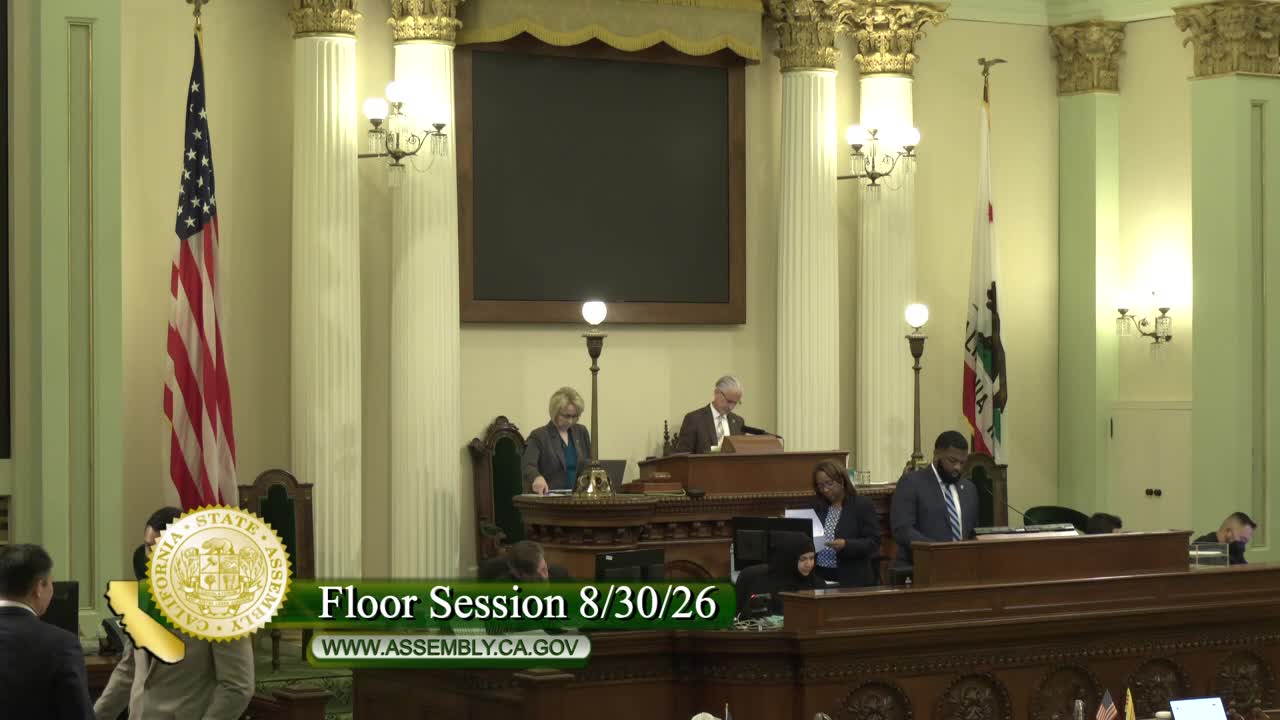
Bill Author

Bill Co-Author(s):