AB 2042: Civil actions: setting aside default or default judgment.
- Session Year: 2025-2026
- House: Assembly
- Latest Version Date: 2026-09-20
Current Status:
Passed
(2026-09-20: Chaptered by Secretary of State - Chapter 379, Statutes of 2026.)
Introduced
In Committee
Awaiting First Chamber Vote
Passed First Chamber
In Committee
Awaiting Second Chamber Vote
Passed Second Chamber
Enacted
(1)Existing law permits a defendant in a debt enforcement action, brought by a buyer of consumer debt who has obtained a default or default judgment against the defendant, to file a motion to set aside the default or default judgment and for leave to defend the action if the defendant did not receive actual notice of the action in time to defend against it. Existing law requires such a motion to be filed within 6 years after entry of the default or default judgment or 180 days after the first actual notice of the action, or, in the case of identity theft or mistaken identity, within a reasonable amount of time but in no case later than 180 days after the first actual notice of the action.
This bill would clarify that a defendant who did not receive actual notice may file a motion to set aside and for leave to defend even if the service of the summons of the action was lawfully effected.
(2)Existing law provides that if a copy of the summons and complaint cannot with reasonable diligence be personally delivered to the person to be served, the summons may be served by leaving a copy at the persons dwelling house, usual place of abode, usual place of business, or usual mailing address, in the presence of a person who is at least 18 years of age, and by thereafter mailing a copy of the summons and complaint as specified. Existing law also authorizes a summons in an action for unlawful detainer to be served by posting if the court is satisfied that the party to be served cannot with reasonable diligence be served in any authorized manner other than publication, and that other specified conditions are met. Existing law requires the proof of service of a summons to contain specified information and documentation. Beginning on January 1, 2027, existing law will define reasonable diligence, for purposes of service of process in specified civil cases, to mean attempting personal delivery of the summons and complaint, in good faith, on at least three occasions on three different days at three different times. Beginning on January 1, 2027, existing law will require the proof of service of a summons and complaint, if served personally, by substituted service, or by posting, if the summons is for an action for unlawful detainer of real property, to include at least one photograph, if such can be obtained without compromising the safety of the process server, of the site of the effectuated or attempted service and contain a readable stamp and global positioning system (GPS) coordinates indicating the date, time, and location of service. Beginning on January 1, 2027, existing law will also require a process server to provide a detailed statement on the proof of service, as specified, if there is no GPS or cellular signal available at the time and place of the effected or attempted service.
This bill would make nonsubstantive changes to this provision.
(3)Existing law prescribes methods for the service of a summons in a civil action. Under existing law, a party that was not served in accordance with those methods may file a motion to set aside or vacate a default or default judgment and for leave to defend the action or move for dismissal. The party making such a motion is required to proffer evidence that service was not lawfully effected. This proffer rebuts the presumption of facts stated in the process servers return and place the burden of proving by a preponderance of the evidence that service of the summons and complaint was lawful on the party seeking the default or default judgment. Existing law makes these provisions operative on January 1, 2027.
This bill would clarify that the provisions described above apply to service attempted or completed on or after January 1, 2027, and that those provisions do not alter a courts existing authority to determine a motion for relief from a judgment that involves a proof of service filed before January 1, 2027. The bill would also clarify that a party who is not served may move for dismissal as permitted by existing law.
(1)Existing law permits a defendant in a debt enforcement action, brought by a buyer of consumer debt who has obtained a default or default judgment against the defendant, to file a motion to set aside the default or default judgment and for leave to defend the action if the defendant did not receive actual notice of the action in time to defend against it. Existing law requires such a motion to be filed within 6 years after entry of the default or default judgment or 180 days after the first actual notice of the action, or, in the case of identity theft or mistaken identity, within a reasonable amount of time but in no case later than 180 days after the first actual notice of the action.
This bill would clarify that a defendant who did not receive actual notice may file a motion to set aside and for leave to defend even if the service of the summons of the action was lawfully effected.
(2)Existing law provides that if a copy of the summons and complaint cannot with reasonable diligence be personally delivered to the person to be served, the summons may be served by leaving a copy at the persons dwelling house, usual place of abode, usual place of business, or usual mailing address, in the presence of a person who is at least 18 years of age, and by thereafter mailing a copy of the summons and complaint as specified. Existing law also authorizes a summons in an action for unlawful detainer to be served by posting if the court is satisfied that the party to be served cannot with reasonable diligence be served in any authorized manner other than publication, and that other specified conditions are met. Existing law requires the proof of service of a summons to contain specified information and documentation. Beginning on January 1, 2027, existing law will define reasonable diligence, for purposes of service of process in specified civil cases, to mean attempting personal delivery of the summons and complaint, in good faith, on at least three occasions on three different days at three different times. Beginning on January 1, 2027, existing law will require the proof of service of a summons and complaint, if served personally, by substituted service, or by posting, if the summons is for an action for unlawful detainer of real property, to include at least one photograph, if such can be obtained without compromising the safety of the process server, of the site of the effectuated or attempted service and contain a readable stamp and global positioning system (GPS) coordinates indicating the date, time, and location of service. Beginning on January 1, 2027, existing law will also require a process server to provide a detailed statement on the proof of service, as specified, if there is no GPS or cellular signal available at the time and place of the effected or attempted service.
This bill would make nonsubstantive changes to this provision.
(3)Existing law prescribes methods for the service of a summons in a civil action. Under existing law, a party that was not served in accordance with those methods may file a motion to set aside or vacate a default or default judgment and for leave to defend the action or move for dismissal. The party making such a motion is required to proffer evidence that service was not lawfully effected. This proffer rebuts the presumption of facts stated in the process servers return and place the burden of proving by a preponderance of the evidence that service of the summons and complaint was lawful on the party seeking the default or default judgment. Existing law makes these provisions operative on January 1, 2027.
This bill would clarify that the provisions described above apply to any proof of service filed service attempted or completed on or after January 1, 2027, and that those provisions do not alter a courts existing authority to determine a motion for relief from a judgment that involves a proof of service filed before January 1, 2027. The bill would also clarify that a party who is not served may move for dismissal as permitted by existing law.
(1)Existing law permits a defendant in a debt enforcement action, brought by a buyer of consumer debt who has obtained a default or default judgment against the defendant, to file a motion to set aside the default or default judgment and for leave to defend the action if the defendant did not receive actual notice of the action in time to defend against it. Existing law requires such a motion to be filed within 6 years after entry of the default or default judgment or 180 days after the first actual notice of the action, or, in the case of identity theft or mistaken identity, within a reasonable amount of time but in no case later than 180 days after the first actual notice of the action.
This bill would clarify that a defendant who did not receive actual notice may file a motion to set aside and for leave to defend even if the service of the summons of the action was lawfully effected.
(2)Existing law provides that if a copy of the summons and complaint cannot with reasonable diligence be personally delivered to the person to be served, the summons may be served by leaving a copy at the persons dwelling house, usual place of abode, usual place of business, or usual mailing address, in the presence of a person who is at least 18 years of age, and by thereafter mailing a copy of the summons and complaint as specified. Existing law also authorizes a summons in an action for unlawful detainer to be served by posting if the court is satisfied that the party to be served cannot with reasonable diligence be served in any authorized manner other than publication, and that other specified conditions are met. Existing law requires the proof of service of a summons to contain specified information and documentation. Beginning on January 1, 2027, existing law will define reasonable diligence, for purposes of service of process in specified civil cases, to mean attempting personal delivery of the summons and complaint, in good faith, on at least three occasions on three different days at three different times. Beginning on January 1, 2027, existing law will require the proof of service of a summons and complaint, if served personally, by substituted service, or by posting, if the summons is for an action for unlawful detainer of real property, to include at least one photograph, if such can be obtained without compromising the safety of the process server, of the site of the effectuated or attempted service and contain a readable stamp and global positioning system (GPS) coordinates indicating the date, time, and location of service. Beginning on January 1, 2027, existing law will also require a process server to provide a detailed statement on the proof of service, as specified, if there is no GPS or cellular signal available at the time and place of the effected or attempted service.
This bill would make nonsubstantive changes to this provision.
(2)(3)Existing law prescribes methods for the service of a summons in a civil action. Under existing law, a party that was not served in accordance with those methods may file a motion to set aside or vacate a default or default judgment and for leave to defend the action or move for dismissal. The party making such a motion is required to proffer evidence that service was not lawfully effected. This proffer rebuts the presumption of facts stated in the process servers return and place the burden of proving by a preponderance of the evidence that service of the summons and complaint was lawful on the party seeking the default or default judgment. Existing law makes these provisions operative on January 1, 2027.
This bill would clarify that the provisions described above apply to any proof of service filed on or after January 1, 2027, and that those provisions do not alter a courts existing authority to determine a motion for relief from a judgment that involves a proof of service filed before January 1, 2027. The bill would also clarify that a party who is not served may move for dismissal as permitted by existing law.
(1)Existing law permits a defendant in a debt enforcement action, brought by a buyer of consumer debt who has obtained a default or default judgment against the defendant, to file a motion to set aside the default or default judgment and for leave to defend the action if the defendant did not receive actual notice of the action in time to defend against it. Existing law requires such a motion to be filed within 6 years after entry of the default or default judgment or 180 days after the first actual notice of the action, or, in the case of identity theft or mistaken identity, within a reasonable amount of time but in no case later than 180 days after the first actual notice of the action.
This bill would clarify that a defendant who did not receive actual notice may file a motion to set aside and for leave to defend even if the service of the summons of the action was lawfully effected.
(2)Existing law prescribes methods for the service of a summons in a civil action. Under existing law, a party that was not served in accordance with those methods may file a motion to set aside or vacate a default or default judgment and for leave to defend the action or move for dismissal. The party making such a motion is required to proffer evidence that service was not lawfully effected. This proffer rebuts the presumption of facts stated in the process servers return and place the burden of proving by a preponderance of the evidence that service of the summons and complaint was lawful on the party seeking the default or default judgment. Existing law makes these provisions operative on January 1, 2027.
This bill would clarify that the provisions described above apply to any proof of service filed on or after January 1, 2027, and that those provisions do not alter a courts existing authority to determine a motion for relief from a judgment that involves a proof of service filed before January 1, 2027. The bill would also clarify that a party who is not served may move for dismissal as permitted by existing law.
(a)(1)Notwithstanding Section 473.5 of the Code of Civil Procedure, if service of a summons was lawfully effected but has not resulted in actual notice to a person in time to defend an action brought by a debt buyer and a default or default judgment has been entered against the person in the action, the person may serve and file a notice of motion and motion to set aside the default or default judgment and for leave to defend the action.
(2)Except as provided in paragraph (3), the notice of motion shall be served and filed within a reasonable time, but in no event exceeding the earlier of:
(A)Six years after entry of the default or default judgment against the person.
(B)One hundred eighty days of the first actual notice of the action.
(3)(A)Notwithstanding paragraph (2), in the case of identity theft or mistaken identity, the notice of motion shall be served and filed within a reasonable time, but in no event exceeding 180 days of the first actual notice of the action.
(B)(i)In the case of identity theft, the person alleging that they are a victim of identity theft shall provide the court with either a copy of a Federal Trade Commission identity theft report or a copy of a police report filed by the person alleging that they are the victim of an identity theft crime, including, but not limited to, a violation of Section 530.5 of the Penal Code, for the specific debt associated with the judgment.
(ii)In the case of mistaken identity, the moving party shall provide relevant information or documentation to support the claim that they are not the party named in the judgment or is not the person who incurred or owes the debt.
(b)A notice of motion to set aside a default or default judgment and for leave to defend the action shall designate as the time for making the motion a date prescribed by Section 1005 of the Code of Civil Procedure, and it shall be accompanied by an affidavit stating under oath that the persons lack of actual notice in time to defend the action was not caused by their avoidance of service or inexcusable neglect. The person shall serve and file with the notice a copy of the answer, motion, or other pleading proposed to be filed in the action. Either party may introduce, and the court may consider, evidence in support of its motion or opposition, including evidence relating to the process server who appears on the proof of service of the summons and complaint.
(c)Upon a finding by the court that the motion was made within the period permitted by subdivision (a) and that the persons lack of actual notice in time to defend the action was not caused by their avoidance of service or inexcusable neglect, the court may set aside the default or default judgment on whatever terms as may be just and allow the party to defend the action. If the validity of the judgment is not challenged, the court may select an appropriate remedy other than setting aside the default or default judgment.
(d)This section shall apply to a default or default judgment entered on or after January 1, 2010, except in the case of identity theft or mistaken identity, in which case this section shall apply regardless of the date of the default or default judgment.
(e)This section shall not limit the equitable authority of the court or other available remedies under law.
SEC. 2.Section 417.10 of the Code of Civil Procedure, as added by Section 9 of Chapter 563 of the Statutes of 2025, is amended to read:417.10.Proof that a summons was served on a person within this state shall be made:
(a)If served under Section 415.10, 415.20, 415.30, or 415.45, by the affidavit of the person making the service showing the time, place, and manner of service and facts showing that the service was made in accordance with this chapter. The affidavit shall recite or in other manner show the name of any person to whom a copy of the summons and complaint were delivered, and, if appropriate, the persons title or the capacity in which the person is served, and that the notice required by Section 412.30 appeared on the copy of the summons served, if in fact it did appear.
(1)If served under Section 415.10, 415.20, or 415.45, the proof of service shall include one or more photographs of the site of each effected or attempted service of the summons and complaint.
(A)Each photograph shall contain a readable stamp that establishes and automatically records the date, time, and global positioning system (GPS) or equivalent coordinates of the effected or attempted service.
(B)If no GPS, cellular, or equivalent signal is available at the time and place of an effected or attempted service, the process server shall provide a detailed statement on or with the proof of service explaining the reason for the lack of a readable GPS or equivalent stamp on the photograph.
(2)(A)If the site of the effected or attempted service is a dwelling place or abode, for each effected or attempted service of the summons and complaint, at least one of the photographs required by paragraph (1) shall show the door, or, if the door is not reasonably accessible, the entrance of the house, apartment, or other dwelling place of the person to be served.
(B)If the site of the effected or attempted service is a place of business, for each effected or attempted service of the summons and complaint, at least one of the photographs required by paragraph (1) shall show the door, or, if the door is not reasonably accessible, the entrance of the specific office or other place of business of the person being served.
(C)For purposes of subparagraphs (A) and (B), if the door is not reasonably accessible and the process server takes a photograph of the entrance instead, the process server shall explain with specificity on or with the proof of service why the door was not accessible.
(3)If service is made by mail pursuant to Section 415.30, proof of service shall include the acknowledgment of receipt of summons in the form provided by that section or other written acknowledgment of receipt of summons satisfactory to the court.
(4)Notwithstanding paragraph (1), a photograph is not required if, in the reasonable judgment of the process server, taking a photograph would compromise the process servers safety. In such circumstances, the process server shall document the effected or attempted service on or with the proof of service and provide a detailed statement explaining why taking a photograph would have compromised their safety.
(5)The photograph required by paragraph (1) shall be taken by the process server as closely as practicable to the time of effecting or attempting service.
(b)If served by publication pursuant to Section 415.50, by the affidavit of the publisher or printer, or the publishers or printers foreperson or principal clerk, showing the time and place of publication, and an affidavit showing the time and place a copy of the summons and of the complaint were mailed to the party to be served, if in fact mailed.
(c)If served pursuant to another law of this state, in the manner prescribed by that law or, if no manner is prescribed, in the manner prescribed by this section for proof of a similar manner of service.
(d)By the written admission of the party.
(e)If served by posting pursuant to Section 415.45, by the affidavit of the person who posted the premises, showing the time and place of posting, and an affidavit showing the time and place copies of the summons and of the complaint were mailed to the party to be served, if in fact mailed.
(f)All proof of personal service shall be made on a form adopted by the Judicial Council.
(g)This section shall become operative on January 1, 2027.
SEC. 3.Section 473.2 of the Code of Civil Procedure is amended to read:473.2.(a)A party that was not served with a summons and complaint in accordance with this chapter may file and serve a motion to set aside or vacate the default or default judgment and for leave to defend the action or for dismissal as permitted by law.
(b)(1)A party moving to set aside or vacate a default or a default judgment pursuant to subdivision (a) shall proffer evidence, through a sworn affidavit or otherwise, that service was not lawfully effected. Proffering evidence that service was not lawfully effected rebuts a presumption of the facts stated in the process servers return.
(2)If a process server files their return before the operative date of this section, the absence of the photograph required by Section 417.10 shall not by itself render the proof of service unlawful or insufficient.
(c)In responding to a motion that is filed pursuant to this section and that complies with subdivision (b), the party seeking a default or default judgment has the burden of proving by a preponderance of the evidence that service of the summons and complaint was lawful.
(d)In deciding a motion filed pursuant to subdivision (a), the court shall take evidence as to the lawfulness of the service of process and shall not deny a reasonable request by either party to conduct a hearing and permit oral testimony.
(e)This section does not limit any other remedies available under law.
(f)This section shall apply to service attempted or completed on or after January 1, 2027.
(g)Nothing in this section alters a courts existing authority to adjudicate a motion made pursuant to Section 473, or otherwise to vacate or set aside a judgment, with respect to a proof of service filed before January 1, 2027.
(a)(1)Notwithstanding Section 473.5 of the Code of Civil Procedure, if service of a summons was lawfully effected but has not resulted in actual notice to a person in time to defend an action brought by a debt buyer and a default or default judgment has been entered against the person in the action, the person may serve and file a notice of motion and motion to set aside the default or default judgment and for leave to defend the action.
(2)Except as provided in paragraph (3), the notice of motion shall be served and filed within a reasonable time, but in no event exceeding the earlier of:
(A)Six years after entry of the default or default judgment against the person.
(B)One hundred eighty days of the first actual notice of the action.
(3)(A)Notwithstanding paragraph (2), in the case of identity theft or mistaken identity, the notice of motion shall be served and filed within a reasonable time, but in no event exceeding 180 days of the first actual notice of the action.
(B)(i)In the case of identity theft, the person alleging that they are a victim of identity theft shall provide the court with either a copy of a Federal Trade Commission identity theft report or a copy of a police report filed by the person alleging that they are the victim of an identity theft crime, including, but not limited to, a violation of Section 530.5 of the Penal Code, for the specific debt associated with the judgment.
(ii)In the case of mistaken identity, the moving party shall provide relevant information or documentation to support the claim that they are not the party named in the judgment or is not the person who incurred or owes the debt.
(b)A notice of motion to set aside a default or default judgment and for leave to defend the action shall designate as the time for making the motion a date prescribed by Section 1005 of the Code of Civil Procedure, and it shall be accompanied by an affidavit stating under oath that the persons lack of actual notice in time to defend the action was not caused by their avoidance of service or inexcusable neglect. The person shall serve and file with the notice a copy of the answer, motion, or other pleading proposed to be filed in the action. Either party may introduce, and the court may consider, evidence in support of its motion or opposition, including evidence relating to the process server who appears on the proof of service of the summons and complaint.
(c)Upon a finding by the court that the motion was made within the period permitted by subdivision (a) and that the persons lack of actual notice in time to defend the action was not caused by their avoidance of service or inexcusable neglect, the court may set aside the default or default judgment on whatever terms as may be just and allow the party to defend the action. If the validity of the judgment is not challenged, the court may select an appropriate remedy other than setting aside the default or default judgment.
(d)This section shall apply to a default or default judgment entered on or after January 1, 2010, except in the case of identity theft or mistaken identity, in which case this section shall apply regardless of the date of the default or default judgment.
(e)This section shall not limit the equitable authority of the court or other available remedies under law.
SEC. 2.Section 417.10 of the Code of Civil Procedure, as added by Section 9 of Chapter 563 of the Statutes of 2025, is amended to read:417.10.Proof that a summons was served on a person within this state shall be made:
(a)If served under Section 415.10, 415.20, 415.30, or 415.45, by the affidavit of the person making the service showing the time, place, and manner of service and facts showing that the service was made in accordance with this chapter. The affidavit shall recite or in other manner show the name of any person to whom a copy of the summons and complaint were delivered, and, if appropriate, the persons title or the capacity in which the person is served, and that the notice required by Section 412.30 appeared on the copy of the summons served, if in fact it did appear.
(1)If served under Section 415.10, 415.20, or 415.45, the proof of service shall include one or more photographs of the site of each effected or attempted service of the summons and complaint.
(A)Each photograph shall contain a readable stamp that establishes and automatically records the date, time, and global positioning system (GPS) or equivalent coordinates of the effected or attempted service.
(B)If no GPS, cellular, or equivalent signal is available at the time and place of an effected or attempted service, the process server shall provide a detailed statement on or with the proof of service explaining the reason for the lack of a readable GPS or equivalent stamp on the photograph.
(2)(A)If the site of the effected or attempted service is a dwelling place or abode, for each effected or attempted service of the summons and complaint, at least one of the photographs required by paragraph (1) shall show the door, or, if the door is not reasonably accessible, the entrance of the house, apartment, or other dwelling place of the person to be served.
(B)If the site of the effected or attempted service is a place of business, for each effected or attempted service of the summons and complaint, at least one of the photographs required by paragraph (1) shall show the door, or, if the door is not reasonably accessible, the entrance of the specific office or other place of business of the person being served.
(C)For purposes of subparagraphs (A) and (B), if the door is not reasonably accessible and the process server takes a photograph of the entrance instead, the process server shall explain with specificity on or with the proof of service why the door was not accessible.
(3)If service is made by mail pursuant to Section 415.30, proof of service shall include the acknowledgment of receipt of summons in the form provided by that section or other written acknowledgment of receipt of summons satisfactory to the court.
(4)Notwithstanding paragraph (1), a photograph is not required if, in the reasonable judgment of the process server, taking a photograph would compromise the process servers safety. In such circumstances, the process server shall document the effected or attempted service on or with the proof of service and provide a detailed statement explaining why taking a photograph would have compromised their safety.
(5)The photograph required by paragraph (1) shall be taken by the process server as closely as practicable to the time of effecting or attempting service.
(b)If served by publication pursuant to Section 415.50, by the affidavit of the publisher or printer, or the publishers or printers foreperson or principal clerk, showing the time and place of publication, and an affidavit showing the time and place a copy of the summons and of the complaint were mailed to the party to be served, if in fact mailed.
(c)If served pursuant to another law of this state, in the manner prescribed by that law or, if no manner is prescribed, in the manner prescribed by this section for proof of a similar manner of service.
(d)By the written admission of the party.
(e)If served by posting pursuant to Section 415.45, by the affidavit of the person who posted the premises, showing the time and place of posting, and an affidavit showing the time and place copies of the summons and of the complaint were mailed to the party to be served, if in fact mailed.
(f)All proof of personal service shall be made on a form adopted by the Judicial Council.
(g)This section shall become operative on January 1, 2027.
SEC. 3.Section 473.2 of the Code of Civil Procedure is amended to read:473.2.(a)A party that was not served with a summons and complaint in accordance with this chapter may file and serve a motion to set aside or vacate the default or default judgment and for leave to defend the action or for dismissal as permitted by law.
(b)(1)A party moving to set aside or vacate a default or a default judgment pursuant to subdivision (a) shall proffer evidence, through a sworn affidavit or otherwise, that service was not lawfully effected. Proffering evidence that service was not lawfully effected rebuts a presumption of the facts stated in the process servers return.
(2)If a process server files their return before the operative date of this section, the absence of the photograph required by Section 417.10 shall not by itself render the proof of service unlawful or insufficient.
(c)In responding to a motion that is filed pursuant to this section and that complies with subdivision (b), the party seeking a default or default judgment has the burden of proving by a preponderance of the evidence that service of the summons and complaint was lawful.
(d)In deciding a motion filed pursuant to subdivision (a), the court shall take evidence as to the lawfulness of the service of process and shall not deny a reasonable request by either party to conduct a hearing and permit oral testimony.
(e)This section does not limit any other remedies available under law.
(f)This section shall apply to a proof of service filed service attempted or completed on or after January 1, 2027.
(g)Nothing in this section alters a courts existing authority to adjudicate a motion made pursuant to Section 473, or otherwise to vacate or set aside a judgment, with respect to a proof of service filed before January 1, 2027.
(a)(1)Notwithstanding Section 473.5 of the Code of Civil Procedure, if service of a summons was lawfully effected but has not resulted in actual notice to a person in time to defend an action brought by a debt buyer and a default or default judgment has been entered against the person in the action, the person may serve and file a notice of motion and motion to set aside the default or default judgment and for leave to defend the action.
(2)Except as provided in paragraph (3), the notice of motion shall be served and filed within a reasonable time, but in no event exceeding the earlier of:
(A)Six years after entry of the default or default judgment against the person.
(B)One hundred eighty days of the first actual notice of the action.
(3)(A)Notwithstanding paragraph (2), in the case of identity theft or mistaken identity, the notice of motion shall be served and filed within a reasonable time, but in no event exceeding 180 days of the first actual notice of the action.
(B)(i)In the case of identity theft, the person alleging that they are a victim of identity theft shall provide the court with either a copy of a Federal Trade Commission identity theft report or a copy of a police report filed by the person alleging that they are the victim of an identity theft crime, including, but not limited to, a violation of Section 530.5 of the Penal Code, for the specific debt associated with the judgment.
(ii)In the case of mistaken identity, the moving party shall provide relevant information or documentation to support the claim that they are not the party named in the judgment or is not the person who incurred or owes the debt.
(b)A notice of motion to set aside a default or default judgment and for leave to defend the action shall designate as the time for making the motion a date prescribed by Section 1005 of the Code of Civil Procedure, and it shall be accompanied by an affidavit stating under oath that the persons lack of actual notice in time to defend the action was not caused by their avoidance of service or inexcusable neglect. The person shall serve and file with the notice a copy of the answer, motion, or other pleading proposed to be filed in the action. Either party may introduce, and the court may consider, evidence in support of its motion or opposition, including evidence relating to the process server who appears on the proof of service of the summons and complaint.
(c)Upon a finding by the court that the motion was made within the period permitted by subdivision (a) and that the persons lack of actual notice in time to defend the action was not caused by their avoidance of service or inexcusable neglect, the court may set aside the default or default judgment on whatever terms as may be just and allow the party to defend the action. If the validity of the judgment is not challenged, the court may select an appropriate remedy other than setting aside the default or default judgment.
(d)This section shall apply to a default or default judgment entered on or after January 1, 2010, except in the case of identity theft or mistaken identity, in which case this section shall apply regardless of the date of the default or default judgment.
(e)This section shall not limit the equitable authority of the court or other available remedies under law.
SEC. 2.Section 417.10 of the Code of Civil Procedure, as added by Section 9 of Chapter 563 of the Statutes of 2025, is amended to read:417.10.Proof that a summons was served on a person within this state shall be made:
(a)If served under Section 415.10, 415.20, 415.30, or 415.45, by the affidavit of the person making the service showing the time, place, and manner of service and facts showing that the service was made in accordance with this chapter. The affidavit shall recite or in other manner show the name of any person to whom a copy of the summons and complaint were delivered, and, if appropriate, the persons title or the capacity in which the person is served, and that the notice required by Section 412.30 appeared on the copy of the summons served, if in fact it did appear.
(1)If served under Section 415.10, 415.20, or 415.45, the proof of service shall include one or more photographs of the site of each effected or attempted service of the summons and complaint.
(A)Each photograph shall contain a readable stamp that establishes and automatically records the date, time, and global positioning system (GPS) or equivalent coordinates of the effected or attempted service.
(B)If no GPS, cellular, or equivalent signal is available at the time and place of an effected or attempted service, the process server shall provide a detailed statement on or with the proof of service explaining the reason for the lack of a readable GPS or equivalent stamp on the photograph.
(2)(A)If the site of the effected or attempted service is a dwelling place or abode, for each effected or attempted service of the summons and complaint, at least one of the photographs required by paragraph (1) shall show the door, or, if the door is not reasonably accessible, the entrance of the house, apartment, or other dwelling place of the person to be served.
(B)If the site of the effected or attempted service is a place of business, for each effected or attempted service of the summons and complaint, at least one of the photographs required by paragraph (1) shall show the door, or, if the door is not reasonably accessible, the entrance of the specific office or other place of business of the person being served.
(C)For purposes of subparagraphs (A) and (B), if the door is not reasonably accessible and the process server takes a photograph of the entrance instead, the process server shall explain with specificity on or with the proof of service why the door was not accessible.
(3)If service is made by mail pursuant to Section 415.30, proof of service shall include the acknowledgment of receipt of summons in the form provided by that section or other written acknowledgment of receipt of summons satisfactory to the court.
(4)Notwithstanding paragraph (1), a photograph is not required if, in the reasonable judgment of the process server, taking a photograph would compromise the process servers safety. In such circumstances, the process server shall document the effected or attempted service on or with the proof of service and provide a detailed statement explaining why taking a photograph would have compromised their safety.
(5)The photograph required by paragraph (1) shall be taken by the process server as closely as practicable to the time of effecting or attempting service.
(b)If served by publication pursuant to Section 415.50, by the affidavit of the publisher or printer, or the publishers or printers foreperson or principal clerk, showing the time and place of publication, and an affidavit showing the time and place a copy of the summons and of the complaint were mailed to the party to be served, if in fact mailed.
(c)If served pursuant to another law of this state, in the manner prescribed by that law or, if no manner is prescribed, in the manner prescribed by this section for proof of a similar manner of service.
(d)By the written admission of the party.
(e)If served by posting pursuant to Section 415.45, by the affidavit of the person who posted the premises, showing the time and place of posting, and an affidavit showing the time and place copies of the summons and of the complaint were mailed to the party to be served, if in fact mailed.
(f)All proof of personal service shall be made on a form adopted by the Judicial Council.
(g)This section shall become operative on January 1, 2027.
SEC. 2.SEC. 3.Section 473.2 of the Code of Civil Procedure is amended to read:473.2.(a)A party that was not served with a summons and complaint in accordance with this chapter may file and serve a motion to set aside or vacate the default or default judgment and for leave to defend the action or move for dismissal as permitted by law.
(b)(1)A party moving to set aside or vacate a default or a default judgment pursuant to subdivision (a) shall proffer evidence, through a sworn affidavit or otherwise, that service was not lawfully effected. Proffering evidence that service was not lawfully effected rebuts a presumption of the facts stated in the process servers return.
(2)If a process server files their return before the operative date of this section, the absence of the photograph required by Section 417.10 shall not by itself render the proof of service unlawful or insufficient.
(c)In responding to a motion that is filed pursuant to this section and that complies with subdivision (b), the party seeking a default or default judgment has the burden of proving by a preponderance of the evidence that service of the summons and complaint was lawful.
(d)In deciding a motion filed pursuant to subdivision (a), the court shall take evidence as to the lawfulness of the service of process and shall not deny a reasonable request by either party to conduct a hearing and permit oral testimony.
(e)This section does not limit any other remedies available under law.
(f)This section shall apply to a proof of service filed on or after January 1, 2027.
(g)Nothing in this section alters a courts existing authority to adjudicate a motion made pursuant to Section 473, or otherwise to vacate or set aside a judgment, with respect to a proof of service filed before January 1, 2027.
(a)(1)Notwithstanding Section 473.5 of the Code of Civil Procedure, if service of a summons was lawfully effected but has not resulted in actual notice to a person in time to defend an action brought by a debt buyer and a default or default judgment has been entered against the person in the action, the person may serve and file a notice of motion and motion to set aside the default or default judgment and for leave to defend the action.
(2)Except as provided in paragraph (3), the notice of motion shall be served and filed within a reasonable time, but in no event exceeding the earlier of:
(A)Six years after entry of the default or default judgment against the person.
(B)One hundred eighty days of the first actual notice of the action.
(3)(A)Notwithstanding paragraph (2), in the case of identity theft or mistaken identity, the notice of motion shall be served and filed within a reasonable time, but in no event exceeding 180 days of the first actual notice of the action.
(B)(i)In the case of identity theft, the person alleging that they are a victim of identity theft shall provide the court with either a copy of a Federal Trade Commission identity theft report or a copy of a police report filed by the person alleging that they are the victim of an identity theft crime, including, but not limited to, a violation of Section 530.5 of the Penal Code, for the specific debt associated with the judgment.
(ii)In the case of mistaken identity, the moving party shall provide relevant information or documentation to support the claim that they are not the party named in the judgment or is not the person who incurred or owes the debt.
(b)A notice of motion to set aside a default or default judgment and for leave to defend the action shall designate as the time for making the motion a date prescribed by Section 1005 of the Code of Civil Procedure, and it shall be accompanied by an affidavit stating under oath that the persons lack of actual notice in time to defend the action was not caused by their avoidance of service or inexcusable neglect. The person shall serve and file with the notice a copy of the answer, motion, or other pleading proposed to be filed in the action. Either party may introduce, and the court may consider, evidence in support of its motion or opposition, including evidence relating to the process server who appears on the proof of service of the summons and complaint.
(c)Upon a finding by the court that the motion was made within the period permitted by subdivision (a) and that the persons lack of actual notice in time to defend the action was not caused by their avoidance of service or inexcusable neglect, the court may set aside the default or default judgment on whatever terms as may be just and allow the party to defend the action. If the validity of the judgment is not challenged, the court may select an appropriate remedy other than setting aside the default or default judgment.
(d)This section shall apply to a default or default judgment entered on or after January 1, 2010, except in the case of identity theft or mistaken identity, in which case this section shall apply regardless of the date of the default or default judgment.
(e)This section shall not limit the equitable authority of the court or other available remedies under law.
SEC. 2.Section 473.2 of the Code of Civil Procedure is amended to read:473.2.(a)A party that was not served with a summons and complaint in accordance with this chapter may file and serve a motion to set aside or vacate the default or default judgment and for leave to defend the action or to move for dismissal. dismissal as permitted by law.
(b)(1)A party moving to set aside or vacate a default or a default judgment pursuant to subdivision (a) shall proffer evidence, through a sworn affidavit or otherwise, that service was not lawfully effected. Proffering evidence that service was not lawfully effected rebuts a presumption of the facts stated in the process servers return.
(2)If a process server files their return before the operative date of this section, the absence of the photograph required by Section 417.10 shall not by itself render the proof of service unlawful or insufficient.
(c)In responding to a motion that is filed pursuant to this section and that complies with subdivision (b), the party seeking a default or default judgment has the burden of proving by a preponderance of the evidence that service of the summons and complaint was lawful.
(d)In deciding a motion filed pursuant to subdivision (a), the court shall take evidence as to the lawfulness of the service of process and shall not deny a reasonable request by either party to conduct a hearing and permit oral testimony.
(e)This section does not limit any other remedies available under law.
(f)This section shall become operative on apply to a proof of service filed on or after January 1, 2027.
(g)Nothing in this section alters a courts existing authority to adjudicate a motion made pursuant to Section 473, or to vacate or set aside a judgment, with respect to a proof of service filed before January 1, 2027.
|
Date
|
Status
|
|---|---|
| Sep 20, 2026 | Chaptered by Secretary of State - Chapter 379, Statutes of 2026. |
| Sep 20, 2026 | Approved by the Governor. |
| Aug 24, 2026 | Enrolled and presented to the Governor at 4:30 p.m. |
| Aug 17, 2026 | Senate amendments concurred in. To Engrossing and Enrolling. (Ayes 75. Noes 0. Page 6200.). |
| Aug 17, 2026 | Senate amendments concurred in. To Engrossing and Enrolling. |
| Jul 2, 2026 | In Assembly. Concurrence in Senate amendments pending. |
| Jul 2, 2026 | Read third time. Passed. Ordered to the Assembly. (Ayes 37. Noes 0.). |
| Jul 2, 2026 | Read third time. Passed. Ordered to the Assembly. (Ayes 37. Noes 0. Page 5188.). |
| Jun 25, 2026 | Read second time. Ordered to Consent Calendar. |
| Jun 24, 2026 | From committee: Do pass. To Consent Calendar. (Ayes 13. Noes 0.) (June 23). |
| Jun 10, 2026 | From committee chair, with author's amendments: Amend, and re-refer to committee. Read second time, amended, and re-referred to Com. on JUD. |
| Jun 5, 2026 | In committee: Set, first hearing. Hearing canceled at the request of author. |
| May 13, 2026 | Referred to Com. on JUD. |
| May 5, 2026 | In Senate. Read first time. To Com. on RLS. for assignment. |
| May 4, 2026 | Read third time. Passed. Ordered to the Senate. (Ayes 76. Noes 0.) |
| May 4, 2026 | Read third time. Passed. Ordered to the Senate. (Ayes 76. Noes 0. Page 4899.) |
| May 4, 2026 | Read third time. Passed. Ordered to the Senate. |
| Apr 9, 2026 | Read second time. Ordered to third reading. |
| Apr 8, 2026 | From committee: Do pass. (Ayes 12. Noes 0.) (April 7). |
| Mar 17, 2026 | Re-referred to Com. on JUD. |
| Mar 16, 2026 | In committee: Hearing postponed by committee. |
| Mar 16, 2026 | From committee chair, with author's amendments: Amend, and re-refer to Com. on JUD. Read second time and amended. |
| Mar 2, 2026 | Referred to Com. on JUD. |
| Feb 18, 2026 | From printer. May be heard in committee March 20. |
| Feb 17, 2026 | Read first time. To print. |
|
Date
|
Description
|
Location
|
Votes
|
|
|---|---|---|---|---|
| Aug 17, 2026 | AB 2042 Kalra Concurrence in Senate Amendments | Assembly Floor |
Passed |
|
| Jul 2, 2026 | Consent Calendar 2nd AB2042 Kalra | Senate Floor |
Passed |
|
| Jun 23, 2026 | Do pass and be ordered to the Consent Calendar | Senate Standing Committee on Judiciary |
Passed |
|
| May 4, 2026 | AB 2042 Kalra Assembly Third Reading | Assembly Floor |
Passed |
|
| Apr 7, 2026 | Do pass. | Assembly Standing Committee on Judiciary |
Passed |
This list shows positions taken on this bill by organizations on the date displayed, which is linked to the original source.
Positions by individuals are not included.
|
Organization
|
Position
|
Date
|
|---|---|---|
| California Apartment Association | ** Support | |
| California Low-Income Consumer Coalition | ** Support | |
| California Process Servers Association | ** Against |
CONCURRENCE IN SENATE AMENDMENTS
CSA1 Bill Id:AB 2042
Author:(Kalra)
As Amended Ver:June 10, 2026
Majority vote
SUMMARY
Makes technical amendments and non-substantive changes to clarify specified provisions of the Service of Process Accountability, Reform, and Equity (SPARE) Act.
Major Provisions
- Clarifies that a party that was not served in accordance with the SPARE Act may seek dismissal of a case, as permitted by law.
- Clarifies the bill applies to service attempted or completed after January 1, 2027.
- Clarifies that nothing in the SPARE Act alters a court′s existing authority to adjudicate a motion made regarding mistaken pleadings, or otherwise to vacate or set aside a judgment, with respect to a proof of service filed before January 1, 2027.
Senate Amendments
Clarify the bill′s provisions apply only to service attempted or completed after January 1, 2027.
COMMENTS
Improper or fraudulent service of process undermines one of the most basic principles of due process: the right of a defendant to receive service and be heard. When service is invalid, defendants are effectively stripped of their rights, unable to defend themselves or their property in court, leading to judgments without their knowledge, participation, or consent. The California Supreme Court has recognized the systemic nature of this injustice, particularly in debt collection and unlawful detainer actions, where improper service is so widespread it has earned the name "sewer service" – so denominated because the "server throws the documents ′down the sewer′ and then falsifies its affidavit of service." (California Capital Ins. Co. v. Hoehn (2024) 17 Cal.5th 207, 217, quoting Fed. Trade Com., Repairing a Broken System: Protecting Consumers in Debt Collection Litigation and Arbitration (July 2010) p. 8, fn. 22, https://www.ftc.gov/sites/default/files/documents/reports/federal-trade-commission-bureau-consumer-protection-staff-report-repairing-broken-system-protecting/debtcollectionreport.pdf.)
Because of the scale and impact of fraudulent service, the Legislature enacted AB 747 (Kalra) Chapter. 563, Statutes of 2025, to address this "sewer service" problem. Among other things, the bill strengthened procedural protections for defendants by increasing accountability for process servers, and enhanced post-judgment relief when parties are unlawfully served. However, since the bill′s passage, stakeholders have suggested technical amendments to clarify the bill′s intent and existing law. This bill has been drafted to address those concerns and ensure the true intent of the SPARE Act is achieved.
This bill addresses stakeholder concerns in three ways. First, there were concerns that the SPARE Act created a new basis for dismissal in civil cases where a party was improperly served. Specifically, stakeholders opined that the Act could suggest that parties could seek dismissal of a case for improper service alone, which is contrary to the author′s original intent. The bill addresses this issue by clarifying that an improperly served party may serve a motion to set aside or vacate the default or default judgment and for leave to defend the action or for dismissal as permitted by law. In other words, improperly served parties seeking to vacate or set aside a default judgment can move to dismiss the case on its merits, just like any other properly served party.
Second, the bill clarifies that the SPARE Act′s provisions related to how an improperly served party may obtain relief after a default or default judgment apply to service attempted or completed on or after January 1, 2027.
Finally, bill clarifies that the SPARE Act did not alter existing law under the Fair Debt Buying Practices Act with respect to lawsuits that are lawfully served. Currently, the Fair Debt Buying Practices Act allows a defendant, in a debt collection suit brought by debt-buyer, to file a motion to set aside default or default judgment and for leave to defend the action if they did not receive actual notice in time to defend the lawsuit. (Civil Code Section 1788.61 (a).) This bill would clarify that a defendant who did not receive actual notice may still do so even if the service of the summons of the action was lawfully affected.
According to the Author
Proper service of summons and complaints is a fundamental requirement of due process and ensures defendants are notified of a claim against them so they can properly prepare a defense. To address concerns around fraudulent service, the Legislature passed AB 747, which modernized and standardized service of process by requiring evidence of personal and substitute service, defining reasonable diligence when attempting personal service, and clarifying the timing and method of challenging defective service.
However, input from stakeholders since the bill′s passage has suggested that clarifying changes are needed. As such, AB 2042 provides clearer guidance to the courts as it relates to the implementation of AB 747 (Kalra, Chapter 563, Statutes of 2025). Specifically, the bill clarifies AB 747 does not create a new basis for dismissal upon the vacating or setting aside of a default judgment, does not alter a court′s existing authority with respect to cases filed before January 1, 2027, and does not alter the Fair Debt Buying Practices Act with respect to lawsuits that were lawfully served.
Arguments in Support
This bill is supported by the California Low-Income Consumer Coalition. The Coalition writes:
Last year′s SPARE Act addressed the pernicious and long-standing problem of fraudulent service of process, a practice that contributes to over 90% of debt collection defendants not responding to lawsuits against them. The Act created a clear standard for effecting and proving lawful service and codified California appellate case law that allows a Defendant to challenge at any time a judgment obtained without proper service (i.e., there is no time limit on when a person can ask a court to vacate a judgment obtained through unlawful service of process). The Act also codified existing case law that clarifies the procedure for defendants to follow when seeking to vacate judgments against them in cases when they were never served with the lawsuit.
AB 2042 specifies that AB 747′s procedure for defendants to vacate judgments obtained without lawful services applies only to proofs of service filed after the effective date of AB 747 (January 1, 2027).
AB 2042 also includes amendments designed to facilitate implementation of the bill by the
Judicial Council of California.
This bill also enjoys the support of the California Apartment Association, who similarly state that AB 2042 "makes clear in the law that a party who was not served with a summons and complaint in accordance with the law may file and serve a motion to set aside or vacate the default or default judgment and for leave to defend the action or move for dismissal as permitted by law." The Association further posits that the bill "ensure that the appropriate remedy for improper service is to set aside the default or quash service—not to dismiss the case outright."
Arguments in Opposition
The California Process Servers Association is opposed to this bill unless it is amended because the Association believes the bill would have unintended consequences as it relates to unlawful detainer actions and would effectively remove the presumption in existing law protecting a registered process server′s sworn return. Specifically, the Association states:
"AB 2042 is described as guidance for implementing last year′s AB 747 (Kalra) as it relates to consumer debt. But the section it amends — Code of Civil Procedure section 473.2 — governs the service of a summons in a civil action generally. Its [sic] set-aside, burden-shift, mandatory-hearing, and dismissal machinery reaches every civil default judgment in California, including every unlawful detainer."
[…]
"Unlawful detainer is a summary proceeding built as the lawful alternative to self-help eviction, with up to six independent statutory notice events between the termination notice and the sheriff′s posting. Applied there, this framework lets a bare, uncorroborated proffer — years or decades after judgment, with no outer time limit — compel a mandatory evidentiary hearing, shift the burden of proof onto the party who already won, and expose a landlord who lawfully executed a judgment to retroactive wrongful-eviction liability because of a single claimed technical deficiency in a proof of service. It also strips the practical effect of Evidence Code section 647 — the forty-eight-year-old presumption protecting the registered process server′s sworn return"
According to the Association, the following two amendments would resolve their concerns: “(1) an express exclusion of unlawful detainer proceedings from the section 473.2 dismissal mechanism — a single new subdivision (h) providing that the section does not apply to proceedings brought pursuant to Chapter 4 (commencing with Section 1159) of Title 3 of Part 3; and (2) an express preservation of Evidence Code section 647′s classification for the sworn return of a registered process server.”
FISCAL COMMENTS
None
VOTES:
ASM JUDICIARY: 12-0-0
YES: Kalra, Macedo, Lee, Bryan, Connolly, Dixon, Harabedian, Pacheco, Papan, Sanchez, Stefani, Zbur
ASSEMBLY FLOOR: 76-0-4
YES: Addis, Aguiar-Curry, Ahrens, Alanis, Alvarez, Ávila Farías, Bains, Bauer-Kahan, Berman, Boerner, Bonta, Bryan, Calderon, Carrillo, Castillo, Connolly, Davies, DeMaio, Dixon, Elhawary, Ellis, Flora, Fong, Gabriel, Gallagher, Garcia, Gipson, Jeff Gonzalez, Mark González, Hadwick, Haney, Harabedian, Hart, Hoover, Irwin, Jackson, Johnson, Kalra, Krell, Lackey, Lee, Lowenthal, Macedo, McKinnor, Muratsuchi, Nguyen, Ortega, Pacheco, Papan, Patel, Patterson, Pellerin, Petrie-Norris, Quirk-Silva, Ramos, Ransom, Celeste Rodriguez, Michelle Rodriguez, Rogers, Blanca Rubio, Sanchez, Schiavo, Schultz, Sharp-Collins, Solache, Soria, Stefani, Ta, Tangipa, Valencia, Wallis, Ward, Wicks, Wilson, Zbur, Rivas
ABS, ABST OR NV: Arambula, Bennett, Caloza, Chen
SENATE FLOOR: 37-0-3
YES: Allen, Archuleta, Arreguín, Ashby, Becker, Blakespear, Cabaldon, Caballero, Cervantes, Choi, Cortese, Dahle, Durazo, Gonzalez, Grayson, Grove, Hurtado, Jones, Laird, Limón, McGuire, McNerney, Menjivar, Niello, Ochoa Bogh, Padilla, Pérez, Reyes, Seyarto, Smallwood-Cuevas, Stern, Strickland, Umberg, Valladares, Wahab, Weber Pierson, Wiener
ABS, ABST OR NV: Alvarado-Gil, Richardson, Rubio
UPDATED
VERSION: June 10, 2026
CONSULTANT: Kristian Wright / JUD. / (916) 319-2334, Manuela Boucher / JUD. / (916) 319-2334 FN: 0003285
SENATE RULES COMMITTEE Office of Senate Floor Analyses (916) 651-4171 | AB 2042 |
CONSENT
Bill No: AB 2042
Author: Kalra (D)
Amended: 6/10/26 in Senate
Vote: 21
SENATE JUDICIARY COMMITTEE: 13-0, 6/23/26
AYES: Umberg, Niello, Allen, Ashby, Caballero, Durazo, Laird, Reyes, Stern, Valladares, Wahab, Weber Pierson, Wiener
ASSEMBLY FLOOR: 76-0, 5/4/26 - See last page for vote
SUBJECT: Civil actions: setting aside default or default judgment
SOURCE: California Low-Income Consumer Coalition
DIGEST:
This bill clarifies provisions of the law that were codified through AB 747 (Kalra, Chapter 563, Statutes of 2025).
ANALYSIS:
Existing law:
- Establishes the Service of Process Accountability, Reform, and Equity Act (SPARE Act), which provides that the registry of process servers be publicly available; sets a clear standard for what qualifies as “reasonable diligence” for several service statutes, including attempting personal delivery of the summons, in good faith, on at least three occasions on three different days at three different times; requires specific corroborating evidence that service was in fact effectuated in the manner required; and authorizes a party to an action to bring a motion to vacate a default judgment that is void for lack of proper service at any time after entry of the judgment. (Code Civil (Civ.) Procedure (Proc.) §§ 415.20, 415.45, 417.10, 417.40, 473, 473.2, 473.5, 585.)
- Permits a defendant in a debt enforcement action, brought by a buyer of consumer debt who has obtained a default or default judgment against the defendant, to file a motion to set aside the default or default judgment and for leave to defend the action if the defendant did not receive actual notice of the action in time to defend against it. Such a motion is required to be filed within 6 years after entry of the default or default judgment or 180 days after the first actual notice of the action, or, in the case of identity theft or mistaken identity, within a reasonable amount of time but in no case later than 180 days after the first actual notice of the action. (Civ. Code § 1788.61.)
This bill:
- Clarifies in Civil Code Section 1788.61, described in 2), above, that a defendant who did not receive actual notice may file a motion to set aside and for leave to defend even if the service of summons of the action was lawfully effected.
- Clarifies that nothing in Code of Civil Procedure Section 473.2 (Section 473.2) alters a court’s existing authority to adjudicate a motion made pursuant to Code of Civil Procedure Section 473, or otherwise to vacate or set aside a judgement, with respect to a proof of service filed before January 1, 2027.
- Specifies Section 473.2 applies to service attempted or completed on or after January 1, 2027.
- Clarifies in Section 473.2 that a party who is not served with a summons and complaint in accordance with this chapter may move for dismissal as permitted by existing law.
Comments
The provisions of AB 747 (Kalra, Chapter 563, Statutes of 2025) go into effect on January 1, 2027. This Committee passed AB 747 last year and the bill was signed into law by the Governor. The bill strengthened procedural protections for defendants by increasing accountability for process servers, clarifying the standard for substituted service, and enhancing access to post-judgment relief when service was unlawful.
The author now brings AB 2042, at the request of stakeholders, to provide clarifying amendments to the provisions that go into effect in January 2027.
This bill is sponsored by the California Low Income Consumer Coalition and supported by the California Apartment Association.
According to the author:
Proper service of summons and complaints is a fundamental requirement of due process and ensures defendants are notified of a claim against them so they can properly prepare a defense. To address concerns around fraudulent service, the Legislature passed AB 747, which modernized and standardized service of process by requiring evidence of personal and substitute service, defining reasonable diligence when attempting personal service, and clarifying the timing and method of challenging defective service.
However, input from stakeholders since the bill’s passage has suggested that clarifying changes are needed. As such, AB 2042 provides clearer guidance to the courts as it relates to the implementation of AB 747 (Kalra, Chapter 563, Statutes of 2025). Specifically, the bill clarifies AB 747 does not create a new basis for dismissal upon the vacating or setting aside of a default judgment, does not alter a court’s existing authority with respect to cases filed before January 1, 2027, and does not alter the Fair Debt Buying Practices Act with respect to lawsuits that were lawfully served.
The California Low-Income Consumer Coalition, sponsors of this bill, writes the following:
Last year’s SPARE Act addressed the pernicious and long-standing problem of fraudulent service of process, a practice that contributes to over 90% of debt collection defendants not responding to lawsuits against them. The Act created a clear standard for effecting and proving lawful service and codified California appellate case law that allows a Defendant to challenge at any time a judgment obtained without proper service (i.e., there is no time limit on when a person can ask a court to vacate a judgment obtained through unlawful service of process). The Act also codified existing case claw that clarifies the procedure for defendants to follow when seeking to vacate judgments against them in cases when they were never served with the lawsuit.
AB 2042 specifies that AB 747’s procedure for defendants to vacate judgments obtained without lawful services applies only to proofs of service filed after the effective date of AB 747 (January 1, 2027).
AB 2042 also includes amendments designed to facilitate implementation of the bill by the Judicial Council of California.
The California Apartment Association is in support of the bill and states that the bill “will ensure that the appropriate remedy for improper service is to set aside the default or quash service—not to dismiss the case outright. Allowing dismissal invites delay tactics, wastes valuable court time, and increases costs to the judicial system.”
FISCAL EFFECT: Appropriation: No Fiscal Com.: No Local: No
SUPPORT: (Verified 6/25/26)
California Low-Income Consumer Coalition (source)
California Apartment Association
OPPOSITION: (Verified 6/25/26)
None received
ASSEMBLY FLOOR: 76-0, 5/4/26
AYES: Addis, Aguiar-Curry, Ahrens, Alanis, Alvarez, Ávila Farías, Bains, Bauer-Kahan, Berman, Boerner, Bonta, Bryan, Calderon, Carrillo, Castillo, Connolly, Davies, DeMaio, Dixon, Elhawary, Ellis, Flora, Fong, Gabriel, Gallagher, Garcia, Gipson, Jeff Gonzalez, Mark González, Hadwick, Haney, Harabedian, Hart, Hoover, Irwin, Jackson, Johnson, Kalra, Krell, Lackey, Lee, Lowenthal, Macedo, McKinnor, Muratsuchi, Nguyen, Ortega, Pacheco, Papan, Patel, Patterson, Pellerin, Petrie-Norris, Quirk-Silva, Ramos, Ransom, Celeste Rodriguez, Michelle Rodriguez, Rogers, Blanca Rubio, Sanchez, Schiavo, Schultz, Sharp-Collins, Solache, Soria, Stefani, Ta, Tangipa, Valencia, Wallis, Ward, Wicks, Wilson, Zbur, Rivas
NO VOTE RECORDED: Arambula, Bennett, Caloza, Chen
Prepared by: Margie Estrada / JUD. / (916) 651-4113
6/26/26 13:19:55
Senator Thomas Umberg, Chair
2025-2026 Regular Session
Bill No: AB 2042 (Author:Kalra)
Version: June 10, 2026
Hearing Date: June 23, 2026
Fiscal: No
Urgency: No
Consultant: ME
SUBJECT
Civil actions: setting aside default or default judgment
DIGEST
This bill clarifies provisions of the law that were codified through AB 747 (Kalra, Ch. 563, Stats. 2025).
EXECUTIVE SUMMARY
The provisions of AB 747 (Kalra, Ch. 563, Stats. 2025) go into effect on January 1, 2027. This Committee passed AB 747 last year and the bill was signed into law by the Governor. The bill strengthened procedural protections for defendants by increasing accountability for process servers, clarifying the standard for substituted service, and enhancing access to post-judgment relief when service was unlawful.
The author now brings AB 2042, at the request of stakeholders, to provide clarifying amendments to the provisions that go into effect in January 2027.
This bill is sponsored by the California Low Income Consumer Coalition and supported by the California Apartment Association. No timely opposition has been received by the Committee. Should this bill be approved by this Committee, it will then be referred to the Senate Appropriations Committee.
PROPOSED CHANGES TO THE LAW
Existing law:
- Establishes the Service of Process Accountability, Reform, and Equity Act (SPARE Act), which provides that the registry of process servers be publicly available; sets a clear standard for what qualifies as “reasonable diligence” for several service statutes, including attempting personal delivery of the summons, in good faith, on at least three occasions on three different days at three different times; requires specific corroborating evidence that service was in fact effectuated in the manner required; and authorizes a party to an action to bring a motion to vacate a default judgment that is void for lack of proper service at any time after entry of the judgment. (Code Civ. Proc. §§ 415.20, 415.45, 417.10, 417.40, 473, 473.2, 473.5, 585.)
- Permits a defendant in a debt enforcement action, brought by a buyer of consumer debt who has obtained a default or default judgment against the defendant, to file a motion to set aside the default or default judgment and for leave to defend the action if the defendant did not receive actual notice of the action in time to defend against it. Such a motion is required to be filed within 6 years after entry of the default or default judgment or 180 days after the first actual notice of the action, or, in the case of identity theft or mistaken identity, within a reasonable amount of time but in no case later than 180 days after the first actual notice of the action. (Civ. Code § 1788.61.)
This bill:
- Clarifies in Civil Code Section 1788.61, described in 2), above, that a defendant who did not receive actual notice may file a motion to set aside and for leave to defend even if the service of summons of the action was lawfully effected.
- Clarifies that nothing in Code of Civil Procedure Section 473.2 (Section 473.2) alters a court’s existing authority to adjudicate a motion made pursuant to Code of Civil Procedure Section 473, or otherwise to vacate or set aside a judgement, with respect to a proof of service filed before January 1, 2027.
- Specifies Section 473.2 applies to service attempted or completed on or after January 1, 2027.
- Clarifies in Section 473.2 that a party who is not served with a summons and complaint in accordance with this chapter may move for dismissal as permitted by existing law.
COMMENTS
- Stated need for the bill
According to the author:
Proper service of summons and complaints is a fundamental requirement of due process and ensures defendants are notified of a claim against them so they can properly prepare a defense. To address concerns around fraudulent service, the Legislature passed AB 747, which modernized and standardized service of process by requiring evidence of personal and substitute service, defining reasonable diligence when attempting personal service, and clarifying the timing and method of challenging defective service.
However, input from stakeholders since the bill’s passage has suggested that clarifying changes are needed. As such, AB 2042 provides clearer guidance to the courts as it relates to the implementation of AB 747 (Kalra, Chapter 563, Statutes of 2025). Specifically, the bill clarifies AB 747 does not create a new basis for dismissal upon the vacating or setting aside of a default judgment, does not alter a court’s existing authority with respect to cases filed before January 1, 2027, and does not alter the Fair Debt Buying Practices Act with respect to lawsuits that were lawfully served.
2. AB 747 was enacted last year and is being clarified through AB 2042
Ensuring defendants are provided actual notice of proceedings before their rights are impaired is a foundational core of due process protections. However, there was growing concern that a growing number of civil cases, especially in the consumer debt collection and unlawful detainer arenas, were being decided by default judgment after faulty or fraudulent service.
The Legislature passed AB 747 to bolster the applicable laws to provide more protections for these Californians. AB 747 required the registry of process servers to be publicly available. In addition, that bill set a clear standard for what qualifies as “reasonable diligence” for several service statutes. This included attempting personal delivery of the summons, in good faith, on at least three occasions on three different days at three different times. AB 747 further required specific corroborating evidence that service was in fact effectuated in the manner required. Finally, following a recent California Supreme Court decision, AB 747 authorized a party to an action to bring a motion to vacate a default judgment that is void for lack of proper service at any time after entry of the judgment.
This bill addresses stakeholder issues. The Assembly Judiciary Committee analysis for AB 2042 includes, for example, that:
[T]here were concerns that the SPARE Act created a new basis for dismissal in civil cases where a party was improperly served. Specifically, stakeholders opined that the Act could suggest that parties could seek dismissal of a case for improper service alone, which is contrary to the author's original intent. The bill addresses this issue by clarifying that an improperly served party may serve a motion to set aside or vacate the default or default judgment and for leave to defend the action or for dismissal as permitted by law. In other words, improperly served parties seeking to vacate or set aside a default judgment can move to dismiss the case on its merits, just like any other properly served party.”
The analysis also explained:
[The bill] clarifies that the SPARE Act did not alter existing law under the Fair Debt Buying Practices Act with respect to lawsuits that are lawfully served. Currently, the Fair Debt Buying Practices Act allows a defendant, in a debt collection suit brought by debt-buyer, to file a motion to set aside default or default judgment and for leave to defend the action if they did not receive actual notice in time to defend the lawsuit. (Civil Code Section 1788.61 (a).)
3. Support
The California Low-Income Consumer Coalition, sponsors of this bill, writes the following:
Last year’s SPARE Act addressed the pernicious and long-standing problem of fraudulent service of process, a practice that contributes to over 90% of debt collection defendants not responding to lawsuits against them. The Act created a clear standard for effecting and proving lawful service and codified California appellate case law that allows a Defendant to challenge at any time a judgment obtained without proper service (i.e., there is no time limit on when a person can ask a court to vacate a judgment obtained through unlawful service of process). The Act also codified existing case claw that clarifies the procedure for defendants to follow when seeking to vacate judgments against them in cases when they were never served with the lawsuit.
AB 2042 specifies that AB 747’s procedure for defendants to vacate judgments obtained without lawful services applies only to proofs of service filed after the effective date of AB 747 (January 1, 2027).
AB 2042 also includes amendments designed to facilitate implementation of the bill by the Judicial Council of California.
The California Apartment Association is in support of the bill and states that the bill “will ensure that the appropriate remedy for improper service is to set aside the default or quash service—not to dismiss the case outright. Allowing dismissal invites delay tactics, wastes valuable court time, and increases costs to the judicial system.”
SUPPORT
California Low Income Consumer Coalition (sponsor)
California Apartment Association
OPPOSITION
None known
RELATED LEGISLATION
Pending legislation: None known.
Prior legislation: AB 747 (Kalra, Ch. 563, Stats. 2025) see Comment 2.
PRIOR VOTES:
Assembly Floor (Ayes 76, Noes 0)
Assembly Judiciary Committee (Ayes 12, Noes 0)
**************
ASSEMBLY THIRD READING
ATR Bill Id:AB 2042
Author:(Kalra)
As Amended Ver:March 16, 2026
Majority vote
SUMMARY
Makes technical amendments and non-substantive changes to clarify specified provisions of the Service of Process Accountability, Reform, and Equity (SPARE) Act.
Major Provisions
- Clarifies that a party that was not served in accordance with the SPARE Act may seek dismissal of a case, as permitted by law.
- Clarifies the bill applies to proof of service filed after January 1, 2027.
- Clarifies that nothing in the SPARE Act alters a court's existing authority to adjudicate a motion made regarding mistaken pleadings, or otherwise to vacate or set aside a judgment, with respect to a proof of service filed before January 1, 2027.
COMMENTS
Improper or fraudulent service of process undermines one of the most basic principles of due process: the right of a defendant to receive service and be heard. When service is invalid, defendants are effectively stripped of their rights, unable to defend themselves or their property in court, leading to judgments without their knowledge, participation, or consent. The California Supreme Court has recognized the systemic nature of this injustice, particularly in debt collection and unlawful detainer actions, where improper service is so widespread it has earned the name "sewer service" – so denominated because the "server throws the documents 'down the sewer' and then falsifies its affidavit of service." (California Capital Ins. Co. v. Hoehn (2024) 17 Cal.5th 207, 217, quoting Fed. Trade Com., Repairing a Broken System: Protecting Consumers in Debt Collection Litigation and Arbitration (July 2010) p. 8, fn. 22, https://www.ftc.gov/sites/default/files/documents/reports/federal-trade-commission-bureau-consumer-protection-staff-report-repairing-broken-system-protecting/debtcollectionreport.pdf.)
Because of the scale and impact of fraudulent service, the Legislature enacted AB 747 (Kalra) Chapter. 563, Statutes. 2025, to address this "sewer service" problem. Among other things, the bill strengthened procedural protections for defendants by increasing accountability for process servers, and enhanced post-judgment relief when parties are unlawfully served. However, since the bill's passage, stakeholders have suggested technical amendments to clarify the bill's intent and existing law. This bill has been drafted to address those concerns and ensure the true intent of the SPARE Act is achieved.
This bill addresses stakeholder concerns in three ways. First, there were concerns that the SPARE Act created a new basis for dismissal in civil cases where a party was improperly served. Specifically, stakeholders opined that the Act could suggest that parties could seek dismissal of a case for improper service alone, which is contrary to the author's original intent. The bill addresses this issue by clarifying that an improperly served party may serve a motion to set aside or vacate the default or default judgment and for leave to defend the action or for dismissal as permitted by law. In other words, improperly served parties seeking to vacate or set aside a default judgment can move to dismiss the case on its merits, just like any other properly served party.
Second, the bill clarifies that the SPARE Act's provisions related to how an improperly served party may obtain relief after a default or default judgment apply to proofs of service filed on or after January 1, 2027.
Finally, bill clarifies that the SPARE Act did not alter existing law under the Fair Debt Buying Practices Act with respect to lawsuits that are lawfully served. Currently, the Fair Debt Buying Practices Act allows a defendant, in a debt collection suit brought by debt-buyer, to file a motion to set aside default or default judgment and for leave to defend the action if they did not receive actual notice in time to defend the lawsuit. (Civil Code Section 1788.61 (a).) This bill would clarify that a defendant who did not receive actual notice may still do so even if the service of the summons of the action was lawfully affected.
According to the Author
Proper service of summons and complaints is a fundamental requirement of due process and ensures defendants are notified of a claim against them so they can properly prepare a defense. To address concerns around fraudulent service, the Legislature passed AB 747, which modernized and standardized service of process by requiring evidence of personal and substitute service, defining reasonable diligence when attempting personal service, and clarifying the timing and method of challenging defective service.
However, input from stakeholders since the bill's passage has suggested that clarifying changes are needed. As such, AB 2042 provides clearer guidance to the courts as it relates to the implementation of AB 747 (Kalra, Chapter 563, Statutes of 2025). Specifically, the bill clarifies AB 747 does not create a new basis for dismissal upon the vacating or setting aside of a default judgment, does not alter a court's existing authority with respect to cases filed before January 1, 2027, and does not alter the Fair Debt Buying Practices Act with respect to lawsuits that were lawfully served.
Arguments in Support
This bill is supported by the California Low-Income Consumer Coalition. The Coalition writes:
Last year's SPARE Act addressed the pernicious and long-standing problem of fraudulent service of process, a practice that contributes to over 90% of debt collection defendants not responding to lawsuits against them. The Act created a clear standard for effecting and proving lawful service and codified California appellate case law that allows a Defendant to challenge at any time a judgment obtained without proper service (i.e., there is no time limit on when a person can ask a court to vacate a judgment obtained through unlawful service of process). The Act also codified existing case law that clarifies the procedure for defendants to follow when seeking to vacate judgments against them in cases when they were never served with the lawsuit.
AB 2042 specifies that AB 747's procedure for defendants to vacate judgments obtained without lawful services applies only to proofs of service filed after the effective date of AB 747 (January 1, 2027).
AB 2042 also includes amendments designed to facilitate implementation of the bill by the Judicial Council of California.
This bill also enjoys the support of the California Apartment Association, who similarly state that AB 2042 "makes clear in the law that a party who was not served with a summons and complaint in accordance with the law may file and serve a motion to set aside or vacate the default or default judgment and for leave to defend the action or move for dismissal as permitted by law." The Association further posits that the bill "ensure that the appropriate remedy for improper service is to set aside the default or quash service—not to dismiss the case outright."
Arguments in Opposition
None on file
FISCAL COMMENTS
None
VOTES
ASM JUDICIARY: 12-0-0
YES: Kalra, Macedo, Lee, Bryan, Connolly, Dixon, Harabedian, Pacheco, Papan, Sanchez, Stefani, Zbur
UPDATED
VERSION: March 16, 2026
CONSULTANT: Kristian Wright and Manuela Boucher / JUD. / (916) 319-2334 FN: 0002336
Date of Hearing: April 7, 2026
ASSEMBLY COMMITTEE ON JUDICIARY
Ash Kalra, Chair
ABPCA Bill Id:AB 2042
Author:(Kalra) – As Amended Ver:March 16, 2026
SUBJECT: Civil actions: setting aside default or default judgment
KEY ISSUE: Should the legislature MAKE technical amendments to clarify legislation from last year that sought to refoRm service of process in the state?
SYNOPSIS
To address concerns surrounding fraudulent service, last year the Legislature enacted AB 747 (Kalra) Chap. 563, Stats. 2026, also known as the Service of Process Accountability, Reform, and Equity (SPARE) Act. Despite that bill being heavily negotiated by stakeholders, since the bill’s passage, stakeholders have suggested that technical amendments could improve and clarify the law.
This bill implements those suggestions in three ways. First, it clarifies that the SPARE Act did not create a new basis for dismissal of a lawsuit when a party has been improperly served. Second, the bill clarifies that the SPARE Act’s procedures for defendants to vacate judgments obtained without lawful service apply to proofs of service filed on or after January 1, 2027, and does not alter a court’s existing authority in connection with proofs of service filed before that date. Finally, the bill clarifies that the SPARE Act did not alter existing law under the Fair Debt Buying Practices Act with respect to lawsuits that are lawfully served.
This bill is supported by the California Low-Income Consumer Coalition and the California Apartment Association. In support of the bill, both groups contend that AB 2042 will provide clarifying and necessary amendments to the SPARE Act. This bill has no opposition on file.
SUMMARY: Makes technical amendments and non-substantive changes to clarify specified provisions of the SPARE Act. Specifically, this bill:
- Clarifies that a party that was not served in accordance with the SPARE Act may seek dismissal of a case, as permitted by law.
- Clarifies the bill applies to proof of service filed after January 1, 2027.
- Clarifies that nothing in the SPARE Act alters a court’s existing authority to adjudicate a motion made regarding mistaken pleadings, or otherwise to vacate or set aside a judgment, with respect to a proof of service filed before January 1, 2027.
EXISTING LAW:
- Provides that a party that was not properly served may file and serve a motion to set aside or vacate the default or default judgment and for leave to defend the action or to move for dismissal. (Code of Civil Procedure Section 473.2 (a).)
- Provides that a party defending against the motion to set aside the default has the burden to establish by a preponderance of the evidence that service of the summons and complaint was lawful. (Code of Civil Procedure Section 473.2 (c).)
- Specifies that the presumption of validity of the service of summons and complaint, as provided, is rebutted when the party alleging non-service proffers evidence that they were not lawfully effected through a sworn affidavit or otherwise. (Code of Civil Procedure 473.2 (b).)
- Requires a court to conduct a hearing and permit oral testimony pursuant to a motion to set aside a default, upon request by either party. Specifies that a court cannot deny a reasonable request by either party. (Code of Civil Procedure 473.2 (d).)
- Provides Section 473.2 of the Code of Civil Procedure, which specifies the kinds of relief an improperly served party can seek after a default or default judgment has been obtained, will become operative on January 1, 2027. (Code of Civil Procedure Section 473.2 (f).)
- Provides that when service of a summons was lawfully effected but has not resulted in actual notice to a party in time to defend the action and a default or default judgment has been entered against the party in the action, the party may serve and file a notice of motion to set aside the default or default judgment and for leave to defend the action. (Code of Civil Procedure Section 473.5 (a).)
- Specifies that notice of motion described in 6) shall be served and filed within a reasonable time, but in no event exceeding the earlier of: two years after entry of a default judgment against the party; or 180 days after service on the party of a written notice that the default or default judgment has been entered. (Code of Civil Procedure Section 473.5 (a).)
- Provides that if service of a summons has not resulted in actual notice to a person in time to defend an action brought by a debt buyer and a default or default judgment has been entered against the person in the action, the person may serve and file a notice of motion and motion to set aside the default or default judgment and for leave to defend the action. (Civil Code Section 1788.61 (a).)
- Provides that the notice of motion described in 7) must be served and filed within a reasonable time, but in no event exceeding the earlier of the following, except as otherwise specified:
- Six years after entry of the default or default judgment against the person.
- One hundred eighty days of the first actual notice of the action. (Civil Code 1788.61 (a).)
FISCAL EFFECT: As currently in print this bill is keyed non-fiscal.
COMMENTS: Improper or fraudulent service of process undermines one of the most basic principles of due process: the right of a defendant to receive service and be heard. When service is invalid, defendants are effectively stripped of their rights, unable to defend themselves or their property in court, leading to judgments without their knowledge, participation, or consent. The California Supreme Court has recognized the systemic nature of this injustice, particularly in debt collection and unlawful detainer actions, where improper service is so widespread it has earned the name “sewer service” – so denominated because the “server throws the documents ‘down the sewer’ and then falsifies its affidavit of service.” (California Capital Ins. Co. v. Hoehn (2024) 17 Cal.5th 207, 217, quoting Fed. Trade Com., Repairing a Broken System: Protecting Consumers in Debt Collection Litigation and Arbitration (July 2010) p. 8, fn. 22, https://www.ftc.gov/sites/default/files/documents/reports/federal-trade-commission-bureau-consumer-protection-staff-report-repairing-broken-system-protecting/debtcollectionreport.pdf.)
Because of the scale and impact of fraudulent service, the Legislature enacted AB 747 (Kalra) Chap. 563, Stats. 2025, to address this “sewer service” problem. Among other things, the bill strengthened procedural protections for defendants by increasing accountability for process servers, and enhanced post-judgment relief when parties are unlawfully served. However, since the bill’s passage, stakeholders have suggested technical amendments to clarify the bill’s intent and existing law. This bill has been drafted to address those concerns and ensure the true intent of the SPARE Act is achieved.
In support of the bill, the author states:
Proper service of summons and complaints is a fundamental requirement of due process and ensures defendants are notified of a claim against them so they can properly prepare a defense. To address concerns around fraudulent service, the Legislature passed AB 747, which modernized and standardized service of process by requiring evidence of personal and substitute service, defining reasonable diligence when attempting personal service, and clarifying the timing and method of challenging defective service.
However, input from stakeholders since the bill’s passage has suggested that clarifying changes are needed. As such, AB 2042 provides clearer guidance to the courts as it relates to the implementation of AB 747 (Kalra, Chapter 563, Statutes of 2025). Specifically, the bill clarifies AB 747 does not create a new basis for dismissal upon the vacating or setting aside of a default judgment, does not alter a court’s existing authority with respect to cases filed before January 1, 2027, and does not alter the Fair Debt Buying Practices Act with respect to lawsuits that were lawfully served.
This bill addresses stakeholder concerns in three ways. First, there were concerns that the SPARE Act created a new basis for dismissal in civil cases where a party was improperly served. Specifically, stakeholders opined that the Act could suggest that parties could seek dismissal of a case for improper service alone, which is contrary to the author’s original intent. The bill addresses this issue by clarifying that an improperly served party may serve a motion to set aside or vacate the default or default judgment and for leave to defend the action or for dismissal as permitted by law. In other words, improperly served parties seeking to vacate or set aside a default judgment can move to dismiss the case on its merits, just like any other properly served party.
Second, the bill clarifies that the SPARE Act’s provisions related to how an improperly served party may obtain relief after a default or default judgment apply to proofs of service filed on or after January 1, 2027.
Finally, bill clarifies that the SPARE Act did not alter existing law under the Fair Debt Buying Practices Act with respect to lawsuits that are lawfully served. Currently, the Fair Debt Buying Practices Act allows a defendant, in a debt collection suit brought by debt-buyer, to file a motion to set aside default or default judgment and for leave to defend the action if they did not receive actual notice in time to defend the lawsuit. (Civil Code Section 1788.61 (a).) This bill would clarify that a defendant who did not receive actual notice may still do so even if the service of the summons of the action was lawfully effected.
ARGUMENTS IN SUPPORT: This bill is supported by the California Low-Income Consumer Coalition. The Coalition writes:
Last year’s SPARE Act addressed the pernicious and long-standing problem of fraudulent service of process, a practice that contributes to over 90% of debt collection defendants not responding to lawsuits against them. The Act created a clear standard for effecting and proving lawful service and codified California appellate case law that allows a Defendant to challenge at any time a judgment obtained without proper service (i.e., there is no time limit on when a person can ask a court to vacate a judgment obtained through unlawful service of process). The Act also codified existing case law that clarifies the procedure for defendants to follow when seeking to vacate judgments against them in cases when they were never served with the lawsuit.
AB 2042 specifies that AB 747’s procedure for defendants to vacate judgments obtained without lawful services applies only to proofs of service filed after the effective date of AB 747 (January 1, 2027).
AB 2042 also includes amendments designed to facilitate implementation of the bill by the J Judicial Council of California.
This bill also enjoys the support of the California Apartment Association, who similarly state that AB 2042 “makes clear in the law that a party who was not served with a summons and complaint in accordance with the law may file and serve a motion to set aside or vacate the default or default judgment and for leave to defend the action or move for dismissal as permitted by law.” The Association further posits that the bill “ensure that the appropriate remedy for improper service is to set aside the default or quash service—not to dismiss the case outright.”
REGISTERED SUPPORT / OPPOSITION:
Support
California Apartment Association
California Low-Income Consumer Coalition
Opposition
None on file
Analysis Prepared by: Kristian Wright and Manuela Boucher / JUD. / (916) 319-2334
Discussed in Hearing
View Older Hearings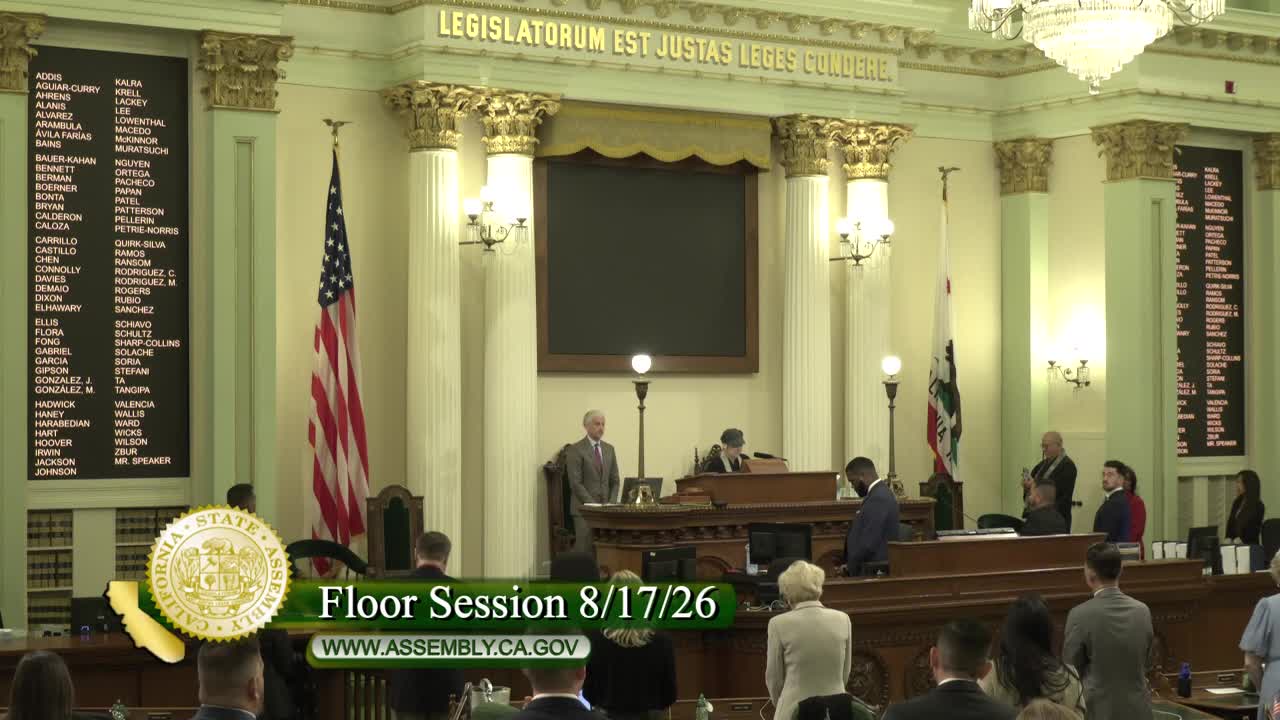
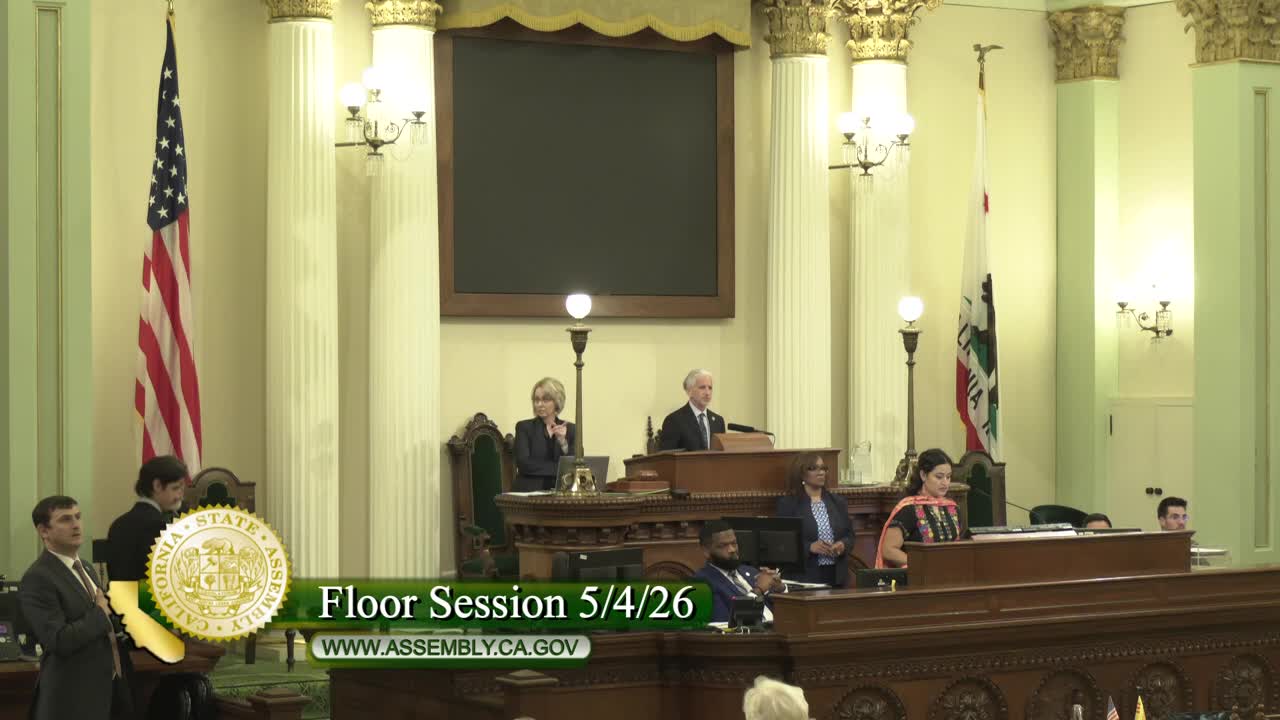
Bill Author

Bill Co-Author(s):