AB 2162: Housing: county funding allocations: nonminor dependents and young adults.
- Session Year: 2025-2026
- House: Assembly
- Latest Version Date: 2026-09-27
Current Status:
Passed
(2026-09-27: Chaptered by Secretary of State - Chapter 582, Statutes of 2026.)
Introduced
In Committee
Awaiting First Chamber Vote
Passed First Chamber
In Committee
Awaiting Second Chamber Vote
Passed Second Chamber
Enacted
What does this bill do?
This bill expands the Housing Navigation and Maintenance Program so county child welfare agencies can help young adults ages 18 to 28 find and keep housing and gives priority to nonminor dependents (young people still in the child welfare system after 18) and to young adults formerly in foster care or on probation. It also spells out allowed uses for the money (help applying for housing and federal vouchers, move‑in costs, landlord incentives, and support services), requires staff training, and adds new reporting and public disclosure rules about voucher partnerships and issued vouchers.
The summary is provided by generative AI which can make mistakes. For original language, please view the details in the table below.
Existing law, subject to an appropriation in the annual Budget Act, requires the Department of Housing and Community Development to provide, under the Transitional Housing Program, funding to counties for allocation to child welfare services agencies to help young adults who are 18 to 24 years of age, inclusive, secure and maintain housing, with priority given to young adults formerly in the states foster care or probation systems. Existing law, subject to an appropriation in the annual Budget Act, also requires the department to allocate funding to counties under the Housing Navigation and Maintenance Program to help young adults who are 18 to 24 years of age, inclusive, secure and maintain housing, with priority given to young adults currently or formerly in the foster care system.
This bill would extend the age of eligibility for the Housing Navigation and Maintenance Program to young adults who are 18 to 28 years of age, inclusive, and would, instead, give priority to nonminor dependents and young adults formerly in the states foster care or probation system, as defined. The bill would specify the eligible uses of the funding allocated to a county child welfare agency under the Housing Navigation and Maintenance Program.
Existing law requires a child welfare agency that accepts any distribution of money under either program to report certain data to the department on an annual basis, including specified information relating to the number of homeless youth served and the number of former or current foster youth served, as defined.
This bill would revise those reporting requirements to instead require information about the number of young adults served, including the number of young adults formerly in the states foster care or probation system, as defined, and would require additional information to be reported under the Housing Navigation and Maintenance Program related to housing vouchers, as specified.
(a)Subject to an appropriation in the annual Budget Act, the Department of Housing and Community Development shall allocate funding to county child welfare agencies to help young adults who are 18 to 24 years of age, inclusive, secure and maintain housing, with priority given to young adults formerly in the states foster care or probation systems.
(b)The department shall consult with the State Department of Social Services, the Department of Finance, and the County Welfare Directors Association of California to develop an allocation schedule for purposes of distributing funds allocated to counties pursuant to subdivision (a).
(c)If a child welfare agency accepts any distribution of money, it shall report the following data to the Department of Housing and Community Development on an annual basis:
(1)The number of young adults served and how many are young adults formerly in the states foster care or probation system.
(2)The number of young adults who were homeless when they began receiving assistance funded pursuant to subdivision (a).
(3)The number of young adults who received assistance funded pursuant to subdivision (a) and obtained temporary housing.
(4)The number of young adults who received assistance funded pursuant to subdivision (a) and obtained permanent housing.
(d)For a child welfare agency that accepts any distribution of money for the Transitional Housing Program pursuant to this chapter and the Housing Navigation and Maintenance Program pursuant to Chapter 11.8 (commencing with Section 50811), the department shall accept one county board resolution and one allocation acceptance form, and execute one standard agreement, for both programs.
(e)For purposes of this section, the following definitions apply:
(1)Homeless has the same meaning as defined in Section 578.3 of Title 24 of the Code of Federal Regulations.
(2)Young adult formerly in the states foster care or probation system means a young adult who previously met the definition of a child or nonminor dependent under Section 475 of Title IV-E of the Social Security Act (42 U.S.C. Sec. 675(8)) or subdivision (v) of Section 11400 of the Welfare and Institutions Code, who had been removed by the juvenile court from the custody of their parent, legal guardian, or Indian custodian pursuant to Section 361 or 726 of the Welfare and Institutions Code, ordered into a placement described in paragraphs (2) to (9), inclusive, of subdivision (e) of Section 361.2 of, or paragraph (4) of subdivision (a) of Section 727 of, the Welfare and Institutions Code, and for whom juvenile court jurisdiction was terminated while the young adult remained in placement.
SEC. 2.Section 50811 of the Health and Safety Code is amended to read:50811.(a)Subject to an appropriation in the annual Budget Act to the Department of Housing and Community Development to continue the housing navigator program established as a result of the allocation in Provision (3) of Item 2240-103-0001 of the Budget Act of 2019, which is hereby renamed the Housing Navigation and Maintenance Program, the department shall allocate funding to county child welfare agencies to provide housing navigators to help young adults who are 18 to 28 years of age, inclusive, secure and maintain housing. A county that receives an allocation pursuant to this subdivision shall give priority to the following two populations:
(1)Nonminor dependents.
(2)Young adults formerly in the states foster care or probation system.
(b)The department shall consult with the State Department of Social Services, the Department of Finance, and the County Welfare Directors Association of California to develop an allocation schedule for purposes of distributing funds allocated to counties pursuant to subdivision (a).
(c)Eligible uses of the funding allocated to a county child welfare agency pursuant to subdivision (a) include, but are not limited to, all of the following:
(1)Assisting young adults with identifying and applying for housing, including housing that qualifies as a supervised independent living placement pursuant to subdivision (w) of Section 11400 of the Welfare and Institutions Code.
(2)Assisting young adults with applying for a federal housing choice voucher and identifying housing with the housing choice voucher.
(3)Providing young adults with financial assistance to help cover the cost of housing application fees, security deposit, first months rent, utility set-up, and other move-in costs.
(4)Providing landlord incentives.
(5)Providing young adults with supportive services that help them maintain stable housing, including education and employment support, financial literacy and planning, case management, and counseling.
(d)The housing navigation and maintenance program for a county that accepts an allocation of money pursuant to this section shall provide training to its child welfare agency social workers and probation officers who serve nonminor dependents. The training shall address an overview of the housing resources available through the local coordinated entry system, homeless continuum of care, and county public agencies, including, but not limited to, housing navigation, permanent affordable housing, THP-Plus, and housing choice vouchers. The training shall also address how to access and receive a referral to existing housing resources, the social workers and probation officers role in identifying unstable housing situations for young adults, and referring young adults to housing assistance programs.
(e)If a child welfare agency accepts any distribution of money, it shall report the following data to the Department of Housing and Community Development on an annual basis:
(1)The number of young adults served and how many are the following:
(A)Nonminor dependents.
(B)Young adults formerly in the states foster care or probation system.
(2)The number of young adults who were homeless when they began receiving assistance funded pursuant to subdivision (a).
(3)The number of young adults who received assistance funded pursuant to subdivision (a) and obtained temporary housing.
(4)The number of young adults who received assistance funded pursuant to subdivision (a) and obtained permanent housing.
(5)The housing authority with which the county child welfare agency has a memorandum of understanding or letter of intent to provide housing vouchers funded by the federal Family Unification Program or the federal Foster Youth to Independence Initiative pursuant to the Housing Choice Voucher program established under Section 8 of the United States Housing Act of 1937 (42 U.S.C. Sec. 1437f). If the county child welfare agency does not partner with a housing authority to provide the housing vouchers described in this paragraph, the child welfare agency shall state the reason why it does not partner with a housing authority to provide those housing vouchers.
(6)The number of housing vouchers that have been issued to young adults in the county that are funded by the federal Family Unification Program or the federal Foster Youth to Independence Initiative pursuant to the Housing Choice Voucher program established under Section 8 of the United States Housing Act of 1937 (42 U.S.C. Sec. 1437f). For the purposes of this paragraph, issued means the voucher has been assigned to a specific person, whether that person is searching for housing or has entered into a lease, and whether the voucher is new or recycled.
(f)On an annual basis, the department shall make publicly available the information provided by county child welfare agencies pursuant to paragraphs (5) and (6) of subdivision (e).
(g)For a child welfare agency that accepts any distribution of money for the Housing Navigation and Maintenance Program pursuant to this chapter and the Transitional Housing Program pursuant to Chapter 11.7 (commencing with Section 50807), the department shall accept one county board resolution and one allocation acceptance form, and execute one standard agreement, for both programs.
(h)For purposes of this section, the following definitions apply:
(1)Homeless has the same meaning as defined in Part 578.3 of Title 24 of the Code of Federal Regulations.
(2)Housing authority means a housing authority created pursuant to the Housing Authorities Law (Chapter 1 (commencing with Section 34200) of Part 2 of Division 24).
(3)Nonminor dependent has the same meaning as defined in subdivision (v) of Section 11400 of the Welfare and Institutions Code.
(4)Young adult formerly in the states foster care or probation system has the same meaning as defined in paragraph (2) of subdivision (e) of Section 50807.
(a)Subject to an appropriation in the annual Budget Act, the Department of Housing and Community Development shall allocate funding to county child welfare agencies to help young adults who are 18 to 24 years of age, inclusive, secure and maintain housing, with priority given to young adults formerly in the states foster care or probation systems.
(b)The department shall consult with the State Department of Social Services, the Department of Finance, and the County Welfare Directors Association of California to develop an allocation schedule for purposes of distributing funds allocated to counties pursuant to subdivision (a).
(c)If a child welfare agency accepts any distribution of money, it shall report the following data to the Department of Housing and Community Development on an annual basis:
(1)The number of homeless youth served. young adults served and how many are young adults formerly in the states foster care or probation system.
(2)The number of former foster youth served. For purposes of this paragraph, former foster youth means a child or nonminor dependent, as defined by Section 475 of Title IV-E of the Social Security Act (42 U.S.C. Sec. 675(8)) and subdivision (v) of Section 11400 of the Welfare and Institutions Code, who had been removed by the juvenile court from the custody of their parent, legal guardian, or Indian custodian pursuant to Section 361 or 726 of the Welfare and Institutions Code, ordered into a placement described in paragraphs (2) to (9), inclusive, of subdivision (e) of Section 361.2 of, or paragraph (4) of subdivision (a) of Section 727 of, the Welfare and Institutions Code, and for whom juvenile court jurisdiction was terminated while the youth remained in placement.(2)The number of young adults who were homeless when they began receiving assistance funded pursuant to subdivision (a).
(3)The number of homeless youth who exited homelessness into young adults who received assistance funded pursuant to subdivision (a) and obtained temporary housing.
(4)The number of homeless youth who exited homelessness into young adults who received assistance funded pursuant to subdivision (a) and obtained permanent housing.
(d)For a child welfare agency that accepts any distribution of money for the Transitional Housing Program pursuant to this chapter and the Housing Navigation and Maintenance Program pursuant to Chapter 11.8 (commencing with Section 50811), the department shall accept one county board resolution and one allocation acceptance form, and execute one standard agreement, for both programs.
(e)For purposes of this section, the following definitions apply:
(1)Homeless has the same meaning as defined in Section 578.3 of Title 24 of the Code of Federal Regulations.
(2)Young adult formerly in the states foster care or probation system means a young adult who previously met the definition of a child or nonminor dependent under Section 475 of Title IV-E of the Social Security Act (42 U.S.C. Sec. 675(8)) or subdivision (v) of Section 11400 of the Welfare and Institutions Code, who had been removed by the juvenile court from the custody of their parent, legal guardian, or Indian custodian pursuant to Section 361 or 726 of the Welfare and Institutions Code, ordered into a placement described in paragraphs (2) to (9), inclusive, of subdivision (e) of Section 361.2 of, or paragraph (4) of subdivision (a) of Section 727 of, the Welfare and Institutions Code, and for whom juvenile court jurisdiction was terminated while the young adult remained in placement.
SEC. 2.Section 50811 of the Health and Safety Code is amended to read:50811.(a)Subject to an appropriation in the annual Budget Act to the Department of Housing and Community Development to continue the housing navigator program established as a result of the allocation in Provision (3) of Item 2240-103-0001 of the Budget Act of 2019, which is hereby renamed the Housing Navigation and Maintenance Program, the department shall allocate funding to county child welfare agencies to provide housing navigators to help young adults who are 18 to 24 28 years of age, inclusive, secure and maintain housing. A county that receives an allocation pursuant to this subdivision shall give priority to young adults currently or formerly in the foster care system. the following two populations:
(1)Nonminor dependents.
(2)Young adults formerly in the states foster care or probation system.
(b)The department shall consult with the State Department of Social Services, the Department of Finance, and the County Welfare Directors Association of California to develop an allocation schedule for purposes of distributing funds allocated to counties pursuant to subdivision (a).
(c)Eligible uses of the funding allocated to a county child welfare agency pursuant to subdivision (a) include, but are not limited to, all of the following:
(1)Assisting young adults with identifying and applying for housing, including housing that qualifies as a supervised independent living placement pursuant to subdivision (w) of Section 11400 of the Welfare and Institutions Code.
(2)Assisting young adults with applying for a federal housing choice voucher and identifying housing with the housing choice voucher.
(3)Providing young adults with financial assistance to help cover the cost of housing application fees, security deposit, first months rent, utility set-up, and other move-in costs.
(4)Providing landlord incentives.
(5)Providing young adults with supportive services that help them maintain stable housing, including education and employment support, financial literacy and planning, case management, and counseling.
(c)(d)The housing navigation and maintenance program for a county that accepts an allocation of money pursuant to this section shall provide training to its child welfare agency social workers and probation officers who serve nonminor dependents. The training shall address an overview of the housing resources available through the local coordinated entry system, homeless continuum of care, and county public agencies, including, but not limited to, housing navigation, permanent affordable housing, THP-Plus, and housing choice vouchers. The training shall also address how to access and receive a referral to existing housing resources, the social workers and probation officers role in identifying unstable housing situations for youth, young adults, and referring youth young adults to housing assistance programs.
(d)(e)If a child welfare agency accepts any distribution of money, it shall report the following data to the Department of Housing and Community Development on an annual basis:
(1)The number of homeless youth served. young adults served and how many are the following:
(2)The number of foster youth served. For purposes of this paragraph, foster youth means a child or nonminor dependent, as defined by Section 475 of Title IV-E of the Social Security Act (42 U.S.C. Sec. 675(8)) and subdivision (v) of Section 11400 of the Welfare and Institutions Code, who has been removed from the custody of their parent, legal guardian, or Indian custodian pursuant to Section 361 or 726 of the Welfare and Institutions Code, and who has been ordered into any placement described in paragraphs (2) to (9), inclusive, of subdivision (e) of Section 361.2 of, or paragraph (4) of subdivision (a) of Section 727 of, the Welfare and Institutions Code.(3)The number of former foster youth served. For purposes of this paragraph, former foster youth means a child or nonminor dependent, as defined by Section 475 of Title IV-E of the Social Security Act (42 U.S.C. Sec. 675(8)) and subdivision (v) of Section 11400 of the Welfare and Institutions Code, who had been removed by the juvenile court from the custody of their parent, legal guardian, or Indian custodian pursuant to Section 361 or 726 of the Welfare and Institutions Code, ordered into a placement described in paragraphs (2) to (9), inclusive, of subdivision (e) of Section 361.2 of, or paragraph (4) of subdivision (a) of Section 727 of, the Welfare and Institutions Code, and for whom juvenile court jurisdiction was terminated while the youth remained in placement.(A)Nonminor dependents.
(B)Young adults formerly in the states foster care or probation system.
(2)The number of young adults who were homeless when they began receiving assistance funded pursuant to subdivision (a).
(4)(3)The number of homeless youth who exited homelessness into young adults who received assistance funded pursuant to subdivision (a) and obtained temporary housing.
(5)(4)The number of homeless youth who exited homelessness into young adults who received assistance funded pursuant to subdivision (a) and obtained permanent housing.
(5)The housing authority with which the county child welfare agency has a memorandum of understanding or letter of intent to provide housing vouchers funded by the federal Family Unification Program or the federal Foster Youth to Independence Initiative pursuant to the Housing Choice Voucher program established under Section 8 of the United States Housing Act of 1937 (42 U.S.C. Sec. 1437f). If the county child welfare agency does not partner with a housing authority to provide the housing vouchers described in this paragraph, the child welfare agency shall state the reason why it does not partner with a housing authority to provide those housing vouchers.
(6)The number of housing vouchers that have been issued to young adults in the county that are funded by the federal Family Unification Program or the federal Foster Youth to Independence Initiative pursuant to the Housing Choice Voucher program established under Section 8 of the United States Housing Act of 1937 (42 U.S.C. Sec. 1437f). For the purposes of this paragraph, issued means the voucher has been assigned to a specific person, whether that person is searching for housing or has entered into a lease, and whether the voucher is new or recycled.
(f)On an annual basis, the department shall make publicly available the information provided by county child welfare agencies pursuant to paragraphs (5) and (6) of subdivision (e).
(e)(g)For a child welfare agency that accepts any distribution of money for the Housing Navigation and Maintenance Program pursuant to this chapter and the Transitional Housing Program pursuant to Chapter 11.7 (commencing with Section 50807), the department shall accept one county board resolution and one allocation acceptance form, and execute one standard agreement, for both programs.
(h)For purposes of this section, the following definitions apply:
(1)Homeless has the same meaning as defined in Part 578.3 of Title 24 of the Code of Federal Regulations.
(2)Housing authority means a housing authority created pursuant to the Housing Authorities Law (Chapter 1 (commencing with Section 34200) of Part 2 of Division 24).
(3)Nonminor dependent has the same meaning as defined in subdivision (v) of Section 11400 of the Welfare and Institutions Code.
(4)Young adult formerly in the states foster care or probation system has the same meaning as defined in paragraph (2) of subdivision (e) of Section 50807.
|
Date
|
Status
|
|---|---|
| Sep 27, 2026 | Chaptered by Secretary of State - Chapter 582, Statutes of 2026. |
| Sep 27, 2026 | Approved by the Governor. |
| Aug 27, 2026 | Enrolled and presented to the Governor at 4 p.m. |
| Aug 20, 2026 | In Assembly. Ordered to Engrossing and Enrolling. |
| Aug 20, 2026 | Read third time. Passed. Ordered to the Assembly. (Ayes 39. Noes 0.). |
| Aug 20, 2026 | Read third time. Passed. Ordered to the Assembly. (Ayes 39. Noes 0. Page 5591.). |
| Aug 18, 2026 | Ordered to special consent calendar. |
| Aug 13, 2026 | Read second time. Ordered to third reading. |
| Aug 13, 2026 | From committee: Do pass. (Ayes 7. Noes 0.) (August 13). |
| Aug 3, 2026 | In committee: Referred to APPR. suspense file. |
| Jun 29, 2026 | From committee: Do pass and re-refer to Com. on APPR. with recommendation: To Consent Calendar. (Ayes 5. Noes 0.) (June 29). Re-referred to Com. on APPR. |
| Jun 15, 2026 | Read second time. Ordered to Consent Calendar. |
| Jun 15, 2026 | Re-referred to Com. on HUMAN S. |
| Jun 11, 2026 | From committee: Do pass. To Consent Calendar. (Ayes 10. Noes 0.) (June 10). |
| Jun 3, 2026 | Referred to Coms. on HOUSING and HUMAN S. |
| May 27, 2026 | In Senate. Read first time. To Com. on RLS. for assignment. |
| May 26, 2026 | Read third time. Passed. Ordered to the Senate. (Ayes 78. Noes 0.) |
| May 26, 2026 | Read third time. Passed. Ordered to the Senate. (Ayes 78. Noes 0. Page 5308.) |
| May 26, 2026 | Read third time. Passed. Ordered to the Senate. |
| May 18, 2026 | Read second time. Ordered to third reading. |
| May 14, 2026 | From committee: Do pass. (Ayes 15. Noes 0.) (May 14). |
| Apr 29, 2026 | In committee: Set, first hearing. Referred to APPR. suspense file. |
| Apr 15, 2026 | From committee: Do pass and re-refer to Com. on APPR. (Ayes 7. Noes 0.) (April 14). Re-referred to Com. on APPR. |
| Mar 25, 2026 | From committee: Do pass and re-refer to Com. on HUM. S. with recommendation: To Consent Calendar. (Ayes 12. Noes 0.) (March 25). Re-referred to Com. on HUM. S. |
| Mar 9, 2026 | Referred to Coms. on H. & C.D. and HUM. S. |
| Feb 19, 2026 | From printer. May be heard in committee March 21. |
| Feb 18, 2026 | Read first time. To print. |
|
Date
|
Description
|
Location
|
Votes
|
|
|---|---|---|---|---|
| Aug 20, 2026 | Special Consent AB2162 Bryan By Grayson | Senate Floor |
Passed |
|
| Aug 13, 2026 | Do pass | Senate Standing Committee on Appropriations |
Passed |
|
| Aug 3, 2026 | Placed on suspense file | Senate Standing Committee on Appropriations |
Passed |
|
| Jun 29, 2026 | Do pass, but first be re-referred to the Committee on [Appropriations] with the recommendation: To Consent Calendar | Senate Standing Committee on Human Services |
Passed |
|
| Jun 10, 2026 | Do pass and be ordered to the Consent Calendar | Senate Standing Committee on Housing |
Passed |
|
| May 26, 2026 | AB 2162 Bryan Assembly Third Reading | Assembly Floor |
Passed |
|
| May 14, 2026 | Do pass. | Assembly Standing Committee on Appropriations |
Passed |
|
| Apr 14, 2026 | Do pass and be re-referred to the Committee on [Appropriations] | Assembly Standing Committee on Human Services |
Passed |
|
| Mar 25, 2026 | Do pass and be re-referred to the Committee on [Human Services] with recommendation: To Consent Calendar | Assembly Standing Committee on Housing and Community Development |
Passed |
This list shows positions taken on this bill by organizations on the date displayed, which is linked to the original source.
Positions by individuals are not included.
|
Organization
|
Position
|
Date
|
|---|---|---|
| Alliance for Children's Rights | ** Support | |
| Allies for Every Child | ** Support | |
| Alternative Family Services | ** Support | |
| ASPIRANET | ** Support | |
| Association Of Community Human Service Agencies | ** Support | |
| Back to the Start | ** Support | |
| Better Youth, INC. | ** Support | |
| Bill Wilson Center | ** Support | |
| California Alliance of Caregivers | ** Support | |
| California Alliance Of Child And Family Services | ** Support | |
| Casa Pacifica Centers for Children and Families | ** Support | |
| CENTER FOR PUBLIC INTEREST LAW/CHILDREN'S ADVOCACY INSTITUTE/UNIVERSITY OF SAN DIEGO | ** Support | |
| Children Now | ** Support | |
| City Of Berkeley Rent Stabilization Board | ** Support | |
| Creative Alternatives | ** Support | |
| David & Margaret Youth and Family Services | ** Support | |
| Ea Family Services | ** Support | |
| Glendale Youth Alliance | ** Support | |
| Glide | ** Support | |
| Greater Sacramento Urban League | ** Support | |
| Hillsides Pasadena | ** Support | |
| John Burton Advocates for Youth | ** Support | |
| John Burton Foundation | ** Support | |
| Los Angeles County | ** Support | |
| New Alternatives | ** Support | |
| Ohlone College NextUp | ** Support | |
| Orange County United Way | ** Support | |
| Orangewood Foundation | ** Support | |
| Ready for Life Host Homes | ** Support | |
| Ritter Center | ** Support | |
| Safe Place For Youth | ** Support | |
| Stepping Forward LA | ** Support | |
| Sycamores | ** Support | |
| The Heart Matters Transitional Housing Program | ** Support | |
| TLC Child and Family Services | ** Support | |
| United to End Homelessness | ** Support | |
| Whole Person Learning | ** Support | |
| Young People to the Front | ** Support |
SENATE RULES COMMITTEE Office of Senate Floor Analyses (916) 651-4171 | AB 2162 |
THIRD READING
Bill No: AB 2162
Author: Bryan (D)
Introduced: 2/18/26
Vote: 21
SENATE HOUSING COMMITTEE: 10-0, 6/10/26
AYES: Arreguín, Seyarto, Cabaldon, Caballero, Cortese, Durazo, Grayson, Ochoa Bogh, Padilla, Pérez
SENATE HUMAN SERVICES COMMITTEE: 5-0, 6/29/26
AYES: Becker, Ochoa Bogh, Laird, Pérez, Weber Pierson
SENATE APPROPRIATIONS COMMITTEE: 7-0, 8/13/26
AYES: Cervantes, Seyarto, Cabaldon, Dahle, Grayson, Richardson, Wahab
ASSEMBLY FLOOR: 78-0, 5/26/26 - See last page for vote
SUBJECT: Housing: county funding allocations: nonminor dependents and young adults
SOURCE: Author
DIGEST:
This bill expands the age that young adults, formerly in the foster care or probation systems, can qualify for housing navigation services from the Housing Navigation and Maintenance Program (HNMP) and makes other changes to the Transitional Housing Program (THP).
ANALYSIS:
Existing law:
Housing Navigation and Maintenance Program
- Requires Department of Housing and Community Development (HCD), upon an appropriation from the Budget, to allocate funding to county child welfare agencies to provide housing navigators to help young adults who are 18 to 24 years old secure and maintain housing. Requires a county that receives funding to give priority to young adults currently or formerly in the foster care system.
- Requires HCD to consult with the Department of Social Services (DSS), Department of Finance (DOF), and County Welfare Directors Association of California (CWDA) to develop an allocation schedule for purposes of distributing HNMP allocated to counties.
- Requires the county that accepts HNMP funding to provide training to its child welfare agency social workers and probation officers who serve nonminor dependents that addresses an overview of the housing resources available through the local coordinated entry system, homeless continuum of care, and county public agencies, including, but not limited to, housing navigation, permanent affordable housing, THP-Plus, and housing choice vouchers. Requires the training to also address how to access and receive a referral to existing housing resources, the social worker’s and probation officer’s role in identifying unstable housing situations for youth and referring youth to housing assistance programs.
- Requires a child welfare agency that accepts HNMP funding to report specified data to HCD on an annual basis.
Transitional Housing Program (THP)
- Requires HCD, upon an appropriation in the Budget, to allocate funding to county child welfare agencies to help young adults who are 18 to 24 years old secure and maintain housing with priority given to young adults formerly in the state’s foster care or probation systems.
- Requires HCD to consult with Department of Social Services (DSS), the Department of Finance (DOF), and the County Welfare Directors Association of California (CWDA) to develop an allocation schedule to distribute funds for the Transitional Housing Program.
- Requires a child welfare agency that receives funds from the THP to report specified data to HCD each year.
- Requires HCD to accept one county board resolution and one allocation acceptance form, and execute one standard agreement, for both the THP and the HNMP.
- Defines “former foster youth” to mean a child or nonminor dependent who had been removed by the juvenile court from the custody of their parent, legal guardian, or Indian custodian, as specified, ordered into a specified placement and for whom juvenile court jurisdiction was terminated while the youth remained in placement.
This bill:
HNMP
- Replaces “former foster youth” with “young adult formerly in the state’s foster care or probation system.”
- Expands the age range a young adult formerly in the state’s foster care or probation system can receive funding from HNMP from 18 to 24 years old to 18 to 28 years old.
- Requires counties that receive funding from HNMP to prioritize nonminor dependents in addition to youth adults formerly in the state’s foster care or probation system.
- Specifies the eligible uses of HNMP funding to include, but not be limited to, the following:
- Assisting young adults with identifying and applying for housing, including housing that qualifies as a supervised independent living placement, as specified;
- Assisting young adults with applying for a federal housing choice voucher and identifying housing with the housing choice voucher;
- Providing young adults with financial assistance to help cover the cost of housing application fees, security deposit, first month’s rent, utility set-up, and other move-in costs;
- Providing landlord incentives; and,
- Providing young adults with supportive services that help them maintain stable housing, including education and employment support, financial literacy and planning, case management, and counseling.
- Requires a child welfare agency that accepts funds from HNMP to report the following to HCD annually:
- A copy of the memorandum of understanding or letter of intent the child county welfare agency has with the housing authority to provide housing vouchers funded by the federal Family Unification Program (FUP) or the federal Foster Youth to Independence Initiative (FYI);
- Provides that if the county child welfare agency does not partner with a housing authority to provide FUP or FYI vouchers, the child welfare agency shall state the reason why it does not partner with a housing authority to provide those housing vouchers; and,
- The number of housing vouchers that have been issued to young adults in the county that are funded by the federal FUP or FYI programs. Provides that “issued” means the voucher has been assigned to a specific person, whether that person is searching for housing or has entered into a lease, and whether the voucher is new or recycled.
THP
- Replaces “former foster youth” with “young adult formerly in the state’s foster care or probation system” and conforms the definition of “homeless” with a federal definition.
Comments
- Author’s statement. “In California, about 3,000 young people annually make their final exit from care without the support of a family. Young adults can receive rental assistance through FYI/FUP federal housing vouchers for up to five years. Youth who receive their federal housing voucher at age 24 may keep their voucher and use it at any time through age 28. However, our state’s HNMP services currently stop assisting young adults at age 24. Leaving these young adults without county resources that provide critical support to them beyond the age of 24, including help pursuing education, employment, and other self-sufficiency goals.”
- THP. THP provides funding to county child welfare agencies to assist young adults ages 18 to 24 in securing and maintaining housing. This funding was established to expand on local transitional housing programs (called “THP-Plus”). The THP-Plus model provides up to 36 months of subsidized (or free) housing and supportive services to former foster and out-of-home probation youth ages 18 to 24. Young adults formerly in the state’s foster care or probation systems get priority funding. County child welfare agencies that accept THP funding are required to report the following to HCD annually: 1) the number of homeless youth served; 2) the number of former foster youth served; and, 3) the number of homeless youth who exited homelessness either into temporary or permanent housing. THP funding is very flexible, and counties that accept it are able to use it to expand existing programs or establish new programs based on local housing and service needs; however, the funding must be used to assist young adults with securing and maintaining housing. Funding can be used to help youth secure and maintain housing (with priority given to those formerly in the state’s foster care or probation system); improving coordination of services and linkages to community resources within the child welfare system and the homeless continuums of care; and outreach and targeting to serve those with the most severe need. THP receives an annual $33.3 million in funding.
- HNMP. HMNP provides housing navigation and maintenance services to youth ages 18 through 24. County child welfare agencies receive funding from HCD to support housing navigators to assist young adults in securing and maintaining housing. Young adults currently in the foster care and probation systems are prioritized for funding. HNMP can be used to provide housing case management, including essential services in emergency supports to foster youth; to prevent young adults from becoming homeless; and to improve the coordination of services and linkages to key resources across the community, including those from within the child welfare system and the local Continuum of Care. HNMP receives an annual $13.7 million in the budget.
When a county child welfare agency accepts HNMP funding, they are required to provide training to their social workers and probation officers that provides an overview of the housing resources available through the local coordinated entry system, homeless continuum of care, and other county public agencies, such as housing navigation, permanent affordable housing, THP-Plus, and housing choice vouchers. The training must also address how to access and receive a referral to existing housing resources, the social worker’s and probation officer’s role in identifying unstable housing situations for youth, and referring youth to housing assistance programs. On an annual basis, county child welfare agencies that accept HNMP funding are required to provide a report to HCD regarding: the number of homeless youth served; the number of foster children served; the number of homeless youth who exited homelessness into temporary housing; and the number of homeless youth who exited homelessness into permanent housing.
The John Burton Foundation, the sponsor of this bill, showed data obtained by HCD that through June 2024, 10,560 participants had been served. Of those, 2,500 were homeless at the time of program entry, 8,610 had been in foster care and 406 reported being incarcerated prior to the program.
- Federal Youth Housing Vouchers. The federal government makes special purpose housing choice vouchers available for former foster youth through the FYI and FUP. Housing authorities administer the FYI and FUP vouchers and rely on county child welfare agencies to refer youth, verify eligibility, and provide supportive services. HNMP funds the supportive services required by the federal government to utilize the vouchers. Prior to the creation of HNMP, FYI and FUP vouchers were underutilized because counties lacked funding to provide the services which are both required by HUD and necessary for youth to identify and secure housing with their voucher. According to the sponsor, since HNMP was expanded to include supportive services, California’s vouchers have increased by a full 136% from 870 vouchers to over 2,000 in 2024.
The FYI and FUP vouchers are the only youth-focused housing program that assists young adults beyond age 24. Youth can receive rental assistance from their FYI/FUP voucher for up to five years. Youth who receive their voucher at age 24 --- the age cap for initiating assistance --- keep their voucher through age 28. However, the upper age limit of HNMP is 24. Counties therefore lack the resources to offer essential services to voucher holders beyond age 24, including supporting the pursuit of education, employment, and other self-sufficiency-related goals. This bill would allow a county to use HNMP to serve young people who are former foster youth up to 28 years of age.
- Reporting Requirements. As a condition of receiving HNMP grant funding, county child welfare agencies are required to report demographic and outcome data on the youth they serve with the funds. This bill would expand on these reporting elements to include whether the county child welfare agency partners with housing authorities to participate in FYI and FUP vouchers; the number of FYI and FUP vouchers they have requested from their housing authority; and, if no partnership exists to administer these vouchers, the reason why. HCD would be required to post the above information publicly to strengthen accountability for maximizing federal funding and increase access to vouchers by producing awareness of voucher capacity statewide.
FISCAL EFFECT: Appropriation: No Fiscal Com.: Yes Local: No
According to the Senate Appropriations Committee:
- Unknown, potentially significant future cost pressures related to the expansion of the populations that can receive services under the HNMP to include young adults that are 25 to 28 years of age, inclusive. Specifically, there could be pressure to provide additional funding for the program to the extent there is insufficient funding to provide services to both the current aged 21 to 24 population and expanded 25 to 28 years old populations that would be eligible under the bill. These potential cost pressures would be limited to additional benefits provided to the small subset of young adults that retain specified federal housing vouchers beyond age 24. See Staff Comments. (General Fund)
- The Department of Housing and Community Development (HCD) estimates minor and absorbable costs for workload to create updated reporting forms, produce an annual public report, provide technical assistance to county child welfare agencies, and update program materials. (General Fund)
SUPPORT: (Verified 8/13/26)
Alliance for Children's Rights
Allies for Every Child
Aspiranet
Back to the Start
California Alliance of Child and Family Services
Children Now
Los Angeles County
Ohlone College Nextup
Orange County United Way
Orangewood Foundation
Stepping Forward LA
OPPOSITION: (Verified 8/13/26)
None received
ASSEMBLY FLOOR: 78-0, 5/26/26
AYES: Addis, Aguiar-Curry, Ahrens, Alanis, Alvarez, Arambula, Ávila Farías, Bains, Bauer-Kahan, Bennett, Berman, Boerner, Bonta, Bryan, Calderon, Caloza, Carrillo, Castillo, Chen, Connolly, Davies, DeMaio, Dixon, Elhawary, Ellis, Flora, Fong, Gabriel, Gallagher, Garcia, Gipson, Jeff Gonzalez, Mark González, Hadwick, Haney, Harabedian, Hart, Hoover, Irwin, Jackson, Johnson, Kalra, Krell, Lackey, Lee, Lowenthal, Macedo, McKinnor, Nguyen, Ortega, Pacheco, Papan, Patel, Patterson, Pellerin, Petrie-Norris, Quirk-Silva, Ramos, Ransom, Michelle Rodriguez, Rogers, Blanca Rubio, Sanchez, Schiavo, Schultz, Sharp-Collins, Solache, Soria, Stefani, Ta, Tangipa, Valencia, Wallis, Ward, Wicks, Wilson, Zbur, Rivas
NO VOTE RECORDED: Muratsuchi, Celeste Rodriguez
Prepared by: Alison Hughes / HOUSING / (916) 651-4124
8/14/26 13:53:51
**** END ****
SENATE COMMITTEE ON
Senator Sabrina Cervantes, Chair
2025 - 2026 Regular Session
AB 2162 (Bryan) - Housing: county funding allocations: nonminor dependents and young adults
Version: | Policy Vote: |
Urgency: | Mandate: |
Hearing Date: | Consultant: |
Bill Summary:
AB 2162 would expand eligibility for housing navigation benefits under the Housing and Navigation and Maintenance Program (HNMP) to young adults who are 18 to 28 (rather than 24) years of age. The bill would also revise and expand the reporting requirements under the HNMP and make clarifying changes to the Transitional Housing Program (THP), as specified.
Fiscal Impact:
- Unknown, potentially significant future cost pressures related to the expansion of the populations that can receive services under the HNMP to include young adults that are 25 to 28 years of age, inclusive. Specifically, there could be pressure to provide additional funding for the program to the extent there is insufficient funding to provide services to both the current aged 21 to 24 population and expanded 25 to 28 years old populations that would be eligible under the bill. These potential cost pressures would be limited to additional benefits provided to the small subset of young adults that retain specified federal housing vouchers beyond age 24. See Staff Comments. (General Fund)
- The Department of Housing and Community Development (HCD) estimates minor and absorbable costs for workload to create updated reporting forms, produce an annual public report, provide technical assistance to county child welfare agencies, and update program materials. (General Fund)
Background:
Existing law, the HNMP, requires HCD, subject to an appropriation in the Budget Act, to allocate funding to county child welfare agencies to provide housing navigators to help young adults who are 18 to 24 years of age, inclusive, secure and maintain housing. A county receiving HNMP funds must give priority to young adults currently or formerly in the foster care system. The HNMP currently receives $13.7 million in annual funding through the Budget Act, and HCD allocates funds based on each county’s proportionate share of the state’s foster youth population aged 18-21. HNMP funds can be used for the following purposes: to provide housing case management, including essential services in emergency supports to foster youth; to prevent young adults from becoming homeless; and to improve the coordination of services and linkages to key resources across the community, including those from within the child welfare system and the local Continuum of Care (COC).
When a county child welfare agency accepts HNMP funding, they are required to provide training to their social workers and probation officers that provides an overview of the housing resources available through the local coordinated entry system, homeless COC, and other county public agencies, including housing navigation, permanent affordable housing, THP-Plus, and housing choice vouchers. The training must also address how to access and receive a referral to existing housing resources, the social worker’s and probation officer’s role in identifying unstable housing situations for youth, and referring youth to housing assistance programs. On an annual basis, county child welfare agencies that accept HNMP funding are required to provide a report to HCD regarding: the number of homeless youth served; the number of current and former foster youth served; and the number of homeless youth who exited homelessness into temporary and permanent housing.
Existing law, the THP, requires HCD, subject to an appropriation in the Budget Act, to allocate funding to county child welfare agencies to help young adults who are 18 to -24 years of age, inclusive, secure and maintain housing, with priority given to young adults formerly in the state’s foster care or probation systems. The THP receives $33.3 million in annual funding through the Budget Act. This funding was established to expand on local transitional housing programs (called “THP-Plus”), and provides up to 36 months of subsidized (or free) housing and supportive services to former foster and out-of-home probation youth ages 18 to 24. County child welfare agencies that accept THP funding are required to report the following to HCD annually: the number of homeless youth served; the number of former foster youth served; and the number of homeless youth who exited homelessness either into temporary or permanent housing. THP funding is very flexible, and counties that accept an allocation may use it to expand existing programs or establish new programs based on local housing and service needs, as long as funding is used to assist young adults with securing and maintaining housing. Funding can also be used to improve coordination of services and linkages to community resources within the child welfare system and the homeless continuums of care as well as outreach and targeting to serve those with the most severe need.
Former foster youth who are 18 to 24 years of age are eligible for one of two federal housing choice vouchers: the Family Unification Program (FUP) or the Foster Youth to Independence Initiative (FYI). These voucher programs are intended to support former foster youth as they transition from foster care, have aged out of care, or those who are at least 16 years old or older and are at risk of becoming homeless. Youth who receive a voucher at 24 years old are allowed to keep the voucher until they are 28 years old. Both programs have two parts, required by federal law: the housing voucher provided by the Public Housing Authority, which is funded by the federal government, and supportive services that are provided by county child welfare agencies, which are funded by the state or local agencies. Housing authorities administer the FYI and FUP vouchers and rely on county child welfare agencies to refer youth, verify eligibility, and provide supportive services. HNMP funds the supportive services required by the federal government to utilize the vouchers, but existing law specifies that the upper age limit for receiving housing navigation and supportive services under that program is 24 years of age. Counties therefore lack the resources to offer essential services to voucher holders beyond age 24, including supporting the pursuit of education, employment, and other self-sufficiency-related goals.
Proposed Law:
AB 2162 would expand eligibility for housing navigation benefits under the HNMP to young adults who are 18 to 28 (rather than 24) years of age, revise specified reporting requirements, and make clarifying changes to both the HNMP and the THP. Specifically, this bill would:
- Expand the age limit eligibility for receiving housing navigation and supportive services under the HNMP from 18 to 24 years of age to 18 to 28 years of age.
- Require county welfare agencies that receive HNMP funds to give priority to nonminor dependents and young adults formerly in the foster care or probation systems (rather than young adults currently or formerly in the foster care system).
- Specify the following eligible uses of HNMP funds (consistent with current regulations):
- Assisting young adults with identifying and applying for housing, including housing that qualifies as a supervised independent living placement.
- Assisting young adults with applying for a federal housing choice voucher and identifying housing with the housing choice voucher.
- Providing young adults with financial assistance to help cover the cost of housing application fees, security deposit, first month’s rent, utility set-up, and other move-in costs.
- Providing landlord incentives.
- Providing young adults with supportive services that help them maintain stable housing, including education and employment support, financial literacy and planning, case management, and counseling.
- Require county welfare agencies accepting HNMP funds to report the following information annually to HCD, in addition to specified information on the numbers of young adults served through the program:
- The housing authority with which the county child welfare agency has a memorandum of understanding (MOU) or letter of intent to provide FYI or FUP federal housing vouchers. If the county does not partner with a housing authority for this purpose, it must report the reasons why it does not.
- The number of housing vouchers that have been issued to young adults in the county that are funded by the FYI or FUP federal voucher programs.
- Require HCD to make the above reported information regarding FYI and FUP federal vouchers and MOUs publicly available on an annual basis.
- Makes clarifying changes to the THP statutes by replacing the term “former foster youth” with “young adult formerly in the state’s foster care or probation system,” and conform the definition of “homeless” with a federal definition, as specified.
Related Legislation:
SB 187 (Budget and Fiscal Review Committee), Chap. 50/2022, renamed the housing navigator program as the HNMP, and extended eligibility and priority for the program to provide housing navigation services to young adults who are 18 to 24 years of age (rather than 18 to 21), with priority given to young adults formerly or currently in the foster care system, as specified.
AB 12 (Beall), Chap. 559/2010, defined nonminor dependent and permitted foster youth to remain in extended foster care until age 21, under the same criteria as specified in federal law.
Staff Comments:
This bill is intended to align the state HNMP eligibility age to the maximum eligibility period for the FYI and FUP federal housing voucher programs. Data indicates that approximately 2,000 youth per month statewide who are 18 to 24 years of age use a federal housing choice voucher. Under current law, county welfare agencies are not authorized to use HNMP funds to support a voucher holder beyond the age of 24, so those youth recipients lose the supports that can help them maintain stable housing. Because this bill extends the eligibility for HNMP funds to age 28, this bill would allow those recipients to continue to receive services funded through HNMP for the duration of their federal vouchers. This would create cost pressures to continue to provide funding that benefits those recipients while also fully serving the eligible populations that are 18 to 24 years of age. However, since federal vouchers must be secured by age 24 and may be used only three to five years, the age expansion provided in this bill would only affect a small portion of youth voucher holders, and only if they require continued services. Staff notes that the bill does not change the state’s funding allocation methodology, but provides counties with added flexibility within their existing budget allocation.
-- END --
SENATE COMMITTEE ON HUMAN SERVICES
Senator Becker, Chair
2025 - 2026 Regular
Bill No: | AB 2162 | ||
Author: | Bryan | ||
Version: | February 18, 2026 | Hearing Date: | June 29, 2026 |
Urgency: | No | Fiscal: | Yes |
Consultant: | Naima Ford Antal | ||
Subject: Housing: county funding allocations: nonminor dependents and young adults
SUMMARY
This bill changes the reporting requirements for the Transitional Housing Program and the Housing Navigation and Maintenance Program. The bill also redefines the population served by the Housing Navigation and Maintenance Program and increases the age of young adults eligible to be served to 28 years old.
ABSTRACT
Existing Law:
- Authorizes the Housing and Urban Development’s Foster Youth to Independence Initiative and Family Unification Program to provide Housing Choice Vouchers to eligible former foster youth 18 through 24 years of age. Family Unification Program provides vouchers to families at risk of separation due to housing as well as youth aging out of foster care while the Foster Youth to Independence Initiative voucher is limited to youth aging out of foster care. (42 United States Code 1437(x))
- Establishes the Fostering Stable Housing Opportunities Act which authorizes youth who begin using their voucher to extend assistance for up to 24 additional months for a potential total of five years of federally subsidized housing. (Public Law 116-260)
- Defines homeless to mean an individual or family who lacks a fixed, regular, and adequate nighttime residence; an individual or family who will imminently lose their primary nighttime residence; unaccompanied youth under 25 years of age; families with children and youth who are homeless; or any individual or family who are fleeing, or is attempting to flee, domestic violence, dating violence, sexual assault, stalking, or other dangerous or life-threatening conditions, has no other residence and lacks the resources or support networks to obtain other permanent housing. (24 Code of Federal Regulations 578.3)
- Establishes the transitional housing program (THP) and requires the California Department of Housing and Community (HCD), subject to an appropriation, to allocate funding to counties to help young adults who are 18 to 24 years of age, inclusive, to secure and maintain housing, with priority given to young adults formerly in the state’s foster care or probation systems. (Health and Safety Code [HSC] 50807(a))
- Requires HCD to consult with the California Department of Social Services, the Department of Finance, and the County Welfare Directors Association of California to develop an allocation schedule for purposes of distributing funds allocated to counties. (HSC 50807(b))
- Requires a county, if it accepts any distribution of THP money, to report the following data to HCD on an annual basis:
- The number of homeless youth served;
- The number of former foster youth served;
- The number of homeless youth who exited homelessness into temporary housing; and,
- The number of homeless youth who exited homelessness into permanent housing. (HSC 50807(c))
- Establishes Housing Navigation and Maintenance Program which requires HCD, to allocate funding to counties to provide housing navigators to help young adults who are 18 to 24 years of age secure and maintain housing. Requires counties that receive an allocation to give priority to young adults currently or formerly in the foster care system. (HSC 50811(a))
- Requires a county with a Housing and Navigation and Maintenance Program to provide training to its child welfare agency social workers and probation officers who serve nonminor dependents. Requires the training to address an overview of the housing resources available through the local coordinated entry system, homeless continuum of care, and county public agencies, including, but not limited to, housing navigation, permanent affordable housing, THP-Plus, and housing choice vouchers. (HSC 50811(c))
- Defines “nonminor dependent” as a current or former foster youth who is between 18 and 20 years of age; in foster care under the responsibility of the county welfare department, county probation department, or Indian tribe; and is has a transitional independent living case plan. (Welfare and Institutions Code (WIC) 11400(v))
- Defines a “supervised independent living placement” as an independent supervised setting in which the NMD is living independently. (WIC 11400(w))
This Bill:
- Expands the information that a county that accepts funding for the Transitional Housing Program is required to report to include:
- The number of young adults served and how many of them were formerly in the foster care or probation system.
- The number of young adults who were homeless when they began receiving assistance.
- The number of young adults who received assistance and obtained temporary housing.
- The number of young adults who received assistance and obtained permanent housing.
- Strikes the requirement that counties report the number of former foster youth served under the current section’s definition of former foster youth.
- Defines “young adult formerly in the state’s foster care or probation system” to mean a young adult who previously met the definition of a child or nonminor dependent in the Welfare and Institutions Code, who had been removed by the juvenile court from the custody of their parent, legal guardian, or Indian custodian; and for whom juvenile court jurisdiction was terminated while the young adult remained in placement.
- Increases the age youth can get services funded by the Housing Navigation and Maintenance Program to 28 years old.
- Defines the populations who can receive services through the Housing Navigation and Maintenance Program to be nonminor dependents and young adults formerly in the state’s foster care or probation system.
- Clarifies the uses of Housing Navigation and Maintenance Program funding allocated to a county child welfare agency to include, but not be limited to:
- Assisting young adults with identifying and applying for housing, including housing that qualifies as a supervised independent living placement.
- Assisting young adults with applying for a federal housing choice voucher and identifying housing with the housing choice voucher.
- Providing young adults with financial assistance to help cover the cost of housing application fees, security deposit, first month’s rent, utility set-up, and other move-in costs.
- Providing landlord incentives.
- Providing young adults with supportive services that help them maintain stable housing, including education and employment support, financial literacy and planning, case management, and counseling.
- Expands the information that a county that accepts funding for the Housing Navigation and Maintenance Program is required to report to include:
- The number of young adults served who are nonminor dependents and young adults formerly in the state’s foster care or probation system.
- The number of young adults who were homeless when they began receiving assistance.
- The number of young adults who received assistance and obtained temporary housing.
- The number of young adults who received assistance and obtained permanent housing.
- The housing authority with which the county child welfare agency has a memorandum of understanding or letter of intent to provide federal Family Unification Program or federal Foster Youth to Independence Initiative housing vouchers. If the county child welfare agency does not partner with a housing authority to provide the housing vouchers described in this paragraph, the child welfare agency must state the reason why it does not partner with a housing authority to provide those housing vouchers.
- The number of housing vouchers that have been issued to young adults in the county that are funded by the federal Family Unification Program or the federal Foster Youth to Independence Initiative. Defines “issued” to mean the voucher has been assigned to a specific person, whether that person is searching for housing or has entered into a lease, and whether the voucher is new or recycled.
- Requires HCD to, on an annual basis, make publicly available the information described in e) and f) above.
- Defines “homeless” to have the same meaning as defined in Part 578.3 of Title 24 of the Code of Federal Regulations.
- Defines “housing authority” to mean a housing authority created pursuant to the Housing Authorities Law.
- Defines “nonminor dependent” to have the same meaning as defined in subdivision (v) of Section 11400 of the Welfare and Institutions Code.
FISCAL IMPACT
According to the Assembly Appropriations Committee:
- General Fund cost pressures of an unknown amount to provide HNMP services to young adults up to age 28 who have Housing Choice Vouchers and otherwise would have exited the HNMP program at age 24. These costs are potentially significant but will depend on the number of young adults served and the amount of assistance provided. Data indicates approximately 2,000 youth per month statewide aged 18 to 24 years use a foster youth housing choice voucher. Because these vouchers must be secured by age 24 and may be used for only three to five years, the age expansion provided in this bill would affect only a small portion of these youth and only if they required additional services.
Since 2022, HCD has received an annual budget appropriation of $13.7 million for the HNMP program. HCD allocates this funding to counties per existing law based on each county’s proportionate share of the state’s foster youth population aged 18 to 21. This bill does not change the state’s funding allocation methodology but rather provides counites added flexibility within their existing budget allocation.
- HCD estimates minor and absorbable administrative costs. HCD anticipates a slight increase in its workload to incorporate the changes in the bill, including creating updated reporting forms and producing an annual public report, providing technical assistance to awarded county child welfare agencies, and updating program materials. HCD believes this workload can be managed withing existing resources.
BACKGROUND AND DISCUSSION
Purpose of the Bill:
According to the author, ″In California, about 3,000 young people annually make their final exit from care without the support of a family. Young adults can receive rental assistance through FYI/FUP federal housing vouchers for up to five years. Youth who receive their federal housing voucher at age 24 may keep their voucher and use it at any time through age 28. However, our state’s HNMP services currently stop assisting young adults at age 24. Leaving these young adults without county resources that provide critical support to them beyond the age of 24, including help pursuing education, employment, and other self-sufficiency goals. [This bill] seeks to close this gap by expanding the upper age limit for HNMP-funded services from 24 to 28, adding two additional questions to the existing reporting form for counties that accept HNMP funding, and ensuring that HCD makes this information publicly available.”
Extended Foster Care
The intent of extended foster care is to bridge the gap between the intensive supervision of foster care and unsupervised adulthood by maintaining a safety net of support while providing the youth independence and additional educational or work opportunities. It was prompted by the recognition that many youth were unable to successfully transition from foster care or group care to adulthood without additional guidance and assistance.
The federal Fostering Connections to Success and Increasing Adoptions Act of 2008 (P.L. 110-351) enabled states to expand the definition of a foster “child,” by creating extended care for youth up to age 21. The federal law allows foster youth to remain in care past age 18 if they meet one of the following participation criteria: enrolled in high school or a high school equivalency credential; enrolled in college, community college, or vocational education; employed for at least 80 hours a month; participating in other qualifying activities or programs designed to remove barriers to employment; or medically exempt from meeting any of the other participation criteria.
In 2010, California enacted AB 12 (Beall, Chapter 559, Statutes of 2010), which defined nonminor dependent and permits foster youth to remain in extended foster care until age 21, under the same criteria as the federal statute. At the six month hearing prior to a youth turning 18 years old, the youth’s social worker or probation officer must submit a transitional living plan to ensure that the youth will meet at least one participation criteria, listed above, if the youth plans to participate in extended foster care. The youth must also sign an agreement to remain in foster care within six months of turning 18, reside in an eligible placement, and agree to work with their social worker to meet the goals of their transitional living plan. Additionally, existing law allows qualifying nonminors who are former foster youth under the age of 21 to petition the court for re-entry into foster care in order to participate in extended foster care. AB 12 (Beall, Chapter 559, Statutes of 2010) and additional statue changes have expanded the supports for nonminor dependents.
Federal Housing Choice Vouchers
Former foster youth ages 18 through 24 are eligible for one of two federal housing choice vouchers: the Family Unification Program or the Foster Youth to Independence Initiative. The voucher programs are intended to support former foster youth as they transition from foster care, have aged out of care, or those who are at least 16 years old or older and are at risk of becoming homeless. Youth who receive a voucher at 24 years old are allowed to keep the voucher until they are 28 years old. Both programs have two parts, required by federal law: the housing voucher provided by the Public Housing Authority, which is funded by the federal government, and supportive services that are provided by county child welfare agencies, which are funded by the state or local agencies.
Although federal funding has provided additional resources to address the housing needs of youth, in the past there have been some challenges in utilizing the Family Unification Program and Foster Youth to Independence Initiative vouchers. Specifically, some counties have not requested vouchers or only request a few because they cannot offer the required supportive services without a dedicated funding source. There are also challenges with identifying housing for youth with vouchers, which adds additional consequences. For example, housing authorities cannot request additional vouchers unless 90 percent of their vouchers are utilized, meaning youth must be in active leases. This means that even when vouchers are in circulation, if youth are struggling to receive the support they need to secure housing, counties cannot request additional vouchers and youth who are in need remain on the waiting list.
The Housing Navigation and Maintenance Program (discussed more below) was expanded in 2022 to provide the dedicated funds for supportive services counties requested. According to John Burton Advocates for Youth, the use of vouchers has increased 136% since 2022 and federal vouchers provide 55% of California’s housing support for former foster youth. This bill would require counties to report more detailed information on the number of young adults they support with vouchers and the partnerships established to distribute them.
Housing Navigation and Maintenance Program
California’s Housing Navigation and Maintenance Program was established in 2019 to provide housing support services to youth ages 18 through 21. The program was updated and renamed in 2022 to extend services to youth up to 24 years old and prioritize former foster youth. The program works in tandem with the federal housing voucher programs to ensure youth have the resources they need to use the vouchers quickly and effectively. County child welfare agencies receive the funding from HCD to support housing navigators to assist young adults in securing and maintaining housing. Other activities include, but are not limited to:
- Providing housing case management, which includes essential services in emergency supports to foster youth;
- Preventing young adults from becoming homeless; and,
- Improving the coordination of services and linkages to key resources across the community including those from within the child welfare system and the local Continuum of Care.
This bill updates the list of activities to specify the types of services that should be provided to young adults to align them with the goals of the federal voucher program and support the effective utilization of the vouchers. It also expands the eligibility age of the program to 28 years old to align with the eligibility age range of the voucher programs.
When a county child welfare agency accepts Housing Navigation and Maintenance Program funding, they are required to provide training to their social workers and probation officers who serve nonminor dependents. The training must provide an overview of the housing resources available through the local coordinated entry system, homeless continuum of care, and other county public agencies, such as housing navigation, permanent affordable housing, THP-Plus, and housing choice vouchers. The training must also address how to access and receive a referral to existing housing resources, the social worker’s and probation officer’s role in identifying unstable housing situations for youth, and referring youth to housing assistance programs.
This bill updates the list of activities to specify the types of services that should be provided to young adults to align them with the goals of the federal voucher program and support the effective utilization of the vouchers. It also expands the eligibility age of the program to 28 years old to align with the eligibility age range of the voucher programs.
On an annual basis, county child welfare agencies that accept Housing Navigation and Maintenance funding are required to provide a report to HCD regarding:
- The number of homeless youth served.
- The number of foster children served.
- The number of homeless youth who exited homelessness into temporary housing.
- The number of homeless youth who exited homelessness into permanent housing.
This bill expands the data that counties are required to share to include data on the partnerships between the county welfare office and the housing authority.
Related/Prior Legislation:
AB 1615 (Ting, 2022) would have renamed the housing navigator program as the Housing Navigation and Maintenance Program, and would extend eligibility and priority for the program to help young adults who are 18 to 24 years of age, inclusive, with priority given to young adults formerly or currently in the foster care system. It also would, for a child welfare agency that accepts any distribution of money for both the Transitional Housing Program and the Housing Navigation and Maintenance Program, require the department shall accept one county board resolution and one allocation acceptance form, and execute one standard agreement, for both programs. AB 1615 was held in Senate Appropriations but its contents were adopted in a budget trailer bill.
SB 187 (Senate Committee on Budget and Fiscal Review, Chapter 50, Statutes 2022) is a budget trailer bill that included the language of AB 1615.
AB 12 (Beall and Bass, Chapter 559, Statutes of 2010) established the California Fostering Connections to Success Act, which extended transitional foster care services to eligible youth between ages 18 and 21 and required California to seek federal financial participation for the Kinship Guardianship Assistance Program (Kin-GAP).
COMMENTS
This bill expands the data collection requirements for the Transitional Housing Program and Housing Navigation and Maintenance Program and aligns the programs requirements with the federal housing vouchers that the programs support. These programs have been proven effective to help former foster youth with the housing challenges they face. Amid the ongoing housing affordability and homelessness challenges in California, people with added disadvantages, like former foster youth, are in danger of housing instability well into adulthood. These programs give them the tools they need to establish an early stable housing and rental record. Reliable housing can also help maintain stable employment and achievement of educational goals. This bill would give the state the data needed to show the utilization patterns of the program in a more helpful way.
PRIOR VOTES
Senate Housing Committee: | 10 - 0 |
Assembly Floor: | 78 - 0 |
Assembly Appropriations Committee: | 15 - 0 |
Assembly Housing and Community Development Committee: | 12 - 0 |
POSITIONS
Support:
John Burton Advocates for Youth (Sponsor)
Alliance for Children's Rights
Allies for Every Child
Aspiranet
California Alliance of Caregivers
California Alliance of Child and Family Services
Children Now
Greater Sacramento Urban League
Los Angeles County
Ohlone College Nextup
Orangewood Foundation
Stepping Forward LA
Sycamores
Oppose:
None received
-- END --
SENATE COMMITTEE ON HOUSING
Senator Jesse Arreguín, Chair
2025 - 2026 Regular
Bill No: AB 2162 Hearing Date: 6/10/2026
Author: | Bryan | ||
Version: | 2/18/2026 Introduced | ||
Urgency: | No | Fiscal: | Yes |
Consultant: | Alison Hughes | ||
SUBJECT: Housing: county funding allocations: nonminor dependents and young adults
DIGEST: This bill expands the age that young adults, formerly in the foster care or probation systems, can qualify for housing navigation services from the Housing Navigation and Maintenance Program (HNMP) and makes other changes to the Transitional Housing Program (THP).
ANALYSIS:
Existing law:
Housing Navigation and Maintenance Program
- Requires Department of Housing and Community Development (HCD), upon an appropriation from the Budget, to allocate funding to county child welfare agencies to provide housing navigators to help young adults who are 18 to 24 years old secure and maintain housing. Requires a county that receives funding to give priority to young adults currently or formerly in the foster care system.
- Requires HCD to consult with the Department of Social Services (DSS), Department of Finance (DOF), and County Welfare Directors Association of California (CWDA) to develop an allocation schedule for purposes of distributing HNMP allocated to counties.
- Requires the county that accepts HNMP funding to provide training to its child welfare agency social workers and probation officers who serve nonminor dependents that addresses an overview of the housing resources available through the local coordinated entry system, homeless continuum of care, and county public agencies, including, but not limited to, housing navigation, permanent affordable housing, THP-Plus, and housing choice vouchers. Requires the training to also address how to access and receive a referral to existing housing resources, the social worker’s and probation officer’s role in identifying unstable housing situations for youth and referring youth to housing assistance programs.
- Requires a child welfare agency that accepts HNMP funding to report specified data to HCD on an annual basis.
Transitional Housing Program (THP)
- Requires HCD, upon an appropriation in the Budget, to allocate funding to county child welfare agencies to help young adults who are 18 to 24 years old secure and maintain housing with priority given to young adults formerly in the state’s foster care or probation systems.
- Requires HCD to consult with Department of Social Services (DSS), the Department of Finance (DOF), and the County Welfare Directors Association of California (CWDA) to develop an allocation schedule to distribute funds for the Transitional Housing Program.
- Requires a child welfare agency that receives funds from the THP to report specified data to HCD each year.
- Requires HCD to accept one county board resolution and one allocation acceptance form, and execute one standard agreement, for both the THP and the HNMP.
- Defines “former foster youth” to mean a child or nonminor dependent who had been removed by the juvenile court from the custody of their parent, legal guardian, or Indian custodian, as specified, ordered into a specified placement and for whom juvenile court jurisdiction was terminated while the youth remained in placement.
This bill:
HNMP
- Replaces “former foster youth” with “young adult formerly in the state’s foster care or probation system.”
- Expands the age range a young adult formerly in the state’s foster care or probation system can receive funding from HNMP from 18 to 24 years old to 18 to 28 years old.
- Requires counties that receive funding from HNMP to prioritize nonminor dependents in addition to youth adults formerly in the state’s foster care or probation system.
- Specifies the eligible uses of HNMP funding to include, but not be limited to, the following:
- Assisting young adults with identifying and applying for housing, including housing that qualifies as a supervised independent living placement, as specified;
- Assisting young adults with applying for a federal housing choice voucher and identifying housing with the housing choice voucher;
- Providing young adults with financial assistance to help cover the cost of housing application fees, security deposit, first month’s rent, utility set-up, and other move-in costs;
- Providing landlord incentives; and,
- Providing young adults with supportive services that help them maintain stable housing, including education and employment support, financial literacy and planning, case management, and counseling.
- Requires a child welfare agency that accepts funds from HNMP to report the following to HCD annually:
- A copy of the memorandum of understanding or letter of intent the child county welfare agency has with the housing authority to provide housing vouchers funded by the federal Family Unification Program (FUP) or the federal Foster Youth to Independence Initiative (FYI);
- Provides that if the county child welfare agency does not partner with a housing authority to provide FUP or FYI vouchers, the child welfare agency shall state the reason why it does not partner with a housing authority to provide those housing vouchers; and,
- The number of housing vouchers that have been issued to young adults in the county that are funded by the federal FUP or FYI programs. Provides that “issued” means the voucher has been assigned to a specific person, whether that person is searching for housing or has entered into a lease, and whether the voucher is new or recycled.
THP
- Replaces “former foster youth” with “young adult formerly in the state’s foster care or probation system” and conforms the definition of “homeless” with a federal definition.
Comments
- Author’s statement. “In California, about 3,000 young people annually make their final exit from care without the support of a family. Young adults can receive rental assistance through FYI/FUP federal housing vouchers for up to five years. Youth who receive their federal housing voucher at age 24 may keep their voucher and use it at any time through age 28. However, our state’s HNMP services currently stop assisting young adults at age 24. Leaving these young adults without county resources that provide critical support to them beyond the age of 24, including help pursuing education, employment, and other self-sufficiency goals.”
- THP. THP provides funding to county child welfare agencies to assist young adults ages 18 to 24 in securing and maintaining housing. This funding was established to expand on local transitional housing programs (called “THP-Plus”). The THP-Plus model provides up to 36 months of subsidized (or free) housing and supportive services to former foster and out-of-home probation youth ages 18 to 24. Young adults formerly in the state’s foster care or probation systems get priority funding. County child welfare agencies that accept THP funding are required to report the following to HCD annually: 1) the number of homeless youth served; 2) the number of former foster youth served; and, 3) the number of homeless youth who exited homelessness either into temporary or permanent housing. THP funding is very flexible, and counties that accept it are able to use it to expand existing programs or establish new programs based on local housing and service needs; however, the funding must be used to assist young adults with securing and maintaining housing. Funding can be used to help youth secure and maintain housing (with priority given to those formerly in the state’s foster care or probation system); improving coordination of services and linkages to community resources within the child welfare system and the homeless continuums of care; and outreach and targeting to serve those with the most severe need. THP receives an annual $33.3 million in funding.
- HNMP. HMNP provides housing navigation and maintenance services to youth ages 18 through 24. County child welfare agencies receive funding from HCD to support housing navigators to assist young adults in securing and maintaining housing. Young adults currently in the foster care and probation systems are prioritized for funding. HNMP can be used to provide housing case management, including essential services in emergency supports to foster youth; to prevent young adults from becoming homeless; and to improve the coordination of services and linkages to key resources across the community, including those from within the child welfare system and the local Continuum of Care. HNMP receives an annual $13.7 million in the budget.
When a county child welfare agency accepts HNMP funding, they are required to provide training to their social workers and probation officers that provides an overview of the housing resources available through the local coordinated entry system, homeless continuum of care, and other county public agencies, such as housing navigation, permanent affordable housing, THP-Plus, and housing choice vouchers. The training must also address how to access and receive a referral to existing housing resources, the social worker’s and probation officer’s role in identifying unstable housing situations for youth, and referring youth to housing assistance programs. On an annual basis, county child welfare agencies that accept HNMP funding are required to provide a report to HCD regarding: the number of homeless youth served; the number of foster children served; the number of homeless youth who exited homelessness into temporary housing; and the number of homeless youth who exited homelessness into permanent housing.
The John Burton Foundation, the sponsor of this bill, showed data obtained by HCD that through June 2024, 10,560 participants had been served. Of those, 2,500 were homeless at the time of program entry, 8,610 had been in foster care and 406 reported being incarcerated prior to the program.
- Federal Youth Housing Vouchers. The federal government makes special purpose housing choice vouchers available for former foster youth through the FYI and FUP. Housing authorities administer the FYI and FUP vouchers and rely on county child welfare agencies to refer youth, verify eligibility, and provide supportive services. HNMP funds the supportive services required by the federal government to utilize the vouchers. Prior to the creation of HNMP, FYI and FUP vouchers were underutilized because counties lacked funding to provide the services which are both required by HUD and necessary for youth to identify and secure housing with their voucher. According to the sponsor, since HNMP was expanded to include supportive services, California’s vouchers have increased by a full 136% from 870 vouchers to over 2,000 in 2024.
The FYI and FUP vouchers are the only youth-focused housing program that assists young adults beyond age 24. Youth can receive rental assistance from their FYI/FUP voucher for up to five years. Youth who receive their voucher at age 24 --- the age cap for initiating assistance --- keep their voucher through age 28. However, the upper age limit of HNMP is 24. Counties therefore lack the resources to offer essential services to voucher holders beyond age 24, including supporting the pursuit of education, employment, and other self-sufficiency-related goals. This bill would allow a county to use HNMP to serve young people who are former foster youth up to 28 years of age.
- Reporting Requirements. As a condition of receiving HNMP grant funding, county child welfare agencies are required to report demographic and outcome data on the youth they serve with the funds. This bill would expand on these reporting elements to include whether the county child welfare agency partners with housing authorities to participate in FYI and FUP vouchers; the number of FYI and FUP vouchers they have requested from their housing authority; and, if no partnership exists to administer these vouchers, the reason why. HCD would be required to post the above information publicly to strengthen accountability for maximizing federal funding and increase access to vouchers by producing awareness of voucher capacity statewide.
- Double referral? This bill was also referred to the Human Services Committee.
FISCAL EFFECT: Appropriation: Fiscal Com.: Local:
POSITIONS: (Communicated to the committee before noon on Wednesday,
June 3, 2026.)
SUPPORT:
None Received.
OPPOSITION:
None Received.
-- END --
ASSEMBLY THIRD READING
ATR Bill Id:AB 2162
Author:(Bryan)
As Introduced Ver:February 18, 2026
Majority vote
SUMMARY
Revises the data that county child welfare agencies are required to report to the California Department of Housing and Community Development (HCD) as part of the Transitional Housing Program (THP) and the Housing Navigation and Maintenance Program (HNMP), which fall under the umbrella of the Transitional Age Youth (TAY) Program. Expands the ages of those served in the HNMP to 28 years of age and enumerates the eligible uses of funding.
Major Provisions
HNMP:
- Replaces ″former foster youth″ with ″young adult formerly in the state′s foster care or probation system.″
- Adds the following definitions to the HNMP:
- ″Homeless″ has the same meaning as defined in Part 578.3 of Title 24 of the Code of Federal Regulations;
- ″Housing authority″ means a housing authority created pursuant to the Housing Authorities Law;
- ″Nonminor dependent″ has the same meaning as defined in subdivision Welfare and Institutions Code 11400; and
- ″Young adult formerly in the state′s foster care or probation system″ has the same meaning as defined Health and Safety Code Section (HSC) 50807.
- Expands the age range a young adult formerly in the state′s foster care or probation system can receive funding from HNMP from 18 to 24 years old to 18 to 28 years old.
- Requires counties that receive funding from HNMP to prioritize nonminor dependents in addition to youth adults formerly in the state′s foster care or probation system.
- Specifies the eligible uses of HNMP funding to include, but not be limited to the following:
- Assisting young adults with identifying and applying for housing, including housing that qualifies as a supervised independent living placement, as specified;
- Assisting young adults with applying for a federal housing choice voucher and identifying housing with the housing choice voucher;
- Providing young adults with financial assistance to help cover the cost of housing application fees, security deposit, first month′s rent, utility set-up, and other move-in costs;
- Providing landlord incentives; and
- Providing young adults with supportive services that help them maintain stable housing, including education and employment support, financial literacy and planning, case management, and counseling.
- Requires a child welfare agency that accepts funds from HNMP to report the following to HCD annually:
- A copy of the memorandum of understanding or letter of intent the child county welfare agency has with the housing authority to provide housing vouchers funded by the federal Family Unification Program (FUP) or the federal Foster Youth to Independence Initiative (FYI);
- Provides that if the county child welfare agency does not partner with a housing authority to provide FUP or FYI vouchers, the child welfare agency shall state the reason why it does not partner with a housing authority to provide those housing vouchers; and
- The number of housing vouchers that have been issued to young adults in the county that are funded by the federal FUP or FYI programs. Provides that ″issued″ means the voucher has been assigned to a specific person, whether that person is searching for housing or has entered into a lease, and whether the voucher is new or recycled.
- Requires HCD to make the information collected in 6) a) and b) above publicly available, annually.
THP:
- Replaces ″former foster youth″ with ″young adult formerly in the state′s foster care or probation system.″
- Adds a definition of ″homeless″ consistent with Federal law.
COMMENTS
THP: THP provides funding to county child welfare agencies to assist young adults ages 18 to 24 in securing and maintaining housing. This funding was established to expand on local transitional housing programs (called ″THP-Plus″). The THP-Plus model provides up to 36 months of subsidized (or free) housing and supportive services to former foster and out-of-home probation youth ages 18 to 24. Young adults formerly in the state′s foster care or probation systems get priority funding. County child welfare agencies that accept THP funding are required to report the following to HCD annually: 1) the number of homeless youth served; 2) the number of former foster youth served; and, 3) the number of homeless youth who exited homelessness either into temporary or permanent housing. THP funding is very flexible, and counties that accept it are able to use it to expand existing programs or establish new programs based on local housing and service needs; however, the funding must be used to assist young adults with securing and maintaining housing. Funding can be used to help youth secure and maintain housing (with priority given to those formerly in the state′s foster care or probation system); improving coordination of services and linkages to community resources within the child welfare system and the homeless continuums of care; and outreach and targeting to serve those with the most-severe need. THP receives an annual $33.3 million in funding.
HNMP: HMNP provides housing navigation and maintenance services to youth ages 18 through 24. County child welfare agencies receive funding from HCD to support housing navigators to assist young adults in securing and maintaining housing. Young adults currently in the foster care and probation systems are prioritized for funding. HNMP can be used to provide housing case management, including essential services in emergency supports to foster youth; to prevent young adults from becoming homeless; and to improve the coordination of services and linkages to key resources across the community including, those from within the child welfare system and the local Continuum of Care. HNMP receives an annual $13.7 million in the budget.
When a county child welfare agency accepts HNMP funding, they are required to provide training to their social workers and probation officers that provides an overview of the housing resources available through the local coordinated entry system, homeless continuum of care, and other county public agencies, such as housing navigation, permanent affordable housing, THP-Plus, and housing choice vouchers. The training must also address how to access and receive a referral to existing housing resources, the social worker′s and probation officer′s role in identifying unstable housing situations for youth, and referring youth to housing assistance programs. On an annual basis, county child welfare agencies that accept HNMP funding are required to provide a report to HCD regarding: the number of homeless youth served; the number of foster children served; the number of homeless youth who exited homelessness into temporary housing; and the number of homeless youth who exited homelessness into permanent housing.The John Burton Foundation, the sponsor of this bill, provided data through June 2024 that HCD collected about the THP and HNMP. The data showed that 10,560 participants had been served, 2,500 were homeless at the time of program entry, 8,610 had been in foster care and 406 reported being incarcerated prior to the program.
Federal Youth Housing Vouchers: The federal government makes special purpose housing choice vouchers available for former foster youth through the FYI and FUP. Housing authorities administer the FYI and FUP vouchers and rely on county child welfare agencies to refer youth, verify eligibility, and provide supportive services. HNMP funds the supportive services required by the federal government to utilize the vouchers. Prior to the creation of HNMP, FYI and FUP vouchers were underutilized because counties lacked funding to provide the services which are both required by HUD and necessary for youth to identify and secure housing with their voucher. According to the sponsor, since HNMP was expanded to include supportive services, California′s vouchers have increased by a full 136% from 870 vouchers in 202 to over 2,000 in 2024. The FYI and FUP vouchers are the only youth-focused housing program that assists young adults beyond age 24. Youth can receive rental assistance from their FYI/FUP voucher for up to five years. For youth who receive their voucher at age 24, the age cap for initiating assistance, they can keep their voucher through age 28. However, the upper age limit of HNMP is 24. Counties therefore lack the resources to offer essential services to voucher holders beyond age 24, including supporting the pursuit of education, employment, and other self-sufficiency-related goals. This bill would allow a county to use HNMP to serve young people who are formerly foster youth up to 28 years of age.
Reporting Requirements: As a condition of receiving HNMP grant funding, county child welfare agencies are required to report demographic and outcome data on the youth they serve with the funds. This bill would expand on these reporting elements to include whether the county child welfare agency partners with housing authorities to participate in FYI and FUP vouchers; the number of FYI and FUP vouchers they have requested from their housing authority; and, if no partnership exists to administer these vouchers, the reason why. HCD would be required to post the above information publicly to strengthen accountability for maximizing federal funding and increase access to vouchers by producing awareness of voucher capacity statewide.
According to the Author
″In California, about 3,000 young people annually make their final exit from care without the support of a family. Young adults can receive rental assistance through FYI/FUP federal housing vouchers for up to five years. Youth who receive their federal housing voucher at age 24 may keep their voucher and use it at any time through age 28. However, our state′s HNMP services currently stop assisting young adults at age 24. Leaving these young adults without county resources that provide critical support to them beyond the age of 24, including help pursuing education, employment, and other self-sufficiency goals. [This bill] seeks to close this gap by expanding the upper age limit for HNMP-funded services from 24 to 28, adding two additional questions to the existing reporting form for counties that accept HNMP funding, and ensuring that HCD makes this information publicly available.″
Arguments in Support
According to the sponsor, the John Burton Foundation, ″AB 2162 would make targeted improvements to the Housing Navigation and Maintenance Program (HNMP), administered by the California Department of Housing and Community Development (HCD) to county child welfare agencies. Many counties use HNMP to fund housing navigation and supportive services for former foster youth who receive federal Housing Choice Vouchers through the Foster Youth to Independence Initiative and Family Unification Program (FYI/FUP). FYI/FUP is administered by the U.S. Department of Housing and Urban Development (HUD) to Public Housing Authorities, which partner with county child welfare agencies.″
Arguments in Opposition
None on file.
FISCAL COMMENTS
According to the Assembly Committee on Appropriations:
- General Fund cost pressures of an unknown amount to provide HNMP services to young adults up to age 28 who have Housing Choice Vouchers and otherwise would have exited the HNMP program at age 24. These costs are potentially significant but will depend on the number of young adults served and the amount of assistance provided. Data indicates approximately 2,000 youth per month statewide aged 18 to 24 years use a foster youth housing choice voucher. Because these vouchers must be secured by age 24 and may be used for only three to five years, the age expansion provided in this bill would affect only a small portion of these youth and only if they required additional services.
Since 2022, HCD has received an annual budget appropriation of $13.7 million for the HNMP program. HCD allocates this funding to counties per existing law based on each county′s proportionate share of the state′s foster youth population aged 18 to 21. This bill does not change the state′s funding allocation methodology but rather provides counites added flexibility within their existing budget allocation.
- HCD estimates minor and absorbable administrative costs. HCD anticipates a slight increase in its workload to incorporate the changes in the bill, including creating updated reporting forms and producing an annual public report, providing technical assistance to awarded county child welfare agencies, and updating program materials. HCD believes this workload can be managed withing existing resources.
The Legislative Analyst′s Office recently warned of General Fund structural deficits of around $35 billion per year in the 2027-28 fiscal year and ongoing.
VOTES
ASM HOUSING AND COMMUNITY DEVELOPMENT: 12-0-0
YES: Haney, Patterson, Ávila Farías, Caloza, Garcia, Kalra, Lee, Quirk-Silva, Ta, Tangipa, Wicks, Wilson
ASM HUMAN SERVICES: 7-0-0
YES: Lee, Castillo, Calderon, Elhawary, Jackson, Solache, Tangipa
ASM APPROPRIATIONS: 15-0-0
YES: Wicks, Hoover, Aguiar-Curry, Calderon, Caloza, Dixon, Fong, Mark González, Krell, Pacheco, Pellerin, Sharp-Collins, Solache, Ta, Tangipa
UPDATED
VERSION: February 18, 2026
CONSULTANT: Lisa Engel / H. & C.D. / (916) 319-2085 FN: 0002787
Date of Hearing: April 29, 2026
ASSEMBLY COMMITTEE ON APPROPRIATIONS
Buffy Wicks, Chair
ABPCA Bill Id:AB 2162
Author:(Bryan) – As Introduced Ver:February 18, 2026
Policy Committee: | Housing and Community Development | Vote: | 12 - 0 |
Human Services | 7 - 0 | ||
|
|
Urgency: No State Mandated Local Program: No Reimbursable: No
SUMMARY:
This bill increases the upper age limit from 24 to 28 years of age for a young adult formerly in the foster care or probation systems to qualify for services under the Housing Navigation and Maintenance Program (HNMP). This bill also revises the data county child welfare agencies must report to the California Department of Housing and Community Development (HCD) as part of the HNMP and the Transitional Housing Programs (THP).
Specifically, this bill:
- Increases the maximum age at which a young adult formerly in the state’s foster care or probation system may receive funding from HNMP from 24 years of age to 28 years of age.
- Requires counties that receive funding from HNMP to prioritize nonminor dependents in addition to youth adults formerly in the state’s foster care or probation system.
- Specifies the eligible uses of HNMP funding, consistent with current regulations and practice, including, among other uses, assisting young adults with identifying and applying for housing, including Housing Choice Vouchers, and providing young adults with supportive services that help them maintain stable housing, including education and employment support, financial literacy and planning, case management, and counseling.
- Requires a child welfare agency that accepts funds from HNMP to annually report additional data to HCD, including:
- The housing authority with which the county has a memorandum of understanding or letter of intent to provide housing vouchers funded by the federal Family Unification Program (FUP) or the federal Foster Youth to Independence Initiative (FYI). If the county has no agreement to provide those vouchers, it must state the reason.
- The number of housing vouchers issued to young adults in the county funded by the federal FUP or FYI programs. Provides that “issued” means the voucher has been assigned to a specific person, whether that person is searching for housing or has entered into a lease, and whether the voucher is new or recycled.
- Requires HCD to annually make the information in item 4, above, publicly available.
FISCAL EFFECT:
- General Fund cost pressures of an unknown amount to provide HNMP services to young adults up to age 28 who have Housing Choice Vouchers and otherwise would have exited the HNMP program at age 24. These costs are potentially significant but will depend on the number of young adults served and the amount of assistance provided. Data indicates approximately 2,000 youth per month statewide aged 18 to 24 years use a foster youth housing choice voucher. Because these vouchers must be secured by age 24 and may be used for only three to five years, the age expansion provided in this bill would affect only a small portion of these youth and only if they required additional services.
Since 2022, HCD has received an annual budget appropriation of $13.7 million for the HNMP program. HCD allocates this funding to counties per existing law based on each county’s proportionate share of the state’s foster youth population aged 18 to 21. This bill does not change the state’s funding allocation methodology but rather provides counites added flexibility within their existing budget allocation.
- HCD estimates minor and absorbable administrative costs. HCD anticipates a slight increase in its workload to incorporate the changes in the bill, including creating updated reporting forms and producing an annual public report, providing technical assistance to awarded county child welfare agencies, and updating program materials. HCD believes this workload can be managed withing existing resources.
The Legislative Analyst’s Office recently warned of General Fund structural deficits of around $35 billion per year in the 2027-28 fiscal year and ongoing.
COMMENTS:
- Purpose. This bill is sponsored by the John Burton Foundation. According to the author:
Young adults can receive rental assistance through FYI/FUP federal housing vouchers for up to five years. Youth who receive their federal housing voucher at age 24 may keep their voucher and use it any time through age 28. However, our state’s HNMP services currently stop assisting young adults at age 24, leaving these young adults without county resources that provide critical support to them beyond the age of 24, including help pursuing education, employment, and other self-sufficiency goals. [This bill] seeks to close this gap by expanding the upper age limit for HNMP-funded services from 24 to 28.
- Background. Federal Youth Housing Vouchers: The federal Department of Housing and Urban Development (HUD) administers two housing voucher programs for former foster youth and probation-supervised youth, the Foster Youth to Independence Initiative (FYI) and the Family Unification Program (FUP). Both operate as Housing Choice Vouchers (Section 8) for former foster youth 18 to 24 years of age and both programs require the county to provide or arrange for supportive services throughout the voucher period.
County housing authorities administer the FYI and FUP vouchers and rely on county child welfare agencies to refer youth, verify eligibility, and provide supportive services. HNMP funds the supportive services required by the federal government to utilize the vouchers.
The Transitional Age Youth Program under HCD encompasses three programs to prevent homelessness and secure and maintain housing for young adults between 18 and 24 years of age, with priority given to those currently or formerly in the foster care or probation systems. Among these programs, the HMNP provides housing navigation and maintenance services to youth ages 18 through 24. Upon appropriation in the annual Budget Act, HCD allocates funding to county child welfare agencies to support housing navigators to assist young adults in securing and maintaining housing. Young adults currently in the foster care and probation systems are prioritized for funding.
Youth may receive rental assistance from their FYI or FUP voucher for up to five years. Youth who receive their voucher at age 24, the age cap for initiating assistance, may keep their voucher through age 28. However, the upper age limit for receiving HNMP services is age 24.
This bill extends the upper age limit of the HNMP from 24 to 28 years of age to accommodate youth who still have a housing voucher and need assistance.
Reporting Requirements: Existing law requires county child welfare agencies that accept THP or HNMP funding to annually report to HCD demographic and outcome data on the numbers of youth they serve. However, the state does not track county housing authority participation in federal FYI and FUP vouchers. HUD’s database tracks FYI and FUP vouchers but does not distinguish youth vouchers from family vouchers.
This bill revises the annual reporting requirements for counties receiving THP and HNMP to include tracking county child welfare agency partnerships with housing authorities to participate in FYI and FUP vouchers; the number of FYI and FUP vouchers requested; and, if no partnership exists to administer these vouchers, the reason why.
Analysis Prepared by: Jennifer Swenson / APPR. / (916) 319-2081
Date of Hearing: April 14, 2026
ASSEMBLY COMMITTEE ON HUMAN SERVICES
Alex Lee, Chair
ABPCA Bill Id:AB 2162 (
Author:Bryan) – As Introduced Ver:February 18, 2026
SUBJECT: Housing: county funding allocations: nonminor dependents and young adults
SUMMARY: Revises the data that county child welfare agencies (counties) are required to report to the California Department of Housing and Community Development (HCD) as part of the Transitional Housing Program (THP) and the Housing Navigation and Maintenance Program (HNMP), which fall under the umbrella of the Transitional Age Youth (TAY) Program. Expands the ages of those served in the HNMP to 28 years of age and enumerates the eligible uses of funding. Specifically, this bill:
- Revises the data that counties, if they accept any distribution of money for THP, are required to annually report to HCD to include:
- The number of young adults served and how many are formerly in the state’s foster care or probation system;
- The number of young adults who were homeless when they began receiving assistance;
- The number of young adults who received assistance and obtained temporary housing; and,
- The number of young adults who received assistance and obtained permanent housing.
- Defines “homeless” for the purpose of THP and HNMP to have the same meaning as defined in the Code of Federal Regulations.
- Expands the eligibility for the HNMP from 24 to 28 years of age.
- Clarifies that, in addition to former foster youth and nonminor dependents (NMDs) who are currently given priority in the HNMP, young adults formerly in the state’s probation system are also to be given priority.
- Revises the data that counties, if they accept any distribution of money for the HNMP, are required to annually report to HCD to include:
- The number of young adults served and how many are either NMDs or young adults formerly in the state’s foster care or probation system;
- The number of young adults who were homeless when they began receiving HNMP assistance funding;
- The number of young adults who received HNMP assistance funding and obtained temporary housing;
- The number of young adults who received HNMP assistance funding and obtained permanent housing;
- The housing authority with which the county has a memorandum of understanding or letter of intent to provide housing vouchers funded by the federal Foster Youth to Independence Initiative or federal Family Unification Program (FYI/FUP) or pursuant to the federal Housing Choice Voucher program. Requires the county, if the county does not partner with a housing authority to provide the FYI/FUP housing vouchers, to state the reason why it does not partner with a housing authority to provide those housing vouchers; and,
- The number of housing vouchers that have been issued to young adults in the county that are funded by the FYI/FUP Housing Choice Voucher program. Specifies “issued” means the voucher has been assigned to a specific person, whether that person is searching for housing or has entered into a lease, and whether the voucher is new or recycled.
- Requires HCD on an annual basis, to make publicly available the information provided by counties pursuant to e) and f) above.
- Defines “housing authority” to mean a housing authority created pursuant to the Housing Authorities Law.
- Defines “young adult formerly in the state’s foster care or probation system” to mean a young adult who previously met the definition of a child or NMD, as defined in existing federal and state law.
- Enumerates the eligible uses of the funding allocated to counties for the HNMP to include, but not be limited to:
- Assisting young adults with identifying and applying for housing, including housing that qualifies as a supervised independent living placement;
- Assisting young adults with applying for a federal housing choice voucher and identifying housing with the housing choice voucher;
- Providing young adults with financial assistance to help cover the cost of housing application fees, security deposit, first month’s rent, utility set-up, and other move-in costs;
- Providing landlord incentives; and,
- Providing young adults with supportive services that help them maintain stable housing, including education and employment support, financial literacy and planning, case management, and counseling.
- Makes technical amendments.
EXISTING LAW:
State law:
- Establishes THP and requires HCD, subject to an appropriation, to allocate funding to counties to help young adults who are 18 to 24 years of age, inclusive, to secure and maintain housing, with priority given to young adults formerly in the state’s foster care or probation systems. Requires HCD to consult with the California Department of Social Services (CDSS), the Department of Finance, and the County Welfare Directors Association of California to develop an allocation schedule for purposes of distributing funds allocated to counties. (Health and Safety Code [HSC] § 50807(a)(b))
- Requires a county, if it accepts any distribution of THP money, to report the following data to HCD on an annual basis:
- The number of homeless youth served;
- The number of former foster youth served;
- The number of homeless youth who exited homelessness into temporary housing; and,
- The number of homeless youth who exited homelessness into permanent housing. (HSC § 50807(c))
- Establishes the HNMP to require HCD, subject to an appropriation, to allocate funding to counties to provide housing navigators to help young adults who are 18 to 24 years of age, inclusive, secure and maintain housing. Requires counties that receive an allocation to give priority to young adults currently or formerly in the foster care system. (HSC § 50811)
- Defines a “supervised independent living placement” as an independent supervised setting in which the NMD is living independently, pursuant to federal law. (Welfare and Institutions Code § 11400(w))
Federal law:
- Authorizes the Housing and Urban Development (HUD)’s FYI/FUP to provide Housing Choice Vouchers to eligible former foster youth 18 through 24 years of age. FUP provides vouchers to families at risk of separation due to housing as well as youth aging out of foster care while the FYI voucher is limited to youth aging out of foster care. (42 United States Code § 1437f(x))
- Establishes the Fostering Stable Housing Opportunities (FSHO) Act which authorizes youth who begin using their voucher may extend assistance for up to 24 additional months for a potential total of five years of federally subsidized housing. (Public Law 116-260)
- Defines “homeless’ for purposes of HUD through four specific categories that include individuals or families lacking a fixed, regular, and adequate nighttime residence; those who are at imminent risk of homelessness; unaccompanied youth or families with children who are defined as homeless under other federal acts, and unaccompanied youth or families with children who are defined as homeless under other federal acts and individuals or families fleeing or attempting to flee domestic violence, dating violence, sexual assault, or stalking, who have no other residence and lack resources to obtain permanent housing. (Section 578.3 of Title 24 of the Code of Federal Regulations)
FISCAL EFFECT: Unknown, this bill has not been analyzed by a fiscal committee.
COMMENTS: This analysis only discusses policy issues germane to the Assembly Committee on Human Services.
Background: Federal Foster Youth to Independence Initiative and Federal Family Unification Program Vouchers. HUD administers two housing voucher programs for former foster youth and probation-supervised youth, provided they were previously placed in foster care and meet age and housing instability criteria. The FUP was established in 1992 to serve families and expanded to youth aging out of foster care in 2000, while the FYI initiative was launched in 2019 to exclusively serve former foster youth. Both operate as Housing Choice Vouchers (Section 8) for former foster youth 18 to 24 years of age. Current foster youth can be referred for and issued a FYI/FUP voucher if they meet specified “imminent leaver” criteria, such as being within 90 days of leaving foster care. Under these programs, the youth pays approximately 30% of their monthly income toward rent, and the local Public Housing Authority covers the balance directly, addressing the affordability barrier that drives most housing instability for this population. Both programs require the county to provide or arrange for supportive services throughout the voucher period. Under HUD, a youth must be no more than 24 years of age at the time they are certified as FYI-eligible, but once the voucher is issued, the youth may continue to use it for up to 36 months regardless of age. There is no upper age cap on using an active voucher, only on when it can be requested.
The Transitional Age Youth Program under HCD encompasses three programs to prevent homelessness and secure and maintain housing for young adults between 18 and 24 years of age, with priority given to those currently or formerly in the foster care or probation systems. Through the HNMP, the THP, and the Transitional Housing Plus Housing Supplement Program (THP-SUP), eligible counties receive funding to support child welfare services agencies and housing navigation and maintenance to help house young adults. Counties are encouraged to coordinate with the local Continuum of Care (CoC) to foster communication and collaboration between agencies and departments. A CoC is defined generally as a regional or local planning body responsible for coordinating a wide range of public and private partners to prevent and end homelessness within a specific geographic area. HCD defines a CoC as the group organized to carry out the responsibilities prescribed in the federal CoC Program Interim Rule. This includes establishing a Coordinated Entry System (CES) to prioritize services for the most vulnerable populations.
The THP also provides state funding to counties for the purpose of housing stability to help adults between 18 and 24 years of age secure and maintain housing, with priority given to those formerly in foster care or probation. The THP allocation distribution is based on each county’s percentage of the total statewide number of youth between 17 and 21 years of age in foster care and homeless unaccompanied youth between 18 and 24 years of age, using CDSS data from the Child Welfare Services/Case Management System. The THP is designed to work together with HNMP and THP-SUP and to reduce administrative burden. HCD combines all three programs into a single TAY application and standard agreement for counties. Under the TAY Program umbrella, the THP is the primary source of flexible housing assistance funds while the other two programs provide specified personnel and geographic support. The THP provides direct assistance payments and funds for the actual costs prescribed by navigators such as rent subsidies, security deposits, and utility payments.
The HNMP was established in statute as part of the 2019 Budget Act and funds housing navigators embedded in county child welfare agencies to help transition-age foster youth locate and maintain housing. Under existing law, the HNMP currently serves young adults 18 to 24 years of age, inclusive, with priority given to current and former foster youth, which can include those who were formerly in the state’s probation system. The program funds social worker training on housing resources including housing choice vouchers such as FYI/FUP and the local CES. The current HNMP appropriation is $13.7 million statewide, distributed to counties based on their share of the state’s 17-to-21-year-old population who are currently or were formerly in the foster care or probation system.
This bill would extend the upper age limit of the HNMP from 24 to 28 years of age to accommodate youth who still have a housing voucher and need assistance. Finding a landlord who accepts these vouchers is often the biggest barrier for youth, and HNMP offers specialists who help youth search for apartments, assist in gathering vital identification documents, or address credit and rental history issues that might prevent a youth from being approved. Youth can receive rental assistance from their FYI/FUP voucher for up to five years. For youth who receive their voucher at 24 years of age, which is the age cap for initiating assistance, they can keep their voucher through 28 years of age. However, the HNMP, which counties use to fund their services for these young people, may only be used to serve youth through 24 years of age. Counties, therefore, lack the resources to offer essential services to voucher holders beyond 24 years of age and are prevented from adequately supporting these former foster youth in their pursuit of education, employment, and other self-sufficiency-related goals. This bill would align the age requirements in HNMP with the maximum age a youth would be using their voucher.
Youth Formerly in the State’s Probation System and the Transitional Housing Program and Housing Navigation and Maintenance Program. Existing THP law states that youth formerly in foster care or formerly on probation are given priority when HCD allocates funding to counties, while current HNMP law states that only current and former foster youth are a priority population. However, in practice, probation youth are already included as a priority population for HNMP. Probation youth are integrated into HNMP through three other mechanisms within existing law as well as HCD guidelines: 1) through mandatory training of probation officers who serve NMDs, 2) HCD’s funding formula that includes the statewide number of youth both in foster care and probation, and 3) HCD’s TAY Program guidelines, which govern how the HNMP and the THP are administered together, that state those currently or formerly in the probation system are included in the priority population. This bill would clarify that, along with NMDs and former foster youth, young adults formerly in the state’s probation system would be given priority in the HNMP program.
Existing Data Requirements. HUD’s database for Housing Choice Vouchers tracks FYI/FUP vouchers; however, it places vouchers for youth into the same category as family vouchers, making data on youth vouchers inaccessible. California does not currently track county or housing authority participation of these federal vouchers. To date, the only source of information about statewide voucher participation has come from a survey administered twice by John Burton Advocates for Youth, an independent nonprofit and sponsor of this bill. As a result, the state has no information about which communities are relying on state and locally funded housing resources for former foster youth before accessing federal funding, and local stakeholders, including youth, have limited information about whether this resource is available in their community.
This bill would revise the annual reporting requirements for counties receiving THP and HNMP funding by tracking the program’s success in moving TAY from homelessness into stable housing and would require counties to provide youth demographics and entry status, housing outcomes and FYI/FUP coordination.
Author’s Statement: According to the Author, “In California, about 3,000 young people annually make their final exit from care without the support of a family. Young adults can receive rental assistance through FYI/FUP federal housing vouchers for up to five years.
Youth who receive their federal housing voucher at age 24 may keep their voucher and use it at any time through age 28. However, our state’s HNMP services currently stop assisting young adults at age 24. Leaving these young adults without county resources that provide critical support to them beyond the age of 24, including help pursuing education, employment, and other self-sufficiency goals. [This bill] seeks to close this gap by expanding the upper age limit for HNMP-funded services from 24 to 28, adding two additional questions to the existing reporting form for counties that accept HNMP funding, and ensuring that HCD makes this information publicly available.”
Equity Implications: The provisions of this bill would extend the upper age limit for HNMP eligibility from 24 to 28 years of age, enabling the program to provide supportive housing services to former foster youth who hold active FYI/FUP vouchers throughout the full duration of their federal rental assistance, and to reach youth who age into housing instability in the years immediately following the current program cutoff. The structural misalignment between California’s HNMP age ceiling and the federal FYI/FUP voucher timeline, including FSHO extensions, leaves youth holding active federal housing subsidies without the state-funded navigators the child welfare agency is federally obligated to provide. This misalignment creates a gap that is a missed opportunity to maximize the impact of federal dollars already flowing into California counties. Extending HNMP eligibility to 28 years of age is consistent with California’s broader commitment to eliminating foster youth homelessness.
Double referral: This bill was previously heard in the Assembly Committee on Housing and Community Development on March 25, 2026, and was approved on 12-0 vote.
Arguments in Support: The Bill Wilson Center states, “For a population at disproportionate risk of homelessness and without the support of a permanent family as they transition to adulthood, [this bill] makes common sense improvements that help California’s communities maximize federal funding to meet the housing needs of youth formerly in foster care.”
Arguments in Opposition: None on file.
RELATED AND PRIOR LEGISLATION:
AB 1615 (Ting) of 2022, would have expanded housing navigation services and participation in the Transitional Housing Program-Plus (THP-Plus) to youth who have not yet reached their 25th birthday and would have lengthened the duration of THP-Plus from 24 to 36 months. AB 1615 was held in the Senate Appropriations Committee after the bill’s provisions were adopted in the budget trailer bill.
SB 187 (Committee on Budget and Fiscal Review), Chapter 50, Statutes of 2022, changed the name of the Housing Navigators Program to the HNMP; expanded the program’s budget from $5 million (one-time) to $13.7 million (ongoing); and, expanded the eligible age range from 18 to 21 years of age to 18 to 24 years of age, and revised the priority population from current foster youth to both current and former foster youth.
REGISTERED SUPPORT / OPPOSITION:
Support
John Burton Advocates for Youth (Sponsor)
Alliance for Children's Rights
Association of Community Human Service Agencies
Bill Wilson Center
California Alliance of Caregivers
Casa Pacifica Centers for Children and Families
City of Berkeley Rent Stabilization Board
GLIDE
Greater Sacramento Urban League
Hillsides Pasadena
New Alternatives
Safe Place for Youth
United to End Homelessness
Opposition
None on file.
Analysis Prepared by: Jessica Langtry / HUM. S. / (916) 319-2089
Date of Hearing: March 25, 2026
ASSEMBLY COMMITTEE ON HOUSING AND COMMUNITY DEVELOPMENT
Matt Haney, Chair
ABPCA Bill Id:AB 2162 (
Author:Bryan) – As Introduced Ver:February 18, 2026
SUBJECT: Housing: county funding allocations: nonminor dependents and young adults
SUMMARY: Expands the age that young adults, formerly in the foster care or probation system, can qualify for housing navigation services from the Housing Navigation and Maintenance Program (HNMP) from 18 to 24 to 18 to 28 and makes other changes to the Transitional Housing Program (THP) and the HNMP. Specifically, this bill:
HNMP:
- Replaces “former foster youth” with “young adult formerly in the state’s foster care or probation system.”
- Adds the following definitions to the HNMP:
- “Homeless” has the same meaning as defined in Part 578.3 of Title 24 of the Code of Federal Regulations;
- “Housing authority” means a housing authority created pursuant to the Housing Authorities Law;
- “Nonminor dependent” has the same meaning as defined in subdivision Welfare and Institutions Code 11400; and
- “Young adult formerly in the state’s foster care or probation system” has the same meaning as defined Health and Safety Code Section (HSC) 50807.
- Expands the age range a young adult formerly in the state’s foster care or probation system can receive funding from HNMP from 18 to 24 years old to 18 to 28 years old.
- Requires counties that receive funding from HNMP to prioritize nonminor dependents in addition to youth adults formerly in the state’s foster care or probation system.
- Specifies the eligible uses of HNMP funding to include, but not be limited to the following:
- Assisting young adults with identifying and applying for housing, including housing that qualifies as a supervised independent living placement, as specified;
- Assisting young adults with applying for a federal housing choice voucher and identifying housing with the housing choice voucher;
- Providing young adults with financial assistance to help cover the cost of housing application fees, security deposit, first month’s rent, utility set-up, and other move-in costs;
- Providing landlord incentives; and
- Providing young adults with supportive services that help them maintain stable housing, including education and employment support, financial literacy and planning, case management, and counseling.
- Requires a child welfare agency that accepts funds from HNMP to report the following to HCD annually:
- A copy of the memorandum of understanding or letter of intent the child county welfare agency has with the housing authority to provide housing vouchers funded by the federal Family Unification Program (FUP) or the federal Foster Youth to Independence Initiative (FYI);
- Provides that if the county child welfare agency does not partner with a housing authority to provide FUP or FYI vouchers, the child welfare agency shall state the reason why it does not partner with a housing authority to provide those housing vouchers; and
- The number of housing vouchers that have been issued to young adults in the county that are funded by the federal FUP or FYI programs. Provides that “issued” means the voucher has been assigned to a specific person, whether that person is searching for housing or has entered into a lease, and whether the voucher is new or recycled.
- Requires HCD to make the information collected in 6) a) and b) above publicly available, annually.
THP:
- Replaces “former foster youth” with “young adult formerly in the state’s foster care or probation system.”
- Adds a definition of “homeless” consistent with Federal law.
EXISTING LAW:
HNMP:
- Requires HCD, upon an appropriation from the Budget, to allocate funding to county child welfare agencies to provide housing navigators to help young adults who are 18 to 24 years old secure and maintain housing. Requires a county that receives an allocation pursuant to this subdivision to give priority to young adults currently or formerly in the foster care system.
- Requires HCD to consult with the DSS, DOF, and CWDA to develop an allocation schedule for purposes of distributing HNMP allocated to counties.
- Requires the county that accepts HNMP to provide training to its child welfare agency social workers and probation officers who serve nonminor dependents that addresses an overview of the housing resources available through the local coordinated entry system, homeless continuum of care, and county public agencies, including, but not limited to, housing navigation, permanent affordable housing, THP-Plus, and housing choice vouchers. Requires the training to also address how to access and receive a referral to existing housing resources, the social worker’s and probation officer’s role in identifying unstable housing situations for youth and referring youth to housing assistance programs.
- Requires a child welfare agency that accepts HNMP to report the following data to the Department of Housing and Community Development on an annual basis:
- The number of homeless youth served;
- The number of foster youth served;
- The number of former foster youth served;
- The number of homeless youth who exited homelessness into temporary housing; and
- The number of homeless youth who exited homelessness into permanent housing. (Health and Safety Code Section (HSC) 50811)
THP:
- Requires HCD, upon an appropriation in the Budget, to allocate funding to county child welfare agencies to help young adults who are 18 to 24 years old secure and maintain housing with priority given to young adults formerly in the state’s foster care or probation systems.
- Requires HCD to consult with Department of Social Services (DSS), the Department of Finance (DOF), and the County Welfare Directors Association of California (CWDA) to develop an allocation schedule to distribute funds for the Transitional Housing Program.
- Requires a child welfare agency that receives funds from the THP to report the following data to HCD each year:
- The number of homeless youth served;
- The number of former foster youth served;
- The number of homeless youth who exited homelessness into temporary housing; and
- The number of homeless youth who exited homelessness into permanent housing.
- Requires HCD to accept one county board resolution and one allocation acceptance form, and execute one standard agreement, for both the THP pursuant and the HNMP.
- Defines “former foster youth” to mean a child or nonminor dependent, as defined by Section 475 of Title IV-E of the Social Security Act (42 U.S.C. Sec. 675(8)) and subdivision (v) of Section 11400 of the Welfare and Institutions Code, who had been removed by the juvenile court from the custody of their parent, legal guardian, or Indian custodian pursuant to Section 361 or 726 of the Welfare and Institutions Code, ordered into a placement described in paragraphs (2) to (9), inclusive, of subdivision (e) of Section 361.2 of, or paragraph (4) of subdivision (a) of Section 727 of, the Welfare and Institutions Code, and for whom juvenile court jurisdiction was terminated while the youth remained in placement. (Health and Safety Code Section 50807)
FISCAL EFFECT: Unknown.
COMMENTS:
THP: THP provides funding to county child welfare agencies to assist young adults ages 18 to 24 in securing and maintaining housing. This funding was established to expand on local transitional housing programs (called “THP-Plus”). The THP-Plus model provides up to 36 months of subsidized (or free) housing and supportive services to former foster and out-of-home probation youth ages 18 to 24. Young adults formerly in the state’s foster care or probation systems get priority funding. County child welfare agencies that accept THP funding are required to report the following to HCD annually: 1) the number of homeless youth served; 2) the number of former foster youth served; and, 3) the number of homeless youth who exited homelessness either into temporary or permanent housing. THP funding is very flexible, and counties that accept it are able to use it to expand existing programs or establish new programs based on local housing and service needs; however, the funding must be used to assist young adults with securing and maintaining housing. Funding can be used to help youth secure and maintain housing (with priority given to those formerly in the state’s foster care or probation system); improving coordination of services and linkages to community resources within the child welfare system and the homeless continuums of care; and outreach and targeting to serve those with the most-severe need. THP receives an annual $33.3 million in funding.
HNMP: HMNP provides housing navigation and maintenance services to youth ages 18 through 24. County child welfare agencies receive funding from HCD to support housing navigators to assist young adults in securing and maintaining housing. Young adults currently in the foster care and probation systems are prioritized for funding. HNMP can be used to provide housing case management, including essential services in emergency supports to foster youth; to prevent young adults from becoming homeless; and to improve the coordination of services and linkages to key resources across the community including, those from within the child welfare system and the local Continuum of Care. HNMP receives an annual $13.7 million in the budget.
When a county child welfare agency accepts HNMP funding, they are required to provide training to their social workers and probation officers that provides an overview of the housing resources available through the local coordinated entry system, homeless continuum of care, and other county public agencies, such as housing navigation, permanent affordable housing, THP-Plus, and housing choice vouchers. The training must also address how to access and receive a referral to existing housing resources, the social worker’s and probation officer’s role in identifying unstable housing situations for youth, and referring youth to housing assistance programs. On an annual basis, county child welfare agencies that accept HNMP funding are required to provide a report to HCD regarding: the number of homeless youth served; the number of foster children served; the number of homeless youth who exited homelessness into temporary housing; and the number of homeless youth who exited homelessness into permanent housing.
The John Burton Foundation, the sponsor of this bill, provided data through June 2024 that HCD collected about the THP and HNMP. The data showed that 10,560 participants had been served, 2,500 were homeless at the time of program entry, 8,610 had been in foster care and 406 reported being incarcerated prior to the program.
Federal Youth Housing Vouchers: The federal government makes special purpose housing choice vouchers available for former foster youth through the FYI and FUP. Housing authorities administer the FYI and FUP vouchers and rely on county child welfare agencies to refer youth, verify eligibility, and provide supportive services. HNMP funds the supportive services required by the federal government to utilize the vouchers. Prior to the creation of HNMP, FYI and FUP vouchers were underutilized because counties lacked funding to provide the services which are both required by HUD and necessary for youth to identify and secure housing with their voucher. According to the sponsor, since HNMP was expanded to include supportive services, California’s vouchers have increased by a full 136% from 870 vouchers in 202 to over 2,000 in 2024.
The FYI and FUP vouchers are the only youth-focused housing program that assists young adults beyond age 24. Youth can receive rental assistance from their FYI/FUP voucher for up to five years. For youth who receive their voucher at age 24, the age cap for initiating assistance, they can keep their voucher through age 28. However, the upper age limit of HNMP is 24. Counties therefore lack the resources to offer essential services to voucher holders beyond age 24, including supporting the pursuit of education, employment, and other self-sufficiency-related goals. This bill would allow a county to use HNMP to serve young people who are formerly foster youth up to 28 years of age.
Reporting Requirements: As a condition of receiving HNMP grant funding, county child welfare agencies are required to report demographic and outcome data on the youth they serve with the funds. This bill would expand on these reporting elements to include whether the county child welfare agency partners with housing authorities to participate in FYI and FUP vouchers; the number of FYI and FUP vouchers they have requested from their housing authority; and, if no partnership exists to administer these vouchers, the reason why. HCD would be required to post the above information publicly to strengthen accountability for maximizing federal funding and increase access to vouchers by producing awareness of voucher capacity statewide.
Arguments in Support: According to the sponsor, the John Burton Foundation, “AB 2162 would make targeted improvements to the Housing Navigation and Maintenance Program (HNMP), administered by the California Department of Housing and Community Development (HCD) to county child welfare agencies. Many counties use HNMP to fund housing navigation and supportive services for former foster youth who receive federal Housing Choice Vouchers through the Foster Youth to Independence Initiative and Family Unification Program (FYI/FUP). FYI/FUP is administered by the U.S. Department of Housing and Urban Development (HUD) to Public Housing Authorities, which partner with county child welfare agencies.”
Arguments in Opposition: None on file.
REGISTERED SUPPORT / OPPOSITION:
Support
Alliance for Children's Rights
Alternative Family Services
Aspiranet
Association of Community Human Service Agencies
Better Youth, INC.
Bill Wilson Center
California Alliance of Caregivers
Casa Pacifica Centers for Children and Families
Center for Public Interest Law/children's Advocacy Institute/university of San Diego
Children Now
Creative Alternatives
David & Margaret Youth and Family Services
EA Family Services
Glendale Youth Alliance
Glide
Hillsides Pasadena
New Alternatives
Orangewood Foundation
Ready for Life Host Homes
Ritter Center
Safe Place for Youth
Stepping Forward LA
Sycamores
The Heart Matters Transitional Housing Program
TLC Child and Family Services
United to End Homelessness
Whole Person Learning
Young People to the Front
Opposition
None on file.
Analysis Prepared by: Lisa Engel / H. & C.D. / (916) 319-2085
Discussed in Hearing
View Older Hearings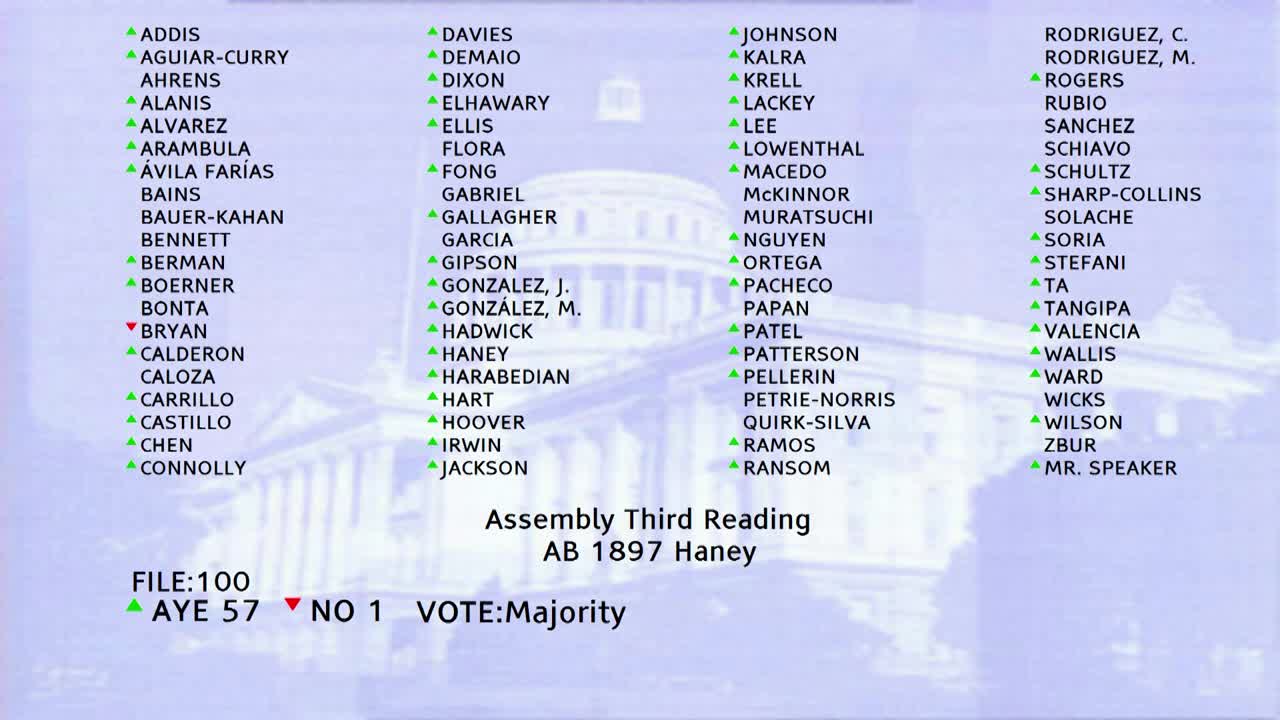
Bill Author

Bill Co-Author(s):