AB 2294: State holidays: Sylvia Mendez Day.
- Session Year: 2025-2026
- House: Assembly
- Latest Version Date: 2026-09-27
Current Status:
Passed
(2026-09-27: Chaptered by Secretary of State - Chapter 596, Statutes of 2026.)
Introduced
In Committee
Awaiting First Chamber Vote
Passed First Chamber
In Committee
Awaiting Second Chamber Vote
Passed Second Chamber
Enacted
Existing law designates specific days as holidays in this state, including, among others, Dr. Martin Luther King, Jr. Day and Cesar Chavez Day. Existing law designates certain days as judicial holidays and exempts others, including Lunar New Year, Diwali, and Genocide Remembrance Day.
This bill would designate Sylvia Mendez Day as a state holiday, but would exempt the holiday from being a judicial holiday. The bill would include related legislative findings and declarations.
This bill would incorporate additional changes to Section 135 of the Code of Civil Procedure proposed by AB 2017 to be operative only if this bill and AB 2017 are enacted and this bill is enacted last. The bill would also incorporate additional changes to Section 6700 of the Government Code proposed by AB 2017 and SB 1394 to be operative only if this bill and either or both of those bills are enacted and this bill is enacted last.
Existing law designates specific days as holidays in this state, including, among others, Dr. Martin Luther King, Jr. Day and Cesar Chavez Day. Existing law designates certain days as judicial holidays and exempts others including, Lunar New Year, Diwali, and Genocide Remembrance Day.
This bill would designate Sylvia Mendez Day as a state holiday, but would exempt the holiday from being a judicial holiday. The bill would include related legislative findings and declarations.
Existing law designates specific days as holidays in this state, including, among others, Dr. Martin Luther King, Jr. Day and Cesar Chavez Day. Existing law designates certain days as judicial holidays and exempts others including, Lunar New Year, Diwali, and Genocide Remembrance Day.
This bill would designate Sylvia Mendez Day as a state holiday. holiday, but would exempt the holiday from being a judicial holiday. The bill would include related legislative findings and declarations.
Existing law designates specific days as holidays in this state, including, among others, Dr. Martin Luther King, Jr. Day and Cesar Chavez Day.
This bill would designate Sylvia Mendez Day as a state holiday. The bill would include related legislative findings and declarations.
The Legislature finds and declares all of the following:
(a)The landmark United States Supreme Court case Mendez v. Westminster School Dist. of Orange County (S.D. Cal. 1946) 64 F.Supp. 544, affd. Westminster School Dist. of Orange County v. Mendez (9th Cir. 1947) 161 F.2d 774 (hereafter Mendez v. Westminster) was a pivotal decision in the struggle for civil rights and educational equality for Mexican American students in California.
(b)The case arose from discriminatory practices occurring all over America where Mexican American children were segregated into Mexican schools under the guise of separate but equal policies.
(c)The Mendez v. Westminster case challenged these policies, asserting that the segregation of Mexican American children violated their rights under the 14th Amendment to the United States Constitution, which guarantees equal protection under the law.
(d)The United States District Courts ruling in Mendez v. Westminster was one of the first major legal decisions to strike down segregation in schools in the United States, paving the way for future desegregation cases, including the landmark Brown v. Board of Ed. of Topeka, Shawnee County, Kan. (1954) 347 U.S. 483 (hereafter Brown v. Board of Education).
(e)Earl Warren, who was Governor of California at the time of the Mendez v. Westminster case, supported the legal action and the bill that led to the end of school segregation in California, and later was appointed as Chief Justice of the United States Supreme Court, played a key role in the writing of the Brown v. Board of Education decision, which extended the principles of Mendez v. Westminster nationwide.
(f)Thurgood Marshall, an influential civil rights attorney and later an Associate Justice of the United States Supreme Court, played a pivotal role in the national civil rights movement by a writing a friend-of-the-court brief in support of the plaintiffs in Mendez v. Westminster case, using legal arguments that would later inform his work on Brown v. Board of Education, helping to shape the legal foundation for desegregating public schools across the United States.
(g)California led the United States in banning school segregation, with the Mendez v. Westminster case setting a crucial precedent that resulted in the Legislature passing laws to eliminate school segregation in the state, well before the national legal landscape was transformed by Brown v. Board of Education.
(h)Members of the Latino community in California, particularly Mexican American families, were among the first to challenge and fight against the segregation of public schools in the United States, laying the groundwork for the broader civil rights movement and the eventual nationwide struggle for equal access to education.
(i)The case was brought forth by Gonzalo and Felicitas Mendez, who were joined by four other familiesThomas and Mary Luisa Estrada, William and Virginia Guzman, Frank and Irene Palomino, and Lorenzo and Josefina Ramirezfrom school districts in the communities of Westminster, Garden Grove, and El Modena, and the City of Santa Ana, with the support of civil rights advocates such as Thurgood Marshall.
(j)The Mendez v. Westminster decision had a profound impact not only on the educational system of California but also on the civil rights movement, as it marked an early victory in the ongoing fight against racial segregation and discrimination in the United States.
(k)The legal precedent set by Mendez v. Westminster was a significant step toward the eventual dismantling of racial segregation across the nation and was instrumental in shaping the civil rights landscape of the 20th century.
(l)It is important to honor and recognize the courage of the families and the contributions of the legal and civil rights advocates who fought for justice in this landmark case, which continues to inspire efforts toward equality and inclusion in education and society.
(m)April 14 of each year marks the anniversary of the United States Court of Appeals for the Ninth Circuit decision in Mendez v. Westminster, and it is fitting to commemorate this day as a reminder of the ongoing fight for equal rights and the importance of education in fostering a just and equitable society.
(n)It is the Legislatures intent to declare April 14 of each year as Sylvia Mendez Day, in recognition of the significance of the historic Mendez v. Westminster case in advancing civil rights and promoting educational equality for all students in California and the United States.
(o)The Legislature encourages all Californians to reflect on the importance of the Mendez v. Westminster case, to honor the courage of the individuals who fought for justice, and to continue working toward a more inclusive and equitable society for future generations.
SEC. 2.Section 135 of the Code of Civil Procedure is amended to read:135.Every full day designated as a holiday by Section 6700 of the Government Code, including that Thursday of November declared by the President to be Thanksgiving Day, is a judicial holiday, except the date corresponding with the second new moon following the winter solstice, or the third new moon following the winter solstice should an intercalary month intervene, known as Lunar New Year, the 15th day of the month of Kartik in the Hindu lunar calendar of each year, known as Diwali, April 14, known as Sylvia Mendez Day, April 24, known as Genocide Remembrance Day, September 9, known as Admission Day, the second Monday in October, known as Columbus Day, and any other day appointed by the President, but not by the Governor, for a public fast, thanksgiving, or holiday. If a judicial holiday falls on a Saturday or a Sunday, the Judicial Council may designate an alternative day for observance of the holiday. Every Saturday and the day after Thanksgiving Day are judicial holidays. Officers and employees of the courts shall observe only the judicial holidays established pursuant to this section.
SEC. 2.5.Section 135 of the Code of Civil Procedure is amended to read:135.Every full day designated as a holiday by Section 6700 of the Government Code, including that Thursday of November declared by the President to be Thanksgiving Day, is a judicial holiday, except the date corresponding with the second new moon following the winter solstice, or the third new moon following the winter solstice should an intercalary month intervene, known as Lunar New Year, the first day of the month of Shawwal in the Islamic lunar calendar, known as Eid al-Fitr, the 15th day of the month of Kartik in the Hindu lunar calendar of each year, known as Diwali, April 14, known as Sylvia Mendez Day, April 24, known as Genocide Remembrance Day, the 10th day of the month of Dhu al-Hijjah in the Islamic lunar calendar, known as Eid al-Adha, September 9, known as Admission Day, the second Monday in October, known as Columbus Day, and any other day appointed by the President, but not by the Governor, for a public fast, thanksgiving, or holiday. If a judicial holiday falls on a Saturday or a Sunday, the Judicial Council may designate an alternative day for observance of the holiday. Every Saturday and the day after Thanksgiving Day are judicial holidays. Officers and employees of the courts shall observe only the judicial holidays established pursuant to this section.
SEC. 3.Section 6700 of the Government Code is amended to read:6700.(a)The holidays in this state are:
(1)Every Sunday.
(2)January 1.
(3)The third Monday in January, known as Dr. Martin Luther King, Jr. Day.
(4)The date corresponding with the second new moon following the winter solstice, or the third new moon following the winter solstice should an intercalary month intervene, known as Lunar New Year.
(5)February 12, known as Lincoln Day.
(6)The third Monday in February.
(7)March 31, known as Farmworkers Day.
(8)April 24, known as Genocide Remembrance Day.
(9)The 15th day of the month of Kartik in the Hindu lunar calendar of each year, known as Diwali.
(10)The last Monday in May.
(11)June 19, known as Juneteenth.
(12)July 4.
(13)The first Monday in September.
(14)September 9, known as Admission Day.
(15)The fourth Friday in September, known as Native American Day.
(16)The second Monday in October, known as Columbus Day.
(17)November 11, known as Veterans Day.
(18)December 25.
(19)Good Friday from 12 noon until 3 p.m.
(20)April 14, known as Sylvia Mendez Day.
(21)(A)Every day appointed by the President or Governor for a public fast, thanksgiving, or holiday.
(B)Except for the Thursday in November appointed as Thanksgiving Day, this paragraph and paragraphs (3), (4), and (7) shall not apply to a city, county, or district, unless made applicable by charter, or by ordinance or resolution of the governing body thereof.
(b)If this section is in conflict with the provisions of a memorandum of understanding reached pursuant to Chapter 12 (commencing with Section 3560) of Division 4 of Title 1, the memorandum of understanding shall be controlling without further legislative action, except that if those provisions of a memorandum of understanding require the expenditure of funds, the provisions shall not become effective unless approved by the Legislature in the annual Budget Act.
SEC. 3.1.Section 6700 of the Government Code is amended to read:6700.(a)The holidays in this state are:
(1)Every Sunday.
(2)January 1.
(3)The third Monday in January, known as Dr. Martin Luther King, Jr. Day.
(4)The date corresponding with the second new moon following the winter solstice, or the third new moon following the winter solstice should an intercalary month intervene, known as Lunar New Year.
(5)February 12, known as Lincoln Day.
(6)The third Monday in February.
(7)The first day of the month of Shawwal in the Islamic lunar calendar, known as Eid al-Fitr.
(8)March 31, known as Farmworkers Day.
(9)April 24, known as Genocide Remembrance Day.
(10)The 15th day of the month of Kartik in the Hindu lunar calendar of each year, known as Diwali.
(11)The 10th day of the month of Dhu al-Hijjah in the Islamic lunar calendar, known as Eid al-Adha.
(12)The last Monday in May.
(13)June 19, known as Juneteenth.
(14)July 4.
(15)The first Monday in September.
(16)September 9, known as Admission Day.
(17)The fourth Friday in September, known as Native American Day.
(18)The second Monday in October, known as Columbus Day.
(19)November 11, known as Veterans Day.
(20)December 25.
(21)Good Friday from 12 noon until 3 p.m.
(22)April 14, known as Sylvia Mendez Day.
(23)(A)Every day appointed by the President or Governor for a public fast, thanksgiving, or holiday.
(B)Except for the Thursday in November appointed as Thanksgiving Day, this paragraph and paragraphs (3), (4), and (7) shall not apply to a city, county, or district unless made applicable by charter, or by ordinance or resolution of the governing body thereof.
(b)If this section is in conflict with the provisions of a memorandum of understanding reached pursuant to Chapter 12 (commencing with Section 3560) of Division 4 of Title 1, the memorandum of understanding shall be controlling without further legislative action, except that if those provisions of a memorandum of understanding require the expenditure of funds, the provisions shall not become effective unless approved by the Legislature in the annual Budget Act.
SEC. 3.2.Section 6700 of the Government Code is amended to read:6700.(a)The holidays in this state are:
(1)Every Sunday.
(2)January 1.
(3)The third Monday in January, known as Dr. Martin Luther King, Jr. Day.
(4)The date corresponding with the second new moon following the winter solstice, or the third new moon following the winter solstice should an intercalary month intervene, known as Lunar New Year.
(5)February 12, known as Lincoln Day.
(6)The third Monday in February.
(7)April 10, known as Farmworkers Day.
(8)April 24, known as Genocide Remembrance Day.
(9)The 15th day of the month of Kartik in the Hindu lunar calendar of each year, known as Diwali.
(10)The last Monday in May.
(11)June 19, known as Juneteenth.
(12)July 4.
(13)The first Monday in September.
(14)September 9, known as Admission Day.
(15)The fourth Friday in September, known as Native American Day.
(16)The second Monday in October, known as Columbus Day.
(17)November 11, known as Veterans Day.
(18)December 25.
(19)Good Friday from 12 noon until 3 p.m.
(20)April 14, known as Sylvia Mendez Day.
(21)(A)Every day appointed by the President or Governor for a public fast, thanksgiving, or holiday.
(B)Except for the Thursday in November appointed as Thanksgiving Day, this paragraph and paragraphs (3), (4), and (7) shall not apply to a city, county, or district unless made applicable by charter, or by ordinance or resolution of the governing body thereof.
(b)If this section is in conflict with the provisions of a memorandum of understanding reached pursuant to Chapter 12 (commencing with Section 3560) of Division 4 of Title 1, the memorandum of understanding shall be controlling without further legislative action, except that if those provisions of a memorandum of understanding require the expenditure of funds, the provisions shall not become effective unless approved by the Legislature in the annual Budget Act.
SEC. 3.3.Section 6700 of the Government Code is amended to read:6700.(a)The holidays in this state are:
(1)Every Sunday.
(2)January 1.
(3)The third Monday in January, known as Dr. Martin Luther King, Jr. Day.
(4)The date corresponding with the second new moon following the winter solstice, or the third new moon following the winter solstice should an intercalary month intervene, known as Lunar New Year.
(5)February 12, known as Lincoln Day.
(6)The third Monday in February.
(7)The first day of the month of Shawwal in the Islamic lunar calendar, known as Eid al-Fitr.
(8)April 10, known as Farmworkers Day.
(9)April 24, known as Genocide Remembrance Day.
(10)The 15th day of the month of Kartik in the Hindu lunar calendar of each year, known as Diwali.
(11)The 10th day of the month of Dhu al-Hijjah in the Islamic lunar calendar, known as Eid al-Adha.
(12)The last Monday in May.
(13)June 19, known as Juneteenth.
(14)July 4.
(15)The first Monday in September.
(16)September 9, known as Admission Day.
(17)The fourth Friday in September, known as Native American Day.
(18)The second Monday in October, known as Columbus Day.
(19)November 11, known as Veterans Day.
(20)December 25.
(21)Good Friday from 12 noon until 3 p.m.
(22)April 14, known as Sylvia Mendez Day.
(23)(A)Every day appointed by the President or Governor for a public fast, thanksgiving, or holiday.
(B)Except for the Thursday in November appointed as Thanksgiving Day, this paragraph and paragraphs (3), (4), and (7) shall not apply to a city, county, or district unless made applicable by charter, or by ordinance or resolution of the governing body thereof.
(b)If this section is in conflict with the provisions of a memorandum of understanding reached pursuant to Chapter 12 (commencing with Section 3560) of Division 4 of Title 1, the memorandum of understanding shall be controlling without further legislative action, except that if those provisions of a memorandum of understanding require the expenditure of funds, the provisions shall not become effective unless approved by the Legislature in the annual Budget Act.
SEC. 4.Section 2.5 of this bill incorporates amendments to Section 135 of the Code of Civil Procedure proposed by both this bill and Assembly Bill 2017. That section of this bill shall only become operative if (1) both bills are enacted and become effective on or before January 1, 2027, (2) each bill amends Section 135 of the Code of Civil Procedure, and (3) this bill is enacted after Assembly Bill 2017, in which case Section 2 of this bill shall not become operative.
SEC. 5.(a)Section 3.1 of this bill incorporates amendments to Section 6700 of the Government Code proposed by both this bill and Assembly Bill 2017. That section of this bill shall only become operative if (1) both bills are enacted and become effective on or before January 1, 2027, (2) each bill amends Section 6700 of the Government Code, (3) Senate Bill 1394 is not enacted or as enacted does not amend that section, and (4) this bill is enacted after Assembly Bill 2017, in which case Sections 3, 3.2, and 3.3 of this bill shall not become operative.
(b)Section 3.2 of this bill incorporates amendments to Section 6700 of the Government Code proposed by both this bill and Senate Bill 1394. That section of this bill shall only become operative if (1) both bills are enacted and become effective on or before January 1, 2027, (2) each bill amends Section 6700 of the Government Code, (3) Assembly Bill 2017 is not enacted or as enacted does not amend that section, and (4) this bill is enacted after Senate Bill 1394, in which case Sections 3, 3.1, and 3.3 of this bill shall not become operative.
(c)Section 3.3 of this bill incorporates amendments to Section 6700 of the Government Code proposed by this bill, Assembly Bill 2017, and Senate Bill 1394. That section of this bill shall only become operative if (1) all three bills are enacted and become effective on or before January 1, 2027, (2) all three bills amend Section 6700 of the Government Code, and (3) this bill is enacted after Assembly Bill 2017 and Senate Bill 1394, in which case Section 3, 3.1, and 3.2 of this bill shall not become operative.
The Legislature finds and declares all of the following:
(a)The landmark United States Supreme Court case Mendez v. Westminster School Dist. of Orange County (S.D. Cal. 1946) 64 F.Supp. 544, affd. Westminster School Dist. of Orange County v. Mendez (9th Cir. 1947) 161 F.2d 774 (hereafter Mendez v. Westminster) was a pivotal decision in the struggle for civil rights and educational equality for Mexican American students in California.
(b)The case arose from discriminatory practices occurring all over America where Mexican American children were segregated into Mexican schools under the guise of separate but equal policies.
(c)The Mendez v. Westminster case challenged these policies, asserting that the segregation of Mexican American children violated their rights under the 14th Amendment to the United States Constitution, which guarantees equal protection under the law.
(d)The United States District Courts ruling in Mendez v. Westminster was one of the first major legal decisions to strike down segregation in schools in the United States, paving the way for future desegregation cases, including the landmark Brown v. Board of Ed. of Topeka, Shawnee County, Kan. (1954) 347 U.S. 483 (hereafter Brown v. Board of Education).
(e)Earl Warren, who was Governor of California at the time of the Mendez v. Westminster case, supported the legal action and the bill that led to the end of school segregation in California, and later was appointed as Chief Justice of the United States Supreme Court, played a key role in the writing of the Brown v. Board of Education decision, which extended the principles of Mendez v. Westminster nationwide.
(f)Thurgood Marshall, an influential civil rights attorney and later an Associate Justice of the United States Supreme Court, played a pivotal role in the national civil rights movement by a writing a friend-of-the-court brief in support of the plaintiffs in Mendez v. Westminster case, using legal arguments that would later inform his work on Brown v. Board of Education, helping to shape the legal foundation for desegregating public schools across the United States.
(g)California led the United States in banning school segregation, with the Mendez v. Westminster case setting a crucial precedent that resulted in the Legislature passing laws to eliminate school segregation in the state, well before the national legal landscape was transformed by Brown v. Board of Education.
(h)Members of the Latino community in California, particularly Mexican American families, were among the first to challenge and fight against the segregation of public schools in the United States, laying the groundwork for the broader civil rights movement and the eventual nationwide struggle for equal access to education.
(i)The case was brought forth by Gonzalo and Felicitas Mendez, who were joined by four other familiesThomas and Mary Luisa Estrada, William and Virginia Guzman, Frank and Irene Palomino, and Lorenzo and Josefina Ramirezfrom school districts in the communities of Westminster, Garden Grove, and El Modena, and the City of Santa Ana, with the support of civil rights advocates such as Thurgood Marshall.
(j)The Mendez v. Westminster decision had a profound impact not only on the educational system of California but also on the civil rights movement, as it marked an early victory in the ongoing fight against racial segregation and discrimination in the United States.
(k)The legal precedent set by Mendez v. Westminster was a significant step toward the eventual dismantling of racial segregation across the nation and was instrumental in shaping the civil rights landscape of the 20th century.
(l)It is important to honor and recognize the courage of the families and the contributions of the legal and civil rights advocates who fought for justice in this landmark case, which continues to inspire efforts toward equality and inclusion in education and society.
(m)April 14 of each year marks the anniversary of the United States Court of Appeals for the Ninth Circuit decision in Mendez v. Westminster, and it is fitting to commemorate this day as a reminder of the ongoing fight for equal rights and the importance of education in fostering a just and equitable society.
(n)It is the Legislatures intent to declare April 14 of each year as Sylvia Mendez Day, in recognition of the significance of the historic Mendez v. Westminster case in advancing civil rights and promoting educational equality for all students in California and the United States.
(o)The Legislature encourages all Californians to reflect on the importance of the Mendez v. Westminster case, to honor the courage of the individuals who fought for justice, and to continue working toward a more inclusive and equitable society for future generations.
SEC. 2.Section 135 of the Code of Civil Procedure is amended to read:135.Every full day designated as a holiday by Section 6700 of the Government Code, including that Thursday of November declared by the President to be Thanksgiving Day, is a judicial holiday, except the date corresponding with the second new moon following the winter solstice, or the third new moon following the winter solstice should an intercalary month intervene, known as Lunar New Year, the 15th day of the month of Kartik in the Hindu lunar calendar of each year, known as Diwali, April 14, known as Sylvia Mendez Day, April 24, known as Genocide Remembrance Day, September 9, known as Admission Day, the second Monday in October, known as Columbus Day, and any other day appointed by the President, but not by the Governor, for a public fast, thanksgiving, or holiday. If a judicial holiday falls on a Saturday or a Sunday, the Judicial Council may designate an alternative day for observance of the holiday. Every Saturday and the day after Thanksgiving Day are judicial holidays. Officers and employees of the courts shall observe only the judicial holidays established pursuant to this section.
SEC. 2.5.Section 135 of the Code of Civil Procedure is amended to read:135.Every full day designated as a holiday by Section 6700 of the Government Code, including that Thursday of November declared by the President to be Thanksgiving Day, is a judicial holiday, except the date corresponding with the second new moon following the winter solstice, or the third new moon following the winter solstice should an intercalary month intervene, known as Lunar New Year, the first day of the month of Shawwal in the Islamic lunar calendar, known as Eid al-Fitr, the 15th day of the month of Kartik in the Hindu lunar calendar of each year, known as Diwali, April 14, known as Sylvia Mendez Day, April 24, known as Genocide Remembrance Day, the 10th day of the month of Dhu al-Hijjah in the Islamic lunar calendar, known as Eid al-Adha, September 9, known as Admission Day, the second Monday in October, known as Columbus Day, and any other day appointed by the President, but not by the Governor, for a public fast, thanksgiving, or holiday. If a judicial holiday falls on a Saturday or a Sunday, the Judicial Council may designate an alternative day for observance of the holiday. Every Saturday and the day after Thanksgiving Day are judicial holidays. Officers and employees of the courts shall observe only the judicial holidays established pursuant to this section.
SEC. 3.Section 6700 of the Government Code is amended to read:6700.(a)The holidays in this state are:
(1)Every Sunday.
(2)January 1.
(3)The third Monday in January, known as Dr. Martin Luther King, Jr. Day.
(4)The date corresponding with the second new moon following the winter solstice, or the third new moon following the winter solstice should an intercalary month intervene, known as Lunar New Year.
(5)February 12, known as Lincoln Day.
(6)The third Monday in February.
(7)March 31, known as Farmworkers Day.
(8)April 24, known as Genocide Remembrance Day.
(9)The 15th day of the month of Kartik in the Hindu lunar calendar of each year, known as Diwali.
(10)The last Monday in May.
(11)June 19, known as Juneteenth.
(12)July 4.
(13)The first Monday in September.
(14)September 9, known as Admission Day.
(15)The fourth Friday in September, known as Native American Day.
(16)The second Monday in October, known as Columbus Day.
(17)November 11, known as Veterans Day.
(18)December 25.
(19)Good Friday from 12 noon until 3 p.m.
(20)April 14, known as Sylvia Mendez Day.
(21)(A)Every day appointed by the President or Governor for a public fast, thanksgiving, or holiday.
(B)Except for the Thursday in November appointed as Thanksgiving Day, this paragraph and paragraphs (3), (4), and (7) shall not apply to a city, county, or district, unless made applicable by charter, or by ordinance or resolution of the governing body thereof.
(b)If this section is in conflict with the provisions of a memorandum of understanding reached pursuant to Chapter 12 (commencing with Section 3560) of Division 4 of Title 1, the memorandum of understanding shall be controlling without further legislative action, except that if those provisions of a memorandum of understanding require the expenditure of funds, the provisions shall not become effective unless approved by the Legislature in the annual Budget Act.
SEC. 3.1.Section 6700 of the Government Code is amended to read:6700.(a)The holidays in this state are:
(1)Every Sunday.
(2)January 1.
(3)The third Monday in January, known as Dr. Martin Luther King, Jr. Day.
(4)The date corresponding with the second new moon following the winter solstice, or the third new moon following the winter solstice should an intercalary month intervene, known as Lunar New Year.
(5)February 12, known as Lincoln Day.
(6)The third Monday in February.
(7)The first day of the month of Shawwal in the Islamic lunar calendar, known as Eid al-Fitr.
(8)March 31, known as Farmworkers Day.
(9)April 24, known as Genocide Remembrance Day.
(10)The 15th day of the month of Kartik in the Hindu lunar calendar of each year, known as Diwali.
(11)The 10th day of the month of Dhu al-Hijjah in the Islamic lunar calendar, known as Eid al-Adha.
(12)The last Monday in May.
(13)June 19, known as Juneteenth.
(14)July 4.
(15)The first Monday in September.
(16)September 9, known as Admission Day.
(17)The fourth Friday in September, known as Native American Day.
(18)The second Monday in October, known as Columbus Day.
(19)November 11, known as Veterans Day.
(20)December 25.
(21)Good Friday from 12 noon until 3 p.m.
(22)April 14, known as Sylvia Mendez Day.
(23)(A)Every day appointed by the President or Governor for a public fast, thanksgiving, or holiday.
(B)Except for the Thursday in November appointed as Thanksgiving Day, this paragraph and paragraphs (3), (4), and (7) shall not apply to a city, county, or district unless made applicable by charter, or by ordinance or resolution of the governing body thereof.
(b)If this section is in conflict with the provisions of a memorandum of understanding reached pursuant to Chapter 12 (commencing with Section 3560) of Division 4 of Title 1, the memorandum of understanding shall be controlling without further legislative action, except that if those provisions of a memorandum of understanding require the expenditure of funds, the provisions shall not become effective unless approved by the Legislature in the annual Budget Act.
SEC. 3.2.Section 6700 of the Government Code is amended to read:6700.(a)The holidays in this state are:
(1)Every Sunday.
(2)January 1.
(3)The third Monday in January, known as Dr. Martin Luther King, Jr. Day.
(4)The date corresponding with the second new moon following the winter solstice, or the third new moon following the winter solstice should an intercalary month intervene, known as Lunar New Year.
(5)February 12, known as Lincoln Day.
(6)The third Monday in February.
(7)March 17, April 10, known as Farmworkers Day.
(8)April 24, known as Genocide Remembrance Day.
(9)The 15th day of the month of Kartik in the Hindu lunar calendar of each year, known as Diwali.
(10)The last Monday in May.
(11)June 19, known as Juneteenth.
(12)July 4.
(13)The first Monday in September.
(14)September 9, known as Admission Day.
(15)The fourth Friday in September, known as Native American Day.
(16)The second Monday in October, known as Columbus Day.
(17)November 11, known as Veterans Day.
(18)December 25.
(19)Good Friday from 12 noon until 3 p.m.
(20)April 14, known as Sylvia Mendez Day.
(21)(A)Every day appointed by the President or Governor for a public fast, thanksgiving, or holiday.
(B)Except for the Thursday in November appointed as Thanksgiving Day, this paragraph and paragraphs (3), (4), and (7) shall not apply to a city, county, or district unless made applicable by charter, or by ordinance or resolution of the governing body thereof.
(b)If this section is in conflict with the provisions of a memorandum of understanding reached pursuant to Chapter 12 (commencing with Section 3560) of Division 4 of Title 1, the memorandum of understanding shall be controlling without further legislative action, except that if those provisions of a memorandum of understanding require the expenditure of funds, the provisions shall not become effective unless approved by the Legislature in the annual Budget Act.
SEC. 3.3.Section 6700 of the Government Code is amended to read:6700.(a)The holidays in this state are:
(1)Every Sunday.
(2)January 1.
(3)The third Monday in January, known as Dr. Martin Luther King, Jr. Day.
(4)The date corresponding with the second new moon following the winter solstice, or the third new moon following the winter solstice should an intercalary month intervene, known as Lunar New Year.
(5)February 12, known as Lincoln Day.
(6)The third Monday in February.
(7) March 17, known as Farmworkers Day.(8)(7)The first day of the month of Shawwal in the Islamic lunar calendar, known as Eid al-Fitr.
(8)April 10, known as Farmworkers Day.
(9)April 24, known as Genocide Remembrance Day.
(10)The 15th day of the month of Kartik in the Hindu lunar calendar of each year, known as Diwali.
(11)The 10th day of the month of Dhu al-Hijjah in the Islamic lunar calendar, known as Eid al-Adha.
(12)The last Monday in May.
(13)June 19, known as Juneteenth.
(14)July 4.
(15)The first Monday in September.
(16)September 9, known as Admission Day.
(17)The fourth Friday in September, known as Native American Day.
(18)The second Monday in October, known as Columbus Day.
(19)November 11, known as Veterans Day.
(20)December 25.
(21)Good Friday from 12 noon until 3 p.m.
(22)April 14, known as Sylvia Mendez Day.
(23)(A)Every day appointed by the President or Governor for a public fast, thanksgiving, or holiday.
(B)Except for the Thursday in November appointed as Thanksgiving Day, this paragraph and paragraphs (3), (4), and (7) shall not apply to a city, county, or district unless made applicable by charter, or by ordinance or resolution of the governing body thereof.
(b)If this section is in conflict with the provisions of a memorandum of understanding reached pursuant to Chapter 12 (commencing with Section 3560) of Division 4 of Title 1, the memorandum of understanding shall be controlling without further legislative action, except that if those provisions of a memorandum of understanding require the expenditure of funds, the provisions shall not become effective unless approved by the Legislature in the annual Budget Act.
SEC. 4.Section 2.5 of this bill incorporates amendments to Section 135 of the Code of Civil Procedure proposed by both this bill and Assembly Bill 2017. That section of this bill shall only become operative if (1) both bills are enacted and become effective on or before January 1, 2027, (2) each bill amends Section 135 of the Code of Civil Procedure, and (3) this bill is enacted after Assembly Bill 2017, in which case Section 2 of this bill shall not become operative.
SEC. 5.(a)Section 3.1 of this bill incorporates amendments to Section 6700 of the Government Code proposed by both this bill and Assembly Bill 2017. That section of this bill shall only become operative if (1) both bills are enacted and become effective on or before January 1, 2027, (2) each bill amends Section 6700 of the Government Code, (3) Senate Bill 1394 is not enacted or as enacted does not amend that section, and (4) this bill is enacted after Assembly Bill 2017, in which case Sections 3, 3.2, and 3.3 of this bill shall not become operative.
(b)Section 3.2 of this bill incorporates amendments to Section 6700 of the Government Code proposed by both this bill and Senate Bill 1394. That section of this bill shall only become operative if (1) both bills are enacted and become effective on or before January 1, 2027, (2) each bill amends Section 6700 of the Government Code, (3) Assembly Bill 2017 is not enacted or as enacted does not amend that section, and (4) this bill is enacted after Senate Bill 1394, in which case Sections 3, 3.1, and 3.3 of this bill shall not become operative.
(c)Section 3.3 of this bill incorporates amendments to Section 6700 of the Government Code proposed by this bill, Assembly Bill 2017, and Senate Bill 1394. That section of this bill shall only become operative if (1) all three bills are enacted and become effective on or before January 1, 2027, (2) all three bills amend Section 6700 of the Government Code, and (3) this bill is enacted after Assembly Bill 2017 and Senate Bill 1394, in which case Section 3, 3.1, and 3.2 of this bill shall not become operative.
The Legislature finds and declares all of the following:
(a)The landmark United States Supreme Court case Mendez v. Westminster School Dist. of Orange County (S.D. Cal. 1946) 64 F.Supp. 544, affd. Westminster School Dist. of Orange County v. Mendez (9th Cir. 1947) 161 F.2d 774 (hereafter Mendez v. Westminster) was a pivotal decision in the struggle for civil rights and educational equality for Mexican American students in California.
(b)The case arose from discriminatory practices occurring all over America where Mexican American children were segregated into Mexican schools under the guise of separate but equal policies.
(c)The Mendez v. Westminster case challenged these policies, asserting that the segregation of Mexican American children violated their rights under the 14th Amendment to the United States Constitution, which guarantees equal protection under the law.
(d)The United States District Courts ruling in Mendez v. Westminster was one of the first major legal decisions to strike down segregation in schools in the United States, paving the way for future desegregation cases, including the landmark Brown v. Board of Ed. of Topeka, Shawnee County, Kan. (1954) 347 U.S. 483 (hereafter Brown v. Board of Education).
(e)Earl Warren, who was Governor of California at the time of the Mendez v. Westminster case, supported the legal action and the bill that led to the end of school segregation in California, and later was appointed as Chief Justice of the United States Supreme Court, played a key role in the writing of the Brown v. Board of Education decision, which extended the principles of Mendez v. Westminster nationwide.
(f)Thurgood Marshall, an influential civil rights attorney and later an Associate Justice of the United States Supreme Court, played a pivotal role in the national civil rights movement by a writing a friend-of-the-court brief in support of the plaintiffs in Mendez v. Westminster case, using legal arguments that would later inform his work on Brown v. Board of Education, helping to shape the legal foundation for desegregating public schools across the United States.
(g)California led the United States in banning school segregation, with the Mendez v. Westminster case setting a crucial precedent that resulted in the Legislature passing laws to eliminate school segregation in the state, well before the national legal landscape was transformed by Brown v. Board of Education.
(h)Members of the Latino community in California, particularly Mexican American families, were among the first to challenge and fight against the segregation of public schools in the United States, laying the groundwork for the broader civil rights movement and the eventual nationwide struggle for equal access to education.
(i)The case was brought forth by Gonzalo and Felicitas Mendez, who were joined by four other familiesThomas and Mary Luisa Estrada, William and Virginia Guzman, Frank and Irene Palomino, and Lorenzo and Josefina Ramirezfrom school districts in the communities of Westminster, Garden Grove, and El Modena, and the City of Santa Ana, with the support of civil rights advocates such as Thurgood Marshall.
(j)The Mendez v. Westminster decision had a profound impact not only on the educational system of California but also on the civil rights movement, as it marked an early victory in the ongoing fight against racial segregation and discrimination in the United States.
(k)The legal precedent set by Mendez v. Westminster was a significant step toward the eventual dismantling of racial segregation across the nation and was instrumental in shaping the civil rights landscape of the 20th century.
(l)It is important to honor and recognize the courage of the families and the contributions of the legal and civil rights advocates who fought for justice in this landmark case, which continues to inspire efforts toward equality and inclusion in education and society.
(m)April 14 of each year marks the anniversary of the United States Court of Appeals for the Ninth Circuit decision in Mendez v. Westminster, and it is fitting to commemorate this day as a reminder of the ongoing fight for equal rights and the importance of education in fostering a just and equitable society.
(n)It is the Legislatures intent to declare April 14 of each year as Sylvia Mendez Day, in recognition of the significance of the historic Mendez v. Westminster case in advancing civil rights and promoting educational equality for all students in California and the United States.
(o)The Legislature encourages all Californians to reflect on the importance of the Mendez v. Westminster case, to honor the courage of the individuals who fought for justice, and to continue working toward a more inclusive and equitable society for future generations.
SEC. 2.Section 135 of the Code of Civil Procedure is amended to read:135.Every full day designated as a holiday by Section 6700 of the Government Code, including that Thursday of November declared by the President to be Thanksgiving Day, is a judicial holiday, except the date corresponding with the second new moon following the winter solstice, or the third new moon following the winter solstice should an intercalary month intervene, known as Lunar New Year, the 15th day of the month of Kartik in the Hindu lunar calendar of each year, known as Diwali, April 14, known as Sylvia Mendez Day, April 24, known as Genocide Remembrance Day, September 9, known as Admission Day, the second Monday in October, known as Columbus Day, and any other day appointed by the President, but not by the Governor, for a public fast, thanksgiving, or holiday. If a judicial holiday falls on a Saturday or a Sunday, the Judicial Council may designate an alternative day for observance of the holiday. Every Saturday and the day after Thanksgiving Day are judicial holidays. Officers and employees of the courts shall observe only the judicial holidays established pursuant to this section.
SEC. 2.5.Section 135 of the Code of Civil Procedure is amended to read:135.Every full day designated as a holiday by Section 6700 of the Government Code, including that Thursday of November declared by the President to be Thanksgiving Day, is a judicial holiday, except the date corresponding with the second new moon following the winter solstice, or the third new moon following the winter solstice should an intercalary month intervene, known as Lunar New Year, the first day of the month of Shawwal in the Islamic lunar calendar, known as Eid al-Fitr, the 15th day of the month of Kartik in the Hindu lunar calendar of each year, known as Diwali, April 14, known as Sylvia Mendez Day, April 24, known as Genocide Remembrance Day, the 10th day of the month of Dhu al-Hijjah in the Islamic lunar calendar, known as Eid al-Adha, September 9, known as Admission Day, the second Monday in October, known as Columbus Day, and any other day appointed by the President, but not by the Governor, for a public fast, thanksgiving, or holiday. If a judicial holiday falls on a Saturday or a Sunday, the Judicial Council may designate an alternative day for observance of the holiday. Every Saturday and the day after Thanksgiving Day are judicial holidays. Officers and employees of the courts shall observe only the judicial holidays established pursuant to this section.
SEC. 3.Section 6700 of the Government Code is amended to read:6700.(a)The holidays in this state are:
(1)Every Sunday.
(2)January 1.
(3)The third Monday in January, known as Dr. Martin Luther King, Jr. Day.
(4)The date corresponding with the second new moon following the winter solstice, or the third new moon following the winter solstice should an intercalary month intervene, known as Lunar New Year.
(5)February 12, known as Lincoln Day.
(6)The third Monday in February.
(7)March 31, known as Farmworkers Day.
(8)April 24, known as Genocide Remembrance Day.
(9)The 15th day of the month of Kartik in the Hindu lunar calendar of each year, known as Diwali.
(10)The last Monday in May.
(11)June 19, known as Juneteenth.
(12)July 4.
(13)The first Monday in September.
(14)September 9, known as Admission Day.
(15)The fourth Friday in September, known as Native American Day.
(16)The second Monday in October, known as Columbus Day.
(17)November 11, known as Veterans Day.
(18)December 25.
(19)Good Friday from 12 noon until 3 p.m.
(20)April 14, known as Sylvia Mendez Day.
(21)(A)Every day appointed by the President or Governor for a public fast, thanksgiving, or holiday.
(B)Except for the Thursday in November appointed as Thanksgiving Day, this paragraph and paragraphs (3), (4), and (7) shall not apply to a city, county, or district, unless made applicable by charter, or by ordinance or resolution of the governing body thereof.
(b)If this section is in conflict with the provisions of a memorandum of understanding reached pursuant to Chapter 12 (commencing with Section 3560) of Division 4 of Title 1, the memorandum of understanding shall be controlling without further legislative action, except that if those provisions of a memorandum of understanding require the expenditure of funds, the provisions shall not become effective unless approved by the Legislature in the annual Budget Act.
SEC. 3.1.Section 6700 of the Government Code is amended to read:6700.(a)The holidays in this state are:
(1)Every Sunday.
(2)January 1.
(3)The third Monday in January, known as Dr. Martin Luther King, Jr. Day.
(4)The date corresponding with the second new moon following the winter solstice, or the third new moon following the winter solstice should an intercalary month intervene, known as Lunar New Year.
(5)February 12, known as Lincoln Day.
(6)The third Monday in February.
(7)The first day of the month of Shawwal in the Islamic lunar calendar, known as Eid al-Fitr.
(7)(8)March 31, known as Farmworkers Day.
(8)(9)April 24, known as Genocide Remembrance Day.
(9)(10)The 15th day of the month of Kartik in the Hindu lunar calendar of each year, known as Diwali.
(11)The 10th day of the month of Dhu al-Hijjah in the Islamic lunar calendar, known as Eid al-Adha.
(10)(12)The last Monday in May.
(11)(13)June 19, known as Juneteenth.
(12)(14)July 4.
(13)(15)The first Monday in September.
(14)(16)September 9, known as Admission Day.
(15)(17)The fourth Friday in September, known as Native American Day.
(16)(18)The second Monday in October, known as Columbus Day.
(17)(19)November 11, known as Veterans Day.
(18)(20)December 25.
(19)(21)Good Friday from 12 noon until 3 p.m.
(22)April 14, known as Sylvia Mendez Day.
(20)(23)(A)Every day appointed by the President or Governor for a public fast, thanksgiving, or holiday.
(B)Except for the Thursday in November appointed as Thanksgiving Day, this paragraph and paragraphs (3), (4), and (7) shall not apply to a city, county, or district unless made applicable by charter, or by ordinance or resolution of the governing body thereof.
(b)If this section is in conflict with the provisions of a memorandum of understanding reached pursuant to Chapter 12 (commencing with Section 3560) of Division 4 of Title 1, the memorandum of understanding shall be controlling without further legislative action, except that if those provisions of a memorandum of understanding require the expenditure of funds, the provisions shall not become effective unless approved by the Legislature in the annual Budget Act.
SEC. 3.2.Section 6700 of the Government Code is amended to read:6700.(a)The holidays in this state are:
(1)Every Sunday.
(2)January 1.
(3)The third Monday in January, known as Dr. Martin Luther King, Jr. Day.
(4)The date corresponding with the second new moon following the winter solstice, or the third new moon following the winter solstice should an intercalary month intervene, known as Lunar New Year.
(5)February 12, known as Lincoln Day.
(6)The third Monday in February.
(7)March 31, 17, known as Farmworkers Day.
(8)April 24, known as Genocide Remembrance Day.
(9)The 15th day of the month of Kartik in the Hindu lunar calendar of each year, known as Diwali.
(10)The last Monday in May.
(11)June 19, known as Juneteenth.
(12)July 4.
(13)The first Monday in September.
(14)September 9, known as Admission Day.
(15)The fourth Friday in September, known as Native American Day.
(16)The second Monday in October, known as Columbus Day.
(17)November 11, known as Veterans Day.
(18)December 25.
(19)Good Friday from 12 noon until 3 p.m.
(20)April 14, known as Sylvia Mendez Day.
(20)(21)(A)Every day appointed by the President or Governor for a public fast, thanksgiving, or holiday.
(B)Except for the Thursday in November appointed as Thanksgiving Day, this paragraph and paragraphs (3), (4), and (7) shall not apply to a city, county, or district unless made applicable by charter, or by ordinance or resolution of the governing body thereof.
(b)If this section is in conflict with the provisions of a memorandum of understanding reached pursuant to Chapter 12 (commencing with Section 3560) of Division 4 of Title 1, the memorandum of understanding shall be controlling without further legislative action, except that if those provisions of a memorandum of understanding require the expenditure of funds, the provisions shall not become effective unless approved by the Legislature in the annual Budget Act.
SEC. 3.3.Section 6700 of the Government Code is amended to read:6700.(a)The holidays in this state are:
(1)Every Sunday.
(2)January 1.
(3)The third Monday in January, known as Dr. Martin Luther King, Jr. Day.
(4)The date corresponding with the second new moon following the winter solstice, or the third new moon following the winter solstice should an intercalary month intervene, known as Lunar New Year.
(5)February 12, known as Lincoln Day.
(6)The third Monday in February.
(7) March 31, 17, known as Farmworkers Day.(8)The first day of the month of Shawwal in the Islamic lunar calendar, known as Eid al-Fitr.
(8)(9)April 24, known as Genocide Remembrance Day.
(9)(10)The 15th day of the month of Kartik in the Hindu lunar calendar of each year, known as Diwali.
(11)The 10th day of the month of Dhu al-Hijjah in the Islamic lunar calendar, known as Eid al-Adha.
(10)(12)The last Monday in May.
(11)(13)June 19, known as Juneteenth.
(12)(14)July 4.
(13)(15)The first Monday in September.
(14)(16)September 9, known as Admission Day.
(15)(17)The fourth Friday in September, known as Native American Day.
(16)(18)The second Monday in October, known as Columbus Day.
(17)(19)November 11, known as Veterans Day.
(18)(20)December 25.
(19)(21)Good Friday from 12 noon until 3 p.m.
(22)April 14, known as Sylvia Mendez Day.
(20)(23)(A)Every day appointed by the President or Governor for a public fast, thanksgiving, or holiday.
(B)Except for the Thursday in November appointed as Thanksgiving Day, this paragraph and paragraphs (3), (4), and (7) shall not apply to a city, county, or district unless made applicable by charter, or by ordinance or resolution of the governing body thereof.
(b)If this section is in conflict with the provisions of a memorandum of understanding reached pursuant to Chapter 12 (commencing with Section 3560) of Division 4 of Title 1, the memorandum of understanding shall be controlling without further legislative action, except that if those provisions of a memorandum of understanding require the expenditure of funds, the provisions shall not become effective unless approved by the Legislature in the annual Budget Act.
SEC. 4.Section 2.5 of this bill incorporates amendments to Section 135 of the Code of Civil Procedure proposed by both this bill and Assembly Bill 2017. That section of this bill shall only become operative if (1) both bills are enacted and become effective on or before January 1, 2027, (2) each bill amends Section 135 of the Code of Civil Procedure, and (3) this bill is enacted after Assembly Bill 2017, in which case Section 2 of this bill shall not become operative.
SEC. 5.(a)Section 3.1 of this bill incorporates amendments to Section 6700 of the Government Code proposed by both this bill and Assembly Bill 2017. That section of this bill shall only become operative if (1) both bills are enacted and become effective on or before January 1, 2027, (2) each bill amends Section 6700 of the Government Code, (3) Senate Bill 1394 is not enacted or as enacted does not amend that section, and (4) this bill is enacted after Assembly Bill 2017, in which case Sections 3, 3.2, and 3.3 of this bill shall not become operative.
(b)Section 3.2 of this bill incorporates amendments to Section 6700 of the Government Code proposed by both this bill and Senate Bill 1394. That section of this bill shall only become operative if (1) both bills are enacted and become effective on or before January 1, 2027, (2) each bill amends Section 6700 of the Government Code, (3) Assembly Bill 2017 is not enacted or as enacted does not amend that section, and (4) this bill is enacted after Senate Bill 1394, in which case Sections 3, 3.1, and 3.3 of this bill shall not become operative.
(c)Section 3.3 of this bill incorporates amendments to Section 6700 of the Government Code proposed by this bill, Assembly Bill 2017, and Senate Bill 1394. That section of this bill shall only become operative if (1) all three bills are enacted and become effective on or before January 1, 2027, (2) all three bills amend Section 6700 of the Government Code, and (3) this bill is enacted after Assembly Bill 2017 and Senate Bill 1394, in which case Section 3, 3.1, and 3.2 of this bill shall not become operative.
The Legislature finds and declares all of the following:
(a)The landmark United States Supreme Court case Mendez v. Westminster School Dist. of Orange County (S.D. Cal. 1946) 64 F.Supp. 544, affd. Westminster School Dist. of Orange County v. Mendez (9th Cir. 1947) 161 F.2d 774 (hereafter Mendez v. Westminster) was a pivotal decision in the struggle for civil rights and educational equality for Mexican American students in California.
(b)The case arose from discriminatory practices occurring all over America where Mexican American children were segregated into Mexican schools under the guise of separate but equal policies.
(c)The Mendez v. Westminster case challenged these policies, asserting that the segregation of Mexican American children violated their rights under the 14th Amendment to the United States Constitution, which guarantees equal protection under the law.
(d)The United States District Courts ruling in Mendez v. Westminster was one of the first major legal decisions to strike down segregation in schools in the United States, paving the way for future desegregation cases, including the landmark Brown v. Board of Ed. of Topeka, Shawnee County, Kan. (1954) 347 U.S. 483 (hereafter Brown v. Board of Education).
(e)Earl Warren, who was Governor of California at the time of the Mendez v. Westminster case, supported the legal action and the bill that led to the end of school segregation in California, and later was appointed as Chief Justice of the United States Supreme Court, played a key role in the writing of the Brown v. Board of Education decision, which extended the principles of Mendez v. Westminster nationwide.
(f)Thurgood Marshall, an influential civil rights attorney and later an Associate Justice of the United States Supreme Court, played a pivotal role in the national civil rights movement by a writing a friend-of-the-court brief in support of the plaintiffs in Mendez v. Westminster case, using legal arguments that would later inform his work on Brown v. Board of Education, helping to shape the legal foundation for desegregating public schools across the United States.
(g)California led the United States in banning school segregation, with the Mendez v. Westminster case setting a crucial precedent that resulted in the Legislature passing laws to eliminate school segregation in the state, well before the national legal landscape was transformed by Brown v. Board of Education.
(h)Members of the Latino community in California, particularly Mexican American families, were among the first to challenge and fight against the segregation of public schools in the United States, laying the groundwork for the broader civil rights movement and the eventual nationwide struggle for equal access to education.
(i)The case was brought forth by four Mexican American families from school districts in the communities of Westminster, Garden Grove, and El Modena, and the City of Santa Ana, with the support of civil rights organizations, including the American Civil Liberties Union (ACLU), and prominent figures Gonzalo and Felicitas Mendez, who were joined by four other familiesThomas and Mary Luisa Estrada, William and Virginia Guzman, Frank and Irene Palomino, and Lorenzo and Josefina Ramirezfrom school districts in the communities of Westminster, Garden Grove, and El Modena, and the City of Santa Ana, with the support of civil rights advocates such as Thurgood Marshall.
(j)The Mendez v. Westminster decision had a profound impact not only on the educational system of California but also on the civil rights movement, as it marked an early victory in the ongoing fight against racial segregation and discrimination in the United States.
(k)The legal precedent set by Mendez v. Westminster was a significant step toward the eventual dismantling of racial segregation across the nation and was instrumental in shaping the civil rights landscape of the 20th century.
(l)It is important to honor and recognize the courage of the families and the contributions of the legal and civil rights advocates who fought for justice in this landmark case, which continues to inspire efforts toward equality and inclusion in education and society.
(m)April 14 of each year marks the anniversary of the United States Court of Appeals for the Ninth Circuit decision in Mendez v. Westminster, and it is fitting to commemorate this day as a reminder of the ongoing fight for equal rights and the importance of education in fostering a just and equitable society.
(n)It is the Legislatures intent to declare April 14 of each year as Sylvia Mendez Day, in recognition of the significance of the historic Mendez v. Westminster case in advancing civil rights and promoting educational equality for all students in California and the United States.
(o)The Legislature encourages all Californians to reflect on the importance of the Mendez v. Westminster case, to honor the courage of the individuals who fought for justice, and to continue working toward a more inclusive and equitable society for future generations.
SEC. 2.Section 135 of the Code of Civil Procedure is amended to read:135.Every full day designated as a holiday by Section 6700 of the Government Code, including that Thursday of November declared by the President to be Thanksgiving Day, is a judicial holiday, except the date corresponding with the second new moon following the winter solstice, or the third new moon following the winter solstice should an intercalary month intervene, known as Lunar New Year, the 15th day of the month of Kartik in the Hindu lunar calendar of each year, known as Diwali, April 14, known as Sylvia Mendez Day, April 24, known as Genocide Remembrance Day, September 9, known as Admission Day, the second Monday in October, known as Columbus Day, and any other day appointed by the President, but not by the Governor, for a public fast, thanksgiving, or holiday. If a judicial holiday falls on a Saturday or a Sunday, the Judicial Council may designate an alternative day for observance of the holiday. Every Saturday and the day after Thanksgiving Day are judicial holidays. Officers and employees of the courts shall observe only the judicial holidays established pursuant to this section.
SEC. 3.Section 6700 of the Government Code is amended to read:6700.(a)The holidays in this state are:
(1)Every Sunday.
(2)January 1.
(3)The third Monday in January, known as Dr. Martin Luther King, Jr. Day.
(4)The date corresponding with the second new moon following the winter solstice, or the third new moon following the winter solstice should an intercalary month intervene, known as Lunar New Year.
(5)February 12, known as Lincoln Day.
(6)The third Monday in February.
(7)March 31, known as Farmworkers Day.
(8)April 24, known as Genocide Remembrance Day.
(9)The 15th day of the month of Kartik in the Hindu lunar calendar of each year, known as Diwali.
(10)The last Monday in May.
(11)June 19, known as Juneteenth.
(12)July 4.
(13)The first Monday in September.
(14)September 9, known as Admission Day.
(15)The fourth Friday in September, known as Native American Day.
(16)The second Monday in October, known as Columbus Day.
(17)November 11, known as Veterans Day.
(18)December 25.
(19)Good Friday from 12 noon until 3 p.m.
(20)April 14, known as Sylvia Mendez Day.
(21)(A)Every day appointed by the President or Governor for a public fast, thanksgiving, or holiday.
(B)Except for the Thursday in November appointed as Thanksgiving Day, this paragraph and paragraphs (3), (4), and (7) shall not apply to a city, county, or district, unless made applicable by charter, or by ordinance or resolution of the governing body thereof.
(b)If this section is in conflict with the provisions of a memorandum of understanding reached pursuant to Chapter 12 (commencing with Section 3560) of Division 4 of Title 1, the memorandum of understanding shall be controlling without further legislative action, except that if those provisions of a memorandum of understanding require the expenditure of funds, the provisions shall not become effective unless approved by the Legislature in the annual Budget Act.
The Legislature finds and declares all of the following:
(a)The landmark United States Supreme Court case Mendez v. Westminster School Dist. of Orange County (S.D. Cal. 1946) 64 F.Supp. 544, affd. Westminster School Dist. of Orange County v. Mendez (9th Cir. 1947) 161 F.2d 774 (hereafter Mendez v. Westminster) was a pivotal decision in the struggle for civil rights and educational equality for Mexican American students in California.
(b)The case arose from discriminatory practices occurring all over America where Mexican American children were segregated into Mexican schools under the guise of separate but equal policies.
(c)The Mendez v. Westminster case challenged these policies, asserting that the segregation of Mexican American children violated their rights under the 14th Amendment to the United States Constitution, which guarantees equal protection under the law.
(d)The United States District Courts ruling in Mendez v. Westminster was one of the first major legal decisions to strike down segregation in schools in the United States, paving the way for future desegregation cases, including the landmark Brown v. Board of Ed. of Topeka, Shawnee County, Kan. (1954) 347 U.S. 483 (hereafter Brown v. Board of Education).
(e)Earl Warren, who was Governor of California at the time of the Mendez v. Westminster case, supported the legal action and the bill that led to the end of school segregation in California, and later was appointed as Chief Justice of the United States Supreme Court, played a key role in the writing of the Brown v. Board of Education decision, which extended the principles of Mendez v. Westminster nationwide.
(f)Thurgood Marshall, an influential civil rights attorney and later an Associate Justice of the United States Supreme Court, played a pivotal role in the national civil rights movement by a writing a friend-of-the-court brief in support of the plaintiffs in Mendez v. Westminster case, using legal arguments that would later inform his work on Brown v. Board of Education, helping to shape the legal foundation for desegregating public schools across the United States.
(g)California led the United States in banning school segregation, with the Mendez v. Westminster case setting a crucial precedent that resulted in the Legislature passing laws to eliminate school segregation in the state, well before the national legal landscape was transformed by Brown v. Board of Education.
(h)Members of the Latino community in California, particularly Mexican American families, were among the first to challenge and fight against the segregation of public schools in the United States, laying the groundwork for the broader civil rights movement and the eventual nationwide struggle for equal access to education.
(i)The case was brought forth by four Mexican American families from school districts in the communities of Westminster, Garden Grove, and El Modena, and the City of Santa Ana, with the support of civil rights organizations, including the American Civil Liberties Union (ACLU), and prominent figures such as Thurgood Marshall.
(j)The Mendez v. Westminster decision had a profound impact not only on the educational system of California but also on the civil rights movement, as it marked an early victory in the ongoing fight against racial segregation and discrimination in the United States.
(k)The legal precedent set by Mendez v. Westminster was a significant step toward the eventual dismantling of racial segregation across the nation and was instrumental in shaping the civil rights landscape of the 20th century.
(l)It is important to honor and recognize the courage of the families and the contributions of the legal and civil rights advocates who fought for justice in this landmark case, which continues to inspire efforts toward equality and inclusion in education and society.
(m)April 14 of each year marks the anniversary of the United States Court of Appeals for the Ninth Circuit decision in Mendez v. Westminster, and it is fitting to commemorate this day as a reminder of the ongoing fight for equal rights and the importance of education in fostering a just and equitable society.
(n)It is the Legislatures intent to declare April 14 of each year as Sylvia Mendez Day, in recognition of the significance of the historic Mendez v. Westminster case in advancing civil rights and promoting educational equality for all students in California and the United States.
(o)The Legislature encourages all Californians to reflect on the importance of the Mendez v. Westminster case, to honor the courage of the individuals who fought for justice, and to continue working toward a more inclusive and equitable society for future generations.
SEC. 2.Section 135 of the Code of Civil Procedure is amended to read:135.Every full day designated as a holiday by Section 6700 of the Government Code, including that Thursday of November declared by the President to be Thanksgiving Day, is a judicial holiday, except the date corresponding with the second new moon following the winter solstice, or the third new moon following the winter solstice should an intercalary month intervene, known as Lunar New Year, the 15th day of the month of Kartik in the Hindu lunar calendar of each year, known as Diwali, April 14, known as Sylvia Mendez Day, April 24, known as Genocide Remembrance Day, September 9, known as Admission Day, the second Monday in October, known as Columbus Day, and any other day appointed by the President, but not by the Governor, for a public fast, thanksgiving, or holiday. If a judicial holiday falls on a Saturday or a Sunday, the Judicial Council may designate an alternative day for observance of the holiday. Every Saturday and the day after Thanksgiving Day are judicial holidays. Officers and employees of the courts shall observe only the judicial holidays established pursuant to this section.
SEC. 3.Section 6700 of the Government Code is amended to read:6700.(a)The holidays in this state are:
(1)Every Sunday.
(2)January 1.
(3)The third Monday in January, known as Dr. Martin Luther King, Jr. Day.
(4)The date corresponding with the second new moon following the winter solstice, or the third new moon following the winter solstice should an intercalary month intervene, known as Lunar New Year.
(5)February 12, known as Lincoln Day.
(6)The third Monday in February.
(7)March 31, known as Farmworkers Day.
(8)April 24, known as Genocide Remembrance Day.
(9)The 15th day of the month of Kartik in the Hindu lunar calendar of each year, known as Diwali.
(10)The last Monday in May.
(11)June 19, known as Juneteenth.
(12)July 4.
(13)The first Monday in September.
(14)September 9, known as Admission Day.
(15)The fourth Friday in September, known as Native American Day.
(16)The second Monday in October, known as Columbus Day.
(17)November 11, known as Veterans Day.
(18)December 25.
(19)Good Friday from 12 noon until 3 p.m.
(20)April 14, known as Sylvia Mendez Day.
(21)(A)Every day appointed by the President or Governor for a public fast, thanksgiving, or holiday.
(B)Except for the Thursday in November appointed as Thanksgiving Day, this paragraph and paragraphs (3), (4), and (7) shall not apply to a city, county, or district district, unless made applicable by charter, or by ordinance or resolution of the governing body thereof.
(b)If this section is in conflict with the provisions of a memorandum of understanding reached pursuant to Chapter 12 (commencing with Section 3560) of Division 4 of Title 1, the memorandum of understanding shall be controlling without further legislative action, except that if those provisions of a memorandum of understanding require the expenditure of funds, the provisions shall not become effective unless approved by the Legislature in the annual Budget Act.
The Legislature finds and declares all of the following:
(a)The landmark United States Supreme Court case Mendez v. Westminster School Dist. of Orange County (S.D. Cal. 1946) 64 F.Supp. 544, affd. Westminster School Dist. of Orange County v. Mendez (9th Cir. 1947) 161 F.2d 774 (hereafter Mendez v. Westminster) was a pivotal decision in the struggle for civil rights and educational equality for Mexican American students in California.
(b)The case arose from discriminatory practices occurring all over America where Mexican American children were segregated into Mexican schools under the guise of separate but equal policies.
(c)The Mendez v. Westminster case challenged these policies, asserting that the segregation of Mexican American children violated their rights under the 14th Amendment to the United States Constitution, which guarantees equal protection under the law.
(d)The United States District Courts ruling in Mendez v. Westminster was one of the first major legal decisions to strike down segregation in schools in the United States, paving the way for future desegregation cases, including the landmark Brown v. Board of Ed. of Topeka, Shawnee County, Kan. (1954) 347 U.S. 483 (hereafter Brown v. Board of Education).
(e)Earl Warren, who was Governor of California at the time of the Mendez v. Westminster case, supported the legal action and the bill that led to the end of school segregation in California, and later was appointed as Chief Justice of the United States Supreme Court, played a key role in the writing of the Brown v. Board of Education decision, which extended the principles of Mendez v. Westminster nationwide.
(f)Thurgood Marshall, an influential civil rights attorney and later an Associate Justice of the United States Supreme Court, played a pivotal role in the national civil rights movement by a writing a friend-of-the-court brief in support of the plaintiffs in Mendez v. Westminster case, using legal arguments that would later inform his work on Brown v. Board of Education, helping to shape the legal foundation for desegregating public schools across the United States.
(g)California led the United States in banning school segregation, with the Mendez v. Westminster case setting a crucial precedent that resulted in the Legislature passing laws to eliminate school segregation in the state, well before the national legal landscape was transformed by Brown v. Board of Education.
(h)Members of the Latino community in California, particularly Mexican American families, were among the first to challenge and fight against the segregation of public schools in the United States, laying the groundwork for the broader civil rights movement and the eventual nationwide struggle for equal access to education.
(i)The case was brought forth by four Mexican American families from school districts in the communities of Westminster, Garden Grove, and El Modena, and the City of Santa Ana, with the support of civil rights organizations, including the American Civil Liberties Union (ACLU), and prominent figures such as Thurgood Marshall.
(j)The Mendez v. Westminster decision had a profound impact not only on the educational system of California but also on the civil rights movement, as it marked an early victory in the ongoing fight against racial segregation and discrimination in the United States.
(k)The legal precedent set by Mendez v. Westminster was a significant step toward the eventual dismantling of racial segregation across the nation and was instrumental in shaping the civil rights landscape of the 20th century.
(l)It is important to honor and recognize the courage of the families and the contributions of the legal and civil rights advocates who fought for justice in this landmark case, which continues to inspire efforts toward equality and inclusion in education and society.
(m)April 14 of each year marks the anniversary of the United States Court of Appeals for the Ninth Circuit decision in Mendez v. Westminster, and it is fitting to commemorate this day as a reminder of the ongoing fight for equal rights and the importance of education in fostering a just and equitable society.
(n)It is the Legislatures intent to declare April 14 of each year as Sylvia Mendez Day, in recognition of the significance of the historic Mendez v. Westminster case in advancing civil rights and promoting educational equality for all students in California and the United States.
(o)The Legislature encourages all Californians to reflect on the importance of the Mendez v. Westminster case, to honor the courage of the individuals who fought for justice, and to continue working toward a more inclusive and equitable society for future generations.
SEC. 2.Section 135 of the Code of Civil Procedure is amended to read:135.Every full day designated as a holiday by Section 6700 of the Government Code, including that Thursday of November declared by the President to be Thanksgiving Day, is a judicial holiday, except the date corresponding with the second new moon following the winter solstice, or the third new moon following the winter solstice should an intercalary month intervene, known as Lunar New Year, the 15th day of the month of Kartik in the Hindu lunar calendar of each year, known as Diwali, April 14, known as Sylvia Mendez Day, April 24, known as Genocide Remembrance Day, September 9, known as Admission Day, the second Monday in October, known as Columbus Day, and any other day appointed by the President, but not by the Governor, for a public fast, thanksgiving, or holiday. If a judicial holiday falls on a Saturday or a Sunday, the Judicial Council may designate an alternative day for observance of the holiday. Every Saturday and the day after Thanksgiving Day are judicial holidays. Officers and employees of the courts shall observe only the judicial holidays established pursuant to this section.
SEC. 2.Section 6700 of the Government Code is amended to read:6700.(a)The holidays in this state are:(1)Every Sunday.(2)January 1.(3)The third Monday in January, known as Dr. Martin Luther King, Jr. Day.(4)The date corresponding with the second new moon following the winter solstice, or the third new moon following the winter solstice should an intercalary month intervene, known as Lunar New Year.(5)February 12, known as Lincoln Day.(6)The third Monday in February.(7)March 31, known as Cesar Chavez Day.(8)April 24, known as Genocide Remembrance Day.(9)The 15th day of the month of Kartik in the Hindu lunar calendar of each year, known as Diwali.(10)The last Monday in May.(11)June 19, known as Juneteenth.(12)July 4.(13)The first Monday in September.(14)September 9, known as Admission Day.(15)The fourth Friday in September, known as Native American Day.(16)The second Monday in October, known as Columbus Day.(17)November 11, known as Veterans Day.(18)December 25.(19)Good Friday from 12 noon until 3 p.m.(20)April 14, known as Sylvia Mendez Day.(21)(A)Every day appointed by the President or Governor for a public fast, thanksgiving, or holiday.(B)Except for the Thursday in November appointed as Thanksgiving Day, this paragraph and paragraphs (3), (4), and (7) shall not apply to a city, county, or district unless made applicable by charter, or by ordinance or resolution of the governing body thereof.(b)If this section is in conflict with the provisions of a memorandum of understanding reached pursuant to Chapter 12 (commencing with Section 3560) of Division 4 of Title 1, the memorandum of understanding shall be controlling without further legislative action, except that if those provisions of a memorandum of understanding require the expenditure of funds, the provisions shall not become effective unless approved by the Legislature in the annual Budget Act.SEC. 3.Section 6700 of the Government Code is amended to read:6700.(a)The holidays in this state are:
(1)Every Sunday.
(2)January 1.
(3)The third Monday in January, known as Dr. Martin Luther King, Jr. Day.
(4)The date corresponding with the second new moon following the winter solstice, or the third new moon following the winter solstice should an intercalary month intervene, known as Lunar New Year.
(5)February 12, known as Lincoln Day.
(6)The third Monday in February.
(7)March 31, known as Farmworkers Day.
(8)April 24, known as Genocide Remembrance Day.
(9)The 15th day of the month of Kartik in the Hindu lunar calendar of each year, known as Diwali.
(10)The last Monday in May.
(11)June 19, known as Juneteenth.
(12)July 4.
(13)The first Monday in September.
(14)September 9, known as Admission Day.
(15)The fourth Friday in September, known as Native American Day.
(16)The second Monday in October, known as Columbus Day.
(17)November 11, known as Veterans Day.
(18)December 25.
(19)Good Friday from 12 noon until 3 p.m.
(20)April 14, known as Sylvia Mendez Day.
(20)(21)(A)Every day appointed by the President or Governor for a public fast, thanksgiving, or holiday.
(B)Except for the Thursday in November appointed as Thanksgiving Day, this paragraph and paragraphs (3), (4), and (7) shall not apply to a city, county, or district unless made applicable by charter, or by ordinance or resolution of the governing body thereof.
(b)If this section is in conflict with the provisions of a memorandum of understanding reached pursuant to Chapter 12 (commencing with Section 3560) of Division 4 of Title 1, the memorandum of understanding shall be controlling without further legislative action, except that if those provisions of a memorandum of understanding require the expenditure of funds, the provisions shall not become effective unless approved by the Legislature in the annual Budget Act.
REVISIONS: HeadingLine 2.The Legislature finds and declares all of the following:
(a)The landmark United States Supreme Court case Mendez v. Westminster School Dist. of Orange County (S.D. Cal. 1946) 64 F.Supp. 544, affd. Westminster School Dist. of Orange County v. Mendez (9th Cir. 1947) 161 F.2d 774 (hereafter Mendez v. Westminster) was a pivotal decision in the struggle for civil rights and educational equality for Mexican American students in California.
(b)The case arose from discriminatory practices occurring all over America where Mexican American children were segregated into Mexican schools under the guise of separate but equal policies.
(c)The Mendez v. Westminster case challenged these policies, asserting that the segregation of Mexican American children violated their rights under the 14th Amendment to the United States Constitution, which guarantees equal protection under the law.
(d)The United States District Courts ruling in Mendez v. Westminster was one of the first major legal decisions to strike down segregation in schools in the United States, paving the way for future desegregation cases, including the landmark Brown v. Board of Ed. of Topeka, Shawnee County, Kan. (1954) 347 U.S. 483 (hereafter Brown v. Board of Education).
(e)Earl Warren, who was Governor of California at the time of the Mendez v. Westminster case, supported the legal action and the bill that led to the end of school segregation in California, and later was appointed as Chief Justice of the United States Supreme Court, played a key role in the writing of the Brown v. Board of Education decision, which extended the principles of Mendez v. Westminster nationwide.
(f)Thurgood Marshall, an influential civil rights attorney and later an Associate Justice of the United States Supreme Court, played a pivotal role in the national civil rights movement by a writing a friend-of-the-court brief in support of the plaintiffs in Mendez v. Westminster case, using legal arguments that would later inform his work on Brown v. Board of Education, helping to shape the legal foundation for desegregating public schools across the United States.
(g)California led the United States in banning school segregation, with the Mendez v. Westminster case setting a crucial precedent that resulted in the Legislature passing laws to eliminate school segregation in the state, well before the national legal landscape was transformed by Brown v. Board of Education.
(h)Members of the Latino community in California, particularly Mexican American families, were among the first to challenge and fight against the segregation of public schools in the United States, laying the groundwork for the broader civil rights movement and the eventual nationwide struggle for equal access to education.
(i)The case was brought forth by four Mexican American families from school districts in the communities of Westminster, Garden Grove, and El Modena, and the City of Santa Ana, with the support of civil rights organizations, including the American Civil Liberties Union (ACLU), and prominent figures such as Thurgood Marshall.
(j)The Mendez v. Westminster decision had a profound impact not only on the educational system of California but also on the civil rights movement, as it marked an early victory in the ongoing fight against racial segregation and discrimination in the United States.
(k)The legal precedent set by Mendez v. Westminster was a significant step toward the eventual dismantling of racial segregation across the nation and was instrumental in shaping the civil rights landscape of the 20th century.
(l)It is important to honor and recognize the courage of the families and the contributions of the legal and civil rights advocates who fought for justice in this landmark case, which continues to inspire efforts toward equality and inclusion in education and society.
(m)April 14 of each year marks the anniversary of the United States Court of Appeals for the Ninth Circuit decision in Mendez v. Westminster, and it is fitting to commemorate this day as a reminder of the ongoing fight for equal rights and the importance of education in fostering a just and equitable society.
(n)It is the Legislatures intent to declare April 14 of each year as Sylvia Mendez Day, in recognition of the significance of the historic Mendez v. Westminster case in advancing civil rights and promoting educational equality for all students in California and the United States.
(o)The Legislature encourages all Californians to reflect on the importance of the Mendez v. Westminster case, to honor the courage of the individuals who fought for justice, and to continue working toward a more inclusive and equitable society for future generations.
SEC. 2.Section 6700 of the Government Code is amended to read:6700.(a)The holidays in this state are:
(1)Every Sunday.
(2)January 1.
(3)The third Monday in January, known as Dr. Martin Luther King, Jr. Day.
(4)The date corresponding with the second new moon following the winter solstice, or the third new moon following the winter solstice should an intercalary month intervene, known as Lunar New Year.
(5)February 12, known as Lincoln Day.
(6)The third Monday in February.
(7)March 31, known as Cesar Chavez Day.
(8)April 24, known as Genocide Remembrance Day.
(9)The 15th day of the month of Kartik in the Hindu lunar calendar of each year, known as Diwali.
(10)The last Monday in May.
(11)June 19, known as Juneteenth.
(12)July 4.
(13)The first Monday in September.
(14)September 9, known as Admission Day.
(15)The fourth Friday in September, known as Native American Day.
(16)The second Monday in October, known as Columbus Day.
(17)November 11, known as Veterans Day.
(18)December 25.
(19)Good Friday from 12 noon until 3 p.m.
(20)April 14, known as Sylvia Mendez Day.
(20)(21)(A)Every day appointed by the President or Governor for a public fast, thanksgiving, or holiday.
(B)Except for the Thursday in November appointed as Thanksgiving Day, this paragraph and paragraphs (3), (4), and (7) shall not apply to a city, county, or district unless made applicable by charter, or by ordinance or resolution of the governing body thereof.
(b)If this section is in conflict with the provisions of a memorandum of understanding reached pursuant to Chapter 12 (commencing with Section 3560) of Division 4 of Title 1, the memorandum of understanding shall be controlling without further legislative action, except that if those provisions of a memorandum of understanding require the expenditure of funds, the provisions shall not become effective unless approved by the Legislature in the annual Budget Act.
|
Date
|
Status
|
|---|---|
| Sep 27, 2026 | Chaptered by Secretary of State - Chapter 596, Statutes of 2026. |
| Sep 27, 2026 | Approved by the Governor. |
| Sep 15, 2026 | Enrolled and presented to the Governor at 3 p.m. |
| Aug 31, 2026 | Senate amendments concurred in. To Engrossing and Enrolling. (Ayes 77. Noes 0.). |
| Aug 31, 2026 | Senate amendments concurred in. To Engrossing and Enrolling. (Ayes 77. Noes 0. Page 6993.). |
| Aug 31, 2026 | Senate amendments concurred in. To Engrossing and Enrolling. |
| Aug 30, 2026 | In Assembly. Concurrence in Senate amendments pending. |
| Aug 30, 2026 | Read third time. Passed. Ordered to the Assembly. (Ayes 40. Noes 0.). |
| Aug 28, 2026 | Read second time. Ordered to third reading. |
| Aug 27, 2026 | Reconsideration granted. (Ayes 38. Noes 0.) |
| Aug 27, 2026 | Read third time. Passed. Ordered to the Assembly. (Ayes 36. Noes 0.). |
| Aug 27, 2026 | Read third time and amended. Ordered to second reading. |
| Aug 24, 2026 | Read second time. Ordered to third reading. |
| Aug 21, 2026 | Read third time and amended. Ordered to second reading. |
| Aug 18, 2026 | Read second time. Ordered to third reading. |
| Aug 17, 2026 | From inactive file. |
| Aug 17, 2026 | Read second time and amended. Ordered returned to second reading. |
| Aug 17, 2026 | Ordered to second reading. |
| Jun 22, 2026 | Ordered to inactive file at the request of Senator Umberg. |
| Jun 10, 2026 | Read second time. Ordered to third reading. |
| Jun 9, 2026 | From committee: Do pass. (Ayes 13. Noes 0.) (June 9). |
| Jun 2, 2026 | From committee chair, with author's amendments: Amend, and re-refer to committee. Read second time, amended, and re-referred to Com. on G.O. |
| May 13, 2026 | Referred to Com. on G.O. |
| May 5, 2026 | In Senate. Read first time. To Com. on RLS. for assignment. |
| May 4, 2026 | Read third time. Passed. Ordered to the Senate. |
| May 4, 2026 | Read third time. Passed. Ordered to the Senate. (Ayes 73. Noes 0. Page 4918.) |
| May 4, 2026 | Read third time. Passed. Ordered to the Senate. (Ayes 73. Noes 0.) |
| Apr 27, 2026 | Read second time. Ordered to Consent Calendar. |
| Apr 23, 2026 | From committee: Do pass. To Consent Calendar. (Ayes 21. Noes 0.) (April 22). |
| Apr 23, 2026 | Coauthors revised. |
| Apr 20, 2026 | Re-referred to Com. on G.O. |
| Apr 16, 2026 | From committee chair, with author's amendments: Amend, and re-refer to Com. on G.O. Read second time and amended. |
| Apr 8, 2026 | In committee: Set, first hearing. Hearing canceled at the request of author. |
| Mar 16, 2026 | Referred to Com. on G.O. |
| Feb 20, 2026 | From printer. May be heard in committee March 22. |
| Feb 19, 2026 | Read first time. To print. |
|
Date
|
Description
|
Location
|
Votes
|
|
|---|---|---|---|---|
| Aug 31, 2026 | AB 2294 Ta Concurrence in Senate Amendments | Assembly Floor |
Passed |
|
| Aug 30, 2026 | Assembly 3rd Reading AB2294 Ta et al. By Umberg | Senate Floor |
Passed |
|
| Aug 27, 2026 | Assembly 3rd Reading AB2294 Ta et al. By Umberg Reconsider | Senate Floor |
Passed |
|
| Aug 27, 2026 | Assembly 3rd Reading AB2294 Ta et al. By Umberg | Senate Floor |
Passed |
|
| Jun 9, 2026 | Do pass | Senate Standing Committee on Governmental Organization |
Passed |
|
| May 4, 2026 | AB 2294 Ta Consent Calendar Second Day Regular Session | Assembly Floor |
Passed |
|
| Apr 22, 2026 | Do pass. To Consent Calendar. | Assembly Standing Committee on Governmental Organization |
Passed |
This list shows positions taken on this bill by organizations on the date displayed, which is linked to the original source.
Positions by individuals are not included.
|
Organization
|
Position
|
Date
|
|---|---|---|
| Anaheim Union High School District | ** Support | |
| Cal Voices | ** Support | |
| California Association For Bilingual Education | ** Support | |
| California Civil Liberties Advocacy | ** Support | |
| california college democrats | ** Support | |
| California Family Council | ** Support | |
| California Hispanic Chamber Of Commerce | ** Support | |
| California League of United Latin American Citizens | ** Against | |
| Californians for Equal Rights Foundation | ** Support | |
| Campbell Union High School District | ** Support | |
| Chicano Federation Of San Diego County | ** Support | |
| Coalition for Humane Immigrant Rights | ** Support | |
| Courage California | ** Support | |
| Fred T. Korematsu Institute | ** Support | |
| Garden Grove Unified School District | ** Support | |
| Hispanic Association Of Colleges And Universities | ** Support | |
| Madera Unified School District | ** Support | |
| Mountain View School District | ** Support | |
| Orange County Labor Federation | ** Support | |
| Public Advocates | ** Support | |
| The California Baptist Capitol Ministry | ** Support | |
| Vision y Compromiso | ** Support |
CONCURRENCE IN SENATE AMENDMENTS
CSA1 Bill Id:AB 2294
Author:(Ta)
As Amended Ver:August 27, 2026
Majority vote
SUMMARY
This bill would designate April 14 as ″Sylvia Mendez Day,″ a state holiday, while exempting the holiday from being a judicial holiday, as specified. The bill also includes related legislative findings and declarations.
Senate Amendments
1) Add coauthors.
2) Make minor and technical revisions to the Legislative findings and declarations.
3) Address statutory chaptering issues with AB 2017 and SB 1394 to avoid a chaptering issue, as specified.
COMMENTS
Background.
The landmark United States Supreme Court case Mendez v. Westminster School District of Orange County (S.D. Cal. 1946) 64 F.Supp. 544, aff′d Westminster School District of Orange County v. Mendez (9th Cir. 1947) 161 F.2d 774 (hereafter Mendez v. Westminster) was a pivotal decision in the struggle for civil rights and educational equality for Mexican American students in California. The case arose when Sylvia Mendez and approximately 5,000 similarly situated children in Orange County were denied admission to neighborhood schools and instead directed to separate ″Mexican schools,″ based solely on their ancestry and ethnicity.
The Mendez v. Westminster case challenged these policies, asserting that the segregation of Mexican American children violated their rights under the 14th Amendment to the United States Constitution, which guarantees equal protection under the law.
The case was brought forth Gonzalo and Felicitas Mendez, who were joined by four other families—Thomas and Mary Luisa Estrada, William and Virginia Guzman, Frank and Irene Palomino, and Lorenzo and Josefina Ramirez—from school districts in the communities of Westminster, Garden Grove, and El Modena, and the City of Santa Ana, with the support of civil rights advocates such as Thurgood Marshall. The Mendez surname appears first because Gonzalo Mendez was the first-listed plaintiff in the legal caption, just as Westminster School District was the first-listed defendant. The legal record does not establish that the Mendez family alone initiated or led the litigation, nor does being listed first diminish the equal role played by the other plaintiff families throughout the case.
The United States District Court′s ruling in Mendez v. Westminster was one of the first major legal decisions to strike down segregation in schools in the United States, paving the way for future desegregation cases, including the landmark Brown v. Board of Ed. of Topeka, Shawnee County, Kan. (1954) 347 U.S. 483 (hereafter Brown v. Board of Education).
Earl Warren, who was Governor of California at the time of the Mendez v. Westminster case, supported the legal action and the bill that led to the end of school segregation in California and later was appointed as Chief Justice of the United States Supreme Court, played a key role in the writing of the Brown v. Board of Education decision, which extended the principles of Mendez v. Westminster nationwide.
California led the United States in banning school segregation, with the Mendez v. Westminster case setting a crucial precedent that resulted in the Legislature passing laws to eliminate school segregation in the state, well before the national legal landscape was transformed by Brown v. Board of Education.
Unpaid/Paid holidays. California law does not require private employers to provide paid holidays, to close their business on any holiday, or to give employees the day off for any particular holiday. When an employer chooses to close its business on a holiday and provide paid time off, that practice exists because of an employer adopted policy or practice, the terms of a collective bargaining agreement, or the terms of an individual employment agreement. There is no legal requirement that an employer offer paid holidays or close its operations on those days.
At the local level, cities have the liberty to specify by charter, ordinance or resolution what paid holidays the city will provide to its city employees. Similarly, most state workers are bound by the memorandum of understanding that they have negotiated with the Governor. For all other state employees, they are entitled to the″ holidays prescribed in the Existing Law section of this analysis.
AB 2294 adds April 14, known as ″Sylvia Mendez Day″ to the list of state holidays. An additional state holiday does not equate to an additional paid day off. Public employees earn personal holidays that they may use to take any day off with pay. The bill also adds this day to the list of holidays that are excluded from designation as a judicial holiday.
According to the Author
According to the author′s office, ″as the former Mayor of Westminster, I know the power of the Mendez v. Westminster case. It′s important for California to celebrate the civil rights challenges faced by Mexican-Americans in this state. Furthermore, I am confident California will benefit from learning of the historical link between Mendez v. Westminster and Brown v. Board of Education, and of how California led the way as the first state to outlaw all public-school segregation. This legislative session should waste no time in celebrating Sylvia Mendez′s contribution to civil rights in the state′s government code to ensure this trailblazing case receives its proper place in history.″
Arguments in Support
The California Hispanic Chamber of Commerce writes that, ″[t]he Mendez v. Westminster decision stands as an early and pivotal affirmation of equal protection in public education. Through determination and sacrifice, Latino families successfully confronted institutional discrimination, leading California to become one of the first states to prohibit school segregation. Their efforts not only advanced justice within the state but also helped lay the groundwork for the United States Supreme Court′s later rulings on educational equality.″
Arguments in Opposition
The California League of United Latin American Citizens writes, ″Our concern is not with honoring Sylvia Mendez or her family′s contributions. Rather, it is with ensuring that California law accurately reflects the collective nature of the litigation and the many families whose courage made this victory possible. Naming April 14 solely as ″Sylvia Mendez Day″ would unintentionally codify an incomplete historical narrative by elevating one participant above the collective effort that transformed educational equality in California. California now has an opportunity to commemorate this landmark decision in a manner that is both accurate and inclusive. We respectfully request that AB 2294 be amended to recognize the collective achievement of all five plaintiff families in Mendez et al. v. Westminster et al., rather than naming the observance solely after one participant.″
FISCAL COMMENTS
This bill is key non-fiscal by Legislative Counsel.
VOTES:
ASM GOVERNMENTAL ORGANIZATION: 21-0-1
YES: Blanca Rubio, Davies, Alvarez, Bryan, Carrillo, Dixon, Fong, Gabriel, Gallagher, Gipson, Macedo, McKinnor, Nguyen, Pacheco, Ramos, Michelle Rodriguez, Solache, Soria, Ta, Valencia, Wallis
ABS, ABST OR NV: Berman
ASSEMBLY FLOOR: 73-0-7
YES: Addis, Aguiar-Curry, Ahrens, Alanis, Alvarez, Ávila Farías, Bains, Bauer-Kahan, Berman, Boerner, Bonta, Bryan, Calderon, Carrillo, Castillo, Connolly, Davies, DeMaio, Dixon, Elhawary, Ellis, Fong, Gabriel, Gallagher, Garcia, Gipson, Jeff Gonzalez, Mark González, Hadwick, Haney, Harabedian, Hart, Hoover, Irwin, Jackson, Johnson, Kalra, Krell, Lackey, Lee, Lowenthal, Macedo, McKinnor, Muratsuchi, Nguyen, Ortega, Pacheco, Papan, Patel, Patterson, Pellerin, Petrie-Norris, Quirk-Silva, Ramos, Ransom, Celeste Rodriguez, Michelle Rodriguez, Rogers, Blanca Rubio, Sanchez, Schiavo, Schultz, Sharp-Collins, Solache, Soria, Stefani, Ta, Tangipa, Valencia, Ward, Wicks, Zbur, Rivas
ABS, ABST OR NV: Arambula, Bennett, Caloza, Chen, Flora, Wallis, Wilson
SENATE FLOOR: 37-0-3
YES: Allen, Alvarado-Gil, Archuleta, Arreguín, Ashby, Becker, Blakespear, Cabaldon, Caballero, Cervantes, Choi, Cortese, Dahle, Durazo, Grayson, Grove, Hurtado, Jones, Laird, Limón, McGuire, McNerney, Menjivar, Niello, Ochoa Bogh, Padilla, Pérez, Reyes, Richardson, Rubio, Seyarto, Smallwood-Cuevas, Stern, Strickland, Umberg, Wahab, Weber Pierson
ABS, ABST OR NV: Gonzalez, Valladares, Wiener
SENATE FLOOR: 39-0-1
YES: Allen, Alvarado-Gil, Archuleta, Arreguín, Ashby, Becker, Blakespear, Cabaldon, Caballero, Cervantes, Choi, Cortese, Dahle, Durazo, Gonzalez, Grayson, Grove, Hurtado, Jones, Laird, Limón, McGuire, McNerney, Menjivar, Niello, Ochoa Bogh, Padilla, Pérez, Reyes, Richardson, Rubio, Seyarto, Smallwood-Cuevas, Stern, Strickland, Umberg, Wahab, Weber Pierson, Wiener
ABS, ABST OR NV: Valladares
UPDATED
VERSION: August 27, 2026
CONSULTANT: Eric Johnson / G.O. / (916) 319-2531 FN: 0004439
SENATE RULES COMMITTEE Office of Senate Floor Analyses (916) 651-4171 | AB 2294 |
THIRD READING
Bill No: AB 2294
Author: Ta (R), et al.
Amended: 8/27/26 in Senate
Vote: 21
SENATE GOVERNMENTAL ORG. COMMITTEE: 13-0, 6/9/26
AYES: Rubio, Valladares, Archuleta, Ashby, Blakespear, Cervantes, Dahle, Ochoa Bogh, Padilla, Richardson, Smallwood-Cuevas, Wahab, Weber Pierson
NO VOTE RECORDED: Alvarado-Gil, Hurtado
ASSEMBLY FLOOR: 73-0, 5/4/26 (Consent) - See last page for vote
SUBJECT: State holidays: Sylvia Mendez Day
SOURCE: Author
DIGEST:
This bill designates April 14 as Sylvia Mendez Day, as specified.
Senate Floor Amendments of 8/27/2026 address chaptering issues with SB 1394.
Senate Floor Amendments of 8/21/26 address statutory chaptering issues with similar legislation, as specified.
Senate Floor Amendments of 8/17/26 make minor and technical revisions to the Legislative findings and declarations.
ANALYSIS:
Existing law:
- Designates specific days as holidays in the state, including, among others, Dr. Martin Luther King, Jr. Day.
- Designates certain days as judicial holidays and exempts others including, Lunar New Year, Diwali, and Genocide Remembrance Day.
This bill:
- Designates April 14, a state holiday, as Sylvia Mendez Day.
- Exempts Sylvia Mendez Day from being a judicial holiday, as specified.
- Includes related Legislative findings and declarations, as specified.
Background
Author Statement. According to the author’s office, “as the former Mayor of Westminster, I know the power of the Mendez v. Westminster case. It’s important for California to celebrate the civil rights challenges faced by Mexican-Americans in this state. Furthermore, I am confident California will benefit from learning of the historical link between Mendez v. Westminster and Brown v. Board of Education, and of how California led the way as the first state to outlaw all public school segregation. This legislative session should waste no time in celebrating Sylvia Mendez’s contribution to civil rights in the state’s government code to ensure this trailblazing case receives its proper place in history.”
State Holidays. Existing law establishes the various state holidays of California, including those deemed to be judicial holidays. While many state holidays coincide with “judicial” or “bank” holidays, a number of these dates have been exempted in law from being a judicial holiday.
Existing state holidays include:
- Every Sunday.
- January 1.
- The third Monday in January, known as “Dr. Martin Luther King, Jr. Day.”
- The date corresponding with the second new moon following the winter solstice, or the third new moon following the winter solstice should an intercalary month intervene, known as “Lunar New Year.”
- February 12, known as “Lincoln Day.”
- The third Monday in February.
- March 31, known as “Farmworkers Day.”
- April 24, known as “Genocide Remembrance Day.”
- The 15th day of the month of Kartik in the Hindu lunar calendar of each year, known as “Diwali.”
- The last Monday in May.
- June 19, known as “Juneteenth.”
- July 4.
- The first Monday in September.
- September 9, known as “Admission Day.”
- The fourth Friday in September, known as “Native American Day.”
- The second Monday in October, known as “Columbus Day.”
- November 11, known as “Veterans Day.”
- December 25.
- Good Friday from 12 noon until 3 p.m.
This bill establishes April 14 as “Sylvia Mendez Day,” and specifically exempts that date from being included as a judicial holiday. This bill also includes related Legislative findings and declarations regarding Sylvia Mendez.
Mendez et al. v Westminster School District of Orange County et al. The landmark case of Mendez et al. v. Westminster School District of Orange County et al., (S.D. Cal. 1946) 64 F.Supp. 544, aff’d Westminster School District of Orange County v. Mendez (9th Cir. 1947) 161 F.2d 774 (hereafter Mendez v. Westminster) remains a pivotal decision in the struggle for civil rights and educational equality for Mexican American students in California.
The case arose when Sylvia Mendez and approximately 5,000 similarly situated children in Orange County were denied admission to neighborhood schools and instead directed to separate “Mexican schools,” based solely on their ancestry and ethnicity. In response, Sylvia Mendez’s family, with four other families, challenged the practice in federal court. The families argued that the segregation of Mexican American students violated the Equal Protection Clause of the Fourteenth Amendment. The federal district court agreed, and the Ninth Circuit Court of Appeals affirmed the decision in 1947, marking a major victory for educational equity and civil rights.
Mendez v. Westminster is widely regarded as one of the earliest and most important school desegregation cases in the nation. Years before the United States Supreme Court decided Brown v. Board of Education, the federal Courts in California recognized that separating children based on ancestry deprived them of equal educational opportunities and underlined the principles of equality upon which public education is founded. The case also attracted support from a broad coalition of civil rights organizations including the NAACP which filed an amicus brief through attorneys – including Thurgood Marshall – who would later successfully argue Brown v. Board of Education before the United States Supreme Court.
The decision’s impact extended beyond the courtroom. Just months after the Ninth Circuit affirmed the ruling, Governor Earl Warren signed legislation ending statutory school segregation in California. This act made California a national leader in the movement toward integrated public education. Governor Warren would later go on to serve as the Chief Justice of the United States and the author of the unanimous opinion in Brown v. Board of Education.
The Mendez family was one of five plaintiff families (Gonzalo and Felicitas Mendez, Thomas and Mary Luisa Estrada, William and Virginia Guzman, Frank and Irene Palomino, Lorenzo and Josefina Ramirez). Their surname appears first because Gonzalo Mendez was the first-listed plaintiff in the legal caption, just as Westminster School District was the first-listed defendant. The legal record does not establish that the Mendez family alone initiated or led the litigation, nor does being listed first diminish the equal role played by the other plaintiff families throughout the case. Each of the five families accepted personal risk, challenged school segregation together, and remained a part of the litigation through the federal district court’s decision and the Ninth Circuit’s April 14, 1947, affirmation of that victory. Today, three children directly involved in the original litigation remain living: Joe Ramirez, Evelina Estrada, and Daniel Estrada.
This bill designates Sylvia Mendez Day as a state holiday and exempts that date from being considered a judicial holiday. Existing law does not require private employers to provide paid holidays or close their businesses on any holiday. Similarly, local governments and state employers retain authority under applicable laws regarding paid time off.
Not All Holidays are Paid Holidays. California law does not require private employers to provide paid holidays, to close their business on any holiday, or to give employees the day off for any particular holiday. When an employer chooses to close its business on a holiday and provide paid time off, that practice exists because of an employer adopted policy or practice, the terms of a collective bargaining agreement, or the terms of an individual employment agreement. There is no legal requirement that an employer offer paid holidays or close its operations on those days.
At the local level, cities have the liberty to specify by charter, ordinance or resolution what paid holidays the city will provide to its city employees. Similarly, most state workers are bound by the memorandum of understanding that they have negotiated with the Governor. For all other state employees, they are entitled to the holidays prescribed in existing law.
This bill adds Sylvia Mendez Day to the list of state holidays. An additional state holiday does not equate to an additional paid day off. Public employees earn personal holidays that they may use to take any day off with pay.
Related/Prior Legislation
AB 1841 (Ramos, 2026) entitles state employees to a holiday on the 4th Friday in September, known as “Native American Day,” among other provisions. (Pending on the Senate Floor)
AB 2017 (Haney, 2026) adds “Eid al-Fitr” and “Eid al-Adha” to the list of state holidays, as specified. (Pending on the Senate Floor)
AB 2156 (Rivas, Chapter 7, Statutes of 2026) designated May 31 as Farmworkers Day and requires the Governor to annually proclaim March 31 as Farmworkers Day.
AB 2455 (Haney, Chapter 49, Statutes of 2026) requires the Governor to annually proclaim May 17 as Bruce Lee Day, and designates that date as having special significance, as specified. (Pending on the Senate Floor)
AB 268 (Kalra, Chapter 358, Statutes of 2025) added Diwali to the list of state holidays, authorized public schools and community colleges to close on Diwali, and authorized state employees to elect to take specified leave in recognition of Diwali.
FISCAL EFFECT: Appropriation: No Fiscal Com.: No Local: No
SUPPORT: (Verified 8/26/26)
Anaheim Union High School District
Cal Voices
California Association for Bilingual Education
California Civil Liberties Advocacy
California College Democrats
California Family Council
California Hispanic Chamber of Commerce
Californians for Equal Rights Foundation
Campbell Union High School District
Chicano Federation of San Diego County
Coalition for Humane Immigrant Rights
Courage California
Fred T. Korematsu Institute
Garden Grove Unified School District
Hispanic Association of Colleges and Universities
Madera Unified School District
Mountain View School District
Orange County Labor Federation
Public Advocates
The California Baptist Capitol Ministry
Vision Y Compromiso
OPPOSITION: (Verified 8/26/26)
California League of United Latin American Citizens
ARGUMENTS IN SUPPORT: In support of this bill, the California Hispanic Chamber of Commerce writes that, “[t]he Mendez v. Westminster decision stands as an early and pivotal affirmation of equal protection in public education. Through determination and sacrifice, Latino families successfully confronted institutional discrimination, leading California to become one of the first states to prohibit school segregation. Their efforts not only advanced justice within the state but also helped lay the groundwork for the United States Supreme Court’s later rulings on educational equality.”
ARGUMENTS IN OPPOSITION: In opposition to this bill, the California League of United Latin American Citizens (LULAC) write, in part, “California LULAC deeply respects Sylvia Mendez and recognizes her decades of work educating the public about the landmark school desegregation case commonly known as Mendez v. Westminster. Her efforts have helped ensure that generations of Californians understand the importance of this historic civil rights victory.
Our concern is not with honoring Sylvia Mendez or her family’s contributions. Rather, it is with ensuring that California law accurately reflects the collective nature of the litigation and the many families whose courage made this victory possible.”
Further, “[t]he case was filed as Mendez et al. v. Westminster School District of Orange County et al. It was a class-action lawsuit brough on behalf of approximately 5,000 similarly situated Mexican American children and involved five plaintiff families challenging segregation across four Orange County school districts. The federal district court identified Gonzalo Mendez, Thomas Estrada, William Guzman, Frank Palomino, and Lorenzo Ramirez as the fathers bringing the action on behalf of their children and the broader class.”
And finally, “California now has an opportunity to commemorate this landmark decision in a manner that is both accurate and inclusive. We respectfully request that AB 2294 be amended to recognize the collective achievement of all five plaintiff families in Mendez et al. v. Westminster et al., rather than naming the observance solely after one participant.
“California LULAC stands ready to work collaboratively with your office, the surviving family members, and other stakeholders to develop amendments that appropriately recognize the full history of this landmark case. Until such amendments are adopted, California LULAC must respectfully oppose AB 2294.”
ASSEMBLY FLOOR: 73-0, 5/4/26
AYES: Addis, Aguiar-Curry, Ahrens, Alanis, Alvarez, Ávila Farías, Bains, Bauer-Kahan, Berman, Boerner, Bonta, Bryan, Calderon, Carrillo, Castillo, Connolly, Davies, DeMaio, Dixon, Elhawary, Ellis, Fong, Gabriel, Gallagher, Garcia, Gipson, Jeff Gonzalez, Mark González, Hadwick, Haney, Harabedian, Hart, Hoover, Irwin, Jackson, Johnson, Kalra, Krell, Lackey, Lee, Lowenthal, Macedo, McKinnor, Muratsuchi, Nguyen, Ortega, Pacheco, Papan, Patel, Patterson, Pellerin, Petrie-Norris, Quirk-Silva, Ramos, Ransom, Celeste Rodriguez, Michelle Rodriguez, Rogers, Blanca Rubio, Sanchez, Schiavo, Schultz, Sharp-Collins, Solache, Soria, Stefani, Ta, Tangipa, Valencia, Ward, Wicks, Zbur, Rivas
NO VOTE RECORDED: Arambula, Bennett, Caloza, Chen, Flora, Wallis, Wilson
Prepared by: Brian Duke / G.O. / (916) 651-1530
8/28/26 11:28:40
**** END ****
SENATE RULES COMMITTEE Office of Senate Floor Analyses (916) 651-4171 | AB 2294 |
THIRD READING
Bill No: AB 2294
Author: Ta (R), et al.
Amended: 8/21/26 in Senate
Vote: 21
SENATE GOVERNMENTAL ORG. COMMITTEE: 13-0, 6/9/26
AYES: Rubio, Valladares, Archuleta, Ashby, Blakespear, Cervantes, Dahle, Ochoa Bogh, Padilla, Richardson, Smallwood-Cuevas, Wahab, Weber Pierson
NO VOTE RECORDED: Alvarado-Gil, Hurtado
ASSEMBLY FLOOR: 73-0, 5/4/26 (Consent) - See last page for vote
SUBJECT: State holidays: Sylvia Mendez Day
SOURCE: Author
DIGEST:
This bill designates April 14 as Sylvia Mendez Day, as specified.
Senate Floor Amendments of 8/21/26 address statutory chaptering issues with similar legislation, as specified.
Senate Floor Amendments of 8/17/26 make minor and technical revisions to the Legislative findings and declarations.
ANALYSIS:
Existing law:
- Designates specific days as holidays in the state, including, among others, Dr. Martin Luther King, Jr. Day.
- Designates certain days as judicial holidays and exempts others including, Lunar New Year, Diwali, and Genocide Remembrance Day.
This bill:
- Designates April 14, a state holiday, as Sylvia Mendez Day.
- Exempts Sylvia Mendez Day from being a judicial holiday, as specified.
- Includes related Legislative findings and declarations, as specified.
Background
Author Statement. According to the author’s office, “as the former Mayor of Westminster, I know the power of the Mendez v. Westminster case. It’s important for California to celebrate the civil rights challenges faced by Mexican-Americans in this state. Furthermore, I am confident California will benefit from learning of the historical link between Mendez v. Westminster and Brown v. Board of Education, and of how California led the way as the first state to outlaw all public school segregation. This legislative session should waste no time in celebrating Sylvia Mendez’s contribution to civil rights in the state’s government code to ensure this trailblazing case receives its proper place in history.”
State Holidays. Existing law establishes the various state holidays of California, including those deemed to be judicial holidays. While many state holidays coincide with “judicial” or “bank” holidays, a number of these dates have been exempted in law from being a judicial holiday.
Existing state holidays include:
- Every Sunday.
- January 1.
- The third Monday in January, known as “Dr. Martin Luther King, Jr. Day.”
- The date corresponding with the second new moon following the winter solstice, or the third new moon following the winter solstice should an intercalary month intervene, known as “Lunar New Year.”
- February 12, known as “Lincoln Day.”
- The third Monday in February.
- March 31, known as “Farmworkers Day.”
- April 24, known as “Genocide Remembrance Day.”
- The 15th day of the month of Kartik in the Hindu lunar calendar of each year, known as “Diwali.”
- The last Monday in May.
- June 19, known as “Juneteenth.”
- July 4.
- The first Monday in September.
- September 9, known as “Admission Day.”
- The fourth Friday in September, known as “Native American Day.”
- The second Monday in October, known as “Columbus Day.”
- November 11, known as “Veterans Day.”
- December 25.
- Good Friday from 12 noon until 3 p.m.
This bill establishes April 14 as “Sylvia Mendez Day,” and specifically exempts that date from being included as a judicial holiday. This bill also includes related Legislative findings and declarations regarding Sylvia Mendez.
Mendez et al. v Westminster School District of Orange County et al. The landmark case of Mendez et al. v. Westminster School District of Orange County et al., (S.D. Cal. 1946) 64 F.Supp. 544, aff’d Westminster School District of Orange County v. Mendez (9th Cir. 1947) 161 F.2d 774 (hereafter Mendez v. Westminster) remains a pivotal decision in the struggle for civil rights and educational equality for Mexican American students in California.
The case arose when Sylvia Mendez and approximately 5,000 similarly situated children in Orange County were denied admission to neighborhood schools and instead directed to separate “Mexican schools,” based solely on their ancestry and ethnicity. In response, Sylvia Mendez’s family, with four other families, challenged the practice in federal court. The families argued that the segregation of Mexican American students violated the Equal Protection Clause of the Fourteenth Amendment. The federal district court agreed, and the Ninth Circuit Court of Appeals affirmed the decision in 1947, marking a major victory for educational equity and civil rights.
Mendez v. Westminster is widely regarded as one of the earliest and most important school desegregation cases in the nation. Years before the United States Supreme Court decided Brown v. Board of Education, the federal Courts in California recognized that separating children based on ancestry deprived them of equal educational opportunities and underlined the principles of equality upon which public education is founded. The case also attracted support from a broad coalition of civil rights organizations including the NAACP which filed an amicus brief through attorneys – including Thurgood Marshall – who would later successfully argue Brown v. Board of Education before the United States Supreme Court.
The decision’s impact extended beyond the courtroom. Just months after the Ninth Circuit affirmed the ruling, Governor Earl Warren signed legislation ending statutory school segregation in California. This act made California a national leader in the movement toward integrated public education. Governor Warren would later go on to serve as the Chief Justice of the United States and the author of the unanimous opinion in Brown v. Board of Education.
The Mendez family was one of five plaintiff families (Gonzalo and Felicitas Mendez, Thomas and Mary Luisa Estrada, William and Virginia Guzman, Frank and Irene Palomino, Lorenzo and Josefina Ramirez). Their surname appears first because Gonzalo Mendez was the first-listed plaintiff in the legal caption, just as Westminster School District was the first-listed defendant. The legal record does not establish that the Mendez family alone initiated or led the litigation, nor does being listed first diminish the equal role played by the other plaintiff families throughout the case. Each of the five families accepted personal risk, challenged school segregation together, and remained a part of the litigation through the federal district court’s decision and the Ninth Circuit’s April 14, 1947, affirmation of that victory. Today, three children directly involved in the original litigation remain living: Joe Ramirez, Evelina Estrada, and Daniel Estrada.
This bill designates Sylvia Mendez Day as a state holiday and exempts that date from being considered a judicial holiday. Existing law does not require private employers to provide paid holidays or close their businesses on any holiday. Similarly, local governments and state employers retain authority under applicable laws regarding paid time off.
Not All Holidays are Paid Holidays. California law does not require private employers to provide paid holidays, to close their business on any holiday, or to give employees the day off for any particular holiday. When an employer chooses to close its business on a holiday and provide paid time off, that practice exists because of an employer adopted policy or practice, the terms of a collective bargaining agreement, or the terms of an individual employment agreement. There is no legal requirement that an employer offer paid holidays or close its operations on those days.
At the local level, cities have the liberty to specify by charter, ordinance or resolution what paid holidays the city will provide to its city employees. Similarly, most state workers are bound by the memorandum of understanding that they have negotiated with the Governor. For all other state employees, they are entitled to the holidays prescribed in existing law.
This bill adds Sylvia Mendez Day to the list of state holidays. An additional state holiday does not equate to an additional paid day off. Public employees earn personal holidays that they may use to take any day off with pay.
Related/Prior Legislation
AB 1841 (Ramos, 2026) entitles state employees to a holiday on the 4th Friday in September, known as “Native American Day,” among other provisions. (Pending on the Senate Floor)
AB 2017 (Haney, 2026) adds “Eid al-Fitr” and “Eid al-Adha” to the list of state holidays, as specified. (Pending on the Senate Floor)
AB 2156 (Rivas, Chapter 7, Statutes of 2026) designated May 31 as Farmworkers Day and requires the Governor to annually proclaim March 31 as Farmworkers Day.
AB 2455 (Haney, Chapter 49, Statutes of 2026) requires the Governor to annually proclaim May 17 as Bruce Lee Day, and designates that date as having special significance, as specified. (Pending on the Senate Floor)
AB 268 (Kalra, Chapter 358, Statutes of 2025) added Diwali to the list of state holidays, authorized public schools and community colleges to close on Diwali, and authorized state employees to elect to take specified leave in recognition of Diwali.
FISCAL EFFECT: Appropriation: No Fiscal Com.: No Local: No
SUPPORT: (Verified 8/21/26)
Anaheim Union High School District
Cal Voices
California Association for Bilingual Education
California Civil Liberties Advocacy
California College Democrats
California Family Council
California Hispanic Chamber of Commerce
Californians for Equal Rights Foundation
Campbell Union High School District
Chicano Federation of San Diego County
Coalition for Humane Immigrant Rights
Courage California
Fred T. Korematsu Institute
Garden Grove Unified School District
Hispanic Association of Colleges and Universities
Madera Unified School District
Mountain View School District
Orange County Labor Federation
Public Advocates
The California Baptist Capitol Ministry
Vision Y Compromiso
OPPOSITION: (Verified 8/21/26)
California League of United Latin American Citizens
ARGUMENTS IN SUPPORT: In support of this bill, the California Hispanic Chamber of Commerce writes that, “[t]he Mendez v. Westminster decision stands as an early and pivotal affirmation of equal protection in public education. Through determination and sacrifice, Latino families successfully confronted institutional discrimination, leading California to become one of the first states to prohibit school segregation. Their efforts not only advanced justice within the state but also helped lay the groundwork for the United States Supreme Court’s later rulings on educational equality.”
ARGUMENTS IN OPPOSITION: In opposition to this bill, the California League of United Latin American Citizens (LULAC) write, in part, “California LULAC deeply respects Sylvia Mendez and recognizes her decades of work educating the public about the landmark school desegregation case commonly known as Mendez v. Westminster. Her efforts have helped ensure that generations of Californians understand the importance of this historic civil rights victory.
Our concern is not with honoring Sylvia Mendez or her family’s contributions. Rather, it is with ensuring that California law accurately reflects the collective nature of the litigation and the many families whose courage made this victory possible.”
Further, “[t]he case was filed as Mendez et al. v. Westminster School District of Orange County et al. It was a class-action lawsuit brough on behalf of approximately 5,000 similarly situated Mexican American children and involved five plaintiff families challenging segregation across four Orange County school districts. The federal district court identified Gonzalo Mendez, Thomas Estrada, William Guzman, Frank Palomino, and Lorenzo Ramirez as the fathers bringing the action on behalf of their children and the broader class.”
And finally, “California now has an opportunity to commemorate this landmark decision in a manner that is both accurate and inclusive. We respectfully request that AB 2294 be amended to recognize the collective achievement of all five plaintiff families in Mendez et al. v. Westminster et al., rather than naming the observance solely after one participant.
“California LULAC stands ready to work collaboratively with your office, the surviving family members, and other stakeholders to develop amendments that appropriately recognize the full history of this landmark case. Until such amendments are adopted, California LULAC must respectfully oppose AB 2294.”
ASSEMBLY FLOOR: 73-0, 5/4/26
AYES: Addis, Aguiar-Curry, Ahrens, Alanis, Alvarez, Ávila Farías, Bains, Bauer-Kahan, Berman, Boerner, Bonta, Bryan, Calderon, Carrillo, Castillo, Connolly, Davies, DeMaio, Dixon, Elhawary, Ellis, Fong, Gabriel, Gallagher, Garcia, Gipson, Jeff Gonzalez, Mark González, Hadwick, Haney, Harabedian, Hart, Hoover, Irwin, Jackson, Johnson, Kalra, Krell, Lackey, Lee, Lowenthal, Macedo, McKinnor, Muratsuchi, Nguyen, Ortega, Pacheco, Papan, Patel, Patterson, Pellerin, Petrie-Norris, Quirk-Silva, Ramos, Ransom, Celeste Rodriguez, Michelle Rodriguez, Rogers, Blanca Rubio, Sanchez, Schiavo, Schultz, Sharp-Collins, Solache, Soria, Stefani, Ta, Tangipa, Valencia, Ward, Wicks, Zbur, Rivas
NO VOTE RECORDED: Arambula, Bennett, Caloza, Chen, Flora, Wallis, Wilson
Prepared by: Brian Duke / G.O. / (916) 651-1530
8/24/26 13:45:31
**** END ****
SENATE RULES COMMITTEE Office of Senate Floor Analyses (916) 651-4171 | AB 2294 |
THIRD READING
Bill No: AB 2294
Author: Ta (R), et al.
Amended: 8/17/26 in Senate
Vote: 21
SENATE GOVERNMENTAL ORG. COMMITTEE: 13-0, 6/9/26
AYES: Rubio, Valladares, Archuleta, Ashby, Blakespear, Cervantes, Dahle, Ochoa Bogh, Padilla, Richardson, Smallwood-Cuevas, Wahab, Weber Pierson
NO VOTE RECORDED: Alvarado-Gil, Hurtado
ASSEMBLY FLOOR: 73-0, 5/4/26 (Consent) - See last page for vote
SUBJECT: State holidays: Sylvia Mendez Day
SOURCE: Author
DIGEST:
This bill designates April 14 as Sylvia Mendez Day, as specified.
Senate Floor Amendments of 8/17/26 make minor and technical revisions to the Legislative findings and declarations.
ANALYSIS:
Existing law:
- Designates specific days as holidays in the state, including, among others, Dr. Martin Luther King, Jr. Day.
- Designates certain days as judicial holidays and exempts others including, Lunar New Year, Diwali, and Genocide Remembrance Day.
This bill:
- Designates April 14, a state holiday, as Sylvia Mendez Day.
- Exempts Sylvia Mendez Day from being a judicial holiday, as specified.
- Includes related Legislative findings and declarations, as specified.
Background
Author Statement. According to the author’s office, “as the former Mayor of Westminster, I know the power of the Mendez v. Westminster case. It’s important for California to celebrate the civil rights challenges faced by Mexican-Americans in this state. Furthermore, I am confident California will benefit from learning of the historical link between Mendez v. Westminster and Brown v. Board of Education, and of how California led the way as the first state to outlaw all public school segregation. This legislative session should waste no time in celebrating Sylvia Mendez’s contribution to civil rights in the state’s government code to ensure this trailblazing case receives its proper place in history.”
State Holidays. Existing law establishes the various state holidays of California, including those deemed to be judicial holidays. While many state holidays coincide with “judicial” or “bank” holidays, a number of these dates have been exempted in law from being a judicial holiday.
Existing state holidays include:
- Every Sunday.
- January 1.
- The third Monday in January, known as “Dr. Martin Luther King, Jr. Day.”
- The date corresponding with the second new moon following the winter solstice, or the third new moon following the winter solstice should an intercalary month intervene, known as “Lunar New Year.”
- February 12, known as “Lincoln Day.”
- The third Monday in February.
- March 31, known as “Farmworkers Day.”
- April 24, known as “Genocide Remembrance Day.”
- The 15th day of the month of Kartik in the Hindu lunar calendar of each year, known as “Diwali.”
- The last Monday in May.
- June 19, known as “Juneteenth.”
- July 4.
- The first Monday in September.
- September 9, known as “Admission Day.”
- The fourth Friday in September, known as “Native American Day.”
- The second Monday in October, known as “Columbus Day.”
- November 11, known as “Veterans Day.”
- December 25.
- Good Friday from 12 noon until 3 p.m.
This bill establishes April 14 as “Sylvia Mendez Day,” and specifically exempts that date from being included as a judicial holiday. This bill also includes related Legislative findings and declarations regarding Sylvia Mendez.
Mendez et al. v Westminster School District of Orange County et al. The landmark case of Mendez et al. v. Westminster School District of Orange County et al., (S.D. Cal. 1946) 64 F.Supp. 544, aff’d Westminster School District of Orange County v. Mendez (9th Cir. 1947) 161 F.2d 774 (hereafter Mendez v. Westminster) remains a pivotal decision in the struggle for civil rights and educational equality for Mexican American students in California.
The case arose when Sylvia Mendez and approximately 5,000 similarly situated children in Orange County were denied admission to neighborhood schools and instead directed to separate “Mexican schools,” based solely on their ancestry and ethnicity. In response, Sylvia Mendez’s family, with four other families, challenged the practice in federal court. The families argued that the segregation of Mexican American students violated the Equal Protection Clause of the Fourteenth Amendment. The federal district court agreed, and the Ninth Circuit Court of Appeals affirmed the decision in 1947, marking a major victory for educational equity and civil rights.
Mendez v. Westminster is widely regarded as one of the earliest and most important school desegregation cases in the nation. Years before the United States Supreme Court decided Brown v. Board of Education, the federal Courts in California recognized that separating children based on ancestry deprived them of equal educational opportunities and underlined the principles of equality upon which public education is founded. The case also attracted support from a broad coalition of civil rights organizations including the NAACP which filed an amicus brief through attorneys – including Thurgood Marshall – who would later successfully argue Brown v. Board of Education before the United States Supreme Court.
The decision’s impact extended beyond the courtroom. Just months after the Ninth Circuit affirmed the ruling, Governor Earl Warren signed legislation ending statutory school segregation in California. This act made California a national leader in the movement toward integrated public education. Governor Warren would later go on to serve as the Chief Justice of the United States and the author of the unanimous opinion in Brown v. Board of Education.
The Mendez family was one of five plaintiff families (Gonzalo and Felicitas Mendez, Thomas and Mary Luisa Estrada, William and Virginia Guzman, Frank and Irene Palomino, Lorenzo and Josefina Ramirez). Their surname appears first because Gonzalo Mendez was the first-listed plaintiff in the legal caption, just as Westminster School District was the first-listed defendant. The legal record does not establish that the Mendez family alone initiated or led the litigation, nor does being listed first diminish the equal role played by the other plaintiff families throughout the case. Each of the five families accepted personal risk, challenged school segregation together, and remained a part of the litigation through the federal district court’s decision and the Ninth Circuit’s April 14, 1947, affirmation of that victory. Today, three children directly involved in the original litigation remain living: Joe Ramirez, Evelina Estrada, and Daniel Estrada.
This bill designates Sylvia Mendez Day as a state holiday and exempts that date from being considered a judicial holiday. Existing law does not require private employers to provide paid holidays or close their businesses on any holiday. Similarly, local governments and state employers retain authority under applicable laws regarding paid time off.
Not All Holidays are Paid Holidays. California law does not require private employers to provide paid holidays, to close their business on any holiday, or to give employees the day off for any particular holiday. When an employer chooses to close its business on a holiday and provide paid time off, that practice exists because of an employer adopted policy or practice, the terms of a collective bargaining agreement, or the terms of an individual employment agreement. There is no legal requirement that an employer offer paid holidays or close its operations on those days.
At the local level, cities have the liberty to specify by charter, ordinance or resolution what paid holidays the city will provide to its city employees. Similarly, most state workers are bound by the memorandum of understanding that they have negotiated with the Governor. For all other state employees, they are entitled to the holidays prescribed in existing law.
This bill adds Sylvia Mendez Day to the list of state holidays. An additional state holiday does not equate to an additional paid day off. Public employees earn personal holidays that they may use to take any day off with pay.
Related/Prior Legislation
AB 1841 (Ramos, 2026) entitles state employees to a holiday on the 4th Friday in September, known as “Native American Day,” among other provisions. (Pending on the Senate Floor)
AB 2017 (Haney, 2026) adds “Eid al-Fitr” and “Eid al-Adha” to the list of state holidays, as specified. (Pending on the Senate Floor)
AB 2156 (Rivas, Chapter 7, Statutes of 2026) designated May 31 as Farmworkers Day and requires the Governor to annually proclaim March 31 as Farmworkers Day.
AB 2455 (Haney, Chapter 49, Statutes of 2026) requires the Governor to annually proclaim May 17 as Bruce Lee Day, and designates that date as having special significance, as specified. (Pending on the Senate Floor)
AB 268 (Kalra, Chapter 358, Statutes of 2025) added Diwali to the list of state holidays, authorized public schools and community colleges to close on Diwali, and authorized state employees to elect to take specified leave in recognition of Diwali.
FISCAL EFFECT: Appropriation: No Fiscal Com.: No Local: No
SUPPORT: (Verified 8/17/26)
Anaheim Union High School District
Cal Voices
California Association for Bilingual Education
California Civil Liberties Advocacy
California College Democrats
California Family Council
California Hispanic Chamber of Commerce
Californians for Equal Rights Foundation
Campbell Union High School District
Chicano Federation of San Diego County
Coalition for Humane Immigrant Rights
Courage California
Fred T. Korematsu Institute
Garden Grove Unified School District
Hispanic Association of Colleges and Universities
Madera Unified School District
Mountain View School District
Orange County Labor Federation
Public Advocates
The California Baptist Capitol Ministry
Vision Y Compromiso
OPPOSITION: (Verified 8/17/26)
California League of United Latin American Citizens
ARGUMENTS IN SUPPORT: In support of this bill, the California Hispanic Chamber of Commerce writes that, “[t]he Mendez v. Westminster decision stands as an early and pivotal affirmation of equal protection in public education. Through determination and sacrifice, Latino families successfully confronted institutional discrimination, leading California to become one of the first states to prohibit school segregation. Their efforts not only advanced justice within the state but also helped lay the groundwork for the United States Supreme Court’s later rulings on educational equality.”
ARGUMENTS IN OPPOSITION: In opposition to this bill, the California League of United Latin American Citizens (LULAC) write, in part, “California LULAC deeply respects Sylvia Mendez and recognizes her decades of work educating the public about the landmark school desegregation case commonly known as Mendez v. Westminster. Her efforts have helped ensure that generations of Californians understand the importance of this historic civil rights victory.
Our concern is not with honoring Sylvia Mendez or her family’s contributions. Rather, it is with ensuring that California law accurately reflects the collective nature of the litigation and the many families whose courage made this victory possible.”
Further, “[t]he case was filed as Mendez et al. v. Westminster School District of Orange County et al. It was a class-action lawsuit brough on behalf of approximately 5,000 similarly situated Mexican American children and involved five plaintiff families challenging segregation across four Orange County school districts. The federal district court identified Gonzalo Mendez, Thomas Estrada, William Guzman, Frank Palomino, and Lorenzo Ramirez as the fathers bringing the action on behalf of their children and the broader class.”
And finally, “California now has an opportunity to commemorate this landmark decision in a manner that is both accurate and inclusive. We respectfully request that AB 2294 be amended to recognize the collective achievement of all five plaintiff families in Mendez et al. v. Westminster et al., rather than naming the observance solely after one participant.
“California LULAC stands ready to work collaboratively with your office, the surviving family members, and other stakeholders to develop amendments that appropriately recognize the full history of this landmark case. Until such amendments are adopted, California LULAC must respectfully oppose AB 2294.”
ASSEMBLY FLOOR: 73-0, 5/4/26
AYES: Addis, Aguiar-Curry, Ahrens, Alanis, Alvarez, Ávila Farías, Bains, Bauer-Kahan, Berman, Boerner, Bonta, Bryan, Calderon, Carrillo, Castillo, Connolly, Davies, DeMaio, Dixon, Elhawary, Ellis, Fong, Gabriel, Gallagher, Garcia, Gipson, Jeff Gonzalez, Mark González, Hadwick, Haney, Harabedian, Hart, Hoover, Irwin, Jackson, Johnson, Kalra, Krell, Lackey, Lee, Lowenthal, Macedo, McKinnor, Muratsuchi, Nguyen, Ortega, Pacheco, Papan, Patel, Patterson, Pellerin, Petrie-Norris, Quirk-Silva, Ramos, Ransom, Celeste Rodriguez, Michelle Rodriguez, Rogers, Blanca Rubio, Sanchez, Schiavo, Schultz, Sharp-Collins, Solache, Soria, Stefani, Ta, Tangipa, Valencia, Ward, Wicks, Zbur, Rivas
NO VOTE RECORDED: Arambula, Bennett, Caloza, Chen, Flora, Wallis, Wilson
Prepared by: Brian Duke / G.O. / (916) 651-1530
8/18/26 16:13:34
**** END ****
SENATE RULES COMMITTEE Office of Senate Floor Analyses (916) 651-4171 | AB 2294 |
THIRD READING
Bill No: AB 2294
Author: Ta (R), et al.
Amended: 6/2/26 in Senate
Vote: 21
SENATE GOVERNMENTAL ORG. COMMITTEE: 13-0, 6/9/26
AYES: Rubio, Valladares, Archuleta, Ashby, Blakespear, Cervantes, Dahle, Ochoa Bogh, Padilla, Richardson, Smallwood-Cuevas, Wahab, Weber Pierson
NO VOTE RECORDED: Alvarado-Gil, Hurtado
ASSEMBLY FLOOR: 73-0, 5/4/26 (Consent) - See last page for vote
SUBJECT: State holidays: Sylvia Mendez Day
SOURCE: Author
DIGEST:
This bill designates April 14 as Sylvia Mendez Day, as specified.
ANALYSIS:
Existing law:
- Designates specific days as holidays in the state, including, among others, Dr. Martin Luther King, Jr. Day.
- Designates certain days as judicial holidays and exempts others including, Lunar New Year, Diwali, and Genocide Remembrance Day.
This bill:
- Designates April 14, a state holiday, as Sylvia Mendez Day.
- Exempts Sylvia Mendez Day from being a judicial holiday, as specified.
- Includes related Legislative findings and declarations, as specified.
Background
Author Statement. According to the author’s office, “as the former Mayor of Westminster, I know the power of the Mendez v. Westminster case. It’s important for California to celebrate the civil rights challenges faced by Mexican-Americans in this state. Furthermore, I am confident California will benefit from learning of the historical link between Mendez v. Westminster and Brown v. Board of Education, and of how California led the way as the first state to outlaw all public school segregation. This legislative session should waste no time in celebrating Sylvia Mendez’s contribution to civil rights in the state’s government code to ensure this trailblazing case receives its proper place in history.”
State Holidays. Existing law establishes the various state holidays of California, including those deemed to be judicial holidays. While many state holidays coincide with “judicial” or “bank” holidays, a number of these dates have been exempted in law from being a judicial holiday.
Existing state holidays include:
- Every Sunday.
- January 1.
- The third Monday in January, known as “Dr. Martin Luther King, Jr. Day.”
- The date corresponding with the second new moon following the winter solstice, or the third new moon following the winter solstice should an intercalary month intervene, known as “Lunar New Year.”
- February 12, known as “Lincoln Day.”
- The third Monday in February.
- March 31, known as “Farmworkers Day.”
- April 24, known as “Genocide Remembrance Day.”
- The 15th day of the month of Kartik in the Hindu lunar calendar of each year, known as “Diwali.”
- The last Monday in May.
- June 19, known as “Juneteenth.”
- July 4.
- The first Monday in September.
- September 9, known as “Admission Day.”
- The fourth Friday in September, known as “Native American Day.”
- The second Monday in October, known as “Columbus Day.”
- November 11, known as “Veterans Day.”
- December 25.
- Good Friday from 12 noon until 3 p.m..
This bill establishes April 14 as “Sylvia Mendez Day,” and specifically exempts that date from being included as a judicial holiday. This bill also includes related Legislative findings and declarations regarding Sylvia Mendez.
Sylvia Mendez. The landmark case of Mendez v. Westminster School District of Orange County (S.D. Cal. 1946) 64 F.Supp. 544, aff’d Westminster School District of Orange County v. Mendez (9th Cir. 1947) 161 F.2d 774 (hereafter Mendez v. Westminster) was a pivotal decision in the struggle for civil rights and educational equality for Mexican American students in California.
The case arose when Sylvia Mendez and other children in Orange County were denied admission to neighborhood schools and instead directed to separate “Mexican schools,” based solely on their ancestry and ethnicity. In response, Sylvia Mendez’s family, with others, challenged the practice in federal court. The families argued that the segregation of Mexican American students violated the Equal Protection Clause of the Fourteenth Amendment. The federal district court agreed, and the Ninth Circuit Court of Appeals affirmed the decision in 1947, marking a major victory for educational equity and civil rights.
Mendez v. Westminster is widely regarded as one of the earliest and most important school desegregation cases in the nation. Years before the United States Supreme Court decided Brown v. Board of Education, the federal Courts in California recognized that separating children based on ancestry deprived them of equal educational opportunities and underlined the principles of equality upon which public education is founded. The case also attracted support from a broad coalition of civil rights organizations including the NAACP which filed an amicus brief through attorneys – including Thurgood Marshall – who would later successfully argue Brown v. Board of Education before the United States Supreme Court.
The decision’s impact extended beyond the courtroom. Just months after the Ninth Circuit affirmed the ruling, Governor Earl Warren signed legislation ending statutory school segregation in California. This act made California a national leader in the movement toward integrated public education. Governor Warren would later go on to serve as the Chief Justice of the United States and the author of the unanimous opinion in Brown v. Board of Education.
This bill designates Sylvia Mendez Day as a state holiday and exempts that date from being considered a judicial holiday. Existing law does not require private employers to provide paid holidays or close their businesses on any holiday. Similarly, local governments and state employers retain authority under applicable laws regarding paid time off.
Not All Holidays are Paid Holidays. California law does not require private employers to provide paid holidays, to close their business on any holiday, or to give employees the day off for any particular holiday. When an employer chooses to close its business on a holiday and provide paid time off, that practice exists because of an employer adopted policy or practice, the terms of a collective bargaining agreement, or the terms of an individual employment agreement. There is no legal requirement that an employer offer paid holidays or close its operations on those days.
At the local level, cities have the liberty to specify by charter, ordinance or resolution what paid holidays the city will provide to its city employees. Similarly, most state workers are bound by the memorandum of understanding that they have negotiated with the Governor. For all other state employees, they are entitled to the holidays prescribed in existing law.
This bill adds Sylvia Mendez Day to the list of state holidays. An additional state holiday does not equate to an additional paid day off. Public employees earn personal holidays that they may use to take any day off with pay.
Related/Prior Legislation
AB 1841 (Ramos, 2026) entitles state employees to a holiday on the 4th Friday in September, known as “Native American Day,” among other provisions. (Pending in the Senate Governmental Organization Committee)
AB 2017 (Haney, 2026) adds “Eid al-Fitr” and “Eid al-Adha” to the list of state holidays, as specified. (Pending in the Senate Governmental Organization Committee)
AB 2156 (Rivas, Chapter 7, Statutes of 2026) designated May 31 as Farmworkers Day and requires the Governor to annually proclaim March 31 as Farmworkers Day.
AB 2455 (Haney, 2026) requires the Governor to annually proclaim May 17 as Bruce Lee Day, and designates that date as having special significance, as specified. (Pending on the Senate Floor)
AB 268 (Kalra, Chapter 358, Statutes of 2025) added Diwali to the list of state holidays, authorized public schools and community colleges to close on Diwali, and authorized state employees to elect to take specified leave in recognition of Diwali.
FISCAL EFFECT: Appropriation: No Fiscal Com.: No Local: No
SUPPORT: (Verified 6/9/26)
Anaheim Union High School District
California Association for Bilingual Education
California Civil Liberties Advocacy
California Hispanic Chamber of Commerce
Campbell Union High School District
OPPOSITION: (Verified 6/9/26)
None received
ARGUMENTS IN SUPPORT: In support of the bill, the California Hispanic Chamber of Commerce writes that, “[t]he Mendez v. Westminster decision stands as an early and pivotal affirmation of equal protection in public education. Through determination and sacrifice, Latino families successfully confronted institutional discrimination, leading California to become one of the first states to prohibit school segregation. Their efforts not only advanced justice within the state but also helped lay the groundwork for the United States Supreme Court’s later rulings on educational equality.”
ASSEMBLY FLOOR: 73-0, 5/4/26
AYES: Addis, Aguiar-Curry, Ahrens, Alanis, Alvarez, Ávila Farías, Bains, Bauer-Kahan, Berman, Boerner, Bonta, Bryan, Calderon, Carrillo, Castillo, Connolly, Davies, DeMaio, Dixon, Elhawary, Ellis, Fong, Gabriel, Gallagher, Garcia, Gipson, Jeff Gonzalez, Mark González, Hadwick, Haney, Harabedian, Hart, Hoover, Irwin, Jackson, Johnson, Kalra, Krell, Lackey, Lee, Lowenthal, Macedo, McKinnor, Muratsuchi, Nguyen, Ortega, Pacheco, Papan, Patel, Patterson, Pellerin, Petrie-Norris, Quirk-Silva, Ramos, Ransom, Celeste Rodriguez, Michelle Rodriguez, Rogers, Blanca Rubio, Sanchez, Schiavo, Schultz, Sharp-Collins, Solache, Soria, Stefani, Ta, Tangipa, Valencia, Ward, Wicks, Zbur, Rivas
NO VOTE RECORDED: Arambula, Bennett, Caloza, Chen, Flora, Wallis, Wilson
Prepared by: Brian Duke / G.O. / (916) 651-1530
6/10/26 16:58:19
**** END ****
SENATE COMMITTEE ON GOVERNMENTAL ORGANIZATION
Senator Susan Rubio
Chair
2025 - 2026 Regular
Bill No: Hearing Date: 6/9/2026
Author: | , et al. | ||
Version: | 6/2/2026 Amended | ||
Urgency: | Fiscal: | ||
Consultant: | |||
SUBJECT:
DIGEST: This bill designates April 14 as Sylvia Mendez Day, as specified.
ANALYSIS:
Existing law:
- Designates specific days as holidays in the state, including, among others, Dr. Martin Luther King, Jr. Day.
- Designates certain days as judicial holidays and exempts others including, Lunar New Year, Diwali, and Genocide Remembrance Day.
This bill:
- Designates April 14, a state holiday, as Sylvia Mendez Day.
- Exempts Sylvia Mendez Day from being a judicial holiday, as specified.
- Includes related Legislative findings and declarations, as specified.
Background
Author Statement. According to the author’s office, “as the former Mayor of Westminster, I know the power of the Mendez v. Westminster case. It’s important for California to celebrate the civil rights challenges faced by Mexican-Americans in this state. Furthermore, I am confident California will benefit from learning of the historical link between Mendez v. Westminster and Brown v. Board of Education, and of how California led the way as the first state to outlaw all public school segregation. This legislative session should waste no time in celebrating Sylvia Mendez’s contribution to civil rights in the state’s government code to ensure this trailblazing case receives its proper place in history.”
State Holidays. Existing law establishes the various state holidays of California, including those deemed to be judicial holidays. While many state holidays coincide with “judicial” or “bank” holidays, a number of these dates have been exempted in law from being a judicial holiday.
Existing state holidays include:
- Every Sunday.
- January 1.
- The third Monday in January, known as “Dr. Martin Luther King, Jr. Day.”
- The date corresponding with the second new moon following the winter solstice, or the third new moon following the winter solstice should an intercalary month intervene, known as “Lunar New Year.”
- February 12, known as “Lincoln Day.”
- The third Monday in February.
- March 31, known as “Farmworkers Day.”
- April 24, known as “Genocide Remembrance Day.”
- The 15th day of the month of Kartik in the Hindu lunar calendar of each year, known as “Diwali.”
- The last Monday in May.
- June 19, known as “Juneteenth.”
- July 4.
- The first Monday in September.
- September 9, known as “Admission Day.”
- The fourth Friday in September, known as “Native American Day.”
- The second Monday in October, known as “Columbus Day.”
- November 11, known as “Veterans Day.”
- December 25.
- Good Friday from 12 noon until 3 p.m..
This bill establishes April 14 as “Sylvia Mendez Day,” and specifically exempts that date from being included as a judicial holiday. This bill also includes related Legislative findings and declarations regarding Sylvia Mendez.
Sylvia Mendez. The landmark case of Mendez v. Westminster School District of Orange County (S.D. Cal. 1946) 64 F.Supp. 544, aff’d Westminster School District of Orange County v. Mendez (9th Cir. 1947) 161 F.2d 774 (hereafter Mendez v. Westminster) was a pivotal decision in the struggle for civil rights and educational equality for Mexican American students in California.
The case arose when Sylvia Mendez and other children in Orange County were denied admission to neighborhood schools and instead directed to separate “Mexican schools,” based solely on their ancestry and ethnicity. In response, Sylvia Mendez’s family, with others, challenged the practice in federal court. The families argued that the segregation of Mexican American students violated the Equal Protection Clause of the Fourteenth Amendment. The federal district court agreed, and the Ninth Circuit Court of Appeals affirmed the decision in 1947, marking a major victory for educational equity and civil rights.
Mendez v. Westminster is widely regarded as one of the earliest and most important school desegregation cases in the nation. Years before the United States Supreme Court decided Brown v. Board of Education, the federal Courts in California recognized that separating children based on ancestry deprived them of equal educational opportunities and underlined the principles of equality upon which public education is founded. The case also attracted support from a broad coalition of civil rights organizations including the NAACP which filed an amicus brief through attorneys – including Thurgood Marshall – who would later successfully argue Brown v. Board of Education before the United States Supreme Court.
The decision’s impact extended beyond the courtroom. Just months after the Ninth Circuit affirmed the ruling, Governor Earl Warren signed legislation ending statutory school segregation in California. This act made California a national leader in the movement toward integrated public education. Governor Warren would later go on to serve as the Chief Justice of the United States and the author of the unanimous opinion in Brown v. Board of Education.
This bill designates Sylvia Mendez Day as a state holiday and exempts that date from being considered a judicial holiday. Existing law does not require private employers to provide paid holidays or close their businesses on any holiday. Similarly, local governments and state employers retain authority under applicable laws regarding paid time off.
Not All Holidays are Paid Holidays. California law does not require private employers to provide paid holidays, to close their business on any holiday, or to give employees the day off for any particular holiday. When an employer chooses to close its business on a holiday and provide paid time off, that practice exists because of an employer adopted policy or practice, the terms of a collective bargaining agreement, or the terms of an individual employment agreement. There is no legal requirement that an employer offer paid holidays or close its operations on those days.
At the local level, cities have the liberty to specify by charter, ordinance or resolution what paid holidays the city will provide to its city employees. Similarly, most state workers are bound by the memorandum of understanding that they have negotiated with the Governor. For all other state employees, they are entitled to the holidays prescribed in existing law.
This bill adds Sylvia Mendez Day to the list of state holidays. An additional state holiday does not equate to an additional paid day off. Public employees earn personal holidays that they may use to take any day off with pay.
Prior/Related Legislation
AB 1841 (Ramos, 2026) entitles state employees to a holiday on the 4th Friday in September, known as “Native American Day,” among other provisions. (Pending in the Senate Governmental Organization Committee)
AB 2017 (Haney, 2026) adds “Eid al-Fitr” and “Eid al-Adha” to the list of state holidays, as specified. (Pending in the Senate Governmental Organization Committee)
AB 2156 (Rivas, Chapter, Statutes of 2026) designated May 31 as Farmworkers Day and requires the Governor to annually proclaim March 31 as Farmworkers Day.
AB 2455 (Haney, 2026) requires the Governor to annually proclaim May 17 as Bruce Lee Day, and designates that date as having special significance, as specified. (Pending in the Senate Governmental Organization Committee)
AB 268 (Kalra, Chapter 358, Statutes of 2025) added Diwali to the list of state holidays, authorized public schools and community colleges to close on Diwali, and authorized state employees to elect to take specified leave in recognition of Diwali.
FISCAL EFFECT: Appropriation: Fiscal Com.: Local:
SUPPORT:
Anaheim Union High School District
California Association for Bilingual Education (CABE)
California Civil Liberties Advocacy
California Hispanic Chamber of Commerce
Campbell Union High School District
OPPOSITION:
None received
ARGUMENTS IN SUPPORT: In support of the bill, the California Hispanic Chamber of Commerce writes that, “[t]he Mendez v. Westminster decision stands as an early and pivotal affirmation of equal protection in public education. Through determination and sacrifice, Latino families successfully confronted institutional discrimination, leading California to become one of the first states to prohibit school segregation. Their efforts not only advanced justice within the state but also helped lay the groundwork for the United States Supreme Court’s later rulings on educational equality.”
Date of Hearing: April 22, 2026
ASSEMBLY COMMITTEE ON GOVERNMENTAL ORGANIZATION
Blanca Rubio, Chair
ABPCA Bill Id:AB 2294 (
Author:Ta) – As Amended Ver:April 16, 2026
SUBJECT: State holidays: Sylvia Mendez Day.
SUMMARY: This bill would designate “Sylvia Mendez Day” as a state holiday. Specifically, this bill:
1) Designates April 14, known as Sylvia Mendez Day as a state holiday, as specified.
2) Excludes Sylvia Mendez Day from designation as judicial holidays
3) Makes related legislative findings and declarations.
EXISTING LAW:
1) Establishes the holidays of the state as: Every Sunday; January 1; Dr. Martin Luther King; Jr. Day (the third Monday in January); Lunar New Year (date corresponding with the second
new moon following the winter solstice, or the third new moon following the winter solstice
should an intercalary month intervene); Lincoln Day (February 12); the third Monday in
February; Farmworkers Day (March 31); Genocide Remembrance Day (April 24); Diwali
(the 15th day of the month of Kartik in the Hindu calendar each year); the last Monday in
May; Juneteenth (June 19); July 4; the first Monday in September, Admission Day
(September 9); Native American Day (the fourth Friday in September); Columbus Day (the
second Monday in October); Veterans Day (November 11); December 25; Good Friday (from
12 noon until 3 p.m.); and every day appointed by the President or Governor as a public fast, Thanksgiving, or holiday, as provided. (Section 6700, Gov. Code.)
2) Entitles state employees to the following holidays: January 1; the third Monday in January; the third Monday in February; March 31; the last Monday in May; July 4; the first Monday in
September; November 11; Thanksgiving Day and day after; December 25; the day chosen by
an employee as a personal holiday; and every day appointed by the Governor of this state for
a public fast, thanksgiving, or holiday. (Section 19853(a), Gov. Code.)
3) Allows a state employee to elect to receive eight hours of holiday credit for the Lunar New
Year, Genocide Remembrance Day, Juneteenth, or Native American Day in lieu of receiving
eight hours of personal holiday credit. (Section 19853 (e), Gov. Code.)
4) Authorizes an employee in State Bargaining Unit 5, to elect to use eight hours of vacation, annual leave, or compensating time off consistent with departmental operational needs and collective bargaining agreements for the fourth Friday in September, known as “Native American Day.”
5) Adopts state holidays as judicial holidays, with certain exceptions, including Admission Day and Columbus Day.
6) Authorizes a state employee to elect to receive holiday credit to observe their religion,
culture, or heritage, among other provisions, including those relating to collective bargaining.
(Section 19853.2, Gov. Code.)
FISCAL EFFECT: This bill is keyed non-fiscal by Legislative Counsel.
COMMENTS:
Purpose of the bill. According to the author, “As the former Mayor of Westminster, I know the power of the Mendez v. Westminster case. It’s important for California to celebrate the civil rights challenges faced by Mexican-Americans in this state. Furthermore, I am confident California will benefit from learning of the historical link between Mendez v. Westminster and Brown v. Board of Education, and of how California led the way as the first state to outlaw all public school segregation. This legislative session should waste no time in celebrating Sylvia Mendez’s contribution to civil rights in the state’s government code to ensure this trailblazing case receives its proper place in history.”
Background.
The landmark United States Supreme Court case Mendez v. Westminster School District of Orange County (S.D. Cal. 1946) 64 F.Supp. 544, aff’d Westminster School District of Orange County v. Mendez (9th Cir. 1947) 161 F.2d 774 (hereafter Mendez v. Westminster) was a pivotal decision in the struggle for civil rights and educational equality for Mexican American students in California. The case arose from discriminatory practices occurring across the United States, where Mexican American children were segregated into “Mexican schools” under the guise of “separate but equal” policies.
The Mendez v. Westminster case challenged these policies, asserting that the segregation of
Mexican American children violated their rights under the 14th Amendment to the United
States Constitution, which guarantees equal protection under the law.
The United States District Court's ruling in Mendez v. Westminster was one of the first major
legal decisions to strike down segregation in schools in the United States, paving the way for
future desegregation cases, including the landmark Brown v. Board of Ed. of Topeka,
Shawnee County, Kan. (1954) 347 U.S. 483 (hereafter Brown v. Board of Education).
Earl Warren, who was Governor of California at the time of the Mendez v. Westminster case,
supported the legal action and the bill that led to the end of school segregation in California,
and later was appointed as Chief Justice of the United States Supreme Court, played a key
role in the writing of the Brown v. Board of Education decision, which extended the
principles of Mendez v. Westminster nationwide.
California led the United States in banning school segregation, with the Mendez v.
Westminster case setting a crucial precedent that resulted in the Legislature passing laws to
eliminate school segregation in the state, well before the national legal landscape was
transformed by Brown v. Board of Education.
The Mendez v. Westminster decision had a profound impact not only on the educational
system of California but also on the civil rights movement, as it marked an early victory in
the ongoing fight against racial segregation and discrimination in the United States.
Supporters state that it is important to honor and recognize the courage of the families and the contributions of the legal and civil rights advocates who fought for justice in this landmark case, which continues to inspire efforts toward equality and inclusion in education and society. April 14 marks the 78th anniversary of the United States Court of Appeals for the Ninth
Circuit decision in Mendez v. Westminster, and it is fitting to commemorate this day as a
reminder of the ongoing fight for equal rights and the importance of education in fostering a
just and equitable society.
Unpaid/Paid holidays. California law does not require private employers to provide paid holidays, to close their business on any holiday, or to give employees the day off for any particular holiday. When an employer chooses to close its business on a holiday and provide paid time off, that practice exists because of an employer‑adopted policy or practice, the terms of a collective bargaining agreement, or the terms of an individual employment agreement. There is no legal requirement that an employer offer paid holidays or close its operations on those days.
At the local level, cities have the liberty to specify by charter, ordinance or resolution what paid holidays the city will provide to its city employees. Similarly, most state workers are bound by the memorandum of understanding that they have negotiated with the Governor. For all other state employees, they are entitled to the” holidays prescribed in the Existing Law section of this analysis.
This bill adds April 14, known as “Sylvia Mendez Day” to the list of state holidays. An additional state holiday does not equate to an additional paid day off. Public employees earn personal holidays that they may use to take any day off with pay. The bill also adds this day to the list of holidays that are excluded from designation as a judicial holiday.
In support. The California Association for Bilingual Education (CABE) writes, “Honoring the legacy of Sylvia Mendez and the families who challenged school segregation reflects the values of inclusion, opportunity, and equal access to education that continue to guide California’s public education system. Recognizing Sylvia Mendez Day provides an opportunity for students and educators to reflect on this important chapter of California’s history and the ongoing work to ensure equal educational opportunity for all. For multilingual learners and students from diverse cultural backgrounds, learning about the contributions of communities who fought for educational justice can foster greater understanding, belonging, and civic engagement.”
Related legislation. AB 1841 (Ramos) of 2026. This bill would entitle all state employees to a holiday on the fourth Friday in September, known as “Native American Day,” in lieu of that day as an elective holiday under existing law, upon determination by the California Department of Human Resources that sufficient funds exist to provide the holiday for all state employes. The bill authorizes any state bargaining unit to negotiate to receive this day as a paid holiday as part of their memorandum of understanding. (Assembly Committee on Appropriations)
AB 2017 (Haney) of 2026. This bill proposes to add the first day of the month of Shawwal in the Islamic lunar calendar, known as “Eid al-Fitr,” and the 10th day of the month of Dhu al-Hijjah in the Islamic lunar calendar, known as “Eid al-Adha” to the existing list of state holidays by authorizing state employees to elect to take time off with pay for this day; authorizes community colleges and public schools to close on these days, and, adds these days to the list of holidays excluded from designation as a judicial holiday. (Assembly Committee on Governmental Organization)
AB 2156 (Rivas), Chapter 7, Statutes of 2026. Designated March 31 as Farmworkers Day and requires the Governor to annually proclaim March 31 as Farmworkers Day.
AB 2455 (Haney) of 2026. This bill would require the Governor to annually proclaim May 17 as Bruce Lee Day, would designate and set apart that date each year as having special significance, and would encourage all public schools and educational institutions to observe that date by conducting exercises remembering the life of Bruce Lee and recognizing his accomplishments and the contributions he made to the state. (Assembly Committee on Governmental Organization)
Prior legislation. AB 268 (Kalra), Chapter 358, Statutes of 2025. Added Diwali to the list of state holidays, authorizes public schools and community colleges to close on Diwali, and authorizes state employees to elect to take specified leave in recognition of Diwali.
AB 989 (Ramos) of 2025. This bill would have removed the “fourth Friday in September, known
as Native American Day” as an elective holiday for state employees and, instead, make it a paid
state holiday for those employees. (Assembly Appropriations Committee’s – Held on Suspense File)
AB 2156 (Rivas and Limón), Chapter 7, Statutes of 2026. Designated March 31 as Farmworkers Day and required the Governor to annually proclaim March 31 as Farmworkers Day.
SB 461 (Wahab), Chapter 398, Statures of 2023. Authorized a state employee to choose to receive eight hours of holiday credit specifically for observance of a holiday or ceremony of the state employee’s religion, culture, or heritage in lieu of receiving eight hours of personal holiday
credit.
AB 1655 (Jones-Sawyer), Chapter 753, Statutes of 2022. Added June 19, known as "Juneteenth,"
to the list of state holidays, requires public schools, as specified, to close on June 19, and
authorizes specified state employees to elect to take time off with pay in recognition of
Juneteenth, as specified.
AB1801 (Nazarian), Chapter 761, Statutes of 2022. Added April 24, known as "Genocide
Remembrance Day," to the list of state holidays. The bill would authorize community colleges
and public schools to close on April 24, known as "Genocide Remembrance Day," as specified.
The bill would authorize state employees to elect to take time off with pay in recognition of
"Genocide Remembrance Day," as specified.
AB 1872 (Low) of 2022. This bill would have made the day of a statewide general election in
even-numbered years a state holiday, and eliminates Washington Day (sometimes referred to as
Presidents’ Day) as a holiday in those years. (Held on the Assembly Appropriations Committee’s
Suspense File)
AB 2596 (Low), Chapter 792, Statutes of 2022. Recognized Lunar New Year as a state holiday
and authorizes eligible state employees to elect to receive eight hours of holiday credit for that
date in lieu of receiving eight hours of personal credit, as specified.
AB 53 (Low) of 2021. Makes the day of statewide general elections in even-numbered years a
state holiday, and eliminates Washington Day as a holiday in those years. (Held on the Assembly
Appropriations Committee’s Suspense File)
AB 855 (Ramos), Chapter 283, Statutes of 2021. Deleted the statutory exclusion of "the fourth
Friday in September, known as "Native American Day" from the list of state holidays not
recognized by the courts.
AB 177 (Low) of 2019-2020. Would have made the first Tuesday after the first Monday in
November of each even-numbered year a state holiday. (Held on the Assembly Appropriations
Committee’s Suspense File)
SB 892 (Pan), Chapter 199, Statutes of 2018. Required the Governor to annually proclaim the
“Lunar New Year,” as specified.
AB 2165 (Low) of 2018 and AB 674 (Low) of 2017 were similar to AB 177 (listed above).
(Held on the Assembly Appropriations Committee’s Suspense File)
AB 1023 (Brough) of 2017. Proposed to designate February 6 as Ronald Reagan Day, a state
holiday that would permit any state employee, as defined, to elect to receive this day as a holiday
in lieu of other holidays, among other provisions. (Held in the Assembly Committee on Public
Employees, Retirement, and Social Security)
AB 1973 (R. Hernández), Chapter 537, Statutes of 2014. Established the Fourth Friday in
September as a state holiday to be known as “Native American Day.”
SB 944 (Runner), Chapter 114, Statutes of 2010. Designates February 6 each year as “Ronald
Reagan Day;” encourages public schools and educational institutions to engage in exercises
commemorating the life of Ronald Reagan, and requires the Governor to annually proclaim
February 6 as “Ronald Reagan Day.”
SB 984 (Polanco), Chapter 213, Statutes of 2000. Established a paid holiday for state employees each March 31, which would be designated as "Cesar Chavez Day."
AB 1953 (Baca), Chapter 637, Statutes of 1998. Designated the fourth Friday in September as
"Native American Day" and makes that day a state holiday.
REGISTERED SUPPORT / OPPOSITION:
Support
California Association for Bilingual Education (CABE)
California Hispanic Chamber of Commerce
Campbell Union High School District
Opposition
None on file
Analysis Prepared by: Eric Johnson / G.O. / (916) 319-2531
Date of Hearing: April 8, 2026
ASSEMBLY COMMITTEE ON GOVERNMENTAL ORGANIZATION
Blanca Rubio, Chair
ABPCA Bill Id:AB 2294 (
Author:Ta) – As Introduced Ver:February 19, 2026
SUBJECT: State holidays: Sylvia Mendez Day.
SUMMARY: This bill would designate Sylvia Mendez Day as a state holiday. The bill includes related legislative findings and declarations.
EXISTING LAW:
1) Establishes the holidays of the state as: Every Sunday; January 1; Dr. Martin Luther King; Jr. Day (the third Monday in January); Lunar New Year (date corresponding with the second
new moon following the winter solstice, or the third new moon following the winter solstice
should an intercalary month intervene); Lincoln Day (February 12); the third Monday in
February; Farmworkers Day (March 31); Genocide Remembrance Day (April 24); Diwali
(the 15th day of the month of Kartik in the Hindu calendar each year); the last Monday in
May; Juneteenth (June 19); July 4; the first Monday in September, Admission Day
(September 9); Native American Day (the fourth Friday in September); Columbus Day (the
second Monday in October); Veterans Day (November 11); December 25; Good Friday (from
12 noon until 3 p.m.); and every day appointed by the President or Governor as a public fast, Thanksgiving, or holiday, as provided. (Section 6700, Gov. Code.)
2) Entitles state employees to the following holidays: January 1; the third Monday in January; the third Monday in February; March 31; the last Monday in May; July 4; the first Monday in
September; November 11; Thanksgiving Day and day after; December 25; the day chosen by
an employee as a personal holiday; and every day appointed by the Governor of this state for
a public fast, thanksgiving, or holiday. (Section 19853(a), Gov. Code.)
3) Allows a state employee to elect to receive eight hours of holiday credit for the Lunar New
Year, Genocide Remembrance Day, Juneteenth, or Native American Day in lieu of receiving
eight hours of personal holiday credit. (Section 19853 (e), Gov. Code.)
4) Authorizes an employee in State Bargaining Unit 5, to elect to use eight hours of vacation, annual leave, or compensating time off consistent with departmental operational needs and collective bargaining agreements for the fourth Friday in September, known as “Native American Day.”
5) Adopts state holidays as judicial holidays, with certain exceptions, including Admission Day and Columbus Day.
6) Authorizes a state employee to elect to receive holiday credit to observe their religion,
culture, or heritage, among other provisions, including those relating to collective bargaining.
(Section 19853.2, Gov. Code.)
FISCAL EFFECT: This bill is keyed non-fiscal by Legislative Counsel.
COMMENTS:
Purpose of the bill. According to the author’s office, “As the former Mayor of Westminster, I know the power of the Mendez v. Westminster case. It’s important for California to celebrate the civil rights challenges faced by Mexican-Americans in this state. Furthermore, I am confident California will benefit from learning of the historical link between Mendez v. Westminster and Brown v. Board of Education, and of how California led the way as the first state to outlaw all public school segregation. This legislative session should waste no time in celebrating Sylvia Mendez’s contribution to civil rights in the state’s government code to ensure this trailblazing case receives its proper place in history.”
Background.
The landmark United States Supreme Court case Mendez v. Westminster School District of Orange County (S.D. Cal. 1946) 64 F.Supp. 544, aff’d Westminster School District of Orange County v. Mendez (9th Cir. 1947) 161 F.2d 774 (hereafter Mendez v. Westminster) was a pivotal decision in the struggle for civil rights and educational equality for Mexican American students in California.
The case arose from discriminatory practices occurring across the United States, where Mexican American children were segregated into “Mexican schools” under the guise of “separate but equal” policies.
The Mendez v. Westminster case challenged these policies, asserting that the segregation of
Mexican American children violated their rights under the 14th Amendment to the United
States Constitution, which guarantees equal protection under the law.
The United States District Court's ruling in Mendez v. Westminster was one of the first major
legal decisions to strike down segregation in schools in the United States, paving the way for
future desegregation cases, including the landmark Brown v. Board of Ed. of Topeka,
Shawnee County, Kan. (1954) 347 U.S. 483 (hereafter Brown v. Board of Education).
Earl Warren, who was Governor of California at the time of the Mendez v. Westminster case,
supported the legal action and the bill that led to the end of school segregation in California,
and later was appointed as Chief Justice of the United States Supreme Court, played a key
role in the writing of the Brown v. Board of Education decision, which extended the
principles of Mendez v. Westminster nationwide.
California led the United States in banning school segregation, with the Mendez v.
Westminster case setting a crucial precedent that resulted in the Legislature passing laws to
eliminate school segregation in the state, well before the national legal landscape was
transformed by Brown v. Board of Education.
The Mendez v. Westminster decision had a profound impact not only on the educational
system of California but also on the civil rights movement, as it marked an early victory in
the ongoing fight against racial segregation and discrimination in the United States.
Supporters state that it is important to honor and recognize the courage of the families and the contributions of the legal and civil rights advocates who fought for justice in this landmark case, which continues to inspire efforts toward equality and inclusion in education and society. April 14 marks the 78th anniversary of the United States Court of Appeals for the Ninth
Circuit decision in Mendez v. Westminster, and it is fitting to commemorate this day as a
reminder of the ongoing fight for equal rights and the importance of education in fostering a
just and equitable society.
Unpaid/Paid holidays. California law does not require private employers to provide paid holidays, to close their business on any holiday, or to give employees the day off for any particular holiday. When an employer chooses to close its business on a holiday and provide paid time off, that practice exists because of an employer‑adopted policy or practice, the terms of a collective bargaining agreement, or the terms of an individual employment agreement. There is no legal requirement that an employer offer paid holidays or close its operations on those days.
At the local level, cities have the liberty to specify by charter, ordinance or resolution what paid holidays the city will provide to its city employees. Similarly, most state workers are bound by the memorandum of understanding that they have negotiated with the Governor. For all other state employees, they are entitled to the” holidays prescribed in the Existing Law section of this analysis.
This bill adds Sylvia Mendez Day to the list of state holidays. An additional state holiday does not equate to an additional paid day off. Public employees earn personal holidays that they may use to take any day off with pay.
In support. The California Association for Bilingual Education writes, “Honoring the legacy of Sylvia Mendez and the families who challenged school segregation reflects the values of inclusion, opportunity, and equal access to education that continue to guide California’s public education system. Recognizing Sylvia Mendez Day provides an opportunity for students and educators to reflect on this important chapter of California’s history and the ongoing work to ensure equal educational opportunity for all. For multilingual learners and students from diverse cultural backgrounds, learning about the contributions of communities who fought for educational justice can foster greater understanding, belonging, and civic engagement.”
Related legislation. AB 1841 (Ramos) of 2026. This bill would entitle all state employees to a holiday on the fourth Friday in September, known as “Native American Day,” in lieu of that day as an elective holiday under existing law, upon determination by the California Department of Human Resources that sufficient funds exist to provide the holiday for all state employes. The bill authorizes any state bargaining unit to negotiate to receive this day as a paid holiday as part of their memorandum of understanding. (Assembly Committee on Appropriations)
AB 2017 (Haney) of 2026. This bill proposes to add the first day of the month of Shawwal in the Islamic lunar calendar, known as “Eid al-Fitr,” and the 10th day of the month of Dhu al-Hijjah in the Islamic lunar calendar, known as “Eid al-Adha” to the existing list of state holidays by authorizing state employees to elect to take time off with pay for this day; authorizes community colleges and public schools to close on these days, and, adds these days to the list of holidays excluded from designation as a judicial holiday. (Assembly Committee on Governmental Organization)
AB 2156 (Rivas), Chapter 7, Statutes of 2026. Designated March 31 as Farmworkers Day and requires the Governor to annually proclaim March 31 as Farmworkers Day.
AB 2455 (Haney) of 2026. This bill would require the Governor to annually proclaim May 17 as Bruce Lee Day, would designate and set apart that date each year as having special significance, and would encourage all public schools and educational institutions to observe that date by conducting exercises remembering the life of Bruce Lee and recognizing his accomplishments and the contributions he made to the state. (Assembly Committee on Governmental Organization)
Prior legislation. AB 268 (Kalra), Chapter 358, Statutes of 2025. Added Diwali to the list of state holidays, authorizes public schools and community colleges to close on Diwali, and authorizes state employees to elect to take specified leave in recognition of Diwali.
AB 989 (Ramos) of 2025. This bill would have removed the “fourth Friday in September, known
as Native American Day” as an elective holiday for state employees and, instead, make it a paid
state holiday for those employees. (Assembly Appropriations Committee’s – Held on Suspense File)
AB 2156 (Rivas and Limón), Chapter 7, Statutes of 2026. Designated March 31 as Farmworkers Day and required the Governor to annually proclaim March 31 as Farmworkers Day.
SB 461 (Wahab), Chapter 398, Statures of 2023. Authorized a state employee to choose to receive eight hours of holiday credit specifically for observance of a holiday or ceremony of the state employee’s religion, culture, or heritage in lieu of receiving eight hours of personal holiday
credit.
AB 1655 (Jones-Sawyer), Chapter 753, Statutes of 2022. Added June 19, known as "Juneteenth,"
to the list of state holidays, requires public schools, as specified, to close on June 19, and
authorizes specified state employees to elect to take time off with pay in recognition of
Juneteenth, as specified.
AB1801 (Nazarian), Chapter 761, Statutes of 2022. Added April 24, known as "Genocide
Remembrance Day," to the list of state holidays. The bill would authorize community colleges
and public schools to close on April 24, known as "Genocide Remembrance Day," as specified.
The bill would authorize state employees to elect to take time off with pay in recognition of
"Genocide Remembrance Day," as specified.
AB 1872 (Low) of 2022. This bill would have made the day of a statewide general election in
even-numbered years a state holiday, and eliminates Washington Day (sometimes referred to as
Presidents’ Day) as a holiday in those years. (Held on the Assembly Appropriations Committee’s
Suspense File)
AB 2596 (Low), Chapter 792, Statutes of 2022. Recognized Lunar New Year as a state holiday
and authorizes eligible state employees to elect to receive eight hours of holiday credit for that
date in lieu of receiving eight hours of personal credit, as specified.
AB 53 (Low) of 2021. Makes the day of statewide general elections in even-numbered years a
state holiday, and eliminates Washington Day as a holiday in those years. (Held on the Assembly
Appropriations Committee’s Suspense File)
AB 855 (Ramos), Chapter 283, Statutes of 2021. Deleted the statutory exclusion of "the fourth
Friday in September, known as "Native American Day" from the list of state holidays not
recognized by the courts.
AB 177 (Low) of 2019-2020. Would have made the first Tuesday after the first Monday in
November of each even-numbered year a state holiday. (Held on the Assembly Appropriations
Committee’s Suspense File)
SB 892 (Pan), Chapter 199, Statutes of 2018. Required the Governor to annually proclaim the
“Lunar New Year,” as specified.
AB 2165 (Low) of 2018 and AB 674 (Low) of 2017 were similar to AB 177 (listed above).
(Held on the Assembly Appropriations Committee’s Suspense File)
AB 1023 (Brough) of 2017. Proposed to designate February 6 as Ronald Reagan Day, a state
holiday that would permit any state employee, as defined, to elect to receive this day as a holiday
in lieu of other holidays, among other provisions. (Held in the Assembly Committee on Public
Employees, Retirement, and Social Security)
AB 1973 (R. Hernández), Chapter 537, Statutes of 2014. Established the Fourth Friday in
September as a state holiday to be known as “Native American Day.”
SB 944 (Runner), Chapter 114, Statutes of 2010. Designates February 6 each year as “Ronald
Reagan Day;” encourages public schools and educational institutions to engage in exercises
commemorating the life of Ronald Reagan, and requires the Governor to annually proclaim
February 6 as “Ronald Reagan Day.”
SB 984 (Polanco), Chapter 213, Statutes of 2000. Established a paid holiday for state employees each March 31, which would be designated as "Cesar Chavez Day."
AB 1953 (Baca), Chapter 637, Statutes of 1998. Designated the fourth Friday in September as
"Native American Day" and makes that day a state holiday.
REGISTERED SUPPORT / OPPOSITION:
Support
California Association for Bilingual Education (CABE)
Opposition
None on file
Analysis Prepared by: Eric Johnson / G.O. / (916) 319-2531
Discussed in Hearing
 2MIN
Assembly Floor
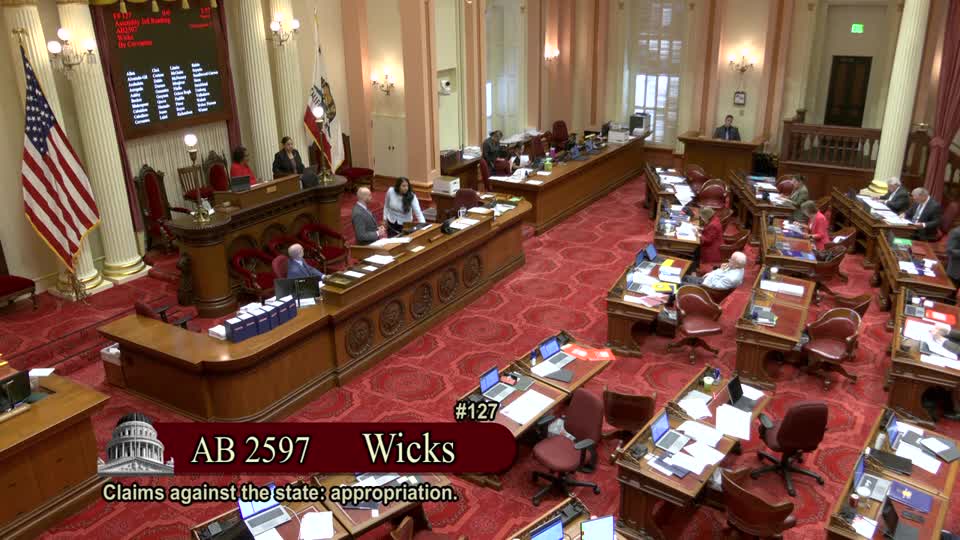 1MIN
Senate Floor
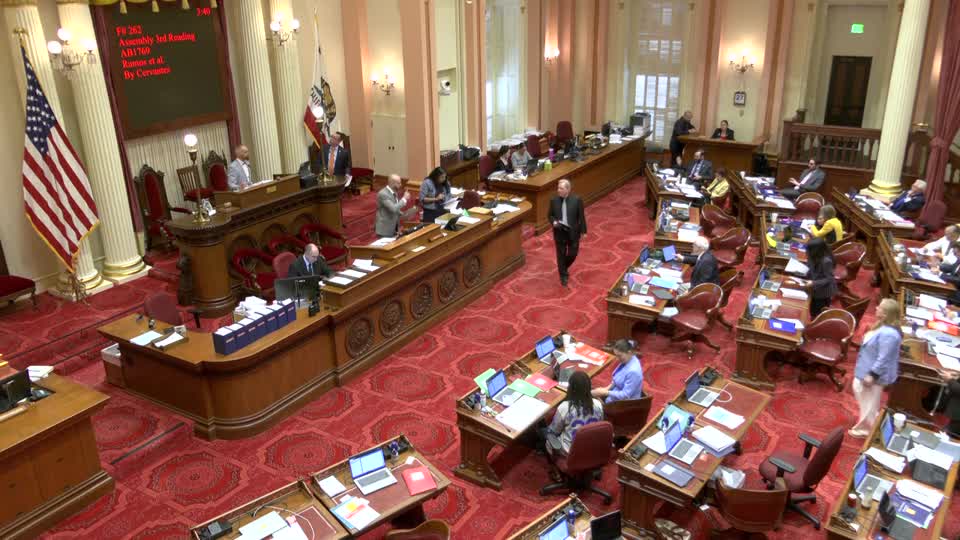 2MIN
Senate Floor
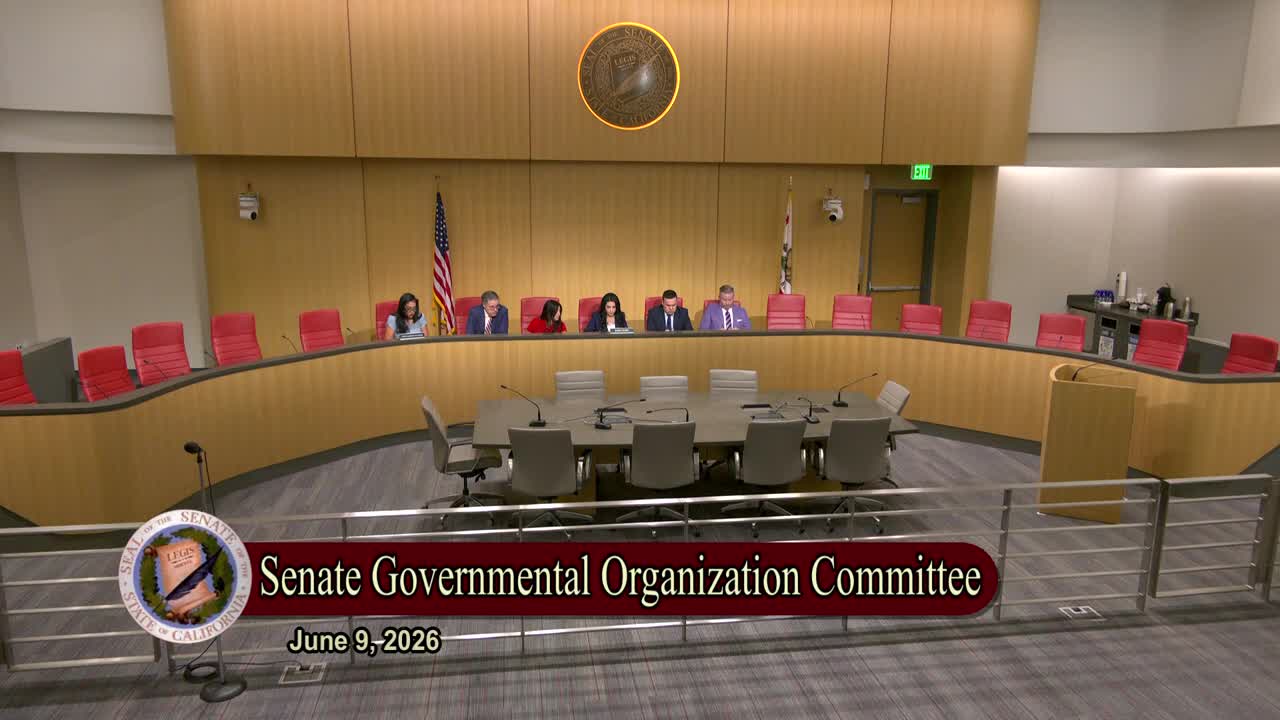 15MIN