AB 2311: Health care districts: employment.
- Session Year: 2025-2026
- House: Assembly
- Latest Version Date: 2026-09-18
Current Status:
Passed
(2026-09-18: Chaptered by Secretary of State - Chapter 299, Statutes of 2026.)
Introduced
In Committee
Awaiting First Chamber Vote
Passed First Chamber
In Committee
Awaiting Second Chamber Vote
Passed Second Chamber
Enacted
What does this bill do?
The bill allows health care districts and nonprofit corporations wholly owned by a health care district that own or control a general acute care hospital to employ doctors and bill for their professional services under specified conditions. Those conditions include medical staff approval by vote, a prohibition on interfering with doctors’ professional judgment, a requirement that new employed positions not replace existing medical staff roles and that prospective hires be offered the option to contract instead of be employees, and annual public reporting on recruitment and retention of doctors.
The summary is provided by generative AI which can make mistakes. For original language, please view the details in the table below.
Existing law, the Medical Practice Act, restricts the employment of physicians and surgeons or doctors of podiatric medicine by a corporation or other artificial legal entity to entities that do not charge for professional services rendered to patients and are approved by the Medical Board of California, subject to specified exemptions. Existing law, the Local Health Care District Law, regulates the organization and management of health care districts. Existing law establishes the Department of Health Care Access and Information and charges it with various duties related to health planning and research development.
This bill would, until January 1, 2037, establish an exemption to the general prohibition described above by authorizing health care districts and nonprofit corporations with a health care district as its sole corporate member that own or control a general acute care hospital to employ physicians and surgeons and charge for professional services, provided specified conditions are met, including prohibiting the health care district or nonprofit corporation, and any hospital under its ownership or control, from interfering with, controlling, or otherwise directing the professional judgment of a physician or surgeon. The bill would require a health care district or nonprofit corporation that employs licensees and charges for professional services under the bill to publish an annual report, as provided, on their internet website that includes data about the ability of general acute care hospitals under their ownership and control to recruit and retain physicians and surgeons, as specified.
Existing law, the Medical Practice Act, restricts the employment of physicians and surgeons or doctors of podiatric medicine by a corporation or other artificial legal entity to entities that do not charge for professional services rendered to patients and are approved by the Medical Board of California, subject to specified exemptions. Existing law, the Local Health Care District Law, regulates the organization and management of health care districts. Existing law establishes the Department of Health Care Access and Information and charges it with various duties related to health planning and research development.
This bill would, until January 1, 2037, establish an exemption to the general prohibition described above by authorizing health care districts and nonprofit corporations with a health care district as its sole corporate member that own or control a general acute care hospital to employ physicians and surgeons and charge for professional services, provided specified conditions are met, including prohibiting the health care district or nonprofit corporation, and any hospital under its ownership or control, from interfering with, controlling, or otherwise directing the professional judgment of a physician or surgeon. The bill would require a health care district or nonprofit corporation that employs licensees and charges for professional services under the bill to publish an annual report, as provided, on their internet website that includes data about the ability of general acute care hospitals under their ownership and control to recruit and retain physicians and surgeons, as specified.
Existing law, the Medical Practice Act, restricts the employment of physicians and surgeons or doctors of podiatric medicine by a corporation or other artificial legal entity to entities that do not charge for professional services rendered to patients and are approved by the Medical Board of California, subject to specified exemptions. Existing law, the Local Health Care District Law, regulates the organization and management of health care districts. Existing law establishes the Department of Health Care Access and Information and charges it with various duties related to health planning and research development.
This bill would, until January 1, 2037, establish an exemption to the general prohibition described above by authorizing health care districts and nonprofit corporations with a health care district as its sole corporate member that own or control a general acute care hospital to employ physicians and surgeons and charge for professional services, provided specified conditions are met, including prohibiting the health care district or nonprofit corporation, and any hospital under its ownership or control, from interfering with, controlling, or otherwise directing the professional judgment of a physician or surgeon. The bill would require a health care district or nonprofit corporation that employs licensees and charges for professional services under the bill to publish an annual report, as provided, on their internet website that includes data about the ability of general acute care hospitals under their ownership and control to recruit and retain physicians and surgeons, as specified.
Existing law, the Medical Practice Act, restricts the employment of physicians and surgeons or doctors of podiatric medicine by a corporation or other artificial legal entity to entities that do not charge for professional services rendered to patients and are approved by the Medical Board of California, subject to specified exemptions. Existing law, the Local Health Care District Law, regulates the organization and management of health care districts. Existing law establishes the Department of Health Care Access and Information and charges it with various duties related to health planning and research development.
This bill would, until January 1, 2037, establish an exemption to the general prohibition described above by authorizing health care districts and nonprofit corporations with a health care district as its sole corporate member that own or control a general acute care hospital to employ physicians and surgeons and charge for professional services, provided specified conditions are met, including prohibiting the health care district or nonprofit corporation, and any hospital under its ownership or control, from interfering with, controlling, or otherwise directing the professional judgment of a physician or surgeon. The bill would require a health care district or nonprofit corporation that employs licensees and charges for professional services under the bill to publish an annual report, as provided, on their internet website that includes data about the ability of general acute care hospitals under their ownership and control to recruit and retain physicians and surgeons, as specified.
Existing law, the Medical Practice Act, restricts the employment of physicians and surgeons or doctors of podiatric medicine by a corporation or other artificial legal entity to entities that do not charge for professional services rendered to patients and are approved by the Medical Board of California, subject to specified exemptions. Existing law, the Local Health Care District Law, regulates the organization and management of health care districts. Existing law establishes the Department of Health Care Access and Information and charges it with various duties related to health planning and research development.
This bill would create would, until January 1, 2037, establish an exemption to the general prohibition described above by authorizing health care districts and nonprofit corporations with a health care district as its sole corporate member that own or control a general acute care hospital to employ physicians and surgeons and charge for professional services. The bill would prohibit services, provided specified conditions are met, including prohibiting the health care district or nonprofit corporation, and any hospital under its ownership or control, from interfering with, controlling, or otherwise directing the professional judgment of a physician or surgeon. The bill would require a health care district or nonprofit corporation that employs licensees and charges for professional services under the bill to publish an annual report, as provided, on their internet website that includes data about the ability of general acute care hospitals under their ownership and control to recruit and retain physicians and surgeons, as specified.
Existing law, the Medical Practice Act, restricts the employment of physicians and surgeons or doctors of podiatric medicine by a corporation or other artificial legal entity to entities that do not charge for professional services rendered to patients and are approved by the Medical Board of California, subject to specified exemptions. Existing law, the Local Health Care District Law, regulates the organization and management of health care districts. Existing law establishes the Department of Health Care Access and Information and charges it with various duties related to health planning and research development.
This bill would create an exemption to the general prohibition described above by authorizing health care districts and nonprofit corporations with a health care district as its sole corporate member that own or control a general acute care hospital to employ physicians and surgeons and charge for professional services. The bill would prohibit the health care district from interfering with, controlling, or otherwise directing the professional judgment of a physician or surgeon.
(a)Notwithstanding Section 2400, a clinic operated primarily for the purpose of medical education by a public or private nonprofit university medical school, which is approved by the board or the Osteopathic Medical Board of California, may charge for professional services rendered to teaching patients by licensees who hold academic appointments on the faculty of the university, if the charges are approved by the physician and surgeon in whose name the charges are made.
(b)Notwithstanding Section 2400, a clinic operated under subdivision (p) of Section 1206 of the Health and Safety Code may employ licensees and charge for professional services rendered by those licensees. However, the clinic shall not interfere with, control, or otherwise direct the professional judgment of a physician and surgeon in a manner prohibited by Section 2400 or any other law.
(c)Notwithstanding Section 2400, a narcotic treatment program operated under Section 11876 of the Health and Safety Code and regulated by the State Department of Health Care Services, may employ licensees and charge for professional services rendered by those licensees. However, the narcotic treatment program shall not interfere with, control, or otherwise direct the professional judgment of a physician and surgeon in a manner prohibited by Section 2400 or any other law.
(d)Notwithstanding Section 2400, a hospital that is owned and operated by a licensed charitable organization, that offers only pediatric subspecialty care, that, before January 1, 2013, employed licensees on a salary basis, and that has not charged for professional services rendered to patients may, commencing January 1, 2013, charge for professional services rendered to patients, provided the following conditions are met:
(1)The hospital does not increase the number of salaried licensees by more than five licensees each year.
(2)The hospital does not expand its scope of services beyond pediatric subspecialty care.
(3)The hospital accepts each patient needing its scope of services regardless of the patients ability to pay, including whether the patient has any form of health care coverage.
(4)The medical staff concur by an affirmative vote that the licensees employment is in the best interest of the communities served by the hospital.
(5)The hospital does not interfere with, control, or otherwise direct a physician and surgeons professional judgment in a manner prohibited by Section 2400 or any other law.
(e)Notwithstanding Section 2400, a federally certified critical access hospital may employ licensees and charge for professional services rendered by those licensees to patients, provided both of the following conditions are met:
(1)The medical staff concur by an affirmative vote that the licensees employment is in the best interest of the communities served by the hospital.
(2)The hospital does not interfere with, control, or otherwise direct a physician and surgeons professional judgment in a manner prohibited by Section 2400 or any other law.
(f)(1)Until January 1, 2037, and notwithstanding Section 2400, a health care district, organized and governed pursuant to Division 23 (commencing with Section 32000) of the Health and Safety Code, or a nonprofit corporation with a health care district as its sole corporate member, as described in subparagraph (B) of paragraph (1) of subdivision (h) of Section 14169.31 of the Welfare and Institutions Code, that owns or controls a general acute care hospital may employ licensees and charge for professional services rendered by those licensees, provided all of the following conditions are met:
(A)The hospital is a licensed acute care hospital, as defined in subdivision (a) or (b) of Section 1250 of the Health and Safety Code, and satisfies either of the following conditions:
(i)Was awarded a loan under the Distressed Hospital Loan Program (Chapter 4 (commencing with Section 129380) of Part 6 of Division 107 of the Health and Safety Code) before January 1, 2025.
(ii)(I)Has a combined Medicare and Medi-Cal payor mix greater than 75 percent, as determined using the adjusted patient days from the Department of Health Care Access and Information annual financial disclosure report, and as recorded and calculated as of January 1, 2025, pursuant to the Department of Health Care Access and Information guidance.
(II)For purposes of qualifying based on payor mix of Medicare and Medi-Cal pursuant to this clause, both the hospital and the health care system to which it belongs, if any, shall have a payor mix of greater than 75 percent.
(B)The medical staff concur by an affirmative vote, pursuant to the medical staff bylaws, that the licensees employment is in the best interest of the communities served by the hospital.
(C)The health care district or nonprofit corporation, and any hospital under its ownership or control, shall not interfere with, control, or otherwise direct the professional judgment of a physician and surgeon.
(D)The licensee positions employed by the health care district or nonprofit corporation are in addition to, and do not supplant, any licensee positions providing professional services as a member of the medical staff at any hospitals owned or controlled by the health care district or nonprofit corporation, as of January 1, 2026. This subparagraph does not prohibit a health care district or nonprofit corporation from negotiating or amending existing contracts for professional services upon mutual agreement of the parties to the contract.
(E)The health care district or nonprofit corporation shall affirmatively offer a licensee who is a prospective employee the option to contract with the facility in lieu of employment.
(2)(A)Commencing January 1, 2028, a health care district or nonprofit corporation, that is employing licensees and charging for professional services rendered by those licensees to patients under this subdivision shall publish on its internet website, on or before July 1 of each year, a report for any year in which that health care district or nonprofit corporation has employed or is employing licensees and charging for professional services rendered by those licensees to patients.
(B)The report shall include data about the ability of general acute care hospitals under the health care districts or nonprofit corporations ownership and control to recruit and retain physicians and surgeons during the prior year, as well as the total number of physicians and surgeons recruited and retained to date since January 1, 2027, reported separately by employment and contracted positions.
(g)This section shall become inoperative on July 1, 2037, and, as of January 1, 2038, is repealed.
SEC. 2.Section 2401 is added to the Business and Professions Code, to read:2401.(a)Notwithstanding Section 2400, a clinic operated primarily for the purpose of medical education by a public or private nonprofit university medical school, which is approved by the board or the Osteopathic Medical Board of California, may charge for professional services rendered to teaching patients by licensees who hold academic appointments on the faculty of the university, if the charges are approved by the physician and surgeon in whose name the charges are made.
(b)Notwithstanding Section 2400, a clinic operated under subdivision (p) of Section 1206 of the Health and Safety Code may employ licensees and charge for professional services rendered by those licensees. However, the clinic shall not interfere with, control, or otherwise direct the professional judgment of a physician and surgeon in a manner prohibited by Section 2400 or any other law.
(c)Notwithstanding Section 2400, a narcotic treatment program operated under Section 11876 of the Health and Safety Code and regulated by the State Department of Health Care Services, may employ licensees and charge for professional services rendered by those licensees. However, the narcotic treatment program shall not interfere with, control, or otherwise direct the professional judgment of a physician and surgeon in a manner prohibited by Section 2400 or any other law.
(d)Notwithstanding Section 2400, a hospital that is owned and operated by a licensed charitable organization, that offers only pediatric subspecialty care, that, before January 1, 2013, employed licensees on a salary basis, and that has not charged for professional services rendered to patients may, commencing January 1, 2013, charge for professional services rendered to patients, provided the following conditions are met:
(1)The hospital does not increase the number of salaried licensees by more than five licensees each year.
(2)The hospital does not expand its scope of services beyond pediatric subspecialty care.
(3)The hospital accepts each patient needing its scope of services regardless of the patients ability to pay, including whether the patient has any form of health care coverage.
(4)The medical staff concur by an affirmative vote that the licensees employment is in the best interest of the communities served by the hospital.
(5)The hospital does not interfere with, control, or otherwise direct a physician and surgeons professional judgment in a manner prohibited by Section 2400 or any other law.
(e)Notwithstanding Section 2400, a federally certified critical access hospital may employ licensees and charge for professional services rendered by those licensees to patients, provided both of the following conditions are met:
(1)The medical staff concur by an affirmative vote that the licensees employment is in the best interest of the communities served by the hospital.
(2)The hospital does not interfere with, control, or otherwise direct a physician and surgeons professional judgment in a manner prohibited by Section 2400 or any other law.
(f)This section shall become operative on July 1, 2037.
(a)Notwithstanding Section 2400, a clinic operated primarily for the purpose of medical education by a public or private nonprofit university medical school, which is approved by the board or the Osteopathic Medical Board of California, may charge for professional services rendered to teaching patients by licensees who hold academic appointments on the faculty of the university, if the charges are approved by the physician and surgeon in whose name the charges are made.
(b)Notwithstanding Section 2400, a clinic operated under subdivision (p) of Section 1206 of the Health and Safety Code may employ licensees and charge for professional services rendered by those licensees. However, the clinic shall not interfere with, control, or otherwise direct the professional judgment of a physician and surgeon in a manner prohibited by Section 2400 or any other law.
(c)Notwithstanding Section 2400, a narcotic treatment program operated under Section 11876 of the Health and Safety Code and regulated by the State Department of Health Care Services, may employ licensees and charge for professional services rendered by those licensees. However, the narcotic treatment program shall not interfere with, control, or otherwise direct the professional judgment of a physician and surgeon in a manner prohibited by Section 2400 or any other law.
(d)Notwithstanding Section 2400, a hospital that is owned and operated by a licensed charitable organization, that offers only pediatric subspecialty care, that, before January 1, 2013, employed licensees on a salary basis, and that has not charged for professional services rendered to patients may, commencing January 1, 2013, charge for professional services rendered to patients, provided the following conditions are met:
(1)The hospital does not increase the number of salaried licensees by more than five licensees each year.
(2)The hospital does not expand its scope of services beyond pediatric subspecialty care.
(3)The hospital accepts each patient needing its scope of services regardless of the patients ability to pay, including whether the patient has any form of health care coverage.
(4)The medical staff concur by an affirmative vote that the licensees employment is in the best interest of the communities served by the hospital.
(5)The hospital does not interfere with, control, or otherwise direct a physician and surgeons professional judgment in a manner prohibited by Section 2400 or any other law.
(e)Notwithstanding Section 2400, a federally certified critical access hospital may employ licensees and charge for professional services rendered by those licensees to patients, provided both of the following conditions are met:
(1)The medical staff concur by an affirmative vote that the licensees employment is in the best interest of the communities served by the hospital.
(2)The hospital does not interfere with, control, or otherwise direct a physician and surgeons professional judgment in a manner prohibited by Section 2400 or any other law.
(f)(1)Until January 1, 2037, and notwithstanding Section 2400, a health care district, organized and governed pursuant to Division 23 (commencing with Section 32000) of the Health and Safety Code, or a nonprofit corporation with a health care district as its sole corporate member, as described in subparagraph (B) of paragraph (1) of subdivision (h) of Section 14169.31 of the Welfare and Institutions Code, that owns or controls a general acute care hospital may employ licensees and charge for professional services rendered by those licensees, provided all of the following conditions are met:
(A)The hospital is a licensed acute care hospital, as defined in subdivision (a) or (b) of Section 1250 of the Health and Safety Code, and satisfies either of the following conditions:
(i)Was awarded a loan under the Distressed Hospital Loan Program (Chapter 4 (commencing with Section 129380) of Part 6 of Division 107 of the Health and Safety Code) before January 1, 2025.
(ii)(I)Has a combined Medicare and Medi-Cal payor mix greater than 75 percent, as determined using the adjusted patient days from the Department of Health Care Access and Information annual financial disclosure report, and as recorded and calculated as of January 1, 2025, pursuant to the Department of Health Care Access and Information guidance.
(II)For purposes of qualifying based on payor mix of Medicare and Medi-Cal pursuant to this clause, both the hospital and the health care system to which it belongs, if any, shall have a payor mix of greater than 75 percent.
(B)The medical staff concur by an affirmative vote, pursuant to the medical staff bylaws, that the licensees employment is in the best interest of the communities served by the hospital.
(C)The health care district or nonprofit corporation, and any hospital under its ownership or control, shall not interfere with, control, or otherwise direct the professional judgment of a physician and surgeon.
(D)The licensee positions employed by the health care district or nonprofit corporation are in addition to, and do not supplant, any licensee positions providing professional services as a member of the medical staff at any hospitals owned or controlled by the health care district or nonprofit corporation, as of January 1, 2026. This subparagraph does not prohibit a health care district or nonprofit corporation from negotiating or amending existing contracts for professional services upon mutual agreement of the parties to the contract.
(E)The health care district or nonprofit corporation shall affirmatively offer a licensee who is a prospective employee the option to contract with the facility in lieu of employment.
(2)(A)Commencing January 1, 2028, a health care district or nonprofit corporation, that is employing licensees and charging for professional services rendered by those licensees to patients under this subdivision shall publish on its internet website, on or before July 1 of each year, a report for any year in which that health care district or nonprofit corporation has employed or is employing licensees and charging for professional services rendered by those licensees to patients.
(B)The report shall include data about the ability of general acute care hospitals under the health care districts or nonprofit corporations ownership and control to recruit and retain physicians and surgeons during the prior year, as well as the total number of physicians and surgeons recruited and retained to date since January 1, 2027, reported separately by employment and contracted positions.
(g)This section shall become inoperative on July 1, 2037, and, as of January 1, 2038, is repealed.
SEC. 2.Section 2401 is added to the Business and Professions Code, to read:2401.(a)Notwithstanding Section 2400, a clinic operated primarily for the purpose of medical education by a public or private nonprofit university medical school, which is approved by the board or the Osteopathic Medical Board of California, may charge for professional services rendered to teaching patients by licensees who hold academic appointments on the faculty of the university, if the charges are approved by the physician and surgeon in whose name the charges are made.
(b)Notwithstanding Section 2400, a clinic operated under subdivision (p) of Section 1206 of the Health and Safety Code may employ licensees and charge for professional services rendered by those licensees. However, the clinic shall not interfere with, control, or otherwise direct the professional judgment of a physician and surgeon in a manner prohibited by Section 2400 or any other law.
(c)Notwithstanding Section 2400, a narcotic treatment program operated under Section 11876 of the Health and Safety Code and regulated by the State Department of Health Care Services, may employ licensees and charge for professional services rendered by those licensees. However, the narcotic treatment program shall not interfere with, control, or otherwise direct the professional judgment of a physician and surgeon in a manner prohibited by Section 2400 or any other law.
(d)Notwithstanding Section 2400, a hospital that is owned and operated by a licensed charitable organization, that offers only pediatric subspecialty care, that, before January 1, 2013, employed licensees on a salary basis, and that has not charged for professional services rendered to patients may, commencing January 1, 2013, charge for professional services rendered to patients, provided the following conditions are met:
(1)The hospital does not increase the number of salaried licensees by more than five licensees each year.
(2)The hospital does not expand its scope of services beyond pediatric subspecialty care.
(3)The hospital accepts each patient needing its scope of services regardless of the patients ability to pay, including whether the patient has any form of health care coverage.
(4)The medical staff concur by an affirmative vote that the licensees employment is in the best interest of the communities served by the hospital.
(5)The hospital does not interfere with, control, or otherwise direct a physician and surgeons professional judgment in a manner prohibited by Section 2400 or any other law.
(e)Notwithstanding Section 2400, a federally certified critical access hospital may employ licensees and charge for professional services rendered by those licensees to patients, provided both of the following conditions are met:
(1)The medical staff concur by an affirmative vote that the licensees employment is in the best interest of the communities served by the hospital.
(2)The hospital does not interfere with, control, or otherwise direct a physician and surgeons professional judgment in a manner prohibited by Section 2400 or any other law.
(f)This section shall become operative on July 1, 2037.
(a)Notwithstanding Section 2400, a clinic operated primarily for the purpose of medical education by a public or private nonprofit university medical school, which is approved by the board or the Osteopathic Medical Board of California, may charge for professional services rendered to teaching patients by licensees who hold academic appointments on the faculty of the university, if the charges are approved by the physician and surgeon in whose name the charges are made.
(b)Notwithstanding Section 2400, a clinic operated under subdivision (p) of Section 1206 of the Health and Safety Code may employ licensees and charge for professional services rendered by those licensees. However, the clinic shall not interfere with, control, or otherwise direct the professional judgment of a physician and surgeon in a manner prohibited by Section 2400 or any other law.
(c)Notwithstanding Section 2400, a narcotic treatment program operated under Section 11876 of the Health and Safety Code and regulated by the State Department of Health Care Services, may employ licensees and charge for professional services rendered by those licensees. However, the narcotic treatment program shall not interfere with, control, or otherwise direct the professional judgment of a physician and surgeon in a manner prohibited by Section 2400 or any other law.
(d)Notwithstanding Section 2400, a hospital that is owned and operated by a licensed charitable organization, that offers only pediatric subspecialty care, that, before January 1, 2013, employed licensees on a salary basis, and that has not charged for professional services rendered to patients may, commencing January 1, 2013, charge for professional services rendered to patients, provided the following conditions are met:
(1)The hospital does not increase the number of salaried licensees by more than five licensees each year.
(2)The hospital does not expand its scope of services beyond pediatric subspecialty care.
(3)The hospital accepts each patient needing its scope of services regardless of the patients ability to pay, including whether the patient has any form of health care coverage.
(4)The medical staff concur by an affirmative vote that the licensees employment is in the best interest of the communities served by the hospital.
(5)The hospital does not interfere with, control, or otherwise direct a physician and surgeons professional judgment in a manner prohibited by Section 2400 or any other law.
(e)Notwithstanding Section 2400, a federally certified critical access hospital may employ licensees and charge for professional services rendered by those licensees to patients, provided both of the following conditions are met:
(1)The medical staff concur by an affirmative vote that the licensees employment is in the best interest of the communities served by the hospital.
(2)The hospital does not interfere with, control, or otherwise direct a physician and surgeons professional judgment in a manner prohibited by Section 2400 or any other law.
(f)(1)Until January 1, 2037, and notwithstanding Section 2400, a health care district, organized and governed pursuant to Division 23 (commencing with Section 32000) of the Health and Safety Code, or a nonprofit corporation with a health care district as its sole corporate member, as described in subparagraph (B) of paragraph (1) of subdivision (h) of Section 14169.31 of the Welfare and Institutions Code, that owns or controls a general acute care hospital may employ licensees and charge for professional services rendered by those licensees, provided all of the following conditions are met:
(A)The hospital is a licensed acute care hospital, as defined in subdivision (a) or (b) of Section 1250 of the Health and Safety Code, and satisfies either of the following conditions:
(i)Was awarded a loan under the Distressed Hospital Loan Program (Chapter 4 (commencing with Section 129380) of Part 6 of Division 107 of the Health and Safety Code) before January 1, 2025.
(ii)(I)Has a combined Medicare and Medi-Cal payor mix greater than 75 percent, as determined using the adjusted patient days from the Department of Health Care Access and Information annual financial disclosure report, and as recorded and calculated as of January 1, 2025, pursuant to the Department of Health Care Access and Information guidance.
(II)For purposes of qualifying based on payor mix of Medicare and Medi-Cal pursuant to this clause, both the hospital and the health care system to which it belongs, if any, shall have a payor mix of greater than 75 percent.
(B)The medical staff concur by an affirmative vote, pursuant to the medical staff bylaws, that the licensees employment is in the best interest of the communities served by the hospital.
(C)The health care district or nonprofit corporation, and any hospital under its ownership or control, shall not interfere with, control, or otherwise direct the professional judgment of a physician and surgeon.
(D)The licensee positions employed by the health care district or nonprofit corporation are in addition to, and do not supplant, any licensee positions providing professional services as a member of the medical staff at any hospitals owned or controlled by the health care district or nonprofit corporation, as of January 1, 2026. This subparagraph does not prohibit a health care district or nonprofit corporation from negotiating or amending existing contracts for professional services upon mutual agreement of the parties to the contract.
(E)The health care district or nonprofit corporation shall affirmatively offer a licensee who is a prospective employee the option to contract with the facility in lieu of employment.
(2)(A)Commencing January 1, 2028, a health care district or nonprofit corporation, that is employing licensees and charging for professional services rendered by those licensees to patients under this subdivision shall publish on its internet website, on or before July 1 of each year, a report for any year in which that health care district or nonprofit corporation has employed or is employing licensees and charging for professional services rendered by those licensees to patients. The
(B)The report shall include data about the ability of general acute care hospitals under the health care districts or nonprofit corporations ownership and control to recruit and retain physicians and surgeons during the prior year, as well as the total number of physicians and surgeons recruited and retained to date since January 1, 2027, reported separately by employment and contracted positions.
(g)This section shall become inoperative on July 1, 2037, and, as of January 1, 2038, is repealed.
SEC. 2.Section 2401 is added to the Business and Professions Code, to read:2401.(a)Notwithstanding Section 2400, a clinic operated primarily for the purpose of medical education by a public or private nonprofit university medical school, which is approved by the board or the Osteopathic Medical Board of California, may charge for professional services rendered to teaching patients by licensees who hold academic appointments on the faculty of the university, if the charges are approved by the physician and surgeon in whose name the charges are made.
(b)Notwithstanding Section 2400, a clinic operated under subdivision (p) of Section 1206 of the Health and Safety Code may employ licensees and charge for professional services rendered by those licensees. However, the clinic shall not interfere with, control, or otherwise direct the professional judgment of a physician and surgeon in a manner prohibited by Section 2400 or any other law.
(c)Notwithstanding Section 2400, a narcotic treatment program operated under Section 11876 of the Health and Safety Code and regulated by the State Department of Health Care Services, may employ licensees and charge for professional services rendered by those licensees. However, the narcotic treatment program shall not interfere with, control, or otherwise direct the professional judgment of a physician and surgeon in a manner prohibited by Section 2400 or any other law.
(d)Notwithstanding Section 2400, a hospital that is owned and operated by a licensed charitable organization, that offers only pediatric subspecialty care, that, before January 1, 2013, employed licensees on a salary basis, and that has not charged for professional services rendered to patients may, commencing January 1, 2013, charge for professional services rendered to patients, provided the following conditions are met:
(1)The hospital does not increase the number of salaried licensees by more than five licensees each year.
(2)The hospital does not expand its scope of services beyond pediatric subspecialty care.
(3)The hospital accepts each patient needing its scope of services regardless of the patients ability to pay, including whether the patient has any form of health care coverage.
(4)The medical staff concur by an affirmative vote that the licensees employment is in the best interest of the communities served by the hospital.
(5)The hospital does not interfere with, control, or otherwise direct a physician and surgeons professional judgment in a manner prohibited by Section 2400 or any other law.
(e)Notwithstanding Section 2400, a federally certified critical access hospital may employ licensees and charge for professional services rendered by those licensees to patients, provided both of the following conditions are met:
(1)The medical staff concur by an affirmative vote that the licensees employment is in the best interest of the communities served by the hospital.
(2)The hospital does not interfere with, control, or otherwise direct a physician and surgeons professional judgment in a manner prohibited by Section 2400 or any other law.
(f)This section shall become operative on July 1, 2037.
(a)Notwithstanding Section 2400, a clinic operated primarily for the purpose of medical education by a public or private nonprofit university medical school, which is approved by the board or the Osteopathic Medical Board of California, may charge for professional services rendered to teaching patients by licensees who hold academic appointments on the faculty of the university, if the charges are approved by the physician and surgeon in whose name the charges are made.
(b)Notwithstanding Section 2400, a clinic operated under subdivision (p) of Section 1206 of the Health and Safety Code may employ licensees and charge for professional services rendered by those licensees. However, the clinic shall not interfere with, control, or otherwise direct the professional judgment of a physician and surgeon in a manner prohibited by Section 2400 or any other law.
(c)Notwithstanding Section 2400, a narcotic treatment program operated under Section 11876 of the Health and Safety Code and regulated by the State Department of Health Care Services, may employ licensees and charge for professional services rendered by those licensees. However, the narcotic treatment program shall not interfere with, control, or otherwise direct the professional judgment of a physician and surgeon in a manner prohibited by Section 2400 or any other law.
(d)Notwithstanding Section 2400, a hospital that is owned and operated by a licensed charitable organization, that offers only pediatric subspecialty care, that, before January 1, 2013, employed licensees on a salary basis, and that has not charged for professional services rendered to patients may, commencing January 1, 2013, charge for professional services rendered to patients, provided the following conditions are met:
(1)The hospital does not increase the number of salaried licensees by more than five licensees each year.
(2)The hospital does not expand its scope of services beyond pediatric subspecialty care.
(3)The hospital accepts each patient needing its scope of services regardless of the patients ability to pay, including whether the patient has any form of health care coverage.
(4)The medical staff concur by an affirmative vote that the licensees employment is in the best interest of the communities served by the hospital.
(5)The hospital does not interfere with, control, or otherwise direct a physician and surgeons professional judgment in a manner prohibited by Section 2400 or any other law.
(e)Notwithstanding Section 2400, a federally certified critical access hospital may employ licensees and charge for professional services rendered by those licensees to patients, provided both of the following conditions are met:
(1)The medical staff concur by an affirmative vote that the licensees employment is in the best interest of the communities served by the hospital.
(2)The hospital does not interfere with, control, or otherwise direct a physician and surgeons professional judgment in a manner prohibited by Section 2400 or any other law.
(f)(1)Until January 1, 2037, and notwithstanding Section 2400, a health care district, organized and governed pursuant to Division 23 (commencing with Section 32000) of the Health and Safety Code, or a nonprofit corporation with a health care district as its sole corporate member, as described in subparagraph (B) of paragraph (1) of subdivision (h) of Section 14169.31 of the Welfare and Institutions Code, that owns or controls a general acute care hospital may employ licensees and charge for professional services rendered by those licensees, provided all of the following conditions are met:
(A)The hospital is a licensed acute care hospital, as defined in subdivision (a) or (b) of Section 1250 of the Health and Safety Code, and satisfies either of the following conditions:
(i)Was awarded a loan under the Distressed Hospital Loan Program (Chapter 4 (commencing with Section 129380) of Part 6 of Division 107 of the Health and Safety Code) before January 1, 2025.
(ii)(I)Has a combined Medicare and Medi-Cal payor mix greater than 75 percent, as determined using the adjusted patient days from the Department of Health Care Access and Information annual financial disclosure report, and as recorded and calculated as of January 1, 2025, pursuant to the Department of Health Care Access and Information guidance.
(II)For purposes of qualifying based on payor mix of Medicare and Medi-Cal pursuant to this clause, both the hospital and the health care system to which it belongs, if any, shall have a payor mix of greater than 75 percent.
(A)(B)The medical staff concur by an affirmative vote, pursuant to the medical staff bylaws, that the licensees employment is in the best interest of the communities served by the hospital.
(B)(C)The health care district or nonprofit corporation, and any hospital under its ownership or control, shall not interfere with, control, or otherwise direct the professional judgment of a physician and surgeon.
(C)(D)The licensee positions employed by the health care district or nonprofit corporation are in addition to, and do not supplant, any licensee positions providing professional services as a member of the medical staff at any hospitals owned or controlled by the health care district or nonprofit corporation, as of January 1, 2026. This subparagraph does not prohibit a health care district or nonprofit corporation from negotiating or amending existing contracts for professional services upon mutual agreement of the parties to the contract.
(D)(E)The health care district or nonprofit corporation shall affirmatively offer a licensee who is a prospective employee the option to contract with the facility in lieu of employment.
(2)Commencing January 1, 2028, a health care district or nonprofit corporation, that is employing licensees and charging for professional services rendered by those licensees to patients under this subdivision shall publish on its internet website, on or before July 1 of each year, a report for any year in which that health care district or nonprofit corporation has employed or is employing licensees and charging for professional services rendered by those licensees to patients. The report shall include data about the ability of general acute care hospitals under the health care districts or nonprofit corporations ownership and control to recruit and retain physicians and surgeons during the prior year, as well as the total number of physicians and surgeons recruited and retained to date since January 1, 2027, reported separately by employment and contracted positions.
(g)This section shall become inoperative on July 1, 2037, and, as of January 1, 2038, is repealed.
SEC. 2.Section 2401 is added to the Business and Professions Code, to read:2401.(a)Notwithstanding Section 2400, a clinic operated primarily for the purpose of medical education by a public or private nonprofit university medical school, which is approved by the board or the Osteopathic Medical Board of California, may charge for professional services rendered to teaching patients by licensees who hold academic appointments on the faculty of the university, if the charges are approved by the physician and surgeon in whose name the charges are made.
(b)Notwithstanding Section 2400, a clinic operated under subdivision (p) of Section 1206 of the Health and Safety Code may employ licensees and charge for professional services rendered by those licensees. However, the clinic shall not interfere with, control, or otherwise direct the professional judgment of a physician and surgeon in a manner prohibited by Section 2400 or any other law.
(c)Notwithstanding Section 2400, a narcotic treatment program operated under Section 11876 of the Health and Safety Code and regulated by the State Department of Health Care Services, may employ licensees and charge for professional services rendered by those licensees. However, the narcotic treatment program shall not interfere with, control, or otherwise direct the professional judgment of a physician and surgeon in a manner prohibited by Section 2400 or any other law.
(d)Notwithstanding Section 2400, a hospital that is owned and operated by a licensed charitable organization, that offers only pediatric subspecialty care, that, before January 1, 2013, employed licensees on a salary basis, and that has not charged for professional services rendered to patients may, commencing January 1, 2013, charge for professional services rendered to patients, provided the following conditions are met:
(1)The hospital does not increase the number of salaried licensees by more than five licensees each year.
(2)The hospital does not expand its scope of services beyond pediatric subspecialty care.
(3)The hospital accepts each patient needing its scope of services regardless of the patients ability to pay, including whether the patient has any form of health care coverage.
(4)The medical staff concur by an affirmative vote that the licensees employment is in the best interest of the communities served by the hospital.
(5)The hospital does not interfere with, control, or otherwise direct a physician and surgeons professional judgment in a manner prohibited by Section 2400 or any other law.
(e)Notwithstanding Section 2400, a federally certified critical access hospital may employ licensees and charge for professional services rendered by those licensees to patients, provided both of the following conditions are met:
(1)The medical staff concur by an affirmative vote that the licensees employment is in the best interest of the communities served by the hospital.
(2)The hospital does not interfere with, control, or otherwise direct a physician and surgeons professional judgment in a manner prohibited by Section 2400 or any other law.
(f)This section shall become operative on July 1, 2037.
(a)Notwithstanding Section 2400, a clinic operated primarily for the purpose of medical education by a public or private nonprofit university medical school, which is approved by the board or the Osteopathic Medical Board of California, may charge for professional services rendered to teaching patients by licensees who hold academic appointments on the faculty of the university, if the charges are approved by the physician and surgeon in whose name the charges are made.
(b)Notwithstanding Section 2400, a clinic operated under subdivision (p) of Section 1206 of the Health and Safety Code may employ licensees and charge for professional services rendered by those licensees. However, the clinic shall not interfere with, control, or otherwise direct the professional judgment of a physician and surgeon in a manner prohibited by Section 2400 or any other law.
(c)Notwithstanding Section 2400, a narcotic treatment program operated under Section 11876 of the Health and Safety Code and regulated by the State Department of Health Care Services, may employ licensees and charge for professional services rendered by those licensees. However, the narcotic treatment program shall not interfere with, control, or otherwise direct the professional judgment of a physician and surgeon in a manner prohibited by Section 2400 or any other law.
(d)Notwithstanding Section 2400, a hospital that is owned and operated by a licensed charitable organization, that offers only pediatric subspecialty care, that, before January 1, 2013, employed licensees on a salary basis, and that has not charged for professional services rendered to patients may, commencing January 1, 2013, charge for professional services rendered to patients, provided the following conditions are met:
(1)The hospital does not increase the number of salaried licensees by more than five licensees each year.
(2)The hospital does not expand its scope of services beyond pediatric subspecialty care.
(3)The hospital accepts each patient needing its scope of services regardless of the patients ability to pay, including whether the patient has any form of health care coverage.
(4)The medical staff concur by an affirmative vote that the licensees employment is in the best interest of the communities served by the hospital.
(5)The hospital does not interfere with, control, or otherwise direct a physician and surgeons professional judgment in a manner prohibited by Section 2400 or any other law.
(e)Notwithstanding Section 2400, a federally certified critical access hospital may employ licensees and charge for professional services rendered by those licensees to patients, provided both of the following conditions are met:
(1)The medical staff concur by an affirmative vote that the licensees employment is in the best interest of the communities served by the hospital.
(2)The hospital does not interfere with, control, or otherwise direct a physician and surgeons professional judgment in a manner prohibited by Section 2400 or any other law.
(f)Notwithstanding (1)Until January 1, 2037, and notwithstanding Section 2400, a health care district, organized and governed pursuant to Division 23 (commencing with Section 32000) of the Health and Safety Code, or a nonprofit corporation with a health care district as its sole corporate member, as described in subparagraph (B) of paragraph (1) of subdivision (h) of Section 14169.31 of the Welfare and Institutions Code, that owns or controls a general acute care hospital may employ licensees and charge for professional services rendered by those licensees. However, the health care district shall not interfere with, control, or otherwise direct the professional judgment of a physician and surgeon. licensees, provided all of the following conditions are met:
(A)The medical staff concur by an affirmative vote, pursuant to the medical staff bylaws, that the licensees employment is in the best interest of the communities served by the hospital.
(B)The health care district or nonprofit corporation, and any hospital under its ownership or control, shall not interfere with, control, or otherwise direct the professional judgment of a physician and surgeon.
(C)The licensee positions employed by the health care district or nonprofit corporation are in addition to, and do not supplant, any licensee positions providing professional services as a member of the medical staff at any hospitals owned or controlled by the health care district or nonprofit corporation, as of January 1, 2026. This subparagraph does not prohibit a health care district or nonprofit corporation from negotiating or amending existing contracts for professional services upon mutual agreement of the parties to the contract.
(D)The health care district or nonprofit corporation shall affirmatively offer a licensee who is a prospective employee the option to contract with the facility in lieu of employment.
(2)Commencing January 1, 2028, a health care district or nonprofit corporation, that is employing licensees and charging for professional services rendered by those licensees to patients under this subdivision shall publish on its internet website, on or before July 1 of each year, a report for any year in which that health care district or nonprofit corporation has employed or is employing licensees and charging for professional services rendered by those licensees to patients. The report shall include data about the ability of general acute care hospitals under the health care districts or nonprofit corporations ownership and control to recruit and retain physicians and surgeons during the prior year, as well as the total number of physicians and surgeons recruited and retained to date since January 1, 2027, reported separately by employment and contracted positions.
(g)This section shall become inoperative on July 1, 2037, and, as of January 1, 2038, is repealed.
SEC. 2.Section 2401 is added to the Business and Professions Code, to read:2401.(a)Notwithstanding Section 2400, a clinic operated primarily for the purpose of medical education by a public or private nonprofit university medical school, which is approved by the board or the Osteopathic Medical Board of California, may charge for professional services rendered to teaching patients by licensees who hold academic appointments on the faculty of the university, if the charges are approved by the physician and surgeon in whose name the charges are made.
(b)Notwithstanding Section 2400, a clinic operated under subdivision (p) of Section 1206 of the Health and Safety Code may employ licensees and charge for professional services rendered by those licensees. However, the clinic shall not interfere with, control, or otherwise direct the professional judgment of a physician and surgeon in a manner prohibited by Section 2400 or any other law.
(c)Notwithstanding Section 2400, a narcotic treatment program operated under Section 11876 of the Health and Safety Code and regulated by the State Department of Health Care Services, may employ licensees and charge for professional services rendered by those licensees. However, the narcotic treatment program shall not interfere with, control, or otherwise direct the professional judgment of a physician and surgeon in a manner prohibited by Section 2400 or any other law.
(d)Notwithstanding Section 2400, a hospital that is owned and operated by a licensed charitable organization, that offers only pediatric subspecialty care, that, before January 1, 2013, employed licensees on a salary basis, and that has not charged for professional services rendered to patients may, commencing January 1, 2013, charge for professional services rendered to patients, provided the following conditions are met:
(1)The hospital does not increase the number of salaried licensees by more than five licensees each year.
(2)The hospital does not expand its scope of services beyond pediatric subspecialty care.
(3)The hospital accepts each patient needing its scope of services regardless of the patients ability to pay, including whether the patient has any form of health care coverage.
(4)The medical staff concur by an affirmative vote that the licensees employment is in the best interest of the communities served by the hospital.
(5)The hospital does not interfere with, control, or otherwise direct a physician and surgeons professional judgment in a manner prohibited by Section 2400 or any other law.
(e)Notwithstanding Section 2400, a federally certified critical access hospital may employ licensees and charge for professional services rendered by those licensees to patients, provided both of the following conditions are met:
(1)The medical staff concur by an affirmative vote that the licensees employment is in the best interest of the communities served by the hospital.
(2)The hospital does not interfere with, control, or otherwise direct a physician and surgeons professional judgment in a manner prohibited by Section 2400 or any other law.
(f)This section shall become operative on July 1, 2037.
(a)Notwithstanding Section 2400, a clinic operated primarily for the purpose of medical education by a public or private nonprofit university medical school, which is approved by the board or the Osteopathic Medical Board of California, may charge for professional services rendered to teaching patients by licensees who hold academic appointments on the faculty of the university, if the charges are approved by the physician and surgeon in whose name the charges are made.
(b)Notwithstanding Section 2400, a clinic operated under subdivision (p) of Section 1206 of the Health and Safety Code may employ licensees and charge for professional services rendered by those licensees. However, the clinic shall not interfere with, control, or otherwise direct the professional judgment of a physician and surgeon in a manner prohibited by Section 2400 or any other law.
(c)Notwithstanding Section 2400, a narcotic treatment program operated under Section 11876 of the Health and Safety Code and regulated by the State Department of Health Care Services, may employ licensees and charge for professional services rendered by those licensees. However, the narcotic treatment program shall not interfere with, control, or otherwise direct the professional judgment of a physician and surgeon in a manner prohibited by Section 2400 or any other law.
(d)Notwithstanding Section 2400, a hospital that is owned and operated by a licensed charitable organization, that offers only pediatric subspecialty care, that, before January 1, 2013, employed licensees on a salary basis, and that has not charged for professional services rendered to patients may, commencing January 1, 2013, charge for professional services rendered to patients, provided the following conditions are met:
(1)The hospital does not increase the number of salaried licensees by more than five licensees each year.
(2)The hospital does not expand its scope of services beyond pediatric subspecialty care.
(3)The hospital accepts each patient needing its scope of services regardless of the patients ability to pay, including whether the patient has any form of health care coverage.
(4)The medical staff concur by an affirmative vote that the licensees employment is in the best interest of the communities served by the hospital.
(5)The hospital does not interfere with, control, or otherwise direct a physician and surgeons professional judgment in a manner prohibited by Section 2400 or any other law.
(e)Notwithstanding Section 2400, a federally certified critical access hospital may employ licensees and charge for professional services rendered by those licensees to patients, provided both of the following conditions are met:
(1)The medical staff concur by an affirmative vote that the licensees employment is in the best interest of the communities served by the hospital.
(2)The hospital does not interfere with, control, or otherwise direct a physician and surgeons professional judgment in a manner prohibited by Section 2400 or any other law.
(f)Notwithstanding Section 2400, a health care district, organized and governed pursuant to Division 23 (commencing with Section 32000) of the Health and Safety Code, or a nonprofit corporation with a health care district as its sole corporate member, as described in subparagraph (B) of paragraph (1) of subdivision (h) of Section 14169.31 of the Welfare and Institutions Code, that owns or controls a general acute care hospital may employ licensees and charge for professional services rendered by those licensees. However, the health care district shall not interfere with, control, or otherwise direct the professional judgment of a physician and surgeon.
|
Date
|
Status
|
|---|---|
| Sep 18, 2026 | Chaptered by Secretary of State - Chapter 299, Statutes of 2026. |
| Sep 18, 2026 | Approved by the Governor. |
| Sep 3, 2026 | Enrolled and presented to the Governor at 4 p.m. |
| Aug 26, 2026 | Senate amendments concurred in. To Engrossing and Enrolling. (Ayes 76. Noes 0.). |
| Aug 26, 2026 | Senate amendments concurred in. To Engrossing and Enrolling. (Ayes 76. Noes 0. Page 6582.). |
| Aug 25, 2026 | In Assembly. Concurrence in Senate amendments pending. |
| Aug 25, 2026 | Read third time. Passed. Ordered to the Assembly. (Ayes 39. Noes 0.). |
| Aug 17, 2026 | Read second time. Ordered to third reading. |
| Aug 13, 2026 | Read second time and amended. Ordered returned to second reading. |
| Aug 13, 2026 | From committee: Amend, and do pass as amended. (Ayes 7. Noes 0.) (August 13). |
| Aug 3, 2026 | In committee: Referred to APPR. suspense file. |
| Jul 2, 2026 | Read second time and amended. Re-referred to Com. on APPR. |
| Jul 2, 2026 | From committee: Amend, and do pass as amended and re-refer to Com. on APPR. (Ayes 10. Noes 0.) (July 1). |
| Jun 15, 2026 | From committee: Do pass and re-refer to Com. on HEALTH. (Ayes 10. Noes 0.) (June 15). Re-referred to Com. on HEALTH. |
| Jun 10, 2026 | Referred to Coms. on B. P. & E.D. and HEALTH. |
| May 27, 2026 | In Senate. Read first time. To Com. on RLS. for assignment. |
| May 26, 2026 | Read third time. Passed. Ordered to the Senate. (Ayes 75. Noes 1.) |
| May 26, 2026 | Read third time. Passed. Ordered to the Senate. (Ayes 75. Noes 1. Page 5312.) |
| May 26, 2026 | Read third time. Passed. Ordered to the Senate. |
| May 19, 2026 | Read third time and amended. Ordered to third reading. (Page 5153.) |
| May 19, 2026 | Read third time and amended. Ordered to third reading. |
| May 18, 2026 | Read second time. Ordered to third reading. |
| May 14, 2026 | Joint Rule 62(a), file notice suspended. (Page 5030.) |
| May 14, 2026 | Joint Rule 62(a), file notice suspended. |
| May 14, 2026 | From committee: Do pass. (Ayes 15. Noes 0.) (May 14). |
| May 13, 2026 | In committee: Set, first hearing. Referred to APPR. suspense file. |
| Apr 21, 2026 | From committee: Do pass and re-refer to Com. on APPR. (Ayes 15. Noes 2.) (April 21). Re-referred to Com. on APPR. |
| Mar 25, 2026 | From committee: Do pass and re-refer to Com. on B. & P. (Ayes 14. Noes 0.) (March 24). Re-referred to Com. on B. & P. |
| Mar 9, 2026 | Referred to Coms. on HEALTH and B. & P. |
| Feb 20, 2026 | From printer. May be heard in committee March 22. |
| Feb 19, 2026 | Read first time. To print. |
|
Date
|
Description
|
Location
|
Votes
|
|
|---|---|---|---|---|
| Aug 26, 2026 | AB 2311 Schiavo Concurrence in Senate Amendments | Assembly Floor |
Passed |
|
| Aug 25, 2026 | Assembly 3rd Reading AB2311 Schiavo et al. By Laird | Senate Floor |
Passed |
|
| Aug 13, 2026 | Do pass as amended | Senate Standing Committee on Appropriations |
Passed |
|
| Aug 3, 2026 | Placed on suspense file | Senate Standing Committee on Appropriations |
Passed |
|
| Jul 1, 2026 | Do pass as amended, but first amend, and re-refer to the Committee on [Appropriations] | Senate Standing Committee on Health |
Passed |
|
| Jun 15, 2026 | Do pass, but first be re-referred to the Committee on [Health] | Senate Standing Committee on Business, Professions and Economic Development |
Passed |
|
| May 26, 2026 | AB 2311 Schiavo Assembly Third Reading | Assembly Floor |
Passed |
|
| May 14, 2026 | Do pass. | Assembly Standing Committee on Appropriations |
Passed |
|
| Apr 21, 2026 | Do pass and be re-referred to the Committee on [Appropriations] | Assembly Standing Committee on Business and Professions |
Passed |
|
| Mar 24, 2026 | Do pass and be re-referred to the Committee on [Business and Professions] | Assembly Standing Committee on Health |
Passed |
This list shows positions taken on this bill by organizations on the date displayed, which is linked to the original source.
Positions by individuals are not included.
|
Organization
|
Position
|
Date
|
|---|---|---|
| Alzheimer's Association | ** Support | |
| Alzheimer’s Association | ** Support | |
| Antelope Valley Healthcare District | ** Support | |
| Association of California Healthcare Districts | ** Support | |
| California Chapter of the American College of Emergency Physicians | ** Against | |
| California Hospital Association | ** Support | |
| California Medical Association | ** Against | |
| California Orthopedic Association | ** Against | |
| California Radiological Society | ** Against | |
| California Society Of Pathologists | ** Against | |
| California Special Districts Association | ** Support | |
| Community Services Agency | ** Support | |
| Del Puerto Health Care District | ** Support | |
| Desert Healthcare District and Foundation | ** Support | |
| District Hospital Leadership Forum | ** Support | |
| El Camino Health | ** Against | |
| Fallbrook Healthcare District | ** Support | |
| Health Petaluma District & Foundation | ** Support | |
| Imperial Valley Healthcare District | ** Support | |
| Kaweah Health | ** Support | |
| Lompoc Healthcare District | ** Support | |
| Medical Board of California | ** Against | |
| Northern Inyo Healthcare District | ** Support | |
| Palomar Health | ** Support | |
| Plumas District Hospital | ** Support | |
| Ravenswood Family Health Network | ** Support | |
| Salinas Valley Health | ** Support | |
| Santa Clara Family Health Plan | ** Support | |
| Santa Clara Family Health Plan | ** Against | |
| Sierra View Medical Center | ** Support | |
| Soledad Community Health Care District | ** Support | |
| Sonoma Valley Health Care District | ** Support | |
| Washington Healthcare District | ** Support |
CONCURRENCE IN SENATE AMENDMENTS
CSA1 Bill Id:AB 2311
Author:(Schiavo)
As Amended Ver:August 13, 2026
Majority vote
SUMMARY
Authorizes a health care district, as defined, or a nonprofit corporation with a health care district as its sole corporate member, that owns or controls a general acute care hospital, until January 1, 2037, to employ licensees and charge for professional services rendered by those licensees. Prohibits the health care district or nonprofit corporation, and any hospital under its ownership or control, from interfering with, controlling, or directing the professional judgement of a physician and surgeon. Requires a health care district or nonprofit corporation that employs licensees and charges for professional services to publish an annual report on their internet website that includes data about the ability of hospitals under their control to recruit and retain physicians.
Senate Amendments
Limit eligibility to district hospitals that either have a public payer mix greater than 75%, or have received a loan under the distressed hospital loan program.
COMMENTS
Overview of corporate practice of medicine (CPM) laws. CPM laws vary significantly across the United States. While some states, such as California, New York, North Carolina, and Texas strictly regulate corporate involvement in medical practice, others have more permissive or ambiguous rules. These laws aim to protect the independence of medical professionals and prioritize patient care over corporate interests. As of 2024, 33 states and the District of Columbia have implemented some form of CPM doctrine. These laws typically limit the ability of corporations or non-licensed entities to employ physicians or control medical practices. Seventeen states do not have formal CPM restrictions. However, even in these jurisdictions, other healthcare regulations and professional licensing laws may impose limitations on corporate involvement in medical practice. The states without CPM laws are: Alabama, Alaska, Delaware, Florida (requires Health Clinic License for non-physician owners), Hawaii, Idaho, Maine, Mississippi, Missouri, Nebraska, New Hampshire, New Mexico, Ohio, Oklahoma, Utah, Vermont, Virginia, and Wyoming.
California’s CPM law. California enforces one of the most stringent CPM doctrines in the United States, primarily through statutory provisions and reinforced by case law. The Medical Practice Act, specifically California Business and Professions Code Section 2400, states that "[c]orporations and other artificial entities shall have no professional rights, privileges, or powers." This provision effectively prohibits unlicensed entities from practicing medicine or employing physicians. The California Supreme Court, in People v. Pacific Health Corp. (1938), upheld this principle, emphasizing that corporations cannot possess the personal qualifications necessary for medical licensure.
Despite the general prohibition, California allows certain exceptions where specific entities can employ physicians without violating CPM laws. These exceptions include:
- Professional Medical Corporations: Under the Moscone-Knox Professional Corporation Act, licensed physicians may form professional corporations to render medical services;
- Health Maintenance Organizations (HMOs): Entities licensed under the Knox-Keene Health Care Service Plan Act are permitted to employ physicians to provide care within their networks;
- Certain Nonprofit Organizations: Charitable institutions and teaching hospitals may employ physicians under specific conditions, provided they do not interfere with clinical judgment.
2023 Survey of Medical Residents. A 2023 Survey of Final-Year Medical Residents: "Many Job Choices, Many Reservations" by AMN Healthcare's Physician Solutions division (formerly known as Merritt Hawkins), found that medical residents are inundated with job opportunities. The majority of medical residents surveyed (56%) received 100 or more job solicitations during their training, the highest number since the survey was first conducted in 1991. Despite the robust job market, 30% of residents indicated they would not choose medicine if they had their careers to do over, the highest number since the survey was first conducted. Residents prefer "hospital employmen" as a practice setting. 68% said "hospital employment" was their first or second preference in a practice setting, while only 6% selected "solo practice." Close to one half of residents (48%) said they are unprepared for the business side of medicine.
Pilot project for Critical Access Hospitals (CAHs). AB 2024 (Wood), Chapter 496, Statutes of 2016 created a new pilot project that allowed federally certified CAHs to employ physicians until January 1, 2024. CAHs are licensed general acute care hospitals that are certified to receive cost-based reimbursement from Medicare in order to reduce hospital closures in rural areas. To be certified as a CAH, a hospital can have no more than 25 beds, must be located in a rural area, and cannot be close to another hospital. There are 36 federally certified CAHs in California. Unlike the pilot program for district hospitals created by SB 376 (Chesbro), Chapter 411, Statutes of 2003, the CAH exemption did not limit the number of physicians that a CAH could employ, and there is no statewide cap. According to the California Department of Health Care Access and Information (HCAI), of the 36 CAHs, 18 have hired at least one physician, for a total of 123 physicians employed by CAHs at some point during the pilot program. One hospital (Tahoe Forest Hospital District in Truckee) employed the most at 54 physicians. Mark Twain Medical Center in San Andreas hired 16 physicians, Healdsburg Hospital hired 10 physicians, and Ridgecrest Regional Hospital hired 6 physicians, with most of the remaining hospitals hiring one to two physicians. AB 242 (Wood) Chapter 641, Statutes of 2023 deleted the sunset on the pilot project, permanently allowing CAHs to hire physicians. A number of CAHs are also district hospitals, therefore some district hospitals are already permitted to hire physicians under AB 242. According to the Association of California Healthcare Districts, 17 of the 33 district hospitals are CAHs, so this bill would only affect the remaining 16 district hospitals that are not certified as a CAH.
According to the Author
According to the author, the passage of H.R. 1 will result in deep cuts to Medi-Cal patients across California. As a result, physicians contracting with high Medi-Cal volume employers face substantial revenue losses, rendering district hospitals even less competitive as employment options. Despite being the sole or closest source of health and medical services for many families and seniors, district hospitals are the only public hospitals not allowed to directly employ physicians. The author concludes that this bill will allow wholly owned and operated public hospitals to directly hire physicians, a tool currently available to every other public hospital, Federally Qualified Health Centers, and academic medical centers.
Arguments in Support
The Association of California Healthcare Districts (ACHD) is the sponsor of this bill and states that currently, district hospitals are the only public hospitals in the state that cannot directly employ physicians. Of the 33 wholly owned and operated districts hospitals, 17 already have access to this tool through their CAH designation. The remaining district hospitals, however, must rely on contracting with physician groups, or individual doctors to provide care. As a result, district hospitals are forced to compete in competitive labor markets without the tools necessary to do so. ACHD notes that this bill would allow district hospitals to employ physicians directly with clear guardrails preventing any interference with clinical judgement. California currently allows for several exceptions to the ban on the CPM, including all designated public hospitals (UC and county facilities), CAHs, certain academic medical centers, and federally qualified health centers (FQHCs) to directly employ physicians. In fact, over half of the State’s CAH’s are district hospitals, who have successfully utilized the tool with success and no adverse patient care outcomes.
Data from 2023 shows that California has 159,012 active physicians (MDs) in the state. Kaiser Permanente alone shows data to suggest they employ 25,605 of those physicians. Sutter Health has 8 medical groups and self-reports employing 12,000 physicians. The UC Health System approximates 11,000 employed doctors, and 19,300 medical students, many of which are residents. In total across just those three, nearly a third of California’s doctors are already accounted for in largely closed system models. Allowing district hospitals the opportunity to offer set salaries, offer generous benefits, and set schedules, will make serving in public settings more attractive.
Arguments in Opposition
The Medical Board (the Board) of California is opposed to this bill and states that the Board believes that physicians should maintain their independence so they can be free to treat their patients according to the standard of care. The Board is concerned that physicians who are directly hired could face pressures that interfere with the appropriate and necessary delivery of care, potentially increasing risk to consumers.
El Camino Health is opposed to this bill unless it is amended to remove language limiting the ability of some Public Hospitals to hire physicians. El Camino Health notes that 59 of California's 62 public hospitals get the choice of direct physician employment; three do not, based on a payer-mix snapshot, not mission, governance, or community need. Every district hospital is locally governed and publicly accountable, and all are recruiting in the tight physician labor market, where 45 other states already permit direct employment and nearly a third of California physicians now sit inside three large, largely closed systems. If a workforce tool can be granted to some publicly governed hospitals and denied to others on a technicality, future eligibility rules become easier to game and harder to defend, and it is the patients who lose out on access to care.
FISCAL COMMENTS
According to the Senate Appropriations Committee, the Medical Board of California (MBC) estimates costs of $178,000 in Fiscal Year (FY) 2026-27, $179,000 in FY 2027-28, and $205,000 annually ongoing, which is anticipated to be absorbable (MBC Contingent Fund). This estimate covers the workload to update outreach materials, web content, and staff training, alongside supervisory, legal, and IT review. While the exact magnitude of any additional enforcement workload is unknown, it is expected to be absorbable assuming 100 complaints and five Health Quality Investigation Unit and Attorney General cases annually.
The Osteopathic Medical Board of California (OMBC) does not anticipate a fiscal impact (OMBC Contingent Fund).
VOTES:
ASM HEALTH: 14-0-2
YES: Bonta, Addis, Aguiar-Curry, Pacheco, Caloza, Carrillo, Mark González, Johnson, Patel, Rogers, Sanchez, Schiavo, Sharp-Collins, Stefani
ABS, ABST OR NV: Chen, Patterson
ASM BUSINESS AND PROFESSIONS: 15-2-2
YES: Berman, Johnson, Addis, Ahrens, Alanis, Bauer-Kahan, Elhawary, Hadwick, Haney, Hart, Jackson, Lowenthal, Macedo, Nguyen, Pellerin
NO: Bains, Irwin
ABS, ABST OR NV: Caloza, Chen
ASM APPROPRIATIONS: 15-0-0
YES: Wicks, Hoover, Aguiar-Curry, Calderon, Caloza, Dixon, Fong, Mark González, Krell, Pacheco, Pellerin, Sharp-Collins, Solache, Ta, Tangipa
ASSEMBLY FLOOR: 75-1-4
YES: Addis, Aguiar-Curry, Ahrens, Alanis, Alvarez, Ávila Farías, Bauer-Kahan, Bennett, Berman, Boerner, Bonta, Bryan, Calderon, Caloza, Carrillo, Castillo, Chen, Connolly, Davies, DeMaio, Dixon, Elhawary, Ellis, Flora, Fong, Gabriel, Gallagher, Garcia, Gipson, Jeff Gonzalez, Mark González, Hadwick, Haney, Harabedian, Hart, Hoover, Irwin, Jackson, Johnson, Kalra, Krell, Lee, Lowenthal, Macedo, McKinnor, Nguyen, Ortega, Pacheco, Papan, Patel, Patterson, Pellerin, Petrie-Norris, Quirk-Silva, Ramos, Ransom, Michelle Rodriguez, Rogers, Blanca Rubio, Sanchez, Schiavo, Schultz, Sharp-Collins, Solache, Soria, Stefani, Ta, Tangipa, Valencia, Wallis, Ward, Wicks, Wilson, Zbur, Rivas
NO: Bains
ABS, ABST OR NV: Arambula, Lackey, Muratsuchi, Celeste Rodriguez
UPDATED
VERSION: August 13, 2026
CONSULTANT: Lara Flynn / HEALTH / (916) 319-2097 FN: 0004106
SENATE RULES COMMITTEE Office of Senate Floor Analyses (916) 651-4171 | AB 2311 |
THIRD READING
Bill No: AB 2311
Author: Schiavo (D), et al.
Amended: 8/13/26 in Senate
Vote: 21
SENATE BUS., PROF. & ECON. DEV. COMMITTEE: 10-0, 6/15/26
AYES: Wahab, Choi, Archuleta, Arreguín, Caballero, Grayson, Niello, Smallwood-Cuevas, Strickland, Umberg
NO VOTE RECORDED: Menjivar
SENATE HEALTH COMMITTEE: 10-0, 7/1/26
AYES: Weber Pierson, Valladares, Caballero, Durazo, Gonzalez, Grove, Menjivar, Padilla, Pérez, Smallwood-Cuevas
NO VOTE RECORDED: Rubio
SENATE APPROPRIATIONS COMMITTEE: 7-0, 8/13/26
AYES: Cervantes, Seyarto, Cabaldon, Dahle, Grayson, Richardson, Wahab
ASSEMBLY FLOOR: 75-1, 5/26/26 - See last page for vote
SUBJECT: Health care districts: employment
SOURCE: Association of California Healthcare Districts
DIGEST:
This bill authorizes specified health care districts or nonprofit corporations with a health care district as sole corporate member to employ physicians and charge for professional services, with protections against interfering with physician judgment.
ANALYSIS:
Existing law:
- States that corporations and other artificial legal entities shall have no professional rights, privileges, or powers except as expressly authorized by law. Authorizes the Medical Board of California (MBC), under specified circumstances, to approve the employment of physicians and surgeons by certain charitable institutions, foundations, or clinics. (Business and Profession Code (BPC) § 2400)
- Establishes exceptions to the ban on the corporate practice of medicine (CPM), thereby allowing certain types of facilities to employ physicians (BPC § 2401)
- Establishes protections against retaliation for health care practitioners who advocate for appropriate health care for their patients pursuant to Wickline v. State of California (192 Cal. App. 3d 1630). (BPC § 510)
- Authorizes, under the Knox-Keene Health Care Service Plan Act of 1975, licensed health care service plans to employ or contract with health care professionals, including physicians, to deliver professional services, and requires health plans to demonstrate that medical decisions are rendered by qualified medical providers unhindered by fiscal and administrative management. Provides in regulation that the organization of a health plan must include separation of medical services from fiscal and administrative management. (Health and Safety Code §§ 1340 et seq.)
This bill:
- Authorizes, until January 1, 2037, a health care district, or a nonprofit corporation with a health care district as its sole corporate member, that owns or controls a general acute care hospital, to employ physicians and charge for professional services rendered by those physicians if the following conditions are met:
- The hospital is a licensed acute care hospital, and was either awarded a loan under the Distressed Hospital Loan Program before January 1, 2025 or the hospital has a combined Medicare and Medi-Cal payor mix greater than 75 percent, as determined using the adjusted patient days from the Department of Health Care Access and Information annual financial disclosure report, and as recorded and calculated as of January 1, 2025, pursuant to the Department of Health Care Access and Information guidance.
- The health care district or nonprofit corporation must not interfere with, control, or otherwise direct the professional judgment of a physician.
- The physicians employed by the health care district or nonprofit corporation must be in addition to, and must not supplant, any physicians providing professional services as a member of the medical staff at any hospitals owned or controlled by the health care district or nonprofit corporation, as of January 1, 2026.
- The health care district or nonprofit corporation must affirmatively offer a physician who is a prospective employee the option to contract with the facility in lieu of employment.
- Specifies that, beginning January 1, 2028, a health care district or nonprofit corporation, that is employing physicians and charging for professional services rendered by those physicians must publish a report on or before July 1 of each year that includes data about the ability of general acute care hospitals under the health care district’s or nonprofit corporation’s ownership and control to recruit and retain physicians during the prior year, as well as the total number of physicians and surgeons recruited and retained to date since January 1, 2027, reported separately by employment and contracted positions.
Background
California continues to maintain significant restrictions on the corporate practice of medicine (CPM), a doctrine intended to preserve physician independence and prevent non-physicians from exercising undue influence over medical decision-making. CPM is usually referred to in the context of a prohibition, banning hospitals from employing physicians. The ban on CPM evolved in the early 20th century when mining companies had to hire physicians directly to provide care for their employees in remote areas. However, problems arose when physicians’ loyalty to the mining companies conflicted with patients’ needs. Eventually, physicians, courts, and legislatures prohibited CPM, in an effort to preserve physicians’ autonomy and improve patient care. Over time, the Legislature and courts have recognized a number of exceptions to the CPM doctrine.
Health Care District and Rural Hospital Physician Employment Efforts. In 2003, the Legislature enacted SB 376 (Chesbro, Chapter 411, Statutes of 2003), establishing a pilot project that authorized certain qualifying hospital districts to directly employ physicians. The measure was intended to assist rural and medically underserved communities in recruiting and retaining physicians while evaluating whether direct physician employment raised concerns regarding physician autonomy or patient protection.
Between 2008 and 2011, the Legislature considered several measures that would have extended or expanded the district hospital physician-employment pilot or authorized additional categories of hospitals to employ physicians directly. These proposals generally sought to address physician recruitment and retention challenges in rural and medically underserved communities but were not enacted. In 2016, the Legislature enacted AB 2024 (Wood, Chapter 496, Statutes of 2016), authorizing federally certified critical access hospitals (CAHs) to employ physicians and surgeons directly and bill for professional services rendered by those physicians. Subsequently, AB 242 (Wood, Chapter 551, Statutes of 2023) permanently extended that authority, reflecting the Legislature's continued recognition that targeted physician-employment models may assist hospitals serving rural and underserved communities while preserving safeguards for physician professional judgment.
More recently, California has continued to evaluate the relationship between physician autonomy and organizational structures in health care delivery. Recent legislation addressing physician practice management and private-equity involvement in health care reflects an ongoing interest in ensuring that business arrangements do not interfere with independent clinical decision-making while supporting access to care and health system sustainability.
This bill proposes a targeted physician-employment authorization for specified health care districts and affiliated nonprofit entities operating hospitals while retaining statutory protections intended to preserve independent medical judgment and patient care.
FISCAL EFFECT: Appropriation: No Fiscal Com.: Yes Local: No
According to the Sente Committee on Appropriations, MBC estimates costs of $178,000 in Fiscal Year (FY) 2026-27, $179,000 in FY 2027-28, and $205,000 annually ongoing, which is anticipated to be absorbable and the Osteopathic Medical Board of California does not anticipate a fiscal impact.
SUPPORT: (Verified 8/19/26)
Association of California Healthcare Districts (source)
Alzheimer's Association
Antelope Valley Healthcare District
California Hospital Association
California Special Districts Association
Community Services Agency
Del Puerto Health Care District
Desert Healthcare District and Foundation
District Hospital Leadership Forum
El Camino Health
Fallbrook Healthcare District
Health Petaluma District & Foundation
Imperial Valley Healthcare District
Kaweah Health
Lompoc Healthcare District
Northern Inyo Healthcare District
Palomar Health
Plumas District Hospital
Ravenswood Family Health Network
Salinas Valley Health
Santa Clara Family Health Plan
Sierra View Medical Center
Soledad Community Health Care District
Sonoma Valley Health Care District
OPPOSITION: (Verified 8/19/26)
California Chapter of the American College of Emergency Physicians
California Orthopedic Association
California Radiological Society
California Society of Pathologists
El Camino Health
Santa Clara Family Health Plan
ARGUMENTS IN SUPPORT: Supporters write that AB 2311 is a modest approach to allow public district hospitals to effectively recruit and retain providers to their facilities, giving a small number of public hospitals a tool that has proven to be effective. Supporters note that California is one of only five states that still interprets the Ban on the Corporate Practice of Medicine Doctrine to include a prohibition on direct employment of physicians. According to supporters, the ability to employ physicians would allow public hospitals to attract specialty providers that otherwise may not reach our communities through physician groups. Employment or similar models are extremely attractive to graduates coming out of residency or doctors that practice in other states. Allowing district hospitals the opportunity to offer set salaries, generous benefits, set schedules, and align with the model of 45 states will make serving in public settings more attractive.
ARGUMENTS IN OPPOSITION:
El Camino Health notes that “As introduced, the bill will allow 16 public hospital districts to employ physicians directly, a tool public University of California hospitals, county hospitals, and Critical Access district hospitals already use effectively. A July 1 amendment in Senate Health removed three of those 16, including El Camino Health.” El Camino Health states that eligibility to a hospital’s public payer mix on one date is arbitrary, since this moves every year, noting that one excluded hospital “sits at 74 percent, a single point under the threshold, with no path to ever requalify. A qualifying hospital was as low as 70 percent a few years earlier. A one-point, one-day miss should not permanently decide who gets this tool.” According to El Camino Health, the precedent is bad for every future workforce bill and notes that “59 of California's 62 public hospitals get the choice of direct physician employment; three do not, based on a payer-mix snapshot, not mission, governance, or community need.”
Santa Clara Family Health Plan notes that for Medi-Cal managed care plans such as itself, “a strong safety-net provider network is critical. Many of our members depend on public hospitals and community-based providers for primary care, specialty care, and hospital services. Workforce shortages in these settings can lead to delays in care, reduced service availability, and increased strain on the broader health system. As amended, AB 2311 excludes our network hospital, El Camino Health, from a change that would help address these workforce issues in our service area.”
The California Chapter of the American College of Emergency Physicians writes that “Creating exemptions for CPM is often suggested as a policy solution for increasing the ability hospitals in rural areas to recruit physicians. However, when a pilot program created a limited exemption from the ban on the CPM for some health care district hospitals, only six physicians were hired by five eligible hospitals during the three years the pilot was operational. In the increasing corporatization of healthcare, it is critical that California continues to protect the ability of providers to practice medicine without undue non-clinical influence. AB 2311 will not increase physician access in rural areas, it will only reduce to physician autonomy and threaten patient safety.”
The California Orthopedic Association and California Radiological Society notes that although they “[appreciate] the amendments intended to narrow the bill, AB 2311 would still represent a significant expansion of hospital and district affiliated employment of physicians and would further erode the independent practice of medicine in California.”
The California Society of Pathologists states “California’s CPOM doctrine is a foundational safeguard that ensures medical decisions remain grounded in independent physician judgment, free from institutional or financial influence. AB 2311 would weaken these protections by allowing health care districts to directly employ physicians and bill for professional services, increasing the risk that clinical decision-making is shaped by administrative and operational priorities.”
ASSEMBLY FLOOR: 75-1, 5/26/26
AYES: Addis, Aguiar-Curry, Ahrens, Alanis, Alvarez, Ávila Farías, Bauer-Kahan, Bennett, Berman, Boerner, Bonta, Bryan, Calderon, Caloza, Carrillo, Castillo, Chen, Connolly, Davies, DeMaio, Dixon, Elhawary, Ellis, Flora, Fong, Gabriel, Gallagher, Garcia, Gipson, Jeff Gonzalez, Mark González, Hadwick, Haney, Harabedian, Hart, Hoover, Irwin, Jackson, Johnson, Kalra, Krell, Lee, Lowenthal, Macedo, McKinnor, Nguyen, Ortega, Pacheco, Papan, Patel, Patterson, Pellerin, Petrie-Norris, Quirk-Silva, Ramos, Ransom, Michelle Rodriguez, Rogers, Blanca Rubio, Sanchez, Schiavo, Schultz, Sharp-Collins, Solache, Soria, Stefani, Ta, Tangipa, Valencia, Wallis, Ward, Wicks, Wilson, Zbur, Rivas
NOES: Bains
NO VOTE RECORDED: Arambula, Lackey, Muratsuchi, Celeste Rodriguez
Prepared by: Sarah Mason / B., P. & E.D. /
8/19/26 13:54:30
SENATE RULES COMMITTEE Office of Senate Floor Analyses (916) 651-4171 | AB 2311 |
THIRD READING
Bill No: AB 2311
Author: Schiavo (D), et al.
Amended: 8/13/26 in Senate
Vote: 21
SENATE BUS., PROF. & ECON. DEV. COMMITTEE: 10-0, 6/15/26
AYES: Wahab, Choi, Archuleta, Arreguín, Caballero, Grayson, Niello, Smallwood-Cuevas, Strickland, Umberg
NO VOTE RECORDED: Menjivar
SENATE HEALTH COMMITTEE: 10-0, 7/1/26
AYES: Weber Pierson, Valladares, Caballero, Durazo, Gonzalez, Grove, Menjivar, Padilla, Pérez, Smallwood-Cuevas
NO VOTE RECORDED: Rubio
SENATE APPROPRIATIONS COMMITTEE: 7-0, 8/13/26
AYES: Cervantes, Seyarto, Cabaldon, Dahle, Grayson, Richardson, Wahab
ASSEMBLY FLOOR: 75-1, 5/26/26 - See last page for vote
SUBJECT: Health care districts: employment
SOURCE: Association of California Healthcare Districts
DIGEST:
This bill authorizes specified health care districts or nonprofit corporations with a health care district as sole corporate member to employ physicians and charge for professional services, with protections against interfering with physician judgment.
ANALYSIS:
Existing law:
- States that corporations and other artificial legal entities shall have no professional rights, privileges, or powers except as expressly authorized by law. Authorizes the Medical Board of California (MBC), under specified circumstances, to approve the employment of physicians and surgeons by certain charitable institutions, foundations, or clinics. (Business and Profession Code (BPC) § 2400)
- Establishes exceptions to the ban on the corporate practice of medicine (CPM), thereby allowing certain types of facilities to employ physicians (BPC § 2401)
- Establishes protections against retaliation for health care practitioners who advocate for appropriate health care for their patients pursuant to Wickline v. State of California (192 Cal. App. 3d 1630). (BPC § 510)
- Authorizes, under the Knox-Keene Health Care Service Plan Act of 1975, licensed health care service plans to employ or contract with health care professionals, including physicians, to deliver professional services, and requires health plans to demonstrate that medical decisions are rendered by qualified medical providers unhindered by fiscal and administrative management. Provides in regulation that the organization of a health plan must include separation of medical services from fiscal and administrative management. (Health and Safety Code §§ 1340 et seq.)
This bill:
- Authorizes, until January 1, 2037, a health care district, or a nonprofit corporation with a health care district as its sole corporate member, that owns or controls a general acute care hospital, to employ physicians and charge for professional services rendered by those physicians if the following conditions are met:
- The hospital is a licensed acute care hospital, and was either awarded a loan under the Distressed Hospital Loan Program before January 1, 2025 or the hospital has a combined Medicare and Medi-Cal payor mix greater than 75 percent, as determined using the adjusted patient days from the Department of Health Care Access and Information annual financial disclosure report, and as recorded and calculated as of January 1, 2025, pursuant to the Department of Health Care Access and Information guidance.
- The health care district or nonprofit corporation must not interfere with, control, or otherwise direct the professional judgment of a physician.
- The physicians employed by the health care district or nonprofit corporation must be in addition to, and must not supplant, any physicians providing professional services as a member of the medical staff at any hospitals owned or controlled by the health care district or nonprofit corporation, as of January 1, 2026.
- The health care district or nonprofit corporation must affirmatively offer a physician who is a prospective employee the option to contract with the facility in lieu of employment.
- Specifies that, beginning January 1, 2028, a health care district or nonprofit corporation, that is employing physicians and charging for professional services rendered by those physicians must publish a report on or before July 1 of each year that includes data about the ability of general acute care hospitals under the health care district’s or nonprofit corporation’s ownership and control to recruit and retain physicians during the prior year, as well as the total number of physicians and surgeons recruited and retained to date since January 1, 2027, reported separately by employment and contracted positions.
Background
California continues to maintain significant restrictions on the corporate practice of medicine (CPM), a doctrine intended to preserve physician independence and prevent non-physicians from exercising undue influence over medical decision-making. CPM is usually referred to in the context of a prohibition, banning hospitals from employing physicians. The ban on CPM evolved in the early 20th century when mining companies had to hire physicians directly to provide care for their employees in remote areas. However, problems arose when physicians’ loyalty to the mining companies conflicted with patients’ needs. Eventually, physicians, courts, and legislatures prohibited CPM, in an effort to preserve physicians’ autonomy and improve patient care. Over time, the Legislature and courts have recognized a number of exceptions to the CPM doctrine.
Health Care District and Rural Hospital Physician Employment Efforts. In 2003, the Legislature enacted SB 376 (Chesbro, Chapter 411, Statutes of 2003), establishing a pilot project that authorized certain qualifying hospital districts to directly employ physicians. The measure was intended to assist rural and medically underserved communities in recruiting and retaining physicians while evaluating whether direct physician employment raised concerns regarding physician autonomy or patient protection.
Between 2008 and 2011, the Legislature considered several measures that would have extended or expanded the district hospital physician-employment pilot or authorized additional categories of hospitals to employ physicians directly. These proposals generally sought to address physician recruitment and retention challenges in rural and medically underserved communities but were not enacted. In 2016, the Legislature enacted AB 2024 (Wood, Chapter 496, Statutes of 2016), authorizing federally certified critical access hospitals (CAHs) to employ physicians and surgeons directly and bill for professional services rendered by those physicians. Subsequently, AB 242 (Wood, Chapter 551, Statutes of 2023) permanently extended that authority, reflecting the Legislature's continued recognition that targeted physician-employment models may assist hospitals serving rural and underserved communities while preserving safeguards for physician professional judgment.
More recently, California has continued to evaluate the relationship between physician autonomy and organizational structures in health care delivery. Recent legislation addressing physician practice management and private-equity involvement in health care reflects an ongoing interest in ensuring that business arrangements do not interfere with independent clinical decision-making while supporting access to care and health system sustainability.
This bill proposes a targeted physician-employment authorization for specified health care districts and affiliated nonprofit entities operating hospitals while retaining statutory protections intended to preserve independent medical judgment and patient care.
FISCAL EFFECT: Appropriation: No Fiscal Com.: Yes Local: No
According to the Sente Committee on Appropriations, MBC estimates costs of $178,000 in Fiscal Year (FY) 2026-27, $179,000 in FY 2027-28, and $205,000 annually ongoing, which is anticipated to be absorbable and the Osteopathic Medical Board of California does not anticipate a fiscal impact.
SUPPORT: (Verified 8/14/26)
Association of California Healthcare Districts (source)
Alzheimer's Association
Antelope Valley Healthcare District
California Hospital Association
California Special Districts Association
Community Services Agency
Del Puerto Health Care District
Desert Healthcare District and Foundation
District Hospital Leadership Forum
El Camino Health
Fallbrook Healthcare District
Health Petaluma District & Foundation
Imperial Valley Healthcare District
Kaweah Health
Lompoc Healthcare District
Northern Inyo Healthcare District
Palomar Health
Plumas District Hospital
Ravenswood Family Health Network
Salinas Valley Health
Santa Clara Family Health Plan
Sierra View Medical Center
Soledad Community Health Care District
Sonoma Valley Health Care District
OPPOSITION: (Verified 8/14/26)
California Chapter of the American College of Emergency Physicians
California Medical Association
California Orthopedic Association
California Radiological Society
California Society of Pathologists
El Camino Health
Santa Clara Family Health Plan
ARGUMENTS IN SUPPORT: Supporters write that AB 2311 is a modest approach to allow public district hospitals to effectively recruit and retain providers to their facilities, giving a small number of public hospitals a tool that has proven to be effective. Supporters note that California is one of only five states that still interprets the Ban on the Corporate Practice of Medicine Doctrine to include a prohibition on direct employment of physicians. According to supporters, the ability to employ physicians would allow public hospitals to attract specialty providers that otherwise may not reach our communities through physician groups. Employment or similar models are extremely attractive to graduates coming out of residency or doctors that practice in other states. Allowing district hospitals the opportunity to offer set salaries, generous benefits, set schedules, and align with the model of 45 states will make serving in public settings more attractive.
ARGUMENTS IN OPPOSITION:
El Camino Health notes that “As introduced, the bill will allow 16 public hospital districts to employ physicians directly, a tool public University of California hospitals, county hospitals, and Critical Access district hospitals already use effectively. A July 1 amendment in Senate Health removed three of those 16, including El Camino Health.” El Camino Health states that eligibility to a hospital’s public payer mix on one date is arbitrary, since this moves every year, noting that one excluded hospital “sits at 74 percent, a single point under the threshold, with no path to ever requalify. A qualifying hospital was as low as 70 percent a few years earlier. A one-point, one-day miss should not permanently decide who gets this tool.” According to El Camino Health, the precedent is bad for every future workforce bill and notes that “59 of California's 62 public hospitals get the choice of direct physician employment; three do not, based on a payer-mix snapshot, not mission, governance, or community need.”
Santa Clara Family Health Plan notes that for Medi-Cal managed care plans such as itself, “a strong safety-net provider network is critical. Many of our members depend on public hospitals and community-based providers for primary care, specialty care, and hospital services. Workforce shortages in these settings can lead to delays in care, reduced service availability, and increased strain on the broader health system. As amended, AB 2311 excludes our network hospital, El Camino Health, from a change that would help address these workforce issues in our service area.”
The California Chapter of the American College of Emergency Physicians writes that “Creating exemptions for CPM is often suggested as a policy solution for increasing the ability hospitals in rural areas to recruit physicians. However, when a pilot program created a limited exemption from the ban on the CPM for some health care district hospitals, only six physicians were hired by five eligible hospitals during the three years the pilot was operational. In the increasing corporatization of healthcare, it is critical that California continues to protect the ability of providers to practice medicine without undue non-clinical influence. AB 2311 will not increase physician access in rural areas, it will only reduce to physician autonomy and threaten patient safety.”
The California Medical Association writes that it “continues to strongly urge the author to limit eligibility for this CPOM exemption to hospitals serving a high governmental payor mix population. Our proposed amendment strikes an appropriate balance by limiting the exemption to those hospitals that may have greater workforce challenges, thereby minimizing unnecessary erosion of the longstanding protections in the CPOM doctrine.” CMA says that “While the bill includes language intended to prohibit interference with physicians’ professional judgment, these provisions do not meaningfully safeguard independent clinical decision-making. In practice, physicians employed by hospitals or hospital districts remain subject to a range of institutional pressures, including credentialing authority, employment terms, productivity expectations, referral patterns, and compensation structures. Even absent explicit directives regarding patient care, these factors can subtly—but significantly—influence medical decision-making.”
The California Orthopedic Association and California Radiological Society notes that although they “[appreciate] the amendments intended to narrow the bill, AB 2311 would still represent a significant expansion of hospital and district affiliated employment of physicians and would further erode the independent practice of medicine in California.”
The California Society of Pathologists states “California’s CPOM doctrine is a foundational safeguard that ensures medical decisions remain grounded in independent physician judgment, free from institutional or financial influence. AB 2311 would weaken these protections by allowing health care districts to directly employ physicians and bill for professional services, increasing the risk that clinical decision-making is shaped by administrative and operational priorities.”
ASSEMBLY FLOOR: 75-1, 5/26/26
AYES: Addis, Aguiar-Curry, Ahrens, Alanis, Alvarez, Ávila Farías, Bauer-Kahan, Bennett, Berman, Boerner, Bonta, Bryan, Calderon, Caloza, Carrillo, Castillo, Chen, Connolly, Davies, DeMaio, Dixon, Elhawary, Ellis, Flora, Fong, Gabriel, Gallagher, Garcia, Gipson, Jeff Gonzalez, Mark González, Hadwick, Haney, Harabedian, Hart, Hoover, Irwin, Jackson, Johnson, Kalra, Krell, Lee, Lowenthal, Macedo, McKinnor, Nguyen, Ortega, Pacheco, Papan, Patel, Patterson, Pellerin, Petrie-Norris, Quirk-Silva, Ramos, Ransom, Michelle Rodriguez, Rogers, Blanca Rubio, Sanchez, Schiavo, Schultz, Sharp-Collins, Solache, Soria, Stefani, Ta, Tangipa, Valencia, Wallis, Ward, Wicks, Wilson, Zbur, Rivas
NOES: Bains
NO VOTE RECORDED: Arambula, Lackey, Muratsuchi, Celeste Rodriguez
Prepared by: Sarah Mason / B., P. & E.D. /
8/17/26 10:58:44
SENATE COMMITTEE ON
Senator Sabrina Cervantes, Chair
2025 - 2026 Regular Session
AB 2311 (Schiavo) - Health care districts: employment
Version: | Policy Vote: |
Urgency: | Mandate: |
Hearing Date: | Consultant: |
Bill Summary:
AB 2311 provides, until January 1, 2037, an exemption from the ban on the corporate practice of medicine (CPM) for specified healthcare districts and affiliated nonprofit corporations that operate general acute care hospitals, subject to certain conditions.
*********** ANALYSIS ADDENDUM – SUSPENSE FILE ***********
The following information is revised to reflect amendments
adopted by the committee on August 13, 2026
Fiscal Impact:
- The Medical Board of California (MBC) estimates costs of $178,000 in Fiscal Year (FY) 2026-27, $179,000 in FY 2027-28, and $205,000 annually ongoing, which is anticipated to be absorbable (MBC Contingent Fund). This estimate covers the workload to update outreach materials, web content, and staff training, alongside supervisory, legal, and IT review. While the exact magnitude of any additional enforcement workload is unknown, it is expected to be absorbable assuming 100 complaints and five Health Quality Investigation Unit and Attorney General cases annually.
- The Osteopathic Medical Board of California (OMBC) does not anticipate a fiscal impact (OMBC Contingent Fund).
Author Amendments:
Add a coauthor.
-- END --
SENATE COMMITTEE ON
Senator Sabrina Cervantes, Chair
2025 - 2026 Regular Session
AB 2311 (Schiavo) - Health care districts: employment
Version: | Policy Vote: |
Urgency: | Mandate: |
Hearing Date: | Consultant: |
Bill Summary:
AB 2311 provides, until January 1, 2037, an exemption from the ban on the corporate practice of medicine (CPM) for specified healthcare districts and affiliated nonprofit corporations that operate general acute care hospitals, subject to certain conditions.
Fiscal Impact:
- The Medical Board of California (MBC) estimates costs of $178,000 in Fiscal Year (FY) 2026-27, $179,000 in FY 2027-28, and $205,000 annually ongoing, which is anticipated to be absorbable (MBC Contingent Fund). This estimate covers the workload to update outreach materials, web content, and staff training, alongside supervisory, legal, and IT review. While the exact magnitude of any additional enforcement workload is unknown, it is expected to be absorbable assuming 100 complaints and five Health Quality Investigation Unit and Attorney General cases annually.
- The Osteopathic Medical Board of California (OMBC) does not anticipate a fiscal impact (OMBC Contingent Fund).
Background:
California continues to maintain significant restrictions on the CPM, a doctrine intended to preserve physician independence and prevent non-physicians from exercising undue influence over medical decision-making. CPM is usually referred to in the context of a prohibition, banning hospitals from employing physicians. The ban on CPM evolved in the early 20th century when mining companies had to hire physicians directly to provide care for their employees in remote areas. However, problems arose when physicians’ loyalty to the mining companies conflicted with patients’ needs. Eventually, physicians, courts, and legislatures prohibited CPM, in an effort to preserve physicians’ autonomy and improve patient care.
Over time, the Legislature and courts have recognized a number of exceptions to the CPM doctrine. As noted by the California Research Bureau (CRB) in a 2007 report, California's CPM doctrine has evolved through a combination of court decisions, Attorney General opinions, and statutory exceptions, resulting in a framework that permits physician employment in certain settings while maintaining restrictions in others. The report observed that professional medical corporations may employ physicians and operate on a for-profit basis, despite concerns about commercial influence having been one of the original rationales for the CPM doctrine.
A subsequent 2016 CRB report noted that California's health care delivery system had changed substantially since the doctrine was first developed. The report highlighted the significant expansion of health insurance coverage following implementation of the federal Affordable Care Act and observed that increased demand for health care services had not been accompanied by a comparable increase in the supply of health care practitioners. The report suggested that policymakers evaluate whether existing safeguards adequately protect physician autonomy, assess the costs and benefits of current physician-hospital alignment models, and consider whether additional data would assist in evaluating the continued application of CPM restrictions.
Proposed Law:
- Until January 1, 2037, authorizes a health care district, or a nonprofit corporation with a health care district as its sole corporate member, that owns or controls a general acute care hospital, to employ physicians and charge for professional services rendered by those physicians if the following conditions are met:
- The hospital is a licensed acute care hospital and satisfies either of the following conditions:
- Was awarded a loan under the Distressed Hospital Loan Program before January 1, 2025.
- Has a combined Medicare and Medi-Cal payor mix greater than 75 percent, as determined using the adjusted patient days from the Department of Health Care Access and Information (HCAI) annual financial disclosure report, and as recorded and calculated as of January 1, 2025, pursuant to HCAI guidance. For purposes of qualifying based on payor mix, both the hospital and its affiliated healthcare system are required to have a payor mix greater than 75 percent.
- The medical staff concur that the physician’s employment is in the best interest of the communities served by the hospital.
- The health care district or nonprofit corporation must not interfere with, control, or otherwise direct the professional judgment of a physician.
- The physicians employed by the health care district or nonprofit corporation must be in addition to, and must not supplant, any physicians providing professional services as a member of the medical staff at any hospitals owned or controlled by the health care district or nonprofit corporation, as of January 1, 2026.
- The health care district or nonprofit corporation must affirmatively offer a physician who is a prospective employee the option to contract with the facility in lieu of employment.
- The hospital is a licensed acute care hospital and satisfies either of the following conditions:
- Specifies that, beginning January 1, 2028, a health care district or nonprofit corporation, that is employing physicians and charging for professional services rendered by those physicians must publish a report on or before July 1 of each year that includes data about the ability of general acute care hospitals under the health care district’s or nonprofit corporation’s ownership and control to recruit and retain physicians during the prior year, as well as the total number of physicians and surgeons recruited and retained to date since January 1, 2027, reported separately by employment and contracted positions.
-- END --
SENATE COMMITTEE ON HEALTH
Senator Akilah Weber Pierson, Chair
BILL NO: AB 2311
AUTHOR: | Schiavo | ||
VERSION: | May 19, 2026 | ||
HEARING DATE: | July 1, 2026 | ||
CONSULTANT: | Vincent D. Marchand | ||
SUBJECT: Health care districts: employment
SUMMARY:
Exempts health care districts from the ban on the corporate practice of medicine, until January 1, 2037, in order to permit the health care district to employ physicians and charge for professional services rendered by those physicians, under certain specified conditions.
Existing law:
- Prohibits, within the Medical Practice Act, corporations and other artificial legal entities from having any professional rights, privileges, or powers. However, permits the Medical Board of California (MBC), in its discretion, to grant approval of the employment of physicians on a salary basis by licensed charitable institutions, foundation, or clinics, if no charge for professional services rendered to patients is made by any such institution, foundation, or clinic. This is known as the ban on the corporate practice of medicine (CPM). [BPC §2400]
- Establishes certain exemptions from the ban on the CPM, including the following:
- Clinics operated primarily for the purpose of medical education by a public or private nonprofit university medical school, are permitted to charge for professional services rendered to teaching patients by licensed physicians who hold academic appointments on the faculty of the university, if the charges are approved by the physician in whose name the charges are made; [BPC §2401(a)]
- Certain nonprofit clinics organized and operated exclusively for scientific and charitable purposes, that have been conducting research since before 1982, and that meet other specified requirements, are permitted to employ physicians and charge for professional services, but are prohibited from interfering with or directing a physician’s professional judgment; [BPC §2401(b)]
- A narcotic treatment program regulated by the Department of Alcohol and Drug Programs is permitted to employ physicians and charge for professional services rendered by those physicians, but is prohibited from interfering with or directing a physician’s professional judgment; [BPC §2401(c)]
- A hospital that is owned and operated by a licensed charitable organization that offers only pediatric subspecialty care, and that employed physicians prior to January 1, 2013, is permitted to charge for professional services, under certain specified conditions; and, [BPC §2401(d)]
- Although not in statute, existing case law establishes an exemption from the ban on the CPM for county hospitals to employ physicians.
- Exempts from the ban on the CPM, a federally certified critical access hospital (CAH), to enable CAHs to employ physicians, provided the medical staff concur by an affirmative vote that the licensee’s employment is in the best interest of the communities served by the hospital, and the hospital does not interfere with, control, or otherwise direct a physician’s judgment. [BPC §2401(e)]
- Establishes “The Local Health Care District Law,” under which a local hospital district may be organized, incorporated and managed. Permits a district to include incorporated or unincorporated territory, or both, in any one or more counties. Requires health care districts to be governed by an elected board of five members, who are required to live within the healthcare district. [HSC §32000 et seq., §32001, and §32100]
- Provides local health care districts with certain powers, including establishing and operating health facilities or other health care programs, and to establish and operate, or provide assistance in the operation of, free clinics, diagnostic and testing centers, health education programs, wellness and prevention programs, rehabilitation, aftercare, and any other health care services providers, groups, and organizations that are necessary for the maintenance of good physical and mental health in the communities served by the district. [HSC §32121]
This bill:
- Exempts from the ban on the CPM, until January 1, 2037, a health care district or a nonprofit corporation with a health care district as its sole corporate member, that owns or controls a general acute care hospital, in order to permit the health care district to employ physicians and charge for professional services rendered by those physicians.
- Requires the medical staff to concur by an affirmative vote, pursuant to medical staff bylaws, that the licensee’s employment is in the best interest of the communities served by the hospital.
- Prohibits a health care district or nonprofit corporation, and any hospital under its ownership or control, from interfering with, controlling, or otherwise directing the professional judgment of a physician.
- Requires the licensee positions employed by the health care district or nonprofit to be in addition to, and are not supplanting, any licensee positions providing professional services as a member of the medical staff at any hospitals owned or controlled by the health care district or nonprofit corporation, as of January 1, 2026. Specifies that this provision does not prohibit a health care district or nonprofit corporation from negotiating or amending existing contracts for professional services upon mutual agreement of the parties to the contract.
- Requires the health care district or nonprofit corporation to affirmatively offer a licensee who is a prospective employee the option to contract with the facility in lieu of employment.
- Sunsets the provisions of this bill on July 1, 2037.
FISCAL EFFECT:
According to the Assembly Appropriations Committee, the Osteopathic Medical Board of California anticipates no costs. The MBC anticipates new workload, including updating outreach materials, website content, and staff training, along with supervisory, legal, and IT review. MBC also expects increased enforcement workload, assuming 100 complaints annually, with approximately five Health Quality Investigation Unit and Attorney General cases per year, resulting in estimated costs of $178,000 in the first year of implementation, $179,000 in the second year, and $205,000 in the third year and ongoing. MBC considers these costs minor and absorbable individually but notes that cumulative impacts from multiple bills may reduce its ability to absorb them (Contingent Fund of the Medical Board of California).
PRIOR VOTES:
Senate Business, Professions and Economic Development Committee: | 10 - 0 |
Assembly Floor: | 75 - 1 |
Assembly Appropriations Committee: | 15 - 0 |
Assembly Business and Professions Committee: | 15 - 2 |
Assembly Health Committee: | 14 - 0 |
COMMENTS:
- Author’s statement. According to the author, the passage of H.R. 1 will result in deep cuts to Medi-Cal patients across California. As a result, physicians contracting with high Medi-Cal volume employers face substantial revenue losses, rendering district hospitals even less competitive as employment options. Despite being the sole or closest source of health and medical services for many families and seniors, district hospitals are the only public hospitals not allowed to directly employ physicians. This bill will allow wholly owned and operated public hospitals to directly hire physicians, a tool currently available to every other public hospital, Federally Qualified Health Center, and academic medical center.
- Background on the CPM and California Research Bureau (CRB) reports. The ban on the CPM has historically prevented corporations from practicing medicine, which includes the employment of physicians. From the late 1920s, California courts have staunchly protected the right of physicians to practice without being subject to potential interference by corporate employers. Since that time, California has created a number of exemptions to the ban on the CPM. Where exemptions do not exist, physicians and hospitals work together without creating employment relationships.
In 2007, the CRB published a report examining the status of the ban on the CPM, and it argued that exemptions had created a doctrine whose “power and meaning are now inconsistent.” The CRB also raised the idea that the many exemptions to the ban may “signal a change in public opinion.” The CRB report noted that although the CPM doctrine is generally not believed to be extremely detrimental, its present utility seems limited, as the evolution and erosion of the CPM prohibition over many decades has resulted in a doctrine that is far removed from its origin and lacks coherence and relevance in today’s health care landscape. On April 12, 2016, the CRB released a new report, "The Corporate Practice of Medicine in a Changing Healthcare Environment," which reviewed the current status of the ban in California and key policy issues associated with it. In the 2016 report, the CRB pointed out that there are a variety of issues within the health care environment that cause conflicts of interest, though not necessarily wrongdoing, within the health care field, including self-referrals for office services and physician-owned centers, reimbursement models and bonuses, and pharmaceutical promotions and drug samples, among others. With respect to physician autonomy, the CRB states that recent survey research indicates that physicians’ status as salaried employees in large organizations is not associated with decreased reports by physicians of freedom in making clinical decisions. The CRB notes that as discussions about the ban on the CPM continue, it is important that public policy discussions consider it within the context of conflicts of interest and autonomy in the modern healthcare environment. - Overview of health care districts. The Local Hospital District Law was established in 1945 to authorize special districts to build and operate hospitals and other health care facilities in underserved areas. Legislation in 1994 renamed it the Local Health Care District Law to reflect the fact health care was increasingly being provided outside of the hospital setting. Health care districts are a form of special district. Special districts are local governments that are legally separate from counties and cities, and they have the authority to build public works projects and run programs, and the power to impose taxes to raise funds to pay for these services. Special districts have the ability to enter into contracts, purchase property, exercise eminent domain, issue debt, and hire staff. Each health care district is governed by a locally elected five-member board of directors, and are subject to state policies and regulations as applied by each county’s Local Agency Formation Commission.
There are currently 77 health care districts, and most of these were established in the first two decades following enactment of the Local Hospital District Law. Of these, 33 own and operate hospitals, while a handful of others own either the hospital or the land and lease the hospital to another entity to operate the hospital. The remainder operate ambulance services, clinics, skilled nursing facilities, or do not provide any direct health services. Most health care districts receive a share of local property taxes, which varies among districts. Some health care districts have received two-thirds approval to levy special “parcel taxes,” such as Alameda Health Care District, which was formed in 2002 when voters approved a $298 annual parcel tax to assume operation of Alameda Hospital. Health care districts can also generate revenues from other resources, including property lease income and interest earnings from investments, or by creating debt to borrow money for capital projects. - Limited pilot project for some district hospitals from 2004-2010. SB 376 (Chesbro, Chapter 411, Statutes of 2003) created a limited exemption from the CPM for some district hospitals. Under this pilot program, a district hospital that was located in a county with less than 750,000 people, that had net losses in a previous year, and that served a high proportion of Medi-Cal and Medicare patients, could directly employ up to two physicians for a maximum of four years, with the maximum number of employed physicians statewide capped at 20. The pilot program required a report from the MBC to be provided to the Legislature by October 1, 2008, and sunset the pilot project on January 1, 2011. According to the MBC’s report, unexpectedly, only six physicians were hired by five eligible hospitals during the years the pilot was operational. The MBC stated that such a low number would not offer a significant, quantifiable improvement in access to health care nor would such a low number offer much information to MBC in preparing a valid and useful analysis of the pilot. Only four of the six participating physicians, and three of the five participating hospitals, responded for requests for input. The MBC stated that there may be justification to extend the pilot so that a better evaluation of the direct employment of physicians could be made. While several bills sought to either extend or expand the pilot project, these bills did not pass and the pilot project expired.
- Pilot project for Critical Access Hospitals, which is now permanent. AB 2024 (Wood, Chapter 496, Statutes of 2016) created a new pilot project that allowed federal certified Critical Access Hospitals (CAHs) to employ physicians until January 1, 2024. CAHs are licensed general acute care hospitals that are certified to receive cost-based reimbursement from Medicare in order to reduce hospital closures in rural areas. To be certified as a CAH, a hospital can have no more than 25 beds, must be located in a rural area, and cannot be close to another hospital. There are 36 federally certified CAHs in California. Unlike the pilot program for district hospitals created by SB 376, the CAH exemption did not limit the number of physicians that a CAH could employ, and there is no statewide cap. According to HCAI, of the 36 CAHs, between 2017 and 2023, 18 had hired at least one physician, for a total of 123 physicians employed by CAHs at some point during the pilot program. One hospital (Tahoe Forest Hospital District in Truckee) employed the most at 54 physicians. Mark Twain Medical Center in San Andreas hired 16 physicians, Healdsburg Hospital hired ten physicians, and Ridgecrest Regional Hospital hired six physicians, with most of the remaining hospitals hiring one to two physicians. AB 242 (Wood, Chapter 641, Statutes of 2023) made this pilot program permanent.
- Overlap of district hospitals and CAHs. A number of CAHs are also district hospitals, and so some district hospitals are already permitted to hire physicians under the AB 2024 pilot project above, which was made permanent in 2023. According to the Association of California Healthcare Districts, 17 of the 33 district hospitals are CAHs, so this bill would only affect the remaining 16 district hospitals that are not certified as a CAH.
- Double referral. This bill was heard in the Senate Business, Professions and Economic Development Committee on June 15, 2026, and passed on a 10-0 vote.
- Prior legislation. SB 784 (Becker of 2023) would have exempted health care district hospitals from the ban on the CPM. SB 784 was held on the Senate Appropriations Committee suspense file.
AB 242 (Wood, Chapter 641, Statutes of 2023) deleted the sunset date on a provision of law exempting CAHs from the ban on the CPM, thereby making this exemption permanent, and deletes reporting requirements related to this exemption.
AB 2024 (Wood, Chapter 496, Statutes of 2016) established an exemption, until January 1, 2024, from the prohibition on the CPM in order to allow federally certified CAHs to employ physicians and charge for those services.
SB 1274 (Wolk, Chapter 793, Statutes of 2012) permits a hospital that is owned and operated by a charitable organization and offers only pediatric subspecialty care to begin billing health carriers for physician services rendered, notwithstanding the prohibition in the CPM if specified conditions are met.
SB 726 (Ashburn of 2009) would have revised and extended the MBC pilot project that allows qualified district hospitals, as defined, to employ a physician, if the hospital does not interfere with, control, or otherwise direct the professional judgment of the physician. SB 726 failed passage in the Senate Business, Professions and Economic Development Committee.
AB 648 (Chesbro of 2009) would have established a demonstration project to permit rural hospitals, as defined, whose service area includes a medically underserved or federally designated shortage area and which meet certain specified requirements, to directly employ physicians and surgeons. AB 648 failed passage in the Senate Business, Professions and Economic Development Committee.
AB 646 (Swanson of 2009) would have permitted health care districts and certain public hospitals, independent community nonprofit hospitals, and clinics, as specified, to directly employ physicians and surgeons. AB 646 failed passage in the Senate Business, Professions and Economic Development Committee.
SB 1294 (Ducheny of 2008) would have expanded the pilot project enabling health care districts to directly employ physicians. SB 1294 failed passage in the Assembly Appropriations Committee.
AB 1944 (Swanson of 2008) would have allowed health care districts to employ a physician. AB 1944 failed passage in the Senate Committee on Health.
SB 376 (Chesbro, Chapter 411, Statutes of 2003) authorized, until January 1, 2011, a hospital owned and operated by a health care district meeting specified criteria to employ a physician, and to charge for professional services rendered by the physician if the physician approves the charges.
- Support. This bill is sponsored by the Association of California Healthcare Districts (ACHD) to allow the small number of remaining public district hospitals to directly employ physicians without interfering with the professional judgment of the physicians they hire. ACHD states that district hospitals are the only public hospitals in the state that cannot directly employ physicians. Of the 33 wholly owned and operated district hospitals, 17 already have access to this tool through their CAH designation. The remaining district hospitals must rely on contracting with physician groups or individual doctors to provide care, which forces district hospitals to compete in competitive markets without the tools necessary to do so. ACHD states that California is one of five remaining states with the strictest version of the ban on the corporate practice of medicine. Data from 2023 shows that California has 159,012 active physicians in the state. According to ACHD, Kaiser Permanent’s data suggests they employ 25,605 of those physicians, Sutter Health’s eight medical groups report employing 12,000 physicians, and the UC Health system has 11,000 employed doctors, plus additional residents. Nearly one third of California’s doctors are accounted for across those three largely closed system models. ACHD states that allowing district hospitals the opportunity to offer set salaries, generous benefits, and set schedules will make serving in public settings more attractive, and would also give districts the ability to grow their own workforce through residency programs and other workforce pipeline programs.
A number of individual district hospitals and other organizations submitted letters of support. Kaweah Delta Health Care District, which operates a healthcare system in Visalia, including the region’s only Level III Trauma Center. According to Kaweah Health, the inability to directly employ physicians compounds a number of challenges facing the health system, including a physician deficit in the region, a high Medi-Cal percentage, economic difficulties, and recent federal policy changes. Without an employment option, they are limited in their ability to compete for physicians in a market where employment is increasingly the standard, making recruitment into already underserved communities even more difficult. Other district hospitals make similar arguments in support. - Oppose unless amended. The California Medical Association (CMA) is opposed to this bill unless amended. According to CMA, California established the CPM doctrine to protect patients from corporate or institutional influence over clinical decision-making. These longstanding safeguards ensure that decisions about a patient’s care remain between the patient and their treating physician, not hospital administrators, governing boards, or financial officers whose responsibilities may include balancing budgets or responding to political or operational pressures. CMA states that while this bill includes language intended to prohibit interference with physicians’ professional judgment, these provisions do not meaningfully safeguard independent clinical decision-making in practice. Physicians employed by hospitals remain subject to a range of institutional pressures, including credentialing authority, employment terms, productivity expectations, referral patterns, and compensation structures. Even absent explicit directives regarding patient care, these factors can subtly, but significant, influence medical decision-making. CMA proposes an amendment to limit eligibility to hospitals serving a high governmental payor mix population. CMA states that this amendment strikes an appropriate balance by limiting the exemption to those hospitals that may have greater workforce challenges, thereby minimizing unnecessary erosion of the longstanding protections in the CPM doctrine.
- Opposition. This bill is opposed by a number of physician specialty groups, including the California Chapter of the American College of Emergency Physicians (California ACEP), the California Orthopedic Association, the California Radiological Society, and the California Society of Pathologists. California ACEP states that creating exemptions from the CPM is often suggested as a policy solution for increasing the ability of hospitals in rural areas to recruit physicians. However, when a pilot program created a limited exemption from the ban for some health care district hospitals, only six physicians were hired by five eligible hospitals during the three years the pilot was operational. In the increasing corporatization of healthcare, it is critical that California continues to protect the ability of providers to practice medicine without undue non-clinical influence. Other specialty physician groups make similar arguments about the need to protect independent clinical judgment from corporate influence. The Medical Board of California also opposes this bill, stating that physicians should maintain their independence so they can be free to treat their patients according to the standard of care.
- Committee amendments. The author has agreed to accept amendments requested by the Committee that limit eligibility to district hospitals that either have a public payer mix greater than 75%, or have received a loan under the distressed hospital loan program, by adding a new condition of eligibility as follows:
(A) The hospital is a licensed acute care hospital, as defined in subdivision (a) or (b) of Section 1250 of the Health and Safety Code, and satisfies either of the following conditions:
(i) Was awarded a loan under the Distressed Hospital Loan Program (Chapter(commencing with Section 129380) of Part 6 of Division 107 of the Health and Safety Code) before January 1, 2025.
(ii) (I) Has a combined Medicare and Medi-Cal payor mix greater than 75 percent, as determined using the adjusted patient days from the Department of Health Care Access and Information annual financial disclosure report, and as recorded and calculated as of January 1, 2025, pursuant to the Department of Health Care Access and Information guidance.
(II) For purposes of qualifying based on payor mix of Medicare and Medi-Cal pursuant to this clause, both the hospital and the health care system to which it belongs, if any, shall have a payor mix of greater than 75 percent.
SUPPORT AND OPPOSITION:
Support: Association of California Healthcare Districts (sponsor)
Alzheimer's Association
California Hospital Association
California Special Districts Association
Community Services Agency
Del Puerto Health Care District
Desert Healthcare District and Foundation
District Hospital Leadership Forum
El Camino Health
Imperial Valley Healthcare District
Kaweah Health Care District
Lompoc Healthcare District
Palomar Health
Plumas District Hospital
Ravenswood Family Health Network
Salinas Valley Health
Santa Clara Family Health Plan
Soledad Community Health Care District
Sonoma Valley Health Care District
Washington Healthcare District
Oppose: California Chapter of the American College of Emergency Physicians
California Medical Association (unless amended)
California Orthopedic Association
California Radiological Society
California Society of Pathologists
Medical Board of California
-- END --
SENATE COMMITTEE ON
BUSINESS, PROFESSIONS AND ECONOMIC DEVELOPMENT
Senator Aisha Wahab, Chair
2025 - 2026 Regular
Bill No: Hearing Date: June 15, 2026
Author: | |||
Version: |
| ||
Urgency: | Fiscal: | ||
Consultant: | |||
Subject:
SUMMARY: Authorizes specified health care districts or nonprofit corporations with a health care district as sole corporate member to employ physicians and charge for professional services, with protections against interfering with physician judgment.
NOTE:
This bill is double-referred to the Senate Committee on Health, second.
Existing law:
- Enacts the Medical Practice Act, which provides for the licensure and regulation of physicians and surgeons. (BPC §§ 2000 et seq.)
- Establishes the Medical Board of California (MBC) responsible for administering and enforcing the Medical Practice Act. (BPC § 2001)
- Establishes the Osteopathic Medical Board of California (OMBC), which administers and enforces the Osteopathic Act governing the licensure and regulation of osteopathic physicians and surgeons. Osteopathic physicians and surgeons are licensed to practice medicine and surgery with substantially the same scope of practice and prescribing authority as physicians and surgeons licensed under the Medical Practice Act, while receiving training that includes osteopathic principles and a whole-person approach to patient care. (BPC §§ 2450 et seq.)
- States that corporations and other artificial legal entities shall have no professional rights, privileges, or powers except as expressly authorized by law. Authorizes the Medical Board of California, under specified circumstances, to approve the employment of physicians and surgeons by certain charitable institutions, foundations, or clinics. (BPC § 2400)
- Establishes exceptions to the ban on the corporate practice of medicine (CPM), thereby allowing certain types of facilities to employ physicians, including:
- Clinics operated primarily for the purpose of medical education by a public or private nonprofit university medical school, to charge for professional services rendered to teaching patients by licensed physicians who hold academic appointments on the faculty of the university, if the charges are approved by the physician in whose name the charges are made;
- Certain nonprofit clinics organized and operated exclusively for scientific and charitable purposes, that have been conducting research since before 1982, and that meet other specified requirements, to employ physicians and charge for professional services. Prohibits, however, these clinics from interfering with, controlling, or otherwise directing a physician’s professional judgment in a manner prohibited by the CPM prohibition or any other provision of law;
- A narcotic treatment program regulated by the Department of Alcohol and Drug Programs to employ physicians and charge for professional services rendered by those physicians. Prohibits, however, the narcotic clinic from interfering with, controlling, or otherwise directing a physician’s professional judgment in a manner that is prohibited by the CPM prohibition or any other provision of law; and,
- A hospital that is owned and operated by a licensed charitable organization that offers only pediatric subspecialty care, as specified.
- A federally certified critical access care hospital, as specified. (BPC § 2401)
- Establishes the following protections against retaliation for health care practitioners who advocate for appropriate health care for their patients pursuant to Wickline v. State of California (192 Cal. App. 3d 1630):
- It is the public policy of the State of California that a health care practitioner be encouraged to advocate for appropriate health care for his or her patients. For purposes of this section, “to advocate for appropriate health care” means to appeal a payer’s decision to deny payment for a service pursuant to the reasonable grievance or appeal procedure established by a medical group, independent practice association, preferred provider organization, foundation, hospital medical staff and governing body, or payer, or to protest a decision, policy, or practice that the health care practitioner, consistent with that degree of learning and skill ordinarily possessed by reputable health care practitioners with the same license or certification and practicing according to the applicable legal standard of care, reasonably believes impairs the health care practitioner’s ability to provide appropriate health care to his or her patients.
- The application and rendering by any individual, partnership, corporation, or other organization of a decision to terminate an employment or other contractual relationship with or otherwise penalize a health care practitioner principally for advocating for appropriate health care consistent with that degree of learning and skill ordinarily possessed by reputable health care practitioners with the same license or certification and practicing according to the applicable legal standard of care violates the public policy of this state.
- This law shall not be construed to prohibit a payer from making a determination not to pay for a particular medical treatment or service, or the services of a type of health care practitioner, or to prohibit a medical group, independent practice association, preferred provider organization, foundation, hospital medical staff, hospital governing body, or payer from enforcing reasonable peer review or utilization review protocols or determining whether a health care practitioner has complied with those protocols. (BPC § 510)
- Under the Knox-Keene Health Care Service Plan Act of 1975, authorizes licensed health care service plans to employ or contract with health care professionals, including physicians, to deliver professional services, and requires health plans to demonstrate that medical decisions are rendered by qualified medical providers unhindered by fiscal and administrative management. Provides in regulation that the organization of a health plan must include separation of medical services from fiscal and administrative management. (Health and Safety Code §§ 1340 et seq.)
This bill:
- Until January 1, 2037, authorizes a health care district, or a nonprofit corporation with a health care district as its sole corporate member, that owns or controls a general acute care hospital, to employ physicians and charge for professional services rendered by those physicians if the following conditions are met:
- The medical staff concur by that the physician’s employment is in the best interest of the communities served by the hospital.
- The health care district or nonprofit corporation must not interfere with, control, or otherwise direct the professional judgment of a physician.
- The physicians employed by the health care district or nonprofit corporation must be in addition to, and must not supplant, any physicians providing professional services as a member of the medical staff at any hospitals owned or controlled by the health care district or nonprofit corporation, as of January 1, 2026.
- The health care district or nonprofit corporation must affirmatively offer a physician who is a prospective employee the option to contract with the facility in lieu of employment.
- Specifies that, beginning January 1, 2028, a health care district or nonprofit corporation, that is employing physicians and charging for professional services rendered by those physicians must publish a report on or before July 1 of each year that includes data about the ability of general acute care hospitals under the health care district’s or nonprofit corporation’s ownership and control to recruit and retain physicians during the prior year, as well as the total number of physicians and surgeons recruited and retained to date since January 1, 2027, reported separately by employment and contracted positions.
FISCAL EFFECT: This bill is keyed fiscal by Legislative Counsel. According to the Assembly Committee on Appropriations, the Osteopathic Medical Board of California anticipates no costs and MBC anticipates new workload, including updating outreach materials, website content, and staff training, along with supervisory, legal, and IT review. MBC also expects increased enforcement workload, assuming 100 complaints annually, with approximately five Health Quality Investigation Unit and Attorney General cases per year, resulting in estimated costs of $178,000 in the first year of implementation, $179,000 in the second year, and $205,000 in the third year and ongoing. MBC considers these costs minor and absorbable individually, but notes that cumulative impacts from multiple bills may reduce its ability to absorb them.
COMMENTS:
- Purpose. The Association of California Healthcare Districts is the Sponsor of this bill. According to the Author, “The passage of H.R. 1 will result in deep cuts to Medi-Cal patients across California. As a result, physicians contracting with high Medi-Cal volume employers face substantial revenue losses, rendering district hospitals even less competitive as employment options. Despite being the sole or closest source of health and medical services for many families and seniors, district hospitals are the only public hospitals not allowed to directly employ physicians. AB 2311 will allow wholly owned and operated public hospitals to directly hire physicians, a tool currently available to every other public hospital, FQHCs and academic medical center.”
The Author notes that “California is one of five remaining states with the strictest version of the ban on the corporate practice of medicine, which has been interpreted to mean that certain types of entities may not directly employ physicians. Even though the American Medical Association has said that physicians should be able to enter into contractual agreements including employment with hospitals. California currently allows for several exceptions to the ban on the CPOM, including allowing designated public hospitals (UC & County Hospitals), Critical Access Hospitals, certain academic medical centers, and FQHC’s to directly employ physicians. Of the Critical Access Hospitals 17 are district hospitals. This means the state has 15 public district hospitals that remain unable to utilize this critical tool.
District hospitals have an incredibly difficult time recruiting and retaining health care professionals, even in urban/suburban areas. Most district hospitals serve well above the statewide Medicaid average. Many have in and outpatient government payers in the 60-85% range.
Physician contracting means that physicians are compensated through the reimbursement of the patient they see. For district hospitals with high government payer mixes, they are unable to secure the necessary types and numbers of physicians to deliver care to both commercial and government beneficiaries, as they are less attractive to contract with.”
- Background. Prior to 1968, the common practice in California was that professional services could be provided only pursuant to a license and generally could not be rendered through a professional business organized as a corporation. Discussions began in the early 1960s regarding whether certain licensed professionals should be permitted to organize as corporations in order to obtain some of the same benefits available to general business corporations, including tax and employee benefit advantages and limitations on personal liability. Opponents of expanding corporate practice authority expressed concern that lay shareholders and directors would not be subject to the same professional and ethical obligations as licensed practitioners and could place financial interests above professional judgment and consumer protection.
In 1968, the Legislature enacted the Moscone-Knox Professional Corporation Act, establishing a framework under which specified licensed professions could provide professional services through professional corporations. Over time, the Act was expanded to authorize additional professions to utilize the professional corporation model while retaining safeguards intended to preserve professional independence and accountability.
Current law specifies which healing arts licensees may be shareholders, officers, directors or professional employees of professional corporations controlled, including by a differing profession so long as the sum of all shares owned by those licensed persons does not exceed 49 percent of the total number of shares of the professional corporation. Corporations Code Section 13401.5 authorizes the formation of various healing arts professional corporations and establishes which healing arts licensees who are not of the same license type as the corporation may be shareholders, officers, and directors of that corporation. Any person licensed under the BPC, the Chiropractic Act, or the Osteopathic Act may be employed by these professional corporations. Thus, the services of professional corporations are not limited to the named profession. For example, a nursing corporation may have a director who is a chiropractor, a shareholder who is an acupuncturist, and employ an accountant, podiatrist, and a marriage and family therapist, none of which would traditionally be seen as providing the professional services of nursing. Current law authorizes a medical corporation to have a number of health licensees as officers, directors, and shareholders.
License holders in a variety of other health professions can also serve as shareholders. Provisions of the Act requiring corporations to be owned by licensees are reflected in the various practice acts within the BPC that govern the licensure and regulation of a number of professions.
Corporate Practice of Medicine. California continues to maintain significant restrictions on the corporate practice of medicine (CPM), a doctrine intended to preserve physician independence and prevent non-physicians from exercising undue influence over medical decision-making. CPM is usually referred to in the context of a prohibition, banning hospitals from employing physicians. The ban on CPM evolved in the early 20th century when mining companies had to hire physicians directly to provide care for their employees in remote areas. However, problems arose when physicians’ loyalty to the mining companies conflicted with patients’ needs. Eventually, physicians, courts, and legislatures prohibited CPM, in an effort to preserve physicians’ autonomy and improve patient care.
Over time, the Legislature and courts have recognized a number of exceptions to the CPM doctrine. As noted by the California Research Bureau (CRB) in a 2007 report, California's CPM doctrine has evolved through a combination of court decisions, Attorney General opinions, and statutory exceptions, resulting in a framework that permits physician employment in certain settings while maintaining restrictions in others. The report observed that professional medical corporations may employ physicians and operate on a for-profit basis, despite concerns about commercial influence having been one of the original rationales for the CPM doctrine.
A subsequent 2016 CRB report noted that California's health care delivery system had changed substantially since the doctrine was first developed. The report highlighted the significant expansion of health insurance coverage following implementation of the federal Affordable Care Act and observed that increased demand for health care services had not been accompanied by a comparable increase in the supply of health care practitioners. The report suggested that policymakers evaluate whether existing safeguards adequately protect physician autonomy, assess the costs and benefits of current physician-hospital alignment models, and consider whether additional data would assist in evaluating the continued application of CPM restrictions.
Health Care District and Rural Hospital Physician Employment Efforts. In 2003, the Legislature enacted SB 376 (Chesbro, Chapter 411, Statutes of 2003), establishing a pilot project that authorized certain qualifying hospital districts to directly employ physicians. The measure was intended to assist rural and medically underserved communities in recruiting and retaining physicians while evaluating whether direct physician employment raised concerns regarding physician autonomy or patient protection.
MBC was required to evaluate the pilot project and report to the Legislature. Although participation was limited and the MBC concluded that insufficient data existed to conduct a comprehensive evaluation, the Board acknowledged ongoing concerns regarding physician shortages in rural and underserved areas and suggested that additional study could be warranted before broader policy changes were considered.
Between 2008 and 2011, the Legislature considered several measures that would have extended or expanded the district hospital physician-employment pilot or authorized additional categories of hospitals to employ physicians directly. These proposals generally sought to address physician recruitment and retention challenges in rural and medically underserved communities but were not enacted.
In 2016, the Legislature enacted AB 2024 (Wood, Chapter 496, Statutes of 2016), authorizing federally certified critical access hospitals (CAHs) to employ physicians and surgeons directly and bill for professional services rendered by those physicians. Subsequently, AB 242 (Wood, Chapter 551, Statutes of 2023) permanently extended that authority, reflecting the Legislature's continued recognition that targeted physician-employment models may assist hospitals serving rural and underserved communities while preserving safeguards for physician professional judgment.
More recently, California has continued to evaluate the relationship between physician autonomy and organizational structures in health care delivery. Recent legislation addressing physician practice management and private-equity involvement in health care reflects an ongoing interest in ensuring that business arrangements do not interfere with independent clinical decision-making while supporting access to care and health system sustainability.
AB 2311 proposes a targeted physician-employment authorization for specified health care districts and affiliated nonprofit entities operating hospitals while retaining statutory protections intended to preserve independent medical judgment and patient care.
- Arguments in Support. Supporters write that AB 2311 is a modest approach to allow public district hospitals to effectively recruit and retain providers to their facilities, giving a small number of public hospitals a tool that has proven to be
effective. Supporters note that California is one of only five states that still interprets the Ban on the Corporate Practice of Medicine Doctrine to include a prohibition on direct employment of physicians. According to supporters, the ability to employ physicians would allow public hospitals to attract specialty providers that otherwise may not reach our communities through physician groups. Employment or similar models are extremely attractive to graduates coming out of residency or doctors that practice in other states. Allowing district hospitals the opportunity to offer set salaries, generous benefits, set schedules, and align with the model of 45 states will make serving in public settings more attractive.
- Arguments in Opposition. The California Chapter of the American College of Emergency Physicians writes that “Creating exemptions for CPM is often suggested as a policy solution for increasing the ability hospitals in rural areas to recruit physicians. However, when a pilot program created a limited exemption from the ban on the CPM for some health care district hospitals, only six physicians were hired by five eligible hospitals during the three years the pilot was operational. In the increasing corporatization of healthcare, it is critical that California continues to protect the ability of providers to practice medicine without undue non-clinical influence. AB 2311 will not increase physician access in rural areas, it will only reduce to physician autonomy and threaten patient safety.”
The California Medical Association writes that it “continues to strongly urge the author to limit eligibility for this CPOM exemption to hospitals serving a high governmental payor mix population. Our proposed amendment strikes an appropriate balance by limiting the exemption to those hospitals that may have greater workforce challenges, thereby minimizing unnecessary erosion of the longstanding protections in the CPOM doctrine.” CMA says that “While the bill includes language intended to prohibit interference with physicians’ professional judgment, these provisions do not meaningfully safeguard independent clinical decision-making. In practice, physicians employed by hospitals or hospital districts remain subject to a range of institutional pressures, including credentialing authority, employment terms, productivity expectations, referral patterns, and compensation structures. Even absent explicit directives regarding patient care, these factors can subtly—but significantly—influence medical decision-making.”
The California Orthopedic Association and California Radiological Society notes that although the organization “appreciates the amendments intended to narrow the bill, AB 2311 would still represent a significant expansion of hospital and district affiliated employment of physicians and would further erode the independent practice of medicine in California.”
The California Society of Pathologists states “California’s CPOM doctrine is a foundational safeguard that ensures medical decisions remain grounded in independent physician judgment, free from institutional or financial influence. AB 2311 would weaken these protections by allowing health care districts to directly employ physicians and bill for professional services, increasing the risk that clinical decision-making is shaped by administrative and operational priorities.”
SUPPORT AND OPPOSITION:
Support:
Association of California Healthcare Districts (sponsor)
Alzheimer's Association
Antelope Valley Healthcare District
California Hospital Association
California Special Districts Association
Community Services Agency
Del Puerto Health Care District
Desert Healthcare District and Foundation
District Hospital Leadership Forum
El Camino Health
Fallbrook Healthcare District
Health Petaluma District & Foundation
Imperial Valley Healthcare District
Kaweah Health
Lompoc Healthcare District
Northern Inyo Healthcare District
Palomar Health
Plumas District Hospital
Ravenswood Family Health Network
Salinas Valley Health
Santa Clara Family Health Plan
Sierra View Medical Center
Soledad Community Health Care District
Sonoma Valley Health Care District
Washington Healthcare District
Opposition:
California Chapter of the American College of Emergency Physicians
California Medical Association
California Orthopedic Association
California Radiological Society
California Society of Pathologists
-- END --
ASSEMBLY THIRD READING
ATR Bill Id:AB 2311
Author:(Schiavo)
As Introduced Ver:February 19, 2026
Majority vote
SUMMARY
Authorizes a health care district, as defined, or a nonprofit corporation with a health care district as its sole corporate member, that owns or controls a general acute care hospital to employ licensees and charge for professional services rendered by those licensees. Prohibits the health care district from interfering with, controlling, or directing the professional judgement of a physician and surgeon.
Major Provisions
COMMENTS
Overview of corporate practice of medicine (CPM) laws. CPM laws vary significantly across the United States. While some states, such as California, New York, North Carolina, and Texas strictly regulate corporate involvement in medical practice, others have more permissive or ambiguous rules. These laws aim to protect the independence of medical professionals and prioritize patient care over corporate interests. As of 2024, 33 states and the District of Columbia have implemented some form of CPM doctrine. These laws typically limit the ability of corporations or non-licensed entities to employ physicians or control medical practices.
Seventeen states do not have formal CPM restrictions. However, even in these jurisdictions, other healthcare regulations and professional licensing laws may impose limitations on corporate involvement in medical practice. The states without CPM laws are: Alabama, Alaska, Delaware, Florida (requires Health Clinic License for non-physician owners), Hawaii, Idaho, Maine, Mississippi, Missouri, Nebraska, New Hampshire, New Mexico, Ohio, Oklahoma, Utah, Vermont, Virginia, and Wyoming.
California’s CPM law. California enforces one of the most stringent CPM doctrines in the United States, primarily through statutory provisions and reinforced by case law. The Medical Practice Act, specifically California Business and Professions Code Section 2400, states that "[c]orporations and other artificial entities shall have no professional rights, privileges, or powers." This provision effectively prohibits unlicensed entities from practicing medicine or employing physicians. The California Supreme Court, in People v. Pacific Health Corp. (1938), upheld this principle, emphasizing that corporations cannot possess the personal qualifications necessary for medical licensure.
Despite the general prohibition, California allows certain exceptions where specific entities can employ physicians without violating CPM laws. These exceptions include:
- Professional Medical Corporations: Under the Moscone-Knox Professional Corporation Act, licensed physicians may form professional corporations to render medical services;
- Health Maintenance Organizations (HMOs): Entities licensed under the Knox-Keene Health Care Service Plan Act are permitted to employ physicians to provide care within their networks;
- Certain Nonprofit Organizations: Charitable institutions and teaching hospitals may employ physicians under specific conditions, provided they do not interfere with clinical judgment.
California's Physician Shortage. According to the California Health Care Foundations' 2025 California Physician Almanac, California is facing a significant physician shortage, particularly in primary care, with many regions lacking adequate healthcare providers to meet the needs of the population. The physician shortage in California is a complex issue influenced by demographic trends, economic factors, and geographic disparities. While efforts are underway to address the shortage, significant challenges remain, particularly in ensuring that all Californians have access to adequate healthcare services. Continued focus on training, recruitment, and retention strategies will be essential to mitigate this ongoing crisis.
2023 Survey of Medical Residents. A 2023 Survey of Final-Year Medical Residents: "Many Job Choices, Many Reservations" by AMN Healthcare's Physician Solutions division (formerly known as Merritt Hawkins), found that medical residents are inundated with job opportunities. The majority of medical residents surveyed (56%) received 100 or more job solicitations during their training, the highest number since the survey was first conducted in 1991. Despite the robust job market, 30% of residents indicated they would not choose medicine if they had their careers to do over, the highest number since the survey was first conducted. Residents prefer "hospital employment" as a practice setting. 68% said "hospital employment" was their first or second preference in a practice setting, while only 6% selected "solo practice." Close to one half of residents (48%) said they are unprepared for the business side of medicine.
Pilot project for some district hospitals from 2004-2010. SB 376 (Chesbro), Chapter 411, Statutes of 2003 created a limited exemption from the CPM for some district hospitals. Under this pilot program, a district hospital that was located in a county with less than 750,000 people, that had net losses in a previous year, and that served a high proportion of Medi-Cal and Medicare patients, could directly employ up to two physicians for a maximum of four years, with the maximum number of employed physicians statewide capped at 20. The pilot program required a report from the Medical Board of California (MBC) to be provided to the Legislature by October 1, 2008, and sunset the pilot project on January 1, 2011. According to the MBC's report, unexpectedly, only six physicians were hired by five eligible hospitals during the years the pilot was operational. The MBC stated that such a low number would not offer a significant, quantifiable improvement in access to healthcare nor would such a low number offer much information to MBC in preparing a valid and useful analysis of the pilot. Only four of the six participating physicians, and three of the five participating hospitals, responded for requests for input. The MBC stated that there may be justification to extend the pilot so that a better evaluation of the direct employment of physicians could be made. While several bills sought to either extend or expand the pilot project, these bills did not pass and the pilot project expired.
Pilot project for Critical Access Hospitals (CAHs). AB 2024 (Wood), Chapter 496, Statutes of 2016 created a new pilot project that allowed federally certified CAHs to employ physicians until January 1, 2024. CAHs are licensed general acute care hospitals that are certified to receive cost-based reimbursement from Medicare in order to reduce hospital closures in rural areas. To be certified as a CAH, a hospital can have no more than 25 beds, must be located in a rural area, and cannot be close to another hospital. There are 36 federally certified CAHs in California. Unlike the pilot program for district hospitals created by SB 376 in 2003, the CAH exemption did not limit the number of physicians that a CAH could employ, and there is no statewide cap. According to the California Department of Health Care Access and Information (HCAI), of the 36 CAHs, 18 have hired at least one physician, for a total of 123 physicians employed by CAHs at some point during the pilot program. One hospital (Tahoe Forest Hospital District in Truckee) employed the most at 54 physicians. Mark Twain Medical Center in San Andreas hired 16 physicians, Healdsburg Hospital hired 10 physicians, and Ridgecrest Regional Hospital hired 6 physicians, with most of the remaining hospitals hiring one to two physicians. AB 242 (Wood) Chapter 641, Statutes of 2023 deleted the sunset on the pilot project, permanently allowing CAHs to hire physicians.
Overlap of district hospitals and CAHs. A number of CAHs are also district hospitals, therefore some district hospitals are already permitted to hire physicians under AB 242. According to the Association of California Healthcare Districts, 17 of the 33 district hospitals are CAHs, so this bill would only affect the remaining 16 district hospitals that are not certified as a CAH.
According to the Author
According to the author, the passage of H.R. 1 will result in deep cuts to Medi-Cal patients across California. As a result, physicians contracting with high Medi-Cal volume employers face substantial revenue losses, rendering district hospitals even less competitive as employment options. This bill will allow a district hospital to offer a physician a set salary to practice, without it mattering how many Medi-Cal or uninsured patients they see. Right now, the contract model dictates a physicians' reimbursement based on the type of patient they see. Some of the hospitals looking to utilize this benefit, Antelope Valley Hospital and Watsonville Community Hospital for example have inpatient and outpatient Medi-Cal numbers ranging from 60 to 90%.
Despite being the sole or closest source of health and medical services for many families and seniors, district hospitals are the only public hospitals not allowed to directly employ physicians. The author concludes that this bill will allow wholly owned and operated public hospitals to directly hire physicians, a tool currently available to every other public hospital, Federally Qualified Health Centers, and academic medical centers.
Arguments in Support
The Association of California Healthcare Districts (ACHD) is the sponsor of this bill and states that currently, district hospitals are the only public hospitals in the state that cannot directly employ physicians. Of the 33 wholly owned and operated districts hospitals, 17 already have access to this tool through their CAH designation. The remaining district hospitals, however, must rely on contracting with physician groups, or individual doctors to provide care. As a result, district hospitals are forced to compete in competitive labor markets without the tools necessary to do so. ACHD notes that this bill would allow district hospitals to employ physicians directly with clear guardrails preventing any interference with clinical judgement. California currently allows for several exceptions to the ban on the CPM, including all designated public hospitals (UC and county facilities), CAHs, certain academic medical centers, and federally qualified health centers (FQHCs) to directly employ physicians. In fact, over half of the State's CAH's are district hospitals, who have successfully utilized the tool with success and no adverse patient care outcomes.
Data from 2023 shows that California has 159,012 active physicians (MDs) in the state. Kaiser Permanente alone shows data to suggest they employ 25,605 of those physicians. Sutter Health has 8 medical groups and self-reports employing 12,000 physicians. The UC Health System approximates 11,000 employed doctors, and 19,300 medical students, many of which are residents. In total across just those three, nearly a third of California's doctors are already accounted for in largely closed system models. Allowing district hospitals the opportunity to offer set salaries, offer generous benefits, and set schedules, will make serving in public settings more attractive. It additionally, would allow the districts the ability to grow their own workforce, making it more attractive to stand up residency programs or increase slots, where the investment previously may not have penciled out.
Arguments in Opposition
The California Chapter of the American College of Emergency Physicians (California ACEP) is opposed to this bill and states that this exemption to California's bar on the CPM is a threat to physician autonomy and to patient safety. California ACEP contends that it is of the utmost importance that physicians have the ability to treat patients according to their specific medical needs without the influence or pressure of an administrator. Hospital CEOs and administrative staff have different motivations and mandates and are bound by different ethical and professional licensure standards than physicians. California ACEP concludes that patients deserve to be treated by clinicians exclusively motivated by their medical care needs. The California Society of Pathologists (CSP) is opposed to this bill and states that, for pathologists, independent medical judgment is essential to ensuring accurate diagnoses, appropriate utilization of laboratory testing, and overall patient safety.
FISCAL COMMENTS
According to the Assembly Appropriations Committee, the Osteopathic Medical Board of California anticipates no costs. The Medical Board of California (MBC) anticipates new workload, including updating outreach materials, website content, and staff training, along with supervisory, legal, and IT review. MBC also expects increased enforcement workload, assuming 100 complaints annually, with approximately five Health Quality Investigation Unit and Attorney General cases per year, resulting in estimated costs of $178,000 in the first year of implementation, $179,000 in the second year, and $205,000 in the third year and ongoing. MBC considers these costs minor and absorbable individually, but notes that cumulative impacts from multiple bills may reduce its ability to absorb them (Contingent Fund of the Medical Board of California).
VOTES
ASM HEALTH: 14-0-2
YES: Bonta, Addis, Aguiar-Curry, Pacheco, Caloza, Carrillo, Mark González, Johnson, Patel, Rogers, Sanchez, Schiavo, Sharp-Collins, Stefani
ABS, ABST OR NV: Chen, Patterson
ASM BUSINESS AND PROFESSIONS: 15-2-2
YES: Berman, Johnson, Addis, Ahrens, Alanis, Bauer-Kahan, Elhawary, Hadwick, Haney, Hart, Jackson, Lowenthal, Macedo, Nguyen, Pellerin
NO: Bains, Irwin
ABS, ABST OR NV: Caloza, Chen
ASM APPROPRIATIONS: 15-0-0
YES: Wicks, Hoover, Aguiar-Curry, Calderon, Caloza, Dixon, Fong, Mark González, Krell, Pacheco, Pellerin, Sharp-Collins, Solache, Ta, Tangipa
UPDATED
VERSION: February 19, 2026
CONSULTANT: Lara Flynn / HEALTH / (916) 319-2097 FN: 0002973
ASSEMBLY THIRD READING
ATR Bill Id:AB 2311
Author:(Schiavo)
As Amended Ver:May 19, 2026
Majority vote
SUMMARY
Authorizes a health care district, as defined, or a nonprofit corporation with a health care district as its sole corporate member, that owns or controls a general acute care hospital, until January 1, 2037, to employ licensees and charge for professional services rendered by those licensees. Prohibits the health care district or nonprofit corporation, and any hospital under its ownership or control, from interfering with, controlling, or directing the professional judgement of a physician and surgeon. Requires a health care district or nonprofit corporation that employs licensees and charges for professional services to publish an annual report on their internet website that includes data about the ability of hospitals under their control to recruit and retain physicians.
Major Provisions
COMMENTS
Overview of corporate practice of medicine (CPM) laws. CPM laws vary significantly across the United States. While some states, such as California, New York, North Carolina, and Texas strictly regulate corporate involvement in medical practice, others have more permissive or ambiguous rules. These laws aim to protect the independence of medical professionals and prioritize patient care over corporate interests. As of 2024, 33 states and the District of Columbia have implemented some form of CPM doctrine. These laws typically limit the ability of corporations or non-licensed entities to employ physicians or control medical practices. Seventeen states do not have formal CPM restrictions. However, even in these jurisdictions, other healthcare regulations and professional licensing laws may impose limitations on corporate involvement in medical practice. The states without CPM laws are: Alabama, Alaska, Delaware, Florida (requires Health Clinic License for non-physician owners), Hawaii, Idaho, Maine, Mississippi, Missouri, Nebraska, New Hampshire, New Mexico, Ohio, Oklahoma, Utah, Vermont, Virginia, and Wyoming.
California's CPM law. California enforces one of the most stringent CPM doctrines in the United States, primarily through statutory provisions and reinforced by case law. The Medical Practice Act, specifically California Business and Professions Code Section 2400, states that "[c]orporations and other artificial entities shall have no professional rights, privileges, or powers." This provision effectively prohibits unlicensed entities from practicing medicine or employing physicians. The California Supreme Court, in People v. Pacific Health Corp. (1938), upheld this principle, emphasizing that corporations cannot possess the personal qualifications necessary for medical licensure.
Despite the general prohibition, California allows certain exceptions where specific entities can employ physicians without violating CPM laws. These exceptions include:
- Professional Medical Corporations: Under the Moscone-Knox Professional Corporation Act, licensed physicians may form professional corporations to render medical services;
- Health Maintenance Organizations (HMOs): Entities licensed under the Knox-Keene Health Care Service Plan Act are permitted to employ physicians to provide care within their networks;
- Certain Nonprofit Organizations: Charitable institutions and teaching hospitals may employ physicians under specific conditions, provided they do not interfere with clinical judgment.
California's Physician Shortage. According to the California Health Care Foundations' 2025 California Physician Almanac, California is facing a significant physician shortage, particularly in primary care, with many regions lacking adequate healthcare providers to meet the needs of the population. The physician shortage in California is a complex issue influenced by demographic trends, economic factors, and geographic disparities. While efforts are underway to address the shortage, significant challenges remain, particularly in ensuring that all Californians have access to adequate healthcare services. Continued focus on training, recruitment, and retention strategies will be essential to mitigate this ongoing crisis.
2023 Survey of Medical Residents. A 2023 Survey of Final-Year Medical Residents: "Many Job Choices, Many Reservations" by AMN Healthcare's Physician Solutions division (formerly known as Merritt Hawkins), found that medical residents are inundated with job opportunities. The majority of medical residents surveyed (56%) received 100 or more job solicitations during their training, the highest number since the survey was first conducted in 1991. Despite the robust job market, 30% of residents indicated they would not choose medicine if they had their careers to do over, the highest number since the survey was first conducted. Residents prefer "hospital employment" as a practice setting. 68% said "hospital employment" was their first or second preference in a practice setting, while only 6% selected "solo practice." Close to one half of residents (48%) said they are unprepared for the business side of medicine.
Pilot project for some district hospitals from 2004-2010. SB 376 (Chesbro), Chapter 411, Statutes of 2003 created a limited exemption from the CPM for some district hospitals. Under this pilot program, a district hospital that was located in a county with less than 750,000 people, that had net losses in a previous year, and that served a high proportion of Medi-Cal and Medicare patients, could directly employ up to two physicians for a maximum of four years, with the maximum number of employed physicians statewide capped at 20. The pilot program required a report from the Medical Board of California (MBC) to be provided to the Legislature by October 1, 2008, and sunset the pilot project on January 1, 2011. According to the MBC's report, unexpectedly, only six physicians were hired by five eligible hospitals during the years the pilot was operational. The MBC stated that such a low number would not offer a significant, quantifiable improvement in access to healthcare nor would such a low number offer much information to MBC in preparing a valid and useful analysis of the pilot. Only four of the six participating physicians, and three of the five participating hospitals, responded for requests for input. The MBC stated that there may be justification to extend the pilot so that a better evaluation of the direct employment of physicians could be made. While several bills sought to either extend or expand the pilot project, these bills did not pass and the pilot project expired.
Pilot project for Critical Access Hospitals (CAHs). AB 2024 (Wood), Chapter 496, Statutes of 2016 created a new pilot project that allowed federally certified CAHs to employ physicians until January 1, 2024. CAHs are licensed general acute care hospitals that are certified to receive cost-based reimbursement from Medicare in order to reduce hospital closures in rural areas. To be certified as a CAH, a hospital can have no more than 25 beds, must be located in a rural area, and cannot be close to another hospital. There are 36 federally certified CAHs in California. Unlike the pilot program for district hospitals created by SB 376 in 2003, the CAH exemption did not limit the number of physicians that a CAH could employ, and there is no statewide cap. According to the California Department of Health Care Access and Information (HCAI), of the 36 CAHs, 18 have hired at least one physician, for a total of 123 physicians employed by CAHs at some point during the pilot program. One hospital (Tahoe Forest Hospital District in Truckee) employed the most at 54 physicians. Mark Twain Medical Center in San Andreas hired 16 physicians, Healdsburg Hospital hired 10 physicians, and Ridgecrest Regional Hospital hired 6 physicians, with most of the remaining hospitals hiring one to two physicians. AB 242 (Wood) Chapter 641, Statutes of 2023 deleted the sunset on the pilot project, permanently allowing CAHs to hire physicians. A number of CAHs are also district hospitals, therefore some district hospitals are already permitted to hire physicians under AB 242. According to the Association of California Healthcare Districts, 17 of the 33 district hospitals are CAHs, so this bill would only affect the remaining 16 district hospitals that are not certified as a CAH.
According to the Author
According to the author, the passage of H.R. 1 will result in deep cuts to Medi-Cal patients across California. As a result, physicians contracting with high Medi-Cal volume employers face substantial revenue losses, rendering district hospitals even less competitive as employment options. This bill will allow a district hospital to offer a physician a set salary to practice, without it mattering how many Medi-Cal or uninsured patients they see. Right now, the contract model dictates a physicians' reimbursement based on the type of patient they see. Some of the hospitals looking to utilize this benefit, Antelope Valley Hospital and Watsonville Community Hospital for example have inpatient and outpatient Medi-Cal numbers ranging from 60 to 90%. Despite being the sole or closest source of health and medical services for many families and seniors, district hospitals are the only public hospitals not allowed to directly employ physicians. The author concludes that this bill will allow wholly owned and operated public hospitals to directly hire physicians, a tool currently available to every other public hospital, Federally Qualified Health Centers, and academic medical centers.
Arguments in Support
The Association of California Healthcare Districts (ACHD) is the sponsor of this bill and states that currently, district hospitals are the only public hospitals in the state that cannot directly employ physicians. Of the 33 wholly owned and operated districts hospitals, 17 already have access to this tool through their CAH designation. The remaining district hospitals, however, must rely on contracting with physician groups, or individual doctors to provide care. As a result, district hospitals are forced to compete in competitive labor markets without the tools necessary to do so. ACHD notes that this bill would allow district hospitals to employ physicians directly with clear guardrails preventing any interference with clinical judgement. California currently allows for several exceptions to the ban on the CPM, including all designated public hospitals (UC and county facilities), CAHs, certain academic medical centers, and federally qualified health centers (FQHCs) to directly employ physicians. In fact, over half of the State's CAH's are district hospitals, who have successfully utilized the tool with success and no adverse patient care outcomes.
Data from 2023 shows that California has 159,012 active physicians (MDs) in the state. Kaiser Permanente alone shows data to suggest they employ 25,605 of those physicians. Sutter Health has 8 medical groups and self-reports employing 12,000 physicians. The UC Health System approximates 11,000 employed doctors, and 19,300 medical students, many of which are residents. In total across just those three, nearly a third of California's doctors are already accounted for in largely closed system models. Allowing district hospitals the opportunity to offer set salaries, offer generous benefits, and set schedules, will make serving in public settings more attractive.
Arguments in Opposition
The California Chapter of the American College of Emergency Physicians (California ACEP) is opposed to this bill and states that this exemption to California's bar on the CPM is a threat to physician autonomy and to patient safety. California ACEP contends that it is of the utmost importance that physicians have the ability to treat patients according to their specific medical needs without the influence or pressure of an administrator. Hospital CEOs and administrative staff have different motivations and mandates and are bound by different ethical and professional licensure standards than physicians.
FISCAL COMMENTS
According to the Assembly Appropriations Committee, the Osteopathic Medical Board of California anticipates no costs. The Medical Board of California (MBC) anticipates new workload, including updating outreach materials, website content, and staff training, along with supervisory, legal, and IT review. MBC also expects increased enforcement workload, assuming 100 complaints annually, with approximately five Health Quality Investigation Unit and Attorney General cases per year, resulting in estimated costs of $178,000 in the first year of implementation, $179,000 in the second year, and $205,000 in the third year and ongoing. MBC considers these costs minor and absorbable individually but notes that cumulative impacts from multiple bills may reduce its ability to absorb them (Contingent Fund of the Medical Board of California).
VOTES
ASM HEALTH: 14-0-2
YES: Bonta, Addis, Aguiar-Curry, Pacheco, Caloza, Carrillo, Mark González, Johnson, Patel, Rogers, Sanchez, Schiavo, Sharp-Collins, Stefani
ABS, ABST OR NV: Chen, Patterson
ASM BUSINESS AND PROFESSIONS: 15-2-2
YES: Berman, Johnson, Addis, Ahrens, Alanis, Bauer-Kahan, Elhawary, Hadwick, Haney, Hart, Jackson, Lowenthal, Macedo, Nguyen, Pellerin
NO: Bains, Irwin
ABS, ABST OR NV: Caloza, Chen
ASM APPROPRIATIONS: 15-0-0
YES: Wicks, Hoover, Aguiar-Curry, Calderon, Caloza, Dixon, Fong, Mark González, Krell, Pacheco, Pellerin, Sharp-Collins, Solache, Ta, Tangipa
UPDATED
VERSION: May 19, 2026
CONSULTANT: Lara Flynn / HEALTH / (916) 319-2097 FN: 0003085
Date of Hearing: May 13, 2026
ASSEMBLY COMMITTEE ON APPROPRIATIONS
Buffy Wicks, Chair
ABPCA Bill Id:AB 2311
Author:(Schiavo) – As Introduced Ver:February 19, 2026
Policy Committee: | Health | Vote: | 14 - 0 |
Business and Professions | 15 - 2 | ||
|
|
Urgency: No State Mandated Local Program: No Reimbursable: No
SUMMARY:
This bill allows a health care district, as defined, or a nonprofit corporation with a health care district as its sole corporate member and that owns or controls a general acute care hospital, to employ physicians and charge for professional services rendered by those physicians. The bill prohibits the health care district from interfering with, controlling, or directing the professional judgement of a physician.
FISCAL EFFECT:
The Osteopathic Medical Board of California anticipates no costs.
The Medical Board of California (MBC) anticipates new workload, including updating outreach materials, website content, and staff training, along with supervisory, legal, and IT review. MBC also expects increased enforcement workload, assuming 100 complaints annually, with approximately five Health Quality Investigation Unit and Attorney General cases per year, resulting in estimated costs of $178,000 in the first year of implementation, $179,000 in the second year, and $205,000 in the third year and ongoing. MBC considers these costs minor and absorbable individually, but notes that cumulative impacts from multiple bills may reduce its ability to absorb them (Contingent Fund of the Medical Board of California).
COMMENTS:
- Purpose. This bill is sponsored by the Association of California Healthcare Districts. According to the author:
The passage of H.R. 1 will result in deep cuts to Medi-Cal patients across California. As a result, physicians contracting with high Medi-Cal volume employers face substantial revenue losses, rendering district hospitals even less competitive as employment options. Despite being the sole or closest source of health and medical services for many families and seniors, district hospitals are the only public hospitals not allowed to directly employ physicians. AB 2311 will allow wholly owned and operated public hospitals to directly hire physicians, a tool currently available to every other public hospital, FQHCs and academic medical center.
- Background. Corporate Practice of Medicine (CPOM) Doctrine. The CPOM doctrine broadly prohibits corporations from being licensed as health care professionals, directly employing health care professionals, or exercising control over the decision-making of licensed health care professionals in a manner that interferes with or directs their independent professional judgment. The concept of the CPOM doctrine has long been recognized by policymakers and courts in California.
However, statute provides for numerous exceptions to the doctrine to allow corporations to employ licensed practitioners. The Medical Practice Act authorizes the MBC to grant approval of the employment of licensees on a salary basis by licensed charitable institutions, foundations, and clinics that do not charge patients for services. Over time, legislation has further allowed the following specified facilities to employ health care professionals under certain conditions: public or nonprofit medical school clinics operated primarily for medical education; nonprofit clinics that have been conducting medical research since before 1982; narcotic treatment programs regulated by the Department of Health Care Services; charitable hospitals that provide only pediatric subspecialty care; and federally certified critical access hospitals. Additionally, the courts have ruled that the CPOM doctrine does not apply to agencies within the State of California or to counties, reasoning that the government is not a corporation. As a result, county hospitals may directly employ health care professionals, as do state agencies such as the Department of State Hospitals. The courts have similarly recognized that the University of California is exempt from the CPOM doctrine. Even in instances where the law allows for the direct employment of health care professionals, corporations are still generally prohibited from unduly influencing the judgment of licensees.
This bill establishes an exemption from the CPOM doctrine for health care district hospitals by allowing district hospitals to directly employ and charge for professional services rendered by licensed physicians. District hospitals are currently the only public hospitals not allowed to directly employ physicians. Existing law already exempts critical access hospitals, which includes an estimated 17 hospitals owned and operated by health care districts. This bill would allow the remaining 16 district hospitals to take advantage of the same exemption to the CPOM doctrine, which the author contends will allow the hospitals to more successfully compete with large and for-profit systems by enabling them to offer attractive salaries, benefits, and schedules for physician employees.
Analysis Prepared by: Allegra Kim / APPR. / (916) 319-2081
Date of Hearing:
ASSEMBLY COMMITTEE ON BUSINESS AND PROFESSIONS
Marc Berman, Chair
ABPCA Bill Id:AB 2311
Author:(Schiavo) – As Introduced Ver:February 19, 2026
NOTE: This bill is double referred and previously passed the Assembly Committee on Health on a 14-0-2 vote.
SUBJECT: Health care districts: employment.
SUMMARY: Allows general acute care hospitals owned or controlled by a health care district to directly employ physicians and surgeons and charge for their professional services as an exemption from the corporate practice of medicine (CPOM) doctrine.
EXISTING LAW:
- Establishes the Medical Board of California (MBC) within the Department of Consumer Affairs (DCA) to license and regulate physicians and surgeons under the Medical Practice Act. (Business and Professions Code (BPC) §§ 2000 et seq.)
- Establishes the Osteopathic Medical Board of California (OMBC) within the DCA to license and regulate physicians and surgeons under the Osteopathic Act. (BPC §§ 2450 et seq.)
- Provides that provisions of the Medical Practice Act apply to the OMBC to the extent they are consistent with the Osteopathic Act, unless otherwise provided. (BPC § 2452)
- Provides that it is a criminal offense for any person to practice medicine or advertise themselves as practicing medicine within the scope of the Medical Practice Act without a valid license as a physician and surgeon. (BPC § 2052)
- Provides that corporations and other artificial legal entities shall have no professional rights, privileges, or powers, which forms the statutory basis of the CPOM doctrine. (BPC § 2400)
- Establishes exceptions to the CPOM doctrine allowing for the following facilities to employ licensees and charge for professional services, while prohibiting those entities from interfering with, controlling, or otherwise directing professional judgment:
- Public or nonprofit medical school clinics operated primarily for medical education;
- Nonprofit clinics that have been conducting medical research since prior to 1982;
- Narcotic treatment programs regulated by the Department of Health Care Services;
- Charitable hospitals that provide only pediatric subspecialty care;
- Federally certified critical access hospitals.
(BPC § 2401)
- Authorizes dental corporations to render professional services in compliance with the Moscone-Knox Professional Corporation Act. (BPC § 1800 et seq.)
- Enacts the Moscone-Knox Professional Corporation Act, which authorizes the creation of professional corporations engaged in rendering professional services requiring a license. (Corporations Code §§ 13400 et seq.)
- Enacts the Knox-Keene Health Care Service Plan Act, which authorizes licensed health care service plans to employ or contract with physicians and surgeons and other licensed health care professionals to provide professional services, provided that the fiscal and administrative management of the health plan demonstrates that it does not hinder medical decisions rendered by licensed health care professionals. (Health and Safety Code §§ 1340 et seq.)
THIS BILL:
- Authorizes a health care district, or a nonprofit corporation with a health care district as its sole corporate member, that owns or controls a general acute care hospital to employ licensed physicians and surgeons and charge for professional services rendered by those licensees.
- Provides that the health care district shall not interfere with, control, or otherwise direct the professional judgment of a physician and surgeon.
FISCAL EFFECT: Unknown; this bill is keyed fiscal by the Legislative Counsel.
COMMENTS:
Purpose. This bill is sponsored by the Association of California Healthcare Districts. According to the author:
The passage of H.R. 1 will result in deep cuts to Medi-Cal patients across California. As a result, physicians contracting with high Medi-Cal volume employers face substantial revenue losses, rendering district hospitals even less competitive as employment options. Despite being the sole or closest source of health and medical services for many families and seniors, district hospitals are the only public hospitals not allowed to directly employ physicians. AB 2311 will allow wholly owned and operated public hospitals to directly hire physicians, a tool currently available to every other public hospital, FQHCs and academic medical center.
Background.
Corporate Practice of Medicine Doctrine. The CPOM doctrine broadly prohibits corporations from being licensed as health care professionals, directly employing health care professionals, or exercising control over the decision-making of licensed health care professionals in a manner that interferes with or directs their independent professional judgment. The fundamental concept of the CPOM doctrine has long been recognized by policymakers and courts in California. In 1932, for example, the California Supreme Court ruled in Painless Parker v. Board of Dental Examiners that a dental office corporation was in violation of license requirements under the Dental Practice Act, with the following reasoning as to why only natural persons may be licensed to practice health care:
Dentistry is referred to in the Dental Act as a profession. The letter of the statute authorizes persons only to engage in the practice of dentistry. The underlying theory upon which the whole system of dental laws is framed is that the state’s licensee shall possess consciousness, learning, skill and good moral character, all of which are individual characteristics, and none of which is an attribute of an artificial entity. Surely the state, for the better regulation of the practice of dentistry, and as a means of preventing evasions of the law, and with the object of more readily fixing statutory responsibility, has the power to limit such practice to natural persons.
The California Supreme Court’s 1932 opinion additionally declared: “That a corporation may not engage in the practice of the law, medicine or dentistry is a settled question in this state.”[1] Subsequent court decisions, such as in People v. Pacific Health Corp., reaffirmed this holding. However, there has historically been minimal statutory law expressly governing the application of the CPOM ban. Instead, the doctrine has largely been established through further caselaw and legal opinions by attorneys general interpreting the application of laws prohibiting the unlicensed practice of medicine and other healing arts and restricting licensure to natural persons.
The Medical Practice Act has long stated the following: “Corporations and other artificial legal entities shall have no professional rights, privileges, or powers.” Frequently cited in combination with provisions of practice acts reserving professional services for persons in possession of a license, this language represents the most express statutory recognition of the CPOM doctrine. However, statute further provides for various exceptions to the doctrine to allow for corporations to render professional services, including through direct employment of licensed practitioners.
For example, the Medical Practice Act authorizes the MBC to grant approval of the employment of licensees on a salary basis by licensed charitable institutions, foundations, or clinics that do not charge patients for services. Over time, legislation has been enacted to further allow for the following specified facilities to employ health care professionals under certain conditions:
- Public or nonprofit medical school clinics operated primarily for medical education;
- Nonprofit clinics that have been conducting medical research since prior to 1982;
- Narcotic treatment programs regulated by the Department of Health Care Services;
- Charitable hospitals that provide only pediatric subspecialty care;
- Federally certified critical access hospitals.
Additionally, the courts have ruled that the CPOM doctrine does not apply to agencies within the State of California or to counties, reasoning that the government is not a corporation.[2] As a result, while not expressly authorized by statute, county hospitals may directly employ health care professionals, as can state agencies such as the Department of State Hospitals. The courts have similarly recognized that the University of California is exempt from the CPOM doctrine.[3]
Even in instances where the law allows for the direct employment of health care professionals, corporations are still generally prohibited from unduly influencing the judgment of licensees. Similar language is contained in the various CPOM exemptions within the Medical Practice Act to require that facilities “not interfere with, control, or otherwise direct a physician and surgeon’s professional judgment.” Statute enacted following the judicial decision in Wickline v. State of California further protects health care practitioners against retaliation for advocating for appropriate health care for their patients, including in an employment context.
Professional Corporations. While the CPOM doctrine generally prohibits corporations from owning or controlling health care practices, the Legislature has established a commonly utilized framework to allow for the formation of professional corporations. Under the Moscone-Knox Professional Corporations Act, physicians, dentists, and other health care professionals may join together to form a corporation authorized to render professional services requiring a license. A majority of the professional corporation’s shareholders must be licensed to provide the services rendered by the corporation. The Moscone-Knox Professional Corporations Act specifies which professionals may also be shareholders in a professional corporation, provided they remain a minority of the ownership. Current law authorizes professional corporations to be established to provide the respective services of physicians and surgeons, dentists, podiatrists, psychologists, speech-language pathologists, audiologists, nurses, marriage and family therapists, licensed clinical social workers, physician assistants, optometrists, chiropractors, acupuncturists, naturopathic doctors, professional clinical counselors, physical therapists, registered dental hygienists in alternative practice, licensed midwives, and occupational therapists.
Management Services Organizations. A common architecture for health care practices involves a partnership between a professional corporations and management services organization (MSO). An MSO is a corporate entity that provides administrative and business support services to medical practices that are non-clinical in compliance with the CPOM doctrine. Services provided by an MSO may include billing, human resources, and office management. An MSO may enter into a management services agreement with a professional corporation to provide what is sometimes referred to as “back office” functions for the medical practice.
Because an MSO is not engaged in the rendering of licensed professional services, it is not subject to the restrictions of the Moscone-Knox Professional Corporations Act and its shareholders and officers are not required to be licensees. As a result, MSOs may represent investment opportunities for private equity groups and hedge funds. Research anticipates that the value of the national MSO market will exceed $100 billion by 2030.[4]
Enforcement of the CPOM Doctrine. Under current law, violations of the CPOM doctrine are generally enforceable as unlicensed practice by the appropriate licensing board for the respective profession. The MBC is the primary entity responsible for taking action when a corporation is unlawfully involved in the practice of medicine by physicians and surgeons. The MBC has published guidance on its website to educate licensees on “the types of behaviors and subtle controls that the corporate practice doctrine is intended to prevent.”[5]
As stated in the MBC’s guidance, the CPOM doctrine requires the following health care decisions to be made by a licensed physician and surgeon, and would therefore constitute the unlicensed practice of medicine if performed by an unlicensed person, including a corporation:
- Determining what diagnostic tests are appropriate for a particular condition;
- Determining the need for referrals to, or consultation with, another physician/specialist;
- Responsibility for the ultimate overall care of the patient, including treatment options available to the patient; and
- Determining how many patients a physician must see in a given period of time or how many hours a physician must work.
The MBC’s guidance additionally describes the types of “business” or “management” decisions and activities that must be made by a licensed physician, not by an unlicensed person or entity:
- Ownership is an indicator of control of a patient's medical records, including determining the contents thereof, and should be retained by a California-licensed physician;
- Selection, hiring/firing (as it relates to clinical competency or proficiency) of physicians, allied health staff and medical assistants;
- Setting the parameters under which the physician will enter into contractual relationships with third-party payers;
- Decisions regarding coding and billing procedures for patient care services; and
- Approving of the selection of medical equipment and medical supplies for the medical practice.
The MBC’s website further explains that the types of decisions and activities described in its guidance cannot be delegated to any unlicensed person, including to an MSO. Per the MBC, a physician may consult with unlicensed persons or entities, such as MSOs, in making “business” or “management” decisions, but the physician must retain the ultimate responsibility for, or approval of, those decisions. Finally, the MBC’s guidelines outlines several types of medical practice ownership and operating structures that are prohibited under the CPOM doctrine, including MSOs “arranging for, advertising, or providing medical services rather than only providing administrative staff and services for a physician’s medical practice (non-physician exercising controls over a physician’s medical practice, even where physicians own and operate the business).” As explained by the MBC, in cases where non-physicians act in violation of the CPOM doctrine, the physician may themselves be aiding and abetting the unlicensed practice of medicine.
Health Care District Hospitals. The Legislature enacted the Local Hospital District Law in 1945, which authorized residents to form special districts with taxing authority to build and operate hospitals where private investment was considered insufficient. As a distinct form of local government, each health care district is governed by a locally elected board of directors responsible for fiscal and operational oversight. Currently, 77 health care districts have been established, of which 33 own and operate hospitals.
According to a report by the Legislative Analyst’s Office (LAO), many health care districts have experienced significant fiscal issues, with a number of health care districts filing for bankruptcy between 2000 and when the report was published in 2012.[6] In 2017, the Assembly Committee on Local Government held an informational hearing on the topic, by which time the number of health care districts that had filed for bankruptcy had risen to 14. However, some health care districts have historically been more well-funded. The Assembly Committee on Accountability and Administrative Review previously conducted several hearings on the topic in which some health care districts were criticized for not operating hospitals yet maintaining significant reserve balances.
Representatives of the state’s health care districts have frequently cited challenges with competing with private hospitals and other nonpublic health facilities as a significant concern. While financial pressures like growing workforce costs and infrastructure maintenance impact all providers of health care, health care districts typically lack the benefit of scale that often enables larger systems to remain competitive in an increasingly consolidated health care market. Health care district hospitals have reported difficulties specifically attracting and recruiting specialists like OBGYNs and cardiologists. Meanwhile, recent federal actions will likely result in substantial cuts to Medi-Cal, which health care district hospitals have grown increasingly dependent on for revenue.
This bill would establish an exemption from the CPOM doctrine for health care district hospitals by allowing district hospitals to directly employ and charge for professional services rendered by licensed physicians and surgeons. District hospitals are currently the only public hospitals not allowed to directly employ physicians. Existing law already exempts critical access hospitals, which includes an estimated 17 hospitals owned and operated by health care districts. This bill would allow for the remaining 16 district hospitals to take advantage of the same exemption to the CPOM doctrine as other public hospitals, which the author contends will allow them to more successfully compete with large and for-profit systems by enabling them to offer attractive salaries, benefits, and schedules for physician employees.
Prior Related Legislation. SB 784 (Becker) of 2023 would have exempted health care district hospitals from the CPOM doctrine, enabling these hospitals to directly employ physicians. This bill was held in the Senate Committee on Appropriations.
AB 242 (Wood), Chapter 641, Statutes of 2023 permanently authorized a federally certified critical access hospital to employ physicians as an exception to the CPOM doctrine.
AB 2024 (Wood), Chapter 496, Statutes of 2016 established the exception to the CPOM doctrine to allow federally certified critical access hospitals to employ physicians until January 1, 2024.
SB 1274 (Wolk), Chapter 793, Statutes of 2012 authorized a hospital that is owned and operated by a charitable organization and offers only pediatric subspecialty care to begin billing health carriers for physician services rendered, notwithstanding the CPOM doctrine.
AB 824 (Chesbro) of 2012 would have established a pilot project to permit certain rural hospitals to directly employ physicians and surgeons. This bill did not receive a hearing in the Assembly Committee on Health.
AB 648 (Chesbro) of 2009 would have established a demonstration project to permit rural hospitals whose service area includes a medically underserved or federally designated shortage area to directly employ physicians and surgeons. This bill failed passage in the Senate Committee on Business, Professions and Economic Development.
AB 646 (Swanson) of 2009 would have permitted health care districts and certain public hospitals, independent community nonprofit hospitals, and clinics to directly employ physicians and surgeons. This bill failed passage in the Senate Committee on Business, Professions and Economic Development.
SB 726 (Ashburn) of 2009 would have revised and extended the MBC pilot project that allows qualified district hospitals to employ a physician, if the hospital does not interfere with, control, or otherwise direct the professional judgment of the physician. This bill failed passage in the Senate Committee on Business, Professions and Economic Development.
AB 1944 (Swanson) of 2008 would have allowed health care districts to employ a physician. This bill failed passage in the Senate Committee on Health.
SB 1294 (Ducheny) of 2008 would have expanded the pilot project enabling health care districts to directly employ physicians. This bill failed passage in the Assembly Committee on Appropriations.
SB 376 (Chesbro), Chapter 411, Statutes of 2003 authorized, until January 1, 2011, a hospital owned and operated by a health care district meeting specified criteria to employ a physician, and to charge for professional services rendered by the physician.
ARGUMENTS IN SUPPORT:
The Association of California Healthcare Districts (ACHD) is the sponsor of this bill. The ACHD writes: “Currently, district hospitals are the only public hospitals in the State that cannot directly employ physicians. Of the 33 wholly owned and operated districts hospitals, 17 already have access to this tool through their critical access designation. The remaining district hospitals, however, must rely on contracting with physician groups, or individual doctors to provide care. As a result, district hospitals are forced to compete in competitive labor markets without the tools necessary to do so. Specifically, AB 2311 would allow district hospitals to employ physicians directly with clear guardrails preventing any interference with clinical judgement.”
ARGUMENTS IN OPPOSITION:
The California Medical Association opposes this bill, writing: “California established the CPOM ban to protect patients against corporate or institutional influence over clinical decision-making. These longstanding protections ensure that decisions about a patient’s care remain between the patient and their treating physician—not hospital administrators, governing boards, or financial officers whose responsibilities may include balancing budgets or responding to political pressures. AB 2311 would create a new and permanent exemption to these vital protections by allowing health care districts and nonprofit corporations controlled by a health care district to directly employ physicians and charge for professional services. California law has long limited such arrangements to preserve physician independence and prevent institutional interests from influencing medical decisions and clinical judgment.”
POLICY ISSUE(S) FOR CONSIDERATION:
Potential Addition of a Sunset Date. Legislation enacted in 2003 previously authorized certain hospitals owned and operated by health care districts to directly employ physicians and surgeons. However, that bill contained a sunset date that was not subsequently extended, resulting in repeal of the law on January 1, 2011. More recent legislation enacted in 2016 authorized federally certified critical access hospitals, including some district hospitals, to directly employ physicians and surgeons. That bill also included a sunset date, which the Legislature subsequently struck to permanently extend the exemption.
Despite proposing to enact similar language to prior legislation, this bill does not currently include a sunset date. Given that the Legislature appears to have acted deliberatively in determining whether exemptions from the CPOM doctrine should be retained, the author may wish to add a sunset date to this bill consistent with prior legislation. The author may further wish to consider including some form of reporting requirement to inform the Legislature when considering whether to extend the exemption.
REGISTERED SUPPORT:
Association of California Healthcare Districts (Sponsor)
Alzheimer’s Association
Antelope Valley Healthcare District
California Hospital Association
California Special Districts Association
Community Services Agency
Del Puerto Health Care District
Desert Healthcare District and Foundation
District Hospital Leadership Forum
El Camino Health
Fallbrook Healthcare District
Health Petaluma District & Foundation
Imperial Valley Healthcare District
Kaweah Health
Lompoc Healthcare District
Northern Inyo Healthcare District
Palomar Health
Plumas District Hospital
Ravenswood Family Health Network
Salinas Valley Health
Santa Clara Family Health Plan
Sierra View Medical Center
Soledad Community Health Care District
Sonoma Valley Health Care District
Washington Healthcare District
One individual
REGISTERED OPPOSITION:
California Chapter of the American College of Emergency Physicians
California Medical Association
California Orthopedic Association
California Radiological Society
California Society of Pathologists
Analysis Prepared by: Robert Sumner / B. & P. / (916) 319-3301
Painless Parker v. Board of Dental Examiners, 216 Cal. 285 (1932). ↑
Estate of Miller, 5 Cal. 2d 588 (1936). ↑
California Medical Association v. Regents of the University of California, 79 Cal. App. 4th 542 (2000). ↑
Management Service Organization Market Size, Share & Trends Analysis Report. Grand View Research, 2023. ↑
https://www.mbc.ca.gov/Licensing/Physicians-and-Surgeons/Practice-Information ↑
Overview of Health Care Districts in California. California Legislative Analyst’s Office, 2012. ↑
Date of Hearing: March 24, 2026
ASSEMBLY COMMITTEE ON HEALTH
Mia Bonta, Chair
ABPCA Bill Id:AB 2311
Author:(Schiavo) – As Introduced Ver:February 19, 2026
SUBJECT: Health care districts: employment.
SUMMARY: Authorizes a health care district, as defined, or a nonprofit corporation with a health care district as its sole corporate member, that owns or controls a general acute care hospital to employ licensees and charge for professional services rendered by those licensees. Prohibits the health care district from interfering with, controlling, or directing the professional judgement of a physician and surgeon.
EXISTING LAW:
- Prohibits, within the Medical Practice Act, corporations and other artificial legal entities from having any professional rights, privileges, or powers. Permits the Medical Board of California (MBC), in its discretion, to grant approval of the employment of physicians on a salary basis by licensed charitable institutions, foundation, or clinics, if no charge for professional services rendered to patients is made by any such institution, foundation, or clinic. This is known as the ban on the corporate practice of medicine (CPM). [Business and Professions Code (BPC) § 2400]
- Establishes certain exemptions from the ban on the CPM, including the following:
- Clinics operated primarily for the purpose of medical education by a public or private nonprofit university medical school, are permitted to charge for professional services rendered to teaching patients by licensed physicians who hold academic appointments on the faculty of the university, if the charges are approved by the physician in whose name the charges are made; [BPC § 2401(a)]
- Certain nonprofit clinics organized and operated exclusively for scientific and charitable purposes, that have been conducting research since before 1982, and that meet other specified requirements, are permitted to employ physicians and charge for professional services, but are prohibited from interfering with or directing a physician’s professional judgment; [BPC § 2401(b)]
- A narcotic treatment program regulated by the Department of Alcohol and Drug Programs is permitted to employ physicians and charge for professional services rendered by those physicians, but is prohibited from interfering with or directing a physician’s professional judgment; [BPC § 2401(c)]
- A hospital that is owned and operated by a licensed charitable organization that offers only pediatric subspecialty care, and that employed physicians prior to January 1, 2013, is permitted to charge for professional services, under certain specified conditions; and, [BPC § 2401(d)]
- Existing case law (not in statute) establishes an exemption from the ban on the CPM for county hospitals to employ physicians. [People v. Pacific Health Corp. (1938)]
- Exempts from the ban on the CPM, a federally certified critical access hospital (CAH), to enable CAHs to employ physicians, provided the medical staff concur by an affirmative vote that the licensee’s employment is in the best interest of the communities served by the hospital, and the hospital does not interfere with, control, or otherwise direct a physician’s judgment. [BPC § 2401(e)]
- Establishes “The Local Health Care District Law,” under which a local hospital district may be organized, incorporated and managed. Permits a district to include incorporated or unincorporated territory, or both, in any one or more counties. Requires health care districts to be governed by an elected board of five members, who are required to live within the healthcare district. [Health and Safety Code (HSC) § 32000 et seq., § 32001, § 32100]
- Provides local health care districts with certain powers, including establishing and operating health facilities or other health care programs, and to establish and operate, or provide assistance in the operation of, free clinics, diagnostic and testing centers, health education programs, wellness and prevention programs, rehabilitation, aftercare, and any other health care services providers, groups, and organizations that are necessary for the maintenance of good physical and mental health in the communities served by the district. [HSC § 32121]
FISCAL EFFECT: Unknown. This bill has not been analyzed by a fiscal committee.
COMMENTS:
- PURPOSE OF THIS BILL. According to the author, the passage of H.R. 1 will result in deep cuts to Medi-Cal patients across California. As a result, physicians contracting with high Medi-Cal volume employers face substantial revenue losses, rendering district hospitals even less competitive as employment options. This bill will allow a district hospital to offer a physician a set salary to practice, without it mattering how many Medi-Cal or uninsured patients they see. Right now, the contract model dictates a physicians’ reimbursement based on the type of patient they see. Some of the hospitals looking to utilize this benefit, Antelope Valley Hospital and Watsonville Community Hospital for example have inpatient and outpatient Medi-Cal numbers ranging from 60 to 90%.
Despite being the sole or closest source of health and medical services for many families and seniors, district hospitals are the only public hospitals not allowed to directly employ physicians. The author concludes that this bill will allow wholly owned and operated public hospitals to directly hire physicians, a tool currently available to every other public hospital, Federally Qualified Health Centers, and academic medical centers.
- BACKGROUND.
- Overview of CPM laws. CPM laws vary significantly across the United States. While some states, such as California, New York, North Carolina, and Texas strictly regulate corporate involvement in medical practice, others have more permissive or ambiguous rules. These laws aim to protect the independence of medical professionals and prioritize patient care over corporate interests. As of 2024, 33 states and the District of Columbia have implemented some form of CPM doctrine. These laws typically limit the ability of corporations or non-licensed entities to employ physicians or control medical practices.
The states with CPM laws include: Arizona, Arkansas, California, Colorado, Connecticut, District of Columbia (D.C.), Georgia, Illinois, Indiana, Iowa, Kansas, Kentucky, Louisiana, Maryland, Massachusetts, Michigan, Minnesota, Montana, Nevada, New Jersey, New York, North Carolina, North Dakota, Oregon, Pennsylvania, Rhode Island, South Carolina, South Dakota, Tennessee, Texas, Washington, West Virginia, and Wisconsin. In these states, the restrictions often require medical practices to operate as professional corporations or professional limited liability companies, owned and managed by licensed professionals.
Seventeen states do not have formal CPM restrictions. However, even in these jurisdictions, other healthcare regulations and professional licensing laws may impose limitations on corporate involvement in medical practice. The states without CPM laws are: Alabama, Alaska, Delaware, Florida (requires Health Clinic License for non-physician owners), Hawaii, Idaho, Maine, Mississippi, Missouri, Nebraska, New Hampshire, New Mexico, Ohio, Oklahoma, Utah, Vermont, Virginia, and Wyoming.
- California’s CPM law. California enforces one of the most stringent CPM doctrines in the United States, primarily through statutory provisions and reinforced by case law. The Medical Practice Act, specifically California Business and Professions Code § 2400, states that "[c]orporations and other artificial entities shall have no professional rights, privileges, or powers." This provision effectively prohibits unlicensed entities from practicing medicine or employing physicians. The California Supreme Court, in People v. Pacific Health Corp. (1938), upheld this principle, emphasizing that corporations cannot possess the personal qualifications necessary for medical licensure.
Despite the general prohibition, California allows certain exceptions where specific entities can employ physicians without violating CPM laws. These exceptions include:
- Professional Medical Corporations: Under the Moscone-Knox Professional Corporation Act, licensed physicians may form professional corporations to render medical services;
- Health Maintenance Organizations (HMOs): Entities licensed under the Knox-Keene Health Care Service Plan Act are permitted to employ physicians to provide care within their networks;
- Certain Nonprofit Organizations: Charitable institutions and teaching hospitals may employ physicians under specific conditions, provided they do not interfere with clinical judgment.
- California’s Physician Shortage. According to the California Health Care Foundations’ 2025 California Physician Almanac, California is facing a significant physician shortage, particularly in primary care, with many regions lacking adequate healthcare providers to meet the needs of the population.
- Physician Supply vs. Demand: Although the number of active physicians in California increased by 33% from 2006 to 2022, many areas still experience substantial shortages, especially in primary care and specialist fields. For instance, regions like the Central Coast, Inland Empire, and San Joaquin Valley do not meet the recommended supply of primary care physicians.
- Demographics: Approximately 25% of California's physicians are aged 65 and older, which raises concerns about future availability as many are nearing retirement. Additionally, California's Latino/x population is underrepresented among physicians, with only 6% of the state's physicians being Latino/x, despite this demographic making up 40% of the population.
The physician shortage in California is a complex issue influenced by demographic trends, economic factors, and geographic disparities. While efforts are underway to address the shortage, significant challenges remain, particularly in ensuring that all Californians have access to adequate healthcare services. Continued focus on training, recruitment, and retention strategies will be essential to mitigate this ongoing crisis.
- 2023 Survey of Medical Residents. A 2023 Survey of Final-Year Medical Residents: Many Job Choices, Many Reservations by AMN Healthcare’s Physician Solutions division (formerly known as Merritt Hawkins), found that:
- Medical residents are inundated with job opportunities. The majority of medical residents surveyed (56%) received 100 or more job solicitations during their training, the highest number since the survey was first conducted in 1991.
- Despite the robust job market, 30% of residents indicated they would not choose medicine if they had their careers to do over, the highest number since the survey was first conducted.
- Lifestyle and personal time are of highest importance to residents considering job opportunities. 82% of residents said “lifestyle” is very important to them as they consider a first practice, followed by “adequate personal time” (80%), “good financial package” (78%) and geographic location (76%).
- Only 4% of residents would prefer to practice in a community of 25,000 or less, underscoring the challenges rural communities face when recruiting new physicians.
- Residents prefer “hospital employment” as a practice setting. 68% said “hospital employment” was their first or second preference in a practice setting, while only 6% selected “solo practice.”
- Close to one half of residents (48%) said they are unprepared for the business side of medicine.
- Health Care Districts. The Local Hospital District Law was established in 1945 to authorize special districts to build and operate hospitals and other health care facilities in underserved areas. Legislation in 1994 renamed it the Local Health Care District Law to reflect the fact health care was increasingly being provided outside of the hospital setting. Health care districts are a form of special district. Special districts are local governments that are legally separate from counties and cities, and they have the authority to build public works projects and run programs, and the power to impose taxes to raise funds to pay for these services. Special districts have the ability to enter into contracts, purchase property, exercise eminent domain, issue debt, and hire staff. Each health care district is governed by a locally elected five-member board of directors and are subject to state policies and regulations as applied by each county’s Local Agency Formation Commission.
- 2023 Survey of Medical Residents. A 2023 Survey of Final-Year Medical Residents: Many Job Choices, Many Reservations by AMN Healthcare’s Physician Solutions division (formerly known as Merritt Hawkins), found that:
There are currently 77 health care districts, and most of these were established in the first two decades following enactment of the Local Hospital District Law. Of these, 33 own and operate hospitals, while a handful of others own either the hospital or the land and lease the hospital to another entity to operate the hospital. The remainder operate ambulance services, clinics, skilled nursing facilities, or do not provide any direct health services. Most health care districts receive a share of local property taxes, which varies among districts. Some health care districts have received two-thirds approval to levy special “parcel taxes,” such as Alameda Health Care District, which was formed in 2002 when voters approved a $298 annual parcel tax to assume operation of Alameda Hospital. Health care districts can also generate revenues from other resources, including property lease income and interest earnings from investments, or by creating debt to borrow money for capital projects.
- Pilot project for some district hospitals from 2004-2010. SB 376 (Chesbro), Chapter 411, Statutes of 2003 created a limited exemption from the CPM for some district hospitals. Under this pilot program, a district hospital that was located in a county with less than 750,000 people, that had net losses in a previous year, and that served a high proportion of Medi-Cal and Medicare patients, could directly employ up to two physicians for a maximum of four years, with the maximum number of employed physicians statewide capped at 20. The pilot program required a report from the MBC to be provided to the Legislature by October 1, 2008, and sunset the pilot project on January 1, 2011. According to the MBC’s report, unexpectedly, only six physicians were hired by five eligible hospitals during the years the pilot was operational. The MBC stated that such a low number would not offer a significant, quantifiable improvement in access to healthcare nor would such a low number offer much information to MBC in preparing a valid and useful analysis of the pilot. Only four of the six participating physicians, and three of the five participating hospitals, responded for requests for input. The MBC stated that there may be justification to extend the pilot so that a better evaluation of the direct employment of physicians could be made. While several bills sought to either extend or expand the pilot project, these bills did not pass and the pilot project expired.
- Pilot project for Critical Access Hospitals. AB 2024 (Wood), Chapter 496, Statutes of 2016 created a new pilot project that allowed federally certified Critical Access Hospitals (CAHs) to employ physicians until January 1, 2024. CAHs are licensed general acute care hospitals that are certified to receive cost-based reimbursement from Medicare in order to reduce hospital closures in rural areas. To be certified as a CAH, a hospital can have no more than 25 beds, must be located in a rural area, and cannot be close to another hospital. There are 36 federally certified CAHs in California. Unlike the pilot program for district hospitals created by SB 376 in 2003, the CAH exemption did not limit the number of physicians that a CAH could employ, and there is no statewide cap. According to the California Department of Health Care Access and Information, of the 36 CAHs, 18 have hired at least one physician, for a total of 123 physicians employed by CAHs at some point during the pilot program. One hospital (Tahoe Forest Hospital District in Truckee) employed the most at 54 physicians. Mark Twain Medical Center in San Andreas hired 16 physicians, Healdsburg Hospital hired 10 physicians, and Ridgecrest Regional Hospital hired 6 physicians, with most of the remaining hospitals hiring one to two physicians. AB 242 (Wood) Chapter 641, Statutes of 2023 deleted the sunset on the pilot project, permanently allowing CAHs to hire physicians (see Previous Legislation).
- Overlap of district hospitals and CAHs. A number of CAHs are also district hospitals, therefore some district hospitals are already permitted to hire physicians under AB 242. According to the Association of California Healthcare Districts, 17 of the 33 district hospitals are CAHs, so this bill would only affect the remaining 16 district hospitals that are not certified as a CAH. The hospitals affected by this bill are as follows:
- Antelope Valley Hospital
- Watsonville (Pajaro Healthcare District)
- Salinas Valley
- Sonoma Valley
- Pioneer Memorial Hospital (Imperial Valley Healthcare District)
- El Centro Regional Medical Center (Once fully integrated into Imperial Valley Healthcare District)
- Washington Hospital
- El Camino Hospital (2 hospitals)
- Palomar Hospital (2 hospitals)
- Delta
- Marin Healthcare District
- Lompoc District Hospital
- Sierra View Hospital
- Tri-City Healthcare District
- DOUBLE REFERRAL. This bill is double-referred, upon passage of this committee, it will be referred to the Assembly Committee on Business and Professions.
- SUPPORT. The Association of California Healthcare Districts (ACHD) is the sponsor of this bill and states that currently, district hospitals are the only public hospitals in the State that cannot directly employ physicians. Of the 33 wholly owned and operated districts hospitals, 17 already have access to this tool through their CAH designation. The remaining district hospitals, however, must rely on contracting with physician groups, or individual doctors to provide care. As a result, district hospitals are forced to compete in competitive labor markets without the tools necessary to do so. ACHD notes that this bill would allow district hospitals to employ physicians directly with clear guardrails preventing any interference with clinical judgement.
Of the remaining hospitals that cannot hire physicians, at least one is proposed for non-public affiliation, making the universe of applicable hospitals just over a dozen. This handful of district hospitals alone provide more than a million-emergency department visits annually and on average, more than half of these visits are Medi-Cal patients. California has made significant strides in expanding access to health care for all Californians; however, the districts that service these patients in more urban areas of the state do not have physicians available to meet the demand. California is one of five remaining states with the strictest version of the ban on the CPM, which has been interpreted to mean that certain types of entities may not directly employ physicians. ACHD notes that even the American Medical Association has said that physicians should be able to enter into contractual agreements including employment options with hospitals.
California currently allows for several exceptions to the ban on the CPM, including all designated public hospitals (UC and county facilities), CAHs, certain academic medical centers, and federally qualified health centers (FQHCs) to directly employ physicians. In fact, over half of the State’s CAH’s are district hospitals, who have successfully utilized the tool with success and no adverse patient care outcomes. ACHD states this bill would in no way prevent or replace relationships with physician groups but merely offer an additional option. In particular, the ability to employ physicians would allow these districts to attract specialty providers that otherwise may not reach their communities through physician groups, including: OBGYN, cardiologists, and behavioral health doctors. Employment or similar models are extremely attractive to graduates coming out of residency. In fact, some district hospitals have residency programs to help address the looming physician shortage in California. However, unlike foundation models or employment opportunities, once these residents graduate, they must find a physician group or contract directly with the hospital should they wish to continue to serve that community.
Data from 2023 shows that California has 159,012 active physicians (MDs) in the state. Kaiser Permanente alone shows data to suggest they employ 25,605 of those physicians. Sutter Health has 8 medical groups and self-reports employing 12,000 physicians. The UC Health System approximates 11,000 employed doctors, and 19,300 medical students, many of which are residents. In total across just those three, nearly a third of California’s doctors are already accounted for in largely closed system models.
Allowing district hospitals the opportunity to offer set salaries, offer generous benefits, and set schedules, will make serving in public settings more attractive. It additionally, would allow the districts the ability to grow their own workforce, making it more attractive to stand up residency programs or increase slots, where the investment previously may not have penciled out. ACHD states that many districts, including Sierra View District Hospital, Salinas District Hospital, and Palomar District Hospital (just to name a few) have extensive workforce pipeline programs. They aim at engaging children early on and educating them on the potential pathways into the field of medicine. The districts do this with the hope they may see some of these students pursue careers in medicine and return to the community to serve. With increasing tuition costs and other economic considerations, however, the harsh reality is many will chose to leave the community permanently to serve elsewhere.
Some district hospitals are well resourced. However, these districts invest significant dollars in subsidizing care and ensuring that illness is avoided, patient costs are reduced, and the specific health needs of the community are supported. They are not affiliated with private equity, but rather community owned. Often, a physician or several even sit on the healthcare districts governing board. ACHD concludes that this bill is about equity and preserving and expanding care for Californians in a time where costs are increasing and care is decreasing.
The District Hospital Leadership Forum (DHLF) supports this bill to allow district and municipal hospitals (DMPHs) to directly employ physicians without interfering with the professional judgement of the physicians they hire. DMPHs, are independent local governments responsible for meeting the healthcare needs of their communities, including uninsured and Medi-Cal populations. More than two-thirds of these hospitals are rural and eighteen CAH designations. As independent public hospitals, many DMPHs operate without the scale, capital access, and system support available to large health systems, while still maintaining 24/7 readiness and essential service lines for their communities. California is one of only five states that still interprets the ban on CPM to include a prohibition on direct employment of physicians. However, countless other hospital and clinic settings have long enjoyed the ability to employ doctors. With the unprecedented health care cuts our state is facing, we must embrace tools that create efficiencies in our system and provide safety net hospitals with the ability to continue to serve all Californians, regardless of coverage type.
Palomar Health supports this bill and states that it is a modest approach to allow public district hospitals to effectively recruit and retain providers to their facilities, giving a small number of public hospitals a tool that has proven to be effective. Palomar Health notes that
University of California and county hospitals have long enjoyed the ability to employ doctors as public providers regardless of their location. Palomar Health asserts that this bill is about provider equity and will ensure California’s underserved populations get quality and timely access to primary and specialty care.
- OPPOSITON. The California Chapter of the American College of Emergency Physicians (California ACEP) is opposed to this bill and states that this exemption to California’s bar on the CPM is a threat to physician autonomy and to patient safety. California ACEP contends that it is of the utmost importance that physicians have the ability to treat patients according to their specific medical needs without the influence or pressure of an administrator. Hospital CEOs and administrative staff have different motivations and mandates and are bound by different ethical and professional licensure standards than physicians. California ACEP concludes that patients deserve to be treated by clinicians exclusively motivated by their medical care needs.
The California Society of Pathologists (CSP) is opposed to this bill and states that, for pathologists, independent medical judgment is essential to ensuring accurate diagnoses, appropriate utilization of laboratory testing, and overall patient safety. CSP concludes that pathology serves as the foundation of clinical decision-making across nearly every area of medicine, and even subtle pressures to increase testing volume, prioritize certain services, or align with institutional financial goals can undermine diagnostic integrity and patient care.
The California Orthopaedic Association (COA) is opposed to this bill and states that California’s CPM doctrine is a critical safeguard that ensures medical decisions remain between physicians and their patients, free from institutional or financial influence. COA argues that this bill would weaken these protections by allowing health care districts to directly employ physicians and bill for professional services, increasing the risk that clinical decision-making is influenced by administrative priorities rather than patient needs.
- OPPOSE UNLESS AMENDED. The California Medical Association (CMA) is opposed to this bill unless it is amended. CMA argues that while the bill attempts to prohibit interference with physicians’ professional judgment, these provisions fail to meaningfully safeguard independent clinical decision-making. CMA states that in practice, physicians employed by hospitals or hospital districts remain subject to numerous institutional pressures, such as credentialing authority, employment terms, productivity expectations, and compensation structures. CMA contends that even in the absence of explicit directives over clinical judgment, these dynamics can influence medical decision-making. CMA requests amendments that: limit the eligibility to hospitals serving a high Medi-Cal population; include a sunset on the CPM exemption with a reporting requirement; impose stronger safeguards to protect physician autonomy; and ensure physicians currently working in a region are not displaced.
- PREVIOUS LEGISLATION.
- SB 784 (Becker) of 2023 would have exempted health care district hospitals from the ban on the corporate practice on medicine, enabling these hospitals to directly employ physicians. SB 784 was held in the Senate Appropriations Committee.
- AB 242 (Wood), Chapter 641, Statutes of 2023 deleted the sunset date on a provision of law exempting CAHs from the ban on the CPM, thereby making this exemption permanent, and deleted reporting requirements related to this exemption.
- AB 2024 (Wood), Chapter 496, Statutes of 2016 established an exemption, until January 1, 2024, from the prohibition on the CPM in order to allow federally certified critical access hospitals to employ physicians and charge for those services.
- SB 1274 (Wolk), Chapter 793, Statutes of 2012, permits a hospital that is owned and operated by a charitable organization and offers only pediatric subspecialty care to begin billing health carriers for physician services rendered, notwithstanding the prohibition in the CPM if specified conditions are met.
- AB 648 (Chesbro) of 2009 would have established a demonstration project to permit rural hospitals, as defined, whose service area includes a medically underserved or federally designated shortage area and which meet certain specified requirements, to directly employ physicians and surgeons. AB 648 failed passage in the Senate Business, Professions and Economic Development Committee.
- AB 646 (Swanson) of 2009 would have permitted health care districts and certain public hospitals, independent community nonprofit hospitals, and clinics, as specified, to directly employ physicians and surgeons. AB 646 failed passage in the Senate Business, Professions and Economic Development Committee.
- SB 726 (Ashburn) of 2009 would have revised and extended the MBC pilot project that allows qualified district hospitals, as defined, to employ a physician, if the hospital does not interfere with, control, or otherwise direct the professional judgment of the physician. SB 726 failed passage in the Senate Business, Professions and Economic Development Committee.
- AB 1944 (Swanson) of 2008 would have allowed health care districts to employ a physician. AB 1944 failed passage in the Senate Committee on Health.
- SB 1294 (Ducheny) of 2008 would have expanded the pilot project enabling health care districts to directly employ physicians. SB 1294 failed passage in the Assembly Appropriations Committee.
- SB 376 (Chesbro), Chapter 411, Statutes of 2003 authorized, until January 1, 2011, a hospital owned and operated by a health care district meeting specified criteria to employ a physician, and to charge for professional services rendered by the physician if the physician approves the charges.
- POLICY COMMENT. CMA has requested several amendments to this bill including: sunsetting the provisions of this bill on January 1, 2032, limiting a district hospitals’ ability to hire physicians to no more than five, and requiring medical staff at the hospital to concur in a hire. CMA also proposes to limit district hospitals participating in the bill to those with a “high governmental payor mix” (those that serve a large population of Medi-Cal and Medicare enrollees) and only if both the hospital and health system to which it belongs meet a combined payor mix of 90% or greater. Additionally, CMA requests that the Department of Health Care Access and Information (HCAI) provide a report to the Legislature and district hospitals provide a report to HCAI.
While some of the amendments seem reasonable, such as requiring existing medical staff at a hospital to concur in a hire, others appear more problematic, such as the 5-year sunset. As noted above most Medical Resident graduates desire hospital employment, and only a very small portion wish to work in communities of less than 25,000 individuals. A 5-year limit on employment would not appear to be enough of an enticement for a physician to accept a job at a rural district hospital. Additionally, the requested reporting provisions seem vague and may not produce the desired results.
The Committee may wish to encourage the author, sponsors, and other stakeholders to continue to negotiate regarding the proposed parameters of employment to ensure the author’s goal of continued access to health care providers in traditionally under-served areas.
REGISTERED SUPPORT / OPPOSITION:
Support
Association of California Healthcare Districts (sponsor)
Antelope Valley Healthcare District
California Hospital Association
California Special Districts Association
Community Services Agency
Del Puerto Health Care District
Desert Healthcare District and Foundation
District Hospital Leadership Forum
El Camino Health
Fallbrook Healthcare District
Health Petaluma District & Foundation
Imperial Valley Healthcare District
Kaweah Health
Northern Inyo Healthcare District
Palomar Health
Plumas District Hospital
Ravenswood Family Health Network
Salinas Valley Health
Santa Clara Family Health Plan
Oppose
California Chapter of the American College of Emergency Physicians
California Orthopedic Association
California Radiological Society
California Society of Pathologists
Analysis Prepared by: Lara Flynn / HEALTH / (916) 319-2097
Discussed in Hearing
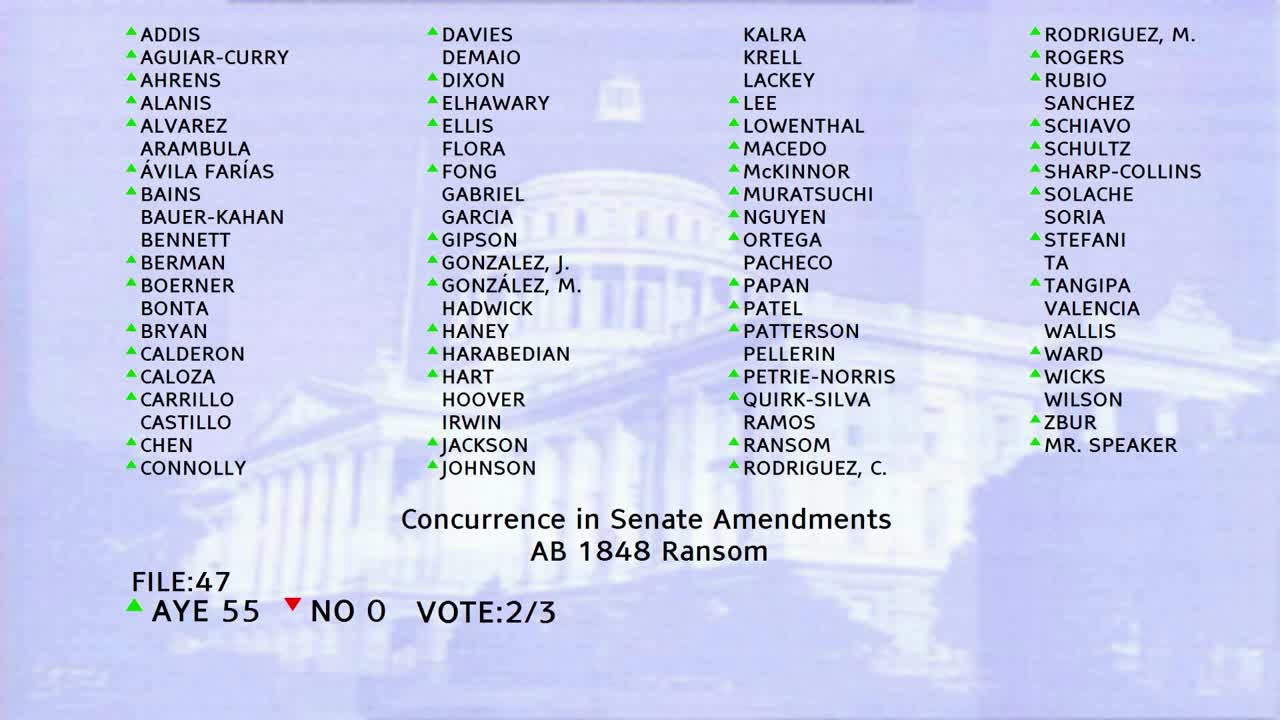 1MIN
Assembly Floor
 51SEC
Senate Floor
 17MIN
Senate Standing Committee on Health
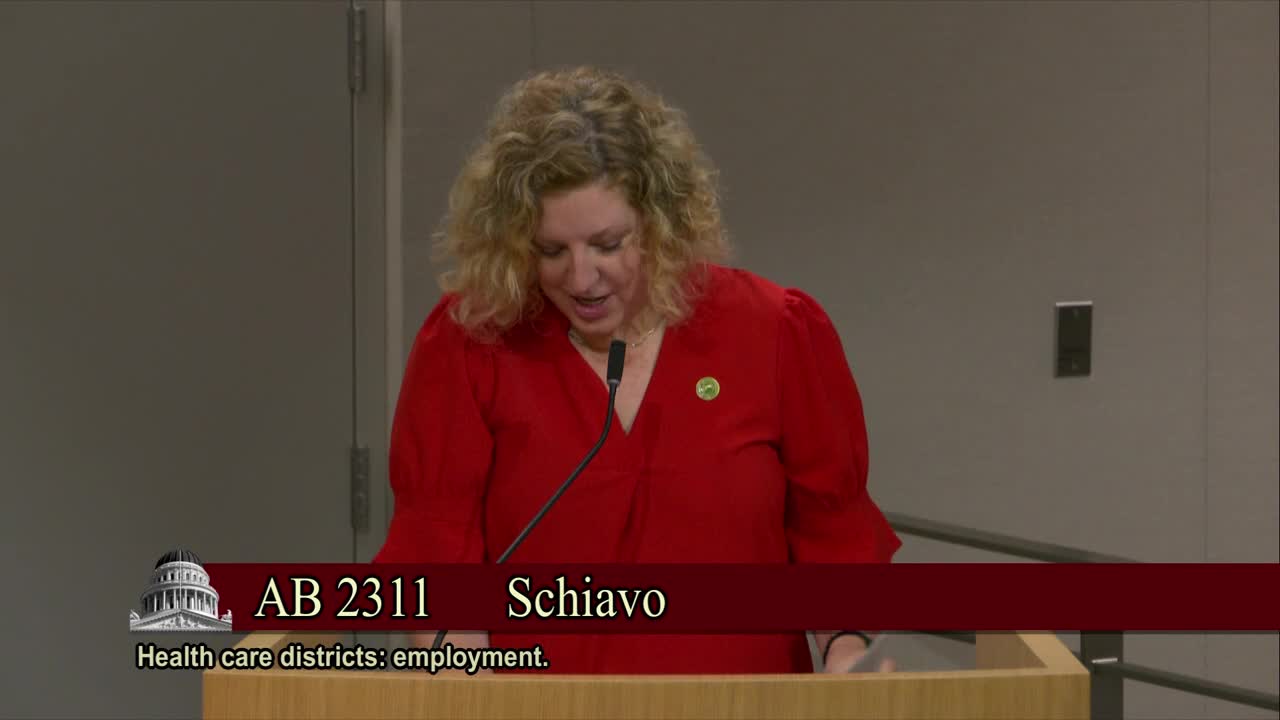 20MIN
Senate Standing Committee on Business, Professions and Economic Development
 1MIN
Assembly Floor
 15MIN
Assembly Standing Committee on Business and Professions
 20MIN
Assembly Standing Committee on Health
Bill Author
Bill Co-Author(s):