AB 2314: Childcare: alternative payment program.
- Session Year: 2025-2026
- House: Assembly
- Latest Version Date: 2026-08-30
Current Status:
Failed
(2026-09-27: Vetoed by Governor.)
Introduced
In Committee
Awaiting First Chamber Vote
Passed First Chamber
In Committee
Awaiting Second Chamber Vote
Passed Second Chamber
Enacted
Existing law, the Child Care and Development Services Act, administered by the State Department of Social Services, requires the department to administer childcare and development programs that offer a full range of services to eligible children from infancy to 13 years of age, inclusive. Existing law requires the department to contract with local contracting agencies for alternative payment programs for childcare services to be provided throughout the state. Existing law then requires alternative payment programs to reimburse childcare providers for providing childcare to eligible children.
This bill would, beginning October 1, 2027, authorize alternative payment programs with clear contracts and that are in full compliance with certain requirements to submit written requests to the department for a voluntary temporary transfer of funds. The bill would require the department to acknowledge receipt of the request within 30 calendar days of receiving it. The bill would require the department to provide the contractor with a written decision within 90 calendar days of receiving the request and notify the local childcare planning council in writing if a voluntary temporary transfer request is approved. The bill would authorize the department to implement these provisions by means of all-county letters, childcare bulletins, or similar written instructions until regulations are adopted.
Existing law, the Child Care and Development Services Act, administered by the State Department of Social Services, requires the department to administer childcare and development programs that offer a full range of services to eligible children from infancy to 13 years of age, inclusive. Existing law requires the department to contract with local contracting agencies for alternative payment programs for childcare services to be provided throughout the state. Existing law then requires alternative payment programs to reimburse childcare providers for providing childcare to eligible children.
This bill would establish a process for would, beginning October 1, 2027, authorize alternative payment programs with clear contracts and that are in full compliance with certain requirements to submit written requests to the department to transfer funds between providers. for a voluntary temporary transfer of funds. The bill would require the department to respond in writing to the request within 30 calendar days of receipt, and send a copy of the response to the local childcare planning council, and would require the written response to include the departments determination and a general explanation of the basis for that determination. The bill would limit the departments authority to deny a funding transfer request to when verified documentation demonstrates that overenrollment or projected service obligations did not occur during the fiscal year for which the request was made. The bill would require the department to consult with statewide networks of alternative payment program contracts and other childcare and development stakeholders in implementing these provisions. acknowledge receipt of the request within 30 calendar days of receiving it. The bill would require the department to provide the contractor with a written decision within 90 calendar days of receiving the request and notify the local childcare planning council in writing if a voluntary temporary transfer request is approved. The bill would authorize the department to implement these provisions by means of all-county letters, childcare bulletins, or similar written instructions until regulations are adopted. This bill would also make various other changes relating to the departments fiscal management of alternative payment programs, including by, among other things, requiring the department to conduct periodic fiscal reviews during each fiscal year and requiring the department to utilize fiscal projection methodologies, as specified.
This bill would also prohibit an alternative payment program from disenrolling a family, transferring a family to another alternative payment program contractor, or separating siblings receiving services, as a result of enrollment balancing due to the addition of a newly eligible child to the family. The bill would prohibit the department from moving or reassigning a family to a different contractor or service area if the family is actively enrolled and receiving services through an alternative payment program, unless the current contractor and proposed contractor agree to the transfer in writing.
The bill would require the department, on or before September 1 of each year, to provide to the Legislature and the Department of Finance, and to publish on its internet website, a summary of childcare and development funds allocated and expended during the prior fiscal year.Existing law, the Child Care and Development Services Act, administered by the State Department of Social Services, requires the department to administer childcare and development programs that offer a full range of services to eligible children from infancy to 13 years of age, inclusive. Existing law requires the department to contract with local contracting agencies for alternative payment programs for childcare services to be provided throughout the state. Existing law then requires alternative payment programs to reimburse childcare providers for providing childcare to eligible children.
This bill would establish a process for alternative payment programs to submit written requests to the department to transfer funds between providers. The bill would require the department to respond in writing to the request within 30 calendar days of receipt receipt, and send a copy of the response to the local childcare planning council, and would require the written response to include the departments determination and a general explanation of the basis for that determination. The bill would limit the departments authority to deny a funding transfer request to when verified documentation demonstrates that overenrollment or projected service obligations did not occur during the fiscal year for which the request was made. The bill would require the department to consult with statewide networks of alternative payment program contracts and other childcare and development stakeholders in implementing these provisions. The bill would authorize the department to implement these provisions by means of all-county letters, childcare bulletins, or similar written instructions until regulations are adopted. This bill would also make various other changes relating to the departments fiscal management of alternative payment programs, including by, among other things, requiring the department to conduct periodic fiscal reviews during each fiscal year and requiring the department to utilize fiscal projection methodologies, as specified.
This bill would also prohibit an alternative payment program from disenrolling a family, transferring a family to another alternative payment program contractor, or separating siblings receiving services, as a result of enrollment balancing due to the addition of a newly eligible child to the family. The bill would prohibit the department from moving or reassigning a family to a different contractor or service area if the family is actively enrolled and receiving services through an alternative payment program, unless the current contractor and proposed contractor agree to the transfer in writing.
The bill would require the department, on or before September 1 of each year, to provide to the Legislature and the Department of Finance Finance, and to publish on its internet website, a summary of childcare and development funds allocated and expended during the prior fiscal year.
Existing law, the Child Care and Development Services Act, administered by the State Department of Social Services, requires the department to administer childcare and development programs that offer a full range of services to eligible children from infancy to 13 years of age, inclusive. Under the act, the department is required to adopt rules and regulations to implement its provisions. Existing law requires the department to contract with local contracting agencies for alternative payment programs for childcare services to be provided throughout the state. Existing law then requires alternative payment programs to reimburse childcare providers for providing childcare to eligible children.
This bill would state the intent of the Legislature to enact legislation to reform childcare regulations. establish a process for alternative payment programs to submit written requests to the department to transfer funds between providers. The bill would require the department to respond in writing to the request within 30 calendar days of receipt and would require the written response to include the departments determination and a general explanation of the basis for that determination. The bill would limit the departments authority to deny a funding transfer request to when verified documentation demonstrates that overenrollment or projected service obligations did not occur during the fiscal year for which the request was made. The bill would require the department to consult with statewide networks of alternative payment program contracts and other childcare and development stakeholders in implementing these provisions. The bill would authorize the department to implement these provisions by means of all-county letters, childcare bulletins, or similar written instructions until regulations are adopted. This bill would also make various other changes relating to the departments fiscal management of alternative payment programs, including by, among other things, requiring the department to conduct periodic fiscal reviews during each fiscal year and requiring the department to utilize fiscal projection methodologies, as specified.
This bill would also prohibit an alternative payment program from disenrolling a family, transferring a family to another alternative payment program contractor, or separating siblings receiving services, as a result of enrollment balancing due to the addition of a newly eligible child to the family. The bill would prohibit the department from moving or reassigning a family to a different contractor or service area if the family is actively enrolled and receiving services through an alternative payment program, unless the current contractor and proposed contractor agree to the transfer in writing.
The bill would require the department, on or before September 1 of each year, to provide to the Legislature and the Department of Finance a summary of childcare and development funds allocated and expended during the prior fiscal year.
Existing law, the Child Care and Development Services Act, administered by the State Department of Social Services, requires the department to administer childcare and development programs that offer a full range of services to eligible children from infancy to 13 years of age, inclusive. Under the act, the department is required to adopt rules and regulations to implement its provisions.
This bill would state the intent of the Legislature to enact legislation to reform childcare regulations.
The Legislature finds and declares all of the following:
(a)California has made historic investments in subsidized childcare and early learning to support working families, promote continuity of care, and strengthen the states economy.
(b)Ensuring that appropriated childcare and development funds are fully and effectively utilized is critical to advancing the Legislatures intent and serving eligible families.
(c)Transparent and timely voluntary temporary transfer processes support responsible stewardship of public funds.
SEC. 2.Section 10228.2 is added to the Welfare and Institutions Code, to read:10228.2.(a)The department may prioritize expenditure of funds allocated to alternative payment programs within the county or jurisdiction for which the funds were originally allocated before approving transfers outside the county of origin.
(b)Prior to transferring funds allocated to alternative payment programs outside the county of origin, the department may determine that reasonable efforts to maximize enrollment and expenditures within that county have been undertaken and documented.
(c)The department may consult with contractors and relevant stakeholders to develop guidance that supports enrollment maximization, fiscal alignment, and continuity of care in alternative payment programs.
SEC. 3.Section 10228.4 is added to the Welfare and Institutions Code, to read:10228.4.(a)The department shall prioritize the full and timely expenditure of state and federal childcare and development funds, consistent with federal and state law.
(b)A contractor operating an alternative payment program pursuant to this chapter may submit a written request for a voluntary temporary transfer of alternative payment program funds pursuant to this section at any time during the fiscal year.
(c)(1)Only contractors who possess clear contracts, as defined in Section 10397, and are in full compliance with all contractual funding terms and conditions, fiscal reporting requirements, regulatory requirements, statutory requirements, and other requirements imposed by the department, may submit a written request for a voluntary temporary transfer, as described in this section.
(2)Voluntary temporary transfers, as described in this section, are intended to aid contractors with unforeseen overenrollment that causes overearning of the existing contract.
(3)Contractors who request a voluntary temporary transfer, as described in this section, shall comply with any requirements imposed by the department, which may include, but are not limited to, requirements relating to pausing enrollment, coordinating transfers to other contractors, or other steps intended to minimize overearning by the requesting contractor.
(d)In evaluating requests submitted pursuant to this section, the department shall consider, among other things, projected expenditures, enrollment levels, and the objective of maximizing utilization of appropriated funds consistent with state and federal law.
(e)The department shall provide to the contractor a written acknowledgment of receipt of the request and the accompanying documentation, submitted pursuant to subdivision (b), within 30 calendar days of receipt.
(f)Within 90 calendar days of receipt of the request, the department shall provide the contractor with a written decision regarding approval of the request, including a timeline for the transfer of funds, or denial of the request.
(g)The department shall provide written notice to the local childcare planning council in which the requester is located if a voluntary temporary transfer request is approved.
(h)Notwithstanding the rulemaking provisions of the Administrative Procedure Act (Chapter 3.5 (commencing with Section 11340) of Part 1 of Division 3 of Title 2 of the Government Code), the department may implement and administer this section by all-county letters, childcare bulletins, or similar written instructions until regulations are adopted.
(i)This section shall become operative October 1, 2027.
The Legislature finds and declares all of the following:
(a)California has made historic investments in subsidized childcare and early learning to support working families, promote continuity of care, and strengthen the states economy.
(b)Ensuring that appropriated childcare and development funds are fully and effectively utilized is critical to advancing the Legislatures intent and serving eligible families.
(c)Voucher-based childcare programs operate across fiscal years and include multiyear eligibility periods that require appropriate fiscal modeling and fiscal coordination.(d)Families in the eligibility determination and certification process represent anticipated service obligations that must be reasonably considered in fiscal planning.(e)Continuity of care, including maintaining siblings within the same contractor when eligible, promotes stability for children and administrative efficiency for the state.(f)(c)Transparent and timely fiscal review, including voluntary temporary transfer processes, supports processes support responsible stewardship of public funds.
SEC. 2.Section 10228.2 is added to the Welfare and Institutions Code, to read:10228.2.(a)The department shall prioritize the full and timely expenditure of state- and federal-childcare and development funds allocated to alternative payment programs, consistent with federal and state law.(b)10228.2.(a)The department shall, to the greatest extent practicable, may prioritize expenditure of funds allocated to alternative payment programs within the county or jurisdiction for which the funds were originally allocated before approving transfers outside the county of origin.
(c)(b)Prior to transferring funds allocated to alternative payment programs outside the county of origin, the department shall may determine that reasonable efforts to maximize enrollment and expenditures within that county have been undertaken and documented.
(d)(c)The department shall may consult with contractors and relevant stakeholders to develop guidance that supports enrollment maximization, fiscal alignment, and continuity of care in alternative payment programs.
SEC. 3.Section 10228.3 is added to the Welfare and Institutions Code, to read:10228.3.(a)It is the intent of the Legislature to promote continuity of care and family stability within subsidized childcare programs.(b)If a family is certified for services through an alternative payment program and remains within its eligibility period, including a 24-month eligibility period, if applicable, the addition of a newly eligible child, including, but not limited to, a newborn child, shall not result solely from enrollment balancing in any of the following occurring:(1)Disenrollment of the family.(2)Transfer of the family to another contractor.(3)Separation of siblings receiving services.(c)To promote continuity of care and minimize disruption to children and families, the department shall not move or reassign a family to a different contractor or service area if the family is actively enrolled and receiving services through an alternative payment program, unless both the current contractor and the proposed receiving contractor mutually agree in writing to the transfer.(d)The department shall ensure that fiscal monitoring and enrollment practices of alternative payment programs do not require the separation of siblings or disruption of services if the family remains eligible and sufficient funds have been allocated.(e)In administering programs under this chapter, the department shall utilize fiscal projection methodologies that reasonably account for all of the following:(1)Multiyear eligibility periods.(2)Cross-fiscal-year enrollment patterns.(3)Reasonable attrition assumptions.(4)Families in the eligibility determination or certification process who are anticipated to begin services.(f)To promote fiscal stability and full utilization of appropriated funds, the department may authorize the use of unexpended funds for alternative-payment programs in a subsequent fiscal year if those funds are reasonably attributable to families who were certified for services in the prior fiscal year but had not yet begun receiving care.(g)This section shall not be construed to require expenditures in excess of appropriated funds or in conflict with state or federal law.SEC. 4.Section 10228.4 is added to the Welfare and Institutions Code, to read:10228.4.(a)The department shall conduct periodic fiscal reviews during each fiscal year to identify projected overexpenditures and underexpenditures in alternative payment programs and to ensure full and timely utilization of appropriated funds, consistent with state law.(b)A contractor, county, or other authorized alternative payment program may submit a written request at any time during the fiscal year regarding allocation adjustments, expenditure projections, documented overenrollment, or voluntary temporary transfer of funds between providers.(c)In evaluating requests submitted pursuant to subdivision (b), the department shall consider projected expenditures, enrollment levels, and the objective of maximizing utilization of appropriated funds consistent with state and federal law.(d)The department shall provide a written response to a request submitted pursuant to subdivision (b) within 30 calendar days of receipt and shall send a copy of its response to the local childcare planning council in which the requester is located. The written response shall include the departments determination and a general explanation of the basis for that determination. The department shall take one of the following actions in response to the request:(1)Approve the funding transfer request, as submitted, and allocate and make available the transferred funds within the same fiscal year for which the request was made.(2)Conditionally approve the funding transfer request, with the final dollar amount to be determined upon verification, through caseload reports or other documentation demonstrating overenrollment or projected service obligations, that the transfer is justified. Upon verification, the department shall allocate and make available the approved transferred funds within the fiscal year in which the overenrollment or projected service obligation justifying the transfer occurred.(3)Deny the funding transfer request. The funding transfer request shall only be denied if verified documentation demonstrates that overenrollment or projected service obligations did not occur during the fiscal year for which the request was made.(e)(1)Fund transfers approved pursuant to this section shall not be deferred, delayed, or reallocated to a subsequent fiscal year if the documented overenrollment, service obligation, or allowable expenditure occurred during the fiscal year for which the request was submitted.(2)The department shall not recapture, reduce, or otherwise penalize a contractors allocation for a fiscal year due to administrative processing delays attributable to the department, including delays in reviewing requests, issuing determinations, or processing allocation adjustments or voluntary temporary transfers.(3)Administrative or procedural delays by the department shall not serve as the basis for denying a funding transfer request that is otherwise supported by timely and sufficient documentation.(f)The department shall maintain publicly accessible information regarding voluntary funding transfer requests, including timelines, aggregate transfer amounts, and general program impacts, consistent with state and federal confidentiality requirements.(g)In implementing this section, the department shall consult with statewide networks of alternative payment program contractors and other childcare and development stakeholders to promote transparency, fiscal alignment, and continuity of services.(h)Notwithstanding the rulemaking provisions of the Administrative Procedure Act (Chapter 3.5 (commencing with Section 11340) of Part 1 of Division 3 of Title 2 of the Government Code), the department may implement and administer this section by all-county letters, childcare bulletins, or similar written instructions until regulations are adopted.(i)This section shall not be construed to require expenditures in excess of amounts appropriated or in conflict with state or federal law.SEC. 5.Section 10268.1 is added to the Welfare and Institutions Code, to read:10268.1.(a)Notwithstanding Section 10231.5 of the Government Code, on or before September 1 of each year, the department shall provide to the Legislature and the Department of Finance, and shall publish on its internet website, a summary of childcare and development funds allocated and expended during the prior fiscal year.(b)The summary shall include, to the extent information is available through existing reporting systems, all of the following:(1)Total funds allocated statewide, by program type.(2)Total funds expended statewide, by program type.(3)Total unexpended funds statewide, by program type.(c)The department may utilize existing fiscal reports or publicly available documents to satisfy the requirements of this section.(d)The summary to be submitted pursuant to subdivision (a) shall be submitted in compliance with Section 9795 of the Government Code and posted on the departments internet website.(e)This section does not require the creation of a new data system.SEC. 3.Section 10228.4 is added to the Welfare and Institutions Code, to read:10228.4.(a)The department shall prioritize the full and timely expenditure of state and federal childcare and development funds, consistent with federal and state law.
(b)A contractor operating an alternative payment program pursuant to this chapter may submit a written request for a voluntary temporary transfer of alternative payment program funds pursuant to this section at any time during the fiscal year.
(c)(1)Only contractors who possess clear contracts, as defined in Section 10397, and are in full compliance with all contractual funding terms and conditions, fiscal reporting requirements, regulatory requirements, statutory requirements, and other requirements imposed by the department, may submit a written request for a voluntary temporary transfer, as described in this section.
(2)Voluntary temporary transfers, as described in this section, are intended to aid contractors with unforeseen overenrollment that causes overearning of the existing contract.
(3)Contractors who request a voluntary temporary transfer, as described in this section, shall comply with any requirements imposed by the department, which may include, but are not limited to, requirements relating to pausing enrollment, coordinating transfers to other contractors, or other steps intended to minimize overearning by the requesting contractor.
(d)In evaluating requests submitted pursuant to this section, the department shall consider, among other things, projected expenditures, enrollment levels, and the objective of maximizing utilization of appropriated funds consistent with state and federal law.
(e)The department shall provide to the contractor a written acknowledgment of receipt of the request and the accompanying documentation, submitted pursuant to subdivision (b), within 30 calendar days of receipt.
(f)Within 90 calendar days of receipt of the request, the department shall provide the contractor with a written decision regarding approval of the request, including a timeline for the transfer of funds, or denial of the request.
(g)The department shall provide written notice to the local childcare planning council in which the requester is located if a voluntary temporary transfer request is approved.
(h)Notwithstanding the rulemaking provisions of the Administrative Procedure Act (Chapter 3.5 (commencing with Section 11340) of Part 1 of Division 3 of Title 2 of the Government Code), the department may implement and administer this section by all-county letters, childcare bulletins, or similar written instructions until regulations are adopted.
(i)This section shall become operative October 1, 2027.
The Legislature finds and declares all of the following:
(a)California has made historic investments in subsidized childcare and early learning to support working families, promote continuity of care, and strengthen the states economy.
(b)Ensuring that appropriated childcare and development funds are fully and effectively utilized is critical to advancing the Legislatures intent and serving eligible families.
(c)Voucher-based childcare programs operate across fiscal years and include multiyear eligibility periods that require appropriate fiscal modeling and fiscal coordination.
(d)Families in the eligibility determination and certification process represent anticipated service obligations that must be reasonably considered in fiscal planning.
(e)Continuity of care, including maintaining siblings within the same contractor when eligible, promotes stability for children and administrative efficiency for the state.
(f)Transparent and timely fiscal review, including voluntary temporary transfer processes, supports responsible stewardship of public funds.
SEC. 2.Section 10228.2 is added to the Welfare and Institutions Code, to read:10228.2.(a)The department shall prioritize the full and timely expenditure of state- and federal-childcare and development funds allocated to alternative payment programs, consistent with federal and state law.
(b)The department shall, to the greatest extent practicable, prioritize expenditure of funds allocated to alternative payment programs within the county or jurisdiction for which the funds were originally allocated before approving transfers outside the county of origin.
(c)Prior to transferring funds allocated to alternative payment programs outside the county of origin, the department shall determine that reasonable efforts to maximize enrollment and expenditures within that county have been undertaken and documented.
(d)The department shall consult with contractors and relevant stakeholders to develop guidance that supports enrollment maximization, fiscal alignment, and continuity of care in alternative payment programs.
SEC. 3.Section 10228.3 is added to the Welfare and Institutions Code, to read:10228.3.(a)It is the intent of the Legislature to promote continuity of care and family stability within subsidized childcare programs.
(b)If a family is certified for services through an alternative payment program and remains within its eligibility period, including a 24-month eligibility period, if applicable, the addition of a newly eligible child, including, but not limited to, a newborn child, shall not result solely from enrollment balancing in any of the following occurring:
(1)Disenrollment of the family.
(2)Transfer of the family to another contractor.
(3)Separation of siblings receiving services.
(c)To promote continuity of care and minimize disruption to children and families, the department shall not move or reassign a family to a different contractor or service area if the family is actively enrolled and receiving services through an alternative payment program, unless both the current contractor and the proposed receiving contractor mutually agree in writing to the transfer.
(d)The department shall ensure that fiscal monitoring and enrollment practices of alternative payment programs do not require the separation of siblings or disruption of services if the family remains eligible and sufficient funds have been allocated.
(e)In administering programs under this chapter, the department shall utilize fiscal projection methodologies that reasonably account for all of the following:
(1)Multiyear eligibility periods.
(2)Cross-fiscal-year enrollment patterns.
(3)Reasonable attrition assumptions.
(4)Families in the eligibility determination or certification process who are anticipated to begin services.
(f)To promote fiscal stability and full utilization of appropriated funds, the department may authorize the use of unexpended funds for alternative-payment programs in a subsequent fiscal year if those funds are reasonably attributable to families who were certified for services in the prior fiscal year but had not yet begun receiving care.
(g)This section shall not be construed to require expenditures in excess of appropriated funds or in conflict with state or federal law.
SEC. 4.Section 10228.4 is added to the Welfare and Institutions Code, to read:10228.4.(a)The department shall conduct periodic fiscal reviews during each fiscal year to identify projected overexpenditures and underexpenditures in alternative payment programs and to ensure full and timely utilization of appropriated funds, consistent with state law.
(b)A contractor, county, or other authorized alternative payment program may submit a written request at any time during the fiscal year regarding allocation adjustments, expenditure projections, documented overenrollment, or voluntary temporary transfer of funds between providers.
(c)In evaluating requests submitted pursuant to subdivision (b), the department shall consider projected expenditures, enrollment levels, and the objective of maximizing utilization of appropriated funds consistent with state and federal law.
(d)The department shall provide a written response to a request submitted pursuant to subdivision (b) within 30 calendar days of receipt. receipt and shall send a copy of its response to the local childcare planning council in which the requester is located. The written response shall include the departments determination and a general explanation of the basis for that determination. The department shall take one of the following actions in response to the request:
(1)Approve the funding transfer request, as submitted, and allocate and make available the transferred funds within the same fiscal year for which the request was made.
(2)Conditionally approve the funding transfer request, with the final dollar amount to be determined upon verification, through caseload reports or other documentation demonstrating overenrollment or projected service obligations, that the transfer is justified. Upon verification, the department shall allocate and make available the approved transferred funds within the fiscal year in which the overenrollment or projected service obligation justifying the transfer occurred.
(3)Deny the funding transfer request. The funding transfer request shall only be denied if verified documentation demonstrates that overenrollment or projected service obligations did not occur during the fiscal year for which the request was made.
(e)(1)Fund transfers approved pursuant to this section shall not be deferred, delayed, or reallocated to a subsequent fiscal year if the documented overenrollment, service obligation, or allowable expenditure occurred during the fiscal year for which the request was submitted.
(2)The department shall not recapture, reduce, or otherwise penalize a contractors allocation for a fiscal year due to administrative processing delays attributable to the department, including delays in reviewing requests, issuing determinations, or processing allocation adjustments or voluntary temporary transfers.
(3)Administrative or procedural delays by the department shall not serve as the basis for denying a funding transfer request that is otherwise supported by timely and sufficient documentation.
(f)The department shall maintain publicly accessible information regarding voluntary funding transfer requests, including timelines, aggregate transfer amounts, and general program impacts, consistent with state and federal confidentiality requirements.
(g)In implementing this section, the department shall consult with statewide networks of alternative payment program contractors and other childcare and development stakeholders to promote transparency, fiscal alignment, and continuity of services.
(h)Notwithstanding the rulemaking provisions of the Administrative Procedure Act (Chapter 3.5 (commencing with Section 11340) of Part 1 of Division 3 of Title 2 of the Government Code), the department may implement and administer this section by all-county letters, childcare bulletins, or similar written instructions until regulations are adopted.
(i)This section shall not be construed to require expenditures in excess of amounts appropriated or in conflict with state or federal law.
SEC. 5.Section 10268.1 is added to the Welfare and Institutions Code, to read:10268.1.(a)Notwithstanding Section 10231.5 of the Government Code, on or before September 1 of each year, the department shall provide to the Legislature and the Department of Finance Finance, and shall publish on its internet website, a summary of childcare and development funds allocated and expended during the prior fiscal year.
(b)The summary shall include, to the extent information is available through existing reporting systems, all of the following:
(1)Total funds allocated statewide, by program type.
(2)Total funds expended statewide, by program type.
(3)Total unexpended funds statewide, by program type.
(c)The department may utilize existing fiscal reports or publicly available documents to satisfy the requirements of this section.
(d)The summary to be submitted pursuant to subdivision (a) shall be submitted in compliance with Section 9795 of the Government Code and posted on the departments internet website.
(e)This section does not require the creation of a new data system.
REVISIONS: HeadingLines 2 and 3.The Legislature finds and declares all of the following:
(a)California has made historic investments in subsidized childcare and early learning to support working families, promote continuity of care, and strengthen the states economy.
(b)Ensuring that appropriated childcare and development funds are fully and effectively utilized is critical to advancing the Legislatures intent and serving eligible families.
(c)Voucher-based childcare programs operate across fiscal years and include multiyear eligibility periods that require appropriate fiscal modeling and fiscal coordination.
(d)Families in the eligibility determination and certification process represent anticipated service obligations that must be reasonably considered in fiscal planning.
(e)Continuity of care, including maintaining siblings within the same contractor when eligible, promotes stability for children and administrative efficiency for the state.
(f)Transparent and timely fiscal review, including voluntary temporary transfer processes, supports responsible stewardship of public funds.
SEC. 2.Section 10228.2 is added to the Welfare and Institutions Code, to read:10228.2.(a)The department shall prioritize the full and timely expenditure of state- and federal-childcare and development funds allocated to alternative payment programs, consistent with federal and state law.
(b)The department shall, to the greatest extent practicable, prioritize expenditure of funds allocated to alternative payment programs within the county or jurisdiction for which the funds were originally allocated before approving transfers outside the county of origin.
(c)Prior to transferring funds allocated to alternative payment programs outside the county of origin, the department shall determine that reasonable efforts to maximize enrollment and expenditures within that county have been undertaken and documented.
(d)The department shall consult with contractors and relevant stakeholders to develop guidance that supports enrollment maximization, fiscal alignment, and continuity of care in alternative payment programs.
SEC. 3.Section 10228.3 is added to the Welfare and Institutions Code, to read:10228.3.(a)It is the intent of the Legislature to promote continuity of care and family stability within subsidized childcare programs.
(b)If a family is certified for services through an alternative payment program and remains within its eligibility period, including a 24-month eligibility period, if applicable, the addition of a newly eligible child, including, but not limited to, a newborn child, shall not result solely from enrollment balancing in any of the following occurring:
(1)Disenrollment of the family.
(2)Transfer of the family to another contractor.
(3)Separation of siblings receiving services.
(c)To promote continuity of care and minimize disruption to children and families, the department shall not move or reassign a family to a different contractor or service area if the family is actively enrolled and receiving services through an alternative payment program, unless both the current contractor and the proposed receiving contractor mutually agree in writing to the transfer.
(d)The department shall ensure that fiscal monitoring and enrollment practices of alternative payment programs do not require the separation of siblings or disruption of services if the family remains eligible and sufficient funds have been allocated.
(e)In administering programs under this chapter, the department shall utilize fiscal projection methodologies that reasonably account for all of the following:
(1)Multiyear eligibility periods.
(2)Cross-fiscal-year enrollment patterns.
(3)Reasonable attrition assumptions.
(4)Families in the eligibility determination or certification process who are anticipated to begin services.
(f)To promote fiscal stability and full utilization of appropriated funds, the department may authorize the use of unexpended funds for alternative-payment programs in a subsequent fiscal year if those funds are reasonably attributable to families who were certified for services in the prior fiscal year but had not yet begun receiving care.
(g)This section shall not be construed to require expenditures in excess of appropriated funds or in conflict with state or federal law.
SEC. 4.Section 10228.4 is added to the Welfare and Institutions Code, to read:10228.4.(a)The department shall conduct periodic fiscal reviews during each fiscal year to identify projected overexpenditures and underexpenditures in alternative payment programs and to ensure full and timely utilization of appropriated funds, consistent with state law.
(b)A contractor, county, or other authorized alternative payment program may submit a written request at any time during the fiscal year regarding allocation adjustments, expenditure projections, documented overenrollment, or voluntary temporary transfer of funds between providers.
(c)In evaluating requests submitted pursuant to subdivision (b), the department shall consider projected expenditures, enrollment levels, and the objective of maximizing utilization of appropriated funds consistent with state and federal law.
(d)The department shall provide a written response to a request submitted pursuant to subdivision (b) within 30 calendar days of receipt. The written response shall include the departments determination and a general explanation of the basis for that determination. The department shall take one of the following actions in response to the request:
(1)Approve the funding transfer request, as submitted, and allocate and make available the transferred funds within the same fiscal year for which the request was made.
(2)Conditionally approve the funding transfer request, with the final dollar amount to be determined upon verification, through caseload reports or other documentation demonstrating overenrollment or projected service obligations, that the transfer is justified. Upon verification, the department shall allocate and make available the approved transferred funds within the fiscal year in which the overenrollment or projected service obligation justifying the transfer occurred.
(3)Deny the funding transfer request. The funding transfer request shall only be denied if verified documentation demonstrates that overenrollment or projected service obligations did not occur during the fiscal year for which the request was made.
(e)(1)Fund transfers approved pursuant to this section shall not be deferred, delayed, or reallocated to a subsequent fiscal year if the documented overenrollment, service obligation, or allowable expenditure occurred during the fiscal year for which the request was submitted.
(2)The department shall not recapture, reduce, or otherwise penalize a contractors allocation for a fiscal year due to administrative processing delays attributable to the department, including delays in reviewing requests, issuing determinations, or processing allocation adjustments or voluntary temporary transfers.
(3)Administrative or procedural delays by the department shall not serve as the basis for denying a funding transfer request that is otherwise supported by timely and sufficient documentation.
(f)The department shall maintain publicly accessible information regarding voluntary funding transfer requests, including timelines, aggregate transfer amounts, and general program impacts, consistent with state and federal confidentiality requirements.
(g)In implementing this section, the department shall consult with statewide networks of alternative payment program contractors and other childcare and development stakeholders to promote transparency, fiscal alignment, and continuity of services.
(h)Notwithstanding the rulemaking provisions of the Administrative Procedure Act (Chapter 3.5 (commencing with Section 11340) of Part 1 of Division 3 of Title 2 of the Government Code), the department may implement and administer this section by all-county letters, childcare bulletins, or similar written instructions until regulations are adopted.
(i)This section shall not be construed to require expenditures in excess of amounts appropriated or in conflict with state or federal law.
SEC. 5.Section 10268.1 is added to the Welfare and Institutions Code, to read:10268.1.(a)Notwithstanding Section 10231.5 of the Government Code, on or before September 1 of each year, the department shall provide to the Legislature and the Department of Finance a summary of childcare and development funds allocated and expended during the prior fiscal year.
(b)The summary shall include, to the extent information is available through existing reporting systems, all of the following:
(1)Total funds allocated statewide, by program type.
(2)Total funds expended statewide, by program type.
(3)Total unexpended funds statewide, by program type.
(c)The department may utilize existing fiscal reports or publicly available documents to satisfy the requirements of this section.
(d)The summary to be submitted pursuant to subdivision (a) shall be submitted in compliance with Section 9795 of the Government Code and posted on the departments internet website.
(e)This section does not require the creation of a new data system.
SECTION 1.It is the intent of the Legislature to enact legislation to reform childcare regulations.It is the intent of the Legislature to enact legislation to reform childcare regulations.
|
Date
|
Status
|
|---|---|
| Sep 27, 2026 | Vetoed by Governor. |
| Sep 3, 2026 | Enrolled and presented to the Governor at 4 p.m. |
| Aug 26, 2026 | Senate amendments concurred in. To Engrossing and Enrolling. (Ayes 79. Noes 0.). |
| Aug 26, 2026 | Senate amendments concurred in. To Engrossing and Enrolling. (Ayes 79. Noes 0. Page 6643.). |
| Aug 26, 2026 | In Assembly. Concurrence in Senate amendments pending. |
| Aug 26, 2026 | Read third time. Passed. Ordered to the Assembly. (Ayes 40. Noes 0.). |
| Aug 24, 2026 | Read second time. Ordered to third reading. |
| Aug 21, 2026 | Read third time and amended. Ordered to second reading. |
| Aug 13, 2026 | Read second time. Ordered to third reading. |
| Aug 13, 2026 | From committee: Do pass. (Ayes 7. Noes 0.) (August 13). |
| Aug 3, 2026 | In committee: Referred to APPR. suspense file. |
| Jun 29, 2026 | From committee: Do pass and re-refer to Com. on APPR. (Ayes 5. Noes 0.) (June 29). Re-referred to Com. on APPR. |
| Jun 10, 2026 | Referred to Com. on HUMAN S. |
| May 27, 2026 | In Senate. Read first time. To Com. on RLS. for assignment. |
| May 26, 2026 | Read third time. Passed. Ordered to the Senate. (Ayes 78. Noes 0. Page 5312.) |
| May 26, 2026 | Read third time. Passed. Ordered to the Senate. (Ayes 78. Noes 0.) |
| May 26, 2026 | Read third time. Passed. Ordered to the Senate. |
| May 18, 2026 | Read second time. Ordered to third reading. |
| May 14, 2026 | Joint Rule 62(a), file notice suspended. (Page 5030.) |
| May 14, 2026 | Joint Rule 62(a), file notice suspended. |
| May 14, 2026 | From committee: Do pass. (Ayes 15. Noes 0.) (May 14). |
| May 14, 2026 | Coauthors revised. |
| May 13, 2026 | In committee: Set, first hearing. Referred to APPR. suspense file. |
| Apr 23, 2026 | From committee: Do pass and re-refer to Com. on APPR. (Ayes 6. Noes 0.) (April 23). Re-referred to Com. on APPR. |
| Apr 20, 2026 | Re-referred to Com. on HUM. S. |
| Apr 16, 2026 | From committee chair, with author's amendments: Amend, and re-refer to Com. on HUM. S. Read second time and amended. |
| Mar 23, 2026 | Re-referred to Com. on HUM. S. |
| Mar 19, 2026 | Referred to Com. on HUM. S. |
| Mar 19, 2026 | From committee chair, with author's amendments: Amend, and re-refer to Com. on HUM. S. Read second time and amended. |
| Feb 20, 2026 | From printer. May be heard in committee March 22. |
| Feb 19, 2026 | Read first time. To print. |
|
Date
|
Description
|
Location
|
Votes
|
|
|---|---|---|---|---|
| Aug 26, 2026 | AB 2314 Rogers Concurrence in Senate Amendments | Assembly Floor |
Passed |
|
| Aug 26, 2026 | Assembly 3rd Reading AB2314 Rogers et al. By Ochoa Bogh | Senate Floor |
Passed |
|
| Aug 13, 2026 | Do pass | Senate Standing Committee on Appropriations |
Passed |
|
| Aug 3, 2026 | Placed on suspense file | Senate Standing Committee on Appropriations |
Passed |
|
| Jun 29, 2026 | Do pass, but first be re-referred to the Committee on [Appropriations] | Senate Standing Committee on Human Services |
Passed |
|
| May 26, 2026 | AB 2314 Rogers Assembly Third Reading | Assembly Floor |
Passed |
|
| May 14, 2026 | Do pass. | Assembly Standing Committee on Appropriations |
Passed |
|
| Apr 23, 2026 | Do pass and be re-referred to the Committee on [Appropriations] | Assembly Standing Committee on Human Services |
Passed |
This list shows positions taken on this bill by organizations on the date displayed, which is linked to the original source.
Positions by individuals are not included.
|
Organization
|
Position
|
Date
|
|---|---|---|
| 4Cs of Alameda County | ** Support | |
| Catalyst Family INC. | ** Support | |
| central valley children's services network | ** Support | |
| Child Action | ** Support | |
| Child Care Coordinating Council of Alameda | ** Support | |
| Child Care Resource Center | ** Support | |
| Child Development Associates | ** Support | |
| Child Development Incorporated | ** Support | |
| Child Development Resources of Ventura County, Inc. | ** Support | |
| Community Child Care Council (4CS) of Alameda County | ** Support | |
| Community Resources for Children | ** Support | |
| Del Norte Child Care Council | ** Support | |
| Family Resource Center | ** Support | |
| Glide Foundation | ** Support | |
| Marin Child Care Council | ** Support | |
| North Coast Opportunities | ** Support | |
| Sierra Nevada Children's Services | ** Support | |
| Solano Family & Children's Services | ** Support | |
| Thriving Families CA Foundation | ** Support | |
| Valley Oak Children's Services, INC. | ** Support | |
| YMCA of San Diego | ** Support |
GOVERNOR'S VETO
GV Bill Id:AB 2314
Author:(Rogers)
As Enrolled Ver:August 30, 2026
2/3 vote
SUMMARY
Establishes a Voluntary Temporary Transfer (VTT) process for Alternative Payment Program agencies (APPs), requires the California Department of Social Services (CDSS) to respond to a VTT request within 30 calendar days of receipt by either approving, conditionally approving, or denying the request, and specifies that a VTT request may only be denied under certain circumstances.
Senate Amendments
Addressed concerns from CDSS and narrow the scope of the bill by doing the following:
- Removed the requirement for CDSS to conduct period fiscal reviews each fiscal year.
- Removed the ability of a county to submit a request during the fiscal year regarding allocation adjustments, expenditure projections, documented overenrollment, or voluntary temporary transfer of funds between providers. Instead, allowed only a contractor operating an APP to submit a written request for a voluntary temporary transfer of APP funds pursuant to this section at any time during the fiscal year.
- Established that only contractors who possess clear contracts and are in full compliance with all contractual funding terms and conditions, fiscal reporting requirements, regulatory requirements, statutory requirements, and other requirements imposed by CDSS, can submit a written request for a voluntary temporary transfer.
- Removed the requirement for CDSS to provide a written response to a request submitted as described in 2) above within 30 calendar days of receipt and to send a copy of its response to the local childcare planning council in which the requester is located. Instead, required CDSS to send a written acknowledgment of receipt of the request and the accompanying documentation within 30 calendar days.
- Removed the requirement for CDSS to consider projected expenditures, enrollment levels, and the objective of maximizing utilization of appropriated funds consistent with state and federal law.
- Removed the requirement for CDSS to report to the Legislature and post on their website a summary of childcare and development funds allocated and expended during the prior fiscal year.
- Struck the provision prohibiting CDSS from recapturing, reducing, or otherwise penalizing a contractor's allocation for a fiscal year due to administrative processing delays attributable to the department, including delays in reviewing requests, issuing determinations, or processing allocation adjustments or voluntary temporary transfers. Instead, required CDSS to provide written notice to the local childcare planning council in which the requester is located if a voluntary temporary transfer request is approved.
- Struck the provision that would have required CDSS to maintain publicly accessible information regarding voluntary funding transfer requests, including timelines, aggregate transfer amounts, and general program impacts, consistent with state and federal confidentiality requirements.
- Struck the requirement for CDSS to consult with statewide networks of APP contractors and other childcare and development stakeholders to promote transparency, fiscal alignment, and continuity of services to implement the above.
- Delayed implementation of the above until October 1, 2027.
- Struck legislative intent to promote continuity of care and family stability within subsidized childcare programs.
- Struck all provisions related to prohibiting an APP from disenrolling a family, transferring a family to another APP contractor, or separating siblings receiving services, as a result of enrollment balancing due to the addition of a newly eligible child to the family.
- Struck the requirement that CDSS must prioritize the full and timely expenditure of state- and federal-childcare and development funds allocated to APPs, consistent with federal and state law.
- Struck the requirement, and instead permit CDSS, to the greatest extent practicable, to prioritize expenditure of funds allocated to APPs within the county or jurisdiction for which the funds were originally allocated before approving transfers outside the county of origin.
- Struck the requirement that before transferring funds allocated to APPs outside the county of origin, CDSS must determine that reasonable efforts to maximize enrollment and expenditures within that county have been undertaken and documented, and, instead, allow CDSS to make that determination.
Governor's Veto Message
This bill would propose new requirements for the Voluntary Temporary Transfer (VTT) of child care and development funds, allow a VTT request submission at any time during the fiscal year, and add optional fiscal management provisions for Alternative Payment Programs (APP).
I share the author's intent of ensuring families have access to reliable childcare. However, allowing an APP contractor to submit a VTT request at any time during the fiscal year conflicts with CDSS' existing statutory authority to set timelines for temporary transfers of funds. This compromises program integrity, putting contractor annual fiscal reports and audits at risk, and creates unnecessary administrative burdens for CDSS and contractors alike. Additionally, the bill's permissive language regarding the transfer of VTT funds out of a county conflicts with childcare and development funding requirements that were negotiated as part of the 2026 Budget.
COMMENTS
Background: Alternative Payment Programs are one of California's primary delivery systems for subsidized childcare and are administered through contracts between CDSS and local alternative payment agencies, many of which are community-based organizations. APPs provide vouchers that allow families to choose their own childcare provider, including licensed childcare centers, family childcare homes, and license-exempt providers.
Local Childcare Planning Councils (LPCs) were legislatively created in 1991, following the federal establishment of the Child Care and Development Block Grant program to ensure local voices influence how these funds are allocated. Each county in California has an LPC established to identify local childcare priorities and develop policies to address those needs. LPCs are responsible for conducting comprehensive childcare needs assessments at least every five years, developing countywide childcare plans, and establishing zip-code level priorities to guide the allocation of state and federal childcare funding. LPCs facilitate the VTT process by identifying contractors with unspent funds and those with capacity to enroll additional families, and by supporting the local matching and transfer of funds.[1]
The Voluntary Temporary Transfer of Funds process is facilitated by the Child Care and Development Division of CDSS, which allows childcare contractors with unspent funds ("under-earning") to temporarily transfer those funds to contractors that are able to fully utilize additional funding ("over-earning"), in order to maximize the use of appropriate childcare funds. The following contract types are eligible to participate in the VTT process: CCTR, CMIG, Family Child Care Home Education Networks, Severely Handicapped Programs, and APPs.[2]
The VTT process is locally coordinated by LPCs, which must adopt fair and transparent policies, designate a coordinator or subcommittee, and convene contractors to identify voluntary participation and available funding. LPCs, in consultation with CDSS, verify fiscal eligibility and ensure transfers occur only within the same contract type and that receiving contractors have the capacity to immediately serve additional children. Matching is first attempted locally, then statewide if needed. Once matched, contractors submit formal documentation through the LPC to CDSS for review.
CDSS has sole authority to approve, modify, or deny transfers, issues contract amendments upon approval, and provides written justification for denials. While the process is designated to optimize utilization of children funds, statutory timelines for CDSS action are not specified, which may contribute to delays in funding adjustments and service delivery.
Advocates state that the VTT process is administratively complex, lacks clear timelines, relies on outdated structures, and does not support timely reallocation of funds. As a result, some agencies underspend available funding while others are over-enrolled and unable to serve additional families, and funds are not consistently directed to areas with the greatest need.
Nuances for Alternative Payment Program Contracts. According to CDSS' 2024 Childcare Fiscal Handbook,[3] APP contracts have multiyear contracts and ongoing contract adjustments based on actual expenditures and caseload in order to maximize the use of childcare funds. State law allows APP contractors up to 24 months to expend funds allocated in a given fiscal year, allowing unspent funds from a prior fiscal year to be carried over and utilized in a subsequent year through a contract amendment. As a result, contractors may have two active contracts at the same time: a prior-year contract that has been extended into a second-year and a current-year contract. Contractors that fully expend their prior-year funds will generally have a single, current-year contract.
Advocates contend that fiscal processes are largely structured around single fiscal-year assumptions, resulting in contractors having to project enrollment months in advance, account for families who are approved but not yet enrolled, and manage demand across fiscal years. Advocates further note that without fiscal tools that align with these multiyear timelines, contractors face planning challenges and risk both over-enrollment and under-enrollment.
According to the Author
"California has made significant investments in child care, yet there are families still waiting while funds go unspent or are delayed in reaching care. Currently, only 16% of eligible children are enrolled in publicly funded child care programs through CDSS. [This bill] ensures that every dollar appropriated is used efficiently by creating a clear, timely process for transferring funds where they are most needed and requiring transparent, written responses from the California Department of Social Services. This bill strengthens fiscal oversight to prevent resources from sitting idle and ensures funding decisions reflect real-time demand. It also protects families from unnecessary disenrollment, contractor transfers, or sibling separation, promoting stability and continuity of care. By improving access to reliable child care, [This bill] supports working parents, strengthens providers, and boosts California's economy."
Arguments in Support
According to a coalition of supporters, "AB 2314 takes important steps to modernize California's subsidized child care system by better aligning enrollment, funding, and fiscal oversight—ensuring that limited state and federal dollars are deployed efficiently to serve eligible families. With over two million eligible children still waiting for access, even small inefficiencies in funding alignment can result in thousands of missed opportunities to serve families."
Arguments in Opposition
None on file.
FISCAL COMMENTS
According to the Senate Appropriations Committee on August 13, 2026, unknown ongoing General Fund costs, potentially hundreds of thousands, for the California Department of Social Services (CDSS) for state administration.
VOTES
ASM HUMAN SERVICES: 6-0-1
YES: Lee, Calderon, Elhawary, Blanca Rubio, Ahrens, Tangipa
ABS, ABST OR NV: Castillo
ASM APPROPRIATIONS: 15-0-0
YES: Wicks, Hoover, Aguiar-Curry, Calderon, Caloza, Dixon, Fong, Mark González, Krell, Pacheco, Pellerin, Sharp-Collins, Solache, Ta, Tangipa
ASSEMBLY FLOOR: 78-0-2
YES: Addis, Aguiar-Curry, Ahrens, Alanis, Alvarez, Arambula, Ávila Farías, Bains, Bauer-Kahan, Bennett, Berman, Boerner, Bonta, Bryan, Calderon, Caloza, Carrillo, Castillo, Chen, Connolly, Davies, DeMaio, Dixon, Elhawary, Ellis, Flora, Fong, Gabriel, Gallagher, Garcia, Gipson, Jeff Gonzalez, Mark González, Hadwick, Haney, Harabedian, Hart, Hoover, Irwin, Jackson, Johnson, Kalra, Krell, Lackey, Lee, Lowenthal, Macedo, McKinnor, Nguyen, Ortega, Pacheco, Papan, Patel, Patterson, Pellerin, Petrie-Norris, Quirk-Silva, Ramos, Ransom, Michelle Rodriguez, Rogers, Blanca Rubio, Sanchez, Schiavo, Schultz, Sharp-Collins, Solache, Soria, Stefani, Ta, Tangipa, Valencia, Wallis, Ward, Wicks, Wilson, Zbur, Rivas
ABS, ABST OR NV: Muratsuchi, Celeste Rodriguez
SENATE FLOOR: 40-0-0
YES: Allen, Alvarado-Gil, Archuleta, Arreguín, Ashby, Becker, Blakespear, Cabaldon, Caballero, Cervantes, Choi, Cortese, Dahle, Durazo, Gonzalez, Grayson, Grove, Hurtado, Jones, Laird, Limón, McGuire, McNerney, Menjivar, Niello, Ochoa Bogh, Padilla, Pérez, Reyes, Richardson, Rubio, Seyarto, Smallwood-Cuevas, Stern, Strickland, Umberg, Valladares, Wahab, Weber Pierson, Wiener
ASSEMBLY FLOOR: 79-0-0
YES: Addis, Aguiar-Curry, Ahrens, Alanis, Alvarez, Arambula, Ávila Farías, Bains, Bauer-Kahan, Bennett, Berman, Boerner, Bonta, Bryan, Calderon, Caloza, Carrillo, Castillo, Chen, Connolly, Davies, DeMaio, Dixon, Elhawary, Ellis, Flora, Fong, Gabriel, Garcia, Gipson, Jeff Gonzalez, Mark González, Hadwick, Haney, Harabedian, Hart, Hoover, Irwin, Jackson, Johnson, Kalra, Krell, Lackey, Lee, Lowenthal, Macedo, McKinnor, Muratsuchi, Nguyen, Ortega, Pacheco, Papan, Patel, Patterson, Pellerin, Petrie-Norris, Quirk-Silva, Ramos, Ransom, Celeste Rodriguez, Michelle Rodriguez, Rogers, Blanca Rubio, Sanchez, Schiavo, Schultz, Sharp-Collins, Solache, Soria, Stefani, Ta, Tangipa, Valencia, Wallis, Ward, Wicks, Wilson, Zbur, Rivas
UPDATED
VERSION: August 30, 2026
CONSULTANT: Bri-Ann Hernández-Mengual / HUM. S. / (916) 319-2089 FN: 0004626
https://www.cdss.ca.gov/Portals/9/CCDD/Contractor-Resources/CLPC%20Program%20Requirements%20FY%2025.26.docx ↑
https://www.cdss.ca.gov/inforesources/child-care-and-development/quality-improvement-initiatives/local-child-care-and-development-planning-councils/local-planning-council-forms/vtt-guidance ↑
https://www.cdss.ca.gov/Portals/9/CCDD/FiscalResources/Fiscal%20Handbook/FY%2023-24%20Child%20Care%20Fiscal%20Handbook_APU%20Approved.pdf?ver=2024-04-02-133439-770 ↑
CONCURRENCE IN SENATE AMENDMENTS
CSA1 Bill Id:AB 2314
Author:(Rogers)
As Amended Ver:August 21, 2026
Majority vote
SUMMARY
Establishes a Voluntary Temporary Transfer (VTT) process for Alternative Payment Program agencies (APPs), requires the California Department of Social Services (CDSS) to respond to a VTT request within 30 calendar days of receipt by either approving, conditionally approving, or denying the request, and specifies that a VTT request may only be denied under certain circumstances.
Senate Amendments
Address concerns from CDSS and narrow the scope of the bill by doing the following:
- Remove the requirement for CDSS to conduct period fiscal reviews each fiscal year.
- Remove the ability of a county to submit a request during the fiscal year regarding allocation adjustments, expenditure projections, documented overenrollment, or voluntary temporary transfer of funds between providers. Instead, allow only a contractor operating an APP to submit a written request for a voluntary temporary transfer of APP funds pursuant to this section at any time during the fiscal year.
- Establishes that only contractors who possess clear contracts and are in full compliance with all contractual funding terms and conditions, fiscal reporting requirements, regulatory requirements, statutory requirements, and other requirements imposed by CDSS, can submit a written request for a voluntary temporary transfer.
- Remove the requirement for CDSS to provide a written response to a request submitted as described in 2) above within 30 calendar days of receipt and to send a copy of its response to the local childcare planning council in which the requester is located. Instead, require CDSS to send a written acknowledgment of receipt of the request and the accompanying documentation within 30 calendar days.
- Remove the requirement for CDSS to consider projected expenditures, enrollment levels, and the objective of maximizing utilization of appropriated funds consistent with state and federal law.
- Remove the requirement for CDSS to report to the Legislature and post on their website a summary of childcare and development funds allocated and expended during the prior fiscal year.
- Strike the provision prohibiting CDSS from recapturing, reducing, or otherwise penalizing a contractor's allocation for a fiscal year due to administrative processing delays attributable to the department, including delays in reviewing requests, issuing determinations, or processing allocation adjustments or voluntary temporary transfers. Instead, requires CDSS to provide written notice to the local childcare planning council in which the requester is located if a voluntary temporary transfer request is approved.
- Strikes the provision that would have required CDSS to maintain publicly accessible information regarding voluntary funding transfer requests, including timelines, aggregate transfer amounts, and general program impacts, consistent with state and federal confidentiality requirements,
- Strike the requirement for CDSS to consult with statewide networks of APP contractors and other childcare and development stakeholders to promote transparency, fiscal alignment, and continuity of services to implement the above.
- Delay implementation of the above until October 1, 2027.
- Strike legislative intent to promote continuity of care and family stability within subsidized childcare programs.
- Strike all provisions related to prohibiting an APP from disenrolling a family, transferring a family to another APP contractor, or separating siblings receiving services, as a result of enrollment balancing due to the addition of a newly eligible child to the family.
- Strike the requirement that CDSS must prioritize the full and timely expenditure of state- and federal-childcare and development funds allocated to alternative payment programs, consistent with federal and state law.
- Strike the requirement, and instead permit CDSS, to the greatest extent practicable, to prioritize expenditure of funds allocated to APPs within the county or jurisdiction for which the funds were originally allocated before approving transfers outside the county of origin.
- Strike the requirement that before transferring funds allocated to APPs outside the county of origin, CDSS must determine that reasonable efforts to maximize enrollment and expenditures within that county have been undertaken and documented, and, instead, allow CDSS to make that determination.
COMMENTS
Alternative Payment Programs are one of California's primary delivery systems for subsidized childcare and are administered through contracts between CDSS and local alternative payment agencies, many of which are community-based organizations. APPs provide vouchers that allow families to choose their own childcare provider, including licensed childcare centers, family childcare homes, and license-exempt providers.
Local Childcare Planning Councils (LPCs)were legislatively created in 1991, following the federal establishment of the Child Care and Development Block Grant program to ensure local voices influence how these funds are allocated. Each county in California has an LPC established to identify local childcare priorities and develop policies to address those needs. LPCs are responsible for conducting comprehensive childcare needs assessments at least every five years, developing countywide childcare plans, and establishing zip-code level priorities to guide the allocation of state and federal childcare funding. LPCs facilitate the VTT process by identifying contractors with unspent funds and those with capacity to enroll additional families, and by supporting the local matching and transfer of funds.[1]
The Voluntary Temporary Transfer of Funds process is facilitated by the Child Care and Development Division of CDSS, which allows childcare contractors with unspent funds ("under-earning") to temporarily transfer those funds to contractors that are able to fully utilize additional funding ("over-earning"), in order to maximize the use of appropriate childcare funds. The following contract types are eligible to participate in the VTT process: CCTR, CMIG, Family Child Care Home Education Networks, Severely Handicapped Programs, and APPs.[2]
The VTT process is locally coordinated by LPCs, which must adopt fair and transparent policies, designate a coordinator or subcommittee, and convene contractors to identify voluntary participation and available funding. LPCs, in consultation with CDSS, verify fiscal eligibility and ensure transfers occur only within the same contract type and that receiving contractors have the capacity to immediately serve additional children. Matching is first attempted locally, then statewide if needed. Once matched, contractors submit formal documentation through the LPC to CDSS for review.
CDSS has sole authority to approve, modify, or deny transfers, issues contract amendments upon approval, and provides written justification for denials. While the process is designated to optimize utilization of children funds, statutory timelines for CDSS action are not specified, which may contribute to delays in funding adjustments and service delivery.
Advocates state that the VTT process is administratively complex, lacks clear timelines, relies on outdated structures, and does not support timely reallocation of funds. As a result, some agencies underspend available funding while others are over-enrolled and unable to serve additional families, and funds are not consistently directed to areas with the greatest need.
Nuances for Alternative Payment Program Contracts. According to CDSS' 2024 Childcare Fiscal Handbook,[3] APP contracts have multiyear contracts and ongoing contract adjustments based on actual expenditures and caseload in order to maximize the use of childcare funds. State law allows APP contractors up to 24 months to expend funds allocated in a given fiscal year, allowing unspent funds from a prior fiscal year to be carried over and utilized in a subsequent year through a contract amendment. As a result, contractors may have two active contracts at the same time: a prior-year contract that has been extended into a second-year and a current-year contract. Contractors that fully expend their prior-year funds will generally have a single, current-year contract.
Advocates contend that fiscal processes are largely structured around single fiscal-year assumptions, resulting in contractors having to project enrollment months in advance, account for families who are approved but not yet enrolled, and manage demand across fiscal years. Advocates further note that without fiscal tools that align with these multiyear timelines, contractors face planning challenges and risk both over-enrollment and under-enrollment. Furthermore, while the state budget takes effect on July 1, funding is often not distributed to contractors until several months into the fiscal year. As a result, contracts must either enroll families without confirmed funding or delay enrollment despite having approved capacity, which can lead to under-enrollment early in the year and reduce the efficiency of service delivery.
According to the Author
"California has made significant investments in child care, yet there are families still waiting while funds go unspent or are delayed in reaching care. Currently, only 16% of eligible children are enrolled in publicly funded child care programs through CDSS. [This bill] ensures that every dollar appropriated is used efficiently by creating a clear, timely process for transferring funds where they are most needed and requiring transparent, written responses from the California Department of Social Services. This bill strengthens fiscal oversight to prevent resources from sitting idle and ensures funding decisions reflect real-time demand. It also protects families from unnecessary disenrollment, contractor transfers, or sibling separation, promoting stability and continuity of care. By improving access to reliable child care, [This bill] supports working parents, strengthens providers, and boosts California's economy."
Arguments in Support
According to a coalition of supporters, "AB 2314 takes important steps to modernize California's subsidized child care system by better aligning enrollment, funding, and fiscal oversight—ensuring that limited state and federal dollars are deployed efficiently to serve eligible families. With over two million eligible children still waiting for access, even small inefficiencies in funding alignment can result in thousands of missed opportunities to serve families."
Arguments in Opposition
None on file.
FISCAL COMMENTS
According to the Senate Appropriations Committee on August 13, 2026, unknown ongoing General Fund costs, potentially hundreds of thousands, for the California Department of Social Services (CDSS) for state administration.
VOTES:
ASM HUMAN SERVICES: 6-0-1
YES: Lee, Calderon, Elhawary, Blanca Rubio, Ahrens, Tangipa
ABS, ABST OR NV: Castillo
ASM APPROPRIATIONS: 15-0-0
YES: Wicks, Hoover, Aguiar-Curry, Calderon, Caloza, Dixon, Fong, Mark González, Krell, Pacheco, Pellerin, Sharp-Collins, Solache, Ta, Tangipa
ASSEMBLY FLOOR: 78-0-2
YES: Addis, Aguiar-Curry, Ahrens, Alanis, Alvarez, Arambula, Ávila Farías, Bains, Bauer-Kahan, Bennett, Berman, Boerner, Bonta, Bryan, Calderon, Caloza, Carrillo, Castillo, Chen, Connolly, Davies, DeMaio, Dixon, Elhawary, Ellis, Flora, Fong, Gabriel, Gallagher, Garcia, Gipson, Jeff Gonzalez, Mark González, Hadwick, Haney, Harabedian, Hart, Hoover, Irwin, Jackson, Johnson, Kalra, Krell, Lackey, Lee, Lowenthal, Macedo, McKinnor, Nguyen, Ortega, Pacheco, Papan, Patel, Patterson, Pellerin, Petrie-Norris, Quirk-Silva, Ramos, Ransom, Michelle Rodriguez, Rogers, Blanca Rubio, Sanchez, Schiavo, Schultz, Sharp-Collins, Solache, Soria, Stefani, Ta, Tangipa, Valencia, Wallis, Ward, Wicks, Wilson, Zbur, Rivas
ABS, ABST OR NV: Muratsuchi, Celeste Rodriguez
UPDATED
VERSION: August 21, 2026
CONSULTANT: Alexandria Smith / HUM. S. / (916) 319-2089 FN: 0004203
https://www.cdss.ca.gov/Portals/9/CCDD/Contractor-Resources/CLPC%20Program%20Requirements%20FY%2025.26.docx ↑
https://www.cdss.ca.gov/inforesources/child-care-and-development/quality-improvement-initiatives/local-child-care-and-development-planning-councils/local-planning-council-forms/vtt-guidance ↑
https://www.cdss.ca.gov/Portals/9/CCDD/FiscalResources/Fiscal%20Handbook/FY%2023-24%20Child%20Care%20Fiscal%20Handbook_APU%20Approved.pdf?ver=2024-04-02-133439-770 ↑
SENATE RULES COMMITTEE Office of Senate Floor Analyses (916) 651-4171 | AB 2314 |
THIRD READING
Bill No: AB 2314
Author: Rogers (D), et al.
Amended: 8/21/26 in Assembly
Vote: 21
SENATE HUMAN SERVICES COMMITTEE: 5-0, 6/29/26
AYES: Becker, Ochoa Bogh, Laird, Pérez, Weber Pierson
SENATE APPROPRIATIONS COMMITTEE: 7-0, 8/13/26
AYES: Cervantes, Seyarto, Cabaldon, Dahle, Grayson, Richardson, Wahab
ASSEMBLY FLOOR: 78-0, 5/26/26 - See last page for vote
SUBJECT: Childcare: alternative payment program: report
SOURCE: Author
DIGEST:
This bill (1) establishes a new Voluntary Temporary Transfer (VTT) process for Alternative Payment Program agencies (APPs), (2) requires the California Department of Social Services (CDSS) to respond to a VTT request within 30 calendar days of receipt by either approving, conditionally approving, or denying the request, and (3) specifies that a VTT request may only be denied under certain circumstances.
Senate floor amendments of 8/21/26 adopt most of CDSS technical amendments, with tweaks to retain support from Thriving Families California and 4Cs Sonoma.
ANALYSIS:
Existing Law:
- Establishes the Child Care and Development Services Act to provide a comprehensive, coordinated, and cost-effective system of child care and development services for children from infancy to 13 years of age and their parents, including a full range of supervision, health, and support services through full- and part-time programs. (Welfare and Institutions [WIC] §10207 et seq.)
- Defines “alternative payment program” (APP) as a local government agency or nonprofit organization that has contracted with CDSS to provide alternative payments and to provide support services to parents and providers. (WIC §10213.5(b))
- Provides that an APP shall have no less than 12 months, and no more than 24 months, to expend funds in any fiscal year. Provides that this does not apply to CalWORKs Stage Two and Stage Three services. (WIC §10225.5(d))
- Requires CDSS to promote full utilization of child care and development funds and match available unused funds with identified service needs. Requires CDSS to arrange interagency adjustments between different contractors with the same type of contract when both agencies mutually agree to a temporary transfer of funds for the balance of the fiscal year. Requires CDSS to establish timelines for intra-agency contract fund transfers. (WIC §10330.5)
- Requires CDSS to establish a contract classification system for purposes of identifying, monitoring, and providing technical assistance to contractors including a clear contract, provisional contract, and conditional contract, as specified. (WIC §10397(a))
- Provides that agencies with conditional status shall receive technical assistance from the Child Care and Development Division of CDSS. Provides that technical assistance shall be provided to any contracting agency making a written request to its assigned consultant or administrator within 60 days of the request. (WIC §10397(b-c))
- Authorizes a contractor to be placed on conditional contract status if a contractor demonstrates fiscal or programmatic noncompliance during the contract period, as specified. (5 California Code of Regulations (CCR) §18304)
- Provides that a family shall be considered to meet all eligibility and need requirements for child care services, upon establishing initial or ongoing eligibility, for not less than 24 months, shall receive those services for not less than 24 months before having their eligibility or need recertified, and shall not be required to report changes to income or other changes for at least 24 months. (WIC §10271(h))
- Clarifies the minimum 12-month eligibility requirement applies when children are newly added to families already participating in the subsidy program. Encourages Child Care and Development Fund Lead Agencies to align eligibility periods to the new child’s eligibility period. (45 Code of Federal Regulations §§98.21(d) and 98.16(h))
- Defines “displace families” as the disenrollment of families in order to reduce service levels due to insufficient funding or inability of a contractor to operate one or more sites because of incomplete renovations due to natural disasters, as specified. (5 CCR §18078(e); WIC §10286.5)
This bill:
- Makes various findings and declarations.
- Requires CDSS to prioritize the full and timely expenditure of state and federal child care and development funds allocated to APPs, consistent with federal and state law.
- Requires CDSS, to the greatest extent practicable, to prioritize expenditure of funds allocated to APPs within the county or jurisdiction for which the funds were originally allocated before approving transfers outside the county of origin.
- Requires CDSS, prior to transferring funds allocated to APPs outside the county of origin, to determine that reasonable efforts to maximize enrollment and expenditures within that county have been undertaken and documented.
- Requires CDSS to consult with contractors and relevant stakeholders to develop guidance that supports enrollment maximalization, fiscal alignment, and continuity of care in APPs.
- Provides it is the intent of the Legislature to promote continuity of care and family stability within subsidized child care programs.
- Prohibits the addition of a newly eligible child, as specified, from resulting solely from enrollment balancing, as specified.
- Prohibits CDSS from moving or reassigning a family to a different contractor or service area if the family is actively enrolled and receiving services through an APP, unless both the current contractor and the proposed receiving contractor mutually agree in writing to the transfer.
- Requires CDSS to ensure that fiscal monitoring and enrollment practices of APPs do not require the separation of siblings or disruption of services if the family remains eligible and sufficient funds have been allocated.
- Requires CDSS to utilize fiscal projection methodologies, as specified.
- Allows CDSS to authorize the use of unexpended funds for APPs in a subsequent fiscal year if those funds are reasonably attributable to families who were certified for services in the prior fiscal year but had not yet begun receiving care.
- Requires CDSS to conduct periodic fiscal reviews during each fiscal year to identify projected over-expenditures and under-expenditures in APPs and to ensure full and timely utilization of appropriated funds, consistent with state law.
- Allows a contractor, county, or other authorized APP to submit a written request at any time during the fiscal year regarding allocation adjustments, expenditure projections, documented over-enrollment, or voluntary temporary transfer of funds between providers.
- Requires CDSS, in evaluating requests submitted pursuant to 13), to consider projected expenditures, enrollment levels, and the objective of maximizing utilization of appropriated funds consistent with state and federal law.
- Requires CDSS to provide a written response to a request within 30 calendar days of receipt and send a copy of its response to the local child care planning council in which the requester is located. Requires the written response to include CDSS’s determination and a general explanation of the basis for that determination. Requires CDSS to take one of the following actions in response to the request:
- Approve the funding transfer request, as submitted, and allocate and make available the transferred funds within the same fiscal year for which the request was made.
- Conditionally approve the funding transfer request, with the final dollar amount to be determined upon verification, through caseload reports or other documentation demonstrating over-enrollment or projected service obligations, that the transfer is justified. Upon verification, CDSS shall allocate and make available the approved transferred funds within the fiscal year in which the over-enrollment or projected service obligation justifying the transfer occurred.
- Deny the funding transfer request only if verified documentation demonstrates that over-enrollment or projected service obligations did not occur during the fiscal year for which the request was made.
- Provides that fund transfers that are approved shall not be deferred, delayed, or reallocated to a subsequent fiscal year if the documented over-enrollment, service obligation, or allowable expenditure occurred during the fiscal year for which the request was submitted.
- Prohibits CDSS from recapturing, reducing, or otherwise penalizing a contractor’s allocation for a fiscal year due to administrative processing delays attributable to CDSS, including delays in reviewing requests, issuing determinations, or processing allocation adjustments or voluntary temporary transfers.
- Provides that administrative or procedural delays by CDSS shall not serve as the basis for denying a funding transfer request that is otherwise supported by timely and sufficient documentation.
- Requires CDSS to maintain publicly accessible information regarding voluntary funding transfer requests, including timelines, aggregate transfer amounts, and general program impacts, consistent with state and federal confidentiality requirements.
- Requires CDSS to consult with statewide networks of Alternative Payment contractors and other child care and development stakeholders to promote transparency, fiscal alignment, and continuity of services.
- Authorizes CDSS to implement and administer the above by all-county letters, child care bulletins, or similar written instructions until regulations are adopted.
- Provides that the above provisions shall not be construed to require expenditures in excess of amounts appropriated or in conflict with state or federal law.
- Requires CDSS, on or before September 1 of each year, to provide to the Legislature and the Department of Finance, and publish on its internet website, a summary of child care and development funds allocated and expended during the prior fiscal year. Requires the summary to include specified data.
- Authorizes CDSS to utilize existing fiscal reports or publicly available documents to satisfy the reporting requirements. Clarifies the reporting requirements do not require the creation of a new data system.
Background
Purpose of the Bill. According to the author, “California has made significant investments in child care, yet there are families still waiting while funds go unspent or are delayed in reaching care. Currently, only 16% of eligible children are enrolled in publicly funded child care programs through CDSS. AB 2314 ensures that every dollar appropriated is used efficiently by creating a clear, timely process for transferring funds where they are most needed and requiring transparent, written responses from the California Department of Social Services. This bill strengthens fiscal oversight to prevent resources from sitting idle and ensures funding decisions reflect real-time demand. It also protects families from unnecessary disenrollment, contractor transfers, or sibling separation, promoting stability and continuity of care. By improving access to reliable child care, AB 2314 supports working parents, strengthens providers, and boosts California's economy.”
Subsidized Child Care. California’s subsidized child care system is designed to provide assistance for income eligible parents and guardians who are working, in training, seeking employment, incapacitated, or in need of respite. The state’s largest subsidized child care programs are General Child Care, Alternative Payment, CalWORKs child care, and the California State Preschool Program. Despite recent historic investments in California’s subsidized child care system, the state has more children eligible for subsidized child care than it has the funding to serve. According to the California Budget and Policy Center, only 16% of children eligible for CDSS child care programs receive care. In 2024, 349,000 children were enrolled in CDSS child care programs, and over 1.7 million were eligible but not enrolled.
Alternative Payment and Alternative Payment Program Agencies (APPs). Alternative Payment provides vouchers to families, which they can use to obtain child care at a center, family child care home, or from a license-exempt provider. Families are income eligible for Alternative Payment if their household income is below 85% of the State Median Income, depending on family size. In 2025–26, a family of four is income eligible if their annual family income is at or below $108,237.
CDSS contracts with APPs to administer child care subsidy payments for families in all 58 counties. Of the 70 APPs, 46 are nonprofit community-based organizations, 15 are county offices of education, seven are county welfare departments, one is a school district, and one is a city government. In addition to income eligibility, statute outlines the order in which APPs must prioritize families for enrollment. Once a family and their chosen child care provider are enrolled, the APP makes payments for child care services directly to the provider.
Voluntary Temporary Transfer of Funds (VTT). VTT is a process that allows for the transfer of funds between over-earning and under-earning contractors within the same contract type. In subsidized child care, over-earning a contract means the contractor has expended, or is projected to expend, more dollars than they are allocated in their Maximum Reimbursable Amount, or total contract funding. Over-earning is associated with over-enrolling, which means enrolling more children than the contractor has funding to cover. Conversely, under-earning a contract means the contractor has expended, or is projected to expend, fewer dollars than they are allocated in their Maximum Reimbursable Amount. Similarly, under-earning may be due to under-enrolling, which means enrolling fewer children than the contractor has funding to cover. The VTT process allows under-earning contractors to voluntarily and temporarily transfer their excess funds to an over-earning contractor to cover expenses above the over-earning contractor’s Maximum Reimbursable Amount. The VTT process is facilitated by Local Planning Councils and CDSS and is meant to support the full utilization of child care and development funding.
The VTT process is outlined in the Child Development Fiscal Services Handbook (Child Care Fiscal Handbook). To participate in VTT, contractors must be in good standing and in full compliance with the Funding Terms and Conditions, fiscal reporting requirements, regulatory requirements, and statutory requirements. Additionally, over-earning contractors must demonstrate their expenditures in excess of their Maximum Reimbursable Amount are reimbursable costs.
The VTT request process is comprised of three forms, which must be submitted by a county’s Local Planning Council to their CDSS fiscal services analyst for consideration. In addition, according to the Child Care Fiscal Handbook, “Contractors may be required to provide CDSS with internal projections and enrollment plans to better evaluate the risk, extent, and/or timing of potential over-enrollment and over-earnings.” While VTT requests can be submitted within the first two weeks of November or the last two weeks of April, the Child Care Fiscal Handbook states CDSS will also accept VTT requests from November through April on an as-needed basis. The decision to approve or deny a VTT request is made on a case-by-case basis by CDSS.
Multi-Year APP Contracts. When child care programs were housed under the California Department of Education, APP contracts were amended to extend the time period to expend funds from 12 months to 24 months. This meant that APPs who had under-earned their contract were allowed an additional fiscal year to fully expend their Maximum Reimbursable Amount. This resulted in APPs holding two active contracts. For example, in Fiscal Year 2025–26, an APP would have both a 2024–26 contract and 2025–27 contract. The change to multi-year APP contracts was implemented beginning with the 2019–20 fiscal year. The California Department of Education created a worksheet to help APPs identify which active contract expenses should be reported to for a given month.
As of 2021, child care programs are administered by CDSS. CDSS utilizes Public Assistance Reporting Information System (PARIS) to manage fiscal operations of child care programs. PARIS has 12-month functionality, which means CDSS relies on APPs to submit fiscal reports at the end of a fiscal year to manually enter the “rollover” amount of unearned (not yet earned) funding from the first year of a two-year contract.
APP Fiscal Reporting and Projections. Among other contracting requirements, APPs are required to report expenditures using the accrual method, establish separate accounts for each fund source, and submit monthly caseload and fiscal reporting. Additionally, APPs are responsible for ensuring sound fiscal management of their contracts, including maintenance of enrollment levels and expenses within their Maximum Reimbursable Amount. APPs placed on conditional status must submit additional reporting. According to the Child Care Fiscal Handbook, while CDSS staff provide technical assistance, contractors are ultimately responsible for monitoring and projecting enrollment and expenditure levels to ensure they remain within their Maximum Reimbursable Amount.
There is no standardized method for how an APP calculates its projections, as each APP serves a unique geographic area with differing characteristics such as area birth rate, availability and cost of child care services, and attrition. Multiyear expenditure authority is still relatively new, which must also be accounted for when calculating projections. Additionally, APPs submitting a VTT request may be required to provide CDSS with their projections. These requirements allow APPs to maintain autonomy and local control while CDSS maintains fiscal oversight and discretionary authority.
Exceptions to VTT. VTT may not always be feasible or practical. For example, if an APP is on conditional status, which occurs when a contractor evidences fiscal or programmatic noncompliance, the APP may not request additional program funds. This is done to ensure an APP can manage its existing funds before providing the APP with additional funding. In other cases, CDSS may determine that a “program-to-program” transfer is necessary, which would transfer a family’s Alternative Payment enrollment to another APP. This may alleviate caseload for the over-enrolled APP and altogether avoid the need to transfer funds if the accepting APP has sufficient available funding. This alternative may also be referred to as an enrollment balancing practice. Enrollment balancing is disliked by APPs because it requires additional work for APPs and enrolled families. For families, having their enrollment moved to a new APP also means working with a new caseworker.
VTT as One Time Funding. By definition, VTT funding is temporary. The VTT process cannot be used to permanently increase an APP’s Maximum Reimbursable Amount (total contract funding). While an infusion of funding would benefit the receiving APP in the short-term, that APP is expected to absorb associated ongoing costs within their next year’s contract funding. Ideally, APPs should not rely on the VTT process for funding in future years, as this would assume that another APP would continuously relinquish funding.
Child care slots are an ongoing cost. Once a family is enrolled for a child care slot, they may recertify for services after each 24-month period so long as the family remains income eligible and the child remains age eligible. A family may be disenrolled from services for various reasons, such as if they falsify information, abandon services, or do not provide information during the recertification window. A family may also be disenrolled, or displaced, if there is an unavailability of program funds. If it is necessary to displace families due to lack of funding, families will be displaced in reverse order of enrollment priority.
Comments
This bill seeks to formalize the VTT process for APPs by imposing requirements on CDSS to streamline approval of VTT requests and update the department’s fiscal projection methodologies. The current VTT process is described in the Child Care Fiscal Handbook. This bill would add a new VTT process in statute. This bill would not make changes to the VTT process for other child care programs.
In the past year, a handful of APPs have submitted VTT requests for additional funding. In some cases, the APPs were significantly over-enrolled, resulting in unprecedented requests for as much as tens of millions of dollars. Recent child care reforms may have complicated APPs’ enrollment and fiscal projections. For example, the increase from 12-month eligibility to 24-month eligibility may be contributing to families remaining in child care for longer, resulting in less caseload attrition. Additionally, APPs may still be adjusting to the change from a 12-month to a 24-month “multiyear” APP contract.
CDSS provides oversight of APP contracts, which includes the department’s authority to determine whether a VTT request is reasonable and may be executed. This bill would limit CDSS’s discretion to handle VTT requests on a case-by-case basis. This bill requires CDSS to approve, conditionally approve, or deny a VTT request within 30 calendar days of receipt. Current law requires CDSS to provide technical assistance to a child care contractor within 60 days of receiving a written request. This bill does not allow CDSS to deny a VTT request for good cause, such as not including an APP’s projections in the submission, a request by a contractor on conditional status, or insufficient funding. Under current practice, CDSS may deny a VTT request in such circumstances. The number of Alternative Payment slots or vouchers is limited to federal and state funding made available through the state budget. Under this bill, if a VTT request cannot be denied due to insufficient funding, the funds would presumably have to come from other APP contracts. If no APP has funds to relinquish, it is unclear where the money would come from. For large VTT requests, a deficit may need to be addressed over a period of several years. Reducing CDSS’s ability to deny a VTT request could result in a need to continue borrowing funding from other APPs for more than one year, which could decrease the giving APP’s ability to serve its community in favor of making an overspent APP whole.
[NOTE: See the Senate Human Services Committee analysis for additional information on this bill.]
Related/Prior Legislation
AB 2258 (Ávila Farías) would have required CDSS to identify unspent or projected unexpended moneys from subsidized child care and development programs on a quarterly basis. AB 2258 would have required CDSS to redirect and deposit the unspent or unexpended moneys identified to the APP Enrollment Fund, as established by the bill. AB 2258 would have continuously appropriated all moneys in the Fund to CDSS for the purpose of enrolling additional eligible families in Alternative Payment. AB 2258 was held on the Senate Appropriations Committee suspense file.
AB 131 (Committee on Budget, Chapter 116, Statutes of 2021), a budget trailer bill, transferred child care programs and authority from the California Department of Education to the CDSS. Among other things, AB 131 required CDSS to develop a process to implement multiyear APP contracts.
AB 1808 (Committee on Budget, Chapter 32, Statutes of 2018), a budget trailer bill, authorized an APP to have no less than 12 months, and no more than 24 months, to expend funds allocated to that program in any fiscal year, except for CalWORKs Stage Two and Stage Three programs. AB 1808 required the Superintendent to develop a process to implement multiyear APP contracts.
FISCAL EFFECT: Appropriation: No Fiscal Com.: Yes Local: No
According to the Senate Appropriations Committee, “Unknown ongoing General Fund costs, potentially hundreds of thousands, for the California Department of Social Services (CDSS) for state administration.”
SUPPORT: (Verified 8/25/26)
Catalyst Family INC.
Central Valley Children's Services Network
Child Action
Child Care Coordinating Council of Alameda
Child Care Resource Center
Child Development Associates
Child Development Incorporated
Child Development Resources of Ventura County, INC.
Community Child Care Council (4CS) of Alameda County
Community Resources for Children
Del Norte Child Care Council
Family Resource Center
Glide Foundation
Marin Child Care Council
North Coast Opportunities
Sierra Nevada Children's Services
Solano Family & Children's Services
Thriving Families CA Foundation
Valley Oak Children's Services, INC.
YMCA of San Diego
OPPOSITION: (Verified 8/25/26)
None received
ASSEMBLY FLOOR: 78-0, 5/26/26
AYES: Addis, Aguiar-Curry, Ahrens, Alanis, Alvarez, Arambula, Ávila Farías, Bains, Bauer-Kahan, Bennett, Berman, Boerner, Bonta, Bryan, Calderon, Caloza, Carrillo, Castillo, Chen, Connolly, Davies, DeMaio, Dixon, Elhawary, Ellis, Flora, Fong, Gabriel, Gallagher, Garcia, Gipson, Jeff Gonzalez, Mark González, Hadwick, Haney, Harabedian, Hart, Hoover, Irwin, Jackson, Johnson, Kalra, Krell, Lackey, Lee, Lowenthal, Macedo, McKinnor, Nguyen, Ortega, Pacheco, Papan, Patel, Patterson, Pellerin, Petrie-Norris, Quirk-Silva, Ramos, Ransom, Michelle Rodriguez, Rogers, Blanca Rubio, Sanchez, Schiavo, Schultz, Sharp-Collins, Solache, Soria, Stefani, Ta, Tangipa, Valencia, Wallis, Ward, Wicks, Wilson, Zbur, Rivas
NO VOTE RECORDED: Muratsuchi, Celeste Rodriguez
Prepared by: Diana Dominguez / HUMAN S. / (916) 651-1524
8/25/26 14:26:25
SENATE RULES COMMITTEE Office of Senate Floor Analyses (916) 651-4171 | AB 2314 |
THIRD READING
Bill No: AB 2314
Author: Rogers (D), et al.
Amended: 8/21/26 in Assembly
Vote: 21
SENATE HUMAN SERVICES COMMITTEE: 5-0, 6/29/26
AYES: Becker, Ochoa Bogh, Laird, Pérez, Weber Pierson
SENATE APPROPRIATIONS COMMITTEE: 7-0, 8/13/26
AYES: Cervantes, Seyarto, Cabaldon, Dahle, Grayson, Richardson, Wahab
ASSEMBLY FLOOR: 78-0, 5/26/26 - See last page for vote
SUBJECT: Childcare: alternative payment program: report
SOURCE: Author
DIGEST:
This bill (1) establishes a new Voluntary Temporary Transfer (VTT) process for Alternative Payment Program agencies (APPs), (2) requires the California Department of Social Services (CDSS) to respond to a VTT request within 30 calendar days of receipt by either approving, conditionally approving, or denying the request, and (3) specifies that a VTT request may only be denied under certain circumstances.
Senate floor amendments of 8/21/26 adopt most of CDSS technical amendments, with tweaks to retain support from Thriving Families California and 4Cs Sonoma.
ANALYSIS:
Existing Law:
- Establishes the Child Care and Development Services Act to provide a comprehensive, coordinated, and cost-effective system of child care and development services for children from infancy to 13 years of age and their parents, including a full range of supervision, health, and support services through full- and part-time programs. (Welfare and Institutions [WIC] §10207 et seq.)
- Defines “alternative payment program” (APP) as a local government agency or nonprofit organization that has contracted with CDSS to provide alternative payments and to provide support services to parents and providers. (WIC §10213.5(b))
- Provides that an APP shall have no less than 12 months, and no more than 24 months, to expend funds in any fiscal year. Provides that this does not apply to CalWORKs Stage Two and Stage Three services. (WIC §10225.5(d))
- Requires CDSS to promote full utilization of child care and development funds and match available unused funds with identified service needs. Requires CDSS to arrange interagency adjustments between different contractors with the same type of contract when both agencies mutually agree to a temporary transfer of funds for the balance of the fiscal year. Requires CDSS to establish timelines for intra-agency contract fund transfers. (WIC §10330.5)
- Requires CDSS to establish a contract classification system for purposes of identifying, monitoring, and providing technical assistance to contractors including a clear contract, provisional contract, and conditional contract, as specified. (WIC §10397(a))
- Provides that agencies with conditional status shall receive technical assistance from the Child Care and Development Division of CDSS. Provides that technical assistance shall be provided to any contracting agency making a written request to its assigned consultant or administrator within 60 days of the request. (WIC §10397(b-c))
- Authorizes a contractor to be placed on conditional contract status if a contractor demonstrates fiscal or programmatic noncompliance during the contract period, as specified. (5 California Code of Regulations (CCR) §18304)
- Provides that a family shall be considered to meet all eligibility and need requirements for child care services, upon establishing initial or ongoing eligibility, for not less than 24 months, shall receive those services for not less than 24 months before having their eligibility or need recertified, and shall not be required to report changes to income or other changes for at least 24 months. (WIC §10271(h))
- Clarifies the minimum 12-month eligibility requirement applies when children are newly added to families already participating in the subsidy program. Encourages Child Care and Development Fund Lead Agencies to align eligibility periods to the new child’s eligibility period. (45 Code of Federal Regulations §§98.21(d) and 98.16(h))
- Defines “displace families” as the disenrollment of families in order to reduce service levels due to insufficient funding or inability of a contractor to operate one or more sites because of incomplete renovations due to natural disasters, as specified. (5 CCR §18078(e); WIC §10286.5)
This bill:
- Makes various findings and declarations.
- Requires CDSS to prioritize the full and timely expenditure of state and federal child care and development funds allocated to APPs, consistent with federal and state law.
- Requires CDSS, to the greatest extent practicable, to prioritize expenditure of funds allocated to APPs within the county or jurisdiction for which the funds were originally allocated before approving transfers outside the county of origin.
- Requires CDSS, prior to transferring funds allocated to APPs outside the county of origin, to determine that reasonable efforts to maximize enrollment and expenditures within that county have been undertaken and documented.
- Requires CDSS to consult with contractors and relevant stakeholders to develop guidance that supports enrollment maximalization, fiscal alignment, and continuity of care in APPs.
- Provides it is the intent of the Legislature to promote continuity of care and family stability within subsidized child care programs.
- Prohibits the addition of a newly eligible child, as specified, from resulting solely from enrollment balancing, as specified.
- Prohibits CDSS from moving or reassigning a family to a different contractor or service area if the family is actively enrolled and receiving services through an APP, unless both the current contractor and the proposed receiving contractor mutually agree in writing to the transfer.
- Requires CDSS to ensure that fiscal monitoring and enrollment practices of APPs do not require the separation of siblings or disruption of services if the family remains eligible and sufficient funds have been allocated.
- Requires CDSS to utilize fiscal projection methodologies, as specified.
- Allows CDSS to authorize the use of unexpended funds for APPs in a subsequent fiscal year if those funds are reasonably attributable to families who were certified for services in the prior fiscal year but had not yet begun receiving care.
- Requires CDSS to conduct periodic fiscal reviews during each fiscal year to identify projected over-expenditures and under-expenditures in APPs and to ensure full and timely utilization of appropriated funds, consistent with state law.
- Allows a contractor, county, or other authorized APP to submit a written request at any time during the fiscal year regarding allocation adjustments, expenditure projections, documented over-enrollment, or voluntary temporary transfer of funds between providers.
- Requires CDSS, in evaluating requests submitted pursuant to 13), to consider projected expenditures, enrollment levels, and the objective of maximizing utilization of appropriated funds consistent with state and federal law.
- Requires CDSS to provide a written response to a request within 30 calendar days of receipt and send a copy of its response to the local child care planning council in which the requester is located. Requires the written response to include CDSS’s determination and a general explanation of the basis for that determination. Requires CDSS to take one of the following actions in response to the request:
- Approve the funding transfer request, as submitted, and allocate and make available the transferred funds within the same fiscal year for which the request was made.
- Conditionally approve the funding transfer request, with the final dollar amount to be determined upon verification, through caseload reports or other documentation demonstrating over-enrollment or projected service obligations, that the transfer is justified. Upon verification, CDSS shall allocate and make available the approved transferred funds within the fiscal year in which the over-enrollment or projected service obligation justifying the transfer occurred.
- Deny the funding transfer request only if verified documentation demonstrates that over-enrollment or projected service obligations did not occur during the fiscal year for which the request was made.
- Provides that fund transfers that are approved shall not be deferred, delayed, or reallocated to a subsequent fiscal year if the documented over-enrollment, service obligation, or allowable expenditure occurred during the fiscal year for which the request was submitted.
- Prohibits CDSS from recapturing, reducing, or otherwise penalizing a contractor’s allocation for a fiscal year due to administrative processing delays attributable to CDSS, including delays in reviewing requests, issuing determinations, or processing allocation adjustments or voluntary temporary transfers.
- Provides that administrative or procedural delays by CDSS shall not serve as the basis for denying a funding transfer request that is otherwise supported by timely and sufficient documentation.
- Requires CDSS to maintain publicly accessible information regarding voluntary funding transfer requests, including timelines, aggregate transfer amounts, and general program impacts, consistent with state and federal confidentiality requirements.
- Requires CDSS to consult with statewide networks of Alternative Payment contractors and other child care and development stakeholders to promote transparency, fiscal alignment, and continuity of services.
- Authorizes CDSS to implement and administer the above by all-county letters, child care bulletins, or similar written instructions until regulations are adopted.
- Provides that the above provisions shall not be construed to require expenditures in excess of amounts appropriated or in conflict with state or federal law.
- Requires CDSS, on or before September 1 of each year, to provide to the Legislature and the Department of Finance, and publish on its internet website, a summary of child care and development funds allocated and expended during the prior fiscal year. Requires the summary to include specified data.
- Authorizes CDSS to utilize existing fiscal reports or publicly available documents to satisfy the reporting requirements. Clarifies the reporting requirements do not require the creation of a new data system.
Background
Purpose of the Bill. According to the author, “California has made significant investments in child care, yet there are families still waiting while funds go unspent or are delayed in reaching care. Currently, only 16% of eligible children are enrolled in publicly funded child care programs through CDSS. AB 2314 ensures that every dollar appropriated is used efficiently by creating a clear, timely process for transferring funds where they are most needed and requiring transparent, written responses from the California Department of Social Services. This bill strengthens fiscal oversight to prevent resources from sitting idle and ensures funding decisions reflect real-time demand. It also protects families from unnecessary disenrollment, contractor transfers, or sibling separation, promoting stability and continuity of care. By improving access to reliable child care, AB 2314 supports working parents, strengthens providers, and boosts California's economy.”
Subsidized Child Care. California’s subsidized child care system is designed to provide assistance for income eligible parents and guardians who are working, in training, seeking employment, incapacitated, or in need of respite. The state’s largest subsidized child care programs are General Child Care, Alternative Payment, CalWORKs child care, and the California State Preschool Program. Despite recent historic investments in California’s subsidized child care system, the state has more children eligible for subsidized child care than it has the funding to serve. According to the California Budget and Policy Center, only 16% of children eligible for CDSS child care programs receive care. In 2024, 349,000 children were enrolled in CDSS child care programs, and over 1.7 million were eligible but not enrolled.
Alternative Payment and Alternative Payment Program Agencies (APPs). Alternative Payment provides vouchers to families, which they can use to obtain child care at a center, family child care home, or from a license-exempt provider. Families are income eligible for Alternative Payment if their household income is below 85% of the State Median Income, depending on family size. In 2025–26, a family of four is income eligible if their annual family income is at or below $108,237.
CDSS contracts with APPs to administer child care subsidy payments for families in all 58 counties. Of the 70 APPs, 46 are nonprofit community-based organizations, 15 are county offices of education, seven are county welfare departments, one is a school district, and one is a city government. In addition to income eligibility, statute outlines the order in which APPs must prioritize families for enrollment. Once a family and their chosen child care provider are enrolled, the APP makes payments for child care services directly to the provider.
Voluntary Temporary Transfer of Funds (VTT). VTT is a process that allows for the transfer of funds between over-earning and under-earning contractors within the same contract type. In subsidized child care, over-earning a contract means the contractor has expended, or is projected to expend, more dollars than they are allocated in their Maximum Reimbursable Amount, or total contract funding. Over-earning is associated with over-enrolling, which means enrolling more children than the contractor has funding to cover. Conversely, under-earning a contract means the contractor has expended, or is projected to expend, fewer dollars than they are allocated in their Maximum Reimbursable Amount. Similarly, under-earning may be due to under-enrolling, which means enrolling fewer children than the contractor has funding to cover. The VTT process allows under-earning contractors to voluntarily and temporarily transfer their excess funds to an over-earning contractor to cover expenses above the over-earning contractor’s Maximum Reimbursable Amount. The VTT process is facilitated by Local Planning Councils and CDSS and is meant to support the full utilization of child care and development funding.
The VTT process is outlined in the Child Development Fiscal Services Handbook (Child Care Fiscal Handbook). To participate in VTT, contractors must be in good standing and in full compliance with the Funding Terms and Conditions, fiscal reporting requirements, regulatory requirements, and statutory requirements. Additionally, over-earning contractors must demonstrate their expenditures in excess of their Maximum Reimbursable Amount are reimbursable costs.
The VTT request process is comprised of three forms, which must be submitted by a county’s Local Planning Council to their CDSS fiscal services analyst for consideration. In addition, according to the Child Care Fiscal Handbook, “Contractors may be required to provide CDSS with internal projections and enrollment plans to better evaluate the risk, extent, and/or timing of potential over-enrollment and over-earnings.” While VTT requests can be submitted within the first two weeks of November or the last two weeks of April, the Child Care Fiscal Handbook states CDSS will also accept VTT requests from November through April on an as-needed basis. The decision to approve or deny a VTT request is made on a case-by-case basis by CDSS.
Multi-Year APP Contracts. When child care programs were housed under the California Department of Education, APP contracts were amended to extend the time period to expend funds from 12 months to 24 months. This meant that APPs who had under-earned their contract were allowed an additional fiscal year to fully expend their Maximum Reimbursable Amount. This resulted in APPs holding two active contracts. For example, in Fiscal Year 2025–26, an APP would have both a 2024–26 contract and 2025–27 contract. The change to multi-year APP contracts was implemented beginning with the 2019–20 fiscal year. The California Department of Education created a worksheet to help APPs identify which active contract expenses should be reported to for a given month.
As of 2021, child care programs are administered by CDSS. CDSS utilizes Public Assistance Reporting Information System (PARIS) to manage fiscal operations of child care programs. PARIS has 12-month functionality, which means CDSS relies on APPs to submit fiscal reports at the end of a fiscal year to manually enter the “rollover” amount of unearned (not yet earned) funding from the first year of a two-year contract.
APP Fiscal Reporting and Projections. Among other contracting requirements, APPs are required to report expenditures using the accrual method, establish separate accounts for each fund source, and submit monthly caseload and fiscal reporting. Additionally, APPs are responsible for ensuring sound fiscal management of their contracts, including maintenance of enrollment levels and expenses within their Maximum Reimbursable Amount. APPs placed on conditional status must submit additional reporting. According to the Child Care Fiscal Handbook, while CDSS staff provide technical assistance, contractors are ultimately responsible for monitoring and projecting enrollment and expenditure levels to ensure they remain within their Maximum Reimbursable Amount.
There is no standardized method for how an APP calculates its projections, as each APP serves a unique geographic area with differing characteristics such as area birth rate, availability and cost of child care services, and attrition. Multiyear expenditure authority is still relatively new, which must also be accounted for when calculating projections. Additionally, APPs submitting a VTT request may be required to provide CDSS with their projections. These requirements allow APPs to maintain autonomy and local control while CDSS maintains fiscal oversight and discretionary authority.
Exceptions to VTT. VTT may not always be feasible or practical. For example, if an APP is on conditional status, which occurs when a contractor evidences fiscal or programmatic noncompliance, the APP may not request additional program funds. This is done to ensure an APP can manage its existing funds before providing the APP with additional funding. In other cases, CDSS may determine that a “program-to-program” transfer is necessary, which would transfer a family’s Alternative Payment enrollment to another APP. This may alleviate caseload for the over-enrolled APP and altogether avoid the need to transfer funds if the accepting APP has sufficient available funding. This alternative may also be referred to as an enrollment balancing practice. Enrollment balancing is disliked by APPs because it requires additional work for APPs and enrolled families. For families, having their enrollment moved to a new APP also means working with a new caseworker.
VTT as One Time Funding. By definition, VTT funding is temporary. The VTT process cannot be used to permanently increase an APP’s Maximum Reimbursable Amount (total contract funding). While an infusion of funding would benefit the receiving APP in the short-term, that APP is expected to absorb associated ongoing costs within their next year’s contract funding. Ideally, APPs should not rely on the VTT process for funding in future years, as this would assume that another APP would continuously relinquish funding.
Child care slots are an ongoing cost. Once a family is enrolled for a child care slot, they may recertify for services after each 24-month period so long as the family remains income eligible and the child remains age eligible. A family may be disenrolled from services for various reasons, such as if they falsify information, abandon services, or do not provide information during the recertification window. A family may also be disenrolled, or displaced, if there is an unavailability of program funds. If it is necessary to displace families due to lack of funding, families will be displaced in reverse order of enrollment priority.
Comments
This bill seeks to formalize the VTT process for APPs by imposing requirements on CDSS to streamline approval of VTT requests and update the department’s fiscal projection methodologies. The current VTT process is described in the Child Care Fiscal Handbook. This bill would add a new VTT process in statute. This bill would not make changes to the VTT process for other child care programs.
In the past year, a handful of APPs have submitted VTT requests for additional funding. In some cases, the APPs were significantly over-enrolled, resulting in unprecedented requests for as much as tens of millions of dollars. Recent child care reforms may have complicated APPs’ enrollment and fiscal projections. For example, the increase from 12-month eligibility to 24-month eligibility may be contributing to families remaining in child care for longer, resulting in less caseload attrition. Additionally, APPs may still be adjusting to the change from a 12-month to a 24-month “multiyear” APP contract.
CDSS provides oversight of APP contracts, which includes the department’s authority to determine whether a VTT request is reasonable and may be executed. This bill would limit CDSS’s discretion to handle VTT requests on a case-by-case basis. This bill requires CDSS to approve, conditionally approve, or deny a VTT request within 30 calendar days of receipt. Current law requires CDSS to provide technical assistance to a child care contractor within 60 days of receiving a written request. This bill does not allow CDSS to deny a VTT request for good cause, such as not including an APP’s projections in the submission, a request by a contractor on conditional status, or insufficient funding. Under current practice, CDSS may deny a VTT request in such circumstances. The number of Alternative Payment slots or vouchers is limited to federal and state funding made available through the state budget. Under this bill, if a VTT request cannot be denied due to insufficient funding, the funds would presumably have to come from other APP contracts. If no APP has funds to relinquish, it is unclear where the money would come from. For large VTT requests, a deficit may need to be addressed over a period of several years. Reducing CDSS’s ability to deny a VTT request could result in a need to continue borrowing funding from other APPs for more than one year, which could decrease the giving APP’s ability to serve its community in favor of making an overspent APP whole.
[NOTE: See the Senate Human Services Committee analysis for additional information on this bill.]
Related/Prior Legislation
AB 2258 (Ávila Farías) would have required CDSS to identify unspent or projected unexpended moneys from subsidized child care and development programs on a quarterly basis. AB 2258 would have required CDSS to redirect and deposit the unspent or unexpended moneys identified to the APP Enrollment Fund, as established by the bill. AB 2258 would have continuously appropriated all moneys in the Fund to CDSS for the purpose of enrolling additional eligible families in Alternative Payment. AB 2258 was held on the Senate Appropriations Committee suspense file.
AB 131 (Committee on Budget, Chapter 116, Statutes of 2021), a budget trailer bill, transferred child care programs and authority from the California Department of Education to the CDSS. Among other things, AB 131 required CDSS to develop a process to implement multiyear APP contracts.
AB 1808 (Committee on Budget, Chapter 32, Statutes of 2018), a budget trailer bill, authorized an APP to have no less than 12 months, and no more than 24 months, to expend funds allocated to that program in any fiscal year, except for CalWORKs Stage Two and Stage Three programs. AB 1808 required the Superintendent to develop a process to implement multiyear APP contracts.
FISCAL EFFECT: Appropriation: No Fiscal Com.: Yes Local: No
According to the Senate Appropriations Committee, “Unknown ongoing General Fund costs, potentially hundreds of thousands, for the California Department of Social Services (CDSS) for state administration.”
SUPPORT: (Verified 8/21/26)
Catalyst Family INC.
Central Valley Children's Services Network
Child Action
Child Care Resource Center
Child Development Associates
Child Development Incorporated
Child Development Resources of Ventura County, INC.
Community Child Care Council (4CS) of Alameda County
Community Resources for Children
Del Norte Child Care Council
Family Resource Center
Glide Foundation
Marin Child Care Council
North Coast Opportunities
Sierra Nevada Children's Services
Solano Family & Children's Services
Thriving Families CA Foundation
Valley Oak Children's Services, INC.
OPPOSITION: (Verified 8/21/26)
None received
ASSEMBLY FLOOR: 78-0, 5/26/26
AYES: Addis, Aguiar-Curry, Ahrens, Alanis, Alvarez, Arambula, Ávila Farías, Bains, Bauer-Kahan, Bennett, Berman, Boerner, Bonta, Bryan, Calderon, Caloza, Carrillo, Castillo, Chen, Connolly, Davies, DeMaio, Dixon, Elhawary, Ellis, Flora, Fong, Gabriel, Gallagher, Garcia, Gipson, Jeff Gonzalez, Mark González, Hadwick, Haney, Harabedian, Hart, Hoover, Irwin, Jackson, Johnson, Kalra, Krell, Lackey, Lee, Lowenthal, Macedo, McKinnor, Nguyen, Ortega, Pacheco, Papan, Patel, Patterson, Pellerin, Petrie-Norris, Quirk-Silva, Ramos, Ransom, Michelle Rodriguez, Rogers, Blanca Rubio, Sanchez, Schiavo, Schultz, Sharp-Collins, Solache, Soria, Stefani, Ta, Tangipa, Valencia, Wallis, Ward, Wicks, Wilson, Zbur, Rivas
NO VOTE RECORDED: Muratsuchi, Celeste Rodriguez
Prepared by: Diana Dominguez / HUMAN S. / (916) 651-1524
8/24/26 13:12:48
SENATE RULES COMMITTEE Office of Senate Floor Analyses (916) 651-4171 | AB 2314 |
THIRD READING
Bill No: AB 2314
Author: Rogers (D), et al.
Amended: 4/16/26 in Assembly
Vote: 21
SENATE HUMAN SERVICES COMMITTEE: 5-0, 6/29/26
AYES: Becker, Ochoa Bogh, Laird, Pérez, Weber Pierson
SENATE APPROPRIATIONS COMMITTEE: 7-0, 8/13/26
AYES: Cervantes, Seyarto, Cabaldon, Dahle, Grayson, Richardson, Wahab
ASSEMBLY FLOOR: 78-0, 5/26/26 - See last page for vote
SUBJECT: Childcare: alternative payment program: report
SOURCE: Author
DIGEST:
This bill (1) establishes a new Voluntary Temporary Transfer (VTT) process for Alternative Payment Program agencies (APPs), (2) requires the California Department of Social Services (CDSS) to respond to a VTT request within 30 calendar days of receipt by either approving, conditionally approving, or denying the request, and (3) specifies that a VTT request may only be denied under certain circumstances.
ANALYSIS:
Existing Law:
- Establishes the Child Care and Development Services Act to provide a comprehensive, coordinated, and cost-effective system of child care and development services for children from infancy to 13 years of age and their parents, including a full range of supervision, health, and support services through full- and part-time programs. (Welfare and Institutions [WIC] §10207 et seq.)
- Defines “alternative payment program” (APP) as a local government agency or nonprofit organization that has contracted with CDSS to provide alternative payments and to provide support services to parents and providers. (WIC §10213.5(b))
- Provides that an APP shall have no less than 12 months, and no more than 24 months, to expend funds in any fiscal year. Provides that this does not apply to CalWORKs Stage Two and Stage Three services. (WIC §10225.5(d))
- Requires CDSS to promote full utilization of child care and development funds and match available unused funds with identified service needs. Requires CDSS to arrange interagency adjustments between different contractors with the same type of contract when both agencies mutually agree to a temporary transfer of funds for the balance of the fiscal year. Requires CDSS to establish timelines for intra-agency contract fund transfers. (WIC §10330.5)
- Requires CDSS to establish a contract classification system for purposes of identifying, monitoring, and providing technical assistance to contractors including a clear contract, provisional contract, and conditional contract, as specified. (WIC §10397(a))
- Provides that agencies with conditional status shall receive technical assistance from the Child Care and Development Division of CDSS. Provides that technical assistance shall be provided to any contracting agency making a written request to its assigned consultant or administrator within 60 days of the request. (WIC §10397(b-c))
- Authorizes a contractor to be placed on conditional contract status if a contractor demonstrates fiscal or programmatic noncompliance during the contract period, as specified. (5 CCR §18304)
- Provides that a family shall be considered to meet all eligibility and need requirements for child care services, upon establishing initial or ongoing eligibility, for not less than 24 months, shall receive those services for not less than 24 months before having their eligibility or need recertified, and shall not be required to report changes to income or other changes for at least 24 months. (WIC §10271(h))
- Clarifies the minimum 12-month eligibility requirement applies when children are newly added to families already participating in the subsidy program. Encourages Child Care and Development Fund Lead Agencies to align eligibility periods to the new child’s eligibility period. (45 Code of Federal Regulations §§98.21(d) and 98.16(h))
- Defines “displace families” as the disenrollment of families in order to reduce service levels due to insufficient funding or inability of a contractor to operate one or more sites because of incomplete renovations due to natural disasters, as specified. (5 CCR §18078(e); WIC §10286.5)
This bill:
- Makes various findings and declarations.
- Requires CDSS to prioritize the full and timely expenditure of state and federal child care and development funds allocated to APPs, consistent with federal and state law.
- Requires CDSS, to the greatest extent practicable, to prioritize expenditure of funds allocated to APPs within the county or jurisdiction for which the funds were originally allocated before approving transfers outside the county of origin.
- Requires CDSS, prior to transferring funds allocated to APPs outside the county of origin, to determine that reasonable efforts to maximize enrollment and expenditures within that county have been undertaken and documented.
- Requires CDSS to consult with contractors and relevant stakeholders to develop guidance that supports enrollment maximalization, fiscal alignment, and continuity of care in APPs.
- Provides it is the intent of the Legislature to promote continuity of care and family stability within subsidized child care programs.
- Prohibits the addition of a newly eligible child, as specified, from resulting solely from enrollment balancing, as specified.
- Prohibits CDSS from moving or reassigning a family to a different contractor or service area if the family is actively enrolled and receiving services through an APP, unless both the current contractor and the proposed receiving contractor mutually agree in writing to the transfer.
- Requires CDSS to ensure that fiscal monitoring and enrollment practices of APPs do not require the separation of siblings or disruption of services if the family remains eligible and sufficient funds have been allocated.
- Requires CDSS to utilize fiscal projection methodologies, as specified.
- Allows CDSS to authorize the use of unexpended funds for APPs in a subsequent fiscal year if those funds are reasonably attributable to families who were certified for services in the prior fiscal year but had not yet begun receiving care.
- Requires CDSS to conduct periodic fiscal reviews during each fiscal year to identify projected over-expenditures and under-expenditures in APPs and to ensure full and timely utilization of appropriated funds, consistent with state law.
- Allows a contractor, county, or other authorized APP to submit a written request at any time during the fiscal year regarding allocation adjustments, expenditure projections, documented over-enrollment, or voluntary temporary transfer of funds between providers.
- Requires CDSS, in evaluating requests submitted pursuant to 13), to consider projected expenditures, enrollment levels, and the objective of maximizing utilization of appropriated funds consistent with state and federal law.
- Requires CDSS to provide a written response to a request within 30 calendar days of receipt and send a copy of its response to the local child care planning council in which the requester is located. Requires the written response to include CDSS’s determination and a general explanation of the basis for that determination. Requires CDSS to take one of the following actions in response to the request:
- Approve the funding transfer request, as submitted, and allocate and make available the transferred funds within the same fiscal year for which the request was made.
- Conditionally approve the funding transfer request, with the final dollar amount to be determined upon verification, through caseload reports or other documentation demonstrating over-enrollment or projected service obligations, that the transfer is justified. Upon verification, CDSS shall allocate and make available the approved transferred funds within the fiscal year in which the over-enrollment or projected service obligation justifying the transfer occurred.
- Deny the funding transfer request only if verified documentation demonstrates that over-enrollment or projected service obligations did not occur during the fiscal year for which the request was made.
- Provides that fund transfers that are approved shall not be deferred, delayed, or reallocated to a subsequent fiscal year if the documented over-enrollment, service obligation, or allowable expenditure occurred during the fiscal year for which the request was submitted.
- Prohibits CDSS from recapturing, reducing, or otherwise penalizing a contractor’s allocation for a fiscal year due to administrative processing delays attributable to CDSS, including delays in reviewing requests, issuing determinations, or processing allocation adjustments or voluntary temporary transfers.
- Provides that administrative or procedural delays by CDSS shall not serve as the basis for denying a funding transfer request that is otherwise supported by timely and sufficient documentation.
- Requires CDSS to maintain publicly accessible information regarding voluntary funding transfer requests, including timelines, aggregate transfer amounts, and general program impacts, consistent with state and federal confidentiality requirements.
- Requires CDSS to consult with statewide networks of Alternative Payment contractors and other child care and development stakeholders to promote transparency, fiscal alignment, and continuity of services.
- Authorizes CDSS to implement and administer the above by all-county letters, child care bulletins, or similar written instructions until regulations are adopted.
- Provides that the above provisions shall not be construed to require expenditures in excess of amounts appropriated or in conflict with state or federal law.
- Requires CDSS, on or before September 1 of each year, to provide to the Legislature and the Department of Finance, and publish on its internet website, a summary of child care and development funds allocated and expended during the prior fiscal year. Requires the summary to include specified data.
- Authorizes CDSS to utilize existing fiscal reports or publicly available documents to satisfy the reporting requirements. Clarifies the reporting requirements do not require the creation of a new data system.
Background
Purpose of the Bill. According to the author, “California has made significant investments in child care, yet there are families still waiting while funds go unspent or are delayed in reaching care. Currently, only 16% of eligible children are enrolled in publicly funded child care programs through CDSS. AB 2314 ensures that every dollar appropriated is used efficiently by creating a clear, timely process for transferring funds where they are most needed and requiring transparent, written responses from the California Department of Social Services. This bill strengthens fiscal oversight to prevent resources from sitting idle and ensures funding decisions reflect real-time demand. It also protects families from unnecessary disenrollment, contractor transfers, or sibling separation, promoting stability and continuity of care. By improving access to reliable child care, AB 2314 supports working parents, strengthens providers, and boosts California's economy.”
Subsidized Child Care. California’s subsidized child care system is designed to provide assistance for income eligible parents and guardians who are working, in training, seeking employment, incapacitated, or in need of respite. The state’s largest subsidized child care programs are General Child Care, Alternative Payment, CalWORKs child care, and the California State Preschool Program. Despite recent historic investments in California’s subsidized child care system, the state has more children eligible for subsidized child care than it has the funding to serve. According to the California Budget and Policy Center, only 16% of children eligible for CDSS child care programs receive care. In 2024, 349,000 children were enrolled in CDSS child care programs, and over 1.7 million were eligible but not enrolled.
Alternative Payment and Alternative Payment Program Agencies (APPs). Alternative Payment provides vouchers to families, which they can use to obtain child care at a center, family child care home, or from a license-exempt provider. Families are income eligible for Alternative Payment if their household income is below 85% of the State Median Income, depending on family size. In 2025–26, a family of four is income eligible if their annual family income is at or below $108,237.
CDSS contracts with APPs to administer child care subsidy payments for families in all 58 counties. Of the 70 APPs, 46 are nonprofit community-based organizations, 15 are county offices of education, seven are county welfare departments, one is a school district, and one is a city government. In addition to income eligibility, statute outlines the order in which APPs must prioritize families for enrollment. Once a family and their chosen child care provider are enrolled, the APP makes payments for child care services directly to the provider.
Voluntary Temporary Transfer of Funds (VTT). VTT is a process that allows for the transfer of funds between over-earning and under-earning contractors within the same contract type. In subsidized child care, over-earning a contract means the contractor has expended, or is projected to expend, more dollars than they are allocated in their Maximum Reimbursable Amount, or total contract funding. Over-earning is associated with over-enrolling, which means enrolling more children than the contractor has funding to cover. Conversely, under-earning a contract means the contractor has expended, or is projected to expend, fewer dollars than they are allocated in their Maximum Reimbursable Amount. Similarly, under-earning may be due to under-enrolling, which means enrolling fewer children than the contractor has funding to cover. The VTT process allows under-earning contractors to voluntarily and temporarily transfer their excess funds to an over-earning contractor to cover expenses above the over-earning contractor’s Maximum Reimbursable Amount. The VTT process is facilitated by Local Planning Councils and CDSS and is meant to support the full utilization of child care and development funding.
The VTT process is outlined in the Child Development Fiscal Services Handbook (Child Care Fiscal Handbook). To participate in VTT, contractors must be in good standing and in full compliance with the Funding Terms and Conditions, fiscal reporting requirements, regulatory requirements, and statutory requirements. Additionally, over-earning contractors must demonstrate their expenditures in excess of their Maximum Reimbursable Amount are reimbursable costs.
The VTT request process is comprised of three forms, which must be submitted by a county’s Local Planning Council to their CDSS fiscal services analyst for consideration. In addition, according to the Child Care Fiscal Handbook, “Contractors may be required to provide CDSS with internal projections and enrollment plans to better evaluate the risk, extent, and/or timing of potential over-enrollment and over-earnings.” While VTT requests can be submitted within the first two weeks of November or the last two weeks of April, the Child Care Fiscal Handbook states CDSS will also accept VTT requests from November through April on an as-needed basis. The decision to approve or deny a VTT request is made on a case-by-case basis by CDSS.
Multi-Year APP Contracts. When child care programs were housed under the California Department of Education, APP contracts were amended to extend the time period to expend funds from 12 months to 24 months. This meant that APPs who had under-earned their contract were allowed an additional fiscal year to fully expend their Maximum Reimbursable Amount. This resulted in APPs holding two active contracts. For example, in Fiscal Year 2025–26, an APP would have both a 2024–26 contract and 2025–27 contract. The change to multi-year APP contracts was implemented beginning with the 2019–20 fiscal year. The California Department of Education created a worksheet to help APPs identify which active contract expenses should be reported to for a given month.
As of 2021, child care programs are administered by CDSS. CDSS utilizes Public Assistance Reporting Information System (PARIS) to manage fiscal operations of child care programs. PARIS has 12-month functionality, which means CDSS relies on APPs to submit fiscal reports at the end of a fiscal year to manually enter the “rollover” amount of unearned (not yet earned) funding from the first year of a two-year contract.
APP Fiscal Reporting and Projections. Among other contracting requirements, APPs are required to report expenditures using the accrual method, establish separate accounts for each fund source, and submit monthly caseload and fiscal reporting. Additionally, APPs are responsible for ensuring sound fiscal management of their contracts, including maintenance of enrollment levels and expenses within their Maximum Reimbursable Amount. APPs placed on conditional status must submit additional reporting. According to the Child Care Fiscal Handbook, while CDSS staff provide technical assistance, contractors are ultimately responsible for monitoring and projecting enrollment and expenditure levels to ensure they remain within their Maximum Reimbursable Amount.
There is no standardized method for how an APP calculates its projections, as each APP serves a unique geographic area with differing characteristics such as area birth rate, availability and cost of child care services, and attrition. Multiyear expenditure authority is still relatively new, which must also be accounted for when calculating projections. Additionally, APPs submitting a VTT request may be required to provide CDSS with their projections. These requirements allow APPs to maintain autonomy and local control while CDSS maintains fiscal oversight and discretionary authority.
Exceptions to VTT. VTT may not always be feasible or practical. For example, if an APP is on conditional status, which occurs when a contractor evidences fiscal or programmatic noncompliance, the APP may not request additional program funds. This is done to ensure an APP can manage its existing funds before providing the APP with additional funding. In other cases, CDSS may determine that a “program-to-program” transfer is necessary, which would transfer a family’s Alternative Payment enrollment to another APP. This may alleviate caseload for the over-enrolled APP and altogether avoid the need to transfer funds if the accepting APP has sufficient available funding. This alternative may also be referred to as an enrollment balancing practice. Enrollment balancing is disliked by APPs because it requires additional work for APPs and enrolled families. For families, having their enrollment moved to a new APP also means working with a new caseworker.
VTT as One Time Funding. By definition, VTT funding is temporary. The VTT process cannot be used to permanently increase an APP’s Maximum Reimbursable Amount (total contract funding). While an infusion of funding would benefit the receiving APP in the short-term, that APP is expected to absorb associated ongoing costs within their next year’s contract funding. Ideally, APPs should not rely on the VTT process for funding in future years, as this would assume that another APP would continuously relinquish funding.
Child care slots are an ongoing cost. Once a family is enrolled for a child care slot, they may recertify for services after each 24-month period so long as the family remains income eligible and the child remains age eligible. A family may be disenrolled from services for various reasons, such as if they falsify information, abandon services, or do not provide information during the recertification window. A family may also be disenrolled, or displaced, if there is an unavailability of program funds. If it is necessary to displace families due to lack of funding, families will be displaced in reverse order of enrollment priority.
Comments
This bill seeks to formalize the VTT process for APPs by imposing requirements on CDSS to streamline approval of VTT requests and update the department’s fiscal projection methodologies. The current VTT process is described in the Child Care Fiscal Handbook. This bill would add a new VTT process in statute. This bill would not make changes to the VTT process for other child care programs.
In the past year, a handful of APPs have submitted VTT requests for additional funding. In some cases, the APPs were significantly over-enrolled, resulting in unprecedented requests for as much as tens of millions of dollars. Recent child care reforms may have complicated APPs’ enrollment and fiscal projections. For example, the increase from 12-month eligibility to 24-month eligibility may be contributing to families remaining in child care for longer, resulting in less caseload attrition. Additionally, APPs may still be adjusting to the change from a 12-month to a 24-month “multiyear” APP contract.
CDSS provides oversight of APP contracts, which includes the department’s authority to determine whether a VTT request is reasonable and may be executed. This bill would limit CDSS’s discretion to handle VTT requests on a case-by-case basis. This bill would require CDSS to approve, conditionally approve, or deny a VTT request within 30 calendar days of receipt. Current law requires CDSS to provide technical assistance to a child care contractor within 60 days of receiving a written request. This bill would not allow CDSS to deny a VTT request for good cause, such as not including an APP’s projections in the submission, a request by a contractor on conditional status, or insufficient funding. Under current practice, CDSS may deny a VTT request in such circumstances. The number of Alternative Payment slots or vouchers is limited to federal and state funding made available through the state budget. Under this bill, if a VTT request cannot be denied due to insufficient funding, the funds would presumably have to come from other APP contracts. If no APP has funds to relinquish, it is unclear where the money would come from. For large VTT requests, a deficit may need to be addressed over a period of several years. Reducing CDSS’s ability to deny a VTT request could result in a need to continue borrowing funding from other APPs for more than one year, which could decrease the giving APP’s ability to serve its community in favor of making an overspent APP whole.
[NOTE: See the Senate Human Services Committee analysis for additional information on this bill.]
Related/Prior Legislation
AB 2258 (Ávila Farías) would have required CDSS to identify unspent or projected unexpended moneys from subsidized child care and development programs on a quarterly basis. AB 2258 would have required CDSS to redirect and deposit the unspent or unexpended moneys identified to the APP Enrollment Fund, as established by the bill. AB 2258 would have continuously appropriated all moneys in the Fund to CDSS for the purpose of enrolling additional eligible families in Alternative Payment. AB 2258 was held on the Senate Appropriations Committee suspense file.
AB 131 (Committee on Budget, Chapter 116, Statutes of 2021), a budget trailer bill, transferred child care programs and authority from the California Department of Education to the CDSS. Among other things, AB 131 required CDSS to develop a process to implement multiyear APP contracts.
AB 1808 (Committee on Budget, Chapter 32, Statutes of 2018), a budget trailer bill, authorized an APP to have no less than 12 months, and no more than 24 months, to expend funds allocated to that program in any fiscal year, except for CalWORKs Stage Two and Stage Three programs. AB 1808 required the Superintendent to develop a process to implement multiyear APP contracts.
FISCAL EFFECT: Appropriation: No Fiscal Com.: Yes Local: No
According to the Senate Appropriations Committee, “Unknown ongoing General Fund costs, potentially hundreds of thousands, for the California Department of Social Services (CDSS) for state administration.”
SUPPORT: (Verified 8/13/26)
Catalyst Family INC.
Central Valley Children's Services Network
Child Action
Child Care Resource Center
Child Development Associates
Child Development Incorporated
Child Development Resources of Ventura County, INC.
Community Child Care Council (4CS) of Alameda County
Community Resources for Children
Del Norte Child Care Council
Family Resource Center
Glide Foundation
Marin Child Care Council
North Coast Opportunities
Sierra Nevada Children's Services
Solano Family & Children's Services
Thriving Families CA Foundation
Valley Oak Children's Services, INC.
OPPOSITION: (Verified 8/13/26)
None received
ASSEMBLY FLOOR: 78-0, 5/26/26
AYES: Addis, Aguiar-Curry, Ahrens, Alanis, Alvarez, Arambula, Ávila Farías, Bains, Bauer-Kahan, Bennett, Berman, Boerner, Bonta, Bryan, Calderon, Caloza, Carrillo, Castillo, Chen, Connolly, Davies, DeMaio, Dixon, Elhawary, Ellis, Flora, Fong, Gabriel, Gallagher, Garcia, Gipson, Jeff Gonzalez, Mark González, Hadwick, Haney, Harabedian, Hart, Hoover, Irwin, Jackson, Johnson, Kalra, Krell, Lackey, Lee, Lowenthal, Macedo, McKinnor, Nguyen, Ortega, Pacheco, Papan, Patel, Patterson, Pellerin, Petrie-Norris, Quirk-Silva, Ramos, Ransom, Michelle Rodriguez, Rogers, Blanca Rubio, Sanchez, Schiavo, Schultz, Sharp-Collins, Solache, Soria, Stefani, Ta, Tangipa, Valencia, Wallis, Ward, Wicks, Wilson, Zbur, Rivas
NO VOTE RECORDED: Muratsuchi, Celeste Rodriguez
Prepared by: Diana Dominguez / HUMAN S. / (916) 651-1524
8/14/26 13:53:32
SENATE COMMITTEE ON
Senator Sabrina Cervantes, Chair
2025 - 2026 Regular Session
AB 2314 (Rogers) - Childcare: alternative payment program: report
Version: | Policy Vote: |
Urgency: | Mandate: |
Hearing Date: | Consultant: |
Bill Summary:
AB 2314 would establish a process for the transfer of funds between child care providers in the alternative payment program.
Fiscal Impact:
Unknown ongoing General Fund costs, potentially hundreds of thousands, for the California Department of Social Services (CDSS) for state administration.
Background:
California’s subsidized child care system is designed to provide assistance for income eligible parents and guardians who are working, in training, seeking employment, incapacitated, or in need of respite. CDSS administers both voucher-based programs and direct contract programs. Voucher-based programs provide vouchers for families to obtain care at a licensed child care center, licensed family child care home, or from a license-exempt provider (family, friend, and neighbor). Voucher-based programs include the Alternative Payment Program, Migrant Alternative Payment Program, CalWORKs Child Care, and the Emergency Child Care Bridge Program for Foster Children. Alternative payment programs help families arrange child care services and make payments for those services directly to the child care provider selected by the family.
The voluntary temporary transfer (VTT) of funds is a process that allows for the transfer of funds between over-earning and under-earning contractors within the same contract type. In subsidized child care, over-earning a contract means the contractor has expended, or is projected to expend, more dollars than they are allocated in their maximum reimbursable amount, or total contract funding. Over-earning is associated with over-enrolling, which means enrolling more children than the contractor has funding to cover. Conversely, under-earning a contract means the contractor has expended, or is projected to expend, fewer dollars than they are allocated in their maximum reimbursable amount. Similarly, under-earning may be due to under-enrolling, which means enrolling fewer children than the contractor has funding to cover. The VTT process allows under-earning contractors to voluntarily and temporarily transfer their excess funds to an over-earning contractor to cover expenses above the over-earning contractor’s maximum reimbursable amount. The VTT process is facilitated by local child care planning councils and CDSS and is meant to support the full utilization of child care funding.
Proposed Law:
Specific provisions of the bill would:
- Require CDSS to prioritize the full and timely expenditure of state- and federal-child care and development funds allocated to alternative payment programs, as specified.
- Prohibit, if a family is certified for services through an alternative payment program and remains within its eligibility period, including a 24-month eligibility period, if applicable, the addition of a newly eligible child, including, but not limited to, a newborn child, from resulting solely from enrollment balancing in any of the following occurring:
- Disenrollment of the family.
- Transfer of the family to another contractor.
- Separation of siblings receiving services.
- Prohibit CDSS from moving or reassigning a family to a different contractor or service area if the family is actively enrolled and receiving services through an alternative payment program, unless both the current contractor and the proposed receiving contractor mutually agree in writing to the transfer.
- Require CDSS to ensure that fiscal monitoring and enrollment practices of alternative payment programs do not require the separation of siblings or disruption of services if the family remains eligible and sufficient funds have been allocated.
- Require CDSS, in administering the programs, to utilize fiscal projection methodologies, as specified.
- Provide that CDSS may authorize the use of unexpended funds for alternative-payment programs in a subsequent fiscal year if those funds are reasonably attributable to families who were certified for services in the prior fiscal year but had not yet begun receiving care.
- Require CDSS to conduct periodic fiscal reviews during each fiscal year to identify projected overexpenditures and underexpenditures in alternative payment programs and to ensure full and timely utilization of appropriated funds, consistent with state law.
- Provide that a contractor, county, or other authorized alternative payment program may submit a written request at any time during the fiscal year regarding allocation adjustments, expenditure projections, documented overenrollment, or voluntary temporary transfer of funds between providers; and require CDSS to provide a written response to a request submitted within 30 calendar days of receipt and to send a copy of its response to the local child care planning council in which the requester is located, as specified.
- Prohibit fund transfers approved from being deferred, delayed, or reallocated to a subsequent fiscal year if the documented overenrollment, service obligation, or allowable expenditure occurred during the fiscal year for which the request was submitted.
- Prohibit CDSS from recapturing, reducing, or otherwise penalizing a contractor’s allocation for a fiscal year due to administrative processing delays attributable to the department, including delays in reviewing requests, issuing determinations, or processing allocation adjustments or voluntary temporary transfers.
- Provide that administrative or procedural delays by the CDSS cannot serve as the basis for denying a funding transfer request that is otherwise supported by timely and sufficient documentation.
- Require CDSS to maintain publicly accessible information regarding voluntary funding transfer requests, including timelines, aggregate transfer amounts, and general program impacts, consistent with state and federal confidentiality requirements.
- Require CDSS, on or before September 1 of each year, to provide to the Legislature and the Department of Finance, and to publish on its internet website, a summary of child care and development funds allocated and expended during the prior fiscal year.
Related Legislation:
AB 150 (Committee on Budget, Chapter 25, Statutes of 2026) authorizes CDSS to transfer funding, including funds that are not allocated to contracts or otherwise fully expended, across and within alternative payment programs and across and within direct contract child care programs, as specified.
AB 2258 (Ávila Farías) would require CDSS to identify unspent or projected unexpended moneys from all subsidized child care and development programs for the purpose of enrolling additional eligible families in alternative payment programs, as specified. The bill is scheduled to be heard August 3, 2026 in this committee.
-- END --
SENATE COMMITTEE ON HUMAN SERVICES
Senator Becker, Chair
2025 - 2026 Regular
Bill No: | AB 2314 | ||
Author: | Rogers | ||
Version: | April 16, 2026 | Hearing Date: | June 29, 2026 |
Urgency: | No | Fiscal: | Yes |
Consultant: | Diana Dominguez | ||
Subject: Childcare: alternative payment program: report
SUMMARY
This bill would establish a new Voluntary Temporary Transfer (VTT) process for Alternative Payment Program agencies (APPs). This bill would require the California Department of Social Services (CDSS) to respond to a VTT request within 30 calendar days of receipt by either approving, conditionally approving, or denying the request. This bill would specify that a VTT request may only be denied under certain circumstances. This bill would require CDSS to develop guidance and maintain publicly accessible information regarding VTT requests, among other things.
ABSTRACT
Existing Law:
- Establishes the Child Care and Development Services Act to provide a comprehensive, coordinated, and cost-effective system of child care and development services for children from infancy to 13 years of age and their parents, including a full range of supervision, health, and support services through full- and part-time programs. (Welfare and Institutions [WIC] 10207 et seq.)
- Defines “alternative payments” as including payments that are made by one child care agency to another agency or child care provider for the provision of child care and development services, and payments that are made by an agency to a parent for the parent’s purchase of child care and development services. (WIC 10213.5)
- Defines “alternative payment program” (APP) as a local government agency or nonprofit organization that has contracted with CDSS to provide alternative payments and to provide support services to parents and providers. (WIC 10213.5(b))
- Authorizes, upon the approval of CDSS, appropriated funds to be used for APPs to allow for maximum parental choice. To provide for maximum parental choice, APPs may include the following:
- A subsidy that follows the family from one provider to another.
- Choices, whenever possible, among hours of service including before and after school, evenings, weekends, and split shifts.
- Child care and development services according to parental choice, including use of family child care homes, general center based programs, and other state-funded programs, as specified, excluding state preschool programs. (WIC 10225)
- Provides that an APP shall have no less than 12 months, and no more than 24 months, to expend funds in any fiscal year. Provides that this does not apply to CalWORKs Stage Two and Stage Three services. (WIC 10225.5(d))
- Defines “maximum reimbursable amount” as the total dollar amount of a contract. Provides that reimbursement from the State shall not exceed the maximum reimbursable amount. (5 California Code of Regulations [CCR] 18013(o))
- Requires CDSS to promote full utilization of child care and development funds and match available unused funds with identified service needs. Requires CDSS to arrange interagency adjustments between different contractors with the same type of contract when both agencies mutually agree to a temporary transfer of funds for the balance of the fiscal year. Requires CDSS to establish timelines for intra-agency contract fund transfers. (WIC 10330.5)
- Requires CDSS to establish a contract classification system for purposes of identifying, monitoring, and providing technical assistance to contractors including a clear contract, provisional contract, and conditional contract, as specified. (WIC 10397(a))
- Provides that agencies with conditional status shall receive technical assistance from the Child Care and Development Division of CDSS. Provides that technical assistance shall be provided to any contracting agency making a written request to its assigned consultant or administrator within 60 days of the request. (WIC 10397(b-c))
- Authorizes a contractor to be placed on conditional contract status if a contractor demonstrates fiscal or programmatic noncompliance during the contract period, as specified. Provides that the contractor shall receive notice and may request an administrative review of the proposed action. Provides that, if the contract is placed on conditional status during the last 90 days of the contract period and the contractor is offered continued funding, the contract for the subsequent contract period will also be on conditional status. (5 CCR 18304)
- Provides that a conditional status contract shall contain a Conditional Status Addendum explaining the contract conditions, including the specific items of noncompliance that the contractor must correct and the time period within which the contractor must complete the corrections, among others. Requires a contractor on conditional status to submit monthly enrollment and attendance reports. Provides that a contractor shall remain on conditional status until the contractor has corrected deficiencies and/or has met requirements identified in the Addendum. (5 CCR 18305–18307)
- Provides that a family shall be considered to meet all eligibility and need requirements for child care services, upon establishing initial or ongoing eligibility, for not less than 24 months, shall receive those services for not less than 24 months before having their eligibility or need recertified, and shall not be required to report changes to income or other changes for at least 24 months. (WIC 10271(h))
- Clarifies the minimum 12-month eligibility requirement applies when children are newly added to families already participating in the subsidy program. Encourages Child Care and Development Fund Lead Agencies to align eligibility periods to the new child’s eligibility period. (45 Code of Federal Regulations 98.21(d) and 98.16(h))
- Defines “displace families” as the disenrollment of families in order to reduce service levels due to insufficient funding or inability of a contractor to operate one or more sites because of incomplete renovations due to natural disasters, as specified. (5 CCR 18078(e); WIC 10286.5)
This Bill:
- Finds and declares that ensuring that appropriated child care and development funds are fully and effectively utilized is critical to serving eligible families, and that transparent and timely fiscal review, including voluntary temporary transfer processes, supports responsible stewardship of public funds.
- Requires CDSS to prioritize the full and timely expenditure of state and federal child care and development funds allocated to APPs, consistent with federal and state law.
- Requires CDSS, to the greatest extent practicable, to prioritize expenditure of funds allocated to APPs within the county or jurisdiction for which the funds were originally allocated before approving transfers outside the county of origin.
- Requires CDSS, prior to transferring funds allocated to APPs outside the county of origin, to determine that reasonable efforts to maximize enrollment and expenditures within that county have been undertaken and documented.
- Requires CDSS to consult with contractors and relevant stakeholders to develop guidance that supports enrollment maximalization, fiscal alignment, and continuity of care in APPs.
- Provides it is the intent of the Legislature to promote continuity of care and family stability within subsidized child care programs.
- Prohibits the addition of a newly eligible child, as specified, from resulting solely from enrollment balancing in any of the following occurring:
- Disenrollment of the family.
- Transfer of the family to another contractor.
- Separation of siblings receiving services.
- Prohibits CDSS from moving or reassigning a family to a different contractor or service area if the family is actively enrolled and receiving services through an APP, unless both the current contractor and the proposed receiving contractor mutually agree in writing to the transfer.
- Requires CDSS to ensure that fiscal monitoring and enrollment practices of APPs do not require the separation of siblings or disruption of services if the family remains eligible and sufficient funds have been allocated.
- Requires CDSS to utilize fiscal projection methodologies that reasonably account for all of the following:
- Multiyear eligibility periods.
- Cross-fiscal-year enrollment patterns.
- Reasonable attrition assumptions.
- Families in the eligibility determination or certification process who are anticipated to begin services.
- Allows CDSS to authorize the use of unexpended funds for APPs in a subsequent fiscal year if those funds are reasonably attributable to families who were certified for services in the prior fiscal year but had not yet begun receiving care.
- Requires CDSS to conduct periodic fiscal reviews during each fiscal year to identify projected over-expenditures and under-expenditures in APPs and to ensure full and timely utilization of appropriated funds, consistent with state law.
- Allows a contractor, county, or other authorized APP to submit a written request at any time during the fiscal year regarding allocation adjustments, expenditure projections, documented over-enrollment, or voluntary temporary transfer of funds between providers.
- Requires CDSS, in evaluating requests submitted pursuant to 13), to consider projected expenditures, enrollment levels, and the objective of maximizing utilization of appropriated funds consistent with state and federal law.
- Requires CDSS to provide a written response to a request submitted pursuant to 13) within 30 calendar days of receipt and send a copy of its response to the local child care planning council in which the requester is located. Requires the written response to include CDSS’s determination and a general explanation of the basis for that determination. Requires CDSS to take one of the following actions in response to the request:
- Approve the funding transfer request, as submitted, and allocate and make available the transferred funds within the same fiscal year for which the request was made.
- Conditionally approve the funding transfer request, with the final dollar amount to be determined upon verification, through caseload reports or other documentation demonstrating over-enrollment or projected service obligations, that the transfer is justified. Upon verification, CDSS shall allocate and make available the approved transferred funds within the fiscal year in which the over-enrollment or projected service obligation justifying the transfer occurred.
- Deny the funding transfer request only if verified documentation demonstrates that over-enrollment or projected service obligations did not occur during the fiscal year for which the request was made.
- Provides that fund transfers that are approved shall not be deferred, delayed, or reallocated to a subsequent fiscal year if the documented over-enrollment, service obligation, or allowable expenditure occurred during the fiscal year for which the request was submitted.
- Prohibits CDSS from recapturing, reducing, or otherwise penalizing a contractor’s allocation for a fiscal year due to administrative processing delays attributable to CDSS, including delays in reviewing requests, issuing determinations, or processing allocation adjustments or voluntary temporary transfers.
- Provides that administrative or procedural delays by CDSS shall not serve as the basis for denying a funding transfer request that is otherwise supported by timely and sufficient documentation.
- Requires CDSS to maintain publicly accessible information regarding voluntary funding transfer requests, including timelines, aggregate transfer amounts, and general program impacts, consistent with state and federal confidentiality requirements.
- Requires CDSS to consult with statewide networks of Alternative Payment contractors and other child care and development stakeholders to promote transparency, fiscal alignment, and continuity of services.
- Authorizes CDSS to implement and administer the above by all-county letters, child care bulletins, or similar written instructions until regulations are adopted.
- Provides that the above provisions shall not be construed to require expenditures in excess of amounts appropriated or in conflict with state or federal law.
- Requires CDSS, on or before September 1 of each year, to provide to the Legislature and the Department of Finance, and publish on its internet website, a summary of child care and development funds allocated and expended during the prior fiscal year. Requires the summary to include, to the extent information is available through existing reporting systems, all of the following:
- Total funds allocated statewide, by program type.
- Total funds expended statewide, by program type.
- Total unexpended funds statewide, by program type.
- Authorizes CDSS to utilize existing fiscal reports or publicly available documents to satisfy the reporting requirements. Clarifies the reporting requirements do not require the creation of a new data system.
- Requires the summary to be submitted in compliance with Section 9795 of the Government Code and posted on the department’s internet website.
FISCAL IMPACT
According to the Assembly Appropriations Committee:
Ongoing General Fund costs of an unknown amount, but likely in the range of $3 million to $6 million for at least 20 staff to implement the requirements of the bill, including changes to the fiscal management of APPs, establishing a process for APPs to submit written requests to the department to transfer funds between providers, obtaining, storing and analyzing data, and providing an annual summary to the Legislature.
The Legislative Analyst’s Office recently warned of General Fund structural deficits of around $35 billion per year in the 2027-28 fiscal year and ongoing.
BACKGROUND AND DISCUSSION
Purpose of the Bill:
According to the author, “California has made significant investments in child care, yet there are families still waiting while funds go unspent or are delayed in reaching care. Currently, only 16% of eligible children are enrolled in publicly funded child care programs through CDSS. AB 2314 ensures that every dollar appropriated is used efficiently by creating a clear, timely process for transferring funds where they are most needed and requiring transparent, written responses from the California Department of Social Services. This bill strengthens fiscal oversight to prevent resources from sitting idle and ensures funding decisions reflect real-time demand. It also protects families from unnecessary disenrollment, contractor transfers, or sibling separation, promoting stability and continuity of care. By improving access to reliable child care, AB 2314 supports working parents, strengthens providers, and boosts California's economy.”
Subsidized Child Care
California’s subsidized child care system is designed to provide assistance for income eligible parents and guardians who are working, in training, seeking employment, incapacitated, or in need of respite. The state’s largest subsidized child care programs are General Child Care, Alternative Payment, CalWORKs child care, and the California State Preschool Program. As of July 2021, CDSS administers child care and development programs, including General Child Care, Alternative Payment, and CalWORKs child care. The California Department of Education administers the California State Preschool Program and Transitional Kindergarten, which is the first year of a two-year kindergarten program for four- and five-year-olds, regardless of income.
Despite recent historic investments in California’s subsidized child care system, the state has more children eligible for subsidized child care than it has the funding to serve. According to the California Budget and Policy Center, only 16% of children eligible for CDSS child care programs receive care.[1] In 2024, 349,000 children were enrolled in CDSS child care programs, and over 1.7 million were eligible but not enrolled.
Alternative Payment and Alternative Payment Program Agencies (APPs)
Alternative Payment provides vouchers to families, which they can use to obtain child care at a center, family child care home, or from a license-exempt provider. Families are income eligible for Alternative Payment if their household income is below 85% of the State Median Income, depending on family size. In 2025–26, a family of four is income eligible if their annual family income is at or below $108,237.[2]
CDSS contracts with APPs to administer child care subsidy payments for families in all 58 counties. Of the 70 APPs, 46 are nonprofit community-based organizations, 15 are county offices of education, seven are county welfare departments, one is a school district, and one is a city government. In addition to income eligibility, statute outlines the order in which APPs must prioritize families for enrollment. Once a family and their chosen child care provider are enrolled, the APP makes payments for child care services directly to the provider.
Voluntary Temporary Transfer of Funds (VTT)
VTT is a process that allows for the transfer of funds between over-earning and under-earning contractors within the same contract type. In subsidized child care, over-earning a contract means the contractor has expended, or is projected to expend, more dollars than they are allocated in their Maximum Reimbursable Amount, or total contract funding. Over-earning is associated with over-enrolling, which means enrolling more children than the contractor has funding to cover. Conversely, under-earning a contract means the contractor has expended, or is projected to expend, fewer dollars than they are allocated in their Maximum Reimbursable Amount. Similarly, under-earning may be due to under-enrolling, which means enrolling fewer children than the contractor has funding to cover. The VTT process allows under-earning contractors to voluntarily and temporarily transfer their excess funds to an over-earning contractor to cover expenses above the over-earning contractor’s Maximum Reimbursable Amount. The VTT process is facilitated by Local Planning Councils and CDSS and is meant to support the full utilization of child care and development funding.
The VTT process is outlined in the Child Development Fiscal Services Handbook (Child Care Fiscal Handbook)[3]. The eligible contract types for VTT are General Child Care and Development, Migrant Child Care and Development, Migrant Alternative Payment, Family Child Care Home Education Networks, Child Care and Development for Children with Severe Disabilities, and Alternative Payment. California State Preschool Program contracts are also eligible for VTT under the California Department of Education. To participate in VTT, contractors must be in good standing and in full compliance with the Funding Terms and Conditions[4], fiscal reporting requirements, regulatory requirements, and statutory requirements. Additionally, over-earning contractors must demonstrate their expenditures in excess of their Maximum Reimbursable Amount are reimbursable costs.
The VTT request process is comprised of three forms: a summary request form, a request to release contract funds, and a request to accept contract funds. These forms must be submitted by a county’s Local Planning Council to their CDSS fiscal services analyst for consideration. In addition, according to the Child Care Fiscal Handbook, “Contractors may be required to provide CDSS with internal projections and enrollment plans to better evaluate the risk, extent, and/or timing of potential over-enrollment and over-earnings.” While VTT requests can be submitted within the first two weeks of November or the last two weeks of April, the Child Care Fiscal Handbook states CDSS will also accept VTT requests from November through April on an as-needed basis. The decision to approve or deny a VTT request is made on a case-by-case basis by CDSS.
This bill would require CDSS to maintain publicly accessible information regarding VTT requests, including timelines, aggregate transfer accounts, and general program impacts, consistent with state and federal confidentiality requirements.
Multi-Year APP Contracts
When child care programs were housed under the California Department of Education, APP contracts were amended to extend the time period to expend funds from 12 months to 24 months. This meant that APPs who had under-earned their contract were allowed an additional fiscal year to fully expend their Maximum Reimbursable Amount. This resulted in APPs holding two active contracts. For example, in Fiscal Year 2025–26, an APP would have both a 2024–26 contract and 2025–27 contract.
The change to multi-year APP contracts was implemented beginning with the 2019–20 fiscal year[5]. The California Department of Education created a worksheet to help APPs identify which active contract expenses should be reported to for a given month[6]. The worksheet suggests how to split expenditures between the prior-year report and current-year report in order to fully expend the prior year before expending the current year contract.
As of 2021, child care programs are administered by CDSS. CDSS utilizes PARIS, an information system, to manage fiscal operations of child care programs. PARIS has 12-month functionality, which means CDSS relies on APPs to submit fiscal reports at the end of a fiscal year to manually enter the “rollover” amount of unearned (not yet earned) funding from the first year of a two-year contract.
APP Fiscal Reporting and Projections
APPs are required to adhere to various accounting and reporting requirements. These requirements include reporting expenditures using the accrual method, establishing separate accounts for each fund source, and monthly caseload and fiscal reporting. Additionally, APPs are responsible for ensuring sound fiscal management of their contracts, including maintenance of enrollment levels and expenses within their Maximum Reimbursable Amount. APPs placed on conditional status must submit additional reporting. According to the Child Care Fiscal Handbook, while CDSS staff provide technical assistance, contractors are ultimately responsible for monitoring and projecting enrollment and expenditure levels to ensure they remain within their Maximum Reimbursable Amount[7].
There is no standardized method for how an APP calculates its projections, as each APP serves a unique geographic area with differing characteristics such as area birth rate, availability and cost of child care services, and attrition. Multiyear expenditure authority is still relatively new, which must also be accounted for when calculating projections. Additionally, APPs submitting a VTT request may be required to provide CDSS with their projections. These requirements allow APPs to maintain autonomy and local control while CDSS maintains fiscal oversight and discretionary authority.
This bill would require CDSS to utilize fiscal projection methodologies that account for multi-year eligibility periods, cross-fiscal-year enrollment patterns, reasonable attrition assumptions, and families in the eligibility determination or certification process who are anticipated to begin services. Additionally, this bill would authorize an APP or county to submit a request at any time during the fiscal year regarding allocation adjustments, expenditure projections, documented over-enrollment, or VTTs.
Exceptions to VTT
VTT may not always be feasible or practical. For example, if an APP is on conditional status, which occurs when a contractor evidences fiscal or programmatic noncompliance, the APP may not request additional program funds[8]. This is done to ensure an APP can manage its existing funds before providing the APP with additional funding. In other cases, CDSS may determine that a “program-to-program” transfer is necessary, which would transfer a family’s Alternative Payment enrollment to another APP. This may alleviate caseload for the over-enrolled APP and altogether avoid the need to transfer funds if the accepting APP has sufficient available funding. This alternative may also be referred to as an enrollment balancing practice. Enrollment balancing is disliked by APPs because it requires additional work for APPs and enrolled families. For families, having their enrollment moved to a new APP also means working with a new caseworker.
The 2024 Child Care and Development Fund Final Rule clarified that a newly eligible child added to a family’s child care enrollment shall be eligible for a minimum of 12 months[9]. This bill would prohibit the addition of a newly eligible child, such as a newborn child, to an enrolled family’s child care services to result solely from enrollment balancing. This bill would describe enrollment balancing as disenrollment of the family, transfer of the family to another APP, or separation of siblings receiving services between two APPs. This bill would specify that CDSS may only deny a VTT request if verified documentation demonstrates that over-enrollment did not occur during the fiscal year for which the request was made.
VTT as One Time Funding
By definition, VTT funding is temporary. The VTT process cannot be used to permanently increase an APP’s Maximum Reimbursable Amount (total contract funding). While an infusion of funding would benefit the receiving APP in the short-term, that APP is expected to absorb associated ongoing costs within their next year’s contract funding. Ideally, APPs should not rely on the VTT process for funding in future years, as this would assume that another APP would continuously relinquish funding.
Child care slots are an ongoing cost. Once a family is enrolled for a child care slot, they may recertify for services after each 24-month period so long as the family remains income eligible and the child remains age eligible. A family may be disenrolled from services for various reasons, such as if they falsify information, abandon services, or do not provide information during the recertification window. A family may also be disenrolled, or displaced, if there is an unavailability of program funds. If it is necessary to displace families due to lack of funding, families will be displaced in reverse order of enrollment priority.
Related/Prior Legislation:
AB 2258 (Ávila Farías) would require CDSS to identify unspent or projected unexpended moneys from subsidized child care and development programs on a quarterly basis. AB 2258 would require CDSS to redirect and deposit the unspent or unexpended moneys identified to the APP Enrollment Fund, as established by the bill. AB 2258 would continuously appropriate all moneys in the Fund to CDSS for the purpose of enrolling additional eligible families in Alternative Payment. AB 2258 is scheduled to be heard by this committee on June 29, 2026.
AB 131 (Committee on Budget, Chapter 116, Statutes of 2021), a budget trailer bill, transferred child care programs and authority from the California Department of Education to the CDSS. Among other things, AB 131 required CDSS to develop a process to implement multiyear APP contracts.
AB 1808 (Committee on Budget, Chapter 32, Statutes of 2018), a budget trailer bill, authorized an APP to have no less than 12 months, and no more than 24 months, to expend funds allocated to that program in any fiscal year, except for CalWORKs Stage Two and Stage Three programs. AB 1808 required the Superintendent to develop a process to implement multiyear APP contracts.
AB 1106 (Weber, Chapter 716, Statutes of 2017) authorized an APP to have no less than 36 months to expend funds allocated to that program in any fiscal year, except for CalWORKs Stage Two and Stage Three programs. AB 1106 required the Superintendent of State Instruction to develop a process to implement multiyear APP contracts.
SB 1016 (Committee on Budget and Fiscal Review, Chapter 38, Statutes of 2012), a budget trailer bill, required families to be disenrolled from subsidized child care services, effective July 1, 2012, in reverse priority order.
AB 114 (Committee on Budget, Chapter 43, Statutes of 2011), a budget trailer bill, required families to be disenrolled from subsidized child care services, effective July 1, 2011, in reverse priority order.
COMMENTS
This bill seeks to formalize the VTT process for APPs by imposing requirements on CDSS to streamline approval of VTT requests and update the department’s fiscal projection methodologies. The current VTT process is described in the Child Care Fiscal Handbook; this bill would add a new VTT process in statute. This bill would not make changes to the VTT process for other child care programs.
In the past year, a handful of APPs have submitted VTT requests for additional funding. In some cases, the APPs were significantly over-enrolled, resulting in unprecedented requests for as much as tens of millions of dollars. Recent child care reforms may have complicated APPs’ enrollment and fiscal projections. For example, the increase from 12-month eligibility to 24-month eligibility may be contributing to families remaining in child care for longer, resulting in less caseload attrition. Additionally, APPs may still be adjusting to the change from a 12-month to a 24-month “multiyear” APP contract.
CDSS provides oversight of APP contracts, which includes the department’s authority to determine whether a VTT request is reasonable and may be executed. This bill would limit CDSS’s discretion to handle VTT requests on a case-by-case basis. This bill would require CDSS to approve, conditionally approve, or deny a VTT request within 30 calendar days of receipt. Current law requires CDSS to provide technical assistance to a child care contractor within 60 days of receiving a written request. The author may wish to consider revising the 30-day timeline to “up to 90 days”, or to 60 days at minimum. This bill would not allow CDSS to deny a VTT request for good cause, such as not including an APP’s projections in the submission, a request by a contractor on conditional status, or insufficient funding. The author may wish to consider adding circumstances under which CDSS may deny a VTT request in order to promote fiscal oversight and responsibility. Alternative Payment is not an entitlement program, meaning the number of slots or vouchers is limited to federal and state funding made available through the state budget. Under this bill, if a VTT request cannot be denied due to insufficient funding, the funds would presumably have to come from other APP contracts. If no APP has funds to relinquish, it is unclear where the money would come from. For large VTT requests, a deficit may need to be addressed over a period of several years. Reducing CDSS’s ability to deny a VTT request could result in a need to continue borrowing funding from other APPs for more than one year, which could decrease the giving APP’s ability to serve its community in favor of making an overspent APP whole. This seems to be in conflict with the definition of VTT as voluntary and temporary.
PRIOR VOTES
Assembly Floor: | 78 - 0 |
Assembly Appropriations Committee: | 15 - 0 |
Assembly Human Services Committee: | 6 - 0 |
POSITIONS
Support:
Catalyst Family INC.
Central Valley Children's Services Network
Child Action
Child Care Resource Center
Child Development Associates
Child Development Incorporated
Child Development Resources of Ventura County, INC.
Community Child Care Council (4CS) of Alameda County
Community Resources for Children
Del Norte Child Care Council
Family Resource Center
Glide Foundation
Marin Child Care Council
North Coast Opportunities
Sierra Nevada Children's Services
Solano Family & Children's Services
Thriving Families CA Foundation
Valley Oak Children's Services, INC.
Oppose:
None received
-- END --
https://calbudgetcenter.org/resources/understanding-californias-1-8-million-gap-in-publicly-funded-child-care/ ↑
https://www.cdss.ca.gov/Portals/9/Additional-Resources/Letters-and-Notices/CCBs/2025/CCB_25-17.pdf?ver=u4mUIjWBWHLzf2SrlJQ8iA%3d%3d ↑
https://view.officeapps.live.com/op/view.aspx?src=https%3A%2F%2Fcdss.ca.gov%2FPortals%2F9%2FCCDD%2FFiscalResources%2FFiscal%2520Handbook%2FFY_25-26_Child_Care_Fiscal_Handbook-Password%2520 Protected.docx&wdOrigin=BROWSELINK ↑
https://view.officeapps.live.com/op/view.aspx?src=https%3A%2F%2Fcdss.ca.gov%2FPortals%2F9%2FCCDD%2FContractor-Resources%2FFunding%2520Terms%2520and%2520Conditions%2520FY%25202025-26.docx&wdOrigin=BROWSELINK ↑
https://cappa.memberclicks.net/assets/Trainings/2019/Fiscal/Reporting%20Essentials%20CAPPA%20Aug2019_20190808.pdf ↑
https://www.cdss.ca.gov/child-care-and-nutrition/finance-grants/allocations-apportionments/child-development/changes-alternative-payment-contractors-child-development ↑
https://view.officeapps.live.com/op/view.aspx?src=https%3A%2F%2Fcdss.ca.gov%2FPortals%2F9%2FCCDD%2FFiscalResources%2FFiscal%2520Handbook%2FFY_25-26_Child_Care_Fiscal_Handbook-Password%2520Protected.docx&wdOrigin=BROWSELINK ↑
Ibid. ↑
https://www.federalregister.gov/documents/2024/03/01/2024-04139/improving-child-care-access-affordability-and-stability-in-the-child-care-and-development-fund-ccdf ↑
ASSEMBLY THIRD READING
ATR Bill Id:AB 2314
Author:(Rogers)
As Amended Ver:April 16, 2026
Majority vote
SUMMARY
Requires the California Department of Social Services (CDSS) to prioritize the full and timely expenditures of state- and federal childcare and development funds allocated to Alternative Payment Programs (APPs), including prioritizing expenditures within the county of origin and documenting efforts to maximize local enrollment before approving out-of-county transfers. Requires CDSS to conduct periodic fiscal reviews, evaluate contractor requests for allocation adjustments, expenditure projections, over-enrollment or voluntary temporary transfer of funds (VTT), and respond within 30 days with a written determination and explanation, providing a copy to the local childcare planning council (LPC) where the requester is located. Requires CDSS to provide an annual summary of funds allocated, expended and unexpended.
Major Provisions
- Requires CDSS to prioritize the full and timely expenditure of state- and federal childcare and development funds allocated to APPs, consistent with federal and state law.
- Requires CDSS, to the greatest extent practicable, prioritize expenditure of funds allocated to APPs within the county or jurisdiction for which the funds were originally allocated before approving transfers outside the county of origin.
- Requires CDSS, prior to transferring funds allocated to APPs outside the county of origin, to determine that reasonable efforts to maximize enrollment and expenditures within that county have been undertaken and documented.
- Requires CDSS to consult with contractors and relevant stakeholders to develop guidance that supports enrollment maximization, fiscal alignment, and continuity of care in APPs.
- States legislative intent to promote continuity of care and family stability within subsidized childcare programs.
- Provides that, if a family is certified for services through an APP and remains within its eligibility period, including a 24-month eligibility period, if applicable, the addition of a newly eligible child, including, but not limited to, a newborn child, shall not result solely from enrollment balancing in any of the following occurring: disenrollment of the family; transfer of the family to another contractor; or, separation of siblings receiving services.
- Prohibits CDSS, to promote continuity of care and minimize disruption to children and families, from moving or reassigning a family to a different contractor or service area if the family is actively enrolled and receiving services through an APP, unless both the current contractor and the proposed receiving contractor mutually agree in writing to the transfer.
- Requires CDSS to ensure that fiscal monitoring and enrollment practices of APPs do not require the separation of siblings or disruption of services if the family remains eligible and sufficient funds have been allocated.
- Requires CDSS, in administering programs, to utilize fiscal projection methodologies that reasonably account for all of the following: multiyear eligibility periods; cross-fiscal-year enrollment patterns; reasonable attrition assumptions; and, families in the eligibility determination or certification process who are anticipated to begin services.
- Permits CDSS, to promote fiscal stability and full utilization of appropriated funds, to authorize the use of unexpended funds for APPs in a subsequent fiscal year if those funds are reasonably attributable to families who were certified for services in the prior fiscal year but had not yet begun receiving care.
- Provides that these provisions shall not be construed to require expenditures in excess of appropriated funds or in conflict with state or federal law.
- Requires CDSS to conduct periodic fiscal reviews during each fiscal year to identify projected over-expenditures and under-expenditures in APPs and to ensure full and timely utilization of appropriated funds, consistent with state law.
- Authorizes a contractor, county, or other authorized APP to submit a written request at any time during the fiscal year regarding allocation adjustments, expenditure projections, documented over-enrollment, or VTT between providers.
- Requires CDSS, in evaluating submitted requests to consider projected expenditures, enrollment levels, and the objective of maximizing utilization of appropriated funds consistent with state and federal law.
- Requires CDSS to provide a written response to a submitted request within 30 calendar days of receipt and to send a copy of its response to the LPC in which the requester is located. Requires the written response to include CDSS' determination and a general explanation of the basis for that determination. Requires CDSS to take one of the following actions in response to the request:
- Approve the funding transfer request, as submitted, and allocate and make available the transferred funds within the same fiscal year for which the request was made;
- Conditionally approve the funding transfer request, with the final dollar amount to be determined upon verification, through caseload reports or other documentation demonstrating over-enrollment or projected service obligations, that the transfer is justified. Requires CDSS, upon verification, to allocate and make available the approved transferred funds within the fiscal year in which the over-enrollment or projected service obligation justifying the transfer occurred; or,
- Deny the funding transfer request. Requires the funding transfer request to only be denied if verified documentation demonstrates that over-enrollment or projected service obligations did not occur during the fiscal year for which the request was made.
- Prohibits approved fund transfers from being deferred, delayed, or reallocated to a subsequent fiscal year if the documented over-enrollment, service obligation, or allowable expenditure occurred during the fiscal year for which the request was submitted.
- Prohibits CDSS from recapturing, reducing, or otherwise penalizing a contractor’s allocation for a fiscal year due to administrative processing delays attributable to CDSS, including delays in reviewing requests, issuing determinations, or processing allocation adjustments or VTT.
- Prohibits administrative or procedural delays by CDSS from serving as the basis for denying a funding transfer request that is otherwise supported by timely and sufficient documentation.
- Requires CDSS to maintain publicly accessible information regarding voluntary funding transfer requests, including timelines, aggregate transfer amounts, and general program impacts, consistent with state and federal confidentiality requirements.
- Requires CDSS to consult with statewide networks of APP contractors and other childcare and development stakeholders to promote transparency, fiscal alignment, and continuity of services.
- Authorizes CDSS, notwithstanding the rulemaking provisions of the Administrative Procedure Act, to implement and administer these provisions by all-county letters, childcare bulletins, or similar written instructions until regulations are adopted.
- Provides that these provisions shall not be construed to require expenditures in excess of amounts appropriated or in conflict with state or federal law.
- Requires CDSS, notwithstanding Government Code Section 10231.5, on or before September 1 of each year, to provide to the Legislature and the Department of Finance, and to publish on its internet website, a summary of childcare and development funds allocated and expended during the prior fiscal year.
- Requires the summary to include, to the extent information is available through existing reporting systems, all of the following: total funds allocated statewide, by program type; total funds expended statewide, by program type; and, total unexpended funds statewide, by program type.
- Authorizes CDSS to utilize existing fiscal reports or publicly available documents to satisfy the requirements of these provisions.
- Requires the summary to be submitted in compliance with Government Code Section 9795 and posted on CDSS' internet website.
- Provides that these provisions do not require the creation of a new data system.
COMMENTS
Background: Alternative Payment Programs are one of California' primary delivery systems for subsidized childcare and are administered through contracts between CDSS and local alternative payment agencies, many of which are community-based organizations. APPs provide vouchers that allow families to choose their own childcare provider, including licensed childcare centers, family childcare homes, and license-exempt providers.
Local Childcare Planning Councils were legislatively created in 1991, following the federal establishment of the Child Care and Development Block Grant program to ensure local voices influence how these funds are allocated. Each county in California has an LPC established to identify local childcare priorities and develop policies to address those needs. LPCs are responsible for conducting comprehensive childcare needs assessments at least every five years, developing countywide childcare plans, and establishing zip-code level priorities to guide the allocation of state and federal childcare funding. LPCs facilitate the VTT process by identifying contractors with unspent funds and those with capacity to enroll additional families, and by supporting the local matching and transfer of funds.[1]
The Voluntary Temporary Transfer of Funds process is facilitated by the Child Care and Development Division of CDSS, which allows childcare contractors with unspent funds ("under-earning") to temporarily transfer those funds to contractors that are able to fully utilize additional funding ("over-earning"), in order to maximize the use of appropriate childcare funds. The following contract types are eligible to participate in the VTT process: CCTR, CMIG, Family Child Care Home Education Networks, Severely Handicapped Programs, and APPs.[2]
The VTT process is locally coordinated by LPCs, which must adopt fair and transparent policies, designate a coordinator or subcommittee, and convene contractors to identify voluntary participation and available funding. LPCs, in consultation with CDSS, verify fiscal eligibility and ensure transfers occur only within the same contract type and that receiving contractors have the capacity to immediately serve additional children. Matching is first attempted locally, then statewide if needed. Once matched, contractors submit formal documentation through the LPC to CDSS for review.
CDSS has sole authority to approve, modify, or deny transfers, issues contract amendments upon approval, and provides written justification for denials. While the process is designated to optimize utilization of children funds, statutory timelines for CDSS action are not specified, which may contribute to delays in funding adjustments and service delivery.
Advocates state that the VTT process is administratively complex, lacks clear timelines, relies on outdated structures, and does not support timely reallocation of funds. As a result, some agencies underspend available funding while others are over-enrolled and unable to serve additional families, and funds are not consistently directed to areas with the greatest need.
This bill requires CDSS to prioritize the full and timely use of childcare funds in APPs and strengthen fiscal oversight to maximize enrollment and reduce underspending. This bill requires CDSS to prioritize spending within the county of origin and document efforts to fully utilize funds locally before approving out-of-county transfers. Furthermore, this bill authorizes contractors to submit written requests directly at any time for allocation adjustments, expenditure projections, documented over-enrollment, or VTT and requires CDSS to respond within 30 days with a written determination and explanation, and to provide a copy to the LPC where the requester is located. This bill further prohibits delays, denials, or penalties tied to administrative processing issues and ensures approved funds are made available within the same fiscal year. This bill further requires CDSS to maintain publicly accessible information on fund transfers, consult with stakeholders, and provide annual reports to the Legislature and Department of Finance and on its website on allocated, expended, and unexpended childcare funds.
Nuances for Alternative Payment Program Contracts. According to CDSS' 2024 Childcare Fiscal Handbook,[3] APP contracts have multiyear contracts and ongoing contract adjustments based on actual expenditures and caseload in order to maximize the use of childcare funds. State law allows APP contractors up to 24 months to expend funds allocated in a given fiscal year, allowing unspent funds from a prior fiscal year to be carried over and utilized in a subsequent year through a contract amendment. As a result, contractors may have two active contracts at the same time: a prior-year contract that has been extended into a second-year and a current-year contract. Contractors that fully expend their prior-year funds will generally have a single, current-year contract.
Advocates contend that fiscal processes are largely structured around single fiscal-year assumptions, resulting in contractors having to project enrollment months in advance, account for families who are approved but not yet enrolled, and manage demand across fiscal years. Advocates further note that without fiscal tools that align with these multiyear timelines, contractors face planning challenges and risk both over-enrollment and under-enrollment. Furthermore, while the state budget takes effect on July 1, funding is often not distributed to contractors until several months into the fiscal year. As a result, contracts must either enroll families without confirmed funding or delay enrollment despite having approved capacity, which can lead to under-enrollment early in year and reduce the efficiency of service delivery.
This bill requires CDSS to adopt improved fiscal projection methodologies that account for multiyear eligibility, cross-year enrollment, and families in the certification pipeline, and authorizes the use of unexpended funds across fiscal years when tied to anticipated services obligations. This bill also aims to promote continuity of care by prohibiting disenrollment, contractor transfers, or sibling separation for eligible families due solely to enrollment balancing and prohibits CDSS from reassigning families without mutual agreement between the current and receiving contractors or implementing fiscal practices that disrupt services.
According to the Author
"California has made significant investments in child care, yet there are families still waiting while funds go unspent or are delayed in reaching care. Currently, only 16% of eligible children are enrolled in publicly funded child care programs through CDSS. [This bill] ensures that every dollar appropriated is used efficiently by creating a clear, timely process for transferring funds where they are most needed and requiring transparent, written responses from the California Department of Social Services. This bill strengthens fiscal oversight to prevent resources from sitting idle and ensures funding decisions reflect real-time demand. It also protects families from unnecessary disenrollment, contractor transfers, or sibling separation, promoting stability and continuity of care. By improving access to reliable child care, [This bill] supports working parents, strengthens providers, and boosts California's economy."
Arguments in Support
Child Care Resource Center writes, "[This bill] takes important steps to modernize California's subsidized child care system by better aligning enrollment, funding, and fiscal oversight—ensuring that limited state and federal dollars are deployed efficiently to serve eligible families. With over 2 million eligible children still waiting for access, even small inefficiencies in funding alignment can result in thousands of missed opportunities to serve families.
"California's voucher-based child care system is a critical support for working families, particularly those working nontraditional hours. It is also a key support for employers, who rely on consistent child care availability to maintain a stable and reliable workforce. However, misalignment between enrollment demand and fiscal structures can delay access to care—even when funding is available elsewhere in the system. When care is inaccessible, parents are often forced to reduce hours, miss work, or leave jobs altogether—disrupting both family stability and the employers who depend on a reliable workforce.
"The bill also improves transparency and accountability in fund allocation and expenditures while supporting continuity of care so children can remain with their providers and siblings. Importantly, [this bill] does not require additional appropriations, but instead ensures that existing funds are used more effectively to reach families faster."
Arguments in Opposition
None on file.
FISCAL COMMENTS
According to the Assembly Appropriations Committee on May 13, 2026:
Ongoing General Fund costs of an unknown amount, but likely in the range of $3 million to $6 million for at least 20 staff to implement the requirements of the bill, including changes to the fiscal management of APPs, establishing a process for APPs to submit written requests to the department to transfer funds between providers, obtaining, storing and analyzing data, and providing an annual summary to the Legislature.
The Legislative Analyst's Office recently warned of General Fund structural deficits of around $35 billion per year in the 2027-28 fiscal year and ongoing.
VOTES
ASM HUMAN SERVICES: 6-0-1
YES: Lee, Calderon, Elhawary, Blanca Rubio, Ahrens, Tangipa
ABS, ABST OR NV: Castillo
ASM APPROPRIATIONS: 15-0-0
YES: Wicks, Hoover, Aguiar-Curry, Calderon, Caloza, Dixon, Fong, Mark González, Krell, Pacheco, Pellerin, Sharp-Collins, Solache, Ta, Tangipa
UPDATED
VERSION: April 16, 2026
CONSULTANT: Bri-Ann Hernández-Mengual / HUM. S. / (916) 319-2089 FN: 0002863
https://www.cdss.ca.gov/Portals/9/CCDD/Contractor-Resources/CLPC%20Program%20Requirements%20FY%2025.26.docx ↑
https://www.cdss.ca.gov/inforesources/child-care-and-development/quality-improvement-initiatives/local-child-care-and-development-planning-councils/local-planning-council-forms/vtt-guidance ↑
https://www.cdss.ca.gov/Portals/9/CCDD/FiscalResources/Fiscal%20Handbook/FY%2023-24%20Child%20Care%20Fiscal%20Handbook_APU%20Approved.pdf?ver=2024-04-02-133439-770 ↑
Date of Hearing: May 13, 2026
ASSEMBLY COMMITTEE ON APPROPRIATIONS
Buffy Wicks, Chair
ABPCA Bill Id:AB 2314
Author:(Rogers) – As Amended Ver:April 16, 2026
Policy Committee: | Human Services | Vote: | 6 - 0 |
|
| ||
|
|
Urgency: No State Mandated Local Program: No Reimbursable: No
SUMMARY:
This bill requires the California Department of Social Services (CDSS) to prioritize the full and timely expenditures of state- and federal childcare and development funds allocated to Alternative Payment Programs (APPs), including prioritizing expenditures within the county of origin and documenting efforts to maximize local enrollment before approving out-of-county transfers.
Additionally, this bill:
- States legislative intent to promote continuity of care and family stability within subsidized childcare programs and imposes several requirements on CDSS supporting this intent.
- Requires CDSS, in administering programs, to utilize fiscal projection methodologies that reasonably account for, among other items, multiyear eligibility periods and cross-fiscal-year enrollment patterns.
- Permits CDSS, to promote fiscal stability and full utilization of appropriated funds, to authorize the use of unexpended funds for APPs in a subsequent fiscal year if those funds are reasonably attributable to families who were certified for services in the prior fiscal year but had not yet begun receiving care.
- Requires CDSS to conduct periodic fiscal reviews during each fiscal year to identify projected over-expenditures and under-expenditures in APPs and to ensure full and timely utilization of appropriated funds, consistent with state law.
- Authorizes a contractor, county, or other authorized APP to submit a written request at any time during the fiscal year regarding allocation adjustments, expenditure projections, documented over-enrollment, or voluntary temporary transfer of funds (VTT) between providers, and requires CDSS to provide a written response to a submitted request within 30 calendar days of receipt.
- Requires CDSS to maintain publicly accessible information regarding VTT requests, including timelines, aggregate transfer amounts, and general program impacts, consistent with state and federal confidentiality requirements.
- Requires CDSS, by September 1 of each year, to provide to the Legislature and the Department of Finance, and to publish on its internet website, a summary of childcare and development funds allocated and expended during the prior fiscal year.
FISCAL EFFECT:
Ongoing General Fund costs of an unknown amount, but likely in the range of $3 million to $6 million for at least 20 staff to implement the requirements of the bill, including changes to the fiscal management of APPs, establishing a process for APPs to submit written requests to the department to transfer funds between providers, obtaining, storing and analyzing data, and providing an annual summary to the Legislature.
The Legislative Analyst’s Office recently warned of General Fund structural deficits of around $35 billion per year in the 2027-28 fiscal year and ongoing.
COMMENTS:
- Purpose. According to the author:
California has made significant investments in childcare, yet there are families still waiting while funds go unspent or are delayed in reaching care. Currently, only 16% of eligible children are enrolled in publicly funded childcare programs through CDSS. [This bill] ensures that every dollar appropriated is used efficiently by creating a clear, timely process for transferring funds where they are most needed and requiring transparent, written responses from CDSS. This bill strengthens fiscal oversight to prevent resources from sitting idle and ensures funding decisions reflect real-time demand. It also protects families from unnecessary disenrollment, contractor transfers, or sibling separation, promoting stability and continuity of care. By improving access to reliable childcare, [This bill] supports working parents, strengthens providers, and boosts California's economy.
- Background. APPs. APPs are one of California’s primary delivery systems for subsidized childcare and are administered through contracts between CDSS and local alternative payment agencies, many of which are community-based organizations. APPs provide vouchers that allow families to choose their own childcare provider, including licensed childcare centers, family childcare homes, and license-exempt providers.
Providers are reimbursed based on authorized hours of care and applicable reimbursement rate rules. APPs also manage countywide centralized eligibility lists, enroll families from waitlists, and track caseload and expenditure data for the state. Agencies are required to report monthly data to CDSS on expenditures, unit costs, and family fees, which the state uses to monitor how allocated funds are used and to inform decisions about redistributing or allocating additional funding.
APP contractors may have multiyear contracts and ongoing contract adjustments based on actual expenditures and caseload in order to maximize the use of childcare funds. State law allows APP contractors up to 24 months to expend funds allocated in a given fiscal year, allowing unspent funds from a prior fiscal year to be carried over and utilized in a subsequent year through a contract amendment. Contractors that fully expend their prior-year funds will generally have a single, current-year contract.
Advocates contend that CDSS’ fiscal processes are largely structured around single fiscal-year assumptions, resulting in contractors having to project enrollment months in advance, account for families who are approved but not yet enrolled, and manage demand across fiscal years. Advocates further note that without fiscal tools that align with these multiyear timelines, contractors face planning challenges and risk both over-enrollment and under-enrollment.
This bill requires CDSS to adopt improved fiscal projection methodologies that account for multiyear eligibility, cross-year enrollment, and families in the certification pipeline, and authorizes the use of unexpended funds across fiscal years when tied to anticipated services obligations, as part of a larger effort to support continuity of care.
VVT Process. The VTT process is facilitated by the Child Care and Development Division of CDSS, which allows childcare contractors with unspent funds to temporarily transfer those funds to contractors able to fully utilize additional funding to maximize the use of appropriate childcare funds.
Advocates state the VTT process is administratively complex, lacks clear timelines, relies on outdated structures, and does not support timely reallocation of funds. As a result, some agencies underspend available funding while others are over-enrolled and unable to serve additional families, and funds are not consistently directed to areas with the greatest need.
This bill authorizes contractors to submit written requests directly at any time for allocation adjustments, expenditure projections, documented over-enrollment, or VTT and requires CDSS to respond within 30 days with a written determination and explanation.
To support transparency, this bill also requires CDSS to maintain publicly accessible information on fund transfers, consult with stakeholders, and provide annual reports to the Legislature and Department of Finance and on its website on allocated, expended, and unexpended childcare funds.
- Related Legislation. AB 2258 (Ávila Farías), of this legislative session, requires CDSS to identify on a quarterly basis unspent or projected unexpended subsidized childcare funds and to redirect those funds into a newly created APP Enrollment Fund to enroll additional eligible families. AB 2258 is pending in this committee.
Analysis Prepared by: Jennifer Swenson / APPR. / (916) 319-2081
Date of Hearing: April 23, 2026
ASSEMBLY COMMITTEE ON HUMAN SERVICES
Alex Lee, Chair
ABPCA Bill Id:AB 2314 (
Author:Rogers) – As Amended Ver:April 16, 2026
SUBJECT: Childcare: alternative payment program: report
SUMMARY: Requires the California Department of Social Services (CDSS) to prioritize the full and timely expenditures of state- and federal childcare and development funds allocated to Alternative Payment Programs (APPs), including prioritizing expenditures within the county of origin and documenting efforts to maximize local enrollment before approving out-of-county transfers. Requires CDSS to conduct periodic fiscal reviews, evaluate contractor requests for allocation adjustments, expenditure projections, over-enrollment or voluntary temporary transfer of funds (VTT), and respond within 30 days with a written determination and explanation, providing a copy to the local childcare planning council (LPC) where the requester is located. Requires CDSS to provide an annual summary of funds allocated, expended and unexpended. Specifically, this bill:
- Requires CDSS to prioritize the full and timely expenditure of state- and federal childcare and development funds allocated to APPs, consistent with federal and state law.
- Requires CDSS, to the greatest extent practicable, prioritize expenditure of funds allocated to APPs within the county or jurisdiction for which the funds were originally allocated before approving transfers outside the county of origin.
- Requires CDSS, prior to transferring funds allocated to APPs outside the county of origin, to determine that reasonable efforts to maximize enrollment and expenditures within that county have been undertaken and documented.
- Requires CDSS to consult with contractors and relevant stakeholders to develop guidance that supports enrollment maximization, fiscal alignment, and continuity of care in APPs.
- States legislative intent to promote continuity of care and family stability within subsidized childcare programs.
- Provides that, if a family is certified for services through an APP and remains within its eligibility period, including a 24-month eligibility period, if applicable, the addition of a newly eligible child, including, but not limited to, a newborn child, shall not result solely from enrollment balancing in any of the following occurring:
- Disenrollment of the family;
- Transfer of the family to another contractor; or,
- Separation of siblings receiving services.
- Prohibits CDSS, to promote continuity of care and minimize disruption to children and families, from moving or reassigning a family to a different contractor or service area if the family is actively enrolled and receiving services through an APP, unless both the current contractor and the proposed receiving contractor mutually agree in writing to the transfer.
- Requires CDSS to ensure that fiscal monitoring and enrollment practices of APPs do not require the separation of siblings or disruption of services if the family remains eligible and sufficient funds have been allocated.
- Requires CDSS, in administering programs, to utilize fiscal projection methodologies that reasonably account for all of the following:
- Multiyear eligibility periods;
- Cross-fiscal-year enrollment patterns;
- Reasonable attrition assumptions; and,
- Families in the eligibility determination or certification process who are anticipated to begin services.
- Permits CDSS, to promote fiscal stability and full utilization of appropriated funds, to authorize the use of unexpended funds for APPs in a subsequent fiscal year if those funds are reasonably attributable to families who were certified for services in the prior fiscal year but had not yet begun receiving care.
- Provides that these provisions shall not be construed to require expenditures in excess of appropriated funds or in conflict with state or federal law.
- Requires CDSS to conduct periodic fiscal reviews during each fiscal year to identify projected over-expenditures and under-expenditures in APPs and to ensure full and timely utilization of appropriated funds, consistent with state law.
- Authorizes a contractor, county, or other authorized APP to submit a written request at any time during the fiscal year regarding allocation adjustments, expenditure projections, documented over-enrollment, or VTT between providers.
- Requires CDSS, in evaluating submitted requests to consider projected expenditures, enrollment levels, and the objective of maximizing utilization of appropriated funds consistent with state and federal law.
- Requires CDSS to provide a written response to a submitted request within 30 calendar days of receipt and to send a copy of its response to the LPC in which the requester is located. Requires the written response to include CDSS’ determination and a general explanation of the basis for that determination. Requires CDSS to take one of the following actions in response to the request:
- Approve the funding transfer request, as submitted, and allocate and make available the transferred funds within the same fiscal year for which the request was made;
- Conditionally approve the funding transfer request, with the final dollar amount to be determined upon verification, through caseload reports or other documentation demonstrating over-enrollment or projected service obligations, that the transfer is justified. Requires CDSS, upon verification, to allocate and make available the approved transferred funds within the fiscal year in which the over-enrollment or projected service obligation justifying the transfer occurred; or,
- Deny the funding transfer request. Requires the funding transfer request to only be denied if verified documentation demonstrates that over-enrollment or projected service obligations did not occur during the fiscal year for which the request was made.
- Prohibits approved fund transfers from being deferred, delayed, or reallocated to a subsequent fiscal year if the documented over-enrollment, service obligation, or allowable expenditure occurred during the fiscal year for which the request was submitted.
- Prohibits CDSS from recapturing, reducing, or otherwise penalizing a contractor’s allocation for a fiscal year due to administrative processing delays attributable to CDSS, including delays in reviewing requests, issuing determinations, or processing allocation adjustments or VTT.
- Prohibits administrative or procedural delays by CDSS from serving as the basis for denying a funding transfer request that is otherwise supported by timely and sufficient documentation.
- Requires CDSS to maintain publicly accessible information regarding voluntary funding transfer requests, including timelines, aggregate transfer amounts, and general program impacts, consistent with state and federal confidentiality requirements.
- Requires CDSS to consult with statewide networks of APP contractors and other childcare and development stakeholders to promote transparency, fiscal alignment, and continuity of services.
- Authorizes CDSS, notwithstanding the rulemaking provisions of the Administrative Procedure Act, to implement and administer these provisions by all-county letters, childcare bulletins, or similar written instructions until regulations are adopted.
- Provides that these provisions shall not be construed to require expenditures in excess of amounts appropriated or in conflict with state or federal law.
- Requires CDSS, notwithstanding Government Code Section 10231.5, on or before September 1 of each year, to provide to the Legislature and the Department of Finance, and to publish on its internet website, a summary of childcare and development funds allocated and expended during the prior fiscal year.
- Requires the summary to include, to the extent information is available through existing reporting systems, all of the following:
- Total funds allocated statewide, by program type;
- Total funds expended statewide, by program type; and,
- Total unexpended funds statewide, by program type;
- Authorizes CDSS to utilize existing fiscal reports or publicly available documents to satisfy the requirements of these provisions.
- Requires the summary to be submitted in compliance with Government Code Section 9795 and posted on CDSS’ internet website.
- Provides that these provisions do not require the creation of a new data system.
- Makes the following findings and declarations:
- California has made historic investments in subsidized childcare and early learning to support working families, promote continuity of care, and strengthen the state’s economy;
- Ensuring that appropriated childcare and development funds are fully and effectively utilized is critical to advancing the Legislature’s intent and serving eligible families;
- Voucher-based childcare programs operate across fiscal years and include multiyear eligibility periods that require appropriate fiscal modeling and fiscal coordination;
- Families in the eligibility determination and certification process represent anticipated service obligations that must be reasonably considered in fiscal planning;
- Continuity of care, including maintaining siblings within the same contractor when eligible, promotes stability for children and administrative efficiency for the state; and,
- Transparent and timely fiscal review, including VTT processes, supports responsible stewardship of public funds.
EXISTING LAW:
- Establishes the Child Care and Development Services Act to provide childcare and development services as part of a coordinated, comprehensive, and cost-effective system serving children from birth to 13 years of age and their parents including a full range of supervision, health, and support services through full- and part-time programs. (Welfare and Institutions Code [WIC] § 10207 et seq.)
- States legislative intent that all families have access to childcare and development services, through resource and referral where appropriate, and regardless of demographic background or special needs, and that families are provided the opportunity to attain financial stability through employment, while maximizing growth and development of their children and enhancing their parenting skills through participation in childcare and development programs. (WIC § 10207.5)
- Defines “childcare and development services” to mean services designed to meet a wide variety of children and families’ needs while parents and guardians are working, in training, seeking employment, incapacitated, or in need of respite. These services may include direct care and supervision, instructional activities, resource and referral programs, and alternative payment arrangements. (WIC § 10213.5(j))
- Defines “alternative payment program” as a local government agency or nonprofit organization that has contracted with CDSS, as specified, to provide alternative payments and to provide support services to parents and providers. (WIC § 10213.5(b))
- Provides that an APP shall have between 12 and 24 months to expend allocated funds in any fiscal year, requires CDSS to develop a process implementing this timeframe, and exempts California Work Opportunity and Responsibility to Kids (CalWORKs) Stage 2 and 3 childcare contracts from these provisions. (WIC § 10225.5(d))
- Requires an APP, including agencies administering migrant childcare and development programs, to report monthly to CDSS on childcare caseloads in both alternative payment and migrant programs, including county-level caseload data, expenditures, unit costs, family fees, and any additional variables requested by CDSS to inform any additional state allocations to these programs and support emergency response. (WIC § 10234)
- Requires CDSS and the California Department of Education (CDE) to maximize the use of childcare funds by facilitating both intra-agency and interagency transfers of unused funds to meet service needs, and authorizes implementation through guidance, including timelines for submitting transfer requests. (WIC § 10300.5)
- Declares legislative intent that LPCs provide a forum for the identification of local priorities for childcare and the development of policies to meet the needs identified within those priorities. (WIC § 10485(a))
- Requires an LPC, upon approval by the county board of supervisors and the county superintendent of schools, to annually submit to CDSS and CDE by May 30 the county childcare priorities based on a comprehensive needs assessment conducted at least every five years that evaluates supply, demand, cost, and market rates, including subsidized and unsubsidized families, waitlists, vulnerable populations, income, language, geography, and age cohorts; and, to document findings, solicit public input through at least one hearing, develop a countywide childcare plan, periodically review state-funded programs, collaborate with providers and stakeholders, design a system to consolidate waiting lists if none exists, coordinate part-day programs with full-day care, obtain local approval prior to submission, and designate up to two representatives to participate in state proposal review processes outside their jurisdiction. (WIC § 10486(b))
- Requires CDSS to allocate funding within each county in accordance with the priorities identified by the LPC of that county and submitted to CDSS, unless the priorities do not meet the requirements of state or federal law. (WIC § 10486(e))
FISCAL EFFECT: Unknown, this bill has not been analyzed by a fiscal committee.
COMMENTS:
Background: Subsidized Childcare. California’s subsidized childcare system, established under the Child Care and Development Services Act, is intended to provide a coordinated, comprehensive, and cost-effective system of care for children from birth to 13 years of age. Services include supervision, health, and support services delivered through full- and part-time programs for families who are working, in training, seeking employment, incapacitated, or in need of respite.
The system is funded through a combination of federal and state funds and operates through a mixed delivery model that includes licensed childcare centers, family childcare homes and license-exempt providers, such as family, friends or neighbors. Major programs include CalWORKs administered through a three-stage system, general childcare and development programs (CCTR), which provides care through contracted centers and family childcare home education networks, and APPs, which provide vouchers that allow families to choose care in centers, family childcare homes, or license-exempt settings. California also offers the California State Preschool Program for eligible three-and four-year old children, providing part- or full-day services.
For non-CalWORKs programs, families must meet both eligibility and need requirements, including income at or below 85% of the state median income, which is $89,664 for a family of three, participation in certain public assistance programs, or circumstances such as homelessness or child welfare involvement. Families must also demonstrate a qualifying need, such as employment or training. Once enrolled, families are authorized for services for at least 24 months without recertification, unless income exceeds the threshold.
According to the California Budget & Policy Center, approximately 1.8 million children eligible for subsidized childcare are not enrolled, largely due to limited childcare slots and insufficient funding, leaving tens of thousands of families on long waiting lists and unable to access affordable care.[1] While prior commitments aimed to expand childcare access to more than 200,000 children, the state has indefinitely paused funding for planning expansions that would have added about 129,800 new slots. The Governor’s 2026-27 Budget does not propose additional slot increases.
Alternative Payment Programs are one of California’ primary delivery systems for subsidized childcare and are administered through contracts between CDSS and local alternative payment agencies, many of which are community-based organizations. APPs provide vouchers that allow families to choose their own childcare provider, including licensed childcare centers, family childcare homes, and license-exempt providers.
Providers are reimbursed based on authorized hours of care and applicable reimbursement rate rules, and APPs receive funding for both services and administrative costs. APPs also manage countywide centralized eligibility lists, enroll families from waitlists, and track caseload and expenditure data for the state. Agencies are required to report monthly data to CDSS on expenditures, unit costs, and family fees, which the state uses to monitor how allocated funds are utilized and to inform decisions regarding the redistribution or allocation of additional funding.
As of 2025-26, approximately 70 APPs serve 161,332 children.
Local Childcare Planning Councils were legislatively created in 1991, following the federal establishment of the Child Care and Development Block Grant program to ensure local voices influence how these funds are allocated. Each county in California has an LPC established to identify local childcare priorities and develop policies to address those needs. State law requires the county board of supervisors and county superintendent of schools to appoint members to these councils, ensuring balanced representation with equal parts of consumers, childcare providers, public agency representatives, community representatives, and discretionary appointees.
LPCs are responsible for conducting comprehensive childcare needs assessments at least every five years, developing countywide childcare plans, and establishing zip-code level priorities to guide the allocation of state and federal childcare funding. They also maintain or support centralized eligibility lists, which track family demand and waitlists for subsidized care, and provide key data on gaps between supply and need. LPCs also facilitate the VTT process by identifying contractors with unspent funds and those with capacity to enroll additional families, and by supporting the local matching and transfer of funds.[2]
The Voluntary Temporary Transfer of Funds process is facilitated by the Child Care and Development Division of CDSS, which allows childcare contractors with unspent funds (“under-earning”) to temporarily transfer those funds to contractors that are able to fully utilize additional funding (“over-earning”), in order to maximize the use of appropriate childcare funds. The following contract types are eligible to participate in the VTT process: CCTR, Migrant Childcare Programs, Family Child Care Home Education Networks, Severely Handicapped Programs, and APPs.[3]
The VTT process is a collaborative process involving state-funded childcare contractors, LPCs, Program Quality and Improvement (PQI) Consultants, CDSS Fiscal Analysts, and the CDSS LPC Liaison. Under this process, CDSS requires each LPC to establish a local, fair, and transparent policy to govern the temporary transfer of contract funds pursuant to state law requiring CDSS and CDE to maximize the use of childcare funds by facilitating both intra-agency and interagency transfers of unused funds to meet service needs.
Each LPC designates a coordinator, either an individual or a subcommittee, to administer the process. If a subcommittee is formed, it must operate without financial or personal conflicts of interest and is responsible for developing procedures to facilitate transfer requests. The LPC convenes meetings of state-funded contractors within the county to explain the VTT process, timelines, and eligibility requirements. While participating is voluntary, contractors may identify themselves as under-earning or over-earning and indicate the amount of funding they are able to release or are prepared to accept.
Once contractors express interest, LPC coordinators consult with PQI Consultants and CDSS Fiscal Analysts to assess contractor standing and verify fiscal capacity. Transfers are limited to the same contract types (e.g. CCTR to CCTR), and receiving contractors must demonstrate the ability to exceed their current contract earnings within existing licensed capacity and be prepared to immediately enroll additional children or already be over-earning.
After eligibility is confirmed, LPCs attempt to match under- and over-earning contractors within the county. If no local match is available, LPCs coordinate with CDSS to identify potential matches across counties. Once a match is identified, contractors compile formal documentation indicating their agreement to release or accept funds, along with a cover letter that requests review of the submitted documents. These requests are then submitted electronically by the LPC to the PQI Consultant and CDSS Fiscal Analyst typically between November 1 through November 15 and April 15 through April 30, although CDSS may process additional requests between November 1 and April 30 on an as-needed basis.
After CDSS receives the request to transfer funds, the department reviews all submitted documentation to ensure the request is complete and evaluates whether the proposed transfer amount aligns with each participating agency’s projected service earnings and allowable reimbursable costs. CDSS retains sole authority to approve, modify, or deny all VTT requests. Upon review, CDSS notifies the LPC of the determination. If the agreement is modified, CDSS provides the opportunity to agree before the contract modification is finalized. When the request is approved or modified, CDSS issues contract amendments and fiscal adjustments to participating agencies. In cases where funds are released, the transferring contractor must execute and return contract amendments before funds can be reallocated to the receiving contractor. If a request is denied, CDSS provides written justification to the affected agencies. The fiscal handbook and statute do not specify a timeline for CDSS to respond to contractor requests for funding adjustments, which may result in decisions and access to care being delayed and a reduced ability for contractors to respond to real-time service needs.
Advocates state that the VTT process is administratively complex, lacks clear timelines, relies on outdated structures, and does not support timely reallocation of funds. As a result, some agencies underspend available funding while others are over-enrolled and unable to serve additional families, and funds are not consistently directed to areas with the greatest need.
This bill requires CDSS to prioritize the full and timely use of childcare funds in APPs and strengthen fiscal oversight to maximize enrollment and reduce underspending. This bill requires CDSS to prioritize spending within the county of origin and document efforts to fully utilize funds locally before approving out-of-county transfers.
Furthermore, this bill authorizes contractors to submit written requests directly at any time for allocation adjustments, expenditure projections, documented over-enrollment, or VTT and requires CDSS to respond within 30 days with a written determination and explanation, and to provide a copy to the LPC where the requester is located. This bill further prohibits delays, denials, or penalties tied to administrative processing issues and ensures approved funds are made available within the same fiscal year. This bill further requires CDSS to maintain publicly accessible information on fund transfers, consult with stakeholders, and provide annual reports to the Legislature and Department of Finance and on its website on allocated, expended, and unexpended childcare funds.
Nuances for Alternative Payment Program Contracts. According to CDSS’ 2024 Childcare Fiscal Handbook,[4] APP contracts have multiyear contracts and ongoing contract adjustments based on actual expenditures and caseload in order to maximize the use of childcare funds. State law allows APP contractors up to 24 months to expend funds allocated in a given fiscal year, allowing unspent funds from a prior fiscal year to be carried over and utilized in a subsequent year through a contract amendment. As a result, contractors may have two active contracts at the same time: a prior-year contract that has been extended into a second-year and a current-year contract. Contractors that fully expend their prior-year funds will generally have a single, current-year contract.
Additionally, CDSS continuously monitors contractor expenditures and caseload data to determine whether agencies are on track to fully utilize their funding. Based on this information, CDSS may increase contract amounts for agencies that are able to serve families or reduce funding for agencies that are projected to under-earn to better align funding with demand. These adjustments rely on contract-reported data and require administrative processes, including projections, documentation, and contract amendments.
Advocates contend that fiscal processes are largely structured around single fiscal-year assumptions, resulting in contractors having to project enrollment months in advance, account for families who are approved but not yet enrolled, and manage demand across fiscal years. Advocates further note that without fiscal tools that align with these multiyear timelines, contractors face planning challenges and risk both over-enrollment and under-enrollment. Furthermore, while the state budget takes effect on July 1, funding is often not distributed to contractors until several months into the fiscal year. As a result, contracts must either enroll families without confirmed funding or delay enrollment despite having approved capacity, which can lead to under-enrollment early in year and reduce the efficiency of service delivery.
This bill requires CDSS to adopt improved fiscal projection methodologies that account for multiyear eligibility, cross-year enrollment, and families in the certification pipeline, and authorizes the use of unexpended funds across fiscal years when tied to anticipated services obligations. This bill also aims to promote continuity of care by prohibiting disenrollment, contractor transfers, or sibling separation for eligible families due solely to enrollment balancing and prohibits CDSS from reassigning families without mutual agreement between the current and receiving contractors or implementing fiscal practices that disrupt services.
Author’s Statement: According to the Author, “California has made significant investments in child care, yet there are families still waiting while funds go unspent or are delayed in reaching care. Currently, only 16% of eligible children are enrolled in publicly funded child care programs through CDSS. [This bill] ensures that every dollar appropriated is used efficiently by creating a clear, timely process for transferring funds where they are most needed and requiring transparent, written responses from the California Department of Social Services. This bill strengthens fiscal oversight to prevent resources from sitting idle and ensures funding decisions reflect real-time demand. It also protects families from unnecessary disenrollment, contractor transfers, or sibling separation, promoting stability and continuity of care. By improving access to reliable child care, [This bill] supports working parents, strengthens providers, and boosts California's economy.”
Equity Implications: This bill may improve the availability and accessibility of childcare services for vulnerable communities, as families served through APPs are low-income. By promoting continuity of care and reducing administration disruptions, such as disenrollment, contractor transfers, and sibling separation, this bill may help stabilize care arrangements for families with the least flexibility. This bill’s focus on fiscal alignment and administrative efficiency may also increase the number of families served, particularly given that only 16% of eligible children are currently enrolled in subsidized childcare. Because children of color are disproportionately eligible for subsidized childcare, improving access and utilization may help mitigate existing racial and ethnic disparities in childcare access. Additionally, prioritizing funding within the county of origin and requiring more transparent, timely fiscal decision-making may further promote equitable distribution of resources.
Arguments in Support: Child Care Resource Center writes, “[This bill] takes important steps to modernize California’s subsidized child care system by better aligning enrollment, funding, and fiscal oversight—ensuring that limited state and federal dollars are deployed efficiently to serve eligible families. With over 2 million eligible children still waiting for access, even small inefficiencies in funding alignment can result in thousands of missed opportunities to serve families.
“California’s voucher-based child care system is a critical support for working families, particularly those working nontraditional hours. It is also a key support for employers, who rely on consistent child care availability to maintain a stable and reliable workforce. However, misalignment between enrollment demand and fiscal structures can delay access to care—even when funding is available elsewhere in the system. When care is inaccessible, parents are often forced to reduce hours, miss work, or leave jobs altogether—disrupting both family stability and the employers who depend on a reliable workforce.
“As a community-based organization, our ability to serve families depends on how effectively funding flows through the system. When dollars are delayed or constrained by administrative barriers, fewer families can be enrolled—even when need is urgent. [This bill] helps address these challenges by aligning funding with real-time demand and prioritizing the full utilization of appropriated funds, allowing more families to be served without delay.
“The bill also improves transparency and accountability in fund allocation and expenditures while supporting continuity of care so children can remain with their providers and siblings. Importantly, [this bill] does not require additional appropriations, but instead ensures that existing funds are used more effectively to reach families faster.”
Arguments in Opposition: None on file.
RELATED AND PRIOR LEGISLATION:
AB 2258 (Ávila Farías) of the current legislative session, requires CDSS to identify on a quarterly basis unspent or projected unexpended subsidized childcare funds and, to the maximum extent permitted by law, redirect those funds into a newly created and continuously appropriated APP Enrollment Fund to enroll additional eligible families. AB 2258 is set to be heard by the Assembly Committee on Human Services on April 23, 2026.
AB 131 (Committee on Budget), Chapter 116, Statutes of 2021, required an APP to have no less than 24 months to expend allocated funds in any fiscal year, required CDSS to develop a contracting process enabling this expenditure timeframe, and stipulated that the APP spending timeframe does not apply to CalWORKs Stages 2 and 3 childcare contracts.
AB 1106 (Weber), Chapter 716, Statutes of 2017, required an APP to have no less than 36 months to expend allocated funds in any fiscal year, required the Superintendent of Public Instruction to develop a contracting process enabling this expenditure timeframe, and stipulated that the APP spending timeframe does not apply to CalWORKs Stages 2 and 3 childcare contracts.
REGISTERED SUPPORT / OPPOSITION:
Support
4Cs of Alameda County
Catalyst Family INC.
Central Valley Children's Services Network
Child Action
Child Care Resource Center
Child Development Associates
Del Norte Child Care Council
Family Resource Center
GLIDE Foundation
Marin Child Care Council
North Coast Opportunities
Sierra Nevada Children's Services
Thriving Families CA Foundation
Valley Oak Children's Services, INC.
Opposition
None on file.
Analysis Prepared by: Bri-Ann Hernández-Mengual / HUM. S. / (916) 319-2089
https://calbudgetcenter.org/resources/understanding-californias-1-8-million-gap-in-publicly-funded-child-care/ ↑
https://www.cdss.ca.gov/Portals/9/CCDD/Contractor-Resources/CLPC%20Program%20Requirements%20FY%2025.26.docx ↑
https://www.cdss.ca.gov/inforesources/child-care-and-development/quality-improvement-initiatives/local-child-care-and-development-planning-councils/local-planning-council-forms/vtt-guidance ↑
https://www.cdss.ca.gov/Portals/9/CCDD/FiscalResources/Fiscal%20Handbook/FY%2023-24%20Child%20Care%20Fiscal%20Handbook_APU%20Approved.pdf?ver=2024-04-02-133439-770 ↑
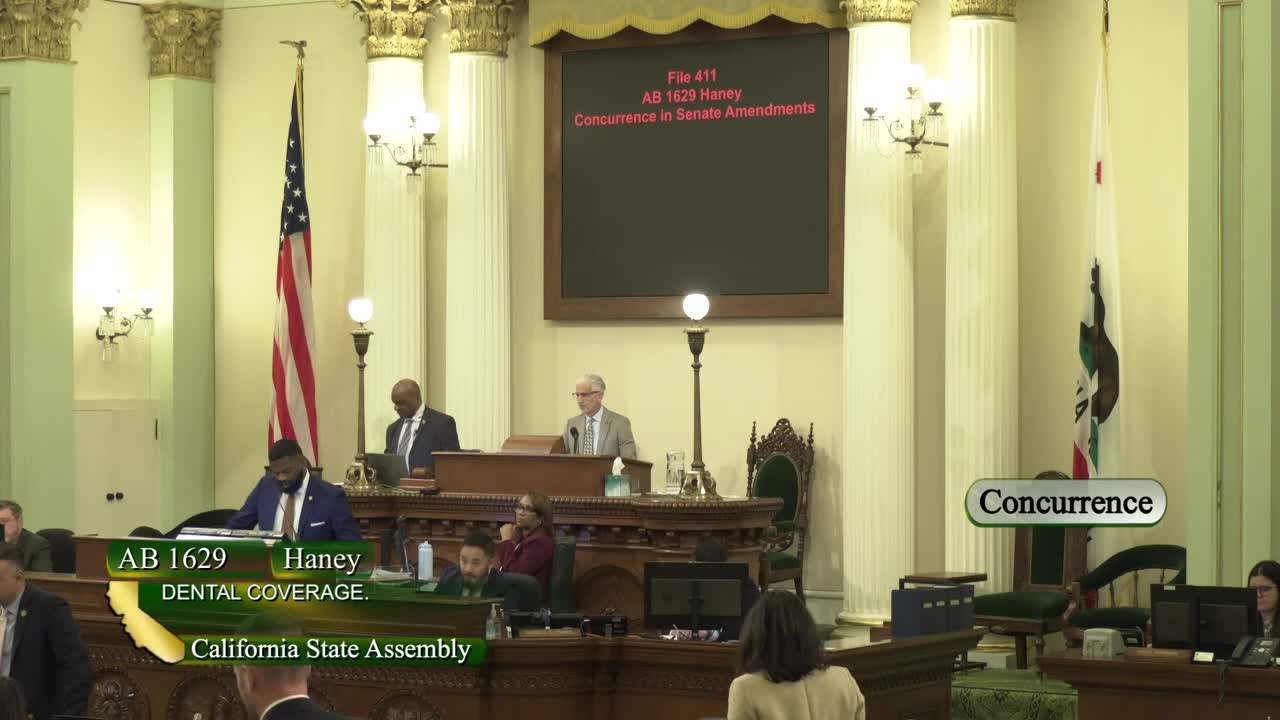
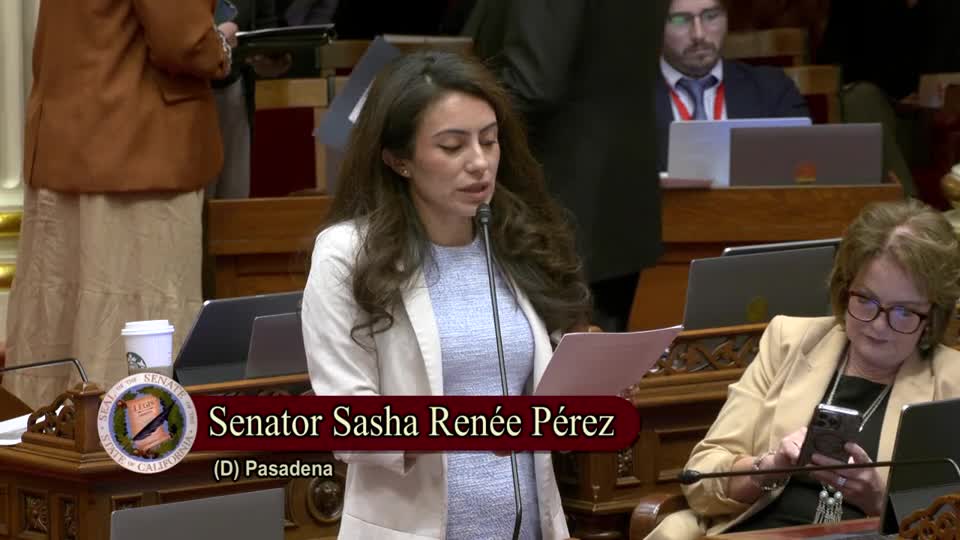
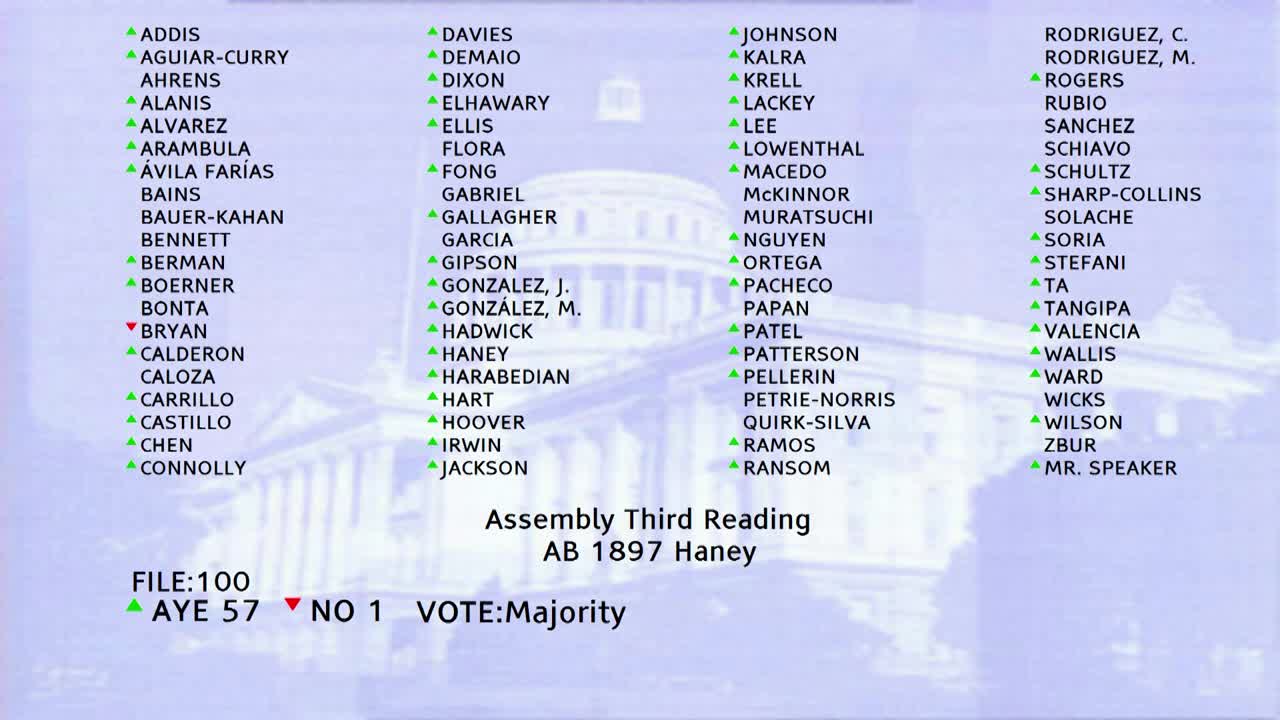
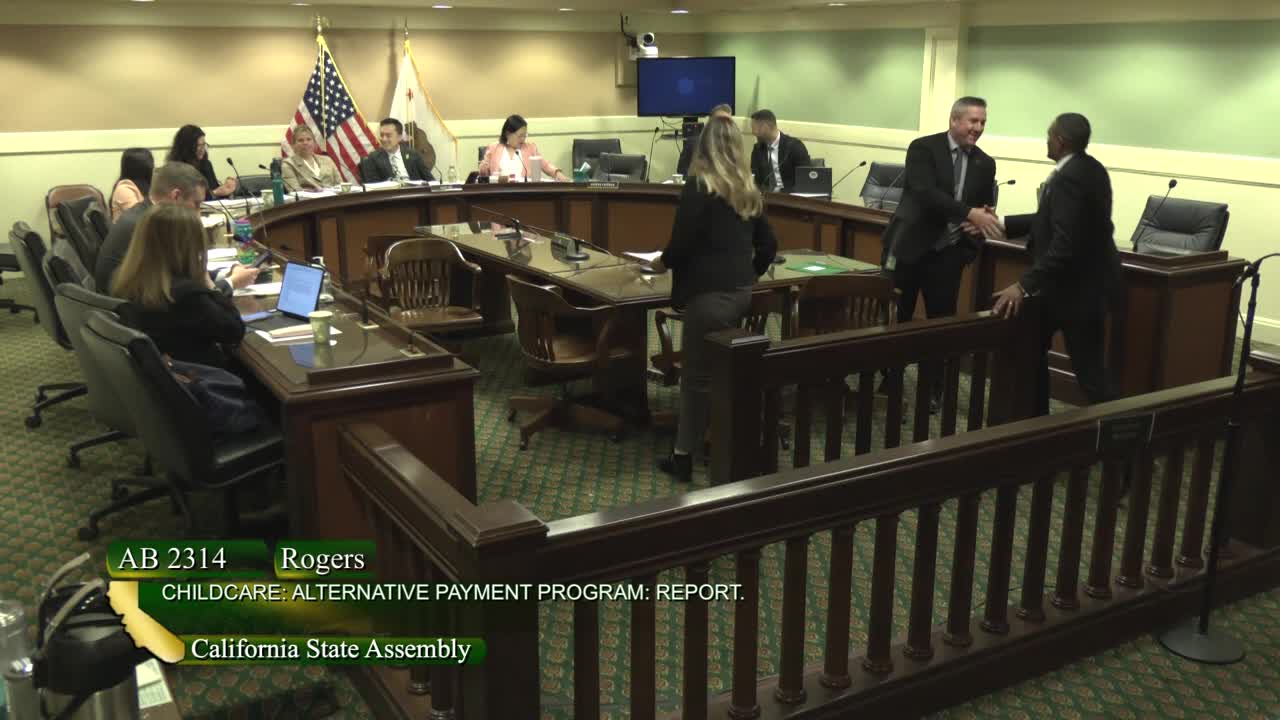
Bill Author