AB 2320: Multifamily Housing Program: Homekey: adaptive reuse.
- Session Year: 2025-2026
- House: Assembly
- Latest Version Date: 2026-09-30
Current Status:
Passed
(2026-09-30: Chaptered by Secretary of State - Chapter 935, Statutes of 2026.)
Introduced
In Committee
Awaiting First Chamber Vote
Passed First Chamber
In Committee
Awaiting Second Chamber Vote
Passed Second Chamber
Enacted
Existing law establishes the Multifamily Housing Program, administered by the Department of Housing and Community Development, to provide financial assistance in the form of deferred payment loans to pay for the eligible costs of development of specified types of housing projects. Existing law requires that specified funds appropriated to provide housing for individuals and families who are experiencing homelessness or who are at risk of homelessness and who are inherently impacted by or at increased risk for medical diseases or conditions due to the COVID-19 pandemic or other communicable diseases be disbursed in accordance with the Multifamily Housing Program for specified uses, including acquisition or rehabilitation of motels, hotels, hostels, or other sites, as provided. This disbursement program is referred to as Homekey.
Existing law, upon appropriation, requires Homekey awards to be expended within 8 months of the date of the award, as provided.
This bill would, for Homekey awards made on or after July 1, 2026, require the department to consider allowing applicants that utilize funds for adaptive reuse projects if the adaptive reuse involves substantial rehabilitation, reconstruction, or demolition of an existing structure, as defined and specified.
Existing law establishes the Multifamily Housing Program, administered by the Department of Housing and Community Development, to provide financial assistance in the form of deferred payment loans to pay for the eligible costs of development of specified types of housing projects. Existing law requires that specified funds appropriated to provide housing for individuals and families who are experiencing homelessness or who are at risk of homelessness and who are inherently impacted by or at increased risk for medical diseases or conditions due to the COVID-19 pandemic or other communicable diseases be disbursed in accordance with the Multifamily Housing Program for specified uses, including acquisition or rehabilitation of motels, hotels, hostels, or other sites, as provided. This disbursement program is referred to as Homekey.
Existing law, upon appropriation, requires Homekey awards to be expended within 8 months of the date of the award, as provided.
This bill would, for Homekey awards made on or after July 1, 2026, require the department to consider allowing applicants that utilize funds for adaptive reuse to be subject to the same timelines as new construction, as provided. projects if the adaptive reuse involves substantial rehabilitation, reconstruction, or demolition of an existing structure, as defined and specified.
Existing law establishes the Multifamily Housing Program, administered by the Department of Housing and Community Development, to provide financial assistance in the form of deferred payment loans to pay for the eligible costs of development of specified types of housing projects. Existing law requires that specified funds appropriated to provide housing for individuals and families who are experiencing homelessness or who are at risk of homelessness and who are inherently impacted by or at increased risk for medical diseases or conditions due to the COVID-19 pandemic or other communicable diseases be disbursed in accordance with the Multifamily Housing Program for specified uses, including acquisition or rehabilitation of motels, hotels, hostels, or other sites, as provided. This disbursement program is referred to as Homekey.
Existing law, upon appropriation, requires Homekey awards to be expended within 8 months of the date of the award, as provided.
This bill would, for Homekey awards made on or after July 1, 2026, require the department to consider allowing applicants that utilize funds for adaptive reuse to be subject to the same timelines as new construction, as provided.
Existing law establishes the Multifamily Housing Program, administered by the Department of Housing and Community Development, to provide financial assistance in the form of deferred payment loans to pay for the eligible costs of development of specified types of housing projects. Existing law requires that specified funds appropriated to provide housing for individuals and families who are experiencing homelessness or who are at risk of homelessness and who are inherently impacted by or at increased risk for medical diseases or conditions due to the COVID-19 pandemic or other communicable diseases be disbursed in accordance with the Multifamily Housing Program for specified uses, including acquisition or rehabilitation of motels, hotels, hostels, or other sites, as provided. This disbursement program is referred to as Homekey.
This bill would additionally allow Homekey funds awarded on or after January 1, 2027, to be used for adaptive reuse, as defined. The bill would also require that adaptive reuse projects be treated as a distinct eligible project category and not be subject to per unit cost caps.Existing law, upon appropriation, requires Homekey awards to be expended within 8 months of the date of the award, as provided.
This bill would require, would, for Homekey awards made on or after July 1, 2026, that construction completion, capital expenditure, and completion of occupancy occur within 24 months of the date of the award for specified projects, and within 14 or 15 months for all other projects, as provided. require the department to consider allowing applicants that utilize funds for adaptive reuse to be subject to the same timelines as new construction, as provided.
Existing law establishes the Multifamily Housing Program, administered by the Department of Housing and Community Development, to provide financial assistance in the form of deferred payment loans to pay for the eligible costs of development of specified types of housing projects. Existing law requires that specified funds appropriated to provide housing for individuals and families who are experiencing homelessness or who are at risk of homelessness and who are inherently impacted by or at increased risk for medical diseases or conditions due to the COVID-19 pandemic or other communicable diseases be disbursed in accordance with the Multifamily Housing Program for specified uses, including acquisition or rehabilitation of motels, hotels, hostels, or other sites, as provided. This disbursement program is referred to as Homekey.
This bill would additionally allow Homekey funds awarded on or after January 1, 2027, to be used for adaptive reuse, as defined. The bill would also require that adaptive reuse projects be treated as a distinct eligible project category and not be subject to per unit cost caps.
Existing law, upon appropriation, requires Homekey awards to be expended within 8 months of the date of the award, as provided.
This bill would require, for Homekey awards made on or after July 1, 2026, that construction completion, capital expenditure, and completion of occupancy occur within 24 months of the date of the award for specified projects, and within 14 or 15 months for all other projects, as provided.
(a)Notwithstanding any other law, including subdivision (b) of Section 50675.1, funds appropriated to provide housing for individuals and families who are experiencing homelessness or who are at risk of homelessness, as defined by this section, and who are inherently impacted by or at increased risk for medical diseases or conditions due to the COVID-19 pandemic or other communicable diseases, shall be disbursed in accordance with the Multifamily Housing Program, including as grants to cities, counties, cities and counties, and all other state, regional, and local public entities, including councils of government, metropolitan planning organizations, and regional transportation planning agencies designated in Section 29532.1 of the Government Code, as necessary, for the following uses:
(1)Acquisition or rehabilitation, or acquisition and rehabilitation, of motels, hotels, hostels, or other sites and assets, including apartments or homes, adult residential facilities, residential care facilities for the elderly, manufactured housing, commercial properties, and other buildings with existing uses that could be converted to permanent or interim housing.
(2)Master leasing of properties for noncongregant housing.
(3)Conversion of units from nonresidential to residential.
(4)New construction of dwelling units.
(5)The purchase of affordability covenants and restrictions for units.
(6)Relocation costs for individuals who are being displaced as a result of rehabilitation of existing units.
(7)Capitalized operating subsidies for units purchased, converted, or altered with funds provided by this section.
(b)Where possible, the funds described in subdivision (a) shall be allocated by the department in a manner that takes into consideration all of the following:
(1)Need geographically across the state.
(2)The demonstrated ability of the applicant to fund ongoing operating reserves.
(3)The creation of new permanent housing options.
(4)The potential for state, federal, or local funding for capitalized operating reserves to make additional housing units financially viable through this program.
(c)Not less than 8 percent of the funds described in subdivision (a) shall be available for projects serving homeless youth, or youth at risk of homelessness, as defined in Part 578.3 of Title 24 of the Code of Federal Regulations.
(d)Any conflict between the other requirements of the Multifamily Housing Program created by this chapter and this section shall be resolved in favor of this section, as may be set forth in the guidelines authorized by this section.
(e)The Department of Housing and Community Development may adopt guidelines for the expenditure of the funds appropriated to the department, and for the administration of this program. The guidelines shall not be subject to the requirements of Chapter 3.5 (commencing with Section 11340) of Part 1 of Division 3 of Title 2 of the Government Code.
(f)Up to 5 percent of the funds received from the Coronavirus State Fiscal Recovery Fund established by the federal American Rescue Plan Act of 2021 (ARPA) (Public Law 117-2) and appropriated for purposes of this section may be expended for the costs to administer the program, to the extent authorized by federal law.
(g)Up to 5 percent of any General Fund moneys appropriated for purposes of this section may be expended for the costs to administer this program.
(h)The departments annual report to the Legislature submitted under Section 50408 shall include, but not be limited to, all of the following:
(1)The amount of funds expended for the uses described in this section.
(2)The location of any properties for which the funds are used.
(3)The number of usable housing units produced, or planned to be produced, using the funds.
(4)The number of individuals housed, or likely to be housed, using the funds.
(5)The number of units, and the location of those units, for which operating subsidies have been, or are planned to be, capitalized using the funds.
(6)An explanation of how funding decisions were made for acquisition, conversion, or rehabilitation projects, or for capitalized operating subsidies, including what metrics were considered in making those decisions.
(7)Any lessons learned from the use of the funds.
(8)Proposed changes to the program to address lessons learned.
(i)Any project that uses funds received for any of the purposes specified in subdivision (a) shall be deemed consistent and in conformity with any applicable local plan, standard, or requirement, and any applicable coastal plan, local or otherwise, and allowed as a permitted use, within the zone in which the structure is located, and shall not be subject to a conditional use permit, discretionary permit, or any other discretionary reviews or approvals.
(j)A report to be submitted pursuant to subdivision (h) shall be submitted in compliance with Section 9795 of the Government Code.
(k)Upon an appropriation by the Legislature for the purposes described in this section, the department shall administer funding according to the timeline set forth below, subject to any modifications set forth by the guidelines:
(1)The department may accept funding applications and issue awards on a continuous, over-the-counter basis until the funding has been exhausted or as otherwise required by law.
(2)(A)Each award shall be expended on the uses authorized at subdivision (a), and in accordance with all relevant representations and descriptions in the application, within eight months of the date of the award. Applicants may ask the department for an extension of this timeframe on the grounds and according to the procedures set forth in the guidelines. The director shall have reasonable discretion to approve or deny such an extension upon conducting a full and good faith review of the applicants extension request.
(B)For each award made on or after July 1, 2026, the department shall consider allowing applicants that utilize funds for adaptive reuse projects to be subject to the same timelines as new construction projects if the adaptive reuse involves substantial rehabilitation, reconstruction, or demolition of an existing structure, as set forth by the department.
(l)For purposes of this section, the following definitions shall apply:
(1)Adaptive reuse means retrofitting and repurposing of an existing building to create new units.
(2)Individuals and families who are experiencing homelessness or who are at risk of homelessness means persons and families that meet the qualifying definitions under Part 578.3 of Title 24 of the Code of Federal Regulations.
(3)Substantial rehabilitation, reconstruction, or demolition includes a project in which at least 55 percent of the existing structure is demolished, replaced, or substantially reconstructed.
(m)To advance the objectives specified in Section 50675.1.1 or this section, the department may expand the population served beyond the population specified in subdivision (l) as specified by the guidelines authorized by this section.
(a)Notwithstanding any other law, including subdivision (b) of Section 50675.1, funds appropriated to provide housing for individuals and families who are experiencing homelessness or who are at risk of homelessness, as defined by this section, and who are inherently impacted by or at increased risk for medical diseases or conditions due to the COVID-19 pandemic or other communicable diseases, shall be disbursed in accordance with the Multifamily Housing Program, including as grants to cities, counties, cities and counties, and all other state, regional, and local public entities, including councils of government, metropolitan planning organizations, and regional transportation planning agencies designated in Section 29532.1 of the Government Code, as necessary, for the following uses:
(1)Acquisition or rehabilitation, or acquisition and rehabilitation, of motels, hotels, hostels, or other sites and assets, including apartments or homes, adult residential facilities, residential care facilities for the elderly, manufactured housing, commercial properties, and other buildings with existing uses that could be converted to permanent or interim housing.
(2)Master leasing of properties for noncongregant housing.
(3)Conversion of units from nonresidential to residential.
(4)New construction of dwelling units.
(5)The purchase of affordability covenants and restrictions for units.
(6)Relocation costs for individuals who are being displaced as a result of rehabilitation of existing units.
(7)Capitalized operating subsidies for units purchased, converted, or altered with funds provided by this section.
(b)Where possible, the funds described in subdivision (a) shall be allocated by the department in a manner that takes into consideration all of the following:
(1)Need geographically across the state.
(2)The demonstrated ability of the applicant to fund ongoing operating reserves.
(3)The creation of new permanent housing options.
(4)The potential for state, federal, or local funding for capitalized operating reserves to make additional housing units financially viable through this program.
(c)Not less than 8 percent of the funds described in subdivision (a) shall be available for projects serving homeless youth, or youth at risk of homelessness, as defined in Part 578.3 of Title 24 of the Code of Federal Regulations.
(d)Any conflict between the other requirements of the Multifamily Housing Program created by this chapter and this section shall be resolved in favor of this section, as may be set forth in the guidelines authorized by this section.
(e)The Department of Housing and Community Development may adopt guidelines for the expenditure of the funds appropriated to the department, and for the administration of this program. The guidelines shall not be subject to the requirements of Chapter 3.5 (commencing with Section 11340) of Part 1 of Division 3 of Title 2 of the Government Code.
(f)Up to 5 percent of the funds received from the Coronavirus State Fiscal Recovery Fund established by the federal American Rescue Plan Act of 2021 (ARPA) (Public Law 117-2) and appropriated for purposes of this section may be expended for the costs to administer the program, to the extent authorized by federal law.
(g)Up to 5 percent of any General Fund moneys appropriated for purposes of this section may be expended for the costs to administer this program.
(h)The departments annual report to the Legislature submitted under Section 50408 shall include, but not be limited to, all of the following:
(1)The amount of funds expended for the uses described in this section.
(2)The location of any properties for which the funds are used.
(3)The number of usable housing units produced, or planned to be produced, using the funds.
(4)The number of individuals housed, or likely to be housed, using the funds.
(5)The number of units, and the location of those units, for which operating subsidies have been, or are planned to be, capitalized using the funds.
(6)An explanation of how funding decisions were made for acquisition, conversion, or rehabilitation projects, or for capitalized operating subsidies, including what metrics were considered in making those decisions.
(7)Any lessons learned from the use of the funds.
(8)Proposed changes to the program to address lessons learned.
(i)Any project that uses funds received for any of the purposes specified in subdivision (a) shall be deemed consistent and in conformity with any applicable local plan, standard, or requirement, and any applicable coastal plan, local or otherwise, and allowed as a permitted use, within the zone in which the structure is located, and shall not be subject to a conditional use permit, discretionary permit, or any other discretionary reviews or approvals.
(j)A report to be submitted pursuant to subdivision (h) shall be submitted in compliance with Section 9795 of the Government Code.
(k)Upon an appropriation by the Legislature for the purposes described in this section, the department shall administer funding according to the timeline set forth below, subject to any modifications set forth by the guidelines:
(1)The department may accept funding applications and issue awards on a continuous, over-the-counter basis until the funding has been exhausted or as otherwise required by law.
(2)(A)Each award shall be expended on the uses authorized at subdivision (a), and in accordance with all relevant representations and descriptions in the application, within eight months of the date of the award. Applicants may ask the department for an extension of this timeframe on the grounds and according to the procedures set forth in the guidelines. The director shall have reasonable discretion to approve or deny such an extension upon conducting a full and good faith review of the applicants extension request.
(B)For each award made on or after July 1, 2026, the department shall consider allowing applicants that utilize funds for adaptive reuse projects to be subject to the same timelines as new construction, construction projects if the adaptive reuse involves substantial rehabilitation, reconstruction, or demolition of an existing structure, as set forth by the department.
(l)For purposes of this section, the following definitions shall apply:
(1)Adaptive reuse means retrofitting and repurposing of an existing building to create new units.
(2)Individuals and families who are experiencing homelessness or who are at risk of homelessness means persons and families that meet the qualifying definitions under Part 578.3 of Title 24 of the Code of Federal Regulations.
(3)Substantial rehabilitation, reconstruction, or demolition includes a project in which at least 55 percent of the existing structure is demolished, replaced, or substantially reconstructed.
(m)To advance the objectives specified in Section 50675.1.1 or this section, the department may expand the population served beyond the population specified in subdivision (l) as specified by the guidelines authorized by this section.
(a)Notwithstanding any other law, including subdivision (b) of Section 50675.1, funds appropriated to provide housing for individuals and families who are experiencing homelessness or who are at risk of homelessness, as defined by this section, and who are inherently impacted by or at increased risk for medical diseases or conditions due to the COVID-19 pandemic or other communicable diseases, shall be disbursed in accordance with the Multifamily Housing Program, including as grants to cities, counties, cities and counties, and all other state, regional, and local public entities, including councils of government, metropolitan planning organizations, and regional transportation planning agencies designated in Section 29532.1 of the Government Code, as necessary, for the following uses:
(1)Acquisition or rehabilitation, or acquisition and rehabilitation, of motels, hotels, hostels, or other sites and assets, including apartments or homes, adult residential facilities, residential care facilities for the elderly, manufactured housing, commercial properties, and other buildings with existing uses that could be converted to permanent or interim housing.
(2)Master leasing of properties for noncongregant housing.
(3)Conversion of units from nonresidential to residential.
(4)New construction of dwelling units.
(5)The purchase of affordability covenants and restrictions for units.
(6)Relocation costs for individuals who are being displaced as a result of rehabilitation of existing units.
(7)Capitalized operating subsidies for units purchased, converted, or altered with funds provided by this section.
(b)Where possible, the funds described in subdivision (a) shall be allocated by the department in a manner that takes into consideration all of the following:
(1)Need geographically across the state.
(2)The demonstrated ability of the applicant to fund ongoing operating reserves.
(3)The creation of new permanent housing options.
(4)The potential for state, federal, or local funding for capitalized operating reserves to make additional housing units financially viable through this program.
(c)Not less than 8 percent of the funds described in subdivision (a) shall be available for projects serving homeless youth, or youth at risk of homelessness, as defined in Part 578.3 of Title 24 of the Code of Federal Regulations.
(d)Any conflict between the other requirements of the Multifamily Housing Program created by this chapter and this section shall be resolved in favor of this section, as may be set forth in the guidelines authorized by this section.
(e)The Department of Housing and Community Development may adopt guidelines for the expenditure of the funds appropriated to the department, and for the administration of this program. The guidelines shall not be subject to the requirements of Chapter 3.5 (commencing with Section 11340) of Part 1 of Division 3 of Title 2 of the Government Code.
(f)Up to 5 percent of the funds received from the Coronavirus State Fiscal Recovery Fund established by the federal American Rescue Plan Act of 2021 (ARPA) (Public Law 117-2) and appropriated for purposes of this section may be expended for the costs to administer the program, to the extent authorized by federal law.
(g)Up to 5 percent of any General Fund moneys appropriated for purposes of this section may be expended for the costs to administer this program.
(h)The departments annual report to the Legislature submitted under Section 50408 shall include, but not be limited to, all of the following:
(1)The amount of funds expended for the uses described in this section.
(2)The location of any properties for which the funds are used.
(3)The number of usable housing units produced, or planned to be produced, using the funds.
(4)The number of individuals housed, or likely to be housed, using the funds.
(5)The number of units, and the location of those units, for which operating subsidies have been, or are planned to be, capitalized using the funds.
(6)An explanation of how funding decisions were made for acquisition, conversion, or rehabilitation projects, or for capitalized operating subsidies, including what metrics were considered in making those decisions.
(7)Any lessons learned from the use of the funds.
(8)Proposed changes to the program to address lessons learned.
(i)Any project that uses funds received for any of the purposes specified in subdivision (a) shall be deemed consistent and in conformity with any applicable local plan, standard, or requirement, and any applicable coastal plan, local or otherwise, and allowed as a permitted use, within the zone in which the structure is located, and shall not be subject to a conditional use permit, discretionary permit, or any other discretionary reviews or approvals.
(j)A report to be submitted pursuant to subdivision (h) shall be submitted in compliance with Section 9795 of the Government Code.
(k)Upon an appropriation by the Legislature for the purposes described in this section, the department shall administer funding according to the timeline set forth below, subject to any modifications set forth by the guidelines:
(1)The department may accept funding applications and issue awards on a continuous, over-the-counter basis until the funding has been exhausted or as otherwise required by law.
(2)(A)Each award shall be expended on the uses authorized at subdivision (a), and in accordance with all relevant representations and descriptions in the application, within eight months of the date of the award. Applicants may ask the department for an extension of this timeframe on the grounds and according to the procedures set forth in the guidelines. The director shall have reasonable discretion to approve or deny such an extension upon conducting a full and good faith review of the applicants extension request.
(B)For each award made on or after July 1, 2026, the department shall consider allowing applicants that utilize funds for adaptive reuse to be subject to the same timelines as new construction, as set forth by the department.
(l)For purposes of this section, the following definitions shall apply:
(1)Adaptive reuse means retrofitting and repurposing of an existing building to create new units.
(2)Individuals and families who are experiencing homelessness or who are at risk of homelessness means persons and families that meet the qualifying definitions under Part 578.3 of Title 24 of the Code of Federal Regulations.
(m)To advance the objectives specified in Section 50675.1.1 or this section, the department may expand the population served beyond the population specified in subdivision (l) as specified by the guidelines authorized by this section.
(a)Notwithstanding any other law, including subdivision (b) of Section 50675.1, funds appropriated to provide housing for individuals and families who are experiencing homelessness or who are at risk of homelessness, as defined by this section, and who are inherently impacted by or at increased risk for medical diseases or conditions due to the COVID-19 pandemic or other communicable diseases, shall be disbursed in accordance with the Multifamily Housing Program, including as grants to cities, counties, cities and counties, and all other state, regional, and local public entities, including councils of government, metropolitan planning organizations, and regional transportation planning agencies designated in Section 29532.1 of the Government Code, as necessary, for the following uses:
(1)Acquisition or rehabilitation, or acquisition and rehabilitation, of motels, hotels, hostels, or other sites and assets, including apartments or homes, adult residential facilities, residential care facilities for the elderly, manufactured housing, commercial properties, and other buildings with existing uses that could be converted to permanent or interim housing.
(2)Master leasing of properties for noncongregant housing.
(3)Conversion of units from nonresidential to residential.
(4)New construction of dwelling units.
(5)The purchase of affordability covenants and restrictions for units.
(6)Relocation costs for individuals who are being displaced as a result of rehabilitation of existing units.
(7)Capitalized operating subsidies for units purchased, converted, or altered with funds provided by this section.
(8)For funds awarded on or after January 1, 2027, adaptive reuse.(b)Where possible, the funds described in subdivision (a) shall be allocated by the department in a manner that takes into consideration all of the following:
(1)Need geographically across the state.
(2)The demonstrated ability of the applicant to fund ongoing operating reserves.
(3)The creation of new permanent housing options.
(4)The potential for state, federal, or local funding for capitalized operating reserves to make additional housing units financially viable through this program.
(c)Not less than 8 percent of the funds described in subdivision (a) shall be available for projects serving homeless youth, or youth at risk of homelessness, as defined in Part 578.3 of Title 24 of the Code of Federal Regulations.
(d)Any conflict between the other requirements of the Multifamily Housing Program created by this chapter and this section shall be resolved in favor of this section, as may be set forth in the guidelines authorized by this section.
(e)The Department of Housing and Community Development may adopt guidelines for the expenditure of the funds appropriated to the department, and for the administration of this program. The guidelines shall not be subject to the requirements of Chapter 3.5 (commencing with Section 11340) of Part 1 of Division 3 of Title 2 of the Government Code.
(f)Up to 5 percent of the funds received from the Coronavirus State Fiscal Recovery Fund established by the federal American Rescue Plan Act of 2021 (ARPA) (Public Law 117-2) and appropriated for purposes of this section may be expended for the costs to administer the program, to the extent authorized by federal law.
(g)Up to 5 percent of any General Fund moneys appropriated for purposes of this section may be expended for the costs to administer this program.
(h)The departments annual report to the Legislature submitted under Section 50408 shall include, but not be limited to, all of the following:
(1)The amount of funds expended for the uses described in this section.
(2)The location of any properties for which the funds are used.
(3)The number of usable housing units produced, or planned to be produced, using the funds.
(4)The number of individuals housed, or likely to be housed, using the funds.
(5)The number of units, and the location of those units, for which operating subsidies have been, or are planned to be, capitalized using the funds.
(6)An explanation of how funding decisions were made for acquisition, conversion, or rehabilitation projects, or for capitalized operating subsidies, including what metrics were considered in making those decisions.
(7)Any lessons learned from the use of the funds.
(8)Proposed changes to the program to address lessons learned.
(i)Any project that uses funds received for any of the purposes specified in subdivision (a) shall be deemed consistent and in conformity with any applicable local plan, standard, or requirement, and any applicable coastal plan, local or otherwise, and allowed as a permitted use, within the zone in which the structure is located, and shall not be subject to a conditional use permit, discretionary permit, or any other discretionary reviews or approvals.
(j)A report to be submitted pursuant to subdivision (h) shall be submitted in compliance with Section 9795 of the Government Code.
(k)Upon an appropriation by the Legislature for the purposes described in this section, the department shall administer funding according to the timeline set forth below, subject to any modifications allowing for additional time set forth by the guidelines:
(1)The department may accept funding applications and issue awards on a continuous, over-the-counter basis until the funding has been exhausted or as otherwise required by law.
(2)(A)Each award made before July 1, 2026, shall be expended on the uses authorized at subdivision (a), and in accordance with all relevant representations and descriptions in the application, within eight months of the date of the award. Applicants may ask the department for an extension of this timeframe on the grounds and according to the procedures set forth in the guidelines. The director shall have reasonable discretion to approve or deny such an extension upon conducting a full and good faith review of the applicants extension request.
(B)For each award made on or after July 1, 2026, the following shall apply: department shall consider allowing applicants that utilize funds for adaptive reuse to be subject to the same timelines as new construction, as set forth by the department.
(i)Construction completion for eligible uses authorized at subdivision (a), and in accordance with all relevant representations and descriptions in the application, shall occur within 24 months of the date of the award for all new construction, gap financing, and adaptive reuse projects, and within 14 months for all other projects. Applicants may ask the department for an extension of this timeframe on the grounds and according to the procedures set forth in the guidelines. The director shall have reasonable discretion to approve or deny such an extension upon conducting a full and good faith review of the applicants extension request.(ii)Capital expenditure and completion of occupancy for eligible uses authorized at subdivision (a), and in accordance with all relevant representations and descriptions in the application, shall occur within 24 months of the date of the award for all new construction, gap financing, and adaptive reuse projects, and within 15 months for all other projects. Applicants may ask the department for an extension of this timeframe on the grounds and according to the procedures set forth in the guidelines. The director shall have reasonable discretion to approve or deny such an extension upon conducting a full and good faith review of the applicants extension request.(l)For purposes of this section, the following definitions shall apply:
(1)Adaptive reuse means retrofitting and repurposing of existing buildings that create new residential rental units, and expressly excludes any project that involves rehabilitation of any construction affecting existing residential units. Adaptive reuse may include retrofitting and repurposing of existing hotels or motels if the hotel or motel is not currently a place of residence for the occupants, and/or sites that received a Project Homekey allocation. an existing building to create new units.
(2)Individuals and families who are experiencing homelessness or who are at risk of homelessness means persons and families that meet the qualifying definitions under Part 578.3 of Title 24 of the Code of Federal Regulations.
(m)For the purposes of this section, adaptive reuse projects shall be treated as a distinct eligible project category and shall not be subject to per unit cost caps.(n)(m)To advance the objectives specified in Section 50675.1.1 or this section, the department may expand the population served beyond the population specified in subdivision (l) as specified by the guidelines authorized by this section.
(a)Notwithstanding any other law, including subdivision (b) of Section 50675.1, funds appropriated to provide housing for individuals and families who are experiencing homelessness or who are at risk of homelessness, as defined by this section, and who are inherently impacted by or at increased risk for medical diseases or conditions due to the COVID-19 pandemic or other communicable diseases, shall be disbursed in accordance with the Multifamily Housing Program, including as grants to cities, counties, cities and counties, and all other state, regional, and local public entities, including councils of government, metropolitan planning organizations, and regional transportation planning agencies designated in Section 29532.1 of the Government Code, as necessary, for the following uses:
(1)Acquisition or rehabilitation, or acquisition and rehabilitation, of motels, hotels, hostels, or other sites and assets, including apartments or homes, adult residential facilities, residential care facilities for the elderly, manufactured housing, commercial properties, and other buildings with existing uses that could be converted to permanent or interim housing.
(2)Master leasing of properties for noncongregant housing.
(3)Conversion of units from nonresidential to residential.
(4)New construction of dwelling units.
(5)The purchase of affordability covenants and restrictions for units.
(6)Relocation costs for individuals who are being displaced as a result of rehabilitation of existing units.
(7)Capitalized operating subsidies for units purchased, converted, or altered with funds provided by this section.
(8)For funds awarded on or after January 1, 2027, adaptive reuse.
(b)Where possible, the funds described in subdivision (a) shall be allocated by the department in a manner that takes into consideration all of the following:
(1)Need geographically across the state.
(2)The demonstrated ability of the applicant to fund ongoing operating reserves.
(3)The creation of new permanent housing options.
(4)The potential for state, federal, or local funding for capitalized operating reserves to make additional housing units financially viable through this program.
(c)Not less than 8 percent of the funds described in subdivision (a) shall be available for projects serving homeless youth, or youth at risk of homelessness, as defined in Part 578.3 of Title 24 of the Code of Federal Regulations.
(d)Any conflict between the other requirements of the Multifamily Housing Program created by this chapter and this section shall be resolved in favor of this section, as may be set forth in the guidelines authorized by this section.
(e)The Department of Housing and Community Development may adopt guidelines for the expenditure of the funds appropriated to the department, and for the administration of this program. The guidelines shall not be subject to the requirements of Chapter 3.5 (commencing with Section 11340) of Part 1 of Division 3 of Title 2 of the Government Code.
(f)Up to 5 percent of the funds received from the Coronavirus State Fiscal Recovery Fund established by the federal American Rescue Plan Act of 2021 (ARPA) (Public Law 117-2) and appropriated for purposes of this section may be expended for the costs to administer the program, to the extent authorized by federal law.
(g)Up to 5 percent of any General Fund moneys appropriated for purposes of this section may be expended for the costs to administer this program.
(h)The departments annual report to the Legislature submitted under Section 50408 shall include, but not be limited to, all of the following:
(1)The amount of funds expended for the uses described in this section.
(2)The location of any properties for which the funds are used.
(3)The number of usable housing units produced, or planned to be produced, using the funds.
(4)The number of individuals housed, or likely to be housed, using the funds.
(5)The number of units, and the location of those units, for which operating subsidies have been, or are planned to be, capitalized using the funds.
(6)An explanation of how funding decisions were made for acquisition, conversion, or rehabilitation projects, or for capitalized operating subsidies, including what metrics were considered in making those decisions.
(7)Any lessons learned from the use of the funds.
(8)Proposed changes to the program to address lessons learned.
(i)Any project that uses funds received for any of the purposes specified in subdivision (a) shall be deemed consistent and in conformity with any applicable local plan, standard, or requirement, and any applicable coastal plan, local or otherwise, and allowed as a permitted use, within the zone in which the structure is located, and shall not be subject to a conditional use permit, discretionary permit, or any other discretionary reviews or approvals.
(j)A report to be submitted pursuant to subdivision (h) shall be submitted in compliance with Section 9795 of the Government Code.
(k)Upon an appropriation by the Legislature for the purposes described in this section, the department shall administer funding according to the timeline set forth below, subject to any modifications allowing for additional time set forth by the guidelines:
(1)The department may accept funding applications and issue awards on a continuous, over-the-counter basis until the funding has been exhausted or as otherwise required by law.
(2)(A)Each award made before July 1, 2026, shall be expended on the uses authorized at subdivision (a), and in accordance with all relevant representations and descriptions in the application, within eight months of the date of the award. Applicants may ask the department for an extension of this timeframe on the grounds and according to the procedures set forth in the guidelines. The director shall have reasonable discretion to approve or deny such an extension upon conducting a full and good faith review of the applicants extension request.
(B)For each award made on or after July 1, 2026, the following shall apply:
(i)Construction completion for eligible uses authorized at subdivision (a), and in accordance with all relevant representations and descriptions in the application, shall occur within 24 months of the date of the award for all new construction, gap financing, and adaptive reuse projects, and within 14 months for all other projects. Applicants may ask the department for an extension of this timeframe on the grounds and according to the procedures set forth in the guidelines. The director shall have reasonable discretion to approve or deny such an extension upon conducting a full and good faith review of the applicants extension request.
(ii)Capital expenditure and completion of occupancy for eligible uses authorized at subdivision (a), and in accordance with all relevant representations and descriptions in the application, shall occur within 24 months of the date of the award for all new construction, gap financing, and adaptive reuse projects, and within 15 months for all other projects. Applicants may ask the department for an extension of this timeframe on the grounds and according to the procedures set forth in the guidelines. The director shall have reasonable discretion to approve or deny such an extension upon conducting a full and good faith review of the applicants extension request.
(l)For purposes of this section, individuals and families who are homeless or who are at risk of homelessness means persons and families that meet the qualifying definitions under Part 578.3 of Title 24 of the Code of Federal Regulations. the following definitions shall apply:
(1)Adaptive reuse means retrofitting and repurposing of existing buildings that create new residential rental units, and expressly excludes any project that involves rehabilitation of any construction affecting existing residential units. Adaptive reuse may include retrofitting and repurposing of existing hotels or motels if the hotel or motel is not currently a place of residence for the occupants, and/or sites that received a Project Homekey allocation.
(2)Individuals and families who are experiencing homelessness or who are at risk of homelessness means persons and families that meet the qualifying definitions under Part 578.3 of Title 24 of the Code of Federal Regulations.
(m)For the purposes of this section, adaptive reuse projects shall be treated as a distinct eligible project category and shall not be subject to per unit cost caps.
(m)(n)To advance the objectives specified in Section 50675.1.1 or this section, the department may expand the population served beyond the population specified in subdivision (l) as specified by the guidelines authorized by this section.
|
Date
|
Status
|
|---|---|
| Sep 30, 2026 | Chaptered by Secretary of State - Chapter 935, Statutes of 2026. |
| Sep 30, 2026 | Approved by the Governor. |
| Sep 15, 2026 | Enrolled and presented to the Governor at 3 p.m. |
| Aug 31, 2026 | Senate amendments concurred in. To Engrossing and Enrolling. (Ayes 78. Noes 0.). |
| Aug 31, 2026 | Senate amendments concurred in. To Engrossing and Enrolling. (Ayes 78. Noes 0. Page 6971.). |
| Aug 31, 2026 | Senate amendments concurred in. To Engrossing and Enrolling. |
| Aug 19, 2026 | In Assembly. Concurrence in Senate amendments pending. |
| Aug 19, 2026 | Read third time. Passed. Ordered to the Assembly. (Ayes 38. Noes 0.). |
| Aug 19, 2026 | Read third time. Passed. Ordered to the Assembly. (Ayes 38. Noes 0. Page 5551.). |
| Aug 11, 2026 | Read second time. Ordered to third reading. |
| Aug 10, 2026 | Read third time and amended. Ordered to second reading. |
| Aug 10, 2026 | Ordered to third reading. |
| Aug 10, 2026 | Action rescinded whereby the bill was read third time, passed, and to Assembly. |
| Jun 30, 2026 | In Senate. Held at Desk. |
| Jun 29, 2026 | Withdrawn from Engrossing and Enrolling. |
| Jun 29, 2026 | Ordered to the Senate. |
| Jun 25, 2026 | In Assembly. Ordered to Engrossing and Enrolling. |
| Jun 25, 2026 | Read third time. Passed. Ordered to the Assembly. (Ayes 36. Noes 0.). |
| Jun 25, 2026 | Read third time. Passed. Ordered to the Assembly. (Ayes 36. Noes 0. Page 5015.). |
| Jun 23, 2026 | Read second time. Ordered to Consent Calendar. |
| Jun 22, 2026 | From committee: Be ordered to second reading file pursuant to Senate Rule 28.8 and ordered to Consent Calendar. |
| Jun 11, 2026 | From committee: Do pass and re-refer to Com. on APPR. with recommendation: To Consent Calendar. (Ayes 10. Noes 0.) (June 10). Re-referred to Com. on APPR. |
| May 27, 2026 | Referred to Com. on HOUSING. |
| May 14, 2026 | In Senate. Read first time. To Com. on RLS. for assignment. |
| May 14, 2026 | Read third time. Passed. Ordered to the Senate. (Ayes 77. Noes 0.) |
| May 14, 2026 | Read third time. Passed. Ordered to the Senate. (Ayes 77. Noes 0. Page 5055.) |
| May 7, 2026 | Read second time. Ordered to Consent Calendar. |
| May 6, 2026 | From committee: Do pass. To Consent Calendar. (Ayes 14. Noes 0.) (May 6). |
| Apr 28, 2026 | Re-referred to Com. on APPR. |
| Apr 27, 2026 | Read second time and amended. |
| Apr 23, 2026 | From committee: Amend, and do pass as amended and re-refer to Com. on APPR. with recommendation: To Consent Calendar. (Ayes 12. Noes 0.) (April 22). |
| Mar 9, 2026 | Referred to Com. on H. & C.D. |
| Feb 20, 2026 | From printer. May be heard in committee March 22. |
| Feb 19, 2026 | Read first time. To print. |
|
Date
|
Description
|
Location
|
Votes
|
|
|---|---|---|---|---|
| Aug 31, 2026 | AB 2320 Ta Concurrence in Senate Amendments | Assembly Floor |
Passed |
|
| Aug 19, 2026 | Assembly 3rd Reading AB2320 Ta By Umberg | Senate Floor |
Passed |
|
| Jun 25, 2026 | Consent Calendar 2nd AB2320 Ta | Senate Floor |
Passed |
|
| Jun 10, 2026 | Do pass, but first be re-referred to the Committee on [Appropriations] with the recommendation: To Consent Calendar | Senate Standing Committee on Housing |
Passed |
|
| May 14, 2026 | AB 2320 Ta Consent Calendar Second Day Regular Session | Assembly Floor |
Passed |
|
| May 6, 2026 | Do pass. To Consent Calendar. | Assembly Standing Committee on Appropriations |
Passed |
|
| Apr 22, 2026 | Do pass as amended, and be re-referred to the Committee on [Appropriations] with recommendation: To Consent Calendar | Assembly Standing Committee on Housing and Community Development |
Passed |
This list shows positions taken on this bill by organizations on the date displayed, which is linked to the original source.
Positions by individuals are not included.
|
Organization
|
Position
|
Date
|
|---|---|---|
| California Apartment Association | ** Support | |
| California State Association Of Counties | ** Support | |
| Orange County Board of Supervisors | ** Support | |
| Urban Counties of California | ** Support |
CONCURRENCE IN SENATE AMENDMENTS
CSA1 Bill Id:AB 2320
Author:(Ta)
As Amended Ver:August 10, 2026
Majority vote
SUMMARY
Requires the Department of Housing and Community Development (HCD), when awarding Homekey+ grant funding, to consider allowing adaptive reuse projects to use the timelines for construction rather than for rehabilitation, as specified.
Senate Amendments
Adds a definition of "substantial rehabilitation, reconstruction, or demolition" to include a project in which at least 55% of the existing structure is demolished, replaced, or substantially reconstructed.
COMMENTS
Homekey+: During the COVID-19 pandemic, the state used federal resources to create Project Roomkey to quickly house people experiencing homelessness temporarily in hotels and motels to avoid mass contamination of the virus and deaths. Project Roomkey later evolved into Homekey to fund the permanent acquisition of hotels and later new construction, master leasing, and other uses of the funds to create short-term and permanent housing to move people out of homelessness. In 2024, the voters approved Proposition 1 for the creation of housing for people experiencing homelessness with substance abuse and mental health challenges. Those funds have been available through Homekey+. According to information on HCD's website, $767,900,183 of the $2.145 billion available has been awarded. HCD issued a Notice of Funding Availability for the 2.1 billion for Homekey+ in March 2026. This includes funding for veterans housing, which was separately authorized by Prop 1.
Homekey+ can be used for a variety of uses and sets timelines for when construction must begin, and when it must be completed. For new construction and gap financing, groundbreaking must occur within six months of award, construction must be complete within 24 months, capital expenditure must be complete within 27 months and the units must be occupied by 27 months. All eligible uses, including acquisition and rehabilitation, must complete construction within 12 months, complete capital expenditure within 15 months, and be occupied within 15 months.
The sponsors wish to use Homekey+ for adaptive reuse projects, which would involve a full teardown of an existing structure, not just rehabilitation. The sponsors of this bill attempted to influence the recent update to the program NOFA to increase the amount of time for adaptive reuse but were unsuccessful. They contend that adaptive reuse projects typically involve extensive demolition, structural reconfiguration, and major electrical and mechanical upgrades; which align more closely with the new construction timeline, rather than the rehabilitation timeline. For example, nearly all unit conversions from nonresidential to multifamily residential require significant upgrades (e.g., electrical and transformer upsizing, merging rooms, adding kitchenettes, and constructing community buildings) that go far beyond typical rehabilitation and better align with new construction.
This bill is an effort to add a definition of adaptive reuse that is distinct from acquisition rehabilitation and give these types of projects more time – 24 months, similar to new construction – rather than 15 months for acquisition-rehab. This bill establishes statutory timelines for when different types of Homekey+ projects must be completed, rather than leaving the establishment of those timelines to the program guidelines, produced by HCD, which are more easily adjusted to meet the program's evolving demands. Although, it may make sense to give adaptive reuse the same amount of time as new construction to complete a project, that should be addressed in guidelines not in statute.
According to the Author
According to the author, "In 2024, voters approved $2.145 billion in funding to expand housing and treatment options for vulnerable populations and tasked the state with ensuring these funds are used effectively. AB 2320 helps the state meet that goal. Since the passage of Proposition 1, Homekey+ grant funding has been underutilized. The state has had funding available to build permanent supportive housing for veterans and individuals with behavioral health challenges for more than a year, yet barriers to development have limited the program's use. AB 2320 does not reinvent the wheel. The 26-month completion timeline already exists for new construction projects. Applying this same timeline to adaptive reuse projects that require extensive demolition and reconstruction aligns with industry standards and better reflects the realities of these developments. AB 2320 is a commonsense clarification that will help ensure Homekey+ funding can be deployed more effectively to expand permanent supportive housing for those who need it most"
Arguments in Support
According to the Orange County Board of Supervisors, "Current Homekey+ guidelines distinguish between acquisition and rehabilitation and new construction, but do not adequately address adaptive reuse projects that require full teardowns and are more complex in scope. The current 14-month completion timeline for adaptive reuse projects makes it difficult to complete projects on time, disqualifies otherwise viable projects from participating in Homekey+ and creates obstacles to providing permanent supportive housing for people experiencing homelessness. AB 2320 aligns the timeline for adaptive reuse projects with the timeline for new construction, reflecting industry standards. Under the new timeline, adaptive reuse projects must be completed within 26 months, rather than 14 months. This measure also establishes a clear definition of adaptive reuse to address ambiguities and distinguish the differences in project types."
Arguments in Opposition
None on file.
FISCAL COMMENTS
None.
VOTES:
ASM HOUSING AND COMMUNITY DEVELOPMENT: 12-0-0
YES: Haney, Patterson, Ávila Farías, Caloza, Garcia, Kalra, Lee, Quirk-Silva, Ta, Tangipa, Wicks, Wilson
ASM APPROPRIATIONS: 14-0-1
YES: Wicks, Hoover, Aguiar-Curry, Caloza, Dixon, Fong, Mark González, Krell, Pacheco, Pellerin, Sharp-Collins, Solache, Ta, Tangipa
ABS, ABST OR NV: Arambula
ASSEMBLY FLOOR: 77-0-3
YES: Addis, Aguiar-Curry, Ahrens, Alanis, Alvarez, Ávila Farías, Bains, Bauer-Kahan, Bennett, Berman, Boerner, Bonta, Bryan, Calderon, Caloza, Carrillo, Castillo, Chen, Connolly, Davies, DeMaio, Dixon, Elhawary, Ellis, Fong, Gabriel, Gallagher, Garcia, Gipson, Jeff Gonzalez, Mark González, Hadwick, Haney, Harabedian, Hart, Hoover, Irwin, Jackson, Johnson, Kalra, Krell, Lackey, Lee, Lowenthal, Macedo, McKinnor, Muratsuchi, Nguyen, Ortega, Pacheco, Papan, Patel, Patterson, Pellerin, Petrie-Norris, Quirk-Silva, Ramos, Ransom, Michelle Rodriguez, Rogers, Blanca Rubio, Sanchez, Schiavo, Schultz, Sharp-Collins, Solache, Soria, Stefani, Ta, Tangipa, Valencia, Wallis, Ward, Wicks, Wilson, Zbur, Rivas
ABS, ABST OR NV: Arambula, Flora, Celeste Rodriguez
SENATE FLOOR: 36-0-4
YES: Allen, Archuleta, Arreguín, Ashby, Becker, Blakespear, Cabaldon, Caballero, Cervantes, Choi, Cortese, Durazo, Gonzalez, Grayson, Grove, Hurtado, Laird, Limón, McGuire, McNerney, Menjivar, Niello, Ochoa Bogh, Padilla, Pérez, Richardson, Rubio, Seyarto, Smallwood-Cuevas, Stern, Strickland, Umberg, Valladares, Wahab, Weber Pierson, Wiener
ABS, ABST OR NV: Alvarado-Gil, Dahle, Jones, Reyes
UPDATED
VERSION: August 10, 2026
CONSULTANT: Lisa Engel / H. & C.D. / (916) 319-2085 FN: 0003798
SENATE RULES COMMITTEE Office of Senate Floor Analyses (916) 651-4171 | AB 2320 |
THIRD READING
Bill No: AB 2320
Author: Ta (R)
Amended: 8/10/26 in Senate
Vote: 21
SENATE HOUSING COMMITTEE: 10-0, 6/10/26
AYES: Arreguín, Seyarto, Cabaldon, Caballero, Cortese, Durazo, Grayson, Ochoa Bogh, Padilla, Pérez
SENATE APPROPRIATIONS COMMITTEE: Senate Rule 28.8
ASSEMBLY FLOOR: 77-0, 5/14/26 (Consent) - See last page for vote
SUBJECT: Multifamily Housing Program: Homekey: adaptive reuse
SOURCE: Author
DIGEST:
This bill requires the Department of Housing and Community Development (HCD), when awarding Homekey+ grant funding, to consider allowing adaptive reuse projects to use the timelines for new construction rather than for rehabilitation, as specified.
Senate Floor Amendments of 8/10/26 clarifies that adaptive reuse projects impacted by this bill include substantial rehabilitation, defined as a project “in which 55% of the existing structure is demolished, replaced, or substantially reconstructed.”
ANALYSIS:
Existing law:
- Establishes the Homekey and Homekey+ program to serve individuals and families experiencing homelessness or who are at risk of homelessness. Homekey+ disbursed through the Multifamily Housing Program (MHP), as grants to eligible applicants for:
- Acquisition or rehabilitation, or acquisition and rehabilitation, of motels, hotels, hostels, or other sites and assets, including apartments or homes, adult residential facilities, residential care facilities for the elderly, manufactured housing, commercial properties, and other buildings with existing uses that could be converted to permanent or interim housing;
- Master leasing of properties for noncongregant housing;
- Conversion of units from nonresidential to residential;
- New construction of dwelling units;
- The purchase of affordability covenants and restrictions for units;
- Relocation costs for individuals who are being displaced as a result of rehabilitation of existing units; and
- Capitalized operating subsidies for units purchased, converted, or altered with funds provided by this section.
- Requires, upon appropriation, by the Legislature, HCD to administer funding according to the timeline set forth below, subject to any modifications set forth by the guidelines:
- HCD may accept funding applications and issue awards on a continuous, over-the-counter basis until the funding has been exhausted or as otherwise required by law;
- Each award shall be expended on the uses described in 1) above and in accordance with all relevant representations and descriptions in the application, within eight months of the date of the award; and,
- Applicants may ask HCD for an extension of this timeframe on the grounds and according to the procedures set forth in the guidelines. The Director of HCD director shall have reasonable discretion to approve or deny such an extension upon conducting a full and good faith review of the applicant’s extension request.
This bill:
- Requires, for each Homekey+ award made on or after July 1, 2026, HCD consider allowing applicants that utilize funds for adaptive reuse to be subject to the same timelines as new construction, as set forth by HCD.
- Defines “adaptive reuse” to mean retrofitting and repurposing of existing buildings to create new units.
Comments
Author’s statement. “In 2024, voters approved $2.145 billion in funding to expand housing and treatment options for vulnerable populations and tasked the state with ensuring these funds are used effectively. AB 2320 helps the state meet that goal. Since the passage of Proposition 1, Homekey+ grant funding has been underutilized. The state has had funding available to build permanent supportive housing for veterans and individuals with behavioral health challenges for more than a year, yet barriers to development have limited the program’s use. AB 2320 does not reinvent the wheel. The 26-month completion timeline already exists for new construction projects. Applying this same timeline to adaptive reuse projects that require extensive demolition, and reconstruction aligns with industry standards and better reflects the realities of these developments. AB 2320 is a commonsense clarification that will help ensure Homekey+ funding can be deployed more effectively to expand permanent supportive housing for those who need it most.”
Homekey+. During the COVID-19 pandemic, the state used federal resources to create Project Roomkey to quickly house people experiencing homelessness temporarily in hotels and motels to avoid mass contamination of the virus and deaths. Project Roomkey later evolved into Homekey to fund the permanent acquisition of hotels and later new construction, master leasing, and other uses of the funds to create short-term and permanent housing to move people out of homelessness. In 2024, the voters approved Proposition 1 for the creation of housing for people experiencing homelessness with substance abuse and mental health challenges. Those funds have been available through Homekey+. According to information on HCD’s website, $767,900,183 of the $2.145 billion available has been awarded. HCD issued a Notice of Funding Availability for the 2.1 billion for Homekey+ in March 2026. This includes funding for veterans housing, which was separately authorized by Prop 1.
Homekey+ can be used for a variety of uses and establishes timelines for when construction must begin and completed. For new construction and gap financing, groundbreaking must occur within six months of award, construction must be complete within 24 months, capital expenditure must be complete within 27 months and the units must be occupied by 27 months. All eligible uses, including acquisition and rehabilitation, must complete construction within 12 months, complete capital expenditure within 15 months, and be occupied within 15 months.
The sponsors wish to use Homekey+ for adaptive reuse projects, which would involve a full teardown of an existing structure, not just rehabilitation. They contend that adaptive reuse projects typically involve extensive demolition, structural reconfiguration, and major electrical and mechanical upgrades; which align more closely with the new construction timeline, rather than the rehabilitation timeline. For example, nearly all unit conversions from nonresidential to multifamily residential require significant upgrades (e.g., electrical and transformer upsizing, merging rooms, adding kitchenettes, and constructing community buildings) that go far beyond typical rehabilitation and better align with new construction.
This bill directs HCD, when awarding Homekey+ funds, to consider using the same timelines as new construction (26 months) instead of timelines for all other projects (14 months).
FISCAL EFFECT: Appropriation: No Fiscal Com.: Yes Local: No
SUPPORT: (Verified 6/22/26)
California Apartment Association
California State Association of Counties
Urban Counties of California
OPPOSITION: (Verified 6/22/26)
None received
ASSEMBLY FLOOR: 77-0, 5/14/26
AYES: Addis, Aguiar-Curry, Ahrens, Alanis, Alvarez, Ávila Farías, Bains, Bauer-Kahan, Bennett, Berman, Boerner, Bonta, Bryan, Calderon, Caloza, Carrillo, Castillo, Chen, Connolly, Davies, DeMaio, Dixon, Elhawary, Ellis, Fong, Gabriel, Gallagher, Garcia, Gipson, Jeff Gonzalez, Mark González, Hadwick, Haney, Harabedian, Hart, Hoover, Irwin, Jackson, Johnson, Kalra, Krell, Lackey, Lee, Lowenthal, Macedo, McKinnor, Muratsuchi, Nguyen, Ortega, Pacheco, Papan, Patel, Patterson, Pellerin, Petrie-Norris, Quirk-Silva, Ramos, Ransom, Michelle Rodriguez, Rogers, Blanca Rubio, Sanchez, Schiavo, Schultz, Sharp-Collins, Solache, Soria, Stefani, Ta, Tangipa, Valencia, Wallis, Ward, Wicks, Wilson, Zbur, Rivas
NO VOTE RECORDED: Arambula, Flora, Celeste Rodriguez
Prepared by: Alison Hughes / HOUSING / (916) 651-4124
8/12/26 16:19:01
**** END ****
8/12/26 16:19:01
SENATE RULES COMMITTEE Office of Senate Floor Analyses (916) 651-4171 | AB 2320 |
CONSENT
Bill No: AB 2320
Author: Ta (R)
Amended: 4/27/26 in Assembly
Vote: 21
SENATE HOUSING COMMITTEE: 10-0, 6/10/26
AYES: Arreguín, Seyarto, Cabaldon, Caballero, Cortese, Durazo, Grayson, Ochoa Bogh, Padilla, Pérez
SENATE APPROPRIATIONS COMMITTEE: Senate Rule 28.8
ASSEMBLY FLOOR: 77-0, 5/14/26 (Consent) - See last page for vote
SUBJECT: Multifamily Housing Program: Homekey: adaptive reuse
SOURCE: Author
DIGEST:
This bill requires the Department of Housing and Community Development (HCD), when awarding Homekey+ grant funding, to consider allowing adaptive reuse projects to use the timelines for new construction rather than for rehabilitation, as specified.
ANALYSIS:
Existing law:
- Establishes the Homekey and Homekey+ program to serve individuals and families experiencing homelessness or who are at risk of homelessness. Homekey+ disbursed through the Multifamily Housing Program (MHP), as grants to eligible applicants for:
- Acquisition or rehabilitation, or acquisition and rehabilitation, of motels, hotels, hostels, or other sites and assets, including apartments or homes, adult residential facilities, residential care facilities for the elderly, manufactured housing, commercial properties, and other buildings with existing uses that could be converted to permanent or interim housing;
- Master leasing of properties for noncongregant housing;
- Conversion of units from nonresidential to residential;
- New construction of dwelling units;
- The purchase of affordability covenants and restrictions for units;
- Relocation costs for individuals who are being displaced as a result of rehabilitation of existing units; and
- Capitalized operating subsidies for units purchased, converted, or altered with funds provided by this section.
- Requires, upon appropriation, by the Legislature, HCD to administer funding according to the timeline set forth below, subject to any modifications set forth by the guidelines:
- HCD may accept funding applications and issue awards on a continuous, over-the-counter basis until the funding has been exhausted or as otherwise required by law;
- Each award shall be expended on the uses described in 1) above and in accordance with all relevant representations and descriptions in the application, within eight months of the date of the award; and,
- Applicants may ask HCD for an extension of this timeframe on the grounds and according to the procedures set forth in the guidelines. The Director of HCD director shall have reasonable discretion to approve or deny such an extension upon conducting a full and good faith review of the applicant’s extension request.
This bill:
- Requires, for each Homekey+ award made on or after July 1, 2026, HCD consider allowing applicants that utilize funds for adaptive reuse to be subject to the same timelines as new construction, as set forth by HCD.
- Defines “adaptive reuse” to mean retrofitting and repurposing of existing buildings to create new units.
Comments
Author’s statement. “In 2024, voters approved $2.145 billion in funding to expand housing and treatment options for vulnerable populations and tasked the state with ensuring these funds are used effectively. AB 2320 helps the state meet that goal. Since the passage of Proposition 1, Homekey+ grant funding has been underutilized. The state has had funding available to build permanent supportive housing for veterans and individuals with behavioral health challenges for more than a year, yet barriers to development have limited the program’s use. AB 2320 does not reinvent the wheel. The 26-month completion timeline already exists for new construction projects. Applying this same timeline to adaptive reuse projects that require extensive demolition, and reconstruction aligns with industry standards and better reflects the realities of these developments. AB 2320 is a commonsense clarification that will help ensure Homekey+ funding can be deployed more effectively to expand permanent supportive housing for those who need it most.”
Homekey+. During the COVID-19 pandemic, the state used federal resources to create Project Roomkey to quickly house people experiencing homelessness temporarily in hotels and motels to avoid mass contamination of the virus and deaths. Project Roomkey later evolved into Homekey to fund the permanent acquisition of hotels and later new construction, master leasing, and other uses of the funds to create short-term and permanent housing to move people out of homelessness. In 2024, the voters approved Proposition 1 for the creation of housing for people experiencing homelessness with substance abuse and mental health challenges. Those funds have been available through Homekey+. According to information on HCD’s website, $767,900,183 of the $2.145 billion available has been awarded. HCD issued a Notice of Funding Availability for the 2.1 billion for Homekey+ in March 2026. This includes funding for veterans housing, which was separately authorized by Prop 1.
Homekey+ can be used for a variety of uses and establishes timelines for when construction must begin and completed. For new construction and gap financing, groundbreaking must occur within six months of award, construction must be complete within 24 months, capital expenditure must be complete within 27 months and the units must be occupied by 27 months. All eligible uses, including acquisition and rehabilitation, must complete construction within 12 months, complete capital expenditure within 15 months, and be occupied within 15 months.
The sponsors wish to use Homekey+ for adaptive reuse projects, which would involve a full teardown of an existing structure, not just rehabilitation. They contend that adaptive reuse projects typically involve extensive demolition, structural reconfiguration, and major electrical and mechanical upgrades; which align more closely with the new construction timeline, rather than the rehabilitation timeline. For example, nearly all unit conversions from nonresidential to multifamily residential require significant upgrades (e.g., electrical and transformer upsizing, merging rooms, adding kitchenettes, and constructing community buildings) that go far beyond typical rehabilitation and better align with new construction.
This bill directs HCD, when awarding Homekey+ funds, to consider using the same timelines as new construction (26 months) instead of timelines for all other projects (14 months).
FISCAL EFFECT: Appropriation: No Fiscal Com.: Yes Local: No
SUPPORT: (Verified 6/22/26)
California Apartment Association
California State Association of Counties
Urban Counties of California
OPPOSITION: (Verified 6/22/26)
None received
ASSEMBLY FLOOR: 77-0, 5/14/26
AYES: Addis, Aguiar-Curry, Ahrens, Alanis, Alvarez, Ávila Farías, Bains, Bauer-Kahan, Bennett, Berman, Boerner, Bonta, Bryan, Calderon, Caloza, Carrillo, Castillo, Chen, Connolly, Davies, DeMaio, Dixon, Elhawary, Ellis, Fong, Gabriel, Gallagher, Garcia, Gipson, Jeff Gonzalez, Mark González, Hadwick, Haney, Harabedian, Hart, Hoover, Irwin, Jackson, Johnson, Kalra, Krell, Lackey, Lee, Lowenthal, Macedo, McKinnor, Muratsuchi, Nguyen, Ortega, Pacheco, Papan, Patel, Patterson, Pellerin, Petrie-Norris, Quirk-Silva, Ramos, Ransom, Michelle Rodriguez, Rogers, Blanca Rubio, Sanchez, Schiavo, Schultz, Sharp-Collins, Solache, Soria, Stefani, Ta, Tangipa, Valencia, Wallis, Ward, Wicks, Wilson, Zbur, Rivas
NO VOTE RECORDED: Arambula, Flora, Celeste Rodriguez
Prepared by: Alison Hughes / HOUSING / (916) 651-4124
6/24/26 16:35:05
**** END ****
SENATE COMMITTEE ON HOUSING
Senator Jesse Arreguín, Chair
2025 - 2026 Regular
Bill No: AB 2320 Hearing Date: 6/10/2026
Author: | Ta | ||
Version: | 4/27/2026 Amended | ||
Urgency: | No | Fiscal: | Yes |
Consultant: | Alison Hughes | ||
SUBJECT: Multifamily Housing Program: Homekey: adaptive reuse
DIGEST: This bill requires the Department of Housing and Community Development (HCD), when awarding Homekey+ grant funding, to consider allowing adaptive reuse projects to use the timelines for new construction rather than for rehabilitation, as specified.
ANALYSIS:
Existing law:
- Establishes the Homekey and Homekey+ program to serve individuals and families experiencing homelessness or who are at risk of homelessness. Homekey+ disbursed through the Multifamily Housing Program (MHP), as grants to eligible applicants for:
- Acquisition or rehabilitation, or acquisition and rehabilitation, of motels, hotels, hostels, or other sites and assets, including apartments or homes, adult residential facilities, residential care facilities for the elderly, manufactured housing, commercial properties, and other buildings with existing uses that could be converted to permanent or interim housing;
- Master leasing of properties for noncongregant housing;
- Conversion of units from nonresidential to residential;
- New construction of dwelling units;
- The purchase of affordability covenants and restrictions for units;
- Relocation costs for individuals who are being displaced as a result of rehabilitation of existing units; and
- Capitalized operating subsidies for units purchased, converted, or altered with funds provided by this section.
- Requires, upon appropriation, by the Legislature, HCD to administer funding according to the timeline set forth below, subject to any modifications set forth by the guidelines:
- HCD may accept funding applications and issue awards on a continuous, over-the-counter basis until the funding has been exhausted or as otherwise required by law;
- Each award shall be expended on the uses described in 1) above and in accordance with all relevant representations and descriptions in the application, within eight months of the date of the award; and,
- Applicants may ask HCD for an extension of this timeframe on the grounds and according to the procedures set forth in the guidelines. The Director of HCD director shall have reasonable discretion to approve or deny such an extension upon conducting a full and good faith review of the applicant’s extension request.
This bill:
- Requires, for each Homekey+ award made on or after July 1, 2026, HCD consider allowing applicants that utilize funds for adaptive reuse to be subject to the same timelines as new construction, as set forth by HCD.
- Defines “adaptive reuse” to mean retrofitting and repurposing of existing buildings to create new units.
Comments
- Author’s statement. “In 2024, voters approved $2.145 billion in funding to expand housing and treatment options for vulnerable populations and tasked the state with ensuring these funds are used effectively. AB 2320 helps the state meet that goal. Since the passage of Proposition 1, Homekey+ grant funding has been underutilized. The state has had funding available to build permanent supportive housing for veterans and individuals with behavioral health challenges for more than a year, yet barriers to development have limited the program’s use. AB 2320 does not reinvent the wheel. The 26-month completion timeline already exists for new construction projects. Applying this same timeline to adaptive reuse projects that require extensive demolition, and reconstruction aligns with industry standards and better reflects the realities of these developments. AB 2320 is a commonsense clarification that will help ensure Homekey+ funding can be deployed more effectively to expand permanent supportive housing for those who need it most.”
- Homekey+. m During the COVID-19 pandemic, the state used federal resources to create Project Roomkey to quickly house people experiencing homelessness temporarily in hotels and motels to avoid mass contamination of the virus and deaths. Project Roomkey later evolved into Homekey to fund the permanent acquisition of hotels and later new construction, master leasing, and other uses of the funds to create short-term and permanent housing to move people out of homelessness. In 2024, the voters approved Proposition 1 for the creation of housing for people experiencing homelessness with substance abuse and mental health challenges. Those funds have been available through Homekey+. According to information on HCD’s website, $767,900,183 of the $2.145 billion available has been awarded. HCD issued a Notice of Funding Availability for the 2.1 billion for Homekey+ in March 2026. This includes funding for veterans housing, which was separately authorized by Prop 1.
Homekey+ can be used for a variety of uses and establishes timelines for when construction must begin and completed. For new construction and gap financing, groundbreaking must occur within six months of award, construction must be complete within 24 months, capital expenditure must be complete within 27 months and the units must be occupied by 27 months. All eligible uses, including acquisition and rehabilitation, must complete construction within 12 months, complete capital expenditure within 15 months, and be occupied within 15 months.
The sponsors wish to use Homekey+ for adaptive reuse projects, which would involve a full teardown of an existing structure, not just rehabilitation. They contend that adaptive reuse projects typically involve extensive demolition, structural reconfiguration, and major electrical and mechanical upgrades; which align more closely with the new construction timeline, rather than the rehabilitation timeline. For example, nearly all unit conversions from nonresidential to multifamily residential require significant upgrades (e.g., electrical and transformer upsizing, merging rooms, adding kitchenettes, and constructing community buildings) that go far beyond typical rehabilitation and better align with new construction.
This bill would direct HCD, when awarding Homekey+ funds, to consider using the same timelines as new construction (26 months) instead of timelines for all other projects (14 months).
FISCAL EFFECT: Appropriation: Fiscal Com.: Local:
POSITIONS: (Communicated to the committee before noon on Wednesday,
June 3rd, 2026.)
SUPPORT:
California Apartment Association
Urban Counties of California (UCC)
OPPOSITION:
None Received.
-- END --
Date of Hearing: May 6, 2026
ASSEMBLY COMMITTEE ON APPROPRIATIONS
Buffy Wicks, Chair
ABPCA Bill Id:AB 2320
Author:(Ta) – As Amended Ver:April 27, 2026
Policy Committee: | Housing and Community Development | Vote: | 12 - 0 |
|
| ||
|
|
Urgency: No State Mandated Local Program: No Reimbursable: No
SUMMARY:
This bill requires the Department of Housing and Community Development (HCD), when awarding Homekey+ grant funding, to consider allowing adaptive reuse projects to use the timelines for new construction rather than for rehabilitation.
Specifically, this bill:
- Requires, for each award made on or after July 1, 2026, HCD consider allowing applicants that utilize funds for adaptive reuse to be subject to the same timelines as new construction, as set forth by HCD.
- Defines “adaptive reuse” to mean retrofitting and repurposing of existing buildings to create new units.
FISCAL EFFECT:
HCD estimates minor and absorbable costs.
COMMENTS:
- Purpose. According to the author:
Since the passage of Proposition 1, Homekey+ grant funding has been underutilized. The state has had funding available to build permanent supportive housing for veterans and individuals with behavioral health challenges for more than a year, yet barriers to development have limited the program’s use. The 26-month completion timeline already exists for new construction projects. Applying this same timeline to adaptive reuse projects that require extensive demolition and reconstruction aligns with industry standards and better reflects the realities of these developments. [This bill] is a commonsense clarification that will help ensure Homekey+ funding can be deployed more effectively to expand permanent supportive housing for those who need it most.
- Background. During the COVID-19 pandemic, the state used federal resources to create Project Roomkey to quickly house people experiencing homelessness temporarily in hotels and motels. Project Roomkey later evolved into Homekey to fund the permanent acquisition of hotels and later new construction, master leasing, and other uses of the funds to create short-term and permanent housing to move people out of homelessness.
In 2024, the voters approved Proposition 1 for the creation of housing for people experiencing homelessness with substance abuse and mental health challenges. Those funds have been available through Homekey+. Under Homekey+, permanent supportive housing funds can be used for the acquisition, rehabilitation and conversion of existing buildings into permanent housing, or towards the construction of new buildings. Funds can also be used for adaptive reuse projects, or the major repurposing of existing buildings to create new residential units.
HCD issued a Notice of Funding Availability for the $2.1 billion for Homekey+ in March 2026. This amount includes funding for veterans housing, which was separately authorized by Prop 1. According to HCD’s website, approximately $767 million of the $2.1 billion available has been awarded.
Homekey+ projects are subject to varying timelines depending on the type of project. New construction and gap financing must be completed within 26 months, whereas all other projects, including adaptive reuse, must be completed within 14 months.
The Orange County Board of Supervisors, sponsors of the bill, wish to use Homekey+ for adaptive reuse projects, which would involve a full teardown of an existing structure, not just rehabilitation. They contend that adaptive reuse projects typically involve extensive demolition, structural reconfiguration, and major electrical and mechanical upgrades, which align more closely with the new construction timeline, rather than the rehabilitation timeline.
Analysis Prepared by: Jennifer Swenson / APPR. / (916) 319-2081
Date of Hearing: April 22, 2026
ASSEMBLY COMMITTEE ON HOUSING AND COMMUNITY DEVELOPMENT
Matt Haney, Chair
ABPCA Bill Id:AB 2320 (
Author:Ta) – As Introduced Ver:February 19, 2026
SUBJECT: Multifamily Housing Program: Homekey: adaptive reuse
SUMMARY: . Specifically, this bill:
- Adds a definition of “adaptive reuse” to mean retrofitting and repurposing of existing buildings that create new residential rental units and expressly excludes any project that involves rehabilitation of any construction affecting existing residential units. Adaptive reuse may include retrofitting and repurposing existing hotels or motels if the hotel or motel is not currently a place of residence for the occupants, and/or sites that received a Project Homekey allocation.
- Adds adaptive reuse to the list of eligible uses of Homekey.
- Requires, for awards made before July 1, 2026, the following:
- Construction completion for eligible uses of Homekey shall occur within 24 months of the date of the award for all new construction, gap financing, and adaptive reuse projects, and within 14 months for all other projects. Applicants may ask the Department of Housing and Community Development (HCD) for an extension of this timeframe on the grounds and according to the procedures set forth in the guidelines. The HCD director shall have reasonable discretion to approve or deny such an extension upon conducting a full and good faith review of the applicant’s extension request; and
- Capital expenditure and completion of occupancy for eligible uses for Homekey shall occur within 24 months of the date of the award for all new construction, gap financing, and adaptive reuse projects, and within 15 months for all other projects. Applicants may ask HCD for an extension of this timeframe on the grounds and according to the procedures set forth in the guidelines. The HCD director shall have reasonable discretion to approve or deny such an extension upon conducting a full and good faith review of the applicant’s extension request.
- Exempts adaptive reuse projects from per unit cost caps.
EXISTING LAW:
- Establishes the Homekey program to serve individuals and families experiencing homelessness or who are at risk of homelessness, disbursed through the Multifamily Housing Program (MHP), as grants to eligible applicants for:
- Acquisition or rehabilitation, or acquisition and rehabilitation, of motels, hotels, hostels, or other sites and assets, including apartments or homes, adult residential facilities, residential care facilities for the elderly, manufactured housing, commercial properties, and other buildings with existing uses that could be converted to permanent or interim housing;
- Master leasing of properties for noncongregant housing;
- Conversion of units from nonresidential to residential;
- New construction of dwelling units;
- The purchase of affordability covenants and restrictions for units;
- Relocation costs for individuals who are being displaced as a result of rehabilitation of existing units; and
- Capitalized operating subsidies for units purchased, converted, or altered with funds provided by this section. (Health and Safety Code (HSC) Section 50675.1.3)
- Requires, upon appropriation, by the Legislature, HCD to administer funding according to the timeline set forth below, subject to any modifications set forth by the guidelines:
- HCD may accept funding applications and issue awards on a continuous, over-the-counter basis until the funding has been exhausted or as otherwise required by law;
- Each award shall be expended on the uses described in 1) above and in accordance with all relevant representations and descriptions in the application, within eight months of the date of the award; and
- Applicants may ask HCD for an extension of this timeframe on the grounds and according to the procedures set forth in the guidelines. The HCD director shall have reasonable discretion to approve or deny such an extension upon conducting a full and good faith review of the applicant’s extension request. (HSC 50675.1.3)
- Defines “individuals and families who are homeless or who are at risk of homelessness” to mean persons and families that meet the qualifying definitions under Part 578.3 of Title 24 of the Code of Federal Regulations. (HSC 50675.1.3)
FISCAL EFFECT: Unknown
COMMENTS:
Author’s Statement: According to the author, “In 2024, voters approved $2.145 billion in funding to expand housing and treatment options for vulnerable populations and tasked the state with ensuring these funds are used effectively. AB 2320 helps the state meet that goal. Since the passage of Proposition 1, Homekey+ grant funding has been underutilized. The state has had funding available to build permanent supportive housing for veterans and individuals with behavioral health challenges for more than a year, yet barriers to development have limited the program’s use. AB 2320 does not reinvent the wheel. The 26-month completion timeline already exists for new construction projects. Applying this same timeline to adaptive reuse projects that require extensive demolition and reconstruction aligns with industry standards and better reflects the realities of these developments. AB 2320 is a commonsense clarification that will help ensure Homekey+ funding can be deployed more effectively to expand permanent supportive housing for those who need it most”
Homekey+: During the COVID-19 pandemic, the state used federal resources to create Project Roomkey to quickly house people experiencing homelessness temporarily in hotels and motels to avoid mass contamination of the virus and deaths. Project Roomkey later evolved into Homekey to fund the permanent acquisition of hotels and later new construction, master leasing, and other uses of the funds to create short-term and permanent housing to move people out of homelessness. In 2024, the voters approved Proposition 1 for the creation of housing for people experiencing homelessness with substance abuse and mental health challenges. Those funds have been available through Homekey+. According to information on HCD’s website, $767,900,183 of the $2.145 billion available has been awarded. HCD issued a Notice of Funding Availability for the 2.1 billion for Homekey+ in March 2026. This includes funding for veterans housing, which was separately authorized by Prop 1.
Homekey+ can be used for a variety of uses and sets timelines for when construction must begin, and when it must be completed. For new construction and gap financing, groundbreaking must occur within six months of award, construction must be complete within 24 months, capital expenditure must be complete within 27 months and the units must be occupied by 27 months. All eligible uses, including acquisition and rehabilitation, must complete construction within 12 months, complete capital expenditure within 15 months, and be occupied within 15 months.
The sponsors wish to use Homekey+ for adaptive reuse projects, which would involve a full teardown of an existing structure, not just rehabilitation. The sponsors of this bill attempted to influence the recent update to the program NOFA to increase the amount of time for adaptive reuse but were unsuccessful. They contend that adaptive reuse projects typically involve extensive demolition, structural reconfiguration, and major electrical and mechanical upgrades; which align more closely with the new construction timeline, rather than the rehabilitation timeline. For example, nearly all unit conversions from nonresidential to multifamily residential require significant upgrades (e.g., electrical and transformer upsizing, merging rooms, adding kitchenettes, and constructing community buildings) that go far beyond typical rehabilitation and better align with new construction.
This bill is an effort to add a definition of adaptive reuse that is distinct from acquisition rehabilitation and give these types of projects more time – 24 months, similar to new construction – rather than 15 months for acquisition-rehab. This bill establishes statutory timelines for when different types of Homekey+ projects must be completed, rather than leaving the establishment of those timelines to the program guidelines, produced by HCD, which are more easily adjusted to meet the program’s evolving demands. Although, it may make sense to give adaptive reuse the same amount of time as new construction to complete a project, that should be addressed in guidelines not in statute.
Arguments in Support: According to the Orange County Board of Supervisors, “Current Homekey+ guidelines distinguish between acquisition and rehabilitation and new construction, but do not adequately address adaptive reuse projects that require full teardowns and are more complex in scope. The current 14-month completion timeline for adaptive reuse projects makes it difficult to complete projects on time, disqualifies otherwise viable projects from participating in Homekey+ and creates obstacles to providing permanent supportive housing for people experiencing homelessness. AB 2320 aligns the timeline for adaptive reuse projects with the timeline for new construction, reflecting industry standards. Under the new timeline, adaptive reuse projects must be completed within 26 months, rather than 14 months. This measure also establishes a clear definition of adaptive reuse to address ambiguities and distinguish the differences in project types.”
Arguments in Opposition: None on file.
Committee amendments: The committee may wish to consider the following amendments that direct HCD to consider applicants to HomeKey+ that utilize funds for adaptive reuse to be subject to the same timelines as new construction, as set forth by the department.
SECTION 1.
Section 50675.1.3 of the Health and Safety Code is amended to read:
(B) For each award made on or after July 1, 2026, the following shall apply:
The department shall consider allowing applicants that utilize funds for adaptive reuse to be subject to the same timelines as new construction, as set forth by the department.
For purposes of this section, the following definitions shall apply:
(1) “Adaptive reuse” means retrofitting and repurposing of an existing building to create new units.
REGISTERED SUPPORT / OPPOSITION:
Support
Orange County Board of Supervisors (Sponsor)
California State Association of Counties
Opposition
None on file
Analysis Prepared by: Lisa Engel / H. & C.D. / (916) 319-2085
Discussed in Hearing
View Older Hearings
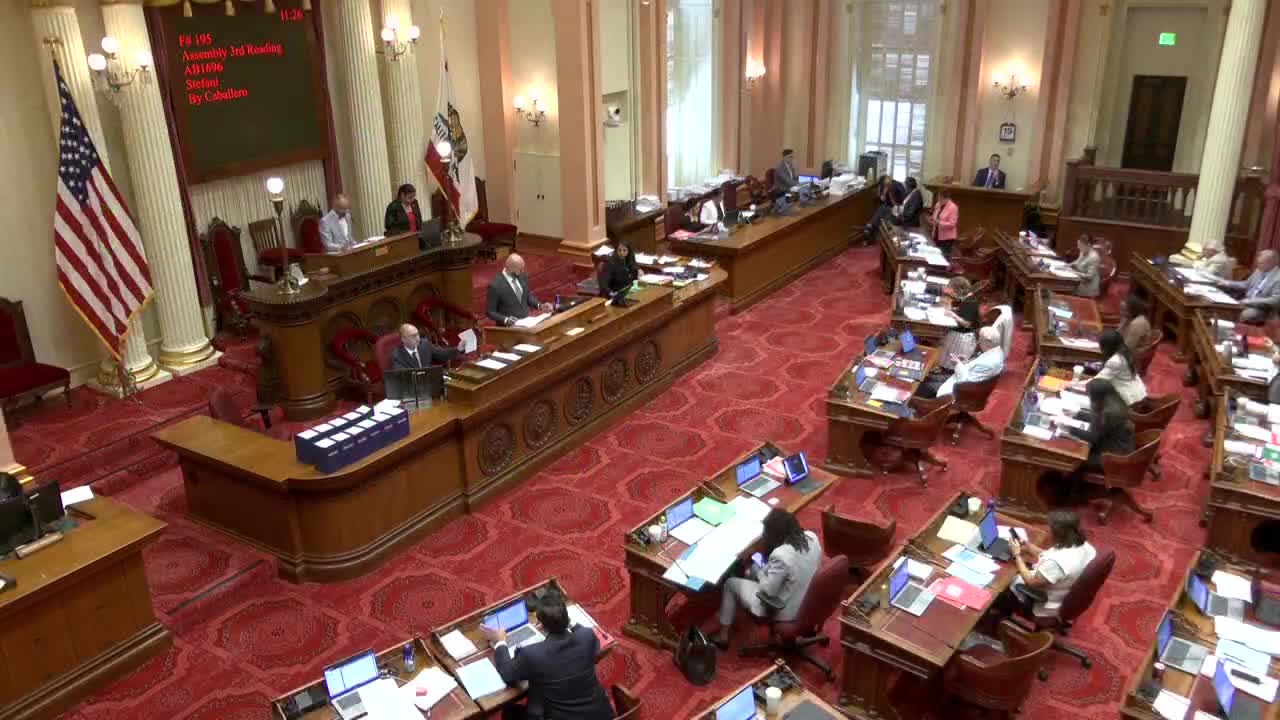
Bill Author
Bill Co-Author(s):