AB 2402: Health studio contracts: fee limits: multiservice health club studio.
- Session Year: 2025-2026
- House: Assembly
- Latest Version Date: 2026-08-19
Current Status:
Failed
(2026-09-27: Vetoed by Governor.)
Introduced
In Committee
Awaiting First Chamber Vote
Passed First Chamber
In Committee
Awaiting Second Chamber Vote
Passed Second Chamber
Enacted
What does this bill do?
This bill exempts multiservice health clubs from the current dollar cap on how much a health studio contract can require a customer to pay, so people who buy memberships or services from those clubs could be charged more. A multiservice health club is defined as one that offers three or more listed amenities, such as digital on‑demand classes, personalized training, childcare, swimming pools, steam rooms, onsite food and drinks, spa treatments, coworking, laundry, instructor certification, group classes, or locker rooms.
The summary is provided by generative AI which can make mistakes. For original language, please view the details in the table below.
Existing law generally regulates contracts for health studio services, as defined, including prohibiting those contracts, beginning January 1, 2010, from requiring payment in excess of $4,400, inclusive of initiation or initial membership fees and exclusive of interest or finance charges, by the person receiving the services or use of the facilities.
This bill would exempt a multiservice health club studio from the above-described provision on payment limitations and would define a multiservice health club studio for these purposes.
(a)A contract for health studio services shall not require payment by the person receiving the services or the use of the facilities of a total amount in excess of the amount specified in paragraph (1) or (2).
(1)The limit specified in subdivision (a) shall, on and after January 1, 2006, be three thousand dollars ($3,000), inclusive of initiation or initial membership fees and exclusive of interest or finance charges.
(2)The limit in subdivision (a) shall, on and after January 1, 2010, be four thousand four hundred dollars ($4,400), inclusive of initiation or initial membership fees and exclusive of interest or finance charges.
(b)(1)A contract for health studio services with a multiservice health club studio shall be exempt from the limit specified in subdivision (a).
(2)For purposes of paragraph (1), multiservice health club studio means a studio that offers three or more of the following amenities:
(A)Digital platform services, such as on-demand classes.
(B)Individualized training programing.
(C)Fitness instructor training or certification.
(D)Recurring group fitness classes.
(E)Coworking space.
(F)Childcare.
(G)Swimming pool or pools.
(H)Steam room.
(I)Laundry services.
(J)Onsite food and beverage.
(K)Spa treatments.
(L)Adult or youth sports programming.
(M)Locker rooms.
(a)A contract for health studio services shall not require payment by the person receiving the services or the use of the facilities of a total amount in excess of the amount specified in paragraph (1) or (2).
(1)The limit specified in subdivision (a) shall, on and after January 1, 2006, be three thousand dollars ($3,000), inclusive of initiation or initial membership fees and exclusive of interest or finance charges.
(2)The limit in subdivision (a) shall, on and after January 1, 2010, be four thousand four hundred dollars ($4,400), inclusive of initiation or initial membership fees and exclusive of interest or finance charges.
(b)(1)A contract for health studio services with a multiservice health club studio shall be exempt from the limit specified in subdivision (a).
(2)For purposes of paragraph (1), multiservice health club studio means a studio that offers three or more of the following amenities:
(A)Digital platform services. services, such as on-demand classes.
(B)Individualized training programing.
(C)Fitness instructor training. training or certification.
(D)Group Recurring group fitness classes.
(E)Coworking space.
(F)Childcare.
(G)Swimming pool. pool or pools.
(H)Steam room.
(I)Laundry services.
(J)Onsite food and beverage.
(K)Spa treatments.
(L)Adult or youth sports programming.
(M)Locker rooms.
(a)No A contract for health studio services shall not require payment by the person receiving the services or the use of the facilities of a total amount in excess of the amount specified in subdivision (b) or (c). paragraph (1) or (2).
(b)(1)The limit specified in subdivision (a) shall, on and after January 1, 2006, be three thousand dollars ($3,000), inclusive of initiation or initial membership fees and exclusive of interest or finance charges.
(c)(2)The limit in subdivision (a) shall, on and after January 1, 2010, be four thousand four hundred dollars ($4,400), inclusive of initiation or initial membership fees and exclusive of interest or finance charges.
(b)(1)A contract for health studio services with a multiservice health club studio shall be exempt from the limit specified in subdivision (a).
(2)For purposes of paragraph (1), multiservice health club studio means a studio that offers three or more of the following amenities:
(A)Digital platform services.
(B)Individualized training programing.
(C)Fitness instructor training.
(D)Group fitness classes.
(E)Coworking space.
(F)Childcare.
(G)Swimming pool.
(H)Steam room.
(I)Laundry services.
(J)Onsite food and beverage.
|
Date
|
Status
|
|---|---|
| Sep 27, 2026 | Vetoed by Governor. |
| Aug 24, 2026 | Enrolled and presented to the Governor at 4:30 p.m. |
| Aug 18, 2026 | In Assembly. Ordered to Engrossing and Enrolling. |
| Aug 18, 2026 | Read third time. Passed. Ordered to the Assembly. (Ayes 39. Noes 0.). |
| Aug 18, 2026 | Read third time. Passed. Ordered to the Assembly. (Ayes 39. Noes 0. Page 5518.). |
| Jun 16, 2026 | Read second time. Ordered to third reading. |
| Jun 15, 2026 | From committee: Do pass. (Ayes 11. Noes 0.) (June 15). |
| May 6, 2026 | Referred to Com. on B. P. & E.D. |
| Apr 20, 2026 | In Senate. Read first time. To Com. on RLS. for assignment. |
| Apr 20, 2026 | Read third time. Passed. Ordered to the Senate. (Ayes 69. Noes 1. Page 4725.) |
| Apr 20, 2026 | Read third time. Passed. Ordered to the Senate. |
| Apr 15, 2026 | Read second time. Ordered to third reading. |
| Apr 14, 2026 | From committee: Do pass. (Ayes 19. Noes 0.) (April 14). |
| Apr 13, 2026 | Re-referred to Com. on B. & P. |
| Apr 9, 2026 | From committee chair, with author's amendments: Amend, and re-refer to Com. on B. & P. Read second time and amended. |
| Mar 9, 2026 | Referred to Com. on B. & P. |
| Feb 21, 2026 | From printer. May be heard in committee March 23. |
| Feb 20, 2026 | Read first time. To print. |
|
Date
|
Description
|
Location
|
Votes
|
|
|---|---|---|---|---|
| Aug 18, 2026 | Assembly 3rd Reading AB2402 Boerner By Jones | Senate Floor |
Passed |
|
| Jun 15, 2026 | Do pass | Senate Standing Committee on Business, Professions and Economic Development |
Passed |
|
| Apr 20, 2026 | AB 2402 Boerner Assembly Third Reading | Assembly Floor |
Passed |
|
| Apr 14, 2026 | Do pass. | Assembly Standing Committee on Business and Professions |
Passed |
This list shows positions taken on this bill by organizations on the date displayed, which is linked to the original source.
Positions by individuals are not included.
|
Organization
|
Position
|
Date
|
|---|---|---|
| Equinox | ** Support | |
| Health & Fitness Association | ** Support | |
| Health and Fitness Association | ** Support | |
| The Health & Fitness Association | ** Support |
GOVERNOR'S VETO
GV Bill Id:AB 2402
Author:(Boerner)
As Enrolled Ver:August 19, 2026
2/3 vote
SUMMARY
Exempts a "multiservice health club studio," as defined, from the $4,400 limit on contracts for health studio services.
Major Provisions
- Exempts a contract for health studio services with a multiservice health club studio from the $4,400 payment limit.
- Defines "multiservice health club studio" as a studio that offers three or more of the following amenities:
- Digital platform services, such as on-demand classes.
- Individualized training programing.
- Fitness instructor training or certification.
- Recurring group fitness classes.
- Coworking space.
- Childcare.
- Swimming pool or pools.
- Steam room.
- Laundry services.
- Onsite food and beverage.
- Spa treatments.
- Adult or youth sports programming.
- Locker rooms.
Governor's Veto Message
This bill would define a multiservice health club studio as a studio offering three or more specified amenities, and would remove the $4,400 contract limit in statute.
California has long regulated health studio service contracts to protect consumers from excessive fees and predatory sales practices, The statutory cap was adopted to limit consumer's exposure to substantial future payment obligations, and I do not believe it is in the best interest of Californians to remove this cap, which could price consumers out of these clubs altogether.
COMMENTS
Background. California contract law provides protections for consumers of services provided by gyms, studios, and other fitness settings. Specifically, the purpose of the protections as they relate to health studio and gyms "is to safeguard the public against fraud, deceit, and financial hardship, and to foster and encourage fair dealing, and prosperity in the field of health studio services by prohibiting or restricting false or misleading advertising, onerous contract terms, harmful financial practices, and other unfair, dishonest, deceptive, destructive, unscrupulous, fraudulent, and discriminatory practices by which the public has been injured in connection with contracts for health studio services" (Civil Code section 1812.80).
Specific protections include limiting the maximum amount that can be charged under any given health studio contract to $4,400, limiting the length of health studio contracts to three years, and limiting a health studio's ability to force buyers to sign waivers and indemnity clauses. It also provides buyers with three times the amount of actual damages (treble damages) and reasonable attorney fees when health studios violate the contract requirements.
This bill would exempt multi-service health studios, as defined, from the $4,400 contract limit. The sponsor's goal is to allow high value, boutique, or luxury gyms who offer services or combinations of services that are not offered by their standard counter parts to charge more under their contracts.
Other States. While other states maintain similar consumer contract protections in varying degrees and combinations, such as the three-year contract term limits, initiation fee caps, and cooling off periods, New York is the only other state that still maintains an overall contract maximum (New York General Business Law, Section 623 (2025)). This bill is substantially similar to two New York bills, Senate Bill S8015 (amended as S8015A) and New York Assembly Bill A8638. Those bills are in committee for their 2025-2026 session.
Implementation Question. The latest author amendments, which are modeled after a pair of bills pending in the New York Legislature, clarified the types of services that count for an exemption under this bill. However, there may still be combinations of three or more of the listed amenities that could apply to regular clubs and gyms. For example, the combination of a swimming pool, locker room, and sports programming (swim team), is very common. The author and sponsor may wish to continue to refine the services to capture the high value or luxury segment that is intended to be exempted.
According to the Author
Asm. Boerner is pleased to author [this bill], a bill that will provide consumers more wellness options. This bill will establish a definition for a "multiservice health club studio", updating a law on fees that has not been updated since 2005. The fitness and wellness industry has evolved significantly since that time. [This bill] would remove the current cap on annual fees for health studios that go above and beyond with their services. This would allow California consumers to engage world-class facilities with prices set by natural market competition, while remaining protected under previously established consumer protection laws and standard oversight for traditional gyms.
Arguments in Support
Equinox (sponsor) writes in support:
- [This bill] appropriately recognizes that today's health club market serves a wide range of customers, and that an outdated statutory cap that was designed for a very different era should not apply to modern, multi-service, luxury health clubs. This bill is about respecting consumer choice and allowing the market to meet those diversified needs. In this context, rigid "one-size fits all" fee caps are no longer necessary to protect consumers.
- Moreover, the original consumer protection intent of the law is currently reinforced by modern safeguards. California maintains some of the strongest auto-renewal and consumer transparency laws in the nation, and today's consumers are more empowered than ever to manage subscriptions and make informed purchasing decisions. Nothing about [this bill] changes this.
The Health & Fitness Association writes in support, "Without a targeted exemption for multiservice facilities, the outdated cap forces high-value health clubs into a legal grey area, discourages capital investment in premium fitness infrastructure, and ultimately limits consumer access to the kind of comprehensive, medically adjacent wellness services that California communities deserve. [This bill] addresses this problem directly by carving out a carefully defined category of facility — one that offers three or more distinct amenities — and exempting those facilities from a price cap that was never designed with them in mind."
Arguments in Opposition
None on file
FISCAL COMMENTS
According to the Senate Appropriations Committee, pursuant to Senate Rule 28.8, no significant state costs anticipated.
VOTES
ASM BUSINESS AND PROFESSIONS: 19-0-0
YES: Berman, Johnson, Addis, Ahrens, Alanis, Bains, Bauer-Kahan, Caloza, Chen, Elhawary, Hadwick, Haney, Hart, Irwin, Jackson, Lowenthal, Macedo, Nguyen, Pellerin
ASSEMBLY FLOOR: 69-1-10
YES: Addis, Aguiar-Curry, Ahrens, Alanis, Arambula, Ávila Farías, Bains, Bauer-Kahan, Berman, Boerner, Bryan, Calderon, Caloza, Carrillo, Castillo, Chen, Connolly, Davies, DeMaio, Dixon, Elhawary, Ellis, Fong, Gabriel, Gallagher, Garcia, Gipson, Jeff Gonzalez, Mark González, Hadwick, Haney, Harabedian, Hart, Hoover, Irwin, Jackson, Johnson, Kalra, Krell, Lackey, Lee, Lowenthal, Macedo, McKinnor, Muratsuchi, Nguyen, Ortega, Pacheco, Papan, Pellerin, Petrie-Norris, Quirk-Silva, Ramos, Ransom, Michelle Rodriguez, Rogers, Blanca Rubio, Schultz, Sharp-Collins, Solache, Stefani, Ta, Tangipa, Valencia, Wallis, Wicks, Wilson, Zbur, Rivas
NO: Soria
ABS, ABST OR NV: Alvarez, Bennett, Bonta, Flora, Patel, Patterson, Celeste Rodriguez, Sanchez, Schiavo, Ward
SENATE FLOOR: 40-0-0
YES: Allen, Alvarado-Gil, Archuleta, Arreguín, Ashby, Becker, Blakespear, Cabaldon, Caballero, Cervantes, Choi, Cortese, Dahle, Durazo, Gonzalez, Grayson, Grove, Hurtado, Jones, Laird, Limón, McGuire, McNerney, Menjivar, Niello, Ochoa Bogh, Padilla, Pérez, Reyes, Richardson, Rubio, Seyarto, Smallwood-Cuevas, Stern, Strickland, Umberg, Valladares, Wahab, Weber Pierson, Wiener
UPDATED
VERSION: August 19, 2026
CONSULTANT: Vincent Chee / B. & P. / (916) 319-3301 FN: 0002373
SENATE RULES COMMITTEE Office of Senate Floor Analyses (916) 651-4171 | AB 2402 |
THIRD READING
Bill No: AB 2402
Author: Boerner (D)
Amended: 4/9/26 in Assembly
Vote: 21
SENATE BUS., PROF. & ECON. DEV. COMMITTEE: 11-0, 6/15/26
AYES: Wahab, Choi, Archuleta, Arreguín, Caballero, Grayson, Menjivar, Niello, Smallwood-Cuevas, Strickland, Umberg
ASSEMBLY FLOOR: 69-1, 4/20/26 - See last page for vote
SUBJECT: Health studio contracts: fee limits: multiservice health club studio
SOURCE: Equinox
DIGEST:
This bill authorizes a multiservice health club studio to charge more than $4,400 for health studio services.
ANALYSIS:
Existing law:
- Establishes consumer protections for contracts for health studio services. (Civil Code (CIV) §§ 1812.80-1812.98)
- Defines a “contract for health studio services” as a contract for: instruction, training or assistance in physical culture, body building, exercising, reducing, figure development, or physical skill; (2) for the use of the facilities of a health studio, gymnasium or other facility used for the above purposes; or for membership in a group, club, association, or organization formed for any of the above purposes. (CIV § 1812.81)
- Excludes the following from the definition of “contract for health studio services”:
- Contracts for professional services rendered or furnished by a licensed healing arts practitioner under the Business and Professions Code. (CIV § 1812.81, clause (a))
- Contracts for instruction at schools operating pursuant to the provisions of the Education Code. (CIV § 1812.81, clause (b))
- Contracts for instruction, training, or assistance relating to diet or control of eating habits not involving physical culture, body building, exercising, figure development, or any other such physical skill. (CIV § 1812.81, clause (c))
- Prohibits a contract for health studio services from requiring payments or financing to exceed the term of the contract or providing contracts terms exceeding three years, as specified. (CIV § 1812.84(a))
- Authorizes a consumer to cancel a contract for health studio services in person, via email from an email address on file with the health studio, or via first-class mail anytime cancellation is authorized by the health studio contracts laws. (CIV § 1812.85(b)(1))
- Prohibits a contract for health studio services from requiring payment by the person receiving the services or the use of the facilities of a total amount in excess of $4,400, inclusive of initiation or initial membership fees and exclusive of interest or finance charges. (CIV § 1812.86)
- Makes any contract for health studio services entered into in reliance upon any willful and false, fraudulent, or misleading information, representation, notice or advertisement of the seller void and unenforceable. (CIV § 1812.92)
This bill:
- Exempts a contract for health studio services with a multiservice health club studio from the $4,400 payment limit.
- Defines “multiservice health club studio” as a studio that offers three or more of the following amenities: Digital platform services, such as on-demand classes; individualized training programming; fitness instructor training or certification; recurring group fitness classes; coworking space; childcare; swimming pool or pools; steam room; laundry services; onsite food and beverage; spa treatments; adult or youth sports programming; locker rooms.
Background
Regulation of Health Studio Contracts. California has regulated health studio service contracts for decades to protect consumers from excessive long-term financial obligations and unfair sales practices. Historically, lawmakers were concerned that consumers were being induced to enter into expensive, prepaid memberships that could extend for years, even when circumstances such as death, disability, or relocation made it impossible or impractical to use the services purchased. As a result, existing law provides cancellation and refund rights in specified circumstances, including when a member dies, becomes disabled, or moves beyond a prescribed distance from the health studio.
California’s cap on the total financial obligation under a health studio contract was adopted to limit consumers’ exposure to substantial future payment obligations. Civil Code § 1812.86 was enacted as part of California’s Health Studio Services Contract Law to protect consumers from excessive financial commitments associated with prepaid gym memberships. Prior to 2005, the maximum contract amount had remained at $1,000 since 1981. The cap, together with restrictions on contract duration, arose in response to concerns that consumers were purchasing costly long-term or "lifetime" memberships, sometimes costing thousands of dollars, only to have facilities close or cease operations before the promised services were delivered. In those cases, consumers were often left with little practical recourse despite having paid substantial sums in advance.
SB 581 (Figueroa, Chapter 439, Statutes of 2005) increased the allowable contract amount to $3,000 beginning in 2006 and $4,400 beginning in 2010 while simultaneously expanding cancellation and refund rights. The bill reflected a compromise that allowed higher-priced memberships while preserving safeguards against long-term financial exposure and high-pressure sales practices. Updates to the Health Studio Services Contract Law have typically balanced consumer protection with business flexibility by limiting the size and duration of health studio contracts while requiring cancellation rights, refund provisions, and other consumer safeguards.
SB 581 increased the allowable contract amount from the longstanding $1,000 limit while retaining and expanding consumer protections. At the time, proponents noted that newer full-service health clubs, with amenities like pools, tennis courts, spa facilities, and longer-term memberships, were increasingly offering memberships that exceeded the existing statutory cap. The bill sought to accommodate evolving health club business models without abandoning the law's underlying consumer-protection purpose.
FISCAL EFFECT: Appropriation: No Fiscal Com.: No Local: No
SUPPORT: (6/15/2026)
Equinox (source)
Health and Fitness Association
OPPOSITION: (6/15/2026)
None received
ARGUMENTS IN SUPPORT: Equinox writes that “members are not looking for a traditional gym; rather, they prefer a comprehensive lifestyle experience and are willing to pay a premium for it… AB 2402 appropriately recognizes that today’s health club market serves a wide range of customers, and that an outdated statutory cap that was designed for a very different era should not apply to modern, multi-service, luxury health clubs. This bill is about respecting consumer choice and allowing the market to meet those diversified needs. In this context, rigid “one-size fits all” fee caps are no longer necessary to protect consumers. Moreover, the original consumer protection intent of the law is currently reinforced by modern safeguards. California maintains some of the strongest auto-renewal and consumer transparency laws in the nation, and today’s consumers are more empowered than ever to manage subscriptions and make informed purchasing decisions. Nothing about AB 2402 changes this. By allowing pricing to be guided by market competition and consumer choice, AB 2402 will support continued substantial investment in comprehensive health and wellness facilities that meet the diverse needs of Californians. These spaces increasingly serve as hubs for health and wellness, productivity, and community, and offer individuals the ability to exercise, work, access childcare, and engage in wellness services all in one location.”
According to the Health and Fitness Association, “California has approximately 12,400 gyms and health clubs currently operating across the state, significantly more than were operating when California's Health Studio Services law was established. Section 1812.86 of the Civil Code enforces a cap on the annual fees a health club can charge. This provision of California law has not been updated since 2005, over twenty years ago, while the fitness and wellness industry has evolved significantly since that time. Since those provisions were written, California has codified the strongest and most comprehensive auto-renewal laws in the United States to protect consumers from unwanted subscriptions. In today’s highly competitive marketplace, consumers have a wide range of choices, and pricing should be shaped by natural market competition and consumer demand. The Health & Fitness Association believes lifting these caps would empower a "multiservice health club studio” to better deliver the world-class facilities that Californians deserve.
ASSEMBLY FLOOR: 69-1, 4/20/26
AYES: Addis, Aguiar-Curry, Ahrens, Alanis, Arambula, Ávila Farías, Bains, Bauer-Kahan, Berman, Boerner, Bryan, Calderon, Caloza, Carrillo, Castillo, Chen, Connolly, Davies, DeMaio, Dixon, Elhawary, Ellis, Fong, Gabriel, Gallagher, Garcia, Gipson, Jeff Gonzalez, Mark González, Hadwick, Haney, Harabedian, Hart, Hoover, Irwin, Jackson, Johnson, Kalra, Krell, Lackey, Lee, Lowenthal, Macedo, McKinnor, Muratsuchi, Nguyen, Ortega, Pacheco, Papan, Pellerin, Petrie-Norris, Quirk-Silva, Ramos, Ransom, Michelle Rodriguez, Rogers, Blanca Rubio, Schultz, Sharp-Collins, Solache, Stefani, Ta, Tangipa, Valencia, Wallis, Wicks, Wilson, Zbur, Rivas
NOES: Soria
NO VOTE RECORDED: Alvarez, Bennett, Bonta, Flora, Patel, Patterson, Celeste Rodriguez, Sanchez, Schiavo, Ward
Prepared by: Sarah Mason/Anna Billy / B., P. & E.D. /
6/17/26 16:28:12
**** END ****
SENATE COMMITTEE ON
BUSINESS, PROFESSIONS AND ECONOMIC DEVELOPMENT
Senator Dr. Aisha Wahab, Chair
2025 - 2026 Regular
Bill No: Hearing Date: June 15, 2026
Author: | |||
Version: |
| ||
Urgency: | Fiscal: | ||
Consultant: | |||
Subject:
SUMMARY:
Authorizes a multiservice health club studio to charge more than $4,400 for health studio services.
Existing Law:
- Establishes consumer protections for contracts for health studio services. (Civil Code (CIV) §§ 1812.80-1812.98)
- Defines a “contract for health studio services” as a contract for: instruction, training or assistance in physical culture, body building, exercising, reducing, figure development, or physical skill; (2) for the use of the facilities of a health studio, gymnasium or other facility used for the above purposes; or for membership in a group, club, association, or organization formed for any of the above purposes. (CIV § 1812.81)
- Excludes the following from the definition of “contract for health studio services”:
- Contracts for professional services rendered or furnished by a licensed healing arts practitioner under the Business and Professions Code. (CIV § 1812.81, clause (a))
- Contracts for instruction at schools operating pursuant to the provisions of the Education Code. (CIV § 1812.81, clause (b))
- Contracts for instruction, training, or assistance relating to diet or control of eating habits not involving physical culture, body building, exercising, figure development, or any other such physical skill. (CIV § 1812.81, clause (c))
- Prohibits a contract for health studio services from requiring payments or financing to exceed the term of the contract or providing contracts terms exceeding three years, as specified. (CIV § 1812.84(a))
- Authorizes a consumer to cancel a contract for health studio services in person, via email from an email address on file with the health studio, or via first-class mail anytime cancellation is authorized by the health studio contracts laws. (CIV § 1812.85(b)(1))
- Prohibits a contract for health studio services from requiring payment by the person receiving the services or the use of the facilities of a total amount in excess of $4,400, inclusive of initiation or initial membership fees and exclusive of interest or finance charges. (CIV § 1812.86)
- Makes any contract for health studio services entered into in reliance upon any willful and false, fraudulent, or misleading information, representation, notice or advertisement of the seller void and unenforceable. (CIV § 1812.92)
This bill:
- Exempts a contract for health studio services with a multiservice health club studio from the $4,400 payment limit.
- Defines “multiservice health club studio” as a studio that offers three or more of the following amenities:
- Digital platform services, such as on-demand classes.
- Individualized training programming.
- Fitness instructor training or certification.
- Recurring group fitness classes.
- Coworking space.
- Childcare.
- Swimming pool or pools.
- Steam room.
- Laundry services.
- Onsite food and beverage.
- Spa treatments.
- Adult or youth sports programming.
- Locker rooms.
FISCAL EFFECT: Unknown. This bill is not keyed fiscal by Legislative Counsel.
COMMENTS:
- Purpose. This bill is sponsored by Equinox Fitness Clubs. According to the Author, “This bill will establish a definition for a ‘multiservice health club studio’, updating a law on fees that has not been updated since 2005. The fitness and wellness industry has evolved significantly since that time. AB 2402 would remove the current cap on annual fees for health studios that go above and beyond with their services. This would allow California consumers to engage world-class facilities with prices set by natural market competition, while remaining protected under previously established consumer protection laws and standard oversight for traditional gyms.”
- Background.
Regulation of Health Studio Contracts. California has regulated health studio service contracts for decades to protect consumers from excessive long-term financial obligations and unfair sales practices. Historically, lawmakers were concerned that consumers were being induced to enter into expensive, prepaid memberships that could extend for years, even when circumstances such as death, disability, or relocation made it impossible or impractical to use the services purchased. As a result, existing law provides cancellation and refund rights in specified circumstances, including when a member dies, becomes disabled, or moves beyond a prescribed distance from the health studio.
California’s cap on the total financial obligation under a health studio contract was adopted to limit consumers’ exposure to substantial future payment obligations. Civil Code § 1812.86 was enacted as part of California’s Health Studio Services Contract Law to protect consumers from excessive financial commitments associated with prepaid gym memberships. Prior to 2005, the maximum contract amount had remained at $1,000 since 1981. The cap, together with restrictions on contract duration, arose in response to concerns that consumers were purchasing costly long-term or "lifetime" memberships, sometimes costing thousands of dollars, only to have facilities close or cease operations before the promised services were delivered. In those cases, consumers were often left with little practical recourse despite having paid substantial sums in advance.
SB 581 (Figueroa, Chapter 439, Statutes of 2005) increased the allowable contract amount to $3,000 beginning in 2006 and $4,400 beginning in 2010 while simultaneously expanding cancellation and refund rights. The bill reflected a compromise that allowed higher-priced memberships while preserving safeguards against long-term financial exposure and high-pressure sales practices. Updates to the Health Studio Services Contract Law have typically balanced consumer protection with business flexibility by limiting the size and duration of health studio contracts while requiring cancellation rights, refund provisions, and other consumer safeguards.
SB 581 increased the allowable contract amount from the longstanding $1,000 limit while retaining and expanding consumer protections. At the time, proponents noted that newer full-service health clubs, with amenities like pools, tennis courts, spa facilities, and longer-term memberships, were increasingly offering memberships that exceeded the existing statutory cap. The bill sought to accommodate evolving health club business models without abandoning the law's underlying consumer-protection purpose.
Changes in the Cost of Doing Business Since 2005. Since the Legislature last adjusted the statutory contract cap through SB 581, California businesses and consumers have experienced significant increases in the cost of living and the cost of providing goods and services. Public Policy Institute of California (PPIC) statewide surveys have consistently found that affordability, inflation, and the cost of living rank among Californians' top concerns. In its June 2025 Statewide Survey, PPIC reported that more than one-third of Californians identified the cost of living, the economy, and inflation as the most important issue facing the state, while most Californians expressed pessimistic views about the state's economy and reported financial hardships related to rising prices and housing costs.
PPIC has also found that concerns about household finances remain widespread. In its surveys examining Californians' economic well-being, respondents have reported difficulties keeping up with rising costs for necessities and have expressed concern about their financial outlook amid continuing inflationary pressures. More broadly, these findings suggest that the economic environment facing both consumers and businesses today differs substantially from the environment that existed when the Legislature last revised the statutory contract cap in 2005.
Businesses operating in California have likewise faced increasing operating expenses. In a 2025 report examining electricity affordability, the Legislative Analyst's Office (LAO) reported that California electricity rates are among the highest in the nation, approximately double those in many other states, and have increased faster than inflation in recent years. The LAO further projected that electricity rates are likely to continue increasing faster than inflation in the coming years. These trends, together with increases in labor, occupancy, insurance, and regulatory compliance costs, have contributed to a substantially different economic landscape than the one that existed when the current statutory cap was established.
Evolution of the Fitness and Wellness Marketplace. The health and fitness marketplace has changed substantially since the passage of 581. Over the past two decades, consumers have increasingly focused on physical fitness, preventive health, and overall wellness. The Centers for Disease Control and Prevention (CDC) continues to identify regular physical activity as an important factor in reducing the risk of chronic disease and improving overall health outcomes, while California's "Let's Get Healthy California" initiative identifies increased physical activity as a statewide public-health priority. In a 2022 report prepared for the California 100 initiative, researchers at the UCLA Center for Health Policy Research noted that the state’s approach to health increasingly encompasses broader concepts of wellness, prevention, and population health rather than focusing solely on the delivery of medical services.
Independent research similarly suggests that consumer spending on wellness-related products and services has grown substantially in recent years. In its 2025 report, The Future of Wellness Trends Survey, McKinsey & Company found that wellness has become a daily priority for many consumers and that demand continues to grow across multiple wellness categories, including fitness, nutrition, sleep, and preventive health services. Likewise, the nonprofit Global Wellness Institute reported in its 2025 Global Wellness Economy Monitor that the global wellness economy grew from approximately $4.6 trillion in 2020 to $6.3 trillion in 2023 and projected continued growth through 2028. The report identified physical activity, fitness, wellness tourism, mental wellness, and related services as significant components of the broader wellness economy.
As consumer preferences have evolved, many fitness businesses have expanded beyond the traditional health club model. In addition to providing access to exercise equipment and fitness facilities, many operators now offer group fitness programming, personal training, individualized coaching, digital fitness platforms, recovery and mobility services, nutritional support, and other wellness-related services. Industry observers have noted that these expanded offerings increasingly reflect consumer demand for more comprehensive health and wellness experiences. As a result, the marketplace served by health studios and fitness facilities today encompasses a broader range of services and business models.
- Arguments in Support. Equinox writes that “members are not looking for a traditional gym; rather, they prefer a comprehensive lifestyle experience and are willing to pay a premium for it… AB 2402 appropriately recognizes that today’s health club market serves a wide range of customers, and that an outdated statutory cap that was designed for a very different era should not apply to modern, multi-service, luxury health clubs. This bill is about respecting consumer choice and allowing the market to meet those diversified needs. In this context, rigid “one-size fits all” fee caps are no longer necessary to protect consumers. Moreover, the original consumer protection intent of the law is currently reinforced by modern safeguards. California maintains some of the strongest auto-renewal and consumer transparency laws in the nation, and today’s consumers are more empowered than ever to manage subscriptions and make informed purchasing decisions. Nothing about AB 2402 changes this. By allowing pricing to be guided by market competition and consumer choice, AB 2402 will support continued substantial investment in comprehensive health and wellness facilities that meet the diverse needs of Californians. These spaces increasingly serve as hubs for health and wellness, productivity, and community, and offer individuals the ability to exercise, work, access childcare, and engage in wellness services all in one location.”
According to the Health and Fitness Association, “California has approximately 12,400 gyms and health clubs currently operating across the state, significantly more than were operating when California's Health Studio Services law was established. Section 1812.86 of the Civil Code enforces a cap on the annual fees a health club can charge. This provision of California law has not been updated since 2005, over twenty years ago, while the fitness and wellness industry has evolved significantly since that time. Since those provisions were written, California has codified the strongest and most comprehensive auto-renewal laws in the United States to protect consumers from unwanted subscriptions. In today’s highly competitive marketplace, consumers have a wide range of choices, and pricing should be shaped by natural market competition and consumer demand. The Health & Fitness Association believes lifting these caps would empower a "multiservice health club studio” to better deliver the world-class facilities that Californians deserve.
SUPPORT AND OPPOSITION:
Support:
Equinox (sponsor)
Health and Fitness Association
Opposition:
-- END --
ASSEMBLY THIRD READING
ATR Bill Id:AB 2402
Author:(Boerner)
As Amended Ver:April 9, 2026
Majority vote
SUMMARY
Exempts a "multiservice health club studio," as defined, from the $4,400 limit on contracts for health studio services.
Major Provisions
- Exempts a contract for health studio services with a multiservice health club studio from the $4,400 payment limit.
- Defines "multiservice health club studio" as a studio that offers three or more of the following amenities:
- Digital platform services, such as on-demand classes.
- Individualized training programing.
- Fitness instructor training or certification.
- Recurring group fitness classes.
- Coworking space.
- Childcare.
- Swimming pool or pools.
- Steam room.
- Laundry services.
- Onsite food and beverage.
- Spa treatments.
- Adult or youth sports programming.
- Locker rooms.
COMMENTS
Background. California contract law provides protections for consumers of services provided by gyms, studios, and other fitness settings. Specifically, the purpose of the protections as they relate to health studio and gyms "is to safeguard the public against fraud, deceit, and financial hardship, and to foster and encourage fair dealing, and prosperity in the field of health studio services by prohibiting or restricting false or misleading advertising, onerous contract terms, harmful financial practices, and other unfair, dishonest, deceptive, destructive, unscrupulous, fraudulent, and discriminatory practices by which the public has been injured in connection with contracts for health studio services" (Civil Code section 1812.80).
Specific protections include limiting the maximum amount that can be charged under any given health studio contract to $4,400, limiting the length of health studio contracts to three years, and limiting a health studio's ability to force buyers to sign waivers and indemnity clauses. It also provides buyers with three times the amount of actual damages (treble damages) and reasonable attorney fees when health studios violate the contract requirements.
This bill would exempt multi-service health studios, as defined, from the $4,400 contract limit. The sponsor's goal is to allow high value, boutique, or luxury gyms who offer services or combinations of services that are not offered by their standard counter parts to charge more under their contracts.
Other States. While other states maintain similar consumer contract protections in varying degrees and combinations, such as the three-year contract term limits, initiation fee caps, and cooling off periods, New York is the only other state that still maintains an overall contract maximum (New York General Business Law, Section 623 (2025)). This bill is substantially similar to two New York bills, Senate Bill S8015 (amended as S8015A) and New York Assembly Bill A8638. Those bills are in committee for their 2025-2026 session.
Implementation Question. The latest author amendments, which are modeled after a pair of bills pending in the New York Legislature, clarified the types of services that count for an exemption under this bill. However, there may still be combinations of three or more of the listed amenities that could apply to regular clubs and gyms. For example, the combination of a swimming pool, locker room, and sports programming (swim team), is very common. The author and sponsor may wish to continue to refine the services to capture the high value or luxury segment that is intended to be exempted.
According to the Author
Asm. Boerner is pleased to author [this bill], a bill that will provide consumers more wellness options. This bill will establish a definition for a "multiservice health club studio", updating a law on fees that has not been updated since 2005. The fitness and wellness industry has evolved significantly since that time. [This bill] would remove the current cap on annual fees for health studios that go above and beyond with their services. This would allow California consumers to engage world-class facilities with prices set by natural market competition, while remaining protected under previously established consumer protection laws and standard oversight for traditional gyms.
Arguments in Support
Equinox (sponsor) writes in support:
- [This bill] appropriately recognizes that today's health club market serves a wide range of customers, and that an outdated statutory cap that was designed for a very different era should not apply to modern, multi-service, luxury health clubs. This bill is about respecting consumer choice and allowing the market to meet those diversified needs. In this context, rigid "one-size fits all" fee caps are no longer necessary to protect consumers.
- Moreover, the original consumer protection intent of the law is currently reinforced by modern safeguards. California maintains some of the strongest auto-renewal and consumer transparency laws in the nation, and today's consumers are more empowered than ever to manage subscriptions and make informed purchasing decisions. Nothing about [this bill] changes this.
The Health & Fitness Association writes in support, "Without a targeted exemption for multiservice facilities, the outdated cap forces high-value health clubs into a legal grey area, discourages capital investment in premium fitness infrastructure, and ultimately limits consumer access to the kind of comprehensive, medically adjacent wellness services that California communities deserve. [This bill] addresses this problem directly by carving out a carefully defined category of facility — one that offers three or more distinct amenities — and exempting those facilities from a price cap that was never designed with them in mind."
Arguments in Opposition
There is no opposition on file.
FISCAL COMMENTS
Unknown. This bill is keyed nonfiscal by the Legislative Counsel.
VOTES
ASM BUSINESS AND PROFESSIONS: 19-0-0
YES: Berman, Johnson, Addis, Ahrens, Alanis, Bains, Bauer-Kahan, Caloza, Chen, Elhawary, Hadwick, Haney, Hart, Irwin, Jackson, Lowenthal, Macedo, Nguyen, Pellerin
UPDATED
VERSION: April 9, 2026
CONSULTANT: Vincent Chee / B. & P. / (916) 319-3301 FN: 0002373
Date of Hearing:
ASSEMBLY COMMITTEE ON BUSINESS AND PROFESSIONS
Marc Berman, Chair
ABPCA Bill Id:AB 2402
Author:(Boerner) – As Amended Ver:April 9, 2026
SUBJECT: Health studio contracts: fee limits: multiservice health club studio.
SUMMARY: Exempts a “multiservice health club studio,” as defined, from the $4,400 limit on contracts for health studio services.
EXISTING LAW:
- Establishes consumer protections for contracts for health studio services. (Civil Code (CIV) §§ 1812.80-1812.98)
- Defines a “contract for health studio services” as a contract for: (1) instruction, training or assistance in physical culture, body building, exercising, reducing, figure development, or physical skill; (2) for the use of the facilities of a health studio, gymnasium or other facility used for the above purposes; or (3) for membership in a group, club, association, or organization formed for any of the above purposes. (CIV § 1812.81)
- Excludes from the definition of “contract for health studio services”:
- Contracts for professional services rendered or furnished by a licensed healing arts practitioner under the Business and Professions Code. (CIV § 1812.81, clause (a))
- Contracts for instruction at schools operating pursuant to the provisions of the Education Code. (CIV § 1812.81, clause (b))
- Contracts for instruction, training, or assistance relating to diet or control of eating habits not involving physical culture, body building, exercising, figure development, or any other such physical skill. (CIV § 1812.81, clause (c))
- Prohibits a contract for health studio services from (1) requiring payments or financing to exceed the term of the contract or (2) contracts terms exceeding three years, as specified (CIV § 1812.84(a))
- Authorizes a consumer to cancel a contract for health studio services in person, via email from an email address on file with the health studio, or via first-class mail anytime cancelation is authorized by the health studio contracts laws. (CIV § 1812.85(b)(1))
- Prohibits a contract for health studio services from requiring payment by the person receiving the services or the use of the facilities of a total amount in excess of $4,400, inclusive of initiation or initial membership fees and exclusive of interest or finance charges. (CIV § 1812.86)
- Makes any contract for health studio services entered into in reliance upon any willful and false, fraudulent, or misleading information, representation, notice or advertisement of the seller void and unenforceable. (CIV § 1812.92)
THIS BILL:
- Exempts a contract for health studio services with a multiservice health club studio from the $4,400 payment limit.
- Defines “multiservice health club studio” as a studio that offers three or more of the following amenities:
- Digital platform services, such as on-demand classes.
- Individualized training programing.
- Fitness instructor training or certification.
- Recurring group fitness classes.
- Coworking space.
- Childcare.
- Swimming pool or pools.
- Steam room.
- Laundry services.
- Onsite food and beverage.
- Spa treatments.
- Adult or youth sports programming.
- Locker rooms.
FISCAL EFFECT: Unknown. This bill is keyed nonfiscal by the Legislative Counsel.
COMMENTS:
Purpose. This bill is sponsored by Equinox. According to the author:
Asm. Boerner is pleased to author [this bill], a bill that will provide consumers more wellness options. This bill will establish a definition for a "multiservice health club studio”, updating a law on fees that has not been updated since 2005. The fitness and wellness industry has evolved significantly since that time. [This bill] would remove the current cap on annual fees for health studios that go above and beyond with their services. This would allow California consumers to engage world-class facilities with prices set by natural market competition, while remaining protected under previously established consumer protection laws and standard oversight for traditional gyms.
Background. California contract law provides protections for consumers of services provided by gyms, studios, and other fitness settings. Specifically, the purpose of the protections as they relate to health studio and gyms “is to safeguard the public against fraud, deceit, and financial hardship, and to foster and encourage fair dealing, and prosperity in the field of health studio services by prohibiting or restricting false or misleading advertising, onerous contract terms, harmful financial practices, and other unfair, dishonest, deceptive, destructive, unscrupulous, fraudulent, and discriminatory practices by which the public has been injured in connection with contracts for health studio services” (CIV § 1812.80).
Specific protections include limiting the maximum amount that can be charged under any given health studio contract to $4,400, limiting the length of health studio contracts to three years, and limiting a health studio’s ability to force buyers to sign waivers and indemnity clauses. It also provides buyers with three times the amount of actual damages (treble damages) and reasonable attorney fees when health studios violate the contract requirements.
This bill would exempt multi-service health studios, as defined, from the $4,400 contract limit. The sponsor’s goal is to allow high value, boutique, or luxury gyms who offer services or combinations of services that are not offered by their standard counter parts to charge more under their contracts.
Other States. While other states maintain similar consumer contract protections in varying degrees and combinations, such as the three-year contract term limits, initiation fee caps, and cooling off periods, New York is the only other state that still maintains an overall contract maximum (New York General Business Law, § 623 (2025)). This bill is substantially similar to two New York bills, Senate Bill S8015 (amended as S8015A) and New York Assembly Bill A8638. Those bills are in committee for their 2025-2026 session.
Prior Related Legislation. AB 390 (Berman), Chapter 450, Statutes of 2021, required a business that makes an automatic renewal or continuous service offer to a consumer to provide the consumer with notice before the expiration of a free gift or trial, or temporary or promotional price, included with the offer, and requires these businesses to streamline the cancellation process in accordance with specified criteria.
AB 2810 (Eggman), Chapter 189, Statutes of 2016, required contracts for health studio services to allow a buyer to cancel the contract via first-class mail, via email from an email address on file, or in person.
SB 581 (Figueroa), Chapter 439, Statutes of 2005, would have first increased the $1,000 limit to $3,000, including initiation or membership fees, until January 1, 2010, then increased the limit to $4,400, including the fees.
AB 558 (Correa) of 2003 would have first increased the $1,000 limit to $3,000, including initiation or membership fees, until January 1, 2009, then increased the limit to $4,400. AB 558 died on the Senate inactive file.
AB 356 (Correa) of 2002 would have: increased the $1,000 limit on health studio contracts from to $2,000 per person, inclusive of initiation fees, but exclusive of interest, finance charges, and payments for optional services; after January 1, 2005, adjusted the $2,000 limit for on cost-of-living; exempted studios from the $2,000 limit if the health studio operator established and maintained a bond of at least $300,000 per operator; and required any health studio opening on or after January 1, 2003, to maintain a bond of $250,000 for a period of 5 years. AB 356 died after rereferral to the Senate Rules Committee.
AB 357 (Correa) of 2001, among other things, would have increased the $1,000 contract limit to $2,500. AB 357 was vetoed by Governor Davis, writing:
Although this bill may provide health studios with greater flexibility in providing a variety of services to their customers, I am concerned that this bill will permit health club studios to increase fees by up to 150%. I would be willing to consider a bill that raises the $1,000 limit on contracts, but only if it truly adds meaningful consumer protections such as a lower threshold for pro-rated refunds and a reasonable limitation on nonrefundable initiation fees.
SB 1744 (Murray) of 2000 would have exempted a health studio from the $1,000 contract limit if it maintained a $500,000 bond during the first 10 years of operations. SB 1744 was vetoed by Governor Davis, writing:
I understand that this bill would provide health studios with greater flexibility in providing a variety of services to their customers. However, I am not convinced that this bill would continue to ensure consumer protections against excessive fees charged by these studios. Additionally, the requirements that health studios maintain a $500,000 surety bond for the ten years that they are in operation appear to be excessive. This provision could adversely impact smaller health clubs and force them to go out of business. Finally, this bill would place unnecessary limitations on health studio businesses operating in California, and would impose unwarranted government regulation on industry.
AB 2166 (Young), Chapter 651, Statutes of 1980, among other things, increased the contract limit to $1,000, exclusive of interest or finance charges.
AB 506 (Z’berg), Chapter 1675, Statutes of 1961, established the laws regulating contracts for health or dance studio services and set the contract limit at a total of $500.
ARGUMENTS IN SUPPORT:
Equinox (sponsor) writes in support:
[This bill] appropriately recognizes that today’s health club market serves a wide range of customers, and that an outdated statutory cap that was designed for a very different era should not apply to modern, multi-service, luxury health clubs. This bill is about respecting consumer choice and allowing the market to meet those diversified needs. In this context, rigid “one-size fits all” fee caps are no longer necessary to protect consumers.
Moreover, the original consumer protection intent of the law is currently reinforced by modern safeguards. California maintains some of the strongest auto-renewal and consumer transparency laws in the nation, and today’s consumers are more empowered than ever to manage subscriptions and make informed purchasing decisions. Nothing about [this bill] changes this.
The Health & Fitness Association writes in support, “Without a targeted exemption for multiservice facilities, the outdated cap forces high-value health clubs into a legal grey area, discourages capital investment in premium fitness infrastructure, and ultimately limits consumer access to the kind of comprehensive, medically adjacent wellness services that California communities deserve. [This bill] addresses this problem directly by carving out a carefully defined category of facility — one that offers three or more distinct amenities — and exempting those facilities from a price cap that was never designed with them in mind.”
ARGUMENTS IN OPPOSITION:
There is no opposition on file.
IMPLEMENTATION ISSUES:
Exemption Precision. The recent author amendments, which are modeled after a pair of bills pending in the New York Legislature, clarified the types of services that count for an exemption under this bill. However, there may still be combinations of three or more of the listed amenities that could apply to regular clubs and gyms. For example, the combination of a swimming pool, locker room, and sports programming (swim team), is very common at the YMCA. The author and sponsor may wish to continue to refine the services to capture the high value or luxury segment that is intended to be exempted.
REGISTERED SUPPORT:
Equinox (sponsor)
Health & Fitness Association
REGISTERED OPPOSITION:
There is no opposition on file.
Analysis Prepared by: Vincent Chee / B. & P. / (916) 319-3301
Discussed in Hearing
 2MIN
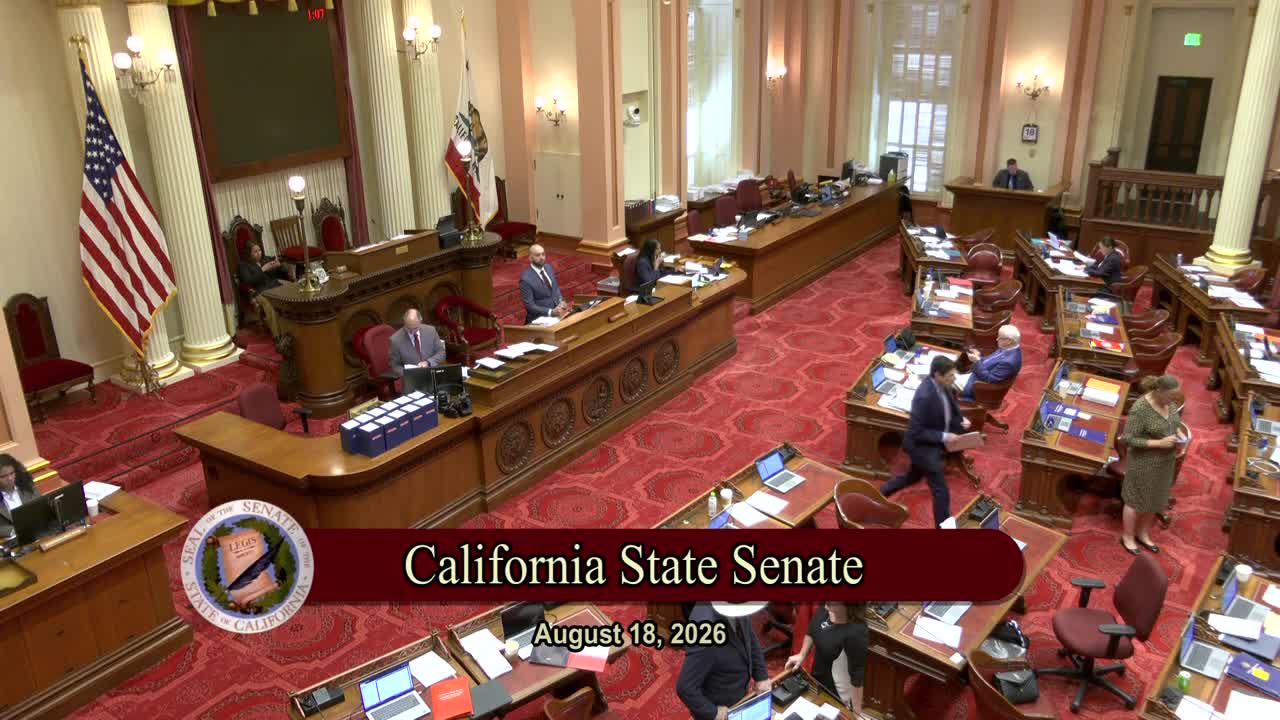
Senate Floor
 8MIN
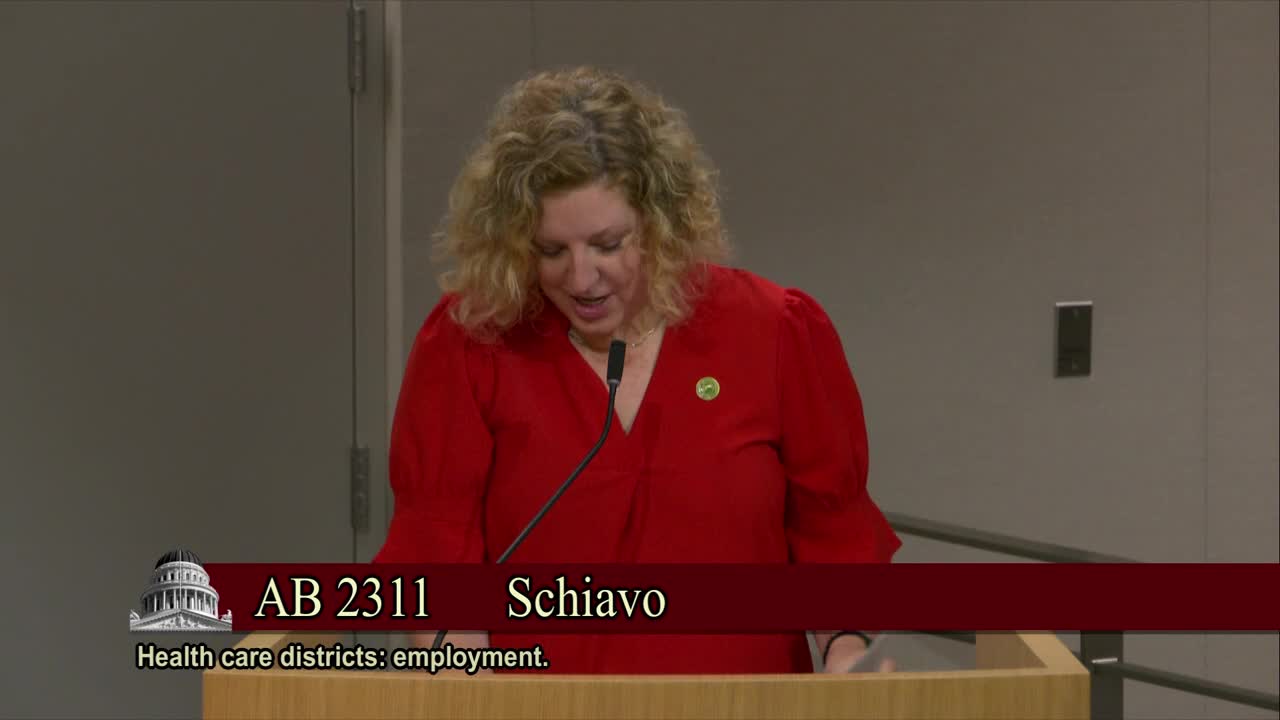
Senate Standing Committee on Business, Professions and Economic Development
 1MIN
Assembly Floor
 9MIN
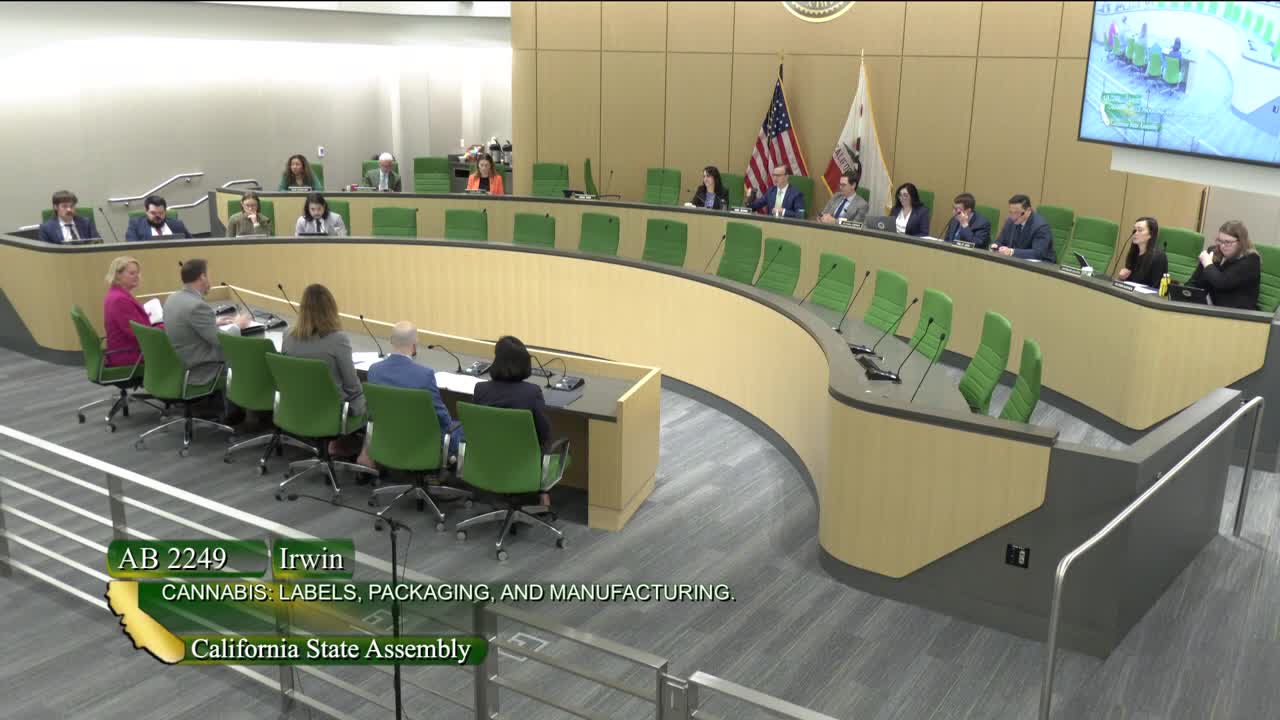
Assembly Standing Committee on Business and Professions
Bill Author

Bill Co-Author(s):