AB 2596: Mobilehome parks: federally approved housing programs: compliance with state and local laws.
- Session Year: 2025-2026
- House: Assembly
- Latest Version Date: 2026-09-30
Current Status:
Passed
(2026-09-30: Chaptered by Secretary of State - Chapter 953, Statutes of 2026.)
Introduced
In Committee
Awaiting First Chamber Vote
Passed First Chamber
In Committee
Awaiting Second Chamber Vote
Passed Second Chamber
Enacted
Existing law, the Mobilehome Residency Law, prescribes various terms and conditions of tenancies in mobilehome parks. Existing law authorizes a local agency to be responsible for the enforcement of certain requirements governing mobilehome parks.
This bill would specify that, in the event that a mobilehome park operator, owner, or management fails to, or elects not to, comply with federal law or other federal requirements imposed in connection with a federally approved housing program, the mobilehome park operator, owner, or management shall ensure ongoing compliance with the Mobilehome Residency Law, the prescribed provisions of the Unruh Civil Rights Act, and all other applicable state and local laws and ordinances. If a mobilehome park operator, owner, or management fails to, or elects not to, conduct the age verification requirement under prescribed federal law, the bill would authorize a local agency to conduct age verification, as provided, and grant the local agency with the right to access and inspect records of the mobilehome park operator, owner, and management to conduct that verification.
Existing law, the Mobilehome Residency Law, prescribes various terms and conditions of tenancies in mobilehome parks. Existing law authorizes a local agency to be responsible for the enforcement of certain requirements governing mobilehome parks.
This bill would specify that, if in the event that a mobilehome park operator or owner operator, owner, or management fails to to, or elects not to, comply with federal law or other federal requirements imposed in connection with a federally approved housing program, the mobilehome park operator or owner operator, owner, or management shall ensure ongoing compliance with applicable state laws, including, but not limited to, the Mobilehome Residency Law, the prescribed provisions of the Unruh Civil Rights Act, and all other applicable state and local laws and ordinances. If a mobilehome park operator, owner, or management fails to, or elects not to, conduct the age verification requirement under prescribed federal law, the bill would authorize a local agency to conduct age verification, as provided, and grant the local agency with the right to access and inspect records of the mobilehome park operator, owner, and management to conduct that verification.
Existing law, the Mobilehome Residency Law, prescribes various terms and conditions of tenancies in mobilehome parks.
This bill would specify that, if a mobilehome park operator or owner fails to comply with federal law or other federal requirements imposed in connection with a federally approved housing program, the mobilehome park operator or owner shall ensure ongoing compliance with applicable state laws, including, but not limited to, prescribed provisions of the Unruh Civil Rights Act, and local ordinances.
(a)In the event that a mobilehome park operator, owner, or management fails to, or elects not to, comply with federal law or other federal requirements imposed in connection with a federally approved housing program, including, but not limited to, the Housing for Older Persons Act of 1995, the mobilehome park operator, owner, or management shall ensure ongoing compliance with this chapter, Sections 51.2 and 51.3, and applicable state and local laws and ordinances, including those regulating or requiring operation as a senior mobilehome park, or which define a mobilehome park or a senior mobilehome park under state or local laws.
(b)In the event that a mobilehome park operator, owner, or management fails or elects not to conduct the age verification requirement under the Housing for Older Persons Act of 1995, a local agency may conduct the age verification by any means authorized by law, and shall have the right to access and inspect records of the mobilehome park operator, owner, and management to conduct the verification.
(a)In the event that a mobilehome park operator or owner operator, owner, or management fails to to, or elects not to,comply with federal law or other federal requirements imposed in connection with a federally approved housing program, including, but not limited to, the Housing for Older Persons Act of 1995, the mobilehome park operator or owner operator, owner, or management shall ensure ongoing compliance with applicable state laws, including, but not limited to, this chapter, Sections 51.2 and 51.3, and applicable state and local ordinances. laws and ordinances, including those regulating or requiring operation as a senior mobilehome park, or which define a mobilehome park or a senior mobilehome park under state or local laws.
(b)In the event that a mobilehome park operator, owner, or management fails or elects not to conduct the age verification requirement under the Housing for Older Persons Act of 1995, a local agency may conduct the age verification by any means authorized by law, and shall have the right to access and inspect records of the mobilehome park operator, owner, and management to conduct the verification.
If a mobilehome park operator or owner fails to comply with federal law or other federal requirements imposed in connection with a federally approved housing program, the mobilehome park operator or owner shall ensure ongoing compliance with applicable state laws, including, but not limited to, this chapter, Sections 51.2 and 51.3, and local ordinances.
|
Date
|
Status
|
|---|---|
| Sep 30, 2026 | Chaptered by Secretary of State - Chapter 953, Statutes of 2026. |
| Sep 30, 2026 | Approved by the Governor. |
| Aug 20, 2026 | Enrolled and presented to the Governor at 4 p.m. |
| Aug 13, 2026 | Senate amendments concurred in. To Engrossing and Enrolling. (Ayes 74. Noes 0.). |
| Aug 13, 2026 | Senate amendments concurred in. To Engrossing and Enrolling. (Ayes 74. Noes 0. Page 6141.). |
| Aug 11, 2026 | In Assembly. Concurrence in Senate amendments pending. |
| Aug 10, 2026 | Read third time. Passed. Ordered to the Assembly. (Ayes 39. Noes 0.). |
| Aug 10, 2026 | Read third time. Passed. Ordered to the Assembly. (Ayes 39. Noes 0. Page 5319.). |
| Jul 2, 2026 | Read second time. Ordered to Consent Calendar. |
| Jul 1, 2026 | From committee: Do pass. To Consent Calendar. (Ayes 13. Noes 0.) (June 30). |
| Jun 18, 2026 | From committee chair, with author's amendments: Amend, and re-refer to committee. Read second time, amended, and re-referred to Com. on JUD. |
| Jun 12, 2026 | In committee: Hearing postponed by committee. |
| May 13, 2026 | Referred to Com. on JUD. |
| May 5, 2026 | In Senate. Read first time. To Com. on RLS. for assignment. |
| May 4, 2026 | Read third time. Passed. Ordered to the Senate. (Ayes 73. Noes 0.) |
| May 4, 2026 | Read third time. Passed. Ordered to the Senate. (Ayes 73. Noes 0. Page 4919.) |
| May 4, 2026 | Read third time. Passed. Ordered to the Senate. |
| Apr 29, 2026 | Read second time. Ordered to Consent Calendar. |
| Apr 28, 2026 | From committee: Do pass. To Consent Calendar. (Ayes 12. Noes 0.) (April 28). |
| Apr 15, 2026 | From committee: Do pass and re-refer to Com. on JUD. with recommendation: To Consent Calendar. (Ayes 12. Noes 0.) (April 15). Re-referred to Com. on JUD. |
| Mar 9, 2026 | Referred to Coms. on H. & C.D. and JUD. |
| Feb 21, 2026 | From printer. May be heard in committee March 23. |
| Feb 20, 2026 | Read first time. To print. |
|
Date
|
Description
|
Location
|
Votes
|
|
|---|---|---|---|---|
| Aug 13, 2026 | AB 2596 Gipson Concurrence in Senate Amendments | Assembly Floor |
Passed |
|
| Aug 10, 2026 | Consent Calendar 2nd AB2596 Gipson et al. | Senate Floor |
Passed |
|
| Jun 30, 2026 | Do pass and be ordered to the Consent Calendar | Senate Standing Committee on Judiciary |
Passed |
|
| May 4, 2026 | AB 2596 Gipson Consent Calendar Second Day Regular Session | Assembly Floor |
Passed |
|
| Apr 28, 2026 | Do pass. To Consent Calendar. | Assembly Standing Committee on Judiciary |
Passed |
|
| Apr 15, 2026 | Do pass and be re-referred to the Committee on [Judiciary] with recommendation: To Consent Calendar | Assembly Standing Committee on Housing and Community Development |
Passed |
This list shows positions taken on this bill by organizations on the date displayed, which is linked to the original source.
Positions by individuals are not included.
|
Organization
|
Position
|
Date
|
|---|---|---|
| California Association Of Code Enforcement Officers | ** Support | |
| California Senior Legislature | ** Support | |
| City of Cotati | ** Support | |
| City of Petaluma | ** Support | |
| City of San Marcos | ** Support | |
| City of Thousand Oaks | ** Support | |
| Golden State Manufactured-home Owners League, Inc. | ** Support | |
| Wine Country Young Democrats | ** Support |
CONCURRENCE IN SENATE AMENDMENTS
CSA1 Bill Id:AB 2596
Author:(Gipson)
As Amended Ver:June 18, 2026
Majority vote
SUMMARY
Requires an owner, operator, or management of a mobilehome park, in the event they fail to comply with federal law or other federal regulations imposed in connection with a federally approved housing program, to ensure ongoing compliance with the Mobilehome Residency Law, the Unruh Civil Rights Act (Unruh Act), and other applicable state and local laws, including those regulating operation as senior mobilehome park.
Senate Amendments
- Provide that a local agency may, in the event a mobilehome park owner, operator, or management fails or elect not to conduct the age verification requirement under the Housing for Older Persons Act of 1995 (HOPA), conduct the age verification by any means authorized by law.
- Specify that a local agency shall have the right to access and inspect records of the mobilehome park owner, operator, or management to conduct the age verification.
COMMENTS
HOPA: HOPA is a federal law enacted in 1995 that amended the Fair Housing Act. Its primary purpose is to clarify when housing communities may lawfully restrict residency based on age without violating prohibitions on familial status discrimination. Under HOPA, "housing for older persons" may limit occupancy to seniors, most commonly those aged 55 and older, if certain criteria are met. These include having at least 80% of occupied units with at least one resident aged 55 or older, maintaining policies that demonstrate an intent to operate as senior housing, and complying with age-verification requirements. The law streamlined prior rules by removing the requirement to provide significant services or facilities for seniors, instead focusing on occupancy thresholds and administrative compliance.
Mobilehome parks are among the types of housing that can qualify for HOPA's exemption, and many parks actively participate by designating themselves as "55+ communities." To do so, a mobilehome park must meet the same federal standards as other housing providers, including the 80% occupancy threshold and formal policies supporting age-restricted residency. In California, mobilehome parks are a significant portion of the senior housing market, and HOPA interacts with state laws that may impose additional requirements, like registration, signage, or local enforcement mechanisms. Participation in HOPA allows these parks to legally limit residency to older adults, but failure to consistently meet the federal criteria, like falling below the 80% threshold or not properly verifying ages, can result in loss of the exemption and potential liability under fair housing laws. Federal regulations adopted by the U.S. Department of Housing and Urban Development under the HOPA law authorize cities to adopt local laws to protect senior housing in mobilehome parks.
Unruh Act: The Unruh Act broadly prohibits arbitrary discrimination by business establishments in California, guaranteeing equal access regardless of protected characteristics, including those that courts have interpreted to include age. In the housing context, Civil Code Section 51.2 specifically provides that owners of housing accommodations may not discriminate based on age, but it expressly allows exceptions "as otherwise provided by law." One such exemption is set forth in Civil Code Section 51.3, which permits certain qualifying senior housing developments to impose age restrictions without violating the Unruh Act. This exemption is narrowly tailored and applies only to housing that meets specified criteria, such as qualifying as "housing for older persons," and that complies with specific requirements regarding occupancy thresholds, policies and procedures showing intent to operate as senior housing, and age verification practices. Together, these provisions reflect a balance between the Unruh Act's general prohibition on age discrimination in housing and the Legislature's intent to preserve legally compliant housing opportunities for older adults.
Local jurisdictions can also, within reasonable exercise of their police powers, establish certain zones for mobilehome parks and establish types of uses and locations, including senior mobilehome parks.
According to the Author
"AB 2596 makes clear that failure to maintain federal documentation or failure to comply with federal age-verification requirements does not relieve a mobilehome park owner of the obligation to comply with California law and locally adopted senior-housing ordinances. Without this clarification, mobilehome park owners are attempting to use technical compliance gaps as a pretext to convert senior communities to all-ages parks, which is leads to significant rent increases, the displacement of long-time residents, and the loss of critical affordable housing for older Californians. This bill restores legislative intent, reduces unnecessary litigation, preserves local land use authority, protects vulnerable seniors from economic displacement, and closes a loophole being exploited by bad actors."
Arguments in Support
According to the California Association of Code Enforcement Officers, a co-sponsor of this bill, "This narrowly tailored measure addresses an urgent and growing gap in state law that is being exploited to destabilize senior mobilehome communities and displace vulnerable residents.
Across California, cities and counties have adopted zoning protections and rent stabilization measures to preserve certain mobilehome parks as affordable housing for seniors. These policies are critical for older Californians living on fixed incomes and have long been upheld and enforced through established local compliance mechanisms. However, recent business practices by certain mobilehome park operators have exposed a loophole in the interaction between federal age-verification requirements under the Housing for Older Persons Act (HOPA) and California's senior-housing zoning protections. Some park operators now argue that if they fail to meet federal age-verification requirements, they are no longer bound by state and local senior-only zoning requirements. This interpretation turns housing policy on its head — effectively allowing noncompliance with one legal obligation to excuse compliance with another.
While most operators comply in good faith, at least one large operator managing nearly 100 properties in California has attempted to use this technical defense to strip senior designation from parks. Their financial incentive is clear: converting senior parks to all-age occupancy allows for significantly higher rents, often at the expense of long-term senior residents living on fixed incomes. For many seniors, displacement from a mobilehome park is not merely disruptive — it can mean homelessness. Residents often own their homes but cannot afford relocation costs or market-rate housing alternatives. AB 2596 provides the clear statutory direction necessary to ensure California's senior housing protections function as intended."
Arguments in Opposition
No opposition on file.
FISCAL COMMENTS
Unknown. This bill is keyed non-fiscal by the Legislative Counsel.
VOTES:
ASM HOUSING AND COMMUNITY DEVELOPMENT: 12-0-0
YES: Haney, Patterson, Ávila Farías, Caloza, Garcia, Kalra, Lee, Quirk-Silva, Ta, Tangipa, Wicks, Wilson
ASM JUDICIARY: 12-0-0
YES: Kalra, Bauer-Kahan, Bryan, Connolly, Dixon, Harabedian, Johnson, Pacheco, Papan, Sanchez, Lee, Zbur
ASSEMBLY FLOOR: 73-0-7
YES: Addis, Aguiar-Curry, Ahrens, Alanis, Alvarez, Ávila Farías, Bains, Bauer-Kahan, Berman, Boerner, Bonta, Bryan, Calderon, Carrillo, Castillo, Connolly, Davies, DeMaio, Dixon, Elhawary, Ellis, Fong, Gabriel, Gallagher, Garcia, Gipson, Jeff Gonzalez, Mark González, Hadwick, Haney, Harabedian, Hart, Hoover, Irwin, Jackson, Johnson, Kalra, Krell, Lackey, Lee, Lowenthal, Macedo, McKinnor, Muratsuchi, Nguyen, Ortega, Pacheco, Papan, Patel, Patterson, Pellerin, Petrie-Norris, Quirk-Silva, Ramos, Ransom, Celeste Rodriguez, Michelle Rodriguez, Rogers, Blanca Rubio, Sanchez, Schiavo, Schultz, Sharp-Collins, Solache, Soria, Stefani, Ta, Tangipa, Valencia, Ward, Wicks, Zbur, Rivas
ABS, ABST OR NV: Arambula, Bennett, Caloza, Chen, Flora, Wallis, Wilson
SENATE FLOOR: 39-0-1
YES: Allen, Archuleta, Arreguín, Ashby, Becker, Blakespear, Cabaldon, Caballero, Cervantes, Choi, Cortese, Dahle, Durazo, Gonzalez, Grayson, Grove, Hurtado, Jones, Laird, Limón, McGuire, McNerney, Menjivar, Niello, Ochoa Bogh, Padilla, Pérez, Reyes, Richardson, Rubio, Seyarto, Smallwood-Cuevas, Stern, Strickland, Umberg, Valladares, Wahab, Weber Pierson, Wiener
ABS, ABST OR NV: Alvarado-Gil
UPDATED
VERSION: June 18, 2026
CONSULTANT: Juan Reyes / H. & C.D. / (916) 319-2085 FN: 0003433
SENATE RULES COMMITTEE Office of Senate Floor Analyses (916) 651-4171 | AB 2596 |
CONSENT
Bill No: AB 2596
Author: Gipson (D), et al.
Amended: 6/18/26 in Senate
Vote: 21
SENATE JUDICIARY COMMITTEE: 13-0, 6/30/26
AYES: Umberg, Niello, Allen, Ashby, Caballero, Durazo, Laird, Reyes, Stern, Valladares, Wahab, Weber Pierson, Wiener
ASSEMBLY FLOOR: 73-0, 5/4/26 (Consent) - See last page for vote
SUBJECT: Mobilehome parks: federally approved housing programs: compliance with state and local laws
SOURCE: California Association of Code Enforcement Officers
Golden State Manufactured-home Owners League
DIGEST:
This bill requires a mobilehome park operator or owner, if they fail to comply with federal law or other federal regulations imposed in connection with a federally approved housing program, to ensure ongoing compliance with applicable state laws, including, but not limited to, the Mobilehome Residency Law, the Unruh Civil Rights Act, and local ordinances.
ANALYSIS:
Existing federal law establishes the Fair Housing Act to prohibit discriminatory practices in housing-related transactions on the basis of specified protected characteristics, including familial status, except for housing for older persons, as defined. (42 United States Code (U.S.C.) §§ 3601 et seq.)
Existing law:
- Establishes the Mobilehome Residency Law (MRL) to regulate the relationship between mobilehome park management and park residents, and establishes various rights, responsibilities, and limits of both groups. (Civil (Civ.) Code §§ 798 et seq.)
- Requires mobile home park management, when the management proposes an amendment to the park’s rules and regulations, to meet and consult with the homeowners in the park, their representatives, or both, after written notice has been given to all the homeowners in the park at least 10 days before the meeting, except as specified. (Civ. Code § 798.25(a).)
- Authorizes mobile home park management, following the meet and consult process in 2) above, to implement the noticed amendment without the homeowner’s consent upon written notice of not less than six months, with exceptions related to recreational facilities and changes to the MRL, as specified. (Civ. Code § 798.25(b).)
- Authorizes park management to require a prospective purchaser to comply with any rule or regulation limiting residency based on age requirements for housing for older persons, provided that the rule or regulation complies with the federal Fair Housing Act and implementing regulations. (Civ. Code § 798.76.)
- Establishes the Unruh Civil Rights Act, to provide that all persons in the state are free and equal and are entitled to full and equal accommodations, advantages, facilities, privileges, or services in all business establishments of every kind. Prohibits arbitrary discrimination by such establishments on the basis of sex, race, color, religion, ancestry, national origin, disability, medical condition, genetic information, marital status, sexual orientation, citizenship, primary language, or immigration status. (Civ. Code §§ 51 et seq.)
- Prohibits a business establishment from discriminating in the sale or rental of housing based upon age, with exceptions for accommodations designed to meet the physical and social needs of senior citizens, as specified. (Civ. Code § 51.2 (a).)
- Requires covenants, conditions, and restrictions and other documents regarding housing to set forth any limitations on occupancy, residency, or use on the basis of age, and requires that any such limitation not be more exclusive than to require one person in residence in each dwelling are required to be a senior citizen, and permits other residents within the unit to be required to be a qualified permanent resident, permitted health care resident, or other person, as specified. (Civ. Code § 51.3.)
This bill:
- Specifies that, in the event that a mobilehome park operator, owner, or management fails to, or elects not to, comply with federal law or other federal requirements imposed in connection with a federally approved housing program, including the Housing for Older Persons Act of 1995, the mobilehome park operator or owner must ensure ongoing compliance with the Mobilehome Residency Law, the Unruh Civil Rights Act’s provisions related to senior housing, and applicable state and local laws and ordinances, including those regulating or requiring operation as a senior mobilehome park or defining a mobilehome park or senior mobilehome park, as specified.
- Specifies that, in the event that a mobilehome park operator, owner, or management fails or elects not to conduct the age verification requirement under the Housing for Older Persons Act of 1995, a local agency may conduct the age verification by any means authorized by law, and shall have the right to access and inspect records of the mobilehome park operator, owner, and management to conduct verification.
FISCAL EFFECT: Appropriation: No Fiscal Com.: No Local: No
SUPPORT: (Verified 7/23/26)
California Association of Code Enforcement Officers (co-source)
Golden State Manufactured-home Owners League, Inc. (co-source)
California Senior Legislature
City of Cotati
City of Petaluma
City of San Marcos
City of Thousand Oaks
Wine Country Young Democrats
OPPOSITION: (Verified 7/23/26)
None received
ARGUMENTS IN SUPPORT:
In support, the California Association of Code Enforcement Officers states:
Across California, cities and counties have adopted zoning protections and rent stabilization measures to preserve certain mobilehome parks as affordable housing for seniors. These policies are critical for older Californians living on fixed incomes and have long been upheld and enforced through established local compliance mechanisms.
However, recent business practices by certain mobilehome park operators have exposed a loophole in the interaction between federal age-verification requirements under the Housing for Older Persons Act (HOPA) and California’s senior-housing zoning protections. Some park operators now argue that, if they fail to meet federal age-verification requirements, they are no longer bound by state and local senior-only zoning requirements. This interpretation turns housing policy on its head – effectively allowing noncompliance with one legal obligation to excuse compliance with another.
While most operators comply in good faith, at least one large operator managing nearly 100 properties in California has attempted to use this technical defense to strip senior designation from parks. Their financial incentive is clear: converting senior parks to all-age occupancy allows for significantly higher rents, often at the expense of long-term senior residents living on fixed incomes. For many seniors, displacement from a mobilehome park is not merely disruptive – it can mean homelessness. Residents often own their own homes but cannot afford relocation costs or market-rate housing alternatives. […]
AB 2596 provides the clear statutory direction necessary to ensure California’s senior housing protections function as intended.
In support, the Golden State Manufactured-home Owners League states:
AB 2596 clarifies that mobilehome park owners cannot use their failure to comply with any federal-approved housing program requirements, including the Housing for Older Persons Act of 1995 (HOPA) – a federal law that amends the Fair Housing Act to allow 55+ communities - to then ignore or exempt themselves from state and local laws passed in California.
By explicitly stating that park owners must comply with the Mobilehome Residency Law (MRL), the Unruh Civil Rights Act, and other applicable state laws and local ordinances, AB 2596 ensures mobilehome residents are protected.
This is not a new right, but a reaffirmation of our existing rights, and a necessary clarification to prevent any misinterpretation or misapplication of law or circumstance where park owners, who participate in federally-approved housing programs, can pick and choose when California laws apply to them.
ASSEMBLY FLOOR: 73-0, 5/4/26
AYES: Addis, Aguiar-Curry, Ahrens, Alanis, Alvarez, Ávila Farías, Bains, Bauer-Kahan, Berman, Boerner, Bonta, Bryan, Calderon, Carrillo, Castillo, Connolly, Davies, DeMaio, Dixon, Elhawary, Ellis, Fong, Gabriel, Gallagher, Garcia, Gipson, Jeff Gonzalez, Mark González, Hadwick, Haney, Harabedian, Hart, Hoover, Irwin, Jackson, Johnson, Kalra, Krell, Lackey, Lee, Lowenthal, Macedo, McKinnor, Muratsuchi, Nguyen, Ortega, Pacheco, Papan, Patel, Patterson, Pellerin, Petrie-Norris, Quirk-Silva, Ramos, Ransom, Celeste Rodriguez, Michelle Rodriguez, Rogers, Blanca Rubio, Sanchez, Schiavo, Schultz, Sharp-Collins, Solache, Soria, Stefani, Ta, Tangipa, Valencia, Ward, Wicks, Zbur, Rivas
NO VOTE RECORDED: Arambula, Bennett, Caloza, Chen, Flora, Wallis, Wilson
Prepared by: Ian Dougherty / JUD. / (916) 651-4113
7/30/26 14:49:27
**** END ****
Senator Thomas Umberg, Chair
2025-2026 Regular Session
Bill No: AB 2596 (Author:Gipson)
Version: June 18, 2026
Hearing Date: June 30, 2026
Fiscal: No
Urgency: No
Consultant: ID
SUBJECT
Mobilehome parks: federally approved housing programs: compliance with state and local laws
DIGEST
This bill requires a mobilehome park operator or owner, if they fail to comply with federal law or other federal regulations imposed in connection with a federally approved housing program, to ensure ongoing compliance with applicable state laws, including, but not limited to, the Mobilehome Residency Law, the Unruh Civil Rights Act, and local ordinances.
EXECUTIVE SUMMARY
Mobilehome parks are an important source of affordable housing in California, including senior housing. The federal Fair Housing Act (FHA) was enacted to provide fair housing by prohibiting discrimination on the basis of race, color, religion, sex, handicap, familial status, or national origin in the sale, rental, financing, or provision of brokerage services in housing. The FHA includes an exemption from this prohibition for housing intended and operated for occupancy by persons 55 years of age or older where additional requirements are met. In recent years, disputes have arisen across the state when mobilehome parks that were operating as mobilehome parks for seniors attempt to transition to an all-ages park. Some local jurisdictions have tried to maintain their senior mobilehome parks for senior housing, but mobilehome parks have argued that they must convert to an all-ages park despite a local ordinance requiring the park maintain its status as a senior mobilehome park because they have failed to comply with the rules for the exemption to FHA. AB 2596 attempts to address issue by stating that, if a mobilehome park fails to comply with federal law or rules imposed in connection to a federally approved housing program, the mobilehome park must ensure continued compliance with mobilehome law, the Unruh Civil Rights Act, and local ordinances.
AB 2596 is sponsored by the California Association of Code Enforcement Officers and the Golden State Manufactured-home Owners League, and is supported by the California Senior Legislature and the City of San Marcos. The Committee has received no timely letters of opposition.
PROPOSED CHANGES TO THE LAW
Existing federal law establishes the Fair Housing Act to prohibit discriminatory practices in housing-related transactions on the basis of specified protected characteristics, including familial status, except for housing for older persons, as defined. (42 U.S.C. §§ 3601 et seq.)
Existing law:
- Establishes the Mobilehome Residency Law (MRL) to regulate the relationship between mobilehome park management and park residents, and establishes various rights, responsibilities, and limits of both groups. (Civ. Code §§ 798 et seq.)
- Requires mobile home park management, when the management proposes an amendment to the park’s rules and regulations, to meet and consult with the homeowners in the park, their representatives, or both, after written notice has been given to all the homeowners in the park at least 10 days before the meeting, except as specified. (Civ. Code § 798.25(a).)
- Authorizes mobile home park management, following the meet and consult process in 2) above, to implement the noticed amendment without the homeowner’s consent upon written notice of not less than six months, with exceptions related to recreational facilities and changes to the MRL, as specified. (Civ. Code § 798.25(b).)
- Authorizes park management to require a prospective purchaser to comply with any rule or regulation limiting residency based on age requirements for housing for older persons, provided that the rule or regulation complies with the federal Fair Housing Act and implementing regulations. (Civ. Code § 798.76.)
- Establishes the Unruh Civil Rights Act, to provide that all persons in the state are free and equal and are entitled to full and equal accommodations, advantages, facilities, privileges, or services in all business establishments of every kind. Prohibits arbitrary discrimination by such establishments on the basis of sex, race, color, religion, ancestry, national origin, disability, medical condition, genetic information, marital status, sexual orientation, citizenship, primary language, or immigration status. (Civ. Code §§ 51 et seq.)
- Prohibits a business establishment from discriminating in the sale or rental of housing based upon age, with exceptions for accommodations designed to meet the physical and social needs of senior citizens, as specified. (Civ. Code § 51.2 (a).)
- Requires covenants, conditions, and restrictions and other documents regarding housing to set forth any limitations on occupancy, residency, or use on the basis of age, and requires that any such limitation not be more exclusive than to require one person in residence in each dwelling are required to be a senior citizen, and permits other residents within the unit to be required to be a qualified permanent resident, permitted health care resident, or other person, as specified. (Civ. Code § 51.3.)
This bill:
- specifies that, in the event that a mobilehome park operator, owner, or management fails to, or elects not to, comply with federal law or other federal requirements imposed in connection with a federally approved housing program, including the Housing for Older Persons Act of 1995, the mobilehome park operator or owner must ensure ongoing compliance with the Mobilehome Residency Law, the Unruh Civil Rights Act’s provisions related to senior housing, and applicable state and local laws and ordinances, including those regulating or requiring operation as a senior mobilehome park or defining a mobilehome park or senior mobilehome park, as specified.
- Specifies that, in the event that a mobilehome park operator, owner, or management fails or elects not to conduct the age verification requirement under the Housing for Older Persons Act of 1995, a local agency may conduct the age verification by any means authorized by law, and shall have the right to access and inspect records of the mobilehome park operator, owner, and management to conduct verification.
COMMENTS
- Author’s statement
According to the author:
AB 2596 makes clear that failure to maintain federal documentation or failure to comply with federal age-verification requirements does not relieve a mobilehome park owner of the obligation to comply with California law and locally adopted senior-housing ordinances. Without this clarification, mobilehome park owners are attempting to use technical compliance gaps as a pretext to convert senior communities to all- ages parks, which is leads to significant rent increases, the displacement of long-time residents, and the loss of critical affordable housing for older Californians. This bill restores legislative intent, reduces unnecessary litigation, preserves local land use authority, protects vulnerable seniors from economic displacement, and closes a loophole being exploited by bad actors.
- Mobilehomes are an important source of affordable senior housing
Mobilehomes are pre-fabricated homes that are designed to be able to be transported and moved between locations. However, while they are technically mobile, a significant amount of time, effort, and money is often required to actually move a mobilehome. Costs for moving a mobilehome range from a few thousand to tens of thousands of dollars. Many mobilehome residents own their mobilehome, but lease the land upon which their home is located from a mobilehome park. In this arrangement, the mobilehome sits on a lot within a park of mobilehomes and common space. The mobilehome park and the lots on which the mobilehomes sit are usually privately owned and managed by a mobilehome park company.
Thus, while residents technically own their mobilehome, they pay rent to the park management, are subject to the rules of the mobilehome park set by the ownership of the park, and often rely on the park for the provision of utilities. If they fall behind on their rent payments to the park for their mobilehome’s lot, or if they violate a rule of the park, they can be evicted from the park. Considering that they may have invested a large amount of money in a mobilehome that they must then sell or relocate, they could lose the equity they’ve accumulated in their mobilehome upon eviction by the park. These circumstances and the difficulty in moving a mobilehome often mean that mobilehome park owners hold an unequal bargaining position in relation to the mobilehome owners within their park.
Mobilehomes represent an important source of affordable housing in California. There are an estimated 508,589 mobilehome units in California, providing housing to about 1.5 million Californians.[1] The median price of a mobilehome in 2022 was $82,600, making mobilehome ownership one of the most significant, un-subsidized sources of affordable housing.[2] In addition, mobilehome park residents tend to be of lower income and older than the average Californian.[3] Older adults living in mobilehomes experience financial hardship more frequently than their peers that live in other housing settings, and face greater housing insecurity and have a harder time affording their regular living expenses.[4]
- The Mobilehome Residency Law
In light of this and the unique nature of mobilehome parks, the Legislature passed the Mobilehome Residency Law (MRL) in 1978 to regulate the relationship between mobilehome park management and park residents, and to establish various rights, responsibilities, and limits of both groups. (Civ. Code §§ 798 et seq.) The MRL covers a variety of areas, including: permissible rental and lease contract terms; park rules and mandatory notices to residents; limits on fees and charges, as well as increases to them; and conditions and limits related to mobilehome park evictions. Provisions of the MRL also specify that a park may evict a resident only for specified reasons.
The MRL also requires that the rules and regulations of the park be included in the rental agreement for the mobilehome site, and specifies the procedures that a park must follow to change the park rules. (Civ. Code §§ 798.15, 798.25.) If a mobilehome park wishes to change the rules of the park, it must meet and consult with mobilehome residents in the park after providing written notice to all mobilehome residents 10 days or more before the meeting. After the meeting, if a mobilehome resident does not consent to the proposed amendment of a rule or regulation, the park must provide them with written notice not less than 6 months before the change may be implemented. (Civ. Code § 798.25.)
- The Federal Housing Act and the Unruh Civil Rights Act
The federal Fair Housing Act (FHA) was enacted to provide fair housing by prohibiting discrimination on the basis of race, color, religion, sex, handicap, familial status, or national origin in the sale, rental, financing, or provision of brokerage services in housing. (42 U.S.C. §§ 3601 et seq.) However, amendments to the FHA in 1988 recognized the importance of providing an exception for housing specifically aimed at assisting seniors. This exception was later amended by the Housing for Older Persons Act of 1995 (HOPA). (Pub. L. 104-76 (1995).) The exception applies to housing under any state or federal program designed to assist elderly persons, housing intended for and solely occupied by persons 62 years of age or older, or housing intended and operated for occupancy by persons 55 years of age or older where additional requirements are met. (42 U.S.C. § 3607(b)(2).) This last category applies when at least 80 percent of the occupied units are occupied by at least one person who is 55 years of age or older, the housing facility or community publishes and adheres to policies and procedures that demonstrate the intent to provide housing for older persons, and the housing facility or community complies with rules issued by the federal government for verifying occupancy by older persons. (42 U.S.C. § 3607(b)(2)(C).)
In addition to the federal FHA, California has its own, similar anti-discrimination law: the Unruh Civil Rights Act. (Civ. Code §§ 51 et seq.) The Unruh Civil Rights Act prohibits businesses from engaging in discriminatory actions on the basis of a number of protected characteristics, including age. Civil Code section 51.2 of the Unruh Civil Rights Act prohibits businesses from discriminating in the sale or rental of housing, but includes an exception for age preferences imposed in connection with a federally approved housing program. (Civ. Code § 51.2(e).) Civil Code section 51.2 also permits a business establishment to establish and preserve housing for senior citizens, pursuant to certain requirements, except where the requirements are “preempted by the prohibition in the federal Fair Housing Amendments Act of 1988 (Public Law 100-430) and implementing regulations against discrimination on the basis of familial status.” (Civ. Code § 51.2(a).)
- Numerous mobilehome park owners in California have recently converted their parks to “All-ages” parks
While numerous mobilehome parks in California are senior-only parks, many such parks have been converted to “all-ages” parks in recent years. This has decreased the supply of affordable senior housing in the state, and also has resulted in conflict between park owners, the city government, and park residents. In response to concerns that senior mobilehome parks may convert to all-ages parks, numerous cities have enacted zoning ordinances that create senior mobilehome park overlay districts prohibiting senior mobilehome parks in the district from converting to all-ages parks. Such city actions, and parks’ conversions to all-ages parks, have led to a slew of lawsuits.
In Putnam Family Partnership v. City of Yucaipa¸ four park owners challenged the city’s senior mobilehome park overlay district as violative of the FHA because it forced them to discriminate on the basis of familial status. The court ruled that the senior mobilehome park overlay district was permissible under the FHA’s senior housing exemption, and because the FHA permitted the senior housing required by the ordinance, compliance with the ordinance did not violate the FHA. (Putnam Family P’shp v. City if Yucaipa (2012), 673 F.3d 920.) It found that the city’s ordinance was not expressly or impliedly preempted by the FHA, and that the relevant intent to maintain a senior housing was that of the city’s. In the more recent case, 1210 Cacique St. v. City of Santa Barbara, the court recognized that, in Putnam, there was no question of fact regarding whether the mobilehome park was actually operating as a senior mobilehome park under the FHA exemption at the time that the city enacted its senior mobilehome park overlay district. (1210 Cacique St. v. City of Santa Barbara (2024) 2024 U.S. Dist. LEXIS 2123233.) The court there ultimately found that the evidence showed that the park was operating as a senior mobilehome park at the time that the city’s ordinance was adopted, but such an issue of fact has now been raised in recent disputes with mobilehome parks who intend to convert their parks to all-age parks.
In one recent example, a mobilehome park that had long been run as a seniors-only park in Goleta, California was bought by an LLC in October 2025. Soon after, the park’s manager proposed new rules for the park to make the park an all-ages park, arguing at a city council meeting that the park was already an all-ages park because it did not meet the requirements for the HOPA exemption.[5] In light of this change and concerns raised by the park’s senior residents, the city council passed an ordinance establishing a senior mobilehome park zoning overlay district to prohibit the conversion to an all-ages park, but the park manager has promised to sue the city over the ordinance.
In a similar case regarding Countryside mobilehome park in Cotati, the city sued the mobilehome park for violating the city’s senior mobilehome overlay. The park countered that the overlay did not apply to Countryside mobilehome park because it was not actually a senior mobilehome park at the time that the overlay was enacted. The superior court agreed with the defendant and declined to enjoin the park owner from converting the park to an all-ages park after finding that the plaintiffs did not show that the park had met all of the requirements required by exemption in the FHA at the time that the overlay was enacted. (People of the State of California v. Countryside MHP LLC (2025) 24CV07691). This case appears to still be ongoing.
- AB 2596 requires mobilehome parks to ensure compliance with state and local laws in the event that they do not comply with federal law
The fundamental paradox of these disputes is that a mobilehome park that intends to open its park to all ages can simply claim that it does not meet all requirements of the HOPA exemption in order to subvert local ordinances meant to maintain mobilehome parks that historically operated as senior mobilehome parks. Preventing the park from converting to all-ages housing, argue the park owners, would subject the park to liability for familial status discrimination, and would require the park to violate federal law. At the same time, if the park fails to comply with the HOPA requirements, the park owner can claim it never was a senior mobilehome park and thus the local ordinance does not apply to the park.
To address this, AB 2596 states that, in the event a mobilehome park operator or owner fails or elects not to comply with federal law or other federal requirements imposed in connection with a federally approved housing program, the mobilehome park operator or owner must ensure ongoing compliance with the MRL, the housing for seniors provisions in the Unruh Civil Rights Act, and local ordinances. This includes local ordinances that define a mobilehome park or senior mobilehome park or that regulate or require the operation as a senior mobilehome park. In addition, AB 2596 specifies that, if the mobilehome park fails to conduct age verification under HOPA, the local agency may conduct age verification itself by any means authorized by law, and requires that the local agency have access to and inspect the records of the mobilehome park to conduct verification itself.
- Considerations
While AB 2596 aims to prevent the conversion of previous senior mobilehome parks to all-ages parks, it largely restates existing law. It is generally accepted that a party or individual must still comply with state law and local ordinances, regardless of whether they may be violating or failing to comply with federal law. There is no reason noncompliance with federal law invalidates an individual’s obligation to comply with state and local laws and ordinances. In the case of senior mobilehome parks, mobilehome park owners have argued they cannot comply with local senior mobilehome park overlays because doing so would require they discriminate in violation of the federal law. This is a fundamentally different question that involves issues of federalism, and AB 2596 would likely not resolve that conflict. The more recent example in Countryside did not rely on this argument, but rather on the claim that the local ordinance simply did not apply to the mobilehome park. As currently written, AB 2596 is unlikely to counter such an argument in similar future cases as well.
Moreover, the advisability of enacting a statute that requires a party to follow state law even if they are not in compliance with federal law is also questionable, as it implies there may be instances where noncompliance with federal law would permit a party to disregard state law. This is not the case, so adding language that suggests otherwise could add more confusion than clarity. Nonetheless, the author argues that AB 2596’s provisions add clarity to the law and to requirements that mobilehome parks comply with local ordinances when they do not comply with HOPA, so as to cut off any such argument by a mobilehome park in the future that wishes to convert to an all-ages park in contravention of local ordinances or other state law.
AB 2596 also includes provisions permitting a local agency to conduct age verification. While this is a requirement under HOPA, and local agencies may inspect parks for any variety of reasons, such as for health and safety, AB 2596 provides the agency new rights with regards to HOPA and the inspection of mobilehome park records. This may help local jurisdictions ensure parks comply with HOPA and maintain senior mobilehome parks as senior-only parks. While AB 2695 requires local agencies be provided access to mobilehome park records, it limits this access to the purposes of conducting age verification. Such verification ensures the park is not in violation of anti-discrimination laws and can continue being maintained as a senior mobilehome park.
- Arguments in support
In support, the Golden State Manufactured-home Owners League states:
AB 2596 clarifies that mobilehome park owners cannot use their failure to comply with any federal-approved housing program requirements, including the Housing for Older Persons Act of 1995 (HOPA) – a federal law that amends the Fair Housing Act to allow 55+ communities - to then ignore or exempt themselves from state and local laws passed in California.
By explicitly stating that park owners must comply with the Mobilehome Residency Law (MRL), the Unruh Civil Rights Act, and other applicable state laws and local ordinances, AB 2596 ensures mobilehome residents are protected.
This is not a new right, but a reaffirmation of our existing rights, and a necessary clarification to prevent any misinterpretation or misapplication of law or circumstance where park owners, who participate in federally-approved housing programs, can pick and choose when California laws apply to them.
SUPPORT
California Senior Legislature
City of San Marcos
Golden State Manufactured-home Owners League, Inc.
OPPOSITION
None received
RELATED LEGISLATION
Pending Legislation: None known.
Prior Legislation:
SB 1252 (Corbett, Ch. 524, Stats. 2010) amended the Unruh Civil Rights Act to specify that selection preferences based on age, imposed in connection with federally approved housing programs, do not constitute age discrimination in housing, and made various other changes to state anti-discrimination laws.
PRIOR VOTES:
Assembly Floor (Ayes 73, Noes 0)
Assembly Judiciary Committee (Ayes 12, Noes 0)
Assembly Housing and Community Development Committee (Ayes 12, Noes 0)
**************
U.S. Census Bureau, 2021 American Community Survey 1-Year Estimates (2021), available at https://data.census.gov/. ↑
U.S. Census Bureau, Manufactured Housing Survey (Jun. 2022), available at https://www.census.gov/data/tables/time-series/econ/mhs/annual-data.html. ↑
Noah I. Durst and Esther Sullivan, “The Contribution of Manufactured Housing to Affordable Housing in the United States: Assessing Variation Among Manufactured Housing Tenures and Community Types” (2019), Housing Policy Debate, p. 3. ↑
Consumer Financial Protection Bureau, “Data Spotlight; Profiles of older adults living in mobile homes,” (May 10, 2022), https://www.consumerfinance.gov/data-research/research-reports/data-spotlight-profiles-of-older-adults-living-in-mobile-homes/full-report/. ↑
Christina McDermott, “Goleta passes emergency law for senior mobile home parks,” Santa Barbara Independent (Feb. 18, 2026), https://www.independent.com/2026/02/18/goleta-passes-emergency-law-for-senior-mobile-home-parks/. ↑
Date of Hearing: April 28, 2026
ASSEMBLY COMMITTEE ON JUDICIARY
Ash Kalra, Chair
ABPCA Bill Id:AB 2596
Author:(Gipson) – As Introduced Ver:February 20, 2026
PROPOSED CONSENT
SUBJECT: Mobilehome parks: federally approved housing programs: compliance with state and local laws
KEY ISSUE: SHOULD THE LEGISLATURE CLARIFY THAT A MOBILEHOME PARK OPERATOR OR OWNER’S FAILURE TO COMPLY WITH FEDERAL LAW DOES NOT EXEMPT THEM FROM COMPLIANCE WITH APPLICABLE STATE LAWS?
SYNOPSIS
State and federal law both prohibit discrimination on the basis of protected characteristics in housing-related transactions. The federal Housing for Older Persons Act (HOPA) amends the Fair Housing Act (FHA) to provide senior living community operators protection from liability for what would be discriminatory practices so long as they meet specified requirements. These prohibitions and exemptions are mirrored in the Unruh Act and Civil Code Sections 51.2 and 51.3. Unfortunately, and reflective of the state’s larger housing crisis, recent years have seen a rise in senior mobile home parks transitioning to all-ages parks. One particular case out of Petaluma appears to have prompted this legislation which seeks to reaffirm that a mobile home park operator that does not comply with federal law must continue to comply with state law.
This bill is sponsored by the California Association of Code Enforcement Officers and the Golden State Manufactured-Home Owners League. It is additionally supported by the Cities of Cotati and Petaluma, and the Wine Country Young Democrats. There is no known opposition. This bill was previously heard by the Assembly Committee on Housing and Community Development where it was approved on consent.
SUMMARY: Reaffirms that a mobile home park operator or owner that fails to comply with federal law or other federal requirements imposed in connection with a federally approved housing program is still required to ensure ongoing compliance with applicable state laws and local ordinances.
EXISTING LAW:
- Establishes the Mobile Home Residency Law (MRL), which governs the rights, responsibilities, and relationships between mobile home park management and park residents. (Civil Code Section 798 et seq. All further references are to the Civil Code unless otherwise noted.)
- Requires mobile home park management, when the management proposes an amendment to the park’s rules and regulations, to meet and consult with the homeowners in the park, their representatives, or both, after written notice has been given to all the homeowners in the park at least 10 days before the meeting, except as specified. (Section 798.25 (a).)
- Authorizes mobile home park management, following the meet and consult process in 2) above, to implement the noticed amendment without the homeowner’s consent upon written notice of not less than six months, with exceptions related to recreational facilities and changes to the MRL, as specified. (Section 798.25 (b).)
- Authorizes park management to require a prospective purchaser to comply with any rule or regulation limiting residency based on age requirements for housing for older persons, provided that the rule or regulation complies with the federal Fair Housing Act and implementing regulations. (Section 798.76.)
- Establishes the Unruh Civil Rights Act, which provides that all persons in the state are free and equal and are entitled to the full and equal accommodations, advantages, facilities, privileges, or services in all business establishments of every kind. Prohibits arbitrary discrimination by such establishments on the basis of characteristics including sex, race, color, religion, ancestry, national origin, disability, medical condition, genetic information, marital status, sexual orientation, citizenship, primary language, or immigration status. (Section 51.)
- Prohibits a business establishment from discriminating in the sale or rental of housing based upon age, with exceptions for accommodations designed to meet the physical and social needs of senior citizens, as specified. (Section 51.2 (a).)
- Establishes the Fair Housing Act which prohibits discriminatory practices in housing-related transactions on the basis of protected characteristics. (42 U.S.C. Section 3601 et seq.)
- Exempts senior living communities that meet specified standards from the prohibitions against discrimination under the FHA. (42 US.C. Section 3607.)
FISCAL EFFECT: As currently in print this bill is keyed non-fiscal.
COMMENTS: Under both state and federal law, businesses are prohibited from discriminating on the basis of a protected characteristic. The federal Fair Housing Act prohibits discrimination in housing-related transactions, including lending and rental transactions. (42 U.S.C. Section 3601 et seq.) In 1995, the FHA was amended to incorporate the Housing for Older Persons Act (HOPA) to clarify when a senior living community may lawfully impose age requirements for residency and avoid liability for potential discrimination on the basis of familial status. (42 U.S.C. Section 3607.) In order to benefit from the safe harbor provided by HOPA, a senior living community must demonstrate an intent to operate as a senior living community; maintain at least 80% occupancy of residence aged 55 or older; and comply with age-verification requirements.
In California, the Unruh Civil Rights Act, codified at Civil Code Section 51 prohibits businesses from engaging in discriminatory behaviors on the basis of a number of protected characteristics, including age. Civil Code Section 51.2 further prohibits businesses from discriminating in the sale or rental of housing, but also provides that “selection preferences based on age, imposed in connection with a federally approved housing program, do not constitute age discrimination in housing.” (Civil Code Section 51.2 (e).) To further clarify state law with respect to HOPA, Civil Code Section 51.3 shields certain qualifying senior living communities that impose age restrictions that would otherwise violate the Unruh Act from liability, so long as they meet specified requirements that mirror those imposed under HOPA.
Mobile Home Residency Law. Mobile home parks are one of the few remaining consistently affordable types of housing in California, and also one of the few types of stand-alone housing options for the state’s senior population. Senior mobile home parks are therefore fairly common, and are one of the types of senior living communities exempted from the Unruh Act and FHA’s anti-discrimination policies pending compliance with HOPA and Civil Code Section 51.3. Federal regulations promulgated by the federal Department of Housing and Urban Development under HOPA authorize cities to develop local ordinances related to senior communities in mobile home parks. Additional regulations and requirements for mobile home parks are codified in the Mobile home Residency Law (MRL) at Civil Code Section 798 et seq. The MRL imposes strict requirements in the event a mobile home park intends to change their rules or regulations. In order to do so, park management must provide written notice of the proposed change, and provide homeowners an opportunity to meet and consult regarding the change.
This bill simply states that a mobile home park operator or owner that fails to comply with federal law or other requirements related to a federally approved housing program must continue to comply with applicable state laws and local ordinances. According to the author:
AB 2596 makes clear that failure to maintain federal documentation or failure to comply with federal age-verification requirements does not relieve a mobile home park owner of the obligation to comply with California law and locally adopted senior-housing ordinances. Without this clarification, mobile home park owners are attempting to use technical compliance gaps as a pretext to convert senior communities to all-ages parks, which is leads to significant rent increases, the displacement of long-time residents, and the loss of critical affordable housing for older Californians. This bill restores legislative intent, reduces unnecessary litigation, preserves local land use authority, protects vulnerable seniors from economic displacement, and closes a loophole being exploited by bad actors.
Considerations. There is no reason, statutory or otherwise, to believe that an owner or operator’s failure to comply with HOPA’s requirements would in any way relieve them of their obligation to comply with state law. Federal law and state law generally operate independently of one another and in the case of these relevant Civil Code provisions, while it references administration of federal programs, imposes its own standards for compliance. This type of statutory construction can often occur where a state believes in the policy of a federal program and wants to ensure that, even if the federal program is eliminated, the state will have its own counterpart. A statute that explicitly states that a business or entity must comply with state law even when they are out of compliance with federal law is not only odd, but creates an implication that there may be some circumstance where noncompliance with federal law does, in fact, exempt compliance with federal law. Absent a clear need for clarification or a pervasive interpretation of existing law to suggest as much, it is arguably inadvisable to codify language stating what is generally true for all statutes due to this implication.
It should also be noted that HOPA and the Civil Code statute do not function as a statute that a mobile home park must always comply with. Instead, the statutes function more as a safe harbor from liability for discriminatory behavior that would violate the FHA and Unruh Act in order to allow senior living communities to operate. Nothing in either federal or state law requires a park that had been operating as a senior living community and benefitting from HOPA’s liability shield to continue to do so in perpetuity. Rather, a park operator that had been benefitting from compliance with HOPA and Section 51.3 may decide to change their business model at which point neither statute continue to apply.
The case of Petaluma’s senior mobile home park. In 2023, the Petaluma City Council approved an overlay district for senior mobile home parks which effectively codified “seniors only” designations at five mobile home parks. This move came in the wake an announcement by one of the mobile home park owners of their intent to convert the park to all-ages park. The owners challenged the overlay, arguing it discriminated against other adults and families also seeking affordable housing. (Marisa Endicott, Escalating fight over Petaluma mobile home park rules heralds larger policy battle over key affordable housing stock (November 25, 2025) The Press Democrat available at: https://www.pressdemocrat.com/2025/11/25/petaluma-mobile-home-park-rules-court-fight/.)
In theory, the park operator would have been precluded from shifting operations to an all-ages park had the overlay been in place when they made that decision, but it seems that the overlay was imposed after the change was announced and therefore their actions prior to the overlay seem within the bounds of the law. While certainly harmful to the community’s current residents, absent local ordinances to the contrary, the initial decision to change to an all-ages park does not appear to have violated any state or federal law. Absent regulation or local laws requiring parks to function as a senior living community, the owners would not be liable under either Unruh or the FHA so long as they did not engage in any prohibited discriminatory practices.
The legal circumstance likely changes, however, where a mobile home park operator either opens or continues to operate a mobile home park within an overlay district that requires parks to operate as a senior living community. Assuming the city’s ordinance is itself legally compliant, there is no reason to believe that the park owner or operator would be somehow exempted from adhering to the city’s local laws, including an overlay. Therefore, a park operator within the bounds of an overlay that intends to proceed as an all-ages park would seem to not only be in violation of the ordinance but, to the extent they are required to operate as a senior living facility and are not complying with HOPA’s additional standards, federal and state law as well. There does not seem to be any basis for the conclusion that the park operator’s decision to eschew a local ordinance somehow provides de facto protection from liability under federal law. Similarly, the operator’s failure to comply with HOPA because of their intent to operate as an all-ages park would not somehow imbue authority to wave away the local ordinance. In conversation with the sponsors, the need for clarification notwithstanding the evident truth of the bill’s assertion appears to arise from ongoing litigation involving this confluence of HOPA and its related regulations, state law, and local ordinances, in which park owners and operators seem to be intending to circumvent the constraints of cities’ overlay districts by simply deciding to operate as an all-ages park, rather than a senior living community as required by the overlay.
It should be noted that the litigation in question has not concluded and as such, it is entirely possible that the courts will ultimately dismiss the park operator’s actions as violative of the applicable local ordinance. In that scenario, this legislation could not only be redundant but potentially harmful insofar as it creates an implication that laws not relating to mobile home parks and HOPA can be circumvented simply by violating an equivalent or similar federal law, as discussed above. It is also possible that a court will issue a ruling unrelated to the current proposal, and the sponsors will need to take another swing at legislation to provide clarity on the issue. It is true that senior mobile home park residents cannot, and should not be made to wait for the ultimate judicial ruling. However, the legislative process is a deliberative one, and should be responsive to a full set of facts. This proposal seems to be attempting to build the plane as it is taking off, and may not ultimately present the correct or effective response to the sponsor’s concerns. In order to avoid inadvertently exacerbating the problem or being wholly unresponsive to the litigation’s final determination, the author may wish to consider pausing this effort until litigation has concluded.
There is no doubt that this state is, and has been, experiencing a dire housing crisis. This crisis is particularly acute for seniors on fixed incomes with varying health and care needs. It is also undeniable that mobile home parks provide one of the last bastions of affordable independence for California’s seniors. This bill does not impose any new requirements or restrict their ability to decide to no longer operate a senior living community, nor does it provide any additional incentive to do so. It merely states, which is already the case, that a failure to comply with federal law does not exempt compliance with state law. To the extent some mobile home park operators believe they can avoid compliance with local ordinances through noncompliance with federal law, it is possible this bill would correct that misconception.
ARGUMENTS IN SUPPORT: This bill is sponsored by the California Association of Code Enforcement Officers and the Golden State Manufactured-Home Owners League (GSMOL). It is additionally supported by the Cities of Cotati and Petaluma, and the Wine Country Young Democrats. In support of the bill GSMOL submits:
AB 2596 clarifies that mobilehome park owners cannot use their failure to comply with any federal-approved housing program requirements, including the Housing for Older Persons Act of 1995 (HOPA) – a federal law that amends the Fair Housing Act to allow 55+ communities - to then ignore or exempt themselves from state and local laws passed in California.
By explicitly stating that park owners must comply with the Mobilehome Residency Law (MRL), the Unruh Civil Rights Act, and other applicable state laws and local ordinances, AB 2596 ensures mobilehome residents are protected.
This is not a new right, but a reaffirmation of our existing rights, and a necessary clarification to prevent any misinterpretation or misapplication of law or circumstance where park owners, who participate in federally-approved housing programs, can pick and choose when California laws apply to them.
REGISTERED SUPPORT / OPPOSITION:
Support
California Association of Code Enforcement Officers (co-sponsor)
Golden State Manufactured-home Owners League, INC. (GSMOL) (co-sponsor)
City of Cotati
City of Petaluma
Wine Country Young Democrats
Opposition
None on file
Analysis Prepared by: Manuela Boucher-de la Cadena / JUD. / (916) 319-2334
Date of Hearing: April 15, 2026
ASSEMBLY COMMITTEE ON HOUSING AND COMMUNITY DEVELOPMENT
Matt Haney, Chair
ABPCA Bill Id:AB 2596 (
Author:Gipson) – As Introduced Ver:February 20, 2026
SUBJECT: Mobilehome parks: federally approved housing programs: compliance with state and local laws
SUMMARY: Requires a mobilehome park operator or owner to ensure ongoing compliance with applicable state laws, including the Unruh Civil Rights Act, and local ordinances if a mobilehome park operator or owner fails to comply with federal law or other federal requirements imposed in connection with a federally approved housing program that allows for limitations on age in a mobilehome park.
EXISTING LAW:
- Establishes the Mobilehome Residency Law (MRL), which governs the rights, responsibilities, and relationships between mobilehome park management and park residents. (Civil Code Section (CIV) 798 et seq.)
- Requires mobilehome park management, when the management proposes an amendment to the park’s rules and regulations, to meet and consult with the homeowners in the park, their representatives, or both, after written notice has been given to all the homeowners in the park at least 10 days before the meeting, except as specified. (CIV 798.25(a))
- Authorizes mobilehome park management, following the meet and consult process in 2) above, to implement the noticed amendment without the homeowner’s consent upon written notice of not less than six months, with exceptions related to recreational facilities and changes to the MRL, as specified. (CIV 798.25(b))
- Authorizes park management to require a prospective purchaser to comply with any rule or regulation limiting residency based on age requirements for housing for older persons, provided that the rule or regulation complies with the federal Fair Housing Act and implementing regulations. (CIV 798.76)
- Establishes the Unruh Civil Rights Act, which provides that all persons in the state are free and equal and are entitled to the full and equal accommodations, advantages, facilities, privileges, or services in all business establishments of every kind. Prohibits arbitrary discrimination by such establishments on the basis of characteristics including sex, race, color, religion, ancestry, national origin, disability, medical condition, genetic information, marital status, sexual orientation, citizenship, primary language, or immigration status. (CIV 51)
- Prohibits a business establishment from discriminating in the sale or rental of housing based upon age, with exceptions for accommodations designed to meet the physical and social needs of senior citizens, as specified. (CIV 51.2(a))
FISCAL EFFECT: Unknown. This bill is keyed non-fiscal by the Legislative Counsel.
COMMENTS:
Author’s statement: According to the author, “AB 2596 makes clear that failure to maintain federal documentation or failure to comply with federal age-verification requirements does not relieve a mobilehome park owner of the obligation to comply with California law and locally adopted senior-housing ordinances. Without this clarification, mobilehome park owners are attempting to use technical compliance gaps as a pretext to convert senior communities to all-ages parks, which is leads to significant rent increases, the displacement of long-time residents, and the loss of critical affordable housing for older Californians. This bill restores legislative intent, reduces unnecessary litigation, preserves local land use authority, protects vulnerable seniors from economic displacement, and closes a loophole being exploited by bad actors.”
Mobilehomes in California: Mobilehomes are pre-fabricated homes that are designed to be able to be transported and moved between locations. In practice, however, significant costs associated with relocation make it much more difficult to move a mobilehome. Because of their method of construction, mobilehomes are one of the most affordable types of housing, both as a pathway to homeownership and for tenants renting park-owned mobilehomes. In the latter arrangement, the relationship between a park resident and park management is similar to that of a traditional tenant-landlord relationship in other housing types. The resident leases the park-owned mobilehome and the park management maintains the mobilehome and other facilities in the park. However, in the former example, the relationship is unique in that a resident may own their mobilehome yet still pay rent to park management to lease the space upon which the mobilehome rests. More than one million people live in California's approximately 4,500 mobilehome parks.
Housing for Older Persons Act (HOPA): HOPA is a federal law enacted in 1995 that amended the Fair Housing Act. Its primary purpose is to clarify when housing communities may lawfully restrict residency based on age without violating prohibitions on familial status discrimination. Under HOPA, “housing for older persons” may limit occupancy to seniors, most commonly those aged 55 and older, if certain criteria are met. These include having at least 80% of occupied units with at least one resident aged 55 or older, maintaining policies that demonstrate an intent to operate as senior housing, and complying with age-verification requirements. The law streamlined prior rules by removing the requirement to provide significant services or facilities for seniors, instead focusing on occupancy thresholds and administrative compliance.
Mobilehome parks are among the types of housing that can qualify for HOPA’s exemption, and many parks actively participate by designating themselves as “55+ communities.” To do so, a mobilehome park must meet the same federal standards as other housing providers, including the 80% occupancy threshold and formal policies supporting age-restricted residency. In California, mobilehome parks are a significant portion of the senior housing market, and HOPA interacts with state laws that may impose additional requirements, like registration, signage, or local enforcement mechanisms. Participation in HOPA allows these parks to legally limit residency to older adults, but failure to consistently meet the federal criteria, like falling below the 80% threshold or not properly verifying ages, can result in loss of the exemption and potential liability under fair housing laws. Federal regulations adopted by the U.S. Department of Housing and Urban Development under the HOPA law authorize cities to adopt local laws to protect senior housing in mobilehome parks.
Unruh Civil Rights Act: The Unruh Civil Rights Act (Unruh Act) broadly prohibits arbitrary discrimination by business establishments in California, guaranteeing equal access regardless of protected characteristics, including those that courts have interpreted to include age. In the housing context, Civil Code Section 51.2 specifically provides that owners of housing accommodations may not discriminate based on age, but it expressly allows exceptions “as otherwise provided by law.” One such exemption is set forth in Civil Code Section 51.3, which permits certain qualifying senior housing developments to impose age restrictions without violating the Unruh Act. This exemption is narrowly tailored and applies only to housing that meets specified criteria, such as qualifying as “housing for older persons,” and that complies with specific requirements regarding occupancy thresholds, policies and procedures showing intent to operate as senior housing, and age verification practices. Together, these provisions reflect a balance between the Unruh Act’s general prohibition on age discrimination in housing and the Legislature’s intent to preserve legally compliant housing opportunities for older adults.
Local jurisdictions can also, within reasonable exercise of their police powers, establish certain zones for mobilehome parks and establish types of uses and locations, including senior mobilehome parks.
Senior mobilehome parks: Mobilehome parks represent one of a few affordable housing options left to senior citizens that permit exclusive residence in a detached dwelling by those individuals over the age of 55 years. Residents of senior mobilehome parks rely upon the representation of the park management and park owners that only seniors can purchase homes in those parks and obtain tenancies in those parks. Those rules are set forth in the leases or rental agreements. Owners of senior mobilehome parks can change their parks from senior mobilehome parks to all-age parks by changing park rules using the procedures outlined below.
Changes to park rules and regulations: The MRL specifies procedural and substantive requirements that must be followed prior to changes to park rules and regulations. Management must provide written notice of a proposed rule change and an opportunity for homeowners to meet and consult regarding the change prior to its adoption. A rule change may take effect immediately, as to any owner, with the consent of that homeowner, or without the homeowner’s consent upon written notice no less than six months, with some exceptions. For example, changes to regulations applicable to recreational facilities may take effect without homeowner consent 60 days after written notice has been provided. Shorter notice (60 days) is permitted for changes relating to recreational facilities or where the rule change is required by a change in law. Existing law restricts management’s ability to impose certain new fees or charges that are not authorized by the rental agreement. These provisions operate within the broader framework of the MRL, which is deemed incorporated into every rental agreement (CIV 798.15), ensuring that rule changes are subject to standardized notice, participation, and enforceability requirements.
This bill: This bill clarifies that mobilehome park operators or owners must comply with relevant state laws and local ordinances even if the park operator or owner fails to comply with federal requirements, like age-verification, in connection with a federally approved housing program. The co-sponsors of this bill note a number of disputes between mobilehome park residents and park operators around the state, including in the city of Petaluma. According to a local media outlet[1], operators of a mobilehome park in Petaluma announced that they intended to convert the mobilehome park to an all-ages park. Following the announcement, the City of Petaluma adopted an ordinance establishing an overlay district to provide assurances that existing senior mobilehome parks within the overlay district and future senior mobilehome parks will remain available to seniors. Another local media outlet reported the park operator’s decision to continue advertising, and selling, to all ages and claimed that they have not been meeting requirements to maintain status as a senior park.[2] This bill seeks to clarify that if a park operator fails to meet the requirements of federal law, the park operator must still comply with applicable state laws and local ordinances.
Arguments in Support: The California Association of Code Enforcement Officers, this bill’s sponsor, writes in support: “This narrowly tailored measure addresses an urgent and growing gap in state law that is being exploited to destabilize senior mobilehome communities and displace vulnerable residents.
Across California, cities and counties have adopted zoning protections and rent stabilization measures to preserve certain mobilehome parks as affordable housing for seniors. These policies are critical for older Californians living on fixed incomes and have long been upheld and enforced through established local compliance mechanisms. However, recent business practices by certain mobilehome park operators have exposed a loophole in the interaction between
federal age-verification requirements under the Housing for Older Persons Act (HOPA) and California’s senior-housing zoning protections. Some park operators now argue that if they fail to meet federal age-verification requirements, they are no longer bound by state and local senior-only zoning requirements. This interpretation turns housing policy on its head — effectively
allowing noncompliance with one legal obligation to excuse compliance with another.
While most operators comply in good faith, at least one large operator managing nearly 100 properties in California has attempted to use this technical defense to strip senior designation from parks. Their financial incentive is clear: converting senior parks to all-age occupancy allows for significantly higher rents, often at the expense of long-term senior residents living
on fixed incomes. For many seniors, displacement from a mobilehome park is not merely disruptive — it can mean homelessness. Residents often own their homes but cannot afford relocation costs or market-rate housing alternatives. AB 2596 provides the clear statutory direction necessary to ensure California’s senior housing protections function as intended.”
The Golden State Manufactured-home Owners League, this bill’s co-sponsor, writes in support: “AB 2596 clarifies that mobilehome park owners cannot use their failure to comply with any federal-approved housing program requirements, including the Housing for Older Persons Act of 1995 (HOPA) – a federal law that amends the Fair Housing Act to allow 55+ communities - to then ignore or exempt themselves from state and local laws passed in California. By explicitly stating that park owners must comply with the Mobilehome Residency Law (MRL), the Unruh Civil Rights Act, and other applicable state laws and local ordinances, AB 2596 ensures mobilehome residents are protected.
This is not a new right, but a reaffirmation of our existing rights, and a necessary clarification to prevent any misinterpretation or misapplication of law or circumstance where park owners, who participate in federally-approved housing programs, can pick and choose when California laws apply to them. Passing AB 2596 sends a clear message that California is committed to protecting all of its mobilehome residents, especially those in vulnerable housing situations.”
Arguments in opposition: None on file.
Double-referred: This bill is double-referred to the Assembly Committee on Judiciary, where it will be heard should it pass out of this committee.
REGISTERED SUPPORT / OPPOSITION:
Support
California Association of Code Enforcement Officers (Sponsor)
Golden State Manufactured-home Owners League (Co-sponsor)
Opposition
None on file.
Analysis Prepared by: Juan Reyes / H. & C.D. / (916) 319-2085
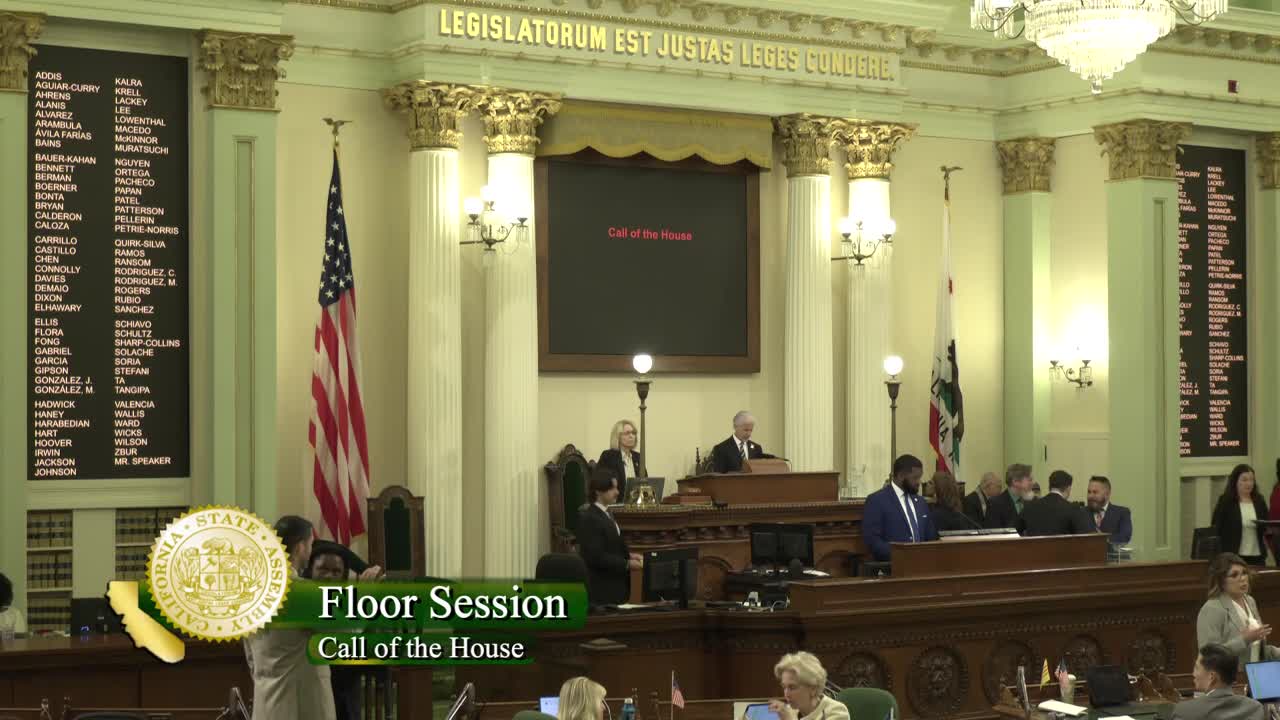
Bill Author

Bill Co-Author(s):