AB 2682: Transportation network company drivers: labor relations: appeals.
- Session Year: 2025-2026
- House: Assembly
- Latest Version Date: 2026-09-27
Current Status:
Passed
(2026-09-27: Chaptered by Secretary of State - Chapter 634, Statutes of 2026.)
Introduced
In Committee
Awaiting First Chamber Vote
Passed First Chamber
In Committee
Awaiting Second Chamber Vote
Passed Second Chamber
Enacted
What does this bill do?
The bill lets people or groups involved in an unfair-practice case—those who filed the charge, those accused, or intervenors—ask an appeals court for immediate review of a final decision or order by the board that handled the case. If the time to seek that review passes, the board can ask a court to enforce its final order, must respond to parties’ enforcement questions, and a court can force compliance through a court order (writ of mandamus) without reexamining the order’s substance.
The summary is provided by generative AI which can make mistakes. For original language, please view the details in the table below.
Existing law, the Transportation Network Company Drivers Labor Relations Act (act), establishes that transportation network company (TNC) drivers have the right to form, join, and participate in the activities of TNC driver organizations, to bargain through representatives of their own choosing, to engage in concerted activities for the purpose of bargaining or other mutual aid or protection, and to refrain from such activities. The act designates certain actions and inactions of TNCs, such as failure or refusal to negotiate in good faith with a certified bargaining organization, and of TNC driver organizations as unfair practices, which are subject to the Public Employment Relations Boards unfair practice procedure regulations.
This bill would authorize any charging party, respondent, or intervenor aggrieved by a final decision or order of the board in an unfair practice case to petition for a writ of extraordinary relief from such a decision or order, except as provided. The bill would set forth procedures for filing and reviewing the petition and for enforcing final decisions or orders subsequent to the expiration of the petition timeline.
Existing law, the Transportation Network Company Drivers Labor Relations Act (act), establishes that transportation network company (TNC) drivers have the right to form, join, and participate in the activities of TNC driver organizations, to bargain through representatives of their own choosing, to engage in concerted activities for the purpose of bargaining or other mutual aid or protection, and to refrain from such activities. The act designates certain actions and inactions of TNCs, such as failure or refusal to negotiate in good faith with a certified bargaining organization, and of TNC driver organizations as unfair practices, which are subject to the Public Employment Relations Boards unfair practice procedure regulations.
The act establishes various procedures governing the certification and decertification of TNC driver organizations for purposes of representing drivers in the collective bargaining process. The act also requires the Public Employment Relations Board (board) to determine if an entity is a TNC driver organization, as prescribed, and make certain determinations as to whether a specific organization has been designated as the bargaining representative for TNC drivers pursuant to an election process. As part of those procedures, the act authorizes a TNC driver organization to present, at any time after May 1, 2026, to the board proof sufficient to show that at least 10% of active TNC drivers have authorized the TNC driver organization to act as their bargaining representative. The act provides that for 6 months from the date of the boards determination that a TNC driver organization has been authorized to act as the bargaining representative by at least 10% of active TNC drivers, no other TNC driver organization shall be certified as the certified driver bargaining organization of those workers without an election.This bill would instead provide that the above-described 6-month period runs from the date the board determines that the first TNC driver organization has been authorized to act as the bargaining representative by at least 10% of active TNC drivers. The bill would make related clarifying changes.The act designates certain actions and inactions of TNCs, such as failure or refusal to negotiate in good faith with a certified bargaining organization, and of TNC driver organizations as unfair practices which are subject to the boards unfair practice procedure regulations.This bill would authorize any charging party, respondent, or intervenor aggrieved by a final decision or order of the board in an unfair practice case to petition for a writ of extraordinary relief from such a decision or order, except as provided. The bill would set forth procedures for filing and reviewing the petition and for enforcing final decisions or orders subsequent to the expiration of the petition timeline.
Existing law, the Transportation Network Company Drivers Labor Relations Act (act), establishes that transportation network company (TNC) drivers have the right to form, join, and participate in the activities of TNC driver organizations, to bargain through representatives of their own choosing, to engage in concerted activities for the purpose of bargaining or other mutual aid or protection, and to refrain from such activities.
The act establishes various procedures governing the certification and decertification of TNC driver organizations for purposes of representing drivers in the collective bargaining process. The act also requires the Public Employment Relations Board (board) to determine if an entity is a TNC driver organization, as prescribed, and make certain determinations as to whether a specific organization has been designated as the bargaining representative for TNC drivers pursuant to an election process. As part of those procedures, the act authorizes a TNC driver organization to present, at any time after May 1, 2026, to the board proof sufficient to show that at least 10% of active TNC drivers have authorized the TNC driver organization to act as their bargaining representative. The act provides that for 6 months from the date of the boards determination that a TNC driver organization has been authorized to act as the bargaining representative by at least 10% of active TNC drivers, no other TNC driver organization shall be certified as the certified driver bargaining organization of those workers without an election.
This bill would instead provide that the above-described 6-month period runs from the date the board determines that the first TNC driver organization has been authorized to act as the bargaining representative by at least 10% of active TNC drivers. The bill would make related clarifying changes.
The act designates certain actions and inactions of TNCs, such as failure or refusal to negotiate in good faith with a certified bargaining organization, and of TNC driver organizations as unfair practices which are subject to the boards unfair practice procedure regulations.
This bill would authorize any charging party, respondent, or intervenor aggrieved by a final decision or order of the board in an unfair practice case to petition for a writ of extraordinary relief from such a decision or order, except as provided. The bill would set forth procedures for filing and reviewing the petition and for enforcing final decisions or orders subsequent to the expiration of the petition timeline.
(a)Any charging party, respondent, or intervenor aggrieved by a final decision or order of the board in an unfair practice case may petition for a writ of extraordinary relief from such decision or order. For purposes of this subdivision, final decision or order of the board excludes a decision of the board not to issue a complaint in such an unfair practice case.
(b)(1)The petition authorized under subdivision (a) shall be filed in the district court of appeal in the appellate district where the dispute giving rise to the unfair practice case occurred. The petition shall be filed within 30 days after issuance of the boards final order or order denying reconsideration, as applicable.
(2)Upon the filing of such a petition, the court shall cause notice to be served upon the board and thereupon shall have jurisdiction of the proceeding. The board shall file with the court the record of the proceeding, certified by the board, within 10 days after the clerks notice, unless such time is extended by the court for good cause shown.
(3)The court shall have jurisdiction to grant to the board such temporary relief or restraining order it deems just and proper and make and enter a decree enforcing, modifying, or setting aside the order of the board.
(4)The findings of the board with respect to questions of fact, including ultimate facts, are conclusive if supported by substantial evidence on the record considered as a whole.
(5)The provisions of Title 1 (commencing with Section 1067) of Part 3 of the Code of Civil Procedure relating to writs shall apply to proceedings pursuant to this section. However, the provisions of this section shall prevail in cases of conflict with those of that title.
(c)(1)If the time to petition for extraordinary relief from a board decision pursuant to this section has expired, the board may seek enforcement of any final decision or order in a district court of appeal or a superior court in the district where the unfair practice case occurred.
(2)The board shall respond within 10 days to any inquiry from a party to the action as to why the board has not sought court enforcement of the final decision or order.
(3)If the response does not indicate that there has been compliance with the boards final decision or order, the board shall seek enforcement of the final decision or order upon the request of the party. The board shall file with the court the record of the proceeding, certified by the board, and appropriate evidence disclosing the failure to comply with the decision or order.
(4)If, after a hearing, the court determines that the order was issued pursuant to procedures established by the board and that the person or entity refuses to comply with the order, the court shall enforce such order by writ of mandamus. The court shall not review the merits of the order.
The certification and decertification process for TNC driver organizations shall follow the procedures set forth in this section.
(a)(1)(A)A TNC driver organization may, at any time after May 1, 2026, present to the board proof sufficient to show that at least 10 percent of active TNC drivers have authorized the TNC driver organization to act as their bargaining representative.
(B)Within 30 days of a TNC driver organization request for a board determination under subparagraph (A), the board shall determine whether the organization has been authorized to act as bargaining representative by at least 10 percent of active TNC drivers.
(2)Within 30 days of the boards determination that a TNC driver organization has presented sufficient proof to satisfy subparagraph (A) of paragraph (1), and on every January 31, April 30, July 31, and October 31 thereafter, the board shall provide the TNC driver organization with the list described in subdivision (b) of Section 7470.6. A TNC driver organization may use the information in the list only for the purposes authorized by this chapter, and shall not provide the information to any third party unless that party is acting as the TNC driver organizations agent for purposes authorized by this chapter. A covered TNC shall not be liable for any damages caused by the TNC driver organizations or the boards failure to safeguard the list described in Section 7470.6 from a data or security breach.
(3)Within 30 days of the boards determination that a TNC driver organization has presented sufficient proof to satisfy subparagraph (A) of paragraph (1), each covered TNC shall send a notice from the board to its TNC drivers who were on the most recent list submitted by that TNC to the board pursuant to Section 7470.6, in a form determined by the board, that the TNC driver organization is seeking to represent TNC drivers for the purpose of initiating a bargaining process in order to establish terms and conditions for TNC drivers in the industry. The boards notice shall advise TNC drivers of the threshold for status as an active driver eligible to execute a proof of support. The boards notice shall be neutral as to whether TNC drivers should support a TNC driver organization.
(4)For Notwithstanding subparagraph (B) of paragraph (1) of subdivision (b) and paragraph (3) of subdivision (b), six months from the date of the boards determination that a the first TNC driver organization has been authorized to act as the bargaining representative by at least ten percent of active TNC drivers, no other TNC driver organization shall be certified as the certified driver bargaining organization of those workers without an election.
(b)(1)(A)A TNC driver organization may, at any time after May 1, 2026, present to the board proof sufficient to show at least 30 percent of active TNC drivers have authorized the TNC driver organization to act as their bargaining representative.
(B)Within 30 days of a TNC driver organization request for a board determination under subparagraph (A), the board shall make a determination as to whether the organization has presented sufficient proof to satisfy subparagraph (A), and if it has, shall certify the TNC organization as the certified driver bargaining organization, subject to paragraph (2).
(2)(A)If a TNC driver organization seeking certification as the certified driver bargaining organization under this subdivision provides evidence that at least 30 percent but less than a majority of active TNC drivers have designated the TNC driver organization to act as their bargaining representative, the board shall wait 30 days before certifying the TNC driver organization as the certified driver bargaining organization. If, during those 30 days, another TNC driver organization provides evidence that at least 30 percent of active TNC drivers have authorized it to act as their bargaining representative, or a TNC driver provides evidence that at least 30 percent of active TNC drivers do not wish to be represented by any TNC driver organization, then the board shall within 60 days hold a representation election among all active TNC drivers.
(B)The election shall be conducted using a remote electronic voting system that must allow both electronic voting from remote site personal computers via the internet and electronic voting from personal or cellular telephones. The system shall not include voting machines used for casting votes at polling sites or electronic tabulation systems where votes are cast nonelectronically but counted electronically, such as punch card voting or optical scanning systems.
(3)If the TNC driver organization provides evidence that a majority of active TNC drivers have designated the TNC driver organization to act as their bargaining representative, then then, except as provided for in paragraph (4) of subdivision (a), the board shall not wait 30 days nor shall it hold an election before certifying the TNC driver organization as the certified driver bargaining organization.
(c)(1)A TNC driver organization may submit proof of support to the board to demonstrate that TNC drivers have authorized a TNC driver organization to act as their bargaining representative under subdivision (a) or (b). A TNC driver organization may submit any proof of support that complies with Section 32700 of Title 8 of the California Code of Regulations. Valid proof of support shall have been executed by the TNC driver within the two years prior to the date that the TNC driver organization requested the board determination. The fact that the proof of support was executed by the TNC driver before the effective date of this chapter shall not affect its validity.
(2)For purposes of evaluating a TNC driver organizations proof of support under subdivision (a) or (b), the board shall use the list of active TNC drivers that was most recently issued pursuant to Section 7470.6 at the time the TNC driver organization requested a board determination.
(3)A TNC driver organization may submit proof that active TNC drivers have authorized the TNC driver organization to act as their bargaining representative under subdivision (a) or (b) on a rolling basis, over any time period that the TNC driver organization elects. If the TNC driver organization does so, the board may evaluate the proof on a rolling basis, subject to confirmation that the TNC driver is still on the relevant list of active TNC drivers when the TNC driver organization requests a board determination. The deadline for the board to determine whether the TNC driver organization has presented proof that a sufficient number of active TNC drivers wish to be represented by the TNC driver organization shall begin to run when the TNC driver organization notifies the board that it believes it has presented sufficient proof and is requesting a board determination.
(d)A TNC driver organization may, at any time within one year of the boards determination that the organization has been authorized to act as the bargaining representative by at least 10 percent of active TNC drivers, petition the board to conduct a representation election.
(1)Upon the receipt of such a petition, the board shall schedule a representation election to take place within 45 days and shall announce that election date on its internet website. The eligible voters shall be those individuals who are on the list of active TNC drivers that was most recently issued pursuant to Section 7470.6 at the time the TNC driver organization petitioned the board to conduct an election.
(A)The election shall be conducted using a remote electronic voting system that must allow both electronic voting from remote site personal computers via the internet and electronic voting from personal or cellular telephones. The system shall not include voting machines used for casting votes at polling sites or electronic tabulation systems where votes are cast nonelectronically but counted electronically, such as punch card voting or optical scanning systems.
(B)If, within seven days of the announcement of the election date, any other TNC driver organization submits evidence that it has been authorized to act as the bargaining representative by at least 10 percent of active TNC drivers, that TNC driver organization shall also appear on the ballot.
(C)Thirty days prior to the representation election, the board shall provide TNCs with an election notice that informs TNC drivers of the election date, how to vote, and what the effect of the representation election will be if the TNC driver organization receives a majority of valid votes cast. The board shall provide translated versions of the notice in all languages that the board determines are likely spoken by 5 percent or more of TNC drivers. Within seven days of the boards provision of the notice, each covered TNC shall send the notice, by email, by text, and through the method it ordinarily uses to communicate with TNC drivers, to all of the TNC drivers who appeared on the most recent list submitted by that TNC to the board pursuant to Section 7470.6. The boards notice shall advise TNC drivers of the threshold for status as an active driver eligible to cast a vote. The board may provide different versions of the notice that are appropriate for different means of communication.
(2)If the TNC driver organization receives a majority of valid votes cast by active TNC drivers, it shall be certified as the certified driver bargaining organization of all TNC drivers in the bargaining unit.
(3)When two or more TNC driver organizations are on the ballot and none of the listed choices receive a majority of the valid votes cast, there shall be a runoff election between the two choices receiving the highest number of votes cast and second highest number of votes cast. The election shall be held within 30 days of the determination that no choice received a majority of valid votes. The provisions for notice set forth in subparagraph (C) of paragraph (1) shall apply.
(A)The TNC drivers eligible to vote in the runoff election shall be the same TNC drivers who were eligible to vote in the original election. A TNC driver organization receiving a majority of the valid votes cast in the runoff shall be certified as the certified driver bargaining organization of all TNC drivers in the bargaining unit.
(B)If a majority of the valid votes cast are for no driver organization, then the board shall not certify any TNC driver organization as the certified driver bargaining organization.
(e)(1)A TNC driver organization certified as the certified driver bargaining organization shall have the authority to represent all TNC drivers in the bargaining unit, without challenge by another TNC driver organization, for one year following certification and during the time that a bargaining agreement is in effect, provided that this period shall not be longer than three years following the date of the approval of a bargaining agreement, except during a 30-day window period that shall begin 90 days before, and end 60 days before, the bargaining agreement expires.
(2)During the times when the certified driver bargaining organization is subject to challenge, TNC drivers may file for a decertification election upon a showing that at least 30 percent of active TNC drivers have demonstrated support for decertification. The board will determine the list of active TNC drivers pursuant to Section 7470.6. The board will then schedule an election within 30 days to determine the TNC driver organizations status as the certified driver bargaining organization. The TNC driver organization shall retain its status as the certified driver bargaining organization if it receives a majority of valid votes cast by active TNC drivers.
(f)The only appropriate bargaining unit of TNC drivers for purposes of this chapter is a statewide unit of all TNC drivers who drive for covered TNCs.
SEC. 2.Section 7470.18.5 is added to the Business and Professions Code, to read:7470.18.5.(a)Any charging party, respondent, or intervenor aggrieved by a final decision or order of the board in an unfair practice case may petition for a writ of extraordinary relief from such decision or order. For purposes of this subdivision, final decision or order of the board excludes a decision of the board not to issue a complaint in such an unfair practice case.
(b)(1)The petition authorized under subdivision (a) shall be filed in the district court of appeal in the appellate district where the dispute giving rise to the unfair practice case occurred. The petition shall be filed within 30 days after issuance of the boards final order or order denying reconsideration, as applicable.
(2)Upon the filing of such a petition, the court shall cause notice to be served upon the board and thereupon shall have jurisdiction of the proceeding. The board shall file with the court the record of the proceeding, certified by the board, within 10 days after the clerks notice, unless such time is extended by the court for good cause shown.
(3)The court shall have jurisdiction to grant to the board such temporary relief or restraining order it deems just and proper and make and enter a decree enforcing, modifying, or setting aside the order of the board.
(4)The findings of the board with respect to questions of fact, including ultimate facts, are conclusive if supported by substantial evidence on the record considered as a whole.
(5)The provisions of Title 1 (commencing with Section 1067) of Part 3 of the Code of Civil Procedure relating to writs shall apply to proceedings pursuant to this section. However, the provisions of this section shall prevail in cases of conflict with those of that title.
(c)(1)If the time to petition for extraordinary relief from a board decision pursuant to this section has expired, the board may seek enforcement of any final decision or order in a district court of appeal or a superior court in the district where the unfair practice case occurred.
(2)The board shall respond within 10 days to any inquiry from a party to the action as to why the board has not sought court enforcement of the final decision or order.
(3)If the response does not indicate that there has been compliance with the boards final decision or order, the board shall seek enforcement of the final decision or order upon the request of the party. The board shall file with the court the record of the proceeding, certified by the board, and appropriate evidence disclosing the failure to comply with the decision or order.
(4)If, after a hearing, the court determines that the order was issued pursuant to procedures established by the board and that the person or entity refuses to comply with the order, the court shall enforce such order by writ of mandamus. The court shall not review the merits of the order.
|
Date
|
Status
|
|---|---|
| Sep 27, 2026 | Chaptered by Secretary of State - Chapter 634, Statutes of 2026. |
| Sep 27, 2026 | Approved by the Governor. |
| Aug 31, 2026 | Enrolled and presented to the Governor at 4 p.m. |
| Aug 25, 2026 | In Assembly. Ordered to Engrossing and Enrolling. |
| Aug 25, 2026 | Read third time. Passed. Ordered to the Assembly. (Ayes 30. Noes 10.). |
| Aug 13, 2026 | Read second time. Ordered to third reading. |
| Aug 13, 2026 | From committee: Do pass. (Ayes 5. Noes 2.) (August 13). |
| Aug 3, 2026 | In committee: Referred to APPR. suspense file. |
| Jun 24, 2026 | From committee: Do pass and re-refer to Com. on APPR. (Ayes 11. Noes 1.) (June 23). Re-referred to Com. on APPR. |
| Jun 17, 2026 | From committee: Do pass and re-refer to Com. on JUD. (Ayes 4. Noes 1.) (June 17). Re-referred to Com. on JUD. |
| Jun 3, 2026 | Referred to Coms. on L., P.E. & R. and JUD. |
| May 27, 2026 | In Senate. Read first time. To Com. on RLS. for assignment. |
| May 26, 2026 | Read third time. Passed. Ordered to the Senate. (Ayes 69. Noes 7.) |
| May 26, 2026 | Read third time. Passed. Ordered to the Senate. (Ayes 69. Noes 7. Page 5341.) |
| May 26, 2026 | Read third time. Passed. Ordered to the Senate. |
| May 18, 2026 | Read second time. Ordered to third reading. |
| May 14, 2026 | From committee: Do pass. (Ayes 13. Noes 1.) (May 14). |
| May 6, 2026 | In committee: Set, first hearing. Referred to APPR. suspense file. |
| Apr 23, 2026 | From committee: Do pass and re-refer to Com. on APPR. with recommendation: To Consent Calendar. (Ayes 7. Noes 0.) (April 22). Re-referred to Com. on APPR. |
| Mar 25, 2026 | Re-referred to Com. on L. & E. |
| Mar 24, 2026 | From committee chair, with author's amendments: Amend, and re-refer to Com. on L. & E. Read second time and amended. |
| Mar 16, 2026 | Referred to Com. on L. & E. |
| Feb 21, 2026 | From printer. May be heard in committee March 23. |
| Feb 20, 2026 | Read first time. To print. |
|
Date
|
Description
|
Location
|
Votes
|
|
|---|---|---|---|---|
| Aug 25, 2026 | Assembly 3rd Reading AB2682 Berman et al. By Reyes | Senate Floor |
Passed |
|
| Aug 13, 2026 | Do pass | Senate Standing Committee on Appropriations |
Passed |
|
| Aug 3, 2026 | Placed on suspense file | Senate Standing Committee on Appropriations |
Passed |
|
| Jun 23, 2026 | Do pass, but first be re-referred to the Committee on [Appropriations] | Senate Standing Committee on Judiciary |
Passed |
|
| Jun 17, 2026 | Do pass, but first be re-referred to the Committee on [Judiciary] | Senate Standing Committee on Labor, Public Employment and Retirement |
Passed |
|
| May 26, 2026 | AB 2682 Berman Assembly Third Reading | Assembly Floor |
Passed |
|
| May 14, 2026 | Do pass. | Assembly Standing Committee on Appropriations |
Passed |
|
| Apr 22, 2026 | Do pass and be re-referred to the Committee on [Appropriations] with recommendation: To Consent Calendar | Assembly Standing Committee on Labor and Employment |
Passed |
This list shows positions taken on this bill by organizations on the date displayed, which is linked to the original source.
Positions by individuals are not included.
|
Organization
|
Position
|
Date
|
|---|---|---|
| SEIU California | ** Support |
SENATE RULES COMMITTEE Office of Senate Floor Analyses (916) 651-4171 | AB 2682 |
THIRD READING
Bill No: AB 2682
Author: Berman (D) and Wicks (D)
Amended: 3/24/26 in Assembly
Vote: 21
SENATE LABOR, PUB. EMP. & RET. COMMITTEE: 4-1, 6/17/26
AYES: Smallwood-Cuevas, Cortese, Durazo, Laird
NOES: Strickland
SENATE JUDICIARY COMMITTEE: 11-1, 6/23/26
AYES: Umberg, Allen, Ashby, Caballero, Durazo, Laird, Reyes, Stern, Wahab, Weber Pierson, Wiener
NOES: Niello
NO VOTE RECORDED: Valladares
SENATE APPROPRIATIONS COMMITTEE: 5-2, 8/13/26
AYES: Cervantes, Cabaldon, Grayson, Richardson, Wahab
NOES: Seyarto, Dahle
ASSEMBLY FLOOR: 69-7, 5/26/26 - See last page for vote
SUBJECT: Transportation network company drivers: labor relations: appeals
SOURCE: SEIU California
DIGEST:
This bill authorizes any charging party, respondent, or intervenor aggrieved by a final decision or order of the Public Employment Relations Board (PERB) in an unfair practice case under the Transportation Network Company Drivers Labor Relations Act (Act) the right to appeal PERB decisions, as specified.
ANALYSIS:
Existing law:
- Provides, under the Transportation Network Company Drivers Labor Relations Act (Act), that transportation network company (TNC) drivers have the right to form, join, and participate in the activities of TNC driver organizations, to bargain through representatives of their own choosing, to engage in concerted activities for the purpose of bargaining or other mutual aid or protection, and to refrain from such activities. (Business and Professions Code §7470.3(a))
- Provides that it shall be an unfair practice for a TNC, an agent of a TNC, or a multicompany committee to do, among other things, the following: (Business and Professions Code §7470.18(a))
- Fail or refuse to negotiate in good faith with a certified driver bargaining organization, as required by this Act.
- Fail or refuse to provide a certified driver bargaining organization with information required by the organization that is relevant and necessary in discharging its representational duties or in exercising its right to represent TNC drivers regarding terms and conditions of work within the scope of representation.
- Dominate or interfere with the formation, existence, or administration of any TNC driver organization, or contribute financial or other support to any such organization, whether directly or indirectly, as specified.
- Require a TNC driver to join any company union or TNC driver organization or requiring a TNC driver to refrain from forming, joining, or assisting a TNC driver organization of their choice.
- Encourage or discourage membership in any company union or in any TNC driver organization by discriminating with regard to any term or condition of work.
- Discharge, deactivate, or otherwise discriminate with regard to the ability of a TNC driver to obtain rides, or otherwise discriminate against a TNC driver, because they have signed or filed any affidavit, petition, or complaint under this Act, have given any information or testimony under this Act, have participated or declined to participate in a TNC driver organization, or have exercised any rights under this Act.
- Distribute or circulate any blacklist of individuals exercising any right created or confirmed by this chapter or of members of a TNC driver organization, or inform any person of the exercise by any individual of that right or of the membership of any individual of a TNC driver organization for the purpose of preventing those blacklisted or named individuals from obtaining or retaining opportunities for remuneration.
- Interfere with, restrain, or coerce TNC drivers in the exercise of rights guaranteed by the Act.
- Provides that it shall be an unfair practice for a TNC driver organization or its agents to do, among other things, the following: (Business and Professions Code §7470.18(b))
- Restrain or coerce TNC drivers in the exercise of rights guaranteed by the act.
- Fail or refuse to negotiate in good faith with a covered TNC or multicompany committee as required by this Act, provided it is the certified driver bargaining organization.
- Fail or refuse to provide information requested by a covered TNC or its representative that is relevant and necessary for purposes of bargaining regarding terms and conditions of work within the scope of representation.
- Fail or refuse to fulfill its duty of fair representation toward TNC drivers where it is the certified driver bargaining organization by acts or omissions that are arbitrary, discriminatory, or in bad faith.
- Establishes the PERB, a quasi-judicial administrative agency charged with administering certain statutory frameworks governing California state and local public employer-employee relations, resolving disputes, and enforcing the statutory duties and rights of public agency employers, employees, and employee organizations. (Government Code §3541 et seq.)
- Authorizes a writ of review to be granted by any court when an inferior tribunal, board, or officer, exercising judicial functions, has exceeded the jurisdiction of such tribunal, board, or officer, and there is no appeal, nor, in the judgment of the court, any plain, speedy, and adequate remedy. (Code of Civil Procedure §1068(a))
- Authorizes a writ of mandate (or writ of mandamus) to be issued by any court to any inferior tribunal, corporation, board, or person, to compel the performance of an act which the law specially enjoins, as a duty resulting from an office, trust, or station, or to compel the admission of a party to the use and enjoyment of a right or office to which the party is entitled, and from which the party is unlawfully precluded by that inferior tribunal, corporation, board, or person. (Code of Civil Procedure §1085(a).)
This bill:
- Authorizes any charging party, respondent, or intervenor aggrieved by a PERB final decision or order in an unfair practice case may petition for a writ of extraordinary relief from such decision or order.
- Specifies for purposes of this subdivision, “final decision or order of the board” excludes a PERB decision not to issue a complaint in such an unfair practice case.
- Requires the petition to be filed in the district court of appeal in the appellate district where the dispute giving rise to the unfair practice case occurred. The petition must be filed within 30 days after issuance of PERB’s final order or order denying reconsideration, as applicable.
- Requires the court, upon the filing of such a petition, to cause notice to be served upon PERB and thereupon will have jurisdiction of the proceeding. PERB must file with the court the record of the proceeding, certified by PERB, within 10 days after the clerk’s notice, unless such time is extended by the court for good cause shown.
- Provides the court will have jurisdiction to grant to PERB such temporary relief or restraining order it deems just and proper and make and enter a decree enforcing, modifying, or setting aside the PERB order.
- Specifies PERB’s findings with respect to questions of fact, including ultimate facts, are conclusive if supported by substantial evidence on the record considered as a whole.
- Specifies the provisions of Title 1 (commencing with Section 1067) of Part 3 of the Code of Civil Procedure relating to writs applies to proceedings pursuant to this section. However, the provisions of this section prevail in cases of conflict with those of that title.
- Authorizes PERB to seek enforcement of any final decision or order in a district court of appeal or a superior court in the district where the unfair practice case occurred if the time to petition for extraordinary relief from a PERB decision pursuant to this section has expired.
- Requires PERB to respond within 10 days to any inquiry from a party to the action as to why PERB has not sought court enforcement of the final decision or order.
- Specifies if the response does not indicate that there has been compliance with PERB’s final decision or order, PERB must seek enforcement of the final decision or order upon the request of the party. PERB must file with the court the record of the proceeding, certified by PERB, and appropriate evidence disclosing the failure to comply with the decision or order.
- Specifies if, after a hearing, the court determines that the order was issued pursuant to procedures established by PERB and that the person or entity refuses to comply with the order, the court will enforce such order by writ of mandamus. The court will not review the merits of the order.
Background
Rideshare Drivers, AB 1340, and Judicial Review. Last year, the Governor signed AB 1340 (Wicks) which established the Transportation Network Company Drivers Labor Relations Act and gave rideshare drivers, despite their independent contractor status, the right to form, join, and participate in the activities of TNC driver organizations, to bargain through representatives of their own choosing, to engage in concerted activities for the purpose of bargaining or other mutual aid or protection, and to refrain from such activities. PERB was tasked with enforcing this Act and adjudicating unfair practice charges.
Last year’s AB 1340 did not provide a mechanism to appeal a decision or order of PERB relating to the Act. The bill, AB 2682, is follow-up legislation that adds language to the Act that is standard in other employer-employee relations statutes over which PERB has authority. This structure establishes a judicial review process and clarifies where appeals go after PERB makes a determination of the case. These procedures are substantially the same as those provided for appeals of PERB decisions or orders related to other public agencies and transit authorities. This provides a reasonable opportunity for parties to seek judicial review of a PERB decision or order to an unfair practice dispute, and provides enforcement mechanisms for when a PERB decision or order becomes final.
Related/Prior Legislation
AB 1340 (Wicks, Chapter 335, Statutes of 2025) established the Transportation Network Company Drivers Labor Relations Act, which provides TNC drivers the right to form, join, and participate in the activities of TNC driver organizations, to bargain through representatives of their own choosing, to engage in concerted activities for the purpose of bargaining or other mutual aid or protection, and to refrain from such activities, and requires PERB to enforce these provisions.
AB 1510 (Committee on Public Employment and Retirement, Chapter 454, Statutes of 2025) authorizes, under the Santa Clara Valley Transportation Authority Act, any charging party, respondent, or intervenor aggrieved by a PERB final decision or order in an unfair practice case, except a decision of PERB not to issue a complaint in such a case, to petition for a writ of extraordinary relief from that decision or order, as specified. The bill, if the time to petition for extraordinary relief from a PERB decision or order expires, authorizes PERB to seek enforcement of any final decision or order in a district court of appeal or superior court having jurisdiction over the county where the events giving rise to the decision or order occurred, as specified.
FISCAL EFFECT: Appropriation: No Fiscal Com.: Yes Local: No
According to the Senate Appropriations Committee:
- By authorizing an aggrieved party to petition for a writ of extraordinary relief under the Transportation Network Company (TNC) Drivers Labor Relations Act, this bill may result in an increased number of civil actions. Consequently, the bill could result in potentially significant cost pressures to the courts; the magnitude is unknown (Trial Court Trust Fund (TCTF)). The specific number of new actions that could be filed under the bill also is unknown; however, it generally costs about $10,500 per day to operate a courtroom. Courts are not funded on the basis of workload, and increased pressure on TCTF may create a need for increased funding for courts from the General Fund. The enacted 2026-27 budget includes $70 million in ongoing support from the General Fund to continue to backfill TCTF for revenue declines.
- This bill would not result in a fiscal impact to PERB.
SUPPORT: (Verified 8/13/26)
SEIU California (source)
OPPOSITION: (Verified 8/13/26)
None received
ARGUMENTS IN SUPPORT: According to SEIU California, the sponsors of this bill: “AB 2682 would establish a defined judicial review process for final decisions and orders of the PERB in unfair practice cases arising under the Transportation Network Company Drivers Labor Relations Act. Specifically, the bill would authorize an aggrieved charging party, respondent, or intervenor to petition for a writ of extraordinary relief in the Court of Appeal or the California Supreme Court, and it would set timelines and service requirements for that review process. Simply, this clarifies where appeals go after PERB makes a determination of the case and expedites the process which impacts hundreds of thousands of drivers and a broader industry. These appeals provisions are the same as for the other labor relations statutes that PERB administers.
These appeals provisions would improve procedural fairness and strengthen confidence in the administration of the act. This would provide PERB in their role as arbitrator and administrator of the Transportation Network Company Drivers Labor Relations Act, a clear path for parties to seek judicial review after a PERB decision to help ensure that parties affected by final board action have a meaningful opportunity to challenge legal error, promotes consistency in enforcement, and supports transparency and accountability in a new labor-relations framework.
AB 2682 also provides that the board’s findings of fact are conclusive if supported by substantial evidence on the record considered as a whole, while allowing the reviewing court to remand the matter for further proceedings when appropriate. That structure strikes an appropriate balance between deference to agency expertise and preservation of judicial oversight on important questions of law and procedure. It is the same structure as for the other labor relations statutes that PERB administers.”
ASSEMBLY FLOOR: 69-7, 5/26/26
AYES: Addis, Aguiar-Curry, Ahrens, Alanis, Alvarez, Arambula, Ávila Farías, Bains, Bauer-Kahan, Bennett, Berman, Boerner, Bonta, Bryan, Calderon, Caloza, Carrillo, Castillo, Chen, Connolly, Davies, Dixon, Elhawary, Fong, Gabriel, Garcia, Gipson, Jeff Gonzalez, Mark González, Haney, Harabedian, Hart, Hoover, Irwin, Jackson, Johnson, Kalra, Krell, Lackey, Lee, Lowenthal, McKinnor, Nguyen, Ortega, Pacheco, Papan, Patel, Patterson, Pellerin, Petrie-Norris, Quirk-Silva, Ramos, Ransom, Michelle Rodriguez, Rogers, Blanca Rubio, Schiavo, Schultz, Sharp-Collins, Solache, Soria, Stefani, Valencia, Wallis, Ward, Wicks, Wilson, Zbur, Rivas
NOES: DeMaio, Ellis, Gallagher, Hadwick, Macedo, Sanchez, Tangipa
NO VOTE RECORDED: Flora, Muratsuchi, Celeste Rodriguez, Ta
Prepared by: Jazmin Marroquin / L., P.E. & R. / (916) 651-1556
8/14/26 14:21:57
**** END ****
SENATE COMMITTEE ON
Senator Sabrina Cervantes, Chair
2025 - 2026 Regular Session
AB 2682 (Berman) - Transportation network company drivers: labor relations: appeals
Version: | Policy Vote: |
Urgency: | Mandate: |
Hearing Date: | Consultant: |
Bill Summary:
AB 2682 would (1) permit an aggrieved party to a decision or order of the Public Employment Relations Board (PERB) relating to an unfair labor practice involving Transportation Network Company (TNC) drivers to appeal the decision or order to a district court of appeal, and (2) provide provisions for the enforcement of a final decision or order of PERB that is not appealed.
Fiscal Impact:
- By authorizing an aggrieved party to petition for a writ of extraordinary relief under the Transportation Network Company (TNC) Drivers Labor Relations Act, this bill may result in an increased number of civil actions. Consequently, the bill could result in potentially significant cost pressures to the courts; the magnitude is unknown (Trial Court Trust Fund (TCTF)). The specific number of new actions that could be filed under the bill also is unknown; however, it generally costs about $10,500 per day to operate a courtroom. Courts are not funded on the basis of workload, and increased pressure on TCTF may create a need for increased funding for courts from the General Fund. The enacted 2026-27 budget includes $70 million in ongoing support from the General Fund to continue to backfill TCTF for revenue declines.
- This bill would not result in a fiscal impact to PERB.
Background:
In 2020, app-based transportation and delivery companies supported Proposition 22, which exempted app-based drivers from the employee classification requirements established by AB 5 (Gonzalez, 2019), and instead classified drivers as independent contractors. Proposition 22 authorized the Legislature to amend its provisions by a seven-eighths vote and identified certain topics, including authorizing driver representation organizations or addressing driver compensation, benefits, or working conditions, as amendments to the measure.
In 2023, a court of appeal invalidated the provision of Proposition 22 that limited the Legislature’s authority to amend the measure. Subsequently, AB 1340 (Wicks, 2025) established the Transportation Network Company Drivers Labor Relations Act (Act). The Act grants TNC drivers, notwithstanding their independent contractor status, the right to form and participate in driver organizations, bargain through representatives of their choosing, engage in concerted activities for mutual aid or protection, and refrain from such activities. The Act also authorizes PERB to adjudicate related unfair practice charges. AB 1340 did not establish a process for judicial review of PERB decisions or orders issued under the Act.
Proposed Law:
This bill, among other things, would do the following:
- Permit any charging party, respondent, or intervenor aggrieved by a final decision or order of PERB in an unfair practice case relating to TNC drivers to petition for a writ of extraordinary relief from the decision or order. Excludes a decision of PERB not to issue a complaint from those final decisions appealable under these provisions.
- Require this petition to be filed with the district court of appeal in the appellate district where the dispute giving rise to the unfair practice occurred, and to be filed within 30 days after the issuance of PERB’s final decision or order.
- Require, upon the filing of this petition, the court to have notice of the petition be served upon PERB, and provide the court with jurisdiction over the proceeding after that. Require PERB to file with the court within 10 days of receiving this notice the record of proceeding certified by PERB, unless the court extends this timeline for good cause.
- Permit the court the jurisdiction to grant to PERB such temporary relief or restraining order it deems just and proper, and to make and enter a decree enforcing, modifying, or setting aside the order of PERB.
- Require the findings of PERB regarding questions of fact, including ultimate facts, be considered conclusive if supported by substantial evidence on the record considered as a whole.
- Require specified provisions of the Code of Civil Procedure relating to writs to apply to proceedings under these provisions, but that these provisions shall prevail in cases of conflict with those Code of Civil Procedure provisions.
- Permit PERB, if the time to petition for extraordinary relief from PERB’s decision has expired, to seek enforcement of any final decision or order in a district court of appeal or a superior court in the district where the unfair practice case occurred.
- Require PERB to respond within 10 days to any inquiry from a party to the action as to why PERB has not sought court enforcement of PERB’s final decision or order.
- Require PERB, if PERB’s response does not indicate that there has been compliance with PERB’s final decision or order, to seek enforcement of the final decision or order upon the request of the party, and requires PERB to file with the court the record of proceeding certified by PERB, and appropriate evidence disclosing the failure to comply with PERB’s decision or order.
- Specify that, if, after a hearing, the court determines that the order was issued pursuant to PERB’s procedures and that the person or entity refuses to comply with the order, the court must enforce PERB’s order by writ of mandamus. Prohibits the court from reviewing the merits of PERB’s order in this case.
Related Legislation:
- AB 1340 (Wicks, Chapter 335, Statutes of 2025) established the Transportation Network Company Drivers Labor Relations Act, which provides TNC drivers the right to form, join, and participate in the activities of TNC driver organizations, to bargain through representatives of their own choosing, to engage in concerted activities for the purpose of bargaining or other mutual aid or protection, and to refrain from such activities, and requires PERB to enforce these provisions.
- AB 1510 (Committee on Public Employment and Retirement, Chapter 454, Statutes of 2025) authorizes, under the Santa Clara Valley Transportation Authority Act, any charging party, respondent, or intervenor aggrieved by a PERB final decision or order in an unfair practice case, except a decision of PERB not to issue a complaint in such a case, to petition for a writ of extraordinary relief from that decision or order, as specified. The bill, if the time to petition for extraordinary relief from a PERB decision or order expires, authorizes PERB to seek enforcement of any final decision or order in a district court of appeal or superior court having jurisdiction over the county where the events giving rise to the decision or order occurred, as specified.
Staff Comments:
This bill is follow-up legislation that adds judicial review procedures consistent with other employer-employee relations statutes administered by PERB. Specifically, the bill authorizes an aggrieved party to seek review of a final PERB decision or order involving an unfair practice charge and establishes enforcement procedures for final PERB orders. These procedures are substantially similar to those governing appeals of PERB decisions involving other public agencies and transit authorities.
-- END --
Senator Thomas Umberg, Chair
2025-2026 Regular Session
Bill No: AB 2682 (Author:Berman)
Version: March 24, 2026
Hearing Date: June 23, 2026
Fiscal: Yes
Urgency: No
Consultant: ID
SUBJECT
Transportation network company drivers: labor relations: appeals
DIGEST
This bill permits an aggrieved party to a decision or order of the Public Employment Relations Board (PERB) relating to an unfair labor practice involving Transportation Network Company (TNC) drivers to appeal the decision or order to a district court of appeal, and provides provisions for the enforcement of a final decision or order of PERB that is not appealed.
EXECUTIVE SUMMARY
Under the federal National Labor Relations Act (NRLA), independent contractors do not have the right to form a union. However, in 2025, the Legislature passed AB 1340 (Wicks, Ch. 335, Stats. 2025) to provide drivers of TNCs, which are app-based companies that utilize drivers like Uber and Doordash, the right to form and join a union and collectively bargain, despite their status as independent contractors under law. AB 1340 established a number of actions relating to these rights as unfair practices. AB 1340 also tasked PERB, the quasi-judicial state agency that administers various state public employer-employee relations statutes, with various duties related to TNC driver organizing, including the adjudication of unfair practice claims relating to TNC drivers. However, AB 1340 did not provide a process by which parties could appeal or enforce a final decision by PERB regarding an unfair practice claim. AB 2682 corrects this error by permitting an aggrieved party to appeal a PERB decision relating to an unfair practice claim within 30 days, and specifies the process for these appeals and for the enforcement of a PERB decision that is not appealed.
AB 2682 is sponsored by SEIU California. The Committee has received no timely letters of opposition. AB 2682 previously passed out of the Senate Labor, Public Employment and Retirement Committee by a vote of 4 to 1.
PROPOSED CHANGES TO THE LAW
Existing law:
- Establishes PERB, a quasi-judicial administrative agency charged with administering certain statutory frameworks governing employer-employee relations, resolving disputes, and enforcing the statutory duties and rights of public agency employers and employee organizations, including the adjudication of unfair practice claims for those employers and employees. (Gov. Code §§ 3541 et seq.)
- Establishes the Transportation Network Company Drivers Labor Relations Act (Act), providing that TNC drivers have the right to form, join, and participate in the activities of TNC driver organizations, to bargain through representatives of their own choosing, to engage in concerted activities for the purpose of bargaining or other mutual aid or protection, and to refrain from such activities. Empowers PERB to adjudicate and enforce its various provisions, including those related to unfair practices claims. (Bus. & Prof. Code §§ 7470 et seq.)
- Provides that it shall be an unfair practice for a TNC, an agent of a TNC, or a multicompany committee to, among other things, do the following:
- fail or refuse to negotiate in good faith with a certified driver bargaining organization, as required by the act;
- fail or refuse to provide a certified driver bargaining organization with information required by the organization that is relevant and necessary in discharging its representational duties or in exercising its right to represent TNC drivers regarding terms and conditions of work within the scope of representation;
- dominate or interfere with the formation, existence, or administration of any TNC driver organization, or contribute financial or other support to any such organization, whether directly or indirectly, with some exceptions; or
- interfere with, restrain, or coerce TNC drivers in the exercise of rights guaranteed by the Act. (Bus. & Prof. Code § 7470.18(a).)
- Provides that it shall be an unfair practice for a TNC driver organization or its agents to, among other things, do the following:
- restrain or coerce TNC drivers in the exercise of the rights guaranteed by the Act;
- fail or refuse to negotiate in good faith with a covered TNC or multicompany committee as required by the Act, provided it is the certified driver bargaining organization;
- fail or refuse to provide information requested by a covered TNC or its representative that is relevant and necessary for the purposes of bargaining regarding terms and conditions of work within the scope of representation; or
- fail or refuse to fulfill its duty of fair representation toward TNC drivers where it is the certified driver bargaining organization by acts or omissions that are arbitrary, discriminatory, or in bad faith. (Bus. & Prof. Code § 7470.18(b).)
- Authorizes a writ of review to be granted by any court when an inferior tribunal, board, or officer, exercising judicial functions, has exceeded the jurisdiction of such tribunal, board, or officer, and there is no appeal, nor, in the judgment of the court, any plain, speedy, and adequate remedy, and specifies the procedures for such a writ to be made. (Code Civ. Proc. §§ 1067 et seq.)
- Authorizes a writ of mandate to be issued by any court to any inferior tribunal, corporation, board, or person, to compel the performance of an act which the law specially enjoins, as a duty resulting from an office, trust, or station, or to compel the admission of a party to the use and enjoyment of a right or office to which the party is entitled, and from which the party is unlawfully precluded by that inferior tribunal, corporation, board, or person. (Code Civ. Proc. § 1805(a).)
- Provides various procedures for the adjudication of unfair practice claims, including for the review of a claim by a board agent, the issuance of a complaint by the board agent upon a finding of a prima facie case, an informal settlement conference, a formal hearing before an administrative law judge (ALJ) regarding the complaint, the issuance of a proposed decision by the ALJ, and an appeals process to appeal the ALJ or certain board agent decisions to PERB. (Cal. Code Regs. §§ 32600 et seq.)
This bill:
- Permits any charging party, respondent, or intervenor aggrieved by a final decision or order of PERB in an unfair practice case relating to TNC drivers to petition for a writ of extraordinary relief from the decision or order. Excludes a decision of PERB not to issue a complaint from those final decisions appealable under these provisions.
- Requires this petition to be filed with the district court of appeal in the appellate district where the dispute giving rise to the unfair practice occurred, and to be filed within 30 days after the issuance of PERB’s final decision or order.
- Requires, upon the filing of this petition, the court to have notice of the petition be served upon PERB, and provides the court with jurisdiction over the proceeding after that. Requires PERB to file with the court within 10 days of receiving this notice the record of proceeding certified by PERB, unless the court extends this timeline for good cause.
- Permits the court the jurisdiction to grant to PERB such temporary relief or restraining order it deems just and proper, and to make and enter a decree enforcing, modifying, or setting aside the order of PERB.
- Requires the findings of PERB regarding questions of fact, including ultimate facts, be considered conclusive if supported by substantial evidence on the record considered as a whole.
- Requires specified provisions of the Code of Civil Procedure relating to writs to apply to proceedings under these provisions, but that these provisions shall prevail in cases of conflict with those Code of Civil Procedure provisions.
- Permits PERB, if the time to petition for extraordinary relief from PERB’s decision has expired, to seek enforcement of any final decision or order in a district court of appeal or a superior court in the district where the unfair practice case occurred.
- Requires PERB to respond within 10 days to any inquiry from a party to the action as to why PERB has not sought court enforcement of PERB’s final decision or order.
- Requires PERB, if PERB’s response does not indicate that there has been compliance with PERB’s final decision or order, to seek enforcement of the final decision or order upon the request of the party, and requires PERB to file with the court the record of proceeding certified by PERB, and appropriate evidence disclosing the failure to comply with PERB’s decision or order.
- Specifies that, if, after a hearing, the court determines that the order was issued pursuant to PERB’s procedures and that the person or entity refuses to comply with the order, the court must enforce PERB’s order by writ of mandamus. Prohibits the court from reviewing the merits of PERB’s order in this case.
COMMENTS
- Author’s statement
In support of this measure, the author states:
Rideshare drivers are the backbone of the gig economy and for too long, they were denied the same rights and protections that others take for granted. Last year, the Legislature passed and the Governor signed AB 1340 - an historic leap forward for fairness and dignity on the job for hundreds of thousands of California workers who now have the opportunity to join a union. AB 2682 would correct an oversight and likewise ensure that those covered by the Transportation Network Company Drivers Labor Relations Act also have the right to appeal a decision or order from the Public Employment Relations Board.
- The fight over who is an independent contractor
The history of worker misclassification law in California is a long and contentious one. In early California history, common law distinguished between an employee and independent contractor based on the degree to which the hirer controlled the details of the hired person’s services.[1] This test was adopted into California employment law statutes that distinguished between employees and independent contractors for the purposes of coverage of the laws’ employee protections.
However, a series of recent California Supreme Court cases changed this landscape. In the case S.G. Borello & Suns v. Department of Industrial Relations, the California Supreme Court adopted a multi-factor test that considered the original control of details of the hired person’s services as one factor along with a variety of other factors. (S.G. Borello & Sons v. Department of Industrial Relations (1989) 48 Cal. 3d 341, 351.) Such a test was incredibly fact intensive and case specific, and allowed employers to more easily classify employees as independent contractors. The California Supreme Court ultimately overturned the Borello test as unworkable in the 2018 case Dynamex Operations W. v. Superior Court, and instead adopted the ABC test. (Dynamex Operations W. v. Superior Court, (2018) 4 Cal. 5th 903, 956.) Under the ABC test, a person is an independent contractor when: they are free from the control and direction of their hirer, they perform work that is outside the usual course of business for the hirer, and they are customarily engaged in an independently established trade, occupation, or business of the same nature as the work performed. (Dynamex, 4 Cal. 5th 957.) A worker is presumed to be an employee, unless the employer demonstrates that all three factors exist.
The Legislature codified the ABC test in the Dynamex case and expanded it to apply to most other industries and workers in California through AB 5 (Gonzalez, Ch. 296, Stats. 2019). However, that was not the end of the story. In 2020, app-based companies that rely on drivers to provide their app-based services, such as Uber and Doordash, sought to permanently exempt their drivers from AB 5 through the passage of Proposition 22. After one of the most expensive initiative elections in state history, the proposition passed, permanently classifying drivers for app-based companies as independent contractors.
- The National Labor Relations Act and independent contractors
The rights of workers to organize and engage in collective bargaining with their employer are fundamental rights. These rights were hard-fought rights that came as the result of thousands of workers speaking up, organizing, and risking their lives as part of the Labor Movement that swept the United States in the early Twentieth Century, and are now enshrined in the National Labor Relations Act (NLRA), which states that employees “shall have the right to self-organization, to form, join, or assist labor organizations, to bargain collectively through representatives of their own choosing, and to engage in other concerted activities for the purpose of collective bargaining or other mutual aid or protection.” (29 U.S.C. § 157.) Under the NLRA, workers’ rights are vindicated before the National Labor Relations Board (NLRB), a five-person quasi-judicial body that decides cases regarding unionization efforts and workers’ rights to organize under the NLRA.
However, the NRLA was passed at a time when the country’s workforce was very different than it is now, as far fewer workers were independent contractors then, prior to the recent rise of the gig economy. Thus, the NRLA (through the Taft-Hartley amendments of 1948) only applies to employees; independent contractors are explicitly excluded. (29 U.S.C. § 152(3).) As such, they are not guaranteed a right to collectively bargain and do not fall within NLRB’s jurisdiction.
- AB 1340 provided transportation network company drivers the right to unionize
Last year, the Legislature sought to give drivers of app-based companies, or Transportation Network Companies (TNC), the right to organize, despite their independent contractor status, through the passage of AB 1340 (Wicks, Ch. 335, Stats. 2025). AB 1340 tasked the Public Employment Relations Board (PERB), the quasi-judicial state agency that administers various state public employer-employee relations statutes, with various duties related to TNC driver organizing, including determining if an entity is a TNC driver organization, certifying a TNC driver organization as drivers’ bargaining representative pursuant to an election, and approving or disapproving sectoral agreements between TNCs and driver bargaining representatives. It also required TNCs and certified driver bargaining organizations to negotiate in good faith, and set forth various rights and protections for TNC drivers in exercising their rights to organize.
AB 1340 also established a number of actions as unfair practices, and authorized PERB to adjudicate unfair practice claims relating to TNC drivers. It made the failure or refusal to negotiate in good faith, a refusal by the TNC to provide PERB with a specified list of drivers or to provide the other party with information required for bargaining, and the interference with a driver’s right to organize and join a union of their choice an unfair practice. (Bus. & Prof. Code § 7470.18.)
AB 1340 specified that any unfair practice charges may be filed with PERB and adjudicated by PERB through the process the board uses for unfair practice charges under other labor statutes. This process entails a PERB agent reviewing the claim to determine whether it has made a prima facie case of an unfair practice, the issuance of a complaint by the agent for an alleged unfair practice, a hearing before an administrative law judge on the complaint, and the issuance of a decision by the ALJ after the hearing.[2] Either party can appeal the ALJ’s decision, or a decision by the board agent to deny a claim, to PERB itself within specified periods of time.
- AB 2682 provides the ability to appeal PERB decisions related to TNC drivers
However, while AB 2682 defined various unfair practices and permitted PERB to adjudicate such claims, it did not provide any mechanism by which a party can appeal a decision of PERB relating to an unfair practice. Most of the state’s other labor relations statutes, for which PERB adjudicates unfair practice charges, contain provisions specifying how a party can appeal an unfair practice decision by PERB. For example, the Meyer-Milias-Brown Act (MMBA), which provides for public employer-employee relations between local government employers and their employees, includes provisions permitting a party aggrieved by a final decision of PERB regarding an unfair practice charge to appeal the decision to a local district court of appeal. (Gov. Code § 3509.5.)
AB 2682 would replicate the appeals provisions in the MMBA and other state labor-relations statutes to provide a party the ability to appeal a final decision of PERB relating to unfair practice charges relating to TNC drivers. It would permit a charging party, respondent, or intervenor to the unfair practice case to appeal the final decision of PERB, except for a decision not to issue a complaint, to the district court of appeal where the dispute occurred, if the petition for appeal is filed within 30 days of the issuance of PERB’s order. It would require the court to then notify PERB of the appeal and require PERB to file in the court the record of the PERB proceeding within 10 days, unless extended by the court for good cause.
The court would be empowered to grant any temporary relief or restraining order it deems just and proper, and may enforce, modify, or set aside PERB’s decision. However, PERB’s findings of fact would be considered conclusive if supported by substantial evidence on the record considered as a whole.
AB 2682 also provides provisions for PERB to enforce its final decisions when the decision is not appealed. It permits PERB to seek enforcement of any decision once the time to appeal has expired in a district court of appeal or superior court in the district where the unfair practice occurred, and requires PERB to respond within 10 days of any inquiry from a party to the action as to why it has not sought court enforcement of its final order. If PERB’s response does not indicate that there has been compliance with PERB’s final decision, PERB must seek enforcement upon the party’s request. If, after a hearing on PERB’s request to enforce its decision, the court determines that the order was properly issued pursuant to PERB’s procedures and the person or entity refuses to comply with the order, the court must enforce PERB’s order by a writ of mandamus.
The provisions of AB 2682 are substantially similar to those in the MMBA and other state statutes relating to labor relations of various public employees. These provisions ensure that parties can get a final judicial determination on the decisions of PERB if they believe PERB’s decision was erroneously decided, and correctly makes PERB’s findings of fact conclusive. These provisions further ensure the rights and due process of parties in unfair practice cases regarding TNC drivers, and include fair timeframes and limitations to ensure the timely adjudication and enforcement of PERB’s decisions.
SUPPORT
SEIU California (sponsor)
OPPOSITION
None received
RELATED LEGISLATION
Pending Legislation: None known.
Prior Legislation:
AB 1340 (Wicks, Ch. 335, Stats. 2025) established the Transportation Network Company Drivers Labor Relations Act to provide TNC drivers with the right to form, join, and participate in the activities of TNC driver organizations, to bargain through representatives of their own choosing, to engage in concerted activities for the purpose of bargaining or other mutual aid or protection, and to refrain from such activities. Provided PERB authority to adjudicate and enforce its various provisions, including as related to unfair practices, but did not provide a mechanism to appeal final decisions of PERB related to unfair practices. See Comment 4.
AB 1510 (Committee on Public Employment and Retirement, Ch. 454, Stats. 2025) authorizes, under the Santa Clara Valley Transportation Authority Act, any charging party, respondent, or intervenor aggrieved by a final decision or order of PERB in an unfair practice case related to employees of the Santa Clara Valley Transportation Authority, except for a decision of PERB not to issue a complaint in such a case, to petition for a writ of extraordinary relief from that decision or order, as specified. The bill, if the time to petition for extraordinary relief from a PERB decision or order has expired, authorizes PERB to seek enforcement of any final decision or order in a district court of appeal or superior court having jurisdiction over the county where the events giving rise to the decision or order occurred, as specified.
SCA 7 (Umberg, 2023) would have established a broad-based constitutional right for any person in California to form or join a union and for that union to represent the person in collective bargaining with the person’s respective employer. Would have prohibited the passing of any statute or ordinance that interferes with, negates, or diminishes these rights. SCA 7 died in the Senate Elections and Constitutional Amendments Committee.
AB 5 (Lorena Gonzalez, Ch. 296, Stats. 2019) codified the ABC test in Dynamex for determining when an employee is actually an independent contractor, and expanded the applicability of the test to all industries and workers in California, with specific industry and profession exemptions.
PRIOR VOTES:
Senate Labor, Public Employment and Retirement Committee (Ayes 4, Noes 1)
Assembly Floor (Ayes 69, Noes 7)
Assembly Appropriations Committee (Ayes 13, Noes 1)
Assembly Labor and Employment Committee (Ayes 7, Noes 0)
**************
S.G. Borrello & Sons v. Dept. of Industrial Relations, (1989) 48 Cal. 3d 341, 350. ↑
See, 8 Cal. Code of Regs. §§ 32600; Public Employment Relations Board, “The unfair practice charge process – an overview,” (accessed Jun. 7, 2026), https://perb.ca.gov/how-to-file-an-unfair-practice-charge/the-unfair-practice-charge-process-an-overview/. ↑
SENATE COMMITTEE ON LABOR, PUBLIC EMPLOYMENT AND RETIREMENT
Senator Lola Smallwood-Cuevas, Chair
2025 - 2026 Regular
Bill No: AB 2682 Hearing Date: June 17, 2026
Author: | Berman | ||
Version: | March 24, 2026 | ||
Urgency: | No | Fiscal: | Yes |
Consultant: | Jazmin Marroquin | ||
SUBJECT: Transportation network company drivers: labor relations: appeals
KEY ISSUE
This bill authorizes any charging party, respondent, or intervenor aggrieved by a final decision or order of the Public Employment Relations Board (PERB) in an unfair practice case under the Transportation Network Company Drivers Labor Relations Act (Act) the right to appeal PERB decisions, as specified.
ANALYSIS
Existing law:
- Provides, under the Transportation Network Company Drivers Labor Relations Act (Act), that transportation network company (TNC) drivers have the right to form, join, and participate in the activities of TNC driver organizations, to bargain through representatives of their own choosing, to engage in concerted activities for the purpose of bargaining or other mutual aid or protection, and to refrain from such activities. (Business and Professions Code §7470.3(a))
- Provides that it shall be an unfair practice for a TNC, an agent of a TNC, or a multicompany committee to do, among other things, the following: (Business and Professions Code §7470.18(a))
- Fail or refuse to negotiate in good faith with a certified driver bargaining organization, as required by this Act.
- Fail or refuse to provide a certified driver bargaining organization with information required by the organization that is relevant and necessary in discharging its representational duties or in exercising its right to represent TNC drivers regarding terms and conditions of work within the scope of representation.
- Dominate or interfere with the formation, existence, or administration of any TNC driver organization, or contribute financial or other support to any such organization, whether directly or indirectly, as specified.
- Require a TNC driver to join any company union or TNC driver organization or requiring a TNC driver to refrain from forming, joining, or assisting a TNC driver organization of their choice.
- Encourage or discourage membership in any company union or in any TNC driver organization by discriminating with regard to any term or condition of work.
- Discharge, deactivate, or otherwise discriminate with regard to the ability of a TNC driver to obtain rides, or otherwise discriminate against a TNC driver, because they have signed or filed any affidavit, petition, or complaint under this Act, have given any information or testimony under this Act, have participated or declined to participate in a TNC driver organization, or have exercised any rights under this Act.
- Distribute or circulate any blacklist of individuals exercising any right created or confirmed by this chapter or of members of a TNC driver organization, or inform any person of the exercise by any individual of that right or of the membership of any individual of a TNC driver organization for the purpose of preventing those blacklisted or named individuals from obtaining or retaining opportunities for remuneration.
- Interfere with, restrain, or coerce TNC drivers in the exercise of rights guaranteed by the Act.
- Provides that it shall be an unfair practice for a TNC driver organization or its agents to do, among other things, the following: (Business and Professions Code §7470.18(b))
- Restrain or coerce TNC drivers in the exercise of rights guaranteed by the act.
- Fail or refuse to negotiate in good faith with a covered TNC or multicompany committee as required by this Act, provided it is the certified driver bargaining organization.
- Fail or refuse to provide information requested by a covered TNC or its representative that is relevant and necessary for purposes of bargaining regarding terms and conditions of work within the scope of representation.
- Fail or refuse to fulfill its duty of fair representation toward TNC drivers where it is the certified driver bargaining organization by acts or omissions that are arbitrary, discriminatory, or in bad faith.
- Establishes the Public Employment Relations Board (PERB), a quasi-judicial administrative agency charged with administering certain statutory frameworks governing California state and local public employer-employee relations, resolving disputes, and enforcing the statutory duties and rights of public agency employers, employees, and employee organizations. (Government Code §3541 et seq.)
- Authorizes a writ of review to be granted by any court when an inferior tribunal, board, or officer, exercising judicial functions, has exceeded the jurisdiction of such tribunal, board, or officer, and there is no appeal, nor, in the judgment of the court, any plain, speedy, and adequate remedy. (Code of Civil Procedure §1068(a))
- Authorizes a writ of mandate (or writ of mandamus) to be issued by any court to any inferior tribunal, corporation, board, or person, to compel the performance of an act which the law specially enjoins, as a duty resulting from an office, trust, or station, or to compel the admission of a party to the use and enjoyment of a right or office to which the party is entitled, and from which the party is unlawfully precluded by that inferior tribunal, corporation, board, or person. CCP §1085(a).
This bill:
- Authorizes any charging party, respondent, or intervenor aggrieved by a PERB final decision or order in an unfair practice case may petition for a writ of extraordinary relief from such decision or order.
- Specifies for purposes of this subdivision, “final decision or order of the board” excludes a PERB decision not to issue a complaint in such an unfair practice case.
- Requires the petition to be filed in the district court of appeal in the appellate district where the dispute giving rise to the unfair practice case occurred. The petition must be filed within 30 days after issuance of PERB’s final order or order denying reconsideration, as applicable.
- Requires the court, upon the filing of such a petition, to cause notice to be served upon PERB and thereupon will have jurisdiction of the proceeding. PERB must file with the court the record of the proceeding, certified by PERB, within 10 days after the clerk’s notice, unless such time is extended by the court for good cause shown.
- Provides the court will have jurisdiction to grant to PERB such temporary relief or restraining order it deems just and proper and make and enter a decree enforcing, modifying, or setting aside the PERB order.
- Specifies PERB’s findings with respect to questions of fact, including ultimate facts, are conclusive if supported by substantial evidence on the record considered as a whole.
- Specifies the provisions of Title 1 (commencing with Section 1067) of Part 3 of the Code of Civil Procedure relating to writs applies to proceedings pursuant to this section. However, the provisions of this section prevail in cases of conflict with those of that title.
- Authorizes PERB to seek enforcement of any final decision or order in a district court of appeal or a superior court in the district where the unfair practice case occurred if the time to petition for extraordinary relief from a PERB decision pursuant to this section has expired.
- Requires PERB to respond within 10 days to any inquiry from a party to the action as to why PERB has not sought court enforcement of the final decision or order.
- Specifies if the response does not indicate that there has been compliance with PERB’s final decision or order, PERB must seek enforcement of the final decision or order upon the request of the party. PERB must file with the court the record of the proceeding, certified by PERB, and appropriate evidence disclosing the failure to comply with the decision or order.
- Specifies if, after a hearing, the court determines that the order was issued pursuant to procedures established by PERB and that the person or entity refuses to comply with the order, the court will enforce such order by writ of mandamus. The court will not review the merits of the order.
COMMENTS
1. Background:
Rideshare Drivers, AB 1340, and Judicial Review
Last year, the Governor signed AB 1340 (Wicks) which established the Transportation Network Company Drivers Labor Relations Act and gave rideshare drivers, despite their independent contractor status, the right to form, join, and participate in the activities of TNC driver organizations, to bargain through representatives of their own choosing, to engage in concerted activities for the purpose of bargaining or other mutual aid or protection, and to refrain from such activities. PERB was tasked with enforcing this Act and adjudicating unfair practice charges.
Last year’s AB 1340 did not provide a mechanism to appeal a decision or order of PERB relating to Act. The bill, AB 2682, is follow-up legislation that adds language to the Act that is standard in other employer-employee relations statutes over which PERB has authority. This structure establishes a judicial review process and clarifies where appeals go after PERB makes a determination of the case. These procedures are substantially the same as those provided for appeals of PERB decisions or orders related to other public agencies and transit authorities. This provides a reasonable opportunity for parties to seek judicial review of a PERB decision or order to an unfair practice dispute, and provides enforcement mechanisms for when a PERB decision or order becomes final.
2. Need for this bill?
According to the author, “Currently, the Transportation Network Company Drivers Labor Relations Act (Act), which was enacted by AB 1340 in 2025, provides no mechanism to appeal a decision or order of the Public Employment Relations Board (PERB). In contrast, other collective bargaining provisions of existing law allow a party aggrieved by a decision or order of the PERB in an unfair practice case to petition a court of competent jurisdiction for a writ of extraordinary relief from such decisions or orders.
AB 2682 would authorize a party under the Transportation Network Company Drivers Labor Relations Act (Act) to seek judicial review of a Public Employment Relations Board (PERB) final decision or order. The bill would conform with other collective bargaining statutes administered by PERB. […]
Structurally, Transportation Network Company Drivers Labor Relations Act established a detailed process for the selection of a driver organization to represent rideshare workers and charged PERB with the authority to oversee this process. While the prior bill contained a detailed framework for organizing rideshare drivers, it did not provide a mechanism to appeal a decision or order of PERB.
Accordingly, AB 2682 would provide an avenue for such appeals by incorporating provisions substantially similar to that which is provided for appeals of PERB decisions or orders related to other collective bargaining statutes. These provisions provide a reasonable opportunity for a party to an unfair practice dispute before PERB to seek judicial review of that decision or order, and provide robust enforcement mechanisms for when a PERB decision or order becomes final.
Specifically, AB 2682 requires that a petition be filed in the district court of appeal in the appellate district where the dispute giving rise to the unfair practice case occurred within 30 days from the date of the issuance of the final decision or order, and requires that the court then serve PERB with a notice regarding the appeal. This bill would require PERB to then file in the court the record of the proceeding related to the decision or order within 10 days after receiving notice of the appeal, unless extended by the court for good cause. The court would be empowered to grant any temporary relief or restraining order it deems just and proper, and may enforce, modify, or set aside in whole or in part PERB’s decision. However, PERB’s findings of fact would be considered conclusive if supported by substantial evidence on the record considered as a whole.
AB 2682 also provides that, if the timeline for appealing a PERB decision or order passes, PERB may seek to enforce its final decision or order in a district court of appeal or superior court where the dispute giving rise to the unfair practice case occurred. If PERB has not enforced a final decision or order, a party to the action may inquire to PERB as to why it has not sought court enforcement of its decision. PERB would be required to respond within 10 days, and must seek enforcement of the decision or order upon the request of that party. If a party or entity fails to comply with PERB’s order that was issued pursuant to PERB’s procedures, the court must enforce the order by a writ of mandamus or similar process.”
3. Double Referral:
This bill has been double referred and if approved by this Committee, will be sent to Senate Judiciary Committee for a hearing.
4. Proponent Arguments:
According to SEIU California, the sponsors of the bill:
“AB 2682 would establish a defined judicial review process for final decisions and orders of the PERB in unfair practice cases arising under the Transportation Network Company Drivers Labor Relations Act. Specifically, the bill would authorize an aggrieved charging party, respondent, or intervenor to petition for a writ of extraordinary relief in the Court of Appeal or the California Supreme Court, and it would set timelines and service requirements for that review process. Simply, this clarifies where appeals go after PERB makes a determination of the case and expedites the process which impacts hundreds of thousands of drivers and a broader industry. These appeals provisions are the same as for the other labor relations statutes that PERB administers.
These appeals provisions would improve procedural fairness and strengthen confidence in the administration of the act. This would provide PERB in their role as arbitrator and administrator of the Transportation Network Company Drivers Labor Relations Act, a clear path for parties to seek judicial review after a PERB decision to help ensure that parties affected by final board action have a meaningful opportunity to challenge legal error, promotes consistency in enforcement, and supports transparency and accountability in a new labor-relations framework.
AB 2682 also provides that the board’s findings of fact are conclusive if supported by substantial evidence on the record considered as a whole, while allowing the reviewing court to remand the matter for further proceedings when appropriate. That structure strikes an appropriate balance between deference to agency expertise and preservation of judicial oversight on important questions of law and procedure. It is the same structure as for the other labor relations statutes that PERB administers.”
5. Opponent Arguments:
None received.
6. Prior Legislation:
AB 1340 (Wicks, Chapter 335, Statutes of 2025) established the Transportation Network Company Drivers Labor Relations Act, which provides TNC drivers the right to form, join, and participate in the activities of TNC driver organizations, to bargain through representatives of their own choosing, to engage in concerted activities for the purpose of bargaining or other mutual aid or protection, and to refrain from such activities, and requires PERB to enforce these provisions.
AB 1510 (Committee on Public Employment and Retirement, Chapter 454, Statutes of 2025) authorizes, under the Santa Clara Valley Transportation Authority Act, any charging party, respondent, or intervenor aggrieved by a PERB final decision or order in an unfair practice case, except a decision of PERB not to issue a complaint in such a case, to petition for a writ of extraordinary relief from that decision or order, as specified. The bill, if the time to petition for extraordinary relief from a PERB decision or order expires, authorizes PERB to seek enforcement of any final decision or order in a district court of appeal or superior court having jurisdiction over the county where the events giving rise to the decision or order occurred, as specified.
SUPPORT
SEIU California (Sponsor)
OPPOSITION
None received
-- END --
ASSEMBLY THIRD READING
ATR Bill Id:AB 2682
Author:(Berman and Wicks)
As Amended Ver:March 24, 2026
Majority vote
SUMMARY
Authorizes any charging party, respondent, or intervenor aggrieved by a final decision or order of the Public Employment Relations Board (board) in an unfair practice case under the Transportation Network Company Drivers Labor Relations Act (act) to appeal the decision or order by filing a petition for a writ of extraordinary relief from such decision or order in the district court of appeal, as specified.
Major Provisions
- Authorizes any charging party, respondent, or intervenor aggrieved by a final decision or order of the board in an unfair practice case under the act to petition for a writ of extraordinary relief from such decision or order.
- Provides that a "final decision or order of the board" excludes a decision of the board not to issue a complaint in an unfair practice case.
- Requires the petition authorized under 1) above to be filed in the district court of appeal in the appellate district where the dispute giving rise to the unfair practice case occurred. The petition shall be filed within 30 days after issuance of the board's final order or order denying reconsideration.
- Requires upon the filing of the petition, the court to serve notice on the board and subsequently shall have jurisdiction of the proceeding.
- Requires the board to file with the court the record of the proceeding, certified by the board, within 10 days after the clerk's notice, unless such time is extended by the court for good cause shown.
- States that the court shall have jurisdiction to grant to the board such temporary relief or restraining order it deems just and proper and make and enter a decree enforcing, modifying, or setting aside the order of the board.
- Provides that the findings of the board with respect to questions of fact, including ultimate facts, are conclusive if supported by substantial evidence on the record considered as a whole.
- Requires the law relating to writs of review in the Code of Civil Procedure (CCP) to be followed, however, the provisions of this section shall prevail in cases of conflict with the procedures in the CCP.
- Authorizes, if the time to petition for extraordinary relief from a board decision has expired, the board to seek enforcement of any final decision or order in a district court of appeal or a superior court in the district where the unfair practice case occurred.
- Requires the board to respond within 10 days to any inquiry from a party to the action as to why the board has not sought court enforcement of the final decision or order.
- Requires, if the response does not indicate that there has been compliance with the board's final decision or order, the board to seek enforcement of the final decision or order upon the request of the party. The board shall file with the court the record of the proceeding, certified by the board, and appropriate evidence disclosing the failure to comply with the decision or order.
- Requires, if, after a hearing, the court determines that the order was issued properly and that the person or entity refuses to comply with the order, the court to enforce such order by writ of mandamus. The court shall not review the merits of the order.
COMMENTS
Last year the Legislature passed and the Governor signed AB 1340 (Wicks) Chapter 335, Statutes of 2025 which established the act and gave rideshare drivers, despite their independent contractor status, the right to form, join, and participate in the activities of TNC driver organizations, to bargain through representatives of their own choosing, to engage in concerted activities for the purpose of bargaining or other mutual aid or protection, and to refrain from such activities. The act also empowered PERB to adjudicate unfair practice charges.
AB 2682 would authorize a party under the act to seek judicial review of a PERB final decision or order on an unfair practice. This would conform the act with other collective bargaining statutes administered by PERB.
According to the Author
According to the author, "Rideshare drivers are the backbone of the gig economy and for too long, they were denied the same rights and protections that others take for granted. Last year, the Legislature passed and the Governor signed AB 1340 - an historic leap forward for fairness and dignity on the job for hundreds of thousands of California workers who now have the opportunity to join a union. AB 2682 would correct an oversight and likewise ensure that those covered by the Transportation Network Company Drivers Labor Relations Act also have the right to appeal a decision or order from the Public Employment Relations Board."
Arguments in Support
Service Employees International Union California State Council, sponsor of the bill, states, "AB 2682 would establish a defined judicial review process for final decisions and orders of the PERB in unfair practice cases arising under the Transportation Network Company Drivers Labor Relations Act. Specifically, the bill would authorize an aggrieved charging party, respondent, or intervenor to petition for a writ of extraordinary relief in the Court of Appeal or the California Supreme Court, and it would set timelines and service requirements for that review process. Simply, this clarifies where appeals go after PERB makes a determination of the case and expedites the process which impacts hundreds of thousands of drivers and a broader industry. These appeals provisions are the same as for the other labor relations statutes that PERB administers.
These appeals provisions would improve procedural fairness and strengthen confidence in the administration of the act. This would provide PERB in their role as arbitrator and administrator of the Transportation Network Company Drivers Labor Relations Act, a clear path for parties to seek judicial review after a PERB decision to help ensure that parties affected by final board action have a meaningful opportunity to challenge legal error, promotes consistency in enforcement, and supports transparency and accountability in a new labor-relations framework."
Arguments in Opposition
None on file.
FISCAL COMMENTS
According to the Assembly Appropriations Committee,
- Absorbable costs to PERB to follow appeal procedures in conformity with other collective bargaining statues administered by PERB.
- Ongoing cost pressures of an unknown amount to the courts in additional workload by authorizing an aggrieved party to petition for a writ of extraordinary relief under the Act (GF or Trial Court Trust Fund (TCTF)). There are more than 800,000 TNC drivers in California. It is unclear how many writs may be filed statewide and how much court time may be needed to resolve each case, but it generally costs approximately $1,000 to operate a courtroom for one hour. Although courts are not funded on the basis of workload, increased pressure on staff and the TCTF may create a demand for increased court funding from the GF. The state budget provides annual GF backfills to the TCTF to offset revenue reductions, totaling approximately $117.3 million in fiscal year 2025-26.
VOTES
ASM LABOR AND EMPLOYMENT: 7-0-0
YES: Ortega, Alanis, Chen, Elhawary, Kalra, Lee, Ward
ASM APPROPRIATIONS: 13-1-1
YES: Wicks, Hoover, Aguiar-Curry, Calderon, Caloza, Dixon, Fong, Mark González, Krell, Pacheco, Pellerin, Sharp-Collins, Solache
NO: Tangipa
ABS, ABST OR NV: Ta
UPDATED
VERSION: March 24, 2026
CONSULTANT: Megan Lane / L. & E. / (916) 319-2091 FN: 0002856
Date of Hearing: May 6, 2026
ASSEMBLY COMMITTEE ON APPROPRIATIONS
Buffy Wicks, Chair
ABPCA Bill Id:AB 2682
Author:(Berman) – As Amended Ver:March 24, 2026
Policy Committee: | Labor and Employment | Vote: | 7 - 0 |
|
| ||
|
|
Urgency: No State Mandated Local Program: No Reimbursable: No
SUMMARY:
This bill authorizes a charging party, respondent, or intervenor aggrieved by a final decision or order of the Public Employment Relations Board (PERB) in an unfair practice case to petition for a writ of extraordinary relief under the Transportation Network Company (TNC) Drivers Labor Relations Act (Act).
This bill sets forth the procedures for (a) filing and reviewing a petition for a writ of extraordinary relief in the applicable district court of appeal and (b) enforcing a final decision or order in the applicable district court of appeal or superior court after expiration of the petition timeline.
FISCAL EFFECT:
- Absorbable costs to PERB to follow appeal procedures in conformity with other collective bargaining statues administered by PERB.
- Ongoing cost pressures of an unknown amount to the courts in additional workload by authorizing an aggrieved party to petition for a writ of extraordinary relief under the Act (GF or Trial Court Trust Fund (TCTF)). There are more than 800,000 TNC drivers in California. It is unclear how many writs may be filed statewide and how much court time may be needed to resolve each case, but it generally costs approximately $1,000 to operate a courtroom for one hour. Although courts are not funded on the basis of workload, increased pressure on staff and the TCTF may create a demand for increased court funding from the GF. The state budget provides annual GF backfills to the TCTF to offset revenue reductions, totaling approximately $117.3 million in fiscal year 2025-26.
The Legislative Analyst’s Office recently warned of GF structural deficits of around $35 billion per year in the 2027-28 fiscal year and ongoing.
COMMENTS:
- Purpose. According to the author:
Last year, the Legislature passed and the Governor signed AB 1340 – an historic leap forward for fairness and dignity on the job for hundreds of thousands of California workers who now have the opportunity to join a union. AB 2682 would correct an oversight and likewise ensure that those covered by the [TNC] Drivers Labor Relations Act also have the right to appeal a decision or order from [PERB].
This bill is sponsored by SEIU California.
- TNC Drivers. In 2020, TNCs and other app-based delivery companies, such as Doordash, supported Proposition 22, which exempted drivers from AB 5 (Gonzalez), Chapter 296, Statutes of 2019, and classified drivers as independent contractors. Proposition 22 also authorized the Legislature to amend the measure’s provisions with a seven-eighths vote and specified topics that would be considered an “amendment” to the measure, such as a statute authorizing an organization to represent the interests of app-based drivers in connection with a driver’s contractual relationship with a TNC, compensation, benefits, or working conditions.
In 2023, an appellate court ruled that the section of Proposition 22 deeming legislation on specified topics to be an “amendment” to the measure unconstitutionally impeded the Legislature’s authority. AB 1340 (Wicks), Chapter 335, Statutes of 2025, subsequently established the Act, giving TNC drivers, despite their independent contractor status, the right to form, join, and participate in the activities of TNC driver organizations, bargain through representatives of their own choosing, engage in concerted activities for the purpose of bargaining or other mutual aid or protection, and refrain from such activities. The Act also empowered PERB to adjudicate related unfair practice charges. This bill authorizes an aggrieved party under the Act to seek judicial review of PERB’s final decision or order on an unfair practice, in conformity with other collective bargaining statues administered by PERB.
Analysis Prepared by: Irene Ho / APPR. / (916) 319-2081
Date of Hearing: April 22, 2026
ASSEMBLY COMMITTEE ON LABOR AND EMPLOYMENT
Liz Ortega, Chair
ABPCA Bill Id:AB 2682 (
Author:Berman) – As Amended Ver:March 24, 2026
SUBJECT: Transportation network company drivers: labor relations: appeals
SUMMARY: Authorizes any charging party, respondent, or intervenor aggrieved by a final decision or order of the Public Employment Relations Board (board) in an unfair practice case under the Transportation Network Company Drivers Labor Relations Act (act) to appeal the decision or order by filing a petition for a writ of extraordinary relief from such decision or order in the district court of appeal, as specified. Specifically, this bill:
- Authorizes any charging party, respondent, or intervenor aggrieved by a final decision or order of the board in an unfair practice case under the act to petition for a writ of extraordinary relief from such decision or order.
- Provides that a “final decision or order of the board” excludes a decision of the board not to issue a complaint in an unfair practice case.
- Requires the petition authorized under 1) above to be filed in the district court of appeal in the appellate district where the dispute giving rise to the unfair practice case occurred. The petition shall be filed within 30 days after issuance of the board’s final order or order denying reconsideration.
- Requires upon the filing of the petition, the court to serve notice on the board and subsequently shall have jurisdiction of the proceeding.
- Requires the board to file with the court the record of the proceeding, certified by the board, within 10 days after the clerk’s notice, unless such time is extended by the court for good cause shown.
- States that the court shall have jurisdiction to grant to the board such temporary relief or restraining order it deems just and proper and make and enter a decree enforcing, modifying, or setting aside the order of the board.
- Provides that the findings of the board with respect to questions of fact, including ultimate facts, are conclusive if supported by substantial evidence on the record considered as a whole.
- Requires the law relating to writs of review in the Code of Civil Procedure (CCP) to be followed, however, the provisions of this section shall prevail in cases of conflict with the procedures in the CCP.
- Authorizes, if the time to petition for extraordinary relief from a board decision has expired, the board to seek enforcement of any final decision or order in a district court of appeal or a superior court in the district where the unfair practice case occurred.
- Requires the board to respond within 10 days to any inquiry from a party to the action as to why the board has not sought court enforcement of the final decision or order.
- Requires, if the response does not indicate that there has been compliance with the board’s final decision or order, the board to seek enforcement of the final decision or order upon the request of the party. The board shall file with the court the record of the proceeding, certified by the board, and appropriate evidence disclosing the failure to comply with the decision or order.
- Requires, if, after a hearing, the court determines that the order was issued properly and that the person or entity refuses to comply with the order, the court to enforce such order by writ of mandamus. The court shall not review the merits of the order.
EXISTING LAW:
- Provides, under the act, that transportation network company (TNC) drivers have the right to form, join, and participate in the activities of TNC driver organizations, to bargain through representatives of their own choosing, to engage in concerted activities for the purpose of bargaining or other mutual aid or protection, and to refrain from such activities. Business and Professions Code §7470.3(a).
- Provides that it shall be an unfair practice for a TNC, an agent of a TNC, or a multicompany committee to do, among other things, the following:
- Fail or refuse to negotiate in good faith with a certified driver bargaining organization, as required by this act.
- Fail or refuse to provide a certified driver bargaining organization with information required by the organization that is relevant and necessary in discharging its representational duties or in exercising its right to represent TNC drivers regarding terms and conditions of work within the scope of representation.
- Dominate or interfere with the formation, existence, or administration of any TNC driver organization, or contribute financial or other support to any such organization, whether directly or indirectly, with some exceptions.
- Interfere with, restrain, or coerce TNC drivers in the exercise of rights guaranteed by the act. Business and Professions Code §7470.18(a).
- Provides that it shall be an unfair practice for a TNC driver organization or its agents to do, among other things, the following:
- Restrain or coerce TNC drivers in the exercise of rights guaranteed by the act.
- Fail or refuse to negotiate in good faith with a covered TNC or multicompany committee as required by this act, provided it is the certified driver bargaining organization.
- Fail or refuse to provide information requested by a covered TNC or its representative that is relevant and necessary for purposes of bargaining regarding terms and conditions of work within the scope of representation.
- Fail or refuse to fulfill its duty of fair representation toward TNC drivers where it is the certified driver bargaining organization by acts or omissions that are arbitrary, discriminatory, or in bad faith. Business and Professions Code §7470.18(b).
- Establishes in state government the board which shall be independent of any state agency and shall consist of five members. The members of the board shall be appointed by the Governor by and with the advice and consent of the Senate. One of its duties is to investigate and adjudicate unfair practice charges. Government Code §3541(a), §3541.3(i).
- Authorizes a writ of review to be granted by any court when an inferior tribunal, board, or officer, exercising judicial functions, has exceeded the jurisdiction of such tribunal, board, or officer, and there is no appeal, nor, in the judgment of the court, any plain, speedy, and adequate remedy. CCP §1068(a).
- Authorizes a writ of mandate[1] to be issued by any court to any inferior tribunal, corporation, board, or person, to compel the performance of an act which the law specially enjoins, as a duty resulting from an office, trust, or station, or to compel the admission of a party to the use and enjoyment of a right or office to which the party is entitled, and from which the party is unlawfully precluded by that inferior tribunal, corporation, board, or person. CCP §1805(a).
FISCAL EFFECT: Unknown.
COMMENTS: In 2019, Assembly Bill 5 (Gonzalez) codified the 3-part test for employment status from the historic Dynamex[2] decision, making it harder to misclassify employees as independent contractors. In 2020, app-based companies such as Uber, Lyft, and Doordash, sought to permanently exempt their drivers from AB 5, and therefore employee status, by running a multi-million dollar initiative, known as Proposition 22. The initiative would cement drivers’ status as independent contractors while providing inferior benefits to those enjoyed by employees, including “guaranteed pay” at 120% of the state minimum wage and a health care stipend that few drivers could qualify for.[3]
Last year the Legislature passed and the Governor signed AB 1340 (Wicks) which established the act and gave rideshare drivers, despite their independent contractor status, the right to form, join, and participate in the activities of TNC driver organizations, to bargain through representatives of their own choosing, to engage in concerted activities for the purpose of bargaining or other mutual aid or protection, and to refrain from such activities. The act also empowered PERB to adjudicate unfair practice charges.
AB 2682 would authorize a party under the act to seek judicial review of a PERB final decision or order on an unfair practice. This would conform the act with other collective bargaining statutes administered by PERB.
According to the author, “Rideshare drivers are the backbone of the gig economy and for too long, they were denied the same rights and protections that others take for granted. Last year, the Legislature passed and the Governor signed AB 1340 - an historic leap forward for fairness and dignity on the job for hundreds of thousands of California workers who now have the opportunity to join a union. AB 2682 would correct an oversight and likewise ensure that those covered by the Transportation Network Company Drivers Labor Relations Act also have the right to appeal a decision or order from the Public Employment Relations Board.”
The author believes the bill will maximize benefits for underserved communities because “Rideshare drivers are disproportionately immigrants and people of color. Most often they are from historically marginalized communities and driving for gig rideshare companies like Uber and Lyft is their primary source of income. Last year, AB 1340 provided hundreds of thousands of rideshare drivers in California the ability to negotiate with the companies that profit from their labor and investment in vehicles. AB 2682 would simply correct an inadvertent oversight from last year by providing a path to appeal a decision or order from PERB.”
Arguments in Support
Service Employees International Union California State Council, sponsor of the bill, states, “AB 2682 would establish a defined judicial review process for final decisions and orders of the PERB in unfair practice cases arising under the Transportation Network Company Drivers Labor Relations Act. Specifically, the bill would authorize an aggrieved charging party, respondent, or intervenor to petition for a writ of extraordinary relief in the Court of Appeal or the California Supreme Court, and it would set timelines and service requirements for that review process. Simply, this clarifies where appeals go after PERB makes a determination of the case and expedites the process which impacts hundreds of thousands of drivers and a broader industry. These appeals provisions are the same as for the other labor relations statutes that PERB administers.
These appeals provisions would improve procedural fairness and strengthen confidence in the administration of the act. This would provide PERB in their role as arbitrator and administrator of the Transportation Network Company Drivers Labor Relations Act, a clear path for parties to seek judicial review after a PERB decision to help ensure that parties affected by final board action have a meaningful opportunity to challenge legal error, promotes consistency in enforcement, and supports transparency and accountability in a new labor-relations framework.”
Arguments in Opposition
None on file.
Prior Legislation
AB 1340 (Wicks) Chapter 335, Statutes of 2025, established the Transportation Network Company Drivers Labor Relations Act to provide that TNC drivers have the right to form, join, and participate in the activities of TNC driver organizations, to bargain through representatives of their own choosing, to engage in concerted activities for the purpose of bargaining or other mutual aid or protection, and to refrain from such activities. PERB is required to enforce these provisions.
AB 1510 (Committee on Public Employment and Retirement) Chapter 454, Statutes of 2025, authorizes, under the Santa Clara Valley Transportation Authority Act, any charging party, respondent, or intervenor aggrieved by a final decision or order of PERB in an unfair practice case, except a decision of PERB not to issue a complaint in such a case, to petition for a writ of extraordinary relief from that decision or order, as specified. The bill, if the time to petition for extraordinary relief from a PERB decision or order has expired, authorizes PERB to seek enforcement of any final decision or order in a district court of appeal or superior court having jurisdiction over the county where the events giving rise to the decision or order occurred, as specified.
REGISTERED SUPPORT / OPPOSITION:
Support
California State Council of Service Employees International Union
Opposition
None on file.
Analysis Prepared by: Megan Lane / L. & E. /
Also known as a writ of mandamus. ↑
4 Cal.5th 903 (Cal. 2018). ↑
While the app-based companies claimed this wage rate was guaranteed, analysis by the UC Berkeley Labor Center in 2019 found that after deducting for expenses such as unpaid waiting and driving time, the hourly wage would be $5.64, well below the state minimum wage. ↑
Discussed in Hearing
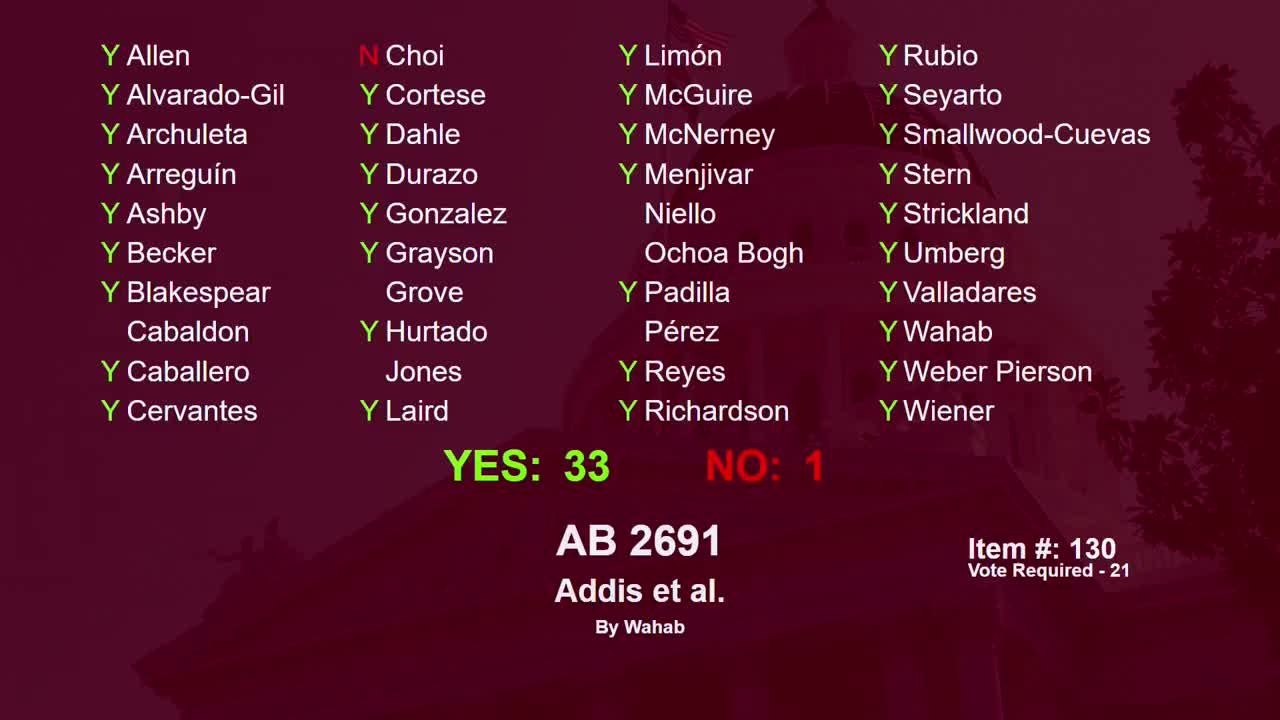 8MIN
Senate Floor
 2MIN
Senate Standing Committee on Judiciary
 2MIN
Senate Standing Committee on Labor, Public Employment and Retirement
 1MIN
Assembly Floor


Bill Co-Author(s):