AB 2734: Vehicles: special interest license plates.
- Session Year: 2025-2026
- House: Assembly
- Latest Version Date: 2026-09-20
Current Status:
Passed
(2026-09-20: Chaptered by Secretary of State - Chapter 407, Statutes of 2026.)
Introduced
In Committee
Awaiting First Chamber Vote
Passed First Chamber
In Committee
Awaiting Second Chamber Vote
Passed Second Chamber
Enacted
What does this bill do?
Beginning January 1, 2027, the bill changes how extra fees from California's coastal environmental license plates are split: half to the California Beach and Coastal Enhancement Account and half to a Coastal Access Account to fund the State Coastal Conservancy's Explore the Coast grants, if the state's finance department finds enough funds. It also directs 49ers Foundation plate revenue so that 10% goes to beach and coastal education programs (including Whale Tail Grants, Adopt-A-Beach, and Coastal Cleanup Day), 10% to the Coastal Access Account for Explore the Coast grants, and 20% to the Outdoor Equity Grants Program.
The summary is provided by generative AI which can make mistakes. For original language, please view the details in the table below.
Existing law requires the Department of Motor Vehicles (DMV), in consultation with the California Coastal Commission, to design and make available for issuance special environmental design license plates that bear a graphic design depicting a California coastal motif. The department is required to impose certain fees for the issuance, renewal, substitution, and transfer of the plates, in addition to the regular fees for an original registration or renewal of registration. Existing law requires that certain additional fees be allocated to the California Environmental License Plate Fund. The department, after deducting its administrative costs, is required to deposit any additional revenue derived from the issuance, renewal, transfer, and substitution of the special environmental design license plates, in the amount of 1/2 in the California Beach and Coastal Enhancement Account in the California Environmental License Plate Fund and 1/2 in the California Environmental License Plate Fund.
Existing law requires the Controller to allocate the funds in the California Beach and Coastal Enhancement Account, upon appropriation by the Legislature, first to the California Coastal Commission for expenditure for the specified public beach and coastal maintenance programs and second, from funds remaining after the first allocation, to the State Coastal Conservancy for coastal natural resource restoration and enhancement projects and for other coastal projects.
This bill would, for fees collected on or after January 1, 2027, allocate 1/2 of all additional revenue to the California Beach and Coastal Enhancement Account and would require the Controller, upon an appropriation by the Legislature, to allocate the moneys to the California Coastal Commission for beach and coastal maintenance programs and 1/2 to the Coastal Access Account for the support of grant programs administered by the State Coastal Conservancy, subject to a determination by the Department of Finance that a sufficient balance exists in the Environmental License Plate Fund to maintain the amount of the current years total expenditures and a prudent reserve, as defined.
Existing law authorizes state agencies to apply to the DMV to sponsor a specialized license plate program and requires the department to issue specialized plates for that program if the agency complies with certain requirements.
The bill would make certain allocations of moneys deposited to the California Environmental License Plate Fund on or after January 1, 2027, from the 49ers Foundation license plate program. Specifically, the bill would require (1)10% of these moneys to be deposited in the California Beach and Coastal Enhancement Account to be allocated, upon appropriation, to the California Coastal Commission for expenditure for the Whale Tail Grants Program, the Adopt-A-Beach program, the Coastal Cleanup Day program, and other coastal public education programs, (2)10% to be deposited in the Coastal Access Account within the State Coastal Conservancy Fund to be allocated, upon appropriation, for support of the State Coastal Conservancys Explore the Coast grants, and (3)20% to be allocated, upon appropriation, for the Outdoor Equity Grants Program.
Existing law requires the Department of Motor Vehicles, Vehicles (DMV), in consultation with the California Coastal Commission, to design and make available for issuance special environmental design license plates that bear a graphic design depicting a California coastal motif. The department is required to impose certain fees for the issuance, renewal, substitution, and transfer of the plates, in addition to the regular fees for an original registration or renewal of registration. Existing law requires that certain additional fees be allocated to the California Environmental License Plate Fund. The department, after deducting its administrative costs, is required to deposit any additional revenue derived from the issuance, renewal, transfer, and substitution of the special environmental design license plates, in the amount of 1/2 in the California Beach and Coastal Enhancement Account in the California Environmental License Plate Fund and 1/2 in the California Environmental License Plate Fund.
Existing law requires the Controller to allocate the funds in the California Beach and Coastal Enhancement Account, upon appropriation by the Legislature, first to the California Coastal Commission for expenditure for the specified public beach and coastal maintenance programs and second, from funds remaining after the first allocation, to the State Coastal Conservancy for coastal natural resource restoration and enhancement projects and for other coastal projects.
This bill would, for fees collected on or after January 1, 2027, allocate 1/2 of all additional revenue to the California Beach and Coastal Enhancement Account and would require the Controller, upon an appropriation by the Legislature, to allocate the moneys to the California Coastal Commission for beach and coastal maintenance programs and 1/2 to the Coastal Access Account for the support of grant programs administered by the State Coastal Conservancy, as specified. Conservancy, subject to a determination by the Department of Finance that a sufficient balance exists in the Environmental License Plate Fund to maintain the amount of the current years total expenditures and a prudent reserve, as defined.
Existing law authorizes state agencies to apply to the DMV to sponsor a specialized license plate program and requires the department to issue specialized plates for that program if the agency complies with certain requirements.
The bill would make certain allocations of moneys deposited to the California Environmental License Plate Fund on or after January 1, 2027, from the 49ers Foundation license plate program. Specifically, the bill would require (1)10% of these moneys to be deposited in the California Beach and Coastal Enhancement Account to be allocated, upon appropriation, to the California Coastal Commission for expenditure for the Whale Tail Grants Program, the Adopt-A-Beach program, the Coastal Cleanup Day program, and other coastal public education programs, (2)10% to be deposited in the Coastal Access Account within the State Coastal Conservancy Fund to be allocated, upon appropriation, for support of the State Coastal Conservancys Explore the Coast grants, and (3)20% to be allocated, upon appropriation, for the Outdoor Equity Grants Program.
Existing law requires the Department of Motor Vehicles, in consultation with the California Coastal Commission, to design and make available for issuance special environmental design license plates that bear a graphic design depicting a California coastal motif. The department is required to impose certain fees for the issuance, renewal, substitution, and transfer of the plates, in addition to the regular fees for an original registration or renewal of registration. Existing law requires that certain additional fees be allocated to the California Environmental License Plate Fund. The department, after deducting its administrative costs, is required to deposit any additional revenue derived from the issuance, renewal, transfer, and substitution of the special environmental design license plates, in the amount of 1/2 in the California Beach and Coastal Enhancement Account in the California Environmental License Plate Fund and 1/2 in the California Environmental License Plate Fund.
Existing law requires the Controller to allocate the funds in the California Beach and Coastal Enhancement Account, upon appropriation by the Legislature, first to the California Coastal Commission for expenditure for the specified public beach and coastal maintenance programs and second, from funds remaining after the first allocation, to the State Coastal Conservancy for coastal natural resource restoration and enhancement projects and for other coastal projects.
This bill would, for fees collected on or after January 1, 2027, allocate 1/2 of all additional revenue to the California Beach and Coastal Enhancement Account and would require the Controller, upon an appropriation by the Legislature, to allocate the moneys to the California Coastal Commission for beach and coastal maintenance programs and 1/2 to the Coastal Access Account for the support of grant programs administered by the State Coastal Conservancy, as specified.
Under existing law, the Director of Developmental Services is appointed by the court as conservator or guardian for persons with developmental disabilities by the title of the office. Under existing law, the appointment ceases upon the termination of the directors term of office and authority vests in the successor in office without further court proceedings.This bill would make technical, nonsubstantive changes to those provisions.Under existing law, the Director of Developmental Services is appointed by the court as conservator or guardian for persons with developmental disabilities by the title of the office. Under existing law, the appointment ceases upon the termination of the directors term of office and authority vests in the successor in office without further court proceedings.
This bill would make technical, nonsubstantive changes to those provisions.
(a)The California Environmental License Plate Fund is hereby created in the State Treasury, and consists of the moneys deposited in the fund pursuant to any law. The annual fee for environmental license plates is fifty-three dollars ($53) for the issuance or forty-three dollars ($43) for the renewal of the plates.
(b)The Controller shall transfer from the California Environmental License Plate Fund to the Motor Vehicle Account in the State Transportation Fund the amount appropriated by the Legislature for the reimbursement of costs incurred by the Department of Motor Vehicles in performing its duties pursuant to Sections 5004, 5004.5, and 5022 and Article 8.5 (commencing with Section 5100) of Chapter 1 of Division 3 of the Vehicle Code. The reimbursement from the California Environmental License Plate Fund shall only include those additional costs that are directly attributable to any additional duties or special handling necessary for the issuance, renewal, or retention of the environmental license plates.
(c)The Controller shall transfer to the post fund of the Veterans Home of California, established pursuant to Section 1047 of the Military and Veterans Code, all revenue derived from the issuance of prisoner of war special license plates pursuant to Section 5101.5 of the Vehicle Code less the administrative costs of the Department of Motor Vehicles incurred in issuing and renewing those plates.
(d)The Director of Motor Vehicles shall certify the amounts of the administrative costs of the Department of Motor Vehicles in subdivision (c) to the Controller.
(e)(1)On or after January 1, 2027, 10 percent of the moneys deposited to the Environmental License Plate Fund from the 49ers Foundation license plate program shall be deposited in the California Beach and Coastal Enhancement Account within the California Environmental License Plate Fund. The moneys deposited to the account pursuant to this paragraph shall, upon appropriation, be allocated to the California Coastal Commission for expenditure for the Whale Tail Grants Program, the Adopt-A-Beach program, the Coastal Cleanup Day program, and other coastal public education programs.
(2)On or after January 1, 2027, 10 percent of the moneys deposited to the Environmental License Plate Fund from the 49ers Foundation license plate program shall be deposited in the Coastal Access Account within the State Coastal Conservancy Fund. The moneys deposited to the account pursuant to this paragraph shall, upon appropriation, be allocated for support of the State Coastal Conservancys Explore the Coast grants.
(3)On or after January 1, 2027, 20 percent of the moneys received by the Environmental License Plate Fund from the 49ers Foundation license plate program shall, upon appropriation, be allocated for the Outdoor Equity Grants Program.
(f)The balance of the moneys in the California Environmental License Plate Fund shall be available for expenditure only for the exclusive trust purposes specified in Section 21190, upon appropriation by the Legislature. However, all moneys derived from the issuance of commemorative 1984 Olympic reflectorized license plates in the California Environmental License Plate Fund shall be used only for capital outlay purposes.
(g)All proposed appropriations for the California Environmental Protection Program shall be summarized in a section in the Governors Budget for each fiscal year and shall bear the caption California Environmental Protection Program. The section shall contain a separate description of each project for which an appropriation is made. Each of these appropriations shall be made to the department performing the project and accounted for separately.
(h)The budget the Governor presents to the Legislature pursuant to subdivision (a) of Section 12 of Article IV of the California Constitution shall include, as proposed appropriations for the California Environmental Protection Program, only projects and programs recommended for funding by the Secretary of the Natural Resources Agency pursuant to subdivision (a) of Section 21193. The Secretary of the Natural Resources Agency shall consult with the Secretary for Environmental Protection before making any recommendations to fund projects pursuant to subdivision (a) of Section 21190.
SEC. 2.Section 5067 of the Vehicle Code is amended to read:5067.(a)The department, in consultation with the California Coastal Commission, shall design and make available for issuance pursuant to this article special environmental design license plates. Notwithstanding subdivision (a) of Section 5060, the special environmental design license plates shall bear a graphic design depicting a California coastal motif and may be issued in a combination of numbers or letters, or both, as requested by the applicant for the plates. Any person described in Section 5101 may, upon payment of the additional fees set forth in subdivision (b), apply for and be issued a set of special environmental design license plates.
(b)In addition to the regular fees for an original registration or renewal of registration, the following additional fees shall be paid for the issuance, renewal, retention, or transfer of the special environmental design license plates authorized pursuant to this section:
(1)For the original issuance of the plates, fifty dollars ($50).
(2)For a renewal of registration of the plates or retention of the plates, if renewal is not required, forty dollars ($40).
(3)For transfer of the plates to another vehicle, fifteen dollars ($15).
(4)For each substitute replacement plate, thirty-five dollars ($35).
(5)In addition, for the issuance of an environmental license plate, as defined in Section 5103, the additional fees prescribed in Sections 5106 and 5108. Prior to January 1, 2027, the additional fees prescribed in Sections 5106 and 5108 shall be deposited in the California Environmental License Plate Fund.
(c)After deducting its administrative costs under this section, the department, except as provided in paragraph (5) of subdivision (b), shall deposit the additional revenue derived from the issuance, renewal, transfer, and substitution of special environmental design license plates prior to January 1, 2027, as follows:
(1)One-half in the California Beach and Coastal Enhancement Account, which is hereby established in the California Environmental License Plate Fund. Upon appropriation by the Legislature, the moneys in the account shall be allocated by the Controller as follows:
(A)First to the California Coastal Commission for expenditure for the Adopt-A-Beach program, the Beach Cleanup Day program, coastal public education programs, and grants to local governments and nonprofit organizations for the costs of operating and maintaining public beaches related to these programs.
(B)Second, from funds remaining after the allocation required under subparagraph (A), to the State Coastal Conservancy for coastal natural resource restoration and enhancement projects and for other projects consistent with the provisions of Division 21 (commencing with Section 31000) of the Public Resources Code.
(2)One-half in the California Environmental License Plate Fund.
(d)(1)Subject to paragraph (2), after deducting its administrative costs under this section, the department shall deposit the additional revenue derived from the issuance, renewal, transfer, and substitution of special environmental design license plates on or after January 1, 2027, including the revenue from the fees prescribed in Sections 5106 and 5108, as follows:
(A)One-half in the California Beach and Coastal Enhancement Account within the California Environmental License Plate Fund. Upon an appropriation by the Legislature, the moneys in the account shall be allocated by the Controller to the California Coastal Commission for expenditure for the Whale Tail Grants Program, the Adopt-A-Beach program, the Coastal Cleanup Day program, and other coastal public education programs.
(B)One-half in the Coastal Access Account within the State Coastal Conservancy Fund for, upon an appropriation by the Legislature, support of the State Coastal Conservancys Explore the Coast grants.
(2)The allocations described in paragraph (1) shall only be made if the Department of Finance determines that a sufficient balance exists in the California Environmental License Plate Fund as shown on the fund condition statement in the enacted budget for the current fiscal year to maintain the amount of the current years total expenditures and a prudent reserve. For purposes of this subdivision, prudent reserve means at least 5 percent of the fund reserves are available.
(3)If the Department of Finance determines that a sufficient balance is not available to make the allocations described in paragraph (1), the department shall allocate the additional revenue derived from the issuance, renewal, transfer, and substitution of special environmental design license plates pursuant to subdivision (c).
(a)The California Environmental License Plate Fund is hereby created in the State Treasury, and consists of the moneys deposited in the fund pursuant to any law. The annual fee for environmental license plates is fifty-three dollars ($53) for the issuance or forty-three dollars ($43) for the renewal of the plates.
(b)The Controller shall transfer from the California Environmental License Plate Fund to the Motor Vehicle Account in the State Transportation Fund the amount appropriated by the Legislature for the reimbursement of costs incurred by the Department of Motor Vehicles in performing its duties pursuant to Sections 5004, 5004.5, and 5022 and Article 8.5 (commencing with Section 5100) of Chapter 1 of Division 3 of the Vehicle Code. The reimbursement from the California Environmental License Plate Fund shall only include those additional costs that are directly attributable to any additional duties or special handling necessary for the issuance, renewal, or retention of the environmental license plates.
(c)The Controller shall transfer to the post fund of the Veterans Home of California, established pursuant to Section 1047 of the Military and Veterans Code, all revenue derived from the issuance of prisoner of war special license plates pursuant to Section 5101.5 of the Vehicle Code less the administrative costs of the Department of Motor Vehicles incurred in issuing and renewing those plates.
(d)The Director of Motor Vehicles shall certify the amounts of the administrative costs of the Department of Motor Vehicles in subdivision (c) to the Controller.
(e)(1)On or after January 1, 2027, 10 percent of the moneys deposited to the Environmental License Plate Fund from the 49ers Foundation license plate program shall be deposited in the California Beach and Coastal Enhancement Account within the California Environmental License Plate Fund. The moneys deposited to the account pursuant to this paragraph shall, upon appropriation, be allocated to the California Coastal Commission for expenditure for the Whale Tail Grants Program, the Adopt-A-Beach program, the Coastal Cleanup Day program, and other coastal public education programs.
(2)On or after January 1, 2027, 10 percent of the moneys deposited to the Environmental License Plate Fund from the 49ers Foundation license plate program shall be deposited in the Coastal Access Account within the State Coastal Conservancy Fund. The moneys deposited to the account pursuant to this paragraph shall, upon appropriation, be allocated for support of the State Coastal Conservancys Explore the Coast grants.
(3)On or after January 1, 2027, 20 percent of the moneys received by the Environmental License Plate Fund from the 49ers Foundation license plate program shall, upon appropriation, be allocated for the Outdoor Equity Grants Program.
(e)(f)The balance of the moneys in the California Environmental License Plate Fund shall be available for expenditure only for the exclusive trust purposes specified in Section 21190, upon appropriation by the Legislature. However, all moneys derived from the issuance of commemorative 1984 Olympic reflectorized license plates in the California Environmental License Plate Fund shall be used only for capital outlay purposes.
(f)(g)All proposed appropriations for the California Environmental Protection Program shall be summarized in a section in the Governors Budget for each fiscal year and shall bear the caption California Environmental Protection Program. The section shall contain a separate description of each project for which an appropriation is made. Each of these appropriations shall be made to the department performing the project and accounted for separately.
(g)(h)The budget the Governor presents to the Legislature pursuant to subdivision (a) of Section 12 of Article IV of the California Constitution shall include, as proposed appropriations for the California Environmental Protection Program, only projects and programs recommended for funding by the Secretary of the Natural Resources Agency pursuant to subdivision (a) of Section 21193. The Secretary of the Natural Resources Agency shall consult with the Secretary for Environmental Protection before making any recommendations to fund projects pursuant to subdivision (a) of Section 21190.
(h)This section shall become operative on July 1, 2017.SECTION 1.SEC. 2.Section 5067 of the Vehicle Code is amended to read:5067.(a)The department, in consultation with the California Coastal Commission, shall design and make available for issuance pursuant to this article special environmental design license plates. Notwithstanding subdivision (a) of Section 5060, the special environmental design license plates shall bear a graphic design depicting a California coastal motif and may be issued in a combination of numbers or letters, or both, as requested by the applicant for the plates. Any person described in Section 5101 may, upon payment of the additional fees set forth in subdivision (b), apply for and be issued a set of special environmental design license plates.
(b)In addition to the regular fees for an original registration or renewal of registration, the following additional fees shall be paid for the issuance, renewal, retention, or transfer of the special environmental design license plates authorized pursuant to this section:
(1)For the original issuance of the plates, fifty dollars ($50).
(2)For a renewal of registration of the plates or retention of the plates, if renewal is not required, forty dollars ($40).
(3)For transfer of the plates to another vehicle, fifteen dollars ($15).
(4)For each substitute replacement plate, thirty-five dollars ($35).
(5)In addition, for the issuance of an environmental license plate, as defined in Section 5103, the additional fees prescribed in Sections 5106 and 5108. Prior to January 1, 2027, the additional fees prescribed in Sections 5106 and 5108 shall be deposited in the California Environmental License Plate Fund.
(c)After deducting its administrative costs under this section, the department, except as provided in paragraph (5) of subdivision (b), shall deposit the additional revenue derived from the issuance, renewal, transfer, and substitution of special environmental design license plates prior to January 1, 2027, as follows:
(1)One-half in the California Beach and Coastal Enhancement Account, which is hereby established in the California Environmental License Plate Fund. Upon appropriation by the Legislature, the moneys in the account shall be allocated by the Controller as follows:
(A)First to the California Coastal Commission for expenditure for the Adopt-A-Beach program, the Beach Cleanup Day program, coastal public education programs, and grants to local governments and nonprofit organizations for the costs of operating and maintaining public beaches related to these programs.
(B)Second, from funds remaining after the allocation required under subparagraph (A), to the State Coastal Conservancy for coastal natural resource restoration and enhancement projects and for other projects consistent with the provisions of Division 21 (commencing with Section 31000) of the Public Resources Code.
(2)One-half in the California Environmental License Plate Fund.
(d)After (1)Subject to paragraph (2), after deducting its administrative costs under this section, the department shall deposit the additional revenue derived from the issuance, renewal, transfer, and substitution of special environmental design license plates on or after January 1, 2027, including the revenue from the fees prescribed in Sections 5106 and 5108, as follows:
(1)(A)One-half in the California Beach and Coastal Enhancement Account within the California Environmental License Plate Fund. Upon an appropriation by the Legislature, the moneys in the account shall be allocated by the Controller to the California Coastal Commission for expenditure for the Whale Tail Grants Program, the Adopt-A-Beach program, the Coastal Cleanup Day program, and other coastal public education programs.
(2)(B)One-half in the Coastal Access Account within the State Coastal Conservancy Fund for for, upon an appropriation by the Legislature, support of the State Coastal Conservancys Explore the Coast grants.
(2)The allocations described in paragraph (1) shall only be made if the Department of Finance determines that a sufficient balance exists in the California Environmental License Plate Fund as shown on the fund condition statement in the enacted budget for the current fiscal year to maintain the amount of the current years total expenditures and a prudent reserve. For purposes of this subdivision, prudent reserve means at least 5 percent of the fund reserves are available.
(3)If the Department of Finance determines that a sufficient balance is not available to make the allocations described in paragraph (1), the department shall allocate the additional revenue derived from the issuance, renewal, transfer, and substitution of special environmental design license plates pursuant to subdivision (c).
(a)The department, in consultation with the California Coastal Commission, shall design and make available for issuance pursuant to this article special environmental design license plates. Notwithstanding subdivision (a) of Section 5060, the special environmental design license plates shall bear a graphic design depicting a California coastal motif and may be issued in a combination of numbers or letters, or both, as requested by the applicant for the plates. Any person described in Section 5101 may, upon payment of the additional fees set forth in subdivision (b), apply for and be issued a set of special environmental design license plates.
(b)In addition to the regular fees for an original registration or renewal of registration, the following additional fees shall be paid for the issuance, renewal, retention, or transfer of the special environmental design license plates authorized pursuant to this section:
(1)For the original issuance of the plates, fifty dollars ($50).
(2)For a renewal of registration of the plates or retention of the plates, if renewal is not required, forty dollars ($40).
(3)For transfer of the plates to another vehicle, fifteen dollars ($15).
(4)For each substitute replacement plate, thirty-five dollars ($35).
(5)In addition, for the issuance of an environmental license plate, as defined in Section 5103, the additional fees prescribed in Section Sections 5106 and 5108. Prior to January 1, 2027, the additional fees prescribed in Sections 5106 and 5108 shall be deposited in the California Environmental License Plate Fund.
(c)After deducting its administrative costs under this section, the department, except as provided in paragraph (5) of subdivision (b), shall deposit the additional revenue derived from the issuance, renewal, transfer, and substitution of special environmental design license plates prior to January 1, 2027, as follows:
(1)One-half in the California Beach and Coastal Enhancement Account, which is hereby established in the California Environmental License Plate Fund. Upon appropriation by the Legislature, the moneys in the account shall be allocated by the Controller as follows:
(A)First to the California Coastal Commission for expenditure for the Adopt-A-Beach program, the Beach Cleanup Day program, coastal public education programs, and grants to local governments and nonprofit organizations for the costs of operating and maintaining public beaches related to these programs.
(B)Second, from funds remaining after the allocation required under subparagraph (A), to the State Coastal Conservancy for coastal natural resource restoration and enhancement projects and for other projects consistent with the provisions of Division 21 (commencing with Section 31000) of the Public Resources Code.
(2)One-half in the California Environmental License Plate Fund.
(d)After deducting its administrative costs under this section, the department shall deposit the additional revenue derived from the issuance, renewal, transfer, and substitution of special environmental design license plates on or after January 1, 2027, including the revenue from the fees prescribed in Section 5105 Sections 5106 and 5108, as follows:
(1)One-half in the California Beach and Coastal Enhancement Account within the California Environmental License Plate Fund. Upon an appropriation by the Legislature, the moneys in the account shall be allocated by the Controller to the California Coastal Commission for expenditure for the Whale Tail Grants Program, the Adopt-A-Beach program, the Coastal Cleanup Day program, and other coastal public education programs.
(2)One-half in the Coastal Access Account within the State Coastal Conservancy Fund for support of the State Coastal Conservancys Explore the Coast grants.
(a)The department, in consultation with the California Coastal Commission, shall design and make available for issuance pursuant to this article special environmental design license plates. Notwithstanding subdivision (a) of Section 5060, the special environmental design license plates shall bear a graphic design depicting a California coastal motif and may be issued in a combination of numbers or letters, or both, as requested by the applicant for the plates. Any person described in Section 5101 may, upon payment of the additional fees set forth in subdivision (b), apply for and be issued a set of special environmental design license plates.
(b)In addition to the regular fees for an original registration or renewal of registration, the following additional fees shall be paid for the issuance, renewal, retention, or transfer of the special environmental design license plates authorized pursuant to this section:
(1)For the original issuance of the plates, fifty dollars ($50).
(2)For a renewal of registration of the plates or retention of the plates, if renewal is not required, forty dollars ($40).
(3)For transfer of the plates to another vehicle, fifteen dollars ($15).
(4)For each substitute replacement plate, thirty-five dollars ($35).
(5)In addition, for the issuance of an environmental license plate, as defined in Section 5103, the additional fees prescribed in Section 5106 and 5108. The Prior to January 1, 2027, the additional fees prescribed in Sections 5106 and 5108 shall be deposited in the California Environmental License Plate Fund.
(c)After deducting its administrative costs under this section, the department, except as provided in paragraph (5) of subdivision (b), shall deposit the additional revenue derived from the issuance, renewal, transfer, and substitution of special environmental design license plates prior to January 1, 2027, as follows:
(1)One-half in the California Beach and Coastal Enhancement Account, which is hereby established in the California Environmental License Plate Fund. Upon appropriation by the Legislature, the moneys in the account shall be allocated by the Controller as follows:
(A)First to the California Coastal Commission for expenditure for the Adopt-A-Beach program, the Beach Cleanup Day program, coastal public education programs, and grants to local governments and nonprofit organizations for the costs of operating and maintaining public beaches related to these programs.
(B)Second, from funds remaining after the allocation required under subparagraph (A), to the State Coastal Conservancy for coastal natural resource restoration and enhancement projects and for other projects consistent with the provisions of Division 21 (commencing with Section 31000) of the Public Resources Code.
(2)One-half in the California Environmental License Plate Fund.
(d)After deducting its administrative costs under this section, the department shall deposit the additional revenue derived from the issuance, renewal, transfer, and substitution of special environmental design license plates on or after January 1, 2027, including the revenue from the fees prescribed in Section 5105 and 5108, as follows:
(1)One-half in the California Beach and Coastal Enhancement Account within the California Environmental License Plate Fund. Upon an appropriation by the Legislature, the moneys in the account shall be allocated by the Controller to the California Coastal Commission for expenditure for the Whale Tail Grants Program, the Adopt-A-Beach program, the Coastal Cleanup Day program, and other coastal public education programs.
(2)One-half in the Coastal Access Account within the State Coastal Conservancy Fund for support of the State Coastal Conservancys Explore the Coast grants.
(a)The department, in consultation with the California Coastal Commission, shall design and make available for issuance pursuant to this article special environmental design license plates. Notwithstanding subdivision (a) of Section 5060, the special environmental design license plates shall bear a graphic design depicting a California coastal motif and may be issued in a combination of numbers or letters, or both, as requested by the applicant for the plates. Any person described in Section 5101 may, upon payment of the additional fees set forth in subdivision (b), apply for and be issued a set of special environmental design license plates.
(b)In addition to the regular fees for an original registration or renewal of registration, the following additional fees shall be paid for the issuance, renewal, retention, or transfer of the special environmental design license plates authorized pursuant to this section:
(1)For the original issuance of the plates, fifty dollars ($50).
(2)For a renewal of registration of the plates or retention of the plates, if renewal is not required, forty dollars ($40).
(3)For transfer of the plates to another vehicle, fifteen dollars ($15).
(4)For each substitute replacement plate, thirty-five dollars ($35).
(5)In addition, for the issuance of an environmental license plate, as defined in Section 5103, the additional fees prescribed in Section 5106 and 5108. The additional fees prescribed in Sections 5106 and 5108 shall be deposited in the California Environmental License Plate Fund.
(c)After deducting its administrative costs under this section, the department, except as provided in paragraph (5) of subdivision (b), shall deposit the additional revenue derived from the issuance, renewal, transfer, and substitution of special environmental design license plates prior to January 1, 2027, as follows:
(1)One-half in the California Beach and Coastal Enhancement Account, which is hereby established in the California Environmental License Plate Fund. Upon appropriation by the Legislature, the money moneys in the account shall be allocated by the Controller as follows:
(A)First to the California Coastal Commission for expenditure for the Adopt-A-Beach program, the Beach Cleanup Day program, coastal public education programs, and grants to local governments and nonprofit organizations for the costs of operating and maintaining public beaches related to these programs.
(B)Second, from funds remaining after the allocation required under subparagraph (A), to the State Coastal Conservancy for coastal natural resource restoration and enhancement projects and for other projects consistent with the provisions of Division 21 (commencing with Section 31000) of the Public Resources Code.
(2)One-half in the California Environmental License Plate Fund.
(d)After deducting its administrative costs under this section, the department shall deposit the additional revenue derived from the issuance, renewal, transfer, and substitution of special environmental design license plates on or after January 1, 2027, as follows:
(1)One-half in the California Beach and Coastal Enhancement Account within the California Environmental License Plate Fund. Upon an appropriation by the Legislature, the moneys in the account shall be allocated by the Controller to the California Coastal Commission for expenditure for the Whale Tail Grants Program, the Adopt-A-Beach program, the Coastal Cleanup Day program, and other coastal public education programs.
(2)One-half in the Coastal Access Account within the State Coastal Conservancy Fund for support of the State Coastal Conservancys Explore the Coast grants.
SECTION 1.Section 416.13 of the Health and Safety Code is amended to read:416.13.The appointment by the court of the Director of Developmental Services as conservator or guardian shall be by the title of the office. The authority of the Director of Developmental Services as conservator or guardian shall cease upon the termination of the directors term of office as the Director of Developmental Services and that authority shall vest in the directors successor or successors in office without further court proceedings. The Director of Developmental Services shall not resign as conservator or guardian unless the resignation is approved by the court.The appointment by the court of the Director of Developmental Services as conservator or guardian shall be by the title of his the office. The authority of the Director of Developmental Services as conservator or guardian shall cease upon the termination of his the directors term of office as such the Director of Developmental Services and his that authority shall vest in his the directors successor or successors in office without further court proceedings. The Director of Developmental Services shall not resign as conservator or guardian unless his the resignation is approved by the court.
|
Date
|
Status
|
|---|---|
| Sep 20, 2026 | Chaptered by Secretary of State - Chapter 407, Statutes of 2026. |
| Sep 20, 2026 | Approved by the Governor. |
| Sep 10, 2026 | Enrolled and presented to the Governor at 3 p.m. |
| Aug 30, 2026 | Senate amendments concurred in. To Engrossing and Enrolling. (Ayes 78. Noes 0.). |
| Aug 30, 2026 | Senate amendments concurred in. To Engrossing and Enrolling. (Ayes 78. Noes 0. Page 6939.). |
| Aug 30, 2026 | Senate amendments concurred in. To Engrossing and Enrolling. |
| Aug 30, 2026 | In Assembly. Concurrence in Senate amendments pending. |
| Aug 30, 2026 | Read third time. Passed. Ordered to the Assembly. (Ayes 40. Noes 0.). |
| Aug 30, 2026 | Ordered to special consent calendar. |
| Aug 27, 2026 | Read second time. Ordered to third reading. |
| Aug 26, 2026 | Read third time and amended. Ordered to second reading. |
| Aug 13, 2026 | Read second time. Ordered to third reading. |
| Aug 13, 2026 | From committee: Do pass. (Ayes 7. Noes 0.) (August 13). |
| Aug 3, 2026 | In committee: Referred to APPR. suspense file. |
| Jul 2, 2026 | From committee: Amend, and do pass as amended and re-refer to Com. on APPR. with recommendation: To Consent Calendar. (Ayes 7. Noes 0.) (July 1). |
| Jul 2, 2026 | Read second time and amended. Re-referred to Com. on APPR. |
| Jun 3, 2026 | Referred to Com. on N.R. & W. |
| May 27, 2026 | In Senate. Read first time. To Com. on RLS. for assignment. |
| May 26, 2026 | Read third time. Passed. Ordered to the Senate. (Ayes 78. Noes 0.) |
| May 26, 2026 | Read third time. Passed. Ordered to the Senate. (Ayes 78. Noes 0. Page 5343.) |
| May 26, 2026 | Read third time. Passed. Ordered to the Senate. |
| May 18, 2026 | Read second time. Ordered to third reading. |
| May 14, 2026 | From committee: Do pass. (Ayes 15. Noes 0.) (May 14). |
| May 6, 2026 | In committee: Set, first hearing. Referred to APPR. suspense file. |
| Apr 21, 2026 | From committee: Do pass and re-refer to Com. on APPR. (Ayes 14. Noes 0.) (April 20). Re-referred to Com. on APPR. |
| Apr 6, 2026 | Re-referred to Com. on NAT. RES. pursuant to Assembly Rule 96. |
| Apr 6, 2026 | From committee chair, with author's amendments: Amend, and re-refer to Com. on TRANS. Read second time and amended. |
| Mar 23, 2026 | Re-referred to Com. on TRANS. |
| Mar 19, 2026 | Referred to Com. on TRANS. |
| Mar 19, 2026 | From committee chair, with author's amendments: Amend, and re-refer to Com. on TRANS. Read second time and amended. |
| Feb 21, 2026 | From printer. May be heard in committee March 23. |
| Feb 20, 2026 | Read first time. To print. |
|
Date
|
Description
|
Location
|
Votes
|
|
|---|---|---|---|---|
| Aug 30, 2026 | AB 2734 Hart Concurrence in Senate Amendments | Assembly Floor |
Passed |
|
| Aug 30, 2026 | Assembly 3rd Reading AB2734 Hart By Blakespear | Senate Floor |
Passed |
|
| Aug 13, 2026 | Do pass | Senate Standing Committee on Appropriations |
Passed |
|
| Aug 3, 2026 | Placed on suspense file | Senate Standing Committee on Appropriations |
Passed |
|
| Jul 1, 2026 | Do pass as amended, but first amend, and re-refer to the Committee on [Appropriations] with the recommendation: To Consent Calendar | Senate Standing Committee on Natural Resources and Water |
Passed |
|
| May 26, 2026 | AB 2734 Hart Assembly Third Reading | Assembly Floor |
Passed |
|
| May 14, 2026 | Do pass. | Assembly Standing Committee on Appropriations |
Passed |
|
| Apr 20, 2026 | Do pass and be re-referred to the Committee on [Appropriations] | Assembly Standing Committee on Natural Resources |
Passed |
This list shows positions taken on this bill by organizations on the date displayed, which is linked to the original source.
Positions by individuals are not included.
|
Organization
|
Position
|
Date
|
|---|---|---|
| Amah Mutsun Land Trust | ** Support | |
| Amigos de Bolsa Chica | ** Support | |
| Amigos de los Rios | ** Support | |
| Association For Environmental And Outdoor Education | ** Support | |
| Audubon California | ** Support | |
| Audubon Center At Debs Park | ** Support | |
| Azul | ** Support | |
| BIPOC Support Foundation | ** Support | |
| Black Surf Santa Cruz, INC | ** Support | |
| Black Surfers Collective | ** Support | |
| BORP Adapted Sports and Recreation | ** Support | |
| California Academy Of Sciences | ** Support | |
| California Coastal Commission | ** Support | |
| California Coastal Protection Network | ** Support | |
| California Coastkeeper Alliance | ** Support | |
| California Marine Sanctuary Foundation | ** Support | |
| California Urban Streams Alliance | ** Support | |
| Catalina Island Marine Institute | ** Support | |
| Children's Lifesaving Foundation | ** Support | |
| City Surf Project | ** Support | |
| Climate Resilient Communities | ** Support | |
| Clockshop | ** Support | |
| Coastal Commission | ** Support | |
| Coastal Corridor Alliance | ** Support | |
| Coastal Watershed Council | ** Support | |
| Coastside Land Trust | ** Support | |
| Community Action Partnership of Kern | ** Support | |
| Concerned Resource & Environmental Workers | ** Support | |
| Conservation Corps North Bay | ** Support | |
| Crossing the Channel for CAUSE | ** Support | |
| Crystal Cove Conservancy | ** Support | |
| D.i.y. Art | ** Support | |
| DIVERSEAFY | ** Support | |
| Ege Foundation (eternal Generations Emerging) | ** Support | |
| Empowher | ** Support | |
| Environmental Action Committee of West Marin | ** Support | |
| Environmental Center of San Diego | ** Support | |
| Environmental Traveling Companions | ** Support | |
| Environmental Traveling Companions (ETC) | ** Support | |
| Escondido Creek Conservancy | ** Support | |
| Friends of Ballona Wetlands | ** Support | |
| Friends of Sausal Creek | ** Support | |
| Friends of the Dunes | ** Support | |
| Girlventures | ** Support | |
| Golden Gate Bird Alliance | ** Support | |
| Grassroots Ecology | ** Support | |
| Green Latinos | ** Support | |
| Groundwork San Diego Chollas Creek | ** Support | |
| Guadalupe-Nipomo Dunes Center | ** Support | |
| Guided Discoveries, INC. | ** Support | |
| Heal The Bay | ** Support | |
| Hills for Everyone | ** Support | |
| Humboldt Waterkeeper | ** Support | |
| Justice Outside | ** Support | |
| Keep Coyote Creek Beautiful | ** Support | |
| Kids for the Bay | ** Support | |
| Land Trust of Napa County | ** Support | |
| Latino Outdoors | ** Support | |
| Legislative Analyst's Office | ** Against | |
| Literacy For Environmental Justice | ** Support | |
| Living Coast Discovery Center | ** Support | |
| Los Angeles Neighborhood Land Trust | ** Support | |
| Los Courage Camps | ** Support | |
| Marshmallow Minds | ** Support | |
| Mendocino Area Parks Association | ** Support | |
| Monarch School Project | ** Support | |
| Nature For All | ** Support | |
| New Heights Charter School | ** Support | |
| Northern California Public Media | ** Support | |
| Oakland Goes Outdoors | ** Support | |
| Ocean Discovery Institute | ** Support | |
| One Cool Earth | ** Support | |
| Outdoor Outreach | ** Support | |
| Outdoor Outreach (co-sponsor) | ** Support | |
| Outside the Lens | ** Support | |
| Paddle for Peace | ** Support | |
| Para Los Ninos | ** Support | |
| Payomkawichum Kaamalam | ** Support | |
| Planning And Conservation League | ** Support | |
| Plants People Community | ** Support | |
| Project AVARY | ** Support | |
| Queer Surf | ** Support | |
| Ready Study Go Academy | ** Support | |
| Redwood Community Action Agency | ** Support | |
| Reel Guppy Outdoors | ** Support | |
| Resource Renewal Institute | ** Support | |
| Resources for Indian Student Education, Inc. | ** Support | |
| River Jim Learning Solutions | ** Support | |
| Rosie the Riveter Trust | ** Support | |
| Sacramento Smith River Alliance | ** Support | |
| Sacramento Urban Forest Council | ** Support | |
| Salinas Community Science Workshop | ** Support | |
| Salmon River Restoration Council | ** Support | |
| Salted Roots | ** Support | |
| Salted Roots (co-sponsor) | ** Support | |
| San Diego Children and Nature | ** Support | |
| Santa Cruz Mountains Trail Stewardship | ** Support | |
| Save Our Shores | ** Support | |
| save the waves coalition | ** Support | |
| Sierra Club Inspiring Connections Outdoors | ** Support | |
| Sierra Club Inspiring Connections Outdoors Sacramento | ** Support | |
| Smith River Alliance | ** Support | |
| Sonoma County Parks Foundation | ** Support | |
| Sonoma County Regional Parks | ** Support | |
| South Yuba River Citizens League | ** Support | |
| Stewards of the Coast and Redwoods | ** Support | |
| Sunday Friends Foundation | ** Support | |
| Surfrider Foundation | ** Support | |
| Sustainable Claremont | ** Support | |
| Ten Strands | ** Support | |
| Tides Center | ** Support | |
| Treepeople | ** Support | |
| TreePeople (co-sponsor) | ** Support | |
| Trees Foundation | ** Support | |
| Turtle Island Restoration Network | ** Support | |
| Un Mar De Colores | ** Support | |
| UndauntedK12 | ** Support | |
| Ventana Wilderness Alliance | ** Support | |
| Ventana Wildlife Society | ** Support | |
| Ventura Land Trust | ** Support | |
| Ventureta? Wait no | ** Support | |
| Watsonville Wetlands Watch | ** Support | |
| Wholly H2O | ** Support | |
| Wildcoast | ** Support | |
| Yes Nature to Neighborhoods | ** Support | |
| YMCA of Greater San Francisco | ** Support |
CONCURRENCE IN SENATE AMENDMENTS
CSA1 Bill Id:AB 2734
Author:(Hart)
As Amended Ver:August 26, 2026
Majority vote
SUMMARY
Revises the formula for how funds from the Whale Tail environmental specialty license plate are allocated.
Senate Amendments
- Require, on or after January 1, 2027, 10% of the funds that come to the Environmental License Plate Fund (ELPF) from the 49ers Foundation License Plate to be deposited into the California Beach and Coastal Enhancement Account within the ELPF. Requires the moneys in the account, upon appropriation, to be allocated to the California Coastal Commission for expenditure for the Whale Tail Grants Program, the Adopt-A-Beach program, the Coastal Cleanup Day program, and other coastal public education programs.
- Require, on or after January 1, 2027, 10% of the funds that come to the ELPF from the 49ers Foundation License Plate to be deposited in the Coastal Access Account within the State Coastal Conservancy Fund. Requires the moneys in the account, upon appropriation, to support the State Coastal Conservancy's Explore the Coast grants.
- Require, on or after January 1, 2027, 20% of the funds that come to the ELPF from the 49ers Foundation License Plate to be, upon appropriations, allocated for the Outdoor Equity Grants Program.
- Permit the aforementioned allocations only if the Department of Finance (DOF) determines that a sufficient balance is available in the ELPF. Provide that, if DOF determines there are insufficient funds, the Department of Motor Vehicles (DMV) shall allocate the additional revenue derived from the issuance, renewal transfer, and substitution of specialty environmental license plates.
- Strike obsolete current law.
COMMENTS
The Whale Tail License Plate is an official specialty license plate issued by the DMV. About a quarter of a million plates have been issued over the program's 20-year history with revenues totaling more than $35 million. The funding, after subtracting the DMV's administrative costs, is divided evenly between the California Beach and Coastal Enhancement Account and the ELPF.
The Whale Tail plate contributes approximately ¾ of its relatively minor amount of revenue to the fund, while retaining only ¼ to support Whale Tail grants, staff, and program overhead. The amount of Whale Tail funding contributed to the ELPF has now become relatively insignificant to the ELPF, but it could provide a critical lifeline for the Whale Tail grant program.
This bill would divide the license plate fees evenly with 50% for the California Beach and Coastal Enhancement Account for appropriation to the Coastal Commission for expenditure for the Whale Tail Grants Program, the Adopt-A-Beach program, the Coastal Cleanup Day program, and other coastal public education programs, and the other 50% for the Coastal Access Account for the State Coastal Conservancy's Explore the Coast grants.
The bill further allocates 10% of funding from the new 49ers Foundation License Plate to the ELPF into the California Beach and Coastal Enhancement Account and Coastal Access Account, and 20% for the Outdoor Equity Grants Program.
According to the Author
AB 2734 will strengthen coastal access and education programs by creating a more sustainable funding structure for Whale Tail License Plate revenue. California's Whale Tail grants and Explore the Coast grants help ensure that all Californians have access to all the physical and mental benefits of spending time outdoors and engaging with California's natural resources. Yet under current law, only 25% of the Whale Tail revenue goes to these funds, leaving underserved and barrier-facing communities with fewer opportunities to access the coast.
Arguments in Support
More than 100 environmental, environmental justice, and community organizations write that the California Legacy Plate alone generates more than enough revenue to sustain the fund, contributing 100% of its sales into the ELPF. Further, it is the most popular specialty plate in the state and has experienced exponential growth ever since it was introduced in 2016. Last year it brought in almost $45 million in revenues for the ELPF—almost 5 times all the other specialty plates combined; and it shows no signs of slowing down. In short, even as the ELPF reaches record revenue levels, the Whale Tail Plate is still statutorily obligated to divert roughly three-quarters of its relatively modest proceeds away from the grant program it helped establish to support coastal education and stewardship, despite growing demand for those grants. AB 2734 course corrects for this inequity by amending statute to direct 100% of the Whale Tail license plate revenues to the Commission's Whale Tail Grant Program and the Conservancy's Explore the Coast Grant Program.
Arguments in Opposition
None on file
FISCAL COMMENTS
According to the Senate Appropriations Committee, this bill may result in an annual redirection of approximately $3 million (based on recent annual revenue estimates, which may increase or decrease year to year) in annual Whale Tail License Plate revenues from the ELPF to the California Beach and Coastal Enhancement Account and the Coastal Access Account to support the Commission's and State Coastal Conservancy's coastal access and outdoor education programs.
Unknown impact of the Senate's amendments directing funds from the 49ers Foundation License Plate.
VOTES:
ASM NATURAL RESOURCES: 14-0-0
YES: Bryan, Ellis, Alanis, Connolly, Garcia, Haney, Hoover, Kalra, Macedo, Muratsuchi, Pellerin, Schultz, Wicks, Zbur
ASM APPROPRIATIONS: 15-0-0
YES: Wicks, Hoover, Aguiar-Curry, Calderon, Caloza, Dixon, Fong, Mark González, Krell, Pacheco, Pellerin, Sharp-Collins, Solache, Ta, Tangipa
ASSEMBLY FLOOR: 78-0-2
YES: Addis, Aguiar-Curry, Ahrens, Alanis, Alvarez, Arambula, Ávila Farías, Bains, Bauer-Kahan, Bennett, Berman, Boerner, Bonta, Bryan, Calderon, Caloza, Carrillo, Castillo, Chen, Connolly, Davies, DeMaio, Dixon, Elhawary, Ellis, Flora, Fong, Gabriel, Gallagher, Garcia, Gipson, Jeff Gonzalez, Mark González, Hadwick, Haney, Harabedian, Hart, Hoover, Irwin, Jackson, Johnson, Kalra, Krell, Lackey, Lee, Lowenthal, Macedo, McKinnor, Nguyen, Ortega, Pacheco, Papan, Patel, Patterson, Pellerin, Petrie-Norris, Quirk-Silva, Ramos, Ransom, Michelle Rodriguez, Rogers, Blanca Rubio, Sanchez, Schiavo, Schultz, Sharp-Collins, Solache, Soria, Stefani, Ta, Tangipa, Valencia, Wallis, Ward, Wicks, Wilson, Zbur, Rivas
ABS, ABST OR NV: Muratsuchi, Celeste Rodriguez
UPDATED
VERSION: August 26, 2026
CONSULTANT: Paige Brokaw / NAT. RES. / (916) 319-2092 FN: 0004526
SENATE RULES COMMITTEE Office of Senate Floor Analyses (916) 651-4171 | AB 2734 |
THIRD READING
Bill No: AB 2734
Author: Hart (D)
Amended: 8/26/26 in Senate
Vote: 21
SENATE NATURAL RES. & WATER COMMITTEE: 7-0, 7/1/26
AYES: Becker, Seyarto, Allen, Cabaldon, Grove, Laird, Stern
ASSEMBLY FLOOR: 78-0, 5/26/26 - See last page for vote
SUBJECT: Vehicles: special interest license plates
SOURCE: Outdoor Outreach
Salted Roots
TreePeople
DIGEST:
This bill re-directs funds raised through the sale and renewal of two special interest license plates.
Senate Floor amendments of 8/26/26 inserted a trigger mechanism before the funding formula in this bill can take effect and creates a separate guaranteed stream of funding for certain programs.
ANALYSIS:
Existing law:
- Establishes the Environmental License Plate Fund (ELPF), a depository for money collected from the sale and renewal of special interest license plates to fund various natural resources and environmental protection programs.
- Allows an organization to apply to the Department of Motor Vehicles (DMV) to create a special interest license plate to, among other things, raise funds, and requires the DMV to create a special interest license plate if the sponsoring organization meets specified criteria.
- Requires the DMV, after deducting its administrative costs, to evenly split money raised from issuing the Whale Tail special interest license plates into California Beach and Coastal Enhancement Account (CBCEA) inside the ELPF and the ELPF itself. Of the funds given to the CBCEA, the money is allocated to certain programs. After that, any remaining funds are allocated to the State Coastal Conservancy for coastal restoration and enhancement projects.
This bill:
- Specifies that in years when money collected from the sale or renewal of Whale Tail special interest license plates meets or exceeds the money collected in the prior year and there is money to fund a “prudent reserve” of 5%, then the following new funding formula will be applied to money collected beyond that “floor plus prudent reserve”:
- The ELPF will receive $0 funding.
- The CBCEA will receive 50% of the funding and the money will be allocated to the Coastal Commission to pay for the Whale Tail Grants program, the Adopt-A-Beach program, the Coastal Day Cleanup program, and other coastal education programs.
- The other 50% of the funds will go into the Coastal Conservancy Fund’s Coastal Access Account to support the Coastal Conservancy’s Explore the Coast grant program.
- Re-directs 10% of the money designed to go to the ELPF from the 49ers Foundation special interest license plate to the California Coastal Commission to fund the Whale Tail Grants Program, the Adopt-A-Beach program, the Coastal Cleanup Day program, and other coastal education programs.
- Re-directs 10% of the money designed to go to the ELPF from the 49ers Foundation special interest license plate to the California Coastal Conservancy to fund the Conservancy’s Explore the Coast grant program.
- Re-directs 20% of the money designed to go to the ELPF from the 49ers Foundation special interest license plate to fund the Outdoor Equity Grants Program run by California State Parks.
Background
ELPF. The ELPF was created in 1979, funded initially by money collected by the DMV from drivers buying personalized license plates. Since then, ELPF’s funding has also come from other sources, including special interest license plates. The money is used to pay for various natural resources and environmental protection-related programs through the Environmental Protection Program, which is run by the California Natural Resources Agency (CNRA) Secretary who develops its programs and priorities.
Follow The Money. When a driver gets a personalized, special interest license plate for their vehicle, they’re paying two fees: (1) The cost of the special interest license plate; and (2) The cost for personalizing the plate
The money from the personalization fee attached to all of the state’s special interest license plates generally goes entirely to the ELPF, but how the specialization fee attached to the plate is split varies by plate.
The Yosemite (created in 1993) and Whale Tail (1997) plates split their specialization fee 50-50 with the ELPF, meaning for each plate sold or renewed, those entities only get about 25% of the total money paid (since the specialization and personalization fees are roughly equal and all of the personalization fees go to the ELPF). Meanwhile, the 49ers Foundation plate is scheduled to send 75% of money it raises to the ELPF, with 25% going to the 49ers Foundation.
Comments
Purpose of the bill. According to the author, “California’s coast belongs to all of us, but too many Californians still face barriers to accessing and enjoying it. AB 2734 will strengthen the Whale Tail and Explore the Coast grant programs by directing new license plate revenue toward coastal education, outdoor experiences, and opportunities for communities that have historically had less access to our coast. This bill will help ensure more Californians can experience, learn about, and care for the coast.”
Why Is Money Tied To The 49ers Foundation Plate Being Chosen For Re-Direction? The 49er Foundation is the newest special interest license plate that only began being issued in late 2025, meaning a full year’s worth of funding has yet to be collected. As such, this proposal doesn’t “take money away” from the ELPF that it has been getting previously. Instead, it means the ELPF will be getting less money than it may have been counting on from the sale of the 49ers Foundation license plate.
How Much Money Are We Talking About? Generally speaking, a special interest license plate costs $50 or $103 for a personalized plate ($3 is an administrative fee). Annual renewal fees are $40 and $83. With the 49ers Foundation plate, 75% of the total funds raised are scheduled to go to the ELPF and 25% will go to the 49ers Foundation.
As a practical matter, this bill’s trigger mechanism is likely to result in $0 money being re-directed away from the ELPF for the foreseeable future. That’s because while the Whale Tail plate is the state’s second most popular special interest license plate, the money it brings in has been flat or declining for the past nine years.
Before a special interest license plate can be issued, a minimum of 7,500 plates must be ordered by drivers. So, if 7,500 drivers pay the $100 (not counting the $3 administrative fee) for a personalized 49ers Foundation special interest license plate, it will raise $562,500 for the ELPF (75% of $750,000).
This bill directs 10% of that money ($56,250) to the Coastal Commission, 10% ($56,250) to the Coastal Conservancy, and 20% ($112,500) to the Outdoor Equity Grants Program, leaving $337,500 for the ELPF.
Obviously if more 49ers Foundation plates are sold and renewed, more money will be raised for each of these programs.
FISCAL EFFECT: Appropriation: No Fiscal Com.: Yes Local: No
SUPPORT: (Based On Prior Version of this Bill)
Outdoor Outreach (co-sponsor)
Salted Roots (co-sponsor)
TreePeople (co-sponsor)
Amah Mutsun Land Trust
Amigos De Bolsa Chica
Amigos De Los Rios
Association for Environmental and Outdoor Education
Audubon California
Audubon Center At Debs Park
Azul
BIPOC Support Foundation
Black Surf Santa Cruz, INC
Black Surfers Collective
BORP Adapted Sports and Recreation
California Academy of Sciences
California Coastal Commission
California Coastal Protection Network
California Coastkeeper Alliance
California Marine Sanctuary Foundation
California Urban Streams Alliance
Catalina Island Marine Institute
Children's Lifesaving Foundation
City Surf Project
Climate Resilient Communities
Clockshop
Coastal Corridor Alliance
Coastal Watershed Council
Coastside Land Trust
Community Action Partnership of Kern
Concerned Resource & Environmental Workers
Conservation Corps North Bay
Crossing the Channel for CAUSE
Crystal Cove Conservancy
D.I.Y. Art
DIVERSEAFY
Ege Foundation (Eternal Generations Emerging)
EmpowHer
Environmental Action Committee of West Marin
Environmental Center of San Diego
Environmental Traveling Companions (ETC)
Escondido Creek Conservancy
Friends of Ballona Wetlands
Friends of Sausal Creek
Friends of the Dunes
GirlVentures
Golden Gate Bird Alliance
Grassroots Ecology
Green Latinos
Groundwork San Diego Chollas Creek
Guadalupe-Nipomo Dunes Center
Guided Discoveries, INC.
Heal the Bay
Hills for Everyone
Humboldt Waterkeeper
Justice Outside
Keep Coyote Creek Beautiful
Kids for the Bay
Land Trust of Napa County
Latino Outdoors
Literacy for Environmental Justice
Living Coast Discovery Center
Los Angeles Neighborhood Land Trust
Los Courage Camps
Marshmallow Minds
Mendocino Area Parks Association
Monarch School Project
Nature for All
New Heights Charter School
Northern California Public Media
Oakland Goes Outdoors
Ocean Discovery Institute
One Cool Earth
Outside the Lens
Paddle for Peace
Para Los Ninos
Payomkawichum Kaamalam
Planning and Conservation League
Plants People Community
Project Avary
Queer Surf
Ready Study Go Academy
Redwood Community Action Agency
Reel Guppy Outdoors
Resource Renewal Institute
Resources for Indian Student Education, INC.
River Jim Learning Solutions
Rosie the Riveter Trust
Sacramento Urban Forest Council
Salinas Community Science Workshop
Salmon River Restoration Council
San Diego Children and Nature
Santa Cruz Mountains Trail Stewardship
Save Our Shores
Save the Waves Coalition
Sierra Club Inspiring Connections Outdoors
Sacramento Smith River Alliance
Sonoma County Parks Foundation
Sonoma County Regional Parks
South Yuba River Citizens League
Stewards of the Coast and Redwoods
Sunday Friends Foundation
Surfrider Foundation
Sustainable Claremont
Ten Strands
Tides Center
Trees Foundation
Turtle Island Restoration Network
Un Mar De Colores
Undauntedk12
Ventana Wilderness Alliance
Ventana Wildlife Society
Ventura Land Trust
Watsonville Wetlands Watch
Wholly H2O
WILDCOAST
Yes Nature to Neighborhoods
YMCA of Greater San Francisco
OPPOSITION: (Based On Prior Version of this Bill)
None received
ASSEMBLY FLOOR: 78-0, 5/26/26
AYES: Addis, Aguiar-Curry, Ahrens, Alanis, Alvarez, Arambula, Ávila Farías, Bains, Bauer-Kahan, Bennett, Berman, Boerner, Bonta, Bryan, Calderon, Caloza, Carrillo, Castillo, Chen, Connolly, Davies, DeMaio, Dixon, Elhawary, Ellis, Flora, Fong, Gabriel, Gallagher, Garcia, Gipson, Jeff Gonzalez, Mark González, Hadwick, Haney, Harabedian, Hart, Hoover, Irwin, Jackson, Johnson, Kalra, Krell, Lackey, Lee, Lowenthal, Macedo, McKinnor, Nguyen, Ortega, Pacheco, Papan, Patel, Patterson, Pellerin, Petrie-Norris, Quirk-Silva, Ramos, Ransom, Michelle Rodriguez, Rogers, Blanca Rubio, Sanchez, Schiavo, Schultz, Sharp-Collins, Solache, Soria, Stefani, Ta, Tangipa, Valencia, Wallis, Ward, Wicks, Wilson, Zbur, Rivas
NO VOTE RECORDED: Muratsuchi, Celeste Rodriguez
Prepared by: Evan Goldberg / N.R. & W. / (916) 651-4116
8/27/26 22:09:26
**** END ****
CONCURRENCE IN SENATE AMENDMENTS
CSA1 Bill Id:AB 2734
Author:(Hart)
As Amended Ver:July 2, 2026
Majority vote
SUMMARY
Revises the formula for how funds from the Whale Tail environmental specialty license plate are allocated.
Senate Amendments
Make a singular technical cleanup amendment.
COMMENTS
The Whale Tail License Plate is an official specialty license plate issued by the Department of Motor Vehicles (DMV). About a quarter of a million plates have been issued over the program's 20-year history with revenues totaling more than $35 million. The funding, after subtracting the DMV's administrative costs, is divided evenly between the California Beach and Coastal Enhancement Account and the Environmental License Plate Fund (ELPF).
The Whale Tail plate still contributes approximately ¾ of its relatively minor amount of revenue to the fund, while retaining only ¼ to support Whale Tail grants, staff, and program overhead. The amount of Whale Tail funding contributed to the ELPF has now become relatively insignificant to the ELPF, but it could provide a critical lifeline for the Whale Tail grant program.
This bill would divide the license plate fees evenly with 50% for the California Beach and Coastal Enhancement Account for appropriation to the Coastal Commission for expenditure for the Whale Tail Grants Program, the Adopt-A-Beach program, the Coastal Cleanup Day program, and other coastal public education programs, and the other 50% for the Coastal Access Account for the State Coastal Conservancy's Explore the Coast grants.
According to the Author
AB 2734 will strengthen coastal access and education programs by creating a more sustainable funding structure for Whale Tail License Plate revenue. California's Whale Tail grants and Explore the Coast grants help ensure that all Californians have access to all the physical and mental benefits of spending time outdoors and engaging with California's natural resources. Yet under current law, only 25% of the Whale Tail revenue goes to these funds, leaving underserved and barrier-facing communities with fewer opportunities to access the coast.
AB 2734 updates that structure by splitting new revenues evenly between the California Coastal Commission's Whale Tail Grant Program and the State Coastal Conservancy's Explore the Coast grants, ensuring the revenue from the Whale Tail License plate directly supports coastal access.
Arguments in Support
More than 100 environmental, environmental justice, and community organizations write that the California Legacy Plate alone generates more than enough revenue to sustain the fund, contributing 100% of its sales into the ELPF. Further, it is the most popular specialty plate in the state and has experienced exponential growth ever since it was introduced in 2016. Last year it brought in almost $45 million in revenues for the ELPF—almost 5 times all the other specialty plates combined; and it shows no signs of slowing down. In short, even as the ELPF reaches record revenue levels, the Whale Tail Plate is still statutorily obligated to divert roughly three-quarters of its relatively modest proceeds away from the grant program it helped establish to support coastal education and stewardship, despite growing demand for those grants. AB 2734 course corrects for this inequity by amending statute to direct 100% of the Whale Tail license plate revenues to the Commission's Whale Tail Grant Program and the Conservancy's Explore the Coast Grant Program.
Arguments in Opposition
None on file
FISCAL COMMENTS
According to the Senate Appropriations Committee, this bill may result in an annual redirection of approximately $3 million (based on recent annual revenue estimates, which may increase or decrease year to year) in annual Whale Tail License Plate revenues from the ELPF to the California Beach and Coastal Enhancement Account and the Coastal Access Account to support the Commission's and State Coastal Conservancy's coastal access and outdoor education programs.
VOTES:
ASM NATURAL RESOURCES: 14-0-0
YES: Bryan, Ellis, Alanis, Connolly, Garcia, Haney, Hoover, Kalra, Macedo, Muratsuchi, Pellerin, Schultz, Wicks, Zbur
ASM APPROPRIATIONS: 15-0-0
YES: Wicks, Hoover, Aguiar-Curry, Calderon, Caloza, Dixon, Fong, Mark González, Krell, Pacheco, Pellerin, Sharp-Collins, Solache, Ta, Tangipa
ASSEMBLY FLOOR: 78-0-2
YES: Addis, Aguiar-Curry, Ahrens, Alanis, Alvarez, Arambula, Ávila Farías, Bains, Bauer-Kahan, Bennett, Berman, Boerner, Bonta, Bryan, Calderon, Caloza, Carrillo, Castillo, Chen, Connolly, Davies, DeMaio, Dixon, Elhawary, Ellis, Flora, Fong, Gabriel, Gallagher, Garcia, Gipson, Jeff Gonzalez, Mark González, Hadwick, Haney, Harabedian, Hart, Hoover, Irwin, Jackson, Johnson, Kalra, Krell, Lackey, Lee, Lowenthal, Macedo, McKinnor, Nguyen, Ortega, Pacheco, Papan, Patel, Patterson, Pellerin, Petrie-Norris, Quirk-Silva, Ramos, Ransom, Michelle Rodriguez, Rogers, Blanca Rubio, Sanchez, Schiavo, Schultz, Sharp-Collins, Solache, Soria, Stefani, Ta, Tangipa, Valencia, Wallis, Ward, Wicks, Wilson, Zbur, Rivas
ABS, ABST OR NV: Muratsuchi, Celeste Rodriguez
UPDATED
VERSION: July 2, 2026
CONSULTANT: Paige Brokaw / NAT. RES. / (916) 319-2092 FN: 0003814
SENATE RULES COMMITTEE Office of Senate Floor Analyses (916) 651-4171 | AB 2734 |
THIRD READING
Bill No: AB 2734
Author: Hart (D)
Amended: 7/2/26 in Senate
Vote: 21
SENATE NATURAL RES. & WATER COMMITTEE: 7-0, 7/1/26
AYES: Becker, Seyarto, Allen, Cabaldon, Grove, Laird, Stern
SENATE APPROPRIATIONS COMMITTEE: 7-0, 8/13/26
AYES: Cervantes, Seyarto, Cabaldon, Dahle, Grayson, Richardson, Wahab
ASSEMBLY FLOOR: 78-0, 5/26/26 - See last page for vote
SUBJECT: Vehicles: special interest license plates
SOURCE: Outdoor Outreach
Salted Roots
TreePeople
DIGEST:
This bill revises the formula for how funds from the Whale Tail environmental specialty license plate are allocated.
ANALYSIS:
Existing law:
- Establishes the Environmental License Plate Fund (ELPF), which is a depository for money collected from personalized license plates and specialty plate programs to fund various natural resources and environmental protection-related programs.
- Authorizes an organization to apply to the Department of Motor Vehicles (DMV) to create a special interest license plate to, among other things, raise funds, and requires the DMV to create a special interest license plate if the sponsoring organization meets specified criteria and secures 7,500 signups for the plate in 12 months.
- Requires the DMV, after deducting its administrative costs, to evenly split the additional money raised from issuing the Whale Tail specialty plates into California Beach and Coastal Enhancement Account (CBCEA) inside the ELPF and the ELPF.
- Of the funds given to the CBCEA, the money is allocated first to the Coastal Commission to pay for the Adopt-A-Beach program, the Beach Cleanup Day program, coastal public education programs, and to fund grants to local governments and nonprofit organizations to operate and maintain public beaches related to these programs.
- After that, any remaining funds are allocated to the State Coastal Conservancy for coastal natural resource restoration and enhancement projects.
This bill:
1) Changes the current allocation formula for the specific fees associated with the Whale Tail specialty plate after January 1, 2027, as follows:
- The ELPF will receive $0 funding.
- The CBCEA will receive 50% of the funding and the money will be allocated to the Coastal Commission to pay for the Whale Tail Grants program, the Adopt-A-Beach program, the Coastal Day Cleanup program, and other coastal education programs.
- The other 50% of the funds will go into the Coastal Conservancy Fund’s Coastal Access Account to support the Coastal Conservancy’s Explore the Coast grants.
Background
ELPF. The Environmental License Plate Fund (ELPF) was created in 1979, funded initially by money collected by the DMV from drivers buying personalized license plates. Since then, ELPF’s funding has also come from other sources, including specialty license plates. The money is used to pay for various natural resources and environmental protection-related programs through the Environmental Protection Program, which is run by the California Natural Resources Agency (CNRA) Secretary who develops its programs and priorities.
One of the specialty license plates supporting the ELPF is the Whale Tail License Plate.
A Whale of An Idea. The Whale Tail License Plate is an official specialty license plate that’s been issued by the DMV since 1997. It costs $50 – or $103 if a buyer wants to personalize it instead of having a randomly issued license plate number. About a quarter of a million plates have been issued over the program’s 20-year history, bringing in more than $35 million.
Follow The Money. When a driver gets a personalized, specialty license plate for their vehicle, they’re paying two fees:
- The cost of the specialty plate (Whale Tale, Yosemite, Veterans, etc.)
- The cost for personalizing the plate
The money from the personalization fee attached to all of the state’s specialty license plates generally goes entirely to the ELPF, but how the specialization fee attached to the plate is split varies by plate.
The Yosemite (created in 1993) and Whale Tail (1997) plates split their specialization fee 50-50 with the ELPF, meaning for each plate sold, those entities only get about 25% of the total money paid (since the specialization and personalization fees are roughly equal and all of the personalization fees go to the ELPF).
Letting Sponsors Keep The Specialty Plate Fees. All sponsored specialty plates created since 2002 keep all their specialization base fees (apart from a small administrative fee to the DMV), while all of the personalization money continues to go to the ELPF for an average 50-50 split of the funds. The sponsoring organizations of some plates, such as Memorial and Veterans, retain both specialization and personalization fees (minus the DMV charges). On the other hand, because the California 1960s Legacy Plate has no sponsoring organization, all of its specialization and personalization fees go to the ELPF.
Comments
Purpose of the bill. According to the author, “AB 2734 will strengthen coastal access and education programs by creating a more sustainable funding structure for Whale Tail License Plate revenue. California’s Whale Tail grants and Explore the Coast grants help connect individuals, especially in underserved communities, to the coast by supporting outdoor education, hands-on learning, and environmental stewardship opportunities. This helps ensure that all Californians have access to all the physical and mental benefits of spending time outdoors and engaging with California’s natural resources. Yet under current law, only 25% of the Whale Tail revenue goes to these funds, leaving underserved and barrier-facing communities with fewer opportunities to access the coast. AB 2734 updates that structure by splitting new revenues evenly between the California Coastal Commission’s Whale Tail Grant Program and the State Coastal Conservancy’s Explore the Coast grants, ensuring the revenue from the Whale Tail License plate directly supports coastal access.”
Creating Winners & Losers. On the one hand, this measure certainly makes a compelling equity argument. The Whale Tail plate was created in 1997 and the formula that sends 50% of its specialization funds to the ELPF doesn’t apply to specialty plates created after 2002.
On the other hand, while the bill will increase funding for coastal-related programs, it does so at the expense of other environmental programs funded by the ELPF.
FISCAL EFFECT: Appropriation: No Fiscal Com.: Yes Local: No
According to the Senate Appropriations Committee’s analysis, the bill may result in an annual redirection of approximately $3 million in annual Whale Tail License Plate revenues from the ELPF to the CBCEA.
SUPPORT: (Verified 8/5/26)
Outdoor Outreach (co-sponsor)
Salted Roots (co-sponsor)
TreePeople (co-sponsor)
Amah Mutsun Land Trust
Amigos De Bolsa Chica
Amigos De Los Rios
Association for Environmental and Outdoor Education
Audubon California
Audubon Center At Debs Park
Azul
BIPOC Support Foundation
Black Surf Santa Cruz, INC
Black Surfers Collective
BORP Adapted Sports and Recreation
California Academy of Sciences
California Coastal Commission
California Coastal Protection Network
California Coastkeeper Alliance
California Marine Sanctuary Foundation
California Urban Streams Alliance
Catalina Island Marine Institute
Children's Lifesaving Foundation
City Surf Project
Climate Resilient Communities
Clockshop
Coastal Corridor Alliance
Coastal Watershed Council
Coastside Land Trust
Community Action Partnership of Kern
Concerned Resource & Environmental Workers
Conservation Corps North Bay
Crossing the Channel for CAUSE
Crystal Cove Conservancy
D.I.Y. Art
DIVERSEAFY
Ege Foundation (Eternal Generations Emerging)
EmpowHer
Environmental Action Committee of West Marin
Environmental Center of San Diego
Environmental Traveling Companions (ETC)
Escondido Creek Conservancy
Friends of Ballona Wetlands
Friends of Sausal Creek
Friends of the Dunes
GirlVentures
Golden Gate Bird Alliance
Grassroots Ecology
Green Latinos
Groundwork San Diego Chollas Creek
Guadalupe-Nipomo Dunes Center
Guided Discoveries, INC.
Heal the Bay
Hills for Everyone
Humboldt Waterkeeper
Justice Outside
Keep Coyote Creek Beautiful
Kids for the Bay
Land Trust of Napa County
Latino Outdoors
Literacy for Environmental Justice
Living Coast Discovery Center
Los Angeles Neighborhood Land Trust
Los Courage Camps
Marshmallow Minds
Mendocino Area Parks Association
Monarch School Project
Nature for All
New Heights Charter School
Northern California Public Media
Oakland Goes Outdoors
Ocean Discovery Institute
One Cool Earth
Outside the Lens
Paddle for Peace
Para Los Ninos
Payomkawichum Kaamalam
Planning and Conservation League
Plants People Community
Project Avary
Queer Surf
Ready Study Go Academy
Redwood Community Action Agency
Reel Guppy Outdoors
Resource Renewal Institute
Resources for Indian Student Education, INC.
River Jim Learning Solutions
Rosie the Riveter Trust
Sacramento Urban Forest Council
Salinas Community Science Workshop
Salmon River Restoration Council
San Diego Children and Nature
Santa Cruz Mountains Trail Stewardship
Save Our Shores
Save the Waves Coalition
Sierra Club Inspiring Connections Outdoors
Sacramento Smith River Alliance
Sonoma County Parks Foundation
Sonoma County Regional Parks
South Yuba River Citizens League
Stewards of the Coast and Redwoods
Sunday Friends Foundation
Surfrider Foundation
Sustainable Claremont
Ten Strands
Tides Center
Trees Foundation
Turtle Island Restoration Network
Un Mar De Colores
Undauntedk12
Ventana Wilderness Alliance
Ventana Wildlife Society
Ventura Land Trust
Watsonville Wetlands Watch
Wholly H2O
WILDCOAST
Yes Nature to Neighborhoods
YMCA of Greater San Francisco
OPPOSITION: (Verified 8/5/26)
None received
ASSEMBLY FLOOR: 78-0, 5/26/26
AYES: Addis, Aguiar-Curry, Ahrens, Alanis, Alvarez, Arambula, Ávila Farías, Bains, Bauer-Kahan, Bennett, Berman, Boerner, Bonta, Bryan, Calderon, Caloza, Carrillo, Castillo, Chen, Connolly, Davies, DeMaio, Dixon, Elhawary, Ellis, Flora, Fong, Gabriel, Gallagher, Garcia, Gipson, Jeff Gonzalez, Mark González, Hadwick, Haney, Harabedian, Hart, Hoover, Irwin, Jackson, Johnson, Kalra, Krell, Lackey, Lee, Lowenthal, Macedo, McKinnor, Nguyen, Ortega, Pacheco, Papan, Patel, Patterson, Pellerin, Petrie-Norris, Quirk-Silva, Ramos, Ransom, Michelle Rodriguez, Rogers, Blanca Rubio, Sanchez, Schiavo, Schultz, Sharp-Collins, Solache, Soria, Stefani, Ta, Tangipa, Valencia, Wallis, Ward, Wicks, Wilson, Zbur, Rivas
NO VOTE RECORDED: Muratsuchi, Celeste Rodriguez
Prepared by: Evan Goldberg / N.R. & W. / (916) 651-4116
8/14/26 9:58:06
**** END ****
SENATE COMMITTEE ON
Senator Sabrina Cervantes, Chair
2025 - 2026 Regular Session
AB 2734 (Hart) - Vehicles: special interest license plates
Version: | Policy Vote: |
Urgency: | Mandate: |
Hearing Date: | Consultant: |
Bill Summary:
This bill would revise the formula for how funds from the Whale Tail environmental specialty license plate are allocated.
Fiscal Impact:
- This bill may result in an annual redirection of approximately $3 million (based on recent annual revenue estimates, which may increase or decrease year to year) in annual Whale Tail License Plate revenues from the Environmental License Plate Fund (ELPF) to the California Beach and Coastal Enhancement Account (CBCEA) and the Coastal Access Account (CAA) to support the Coastal Commission’s and State Coastal Conservancy’s coastal access and outdoor education programs.
Background:
The Whale Tail License Plate is an official specialty license plate issued by the DMV. Proceeds from sales of the plate benefit Coastal Commission’s Adopt-A-Beach Program, California Coastal Cleanup Day, and a wide variety of environmental projects throughout the state.
The cost is $50 for a standard numbered plate and $103 for a plate with a personalized message. The majority of the cost and the entire annual renewal fee ($40 for the standard plate and $83 for a personalized plate) is tax deductible.
For nearly 20 years, in addition to contributing a majority of its revenue to the ELPF, the Whale Tail plate was also the highest selling specialty plate in the state. Even though the Coastal Commission only received 25-30% of the revenues, sales volume generated enough funding to cover Whale Tail grants under the Whale Tail Grant Program (see below) and other program costs.
About a quarter of a million plates have been issued over the program’s 20-year history with revenues totaling more than $35 million. The funding, after subtracting the DMV’s administrative costs, is divided evenly between the California Beach and Coastal Enhancement Account and the ELPF.
Environmental License Plate Fund (ELPF). The ELPF was established in 1979 as a depository for revenues collected from personalized license plates to fund various natural resources and environmental protection‑related programs.
The Environmental Protection Program (Program) is funded by the ELPF to support projects preserving and protecting the environment, including control and abatement of air pollution generated by motor vehicles, preservation and restoration of ecological reserves, environmental education, and protection of threatened species. CNRA is responsible for development of the Program and determining its priorities.
Many, but not all, specialty license plates contribute a portion of their revenues to the ELPF. Only the Whale Tail plate and the Yosemite plate contribute 75% of their revenues to the ELPF. The statutory frameworks for other specialty plates have more equitable terms, allowing the sponsoring organization to retain between 50% and 100% of their total revenue.
All sponsored specialty plates created since 2002 retain all their specialty plate base fees (which is usually about 50% of total revenue) for the sponsoring organization for which the plate was established (apart from a small administrative fee to the DMV), and allocate all of the personalization revenue to the ELPF for an average 50-50 revenue share. The sponsoring organizations of some plates, such as Memorial and Veterans, retain 100% of their revenue, both special plate fees and personalization fees (minus the DMV charges).
The California 1960s Legacy Plate (Legacy Plate) has no sponsoring organization. All of its specialty fees are deposited into the ELPF. The popular black and yellow Legacy Plate was authorized in 2012 (AB1658, Gatto) and hit the streets in 2015. The Legacy Plate has no sponsoring organization, so 100% of its revenue goes into the ELPF. The Legacy Plate rocketed to popularity immediately, outselling the Whale Tail by nearly double in the first year. The plate has proven so popular with California motorists that in 2025 it outsold all the 13 other specialty plates combined by nearly five times. In 2025, California drivers purchased 66,480 Legacy plates and generated more than $46.8 million for the ELPF.
The Legislative Analyst’s Office (LAO) reports that the ELPF has experienced periodic fund condition challenges in the past. Most recently, a structural imbalance has emerged related to both expenditures and revenues. ELPF revenues have been relatively flat over the past few years. Notably, the administration indicates that when it proposed augmentations in expenditures to the fund in recent years, it assumed that revenues from additional license plates would increase sufficiently to support both those new costs and the rising costs of existing activities. However, the revenue growth the administration had anticipated has not yet materialized. The administration estimates the fund will have an annual gap of approximately $9 million between existing revenues (~$67 million) and current expenditures (~$76 million).
CNRA is identifying stopgaps, including working on expanding the pool of available license plates—such as through partnerships with National Football League team foundations on specialized plates—to attract additional customers who do not yet have a specialized plate and thereby generate additional revenue for ELPF. The 49ers football team sponsored a specialty license plate through CNRA, and the DMV has received 7,500 deposits for the plate and will begin issuing them shortly. The Los Angeles Rams have expressed interest in doing the same, which would further augment the ELPF bottom line.
Proposed Law:
This bill would:
- Require, after deducting its administrative costs, the DMV to deposit the additional revenue derived from the issuance, renewal, transfer, and substitution of special environmental design license plates on and after January 1, 2027, as follows:
- One-half in the California Beach and Coastal Enhancement Account within the ELPF.
- Require, upon appropriation by the Legislature, the moneys in the account be allocated by the Controller to the Coastal Commission for expenditure for the Whale Tail Grants Program, the Adopt-A-Beach program, the Coastal Cleanup Day program, and other coastal public education programs.
- One-half in the Coastal Access Account within the State Coastal Conservancy Fund for support of the State Coastal Conservancy’s Explore the Coast grants.
- One-half in the California Beach and Coastal Enhancement Account within the ELPF.
- Include within that revenue the additional fees for personalized environmental license plates prescribed in Vehicle Code §§5106 and 5108, which prior to January 1, 2027 are deposited in the ELPF.
Staff Comments:
The California Natural Resources Agency (CNRA), which administers the ELPF, notes the ELPF is oversubscribed and unable to accommodate any revenue transfers. For fiscal year (FY) 2026-27, CNRA projects approximately $76 million in total resources in the ELPF and approximately $73 million in projected expenditures, leaving a fund balance of about $3 million at the end of the FY. CNRA argues that without additional revenues or expenditure cuts, the ELPF will likely be in a structural deficit by FY 2027-28.
Current law requires the Department of Motor Vehicles (DMV), in consultation with the Commission, to design a special environmental license plate with a coastal motif – also known as the Whale Tail License Plate – and establishes the fee structure as follows: $50 for the original issuance of the plate, $40 for renewal of registration of the plate or retention of the plate, $15 for transfer of the plate to another vehicle, and $35 for each substitute replacement plate.
The Whale Tail License Plate generates approximately $4 million annually. About $2 million of this revenue comes from the sale, renewal, and replacement of plates. These funds are split evenly between the Commission’s Whale Tail Grant Program and the ELPF, which supports a variety of environmental priorities within CNRA. The other $2 million comes from “personalization” fees, and existing law allocates 100% of these fees into the ELPF. According to the Commission, the net result of this allocation is that the Commission receives only about 25% of Whale Tail plate sale revenues and the ELPF receives approximately 75%.
The Coastal Commission notes that while the ELPF is technically oversubscribed and supports many vital, ongoing environmental programs, there is a great deal of flexibility in its annual allocation, including one-time expenditures. Given this context, as well as the fact that three new specialty sports plates (the Rams Plate, the 49ers Plate, and the Los Angeles Football Club Plate) will likely go on sale within the next year, the Commission asserts it is reasonable to assume that redirecting $3 million from the ELPF to fund the two coastal grant programs will likely be more than offset by the continuing upward trend of the ELPF overall, leaving long-term baseline funding for departments intact
Revising the allocation formula. This bill would divide the license plate fees evenly with 50% for the California Beach and Coastal Enhancement Account for appropriation to the Coastal Commission for expenditure for the Whale Tail Grants Program, the Adopt-A-Beach program, the Coastal Cleanup Day program, and other coastal public education programs, and the other 50% for the Coastal Access Account for the State Coastal Conservancy’s Explore the Coast grants.
California Beach and Coastal Enhancement Account. Fifty percent of the funds under this bill would be deposited into the California Beach and Coastal Enhancement Account for the following programs:
Whale Tail Grants Program. These grants fund projects that support experiential education and stewardship of the California coast and its watersheds, with an emphasis on engaging communities that have less access to such opportunities due to systemic and geographic barriers. From 1998 to 2025, the Whale Tail Grant program has distributed $25.5 million to 1,074 grants. The local government grants funded under the current statutory framework are supported through the broader Whale Tail Grants Program, so this bill maintains funding for those grants.
Adopt-A-Beach program. Heal The Bay’s adopt-a-beach program is funded solely through the license plate program, allowing the organization to conduct more than 400 cleanups in the Santa Monica Bay. Those beach cleanups get people hand picking the tiny pieces of trash that beach maintenance crews are just unable to collect at that scale.
Coastal Cleanup Day program. This annual event brings together thousands of volunteers to clean beaches and waterways, contributing to the overall effort to keep the coast clean and healthy. Coastal Cleanup Day is the updated name for what used to be called Beach Cleanup Day; this funding remains unchanged under this bill.
State Coastal Conservancy Fund. The other 50% of the funds would be allocated to support of the State Coastal Conservancy’s Explore the Coast grants. Since 2016, the Coastal Conservancy has awarded more than 350 grants through the Explore the Coast program, totaling more than $19 million. These grants have helped an estimated 388,000 people access and enjoy the coast, often for the first time. Examples of Explore the Coast grants include:
- The Amah Mutsun Land Trust’s Summer Camp provides Native American youth meaningful and fun experiences to enjoy their coastal ancestral territory on the San Mateo and Santa Cruz coast while learning about coastal conservation and traditional ecological knowledge.
- Salted Root’s Community Soul Surfer Program offers surfing lessons, history, and ocean education for women and girls who identify as Black, Indigenous, or people of color primarily from Alameda and other Bay Area Counties.
Because this reformulation is redirecting more money to the Coastal Commission for its programs (since 50% would no longer be split with Coastal Conservancy), and directing the 50% currently allocated to ELPF instead to the Coastal Conservancy, there will be a reduction in revenues for the ELPF, potentially adding to the concerns raised by the LAO.
However, the effect of the Legacy Plate, the state’s most popular specialty plate, contributing 100% of its revenues to the ELPF has generated record funding levels, which continue to increase annually. Meanwhile, the Whale Tail plate still contributes approximately ¾ of its relatively minor amount of revenue to the ELPF, while retaining only ¼ to support Whale Tail grants, staff, and program overhead. The amount of Whale Tail funding contributed to the ELPF has now become relatively insignificant to the ELPF, but it could provide a critical lifeline for the Whale Tail grant program.
It has also been suggested that the reason for the ELPF structural imbalance is that, despite the increased revenue from the Legacy Plates, expenditures out of the ELPF continue to increase.
Budget context. The 2026 Budget Act includes the following related to ELPF:
- Sierra Nevada Conservancy: $214,000 ELPF ongoing and 2 positions to realign accounting resources.
- California Tahoe Conservancy: $500,000 one-time reimbursement authority to the ELPF for the study phase of the Upper Truckee Marsh South project, which would improve biodiversity, climate resilience, water quality, and recreation at the site of the Lake Tahoe Blvd Demolition and Site Stabilization project.
- CDFW: $1.02 million one-time Fish and Game Preservation Fund to backfill existing ELPF-funded activities in order to redirect ELPF to the Coexisting with Wildlife Initiative for proactive mitigation of human-wildlife conflict and safe coexistence with native wildlife.
- Coastal Commission: $183,000 one-time from the CBCEA for a temporary Public Education position — the same account and program area this bill would expand.
-- END --
SENATE COMMITTEE ON NATURAL RESOURCES AND WATER
Senator Josh Becker, Chair
2025 - 2026 Regular
Bill No: AB Hearing Date: July 1, 2026
Author: | |||
Version: | Amended | ||
Urgency: | Fiscal: | ||
Consultant: | |||
Subject: Vehicles: special interest license plates
SUMMARY
This bill would revise the formula for how funds from the Whale Tail environmental specialty license plate are allocated.
BACKGROUND AND EXISTING LAW
Whale Tail plate. The Whale Tail License Plate is an official specialty license plate issued by the Department of Motor Vehicles (DMV). Proceeds from sales of the plate benefit the California Coastal Commission's (Coastal Commission’s) Adopt-A-Beach Program, California Coastal Cleanup Day, and a wide variety of environmental projects throughout the state.
The cost is $50 for a standard numbered plate and $103 for a plate with a personalized message. The majority of the cost and the entire annual renewal fee ($40 for the standard plate and $83 for a personalized plate) is tax deductible.
For nearly 20 years, in addition to contributing a majority of its revenue to the Environmental License Plate Fund (ELPF), the Whale Tail plate was also the highest selling specialty plate in the state. Even though the Coastal Commission only received 25-30% of the revenues, sales volume generated enough funding to cover Whale Tail grants under the Whale Tail Grant Program (see below) and other program costs.
About a quarter of a million plates have been issued over the program’s 20-year history with revenues totaling more than $35 million. The funding, after subtracting the DMV’s administrative costs, is divided evenly between the California Beach and Coastal Enhancement Account and the ELPF.
Environmental License Plate Fund (ELPF). The ELPF was established in 1979 as a depository for revenues collected from personalized license plates to fund various natural resources and environmental protection‑related programs.
The Environmental Protection Program (Program) is funded by the ELPF to support projects preserving and protecting the environment, including control and abatement of air pollution generated by motor vehicles, preservation and restoration of ecological reserves, environmental education, and protection of threatened species. The Secretary of the California Natural Resources Agency (CNRA) is responsible for development of the Program and determining its priorities.
Many, but not all, specialty license plates contribute a portion of their revenues to the ELPF. Only the Whale Tail plate and the Yosemite plate contribute 75% of their revenues to the ELPF. The statutory frameworks for other specialty plates have more equitable terms, allowing the sponsoring organization to retain between 50% and 100% of their total revenue.
All sponsored specialty plates created since 2002 retain all their specialty plate base fees (which is usually about 50% of total revenue) for the sponsoring organization for which the plate was established (apart from a small administrative fee to the DMV), and allocate all of the personalization revenue to the ELPF for an average 50-50 revenue share. The sponsoring organizations of some plates, such as Memorial and Veterans, retain 100% of their revenue, both special plate fees and personalization fees (minus the DMV charges). The California 1960s Legacy Plate (Legacy Plate) has no sponsoring organization. All of its specialty fees are deposited into the ELPF.
The popular black and yellow Legacy Plate was authorized in 2012 (AB1658, Gatto) and hit the streets in 2015. The Legacy Plate has no sponsoring organization, so 100% of its revenue goes into the ELPF. The Legacy Plate rocketed to popularity immediately, outselling the Whale Tail by nearly double in the first year. The plate has proven so popular with California motorists that in 2025 it outsold all the 13 other specialty plates combined by nearly five times. In 2025, California drivers purchased 66,480 Legacy plates and generated more than $46.8 million for the ELPF.
The Legislative Analyst’s Office (LAO) reports[1] that the ELPF has experienced periodic fund condition challenges in the past. Most recently, a structural imbalance has emerged related to both expenditures and revenues. ELPF revenues have been relatively flat over the past few years. Notably, the administration indicates that when it proposed augmentations in expenditures to the fund in recent years, it assumed that revenues from additional license plates would increase sufficiently to support both those new costs and the rising costs of existing activities. However, the revenue growth the administration had anticipated has not yet materialized. The administration estimates the fund will have an annual gap of approximately $9 million between existing revenues (~$67 million) and current expenditures (~$76 million).
CNRA is identifying stopgaps, including working on expanding the pool of available license plates—such as through partnerships with National Football League team foundations on specialized plates—to attract additional customers who do not yet have a specialized plate and thereby generate additional revenue for ELPF. The 49ers football team[2] sponsored a specialty license plate through CNRA, and the DMV has received 7,500 deposits for the plate and will begin issuing them shortly. The Los Angeles Rams have expressed interest in doing the same, which would further augment the ELPF bottom line.
Existing law:
- Authorizes an organization to apply to the DMV for participation in a special interest license plate program and requires the DMV to issue special license plates if the sponsoring organization meets specified criteria, including securing 7,500 applications within 12 months of the effective date of the enactment of the specific legislation enabling the organization to participate in the program. (Vehicle Code (VEH) §5060)
- Defines “environmental license plates” as license plates or permanent trailer identification plates that have displayed upon them the registration number assigned to the passenger vehicle, commercial motor vehicle, motorcycle, trailer, or semitrailer for which a registration number was issued in a combination of letters or numbers, or both, requested by the owner or lessee of the vehicle. (VEH §5103)
- Requires the DMV, in consultation with the Coastal Commission, to design and make available for issuance special environmental design license plates to bear a graphic design depicting a California coastal motif. Authorizes any person, upon payment of the additional fees, to be issued a set of special environmental design license plates. (VEH §5067)
- Requires the additional fees for the special environmental design license plates to be deposited in the California Environmental License Plate Fund (ELPF). (VEH §5067(b)(5)
- Requires the DMV, after deducting its administrative costs, to deposit the additional revenue derived from the issuance, renewal, transfer, and substitution of special environmental design license plates as follows:
- One-half in the California Beach and Coastal Enhancement Account established in the ELPF. Requires, upon appropriation by the Legislature, the money in the account to be allocated by the Controller as follows:
- First to the Coastal Commission for expenditure for the Adopt-A-Beach program, the Beach Cleanup Day program, coastal public education programs, and grants to local governments and nonprofit organizations for the costs of operating and maintaining public beaches related to these programs.
- Second, from funds remaining after the required allocation in (a), to the State Coastal Conservancy for coastal natural resource restoration and enhancement projects and for other projects consistent with the provisions of the State Conservancy’s governing statutes.
- One-half in the ELPF.
- One-half in the California Beach and Coastal Enhancement Account established in the ELPF. Requires, upon appropriation by the Legislature, the money in the account to be allocated by the Controller as follows:
(VEH §5067(c))
- Requires, in addition to the additional fees pursuant to VEH §5067, an applicant to be charged the additional fees for environmental license plates and those fees are deposited into the ELPF. (VEH §§5106, 5067)
- Establishes the California Environmental Protection Program and establishes the eligible funding expenditures concerned with the preservation and protection of California’s environment. (Public Resources Code (PRC) §21190)
PROPOSED LAW
This bill would:
- Require, after deducting its administrative costs, the DMV to deposit the additional revenue derived from the issuance, renewal, transfer, and substitution of special environmental design license plates on and after January 1, 2027, as follows:
- One-half in the California Beach and Coastal Enhancement Account within the ELPF.
- Require, upon appropriation by the Legislature, the moneys in the account be allocated by the Controller to the Coastal Commission for expenditure for the Whale Tail Grants Program, the Adopt-A-Beach program, the Coastal Cleanup Day program, and other coastal public education programs.
- Require, upon appropriation by the Legislature, the moneys in the account be allocated by the Controller to the Coastal Commission for expenditure for the Whale Tail Grants Program, the Adopt-A-Beach program, the Coastal Cleanup Day program, and other coastal public education programs.
- One-half in the Coastal Access Account within the State Coastal Conservancy Fund for support of the State Coastal Conservancy’s Explore the Coast grants.
- One-half in the California Beach and Coastal Enhancement Account within the ELPF.
ARGUMENTS IN SUPPORT
According to the author, “AB 2734 will strengthen coastal access and education programs by creating a more sustainable funding structure for Whale Tail License Plate revenue. California’s Whale Tail grants and Explore the Coast grants help connect individuals, especially in underserved communities, to the coast by supporting outdoor education, hands-on learning, and environmental stewardship opportunities. This helps ensure that all Californians have access to all the physical and mental benefits of spending time outdoors and engaging with California’s natural resources. Yet under current law, only 25% of the Whale Tail revenue goes to these funds, leaving underserved and barrier-facing communities with fewer opportunities to access the coast. AB 2734 updates that structure by splitting new revenues evenly between the California Coastal Commission’s Whale Tail Grant Program and the State Coastal Conservancy’s Explore the Coast grants, ensuring the revenue from the Whale Tail License plate directly supports coastal access.”
ARGUMENTS IN OPPOSITION
None received
COMMENTS
Revising the allocation formula. This bill would divide the license plate fees evenly with 50% for the California Beach and Coastal Enhancement Account for appropriation to the Coastal Commission for expenditure for the Whale Tail Grants Program, the Adopt-A-Beach program, the Coastal Cleanup Day program, and other coastal public education programs, and the other 50% for the Coastal Access Account for the State Coastal Conservancy’s Explore the Coast grants.
California Beach and Coastal Enhancement Account. Fifty percent of the funds under this bill would be deposited into the California Beach and Coastal Enhancement Account for the following programs:
Whale Tail Grants Program. These grants fund projects that support experiential education and stewardship of the California coast and its watersheds, with an emphasis on engaging communities that have less access to such opportunities due to systemic and geographic barriers. From 1998 to 2025, the Whale Tail Grant program has distributed $25.5 million to 1,074 grants. The local government grants funded under the current statutory framework are supported through the broader Whale Tail Grants Program, so this bill maintains funding for those grants.
Adopt-A-Beach program. Heal The Bay’s adopt-a-beach program is funded solely through the license plate program, allowing the organization to conduct more than 400 cleanups in the Santa Monica Bay. Those beach cleanups get people hand picking the tiny pieces of trash that beach maintenance crews are just unable to collect at that scale.
Coastal Cleanup Day program. This annual event brings together thousands of volunteers to clean beaches and waterways, contributing to the overall effort to keep the coast clean and healthy. Coastal Cleanup Day is the updated name for what used to be called Beach Cleanup Day; this funding remains unchanged under this bill.
State Coastal Conservancy Fund. The other 50% of the funds would be allocated to support of the State Coastal Conservancy’s Explore the Coast grants. Since 2016, the Coastal Conservancy has awarded more than 350 grants through the Explore the Coast program, totaling more than $19 million. These grants have helped an estimated 388,000 people access and enjoy the coast, often for the first time. Examples of Explore the Coast grants include:
- The Amah Mutsun Land Trust’s Summer Camp provides Native American youth meaningful and fun experiences to enjoy their coastal ancestral territory on the San Mateo and Santa Cruz coast while learning about coastal conservation and traditional ecological knowledge.
- Salted Root’s Community Soul Surfer Program offers surfing lessons, history, and ocean education for women and girls who identify as Black, Indigenous, or people of color primarily from Alameda and other Bay Area Counties.
Impact on ELPF. Because this reformulation is redirecting more money to the Coastal Commission for its programs (since 50% would no longer be split with Coastal Conservancy), and directing the 50% currently allocated to ELPF instead to the Coastal Conservancy, there will be a reduction in revenues for the ELPF, potentially adding to the concerns raised by the LAO.
However, the effect of the Legacy Plate, the state’s most popular specialty plate, contributing 100% of its revenues to the ELPF has generated record funding levels, which continue to increase annually. Meanwhile, the Whale Tail plate still contributes approximately ¾ of its relatively minor amount of revenue to the ELPF, while retaining only ¼ to support Whale Tail grants, staff, and program overhead. The amount of Whale Tail funding contributed to the ELPF has now become relatively insignificant to the ELPF, but it could provide a critical lifeline for the Whale Tail grant program.
It has also been suggested that the reason for the ELPF structural imbalance is that, despite the increased revenue from the Legacy Plates, expenditures out of the ELPF continue to increase.
Technical amendment.
Proposed Section 5067(d) of the Vehicle Code would require the DMV to deposit additional revenue derived from the issuance, renewal, transfer, and substation of special environmental design license plates on and after January 1, 2027, including revenue from fees prescribed in Section 5105 and 5108, in a specified manner. However, Section 5105 does not reference fees. Instead, Section 5106 would be the proper code section to reference.
The committee may wish to amend the bill to correct this cross-reference. See Amendment #1.
SUGGESTED AMENDMENTS
AMENDMENT 1
Amend Vehicle Code Section 5067(d) as follows:
(d) After deducting its administrative costs under this section, the department shall deposit the additional revenue derived from the issuance, renewal, transfer, and substation of special environmental design license plates on or after January 1, 2027, including the revenue from the fees prescribed in Section 5105 5106 and 5108, as follows: …
SUPPORT
Outdoor Outreach (co-sponsor)
Salted Roots (co-sponsor)
TreePeople (co-sponsor)
Amah Mutsun Land Trust
Amigos De Bolsa Chica
Amigos De Los Rios
Association for Environmental and Outdoor Education
Audubon California
Audubon Center At Debs Park
Azul
BIPOC Support Foundation
Black Surf Santa Cruz, INC
Black Surfers Collective
BORP Adapted Sports and Recreation
California Academy of Sciences
California Coastal Commission
California Coastal Protection Network
California Coastkeeper Alliance
California Marine Sanctuary Foundation
California Urban Streams Alliance
Catalina Island Marine Institute
Children's Lifesaving Foundation
City Surf Project
Climate Resilient Communities
Clockshop
Coastal Corridor Alliance
Coastal Watershed Council
Coastside Land Trust
Community Action Partnership of Kern
Concerned Resource & Environmental Workers
Conservation Corps North Bay
Crossing the Channel for CAUSE
Crystal Cove Conservancy
D.I.Y. Art
DIVERSEAFY
Ege Foundation (Eternal Generations Emerging)
EmpowHer
Environmental Action Committee of West Marin
Environmental Center of San Diego
Environmental Traveling Companions (ETC)
Escondido Creek Conservancy
Friends of Ballona Wetlands
Friends of Sausal Creek
Friends of the Dunes
GirlVentures
Golden Gate Bird Alliance
Grassroots Ecology
Green Latinos
Groundwork San Diego Chollas Creek
Guadalupe-Nipomo Dunes Center
Guided Discoveries, INC.
Heal the Bay
Hills for Everyone
Humboldt Waterkeeper
Justice Outside
Keep Coyote Creek Beautiful
Kids for the Bay
Land Trust of Napa County
Latino Outdoors
Literacy for Environmental Justice
Living Coast Discovery Center
Los Angeles Neighborhood Land Trust
Los Courage Camps
Marshmallow Minds
Mendocino Area Parks Association
Monarch School Project
Nature for All
New Heights Charter School
Northern California Public Media
Oakland Goes Outdoors
Ocean Discovery Institute
One Cool Earth
Outside the Lens
Paddle for Peace
Para Los Ninos
Payomkawichum Kaamalam
Planning and Conservation League
Plants People Community
Project Avary
Queer Surf
Ready Study Go Academy
Redwood Community Action Agency
Reel Guppy Outdoors
Resource Renewal Institute
Resources for Indian Student Education, INC.
River Jim Learning Solutions
Rosie the Riveter Trust
Sacramento Urban Forest Council
Salinas Community Science Workshop
Salmon River Restoration Council
San Diego Children and Nature
Santa Cruz Mountains Trail Stewardship
Save Our Shores
Save the Waves Coalition
Sierra Club Inspiring Connections Outdoors Sacramento
Smith River Alliance
Sonoma County Parks Foundation
Sonoma County Regional Parks
South Yuba River Citizens League
Stewards of the Coast and Redwoods
Sunday Friends Foundation
Surfrider Foundation
Sustainable Claremont
Ten Strands
Tides Center
Trees Foundation
Turtle Island Restoration Network
Un Mar De Colores
Undauntedk12
Ventana Wilderness Alliance
Ventana Wildlife Society
Ventura Land Trust
Watsonville Wetlands Watch
Wholly H2O
WILDCOAST
Yes Nature to Neighborhoods
YMCA of Greater San Francisco
OPPOSITION
None Received
-- END --
ASSEMBLY THIRD READING
ATR Bill Id:AB 2734
Author:(Hart)
As Amended Ver:April 6, 2026
Majority vote
SUMMARY
Revises the formula for how funds from the Whale Tail License Plate are allocated.
Major Provisions
- Requires, after deducting its administrative costs, the Department of Motor Vehicles (DMV) to deposit the additional revenue derived from the issuance, renewal, transfer, and substitution of special environmental design license plates on or after January 1, 2027, as follows:
- One-half in the California Beach and Coastal Enhancement Account within the Environmental License Plate Fund (ELPF). Requires, upon an appropriated by the Legislature, the moneys in the account to be allocated by the Controller to the Coastal Commission for expenditure for the Whale Tail Grants Program, the Adopt-A-Beach program, the Coastal Cleanup Day program, and other coastal public education programs.
- One-half in the Coastal Access Account within the State Coastal Conservancy Fund for support of the State Coastal Conservancy′s (SCC) Explore the Coast grants.
COMMENTS
The Whale Tail License Plate is an official specialty license plate issued by the DMV. About a quarter of a million plates have been issued over the program′s 20-year history with revenues totaling more than $35 million. The funding, after subtracting the DMV′s administrative costs, is divided evenly between the California Beach and Coastal Enhancement Account and the ELPF.
The Whale Tail plate still contributes approximately ¾ of its relatively minor amount of revenue to the fund, while retaining only ¼ to support Whale Tail grants, staff, and program overhead. The amount of Whale Tail funding contributed to the ELPF has now become relatively insignificant to the ELPF, but it could provide a critical lifeline for the Whale Tail grant program.
This bill would divide the license plate fees evenly with 50% for the California Beach and Coastal Enhancement Account for appropriation to the Coastal Commission for expenditure for the Whale Tail Grants Program, the Adopt-A-Beach program, the Coastal Cleanup Day program, and other coastal public education programs, and the other 50% for the Coastal Access Account for the State Coastal Conservancy′s Explore the Coast grants.
According to the Author
AB 2734 will strengthen coastal access and education programs by creating a more sustainable funding structure for Whale Tail License Plate revenue. California′s Whale Tail grants and Explore the Coast grants help ensure that all Californians have access to all the physical and mental benefits of spending time outdoors and engaging with California′s natural resources. Yet under current law, only 25% of the Whale Tail revenue goes to these funds, leaving underserved and barrier-facing communities with fewer opportunities to access the coast.
AB 2734 updates that structure by splitting new revenues evenly between the California Coastal Commission′s Whale Tail Grant Program and the State Coastal Conservancy′s Explore the Coast grants, ensuring the revenue from the Whale Tail License plate directly supports coastal access.
Arguments in Support
More than 100 environmental, environmental justice, and community organizations write that the California Legacy Plate alone generates more than enough revenue to sustain the fund, contributing 100% of its sales into the ELPF. Further, it is the most popular specialty plate in the state and has experienced exponential growth ever since it was introduced in 2016. Last year it brought in almost $45 million in revenues for the ELPF—almost 5 times all the other specialty plates combined; and it shows no signs of slowing down. In short, even as the ELPF reaches record revenue levels, the Whale Tail Plate is still statutorily obligated to divert roughly three-quarters of its relatively modest proceeds away from the grant program it helped establish to support coastal education and stewardship, despite growing demand for those grants. AB 2734 course corrects for this inequity by amending statute to direct 100% of the Whale Tail license plate revenues to the Commission′s Whale Tail Grant Program and the Conservancy′s Explore the Coast Grant Program.
Arguments in Opposition
None on file
FISCAL COMMENTS
According to the Assembly Appropriations Committee, this bill may result in an annual redirection of approximately $3 million (based on recent annual revenue estimates, which may increase or decrease year to year) in annual Whale Tail License Plate revenues from the ELPF to the California Beach and Coastal Enhancement Account and the Coastal Conservancy Fund to support the Commission′s and SCC′s coastal access and outdoor education programs. The California Natural Resources Agency (CNRA), which administers the ELPF, notes the ELPF is oversubscribed unable to accommodate any revenue transfers.
VOTES
ASM NATURAL RESOURCES: 14-0-0
YES: Bryan, Ellis, Alanis, Connolly, Garcia, Haney, Hoover, Kalra, Macedo, Muratsuchi, Pellerin, Schultz, Wicks, Zbur
ASM APPROPRIATIONS: 15-0-0
YES: Wicks, Hoover, Aguiar-Curry, Calderon, Caloza, Dixon, Fong, Mark González, Krell, Pacheco, Pellerin, Sharp-Collins, Solache, Ta, Tangipa
UPDATED
VERSION: April 6, 2026
CONSULTANT: Paige Brokaw / NAT. RES. / (916) 319-2092 FN: 0002619
Date of Hearing: May 6, 2026
ASSEMBLY COMMITTEE ON APPROPRIATIONS
Buffy Wicks, Chair
ABPCA Bill Id:AB 2734
Author:(Hart) – As Amended Ver:April 6, 2026
Policy Committee: | Natural Resources | Vote: | 14 - 0 |
|
| ||
|
|
Urgency: No State Mandated Local Program: No Reimbursable: No
SUMMARY:
This bill revises the revenue allocation for the Whale Tail License Plate.
Specifically, this bill requires the Department of Motor Vehicles (DMV), after deducting its administrative costs, to deposit the additional revenue derived from the issuance, renewal, transfer, and substitution of special environmental design license plates on or after January 1, 2027, including revenue from specified fees, as follows:
1) One-half in the California Beach and Coastal Enhancement Account (CBCEA) within the Environmental License Plate Fund (ELPF). Monies in the CBCEA, upon appropriation, must be allocated by the Controller to the California Coastal Commission (Commission) for expenditure for the Whale Tail Grant Program, the Adopt-A-Beach program, the Coastal Cleanup Day program, and other coastal public education programs.
2) One-half in the Coastal Access Account within the State Coastal Conservancy Fund (CCF) for support of the State Coastal Conservancy’s (SCC) Explore the Coast (ETC) grants.
FISCAL EFFECT:
This bill may result in an annual redirection of approximately $3 million (based on recent annual revenue estimates, which may increase or decrease year to year) in annual Whale Tail License Plate revenues from the ELPF to the CBCEA and the CCF to support the Commission’s and SCC’s coastal access and outdoor education programs. The California Natural Resources Agency (CNRA), which administers the ELPF, notes the ELPF is oversubscribed unable to accommodate any revenue transfers. For fiscal year (FY) 2026-27, CNRA projects approximately $76 million in total resources in the ELPF and approximately $73 million in projected expenditures, leaving a fund balance of about $3 million at the end of the FY. CNRA argues that without additional revenues or expenditure cuts, the ELPF will likely be in a structural deficit by FY 2027-28.
Current law authorizes DMV, in consultation with the Commission, to design a special environmental license plate with a coastal motif – also known as the Whale Tail License Plate – and establishes the fee structure as follows: $50 for the original issuance of the plate, $40 for renewal of registration of the plate or retention of the plate, $15 for transfer of the plate to another vehicle, and $35 for each substitute replacement plate.
The Whale Tail License Plate generates approximately $4 million annually. About $2 million of this revenue comes from the sale, renewal, and replacement of plates. These funds are split evenly between the Commission’s Whale Tail Grant Program and the ELPF, which supports a variety of environmental priorities within CNRA. The other $2 million comes from “personalization” fees, and existing law allocates 100% of these fees into the ELPF. According to the Commission, the net result of this allocation is that the Commission receives only about 25% of Whale Tail plate sale revenues and the ELPF receives approximately 75%.
The Commission notes that while the ELPF is technically oversubscribed and supports many vital, ongoing environmental programs, there is a great deal of flexibility in its annual allocation, including one-time expenditures. Given this context, as well as the fact that three new specialty sports plates (the Rams Plate, the 49ers Plate, and the Los Angeles Football Club Plate) will likely go on sale within the next year, the Commission asserts it is reasonable to assume that redirecting $3 million from the ELPF to fund the two coastal grant programs will likely be more than offset by the continuing upward trend of the ELPF overall, leaving long-term baseline funding for departments intact.
COMMENTS:
1) Purpose. According to the author:
AB 2734 will strengthen coastal access and education programs by creating a more sustainable funding structure for Whale Tail License Plate revenue. California’s Whale Tail grants and Explore the Coast grants help ensure that all Californians have access to all the physical and mental benefits of spending time outdoors and engaging with California’s natural resources. Yet under current law, only 25% of the Whale Tail revenue goes to these funds, leaving underserved and barrier-facing communities with fewer opportunities to access the coast.
AB 2734 updates that structure by splitting new revenues evenly between the California Coastal Commission’s Whale Tail Grant Program and the State Coastal Conservancy’s Explore the Coast grants, ensuring the revenue from the Whale Tail License plate directly supports coastal access.
2) Background. Created in 1994 to fund the Commission’s public education unit, the Whale Tail License Plate is one of California’s earliest specialty plates. The Commission’s Whale Tail Grant Program, California’s longest-running outdoor education grant program, provides support to schools, Tribes, and nonprofits for nature-based education and hands-on stewardship activities such as habitat restoration, traditional cultural renewal, and science-centered field trips. Over 95% of Whale Tail grants engage communities facing barriers to coastal access and marine education. Whale Tail License Plate revenues also support statewide programs such as Coastal Cleanup Day, the California King Tides Project, Kids Ocean Day, and Adopt-A-Beach.
SCC’s Coastal Access Account is funded by coastal development permit fees paid to the Commission by applicants. Every year, the State Controller transfers $500,000 of the fees (plus an annual inflation adjustment) into the account. These funds are used to support SCC’s ETC grants. Since 2016, SCC has awarded over 350 grants through its ETC program, totaling over $19 million. These grants have helped an estimated 388,000 people access and enjoy the coast, often for the first time. Like the Whale Tail grants, demand for ETC grants far outstrips available funds.
According to the Commission, the option to personalize a vehicle license plate with numbers and letters of the owner’s choosing for an additional fee (also known as a “vanity plate”) predates the advent of special design license plates (such as the Whale Tail, Yosemite, and Tahoe plates), which support specific causes or issues. The ELPF was created in 1970 to receive personalization fees for the purpose of funding discretionary environmental expenditures.
As more recent specialty license plates have been created, the funding allocations in the bills that established those plates have varied. As a result, only the Whale Tail and the Yosemite Plate (the two earliest plates) contribute 75% of their total revenue into the ELPF. By contrast, the California Memorial Plate, the Veterans Plate, and the Kids Plate retain all revenues for their sponsoring organizations. Others, such as the Tahoe Plate, Pet Lovers Plate, and Breast Cancer Awareness Plate retain 50% of their total revenues. One plate, the black and gold Legacy Plate, has no sponsoring organization, so it contributes 100% of its revenues to the ELPF. This is significant, as the Legacy Plate is also the most popular plate by far, outselling all other specialty plates combined by nearly five times and growing. In 2025, California drivers purchased 66,480 Legacy Plates and generated more than $46.8 million for the ELPF.
Writing in support, a large coalition of organizations argues that, since 1998, the Whale Tail Grant Program has funded over $11 million in grants supporting, among other things, over 200,000 field trips for students who face a variety of barriers to coastal access. Yet during that same time, the Whale Tail License Plate generated over $95 million. The coalition writes, “The funding disparity is a result of the enabling legislation that directs the bulk of the Whale Tail revenues to the [ELPF.]” The coalition further contends:
Funding for outdoor education, coastal access, and experiential learning is especially needed now as the State’s economic uncertainty remains in flux and Proposition 4 funds are restricted to supporting capital outlay projects. AB 2734 fills a critical gap by creating a modest, yet sustainable revenue source for these essential programs that connect kids to nature, with emphasis on serving disadvantaged communities.
Analysis Prepared by: Nikita Koraddi / APPR. / (916) 319-2081
Date of Hearing: April 20, 2026
ASSEMBLY COMMITTEE ON NATURAL RESOURCES
Isaac G. Bryan, Chair
ABPCA Bill Id:AB 2734 (
Author:Hart) – As Amended Ver:April 6, 2026
SUBJECT: Vehicles: special interest license plates
SUMMARY: Revises the formula for how funds from the Whale Tail environmental specialty license plate are allocated.
EXISTING LAW:
- Authorizes an organization to apply to the Department of Motor Vehicles (DMV) for participation in a special interest license plate program and requires the DMV to issue special license plates if the sponsoring organization meets specified criteria, including securing 7,500 applications within 12 months of the effective date of the enactment of the specific legislation enabling the organization to participate in the program. (Vehicle Code (VC) 5060)
- Defines “environmental license plates” as license plates or permanent trailer identification plates that have displayed upon them the registration number assigned to the passenger vehicle, commercial motor vehicle, motorcycle, trailer, or semitrailer for which a registration number was issued in a combination of letters or numbers, or both, requested by the owner or lessee of the vehicle. (VC 5103)
- Pursuant to VC 5087:
- Requires the DMV, in consultation with the California Coastal Commission, to design and make available for issuance special environmental design license plates to bear a graphic design depicting a California coastal motif. Authorizes any person, upon payment of the additional fees, to be issued a set of special environmental design license plates.
- Requires the additional fees for the special environmental design license plates to be deposited in the California Environmental License Plate Fund (ELPF).
- Requires the DMV, after deducting its administrative costs, to deposit the additional revenue derived from the issuance, renewal, transfer, and substitution of special environmental design license plates as follows:
- One-half in the California Beach and Coastal Enhancement Account established in the ELPF. Requires, upon appropriation by the Legislature, the money in the account to be allocated by the Controller as follows:
- First to the Coastal Commission for expenditure for the Adopt-A-Beach program, the Beach Cleanup Day program, coastal public education programs, and grants to local governments and nonprofit organizations for the costs of operating and maintaining public beaches related to these programs.
- Second, from funds remaining after the required allocation in (a), to the State Coastal Conservancy for coastal natural resource restoration and enhancement projects and for other projects consistent with the provisions of the State Conservancy’s governing statutes.
- One-half in the ELPF.
- One-half in the California Beach and Coastal Enhancement Account established in the ELPF. Requires, upon appropriation by the Legislature, the money in the account to be allocated by the Controller as follows:
- Requires, in addition to the additional fees pursuant to VC 5087, an applicant to be charged the additional fees for environmental license plates and those fees are deposited into the ELPF. (VC 5106)
- Establishes the California Environmental Protection Program and establishes the eligible funding expenditures concerned with the preservation and protection of California’s environment. (Public Resources Code 21190)
THIS BILL:
- Requires, after deducting its administrative costs, the DMV to deposit the additional revenue derived from the issuance, renewal, transfer, and substitution of special environmental design license plates on or after January 1, 2027, as follows:
- One-half in the California Beach and Coastal Enhancement Account within the ELPF. Requires, upon an appropriation by the Legislature, the moneys in the account to be allocated by the Controller to the Coastal Commission for expenditure for the Whale Tail Grants Program, the Adopt-A-Beach program, the Coastal Cleanup Day program, and other coastal public education programs.
- One-half in the Coastal Access Account within the State Coastal Conservancy Fund for support of the State Coastal Conservancy’s (SCC) Explore the Coast grants.
FISCAL EFFECT: Unknown
COMMENTS:
The cost is $50 for a standard numbered plate and $103 for a plate with a personalized message. The majority of the cost and the entire annual renewal fee ($40 for the standard plate and $83 for a personalized plate) is tax deductible.
For nearly 20 years, in addition to contributing a majority of its revenue to the ELPF, the Whale Tail was also the highest selling specialty plate in the state. Even though the Coastal Commission only received 25-30% of the revenues, sales volume generated enough funding to cover the grants and other program costs.
About a quarter of a million plates have been issued over the program’s 20-year history with revenues totaling more than $35 million. The funding, after subtracting the DMV’s administrative costs, is divided evenly between the California Beach and Coastal Enhancement Account and the ELPF.
- Environmental License Plate Fund (ELPF). The ELPF was established in 1979 as a depository for revenues collected from personalized license plates to fund various natural resources and environmental protection‑related programs.
The Environmental Protection Program (Program) is funded by the ELPF to support projects preserving and protecting the environment, including control and abatement of air pollution generated by motor vehicles, preservation and restoration of ecological reserves, environmental education, and protection of threatened species. The Secretary of the Natural Resources Agency (NRA) is responsible for development of the Program and determining its priorities.
Many, but not all specialty license plates contribute a portion of their revenues to the ELPF. Only the Whale Tail plate and the Yosemite plate contribute 75% of their revenues to the ELPF. The statutory frameworks for other specialty plates have more equitable terms, allowing the sponsoring organization to retain 50% - 100% of their total revenue.
All sponsored specialty plates created since 2002 retain all their specialty plate base fees (which is usually about 50% of total revenue) for the sponsoring organization for which the plate was established (apart from a small administrative fee to the DMV), and allocate all of the personalization revenue to the ELPF for an average 50-50 revenue share. The sponsoring organizations of some plates, such as Kids, Memorial, and Veterans retain 100% of their revenue, both special plate fees and personalization fees (minus the DMV charges). The Legacy Plate has no sponsoring organization. All of its specialty fees are deposited into the ELPF.
The popular black and yellow “Legacy” plate was authorized in 2012 (AB1658, Gatto) and hit the streets in 2015. The Legacy Plate has no sponsoring organization, so 100% of its revenue goes into the ELPF. The Legacy plate rocketed to popularity immediately, outselling the Whale Tail by nearly double in the first year. The plate has proved so popular with California motorists that in 2025 it outsold all the 13 other specialty plates combined by nearly five times. In 2025, California drivers purchased 66,480 Legacy plates and generated more than $46.8 million for the ELPF.
The Legislative Analyst’s Office (LAO) reports[1] that the ELPF has experienced periodic fund condition challenges in the past. Most recently, a structural imbalance has emerged related to both expenditures and revenues. ELPF revenues have been relatively flat over the past few years. Notably, the administration indicates that when it proposed augmentations in expenditures to the fund in recent years, it assumed that revenues from additional license plates would increase sufficiently to support both those new costs and the rising costs of existing activities. However, the revenue growth the administration had anticipated has not yet materialized. The administration estimates the fund will have an annual gap of approximately $9 million between existing revenues (~$67 million) and current expenditures (~$76 million).
NRA is identifying stopgaps, including working on expanding the pool of available license plates—such as through partnerships with National Football League team foundations on specialized plates—to attract additional customers who do not yet have a specialized plate and thereby generate additional revenue for ELPF. The 49ers football team[2] sponsored a specialty license plate through the Natural Resources Agency, and the DMV has received 7,500 deposits for the plate and will begin issuing them shortly. The Los Angeles Rams have expressed interest in doing the same, which would further augment the ELPF bottom line.
- Revising the allocation formula. This bill would divide the license plate fees evenly with 50% for the California Beach and Coastal Enhancement Account for appropriation to the Coastal Commission for expenditure for the Whale Tail Grants Program, the Adopt-A-Beach program, the Coastal Cleanup Day program, and other coastal public education programs, and the other 50% for the Coastal Access Account for the State Coastal Conservancy’s Explore the Coast grants.
Because this reformulation is redirecting more money to the Coastal Commission for its programs (since 50% would no longer split with Coastal Conservancy), and directing the 50% currently allocated to ELPF instead to the Coastal Conservancy, there will be a reduction in revenues for the ELPF, likely exacerbating the concerns raised by the LAO.
The effect of the state’s most popular specialty plate contributing 100% of its revenues to the ELPF has generated record funding levels, which continue to increase annually. Meanwhile, the Whale Tail plate still contributes approximately ¾ of its relatively minor amount of revenue to the fund, while retaining only ¼ to support Whale Tail grants, staff and program overhead. The amount of Whale Tail funding contributed to the ELPF has now become relatively insignificant to the ELPF, but it could provide a critical lifeline for the Whale Tail grant program.
- California Beach and Coastal Enhancement Account. Fifty percent of the funds under this bill would be deposited into the Account for the following programs:
- Whale Tail Grants Program. These grants fund projects that support experiential education and stewardship of the California coast and its watersheds, with an emphasis on engaging communities that have less access to such opportunities due to systemic and geographic barriers. From 1998 to 2025, the Whale Tail Grant program has distributed $25.5 million to 1,074 grants. The local government grants funded under the current statutory framework are supported through the broader Whale Tail Grants Program, so this bill maintains funding for those grants.
- Adopt-A-Beach program. Heal The Bay’s adopt-a-beach program is funded solely through the license plate program, allowing the organizing to conduct more than 400 cleanups in the Santa Monica Bay. Those beach cleanups get people hand picking the tiny pieces of trash that beach maintenance crews are just unable to collect at that scale.
- Coastal Cleanup Day program. This annual event brings together thousands of volunteers to clean beaches and waterways, contributing to the overall effort to keep the coast clean and healthy. Coastal Cleanup Day is the updated name for what used to be called Beach Cleanup Day; this funding remains unchanged under this bill.
- State Coastal Conservancy Fund. The other 50% of the funds would be allocated to support of the State Coastal Conservancy’s Explore the Coast grants. Since 2016, the Coastal Conservancy has awarded more than 350 grants through the Explore the Coast program, totaling more than $19 million. These grants have helped an estimated 388,000 people access and enjoy the coast, often for the first time. Examples of Explore the Coast grants include:
- The Amah Mutsun Land Trust’s Summer Camp provides Native American youth meaningful and fun experiences to enjoy their coastal ancestral territory on the San Mateo and Santa Cruz coast while learning about coastal conservation and traditional ecological knowledge.
- Salted Root’s Community Soul Surfer Program offers surfing lessons, history, and ocean education for women and girls who identify as Black, Indigenous, or people of color primarily from Alameda and other Bay Area Counties.
- Author’s statement:
AB 2734 will strengthen coastal access and education programs by creating a more sustainable funding structure for Whale Tail License Plate revenue. California’s Whale Tail grants and Explore the Coast grants help ensure that all Californians have access to all the physical and mental benefits of spending time outdoors and engaging with California’s natural resources. Yet under current law, only 25% of the Whale Tail revenue goes to these funds, leaving underserved and barrier-facing communities with fewer opportunities to access the coast. AB 2734 updates that structure by splitting new revenues evenly between the California Coastal Commission’s Whale Tail Grant Program and the State Coastal Conservancy’s Explore the Coast grants, ensuring the revenue from the Whale Tail License plate directly supports coastal access.
REGISTERED SUPPORT / OPPOSITION:
Support
Amah Mutsun Land Trust
Amigos De Los Rios
Association for Environmental and Outdoor Education
Audubon California
Audubon Center At Debs Park
Azul
Black Surf Santa Cruz, INC
Black Surfers Collective
Borp Adapted Sports and Recreation
California Academy of Sciences
California Coastal Protection Network
California Coastkeeper Alliance
California Marine Sanctuary Foundation
California Urban Streams Alliance
Catalina Island Marine Institute
Children's Lifesaving Foundation
City Surf Project
Climate Resilient Communities
Clockshop
Coastal Corridor Alliance
Coastside Land Trust
Concerned Resource & Environmental Workers
Conservation Corps North Bay
Crossing the Channel for CAUSE
Crystal Cove Conservancy
D.i.y. Art
Ege Foundation (eternal Generations Emerging)
Empowher
Environmental Action Committee of West Marin
Environmental Center of San Diego
Environmental Traveling Companions
Escondido Creek Conservancy
Friends of Ballona Wetlands
Friends of Sausal Creek
Friends of the Dunes
Girlventures
Golden Gate Bird Alliance
Grassroots Ecology
Green Latinos
Groundwork San Diego Chollas Creek
Guadalupe-nipomo Dunes Center
Guided Discoveries, INC.
Heal the Bay
Hills for Everyone
Humboldt Waterkeeper
Kids for the Bay
Land Trust of Napa County
Latino Outdoors
Literacy for Environmental Justice
Living Coast Discovery Center
Los Angeles Neighborhood Land Trust
Los Courage Camps
Marshmallow Minds
Mendocino Area Parks Association
Monarch School Project
Nature for All
New Heights Charter School
Northern California Public Media
Oakland Goes Outdoors
Ocean Discovery Institute
One Cool Earth
Outdoor Outreach
Outside the Lens
Paddle for Peace
Para Los Ninos
Payomkawichum Kaamalam
Planning and Conservation League
Plants People Community
Project Avary
Queer Surf
Ready Study Go Academy
Redwood Community Action Agency
Reel Guppy Outdoors
Resource Renewal Institute
Resources for Indian Student Education
Rosie the Riveter Trust
Sacramento Urban Forest Council
Salinas Community Science Workshop
Salmon River Restoration Council
Salted Roots
San Diego Children and Nature
Santa Cruz Mountains Trail Stewardship
Save Our Shores
Save the Waves Coalition
Sierra Club Inspiring Connections Outdoors Sacramento
Smith River Alliance
Sonoma County Regional Parks
South Yuba River Citizens League
Stewards of the Coast and Redwoods
Sunday Friends Foundation
Surfrider Foundation
Sustainable Claremont
Ten Strands
Tides Center
Treepeople
Trees Foundation
Un Mar De Colores
Undauntedk12
Ventana Wilderness Alliance
Ventana Wildlife Society
Ventura Land Trust
Watsonville Wetlands Watch
Wholly H2o
Wildcoast
Yes Nature to Neighborhoods
YMCA of Greater San Francisco
Opposition
None on file
Analysis Prepared by: Paige Brokaw / NAT. RES. /
Discussed in Hearing
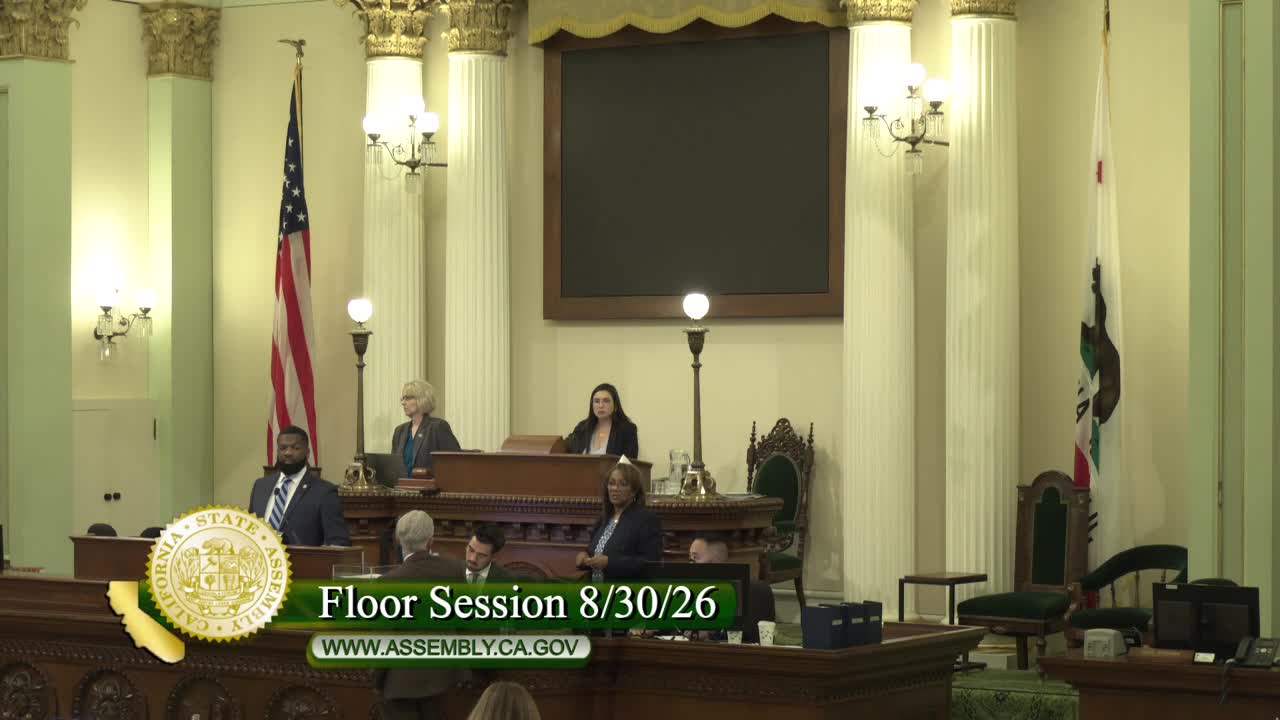 28SEC
Assembly Floor
 1MIN
Assembly Floor
 7MIN
Assembly Standing Committee on Natural Resources
Bill Author
Bill Co-Author(s):