AB 2765: CalFresh and CalWORKs: childhood hunger and foster youth.
- Session Year: 2025-2026
- House: Assembly
- Latest Version Date: 2026-09-18
Current Status:
Passed
(2026-09-18: Chaptered by Secretary of State - Chapter 310, Statutes of 2026.)
Introduced
In Committee
Awaiting First Chamber Vote
Passed First Chamber
In Committee
Awaiting Second Chamber Vote
Passed Second Chamber
Enacted
What does this bill do?
The bill expands who counts as an able-bodied adult without dependents (ABAWD) — the group generally limited to three months of CalFresh benefits in three years — to include parents or household members caring for a child aged 14 or older and directs the state to seek federal waivers, delay benefit cutoffs while county systems are automated, streamline and automate exemption checks, and report data to the Legislature and counties. It also raises the CalWORKs recurring special needs allowance from $10 to $15 per eligible family member per month.
The summary is provided by generative AI which can make mistakes. For original language, please view the details in the table below.
Existing federal law establishes the Supplemental Nutrition Assistance Program (SNAP), known in California as CalFresh, under which supplemental nutrition assistance benefits allocated to the state by the federal government are distributed to eligible individuals by each county.
Existing federal law limits a participant who is an able-bodied adult without dependents (ABAWD) to 3 months of CalFresh benefits in a 3-year period unless that participant has met work participation requirements or is otherwise exempt. Existing state law requires the State Department of Social Services to annually seek a federal waiver of this limitation. Existing state law requires the department to ensure that all recipients subject to the federal ABAWD time limit are permitted to meet the work requirements of the time limit through all forms of work, as specified.
Existing federal law, Public Law 119-21, enacted on July 4, 2025, sets forth various changes to SNAP benefits, including the removal of an exemption from the time limit for certain former foster youth under 25 years of age, and the narrowing of an exemption for a household with a dependent under 18 years of age to instead a household with a dependent under 14 years of age, as specified.
This bill would specify that an ABAWD participant includes a parent or other member of a household with responsibility for a dependent child 14 years of age or older as a result of Public Law 119-21.
The bill would make various statements of legislative intent relating to, among other things, maximizing efforts to retain in the program as many eligible CalFresh recipients as possible, providing for the continuation of food benefits, mitigating harm, and streamlining the verification of exemptions for certain populations, in response to Public Law 119-21, as specified.
The bill would state the intent of the Legislature that all exemptions provided by the state and the counties under Public Law 119-21, to the extent permitted by federal law and guidance, remain in effect for any recipient until, at the earliest, the next scheduled redetermination for that recipient, when the exemption is reassessed by the county, unless the automated exemption at redetermination allows for the exemption to continue. The bill would state legislative intent that a recipient not be discontinued from the CalFresh program due to the ABAWD work requirements under Public Law 119-21 before October 1, 2026, or until specified administrative activities are complete, whichever is later.
The bill would generally require the department to provide data to certain legislative committees and all 58 county welfare departments on the total number of CalFresh recipients subject to, exempted from, or discontinued from the program potentially due to, the CalFresh ABAWD time limit and corresponding work requirements, as specified. Under the bill, prior to the first 2 reports, the data would be furnished to impacted counties with a minimum of 4 weeks for review prior to public reporting in order to ensure accuracy. The bill would also require the department to provide data on the total number of CalFresh recipients discontinued from the program, as specified.
The bill would require the department to adopt, provide instructions to counties on, and automate for, compliance with CalFresh work requirements, in accordance with federal law, for individuals participating in extended foster care and who have been determined to be working at least 80 hours per month.
To the extent that the bill would increase CalFresh eligibility for certain populations and expand county duties, the bill would impose a state-mandated local program.
Existing law establishes the California Work Opportunity and Responsibility to Kids (CalWORKs) program, under which, through a combination of federal, state, and county funds, each county provides cash assistance and other benefits to qualified low-income families.
Under existing law, in addition to specified CalWORKs aid amounts, a family is entitled to receive an allowance for recurring special needs relating to, among other things, food, utilities, and transportation. Under existing law, the allowance for each family per month is prohibited from exceeding that amount resulting from multiplying the sum of $10 by the number of recipients in the family who are eligible for assistance.
This bill would increase the maximum threshold for the allowance by switching the factor from $10 to $15 within the formula.
Existing law continuously appropriates moneys from the General Fund to defray a portion of county costs under the CalWORKs program.
This bill would instead provide that the continuous appropriation would not be made for purposes of the bill.
The California Constitution requires the state to reimburse local agencies and school districts for certain costs mandated by the state. Statutory provisions establish procedures for making that reimbursement.
This bill would provide that, if the Commission on State Mandates determines that the bill contains costs mandated by the state, reimbursement for those costs shall be made pursuant to the statutory provisions noted above.
This bill would declare that it is to take effect immediately as an urgency statute.
Existing federal law establishes the Supplemental Nutrition Assistance Program (SNAP), known in California as CalFresh, under which supplemental nutrition assistance benefits allocated to the state by the federal government are distributed to eligible individuals by each county.
Existing federal law limits a participant who is an able-bodied adult without dependents (ABAWD) to 3 months of CalFresh benefits in a 3-year period unless that participant has met work participation requirements or is otherwise exempt. Existing state law requires the State Department of Social Services to annually seek a federal waiver of this limitation. Existing state law requires the department to ensure that all recipients subject to the federal ABAWD time limit are permitted to meet the work requirements of the time limit through all forms of work, as specified.
Existing federal law, Public Law 119-21, enacted on July 4, 2025, sets forth various changes to SNAP benefits, including the removal of an exemption from the time limit for certain former foster youth under 25 years of age, and the narrowing of an exemption for a household with a dependent under 18 years of age to instead a household with a dependent under 14 years of age, as specified.
This bill would specify that an ABAWD participant includes a parent or other member of a household with responsibility for a dependent child 14 years of age or older as a result of Public Law 119-21.
The bill would require the state and the counties to implement the applicable SNAP-related provisions under Public Law 119-21 using specified steps, including, among others, harm mitigation and minimization of client impacts and discontinuances of benefits whenever possible. The bill would require the department to adopt, provide instructions to counties on, and automate for, blanket exemptions to CalFresh work requirements, in accordance with federal law, for specified populations if eligible for the CalFresh program.Under the bill, allThe bill would make various statements of legislative intent relating to, among other things, maximizing efforts to retain in the program as many eligible CalFresh recipients as possible, providing for the continuation of food benefits, mitigating harm, and streamlining the verification of exemptions for certain populations, in response to Public Law 119-21, as specified.
The bill would state the intent of the Legislature that all exemptions provided by the state and the counties under Public Law 119-21 would, in accordance with 119-21, to the extent permitted by federal law and guidance, remain in effect for any recipient until, at the earliest, the next scheduled redetermination for that recipient, when the exemption is reassessed by the county, unless the automated exemption at redetermination allows for the exemption to continue. Under the bill, a recipient would The bill would state legislative intent that a recipient not be discontinued from the CalFresh program due to the ABAWD work requirements under Public Law 119-21 before October 1, 2026, or until specified administrative activities are complete, whichever is later.
The bill would require the department to provide data to the appropriate legislative committees on the total number of CalFresh recipients subject to, exempted from, or discontinued from the program due to, the CalFresh work requirements under Public Law 119-21, as specified.The bill would require the department to convene a working group to consider additional blanket exemptions to CalFresh work requirements for certain youth who currently have, or have previously had, an open child welfare or probation case, as specified. If the working group determines that additional data are needed for automation of the exemptions, the bill would require the department to report to the Legislature on the cost of any additional workload for county child welfare and eligibility agencies.The bill would generally require the department to provide data to certain legislative committees and all 58 county welfare departments on the total number of CalFresh recipients subject to, exempted from, or discontinued from the program potentially due to, the CalFresh ABAWD time limit and corresponding work requirements, as specified. Under the bill, prior to the first 2 reports, the data would be furnished to impacted counties with a minimum of 4 weeks for review prior to public reporting in order to ensure accuracy. The bill would also require the department to provide data on the total number of CalFresh recipients discontinued from the program, as specified.
The bill would require the department to adopt, provide instructions to counties on, and automate for, blanket compliance with CalFresh work requirements, in accordance with federal law, for individuals participating in extended foster care and who have been determined to be working at least 80 hours per month.
To the extent that the bill would increase CalFresh eligibility for certain populations and expand county duties, the bill would impose a state-mandated local program.
Existing law establishes the California Work Opportunity and Responsibility to Kids (CalWORKs) program, under which, through a combination of federal, state, and county funds, each county provides cash assistance and other benefits to qualified low-income families.
Under existing law, in addition to specified CalWORKs aid amounts, a family is entitled to receive an allowance for recurring special needs relating to, among other things, food, utilities, and transportation. Under existing law, the allowance for each family per month is prohibited from exceeding that amount resulting from multiplying the sum of $10 by the number of recipients in the family who are eligible for assistance.
This bill would increase the maximum threshold for the allowance by switching the factor from $10 to $15 within the formula.
Existing law continuously appropriates moneys from the General Fund to defray a portion of county costs under the CalWORKs program.
This bill would instead provide that the continuous appropriation would not be made for purposes of the bill.
The California Constitution requires the state to reimburse local agencies and school districts for certain costs mandated by the state. Statutory provisions establish procedures for making that reimbursement.
This bill would provide that, if the Commission on State Mandates determines that the bill contains costs mandated by the state, reimbursement for those costs shall be made pursuant to the statutory provisions noted above.
This bill would declare that it is to take effect immediately as an urgency statute.
Existing federal law establishes the Supplemental Nutrition Assistance Program (SNAP), known in California as CalFresh, under which supplemental nutrition assistance benefits allocated to the state by the federal government are distributed to eligible individuals by each county.
Existing federal law limits a participant who is an able-bodied adult without dependents (ABAWD) to 3 months of CalFresh benefits in a 3-year period unless that participant has met work participation requirements or is otherwise exempt. Existing state law requires the State Department of Social Services to annually seek a federal waiver of this limitation. Existing state law requires the department to ensure that all recipients subject to the federal ABAWD time limit are permitted to meet the work requirements of the time limit through all forms of work, as specified.
Existing federal law, Public Law 119-21, enacted on July 4, 2025, sets forth various changes to SNAP benefits, including the removal of an exemption from the time limit for certain former foster youth under 25 years of age, and the narrowing of an exemption for a household with a dependent under 18 years of age to instead a household with a dependent under 14 years of age, as specified.
This bill would specify that an ABAWD participant includes a parent or other member of a household with responsibility for a dependent child 14 years of age or older as a result of Public Law 119-21. The bill would also require the department to seek a federal waiver to protect the most vulnerable foster youth from experiencing hunger as a result of the cuts to their assistance. The bill would require the waiver to request that foster youth and former foster youth, as specified, be exempted from any cuts to their SNAP benefits as a result of the new SNAP time limit for this population.
The bill would require the department to issue an all-county letter to implement the waiver within 3 months after receiving approval and, to the extent allowable under federal law, to instruct counties of steps that they would be authorized to take to maximize the ability of foster youth participating in any of specified programs to be automatically deemed exempt from, or in compliance with, the time limit.The bill would require the state and the counties to implement the applicable SNAP-related provisions under Public Law 119-21 using specified steps, including, among others, harm mitigation and minimization of client impacts and discontinuances of benefits whenever possible. The bill would require the department to adopt, provide instructions to counties on, and automate for, blanket exemptions to CalFresh work requirements, in accordance with federal law, for specified populations if eligible for the CalFresh program.
Under the bill, all exemptions provided by the state and the counties under Public Law 119-21 would, in accordance with federal law and guidance, remain in effect for any recipient until, at the earliest, the next scheduled redetermination for that recipient, when the exemption is reassessed by the county, unless the automated exemption at redetermination allows for the exemption to continue. Under the bill, a recipient would not be discontinued from the CalFresh program due to the ABAWD work requirements under Public Law 119-21 before October 1, 2026, or until specified administrative activities are complete, whichever is later.
The bill would require the department to provide data to the appropriate legislative committees on the total number of CalFresh recipients subject to, exempted from, or discontinued from the program due to, the CalFresh work requirements under Public Law 119-21, as specified.
The bill would require the department to convene a working group to consider additional blanket exemptions to CalFresh work requirements for certain youth who currently have, or have previously had, an open child welfare or probation case, as specified. If the working group determines that additional data are needed for automation of the exemptions, the bill would require the department to report to the Legislature on the cost of any additional workload for county child welfare and eligibility agencies.
The bill would require the department to adopt, provide instructions to counties on, and automate for, blanket compliance with CalFresh work requirements, in accordance with federal law, for individuals participating in extended foster care and who have been determined to be working at least 80 hours per week. month.
To the extent that the bill would increase CalFresh eligibility for certain populations and expand county duties, the bill would impose a state-mandated local program.
Existing law establishes the California Work Opportunity and Responsibility to Kids (CalWORKs) program, under which, through a combination of federal, state, and county funds, each county provides cash assistance and other benefits to qualified low-income families.
Under existing law, in addition to specified CalWORKs aid amounts, a family is entitled to receive an allowance for recurring special needs relating to, among other things, food, utilities, and transportation. Under existing law, the allowance for each family per month is prohibited from exceeding that amount resulting from multiplying the sum of $10 by the number of recipients in the family who are eligible for assistance.
This bill would increase the maximum threshold for the allowance by switching the factor from $10 to $15 within the formula.
The bill, in addition to any special needs allowances described above, would entitle an adult who is a member of a household that is aided by the CalFresh or CalWORKs program and that includes a child 14 years of age or older and under 18 years of age, and who is discontinued as a result of the 3-month time limit on federal SNAP aid newly applied under Public Law 119-21, to receive a separate recurring special needs allowance, as specified.The bill would require that the amount of the allowance be a standard amount determined by the department to be adequate to respond to, and prevent hunger resulting from, the loss of federal SNAP benefits caused by Public Law 119-21. The bill would require that this allowance be provided until at least October 1, 2027, as specified.By creating new duties for counties relating to the recurring special needs allowance, the bill would impose a state-mandated local program.Existing law continuously appropriates moneys from the General Fund to defray a portion of county costs under the CalWORKs program.
This bill would instead provide that the continuous appropriation would not be made for purposes of the bill.
The California Constitution requires the state to reimburse local agencies and school districts for certain costs mandated by the state. Statutory provisions establish procedures for making that reimbursement.
This bill would provide that, if the Commission on State Mandates determines that the bill contains costs mandated by the state, reimbursement for those costs shall be made pursuant to the statutory provisions noted above.
This bill would declare that it is to take effect immediately as an urgency statute.
Existing federal law establishes the Supplemental Nutrition Assistance Program (SNAP), known in California as CalFresh, under which supplemental nutrition assistance benefits allocated to the state by the federal government are distributed to eligible individuals by each county.
Existing federal law limits a participant who is an able-bodied adult without dependents (ABAWD) to 3 months of CalFresh benefits in a 3-year period unless that participant has met work participation requirements or is otherwise exempt. Existing state law requires the State Department of Social Services to annually seek a federal waiver of this limitation. Existing state law requires the department to ensure that all recipients subject to the federal ABAWD time limit are permitted to meet the work requirements of the time limit through all forms of work, as specified.
Existing federal law, Public Law 119-21, enacted on July 4, 2025, sets forth various changes to SNAP benefits, including the removal of an exemption from the time limit for certain former foster youth under 25 years of age, and the narrowing of an exemption for a household with a dependent under 18 years of age to instead a household with a dependent under 14 years of age, as specified.
This bill would specify that an ABAWD participant includes a parent or other member of a household with responsibility for a dependent child 14 years of age or older as a result of the above-described federal law. Public Law 119-21. The bill would also require the department to seek a federal waiver to protect the most vulnerable foster youth from experiencing hunger as a result of the cuts to their assistance. The bill would require the waiver to request that foster youth and former foster youth, as specified, be exempted from any cuts to their SNAP benefits as a result of the new SNAP time limit for this population.
The bill would require the department to issue an all-county letter to implement the waiver within 3 months after receiving approval and, to the extent allowable under federal law, to instruct counties of steps that they would be authorized to take to maximize the ability of foster youth participating in any of specified programs to be automatically deemed exempt from, or in compliance with, the time limit.
The bill would require the state and the counties to implement the applicable SNAP-related provisions under Public Law 119-21 using specified steps, including, among others, harm mitigation and minimization of client impacts and discontinuances of benefits whenever possible. The bill would require the department to adopt, provide instructions to counties on, and automate for, blanket exemptions to CalFresh work requirements, in accordance with federal law, for specified populations if eligible for the CalFresh program.
Under the bill, all exemptions provided by the state and the counties under Public Law 119-21 would, in accordance with federal law and guidance, remain in effect for any recipient until, at the earliest, the next scheduled redetermination for that recipient, when the exemption is reassessed by the county, unless the automated exemption at redetermination allows for the exemption to continue. Under the bill, a recipient would not be discontinued from the CalFresh program due to the ABAWD work requirements under Public Law 119-21 before October 1, 2026, or until specified administrative activities are complete, whichever is later.
The bill would require the department to provide data to the appropriate legislative committees on the total number of CalFresh recipients subject to, exempted from, or discontinued from the program due to, the CalFresh work requirements under Public Law 119-21, as specified.
The bill would require the department to convene a working group to consider additional blanket exemptions to CalFresh work requirements for certain youth who currently have, or have previously had, an open child welfare or probation case, as specified. If the working group determines that additional data are needed for automation of the exemptions, the bill would require the department to report to the Legislature on the cost of any additional workload for county child welfare and eligibility agencies.
The bill would require the department to adopt, provide instructions to counties on, and automate for, blanket compliance with CalFresh work requirements, in accordance with federal law, for individuals participating in extended foster care and who have been determined to be working at least 80 hours per week.
To the extent that the bill would increase CalFresh eligibility for certain foster youth populations and expand county duties, the bill would impose a state-mandated local program.
Existing law establishes the California Work Opportunity and Responsibility to Kids (CalWORKs) program, under which, through a combination of federal, state, and county funds, each county provides cash assistance and other benefits to qualified low-income families.
Under existing law, in addition to specified CalWORKs aid amounts, a family is entitled to receive an allowance for recurring special needs relating to, among other things, food, utilities, and transportation. Under existing law, the allowance for each family per month is prohibited from exceeding that amount resulting from multiplying the sum of $10 by the number of recipients in the family who are eligible for assistance.
This bill would increase the maximum threshold for the allowance by switching the factor from $10 to $15 within the formula. The bill would, subject to the departments discretion, authorize the allowance to be provided instead in the form of a food benefit of equivalent value.
The bill would, subject to the departments discretion to establish a mechanism, authorize a household that receives aid under any provision of the Welfare and Institutions Code and that is also eligible for CalWORKs aid, regardless of whether the household receives CalWORKs aid, to receive a recurring special needs allowance in order to prevent immediate child suffering and long-term harm caused by prolonged periods of childhood hunger or other unmet needs, if unmitigated.The bill, in addition to any special needs allowances described above, would entitle an adult who is a member of a household that is aided by the CalFresh or CalWORKs program and that includes a child 14 years of age or older and under 18 years of age, and who is discontinued as a result of the 3-month time limit on federal SNAP aid newly applied under Public Law 119-21, to receive a separate recurring special needs allowance, as specified.
The bill would require that the amount of the allowance be a standard amount determined by the department to be adequate to respond to, and prevent hunger resulting from, the loss of federal SNAP benefits caused by Public Law 119-21. The bill would require that this allowance be provided until at least October 1, 2027, as specified.
By creating new duties for counties relating to the recurring special needs allowance, the bill would impose a state-mandated local program.
Existing law continuously appropriates moneys from the General Fund to defray a portion of county costs under the CalWORKs program.
This bill would instead provide that the continuous appropriation would not be made for purposes of the bill.
The California Constitution requires the state to reimburse local agencies and school districts for certain costs mandated by the state. Statutory provisions establish procedures for making that reimbursement.
This bill would provide that, if the Commission on State Mandates determines that the bill contains costs mandated by the state, reimbursement for those costs shall be made pursuant to the statutory provisions noted above.
This bill would declare that it is to take effect immediately as an urgency statute.
Existing federal law establishes the Supplemental Nutrition Assistance Program (SNAP), known in California as CalFresh, under which supplemental nutrition assistance benefits allocated to the state by the federal government are distributed to eligible individuals by each county.
Existing federal law limits a participant who is an able-bodied adult without dependents (ABAWD) to 3 months of CalFresh benefits in a 3-year period unless that participant has met work participation requirements or is otherwise exempt. Existing state law requires the State Department of Social Services to annually seek a federal waiver of this limitation. Existing state law requires the department to ensure that all recipients subject to the federal ABAWD time limit are permitted to meet the work requirements of the time limit through all forms of work, as specified.
Existing federal law, enacted on July 4, 2025, sets forth various changes to SNAP benefits, including the removal of an exemption from the time limit for certain former foster youth under 25 years of age, and the narrowing of an exemption for a household with a dependent under 18 years of age to instead a household with a dependent under 14 years of age, as specified.
This bill would specify that an ABAWD participant includes a parent or other member of a household with responsibility for a dependent child 14 years of age or older as a result of the above-described federal law. The bill would also require the department to seek a federal waiver to protect the most vulnerable foster youth from experiencing hunger as a result of the cuts to their assistance. The bill would require that the waiver to request that specified categories of foster youth and former foster youth, as specified, be exempted from any cuts to their SNAP benefits as a result of the new SNAP time limit for this population.
The bill would require the department to issue an all-county letter to implement the waiver within 3 months after receiving approval and, to the extent allowable under federal law, to instruct counties of steps that they would be authorized to take to maximize the ability of foster youth participating in any of specified programs to be automatically deemed exempt from, or in compliance with, the time limit.
To the extent that the bill would increase CalFresh eligibility for certain foster youth and expand county duties, the bill would impose a state-mandated local program.
Existing law establishes the California Work Opportunity and Responsibility to Kids (CalWORKs) program, under which, through a combination of federal, state, and county funds, each county provides cash assistance and other benefits to qualified low-income families.
Under existing law, in addition to specified CalWORKs aid amounts, a family is entitled to receive an allowance for recurring special needs relating to, among other things, food, utilities, and transportation. Under existing law, the allowance for each family per month is prohibited from exceeding that amount resulting from multiplying the sum of $10 by the number of recipients in the family who are eligible for assistance.
This bill would increase the maximum threshold for the allowance by switching the factor from $10 to $15 within the formula. The bill would, subject to the departments discretion, authorize the allowance to be provided instead in the form of a food benefit of equivalent value.
The bill would, subject to the departments discretion to establish a mechanism, authorize a household that receives aid under any provision of the Welfare and Institutions Code and that is also eligible for CalWORKs aid, regardless of whether the household receives CalWORKs aid, to receive a recurring special needs allowance in order to prevent immediate child suffering and long-term harm caused by prolonged periods of childhood hunger or other unmet needs, if unmitigated.
By creating new duties for counties relating to the recurring special needs allowance, the bill would impose a state-mandated local program.
Existing law continuously appropriates moneys from the General Fund to defray a portion of county costs under the CalWORKs program.
This bill would instead provide that the continuous appropriation would not be made for purposes of the bill.
The California Constitution requires the state to reimburse local agencies and school districts for certain costs mandated by the state. Statutory provisions establish procedures for making that reimbursement.
This bill would provide that, if the Commission on State Mandates determines that the bill contains costs mandated by the state, reimbursement for those costs shall be made pursuant to the statutory provisions noted above.
Existing federal law establishes the Supplemental Nutrition Assistance Program (SNAP), known in California as CalFresh, under which supplemental nutrition assistance benefits allocated to the state by the federal government are distributed to eligible individuals by each county.
Existing federal law limits a participant who is an able-bodied adult without dependents (ABAWD) to 3 months of CalFresh benefits in a 3-year period unless that participant has met work participation requirements or is otherwise exempt. Existing state law requires the State Department of Social Services to annually seek a federal waiver of this limitation. Existing state law requires the department to ensure that all recipients subject to the federal ABAWD time limit are permitted to meet the work requirements of the time limit through all forms of work, as specified.
Existing federal law, enacted on July 4, 2025, sets forth various changes to SNAP benefits, including the removal of an exemption from the time limit for certain former foster youth under 25 years of age, and the narrowing of an exemption for a household with a dependent under 18 years of age to instead a household with a dependent under 14 years of age, as specified.
This bill would specify that an ABAWD participant includes a parent or other member of a household with responsibility for a dependent child 14 years of age or older as a result of the above-described federal law. The bill would also require the department to seek a federal waiver to protect the most vulnerable foster youth from experiencing hunger as a result of the cuts to their assistance. The bill would require that the waiver request that specified categories of foster youth be exempted from any cuts to their SNAP benefits as a result of the new SNAP time limit for this population.
The bill would require the department to issue an all-county letter to implement the waiver within 3 months after receiving approval and, to the extent allowable under federal law, to instruct counties of steps that they would be authorized to take to maximize the ability of foster youth participating in any of specified programs to be automatically deemed exempt from, or in compliance with, the time limit.
To the extent that the bill would increase CalFresh eligibility for certain foster youth and expand county duties, the bill would impose a state-mandated local program.
Existing law establishes the California Work Opportunity and Responsibility to Kids (CalWORKs) program, under which, through a combination of federal, state, and county funds, each county provides cash assistance and other benefits to qualified low-income families.
Under existing law, in addition to specified CalWORKs aid amounts, a family is entitled to receive an allowance for recurring special needs relating to, among other things, food, utilities, and transportation. Under existing law, the allowance for each family per month is prohibited from exceeding that amount resulting from multiplying the sum of $10 by the number of recipients in the family who are eligible for assistance.
This bill would increase the maximum threshold for the allowance by switching the factor from $10 to $15 within the formula. The bill would, subject to the departments discretion, authorize the allowance to be provided instead in the form of a food benefit of equivalent value.
The bill would, subject to the departments discretion to establish a mechanism, authorize a household that receives aid under any provision of the Welfare and Institutions Code and that is also eligible for CalWORKs aid, regardless of whether the household receives CalWORKs aid, to receive a recurring special needs allowance in order to prevent immediate child suffering and long-term harm caused by prolonged periods of childhood hunger or other unmet needs, if unmitigated.
By creating new duties for counties relating to the recurring special needs allowance, the bill would impose a state-mandated local program.
Existing law continuously appropriates moneys from the General Fund to defray a portion of county costs under the CalWORKs program.
This bill would instead provide that the continuous appropriation would not be made for purposes of the bill.
The California Constitution requires the state to reimburse local agencies and school districts for certain costs mandated by the state. Statutory provisions establish procedures for making that reimbursement.
This bill would provide that, if the Commission on State Mandates determines that the bill contains costs mandated by the state, reimbursement for those costs shall be made pursuant to the statutory provisions noted above.
The Legislature finds and declares all of the following:
(a)Federal H.R. 1 (Public Law 119-21), which was passed on a partisan vote with all but two Republicans in the United States House of Representatives and three Republicans in the United States Senate voting Yea and all Democrats voting Nay, made the largest cuts to the federal Supplemental Nutrition Assistance Program (SNAP), known as CalFresh in California, in history.
(b)H.R. 1 made these cuts to help fund the largest tax cuts for wealthy corporations and individuals in history.
(c)These cuts are currently being enacted during a period of significant food inflation, caused in part by raids by the United States Immigration and Customs Enforcement (ICE) on immigrant farmworkers and trade tariffs levied unilaterally by President Donald J. Trump.
(d)Among these cuts were cuts to food assistance for foster youth and families with children.
(e)According to H.R. 1, the cuts to foster youth and families with dependent children are generally applied if the household fails to show proof of adequate work for adults in the household between 18 and 64 years of age, inclusive, despite the fact that there is no evidence that people are more able to find and keep work if they are experiencing hunger or their children are experiencing hunger.
(f)The Legislature refuses to acquiesce to the deception of H.R. 1, which dishonestly designated these new benefit cuts to families with children to be implemented under the Able-Bodied Adult Without Dependents (ABAWD) policy. The Legislature therefore plans to amend state law to help prevent undue harm to families with children as a result of the new federal law.
(g)The Legislature declares that no one should experience hunger, especially not children and not foster youth transitioning to adulthood.
(h)The Legislature recognizes the significant and long-term harm that can be caused by hunger experienced by children and young adults, especially those who experienced other traumas as a child, such as those known to have been experienced by foster youth.
(i)The Legislature encourages all efforts to mitigate the harm to children and foster youth affected by this cruel new federal policy.
SEC. 2.Section 11450 of the Welfare and Institutions Code, as amended by Section 2 of Chapter 798 of the Statutes of 2024, is amended to read:11450.(a)(1)(A) Aid shall be paid for each needy family, which shall include all eligible children of each eligible applicant or recipient child and the parents of the children, but shall not include a fetus, or recipients of aid under Chapter 3 (commencing with Section 12000), qualified for aid under this chapter. In determining the amount of aid paid, and notwithstanding the minimum basic standards of adequate care specified in Section 11452, the familys income, exclusive of any amounts considered exempt as income or paid pursuant to subdivision (e) or Section 11453.1, determined for the prospective semiannual period pursuant to Sections 11265.1, 11265.2, and 11265.3, and then calculated pursuant to Section 11451.5, shall be deducted from the sum specified in the following table, as adjusted for cost-of-living increases pursuant to Section 11453 and paragraph (2). In no case shall the amount of aid paid for each month exceed the sum specified in the following table, as adjusted for cost-of-living increases pursuant to Section 11453 and paragraph (2), plus any special needs, as specified in subdivisions (c), (e), and (f):
Number of | Maximum |
|---|---|
1 | $326 |
2 | 535 |
3 | 663 |
4 | 788 |
5 | 899 |
6 | 1,010 |
7 | 1,109 |
8 | 1,209 |
9 | 1,306 |
10 or more | 1,403 |
(B)If, when, and during those times that the United States government increases or decreases its contributions in assistance of needy children in this state above or below the amount paid on July 1, 1972, the amounts specified in the above table shall be increased or decreased by an amount equal to that increase or decrease by the United States government, provided that no increase or decrease shall be subject to subsequent adjustment pursuant to Section 11453.
(2)The sums specified in paragraph (1) shall not be adjusted for cost of living for the 199091, 199192, 199293, 199394, 199495, 199596, 199697, and 199798 fiscal years, and through October 31, 1998, nor shall that amount be included in the base for calculating any cost-of-living increases for any fiscal year thereafter. Elimination of the cost-of-living adjustment pursuant to this paragraph shall satisfy the requirements of former Section 11453.05, and no further reduction shall be made pursuant to that section.
(b)(1)(A)Until the date that paragraph (2) is effective, if the family does not include a needy child qualified for aid under this chapter, aid shall be paid to a pregnant child who is 18 years of age or younger at any time after verification of pregnancy, in the amount that would otherwise be paid to one person, as specified in subdivision (a), if the pregnant child and the child, if born, would have qualified for aid under this chapter. Verification of pregnancy shall be required as a condition of eligibility for aid under this paragraph.
(B)Notwithstanding subparagraph (A), and until the date that paragraph (2) is effective, if the family does not include a needy child qualified for aid under this chapter, aid shall be paid to a pregnant person for the month in which the birth is anticipated and for the six-month period immediately prior to the month in which the birth is anticipated, in the amount that would otherwise be paid to one person, as specified in subdivision (a), if the pregnant person and child, if born, would have qualified for aid under this chapter. Verification of pregnancy is required as a condition of eligibility for aid under this paragraph.
(2)(A)Notwithstanding paragraph (1), if the family does not include a needy child qualified for aid under this chapter, aid shall be paid to a pregnant person as of the date of the application for aid, in the amount that would otherwise be paid to one person, as specified in subdivision (a), if the pregnant person or the child, if born, would have qualified for aid under this chapter. Verification of pregnancy shall be required as a condition of eligibility for aid under this paragraph.
(B)A pregnant person may provide verification of pregnancy as required in subparagraph (A) by means of a sworn statement or, if necessary, a verbal attestation. Medical verification of pregnancy shall be submitted within 30 working days following submission of the sworn statement or verbal attestation for benefits to continue. If the applicant fails to submit medical verification of pregnancy within 30 working days, the county human services agency shall continue aid when the applicant presents evidence of good faith efforts to comply with this requirement.
(C)(i)A person who receives aid pursuant to this paragraph shall report to the county, orally or in writing, within 30 days following the end of their pregnancy.
(ii)Aid for persons under this paragraph shall discontinue at the end of the month following the month in which the person reports the end of their pregnancy to the county human services agency.
(iii)Prior to discontinuing aid for a person under this paragraph due to the end of their pregnancy, the county human services agency shall provide information about, and referral to, mental health services, including, but not limited to, services provided by the county human services agency, when appropriate.
(D)This paragraph shall take effect on July 1, 2022, or on the date that the department notifies the Legislature that the California Statewide Automated Welfare System can perform the necessary automation to implement this paragraph, whichever date is later.
(c)(1)The amount of forty-seven dollars ($47) per month shall be paid to a pregnant person qualified for aid under subdivision (a) or (b) to meet the special needs resulting from pregnancy if the pregnant person and child, if born, would have qualified for aid under this chapter. The county human services agency shall require a pregnant person to provide medical verification of pregnancy. The county human services agency shall refer all recipients of aid under this subdivision to a local provider of the California Special Supplemental Nutrition Program for Women, Infants, and Children, and perinatal home visiting services administered by the county public health agency, county human services agency, or applicable county home visiting provider. If that payment to a pregnant person qualified for aid under subdivision (a) is considered income under federal law in the first five months of pregnancy, payments under this subdivision do not apply to a person eligible under subdivision (a), except for the month in which birth is anticipated and for the three-month period immediately prior to the month in which delivery is anticipated, if the pregnant person and child, if born, would have qualified for aid under this chapter.
(2)A pregnant person may provide the verification of pregnancy required by paragraph (1) by means of a sworn statement or, if necessary, a verbal attestation. Medical verification of pregnancy shall be submitted within 30 working days following submission of the sworn statement or verbal attestation for the pregnancy special need benefit to continue. If the pregnant person fails to submit medical verification of pregnancy within 30 working days, the county human services agency shall continue the benefit when the applicant presents evidence of good faith efforts to comply with this requirement.
(3)Beginning May 1, 2022, or on the date that the department notifies the Legislature that the California Statewide Automated Welfare System can perform the necessary automation to implement this paragraph, the special needs payment described in paragraph (1) shall be one hundred dollars ($100) per month.
(4)Beginning July 1, 2022, or on the date that the department notifies the Legislature that the California Statewide Automated Welfare System can perform the necessary automation to implement this paragraph, the special needs payment described in this subdivision shall discontinue at the end of the month following the month in which a person reports the end of their pregnancy to the county human services agency.
(d)For children receiving AFDC-FC under this chapter, there shall be paid, exclusive of any amount considered exempt as income, an amount of aid each month that, if added to the childs income, is equal to the rate specified in Section 11460, 11461, 11462, or 11463. In addition, the child is eligible for special needs, as specified in departmental regulations.
(e)In addition to the amounts payable under subdivision (a) and former Section 11453.1, a family is entitled to receive an allowance for recurring special needs not common to a majority of recipients. These recurring special needs include, but are not limited to, special diets upon the recommendation of a physician for circumstances other than pregnancy, and unusual costs of transportation, laundry, housekeeping services, telephone, and utilities. The recurring special needs allowance for each family per month shall not exceed that amount resulting from multiplying the sum of fifteen dollars ($15) by the number of recipients in the family who are eligible for assistance.
(f)(1)After a family has used all available liquid resources, both exempt and nonexempt, in excess of one hundred dollars ($100), with the exception of funds deposited in a restricted account described in subdivision (a) of Section 11155.2, the family is also entitled to receive an allowance for nonrecurring special needs. This paragraph does not apply to the allowance for nonrecurring special needs for homeless assistance pursuant to subparagraph (A) of paragraph (3).
(2)An allowance for nonrecurring special needs shall be granted for replacement of clothing and household equipment and for emergency housing needs other than those needs addressed by subparagraph (A) of paragraph (3). These needs shall be caused by sudden and unusual circumstances beyond the control of the needy family. The department shall establish the allowance for each of the nonrecurring special needs items. The sum of all nonrecurring special needs provided by this subdivision shall not exceed six hundred dollars ($600) per event.
(3)(A)(i)An allowance for nonrecurring special needs for homeless assistance is available to a family that is homeless and seeking shelter when the family is eligible for aid under this chapter.
(ii)(I)Homeless assistance for temporary shelter is also available to families that are homeless and seeking shelter that are apparently eligible for aid under this chapter. Apparent eligibility exists when evidence presented by the applicant, or that is otherwise available to the county human services agency, and the information provided on the application documents indicate that there would be eligibility for aid under this chapter if the evidence and information were verified. However, a noncitizen applicant who does not provide verification of their eligible immigrant status, or a person with no eligible children who does not provide verification of their pregnancy, is not apparently eligible for purposes of this section.
(II)A pregnant person may provide verification of pregnancy, as required in subclause (I), by means of a sworn statement or, if necessary, a verbal attestation. Medical verification of pregnancy shall be submitted within 30 working days following submission of the sworn statement or verbal attestation for benefits to continue. If the applicant fails to submit medical verification of pregnancy within 30 working days, the county human services agency shall continue aid when the applicant presents evidence of good faith efforts to comply with this requirement.
(iii)Homeless assistance for temporary shelter is also available to families that are homeless and seeking shelter that would be eligible for aid under this chapter but for the fact that the only child or children in the family are in out-of-home placement pursuant to an order of the dependency court, if the family is receiving reunification services and the county determines that homeless assistance is necessary for reunification to occur.
(B)A family is considered homeless, for the purpose of this section, when the family lacks a fixed and regular nighttime residence, the family has a primary nighttime residence that is a supervised publicly or privately operated shelter designed to provide temporary living accommodations, or the family is residing in a public or private place not designed for, or ordinarily used as, a regular sleeping accommodation for human beings. A family is also considered homeless for the purpose of this section if the family has received a notice to pay rent or quit, or any notice that could lead to an eviction, regardless of the circumstances cited in the notice.
(4)(A)(i)A nonrecurring special needs benefit of eighty-five dollars ($85) a day shall be available to families of up to four members for the costs of temporary shelter, subject to the requirements of this paragraph. The fifth and additional members of the family shall each receive fifteen dollars ($15) per day, up to a daily maximum of one hundred forty-five dollars ($145). County human services agencies may increase the daily amount available for temporary shelter as necessary to secure the additional bedspace needed by the family.
(ii)This special needs benefit shall be granted or denied the same day as the familys application for homeless assistance, and benefits shall be available for up to three working days. Upon applying for homeless assistance, the family shall provide a sworn statement that the family is homeless. If the family meets the criteria of questionable homelessness, which means that there is reason to suspect that the family has permanent housing, the county human services agency shall refer the family to its early fraud prevention and detection unit, if the county has such a unit, for assistance in the verification of homelessness within this period.
(iii)After homelessness has been verified, the three-day limit shall be extended for a period of time that, when added to the initial benefits provided, does not exceed a total of 16 calendar days. This extension of benefits shall be done in increments of one week, and shall be based upon searching for permanent housing, which shall be documented on a housing search form, good cause, or other circumstances defined by the department. Documentation of a housing search is required for the initial extension of benefits beyond the three-day limit and on a weekly basis thereafter if the family is receiving temporary shelter benefits. Good cause shall include, but is not limited to, situations in which the county human services agency has determined that the family, to the extent it is capable, has made a good faith but unsuccessful effort to secure permanent housing while receiving temporary shelter benefits or that the family is homeless as a direct and primary result of a state or federally declared disaster.
(iv)Notwithstanding clauses (ii) and (iii), the county may waive the three-day limit and may provide benefits in increments of more than one week for a family that becomes homeless as a direct and primary result of a state or federally declared disaster.
(B)(i)A nonrecurring special needs benefit for permanent housing assistance is available to pay for last months rent and security deposits if these payments are conditions of securing a residence, or to pay for up to two months of rent arrearages, if these payments are a reasonable condition of preventing eviction.
(ii)The last months rent or monthly arrearage portion of the payment shall meet both of the following requirements:
(I)(ia) It shall not exceed 80 percent of the familys total monthly household income without the value of CalFresh benefits or special needs benefit for a family of that size.
(ib)Beginning January 1, 2026, or on the date that the department notifies the Legislature that the California Statewide Automated Welfare System can perform the necessary automation to implement this paragraph, whichever date is later, and for purposes of this subparagraph, the county human services agency shall include in the calculation of the familys total monthly household income any amount that is regularly received or will be regularly received from other government and nonprofit housing and homeless subsidy programs and any regularly received private support intended or designed to help the family with housing, such as financial support from an individual outside the household. The additional sources of income described in the previous sentence shall not be included in the calculation of the familys income for purposes of calculating the amount of aid paid pursuant to subdivision (a).
(II)(ia) It shall only be made to families that have found permanent housing costing no more than 80 percent of the familys total monthly household income without the value of CalFresh benefits or special needs benefit for a family of that size.
(ib)Beginning January 1, 2026, or on the date that the department notifies the Legislature that the California Statewide Automated Welfare System can perform the necessary automation to implement this paragraph, whichever date is later, and for purposes of this subparagraph, the county human services agency shall include in the calculation of the familys total monthly household income any amount that is regularly received or will be regularly received from other government and nonprofit housing and homeless subsidy programs and any regularly received private support intended or designed to help the family with housing, such as financial support from an individual outside the household. The additional sources of income described in the previous sentence shall not be included in the calculation of the familys income for purposes of calculating the amount of aid paid pursuant to subdivision (a).
(iii)However, if the county human services agency determines that a family intends to reside with individuals who will be sharing housing costs, the county human services agency shall, in appropriate circumstances, set aside the condition specified in subclause (II) of clause (ii).
(C)The nonrecurring special needs benefit for permanent housing assistance is also available to cover the standard costs of deposits for utilities that are necessary for the health and safety of the family.
(D)A payment for, or denial of, permanent housing assistance shall be issued no later than one working day from the time that a family presents evidence of the availability of permanent housing. If an applicant family provides evidence of the availability of permanent housing before the county human services agency has established eligibility for aid under this chapter, the county human services agency shall complete the eligibility determination so that the payment for, or denial of, permanent housing assistance is issued within one working day from the submission of evidence of the availability of permanent housing, unless the family has failed to provide all of the verification necessary to establish eligibility for aid under this chapter.
(E)(i)Except as provided in clauses (ii) and (iii), eligibility for the temporary shelter assistance and the permanent housing assistance pursuant to this paragraph is limited to the number of days allowable under subparagraph (A) for temporary shelter assistance and one payment of permanent housing assistance every 12 months. A person who applies for homeless assistance benefits shall be informed that, with certain exceptions, the temporary shelter benefit is limited to the number of days allowable under subparagraph (A) for the 12-month period.
(ii)(I)A family that becomes homeless as a direct and primary result of a state or federally declared disaster is eligible for homeless assistance.
(II)If there is a state or federally declared disaster in a county, the county human services agency shall coordinate with public and private disaster response organizations and agencies to identify and inform recipients of their eligibility for homeless assistance available pursuant to subclause (H).
(iii)A family is eligible for homeless assistance if homelessness is a direct result of domestic violence by a spouse, partner, or roommate, including, but not limited to, a parent or child with whom they were living; physical or mental illness that is medically verified that shall not include a diagnosis of alcoholism, drug addiction, or psychological stress; or the uninhabitability of the former residence caused by sudden and unusual circumstances beyond the control of the family, including natural catastrophe, fire, or condemnation. These circumstances shall be verified by a third-party governmental or private health and human services agency, except that domestic violence may also be verified by a sworn statement by the victim, as provided under Section 11495.25. Homeless assistance payments based on these specific circumstances may not be received more often than once in any 12-month period. In addition, if the domestic violence is verified by a sworn statement by the victim, the homeless assistance payments shall be limited to two periods of not more than 16 cumulative calendar days of temporary shelter assistance and two payments of permanent housing assistance. A county may require that a recipient of homeless assistance benefits who qualifies under this paragraph for a second time in a 24-month period participate in a homelessness avoidance case plan as a condition of eligibility for homeless assistance benefits, but only if the county has also provided a housing navigation caseworker who can assist with securing permanent housing and housing case management services. The county human services agency shall immediately inform recipients who verify domestic violence by a sworn statement of the availability of domestic violence counseling and services, and refer those recipients to services upon request.
(iv)If a county requires a recipient who verifies domestic violence by a sworn statement to participate in a homelessness avoidance case plan pursuant to clause (iii), the plan shall include the provision of domestic violence services, if appropriate.
(v)If a recipient seeking homeless assistance based on domestic violence pursuant to clause (iii) has previously received homeless avoidance services based on domestic violence, the county shall review whether services were offered to the recipient and consider what additional services would assist the recipient in leaving the domestic violence situation.
(vi)The county human services agency shall report necessary data to the department through a statewide homeless assistance payment indicator system, as requested by the department, regarding all recipients of aid under this paragraph.
(F)Payments to providers for temporary shelter and permanent housing and utilities shall be made on behalf of families requesting these payments.
(G)The daily amount for the temporary shelter special needs benefit for homeless assistance may be increased if authorized by the current years Budget Act by specifying a different daily allowance and appropriating the funds therefor.
(H)A payment shall not be made pursuant to this paragraph unless the provider of housing is any of the following:
(i)A commercial establishment.
(ii)A shelter.
(iii)A person with whom, or an establishment with which, the family requesting assistance has executed a valid lease, sublease, or shared housing agreement.
(I)(i)A CalWORKs applicant who provides a sworn statement of past or present domestic abuse and who is fleeing their abuser is deemed to be homeless and is eligible for temporary shelter assistance under clause (i) of subparagraph (A) and under subparagraph (E), notwithstanding any income and assets attributable to the alleged abuser.
(ii)The homeless assistance payments issued under this subparagraph shall be granted the same day as the familys application, and benefits shall be available in increments of 16 days of temporary shelter assistance pursuant to clause (i) of subparagraph (A). The homeless assistance payments shall be limited to two periods of not more than 16 cumulative calendar days each of temporary shelter assistance within the applicants lifetime. The second 16-day period shall continue to be available when the applicant becomes a CalWORKs recipient during the first 16-day period. The homeless assistance payments issued under this subparagraph shall be in addition to other payments for which the CalWORKs applicant, if the applicant becomes a CalWORKs recipient, may later qualify under this subdivision.
(iii)For purposes of this subparagraph, the housing search documentation described in clause (iii) of subparagraph (A) shall be required only upon issuance of an immediate need payment pursuant to Section 11266 or the issuance of benefits for the month of application.
(g)The department shall establish rules and regulations ensuring the uniform statewide application of this section.
(h)The department shall notify all applicants and recipients of aid through the standardized application form that these benefits are available and shall provide an opportunity for recipients to apply for the funds quickly and efficiently.
(i)The department shall work with county human services agencies, the County Welfare Directors Association of California, and advocates of CalWORKs recipients to gather information regarding the actual costs of a nightly shelter and best practices for transitioning families from a temporary shelter to permanent housing, and to provide that information to the Legislature, to be submitted annually in accordance with Section 9795 of the Government Code.
(j)(1)Except for the purposes of Section 15200, the amounts payable to recipients pursuant to Section 11453.1 shall not constitute part of the payment schedule set forth in subdivision (a).
(2)The amounts payable to recipients pursuant to Section 11453.1 shall not constitute income to recipients of aid under this section.
(k)For children receiving Kin-GAP pursuant to Article 4.5 (commencing with Section 11360) or Article 4.7 (commencing with Section 11385), there shall be paid, exclusive of any amount considered exempt as income, an amount of aid each month, which, when added to the childs income, is equal to the rate specified in Sections 11364 and 11387.
(l)(1)A county shall implement the semiannual reporting requirements in accordance with Chapter 501 of the Statutes of 2011 no later than October 1, 2013.
(2)Upon completion of the implementation described in paragraph (1), each county shall provide a certificate to the director certifying that semiannual reporting has been implemented in the county.
(3)Upon filing the certificate described in paragraph (2), a county shall comply with the semiannual reporting provisions of this section.
(m)(1)Notwithstanding the rulemaking provisions of the Administrative Procedure Act (Chapter 3.5 (commencing with Section 11340) of Part 1 of Division 3 of Title 2 of the Government Code), the State Department of Social Services may implement and administer this section by means of all-county letters or similar instructions from the department until regulations are adopted. These all-county letters or similar written instructions shall have the same force and effect as regulations until the adoption of regulations.
(2)The department shall adopt emergency regulations no later than 18 months following the completion of all necessary automation to implement this section. The department may readopt any emergency regulation authorized by this section that is the same as, or substantially equivalent to, an emergency regulation previously adopted under this section.
(3)The initial adoption of emergency regulations pursuant to this section and one readoption of emergency regulations shall be deemed an emergency and necessary for the immediate preservation of the public peace, health, safety, or general welfare. Initial emergency regulations and the one readoption of emergency regulations authorized by this section shall be exempt from review by the Office of Administrative Law. The initial emergency regulations and the one readoption of emergency regulations authorized by this section shall be submitted to the Office of Administrative Law for filing with the Secretary of State and each shall remain in effect for no more than 180 days, by which time final regulations shall be adopted.
(n)This section shall become operative on July 1, 2024, or on the date the department notifies the Legislature that the Statewide Automated Welfare System can perform the necessary automation to implement this section, whichever date is later.
SEC. 3.Section 18900.96 is added to the Welfare and Institutions Code, to read:18900.96.(a)It is the intent of the Legislature in enacting this section to provide direction to the state and counties to maximize efforts to retain in the program as many eligible CalFresh recipients as possible as Public Law 119-21 is implemented. It is further the intent of the Legislature to provide for the continuation of food benefits for as many Californians as possible who may become ineligible for CalFresh benefits due to the enactment of Public Law 119-21.
(b)It is the intent of the Legislature to implement Public Law 119-21 using all of the following principles:
(1)Mitigate harm and minimize client impacts and discontinuances of benefits whenever possible.
(2)Use data and research to inform decisions, monitor impacts, and make adjustments when necessary. This step includes, but is not limited to, using administrative data to streamline the verification of compliance with, and exemptions from, the CalFresh time limit and corresponding able-bodied adult without dependents (ABAWD) work requirements whenever possible.
(3)Consult with affected groups to obtain input and feedback, including, but not limited to, current and former CalFresh recipients, counties, the County Welfare Directors Association of California, representatives of county eligibility workers, community-based organizations, and advocates.
(4)Identify opportunities to improve existing processes in parallel with implementation efforts that center client and county user experience.
(5)To the maximum extent possible, support operational readiness to implement Public Law 119-21, including timely policy guidance, system automation, and the provision of county training and technical assistance.
(c)It is the intent of the Legislature, to the extent permitted by federal law and to the extent relevant administrative data are available, that the department shall, working with other state departments and the California Health and Human Services Agency, as necessary, adopt, provide instructions to counties on, and streamline the verification of, exemptions based on available administrative data for the populations listed in paragraphs (1) through (4) and others identified by the department. The department shall not infringe on, or impede, the ability of individuals to work or continue working.
(1)Individuals served under the Lanterman Developmental Disabilities Services Act (Division 4.5 (commencing with Section 4500)) by regional centers.
(2)Recipients of in-home supportive services under Article 7 (commencing with Section 12300) of Chapter 3 of Part 3 and their caregiver providers.
(3)Individuals who meet the CalFresh definition of homelessness or chronic homelessness if the county welfare department has also determined that the individual suffers from obvious physical or mental unfitness for work.
(4)(A)Individuals 24 years of age or younger who are, or were upon attaining 18 years of age, in foster care under the jurisdiction of the juvenile court as a dependent pursuant to Section 300, as a ward pursuant to Section 601 or 602, or as a transition dependent pursuant to Section 450, and who are unfit for work due to a documented behavioral or physical health condition as indicated in their case plan, medical billing claims data, or other appropriate documentation. This may include, but is not limited to, the following:
(i)Nonminor dependents, as defined in subdivision (v) of Section 11400, who remain in extended foster care and meet participation requirements pursuant to paragraph (5) of subdivision (b) of Section 11403.
(ii)Nonminor former dependents or wards, as defined in paragraph (1) of subdivision (aa) of Section 11400, who previously participated in the extended foster care program and met the participation requirements pursuant to paragraph (5) of subdivision (b) of Section 11403 and the qualifying medical condition has not resolved.
(iii)Individuals who were in foster care under the jurisdiction of the juvenile court at 18 years of age or older and who are eligible to receive full-scope Medi-Cal benefits until 26 years of age, with a documented, qualifying medical condition.
(B)This paragraph shall become operative on the date when the department notifies the Legislature that a process has been established to provide administrative data to the California Statewide Automated Welfare System, and that the necessary changes have been automated to implement this paragraph.
(d)It is the intent of the Legislature that all exemptions to the ABAWD work requirements provided by the state and the counties under Public Law 119-21 shall, to the extent permitted by federal law and guidance, remain in effect for any recipient until, at the earliest, the next scheduled redetermination for that recipient, when the exemption shall be reassessed by the county, unless the automated exemption at redetermination allows for the exemption to continue.
(e)It is the intent of the Legislature that a recipient shall not be discontinued from the CalFresh program due to the ABAWD work requirements under Public Law 119-21 in California before October 1, 2026, or until both of the following administrative activities are complete, whichever is later:
(1)Completion of all automation necessary for the initial implementation of Public Law 119-21. This shall not preclude future additional automation and enhancements to streamline and support the ability of counties to support CalFresh applicants and recipients.
(2)Completion of functionality in the California Statewide Automated Welfare System necessary to support automated exemptions as identified by the state. This shall not preclude future additional automation and enhancements to streamline and support the automated exemption processes.
(f)(1)Unless the state is under a statewide waiver of the ABAWD time limit and corresponding work requirements, the department shall provide data on at least a semiannual basis to the appropriate policy and fiscal committees of the Legislature and all 58 county welfare departments, starting on January 15, 2027, on the total number of CalFresh recipients subject to, exempted from, or discontinued from the program potentially due to, the CalFresh ABAWD time limit and corresponding work requirements. The data, which shall not include personally identifiable information, shall also include information, as available, on the characteristics of individuals who may have lost CalFresh as a result of the time limit, including, but not limited to, demographic data about the individuals, and impacted households as appropriate, and, when applicable, explain the implementation of major new sources of administrative data supporting the verification of exemptions. The department shall develop the methodology in consultation with the County Welfare Directors Association of California. Prior to the first two reports, the data shall be furnished to impacted counties with a minimum of four weeks for review prior to public reporting in order to ensure accuracy.
(2)The department shall follow all applicable data-deidentification guidelines to prevent the reidentification of recipients described in this subdivision.
(g)(1)In addition to the populations identified in subdivision (f), the department shall provide data on at least a semiannual basis to the appropriate policy and fiscal committees of the Legislature and all 58 county welfare departments, starting on January 15, 2027, and until all relevant households have been discontinued from the CalFresh program, on the total number of CalFresh recipients discontinued from the program due to all other provisions of Public Law 119-21, including, but not limited to, the persons immigration status under Public Law 119-21. The data, which shall not include personally identifiable information, shall also include as much detail as possible on the characteristics of persons discontinued from the CalFresh program as a result of Public Law 119-21, including, but not limited to, the reason for discontinuance and demographic data about the discontinued person and the other persons in their household, both of which shall be reported at the individual and household level.
(2)The department shall follow all applicable data-deidentification guidelines to prevent the reidentification of recipients described in this subdivision.
(h)(1)The department, in collaboration with other departments and the California Health and Human Services Agency, as necessary, shall adopt, provide instructions to counties on, and automate for, compliance with CalFresh work requirements, in accordance with federal law, for individuals participating in extended foster care and who have been determined to be working at least 80 hours per month pursuant to paragraph (4) of subdivision (b) of Section 11403.
(2)Paragraph (1) shall become operative on the date when the department notifies the Legislature both that a process has been established to provide the data to the California Statewide Automated Welfare System and that the necessary changes have been automated to implement paragraph (1).
SEC. 4.Section 18926 of the Welfare and Institutions Code is amended to read:18926.(a)(1)To the extent permitted by federal law, the department shall annually seek a federal waiver of the existing federal Supplemental Nutrition Assistance Program limitation that stipulates that an able-bodied adult without dependents (ABAWD) participant is limited to three months of CalFresh benefits in a three-year period unless that participant has met the work participation requirement or is otherwise exempt.
(2)For purposes of this section, ABAWD participant includes a parent or other member of a household with responsibility for a dependent child 14 years of age or older as a result of federal H.R. 1 (Public Law 119-21), signed by United States President Donald J. Trump on July 4, 2025.
(b)All eligible counties shall be included in and bound by this waiver.
(c)At its option, when a county is not eligible for a countywide waiver, a county may request that the department apply for the waiver described in subdivision (a) for one or more eligible subareas of the county. The department shall seek the subarea waiver within a reasonable timeframe following a request made by a county, and may seek any necessary information from the county to support the waiver request.
SEC. 5.No appropriation pursuant to Section 15200 of the Welfare and Institutions Code shall be made for purposes of this act.
SEC. 6.If the Commission on State Mandates determines that this act contains costs mandated by the state, reimbursement to local agencies and school districts for those costs shall be made pursuant to Part 7 (commencing with Section 17500) of Division 4 of Title 2 of the Government Code.
SEC. 7.This act is an urgency statute necessary for the immediate preservation of the public peace, health, or safety within the meaning of Article IV of the California Constitution and shall go into immediate effect. The facts constituting the necessity are:
In order to prevent the immediate suffering of children, foster youth, and former foster youth, and the long-term harm caused to these populations by prolonged periods of hunger and other unmet needs, it is necessary that this act take effect immediately.
The Legislature finds and declares all of the following:
(a)Federal H.R. 1 (Public Law 119-21), known as the One Big Beautiful Bill Act, which was passed on a partisan vote with all but two Republicans in the United States House of Representatives and three Republicans in the United States Senate voting Yea and all Democrats voting Nay, made the largest cuts to the federal Supplemental Nutrition Assistance Program (SNAP), known as CalFresh in California, in history.
(b)H.R. 1 made these cuts to help fund the largest tax cuts for wealthy corporations and individuals in history.
(c)These cuts are currently being enacted during a period of significant food inflation, caused in part by raids by the United States Immigration and Customs Enforcement (ICE) on immigrant farmworkers and trade tariffs levied unilaterally by President Donald J. Trump.
(d)Among these cuts were cuts to food assistance for foster youth and families with children.
(e)According to H.R. 1, the cuts to foster youth and families with dependent children are generally applied if the household fails to show proof of adequate work for adults in the household between 18 and 64 years of age, inclusive, despite the fact that there is no evidence that people are more able to find and keep work if they are experiencing hunger or their children are experiencing hunger.
(f)The Legislature refuses to comply with acquiesce to the deception of H.R. 1, which dishonestly designated these new benefit cuts to families with children to be implemented under the Able-Bodied Adult Without Dependents (ABAWD) policy. The Legislature therefore plans to amend state law to accurately account for the harm caused help prevent undue harm to families with children as a result of the new federal law.
(g)The Legislature declares that no one should experience hunger, especially not children and not foster youth transitioning to adulthood.
(h)The Legislature recognizes the significant and long-term harm that can be caused by hunger experienced by children and young adults, especially those who experienced other traumas as a child, such as those known to have been experienced by foster youth.
(i)The Legislature encourages all efforts to reduce the number of mitigate the harm to children and foster youth harmed affected by this cruel new federal policy.
SEC. 2.Section 11450 of the Welfare and Institutions Code, as amended by Section 2 of Chapter 798 of the Statutes of 2024, is amended to read:11450.(a)(1)(A) Aid shall be paid for each needy family, which shall include all eligible children of each eligible applicant or recipient child and the parents of the children, but shall not include a fetus, or recipients of aid under Chapter 3 (commencing with Section 12000), qualified for aid under this chapter. In determining the amount of aid paid, and notwithstanding the minimum basic standards of adequate care specified in Section 11452, the familys income, exclusive of any amounts considered exempt as income or paid pursuant to subdivision (e) or Section 11453.1, determined for the prospective semiannual period pursuant to Sections 11265.1, 11265.2, and 11265.3, and then calculated pursuant to Section 11451.5, shall be deducted from the sum specified in the following table, as adjusted for cost-of-living increases pursuant to Section 11453 and paragraph (2). In no case shall the amount of aid paid for each month exceed the sum specified in the following table, as adjusted for cost-of-living increases pursuant to Section 11453 and paragraph (2), plus any special needs, as specified in subdivisions (c), (e), and (f):
Number of | Maximum |
|---|---|
1 | $326 |
2 | 535 |
3 | 663 |
4 | 788 |
5 | 899 |
6 | 1,010 |
7 | 1,109 |
8 | 1,209 |
9 | 1,306 |
10 or more | 1,403 |
(B)If, when, and during those times that the United States government increases or decreases its contributions in assistance of needy children in this state above or below the amount paid on July 1, 1972, the amounts specified in the above table shall be increased or decreased by an amount equal to that increase or decrease by the United States government, provided that no increase or decrease shall be subject to subsequent adjustment pursuant to Section 11453.
(2)The sums specified in paragraph (1) shall not be adjusted for cost of living for the 199091, 199192, 199293, 199394, 199495, 199596, 199697, and 199798 fiscal years, and through October 31, 1998, nor shall that amount be included in the base for calculating any cost-of-living increases for any fiscal year thereafter. Elimination of the cost-of-living adjustment pursuant to this paragraph shall satisfy the requirements of former Section 11453.05, and no further reduction shall be made pursuant to that section.
(b)(1)(A)Until the date that paragraph (2) is effective, if the family does not include a needy child qualified for aid under this chapter, aid shall be paid to a pregnant child who is 18 years of age or younger at any time after verification of pregnancy, in the amount that would otherwise be paid to one person, as specified in subdivision (a), if the pregnant child and the child, if born, would have qualified for aid under this chapter. Verification of pregnancy shall be required as a condition of eligibility for aid under this paragraph.
(B)Notwithstanding subparagraph (A), and until the date that paragraph (2) is effective, if the family does not include a needy child qualified for aid under this chapter, aid shall be paid to a pregnant person for the month in which the birth is anticipated and for the six-month period immediately prior to the month in which the birth is anticipated, in the amount that would otherwise be paid to one person, as specified in subdivision (a), if the pregnant person and child, if born, would have qualified for aid under this chapter. Verification of pregnancy is required as a condition of eligibility for aid under this paragraph.
(2)(A)Notwithstanding paragraph (1), if the family does not include a needy child qualified for aid under this chapter, aid shall be paid to a pregnant person as of the date of the application for aid, in the amount that would otherwise be paid to one person, as specified in subdivision (a), if the pregnant person or the child, if born, would have qualified for aid under this chapter. Verification of pregnancy shall be required as a condition of eligibility for aid under this paragraph.
(B)A pregnant person may provide verification of pregnancy as required in subparagraph (A) by means of a sworn statement or, if necessary, a verbal attestation. Medical verification of pregnancy shall be submitted within 30 working days following submission of the sworn statement or verbal attestation for benefits to continue. If the applicant fails to submit medical verification of pregnancy within 30 working days, the county human services agency shall continue aid when the applicant presents evidence of good faith efforts to comply with this requirement.
(C)(i)A person who receives aid pursuant to this paragraph shall report to the county, orally or in writing, within 30 days following the end of their pregnancy.
(ii)Aid for persons under this paragraph shall discontinue at the end of the month following the month in which the person reports the end of their pregnancy to the county human services agency.
(iii)Prior to discontinuing aid for a person under this paragraph due to the end of their pregnancy, the county human services agency shall provide information about, and referral to, mental health services, including, but not limited to, services provided by the county human services agency, when appropriate.
(D)This paragraph shall take effect on July 1, 2022, or on the date that the department notifies the Legislature that the California Statewide Automated Welfare System can perform the necessary automation to implement this paragraph, whichever date is later.
(c)(1)The amount of forty-seven dollars ($47) per month shall be paid to a pregnant person qualified for aid under subdivision (a) or (b) to meet the special needs resulting from pregnancy if the pregnant person and child, if born, would have qualified for aid under this chapter. The county human services agency shall require a pregnant person to provide medical verification of pregnancy. The county human services agency shall refer all recipients of aid under this subdivision to a local provider of the California Special Supplemental Nutrition Program for Women, Infants, and Children, and perinatal home visiting services administered by the county public health agency, county human services agency, or applicable county home visiting provider. If that payment to a pregnant person qualified for aid under subdivision (a) is considered income under federal law in the first five months of pregnancy, payments under this subdivision do not apply to a person eligible under subdivision (a), except for the month in which birth is anticipated and for the three-month period immediately prior to the month in which delivery is anticipated, if the pregnant person and child, if born, would have qualified for aid under this chapter.
(2)A pregnant person may provide the verification of pregnancy required by paragraph (1) by means of a sworn statement or, if necessary, a verbal attestation. Medical verification of pregnancy shall be submitted within 30 working days following submission of the sworn statement or verbal attestation for the pregnancy special need benefit to continue. If the pregnant person fails to submit medical verification of pregnancy within 30 working days, the county human services agency shall continue the benefit when the applicant presents evidence of good faith efforts to comply with this requirement.
(3)Beginning May 1, 2022, or on the date that the department notifies the Legislature that the California Statewide Automated Welfare System can perform the necessary automation to implement this paragraph, the special needs payment described in paragraph (1) shall be one hundred dollars ($100) per month.
(4)Beginning July 1, 2022, or on the date that the department notifies the Legislature that the California Statewide Automated Welfare System can perform the necessary automation to implement this paragraph, the special needs payment described in this subdivision shall discontinue at the end of the month following the month in which a person reports the end of their pregnancy to the county human services agency.
(d)For children receiving AFDC-FC under this chapter, there shall be paid, exclusive of any amount considered exempt as income, an amount of aid each month that, if added to the childs income, is equal to the rate specified in Section 11460, 11461, 11462, or 11463. In addition, the child is eligible for special needs, as specified in departmental regulations.
(e)In addition to the amounts payable under subdivision (a) and former Section 11453.1, a family is entitled to receive an allowance for recurring special needs not common to a majority of recipients. These recurring special needs include, but are not limited to, special diets upon the recommendation of a physician for circumstances other than pregnancy, and unusual costs of transportation, laundry, housekeeping services, telephone, and utilities. The recurring special needs allowance for each family per month shall not exceed that amount resulting from multiplying the sum of fifteen dollars ($15) by the number of recipients in the family who are eligible for assistance.
(f)(1)After a family has used all available liquid resources, both exempt and nonexempt, in excess of one hundred dollars ($100), with the exception of funds deposited in a restricted account described in subdivision (a) of Section 11155.2, the family is also entitled to receive an allowance for nonrecurring special needs. This paragraph does not apply to the allowance for nonrecurring special needs for homeless assistance pursuant to subparagraph (A) of paragraph (3).
(2)An allowance for nonrecurring special needs shall be granted for replacement of clothing and household equipment and for emergency housing needs other than those needs addressed by subparagraph (A) of paragraph (3). These needs shall be caused by sudden and unusual circumstances beyond the control of the needy family. The department shall establish the allowance for each of the nonrecurring special needs items. The sum of all nonrecurring special needs provided by this subdivision shall not exceed six hundred dollars ($600) per event.
(3)(A)(i)An allowance for nonrecurring special needs for homeless assistance is available to a family that is homeless and seeking shelter when the family is eligible for aid under this chapter.
(ii)(I)Homeless assistance for temporary shelter is also available to families that are homeless and seeking shelter that are apparently eligible for aid under this chapter. Apparent eligibility exists when evidence presented by the applicant, or that is otherwise available to the county human services agency, and the information provided on the application documents indicate that there would be eligibility for aid under this chapter if the evidence and information were verified. However, a noncitizen applicant who does not provide verification of their eligible immigrant status, or a person with no eligible children who does not provide verification of their pregnancy, is not apparently eligible for purposes of this section.
(II)A pregnant person may provide verification of pregnancy, as required in subclause (I), by means of a sworn statement or, if necessary, a verbal attestation. Medical verification of pregnancy shall be submitted within 30 working days following submission of the sworn statement or verbal attestation for benefits to continue. If the applicant fails to submit medical verification of pregnancy within 30 working days, the county human services agency shall continue aid when the applicant presents evidence of good faith efforts to comply with this requirement.
(iii)Homeless assistance for temporary shelter is also available to families that are homeless and seeking shelter that would be eligible for aid under this chapter but for the fact that the only child or children in the family are in out-of-home placement pursuant to an order of the dependency court, if the family is receiving reunification services and the county determines that homeless assistance is necessary for reunification to occur.
(B)A family is considered homeless, for the purpose of this section, when the family lacks a fixed and regular nighttime residence, the family has a primary nighttime residence that is a supervised publicly or privately operated shelter designed to provide temporary living accommodations, or the family is residing in a public or private place not designed for, or ordinarily used as, a regular sleeping accommodation for human beings. A family is also considered homeless for the purpose of this section if the family has received a notice to pay rent or quit, or any notice that could lead to an eviction, regardless of the circumstances cited in the notice.
(4)(A)(i)A nonrecurring special needs benefit of eighty-five dollars ($85) a day shall be available to families of up to four members for the costs of temporary shelter, subject to the requirements of this paragraph. The fifth and additional members of the family shall each receive fifteen dollars ($15) per day, up to a daily maximum of one hundred forty-five dollars ($145). County human services agencies may increase the daily amount available for temporary shelter as necessary to secure the additional bedspace needed by the family.
(ii)This special needs benefit shall be granted or denied the same day as the familys application for homeless assistance, and benefits shall be available for up to three working days. Upon applying for homeless assistance, the family shall provide a sworn statement that the family is homeless. If the family meets the criteria of questionable homelessness, which means that there is reason to suspect that the family has permanent housing, the county human services agency shall refer the family to its early fraud prevention and detection unit, if the county has such a unit, for assistance in the verification of homelessness within this period.
(iii)After homelessness has been verified, the three-day limit shall be extended for a period of time that, when added to the initial benefits provided, does not exceed a total of 16 calendar days. This extension of benefits shall be done in increments of one week, and shall be based upon searching for permanent housing, which shall be documented on a housing search form, good cause, or other circumstances defined by the department. Documentation of a housing search is required for the initial extension of benefits beyond the three-day limit and on a weekly basis thereafter if the family is receiving temporary shelter benefits. Good cause shall include, but is not limited to, situations in which the county human services agency has determined that the family, to the extent it is capable, has made a good faith but unsuccessful effort to secure permanent housing while receiving temporary shelter benefits or that the family is homeless as a direct and primary result of a state or federally declared disaster.
(iv)Notwithstanding clauses (ii) and (iii), the county may waive the three-day limit and may provide benefits in increments of more than one week for a family that becomes homeless as a direct and primary result of a state or federally declared disaster.
(B)(i)A nonrecurring special needs benefit for permanent housing assistance is available to pay for last months rent and security deposits if these payments are conditions of securing a residence, or to pay for up to two months of rent arrearages, if these payments are a reasonable condition of preventing eviction.
(ii)The last months rent or monthly arrearage portion of the payment shall meet both of the following requirements:
(I)(ia) It shall not exceed 80 percent of the familys total monthly household income without the value of CalFresh benefits or special needs benefit for a family of that size.
(ib)Beginning January 1, 2026, or on the date that the department notifies the Legislature that the California Statewide Automated Welfare System can perform the necessary automation to implement this paragraph, whichever date is later, and for purposes of this subparagraph, the county human services agency shall include in the calculation of the familys total monthly household income any amount that is regularly received or will be regularly received from other government and nonprofit housing and homeless subsidy programs and any regularly received private support intended or designed to help the family with housing, such as financial support from an individual outside the household. The additional sources of income described in the previous sentence shall not be included in the calculation of the familys income for purposes of calculating the amount of aid paid pursuant to subdivision (a).
(II)(ia) It shall only be made to families that have found permanent housing costing no more than 80 percent of the familys total monthly household income without the value of CalFresh benefits or special needs benefit for a family of that size.
(ib)Beginning January 1, 2026, or on the date that the department notifies the Legislature that the California Statewide Automated Welfare System can perform the necessary automation to implement this paragraph, whichever date is later, and for purposes of this subparagraph, the county human services agency shall include in the calculation of the familys total monthly household income any amount that is regularly received or will be regularly received from other government and nonprofit housing and homeless subsidy programs and any regularly received private support intended or designed to help the family with housing, such as financial support from an individual outside the household. The additional sources of income described in the previous sentence shall not be included in the calculation of the familys income for purposes of calculating the amount of aid paid pursuant to subdivision (a).
(iii)However, if the county human services agency determines that a family intends to reside with individuals who will be sharing housing costs, the county human services agency shall, in appropriate circumstances, set aside the condition specified in subclause (II) of clause (ii).
(C)The nonrecurring special needs benefit for permanent housing assistance is also available to cover the standard costs of deposits for utilities that are necessary for the health and safety of the family.
(D)A payment for, or denial of, permanent housing assistance shall be issued no later than one working day from the time that a family presents evidence of the availability of permanent housing. If an applicant family provides evidence of the availability of permanent housing before the county human services agency has established eligibility for aid under this chapter, the county human services agency shall complete the eligibility determination so that the payment for, or denial of, permanent housing assistance is issued within one working day from the submission of evidence of the availability of permanent housing, unless the family has failed to provide all of the verification necessary to establish eligibility for aid under this chapter.
(E)(i)Except as provided in clauses (ii) and (iii), eligibility for the temporary shelter assistance and the permanent housing assistance pursuant to this paragraph is limited to the number of days allowable under subparagraph (A) for temporary shelter assistance and one payment of permanent housing assistance every 12 months. A person who applies for homeless assistance benefits shall be informed that, with certain exceptions, the temporary shelter benefit is limited to the number of days allowable under subparagraph (A) for the 12-month period.
(ii)(I)A family that becomes homeless as a direct and primary result of a state or federally declared disaster is eligible for homeless assistance.
(II)If there is a state or federally declared disaster in a county, the county human services agency shall coordinate with public and private disaster response organizations and agencies to identify and inform recipients of their eligibility for homeless assistance available pursuant to subclause (H).
(iii)A family is eligible for homeless assistance if homelessness is a direct result of domestic violence by a spouse, partner, or roommate, including, but not limited to, a parent or child with whom they were living; physical or mental illness that is medically verified that shall not include a diagnosis of alcoholism, drug addiction, or psychological stress; or the uninhabitability of the former residence caused by sudden and unusual circumstances beyond the control of the family, including natural catastrophe, fire, or condemnation. These circumstances shall be verified by a third-party governmental or private health and human services agency, except that domestic violence may also be verified by a sworn statement by the victim, as provided under Section 11495.25. Homeless assistance payments based on these specific circumstances may not be received more often than once in any 12-month period. In addition, if the domestic violence is verified by a sworn statement by the victim, the homeless assistance payments shall be limited to two periods of not more than 16 cumulative calendar days of temporary shelter assistance and two payments of permanent housing assistance. A county may require that a recipient of homeless assistance benefits who qualifies under this paragraph for a second time in a 24-month period participate in a homelessness avoidance case plan as a condition of eligibility for homeless assistance benefits, but only if the county has also provided a housing navigation caseworker who can assist with securing permanent housing and housing case management services. The county human services agency shall immediately inform recipients who verify domestic violence by a sworn statement of the availability of domestic violence counseling and services, and refer those recipients to services upon request.
(iv)If a county requires a recipient who verifies domestic violence by a sworn statement to participate in a homelessness avoidance case plan pursuant to clause (iii), the plan shall include the provision of domestic violence services, if appropriate.
(v)If a recipient seeking homeless assistance based on domestic violence pursuant to clause (iii) has previously received homeless avoidance services based on domestic violence, the county shall review whether services were offered to the recipient and consider what additional services would assist the recipient in leaving the domestic violence situation.
(vi)The county human services agency shall report necessary data to the department through a statewide homeless assistance payment indicator system, as requested by the department, regarding all recipients of aid under this paragraph.
(F)Payments to providers for temporary shelter and permanent housing and utilities shall be made on behalf of families requesting these payments.
(G)The daily amount for the temporary shelter special needs benefit for homeless assistance may be increased if authorized by the current years Budget Act by specifying a different daily allowance and appropriating the funds therefor.
(H)A payment shall not be made pursuant to this paragraph unless the provider of housing is any of the following:
(i)A commercial establishment.
(ii)A shelter.
(iii)A person with whom, or an establishment with which, the family requesting assistance has executed a valid lease, sublease, or shared housing agreement.
(I)(i)A CalWORKs applicant who provides a sworn statement of past or present domestic abuse and who is fleeing their abuser is deemed to be homeless and is eligible for temporary shelter assistance under clause (i) of subparagraph (A) and under subparagraph (E), notwithstanding any income and assets attributable to the alleged abuser.
(ii)The homeless assistance payments issued under this subparagraph shall be granted the same day as the familys application, and benefits shall be available in increments of 16 days of temporary shelter assistance pursuant to clause (i) of subparagraph (A). The homeless assistance payments shall be limited to two periods of not more than 16 cumulative calendar days each of temporary shelter assistance within the applicants lifetime. The second 16-day period shall continue to be available when the applicant becomes a CalWORKs recipient during the first 16-day period. The homeless assistance payments issued under this subparagraph shall be in addition to other payments for which the CalWORKs applicant, if the applicant becomes a CalWORKs recipient, may later qualify under this subdivision.
(iii)For purposes of this subparagraph, the housing search documentation described in clause (iii) of subparagraph (A) shall be required only upon issuance of an immediate need payment pursuant to Section 11266 or the issuance of benefits for the month of application.
(g)The department shall establish rules and regulations ensuring the uniform statewide application of this section.
(h)The department shall notify all applicants and recipients of aid through the standardized application form that these benefits are available and shall provide an opportunity for recipients to apply for the funds quickly and efficiently.
(i)The department shall work with county human services agencies, the County Welfare Directors Association of California, and advocates of CalWORKs recipients to gather information regarding the actual costs of a nightly shelter and best practices for transitioning families from a temporary shelter to permanent housing, and to provide that information to the Legislature, to be submitted annually in accordance with Section 9795 of the Government Code.
(j)(1)Except for the purposes of Section 15200, the amounts payable to recipients pursuant to Section 11453.1 shall not constitute part of the payment schedule set forth in subdivision (a).
(2)The amounts payable to recipients pursuant to Section 11453.1 shall not constitute income to recipients of aid under this section.
(k)For children receiving Kin-GAP pursuant to Article 4.5 (commencing with Section 11360) or Article 4.7 (commencing with Section 11385), there shall be paid, exclusive of any amount considered exempt as income, an amount of aid each month, which, when added to the childs income, is equal to the rate specified in Sections 11364 and 11387.
(l)(1)A county shall implement the semiannual reporting requirements in accordance with Chapter 501 of the Statutes of 2011 no later than October 1, 2013.
(2)Upon completion of the implementation described in paragraph (1), each county shall provide a certificate to the director certifying that semiannual reporting has been implemented in the county.
(3)Upon filing the certificate described in paragraph (2), a county shall comply with the semiannual reporting provisions of this section.
(m)(1)Notwithstanding the rulemaking provisions of the Administrative Procedure Act (Chapter 3.5 (commencing with Section 11340) of Part 1 of Division 3 of Title 2 of the Government Code), the State Department of Social Services may implement and administer this section by means of all-county letters or similar instructions from the department until regulations are adopted. These all-county letters or similar written instructions shall have the same force and effect as regulations until the adoption of regulations.
(2)The department shall adopt emergency regulations no later than 18 months following the completion of all necessary automation to implement this section. The department may readopt any emergency regulation authorized by this section that is the same as, or substantially equivalent to, an emergency regulation previously adopted under this section.
(3)The initial adoption of emergency regulations pursuant to this section and one readoption of emergency regulations shall be deemed an emergency and necessary for the immediate preservation of the public peace, health, safety, or general welfare. Initial emergency regulations and the one readoption of emergency regulations authorized by this section shall be exempt from review by the Office of Administrative Law. The initial emergency regulations and the one readoption of emergency regulations authorized by this section shall be submitted to the Office of Administrative Law for filing with the Secretary of State and each shall remain in effect for no more than 180 days, by which time final regulations shall be adopted.
(n)This section shall become operative on July 1, 2024, or on the date the department notifies the Legislature that the Statewide Automated Welfare System can perform the necessary automation to implement this section, whichever date is later.
SEC. 3.Section 18900.96 is added to the Welfare and Institutions Code, immediately following Section 18900.95, to read:18900.96.(a)It is the intent of the Legislature in enacting this section to provide direction to the state and the counties on maximizing efforts to retain in the CalFresh program as many recipients as possible as Public Law 119-21 is implemented. It is further the intent of the Legislature to provide for the continuation of food benefits for as many Californians as possible who might become ineligible for CalFresh benefits due to the implementation of Public Law 119-21.(b)The state and the counties shall implement the applicable Supplemental Nutrition Assistance Program (SNAP)-related provisions under Public Law 119-21 using all of the following steps:(1)Mitigate harm and minimize client impacts and discontinuances of benefits whenever possible.(2)Use data and research to inform decisions, monitor impacts, and make adjustments when necessary. This step includes, but is not limited to, data matching and flagging of cases to identify and exempt as many individuals who qualify for exemptions as possible.(3)Actively seek insight from people with lived experience and from partners representing a variety of local and state sectors.(4)Identify opportunities to improve existing processes in parallel with implementation efforts that center client and county user experience.(5)Subject to an appropriation made by the Legislature for this purpose, provide appropriate and adequate state funding and resources to the counties to administer the CalFresh program, provide case management, and properly screen recipients under the complex and challenging new changes set forth by Public Law 119-21.(c)(1)The department, in collaboration with other departments and the California Health and Human Services Agency, as necessary, shall adopt, provide instructions to counties on, and automate for, blanket exemptions to CalFresh work requirements, in accordance with federal law, for the following populations if eligible for the CalFresh program:(A)Individuals served under the Lanterman Developmental Disabilities Services Act (Division 4.5 (commencing with Section 4500)) by regional centers who qualify for an exemption to the CalFresh work requirements under Public Law 119-21 because they are medically certified as physically or mentally unfit for employment. The department shall not infringe on, or impede, the ability of individuals in this population who may be working to continue working.(B)Individuals who are recipients of the In-Home Supportive Services program (Article 7 (commencing with Section 12300) of Chapter 3 of Part 3) and their caregiver providers.(C)Individuals who are unfit for employment because they lack a fixed, regular, and adequate nighttime residence.(D)Youth who currently have, or have previously had, an open child welfare or probation case and who are unfit for employment due to a documented behavioral or physical health condition as indicated in their case plan, medical billing claims data, or other appropriate documentation. This population includes, but is not limited to, all of the following:(i)Individuals participating in extended foster care pursuant to paragraph (5) of subdivision (b) of Section 11403 who have been determined to have a medical condition that renders them incapable of engaging in school, employment, or other qualifying activities.(ii)Individuals who exited the foster care system, who were previously participating in the extended foster care program pursuant to paragraph (5) of subdivision (b) of Section 11403, and who were determined to have a medical condition while in foster care that rendered them incapable of engaging in school, employment, or other qualifying activities prior to exiting foster care.(iii)Individuals who exited foster care and are eligible to receive full-scope Medi-Cal benefits until 26 years of age, with a documented, qualifying medical condition.(2)Subparagraph (D) of paragraph (1) shall not be subject to subdivision (f) and shall be operative on the date when the department notifies the Legislature both that a process has been established to provide the data to the California Statewide Automated Welfare System (CalSAWS) and that the necessary changes have been automated to implement subparagraph (D) of paragraph (1).(d)All exemptions provided by the state and the counties under Public Law 119-21 shall, in accordance with federal law and guidance, remain in effect for any recipient until, at the earliest, the next scheduled redetermination for that recipient, when the exemption shall be reassessed by the county, unless the automated exemption at redetermination allows for the exemption to continue.(e)(1)The department shall provide data, on at least a monthly basis to the appropriate policy and fiscal committees of the Legislature, commencing on December 15, 2026, and by every 15th day of each month thereafter, on the total number of CalFresh recipients subject to, exempted from, or discontinued from the program due to, the CalFresh work requirements under Public Law 119-21. The data shall be furnished to impacted counties with a minimum of four weeks for review prior to public reporting in order to ensure accuracy.(2)The data described in paragraph (1) shall also include as much detail as possible on the characteristics of the recipients losing CalFresh benefits, including, but not limited to, the nature of qualifying exemptions, the reasons for any discontinuances, and demographic data about the recipients subject to the time limit and the other individuals in their assistance unit. The data for the recipients and the other individuals in the assistance unit shall be reported both in the aggregate and discrete from one another in order to ensure that impacts are clearly understood at both the individual and household levels, and to explain the implementation of major new sources of administrative data supporting exemptions.(3)The department shall follow all applicable data-deidentification guidelines to prevent the reidentification of recipients described in this subdivision.(f)A recipient shall not be discontinued from the CalFresh program due to the able-bodied adult without dependents (ABAWD) work requirements under Public Law 119-21 in California before October 1, 2026, or until both of the following administrative activities are complete, whichever is later:(1)Completion of all automation essential to the initial implementation of the applicable SNAP-related provisions under Public Law 119-21. This process shall not preclude future additional automation and enhancements to streamline and support the ability of counties to support CalFresh applicants and recipients.(2)Completion of functionality in CalSAWS to support automated exemptions as identified by the state. This process shall not preclude future additional automation and enhancements to streamline and support the automated exemption processes.(g)(1)The department shall convene a working group to consider additional blanket exemptions to CalFresh work requirements for the population identified in subparagraph (D) of paragraph (1) of subdivision (c), including available data indicating participation in work or school, removing barriers to work or school, or having a documented medical condition. Data exploration may include, but is not limited to, the Child and Adolescent Needs and Strengths (CANS) assessment tool, the Independent Living Program, the Transitional Independent Living Plan, and Child and Family Team documentation.(2)If the working group determines that additional data are needed for the Child Welfare Services California Automated Response and Engagement System (CWS-CARES) to interface with CalSAWS to automate the exemptions, the department shall, in consultation with the County Welfare Directors Association of California, report to the Legislature on the cost of any additional workload for county child welfare and eligibility agencies.(h)(1)The department, in collaboration with other departments and the California Health and Human Services Agency, as necessary, shall adopt, provide instructions to counties on, and automate for, blanket compliance with CalFresh work requirements, in accordance with federal law, for individuals participating in extended foster care and who have been determined to be working at least 80 hours per month pursuant to paragraph (4) of subdivision (b) of Section 11403.(2)Paragraph (1) shall not be subject to subdivision (f) and shall be operative on the date when the department notifies the Legislature both that a process has been established to provide the data to CalSAWS and that the necessary changes have been automated to implement paragraph (1).SEC. 3.Section 18900.96 is added to the Welfare and Institutions Code, to read:18900.96.(a)It is the intent of the Legislature in enacting this section to provide direction to the state and counties to maximize efforts to retain in the program as many eligible CalFresh recipients as possible as Public Law 119-21 is implemented. It is further the intent of the Legislature to provide for the continuation of food benefits for as many Californians as possible who may become ineligible for CalFresh benefits due to the enactment of Public Law 119-21.
(b)It is the intent of the Legislature to implement Public Law 119-21 using all of the following principles:
(1)Mitigate harm and minimize client impacts and discontinuances of benefits whenever possible.
(2)Use data and research to inform decisions, monitor impacts, and make adjustments when necessary. This step includes, but is not limited to, using administrative data to streamline the verification of compliance with, and exemptions from, the CalFresh time limit and corresponding able-bodied adult without dependents (ABAWD) work requirements whenever possible.
(3)Consult with affected groups to obtain input and feedback, including, but not limited to, current and former CalFresh recipients, counties, the County Welfare Directors Association of California, representatives of county eligibility workers, community-based organizations, and advocates.
(4)Identify opportunities to improve existing processes in parallel with implementation efforts that center client and county user experience.
(5)To the maximum extent possible, support operational readiness to implement Public Law 119-21, including timely policy guidance, system automation, and the provision of county training and technical assistance.
(c)It is the intent of the Legislature, to the extent permitted by federal law and to the extent relevant administrative data are available, that the department shall, working with other state departments and the California Health and Human Services Agency, as necessary, adopt, provide instructions to counties on, and streamline the verification of, exemptions based on available administrative data for the populations listed in paragraphs (1) through (4) and others identified by the department. The department shall not infringe on, or impede, the ability of individuals to work or continue working.
(1)Individuals served under the Lanterman Developmental Disabilities Services Act (Division 4.5 (commencing with Section 4500)) by regional centers.
(2)Recipients of in-home supportive services under Article 7 (commencing with Section 12300) of Chapter 3 of Part 3 and their caregiver providers.
(3)Individuals who meet the CalFresh definition of homelessness or chronic homelessness if the county welfare department has also determined that the individual suffers from obvious physical or mental unfitness for work.
(4)(A)Individuals 24 years of age or younger who are, or were upon attaining 18 years of age, in foster care under the jurisdiction of the juvenile court as a dependent pursuant to Section 300, as a ward pursuant to Section 601 or 602, or as a transition dependent pursuant to Section 450, and who are unfit for work due to a documented behavioral or physical health condition as indicated in their case plan, medical billing claims data, or other appropriate documentation. This may include, but is not limited to, the following:
(i)Nonminor dependents, as defined in subdivision (v) of Section 11400, who remain in extended foster care and meet participation requirements pursuant to paragraph (5) of subdivision (b) of Section 11403.
(ii)Nonminor former dependents or wards, as defined in paragraph (1) of subdivision (aa) of Section 11400, who previously participated in the extended foster care program and met the participation requirements pursuant to paragraph (5) of subdivision (b) of Section 11403 and the qualifying medical condition has not resolved.
(iii)Individuals who were in foster care under the jurisdiction of the juvenile court at 18 years of age or older and who are eligible to receive full-scope Medi-Cal benefits until 26 years of age, with a documented, qualifying medical condition.
(B)This paragraph shall become operative on the date when the department notifies the Legislature that a process has been established to provide administrative data to the California Statewide Automated Welfare System, and that the necessary changes have been automated to implement this paragraph.
(d)It is the intent of the Legislature that all exemptions to the ABAWD work requirements provided by the state and the counties under Public Law 119-21 shall, to the extent permitted by federal law and guidance, remain in effect for any recipient until, at the earliest, the next scheduled redetermination for that recipient, when the exemption shall be reassessed by the county, unless the automated exemption at redetermination allows for the exemption to continue.
(e)It is the intent of the Legislature that a recipient shall not be discontinued from the CalFresh program due to the ABAWD work requirements under Public Law 119-21 in California before October 1, 2026, or until both of the following administrative activities are complete, whichever is later:
(1)Completion of all automation necessary for the initial implementation of Public Law 119-21. This shall not preclude future additional automation and enhancements to streamline and support the ability of counties to support CalFresh applicants and recipients.
(2)Completion of functionality in the California Statewide Automated Welfare System necessary to support automated exemptions as identified by the state. This shall not preclude future additional automation and enhancements to streamline and support the automated exemption processes.
(f)(1)Unless the state is under a statewide waiver of the ABAWD time limit and corresponding work requirements, the department shall provide data on at least a semiannual basis to the appropriate policy and fiscal committees of the Legislature and all 58 county welfare departments, starting on January 15, 2027, on the total number of CalFresh recipients subject to, exempted from, or discontinued from the program potentially due to, the CalFresh ABAWD time limit and corresponding work requirements. The data, which shall not include personally identifiable information, shall also include information, as available, on the characteristics of individuals who may have lost CalFresh as a result of the time limit, including, but not limited to, demographic data about the individuals, and impacted households as appropriate, and, when applicable, explain the implementation of major new sources of administrative data supporting the verification of exemptions. The department shall develop the methodology in consultation with the County Welfare Directors Association of California. Prior to the first two reports, the data shall be furnished to impacted counties with a minimum of four weeks for review prior to public reporting in order to ensure accuracy.
(2)The department shall follow all applicable data-deidentification guidelines to prevent the reidentification of recipients described in this subdivision.
(g)(1)In addition to the populations identified in subdivision (f), the department shall provide data on at least a semiannual basis to the appropriate policy and fiscal committees of the Legislature and all 58 county welfare departments, starting on January 15, 2027, and until all relevant households have been discontinued from the CalFresh program, on the total number of CalFresh recipients discontinued from the program due to all other provisions of Public Law 119-21, including, but not limited to, the persons immigration status under Public Law 119-21. The data, which shall not include personally identifiable information, shall also include as much detail as possible on the characteristics of persons discontinued from the CalFresh program as a result of Public Law 119-21, including, but not limited to, the reason for discontinuance and demographic data about the discontinued person and the other persons in their household, both of which shall be reported at the individual and household level.
(2)The department shall follow all applicable data-deidentification guidelines to prevent the reidentification of recipients described in this subdivision.
(h)(1)The department, in collaboration with other departments and the California Health and Human Services Agency, as necessary, shall adopt, provide instructions to counties on, and automate for, compliance with CalFresh work requirements, in accordance with federal law, for individuals participating in extended foster care and who have been determined to be working at least 80 hours per month pursuant to paragraph (4) of subdivision (b) of Section 11403.
(2)Paragraph (1) shall become operative on the date when the department notifies the Legislature both that a process has been established to provide the data to the California Statewide Automated Welfare System and that the necessary changes have been automated to implement paragraph (1).
SEC. 4.Section 18926 of the Welfare and Institutions Code is amended to read:18926.(a)(1)To the extent permitted by federal law, the department shall annually seek a federal waiver of the existing federal Supplemental Nutrition Assistance Program limitation that stipulates that an able-bodied adult without dependents (ABAWD) participant is limited to three months of CalFresh benefits in a three-year period unless that participant has met the work participation requirement or is otherwise exempt.
(2)For purposes of this section, ABAWD participant includes a parent or other member of a household with responsibility for a dependent child 14 years of age or older as a result of federal H.R. 1 (Public Law 119-21), signed by United States President Donald J. Trump on July 4, 2025.
(b)All eligible counties shall be included in and bound by this waiver.
(c)At its option, when a county is not eligible for a countywide waiver, a county may request that the department apply for the waiver described in subdivision (a) for one or more eligible subareas of the county. The department shall seek the subarea waiver within a reasonable timeframe following a request made by a county, and may seek any necessary information from the county to support the waiver request.
SEC. 5.No appropriation pursuant to Section 15200 of the Welfare and Institutions Code shall be made for purposes of this act.
SEC. 6.If the Commission on State Mandates determines that this act contains costs mandated by the state, reimbursement to local agencies and school districts for those costs shall be made pursuant to Part 7 (commencing with Section 17500) of Division 4 of Title 2 of the Government Code.
SEC. 7.This act is an urgency statute necessary for the immediate preservation of the public peace, health, or safety within the meaning of Article IV of the California Constitution and shall go into immediate effect. The facts constituting the necessity are:
In order to prevent the immediate suffering of children, foster youth, and former foster youth, and the long-term harm caused to these populations by prolonged periods of hunger and other unmet needs, it is necessary that this act take effect immediately.
The Legislature finds and declares all of the following:
(a)Federal H.R. 1 (Public Law 119-21), known as the One Big Beautiful Bill Act, which was passed on a partisan vote with all but two Republicans in the United States House of Representatives and three Republicans in the United States Senate voting Yea and all Democrats voting Nay, made the largest cuts to the federal Supplemental Nutrition Assistance Program (SNAP), known as CalFresh in California, in history.
(b)H.R. 1 made these cuts to help fund the largest tax cuts for wealthy corporations and individuals in history.
(c)These cuts are currently being enacted during a period of significant food inflation, caused in part by raids by the United States Immigration and Customs Enforcement (ICE) on immigrant farmworkers and trade tariffs levied unilaterally by President Donald J. Trump.
(d)Among these cuts were cuts to food assistance for foster youth and families with children.
(e)According to H.R. 1, the cuts to foster youth and families with dependent children are generally applied if the household fails to show proof of adequate work for adults in the household between 18 and 64 years of age, inclusive, despite the fact that there is no evidence that people are more able to find and keep work if they are experiencing hunger or their children are experiencing hunger.
(f)The Legislature refuses to comply with the deception of H.R. 1, which dishonestly designated these new benefit cuts to families with children to be implemented under the Able-Bodied Adult Without Dependents (ABAWD) policy. The Legislature therefore plans to amend state law to accurately account for the harm caused to families with children as a result of the new federal law.
(g)The Legislature declares that no one should experience hunger, especially not children and not foster youth transitioning to adulthood.
(h)The Legislature recognizes the significant and long-term harm that can be caused by hunger experienced by children and young adults, especially those who experienced other traumas as a child, such as those known to have been experienced by foster youth.
(i)The Legislature encourages all efforts to reduce the number of children and foster youth harmed by this cruel new federal policy.
SEC. 2.Section 11450 of the Welfare and Institutions Code, as amended by Section 2 of Chapter 798 of the Statutes of 2024, is amended to read:11450.(a)(1)(A) Aid shall be paid for each needy family, which shall include all eligible children of each eligible applicant or recipient child and the parents of the children, but shall not include a fetus, or recipients of aid under Chapter 3 (commencing with Section 12000), qualified for aid under this chapter. In determining the amount of aid paid, and notwithstanding the minimum basic standards of adequate care specified in Section 11452, the familys income, exclusive of any amounts considered exempt as income or paid pursuant to subdivision (e) or Section 11453.1, determined for the prospective semiannual period pursuant to Sections 11265.1, 11265.2, and 11265.3, and then calculated pursuant to Section 11451.5, shall be deducted from the sum specified in the following table, as adjusted for cost-of-living increases pursuant to Section 11453 and paragraph (2). In no case shall the amount of aid paid for each month exceed the sum specified in the following table, as adjusted for cost-of-living increases pursuant to Section 11453 and paragraph (2), plus any special needs, as specified in subdivisions (c), (e), and (f):
Number of | Maximum |
|---|---|
1 | $326 |
2 | 535 |
3 | 663 |
4 | 788 |
5 | 899 |
6 | 1,010 |
7 | 1,109 |
8 | 1,209 |
9 | 1,306 |
10 or more | 1,403 |
(B)If, when, and during those times that the United States government increases or decreases its contributions in assistance of needy children in this state above or below the amount paid on July 1, 1972, the amounts specified in the above table shall be increased or decreased by an amount equal to that increase or decrease by the United States government, provided that no increase or decrease shall be subject to subsequent adjustment pursuant to Section 11453.
(2)The sums specified in paragraph (1) shall not be adjusted for cost of living for the 199091, 199192, 199293, 199394, 199495, 199596, 199697, and 199798 fiscal years, and through October 31, 1998, nor shall that amount be included in the base for calculating any cost-of-living increases for any fiscal year thereafter. Elimination of the cost-of-living adjustment pursuant to this paragraph shall satisfy the requirements of former Section 11453.05, and no further reduction shall be made pursuant to that section.
(b)(1)(A)Until the date that paragraph (2) is effective, if the family does not include a needy child qualified for aid under this chapter, aid shall be paid to a pregnant child who is 18 years of age or younger at any time after verification of pregnancy, in the amount that would otherwise be paid to one person, as specified in subdivision (a), if the pregnant child and the child, if born, would have qualified for aid under this chapter. Verification of pregnancy shall be required as a condition of eligibility for aid under this paragraph.
(B)Notwithstanding subparagraph (A), and until the date that paragraph (2) is effective, if the family does not include a needy child qualified for aid under this chapter, aid shall be paid to a pregnant person for the month in which the birth is anticipated and for the six-month period immediately prior to the month in which the birth is anticipated, in the amount that would otherwise be paid to one person, as specified in subdivision (a), if the pregnant person and child, if born, would have qualified for aid under this chapter. Verification of pregnancy is required as a condition of eligibility for aid under this paragraph.
(2)(A)Notwithstanding paragraph (1), if the family does not include a needy child qualified for aid under this chapter, aid shall be paid to a pregnant person as of the date of the application for aid, in the amount that would otherwise be paid to one person, as specified in subdivision (a), if the pregnant person or the child, if born, would have qualified for aid under this chapter. Verification of pregnancy shall be required as a condition of eligibility for aid under this paragraph.
(B)A pregnant person may provide verification of pregnancy as required in subparagraph (A) by means of a sworn statement or, if necessary, a verbal attestation. Medical verification of pregnancy shall be submitted within 30 working days following submission of the sworn statement or verbal attestation for benefits to continue. If the applicant fails to submit medical verification of pregnancy within 30 working days, the county human services agency shall continue aid when the applicant presents evidence of good faith efforts to comply with this requirement.
(C)(i)A person who receives aid pursuant to this paragraph shall report to the county, orally or in writing, within 30 days following the end of their pregnancy.
(ii)Aid for persons under this paragraph shall discontinue at the end of the month following the month in which the person reports the end of their pregnancy to the county human services agency.
(iii)Prior to discontinuing aid for a person under this paragraph due to the end of their pregnancy, the county human services agency shall provide information about, and referral to, mental health services, including, but not limited to, services provided by the county human services agency, when appropriate.
(D)This paragraph shall take effect on July 1, 2022, or on the date that the department notifies the Legislature that the California Statewide Automated Welfare System can perform the necessary automation to implement this paragraph, whichever date is later.
(c)(1)The amount of forty-seven dollars ($47) per month shall be paid to a pregnant person qualified for aid under subdivision (a) or (b) to meet the special needs resulting from pregnancy if the pregnant person and child, if born, would have qualified for aid under this chapter. The county human services agency shall require a pregnant person to provide medical verification of pregnancy. The county human services agency shall refer all recipients of aid under this subdivision to a local provider of the California Special Supplemental Nutrition Program for Women, Infants, and Children, and perinatal home visiting services administered by the county public health agency, county human services agency, or applicable county home visiting provider. If that payment to a pregnant person qualified for aid under subdivision (a) is considered income under federal law in the first five months of pregnancy, payments under this subdivision do not apply to a person eligible under subdivision (a), except for the month in which birth is anticipated and for the three-month period immediately prior to the month in which delivery is anticipated, if the pregnant person and child, if born, would have qualified for aid under this chapter.
(2)A pregnant person may provide the verification of pregnancy required by paragraph (1) by means of a sworn statement or, if necessary, a verbal attestation. Medical verification of pregnancy shall be submitted within 30 working days following submission of the sworn statement or verbal attestation for the pregnancy special need benefit to continue. If the pregnant person fails to submit medical verification of pregnancy within 30 working days, the county human services agency shall continue the benefit when the applicant presents evidence of good faith efforts to comply with this requirement.
(3)Beginning May 1, 2022, or on the date that the department notifies the Legislature that the California Statewide Automated Welfare System can perform the necessary automation to implement this paragraph, the special needs payment described in paragraph (1) shall be one hundred dollars ($100) per month.
(4)Beginning July 1, 2022, or on the date that the department notifies the Legislature that the California Statewide Automated Welfare System can perform the necessary automation to implement this paragraph, the special needs payment described in this subdivision shall discontinue at the end of the month following the month in which a person reports the end of their pregnancy to the county human services agency.
(d)For children receiving AFDC-FC under this chapter, there shall be paid, exclusive of any amount considered exempt as income, an amount of aid each month that, if added to the childs income, is equal to the rate specified in Section 11460, 11461, 11462, or 11463. In addition, the child is eligible for special needs, as specified in departmental regulations.
(e)(1)In addition to the amounts payable under subdivision (a) and former Section 11453.1, a family is entitled to receive an allowance for recurring special needs not common to a majority of recipients. These recurring special needs include, but are not limited to, special diets upon the recommendation of a physician for circumstances other than pregnancy, and unusual costs of transportation, laundry, housekeeping services, telephone, and utilities. The recurring special needs allowance for each family per month shall not exceed that amount resulting from multiplying the sum of fifteen dollars ($15) by the number of recipients in the family who are eligible for assistance.
(2)(A)In addition to any amounts payable under paragraph (1), an adult who is a member of a household that is aided by the CalFresh or CalWORKs program and that includes a child 14 years of age or older and under 18 years of age, and who is discontinued as a result of the three-month time limit on federal Supplemental Nutrition Assistance Program (SNAP) aid newly applied to households with children under federal H.R. 1 (Public Law 119-21), signed by United States President Donald J. Trump on July 4, 2025, is entitled to receive a separate recurring special needs allowance pursuant to this paragraph.(B)The amount of the special needs allowance shall be a standard amount determined by the department to be adequate to respond to, and prevent hunger resulting from, the loss of federal SNAP benefits caused by Public Law 119-21.(C)To the extent that the department is unable to automate the special needs allowance benefit described in this paragraph by October 1, 2026, the amount for the first month of issuance for this benefit shall include the benefit for that month and for any qualifying previous months or partial months in which the benefit was not issued, provided the child or children described in subparagraph (A) remain eligible and continuously aided at the time of issuance.(D)The special needs allowance required to be issued pursuant to this paragraph shall be provided until at least October 1, 2027. The allowance shall continue to be provided until the funding, if appropriated in the Budget Act of 2026, to fund the allowance is exhausted, to the extent that the funding is not already exhausted by October 1, 2027.(E)The department has authority to adjust the mechanism or category of the payments described in this paragraph if the adjustment allows for earlier automation and issuance, so long as the resulting payments are consistent with the remainder of this paragraph.(f)(1)After a family has used all available liquid resources, both exempt and nonexempt, in excess of one hundred dollars ($100), with the exception of funds deposited in a restricted account described in subdivision (a) of Section 11155.2, the family is also entitled to receive an allowance for nonrecurring special needs. This paragraph does not apply to the allowance for nonrecurring special needs for homeless assistance pursuant to subparagraph (A) of paragraph (3).
(2)An allowance for nonrecurring special needs shall be granted for replacement of clothing and household equipment and for emergency housing needs other than those needs addressed by subparagraph (A) of paragraph (3). These needs shall be caused by sudden and unusual circumstances beyond the control of the needy family. The department shall establish the allowance for each of the nonrecurring special needs items. The sum of all nonrecurring special needs provided by this subdivision shall not exceed six hundred dollars ($600) per event.
(3)(A)(i)An allowance for nonrecurring special needs for homeless assistance is available to a family that is homeless and seeking shelter when the family is eligible for aid under this chapter.
(ii)(I)Homeless assistance for temporary shelter is also available to families that are homeless and seeking shelter that are apparently eligible for aid under this chapter. Apparent eligibility exists when evidence presented by the applicant, or that is otherwise available to the county human services agency, and the information provided on the application documents indicate that there would be eligibility for aid under this chapter if the evidence and information were verified. However, a noncitizen applicant who does not provide verification of their eligible immigrant status, or a person with no eligible children who does not provide verification of their pregnancy, is not apparently eligible for purposes of this section.
(II)A pregnant person may provide verification of pregnancy, as required in subclause (I), by means of a sworn statement or, if necessary, a verbal attestation. Medical verification of pregnancy shall be submitted within 30 working days following submission of the sworn statement or verbal attestation for benefits to continue. If the applicant fails to submit medical verification of pregnancy within 30 working days, the county human services agency shall continue aid when the applicant presents evidence of good faith efforts to comply with this requirement.
(iii)Homeless assistance for temporary shelter is also available to families that are homeless and seeking shelter that would be eligible for aid under this chapter but for the fact that the only child or children in the family are in out-of-home placement pursuant to an order of the dependency court, if the family is receiving reunification services and the county determines that homeless assistance is necessary for reunification to occur.
(B)A family is considered homeless, for the purpose of this section, when the family lacks a fixed and regular nighttime residence, the family has a primary nighttime residence that is a supervised publicly or privately operated shelter designed to provide temporary living accommodations, or the family is residing in a public or private place not designed for, or ordinarily used as, a regular sleeping accommodation for human beings. A family is also considered homeless for the purpose of this section if the family has received a notice to pay rent or quit, or any notice that could lead to an eviction, regardless of the circumstances cited in the notice.
(4)(A)(i)A nonrecurring special needs benefit of eighty-five dollars ($85) a day shall be available to families of up to four members for the costs of temporary shelter, subject to the requirements of this paragraph. The fifth and additional members of the family shall each receive fifteen dollars ($15) per day, up to a daily maximum of one hundred forty-five dollars ($145). County human services agencies may increase the daily amount available for temporary shelter as necessary to secure the additional bedspace needed by the family.
(ii)This special needs benefit shall be granted or denied the same day as the familys application for homeless assistance, and benefits shall be available for up to three working days. Upon applying for homeless assistance, the family shall provide a sworn statement that the family is homeless. If the family meets the criteria of questionable homelessness, which means that there is reason to suspect that the family has permanent housing, the county human services agency shall refer the family to its early fraud prevention and detection unit, if the county has such a unit, for assistance in the verification of homelessness within this period.
(iii)After homelessness has been verified, the three-day limit shall be extended for a period of time that, when added to the initial benefits provided, does not exceed a total of 16 calendar days. This extension of benefits shall be done in increments of one week, and shall be based upon searching for permanent housing, which shall be documented on a housing search form, good cause, or other circumstances defined by the department. Documentation of a housing search is required for the initial extension of benefits beyond the three-day limit and on a weekly basis thereafter if the family is receiving temporary shelter benefits. Good cause shall include, but is not limited to, situations in which the county human services agency has determined that the family, to the extent it is capable, has made a good faith but unsuccessful effort to secure permanent housing while receiving temporary shelter benefits or that the family is homeless as a direct and primary result of a state or federally declared disaster.
(iv)Notwithstanding clauses (ii) and (iii), the county may waive the three-day limit and may provide benefits in increments of more than one week for a family that becomes homeless as a direct and primary result of a state or federally declared disaster.
(B)(i)A nonrecurring special needs benefit for permanent housing assistance is available to pay for last months rent and security deposits if these payments are conditions of securing a residence, or to pay for up to two months of rent arrearages, if these payments are a reasonable condition of preventing eviction.
(ii)The last months rent or monthly arrearage portion of the payment shall meet both of the following requirements:
(I)(ia) It shall not exceed 80 percent of the familys total monthly household income without the value of CalFresh benefits or special needs benefit for a family of that size.
(ib)Beginning January 1, 2026, or on the date that the department notifies the Legislature that the California Statewide Automated Welfare System can perform the necessary automation to implement this paragraph, whichever date is later, and for purposes of this subparagraph, the county human services agency shall include in the calculation of the familys total monthly household income any amount that is regularly received or will be regularly received from other government and nonprofit housing and homeless subsidy programs and any regularly received private support intended or designed to help the family with housing, such as financial support from an individual outside the household. The additional sources of income described in the previous sentence shall not be included in the calculation of the familys income for purposes of calculating the amount of aid paid pursuant to subdivision (a).
(II)(ia) It shall only be made to families that have found permanent housing costing no more than 80 percent of the familys total monthly household income without the value of CalFresh benefits or special needs benefit for a family of that size.
(ib)Beginning January 1, 2026, or on the date that the department notifies the Legislature that the California Statewide Automated Welfare System can perform the necessary automation to implement this paragraph, whichever date is later, and for purposes of this subparagraph, the county human services agency shall include in the calculation of the familys total monthly household income any amount that is regularly received or will be regularly received from other government and nonprofit housing and homeless subsidy programs and any regularly received private support intended or designed to help the family with housing, such as financial support from an individual outside the household. The additional sources of income described in the previous sentence shall not be included in the calculation of the familys income for purposes of calculating the amount of aid paid pursuant to subdivision (a).
(iii)However, if the county human services agency determines that a family intends to reside with individuals who will be sharing housing costs, the county human services agency shall, in appropriate circumstances, set aside the condition specified in subclause (II) of clause (ii).
(C)The nonrecurring special needs benefit for permanent housing assistance is also available to cover the standard costs of deposits for utilities that are necessary for the health and safety of the family.
(D)A payment for, or denial of, permanent housing assistance shall be issued no later than one working day from the time that a family presents evidence of the availability of permanent housing. If an applicant family provides evidence of the availability of permanent housing before the county human services agency has established eligibility for aid under this chapter, the county human services agency shall complete the eligibility determination so that the payment for, or denial of, permanent housing assistance is issued within one working day from the submission of evidence of the availability of permanent housing, unless the family has failed to provide all of the verification necessary to establish eligibility for aid under this chapter.
(E)(i)Except as provided in clauses (ii) and (iii), eligibility for the temporary shelter assistance and the permanent housing assistance pursuant to this paragraph is limited to the number of days allowable under subparagraph (A) for temporary shelter assistance and one payment of permanent housing assistance every 12 months. A person who applies for homeless assistance benefits shall be informed that, with certain exceptions, the temporary shelter benefit is limited to the number of days allowable under subparagraph (A) for the 12-month period.
(ii)(I)A family that becomes homeless as a direct and primary result of a state or federally declared disaster is eligible for homeless assistance.
(II)If there is a state or federally declared disaster in a county, the county human services agency shall coordinate with public and private disaster response organizations and agencies to identify and inform recipients of their eligibility for homeless assistance available pursuant to subclause (H).
(iii)A family is eligible for homeless assistance if homelessness is a direct result of domestic violence by a spouse, partner, or roommate, including, but not limited to, a parent or child with whom they were living; physical or mental illness that is medically verified that shall not include a diagnosis of alcoholism, drug addiction, or psychological stress; or the uninhabitability of the former residence caused by sudden and unusual circumstances beyond the control of the family, including natural catastrophe, fire, or condemnation. These circumstances shall be verified by a third-party governmental or private health and human services agency, except that domestic violence may also be verified by a sworn statement by the victim, as provided under Section 11495.25. Homeless assistance payments based on these specific circumstances may not be received more often than once in any 12-month period. In addition, if the domestic violence is verified by a sworn statement by the victim, the homeless assistance payments shall be limited to two periods of not more than 16 cumulative calendar days of temporary shelter assistance and two payments of permanent housing assistance. A county may require that a recipient of homeless assistance benefits who qualifies under this paragraph for a second time in a 24-month period participate in a homelessness avoidance case plan as a condition of eligibility for homeless assistance benefits, but only if the county has also provided a housing navigation caseworker who can assist with securing permanent housing and housing case management services. The county human services agency shall immediately inform recipients who verify domestic violence by a sworn statement of the availability of domestic violence counseling and services, and refer those recipients to services upon request.
(iv)If a county requires a recipient who verifies domestic violence by a sworn statement to participate in a homelessness avoidance case plan pursuant to clause (iii), the plan shall include the provision of domestic violence services, if appropriate.
(v)If a recipient seeking homeless assistance based on domestic violence pursuant to clause (iii) has previously received homeless avoidance services based on domestic violence, the county shall review whether services were offered to the recipient and consider what additional services would assist the recipient in leaving the domestic violence situation.
(vi)The county human services agency shall report necessary data to the department through a statewide homeless assistance payment indicator system, as requested by the department, regarding all recipients of aid under this paragraph.
(F)Payments to providers for temporary shelter and permanent housing and utilities shall be made on behalf of families requesting these payments.
(G)The daily amount for the temporary shelter special needs benefit for homeless assistance may be increased if authorized by the current years Budget Act by specifying a different daily allowance and appropriating the funds therefor.
(H)A payment shall not be made pursuant to this paragraph unless the provider of housing is any of the following:
(i)A commercial establishment.
(ii)A shelter.
(iii)A person with whom, or an establishment with which, the family requesting assistance has executed a valid lease, sublease, or shared housing agreement.
(I)(i)A CalWORKs applicant who provides a sworn statement of past or present domestic abuse and who is fleeing their abuser is deemed to be homeless and is eligible for temporary shelter assistance under clause (i) of subparagraph (A) and under subparagraph (E), notwithstanding any income and assets attributable to the alleged abuser.
(ii)The homeless assistance payments issued under this subparagraph shall be granted the same day as the familys application, and benefits shall be available in increments of 16 days of temporary shelter assistance pursuant to clause (i) of subparagraph (A). The homeless assistance payments shall be limited to two periods of not more than 16 cumulative calendar days each of temporary shelter assistance within the applicants lifetime. The second 16-day period shall continue to be available when the applicant becomes a CalWORKs recipient during the first 16-day period. The homeless assistance payments issued under this subparagraph shall be in addition to other payments for which the CalWORKs applicant, if the applicant becomes a CalWORKs recipient, may later qualify under this subdivision.
(iii)For purposes of this subparagraph, the housing search documentation described in clause (iii) of subparagraph (A) shall be required only upon issuance of an immediate need payment pursuant to Section 11266 or the issuance of benefits for the month of application.
(g)The department shall establish rules and regulations ensuring the uniform statewide application of this section.
(h)The department shall notify all applicants and recipients of aid through the standardized application form that these benefits are available and shall provide an opportunity for recipients to apply for the funds quickly and efficiently.
(i)The department shall work with county human services agencies, the County Welfare Directors Association of California, and advocates of CalWORKs recipients to gather information regarding the actual costs of a nightly shelter and best practices for transitioning families from a temporary shelter to permanent housing, and to provide that information to the Legislature, to be submitted annually in accordance with Section 9795 of the Government Code.
(j)(1)Except for the purposes of Section 15200, the amounts payable to recipients pursuant to Section 11453.1 shall not constitute part of the payment schedule set forth in subdivision (a).
(2)The amounts payable to recipients pursuant to Section 11453.1 shall not constitute income to recipients of aid under this section.
(k)For children receiving Kin-GAP pursuant to Article 4.5 (commencing with Section 11360) or Article 4.7 (commencing with Section 11385), there shall be paid, exclusive of any amount considered exempt as income, an amount of aid each month, which, when added to the childs income, is equal to the rate specified in Sections 11364 and 11387.
(l)(1)A county shall implement the semiannual reporting requirements in accordance with Chapter 501 of the Statutes of 2011 no later than October 1, 2013.
(2)Upon completion of the implementation described in paragraph (1), each county shall provide a certificate to the director certifying that semiannual reporting has been implemented in the county.
(3)Upon filing the certificate described in paragraph (2), a county shall comply with the semiannual reporting provisions of this section.
(m)(1)Notwithstanding the rulemaking provisions of the Administrative Procedure Act (Chapter 3.5 (commencing with Section 11340) of Part 1 of Division 3 of Title 2 of the Government Code), the State Department of Social Services may implement and administer this section by means of all-county letters or similar instructions from the department until regulations are adopted. These all-county letters or similar written instructions shall have the same force and effect as regulations until the adoption of regulations.
(2)The department shall adopt emergency regulations no later than 18 months following the completion of all necessary automation to implement this section. The department may readopt any emergency regulation authorized by this section that is the same as, or substantially equivalent to, an emergency regulation previously adopted under this section.
(3)The initial adoption of emergency regulations pursuant to this section and one readoption of emergency regulations shall be deemed an emergency and necessary for the immediate preservation of the public peace, health, safety, or general welfare. Initial emergency regulations and the one readoption of emergency regulations authorized by this section shall be exempt from review by the Office of Administrative Law. The initial emergency regulations and the one readoption of emergency regulations authorized by this section shall be submitted to the Office of Administrative Law for filing with the Secretary of State and each shall remain in effect for no more than 180 days, by which time final regulations shall be adopted.
(n)This section shall become operative on July 1, 2024, or on the date the department notifies the Legislature that the Statewide Automated Welfare System can perform the necessary automation to implement this section, whichever date is later.
SEC. 3.Section 18900.96 is added to the Welfare and Institutions Code, immediately following Section 18900.95, to read:18900.96.(a)It is the intent of the Legislature in enacting this section to provide direction to the state and the counties on maximizing efforts to retain in the CalFresh program as many recipients as possible as Public Law 119-21 is implemented. It is further the intent of the Legislature to provide for the continuation of food benefits for as many Californians as possible who might become ineligible for CalFresh benefits due to the implementation of Public Law 119-21.
(b)The state and the counties shall implement the applicable Supplemental Nutrition Assistance Program (SNAP)-related provisions under Public Law 119-21 using all of the following steps:
(1)Mitigate harm and minimize client impacts and discontinuances of benefits whenever possible.
(2)Use data and research to inform decisions, monitor impacts, and make adjustments when necessary. This step includes, but is not limited to, data matching and flagging of cases to identify and exempt as many individuals who qualify for exemptions as possible.
(3)Actively seek insight from people with lived experience and from partners representing a variety of local and state sectors.
(4)Identify opportunities to improve existing processes in parallel with implementation efforts that center client and county user experience.
(5)Subject to an appropriation made by the Legislature for this purpose, provide appropriate and adequate state funding and resources to the counties to administer the CalFresh program, provide case management, and properly screen recipients under the complex and challenging new changes set forth by Public Law 119-21.
(c)(1)The department, in collaboration with other departments and the California Health and Human Services Agency, as necessary, shall adopt, provide instructions to counties on, and automate for, blanket exemptions to CalFresh work requirements, in accordance with federal law, for the following populations if eligible for the CalFresh program:
(A)Individuals served under the Lanterman Developmental Disabilities Services Act (Division 4.5 (commencing with Section 4500)) by regional centers who qualify for an exemption to the CalFresh work requirements under Public Law 119-21 because they are medically certified as physically or mentally unfit for employment. The department shall not infringe on, or impede, the ability of individuals in this population who may be working to continue working.
(B)Individuals who are recipients of the In-Home Supportive Services program (Article 7 (commencing with Section 12300) of Chapter 3 of Part 3) and their caregiver providers.
(C)Individuals who are unfit for employment because they lack a fixed, regular, and adequate nighttime residence.
(D)Youth who currently have, or have previously had, an open child welfare or probation case and who are unfit for employment due to a documented behavioral or physical health condition as indicated in their case plan, medical billing claims data, or other appropriate documentation. This population includes, but is not limited to, all of the following:
(i)Individuals participating in extended foster care pursuant to paragraph (5) of subdivision (b) of Section 11403 who have been determined to have a medical condition that renders them incapable of engaging in school, employment, or other qualifying activities.
(ii)Individuals who exited the foster care system, who were previously participating in the extended foster care program pursuant to paragraph (5) of subdivision (b) of Section 11403, and who were determined to have a medical condition while in foster care that rendered them incapable of engaging in school, employment, or other qualifying activities prior to exiting foster care.
(iii)Individuals who exited foster care and are eligible to receive full-scope Medi-Cal benefits until 26 years of age, with a documented, qualifying medical condition.
(2)Paragraph Subparagraph (D) of paragraph (1) shall not be subject to subdivision (f) and shall be operative on the date when the department notifies the Legislature both that a process has been established to provide the data to the California Statewide Automated Welfare System (CalSAWS) and that the necessary changes have been automated to implement subparagraph (D) of paragraph (1).
(d)All exemptions provided by the state and the counties under Public Law 119-21 shall, in accordance with federal law and guidance, remain in effect for any recipient until, at the earliest, the next scheduled redetermination for that recipient, when the exemption shall be reassessed by the county, unless the automated exemption at redetermination allows for the exemption to continue.
(e)(1)The department shall provide data, on at least a monthly basis to the appropriate policy and fiscal committees of the Legislature, commencing on December 15, 2026, and by every 15th day of each month thereafter, on the total number of CalFresh recipients subject to, exempted from, or discontinued from the program due to, the CalFresh work requirements under Public Law 119-21. The data shall be furnished to impacted counties with a minimum of four weeks for review prior to public reporting in order to ensure accuracy.
(2)The data described in paragraph (1) shall also include as much detail as possible on the characteristics of the recipients losing CalFresh benefits, including, but not limited to, the nature of qualifying exemptions, the reasons for any discontinuances, and demographic data about the recipients subject to the time limit and the other individuals in their assistance unit. The data for the recipients and the other individuals in the assistance unit shall be reported both in the aggregate and discrete from one another in order to ensure that impacts are clearly understood at both the individual and household levels, and to explain the implementation of major new sources of administrative data supporting exemptions.
(3)The department shall follow all applicable data-deidentification guidelines to prevent the reidentification of recipients described in this subdivision.
(f)A recipient shall not be discontinued from the CalFresh program due to the able-bodied adult without dependents (ABAWD) work requirements under Public Law 119-21 in California before October 1, 2026, or until both of the following administrative activities are complete, whichever is later:
(1)Completion of all automation essential to the initial implementation of the applicable SNAP-related provisions under Public Law 119-21. This process shall not preclude future additional automation and enhancements to streamline and support the ability of counties to support CalFresh applicants and recipients.
(2)Completion of functionality in CalSAWS to support automated exemptions as identified by the state. This process shall not preclude future additional automation and enhancements to streamline and support the automated exemption processes.
(g)(1)The department shall convene a working group to consider additional blanket exemptions to CalFresh work requirements for the population identified in subparagraph (D) of paragraph (1) of subdivision (c), including available data indicating participation in work or school, removing barriers to work or school, or having a documented medical condition. Data exploration may include, but is not limited to, the Child and Adolescent Needs and Strengths (CANS) assessment tool, the Independent Living Program, the Transitional Independent Living Plan, and Child and Family Team documentation.
(2)If the working group determines that additional data are needed for the Child Welfare Services California Automated Response and Engagement System (CWS-CARES) to interface with CalSAWS to automate the exemptions, the department shall, in consultation with the County Welfare Directors Association of California, report to the Legislature on the cost of any additional workload for county child welfare and eligibility agencies.
(h)(1)The department, in collaboration with other departments and the California Health and Human Services Agency, as necessary, shall adopt, provide instructions to counties on, and automate for, blanket compliance with CalFresh work requirements, in accordance with federal law, for individuals participating in extended foster care and who have been determined to be working at least 80 hours per week month pursuant to paragraph (4) of subdivision (b) of Section 11403.
(2)Paragraph (1) shall not be subject to subdivision (f) and shall be operative on the date when the department notifies the Legislature both that a process has been established to provide the data to CalSAWS and that the necessary changes have been automated to implement paragraph (1).
SEC. 4.Section 18926 of the Welfare and Institutions Code is amended to read:18926.(a)(1)To the extent permitted by federal law, the department shall annually seek a federal waiver of the existing federal Supplemental Nutrition Assistance Program limitation that stipulates that an able-bodied adult without dependents (ABAWD) participant is limited to three months of CalFresh benefits in a three-year period unless that participant has met the work participation requirement or is otherwise exempt.
(2)For purposes of this section, ABAWD participant includes a parent or other member of a household with responsibility for a dependent child 14 years of age or older as a result of federal H.R. 1 (Public Law 119-21), signed by United States President Donald J. Trump on July 4, 2025.
(b)All eligible counties shall be included in and bound by this waiver.
(c)At its option, when a county is not eligible for a countywide waiver, a county may request that the department apply for the waiver described in subdivision (a) for one or more eligible subareas of the county. The department shall seek the subarea waiver within a reasonable timeframe following a request made by a county, and may seek any necessary information from the county to support the waiver request.
SEC. 5.Section 18926.1 of the Welfare and Institutions Code is amended to read:18926.1.(a)To the extent not prohibited by federal law and guidance, the department shall ensure that all recipients subject to the federal ABAWD time limit described in Section 18926 are permitted to meet the work requirements of the time limit through all forms of work, including, but not limited to, volunteer work at a nonprofit organization or a public institution that the recipient chooses, if the county can verify the hours of participation using the process established by the department pursuant to subdivision (b).(b)On or before January 1, 2018, the department, with input from the County Welfare Directors Association of California and advocates for CalFresh recipients, shall issue an all-county letter instructing counties as to how to verify hours of the volunteer work specified in subdivision (a).(c)(1)The department shall seek a waiver from the United States Department of Agriculture to protect the most vulnerable foster youth from experiencing hunger as a result of the cuts to their assistance resulting from federal H.R. 1 (Public Law 119-21), signed by United States President Donald J. Trump on July 4, 2025. The waiver shall request that foster youth and former foster youth 24 years of age or younger who were in foster care on the date of attaining 18 years of age or an older age be exempted from any cuts to their SNAP benefits as a result of the new SNAP time limit for this population as set forth in Public Law 119-21.(2)The department shall issue an all-county letter to implement the waiver within three months after receiving approval for the waiver submitted subject to paragraph (1) and, to the extent allowable under federal law and guidance or a waiver thereof, to instruct counties of steps that they may take to maximize the ability of foster youth participating in any of the following programs to be automatically deemed exempt from, or in compliance with, the ABAWD time limit described in Section 18926:(A)Transitional Independent Living Plan (TILP).(B)Guardian Scholars Program.(C)Foster Youth Success Initiative (FYSI).(D)Cooperating Agencies Foster Youth Educational Support (CAFYES), also known as NextUp.(E)Chafee Education and Training Voucher (ETV) Program.(F)Extended Foster Care.SEC. 6.SEC. 5.No appropriation pursuant to Section 15200 of the Welfare and Institutions Code shall be made for purposes of this act.
SEC. 7.SEC. 6.If the Commission on State Mandates determines that this act contains costs mandated by the state, reimbursement to local agencies and school districts for those costs shall be made pursuant to Part 7 (commencing with Section 17500) of Division 4 of Title 2 of the Government Code.
SEC. 8.SEC. 7.This act is an urgency statute necessary for the immediate preservation of the public peace, health, or safety within the meaning of Article IV of the California Constitution and shall go into immediate effect. The facts constituting the necessity are:
In order to prevent the immediate suffering of children, foster youth, and former foster youth, and the long-term harm caused to these populations by prolonged periods of hunger and other unmet needs, it is necessary that this act take effect immediately.
The Legislature finds and declares all of the following:
(a)Federal House Resolution H.R. 1 (Public Law 119-21), known as the One Big Beautiful Bill Act, which was passed on a partisan vote with all but two Republicans in the United States House of Representatives and three Republicans in the United States Senate voting Yea and all Democrats voting Nay, made the largest cuts to the federal Supplemental Nutrition Assistance Program (SNAP), known as CalFresh in California, in history.
(b)HR H.R. 1 made these cuts to help fund the largest tax cuts for wealthy corporations and individuals in history.
(c)These cuts are currently being enacted during a period of significant food inflation, caused in part by raids by the United States Immigration and Customs Enforcement (ICE) on immigrant farmworkers and trade tariffs levied unilaterally by President Donald J. Trump.
(d)Among these cuts were cuts to food assistance for foster youth and families with children.
(e)According to HR H.R. 1, the cuts to foster youth and families with dependent children are generally applied if the household fails to show proof of adequate work for adults in the household between 18 and 64 years of age, inclusive, despite the fact that there is no evidence that people are more able to find and keep work if they are experiencing hunger or their children are experiencing hunger.
(f)The Legislature refuses to comply with the deception of HR H.R. 1, which dishonestly designated these new benefit cuts to families with children to be implemented under the Able-Bodied Adult Without Dependents (ABAWD) policy. The Legislature therefore plans to amend state law to accurately account for the harm caused to families with children as a result of the new federal law.
(g)The Legislature declares that no one should experience hunger, especially not children and not foster youth transitioning to adulthood.
(h)The Legislature recognizes the significant and long-term harm that can be caused by hunger experienced by children and young adults, especially those who experienced other traumas as a child, such as those known to have been experienced by foster youth.
(i)The Legislature encourages all efforts to reduce the number of children and foster youth harmed by this cruel new federal policy.
SEC. 2.Section 11450 of the Welfare and Institutions Code, as amended by Section 2 of Chapter 798 of the Statutes of 2024, is amended to read:11450.(a)(1)(A) Aid shall be paid for each needy family, which shall include all eligible children of each eligible applicant or recipient child and the parents of the children, but shall not include a fetus, or recipients of aid under Chapter 3 (commencing with Section 12000), qualified for aid under this chapter. In determining the amount of aid paid, and notwithstanding the minimum basic standards of adequate care specified in Section 11452, the familys income, exclusive of any amounts considered exempt as income or paid pursuant to subdivision (e) or Section 11453.1, determined for the prospective semiannual period pursuant to Sections 11265.1, 11265.2, and 11265.3, and then calculated pursuant to Section 11451.5, shall be deducted from the sum specified in the following table, as adjusted for cost-of-living increases pursuant to Section 11453 and paragraph (2). In no case shall the amount of aid paid for each month exceed the sum specified in the following table, as adjusted for cost-of-living increases pursuant to Section 11453 and paragraph (2), plus any special needs, as specified in subdivisions (c), (e), and (f):
Number of | Maximum |
|---|---|
1 | $326 |
2 | 535 |
3 | 663 |
4 | 788 |
5 | 899 |
6 | 1,010 |
7 | 1,109 |
8 | 1,209 |
9 | 1,306 |
10 or more | 1,403 |
(B)If, when, and during those times that the United States government increases or decreases its contributions in assistance of needy children in this state above or below the amount paid on July 1, 1972, the amounts specified in the above table shall be increased or decreased by an amount equal to that increase or decrease by the United States government, provided that no increase or decrease shall be subject to subsequent adjustment pursuant to Section 11453.
(2)The sums specified in paragraph (1) shall not be adjusted for cost of living for the 199091, 199192, 199293, 199394, 199495, 199596, 199697, and 199798 fiscal years, and through October 31, 1998, nor shall that amount be included in the base for calculating any cost-of-living increases for any fiscal year thereafter. Elimination of the cost-of-living adjustment pursuant to this paragraph shall satisfy the requirements of former Section 11453.05, and no further reduction shall be made pursuant to that section.
(b)(1)(A)Until the date that paragraph (2) is effective, if the family does not include a needy child qualified for aid under this chapter, aid shall be paid to a pregnant child who is 18 years of age or younger at any time after verification of pregnancy, in the amount that would otherwise be paid to one person, as specified in subdivision (a), if the pregnant child and the child, if born, would have qualified for aid under this chapter. Verification of pregnancy shall be required as a condition of eligibility for aid under this paragraph.
(B)Notwithstanding subparagraph (A), and until the date that paragraph (2) is effective, if the family does not include a needy child qualified for aid under this chapter, aid shall be paid to a pregnant person for the month in which the birth is anticipated and for the six-month period immediately prior to the month in which the birth is anticipated, in the amount that would otherwise be paid to one person, as specified in subdivision (a), if the pregnant person and child, if born, would have qualified for aid under this chapter. Verification of pregnancy is required as a condition of eligibility for aid under this paragraph.
(2)(A)Notwithstanding paragraph (1), if the family does not include a needy child qualified for aid under this chapter, aid shall be paid to a pregnant person as of the date of the application for aid, in the amount that would otherwise be paid to one person, as specified in subdivision (a), if the pregnant person or the child, if born, would have qualified for aid under this chapter. Verification of pregnancy shall be required as a condition of eligibility for aid under this paragraph.
(B)A pregnant person may provide verification of pregnancy as required in subparagraph (A) by means of a sworn statement or, if necessary, a verbal attestation. Medical verification of pregnancy shall be submitted within 30 working days following submission of the sworn statement or verbal attestation for benefits to continue. If the applicant fails to submit medical verification of pregnancy within 30 working days, the county human services agency shall continue aid when the applicant presents evidence of good faith efforts to comply with this requirement.
(C)(i)A person who receives aid pursuant to this paragraph shall report to the county, orally or in writing, within 30 days following the end of their pregnancy.
(ii)Aid for persons under this paragraph shall discontinue at the end of the month following the month in which the person reports the end of their pregnancy to the county human services agency.
(iii)Prior to discontinuing aid for a person under this paragraph due to the end of their pregnancy, the county human services agency shall provide information about, and referral to, mental health services, including, but not limited to, services provided by the county human services agency, when appropriate.
(D)This paragraph shall take effect on July 1, 2022, or on the date that the department notifies the Legislature that the California Statewide Automated Welfare System can perform the necessary automation to implement this paragraph, whichever date is later.
(c)(1)The amount of forty-seven dollars ($47) per month shall be paid to a pregnant person qualified for aid under subdivision (a) or (b) to meet the special needs resulting from pregnancy if the pregnant person and child, if born, would have qualified for aid under this chapter. The county human services agency shall require a pregnant person to provide medical verification of pregnancy. The county human services agency shall refer all recipients of aid under this subdivision to a local provider of the California Special Supplemental Nutrition Program for Women, Infants, and Children, and perinatal home visiting services administered by the county public health agency, county human services agency, or applicable county home visiting provider. If that payment to a pregnant person qualified for aid under subdivision (a) is considered income under federal law in the first five months of pregnancy, payments under this subdivision do not apply to a person eligible under subdivision (a), except for the month in which birth is anticipated and for the three-month period immediately prior to the month in which delivery is anticipated, if the pregnant person and child, if born, would have qualified for aid under this chapter.
(2)A pregnant person may provide the verification of pregnancy required by paragraph (1) by means of a sworn statement or, if necessary, a verbal attestation. Medical verification of pregnancy shall be submitted within 30 working days following submission of the sworn statement or verbal attestation for the pregnancy special need benefit to continue. If the pregnant person fails to submit medical verification of pregnancy within 30 working days, the county human services agency shall continue the benefit when the applicant presents evidence of good faith efforts to comply with this requirement.
(3)Beginning May 1, 2022, or on the date that the department notifies the Legislature that the California Statewide Automated Welfare System can perform the necessary automation to implement this paragraph, the special needs payment described in paragraph (1) shall be one hundred dollars ($100) per month.
(4)Beginning July 1, 2022, or on the date that the department notifies the Legislature that the California Statewide Automated Welfare System can perform the necessary automation to implement this paragraph, the special needs payment described in this subdivision shall discontinue at the end of the month following the month in which a person reports the end of their pregnancy to the county human services agency.
(d)For children receiving AFDC-FC under this chapter, there shall be paid, exclusive of any amount considered exempt as income, an amount of aid each month that, if added to the childs income, is equal to the rate specified in Section 11460, 11461, 11462, or 11463. In addition, the child is eligible for special needs, as specified in departmental regulations.
(e)(1)In addition to the amounts payable under subdivision (a) and former Section 11453.1, a family is entitled to receive an allowance for recurring special needs not common to a majority of recipients. These recurring special needs include, but are not limited to, special diets upon the recommendation of a physician for circumstances other than pregnancy, and unusual costs of transportation, laundry, housekeeping services, telephone, and utilities. The recurring special needs allowance for each family per month shall not exceed that amount resulting from multiplying the sum of fifteen dollars ($15) by the number of recipients in the family who are eligible for assistance.
(2)Subject to the departments discretion to establish a mechanism implementing this paragraph, a household that receives aid under any provision of the Welfare and Institutions Code and that is also eligible for aid under this chapter, regardless of whether the household receives aid under this chapter, may receive a recurring special needs allowance, as described in paragraph (1), in order to prevent immediate child suffering and long-term harm caused by prolonged periods of childhood hunger or other unmet needs that will result from federal House Resolution 1 (Public Law 119-21), signed by United States President Donald J. Trump on July 4, 2025, if unmitigated.(3)Subject to the departments discretion to establish a mechanism implementing this paragraph, the recurring special needs allowance described in paragraph (1) or (2) may be provided instead in the form of a food benefit that is equivalent in value to the allowance described in paragraph (1) or (2).(2)(A)In addition to any amounts payable under paragraph (1), an adult who is a member of a household that is aided by the CalFresh or CalWORKs program and that includes a child 14 years of age or older and under 18 years of age, and who is discontinued as a result of the three-month time limit on federal Supplemental Nutrition Assistance Program (SNAP) aid newly applied to households with children under federal H.R. 1 (Public Law 119-21), signed by United States President Donald J. Trump on July 4, 2025, is entitled to receive a separate recurring special needs allowance pursuant to this paragraph.
(B)The amount of the special needs allowance shall be a standard amount determined by the department to be adequate to respond to, and prevent hunger resulting from, the loss of federal SNAP benefits caused by Public Law 119-21.
(C)To the extent that the department is unable to automate the special needs allowance benefit described in this paragraph by October 1, 2026, the amount for the first month of issuance for this benefit shall include the benefit for that month and for any qualifying previous months or partial months in which the benefit was not issued, provided the child or children described in subparagraph (A) remain eligible and continuously aided at the time of issuance.
(D)The special needs allowance required to be issued pursuant to this paragraph shall be provided until at least October 1, 2027. The allowance shall continue to be provided until the funding, if appropriated in the Budget Act of 2026, to fund the allowance is exhausted, to the extent that the funding is not already exhausted by October 1, 2027.
(E)The department has authority to adjust the mechanism or category of the payments described in this paragraph if the adjustment allows for earlier automation and issuance, so long as the resulting payments are consistent with the remainder of this paragraph.
(f)(1)After a family has used all available liquid resources, both exempt and nonexempt, in excess of one hundred dollars ($100), with the exception of funds deposited in a restricted account described in subdivision (a) of Section 11155.2, the family is also entitled to receive an allowance for nonrecurring special needs. This paragraph does not apply to the allowance for nonrecurring special needs for homeless assistance pursuant to subparagraph (A) of paragraph (3).
(2)An allowance for nonrecurring special needs shall be granted for replacement of clothing and household equipment and for emergency housing needs other than those needs addressed by subparagraph (A) of paragraph (3). These needs shall be caused by sudden and unusual circumstances beyond the control of the needy family. The department shall establish the allowance for each of the nonrecurring special needs items. The sum of all nonrecurring special needs provided by this subdivision shall not exceed six hundred dollars ($600) per event.
(3)(A)(i)An allowance for nonrecurring special needs for homeless assistance is available to a family that is homeless and seeking shelter when the family is eligible for aid under this chapter.
(ii)(I)Homeless assistance for temporary shelter is also available to families that are homeless and seeking shelter that are apparently eligible for aid under this chapter. Apparent eligibility exists when evidence presented by the applicant, or that is otherwise available to the county human services agency, and the information provided on the application documents indicate that there would be eligibility for aid under this chapter if the evidence and information were verified. However, a noncitizen applicant who does not provide verification of their eligible immigrant status, or a person with no eligible children who does not provide verification of their pregnancy, is not apparently eligible for purposes of this section.
(II)A pregnant person may provide verification of pregnancy, as required in subclause (I), by means of a sworn statement or, if necessary, a verbal attestation. Medical verification of pregnancy shall be submitted within 30 working days following submission of the sworn statement or verbal attestation for benefits to continue. If the applicant fails to submit medical verification of pregnancy within 30 working days, the county human services agency shall continue aid when the applicant presents evidence of good faith efforts to comply with this requirement.
(iii)Homeless assistance for temporary shelter is also available to families that are homeless and seeking shelter that would be eligible for aid under this chapter but for the fact that the only child or children in the family are in out-of-home placement pursuant to an order of the dependency court, if the family is receiving reunification services and the county determines that homeless assistance is necessary for reunification to occur.
(B)A family is considered homeless, for the purpose of this section, when the family lacks a fixed and regular nighttime residence, the family has a primary nighttime residence that is a supervised publicly or privately operated shelter designed to provide temporary living accommodations, or the family is residing in a public or private place not designed for, or ordinarily used as, a regular sleeping accommodation for human beings. A family is also considered homeless for the purpose of this section if the family has received a notice to pay rent or quit, or any notice that could lead to an eviction, regardless of the circumstances cited in the notice.
(4)(A)(i)A nonrecurring special needs benefit of eighty-five dollars ($85) a day shall be available to families of up to four members for the costs of temporary shelter, subject to the requirements of this paragraph. The fifth and additional members of the family shall each receive fifteen dollars ($15) per day, up to a daily maximum of one hundred forty-five dollars ($145). County human services agencies may increase the daily amount available for temporary shelter as necessary to secure the additional bedspace needed by the family.
(ii)This special needs benefit shall be granted or denied the same day as the familys application for homeless assistance, and benefits shall be available for up to three working days. Upon applying for homeless assistance, the family shall provide a sworn statement that the family is homeless. If the family meets the criteria of questionable homelessness, which means that there is reason to suspect that the family has permanent housing, the county human services agency shall refer the family to its early fraud prevention and detection unit, if the county has such a unit, for assistance in the verification of homelessness within this period.
(iii)After homelessness has been verified, the three-day limit shall be extended for a period of time that, when added to the initial benefits provided, does not exceed a total of 16 calendar days. This extension of benefits shall be done in increments of one week, and shall be based upon searching for permanent housing, which shall be documented on a housing search form, good cause, or other circumstances defined by the department. Documentation of a housing search is required for the initial extension of benefits beyond the three-day limit and on a weekly basis thereafter if the family is receiving temporary shelter benefits. Good cause shall include, but is not limited to, situations in which the county human services agency has determined that the family, to the extent it is capable, has made a good faith but unsuccessful effort to secure permanent housing while receiving temporary shelter benefits or that the family is homeless as a direct and primary result of a state or federally declared disaster.
(iv)Notwithstanding clauses (ii) and (iii), the county may waive the three-day limit and may provide benefits in increments of more than one week for a family that becomes homeless as a direct and primary result of a state or federally declared disaster.
(B)(i)A nonrecurring special needs benefit for permanent housing assistance is available to pay for last months rent and security deposits if these payments are conditions of securing a residence, or to pay for up to two months of rent arrearages, if these payments are a reasonable condition of preventing eviction.
(ii)The last months rent or monthly arrearage portion of the payment shall meet both of the following requirements:
(I)(ia) It shall not exceed 80 percent of the familys total monthly household income without the value of CalFresh benefits or special needs benefit for a family of that size.
(ib)Beginning January 1, 2026, or on the date that the department notifies the Legislature that the California Statewide Automated Welfare System can perform the necessary automation to implement this paragraph, whichever date is later, and for purposes of this subparagraph, the county human services agency shall include in the calculation of the familys total monthly household income any amount that is regularly received or will be regularly received from other government and nonprofit housing and homeless subsidy programs and any regularly received private support intended or designed to help the family with housing, such as financial support from an individual outside the household. The additional sources of income described in the previous sentence shall not be included in the calculation of the familys income for purposes of calculating the amount of aid paid pursuant to subdivision (a).
(II)(ia) It shall only be made to families that have found permanent housing costing no more than 80 percent of the familys total monthly household income without the value of CalFresh benefits or special needs benefit for a family of that size.
(ib)Beginning January 1, 2026, or on the date that the department notifies the Legislature that the California Statewide Automated Welfare System can perform the necessary automation to implement this paragraph, whichever date is later, and for purposes of this subparagraph, the county human services agency shall include in the calculation of the familys total monthly household income any amount that is regularly received or will be regularly received from other government and nonprofit housing and homeless subsidy programs and any regularly received private support intended or designed to help the family with housing, such as financial support from an individual outside the household. The additional sources of income described in the previous sentence shall not be included in the calculation of the familys income for purposes of calculating the amount of aid paid pursuant to subdivision (a).
(iii)However, if the county human services agency determines that a family intends to reside with individuals who will be sharing housing costs, the county human services agency shall, in appropriate circumstances, set aside the condition specified in subclause (II) of clause (ii).
(C)The nonrecurring special needs benefit for permanent housing assistance is also available to cover the standard costs of deposits for utilities that are necessary for the health and safety of the family.
(D)A payment for, or denial of, permanent housing assistance shall be issued no later than one working day from the time that a family presents evidence of the availability of permanent housing. If an applicant family provides evidence of the availability of permanent housing before the county human services agency has established eligibility for aid under this chapter, the county human services agency shall complete the eligibility determination so that the payment for, or denial of, permanent housing assistance is issued within one working day from the submission of evidence of the availability of permanent housing, unless the family has failed to provide all of the verification necessary to establish eligibility for aid under this chapter.
(E)(i)Except as provided in clauses (ii) and (iii), eligibility for the temporary shelter assistance and the permanent housing assistance pursuant to this paragraph is limited to the number of days allowable under subparagraph (A) for temporary shelter assistance and one payment of permanent housing assistance every 12 months. A person who applies for homeless assistance benefits shall be informed that, with certain exceptions, the temporary shelter benefit is limited to the number of days allowable under subparagraph (A) for the 12-month period.
(ii)(I)A family that becomes homeless as a direct and primary result of a state or federally declared disaster is eligible for homeless assistance.
(II)If there is a state or federally declared disaster in a county, the county human services agency shall coordinate with public and private disaster response organizations and agencies to identify and inform recipients of their eligibility for homeless assistance available pursuant to subclause (H).
(iii)A family is eligible for homeless assistance if homelessness is a direct result of domestic violence by a spouse, partner, or roommate, including, but not limited to, a parent or child with whom they were living; physical or mental illness that is medically verified that shall not include a diagnosis of alcoholism, drug addiction, or psychological stress; or the uninhabitability of the former residence caused by sudden and unusual circumstances beyond the control of the family, including natural catastrophe, fire, or condemnation. These circumstances shall be verified by a third-party governmental or private health and human services agency, except that domestic violence may also be verified by a sworn statement by the victim, as provided under Section 11495.25. Homeless assistance payments based on these specific circumstances may not be received more often than once in any 12-month period. In addition, if the domestic violence is verified by a sworn statement by the victim, the homeless assistance payments shall be limited to two periods of not more than 16 cumulative calendar days of temporary shelter assistance and two payments of permanent housing assistance. A county may require that a recipient of homeless assistance benefits who qualifies under this paragraph for a second time in a 24-month period participate in a homelessness avoidance case plan as a condition of eligibility for homeless assistance benefits, but only if the county has also provided a housing navigation caseworker who can assist with securing permanent housing and housing case management services. The county human services agency shall immediately inform recipients who verify domestic violence by a sworn statement of the availability of domestic violence counseling and services, and refer those recipients to services upon request.
(iv)If a county requires a recipient who verifies domestic violence by a sworn statement to participate in a homelessness avoidance case plan pursuant to clause (iii), the plan shall include the provision of domestic violence services, if appropriate.
(v)If a recipient seeking homeless assistance based on domestic violence pursuant to clause (iii) has previously received homeless avoidance services based on domestic violence, the county shall review whether services were offered to the recipient and consider what additional services would assist the recipient in leaving the domestic violence situation.
(vi)The county human services agency shall report necessary data to the department through a statewide homeless assistance payment indicator system, as requested by the department, regarding all recipients of aid under this paragraph.
(F)Payments to providers for temporary shelter and permanent housing and utilities shall be made on behalf of families requesting these payments.
(G)The daily amount for the temporary shelter special needs benefit for homeless assistance may be increased if authorized by the current years Budget Act by specifying a different daily allowance and appropriating the funds therefor.
(H)A payment shall not be made pursuant to this paragraph unless the provider of housing is any of the following:
(i)A commercial establishment.
(ii)A shelter.
(iii)A person with whom, or an establishment with which, the family requesting assistance has executed a valid lease, sublease, or shared housing agreement.
(I)(i)A CalWORKs applicant who provides a sworn statement of past or present domestic abuse and who is fleeing their abuser is deemed to be homeless and is eligible for temporary shelter assistance under clause (i) of subparagraph (A) and under subparagraph (E), notwithstanding any income and assets attributable to the alleged abuser.
(ii)The homeless assistance payments issued under this subparagraph shall be granted the same day as the familys application, and benefits shall be available in increments of 16 days of temporary shelter assistance pursuant to clause (i) of subparagraph (A). The homeless assistance payments shall be limited to two periods of not more than 16 cumulative calendar days each of temporary shelter assistance within the applicants lifetime. The second 16-day period shall continue to be available when the applicant becomes a CalWORKs recipient during the first 16-day period. The homeless assistance payments issued under this subparagraph shall be in addition to other payments for which the CalWORKs applicant, if the applicant becomes a CalWORKs recipient, may later qualify under this subdivision.
(iii)For purposes of this subparagraph, the housing search documentation described in clause (iii) of subparagraph (A) shall be required only upon issuance of an immediate need payment pursuant to Section 11266 or the issuance of benefits for the month of application.
(g)The department shall establish rules and regulations ensuring the uniform statewide application of this section.
(h)The department shall notify all applicants and recipients of aid through the standardized application form that these benefits are available and shall provide an opportunity for recipients to apply for the funds quickly and efficiently.
(i)The department shall work with county human services agencies, the County Welfare Directors Association of California, and advocates of CalWORKs recipients to gather information regarding the actual costs of a nightly shelter and best practices for transitioning families from a temporary shelter to permanent housing, and to provide that information to the Legislature, to be submitted annually in accordance with Section 9795 of the Government Code.
(j)(1)Except for the purposes of Section 15200, the amounts payable to recipients pursuant to Section 11453.1 shall not constitute part of the payment schedule set forth in subdivision (a).
(2)The amounts payable to recipients pursuant to Section 11453.1 shall not constitute income to recipients of aid under this section.
(k)For children receiving Kin-GAP pursuant to Article 4.5 (commencing with Section 11360) or Article 4.7 (commencing with Section 11385), there shall be paid, exclusive of any amount considered exempt as income, an amount of aid each month, which, when added to the childs income, is equal to the rate specified in Sections 11364 and 11387.
(l)(1)A county shall implement the semiannual reporting requirements in accordance with Chapter 501 of the Statutes of 2011 no later than October 1, 2013.
(2)Upon completion of the implementation described in paragraph (1), each county shall provide a certificate to the director certifying that semiannual reporting has been implemented in the county.
(3)Upon filing the certificate described in paragraph (2), a county shall comply with the semiannual reporting provisions of this section.
(m)(1)Notwithstanding the rulemaking provisions of the Administrative Procedure Act (Chapter 3.5 (commencing with Section 11340) of Part 1 of Division 3 of Title 2 of the Government Code), the State Department of Social Services may implement and administer this section by means of all-county letters or similar instructions from the department until regulations are adopted. These all-county letters or similar written instructions shall have the same force and effect as regulations until the adoption of regulations.
(2)The department shall adopt emergency regulations no later than 18 months following the completion of all necessary automation to implement this section. The department may readopt any emergency regulation authorized by this section that is the same as, or substantially equivalent to, an emergency regulation previously adopted under this section.
(3)The initial adoption of emergency regulations pursuant to this section and one readoption of emergency regulations shall be deemed an emergency and necessary for the immediate preservation of the public peace, health, safety, or general welfare. Initial emergency regulations and the one readoption of emergency regulations authorized by this section shall be exempt from review by the Office of Administrative Law. The initial emergency regulations and the one readoption of emergency regulations authorized by this section shall be submitted to the Office of Administrative Law for filing with the Secretary of State and each shall remain in effect for no more than 180 days, by which time final regulations shall be adopted.
(n)This section shall become operative on July 1, 2024, or on the date the department notifies the Legislature that the Statewide Automated Welfare System can perform the necessary automation to implement this section, whichever date is later.
SEC. 3.Section 18900.96 is added to the Welfare and Institutions Code, immediately following Section 18900.95, to read:18900.96.(a)It is the intent of the Legislature in enacting this section to provide direction to the state and the counties on maximizing efforts to retain in the CalFresh program as many recipients as possible as Public Law 119-21 is implemented. It is further the intent of the Legislature to provide for the continuation of food benefits for as many Californians as possible who might become ineligible for CalFresh benefits due to the implementation of Public Law 119-21.
(b)The state and the counties shall implement the applicable Supplemental Nutrition Assistance Program (SNAP)-related provisions under Public Law 119-21 using all of the following steps:
(1)Mitigate harm and minimize client impacts and discontinuances of benefits whenever possible.
(2)Use data and research to inform decisions, monitor impacts, and make adjustments when necessary. This step includes, but is not limited to, data matching and flagging of cases to identify and exempt as many individuals who qualify for exemptions as possible.
(3)Actively seek insight from people with lived experience and from partners representing a variety of local and state sectors.
(4)Identify opportunities to improve existing processes in parallel with implementation efforts that center client and county user experience.
(5)Subject to an appropriation made by the Legislature for this purpose, provide appropriate and adequate state funding and resources to the counties to administer the CalFresh program, provide case management, and properly screen recipients under the complex and challenging new changes set forth by Public Law 119-21.
(c)(1)The department, in collaboration with other departments and the California Health and Human Services Agency, as necessary, shall adopt, provide instructions to counties on, and automate for, blanket exemptions to CalFresh work requirements, in accordance with federal law, for the following populations if eligible for the CalFresh program:
(A)Individuals served under the Lanterman Developmental Disabilities Services Act (Division 4.5 (commencing with Section 4500)) by regional centers who qualify for an exemption to the CalFresh work requirements under Public Law 119-21 because they are medically certified as physically or mentally unfit for employment. The department shall not infringe on, or impede, the ability of individuals in this population who may be working to continue working.
(B)Individuals who are recipients of the In-Home Supportive Services program (Article 7 (commencing with Section 12300) of Chapter 3 of Part 3) and their caregiver providers.
(C)Individuals who are unfit for employment because they lack a fixed, regular, and adequate nighttime residence.
(D)Youth who currently have, or have previously had, an open child welfare or probation case and who are unfit for employment due to a documented behavioral or physical health condition as indicated in their case plan, medical billing claims data, or other appropriate documentation. This population includes, but is not limited to, all of the following:
(i)Individuals participating in extended foster care pursuant to paragraph (5) of subdivision (b) of Section 11403 who have been determined to have a medical condition that renders them incapable of engaging in school, employment, or other qualifying activities.
(ii)Individuals who exited the foster care system, who were previously participating in the extended foster care program pursuant to paragraph (5) of subdivision (b) of Section 11403, and who were determined to have a medical condition while in foster care that rendered them incapable of engaging in school, employment, or other qualifying activities prior to exiting foster care.
(iii)Individuals who exited foster care and are eligible to receive full-scope Medi-Cal benefits until 26 years of age, with a documented, qualifying medical condition.
(2)Paragraph (1) shall not be subject to subdivision (f) and shall be operative on the date when the department notifies the Legislature both that a process has been established to provide the data to the California Statewide Automated Welfare System (CalSAWS) and that the necessary changes have been automated to implement paragraph (1).
(d)All exemptions provided by the state and the counties under Public Law 119-21 shall, in accordance with federal law and guidance, remain in effect for any recipient until, at the earliest, the next scheduled redetermination for that recipient, when the exemption shall be reassessed by the county, unless the automated exemption at redetermination allows for the exemption to continue.
(e)(1)The department shall provide data, on at least a monthly basis to the appropriate policy and fiscal committees of the Legislature, commencing on December 15, 2026, and by every 15th day of each month thereafter, on the total number of CalFresh recipients subject to, exempted from, or discontinued from the program due to, the CalFresh work requirements under Public Law 119-21. The data shall be furnished to impacted counties with a minimum of four weeks for review prior to public reporting in order to ensure accuracy.
(2)The data described in paragraph (1) shall also include as much detail as possible on the characteristics of the recipients losing CalFresh benefits, including, but not limited to, the nature of qualifying exemptions, the reasons for any discontinuances, and demographic data about the recipients subject to the time limit and the other individuals in their assistance unit. The data for the recipients and the other individuals in the assistance unit shall be reported both in the aggregate and discrete from one another in order to ensure that impacts are clearly understood at both the individual and household levels, and to explain the implementation of major new sources of administrative data supporting exemptions.
(3)The department shall follow all applicable data-deidentification guidelines to prevent the reidentification of recipients described in this subdivision.
(f)A recipient shall not be discontinued from the CalFresh program due to the able-bodied adult without dependents (ABAWD) work requirements under Public Law 119-21 in California before October 1, 2026, or until both of the following administrative activities are complete, whichever is later:
(1)Completion of all automation essential to the initial implementation of the applicable SNAP-related provisions under Public Law 119-21. This process shall not preclude future additional automation and enhancements to streamline and support the ability of counties to support CalFresh applicants and recipients.
(2)Completion of functionality in CalSAWS to support automated exemptions as identified by the state. This process shall not preclude future additional automation and enhancements to streamline and support the automated exemption processes.
(g)(1)The department shall convene a working group to consider additional blanket exemptions to CalFresh work requirements for the population identified in subparagraph (D) of paragraph (1) of subdivision (c), including available data indicating participation in work or school, removing barriers to work or school, or having a documented medical condition. Data exploration may include, but is not limited to, the Child and Adolescent Needs and Strengths (CANS) assessment tool, the Independent Living Program, the Transitional Independent Living Plan, and Child and Family Team documentation.
(2)If the working group determines that additional data are needed for the Child Welfare Services California Automated Response and Engagement System (CWS-CARES) to interface with CalSAWS to automate the exemptions, the department shall, in consultation with the County Welfare Directors Association of California, report to the Legislature on the cost of any additional workload for county child welfare and eligibility agencies.
(h)(1)The department, in collaboration with other departments and the California Health and Human Services Agency, as necessary, shall adopt, provide instructions to counties on, and automate for, blanket compliance with CalFresh work requirements, in accordance with federal law, for individuals participating in extended foster care and who have been determined to be working at least 80 hours per week pursuant to paragraph (4) of subdivision (b) of Section 11403.
(2)Paragraph (1) shall not be subject to subdivision (f) and shall be operative on the date when the department notifies the Legislature both that a process has been established to provide the data to CalSAWS and that the necessary changes have been automated to implement paragraph (1).
SEC. 3.SEC. 4.Section 18926 of the Welfare and Institutions Code is amended to read:18926.(a)(1)To the extent permitted by federal law, the department shall annually seek a federal waiver of the existing federal Supplemental Nutrition Assistance Program limitation that stipulates that an able-bodied adult without dependents (ABAWD) participant is limited to three months of CalFresh benefits in a three-year period unless that participant has met the work participation requirement or is otherwise exempt.
(2)For purposes of this section, ABAWD participant includes a parent or other member of a household with responsibility for a dependent child 14 years of age or older as a result of federal House Resolution H.R. 1 (Public Law 119-21), signed by United States President Donald J. Trump on July 4, 2025.
(b)All eligible counties shall be included in and bound by this waiver.
(c)At its option, when a county is not eligible for a countywide waiver, a county may request that the department apply for the waiver described in subdivision (a) for one or more eligible subareas of the county. The department shall seek the subarea waiver within a reasonable timeframe following a request made by a county, and may seek any necessary information from the county to support the waiver request.
SEC. 4.SEC. 5.Section 18926.1 of the Welfare and Institutions Code is amended to read:18926.1.(a)To the extent not prohibited by federal law and guidance, the department shall ensure that all recipients subject to the federal ABAWD time limit described in Section 18926 are permitted to meet the work requirements of the time limit through all forms of work, including, but not limited to, volunteer work at a nonprofit organization or a public institution that the recipient chooses, if the county can verify the hours of participation using the process established by the department pursuant to subdivision (b).
(b)On or before January 1, 2018, the department, with input from the County Welfare Directors Association of California and advocates for CalFresh recipients, shall issue an all-county letter instructing counties as to how to verify hours of the volunteer work specified in subdivision (a).
(c)(1)The department shall seek a waiver from the United States Department of Agriculture to protect the most vulnerable foster youth from experiencing hunger as a result of the cuts to their assistance resulting from federal House Resolution H.R. 1 (Public Law 119-21), signed by United States President Donald J. Trump on July 4, 2025. The waiver shall request that foster youth and former foster youth 24 years of age or younger who were in foster care on the date of attaining 18 years of age or an older age be exempted from any cuts to their SNAP benefits as a result of the new SNAP time limit for this population as set forth in Public Law 119-21.
(2)The department shall issue an all-county letter to implement the waiver within three months after receiving approval for the waiver submitted subject to paragraph (1) and, to the extent allowable under federal law and guidance or a waiver thereof, to instruct counties of steps that they may take to maximize the ability of foster youth participating in any of the following programs to be automatically deemed exempt from, or in compliance with, the ABAWD time limit described in Section 18926:
(A)Transitional Independent Living Plan (TILP).
(B)Guardian Scholars Program.
(C)Foster Youth Success Initiative (FYSI).
(D)Cooperating Agencies Foster Youth Educational Support (CAFYES), also known as NextUp.
(E)Chafee Education and Training Voucher (ETV) Program.
(F)Extended Foster Care.
SEC. 5.SEC. 6.No appropriation pursuant to Section 15200 of the Welfare and Institutions Code shall be made for purposes of this act.
SEC. 6.SEC. 7.If the Commission on State Mandates determines that this act contains costs mandated by the state, reimbursement to local agencies and school districts for those costs shall be made pursuant to Part 7 (commencing with Section 17500) of Division 4 of Title 2 of the Government Code.
SEC. 8.This act is an urgency statute necessary for the immediate preservation of the public peace, health, or safety within the meaning of Article IV of the California Constitution and shall go into immediate effect. The facts constituting the necessity are:
In order to prevent the immediate suffering of children, foster youth, and former foster youth, and the long-term harm caused to these populations by prolonged periods of hunger and other unmet needs, it is necessary that this act take effect immediately.
The Legislature finds and declares all of the following:
(a)Federal House Resolution 1 (Public Law 119-21), known as the One Big Beautiful Bill Act, which was passed on a partisan vote with all but two Republicans in the United States House of Representatives and three Republicans in the United States Senate voting Yea and all Democrats voting Nay, made the largest cuts to the federal Supplemental Nutrition Assistance Program (SNAP), known as CalFresh in California, in history.
(b)HR 1 made these cuts to help fund the largest tax cuts for wealthy corporations and individuals in history.
(c)These cuts are currently being enacted during a period of significant food inflation, caused in part by raids by the United States Immigration and Customs Enforcement (ICE) on immigrant farmworkers and trade tariffs levied unilaterally by President Donald J. Trump.
(d)Among these cuts were cuts to food assistance for foster youth and families with children.
(e)According to HR 1, the cuts to foster youth and families with dependent children are generally applied if the household fails to show proof of adequate work for adults in the household between 18 and 64 years of age, inclusive, despite the fact that there is no evidence that people are more able to find and keep work if they are experiencing hunger or their children are experiencing hunger.
(f)The Legislature refuses to comply with the deception of HR 1, which dishonestly designated these new benefit cuts to families with children to be implemented under the Able-Bodied Adult Without Dependents (ABAWD) policy. The Legislature therefore plans to amend state law to accurately account for the harm caused to families with children as a result of the new federal law.
(g)The Legislature declares that no one should experience hunger, especially not children and not foster youth transitioning to adulthood.
(h)The Legislature recognizes the significant and long-term harm that can be caused by hunger experienced by children and young adults, especially those who experienced other traumas as a child, such as those known to have been experienced by foster youth.
(i)The Legislature encourages all efforts to reduce the number of children and foster youth harmed by this cruel new federal policy.
SEC. 2.Section 11450 of the Welfare and Institutions Code, as amended by Section 2 of Chapter 798 of the Statutes of 2024, is amended to read:11450.(a)(1)(A) Aid shall be paid for each needy family, which shall include all eligible children of each eligible applicant or recipient child and the parents of the children, but shall not include a fetus, or recipients of aid under Chapter 3 (commencing with Section 12000), qualified for aid under this chapter. In determining the amount of aid paid, and notwithstanding the minimum basic standards of adequate care specified in Section 11452, the familys income, exclusive of any amounts considered exempt as income or paid pursuant to subdivision (e) or Section 11453.1, determined for the prospective semiannual period pursuant to Sections 11265.1, 11265.2, and 11265.3, and then calculated pursuant to Section 11451.5, shall be deducted from the sum specified in the following table, as adjusted for cost-of-living increases pursuant to Section 11453 and paragraph (2). In no case shall the amount of aid paid for each month exceed the sum specified in the following table, as adjusted for cost-of-living increases pursuant to Section 11453 and paragraph (2), plus any special needs, as specified in subdivisions (c), (e), and (f):
Number of | Maximum |
|---|---|
1 | $326 |
2 | 535 |
3 | 663 |
4 | 788 |
5 | 899 |
6 | 1,010 |
7 | 1,109 |
8 | 1,209 |
9 | 1,306 |
10 or more | 1,403 |
(B)If, when, and during those times that the United States government increases or decreases its contributions in assistance of needy children in this state above or below the amount paid on July 1, 1972, the amounts specified in the above table shall be increased or decreased by an amount equal to that increase or decrease by the United States government, provided that no increase or decrease shall be subject to subsequent adjustment pursuant to Section 11453.
(2)The sums specified in paragraph (1) shall not be adjusted for cost of living for the 199091, 199192, 199293, 199394, 199495, 199596, 199697, and 199798 fiscal years, and through October 31, 1998, nor shall that amount be included in the base for calculating any cost-of-living increases for any fiscal year thereafter. Elimination of the cost-of-living adjustment pursuant to this paragraph shall satisfy the requirements of former Section 11453.05, and no further reduction shall be made pursuant to that section.
(b)(1)(A)Until the date that paragraph (2) is effective, if the family does not include a needy child qualified for aid under this chapter, aid shall be paid to a pregnant child who is 18 years of age or younger at any time after verification of pregnancy, in the amount that would otherwise be paid to one person, as specified in subdivision (a), if the pregnant child and the child, if born, would have qualified for aid under this chapter. Verification of pregnancy shall be required as a condition of eligibility for aid under this paragraph.
(B)Notwithstanding subparagraph (A), and until the date that paragraph (2) is effective, if the family does not include a needy child qualified for aid under this chapter, aid shall be paid to a pregnant person for the month in which the birth is anticipated and for the six-month period immediately prior to the month in which the birth is anticipated, in the amount that would otherwise be paid to one person, as specified in subdivision (a), if the pregnant person and child, if born, would have qualified for aid under this chapter. Verification of pregnancy is required as a condition of eligibility for aid under this paragraph.
(2)(A)Notwithstanding paragraph (1), if the family does not include a needy child qualified for aid under this chapter, aid shall be paid to a pregnant person as of the date of the application for aid, in the amount that would otherwise be paid to one person, as specified in subdivision (a), if the pregnant person or the child, if born, would have qualified for aid under this chapter. Verification of pregnancy shall be required as a condition of eligibility for aid under this paragraph.
(B)A pregnant person may provide verification of pregnancy as required in subparagraph (A) by means of a sworn statement or, if necessary, a verbal attestation. Medical verification of pregnancy shall be submitted within 30 working days following submission of the sworn statement or verbal attestation for benefits to continue. If the applicant fails to submit medical verification of pregnancy within 30 working days, the county human services agency shall continue aid when the applicant presents evidence of good faith efforts to comply with this requirement.
(C)(i)A person who receives aid pursuant to this paragraph shall report to the county, orally or in writing, within 30 days following the end of their pregnancy.
(ii)Aid for persons under this paragraph shall discontinue at the end of the month following the month in which the person reports the end of their pregnancy to the county human services agency.
(iii)Prior to discontinuing aid for a person under this paragraph due to the end of their pregnancy, the county human services agency shall provide information about, and referral to, mental health services, including, but not limited to, services provided by the county human services agency, when appropriate.
(D)This paragraph shall take effect on July 1, 2022, or on the date that the department notifies the Legislature that the California Statewide Automated Welfare System can perform the necessary automation to implement this paragraph, whichever date is later.
(c)(1)The amount of forty-seven dollars ($47) per month shall be paid to a pregnant person qualified for aid under subdivision (a) or (b) to meet the special needs resulting from pregnancy if the pregnant person and child, if born, would have qualified for aid under this chapter. The county human services agency shall require a pregnant person to provide medical verification of pregnancy. The county human services agency shall refer all recipients of aid under this subdivision to a local provider of the California Special Supplemental Nutrition Program for Women, Infants, and Children, and perinatal home visiting services administered by the county public health agency, county human services agency, or applicable county home visiting provider. If that payment to a pregnant person qualified for aid under subdivision (a) is considered income under federal law in the first five months of pregnancy, payments under this subdivision do not apply to a person eligible under subdivision (a), except for the month in which birth is anticipated and for the three-month period immediately prior to the month in which delivery is anticipated, if the pregnant person and child, if born, would have qualified for aid under this chapter.
(2)A pregnant person may provide the verification of pregnancy required by paragraph (1) by means of a sworn statement or, if necessary, a verbal attestation. Medical verification of pregnancy shall be submitted within 30 working days following submission of the sworn statement or verbal attestation for the pregnancy special need benefit to continue. If the pregnant person fails to submit medical verification of pregnancy within 30 working days, the county human services agency shall continue the benefit when the applicant presents evidence of good faith efforts to comply with this requirement.
(3)Beginning May 1, 2022, or on the date that the department notifies the Legislature that the California Statewide Automated Welfare System can perform the necessary automation to implement this paragraph, the special needs payment described in paragraph (1) shall be one hundred dollars ($100) per month.
(4)Beginning July 1, 2022, or on the date that the department notifies the Legislature that the California Statewide Automated Welfare System can perform the necessary automation to implement this paragraph, the special needs payment described in this subdivision shall discontinue at the end of the month following the month in which a person reports the end of their pregnancy to the county human services agency.
(d)For children receiving AFDC-FC under this chapter, there shall be paid, exclusive of any amount considered exempt as income, an amount of aid each month that, if added to the childs income, is equal to the rate specified in Section 11460, 11461, 11462, or 11463. In addition, the child is eligible for special needs, as specified in departmental regulations.
(e)(1)In addition to the amounts payable under subdivision (a) and former Section 11453.1, a family is entitled to receive an allowance for recurring special needs not common to a majority of recipients. These recurring special needs include, but are not limited to, special diets upon the recommendation of a physician for circumstances other than pregnancy, and unusual costs of transportation, laundry, housekeeping services, telephone, and utilities. The recurring special needs allowance for each family per month shall not exceed that amount resulting from multiplying the sum of fifteen dollars ($15) by the number of recipients in the family who are eligible for assistance.
(2)Subject to the departments discretion to establish a mechanism implementing this paragraph, a household that receives aid under any provision of the Welfare and Institutions Code and that is also eligible for aid under this chapter, regardless of whether the household receives aid under this chapter, may receive a recurring special needs allowance, as described in paragraph (1), in order to prevent immediate child suffering and long-term harm caused by prolonged periods of childhood hunger or other unmet needs that will result from federal House Resolution 1 (Public Law 119-21), signed by United States President Donald J. Trump on July 4, 2025, if unmitigated.
(3)Subject to the departments discretion to establish a mechanism implementing this paragraph, the recurring special needs allowance described in paragraph (1) or (2) may be provided instead in the form of a food benefit that is equivalent in value to the allowance described in paragraph (1) or (2).
(f)(1)After a family has used all available liquid resources, both exempt and nonexempt, in excess of one hundred dollars ($100), with the exception of funds deposited in a restricted account described in subdivision (a) of Section 11155.2, the family is also entitled to receive an allowance for nonrecurring special needs. This paragraph does not apply to the allowance for nonrecurring special needs for homeless assistance pursuant to subparagraph (A) of paragraph (3).
(2)An allowance for nonrecurring special needs shall be granted for replacement of clothing and household equipment and for emergency housing needs other than those needs addressed by subparagraph (A) of paragraph (3). These needs shall be caused by sudden and unusual circumstances beyond the control of the needy family. The department shall establish the allowance for each of the nonrecurring special needs items. The sum of all nonrecurring special needs provided by this subdivision shall not exceed six hundred dollars ($600) per event.
(3)(A)(i)An allowance for nonrecurring special needs for homeless assistance is available to a family that is homeless and seeking shelter when the family is eligible for aid under this chapter.
(ii)(I)Homeless assistance for temporary shelter is also available to families that are homeless and seeking shelter that are apparently eligible for aid under this chapter. Apparent eligibility exists when evidence presented by the applicant, or that is otherwise available to the county human services agency, and the information provided on the application documents indicate that there would be eligibility for aid under this chapter if the evidence and information were verified. However, a noncitizen applicant who does not provide verification of their eligible immigrant status, or a person with no eligible children who does not provide verification of their pregnancy, is not apparently eligible for purposes of this section.
(II)A pregnant person may provide verification of pregnancy, as required in subclause (I), by means of a sworn statement or, if necessary, a verbal attestation. Medical verification of pregnancy shall be submitted within 30 working days following submission of the sworn statement or verbal attestation for benefits to continue. If the applicant fails to submit medical verification of pregnancy within 30 working days, the county human services agency shall continue aid when the applicant presents evidence of good faith efforts to comply with this requirement.
(iii)Homeless assistance for temporary shelter is also available to families that are homeless and seeking shelter that would be eligible for aid under this chapter but for the fact that the only child or children in the family are in out-of-home placement pursuant to an order of the dependency court, if the family is receiving reunification services and the county determines that homeless assistance is necessary for reunification to occur.
(B)A family is considered homeless, for the purpose of this section, when the family lacks a fixed and regular nighttime residence, the family has a primary nighttime residence that is a supervised publicly or privately operated shelter designed to provide temporary living accommodations, or the family is residing in a public or private place not designed for, or ordinarily used as, a regular sleeping accommodation for human beings. A family is also considered homeless for the purpose of this section if the family has received a notice to pay rent or quit, or any notice that could lead to an eviction, regardless of the circumstances cited in the notice.
(4)(A)(i)A nonrecurring special needs benefit of eighty-five dollars ($85) a day shall be available to families of up to four members for the costs of temporary shelter, subject to the requirements of this paragraph. The fifth and additional members of the family shall each receive fifteen dollars ($15) per day, up to a daily maximum of one hundred forty-five dollars ($145). County human services agencies may increase the daily amount available for temporary shelter as necessary to secure the additional bedspace needed by the family.
(ii)This special needs benefit shall be granted or denied the same day as the familys application for homeless assistance, and benefits shall be available for up to three working days. Upon applying for homeless assistance, the family shall provide a sworn statement that the family is homeless. If the family meets the criteria of questionable homelessness, which means that there is reason to suspect that the family has permanent housing, the county human services agency shall refer the family to its early fraud prevention and detection unit, if the county has such a unit, for assistance in the verification of homelessness within this period.
(iii)After homelessness has been verified, the three-day limit shall be extended for a period of time that, when added to the initial benefits provided, does not exceed a total of 16 calendar days. This extension of benefits shall be done in increments of one week, and shall be based upon searching for permanent housing, which shall be documented on a housing search form, good cause, or other circumstances defined by the department. Documentation of a housing search is required for the initial extension of benefits beyond the three-day limit and on a weekly basis thereafter if the family is receiving temporary shelter benefits. Good cause shall include, but is not limited to, situations in which the county human services agency has determined that the family, to the extent it is capable, has made a good faith but unsuccessful effort to secure permanent housing while receiving temporary shelter benefits or that the family is homeless as a direct and primary result of a state or federally declared disaster.
(iv)Notwithstanding clauses (ii) and (iii), the county may waive the three-day limit and may provide benefits in increments of more than one week for a family that becomes homeless as a direct and primary result of a state or federally declared disaster.
(B)(i)A nonrecurring special needs benefit for permanent housing assistance is available to pay for last months rent and security deposits if these payments are conditions of securing a residence, or to pay for up to two months of rent arrearages, if these payments are a reasonable condition of preventing eviction.
(ii)The last months rent or monthly arrearage portion of the payment shall meet both of the following requirements:
(I)(ia) It shall not exceed 80 percent of the familys total monthly household income without the value of CalFresh benefits or special needs benefit for a family of that size.
(ib)Beginning January 1, 2026, or on the date that the department notifies the Legislature that the California Statewide Automated Welfare System can perform the necessary automation to implement this paragraph, whichever date is later, and for purposes of this subparagraph, the county human services agency shall include in the calculation of the familys total monthly household income any amount that is regularly received or will be regularly received from other government and nonprofit housing and homeless subsidy programs and any regularly received private support intended or designed to help the family with housing, such as financial support from an individual outside the household. The additional sources of income described in the previous sentence shall not be included in the calculation of the familys income for purposes of calculating the amount of aid paid pursuant to subdivision (a).
(II)(ia) It shall only be made to families that have found permanent housing costing no more than 80 percent of the familys total monthly household income without the value of CalFresh benefits or special needs benefit for a family of that size.
(ib)Beginning January 1, 2026, or on the date that the department notifies the Legislature that the California Statewide Automated Welfare System can perform the necessary automation to implement this paragraph, whichever date is later, and for purposes of this subparagraph, the county human services agency shall include in the calculation of the familys total monthly household income any amount that is regularly received or will be regularly received from other government and nonprofit housing and homeless subsidy programs and any regularly received private support intended or designed to help the family with housing, such as financial support from an individual outside the household. The additional sources of income described in the previous sentence shall not be included in the calculation of the familys income for purposes of calculating the amount of aid paid pursuant to subdivision (a).
(iii)However, if the county human services agency determines that a family intends to reside with individuals who will be sharing housing costs, the county human services agency shall, in appropriate circumstances, set aside the condition specified in subclause (II) of clause (ii).
(C)The nonrecurring special needs benefit for permanent housing assistance is also available to cover the standard costs of deposits for utilities that are necessary for the health and safety of the family.
(D)A payment for, or denial of, permanent housing assistance shall be issued no later than one working day from the time that a family presents evidence of the availability of permanent housing. If an applicant family provides evidence of the availability of permanent housing before the county human services agency has established eligibility for aid under this chapter, the county human services agency shall complete the eligibility determination so that the payment for, or denial of, permanent housing assistance is issued within one working day from the submission of evidence of the availability of permanent housing, unless the family has failed to provide all of the verification necessary to establish eligibility for aid under this chapter.
(E)(i)Except as provided in clauses (ii) and (iii), eligibility for the temporary shelter assistance and the permanent housing assistance pursuant to this paragraph is limited to the number of days allowable under subparagraph (A) for temporary shelter assistance and one payment of permanent housing assistance every 12 months. A person who applies for homeless assistance benefits shall be informed that, with certain exceptions, the temporary shelter benefit is limited to the number of days allowable under subparagraph (A) for the 12-month period.
(ii)(I)A family that becomes homeless as a direct and primary result of a state or federally declared disaster is eligible for homeless assistance.
(II)If there is a state or federally declared disaster in a county, the county human services agency shall coordinate with public and private disaster response organizations and agencies to identify and inform recipients of their eligibility for homeless assistance available pursuant to subclause (H).
(iii)A family is eligible for homeless assistance if homelessness is a direct result of domestic violence by a spouse, partner, or roommate, including, but not limited to, a parent or child with whom they were living; physical or mental illness that is medically verified that shall not include a diagnosis of alcoholism, drug addiction, or psychological stress; or the uninhabitability of the former residence caused by sudden and unusual circumstances beyond the control of the family, including natural catastrophe, fire, or condemnation. These circumstances shall be verified by a third-party governmental or private health and human services agency, except that domestic violence may also be verified by a sworn statement by the victim, as provided under Section 11495.25. Homeless assistance payments based on these specific circumstances may not be received more often than once in any 12-month period. In addition, if the domestic violence is verified by a sworn statement by the victim, the homeless assistance payments shall be limited to two periods of not more than 16 cumulative calendar days of temporary shelter assistance and two payments of permanent housing assistance. A county may require that a recipient of homeless assistance benefits who qualifies under this paragraph for a second time in a 24-month period participate in a homelessness avoidance case plan as a condition of eligibility for homeless assistance benefits, but only if the county has also provided a housing navigation caseworker who can assist with securing permanent housing and housing case management services. The county human services agency shall immediately inform recipients who verify domestic violence by a sworn statement of the availability of domestic violence counseling and services, and refer those recipients to services upon request.
(iv)If a county requires a recipient who verifies domestic violence by a sworn statement to participate in a homelessness avoidance case plan pursuant to clause (iii), the plan shall include the provision of domestic violence services, if appropriate.
(v)If a recipient seeking homeless assistance based on domestic violence pursuant to clause (iii) has previously received homeless avoidance services based on domestic violence, the county shall review whether services were offered to the recipient and consider what additional services would assist the recipient in leaving the domestic violence situation.
(vi)The county human services agency shall report necessary data to the department through a statewide homeless assistance payment indicator system, as requested by the department, regarding all recipients of aid under this paragraph.
(F)Payments to providers for temporary shelter and permanent housing and utilities shall be made on behalf of families requesting these payments.
(G)The daily amount for the temporary shelter special needs benefit for homeless assistance may be increased if authorized by the current years Budget Act by specifying a different daily allowance and appropriating the funds therefor.
(H)A payment shall not be made pursuant to this paragraph unless the provider of housing is any of the following:
(i)A commercial establishment.
(ii)A shelter.
(iii)A person with whom, or an establishment with which, the family requesting assistance has executed a valid lease, sublease, or shared housing agreement.
(I)(i)A CalWORKs applicant who provides a sworn statement of past or present domestic abuse and who is fleeing their abuser is deemed to be homeless and is eligible for temporary shelter assistance under clause (i) of subparagraph (A) and under subparagraph (E), notwithstanding any income and assets attributable to the alleged abuser.
(ii)The homeless assistance payments issued under this subparagraph shall be granted the same day as the familys application, and benefits shall be available in increments of 16 days of temporary shelter assistance pursuant to clause (i) of subparagraph (A). The homeless assistance payments shall be limited to two periods of not more than 16 cumulative calendar days each of temporary shelter assistance within the applicants lifetime. The second 16-day period shall continue to be available when the applicant becomes a CalWORKs recipient during the first 16-day period. The homeless assistance payments issued under this subparagraph shall be in addition to other payments for which the CalWORKs applicant, if the applicant becomes a CalWORKs recipient, may later qualify under this subdivision.
(iii)For purposes of this subparagraph, the housing search documentation described in clause (iii) of subparagraph (A) shall be required only upon issuance of an immediate need payment pursuant to Section 11266 or the issuance of benefits for the month of application.
(g)The department shall establish rules and regulations ensuring the uniform statewide application of this section.
(h)The department shall notify all applicants and recipients of aid through the standardized application form that these benefits are available and shall provide an opportunity for recipients to apply for the funds quickly and efficiently.
(i)The department shall work with county human services agencies, the County Welfare Directors Association of California, and advocates of CalWORKs recipients to gather information regarding the actual costs of a nightly shelter and best practices for transitioning families from a temporary shelter to permanent housing, and to provide that information to the Legislature, to be submitted annually in accordance with Section 9795 of the Government Code.
(j)(1)Except for the purposes of Section 15200, the amounts payable to recipients pursuant to Section 11453.1 shall not constitute part of the payment schedule set forth in subdivision (a).
(2)The amounts payable to recipients pursuant to Section 11453.1 shall not constitute income to recipients of aid under this section.
(k)For children receiving Kin-GAP pursuant to Article 4.5 (commencing with Section 11360) or Article 4.7 (commencing with Section 11385), there shall be paid, exclusive of any amount considered exempt as income, an amount of aid each month, which, when added to the childs income, is equal to the rate specified in Sections 11364 and 11387.
(l)(1)A county shall implement the semiannual reporting requirements in accordance with Chapter 501 of the Statutes of 2011 no later than October 1, 2013.
(2)Upon completion of the implementation described in paragraph (1), each county shall provide a certificate to the director certifying that semiannual reporting has been implemented in the county.
(3)Upon filing the certificate described in paragraph (2), a county shall comply with the semiannual reporting provisions of this section.
(m)(1)Notwithstanding the rulemaking provisions of the Administrative Procedure Act (Chapter 3.5 (commencing with Section 11340) of Part 1 of Division 3 of Title 2 of the Government Code), the State Department of Social Services may implement and administer this section by means of all-county letters or similar instructions from the department until regulations are adopted. These all-county letters or similar written instructions shall have the same force and effect as regulations until the adoption of regulations.
(2)The department shall adopt emergency regulations no later than 18 months following the completion of all necessary automation to implement this section. The department may readopt any emergency regulation authorized by this section that is the same as, or substantially equivalent to, an emergency regulation previously adopted under this section.
(3)The initial adoption of emergency regulations pursuant to this section and one readoption of emergency regulations shall be deemed an emergency and necessary for the immediate preservation of the public peace, health, safety, or general welfare. Initial emergency regulations and the one readoption of emergency regulations authorized by this section shall be exempt from review by the Office of Administrative Law. The initial emergency regulations and the one readoption of emergency regulations authorized by this section shall be submitted to the Office of Administrative Law for filing with the Secretary of State and each shall remain in effect for no more than 180 days, by which time final regulations shall be adopted.
(n)This section shall become operative on July 1, 2024, or on the date the department notifies the Legislature that the Statewide Automated Welfare System can perform the necessary automation to implement this section, whichever date is later.
SEC. 3.Section 18926 of the Welfare and Institutions Code is amended to read:18926.(a)(1)To the extent permitted by federal law, the department shall annually seek a federal waiver of the existing federal Supplemental Nutrition Assistance Program limitation that stipulates that an able-bodied adult without dependents (ABAWD) participant is limited to three months of CalFresh benefits in a three-year period unless that participant has met the work participation requirement or is otherwise exempt.
(2)For purposes of this section, ABAWD participant includes a parent or other member of a household with responsibility for a dependent child 14 years of age or older as a result of federal House Resolution 1 (Public Law 119-21), signed by United States President Donald J. Trump on July 4, 2025.
(b)All eligible counties shall be included in and bound by this waiver.
(c)At its option, when a county is not eligible for a countywide waiver, a county may request that the department apply for the waiver described in subdivision (a) for one or more eligible subareas of the county. The department shall seek the subarea waiver within a reasonable timeframe following a request made by a county, and may seek any necessary information from the county to support the waiver request.
SEC. 4.Section 18926.1 of the Welfare and Institutions Code is amended to read:18926.1.(a)To the extent not prohibited by federal law and guidance, the department shall ensure that all recipients subject to the federal ABAWD time limit described in Section 18926 are permitted to meet the work requirements of the time limit through all forms of work, including, but not limited to, volunteer work at a nonprofit organization or a public institution that the recipient chooses, if the county can verify the hours of participation using the process established by the department pursuant to subdivision (b).
(b)On or before January 1, 2018, the department, with input from the County Welfare Directors Association of California and advocates for CalFresh recipients, shall issue an all-county letter instructing counties as to how to verify hours of the volunteer work specified in subdivision (a).
(c)(1)The department shall seek a waiver from the United States Department of Agriculture to protect the most vulnerable foster youth from experiencing hunger as a result of the cuts to their assistance resulting from federal House Resolution 1 (Public Law 119-21), signed by United States President Donald J. Trump on July 4, 2025. The waiver shall request that the following foster youth and former foster youth 24 years of age or younger who were in foster care on the date of attaining 18 years of age or an older age be exempted from any cuts to their SNAP benefits as a result of the new SNAP time limit for this population as set forth in Public Law 119-21: 119-21.
(A)Foster youth who have suffered from human trafficking or survivors of interpersonal violence.(B)Foster youth who are known to the county to have already experienced prolonged periods of hunger as a child.(C)Foster youth who are homeless.(D)Foster youth who have a chronic disease or a disability.(E)Foster youth who have children.(2)The department shall issue an all-county letter to implement the waiver within three months after receiving approval for the waiver submitted subject to paragraph (1) and, to the extent allowable under federal law and guidance or a waiver thereof, to instruct counties of steps that they may take to maximize the ability of foster youth participating in any of the following programs to be automatically deemed exempt from, or in compliance with, the ABAWD time limit described in Section 18926:
(A)Transitional Independent Living Plan (TILP).
(B)Guardian Scholars Program.
(C)Foster Youth Success Initiative (FYSI).
(D)Cooperating Agencies Foster Youth Educational Support (CAFYES), also known as NextUp.
(E)Chafee Education and Training Voucher (ETV) Program.
(F)Extended Foster Care.
SEC. 5.No appropriation pursuant to Section 15200 of the Welfare and Institutions Code shall be made for purposes of this act.
SEC. 6.If the Commission on State Mandates determines that this act contains costs mandated by the state, reimbursement to local agencies and school districts for those costs shall be made pursuant to Part 7 (commencing with Section 17500) of Division 4 of Title 2 of the Government Code.
REVISIONS: HeadingLone 2.The Legislature finds and declares all of the following:
(a)Federal House Resolution 1 (Public Law 119-21), known as the One Big Beautiful Bill Act, which was passed on a partisan vote with all but two Republicans in the United States House of Representatives and three Republicans in the United States Senate voting Yea and all Democrats voting Nay, made the largest cuts to the federal Supplemental Nutrition Assistance Program (SNAP), known as CalFresh in California, in history.
(b)HR 1 made these cuts to help fund the largest tax cuts for wealthy corporations and individuals in history.
(c)These cuts are currently being enacted during a period of significant food inflation, caused in part by raids by the United States Immigration and Customs Enforcement (ICE) on immigrant farmworkers and trade tariffs levied unilaterally by President Donald J. Trump.
(d)Among these cuts were cuts to food assistance for foster youth and families with children.
(e)According to HR 1, the cuts to foster youth and families with dependent children are generally applied if the household fails to show proof of adequate work for adults in the household between 18 and 64 years of age, inclusive, despite the fact that there is no evidence that people are more able to find and keep work if they are experiencing hunger or their children are experiencing hunger.
(f)The Legislature refuses to comply with the deception of HR 1, which dishonestly designated these new benefit cuts to families with children to be implemented under the Able-Bodied Adult Without Dependents (ABAWD) policy. The Legislature therefore plans to amend state law to accurately account for the harm caused to families with children as a result of the new federal law.
(g)The Legislature declares that no one should experience hunger, especially not children and not foster youth transitioning to adulthood.
(h)The Legislature recognizes the significant and long-term harm that can be caused by hunger experienced by children and young adults, especially those who experienced other traumas as a child, such as those known to have been experienced by foster youth.
(i)The Legislature encourages all efforts to reduce the number of children and foster youth harmed by this cruel new federal policy.
SEC. 2.Section 11450 of the Welfare and Institutions Code, as amended by Section 2 of Chapter 798 of the Statutes of 2024, is amended to read:11450.(a)(1)(A) Aid shall be paid for each needy family, which shall include all eligible children of each eligible applicant or recipient child and the parents of the children, but shall not include a fetus, or recipients of aid under Chapter 3 (commencing with Section 12000), qualified for aid under this chapter. In determining the amount of aid paid, and notwithstanding the minimum basic standards of adequate care specified in Section 11452, the familys income, exclusive of any amounts considered exempt as income or paid pursuant to subdivision (e) or Section 11453.1, determined for the prospective semiannual period pursuant to Sections 11265.1, 11265.2, and 11265.3, and then calculated pursuant to Section 11451.5, shall be deducted from the sum specified in the following table, as adjusted for cost-of-living increases pursuant to Section 11453 and paragraph (2). In no case shall the amount of aid paid for each month exceed the sum specified in the following table, as adjusted for cost-of-living increases pursuant to Section 11453 and paragraph (2), plus any special needs, as specified in subdivisions (c), (e), and (f):
Number of | Maximum |
|---|---|
1 | $326 |
2 | 535 |
3 | 663 |
4 | 788 |
5 | 899 |
6 | 1,010 |
7 | 1,109 |
8 | 1,209 |
9 | 1,306 |
10 or more | 1,403 |
(B)If, when, and during those times that the United States government increases or decreases its contributions in assistance of needy children in this state above or below the amount paid on July 1, 1972, the amounts specified in the above table shall be increased or decreased by an amount equal to that increase or decrease by the United States government, provided that no increase or decrease shall be subject to subsequent adjustment pursuant to Section 11453.
(2)The sums specified in paragraph (1) shall not be adjusted for cost of living for the 199091, 199192, 199293, 199394, 199495, 199596, 199697, and 199798 fiscal years, and through October 31, 1998, nor shall that amount be included in the base for calculating any cost-of-living increases for any fiscal year thereafter. Elimination of the cost-of-living adjustment pursuant to this paragraph shall satisfy the requirements of former Section 11453.05, and no further reduction shall be made pursuant to that section.
(b)(1)(A)Until the date that paragraph (2) is effective, if the family does not include a needy child qualified for aid under this chapter, aid shall be paid to a pregnant child who is 18 years of age or younger at any time after verification of pregnancy, in the amount that would otherwise be paid to one person, as specified in subdivision (a), if the pregnant child and the child, if born, would have qualified for aid under this chapter. Verification of pregnancy shall be required as a condition of eligibility for aid under this paragraph.
(B)Notwithstanding subparagraph (A), and until the date that paragraph (2) is effective, if the family does not include a needy child qualified for aid under this chapter, aid shall be paid to a pregnant person for the month in which the birth is anticipated and for the six-month period immediately prior to the month in which the birth is anticipated, in the amount that would otherwise be paid to one person, as specified in subdivision (a), if the pregnant person and child, if born, would have qualified for aid under this chapter. Verification of pregnancy is required as a condition of eligibility for aid under this paragraph.
(2)(A)Notwithstanding paragraph (1), if the family does not include a needy child qualified for aid under this chapter, aid shall be paid to a pregnant person as of the date of the application for aid, in the amount that would otherwise be paid to one person, as specified in subdivision (a), if the pregnant person or the child, if born, would have qualified for aid under this chapter. Verification of pregnancy shall be required as a condition of eligibility for aid under this paragraph.
(B)A pregnant person may provide verification of pregnancy as required in subparagraph (A) by means of a sworn statement or, if necessary, a verbal attestation. Medical verification of pregnancy shall be submitted within 30 working days following submission of the sworn statement or verbal attestation for benefits to continue. If the applicant fails to submit medical verification of pregnancy within 30 working days, the county human services agency shall continue aid when the applicant presents evidence of good faith efforts to comply with this requirement.
(C)(i)A person who receives aid pursuant to this paragraph shall report to the county, orally or in writing, within 30 days following the end of their pregnancy.
(ii)Aid for persons under this paragraph shall discontinue at the end of the month following the month in which the person reports the end of their pregnancy to the county human services agency.
(iii)Prior to discontinuing aid for a person under this paragraph due to the end of their pregnancy, the county human services agency shall provide information about, and referral to, mental health services, including, but not limited to, services provided by the county human services agency, when appropriate.
(D)This paragraph shall take effect on July 1, 2022, or on the date that the department notifies the Legislature that the California Statewide Automated Welfare System can perform the necessary automation to implement this paragraph, whichever date is later.
(c)(1)The amount of forty-seven dollars ($47) per month shall be paid to a pregnant person qualified for aid under subdivision (a) or (b) to meet the special needs resulting from pregnancy if the pregnant person and child, if born, would have qualified for aid under this chapter. The county human services agency shall require a pregnant person to provide medical verification of pregnancy. The county human services agency shall refer all recipients of aid under this subdivision to a local provider of the California Special Supplemental Nutrition Program for Women, Infants, and Children, and perinatal home visiting services administered by the county public health agency, county human services agency, or applicable county home visiting provider. If that payment to a pregnant person qualified for aid under subdivision (a) is considered income under federal law in the first five months of pregnancy, payments under this subdivision do not apply to a person eligible under subdivision (a), except for the month in which birth is anticipated and for the three-month period immediately prior to the month in which delivery is anticipated, if the pregnant person and child, if born, would have qualified for aid under this chapter.
(2)A pregnant person may provide the verification of pregnancy required by paragraph (1) by means of a sworn statement or, if necessary, a verbal attestation. Medical verification of pregnancy shall be submitted within 30 working days following submission of the sworn statement or verbal attestation for the pregnancy special need benefit to continue. If the pregnant person fails to submit medical verification of pregnancy within 30 working days, the county human services agency shall continue the benefit when the applicant presents evidence of good faith efforts to comply with this requirement.
(3)Beginning May 1, 2022, or on the date that the department notifies the Legislature that the California Statewide Automated Welfare System can perform the necessary automation to implement this paragraph, the special needs payment described in paragraph (1) shall be one hundred dollars ($100) per month.
(4)Beginning July 1, 2022, or on the date that the department notifies the Legislature that the California Statewide Automated Welfare System can perform the necessary automation to implement this paragraph, the special needs payment described in this subdivision shall discontinue at the end of the month following the month in which a person reports the end of their pregnancy to the county human services agency.
(d)For children receiving AFDC-FC under this chapter, there shall be paid, exclusive of any amount considered exempt as income, an amount of aid each month that, if added to the childs income, is equal to the rate specified in Section 11460, 11461, 11462, or 11463. In addition, the child is eligible for special needs, as specified in departmental regulations.
(e)(1)In addition to the amounts payable under subdivision (a) and former Section 11453.1, a family is entitled to receive an allowance for recurring special needs not common to a majority of recipients. These recurring special needs include, but are not limited to, special diets upon the recommendation of a physician for circumstances other than pregnancy, and unusual costs of transportation, laundry, housekeeping services, telephone, and utilities. The recurring special needs allowance for each family per month shall not exceed that amount resulting from multiplying the sum of ten dollars ($10) fifteen dollars ($15) by the number of recipients in the family who are eligible for assistance.
(2)Subject to the departments discretion to establish a mechanism implementing this paragraph, a household that receives aid under any provision of the Welfare and Institutions Code and that is also eligible for aid under this chapter, regardless of whether the household receives aid under this chapter, may receive a recurring special needs allowance, as described in paragraph (1), in order to prevent immediate child suffering and long-term harm caused by prolonged periods of childhood hunger or other unmet needs that will result from federal House Resolution 1 (Public Law 119-21), signed by United States President Donald J. Trump on July 4, 2025, if unmitigated.
(3)Subject to the departments discretion to establish a mechanism implementing this paragraph, the recurring special needs allowance described in paragraph (1) or (2) may be provided instead in the form of a food benefit that is equivalent in value to the allowance described in paragraph (1) or (2).
(f)(1)After a family has used all available liquid resources, both exempt and nonexempt, in excess of one hundred dollars ($100), with the exception of funds deposited in a restricted account described in subdivision (a) of Section 11155.2, the family is also entitled to receive an allowance for nonrecurring special needs. This paragraph does not apply to the allowance for nonrecurring special needs for homeless assistance pursuant to subparagraph (A) of paragraph (3).
(2)An allowance for nonrecurring special needs shall be granted for replacement of clothing and household equipment and for emergency housing needs other than those needs addressed by subparagraph (A) of paragraph (3). These needs shall be caused by sudden and unusual circumstances beyond the control of the needy family. The department shall establish the allowance for each of the nonrecurring special needs items. The sum of all nonrecurring special needs provided by this subdivision shall not exceed six hundred dollars ($600) per event.
(3)(A)(i)An allowance for nonrecurring special needs for homeless assistance is available to a family that is homeless and seeking shelter when the family is eligible for aid under this chapter.
(ii)(I)Homeless assistance for temporary shelter is also available to families that are homeless and seeking shelter that are apparently eligible for aid under this chapter. Apparent eligibility exists when evidence presented by the applicant, or that is otherwise available to the county human services agency, and the information provided on the application documents indicate that there would be eligibility for aid under this chapter if the evidence and information were verified. However, a noncitizen applicant who does not provide verification of their eligible immigrant status, or a person with no eligible children who does not provide verification of their pregnancy, is not apparently eligible for purposes of this section.
(II)A pregnant person may provide verification of pregnancy, as required in subclause (I), by means of a sworn statement or, if necessary, a verbal attestation. Medical verification of pregnancy shall be submitted within 30 working days following submission of the sworn statement or verbal attestation for benefits to continue. If the applicant fails to submit medical verification of pregnancy within 30 working days, the county human services agency shall continue aid when the applicant presents evidence of good faith efforts to comply with this requirement.
(iii)Homeless assistance for temporary shelter is also available to families that are homeless and seeking shelter that would be eligible for aid under this chapter but for the fact that the only child or children in the family are in out-of-home placement pursuant to an order of the dependency court, if the family is receiving reunification services and the county determines that homeless assistance is necessary for reunification to occur.
(B)A family is considered homeless, for the purpose of this section, when the family lacks a fixed and regular nighttime residence, the family has a primary nighttime residence that is a supervised publicly or privately operated shelter designed to provide temporary living accommodations, or the family is residing in a public or private place not designed for, or ordinarily used as, a regular sleeping accommodation for human beings. A family is also considered homeless for the purpose of this section if the family has received a notice to pay rent or quit, or any notice that could lead to an eviction, regardless of the circumstances cited in the notice.
(4)(A)(i)A nonrecurring special needs benefit of eighty-five dollars ($85) a day shall be available to families of up to four members for the costs of temporary shelter, subject to the requirements of this paragraph. The fifth and additional members of the family shall each receive fifteen dollars ($15) per day, up to a daily maximum of one hundred forty-five dollars ($145). County human services agencies may increase the daily amount available for temporary shelter as necessary to secure the additional bedspace needed by the family.
(ii)This special needs benefit shall be granted or denied the same day as the familys application for homeless assistance, and benefits shall be available for up to three working days. Upon applying for homeless assistance, the family shall provide a sworn statement that the family is homeless. If the family meets the criteria of questionable homelessness, which means that there is reason to suspect that the family has permanent housing, the county human services agency shall refer the family to its early fraud prevention and detection unit, if the county has such a unit, for assistance in the verification of homelessness within this period.
(iii)After homelessness has been verified, the three-day limit shall be extended for a period of time that, when added to the initial benefits provided, does not exceed a total of 16 calendar days. This extension of benefits shall be done in increments of one week, and shall be based upon searching for permanent housing, which shall be documented on a housing search form, good cause, or other circumstances defined by the department. Documentation of a housing search is required for the initial extension of benefits beyond the three-day limit and on a weekly basis thereafter if the family is receiving temporary shelter benefits. Good cause shall include, but is not limited to, situations in which the county human services agency has determined that the family, to the extent it is capable, has made a good faith but unsuccessful effort to secure permanent housing while receiving temporary shelter benefits or that the family is homeless as a direct and primary result of a state or federally declared disaster.
(iv)Notwithstanding clauses (ii) and (iii), the county may waive the three-day limit and may provide benefits in increments of more than one week for a family that becomes homeless as a direct and primary result of a state or federally declared disaster.
(B)(i)A nonrecurring special needs benefit for permanent housing assistance is available to pay for last months rent and security deposits if these payments are conditions of securing a residence, or to pay for up to two months of rent arrearages, if these payments are a reasonable condition of preventing eviction.
(ii)The last months rent or monthly arrearage portion of the payment shall meet both of the following requirements:
(I)(ia) It shall not exceed 80 percent of the familys total monthly household income without the value of CalFresh benefits or special needs benefit for a family of that size.
(ib)Beginning January 1, 2026, or on the date that the department notifies the Legislature that the California Statewide Automated Welfare System can perform the necessary automation to implement this paragraph, whichever date is later, and for purposes of this subparagraph, the county human services agency shall include in the calculation of the familys total monthly household income any amount that is regularly received or will be regularly received from other government and nonprofit housing and homeless subsidy programs and any regularly received private support intended or designed to help the family with housing, such as financial support from an individual outside the household. The additional sources of income described in the previous sentence shall not be included in the calculation of the familys income for purposes of calculating the amount of aid paid pursuant to subdivision (a).
(II)(ia) It shall only be made to families that have found permanent housing costing no more than 80 percent of the familys total monthly household income without the value of CalFresh benefits or special needs benefit for a family of that size.
(ib)Beginning January 1, 2026, or on the date that the department notifies the Legislature that the California Statewide Automated Welfare System can perform the necessary automation to implement this paragraph, whichever date is later, and for purposes of this subparagraph, the county human services agency shall include in the calculation of the familys total monthly household income any amount that is regularly received or will be regularly received from other government and nonprofit housing and homeless subsidy programs and any regularly received private support intended or designed to help the family with housing, such as financial support from an individual outside the household. The additional sources of income described in the previous sentence shall not be included in the calculation of the familys income for purposes of calculating the amount of aid paid pursuant to subdivision (a).
(iii)However, if the county human services agency determines that a family intends to reside with individuals who will be sharing housing costs, the county human services agency shall, in appropriate circumstances, set aside the condition specified in subclause (II) of clause (ii).
(C)The nonrecurring special needs benefit for permanent housing assistance is also available to cover the standard costs of deposits for utilities that are necessary for the health and safety of the family.
(D)A payment for, or denial of, permanent housing assistance shall be issued no later than one working day from the time that a family presents evidence of the availability of permanent housing. If an applicant family provides evidence of the availability of permanent housing before the county human services agency has established eligibility for aid under this chapter, the county human services agency shall complete the eligibility determination so that the payment for, or denial of, permanent housing assistance is issued within one working day from the submission of evidence of the availability of permanent housing, unless the family has failed to provide all of the verification necessary to establish eligibility for aid under this chapter.
(E)(i)Except as provided in clauses (ii) and (iii), eligibility for the temporary shelter assistance and the permanent housing assistance pursuant to this paragraph is limited to the number of days allowable under subparagraph (A) for temporary shelter assistance and one payment of permanent housing assistance every 12 months. A person who applies for homeless assistance benefits shall be informed that, with certain exceptions, the temporary shelter benefit is limited to the number of days allowable under subparagraph (A) for the 12-month period.
(ii)(I)A family that becomes homeless as a direct and primary result of a state or federally declared disaster is eligible for homeless assistance.
(II)If there is a state or federally declared disaster in a county, the county human services agency shall coordinate with public and private disaster response organizations and agencies to identify and inform recipients of their eligibility for homeless assistance available pursuant to subclause (H).
(iii)A family is eligible for homeless assistance if homelessness is a direct result of domestic violence by a spouse, partner, or roommate, including, but not limited to, a parent or child with whom they were living; physical or mental illness that is medically verified that shall not include a diagnosis of alcoholism, drug addiction, or psychological stress; or the uninhabitability of the former residence caused by sudden and unusual circumstances beyond the control of the family, including natural catastrophe, fire, or condemnation. These circumstances shall be verified by a third-party governmental or private health and human services agency, except that domestic violence may also be verified by a sworn statement by the victim, as provided under Section 11495.25. Homeless assistance payments based on these specific circumstances may not be received more often than once in any 12-month period. In addition, if the domestic violence is verified by a sworn statement by the victim, the homeless assistance payments shall be limited to two periods of not more than 16 cumulative calendar days of temporary shelter assistance and two payments of permanent housing assistance. A county may require that a recipient of homeless assistance benefits who qualifies under this paragraph for a second time in a 24-month period participate in a homelessness avoidance case plan as a condition of eligibility for homeless assistance benefits, but only if the county has also provided a housing navigation caseworker who can assist with securing permanent housing and housing case management services. The county human services agency shall immediately inform recipients who verify domestic violence by a sworn statement of the availability of domestic violence counseling and services, and refer those recipients to services upon request.
(iv)If a county requires a recipient who verifies domestic violence by a sworn statement to participate in a homelessness avoidance case plan pursuant to clause (iii), the plan shall include the provision of domestic violence services, if appropriate.
(v)If a recipient seeking homeless assistance based on domestic violence pursuant to clause (iii) has previously received homeless avoidance services based on domestic violence, the county shall review whether services were offered to the recipient and consider what additional services would assist the recipient in leaving the domestic violence situation.
(vi)The county human services agency shall report necessary data to the department through a statewide homeless assistance payment indicator system, as requested by the department, regarding all recipients of aid under this paragraph.
(F)Payments to providers for temporary shelter and permanent housing and utilities shall be made on behalf of families requesting these payments.
(G)The daily amount for the temporary shelter special needs benefit for homeless assistance may be increased if authorized by the current years Budget Act by specifying a different daily allowance and appropriating the funds therefor.
(H)A payment shall not be made pursuant to this paragraph unless the provider of housing is any of the following:
(i)A commercial establishment.
(ii)A shelter.
(iii)A person with whom, or an establishment with which, the family requesting assistance has executed a valid lease, sublease, or shared housing agreement.
(I)(i)A CalWORKs applicant who provides a sworn statement of past or present domestic abuse and who is fleeing their abuser is deemed to be homeless and is eligible for temporary shelter assistance under clause (i) of subparagraph (A) and under subparagraph (E), notwithstanding any income and assets attributable to the alleged abuser.
(ii)The homeless assistance payments issued under this subparagraph shall be granted the same day as the familys application, and benefits shall be available in increments of 16 days of temporary shelter assistance pursuant to clause (i) of subparagraph (A). The homeless assistance payments shall be limited to two periods of not more than 16 cumulative calendar days each of temporary shelter assistance within the applicants lifetime. The second 16-day period shall continue to be available when the applicant becomes a CalWORKs recipient during the first 16-day period. The homeless assistance payments issued under this subparagraph shall be in addition to other payments for which the CalWORKs applicant, if the applicant becomes a CalWORKs recipient, may later qualify under this subdivision.
(iii)For purposes of this subparagraph, the housing search documentation described in clause (iii) of subparagraph (A) shall be required only upon issuance of an immediate need payment pursuant to Section 11266 or the issuance of benefits for the month of application.
(g)The department shall establish rules and regulations ensuring the uniform statewide application of this section.
(h)The department shall notify all applicants and recipients of aid through the standardized application form that these benefits are available and shall provide an opportunity for recipients to apply for the funds quickly and efficiently.
(i)The department shall work with county human services agencies, the County Welfare Directors Association of California, and advocates of CalWORKs recipients to gather information regarding the actual costs of a nightly shelter and best practices for transitioning families from a temporary shelter to permanent housing, and to provide that information to the Legislature, to be submitted annually in accordance with Section 9795 of the Government Code.
(j)(1)Except for the purposes of Section 15200, the amounts payable to recipients pursuant to Section 11453.1 shall not constitute part of the payment schedule set forth in subdivision (a).
(2)The amounts payable to recipients pursuant to Section 11453.1 shall not constitute income to recipients of aid under this section.
(k)For children receiving Kin-GAP pursuant to Article 4.5 (commencing with Section 11360) or Article 4.7 (commencing with Section 11385), there shall be paid, exclusive of any amount considered exempt as income, an amount of aid each month, which, when added to the childs income, is equal to the rate specified in Sections 11364 and 11387.
(l)(1)A county shall implement the semiannual reporting requirements in accordance with Chapter 501 of the Statutes of 2011 no later than October 1, 2013.
(2)Upon completion of the implementation described in paragraph (1), each county shall provide a certificate to the director certifying that semiannual reporting has been implemented in the county.
(3)Upon filing the certificate described in paragraph (2), a county shall comply with the semiannual reporting provisions of this section.
(m)(1)Notwithstanding the rulemaking provisions of the Administrative Procedure Act (Chapter 3.5 (commencing with Section 11340) of Part 1 of Division 3 of Title 2 of the Government Code), the State Department of Social Services may implement and administer this section by means of all-county letters or similar instructions from the department until regulations are adopted. These all-county letters or similar written instructions shall have the same force and effect as regulations until the adoption of regulations.
(2)The department shall adopt emergency regulations no later than 18 months following the completion of all necessary automation to implement this section. The department may readopt any emergency regulation authorized by this section that is the same as, or substantially equivalent to, an emergency regulation previously adopted under this section.
(3)The initial adoption of emergency regulations pursuant to this section and one readoption of emergency regulations shall be deemed an emergency and necessary for the immediate preservation of the public peace, health, safety, or general welfare. Initial emergency regulations and the one readoption of emergency regulations authorized by this section shall be exempt from review by the Office of Administrative Law. The initial emergency regulations and the one readoption of emergency regulations authorized by this section shall be submitted to the Office of Administrative Law for filing with the Secretary of State and each shall remain in effect for no more than 180 days, by which time final regulations shall be adopted.
(n)This section shall become operative on July 1, 2024, or on the date the department notifies the Legislature that the Statewide Automated Welfare System can perform the necessary automation to implement this section, whichever date is later.
SEC. 3.Section 18926 of the Welfare and Institutions Code is amended to read:18926.(a)(1)To the extent permitted by federal law, the department shall annually seek a federal waiver of the existing federal Supplemental Nutrition Assistance Program limitation that stipulates that an able-bodied adult without dependents (ABAWD) participant is limited to three months of CalFresh benefits in a three-year period unless that participant has met the work participation requirement or is otherwise exempt.
(2)For purposes of this section, ABAWD participant includes a parent or other member of a household with responsibility for a dependent child 14 years of age or older as a result of federal House Resolution 1 (Public Law 119-21), signed by United States President Donald J. Trump on July 4, 2025.
(b)All eligible counties shall be included in and bound by this waiver.
(c)At its option, when a county is not eligible for a countywide waiver, a county may request that the department apply for the waiver described in subdivision (a) for one or more eligible subareas of the county. The department shall seek the subarea waiver within a reasonable time frame timeframe following a request made by a county, and may seek any necessary information from the county to support the waiver request.
SEC. 4.Section 18926.1 of the Welfare and Institutions Code is amended to read:18926.1.(a)To the extent not prohibited by federal law and guidance, the department shall ensure that all recipients subject to the federal ABAWD time limit described in Section 18926 are permitted to meet the work requirements of the time limit through all forms of work, including, but not limited to, volunteer work at a nonprofit organization or a public institution that the recipient chooses, if the county can verify the hours of participation using the process established by the department pursuant to subdivision (b).
(b)On or before January 1, 2018, the department, with input from the County Welfare Directors Association of California and advocates for CalFresh recipients, shall issue an all-county letter instructing counties as to how to verify hours of the volunteer work specified in subdivision (a).
(c)(1)The department shall seek a waiver from the United States Department of Agriculture to protect the most vulnerable foster youth from experiencing hunger as a result of the cuts to their assistance resulting from federal House Resolution 1 (Public Law 119-21), signed by United States President Donald J. Trump on July 4, 2025. The waiver shall request that the following foster youth be exempted from any cuts to their SNAP benefits as a result of the new SNAP time limit for this population as set forth in Public Law 119-21:
(A)Foster youth who have suffered from human trafficking or survivors of interpersonal violence.
(B)Foster youth who are known to the county to have already experienced prolonged periods of hunger as a child.
(C)Foster youth who are homeless.
(D)Foster youth who have a chronic disease or a disability.
(E)Foster youth who have children.
(2)The department shall issue an all-county letter to implement the waiver within three months after receiving approval for the waiver submitted subject to paragraph (1) and, to the extent allowable under federal law and guidance or a waiver thereof, to instruct counties of steps that they may take to maximize the ability of foster youth participating in any of the following programs to be automatically deemed exempt from, or in compliance with, the ABAWD time limit described in Section 18926:
(A)Transitional Independent Living Plan (TILP).
(B)Guardian Scholars Program.
(C)Foster Youth Success Initiative (FYSI).
(D)Cooperating Agencies Foster Youth Educational Support (CAFYES), also known as NextUp.
(E)Chafee Education and Training Voucher (ETV) Program.
(F)Extended Foster Care.
SEC. 5.No appropriation pursuant to Section 15200 of the Welfare and Institutions Code shall be made for purposes of this act.
SEC. 6.If the Commission on State Mandates determines that this act contains costs mandated by the state, reimbursement to local agencies and school districts for those costs shall be made pursuant to Part 7 (commencing with Section 17500) of Division 4 of Title 2 of the Government Code.
|
Date
|
Status
|
|---|---|
| Sep 18, 2026 | Chaptered by Secretary of State - Chapter 310, Statutes of 2026. |
| Sep 18, 2026 | Approved by the Governor. |
| Sep 3, 2026 | Enrolled and presented to the Governor at 4 p.m. |
| Aug 26, 2026 | Urgency clause adopted. Senate amendments concurred in. To Engrossing and Enrolling. (Ayes 63. Noes 9.). |
| Aug 26, 2026 | Urgency clause adopted. Senate amendments concurred in. To Engrossing and Enrolling. (Ayes 63. Noes 9. Page 6652.). |
| Aug 26, 2026 | In Assembly. Concurrence in Senate amendments pending. |
| Aug 26, 2026 | Read third time. Urgency clause adopted. Passed. Ordered to the Assembly. (Ayes 34. Noes 0.). |
| Aug 24, 2026 | Read second time. Ordered to third reading. |
| Aug 21, 2026 | Read third time and amended. Ordered to second reading. |
| Aug 17, 2026 | Read second time. Ordered to third reading. |
| Aug 13, 2026 | Read second time and amended. Ordered returned to second reading. |
| Aug 13, 2026 | From committee: Amend, and do pass as amended. (Ayes 6. Noes 1.) (August 13). |
| Jun 29, 2026 | In committee: Referred to APPR. suspense file. |
| Jun 16, 2026 | From committee: Do pass and re-refer to Com. on APPR. (Ayes 3. Noes 0.) (June 15). Re-referred to Com. on APPR. |
| Jun 11, 2026 | From committee chair, with author's amendments: Amend, and re-refer to committee. Read second time, amended, and re-referred to Com. on HUMAN S. |
| Jun 3, 2026 | Referred to Com. on HUMAN S. |
| May 27, 2026 | In Senate. Read first time. To Com. on RLS. for assignment. |
| May 26, 2026 | Read third time. Passed. Ordered to the Senate. (Ayes 61. Noes 11.) |
| May 26, 2026 | Read third time. Passed. Ordered to the Senate. (Ayes 61. Noes 11. Page 5345.) |
| May 26, 2026 | Read third time. Passed. Ordered to the Senate. |
| May 18, 2026 | Read second time. Ordered to third reading. |
| May 14, 2026 | From committee: Do pass. (Ayes 11. Noes 2.) (May 14). |
| May 6, 2026 | In committee: Set, first hearing. Referred to APPR. suspense file. |
| Apr 23, 2026 | From committee: Do pass and re-refer to Com. on APPR. (Ayes 5. Noes 1.) (April 23). Re-referred to Com. on APPR. |
| Apr 23, 2026 | Coauthors revised. |
| Apr 14, 2026 | Re-referred to Com. on HUM. S. |
| Apr 13, 2026 | From committee chair, with author's amendments: Amend, and re-refer to Com. on HUM. S. Read second time and amended. |
| Mar 16, 2026 | Referred to Com. on HUM. S. |
| Feb 21, 2026 | From printer. May be heard in committee March 23. |
| Feb 20, 2026 | Read first time. To print. |
|
Date
|
Description
|
Location
|
Votes
|
|
|---|---|---|---|---|
| Aug 26, 2026 | AB 2765 Ahrens Concurrence - Urgency Added | Assembly Floor |
Passed |
|
| Aug 26, 2026 | Assembly 3rd Reading AB2765 Ahrens et al. By McNerney Urgency Clause | Senate Floor |
Passed |
|
| Aug 13, 2026 | Do pass as amended | Senate Standing Committee on Appropriations |
Passed |
|
| Jun 29, 2026 | Placed on suspense file | Senate Standing Committee on Appropriations |
Passed |
|
| Jun 15, 2026 | Do pass, but first be re-referred to the Committee on [Appropriations] | Senate Standing Committee on Human Services |
Passed |
|
| May 26, 2026 | AB 2765 Ahrens Assembly Third Reading | Assembly Floor |
Passed |
|
| May 14, 2026 | Do pass. | Assembly Standing Committee on Appropriations |
Passed |
|
| Apr 23, 2026 | Do pass and be re-referred to the Committee on [Appropriations] | Assembly Standing Committee on Human Services |
Passed |
This list shows positions taken on this bill by organizations on the date displayed, which is linked to the original source.
Positions by individuals are not included.
|
Organization
|
Position
|
Date
|
|---|---|---|
| Alliance for Children's Rights | ** Support | |
| ASPIRANET | ** Support | |
| California Alliance Of Child And Family Services | ** Support | |
| California Family Resource Association | ** Support | |
| California Primary Care Association | ** Support | |
| California Teachers Association | ** Support | |
| California Wic Association | ** Support | |
| Child Abuse Prevention Center | ** Support | |
| Children Now | ** Support | |
| County Of San Diego | ** Support | |
| County of Santa Clara | ** Support | |
| End Child Poverty CA | ** Support | |
| Indivisible Ca Statestrong | ** Support | |
| John Burton Advocates for Youth | ** Support | |
| Legislative Action Committee - Santa Clara County School Boards Association | ** Support | |
| Los Angeles County Office Of Education | ** Support | |
| Prevent Child Abuse California | ** Support | |
| Safe Kids California | ** Support | |
| Santa Clara County Office Of Education | ** Support | |
| SEIU California | ** Support |
CONCURRENCE IN SENATE AMENDMENTS
CSA1 Bill Id:AB 2765
Author:(Ahrens)
As Amended Ver:August 21, 2026
2/3 vote. Urgency
SUMMARY
Revises and expands the California Work Opportunity and Responsibility to Kids (CalWORKs) recurring special needs allowance by increasing the maximum monthly amount from $10 to $15 per eligible recipient. Specifies that able-bodied adults without dependents (ABAWDs), for purposes of the state’s annual federal waiver request, include a parent or other household member responsible for a dependent child 14 years of age or older, as a result of H.R. 1. Requires the California Department of Social Services (CDSS) to report semi-annually to the Legislature and counties on recipients subject to, exempted from, or discontinued under the ABAWD time-limit and on discontinuances resulting from the other provisions of H.R. 1, and to automate compliance for specified extended foster care participants.
Senate Amendments
- Add intent language regarding CalFresh implementation provisions to conform with the state's response to H.R. 1, including provisions that a recipient not be discontinued due to the ABAWD work requirements before October 1, 2026, or until the specified automation is complete, which had previously been a requirement.
- Replace blanket-exemption mandate with intent to streamline verification.
- Narrow the identified populations from "homelessness" to now requiring the county to have also determined the individual is obviously physically or mentally unfit for work. Recasts the foster youth category to limit individuals 24 years of age or younger who are currently in foster care or who were in foster care when they reached 18 years of age.
- Delete the requirement for CDSS to seek a United States Department of Agriculture (USDA) waiver protecting foster youth from the new Supplemental Nutrition Assistance Program (SNAP) time limit, issue an all-county letter within three months of approval, and instruct counties on maximizing automatic exemption or compliance for youth in specified programs.
- Restructure the data reporting requirements from monthly to at least semiannually; going to the Legislature and all counties rather than just the Legislature; suspends the requirement while the state is under a statewide ABAWD waiver; and requires the methodology to be developed in consultation with the County Welfare Directors Association. County preview of four weeks now applies to the first two reports rather than all reports. Add new requirement for separate semiannual reporting on discontinuances due to all other H.R. 1 provisions, including immigration status.
- Delete the working group on additional blanket exemptions for youth with open child welfare or probation cases, along with the associated requirement to report to the Legislature on county workload costs if CWS-CARES needed to interface with the Statewide Automated Welfare System.
- Delete two of the three CalWORKs special needs provisions which would have authorized a recurring special needs allowance for households receiving aid under provisions that are CalWORKs-eligible regardless of whether they receive CalWORKs, and would have authorized the allowance to be provided as an equivalent food benefit.
- Make technical changes.
- Add an urgency clause to take effect immediately.
COMMENTS
Background: CalWORKs is the state's primary cash assistance program. More specifically, CalWORKs implements the federal TANF program, which is a federal flexible block grant with the objective of providing income and support to families with children. CalWORKs provides eligible low-income families with cash grants through an EBT card, education, employment and training programs, and supportive services to give families opportunities to build resilience and achieve critical economic mobility.
Current law authorizes additional assistance for CalWORKs families that incur necessary costs not common to the majority of recipients, such as unusual transportation or laundry expenses. Specifically, a monthly allowance of up to $10 per eligible household member may be provided to address recurring special needs. These allowances may also cover costs associated with therapeutic diets, excluding pregnancy-related needs, when recommended by a physician. Approval of any special need is contingent on verification of the expense, its necessity, and its duration, and must be reassessed at regular reporting intervals.
CalFresh, California's implementation of the federal SNAP, is the state's largest food assistance program and primary lifeline for residents struggling with food insecurity. Administered by CDSS and county human services agencies, CalFresh provides monthly food benefits via an EBT card that can be used to purchase eligible food such as fruits and vegetables, meat, dairy products, and seeds at authorized retailers, including grocery stores and farmers' markets.
In 2024-25, about 5.5 million Californians received over $12.5 billion in federally funded CalFresh benefits, with an average monthly benefit of about $192 per person, or $6.46 per day. Research shows SNAP reduces food insecurity by about 20% overall and by 33% among children. The Public Policy Institute of California estimates CalFresh kept approximately 856,000 Californians out of poverty in 2023, including 312,000 children,[1] making it the state's largest poverty-reduction program.
CalFresh/Supplemental Nutrition Assistance Program Changes in H.R. 1: Able-Bodied Adults Without Dependents Time Limits. On July 4, 2025, H.R. 1 was signed into law and made significant changes to ABAWD time-limit rules by expanding the age range subject to the time limit, narrowing exemption criteria, and limiting state and county waiver eligibility. These changes take effect June 1, 2026, and are expected to increase the number of individuals subject to the time limit and at risk of losing CalFresh benefits unless they qualify for an exemption or meet work requirements.
Under CalFresh rules, ABAWDs are generally limited to three months of benefits within a 36-month period unless they qualify for an exemption, meet work requirements, which is an average of 20 hours per week or 80 hours per month, live in an area with a time-limit waiver, qualify for an additional three-month eligibility period, or receive a discretionary exemption. While H.R. 1 does not change the overall structure of the ABAWD time-limit policy, it significantly changes who is subject to the time limit and who qualifies for exemptions.
According to All County Letter (ACL) 25-93,[2] federal law previously defined ABAWDs as individuals 18 through 49 years of age without dependents who did not qualify for an exemption. The Fiscal Responsibility Act of 2023 increased the upper age limit to 54 years of age, and H.R. 1 further increased the upper age limit to 64 years of age. Individuals 60 through 64 years of age remain exempt from general work requirements due to age, but may still be subject to the ABAWD time limit unless they qualify for another exemption. Individuals are no longer considered ABAWDs beginning the month they turn 65 years of age.
H.R. 1 also made significant changes to ABAWD exemptions by eliminating temporary exemptions for veterans, individuals experiencing homelessness, and former foster youth under 25 years of age. H.R. 1 modified the dependent child exemption by limiting it to individuals responsible for the care of a dependent child under 14 years of age, rather than individuals living with a child under 18 years of age.
CDSS estimates that the expanded ABAWD definition will increase the affected population from about 345,400 to 954,800 individuals, with approximately 665,500 individuals expected to be subject to the time limit and potentially lose CalFresh eligibility, including 250,000 individuals who have been identified as homeless. The remaining 289,000 individuals are expected to either meet work requirements or qualify for an exemption. CDSS expects these discontinuances to occur gradually over 12 months during annual recertifications. On April 7, 2026, the Department of Finance approved $20 million GF to provide counties one-time funding to support administrative readiness efforts for the June 1, 2026, implementation of H.R. 1 ABAWD provisions.
According to the Author
"This bill addresses the cuts to critical benefits for food security across the State of California. Just because families have children over the age of 14, or are a part of vulnerable groups such as veterans, foster youth or are experiencing homelessness does not mean that they should have to worry about where or how they are going to fund their next meal after three-months.
"The waiver of the three-month, so-called "Able Bodied Adult Without Dependent" time requirement threatens the food safety benefits of approximately 610,000 CalFresh beneficiaries as they will soon be subject to work requirements for their benefits, even though 115,000 of these individuals currently work 20 hours or more hours per week, the other 495,000 are subjected to discontinuance of benefits when these changes come into effect on July 1st, 2026. During this period of significant food inflation, these cuts to food benefits threaten the fabric of our social safety nets and, without a doubt, will increase the number of children in our state experiencing the indignity of hunger.
"As someone who has experienced what it feels like to worry about where your next meal comes from, I am asking my colleagues in the Legislature to remember that we have an obligation to protect the children in our state. While there are many ways that our capacity to do so is limited, this is not the case when it comes to hunger. We can and have reduced child hunger in our state. We can't let HR 1 undo that progress and we must make sure as few individuals and families as possible go hungry in our Golden State."
Arguments in Support
"On behalf of the County of San Diego, we write in support . . . which would update state statute to reflect recent federal changes to the Supplemental Nutrition Assistance Program (SNAP). [This bill] would also increase the maximum monthly amount of the California Work Opportunity and Responsibility to Kids (CalWORKs) recurring special needs allowance from $10 to $15 per eligible recipient and would authorize CDSS to provide the allowance as a food benefit of equivalent value. . . This legislation would strengthen California's safety net by expanding and preserving access to CalFresh, CalWORKs, and related state programs for vulnerable populations amid federal policy shifts and disruptions.
Arguments in Opposition
None on file.
FISCAL COMMENTS
According to the Senate Appropriations Committee on August 13, 2026:
- Unknown ongoing General Fund costs to increase payment levels for the CalWORKs recurring special needs allowance.
- Unknown ongoing General Fund costs, potentially hundreds of thousands, for CDSS for state administration.
- Unknown one-time General Fund costs, potentially hundreds of thousands, to update the Statewide Automated Welfare System (CalSAWS).
- Unknown costs to counties for administration. Cost to counties would be potentially reimbursable by the state, subject to a determination by the Commission on State Mandates.
VOTES:
ASM HUMAN SERVICES: 5-1-1
YES: Lee, Calderon, Elhawary, Blanca Rubio, Ahrens
NO: Tangipa
ABS, ABST OR NV: Castillo
ASM APPROPRIATIONS: 11-2-2
YES: Wicks, Aguiar-Curry, Calderon, Caloza, Fong, Mark González, Krell, Pacheco, Pellerin, Sharp-Collins, Solache
NO: Dixon, Tangipa
ABS, ABST OR NV: Hoover, Ta
ASSEMBLY FLOOR: 61-11-8
YES: Addis, Aguiar-Curry, Ahrens, Alanis, Alvarez, Arambula, Ávila Farías, Bains, Bauer-Kahan, Bennett, Berman, Boerner, Bonta, Bryan, Calderon, Caloza, Carrillo, Connolly, Elhawary, Fong, Gabriel, Garcia, Gipson, Jeff Gonzalez, Mark González, Haney, Harabedian, Hart, Irwin, Jackson, Kalra, Krell, Lee, Lowenthal, McKinnor, Nguyen, Ortega, Pacheco, Papan, Patel, Pellerin, Petrie-Norris, Quirk-Silva, Ramos, Ransom, Michelle Rodriguez, Rogers, Blanca Rubio, Schiavo, Schultz, Sharp-Collins, Solache, Soria, Stefani, Valencia, Wallis, Ward, Wicks, Wilson, Zbur, Rivas
NO: Chen, DeMaio, Dixon, Ellis, Flora, Gallagher, Hadwick, Johnson, Macedo, Sanchez, Tangipa
ABS, ABST OR NV: Castillo, Davies, Hoover, Lackey, Muratsuchi, Patterson, Celeste Rodriguez, Ta
UPDATED
VERSION: August 21, 2026
CONSULTANT: Bri-Ann Hernandez-Mengual / HUM. S. / (916) 319-2089 FN: 0004294
SENATE RULES COMMITTEE Office of Senate Floor Analyses (916) 651-4171 | AB 2765 |
THIRD READING
Bill No: AB 2765
Author: Ahrens (D), et al.
Amended: 8/21/26 in Senate
Vote: 27 - Urgency
SENATE HUMAN SERVICES COMMITTEE: 3-0, 6/15/26
AYES: Becker, Laird, Pérez
NO VOTE RECORDED: Ochoa Bogh, Weber Pierson
SENATE APPROPRIATIONS COMMITTEE: 6-1, 8/13/26
AYES: Cervantes, Cabaldon, Dahle, Grayson, Richardson, Wahab
NOES: Seyarto
ASSEMBLY FLOOR: 61-11, 5/26/26 - See last page for vote
SUBJECT: CalFresh and CalWORKs: childhood hunger and foster youth
SOURCE: SEIU California
End Child Poverty CA
DIGEST:
This bill makes a number of changes that require the state and counties to implement H.R. 1 following certain principles to maximize currently allowed exemptions and mitigate harm for people affected by H.R. 1.
Senate Floor Amendments of 8/21/26 amend the findings and declarations, recasts sections of the bill, and removes the requirement that CDSS create a working group.
ANALYSIS:
Existing Law:
- Establishes under federal law, Supplemental Nutrition Assistance Program (SNAP) to promote the general welfare and to safeguard the health and wellbeing of the nation’s population by raising the levels of nutrition among low-income households. (7 United States Code [USC] Section 2011 et seq.)
- Establishes the federal Temporary Assistance for Needy Families (TANF) program, which permits states to implement the program under a state plan. (42 USC 601 et seq.)
- Requires Able-Bodied Adults Without Dependents (ABAWD) to only be eligible for SNAP for three months during a three-year period unless they qualify for an exemption. (7 Code of Federal Regulations [CFR] 273.24)
- Provides exceptions to the ABAWD time limit if the person is:
- under 18, or over 64, years of age
- medically certified as physically or mentally unfit for employment
- a parent or other member of a household with responsibility for a dependent child under 14 years of age
- otherwise exempt due to participation in another program
- a pregnant woman
- an Indian or an Urban Indian
- A California Indian (7 USC 2015(o))
- Allows a state agency to waive the ABAWD time limit requirements for a group of individuals if it is determined that the area the individuals live in has:
- An unemployment rate of 10% or more; or
- Does not have enough jobs to provide employment for the individuals. (7 CFR 273.24(f))
- Exempts individuals physically or mentally unfit for employment, as defined by a State agency, from SNAP ABAWD work requirements. State agencies must also establish procedures for verifying, and will verify, claimed physical or mental unfitness when necessary. (7 CFR 273.7(b)(1)(ii))
- Establishes the CalWORKs program to provide cash assistance and other social services for low-income families through the federal TANF program. Under CalWORKs, each county provides assistance through a combination of state, county, and federal TANF funds. (Welfare and Institutions Code [WIC] §11200 et seq.)
- Establishes the CalFresh program to administer the provision of federal SNAP benefits to families and individuals meeting specified criteria. (WIC §18900 et seq.)
- Declares that every human being has the right to access sufficient affordable and healthy food. (WIC §18700(a)(1))
- Requires the California Department of Social Service (CDSS) to annually seek a federal waiver for all counties to be exempt from the requirements of the SNAP provision that requires ABAWDs to be limited to three months of CalFresh benefits in a three-year period unless that participant has met the work participation requirement. (WIC §18926)
- Allows a family that is receiving CalWORKs benefits to also receive an allowance for recurring special needs not common to a majority of recipients. These recurring special needs include, but are not limited to, special diets upon the recommendation of a physician for circumstances other than pregnancy, and unusual costs of transportation, laundry, housekeeping services, telephone, and utilities. The recurring special needs allowance for each family per month shall not exceed that amount resulting from multiplying the sum of $10 by the number of recipients in the family who are eligible for assistance. (WIC §11450 (e))
This bill:
- Makes findings and declarations about the impact of H. R. 1 and the Legislature’s plan to amend state law to mitigate the harm created by it.
- Increases the amount of the allowance for recurring special needs that certain CalWORKs families can receive from $10 to $15 multiplied by the number
- States that it is the intention of the Legislature to provide direction to the state and counties to maximize efforts to retain in the program as many CalFresh recipients as possible and provide for the continuation of food benefits for as many Californians as possible who may become ineligible for CalFresh benefits as H.R. 1 is implemented.
- States that it is the intention of the Legislature to implement H.R. 1 using all of the following principles:
- Mitigate harm and minimize client impacts and discontinuances of benefits whenever possible.
- Use data and research to inform decisions, monitor impacts, and make adjustments when necessary.
- Consult with affected groups to obtain input and feedback including, but not limited to, partners representing a variety of local and state sectors.
- Identify opportunities to improve existing processes in parallel with implementation efforts that center client and county user experience.
- To the maximum extent possible support operational readiness to implement H.R. 1 including timely policy guidance, system automation, and the provision of county training and technical assistance.
- States that it is the intent of the Legislature, to the extent permitted by federal law and to the extent relevant administrative data are available, require CDSS, in collaboration with other departments and the California Health and Human Services Agency, as necessary, to adopt, provide instructions to counties on, and streamline verification of, exemptions to CalFresh work requirements based on existing data, while not infringing upon for impeding the ability of individuals to work, for the following populations eligible for CalFresh:
- Individuals served under the Lanterman Developmental Disabilities Services Act by regional centers.
- Individuals who are recipients of the In-Home Supportive Services program and their caregiver providers.
- Individuals who meet the CalFresh definition of homelessness or chronic homelessness if the county welfare department has also determined that the individual suffers from obvious physical or mental unfitness for work.
- Youth who currently have, or have previously had, an open child welfare or probation case and who are unfit for work due to a documented behavioral or physical health condition as indicated in their case plan, medical billing claims data, or other appropriate documentation. This includes but is not limited to, the following:
- Individuals participating in extended foster care who have been determined to have a medical condition that renders them incapable of engaging in school, employment, or other qualifying activities.
- Individuals who exited the foster care system and were previously participating in the extended foster care program and who were determined to have a medical condition while in foster care that rendered them incapable of engaging in school, employment or other qualifying activities prior to exiting foster care, that has not resolved.
- Individuals who exited foster care and are eligible to receive full-scope Medi-Cal through age 26 with a documented, qualifying medical condition.
- States that it is the intent of the Legislature that all exemptions for ABAWDs provided by the state and counties under H.R. 1 shall, in accordance with federal law and guidance, remain in effect for any recipient until, at the earliest, the next scheduled redetermination for that recipient, when the exemption shall be reassessed by the county, unless the automated exemption at redetermination allows for the exemption to continue.
- States that it is the intent of the Legislature that an individual not be discontinued from CalFresh due to the ABAWD work requirements under H.R. 1 in California before October 1, 2026, or until all of the following administrative activities are complete, whichever is later:
- Completion of all automation essential to the initial implementation of H.R. 1. This shall not preclude future additional automation and enhancements to streamline and support counties’ ability to support CalFresh applicants and recipients.
- Completion of functionality in the California Statewide Automated Welfare System to support automated exemptions as identified by the state. This shall not preclude future additional automation and enhancements to streamline and support the automated exemption processes.
- Requires CDSS to provide data on at least a monthly basis to the appropriate policy and fiscal committees of the Legislature, starting December 15, 2026, and by every 15th day of each month thereafter, on the total number of CalFresh recipients subject to, exempted from, or discontinued from the program due to the CalFresh work requirements under H.R. 1.
- Requires, unless the state is under an a statewide waiver of the ABAWD time limit and work requirement, CDSS to provide data on at least a semiannual basis to the appropriate policy and fiscal committees of the Legislature and all 58 county welfare departments starting January 15, 2027 on the total number of CalFresh recipients subject to, exempted from, or discontinued from the program potentially due to, the CalFresh ABAWD time limit and corresponding work requirements. The data, which shall not include personally identifiable information, shall also include information, as available, on the characteristics of individuals who may have lost CalFresh as a result of the time limit, including, but not limited to demographic data about the individuals, and impacted households as appropriate, and, when applicable, explain the implementation of major new sources of administrative data supporting the verification of exemptions.
- Requires CDSS to develop the methodology for the report described above in consultation with the County Welfare Directors Association of California.
- Requires, prior to the first two reports, the data to be furnished to impacted counties with a minimum of four weeks for review prior to public reporting in order to ensure accuracy.
- Requires CDSS to follow all applicable data- deidentification guidelines.
- Requires CDSS to, working with other departments and the California Health and Human Services Agency, as necessary, adopt, provide instructions to counties, and automate for compliance with CalFresh work requirements, in accordance with federal law, for individuals participating in extended foster care and who have been determined to be working at least 80 hours per month.
- Makes operative on the date when the Department notifies the Legislature both that a process has been established to provide the data to the California Statewide Automated Welfare System, and that the necessary changes have been automated to implement this provision.
- Defines “ABAWD participant” to include a parent or other member of a household with responsibility for a dependent child 14 years of age or older as a result of federal H.R. 1.
- Provides that no appropriation pursuant to Section 15200 of the Welfare and Institutions Code shall be made for purposes of this act.
- Makes this bill an urgency statute.
Comments
According to the author, “This bill addresses cuts to critical benefits for food security across the State of California. Just because families have children over the age of 14 or are a part of vulnerable groups such as current or former foster youth does not mean that they should have to worry about where or how they are going to fund their next meal after three months.
The waiver of the three-month, so-called ‘Able Bodied Adult Without Dependent’ time requirement threatens the food safety benefits of approximately 610,000 CalFresh beneficiaries, as they will soon be subject to work requirements for their benefits. Even though 115,000 of these individuals currently work 20 hours or more hours per week, the other 495,000 will be subjected to discontinuance of benefits when these changes come into effect on July 1st, 2026. During this period of significant food inflation, these cuts to food benefits threaten the fabric of our social safety nets and, without a doubt, will increase the number of children in our state experiencing the indignity of hunger.
As someone who knows what it feels like to worry about where your next meal comes from, I am asking my colleagues in the Legislature to remember that we have an obligation to protect the children in our state. While there are many ways that our capacity to do so is limited, this is not the case when it comes to hunger. We can and have reduced child hunger in our state. We can’t let H.R. 1 undo that progress and we must make sure as few individuals and families as possible go hungry in our Golden State.”
CalFresh. CalFresh is California’s version of federal SNAP, an entitlement program that provides eligible households with federally funded monthly benefits to purchase food. CalFresh food benefits are issued through an electronic benefits transfer (EBT) card which cardholders can use at point-of-sale terminals authorized by the United States (U.S.) Department of Agriculture Food and Nutrition Service. Grocers and other retailers are paid directly by the federal government for the dollar value of purchases made with CalFresh food benefits. Monthly benefits per household vary based on household size, income, and deductible living expenses—with larger households generally receiving more benefits than smaller households and relatively higher-income households generally receiving fewer benefits than lower-income households.
House Resolution 1 (Public Law 119-21). On July 4, 2025, the President signed House Resolution 1 (H.R. 1) which became Public Law 119-21. The law makes several changes to many policy areas including agriculture, energy, taxation, and nutrition programs, specifically SNAP (CalFresh in California).
Able-Bodied Adults without Dependents (ABAWD). Before H.R. 1, a person who was 18 to 54 years old, able to work, and did not have any dependents but otherwise fulfills CalFresh income requirements was considered ABAWD. As established with the federal Personal Responsibility and Work Opportunity Reconciliation Act (PRWORA) of 1996, under the ABAWD time limit, ABAWDs can only receive SNAP (CalFresh) benefits for three months in three years unless they work at least 80 hours per month, participate in a qualifying education and training activity for at least 80 hours per month, or comply with a work program. ABAWDs can also satisfy these requirements, also called work registration, by participating in the CalFresh E&T program. Before H.R. 1, certain groups were given exceptions to the ABAWD work and time limit requirements despite being an adult without dependents or disabilities.
Due to high unemployment rates, California has been designated a ‘work surplus area’ and therefore, every adult CalFresh recipient has been operating with a waiver to the ABAWD time limit rules. Under current state law, CDSS is annually required to apply for a federal exemption to the ABAWD rule if the state meets certain federal criteria related to high unemployment. The USDA Food and Nutrition Services has approved California for a statewide ABAWD waiver many times, most recently in January of 2025 and would have been effective through January 2027. However, after the passage of H.R. 1, the USDA Food and Nutrition Service rescinded and ended the state’s ABAWD waiver effective November 2, 2025 for most counties and will end it effective October 31, 2026 for Colusa, Imperial, and Tulare counties.
Under H.R. 1, the number of ABAWD exceptions has decreased and the number of people who are considered to be ABAWDs and required to work to receive CalFresh benefits have increased. There are no longer time limit exceptions for: (1) adults 55-64 years old, (2) parents and caretakers with children 14 and older,(3) veterans, (4) people experiencing homelessness, and (5) former foster youth.
However, those individuals could be eligible for one of a few remaining exceptions to the work registration requirement and continue to receive CalFresh benefits beyond three months as ABAWDS. According to CDSS, two- thirds of adults between 18 and 64 years old are currently eligible for an exemption to the ABWAD time limit or work registration and that exemption can be applied through current automation processes. The remaining third will need to take extra steps to prove they are eligible for an exemption, including working with a county eligibility worker to learn what options are available to them. These beneficiaries are most at risk of losing CalFresh benefits. The ABAWD section of H.R. 1 was effective starting June 1, 2026 meaning October 2026 will be the first month a person may go without CalFresh benefits due to the new ABAWD limits.
Nationally, 3.5 million people have already lost SNAP benefits since H.R. 1 was enacted. In states that have implemented H.R. 1 provisions early, including ABAWD time limit changes, there have been significant changes in SNAP enrollment. For example, in Arizona there has been a 47% decrease in SNAP enrollment since the law was enacted. This includes 181,000 fewer children receiving benefits.[1] Though Arizona has seen the most severe decline, every state has had a decline in enrollment, and 10 states have had an over 10% decline in enrollment.[2] This is true even though there are aspects to H. R. 1 that are not yet enacted such as the benefit cost sharing provisions. This bill would create guiding principles for the state that require harm mitigation, continuity of benefits and CalSAWS automation, when possible, to avoid unnecessary disenrollments.
[NOTE: See the Senate Human Services analysis for detailed background of this bill.]
Related/Prior Legislation:
AB 2299 (Calderon, 2026), renames and revises the California Food Assistance Program for Legal Immigrants by removing outdated federal eligibility references, extending eligibility to individuals ineligible for CalFresh due to ABAWD time limits or humanitarian immigration status. Requires the CDSS to provide state-funded benefits to those populations and revises benefit calculations. AB 2299 was held in Senate Appropriations Committee
FISCAL EFFECT: Appropriation: No Fiscal Com.: Yes Local: Yes
According to the Senate Appropriations Committee:
- Unknown ongoing General Fund costs to increase payment levels for the CalWORKs recurring special needs allowance.
- Unknown ongoing General Fund costs, potentially hundreds of thousands, for CDSS for state administration.
- Unknown one-time General Fund costs, potentially hundreds of thousands, to update the Statewide Automated Welfare System (CalSAWS).
- Unknown costs to counties for administration. Cost to counties would be potentially reimbursable by the state, subject to a determination by the Commission on State Mandates.
SUPPORT: (Verified 8/21/26)
SEIU California (Sponsor)
End Child Poverty CA (Co-Sponsor)
Alliance for Children's Rights
California Alliance of Child and Family Services
California WIC Association
Children Now
County of Santa Clara
County of San Diego
John Burton Advocates for Youth
Los Angeles County Office of Education
Santa Clara County Office of Education
OPPOSITION: (Verified 8/21/26)
None received
ASSEMBLY FLOOR: 61-11, 5/26/26
AYES: Addis, Aguiar-Curry, Ahrens, Alanis, Alvarez, Arambula, Ávila Farías, Bains, Bauer-Kahan, Bennett, Berman, Boerner, Bonta, Bryan, Calderon, Caloza, Carrillo, Connolly, Elhawary, Fong, Gabriel, Garcia, Gipson, Jeff Gonzalez, Mark González, Haney, Harabedian, Hart, Irwin, Jackson, Kalra, Krell, Lee, Lowenthal, McKinnor, Nguyen, Ortega, Pacheco, Papan, Patel, Pellerin, Petrie-Norris, Quirk-Silva, Ramos, Ransom, Michelle Rodriguez, Rogers, Blanca Rubio, Schiavo, Schultz, Sharp-Collins, Solache, Soria, Stefani, Valencia, Wallis, Ward, Wicks, Wilson, Zbur, Rivas
NOES: Chen, DeMaio, Dixon, Ellis, Flora, Gallagher, Hadwick, Johnson, Macedo, Sanchez, Tangipa
NO VOTE RECORDED: Castillo, Davies, Hoover, Lackey, Muratsuchi, Patterson, Celeste Rodriguez, Ta
Prepared by: Naima Ford Antal / HUMAN S. / (916) 651-1524
8/24/26 13:24:50
SENATE RULES COMMITTEE Office of Senate Floor Analyses (916) 651-4171 | AB 2765 |
THIRD READING
Bill No: AB 2765
Author: Ahrens (D), et al.
Amended: 8/13/26 in Senate
Vote: 27 - Urgency
SENATE HUMAN SERVICES COMMITTEE: 3-0, 6/15/26
AYES: Becker, Laird, Pérez
NO VOTE RECORDED: Ochoa Bogh, Weber Pierson
SENATE APPROPRIATIONS COMMITTEE: 6-1, 8/13/26
AYES: Cervantes, Cabaldon, Dahle, Grayson, Richardson, Wahab
NOES: Seyarto
ASSEMBLY FLOOR: 61-11, 5/26/26 - See last page for vote
SUBJECT: CalFresh and CalWORKs: childhood hunger and foster youth
SOURCE: SEIU California
End Child Poverty CA
DIGEST:
This bill makes a number of changes that require the state and counties to implement H.R. 1 using specified steps to maximize currently allowed exemptions for former foster youth and others affected by H.R. 1.
ANALYSIS:
Existing Law:
- Establishes under federal law, Supplemental Nutrition Assistance Program (SNAP) to promote the general welfare and to safeguard the health and wellbeing of the nation’s population by raising the levels of nutrition among low-income households. (7 United States Code [USC] Section 2011 et seq.)
- Establishes the federal Temporary Assistance for Needy Families (TANF) program, which permits states to implement the program under a state plan. (42 USC 601 et seq.)
- Requires Able-Bodied Adults Without Dependents (ABAWD) to only be eligible for SNAP for three months during a three-year period unless they qualify for an exemption. (7 Code of Federal Regulations [CFR] 273.24)
- Provides exceptions to the ABAWD time limit if the person is:
- under 18, or over 64, years of age
- medically certified as physically or mentally unfit for employment
- a parent or other member of a household with responsibility for a dependent child under 14 years of age
- otherwise exempt due to participation in another program
- a pregnant woman
- an Indian or an Urban Indian
- A California Indian (7 USC 2015(o))
- Allows a state agency to waive the ABAWD time limit requirements for a group of individuals if it is determined that the area the individuals live in has:
- An unemployment rate of 10% or more; or
- Does not have enough jobs to provide employment for the individuals. (7 CFR 273.24(f))
- Exempts individuals physically or mentally unfit for employment, as defined by a State agency, from SNAP ABAWD work requirements. State agencies must also establish procedures for verifying, and will verify, claimed physical or mental unfitness when necessary. (7 CFR 273.7(b)(1)(ii))
- Establishes the CalWORKs program to provide cash assistance and other social services for low-income families through the federal TANF program. Under CalWORKs, each county provides assistance through a combination of state, county, and federal TANF funds. (Welfare and Institutions Code [WIC] §11200 et seq.)
- Establishes income, asset, and real property limits used to determine eligibility for the CalWORKs program and grant amounts based on family size and county of residence. (WIC §11150-11160, 11450 et seq.)
- States that the Legislature supports the use of a standardized Child and Adolescent Needs and Strengths (CANS) assessment tool completed to fidelity to guide case management and to identify trauma-informed services and supports tailored to meet the individual needs of children in foster care, with the goal of obtaining permanency and stability for every child and nonminor dependent. (WIC §16560)
- Establishes the CalFresh program to administer the provision of federal SNAP benefits to families and individuals meeting specified criteria. (WIC §18900 et seq.)
- Declares that every human being has the right to access sufficient affordable and healthy food. (WIC §18700(a)(1))
- Requires the California Department of Social Service (CDSS) to annually seek a federal waiver for all counties to be exempt from the requirements of the SNAP provision that requires ABAWDs to be limited to three months of CalFresh benefits in a three-year period unless that participant has met the work participation requirement. (WIC §18926)
- Allows a family that is receiving CalWORKs benefits to also receive an allowance for recurring special needs not common to a majority of recipients. These recurring special needs include, but are not limited to, special diets upon the recommendation of a physician for circumstances other than pregnancy, and unusual costs of transportation, laundry, housekeeping services, telephone, and utilities. The recurring special needs allowance for each family per month shall not exceed that amount resulting from multiplying the sum of $10 by the number of recipients in the family who are eligible for assistance. (WIC §11450 (e))
This bill:
- Makes findings and declarations about the impact of H. R. 1 and the Legislature’s plan to amend state law to offset the harm created by it.
- Increases the amount of the allowance for recurring special needs that certain CalWORKs families can receive from $10 to $15 multiplied by the number
- States that it is the intention of the Legislature to provide direction to the state and counties to maximize efforts to retain in the program as many CalFresh recipients as possible and provide for the continuation of food benefits for as many Californians as possible who may become ineligible for CalFresh benefits as H.R. 1 is implemented.
- Requires state and counties to implement H.R. 1 using all of the following steps:
- Mitigate harm and minimize client impacts and discontinuances of benefits whenever possible.
- Use data and research to inform decisions, monitor impacts, and make adjustments when necessary.
- Actively seek insight from people with lived experience and from partners representing a variety of local and state sectors.
- Identify opportunities to improve existing processes in parallel with implementation efforts that center client and county user experience.
- Subject to appropriation by the Legislature, provide appropriate and adequate state funding and resources to counties to administer the program, provide case management, and properly screen recipients under these complex and challenging new changes.
- Requires CDSS, in collaboration with other departments and the California Health and Human Services Agency, as necessary, to adopt, provide instructions to counties, and automate for blanket exemptions to CalFresh work requirements, in accordance with federal law, operative on the day California Statewide Automated Welfare System (CalSAWS) has made the needed automation changes, for the following populations eligible for CalFresh:
- Individuals served under the Lanterman Developmental Disabilities Services Act by regional centers who qualify for an exemption to the CalFresh work requirements because they are medically certified as physically or mentally unfit for work.
- Individuals who are recipients of the In-Home Supportive Services program and their caregiver providers.
- Individuals who are unfit for work because they lack a fixed, regular, and adequate nighttime residence.
- Youth who currently have, or have previously had, an open child welfare or probation case and who are unfit for work due to a documented behavioral or physical health condition as indicated in their case plan, medical billing claims data, or other appropriate documentation. This includes but is not limited to, the following:
- Individuals participating in extended foster care pursuant to Section 11403(b)(5) who have been determined to have a medical condition that renders them incapable of engaging in school, employment, or other qualifying activities.
- Individuals who exited the foster care system and were previously participating in the extended foster care program and who were determined to have a medical condition while in foster care that rendered them incapable of engaging in school, employment or other qualifying activities prior to exiting foster care.
- Individuals who exited foster care and are eligible to receive full-scope Medi-Cal through age 26 with a documented, qualifying medical condition.
- Provides that all exemptions provided by the state and counties under H.R. 1 shall, in accordance with federal law and guidance, remain in effect for any recipient until, at the earliest, the next scheduled redetermination for that recipient, when the exemption shall be reassessed by the county, unless the automated exemption at redetermination allows for the exemption to continue.
- Requires CDSS to provide data on at least a monthly basis to the appropriate policy and fiscal committees of the Legislature, starting December 15, 2026, and by every 15th day of each month thereafter, on the total number of CalFresh recipients subject to, exempted from, or discontinued from the program due to the CalFresh work requirements under H.R. 1.
- Requires the data described above to include as much detail as possible on the characteristics of the recipients losing CalFresh, including, but not limited to, the nature of qualifying exemptions, the reasons for any discontinuances, demographic data about the recipient subject to the time limit and the other people in their assistance unit, both of which shall be reported both in aggregate and discrete from one another to ensure impacts are clearly understood at both the individual and household level, and explain the implementation of major new sources of administrative data supporting exemptions.
- Requires CDSS to follow all applicable data- deidentification guidelines.
- Prohibits an individual from being discontinued from CalFresh due to the ABAWD work requirements under H.R. 1 in California before October 1, 2026, or until all of the following administrative activities are complete, whichever is later:
- Completion of all automation essential to the initial implementation of H.R. 1. This shall not preclude future additional automation and enhancements to streamline and support counties’ ability to support CalFresh applicants and recipients.
- Completion of functionality in the California Statewide Automated Welfare System to support automated exemptions as identified by the state. This shall not preclude future additional automation and enhancements to streamline and support the automated exemption processes.
- Requires CDSS to convene a working group considering additional blanket exemptions for former foster youth to CalFresh work requirements, including available data indicating participation in work, school, removing barriers to work or school, or having a documented medical condition. Data exploration may include but not be limited to the Child and Adolescent Needs and Strengths (CANS), the Independent Living Program, the Transition to Independent Living, and Child and Family Team documentation.
- Requires, if the working group determines that additional data is needed for the Child Welfare Services- California Automated Response and Engagement System to interface with CalSAWS to automate the exemptions, CDSS to work with the California Welfare Directors Association of California to report to the Legislature on the cost of additional workload for any county welfare agencies.
- Requires CDSS to, working with other departments and the California Health and Human Services Agency, as necessary, adopt, provide instructions to counties, and automate for blanket compliance with CalFresh work requirements, in accordance with federal law, for individuals participating in extended foster care and who have been determined to be working at least 80 hours per month.
- Makes 17) operative on the date when the Department notifies the Legislature both that a process has been established to provide the data to the California Statewide Automated Welfare System, and that the necessary changes have been automated to implement this provision.
- Defines “ABAWD participant” to include a parent or other member of a household with responsibility for a dependent child 14 years of age or older as a result of federal H.R. 1.
- Provides that no appropriation pursuant to Section 15200 of the Welfare and Institutions Code shall be made for purposes of this act.
- Makes this bill an urgency statute.
Background
According to the author, “This bill addresses cuts to critical benefits for food security across the State of California. Just because families have children over the age of 14 or are a part of vulnerable groups such as current or former foster youth does not mean that they should have to worry about where or how they are going to fund their next meal after three months.
The waiver of the three-month, so-called ‘Able Bodied Adult Without Dependent’ time requirement threatens the food safety benefits of approximately 610,000 CalFresh beneficiaries, as they will soon be subject to work requirements for their benefits. Even though 115,000 of these individuals currently work 20 hours or more hours per week, the other 495,000 will be subjected to discontinuance of benefits when these changes come into effect on July 1st, 2026. During this period of significant food inflation, these cuts to food benefits threaten the fabric of our social safety nets and, without a doubt, will increase the number of children in our state experiencing the indignity of hunger.
As someone who knows what it feels like to worry about where your next meal comes from, I am asking my colleagues in the Legislature to remember that we have an obligation to protect the children in our state. While there are many ways that our capacity to do so is limited, this is not the case when it comes to hunger. We can and have reduced child hunger in our state. We can’t let H.R. 1 undo that progress and we must make sure as few individuals and families as possible go hungry in our Golden State.”
CalFresh. CalFresh is California’s version of federal SNAP, an entitlement program that provides eligible households with federally funded monthly benefits to purchase food. CalFresh food benefits are issued through an electronic benefits transfer (EBT) card which cardholders can use at point-of-sale terminals authorized by the United States (U.S.) Department of Agriculture Food and Nutrition Service. Grocers and other retailers are paid directly by the federal government for the dollar value of purchases made with CalFresh food benefits. Monthly benefits per household vary based on household size, income, and deductible living expenses—with larger households generally receiving more benefits than smaller households and relatively higher-income households generally receiving fewer benefits than lower-income households.
House Resolution 1 (Public Law 119-21). On July 4, 2025, the President signed House Resolution 1 (H.R. 1) which became Public Law 119-21. The law makes several changes to many policy areas including agriculture, energy, taxation, and nutrition programs, specifically SNAP (CalFresh in California). The major provisions affecting CalFresh include:
- Modifications to the work requirements for ABAWDs: Prior to H.R. 1, certain groups were exempt from ABAWD work requirements. H.R. 1 repealed those exemptions and created new ones. A more detailed discussion of this change is below.
- Requires states to pay a share of the CalFresh benefit to recipients. The state share is determined by a formula based on the state’s CalFresh payment error rates.
- Ending access to CalFresh for some immigrants with lawful status.
Able-Bodied Adults without Dependents (ABAWD). Before H.R. 1, a person who was 18 to 54 years old, able to work, and did not have any dependents but otherwise fulfills CalFresh income requirements was considered ABAWD. As established with the federal Personal Responsibility and Work Opportunity Reconciliation Act (PRWORA) of 1996, under the ABAWD time limit, ABAWDs can only receive SNAP (CalFresh) benefits for three months in three years unless they work at least 80 hours per month, participate in a qualifying education and training activity for at least 80 hours per month, or comply with a work program. ABAWDs can also satisfy these requirements, also called work registration, by participating in the CalFresh E&T program. Before H.R. 1, certain groups were given exceptions to the ABAWD work and time limit requirements despite being an adult without dependents or disabilities.
Due to high unemployment rates, California has been designated a ‘work surplus area’ and therefore, every adult CalFresh recipient has been operating with a waiver to the ABAWD time limit rules. Under current state law, CDSS is annually required to apply for a federal exemption to the ABAWD rule if the state meets certain federal criteria related to high unemployment. The USDA Food and Nutrition Services has approved California for a statewide ABAWD waiver many times, most recently in January of 2025 and would have been effective through January 2027. However, after the passage of H.R. 1, the USDA Food and Nutrition Service rescinded and ended the state’s ABAWD waiver effective November 2, 2025 for most counties and will end it effective October 31, 2026 for Colusa, Imperial, and Tulare counties.
Under H.R. 1, the number of ABAWD exceptions has decreased and the number of people who are considered to be ABAWDs and required to work to receive CalFresh benefits have increased. There are no longer time limit exceptions for: (1) adults 55-64 years old, (2) parents and caretakers with children 14 and older,(3) veterans, (4) people experiencing homelessness, and (5) former foster youth.
However, those individuals could be eligible for one of a few remaining exceptions to the work registration requirement and continue to receive CalFresh benefits beyond three months as ABAWDS.
According to CDSS, two- thirds of adults between 18 and 64 years old are currently eligible for an exemption to the ABWAD time limit or work registration and that exemption can be applied through current automation processes. The remaining third will need to take extra steps to prove they are eligible for an exemption, including working with a county eligibility worker to learn what options are available to them. These beneficiaries are most at risk of losing CalFresh benefits. The ABAWD section of H.R. 1 was effective starting June 1, 2026 meaning October 2026 will be the first month a person may go without CalFresh benefits due to the new ABAWD limits.
Nationally, 3.5 million people have already lost SNAP benefits since H.R. 1 was enacted. In states that have implemented H.R. 1 provisions early, including ABAWD time limit changes, there have been significant changes in SNAP enrollment. For example, in Arizona there has been a 47% decrease in SNAP enrollment since the law was enacted. This includes 181,000 fewer children receiving benefits.[1]
Though Arizona has seen the most severe decline, every state has had a decline in enrollment, and 10 states have had an over 10% decline in enrollment.[2] This is true even though there are aspects to H. R. 1 that are not yet enacted such as the benefit cost sharing provisions. This bill would create guiding principles for the state that require harm mitigation, continuity of benefits and CalSAWS automation, when possible, to avoid unnecessary disenrollments.
H.R. 1 impacts on Former Foster Youth. Former foster youth are no longer eligible for a blanket exemption to the ABAWD time limit and therefore can only be exempt if they qualify for a different work registration or time limit exemption. Getting an exemption requires official documentation, additional forms, and other administrative processes that create barriers for most people but are especially difficult for many former foster youth. This bill would require the California Health and Human Services Agency to create blanket exemption automation through CalSAWS for individuals that would qualify for an exemption including former foster youth that have a documented medical condition and create a working group to consider additional blanket exemptions that could be automated for former foster youth, including using data from CANS.
[NOTE: See the Senate Human Services analysis for detailed background of this bill.]
Related/Prior Legislation:
AB 2299 (Calderon, 2026), renames and revises the California Food Assistance Program for Legal Immigrants by removing outdated federal eligibility references, extending eligibility to individuals ineligible for CalFresh due to ABAWD time limits or humanitarian immigration status. Requires the CDSS to provide state-funded benefits to those populations and revises benefit calculations. AB 2299 was held in Senate Appropriations Committee
AB 1211 (Sharp-Collins, 2025) would have required CDSS, if the federal government reduced SNAP benefits, to ensure that CalFresh benefits remain at current levels, and to use state funds if federal funding is insufficient. Would have required CDSS to conduct a feasibility study on increasing eligibility and benefits of the CalFresh program. AB 1211 was held on the Assembly Appropriations Committee suspense file.
FISCAL EFFECT: Appropriation: No Fiscal Com.: Yes Local: Yes
According to the Senate Appropriations Committee:
- Unknown ongoing General Fund costs to increase payment levels for the CalWORKs recurring special needs allowance.
- Unknown ongoing General Fund costs, potentially hundreds of thousands, for CDSS for state administration.
- Unknown one-time General Fund costs, potentially hundreds of thousands, to update the Statewide Automated Welfare System (CalSAWS).
- Unknown costs to counties for administration. Cost to counties would be potentially reimbursable by the state, subject to a determination by the Commission on State Mandates.
SUPPORT: (Verified 8/14/26)
SEIU California (co-source)
End Child Poverty CA (co-source)
Alliance for Children's Rights
Aspiranet
California Alliance of Child and Family Services
California Family Resource Association
California Teachers Association
California Wic Association
Child Abuse Prevention Center and its Affiliates Safe Kids California, Prevent Child Abuse California and the California Family Resource Association; the
Children Now
County of Santa Clara
Indivisible CA Statestrong
John Burton Advocates for Youth
Los Angeles County Office of Education
San Diego; County of
Santa Clara County Office of Education
OPPOSITION: (Verified 8/14/26)
None received
ASSEMBLY FLOOR: 61-11, 5/26/26
AYES: Addis, Aguiar-Curry, Ahrens, Alanis, Alvarez, Arambula, Ávila Farías, Bains, Bauer-Kahan, Bennett, Berman, Boerner, Bonta, Bryan, Calderon, Caloza, Carrillo, Connolly, Elhawary, Fong, Gabriel, Garcia, Gipson, Jeff Gonzalez, Mark González, Haney, Harabedian, Hart, Irwin, Jackson, Kalra, Krell, Lee, Lowenthal, McKinnor, Nguyen, Ortega, Pacheco, Papan, Patel, Pellerin, Petrie-Norris, Quirk-Silva, Ramos, Ransom, Michelle Rodriguez, Rogers, Blanca Rubio, Schiavo, Schultz, Sharp-Collins, Solache, Soria, Stefani, Valencia, Wallis, Ward, Wicks, Wilson, Zbur, Rivas
NOES: Chen, DeMaio, Dixon, Ellis, Flora, Gallagher, Hadwick, Johnson, Macedo, Sanchez, Tangipa
NO VOTE RECORDED: Castillo, Davies, Hoover, Lackey, Muratsuchi, Patterson, Celeste Rodriguez, Ta
Prepared by: Naima Ford Antal / HUMAN S. / (916) 651-1524
8/17/26 10:59:01
**** END ****
SENATE COMMITTEE ON
Senator Sabrina Cervantes, Chair
2025 - 2026 Regular Session
AB 2765 (Ahrens) - CalFresh and CalWORKs: childhood hunger and foster youth
Version: | Policy Vote: |
Urgency: | Mandate: |
Hearing Date: | Consultant: |
Bill Summary:
AB 2765, an urgency measure, would require the California Department of Social Services (CDSS) to take various steps in response to the impact of H.R. 1 (Public Law 119-21) on CalFresh benefits.
*********** ANALYSIS ADDENDUM – SUSPENSE FILE ***********
The following information is revised to reflect amendments
adopted by the committee on August 13, 2026
Fiscal Impact:
- Unknown ongoing General Fund costs to increase payment levels for the CalWORKs recurring special needs allowance.
- Unknown ongoing General Fund costs, potentially hundreds of thousands, for CDSS for state administration.
- Unknown one-time General Fund costs, potentially hundreds of thousands, to update the Statewide Automated Welfare System (CalSAWS).
- Unknown costs to counties for administration. Cost to counties would be potentially reimbursable by the state, subject to a determination by the Commission on State Mandates.
Author Amendments:
Delete requirements to provide for a separate CalWORKs special needs allowance and delete requirements to seek a federal waiver to exempt foster youth from loss of CalFresh benefits.
-- END --
SENATE COMMITTEE ON
Senator Sabrina Cervantes, Chair
2025 - 2026 Regular Session
AB 2765 (Ahrens) - CalFresh and CalWORKs: childhood hunger and foster youth
Version: | Policy Vote: |
Urgency: | Mandate: |
Hearing Date: | Consultant: |
Bill Summary:
AB 2765, an urgency measure, would require the California Department of Social Services (CDSS) to take various steps in response to the impact of H.R. 1 (Public Law 119-21) on CalFresh benefits.
Fiscal Impact:
- Unknown ongoing General Fund costs to increase payment levels for the CalWORKs recurring special needs allowance and to provide a recurring special needs allowance to additional families.
- Unknown ongoing General Fund costs, potentially hundreds of thousands, for CDSS for state administration.
- Unknown one-time General Fund costs, potentially hundreds of thousands, to update the Statewide Automated Welfare System (CalSAWS).
- Unknown costs to counties for administration. Cost to counties would be potentially reimbursable by the state, subject to a determination by the Commission on State Mandates.
Background:
CalFresh. CalFresh is California’s version of the federal Supplemental Nutrition Assistance Program (SNAP), an entitlement program that provides eligible households with monthly benefits to purchase food. Benefits are delivered through an electronic benefits transfer (EBT) card which cardholders can use at authorized point-of-sale terminals. Grocers and other retailers are paid directly by the federal government for the dollar value of purchases made with CalFresh food benefits. Monthly benefits per household vary based on household size, income, and deductible living expenses. CDSS provides oversight for the CalFresh program at the state level, and counties are responsible for eligibility determinations and administration at the local level.
H.R. 1 made significant changes to the SNAP program, impacting California’s CalFresh program. This included changes to the work requirements for Able-Bodied Adults without Dependents (ABAWDs). Under H.R. 1, the exemptions from ABAWD work requirements will decrease, and the number of people required to work to receive CalFresh benefits will increase. The work requirements will increase in most cases to include those 55 to 64 years old. Work requirements will also apply to parents and caretakers with children 14 and older, whereas previously those with children under 18 were excluded. Additionally, exemptions for veterans, people experiencing homelessness, and former foster youth will be eliminated. The new law adds a new exemption for indigenous peoples, as defined.
States can apply for federal waivers to pause these rules, but only under specified criteria. Current law requires CDSS, to the extent permitted by federal law, to annually seek a federal waiver of the existing federal SNAP limitation that stipulates that an ABAWD participant is limited to three months of CalFresh benefits in a three-year period unless that participant has met the work participation requirement or is exempt.
CalWORKs. CalWORKs provides temporary cash assistance aimed at moving children out of poverty and helping qualified low-income families meet their basic needs, such as rent, clothing, utility bills, food, and other items needed to ensure children are cared for at home and safely remain with their families. In addition to cash assistance, adult CalWORKs recipients are provided education, employment, and training services designed to help remove barriers to work and promote self-sufficiency.
Current law provides that, in addition to specified CalWORKs aid amounts, a family is entitled to receive an allowance for recurring special needs not common to a majority of recipients. These recurring special needs include, but are not limited to, special diets upon the recommendation of a physician for circumstances other than pregnancy, and unusual costs of transportation, laundry, housekeeping services, telephone, and utilities. The recurring special needs allowance for each family per month cannot exceed that amount resulting from multiplying the sum of $10 by the number of recipients in the family who are eligible for assistance.
Proposed Law:
Specific provisions of the bill would:
- Increase from $10 to $15, the amount used to factor the maximum monthly threshold for the CalWORKs recurring special needs allowance.
- Require that in addition to any amounts payable under the CalWORKs recurring special needs allowance, an adult who is a member of a household that is aided by the CalFresh or CalWORKs program and that includes a child 14 years of age or older and under 18 years of age, and who is discontinued as a result of the three-month time limit on federal SNAP aid newly applied to households with children under federal H.R. 1, is entitled to receive a separate recurring special needs allowance, as specified.
- Require the state and the counties to implement the applicable SNAP-related provisions under H.R. 1 by using all of the following steps:
- Mitigate harm and minimize client impacts and discontinuances of benefits whenever possible.
- Use data and research to inform decisions, monitor impacts, and make adjustments when necessary.
- Actively seek insight from people with lived experience and from partners representing a variety of local and state sectors.
- Identify opportunities to improve existing processes in parallel with implementation efforts that center client and county user experience.
- Subject to an appropriation made by the Legislature, provide appropriate and adequate state funding and resources to the counties to administer the CalFresh program, provide case management, and properly screen recipients under the complex and challenging new changes set forth by H.R. 1.
- Require CDSS to adopt, provide instructions to counties on, and automate for, blanket exemptions to CalFresh work requirements, in accordance with federal law, for specified populations if eligible for the CalFresh program.
- Require that all exemptions provided by the state and the counties under H.R. 1 must, in accordance with federal law and guidance, remain in effect for any recipient until, at the earliest, the next scheduled redetermination for that recipient, when the exemption must be reassessed by the county, unless the automated exemption at redetermination allows for the exemption to continue.
- Require CDSS to provide data, on at least a monthly basis to the appropriate policy and fiscal committees of the Legislature, commencing on December 15, 2026, and by every 15th day of each month thereafter, on the total number of CalFresh recipients subject to, exempted from, or discontinued from the program due to, the CalFresh work requirements under H.R. 1.
- Prohibit a recipient from being discontinued from CalFresh due to the ABAWD work requirements under H.R.1 in California before October 1, 2026, or until specified automation-related administrative activities are complete, whichever is later.
- Require CDSS to convene a working group to consider additional blanket exemptions to CalFresh work requirements, as specified.
- Require CDSS to adopt, provide instructions to counties on, and automate for, blanket compliance with CalFresh work requirements, in accordance with federal law, for individuals participating in extended foster care and who have been determined to be working at least 80 hours per week, as specified.
- Provide that “ABAWD participant,” for purposes of the existing requirement that CDSS seek an annual federal waiver related to the provision that an ABAWD is limited to three months of CalFresh benefits in a three-year period, includes a parent or other member of a household with responsibility for a dependent child 14 years of age or older as a result of federal H.R. 1.
- Require CDSS to seek a federal waiver to protect the most vulnerable foster youth from experiencing hunger as a result of the cuts to their assistance resulting from federal H.R. 1; and require that the waiver request that foster youth and former foster youth 24 years of age or younger who were in foster care on the date of attaining 18 years of age or an older age be exempted from any cuts to their SNAP benefits as a result of the new SNAP time limit for this population.
- Contain an urgency clause.
Related Legislation:
SB 1201 (McNerney) would require CDSS to request specified federal waivers related to veterans’ eligibility for CalFresh benefits. The bill is currently in the Assembly Military and Veterans Affairs Committee.
AB 2299 (Calderon) would expand eligibility for the California Food Assistance Program (CFAP) to certain individuals ineligible for CalFresh benefits. The bill is currently in the Senate Human Services Committee.
-- END --
SENATE COMMITTEE ON HUMAN SERVICES
Senator Becker, Chair
2025 - 2026 Regular
Bill No: | AB 2765 | ||
Author: | Ahrens | ||
Version: | June 11, 2026 | Hearing Date: | June 15, 2026 |
Urgency: | Yes | Fiscal: | Yes |
Consultant: | Naima Ford Antal | ||
Subject: CalFresh and CalWORKs: childhood hunger and foster youth
SUMMARY
This bill allows adults living in households with 14 to 18 years olds who lose CalFresh benefits due to the able-bodied adults without dependent (ABAWD) time limit to receive a California Work Opportunity and Responsibility to Kids (CalWORKs) special need allowance. The bill also makes a number of changes that require the state and counties to implement H.R. 1 using specified steps and maximizing currently allowed exemptions.
ABSTRACT
Existing Law:
- Establishes under federal law, Supplemental Nutrition Assistance Program (SNAP) to promote the general welfare and to safeguard the health and wellbeing of the nation’s population by raising the levels of nutrition among low-income households. (7 United States Code [USC] Section 2011 et seq.)
- Establishes the federal Temporary Assistance for Needy Families (TANF) program, which permits states to implement the program under a state plan. (42 USC 601 et seq.)
- Requires ABAWDs to only be eligible for SNAP for three months during a three-year period unless they qualify for an exemption. (7 Code of Federal Regulations [CFR] 273.24)
- Provides exceptions to the ABAWD time limit if the person is:
- under 18, or over 64, years of age
- medically certified as physically or mentally unfit for employment
- a parent or other member of a household with responsibility for a dependent child under 14 years of age
- otherwise exempt due to participation in another program
- a pregnant woman
- an Indian or an Urban Indian
- A California Indian (7 U.S.C. 2015(o))
- Allows a state agency to waive the ABAWD time limit requirements for a group of individuals if it is determined that the area the individuals live in has:
- An unemployment rate of 10% or more; or
- Does not have enough jobs to provide employment for the individuals. (7 CFR 273.24(f))
- Exempts individuals physically or mentally unfit for employment, as defined by a State agency, from SNAP ABAWD work requirements. State agencies must also establish procedures for verifying, and will verify, claimed physical or mental unfitness when necessary. (7 CFR 273.7(b)(1)(ii))
- Establishes the CalWORKs program to provide cash assistance and other social services for low-income families through the federal TANF program. Under CalWORKs, each county provides assistance through a combination of state, county, and federal TANF funds. (Welfare and Institutions Code [WIC] 11200 et seq.)
- Establishes income, asset, and real property limits used to determine eligibility for the CalWORKs program and grant amounts based on family size and county of residence. (WIC 11150-11160, 11450 et seq.)
- States that the Legislature supports the use of a standardized Child and Adolescent Needs and Strengths (CANS) assessment tool completed to fidelity to guide case management and to identify trauma-informed services and supports tailored to meet the individual needs of children in foster care, with the goal of obtaining permanency and stability for every child and nonminor dependent. (WIC 16560)
- Establishes the CalFresh program to administer the provision of federal SNAP benefits to families and individuals meeting specified criteria. (WIC 18900 et seq.)
- Declares that every human being has the right to access sufficient affordable and healthy food. (WIC 18700(a)(1))
- Requires the CDSS to annually seek a federal waiver for all counties to be exempt from the requirements of the SNAP provision that requires ABAWDs to be limited to three months of CalFresh benefits in a three-year period unless that participant has met the work participation requirement. (WIC 18926)
- Allows a family that is receiving CalWORKs benefits to also receive an allowance for recurring special needs not common to a majority of recipients. These recurring special needs include, but are not limited to, special diets upon the recommendation of a physician for circumstances other than pregnancy, and unusual costs of transportation, laundry, housekeeping services, telephone, and utilities. The recurring special needs allowance for each family per month shall not exceed that amount resulting from multiplying the sum of $10 by the number of recipients in the family who are eligible for assistance. (WIC 11450 (e))
This Bill:
- Makes findings and declarations about the impact of H. R. 1 and the Legislature’s plan to amend state law to offset the harm created by it.
- Increases the amount of the allowance for recurring special needs that certain CalWORKs families can receive from $10 to $15 multiplied by the number of recipients in the family who are eligible for assistance.
- Allows an adult member of a household that is a beneficiary of the CalFresh or CalWORKs program that has a child between the ages of 14 and 18 years old, who loses CalFresh benefits due to the ABAWD time limit law change created by H.R. 1, to receive a separate recurring special needs allowance.
- Requires CDSS to determine the standard amount of the special needs allowance created by this bill.
- Requires, to the extent CDSS can automate the special needs allowance, to do it by October 1, 2026 and include the allowance for that month and any previous month the benefit was not issued.
- Requires the special needs allowance to be issued at least until October 1, 2027. Requires the allowance to continue to be provided until the funding, if appropriated in the budget, for the allowance is exhausted.
- Allows CDSS to adjust the mechanism or category of the payments described in the bill if the adjustment allows for earlier automation or issuance and the payments are consistent with the bill.
- States that it is the intention of the Legislature to provide direction to the state and counties to maximize efforts to retain in the program as many CalFresh recipients as possible and provide for the continuation of food benefits for as many Californians as possible who may become ineligible for CalFresh benefits as H.R. 1 is implemented.
- Requires state and counties to implement H.R. 1 using all of the following steps:
- Mitigate harm and minimize client impacts and discontinuances of benefits whenever possible.
- Use data and research to inform decisions, monitor impacts, and make adjustments when necessary.
- Actively seek insight from people with lived experience and from partners representing a variety of local and state sectors.
- Identify opportunities to improve existing processes in parallel with implementation efforts that center client and county user experience.
- Subject to appropriation by the Legislature, provide appropriate and adequate state funding and resources to counties to administer the program, provide case management, and properly screen recipients under these complex and challenging new changes.
- Requires CDSS, in collaboration with other departments and the California Health and Human Services Agency, as necessary, to adopt, provide instructions to counties, and automate for blanket exemptions to CalFresh work requirements, in accordance with federal law, operative on the day California Statewide Automated Welfare System (CalSAWS) has made the needed automation changes, for the following populations eligible for CalFresh:
- Individuals served under the Lanterman Developmental Disabilities Services Act by regional centers who qualify for an exemption to the CalFresh work requirements because they are medically certified as physically or mentally unfit for work.
- Individuals who are recipients of the In-Home Supportive Services program and their caregiver providers.
- Individuals who are unfit for work because they lack a fixed, regular, and adequate nighttime residence.
- Youth who currently have, or have previously had, an open child welfare or probation case and who are unfit for work due to a documented behavioral or physical health condition as indicated in their case plan, medical billing claims data, or other appropriate documentation. This includes but is not limited to, the following:
- Individuals participating in extended foster care pursuant to Section 11403(b)(5) who have been determined to have a medical condition that renders them incapable of engaging in school, employment, or other qualifying activities.
- Individuals who exited the foster care system and were previously participating in the extended foster care program and who were determined to have a medical condition while in foster care that rendered them incapable of engaging in school, employment or other qualifying activities prior to exiting foster care.
- Individuals who exited foster care and are eligible to receive full-scope Medi-Cal through age 26 with a documented, qualifying medical condition.
- Provides that all exemptions provided by the state and counties under H.R. 1 shall, in accordance with federal law and guidance, remain in effect for any recipient until, at the earliest, the next scheduled redetermination for that recipient, when the exemption shall be reassessed by the county, unless the automated exemption at redetermination allows for the exemption to continue.
- Requires CDSS to provide data on at least a monthly basis to the appropriate policy and fiscal committees of the Legislature, starting December 15, 2026, and by every 15th day of each month thereafter, on the total number of CalFresh recipients subject to, exempted from, or discontinued from the program due to the CalFresh work requirements under H.R. 1.
- Requires the data described above to include as much detail as possible on the characteristics of the recipients losing CalFresh, including, but not limited to, the nature of qualifying exemptions, the reasons for any discontinuances, demographic data about the recipient subject to the time limit and the other people in their assistance unit, both of which shall be reported both in aggregate and discrete from one another to ensure impacts are clearly understood at both the individual and household level, and explain the implementation of major new sources of administrative data supporting exemptions.
- Requires CDSS to follow all applicable data- deidentification guidelines.
- Prohibits an individual from being discontinued from CalFresh due to the ABAWD work requirements under H.R. 1 in California before October 1, 2026, or until all of the following administrative activities are complete, whichever is later:
- Completion of all automation essential to the initial implementation of H.R. 1. This shall not preclude future additional automation and enhancements to streamline and support counties’ ability to support CalFresh applicants and recipients.
- Completion of functionality in the California Statewide Automated Welfare System to support automated exemptions as identified by the state. This shall not preclude future additional automation and enhancements to streamline and support the automated exemption processes.
- Requires CDSS to convene a working group considering additional blanket exemptions for former foster youth to CalFresh work requirements, including available data indicating participation in work, school, removing barriers to work or school, or having a documented medical condition. Data exploration may include but not be limited to the Child and Adolescent Needs and Strengths (CANS), the Independent Living Program, the Transition to Independent Living, and Child and Family Team documentation.
- Requires, if the working group determines that additional data is needed for the Child Welfare Services- California Automated Response and Engagement System to interface with CalSAWS to automate the exemptions, CDSS to work with the California Welfare Directors Association of California to report to the Legislature on the cost of additional workload for any county welfare agencies.
- Requires CDSS to, working with other departments and the California Health and Human Services Agency, as necessary, adopt, provide instructions to counties, and automate for blanket compliance with CalFresh work requirements, in accordance with federal law, for individuals participating in extended foster care and who have been determined to be working at least 80 hours per week.
- Makes 17) operative on the date when the Department notifies the Legislature both that a process has been established to provide the data to the California Statewide Automated Welfare System, and that the necessary changes have been automated to implement this provision.
- Defines “ABAWD participant” to include a parent or other member of a household with responsibility for a dependent child 14 years of age or older as a result of federal H.R. 1.
- Requires CDSS to request a waiver to allow foster youth and former foster youth 24 years of age or younger who were in foster care on the date of attaining 18 years of age or an older age be exempted from any cuts to their CalFresh benefits as a result of changes to the ABAWD time limit for this population by H.R. 1.
- Requires CDSS to issue an all-county letter to implement the waiver within three months after receiving approval for the waiver submitted according to the provision above.
- Requires CDSS, if the waiver is approved and to the extent allowable under federal law, to instruct counties of steps that they may take to maximize the ability of foster youth participating in any of the following programs to be automatically deemed exempt from, or in compliance with, the ABAWD time limit:
- Transitional Independent Living Plan
- Guardian Scholars Program.
- Foster Youth Success Initiative
- Cooperating Agencies Foster Youth Educational Support, also known as NextUp.
- Chafee Education and Training Voucher Program.
- Extended Foster Care.
- Provides that no appropriation pursuant to Section 15200 of the Welfare and Institutions Code shall be made for purposes of this act.
- Makes this bill an urgency statute.
FISCAL IMPACT
According to the Assembly Appropriations Committee:
- Ongoing General Fund (GF) costs of an unknown amount, but likely in the millions of dollars annually to increase the recurring special needs payment amount from $10 to $15 for those currently eligible under CalWORKs and to also provide payments to an unknown number of families who are eligible for but not receiving CalWORKs aid. Based on data from October 2025, there were 1.2 million individuals on CalFresh that were estimated to be eligible for CalWORKs but not participating in the program. In addition, if the federal waiver is approved, a small number of individuals who would otherwise lose eligibility will remain in the caseload.
- One-time GF automation costs of approximately $3.77 million to update the California Statewide Automated Welfare System (CalSAWS) and Benefits, completed no sooner than 12 months after CDSS issues guidance to counties. This cost includes changes related to the recurring special needs allowance and updates to identify foster youth who qualify for the ABAWD exemption.
- Ongoing administrative costs to counties of an unknown amount, but likely significant depending on caseload, to issue the new recurring special needs payments. These costs are likely reimbursable by the state GF, subject to a determination by the Commission on State Mandates.
BACKGROUND AND DISCUSSION
Purpose of the Bill:
According to the author, “This bill addresses cuts to critical benefits for food security across the State of California. Just because families have children over the age of 14 or are a part of vulnerable groups such as current or former foster youth does not mean that they should have to worry about where or how they are going to fund their next meal after three months.
“The waiver of the three-month, so-called ‘Able Bodied Adult Without Dependent’ time requirement threatens the food safety benefits of approximately 610,000 CalFresh beneficiaries, as they will soon be subject to work requirements for their benefits. Even though 115,000 of these individuals currently work 20 hours or more hours per week, the other 495,000 will be subjected to discontinuance of benefits when these changes come into effect on July 1st, 2026. During this period of significant food inflation, these cuts to food benefits threaten the fabric of our social safety nets and, without a doubt, will increase the number of children in our state experiencing the indignity of hunger.
“As someone who knows what it feels like to worry about where your next meal comes from, I am asking my colleagues in the Legislature to remember that we have an obligation to protect the children in our state. While there are many ways that our capacity to do so is limited, this is not the case when it comes to hunger. We can and have reduced child hunger in our state. We can’t let H.R. 1 undo that progress and we must make sure as few individuals and families as possible go hungry in our Golden State.”
CalFresh
CalFresh is California’s version of federal SNAP, an entitlement program that provides eligible households with federally funded monthly benefits to purchase food. Currently, CalFresh is one of the programs where the food benefits are 100% federally funded. CalFresh administration costs are currently funded with 50% federal funds, 35% General Fund, and 15% county funds, except for state-mandated program changes. CalFresh food benefits are issued through an electronic benefits transfer (EBT) card which cardholders can use at point-of-sale terminals authorized by the U.S. Department of Agriculture Food and Nutrition Service. Grocers and other retailers are paid directly by the federal government for the dollar value of purchases made with CalFresh food benefits. Monthly benefits per household vary based on household size, income, and deductible living expenses—with larger households generally receiving more benefits than smaller households and relatively higher-income households generally receiving fewer benefits than lower-income households. The average benefit in 2024 was $279 a month for all households, $496 for households with children, and $166 for households with older adults.
CalFresh is the state’s largest anti-hunger program. According to a study by the Public Policy Institute of California (PPIC), approximately 4.8 million Californians are on CalFresh. In their study on income instability, PPIC found that CalFresh helped families get through times of economic instability by providing a stable resource that was most impactful for families when their income first becomes unstable versus when they access CalFresh after a time of longer unemployment and had used up other resources.
California Statewide Automated Welfare System (CalSAWS).
CalSAWS is a single statewide automated case management system for assisting in the administration of public benefits. These include CalFresh, CalWORKs, and Medi-Cal, and county-funded general assistance programs. Previously, California had multiple local and regional automated case management systems that were maintained through county led consortiums. Due to federal requirements, California was required to create a statewide automated system by 2023. That system was CalSAWS. Counties were required to retire their local automated benefit systems and exclusively use CalSAWS for eligibility determinations, case and information management, and benefits computations and delivery. CalSAWS is governed by a joint powers authority of county agencies. CalSAWS is the state entity that ensures the correct CalFresh participants receive the correct amount of benefit delivered onto their EBT cards for CalWORKs and CalFresh.
House Resolution 1 (Public Law 119-21)
On July 4, 2025, the President signed House Resolution 1 (H.R. 1) which became Public Law 119-21. The law makes several changes to many policy areas including agriculture, energy, taxation, and nutrition programs, specifically SNAP (CalFresh in California). The major provisions affecting CalFresh include:
- Modifications to the work requirements for ABAWDs: Prior to H.R. 1, certain groups were exempt from ABAWD work requirements. H.R. 1 repealed those exemptions and created new ones. A more detailed discussion of this change is below.
- Prohibiting the U.S. Department of Agriculture from updating the Thrifty Food Plan until October 1, 2027, outside of annual cost-of-living adjustments, slowing future increases of CalFresh benefit payments to families.
- Prohibits internet bills from being included in the Standard Utility Allowance which would have excluded them from a CalFresh recipient’s income when determining eligibility.
- Requires states to pay a share of the CalFresh benefit to recipients. The state share is determined by a formula based on the state’s CalFresh payment error rates.
- Eliminates funding for the SNAP Nutrition Education and Obesity Prevention Grant Program.
- Ends access to CalFresh for some immigrants with lawful status.
Able-Bodied Adults without Dependents (ABAWD)
Before H.R. 1, a person who was 18 to 54 years old, able to work, and did not have any dependents but otherwise fulfills CalFresh income requirements was considered ABAWD. As established with the federal Personal Responsibility and Work Opportunity Reconciliation Act (PRWORA) of 1996, under the ABAWD time limit, ABAWDs can only receive SNAP (CalFresh) benefits for three months in three years unless they work at least 80 hours per month, participate in a qualifying education and training activity for at least 80 hours per month, or comply with a work program. ABAWDs can also satisfy these requirements, also called work registration, by participating in the CalFresh E&T program. Before H.R. 1, certain groups were given exceptions to the ABAWD work and time limit requirements despite being an adult without dependents or disabilities. Those groups include people who are:
- Over 54 years old
- In a household with children under 18 years old
- Pregnant
- Unable to work due to a physical or mental limitation
- Adults 24 years old or younger who aged out of foster care
- Veterans
- Adults experiencing homelessness
- Living in an area where the ABAWD time limit was waived, specifically areas that had an unemployment rate of more than 10 percent or with a demonstrated lack of sufficient jobs.
Due to high unemployment rates, California has been designated a ‘work surplus area’ and therefore, every adult CalFresh recipient has been operating with a waiver to the ABAWD time limit rules. Under current state law, CDSS is annually required to apply for a federal exemption to the ABAWD rule if the state meets certain federal criteria related to high unemployment. The USDA Food and Nutrition Services has approved California for a statewide ABAWD waiver many times, most recently in January of 2025 and would have been effective through January 2027. However, after the passage of H.R. 1, the USDA Food and Nutrition Service rescinded and ended the state’s ABAWD waiver effective November 2, 2025 for most counties and will end it effective October 31, 2026 for Colusa, Imperial, and Tulare counties.
Under H.R. 1, the number of ABAWD exceptions has decreased and the number of people who are considered to be ABAWDs and required to work to receive CalFresh benefits have increased. There is no longer time limit exceptions for:
- adults 55-64 years old,
- parents and caretakers with children 14 and older,
- veterans,
- people experiencing homelessness, and
- former foster youth
However, those individuals could be eligible for one of the following exceptions to the work registration requirement and continue to receive CalFresh benefits beyond three months as ABAWDS:
- Younger than age 16, or age 60 or older
- Caring for a dependent child under age 6 (even if not living with them)
- Caring for a person with a disability (even if not living with them)
- Earning at least $217.50 a week before taxes or working at least 30 hours a week
- Getting or applying for unemployment benefits
- Getting or applying for disability benefits from any source (disability benefits include, but are not limited to pensions, workers’ compensation, disability insurance, Social Security, Supplemental Security Income, and veteran’s benefits)
- Disabled
- Going to school, college, or a training program at least half-time
- Meeting the work rules for another program, like CalWORKs
- In a drug or alcohol abuse treatment program
According to CDSS, two- thirds of adults between 18 and 64 years old are currently eligible for an exemption to the ABWAD time limit or work registration and that exemption can be applied through current automation processes. The remaining third will need to take extra steps to prove they are eligible for an exemption, including working with a county eligibility worker to learn what options are available to them. These beneficiaries are most at risk of losing CalFresh benefits. The ABAWD section of H.R. 1 was effective starting June 1, 2026 meaning October 2026 will be the first month a person may go without CalFresh benefits due to the new ABAWD limits.
Nationally, 3.5 million people have already lost SNAP benefits since H.R. 1 was enacted. In states that have implemented H.R. 1 provisions early, including ABAWD time limit changes, there has been significant changes in SNAP enrollment. For example, in Arizona there has been a 47% decrease in SNAP enrollment since the law was enacted. This includes 181,000 fewer children receiving benefits.[1] The reason for the significant decrease is still being studied but it is clear that it is not only due to eligibility changes but could also be due to the inability to keep up with the changes administratively because of federal cuts to SNAP administration and a chilling effect. According to Sara Naomi Bleich of Harvard University “Some states like Arizona are being overzealous in their implementation of the rules, making it much harder for eligible people to obtain or maintain benefits. And at the same time, most states, including Arizona, are understaffed. So they lack the capacity to process all this paperwork.”[2]
Though Arizona has seen the most severe decline, every state has had a decline in enrollment, and 10 states have had an over 10% decline in enrollment.[3] This is true even though there are aspects to H. R. 1 that are not yet enacted such as the benefit cost sharing provisions. This bill would create guiding principles for the state that require harm mitigation, continuity of benefits and CalSAWS automation, when possible, to avoid unnecessary disenrollments.
H.R. 1 impacts on Former Foster Youth
Former foster youth are no longer eligible for a blanket exemption to the ABAWD time limit and therefore can only be exempt if they qualify for a different work registration or time limit exemption. Getting an exemption requires official documentation, additional forms, and other administrative processes that create barriers for most people but are especially difficult for many former foster youth. According to the Youth Law Center, “While [transitional age youth] TAY with experience in foster care and/or who are homeless want to be employed, often their circumstances can create significant challenges to securing and maintaining stable employment. Further, finding employment while also struggling to meet basic needs, like food security, adds an additional stressor for youth that can impact their health and well-being in ways that prevent them from being able to achieve their employment goals. This is especially the case if they have experienced abuse or neglect, are still addressing the impacts of trauma, do not have a consistent support system, or do not have a stable place to live.”[4] This bill would require the California Health and Human Services Agency to create blanket exemption automation through CalSAWS for individuals that would qualify for an exemption including former foster youth that have a documented medical condition and create a working group to consider additional blanket exemptions that could be automated for former foster youth, including using data from CANS. The bill also requires CDSS to request a waiver to allow foster youth and former foster youth 24 years of age or younger who were in foster care on the date of attaining 18 years of age or an older age be exempted from any cuts to their CalFresh benefits as a result of changes to the ABAWD time limit for this population by H.R. 1.
CalWORKs
As the California’s version of the federal TANF program, CalWORKs is the state’s largest anti-poverty program. CalWORKs provides temporary cash assistance aimed at moving children out of poverty and helping qualified low-income families meet their basic needs, such as rent, clothing, utility bills, food, and other items needed to ensure children are cared for at home and safely remain with their families. In addition to cash assistance, adult CalWORKs recipients are provided education, employment, and training services designed to help remove barriers to work and promote self-sufficiency. These services are typically outlined in a welfare-to-work plan. CDSS is the designated state agency responsible for program supervision at the state level, and counties are responsible for administering the program at the local level.
CalWORKs Special Needs Payment
Families who receive CalWORKs aid may also be eligible for additional financial support for the unique challenges they may face called a special needs payment. The special needs payment must be for an expense that is uncommon for CalWORKs recipients, essential to their wellbeing, and can either be reoccurring or one time. For either reoccurring or one-time payments, the recipient must provide proof for the need, the cost, how much of the cost the recipient is responsible for, and how long the support is needed. Reoccurring special needs payments must be for a cost that is needed two months or longer. The total amount of the payment cannot exceed $10 multiplied by the number of CalWORKs recipients in the household, per month. For example, payments to a family of three cannot exceed $30 a month. Costs for certain needs are predetermined but families work with their county eligibility worker to determine what they can receive. This bill would expand the special needs allowance to adults living in a household that receives CalWORKs or CalFresh assistance, has a child who is 14 to 18 years old but is no longer eligible for CalFresh due to the ABAWD time limit.
Related/Prior Legislation:
AB 2299 (Calderon, 2026), renames and revises the California Food Assistance Program for Legal Immigrants by removing outdated federal eligibility references, extending eligibility to individuals ineligible for CalFresh due to ABAWD time limits or humanitarian immigration status. Requires the CDSS to provide state-funded benefits to those populations and revises benefit calculations. AB 2299 is pending in this committee.
AB 1211 (Sharp-Collins, 2025) would have required CDSS, if the federal government reduced SNAP benefits, to ensure that CalFresh benefits remain at current levels, and to use state funds if federal funding is insufficient. Would have required CDSS to conduct a feasibility study on increasing eligibility and benefits of the CalFresh program. AB 1211 was held on the Assembly Appropriations Committee suspense file.
AB 987 (R. Rivas, 2019) would have adopted a lack of access to potable water and a child recipient having an elevated blood lead level recurring special needs allowance and would have required the special diet benefit to be provided as a supplemental food benefit, among other things. AB 987 was held on the Senate Appropriations Committee suspense file.
SB 904 (Hertzberg, 2016) would have required all eligible counties to be included in the annual federal waiver of the ABAWD time limitation and would have deleted the authorization for CDSS to implement this provision by all-county letters or similar instructions. SB 904 was held on the Senate Appropriations Committee suspense file.
AB 2151 (Chu, 2016) would have adopted a special diet or food preparation needs allowance for CalWORKs participants, and would have modified the current CalWORKs allowance for recurring special needs. AB 2151 was held on the Assembly Appropriations Committee suspense file.
COMMENTS
AB 2765 would make several changes to the application and automation system that is used by CDSS to operate CalFresh. These changes identify populations that would currently be eligible for an exemption from the ABAWD time limit and work requirements and automate them so CalFresh beneficiaries do not need to submit additional documentation and forms to maintain their benefits. Decreasing the administrative barriers to benefits programs help maintain continuity of benefits. As seen in Arizona, the full implementation of the H.R. 1 rules can lead to a large number of people losing their benefits whether they qualify for an exemption or not. This bill requires a slower approach and extra focus on a particularly vulnerable population, former foster youth.
PRIOR VOTES
Assembly Floor: | 61 - 11 |
Assembly Appropriations Committee: | 11 - 2 |
Assembly Human Services Committee: | 5 - 1 |
POSITIONS
Support:
SEIU California (Sponsor)
End Child Poverty CA (Co-Sponsor)
Alliance for Children's Rights
California Alliance of Child and Family Services
California WIC Association
Children Now
County of Santa Clara
County of San Diego
John Burton Advocates for Youth
Los Angeles County Office of Education
Santa Clara County Office of Education
Oppose:
None received
-- END --
www.cbpp.org/blog/arizonas-snap-participation-is-plummeting-far-more-than-anticipated-as-it-implements-megabill ↑
www.pbs.org/newshour/show/millions-lose-snap-benefits-as-one-big-beautiful-bills-stricter-requirements-kick-in ↑
www.cbpp.org/research/food-assistance/snap-tracker-people-are-losing-food-assistance-as-the-republican-megabill ↑
www.ylc.org/wp-content/uploads/2024/09/HR-1-CalFresh-and-NMDs-.pdf ↑
ASSEMBLY THIRD READING
ATR Bill Id:AB 2765
Author:(Ahrens)
As Amended Ver:April 13, 2026
Majority vote
SUMMARY
Revises and expands the California Work Opportunity and Responsibility to Kids (CalWORKs) recurring special needs allowance by increasing the maximum monthly amount from $10 to $15 per eligible recipient. Authorizes the California Department of Social Services (CDSS) to extend the allowance to CalWORKs-eligible households who are receiving aid under other provisions of the Welfare and Institutions Code to mitigate harm from federal Supplemental Nutrition Assistance Program (SNAP) cuts and authorizes the recurring special needs allowance to be provided in the form of an equivalent food benefit. Requires CDSS to seek a federal waiver from the United States Department of Agriculture (USDA) to exempt foster youth and former foster youth from any cuts to their SNAP benefits as a result of the federal able-bodied adults without dependents (ABAWD) time limit.
Major Provisions
- Revises the recurring special needs allowance, which include, but are not limited to, special diets prescribed by a physician for non-pregnancy-related conditions and unusual costs for transportation, laundry, housekeeping services, telephone and utilities, to be provided in addition to CalWORKs aid to each needy family, by increasing the maximum monthly amount from $10 to $15 per eligible recipient multiplied by the number of recipients in the family who are eligible for assistance.
- Authorizes, subject to CDSS' discretion to establish a mechanism implementing this provision, a household that receives aid under any provision of the Welfare and Institutions Code and that is also eligible for CalWORKs aid, regardless of whether the household receives CalWORKs aid, to receive a recurring special needs allowance in order to prevent immediate child suffering and long-term harm caused by prolonged periods of childhood hunger or other unmet needs that will result from federal House Resolution 1 (H.R. 1; Public Law 119-21), signed by United States (U.S.) President Donald J. Trump on July 4, 2025, if unmitigated.
- Authorizes, subject to CDSS' discretion to establish a mechanism implementing this provision, the recurring special needs allowance to be provided instead in the form of a food benefit that is equivalent in value to the special needs allowance.
- Defines, for purposes of these provisions, "ABAWD participant" to include a parent or other member of a household with responsibility for a dependent child 14 years of age or older as a result of federal H.R. 1, signed by U.S. President Donald J. Trump on July 4, 2025.
- Requires CDSS to seek a waiver from the USDA to protect the most vulnerable foster youth from experiencing hunger as a result of the cuts to their assistance resulting from federal H.R. 1, signed by U.S. President Donald J. Trump on July 4, 2025. Requires the waiver to request that foster youth and former foster youth 24 years of age or younger who were in foster care on the date of attaining 18 years of age or an older age be exempted from any cuts to their SNAP benefits as a result of the new SNAP time limit for this population as set forth in Public Law 119-21.
- Requires CDSS to issue an all-county letter to implement the waiver within three months after receiving approval for the submitted waiver and, to the extent allowable under federal law and guidance or a waiver thereof, to instruct counties of steps that they may take to maximize the ability of foster youth participating in any of the following programs to be automatically deemed exempt from, or in compliance with, the ABAWD time limit described in state law:
- Transitional Independent Living Plan;
- Guardian Scholars Program;
- Foster Youth Success Initiative;
- Cooperating Agencies Foster Youth Educational Support, also known as NextUp;
- Chafee Education and Training Voucher Program; and,
- Extended Foster Care.
- Provides that no appropriation shall be made for purposes of these provisions.
COMMENTS
Background: CalWORKs is the state's primary cash assistance program. More specifically, CalWORKs implements the federal TANF program, which is a federal flexible block grant with the objective of providing income and support to families with children. CalWORKs provides eligible low-income families with cash grants through an EBT card, education, employment and training programs, and supportive services to give families opportunities to build resilience and achieve critical economic mobility.
Current law authorizes additional assistance for CalWORKs families that incur necessary costs not common to the majority of recipients, such as unusual transportation or laundry expenses. Specifically, a monthly allowance of up to $10 per eligible household member may be provided to address recurring special needs. These allowances may also cover costs associated with therapeutic diets, excluding pregnancy-related needs, when recommended by a physician. Approval of any special need is contingent on verification of the expense, its necessity, and its duration, and must be reassessed at regular reporting intervals.
This bill increases the maximum recurring special needs allowance from $10 to $15 per eligible household member and authorizes, subject to CDSS' implementation, the provision of this allowance to certain households eligible for CalWORKs, even if not currently receiving aid, to address unmet needs associated with federal changes enacted under H.R. 1 (Public Law 119-21).
CalFresh, California's implementation of the federal SNAP, is the state's largest food assistance program and primary lifeline for residents struggling with food insecurity. Administered by CDSS and county human services agencies, CalFresh provides monthly food benefits via an EBT card that can be used to purchase eligible food such as fruits and vegetables, meat, dairy products, and seeds at authorized retailers, including grocery stores and farmers' markets.
In 2024-25, about 5.5 million Californians received over $12.5 billion in federally funded CalFresh benefits, with an average monthly benefit of about $192 per person, or $6.46 per day. Research shows SNAP reduces food insecurity by about 20% overall and by 33% among children. The Public Policy Institute of California estimates CalFresh kept approximately 856,000 Californians out of poverty in 2023, including 312,000 children,[1] making it the state's largest poverty-reduction program.
This bill authorizes the CalWORKs recurring special needs allowance to be provided as a food benefit of equivalent value.
CalFresh/Supplemental Nutrition Assistance Program Changes in H.R. 1: Able-Bodied Adults Without Dependents Time Limits. On July 4, 2025, H.R. 1 was signed into law and made significant changes to ABAWD time-limit rules by expanding the age range subject to the time limit, narrowing exemption criteria, and limiting state and county waiver eligibility. These changes take effect June 1, 2026, and are expected to increase the number of individuals subject to the time limit and at risk of losing CalFresh benefits unless they qualify for an exemption or meet work requirements.
Under CalFresh rules, ABAWDs are generally limited to three months of benefits within a 36-month period unless they qualify for an exemption, meet work requirements, which is an average of 20 hours per week or 80 hours per month, live in an area with a time-limit waiver, qualify for an additional three-month eligibility period, or receive a discretionary exemption. While H.R. 1 does not change the overall structure of the ABAWD time-limit policy, it significantly changes who is subject to the time limit and who qualifies for exemptions.
According to All County Letter (ACL) 25-93,[2] federal law previously defined ABAWDs as individuals 18 through 49 years of age without dependents who did not qualify for an exemption. The Fiscal Responsibility Act of 2023 increased the upper age limit to 54 years of age, and H.R. 1 further increased the upper age limit to 64 years of age. Individuals 60 through 64 years of age remain exempt from general work requirements due to age, but may still be subject to the ABAWD time limit unless they qualify for another exemption. Individuals are no longer considered ABAWDs beginning the month they turn 65 years of age.
H.R. 1 also made significant changes to ABAWD exemptions by eliminating temporary exemptions for veterans, individuals experiencing homelessness, and former foster youth under 25 years of age. H.R. 1 modified the dependent child exemption by limiting it to individuals responsible for the care of a dependent child under 14 years of age, rather than individuals living with a child under 18 years of age.
CDSS estimates that the expanded ABAWD definition will increase the affected population from about 345,400 to 954,800 individuals, with approximately 665,500 individuals expected to be subject to the time limit and potentially lose CalFresh eligibility, including 250,000 individuals who have been identified as homeless. The remaining 289,000 individuals are expected to either meet work requirements or qualify for an exemption. CDSS expects these discontinuances to occur gradually over 12 months during annual recertifications. On April 7, 2026, the Department of Finance approved $20 million GF to provide counties one-time funding to support administrative readiness efforts for the June 1, 2026, implementation of H.R. 1 ABAWD provisions.
This bill defines ABAWD participants to reflect federal changes affecting parents of children 14 years of age or older and requires CDSS to seek a federal waiver to protect foster youth and former foster youth from SNAP time limit impacts. This bill also requires CDSS to issue guidance to counties on maximizing exemptions for foster youth participating in specified education and support programs.
According to the Author
"This bill addresses the cuts to critical benefits for food security across the State of California. Just because families have children over the age of 14, or are a part of vulnerable groups such as veterans, foster youth or are experiencing homelessness does not mean that they should have to worry about where or how they are going to fund their next meal after three-months.
"The waiver of the three-month, so-called "Able Bodied Adult Without Dependent" time requirement threatens the food safety benefits of approximately 610,000 CalFresh beneficiaries as they will soon be subject to work requirements for their benefits, even though 115,000 of these individuals currently work 20 hours or more hours per week, the other 495,000 are subjected to discontinuance of benefits when these changes come into effect on July 1st, 2026. During this period of significant food inflation, these cuts to food benefits threaten the fabric of our social safety nets and, without a doubt, will increase the number of children in our state experiencing the indignity of hunger.
"As someone who has experienced what it feels like to worry about where your next meal comes from, I am asking my colleagues in the Legislature to remember that we have an obligation to protect the children in our state. While there are many ways that our capacity to do so is limited, this is not the case when it comes to hunger. We can and have reduced child hunger in our state. We can't let HR 1 undo that progress and we must make sure as few individuals and families as possible go hungry in our Golden State."
Arguments in Support
According to SEIU, co-sponsor of the bill, "This bill seeks to address the impact of the federal social safety net benefit cuts that were caused by H.R. 1, making the largest-in-history cuts to the SNAP, known as CalFresh in California.
"SEIU workers are the public employees who determine CalFresh and CalWORKs eligibility, helping low-income California residents access essential food and cash assistance, including nearly half a million families with children. [This bill] will impact our workforce by reducing hunger among those affected by changes in SNAP eligibility as a result of H.R. 1.
Specifically, [this bill] will provide hunger relief to children 14–18 years of age and foster youth, and it will increase the allowance amount a CalWORKs-eligible family is able to receive for recurring special needs to prevent immediate child suffering and long-term harm caused by prolonged periods of childhood hunger or other unmet needs, if unmitigated."
Arguments in Opposition
None on file.
FISCAL COMMENTS
According to the Assembly Appropriations Committee on May 6, 2026:
- Ongoing General Fund (GF) costs of an unknown amount, but likely in the millions of dollars annually to increase the recurring special needs payment amount from $10 to $15 for those currently eligible under CalWORKs and to also provide payments to an unknown number of families who are eligible for but not receiving CalWORKs aid. Based on data from October 2025, there were 1.2 million individuals on CalFresh that were estimated to be eligible for CalWORKs but not participating in the program. In addition, if the federal waiver is approved, a small number of individuals who would otherwise lose eligibility will remain in the caseload.
- One-time GF automation costs of approximately $3.77 million to update the California Statewide Automated Welfare System (CalSAWS) and Benefits, completed no sooner than 12 months after CDSS issues guidance to counties. This cost includes changes related to the recurring special needs allowance and updates to identify foster youth who qualify for the ABAWD exemption.
- Ongoing administrative costs to counties of an unknown amount, but likely significant depending on caseload, to issue the new recurring special needs payments. These costs are likely reimbursable by the state GF, subject to a determination by the Commission on State Mandates.
The Legislative Analyst's Office recently warned of General Fund structural deficits of around $35 billion per year in the 2027-28 fiscal year and ongoing.
VOTES
ASM HUMAN SERVICES: 5-1-1
YES: Lee, Calderon, Elhawary, Blanca Rubio, Ahrens
NO: Tangipa
ABS, ABST OR NV: Castillo
ASM APPROPRIATIONS: 11-2-2
YES: Wicks, Aguiar-Curry, Calderon, Caloza, Fong, Mark González, Krell, Pacheco, Pellerin, Sharp-Collins, Solache
NO: Dixon, Tangipa
ABS, ABST OR NV: Hoover, Ta
UPDATED
VERSION: April 13, 2026
CONSULTANT: Bri-Ann Hernández-Mengual / HUM. S. / (916) 319-2089 FN: 0002888
Date of Hearing: May 6, 2026
ASSEMBLY COMMITTEE ON APPROPRIATIONS
Buffy Wicks, Chair
ABPCA Bill Id:AB 2765
Author:(Ahrens) – As Amended Ver:April 13, 2026
Policy Committee: | Human Services | Vote: | 5 - 1 |
|
| ||
|
|
Urgency: No State Mandated Local Program: Yes Reimbursable: Yes
SUMMARY:
This bill increases maximum monthly amount of the California Work Opportunity and Responsibility to Kids (CalWORKs) recurring special needs allowance from $10 to $15 per eligible recipient and authorizes the California Department of Social Services (CDSS) to provide the allowance as a food benefit of equivalent value. The bill further authorizes CDSS to provide this allowance to certain households eligible for CalWORKs, even if not currently receiving aid, to address child hunger and other unmet needs associated with federal changes enacted under federal House Resolution 1 (H.R.1) (Public Law 119-21).
This bill, for purposes of these provisions, defines Able Bodied Adult Without Dependent (ABAWD) participants to reflect federal changes in H.R.1 affecting parents of children 14 years of age or older to be included in CDSS’ annual ABAWD federal waiver request and requires CDSS to seek a federal waiver to protect foster youth and former foster youth from H.R. 1 time limit impacts affecting CalFresh.
FISCAL EFFECT:
- Ongoing General Fund (GF) costs of an unknown amount, but likely in the millions of dollars annually to increase the recurring special needs payment amount from $10 to $15 for those currently eligible under CalWORKs and to also provide payments to an unknown number of families who are eligible for but not receiving CalWORKs aid. Based on data from October 2025, there were 1.2 million individuals on CalFresh that were estimated to be eligible for CalWORKs but not participating in the program. In addition, if the federal waiver is approved, a small number of individuals who would otherwise lose eligibility will remain in the caseload.
- One-time GF automation costs of approximately $3.77 million to update the California Statewide Automated Welfare System (CalSAWS) and Benefits, completed no sooner than 12 months after CDSS issues guidance to counties. This cost includes changes related to the recurring special needs allowance and updates to identify foster youth who qualify for the ABAWD exemption.
- Ongoing administrative costs to counties of an unknown amount, but likely significant depending on caseload, to issue the new recurring special needs payments. These costs are likely reimbursable by the state GF, subject to a determination by the Commission on State Mandates.
The Legislative Analyst’s Office recently warned of General Fund structural deficits of around $35 billion per year in the 2027-28 fiscal year and ongoing.
COMMENTS:
- Purpose. According to the author:
This bill addresses the cuts to critical benefits for food security across the State of California. Just because families have children over the age of 14, or are a part of vulnerable groups such as veterans, foster youth or are experiencing homelessness does not mean that they should have to worry about where or how they are going to fund their next meal after three-months.
- Background. The California Work Opportunity and Responsibility to Kids (CalWORKs) program provides cash assistance and supportive services to low-income families with children. Families often turn to CalWORKs during moments of acute financial crisis, such as facing eviction, lacking food, or being unable to meet basic needs for their children. Each month, California receives 30,000-40,000 CalWORKs applications. A component of CalWORKs is a recuring special needs allowance, up to $10, to assist with necessary costs not common to the majority of recipients, such as unusual transportation expenses. Approval of a special need is contingent on verification of the expense, its necessity, and its duration, and must be reassessed at regular reporting intervals.
This bill increases the maximum recurring special needs allowance from $10 to $15 per eligible household member and authorizes, at CDSS’ discretion, the allowance be provided instead as a food benefit of equivalent value. This bill also authorizes, subject to implementation by CDSS, this allowance be provided to households receiving aid under other programs who are also eligible for CalWORKs, even if not currently receiving aid, to address immediate child hunger or other unmet needs associated with federal changes enacted under H.R.1.
CalFresh. The CalFresh program is California’s version of the federal Supplemental Nutrition Assistance Program (SNAP), which provides monthly food assistance to qualifying low‑income households. CalFresh benefits are 100% federally funded. Costs to administer the program are shared among the federal government, the state and counties. Under federal law, CalFresh benefits are available to U.S. citizens and, under narrow circumstances, lawfully-present non-U.S. citizens. CDSS administers approximately $12.6 billion federal SNAP funds annually through the CalFresh program, serving about 5.5 million CalFresh participants.
Federal Impacts of H.R.1. In July 2025, President Trump signed H.R.1, which included cuts to SNAP that reduce food assistance for millions of families. There are various populations of Californians that are eligible for CalFresh, including those referred to as Able-Bodied Adults Without Dependents, or “ABAWDs.”
Under CalFresh rules, ABAWDs are generally limited to three months of benefits within a 36-month period. Existing law exempts ABAWDS from this time limit if the ABAWD is over age 54, lives in a household that includes children under age 18, is pregnant, is unable to work due to a physical or mental limitation, is a former foster youth under age 24, is a veteran, is homeless, or is living in an area for which the time limit was waived due to an area unemployment rate of more than 10% or with a demonstrated lack of sufficient jobs.
Federal H.R.1 changed the ABAWD time-limit rules by expanding the age range subject to the time limit to adults through age 64, requiring an eligible household to have a child under age 14, eliminating the exemptions for former foster youth, veterans and homeless individuals, and limiting state and county waiver eligibility. These changes take effect June 1, 2026, and are expected to increase the number of individuals subject to the time limit and at risk of losing CalFresh benefits.
CDSS estimates these changes will increase the non-exempt ABAWD population from about 345,400 to 954,800 individuals, with approximately 665,500 individuals expected to be newly subject to the time limit and potentially lose CalFresh eligibility, including 250,000 homeless individuals. The remaining 289,000 individuals are expected to either meet work requirements or qualify for an exemption. CDSS expects these changes to occur gradually over 12 months during annual recertifications.
This bill impacts a subset of ABAWDS affected by H.R. 1 by making changes to allow parents of children 14 years of age or older be included in CDSS’ annual ABAWD federal waiver request and requiring CDSS to seek a federal waiver to protect foster youth and former foster youth from SNAP time limit impacts.
- Related Legislation. AB 2299 (Calderon), of this legislative session, expands California Food Assistance Program (CFAP) eligibility to include individuals ineligible for CalFresh benefits due to the federal time limits placed on ABAWDs in H.R. 1 and individuals ineligible solely due to their humanitarian immigration status. AB 2299 is pending in this committee.
Analysis Prepared by: Jennifer Swenson / APPR. / (916) 319-2081
Date of Hearing: April 23, 2026
ASSEMBLY COMMITTEE ON HUMAN SERVICES
Alex Lee, Chair
ABPCA Bill Id:AB 2765 (
Author:Ahrens) – As Amended Ver:April 13, 2026
SUBJECT: CalFresh and CalWORKs: childhood hunger and foster youth
SUMMARY: Revises and expands the California Work Opportunity and Responsibility to Kids (CalWORKs) recurring special needs allowance by increasing the maximum monthly amount from $10 to $15 per eligible recipient. Authorizes the California Department of Social Services (CDSS) to extend the allowance to CalWORKs-eligible households who are receiving aid under other provisions of the Welfare and Institutions Code to mitigate harm from federal Supplemental Nutrition Assistance Program (SNAP) cuts and authorizes the recurring special needs allowance to be provided in the form of an equivalent food benefit. Requires CDSS to seek a federal waiver from the United States Department of Agriculture (USDA) to exempt foster youth and former foster youth from any cuts to their SNAP benefits as a result of the federal able-bodied adults without dependents (ABAWD) time limit. Specifically, this bill:
- Revises the recurring special needs allowance, which include, but are not limited to, special diets prescribed by a physician for non-pregnancy-related conditions and unusual costs for transportation, laundry, housekeeping services, telephone and utilities, to be provided in addition to CalWORKs aid to each needy family, by increasing the maximum monthly amount from $10 to $15 per eligible recipient multiplied by the number of recipients in the family who are eligible for assistance.
- Authorizes, subject to CDSS’ discretion to establish a mechanism implementing this provision, a household that receives aid under any provision of the Welfare and Institutions Code and that is also eligible for CalWORKs aid, regardless of whether the household receives CalWORKs aid, to receive a recurring special needs allowance in order to prevent immediate child suffering and long-term harm caused by prolonged periods of childhood hunger or other unmet needs that will result from federal House Resolution 1 (H.R. 1; Public Law 119-21), signed by United States (U.S.) President Donald J. Trump on July 4, 2025, if unmitigated.
- Authorizes, subject to CDSS’ discretion to establish a mechanism implementing this provision, the recurring special needs allowance to be provided instead in the form of a food benefit that is equivalent in value to the special needs allowance.
- Defines, for purposes of these provisions, “ABAWD participant” to include a parent or other member of a household with responsibility for a dependent child 14 years of age or older as a result of federal H.R. 1, signed by U.S. President Donald J. Trump on July 4, 2025.
- Requires CDSS to seek a waiver from the USDA to protect the most vulnerable foster youth from experiencing hunger as a result of the cuts to their assistance resulting from federal H.R. 1, signed by U.S. President Donald J. Trump on July 4, 2025. Requires the waiver to request that foster youth and former foster youth 24 years of age or younger who were in foster care on the date of attaining 18 years of age or an older age be exempted from any cuts to their SNAP benefits as a result of the new SNAP time limit for this population as set forth in Public Law 119-21.
- Requires CDSS to issue an all-county letter to implement the waiver within three months after receiving approval for the submitted waiver and, to the extent allowable under federal law and guidance or a waiver thereof, to instruct counties of steps that they may take to maximize the ability of foster youth participating in any of the following programs to be automatically deemed exempt from, or in compliance with, the ABAWD time limit described in state law:
- Transitional Independent Living Plan;
- Guardian Scholars Program;
- Foster Youth Success Initiative;
- Cooperating Agencies Foster Youth Educational Support, also known as NextUp;
- Chafee Education and Training Voucher Program; and,
- Extended Foster Care.
- Provides that no appropriation shall be made for purposes of these provisions.
- Makes the following findings and declarations:
- Federal H.R. 1, known as the “One Big Beautiful Bill Act,” which was passed on a partisan vote with all but two Republicans in the U.S. House of Representatives and three Republicans in the U.S. Senate voting “Yea” and all Democrats voting “Nay,” made the largest cuts to SNAP, known as CalFresh in California, in history;
- H.R. 1 made these cuts to help fund the largest tax cuts for wealthy corporations and individuals in history;
- These cuts are currently being enacted during a period of significant food inflation, caused in part by raids by the U.S. Immigration and Customs Enforcement on immigrant farmworkers and trade tariffs levied unilaterally by President Donald J. Trump;
- Among these cuts were cuts to food assistance for foster youth and families with children;
- According to H.R. 1, the cuts to foster youth and families with dependent children are generally applied if the household fails to show proof of adequate work for adults in the household between 18 and 64 years of age, inclusive, despite the fact that there is no evidence that people are more able to find and keep work if they are experiencing hunger or their children are experiencing hunger;
- The Legislature refuses to comply with the deception of H.R. 1, which dishonestly designated these new benefit cuts to families with children to be implemented under the “ABAWD” policy. The Legislature therefore plans to amend state law to accurately account for the harm caused to families with children as a result of the new federal law;
- The Legislature declares that no one should experience hunger, especially not children and not foster youth transitioning to adulthood;
- The Legislature recognizes the significant and long-term harm that can be caused by hunger experienced by children and young adults, especially those who experienced other traumas as a child, such as those known to have been experienced by foster youth; and,
- The Legislature encourages all efforts to reduce the number of children and foster youth harmed by this cruel new federal policy.
- Makes conforming changes.
EXISTING LAW:
State law:
- Establishes access to sufficient, affordable, and healthy food as a human right and requires state agencies and departments to consider this state policy when it is pertinent to the distribution of sufficient, affordable food. (Welfare and Institutions Code [WIC] § 18700)
- Establishes the CalFresh program to administer the provision of federal SNAP benefits to families and individuals meeting certain criteria, as specified. (WIC § 18900 et seq.)
- Establishes the CalWORKs program to provide cash assistance and other social services for low-income families through Temporary Assistance for Needy Families (TANF). Under CalWORKs, each county provides assistance through a combination of state, county and federal TANF funds. (WIC § 11200 et seq.)
- Establishes that a needy family be entitled to receive an allowance for recurring special needs not common to a majority of recipients, as specified. Provides that the special needs allowance for each family per month shall not exceed that amount from multiplying the sum of $10 by the number of recipients in the family who are eligible for assistance. (WIC § 11450(e))
- Requires CDSS, to the extent permitted by federal law, to annually seek a federal waiver of the existing federal SNAP limitation that stipulates that an ABAWD participant is limited to three months of CalFresh benefits in a three-year period unless that participant has met the work participation requirement or is otherwise exempt. (WIC § 18926(a))
- Establishes the Electronic Benefits Transfer (EBT) Act and defines the EBT system as the program designed to provide benefits to those eligible to receive public assistance benefits such as CalWORKs and CalFresh. (WIC § 10065 et seq.)
Federal law:
- Establishes SNAP pursuant to the Food Stamp Act of 1964. (7 United States Code [U.S.C.] § 2011 et seq.)
- Amends SNAP through the Food and Nutrition Act of 2008 by expanding work requirements, restricting eligibility for certain noncitizens, and shifting a portion of benefit and administrative costs to states, among other things. (7 U.S.C. § 2011 et seq; Public Law 119-21)
- Establishes the federal TANF program, which provides block grants to states to develop and implement their own state welfare-to-work programs designed to provide cash assistance and other supports and services to low-income families. (42 U.S.C. § 601 et seq.)
FISCAL EFFECT: Unknown, this bill has not been analyzed by a fiscal committee.
COMMENTS:
Background: CalWORKs is the state’s primary cash assistance program. More specifically, CalWORKs implements the federal TANF program, which is a federal flexible block grant with the objective of providing income and support to families with children. CalWORKs provides eligible low-income families with cash grants through an EBT card, education, employment and training programs, and supportive services to give families opportunities to build resilience and achieve critical economic mobility.
In fiscal year 2024-25, 358,942 families received assistance, and the Administration projects a 1.3% increase to 363,766 families. As of October 2025, the maximum monthly grant for a family of three on CalWORKs (one parent and two children), if the family has no other income and lives in a high-cost-of-living county, is $1,175, which is 53% of the 2025 federal poverty level. The average grant amount in fiscal year 2025-26 was $999.
Current law authorizes additional assistance for CalWORKs families that incur necessary costs not common to the majority of recipients, such as unusual transportation or laundry expenses. Specifically, a monthly allowance of up to $10 per eligible household member may be provided to address recurring special needs. These allowances may also cover costs associated with therapeutic diets, excluding pregnancy-related needs, when recommended by a physician. Approval of any special need is contingent on verification of the expense, its necessity, and its duration, and must be reassessed at regular reporting intervals.
This bill increases the maximum recurring special needs allowance from $10 to $15 per eligible household member and authorizes, subject to CDSS’ implementation, the provision of this allowance to certain households eligible for CalWORKs, even if not currently receiving aid, to address unmet needs associated with federal changes enacted under H.R. 1 (Public Law 119-21).
CalFresh, California’s implementation of the federal SNAP, is the state’s largest food assistance program and primary lifeline for residents struggling with food insecurity. Administered by CDSS and county human services agencies, CalFresh provides monthly food benefits via an EBT card that can be used to purchase eligible food such as fruits and vegetables, meat, dairy products, and seeds at authorized retailers, including grocery stores and farmers’ markets.
Eligibility is primarily based on household income, assets, and household composition. Households may be categorically eligible if they receive or are eligible for programs such as CalWORKs, General Assistance/General Relief, Social Security Income/State Supplementary Payment, Cash Assistance for Immigrants, or Tribal TANF. Because CalFresh is largely governed by federal law, the state has limited authority to modify eligibility rules.
In 2024-25, about 5.5 million Californians received over $12.5 billion in federally funded CalFresh benefits, with an average monthly benefit of about $192 per person, or $6.46 per day. Research shows SNAP reduces food insecurity by about 20% overall and by 33% among children. The Public Policy Institute of California estimates CalFresh kept approximately 856,000 Californians out of poverty in 2023, including 312,000 children,[1] making it the state’s largest poverty-reduction program.
This bill authorizes the CalWORKs recurring special needs allowance to be provided as a food benefit of equivalent value.
CalFresh/Supplemental Nutrition Assistance Program Changes in H.R. 1: Able-Bodied Adults Without Dependents Time Limits. On July 4, 2025, H.R. 1 was signed into law and made significant changes to ABAWD time-limit rules by expanding the age range subject to the time limit, narrowing exemption criteria, and limiting state and county waiver eligibility. These changes take effect June 1, 2026, and are expected to increase the number of individuals subject to the time limit and at risk of losing CalFresh benefits unless they qualify for an exemption or meet work requirements.
Under CalFresh rules, ABAWDs are generally limited to three months of benefits within a 36-month period unless they qualify for an exemption, meet work requirements, which is an average of 20 hours per week or 80 hours per month, live in an area with a time-limit waiver, qualify for an additional three-month eligibility period, or receive a discretionary exemption. While H.R. 1 does not change the overall structure of the ABAWD time-limit policy, it significantly changes who is subject to the time limit and who qualifies for exemptions.
According to All County Letter (ACL) 25-93,[2] federal law previously defined ABAWDs as individuals 18 through 49 years of age without dependents who did not qualify for an exemption. The Fiscal Responsibility Act of 2023 increased the upper age limit to 54 years of age, and H.R. 1 further increased the upper age limit to 64 years of age. Individuals 60 through 64 years of age remain exempt from general work requirements due to age, but may still be subject to the ABAWD time limit unless they qualify for another exemption. Individuals are no longer considered ABAWDs beginning the month they turn 65 years of age.
H.R. 1 also made significant changes to ABAWD exemptions by adding a new exemption for individuals who meet the definition of Indian, Urban Indian, or California Indian under federal law and eliminating temporary exemptions for veterans, individuals experiencing homelessness, and former foster youth under 25 years of age. H.R. 1 modified the dependent child exemption by limiting it to individuals responsible for the care of a dependent child under 14 years of age, rather than individuals living with a child under 18 years of age.
Research shows that when time limits are imposed, program participation drops significantly, largely because individuals are cut off from assistance rather than because they obtain employment.[3] Studies also show time limits do not significantly increase employment or earnings, and most individuals subject to time limits already work at some point before or after receiving food assistance, often in low-wage jobs with unstable hours. When food benefits are cut off, individuals often struggle to afford food, housing, and healthcare, increasing hardship without improving employment outcomes.
CDSS estimates that the expanded ABAWD definition will increase the affected population from about 345,400 to 954,800 individuals, with approximately 665,500 individuals expected to be subject to the time limit and potentially lose CalFresh eligibility, including 250,000 individuals who have been identified as homeless. The remaining 289,000 individuals are expected to either meet work requirements or qualify for an exemption. CDSS expects these discontinuances to occur gradually over 12 months during annual recertifications.
CDSS estimates the net administrative cost to implement ABAWD changes in 2025-26 at $2.7 million General Fund (GF; $7.5 million total funds), which was included in the June 2025 Budget prior to the enactment of H.R. 1. While no new additional funding has been provided in the current fiscal year or proposed in the Governor’s 2026-27 Budget to implement the changes or address the projected CalFresh caseload reductions, the budget authorized up to $35 million General Fund for implementation, including up to $15 million for CDSS, and up to $20 million to support county implementation. On April 7, 2026, the Department of Finance approved $20 million GF to provide counties one-time funding to support administrative readiness efforts for the June 1, 2026, implementation of H.R. 1 ABAWD provisions.
This bill defines ABAWD participants to reflect federal changes affecting parents of children 14 years of age or older and requires CDSS to seek a federal waiver to protect foster youth and former foster youth from SNAP time limit impacts. This bill also requires CDSS to issue guidance to counties on maximizing exemptions for foster youth participating in specified education and support programs.
Author’s Statement: According to the Author, “This bill addresses the cuts to critical benefits for food security across the State of California. Just because families have children over the age of 14, or are a part of vulnerable groups such as veterans, foster youth or are experiencing homelessness does not mean that they should have to worry about where or how they are going to fund their next meal after three-months.
“The waiver of the three-month, so-called "Able Bodied Adult Without Dependent" time requirement threatens the food safety benefits of approximately 610,000 CalFresh beneficiaries as they will soon be subject to work requirements for their benefits, even though 115,000 of these individuals currently work 20 hours or more hours per week, the other 495,000 are subjected to discontinuance of benefits when these changes come into effect on July 1st, 2026. During this period of significant food inflation, these cuts to food benefits threaten the fabric of our social safety nets and, without a doubt, will increase the number of children in our state experiencing the indignity of hunger.
“As someone who has experienced what it feels like to worry about where your next meal comes from, I am asking my colleagues in the Legislature to remember that we have an obligation to protect the children in our state. While there are many ways that our capacity to do so is limited, this is not the case when it comes to hunger. We can and have reduced child hunger in our state. We can’t let HR 1 undo that progress and we must make sure as few individuals and families as possible go hungry in our Golden State.”
Equity Implications: This bill seeks to mitigate the disproportionate impacts of recent federal SNAP reductions under H.R. 1 on low-income households, particularly those already facing barriers to meeting basic needs. By increasing the recurring special needs allowance and extending eligibility to specified households that may not currently receive CalWORKs, this bill is intended to provide additional support to families experiencing food insecurity, including those with children, and households with elevated costs due to medical or environmental conditions.
This bill also includes targeted protections for foster youth by requiring CDSS to seek a federal waiver to exempt current and former foster youth from new SNAP time limits. Given the heightened risk of housing instability, unemployment, and food insecurity among this population, this bill may help prevent abrupt loss of food assistance during a critical transition to adulthood.
Arguments in Support: According to SEIU, co-sponsor of the bill, “This bill seeks to address the impact of the federal social safety net benefit cuts that were caused by H.R. 1, making the largest-in-history cuts to the SNAP, known as CalFresh in California.
“SEIU workers are the public employees who determine CalFresh and CalWORKs eligibility, helping low-income California residents access essential food and cash assistance, including nearly half a million families with children. [This bill] will impact our workforce by reducing hunger among those affected by changes in SNAP eligibility as a result of H.R. 1.
Specifically, [this bill] will provide hunger relief to children 14–18 years of age and foster youth, and it will increase the allowance amount a CalWORKs-eligible family is able to receive for recurring special needs to prevent immediate child suffering and long-term harm caused by prolonged periods of childhood hunger or other unmet needs, if unmitigated.”
Arguments in Opposition: None on file.
RELATED AND PRIOR LEGISLATION:
AB 2299 (Calderon) of the current legislative session, renames and revises the California Food Assistance Program for Legal Immigrants by removing outdated federal eligibility references, extending eligibility to individuals ineligible for CalFresh due to ABAWD time limits or humanitarian immigration status. Requires the CDSS to provide state-funded benefits to those populations and revises benefit calculations. AB 2299 is pending before the Assembly Appropriations Committee.
AB 1211 (Sharp-Collins) of 2025, would have required CDSS, if the federal government reduced SNAP benefits, to ensure that CalFresh benefits remain at current levels, and to use state funds if federal funding is insufficient. Would have required CDSS to conduct a feasibility study on increasing eligibility and benefits of the CalFresh program. AB 1211 was held on the Assembly Appropriations Committee suspense file.
AB 987 (R. Rivas) of 2019, would have adopted a lack of access to potable water and a child recipient having an elevated blood lead level recurring special needs allowance and would have required the special diet benefit to be provided as a supplemental food benefit, among other things. AB 987 was held on the Senate Appropriations Committee suspense file.
SB 904 (Hertzberg) of 2016, would have required all eligible counties to be included in the annual federal waiver of the ABAWD time limitation and would have deleted the authorization for CDSS to implement this provision by all-county letters or similar instructions. SB 904 was held on the Senate Appropriations Committee suspense file.
AB 2151 (Chu) of 2016, would have adopted a special diet or food preparation needs allowance for CalWORKs participants, and would have modified the current CalWORKs allowance for recurring special needs. AB 2151 was held on the Assembly Appropriations Committee suspense file.
REGISTERED SUPPORT / OPPOSITION:
Support
California State Council of Service Employees International Union (SEIU California) (Co-Sponsor)
End Child Poverty CA (Co-Sponsor)
Alliance for Children's Rights
California Primary Care Association
California Teachers Association
Children Now
Indivisible CA StateStrong
Legislative Action Committee - Santa Clara County School Boards Association
Los Angeles County Office of Education
SEIU California State Council
Opposition
None on file.
Analysis Prepared by: Bri-Ann Hernández-Mengual / HUM. S. / (916) 319-2089
https://www.ppic.org/publication/poverty-in-california/ ↑
https://cdss.ca.gov/Portals/9/Additional-Resources/Letters-and-Notices/ACLs/2025/25-93.pdf?ver=Ib9riEMEV474i6-xtntg4g%3d%3d ↑
https://www.cbpp.org/research/food-assistance/worsening-snaps-harsh-work-requirement-would-take-food-assistance-away#:~:text=SNAP's%20Harsh%20Work%20Requirement%20Takes,that%20year%2C%20Census%20data%20show.&text=Work%20rates%20among%20SNAP%20households,at%20some%20point%20during%202023. ↑
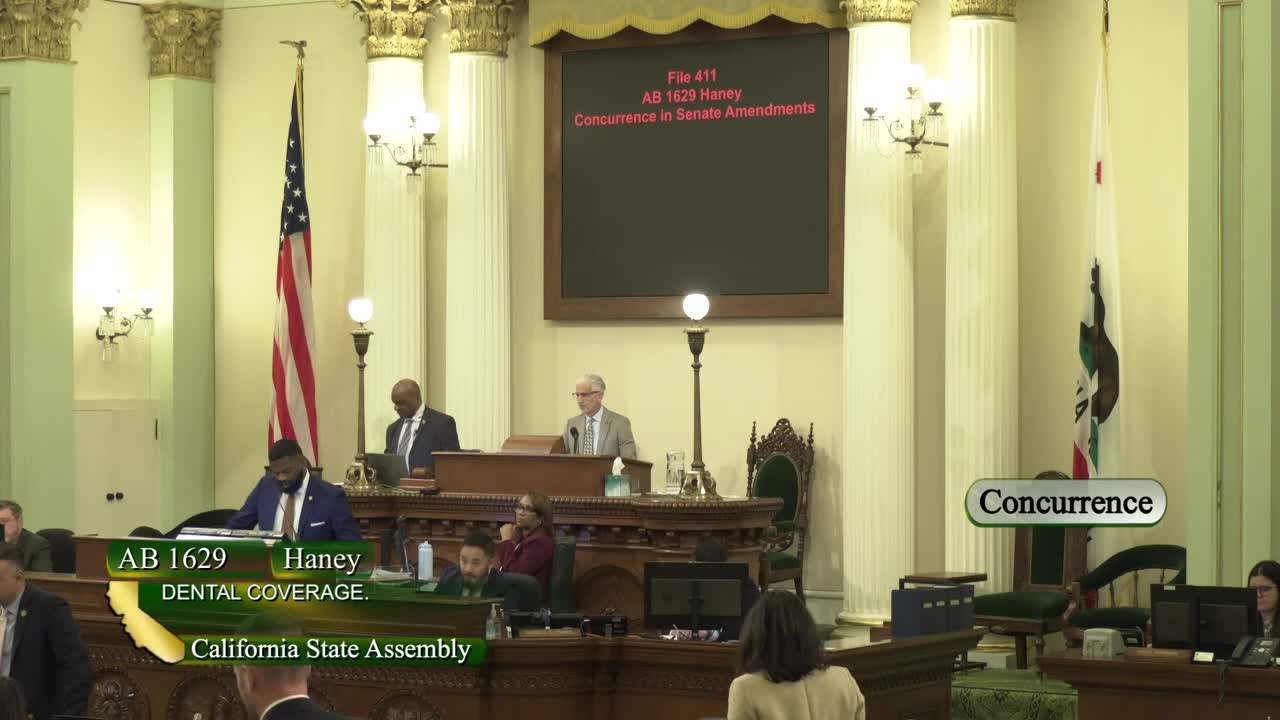
Bill Author