AB 449: Civil Rights Department: antidiscrimination campaigns.
- Session Year: 2025-2026
- House: Assembly
- Latest Version Date: 2025-09-11
Current Status:
Failed
(2026-01-22: Consideration of Governor's veto stricken from file.)
Introduced
In Committee
Awaiting First Chamber Vote
Passed First Chamber
In Committee
Awaiting Second Chamber Vote
Passed Second Chamber
Enacted
Existing law, the California Fair Employment and Housing Act, establishes the Civil Rights Department within the Business, Consumer Services, and Housing Agency and sets forth its powers and duties relating to enforcement of civil rights laws and assistance to communities in resolving disputes, disagreements, or difficulties relating to discriminatory practices.
This bill, upon appropriation by the Legislature and commencing on or before the later of either July 1, 2026, or one year after the date of the appropriation, would require the department to create and implement statewide and regional radio, social media, and television campaigns for the purposes of discouraging discrimination. The bill would require the department to convene a working group to develop a plan to implement the campaigns above. The bill would exempt the working group from the Bagley-Keene Open Meeting Act.
Existing constitutional provisions require that a statute that limits the right of access to the meetings of public bodies or the writings of public officials and agencies be adopted with findings demonstrating the interest protected by the limitation and the need for protecting that interest.
This bill would make legislative findings to that effect.
Existing law, the California Fair Employment and Housing Act, establishes the Civil Rights Department within the Business, Consumer Services, and Housing Agency and sets forth its powers and duties relating to enforcement of civil rights laws and assistance to communities in resolving disputes, disagreements, or difficulties relating to discriminatory practices.
This bill, upon appropriation by the Legislature and commencing on or before the later of either July 1, 2026, or one year after the date of the appropriation, would require the department to create and distribute implement statewide and regional radio, social media, and television campaigns for the purposes of discouraging discrimination. The bill would require the department to convene a working group to develop a plan to implement the campaigns above. The bill would exempt the working group from the Bagley-Keene Open Meeting Act.
Existing constitutional provisions require that a statute that limits the right of access to the meetings of public bodies or the writings of public officials and agencies be adopted with findings demonstrating the interest protected by the limitation and the need for protecting that interest.
This bill would make legislative findings to that effect.
Existing law, the California Fair Employment and Housing Act, establishes the Civil Rights Department within the Business, Consumer Services, and Housing Agency and sets forth its powers and duties relating to enforcement of civil rights laws and assistance to communities in resolving disputes, disagreements, or difficulties relating to discriminatory practices.
This bill, upon appropriation by the Legislature and commencing on or before the later of either July 1, 2026, or one year after the date of the appropriation, would require the department to create and distribute statewide and regional radio, social media, and television campaigns for the purposes of discouraging discrimination. The bill would require the department to convene a working group to develop a plan to implement the campaigns above. The bill would exempt the working group from the Bagley-Keene Open Meeting Act.
Existing constitutional provisions require that a statute that limits the right of access to the meetings of public bodies or the writings of public officials and agencies be adopted with findings demonstrating the interest protected by the limitation and the need for protecting that interest.
This bill would make legislative findings to that effect.
(a)Commencing on or before the later of either July 1, 2026, or one year after the date of the appropriation described in subdivision (d), the department shall create and implement statewide and regional radio, social media, and television campaigns to discourage discrimination based upon, but not limited to, disability, gender, nationality, race or ethnicity, religion, or sexual orientation.
(b)(1)The department shall convene a working group to develop a plan to implement this section, the members of which shall be appointed as follows:
(A)Nine members appointed by the director of the department with expertise in the field of marketing and messaging, specifically on topics germane to this section, who shall reflect the geographic and demographic diversity of the state.
(B)One member of the Assembly, appointed by the Speaker of the Assembly.
(C)One member of the Senate, appointed by the President pro Tempore of the Senate.
(2)The working group described in this subdivision is not subject to the Bagley-Keene Open Meeting Act (Article 9 (commencing with Section 11120) of Chapter 1 of Part 1).
(c)The percentage of advertisements focused on combating hate violence against a specific community with a common protected characteristic that are created and distributed shall be based on the rate of hate crimes committed against each community with a common protected characteristic as determined by the most recent Hate Crime in California report released by the Attorney General or other reliable and more accurate data on hate violence.
(d)This section shall not become operative until funding and positions are appropriated by the Legislature in the Budget Act or any other measure for the purposes of this section. The department shall send notice of the appropriation to the Secretary of State, the Business, Consumer Services, and Housing Agency, and the Legislative Counsel Bureau.
SEC. 2.The Legislature finds and declares that Section 1 of this act, which adds Section 12931.5 to the Government Code, imposes a limitation on the publics right of access to the meetings of public bodies or the writings of public officials and agencies within the meaning of Section 3 of Article I of the California Constitution. Pursuant to that constitutional provision, the Legislature makes the following findings to demonstrate the interest protected by this limitation and the need for protecting that interest:
In order to ensure diverse and expert input in the creation of antidiscrimination media campaigns, it is necessary for the working group created by this act to be exempted from the Bagley-Keene Open Meeting Act.
(a)Commencing on or before the later of either July 1, 2026, or one year after the date of the appropriation described in subdivision (d), the department shall create and implement statewide and regional radio, social media, and television campaigns to discourage discrimination based upon, but not limited to, disability, gender, nationality, race or ethnicity, religion, or sexual orientation.
(b)(1)The department shall convene a working group to develop a plan to implement this section, the members of which shall be appointed as follows:
(A)Nine members appointed by the director of the department with expertise in the field of marketing and messaging, specifically on topics germane to this section, who shall reflect the geographic and demographic diversity of the state.
(B)One member of the Assembly, appointed by the Speaker of the Assembly.
(C)One member of the Senate, appointed by the President pro Tempore of the Senate.
(2)The working group described in this subdivision is not subject to the Bagley-Keene Open Meeting Act (Article 9 (commencing with Section 11120) of Chapter 1 of Part 1).
(c)The percentage of advertisements focused on combating hate violence against a specific community with a common protected characteristic that are created and distributed shall be based on the rate of hate crimes committed against each community with a common protected characteristic as determined by the most recent Hate Crime in California report released by the Attorney General or other reliable and more accurate data on hate violence.
(d)This section shall not become operative until funding and positions are appropriated by the Legislature in the Budget Act or any other measure for the purposes of this section. The department shall send notice of the appropriation to the Secretary of State, the Business, Consumer Services, and Housing Agency, and the Legislative Counsel Bureau.
SEC. 2.The Legislature finds and declares that Section 1 of this act, which adds Section 12931.5 to the Government Code, imposes a limitation on the publics right of access to the meetings of public bodies or the writings of public officials and agencies within the meaning of Section 3 of Article I of the California Constitution. Pursuant to that constitutional provision, the Legislature makes the following findings to demonstrate the interest protected by this limitation and the need for protecting that interest:
In order to ensure diverse and expert input in the creation of antidiscrimination media campaigns, it is necessary to reduce the administrative burden on for the working group created by this act. act to be exempted from the Bagley-Keene Open Meeting Act.
(a)Commencing on or before the later of either July 1, 2026, or one year after the date of the appropriation described in subdivision (d), the department shall create and implement statewide and regional radio, social media, and television campaigns to discourage discrimination based upon, but not limited to, disability, gender, nationality, race or ethnicity, religion, or sexual orientation.
(b)(1)The department shall convene a working group to develop a plan to implement this section, the members of which shall be appointed as follows:
(A)Nine members appointed by the director of the department with expertise in the field of marketing and messaging, specifically on topics germane to this section, who shall reflect the geographic and demographic diversity of the state.
(B)One member of the Assembly, appointed by the Speaker of the Assembly.
(C)One member of the Senate, appointed by the President pro Tempore of the Senate.
(2)The working group described in this subdivision is not subject to the Bagley-Keene Open Meeting Act (Article 9 (commencing with Section 11120) of Chapter 1 of Part 1).
(c)The percentage of advertisements focused on combating hate violence against a specific community with a common protected characteristic that are created and distributed shall be based on the rate of hate crimes committed against each community with a common protected characteristic as determined by the most recent Hate Crime in California report released by the Attorney General or other reliable and more accurate data on hate violence.
(d)This section shall not become operative until funding and positions are appropriated by the Legislature in the Budget Act or any other measure for the purposes of this section. The department shall send notice of the appropriation to the Secretary of State, the Business, Consumer Services, and Housing Agency, and the Legislative Counsel Bureau.
SEC. 2.The Legislature finds and declares that Section 1 of this act, which adds Section 12931.5 to the Government Code, imposes a limitation on the publics right of access to the meetings of public bodies or the writings of public officials and agencies within the meaning of Section 3 of Article I of the California Constitution. Pursuant to that constitutional provision, the Legislature makes the following findings to demonstrate the interest protected by this limitation and the need for protecting that interest:
In order to ensure diverse and expert input in the creation of antidiscrimination media campaigns, it is necessary to reduce the administrative burden on the working group created by this act.
|
Date
|
Status
|
|---|---|
| Jan 22, 2026 | Consideration of Governor's veto stricken from file. |
| Oct 13, 2025 | Consideration of Governor's veto pending. |
| Oct 13, 2025 | Vetoed by Governor. |
| Sep 16, 2025 | Enrolled and presented to the Governor at 2 p.m. |
| Sep 9, 2025 | Senate amendments concurred in. To Engrossing and Enrolling. (Ayes 64. Noes 5. Page 3106.). |
| Sep 8, 2025 | In Assembly. Concurrence in Senate amendments pending. |
| Sep 8, 2025 | Read third time. Passed. Ordered to the Assembly. (Ayes 30. Noes 2. Page 2603.). |
| Aug 29, 2025 | Read second time. Ordered to third reading. |
| Aug 29, 2025 | From committee: Do pass. (Ayes 4. Noes 0.) (August 29). |
| Jul 14, 2025 | In committee: Referred to APPR. suspense file. |
| Jul 2, 2025 | From committee: Do pass and re-refer to Com. on APPR. (Ayes 11. Noes 0.) (July 1). Re-referred to Com. on APPR. |
| Jun 19, 2025 | From committee chair, with author's amendments: Amend, and re-refer to committee. Read second time, amended, and re-referred to Com. on JUD. |
| Jun 11, 2025 | Referred to Com. on JUD. |
| Jun 3, 2025 | In Senate. Read first time. To Com. on RLS. for assignment. |
| Jun 2, 2025 | Read third time. Passed. Ordered to the Senate. (Ayes 66. Noes 1. Page 1829.) |
| May 27, 2025 | Read second time. Ordered to third reading. |
| May 23, 2025 | From committee: Do pass. (Ayes 11. Noes 0.) (May 23). |
| Apr 23, 2025 | In committee: Set, first hearing. Referred to suspense file. |
| Mar 26, 2025 | From committee: Do pass and re-refer to Com. on APPR. (Ayes 10. Noes 0.) (March 25). Re-referred to Com. on APPR. |
| Mar 10, 2025 | Referred to Com. on JUD. |
| Feb 7, 2025 | From printer. May be heard in committee March 9. |
| Feb 6, 2025 | Read first time. To print. |
|
Date
|
Description
|
Location
|
Votes
|
|
|---|---|---|---|---|
| Sep 9, 2025 | AB 449 Jackson Concurrence in Senate Amendments | Assembly Floor |
Passed |
|
| Sep 8, 2025 | Assembly 3rd Reading AB449 Jackson By Durazo | Senate Floor |
Passed |
|
| Aug 29, 2025 | Do pass | Senate Standing Committee on Appropriations |
Passed |
|
| Jul 14, 2025 | Placed on suspense file | Senate Standing Committee on Appropriations |
Passed |
|
| Jul 1, 2025 | Do pass, but first be re-referred to the Committee on [Appropriations] | Senate Standing Committee on Judiciary |
Passed |
|
| Jun 2, 2025 | AB 449 Jackson Assembly Third Reading | Assembly Floor |
Passed |
|
| May 23, 2025 | Do pass. | Assembly Standing Committee on Appropriations |
Passed |
|
| Mar 25, 2025 | Do pass and be re-referred to the Committee on [Appropriations] | Assembly Standing Committee on Judiciary |
Passed |
This list shows positions taken on this bill by organizations on the date displayed, which is linked to the original source.
Positions by individuals are not included.
|
Organization
|
Position
|
Date
|
|---|---|---|
| Anti-Defamation League | ** Support | |
| Association of California State Employees with Disabilities | ** Support | |
| California Department of Justice | ** Support | |
| California Legislative LGBTQ Caucus | ** Support | |
| Equality California | ** Support | |
| Hadassah | ** Support | |
| JCC/Federation of San Luis Obispo | ** Support | |
| JCRC Bay Area | ** Support | |
| JCRC of Greater Santa Barbara | ** Support | |
| Jewish Community Federation and Endowment Fund | ** Support | |
| Jewish Council for Public Affairs | ** Support | |
| Jewish Democratic Club of Marin | ** Support | |
| Jewish Family & Community Services East Bay | ** Support | |
| Jewish Family and Children's Services of San Francisco, the Peninsula, Marin and Sonoma Counties | ** Support | |
| Jewish Family and Children’s Service of Long Beach and Orange County | ** Support | |
| Jewish Family Service of San Diego | ** Support | |
| Jewish Family Services of Silicon Valley | ** Support | |
| Jewish Federation Los Angeles | ** Support | |
| Jewish Federation of Orange County | ** Support | |
| Jewish Federation of The Greater San Gabriel and Pomona Valleys | ** Support | |
| Jewish Free Loan Association | ** Support | |
| Jewish Long Beach | ** Support | |
| Jewish Public Affairs Committee Of California | ** Support | |
| Stop AAPI Hate | ** Support |
GOVERNOR'S VETO
GV Bill Id:AB 449
Author:(Jackson)
As Enrolled Ver:September 11, 2025
2/3 vote
SUMMARY
Requires the Civil Rights Department, subject to an appropriation of funds, to develop and implement media campaigns for the purpose of discouraging discrimination.
Major Provisions
- Requires the Civil Rights Department (CRD), on or before July 1, 2026, or one year after the date funds are appropriated, to create and implement statewide and regional radio, social media, and television campaigns to discourage discrimination based upon protected characteristics.
- Requires CRD to convene a working group to develop the antidiscrimination campaign, the members of which shall be appointed as follows:
- Nine members appointed by the director of the department with expertise in the field of marketing and messaging, specifically on topics germane to this section, who shall reflect the geographic and demographic diversity of the state.
- One member of the Assembly, appointed by the Speaker of the Assembly.
- One member of the Senate, appointed by the President pro Tempore of the Senate.
- Exempts the working group in 2) above from the Bagley-Keene Open Meetings Act.
- Requires the percentage of advertisements focused on combating hate violence against a specific community to be based on the rate of hate crimes committed against each community, as specified.
- Specifies that the provisions of this bill only become operable if the Legislature appropriates funds.
Senate Amendments
Make technical and clarifying changes
Governor’s Veto Message
This bill requires the Civil Rights Department (CRD) to create and implement statewide and regional campaigns utilizing radio, social media, and television to combat hate violence against specific communities, and discourage discrimination based upon, but not limited to, disability, gender, nationality, race or ethnicity, religion, and sexual orientation.
I thank the author for his ongoing commitment to combating discrimination and hate, a commitment I share. My administration has devoted significant efforts and implemented a comprehensive strategy to fight hate violence, including through "Stop the Hate," a multi-year grant program that has provided over $100 million for services, including outreach and prevention, to support communities impacted by acts of hate. We also established the Commission on the State of Hate within the Civil Rights Department, and launched California vs. Hate, a statewide hotline and network to report hate acts and connect victims with services.
While implementation of this bill requires an appropriation by the Legislature, it will result in General Fund cost pressures to fund the campaigns and working group. In partnership with the Legislature this year, my Administration has enacted a balanced budget that recognizes the challenging fiscal landscape our state faces while maintaining our commitment to working families and our most vulnerable communities. With significant fiscal pressures and the federal government's hostile economic policies, it is vital that we remain disciplined when considering bills with significant fiscal implications that are not included in the budget, such as this measure.
COMMENTS
Existing powers and duties of the Civil Rights Department: The primary function of the Civil Rights Department (CRD) – formerly known as the Department of Fair Employment and Housing – is to enforce the anti-discrimination provisions in the Fair Employment and Housing Act (FEHA), as well as the state's major civil rights statutes, most notably the Unruh Civil Rights Act and the Ralph Act. The Unruh Act prohibits business establishment from discriminating on the basis of certain protected characteristics. The Ralph Act makes violence and intimidation against a person based on that person's protected characteristics an actionable offense subject to damages and civil penalties. Since 2022, CRD has also housed the Commission on the State of Hate, which monitors reports of hate crimes in California, conducts research on hate crimes, and – most relevant to this bill – seeks to increase awareness of hate crimes and discrimination through public forums and engagement with community groups. (Government Code Section 8010.)
CRD has the power and duty to accept, investigate, and mediate complaints alleging discrimination in employment and housing, allegations of hate violence under the Ralph Act, and business violations of the Unruh Civil Rights Act. If a complaint is accepted, CRD investigates the complaint and offers to mediate the dispute in certain instances. The CRD also has the power to bring a suit against a violator on behalf of the complainant and in the name of the people of California. Finally, when CRD opts not to investigate, mediate, or litigate a case, it has the power to issue a "right to sue letter" that permits the complainant to pursue a civil action. Although the existing statutory framework does not expressly confer upon CRD the power to implement media campaigns of the sort proposed by this bill, existing law does give CRD the duty and power to hold hearings, issue publications, and take other steps to "promote good will, cooperation, and conciliation, and minimize or eliminate unlawful discrimination, or advance civil rights in the State of California." (Government Code Section 12930, 12935(d).)
This bill, consistent with the goals of increasing public awareness, eliminating unlawful discrimination, and advancing civil rights would require CRD, upon appropriation, to develop and implement radio, social media, and television campaigns to discourage discrimination. As a preliminary step, the bill requires CRD to convene a working group to help develop these campaigns. The bill would also set forth specific goals and policies, including requiring CRD to ensure that the percentage of advertisements combating hate violence against a specific community be based on the rate of hate crimes committed against that community. Lastly, the bill would exempt the working group from the requirements of the Bagley-Keene Open Meetings Act.
Exemption from the Bagley-Keene Open Meetings Act. Since 1967, California's Bagley-Keene Act has required that all meetings of a state body be open and public and that all persons be permitted to attend any meeting of a state body, unless the topic covered is one that permits the body to meet in closed session. Most notably, existing law permits closed meetings when the public body discusses certain sensitive issues, such as personnel matters, contract deliberations, and pending litigation. (Government Code Sections 11120 to 11126.) In addition, since 1970 the California Constitution has enshrined the people's right to access information concerning the conduct of the people's business, including open access to all meetings of public bodies. In furtherance of this right, the California Constitution requires that any statute that limits access to public information or the meetings of public bodies to include findings demonstrating why the limitation on access serves the public interest. The Legislature does, on occasion, expressly exempt a body from the Bagley-Keene Act, as does this bill. As required by the California Constitution, the bill sets forth the reason for denying access to working group's meetings as follows: "In order to ensure diverse and expert input in the creation of antidiscrimination media campaigns, it is necessary to reduce the administrative burden on the working group created by [the Bagley-Keene Act]."
In the 2023-2024 session, the Legislature enacted at least two measures that similarly included express exemptions to the Bagley-Keene Act: SB 800 (Caballero) Chapter 416, Statutes of 2023, and SB 1448 (Hurtado) Chapter 917, Statutes of 2024. SB 800 exempted the meetings of the Zero-Emissions and Electrification Advisory Panel, and SB 1448 exempted a working group within the Department of Agriculture that promoted "farm-to-fork" community programs. Because advisory groups and working groups do not generally have the power to make binding policy decisions, but simply provide support to entities that do have that power, the Legislature has sometimes seen fit to exempt them from the Act's sometimes burdensome administrative requirements, especially the need to provide advance notice of all meetings and to ensure adequate facilities to permit in-person or online access to the public. Whether denying public access to meetings of this sort is good policy, the exemption created in this bill nonetheless appears consistent with recent legislative exemptions.
Last session's AB 1079 and Governor's veto. This bill is substantially the same as a portion of AB 1079, by the same author, in the last session of the Legislature. Like this current measure, that bill would also have required CRD, subject to appropriation, to convene a working group to develop and implement media campaigns to discourage discrimination. That bill would have additionally required the Department of Public Health (DPH) to establish a Hate Crimes Intervention Program to, among other things, implement research-based interventions in collaboration with community leaders and organizations in communities most impacted by hate crimes. However, the Governor vetoed AB 1079, largely on the grounds that it was duplicative of other programs that the state had already funded. Though in fairness to this bill, the Governor's veto message for AB 1079 focused primarily on the duplicative nature of the DPH program to combat hate crimes. Nonetheless, it is possible that the Governor would once again conclude that existing state programs address these efforts, and that CRD already maintains an office of education and outreach that communicates state policy goals to the businesses, housing providers, and the general public. However, the fact that CRD already engages in similar activities certainly suggests that they have the capacity to develop and implement media campaigns, and that additional funding (if ever appropriated) would permit them to expand upon those efforts.
According to the Author
According to the author, "hate violence against marginalized people and groups have reached historic highs. The same can be said for the proliferation of white supremacist propaganda, and the growth of hate-driven, white supremacist groups, and organizations. Cleaning up in the aftermath of hate crimes is not enough. California must go on the offensive against hate and bigotry, and chart the course to become America's first genuinely Antiracist State." The author believes that AB 449 will help achieve these goals by empowering "the Civil Rights Department to create and implement statewide and regional radio, social media, and television campaigns which is a step forward to ensure that our communities feel safe and have the support from local community-based organizations to fight discrimination and racism."
Arguments in Support
In support of this bill, Equality California cites the California Department of Justice's most recent Hate Crime in California Report, which shows that "while overall hate crime events decreased by 7.1% from 2022 to 2023, reported hate crimes against LGBTQ+, Jewish, and Muslim communities increased, and too many continue to be unacceptably targeted by hate." Equality California concludes that "AB 449 takes action to combat discrimination and hate crimes through powerful media campaigns that send a clear message that hate and discrimination is not welcome in California."
Arguments in Opposition
None on file
FISCAL COMMENTS
The Senate Appropriations Committee writes regarding the fiscal impact:
To administer this bill, CRD anticipates requesting one position (Staff Services Manager II), $171,000 in 26-27, and $168,000 in 27-28 and ongoing. This position would manage the working group required by the bill as well as create and run the public education campaigns, under CRD leadership's direction (absorbable workload). In addition, CRD reports that it would request between $2.5 million to $25 million in 26-27 and 27-28 and ongoing for the public education campaigns themselves, depending on the type, size, frequency, and other details of the public education campaigns that the Legislature would like to fund. For example, a public education campaign that runs on TV would be much more expensive than one that is not on TV. This range is based on CRD's experience and the costs of running other statewide public education campaigns in recent years.
VOTES
ASM JUDICIARY: 10-0-2
YES: Kalra, Bauer-Kahan, Bryan, Connolly, Harabedian, Pacheco, Papan, Sanchez, Stefani, Zbur
ABS, ABST OR NV: Dixon, Essayli
ASM APPROPRIATIONS: 11-0-4
YES: Wicks, Arambula, Calderon, Caloza, Elhawary, Fong, Mark González, Hart, Pacheco, Pellerin, Solache
ABS, ABST OR NV: Sanchez, Dixon, Ta, Tangipa
ASSEMBLY FLOOR: 66-1-12
YES: Addis, Aguiar-Curry, Ahrens, Alanis, Alvarez, Arambula, Ávila Farías, Bains, Bauer-Kahan, Bennett, Berman, Boerner, Bonta, Bryan, Calderon, Caloza, Carrillo, Connolly, Davies, Elhawary, Flora, Fong, Gabriel, Garcia, Gipson, Jeff Gonzalez, Mark González, Haney, Harabedian, Hart, Irwin, Jackson, Kalra, Krell, Lee, Lowenthal, McKinnor, Muratsuchi, Nguyen, Ortega, Pacheco, Papan, Patel, Patterson, Pellerin, Petrie-Norris, Quirk-Silva, Ramos, Ransom, Celeste Rodriguez, Michelle Rodriguez, Rogers, Blanca Rubio, Schiavo, Schultz, Sharp-Collins, Solache, Soria, Stefani, Valencia, Wallis, Ward, Wicks, Wilson, Zbur, Rivas
NO: DeMaio
ABS, ABST OR NV: Castillo, Chen, Dixon, Ellis, Gallagher, Hadwick, Hoover, Lackey, Macedo, Sanchez, Ta, Tangipa
SENATE FLOOR: 30-2-8
YES: Allen, Archuleta, Arreguín, Ashby, Becker, Blakespear, Cabaldon, Caballero, Cervantes, Cortese, Durazo, Gonzalez, Grayson, Hurtado, Laird, Limón, McGuire, McNerney, Menjivar, Padilla, Pérez, Reyes, Richardson, Rubio, Smallwood-Cuevas, Umberg, Valladares, Wahab, Weber Pierson, Wiener
NO: Alvarado-Gil, Seyarto
ABS, ABST OR NV: Choi, Dahle, Grove, Jones, Niello, Ochoa Bogh, Stern, Strickland
ASSEMBLY FLOOR: 64-5-11
YES: Addis, Aguiar-Curry, Ahrens, Alanis, Alvarez, Arambula, Ávila Farías, Bains, Bauer-Kahan, Bennett, Berman, Boerner, Bonta, Bryan, Calderon, Caloza, Carrillo, Connolly, Davies, Elhawary, Fong, Gabriel, Garcia, Gipson, Jeff Gonzalez, Mark González, Haney, Harabedian, Hart, Irwin, Jackson, Kalra, Krell, Lee, Lowenthal, McKinnor, Muratsuchi, Nguyen, Ortega, Pacheco, Papan, Patel, Pellerin, Petrie-Norris, Quirk-Silva, Ramos, Ransom, Celeste Rodriguez, Michelle Rodriguez, Rogers, Blanca Rubio, Schiavo, Schultz, Sharp-Collins, Solache, Soria, Stefani, Valencia, Wallis, Ward, Wicks, Wilson, Zbur, Rivas
NO: DeMaio, Gallagher, Johnson, Macedo, Tangipa
ABS, ABST OR NV: Castillo, Chen, Dixon, Ellis, Flora, Hadwick, Hoover, Lackey, Patterson, Sanchez, Ta
UPDATED
VERSION: September 11, 2025
CONSULTANT: Tom Clark / JUD. / (916) 319-2334 FN: 0002185
CONCURRENCE IN SENATE AMENDMENTS
CSA1 Bill Id:AB 449
Author:(Jackson)
As Amended Ver:June 19, 2025
Majority vote
SUMMARY
Requires the Civil Rights Department, subject to an appropriation of funds, to develop and implement media campaigns for the purpose of discouraging discrimination.
Major Provisions
- Requires the Civil Rights Department (CRD), on or before July 1, 2026, or one year after the date funds are appropriated, to create and implement statewide and regional radio, social media, and television campaigns to discourage discrimination based upon protected characteristics.
- Requires CRD to convene a working group to develop the antidiscrimination campaign, the members of which shall be appointed as follows:
- Nine members appointed by the director of the department with expertise in the field of marketing and messaging, specifically on topics germane to this section, who shall reflect the geographic and demographic diversity of the state.
- One member of the Assembly, appointed by the Speaker of the Assembly.
- One member of the Senate, appointed by the President pro Tempore of the Senate.
- Exempts the working group in 2) above from the Bagley-Keene Open Meetings Act.
- Requires the percentage of advertisements focused on combating hate violence against a specific community to be based on the rate of hate crimes committed against each community, as specified.
- Specifies that the provisions of this bill only become operable if the Legislature appropriates funds.
Senate Amendments
Make technical and clarifying changes.
COMMENTS
Existing powers and duties of the Civil Rights Department: The primary function of the Civil Rights Department (CRD) – formerly known as the Department of Fair Employment and Housing – is to enforce the anti-discrimination provisions in the Fair Employment and Housing Act (FEHA), as well as the state's major civil rights statutes, most notably the Unruh Civil Rights Act and the Ralph Act. The Unruh Act prohibits business establishment from discriminating on the basis of certain protected characteristics. The Ralph Act makes violence and intimidation against a person based on that person's protected characteristics an actionable offense subject to damages and civil penalties. Since 2022, CRD has also housed the Commission on the State of Hate, which monitors reports of hate crimes in California, conducts research on hate crimes, and – most relevant to this bill – seeks to increase awareness of hate crimes and discrimination through public forums and engagement with community groups. (Government Code Section 8010.)
CRD has the power and duty to accept, investigate, and mediate complaints alleging discrimination in employment and housing, allegations of hate violence under the Ralph Act, and business violations of the Unruh Civil Rights Act. If a complaint is accepted, CRD investigates the complaint and offers to mediate the dispute in certain instances. The CRD also has the power to bring a suit against a violator on behalf of the complainant and in the name of the people of California. Finally, when CRD opts not to investigate, mediate, or litigate a case, it has the power to issue a "right to sue letter" that permits the complainant to pursue a civil action. Although the existing statutory framework does not expressly confer upon CRD the power to implement media campaigns of the sort proposed by this bill, existing law does give CRD the duty and power to hold hearings, issue publications, and take other steps to "promote good will, cooperation, and conciliation, and minimize or eliminate unlawful discrimination, or advance civil rights in the State of California." (Government Code Section 12930, 12935(d).)
This bill, consistent with the goals of increasing public awareness, eliminating unlawful discrimination, and advancing civil rights would require CRD, upon appropriation, to develop and implement radio, social media, and television campaigns to discourage discrimination. As a preliminary step, the bill requires CRD to convene a working group to help develop these campaigns. The bill would also set forth specific goals and policies, including requiring CRD to ensure that the percentage of advertisements combating hate violence against a specific community be based on the rate of hate crimes committed against that community. Lastly, the bill would exempt the working group from the requirements of the Bagley-Keene Open Meetings Act.
Exemption from the Bagley-Keene Open Meetings Act. Since 1967, California's Bagley-Keene Act has required that all meetings of a state body be open and public and that all persons be permitted to attend any meeting of a state body, unless the topic covered is one that permits the body to meet in closed session. Most notably, existing law permits closed meetings when the public body discusses certain sensitive issues, such as personnel matters, contract deliberations, and pending litigation. (Government Code Sections 11120 to 11126.) In addition, since 1970 the California Constitution has enshrined the people's right to access information concerning the conduct of the people's business, including open access to all meetings of public bodies. In furtherance of this right, the California Constitution requires that any statute that limits access to public information or the meetings of public bodies to include findings demonstrating why the limitation on access serves the public interest. The Legislature does, on occasion, expressly exempt a body from the Bagley-Keene Act, as does this bill. As required by the California Constitution, the bill sets forth the reason for denying access to working group's meetings as follows: "In order to ensure diverse and expert input in the creation of antidiscrimination media campaigns, it is necessary to reduce the administrative burden on the working group created by [the Bagley-Keene Act]."
In the 2023-2024 session, the Legislature enacted at least two measures that similarly included express exemptions to the Bagley-Keene Act: SB 800 (Caballero) Chap. 416, Stats. 2023, and SB 1448 (Hurtado) Chap. 917, Stats. 2024. SB 800 exempted the meetings of the Zero-Emissions and Electrification Advisory Panel, and SB 1448 exempted a working group within the Department of Agriculture that promoted "farm-to-fork" community programs. Because advisory groups and working groups do not generally have the power to make binding policy decisions, but simply provide support to entities that do have that power, the Legislature has sometimes seen fit to exempt them from the Act's sometimes burdensome administrative requirements, especially the need to provide advance notice of all meetings and to ensure adequate facilities to permit in-person or online access to the public. Whether denying public access to meetings of this sort is good policy, the exemption created in this bill nonetheless appears consistent with recent legislative exemptions.
Last session's AB 1079 and Governor's veto. This bill is substantially the same as a portion of AB 1079, by the same author, in the last session of the Legislature. Like this current measure, that bill would also have required CRD, subject to appropriation, to convene a working group to develop and implement media campaigns to discourage discrimination. That bill would have additionally required the Department of Public Health (DPH) to establish a Hate Crimes Intervention Program to, among other things, implement research-based interventions in collaboration with community leaders and organizations in communities most impacted by hate crimes. However, the Governor vetoed AB 1079, largely on the grounds that it was duplicative of other programs that the state had already funded. Though in fairness to this bill, the Governor's veto message for AB 1079 focused primarily on the duplicative nature of the DPH program to combat hate crimes. Nonetheless, it is possible that the Governor would once again conclude that existing state programs address these efforts, and that CRD already maintains an office of education and outreach that communicates state policy goals to the businesses, housing providers, and the general public. However, the fact that CRD already engages in similar activities certainly suggests that they have the capacity to develop and implement media campaigns, and that additional funding (if ever appropriated) would permit them to expand upon those efforts.
According to the Author
According to the author, "hate violence against marginalized people and groups have reached historic highs. The same can be said for the proliferation of white supremacist propaganda, and the growth of hate-driven, white supremacist groups, and organizations. Cleaning up in the aftermath of hate crimes is not enough. California must go on the offensive against hate and bigotry, and chart the course to become America's first genuinely Antiracist State." The author believes that AB 449 will help achieve these goals by empowering "the Civil Rights Department to create and implement statewide and regional radio, social media, and television campaigns which is a step forward to ensure that our communities feel safe and have the support from local community-based organizations to fight discrimination and racism."
Arguments in Support
In support of this bill, Equality California cites the California Department of Justice's most recent Hate Crime in California Report, which shows that "while overall hate crime events decreased by 7.1% from 2022 to 2023, reported hate crimes against LGBTQ+, Jewish, and Muslim communities increased, and too many continue to be unacceptably targeted by hate." Equality California concludes that "AB 449 takes action to combat discrimination and hate crimes through powerful media campaigns that send a clear message that hate and discrimination is not welcome in California."
Arguments in Opposition
None on file
FISCAL COMMENTS
The Senate Appropriations Committee writes regarding the fiscal impact:
To administer this bill, CRD anticipates requesting one position (Staff Services Manager II), $171,000 in 26-27, and $168,000 in 27-28 and ongoing. This position would manage the working group required by the bill as well as create and run the public education campaigns, under CRD leadership's direction (absorbable workload). In addition, CRD reports that it would request between $2.5 million to $25 million in 26-27 and 27-28 and ongoing for the public education campaigns themselves, depending on the type, size, frequency, and other details of the public education campaigns that the Legislature would like to fund. For example, a public education campaign that runs on TV would be much more expensive than one that is not on TV. This range is based on CRD's experience and the costs of running other statewide public education campaigns in recent years.
VOTES:
ASM JUDICIARY: 10-0-2
YES: Kalra, Bauer-Kahan, Bryan, Connolly, Harabedian, Pacheco, Papan, Sanchez, Stefani, Zbur
ABS, ABST OR NV: Dixon, Essayli
ASM APPROPRIATIONS: 11-0-4
YES: Wicks, Arambula, Calderon, Caloza, Elhawary, Fong, Mark González, Hart, Pacheco, Pellerin, Solache
ABS, ABST OR NV: Sanchez, Dixon, Ta, Tangipa
ASSEMBLY FLOOR: 66-1-12
YES: Addis, Aguiar-Curry, Ahrens, Alanis, Alvarez, Arambula, Ávila Farías, Bains, Bauer‑Kahan, Bennett, Berman, Boerner, Bonta, Bryan, Calderon, Caloza, Carrillo, Connolly, Davies, Elhawary, Flora, Fong, Gabriel, Garcia, Gipson, Jeff Gonzalez, Mark González, Haney, Harabedian, Hart, Irwin, Jackson, Kalra, Krell, Lee, Lowenthal, McKinnor, Muratsuchi, Nguyen, Ortega, Pacheco, Papan, Patel, Patterson, Pellerin, Petrie-Norris, Quirk-Silva, Ramos, Ransom, Celeste Rodriguez, Michelle Rodriguez, Rogers, Blanca Rubio, Schiavo, Schultz, Sharp-Collins, Solache, Soria, Stefani, Valencia, Wallis, Ward, Wicks, Wilson, Zbur, Rivas
NO: DeMaio
ABS, ABST OR NV: Castillo, Chen, Dixon, Ellis, Gallagher, Hadwick, Hoover, Lackey, Macedo, Sanchez, Ta, Tangipa
SENATE FLOOR: 30-2-8
YES: Allen, Archuleta, Arreguín, Ashby, Becker, Blakespear, Cabaldon, Caballero, Cervantes, Cortese, Durazo, Gonzalez, Grayson, Hurtado, Laird, Limón, McGuire, McNerney, Menjivar, Padilla, Pérez, Reyes, Richardson, Rubio, Smallwood-Cuevas, Umberg, Valladares, Wahab, Weber Pierson, Wiener
NO: Alvarado-Gil, Seyarto
ABS, ABST OR NV: Choi, Dahle, Grove, Jones, Niello, Ochoa Bogh, Stern, Strickland
UPDATED
VERSION: June 19, 2025
CONSULTANT: Tom Clark / JUD. / (916) 319-2334 FN: 0001712
SENATE RULES COMMITTEE Office of Senate Floor Analyses (916) 651-1520 Fax: (916) 327-4478 | AB 449 |
THIRD READING
Bill No: AB 449
Author: Jackson (D)
Amended: 6/19/25 in Senate
Vote: 21
SENATE JUDICIARY COMMITTEE: 11-0, 7/1/25
AYES: Umberg, Allen, Arreguín, Ashby, Caballero, Durazo, Laird, Stern, Wahab, Weber Pierson, Wiener
NO VOTE RECORDED: Niello, Valladares
SENATE APPROPRIATIONS COMMITTEE: 4-0, 8/29/25
AYES: Caballero, Grayson, Richardson, Wahab
NO VOTE RECORDED: Seyarto, Cabaldon, Dahle
ASSEMBLY FLOOR: 66-1, 6/2/25 - See last page for vote
SUBJECT: Civil Rights Department: antidiscrimination campaigns
SOURCE: California Legislative LGBTQ Caucus
DIGEST:
This bill, upon appropriation by the Legislature and commencing on or before the later of either July 1, 2026, or one year after the date of the appropriation, requires the Civil Rights Department (CRD) to create and distribute statewide and regional radio, social media, and television campaigns for the purposes of discouraging discrimination. This bill requires CRD to convene a working group to develop a plan to implement the campaigns above, as provided. This bill exempts the working group from the Bagley-Keene Open Meeting Act.
ANALYSIS:
Existing law:
- Establishes the Commission on the State of Hate under CRD to provide resources and assistance to the Department of Justice, the state Attorney General, the Office of Emergency Services, and federal, state, and local law enforcement agencies relating to hate-related crimes. Authorizes the Commission, in collaboration with other subject-matter experts, to engage in fact finding, data collection, and the publication of annual reports on the state of hate-related crimes. Requires the Commission to advise the Legislature, the Governor, and state agencies on policy recommendations and to undertake educational efforts to foster mutual respect and understanding among California’s diverse population, and to hold at least four public forums on hate crimes. (Government (Gov.) Code § 8010.)
- Requires local law enforcement agencies to report hate crimes to the California Department of Justice (DOJ). (Penal (Pen.) Code § 13023.)
- Defines a hate crime as a criminal act committed, in whole or in part, because of one or more of the following actual or perceived characteristics of the victim: disability; gender; nationality; race or ethnicity; religion; sexual orientation; or association with a person or group with one or more of these actual or perceived characteristics. (Pen. Code § 422.55.)
- Mandates that the DOJ submit an annual Hate Crime in California report to the Legislature and on the DOJ website. (Pen. Code § 13023.)
- Provides, pursuant to the California Constitution, that the people have the right of access to information concerning the conduct of the people’s business, and, therefore, the meetings of public bodies and the writings of public officials and agencies are required to be open to public scrutiny. (California Constitution, art. I, § 3(b)(1).)
- Establishes the Bagley-Keene Act, which requires state bodies to conduct their business in open public meetings, except as provided by the Act, and establishes requirements and procedures for such meetings. (Gov. Code § 11120 et seq.)[1]
- “State bodies” covered by the Bagley-Keene Act include every state board, commission, or body created by statute or required by law to conduct official meetings, every commission created by executive order, any board or body exercising the authority of a state body by delegation, any advisory body created by formal action of a state body, any state body that is supported by public funds and which a member of a state body serves in their official capacity, and the State Bar of California. (§ 11121.)
This bill:
- Requires CRD, no later than July 1, 2026, or one year after appropriation by the Legislature, to create and distribute statewide and regional radio, social media, and television campaigns for the purposes of discouraging discrimination based upon, but not limited to, disability, gender, nationality, race or ethnicity, religion, or sexual orientation.
- Specifies that the campaigns are to be implemented through a working group, which is to be comprised of eleven members; two of whom are from each house of the Legislature, and nine of whom are to be appointed by the Director of CRD and are to have expertise in the field of marketing and messaging, specifically on topics germane to the program.
- Requires that the percentage of ads focused on combating hate violence against a specific community with common characteristics are to be created and distributed based on the rate of hate crimes committed against each protected group, as determined by the most recent Hate Crime in California report released by the Attorney General or other reliable and more accurate data on hate violence.
- Provides that these provisions are not to become operative until funding and positions are appropriated by the Legislature in the Budget Act or any other measure for these purposes.
Comments
Hate crime is a major issue for many California communities. While the state has taken steps to address the issue, no program has yet addressed the issue through media campaigns to prevent hate crime. This bill requires CRD to create and implement statewide and regional radio, social media, and television campaigns to discourage discrimination. The media campaigns are to be implemented by a working group comprised of a member of each house of the Legislature and nine experts in the field, and will focus on hate crime directed towards specific communities based on the rate of hate crimes committed against each community, as determined by California Department of Justice data or other reliable data. This bill would exempt the working group from the Bagley-Keene Open Meeting Act. This bill is a reintroduction of a part of AB 1079 (Jackson, 2024), which was vetoed by the Governor. This bill is sponsored by the California Legislative LGBTQ Caucus, and supported by the Association of California State Employees With Disabilities, Equality California, and Stop AAPI Hate.
Hate crime is a major problem for California, and the state has seen significant increases in hate crimes in recent years. Hate crime is a crime that is committed by a perpetrator entirely or partly because of the victim’s actual or perceived personal characteristics like disability, gender, nationality, race or ethnicity, religion, sexual orientation, or association with a person or group with one or more of such characteristics. (Pen. Code § 422.55.) In recent years, there have been numerous reports of sharp increases in such crimes against racial and ethnic minorities, against transgender individuals and other members of the LGBTQ community, and against members of the Islamic and Jewish faiths. The COVID-19 pandemic fueled a dramatic surge in racially-motivated attacks on Asian-Americans, with some reports suggesting hate crime toward Asian Americans increased 339 percent between 2020 and 2021.[2] Hate crimes and murders of transgender individuals have also increased considerably in recent years.[3] Such increases have corresponded with increases in white supremacist extremist groups and events.[4]
A 2021 report by Attorney General Rob Bonta provides even more insight into this dire reality. The report found a nearly 90 percent increase in hate crimes in California over the last ten years, and an increase of 32.6 percent from 2020 to 2021 at 1,763 total recorded incidents.[5] The report found that the sharpest increases were for anti-Asian bias, which saw a 177.5 percent increase, and anti-LGBTQ bias, which saw a 47.8 percent increase. Anti-Latino bias hate crime incidents increased by 29.6 percent. The most prevalent hate crime incidents in total were against African-Americans, at 513. Of the criminal offenses committed during such hate crimes, the report found that 72.2 percent were violent crimes, while the remaining offenses were property crimes like vandalism and arson.
The 2023 report on hate crime in California by Attorney General Rob Bonta notes that, while there have been year-to-year increases and decrease in hate crime over the last decade, overall hate crime incidents have increased by 159.9 percent.[6] Reported hate crimes declined in 2023 after three years of continual increases.[7] However, the 2023 report showed that reported anti-Jewish and anti-Arab/Muslim hate crimes doubled between 2020 and 2023: anti-Jewish crimes increased 56 percent from 190 in 2022 to 297 in 2023; and anti-Arab or anti-Muslim crimes increased 35 percent from 48 to 65.[8]
While the findings of these reports are significant, they likely do not capture the entire story. That is because the Attorney General’s reports are based on data from law enforcement agencies related to crimes actually investigated by law enforcement. Many crimes and hateful, criminal acts likely occurred that were not reported to police. Currently, there are a number of ways that the state tries to address hate crimes. Under section 13023 of the Penal Code, law enforcement agencies are required to collect data on hate crimes and provide that data to the Attorney General, who then must report this data online and to the Legislature annually. The Federal Bureau of Investigation also tracks and reports on hate crimes nationally.
In addition, Attorney General Rob Bonta announced in 2021 a plan to create a Racial Justice Bureau and a virtual convening against hate crime. The Bureau will be based in the DOJ, and aims to tackle hate crime through outreach with community organizations and law enforcement on hate crime prevention, information sharing, and reporting. The Attorney General also developed a Hate Crime Rapid Response Protocol that acts as a supplemental resource to local, state, and federal law enforcement’s investigation and prosecution of hate crimes through resources for skilled law enforcement, lawyers for civil rights issues, and victim services professionals. The California Department of Social Services likewise runs a grant program called Stop the Hate to fund nonprofits to provide support and services to victims and survivors of hate incidents and hate crimes. (Gov. Code § 8260.) CRD runs the California vs. Hate Resource Line and Network, which is similarly aimed at hate crime reporting and services for victims of hate crimes. In 2021, AB 1126 (Bloom, Ch. 712, Stats. 2021) created the Commission on the State of Hate, which establishes a commission with a similar structure to the working group established by this bill to specifically provide resources and assistance with other state agencies and local law enforcement and the public on the state of hate crimes and trends, to engage in fact-finding and data collection on hate crimes, and to advise the Legislature, Governor, and state agencies on policy recommendations to prevent hate.
Despite these programs, hate crime continues to exist and are a grave ill on California communities. This bill aims to prevent hate crimes through statewide and regional radio, social media, and television campaigns to discourage discrimination against individuals or groups.
To implement the media campaign, this bill requires CRD to convene a working group to develop a plan for the campaign. The working group would be comprised of one member from the Assembly and Senate, respectively, and nine members appointed by the Director of CRD who have expertise in the field of marketing and messaging. The working group’s members must reflect the geographic and demographic diversity of the state. This bill also requires that the percentage of advertising campaigns created by the working group be based on the rate of hate crimes committed against each community respectively. This would mean the advertisements would be tailored to address hate towards specific groups proportionally to that community’s share of the overall hate crimes committed against all groups. It should be noted that these percentages will be based on the data on hate crimes reported by the Attorney General; because of potential disparities in hate crimes reporting related to cultural practices of individuals, their likeliness to report hate crimes, and policies of law enforcement or community policing, actual levels of specific types of hate crimes toward particular groups may vary some from the data reported by the Attorney General.
This bill exempts the working group from Bagley-Keene and provides that this limitation on the access to public meetings is necessary to ensure diverse and expert input in the creation of antidiscrimination media campaigns.
FISCAL EFFECT: Appropriation: No Fiscal Com.: Yes Local: No
The Senate Appropriations Committee writes regarding the fiscal impact:
To administer this bill, CRD anticipates requesting one position (Staff Services Manager II), $171,000 in 26-27, and $168,000 in 27-28 and ongoing. This position would manage the working group required by the bill as well as create and run the public education campaigns, under CRD leadership’s direction (absorbable workload). In addition, CRD reports that it would request between $2.5 million to $25 million in 26-27 and 27-28 and ongoing for the public education campaigns themselves, depending on the type, size, frequency, and other details of the public education campaigns that the Legislature would like to fund. For example, a public education campaign that runs on TV would be much more expensive than one that is not on TV. This range is based on CRD’s experience and the costs of running other statewide public education campaigns in recent years.
SUPPORT: (Verified 8/29/25)
California Legislative LGBTQ Caucus (source)
Anti-Defamation League
Association of California State Employees with Disabilities
California Legislative LGBTQ Caucus
Equality California
Hadassah
JCC Federation of San Luis Obispo
JCRC Bay Area
JCRC of Greater Santa Barbara
Jewish Community Federation and Endowment Fund
Jewish Council for Public Affairs
Jewish Democratic Club of Marin
Jewish Family & Community Services East Bay
Jewish Family and Children's Service of Long Beach and Orange County
Jewish Family and Children's Services of San Francisco, the Peninsula, Marin & Sonoma Counties
Jewish Family Service of San Diego
Jewish Family Services of Silicon Valley
Jewish Federation Los Angeles
Jewish Federation of Orange County
Jewish Federation of the Greater San Gabriel and Pomona Valleys
Jewish Free Loan Association
Jewish Long Beach
Jewish Public Affairs Committee of California
Stop AAPI Hate
OPPOSITION: (Verified 8/29/2025)
None received
ARGUMENTS IN SUPPORT:
The author writes:
Hate and violence against marginalized people have reached historic highs. The same can be said for the proliferation of white supremacist propaganda, and the growth of hate-driven, white supremacist groups, and organizations. Cleaning up in the aftermath of hate crimes is not enough. California must go on the offensive against hate and bigotry, and chart the course to become America’s first genuinely Antiracist State.
The California Legislative LGBTQ Caucus, the sponsor of this bill, writes in support stating:
[…]According to the most recent Hate Crimes Report released by the Attorney General’s (AG) office, reported hate crime events in California decreased by 7.1% from 2,120 in 2022 to 1,970 in 2023. While hate crimes have more recently decreased in California, the AG’s hate crimes report has noted hate crimes and hate incidents have increased against members of the LGBTQ+ community, especially amongst transgender, gender nonconforming/non-binary, and intersex people.
While there are serious efforts to combat hate crimes from the California Department of Justice and through other community investments, these efforts do not outpace the harm caused by the continued increase in hate crimes against marginalized communities, including but not limited to the LGBTQ+ community, and given the increase in hate speech, hate incidents, and hate crimes targeting marginalized community members, including but not limited those in the LGBTQ+ community.
ASSEMBLY FLOOR: 66-1, 6/2/25
AYES: Addis, Aguiar-Curry, Ahrens, Alanis, Alvarez, Arambula, Ávila Farías, Bains, Bauer-Kahan, Bennett, Berman, Boerner, Bonta, Bryan, Calderon, Caloza, Carrillo, Connolly, Davies, Elhawary, Flora, Fong, Gabriel, Garcia, Gipson, Jeff Gonzalez, Mark González, Haney, Harabedian, Hart, Irwin, Jackson, Kalra, Krell, Lee, Lowenthal, McKinnor, Muratsuchi, Nguyen, Ortega, Pacheco, Papan, Patel, Patterson, Pellerin, Petrie-Norris, Quirk-Silva, Ramos, Ransom, Celeste Rodriguez, Michelle Rodriguez, Rogers, Blanca Rubio, Schiavo, Schultz, Sharp-Collins, Solache, Soria, Stefani, Valencia, Wallis, Ward, Wicks, Wilson, Zbur, Rivas
NOES: DeMaio
NO VOTE RECORDED: Castillo, Chen, Dixon, Ellis, Gallagher, Hadwick, Hoover, Lackey, Macedo, Sanchez, Ta, Tangipa
Prepared by: Amanda Mattson / JUD. / (916) 651-4113
8/29/25 20:38:54
**** END ****
All further references are to the Government Code unless specified otherwise. ↑
Kimmy Yam, “Anti-Asian hate crimes increased 339 percent nationwide last year, report says,” NBC News (Jan. 31, 2022 3:02 pm), available at https://www.nbcnews.com/news/asian-america/anti-asian-hate-crimes-increased-339-percent-nationwide-last-year-repo-rcna14282. ↑
Human Rights Campaign, An Epidemic of Violence 2021 (2022), available at https://reports.hrc.org/an-epidemic-of-violence-fatal-violence-against-transgender-and-gender-non-confirming-people-in-the-united-states-in-2021?_ga=2.108286530.1970043238.1687242940-1404589019.1687242940. ↑
Center on Extremism, “White Supremacist Propaganda Soars to All-Time High in 2022,” Anti-Defamation League (Mar. 8, 2023), available at https://www.adl.org/resources/report/white-supremacist-propaganda-soars-all-time-high-2022. ↑
California Attorney General, 2021: Hate Crime in California, Cal. Dept. of Justice (Jun. 28, 2022) ↑
California Attorney General, 2023 Hate Crime in California, Cal. Dept. of Just., available at https://data-openjustice.doj.ca.gov/sites/default/files/2024-06/Hate%20Crime%20In%20CA%202023f_0.pdf. ↑
Hate Crimes Fell in California Last Year, but Religion-based Incidents Increased Sharply, PPIC, (Oc. 15, 2024), available at https://www.ppic.org/blog/hate-crimes-fell-in-california-last-year-but-religion-based-incidents-increased-sharply/. ↑
Ibid. ↑
SENATE COMMITTEE ON APPROPRIATIONS
Senator Anna Caballero, Chair
2025 - 2026 Regular Session
AB 449 (Jackson) - Civil Rights Department: antidiscrimination campaigns
Version: June 19, 2025 | Policy Vote: JUD. 11 - 0 |
Urgency: No | Mandate: No |
Hearing Date: July 14, 2025 | Consultant: Liah Burnley |
Bill Summary:
Requires the Civil Rights Department (CRD) to, upon appropriation, establish a working group to develop and launch a public campaign to discourage discrimination based on protected characteristics.
Fiscal Impact:
To administer this bill, CRD anticipates requesting one position (Staff Services Manager II), $171,000 in 26-27, and $168,000 in 27-28 and ongoing. This position would manage the working group required by the bill as well as create and run the public education campaigns, under CRD leadership’s direction (absorbable workload). In addition, CRD reports that it would request between $2.5 million to $25 million in 26-27 and 27-28 and ongoing for the public education campaigns themselves, depending on the type, size, frequency, and other details of the public education campaigns that the Legislature would like to fund. For example, a public education campaign that runs on TV would be much more expensive than one that is not on TV. This range is based on CRD’s experience and the costs of running other statewide public education campaigns in recent years.
Background:
CRD is the state agency responsible for enforcing California’s civil rights laws. The department’s primary duties involve investigating and litigating complaints of unlawful discrimination in employment, housing, businesses, and state-funded programs. CRD also conducts anti-discrimination trainings, collects and analyzes equal pay data, and operates the state Commission on the State of Hate. According to its website, the commission was established in 2021 and is responsible for monitoring trends in hate activity in the state, engaging in research on hate activity, increasing awareness of the state of hate through public forums and collaborations, and advising local governments, the Governor, the Legislature, and communities on how to prevent and respond to hate activity.
Proposed Law:
- Requires, commencing on or before the later of either July 1, 2026, or one year after the date of the appropriation, CRD to create and implement statewide and regional radio, social media, and television campaigns to discourage discrimination based upon, but not limited to, disability, gender, nationality, race or ethnicity, religion, or sexual orientation.
- Provides that CRD shall convene a working group to develop a plan to implement these provisions, the members of which shall be appointed as follows:
- Nine members appointed by the director of CRD with expertise in the field of marketing and messaging, specifically on topics germane to this section, who shall reflect the geographic and demographic diversity of the state;
- One member of the Assembly, appointed by the Speaker of the Assembly;
- One member of the Senate, appointed by the President pro Tempore of the Senate;
- States that the working group is not subject to the Bagley-Keene Open Meeting Act.
- Requires that the percentage of advertisements focused on combating hate violence against a specific community with a common protected characteristic that are created and distributed shall be based on the rate of hate crimes committed against each community with a common protected characteristic as determined by the most recent Hate Crime in California report released by the Attorney General or other reliable and more accurate data on hate violence.
- States that these provisions shall not become operative until funding and positions are appropriated by the Legislature in the Budget Act or any other measure for the purposes of this section. Requires CRD to send notice of the appropriation to the Secretary of State, the Business, Consumer Services, and Housing Agency, and the Legislative Counsel Bureau.
-- END --
Senator Thomas Umberg, Chair
2025-2026 Regular Session
Bill No: AB 449 (Author:Jackson)
Version: June 19, 2025
Hearing Date: July 1, 2025
Fiscal: Yes
Urgency: No
Consultant: AM
SUBJECT
Civil Rights Department: antidiscrimination campaigns
DIGEST
This bill, upon appropriation by the Legislature and commencing on or before the later of either July 1, 2026, or one year after the date of the appropriation, requires the Civil Rights Department (CRD) to create and distribute statewide and regional radio, social media, and television campaigns for the purposes of discouraging discrimination. The bill requires CRD to convene a working group to develop a plan to implement the campaigns above, as provided. The bill exempts the working group from the Bagley-Keene Open Meeting Act.
EXECUTIVE SUMMARY
Hate crime is a major issue for many California communities. While the state has taken steps to address the issue, no program has yet addressed the issue through media campaigns to prevent hate crime. The bill requires CRD to create and implement statewide and regional radio, social media, and television campaigns to discourage discrimination. The media campaigns are to be implemented by a working group comprised of a member of each house of the Legislature and nine experts in the field, and will focus on hate crime directed towards specific communities based on the rate of hate crimes committed against each community, as determined by California Department of Justice data or other reliable data. The bill would exempt the working group from the Bagley-Keene Open Meeting Act. This bill is a reintroduction of part of AB 1079 (Jackson, 2024), which was vetoed by the Governor.[1] The bill is sponsored by the California Legislative LGBTQ Caucus, and supported by the Association of California State Employees With Disabilities, Equality California, and Stop AAPI Hate.
PROPOSED CHANGES TO THE LAW
Existing law:
- Establishes the Commission on the State of Hate under CRD to provide resources and assistance to the Department of Justice, the state Attorney General, the Office of Emergency Services, and federal, state, and local law enforcement agencies relating to hate-related crimes. Authorizes the Commission, in collaboration with other subject-matter experts, to engage in fact finding, data collection, and the publication of annual reports on the state of hate-related crimes. Requires the Commission to advise the Legislature, the Governor, and state agencies on policy recommendations and to undertake educational efforts to foster mutual respect and understanding among California’s diverse population, and to hold at least four public forums on hate crimes. (Gov. Code § 8010.)
- Requires local law enforcement agencies to report hate crimes to the California Department of Justice. (Pen. Code § 13023.)
- Defines a hate crime as a criminal act committed, in whole or in part, because of one or more of the following actual or perceived characteristics of the victim: disability; gender; nationality; race or ethnicity; religion; sexual orientation; or association with a person or group with one or more of these actual or perceived characteristics. (Pen. Code § 422.55.)
- Mandates that the Department of Justice (DOJ) submit an annual Hate Crime in California report to the Legislature and on the DOJ website. (Pen. Code § 13023.)
- Provides, pursuant to the California Constitution, that the people have the right of access to information concerning the conduct of the people’s business, and, therefore, the meetings of public bodies and the writings of public officials and agencies are required to be open to public scrutiny. (Cal. const. art. I, § 3(b)(1).)
- Requires a statute to be broadly construed if it furthers the people’s right of access, and narrowly construed if it limits the right of access. (Cal. const. art. I, § 3(b)(1).)
- Requires a statute that limits the public’s right of access to be adopted with findings demonstrating the interest protected by the limitation and the need for protecting that interest. (Cal. const. art. I, § 3(b)(1).)
- Establishes the Bagley-Keene Act, which requires state bodies to conduct their business in open public meetings, except as provided by the Act, and establishes requirements and procedures for such meetings. (Gov. Code § 11120 et seq.)[2]
- “State bodies” covered by the Bagley-Keene Act include every state board, commission, or body created by statute or required by law to conduct official meetings, every commission created by executive order, any board or body exercising the authority of a state body by delegation, any advisory body created by formal action of a state body, any state body that is supported by public funds and which a member of a state body serves in their official capacity, and the State Bar of California. (§ 11121.)
- “State bodies” do not include specified legislative agencies, agencies subject to the Brown Act, and certain educational and health-related agencies. (§ 11121.1.)
This bill:
- Requires the CRD, no later than July 1, 2026, or one year after appropriation by the Legislature, to create and distribute statewide and regional radio, social media, and television campaigns for the purposes of discouraging discrimination based upon, but not limited to, disability, gender, nationality, race or ethnicity, religion, or sexual orientation.
- Specifies that the campaigns are to be implemented through a working group, which is to be comprised of eleven members; two of whom are from each house of the Legislature, and nine of whom are to be appointed by the Director of CRD and are to have expertise in the field of marketing and messaging, specifically on topics germane to the program.
- Requires that the percentage of ads focused on combating hate violence against a specific community with common characteristics are to be created and distributed based on the rate of hate crimes committed against each protected group, as determined by the most recent Hate Crime in California report released by the Attorney General or other reliable and more accurate data on hate violence.
- Provides that these provisions are not to become operative until funding and positions are appropriated by the Legislature in the Budget Act or any other measure for these purposes.
COMMENTS
- Stated need for the bill
The author writes:
Hate and violence against marginalized people have reached historic highs. The same can be said for the proliferation of white supremacist propaganda, and the growth of hate-driven, white supremacist groups, and organizations. Cleaning up in the aftermath of hate crimes is not enough. California must go on the offensive against hate and bigotry, and chart the course to become America’s first genuinely Antiracist State.
- Hate crime has been on the rise
Hate crime is a major problem for California, and the state has seen significant increases in hate crimes in recent years. Hate crime is a crime that is committed by a perpetrator entirely or partly because of the victim’s actual or perceived personal characteristics like disability, gender, nationality, race or ethnicity, religion, sexual orientation, or association with a person or group with one or more of such characteristics. (Cal. Pen. Code § 422.55.) In recent years, there have been numerous reports of sharp increases in such crimes against racial and ethnic minorities, against transgender individuals and other members of the LGBTQ community, and against members of the Islamic and Jewish faiths. The COVID-19 pandemic fueled a dramatic surge in racially-motivated attacks on Asian-Americans, with some reports suggesting hate crime toward Asian Americans increased 339 percent between 2020 and 2021.[3] Hate crimes and murders of transgender individuals have also increased considerably in recent years.[4] Such increases have corresponded with increases in white supremacist extremist groups and events.[5]
A 2021 report by Attorney General Rob Bonta provides even more insight into this dire reality. The report found a nearly 90 percent increase in hate crimes in California over the last ten years, and an increase of 32.6 percent from 2020 to 2021 at 1,763 total recorded incidents.[6] The report found that the sharpest increases were for anti-Asian bias, which saw a 177.5 percent increase, and anti-LGBTQ bias, which saw a 47.8 percent increase. Anti-Latino bias hate crime incidents increased by 29.6 percent. The most prevalent hate crime incidents in total were against African-Americans, at 513. Of the criminal offenses committed during such hate crimes, the report found that 72.2 percent were violent crimes, while the remaining offenses were property crimes like vandalism and arson.
The 2023 report on hate crime in California by Attorney General Rob Bonta notes that, while there have been year-to-year increases and decrease in hate crime over the last decade, overall hate crime incidents have increased by 159.9 percent.[7] Reported hate crimes declined in 2023 after three years of continual increases.[8] However, the 2023 report showed that reported anti-Jewish and anti-Arab/Muslim hate crimes doubled between 2020 and 2023: anti-Jewish crimes increased 56 percent from 190 in 2022 to 297 in 2023; and anti-Arab or anti-Muslim crimes increased 35 percent from 48 to 65.[9]
While the findings of these reports are significant, they likely do not capture the entire story. That is because the Attorney General’s reports are based on data from law enforcement agencies related to crimes actually investigated by law enforcement. Many crimes and hateful, criminal acts likely occurred that were not reported to police.
Hate crime has serious consequences. It often involves violence or the threat of violence, resulting in injury, physical harm, and sometimes death of those targeted for their identity. Those targeted suffer directly from such physical harm, and often will suffer emotional and psychological harm from the trauma that the attack caused. Even when someone has not been subject to a hate crime directly themselves, the presence and specter of hate crimes can harm all members of the targeted community. For example, in the sharp rise in hate crimes directed toward Asian-Americans during COVID-19, many Asian-Americans and their communities began to change their daily routines to try to avoid any possible racially-based harassment or harm.[10] LGBTQ Californians often avoid being out in public, or showing public displays of affection toward their same-sex partners, for fear of aggression or hostility from nearby strangers. The American Psychological Association notes that experiences of discrimination and hate crimes can lead to increased rates of depression, anxiety, post-traumatic stress disorder, as well as to increased rates of physical ailments like diabetes, hypertension and obesity.[11] Young adults who are frequently faced with discrimination are around 25 percent more likely to be diagnosed with a mental health disorder, and twice as likely to develop severe psychological distress.
- Current strategies to combat hate crime
Currently, there are a number of ways that the state tries to address hate crimes. Under section 13023 of the Penal Code, law enforcement agencies are required to collect data on hate crimes and provide that data to the Attorney General, who then must report this data online and to the Legislature annually. The Federal Bureau of Investigation also tracks and reports on hate crimes nationally.
In addition, Attorney General Rob Bonta announced in 2021 a plan to create a Racial Justice Bureau and a virtual convening against hate crime. The Bureau will be based in the Department of Justice, and aims to tackle hate crime through outreach with community organizations and law enforcement on hate crime prevention, information sharing, and reporting. The Attorney General also developed a Hate Crime Rapid Response Protocol that acts as a supplemental resource to local, state, and federal law enforcement’s investigation and prosecution of hate crimes through resources for skilled law enforcement, lawyers for civil rights issues, and victim services professionals. The California Department of Social Services likewise runs a grant program called Stop the Hate to fund nonprofits to provide support and services to victims and survivors of hate incidents and hate crimes. (Gov. Code § 8260.) CRD runs the California vs. Hate Resource Line and Network, which is similarly aimed at hate crime reporting and services for victims of hate crimes. In 2021, AB 1126 (Bloom, Ch. 712, Stats. 2021) created the Commission on the State of Hate, which establishes a commission with a similar structure to the working group established by this bill to specifically provide resources and assistance with other state agencies and local law enforcement and the public on the state of hate crimes and trends, to engage in fact-finding and data collection on hate crimes, and to advise the Legislature, Governor, and state agencies on policy recommendations to prevent hate.
- This bill aims to prevent hate crime through media campaigns
Despite these programs, hate crime continues to exist and are a grave ill on California communities. This bill aims to prevent hate crimes through statewide and regional radio, social media, and television campaigns to discourage discrimination against individuals or groups.
To implement the media campaign, the bill requires CRD to convene a working group to develop a plan for the campaign. The working group would be comprised of one member from the Assembly and Senate, respectively, and nine members appointed by the Director of CRD who have expertise in the field of marketing and messaging. The working group’s members must reflect the geographic and demographic diversity of the state. The bill also requires that the percentage of advertising campaigns created by the working group be based on the rate of hate crimes committed against each community respectively. This would mean the advertisements would be tailored to address hate towards specific groups proportionally to that community’s share of the overall hate crimes committed against all groups. It should be noted that these percentages will be based on the data on hate crimes reported by the Attorney General; because of potential disparities in hate crimes reporting related to cultural practices of individuals, their likeliness to report hate crimes, and policies of law enforcement or community policing, actual levels of specific types of hate crimes toward particular groups may vary some from the data reported by the Attorney General.
- This bill limits access to public meetings
Bagley-Keene generally requires state bodies to conduct their meetings openly and make them accessible to the public. A state body includes boards, commissions, committees, councils, and any other public agency created by state statute or executive order, with some exceptions, and the State Bar. (Gov. Code § 11121.) The law does not apply to individual officials, advisory committees with no decision-making authority, or the California State Legislature. The law also requires state bodies to provide advance notice of their meetings and agendas and to allow public comments on matters under consideration. (Gov. Code § 11125.) The law includes certain exceptions, such as closed sessions for discussing personnel issues or pending litigation in order to protect the privacy and legal interests of individuals and the state. (Gov. Code § 11126.)
State bodies must provide at least ten days' notice before a meeting, specifying the time and location, and post an agenda containing a brief description of each item to be discussed or acted upon. (Gov. Code § 11125.) The agenda must be made available to the public, and state bodies cannot discuss or take action on items not listed on the agenda, with limited exceptions for emergency situations. (Gov. Code § 11125.) State bodies must conduct their meetings openly, ensuring that members of the public can attend and participate without any restrictions based on race, gender, disability, or other discriminatory factors. (Gov. Code § 11123.) The act also requires state bodies to provide reasonable accommodations for individuals with disabilities, ensuring accessibility to meetings and materials. (Gov. Code § 11123.1.) The public has the right to address state bodies on any agenda item before or during the meeting. (Gov. Code § 11125.7.) State bodies must provide opportunities for public comment and cannot prohibit criticism of their policies, procedures, or actions. (Id.) They may, however, impose reasonable time limits on public comments to maintain order and facilitate the conduct of business. (Id. at subd. (b).)
In 2004, the right of public access was enshrined in the California Constitution with the passage of Proposition 59 (Nov. 3, 2004, statewide general election),[12] which amended the California Constitution to specifically protect the right of the public to access the meetings of public bodies: “The people have the right of access to information concerning the conduct of the people’s business, and therefore the meetings of public bodies and the writings of public officials and agencies shall be open to public scrutiny.” (Cal. Const., art. I, sec. 3 (b)(1).) The California Constitution requires a statute to be broadly construed if it furthers the people’s right of access, and narrowly construed if it limits the right of access, and requires a statute that limits the public’s right of access to be adopted with findings demonstrating the interest protected by the limitation and the need for protecting that interest. (Cal. const. art. I, § 3(b)(1).)
This bill exempts the working group from Bagley-Keene and provides that this limitation on the access to public meetings is necessary to ensure diverse and expert input in the creation of antidiscrimination media campaigns.
- Concerns
The Arc and United Cerebral Palsy California Collaboration and the California Alliance for Retired Americans write that they would support the bill if amended to address to two issues. First, they ask that the meetings of the working group be made open to the public as an advisory body under Bagley-Keene. They note the working group’s aims are to change public opinion and attitudes and will cost the state millions of dollars. Second, they have concerns that the DOJ’s annual hate crime report does not capture anti-disability hate crime data accurately and would like the California Health Interview Survey, conducted by the UCLA Center for Health Policy Research in consultation with CRD, to be used as data in creating the media campaigns under the bill. As the bill moves through the legislative process, the author may wish to amend the bill to address these concerns.
- Statements in support
The California Legislative LGBTQ Caucus, the sponsor of the bill, writes in support stating:
[…]According to the most recent Hate Crimes Report released by the Attorney General’s (AG) office, reported hate crime events in California decreased by 7.1% from 2,120 in 2022 to 1,970 in 2023. While hate crimes have more recently decreased in California, the AG’s hate crimes report has noted hate crimes and hate incidents have increased against members of the LGBTQ+ community, especially amongst transgender, gender nonconforming/non-binary, and intersex people.
While there are serious efforts to combat hate crimes from the California Department of Justice and through other community investments, these efforts do not outpace the harm caused by the continued increase in hate crimes against marginalized communities, including but not limited to the LGBTQ+ community, and given the increase in hate speech, hate incidents, and hate crimes targeting marginalized community members, including but not limited those in the LGBTQ+ community.
AB 449 takes action to combat discrimination and hate crimes through powerful media campaigns that send a clear message that hate and discrimination is not welcome in California.
SUPPORT
Association of California State Employees With Disabilities
Equality California
Stop AAPI Hate
OPPOSITION
None received
RELATED LEGISLATION
Pending Legislation: None known.
Prior Legislation:
AB 1079 (Jackson, 2024) was substantially similar to this bill. AB 1079 was vetoed by the Governor who stated, “I share the author's objective to reduce hate crime and discrimination in California, which is why we have funded a comprehensive strategy to fight hate violence and discrimination in the budget. Specifically, the State has invested $150 million for a multi-year grant program to support community services for victims and survivors of hate acts across impacted communities as informed by public data. The State, additionally, established the Commission on the State of Hate to assess data on hate crimes in California, provide resources for victims, and make policy recommendations to better protect civil rights, and announced the launch of CA vs. Hate, a new statewide hotline to report hate acts in California and connect victims with services, among other efforts.[…] With our state facing continuing economic risk and revenue uncertainty, it is important to remain disciplined when considering bills with significant fiscal implications, such as this measure.”
AB 1126 (Bloom, Ch. 712, Stats. 2021) created the Commission on the State of Hate, which establishes a commission with a similar structure to the working group established by this bill to specifically provide resources and assistance with other state agencies and local law enforcement and the public on the state of hate crimes and trends, to engage in fact-finding and data collection on hate crimes, and to advise the Legislature, Governor, and state agencies on policy recommendations to prevent hate.
PRIOR VOTES
Assembly Floor (Ayes 66, Noes 1)
Assembly Appropriations Committee (Ayes 11, Noes 0)
Assembly Judiciary Committee (Ayes 10, Noes 0)
**************
See Prior Legislation, below, for Governor’s veto message. ↑
All further references are to the Government Code unless specified otherwise. ↑
Kimmy Yam, “Anti-Asian hate crimes increased 339 percent nationwide last year, report says,” NBC News (Jan. 31, 2022 3:02 pm), available at https://www.nbcnews.com/news/asian-america/anti-asian-hate-crimes-increased-339-percent-nationwide-last-year-repo-rcna14282. ↑
Human Rights Campaign, An Epidemic of Violence 2021 (2022), available at https://reports.hrc.org/an-epidemic-of-violence-fatal-violence-against-transgender-and-gender-non-confirming-people-in-the-united-states-in-2021?_ga=2.108286530.1970043238.1687242940-1404589019.1687242940. ↑
Center on Extremism, “White Supremacist Propaganda Soars to All-Time High in 2022,” Anti-Defamation League (Mar. 8, 2023), available at https://www.adl.org/resources/report/white-supremacist-propaganda-soars-all-time-high-2022. ↑
California Attorney General, 2021: Hate Crime in California, Cal. Dept. of Justice (Jun. 28, 2022) ↑
California Attorney General, 2023 Hate Crime in California, Cal. Dept. of Just., available at https://data-openjustice.doj.ca.gov/sites/default/files/2024-06/Hate%20Crime%20In%20CA%202023f_0.pdf. ↑
Hate Crimes Fell in California Last Year, but Religion-based Incidents Increased Sharply, PPIC, (Oc. 15, 2024), available at https://www.ppic.org/blog/hate-crimes-fell-in-california-last-year-but-religion-based-incidents-increased-sharply/. ↑
Ibid. ↑
Khadijah Edwards, “About a third of Asian Americans say they have changed their daily routine due to concerns over threats, attacks,” Pew Research Center (May 9, 2022), available at https://www.pewresearch.org/short-reads/2022/05/09/about-a-third-of-asian-americans-say-they-have-changed-their-daily-routine-due-to-concerns-over-threats-attacks/. ↑
Amy Novotney, “Hate crimes are on the rice in the U.S. What are the psychological effects?” American Psychological Association (May 18, 2023), available at https://www.apa.org/topics/gun-violence-crime/hate-crimes. ↑
Prop. 59 was placed on the ballot by a unanimous vote of both houses of the Legislature. (SCA 1 (Burton, Ch. 1, Stats. 2004). ↑
ASSEMBLY THIRD READING
ATR Bill Id:AB 449
Author:(Jackson)
As Introduced Ver:February 6, 2025
Majority vote
SUMMARY
Requires the Civil Rights Department, subject to an appropriation of funds, to develop and implement media campaigns for the purpose of discouraging discrimination.
Major Provisions
- Requires the Civil Rights Department (CRD), on or before July 1, 2026, or one year after the date funds are appropriated, to create and implement statewide and regional radio, social media, and television campaigns to discourage discrimination based upon protected characteristics.
- Requires CRD to convene a working group to develop the antidiscrimination campaign, the members of which shall be appointed as follows:
- Nine members appointed by the director of the department with expertise in the field of marketing and messaging, specifically on topics germane to this section, who shall reflect the geographic and demographic diversity of the state.
- One member of the Assembly, appointed by the Speaker of the Assembly.
- One member of the Senate, appointed by the President pro Tempore of the Senate.
- Exempts the working group in 2) above from the Bagley-Keene Open Meetings Act.
- Requires the percentage of advertisements focused on combating hate violence against a specific community to be based on the rate of hate crimes committed against each community, as specified.
- Specifies that the provisions of this bill only become operable if the Legislature appropriates funds.
COMMENTS
Existing powers and duties of the Civil Rights Department: The primary function of the Civil Rights Department (CRD) – formerly known as the Department of Fair Employment and Housing – is to enforce the anti-discrimination provisions in the Fair Employment and Housing Act (FEHA), as well as the state's major civil rights statutes, most notably the Unruh Civil Rights Act and the Ralph Act. The Unruh Act prohibits business establishment from discriminating on the basis of certain protected characteristics. The Ralph Act makes violence and intimidation against a person based on that person's protected characteristics an actionable offense subject to damages and civil penalties. Since 2022, CRD has also housed the Commission on the State of Hate, which monitors reports of hate crimes in California, conducts research on hate crimes, and – most relevant to this bill – seeks to increase awareness of hate crimes and discrimination through public forums and engagement with community groups. (Government Code Section 8010.)
CRD has the power and duty to accept, investigate, and mediate complaints alleging discrimination in employment and housing, allegations of hate violence under the Ralph Act, and business violations of the Unruh Civil Rights Act. If a complaint is accepted, CRD investigates the complaint and offers to mediate the dispute in certain instances. The CRD also has the power to bring a suit against a violator on behalf of the complainant and in the name of the people of California. Finally, when CRD opts not to investigate, mediate, or litigate a case, it has the power to issue a "right to sue letter" that permits the complainant to pursue a civil action. Although the existing statutory framework does not expressly confer upon CRD the power to implement media campaigns of the sort proposed by this bill, existing law does give CRD the duty and power to hold hearings, issue publications, and take other steps to "promote good will, cooperation, and conciliation, and minimize or eliminate unlawful discrimination, or advance civil rights in the State of California." (Government Code Section 12930, 12935(d).)
This bill, consistent with the goals of increasing public awareness, eliminating unlawful discrimination, and advancing civil rights would require CRD, upon appropriation, to develop and implement radio, social media, and television campaigns to discourage discrimination. As a preliminary step, the bill requires CRD to convene a working group to help develop these campaigns. The bill would also set forth specific goals and policies, including requiring CRD to ensure that the percentage of advertisements combating hate violence against a specific community be based on the rate of hate crimes committed against that community. Lastly, the bill would exempt the working group from the requirements of the Bagley-Keene Open Meetings Act.
Exemption from the Bagley-Keene Open Meetings Act. Since 1967, California's Bagley-Keene Act has required that all meetings of a state body be open and public and that all persons be permitted to attend any meeting of a state body, unless the topic covered is one that permits the body to meet in closed session. Most notably, existing law permits closed meetings when the public body discusses certain sensitive issues, such as personnel matters, contract deliberations, and pending litigation. (Government Code Sections 11120 to 11126.) In addition, since 1970 the California Constitution has enshrined the people's right to access information concerning the conduct of the people's business, including open access to all meetings of public bodies. In furtherance of this right, the California Constitution requires that any statute that limits access to public information or the meetings of public bodies to include findings demonstrating why the limitation on access serves the public interest. The Legislature does, on occasion, expressly exempt a body from the Bagley-Keene Act, as does this bill. As required by the California Constitution, the bill sets forth the reason for denying access to working group's meetings as follows: "In order to ensure diverse and expert input in the creation of antidiscrimination media campaigns, it is necessary to reduce the administrative burden on the working group created by [the Bagley-Keene Act]."
In the 2023-2024 session, the Legislature enacted at least two measures that similarly included express exemptions to the Bagley-Keene Act: SB 800 (Caballero) Chap. 416, Stats. 2023, and SB 1448 (Hurtado) Chap. 917, Stats. 2024. SB 800 exempted the meetings of the Zero-Emissions and Electrification Advisory Panel, and SB 1448 exempted a working group within the Department of Agriculture that promoted "farm-to-fork" community programs. Because advisory groups and working groups do not generally have the power to make binding policy decisions, but simply provide support to entities that do have that power, the Legislature has sometimes seen fit to exempt them from the Act's sometimes burdensome administrative requirements, especially the need to provide advance notice of all meetings and to ensure adequate facilities to permit in-person or online access to the public. Whether denying public access to meetings of this sort is good policy, the exemption created in this bill nonetheless appears consistent with recent legislative exemptions.
Last session's AB 1079 and Governor's veto. This bill is substantially the same as a portion of AB 1079, by the same author, in the last session of the Legislature. Like this current measure, that bill would also have required CRD, subject to appropriation, to convene a working group to develop and implement media campaigns to discourage discrimination. That bill would have additionally required the Department of Public Health (DPH) to establish a Hate Crimes Intervention Program to, among other things, implement research-based interventions in collaboration with community leaders and organizations in communities most impacted by hate crimes. However, the Governor vetoed AB 1079, largely on the grounds that it was duplicative of other programs that the state had already funded. Though in fairness to the measure now before the Committee, the Governor's veto message for AB 1079 focused primarily on the duplicative nature of the DPH program to combat hate crimes. Nonetheless, it is possible that the Governor would once again conclude that existing state programs address these efforts, and that CRD already maintains an office of education and outreach that communicates state policy goals to the businesses, housing providers, and the general public. However, the fact that CRD already engages in similar activities certainly suggests that they have the capacity to develop and implement media campaigns, and that additional funding (if ever appropriated) would permit them to expand upon those efforts.
According to the Author
According to the author, "hate violence against marginalized people and groups have reached historic highs. The same can be said for the proliferation of white supremacist propaganda, and the growth of hate-driven, white supremacist groups, and organizations. Cleaning up in the aftermath of hate crimes is not enough. California must go on the offensive against hate and bigotry, and chart the course to become America's first genuinely Antiracist State." The author believes that AB 449 will help achieve these goals by empowering "the Civil Rights Department to create and implement statewide and regional radio, social media, and television campaigns which is a step forward to ensure that our communities feel safe and have the support from local community-based organizations to fight discrimination and racism."
Arguments in Support
In support of this bill, Equality California cites the California Department of Justice's most recent Hate Crime in California Report, which shows that "while overall hate crime events decreased by 7.1% from 2022 to 2023, reported hate crimes against LGBTQ+, Jewish, and Muslim communities increased, and too many continue to be unacceptably targeted by hate." Equality California concludes that "AB 449 takes action to combat discrimination and hate crimes through powerful media campaigns that send a clear message that hate and discrimination is not welcome in California."
Arguments in Opposition
None on file
FISCAL COMMENTS
According to the Assembly Appropriations Committee, costs (General Fund) to CRD, likely in the millions of dollars annually. CRD anticipates staffing costs of $171,000 in fiscal year (FY) 2026-27 and $168,000 in FY 2027-28 and ongoing for a staff services manager to manage the working group. CRD anticipates requesting between $2.5 million and $25 million in FY 2026-27 and ongoing for the advertisements themselves. The actual cost of the campaign's advertisements will depend on the type, size, and frequency of each advertisement, but CRD based its cost estimate on the department's experience in running other recent statewide public education campaigns.
In March, the California Legislative LGBTQ Caucus submitted a budget request seeking transfer of $5.9 million unspent funds currently allocated to the Department of Social Services to fund the requirements of this bill.
VOTES
ASM JUDICIARY: 10-0-2
YES: Kalra, Bauer-Kahan, Bryan, Connolly, Harabedian, Pacheco, Papan, Sanchez, Stefani, Zbur
ABS, ABST OR NV: Dixon, Essayli
ASM APPROPRIATIONS: 11-0-4
YES: Wicks, Arambula, Calderon, Caloza, Elhawary, Fong, Mark González, Hart, Pacheco, Pellerin, Solache
ABS, ABST OR NV: Sanchez, Dixon, Ta, Tangipa
UPDATED
VERSION: February 6, 2025
CONSULTANT: Tom Clark / JUD. / (916) 319-2334 FN: 0000507
Date of Hearing: April 23, 2025
ASSEMBLY COMMITTEE ON APPROPRIATIONS
Buffy Wicks, Chair
ABPCA Bill Id:AB 449
Author:(Jackson) – As Introduced Ver:February 6, 2025
Policy Committee: | Judiciary | Vote: | 10 - 0 |
|
| ||
|
|
Urgency: No State Mandated Local Program: No Reimbursable: No
SUMMARY:
This bill requires the Civil Rights Department (CRD) to, upon appropriation, establish a working group to develop and launch a public campaign to discourage discrimination based on protected characteristics.
Specifically, among other provisions, this bill:
- Requires CRD to create and implement statewide and regional radio, social media, and television campaigns to discourage discrimination based upon protected characteristics.
- Requires CRD to convene a working group to develop the antidiscrimination campaign, with nine members with marketing and messaging expertise appointed by the director of CRD, one member of the Assembly, and one member of the Senate.
- Requires the percentage of advertisements focused on combating hate violence against a specific community be based on the rate of hate crimes committed against each community.
FISCAL EFFECT:
Costs (General Fund) to CRD, likely in the millions of dollars annually. CRD anticipates staffing costs of $171,000 in fiscal year (FY) 2026-27 and $168,000 in FY 2027-28 and ongoing for a staff services manager to manage the working group. CRD anticipates requesting between $2.5 million and $25 million in FY 2026-27 and ongoing for the advertisements themselves. The actual cost of the campaign’s advertisements will depend on the type, size, and frequency of each advertisement, but CRD based its cost estimate on the department’s experience in running other recent statewide public education campaigns.
In March, the California Legislative LGBTQ Caucus submitted a budget request seeking transfer of $5.9 million unspent funds currently allocated to the Department of Social Services to fund the requirements of this bill.
COMMENTS:
- Purpose. According to the author:
While there are serious efforts to combat hate crimes from the California Department of Justice and through other community investments, these efforts do not outpace the harm caused by the continued increase in hate crimes in certain communities and the increase in white supremacist propaganda. California must be proactive to combat discrimination and discriminatory propaganda.
- Background. CRD is the state agency responsible for enforcing California’s civil rights laws. The department’s primary duties involve investigating and litigating complaints of unlawful discrimination in employment, housing, businesses, and state-funded programs. CRD also conducts anti-discrimination trainings, collects and analyzes equal pay data, and operates the state Commission on the State of Hate. According to its website, the commission was established in 2021 and is responsible for:
monitoring trends in hate activity in the state, engaging in research on hate activity, increasing awareness of the state of hate through public forums and collaborations, and advising local governments, the Governor, the Legislature, and communities on how to prevent and respond to hate activity.
This bill requires CRD to establish a separate working group made up of marketing professionals and Legislative representatives to create and execute an advertising campaign that discourages discrimination based on characteristics protected by California law. The bill requires the working group to allocate its advertisements based on the incidence of hate crimes reported in the Department of Justice’s Hate Crime Report. The Hate Crime Report is an annual publication of statistics on hate crimes reported by law enforcement agencies in California.
- Prior Legislation. AB 1079 (Jackson), of the 2023-24 Legislative Session, would have required the California Department of Public Health to establish a hate crimes intervention program and CRD to implement statewide and regional campaigns to discourage discrimination. AB 1079 was vetoed by the Governor, who cited cost concerns and listed recent steps the state has taken to reduce incidence of discriminatory hate in California:
[T]he State has invested $150 million for a multi-year grant program to support community services for victims and survivors of hate acts across impacted communities as informed by public data. The State, additionally, established the Commission on the State of Hate to assess data on hate crimes in California, provide resources for victims, and make policy recommendations to better protect civil rights, and announced the launch of CA vs. Hate, a new statewide hotline to report hate acts in California and connect victims with services, among other efforts.
Analysis Prepared by: Annika Carlson / APPR. / (916) 319-2081
Date of Hearing: March 25, 2025
ASSEMBLY COMMITTEE ON JUDICIARY
Ash Kalra, Chair
ABPCA Bill Id:AB 449
Author:(Jackson) – As Introduced Ver:February 6, 2025
SUBJECT: Civil Rights Department: antidiscrimination campaigns
KEY ISSUES:
- Should the California Civil Rights Department, with the assistance of a working group, develop and implement statewide and regional radio, social media, and television campaigns for the purpose of discouraging discrimination?
- Should the working group creating by this bill be exempt from the open meeting requirements of the Bagley-Keene Act?
SYNOPSIS
The California Civil Rights Department (CRD) enforces the anti-discrimination provisions of the Fair Employment and Housing Act (FEHA) and other civil rights statutes, including the Unruh Civil Rights Act and the Ralph Act. This bill, contingent upon appropriation of funding, requires CRD to develop and implement statewide and regional radio, social media, and television campaigns to discourage discrimination based on protected characteristics. As an initial step, the bill requires CRD to convene a working group to develop and plan for the implementation of such a campaign. The bill would exempt the working group from the Bagley-Keene Open Meetings Act, which generally requires all state-level government entities to provide notice of any meetings that involve the majority of its members and to make those meetings accessible to the public.
This bill is substantially the same as one part of last session’s AB 1079, by the same author. Like the current measure before the Committee, last session’s bill would have required CRD, subject to appropriation, to convene a working group and develop and implement media campaigns to discourage discrimination. However, last session’s bill would have also required the Department of Public Health (DPH) to establish a Hate Crimes Intervention Program to collaborate with community leaders and organizations in communities most impacted by hate crimes. However, the Governor vetoed AB 1079, claiming it was duplicative of other programs that the state had already funded. Significantly, however, the Governor’s veto message for AB 1079 focused on the duplicative nature of the DPH program, not the CRD campaign that is the lone subject of the bill now before the Committee. This bill is supported by Equality California and has no registered opposition at the time of this writing.
SUMMARY: Requires the Civil Rights Department, subject to an appropriation of funds, to develop and implement media campaigns for the purpose of discouraging discrimination. Specifically, this bill:
- Requires the Civil Rights Department (CRD), on or before July 1, 2026, or one year after the date funds are appropriated, to create and implement statewide and regional radio, social media, and television campaigns to discourage discrimination based upon protected characteristics.
- Requires CRD to convene a working group to develop the antidiscrimination campaign, the members of which shall be appointed as follows:
- Nine members appointed by the director of the department with expertise in the field of marketing and messaging, specifically on topics germane to this section, who shall reflect the geographic and demographic diversity of the state.
- One member of the Assembly, appointed by the Speaker of the Assembly.
- One member of the Senate, appointed by the President pro Tempore of the Senate.
- Exempts the working group in 2) above from the Bagley-Keene Open Meetings Act.
- Requires the percentage of advertisements focused on combating hate violence against a specific community to be based on the rate of hate crimes committed against each community, as specified.
- Specifies that the provisions of this bill only become operable if the Legislature appropriates funds.
EXISTING LAW:
- Establishes the California Civil Rights Department (CRD) within the Business, Consumer Services, and Housing Agency and sets forth its powers and duties relating to enforcement of the Fair Employment and Housing Act (FEHA) and other civil rights statutes. (Government Code Section 12900 et seq.)
- Empowers the CRD to hold hearings and issue publications, results of inquiries and research, and reports to the Governor and the Legislature that, in its judgment, will tend to aid in effectuating the purpose of this part, promote good will, cooperation, and conciliation, and minimize or eliminate unlawful discrimination, or advance civil rights in the State of California. (Government Code Sections 12930(i) and 12935(d).)
- Establishes the Commission on the State of Hate and assigns to it the following tasks:
- To provide resources and assistance to the Department of Justice, the office of the Attorney General, the Office of Emergency Services, federal, state, and local law enforcement agencies, and the public on the state of hate in order to keep these entities and the public informed of emerging trends in hate-related crime.
- To engage in fact finding, data collection, and the production of annual reports on the state of hate and hate-related crimes.
- To collaborate with other subject-matter experts in the fields of hate, public safety, and other related fields to gain a deeper understanding to monitor and assess trends relative to the state of hate or hate-related crime.
- To advise the Legislature, the Governor, and state agencies on policy recommendations to foster mutual respect and understanding among California’s diverse population and to recommend training for state officials and staff to recognize and address dangerous acts of hate and intolerance. (Government Code Section 8010.)
- Provides that the people have the right to access information concerning the people’s business and requires meetings of public bodies and the writings of public officials and agencies to be open to public scrutiny. Requires any statute that limits this right of access to include findings demonstrating the interest protected by the limitation and the need for protecting the interest. (California Constitution, Article I, Section 3 (b)(1)-(2).)
- Establishes the Bagley-Keene Open Meeting Act and declares that the public policy of this state is that public agencies exist to aid in the conduct of the people’s business and the proceedings of public agencies shall be conducted openly so that the public may remain informed. Notwithstanding this policy, authorizes state bodies to meet in closed session for various purposes including discussion of personnel issues, pending litigation, or real estate purchases. (Government Code Section 11120 to 11126.)
FISCAL EFFECT: As currently in print this bill is keyed fiscal.
COMMENTS: According to the author, “hate violence against marginalized people and groups have reached historic highs. The same can be said for the proliferation of white supremacist propaganda, and the growth of hate-driven, white supremacist groups, and organizations. Cleaning up in the aftermath of hate crimes is not enough. California must go on the offensive against hate and bigotry, and chart the course to become America’s first genuinely Antiracist State.” The author believes that AB 449 will help achieve these goals by empowering “the Civil Rights Department to create and implement statewide and regional radio, social media, and television campaigns which is a step forward to ensure that our communities feel safe and have the support from local community-based organizations to fight discrimination and racism.”
Existing powers and duties of the Civil Rights Department: The primary function of the Civil Rights Department (CRD) – formerly known as the Department of Fair Employment and Housing – is to enforce the anti-discrimination provisions in the Fair Employment and Housing Act (FEHA), as well as the state’s major civil rights statutes, most notably the Unruh Civil Rights Act and the Ralph Act. The Unruh Act prohibits business establishment from discriminating on the basis of certain protected characteristics. The Ralph Act makes violence and intimidation against a person based on that person’s protected characteristics an actionable offense subject to damages and civil penalties. Since 2022, CRD has also housed the Commission on the State of Hate, which monitors reports of hate crimes in California, conducts research on hate crimes, and – most relevant to this bill – seeks to increase awareness of hate crimes and discrimination through public forums and engagement with community groups. (Government Code Section 8010.)
CRD has the power and duty to accept, investigate, and mediate complaints alleging discrimination in employment and housing, allegations of hate violence under the Ralph Act, and business violations of the Unruh Civil Rights Act. If a complaint is accepted, CRD investigates the complaint and offers to mediate the dispute in certain instances. The CRD also has the power to bring a suit against a violator on behalf of the complainant and in the name of the people of California. Finally, when CRD opts not to investigate, mediate, or litigate a case, it has the power to issue a “right to sue letter” that permits the complainant to pursue a civil action. Although the existing statutory framework does not expressly confer upon CRD the power to implement media campaigns of the sort proposed by this bill, existing law does give CRD the duty and power to hold hearings, issue publications, and take other steps to “promote good will, cooperation, and conciliation, and minimize or eliminate unlawful discrimination, or advance civil rights in the State of California.” (Government Code Section 12930, 12935(d).)
This bill, consistent with the goals of increasing public awareness, eliminating unlawful discrimination, and advancing civil rights would require CRD, upon appropriation, to develop and implement radio, social media, and television campaigns to discourage discrimination. As a preliminary step, the bill requires CRD to convene a working group to help develop these campaigns. The bill would also set forth specific goals and policies, including requiring CRD to ensure that the percentage of advertisements combating hate violence against a specific community be based on the rate of hate crimes committed against that community. Lastly, the bill would exempt the working group from the requirements of the Bagley-Keene Open Meetings Act.
Exemption from the Bagley-Keene Open Meetings Act. Since 1967, California’s Bagley-Keene Act has required that all meetings of a state body be open and public and that all persons be permitted to attend any meeting of a state body, unless the topic covered is one that permits the body to meet in closed session. Most notably, existing law permits closed meetings when the public body discusses certain sensitive issues, such as personnel matters, contract deliberations, and pending litigation. (Government Code Sections 11120 to 11126.) In addition, since 1970 the California Constitution has enshrined the people’s right to access information concerning the conduct of the people’s business, including open access to all meetings of public bodies. In furtherance of this right, the California Constitution requires that any statute that limits access to public information or the meetings of public bodies to include findings demonstrating why the limitation on access serves the public interest. The Legislature does, on occasion, expressly exempt a body from the Bagley-Keene Act, as does this bill. As required by the California Constitution, the bill sets forth the reason for denying access to working group’s meetings as follows: “In order to ensure diverse and expert input in the creation of antidiscrimination media campaigns, it is necessary to reduce the administrative burden on the working group created by [the Bagley-Keene Act].”
In the 2023-2024 session, the Legislature enacted at least two measures that similarly included express exemptions to the Bagley-Keene Act: SB 800 (Chap. 416, Stats. 2023) and SB 1448 (Chap. 917, Stats. 2024). SB 800 exempted the meetings of the Zero-Emissions and Electrification Advisory Panel, and SB 1448 exempted a working group within the Department of Agriculture that promoted “farm-to-fork” community programs. Because advisory groups and working groups do not generally have the power to make binding policy decisions, but simply provide support to entities that do have that power, the Legislature has sometimes seen fit to exempt them from the Act’s sometimes burdensome administrative requirements, especially the need to provide advance notice of all meetings and to ensure adequate facilities to permit in-person or online access to the public. Whether denying public access to meetings of this sort is good policy, the exemption created in this bill nonetheless appears consistent with recent legislative exemptions.
Last session’s AB 1079 and Governor’s veto. This bill is substantially the same as a portion of AB 1079, by the same author, in the last session of the Legislature. Like the current measure before the Committee, that bill would also have required CRD, subject to appropriation, to convene a working group to develop and implement media campaigns to discourage discrimination. That bill would have additionally required the Department of Public Health (DPH) to establish a Hate Crimes Intervention Program to, among other things, implement research-based interventions in collaboration with community leaders and organizations in communities most impacted by hate crimes. However, the Governor vetoed AB 1079, largely on the grounds that it was duplicative of other programs that the state had already funded. Though in fairness to the measure now before the Committee, the Governor’s veto message for AB 1079 focused primarily on the duplicative nature of the DPH program to combat hate crimes. Nonetheless, it is possible that the Governor would once again conclude that existing state programs address these efforts, and that CRD already maintains an office of education and outreach that communicates state policy goals to the businesses, housing providers, and the general public. However, the fact that CRD already engages in similar activities certainly suggests that they have the capacity to develop and implement media campaigns, and that additional funding (if ever appropriated) would permit them to expand upon those efforts.
ARGUMENTS IN SUPPORT: In support of this bill, Equality California cites the California Department of Justice’s most recent Hate Crime in California Report, which shows that “while overall hate crime events decreased by 7.1% from 2022 to 2023, reported hate crimes against LGBTQ+, Jewish, and Muslim communities increased, and too many continue to be unacceptably targeted by hate.” Equality California concludes that “AB 449 takes action to combat discrimination and hate crimes through powerful media campaigns that send a clear message that hate and discrimination is not welcome in California.”
REGISTERED SUPPORT / OPPOSITION:
Support
California Legislative LGBTQ Caucus
Equality California
Opposition
None on file
Analysis Prepared by: Tom Clark / JUD. / (916) 319-2334
Discussed in Hearing
 42SEC
Assembly Floor
 3MIN
Senate Floor
 6MIN
Senate Standing Committee on Appropriations
 1MIN
Senate Standing Committee on Judiciary
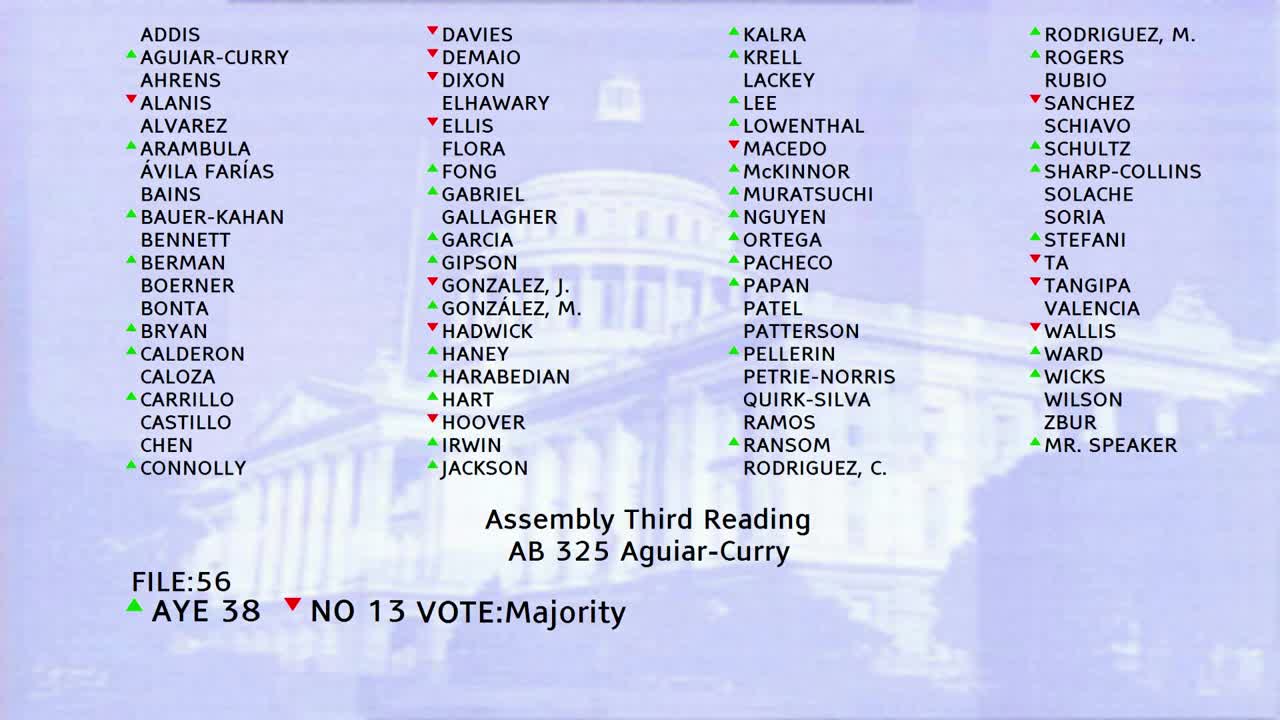 33SEC
Assembly Floor
 1MIN
Assembly Standing Committee on Judiciary
Bill Author

Bill Co-Author(s):