AB 495: Family Preparedness Plan Act of 2025.
- Session Year: 2025-2026
- House: Assembly
- Latest Version Date: 2025-10-12
Current Status:
Passed
(2025-10-12: Chaptered by Secretary of State - Chapter 664, Statutes of 2025.)
Introduced
In Committee
Awaiting First Chamber Vote
Passed First Chamber
In Committee
Awaiting Second Chamber Vote
Passed Second Chamber
Enacted
(1)Under existing law, a caregiver who is 18 years of age or older and signs a caregivers authorization affidavit under penalty of perjury for a minor who lives in their home is authorized to enroll the minor in school and consent to school-related medical care on behalf of the minor. Under existing law, a caregiver who is 18 years of age or older, signs the caregivers authorization affidavit under penalty of perjury, and who is a certain type of relative of the minor who lives in their home, has the same rights to authorize medical care and dental care for the minor that are given to guardians, as specified. Under existing law, a person who acts in good faith reliance on a completed caregivers authorization affidavit to provide medical or dental care, without actual knowledge of facts contrary to those stated on the affidavit, is not subject to criminal or civil liability or professional disciplinary action for that reliance, but is not relieved from liability for violations of other provisions of law.
This bill, the Family Preparedness Plan Act of 2025, would revise the definition of relative to expand the type of relative who is authorized to execute a caregivers authorization affidavit and grant them the same rights to authorize school-related medical care, as defined, for the minor that are given to guardians, as specified. By expanding who is authorized to sign a caregivers authorization affidavit for these purposes under penalty of perjury, this bill would expand the crime of perjury, thereby imposing a state-mandated local program.
This bill would amend the statutory form for a caregivers authorization affidavit.
(2)Existing law generally provides for the establishment and administration of guardianships. Existing law authorizes a court to appoint joint guardians of a person, an estate, or a person and an estate. Existing law requires a nomination of a guardian to become effective when made, and remain effective, unless stated otherwise in writing, as specified.
This bill would authorize a court, in its discretion, to appoint a custodial parent and a person nominated by the custodial parent as joint guardians of the person of the minor, if the custodial parent will be temporarily unavailable due to specified circumstances, including, among other things, an immigration-related administrative action, as specified. The bill would make all records, petitions, orders, and documents related to these proceedings confidential, as specified.
The bill would provide that absence is a basis for a delayed effectiveness of a guardianship and that such circumstances would not be a basis for subsequent legal incapacity for the nomination.
(3)Existing law prohibits, except as required by state or federal law or as required to administer a state or federally supported educational program, school officials and employees of a local educational agency, as defined, from collecting information or documents regarding citizenship or immigration status of pupils or their family members. Existing law requires the governing board or body of a local educational agency to perform specified actions relating to pupils and immigration status, including, among others, providing information to parents and guardians, as appropriate, regarding their childs right to a free public education, regardless of immigration status or religious beliefs. Existing law requires the Attorney General, by April 1, 2018, in consultation with the appropriate stakeholders, to publish model policies limiting assistance with immigration enforcement at public schools, to the fullest extent possible consistent with federal and state law, as specified. Existing law requires all local educational agencies to adopt the model policies developed by the Attorney General, or equivalent policies, by July 1, 2018.
This bill would revise the information disclosure requirements to require the governing board or body of a local educational agency to provide information related to specified guidance on immigration enforcement issued by the Attorney General and would require that information to be revised as necessary to be consistent with any revisions or updates to the Attorney Generals guidance. This bill would also require local educational agencies to revise their model policies as necessary to be consistent with any revisions or updates to the model policies developed by the Attorney General, as specified. By imposing additional duties on local educational agencies, the bill would impose a state-mandated local program.
(4)Existing law, the California Child Day Care Facilities Act, provides for the licensure and regulation of child daycare facilities, including daycare centers and daycare homes, by the State Department of Social Services. The act exempts certain types of facilities from licensure under its provisions, including California state preschool programs that meet certain requirements, including, among other things, that the programs are operated by local educational agencies in a school building.
Similar to the provisions related to local educational agencies described above, this bill would prohibit licensed child daycare facilities, as defined, employees of licensed child daycare facilities, and license-exempt California state preschool program facilities from collecting information or documents regarding citizenship or immigration status of children or their family members, except as required by state or federal law or as required to administer a state or federally supported educational program. The bill would require the licensee or administrator of a licensed child day care facility, as applicable, to report to the department and the Attorney General any requests for information or access to the facility by an officer or employee of a law enforcement agency. The bill would authorize license-exempt California state preschool program facilities to make that report to the State Department of Education and the Attorney General. The bill would require the State Department of Social Services to provide any information on California state preschool programs collected pursuant to those provisions to the Superintendent of Public Instruction. The bill would require a licensed child daycare facility and a license-exempt California state preschool program facility to first exhaust any parental instruction relating to the childs care found in the childs emergency contact information if an employee of the facility is aware that a childs parent or authorized representative is not available to care for the child. The bill would require licensees or administrators of those facilities to request that parents or authorized representatives update their emergency contact information. The bill would require the Attorney General, by April 1, 2026, in consultation with the appropriate stakeholders, to publish model policies limiting assistance with immigration enforcement at child daycare facilities and license-exempt California state preschool program facilities similar to the model policies developed for local educational agencies described above. The bill would require the State Department of Social Services to inform licensed daycare facilities, and the State Department of Education to inform license-exempt California state preschool program facilities, of the model policies. The bill would require all California state preschool programs to adopt the model policies developed by the Attorney General, or equivalent policies, as soon as possible, but in no event later than July 1, 2026. The bill would require California state preschool programs to update these policies to conform with any revisions or updates to the model policies developed by the Attorney General. The bill would require a licensed child daycare facility and license-exempt California state preschool program facilities to provide the parent or authorized representative with information about how to access those model policies. The bill would require the State Department of Social Services to inform licensed child day care facilities, and the State Department of Education to inform license-exempt California state preschool program facilities, of any revisions or updates to the model policies and require any information, policies, or guidance provided by facilities to parents or authorized representatives to be updated to include any revisions or updates to the model policies issued by the Attorney General. The bill would authorize the State Department of Social Services to administer these provisions by interim licensing standards until regulations are adopted.
(5)This bill would provide that its provisions are severable.
(6)Existing constitutional provisions require a statute that limits the right of access to the meetings of public bodies or the writings of public officials and agencies to be adopted with findings demonstrating the interest protected by the limitation and the need for protecting that interest.
This bill would make legislative findings to that effect.
(7)The California Constitution requires the state to reimburse local agencies and school districts for certain costs mandated by the state. Statutory provisions establish procedures for making that reimbursement.
This bill would provide that with regard to certain mandates no reimbursement is required by this act for a specified reason.
With regard to any other mandates, this bill would provide that, if the Commission on State Mandates determines that the bill contains costs so mandated by the state, reimbursement for those costs shall be made pursuant to the statutory provisions noted above.
This bill would incorporate additional changes to Section 234.7 of the Education Code proposed by AB 49, AB 419, or both, to be operative only if this bill and AB 49, AB 419, or both, are enacted and this bill is enacted last.
(1)Under existing law, a caregiver who is 18 years of age or older and signs a caregivers authorization affidavit under penalty of perjury for a minor who lives in their home is authorized to enroll the minor in school and consent to school-related medical care on behalf of the minor. Under existing law, a caregiver who is 18 years of age or older, signs the caregivers authorization affidavit under penalty of perjury, and who is a certain type of relative of the minor who lives in their home, has the same rights to authorize medical care and dental care for the minor that are given to guardians, as specified. Under existing law, a person who acts in good faith reliance on a completed caregivers authorization affidavit to provide medical or dental care, without actual knowledge of facts contrary to those stated on the affidavit, is not subject to criminal or civil liability or professional disciplinary action for that reliance, but is not relieved from liability for violations of other provisions of law.
This bill, the Family Preparedness Plan Act of 2025, would revise the definition of relative to expand the type of person relative who is authorized to execute a caregivers authorization affidavit to include a nonrelative extended family member, as defined, and grant them the same rights to authorize school-related medical care, as defined, for the minor that are given to guardians, as specified. By expanding who is authorized to sign a caregivers authorization affidavit for these purposes under penalty of perjury, this bill would expand the crime of perjury, thereby imposing a state-mandated local program.
This bill would amend the statutory form for a caregivers authorization affidavit.
(2)Existing law generally provides for the establishment and administration of guardianships. Existing law authorizes a court to appoint joint guardians of a person, an estate, or a person and an estate. Existing law requires a nomination of a guardian to become effective when made, and remain effective, unless stated otherwise in writing, as specified.
This bill would authorize a court, in its discretion, to appoint a custodial parent and a person nominated by the custodial parent as joint guardians of the person of the minor, if the custodial parent will be temporarily unavailable due to specified circumstances, including, among other things, an immigration-related administrative action, as specified. The bill would make all records, petitions, orders, and documents related to these proceedings confidential, as specified.
The bill would provide that absence is a basis for a delayed effectiveness of a guardianship and that such circumstances would not be a basis for subsequent legal incapacity for the nomination.
(3)Existing law prohibits, except as required by state or federal law or as required to administer a state or federally supported educational program, school officials and employees of a local educational agency, as defined, from collecting information or documents regarding citizenship or immigration status of pupils or their family members. Existing law requires the governing board or body of a local educational agency to perform specified actions relating to pupils and immigration status, including, among others, providing information to parents and guardians, as appropriate, regarding their childs right to a free public education, regardless of immigration status or religious beliefs. Existing law requires the Attorney General, by April 1, 2018, in consultation with the appropriate stakeholders, to publish model policies limiting assistance with immigration enforcement at public schools, to the fullest extent possible consistent with federal and state law, as specified. Existing law requires all local educational agencies to adopt the model policies developed by the Attorney General, or equivalent policies, by July 1, 2018.
This bill would revise the information disclosure requirements to require the governing board or body of a local educational agency to provide information related to specified guidance on immigration enforcement issued by the Attorney General and would require that information to be revised as necessary to be consistent with any revisions or updates to the Attorney Generals guidance. This bill would also require local educational agencies to revise their model policies as necessary to be consistent with any revisions or updates to the model policies developed by the Attorney General, as specified. By imposing additional duties on local educational agencies, the bill would impose a state-mandated local program.
(4)Existing law, the California Child Day Care Facilities Act, provides for the licensure and regulation of child day care daycare facilities, including day care daycare centers and day care daycare homes, by the State Department of Social Services. The act exempts certain types of facilities from licensure under its provisions, including California state preschool programs that meet certain requirements, including, among other things, that the programs are operated by local educational agencies in a school building.
Similar to the provisions related to local educational agencies described above, this bill would prohibit licensed child day care daycare facilities, as defined, and employees of licensed child day care facilities daycare facilities, and license-exempt California state preschool program facilities from collecting information or documents regarding citizenship or immigration status of children or their family members, except as required by state or federal law. law or as required to administer a state or federally supported educational program. The bill would require the licensee or administrator of a licensed child day care facility, as applicable, to report to the department and the Attorney General any requests for information or access to the facility by an officer or employee of a law enforcement agency. The bill would authorize license-exempt California state preschool program facilities to make that report to the State Department of Education and the Attorney General. The bill would require the State Department of Social Services to provide any information on California state preschool programs collected pursuant to those provisions to the Superintendent of Public Instruction. The bill would require a licensed child day care daycare facility and a license-exempt California state preschool program facility to first exhaust any parental instruction relating to the childs care found in the childs emergency contact information if an employee of a licensed child day care the facility is aware that a childs parent or authorized representative is not available to care for the child. The bill would require licensees or administrators of licensed those facilities to request that parents or authorized representatives update their emergency contact information. The bill would require the Attorney General, by April 1, 2026, in consultation with the appropriate stakeholders, to publish model policies limiting assistance with immigration enforcement at child day care daycare facilities and license-exempt California state preschool program facilities similar to the model policies developed for local educational agencies described above. The bill would require the State Department of Social Services to inform licensed daycare facilities, and the State Department of Education to inform license-exempt California state preschool program facilities, of the model policies. The bill would require all licensed child day care facilities California state preschool programs to adopt the model policies developed by the Attorney General, or equivalent policies, as soon as possible, but in no event later than July 1, 2026. The bill would require licensed day care facilities California state preschool programs to update these policies to conform with any revisions or updates to the model policies developed by the Attorney General. The bill would require a licensed child day care daycare facility and license-exempt California state preschool program facilities to provide the parent or authorized representative with information about how to access those model policies. The bill would require the department State Department of Social Services to inform licensed child day care facilities facilities, and the State Department of Education to inform license-exempt California state preschool program facilities, of any revisions or updates to the model policies and require any information, policies, or guidance provided by licenses facilities to parents or authorized representatives to be updated to include any revisions or updates to the model policies issued by the Attorney General. The bill would authorize the department State Department of Social Services to administer these provisions by interim licensing standards until regulations are adopted.
(5)This bill would provide that its provisions are severable.
(6)Existing constitutional provisions require a statute that limits the right of access to the meetings of public bodies or the writings of public officials and agencies to be adopted with findings demonstrating the interest protected by the limitation and the need for protecting that interest.
This bill would make legislative findings to that effect.
(7)The California Constitution requires the state to reimburse local agencies and school districts for certain costs mandated by the state. Statutory provisions establish procedures for making that reimbursement.
This bill would provide that with regard to certain mandates no reimbursement is required by this act for a specified reason.
With regard to any other mandates, this bill would provide that, if the Commission on State Mandates determines that the bill contains costs so mandated by the state, reimbursement for those costs shall be made pursuant to the statutory provisions noted above.
This bill would incorporate additional changes to Section 234.7 of the Education Code proposed by AB 49, AB 419, or both, to be operative only if this bill and AB 49, AB 419, or both, are enacted and this bill is enacted last.
(1)Under existing law, a caregiver who is 18 years of age or older and signs a caregivers authorization affidavit under penalty of perjury for a minor who lives in their home is authorized to enroll the minor in school and consent to school-related medical care on behalf of the minor. Under existing law, a caregiver who is 18 years of age or older, signs the caregivers authorization affidavit under penalty of perjury, and who is a certain type of relative of the minor who lives in their home, has the same rights to authorize medical care and dental care for the minor that are given to guardians, as specified. Under existing law, a person who acts in good faith reliance on a completed caregivers authorization affidavit to provide medical or dental care, without actual knowledge of facts contrary to those stated on the affidavit, is not subject to criminal or civil liability or professional disciplinary action for that reliance, but is not relieved from liability for violations of other provisions of law.
This bill, the Family Preparedness Plan Act of 2025, would expand the type of person who is authorized to execute a caregivers authorization affidavit to include a nonrelative extended family member, as defined, and grant them the same rights to authorize school-related medical care, as defined, for the minor that are given to guardians, as specified. By expanding who is authorized to sign a caregivers authorization affidavit for these purposes under penalty of perjury, this bill would expand the crime of perjury, thereby imposing a state-mandated local program.
This bill would amend the statutory form for a caregivers authorization affidavit.
(2)Existing law generally provides for the establishment and administration of guardianships. Existing law authorizes a court to appoint joint guardians of a person, an estate, or a person and an estate. Existing law requires a nomination of a guardian to become effective when made, and remain effective, unless stated otherwise in writing, as specified.
This bill would authorize a court, in its discretion, to appoint a custodial parent and a person nominated by the custodial parent as joint guardians of the person of the minor, if the custodial parent will be temporarily unavailable due to specified circumstances, including, among other things, an immigration-related administrative action, as specified. The bill would make all records, petitions, orders, and documents related to these proceedings confidential, as specified.
The bill would provide that absence is a basis for a delayed effectiveness of a guardianship and that such circumstances would not be a basis for subsequent legal incapacity for the nomination.
(3)Existing law prohibits, except as required by state or federal law or as required to administer a state or federally supported educational program, school officials and employees of a local educational agency, as defined, from collecting information or documents regarding citizenship or immigration status of pupils or their family members. Existing law requires the governing board or body of a local educational agency to perform specified actions relating to pupils and immigration status, including, among others, providing information to parents and guardians, as appropriate, regarding their childs right to a free public education, regardless of immigration status or religious beliefs. Existing law requires the Attorney General, by April 1, 2018, in consultation with the appropriate stakeholders, to publish model policies limiting assistance with immigration enforcement at public schools, to the fullest extent possible consistent with federal and state law, as specified. Existing law requires all local educational agencies to adopt the model policies developed by the Attorney General, or equivalent policies, by July 1, 2018.
This bill would revise the information disclosure requirements to require the governing board or body of a local educational agency to provide information related to specified guidance on immigration enforcement issued by the Attorney General and would require that information to be revised as necessary to be consistent with any revisions or updates to the Attorney Generals guidance. This bill would also require local educational agencies to revise their model policies as necessary to be consistent with any revisions or updates to the model policies developed by the Attorney General, as specified. By imposing additional duties on local educational agencies, the bill would impose a state-mandated local program.
(4)Existing law, the California Child Day Care Facilities Act, provides for the licensure and regulation of child day care facilities, including day care centers and day care homes, by the State Department of Social Services. Under existing law, willful violation of these provisions is punishable as a misdemeanor.
Similar to the provisions related to local educational agencies described above, this bill would prohibit licensed child day care facilities, as defined, and employees of licensed child day care facilities from collecting information or documents regarding citizenship or immigration status of children or their family members, except as required by state or federal law or as required to administer a state or federally supported educational program. law. The bill would require the owner, operator, licensee or administrator of a licensed child day care facility, as applicable, to report to the department and the Attorney General any requests for information or access to the facility by an officer or employee of a law enforcement agency for the purpose of enforcing the immigration laws in a manner that ensures the confidentiality and privacy of any potentially identifying information. agency. The bill would require a licensed child day care facility to first exhaust any parental instruction relating to the childs care found in the childs emergency contact information if an employee of a licensed child day care facility is aware that a childs parent or guardian authorized representative is not available to care for the child. The bill would encourage require licensees or administrators of licensed facilities to work with parents or guardians to request that parents or authorized representatives update their emergency contact information. The bill would require the Attorney General, by April 1, 2026, in consultation with the appropriate stakeholders, to publish model policies limiting assistance with immigration enforcement at child day care facilities similar to the model policies developed for local educational agencies described above. The bill would require all licensed child day care facilities to adopt the model policies developed by the Attorney General, or equivalent policies, as soon as possible, but in no event later than July 1, 2026. The bill would require licensed day care facilities to update these policies to conform with any revisions or updates to the model policies developed by the Attorney General. Upon enrolling or reenrolling any child, the The bill would require a licensed child day care facility to provide the parent or guardian with written information relating to the model policies developed by the Attorney General described above, including, but not limited to, information related to family safety plans and the importance of completing and maintaining emergency contact information. authorized representative with information about how to access those model policies. The bill would require the provided information department to inform licensed child day care facilities of any revisions or updates to the model policies and require any information, policies, or guidance provided by licenses to parents or authorized representatives to be updated to include any revisions or updates to the model policies issued by the Attorney General. Because a violation of these provisions by a licensed day care facility would constitute a crime, this bill would impose a state-mandated local program. The bill would authorize the department to administer these provisions by interim licensing standards until regulations are adopted.
(5)This bill would provide that its provisions are severable.
(5)(6)Existing constitutional provisions require a statute that limits the right of access to the meetings of public bodies or the writings of public officials and agencies to be adopted with findings demonstrating the interest protected by the limitation and the need for protecting that interest.
This bill would make legislative findings to that effect.
(6)(7)The California Constitution requires the state to reimburse local agencies and school districts for certain costs mandated by the state. Statutory provisions establish procedures for making that reimbursement.
This bill would provide that with regard to certain mandates no reimbursement is required by this act for a specified reason.
With regard to any other mandates, this bill would provide that, if the Commission on State Mandates determines that the bill contains costs so mandated by the state, reimbursement for those costs shall be made pursuant to the statutory provisions noted above.
(1)Under existing law, a caregiver who is 18 years of age or older and signs a caregivers authorization affidavit under penalty of perjury for a minor who lives in their home is authorized to enroll the minor in school and consent to school-related medical care on behalf of the minor. Under existing law, a caregiver who is 18 years of age or older, signs the caregivers authorization affidavit under penalty of perjury, and who is a certain type of relative of the minor who lives in their home, has the same rights to authorize medical care and dental care for the minor that are given to guardians, as specified. Under existing law, a person who acts in good faith reliance on a completed caregivers authorization affidavit to provide medical or dental care, without actual knowledge of facts contrary to those stated on the affidavit, is not subject to criminal or civil liability or professional disciplinary action for that reliance, but is not relieved from liability for violations of other provisions of law.
This bill, the Family Preparedness Plan Act of 2025, would expand the type of person who is authorized to execute a caregivers authorization affidavit to include a nonrelative extended family member, as defined, and grant them the same rights to authorize school-related medical care, as defined, for the minor that are given to guardians, as specified. By expanding who is authorized to sign a caregivers authorization affidavit for these purposes under penalty of perjury, this bill would expand the crime of perjury, thereby imposing a state-mandated local program.
This bill would amend the statutory form for a caregivers authorization affidavit.
(2)Existing law generally provides for the establishment and administration of guardianships. Existing law authorizes a court to appoint joint guardians of a person, an estate, or a person and an estate. Existing law requires a nomination of a guardian to become effective when made, and remain effective, unless stated otherwise in writing, as specified.
This bill would authorize a court, in its discretion, to appoint a custodial parent and a person nominated by the custodial parent as joint guardians of the person of the minor, if the custodial parent will be temporarily unavailable due to specified circumstances, including, among other things, an immigration-related administrative action, as specified. The bill would make all records, petitions, orders, and documents related to these proceedings confidential, as specified.
The bill would provide that absence is a basis for a delayed effectiveness of a guardianship and that such circumstances would not be a basis for subsequent legal incapacity for the nomination.
(3)Existing law prohibits, except as required by state or federal law or as required to administer a state or federally supported educational program, school officials and employees of a local educational agency, as defined, from collecting information or documents regarding citizenship or immigration status of pupils or their family members. Existing law requires the governing board or body of a local educational agency to perform specified actions relating to pupils and immigration status, including, among others, providing information to parents and guardians, as appropriate, regarding their childs right to a free public education, regardless of immigration status or religious beliefs. Existing law requires the Attorney General, by April 1, 2018, in consultation with the appropriate stakeholders, to publish model policies limiting assistance with immigration enforcement at public schools, to the fullest extent possible consistent with federal and state law, as specified. Existing law requires all local educational agencies to adopt the model policies developed by the Attorney General, or equivalent policies, by July 1, 2018.
This bill would revise the information disclosure requirements to require the governing board or body of a local educational agency to provide information related to specified guidance on immigration enforcement issued by the Attorney General and would require that information to be revised as necessary to be consistent with any revisions or updates to the Attorney Generals guidance. This bill would also require local educational agencies to revise their model policies as necessary to be consistent with any revisions or updates to the model policies developed by the Attorney General, as specified. By imposing additional duties on local educational agencies, the bill would impose a state-mandated local program.
(4)Existing law, the California Child Day Care Facilities Act, provides for the licensure and regulation of child day care facilities, including day care centers and day care homes, by the State Department of Social Services. Under existing law, willful violation of these provisions is punishable as a misdemeanor.
Similar to the provisions related to local educational agencies described above, this bill would prohibit licensed child day care facilities, as defined, and employees of licensed child day care facilities from collecting information or documents regarding citizenship or immigration status of children or their family members, except as required by state or federal law or as required to administer a state or federally supported educational program. The bill would require the owner, operator, or administrator of a licensed child day care facility, as applicable, to report to the department and the Attorney General any requests for information or access to the facility by an officer or employee of a law enforcement agency for the purpose of enforcing the immigration laws in a manner that ensures the confidentiality and privacy of any potentially identifying information. The bill would require a licensed child day care facility to first exhaust any parental instruction relating to the childs care found in the childs emergency contact information if an employee of a licensed child day care facility is aware that a childs parent or guardian is not available to care for the child. The bill would encourage facilities to work with parents or guardians to update their emergency contact information. The bill would require the Attorney General, by April 1, 2026, in consultation with the appropriate stakeholders, to publish model policies limiting assistance with immigration enforcement at child day care facilities similar to the model policies developed for local educational agencies described above. The bill would require all licensed child day care facilities to adopt the model policies developed by the Attorney General, or equivalent policies, as soon as possible, but in no event later than July 1, 2026. The bill would require licensed day care facilities to update these policies to conform with any revisions or updates to the model policies developed by the Attorney General. Upon enrolling or reenrolling any child, the bill would require a licensed child day care facility to provide the parent or guardian with written information relating to the model policies developed by the Attorney General described above, including, but not limited to, information related to family safety plans and the importance of completing and maintaining emergency contact information. The bill would require the provided information to be updated to include any revisions or updates to the model policies issued by the Attorney General. Because a violation of these provisions by a licensed day care facility would constitute a crime, this bill would impose a state-mandated local program.
(4)(5)Existing constitutional provisions require a statute that limits the right of access to the meetings of public bodies or the writings of public officials and agencies to be adopted with findings demonstrating the interest protected by the limitation and the need for protecting that interest.
This bill would make legislative findings to that effect.
(5)(6)The California Constitution requires the state to reimburse local agencies and school districts for certain costs mandated by the state. Statutory provisions establish procedures for making that reimbursement.
This bill would provide that with regard to certain mandates no reimbursement is required by this act for a specified reason.
With regard to any other mandates, this bill would provide that, if the Commission on State Mandates determines that the bill contains costs so mandated by the state, reimbursement for those costs shall be made pursuant to the statutory provisions noted above.
(1)Under existing law, a caregiver who is 18 years of age or older and signs a caregivers authorization affidavit under penalty of perjury for a minor who lives in their home is authorized to enroll the minor in school and consent to school-related medical care on behalf of the minor. Under existing law, a caregiver who is 18 years of age or older, signs the caregivers authorization affidavit under penalty of perjury, and who is a certain type of relative of the minor who lives in their home, has the same rights to authorize medical care and dental care for the minor that are given to guardians, as specified. Under existing law, a person who acts in good faith reliance on a completed caregivers authorization affidavit to provide medical or dental care, without actual knowledge of facts contrary to those stated on the affidavit, is not subject to criminal or civil liability or professional disciplinary action for that reliance, but is not relieved from liability for violations of other provisions of law. Existing law requires a caregiver to notify any school, health care provider, or health care service plan that has been given the affidavit if the minor stops living with the caregiver. Under existing law, a caregivers authorization affidavit is invalid after the school, health care provider, or health care service plan receives notice that the minor is no longer living with the caregiver.
This bill, the Family Preparedness Plan Act of 2025, would instead provide that a caregivers authorization affidavit is valid until the parent, legal guardian, person having legal custody, or caregiver rescinds the affidavit. The bill would require that, in any case, the caregivers authorization affidavit would not be valid for more than one year after the date on which it was executed.The billThis bill, the Family Preparedness Plan Act of 2025, would also expand the type of person who is authorized to execute a caregivers authorization affidavit to include a nonrelative extended family member, as defined, and grant them the same rights to authorize school-related medical care, as defined, for the minor that are given to guardians, as specified. By expanding who is authorized to sign a caregivers authorization affidavit for these purposes under penalty of perjury, this bill would expand the crime of perjury, thereby imposing a state-mandated local program.
This bill would amend the statutory form for a caregivers authorization affidavit.
(2)Existing law generally provides for the establishment and administration of guardianships. Existing law authorizes a court to appoint joint guardians of a person, an estate, or a person and an estate. Existing law requires a nomination of a guardian to become effective when made, and remain effective, unless stated otherwise in writing, as specified.
This bill would specifically authorize a court, if a custodial parent is subject to an immigration administrative action where the parent may be temporarily unavailable to care for their child, in its discretion, authorize a court, in its discretion, to appoint the a custodial parent and a person nominated by the custodial parent as joint guardians of the person of the minor, as specified. minor, if the custodial parent will be temporarily unavailable due to specified circumstances, including, among other things, an immigration-related administrative action, as specified. The bill would make all records, petitions, orders, and documents related to these proceedings to be confidential, as specified, and would prohibit this information from being disclosed to federal immigration authorities or any entity engaged in immigration enforcement without a court order, as specified. The bill would also make these proceedings closed to the public, except as specified.
The bill would provide that the circumstances of a person making the nomination of a guardian being subject to an order of deportation, physical absence from the United States due to deportation, or prolonged detention by immigration authorities absence is a basis for a delayed effectiveness of a guardianship and that such circumstances would not be a basis for subsequent legal incapacity for the nomination. The bill would require a court to give due weight to the nomination of a guardian when signed by one or both parents if there is good cause to waive notice because the person cannot with reasonable diligence be notified or giving the notice would be contrary to the interest of justice.
(3)Existing law prohibits, except as required by state or federal law or as required to administer a state or federally supported educational program, school officials and employees of a local educational agency, as defined, from collecting information or documents regarding citizenship or immigration status of pupils or their family members. Existing law requires that if an employee of a school is aware that a pupils parent or guardian is not available to care for the pupil, the school shall first exhaust any parental instruction relating to the pupils care in the emergency contact information it has for the pupil to arrange for the pupils care and encourages schools work with parents or guardians to update the emergency contact information and not to contact Child Protective Services to arrange for the pupils care unless the school is unable to arrange for care through the use of emergency contact information or other information or instructions provided by the parent or guardian. Existing law requires the governing board or body of a local educational agency to perform specified actions relating to pupils and immigration status, including, among others, providing information to parents and guardians, as appropriate, regarding their childrens childs right to a free public education, regardless of immigration status or religious beliefs. Existing law requires the Attorney General, by April 1, 2018, in consultation with the appropriate stakeholders, to publish model policies limiting assistance with immigration enforcement at public schools, to the fullest extent possible consistent with federal and state law, as specified. Existing law requires all local educational agencies to adopt the model policies developed by the Attorney General, or equivalent policies, by July 1, 2018.
This bill would delete the provisions encouraging schools not to contact Child Protective Services described above. The bill would revise the information disclosure requirements to require the governing board or body of a local educational agency to provide information related to specified guidance on immigration enforcement issued by the Attorney General and would require that information to be revised as necessary to be consistent with any revisions or updates to the Attorney Generals guidance. This bill would also require local educational agencies to revise their model policies as necessary to be consistent with any revisions or updates to the model policies developed by the Attorney General, as specified. By imposing additional duties on local educational agencies, the bill would impose a state-mandated local program.
(4)Existing law, the California Child Day Care Facilities Act, provides for the licensure and regulation of child day care facilities, including day care centers and day care homes, by the State Department of Social Services. Under existing law, willful violation of these provisions is punishable as a misdemeanor.Similar to the provisions related to local educational agencies described above, this bill would prohibit licensed child day care facilities, as defined, and employees of licensed child day care facilities from collecting information or documents regarding citizenship or immigration status of children or their family members, except as required by state or federal law or as required to administer a state or federally supported educational program. The bill would require the owner, operator, or administrator of a licensed child day care facility, as applicable, to report to the department and the Attorney General any requests for information or access to the facility by an officer or employee of a law enforcement agency for the purpose of enforcing the immigration laws in a manner that ensures the confidentiality and privacy of any potentially identifying information. The bill would require a licensed child day care facility to first exhaust any parental instruction relating to the childs care found in the childs emergency contact information if an employee of a licensed child day care facility is aware that a childs parent or guardian is not available to care for the child. The bill would encourage facilities to work with parents or guardians to update their emergency contact information. The bill would require the Attorney General, by April 1, 2026, in consultation with the appropriate stakeholders, to publish model policies limiting assistance with immigration enforcement at child day care facilities similar to the model policies developed for local educational agencies described above. The bill would require all licensed child day care facilities to adopt the model policies developed by the Attorney General, or equivalent policies, as soon as possible, but in no event later than July 1, 2026. The bill would require licensed day care facilities to update these policies to conform with any revisions or updates to the model policies developed by the Attorney General. Upon enrolling or reenrolling any child, the bill would require a licensed child day care facility to provide the parent or guardian with written information relating to the model policies developed by the Attorney General described above, including, but not limited to, information related to family safety plans and the importance of completing and maintaining emergency contact information. The bill would require the provided information to be updated to include any revisions or updates to the model policies issued by the Attorney General. Because a violation of these provisions by a licensed day care facility would constitute a crime, this bill would impose a state-mandated local program.(5)(4)Existing constitutional provisions require a statute that limits the right of access to the meetings of public bodies or the writings of public officials and agencies to be adopted with findings demonstrating the interest protected by the limitation and the need for protecting that interest.
This bill would make legislative findings to that effect.
(6)(5)The California Constitution requires the state to reimburse local agencies and school districts for certain costs mandated by the state. Statutory provisions establish procedures for making that reimbursement.
This bill would provide that with regard to certain mandates no reimbursement is required by this act for a specified reason.
With regard to any other mandates, this bill would provide that, if the Commission on State Mandates determines that the bill contains costs so mandated by the state, reimbursement for those costs shall be made pursuant to the statutory provisions noted above.
(1)Under existing law, a caregiver who is 18 years of age or older and signs a caregivers authorization affidavit under penalty of perjury for a minor who lives in their home is authorized to enroll the minor in school and consent to school-related medical care on behalf of the minor. Under existing law, a caregiver who is 18 years of age or older, signs the caregivers authorization affidavit under penalty of perjury, and who is a certain type of relative of the minor who lives in their home, has the same rights to authorize medical care and dental care for the minor that are given to guardians, as specified. Under existing law, a person who acts in good faith reliance on a completed caregivers authorization affidavit to provide medical or dental care, without actual knowledge of facts contrary to those stated on the affidavit, is not subject to criminal or civil liability or professional disciplinary action for that reliance, but is not relieved from liability for violations of other provisions of law. Existing law requires a caregiver to notify any school, health care provider, or health care service plan that has been given the affidavit if the minor stops living with the caregiver. Under existing law, a caregivers authorization affidavit is invalid after the school, health care provider, or health care service plan receives notice that the minor is no longer living with the caregiver.
This bill, the Family Preparedness Plan Act of 2025, would instead provide that a caregivers authorization affidavit is valid until the parent, legal guardian, person having legal custody, or caregiver rescinds the affidavit. The bill would require that, in any case, the caregivers authorization affidavit would not be valid for more than one year after the date on which it was executed.
The bill would also expand the type of person who is authorized to execute a caregivers authorization affidavit to include a nonrelative extended family member, as defined, and grant them the same rights to authorize school-related medical care, as defined, for the minor that are given to guardians, as specified. By expanding who is authorized to sign a caregivers authorization affidavit for these purposes under penalty of perjury, this bill would expand the crime of perjury, thereby imposing a state-mandated local program.
This bill would amend the statutory form for a caregivers authorization affidavit.
(2)Existing law generally provides for the establishment and administration of guardianships. Existing law authorizes a court to appoint joint guardians of a person, an estate, or a person and an estate. Existing law requires a nomination of a guardian to become effective when made, and remain effective, unless stated otherwise in writing, as specified.
This bill would specifically authorize a court, if a custodial parent is subject to an immigration administrative action where the parent may be temporarily unavailable to care for their child, in its discretion, to appoint the custodial parent and a person nominated by the custodial parent as joint guardians of the person of the minor, as specified. The bill would make all records, petitions, orders, and documents related to these proceedings to be confidential, as specified, and would prohibit this information from being disclosed to federal immigration authorities or any entity engaged in immigration enforcement without a court order, as specified. The bill would also make these proceedings closed to the public, except as specified.
The bill would provide that the circumstances of a person making the nomination of a guardian being subject to an order of deportation, physical absence from the United States due to deportation, or prolonged detention by immigration authorities is a basis for a delayed effectiveness of a guardianship and that such circumstances would not be a basis for subsequent legal incapacity for the nomination. The bill would require a court to give due weight to the nomination of a guardian when signed by one or both parents if there is good cause to waive notice because the person cannot with reasonable diligence be notified or giving the notice would be contrary to the interest of justice.
(3)Existing law prohibits, except as required by state or federal law or as required to administer a state or federally supported educational program, school officials and employees of a local educational agency, as defined, from collecting information or documents regarding citizenship or immigration status of pupils or their family members. Existing law requires that if an employee of a school is aware that a pupils parent or guardian is not available to care for the pupil, the school shall first exhaust any parental instruction relating to the pupils care in the emergency contact information it has for the pupil to arrange for the pupils care and encourages schools work with parents or guardians to update the emergency contact information and not to contact Child Protective Services to arrange for the pupils care unless the school is unable to arrange for care through the use of emergency contact information or other information or instructions provided by the parent or guardian. Existing law requires the governing board or body of a local educational agency to perform specified actions relating to pupils and immigration status, including, among others, providing information to parents and guardians, as appropriate, regarding their childrens right to a free public education, regardless of immigration status or religious beliefs. Existing law requires the Attorney General, by April 1, 2018, in consultation with the appropriate stakeholders, to publish model policies limiting assistance with immigration enforcement at public schools, to the fullest extent possible consistent with federal and state law, as specified. Existing law requires all local educational agencies to adopt the model policies developed by the Attorney General, or equivalent policies, by July 1, 2018.
This bill would delete the provisions encouraging schools not to contact Child Protective Services described above. The bill would revise the information disclosure requirements to require the governing board or body of a local educational agency to provide information related to specified guidance on immigration enforcement issued by the Attorney General and would require that information to be revised as necessary to be consistent with any revisions or updates to the Attorney Generals guidance. This bill would also require local educational agencies to revise their model policies as necessary to be consistent with any revisions or updates to the model policies developed by the Attorney General, as specified. By imposing additional duties on local educational agencies, the bill would impose a state-mandated local program.
(4)Existing law, the California Child Day Care Facilities Act, provides for the licensure and regulation of child day care facilities, including day care centers and day care homes, by the State Department of Social Services. Under existing law, willful violation of these provisions is punishable as a misdemeanor.
Similar to the provisions related to local educational agencies described above, this bill would prohibit licensed child day care facilities, as defined, and employees of licensed child day care facilities from collecting information or documents regarding citizenship or immigration status of children or their family members, except as required by state or federal law or as required to administer a state or federally supported educational program. The bill would require the owner, operator, or administrator of a licensed child day care facility, as applicable, to report to the department and the Attorney General any requests for information or access to the facility by an officer or employee of a law enforcement agency for the purpose of enforcing the immigration laws in a manner that ensures the confidentiality and privacy of any potentially identifying information. The bill would require a licensed child day care facility to first exhaust any parental instruction relating to the childs care found in the childs emergency contact information if an employee of a licensed child day care facility is aware that a childs parent or guardian is not available to care for the child. The bill would encourage facilities to work with parents or guardians to update their emergency contact information. The bill would require the Attorney General, by April 1, 2026, in consultation with the appropriate stakeholders, to publish model policies limiting assistance with immigration enforcement at child day care facilities similar to the model policies developed for local educational agencies described above. The bill would require all licensed child day care facilities to adopt the model policies developed by the Attorney General, or equivalent policies, as soon as possible, but in no event later than July 1, 2026. The bill would require licensed day care facilities to update these policies to conform with any revisions or updates to the model policies developed by the Attorney General. Upon enrolling or reenrolling any child, the bill would require a licensed child day care facility to provide the parent or guardian with written information relating to the model policies developed by the Attorney General described above, including, but not limited to, information related to family safety plans and the importance of completing and maintaining emergency contact information. The bill would require the provided information to be updated to include any revisions or updates to the model policies issued by the Attorney General. Because a violation of these provisions by a licensed day care facility would constitute a crime, this bill would impose a state-mandated local program.
(5)Existing constitutional provisions require a statute that limits the right of access to the meetings of public bodies or the writings of public officials and agencies to be adopted with findings demonstrating the interest protected by the limitation and the need for protecting that interest.
This bill would make legislative findings to that effect.
(6)The California Constitution requires the state to reimburse local agencies and school districts for certain costs mandated by the state. Statutory provisions establish procedures for making that reimbursement.
This bill would provide that with regard to certain mandates no reimbursement is required by this act for a specified reason.
With regard to any other mandates, this bill would provide that, if the Commission on State Mandates determines that the bill contains costs so mandated by the state, reimbursement for those costs shall be made pursuant to the statutory provisions noted above.
Existing law expresses the intent of the Legislature to preserve and strengthen a childs family ties whenever possible and to remove a child from the custody of their parents only when necessary for their welfare or for the safety and protection of the public. Existing law establishes procedures to determine the placement of a dependent child when they are removed from the custody of the dependent childs parent or guardian and requires foster care placements, if possible, be made in the home of a relative unless the placement would not be in the best interest of the child.This bill would express the intent of the Legislature to enact legislation to encourage facilities and agencies that serve children and families to implement family safety plans in the event that a noncitizen parent or guardian of a dependent child is detained or deported. The bill would also express findings and declarations of the Legislature.Existing law expresses the intent of the Legislature to preserve and strengthen a childs family ties whenever possible and to remove a child from the custody of their parents only when necessary for their welfare or for the safety and protection of the public. Existing law establishes procedures to determine the placement of a dependent child when they are removed from the custody of the dependent childs parent or guardian and requires foster care placements, if possible, be made in the home of a relative unless the placement would not be in the best interest of the child.
This bill would express the intent of the Legislature to enact legislation to encourage facilities and agencies that serve children and families to implement family safety plans in the event that a noncitizen parent or guardian of a dependent child is detained or deported. The bill would also express findings and declarations of the Legislature.
This act shall be known, and may be cited, as the Family Preparedness Plan Act of 2025.
SEC. 2.The Legislature finds and declares all of the following:
(a)Several federal immigration policies in recent years have contributed to increases in the number of unaccompanied children. Separation of a child from their parent or primary caregiver has known developmental, psychological, and physical impacts. Younger children are especially vulnerable. During these early years, children are developing emotionally and physically, and forming attachments that help with emotional regulation, sense of identity, and psychological safety. Separating parents and caregivers who are key attachment figures during this vulnerable period can have lifelong impacts on childrens emotional and physical wellbeing.
(b)Stable caregiving arrangements are essential for the health, safety, and emotional well-being of children, particularly in times of crisis. Immigration enforcement activities that separate parents and caregivers from their families or their workplace are highly disruptive for children and youth in their care.
(c)Despite existing tools, such as caregiver authorization affidavits and guardianship nominations, families and caregivers face significant uncertainty due to the lack of clarity, consistency, and enforceability of these mechanisms, resulting in schools and service providers refusing to accept them. Temporary and general guardianship options, while available, fail to adequately safeguard the rights of parentsparticularly immigrant parentsto remain involved in their childs upbringing during periods of immigration detention or deportation. These gaps in the legal framework exacerbate the emotional trauma experienced by children, disrupt access to education and health care, and hinder the ability of families to respond effectively to crises. It is the intent of the Legislature to strengthen parental rights and family options.
(d)To address these challenges, the Legislature seeks to ensure that children facing the risk of family separation due to a parents immigration status have stable and legally recognized caregiving arrangements that protect their emotional and physical well-being. The intent of the Legislature is to provide clear and streamlined processes for short-term guardianships that address urgent needs, such as medical care and educational decisionmaking, while upholding the rights of parents. It is also the intent of the Legislature to refine the scope of guardianship nominations by delineating the rights and responsibilities of nominated guardians. Finally, it is the intent of the Legislature to clarify the powers granted under caregiver authorization affidavits to ensure consistent recognition by schools, health care providers, and other agencies to demonstrate continued support for children who reside with a relative caregiver.
(e)By establishing a more coherent legal structure, it is the intent of the Legislature to reduce uncertainty and administrative barriers, enabling families to act swiftly and effectively in times of crisis. Supporting the stability of caregiving arrangements will mitigate the negative impacts on childrens mental health, educational outcomes, and overall well-being. These efforts reflect Californias commitment to protecting vulnerable families and upholding the fundamental rights of children and parents.
SEC. 3.Section 234.7 of the Education Code is amended to read:234.7.(a)Except as required by state or federal law or as required to administer a state or federally supported educational program, school officials and employees of a local educational agency shall not collect information or documents regarding citizenship or immigration status of pupils or their family members.
(b)The superintendent of a school district, the superintendent of a county office of education, and the principal of a charter school, as applicable, shall report to the respective governing board or body of the local educational agency in a timely manner any requests for information or access to a schoolsite by an officer or employee of a law enforcement agency for the purpose of enforcing the immigration laws in a manner that ensures the confidentiality and privacy of any potentially identifying information.
(c)If an employee of a school is aware that a pupils parent or guardian is not available to care for the pupil, the school shall first exhaust any parental instruction relating to the pupils care in the emergency contact information it has for the pupil to arrange for the pupils care. A school is encouraged to work with parents or guardians to update their emergency contact information and not to contact Child Protective Services to arrange for the pupils care unless the school is unable to arrange for care through the use of emergency contact information or other information or instructions provided by the parent or guardian.
(d)The governing board or body of a local educational agency shall do all of the following:
(1)Provide information to parents and guardians, as appropriate, regarding their childs right to a free public education, regardless of immigration status or religious beliefs. This information shall include information relating to Promoting a Safe and Secure Learning Environment for All: Guidance and Model Policies to Assist Californias K12 Schools in Responding to Immigration Issues issued by the Attorney General on January 6, 2025, including, but not limited to, information related to plans for family safety, the caregivers authorization affidavit in Section 6552 of the Family Code, and the importance of providing the school with, and regularly updating, emergency contact information, including secondary and additional contact information. The provided information shall be revised as necessary to be consistent with any revisions or updates to the guidance issued by the Attorney General. The information may be provided in the annual notification to parents and guardians pursuant to Section 48980 or any other cost-effective means determined by the local educational agency.
(2)Educate pupils about the negative impact of bullying other pupils based on their actual or perceived immigration status or their religious beliefs and customs.
(e)This section does not prohibit the governing board or body of a local educational agency from establishing stronger standards and protections.
(f)(1)The Attorney General, by April 1, 2018, in consultation with the appropriate stakeholders, shall publish model policies limiting assistance with immigration enforcement at public schools, to the fullest extent possible consistent with federal and state law, and ensuring that public schools remain safe and accessible to all California residents, regardless of immigration status. The Attorney General shall, at a minimum, consider all of the following issues when developing the model policies:
(A)Procedures related to requests for access to school grounds for purposes related to immigration enforcement.
(B)Procedures for local educational agency employees to notify the superintendent of the school district or the superintendents designee, the superintendent of the county office of education or the superintendents designee, or the principal of the charter school or the principals designee, as applicable, if an individual requests or gains access to school grounds for purposes related to immigration enforcement.
(C)Procedures for responding to requests for personal information about pupils or their family members for purposes of immigration enforcement.
(2)Notwithstanding the rulemaking provisions of the Administrative Procedure Act (Chapter 3.5 (commencing with Section 11340) of Part 1 of Division 3 of Title 2 of the Government Code), the Department of Justice may implement, interpret, or make specific this section without taking any regulatory action.
(g)All local educational agencies shall adopt the model policies developed pursuant to subdivision (f), or equivalent policies, by July 1, 2018, and revise their model policies as necessary to be consistent with any revisions or updates to the model policies developed by the Attorney General, including Promoting a Safe and Secure Learning Environment for All: Guidance and Model Policies to Assist Californias K12 Schools in Responding to Immigration Issues issued by the Attorney General on January 6, 2025, including, but not limited to, information related to plans for family safety, the caregivers authorization affidavit in Section 6552 of the Family Code, and the importance of providing the school with, and regularly updating, emergency contact information, including secondary and additional contact information.
(h)For purposes of this section, local educational agency means a school district, county office of education, or charter school.
SEC. 3.1.Section 234.7 of the Education Code is amended to read:234.7.(a)Except as required by state or federal law or as required to administer a state or federally supported educational program, school officials and employees of a local educational agency shall not do either of the following:
(1)Collect information or documents regarding citizenship or immigration status of pupils or their family members.
(2)Allow an officer or employee of an agency conducting immigration enforcement to enter a nonpublic area of a schoolsite for any purpose without being presented with a valid judicial warrant or judicial subpoena, or a court order. Any school official or employee of a local educational agency shall, to the extent practicable, request a valid identification from an officer or employee of an agency conducting immigration enforcement seeking to enter a nonpublic area of a schoolsite. This subdivision shall not be construed to limit a local educational agencys or school officials right to consult with counsel or challenge the validity of a warrant, subpoena, or court order in a court of competent jurisdiction.
(b)A local educational agency and its personnel, to the extent practicable, shall not disclose or provide in writing, verbally, or in any other manner, the education records of or any information about a pupil or a pupils family and household without the pupils parents or guardians written consent, a school employee, or a teacher, including, but not limited to, personal information as defined in subdivision (a) of Section 1798.3 of the Civil Code, information about a pupils home, and information about a pupils travel schedule, to an officer or employee of an agency conducting immigration enforcement absent a valid judicial warrant or judicial subpoena, or court order directing the local educational agency or its personnel to do so. Any disclosure of a pupils education records pursuant to a valid judicial warrant or judicial subpoena, or court order shall be in accordance with the parent notification requirements set forth in Section 99.31(a)(9)(ii) of Title 34 of the Code of Federal Regulations.
(c)The superintendent of a school district, the superintendent of a county office of education, and the principal of a charter school, as applicable, shall report to the respective governing board or body of the local educational agency in a timely manner any requests for information or access to a schoolsite by an officer or employee of a law enforcement agency for the purpose of enforcing the immigration laws in a manner that ensures the confidentiality and privacy of any potentially identifying information.
(d)If an employee of a school is aware that a pupils parent or guardian is not available to care for the pupil, the school shall first exhaust any parental instruction relating to the pupils care in the emergency contact information it has for the pupil to arrange for the pupils care. A school is encouraged to work with parents or guardians to update their emergency contact information and not to contact Child Protective Services to arrange for the pupils care unless the school is unable to arrange for care through the use of emergency contact information or other information or instructions provided by the parent or guardian.
(e)The governing board or body of a local educational agency shall do all of the following:
(1)Provide information to parents and guardians, as appropriate, regarding their childs right to a free public education, regardless of immigration status or religious beliefs. This information shall include information relating to Promoting a Safe and Secure Learning Environment for All: Guidance and Model Policies to Assist Californias K12 Schools in Responding to Immigration Issues issued by the Attorney General on January 6, 2025, including, but not limited to, information related to plans for family safety, the caregivers authorization affidavit in Section 6552 of the Family Code, and the importance of providing the school with, and regularly updating, emergency contact information, including secondary and additional contact information. The provided information shall be revised as necessary to be consistent with any revisions or updates to the guidance issued by the Attorney General. The information may be provided in the annual notification to parents and guardians pursuant to Section 48980 or any other cost-effective means determined by the local educational agency.
(2)Educate pupils about the negative impact of bullying other pupils based on their actual or perceived immigration status or their religious beliefs and customs.
(f)This section does not prohibit the governing board or body of a local educational agency from establishing stronger standards and protections.
(g)(1)The Attorney General, by April 1, 2018, in consultation with the appropriate stakeholders, shall publish model policies limiting assistance with immigration enforcement at public schools, to the fullest extent possible consistent with federal and state law, and ensuring that public schools remain safe and accessible to all California residents, regardless of immigration status. The Attorney General shall, at a minimum, consider all of the following issues when developing the model policies:
(A)Procedures related to requests for access to school grounds for purposes related to immigration enforcement.
(B)Procedures for local educational agency employees to notify the superintendent of the school district or the superintendents designee, the superintendent of the county office of education or the superintendents designee, or the principal of the charter school or the principals designee, as applicable, if an individual requests or gains access to school grounds for purposes related to immigration enforcement.
(C)Procedures for responding to requests for personal information about pupils or their family members for purposes of immigration enforcement.
(2)The Attorney General shall, no later than December 1, 2025, update the model policies described in paragraph (1) to ensure that these policies align with the prohibition applicable to school officials and employees of local educational agencies as described in paragraph (2) of subdivision (a), and the requirements for local educational agencies, as described in this section.
(3)Notwithstanding the rulemaking provisions of the Administrative Procedure Act (Chapter 3.5 (commencing with Section 11340) of Part 1 of Division 3 of Title 2 of the Government Code), the Department of Justice may implement, interpret, or make specific this section without taking any regulatory action.
(h)All local educational agencies shall do all of the following:
(1)Adopt the model policies developed pursuant to paragraph (1) of subdivision (g), or equivalent policies, by July 1, 2018.
(2)Revise their model policies as necessary to be consistent with any revisions or updates to the model policies developed by the Attorney General, including Promoting a Safe and Secure Learning Environment for All: Guidance and Model Policies to Assist Californias K12 Schools in Responding to Immigration Issues issued by the Attorney General on January 6, 2025, including, but not limited to, information related to plans for family safety, the caregivers authorization affidavit in Section 6552 of the Family Code, and the importance of providing the school with, and regularly updating, emergency contact information, including secondary and additional contact information.
(3)Update their model policies to align with this section, including paragraph (2) of subdivision (g), by March 1, 2026.
(i)This section does not prohibit or restrict any governmental entity or official from sending to, or receiving from, federal immigration authorities, information regarding the citizenship or immigration status, lawful or unlawful, of an individual, or from requesting from federal immigration authorities immigration status information, lawful or unlawful, of any individual, or maintaining or exchanging that information with any other federal, state, or local governmental entity, pursuant to Sections 1373 and 1644 of Title 8 of the United States Code.
(j)A local educational agency shall maintain its policy adopted pursuant to subdivision (h) and make the policy available to the department upon request.
(k)Local educational agencies may be subject to monitoring and auditing by the department to ensure compliance with the requirements of subdivisions (h) and (j).
(l)For purposes of this section, the following definitions apply:
(1)Immigration enforcement includes any and all efforts to investigate, enforce, or assist in the investigation or enforcement of any federal civil immigration law, and any and all efforts to investigate, enforce, or assist in the investigation or enforcement of any federal criminal immigration law that penalizes a persons presence in, entry, or reentry to, or employment in, the United States.
(2)Local educational agency means a school district, county office of education, or charter school.
(3) Schoolsite means an individual school campus of a school district, county office of education, or charter school, an area where a local educational agencys school-sponsored activity is currently being held, or a schoolbus or other transportation provided by a local educational agency.
SEC. 3.2.Section 234.7 of the Education Code is amended to read:234.7.(a)Except as required by state or federal law or as required to administer a state or federally supported educational program, school officials and employees of a local educational agency shall not collect information or documents regarding citizenship or immigration status of pupils or their family members.
(b)The superintendent of a school district, the superintendent of a county office of education, and the principal of a charter school, as applicable, shall report to the respective governing board or body of the local educational agency in a timely manner any requests for information or access to a schoolsite by an officer or employee of a law enforcement agency for the purpose of enforcing the immigration laws in a manner that ensures the confidentiality and privacy of any potentially identifying information.
(c)If an employee of a school is aware that a pupils parent or guardian is not available to care for the pupil, the school shall first exhaust any parental instruction relating to the pupils care in the emergency contact information it has for the pupil to arrange for the pupils care. A school is encouraged to work with parents or guardians to update their emergency contact information and not to contact a child protective services agency to arrange for the pupils care unless the school is unable to arrange for care through the use of emergency contact information or other information or instructions provided by the parent or guardian.
(d)The governing board or body of a local educational agency shall do all of the following:
(1)(A)Provide information to parents and guardians, as appropriate, regarding their childs right to a free public education, regardless of immigration status or religious beliefs. This information shall include information relating to both of the following:
(i)The Immigration-Enforcement Actions at California Schools Guide for Students and Families, also known as Know Your Educational Rights, developed by the Attorney General.
(ii)Promoting a Safe and Secure Learning Environment for All: Guidance and Model Policies to Assist Californias K12 Schools in Responding to Immigration Issues issued by the Attorney General on January 6, 2025, including, but not limited to, information related to plans for family safety, the caregivers authorization affidavit in Section 6552 of the Family Code, and the importance of providing the school with, and regularly updating, emergency contact information, including secondary and additional contact information. The provided information shall be revised as necessary to be consistent with any revisions or updates to the guidance issued by the Attorney General.
(B)The information may be provided in the annual notification to parents and guardians pursuant to Section 48980 or any other cost-effective means determined by the local educational agency.
(C)The guide specified in clause (i) subparagraph (A) shall be posted in the administrative buildings and on the internet websites of the local educational agency and each of its schoolsites. The guide shall be posted in every language that the Attorney General provides and shall be updated the school year following any updates published by the Attorney General.
(2)Educate pupils about the negative impact of bullying other pupils based on their actual or perceived immigration status or their religious beliefs and customs.
(e)This section does not prohibit the governing board or body of a local educational agency from establishing stronger standards and protections.
(f)(1)The Attorney General, by April 1, 2018, in consultation with the appropriate stakeholders, shall publish model policies limiting assistance with immigration enforcement at public schools, to the fullest extent possible consistent with federal and state law, and ensuring that public schools remain safe and accessible to all California residents, regardless of immigration status. The Attorney General shall, at a minimum, consider all of the following issues when developing the model policies:
(A)Procedures related to requests for access to school grounds for purposes related to immigration enforcement.
(B)Procedures for local educational agency employees to notify the superintendent of the school district or the superintendents designee, the superintendent of the county office of education or the superintendents designee, or the principal of the charter school or the principals designee, as applicable, if an individual requests or gains access to school grounds for purposes related to immigration enforcement.
(C)Procedures for responding to requests for personal information about pupils or their family members for purposes of immigration enforcement.
(2)Notwithstanding the rulemaking provisions of the Administrative Procedure Act (Chapter 3.5 (commencing with Section 11340) of Part 1 of Division 3 of Title 2 of the Government Code), the Department of Justice may implement, interpret, or make specific this section without taking any regulatory action.
(g)All local educational agencies shall adopt the model policies developed pursuant to subdivision (f), or equivalent policies, by July 1, 2018, and revise their model policies as necessary to be consistent with any revisions or updates to the model policies developed by the Attorney General, including Promoting a Safe and Secure Learning Environment for All: Guidance and Model Policies to Assist Californias K12 Schools in Responding to Immigration Issues issued by the Attorney General on January 6, 2025, including, but not limited to, information related to plans for family safety, the caregivers authorization affidavit in Section 6552 of the Family Code, and the importance of providing the school with, and regularly updating, emergency contact information, including secondary and additional contact information.
(h)For purposes of this section, local educational agency means a school district, county office of education, or charter school.
SEC. 3.3.Section 234.7 of the Education Code is amended to read:234.7.(a)Except as required by state or federal law or as required to administer a state or federally supported educational program, school officials and employees of a local educational agency shall not do either of the following:
(1)Collect information or documents regarding citizenship or immigration status of pupils or their family members.
(2)Allow an officer or employee of an agency conducting immigration enforcement to enter a nonpublic area of a schoolsite for any purpose without being presented with a valid judicial warrant or judicial subpoena, or a court order. Any school official or employee of a local educational agency shall, to the extent practicable, request a valid identification from an officer or employee of an agency conducting immigration enforcement seeking to enter a nonpublic area of a schoolsite. This subdivision shall not be construed to limit a local educational agencys or school officials right to consult with counsel or challenge the validity of a warrant, subpoena, or court order in a court of competent jurisdiction.
(b)A local educational agency and its personnel, to the extent practicable, shall not disclose or provide in writing, verbally, or in any other manner, the education records of or any information about a pupil or a pupils family and household without the pupils parents or guardians written consent, a school employee, or a teacher, including, but not limited to, personal information as defined in subdivision (a) of Section 1798.3 of the Civil Code, information about a pupils home, and information about a pupils travel schedule, to an officer or employee of an agency conducting immigration enforcement absent a valid judicial warrant or judicial subpoena, or court order directing the local educational agency or its personnel to do so. Any disclosure of a pupils education records pursuant to a valid judicial warrant or judicial subpoena, or court order shall be in accordance with the parent notification requirements set forth in Section 99.31(a)(9)(ii) of Title 34 of the Code of Federal Regulations.
(c)The superintendent of a school district, the superintendent of a county office of education, and the principal of a charter school, as applicable, shall report to the respective governing board or body of the local educational agency in a timely manner any requests for information or access to a schoolsite by an officer or employee of a law enforcement agency for the purpose of enforcing the immigration laws in a manner that ensures the confidentiality and privacy of any potentially identifying information.
(d)If an employee of a school is aware that a pupils parent or guardian is not available to care for the pupil, the school shall first exhaust any parental instruction relating to the pupils care in the emergency contact information it has for the pupil to arrange for the pupils care. A school is encouraged to work with parents or guardians to update their emergency contact information and not to contact a child protective services agency to arrange for the pupils care unless the school is unable to arrange for care through the use of emergency contact information or other information or instructions provided by the parent or guardian.
(e)The governing board or body of a local educational agency shall do all of the following:
(1)(A)Provide information to parents and guardians, as appropriate, regarding their childs right to a free public education, regardless of immigration status or religious beliefs. This information shall include information relating to both of the following:
(i)The Immigration-Enforcement Actions at California Schools Guide for Students and Families, also known as Know Your Educational Rights, developed by the Attorney General.
(ii)Promoting a Safe and Secure Learning Environment for All: Guidance and Model Policies to Assist Californias K12 Schools in Responding to Immigration Issues issued by the Attorney General on January 6, 2025, including, but not limited to, information related to plans for family safety, the caregivers authorization affidavit in Section 6552 of the Family Code, and the importance of providing the school with, and regularly updating, emergency contact information, including secondary and additional contact information. The provided information shall be revised as necessary to be consistent with any revisions or updates to the guidance issued by the Attorney General.
(B)The information may be provided in the annual notification to parents and guardians pursuant to Section 48980 or any other cost-effective means determined by the local educational agency.
(C)The guide specified in clause (i) subparagraph (A) shall be posted in the administrative buildings and on the internet websites of the local educational agency and each of its schoolsites. The guide shall be posted in every language that the Attorney General provides and shall be updated the school year following any updates published by the Attorney General.
(2)Educate pupils about the negative impact of bullying other pupils based on their actual or perceived immigration status or their religious beliefs and customs.
(f)This section does not prohibit the governing board or body of a local educational agency from establishing stronger standards and protections.
(g)(1)The Attorney General, by April 1, 2018, in consultation with the appropriate stakeholders, shall publish model policies limiting assistance with immigration enforcement at public schools, to the fullest extent possible consistent with federal and state law, and ensuring that public schools remain safe and accessible to all California residents, regardless of immigration status. The Attorney General shall, at a minimum, consider all of the following issues when developing the model policies:
(A)Procedures related to requests for access to school grounds for purposes related to immigration enforcement.
(B)Procedures for local educational agency employees to notify the superintendent of the school district or the superintendents designee, the superintendent of the county office of education or the superintendents designee, or the principal of the charter school or the principals designee, as applicable, if an individual requests or gains access to school grounds for purposes related to immigration enforcement.
(C)Procedures for responding to requests for personal information about pupils or their family members for purposes of immigration enforcement.
(2)The Attorney General shall, no later than December 1, 2025, update the model policies described in paragraph (1) to ensure that these policies align with the prohibition applicable to school officials and employees of local educational agencies as described in paragraph (2) of subdivision (a), and the requirements for local educational agencies, as described in this section.
(3)Notwithstanding the rulemaking provisions of the Administrative Procedure Act (Chapter 3.5 (commencing with Section 11340) of Part 1 of Division 3 of Title 2 of the Government Code), the Department of Justice may implement, interpret, or make specific this section without taking any regulatory action.
(h)All local educational agencies shall do all of the following:
(1)Adopt the model policies developed pursuant to paragraph (1) of subdivision (g), or equivalent policies, by July 1, 2018.
(2)Revise their model policies as necessary to be consistent with any revisions or updates to the model policies developed by the Attorney General, including Promoting a Safe and Secure Learning Environment for All: Guidance and Model Policies to Assist Californias K12 Schools in Responding to Immigration Issues issued by the Attorney General on January 6, 2025, including, but not limited to, information related to plans for family safety, the caregivers authorization affidavit in Section 6552 of the Family Code, and the importance of providing the school with, and regularly updating, emergency contact information, including secondary and additional contact information.
(3)Update their model policies to align with this section, including paragraph (2) of subdivision (g), by March 1, 2026.
(i)This section does not prohibit or restrict any governmental entity or official from sending to, or receiving from, federal immigration authorities, information regarding the citizenship or immigration status, lawful or unlawful, of an individual, or from requesting from federal immigration authorities immigration status information, lawful or unlawful, of any individual, or maintaining or exchanging that information with any other federal, state, or local governmental entity, pursuant to Sections 1373 and 1644 of Title 8 of the United States Code.
(j)A local educational agency shall maintain its policy adopted pursuant to subdivision (h) and make the policy available to the department upon request.
(k)Local educational agencies may be subject to monitoring and auditing by the department to ensure compliance with the requirements of subdivisions (h) and (j).
(l)For purposes of this section, the following definitions apply:
(1)Immigration enforcement includes any and all efforts to investigate, enforce, or assist in the investigation or enforcement of any federal civil immigration law, and any and all efforts to investigate, enforce, or assist in the investigation or enforcement of any federal criminal immigration law that penalizes a persons presence in, entry, or reentry to, or employment in, the United States.
(2)Local educational agency means a school district, county office of education, or charter school.
(3) Schoolsite means an individual school campus of a school district, county office of education, or charter school, an area where a local educational agencys school-sponsored activity is currently being held, or a schoolbus or other transportation provided by a local educational agency.
SEC. 4.Section 6550 of the Family Code is amended to read:6550.(a)A caregivers authorization affidavit that meets the requirements of this part authorizes a caregiver 18 years of age or older who completes items 1 to 4, inclusive, of the affidavit provided in Section 6552 and signs the affidavit to enroll a minor in school and consent to school-related medical care on behalf of the minor. A caregiver who is a relative and who completes items 1 to 8, inclusive, of the affidavit provided in Section 6552 and signs the affidavit shall have the same rights to authorize medical care and dental care for the minor that are given to guardians under Section 2353 of the Probate Code. The medical care authorized by this caregiver who is a relative may include mental health treatment subject to the limitations of Section 2356 of the Probate Code.
(b)The decision of a caregiver to consent to or to refuse medical or dental care for a minor shall be superseded by any contravening decision of the parent or other person having legal custody of the minor, provided the decision of the parent or other person having legal custody of the minor does not jeopardize the life, health, or safety of the minor.
(c)A person who acts in good faith reliance on a caregivers authorization affidavit to provide medical or dental care, without actual knowledge of facts contrary to those stated on the affidavit, is not subject to criminal liability or to civil liability to any person, and is not subject to professional disciplinary action, for that reliance if the applicable portions of the affidavit are completed. This subdivision applies even if medical or dental care is provided to a minor in contravention of the wishes of the parent or other person having legal custody of the minor as long as the person providing the medical or dental care has no actual knowledge of the wishes of the parent or other person having legal custody of the minor.
(d)A person who relies on the affidavit has no obligation to make any further inquiry or investigation.
(e)Nothing in this section relieves any individual from liability for violations of other provisions of law.
(f)If the minor stops living with the caregiver, the caregiver shall notify any school, health care provider, or health care service plan that has been given the affidavit. The affidavit is invalid after the school, health care provider, or health care service plan receives notice that the minor is no longer living with the caregiver.
(g)A caregivers authorization affidavit shall be invalid, unless it substantially contains, in not less than 10-point boldface type or a reasonable equivalent thereof, the warning statements specified in Section 6552. The warning statements shall be enclosed in a box with 3-point type rule lines.
(h)For purposes of this part, the following terms have the following meanings:
(1)Person includes an individual, corporation, partnership, association, the state, or any city, county, city and county, or other public entity or governmental subdivision or agency, or any other legal entity.
(2)Relative means an adult who is related to the child by blood, adoption, or affinity within the fifth degree of kinship, including all stepparents, stepsiblings, and all relatives whose status is preceded by the words great, great-great, or grand, or the spouse of any of the persons specified in this definition, even after the marriage has been terminated by death or dissolution.
(3)School-related medical care means medical care, including immunizations, physical examinations, and medical examinations conducted in schools for pupils, that is required by state or local governmental authority as a condition for school enrollment or participation in local educational agency-related extracurricular activities.
SEC. 5.Section 6552 of the Family Code is amended to read:6552.The caregivers authorization affidavit shall be in substantially the following form:
Caregivers Authorization Affidavit | |
Use of this affidavit is authorized by Part 1.5 (commencing with | |
Instructions: Completion of items 14 and the signing of the affidavit is sufficient to authorize enrollment of a minor in school and authorize school-related medical care. Completion of items 58 is additionally required to authorize any other medical care. Print clearly. | |
The minor named below lives in my home and I am 18 years of age or older. | |
1.Name of minor:. | |
2.Minors birth date:. | |
3.My name (adult giving authorization):. | |
4.My home address: . | |
| 5. I am a relative of the child (see back of this form for a definition of relative). | |
6.Check one or both (for example, if one parent was advised and the other cannot be located): | |
I have advised the parent(s) or other person(s) having legal custody of the minor of my intent to authorize medical care, and have received no objection. | |
I am unable to contact the parent(s) or other person(s) having legal custody of the minor at this time, to notify them of my intended authorization. | |
7.My date of birth:. | |
8.My California drivers license or identification card or government-issued consular card number:. |
Warning to Caregiver: Do not sign this form if any of the statements above are incorrect, or you will be committing a crime punishable by a fine, imprisonment, or both. |
Warning to Local Educational Agencies and Health Care Service Providers: A seal or signature from a court is not required. This form is not required to be notarized. |
I declare under penalty of perjury under the laws of the State | |
Dated: | Signed: |
Notices:
1.This declaration does not affect the
rights of the minors parents or legal guardian regarding the care, custody, and control of the minor, and does not mean that the caregiver has legal custody of the minor.
2.A person who relies on this affidavit has no obligation to make any further inquiry or investigation.
Additional Information:
TO CAREGIVERS:
1.Relative, for purposes of item 5, means an adult who is related to the child by blood, adoption, or affinity within the fifth degree of kinship, including stepparents, stepsiblings, and all relatives whose status is preceded by the words great, great-great, or grand, or the spouse of any of these persons even if the marriage was terminated by death or dissolution.
2.The law may require you, if you are not a relative, or a currently licensed, certified, or approved foster parent, to obtain resource family approval pursuant to Section 1517 of the Health and Safety Code or Section 16519.5 of the Welfare and Institutions Code in order to care for a minor. If you have any questions, please contact your local department of social services.
3.If the minor stops living with you, the affidavit is no longer valid. You are required to notify any school, health care provider, or health care service plan to which you have given this affidavit that the minor is no longer living with you and that, as a result, the affidavit is no longer valid.
4.If you do not have the information requested in item 8 (California drivers license or I.D., or government-issued consular card), provide another form of identification such as your social security number or Medi-Cal number.
TO SCHOOL OFFICIALS:
1.Section 48204 of the Education Code provides that this affidavit constitutes a sufficient basis for a determination of residency of the minor, without the requirement of a guardianship or other custody order, unless the school district determines from actual facts that the minor is not living with the caregiver.
2.The school district may require additional reasonable evidence that the caregiver lives at the address provided in item 4.
3. A seal or signature of the court is not required. This form is not required to be notarized.
TO HEALTH CARE PROVIDERS AND HEALTH CARE SERVICE PLANS:
1.When signed by a relative,
this affidavit shall confer the same rights to authorize medical care and dental care for the minor that are given to guardians under Section 2353 of the Probate Code. The medical care authorized by a relative caregiver may include mental health treatment subject to the limitations of Section 2356 of the Probate Code.
2.A health care service provider who acts in good faith reliance upon a caregivers authorization affidavit to provide medical or dental care, without actual knowledge of facts contrary to those stated on the affidavit, is not subject to criminal liability or to civil liability to any person, and is not subject to professional disciplinary action, for that reliance if the applicable portions of the form are completed. A seal or signature of the court is not required. This form is not required to be notarized.
3.This affidavit does not confer dependency for health care coverage
purposes.
(a)Except as required by state or federal or as required to administer a state or federally supported educational program, licensed child daycare facilities, employees of licensed child daycare facilities, and license-exempt California state preschool program facilities shall not collect information or documents regarding citizenship or immigration status of children or their family members.
(b)(1)(A)The licensee or administrator of a licensed child daycare facility, as applicable, shall report to the State Department of Social Services and Attorney General any requests for information or access to the facility by an officer or employee of a law enforcement agency, for the purpose of immigration enforcement. The licensee or administrator shall not provide the personal information, as defined in Section 1798.3 of the Civil Code, of staff, children in care, or their relatives and family members, except that a licensee or administrator of a licensed child daycare facility may provide to the State Department of Social Services and Attorney General documentation that the licensee or administrator has received from an officer or employee of a law enforcement agency that includes that personal information.
(B)A license-exempt California state preschool program facility may submit the report described in subparagraph (A) to the State Department of Education and Attorney General. If the report is submitted, the facility shall ensure the confidentiality and privacy of any information in accordance with the right to privacy contained in Section 1 of Article I of the California Constitution. An individual making a report pursuant to this paragraph shall not be required to offer or submit any personally identifying information, including, but not limited to, their name, phone number, or address.
(2)The State Department of Social Services and the State Department of Education is not responsible for confirming whether a report was made to the Attorney General, as described in paragraph (1), and failing to make that report to the Attorney General is not a violation of this section.
(3)The State Department of Social Services shall provide any information on licensed California state preschool program facilities collected pursuant to this subdivision to the Superintendent of Public Instruction for legislative reporting purposes.
(c)A licensee or administrator of a licensed child daycare facility or a license-exempt California state preschool program facility shall request parents or authorized representatives to review and update their emergency contact information, as needed.
(d)If a licensee, administrator, or worker, or any other representative, of a licensed child daycare facility or a license-exempt California state preschool program facility is aware that a childs parent or authorized representative is not available to care for the child, the facility shall first exhaust any parental instruction relating to the childs care found in the childs emergency contact information.
(e)Nothing in this section prohibits a licensed child daycare facility or a license-exempt California state preschool program facility from establishing stronger standards and protections, in accordance with applicable laws.
(f)(1)The Attorney General, by April 1, 2026, in consultation with the appropriate stakeholders, including, but not limited to, child daycare licensees, the State Department of Social Services, the State Department of Education, and the Early Childhood Policy Council established pursuant to Section 10320 of the Welfare and Institutions Code, shall publish model policies limiting assistance with immigration enforcement at licensed child daycare facilities and license-exempt California state preschool program facilities to the fullest extent possible consistent with federal and state law, and ensuring that those facilities remain safe and accessible to all California residents, regardless of immigration status. The Attorney General shall, at a minimum, consider all of the following issues when developing the model policies:
(A)Procedures related to requests for access to facility grounds for purposes related to immigration enforcement.
(B)Procedures for facility employees to notify the licensee or administrator of the facility, as applicable, if an individual requests or gains access to facility grounds for purposes related to immigration enforcement.
(C)Procedures for responding to requests for personal information about children or their family members for purposes of immigration enforcement.
(2)Notwithstanding the rulemaking provisions of the Administrative Procedure Act (Chapter 3.5 (commencing with Section 11340) of Part 1 of Division 3 of Title 2 of the Government Code), the Department of Justice may implement, interpret, or make specific this section without taking any regulatory action.
(g)(1)The State Department of Social Services shall inform licensed child daycare facilities, and the State Department of Education shall inform license-exempt California state preschool program facilities, of the model policies published by the Attorney General pursuant to subdivision (f).
(2)All California state preschool programs, including both those that are licensed and those that are license-exempt, shall adopt the model policies developed pursuant to subdivision (f), or equivalent policies, as soon as possible, but in no event later than July 1, 2026. Those California state preschool programs shall update these policies to conform with any revisions or updates to the model policies developed by the Attorney General.
(3)A licensed child daycare facility and license-exempt California state preschool program facilities shall ensure parents or authorized representatives of children in care are aware of the model policies published by the Attorney General pursuant to subdivision (f), including, but not limited to, how to obtain a copy of the model policies.
(h)(1)A licensed child daycare facility and a license-exempt California state preschool program facility shall provide a childs parent or authorized representative with information about how to access the model policies described in paragraph (1) of subdivision (f) as best practices guidance.
(2)The State Department of Social Services shall inform licensed child day care facilities, and the State Department of Education shall inform license-exempt California state preschool program facilities, of any revisions or updates to the model policies described in paragraph (1) of subdivision (f) when the applicable department is notified by the Attorney General of updates to the model policies.
(3)Any information, policies, or guidance provided by facilities to parents or authorized representatives shall be revised as necessary to be consistent with any revisions or updates to the model policies issued by the Attorney General.
(i)For purposes of this section, the following terms have the following meanings:
(1)California state preschool program means any classroom that is funded, in whole or in part, by funds received pursuant to Section 8207 of the Education Code.
(2)License-exempt California state preschool program facility means a California state preschool program that is exempt from licensure under the California Child Day Care Act pursuant to subdivision (o) of Section 1596.792.
(3)Licensed child daycare facility means a child daycare facility, as defined in Section 1596.750, that is licensed pursuant to the California Child Day Care Act.
(j)Notwithstanding the rulemaking provisions of the Administrative Procedure Act (Chapter 3.5 (commencing with Section 11340) of Part 1 of Division 3 of Title 2 of the Government Code), the State Department of Social Services may implement, interpret, make specific, and administer this section by means of interim licensing standards that shall have the same force and effect as regulations, until regulations are adopted.
SEC. 7.Section 1502 of the Probate Code is amended to read:1502.(a)A nomination of a guardian under this article may be made in the petition for the appointment of the guardian or at the hearing on the petition or in a writing signed either before or after the petition for the appointment of the guardian is filed. The court shall give due weight to the nomination of a guardian of the person pursuant to Section 3043 of the Family Code.
(b)The nomination of a guardian under this article is effective when made except that a writing nominating a guardian under this article may provide that the nomination becomes effective only upon the occurrence of such condition or conditions as are specified in the writing, including, but not limited to, conditions as to the subsequent absence, legal incapacity, or death of the person making the nomination.
(c)Unless the writing making the nomination expressly otherwise provides, a nomination made under this article remains effective notwithstanding the subsequent absence, legal incapacity, or death of the person making the nomination.
SEC. 8.Section 2105 of the Probate Code is amended to read:2105.(a)The court, in its discretion, may appoint for a ward or conservatee:
(1)Two or more joint guardians or conservators of the person.
(2)Two or more joint guardians or conservators of the estate.
(3)Two or more joint guardians or conservators of the person and estate.
(b)When joint guardians or conservators are appointed, each shall qualify in the same manner as a sole guardian or conservator.
(c)Subject to subdivisions (d) and (e):
(1)Where there are two guardians or conservators, both must concur to exercise a power.
(2)Where there are more than two guardians or conservators, a majority must concur to exercise a power.
(d)If one of the joint guardians or conservators dies or is removed or resigns, the powers and duties continue in the remaining joint guardians or conservators until further appointment is made by the court.
(e)Where joint guardians or conservators have been appointed and one or more are (1) absent from the state and unable to act, (2) otherwise unable to act, or (3) legally disqualified from serving, the court may, by order made with or without notice, authorize the remaining joint guardians or conservators to act as to all matters embraced within its order.
(f)If a custodial parent has been diagnosed as having a terminal condition, as evidenced by a declaration executed by a licensed physician, the court, in its discretion, may appoint the custodial parent and a person nominated by the custodial parent as joint guardians of the person of the minor. However, this appointment shall not be made over the objection of a noncustodial parent without a finding that the noncustodial parents custody would be detrimental to the minor, as provided in Section 3041 of the Family Code. It is the intent of the Legislature in enacting the amendments to this subdivision adopted during the 199596 Regular Session for a parent with a terminal condition to be able to make arrangements for the joint care, custody, and control of their minor children so as to minimize the emotional stress of, and disruption for, the minor children whenever the parent is incapacitated or upon the parents death, and to avoid the need to provide a temporary guardian or place the minor children in foster care, pending appointment of a guardian, as might otherwise be required.
Terminal condition, for purposes of this subdivision, means an incurable and irreversible condition that, without the administration of life-sustaining treatment, will, within reasonable medical judgment, result in death.
(g)(1)If a custodial parent is temporarily unavailable due to circumstances, including, but not limited to, a serious medical condition or disability, military service, incarceration, or an immigration-related administrative action, specified in the parents nomination of a guardian, the court, in its discretion, may appoint the custodial parent and the person nominated by the custodial parent as joint guardians of the person of the minor. A nomination made pursuant to this subdivision shall not be made over the objection of a noncustodial parent without a finding that the noncustodial parents custody would be detrimental to the minor, as provided in Section 3041 of the Family Code.
(2)If a parent appointed as a joint guardian pursuant to this subdivision files a petition to terminate the joint guardianship because the conditions specified in the nomination, or otherwise stated in the petition for guardianship, no longer impairs the parents availability to provide care for their child, there shall be a presumption that termination would be in the childs best interest.
(3)All court records, petitions, orders, and documents related to the appointment of joint guardians pursuant to this subdivision shall be confidential, and shall be made available only to the persons who have been served in the proceeding and their attorneys, if applicable. The clerk of the court shall make provisions to limit access to these documents and any other information that personally identifies the minor, custodial parent, the appointed guardian, or family members who are a party to or identified in the proceeding.
(4)Consistent with Section 7284.6 of the Government Code, information contained in these records shall not be disclosed to law enforcement officers or agencies or any entity engaged in immigration enforcement without a court order.
SEC. 9.The provisions of this act are severable. If any provision of this act or its application is held invalid, that invalidity shall not affect other provisions or applications that can be given effect without the invalid provision or application.
SEC. 10.The Legislature finds and declares that Section 6 of this act, which adds Chapter 3.62 (commencing with Section 1597.640) to Division 2 of the Health and Safety Code, and Section 8 of this act, which amends Section 2105 of the Probate Code, imposes a limitation on the publics right of access to the meetings of public bodies or the writings of public officials and agencies within the meaning of Section 3 of Article I of the California Constitution. Pursuant to that constitutional provision, the Legislature makes the following findings to demonstrate the interest protected by this limitation and the need for protecting that interest:
In order to protect the privacy interests of immigrants and their children, it is essential to maintain the confidentiality of the records and information described in Section 6 and Section 8 of this act.
SEC. 11.No reimbursement is required by this act pursuant to Section 6 of Article XIIIB of the California Constitution for certain costs that may be incurred by a local agency or school district because, in that regard, this act creates a new crime or infraction, eliminates a crime or infraction, or changes the penalty for a crime or infraction, within the meaning of Section 17556 of the Government Code, or changes the definition of a crime within the meaning of Section 6 of Article XIIIB of the California Constitution.
However, if the Commission on State Mandates determines that this act contains other costs mandated by the state, reimbursement to local agencies and school districts for those costs shall be made pursuant to Part 7 (commencing with Section 17500) of Division 4 of Title 2 of the Government Code.
SEC. 12.(a)Section 3.1 of this bill incorporates amendments to Section 234.7 of the Education Code proposed by both this bill and Assembly Bill 49. That section of this bill shall only become operative if (1) both bills are enacted and become effective on or before January 1, 2026, (2) each bill amends Section 234.7 of the Education Code, (3) Assembly Bill 419 is not enacted or as enacted does not amend that section, and (4) this bill is enacted after Assembly Bill 49, in which case Section 234.7 of the Education Code, as amended by Assembly Bill 49, shall remain operative only until the operative date of this bill, at which time Section 3.1 of this bill shall become operative, Sections 3, 3.2, and 3.3 of this bill shall not become operative.
(b)Section 3.2 of this bill incorporates amendments to Section 234.7 of the Education Code proposed by both this bill and Assembly Bill 419. That section of this bill shall only become operative if (1) both bills are enacted and become effective on or before January 1, 2026, (2) each bill amends Section 234.7 of the Education Code, (3) Assembly Bill 49 is not enacted or as enacted does not amend that section, and (4) this bill is enacted after Assembly Bill 419, in which case Sections 3, 3.1, and 3.3 of this bill shall not become operative.
(c)Section 3.3 of this bill incorporates amendments to Section 234.7 of the Education Code proposed by this bill, Assembly Bill 49, and Assembly Bill 419. That section of this bill shall only become operative if (1) all three bills are enacted and become effective on or before January 1, 2026, (2) all three bills amend Section 234.7 of the Education Code, and (3) this bill is enacted after Assembly Bill 49 and Assembly Bill 419, in which case Section 234.7 of the Education Code, as amended by Assembly Bill 49, shall remain operative only until the operative date of this bill, at which time Section 3.3 of this bill shall become operative, and Sections 3, 3.1, and 3.2 of this bill shall not become operative.
This act shall be known, and may be cited, as the Family Preparedness Plan Act of 2025.
SEC. 2.The Legislature finds and declares all of the following:
(a)Several federal immigration policies in recent years have contributed to increases in the number of unaccompanied children. Separation of a child from their parent or primary caregiver has known developmental, psychological, and physical impacts. Younger children are especially vulnerable. During these early years, children are developing emotionally and physically, and forming attachments that help with emotional regulation, sense of identity, and psychological safety. Separating parents and caregivers who are key attachment figures during this vulnerable period can have lifelong impacts on childrens emotional and physical wellbeing.
(b)Stable caregiving arrangements are essential for the health, safety, and emotional well-being of children, particularly in times of crisis. Immigration enforcement activities that separate parents and caregivers from their families or their workplace are highly disruptive for children and youth in their care.
(c)Despite existing tools, such as caregiver authorization affidavits and guardianship nominations, families and caregivers face significant uncertainty due to the lack of clarity, consistency, and enforceability of these mechanisms, resulting in schools and service providers refusing to accept them. Temporary and general guardianship options, while available, fail to adequately safeguard the rights of parentsparticularly immigrant parentsto remain involved in their childs upbringing during periods of immigration detention or deportation. These gaps in the legal framework exacerbate the emotional trauma experienced by children, disrupt access to education and health care, and hinder the ability of families to respond effectively to crises. It is the intent of the Legislature to strengthen parental rights and family options.
(d)To address these challenges, the Legislature seeks to ensure that children facing the risk of family separation due to a parents immigration status have stable and legally recognized caregiving arrangements that protect their emotional and physical well-being. The intent of the Legislature is to provide clear and streamlined processes for short-term guardianships that address urgent needs, such as medical care and educational decisionmaking, while upholding the rights of parents. It is also the intent of the Legislature to refine the scope of guardianship nominations by delineating the rights and responsibilities of nominated guardians. Finally, it is the intent of the Legislature to clarify the powers granted under caregiver authorization affidavits to ensure consistent recognition by schools, health care providers, and other agencies to demonstrate continued support for children who reside with a relative or nonrelative extended family member caregiver.
(e)By establishing a more coherent legal structure, it is the intent of the Legislature to reduce uncertainty and administrative barriers, enabling families to act swiftly and effectively in times of crisis. Supporting the stability of caregiving arrangements will mitigate the negative impacts on childrens mental health, educational outcomes, and overall well-being. These efforts reflect Californias commitment to protecting vulnerable families and upholding the fundamental rights of children and parents.
SEC. 3.Section 234.7 of the Education Code is amended to read:234.7.(a)Except as required by state or federal law or as required to administer a state or federally supported educational program, school officials and employees of a local educational agency shall not collect information or documents regarding citizenship or immigration status of pupils or their family members.
(b)The superintendent of a school district, the superintendent of a county office of education, and the principal of a charter school, as applicable, shall report to the respective governing board or body of the local educational agency in a timely manner any requests for information or access to a schoolsite by an officer or employee of a law enforcement agency for the purpose of enforcing the immigration laws in a manner that ensures the confidentiality and privacy of any potentially identifying information.
(c)If an employee of a school is aware that a pupils parent or guardian is not available to care for the pupil, the school shall first exhaust any parental instruction relating to the pupils care in the emergency contact information it has for the pupil to arrange for the pupils care. A school is encouraged to work with parents or guardians to update their emergency contact information and not to contact Child Protective Services to arrange for the pupils care unless the school is unable to arrange for care through the use of emergency contact information or other information or instructions provided by the parent or guardian.
(d)The governing board or body of a local educational agency shall do all of the following:
(1)Provide information to parents and guardians, as appropriate, regarding their childs right to a free public education, regardless of immigration status or religious beliefs. This information shall include information relating to Promoting a Safe and Secure Learning Environment for All: Guidance and Model Policies to Assist Californias K12 Schools in Responding to Immigration Issues issued by the Attorney General on January 6, 2025, including, but not limited to, information related to plans for family safety, the caregivers authorization affidavit in Section 6552 of the Family Code, and the importance of providing the school with, and regularly updating, emergency contact information, including secondary and additional contact information. The provided information shall be revised as necessary to be consistent with any revisions or updates to the guidance issued by the Attorney General. The information may be provided in the annual notification to parents and guardians pursuant to Section 48980 or any other cost-effective means determined by the local educational agency.
(2)Educate pupils about the negative impact of bullying other pupils based on their actual or perceived immigration status or their religious beliefs and customs.
(e)This section does not prohibit the governing board or body of a local educational agency from establishing stronger standards and protections.
(f)(1)The Attorney General, by April 1, 2018, in consultation with the appropriate stakeholders, shall publish model policies limiting assistance with immigration enforcement at public schools, to the fullest extent possible consistent with federal and state law, and ensuring that public schools remain safe and accessible to all California residents, regardless of immigration status. The Attorney General shall, at a minimum, consider all of the following issues when developing the model policies:
(A)Procedures related to requests for access to school grounds for purposes related to immigration enforcement.
(B)Procedures for local educational agency employees to notify the superintendent of the school district or the superintendents designee, the superintendent of the county office of education or the superintendents designee, or the principal of the charter school or the principals designee, as applicable, if an individual requests or gains access to school grounds for purposes related to immigration enforcement.
(C)Procedures for responding to requests for personal information about pupils or their family members for purposes of immigration enforcement.
(2)Notwithstanding the rulemaking provisions of the Administrative Procedure Act (Chapter 3.5 (commencing with Section 11340) of Part 1 of Division 3 of Title 2 of the Government Code), the Department of Justice may implement, interpret, or make specific this section without taking any regulatory action.
(g)All local educational agencies shall adopt the model policies developed pursuant to subdivision (f), or equivalent policies, by July 1, 2018, and revise their model policies as necessary to be consistent with any revisions or updates to the model policies developed by the Attorney General, including Promoting a Safe and Secure Learning Environment for All: Guidance and Model Policies to Assist Californias K12 Schools in Responding to Immigration Issues issued by the Attorney General on January 6, 2025, including, but not limited to, information related to plans for family safety, the caregivers authorization affidavit in Section 6552 of the Family Code, and the importance of providing the school with, and regularly updating, emergency contact information, including secondary and additional contact information.
(h)For purposes of this section, local educational agency means a school district, county office of education, or charter school.
SEC. 3.1.Section 234.7 of the Education Code is amended to read:234.7.(a)Except as required by state or federal law or as required to administer a state or federally supported educational program, school officials and employees of a local educational agency shall not collect information or documents regarding citizenship or immigration status of pupils or their family members. do either of the following:
(1)Collect information or documents regarding citizenship or immigration status of pupils or their family members.
(2)Allow an officer or employee of an agency conducting immigration enforcement to enter a nonpublic area of a schoolsite for any purpose without being presented with a valid judicial warrant or judicial subpoena, or a court order. Any school official or employee of a local educational agency shall, to the extent practicable, request a valid identification from an officer or employee of an agency conducting immigration enforcement seeking to enter a nonpublic area of a schoolsite. This subdivision shall not be construed to limit a local educational agencys or school officials right to consult with counsel or challenge the validity of a warrant, subpoena, or court order in a court of competent jurisdiction.
(b)A local educational agency and its personnel, to the extent practicable, shall not disclose or provide in writing, verbally, or in any other manner, the education records of or any information about a pupil or a pupils family and household without the pupils parents or guardians written consent, a school employee, or a teacher, including, but not limited to, personal information as defined in subdivision (a) of Section 1798.3 of the Civil Code, information about a pupils home, and information about a pupils travel schedule, to an officer or employee of an agency conducting immigration enforcement absent a valid judicial warrant or judicial subpoena, or court order directing the local educational agency or its personnel to do so. Any disclosure of a pupils education records pursuant to a valid judicial warrant or judicial subpoena, or court order shall be in accordance with the parent notification requirements set forth in Section 99.31(a)(9)(ii) of Title 34 of the Code of Federal Regulations.
(b)(c)The superintendent of a school district, the superintendent of a county office of education, and the principal of a charter school, as applicable, shall report to the respective governing board or body of the local educational agency in a timely manner any requests for information or access to a schoolsite by an officer or employee of a law enforcement agency for the purpose of enforcing the immigration laws in a manner that ensures the confidentiality and privacy of any potentially identifying information.
(c)(d)If an employee of a school is aware that a pupils parent or guardian is not available to care for the pupil, the school shall first exhaust any parental instruction relating to the pupils care in the emergency contact information it has for the pupil to arrange for the pupils care. A school is encouraged to work with parents or guardians to update the their emergency contact information and not to contact Child Protective Services to arrange for the pupils care unless the school is unable to arrange for care through the use of emergency contact information or other information or instructions provided by the parent or guardian.
(d)(e)The governing board or body of a local educational agency shall do both all of the following:
(1)Provide information to parents and guardians, as appropriate, regarding their childrens childs right to a free public education, regardless of immigration status or religious beliefs. This information shall include information relating to know your rights immigration enforcement established by the Attorney General and Promoting a Safe and Secure Learning Environment for All: Guidance and Model Policies to Assist Californias K12 Schools in Responding to Immigration Issues issued by the Attorney General on January 6, 2025, including, but not limited to, information related to plans for family safety, the caregivers authorization affidavit in Section 6552 of the Family Code, and the importance of providing the school with, and regularly updating, emergency contact information, including secondary and additional contact information. The provided information shall be revised as necessary to be consistent with any revisions or updates to the guidance issued by the Attorney General. The information may be provided in the annual notification to parents and guardians pursuant to Section 48980 or any other cost-effective means determined by the local educational agency.
(2)Educate pupils about the negative impact of bullying other pupils based on their actual or perceived immigration status or their religious beliefs and customs.
(e)Nothing in this section prohibits(f)This section does not prohibit the governing board or body of a local educational agency from establishing stronger standards and protections.
(f)(g)(1)The Attorney General, by April 1, 2018, in consultation with the appropriate stakeholders, shall publish model policies limiting assistance with immigration enforcement at public schools, to the fullest extent possible consistent with federal and state law, and ensuring that public schools remain safe and accessible to all California residents, regardless of immigration status. The Attorney General shall, at a minimum, consider all of the following issues when developing the model policies:
(A)Procedures related to requests for access to school grounds for purposes related to immigration enforcement.
(B)Procedures for local educational agency employees to notify the superintendent of the school district or his or her the superintendents designee, the superintendent of the county office of education or his or her the superintendents designee, or the principal of the charter school or his or her the principals designee, as applicable, if an individual requests or gains access to school grounds for purposes related to immigration enforcement.
(C)Procedures for responding to requests for personal information about pupils or their family members for purposes of immigration enforcement.
(2)The Attorney General shall, no later than December 1, 2025, update the model policies described in paragraph (1) to ensure that these policies align with the prohibition applicable to school officials and employees of local educational agencies as described in paragraph (2) of subdivision (a), and the requirements for local educational agencies, as described in this section.
(2)(3)Notwithstanding the rulemaking provisions of the Administrative Procedure Act (Chapter 3.5 (commencing with Section 11340) of Part 1 of Division 3 of Title 2 of the Government Code), the Department of Justice may implement, interpret, or make specific this section without taking any regulatory action.
(g)(h)All local educational agencies shall adopt do all of the following:
(1)Adopt the model policies developed pursuant to subdivision (f), paragraph (1) of subdivision (g), or equivalent policies, by July 1, 2018.
(2)Revise their model policies as necessary to be consistent with any revisions or updates to the model policies developed by the Attorney General, including Promoting a Safe and Secure Learning Environment for All: Guidance and Model Policies to Assist Californias K12 Schools in Responding to Immigration Issues issued by the Attorney General on January 6, 2025, including, but not limited to, information related to plans for family safety, the caregivers authorization affidavit in Section 6552 of the Family Code, and the importance of providing the school with, and regularly updating, emergency contact information, including secondary and additional contact information.
(3)Update their model policies to align with this section, including paragraph (2) of subdivision (g), by March 1, 2026.
(i)This section does not prohibit or restrict any governmental entity or official from sending to, or receiving from, federal immigration authorities, information regarding the citizenship or immigration status, lawful or unlawful, of an individual, or from requesting from federal immigration authorities immigration status information, lawful or unlawful, of any individual, or maintaining or exchanging that information with any other federal, state, or local governmental entity, pursuant to Sections 1373 and 1644 of Title 8 of the United States Code.
(j)A local educational agency shall maintain its policy adopted pursuant to subdivision (h) and make the policy available to the department upon request.
(k)Local educational agencies may be subject to monitoring and auditing by the department to ensure compliance with the requirements of subdivisions (h) and (j).
(l)For purposes of this section, the following definitions apply:
(1)Immigration enforcement includes any and all efforts to investigate, enforce, or assist in the investigation or enforcement of any federal civil immigration law, and any and all efforts to investigate, enforce, or assist in the investigation or enforcement of any federal criminal immigration law that penalizes a persons presence in, entry, or reentry to, or employment in, the United States.
(h)For purposes of this section, local(2)Local educational agency means a school district, county office of education, or charter school.
(3) Schoolsite means an individual school campus of a school district, county office of education, or charter school, an area where a local educational agencys school-sponsored activity is currently being held, or a schoolbus or other transportation provided by a local educational agency.
SEC. 3.2.Section 234.7 of the Education Code is amended to read:234.7.(a)Except as required by state or federal law or as required to administer a state or federally supported educational program, school officials and employees of a local educational agency shall not collect information or documents regarding citizenship or immigration status of pupils or their family members.
(b)The superintendent of a school district, the superintendent of a county office of education, and the principal of a charter school, as applicable, shall report to the respective governing board or body of the local educational agency in a timely manner any requests for information or access to a schoolsite by an officer or employee of a law enforcement agency for the purpose of enforcing the immigration laws in a manner that ensures the confidentiality and privacy of any potentially identifying information.
(c)If an employee of a school is aware that a pupils parent or guardian is not available to care for the pupil, the school shall first exhaust any parental instruction relating to the pupils care in the emergency contact information it has for the pupil to arrange for the pupils care. A school is encouraged to work with parents or guardians to update the their emergency contact information and not to contact Child Protective Services a child protective services agency to arrange for the pupils care unless the school is unable to arrange for care through the use of emergency contact information or other information or instructions provided by the parent or guardian.
(d)The governing board or body of a local educational agency shall do both all of the following:
(1)(A)Provide information to parents and guardians, as appropriate, regarding their childrens childs right to a free public education, regardless of immigration status or religious beliefs. This information shall include information relating to know your rights immigration enforcement established by the Attorney General and may both of the following:
(i)The Immigration-Enforcement Actions at California Schools Guide for Students and Families, also known as Know Your Educational Rights, developed by the Attorney General.
(ii)Promoting a Safe and Secure Learning Environment for All: Guidance and Model Policies to Assist Californias K12 Schools in Responding to Immigration Issues issued by the Attorney General on January 6, 2025, including, but not limited to, information related to plans for family safety, the caregivers authorization affidavit in Section 6552 of the Family Code, and the importance of providing the school with, and regularly updating, emergency contact information, including secondary and additional contact information. The provided information shall be revised as necessary to be consistent with any revisions or updates to the guidance issued by the Attorney General.
(B)The information may be provided in the annual notification to parents and guardians pursuant to Section 48980 or any other cost-effective means determined by the local educational agency.
(C)The guide specified in clause (i) subparagraph (A) shall be posted in the administrative buildings and on the internet websites of the local educational agency and each of its schoolsites. The guide shall be posted in every language that the Attorney General provides and shall be updated the school year following any updates published by the Attorney General.
(2)Educate pupils about the negative impact of bullying other pupils based on their actual or perceived immigration status or their religious beliefs and customs.
(e)Nothing in this section prohibits This section does not prohibit the governing board or body of a local educational agency from establishing stronger standards and protections.
(f)(1)The Attorney General, by April 1, 2018, in consultation with the appropriate stakeholders, shall publish model policies limiting assistance with immigration enforcement at public schools, to the fullest extent possible consistent with federal and state law, and ensuring that public schools remain safe and accessible to all California residents, regardless of immigration status. The Attorney General shall, at a minimum, consider all of the following issues when developing the model policies:
(A)Procedures related to requests for access to school grounds for purposes related to immigration enforcement.
(B)Procedures for local educational agency employees to notify the superintendent of the school district or his or her the superintendents designee, the superintendent of the county office of education or his or her the superintendents designee, or the principal of the charter school or his or her the principals designee, as applicable, if an individual requests or gains access to school grounds for purposes related to immigration enforcement.
(C)Procedures for responding to requests for personal information about pupils or their family members for purposes of immigration enforcement.
(2)Notwithstanding the rulemaking provisions of the Administrative Procedure Act (Chapter 3.5 (commencing with Section 11340) of Part 1 of Division 3 of Title 2 of the Government Code), the Department of Justice may implement, interpret, or make specific this section without taking any regulatory action.
(g)All local educational agencies shall adopt the model policies developed pursuant to subdivision (f), or equivalent policies, by July 1, 2018. 2018, and revise their model policies as necessary to be consistent with any revisions or updates to the model policies developed by the Attorney General, including Promoting a Safe and Secure Learning Environment for All: Guidance and Model Policies to Assist Californias K12 Schools in Responding to Immigration Issues issued by the Attorney General on January 6, 2025, including, but not limited to, information related to plans for family safety, the caregivers authorization affidavit in Section 6552 of the Family Code, and the importance of providing the school with, and regularly updating, emergency contact information, including secondary and additional contact information.
(h)For purposes of this section, local educational agency means a school district, county office of education, or charter school.
SEC. 3.3.Section 234.7 of the Education Code is amended to read:234.7.(a)Except as required by state or federal law or as required to administer a state or federally supported educational program, school officials and employees of a local educational agency shall not collect information or documents regarding citizenship or immigration status of pupils or their family members. do either of the following:
(1)Collect information or documents regarding citizenship or immigration status of pupils or their family members.
(2)Allow an officer or employee of an agency conducting immigration enforcement to enter a nonpublic area of a schoolsite for any purpose without being presented with a valid judicial warrant or judicial subpoena, or a court order. Any school official or employee of a local educational agency shall, to the extent practicable, request a valid identification from an officer or employee of an agency conducting immigration enforcement seeking to enter a nonpublic area of a schoolsite. This subdivision shall not be construed to limit a local educational agencys or school officials right to consult with counsel or challenge the validity of a warrant, subpoena, or court order in a court of competent jurisdiction.
(b)A local educational agency and its personnel, to the extent practicable, shall not disclose or provide in writing, verbally, or in any other manner, the education records of or any information about a pupil or a pupils family and household without the pupils parents or guardians written consent, a school employee, or a teacher, including, but not limited to, personal information as defined in subdivision (a) of Section 1798.3 of the Civil Code, information about a pupils home, and information about a pupils travel schedule, to an officer or employee of an agency conducting immigration enforcement absent a valid judicial warrant or judicial subpoena, or court order directing the local educational agency or its personnel to do so. Any disclosure of a pupils education records pursuant to a valid judicial warrant or judicial subpoena, or court order shall be in accordance with the parent notification requirements set forth in Section 99.31(a)(9)(ii) of Title 34 of the Code of Federal Regulations.
(b)(c)The superintendent of a school district, the superintendent of a county office of education, and the principal of a charter school, as applicable, shall report to the respective governing board or body of the local educational agency in a timely manner any requests for information or access to a schoolsite by an officer or employee of a law enforcement agency for the purpose of enforcing the immigration laws in a manner that ensures the confidentiality and privacy of any potentially identifying information.
(c)(d)If an employee of a school is aware that a pupils parent or guardian is not available to care for the pupil, the school shall first exhaust any parental instruction relating to the pupils care in the emergency contact information it has for the pupil to arrange for the pupils care. A school is encouraged to work with parents or guardians to update the their emergency contact information and not to contact Child Protective Services a child protective services agency to arrange for the pupils care unless the school is unable to arrange for care through the use of emergency contact information or other information or instructions provided by the parent or guardian.
(d)(e)The governing board or body of a local educational agency shall do both all of the following:
(1)(A)Provide information to parents and guardians, as appropriate, regarding their childrens childs right to a free public education, regardless of immigration status or religious beliefs. This information shall include information relating to know your rights immigration enforcement established by the Attorney General and may both of the following:
(i)The Immigration-Enforcement Actions at California Schools Guide for Students and Families, also known as Know Your Educational Rights, developed by the Attorney General.
(ii)Promoting a Safe and Secure Learning Environment for All: Guidance and Model Policies to Assist Californias K12 Schools in Responding to Immigration Issues issued by the Attorney General on January 6, 2025, including, but not limited to, information related to plans for family safety, the caregivers authorization affidavit in Section 6552 of the Family Code, and the importance of providing the school with, and regularly updating, emergency contact information, including secondary and additional contact information. The provided information shall be revised as necessary to be consistent with any revisions or updates to the guidance issued by the Attorney General.
(B)The information may be provided in the annual notification to parents and guardians pursuant to Section 48980 or any other cost-effective means determined by the local educational agency.
(C)The guide specified in clause (i) subparagraph (A) shall be posted in the administrative buildings and on the internet websites of the local educational agency and each of its schoolsites. The guide shall be posted in every language that the Attorney General provides and shall be updated the school year following any updates published by the Attorney General.
(2)Educate pupils about the negative impact of bullying other pupils based on their actual or perceived immigration status or their religious beliefs and customs.
(e)Nothing in this section prohibits(f)This section does not prohibit the governing board or body of a local educational agency from establishing stronger standards and protections.
(f)(g)(1)The Attorney General, by April 1, 2018, in consultation with the appropriate stakeholders, shall publish model policies limiting assistance with immigration enforcement at public schools, to the fullest extent possible consistent with federal and state law, and ensuring that public schools remain safe and accessible to all California residents, regardless of immigration status. The Attorney General shall, at a minimum, consider all of the following issues when developing the model policies:
(A)Procedures related to requests for access to school grounds for purposes related to immigration enforcement.
(B)Procedures for local educational agency employees to notify the superintendent of the school district or his or her the superintendents designee, the superintendent of the county office of education or his or her the superintendents designee, or the principal of the charter school or his or her the principals designee, as applicable, if an individual requests or gains access to school grounds for purposes related to immigration enforcement.
(C)Procedures for responding to requests for personal information about pupils or their family members for purposes of immigration enforcement.
(2)The Attorney General shall, no later than December 1, 2025, update the model policies described in paragraph (1) to ensure that these policies align with the prohibition applicable to school officials and employees of local educational agencies as described in paragraph (2) of subdivision (a), and the requirements for local educational agencies, as described in this section.
(2)(3)Notwithstanding the rulemaking provisions of the Administrative Procedure Act (Chapter 3.5 (commencing with Section 11340) of Part 1 of Division 3 of Title 2 of the Government Code), the Department of Justice may implement, interpret, or make specific this section without taking any regulatory action.
(g)(h)All local educational agencies shall adopt do all of the following:
(1)Adopt the model policies developed pursuant to subdivision (f), paragraph (1) of subdivision (g), or equivalent policies, by July 1, 2018.
(2)Revise their model policies as necessary to be consistent with any revisions or updates to the model policies developed by the Attorney General, including Promoting a Safe and Secure Learning Environment for All: Guidance and Model Policies to Assist Californias K12 Schools in Responding to Immigration Issues issued by the Attorney General on January 6, 2025, including, but not limited to, information related to plans for family safety, the caregivers authorization affidavit in Section 6552 of the Family Code, and the importance of providing the school with, and regularly updating, emergency contact information, including secondary and additional contact information.
(3)Update their model policies to align with this section, including paragraph (2) of subdivision (g), by March 1, 2026.
(i)This section does not prohibit or restrict any governmental entity or official from sending to, or receiving from, federal immigration authorities, information regarding the citizenship or immigration status, lawful or unlawful, of an individual, or from requesting from federal immigration authorities immigration status information, lawful or unlawful, of any individual, or maintaining or exchanging that information with any other federal, state, or local governmental entity, pursuant to Sections 1373 and 1644 of Title 8 of the United States Code.
(j)A local educational agency shall maintain its policy adopted pursuant to subdivision (h) and make the policy available to the department upon request.
(k)Local educational agencies may be subject to monitoring and auditing by the department to ensure compliance with the requirements of subdivisions (h) and (j).
(l)For purposes of this section, the following definitions apply:
(1)Immigration enforcement includes any and all efforts to investigate, enforce, or assist in the investigation or enforcement of any federal civil immigration law, and any and all efforts to investigate, enforce, or assist in the investigation or enforcement of any federal criminal immigration law that penalizes a persons presence in, entry, or reentry to, or employment in, the United States.
(h)For purposes of this section, local(2)Local educational agency means a school district, county office of education, or charter school.
(3) Schoolsite means an individual school campus of a school district, county office of education, or charter school, an area where a local educational agencys school-sponsored activity is currently being held, or a schoolbus or other transportation provided by a local educational agency.
SEC. 4.Section 6550 of the Family Code is amended to read:6550.(a)A caregivers authorization affidavit that meets the requirements of this part authorizes a caregiver 18 years of age or older who completes items 1 to 4, inclusive, of the affidavit provided in Section 6552 and signs the affidavit to enroll a minor in school and consent to school-related medical care on behalf of the minor. A caregiver who is a relative or a nonrelative extended family member and who completes items 1 to 8, inclusive, of the affidavit provided in Section 6552 and signs the affidavit shall have the same rights to authorize medical care and dental care for the minor that are given to guardians under Section 2353 of the Probate Code. The medical care authorized by this caregiver who is a relative or a nonrelative extended family member may include mental health treatment subject to the limitations of Section 2356 of the Probate Code.
(b)The decision of a caregiver to consent to or to refuse medical or dental care for a minor shall be superseded by any contravening decision of the parent or other person having legal custody of the minor, provided the decision of the parent or other person having legal custody of the minor does not jeopardize the life, health, or safety of the minor.
(c)A person who acts in good faith reliance on a caregivers authorization affidavit to provide medical or dental care, without actual knowledge of facts contrary to those stated on the affidavit, is not subject to criminal liability or to civil liability to any person, and is not subject to professional disciplinary action, for that reliance if the applicable portions of the affidavit are completed. This subdivision applies even if medical or dental care is provided to a minor in contravention of the wishes of the parent or other person having legal custody of the minor as long as the person providing the medical or dental care has no actual knowledge of the wishes of the parent or other person having legal custody of the minor.
(d)A person who relies on the affidavit has no obligation to make any further inquiry or investigation.
(e)Nothing in this section relieves any individual from liability for violations of other provisions of law.
(f)If the minor stops living with the caregiver, the caregiver shall notify any school, health care provider, or health care service plan that has been given the affidavit. The affidavit is invalid after the school, health care provider, or health care service plan receives notice that the minor is no longer living with the caregiver.
(g)A caregivers authorization affidavit shall be invalid, unless it substantially contains, in not less than 10-point boldface type or a reasonable equivalent thereof, the warning statements specified in Section 6552. The warning statements shall be enclosed in a box with 3-point type rule lines.
(h)For purposes of this part, the following terms have the following meanings:
(1)Person includes an individual, corporation, partnership, association, the state, or any city, county, city and county, or other public entity or governmental subdivision or agency, or any other legal entity.
(2)Nonrelative extended family member means any adult caregiver who has an established familial or mentoring relationship with the child or who has an established familial relationship with a relative of the child.(3)(2)Relative means an adult who is related to the child by blood, adoption, or affinity within the fifth degree of kinship, including all stepparents, stepsiblings, and all relatives whose status is preceded by the words great, great-great, or grand, or the spouse of any of the persons specified in this definition, even after the marriage has been terminated by death or dissolution.
(4)(3)School-related medical care means medical care, including immunizations, physical examinations, and medical examinations conducted in schools for pupils, that is required by state or local governmental authority as a condition for school enrollment or participation in local educational agency-related extracurricular activities.
SEC. 5.Section 6552 of the Family Code is amended to read:6552.The caregivers authorization affidavit shall be in substantially the following form:
Caregivers Authorization Affidavit | |
Use of this affidavit is authorized by Part 1.5 (commencing with | |
Instructions: Completion of items 14 and the signing of the affidavit is sufficient to authorize enrollment of a minor in school and authorize school-related medical care. Completion of items 58 is additionally required to authorize any other medical care. Print clearly. | |
The minor named below lives in my home and I am 18 years of age or older. | |
1.Name of minor:. | |
2.Minors birth date:. | |
3.My name (adult giving authorization):. | |
4.My home address: . | |
| 5. I am a relative or nonrelative extended family member of the child (see back of this form for a definition of relative and nonrelative extended family member). relative). | |
6.Check one or both (for example, if one parent was advised and the other cannot be located): | |
I have advised the parent(s) or other person(s) having legal custody of the minor of my intent to authorize medical care, and have received no objection. | |
I am unable to contact the parent(s) or other person(s) having legal custody of the minor at this time, to notify them of my intended authorization. | |
7.My date of birth:. | |
8.My California drivers license or identification card or government-issued consular card number:. |
Warning to Caregiver: Do not sign this form if any of the statements above are incorrect, or you will be committing a crime punishable by a fine, imprisonment, or both. |
Warning to Local Educational Agencies and Health Care Service Providers: A parents signature or a seal or signature from a court is not required. This form is not required to be notarized. |
I declare under penalty of perjury under the laws of the State | |
Dated: | Signed: |
Notices:
1.This declaration does not affect the rights of the minors parents or legal guardian regarding the care, custody, and control of the minor, and does not mean that the caregiver has legal custody of the minor.
2.A person who relies on this affidavit has no obligation to make any further inquiry or investigation.
Additional Information:
TO CAREGIVERS:
1.Relative, for purposes of item 5, means an adult who is related to the child by blood, adoption, or affinity within the fifth degree of kinship, including stepparents, stepsiblings, and all relatives whose status is preceded by the words great, great-great, or grand, or the spouse of any of these persons even if the marriage was terminated by death or dissolution.
2.The law may require you, if you are not a relative, nonrelative extended family member, or a currently licensed, certified, or approved foster parent, to obtain resource family approval pursuant to Section 1517 of the Health and Safety Code or Section 16519.5 of the Welfare and Institutions Code in order to care for a minor. If you have any questions, please contact your local department of social services.
4. If3.If the minor stops living with you, the affidavit is no longer valid. You are required to notify any school, health care provider, or health care service plan to which you have given this affidavit that the minor is no longer living with you and that, as a result, the affidavit is no longer valid.
5. If4.If you do not have the information requested in item 8 (California drivers license or I.D., or government-issued consular card), provide another form of identification such as your social security number or Medi-Cal number.
TO SCHOOL OFFICIALS:
1.Section 48204 of the Education Code provides that this affidavit constitutes a sufficient basis for a determination of residency of the minor, without the requirement of a guardianship or other custody order, unless the school district determines from actual facts that the minor is not living with the caregiver.
2.The school district may require additional reasonable evidence that the caregiver lives at the address provided in item 4.
3. A parents signature or seal or signature of the court is not required. This form is not required to be notarized.
TO HEALTH CARE PROVIDERS AND HEALTH CARE SERVICE PLANS:
1.When signed by a relative or nonrelative extended family member,
relative, this affidavit shall confer the same rights to authorize medical care and dental care for the minor that are given to guardians under Section 2353 of the Probate Code. The medical care authorized by a relative or nonrelative extended family member caregiver may include mental health treatment subject to the limitations of Section 2356 of the Probate Code.
2.A health care service provider who acts in good faith reliance upon a caregivers authorization affidavit to provide medical or dental care, without actual knowledge of facts contrary to those stated on the affidavit, is not subject to criminal liability or to civil liability to any person, and is not subject to professional disciplinary action, for that reliance if the applicable portions of the
form are completed. A parents signature or seal or signature of the court is not required. This form is not required to be notarized.
3.This affidavit does not confer dependency for health care coverage purposes.
(a)Except as required by state or federal law, or as required to administer a state or federally supported educational program, licensed child day care facilities and employees of licensed child day care facilities daycare facilities, employees of licensed child daycare facilities, and license-exempt California state preschool program facilities shall not collect information or documents regarding citizenship or immigration status of children or their family members.
(b)(1)(A)The licensee or administrator of a licensed child day care daycare facility, as applicable, shall report to the department State Department of Social Services and Attorney General any requests for information or access to the facility by an officer or employee of a law enforcement agency, ensuring the confidentiality and privacy of any information in accordance with the right to privacy contained in Section 1 of Article I of the California Constitution. for the purpose of immigration enforcement. The licensee or administrator shall not provide the personal information, as defined in Section 1798.3 of the Civil Code, of staff, children in care, or their relatives and family members, except that a licensee or administrator of a licensed child daycare facility may provide to the State Department of Social Services and Attorney General documentation that the licensee or administrator has received from an officer or employee of a law enforcement agency that includes that personal information.
(B)A license-exempt California state preschool program facility may submit the report described in subparagraph (A) to the State Department of Education and Attorney General. If the report is submitted, the facility shall ensure the confidentiality and privacy of any information in accordance with the right to privacy contained in Section 1 of Article I of the California Constitution. An individual making a report pursuant to this paragraph shall not be required to offer or submit any personally identifying information, including, but not limited to, their name, phone number, or address.
(2)The State Department of Social Services and the State Department of Education is not responsible for confirming whether a report was made to the Attorney General, as described in paragraph (1), and failing to make that report to the Attorney General is not a violation of this section.
(3)The State Department of Social Services shall provide any information on licensed California state preschool program facilities collected pursuant to this subdivision to the Superintendent of Public Instruction for legislative reporting purposes.
(c)A licensee or administrator of a licensed child day care daycare facility or a license-exempt California state preschool program facility shall request parents or authorized representatives to review and update their emergency contact information, as needed.
(d)If a licensee, administrator, or worker, or any other representative, of a licensed child day care daycare facility or a license-exempt California state preschool program facility is aware that a childs parent or authorized representative is not available to care for the child, the facility shall first exhaust any parental instruction relating to the childs care found in the childs emergency contact information.
(e)Nothing in this section prohibits a licensed child day care daycare facility or a license-exempt California state preschool program facility from establishing stronger standards and protections, in accordance with applicable laws.
(f)(1)The Attorney General, by April 1, 2026, in consultation with the appropriate stakeholders, including, but not limited to, child day care licensees, daycare licensees, the State Department of Social Services, the State Department of Education, and the Early Childhood Policy Council established pursuant to Section 10320 of the Welfare and Insurance Code, shall publish model policies limiting assistance with immigration enforcement at licensed child day care facilities, daycare facilities and license-exempt California state preschool program facilities to the fullest extent possible consistent with federal and state law, and ensuring that child day care those facilities remain safe and accessible to all California residents, regardless of immigration status. The Attorney General shall, at a minimum, consider all of the following issues when developing the model policies:
(A)Procedures related to requests for access to facility grounds for purposes related to immigration enforcement.
(B)Procedures for day care facility employees to notify the licensee or administrator of the facility, as applicable, if an individual requests or gains access to facility grounds for purposes related to immigration enforcement.
(C)Procedures for responding to requests for personal information about children or their family members for purposes of immigration enforcement.
(2)Notwithstanding the rulemaking provisions of the Administrative Procedure Act (Chapter 3.5 (commencing with Section 11340) of Part 1 of Division 3 of Title 2 of the Government Code), the Department of Justice may implement, interpret, or make specific this section without taking any regulatory action.
(g)(1)The State Department of Social Services shall inform licensed child daycare facilities, and the State Department of Education shall inform license-exempt California state preschool program facilities, of the model policies published by the Attorney General pursuant to subdivision (f).
(g)(2)All licensed child day care facilities California state preschool programs, including both those that are licensed and those that are license-exempt, shall adopt the model policies developed pursuant to subdivision (e), (f), or equivalent policies, as soon as possible, but in no event later than July 1, 2026. Licensed day care facilities Those California state preschool programs shall update these policies to conform with any revisions or updates to the model policies developed by the Attorney General.
(3)A licensed child daycare facility and license-exempt California state preschool program facilities shall ensure parents or authorized representatives of children in care are aware of the model policies published by the Attorney General pursuant to subdivision (f), including, but not limited to, how to obtain a copy of the model policies.
(h)(1)A licensed child day care daycare facility and a license-exempt California state preschool program facility shall provide a childs parent or authorized representative with information about how to access the model policies described in paragraph (1) of subdivision (f) as best practices guidance.
(2)The department State Department of Social Services shall inform licensed child day care facilities facilities, and the State Department of Education shall inform license-exempt California state preschool program facilities, of any revisions or updates to the model policies described in paragraph (1) of subdivision (f) when the applicable department is notified by the Attorney General of updates to the model policies.
(3)Any information, policies, or guidance provided by licensees facilities to parents or authorized representatives shall be revised as necessary to be consistent with any revisions or updates to the model policies issued by the Attorney General.
(i)For purposes of this section, licensed the following terms have the following meanings:
(1)California state preschool program means any classroom that is funded, in whole or in part, by funds received pursuant to Section 8207 of the Education Code.
(2)License-exempt California state preschool program facility means a California state preschool program that is exempt from licensure under the California Child Day Care Act pursuant to subdivision (o) of Section 1596.792.
(3)Licensed child day care daycare facility means a child day care daycare facility, as defined in Section 1596.750, that is licensed pursuant to this chapter. the California Child Day Care Act.
(j)Notwithstanding the rulemaking provisions of the Administrative Procedure Act (Chapter 3.5 (commencing with Section 11340) of Part 1 of Division 3 of Title 2 of the Government Code), the department State Department of Social Services may implement, interpret, make specific, and administer this section by means of interim licensing standards that shall have the same force and effect as regulations, until regulations are adopted.
SEC. 7.Section 1502 of the Probate Code is amended to read:1502.(a)A nomination of a guardian under this article may be made in the petition for the appointment of the guardian or at the hearing on the petition or in a writing signed either before or after the petition for the appointment of the guardian is filed. The court shall give due weight to the nomination of a guardian of the person pursuant to Section 3043 of the Family Code.
(b)The nomination of a guardian under this article is effective when made except that a writing nominating a guardian under this article may provide that the nomination becomes effective only upon the occurrence of such condition or conditions as are specified in the writing, including, but not limited to, conditions as to the subsequent absence, legal incapacity, or death of the person making the nomination.
(c)Unless the writing making the nomination expressly otherwise provides, a nomination made under this article remains effective notwithstanding the subsequent absence, legal incapacity, or death of the person making the nomination.
SEC. 8.Section 2105 of the Probate Code is amended to read:2105.(a)The court, in its discretion, may appoint for a ward or conservatee:
(1)Two or more joint guardians or conservators of the person.
(2)Two or more joint guardians or conservators of the estate.
(3)Two or more joint guardians or conservators of the person and estate.
(b)When joint guardians or conservators are appointed, each shall qualify in the same manner as a sole guardian or conservator.
(c)Subject to subdivisions (d) and (e):
(1)Where there are two guardians or conservators, both must concur to exercise a power.
(2)Where there are more than two guardians or conservators, a majority must concur to exercise a power.
(d)If one of the joint guardians or conservators dies or is removed or resigns, the powers and duties continue in the remaining joint guardians or conservators until further appointment is made by the court.
(e)Where joint guardians or conservators have been appointed and one or more are (1) absent from the state and unable to act, (2) otherwise unable to act, or (3) legally disqualified from serving, the court may, by order made with or without notice, authorize the remaining joint guardians or conservators to act as to all matters embraced within its order.
(f)If a custodial parent has been diagnosed as having a terminal condition, as evidenced by a declaration executed by a licensed physician, the court, in its discretion, may appoint the custodial parent and a person nominated by the custodial parent as joint guardians of the person of the minor. However, this appointment shall not be made over the objection of a noncustodial parent without a finding that the noncustodial parents custody would be detrimental to the minor, as provided in Section 3041 of the Family Code. It is the intent of the Legislature in enacting the amendments to this subdivision adopted during the 199596 Regular Session for a parent with a terminal condition to be able to make arrangements for the joint care, custody, and control of their minor children so as to minimize the emotional stress of, and disruption for, the minor children whenever the parent is incapacitated or upon the parents death, and to avoid the need to provide a temporary guardian or place the minor children in foster care, pending appointment of a guardian, as might otherwise be required.
Terminal condition, for purposes of this subdivision, means an incurable and irreversible condition that, without the administration of life-sustaining treatment, will, within reasonable medical judgment, result in death.
(g)(1)If a custodial parent is temporarily unavailable due to circumstances, including, but not limited to, a serious medical condition or disability, military service, incarceration, or an immigration-related administrative action, specified in the parents nomination of a guardian, the court, in its discretion, may appoint the custodial parent and the person nominated by the custodial parent as joint guardians of the person of the minor. A nomination made pursuant to this subdivision shall not be made over the objection of a noncustodial parent without a finding that the noncustodial parents custody would be detrimental to the minor, as provided in Section 3041 of the Family Code.
(2)If a parent appointed as a joint guardian pursuant to this subdivision files a petition to terminate the joint guardianship because the conditions specified in the nomination, or otherwise stated in the petition for guardianship, no longer impairs the parents availability to provide care for their child, there shall be a presumption that termination would be in the childs best interest.
(3)All court records, petitions, orders, and documents related to the appointment of joint guardians pursuant to this subdivision shall be confidential, and shall be made available only to the persons who have been served in the proceeding and their attorneys, if applicable. The clerk of the court shall make provisions to limit access to these documents and any other information that personally identifies the minor, custodial parent, the appointed guardian, or family members who are a party to or identified in the proceeding.
(4)Consistent with Section 7284.6 of the Government Code, information contained in these records shall not be disclosed to law enforcement officers or agencies or any entity engaged in immigration enforcement without a court order.
SEC. 9.The provisions of this act are severable. If any provision of this act or its application is held invalid, that invalidity shall not affect other provisions or applications that can be given effect without the invalid provision or application.
SEC. 10.The Legislature finds and declares that Section 6 of this act, which adds Chapter 3.62 (commencing with Section 1597.640) to Division 2 of the Health and Safety Code, and Section 8 of this act, which amends Section 2105 of the Probate Code, imposes a limitation on the publics right of access to the meetings of public bodies or the writings of public officials and agencies within the meaning of Section 3 of Article I of the California Constitution. Pursuant to that constitutional provision, the Legislature makes the following findings to demonstrate the interest protected by this limitation and the need for protecting that interest:
In order to protect the privacy interests of immigrants, immigrants and their children, it is essential to maintain the confidentiality of the records and information described in Section 6 and Section 8 of this act.
SEC. 11.No reimbursement is required by this act pursuant to Section 6 of Article XIIIB of the California Constitution for certain costs that may be incurred by a local agency or school district because, in that regard, this act creates a new crime or infraction, eliminates a crime or infraction, or changes the penalty for a crime or infraction, within the meaning of Section 17556 of the Government Code, or changes the definition of a crime within the meaning of Section 6 of Article XIIIB of the California Constitution.
However, if the Commission on State Mandates determines that this act contains other costs mandated by the state, reimbursement to local agencies and school districts for those costs shall be made pursuant to Part 7 (commencing with Section 17500) of Division 4 of Title 2 of the Government Code.
SEC. 12.(a)Section 3.1 of this bill incorporates amendments to Section 234.7 of the Education Code proposed by both this bill and Assembly Bill 49. That section of this bill shall only become operative if (1) both bills are enacted and become effective on or before January 1, 2026, (2) each bill amends Section 234.7 of the Education Code, (3) Assembly Bill 419 is not enacted or as enacted does not amend that section, and (4) this bill is enacted after Assembly Bill 49, in which case Section 234.7 of the Education Code, as amended by Assembly Bill 49, shall remain operative only until the operative date of this bill, at which time Section 3.1 of this bill shall become operative, Sections 3, 3.2, and 3.3 of this bill shall not become operative.
(b)Section 3.2 of this bill incorporates amendments to Section 234.7 of the Education Code proposed by both this bill and Assembly Bill 419. That section of this bill shall only become operative if (1) both bills are enacted and become effective on or before January 1, 2026, (2) each bill amends Section 234.7 of the Education Code, (3) Assembly Bill 49 is not enacted or as enacted does not amend that section, and (4) this bill is enacted after Assembly Bill 419, in which case Sections 3, 3.1, and 3.3 of this bill shall not become operative.
(c)Section 3.3 of this bill incorporates amendments to Section 234.7 of the Education Code proposed by this bill, Assembly Bill 49, and Assembly Bill 419. That section of this bill shall only become operative if (1) all three bills are enacted and become effective on or before January 1, 2026, (2) all three bills amend Section 234.7 of the Education Code, and (3) this bill is enacted after Assembly Bill 49 and Assembly Bill 419, in which case Section 234.7 of the Education Code, as amended by Assembly Bill 49, shall remain operative only until the operative date of this bill, at which time Section 3.3 of this bill shall become operative, and Sections 3, 3.1, and 3.2 of this bill shall not become operative.
This act shall be known, and may be cited, as the Family Preparedness Plan Act of 2025.
SEC. 2.The Legislature finds and declares all of the following:
(a)Several federal immigration policies in recent years have contributed to increases in the number of unaccompanied children. Separation of a child from their parent or primary caregiver has known developmental, psychological, and physical impacts. Younger children are especially vulnerable. During these early years, children are developing emotionally and physically, and forming attachments that help with emotional regulation, sense of identity, and psychological safety. Separating parents and caregivers who are key attachment figures during this vulnerable period can have lifelong impacts on childrens emotional and physical wellbeing.
(b)Stable caregiving arrangements are essential for the health, safety, and emotional well-being of children, particularly in times of crisis. The state recognizes the unique challenges faced by immigrant families due to the federal administrations enhanced deportation actions, which risk widespread family separations and disrupt caregiving stability for children under 18 years of age. Immigration enforcement activities that separate parents and caregivers from their families or their workplace are highly disruptive for children and youth in their care.
(c)Despite existing tools, such as caregiver authorization affidavits and guardianship nominations, families and caregivers face significant uncertainty due to the lack of clarity, consistency, and enforceability of these mechanisms, resulting in schools and service providers refusing to accept them. Temporary and general guardianship options, while available, fail to adequately safeguard the rights of parentsparticularly immigrant parentsto remain involved in their childs upbringing during periods of immigration detention or deportation. These gaps in the legal framework exacerbate the emotional trauma experienced by children, disrupt access to education and health care, and hinder the ability of families to respond effectively to crises.
(d)To address these challenges, the Legislature seeks to ensure that children facing the risk of family separation due to a parents immigration status have stable and legally recognized caregiving arrangements that protect their emotional and physical well-being. The intent of the Legislature is to provide clear and streamlined processes for short-term guardianships that address urgent needs, such as medical care and educational decisionmaking, while upholding the rights of parents. It is also the intent of the Legislature to refine the scope of guardianship nominations by delineating the rights and responsibilities of nominated guardians. Finally, it is the intent of the Legislature to clarify the powers granted under caregiver authorization affidavits to ensure consistent recognition by schools, health care providers, and other agencies to demonstrate continued support for children who reside with a relative or nonrelative extended family member caregiver.
(e)By establishing a more coherent legal structure, it is the intent of the Legislature to reduce uncertainty and administrative barriers, enabling families to act swiftly and effectively in times of crisis. Supporting the stability of caregiving arrangements will mitigate the negative impacts on childrens mental health, educational outcomes, and overall well-being. These efforts reflect Californias commitment to protecting vulnerable families and upholding the fundamental rights of children and parents.
SEC. 3.Section 234.7 of the Education Code is amended to read:234.7.(a)Except as required by state or federal law or as required to administer a state or federally supported educational program, school officials and employees of a local educational agency shall not collect information or documents regarding citizenship or immigration status of pupils or their family members.
(b)The superintendent of a school district, the superintendent of a county office of education, and the principal of a charter school, as applicable, shall report to the respective governing board or body of the local educational agency in a timely manner any requests for information or access to a schoolsite by an officer or employee of a law enforcement agency for the purpose of enforcing the immigration laws in a manner that ensures the confidentiality and privacy of any potentially identifying information.
(c)If an employee of a school is aware that a pupils parent or guardian is not available to care for the pupil, the school shall first exhaust any parental instruction relating to the pupils care in the emergency contact information it has for the pupil to arrange for the pupils care. A school is encouraged to work with parents or guardians to update their emergency contact information and not to contact Child Protective Services to arrange for the pupils care unless the school is unable to arrange for care through the use of emergency contact information or other information or instructions provided by the parent or guardian.
(d)The governing board or body of a local educational agency shall do all of the following:
(1)Provide information to parents and guardians, as appropriate, regarding their childs right to a free public education, regardless of immigration status or religious beliefs. This information shall include information relating to Promoting a Safe and Secure Learning Environment for All: Guidance and Model Policies to Assist Californias K12 Schools in Responding to Immigration Issues issued by the Attorney General on January 6, 2025, including, but not limited to, information related to plans for family safety safety, the caregivers authorization affidavit in Section 6552 of the Family Code, and the importance of providing the school with, and regularly updating, emergency contact information, including secondary and additional contact information. The provided information shall be revised as necessary to be consistent with any revisions or updates to the guidance issued by the Attorney General. The information may be provided in the annual notification to parents and guardians pursuant to Section 48980 or any other cost-effective means determined by the local educational agency.
(2)Educate pupils about the negative impact of bullying other pupils based on their actual or perceived immigration status or their religious beliefs and customs.
(e)This section does not prohibit the governing board or body of a local educational agency from establishing stronger standards and protections.
(f)(1)The Attorney General, by April 1, 2018, in consultation with the appropriate stakeholders, shall publish model policies limiting assistance with immigration enforcement at public schools, to the fullest extent possible consistent with federal and state law, and ensuring that public schools remain safe and accessible to all California residents, regardless of immigration status. The Attorney General shall, at a minimum, consider all of the following issues when developing the model policies:
(A)Procedures related to requests for access to school grounds for purposes related to immigration enforcement.
(B)Procedures for local educational agency employees to notify the superintendent of the school district or the superintendents designee, the superintendent of the county office of education or the superintendents designee, or the principal of the charter school or the principals designee, as applicable, if an individual requests or gains access to school grounds for purposes related to immigration enforcement.
(C)Procedures for responding to requests for personal information about pupils or their family members for purposes of immigration enforcement.
(2)Notwithstanding the rulemaking provisions of the Administrative Procedure Act (Chapter 3.5 (commencing with Section 11340) of Part 1 of Division 3 of Title 2 of the Government Code), the Department of Justice may implement, interpret, or make specific this section without taking any regulatory action.
(g)All local educational agencies shall adopt the model policies developed pursuant to subdivision (f), or equivalent policies, by July 1, 2018, and revise their model policies as necessary to be consistent with any revisions or updates to the model policies developed by the Attorney General, including Promoting a Safe and Secure Learning Environment for All: Guidance and Model Policies to Assist Californias K12 Schools in Responding to Immigration Issues issued by the Attorney General on January 6, 2025, including, but not limited to, information related to plans for family safety safety, the caregivers authorization affidavit in Section 6552 of the Family Code, and the importance of providing the school with, and regularly updating, emergency contact information, including secondary and additional contact information.
(h)For purposes of this section, local educational agency means a school district, county office of education, or charter school.
SEC. 4.Section 6550 of the Family Code is amended to read:6550.(a)A caregivers authorization affidavit that meets the requirements of this part authorizes a caregiver 18 years of age or older who completes items 1 to 4, inclusive, of the affidavit provided in Section 6552 and signs the affidavit to enroll a minor in school and consent to school-related medical care on behalf of the minor. A caregiver who is a relative or a nonrelative extended family member and who completes items 1 to 8, inclusive, of the affidavit provided in Section 6552 and signs the affidavit shall have the same rights to authorize medical care and dental care for the minor that are given to guardians under Section 2353 of the Probate Code. The medical care authorized by this caregiver who is a relative or a nonrelative extended family member may include mental health treatment subject to the limitations of Section 2356 of the Probate Code.
(b)The decision of a caregiver to consent to or to refuse medical or dental care for a minor shall be superseded by any contravening decision of the parent or other person having legal custody of the minor, provided the decision of the parent or other person having legal custody of the minor does not jeopardize the life, health, or safety of the minor.
(c)A person who acts in good faith reliance on a caregivers authorization affidavit to provide medical or dental care, without actual knowledge of facts contrary to those stated on the affidavit, is not subject to criminal liability or to civil liability to any person, and is not subject to professional disciplinary action, for that reliance if the applicable portions of the affidavit are completed. This subdivision applies even if medical or dental care is provided to a minor in contravention of the wishes of the parent or other person having legal custody of the minor as long as the person providing the medical or dental care has no actual knowledge of the wishes of the parent or other person having legal custody of the minor.
(d)A person who relies on the affidavit has no obligation to make any further inquiry or investigation.
(e)Nothing in this section relieves any individual from liability for violations of other provisions of law.
(f)If the minor stops living with the caregiver, the caregiver shall notify any school, health care provider, or health care service plan that has been given the affidavit. The affidavit is invalid after the school, health care provider, or health care service plan receives notice that the minor is no longer living with the caregiver.
(g)A caregivers authorization affidavit shall be invalid, unless it substantially contains, in not less than 10-point boldface type or a reasonable equivalent thereof, the warning statements specified in Section 6552. The warning statements shall be enclosed in a box with 3-point type rule lines.
(h)For purposes of this part, the following terms have the following meanings:
(1)Person includes an individual, corporation, partnership, association, the state, or any city, county, city and county, or other public entity or governmental subdivision or agency, or any other legal entity.
(2)Nonrelative extended family member means any adult caregiver who has an established familial or mentoring relationship with the child or who has an established familial relationship with a relative of the child.
(3)Relative means an adult who is related to the child by blood, adoption, or affinity within the fifth degree of kinship, including all stepparents, stepsiblings, and all relatives whose status is preceded by the words great, great-great, or grand, or the spouse of any of the persons specified in this definition, even after the marriage has been terminated by death or dissolution.
(4)School-related medical care means medical care, including immunizations, physical examinations, and medical examinations conducted in schools for pupils, that is required by state or local governmental authority as a condition for school enrollment or participation in local educational agency-related extracurricular activities.
SEC. 5.Section 6552 of the Family Code is amended to read:6552.The caregivers authorization affidavit shall be in substantially the following form:
Caregivers Authorization Affidavit | |
Use of this affidavit is authorized by Part 1.5 (commencing with | |
Instructions: Completion of items 14 and the signing of the affidavit is sufficient to authorize enrollment of a minor in school and authorize school-related medical care. Completion of items 58 is additionally required to authorize any other medical care. Print clearly. | |
The minor named below lives in my home and I am 18 years of age or older. | |
1.Name of minor:. | |
2.Minors birth date:. | |
3.My name (adult giving authorization):. | |
4.My home address: . | |
| 5. I am a relative or nonrelative extended family member of the child (see back of this form for a definition of relative and nonrelative extended family member). | |
6.Check one or both (for example, if one parent was advised and the other cannot be located): | |
I have advised the parent(s) or other person(s) having legal custody of the minor of my intent to authorize medical care, and have received no objection. | |
I am unable to contact the parent(s) or other person(s) having legal custody of the minor at this time, to notify them of my intended authorization. | |
7.My date of birth:. | |
8.My California drivers license or identification card or government-issued consular card number:. number:. |
Warning to Caregiver: Do not sign this form if any of the statements above are incorrect, or you will be committing a crime punishable by a fine, imprisonment, or both. |
Warning to Local Educational Agencies and Health Care Service Providers: A parents signature or a seal or signature from a court is not required. This form is not required to be notarized. |
I declare under penalty of perjury under the laws of the State | |
Dated: | Signed: |
Notices:
1.This declaration does not affect the rights of the minors parents or legal guardian regarding the care, custody, and control of the minor, and does not mean that the caregiver has legal custody of the minor.
2.A person who relies on this affidavit has no obligation to make any further inquiry or investigation.
Additional Information:
TO CAREGIVERS:
1.Relative, for purposes of item 5, means an adult who is related to the child by blood, adoption, or affinity within the fifth degree of kinship, including stepparents, stepsiblings, and all relatives whose status is preceded
by the words great, great-great, or grand, or the spouse of any of these persons even if the marriage was terminated by death or dissolution.
2.Nonrelative extended family member for the purposes of item 5, means an adult caregiver who has an established familial relationship with a relative of the child, or a familial or mentoring relationship with the child. Nonrelative extended family members may include, but are not limited to, teachers, medical professionals, clergy, neighbors, and family friends.
3. The law may require you, if you are not a relative, nonrelative extended family member, or a currently licensed, certified, or approved foster parent, to obtain resource family approval pursuant to Section 1517 of the Health and Safety Code or
Section 16519.5 of the Welfare and Institutions Code in order to care for a minor. If you have any questions, please contact your local department of social services.
4. If the minor stops living with you, the affidavit is no longer valid. You are required to notify any school, health care provider, or health care service plan to which you have given this affidavit that the minor is no longer living with you and that, as a result, the affidavit is no longer valid.
5. If you do not have the information requested in item 8 (California drivers license or I.D., or government-issued consular card), provide another form of identification such as your social security number or Medi-Cal number.
TO SCHOOL
OFFICIALS:
1.Section 48204 of the Education Code provides that this affidavit constitutes a sufficient basis for a determination of residency of the minor, without the requirement of a guardianship or other custody order, unless the school district determines from actual facts that the minor is not living with the caregiver.
2.The school district may require additional reasonable evidence that the caregiver lives at the address provided in item 4.
3. A parents signature or seal or signature of the court is not required. This form is not required to be notarized.
TO HEALTH CARE PROVIDERS AND HEALTH CARE SERVICE PLANS:
1.When signed by a relative or nonrelative extended family member, this affidavit shall confer the same rights to authorize medical care and dental care for the minor that are given to guardians under Section 2353 of the Probate Code. The medical care authorized for by a relative or nonrelative extended family member caregiver may include mental health treatment subject to the limitations of Section 2356 of the Probate Code.
2.A health care service provider who acts in good faith reliance upon a caregivers
authorization affidavit to provide medical or dental care, without actual knowledge of facts contrary to those stated on the affidavit, is not subject to criminal liability or to civil liability to any person, and is not subject to professional disciplinary action, for that reliance if the applicable portions of the form are completed. A parents signature or seal or signature of the court is not required. This form is not required to be notarized.
3.This affidavit does not confer dependency for health care coverage purposes.
(a)Except as required by state or federal law or as required to administer a state or federally supported educational program, law, licensed child day care facilities and employees of licensed child day care facilities shall not collect information or documents regarding citizenship or immigration status of pupils children or their family members.
(b)The owner, operator, licensee or administrator of a licensed child day care facility, as applicable, shall report to the department and Attorney General any requests for information or access to the facility by an officer or employee of a law enforcement agency for the purpose of enforcing the immigration laws in a manner that ensures the confidentiality and privacy of any potentially identifying information. agency, ensuring the confidentiality and privacy of any information in accordance with the right to privacy contained in Section 1 of Article I of the California Constitution.
(c)A licensee or administrator of a licensed child day care facility shall request parents or authorized representatives to review and update their emergency contact information, as needed.
(c)(d)If an employee a licensee, administrator, or worker, or any other representative, of a licensed child day care facility is aware that a childs parent or guardian authorized representative is not available to care for the child, the facility shall first exhaust any parental instruction relating to the childs care found in the childs emergency contact information. A facility is encouraged to work with parents or guardians to update their emergency contact information.
(d)(e)Nothing in this section prohibits a licensed child day care facility from establishing stronger standards and protections. protections, in accordance with applicable laws.
(e)(f)(1)The Attorney General, by April 1, 2026, in consultation with the appropriate stakeholders, including, but not limited to, child day care licensees, shall publish model policies limiting assistance with immigration enforcement at licensed child day care facilities, to the fullest extent possible consistent with federal and state law, and ensuring that child day care facilities remain safe and accessible to all California residents, regardless of immigration status. The Attorney General shall, at a minimum, consider all of the following issues when developing the model policies:
(A)Procedures related to requests for access to facility grounds for purposes related to immigration enforcement.
(B)Procedures for day care facility employees to notify the owner, operator, licensee or administrator of the facility, as applicable, if an individual requests or gains access to facility grounds for purposes related to immigration enforcement.
(C)Procedures for responding to requests for personal information about children or their family members for purposes of immigration enforcement.
(2)Notwithstanding the rulemaking provisions of the Administrative Procedure Act (Chapter 3.5 (commencing with Section 11340) of Part 1 of Division 3 of Title 2 of the Government Code), the Department of Justice may implement, interpret, or make specific this section without taking any regulatory action.
(f)(g)All licensed child day care facilities shall adopt the model policies developed pursuant to subdivision (e), or equivalent policies, as soon as possible, but in no event later than July 1, 2026. Licensed day care facilities shall update these policies to conform with any revisions or updates to the model policies developed by the Attorney General.
(g) A licensed day care facility, upon enrolling or reenrolling any child, shall provide the parent or guardian with written information relating to the model policies developed pursuant to subdivision (e), including, but not limited to, information related to family safety plans and the importance of completing and maintaining emergency contact information. The provided information(h)(1)A licensed child day care facility shall provide a childs parent or authorized representative with information about how to access the model policies described in paragraph (1) of subdivision (f) as best practices guidance.
(2)The department shall inform licensed child day care facilities of any revisions or updates to the model policies described in paragraph (1) of subdivision (f) when the department is notified by the Attorney General of updates to the model policies.
(3)Any information, policies, or guidance provided by licensees to parents or authorized representatives shall be revised as necessary to be consistent with any revisions or updates to the guidance model policies issued by the Attorney General.
(h)(i)For purposes of this section, licensed child day care facility means a child day care facility, as defined in Section 1596.750, that is licensed pursuant to this chapter.
(j)Notwithstanding the rulemaking provisions of the Administrative Procedure Act (Chapter 3.5 (commencing with Section 11340) of Part 1 of Division 3 of Title 2 of the Government Code), the department may implement, interpret, make specific, and administer this section by means of interim licensing standards that shall have the same force and effect as regulations, until regulations are adopted.
SEC. 7.Section 1502 of the Probate Code is amended to read:1502.(a)A nomination of a guardian under this article may be made in the petition for the appointment of the guardian or at the hearing on the petition or in a writing signed either before or after the petition for the appointment of the guardian is filed. The court shall give due weight to the nomination of a guardian of the person pursuant to Section 3043 of the Family Code.
(b)The nomination of a guardian under this article is effective when made except that a writing nominating a guardian under this article may provide that the nomination becomes effective only upon the occurrence of such specified condition or conditions as are stated specified in the writing, including, but not limited to, conditions as to the subsequent absence, legal incapacity, or death of the person making the nomination.
(c)Unless the writing making the nomination expressly otherwise provides, a nomination made under this article remains effective notwithstanding the subsequent absence, legal incapacity, or death of the person making the nomination.
SEC. 8.Section 2105 of the Probate Code is amended to read:2105.(a)The court, in its discretion, may appoint for a ward or conservatee:
(1)Two or more joint guardians or conservators of the person.
(2)Two or more joint guardians or conservators of the estate.
(3)Two or more joint guardians or conservators of the person and estate.
(b)When joint guardians or conservators are appointed, each shall qualify in the same manner as a sole guardian or conservator.
(c)Subject to subdivisions (d) and (e):
(1)Where there are two guardians or conservators, both must concur to exercise a power.
(2)Where there are more than two guardians or conservators, a majority must concur to exercise a power.
(d)If one of the joint guardians or conservators dies or is removed or resigns, the powers and duties continue in the remaining joint guardians or conservators until further appointment is made by the court.
(e)Where joint guardians or conservators have been appointed and one or more are (1) absent from the state and unable to act, (2) otherwise unable to act, or (3) legally disqualified from serving, the court may, by order made with or without notice, authorize the remaining joint guardians or conservators to act as to all matters embraced within its order.
(f)If a custodial parent has been diagnosed as having a terminal condition, as evidenced by a declaration executed by a licensed physician, the court, in its discretion, may appoint the custodial parent and a person nominated by the custodial parent as joint guardians of the person of the minor. However, this appointment shall not be made over the objection of a noncustodial parent without a finding that the noncustodial parents custody would be detrimental to the minor, as provided in Section 3041 of the Family Code. It is the intent of the Legislature in enacting the amendments to this subdivision adopted during the 199596 Regular Session for a parent with a terminal condition to be able to make arrangements for the joint care, custody, and control of their minor children so as to minimize the emotional stress of, and disruption for, the minor children whenever the parent is incapacitated or upon the parents death, and to avoid the need to provide a temporary guardian or place the minor children in foster care, pending appointment of a guardian, as might otherwise be required.
Terminal condition, for purposes of this subdivision, means an incurable and irreversible condition that, without the administration of life-sustaining treatment, will, within reasonable medical judgment, result in death.
(g)(1)If a custodial parent will be is temporarily unavailable due to specified circumstances, including, but not limited to, a serious medical condition or disability, military service, incarceration, or an immigration-related administrative action, specified in the parents nomination of a guardian, the court, in its discretion, may appoint the custodial parent and a the person nominated by the custodial parent as joint guardians of the person of the minor. A nomination made pursuant to this subdivision shall not be made over the objection of a noncustodial parent without a finding that the noncustodial parents custody would be detrimental to the minor, as provided in Section 3041 of the Family Code. Upon the occurrence of an activating event set forth in an order appointing a joint guardian, the guardian shall be immediately empowered to assume guardianship duties in the parents absence. Commencement of the duties of the guardian shall confer upon the appointed guardian shared authority with the parent, custodian, or guardian of the minor child or minor ward, unless the petition states otherwise.
(2)A parent, custodian, or guardian may revoke a joint guardianship issued pursuant to this subdivision by filing a request to terminate the guardianship with the court pursuant to Section 1601. Upon a showing that the activating event no longer affects(2)If a parent appointed as a joint guardian pursuant to this subdivision files a petition to terminate the joint guardianship because the conditions specified in the nomination, or otherwise stated in the petition for guardianship, no longer impairs the parents availability to provide care for their child, there shall be a presumption that termination is would be in the childs best interest.
(3)All court records, petitions, orders, and documents related to the appointment of a joint guardian joint guardians pursuant to this subdivision shall be confidential, and shall be made available only to the persons who have been served in the proceeding and their attorneys, if applicable. The clerk of the court shall make provisions to limit access to these documents and any other personally identifiable information of information that personally identifies the minor, custodial parent, the appointed guardian, or family members who are a party to or identified in the proceeding.
(4)Consistent with Section 7284.6 of the Government Code, information contained in these records shall not be disclosed to federal immigration authorities law enforcement officers or agencies or any entity engaged in immigration enforcement without a court order based on a showing of compelling necessity unrelated to immigration enforcement. order.
SEC. 9.The provisions of this act are severable. If any provision of this act or its application is held invalid, that invalidity shall not affect other provisions or applications that can be given effect without the invalid provision or application.
SEC. 9.SEC. 10.The Legislature finds and declares that Section 7 8 of this act, which amends Section 2105 of the Probate Code, imposes a limitation on the publics right of access to the meetings of public bodies or the writings of public officials and agencies within the meaning of Section 3 of Article I of the California Constitution. Pursuant to that constitutional provision, the Legislature makes the following findings to demonstrate the interest protected by this limitation and the need for protecting that interest:
In order to protect the privacy interests of immigrants, it is essential to maintain the confidentiality of the records and information described in Section 7 8 of this act.
SEC. 10.SEC. 11.No reimbursement is required by this act pursuant to Section 6 of Article XIIIB of the California Constitution for certain costs that may be incurred by a local agency or school district because, in that regard, this act creates a new crime or infraction, eliminates a crime or infraction, or changes the penalty for a crime or infraction, within the meaning of Section 17556 of the Government Code, or changes the definition of a crime within the meaning of Section 6 of Article XIIIB of the California Constitution.
However, if the Commission on State Mandates determines that this act contains other costs mandated by the state, reimbursement to local agencies and school districts for those costs shall be made pursuant to Part 7 (commencing with Section 17500) of Division 4 of Title 2 of the Government Code.
This act shall be known, and may be cited, as the Family Preparedness Plan Act of 2025.
SEC. 2.The Legislature finds and declares all of the following:
(a)Several federal immigration policies in recent years have contributed to increases in the number of unaccompanied children. Separation of a child from their parent or primary caregiver has known developmental, psychological, and physical impacts. Younger children are especially vulnerable. During these early years, children are developing emotionally and physically, and forming attachments that help with emotional regulation, sense of identity, and psychological safety. Separating parents and caregivers who are key attachment figures during this vulnerable period can have lifelong impacts on childrens emotional and physical wellbeing.
(b)Stable caregiving arrangements are essential for the health, safety, and emotional well-being of children, particularly in times of crisis. The state recognizes the unique challenges faced by immigrant families due to the federal administrations enhanced deportation actions, which risk widespread family separations and disrupt caregiving stability for children under 18 years of age.
(c)Despite existing tools, such as caregiver authorization affidavits and guardianship nominations, families and caregivers face significant uncertainty due to the lack of clarity, consistency, and enforceability of these mechanisms, resulting in schools and service providers refusing to accept them. Temporary and general guardianship options, while available, fail to adequately safeguard the rights of parentsparticularly immigrant parentsto remain involved in their childs upbringing during periods of immigration detention or deportation. These gaps in the legal framework exacerbate the emotional trauma experienced by children, disrupt access to education and health care, and hinder the ability of families to respond effectively to crises.
(d)To address these challenges, the Legislature seeks to ensure that children facing the risk of family separation due to a parents immigration status have stable and legally recognized caregiving arrangements that protect their emotional and physical well-being. The intent of the Legislature is to provide clear and streamlined processes for short-term guardianships that address urgent needs, such as medical care and educational decisionmaking, while upholding the rights of parents. It is also the intent of the Legislature to refine the scope of guardianship nominations by delineating the rights and responsibilities of nominated guardians. Finally, it is the intent of the Legislature to clarify the powers granted under caregiver authorization affidavits to ensure consistent recognition by schools, health care providers, and other agencies to demonstrate continued support for children who reside with a relative or nonrelative extended family member caregiver.
(e)By establishing a more coherent legal structure, it is the intent of the Legislature to reduce uncertainty and administrative barriers, enabling families to act swiftly and effectively in times of crisis. Supporting the stability of caregiving arrangements will mitigate the negative impacts on childrens mental health, educational outcomes, and overall well-being. These efforts reflect Californias commitment to protecting vulnerable families and upholding the fundamental rights of children and parents.
SEC. 3.Section 234.7 of the Education Code is amended to read:234.7.(a)Except as required by state or federal law or as required to administer a state or federally supported educational program, school officials and employees of a local educational agency shall not collect information or documents regarding citizenship or immigration status of pupils or their family members.
(b)The superintendent of a school district, the superintendent of a county office of education, and the principal of a charter school, as applicable, shall report to the respective governing board or body of the local educational agency in a timely manner any requests for information or access to a schoolsite by an officer or employee of a law enforcement agency for the purpose of enforcing the immigration laws in a manner that ensures the confidentiality and privacy of any potentially identifying information.
(c)If an employee of a school is aware that a pupils parent or guardian is not available to care for the pupil, the school shall first exhaust any parental instruction relating to the pupils care in the emergency contact information it has for the pupil to arrange for the pupils care. A school is encouraged to work with parents or guardians to update their emergency contact information and not to contact Child Protective Services to arrange for the pupils care unless the school is unable to arrange for care through the use of emergency contact information or other information or instructions provided by the parent or guardian.
(d)The governing board or body of a local educational agency shall do all of the following:
(1)Provide information to parents and guardians, as appropriate, regarding their childs right to a free public education, regardless of immigration status or religious beliefs. This information shall include information relating to Promoting a Safe and Secure Learning Environment for All: Guidance and Model Policies to Assist Californias K12 Schools in Responding to Immigration Issues issued by the Attorney General on January 6, 2025, including, but not limited to, information related to plans for family safety and the importance of providing the school with, and regularly updating, emergency contact information, including secondary and additional contact information. The provided information shall be revised as necessary to be consistent with any revisions or updates to the guidance issued by the Attorney General. The information may be provided in the annual notification to parents and guardians pursuant to Section 48980 or any other cost-effective means determined by the local educational agency.
(2)Educate pupils about the negative impact of bullying other pupils based on their actual or perceived immigration status or their religious beliefs and customs.
(e)This section does not prohibit the governing board or body of a local educational agency from establishing stronger standards and protections.
(f)(1)The Attorney General, by April 1, 2018, in consultation with the appropriate stakeholders, shall publish model policies limiting assistance with immigration enforcement at public schools, to the fullest extent possible consistent with federal and state law, and ensuring that public schools remain safe and accessible to all California residents, regardless of immigration status. The Attorney General shall, at a minimum, consider all of the following issues when developing the model policies:
(A)Procedures related to requests for access to school grounds for purposes related to immigration enforcement.
(B)Procedures for local educational agency employees to notify the superintendent of the school district or the superintendents designee, the superintendent of the county office of education or the superintendents designee, or the principal of the charter school or the principals designee, as applicable, if an individual requests or gains access to school grounds for purposes related to immigration enforcement.
(C)Procedures for responding to requests for personal information about pupils or their family members for purposes of immigration enforcement.
(2)Notwithstanding the rulemaking provisions of the Administrative Procedure Act (Chapter 3.5 (commencing with Section 11340) of Part 1 of Division 3 of Title 2 of the Government Code), the Department of Justice may implement, interpret, or make specific this section without taking any regulatory action.
(g)All local educational agencies shall adopt the model policies developed pursuant to subdivision (f), or equivalent policies, by July 1, 2018, and revise their model policies as necessary to be consistent with any revisions or updates to the model policies developed by the Attorney General, including Promoting a Safe and Secure Learning Environment for All: Guidance and Model Policies to Assist Californias K12 Schools in Responding to Immigration Issues issued by the Attorney General on January 6, 2025, including, but not limited to, information related to plans for family safety and the importance of providing the school with, and regularly updating, emergency contact information, including secondary and additional contact information.
(h)For purposes of this section, local educational agency means a school district, county office of education, or charter school.
SEC. 4.Section 6550 of the Family Code is amended to read:6550.(a)A caregivers authorization affidavit that meets the requirements of this part authorizes a caregiver 18 years of age or older who completes items 1 to 4, inclusive, of the affidavit provided in Section 6552 and signs the affidavit to enroll a minor in school and consent to school-related medical care on behalf of the minor. A caregiver who is a relative or a nonrelative extended family member and who completes items 1 to 8, inclusive, of the affidavit provided in Section 6552 and signs the affidavit shall have the same rights to authorize medical care and dental care for the minor that are given to guardians under Section 2353 of the Probate Code. The medical care authorized by this caregiver who is a relative or a nonrelative extended family member may include mental health treatment subject to the limitations of Section 2356 of the Probate Code.
(b)The decision of a caregiver to consent to or to refuse medical or dental care for a minor shall be superseded by any contravening decision of the parent or other person having legal custody of the minor, provided the decision of the parent or other person having legal custody of the minor does not jeopardize the life, health, or safety of the minor.
(c)A person who acts in good faith reliance on a caregivers authorization affidavit to provide medical or dental care, without actual knowledge of facts contrary to those stated on the affidavit, is not subject to criminal liability or to civil liability to any person, and is not subject to professional disciplinary action, for that reliance if the applicable portions of the affidavit are completed. This subdivision applies even if medical or dental care is provided to a minor in contravention of the wishes of the parent or other person having legal custody of the minor as long as the person providing the medical or dental care has no actual knowledge of the wishes of the parent or other person having legal custody of the minor.
(d)A person who relies on the affidavit has no obligation to make any further inquiry or investigation.
(e)Nothing in this section relieves any individual from liability for violations of other provisions of law.
(f)If the minor stops living with the caregiver, the caregiver shall notify any school, health care provider, or health care service plan that has been given the affidavit. The affidavit is invalid after the school, health care provider, or health care service plan receives notice that the minor is no longer living with the caregiver.
(g)A caregivers authorization affidavit shall be invalid, unless it substantially contains, in not less than 10-point boldface type or a reasonable equivalent thereof, the warning statements specified in Section 6552. The warning statements shall be enclosed in a box with 3-point type rule lines.
(h)For purposes of this part, the following terms have the following meanings:
(1)Person includes an individual, corporation, partnership, association, the state, or any city, county, city and county, or other public entity or governmental subdivision or agency, or any other legal entity.
(2)Nonrelative extended family member means any adult caregiver who has an established familial or mentoring relationship with the child or who has an established familial relationship with a relative of the child.
(3)Relative means an adult who is related to the child by blood, adoption, or affinity within the fifth degree of kinship, including all stepparents, stepsiblings, and all relatives whose status is preceded by the words great, great-great, or grand, or the spouse of any of the persons specified in this definition, even after the marriage has been terminated by death or dissolution.
(4)School-related medical care means medical care, including immunizations, physical examinations, and medical examinations conducted in schools for pupils, that is required by state or local governmental authority as a condition for school enrollment or participation in local educational agency-related extracurricular activities.
SEC. 5.Section 6552 of the Family Code is amended to read:6552.The caregivers authorization affidavit shall be in substantially the following form:
Caregivers Authorization Affidavit | |
Use of this affidavit is authorized by Part 1.5 (commencing with | |
Instructions: Completion of items 14 and the signing of the affidavit is sufficient to authorize enrollment of a minor in school and authorize school-related medical care. Completion of items 58 is additionally required to authorize any other medical care. Print clearly. | |
The minor named below lives in my home and I am 18 years of age or older. | |
1.Name of minor:. | |
2.Minors birth date:. | |
3.My name (adult giving authorization):. | |
4.My home address: . | |
| 5. I am a relative or nonrelative extended family member of the child (see back of this form for a definition of relative and nonrelative extended family member). | |
6.Check one or both (for example, if one parent was advised and the other cannot be located): | |
I have advised the parent(s) or other person(s) having legal custody of the minor of my intent to authorize medical care, and have received no objection. | |
I am unable to contact the parent(s) or other person(s) having legal custody of the minor at this time, to notify them of my intended authorization. | |
7.My date of birth:. | |
8.My California drivers license or identification card or government-issued consular card number:. |
Warning to Caregiver: Do not sign this form if any of the statements above are incorrect, or you will be committing a crime punishable by a fine, imprisonment, or both. |
Warning to Local Educational Agencies and Health Care Service Providers: A parents signature or a seal or signature from a court is not required. |
I declare under penalty of perjury under the laws of the State | |
Dated: | Signed: |
Notices:
1.This declaration does not affect the rights of the minors parents or legal guardian regarding the care, custody, and control of the minor, and does not mean that the caregiver has legal custody of the minor.
2.A person who relies on this affidavit has no obligation to make any further inquiry or investigation.
Additional Information:
TO CAREGIVERS:
1.Relative, for purposes of item 5, means an adult who is related to the child by blood, adoption, or affinity within the fifth degree of kinship, including stepparents, stepsiblings, and all relatives whose status is preceded by the words great, great-great, or grand, or the spouse of any of these persons even if the marriage was terminated by death or
dissolution.
2.Nonrelative extended family member for the purposes of item 5, means an adult caregiver who has an established familial relationship with a relative of the child, or a familial or mentoring relationship with the child. Nonrelative extended family members may include, but are not limited to, teachers, medical professionals, clergy, neighbors, and family friends.
3.The law may require you, if you are not a relative, nonrelative extended family member, or a currently licensed, certified, or approved foster parent, to obtain resource family approval pursuant to Section 1517 of the Health and Safety Code or Section 16519.5 of the Welfare and Institutions Code in order to care for a minor. If you have any questions, please contact your local department of social services.
4.If the minor
stops living with you, the affidavit is no longer valid. You are required to notify any school, health care provider, or health care service plan to which you have given this affidavit that the minor is no longer living with you and that, as a result, the affidavit is no longer valid.
5.If you do not have the information requested in item 8 (California drivers license or I.D., or government-issued consular card), provide another form of identification such as your social security number or Medi-Cal number.
TO SCHOOL OFFICIALS:
1.Section 48204 of the Education Code provides that this affidavit constitutes a sufficient basis for a determination of residency of the minor, without the requirement of a guardianship or other custody order, unless the school district determines from actual facts that the minor is not living
with the caregiver.
2.The school district may require additional reasonable evidence that the caregiver lives at the address provided in item 4.
3. A parents signature or seal or signature of the court is not required.
TO HEALTH CARE PROVIDERS AND HEALTH CARE SERVICE PLANS:
1.When signed by a relative or nonrelative extended family member, this affidavit shall confer the same rights to authorize medical care and dental care for the minor that are given to guardians under Section 2353 of the Probate Code. The medical care authorized for a relative or nonrelative extended family member caregiver may include mental health treatment subject to the limitations of Section 2356 of the Probate Code.
2.A health care service provider
who acts in good faith reliance upon a caregivers authorization affidavit to provide medical or dental care, without actual knowledge of facts contrary to those stated on the affidavit, is not subject to criminal liability or to civil liability to any person, and is not subject to professional disciplinary action, for that reliance if the applicable portions of the form are completed. A parents signature or seal or signature of the court is not required.
3.This affidavit does not confer dependency for health care coverage purposes.
(a)Except as required by state or federal law or as required to administer a state or federally supported educational program, licensed child day care facilities and employees of licensed child day care facilities shall not collect information or documents regarding citizenship or immigration status of pupils or their family members.
(b)The owner, operator, or administrator of a licensed child day care facility, as applicable, shall report to the department and Attorney General any requests for information or access to the facility by an officer or employee of a law enforcement agency for the purpose of enforcing the immigration laws in a manner that ensures the confidentiality and privacy of any potentially identifying information.
(c)If an employee of a licensed child day care facility is aware that a childs parent or guardian is not available to care for the child, the facility shall first exhaust any parental instruction relating to the childs care found in the childs emergency contact information. A facility is encouraged to work with parents or guardians to update their emergency contact information.
(d)Nothing in this section prohibits a licensed child day care facility from establishing stronger standards and protections.
(e)(1)The Attorney General, by April 1, 2026, in consultation with the appropriate stakeholders, shall publish model policies limiting assistance with immigration enforcement at licensed child day care facilities, to the fullest extent possible consistent with federal and state law, and ensuring that day care facilities remain safe and accessible to all California residents, regardless of immigration status. The Attorney General shall, at a minimum, consider all of the following issues when developing the model policies:
(A)Procedures related to requests for access to facility grounds for purposes related to immigration enforcement.
(B)Procedures for day care facility employees to notify the owner, operator, or administrator of the facility, as applicable, if an individual requests or gains access to facility grounds for purposes related to immigration enforcement.
(C)Procedures for responding to requests for personal information about children or their family members for purposes of immigration enforcement.
(2)Notwithstanding the rulemaking provisions of the Administrative Procedure Act (Chapter 3.5 (commencing with Section 11340) of Part 1 of Division 3 of Title 2 of the Government Code), the Department of Justice may implement, interpret, or make specific this section without taking any regulatory action.
(f)All licensed child day care facilities shall adopt the model policies developed pursuant to subdivision (e), or equivalent policies, as soon as possible, but in no event later than July 1, 2026. Licensed day care facilities shall update these policies to conform with any revisions or updates to the model policies developed by the Attorney General.
(g)A licensed day care facility, upon enrolling or reenrolling any child, shall provide the parent or guardian with written information relating to the model policies developed pursuant to subdivision (e), including, but not limited to, information related to family safety plans and the importance of completing and maintaining emergency contact information. The provided information shall be revised as necessary to be consistent with any revisions or updates to the guidance issued by the Attorney General.
(h)For purposes of this section, licensed child day care facility means a child day care facility, as defined in Section 1596.750, that is licensed pursuant to this chapter.
SEC. 6.SEC. 7.Section 1502 of the Probate Code is amended to read:1502.(a)A nomination of a guardian under this article may be made in the petition for the appointment of the guardian or at the hearing on the petition or in a writing signed either before or after the petition for the appointment of the guardian is filed. The court shall give due weight to the nomination pursuant to Section 3043 of the Family Code.
(b)The nomination of a guardian under this article is effective when made except that a writing nominating a guardian under this article may provide that the nomination becomes effective only upon the occurrence of such specified condition or conditions as are stated in the writing, including, but not limited to, conditions as to the subsequent absence, legal incapacity, or death of the person making the nomination.
(c)Unless the writing making the nomination expressly otherwise provides, a nomination made under this article remains effective notwithstanding the subsequent absence, legal incapacity, or death of the person making the nomination.
SEC. 7.SEC. 8.Section 2105 of the Probate Code is amended to read:2105.(a)The court, in its discretion, may appoint for a ward or conservatee:
(1)Two or more joint guardians or conservators of the person.
(2)Two or more joint guardians or conservators of the estate.
(3)Two or more joint guardians or conservators of the person and estate.
(b)When joint guardians or conservators are appointed, each shall qualify in the same manner as a sole guardian or conservator.
(c)Subject to subdivisions (d) and (e):
(1)Where there are two guardians or conservators, both must concur to exercise a power.
(2)Where there are more than two guardians or conservators, a majority must concur to exercise a power.
(d)If one of the joint guardians or conservators dies or is removed or resigns, the powers and duties continue in the remaining joint guardians or conservators until further appointment is made by the court.
(e)Where joint guardians or conservators have been appointed and one or more are (1) absent from the state and unable to act, (2) otherwise unable to act, or (3) legally disqualified from serving, the court may, by order made with or without notice, authorize the remaining joint guardians or conservators to act as to all matters embraced within its order.
(f)If a custodial parent has been diagnosed as having a terminal condition, as evidenced by a declaration executed by a licensed physician, the court, in its discretion, may appoint the custodial parent and a person nominated by the custodial parent as joint guardians of the person of the minor. However, this appointment shall not be made over the objection of a noncustodial parent without a finding that the noncustodial parents custody would be detrimental to the minor, as provided in Section 3041 of the Family Code. It is the intent of the Legislature in enacting the amendments to this subdivision adopted during the 199596 Regular Session for a parent with a terminal condition to be able to make arrangements for the joint care, custody, and control of their minor children so as to minimize the emotional stress of, and disruption for, the minor children whenever the parent is incapacitated or upon the parents death, and to avoid the need to provide a temporary guardian or place the minor children in foster care, pending appointment of a guardian, as might otherwise be required.
Terminal condition, for purposes of this subdivision, means an incurable and irreversible condition that, without the administration of life-sustaining treatment, will, within reasonable medical judgment, result in death.
(g)(1)If a custodial parent will be temporarily unavailable due to specified circumstances, including, but not limited to, a serious medical condition or disability, military service, incarceration, or an immigration-related administrative action, the court, in its discretion, may appoint the custodial parent and a person nominated by the custodial parent as joint guardians of the person of the minor. A nomination made pursuant to this subdivision shall not be made over the objection of a noncustodial parent without a finding that the noncustodial parents custody would be detrimental to the minor, as provided in Section 3041 of the Family Code. Upon the occurrence of an activating event set forth in an order appointing a joint guardian, the guardian shall be immediately empowered to assume guardianship duties in the parents absence. Commencement of the duties of the guardian shall confer upon the appointed guardian shared authority with the parent, custodian, or guardian of the minor child or minor ward, unless the petition states otherwise.
(2)A parent, custodian, or guardian may revoke a joint guardianship issued pursuant to this subdivision by filing a request to terminate the guardianship with the court pursuant to Section 1601. Upon a showing that the activating event no longer affects the parents availability to provide care for their child, there shall be a presumption that termination is in the childs best interest.
(3)All court records, petitions, orders, and documents related to the appointment of a joint guardian pursuant to this subdivision shall be confidential, and shall be made available only to the persons who have been served in the proceeding and their attorneys, if applicable. The clerk of the court shall make provisions to limit access to these documents and any other personally identifiable information of the minor, custodial parent, the appointed guardian, or family members who are a party to or identified in the proceeding.
(4)Consistent with Section 7284.6 of the Government Code, information contained in these records shall not be disclosed to federal immigration authorities or any entity engaged in immigration enforcement without a court order based on a showing of compelling necessity unrelated to immigration enforcement.
SEC. 8.SEC. 9.The Legislature finds and declares that Section 7 of this act, which amends Section 2105 of the Probate Code, imposes a limitation on the publics right of access to the meetings of public bodies or the writings of public officials and agencies within the meaning of Section 3 of Article I of the California Constitution. Pursuant to that constitutional provision, the Legislature makes the following findings to demonstrate the interest protected by this limitation and the need for protecting that interest:
In order to protect the privacy interests of immigrants, it is essential to maintain the confidentiality of the records and information described in Section 7 of this act.
SEC. 9.SEC. 10.No reimbursement is required by this act pursuant to Section 6 of Article XIIIB of the California Constitution for certain costs that may be incurred by a local agency or school district because, in that regard, this act creates a new crime or infraction, eliminates a crime or infraction, or changes the penalty for a crime or infraction, within the meaning of Section 17556 of the Government Code, or changes the definition of a crime within the meaning of Section 6 of Article XIIIB of the California Constitution.
However, if the Commission on State Mandates determines that this act contains other costs mandated by the state, reimbursement to local agencies and school districts for those costs shall be made pursuant to Part 7 (commencing with Section 17500) of Division 4 of Title 2 of the Government Code.
CORRECTIONS: HeadingLine 2. REVISIONS: HeadingLine 2.This act shall be known, and may be cited, as the Family Preparedness Plan Act of 2025.
SEC. 2.The Legislature finds and declares all of the following:
(a)Several federal immigration policies in recent years have contributed to increases in the number of unaccompanied children. Separation of a child from their parent or primary caregiver has known developmental, psychological, and physical impacts. Younger children are especially vulnerable. During these early years, children are developing emotionally and physically, and forming attachments that help with emotional regulation, sense of identity, and psychological safety. Separating parents and caregivers who are key attachment figures during this vulnerable period can have lifelong impacts on childrens emotional and physical wellbeing.
(b)Stable caregiving arrangements are essential for the health, safety, and emotional well-being of children, particularly in times of crisis. The state recognizes the unique challenges faced by immigrant families due to the federal administrations enhanced deportation actions, which risk widespread family separations and disrupt caregiving stability for children under 18 years of age.
(c)Despite existing tools, such as caregiver authorization affidavits and guardianship nominations, families and caregivers face significant uncertainty due to the lack of clarity, consistency, and enforceability of these mechanisms, resulting in schools and service providers refusing to accept them. Temporary and general guardianship options, while available, are overly broad and fail to adequately safeguard the rights of parents particularly parentsparticularly immigrant parents to parentsto remain involved in their childrens childs upbringing during periods of immigration detention or deportation. These gaps in the legal framework exacerbate the emotional trauma experienced by children, disrupt access to education and health care, and hinder the ability of families to respond effectively to crises.
(d)To address these challenges, the Legislature seeks to ensure that children facing the risk of family separation due to a parents immigration status have stable and legally recognized caregiving arrangements that protect their emotional and physical well-being. The intent of the Legislature is to provide clear and streamlined processes for short-term guardianships that address urgent needs, such as medical care and educational decisionmaking, while upholding the rights of parents. It is also the intent of the Legislature to refine the scope of guardianship nominations by delineating the rights and responsibilities of nominated guardians. Finally, it is the intent of the Legislature to clarify the powers granted under caregiver authorization affidavits to ensure consistent recognition by schools, health care providers, and other agencies to demonstrate continued support for children who reside with a relative or nonrelative extended family member caregiver.
(e)By establishing a more coherent legal structure, it is the intent of the Legislature to reduce uncertainty and administrative barriers, enabling families to act swiftly and effectively in times of crisis. Supporting the stability of caregiving arrangements will mitigate the negative impacts on childrens mental health, educational outcomes, and overall well-being. These efforts reflect Californias commitment to protecting vulnerable families and upholding the fundamental rights of children and parents.
SEC. 3.Section 234.7 of the Education Code is amended to read:234.7.(a)Except as required by state or federal law or as required to administer a state or federally supported educational program, school officials and employees of a local educational agency shall not collect information or documents regarding citizenship or immigration status of pupils or their family members.
(b)The superintendent of a school district, the superintendent of a county office of education, and the principal of a charter school, as applicable, shall report to the respective governing board or body of the local educational agency in a timely manner any requests for information or access to a schoolsite by an officer or employee of a law enforcement agency for the purpose of enforcing the immigration laws in a manner that ensures the confidentiality and privacy of any potentially identifying information.
(c)If an employee of a school is aware that a pupils parent or guardian is not available to care for the pupil, the school shall first exhaust any parental instruction relating to the pupils care in the emergency contact information it has for the pupil to arrange for the pupils care. A school is encouraged to work with parents or guardians to update their emergency contact information. information and not to contact Child Protective Services to arrange for the pupils care unless the school is unable to arrange for care through the use of emergency contact information or other information or instructions provided by the parent or guardian.
(d)The governing board or body of a local educational agency shall do all of the following:
(1)Provide information to parents and guardians, as appropriate, regarding their childrens childs right to a free public education, regardless of immigration status or religious beliefs. This information shall include information relating to Promoting a Safe and Secure Learning Environment for All: Guidance and Model Policies to Assist Californias K-12 K12 Schools in Responding to Immigration Issues issued by the Attorney General on January 6, 2025, including, but not limited to, information related to plans for family safety and the importance of providing the school with, and regularly updating, emergency contact information, including secondary and additional contact information. The provided information shall be revised as necessary to be consistent with any revisions or updates to the guidance issued by the Attorney General. The information may be provided in the annual notification to parents and guardians pursuant to Section 48980 or any other cost-effective means determined by the local educational agency.
(2)Educate pupils about the negative impact of bullying other pupils based on their actual or perceived immigration status or their religious beliefs and customs.
(e)This section does not prohibit the governing board or body of a local educational agency from establishing stronger standards and protections.
(f)(1)The Attorney General, by April 1, 2018, in consultation with the appropriate stakeholders, shall publish model policies limiting assistance with immigration enforcement at public schools, to the fullest extent possible consistent with federal and state law, and ensuring that public schools remain safe and accessible to all California residents, regardless of immigration status. The Attorney General shall, at a minimum, consider all of the following issues when developing the model policies:
(A)Procedures related to requests for access to school grounds for purposes related to immigration enforcement.
(B)Procedures for local educational agency employees to notify the superintendent of the school district or the superintendents designee, the superintendent of the county office of education or the superintendents designee, or the principal of the charter school or the principals designee, as applicable, if an individual requests or gains access to school grounds for purposes related to immigration enforcement.
(C)Procedures for responding to requests for personal information about pupils or their family members for purposes of immigration enforcement.
(2)Notwithstanding the rulemaking provisions of the Administrative Procedure Act (Chapter 3.5 (commencing with Section 11340) of Part 1 of Division 3 of Title 2 of the Government Code), the Department of Justice may implement, interpret, or make specific this section without taking any regulatory action.
(g)All local educational agencies shall adopt the model policies developed pursuant to subdivision (f), or equivalent policies, by July 1, 2018, and revise their model policies as necessary to be consistent with any revisions or updates to the model policies developed by the Attorney General, including Promoting a Safe and Secure Learning Environment for All: Guidance and Model Policies to Assist Californias K-12 K12 Schools in Responding to Immigration Issues issued by the Attorney General on January 6, 2025, including, but not limited to, information related to plans for family safety and the importance of providing the school with, and regularly updating, emergency contact information, including secondary and additional contact information.
(h)For purposes of this section, local educational agency means a school district, county office of education, or charter school.
SEC. 4.Section 6550 of the Family Code is amended to read:6550.(a)(1)A caregivers authorization affidavit that meets the requirements of this part authorizes a caregiver 18 years of age or older who completes items 1 to 4, inclusive, of the affidavit provided in Section 6552 and signs the affidavit to enroll a minor in school and consent to school-related medical care on behalf of the minor. A caregiver who is a relative or a nonrelative extended family member and who completes items 1 to 8, inclusive, of the affidavit provided in Section 6552 and signs the affidavit shall have the same rights to authorize medical care and dental care for the minor that are given to guardians under Section 2353 of the Probate Code. The medical care authorized by this caregiver who is a relative or a nonrelative extended family member may include mental health treatment subject to the limitations of Section 2356 of the Probate Code.
(2)The affidavit shall be valid until the parent, legal guardian, person having legal custody, or caregiver rescinds the affidavit. In any case, the affidavit shall not be valid for more than one year after the date on which it was executed.(b)The decision of a caregiver to consent to or to refuse medical or dental care for a minor shall be superseded by any contravening decision of the parent or other person having legal custody of the minor, provided the decision of the parent or other person having legal custody of the minor does not jeopardize the life, health, or safety of the minor.
(c)A person who acts in good faith reliance on a caregivers authorization affidavit to provide medical or dental care, without actual knowledge of facts contrary to those stated on the affidavit, is not subject to criminal liability or to civil liability to any person, and is not subject to professional disciplinary action, for that reliance if the applicable portions of the affidavit are completed. This subdivision applies even if medical or dental care is provided to a minor in contravention of the wishes of the parent or other person having legal custody of the minor as long as the person providing the medical or dental care has no actual knowledge of the wishes of the parent or other person having legal custody of the minor.
(d)A person who relies on the affidavit has no obligation to make any further inquiry or investigation.
(e)Nothing in this section relieves any individual from liability for violations of other provisions of law.
(f)If the minor stops living with the caregiver, the caregiver shall notify any school, health care provider, or health care service plan that has been given the affidavit. The affidavit is invalid after the school, health care provider, or health care service plan receives notice that the minor is no longer living with the caregiver.
(g)A caregivers authorization affidavit shall be invalid, unless it substantially contains, in not less than 10-point boldface type or a reasonable equivalent thereof, the warning statements specified in Section 6552. The warning statements shall be enclosed in a box with 3-point type rule lines.
(h)For purposes of this part, the following terms have the following meanings:
(1)Person includes an individual, corporation, partnership, association, the state, or any city, county, city and county, or other public entity or governmental subdivision or agency, or any other legal entity.
(2)Nonrelative extended family member means any adult caregiver who has an established familial or mentoring relationship with the child or who has an established familial relationship with a relative of the child.
(3)Relative means a spouse, parent, stepparent, brother, sister, stepbrother, stepsister, half brother, half sister, uncle, aunt, niece, nephew, first cousin, or any person denoted by the prefix grand or great, or the spouse of any of the persons specified in this definition, even after the marriage has been terminated by death or dissolution. an adult who is related to the child by blood, adoption, or affinity within the fifth degree of kinship, including all stepparents, stepsiblings, and all relatives whose status is preceded by the words great, great-great, or grand, or the spouse of any of the persons specified in this definition, even after the marriage has been terminated by death or dissolution.
(4)School-related medical care means medical care care, including immunizations, physical examinations, and medical examinations conducted in schools for pupils, that is required by state or local governmental authority as a condition for school enrollment or participation in local educational agency-related extracurricular activities, including immunizations, physical examinations, and medical examinations conducted in schools for pupils. activities.
SEC. 5.Section 6552 of the Family Code is amended to read:6552.The caregivers authorization affidavit shall be in substantially the following form:
Caregivers Authorization Affidavit | |
Use of this affidavit is authorized by Part 1.5 (commencing with | |
Instructions: Completion of items 14 and the signing of the affidavit is sufficient to authorize enrollment of a minor in school and authorize school-related medical care. Completion of items 58 is additionally required to authorize any other medical care. Print clearly. | |
The minor named below lives in my home and I am 18 years of age or older. | |
1.Name of minor:. | |
2.Minors birth date:. | |
3.My name (adult giving authorization):. | |
4.My home address: . | |
| 5.I am a grandparent, aunt, uncle, sibling, or other qualified relative of the minor (see back of this form for a definition of qualified relative). | |
| 6.5. I am a relative or nonrelative extended family member of the child or a relative of the child, as follows (check all that apply): (see back of this form for a definition of relative and nonrelative extended family member). | |
| Extended relative, teacher/counselor, medical professional, clergy/godparent, neighbor, family friend, previously lived with or cared for the child, previously lived with or cared for a relative of the child. | |
7.6.Check one or both (for example, if one parent was advised and the other cannot be located): | |
I have advised the parent(s) or other person(s) having legal custody of the minor of my intent to authorize medical care, and have received no objection. | |
I am unable to contact the parent(s) or other person(s) having legal custody of the minor at this time, to notify them of my intended authorization. | |
8.7.My date of birth:. | |
9.8.My California drivers license or identification card or government issued government-issued consular card number:. |
Warning to Caregiver: Do not sign this form if any of the statements above are incorrect, or you will be committing a crime punishable by a fine, imprisonment, or both. |
Warning to Local Educational Agencies and Health Care Service Providers: A parents signature or a seal or signature from a court is not required. |
I declare under penalty of perjury under the laws of the State | |
Dated: | Signed: |
Notices:
1.This declaration does not affect the rights of the minors parents or legal guardian regarding the care, custody, and control of the minor, and does not mean that the caregiver has legal custody of the minor.
2.A person who relies on this affidavit has no obligation to make any further inquiry or investigation.
Additional Information:
TO CAREGIVERS:
1.Qualified relative, Relative,
for purposes of item 5, means a spouse, parent, stepparent,
sibling, stepsibling, half-sibling, uncle, aunt, niece, nephew, first cousin, or any person denoted by the prefix grand or great, or the spouse of any of the persons specified in this definition, even after the marriage has been terminated by death or dissolution. an adult who is related to the child by blood, adoption, or affinity within the fifth degree of kinship, including stepparents, stepsiblings, and all relatives whose status is preceded by the words great, great-great, or grand, or the spouse of any of these persons even if the marriage was terminated by death or dissolution.
2.Nonrelative extended family member for the purposes of item 6,
5, means an adult caregiver who has an established familial relationship with a relative of the child, or a familial or mentoring relationship with the child. The parties Nonrelative extended family members may include, but are not limited to, teachers, medical professionals, clergy, neighbors, and family friends.
3.The law may require you, if you are not a relative, nonrelative extended family member, or a currently licensed, certified, or approved foster parent, to obtain resource family approval pursuant to Section 1517 of the Health and Safety Code or Section 16519.5 of the Welfare and Institutions Code in order to care for a minor. If you have any questions, please contact your local department of social
services.
4.If the minor stops living with you, you the affidavit is no longer valid. You are required to notify any school, health care provider, or health care service plan to which you have given this affidavit.
The affidavit is invalid after the school, health care provider, or health care service plan receives notice that the minor no longer lives with you. affidavit that the minor is no longer living with you and that, as a result, the affidavit is no longer valid.
5.If you do not have the information requested in item 8 (California drivers license or I.D.), I.D., or government-issued consular card), provide another form of identification such as your social security number or Medi-Cal number.
TO SCHOOL OFFICIALS:
1.Section 48204 of the Education Code provides that this affidavit constitutes a sufficient basis for a determination of residency of the minor, without the requirement of a guardianship or other custody order, unless the school district determines from actual facts that the minor is not living with the caregiver.
2.The school district may require additional reasonable evidence that the caregiver lives at the address provided in item 4.
3. A parents signature or seal or signature of the court is not required.
TO HEALTH CARE PROVIDERS AND HEALTH CARE SERVICE PLANS:
1.When signed by a relative or nonrelative extended family member, this affidavit shall
confer the same rights to authorize medical care and dental care for the minor that are given to guardians under Section 2353 of the Probate Code. The medical care authorized for a relative or nonrelative extended family member caregiver may include mental health treatment subject to the limitations of Section 2356 of the Probate Code.
1.2.A health care service provider who acts in good faith reliance upon a caregivers authorization affidavit to provide medical or dental care, without actual knowledge of facts contrary to those stated on the affidavit, is not subject to criminal liability or to civil liability to any person, and is not subject to professional disciplinary
action, for that reliance if the applicable portions of the form are completed. A parents signature or seal or signature of the court is not required.
2.3.This affidavit does not confer dependency for health care coverage purposes.
(a)A nomination of a guardian under this article may be made in the petition for the appointment of the guardian or at the hearing on the petition or in a writing signed either before or after the petition for the appointment of the guardian is filed. The court shall give due weight to the nomination when signed by one or both parents if there is good cause to waive notice pursuant to subdivision (g) of Section 1511. pursuant to Section 3043 of the Family Code.
(b)The nomination of a guardian under this article is effective when made except that a writing nominating a guardian under this article may provide that the nomination becomes effective only upon the occurrence of such specified condition or conditions as are stated in the writing, including including, but not limited to, conditions as to the subsequent absence, legal incapacity incapacity, or death of the person making the nomination or the person making the nomination is subject to an order of deportation, physical absence from the United States due to deportation, or prolonged detention by immigration authorities. nomination.
(c)Unless the writing making the nomination expressly otherwise provides, a nomination made under this article remains effective notwithstanding the subsequent absence, legal incapacity incapacity, or death of the person making the nomination, or the person making the nomination is subject to an order of deportation, physical absence from the United States due to deportation, or prolonged detention by immigration authorities. nomination.
SEC. 8.SEC. 7.Section 2105 of the Probate Code is amended to read:2105.(a)The court, in its discretion, may appoint for a ward or conservatee:
(1)Two or more joint guardians or conservators of the person.
(2)Two or more joint guardians or conservators of the estate.
(3)Two or more joint guardians or conservators of the person and estate.
(b)When joint guardians or conservators are appointed, each shall qualify in the same manner as a sole guardian or conservator.
(c)Subject to subdivisions (d) and (e):
(1)Where there are two guardians or conservators, both must concur to exercise a power.
(2)Where there are more than two guardians or conservators, a majority must concur to exercise a power.
(d)If one of the joint guardians or conservators dies or is removed or resigns, the powers and duties continue in the remaining joint guardians or conservators until further appointment is made by the court.
(e)Where joint guardians or conservators have been appointed and one or more are (1) absent from the state and unable to act, (2) otherwise unable to act, or (3) legally disqualified from serving, the court may, by order made with or without notice, authorize the remaining joint guardians or conservators to act as to all matters embraced within its order.
(f)If a custodial parent has been diagnosed as having a terminal condition, as evidenced by a declaration executed by a licensed physician, the court, in its discretion, may appoint the custodial parent and a person nominated by the custodial parent as joint guardians of the person of the minor. However, this appointment shall not be made over the objection of a noncustodial parent without a finding that the noncustodial parents custody would be detrimental to the minor, as provided in Section 3041 of the Family Code. It is the intent of the Legislature in enacting the amendments to this subdivision adopted during the 199596 Regular Session for a parent with a terminal condition to be able to make arrangements for the joint care, custody, and control of their minor children so as to minimize the emotional stress of, and disruption for, the minor children whenever the parent is incapacitated or upon the parents death, and to avoid the need to provide a temporary guardian or place the minor children in foster care, pending appointment of a guardian, as might otherwise be required.
Terminal condition, for purposes of this subdivision, means an incurable and irreversible condition that, without the administration of life-sustaining treatment, will, within reasonable medical judgment, result in death.
(g)(1)If a custodial parent is subject to an immigration administrative action where the parent may be temporarily unavailable to care for their child, the court, in its discretion, may appoint the custodial parent and a person nominated by the custodial parent as joint guardians of the person of the minor. will be temporarily unavailable due to specified circumstances, including, but not limited to, a serious medical condition or disability, military service, incarceration, or an immigration-related administrative action, the court, in its discretion, may appoint the custodial parent and a person nominated by the custodial parent as joint guardians of the person of the minor. A nomination made pursuant to this subdivision shall not be made over the objection of a noncustodial parent without a finding that the noncustodial parents custody would be detrimental to the minor, as provided in Section 3041 of the Family Code. Upon the occurrence of an activating event set forth in an order appointing a joint guardian, the guardian shall be immediately empowered to assume guardianship duties in the parents absence. Commencement of the duties of the guardian shall confer upon the appointed guardian shared authority with the parent, custodian, or guardian of the minor child or minor ward, unless the petition states otherwise. A
(2)A parent, custodian, or guardian may revoke a joint guardianship issued pursuant to this subdivision by filing a request to terminate the guardianship with the court pursuant to Section 1601 and upon 1601. Upon a showing that the activating event no longer affects the parents availability to provide care for their child. child, there shall be a presumption that termination is in the childs best interest.
(1)(3)All court records, petitions, orders, and documents related to the appointment of a joint guardian pursuant to this subdivision shall be confidential, accessible only to the parties to the proceeding, their legal representatives, and the court, unless otherwise ordered for good cause. and shall be made available only to the persons who have been served in the proceeding and their attorneys, if applicable. The clerk of the court shall make provisions to limit access to these documents and any other personally identifiable information of the minor, custodial parent, the appointed guardian, or family members who are a party to or identified in the proceeding.
(2)The court shall ensure that information identifying the minor, the custodial parent, the appointed guardian, or any family members, including names, addresses, immigration status, or any other personally identifiable information, is not made available in any public court records or databases.(3)(4)Consistent with Section 7284.6 of the Government Code, information contained in these records shall not be disclosed to federal immigration authorities or any entity engaged in immigration enforcement without a court order based on a showing of compelling necessity unrelated to immigration enforcement.
(4)Hearings related to the appointment, activation, or termination of a joint guardianship under this subdivision shall be closed to the public unless the court finds that an open hearing is necessary and would not jeopardize the safety or privacy of the parties involved.SEC. 9.SEC. 8.The Legislature finds and declares that Section 8 7 of this act, which amends Section 2105 of the Probate Code, imposes a limitation on the publics right of access to the meetings of public bodies or the writings of public officials and agencies within the meaning of Section 3 of Article I of the California Constitution. Pursuant to that constitutional provision, the Legislature makes the following findings to demonstrate the interest protected by this limitation and the need for protecting that interest:
In order to protect the privacy interests of immigrants, it is essential to maintain the confidentiality of the records, information, and hearings records and information described in Section 8 7 of this act.
SEC. 10.SEC. 9.No reimbursement is required by this act pursuant to Section 6 of Article XIIIB of the California Constitution for certain costs that may be incurred by a local agency or school district because, in that regard, this act creates a new crime or infraction, eliminates a crime or infraction, or changes the penalty for a crime or infraction, within the meaning of Section 17556 of the Government Code, or changes the definition of a crime within the meaning of Section 6 of Article XIIIB of the California Constitution.
However, if the Commission on State Mandates determines that this act contains other costs mandated by the state, reimbursement to local agencies and school districts for those costs shall be made pursuant to Part 7 (commencing with Section 17500) of Division 4 of Title 2 of the Government Code.
REVISIONS: HeadingLine 2.This act shall be known, and may be cited, as the Family Preparedness Plan Act of 2025.
SEC. 2.The Legislature finds and declares all of the following:
(a)Several federal immigration policies in recent years have contributed to increases in the number of unaccompanied children. Separation of a child from their parent or primary caregiver has known developmental, psychological, and physical impacts. Younger children are especially vulnerable. During these early years, children are developing emotionally and physically, and forming attachments that help with emotional regulation, sense of identity, and psychological safety. Separating parents and caregivers who are key attachment figures during this vulnerable period can have lifelong impacts on childrens emotional and physical wellbeing.
(b)Stable caregiving arrangements are essential for the health, safety, and emotional well-being of children, particularly in times of crisis. The state recognizes the unique challenges faced by immigrant families due to the federal administrations enhanced deportation actions, which risk widespread family separations and disrupt caregiving stability for children under 18 years of age.
(c)Despite existing tools, such as caregiver authorization affidavits and guardianship nominations, families and caregivers face significant uncertainty due to the lack of clarity, consistency, and enforceability of these mechanisms, resulting in schools and service providers refusing to accept them. Temporary and general guardianship options, while available, are overly broad and fail to adequately safeguard the rights of parents particularly immigrant parents to remain involved in their childrens upbringing during periods of immigration detention or deportation. These gaps in the legal framework exacerbate the emotional trauma experienced by children, disrupt access to education and health care, and hinder the ability of families to respond effectively to crises.
(d)To address these challenges, the Legislature seeks to ensure that children facing the risk of family separation due to a parents immigration status have stable and legally recognized caregiving arrangements that protect their emotional and physical well-being. The intent of the Legislature is to provide clear and streamlined processes for short-term guardianships that address urgent needs, such as medical care and educational decisionmaking, while upholding the rights of parents. It is also the intent of the Legislature to refine the scope of guardianship nominations by delineating the rights and responsibilities of nominated guardians. Finally, it is the intent of the Legislature to clarify the powers granted under caregiver authorization affidavits to ensure consistent recognition by schools, health care providers, and other agencies to demonstrate continued support for children who reside with a relative or nonrelative extended family member caregiver.
(e)By establishing a more coherent legal structure, it is the intent of the Legislature to reduce uncertainty and administrative barriers, enabling families to act swiftly and effectively in times of crisis. Supporting the stability of caregiving arrangements will mitigate the negative impacts on childrens mental health, educational outcomes, and overall well-being. These efforts reflect Californias commitment to protecting vulnerable families and upholding the fundamental rights of children and parents.
SEC. 3.Section 234.7 of the Education Code is amended to read:234.7.(a)Except as required by state or federal law or as required to administer a state or federally supported educational program, school officials and employees of a local educational agency shall not collect information or documents regarding citizenship or immigration status of pupils or their family members.
(b)The superintendent of a school district, the superintendent of a county office of education, and the principal of a charter school, as applicable, shall report to the respective governing board or body of the local educational agency in a timely manner any requests for information or access to a schoolsite by an officer or employee of a law enforcement agency for the purpose of enforcing the immigration laws in a manner that ensures the confidentiality and privacy of any potentially identifying information.
(c)If an employee of a school is aware that a pupils parent or guardian is not available to care for the pupil, the school shall first exhaust any parental instruction relating to the pupils care in the emergency contact information it has for the pupil to arrange for the pupils care. A school is encouraged to work with parents or guardians to update the their emergency contact information and not to contact Child Protective Services to arrange for the pupils care unless the school is unable to arrange for care through the use of emergency contact information or other information or instructions provided by the parent or guardian. information.
(d)The governing board or body of a local educational agency shall do both all of the following:
(1)Provide information to parents and guardians, as appropriate, regarding their childrens right to a free public education, regardless of immigration status or religious beliefs. This information shall include information relating to know your rights immigration enforcement established Promoting a Safe and Secure Learning Environment for All: Guidance and Model Policies to Assist Californias K-12 Schools in Responding to Immigration Issues issued by the Attorney General and General on January 6, 2025, including, but not limited to, information related to plans for family safety and the importance of providing the school with, and regularly updating, emergency contact information, including secondary and additional contact information. The provided information shall be revised as necessary to be consistent with any revisions or updates to the guidance issued by the Attorney General. The information may be provided in the annual notification to parents and guardians pursuant to Section 48980 or any other cost-effective means determined by the local educational agency.
(2)Educate pupils about the negative impact of bullying other pupils based on their actual or perceived immigration status or their religious beliefs and customs.
(e)Nothing in this This section prohibits does not prohibit the governing board or body of a local educational agency from establishing stronger standards and protections.
(f)(1)The Attorney General, by April 1, 2018, in consultation with the appropriate stakeholders, shall publish model policies limiting assistance with immigration enforcement at public schools, to the fullest extent possible consistent with federal and state law, and ensuring that public schools remain safe and accessible to all California residents, regardless of immigration status. The Attorney General shall, at a minimum, consider all of the following issues when developing the model policies:
(A)Procedures related to requests for access to school grounds for purposes related to immigration enforcement.
(B)Procedures for local educational agency employees to notify the superintendent of the school district or his or her the superintendents designee, the superintendent of the county office of education or his or her the superintendents designee, or the principal of the charter school or his or her the principals designee, as applicable, if an individual requests or gains access to school grounds for purposes related to immigration enforcement.
(C)Procedures for responding to requests for personal information about pupils or their family members for purposes of immigration enforcement.
(2)Notwithstanding the rulemaking provisions of the Administrative Procedure Act (Chapter 3.5 (commencing with Section 11340) of Part 1 of Division 3 of Title 2 of the Government Code), the Department of Justice may implement, interpret, or make specific this section without taking any regulatory action.
(g)All local educational agencies shall adopt the model policies developed pursuant to subdivision (f), or equivalent policies, by July 1, 2018. 2018, and revise their model policies as necessary to be consistent with any revisions or updates to the model policies developed by the Attorney General, including Promoting a Safe and Secure Learning Environment for All: Guidance and Model Policies to Assist Californias K-12 Schools in Responding to Immigration Issues issued by the Attorney General on January 6, 2025, including, but not limited to, information related to plans for family safety and the importance of providing the school with, and regularly updating, emergency contact information, including secondary and additional contact information.
(h)For purposes of this section, local educational agency means a school district, county office of education, or charter school.
SEC. 4.Section 6550 of the Family Code is amended to read:6550.(a)(1)A caregivers authorization affidavit that meets the requirements of this part authorizes a caregiver 18 years of age or older who completes items 1 to 4, inclusive, of the affidavit provided in Section 6552 and signs the affidavit to enroll a minor in school and consent to school-related medical care on behalf of the minor. A caregiver who is a relative or a nonrelative extended family member and who completes items 1 to 8, inclusive, of the affidavit provided in Section 6552 and signs the affidavit shall have the same rights to authorize medical care and dental care for the minor that are given to guardians under Section 2353 of the Probate Code. The medical care authorized by this caregiver who is a relative may include mental health treatment subject to the limitations of Section 2356 of the Probate Code.
(2)The affidavit shall be valid until the parent, legal guardian, person having legal custody, or caregiver rescinds the affidavit. In any case, the affidavit shall not be valid for more than one year after the date on which it was executed.
(b)The decision of a caregiver to consent to or to refuse medical or dental care for a minor shall be superseded by any contravening decision of the parent or other person having legal custody of the minor, provided the decision of the parent or other person having legal custody of the minor does not jeopardize the life, health, or safety of the minor.
(c)A person who acts in good faith reliance on a caregivers authorization affidavit to provide medical or dental care, without actual knowledge of facts contrary to those stated on the affidavit, is not subject to criminal liability or to civil liability to any person, and is not subject to professional disciplinary action, for that reliance if the applicable portions of the affidavit are completed. This subdivision applies even if medical or dental care is provided to a minor in contravention of the wishes of the parent or other person having legal custody of the minor as long as the person providing the medical or dental care has no actual knowledge of the wishes of the parent or other person having legal custody of the minor.
(d)A person who relies on the affidavit has no obligation to make any further inquiry or investigation.
(e)Nothing in this section relieves any individual from liability for violations of other provisions of law.
(f)If the minor stops living with the caregiver, the caregiver shall notify any school, health care provider, or health care service plan that has been given the affidavit. The affidavit is invalid after the school, health care provider, or health care service plan receives notice that the minor is no longer living with the caregiver.
(g)A caregivers authorization affidavit shall be invalid, unless it substantially contains, in not less than 10-point boldface type or a reasonable equivalent thereof, the warning statement beginning with the word warning statements specified in Section 6552. The warning statement statements shall be enclosed in a box with 3-point rule lines.
(h)For purposes of this part, the following terms have the following meanings:
(1)Person includes an individual, corporation, partnership, association, the state, or any city, county, city and county, or other public entity or governmental subdivision or agency, or any other legal entity.
(2)Nonrelative extended family member means any adult caregiver who has an established familial or mentoring relationship with the child or who has an established familial relationship with a relative of the child.
(2)(3)Relative means a spouse, parent, stepparent, brother, sister, stepbrother, stepsister, half brother, half sister, uncle, aunt, niece, nephew, first cousin, or any person denoted by the prefix grand or great, or the spouse of any of the persons specified in this definition, even after the marriage has been terminated by death or dissolution.
(3)(4)School-related medical care means medical care that is required by state or local governmental authority as a condition for school enrollment, enrollment or participation in local educational agency-related extracurricular activities, including immunizations, physical examinations, and medical examinations conducted in schools for pupils.
SEC. 5.Section 6552 of the Family Code is amended to read:6552.The caregivers authorization affidavit shall be in substantially the following form:
Caregivers Authorization Affidavit | |
Use of this affidavit is authorized by Part 1.5 (commencing with | |
Instructions: Completion of items 14 and the signing of the affidavit is sufficient to authorize enrollment of a minor in school and authorize school-related medical care. Completion of items 58 is additionally required to authorize any other medical care. Print clearly. | |
The minor named below lives in my home and I am 18 years of age or older. | |
1.Name of minor:. | |
2.Minors birth date:. | |
3.My name (adult giving authorization):. | |
| 4.My home address: 4.My home address: . | |
5.I am a grandparent, aunt, uncle, sibling, or other qualified relative of the minor (see back of this form for a definition of qualified relative). | |
| 6. I am a nonrelative extended family member of the child or a relative of the child, as follows (check all that apply): | |
| Extended relative, teacher/counselor, medical professional, clergy/godparent, neighbor, family friend, previously lived with or cared for the child, previously lived with or cared for a relative of the child. | |
6. 7.Check one or both (for example, if one parent was advised and the other cannot be located): | |
I have advised the parent(s) or other person(s) having legal custody of the minor of my intent to authorize medical care, and have received no objection. | |
I am unable to contact the parent(s) or other person(s) having legal custody of the minor at this time, to notify them of my intended authorization. | |
7. 8.My date of birth:. | |
8. 9.My California drivers license or identification card or government issued consular card number:. |
Warning: Warning to Caregiver: Do not sign this form if any of the statements above are incorrect, or you will be committing a crime punishable by a fine, imprisonment, or both. |
Warning to Local Educational Agencies and Health Care Service Providers: A parents signature or a seal or signature from a court is not required. |
I declare under penalty of perjury under the laws of the State | |
Dated: | Signed: |
Notices:
1.This declaration does not affect the rights of the minors parents or legal guardian regarding the care, custody, and control of the minor, and does not mean that the caregiver has legal custody of the minor.
2.A person
who relies on this affidavit has no obligation to make any further inquiry or investigation.
Additional Information:
TO CAREGIVERS:
1.Qualified relative, for purposes of item 5, means a spouse, parent, stepparent, brother, sister, stepbrother, stepsister, half brother, half sister,
sibling, stepsibling, half-sibling, uncle, aunt, niece, nephew, first cousin, or any person denoted by the prefix grand or great, or the spouse of any of the persons specified in this definition, even after the marriage has been terminated by death or dissolution.
2.Nonrelative extended family member for the purposes of item 6, means an adult caregiver who has an established familial relationship with a relative of the child, or a familial or mentoring relationship with the child. The parties may include, but are not limited to, teachers, medical professionals, clergy, neighbors, and family friends.
3.The law may require you, if you are not a relative
relative, nonrelative extended family member, or a currently licensed, certified, or approved foster parent, to obtain resource family approval pursuant to Section 1517 of the Health and Safety Code or Section 16519.5 of the Welfare and Institutions Code in order to care for a minor. If you have any questions, please contact your local department of social services.
4.If the minor stops living with you, you are required to notify any school, health care provider, or health care service plan to which you have given this affidavit.
The affidavit is invalid after the school, health care provider, or health care service plan receives notice that the minor no longer lives with you.
5.If you do not have the information requested in item 8 (California drivers license or I.D.), provide another form of identification such as your social security number or Medi-Cal number.
TO SCHOOL OFFICIALS:
1.Section 48204 of the Education Code provides that this affidavit constitutes a sufficient basis
for a determination of residency of the minor, without the requirement of a guardianship or other custody order, unless the school district determines from actual facts that the minor is not living with the caregiver.
2.The school district may require additional reasonable evidence that the caregiver lives at the address provided in item 4.
3. A parents signature or seal or signature of the court is not required.
TO HEALTH CARE PROVIDERS AND HEALTH CARE SERVICE PLANS:
1.A person
health care service provider who acts in good faith reliance upon a caregivers authorization affidavit to provide medical or dental care, without actual knowledge of facts contrary to those stated on the affidavit, is not subject to criminal liability or to civil liability to any person, and is not subject to professional disciplinary action, for that reliance if the applicable portions of the form are completed. A parents signature or seal or signature of the court is not required.
2.This affidavit does not confer dependency for health care coverage purposes.
(a)Except as required by state or federal law or as required to administer a state or federally supported educational program, licensed child day care facilities and employees of licensed child day care facilities shall not collect information or documents regarding citizenship or immigration status of pupils or their family members.
(b)The owner, operator, or administrator of a licensed child day care facility, as applicable, shall report to the department and Attorney General any requests for information or access to the facility by an officer or employee of a law enforcement agency for the purpose of enforcing the immigration laws in a manner that ensures the confidentiality and privacy of any potentially identifying information.
(c)If an employee of a licensed child day care facility is aware that a childs parent or guardian is not available to care for the child, the facility shall first exhaust any parental instruction relating to the childs care found in the childs emergency contact information. A facility is encouraged to work with parents or guardians to update their emergency contact information.
(d)Nothing in this section prohibits a licensed child day care facility from establishing stronger standards and protections.
(e)(1)The Attorney General, by April 1, 2026, in consultation with the appropriate stakeholders, shall publish model policies limiting assistance with immigration enforcement at licensed child day care facilities, to the fullest extent possible consistent with federal and state law, and ensuring that day care facilities remain safe and accessible to all California residents, regardless of immigration status. The Attorney General shall, at a minimum, consider all of the following issues when developing the model policies:
(A)Procedures related to requests for access to facility grounds for purposes related to immigration enforcement.
(B)Procedures for day care facility employees to notify the owner, operator, or administrator of the facility, as applicable, if an individual requests or gains access to facility grounds for purposes related to immigration enforcement.
(C)Procedures for responding to requests for personal information about children or their family members for purposes of immigration enforcement.
(2)Notwithstanding the rulemaking provisions of the Administrative Procedure Act (Chapter 3.5 (commencing with Section 11340) of Part 1 of Division 3 of Title 2 of the Government Code), the Department of Justice may implement, interpret, or make specific this section without taking any regulatory action.
(f)All licensed child day care facilities shall adopt the model policies developed pursuant to subdivision (e), or equivalent policies, as soon as possible, but in no event later than July 1, 2026. Licensed day care facilities shall update these policies to conform with any revisions or updates to the model policies developed by the Attorney General.
(g)A licensed day care facility, upon enrolling or reenrolling any child, shall provide the parent or guardian with written information relating to the model policies developed pursuant to subdivision (e), including, but not limited to, information related to family safety plans and the importance of completing and maintaining emergency contact information. The provided information shall be revised as necessary to be consistent with any revisions or updates to the guidance issued by the Attorney General.
(h)For purposes of this section, licensed child day care facility means a child day care facility, as defined in Section 1596.750, that is licensed pursuant to this chapter.
SEC. 7.Section 1502 of the Probate Code is amended to read:1502.(a)A nomination of a guardian under this article may be made in the petition for the appointment of the guardian or at the hearing on the petition or in a writing signed either before or after the petition for the appointment of the guardian is filed. The court shall give due weight to the nomination when signed by one or both parents if there is good cause to waive notice pursuant to subdivision (g) of Section 1511.
(b)The nomination of a guardian under this article is effective when made except that a writing nominating a guardian under this article may provide that the nomination becomes effective only upon the occurrence of such specified condition or conditions as are stated in the writing, including but not limited to such to, conditions as to the subsequent legal incapacity or death of the person making the nomination. nomination or the person making the nomination is subject to an order of deportation, physical absence from the United States due to deportation, or prolonged detention by immigration authorities.
(c)Unless the writing making the nomination expressly otherwise provides, a nomination made under this article remains effective notwithstanding the subsequent legal incapacity or death of the person making the nomination. nomination, or the person making the nomination is subject to an order of deportation, physical absence from the United States due to deportation, or prolonged detention by immigration authorities.
SEC. 8.Section 2105 of the Probate Code is amended to read:2105.(a)The court, in its discretion, may appoint for a ward or conservatee:
(1)Two or more joint guardians or conservators of the person.
(2)Two or more joint guardians or conservators of the estate.
(3)Two or more joint guardians or conservators of the person and estate.
(b)When joint guardians or conservators are appointed, each shall qualify in the same manner as a sole guardian or conservator.
(c)Subject to subdivisions (d) and (e):
(1)Where there are two guardians or conservators, both must concur to exercise a power.
(2)Where there are more than two guardians or conservators, a majority must concur to exercise a power.
(d)If one of the joint guardians or conservators dies or is removed or resigns, the powers and duties continue in the remaining joint guardians or conservators until further appointment is made by the court.
(e)Where joint guardians or conservators have been appointed and one or more are (1) absent from the state and unable to act, (2) otherwise unable to act, or (3) legally disqualified from serving, the court may, by order made with or without notice, authorize the remaining joint guardians or conservators to act as to all matters embraced within its order.
(f)If a custodial parent has been diagnosed as having a terminal condition, as evidenced by a declaration executed by a licensed physician, the court, in its discretion, may appoint the custodial parent and a person nominated by the custodial parent as joint guardians of the person of the minor. However, this appointment shall not be made over the objection of a noncustodial parent without a finding that the noncustodial parents custody would be detrimental to the minor, as provided in Section 3041 of the Family Code. It is the intent of the Legislature in enacting the amendments to this subdivision adopted during the 199596 Regular Session for a parent with a terminal condition to be able to make arrangements for the joint care, custody, and control of his or her their minor children so as to minimize the emotional stress of, and disruption for, the minor children whenever the parent is incapacitated or upon the parents death, and to avoid the need to provide a temporary guardian or place the minor children in foster care, pending appointment of a guardian, as might otherwise be required.
Terminal condition, for purposes of this subdivision, means an incurable and irreversible condition that, without the administration of life-sustaining treatment, will, within reasonable medical judgment, result in death.
(g)If a custodial parent is subject to an immigration administrative action where the parent may be temporarily unavailable to care for their child, the court, in its discretion, may appoint the custodial parent and a person nominated by the custodial parent as joint guardians of the person of the minor. Upon the occurrence of an activating event set forth in an order appointing a joint guardian, the guardian shall be immediately empowered to assume guardianship duties in the parents absence. Commencement of the duties of the guardian shall confer upon the appointed guardian shared authority with the parent, custodian, or guardian of the minor child or minor ward, unless the petition states otherwise. A parent, custodian, or guardian may revoke a joint guardianship by filing a request to terminate the guardianship with the court pursuant to Section 1601 and upon a showing that the activating event no longer affects the parents availability to provide care for their child.
(1)All court records, petitions, orders, and documents related to the appointment of a joint guardian pursuant to this subdivision shall be confidential, accessible only to the parties to the proceeding, their legal representatives, and the court, unless otherwise ordered for good cause.
(2)The court shall ensure that information identifying the minor, the custodial parent, the appointed guardian, or any family members, including names, addresses, immigration status, or any other personally identifiable information, is not made available in any public court records or databases.
(3)Consistent with Section 7284.6 of the Government Code, information contained in these records shall not be disclosed to federal immigration authorities or any entity engaged in immigration enforcement without a court order based on a showing of compelling necessity unrelated to immigration enforcement.
(4)Hearings related to the appointment, activation, or termination of a joint guardianship under this subdivision shall be closed to the public unless the court finds that an open hearing is necessary and would not jeopardize the safety or privacy of the parties involved.
SEC. 9.The Legislature finds and declares that Section 8 of this act, which amends Section 2105 of the Probate Code, imposes a limitation on the publics right of access to the meetings of public bodies or the writings of public officials and agencies within the meaning of Section 3 of Article I of the California Constitution. Pursuant to that constitutional provision, the Legislature makes the following findings to demonstrate the interest protected by this limitation and the need for protecting that interest:
In order to protect the privacy interests of immigrants, it is essential to maintain the confidentiality of the records, information, and hearings described in Section 8 of this act.
SEC. 10.No reimbursement is required by this act pursuant to Section 6 of Article XIIIB of the California Constitution for certain costs that may be incurred by a local agency or school district because, in that regard, this act creates a new crime or infraction, eliminates a crime or infraction, or changes the penalty for a crime or infraction, within the meaning of Section 17556 of the Government Code, or changes the definition of a crime within the meaning of Section 6 of Article XIIIB of the California Constitution.
However, if the Commission on State Mandates determines that this act contains other costs mandated by the state, reimbursement to local agencies and school districts for those costs shall be made pursuant to Part 7 (commencing with Section 17500) of Division 4 of Title 2 of the Government Code.
SECTION 1.(a)The Legislature finds and declares the following:(1)Children of noncitizens of the United States should not be left abandoned.(2)Section 16000 of the Welfare and Institutions Code expresses the intent of the Legislature to preserve and strengthen a childs family ties whenever possible and to remove a child from the custody of their parents only when necessary for their welfare or for the safety and protection of the public. Additionally, for foster care placements, Section 7950 of the Family Code requires that, if possible, the placement of dependent children be in the home of a relative, unless the placement would not be in the best interest of the child.(b)Therefore, it is the intent of the Legislature to enact legislation to encourage facilities and agencies that serve children and families to implement family safety plans in the event that a noncitizen parent or guardian of a dependent child is detained or deported.(a)The Legislature finds and declares the following:
(1)Children of noncitizens of the United States should not be left abandoned.
(2)Section 16000 of the Welfare and Institutions Code expresses the intent of the Legislature to preserve and strengthen a childs family ties whenever possible and to remove a child from the custody of their parents only when necessary for their welfare or for the safety and protection of the public. Additionally, for foster care placements, Section 7950 of the Family Code requires that, if possible, the placement of dependent children be in the home of a relative, unless the placement would not be in the best interest of the child.
(b)Therefore, it is the intent of the Legislature to enact legislation to encourage facilities and agencies that serve children and families to implement family safety plans in the event that a noncitizen parent or guardian of a dependent child is detained or deported.
|
Date
|
Status
|
|---|---|
| Oct 12, 2025 | Chaptered by Secretary of State - Chapter 664, Statutes of 2025. |
| Oct 12, 2025 | Approved by the Governor. |
| Sep 23, 2025 | Enrolled and presented to the Governor at 4 p.m. |
| Sep 16, 2025 | Enrolled measure version corrected. |
| Sep 11, 2025 | Senate amendments concurred in. To Engrossing and Enrolling. (Ayes 60. Noes 20. Page 3317.). |
| Sep 10, 2025 | In Assembly. Concurrence in Senate amendments pending. |
| Sep 10, 2025 | Read third time. Passed. Ordered to the Assembly. (Ayes 29. Noes 10. Page 2834.). |
| Sep 8, 2025 | Read second time. Ordered to third reading. |
| Sep 5, 2025 | Read third time and amended. Ordered to second reading. |
| Sep 2, 2025 | Read second time. Ordered to third reading. |
| Aug 29, 2025 | Read second time and amended. Ordered returned to second reading. |
| Aug 29, 2025 | From committee: Amend, and do pass as amended. (Ayes 5. Noes 2.) (August 29). |
| Aug 18, 2025 | In committee: Referred to suspense file. |
| Jul 8, 2025 | From committee: Do pass and re-refer to Com. on APPR. (Ayes 4. Noes 1.) (July 7). Re-referred to Com. on APPR. |
| Jul 2, 2025 | From committee: Do pass and re-refer to Com. on HUMAN S. (Ayes 11. Noes 2.) (July 1). Re-referred to Com. on HUMAN S. |
| Jun 18, 2025 | Referred to Coms. on JUD. and HUMAN S. |
| Jun 4, 2025 | In Senate. Read first time. To Com. on RLS. for assignment. |
| Jun 3, 2025 | Read third time. Passed. Ordered to the Senate. (Ayes 62. Noes 7. Page 1986.) |
| May 27, 2025 | Read second time. Ordered to third reading. |
| May 23, 2025 | From committee: Do pass. (Ayes 11. Noes 3.) (May 23). |
| May 14, 2025 | In committee: Set, first hearing. Referred to suspense file. |
| Apr 30, 2025 | From committee: Do pass and re-refer to Com. on APPR. (Ayes 5. Noes 1.) (April 29). Re-referred to Com. on APPR. |
| Apr 30, 2025 | Coauthors revised. |
| Apr 28, 2025 | Measure version as amended on April 23 corrected. |
| Apr 24, 2025 | Re-referred to Com. on HUM. S. |
| Apr 23, 2025 | From committee chair, with author's amendments: Amend, and re-refer to Com. on HUM. S. Read second time and amended. |
| Apr 22, 2025 | From committee: Do pass and re-refer to Com. on HUM. S. (Ayes 9. Noes 1.) (April 22). Re-referred to Com. on HUM. S. |
| Apr 22, 2025 | Coauthors revised. |
| Apr 22, 2025 | Re-referred to Com. on JUD. |
| Apr 21, 2025 | From committee chair, with author's amendments: Amend, and re-refer to Com. on JUD. Read second time and amended. |
| Mar 25, 2025 | Re-referred to Com. on JUD. |
| Mar 24, 2025 | Referred to Coms. on JUD. and HUM. S. |
| Mar 24, 2025 | From committee chair, with author's amendments: Amend, and re-refer to Com. on JUD. Read second time and amended. |
| Feb 11, 2025 | From printer. May be heard in committee March 13. |
| Feb 10, 2025 | Read first time. To print. |
|
Date
|
Description
|
Location
|
Votes
|
|
|---|---|---|---|---|
| Sep 11, 2025 | AB 495 Celeste Rodriguez Concurrence in Senate Amendments | Assembly Floor |
Passed |
|
| Sep 10, 2025 | Assembly 3rd Reading AB495 Celeste Rodriguez By Arreguín | Senate Floor |
Passed |
|
| Aug 29, 2025 | Do pass as amended | Senate Standing Committee on Appropriations |
Passed |
|
| Aug 18, 2025 | Placed on suspense file | Senate Standing Committee on Appropriations |
Passed |
|
| Jul 7, 2025 | Do pass, but first be re-referred to the Committee on [Appropriations] | Senate Standing Committee on Human Services |
Passed |
|
| Jul 1, 2025 | Do pass, but first be re-referred to the Committee on [Human Services] | Senate Standing Committee on Judiciary |
Passed |
|
| Jun 3, 2025 | AB 495 Celeste Rodriguez Assembly Third Reading | Assembly Floor |
Passed |
|
| May 23, 2025 | Do pass. | Assembly Standing Committee on Appropriations |
Passed |
|
| Apr 29, 2025 | Do pass and be re-referred to the Committee on [Appropriations] | Assembly Standing Committee on Human Services |
Passed |
|
| Apr 22, 2025 | Do pass and be re-referred to the Committee on [Human Services] | Assembly Standing Committee on Judiciary |
Passed |
This list shows positions taken on this bill by organizations on the date displayed, which is linked to the original source.
Positions by individuals are not included.
|
Organization
|
Position
|
Date
|
|---|---|---|
| 3strands global foundation | ** Support | |
| A New Way of Life Re-Entry Project | ** Support | |
| Advocates for Faith & Freedom | ** Against | |
| Alameda County Office Of Education | ** Support | |
| All of Us or None | ** Support | |
| All Of Us Or None Orange County | ** Support | |
| Alliance for Children's Rights | ** Support | |
| Asian Americans Advancing Justice Southern California | ** Support | |
| Bet Tzedek Legal Services | ** Support | |
| California Alliance of Caregivers | ** Support | |
| California Alliance Of Child And Family Services | ** Support | |
| California Catholic Conference | ** Support | |
| California Community Foundation | ** Support | |
| California Court Appointed Special Advocate Association | ** Support | |
| California Faculty Association | ** Support | |
| California Family Council | ** Against | |
| California Legislative Latino Caucus | ** Support | |
| California Legislative Women Caucus | ** Support | |
| California State PTA | ** Support | |
| California Undocumented Higher Education Coalition | ** Support | |
| California Wic Association | ** Support | |
| California Women Lawyers | ** Support | |
| Californians Together | ** Support | |
| Californians United for Sex-Based Evidence in Policy and Law | ** Against | |
| Carlsbad Citizens for Community Oversight | ** Against | |
| Catalyst California | ** Support | |
| Catalyst Legacy | ** Against | |
| CFT- a Union of Educators & Classified Professionals, Aft, Afl-cio | ** Support | |
| ChildrenS Law Center Of California | ** Support | |
| City of Anderson | ** Against | |
| City of Glendale | ** Support | |
| City Of Los Angeles | ** Support | |
| City of Porterville | ** Against | |
| City of San José | ** Support | |
| Coalition for Humane Immigrant Rights | ** Support | |
| Concerned Women for America | ** Against | |
| County of Santa Clara | ** Support | |
| Dependency Advocacy Center | ** Support | |
| Dependency Legal Services | ** Support | |
| Drive4Impact Foundation | ** Against | |
| Early Edge California | ** Support | |
| EveryChild California | ** Support | |
| Families Inspiring Reentry and Reunification 4 Everyone | ** Support | |
| First 5 California | ** Support | |
| Fresno Unified School District | ** Support | |
| Immigrant Defenders Law Center | ** Support | |
| Immigration Center for Women and Children | ** Support | |
| Intersection of Faith and Culture | ** Against | |
| John Burton Advocates for Youth | ** Support | |
| Latino Legislative Caucus | ** Support | |
| Legal Aid of Sonoma County | ** Support | |
| Legal Assistance for Seniors | ** Support | |
| Legal Services for Prisoners with Children | ** Support | |
| Los Angeles County Office Of Education | ** Support | |
| Los Angeles Dependency Lawyers, Inc. | ** Support | |
| Michael Kobseff, Siskiyou County Supervisor | ** Against | |
| National Center for Law & Policy | ** Against | |
| Natomas USD for Freedom | ** Against | |
| Our Duty | ** Against | |
| Pacific Justice Institute | ** Against | |
| PERK | ** Against | |
| Philip Peters, Kern County Supervisor | ** Against | |
| PROTECT OUR KIDS | ** Against | |
| Public Counsel | ** Support | |
| Real Impact | ** Against | |
| Seneca Family of Agencies | ** Support | |
| Serving Family Values Alliance | ** Against | |
| Stand Up Sacramento County | ** Against | |
| Survivor Justice Center | ** Support | |
| Sycamores | ** Support | |
| The Childrens Partnership | ** Support | |
| Two individuals | ** Against | |
| Vision y Compromiso | ** Support | |
| Women Are Real | ** Against | |
| Yeladim | ** Against |
CONCURRENCE IN SENATE AMENDMENTS
CSA1 Bill Id:AB 495
Author:(Celeste Rodriguez)
As Amended Ver:September 5, 2025
Majority vote
SUMMARY
Establishes the Family Preparedness Plan Act of 2025.
Major Provisions
- Requires local educational agencies to provide information to parents and guardians regarding their children's right to a free public education including information relating model policies developed by the Attorney General.
- Requires all local educational agencies to revise their model policies as necessary to be consistent with any revisions or updates to the model policies developed by the Attorney General.
- Modifies the definition of "relative" for purposes of the caregivers authorization affidavit to mean an adult who is related to the child by blood, adoption, or affinity within the fifth degree of kinship, including all stepparents, stepsiblings, and all relatives whose status is preceded by the words "great," "great-great," or "grand," or the spouse of any of the persons specified in this definition, even after the marriage has been terminated by death or dissolution.
- Clarifies the definition of "school-related medical care" to include medical care, including immunizations, physical examinations, and medical examinations conducted in school for pupils.
- Makes various other technical and clarifying changes to the caregiver's authorization affidavit.
- Prohibits licensed child day care facilities and employees of licensed child day care facilities from collecting information or documents regarding citizenship or immigration status of pupils or their family members, except as required.
- Requires the licensee or administrator of a licensed child day care facility, as applicable, to report to the department and Attorney General any requests for information or access to the facility by an officer or employee of a law enforcement agency, ensuring the confidentiality and privacy of any information in accordance with the right to privacy contained in the California Constitution.
- Requires a licensee or administrator of a licensed child day care facility to request parents or authorized representatives to review and update their emergency contact information, as needed.
- Requires the facility to first exhaust any parental instruction relating to the child's care found in the child's emergency contact information if a licensee, administrator, or worker, or any other representative is aware that a child's parent or authorized representative is not available to care for the child.
- Requires the Attorney General, by April 1, 2026, in consultation with appropriate stakeholders, to publish model policies limiting assistance with immigration enforcement at licensed child day care facilities and license-exempt state preschool program facilities and requires all California state preschool programs to adopt the model policies, or equivalent policies, as soon as possible, but no later than July 1, 2026.
- Requires a licensed child day care facility to provide a child's parent or authorized representative with information about how to access the model policies as best practice guidance. Requires the department to inform licensed child day care facilities of any revisions or updates to the model policies when the department is notified by the Attorney General of updates to the model policies.
- Expands existing provisions authorizing a court to appoint the custodial parent and person nominated by the parent as joint guardians to include such an appointment when a custodial parent is temporarily unavailable due to circumstances, including but not limited to, a serious medical condition or disability, military service, incarceration, or an immigration-related administrative action, specified in the parent's nomination of guardian.
- Requires a court to give a nomination of a guardian of the person due weight pursuant to Family Code Section 3043.
- Makes a nomination of a guardian effective when made except that the writing nominating a guardian may provide that the nomination becomes effective only upon the occurrence of such condition or conditions, including conditions as to the subsequent absence of the person making the nomination.
- Ensures that, unless the writing making the nomination provides otherwise, a nomination of guardianship remains effective notwithstanding the subsequent absence of the person making the nomination.
- Authorizes a parent appointed as a joint guardian to file a petition to terminate the joint guardianship because of conditions specified in the nomination, or otherwise stated in the petition for guardianship, no longer impairs the parent's availability to care for their child.
- Establishes a presumption that termination of the guardianship is in the child's best interest upon a showing that the activating event no longer affects the parent's ability to provide care for their child.
- Makes all court records, petitions, orders, and documents related to the appointment of a joint guardian pursuant to the Act confidential, and requires them to be made available only to the persons who have been served in the proceeding and their attorneys, if applicable.
- Requires the clerk of the court to make provisions to limit access to the documents and any other personally identifiable information of the minor, custodial parent, the appointed guardian, or family members who are a party to or identified in the proceeding.
- Prohibits information contained in these records from being disclosed to federal immigration authorities or any entity engaged in immigration enforcement without a court order based on a showing of compelling necessity unrelated to immigration enforcement.
- Includes a severability clause.
Senate Amendments
Removes changes to the caregiver's authorization affidavit related to nonrelative family members, includes clarifying and streamlining changes to the provisions related to daycare and child care facilities and joint guardianship. Adds a severability clause and adopts chaptering amendments.
COMMENTS
This bill proposes the "Family Preparedness Plan Act" (Act). First, the bill bolsters existing law relating to schools' obligations to provide vital information to parents and their students regarding their right to access public education. Second, the bill imposes new requirements related to immigration-related enforcement actions at day care facilities that mirror existing provisions for local educational agencies. Finally, the bill modifies provisions of the Probate Code to expand the eligibility to petition for joint guardianship for parents who may be facing a future event that keeps them from being available to care for their child.
Local educational agencies and schools. Existing law imposes certain restrictions and obligations on local educational agencies (LEAs) and schoolsites related to actual or attempted immigration enforcement actions on their campuses. This bill specifies that schools are required to provide the report titled "Promoting a Safe and Secure Learning Environment for All: Guidance and Model Policies to Assist California's K-12 Schools in Responding to Immigration Issues," and include information "related to plans for family safety and the importance of providing the school with, and regularly updating, emergency contact information, including secondary and additional contact information."
Day care facilities. Existing law restricts LEAs and schoolsites from collecting immigration-related information from students and their families and requires schools to follow care instructions included in a student's emergency contact information when a parent is unavailable. This bill mirrors those provisions for licensed childcare facilities.
Guardianships. Finally, this bill modifies provisions of the Probate Code that provide for issuance of a joint guardianship between a guardian and custodial parent, and clarifies the weight a parent's nomination should carry for purposes of a guardianship nomination.
According to the Author
Families across the state and nation are facing the terrifying possibility of separation due to immigration actions by the current presidential administration. As we have seen, anyone can be detained and deported. In the event that this happens to a parent when their children are at school or childcare, it is critical that there are plans and tools in place to provide stability and prevent additional childhood trauma. No child should face uncertainty if a parent is detained. AB 495 strengthens protections, increases preparedness, and provides clear guidance for caregivers and institutions.
Arguments in Support
This bill is sponsored by Public Counsel and the Alliance for Children's Rights. It is supported by a broad coalition of immigrants' rights advocates, dependency and children's law organizations, and legal aid and civil rights advocates. In support of the measure, the sponsors submit:
California is home to 10.6 million immigrants, and nearly half of all children in the state have at least one immigrant parent. When an immigrant parent is detained or deported, children can suddenly lose access to school, medical care, and a stable home—simply because their emergency caregiver lacks the perceived authority to act.
[…]
Without additional clarity and enforceability, many families are forced to make impossible choices, such as placing their children into the foster care system to ensure they receive care or making the difficult choice to give up their parental rights altogether through the more complicated and costly permanent probate guardianship process.
[…]
This bill prevents unnecessary trauma for children, strengthens family stability, and ensures that schools and agencies are equipped to support families in times of crisis.
Arguments in Opposition
This bill is opposed by the California Family Council, the National Center for Law & Policy, Protect Our Kids, Concerned Women for America, Pacific Justice Institute, and numerous other organizations as well as 32 individuals who appear primarily concerned with modifications to the caregiver's authorization affidavit which was included in a prior version of this bill. Women are Real submits:
This bill creates a dangerous loophole in California law by granting broad authority over children to unvetted adults. It expands the Caregiver's Authorization Affidavit to include "nonrelative extended family members," a category so loosely defined it could include almost anyone—a neighbor, a teacher, a mentor, or a casual acquaintance. Once this form is signed, that adult is legally empowered to enroll a child in school and even make medical decisions. This is all without any court oversight, background check, or verification with the child's parent or legal guardian.
In practice, this opens the door to abuse and trafficking. The bill also makes records of joint guardianship appointments confidential, shielding them from public scrutiny and potentially hindering law enforcement and social services from identifying patterns of abuse.
California must not sacrifice child safety for bureaucratic convenience or ideological signaling. There are ways to support immigrant families without handing over parental rights to loosely defined third parties.
FISCAL COMMENTS
According to the Senate Appropriations Committee the fiscal effect is as follows:
- The Department of Justice (DOJ) anticipates no significant fiscal impact. However, the DOJ notes that while the impact of AB 495 would not pose a significant impact to the DOJ, as numerous bills this session may result in no significant impact to the DOJ, should an aggregate of these bills chapter, the DOJ would submit a workload BCP for additional resources to process the increase to the DOJ workload.
- Ongoing costs (General Fund, Proposition 98) to local education agencies to update model policies and provide required information to parents and guardians. The state has approximately 2,300 local education agencies, including charter schools; even if costs are relatively minor for an individual agency, costs in the aggregate may be significant. If the Commission on State Mandates determines the bill's requirements to be a reimbursable state mandate, the state would need to reimburse these costs or provide funding through the K-12 Mandate Block Grant.
- Unknown, potentially significant costs to the state funded trial court system (Trial Court Trust Fund, General Fund) This bill may lead to additional case filings that otherwise would not have been commenced, which could lead to lengthier and more complex court proceedings with attendant workload and resource costs to the court. The fiscal impact of this bill to the courts will depend on many unknowns, including the number of cases filed and the factors unique to each case. An eight-hour court day costs approximately $10,500 in staff in workload. If court days exceed 10, costs to the trial courts could reach hundreds of thousands of dollars. While the courts are not funded on a workload basis, an increase in workload could result in delayed court services and would put pressure on the General Fund to fund additional staff and resources and to increase the amount appropriated to backfill for trial court operations.
- The California Department of Social Service (CDSS) indicates General fund costs of $5,372,000 one-time and ongoing costs of 5,366,000 to support 29 full-time permanent positions for CDSS, who will have the following associated workload:
- 21.0 Licensing Program Analysts, one for each regional office across the state, to provide technical assistance to child day care providers, conduct site visits, manage and process all unusual incident reports and other duties related to implementation of this bill;
- 4.0 Associate Governmental Program Analysts (AGPA) for the child care program to ensure that all facilities have updated emergency contact information on all their clients, review children's files to ensure no sensitive data has been collected, assist the centralized application bureau to review model policy plans with new applicants and serve as subject matter experts for all immigration and enforcement policies;
- 1.0 AGPA to handle extra personnel workload to assist the division with additional workload related to implementation of AB 495;
- 1.0 Staff Services Manager I in child care licensing program, who will oversee the new licensing unit consisting of the 4.0 new AGPAs and serve as subject matter experts for all immigration and enforcement policies;
- 1.0 Interchangeable Attorney III/IV for the Enforcement branch to provide legal consultation and representation of newly formed child care licensing unit; and,
- One Attorney V for personnel work related to the increase in staffing.
VOTES:
ASM JUDICIARY: 9-1-2
YES: Kalra, Bauer-Kahan, Bryan, Connolly, Harabedian, Pacheco, Lee, Stefani, Zbur
NO: Macedo
ABS, ABST OR NV: Dixon, Sanchez
ASM HUMAN SERVICES: 5-1-1
YES: Lee, Calderon, Elhawary, Jackson, Celeste Rodriguez
NO: Tangipa
ABS, ABST OR NV: Castillo
ASM APPROPRIATIONS: 11-3-1
YES: Wicks, Arambula, Calderon, Caloza, Elhawary, Fong, Mark González, Hart, Pacheco, Pellerin, Solache
NO: Dixon, Ta, Tangipa
ABS, ABST OR NV: Sanchez
ASSEMBLY FLOOR: 62-7-10
YES: Addis, Aguiar-Curry, Ahrens, Alanis, Alvarez, Arambula, Ávila Farías, Bains, Bauer-Kahan, Bennett, Berman, Boerner, Bonta, Bryan, Calderon, Caloza, Carrillo, Connolly, Elhawary, Fong, Gabriel, Garcia, Gipson, Mark González, Haney, Harabedian, Hart, Irwin, Jackson, Kalra, Krell, Lee, Lowenthal, McKinnor, Muratsuchi, Nguyen, Ortega, Pacheco, Papan, Patel, Pellerin, Petrie-Norris, Quirk-Silva, Ramos, Ransom, Celeste Rodriguez, Michelle Rodriguez, Rogers, Blanca Rubio, Schiavo, Schultz, Sharp-Collins, Solache, Soria, Stefani, Valencia, Wallis, Ward, Wicks, Wilson, Zbur, Rivas
NO: Davies, DeMaio, Dixon, Ellis, Gallagher, Patterson, Sanchez
ABS, ABST OR NV: Castillo, Chen, Flora, Jeff Gonzalez, Hadwick, Hoover, Lackey, Macedo, Ta, Tangipa
SENATE FLOOR: 29-10-1
YES: Allen, Archuleta, Arreguín, Ashby, Becker, Cabaldon, Caballero, Cervantes, Cortese, Durazo, Gonzalez, Grayson, Hurtado, Laird, Limón, McGuire, McNerney, Menjivar, Padilla, Pérez, Reyes, Richardson, Rubio, Smallwood-Cuevas, Stern, Umberg, Wahab, Weber Pierson, Wiener
NO: Alvarado-Gil, Choi, Dahle, Grove, Jones, Niello, Ochoa Bogh, Seyarto, Strickland, Valladares
ABS, ABST OR NV: Blakespear
UPDATED
VERSION: September 5, 2025
CONSULTANT: Manuela Boucher / JUD. / (916) 319-2334 FN: 0002078
CONCURRENCE IN SENATE AMENDMENTS
CSA1 Bill Id:AB 495
Author:(Celeste Rodriguez)
As Amended Ver:September 5, 2025
Majority vote
SUMMARY
Establishes the Family Preparedness Plan Act of 2025.
Major Provisions
- Requires local educational agencies to provide information to parents and guardians regarding their children′s right to a free public education including information relating model policies developed by the Attorney General.
- Requires all local educational agencies to revise their model policies as necessary to be consistent with any revisions or updates to the model policies developed by the Attorney General.
- Modifies the definition of ″relative″ for purposes of the caregivers authorization affidavit to mean an adult who is related to the child by blood, adoption, or affinity within the fifth degree of kinship, including all stepparents, stepsiblings, and all relatives whose status is preceded by the words ″great,″ ″great-great,″ or ″grand,″ or the spouse of any of the persons specified in this definition, even after the marriage has been terminated by death or dissolution.
- Clarifies the definition of ″school-related medical care″ to include medical care, including immunizations, physical examinations, and medical examinations conducted in school for pupils.
- Makes various other technical and clarifying changes to the caregiver′s authorization affidavit.
- Prohibits licensed child day care facilities and employees of licensed child day care facilities from collecting information or documents regarding citizenship or immigration status of pupils or their family members, except as required.
- Requires the licensee or administrator of a licensed child day care facility, as applicable, to report to the department and Attorney General any requests for information or access to the facility by an officer or employee of a law enforcement agency, ensuring the confidentiality and privacy of any information in accordance with the right to privacy contained in the California Constitution.
- Requires a licensee or administrator of a licensed child day care facility to request parents or authorized representatives to review and update their emergency contact information, as needed.
- Requires the facility to first exhaust any parental instruction relating to the child′s care found in the child′s emergency contact information if a licensee, administrator, or worker, or any other representative is aware that a child′s parent or authorized representative is not available to care for the child.
- Requires the Attorney General, by April 1, 2026, in consultation with appropriate stakeholders, to publish model policies limiting assistance with immigration enforcement at licensed child day care facilities and requires all licensed child day care facilities to adopt the model policies, or equivalent policies, as soon as possible, but no later than July 1, 2026 and to update the policies to conform with any revisions or updates to the model policies developed by the Attorney General.
- Requires a licensed child day care facility to provide a child′s parent or authorized representative with information about how to access the model policies as best practice guidance. Requires the department to inform licensed child day care facilities of any revisions or updates to the model policies when the department is notified by the Attorney General of updates to the model policies.
- Expands existing provisions authorizing a court to appoint the custodial parent and person nominated by the parent as joint guardians to include such an appointment when a custodial parent is temporarily unavailable due to circumstances, including but not limited to, a serious medical condition or disability, military service, incarceration, or an immigration-related administrative action, specified in the parent′s nomination of guardian.
- Requires a court to give a nomination of a guardian of the person due weight pursuant to Family Code Section 3043.
- Makes a nomination of a guardian effective when made except that the writing nominating a guardian may provide that the nomination becomes effective only upon the occurrence of such condition or conditions, including conditions as to the subsequent absence of the person making the nomination.
- Ensures that, unless the writing making the nomination provides otherwise, a nomination of guardianship remains effective notwithstanding the subsequent absence of the person making the nomination.
- Authorizes a parent appointed as a joint guardian to file a petition to terminate the joint guardianship because of conditions specified in the nomination, or otherwise stated in the petition for guardianship, no longer impairs the parent′s availability to care for their child.
- Establishes a presumption that termination of the guardianship is in the child′s best interest upon a showing that the activating event no longer affects the parent′s ability to provide care for their child.
- Makes all court records, petitions, orders, and documents related to the appointment of a joint guardian pursuant to the Act confidential, and requires them to be made available only to the persons who have been served in the proceeding and their attorneys, if applicable.
- Requires the clerk of the court to make provisions to limit access to the documents and any other personally identifiable information of the minor, custodial parent, the appointed guardian, or family members who are a party to or identified in the proceeding.
- Prohibits information contained in these records from being disclosed to federal immigration authorities or any entity engaged in immigration enforcement without a court order based on a showing of compelling necessity unrelated to immigration enforcement.
- Includes a severability clause.
Senate Amendments
Removes changes to the caregiver′s authorization affidavit related to nonrelative family members, includes clarifying and streamlining changes to the provisions related to daycare and child care facilities and joint guardianship. Adds a severability clause and adopts chaptering amendments.
COMMENTS
This bill proposes the ″Family Preparedness Plan Act″ (Act). First, the bill bolsters existing law relating to schools′ obligations to provide vital information to parents and their students regarding their right to access public education. Second, the bill imposes new requirements related to immigration-related enforcement actions at day care facilities that mirror existing provisions for local educational agencies. Finally, the bill modifies provisions of the Probate Code to expand the eligibility to petition for joint guardianship for parents who may be facing a future event that keeps them from being available to care for their child.
Local educational agencies and schools. Existing law imposes certain restrictions and obligations on local educational agencies (LEAs) and schoolsites related to actual or attempted immigration enforcement actions on their campuses. This bill specifies that schools are required to provide the report titled ″Promoting a Safe and Secure Learning Environment for All: Guidance and Model Policies to Assist California′s K-12 Schools in Responding to Immigration Issues,″ and include information ″related to plans for family safety and the importance of providing the school with, and regularly updating, emergency contact information, including secondary and additional contact information.″
Day care facilities. Existing law restricts LEAs and schoolsites from collecting immigration-related information from students and their families and requires schools to follow care instructions included in a student′s emergency contact information when a parent is unavailable. This bill mirrors those provisions for licensed childcare facilities.
Guardianships. Finally, this bill modifies provisions of the Probate Code that provide for issuance of a joint guardianship between a guardian and custodial parent, and clarifies the weight a parent′s nomination should carry for purposes of a guardianship nomination.
According to the Author
Families across the state and nation are facing the terrifying possibility of separation due to immigration actions by the current presidential administration. As we have seen, anyone can be detained and deported. In the event that this happens to a parent when their children are at school or childcare, it is critical that there are plans and tools in place to provide stability and prevent additional childhood trauma. No child should face uncertainty if a parent is detained. AB 495 strengthens protections, increases preparedness, and provides clear guidance for caregivers and institutions.
Arguments in Support
This bill is sponsored by Public Counsel and the Alliance for Children′s Rights. It is supported by a broad coalition of immigrants′ rights advocates, dependency and children′s law organizations, and legal aid and civil rights advocates. In support of the measure, the sponsors submit:
California is home to 10.6 million immigrants, and nearly half of all children in the state have at least one immigrant parent. When an immigrant parent is detained or deported, children can suddenly lose access to school, medical care, and a stable home—simply because their emergency caregiver lacks the perceived authority to act.
Without additional clarity and enforceability, many families are forced to make impossible choices, such as placing their children into the foster care system to ensure they receive care or making the difficult choice to give up their parental rights altogether through the more complicated and costly permanent probate guardianship process.
This bill prevents unnecessary trauma for children, strengthens family stability, and ensures that schools and agencies are equipped to support families in times of crisis.
Arguments in Opposition
This bill is opposed by the California Family Council, the National Center for Law & Policy, Protect Our Kids, Concerned Women for America, Pacific Justice Institute, and numerous other organizations as well as 32 individuals who appear primarily concerned with modifications to the caregiver′s authorization affidavit which was included in a prior version of this bill. Women are Real submits:
This bill creates a dangerous loophole in California law by granting broad authority over children to unvetted adults. It expands the Caregiver′s Authorization Affidavit to include ″nonrelative extended family members,″ a category so loosely defined it could include almost anyone—a neighbor, a teacher, a mentor, or a casual acquaintance. Once this form is signed, that adult is legally empowered to enroll a child in school and even make medical decisions. This is all without any court oversight, background check, or verification with the child′s parent or legal guardian.
In practice, this opens the door to abuse and trafficking. The bill also makes records of joint guardianship appointments confidential, shielding them from public scrutiny and potentially hindering law enforcement and social services from identifying patterns of abuse.
California must not sacrifice child safety for bureaucratic convenience or ideological signaling. There are ways to support immigrant families without handing over parental rights to loosely defined third parties.
FISCAL COMMENTS
According to the Senate Appropriations Committee the fiscal effect is as follows:
- The Department of Justice (DOJ) anticipates no significant fiscal impact. However, the DOJ notes that while the impact of AB 495 would not pose a significant impact to the DOJ, as numerous bills this session may result in no significant impact to the DOJ, should an aggregate of these bills chapter, the DOJ would submit a workload BCP for additional resources to process the increase to the DOJ workload.
- Ongoing costs (General Fund, Proposition 98) to local education agencies to update model policies and provide required information to parents and guardians. The state has approximately 2,300 local education agencies, including charter schools; even if costs are relatively minor for an individual agency, costs in the aggregate may be significant. If the Commission on State Mandates determines the bill′s requirements to be a reimbursable state mandate, the state would need to reimburse these costs or provide funding through the K-12 Mandate Block Grant.
- Unknown, potentially significant costs to the state funded trial court system (Trial Court Trust Fund, General Fund) This bill may lead to additional case filings that otherwise would not have been commenced, which could lead to lengthier and more complex court proceedings with attendant workload and resource costs to the court. The fiscal impact of this bill to the courts will depend on many unknowns, including the number of cases filed and the factors unique to each case. An eight-hour court day costs approximately $10,500 in staff in workload. If court days exceed 10, costs to the trial courts could reach hundreds of thousands of dollars. While the courts are not funded on a workload basis, an increase in workload could result in delayed court services and would put pressure on the General Fund to fund additional staff and resources and to increase the amount appropriated to backfill for trial court operations.
- The California Department of Social Service (CDSS) indicates General fund costs of $5,372,000 one-time and ongoing costs of 5,366,000 to support 29 full-time permanent positions for CDSS, who will have the following associated workload:
- 21.0 Licensing Program Analysts, one for each regional office across the state, to provide technical assistance to child day care providers, conduct site visits, manage and process all unusual incident reports and other duties related to implementation of this bill;
- 4.0 Associate Governmental Program Analysts (AGPA) for the child care program to ensure that all facilities have updated emergency contact information on all their clients, review children′s files to ensure no sensitive data has been collected, assist the centralized application bureau to review model policy plans with new applicants and serve as subject matter experts for all immigration and enforcement policies;
- 1.0 AGPA to handle extra personnel workload to assist the division with additional workload related to implementation of AB 495;
- 1.0 Staff Services Manager I in child care licensing program, who will oversee the new licensing unit consisting of the 4.0 new AGPAs and serve as subject matter experts for all immigration and enforcement policies;
- 1.0 Interchangeable Attorney III/IV for the Enforcement branch to provide legal consultation and representation of newly formed child care licensing unit; and,
- 1 Attorney V for personnel work related to the increase in staffing.
VOTES:
ASM JUDICIARY: 9-1-2
YES: Kalra, Bauer-Kahan, Bryan, Connolly, Harabedian, Pacheco, Lee, Stefani, Zbur
NO: Macedo
ABS, ABST OR NV: Dixon, Sanchez
ASM HUMAN SERVICES: 5-1-1
YES: Lee, Calderon, Elhawary, Jackson, Celeste Rodriguez
NO: Tangipa
ABS, ABST OR NV: Castillo
ASM APPROPRIATIONS: 11-3-1
YES: Wicks, Arambula, Calderon, Caloza, Elhawary, Fong, Mark González, Hart, Pacheco, Pellerin, Solache
NO: Dixon, Ta, Tangipa
ABS, ABST OR NV: Sanchez
ASSEMBLY FLOOR: 62-7-10
YES: Addis, Aguiar-Curry, Ahrens, Alanis, Alvarez, Arambula, Ávila Farías, Bains, Bauer-Kahan, Bennett, Berman, Boerner, Bonta, Bryan, Calderon, Caloza, Carrillo, Connolly, Elhawary, Fong, Gabriel, Garcia, Gipson, Mark González, Haney, Harabedian, Hart, Irwin, Jackson, Kalra, Krell, Lee, Lowenthal, McKinnor, Muratsuchi, Nguyen, Ortega, Pacheco, Papan, Patel, Pellerin, Petrie-Norris, Quirk-Silva, Ramos, Ransom, Celeste Rodriguez, Michelle Rodriguez, Rogers, Blanca Rubio, Schiavo, Schultz, Sharp-Collins, Solache, Soria, Stefani, Valencia, Wallis, Ward, Wicks, Wilson, Zbur, Rivas
NO: Davies, DeMaio, Dixon, Ellis, Gallagher, Patterson, Sanchez
ABS, ABST OR NV: Castillo, Chen, Flora, Jeff Gonzalez, Hadwick, Hoover, Lackey, Macedo, Ta, Tangipa
UPDATED
VERSION: September 5, 2025
CONSULTANT: Manuela Boucher / JUD. / (916) 319-2334 FN: 0001842
SENATE RULES COMMITTEE Office of Senate Floor Analyses (916) 651-1520 Fax: (916) 327-4478 | AB 495 |
THIRD READING
Bill No: AB 495
Author: Celeste Rodriguez (D), et al.
Amended: 9/5/25 in Senate
Vote: 21
SENATE JUDICIARY COMMITTEE: 11-2, 7/1/25
AYES: Umberg, Allen, Arreguín, Ashby, Caballero, Durazo, Laird, Stern, Wahab, Weber Pierson, Wiener
NOES: Niello, Valladares
SENATE HUMAN SERVICES COMMITTEE: 4-1, 7/7/25
AYES: Arreguín, Becker, Durazo, Limón
NOES: Ochoa Bogh
SENATE APPROPRIATIONS COMMITTEE: 5-2, 8/29/25
AYES: Caballero, Cabaldon, Grayson, Richardson, Wahab
NOES: Seyarto, Dahle
ASSEMBLY FLOOR: 62-7, 6/3/25 - See last page for vote
SUBJECT: Family Preparedness Plan Act of 2025
SOURCE: Alliance for Children’s Rights; Coalition for Humane Immigrant Rights; and Public Counsel
DIGEST:
This bill enacts the Family Preparedness Plan Act of 2025.
Senate Floor Amendments of 9/5/25 remove provisions in this bill that would have allowed a “nonrelative extended family member” to utilize a caregiver’s authorization affidavit. The amendments specify that it is the intent of the Legislature to strengthen parental rights and family options. The amendments apply provisions of this bill that protect immigrants to license-exempt California state preschool program facilities. Amendments also prevent any chaptering out issues if AB 49 and/or AB 419 are signed into law.
ANALYSIS:
Existing law:
- Requires the school, if an employee of a school is aware that a pupil’s parent or guardian is not available to care for the pupil, to first exhaust any parental instruction relating to the pupil’s care in the emergency contact information it has for the pupil to arrange for the pupil’s care. (Education (Educ.) Code § 234.7 (c).)
- Requires the Attorney General (AG) to publish model policies limiting assistance with immigration enforcement at public schools, as specified. (Educ. Code § 234.7 (f).)
- Authorizes an adult caregiver, as defined, that completes a caregiver’s authorization affidavit, as specified, to enroll a minor in school and consent to school-related medical care on behalf of a minor. (Family (Fam.) Code §§ 6550, 6552.)
- Requires the court to consider and give due weight to the nomination of a guardian of the person of the child by a parent when determining to whom custody should be granted in family custody proceedings. (Fam. Code § 3043.)
- Authorizes a nomination of a guardian to be made in the petition for the appointment of the guardian or at the hearing on the petition or in a writing signed either before or after the petition for the appointment of the guardian is filed. Makes a nomination of a guardian effective when made except that a writing nominating a guardian may provide that the nomination becomes effective only upon the occurrence of such specified condition or conditions as are stated in the writing, including but not limited to such conditions as the subsequent legal incapacity or death of the person making the nomination. Makes a nomination of guardian effective notwithstanding the subsequent legal incapacity or death of the person making the nomination unless the writing making the nomination expressly provides otherwise. (Probate (Prob.) Code § 1502.)
- Authorizes a court, in its discretion, to appoint two or more joint guardians or conservators of the person. Authorizes the court, in its discretion, if a custodial parent has been diagnosed as having a terminal condition, as evidenced by a declaration executed by a licensed physician, to appoint the custodial parent and a person nominated by the custodial parent as joint guardians of the person of the minor. Prohibits an appointment to be made over the objection of a noncustodial parent without a finding that the noncustodial parent’s custody would be detrimental to the minor. (Prob. Code § 2105.)
This bill:
- Defines “relative” for the purpose of being authorized to use a caregiver’s authorization affidavit to mean an adult who is related to the child by blood, adoption, or affinity within the fifth degree of kinship, including all stepparents, stepsiblings, and all relatives whose status is preceded by the words “great,” “great-great,” or “grand,” or the spouse of any of the persons specified in this definition, even after the marriage has been terminated by death or dissolution.
- Authorizes a court, in its discretion, to appoint a custodial parent and a person nominated by them as joint guardians of the person of the minor, if the custodial parent will be temporarily unavailable due to specified circumstances, including, among other things, an immigration-related administrative action, as specified. Makes all records, petitions, orders, and documents related to these proceedings confidential, as specified. Provides that absence is a basis for a delayed effectiveness of a guardianship and that such circumstances would not be a basis for subsequent legal incapacity for the nomination.
- Requires the governing board or body of a local educational agency to provide information related to specified guidance on immigration enforcement issued by the AG and requires that information to be revised as necessary to be consistent with any revisions or updates to the AG’s guidance. Requires local educational agencies to revise their model policies as necessary to be consistent with any revisions or updates to the model policies developed by the AG, as specified.
- Prohibits licensed child daycare facilities, as defined, and license-exempt state preschool program facilities from collecting information or documents regarding citizenship or immigration status of children or their family members, except as specified. Requires the licensee or administrator of a licensed child daycare facility, to report to DSS and the AG any requests for information or access to the facility by an officer or employee of a law enforcement agency.
- Requires a licensed child daycare facility and a license-exempt state preschool program facility to first exhaust any parental instruction relating to the child’s care found in the child’s emergency contact information if an employee of the facility is aware that a child’s parent or authorized representative is not available to care for the child. Requires facilities to request that parents or authorized representatives update their emergency contact information.
- Requires the AG to publish model policies limiting assistance with immigration enforcement at child daycare facilities and license-exempt state preschool program facilities. Requires all state preschool programs to adopt the model policies developed by the AG, or equivalent policies. Requires state preschool programs to update these policies to conform with any revisions or updates to the model policies developed by the AG. Requires DSS to inform licensed child day care facilities, and the California Department of Education to inform license-exempt state preschool program facilities, of any revisions or updates to the model policies and require any information, policies, or guidance provided by facilities to parents or authorized representatives to be updated to include any revisions or updates to the model policies issued by the AG.
Comments
Nearly half of California children have at least one immigrant parent. According to the Migration Policy Institute, there are 133,000 children between the ages of three and 17 who are enrolled in public schools and are undocumented. There are also 750,000 K-12 California students who have an undocumented parent.
According to the author:
Families across the state and nation are facing the terrifying possibility of separation due to immigration actions by the current presidential administration. As we have seen, anyone can be detained and deported. In the event that this happens to a parent when their children are at school or childcare, it is critical that there are plans and tools in place to provide stability and prevent additional childhood trauma. No child should face uncertainty if a parent is detained. AB 495 strengthens protections, increases preparedness, and provides clear guidance for caregivers and institutions.
President Trump has issued executive orders that expand arrests, detention, and deportation of Californians. On January 21, 2025, the Department of Homeland Security rescinded a policy that has protected Californians from immigration enforcement actions in sensitive areas such as courts, hospitals, and schools. There is widespread fear in immigrant communities that children and their parents will be separated by the federal government. The bill, among other things, revises the definition of “relative” for the purpose of being authorized to use a caregiver’s authorization affidavit. This bill requires the AG to publish model policies limiting assistance with immigration enforcement at child daycare facilities and license-exempt state preschool program facilities similar to the model policies developed for local educational agencies. This bill requires all state preschool programs to adopt the model policies developed by the AG, or equivalent policies. The bill also requires California state preschool programs to update these policies to conform with any revisions or updates to the model policies developed by the AG.
FISCAL EFFECT: Appropriation: No Fiscal Com.: Yes Local: Yes
According to the Senate Appropriations Committee the fiscal effect is as follows:
- The Department of Justice (DOJ) anticipates no significant fiscal impact. However, the DOJ notes that while the impact of AB 495 would not pose a significant impact to the DOJ, as numerous bills this session may result in no significant impact to the DOJ, should an aggregate of these bills chapter, the DOJ would submit a workload BCP for additional resources to process the increase to the DOJ workload.
- Ongoing costs (General Fund, Proposition 98) to local education agencies to update model policies and provide required information to parents and guardians. The state has approximately 2,300 local education agencies, including charter schools; even if costs are relatively minor for an individual agency, costs in the aggregate may be significant. If the Commission on State Mandates determines the bill’s requirements to be a reimbursable state mandate, the state would need to reimburse these costs or provide funding through the K-12 Mandate Block Grant.
- Unknown, potentially significant costs to the state funded trial court system (Trial Court Trust Fund, General Fund) This bill may lead to additional case filings that otherwise would not have been commenced, which could lead to lengthier and more complex court proceedings with attendant workload and resource costs to the court. The fiscal impact of this bill to the courts will depend on many unknowns, including the number of cases filed and the factors unique to each case. An eight-hour court day costs approximately $10,500 in staff in workload. If court days exceed 10, costs to the trial courts could reach hundreds of thousands of dollars. While the courts are not funded on a workload basis, an increase in workload could result in delayed court services and would put pressure on the General Fund to fund additional staff and resources and to increase the amount appropriated to backfill for trial court operations.
- The California Department of Social Service (CDSS) indicates General fund costs of $5,372,000 one-time and ongoing costs of 5,366,000 to support 29 full-time permanent positions for CDSS, who will have the following associated workload:
- 21.0 Licensing Program Analysts, one for each regional office across the state, to provide technical assistance to child day care providers, conduct site visits, manage and process all unusual incident reports and other duties related to implementation of this bill;
- 4.0 Associate Governmental Program Analysts (AGPA) for the child care program to ensure that all facilities have updated emergency contact information on all their clients, review children’s files to ensure no sensitive data has been collected, assist the centralized application bureau to review model policy plans with new applicants and serve as subject matter experts for all immigration and enforcement policies;
- 1.0 AGPA to handle extra personnel workload to assist the division with additional workload related to implementation of AB 495;
- 1.0 Staff Services Manager I in child care licensing program, who will oversee the new licensing unit consisting of the 4.0 new AGPAs and serve as subject matter experts for all immigration and enforcement policies;
- 1.0 Interchangeable Attorney III/IV for the Enforcement branch to provide legal consultation and representation of newly formed child care licensing unit; and,
- 1 Attorney V for personnel work related to the increase in staffing.
SUPPORT: (Verified 9/7/25)
Alliance for Children’s Rights (co-source)
Coalition for Humane Immigrant Rights (co-source)
Public Counsel (co-source)
A New Way of Life Re-entry Project
Alameda County Office of Education
All of Us or None
All of Us or None Orange County
Asian Americans Advancing Justice Southern California
Bet Tzedek Legal Services
California Alliance of Caregivers
California Alliance of Child and Family Services
California Catholic Conference
California Community Foundation
California Court Appointed Special Advocate Association
California Faculty Association
California Legislative Latino Caucus
California Legislative Women’s Caucus
California State PTA
California Undocumented Higher Education Coalition
California WIC Association
California Women Lawyers
Californians Together
Catalyst California
CFT – A Union of Educators & Classified Professionals, AFT, AFL-CIO
Children’s Law Center of California
City of Glendale
City of Los Angeles
City of San José
County of Santa Clara
Dependency Advocacy Center
Dependency Legal Services
Early Edge California
EveryChild California
Families Inspiring Reentry and Reunification 4 Everyone
First 5 California
Fresno Unified School District
Immigrant Defenders Law Center
Immigration Center for Women and Children
John Burton Advocates for Youth
Latino Legislative Caucus
Legal Aid of Sonoma County
Legal Assistance for Seniors
Legal Services for Prisoners with Children
Los Angeles County Office of Education
Los Angeles Dependency Lawyers, Inc.
Seneca Family of Agencies
Survivor Justice Center
Sycamores
The Children’s Partnership
Vision y Compromiso
3Strands Global Foundation
Eleven individual members of the North Westwood Neighborhood Council
OPPOSITION: (Verified 9/7/25)
Advocates for Faith & Freedom
California Family Council
Californians United for Sen-Based Evidence in Policy and Law
Carlsbad Citizens for Community Oversight
Catalyst Legacy
City of Anderson
City of Porterville
Concerned Women for America Legislative Action Committee
Drive4Impact Foundation
Intersection of Faith and Culture
Michael Kobseff, Siskiyou County Supervisor
National Center for Law & Policy
Natomas USD for Freedom
Our Duty
Pacific Justice Institute – Center for Public Policy
PERK
Philip Peters, Kern County Supervisor
Protect Our Kids
Real Impact
Serving Family Values Alliance
Stand Up Sacramento County
Women Are Real
Yeladim
Three individuals
ASSEMBLY FLOOR: 62-7, 6/3/25
AYES: Addis, Aguiar-Curry, Ahrens, Alanis, Alvarez, Arambula, Ávila Farías, Bains, Bauer-Kahan, Bennett, Berman, Boerner, Bonta, Bryan, Calderon, Caloza, Carrillo, Connolly, Elhawary, Fong, Gabriel, Garcia, Gipson, Mark González, Haney, Harabedian, Hart, Irwin, Jackson, Kalra, Krell, Lee, Lowenthal, McKinnor, Muratsuchi, Nguyen, Ortega, Pacheco, Papan, Patel, Pellerin, Petrie-Norris, Quirk-Silva, Ramos, Ransom, Celeste Rodriguez, Michelle Rodriguez, Rogers, Blanca Rubio, Schiavo, Schultz, Sharp-Collins, Solache, Soria, Stefani, Valencia, Wallis, Ward, Wicks, Wilson, Zbur, Rivas
NOES: Davies, DeMaio, Dixon, Ellis, Gallagher, Patterson, Sanchez
NO VOTE RECORDED: Castillo, Chen, Flora, Jeff Gonzalez, Hadwick, Hoover, Lackey, Macedo, Ta, Tangipa
Prepared by: Margie Estrada / JUD. / (916) 651-4113
9/8/25 21:13:54
SENATE RULES COMMITTEE Office of Senate Floor Analyses (916) 651-1520 Fax: (916) 327-4478 | AB 495 |
THIRD READING
Bill No: AB 495
Author: Celeste Rodriguez (D), et al.
Amended: 8/29/25 in Senate
Vote: 21
SENATE JUDICIARY COMMITTEE: 11-2, 7/1/25
AYES: Umberg, Allen, Arreguín, Ashby, Caballero, Durazo, Laird, Stern, Wahab, Weber Pierson, Wiener
NOES: Niello, Valladares
SENATE HUMAN SERVICES COMMITTEE: 4-1, 7/7/25
AYES: Arreguín, Becker, Durazo, Limón
NOES: Ochoa Bogh
SENATE APPROPRIATIONS COMMITTEE: 5-2, 8/29/25
AYES: Caballero, Cabaldon, Grayson, Richardson, Wahab
NOES: Seyarto, Dahle
ASSEMBLY FLOOR: 62-7, 6/3/25 - See last page for vote
SUBJECT: Family Preparedness Plan Act of 2025
SOURCE: Alliance for Children’s Rights; Coalition for Humane Immigrant Rights; and Public Counsel
DIGEST:
This bill enacts the Family Preparedness Plan Act of 2025.
ANALYSIS:
Existing law:
- Requires the school, if an employee of a school is a aware that a pupil’s parent or guardian is not available to care for the pupil, to first exhaust any parental instruction relating to the pupil’s care in the emergency contact information it has for the pupil to arrange for the pupil’s care. (Education Code (Educ. Code) § 234.7 (c).)
- Requires the Attorney General (AG) to publish model policies limiting assistance with immigration enforcement at public schools, as specified. (Educ. Code § 234.7 (f).)
- Authorizes an adult caregiver, as defined, that completes a caregiver’s authorization affidavit, as specified, to enroll a minor in school and consent to school-related medical care on behalf of a minor. (Family Code (Fam. Code) §§ 6550, 6552.)
- Requires the court to consider and give due weight to the nomination of a guardian of the person of the child by a parent when determining the person or persons to whom custody should be granted in family court custody proceedings. (Fam. Code § 3043.)
- Authorizes a nomination of a guardian to be made in the petition for the appointment of the guardian or at the hearing on the petition or in a writing signed either before or after the petition for the appointment of the guardian is filed. Makes a nomination of a guardian effective when made except that a writing nominating a guardian may provide that the nomination becomes effective only upon the occurrence of such specified condition or conditions as are stated in the writing, including but not limited to such conditions as the subsequent legal incapacity or death of the person making the nomination. Makes a nomination of guardian effective notwithstanding the subsequent legal incapacity or death of the person making the nomination unless the writing making the nomination expressly provides otherwise. (Probate Code (Prob. Code) § 1502.)
- Authorizes a court, in its discretion, to appoint two or more joint guardians or conservators of the person. Authorizes the court, in its discretion, if a custodial parent has been diagnosed as having a terminal condition, as evidenced by a declaration executed by a licensed physician, to appoint the custodial parent and a person nominated by the custodial parent as joint guardians of the person of the minor. Prohibits an appointment to be made over the objection of a noncustodial parent without a finding that the noncustodial parent’s custody would be detrimental to the minor. (Prob. Code § 2105.)
This bill:
- Expands who is authorized to execute a caregiver’s authorization affidavit to include a “nonrelative extended family member,” as defined.
- Authorizes a court, in its discretion, to appoint a custodial parent and a person nominated by them as joint guardians of the person of the minor, if the custodial parent will be temporarily unavailable due to specified circumstances, including, among other things, an immigration-related administrative action, as specified. Makes all records, petitions, orders, and documents related to these proceedings confidential, as specified. Provides that absence is a basis for a delayed effectiveness of a guardianship and that such circumstances would not be a basis for subsequent legal incapacity for the nomination.
- Requires the governing board or body of a local educational agency to provide information related to specified guidance on immigration enforcement issued by the AG and requires that information to be revised as necessary to be consistent with any revisions or updates to the AG’s guidance. Requires local educational agencies to revise their model policies as necessary to be consistent with any revisions or updates to the model policies developed by the AG, as specified.
- Prohibits licensed child day care facilities, as defined, and employees of licensed child day care facilities from collecting information or documents regarding citizenship or immigration status of children or their family members, except as required by state or federal law. Requires the licensee or administrator of a licensed child day care facility, as applicable, to report to the Department of Social Services (DSS) and the AG any requests for information or access to the facility by an officer or employee of a law enforcement agency. Requires a licensed child day care facility to first exhaust any parental instruction relating to the child’s care found in the child’s emergency contact information if an employee of a licensed child day care facility is aware that a child’s parent or authorized representative is not available to care for the child. Requires licensees or administrators of licensed facilities to request that parents or authorized representatives update their emergency contact information.
- Requires the AG, by April 1, 2026, in consultation with the appropriate stakeholders, to publish model policies limiting assistance with immigration enforcement at child day care facilities similar to the model policies developed for local educational agencies. Requires all licensed child day care facilities to adopt the model policies developed by the AG, or equivalent policies, as soon as possible, but in no event later than July 1, 2026. Requires licensed day care facilities to update these policies to conform with any revisions or updates to the model policies developed by the AG. Requires a licensed child day care facility to provide the parent or authorized representative with information about how to access those model policies. Requires DSS to inform licensed child day care facilities of any revisions or updates to the model policies and require any information, policies, or guidance provided by licensees to parents or authorized representatives to be updated to include any revisions or updates to the model policies issued by the AG.
Comments
Nearly half of California children have at least one immigrant parent. According to the Migration Policy Institute, there are 133,000 children between the ages of 3 and 17 who are enrolled in public schools and are undocumented. There are also 750,000 K-12 California students who have an undocumented parent.
According to the author:
Families across the state and nation are facing the terrifying possibility of separation due to immigration actions by the current presidential administration. As we have seen, anyone can be detained and deported. In the event that this happens to a parent when their children are at school or childcare, it is critical that there are plans and tools in place to provide stability and prevent additional childhood trauma. No child should face uncertainty if a parent is detained. AB 495 strengthens protections, increases preparedness, and provides clear guidance for caregivers and institutions.
President Trump has issued executive orders that expand arrests, detention, and deportation of Californians. On January 21, 2025, the Department of Homeland Security rescinded a policy that has protected Californians from immigration enforcement actions in sensitive areas such as courts, hospitals, and schools. Immigrants with lawful status such as Deferred Action for Childhood Arrivals and Temporary Protected Status are also at risk of being detained. There are reports of U.S. Citizens being detained. There is widespread fear in immigrant communities that children and their caregivers will be separated by the federal government. This bill requires schools and licensed childcare facilities to implement the AG’s updated immigration-related policies for family preparedness. The bill, among other things, standardizes recognition of Caregiver Authorization Affidavits and expands the categories of eligible caregivers.
FISCAL EFFECT: Appropriation: No Fiscal Com.: Yes Local: Yes
According to the Senate Appropriations Committee the fiscal effect is as follows:
- The Department of Justice (DOJ) anticipates no significant fiscal impact. However, the DOJ notes that while the impact of AB 495 would not pose a significant impact to the DOJ, as numerous bills this session may result in no significant impact to the DOJ, should an aggregate of these bills chapter, the DOJ would submit a workload BCP for additional resources to process the increase to the DOJ workload.
- Ongoing costs (General Fund, Proposition 98) to local education agencies to update model policies and provide required information to parents and guardians. The state has approximately 2,300 local education agencies, including charter schools; even if costs are relatively minor for an individual agency, costs in the aggregate may be significant. If the Commission on State Mandates determines the bill’s requirements to be a reimbursable state mandate, the state would need to reimburse these costs or provide funding through the K-12 Mandate Block Grant.
- Unknown, potentially significant costs to the state funded trial court system (Trial Court Trust Fund, General Fund) This bill may lead to additional case filings that otherwise would not have been commenced, which could lead to lengthier and more complex court proceedings with attendant workload and resource costs to the court. The fiscal impact of this bill to the courts will depend on many unknowns, including the number of cases filed and the factors unique to each case. An eight-hour court day costs approximately $10,500 in staff in workload. If court days exceed 10, costs to the trial courts could reach hundreds of thousands of dollars. While the courts are not funded on a workload basis, an increase in workload could result in delayed court services and would put pressure on the General Fund to fund additional staff and resources and to increase the amount appropriated to backfill for trial court operations.
- The California Department of Social Service (CDSS) indicates General fund costs of $5,372,000 one-time and ongoing costs of 5,366,000 to support 29 full-time permanent positions for CDSS, who will have the following associated workload:
- 21.0 Licensing Program Analysts, one for each regional office across the state, to provide technical assistance to child day care providers, conduct site visits, manage and process all unusual incident reports and other duties related to implementation of this bill;
- 4.0 Associate Governmental Program Analysts (AGPA) for the child care program to ensure that all facilities have updated emergency contact information on all their clients, review children’s files to ensure no sensitive data has been collected, assist the centralized application bureau to review model policy plans with new applicants and serve as subject matter experts for all immigration and enforcement policies;
- 1.0 AGPA to handle extra personnel workload to assist the division with additional workload related to implementation of AB 495;
- 1.0 Staff Services Manager I in child care licensing program, who will oversee the new licensing unit consisting of the 4.0 new AGPAs and serve as subject matter experts for all immigration and enforcement policies;
- 1.0 Interchangeable Attorney III/IV for the Enforcement branch to provide legal consultation and representation of newly formed child care licensing unit; and,
- 1 Attorney V for personnel work related to the increase in staffing.
SUPPORT: (Verified 9/2/25)
Alliance for Children’s Rights (source)
Coalition for Humane Immigrant Rights (source)
Public Counsel (source)
A New Way of Life Re-entry Project
Alameda County Office of Education
All of Us or None
All of Us or None Orange County
Asian Americans Advancing Justice Southern California
Bet Tzedek Legal Services
California Alliance of Caregivers
California Alliance of Child and Family Services
California Catholic Conference
California Community Foundation
California Court Appointed Special Advocate Association
California Faculty Association
California Legislative Latino Caucus
California Legislative Women’s Caucus
California State PTA
California Undocumented Higher Education Coalition
California WIC Association
California Women Lawyers
Californians Together
Catalyst California
CFT – A Union of Educators & Classified Professionals, AFT, AFL-CIO
Children’s Law Center of California
City of Glendale
City of Los Angeles
City of San José
County of Santa Clara
Dependency Advocacy Center
Dependency Legal Services
Early Edge California
EveryChild California
Families Inspiring Reentry and Reunification 4 Everyone
First 5 California
Fresno Unified School District
Immigrant Defenders Law Center
Immigration Center for Women and Children
John Burton Advocates for Youth
Latino Legislative Caucus
Legal Aid of Sonoma County
Legal Assistance for Seniors
Legal Services for Prisoners with Children
Los Angeles County Office of Education
Los Angeles Dependency Lawyers, Inc.
Seneca Family of Agencies
Survivor Justice Center
Sycamores
The Children’s Partnership
Vision y Compromiso
3Strands Global Foundation
OPPOSITION: (Verified 9/2/25)
Advocates for Faith & Freedom
California Family Council
Californians United for Sen-Based Evidence in Policy and Law
Carlsbad Citizens for Community Oversight
Catalyst Legacy
Concerned Women for America Legislative Action Committee
Drive4Impact Foundation
Intersection of Faith and Culture
Michael Kobseff, Siskiyou County Supervisor
National Center for Law & Policy
Natomas USD for Freedom
Our Duty
Pacific Justice Institute – Center for Public Policy
PERK
Philip Peters, Kern County Supervisor
Protect Our Kids
Real Impact
Serving Family Values Alliance
Stand Up Sacramento County
Women Are Real
Yeladim
Two individuals
ASSEMBLY FLOOR: 62-7, 6/3/25
AYES: Addis, Aguiar-Curry, Ahrens, Alanis, Alvarez, Arambula, Ávila Farías, Bains, Bauer-Kahan, Bennett, Berman, Boerner, Bonta, Bryan, Calderon, Caloza, Carrillo, Connolly, Elhawary, Fong, Gabriel, Garcia, Gipson, Mark González, Haney, Harabedian, Hart, Irwin, Jackson, Kalra, Krell, Lee, Lowenthal, McKinnor, Muratsuchi, Nguyen, Ortega, Pacheco, Papan, Patel, Pellerin, Petrie-Norris, Quirk-Silva, Ramos, Ransom, Celeste Rodriguez, Michelle Rodriguez, Rogers, Blanca Rubio, Schiavo, Schultz, Sharp-Collins, Solache, Soria, Stefani, Valencia, Wallis, Ward, Wicks, Wilson, Zbur, Rivas
NOES: Davies, DeMaio, Dixon, Ellis, Gallagher, Patterson, Sanchez
NO VOTE RECORDED: Castillo, Chen, Flora, Jeff Gonzalez, Hadwick, Hoover, Lackey, Macedo, Ta, Tangipa
Prepared by: Margie Estrada / JUD. / (916) 651-4113
9/2/25 17:59:51
SENATE COMMITTEE ON APPROPRIATIONS
Senator Anna Caballero, Chair
2025 - 2026 Regular Session
AB 495 (Celeste Rodriguez) - Family Preparedness Plan Act of 2025
Version: April 23, 2025 | Policy Vote: JUD. 11 - 2, HUMAN S. 4 - 1 |
Urgency: No | Mandate: Yes |
Hearing Date: August 29, 2025 | Consultant: Liah Burnley |
Bill Summary:
Requires schools and licensed child day care facilities to adopt model policies developed by the Attorney General regarding interaction with immigration enforcement authorities, and requires the Attorney General to develop those model policies.
*********** ANALYSIS ADDENDUM – SUSPENSE FILE ***********
The following information is revised to reflect amendments
adopted by the committee on August 29, 2025
Fiscal Impact:
- The Department of Justice (DOJ) anticipates no significant fiscal impact. However, the DOJ notes that while the impact of AB 495 would not pose a significant impact to the DOJ, as numerous bills this session may result in no significant impact to the DOJ, should an aggregate of these bills chapter, the DOJ would submit a workload BCP for additional resources to process the increase to the DOJ workload.
- Ongoing costs (General Fund, Proposition 98) to local education agencies to update model policies and provide required information to parents and guardians. The state has approximately 2,300 local education agencies, including charter schools; even if costs are relatively minor for an individual agency, costs in the aggregate may be significant. If the Commission on State Mandates determines the bill’s requirements to be a reimbursable state mandate, the state would need to reimburse these costs or provide funding through the K-12 Mandate Block Grant.
- Unknown, potentially significant costs to the state funded trial court system (Trial Court Trust Fund, General Fund) This bill may lead to additional case filings that otherwise would not have been commenced, which could lead to lengthier and more complex court proceedings with attendant workload and resource costs to the court. The fiscal impact of this bill to the courts will depend on many unknowns, including the number of cases filed and the factors unique to each case. An eight-hour court day costs approximately $10,500 in staff in workload. If court days exceed 10, costs to the trial courts could reach hundreds of thousands of dollars. While the courts are not funded on a workload basis, an increase in workload could result in delayed court services and would put pressure on the General Fund to fund additional staff and resources and to increase the amount appropriated to backfill for trial court operations.
- The California Department of Social Service (CDSS) indicates General fund costs of $5,372,000 one-time and ongoing costs of 5,366,000 to support 29 full-time permanent positions for CDSS, who will have the following associated workload:
- 21.0 Licensing Program Analysts, one for each regional office across the state, to provide technical assistance to child day care providers, conduct site visits, manage and process all unusual incident reports and other duties related to implementation of this bill;
- 4.0 Associate Governmental Program Analysts (AGPA) for the child care program to ensure that all facilities have updated emergency contact information on all their clients, review children’s files to ensure no sensitive data has been collected, assist the centralized application bureau to review model policy plans with new applicants and serve as subject matter experts for all immigration and enforcement policies;
- 1.0 AGPA to handle extra personnel workload to assist the division with additional workload related to implementation of AB 495;
- 1.0 Staff Services Manager I in child care licensing program, who will oversee the new licensing unit consisting of the 4.0 new AGPAs and serve as subject matter experts for all immigration and enforcement policies;
- 1.0 Interchangeable Attorney III/IV for the Enforcement branch to provide legal consultation and representation of newly formed child care licensing unit; and,
- 1 Attorney V for personnel work related to the increase in staffing.
- 21.0 Licensing Program Analysts, one for each regional office across the state, to provide technical assistance to child day care providers, conduct site visits, manage and process all unusual incident reports and other duties related to implementation of this bill;
Author Amendments:
- Add coauthors.
- Strike legislative finding and declaration that provides that “The state recognizes unique challenges faced by immigrant families due to the federal administration’s enhanced deportation actions, which risk widespread family separations and disrupt caregiving stability for children under 18 years of age.
- Add a legislative finding a declaration that “Immigration enforcement activities that separate parents and caregivers from their families or their workplace are highly disruptive for children and youth in their care.
- Require local education agencies to provide information to parents and guardians about the caregiver’s authorization affidavit, as specified.
- Require local education agencies to adopt DOJ’s model polices, as specified, that include, information related to the caregiver’s authorization affidavit, as specified.
- Clarify that the caregiver’s authorization affidavit is not required to be notarized.
- Provide that a licensee or administrator of a licensed child day care facility shall request parents or authorized representatives to review and update their emergency contact information, as needed.
- Strike provisions encouraging facilities to work with parents to update their emergency contact information.
- Require day care facilities to provide a parent or authorized representative with information about how to access model policies.
- Require the department to inform day care facilities of revisions or updates to the model policies, when notified by the Attorney General.
- Move specified provisions related to “Family Preparedness in Licensed Child Daycare Facilities” from Section 1596.7997 of the Health and Safety Code to newly added Section 1597.640 of Division 2 of Chapter 3.62 of the Health and Safety Code.
- Add a severability clause.
- Make technical and clarifying changes.
-- END --
SENATE COMMITTEE ON APPROPRIATIONS
Senator Anna Caballero, Chair
2025 - 2026 Regular Session
AB 495 (Celeste Rodriguez) - Family Preparedness Plan Act of 2025
Version: April 23, 2025 | Policy Vote: JUD. 11 - 2, HUMAN S. 4 - 1 |
Urgency: No | Mandate: Yes |
Hearing Date: August 18, 2025 | Consultant: Liah Burnley |
Bill Summary:
AB 495 requires schools and licensed child day care facilities to adopt model policies developed by the Attorney General regarding interaction with immigration enforcement authorities, and requires the Attorney General to develop those model policies.
Fiscal Impact:
- The Department of Justice (DOJ) anticipates no significant fiscal impact. However, the DOJ notes that while the impact of AB 495 would not pose a significant impact to the DOJ, as numerous bills this session may result in no significant impact to the DOJ, should an aggregate of these bills chapter, the DOJ would submit a workload BCP for additional resources to process the increase to the DOJ workload.
- Ongoing costs (General Fund, Proposition 98) to local education agencies to update model policies and provide required information to parents and guardians. The state has approximately 2,300 local education agencies, including charter schools; even if costs are relatively minor for an individual agency, costs in the aggregate may be significant. If the Commission on State Mandates determines the bill’s requirements to be a reimbursable state mandate, the state would need to reimburse these costs or provide funding through the K-12 Mandate Block Grant.
- Unknown, potentially significant costs to the state funded trial court system (Trial Court Trust Fund, General Fund) This bill may lead to additional case filings that otherwise would not have been commenced, which could lead to lengthier and more complex court proceedings with attendant workload and resource costs to the court. The fiscal impact of this bill to the courts will depend on many unknowns, including the number of cases filed and the factors unique to each case. An eight-hour court day costs approximately $10,500 in staff in workload. If court days exceed 10, costs to the trial courts could reach hundreds of thousands of dollars. While the courts are not funded on a workload basis, an increase in workload could result in delayed court services and would put pressure on the General Fund to fund additional staff and resources and to increase the amount appropriated to backfill for trial court operations.
- The California Department of Social Service (CDSS) indicates General fund costs of $5,372,000 one-time and ongoing costs of 5,366,000 to support 29 full-time permanent positions for CDSS, who will have the following associated workload:
- 21.0 Licensing Program Analysts, one for each regional office across the state, to provide technical assistance to child day care providers, conduct site visits, manage and process all unusual incident reports and other duties related to implementation of this bill;
- 4.0 Associate Governmental Program Analysts (AGPA) for the child care program to ensure that all facilities have updated emergency contact information on all their clients, review children’s files to ensure no sensitive data has been collected, assist the centralized application bureau to review model policy plans with new applicants and serve as subject matter experts for all immigration and enforcement policies;
- 1.0 AGPA to handle extra personnel workload to assist the division with additional workload related to implementation of AB 495;
- 1.0 Staff Services Manager I in child care licensing program, who will oversee the new licensing unit consisting of the 4.0 new AGPAs and serve as subject matter experts for all immigration and enforcement policies;
- 1.0 Interchangeable Attorney III/IV for the Enforcement branch to provide legal consultation and representation of newly formed child care licensing unit; and,
- 1 Attorney V for personnel work related to the increase in staffing.
- 21.0 Licensing Program Analysts, one for each regional office across the state, to provide technical assistance to child day care providers, conduct site visits, manage and process all unusual incident reports and other duties related to implementation of this bill;
Background:
According to the Migration Policy Institute, 133,000 undocumented children between the ages of 3 and 17 years are enrolled in California public schools, and 750,000 K-12 students in California have an undocumented parent. When an immigrant parent is detained or deported, children can suddenly lose access to school, medical care, and a stable home.
The Office of the Attorney General published “Promoting a Safe and Secure Learning Environment for All: Guidance and Model Policies to Assist California’s K-12 Schools in Responding to Immigration Issues” in December 2024. This document shares guidance on all of the following: gathering and handling student and family information, sharing student and family information, responding to requests for access to school grounds for immigration-enforcement purposes, responding to the detention or deportation of a student’s family member, and responding to hate crimes and bullying related to national origin or ethnicity. The document’s appendix additionally includes copies of federal forms for subpoenas and arrest, removal, and search and seizure warrants.
Current law requires the Attorney General to publish model policies limiting assistance with immigration enforcement at public schools to ensure that public schools remain safe and accessible to all California residents. The law further requires the governing board of a local educational agency to provide information to parents and guardians regarding their child’s right to a free public education, regardless of immigration status, and include information from the Attorney General.
Licensed child care providers are required to maintain certain information in each child’s record, including basic information on the child such as name and birthdate, and emergency contact information. Licensees are required to keep these child records confidential, with the exception that a licensing agency may request to review and make copies of records. The law also permits a child’s parent or guardian to review their child’s record. Licensees are not required to maintain information about a child, parent, or guardian’s citizenship or immigration status. Child care licensees are required to maintain an emergency information card for each child that includes the telephone number and location of a parent or other responsible adult to be contacted in an emergency, and the name and telephone number of the child’s physician and the parent’s authorization for the licensee to consent to emergency medical care. Child care centers are also required to keep a current list of adults authorized to pick up the child from care, including relatives or others who can assume responsibility for the child if the authorized representative cannot be reached when necessary. This requirement does not apply to family child care homes, though it is considered a best practice.
Proposed Law:
- Revises the requirement for a governing board or body of a local educational agency to provide information to parents and guardians, as appropriate, regarding their child’s right to a free public education, regardless of immigration status or religious beliefs. Requires the information to include information relating to “Promoting a Safe and Secure Learning Environment for All: Guidance and Model Policies to Assist California’s K-12 Schools in Responding to Immigration Issues” issued by the Attorney General on January 6, 2025, including, but not limited to, information related to plans for family safety and the importance of providing the school with, and regularly updating, emergency contact information, including secondary and additional contact information. Requires the provided information to be revised as necessary to be consistent with any revisions or updates to the guidance issued by the Attorney General.
- Requires all local agencies to revise their model policies as necessary to be consistent with any revisions or updates to the model policies developed by the Attorney General.
- Adds a nonrelative extended family member to the meaning of caregiver for purposes of a caregiver’s authorization affidavit. Defines “nonrelative extended family member” as any adult caregiver who has an established familial or mentoring relationship with the child or who has an established familial relationship with a relative of the child.
- Revises, for purposes of a caregiver’s authorization affidavit, the following definitions:
- Revises “relative” to mean an adult who is related to the child by blood, adoption, or affinity within the fifth degree of kinship, including all stepparents, stepsiblings, and all relatives whose status is preceded by the words “great,” “great-great,” or “grand,” or the spouse of any of the persons specified in this definition, even after the marriage has been terminated by death or dissolution; and,
- Revises “school-related medical care” to mean medical care, including immunizations, physical examinations, and medical examinations conducted in schools for pupils, that is required by state or local governmental authority as a condition for school enrollment or participation in local educational agency-related extracurricular activities.
- Makes various conforming revisions to the template caregiver’s authorization affidavit form, including the following:
- Revises the definition of “relative” and adds the definition of “nonrelative extended family member”;
- Adds a government-issued consular card as a form of identification;
- Adds a warning to local educational agencies and health care service providers stating that a parent’s signature or a seal or signature from a court is not required;
- Specifies that if a minor stops living with the caregiver, the affidavit is no longer valid, and the caregiver is required to notify any school, health care provider, or health care service plan to which they have given the affidavit that the minor is no longer living with the caregiver; and,
- Provides that when signed by a relative or nonrelative extended family member, the affidavit shall confer the same rights to authorize medical and dental care for the minor that are given to guardians, as specified. Provides that the medical care authorized for a relative or nonrelative extended family member caregiver may include mental health treatment, as specified.
- Requires a licensed child day care facility and employees of licensed child day care facilities, except as required by state or federal law or as required to administer a state or federally supported educational program, to not collect information or documents regarding citizenship or immigration status of pupils or their family members.
- Requires the owner, operator, or administrator of a licensed child day care facility, as applicable, to report to CDSS and the Attorney General any requests for information or access to the facility by an officer or employee of a law enforcement agency for the purpose of enforcing the immigration laws in a manner that ensures the confidentiality and privacy of any potentially identifying information.
- Requires a facility, if an employee of a licensed child day care facility is aware that a child’s parent or guardian is not available to care for the child, to first exhaust any parental instruction relating to the child’s care found in the child’s emergency contact information. States that a facility is encouraged to work with parents or guardians to update their emergency contact information.
- Provides that none of these provisions prohibit a licensed child day care facility from establishing stronger standards and protections.
- Requires the Attorney General, by April 1, 2026, in consultation with the appropriate stakeholders, to publish model policies limiting assistance with immigration enforcement at licensed child day care facilities, to the fullest extent possible consistent with federal and state law, and ensuring that day care facilities remain safe and accessible to all California residents, regardless of immigration status. Authorizes the Department of Justice to implement, interpret, or make specific this provision without taking any regulatory action.
- Requires the Attorney General, at a minimum, to consider all of the following issues when developing the model policies:
- Procedures related to requests for access to facility grounds for purposes related to immigration enforcement;
- Procedures for day care facility employees to notify the owner, operator, or administrator of the facility, as applicable, if an individual requests or gains access to facility grounds for purposes related to immigration enforcement; and,
- Procedures for responding to requests for personal information about children or their family members for purposes of immigration enforcement.
- Requires all licensed child day care facilities to adopt the model policies developed by the Attorney General, or equivalent policies, as soon as possible, but no later than July 1, 2026. Requires licensed day care facilities to update these policies to conform with any revisions or updates to the model policies developed by the Attorney General.
- Requires a licensed day care facility, upon enrolling or reenrolling any child, to provide the parent or guardian with written information relating to the model policies, including, but not limited to, information related to family safety plans and the importance of completing and maintaining emergency contact information. Requires the provided information to be revised as necessary to be consistent with any revisions or updates to the guidance issued by the Attorney General.
- Defines, for the provisions of this bill, “licensed child day care facility” as a facility that provides nonmedical care to children under 18 years of age in need of personal services, supervision, or assistance essential for sustaining the activities of daily living or for the protection of the individual on less than a 24-hour basis. Provides that child day care facility includes day care centers, employer-sponsored child care centers, and family day care homes.
- Requires a court, for purposes of appointment of a guardian, to give due weight to the nomination of a guardian.
- Authorizes a court, for purposes of appointment of a guardian, if a custodial parent will be temporarily unavailable due to specified circumstances, including, but not limited to, a serious medical condition or disability, military service, incarceration, or an immigration-related administrative action, in its discretion, to appoint the custodial parent and a person nominated by the custodial parent as joint guardians of the person of the minor. Prohibits a nomination to be made over the objection of a noncustodial parent without a finding that the noncustodial parent’s custody would be detrimental to the minor. Requires the guardian, upon the occurrence of an activating event set forth in an order appointing a joint guardian, to be immediately empowered to assume guardianship duties in the parent’s absence. Requires commencement of the duties of the guardian to confer upon the appointed guardian shared authority with the parent, custodian, or guardian of the minor child or minor ward, unless the petition states otherwise.
- Allows a parent, custodian, or guardian to revoke a joint guardianship by filing a request to terminate the guardianship with the court. Provides that upon a showing that the activating event no longer affects the parent’s availability to provide care for their child, there shall be a presumption that termination is in the child’s best interest.
- Makes all court records, petitions, orders, and documents related to the appointment of a joint guardian confidential, and provides that they shall be made available only to the persons who have been served in the proceeding and their attorneys, if applicable. Requires the clerk of the court to make provisions to limit access to these documents and any other personally identifiable information of the minor, custodial parent, the appointed guardian, or family members who are a party to or identified in the proceeding. Requires information contained in these records to not be disclosed to federal immigration authorities or any entity engaged in immigration enforcement without a court order based on a showing of compelling necessity unrelated to immigration enforcement.
-- END --
Senator Thomas Umberg, Chair
2025-2026 Regular Session
Bill No: AB 495 (Author:Celeste Rodriguez)
Version: April 23, 2025
Hearing Date: July 1, 2025
Fiscal: Yes
Urgency: No
Consultant: ME
SUBJECT
Family Preparedness Plan Act of 2025
DIGEST
This bill enacts the Family Preparedness Plan Act of 2025 to help immigrants and their families plan for the inhumane family separation that is occurring due to President Trump’s reign of terror on California immigrants.
EXECUTIVE SUMMARY
This bill enacts the Family Preparedness Plan Act (Act) of 2025. The Act strengthens protections for children who are at risk of having their families torn apart by President Trump’s massive deportation agenda. Nearly half of California children have at least one immigrant parent. According to the Migration Policy Institute, there are 133,000 children between the ages of 3 and 17 who are enrolled in public schools and are undocumented.[1] There are also 750,000 K-12 California students who have an undocumented parent. Id.
This bill strengthens parent and children protections by requiring schools and licensed childcare facilities to implement the Attorney General’s updated immigration-related policies for family preparedness. The bill standardizes recognition of Caregiver Authorization Affidavits, expands the categories of eligible caregivers, clarifies that a parent’s choice of guardian is given due weight, and creates a short-term guardianship process that allows families facing separations to designate short term guardians while honoring parental rights.
AB 495 is sponsored by the Alliance for Children’s Rights and Public Counsel, is supported by numerous organizations that support immigrants and children, and is a priority bill for the California Legislative Women’s Caucus. The Committee has received no timely opposition to this bill. If this bill passes this Committee it will then be referred to the Senate Human Services Committee.
PROPOSED CHANGES TO THE LAW
Existing law:
- Declares that it is the policy of the State of California to afford all persons in public schools, regardless of their disability, gender, gender identity, gender expression, nationality, race or ethnicity, religion, sexual orientation, or any other characteristic that is contained in the definition of hate crimes set forth in the Penal Code, equal rights and opportunities in the educational institutions of the state. (Educ. Code § 200.)
- Guarantees all pupils the right to participate fully in the educational process, free from discrimination and harassment, and declares that California’s public schools have an affirmative obligation to combat racism, sexism, and other forms of bias, and a responsibility to provide equal educational opportunity. (Educ. Code § 201.)
- Declares that no person is to be subjected to discrimination on the basis of disability, gender, gender identity, gender expression, nationality, race or ethnicity, religion, sexual orientation, or any other characteristic that is contained in the definition of hate crimes set forth in the Penal Code in any program or activity conducted by an educational institution that receives, or benefits from, state financial assistance or enrolls pupils who receive state student financial aid. (Educ. Code § 220.)
- Prohibits a school district, county office of education, or charter school from collecting or soliciting social security numbers or the last four digits of social security numbers from pupils or their parents or guardians unless otherwise required to do so by state or federal law. (Educ. Code § 49076.7 (b).)
- Prohibits school officials and employees of a local educational agency (LEA) from collecting information or documents regarding citizenship or immigration status of pupils or their family members, except as required by state or federal law or as required to administer a state or federally supported educational program. (Educ. Code § 234.7 (a).)
- Requires the superintendent of a school district, the superintendent of a county office of education, and the principal of a charter school, as applicable, to report to the respective governing board or body of the local educational agency in a timely manner any requests for information or access to a schoolsite by an officer or employee of a law enforcement agency for the purpose of enforcing the immigration laws in a manner that ensures the confidentiality and privacy of any potentially identifying information. (Educ. Code § 234.7 (b).)
- Requires the school, if an employee of a school is a aware that a pupil’s parent or guardian is not available to care for the pupil, to first exhaust any parental instruction relating to the pupil’s care in the emergency contact information it has for the pupil to arrange for the pupil’s care. (Educ. Code § 234.7 (c).)
- Requires the governing board or body of a local educational agency to do all of the following:
- Provide information to parents and guardians, as appropriate, regarding their children’s right to a free public education, regardless of immigration status or religious beliefs. Requires the information to include information relating to the Immigration-Enforcement Actions at California Schools Guide for Students and Families, also known as “Know Your Educational Rights,” developed by the Attorney General and may be provided in the annual notification to parents and guardians pursuant to Section 48980 of the Education Code or any other cost-effective means determined by the local educational agency; and
- Post the guide specified in a) in the administrative building and on the internet website of the local educational agency. (Educ. Code § 234.7 (d).)
- Clarifies that nothing above prohibits the governing board or body of a local educational agency from establishing stronger standards and protections. (Educ. Code § 234.7 (e).)
- Requires the Attorney General, by April 1, 2018, in consultation with the appropriate stakeholders, to publish model policies limiting assistance with immigration enforcement at public schools, to the fullest extent possible consistent with federal and state law, and ensuring that public schools remain safe and accessible to all California residents, regardless of immigration status and requires the Attorney General to, at a minimum, consider specified issues when developing the model policies. (Educ. Code § 234.7 (f).)
- Authorizes an adult caregiver that completes a caregiver’s authorization affidavit to enroll a minor in school and consent to school-related medical care on behalf of a minor. Authorizes an adult caregiver who is a relative who completes a more extensive caregiver’s authorization affidavit to have the same rights to authorize medical care and dental care for the minor that are given to guardians under Section 2353 of the Probate Code, and may include mental health treatment subject to the limitations of Section 2356 of the Probate Code. (Fam. Code § 6550 (a).)
- Provides that the affidavit is invalid after the school, health care provider, or health care service plan receives notice that the minor is no longer living with the caregiver. (Fam. Code § 6550 (f).)
- Provides guidelines for the form and substance of the caregivers authorization affidavit. (Fam. Code § 6552.)
- Defines a “qualified relative” for purposes of the caregivers authorization affidavit as “a spouse, parent, stepparent, brother, sister, stepbrother, stepsister, half brother, half sister, uncle, aunt, niece, nephew, first cousin, or any person denoted by the prefix “grand” or “great,” or the spouse of any of the persons specified in this definition, even after the marriage has been terminated by death or dissolution.” (Fam. Code § 6552.)
- Requires the court to consider and give due weight to the nomination of a guardian of the person of the child by a parent when determining the person or persons to whom custody should be granted in family court custody proceedings. (Fam. Code § 3043.)
- Authorizes a nomination of a guardian to be made in the petition for the appointment of the guardian or at the hearing on the petition or in a writing signed either before or after the petition for the appointment of the guardian is filed. (Prob. Code § 1502 (a).)
- Makes a nomination of a guardian effective when made except that a writing nominating a guardian may provide that the nomination becomes effective only upon the occurrence of such specified condition or conditions as are stated in the writing, including but not limited to such conditions as the subsequent legal incapacity or death of the person making the nomination. (Prob. Code § 1502 (b).)
- Makes a nomination of guardian effective notwithstanding the subsequent legal incapacity or death of the person making the nomination unless the writing making the nomination expressly provides otherwise. (Prob. Code § 1502 (c).)
- Authorizes a court, in its discretion, to appoint two or more joint guardians or conservators of the person. (Prob. Code § 2105 (a)(1).)
- Authorizes the court, in its discretion, if a custodial parent has been diagnosed as having a terminal condition, as evidenced by a declaration executed by a licensed physician, to appoint the custodial parent and a person nominated by the custodial parent as joint guardians of the person of the minor. (Prob. Code § 2105 (f).)
- Prohibits an appointment pursuant to 20) to be made over the objection of a noncustodial parent without a finding that the noncustodial parent’s custody would be detrimental to the minor. (Ibid.)
- Grants guardians the same right as a parent having legal custody of a child to give consent to medical treatment performed upon the child and to require them to receive medical treatment, subject to specified exceptions. (Prob. Code § 2353.)
- Provides that, notwithstanding any other provision of federal, state, or local law, a federal, state, or local government entity or official may not prohibit, or in any way restrict, any government entity or official from sending to, or receiving from, the Immigration and Naturalization Service information regarding the citizenship or immigration status, lawful or unlawful, of any individual. (8 U.S.C. § 1373 (a).)
- Provides that, notwithstanding any other provision of federal, state, or local law, no person or agency may prohibit, or in any way restrict, a federal, state, or local government entity from doing any of the following with respect to information regarding the immigration status, lawful or unlawful, of any individual: (a) sending such information to, or requesting or receiving such information from, the Immigration and Naturalization Service; (b) maintaining such information; and (c) exchanging such information with any other federal, state, or local government entity. (8 U.S.C. § 1373 (b).)
- Pursuant to the Family Educational Rights and Privacy Act (FERPA), generally prohibits schools from disclosing information contained in a student's education records to a third party without the student's written consent, except in certain circumstances, including in order to comply with a judicial order or lawfully issued subpoena. (20 U.S.C. § 1232g (a).)
- Provides that all children have a constitutional right to attend public school regardless of their immigration status. (Plyler v. Doe (1982) 457 U.S. 202.)
This bill:
- Makes various findings and declarations regarding the impact of federal immigration policies on children and families in California.
- Requires local educational agencies to provide information to parents and guardians regarding their children's right to a free public education including information relating to "Promoting a Safe and Secure Learning Environment for All: Guidance and Model Policies to Assist California's K-12 Schools in Responding to Immigration Issues" issued by the Attorney General on January 6, 2025, including, but not limited to, information related to plans for family safety and the importance of providing the school with, and regularly updating, emergency contact information, including secondary and additional contact information.
- Requires the information in 2) to be revised as necessary to be consistent with any revisions or updates to the guidance issued by the Attorney General.
- Requires all local educational agencies to revise their model policies as necessary to be consistent with any revisions or updates to the model policies developed by the Attorney General, including "Promoting a Safe and Secure Learning Environment for All: Guidance and Model Policies to Assist California's K-12 Schools in Responding to Immigration Issues" issued by the Attorney General on January 6, 2025, including, but not limited to, information related to plans for family safety and the importance of providing the school with, and regularly updating, emergency contact information, including secondary and additional contact information.
- Expands authorization to execute a caregiver's authorization affidavit to include a caregiver who is a nonrelative extended family member, as defined. Clarifies that the medical care authorized by the nonrelative extended family member may include mental health treatment subject to the limitations of Section 2356 of the Probate Code.
- Defines "nonrelative extended family member" as any adult caregiver who has an established familial or mentoring relationship with the child or who has an established familial relationship with a relative of the child.
- Defines "relative" to mean an adult who is related to the child by blood, adoption, or affinity within the fifth degree of kinship, including all stepparents, stepsiblings, and all relatives whose status is preceded by the words "great," "great-great," or "grand," or the spouse of any of the persons specified in this definition, even after the marriage has been terminated by death or dissolution.
- Clarifies the definition of "school-related medical care" to include medical care, including immunizations, physical examinations, and medical examinations conducted in school for pupils.
- Modifies the notices on the caregiver's authorization affidavit to alert the caregiver that the affidavit is no longer valid once the minor ceases living with them, and that they are required to notify any school, health care provider, or health care service plan that the minor is no longer living with them and that, as a result, the affidavit is no longer valid.
- Clarifies in notices on the caregivers authorization affidavit to school officials and health care providers that a parent's signature or seal or signature of the court is not required on the caregiver's authorization affidavit.
- Makes other conforming changes to the caregiver's authorization affidavit.
- Requires a court to give a nomination of a guardian due weight pursuant to Family Code Section 3043.
- Makes a nomination of a guardian effective when made except that the writing nominating a guardian may provide that the nomination becomes effective only upon the occurrence of such specified condition or conditions, including conditions as to the subsequent absence of the person making the nomination.
- Ensures that, unless the writing making the nomination provides otherwise, a nomination of guardianship remains effective notwithstanding the subsequent absence of the person making the nomination.
- Expands existing provisions authorizing a court to appoint the custodial parent and person nominated by the parent as joint guardians to include such an appointment when a custodial parent will be temporarily unavailable due to specified circumstances, including but not limited to, a serious medical condition or disability, military service, incarceration, or an immigration-related administrative action.
- Prohibits the nomination made pursuant to 15) to be made over the objection of a noncustodial parent without a finding that the noncustodial parent's custody would be detrimental to the minor.
- Makes the guardian immediately empowered to assume guardianship duties in the parent's absence immediately upon the occurrence of an activating event set forth in the order appointing a joint guardian.
- Grants the appointed guardian shared authority with the parent, custodian, or guardian of the minor child, upon commencement of the duties of guardian, unless the petition says otherwise.
- Authorizes a parent, custodian, or guardian to revoke a joint guardianship issued pursuant to 15) by filing a request to terminate the guardianship with the court pursuant to existing provisions of the Probate Code.
- Establishes a presumption that termination of the guardianship is in the best interest, upon a showing that the activating event no longer affects the parent's ability to provide care for their child.
- Makes all court records, petitions, orders, and documents related to the appointment of a joint guardian pursuant to 15) confidential, and requires them to be made available only to the persons who have been served in the proceeding and their attorneys, if applicable.
- Requires the clerk of the court to make provisions to limit access to the documents and any other personally identifiable information of the minor, custodial parent, the appointed guardian, or family members who are a party to or identified in the proceeding.
- Prohibits information contained in these records from being disclosed to federal immigration authorities or any entity engaged in immigration enforcement without a court order based on a showing of compelling necessity unrelated to immigration enforcement.
COMMENTS
- Need for the bill
According to the author:
Families across the state and nation are facing the terrifying possibility of separation due to immigration actions by the current presidential administration. As we have seen, anyone can be detained and deported. In the event that this happens to a parent when their children are at school or childcare, it is critical that there are plans and tools in place to provide stability and prevent additional childhood trauma. No child should face uncertainty if a parent is detained. AB 495 strengthens protections, increases preparedness, and provides clear guidance for caregivers and institutions.
President Trump has issued executive orders that expand arrests, detention, and deportation of Californians.[2] On January 21, 2025, the Department of Homeland Security rescinded a policy that has protected Californians from immigration enforcement actions in sensitive areas such as courts, hospitals, and schools.[3] Immigrants with lawful status such as Deferred Action for Childhood Arrivals (DACA)[4] and Temporary Protected Status (TPS)[5] are also at risk of being detained. There are even reports of U.S. Citizens being detained.[6] There is widespread fear in immigrant communities that children and their caregivers will be separated with no regard by the federal government for the impact on the families.
This bill enacts the Family Preparedness Plan Act of 2025 (Act). The Act strengthens protections for children who are at risk of having their families torn apart by President Trump’s massive deportation agenda. This Act does this by requiring schools and licensed childcare facilities to implement the Attorney General’s updated immigration-related policies for family preparedness. The Act standardizes recognition of Caregiver Authorization Affidavits, expands the categories of eligible caregivers, clarifies that a parent’s choice of guardian is given due weight, and creates a short-term guardianship process that allows families facing separations to designate short term guardians while honoring parental rights.
2. California Attorney General issued updated guidance to schools on immigration enforcement
The Legislature passed a law during the first Trump Administration that required the Attorney General to develop model policies for public schools with regard to immigration enforcement. (AB 699 (O’Donnell) Ch. 493, Stats. 2017) AB 699 required local education agencies to adopt the model policies or equivalent policies. The Attorney General issues guidance on March 30, 2018. The Attorney General updated their guidance in February 2025. The 2025 guidance specifies protocols school staff should follow if immigration officers arrive at schools. The Attorney General Office wrote the following in their press release regarding the updated guidance:
Guidance for School Officials if an Immigration Officer Comes to Campus
- Notify the designated local educational agency administrator of the request, and advise the immigration officer that, before proceeding with the request, and absent exigent circumstances, you must first receive direction from the local educational agency administrator.
- Ask to see, and make a copy of or note, the officer’s credentials (name and badge number), and the phone number of his/her supervisor.
- Ask the officer for his/her reason for being on school grounds and to produce any documentation that authorizes school access. Make a copy of all documents provided by the officer.
- If the officer does not declare that exigent circumstances exist, respond according to the requirements of the officer’s documentation.
- While you should not consent to access by an immigration enforcement officer unless he/she declares exigent circumstances or has a federal judicial warrant, do not attempt to physically impede an officer, even if he/she appears to lack authorization to enter. If an officer enters the premises without consent, document his/her actions while on campus.
- Notify parents or guardians as soon as possible (unless prevented by a judicial warrant or subpoena), and do so before an officer questions or removes a student for immigration-enforcement purposes (unless a judicial warrant has been presented).
- Provide a copy of those notes, and associated documents collected from the officer to the local educational agency’s legal counsel, Superintendent, or other designated administrator.
- Apprise the California Department of Justice of any attempt by a law-enforcement officer to access a school site or a student for immigration-enforcement purposes by emailing [email protected].
3. Support
The Alliance for Children’s Rights and Public Counsel, sponsors of the bill, write the following in support:
This critical legislation establishes clear, legally recognized caregiving arrangements to ensure that children can remain with trusted caregivers during times of crisis. [ . . . ] We see how family separation disrupts the lives of children, causing emotional trauma , instability, and barriers to education, healthcare, and long-term well-being. [ . . . ]
Our direct representation guides our policy work at a local and state level to challenge and change systems that perpetuate family separation and intergenerational system-involvement.
[ . . . ] The Office of the Attorney General’s “Promoting a Safe and Secure Learning Environment for All: Guidance and Model Policies to Assist California’s K-12 Schools in Responding to Immigration Issues” details the importance of communicating with parents about maintaining up-to-date emergency contact information (including the listing of secondary contacts), noting “this enables the agency to exhaust all available contacts if it needs to arrange for the care of a child in the event that a parent or guardian is detained or deported.” Having a family preparedness plan ensures the safety and stability of children if the parents face family separation, including detention or deportation, providing all members of the family with concrete plans in the event of an emergency.
To be clear, schools, doctors, and social services agencies are required to recognize caregiver authority under existing tools, such as Caregiver’s Authorization Affidavits, which do not need to be notarized and don’t require an order from a court.6 However, too often schools and service and medical providers refuse to follow the law, denying children and caregivers school enrollment or much needed services, and making it difficult for children to access stable care, education, and medical services in the absence of a parent.
Without additional clarity and enforceability, many families are forced to make impossible choices, such as placing their children into the foster care system to ensure they receive care or making the difficult choice to give up their parental rights altogether through the more complicated and costly permanent probate guardianship process.
[ . . . ] For decades, California has been a leader in protecting immigrant families and ensuring that all children— regardless of their parents’ status—have access to safety, education, and healthcare. AB 495 reinforces this commitment by eliminating legal uncertainty and providing families with clear, enforceable caregiving options during family separations, including, but not limited to, a serious medical condition or disability, military service, incarceration, or an immigration-related administrative action.
This bill prevents unnecessary trauma for children, strengthens family stability, and ensures that schools, licensed childcare providers and agencies are equipped to support families in times of crisis.
SUPPORT
Alliance for Children’s Rights (sponsor)
Public Counsel (sponsor)
Alliance for Children’s Rights
A New Way of Life Re-entry Project
All of Us or None Orange County
California Alliance of Caregivers
California Alliance of Child and Family Services
California Court Appointed Special Advocate Association
California Legislative Women’s Caucus
California State PTA
California Undocumented Higher Education Coalition
California WIC Association
Californians Together
Catalyst California
Children’s Law Center of California
Coalition for Humane Immigrant Rights
County of Santa Clara
Dependency Advocacy Center
Early Edge California
Every Child California
Families Inspiring Reentry and Reunification 4 Everyone
First 5 California
Immigrant Defenders Law Center
Immigration Center for Women and Children
John Burton Advocates for Youth
Legal Aid of Sonoma County
Legal Assistance for Seniors
Los Angeles Dependency Lawyers, Inc.
Seneca Family of Agencies
Sycamores
The Children’s Partnership
Vision y Compromiso
3Strands Global Foundation
OPPOSITION
None known
RELATED LEGISLATION
Pending Legislation: AB 1261 (Bonta, 2025) requires the state to provide legal counsel to each unaccompanied undocumented minor in the physical custody of the federal Office of Refugee Resettlement and present in California or residing with a family member or other sponsor in California, as specified. The bill additionally requires the Department of Social Services to contract with qualified nonprofit legal services organizations that meet specified requirements or an office of public defender that meets specified requirements, including that the office has an immigration unit or contracts with an immigration attorney with at least 3 years of experience and expertise in providing legal representation to clients in civil immigration matters before the United States Department of Homeland Security, to fulfill those requirements. AB 1261 is scheduled to be heard in this Committee on the same day as this bill.
Prior Legislation: AB 699 (O’Donnell, Ch. 493, Stats. 2017) required the Attorney General to develop model policies for public schools that limit cooperation with immigration enforcement and mandates LEAs to adopt the model policy or equivalent policy.
PRIOR VOTES:
Assembly Floor (Ayes 62, Noes 7)
Assembly Appropriations Committee (Ayes 11, Noes 3)
Assembly Human Services Committee (Ayes 5, Noes 1)
Assembly Judiciary Committee (Ayes 9, Noes 1)
**************
Migration Policy Institute, Profile of the Unauthorized Population: California, available at: https://www.migrationpolicy.org/data/unauthorized-immigrant-population-state/CA [as of June 25, 2025]. ↑
, The White House, Protecting The American People Against Invasion, (Jan. 20, 2025) available at: Protecting The American People Against Invasion – The White House [as of June 26, 2025]. ↑
Department of Homeland Security, Statement from a DHS Spokesperson on Directives Expanding Law Enforcement and Ending the Abuse of Humanitarian Parole, (Jan. 21, 2025), available at: Statement from a DHS Spokesperson on Directives Expanding Law Enforcement and Ending the Abuse of Humanitarian Parole | Homeland Security [as of June 26 2025]. ↑
Newsweek, Mandy Taheri, DACA-Recipient in Green Card Process Stuck in Mexico After Visa Appointment, (June 25, 2025), available at: DACA-Recipient in Green Card Process Stuck in Mexico After Visa Appointment - Newsweek [as of June 26, 2025]; MALDEF, Texas v. United States: A Timeline of the Fight to Protect DACA, available at: Texas v United States: A Timeline of The Fight to Protect DACA - MALDEF [as of June 26, 2025]. ↑
See, for example: U.S. Citizenship and Immigration Services, Secretary of Homeland Security Announces Termination of Temporary Protected Status for Nepal, EADS Expire August 5, 2025, (June 6, 2025), available at Secretary of Homeland Security Announces Termination of Temporary Protected Status for Nepal, EADs Expire August 5, 2025 | USCIS [as of 6/26/25]. ↑
CBS News, Laurie Perez, (June 25, 2025), Family Members Outraged as U.S. Citizen Detained by Federal Agents in Downtown LA on Way to Work, available at: Family members outraged as U.S. citizen detained by federal agents in downtown LA on way to work - CBS Los Angeles [as of 6/26/25]. ↑
ASSEMBLY THIRD READING
ATR Bill Id:AB 495
Author:(Celeste Rodriguez)
As Amended Ver:April 23, 2025
Majority vote
SUMMARY
Establishes the Family Preparedness Plan Act of 2025.
Major Provisions
- Makes various findings and declarations regarding the impact of federal immigration policies on children and families in California.
- Requires local educational agencies to provide information to parents and guardians regarding their children's right to a free public education including information relating to "Promoting a Safe and Secure Learning Environment for All: Guidance and Model Policies to Assist California's K-12 Schools in Responding to Immigration Issues" issued by the Attorney General on January 6, 2025, including, but not limited to, information related to plans for family safety and the importance of providing the school with, and regularly updating, emergency contact information, including secondary and additional contact information.
- Requires the information in 2) to be revised as necessary to be consistent with any revisions or updates to the guidance issued by the Attorney General.
- Requires all local educational agencies to revise their model policies as necessary to be consistent with any revisions or updates to the model policies developed by the Attorney General, including "Promoting a Safe and Secure Learning Environment for All: Guidance and Model Policies to Assist California's K-12 Schools in Responding to Immigration Issues" issued by the Attorney General on January 6, 2025, including, but not limited to, information related to plans for family safety and the importance of providing the school with, and regularly updating, emergency contact information, including secondary and additional contact information.
- Expands authorization to execute a caregiver's authorization affidavit to include a caregiver who is a nonrelative extended family member, as defined. Clarifies that the medical care authorized by the nonrelative extended family member may include mental health treatment subject to the limitations of Section 2356 of the Probate Code.
- Defines "nonrelative extended family member" as any adult caregiver who has an established familial or mentoring relationship with the child or who has an established familial relationship with a relative of the child.
- Defines "relative" to mean an adult who is related to the child by blood, adoption, or affinity within the fifth degree of kinship, including all stepparents, stepsiblings, and all relatives whose status is preceded by the words "great," "great-great," or "grand," or the spouse of any of the persons specified in this definition, even after the marriage has been terminated by death or dissolution.
- Clarifies the definition of "school-related medical care" to include medical care, including immunizations, physical examinations, and medical examinations conducted in school for pupils.
- Modifies the notices on the caregiver's authorization affidavit to alert the caregiver that the affidavit is no longer valid once the minor ceases living with them, and that they are required to notify any school, health care provider, or health care service plan that the minor is no longer living with them and that, as a result, the affidavit is no longer valid.
- Clarifies in notices on the caregivers authorization affidavit to school officials and health care providers that a parent's signature or seal or signature of the court is not required on the caregiver's authorization affidavit.
- Makes other conforming changes to the caregiver's authorization affidavit.
- Requires a court to give a nomination of a guardian due weight pursuant to Family Code Section 3043.
- Makes a nomination of a guardian effective when made except that the writing nominating a guardian may provide that the nomination becomes effective only upon the occurrence of such specified condition or conditions, including conditions as to the subsequent absence of the person making the nomination.
- Ensures that, unless the writing making the nomination provides otherwise, a nomination of guardianship remains effective notwithstanding the subsequent absence of the person making the nomination.
- Expands existing provisions authorizing a court to appoint the custodial parent and person nominated by the parent as joint guardians to include such an appointment when a custodial parent will be temporarily unavailable due to specified circumstances, including but not limited to, a serious medical condition or disability, military service, incarceration, or an immigration-related administrative action.
- Prohibits the nomination made pursuant to 15) to be made over the objection of a noncustodial parent without a finding that the noncustodial parent's custody would be detrimental to the minor.
- Makes the guardian immediately empowered to assume guardianship duties in the parent's absence immediately upon the occurrence of an activating event set forth in the order appointing a joint guardian.
- Grants the appointed guardian shared authority with the parent, custodial, or guardian of the minor child, upon commencement of the duties of guardian, unless the petition says otherwise.
- Authorizes a parent, custodial, or guardian to revoke a joint guardianship issued pursuant to 15) by filing a request to terminate the guardianship with the court pursuant to existing provisions of the Probate Code.
- Establishes a presumption that termination of the guardianship is in the best interest, upon a showing that the activating event no longer affects the parent's ability to provide care for their child.
- Makes all court records, petitions, orders, and documents related to the appointment of a joint guardian pursuant to 15) confidential, and requires them to be made available only to the persons who have been served in the proceeding and their attorneys, if applicable.
- Requires the clerk of the court to make provisions to limit access to the documents and any other personally identifiable information of the minor, custodial parent, the appointed guardian, or family members who are a party to or identified in the proceeding.
- Prohibits information contained in these records from being disclosed to federal immigration authorities or any entity engaged in immigration enforcement without a court order based on a showing of compelling necessity unrelated to immigration enforcement.
COMMENTS
This bill proposes what it has titled the "Family Preparedness Plan Act" (Act). The Act is comprised of four principal pieces. First, the bill bolsters existing law relating to schools' obligations to provide vital information to parents and their students regarding their right to access public education. Second, the bill imposes new requirements related to immigration-related enforcement actions at day care facilities that mirror existing provisions for local educational agencies. Third, the bill expands the caregiver's authorization affidavit, which currently authorizes an individual to assume limited authority over a child's medical needs and education. Finally, the bill modifies provisions of the Probate Code to expand the eligibility to petition for joint guardianship for parents who may be facing a future event that keeps them from being available to care for their child.
Local educational agencies and schools. Existing law imposes certain restrictions and obligations on local educational agencies (LEAs) and schoolsites related to actual or attempted immigration enforcement actions on their campuses. This bill builds on the existing requirements that schools provide parents and students with educational materials related to their students' right to access public education. In particular, the bill specifies that schools are required to provide the report titled "Promoting a Safe and Secure Learning Environment for All: Guidance and Model Policies to Assist California's K-12 Schools in Responding to Immigration Issues," and include information "related to plans for family safety and the importance of providing the school with, and regularly updating, emergency contact information, including secondary and additional contact information."
Day care facilities. Existing law restricts LEAs and schoolsites from collecting immigration-related information from students and their families and requires schools to follow care instructions included in a student's emergency contact information when a parent is unavailable. This bill mirrors those provisions for licensed childcare facilities. It prohibits licensed facilities from collecting information or documents regarding the immigration status of the children in their care or their family members, except as explicitly required by state or federal law. In the event law enforcement attempts to access a daycare facility for immigration-related purposes, the daycare is required to report the request to the Department of Social Services and the Attorney General.
Caregiver's authorization affidavit. Under existing law, an adult who is not the child's parent may be authorized to enroll a child in school and authorize school-related medical care if they complete a "caregiver's authorization affidavit" (CAA). (Family Code Section 6550.) Additionally, a relative who completes a CAA may, in addition to enrolling the child in school and authorizing school-related medical care, authorize additional forms of medical care for the child. This bill proposes to expand availability of a CAA to include execution by a "nonrelative extended family member," which it defines as "any adult caregiver who has an established familial or mentoring relationship with the child or who has an established familial relationship with a relative of the child."
Guardianships. Finally, this bill modifies provisions of the Probate Code that provide for issuance of a joint guardianship between a guardian and custodial parent, and clarifies the weight a parent's nomination should carry for purposes of a guardianship nomination.
According to the Author
Families across the state and nation are facing the terrifying possibility of separation due to immigration actions by the current presidential administration. As we have seen, anyone can be detained and deported. In the event that this happens to a parent when their children are at school or childcare, it is critical that there are plans and tools in place to provide stability and prevent additional childhood trauma. No child should face uncertainty if a parent is detained. AB 495 strengthens protections, increases preparedness, and provides clear guidance for caregivers and institutions.
Arguments in Support
This bill is sponsored by Public Counsel and the Alliance for Children's Rights. It is supported by a broad coalition of immigrants' rights advocates, dependency and children's law organizations, and legal aid and civil rights advocates. In support of the measure, the sponsors submit:
California is home to 10.6 million immigrants, and nearly half of all children in the state have at least one immigrant parent. When an immigrant parent is detained or deported, children can suddenly lose access to school, medical care, and a stable home—simply because their emergency caregiver lacks the perceived authority to act.
To be clear, schools, doctors, and social services agencies are required to recognize caregiver authority under existing tools, such as Caregiver's Authorization Affidavits, which do not need to be notarized and don't require an order from a court. However, too often schools and service and medical providers refuse to follow the law, denying children and caregivers school enrollment or much needed services, and making it difficult for children to access stable care, education, and medical services in the absence of a parent.
Without additional clarity and enforceability, many families are forced to make impossible choices, such as placing their children into the foster care system to ensure they receive care or making the difficult choice to give up their parental rights altogether through the more complicated and costly permanent probate guardianship process.
[…]
Requiring schools and licensed childcare facilities to implement the Attorney General's updated immigration-related policies to ensure family preparedness.
Standardizing recognition of Caregiver's Authorization Affidavits so schools and agencies honor them consistently.
Expanding the categories of caregivers eligible to use a Caregiver's Authorization Affidavits in recognition of families' diverse kinship and community networks.
Clarifying that a parent's choice for who should serve as their children's guardian be given due weight.
Creating a new Short-Term Guardianship process, allowing parents facing immigration-related separations to designate a short-term guardian while preserving parental rights.
[…]
This bill prevents unnecessary trauma for children, strengthens family stability, and ensures that schools and agencies are equipped to support families in times of crisis.
Arguments in Opposition
None on file
FISCAL COMMENTS
According to the Assembly Appropriations Committee:
- Ongoing costs (General Fund, Proposition 98) to LEAs to update model policies and provide required information to parents and guardians. The state has approximately 2,300 LEAs, including charter schools; even if costs are relatively minor for an individual LEA, costs in the aggregate may be significant. If the Commission on State Mandates determines the bill's requirements to be a reimbursable state mandate, the state would need to reimburse these costs to LEAs or provide funding through the K-12 Mandate Block Grant.
- Costs (General Fund) to the Department of Justice (DOJ) to develop model policies for limiting assistance with immigration enforcement at license daycare facilities, possibly in the low hundreds of thousands of dollars depending on whether DOJ needs additional staffing. DOJ may incur additional costs to receive reports from licensed daycare facilities about requests for information for immigration enforcement.
- Possible costs (General Fund) of an unknown amount to CDSS to provide guidance and technical assistance to licensed child daycare facilities about their obligations under the bill, and to receive reports from licensed child daycare facilities about requests for information for immigration enforcement.
- Cost pressures (General Fund, Trial Court Trust Fund) of an unknown but potentially significant amount to the courts. Judicial Council anticipates an unknown, potentially moderate calendar impact for additional hearings and potentially longer hearings. Actual costs will depend on the number of hearings and the amount of court time required for each hearing. It generally costs approximately $1,000 to operate a courtroom for one hour. Although courts are not funded on the basis of workload, increased pressure on the Trial Court Trust Fund may create a demand for increased funding for courts from the General Fund. The fiscal year 2024-25 state budget provides $37.3 million ongoing General Fund to backfill declining revenue to the Trial Court Trust Fund. Judicial Council estimates costs for making affected court records confidential are minor and absorbable.
VOTES
ASM JUDICIARY: 9-1-2
YES: Kalra, Bauer-Kahan, Bryan, Connolly, Harabedian, Pacheco, Lee, Stefani, Zbur
NO: Macedo
ABS, ABST OR NV: Dixon, Sanchez
ASM HUMAN SERVICES: 5-1-1
YES: Lee, Calderon, Elhawary, Jackson, Celeste Rodriguez
NO: Tangipa
ABS, ABST OR NV: Castillo
ASM APPROPRIATIONS: 11-3-1
YES: Wicks, Arambula, Calderon, Caloza, Elhawary, Fong, Mark González, Hart, Pacheco, Pellerin, Solache
NO: Dixon, Ta, Tangipa
ABS, ABST OR NV: Sanchez
UPDATED
VERSION: April 23, 2025
CONSULTANT: Manuela Boucher / JUD. / (916) 319-2334 FN: 0000518
Date of Hearing: April 22, 2025
ASSEMBLY COMMITTEE ON JUDICIARY
Ash Kalra, Chair
ABPCA Bill Id:AB 495
Author:(Celeste Rodriguez) – As Amended Ver:April 21, 2025
SUBJECT: Family Preparedness Plan Act of 2025
KEY ISSUES:
- SHOULD THE CAREGIVERS AUTHORIZATION AFFIDAVIT IN CURRENT LAW BE EXPANDED FOR USE BY NONRELATIVE EXTENDED FAMILY MEMBERS, AS DEFINED?
- SHOULD A COURT BE AUTHORIZED TO ISSUE JOINT GUARDIANSHIP TO A CUSTODIAL PARENT AND NOMINATED INDIVIDUAL WHILE THE PARENT IS TEMPORARILY UNAVAILABLE TO CARE FOR THEIR CHILD?
SYNOPSIS
California is home to nearly a quarter of the country’s immigrant population, totaling approximately 10.6 million people across the state. Nearly half of California’s children have at least one immigrant parent. Since the inauguration of the current US President in January of this year, the Trump administration has focused on enacting extreme new immigration policies with no particular focus on any one subset of immigrant demographic. The lack of discernment from the presidential administration has only increased fears within immigrant communities and families, leading people to keep their children home from school and not go to work. At the root of many families’ fear is the risk of being separated from minor children due to detention or deportation of undocumented parents.
This bill proposes what it has titled the “Family Preparedness Plan Act”(Act). The Act is comprised of three principal pieces. First, the bill bolsters existing law relating to schools’ obligations to provide vital information to parents and their students regarding their right to access public education. Second, the bill expands the caregivers authorization affidavit, which currently authorizes an individual to assume limited authority over a child’s medical needs and education. Finally, the bill modifies provisions of the Probate Code to create a new tool for parents who may be subject to immigration, detention, or other proceedings to establish a form of joint guardianship to provide care for their child in their absence.
This bill is co-sponsored by the Alliance for Children’s Rights and Public Counsel and supported by a broad coalition of immigrants’ rights advocates, dependency and children’s law organizations, and legal aid and civil rights advocates. There is no known opposition. Should this bill be approved by this Committee, it will be heard next by the Assembly Committee on Human Services.
SUMMARY: Establishes the Family Preparedness Plan Act of 2025. Specifically, this bill:
- Makes various findings and declarations regarding the impact of federal immigration policies on children and families in California.
- Requires local educational agencies to provide information to parents and guardians regarding their children’s right to a free public education including information relating to “Promoting a Safe and Secure Learning Environment for All: Guidance and Model Policies to Assist California’s K-12 Schools in Responding to Immigration Issues” issued by the Attorney General on January 6, 2025, including, but not limited to, information related to plans for family safety and the importance of providing the school with, and regularly updating, emergency contact information, including secondary and additional contact information.
- Requires the information in 2) to be revised as necessary to be consistent with any revisions or updates to the guidance issued by the Attorney General.
- Requires all local educational agencies to revise their model policies as necessary to be consistent with any revisions or updates to the model policies developed by the Attorney General, including “Promoting a Safe and Secure Learning Environment for All: Guidance and Model Policies to Assist California’s K-12 Schools in Responding to Immigration Issues” issued by the Attorney General on January 6, 2025, including, but not limited to, information related to plans for family safety and the importance of providing the school with, and regularly updating, emergency contact information, including secondary and additional contact information.
- Expands authorization to execute a caregiver’s authorization affidavit to include a caregiver who is a nonrelative extended family member, as defined. Clarifies that the medical care authorized by the nonrelative extended family member may include mental health treatment subject to the limitations of Section 2356 of the Probate Code.
- Defines “nonrelative extended family member” as any adult caregiver who has an established familial or mentoring relationship with the child or who has an established familial relationship with a relative of the child.
- Defines “relative” to mean an adult who is related to the child by blood, adoption, or affinity within the fifth degree of kinship, including all stepparents, stepsiblings, and all relatives whose status is preceded by the words “great,” “great-great,” or “grand,” or the spouse of any of the persons specified in this definition, even after the marriage has been terminated by death or dissolution.
- Clarifies the definition of “school-related medical care” to include medical care, including immunizations, physical examinations, and medical examinations conducted in school for pupils.
- Modifies the notices on the caregiver’s authorization affidavit to alert the caregiver that the affidavit is no longer valid once the minor ceases living with them, and that they are required to notify any school, health care provider, or health care service plan that the minor is no longer living with them and that, as a result, the affidavit is no longer valid.
- Clarifies in notices on the caregivers authorization affidavit to school officials and health care providers that a parent’s signature or seal or signature of the court is not required on the caregiver’s authorization affidavit.
- Makes other conforming changes to the caregiver’s authorization affidavit.
- Requires a court to give a nomination of a guardian due weight pursuant to Family Code Section 3043.
- Makes a nomination of a guardian effective when made except that the writing nominating a guardian may provide that the nomination becomes effective only upon the occurrence of such specified condition or conditions, including conditions as to the subsequent absence of the person making the nomination.
- Ensures that, unless the writing making the nomination provides otherwise, a nomination of guardianship remains effective notwithstanding the subsequent absence of the person making the nomination.
- Expands existing provisions authorizing a court to appoint the custodial parent and person nominated by the parent as joint guardians to include such an appointment when a custodial parent will be temporarily unavailable due to specified circumstances, including but not limited to, a serious medical condition or disability, military service, incarceration, or an immigration-related administrative action.
- Prohibits the nomination made pursuant to 15) to be made over the objection of a noncustodial parent without a finding that the noncustodial parent’s custody would be detrimental to the minor.
- Makes the guardian immediately empowered to assume guardianship duties in the parent’s absence immediately upon the occurrence of an activating event set forth in the order appointing a joint guardian.
- Grants the appointed guardian shared authority with the parent, custodial, or guardian of the minor child, upon commencement of the duties of guardian, unless the petition says otherwise.
- Authorizes a parent, custodial, or guardian to revoke a joint guardianship issued pursuant to 15) by filing a request to terminate the guardianship with the court pursuant to existing provisions of the Probate Code.
- Establishes a presumption that termination of the guardianship is in the best interest, upon a showing that the activating event no longer affects the parent’s ability to provide care for their child.
- Makes all court records, petitions, orders, and documents related to the appointment of a joint guardian pursuant to 15) confidential, and requires them to be made available only to the persons who have been served in the proceeding and their attorneys, if applicable.
- Requires the clerk of the court to make provisions to limit access to the documents and any other personally identifiable information of the minor, custodial parent, the appointed guardian, or family members who are a party to or identified in the proceeding.
- Prohibits information contained in these records from being disclosed to federal immigration authorities or any entity engaged in immigration enforcement without a court order based on a showing of compelling necessity unrelated to immigration enforcement.
EXISTING LAW:
- Declares that it is the policy of the State of California to afford all persons in public schools, regardless of their disability, gender, gender identity, gender expression, nationality, race or ethnicity, religion, sexual orientation, or any other characteristic that is contained in the definition of hate crimes set forth in the Penal Code, equal rights and opportunities in the educational institutions of the state. (Education Code Section 200.)
- Guarantees all pupils the right to participate fully in the educational process, free from discrimination and harassment, and declares that California’s public schools have an affirmative obligation to combat racism, sexism, and other forms of bias, and a responsibility to provide equal educational opportunity. (Education Code Section 201.)
- Declares that no person is to be subjected to discrimination on the basis of disability, gender, gender identity, gender expression, nationality, race or ethnicity, religion, sexual orientation, or any other characteristic that is contained in the definition of hate crimes set forth in the Penal Code in any program or activity conducted by an educational institution that receives, or benefits from, state financial assistance or enrolls pupils who receive state student financial aid. (Education Code Section 220.)
- Prohibits a school district, county office of education, or charter school from collecting or soliciting social security numbers or the last four digits of social security numbers from pupils or their parents or guardians unless otherwise required to do so by state or federal law. (Education Code Section 49076.7 (b).)
- Prohibits school officials and employees of a local educational agency (LEA) from collecting information or documents regarding citizenship or immigration status of pupils or their family members, except as required by state or federal law or as required to administer a state or federally supported educational program. (Education Code Section 234.7 (a).)
- Requires the superintendent of a school district, the superintendent of a county office of education, and the principal of a charter school, as applicable, to report to the respective governing board or body of the local educational agency in a timely manner any requests for information or access to a schoolsite by an officer or employee of a law enforcement agency for the purpose of enforcing the immigration laws in a manner that ensures the confidentiality and privacy of any potentially identifying information. (Education Code Section 234.7 (b).)
- Requires the school, if an employee of a school is a aware that a pupil’s parent or guardian is not available to care for the pupil, to first exhaust any parental instruction relating to the pupil’s care in the emergency contact information it has for the pupil to arrange for the pupil’s care. (Education Code Section 234.7 (c).)
- Requires the governing board or body of a local educational agency to do all of the following:
- Provide information to parents and guardians, as appropriate, regarding their children’s right to a free public education, regardless of immigration status or religious beliefs. Requires the information to include information relating to the Immigration-Enforcement Actions at California Schools Guide for Students and Families, also known as “Know Your Educational Rights,” developed by the Attorney General and may be provided in the annual notification to parents and guardians pursuant to Section 48980 of the Education Code or any other cost-effective means determined by the local educational agency;
- Post the guide specified in a) in the administrative building and on the internet website of the local educational agency. (Education Code Section 234.7 (d).)
- Clarifies that nothing in 1) – 9) prohibit the governing board or body of a local educational agency from establishing stronger standards and protections. (Education Code Section 234.7 (e).)
- Requires the Attorney General, by April 1, 2018, in consultation with the appropriate stakeholders, to publish model policies limiting assistance with immigration enforcement at public schools, to the fullest extent possible consistent with federal and state law, and ensuring that public schools remain safe and accessible to all California residents, regardless of immigration status and requires the Attorney General to, at a minimum, consider specified issues when developing the model policies. (Education Code Section 234.7 (f).)
- Authorizes an adult caregiver that completes a caregiver’s authorization affidavit to enroll a minor in school and consent to school-related medical care on behalf of a minor. Authorizes an adult caregiver who is a relative who completes a more extensive caregiver’s authorization affidavit to have the same rights to authorize medical care and dental care for the minor that are given to guardians under Section 2353 of the Probate Code, and may include mental health treatment subject to the limitations of Section 2356 of the Probate Code. (Family Code Section 6550 (a).)
- Provides that the affidavit is invalid after the school, health care provider, or health care service plan receives notice that the minor is no longer living with the caregiver. (Family Code Section 6550 (f).)
- Provides guidelines for the form and substance of the caregivers authorization affidavit. (Family Code Section 6552.)
- Defines a “qualified relative” for purposes of the caregivers authorization affidavit as “a spouse, parent, stepparent, brother, sister, stepbrother, stepsister, half brother, half sister, uncle, aunt, niece, nephew, first cousin, or any person denoted by the prefix “grand” or “great,” or the spouse of any of the persons specified in this definition, even after the marriage has been terminated by death or dissolution.” (Family Code Section 6552.)
- Requires the court to consider and give due weight to the nomination of a guardian of the person of the child by a parent when determining the person or persons to whom custody should be granted in family court custody proceedings. (Family Code Section 3043.)
- Authorizes a nomination of a guardian to be made in the petition for the appointment of the guardian or at the hearing on the petition or in a writing signed either before or after the petition for the appointment of the guardian is filed. (Probate Code Section 1502 (a).)
- Makes a nomination of a guardian effective when made except that a writing nominating a guardian may provide that the nomination becomes effective only upon the occurrence of such specified condition or conditions as are stated in the writing, including but not limited to such conditions as the subsequent legal incapacity or death of the person making the nomination. (Probate Code Section 1502 (b).)
- Makes a nomination of guardian effective notwithstanding the subsequent legal incapacity or death of the person making the nomination unless the writing making the nomination expressly provides otherwise. (Probate Code Section 1502 (c).)
- Authorizes a court, in its discretion, to appoint two or more joint guardians or conservators of the person. (Probate Code Section 2105 (a)(1).)
- Authorizes the court, in its discretion, if a custodial parent has been diagnosed as having a terminal condition, as evidenced by a declaration executed by a licensed physician, to appoint the custodial parent and a person nominated by the custodial parent as joint guardians of the person of the minor. (Probate Code Section 2105 (f).)
- Prohibits an appointment pursuant to 20) to be made over the objection of a noncustodial parent without a finding that the noncustodial parent’s custody would be detrimental to the minor. (Ibid.)
- Grants guardians the same right as a parent having legal custody of a child to give consent to medical treatment performed upon the child and to require them to receive medical treatment, subject to specified exceptions. (Probate Code Section 2353.)
- Provides that, notwithstanding any other provision of federal, state, or local law, a federal, state, or local government entity or official may not prohibit, or in any way restrict, any government entity or official from sending to, or receiving from, the Immigration and Naturalization Service information regarding the citizenship or immigration status, lawful or unlawful, of any individual. (8 U.S.C. 1373 (a).)
- Provides that, notwithstanding any other provision of federal, state, or local law, no person or agency may prohibit, or in any way restrict, a federal, state, or local government entity from doing any of the following with respect to information regarding the immigration status, lawful or unlawful, of any individual: (a) sending such information to, or requesting or receiving such information from, the Immigration and Naturalization Service; (b) maintaining such information; and (c) exchanging such information with any other federal, state, or local government entity. (8 U.S.C. 1373 (b).)
- Pursuant to the Family Educational Rights and Privacy Act (FERPA), generally prohibits schools from disclosing information contained in a student's education records to a third party without the student's written consent, except in certain circumstances, including in order to comply with a judicial order or lawfully issued subpoena. (20 U.S.C. Sec. 1232g (a).)
- Provides that all children have a constitutional right to attend public school regardless of their immigration status. (Plyler v. Doe (1982) 457 U.S. 202.)
FISCAL EFFECT: As currently in print this bill is keyed fiscal.
COMMENTS: California is home to nearly a quarter of the country’s immigrant population, totaling approximately 10.6 million people across the state. Nearly half of California’s children have at least one immigrant parent. (Public Policy Institute of California, Immigrants in California available at: https://www.ppic.org/publication/immigrants-in-california/.) Since the presidential inauguration in January of this year, the Trump administration has focused on enacting sweeping new immigration policies. The lack of discernment from the presidential administration has only increased fears within immigrant communities and families, leading people to keep their children home from school and not go to work. (O’Brien and Jordan, A Chill Sets In for Undocumented Workers, and Those Who Hire Them, New York Times (March 9, 2025) available at: https://www.nytimes.com/2025/03/09/business/economy/immigrant-workers-deportation-fears.html, see also Carolyn Jones, ‘Afraid to go to school’: Immigrant families in the Salinas Valley are gripped by fear, CalMatters (Feb. 20, 2025) available at: https://calmatters.org/education/k-12-education/2025/02/deportation/.) At the root of many families’ fears is the risk of being separated from their children due to parental detention or deportation.
According to the author:
Families across the state and nation are facing the terrifying possibility of separation due to immigration actions by the current presidential administration. As we have seen, anyone can be detained and deported. In the event that this happens to a parent when their children are at school or childcare, it is critical that there are plans and tools in place to provide stability and prevent additional childhood trauma. No child should face uncertainty if a parent is detained. AB 495 strengthens protections, increases preparedness, and provides clear guidance for caregivers and institutions.
This bill proposes what it has titled the “Family Preparedness Plan Act” (Act). The Act is comprised of three principal pieces. First, the bill bolsters existing law relating to schools’ obligations to provide vital information to parents and their students regarding their right to access public education. Second, the bill expands the caregiver’s authorization affidavit, which currently authorizes an individual to assume limited authority over a child’s medical needs and education. Finally, the bill modifies provisions of the Probate Code to expand the eligibility to petition for joint guardianship for parents who may be facing a future event that keeps them from being available to care for their child.
Local educational agencies and schools. Existing law imposes certain restrictions and obligations on local educational agencies (LEAs) and schoolsites related to actual or attempted immigration enforcement actions on their campuses. In addition to imposing restrictions on the collection of student and families’ immigration-related information, Education Code Section 234.7 requires schools, in the event a parent is unavailable to care for their student, to “first exhaust any parental instruction relating to the pupil’s care in the emergency contact information it has for the pupil[.]” (Education Code Section 234.7 (c).) Additionally, schools are “encouraged to work with parents or guardians to update the emergency contact information and not to contact Child Protective Services to arrange for the pupil’s care unless the school is unable to arrange for care through the use of emergency contact information or other information or instructions as provided by the parent or guardian.” (Ibid.) Finally, Section 234.7 (d)(1) requires schools to provide information to parents and guardians related to their students’ “right to a free and public education, regardless of immigration status or religious belief,” which is required to include information “relating to ‘know your rights’ immigration information enforcement established by the Attorney General[.]”
This bill amends Section 234.7 in two ways. Until recently, the bill struck the language in the statute that discourages schools from contacting Child Protective Services (CPS) unless they are otherwise unable to arrange for care for the child. In conversation with the author’s office and sponsors, it appears that this amendment was intended to further discourage any contact with CPS in circumstances where a parent may be suddenly unavailable to care for the child. There is understandable aversion to allowing schools to contact CPS, particularly when it involves an undocumented student or a student from a mixed-status family. However, the language currently in the statute directs schools to avoid contacting CPS, unless they have exhausted every other option. Striking the language arguably lowers the threshold for schools to contact CPS. Recent amendments restore the language in existing law.
The bill also builds on the existing requirements that schools provide parents and students with educational materials related to their students’ right to access public education. In particular, the bill specifies that schools are required to provide the report titled “Promoting a Safe and Secure Learning Environment for All: Guidance and Model Policies to Assist California’s K-12 Schools in Responding to Immigration Issues,” and include information “related to plans for family safety and the importance of providing the school with, and regularly updating, emergency contact information, including secondary and additional contact information.”
Recent amendments removed Section 6 of the bill. This language imposed various requirements on day care facilities and their employees related to collection of children and families’ immigration-related information, and standards to adhere to when approached by Immigration and Customs Enforcement (ICE) during immigration-related enforcement actions.
Caregiver’s authorization affidavit. Under existing law, an adult who is not the child’s parent may be authorized to enroll a child in school and authorize school-related medical care if they complete a “caregiver’s authorization affidavit” (CAA). (Family Code Section 6550.) Additionally, a relative who completes a CAA may, in addition to enrolling the child in school and authorizing school-related medical care, authorize additional forms of medical care for the child. A CAA is valid if it is signed by the caregiver, and Section 6550 shields a person who reasonably relies on the CAA from liability if the care is provided contrary to the wishes of the parent, so long as the provider has no actual knowledge of the parent’s contrary wishes. Section 6550 explicitly protects the parent’s right to make decisions on behalf of their child, even with a properly executed CAA, providing that “[t]he decision of a caregiver to consent to or to refuse medical or dental care for a minor shall be superseded by any contravening decision.”
While limited in scope, a CAA is a vitally important tool for parents who may be temporarily unavailable to care for their children. Without suspending or terminating the parents’ rights related to their child, it permits another adult to make immediately necessary decisions on behalf of the child and provide assurances to schools and health care providers to encourage provision of such services. In this way, a CAA can promote vital stability in a child’s life. Recognizing the importance of the CAA as a tool, particularly for parents and their children who face the threat of immigration enforcement, this bill makes a number of changes to expand its availability and make clear where and when it is effective.
This bill proposes to expand availability of a CAA to include execution by a “nonrelative extended family member,” which it defines as “any adult caregiver who has an established familial or mentoring relationship with the child or who has an established familial relationship with a relative of the child.” Families come in all shapes and sizes, and many children may have adults in their lives to whom they are not directly related but with whom they nonetheless have a robust and caring bond. In many cases, these relationships may be just as close as familial relationships, if not more so.
Under the existing statute, the affidavit becomes invalid at the time that the school or provider learns that the minor is no longer living with the caregiver. This bill struck that language in favor for the new provision that provided that the affidavit was “valid until the parent […] or caregiver rescinds the affidavit. In any case, the affidavit shall not be valid for more than one year after the date on which it was executed.” However, an affidavit is not executed by the parent and thus cannot be rescinded by the parent. Additionally, there may be occasions for which the underlying circumstances necessitating the affidavit last more than one year and requiring caregivers to execute multiple affidavits is unnecessarily duplicative. In conversation with the author and sponsors, it appears that the intent of these provisions is to clarify that the affidavit becomes invalid when the minor stops living with the caregiver, and that it is the responsibility of the caregiver to give notice to the relevant schools and health care providers of the termination of the affidavit. In order to achieve this goal while not unnecessarily restricting the validity of the affidavit, recent amendments reverted the language making the affidavit invalid at the time the school or provider learns the minor is no longer living with the caregiver. Additionally, the amendment adds clarifying language in the affidavit itself addressed to caregivers that they must notify the providers that the child is no longer living with them.
Recent amendments also streamlined the inclusion of “nonrelative extended family member” into the caregiver’s authorization affidavit itself and create consistency between the definition of “family member” for purposes of the affidavit and the existing definition of “family member” in relevant provisions of the Welfare and Institutions Code.
The author and sponsors also contend that schools and health care providers occasionally refuse to provide services to children when requested by a caregiver with a caregiver’s authorization affidavit, despite statutory language ensuring their ability to do so. In order to curb this practice, this bill further modifies the CAA to include explicit notices to providers regarding the rights conferred by a CAA.
Guardianships. Finally, this bill modifies provisions of the Probate Code that provide for issuance of a joint guardianship between a guardian and custodial parent, and clarifies the weight a parent’s nomination should bear for purposes of a guardianship nomination.
Under a traditional guardianship, the parent or parents’ rights are suspended and someone other than the custodial parent assumes the rights and responsibilities for the duration of the guardianship. Probate Code Section 2105 authorizes a court to issue an order of joint guardianship where two or more persons assume guardianship over a minor. This section also creates a specific form of joint guardianship that allows a court to issue joint guardianship between a parent and a guardian when the parent has been diagnosed with a terminal illness to allow for the parent to make arrangements for the care of the minor alongside the guardian until their passing. Additionally, Probate Code Section 2250 authorizes a court to issue a temporary guardianship, but only pending the determination of a final determination of a traditional guardianship petition.
The author and sponsors have identified a gap in the Probate Code as it relates to guardianship: if a parent knows there may come a point in the future when they are unavailable to care for a child, but do not have any reason nor want to have their parental rights suspended, there does not currently seem to be an option for a court-endorsed transfer of rights and responsibilities to a person of their choosing. While the CAA allows for immediate assumption by a caregiver of some authority, as previously discussed, they are very limited in scope. Additionally, the CAA does not benefit from being a court order and thus may face pushback from schools or health care providers, despite benefiting from statutory authority. Traditional guardianships benefit from the weight of court determination, but suspend the rights of the parents for the duration of the guardianship. Finally, a joint guardianship is currently only available to parents with a diagnosed terminal illness.
In attempt to close this gap, the bill initially proposed to expand the existing joint guardianship statute to allow parents who may be “subject to an immigration administrative action where the parent may be temporarily unavailable to care for the child,” to nominate a joint guardian. There is no doubt that immigrant parents, undocumented or otherwise, face a heightened fear of separation from their children as a result of potential immigration detention or deportation. Expanding the existing authority for courts to appoint joint guardianships to capture such situations seems a sensible approach to providing a degree of security for these families. In fact, there are a number of scenarios in which it may be appealing for a parent to obtain a joint guardianship beyond a parent’s illness, such as military deployment, a planned medical procedure, or potential incarceration. In recognition of the potential wide-reaching benefit of this policy, the recent amendments make the new joint guardianship structure available to any custodial parent who may be impacted by a temporary absence.
There are a couple items of particular note included in this new joint-guardianship structure. First, mirroring the joint guardianship available to a parent with a terminal illness, the order is prohibited if a noncustodial parent objects absent a finding that awarding custody to the noncustodial parent would be detrimental to the child. Second, where a joint guardianship for a terminally ill parent becomes effective upon the courts order, this new structure deviates slightly. Under this new language, the court is authorized to appoint a joint guardianship between the parent and the nominated guardian, and “[u]pon occurrence of an activating event set forth in an order appointing a joint guardian, the guardian shall be immediately empowered to assume guardianship duties in the parent’s absence,” which “shall confer upon the appointed guardian shared authority with the parent, custodian, or guardian of the minor ward, unless the petition says otherwise.” This new provision would authorize a court to issue an order of joint guardianship, and identify in the order an “activating event.” The occurrence of that “activating event” would then trigger the guardian to assume their guardianship duties.
Third, the bill contemplates the termination of this new form of joint guardianship in a modestly distinct way from existing law. Probate Code Section 1601 authorizes a petition for the termination of a guardianship and authorizes the court to issue the termination if it finds that it is in the child’s best interest. The circumstances considered by this new form of joint guardianship potentially differ from those underlying traditional guardianships in that they could address planned-for absences by the parent with a potentially limited scope. Therefore, this bill proposes a presumption in favor of termination upon a showing that the event triggering the joint guardianship no longer affects the parent’s ability to care for the child. This seems reasonable, as the intent of the joint guardianship is to allow a parent to plan for a potential future scenario, thus indicating a parent’s ability to provide care to a child.
Finally, the bill imposes heightened privacy requirements on the probate court. While probate proceedings are largely accessible to the public, the circumstances implicated by this new joint-guardianship proceeding may be highly sensitive in nature. Therefore, increased privacy protections seem advisable to ensure parents are able to avail themselves of the new procedure. The bill also makes conforming changes to Section 1502 of the Probate Code, authorizing a parent to nominate a guardian, effective upon the occurrence of the activating event.
It is worth nothing that this new guardianship concept differs significantly from the existing guardianship provisions in the Probate Code where a parent is one of the joint guardians a) is limited to a parent with a terminal illness, and b) specifies that the intent is to allow the parent to “make arrangements for the joint care, custody, and control of their minor children” and then allow the guardianship to transition to a full guardianship (where the guardian has the full rights and responsibilities) upon the parent’s passing. In the context of a terminally ill parent, there is an inevitable end point to the sharing of responsibility between the guardian and the parent.
This situation provides a kind of in-between between a traditional guardianship (full suspension of parental rights) and this joint guardianship (where the parent retains their rights with the guardian for a time, but guardian assumes full guardianship upon the passing of the parent), because the parent is permanently a joint-guardian until they return. Unlike a joint guardianship in the context of a parent with a terminal illness, there are potential scenarios where there is no foreseeable end-date for sharing the rights and responsibilities considered by the guardianship. Nonetheless, the significant interest in providing stability for children whose parents are facing potentially devastating events arguably outweighs the potential confusion between the concept of traditional guardianship and this expanded form of joint guardianship, particularly as the theory of joint guardianship is long-standing in the Probate Code.
ARGUMENTS IN SUPPORT: This bill is sponsored by Public Counsel and the Alliance for Children’s Rights. It is supported by a broad coalition of immigrants rights advocates, dependency and children’s law organizations, and legal aid and civil rights advocates. In support of the measure, the sponsors submit:
California is home to 10.6 million immigrants, and nearly half of all children in the state have at least one immigrant parent. When an immigrant parent is detained or deported, children can suddenly lose access to school, medical care, and a stable home—simply because their emergency caregiver lacks the perceived authority to act.
To be clear, schools, doctors, and social services agencies are required to recognize caregiver authority under existing tools, such as Caregiver’s Authorization Affidavits, which do not need to be notarized and don’t require an order from a court. However, too often schools and service and medical providers refuse to follow the law, denying children and caregivers school enrollment or much needed services, and making it difficult for children to access stable care, education, and medical services in the absence of a parent.
Without additional clarity and enforceability, many families are forced to make impossible choices, such as placing their children into the foster care system to ensure they receive care or making the difficult choice to give up their parental rights altogether through the more complicated and costly permanent probate guardianship process.
[…]
Requiring schools and licensed childcare facilities to implement the Attorney General’s updated immigration-related policies to ensure family preparedness.
Standardizing recognition of Caregiver’s Authorization Affidavits so schools and agencies honor them consistently.
Expanding the categories of caregivers eligible to use a Caregiver’s Authorization Affidavits in recognition of families’ diverse kinship and community networks.
Clarifying that a parent’s choice for who should serve as their children’s guardian be given due weight.
Creating a new Short-Term Guardianship process, allowing parents facing immigration-related separations to designate a short-term guardian while preserving parental rights.
[…]
This bill prevents unnecessary trauma for children, strengthens family stability, and ensures that schools and agencies are equipped to support families in times of crisis.
REGISTERED SUPPORT / OPPOSITION:
Support
Alliance for Children's Rights (co-sponsor)
Public Counsel (co-sponsor)
3strands Global Foundation
A New Way of Life Re-entry Project
All of US or None Orange County
California Alliance of Caregivers
California Catholic Conference
California WIC Association
Californians Together
Children's Law Center of California
Coalition for Humane Immigrant Rights (CHIRLA)
Dependency Advocacy Center
Families Inspiring Reentry & Reunification 4 Everyone (FIR4E)
Immigrant Defenders Law Center
Immigration Center for Women and Children
John Burton Advocates for Youth
Legal Aid of Sonoma County
Los Angeles Dependency Lawyers, INC.
Seneca Family of Agencies
The Children's Partnership
Opposition
None on file
Analysis Prepared by: Manuela Boucher-de la Cadena / JUD. / (916) 319-2334
Date of Hearing: May 14, 2025
ASSEMBLY COMMITTEE ON APPROPRIATIONS
Buffy Wicks, Chair
ABPCA Bill Id:AB 495
Author:(Celeste Rodriguez) – As Amended Ver:April 23, 2025
Policy Committee: | Judiciary | Vote: | 9 - 1 |
Human Services | 5 - 1 | ||
|
|
Urgency: No State Mandated Local Program: Yes Reimbursable: Yes
SUMMARY:
This bill allows a court to appoint a temporary guardian for a child, chosen by the child’s custodial parent, who is empowered to assume guardianship duties of the child if the parent is temporarily unavailable due to an immigration-related administrative action, among other circumstances. The bill also requires schools and licensed daycares to adopt the Attorney General’s model policies regarding interaction with immigration enforcement authorities, among other provisions.
Specifically, among other provisions, this bill:
- Requires each local educational agency (LEA) to update its model policies to be consistent with the Attorney General’s 2025 guidance and model policies for K-12 school response to immigration issues, and to provide related information to parents and guardians.
- Allows a caregiver’s authorization affidavit to include a caregiver who is a nonrelative extended family member, defined as an adult caregiver who has an established familial or mentoring relationship with the child or who has an established familial relationship with a relative of the child.
- Allows a court, if a custodial parent will be temporarily unavailable due to circumstances including a serious medical condition or disability, military service, incarceration, or an immigration-related administrative action, to appoint the custodial parent and a person nominated by the custodial parent (the “temporary guardian”) as joint guardians of the custodial parent’s child. Makes all related court records and documents confidential and prohibits information in the records from being disclosed to federal immigration authorities or any entity engaged in immigration enforcement without a court order, as specified.
- Prohibits licensed child daycare facilities and employees of licensed child daycare facilities from collecting information or documents regarding the citizenship or immigration status of pupils or their family members, except as required by state or federal law or as required to administer a state or federally supported educational program.
- Requires the owner, operator, or administrator of a licensed child daycare facility to report to the California Department of Social Services (CDSS) and Attorney General (AG) any requests for information or access to the facility by an officer or employee of a law enforcement agency for the purpose of enforcing the immigration laws, as specified.
- Requires the AG, by April 1, 2026, to publish model policies limiting assistance with immigration enforcement at licensed child daycare facilities, to the fullest extent possible consistent with federal and state law, and ensuring that daycare facilities remain safe and accessible to all California residents, regardless of immigration status.
- Requires each licensed child daycare facility to adopt the model policies created by the AG under item 6, above, and update policies to maintain consistency with any future revisions of the AG’s model policies.
FISCAL EFFECT:
- Ongoing costs (General Fund, Proposition 98) to LEAs to update model policies and provide required information to parents and guardians. The state has approximately 2,300 LEAs, including charter schools; even if costs are relatively minor for an individual LEA, costs in the aggregate may be significant. If the Commission on State Mandates determines the bill’s requirements to be a reimbursable state mandate, the state would need to reimburse these costs to LEAs or provide funding through the K-12 Mandate Block Grant.
- Costs (General Fund) to the Department of Justice (DOJ) to develop model policies for limiting assistance with immigration enforcement at license daycare facilities, possibly in the low hundreds of thousands of dollars depending on whether DOJ needs additional staffing. DOJ may incur additional costs to receive reports from licensed daycare facilities about requests for information for immigration enforcement.
- Possible costs (General Fund) of an unknown amount to CDSS to provide guidance and technical assistance to licensed child daycare facilities about their obligations under the bill, and to receive reports from licensed child daycare facilities about requests for information for immigration enforcement.
- Cost pressures (General Fund, Trial Court Trust Fund) of an unknown but potentially significant amount to the courts. Judicial Council anticipates an unknown, potentially moderate calendar impact for additional hearings and potentially longer hearings. Actual costs will depend on the number of hearings and the amount of court time required for each hearing. It generally costs approximately $1,000 to operate a courtroom for one hour. Although courts are not funded on the basis of workload, increased pressure on the Trial Court Trust Fund may create a demand for increased funding for courts from the General Fund. The fiscal year 2024-25 state budget provides $37.3 million ongoing General Fund to backfill declining revenue to the Trial Court Trust Fund. Judicial Council estimates costs for making affected court records confidential are minor and absorbable.
COMMENTS:
- Purpose. This bill is sponsored by the Alliance for Children’s Rights and Public Counsel. According to the author:
Families across the state and nation are facing the terrifying possibility of separation due to immigration actions by the current presidential administration. As we have seen, anyone can be detained and deported. In the event that this happens to a parent when their children are at school or childcare, it is critical that there are plans and tools in place to provide stability and prevent additional childhood trauma. No child should face uncertainty if a parent is detained. AB 495 strengthens protections, increases preparedness, and provides clear guidance for caregivers and institutions.
- Background. This bill establishes a process for nominating a temporary joint guardian, who is chosen by a child’s custodial parent to function as the child’s legal guardian in the event that the custodial parent is unavailable. Under a traditional guardianship, a parent’s rights are suspended and someone other than the custodial parent assumes their rights and responsibilities for the duration of the guardianship. Guardianships can be established in advance when a custodial parent has a terminal illness and wants to prepare for their child’s care after the parent’s death, but there is no mechanism in existing law for nominating a guardian for a parent’s foreseen but temporary absence.
This bill seeks to fill that gap. In practice, the bill allows a custodial parent to nominate a temporary guardian, who may be appointed by the court as a joint guardian of the custodial parent’s child. Once there is an “activating event” that results in the custodial parent’s absence, the temporary guardian is immediately empowered to assume guardianship duties over the child. The bill specifies that an activating event may be, but is not limited to, a serious medical condition or disability, military service, incarceration, or an immigration-related administrative action. The bill includes provisions governing a noncustodial parent’s participation in this process, and for termination and revocation of a joint guardianship.
As described above and in more detail in the policy committee analyses of this bill, author intends this bill’s other provisions to establish best practices for schools and daycare facilities that must interact with immigration authorities, protect information about daycare pupils and their families from immigration authorities, and provide information to parents about the importance of family preparedness and maintaining continuity of care for children in the event of an adverse immigration action or other unforeseen circumstances.
- Related Legislation. AB 1025 (Pellerin) authorizes a custodial parent to nominate a standby caretaker for their child by signing a form under penalty of perjury. If the custodial parent becomes unavailable due to an activating event, the standby caretaker may file the form in court, and, after conducting hearings, the court may provisionally or formally appoint the standby caretaker as the child’s temporary guardian. AB 1025 is pending in this committee.
Analysis Prepared by: Annika Carlson / APPR. / (916) 319-2081
Date of Hearing: April 29, 2025
ASSEMBLY COMMITTEE ON HUMAN SERVICES
Alex Lee, Chair
ABPCA Bill Id:AB 495 (
Author:Celeste Rodriguez) – As Amended Ver:April 23, 2025
SUBJECT: Family Preparedness Plan Act of 2025
SUMMARY: Establishes the Family Preparedness Plan Act of 2025 to support families during temporary parental absences. Expands the caregiver’s authorization affidavit (affidavit) to include nonrelative extended family members. Creates a new form of joint guardianship allowing custodial parents to nominate a temporary guardian without relinquishing parental rights. Authorizes courts to activate the guardianship upon specified events, such as detention, illness, or military deployment. Requires schools and licensed child daycare facilities to distribute updated immigration-related guidance developed by the Attorney General (AG). Specifically, this bill:
- Updates the information required to be provided to parents by local educational agencies (LEAs) regarding their child’s right to a free public education, regardless of immigration status or religious beliefs, to include “Promoting a Safe and Secure Learning Environment for All: Guidance and Model Policies to Assist California’s K-12 Schools in Responding to Immigration Issues” issued by the AG on January 6, 2025, including, but not limited to, information related to plans for family safety and the importance of providing the school with, and regularly updating, emergency contact information, including secondary and additional contact information.
- Requires the information in 1) above, to be revised as necessary to be consistent with any revisions or updates to the guidance issued by the AG.
- Requires all LEAs to revise their model policies, limiting assistance with immigration enforcement at public schools, as necessary, to be consistent with any revisions or updates to the model policies developed by the AG, including “Promoting a Safe and Secure Learning Environment for All: Guidance and Model Policies to Assist California’s K-12 Schools in Responding to Immigration Issues” issued by the AG on January 6, 2025, including, but not limited to, information related to plans for family safety and the importance of providing the school with, and regularly updating, emergency contact information, including secondary and additional contact information.
- Expands authorization to execute an affidavit to enroll a minor in school and consent to school-related medical care to include a caregiver who is a nonrelative extended family member, as defined in 5) below. Clarifies that the medical care authorized by the nonrelative extended family member may include mental health treatment subject to the limitations of state law.
- Defines “nonrelative extended family member” as any adult caregiver who has an established familial or mentoring relationship with the child or who has an established familial relationship with a relative of the child.
- Revises the definition of “relative” to include an adult who is related to the child by blood, adoption, or affinity within the fifth degree of kinship, including all stepparents, stepsiblings, and all relatives whose status is preceded by the words “great,” “great-great,” or “grand.”
- Clarifies the definition of “school-related medical care” to include immunizations, physical examinations, and medical examinations conducted in school for pupils that are required by state or local governmental authority as a condition for school enrollment or participation in LEA-related extracurricular activities.
- Modifies the notices on the affidavit to alert the caregiver that the affidavit is no longer valid once the minor ceases living with them, and that they are required to notify any school, health care provider, or health care service plan that the minor is no longer living with them and that, as a result, the affidavit is no longer valid.
- Clarifies the notices on the affidavit to school officials and health care providers that when signed by a relative or nonrelative extended family member, the affidavit confers the same rights to authorize medical care and dental care for the minor that are given to guardians under existing law and that a parent’s signature or seal or signature of the court is not required on the affidavit.
- Makes other conforming changes to the caregiver’s authorization affidavit.
- Requires a court to give a nomination of a guardian due weight pursuant to state law.
- Adds the subsequent absence of a person making the nomination to the conditions under which a nomination of a guardian may become effective upon its occurrence and ensures that, unless the writing making the nomination expressly provides otherwise, a nomination of guardianship remains effective notwithstanding the subsequent absence of the person making the nomination.
- Expands existing provisions authorizing a court to appoint the custodial parent and person nominated by the parent as joint guardians to include such an appointment when a custodial parent will be temporarily unavailable due to specified circumstances, including but not limited to, a serious medical condition or disability, military service, incarceration, or an immigration-related administrative action.
- Prohibits the nomination made pursuant to 13) above, to be made over the objection of a noncustodial parent without a finding that the noncustodial parent’s custody would be detrimental to the minor.
- Revises guardianship provisions in the following ways:
- Makes the guardian immediately empowered to assume guardianship duties in the parent’s absence immediately upon the occurrence of an activating event set forth in the order appointing a joint guardian;
- Grants the appointed guardian shared authority with the parent, custodian, or guardian of the minor child, upon commencement of the duties of the guardian, unless the petition says otherwise;
- Authorizes a parent, custodian, or guardian to revoke a joint guardianship issued pursuant to a) above, by filing a request to terminate the guardianship with the court pursuant to existing provisions of state law;
- Establishes a presumption that termination of the guardianship is in the best interest, upon a showing that the activating event no longer affects the parent’s ability to provide care for their child; and,
- Makes all court records, petitions, orders, and documents related to the appointment of a joint guardian pursuant to 13) above, confidential, and requires them to be made available only to the persons who have been served in the proceeding and their attorneys, if applicable.
- Requires the clerk of the court to make provisions to limit access to the documents and any other personally identifiable information of the minor, custodial parent, the appointed guardian, or family members who are a party to or identified in the proceeding.
- Prohibits information contained in these records from being disclosed to federal immigration authorities or any entity engaged in immigration enforcement without a court order based on a showing of compelling necessity unrelated to immigration enforcement.
- Prohibits licensed child daycare facilities and employees of licensed child daycare facilities from collecting information or documents regarding the citizenship or immigration status of pupils or their family members, except as required by state or federal law or as required to administer a state or federally supported educational program.
- Requires the owner, operator, or administrator of a licensed child daycare facility, as applicable, to report to the California Department of Social Services (CDSS) and AG any requests for information or access to the facility by an officer or employee of a law enforcement agency for the purpose of enforcing the immigration laws in a manner that ensures the confidentiality and privacy of any potentially identifying information.
- Requires a facility, if an employee of a licensed child daycare facility is aware that a child’s parent or guardian is not available to care for the child, to first exhaust any parental instruction relating to the child’s care found in the child’s emergency contact information. Encourages a facility to work with parents or guardians to update their emergency contact information.
- Specifies that nothing in these provisions prohibits a licensed child daycare facility from establishing stronger standards and protections.
- Requires the AG by April 1, 2026, in consultation with the appropriate stakeholders, to publish model policies limiting assistance with immigration enforcement at licensed child daycare facilities, to the fullest extent possible consistent with federal and state law, and ensuring that daycare facilities remain safe and accessible to all California residents, regardless of immigration status. Requires the AG to, at a minimum, consider all of the following issues when developing the model policies:
- Procedures related to requests for access to facility grounds for purposes related to immigration enforcement;
- Procedures for daycare facility employees to notify the owner, operator, or administrator of the facility, as applicable, if an individual requests or gains access to facility grounds for purposes related to immigration enforcement; and,
- Procedures for responding to requests for personal information about children or their family members for purposes of immigration enforcement.
- Permits the DOJ, notwithstanding existing rulemaking provisions, to implement, interpret, or make specific these provisions without taking any regulatory action.
- Requires all licensed child daycare facilities to adopt the model policies developed pursuant to 22) above, or equivalent policies, as soon as possible, but in no event later than July 1, 2026. Requires licensed daycare facilities to update these policies to conform with any revisions or updates to the model policies by the AG.
- Requires a licensed daycare facility, upon enrolling or reenrolling any child, to provide the parent or guardian with written information relating to the model policies, including, but not limited to, information related to family safety plans and the importance of completing and maintaining emergency contact information. Requires the provided information to be revised as necessary to be consistent with any revisions or updates to the guidance issued by the AG.
- Specifies that “licensed child day care facility” has the same meaning as defined in existing law, that is licensed pursuant to the California Child Day Care Act.
- Makes the following findings and declarations:
- Several federal immigration policies in recent years have contributed to increases in the number of unaccompanied children. Separation of a child from their parent or primary caregiver has known developmental, psychological, and physical impacts. Younger children are especially vulnerable. During these early years, children are developing emotionally and physically, and forming attachments that help with emotional regulation, sense of identity, and psychological safety. Separating parents and caregivers who are key attachment figures during this vulnerable period can have lifelong impacts on children’s emotional and physical wellbeing;
- Stable caregiving arrangements are essential for the health, safety, and emotional well-being of children, particularly in times of crisis. The state recognizes the unique challenges faced by immigrant families due to the federal administration’s enhanced deportation actions, which risk widespread family separations and disrupt caregiving stability for children under 18 years of age;
- Despite existing tools, such as caregiver authorization affidavits and guardianship nominations, families and caregivers face significant uncertainty due to the lack of clarity, consistency, and enforceability of these mechanisms, resulting in schools and service providers refusing to accept them. Temporary and general guardianship options, while available, fail to adequately safeguard the rights of parents—particularly immigrant parents—to remain involved in their child’s upbringing during periods of immigration detention or deportation. These gaps in the legal framework exacerbate the emotional trauma experienced by children, disrupt access to education and health care, and hinder the ability of families to respond effectively to crises;
- To address these challenges, the Legislature seeks to ensure that children facing the risk of family separation due to a parent’s immigration status have stable and legally recognized caregiving arrangements that protect their emotional and physical well-being. States legislative intent to provide clear and streamlined processes for short-term guardianships that address urgent needs, such as medical care and educational decision making, while upholding the rights of parents. Declares legislative intent to refine the scope of guardianship nominations by delineating the rights and responsibilities of nominated guardians. Finally, states legislative intent to clarify the powers granted under caregiver authorization affidavits to ensure consistent recognition by schools, health care providers, and other agencies to demonstrate continued support for children who reside with a relative or nonrelative extended family member caregiver; and,
- By establishing a more coherent legal structure, expresses legislative intent to reduce uncertainty and administrative barriers, enabling families to act swiftly and effectively in times of crisis. Supporting the stability of caregiving arrangements will mitigate the negative impacts on children’s mental health, educational outcomes, and overall well-being. These efforts reflect California’s commitment to protecting vulnerable families and upholding the fundamental rights of children and parents.
EXISTING LAW:
State law:
- Establishes the Child Care and Development Services Act to provide childcare and development services as part of a coordinated, comprehensive, and cost-effective system serving children from birth to 13 years of age and their parents, including a full range of supervision, health, and support services through full- and part-time programs. (Welfare and Institutions Code [WIC] § 10207 et seq.)
- States legislative intent that all families have access to childcare and development services, through resource and referral where appropriate, and regardless of demographic background or special needs, and that families are provided the opportunity to attain financial stability through employment while maximizing growth and development of their children and enhancing their parenting skills through participation in childcare and development programs. (WIC § 10207.5)
- Declares that it is the policy of the State of California to afford all persons in public schools, regardless of their disability, gender, gender identity, gender expression, nationality, race or ethnicity, religion, sexual orientation, or any other characteristic that is contained in the definition of hate crimes set forth in the Penal Code, equal rights and opportunities in the educational institutions of the state. (Education Code [EDC] § 200)
- Guarantees all pupils the right to participate fully in the educational process, free from discrimination and harassment, and declares that California’s public schools have an affirmative obligation to combat racism, sexism, and other forms of bias, and a responsibility to provide equal educational opportunity. (EDC § 201)
- Declares that no person is to be subjected to discrimination on the basis of disability, gender, gender identity, gender expression, nationality, race or ethnicity, religion, sexual orientation, or any other characteristic that is contained in the definition of hate crimes set forth in the Penal Code in any program or activity conducted by an educational institution that receives, or benefits from, state financial assistance or enrolls pupils who receive state student financial aid. (EDC § 220)
- Prohibits a school district, county office of education, or charter school from collecting or soliciting social security numbers or the last four digits of social security numbers from pupils or their parents or guardians unless otherwise required to do so by state or federal law. (EDC § 49076.7(b))
- Prohibits school officials and employees of an LEA from collecting information or documents regarding citizenship or immigration status of pupils or their family members, except as required by state or federal law or as required to administer a state or federally supported educational program. (EDC § 234.7(a))
- Requires the superintendent of a school district, the superintendent of a county office of education, and the principal of a charter school, as applicable, to report to the respective governing board or body of the LEA in a timely manner any requests for information or access to a school site by an officer or employee of a law enforcement agency for the purpose of enforcing the immigration laws in a manner that ensures the confidentiality and privacy of any potentially identifying information. (EDC 234.7(b))
- Requires the school, if an employee of a school is a aware that a pupil’s parent or guardian is not available to care for the pupil, to first exhaust any parental instruction relating to the pupil’s care in the emergency contact information it has for the pupil to arrange for the pupil’s care. (EDC § 234.7(c))
- Requires the governing board or body of an LEA to do all of the following:
- Provide information to parents and guardians, as appropriate, regarding their children’s right to a free public education, regardless of immigration status or religious beliefs. Requires the information to include information relating to the Immigration-Enforcement Actions at California Schools Guide for Students and Families, also known as “Know Your Educational Rights,” developed by the AG and may be provided in the annual notification to parents and guardians pursuant to state law or any other cost-effective means determined by the LEA; and,
- Post the guide specified in a) above, in the administrative building and on the LEA's website. (EDC § 234.7(d))
- Clarifies that nothing in 3) – 10) above, prohibits the governing board or body of an LEA from establishing stronger standards and protections. (EDC § 234.7(e))
- Requires the AG, by April 1, 2018, in consultation with the appropriate stakeholders, to publish model policies limiting assistance with immigration enforcement at public schools, to the fullest extent possible consistent with federal and state law, and ensuring that public schools remain safe and accessible to all California residents, regardless of immigration status and requires the AG to, at a minimum, consider specified issues when developing the model policies. (EDC § 234.7(f))
- Authorizes an adult caregiver that completes an affidavit to enroll a minor in school and consent to school-related medical care on behalf of a minor. Authorizes an adult caregiver who is a relative who completes a more extensive affidavit to have the same rights to authorize medical care and dental care for the minor that are given to guardians under Probate Code Section 2353, and may include mental health treatment subject to the limitations of Probate Code Section 2356. (Family Code [FAM] § 6550(a))
- Provides that the affidavit is invalid after the school, health care provider, or health care service plan receives notice that the minor is no longer living with the caregiver. (FAM § 6550(f))
- Provides guidelines for the form and substance of the affidavit. (FAM § 6552)
- Defines a “qualified relative” for purposes of the affidavit as “a spouse, parent, stepparent, brother, sister, stepbrother, stepsister, half brother, half sister, uncle, aunt, niece, nephew, first cousin, or any person denoted by the prefix “grand” or “great,” or the spouse of any of the persons specified in this definition, even after the marriage has been terminated by death or dissolution.” (FAM § 6552)
- Requires the court to consider and give due weight to the nomination of a guardian of the person of the child by a parent when determining the person or persons to whom custody should be granted in family court custody proceedings. (FAM § 3043)
- Authorizes a nomination of a guardian to be made in the petition for the appointment of the guardian or at the hearing on the petition or in a writing signed either before or after the petition for the appointment of the guardian is filed. (Probate Code [PROB] § 1502(a))
- Makes a nomination of a guardian effective when made except that a writing nominating a guardian may provide that the nomination becomes effective only upon the occurrence of such specified condition or conditions as are stated in the writing, including but not limited to such conditions as the subsequent legal incapacity or death of the person making the nomination. (PROB § 1502(b))
- Makes a nomination of guardian effective notwithstanding the subsequent legal incapacity or death of the person making the nomination unless the writing making the nomination expressly provides otherwise. (PROB § 1502(c))
- Authorizes a court, in its discretion, to appoint two or more joint guardians or conservators of the person. (PROB § 2105(a)(1))
- Authorizes the court, in its discretion, if a custodial parent has been diagnosed as having a terminal condition, as evidenced by a declaration executed by a licensed physician, to appoint the custodial parent and a person nominated by the custodial parent as joint guardians of the person of the minor. (PROB § 2105(f))
- Prohibits an appointment pursuant to 22) above, to be made over the objection of a noncustodial parent without a finding that the noncustodial parent’s custody would be detrimental to the minor. (PROB § 2105(f))
- Grants guardians the same right as a parent having legal custody of a child to give consent to medical treatment performed upon the child and to require them to receive medical treatment, subject to specified exceptions. (PROB § 2353)
Federal law:
- Provides that, notwithstanding any other provision of federal, state, or local law, a federal, state, or local government entity or official may not prohibit, or in any way restrict, any government entity or official from sending to, or receiving from, the Immigration and Naturalization Service (INS) information regarding the citizenship or immigration status, lawful or unlawful, of any individual. (8 United States Code [U.S.C.] § 1373(a))
- Provides that, notwithstanding any other provision of federal, state, or local law, no person or agency may prohibit, or in any way restrict, a federal, state, or local government entity from doing any of the following with respect to information regarding the immigration status, lawful or unlawful, of any individual: (a) sending such information to, or requesting or receiving such information from, the INS; (b) maintaining such information; and (c) exchanging such information with any other federal, state, or local government entity. (8 U.S.C. § 1373(b))
- Pursuant to the Family Educational Rights and Privacy Act, generally prohibits schools from disclosing information contained in a student's education records to a third party without the student's written consent, except in certain circumstances, including in order to comply with a judicial order or lawfully issued subpoena. (20 U.S.C. § 1232g(a))
- Provides that all children have a constitutional right to attend public school regardless of their immigration status. (Plyler v. Doe (1982) 457 U.S. § 202)
FISCAL EFFECT: Unknown, this bill has not been analyzed by a fiscal committee.
COMMENTS:
Background: Immigrants with legal standing in the United States (U.S.), both temporary and permanent, are those who have been granted permission to live and work in the country by obtaining a visa or obtaining other legal statuses, such as legal permanent residency (LPR), being granted asylum, admitted as a refugee, a parolee, or conditional entrant, among others. Once in the country, these immigrants are entitled to certain rights and protections under the law, including access to government benefits and services, such as healthcare, education, and public social services. As of 2023, the California Budget and Policy Center reports that over 11 million immigrants, defined as foreign-born individuals, reside in California, making up 28% of the state population. According to the Public Policy Institute of California (PPIC), the vast majority of immigrants in California are documented residents, meaning they have legal authorization to reside in the U.S. In 2022, 83% of documented immigrants were either naturalized citizens or had other legal statuses, such as visa holder and LPR.
Undocumented immigrants are individuals who enter or reside in a country without legal authorization. However, the definition of “legal authorization” is not fixed and can shift depending on the policies of the presidential administration in power. For example, under the Biden administration, Venezuelan migrants were granted Temporary Protected Status, which allowed them to live and work legally in the U.S. This designation was later revoked by the current Trump administration, rendering many of those same individuals undocumented under current federal policy. A planned mass deportation of these individuals is now on hold, pending the outcome of a legal challenge before the federal courts.
Undocumented immigrants often fear deportation and lack access to basic rights and protections afforded to legal residents. Nationally, undocumented immigrants contributed $96.7 billion in federal, state, and local taxes, with $59.4 billion paid to the federal government and the remaining $37.3 billion to state and local governments. Despite undocumented Californians contributing $8.5 billion in state and local taxes in 2022, they may be vulnerable to exploitation and abuse in the workplace and elsewhere, and they typically face significant barriers to accessing government services. A national 2024 report by the Institution on Taxation and Economic Policy highlighted that for every 1 million undocumented immigrants who reside in the country, public services receive $8.9 billion in additional tax revenue. Nationally, providing access to work authorization to all current undocumented immigrants would increase their tax contributions by $40.2 billion annually, to $136.9 billion. More than a third of the tax dollars paid by undocumented immigrants are toward payroll taxes dedicated to funding programs, like Social Security, Medicare, and unemployment insurance—that undocumented workers are barred from accessing. In the same PPIC report, it was noted that in 2022, there were 1.8 million undocumented immigrants in California, which represented 4.6% of the total population.
Right to Public Education. The U.S. Supreme Court in the landmark 1982 case Plyler v Doe affirmed the right of undocumented children to access free public education. The case challenged a 1975 Texas law that allowed school districts to deny enrollment to children not legally admitted to the U.S. and to withhold state education funding for those students. The Court ruled that this law violated the Fourteenth Amendment of the U.S. Constitution, which guarantees that no state may deprive any person of life, liberty, or property without due process of law, nor deny any person within its jurisdiction equal protection under the law.
In 1994, California voters approved Proposition 187, a ballot initiative that sought to bar undocumented immigrants from accessing public education, healthcare, and other services. It also would have required educators, healthcare providers, and social service workers to report individuals suspected of being undocumented. However, a federal court struck down Proposition 187 as unconstitutional, reaffirming that states cannot override federal authority or deny essential services based on immigration status.
Federal Policy on Immigration Enforcement in Schools. Since 1993, the federal government—initially through INS and later the Department of Homeland Security (DHS)—has maintained a policy discouraging immigration enforcement at sensitive locations, such as schools, places of worship, and religious ceremonies. In 2011, DHS reaffirmed this policy, stating that enforcement actions at these sites should only occur under exigent circumstances, when operations lead to such locations, or with prior approval.
In 2021, DHS issued updated guidance to Immigration and Customs Enforcement (ICE) and Customs and Border Protection, emphasizing that enforcement actions should avoid locations that could restrict access to essential services or activities, referring to these as “protected areas.” Examples included schools (from preschool to college), childcare centers, recreation spaces, foster care facilities, and school bus stops.
However, on January 21, 2025, the U.S. DOJ issued a memo rescinding these protections, eliminating previous restrictions on immigration enforcement in or near sensitive locations. The memo emphasized that the federal law prohibits state and local interference with lawful immigration actions. A DHS spokesperson stated that under the Trump administration, law enforcement officers would no longer be restricted from making arrests in schools or churches, asserting that such protections allowed “criminals” to avoid arrest and that officers should be trusted to use “common sense.”
As a result, this indiscriminate approach has heightened fear and uncertainty among immigrant communities, prompting some families to keep their children home from school and avoid going to work. These fears are largely driven by the risk of family separation resulting from the detention or deportation of unauthorized immigrant parents. In some documented cases, ICE has detained parents after dropping their children off at school, reinforcing the perception that even educational settings are not safe. This fear can significantly impact a child’s education and mental well-being. Students may struggle academically, leave school early, or lose motivation due to the belief that higher education and stable employment are out of reach without legal status. A report by the Center for American Progress highlights that many children of undocumented parents internalize a sense of vulnerability and fear from an early age, especially when parents hesitate to send them to school or interact with authorities due to fear of deportation.
While research from the Urban Institute shows that schools can serve as stabilizing space for children affected by enforcement actions, this only holds true when parents feels safe enough to engage with the school system. Without that trust, children may be denied not only educational continuity but also access to social services, medical care, and emotional support. Over time, these experiences teach children to fear public institutions and to anticipate sudden family separation—even during routine activities like going to school or visiting a doctor.
This bill updates the information that LEAs must provide to parents about their child’s right to a free public education, regardless of immigration status or religious beliefs.
California AG Guidance to Schools on Immigration Enforcement. In response to growing concerns about immigration enforcement on school campuses, California enacted AB 699 (O’Donnell), Chapter 493, Statutes of 2017. This law required the California AG to develop model policies for public schools that limit cooperation with immigration enforcement, and mandates that LEAs adopt these or equivalent policies. It also directs schools to provide support and information to immigrant students and their families. The first set of guidance was issued by the AG on March 30, 2018, helping K-12 schools understand their obligations to protect the privacy and rights of undocumented students and families, while providing a template for local policies.
In response to new federal immigration directives, the California AG released updated guidance on February 4, 2025, reaffirming that schools should be safe and supportive spaces for all students, regardless of immigration status. The AG emphasized that recent federal actions had caused renewed fear among immigrant communities and that schools need clear procedures to protect students’ rights and ensure appropriate responses to enforcement actions.
The 2025 guidance outlines specific protocol for school staff if an immigration officer comes to campus:
- Notify the designated LEA administrator and inform the officer that, unless there are exigent circumstances, no action will be taken without direction from the administrator;
- Request and document the officer’s credentials, including name, badge number, and supervisor’s contact information;
- Ask for the officer’s reason for the visit and any supporting documentation authorizing entry. Make copies of all documents provided;
- If exigent circumstances are not declared, follow the response protocols based on the officer’s documentation;
- Do not consent to entry unless exigent circumstances exist or a federal judicial warrant is presented—but do not physically obstruct the officer. If entry occurs without consent, observe and document all actions;
- Notify parents or guardians as soon as possible—ideally before any questioning or removal of a student—unless legally prohibited by a warrant or subpoena;
- Provide collected documentation and notes to the LEA’s legal counsel, Superintendent, or designated administrator; and,
- Report the incident to the California DOJ.
Local Educational Agencies and Schools. Current state law restricts the collection of immigration-related information about students and their families, and requires schools, when a parent is unavailable, to follow any care instructions listed in the student’s emergency contact information before taking other steps. Additionally, schools are encouraged to help families keep this information updated and are advised not to contact child protective services unless all other options have been exhausted.
Current law also requires schools to inform parents and guardians of their child’s right to a free public education, regardless of immigration status or religious beliefs. In particular, this bill specifies that schools are required to distribute materials, such as the AG’s 2025 report, Promoting a Safe and Secure Learning Environment for All: Guidance and Model Policies to Assist California’s K-12 Schools in Responding to Immigration Status, which covers family safety planning and the importance of updated emergency contact information. This bill also requires LEAs to revise this information as needed to remain consistent with any updates made to the AG’s guidance and emphasizes the importance of regularly updated emergency contact information, including secondary and additional contacts.
Additionally, this bill adds provisions that mirror similar requirements for licensed childcare facilities related to immigration enforcement and information collection. Specifically, it prohibits licensed child daycare facilities and their employees from collecting information or documents regarding the immigration status of children or their family members, except as required by state or federal law. This bill specifies that if a law enforcement officer seeks access to a daycare facility for immigration enforcement purposes, the facility’s owner, operator, or administrator must report the request to both CDSS and the AG. This bill further requires the AG to publish model policies limiting assistance with immigration enforcement at licensed daycare facilities by April 1, 2026, including policies that address procedures for handling immigration enforcement access requests, notifying facility leadership of such requests, and responding to demands for personal information about children and their families. Licensed daycare facilities are required to adopt these or equivalent policies by July 1, 2026, provide written information to families upon enrollment or reenrollment, and update policies as needed.
Caregiver’s Authorization Affidavit. Under current law, a nonparent adult can enroll a child in school and authorize school-related medical care by completing an affidavit. If the adult is a relative, they may also authorize additional medical and dental care. The affidavit becomes valid once signed by the caregiver and offers legal protections to schools and healthcare providers who rely on it in good faith, provided they are unaware of any conflicting wishes from the child’s parent. Importantly, even with a valid affidavit, the parent retains ultimate decision-making authority, and any conflicting decision by the parent overrides the caregiver’s consent.
Though limited in scope, the affidavit is a critical tool for ensuring stability when a parent is temporarily unavailable. It allows trusted adults to make timely decisions for the child without suspending or terminating parental rights. Recognizing the affidavit’s importance, especially for immigrant families, this bill expands accessibility and clarifies its use. Specifically, this bill allows a “nonrelative extended family member” to complete an affidavit, which includes any adult who has an established familial or mentoring relationship with the child or with a relative of the child. The intent is to recognize the diverse and meaningfully support networks that many children rely on, even when those individuals are not legally related.
This bill also updates the affidavit form to ensure consistent definitions of “family member” with those used elsewhere in state law. It simplifies the inclusion of “nonrelative extended family members” and ensures they are clearly recognized as authorized caregivers. Lastly, this bill addresses a recurring issue, which is that schools and health providers sometimes refuse to honor a valid affidavit despite its legal standing. To combat this, this bill includes new, explicit notices within the affidavit form that reaffirm its legal authority and the obligations of institutions to recognize it.
Guardianships. Under current law, a traditional guardianship suspends parental rights and assigns full legal authority over the child to a guardian. Specifically, current law allows courts to appoint joint guardians, including a specific form of joint guardianship for a parent diagnosed with terminal illness. In such cases, the parent and the nominated guardian share custody until the parent passes away. Current law also permits temporary guardianships, but only as a bridge while a full guardianship petition is pending.
However, there is a gap in current law, which is that if a parent anticipates becoming temporarily unavailable—due to detention, illness, military deployment, or incarceration—but does not want their parental rights suspended, there is no clear legal mechanism for a court to authorize shared caregiving. While an affidavit provides limited authority, it is not a court order and may not be honored by schools or health care providers.
To address this gap, this bill creates a new form of joint guardianship that allows a custodial parent to pre-authorize a guardian to step in temporarily without relinquishing parental rights. This was originally proposed in the context of immigration-related absences, but this bill has since expanded to apply to any temporary absence, including medical treatment, military service, or incarceration. Key features of the new joint guardianship structure include:
- Custodial parent and guardian share authority. The court may appoint both the parent and the nominated guardian as joint guardians. The guardian’s role becomes active only when a specified “activating event” (e.g. immigration detention) has occurred. The parent retains legal custody unless otherwise stated;
- Limitations on noncustodial parent objection. As with current law for terminal illness cases, the court may not approve a joint guardianship over the objection of a noncustodial parent unless it finds that giving custody to the noncustodial parent would be detrimental to the child;
- Automatic activation upon triggering event. Once the activating event occurs, the guardian is immediately empowered to assume their duties. This allows for a seamless transition of care during emergencies;
- Simplified termination process. Unlike traditional guardianships, the new model presumes that the guardianship should end once the activating event no longer prevents the parent from providing care. This eases the process of returning full caregiving authority to the parent;
- Enhanced privacy protections. Given the sensitive nature of many potential triggering events (especially those involving immigration), this bill imposes confidentiality requirements for all court records related to this guardianship type. This ensure families can use this tool without fear of exposure to immigration enforcement or public scrutiny; and,
- Conforming code changes. This bill makes changes to existing law, allowing a parent’s nomination of a guardian to take effect upon the occurrence of an activating event.
This new guardianship option sits between two existing frameworks: traditional guardianships, which fully suspend parental rights, and the limited powers granted under an affidavit. This bill offers a court-recognized, flexible solution for parents who need to temporarily transfer caregiving responsibilities without surrendering their rights. While it lacks a set endpoint—as in the case of a terminal illness—it fills a gap by supporting family continuity and child stability during a temporary crises.
Author’s Statement: According to the Author, “Families across the state and nation are facing the terrifying possibility of separation due to immigration actions by the current presidential administration. As we have seen, anyone can be detained and deported. In the event that this happens to a parent when their children are at school or childcare, it is critical that there are plans and tools in place to provide stability and prevent additional childhood trauma. No child should face uncertainty if a parent is detained. [This bill] strengthens protections, increases preparedness, and provides clear guidance for caregivers and institutions.”
Equity Implications: By creating legal mechanisms that help families plan for temporary absences, such as detention, deportation, incarceration, or medical emergencies, this bill seeks to address longstanding structural inequities that disproportionately affect marginalized groups.
Immigrant parents, especially those who are undocumented or part of mixed-status families, often live under the constant threat of sudden separation from their children. Existing legal tools, like traditional guardianships or caregiver affidavits, are either rigid, burdensome, or not universally honored by institutions. As a result, children in these communities are more likely to face disruptions in education, healthcare, and caregiving because there is no recognized adult with legal authority to act on their behalf in an emergency.
By expanding the definition of who may be issued an affidavit and creating a new, flexible form of joint guardianship, this bill acknowledges and affirms the reality that families come in many forms—including kinship networks, extended family, and trusted community members. This shift reduces reliance on the foster care system and minimizes the trauma associated with family separation.
Importantly, this bill also imposes confidentiality protections to safeguard sensitive information from immigration enforcement on school campuses and licensed child daycare facilities, which may help ensure that families can safely access these legal tools without fear of surveillance or retaliation. Taken together, these provisions help to equalize access to stability, care, and due process, especially for those who have historically been left out of the legal and child welfare systems.
Double referral: This bill was previously heard by the Assembly Judiciary Committee on April 22, 2025, and was approved on a 9-1-2 vote.
RELATED AND PRIOR LEGISLATION:
AB 49 (Muratsuchi) of the current legislative session, prohibits public school employees and officials from allowing an officer or employee of an agency conducting immigration enforcement from entering school sites without valid identification and a valid, signed judicial warrant, and having received approval from the superintendent of the school district or county office of education, or the principal of a charter school. Also requires that officers or employees of the agency conducting immigration enforcement who meet these requirements be limited to accessing facilities where students are not present. AB 49 is set to be heard by the Assembly Committee on Judiciary on April 29, 2025.
AB 1025 (Pellerin) of the current legislative session, permits a custodial parent or legal guardian to designate a standby guardian to care for their minor child in the event of an adverse immigration action, such as detention or deportation. Provides that the designation becomes effective upon such an action and is formalized through a court process, ensuring temporary guardianship without terminating parental rights and maintaining legal safeguards for the child’s wellbeing. AB 1025 is set to be heard by the Assembly Judiciary Committee on April 29, 2025.
AB 419 (Connolly) of the current legislative session, requires school sites and LEAs to post specified immigration-related know your rights information. AB 419 is pending before the Assembly Appropriations Committee.
AB 85 (Essayli) of the current legislative session, requires law enforcement officials to cooperate with immigration authorities by detaining and transferring an individual and providing release information if a person has been convicted of a felony. AB 85 was referred to the Assembly Committee on Public Safety and the hearing was canceled at the request of the author.
SB 48 (Gonzalez) of the current legislative session, an urgency measure, prohibits an LEA and its personnel from granting U.S. immigration authorities access to a school site or its pupils or consenting to searches without a valid judicial warrant or court order. SB 48 further dictates how an LEA responds to requests from immigration authorities with or without a valid judicial warrant or court order. Lastly, SB 48 prohibits an LEA from disclosing any information about a student, their family and household, school employees, or teachers to immigration authorities without a valid judicial warrant or court order. SB 48 is set to be heard by the Senate Committee on Judiciary Committee on April 29, 2025.
SB 98 (Pérez) of the current legislative session, requires the governing boards of LEAs, the California State University, each California Community College District, and each Cal Grant qualifying independent institution of higher education and requests the University of California Regents to issue a notification to specified individuals when the presence of immigration enforcement is confirmed on their respective campuses or school sites. SB 98 is set to be heard by the Senate Committee on Appropriations on April 28, 2025.
AB 699 (O’Donnell) Chapter 493, Statutes of 2017, see comments above.
SB 54 (de León), Chapter 495, Statutes of 2017, limited the involvement of state and local law enforcement agencies in federal immigration enforcement. Required the AG to publish model policies limiting assistance with immigration enforcement to the fullest extent possible consistent with federal and state law at public schools, public libraries, health facilities operated by the state or a political subdivision of the state, courthouses, Division of Labor Standards Enforcement facilities, the Division of Workers Compensation, and shelters, and ensuring that they remain safe and accessible to all California residents, regardless of immigration status. Required all public schools, health facilities operated by the state or a political subdivision of the state, and courthouses to implement the model policy or an equivalent policy.
REGISTERED SUPPORT / OPPOSITION:
Support
Alliance for Children's Rights (Co-Sponsor)
Public Counsel (Co-Sponsor)
A New Way of Life Re-entry Project
All of US or None Orange County
California Alliance of Caregivers
California WIC Association
Californians Together
Children's Law Center of California
Dependency Advocacy Center
Early Edge California
Families Inspiring Reentry & Reunification 4 Everyone (FIR4E)
Immigrant Defenders Law Center
Immigration Center for Women and Children
John Burton Advocates for Youth
Los Angeles Dependency Lawyers, INC.
The Children's Partnership
Vision Y Compromiso (UNREG)
Opposition
None on file.
Analysis Prepared by: Bri-Ann Hernández-Mengual / HUM. S. / (916) 319-2089
Date of Hearing: April 29, 2025
ASSEMBLY COMMITTEE ON HUMAN SERVICES
Alex Lee, Chair
ABPCA Bill Id:AB 495 (
Author:Celeste Rodriguez) – As Amended Ver:April 23, 2025
SUBJECT: Family Preparedness Plan Act of 2025
SUMMARY: Establishes the Family Preparedness Plan Act of 2025 to support families during temporary parental absences. Expands the caregiver’s authorization affidavit (affidavit) to include nonrelative extended family members. Creates a new form of joint guardianship allowing custodial parents to nominate a temporary guardian without relinquishing parental rights. Authorizes courts to activate the guardianship upon specified events, such as detention, illness, or military deployment. Requires schools and licensed child daycare facilities to distribute updated immigration-related guidance developed by the Attorney General (AG). Specifically, this bill:
- Updates the information required to be provided to parents by local educational agencies (LEAs) regarding their child’s right to a free public education, regardless of immigration status or religious beliefs, to include “Promoting a Safe and Secure Learning Environment for All: Guidance and Model Policies to Assist California’s K-12 Schools in Responding to Immigration Issues” issued by the AG on January 6, 2025, including, but not limited to, information related to plans for family safety and the importance of providing the school with, and regularly updating, emergency contact information, including secondary and additional contact information.
- Requires the information in 1) above, to be revised as necessary to be consistent with any revisions or updates to the guidance issued by the AG.
- Requires all LEAs to revise their model policies, limiting assistance with immigration enforcement at public schools, as necessary, to be consistent with any revisions or updates to the model policies developed by the AG, including “Promoting a Safe and Secure Learning Environment for All: Guidance and Model Policies to Assist California’s K-12 Schools in Responding to Immigration Issues” issued by the AG on January 6, 2025, including, but not limited to, information related to plans for family safety and the importance of providing the school with, and regularly updating, emergency contact information, including secondary and additional contact information.
- Expands authorization to execute an affidavit to enroll a minor in school and consent to school-related medical care to include a caregiver who is a nonrelative extended family member, as defined in 5) below. Clarifies that the medical care authorized by the nonrelative extended family member may include mental health treatment subject to the limitations of state law.
- Defines “nonrelative extended family member” as any adult caregiver who has an established familial or mentoring relationship with the child or who has an established familial relationship with a relative of the child.
- Revises the definition of “relative” to include an adult who is related to the child by blood, adoption, or affinity within the fifth degree of kinship, including all stepparents, stepsiblings, and all relatives whose status is preceded by the words “great,” “great-great,” or “grand.”
- Clarifies the definition of “school-related medical care” to include immunizations, physical examinations, and medical examinations conducted in school for pupils that are required by state or local governmental authority as a condition for school enrollment or participation in LEA-related extracurricular activities.
- Modifies the notices on the affidavit to alert the caregiver that the affidavit is no longer valid once the minor ceases living with them, and that they are required to notify any school, health care provider, or health care service plan that the minor is no longer living with them and that, as a result, the affidavit is no longer valid.
- Clarifies the notices on the affidavit to school officials and health care providers that when signed by a relative or nonrelative extended family member, the affidavit confers the same rights to authorize medical care and dental care for the minor that are given to guardians under existing law and that a parent’s signature or seal or signature of the court is not required on the affidavit.
- Makes other conforming changes to the caregiver’s authorization affidavit.
- Requires a court to give a nomination of a guardian due weight pursuant to state law.
- Adds the subsequent absence of a person making the nomination to the conditions under which a nomination of a guardian may become effective upon its occurrence and ensures that, unless the writing making the nomination expressly provides otherwise, a nomination of guardianship remains effective notwithstanding the subsequent absence of the person making the nomination.
- Expands existing provisions authorizing a court to appoint the custodial parent and person nominated by the parent as joint guardians to include such an appointment when a custodial parent will be temporarily unavailable due to specified circumstances, including but not limited to, a serious medical condition or disability, military service, incarceration, or an immigration-related administrative action.
- Prohibits the nomination made pursuant to 13) above, to be made over the objection of a noncustodial parent without a finding that the noncustodial parent’s custody would be detrimental to the minor.
- Revises guardianship provisions in the following ways:
- Makes the guardian immediately empowered to assume guardianship duties in the parent’s absence immediately upon the occurrence of an activating event set forth in the order appointing a joint guardian;
- Grants the appointed guardian shared authority with the parent, custodian, or guardian of the minor child, upon commencement of the duties of the guardian, unless the petition says otherwise;
- Authorizes a parent, custodian, or guardian to revoke a joint guardianship issued pursuant to a) above, by filing a request to terminate the guardianship with the court pursuant to existing provisions of state law;
- Establishes a presumption that termination of the guardianship is in the best interest, upon a showing that the activating event no longer affects the parent’s ability to provide care for their child; and,
- Makes all court records, petitions, orders, and documents related to the appointment of a joint guardian pursuant to 13) above, confidential, and requires them to be made available only to the persons who have been served in the proceeding and their attorneys, if applicable.
- Requires the clerk of the court to make provisions to limit access to the documents and any other personally identifiable information of the minor, custodial parent, the appointed guardian, or family members who are a party to or identified in the proceeding.
- Prohibits information contained in these records from being disclosed to federal immigration authorities or any entity engaged in immigration enforcement without a court order based on a showing of compelling necessity unrelated to immigration enforcement.
- Prohibits licensed child daycare facilities and employees of licensed child daycare facilities from collecting information or documents regarding the citizenship or immigration status of pupils or their family members, except as required by state or federal law or as required to administer a state or federally supported educational program.
- Requires the owner, operator, or administrator of a licensed child daycare facility, as applicable, to report to the California Department of Social Services (CDSS) and AG any requests for information or access to the facility by an officer or employee of a law enforcement agency for the purpose of enforcing the immigration laws in a manner that ensures the confidentiality and privacy of any potentially identifying information.
- Requires a facility, if an employee of a licensed child daycare facility is aware that a child’s parent or guardian is not available to care for the child, to first exhaust any parental instruction relating to the child’s care found in the child’s emergency contact information. Encourages a facility to work with parents or guardians to update their emergency contact information.
- Specifies that nothing in these provisions prohibits a licensed child daycare facility from establishing stronger standards and protections.
- Requires the AG by April 1, 2026, in consultation with the appropriate stakeholders, to publish model policies limiting assistance with immigration enforcement at licensed child daycare facilities, to the fullest extent possible consistent with federal and state law, and ensuring that daycare facilities remain safe and accessible to all California residents, regardless of immigration status. Requires the AG to, at a minimum, consider all of the following issues when developing the model policies:
- Procedures related to requests for access to facility grounds for purposes related to immigration enforcement;
- Procedures for daycare facility employees to notify the owner, operator, or administrator of the facility, as applicable, if an individual requests or gains access to facility grounds for purposes related to immigration enforcement; and,
- Procedures for responding to requests for personal information about children or their family members for purposes of immigration enforcement.
- Permits the DOJ, notwithstanding existing rulemaking provisions, to implement, interpret, or make specific these provisions without taking any regulatory action.
- Requires all licensed child daycare facilities to adopt the model policies developed pursuant to 22) above, or equivalent policies, as soon as possible, but in no event later than July 1, 2026. Requires licensed daycare facilities to update these policies to conform with any revisions or updates to the model policies by the AG.
- Requires a licensed daycare facility, upon enrolling or reenrolling any child, to provide the parent or guardian with written information relating to the model policies, including, but not limited to, information related to family safety plans and the importance of completing and maintaining emergency contact information. Requires the provided information to be revised as necessary to be consistent with any revisions or updates to the guidance issued by the AG.
- Specifies that “licensed child day care facility” has the same meaning as defined in existing law, that is licensed pursuant to the California Child Day Care Act.
- Makes the following findings and declarations:
- Several federal immigration policies in recent years have contributed to increases in the number of unaccompanied children. Separation of a child from their parent or primary caregiver has known developmental, psychological, and physical impacts. Younger children are especially vulnerable. During these early years, children are developing emotionally and physically, and forming attachments that help with emotional regulation, sense of identity, and psychological safety. Separating parents and caregivers who are key attachment figures during this vulnerable period can have lifelong impacts on children’s emotional and physical wellbeing;
- Stable caregiving arrangements are essential for the health, safety, and emotional well-being of children, particularly in times of crisis. The state recognizes the unique challenges faced by immigrant families due to the federal administration’s enhanced deportation actions, which risk widespread family separations and disrupt caregiving stability for children under 18 years of age;
- Despite existing tools, such as caregiver authorization affidavits and guardianship nominations, families and caregivers face significant uncertainty due to the lack of clarity, consistency, and enforceability of these mechanisms, resulting in schools and service providers refusing to accept them. Temporary and general guardianship options, while available, fail to adequately safeguard the rights of parents—particularly immigrant parents—to remain involved in their child’s upbringing during periods of immigration detention or deportation. These gaps in the legal framework exacerbate the emotional trauma experienced by children, disrupt access to education and health care, and hinder the ability of families to respond effectively to crises;
- To address these challenges, the Legislature seeks to ensure that children facing the risk of family separation due to a parent’s immigration status have stable and legally recognized caregiving arrangements that protect their emotional and physical well-being. States legislative intent to provide clear and streamlined processes for short-term guardianships that address urgent needs, such as medical care and educational decision making, while upholding the rights of parents. Declares legislative intent to refine the scope of guardianship nominations by delineating the rights and responsibilities of nominated guardians. Finally, states legislative intent to clarify the powers granted under caregiver authorization affidavits to ensure consistent recognition by schools, health care providers, and other agencies to demonstrate continued support for children who reside with a relative or nonrelative extended family member caregiver; and,
- By establishing a more coherent legal structure, expresses legislative intent to reduce uncertainty and administrative barriers, enabling families to act swiftly and effectively in times of crisis. Supporting the stability of caregiving arrangements will mitigate the negative impacts on children’s mental health, educational outcomes, and overall well-being. These efforts reflect California’s commitment to protecting vulnerable families and upholding the fundamental rights of children and parents.
EXISTING LAW:
State law:
- Establishes the Child Care and Development Services Act to provide childcare and development services as part of a coordinated, comprehensive, and cost-effective system serving children from birth to 13 years of age and their parents, including a full range of supervision, health, and support services through full- and part-time programs. (Welfare and Institutions Code [WIC] § 10207 et seq.)
- States legislative intent that all families have access to childcare and development services, through resource and referral where appropriate, and regardless of demographic background or special needs, and that families are provided the opportunity to attain financial stability through employment while maximizing growth and development of their children and enhancing their parenting skills through participation in childcare and development programs. (WIC § 10207.5)
- Declares that it is the policy of the State of California to afford all persons in public schools, regardless of their disability, gender, gender identity, gender expression, nationality, race or ethnicity, religion, sexual orientation, or any other characteristic that is contained in the definition of hate crimes set forth in the Penal Code, equal rights and opportunities in the educational institutions of the state. (Education Code [EDC] § 200)
- Guarantees all pupils the right to participate fully in the educational process, free from discrimination and harassment, and declares that California’s public schools have an affirmative obligation to combat racism, sexism, and other forms of bias, and a responsibility to provide equal educational opportunity. (EDC § 201)
- Declares that no person is to be subjected to discrimination on the basis of disability, gender, gender identity, gender expression, nationality, race or ethnicity, religion, sexual orientation, or any other characteristic that is contained in the definition of hate crimes set forth in the Penal Code in any program or activity conducted by an educational institution that receives, or benefits from, state financial assistance or enrolls pupils who receive state student financial aid. (EDC § 220)
- Prohibits a school district, county office of education, or charter school from collecting or soliciting social security numbers or the last four digits of social security numbers from pupils or their parents or guardians unless otherwise required to do so by state or federal law. (EDC § 49076.7(b))
- Prohibits school officials and employees of an LEA from collecting information or documents regarding citizenship or immigration status of pupils or their family members, except as required by state or federal law or as required to administer a state or federally supported educational program. (EDC § 234.7(a))
- Requires the superintendent of a school district, the superintendent of a county office of education, and the principal of a charter school, as applicable, to report to the respective governing board or body of the LEA in a timely manner any requests for information or access to a school site by an officer or employee of a law enforcement agency for the purpose of enforcing the immigration laws in a manner that ensures the confidentiality and privacy of any potentially identifying information. (EDC 234.7(b))
- Requires the school, if an employee of a school is a aware that a pupil’s parent or guardian is not available to care for the pupil, to first exhaust any parental instruction relating to the pupil’s care in the emergency contact information it has for the pupil to arrange for the pupil’s care. (EDC § 234.7(c))
- Requires the governing board or body of an LEA to do all of the following:
- Provide information to parents and guardians, as appropriate, regarding their children’s right to a free public education, regardless of immigration status or religious beliefs. Requires the information to include information relating to the Immigration-Enforcement Actions at California Schools Guide for Students and Families, also known as “Know Your Educational Rights,” developed by the AG and may be provided in the annual notification to parents and guardians pursuant to state law or any other cost-effective means determined by the LEA; and,
- Post the guide specified in a) above, in the administrative building and on the LEA's website. (EDC § 234.7(d))
- Clarifies that nothing in 3) – 10) above, prohibits the governing board or body of an LEA from establishing stronger standards and protections. (EDC § 234.7(e))
- Requires the AG, by April 1, 2018, in consultation with the appropriate stakeholders, to publish model policies limiting assistance with immigration enforcement at public schools, to the fullest extent possible consistent with federal and state law, and ensuring that public schools remain safe and accessible to all California residents, regardless of immigration status and requires the AG to, at a minimum, consider specified issues when developing the model policies. (EDC § 234.7(f))
- Authorizes an adult caregiver that completes an affidavit to enroll a minor in school and consent to school-related medical care on behalf of a minor. Authorizes an adult caregiver who is a relative who completes a more extensive affidavit to have the same rights to authorize medical care and dental care for the minor that are given to guardians under Probate Code Section 2353, and may include mental health treatment subject to the limitations of Probate Code Section 2356. (Family Code [FAM] § 6550(a))
- Provides that the affidavit is invalid after the school, health care provider, or health care service plan receives notice that the minor is no longer living with the caregiver. (FAM § 6550(f))
- Provides guidelines for the form and substance of the affidavit. (FAM § 6552)
- Defines a “qualified relative” for purposes of the affidavit as “a spouse, parent, stepparent, brother, sister, stepbrother, stepsister, half brother, half sister, uncle, aunt, niece, nephew, first cousin, or any person denoted by the prefix “grand” or “great,” or the spouse of any of the persons specified in this definition, even after the marriage has been terminated by death or dissolution.” (FAM § 6552)
- Requires the court to consider and give due weight to the nomination of a guardian of the person of the child by a parent when determining the person or persons to whom custody should be granted in family court custody proceedings. (FAM § 3043)
- Authorizes a nomination of a guardian to be made in the petition for the appointment of the guardian or at the hearing on the petition or in a writing signed either before or after the petition for the appointment of the guardian is filed. (Probate Code [PROB] § 1502(a))
- Makes a nomination of a guardian effective when made except that a writing nominating a guardian may provide that the nomination becomes effective only upon the occurrence of such specified condition or conditions as are stated in the writing, including but not limited to such conditions as the subsequent legal incapacity or death of the person making the nomination. (PROB § 1502(b))
- Makes a nomination of guardian effective notwithstanding the subsequent legal incapacity or death of the person making the nomination unless the writing making the nomination expressly provides otherwise. (PROB § 1502(c))
- Authorizes a court, in its discretion, to appoint two or more joint guardians or conservators of the person. (PROB § 2105(a)(1))
- Authorizes the court, in its discretion, if a custodial parent has been diagnosed as having a terminal condition, as evidenced by a declaration executed by a licensed physician, to appoint the custodial parent and a person nominated by the custodial parent as joint guardians of the person of the minor. (PROB § 2105(f))
- Prohibits an appointment pursuant to 22) above, to be made over the objection of a noncustodial parent without a finding that the noncustodial parent’s custody would be detrimental to the minor. (PROB § 2105(f))
- Grants guardians the same right as a parent having legal custody of a child to give consent to medical treatment performed upon the child and to require them to receive medical treatment, subject to specified exceptions. (PROB § 2353)
Federal law:
- Provides that, notwithstanding any other provision of federal, state, or local law, a federal, state, or local government entity or official may not prohibit, or in any way restrict, any government entity or official from sending to, or receiving from, the Immigration and Naturalization Service (INS) information regarding the citizenship or immigration status, lawful or unlawful, of any individual. (8 United States Code [U.S.C.] § 1373(a))
- Provides that, notwithstanding any other provision of federal, state, or local law, no person or agency may prohibit, or in any way restrict, a federal, state, or local government entity from doing any of the following with respect to information regarding the immigration status, lawful or unlawful, of any individual: (a) sending such information to, or requesting or receiving such information from, the INS; (b) maintaining such information; and (c) exchanging such information with any other federal, state, or local government entity. (8 U.S.C. § 1373(b))
- Pursuant to the Family Educational Rights and Privacy Act, generally prohibits schools from disclosing information contained in a student's education records to a third party without the student's written consent, except in certain circumstances, including in order to comply with a judicial order or lawfully issued subpoena. (20 U.S.C. § 1232g(a))
- Provides that all children have a constitutional right to attend public school regardless of their immigration status. (Plyler v. Doe (1982) 457 U.S. § 202)
FISCAL EFFECT: Unknown, this bill has not been analyzed by a fiscal committee.
COMMENTS:
Background: Immigrants with legal standing in the United States (U.S.), both temporary and permanent, are those who have been granted permission to live and work in the country by obtaining a visa or obtaining other legal statuses, such as legal permanent residency (LPR), being granted asylum, admitted as a refugee, a parolee, or conditional entrant, among others. Once in the country, these immigrants are entitled to certain rights and protections under the law, including access to government benefits and services, such as healthcare, education, and public social services. As of 2023, the California Budget and Policy Center reports that over 11 million immigrants, defined as foreign-born individuals, reside in California, making up 28% of the state population. According to the Public Policy Institute of California (PPIC), the vast majority of immigrants in California are documented residents, meaning they have legal authorization to reside in the U.S. In 2022, 83% of documented immigrants were either naturalized citizens or had other legal statuses, such as visa holder and LPR.
Undocumented immigrants are individuals who enter or reside in a country without legal authorization. However, the definition of “legal authorization” is not fixed and can shift depending on the policies of the presidential administration in power. For example, under the Biden administration, Venezuelan migrants were granted Temporary Protected Status, which allowed them to live and work legally in the U.S. This designation was later revoked by the current Trump administration, rendering many of those same individuals undocumented under current federal policy. A planned mass deportation of these individuals is now on hold, pending the outcome of a legal challenge before the federal courts.
Undocumented immigrants often fear deportation and lack access to basic rights and protections afforded to legal residents. Nationally, undocumented immigrants contributed $96.7 billion in federal, state, and local taxes, with $59.4 billion paid to the federal government and the remaining $37.3 billion to state and local governments. Despite undocumented Californians contributing $8.5 billion in state and local taxes in 2022, they may be vulnerable to exploitation and abuse in the workplace and elsewhere, and they typically face significant barriers to accessing government services. A national 2024 report by the Institution on Taxation and Economic Policy highlighted that for every 1 million undocumented immigrants who reside in the country, public services receive $8.9 billion in additional tax revenue. Nationally, providing access to work authorization to all current undocumented immigrants would increase their tax contributions by $40.2 billion annually, to $136.9 billion. More than a third of the tax dollars paid by undocumented immigrants are toward payroll taxes dedicated to funding programs, like Social Security, Medicare, and unemployment insurance—that undocumented workers are barred from accessing. In the same PPIC report, it was noted that in 2022, there were 1.8 million undocumented immigrants in California, which represented 4.6% of the total population.
Right to Public Education. The U.S. Supreme Court in the landmark 1982 case Plyler v Doe affirmed the right of undocumented children to access free public education. The case challenged a 1975 Texas law that allowed school districts to deny enrollment to children not legally admitted to the U.S. and to withhold state education funding for those students. The Court ruled that this law violated the Fourteenth Amendment of the U.S. Constitution, which guarantees that no state may deprive any person of life, liberty, or property without due process of law, nor deny any person within its jurisdiction equal protection under the law.
In 1994, California voters approved Proposition 187, a ballot initiative that sought to bar undocumented immigrants from accessing public education, healthcare, and other services. It also would have required educators, healthcare providers, and social service workers to report individuals suspected of being undocumented. However, a federal court struck down Proposition 187 as unconstitutional, reaffirming that states cannot override federal authority or deny essential services based on immigration status.
Federal Policy on Immigration Enforcement in Schools. Since 1993, the federal government—initially through INS and later the Department of Homeland Security (DHS)—has maintained a policy discouraging immigration enforcement at sensitive locations, such as schools, places of worship, and religious ceremonies. In 2011, DHS reaffirmed this policy, stating that enforcement actions at these sites should only occur under exigent circumstances, when operations lead to such locations, or with prior approval.
In 2021, DHS issued updated guidance to Immigration and Customs Enforcement (ICE) and Customs and Border Protection, emphasizing that enforcement actions should avoid locations that could restrict access to essential services or activities, referring to these as “protected areas.” Examples included schools (from preschool to college), childcare centers, recreation spaces, foster care facilities, and school bus stops.
However, on January 21, 2025, the U.S. DOJ issued a memo rescinding these protections, eliminating previous restrictions on immigration enforcement in or near sensitive locations. The memo emphasized that the federal law prohibits state and local interference with lawful immigration actions. A DHS spokesperson stated that under the Trump administration, law enforcement officers would no longer be restricted from making arrests in schools or churches, asserting that such protections allowed “criminals” to avoid arrest and that officers should be trusted to use “common sense.”
As a result, this indiscriminate approach has heightened fear and uncertainty among immigrant communities, prompting some families to keep their children home from school and avoid going to work. These fears are largely driven by the risk of family separation resulting from the detention or deportation of unauthorized immigrant parents. In some documented cases, ICE has detained parents after dropping their children off at school, reinforcing the perception that even educational settings are not safe. This fear can significantly impact a child’s education and mental well-being. Students may struggle academically, leave school early, or lose motivation due to the belief that higher education and stable employment are out of reach without legal status. A report by the Center for American Progress highlights that many children of undocumented parents internalize a sense of vulnerability and fear from an early age, especially when parents hesitate to send them to school or interact with authorities due to fear of deportation.
While research from the Urban Institute shows that schools can serve as stabilizing space for children affected by enforcement actions, this only holds true when parents feels safe enough to engage with the school system. Without that trust, children may be denied not only educational continuity but also access to social services, medical care, and emotional support. Over time, these experiences teach children to fear public institutions and to anticipate sudden family separation—even during routine activities like going to school or visiting a doctor.
This bill updates the information that LEAs must provide to parents about their child’s right to a free public education, regardless of immigration status or religious beliefs.
California AG Guidance to Schools on Immigration Enforcement. In response to growing concerns about immigration enforcement on school campuses, California enacted AB 699 (O’Donnell), Chapter 493, Statutes of 2017. This law required the California AG to develop model policies for public schools that limit cooperation with immigration enforcement, and mandates that LEAs adopt these or equivalent policies. It also directs schools to provide support and information to immigrant students and their families. The first set of guidance was issued by the AG on March 30, 2018, helping K-12 schools understand their obligations to protect the privacy and rights of undocumented students and families, while providing a template for local policies.
In response to new federal immigration directives, the California AG released updated guidance on February 4, 2025, reaffirming that schools should be safe and supportive spaces for all students, regardless of immigration status. The AG emphasized that recent federal actions had caused renewed fear among immigrant communities and that schools need clear procedures to protect students’ rights and ensure appropriate responses to enforcement actions.
The 2025 guidance outlines specific protocol for school staff if an immigration officer comes to campus:
- Notify the designated LEA administrator and inform the officer that, unless there are exigent circumstances, no action will be taken without direction from the administrator;
- Request and document the officer’s credentials, including name, badge number, and supervisor’s contact information;
- Ask for the officer’s reason for the visit and any supporting documentation authorizing entry. Make copies of all documents provided;
- If exigent circumstances are not declared, follow the response protocols based on the officer’s documentation;
- Do not consent to entry unless exigent circumstances exist or a federal judicial warrant is presented—but do not physically obstruct the officer. If entry occurs without consent, observe and document all actions;
- Notify parents or guardians as soon as possible—ideally before any questioning or removal of a student—unless legally prohibited by a warrant or subpoena;
- Provide collected documentation and notes to the LEA’s legal counsel, Superintendent, or designated administrator; and,
- Report the incident to the California DOJ.
Local Educational Agencies and Schools. Current state law restricts the collection of immigration-related information about students and their families, and requires schools, when a parent is unavailable, to follow any care instructions listed in the student’s emergency contact information before taking other steps. Additionally, schools are encouraged to help families keep this information updated and are advised not to contact child protective services unless all other options have been exhausted.
Current law also requires schools to inform parents and guardians of their child’s right to a free public education, regardless of immigration status or religious beliefs. In particular, this bill specifies that schools are required to distribute materials, such as the AG’s 2025 report, Promoting a Safe and Secure Learning Environment for All: Guidance and Model Policies to Assist California’s K-12 Schools in Responding to Immigration Status, which covers family safety planning and the importance of updated emergency contact information. This bill also requires LEAs to revise this information as needed to remain consistent with any updates made to the AG’s guidance and emphasizes the importance of regularly updated emergency contact information, including secondary and additional contacts.
Additionally, this bill adds provisions that mirror similar requirements for licensed childcare facilities related to immigration enforcement and information collection. Specifically, it prohibits licensed child daycare facilities and their employees from collecting information or documents regarding the immigration status of children or their family members, except as required by state or federal law. This bill specifies that if a law enforcement officer seeks access to a daycare facility for immigration enforcement purposes, the facility’s owner, operator, or administrator must report the request to both CDSS and the AG. This bill further requires the AG to publish model policies limiting assistance with immigration enforcement at licensed daycare facilities by April 1, 2026, including policies that address procedures for handling immigration enforcement access requests, notifying facility leadership of such requests, and responding to demands for personal information about children and their families. Licensed daycare facilities are required to adopt these or equivalent policies by July 1, 2026, provide written information to families upon enrollment or reenrollment, and update policies as needed.
Caregiver’s Authorization Affidavit. Under current law, a nonparent adult can enroll a child in school and authorize school-related medical care by completing an affidavit. If the adult is a relative, they may also authorize additional medical and dental care. The affidavit becomes valid once signed by the caregiver and offers legal protections to schools and healthcare providers who rely on it in good faith, provided they are unaware of any conflicting wishes from the child’s parent. Importantly, even with a valid affidavit, the parent retains ultimate decision-making authority, and any conflicting decision by the parent overrides the caregiver’s consent.
Though limited in scope, the affidavit is a critical tool for ensuring stability when a parent is temporarily unavailable. It allows trusted adults to make timely decisions for the child without suspending or terminating parental rights. Recognizing the affidavit’s importance, especially for immigrant families, this bill expands accessibility and clarifies its use. Specifically, this bill allows a “nonrelative extended family member” to complete an affidavit, which includes any adult who has an established familial or mentoring relationship with the child or with a relative of the child. The intent is to recognize the diverse and meaningfully support networks that many children rely on, even when those individuals are not legally related.
This bill also updates the affidavit form to ensure consistent definitions of “family member” with those used elsewhere in state law. It simplifies the inclusion of “nonrelative extended family members” and ensures they are clearly recognized as authorized caregivers. Lastly, this bill addresses a recurring issue, which is that schools and health providers sometimes refuse to honor a valid affidavit despite its legal standing. To combat this, this bill includes new, explicit notices within the affidavit form that reaffirm its legal authority and the obligations of institutions to recognize it.
Guardianships. Under current law, a traditional guardianship suspends parental rights and assigns full legal authority over the child to a guardian. Specifically, current law allows courts to appoint joint guardians, including a specific form of joint guardianship for a parent diagnosed with terminal illness. In such cases, the parent and the nominated guardian share custody until the parent passes away. Current law also permits temporary guardianships, but only as a bridge while a full guardianship petition is pending.
However, there is a gap in current law, which is that if a parent anticipates becoming temporarily unavailable—due to detention, illness, military deployment, or incarceration—but does not want their parental rights suspended, there is no clear legal mechanism for a court to authorize shared caregiving. While an affidavit provides limited authority, it is not a court order and may not be honored by schools or health care providers.
To address this gap, this bill creates a new form of joint guardianship that allows a custodial parent to pre-authorize a guardian to step in temporarily without relinquishing parental rights. This was originally proposed in the context of immigration-related absences, but this bill has since expanded to apply to any temporary absence, including medical treatment, military service, or incarceration. Key features of the new joint guardianship structure include:
- Custodial parent and guardian share authority. The court may appoint both the parent and the nominated guardian as joint guardians. The guardian’s role becomes active only when a specified “activating event” (e.g. immigration detention) has occurred. The parent retains legal custody unless otherwise stated;
- Limitations on noncustodial parent objection. As with current law for terminal illness cases, the court may not approve a joint guardianship over the objection of a noncustodial parent unless it finds that giving custody to the noncustodial parent would be detrimental to the child;
- Automatic activation upon triggering event. Once the activating event occurs, the guardian is immediately empowered to assume their duties. This allows for a seamless transition of care during emergencies;
- Simplified termination process. Unlike traditional guardianships, the new model presumes that the guardianship should end once the activating event no longer prevents the parent from providing care. This eases the process of returning full caregiving authority to the parent;
- Enhanced privacy protections. Given the sensitive nature of many potential triggering events (especially those involving immigration), this bill imposes confidentiality requirements for all court records related to this guardianship type. This ensure families can use this tool without fear of exposure to immigration enforcement or public scrutiny; and,
- Conforming code changes. This bill makes changes to existing law, allowing a parent’s nomination of a guardian to take effect upon the occurrence of an activating event.
This new guardianship option sits between two existing frameworks: traditional guardianships, which fully suspend parental rights, and the limited powers granted under an affidavit. This bill offers a court-recognized, flexible solution for parents who need to temporarily transfer caregiving responsibilities without surrendering their rights. While it lacks a set endpoint—as in the case of a terminal illness—it fills a gap by supporting family continuity and child stability during a temporary crises.
Author’s Statement: According to the Author, “Families across the state and nation are facing the terrifying possibility of separation due to immigration actions by the current presidential administration. As we have seen, anyone can be detained and deported. In the event that this happens to a parent when their children are at school or childcare, it is critical that there are plans and tools in place to provide stability and prevent additional childhood trauma. No child should face uncertainty if a parent is detained. [This bill] strengthens protections, increases preparedness, and provides clear guidance for caregivers and institutions.”
Equity Implications: By creating legal mechanisms that help families plan for temporary absences, such as detention, deportation, incarceration, or medical emergencies, this bill seeks to address longstanding structural inequities that disproportionately affect marginalized groups.
Immigrant parents, especially those who are undocumented or part of mixed-status families, often live under the constant threat of sudden separation from their children. Existing legal tools, like traditional guardianships or caregiver affidavits, are either rigid, burdensome, or not universally honored by institutions. As a result, children in these communities are more likely to face disruptions in education, healthcare, and caregiving because there is no recognized adult with legal authority to act on their behalf in an emergency.
By expanding the definition of who may be issued an affidavit and creating a new, flexible form of joint guardianship, this bill acknowledges and affirms the reality that families come in many forms—including kinship networks, extended family, and trusted community members. This shift reduces reliance on the foster care system and minimizes the trauma associated with family separation.
Importantly, this bill also imposes confidentiality protections to safeguard sensitive information from immigration enforcement on school campuses and licensed child daycare facilities, which may help ensure that families can safely access these legal tools without fear of surveillance or retaliation. Taken together, these provisions help to equalize access to stability, care, and due process, especially for those who have historically been left out of the legal and child welfare systems.
Double referral: This bill was previously heard by the Assembly Judiciary Committee on April 22, 2025, and was approved on a 9-1-2 vote.
RELATED AND PRIOR LEGISLATION:
AB 49 (Muratsuchi) of the current legislative session, prohibits public school employees and officials from allowing an officer or employee of an agency conducting immigration enforcement from entering school sites without valid identification and a valid, signed judicial warrant, and having received approval from the superintendent of the school district or county office of education, or the principal of a charter school. Also requires that officers or employees of the agency conducting immigration enforcement who meet these requirements be limited to accessing facilities where students are not present. AB 49 is set to be heard by the Assembly Committee on Judiciary on April 29, 2025.
AB 1025 (Pellerin) of the current legislative session, permits a custodial parent or legal guardian to designate a standby guardian to care for their minor child in the event of an adverse immigration action, such as detention or deportation. Provides that the designation becomes effective upon such an action and is formalized through a court process, ensuring temporary guardianship without terminating parental rights and maintaining legal safeguards for the child’s wellbeing. AB 1025 is set to be heard by the Assembly Judiciary Committee on April 29, 2025.
AB 419 (Connolly) of the current legislative session, requires school sites and LEAs to post specified immigration-related know your rights information. AB 419 is pending before the Assembly Appropriations Committee.
AB 85 (Essayli) of the current legislative session, requires law enforcement officials to cooperate with immigration authorities by detaining and transferring an individual and providing release information if a person has been convicted of a felony. AB 85 was referred to the Assembly Committee on Public Safety and the hearing was canceled at the request of the author.
SB 48 (Gonzalez) of the current legislative session, an urgency measure, prohibits an LEA and its personnel from granting U.S. immigration authorities access to a school site or its pupils or consenting to searches without a valid judicial warrant or court order. SB 48 further dictates how an LEA responds to requests from immigration authorities with or without a valid judicial warrant or court order. Lastly, SB 48 prohibits an LEA from disclosing any information about a student, their family and household, school employees, or teachers to immigration authorities without a valid judicial warrant or court order. SB 48 is set to be heard by the Senate Committee on Judiciary Committee on April 29, 2025.
SB 98 (Pérez) of the current legislative session, requires the governing boards of LEAs, the California State University, each California Community College District, and each Cal Grant qualifying independent institution of higher education and requests the University of California Regents to issue a notification to specified individuals when the presence of immigration enforcement is confirmed on their respective campuses or school sites. SB 98 is set to be heard by the Senate Committee on Appropriations on April 28, 2025.
AB 699 (O’Donnell) Chapter 493, Statutes of 2017, see comments above.
SB 54 (Celeste Rodriguez) Chapter 495, Statutes of 2017, limited the involvement of state and local law enforcement agencies in federal immigration enforcement. Required the AG to publish model policies limiting assistance with immigration enforcement to the fullest extent possible consistent with federal and state law at public schools, public libraries, health facilities operated by the state or a political subdivision of the state, courthouses, Division of Labor Standards Enforcement facilities, the Division of Workers Compensation, and shelters, and ensuring that they remain safe and accessible to all California residents, regardless of immigration status. Required all public schools, health facilities operated by the state or a political subdivision of the state, and courthouses to implement the model policy or an equivalent policy.
REGISTERED SUPPORT / OPPOSITION:
Support
Alliance for Children's Rights (Co-Sponsor)
Public Counsel (Co-Sponsor)
A New Way of Life Re-entry Project
All of US or None Orange County
California Alliance of Caregivers
California WIC Association
Californians Together
Children's Law Center of California
Dependency Advocacy Center
Early Edge California
Families Inspiring Reentry & Reunification 4 Everyone (FIR4E)
Immigrant Defenders Law Center
Immigration Center for Women and Children
John Burton Advocates for Youth
Los Angeles Dependency Lawyers, INC.
The Children's Partnership
Vision Y Compromiso (UNREG)
Opposition
None on file.
Analysis Prepared by: Bri-Ann Hernández-Mengual / HUM. S. / (916) 319-2089
Date of Hearing: April 22, 2025
ASSEMBLY COMMITTEE ON JUDICIARY
Ash Kalra, Chair
ABPCA Bill Id:AB 495
Author:(Celeste Rodriguez) – As Amended Ver:April 21, 2025
SUBJECT: Family Preparedness Plan Act of 2025
KEY ISSUES:
- SHOULD THE CAREGIVERS AUTHORIZATION AFFIDAVIT IN CURRENT LAW BE EXPANDED FOR USE BY NONRELATIVE EXTENDED FAMILY MEMBERS, AS DEFINED?
- SHOULD A COURT BE AUTHORIZED TO ISSUE JOINT GUARDIANSHIP TO A CUSTODIAL PARENT AND NOMINATED INDIVIDUAL WHILE THE PARENT IS TEMPORARILY UNAVAILABLE TO CARE FOR THEIR CHILD?
SYNOPSIS
California is home to nearly a quarter of the country’s immigrant population, totaling approximately 10.6 million people across the state. Nearly half of California’s children have at least one immigrant parent. Since the inauguration of the current US President in January of this year, the Trump administration has focused on enacting extreme new immigration policies with no particular focus on any one subset of immigrant demographic. The lack of discernment from the presidential administration has only increased fears within immigrant communities and families, leading people to keep their children home from school and not go to work. At the root of many families’ fear is the risk of being separated from minor children due to detention or deportation of undocumented parents.
This bill proposes what it has titled the “Family Preparedness Plan Act”(Act). The Act is comprised of three principal pieces. First, the bill bolsters existing law relating to schools’ obligations to provide vital information to parents and their students regarding their right to access public education. Second, the bill expands the caregivers authorization affidavit, which currently authorizes an individual to assume limited authority over a child’s medical needs and education. Finally, the bill modifies provisions of the Probate Code to create a new tool for parents who may be subject to immigration, detention, or other proceedings to establish a form of joint guardianship to provide care for their child in their absence.
This bill is co-sponsored by the Alliance for Children’s Rights and Public Counsel and supported by a broad coalition of immigrants’ rights advocates, dependency and children’s law organizations, and legal aid and civil rights advocates. There is no known opposition. Should this bill be approved by this Committee, it will be heard next by the Assembly Committee on Human Services.
SUMMARY: Establishes the Family Preparedness Plan Act of 2025. Specifically, this bill:
- Makes various findings and declarations regarding the impact of federal immigration policies on children and families in California.
- Requires local educational agencies to provide information to parents and guardians regarding their children’s right to a free public education including information relating to “Promoting a Safe and Secure Learning Environment for All: Guidance and Model Policies to Assist California’s K-12 Schools in Responding to Immigration Issues” issued by the Attorney General on January 6, 2025, including, but not limited to, information related to plans for family safety and the importance of providing the school with, and regularly updating, emergency contact information, including secondary and additional contact information.
- Requires the information in 2) to be revised as necessary to be consistent with any revisions or updates to the guidance issued by the Attorney General.
- Requires all local educational agencies to revise their model policies as necessary to be consistent with any revisions or updates to the model policies developed by the Attorney General, including “Promoting a Safe and Secure Learning Environment for All: Guidance and Model Policies to Assist California’s K-12 Schools in Responding to Immigration Issues” issued by the Attorney General on January 6, 2025, including, but not limited to, information related to plans for family safety and the importance of providing the school with, and regularly updating, emergency contact information, including secondary and additional contact information.
- Expands authorization to execute a caregiver’s authorization affidavit to include a caregiver who is a nonrelative extended family member, as defined. Clarifies that the medical care authorized by the nonrelative extended family member may include mental health treatment subject to the limitations of Section 2356 of the Probate Code.
- Defines “nonrelative extended family member” as any adult caregiver who has an established familial or mentoring relationship with the child or who has an established familial relationship with a relative of the child.
- Defines “relative” to mean an adult who is related to the child by blood, adoption, or affinity within the fifth degree of kinship, including all stepparents, stepsiblings, and all relatives whose status is preceded by the words “great,” “great-great,” or “grand,” or the spouse of any of the persons specified in this definition, even after the marriage has been terminated by death or dissolution.
- Clarifies the definition of “school-related medical care” to include medical care, including immunizations, physical examinations, and medical examinations conducted in school for pupils.
- Modifies the notices on the caregiver’s authorization affidavit to alert the caregiver that the affidavit is no longer valid once the minor ceases living with them, and that they are required to notify any school, health care provider, or health care service plan that the minor is no longer living with them and that, as a result, the affidavit is no longer valid.
- Clarifies in notices on the caregivers authorization affidavit to school officials and health care providers that a parent’s signature or seal or signature of the court is not required on the caregiver’s authorization affidavit.
- Makes other conforming changes to the caregiver’s authorization affidavit.
- Requires a court to give a nomination of a guardian due weight pursuant to Family Code Section 3043.
- Makes a nomination of a guardian effective when made except that the writing nominating a guardian may provide that the nomination becomes effective only upon the occurrence of such specified condition or conditions, including conditions as to the subsequent absence of the person making the nomination.
- Ensures that, unless the writing making the nomination provides otherwise, a nomination of guardianship remains effective notwithstanding the subsequent absence of the person making the nomination.
- Expands existing provisions authorizing a court to appoint the custodial parent and person nominated by the parent as joint guardians to include such an appointment when a custodial parent will be temporarily unavailable due to specified circumstances, including but not limited to, a serious medical condition or disability, military service, incarceration, or an immigration-related administrative action.
- Prohibits the nomination made pursuant to 15) to be made over the objection of a noncustodial parent without a finding that the noncustodial parent’s custody would be detrimental to the minor.
- Makes the guardian immediately empowered to assume guardianship duties in the parent’s absence immediately upon the occurrence of an activating event set forth in the order appointing a joint guardian.
- Grants the appointed guardian shared authority with the parent, custodial, or guardian of the minor child, upon commencement of the duties of guardian, unless the petition says otherwise.
- Authorizes a parent, custodial, or guardian to revoke a joint guardianship issued pursuant to 15) by filing a request to terminate the guardianship with the court pursuant to existing provisions of the Probate Code.
- Establishes a presumption that termination of the guardianship is in the best interest, upon a showing that the activating event no longer affects the parent’s ability to provide care for their child.
- Makes all court records, petitions, orders, and documents related to the appointment of a joint guardian pursuant to 15) confidential, and requires them to be made available only to the persons who have been served in the proceeding and their attorneys, if applicable.
- Requires the clerk of the court to make provisions to limit access to the documents and any other personally identifiable information of the minor, custodial parent, the appointed guardian, or family members who are a party to or identified in the proceeding.
- Prohibits information contained in these records from being disclosed to federal immigration authorities or any entity engaged in immigration enforcement without a court order based on a showing of compelling necessity unrelated to immigration enforcement.
EXISTING LAW:
- Declares that it is the policy of the State of California to afford all persons in public schools, regardless of their disability, gender, gender identity, gender expression, nationality, race or ethnicity, religion, sexual orientation, or any other characteristic that is contained in the definition of hate crimes set forth in the Penal Code, equal rights and opportunities in the educational institutions of the state. (Education Code Section 200.)
- Guarantees all pupils the right to participate fully in the educational process, free from discrimination and harassment, and declares that California’s public schools have an affirmative obligation to combat racism, sexism, and other forms of bias, and a responsibility to provide equal educational opportunity. (Education Code Section 201.)
- Declares that no person is to be subjected to discrimination on the basis of disability, gender, gender identity, gender expression, nationality, race or ethnicity, religion, sexual orientation, or any other characteristic that is contained in the definition of hate crimes set forth in the Penal Code in any program or activity conducted by an educational institution that receives, or benefits from, state financial assistance or enrolls pupils who receive state student financial aid. (Education Code Section 220.)
- Prohibits a school district, county office of education, or charter school from collecting or soliciting social security numbers or the last four digits of social security numbers from pupils or their parents or guardians unless otherwise required to do so by state or federal law. (Education Code Section 49076.7 (b).)
- Prohibits school officials and employees of a local educational agency (LEA) from collecting information or documents regarding citizenship or immigration status of pupils or their family members, except as required by state or federal law or as required to administer a state or federally supported educational program. (Education Code Section 234.7 (a).)
- Requires the superintendent of a school district, the superintendent of a county office of education, and the principal of a charter school, as applicable, to report to the respective governing board or body of the local educational agency in a timely manner any requests for information or access to a schoolsite by an officer or employee of a law enforcement agency for the purpose of enforcing the immigration laws in a manner that ensures the confidentiality and privacy of any potentially identifying information. (Education Code Section 234.7 (b).)
- Requires the school, if an employee of a school is a aware that a pupil’s parent or guardian is not available to care for the pupil, to first exhaust any parental instruction relating to the pupil’s care in the emergency contact information it has for the pupil to arrange for the pupil’s care. (Education Code Section 234.7 (c).)
- Requires the governing board or body of a local educational agency to do all of the following:
- Provide information to parents and guardians, as appropriate, regarding their children’s right to a free public education, regardless of immigration status or religious beliefs. Requires the information to include information relating to the Immigration-Enforcement Actions at California Schools Guide for Students and Families, also known as “Know Your Educational Rights,” developed by the Attorney General and may be provided in the annual notification to parents and guardians pursuant to Section 48980 of the Education Code or any other cost-effective means determined by the local educational agency;
- Post the guide specified in a) in the administrative building and on the internet website of the local educational agency. (Education Code Section 234.7 (d).)
- Clarifies that nothing in 1) – 9) prohibit the governing board or body of a local educational agency from establishing stronger standards and protections. (Education Code Section 234.7 (e).)
- Requires the Attorney General, by April 1, 2018, in consultation with the appropriate stakeholders, to publish model policies limiting assistance with immigration enforcement at public schools, to the fullest extent possible consistent with federal and state law, and ensuring that public schools remain safe and accessible to all California residents, regardless of immigration status and requires the Attorney General to, at a minimum, consider specified issues when developing the model policies. (Education Code Section 234.7 (f).)
- Authorizes an adult caregiver that completes a caregiver’s authorization affidavit to enroll a minor in school and consent to school-related medical care on behalf of a minor. Authorizes an adult caregiver who is a relative who completes a more extensive caregiver’s authorization affidavit to have the same rights to authorize medical care and dental care for the minor that are given to guardians under Section 2353 of the Probate Code, and may include mental health treatment subject to the limitations of Section 2356 of the Probate Code. (Family Code Section 6550 (a).)
- Provides that the affidavit is invalid after the school, health care provider, or health care service plan receives notice that the minor is no longer living with the caregiver. (Family Code Section 6550 (f).)
- Provides guidelines for the form and substance of the caregivers authorization affidavit. (Family Code Section 6552.)
- Defines a “qualified relative” for purposes of the caregivers authorization affidavit as “a spouse, parent, stepparent, brother, sister, stepbrother, stepsister, half brother, half sister, uncle, aunt, niece, nephew, first cousin, or any person denoted by the prefix “grand” or “great,” or the spouse of any of the persons specified in this definition, even after the marriage has been terminated by death or dissolution.” (Family Code Section 6552.)
- Requires the court to consider and give due weight to the nomination of a guardian of the person of the child by a parent when determining the person or persons to whom custody should be granted in family court custody proceedings. (Family Code Section 3043.)
- Authorizes a nomination of a guardian to be made in the petition for the appointment of the guardian or at the hearing on the petition or in a writing signed either before or after the petition for the appointment of the guardian is filed. (Probate Code Section 1502 (a).)
- Makes a nomination of a guardian effective when made except that a writing nominating a guardian may provide that the nomination becomes effective only upon the occurrence of such specified condition or conditions as are stated in the writing, including but not limited to such conditions as the subsequent legal incapacity or death of the person making the nomination. (Probate Code Section 1502 (b).)
- Makes a nomination of guardian effective notwithstanding the subsequent legal incapacity or death of the person making the nomination unless the writing making the nomination expressly provides otherwise. (Probate Code Section 1502 (c).)
- Authorizes a court, in its discretion, to appoint two or more joint guardians or conservators of the person. (Probate Code Section 2105 (a)(1).)
- Authorizes the court, in its discretion, if a custodial parent has been diagnosed as having a terminal condition, as evidenced by a declaration executed by a licensed physician, to appoint the custodial parent and a person nominated by the custodial parent as joint guardians of the person of the minor. (Probate Code Section 2105 (f).)
- Prohibits an appointment pursuant to 20) to be made over the objection of a noncustodial parent without a finding that the noncustodial parent’s custody would be detrimental to the minor. (Ibid.)
- Grants guardians the same right as a parent having legal custody of a child to give consent to medical treatment performed upon the child and to require them to receive medical treatment, subject to specified exceptions. (Probate Code Section 2353.)
- Provides that, notwithstanding any other provision of federal, state, or local law, a federal, state, or local government entity or official may not prohibit, or in any way restrict, any government entity or official from sending to, or receiving from, the Immigration and Naturalization Service information regarding the citizenship or immigration status, lawful or unlawful, of any individual. (8 U.S.C. 1373 (a).)
- Provides that, notwithstanding any other provision of federal, state, or local law, no person or agency may prohibit, or in any way restrict, a federal, state, or local government entity from doing any of the following with respect to information regarding the immigration status, lawful or unlawful, of any individual: (a) sending such information to, or requesting or receiving such information from, the Immigration and Naturalization Service; (b) maintaining such information; and (c) exchanging such information with any other federal, state, or local government entity. (8 U.S.C. 1373 (b).)
- Pursuant to the Family Educational Rights and Privacy Act (FERPA), generally prohibits schools from disclosing information contained in a student's education records to a third party without the student's written consent, except in certain circumstances, including in order to comply with a judicial order or lawfully issued subpoena. (20 U.S.C. Sec. 1232g (a).)
- Provides that all children have a constitutional right to attend public school regardless of their immigration status. (Plyler v. Doe (1982) 457 U.S. 202.)
FISCAL EFFECT: As currently in print this bill is keyed fiscal.
COMMENTS: California is home to nearly a quarter of the country’s immigrant population, totaling approximately 10.6 million people across the state. Nearly half of California’s children have at least one immigrant parent. (Public Policy Institute of California, Immigrants in California available at: https://www.ppic.org/publication/immigrants-in-california/.) Since the presidential inauguration in January of this year, the Trump administration has focused on enacting sweeping new immigration policies. The lack of discernment from the presidential administration has only increased fears within immigrant communities and families, leading people to keep their children home from school and not go to work. (O’Brien and Jordan, A Chill Sets In for Undocumented Workers, and Those Who Hire Them, New York Times (March 9, 2025) available at: https://www.nytimes.com/2025/03/09/business/economy/immigrant-workers-deportation-fears.html, see also Carolyn Jones, ‘Afraid to go to school’: Immigrant families in the Salinas Valley are gripped by fear, CalMatters (Feb. 20, 2025) available at: https://calmatters.org/education/k-12-education/2025/02/deportation/.) At the root of many families’ fears is the risk of being separated from their children due to parental detention or deportation.
According to the author:
Families across the state and nation are facing the terrifying possibility of separation due to immigration actions by the current presidential administration. As we have seen, anyone can be detained and deported. In the event that this happens to a parent when their children are at school or childcare, it is critical that there are plans and tools in place to provide stability and prevent additional childhood trauma. No child should face uncertainty if a parent is detained. AB 495 strengthens protections, increases preparedness, and provides clear guidance for caregivers and institutions.
This bill proposes what it has titled the “Family Preparedness Plan Act” (Act). The Act is comprised of three principal pieces. First, the bill bolsters existing law relating to schools’ obligations to provide vital information to parents and their students regarding their right to access public education. Second, the bill expands the caregiver’s authorization affidavit, which currently authorizes an individual to assume limited authority over a child’s medical needs and education. Finally, the bill modifies provisions of the Probate Code to expand the eligibility to petition for joint guardianship for parents who may be facing a future event that keeps them from being available to care for their child.
Local educational agencies and schools. Existing law imposes certain restrictions and obligations on local educational agencies (LEAs) and schoolsites related to actual or attempted immigration enforcement actions on their campuses. In addition to imposing restrictions on the collection of student and families’ immigration-related information, Education Code Section 234.7 requires schools, in the event a parent is unavailable to care for their student, to “first exhaust any parental instruction relating to the pupil’s care in the emergency contact information it has for the pupil[.]” (Education Code Section 234.7 (c).) Additionally, schools are “encouraged to work with parents or guardians to update the emergency contact information and not to contact Child Protective Services to arrange for the pupil’s care unless the school is unable to arrange for care through the use of emergency contact information or other information or instructions as provided by the parent or guardian.” (Ibid.) Finally, Section 234.7 (d)(1) requires schools to provide information to parents and guardians related to their students’ “right to a free and public education, regardless of immigration status or religious belief,” which is required to include information “relating to ‘know your rights’ immigration information enforcement established by the Attorney General[.]”
This bill amends Section 234.7 in two ways. Until recently, the bill struck the language in the statute that discourages schools from contacting Child Protective Services (CPS) unless they are otherwise unable to arrange for care for the child. In conversation with the author’s office and sponsors, it appears that this amendment was intended to further discourage any contact with CPS in circumstances where a parent may be suddenly unavailable to care for the child. There is understandable aversion to allowing schools to contact CPS, particularly when it involves an undocumented student or a student from a mixed-status family. However, the language currently in the statute directs schools to avoid contacting CPS, unless they have exhausted every other option. Striking the language arguably lowers the threshold for schools to contact CPS. Recent amendments restore the language in existing law.
The bill also builds on the existing requirements that schools provide parents and students with educational materials related to their students’ right to access public education. In particular, the bill specifies that schools are required to provide the report titled “Promoting a Safe and Secure Learning Environment for All: Guidance and Model Policies to Assist California’s K-12 Schools in Responding to Immigration Issues,” and include information “related to plans for family safety and the importance of providing the school with, and regularly updating, emergency contact information, including secondary and additional contact information.”
Recent amendments removed Section 6 of the bill. This language imposed various requirements on day care facilities and their employees related to collection of children and families’ immigration-related information, and standards to adhere to when approached by Immigration and Customs Enforcement (ICE) during immigration-related enforcement actions.
Caregiver’s authorization affidavit. Under existing law, an adult who is not the child’s parent may be authorized to enroll a child in school and authorize school-related medical care if they complete a “caregiver’s authorization affidavit” (CAA). (Family Code Section 6550.) Additionally, a relative who completes a CAA may, in addition to enrolling the child in school and authorizing school-related medical care, authorize additional forms of medical care for the child. A CAA is valid if it is signed by the caregiver, and Section 6550 shields a person who reasonably relies on the CAA from liability if the care is provided contrary to the wishes of the parent, so long as the provider has no actual knowledge of the parent’s contrary wishes. Section 6550 explicitly protects the parent’s right to make decisions on behalf of their child, even with a properly executed CAA, providing that “[t]he decision of a caregiver to consent to or to refuse medical or dental care for a minor shall be superseded by any contravening decision.”
While limited in scope, a CAA is a vitally important tool for parents who may be temporarily unavailable to care for their children. Without suspending or terminating the parents’ rights related to their child, it permits another adult to make immediately necessary decisions on behalf of the child and provide assurances to schools and health care providers to encourage provision of such services. In this way, a CAA can promote vital stability in a child’s life. Recognizing the importance of the CAA as a tool, particularly for parents and their children who face the threat of immigration enforcement, this bill makes a number of changes to expand its availability and make clear where and when it is effective.
This bill proposes to expand availability of a CAA to include execution by a “nonrelative extended family member,” which it defines as “any adult caregiver who has an established familial or mentoring relationship with the child or who has an established familial relationship with a relative of the child.” Families come in all shapes and sizes, and many children may have adults in their lives to whom they are not directly related but with whom they nonetheless have a robust and caring bond. In many cases, these relationships may be just as close as familial relationships, if not more so.
Under the existing statute, the affidavit becomes invalid at the time that the school or provider learns that the minor is no longer living with the caregiver. This bill struck that language in favor for the new provision that provided that the affidavit was “valid until the parent […] or caregiver rescinds the affidavit. In any case, the affidavit shall not be valid for more than one year after the date on which it was executed.” However, an affidavit is not executed by the parent and thus cannot be rescinded by the parent. Additionally, there may be occasions for which the underlying circumstances necessitating the affidavit last more than one year and requiring caregivers to execute multiple affidavits is unnecessarily duplicative. In conversation with the author and sponsors, it appears that the intent of these provisions is to clarify that the affidavit becomes invalid when the minor stops living with the caregiver, and that it is the responsibility of the caregiver to give notice to the relevant schools and health care providers of the termination of the affidavit. In order to achieve this goal while not unnecessarily restricting the validity of the affidavit, recent amendments reverted the language making the affidavit invalid at the time the school or provider learns the minor is no longer living with the caregiver. Additionally, the amendment adds clarifying language in the affidavit itself addressed to caregivers that they must notify the providers that the child is no longer living with them.
Recent amendments also streamlined the inclusion of “nonrelative extended family member” into the caregiver’s authorization affidavit itself and create consistency between the definition of “family member” for purposes of the affidavit and the existing definition of “family member” in relevant provisions of the Welfare and Institutions Code.
The author and sponsors also contend that schools and health care providers occasionally refuse to provide services to children when requested by a caregiver with a caregiver’s authorization affidavit, despite statutory language ensuring their ability to do so. In order to curb this practice, this bill further modifies the CAA to include explicit notices to providers regarding the rights conferred by a CAA.
Guardianships. Finally, this bill modifies provisions of the Probate Code that provide for issuance of a joint guardianship between a guardian and custodial parent, and clarifies the weight a parent’s nomination should bear for purposes of a guardianship nomination.
Under a traditional guardianship, the parent or parents’ rights are suspended and someone other than the custodial parent assumes the rights and responsibilities for the duration of the guardianship. Probate Code Section 2105 authorizes a court to issue an order of joint guardianship where two or more persons assume guardianship over a minor. This section also creates a specific form of joint guardianship that allows a court to issue joint guardianship between a parent and a guardian when the parent has been diagnosed with a terminal illness to allow for the parent to make arrangements for the care of the minor alongside the guardian until their passing. Additionally, Probate Code Section 2250 authorizes a court to issue a temporary guardianship, but only pending the determination of a final determination of a traditional guardianship petition.
The author and sponsors have identified a gap in the Probate Code as it relates to guardianship: if a parent knows there may come a point in the future when they are unavailable to care for a child, but do not have any reason nor want to have their parental rights suspended, there does not currently seem to be an option for a court-endorsed transfer of rights and responsibilities to a person of their choosing. While the CAA allows for immediate assumption by a caregiver of some authority, as previously discussed, they are very limited in scope. Additionally, the CAA does not benefit from being a court order and thus may face pushback from schools or health care providers, despite benefiting from statutory authority. Traditional guardianships benefit from the weight of court determination, but suspend the rights of the parents for the duration of the guardianship. Finally, a joint guardianship is currently only available to parents with a diagnosed terminal illness.
In attempt to close this gap, the bill initially proposed to expand the existing joint guardianship statute to allow parents who may be “subject to an immigration administrative action where the parent may be temporarily unavailable to care for the child,” to nominate a joint guardian. There is no doubt that immigrant parents, undocumented or otherwise, face a heightened fear of separation from their children as a result of potential immigration detention or deportation. Expanding the existing authority for courts to appoint joint guardianships to capture such situations seems a sensible approach to providing a degree of security for these families. In fact, there are a number of scenarios in which it may be appealing for a parent to obtain a joint guardianship beyond a parent’s illness, such as military deployment, a planned medical procedure, or potential incarceration. In recognition of the potential wide-reaching benefit of this policy, the recent amendments make the new joint guardianship structure available to any custodial parent who may be impacted by a temporary absence.
There are a couple items of particular note included in this new joint-guardianship structure. First, mirroring the joint guardianship available to a parent with a terminal illness, the order is prohibited if a noncustodial parent objects absent a finding that awarding custody to the noncustodial parent would be detrimental to the child. Second, where a joint guardianship for a terminally ill parent becomes effective upon the courts order, this new structure deviates slightly. Under this new language, the court is authorized to appoint a joint guardianship between the parent and the nominated guardian, and “[u]pon occurrence of an activating event set forth in an order appointing a joint guardian, the guardian shall be immediately empowered to assume guardianship duties in the parent’s absence,” which “shall confer upon the appointed guardian shared authority with the parent, custodian, or guardian of the minor ward, unless the petition says otherwise.” This new provision would authorize a court to issue an order of joint guardianship, and identify in the order an “activating event.” The occurrence of that “activating event” would then trigger the guardian to assume their guardianship duties.
Third, the bill contemplates the termination of this new form of joint guardianship in a modestly distinct way from existing law. Probate Code Section 1601 authorizes a petition for the termination of a guardianship and authorizes the court to issue the termination if it finds that it is in the child’s best interest. The circumstances considered by this new form of joint guardianship potentially differ from those underlying traditional guardianships in that they could address planned-for absences by the parent with a potentially limited scope. Therefore, this bill proposes a presumption in favor of termination upon a showing that the event triggering the joint guardianship no longer affects the parent’s ability to care for the child. This seems reasonable, as the intent of the joint guardianship is to allow a parent to plan for a potential future scenario, thus indicating a parent’s ability to provide care to a child.
Finally, the bill imposes heightened privacy requirements on the probate court. While probate proceedings are largely accessible to the public, the circumstances implicated by this new joint-guardianship proceeding may be highly sensitive in nature. Therefore, increased privacy protections seem advisable to ensure parents are able to avail themselves of the new procedure. The bill also makes conforming changes to Section 1502 of the Probate Code, authorizing a parent to nominate a guardian, effective upon the occurrence of the activating event.
It is worth nothing that this new guardianship concept differs significantly from the existing guardianship provisions in the Probate Code where a parent is one of the joint guardians a) is limited to a parent with a terminal illness, and b) specifies that the intent is to allow the parent to “make arrangements for the joint care, custody, and control of their minor children” and then allow the guardianship to transition to a full guardianship (where the guardian has the full rights and responsibilities) upon the parent’s passing. In the context of a terminally ill parent, there is an inevitable end point to the sharing of responsibility between the guardian and the parent.
This situation provides a kind of in-between between a traditional guardianship (full suspension of parental rights) and this joint guardianship (where the parent retains their rights with the guardian for a time, but guardian assumes full guardianship upon the passing of the parent), because the parent is permanently a joint-guardian until they return. Unlike a joint guardianship in the context of a parent with a terminal illness, there are potential scenarios where there is no foreseeable end-date for sharing the rights and responsibilities considered by the guardianship. Nonetheless, the significant interest in providing stability for children whose parents are facing potentially devastating events arguably outweighs the potential confusion between the concept of traditional guardianship and this expanded form of joint guardianship, particularly as the theory of joint guardianship is long-standing in the Probate Code.
ARGUMENTS IN SUPPORT: This bill is sponsored by Public Counsel and the Alliance for Children’s Rights. It is supported by a broad coalition of immigrants rights advocates, dependency and children’s law organizations, and legal aid and civil rights advocates. In support of the measure, the sponsors submit:
California is home to 10.6 million immigrants, and nearly half of all children in the state have at least one immigrant parent. When an immigrant parent is detained or deported, children can suddenly lose access to school, medical care, and a stable home—simply because their emergency caregiver lacks the perceived authority to act.
To be clear, schools, doctors, and social services agencies are required to recognize caregiver authority under existing tools, such as Caregiver’s Authorization Affidavits, which do not need to be notarized and don’t require an order from a court. However, too often schools and service and medical providers refuse to follow the law, denying children and caregivers school enrollment or much needed services, and making it difficult for children to access stable care, education, and medical services in the absence of a parent.
Without additional clarity and enforceability, many families are forced to make impossible choices, such as placing their children into the foster care system to ensure they receive care or making the difficult choice to give up their parental rights altogether through the more complicated and costly permanent probate guardianship process.
[…]
Requiring schools and licensed childcare facilities to implement the Attorney General’s updated immigration-related policies to ensure family preparedness.
Standardizing recognition of Caregiver’s Authorization Affidavits so schools and agencies honor them consistently.
Expanding the categories of caregivers eligible to use a Caregiver’s Authorization Affidavits in recognition of families’ diverse kinship and community networks.
Clarifying that a parent’s choice for who should serve as their children’s guardian be given due weight.
Creating a new Short-Term Guardianship process, allowing parents facing immigration-related separations to designate a short-term guardian while preserving parental rights.
[…]
This bill prevents unnecessary trauma for children, strengthens family stability, and ensures that schools and agencies are equipped to support families in times of crisis.
REGISTERED SUPPORT / OPPOSITION:
Support
Alliance for Children's Rights (co-sponsor)
Public Counsel (co-sponsor)
3strands Global Foundation
A New Way of Life Re-entry Project
All of US or None Orange County
California Alliance of Caregivers
California Catholic Conference
California WIC Association
Californians Together
Children's Law Center of California
Coalition for Humane Immigrant Rights (CHIRLA)
Dependency Advocacy Center
Families Inspiring Reentry & Reunification 4 Everyone (FIR4E)
Immigrant Defenders Law Center
Immigration Center for Women and Children
John Burton Advocates for Youth
Legal Aid of Sonoma County
Los Angeles Dependency Lawyers, INC.
Seneca Family of Agencies
The Children's Partnership
Opposition
None on file
Analysis Prepared by: Manuela Boucher-de la Cadena / JUD. / (916) 319-2334
Discussed in Hearing
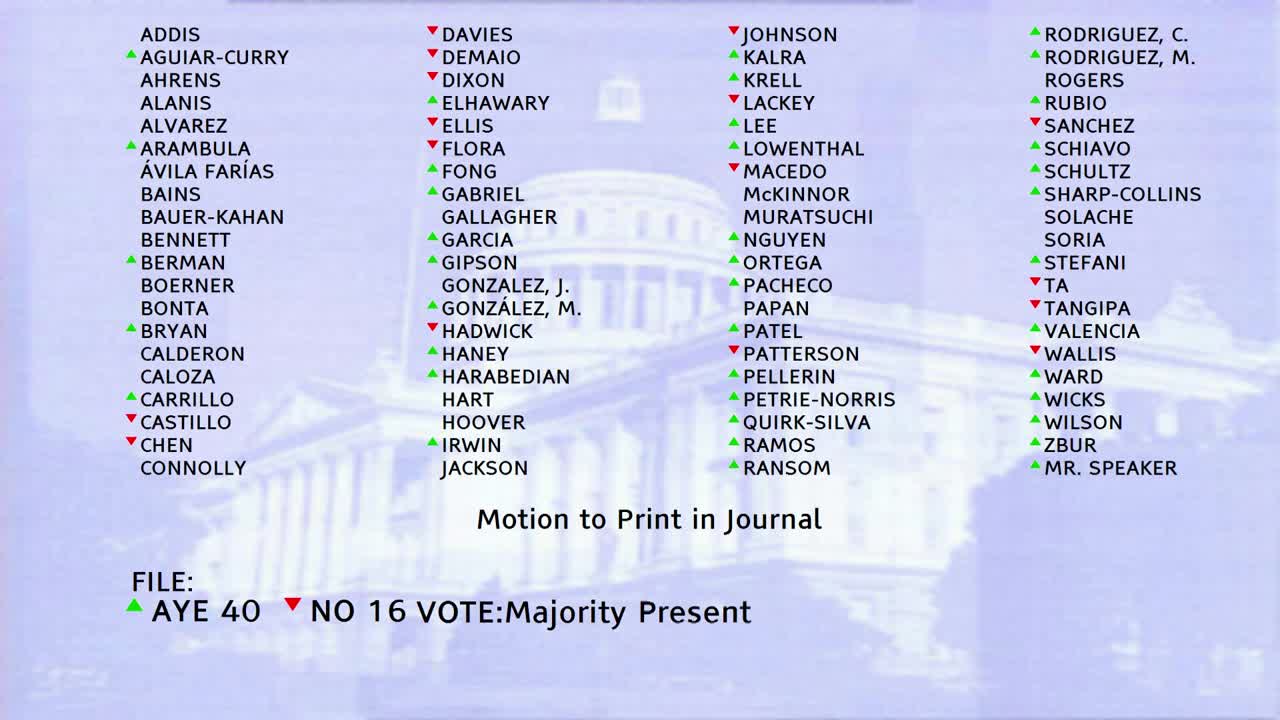 1H
Assembly Floor
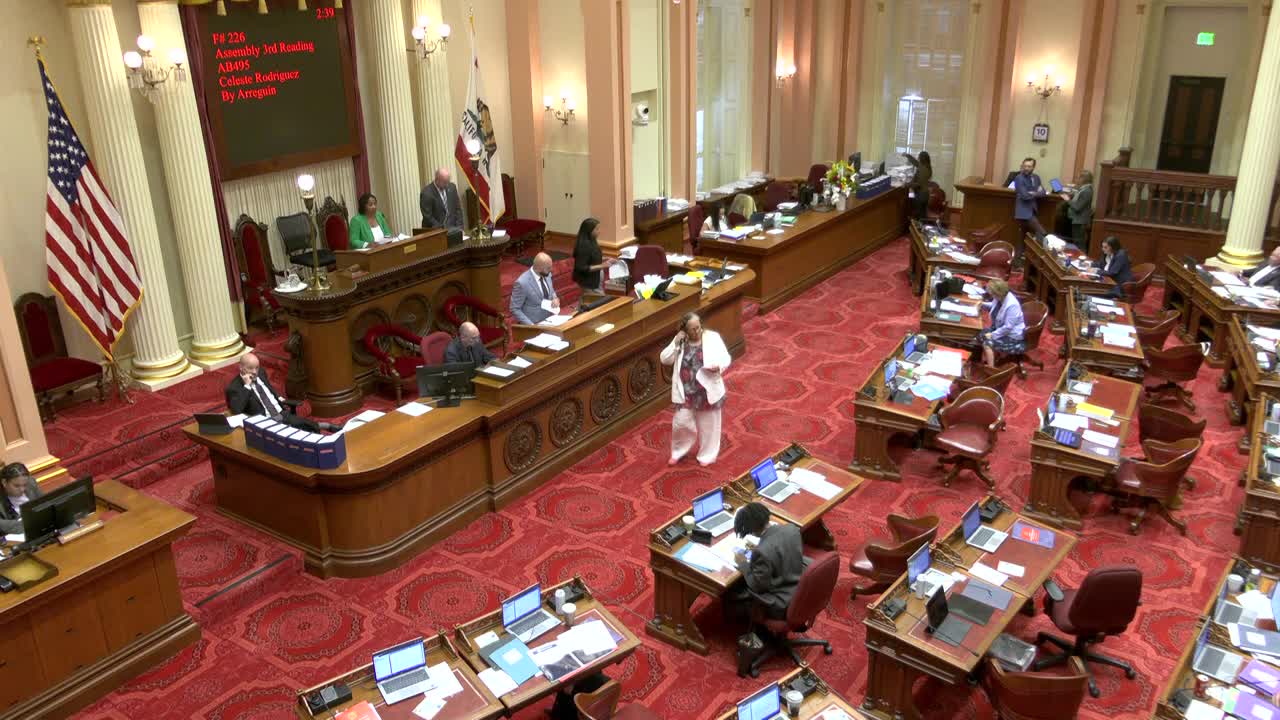 54MIN
Senate Floor
 29MIN
Senate Standing Committee on Appropriations
 17MIN
Senate Standing Committee on Human Services
 12MIN
Senate Standing Committee on Judiciary
 2MIN
Assembly Floor
 12MIN
Assembly Standing Committee on Human Services
 19MIN
Assembly Standing Committee on Judiciary
Bill Author

Bill Co-Author(s):