AB 524: Farmland Access and Conservation for Thriving Communities Act.
- Session Year: 2025-2026
- House: Assembly
- Latest Version Date: 2025-09-12
Current Status:
Failed
(2026-01-22: Consideration of Governor's veto stricken from file.)
Introduced
In Committee
Awaiting First Chamber Vote
Passed First Chamber
In Committee
Awaiting Second Chamber Vote
Passed Second Chamber
Enacted
Existing law, the California Farmland Conservancy Program Act, establishes within the Department of Conservation the California Farmland Conservancy Program. Existing law authorizes the program to offer financial assistance, including grants or contracts, for projects and activities on agricultural lands, as defined, that support agricultural conservation and sustainable land management.
This bill would require the department, in collaboration with the California Agricultural Land Equity Task Force, to establish the Farmland Access and Conservation for Thriving Communities Program in the department to provide financial and technical assistance to support agricultural land acquisition and protection. The bill would require the department, subject to specified requirements, to provide financial assistance under the program to qualified entities for the purpose of acquiring agricultural lands to transfer or provide long-term leases to qualified farmer participants, as specified. The bill would establish the Farmland Access Fund in the State Treasury and would make moneys in the fund available, upon appropriation by the Legislature, to the department for program expenditures. The bill would authorize the department to contract with one or more nonprofit organizations to administer the program. The bill would make the operation of the program contingent upon the Legislature making an appropriation for purposes of the program.
Existing law, the California Farmland Conservancy Program Act, establishes within the Department of Conservation the California Farmland Conservancy Program. Existing law authorizes the program to offer financial assistance, including grants or contracts, for projects and activities on agricultural lands, as defined, that support agricultural conservation and sustainable land management.
This bill would require the department, in collaboration with the California Agricultural Land Equity Task Force, to establish the Farmland Access and Conservation for Thriving Communities Program in the department to provide financial and technical assistance to support agricultural land acquisition and protection. The bill would require the department, subject to specified requirements, to provide financial assistance under the program to qualified entities for the purpose of acquiring agricultural lands to transfer or provide long-term leases to qualified farmer participants, as specified. The bill would establish the Farmland Access Fund in the State Treasury and would continuously appropriate make moneys in the fund available, upon appropriation by the Legislature, to the department for program expenditures. The bill would authorize the department to contract with one or more nonprofit organizations to administer the program. The bill would make the operation of the program contingent upon the Legislature making an appropriation for purposes of the program.
Existing law, the California Farmland Conservancy Program Act, establishes within the Department of Conservation the California Farmland Conservancy Program. Existing law authorizes the program to offer financial assistance, including grants or contracts, for projects and activities on agricultural lands, as defined, that support agricultural conservation and sustainable land management.
This bill would require the department, in collaboration with the California Agricultural Land Equity Task Force, to establish the Farmland Access and Conservation for Thriving Communities Program in the department to provide financial and technical assistance to support agricultural land acquisition and protection. The bill would require the department, subject to specified requirements, to provide financial assistance under the program to qualified entities for the purpose of acquiring agricultural lands to transfer or provide long-term leases to qualified farmer participants, as specified. The bill would establish the Farmland Access Fund in the State Treasury and would continuously appropriate moneys in the fund to the department for program expenditures. The bill would authorize the department to contract with one or more nonprofit organizations to administer the program.
Existing law establishes in the Natural Resources Agency the Department of Conservation and requires the department to be divided into specified segments, including the Division of Land Resource Protection.This bill would make nonsubstantive changes to the provision requiring the department to be divided into segments.Existing law establishes in the Natural Resources Agency the Department of Conservation and requires the department to be divided into specified segments, including the Division of Land Resource Protection.
This bill would make nonsubstantive changes to the provision requiring the department to be divided into segments.
(a)The Legislature finds and declares all of the following:
(1)Californias small-scale, beginning, and socially disadvantaged farmers and ranchers face impossible challenges when attempting to gain secure access to land.
(2)As the Governors Executive Order No. N-15-19 acknowledged, tribal communities have faced extensive violence, exploitation, dispossession, and the attempted destruction of tribal communities, while persisting in stewarding and protecting lands.
(3)With the combination of unattainable land prices, decreasing water availability, and the rapid rate of private investment firms buying up available land as investment properties, socially disadvantaged and beginning farmers and ranchers have increasingly limited access to farming.
(4)The Department of Conservation estimates that just under 50,000 acres of the states agricultural land are being lost annually. This conversion is leading to a significant loss to the states agricultural rural economy and undermines the states ability to store carbon and sustain resilient ecosystems.
(5)Meanwhile, land consolidation continues to be on the rise in the state, making land more and more inaccessible every year. According to the United States Department of Agricultures National Agricultural Statistics Service, in 2024, the average price of an acre of farmland in California was $13,400. This ranks California as having some of the most expensive farmland in the country.
(6)Socially disadvantaged and beginning farmers and ranchers face significant barriers to accessing land due to the lingering effects of institutionalized racism and limited access to farm loan programs. This problem has been documented in various publications, including the Department of Food and Agricultures report prepared pursuant to the Farmer Equity Act of 2017 (Article 6 (commencing with Section 510) of Chapter 3 of Part 1 of Division 1 of the Food and Agricultural Code).
(7)Without access to secure land, farmers have limited stability on the land they rent, which leads to an inability to invest in sustainable agriculture practices or apply for existing programs, such as the Department of Food and Agricultures Healthy Soils Program (Section 569 of the Food and Agricultural Code), among others.
(8)To date, there is no state-level program designed to provide financial or technical resources to directly support farmers with accessing secure land.
(9)To address these issues, new opportunities are needed for socially disadvantaged and beginning farmers and ranchers to access land, whether through ownership or long-term leases. Financial tools like direct grants, forgivable or zero-interest loans, and certain types of easements, such as cultural respect easements and preemptive purchase rights, can help make farmland and farmer and farmworker housing more accessible, protect it from sprawl development, and create new opportunities to support sustainable agriculture practices.
(b)It is the intent of the Legislature that this act help ensure vital opportunities for land access and tenure for socially disadvantaged farmers and ranchers and beginning farmers and ranchers.
SEC. 2.Division 10.1 (commencing with Section 10100) is added to the Public Resources Code, to read:10.1.Farmland Access and Conservation for Thriving Communities Act (FACT CA)10100.This division shall be known, and may be cited, as the Farmland Access and Conservation for Thriving Communities Act (FACT CA).
10102.For purposes of this division, all of the following definitions apply:
(a)Agricultural land means land used for the purpose of food or fiber or for the stewardship of cultural resources, or any combination of these things.
(b)Beginning, in reference to a farmer or rancher, means a natural person who has operated a farm or ranch for fewer than 10 years.
(c)Department means the Department of Conservation.
(d)Farmer cooperative means an entity that meets both of the following requirements:
(1)The entity is either a worker cooperative, as defined in Section 12253.5 of the Corporations Code, whose articles of incorporation identify it as such, or a nonprofit cooperative association organized and existing under Chapter 1 (commencing with Section 54001) of Division 20 of the Food and Agricultural Code.
(2)The entity is a qualified farmer participant.
(e)Financial assistance means a grant, forgivable loan, zero-interest loan, or any combination of these things.
(f)Program means the Farmland Access and Conservation for Thriving Communities Program established pursuant to this division.
(g)Qualified entity means any of the following entities:
(1)A nonprofit organization with tax-exempt status pursuant to Section 501(c)(3) of Title 26 of the United States Code.
(2)A public agency.
(3)A farmer cooperative.
(4)A tribal government.
(5)A tribal entity.
(6)An agricultural land trust, the primary purpose of which is the preservation, protection, or enhancement of land in its natural, scenic, historical, agricultural, forested, or open-space condition or use.
(7)A community land trust, as defined in Section 402.1 of the Revenue and Taxation Code.
(h)Qualified farmer participant means a farm enterprise, whose beneficial owners are beginning farmers or ranchers, or socially disadvantaged farmers or ranchers, that commits to using practices, methodologies, and techniques that improve soil health, biodiversity, conservation, and long-term sustainability in the production of agricultural crops to be sold in commerce or distributed.
(i)Socially disadvantaged farmer or rancher has the same meaning as provided in Section 512 of the Food and Agricultural Code.
10104.The department, in collaboration with the California Agricultural Land Equity Task Force, shall establish the Farmland Access and Conservation for Thriving Communities Program in the department to provide financial and technical assistance to support agricultural land acquisition and protection. The department shall provide financial assistance to qualified entities for the purpose of acquiring agricultural lands to transfer or provide long-term leases to qualified farmer participants.
10106.Activities eligible for funding through the program shall include, but are not limited to, all of the following:
(a)Acquisition planning and development, including, but not limited to, all of the following:
(1)Providing support to assist with land identification.
(2)Determining zoning and land-use restrictions and verifying water rights and access to irrigation.
(3)Inspecting soil quality, performing environmental reviews, and assessing impacts.
(4)Retaining legal services with regard to acquiring agricultural land by qualified entities and the subsequent sale or leasing of that land to qualified farmer participants in accordance with program requirements.
(5)Ensuring compliance for permitting.
(6)Supporting the transition of newly acquired tribal fee land into tribal trust land.
(7)Surveying cultural resources.
(8)Testing of water quality and assessing the condition of existing irrigation infrastructure, including well condition and output.
(b)Purchase of fee title to agricultural land.
(c)Purchase of easements, including, but not limited to, conservation easements, reserved interest conservation easements, or cultural access easements.
(d)Technical assistance, including, but not limited to, retaining the services of licensed attorneys, real estate brokers, business planning consultants, farmer cooperative management consultants, and property appraisers.
(e)Land improvements that will directly benefit the lands and the individuals managing the land and their commitment to conservation and sustainable land use. These land improvements shall include, but are not limited to, farmer and farmworker housing, on-farm infrastructure improvements, and spaces for cultural practice.
10108.In providing financial assistance pursuant to the program, the department shall do all of the following:
(a)Prioritize financial assistance for activities that benefit socially disadvantaged farmers or ranchers.
(b)Prioritize financial assistance for activities that primarily benefit farms or ranches that are 500 acres or fewer.
(c)Prioritize financial assistance for qualified entities that have clearly demonstrated experience working with socially disadvantaged farmers or ranchers.
(d)Prioritize technical and financial assistance to tribal governments and tribal entities to secure agricultural land or reclaim ancestral lands for sustainable food production and stewardship of cultural resources.
(e)Provide reasonable per diem and resources to members of the California Agricultural Land Equity Task Force to ensure proper oversight over the development of the program.
(f)Ensure that the proceeds of future resale of land continue to be used for purposes of the program.
(g)Ensure that no more than 15 percent of financial assistance awarded under the program is used for those expenses described in subdivision (e) of Section 10106.
(h)Allocate at least 33 percent of financial assistance awarded under the program during each grant cycle to tribal governments and tribal entities.
10110.(a)Except as provided in subdivision (b), a qualified entity that receives a grant for financial assistance under the program shall do either of the following within five years of acquiring agricultural land with the financial assistance provided under the program:
(1)Transfer the agricultural land to a qualified farmer participant in accordance with both of the following criteria:
(A)The agricultural land is subject to an easement that meets the requirements of Chapter 4 (commencing with Section 815) of Title 2 of Part 2 of Division 2 of the Civil Code and that is recorded before or simultaneously with its transfer to the qualified farmer participant.
(B)The agricultural land is subject to any additional appropriate resale restrictions required by the department, such as affordability provisions, preemptive purchase rights, or shared appreciation, consistent with the purposes of the program.
(2)Enter into a long-term lease of the agricultural land with a qualified farmer participant in accordance with all of the following criteria:
(A)The term of the lease is at least 10 years and no more than the time period described in Section 717 of the Civil Code.
(B)Notwithstanding subparagraph (A), the duration of the lease may be fewer than 10 years if the initial term combined with options to renew the lease on the same or similar terms as the initial term collectively amount to at least 20 years.
(C)The lease authorizes, during the term of the lease, the qualified farmer participant to terminate the lease with advanced notice.
(D)The lease provides the qualified farmer participant with the opportunity to purchase the land at or before the end of the lease term through a purchase option or a right of first refusal in the lease agreement.
(b)If a farmer cooperative receives a grant pursuant to the program, the farmer cooperative may maintain ownership of the agricultural land if it records a conservation easement against the agricultural land that meets the requirements of Chapter 4 (commencing with Section 815) of Title 2 of Part 2 of Division 2 of the Civil Code and it records any additional appropriate resale restrictions required by the department, such as affordability provisions, preemptive purchase rights, or shared appreciation, consistent with the purposes of the program.
10112.(a)The Farmland Access Fund is hereby established in the State Treasury. Moneys in the fund shall be available, upon appropriation by the Legislature, to the department for program expenditures in accordance with this division.
(b)The following moneys shall be deposited into the fund:
(1)Any moneys that may be appropriated by the Legislature pursuant to Section 93550 for purposes of the program.
(2)Any gifts, grants, or endowments from private sources or the federal government received by the department for purposes of the program.
(3)Any moneys collected by the department as proceeds from repayments of loans issued pursuant to this section from moneys described in paragraph (1) or (2).
10114.The department may contract with one or more nonprofit organizations to administer the program if the department does both of the following:
(a)The department determines that each nonprofit organization that it selects is a qualified entity that has demonstrated substantial experience serving socially disadvantaged farmers or ranchers.
(b)The department consults with the California Agricultural Land Equity Task Force to select each nonprofit organization to administer the program.
10116.This division shall become operative upon the Legislature making an appropriation specifically for purposes of this division.
(a)The Legislature finds and declares all of the following:
(1)Californias small-scale, beginning, and socially disadvantaged farmers and ranchers face impossible challenges when attempting to gain secure access to land.
(2)As the Governors Executive Order No. N-15-19 acknowledged, tribal communities have faced extensive violence, exploitation, dispossession, and the attempted destruction of tribal communities, while persisting in stewarding and protecting lands.
(3)With the combination of unattainable land prices, decreasing water availability, and the rapid rate of private investment firms buying up available land as investment properties, socially disadvantaged and beginning farmers and ranchers have increasingly limited access to farming.
(4)The Department of Conservation estimates that just under 50,000 acres of the states agricultural land are being lost annually. This conversion is leading to a significant loss to the states agricultural rural economy and undermines the states ability to store carbon and sustain resilient ecosystems.
(5)Meanwhile, land consolidation continues to be on the rise in the state, making land more and more inaccessible every year. According to the United States Department of Agricultures National Agricultural Statistics Service, in 2024, the average price of an acre of farmland in California was $13,400. This ranks California as having some of the most expensive farmland in the country.
(6)Socially disadvantaged and beginning farmers and ranchers face significant barriers to accessing land due to the lingering effects of institutionalized racism and limited access to farm loan programs. This problem has been documented in various publications, including the Department of Food and Agricultures report prepared pursuant to the Farmer Equity Act of 2017 (Article 6 (commencing with Section 510) of Chapter 3 of Part 1 of Division 1 of the Food and Agricultural Code).
(7)Without access to secure land, farmers have limited stability on the land they rent, which leads to an inability to invest in sustainable agriculture practices or apply for existing programs, such as the Department of Food and Agricultures Healthy Soils Program (Section 569 of the Food and Agricultural Code), among others.
(8)To date, there is no state-level program designed to provide financial or technical resources to directly support farmers with accessing secure land.
(9)To address these issues, new opportunities are needed for socially disadvantaged and beginning farmers and ranchers to access land, whether through ownership or long-term leases. Financial tools like direct grants, forgivable or zero-interest loans, and certain types of easements, such as cultural respect easements and preemptive purchase rights, can help make farmland and farmer and farmworker housing more accessible, protect it from sprawl development, and create new opportunities to support sustainable agriculture practices.
(b)It is the intent of the Legislature that this act help ensure vital opportunities for land access and tenure for socially disadvantaged farmers and ranchers and beginning farmers and ranchers.
SEC. 2.Division 10.1 (commencing with Section 10100) is added to the Public Resources Code, to read:10.1.Farmland Access and Conservation for Thriving Communities Act (FACT CA)10100.This division shall be known, and may be cited, as the Farmland Access and Conservation for Thriving Communities Act (FACT CA).
10102.For purposes of this division, all of the following definitions apply:
(a)Agricultural land means land used for the purpose of food or fiber or for the stewardship of cultural resources, or any combination of these things.
(b)Beginning, in reference to a farmer or rancher, means a natural person who has operated a farm or ranch for fewer than 10 years.
(c)Department means the Department of Conservation.
(d)Farmer cooperative means an entity that meets both of the following requirements:
(1)The entity is either a worker cooperative, as defined in Section 12253.5 of the Corporation Corporations Code, whose articles of incorporation identify it as such, or a nonprofit cooperative association organized and existing under Chapter 1 (commencing with Section 54001) of Division 20 of the Food and Agricultural Code.
(2)The entity is a qualified farmer participant.
(e)Financial assistance means a grant, forgivable loan, zero-interest loan, or any combination of these things.
(f)Program means the Farmland Access and Conservation for Thriving Communities Program established pursuant to this division.
(g)Qualified entity means any of the following entities:
(1)A nonprofit organization with tax-exempt status pursuant to Section 501(c)(3) of Title 26 of the United States Code.
(2)A public agency.
(3)A farmer cooperative.
(4)A tribal government.
(5)A tribal entity.
(6)An agricultural land trust, the primary purpose of which is the preservation, protection, or enhancement of land in its natural, scenic, historical, agricultural, forested, or open-space condition or use.
(7)A community land trust, as defined in Section 402.1 of the Revenue and Taxation Code.
(h)Qualified farmer participant means a farm enterprise, whose beneficial owners are beginning farmers or ranchers, or socially disadvantaged farmers or ranchers, that commits to using practices, methodologies, and techniques that improve soil health, biodiversity, conservation, and long-term sustainability in the production of agricultural crops to be sold in commerce or distributed.
(i)Socially disadvantaged farmer or rancher has the same meaning as provided in Section 512 of the Food and Agricultural Code.
10104.The department, in collaboration with the California Agricultural Land Equity Task Force, shall establish the Farmland Access and Conservation for Thriving Communities Program in the department to provide financial and technical assistance to support agricultural land acquisition and protection. The department shall provide financial assistance to qualified entities for the purpose of acquiring agricultural lands to transfer or provide long-term leases to qualified farmer participants.
10106.Activities eligible for funding through the program shall include, but are not limited to, all of the following:
(a)Acquisition planning and development, including, but not limited to, all of the following:
(1)Providing support to assist with land identification.
(2)Determining zoning and land-use restrictions and verifying water rights and access to irrigation.
(3)Inspecting soil quality, performing environmental reviews, and assessing impacts.
(4)Retaining legal services with regard to acquiring agricultural land by qualified entities and the subsequent sale or leasing of that land to qualified farmer participants in accordance with program requirements.
(5)Ensuring compliance for permitting.
(6)Supporting the transition of newly acquired tribal fee land into tribal trust land.
(7)Surveying cultural resources.
(8)Testing of water quality and assessing the condition of existing irrigation infrastructure, including well condition and output.
(b)Purchase of fee title to agricultural land.
(c)Purchase of easements, including, but not limited to, conservation easements, reserved interest conservation easements, or cultural access easements.
(d)Technical assistance, including, but not limited to, retaining the services of licensed attorneys, real estate brokers, business planning consultants, farmer cooperative management consultants, and property appraisers.
(e)Land improvements that will directly benefit the lands and the individuals managing the land and their commitment to conservation and sustainable land use. These land improvements shall include, but are not limited to, farmer and farmworker housing, on-farm infrastructure improvements, and spaces for cultural practice.
10108.In providing financial assistance pursuant to the program, the department shall do all of the following:
(a)Prioritize financial assistance for activities that benefit socially disadvantaged farmers or ranchers.
(b)Prioritize financial assistance for activities that primarily benefit farms or ranches that are 500 acres or fewer.
(c)Prioritize financial assistance for qualified entities that have clearly demonstrated experience working with socially disadvantaged farmers or ranchers.
(d)Prioritize technical and financial assistance to tribal governments and tribal entities to secure agricultural land or reclaim ancestral lands for sustainable food production and stewardship of cultural resources.
(e)Provide reasonable per diem and resources to members of the California Agricultural Land Equity Task Force to ensure proper oversight over the development of the program.
(f)Ensure that the proceeds of future resale of land continue to be used for purposes of the program.
(g)Ensure that no more than 15 percent of financial assistance awarded under the program is used for those expenses described in subdivision (e) of Section 10106.
(h)Allocate at least 33 percent of financial assistance awarded under the program during each grant cycle to tribal governments and tribal entities.
10110.(a)Except as provided in subdivision (b), a qualified entity that receives a grant for financial assistance under the program shall do either of the following within five years of acquiring agricultural land with the financial assistance provided under the program:
(1)Transfer the agricultural land to a qualified farmer participant in accordance with both of the following criteria:
(A)The agricultural land is subject to an easement that meets the requirements of Chapter 4 (commencing with Section 815) of Title 2 of Part 2 of Division 2 of the Civil Code and that is recorded before or simultaneously with its transfer to the qualified farmer participant.
(B)The agricultural land is subject to any additional appropriate resale restrictions required by the department, such as affordability provisions, preemptive purchase rights, or shared appreciation, consistent with the purposes of the program.
(2)Enter into a long-term lease of the agricultural land with a qualified farmer participant in accordance with all of the following criteria:
(A)The term of the lease is at least 10 years and no more than the time period described in Section 717 of the Civil Code.
(B)Notwithstanding subparagraph (A), the duration of the lease may be fewer than 10 years if the initial term combined with options to renew the lease on the same or similar terms as the initial term collectively amount to at least 20 years.
(C)The lease authorizes, during the term of the lease, the qualified farmer participant to terminate the lease with advanced notice.
(D)The lease provides the qualified farmer participant with the opportunity to purchase the land at or before the end of the lease term through a purchase option or a right of first refusal in the lease agreement.
(b)If a farmer cooperative receives a grant pursuant to the program, the farmer cooperative may maintain ownership of the agricultural land if it records a conservation easement against the agricultural land that meets the requirements of Chapter 4 (commencing with Section 815) of Title 2 of Part 2 of Division 2 of the Civil Code and it records any additional appropriate resale restrictions required by the department, such as affordability provisions, preemptive purchase rights, or shared appreciation, consistent with the purposes of the program.
10112.(a)The Farmland Access Fund is hereby established in the State Treasury. Notwithstanding Section 13340 of the Government Code, the Farmland Access Fund is hereby continuously appropriated without regard to fiscal years Moneys in the fund shall be available, upon appropriation by the Legislature, to the department for program expenditures in accordance with this division.
(b)The following moneys shall be deposited into the fund:
(1)Any moneys that may be appropriated by the Legislature pursuant to Section 93550 for purposes of the program.
(2)Any gifts, grants, or endowments from private sources or the federal government received by the department for purposes of the program.
(3)Any moneys collected by the department as proceeds from repayments of loans issued pursuant to this section from moneys described in paragraph (1) or (2).
10114.The department may contract with one or more nonprofit organizations to administer the program if the department does both of the following:
(a)The department determines that each nonprofit organization that it selects is a qualified entity that has demonstrated substantial experience serving socially disadvantaged farmers or ranchers.
(b)The department consults with the California Agricultural Land Equity Task Force to select each nonprofit organization to administer the program.
10116.This division shall become operative upon the Legislature making an appropriation specifically for purposes of this division.
(a)The Legislature finds and declares all of the following:
(1)Californias small-scale, beginning, and socially disadvantaged farmers and ranchers face impossible challenges when attempting to gain secure access to land.
(2)As the Governors Executive Order No. N-15-19 acknowledged, tribal communities have faced extensive violence, exploitation, dispossession, and the attempted destruction of tribal communities, while persisting in stewarding and protecting lands.
(3)With the combination of unattainable land prices, decreasing water availability, and the rapid rate of private investment firms buying up available land as investment properties, socially disadvantaged and beginning farmers and ranchers have increasingly limited access to farming.
(4)The Department of Conservation estimates that just under 50,000 acres of the states agricultural land are being lost annually. This conversion is leading to a significant loss to the states agricultural rural economy and undermines the states ability to store carbon and sustain resilient ecosystems.
(5)Meanwhile, land consolidation continues to be on the rise in the state, making land more and more inaccessible every year. According to the United States Department of Agricultures National Agricultural Statistics Service, in 2024, the average price of an acre of farmland in California was $13,400. This ranks California as having some of the most expensive farmland in the country.
(6)Socially disadvantaged and beginning farmers and ranchers face significant barriers to accessing land due to the lingering effects of institutionalized racism and limited access to farm loan programs. This problem has been documented in various publications, including the Department of Food and Agricultures report prepared pursuant to the Farmer Equity Act of 2017 (Article 6 (commencing with Section 510) of Chapter 3 of Part 1 of Division 1 of the Food and Agricultural Code).
(7)Without access to secure land, farmers have limited stability on the land they rent, which leads to an inability to invest in sustainable agriculture practices or apply for existing programs, such as the Department of Food and Agricultures Healthy Soils Program (Section 569 of the Food and Agricultural Code), among others.
(8)To date, there is no state-level program designed to provide financial or technical resources to directly support farmers with accessing secure land.
(9)To address these issues, new opportunities are needed for socially disadvantaged and beginning farmers and ranchers to access land, whether through ownership or long-term leases. Financial tools like direct grants, forgivable or zero-interest loans, and certain types of easements, such as cultural respect easements and preemptive purchase rights, can help make farmland and farmer and farmworker housing more accessible, protect it from sprawl development, and create new opportunities to support sustainable agriculture practices.
(b)It is the intent of the Legislature that this act help ensure vital opportunities for land access and tenure for socially disadvantaged farmers and ranchers and beginning farmers and ranchers.
SEC. 2.Division 10.1 (commencing with Section 10100) is added to the Public Resources Code, to read:10.1.Farmland Access and Conservation for Thriving Communities Act (FACT CA)10100.This division shall be known, and may be cited, as the Farmland Access and Conservation for Thriving Communities Act (FACT CA).
10102.For purposes of this division, all of the following definitions apply:
(a)Agricultural land means land used for the purpose of food or fiber or for the stewardship of cultural resources, or any combination of these things.
(b)Beginning, in reference to a farmer or rancher, means a natural person who has operated a farm or ranch for fewer than 10 years.
(c)Department means the Department of Conservation.
(d)Farmer cooperative means an entity that meets both of the following requirements:
(1)The entity is either a worker cooperative, as defined in Section 12253.5 of the Corporation Code, and whose articles of incorporation identify it as such, or a nonprofit cooperative association organized and existing under Chapter 1 (commencing with Section 54001) of Division 20 of the Food and Agricultural Code.
(2)The entity is a qualified farmer participant.
(e)Financial assistance means a grant, forgivable loan, zero-interest loan, or any combination of these things.
(f)Program means the Farmland Access and Conservation for Thriving Communities Program established pursuant to this division.
(g)Qualified entity means any of the following entities:
(1)A nonprofit organization with tax-exempt status pursuant to Section 501(c)(3) of Title 26 of the United States Code.
(2)A public agency.
(3)A farmer cooperative.
(4)A tribal government.
(5)A tribal entity.
(6)An agricultural land trust, the primary purpose of which is the preservation, protection, or enhancement of land in its natural, scenic, historical, agricultural, forested, or open-space condition or use.
(7)A community land trust, as defined in Section 402.1 of the Revenue and Taxation Code.
(h)Qualified farmer participant means a farm enterprise enterprise, whose beneficial owners are beginning farmers or ranchers, or socially disadvantaged farmers or ranchers, and that commits to using practices, methodologies, and techniques that improve soil health, biodiversity, conservation, and long-term sustainability in the production of agricultural crops to be sold in commerce or distributed.
(i)Socially disadvantaged farmer or rancher has the same meaning as provided in Section 512 of the Food and Agricultural Code.
10104.The department, in collaboration with the California Agricultural Land Equity Task Force, shall establish the Farmland Access and Conservation for Thriving Communities Program in the department to provide financial and technical assistance to support agricultural land acquisition and protection. The department shall provide financial assistance to qualified entities for the purpose of acquiring agricultural lands to transfer or provide long-term leases to qualified farmer participants.
10106.Activities eligible for funding through the program shall include, but are not limited to, all of the following:
(a)Acquisition planning and development, including, but not limited to, all of the following:
(1)Providing support to assist with land identification.
(2)Determining zoning and land-use restrictions and verifying water rights and access to irrigation.
(3)Inspecting soil quality, performing environmental reviews, and assessing impacts.
(4)Retaining legal services with regard to acquiring agricultural land by qualified entities and the subsequent sale or leasing of that land to qualified farmer participants in accordance with program requirements.
(5)Ensuring compliance for permitting.
(6)Supporting the transition of newly acquired tribal fee land into tribal trust land.
(7)Surveying cultural resources.
(8)Testing of water quality and assessing the condition of existing irrigation infrastructure, including well condition and output.
(b)Purchase of fee title to agricultural land.
(c)Purchase of easements, including, but not limited to, conservation easements, reserved interest conservation easements, or cultural access easements.
(d)Technical assistance, including, but not limited to, retaining the services of licensed attorneys, real estate brokers, business planning consultants, farmer cooperative management consultants, and property appraisers.
(e)Land improvements that will directly benefit the lands and the individuals managing the land and their commitment to conservation and sustainable land use. These land improvements shall include, but are not limited to, farmer and farmworker housing, on-farm infrastructure improvements, and spaces for cultural practice.
10108.In providing financial assistance pursuant to the program, the department shall do all of the following:
(a)Prioritize financial assistance for activities that benefit socially disadvantaged farmers or ranchers.
(b)Prioritize financial assistance for activities that primarily benefit farms or ranches that are 500 acres or fewer.
(c)Prioritize financial assistance to for qualified entities who that have clearly demonstrated experience working with socially disadvantaged farmers or ranchers.
(d)Prioritize technical and financial assistance to tribal governments and tribal entities to secure agricultural land or reclaim ancestral lands for sustainable food production and stewardship of cultural resources.
(e)Provide reasonable per diem and resources to members of the California Agricultural Land Equity Task Force to ensure proper oversight over the development of the program.
(f)Ensure that the proceeds of future resale of land continue to be used for purposes of the program.
(g)Ensure that no more than 15 percent of financial assistance awarded under the program is used for those expenses described in subdivision (e) of Section 10106.
(h)Allocate at least 33 percent of financial assistance awarded under the program during each grant cycle to tribal governments and tribal entities.
10110.(a)Except as provided in subdivision (b), a qualified entity that receives a grant for financial assistance under the program shall do either of the following within five years of acquiring agricultural land with the financial assistance provided under the program:
(1)Transfer the agricultural land to a qualified farmer participant in accordance with both of the following criteria:
(A)The agricultural land is subject to an easement that meets the requirements of Chapter 4 (commencing with Section 815) of Title 2 of Part 2 of Division 2 of the Civil Code and that is recorded before or simultaneously with its transfer to the qualified farmer participant.
(B)The agricultural land is subject to any additional appropriate resale restrictions required by the department, such as affordability provisions, preemptive purchase rights, or shared appreciation appreciation, consistent with the purposes of the program.
(2)Enter into a long-term lease of the agricultural land with a qualified farmer participant in accordance with all of the following criteria:
(A)The term of the lease is at least 10 years and no more than the time period described in Section 717 of the Civil Code.
(B)Notwithstanding subparagraph (A), the duration of the lease may be fewer than 10 years if the initial term combined with options to renew the lease on the same or similar terms as the initial term collectively amount to at least 20 years.
(C)The lease authorizes, during the term of the lease, the qualified farmer participant to terminate the lease with advanced notice.
(D)The lease provides the qualified farmer participant with the opportunity to purchase the land at or before the end of the lease term through a purchase option or a lease-to-own provision right of first refusal in the lease agreement.
(b)If a farmer cooperative receives a grant pursuant to the program, the farmer cooperative may maintain ownership of the agricultural land if it records a conservation easement against the agricultural land that meets the requirements of Chapter 4 (commencing with Section 815) of Title 2 of Part 2 of Division 2 of the Civil Code and it records any additional appropriate resale restrictions required by the department, such as affordability provisions, preemptive purchase rights, or shared appreciation, consistent with the purposes of the program.
10112.(a)The Farmland Access Fund is hereby established in the State Treasury. Notwithstanding Section 13340 of the Government Code, the Farmland Access Fund is hereby continuously appropriated without regard to fiscal years to the department for program expenditures in accordance with this division.
(b)The following moneys shall be deposited into the fund:
(1)Any moneys that may be appropriated by the Legislature pursuant to Section 93550 for purposes of the program.
(2)Any gifts, grants, or endowments from private sources or the federal government received by the department for purposes of the program.
(3)Any moneys collected by the department as proceeds from repayments of loans issued pursuant to this section from moneys described in paragraph (1) or (2).
10114.The department may contract with one or more nonprofit organizations to administer the program if the department does both of the following:
(a)The department determines that each nonprofit organization that it selects is a qualified entity that has demonstrated substantial experience serving socially disadvantaged farmers or ranchers.
(b)The department consults with the California Agricultural Land Equity Task Force to select each nonprofit organization to administer the program.
(a)The Legislature finds and declares all of the following:
(1)Californias small-scale, beginning, and socially disadvantaged farmers and ranchers face impossible challenges when attempting to gain secure access to land.
(2)As the Governors Executive Order No. N-15-19 acknowledged, tribal communities have faced extensive violence, exploitation, dispossession, and the attempted destruction of tribal communities, while persisting in stewarding and protecting lands.
(3)With the combination of unattainable land prices, decreasing water availability, and the rapid rate of private investment firms buying up available land as investment properties, socially disadvantaged and beginning farmers and ranchers have increasingly limited access to farming.
(4)The Department of Conservation estimates that just under 50,000 acres of the states agricultural land are being lost annually. This conversion is leading to a significant loss to the states agricultural rural economy and undermines the states ability to store carbon and sustain resilient ecosystems.
(5)Meanwhile, land consolidation continues to be on the rise in the state, making land more and more inaccessible every year. According to the United States Department of Agricultures National Agricultural Statistics Service, in 2024, the average price of an acre of farmland in California was $13,400. This ranks California as having some of the most expensive farmland in the country.
(6)Socially disadvantaged and beginning farmers and ranchers face significant barriers to accessing land due to the lingering effects of institutionalized racism and limited access to farm loan programs. This problem has been documented in various publications, including the Department of Food and Agricultures report prepared pursuant to the Farmer Equity Act of 2017 (Article 6 (commencing with Section 510) of Chapter 3 of Part 1 of Division 1 of the Food and Agricultural Code).
(7)Without access to secure land, farmers have limited stability on the land they rent, which leads to an inability to invest in sustainable agriculture practices or apply for existing programs, such as the Department of Food and Agricultures Healthy Soils Program (Section 569 of the Food and Agricultural Code), among others.
(8)To date, there is no state-level program designed to provide financial or technical resources to directly support farmers with accessing secure land.
(9)To address these issues, new opportunities are needed for socially disadvantaged and beginning farmers and ranchers to access land, whether through ownership or long-term leases. Financial tools like direct grants, forgivable or zero-interest loans, and certain types of easements, such as cultural respect easements and preemptive purchase rights, can help make farmland and farmer and farmworker housing more accessible, protect it from sprawl development, and create new opportunities to support sustainable agriculture practices.
(b)It is the intent of the Legislature that this act help ensure vital opportunities for land access and tenure for socially disadvantaged farmers and ranchers and beginning farmers and ranchers.
SEC. 2.Division 10.1 (commencing with Section 10100) is added to the Public Resources Code, to read:10.1.Farmland Access and Conservation for Thriving Communities Act (FACT CA)10100.This division shall be known, and may be cited, as the Farmland Access and Conservation for Thriving Communities Act (FACT CA).
10102.For purposes of this division, all of the following definitions apply:
(a)Agricultural land means land used for the purpose of food or fiber or for the stewardship of cultural resources, or any combination of these things.
(b)Beginning, in reference to a farmer or rancher, means a natural person who has operated a farm or ranch for fewer than 10 years.
(c)Department means the Department of Conservation.
(d)Farmer cooperative means an entity that meets both of the following requirements:
(1)The entity is either a worker cooperative, as defined in Section 12253.5 of the Corporation Code, and whose articles of incorporation identify it as such, or a nonprofit cooperative association organized and existing under Chapter 1 (commencing with Section 54001) of Division 20 of the Food and Agricultural Code.
(2)The entity is a qualified farmer participant.
(e)Financial assistance means a grant, forgivable loan, zero-interest loan, or any combination of these things.
(f)Program means the Farmland Access and Conservation for Thriving Communities Program established pursuant to this division.
(g)Qualified entity means any of the following entities:
(1)A nonprofit organization with tax-exempt status pursuant to Section 501(c)(3) of Title 26 of the United States Code.
(2)A public agency.
(3)A farmer cooperative.
(4)A tribal government.
(5)A tribal entity.
(6)An agricultural land trust, the primary purpose of which is the preservation, protection, or enhancement of land in its natural, scenic, historical, agricultural, forested, or open-space condition or use.
(7)A community land trust, as defined in Section 402.1 of the Revenue and Taxation Code.
(h)Qualified farmer participant means a farm enterprise whose beneficial owners are beginning farmers or ranchers, or socially disadvantaged farmers or ranchers, and that commits to using practices, methodologies, and techniques that improve soil health, biodiversity, conservation, and long-term sustainability in the production of agricultural crops to be sold in commerce or distributed.
(i)Socially disadvantaged farmer or rancher has the same meaning as provided in Section 512 of the Food and Agricultural Code.
10104.The department, in collaboration with the California Agricultural Land Equity Task Force, shall establish the Farmland Access and Conservation for Thriving Communities Program in the department to provide financial and technical assistance to support agricultural land acquisition and protection. The department shall provide financial assistance to qualified entities for the purpose of acquiring agricultural lands to transfer or provide long-term leases to qualified farmer participants.
10106.Activities eligible for funding through the program shall include, but are not limited to, all of the following:
(a)Acquisition planning and development, including, but not limited to, all of the following:
(1)Providing support to assist with land identification.
(2)Determining zoning and land-use restrictions and verifying water rights and access to irrigation.
(3)Inspecting soil quality, performing environmental reviews, and assessing impacts.
(4)Retaining legal services with regard to acquiring agricultural land by qualified entities and the subsequent sale or leasing of that land to qualified farmer participants in accordance with program requirements.
(5)Ensuring compliance for permitting.
(6)Supporting the transition of newly acquired tribal fee land into tribal trust land.
(7)Surveying cultural resources.
(8)Testing of water quality and assessing the condition of existing irrigation infrastructure, including well condition and output.
(b)Purchase of fee title to agricultural land.
(c)Purchase of easements, including, but not limited to, conservation easements, reserved interest conservation easements, or cultural access easements.
(d)Technical assistance, including, but not limited to, retaining services of licensed attorneys, real estate brokers, business planning consultants, farmer cooperative management consultants, and property appraisers.
(e)Land improvements that will directly benefit the lands and the individuals managing the land and their commitment to conservation and sustainable land use. These land improvements shall include, but are not limited to, farmer and farmworker housing, on-farm infrastructure improvements, and spaces for cultural practice.
10108.In providing financial assistance pursuant to the program, the department shall do all of the following:
(a)Prioritize financial assistance for activities that benefit socially disadvantaged farmers or ranchers.
(b)Prioritize financial assistance for activities that primarily benefit farms or ranches that are 500 acres or fewer.
(c)Prioritize financial assistance to qualified entities who have clearly demonstrated experience working with socially disadvantaged farmers or ranchers.
(d)Prioritize technical and financial assistance to tribal governments and tribal entities to secure agricultural land or reclaim ancestral lands for sustainable food production and stewardship of cultural resources.
(e)Provide reasonable per diem and resources to members of the California Agricultural Land Equity Task Force to ensure proper oversight over the development of the program.
(f)Ensure that the proceeds of future resale of land continue to be used for purposes of the program.
(g)Ensure that no more than 15 percent of financial assistance awarded under the program is used for those expenses described in subdivision (e) of Section 10106.
(h)Allocate at least 33 percent of financial assistance awarded under the program during each grant cycle to tribal governments and tribal entities.
10110.(a)Except as provided in subdivision (b), a qualified entity that receives a grant for financial assistance under the program shall do either of the following within five years of acquiring agricultural land with the financial assistance provided under the program:
(1)Transfer the agricultural land to a qualified farmer participant in accordance with both of the following criteria:
(A)The agricultural land is subject to an easement that meets the requirements of Chapter 4 (commencing with Section 815) of Title 2 of Part 2 of Division 2 of the Civil Code and that is recorded before or simultaneously with its transfer to the qualified farmer participant.
(B)The agricultural land is subject to any additional appropriate resale restrictions required by the department, such as affordability provisions, preemptive purchase rights, or shared appreciation consistent with the purposes of the program.
(2)Enter into a long-term lease of the agricultural land with a qualified farmer participant in accordance with all of the following criteria:
(A)The term of the lease is at least 10 years and no more than the time period described in Section 717 of the Civil Code.
(B)Notwithstanding subparagraph (A), the duration of the lease may be fewer than 10 years if the initial term combined with options to renew the lease on the same or similar terms as the initial term collectively amount to at least 20 years.
(C)The lease authorizes, during the term of the lease, the qualified farmer participant to terminate the lease with advanced notice.
(D)After the initial lease term, the lease authorizes the qualified farmer participant and qualified entity to pursue a lease-to-own agreement where the qualified farmer participant would be eligible to purchase the fee title from the qualified entity.(D)The lease provides the qualified farmer participant with the opportunity to purchase the land at or before the end of the lease term through a purchase option or a lease-to-own provision in the lease agreement.
(b)If a farmer cooperative receives a grant pursuant to the program, the farmer cooperative may maintain ownership of the agricultural land if it records a conservation easement against the agricultural land that meets the requirements of Chapter 4 (commencing with Section 815) of Title 2 of Part 2 of Division 2 of the Civil Code and it records any additional appropriate resale restrictions required by the department, such as affordability provisions, preemptive purchase rights, or shared appreciation, consistent with the purposes of the program.
10112.(a)The Farmland Access Fund is hereby established in the State Treasury. Notwithstanding Section 13340 of the Government Code, the Farmland Access Fund is hereby continuously appropriated without regard to fiscal years to the department for program expenditures in accordance with this division.
(b)The following moneys shall be deposited into the fund:
(1)Any moneys that may be appropriated by the Legislature pursuant to Section 93550 for purposes of the program.
(2)Any gifts, grants, or endowments from private sources or the federal government received by the department for purposes of the program.
(3)Any moneys collected by the department as proceeds from repayments of loans issued pursuant to this section from moneys described in paragraph (1) or (2).
10114.The department may contract with one or more nonprofit organizations to administer the program if the department does both of the following:
(a)The department determines that each nonprofit organization that it selects is a qualified entity that has demonstrated substantial experience serving socially disadvantaged farmers or ranchers.
(b)The department consults with the California Agricultural Land Equity Task Force to select each nonprofit organization to administer the program.
REVISIONS: HeadingLine 2.(a)The Legislature finds and declares all of the following:
(1)Californias small-scale, beginning, and socially disadvantaged farmers and ranchers face impossible challenges when attempting to gain secure access to land.
(2)As the Governors Executive Order No. N-15-19 acknowledged, tribal communities have faced extensive violence, exploitation, dispossession, and the attempted destruction of tribal communities, while persisting in stewarding and protecting lands.
(3)With the combination of unattainable land prices, decreasing water availability, and the rapid rate of private investment firms buying up available land as investment properties, socially disadvantaged and beginning farmers and ranchers have increasingly limited access to farming.
(4)The Department of Conservation estimates that just under 50,000 acres of the states agricultural land are being lost annually. This conversion is leading to a significant loss to the states agricultural rural economy and undermines the states ability to store carbon and sustain resilient ecosystems.
(5)Meanwhile, land consolidation continues to be on the rise in the state, making land more and more inaccessible every year. According to the United States Department of Agricultures National Agricultural Statistics Service, in 2024, the average price of an acre of farmland in California was $13,400. This ranks California as having some of the most expensive farmland in the country.
(6)Socially disadvantaged and beginning farmers and ranchers face significant barriers to accessing land due to the lingering effects of institutionalized racism and limited access to farm loan programs. This problem has been documented in various publications, including the Department of Food and Agricultures report prepared pursuant to the Farmer Equity Act of 2017 (Article 6 (commencing with Section 510) of Chapter 3 of Part 1 of Division 1 of the Food and Agricultural Code).
(7)Without access to secure land, farmers have limited stability on the land they rent, which leads to an inability to invest in sustainable agriculture practices or apply for existing programs, such as the Department of Food and Agricultures Healthy Soils Program (Section 569 of the Food and Agricultural Code), among others.
(8)To date, there is no state-level program designed to provide financial or technical resources to directly support farmers with accessing secure land.
(9)To address these issues, new opportunities are needed for socially disadvantaged and beginning farmers and ranchers to access land, whether through ownership or long-term leases. Financial tools like direct grants, forgivable or zero-interest loans, and certain types of easements, such as cultural respect easements and preemptive purchase rights, can help make farmland and farmer and farmworker housing more accessible, protect it from sprawl development, and create new opportunities to support sustainable agriculture practices.
(b)It is the intent of the Legislature that this act help ensure vital opportunities for land access and tenure for socially disadvantaged farmers and ranchers and beginning farmers and ranchers.
SEC. 2.Division 10.1 (commencing with Section 10100) is added to the Public Resources Code, to read:10.1.Farmland Access and Conservation for Thriving Communities Act (FACT CA)10100.This division shall be known, and may be cited, as the Farmland Access and Conservation for Thriving Communities Act (FACT CA).
10102.For purposes of this division, all of the following definitions apply:
(a)Agricultural land means land used for the purpose of food or fiber or for the stewardship of cultural resources, or any combination of these things.
(b)Beginning, in reference to a farmer or rancher, means a natural person who has operated a farm or ranch for fewer than 10 years.
(c)Department means the Department of Conservation.
(d)Farmer cooperative means an entity that meets both of the following requirements:
(1)The entity is either a worker cooperative, as defined in Section 12253.5 of the Corporation Code, and whose articles of incorporation identify it as such, or a nonprofit cooperative association organized and existing under Chapter 1 (commencing with Section 54001) of Division 20 of the Food and Agricultural Code.
(2)The entity is a qualified farmer participant.
(e)Financial assistance means a grant, forgivable loan, zero-interest loan, or any combination of these things.
(f)Program means the Farmland Access and Conservation for Thriving Communities Program established pursuant to this division.
(g)Qualified entity means any of the following entities:
(1)A nonprofit organization with tax-exempt status pursuant to Section 501(c)(3) of Title 26 of the United States Code.
(2)A public agency.
(3)A farmer cooperative.
(4)A tribal government.
(5)A tribal entity.
(6)An agricultural land trust, the primary purpose of which is the preservation, protection, or enhancement of land in its natural, scenic, historical, agricultural, forested, or open-space condition or use.
(7)A community land trust, as defined in Section 402.1 of the Revenue and Taxation Code.
(h)Qualified farmer participant means a farm enterprise whose beneficial owners are beginning farmers or ranchers, or socially disadvantaged farmers or ranchers, and that commits to using practices, methodologies, and techniques that improve soil health, biodiversity, conservation, and long-term sustainability in the production of agricultural crops to be sold in commerce or distributed.
(i)Socially disadvantaged farmer or rancher has the same meaning as provided in Section 512 of the Food and Agricultural Code.
10104.The department, in collaboration with the California Agricultural Land Equity Task Force, shall establish the Farmland Access and Conservation for Thriving Communities Program in the department to provide financial and technical assistance to support agricultural land acquisition and protection. The department shall provide financial assistance to qualified entities for the purpose of acquiring agricultural lands to transfer or provide long-term leases to qualified farmer participants.
10106.Activities eligible for funding through the program shall include, but are not limited to, all of the following:
(a)Acquisition planning and development, including, but not limited to, all of the following:
(1)Providing support to assist with land identification.
(2)Determining zoning and land-use restrictions and verifying water rights and access to irrigation.
(3)Inspecting soil quality, performing environmental reviews, and assessing impacts.
(4)Retaining legal services with regard to acquiring agricultural land by qualified entities and the subsequent sale or leasing of that land to qualified farmer participants in accordance with program requirements.
(5)Ensuring compliance for permitting.
(6)Supporting the transition of newly acquired tribal fee land into tribal trust land.
(7)Surveying cultural resources.
(8)Testing of water quality and assessing the condition of existing irrigation infrastructure, including well condition and output.
(b)Purchase of fee title to agricultural land.
(c)Purchase of easements, including, but not limited to, conservation easements, reserved interest conservation easements, or cultural access easements.
(d)Technical assistance, including, but not limited to, retaining services of licensed attorneys, real estate brokers, business planning consultants, farmer cooperative management consultants, and property appraisers.
(e)Land improvements that will directly benefit the lands and the individuals managing the land and their commitment to conservation and sustainable land use. These land improvements shall include, but are not limited to, farmer and farmworker housing, on-farm infrastructure improvements, and spaces for cultural practice.
10108.In providing financial assistance pursuant to the program, the department shall do all of the following:
(a)Prioritize financial assistance for activities that benefit socially disadvantaged farmers or ranchers.
(b)Prioritize financial assistance for activities that primarily benefit farms or ranches that are 500 acres or fewer.
(c)Prioritize financial assistance to qualified entities who have clearly demonstrated experience working with socially disadvantaged farmers or ranchers.
(d)Prioritize technical and financial assistance to tribal governments and tribal entities to secure agricultural land or reclaim ancestral lands for sustainable food production and stewardship of cultural resources.
(e)Provide reasonable per diem and resources to members of the California Agricultural Land Equity Task Force to ensure proper oversight over the development of the program.
(f)Ensure that the proceeds of future resale of land continue to be used for purposes of the program.
(g)Ensure that no more than 15 percent of financial assistance awarded under the program is used for those expenses described in subdivision (e) of Section 10106.
(h)Allocate at least 33 percent of financial assistance awarded under the program during each grant cycle to tribal governments and tribal entities.
10110.(a)Except as provided in subdivision (b), a qualified entity that receives a grant for financial assistance under the program shall do either of the following within five years of acquiring agricultural land with the financial assistance provided under the program:
(1)Transfer the agricultural land to a qualified farmer participant in accordance with both of the following criteria:
(A)The agricultural land is subject to an easement that meets the requirements of Chapter 4 (commencing with Section 815) of Title 2 of Part 2 of Division 2 of the Civil Code and that is recorded before or simultaneously with its transfer to the qualified farmer participant.
(B)The agricultural land is subject to any additional appropriate resale restrictions required by the department, such as affordability provisions, preemptive purchase rights, or shared appreciation consistent with the purposes of the program.
(2)Enter into a long-term lease of the agricultural land with a qualified farmer participant in accordance with all of the following criteria:
(A)The term of the lease is at least 10 years and no more than the time period described in Section 717 of the Civil Code.
(B)Notwithstanding subparagraph (A), the duration of the lease may be fewer than 10 years if the initial term combined with options to renew the lease on the same or similar terms as the initial term collectively amount to at least 20 years.
(C)The lease authorizes, during the term of the lease, the qualified farmer participant to terminate the lease with advanced notice.
(D)After the initial lease term, the lease authorizes the qualified farmer participant and qualified entity to pursue a lease-to-own agreement where the qualified farmer participant would be eligible to purchase the fee title from the qualified entity.
(b)If a farmer cooperative receives a grant pursuant to the program, the farmer cooperative may maintain ownership of the agricultural land if it records a conservation easement against the agricultural land that meets the requirements of Chapter 4 (commencing with Section 815) of Title 2 of Part 2 of Division 2 of the Civil Code and it records any additional appropriate resale restrictions required by the department, such as affordability provisions, preemptive purchase rights, or shared appreciation, consistent with the purposes of the program.
10112.(a)The Farmland Access Fund is hereby established in the State Treasury. Notwithstanding Section 13340 of the Government Code, the Farmland Access Fund is hereby continuously appropriated without regard to fiscal years to the department for program expenditures in accordance with this division.
(b)The following moneys shall be deposited into the fund:
(1)Any moneys that may be appropriated by the Legislature pursuant to Section 93550 for purposes of the program.
(2)Any gifts, grants, or endowments from private sources or the federal government received by the department for purposes of the program.
(3)Any moneys collected by the department as proceeds from repayments of loans issued pursuant to this section from moneys described in paragraph (1) or (2).
10114.The department may contract with one or more nonprofit organizations to administer the program if the department does both of the following:
(a)The department determines that each nonprofit organization that it selects is a qualified entity that has demonstrated substantial experience serving socially disadvantaged farmers or ranchers.
(b)The department consults with the California Agricultural Land Equity Task Force to select each nonprofit organization to administer the program.
SECTION 1.Section 607 of the Public Resources Code is amended to read:607.The departments work shall be divided into at least the following segments:(a)California Geological Survey.(b)(1)Geologic Energy Management Division.(2)Any reference in law or regulation to the Division of Oil, Gas, and Geothermal Resources in the department is deemed to instead refer to the Geologic Energy Management Division.(c)Division of Land Resource Protection.(d)Division of Mine Reclamation.The work of the department departments work shall be divided into at least the following: following segments:
(a)California Geological Survey.
(b)(1)Geologic Energy Management Division.
(2)Any reference in any law or regulation to the Division of Oil, Gas, and Geothermal Resources in the Department of Conservation department is deemed to, instead, to instead refer to the Geologic Energy Management Division.
(c)Division of Land Resource Protection.
(d)Division of Mine Reclamation.
|
Date
|
Status
|
|---|---|
| Jan 22, 2026 | Consideration of Governor's veto stricken from file. |
| Oct 1, 2025 | Consideration of Governor's veto pending. |
| Oct 1, 2025 | Vetoed by Governor. |
| Sep 22, 2025 | Enrolled and presented to the Governor at 3 p.m. |
| Sep 10, 2025 | Senate amendments concurred in. To Engrossing and Enrolling. (Ayes 77. Noes 0. Page 3195.). |
| Sep 9, 2025 | In Assembly. Concurrence in Senate amendments pending. |
| Sep 9, 2025 | Read third time. Passed. Ordered to the Assembly. (Ayes 31. Noes 5. Page 2746.). |
| Sep 2, 2025 | Read second time. Ordered to third reading. |
| Aug 29, 2025 | Read second time and amended. Ordered returned to second reading. |
| Aug 29, 2025 | From committee: Amend, and do pass as amended. (Ayes 6. Noes 1.) (August 29). |
| Aug 25, 2025 | In committee: Referred to suspense file. |
| Aug 18, 2025 | From committee chair, with author's amendments: Amend, and re-refer to committee. Read second time, amended, and re-referred to Com. on APPR. |
| Aug 18, 2025 | (Ayes 27. Noes 0. Page 2172.) |
| Aug 13, 2025 | In committee: Hearing postponed by committee. |
| Jul 15, 2025 | From committee: Do pass and re-refer to Com. on APPR. (Ayes 4. Noes 0.) (July 15). Re-referred to Com. on APPR. |
| Jun 24, 2025 | From committee: Do pass and re-refer to Com. on AGRI. (Ayes 6. Noes 1.) (June 24). Re-referred to Com. on AGRI. |
| Jun 11, 2025 | Referred to Coms. on N.R. & W. and AGRI. |
| Jun 3, 2025 | In Senate. Read first time. To Com. on RLS. for assignment. |
| Jun 2, 2025 | Read third time. Passed. Ordered to the Senate. (Ayes 76. Noes 0. Page 1834.) |
| May 27, 2025 | Read second time. Ordered to third reading. |
| May 23, 2025 | From committee: Do pass. (Ayes 14. Noes 0.) (May 23). |
| May 14, 2025 | In committee: Set, first hearing. Referred to suspense file. |
| May 1, 2025 | From committee: Do pass and re-refer to Com. on APPR. (Ayes 8. Noes 0.) (April 30). Re-referred to Com. on APPR. |
| May 1, 2025 | Coauthors revised. |
| Apr 23, 2025 | Re-referred to Com. on AGRI. |
| Apr 22, 2025 | From committee chair, with author's amendments: Amend, and re-refer to Com. on AGRI. Read second time and amended. |
| Mar 25, 2025 | Re-referred to Com. on AGRI. |
| Mar 24, 2025 | Referred to Com. on AGRI. |
| Mar 24, 2025 | From committee chair, with author's amendments: Amend, and re-refer to Com. on AGRI. Read second time and amended. |
| Feb 11, 2025 | From printer. May be heard in committee March 13. |
| Feb 10, 2025 | Read first time. To print. |
|
Date
|
Description
|
Location
|
Votes
|
|
|---|---|---|---|---|
| Sep 10, 2025 | AB 524 Wilson Concurrence in Senate Amendments | Assembly Floor |
Passed |
|
| Sep 9, 2025 | Assembly 3rd Reading AB524 Wilson et al. By Hurtado | Senate Floor |
Passed |
|
| Aug 29, 2025 | Do pass as amended | Senate Standing Committee on Appropriations |
Passed |
|
| Aug 25, 2025 | Placed on suspense file | Senate Standing Committee on Appropriations |
Passed |
|
| Jul 15, 2025 | Do pass, but first be re-referred to the Committee on [Appropriations] | Senate Standing Committee on Agriculture |
Passed |
|
| Jun 24, 2025 | Do pass, but first be re-referred to the Committee on [Agriculture] | Senate Standing Committee on Natural Resources and Water |
Passed |
|
| Jun 2, 2025 | AB 524 Wilson Assembly Third Reading | Assembly Floor |
Passed |
|
| May 23, 2025 | Do pass. | Assembly Standing Committee on Appropriations |
Passed |
|
| Apr 30, 2025 | Do pass and be re-referred to the Committee on [Appropriations] | Assembly Standing Committee on Agriculture |
Passed |
This list shows positions taken on this bill by organizations on the date displayed, which is linked to the original source.
Positions by individuals are not included.
|
Organization
|
Position
|
Date
|
|---|---|---|
| 2518 Ofb LLC Dba Wormley Orchards | ** Support | |
| 40 Acre Conservation League | ** Support | |
| Acterra: Action for A Healthy Planet | ** Support | |
| African American Farmers of California | ** Support | |
| Agricultural Institute of Marin | ** Support | |
| Agriculture & Land-Based Training Association | ** Support | |
| Alameda County Community Food Bank | ** Support | |
| Alchemist CDC | ** Support | |
| Allensworth Progressive Association | ** Support | |
| American Farmland Trust | ** Support | |
| App's Photography | ** Support | |
| Apple Creek Vineyard Farm | ** Support | |
| Aqua Crop LLC | ** Support | |
| asian pacific islander forward movement | ** Support | |
| Association for Farmers Rights Defense | ** Support | |
| Association for Farmers Rights Defense, AFRD | ** Support | |
| Asyrs Bridge LLC | ** Support | |
| Bianchi Ranches | ** Support | |
| Big Pine Paiute Tribe | ** Support | |
| Black Thumb Farm | ** Support | |
| Bless'd Blossom Garden | ** Support | |
| Blossom Bluff Orchards | ** Support | |
| Br Beef LLC | ** Support | |
| Brisa Ranch | ** Support | |
| Brown Sugar Farm | ** Support | |
| Brunner Family Farm LLC | ** Support | |
| Butte County Local Food Network | ** Support | |
| California Agricultural Land Equity Task Force AB 524 Subcommittee | ** Support | |
| California Agricultural Land Equity Task Force | ** Support | |
| California Center for Cooperative Development | ** Support | |
| California Climate & Agricultural Network | ** Support | |
| California Community Land Trust Network | ** Support | |
| California Department of Finance | ** Against | |
| California Farm Bureau Federation | ** Support | |
| California Farmer Justice Collaborative | ** Support | |
| California Farmlink | ** Support | |
| California Food and Farming Network | ** Support | |
| Captain Vineyards | ** Support | |
| Carbon Cycle Institute | ** Support | |
| Center for Land-Based Learning | ** Support | |
| Central California Environmental Justice Network | ** Support | |
| Central Coast Alliance United for a Sustainable Economy | ** Support | |
| Ceres Community Project | ** Support | |
| Chávez Lamb | ** Support | |
| Chiatri De Laguna Farm | ** Support | |
| Coastside Farmers' Markets | ** Support | |
| Community Alliance With Family Farmers (Source) | ** Support | |
| Condor's Hope Ranch | ** Support | |
| County of Santa Clara | ** Support | |
| County of Solano | ** Support | |
| Crop Swap LA | ** Support | |
| Cultural Roots Nursery | ** Support | |
| Deep Roots Farm | ** Support | |
| Department of Conservation | ** Support | |
| Devils Gulch Ranch | ** Support | |
| Dinner Bell Farm | ** Support | |
| Dolly Farms Vacaville | ** Support | |
| Earthseed Laboratories | ** Support | |
| Edible Ecology INC. | ** Support | |
| Eggman Family Honey Farms | ** Support | |
| Endangered Habitats League | ** Support | |
| Entangled Stewardship | ** Support | |
| Estrella Farm | ** Support | |
| Everyone's Harvest | ** Support | |
| Facts Families Advocating for Chemical and Toxics Safety | ** Support | |
| Farm2people | ** Support | |
| Feral Heart Farm | ** Support | |
| First Mother Farms | ** Support | |
| Fogdog Farm | ** Support | |
| Food Access LA | ** Support | |
| Foodwise | ** Support | |
| Fresh Approach | ** Support | |
| Fresno Bipoc Produce INC. | ** Support | |
| Friends Center for National Legislation | ** Support | |
| Frog Hollow Farm | ** Support | |
| Fruition Farm & Fiber | ** Support | |
| Future Roots Farm | ** Support | |
| Golden Nectar Farm | ** Support | |
| Grazing School of the West | ** Support | |
| Green Foothills | ** Support | |
| Green Hill Farms | ** Support | |
| Grow Eco Farm | ** Support | |
| Gt Florists & Herbs | ** Support | |
| Hen and Harvest Farm | ** Support | |
| Huitla Co Farm | ** Support | |
| Hummingbird Agrotek, LLC | ** Support | |
| Inecui Flowers | ** Support | |
| Integrity Alpacas’s & Fiber | ** Support | |
| Interfaith Sustainable Food Collaborative | ** Support | |
| Jaide Conservation Collective, LLC | ** Support | |
| Kitchel Family Organics | ** Support | |
| Kitchen Table Advisors | ** Support | |
| Ladyhawke Farm | ** Support | |
| Laura's Apples | ** Support | |
| Lideres Campesinas | ** Support | |
| Littorai Wines | ** Support | |
| Los Angeles Climate Reality Project | ** Support | |
| Los Angeles Ecovillage | ** Support | |
| Los Angeles Food Policy Council | ** Support | |
| Los Prismas Organic Farms | ** Support | |
| Lost Sierra Food Project | ** Support | |
| Magpie | ** Support | |
| Marin Food Policy Council | ** Support | |
| Mariposa Habitat Nursery | ** Support | |
| McGrath Family Farms | ** Support | |
| Medium Farm LLC | ** Support | |
| Merriman Properties Llc | ** Support | |
| Mixteco/Indigena Community Organizing Project | ** Support | |
| NextGen California | ** Support | |
| Oasis Group | ** Support | |
| Oasis.build | ** Support | |
| Oasis.build, Oasis Group | ** Support | |
| Occidental Community Farmers Market | ** Support | |
| Ocean Street Farm | ** Support | |
| Olivia Tincani & Co., LLC | ** Support | |
| Orange Home Grown Foundation, Inc. | ** Support | |
| Our Global Family Farm | ** Support | |
| Papa Joe Farm | ** Support | |
| Peninsula Open Space Trust | ** Support | |
| Pesticide Action and Agroecology Network | ** Support | |
| Piano Farm | ** Support | |
| Pie Ranch | ** Support | |
| Plowshares Alliance | ** Support | |
| Plurinational Land Reform in CA Working Group | ** Support | |
| Prairie Companion Company | ** Support | |
| Prevention Institute | ** Support | |
| Project New Village | ** Support | |
| Punjabi American Growers Group | ** Support | |
| Red DOT Ranch | ** Support | |
| Red H Farm | ** Support | |
| River Dip Farm | ** Support | |
| Riverdance Farms | ** Support | |
| Rootdown LA | ** Support | |
| Roots of Change | ** Support | |
| Saba Community Food Alliance | ** Support | |
| San Diego Food System Alliance | ** Support | |
| Santa Barbara County Food Action Network | ** Support | |
| Santa Clara Valley Open Space Authority | ** Support | |
| Shepherd App's | ** Support | |
| Sierra Harvest | ** Support | |
| Sierra Orchards | ** Support | |
| Singing Frogs Farm | ** Support | |
| Slow Food East Bay | ** Support | |
| SoCal Double D Farm | ** Support | |
| Sonoma County Agriculture and Open Space | ** Support | |
| Sonoma County Farm Trails | ** Support | |
| Spring Hill Farmstead Goat Cheese LLC | ** Support | |
| Square One Foundation | ** Support | |
| Sustainable Systems Research Foundation | ** Support | |
| The Farmer and the Cook | ** Support | |
| The Hens Toost | ** Support | |
| The Hungry Gardens | ** Support | |
| Three Feathers Farm | ** Support | |
| Tierra De Esperanza Organic Farm | ** Support | |
| Tokoro Seeds | ** Support | |
| Topete Family Farm | ** Support | |
| Tree People | ** Support | |
| Union Of Concerned Scientists | ** Support | |
| Val Verde Unified School District | ** Support | |
| Veggielution | ** Support | |
| West Marin Food Systems Group | ** Support | |
| What We All Deserve | ** Support | |
| Wisteria Springs Farm | ** Support | |
| World Be Well Organization | ** Support | |
| Wormley Orchards | ** Support |
GOVERNOR'S VETO
GV Bill Id:AB 524
Author:(Wilson)
As Enrolled Ver:September 12, 2025
2/3 vote
SUMMARY
This bill would require the Department of Conservation (DOC), in collaboration with the California Agricultural Land Equity Task Force (CALETF), to establish the Farmland Access and Conservation for Thriving Communities (FACT-CA) Program, within the DOC to provide financial and technical assistance to support agricultural land acquisition and protection.
Senate Amendments
- Deletes lease-to-own provision and replaces with right of first refusal.
- Make the provisions of the bill contingent upon an appropriation.
Governor’s Veto Message
I am returning Assembly Bill 524 without my signature.
This bill would require the Department of Conservation, in collaboration with the California Agricultural Land Equity Task Force, to establish the Farmland Access and Conservation for Thriving Communities Program to improve land access and tenure for socially disadvantaged farmers or ranchers, tribal producers, and beginning farmers and ranchers.
Land access is a critical issue for beginning and socially disadvantaged farmers and ranchers, and I support the intention of this bill to assist those groups. While this bill would authorize the program to receive funds from Proposition 4 - The Safe Drinking Water, Wildfire Prevention, Drought Preparedness, and Clean Air Bond Act of 2024 - recent budget action by the Legislature did not explicitly appropriate funding to support this program and there is no sustained funding to support the ongoing cost pressure this program would create.
In partnership with the Legislature this year, my Administration has enacted a balanced budget that recognizes the challenging fiscal landscape our state faces while maintaining our commitment to working families and our most vulnerable communities. With significant fiscal pressures and the federal government's hostile economic policies, it is vital that we remain disciplined when considering bills with significant fiscal implications that are not included in the budget, such as this measure.
COMMENTS
In recent years, the State of California has enacted several policies and programs intended to improve land access for the State's socially disadvantaged farmers and ranchers (SDFR), beginning farmers and ranchers (BFR) and limited resource farmers and ranchers. Stable and secure land tenure is vital in achieving long-term prosperity for California's farmers, a robust food system, and healthy natural and working lands. Like much of the United States, however, California's history has been characterized by inequitable access to land, especially for Indigenous communities who have been dispossessed of their traditional territory and others experiencing marginalization around the intersection of race, class, gender, and other identities.
In recent years, actions by the State of California work address land access and equity in the agricultural sector. Policies such as The Sustainable Agricultural Lands Conservation (SALC) Program, the Farmer Equity Act AB 1348(Aguiar-Curry) Chapter 620, Statutes of 2017, the 30x30 California initiative, and the California Agricultural Land Equity Task Force are working to expand land access. Recently Proposition 4 of 2024 set aside 30 million dollars ($30,000,000) for land access/tenure programs.
Land tenure has never been more challenging as we see rapid rates of land loss and soaring land prices. According to the USDA's National Agricultural Statistics Service, in 2024, the average price of an acre of farmland in California was $13,400—among the highest in the country. Today, the cost of land is worsening because of competition from hedge funds and warehouse developers for agricultural land. In California, 50% of cropland is owned by 5% of the total landowners, and 37% of cropland is owned by non-farmers and rented or leased, demonstrating how hard it is for community-scale farmers to break into owning farmland.
According to the Author
Building off of the success of Proposition 4, this bill is meant to create a new land access program to address one of the largest challenges California's beginning and socially disadvantaged farmers face: land tenure. This program would open up opportunities for farmers who have the greatest need for land security while simultaneously supporting agricultural land conservation in California. Farmers have limited stability on the land they rent, which leads to an inability to invest in sustainable agriculture and conservation practices or apply for many existing government programs. This program will increase land tenure, protect it from sprawl development, and create new opportunities to support sustainable agricultural practices and land stewardship.
Arguments in Support
There is no state-level program dedicated to providing financial or technical resources to support farmers with land tenure. This bill is a bold step to fill this gap, creating the first statewide program in California dedicated to land security. Administered by the DOC, in consultation with the Agricultural Land Equity Task Force, this program aims to provide financial resources to various entities including beginning and underserved farmer cooperatives, SDFR-serving non-profit organizations, community land trusts, Tribal governments, Tribal entities, and land trusts to purchase land with the overall purpose of providing long-term leases or transferring land to farmers and Tribal communities directly. This program will also include funding essential technical assistance and infrastructural needs to ensure the long-term viability and success of these future farmers and land stewards. This bill is a critical bill that offers an opportunity to address a fundamental challenge facing our communities.
Arguments in Opposition
None on file.
FISCAL COMMENTS
- DOC reports its costs associated with establishing and administering the Program will ultimately depend on the amount of funding allocated to the Program. As an example, for a $20 million appropriation, DOC would incur administrative costs of approximately $575,000 in year one and $500,000 ongoing annually thereafter for three staff positions (General Fund, special fund, or bond funds).
- The Governor's Office of Land Use and Climate Innovation, which houses CALETF, estimates costs of approximately $525,000 annually for two years to hire two limited-term staff to coordinate with DOC and facilitate CALETF meetings (General Fund, special fund, or bond funds).
- Ongoing cost pressure of an unknown but significant amount, potentially in the tens of millions of dollars, to provide funding for financial and technical assistance to support agricultural land acquisition and protection (General Fund, special fund, or bond funds).
The Safe Drinking Water, Wildfire Prevention, Drought Preparedness, and Clean Air Bond Act of 2024 (Proposition 4) authorizes $10 billion for various programs and priorities, including $30 million to DOC, in consultation with CALETF, to improve land access and tenure for socially disadvantaged farmers or ranchers, tribal producers, and beginning farmers and ranchers. The Governor's proposed Proposition 4 implementation plan does not yet include an appropriation timeline for this funding. The Legislative Analyst's Office reports the administration has requested that the Legislature provide more guidance around its vision for this allocation – which this bill is intending to do.
The bond provides that of 7% or $20 million of the funds allocated for a grant program, whichever is less, may be used to pay for the administrative costs of that program.
VOTES
ASM AGRICULTURE: 8-0-0
YES: Soria, Alanis, Aguiar-Curry, Connolly, Jeff Gonzalez, Hadwick, Irwin, Ransom
ASM APPROPRIATIONS: 14-0-1
YES: Wicks, Arambula, Calderon, Caloza, Dixon, Elhawary, Fong, Mark González, Hart, Pacheco, Pellerin, Solache, Ta, Tangipa
ABS, ABST OR NV: Sanchez
ASSEMBLY FLOOR: 76-0-3
YES: Addis, Aguiar-Curry, Ahrens, Alanis, Alvarez, Arambula, Ávila Farías, Bains, Bauer-Kahan, Bennett, Berman, Boerner, Bonta, Bryan, Calderon, Caloza, Carrillo, Castillo, Chen, Connolly, Davies, DeMaio, Dixon, Elhawary, Flora, Fong, Gabriel, Gallagher, Garcia, Gipson, Jeff Gonzalez, Mark González, Hadwick, Haney, Harabedian, Hart, Hoover, Irwin, Jackson, Kalra, Krell, Lackey, Lee, Lowenthal, McKinnor, Muratsuchi, Nguyen, Ortega, Pacheco, Papan, Patel, Patterson, Pellerin, Petrie-Norris, Quirk-Silva, Ramos, Ransom, Celeste Rodriguez, Michelle Rodriguez, Rogers, Blanca Rubio, Schiavo, Schultz, Sharp-Collins, Solache, Soria, Stefani, Ta, Tangipa, Valencia, Wallis, Ward, Wicks, Wilson, Zbur, Rivas
ABS, ABST OR NV: Ellis, Macedo, Sanchez
SENATE FLOOR: 31-5-4
YES: Allen, Archuleta, Arreguín, Ashby, Becker, Blakespear, Cabaldon, Caballero, Cervantes, Cortese, Dahle, Durazo, Gonzalez, Grayson, Hurtado, Laird, Limón, McGuire, McNerney, Menjivar, Padilla, Pérez, Reyes, Richardson, Rubio, Smallwood-Cuevas, Stern, Umberg, Wahab, Weber Pierson, Wiener
NO: Choi, Niello, Ochoa Bogh, Seyarto, Strickland
ABS, ABST OR NV: Alvarado-Gil, Grove, Jones, Valladares
ASSEMBLY FLOOR: 77-0-3
YES: Addis, Aguiar-Curry, Ahrens, Alanis, Alvarez, Arambula, Ávila Farías, Bains, Bauer-Kahan, Bennett, Berman, Boerner, Bonta, Bryan, Calderon, Caloza, Carrillo, Castillo, Chen, Connolly, Davies, DeMaio, Dixon, Elhawary, Ellis, Flora, Fong, Gabriel, Gallagher, Garcia, Gipson, Jeff Gonzalez, Mark González, Hadwick, Haney, Harabedian, Hart, Hoover, Irwin, Jackson, Kalra, Krell, Lackey, Lee, Lowenthal, Macedo, McKinnor, Muratsuchi, Nguyen, Ortega, Pacheco, Papan, Patel, Patterson, Pellerin, Petrie-Norris, Quirk-Silva, Ramos, Ransom, Celeste Rodriguez, Michelle Rodriguez, Rogers, Blanca Rubio, Schiavo, Schultz, Sharp-Collins, Solache, Soria, Stefani, Ta, Valencia, Wallis, Ward, Wicks, Wilson, Zbur, Rivas
ABS, ABST OR NV: Johnson, Sanchez, Tangipa
UPDATED
VERSION: September 12, 2025
CONSULTANT: Nicole Willis / AGRI. / (916) 319-2084 FN: 0002131
CONCURRENCE IN SENATE AMENDMENTS
CSA1 Bill Id:AB 524
Author:(Wilson)
As Amended Ver:August 29, 2025
Majority vote
SUMMARY
This bill would require the Department of Conservation (DOC), in collaboration with the California Agricultural Land Equity Task Force (CALETF), to establish the Farmland Access and Conservation for Thriving Communities (FACT-CA) Program, within the DOC to provide financial and technical assistance to support agricultural land acquisition and protection.
Senate Amendments
- Deletes lease-to-own provision and replaces with right of first refusal.
- Make the provisions of the bill contingent upon an appropriation.
COMMENTS
In recent years, the State of California has enacted several policies and programs intended to improve land access for the State's socially disadvantaged farmers and ranchers (SDFR), beginning farmers and ranchers (BFR) and limited resource farmers and ranchers. Stable and secure land tenure is vital in achieving long-term prosperity for California's farmers, a robust food system, and healthy natural and working lands. Like much of the United States, however, California's history has been characterized by inequitable access to land, especially for Indigenous communities who have been dispossessed of their traditional territory and others experiencing marginalization around the intersection of race, class, gender, and other identities.
In recent years, actions by the State of California work address land access and equity in the agricultural sector. Policies such as The Sustainable Agricultural Lands Conservation (SALC) Program, the Farmer Equity Act AB 1348(Aguiar-Curry) Chapter 620, Statutes of 2017, the 30x30 California initiative, and the California Agricultural Land Equity Task Force are working to expand land access. Recently Proposition 4 of 2024 set aside 30 million dollars ($30,000,000) for land access/tenure programs.
Land tenure has never been more challenging as we see rapid rates of land loss and soaring land prices. According to the USDA's National Agricultural Statistics Service, in 2024, the average price of an acre of farmland in California was $13,400—among the highest in the country. Today, the cost of land is worsening because of competition from hedge funds and warehouse developers for agricultural land. In California, 50% of cropland is owned by 5% of the total landowners, and 37% of cropland is owned by non-farmers and rented or leased, demonstrating how hard it is for community-scale farmers to break into owning farmland.
According to the Author
Building off of the success of Proposition 4, this bill is meant to create a new land access program to address one of the largest challenges California's beginning and socially disadvantaged farmers face: land tenure. This program would open up opportunities for farmers who have the greatest need for land security while simultaneously supporting agricultural land conservation in California. Farmers have limited stability on the land they rent, which leads to an inability to invest in sustainable agriculture and conservation practices or apply for many existing government programs. This program will increase land tenure, protect it from sprawl development, and create new opportunities to support sustainable agricultural practices and land stewardship.
Arguments in Support
There is no state-level program dedicated to providing financial or technical resources to support farmers with land tenure. This bill is a bold step to fill this gap, creating the first statewide program in California dedicated to land security. Administered by the DOC, in consultation with the Agricultural Land Equity Task Force, this program aims to provide financial resources to various entities including beginning and underserved farmer cooperatives, SDFR-serving non-profit organizations, community land trusts, Tribal governments, Tribal entities, and land trusts to purchase land with the overall purpose of providing long-term leases or transferring land to farmers and Tribal communities directly. This program will also include funding essential technical assistance and infrastructural needs to ensure the long-term viability and success of these future farmers and land stewards. This bill is a critical bill that offers an opportunity to address a fundamental challenge facing our communities.
Arguments in Opposition
None on file.
FISCAL COMMENTS
- DOC reports its costs associated with establishing and administering the Program will ultimately depend on the amount of funding allocated to the Program. As an example, for a $20 million appropriation, DOC would incur administrative costs of approximately $575,000 in year one and $500,000 ongoing annually thereafter for three staff positions (General Fund, special fund, or bond funds).
- The Governor's Office of Land Use and Climate Innovation, which houses CALETF, estimates costs of approximately $525,000 annually for two years to hire two limited-term staff to coordinate with DOC and facilitate CALETF meetings (General Fund, special fund, or bond funds).
- Ongoing cost pressure of an unknown but significant amount, potentially in the tens of millions of dollars, to provide funding for financial and technical assistance to support agricultural land acquisition and protection (General Fund, special fund, or bond funds).
The Safe Drinking Water, Wildfire Prevention, Drought Preparedness, and Clean Air Bond Act of 2024 (Proposition 4) authorizes $10 billion for various programs and priorities, including $30 million to DOC, in consultation with CALETF, to improve land access and tenure for socially disadvantaged farmers or ranchers, tribal producers, and beginning farmers and ranchers. The Governor's proposed Proposition 4 implementation plan does not yet include an appropriation timeline for this funding. The Legislative Analyst's Office reports the administration has requested that the Legislature provide more guidance around its vision for this allocation – which this bill is intending to do.
The bond provides that of 7% or $20 million of the funds allocated for a grant program, whichever is less, may be used to pay for the administrative costs of that program.
VOTES:
ASM AGRICULTURE: 8-0-0
YES: Soria, Alanis, Aguiar-Curry, Connolly, Jeff Gonzalez, Hadwick, Irwin, Ransom
ASM APPROPRIATIONS: 14-0-1
YES: Wicks, Arambula, Calderon, Caloza, Dixon, Elhawary, Fong, Mark González, Hart, Pacheco, Pellerin, Solache, Ta, Tangipa
ABS, ABST OR NV: Sanchez
ASSEMBLY FLOOR: 76-0-3
YES: Addis, Aguiar-Curry, Ahrens, Alanis, Alvarez, Arambula, Ávila Farías, Bains, Bauer-Kahan, Bennett, Berman, Boerner, Bonta, Bryan, Calderon, Caloza, Carrillo, Castillo, Chen, Connolly, Davies, DeMaio, Dixon, Elhawary, Flora, Fong, Gabriel, Gallagher, Garcia, Gipson, Jeff Gonzalez, Mark González, Hadwick, Haney, Harabedian, Hart, Hoover, Irwin, Jackson, Kalra, Krell, Lackey, Lee, Lowenthal, McKinnor, Muratsuchi, Nguyen, Ortega, Pacheco, Papan, Patel, Patterson, Pellerin, Petrie-Norris, Quirk-Silva, Ramos, Ransom, Celeste Rodriguez, Michelle Rodriguez, Rogers, Blanca Rubio, Schiavo, Schultz, Sharp-Collins, Solache, Soria, Stefani, Ta, Tangipa, Valencia, Wallis, Ward, Wicks, Wilson, Zbur, Rivas
ABS, ABST OR NV: Ellis, Macedo, Sanchez
UPDATED
VERSION: August 29, 2025
CONSULTANT: Victor Francovich / AGRI. / (916) 319-2084 FN: 0001910
SENATE RULES COMMITTEE Office of Senate Floor Analyses (916) 651-1520 Fax: (916) 327-4478 | AB 524 |
THIRD READING
Bill No: AB 524
Author: Wilson (D), et al.
Amended: 8/29/25 in Senate
Vote: 21
SENATE NATURAL RES. & WATER COMMITTEE: 6-1, 6/24/25
AYES: Limón, Allen, Grove, Hurtado, Laird, Stern
NOES: Seyarto
SENATE AGRICULTURE COMMITTEE: 4-0, 7/15/25
AYES: Hurtado, Cortese, McNerney, Padilla
NO VOTE RECORDED: Alvarado-Gil
SENATE APPROPRIATIONS COMMITTEE: 6-1, 8/29/25
AYES: Caballero, Cabaldon, Dahle, Grayson, Richardson, Wahab
NOES: Seyarto
ASSEMBLY FLOOR: 76-0, 6/2/25 - See last page for vote
SUBJECT: Farmland Access and Conservation for Thriving Communities Act
SOURCE: Community Alliance With Family Farmers
DIGEST:
This bill establishes, upon appropriation, the Farmland Access and Conservation for Thriving Communities Program to provide financial and technical assistance to support land acquisition and protection by providing financial assistance to nonprofit organizations, public agencies, farmer cooperatives, tribal governments and tribal entities, agricultural land trusts, and community land trusts, and providing long-term leases to beginning farmers or ranchers or socially disadvantaged farmers or ranches.
ANALYSIS:
Existing law:
- Establishes the Department of Conservation (DOC) within the California Natural Resources Agency and vests with DOC duties, powers, responsibilities, and jurisdiction of forestry, mines and geology, oil and gas, and soil conservation. (Public Resources Code (PRC) §§ 600 et seq.)
- Establishes the Farmer Equity Act of 2017 which requires the Department of Food and Agriculture to ensure the inclusion of socially disadvantaged farmers and ranchers in the development, adoption, implementation, and enforcement of food and agriculture laws, regulations, and policies and programs. (Food and Agricultural Code (FAC) §§ 510 et seq.)
This bill:
- Enacts, contingent upon appropriation, the Farmland Access and Conservation for Thriving Communities Act.
- Requires DOC, in collaboration with the California Agricultural Land Equity Task Force (Task Force), to establish the Farmland Access and Conservation for Thriving Communities Program (Program) to provide financial and technical assistance to support agricultural and land acquisition.
- Requires DOC, through the Program, to provide financial assistance to “qualified entities,” for the purpose of acquiring agricultural lands to transfer or provide long-term leases to “qualified farmer participants.” Defines these terms for purposes of this bill.
- Specifies that activities eligible for funding through the Program include, but are not limited to:
- Acquisition planning and development, including support to assist with land identification, determining zoning and land-use restrictions and verifying water rights and access to irrigation, inspecting soil quality, amongst others.
- Purchase of fee title to agricultural land.
- Purchase of easements such as conservation easements, reserved interest conservation easements, and cultural access easements.
- Technical assistance, including retaining the services of various professionals such as attorneys, real estate brokers, and farmer cooperative management consultants.
- Land improvements that will directly benefit the lands and the individuals managing the land and their commitment to conservation and sustainable land use including, but not limited to, farmer and farmworker housing, on-farm infrastructure improvements, and space for cultural practice.
- Requires DOC, in providing financial assistance pursuant to the Program to, among other things:
- Prioritize financial assistance for activities that benefit socially disadvantaged farmers or ranchers and activities that primarily benefit farms or ranches that are 500 acres or less.
- Prioritize financial assistance for qualified entities that have experience working with socially disadvantaged farmers or ranchers.
- Prioritize technical and financial assistance to tribal governments and tribal entities to secure agricultural land or reclaim ancestral lands for sustainable food production and stewardship of cultural resources.
- Ensure that the proceeds of future resale of land continue to be used for purposes of the Program.
- Allocate at least 33 percent of financial assistance awarded under the Program during each grant cycle to tribal governments and tribal entities.
- Requires a qualified entity that receives a grant under the Program to do either of the following within five years of acquiring agricultural land:
- Transfer the agricultural land to a qualified farmer participant, as specified.
- Enter into a long-term lease of the agricultural land with a qualified farmer participant, as specified.
- Establishes the Farmland Access Fund (Fund) and makes moneys in the Fund available upon appropriation. Requires the following moneys to be deposited into the Fund:
- Moneys that may be appropriated by the Legislature pursuant to Proposition 4, as specified.
- Any gifts, grants, or endowments from private sources or the federal government received by the DOC for purposes of the Program.
- Any moneys collected by DOC as proceeds from repayments of loans issued under the program.
- Makes various findings and declarations regarding various challenges faced by small scale, beginning, and socially disadvantaged farmers and rangers and tribal communities and the need to support them in accessing land for farming.
Background
Department of Conservation, Division of Land Resource Protection. According to its mission statement, the DOC “balances today’s needs with tomorrow’s challenges and fosters intelligent, sustainable, and efficient use of California’s energy, land, and mineral resources.” Its mission is “a safe, sustainable environment for all Californians.
The DOC’s Division of Land Resource Protection (DLRP) serves as the state’s leader in conserving California’s agricultural lands. DLRP provides information, as well as technical and financial assistance, to partners to protect California’s agricultural land and promote sustainable growth. DLRP administers various grant programs including the Agricultural Land Mitigation Program, the California Farmland Conservancy Program, and the Sustainable Agricultural Lands Conservation Program.
The Safe Drinking Water, Wildfire Prevention, Drought Preparedness, and Clean Air Bond Act of 2024 (Proposition 4). The Safe Drinking Water, Wildfire Prevention, Drought Preparedness, and Clean Air Bond Act of 2024 (SB 867 (Allen, Chapter 83, Statutes of 2024)) (Act) authorized a $10 billion bond to be placed before the state’s voters for approval. The Act became Proposition 4 on the November 5, 2024 statewide ballot and passed with a vote of 9,055,116 to 6,086,414 (59.8% to 40.2%).
Proposition 4 allocates $30 million to the DOC, in consultation with the Task Force, to improve land access and tenure for socially disadvantaged farmers or ranchers, tribal producers, and beginning farmers and ranchers. Proposition 4 authorizes the DOC to make low-interest loans to qualified entities, which shall include land trusts, nonprofit organizations, public agencies, farmer cooperatives, tribal governments, or tribal entities, for the purpose of acquiring agricultural lands to transfer or provide long-term leases to socially disadvantaged farmers or ranchers and beginning farmers and ranchers.
See the Senate Natural Resources and Water Committee analysis for additional background information.
FISCAL EFFECT: Appropriation: No Fiscal Com.: Yes Local: No
According to the Senate Appropriations Committee,
- “The Department of Conservation (DOC) notes that the fiscal impact would be dependent on the amount of funding allocated to the program. Assuming an appropriation of $20 million in local assistance for the purposes of this bill, DOC estimates ongoing costs of $537,267 in the first year and $500,514 annually thereafter (General Fund, Proposition 4 bond funds, or other special fund) for state operations costs of standing up a new program. DOC notes that it may require additional resources to implement and manage the program.
- “The Governor’s Office of Land Use and Climate Innovation (LCI) estimates limited-term costs of approximately $525,000 per year for two years (General Fund, Proposition 4 bond funds, or other special fund) for staffing, potential outside facilitator costs, and meeting facilitation costs to support the Task Force for the two years it anticipates the work would take to complete.
- “Ongoing cost pressures of an unknown but significant amount, likely in the tens of millions of dollars (General Fund, Proposition 4 bond funds, or other special fund) to provide funding for the new program that would be created by this bill.”
SUPPORT: (Verified 8/29/25)
Community Alliance With Family Farmers (Source)
40 Acre Conservation League
Acterra: Action for a Healthy Planet
African American Farmers of California
Agricultural Institute of Marin
Agriculture & Land Based Training Association
Alameda County Community Food Bank
Alchemist CDC
Allensworth Progressive Association
American Farmland Trust
App's Photography
Apple Creek Vineyard Farm
Aqua Crop LLC
Asian Pacific Islander Forward Movement
Association for Farmers Rights Defense
ASYRS Bridge LLC
Bianchi Ranches
Big Pine Paiute Tribe
Black Thumb Farm
Bless'd Blossom Garden
Blossom Bluff Orchards
BR Beef LLC
Brisa Ranch
Brown Sugar Farm
Brunner Family Farm LLC
Butte County Local Food Network
California Center for Cooperative Development
California Climate & Agricultural Network
California Community Land Trust Network
California Farm Bureau Federation
California Farmer Justice Collaborative
California Farmlink
California Food and Farming Network
Captain Vineyards
Carbon Cycle Institute
Center for Land-based Learning
Central California Environmental Justice Network
Central Coast Alliance United for a Sustainable Economy
Ceres Community Project
Chiatri De Laguna Farm
Chávez Lamb
Coastside Farmers' Markets
Condor's Hope Ranch
County of Santa Clara
County of Solano
Crop Swap LA
Cultural Roots Nursery
Deep Roots Farm
Devil's Gulch Ranch
Dinner Bell Farm
Dolly Farms Vacaville
Earthseed Laboratories
Edible Ecology INC.
Eggman Family Honey Farms
Endangered Habitats League
Entangled Stewardship
Estrella Farm
Everyone's Harvest
Facts Families Advocating for Chemical and Toxics Safety
Farm2people
Feral Heart Farm
First Mother Farms
Fogdog Farm
Food Access LA
Foodwise
Fresh Approach
Fresno BIPOC Produce INC.
Friends Center for National Legislation
Frog Hollow Farm
Fruition Farm & Fiber
Future Roots Farm
Golden Nectar Farm
Grazing School of the West
Green Foothills
Green Hill Farms
Grow Eco Farm
Gt Florists & Herbs
Hen and Harvest Farm
Huitla Co Farm
Hummingbird Agrotek, LLC
Inecui Flowers
Integrity Alpacas’s & Fiber
Interfaith Sustainable Food Collaborative
Jaide Conservation Collective, LLC
Kitchel Family Organics
Kitchen Table Advisors
Ladyhawke Farm
Laura's Apples
Lideres Campesinas
Littorai Wines
Los Angeles Climate Reality Project
Los Angeles Ecovillage
Los Angeles Food Policy Council
Los Prismas Organic Farms
Lost Sierra Food Project
Magpie
Marin Food Policy Council
Mariposa Habitat Nursery
McGrath Family Farm
Medium Farm LLC
Merriman Properties LLC
Mixteco/Indigena Community Organizing Project
NextGen California
Oasis.build, Oasis Group
Occidental Community Farmers Market
Ocean Street Farm
Olivia Tincani & Co., LLC
Orange Home Grown Foundation, Inc.
Our Global Family Farm
Papa Joe Farm
Peninsula Open Space Trust
Pesticide Action and Agroecology Network
Piano Farm
Pie Ranch
Plowshares Alliance
Plurinational Land Reform in CA Working Group
Prairie Companion Company
Prevention Institute
Project New Village
Punjabi American Growers Group
Red DOT Ranch
Red H Farm
River Dip Farm
Riverdance Farms
RootDown LA
Roots of Change
Saba Community Food Alliance
San Diego Food System Alliance
Santa Barbara County Food Action Network
Santa Clara Valley Open Space Authority
Shepherd App's
Sierra Harvest
Sierra Orchards
Singing Frogs Farm
Slow Food East Bay
SoCal Double D Farm
Sonoma County Agriculture and Open Space
Sonoma County Farm Trails
Spring Hill Farmstead Goat Cheese LLC
Square One Foundation
Sustainable Systems Research Foundation
The Farmer and the Cook
The Hens Toost
The Hungry Gardens
Three Feathers Farm
Tierra De Esperanza Organic Farm
Tokoro Seeds
Topete Family Farm
Tree People
Union of Concerned Scientists
Val Verde Unified School District
Veggielution
West Marin Food Systems Group
What We All Deserve
Wisteria Springs Farm
World Be Well Organization
Wormley Orchards
OPPOSITION: (Verified 8/29/25)
California Department of Finance
ARGUMENTS IN SUPPORT: According to the author, “[b]uilding off of the success of Proposition 4, AB 524 is meant to create a new land access program to address one of the largest challenges California’s beginning and socially disadvantaged farmers face: land tenure. This program would open up opportunities for farmers who have the greatest need for land security while simultaneously supporting agricultural land conservation in California. Farmers have limited stability on the land they rent, which leads to an inability to invest in sustainable agriculture and conservation practices or apply for many existing government programs. This program will increase land tenure, protect it from sprawl development, and create new opportunities to support sustainable agricultural practices and land stewardship.”
ARGUMENTS IN OPPOSITION: According to the California Department of Finance, this bill “will likely create significant ongoing General Fund cost pressures to either implement the intended program, if Proposition 4 bond fundings is not available, or to continue it after Proposition 4 bond funding is no longer available.”
ASSEMBLY FLOOR: 76-0, 6/2/25
AYES: Addis, Aguiar-Curry, Ahrens, Alanis, Alvarez, Arambula, Ávila Farías, Bains, Bauer-Kahan, Bennett, Berman, Boerner, Bonta, Bryan, Calderon, Caloza, Carrillo, Castillo, Chen, Connolly, Davies, DeMaio, Dixon, Elhawary, Flora, Fong, Gabriel, Gallagher, Garcia, Gipson, Jeff Gonzalez, Mark González, Hadwick, Haney, Harabedian, Hart, Hoover, Irwin, Jackson, Kalra, Krell, Lackey, Lee, Lowenthal, McKinnor, Muratsuchi, Nguyen, Ortega, Pacheco, Papan, Patel, Patterson, Pellerin, Petrie-Norris, Quirk-Silva, Ramos, Ransom, Celeste Rodriguez, Michelle Rodriguez, Rogers, Blanca Rubio, Schiavo, Schultz, Sharp-Collins, Solache, Soria, Stefani, Ta, Tangipa, Valencia, Wallis, Ward, Wicks, Wilson, Zbur, Rivas
NO VOTE RECORDED: Ellis, Macedo, Sanchez
Prepared by: Genevieve Wong / N.R. & W. / (916) 651-4116
9/2/25 17:59:53
**** END ****
SENATE COMMITTEE ON
Senator Anna Caballero, Chair
2025 - 2026 Regular Session
AB 524 (Wilson) - Farmland Access and Conservation for Thriving Communities Act
Version: | Policy Vote: |
Urgency: | Mandate: |
Hearing Date: | Consultant: |
Bill Summary:
This bill would establish the Farmland Access and Conservation for Thriving Communities Program to provide financial and technical assistance to support land acquisition and protection by providing financial assistance to nonprofit organizations, public agencies, farmer cooperatives, tribal governments and tribal entities, agricultural land trusts, and community land trusts, and providing long-term leases to beginning farmers or ranchers or socially disadvantaged farmers or ranches.
*********** ANALYSIS ADDENDUM – SUSPENSE FILE ***********
The following information is revised to reflect amendments
adopted by the committee on August 29, 2025
Fiscal Impact:
- The Department of Conservation (DOC) notes that the fiscal impact would be dependent on the amount of funding allocated to the program. Assuming an appropriation of $20 million in local assistance for the purposes of this bill, DOC estimates ongoing costs of $537,267 in the first year and $500,514 annually thereafter (General Fund, Proposition 4 bond funds, or other special fund) for state operations costs of standing up a new program. DOC notes that it may require additional resources to implement and manage the program.
- The Governor’s Office of Land Use and Climate Innovation (LCI) estimates limited-term costs of approximately $525,000 per year for two years (General Fund, Proposition 4 bond funds, or other special fund) for staffing, potential outside facilitator costs, and meeting facilitation costs to support the Task Force for the two years it anticipates the work would take to complete.
- Ongoing cost pressures of an unknown but significant amount, likely in the tens of millions of dollars (General Fund, Proposition 4 bond funds, or other special fund) to provide funding for the new program that would be created by this bill.
Committee Amendments:
These amendments would make the provisions of the bill contingent upon an appropriation.
-- END --
SENATE COMMITTEE ON
Senator Anna Caballero, Chair
2025 - 2026 Regular Session
AB 524 (Wilson) - Farmland Access and Conservation for Thriving Communities Act
Version: | Policy Vote: |
Urgency: | Mandate: |
Hearing Date: | Consultant: |
Bill Summary:
This bill would establish the Farmland Access and Conservation for Thriving Communities Program to provide financial and technical assistance to support land acquisition and protection by providing financial assistance to nonprofit organizations, public agencies, farmer cooperatives, tribal governments and tribal entities, agricultural land trusts, and community land trusts, and providing long-term leases to beginning farmers or ranchers or socially disadvantaged farmers or ranches.
Fiscal Impact:
- The Department of Conservation (DOC) notes that the fiscal impact would be dependent on the amount of funding allocated to the program. Assuming an appropriation of $20 million in local assistance for the purposes of this bill, DOC estimates ongoing costs of $537,267 in the first year and $500,514 annually thereafter (General Fund, Proposition 4 bond funds, or other special fund) for state operations costs of standing up a new program. DOC notes that it may require additional resources to implement and manage the program.
- The Governor’s Office of Land Use and Climate Innovation (LCI) estimates limited-term costs of approximately $525,000 per year for two years (General Fund, Proposition 4 bond funds, or other special fund) for staffing, potential outside facilitator costs, and meeting facilitation costs to support the Task Force for the two years it anticipates the work would take to complete.
- Ongoing cost pressures of an unknown but significant amount, likely in the tens of millions of dollars (General Fund, Proposition 4 bond funds, or other special fund) to provide funding for the new program that would be created by this bill.
Background:
The DOC’s Division of Land Resource Protection (DLRP) serves as the state’s leader in conserving California’s agricultural lands. DLRP provides information, as well as technical and financial assistance, to partners to protect California’s agricultural land and promote sustainable growth. Some of the grant programs administered by DLRP include:
- Agricultural Land Mitigation Program which provides funding for the purchase of agricultural conservation easements on farmland within Fresno, Madera, Merced, Kern, Kings, or Tulare counties.
- California Farmland Conservancy Program (CFCP) is a statewide grant program that supports local efforts to establish agricultural conservation easements and land improvement projects for the purpose of preserving important agricultural land resources and enhancing sustainable agricultural uses. The CFCP was created to:
- Encourage voluntary, long-term private stewardship of agricultural lands.
- Protect farming and ranching operations in agricultural areas from nonfarm or nonranch land uses that may hinder or curtail such operations.
- Encourage long-term conservation of productive agricultural lands to protect the agricultural economy of rural communities, as well as that of the state, for future generations of Californians.
- Encourage local land use planning for orderly and efficient urban growth and conservation of agricultural land.
- Encourage local land use planning decisions that are consistent with the state’s agricultural land conservation policies.
- Encourage improvements to enhance long-term sustainable agricultural uses.
- Sustainable Agricultural Lands Conservation Program which supports agricultural land conservation, economic growth, and sustainable development by providing grants for:
- Land Use Planning grants that support the development of local and regional land use policies and economic development strategies to protect critical agricultural land.
- Agricultural Conservation Acquisition grants to permanently protect croplands, rangelands, and lands utilized for the cultivation of traditional resources from conservation to non-agricultural uses.
- Capacity and Project Development grants to expand organizational capacity to develop agricultural conservation acquisition projects.
California Agricultural Land Equity Task Force. In 2022, in order to address the historical challenges facing socially disadvantaged farmers and ranchers in California, the Legislature authorized the Strategic Growth Council to establish the California Agricultural Land Equity Task Force (Task Force). AB 179 (Ting, Chapter 249, Statutes of 2022) requires the Task Force to develop recommendations to equitably increase access to agricultural land for food production and traditional tribal agricultural uses. The Task Force consists of a regionally diverse group of individuals, up to 13 members, including native and tribal liaisons, a land trust representative, individuals with expertise on issues affecting socially disadvantaged farmers or ranchers, an individual with expertise in agricultural land acquisition and finance, a State Board of Food and Agriculture member, a farmworker representative, a beginning farmer, the California Department of Food and Agriculture (CDFA) Farm Equity Advisor, and an individual from the CDFA Black, Indigenous, People of Color (BIPOC) Producer Advisory Committee. The task force meets quarterly and is required to deliver a full report of recommendations to the Legislature and Governor by January 1, 2026.
The Safe Drinking Water, Wildfire Prevention, Drought Preparedness, and Clean Air Bond Act of 2024 (Proposition 4). The Safe Drinking Water, Wildfire Prevention, Drought Preparedness, and Clean Air Bond Act of 2024 (SB 867 (Allen, Chapter 83, Statutes of 2024)) (Act) authorized a $10 billion bond to be placed before the state’s voters for approval. The Act became Proposition 4 on the November 5, 2024 statewide ballot and passed with a vote of 9,055,116 to 6,086,414 (59.8% to 40.2%).
Proposition 4, upon appropriation by the Legislature, provides $3.8 billion for safe drinking water, drought, flood, and water resilience programs; $1.5 billion for wildfire and forest resilience programs; $1.2 billion for coastal resilience programs; $450 million for extreme heat mitigation programs; $1.2 billion for biodiversity protection and nature-based climate solution programs; $300 million for climate-smart, sustainable, and resilient farms, ranches, and working lands programs; $700 million for park creation and outdoor access programs; and $850 million for clean energy programs.
Of these funds, Proposition 4 allocates $30 million to the DOC, in consultation with the Task Force, to improve land access and tenure for socially disadvantaged farmers or ranchers, tribal producers, and beginning farmers and ranchers. Proposition 4 authorizes the DOC to make low-interest loans to qualified entities, which shall include land trusts, nonprofit organizations, public agencies, farmer cooperatives, tribal governments, or tribal entities, for the purpose of acquiring agricultural lands to transfer or provide long-term leases to socially disadvantaged farmers or ranchers and beginning farmers and ranchers.
The 2025-26 State budget, as proposed by SB 101 (Wiener) and enrolled on June 13, 2025, does not appear to appropriate any moneys, including Proposition 4 moneys, for the improvement of land access and tenure for socially disadvantaged farmers or ranchers, tribal producers, and beginning farmers and ranchers.
Proposed Law:
This bill would:
- Enact the Farmland Access and Conservation for Thriving Communities Act (FACT CA).
- Require DOC, in collaboration with the Task Force, to establish the Farmland Access and Conservation for Thriving Communities Program (Program) in the DOC to provide financial and technical assistance to support agricultural and land acquisition.
- Require DOC, through the Program, to provide financial assistance to “qualified entities” for the purpose of acquiring agricultural lands to transfer or provide long-term leases to “qualified farmer participants,” as defined.
- Specify that activities eligible for funding through the Program include, but are not limited to:
- Acquisition planning and development, including support to assist with land identification, determining zoning and land-use restrictions and verifying water rights and access to irrigation, inspecting soil quality, amongst others.
- Purchase of fee title to agricultural land.
- Purchase of easements such as conservation easements, reserved interest conservation easements, and cultural access easements.
- Technical assistance, including retaining services of various professionals such as attorneys, real estate brokers, and farmer cooperative management consultants.
- Land improvements that will directly benefit the lands and the individuals managing the land and their commitment to conservation and sustainable land use including, but not limited to, farmer and farmworker housing, on-farm infrastructure improvements, and space for cultural practice.
- Require DOC, in providing financial assistance pursuant to the Program to:
- Prioritize financial assistance for activities that benefit socially disadvantaged farmers or ranchers and activities that primarily benefit farms or ranches that are 500 acres or less.
- Prioritize financial assistance to qualified entities who have clearly demonstrated experience working with socially disadvantaged farmers or ranchers.
- Prioritize technical and financial assistance to tribal governments and tribal entities to secure agricultural land or reclaim ancestral lands for sustainable food production and stewardship of cultural resources.
- Provide reasonable per diem and resources to members of the Task Force to ensure proper oversight over the development of the Program.
- Ensure that the proceeds of future resale of land continue to be used for purposes of the Program.
- Ensure that no more than 15 percent of financial assistance awarded under the Program is used for the land improvements described above in paragraph 4).
- Allocate at least 33 percent of financial assistance awarded under the Program during each grant cycle to tribal governments and tribal entities.
- Require a qualified entity that receives a grant under the Program to do either of the following within five years of acquiring agricultural land:
- Transfer the agricultural land to a qualified farmer participant, as specified.
- Enter into a long-term lease of the agricultural land with a qualified farmer participant, as specified.
- Establish the Farmland Access Fund (Fund), to be continuously appropriated to the DOC for Program expenditures. Require the following moneys to be deposited into the Fund:
- Moneys that may be appropriated by the Legislature pursuant to Proposition 4, as specified.
- Any gifts, grants, or endowments from private sources or the federal government received by the DOC for purposes of the Program.
- Any moneys collected by DOC as proceeds from repayments of loans issued under the program.
- Authorize DOC to contract with nonprofit organizations to administer the Program if the DOC:
- Determines that each nonprofit organization that it selects is a qualified entity that has demonstrated substantial experience serving socially disadvantaged farmers or ranches.
- Consults with the Task Force to select each nonprofit organization to administer the Program.
- Make various findings and declarations regarding various challenges faced by small scale, beginning, and socially disadvantaged farmers and rangers and tribal communities and the need to support them in accessing land for farming.
Related Legislation:
AB 179 (Ting, Chapter 249, Statutes of 2022): Appropriated $1 million to the Strategic Growth Council to establish the California Agricultural Land Equity Task Force to develop recommendations on how to equitably increase access to agricultural land for food production and traditional tribal agricultural uses. These funds are available for expenditure or encumbrance through June 30, 2025, and for liquidation until June 30, 2027.
AB 1348 (Aguiar-Curry, Chapter 620, Statutes of 2017): Required CDFA to ensure the inclusion of socially disadvantaged farmers and ranchers (SDFR) in the development, adoption, implementation, and enforcement of food and agriculture laws, regulations, and policies and programs.
Staff Comments:
While this bill does not directly appropriate Proposition 4 moneys, it does identify Proposition 4 moneys as a potential source of funding.
-- END --
SENATE COMMITTEE ON APPROPRIATIONS
Senator Anna Caballero, Chair
2025 - 2026 Regular Session
AB 524 (Wilson) - Farmland Access and Conservation for Thriving Communities Act
Version: August 18, 2025 | Policy Vote: N.R. & W. 6 - 1, AGRI. 4 - 0 |
Urgency: No | Mandate: No |
Hearing Date: August 25, 2025 | Consultant: Ashley Ames |
Bill Summary:
This bill would establish the Farmland Access and Conservation for Thriving Communities Program to provide financial and technical assistance to support land acquisition and protection by providing financial assistance to nonprofit organizations, public agencies, farmer cooperatives, tribal governments and tribal entities, agricultural land trusts, and community land trusts, and providing long-term leases to beginning farmers or ranchers or socially disadvantaged farmers or ranches.
Fiscal Impact:
- The Department of Conservation (DOC) notes that the fiscal impact would be dependent on the amount of funding allocated to the program. Assuming an appropriation of $20 million in local assistance for the purposes of this bill, DOC estimates ongoing costs of $5537,267 in the first year and $500,514 annually thereafter (General Fund, Proposition 4 bond funds, or other special fund) for state operations costs of standing up a new program. DOC notes that it may require additional resources to implement and manage the program.
- The Governor’s Office of Land Use and Climate Innovation (LCI) estimates limited-term costs of approximately $525,000 per year for two years (General Fund, Proposition 4 bond funds, or other special fund) for staffing, potential outside facilitator costs, and meeting facilitation costs to support the Task Force for the two years it anticipates the work would take to complete.
- Ongoing cost pressures of an unknown but significant amount, likely in the tens of millions of dollars (General Fund, Proposition 4 bond funds, or other special fund) to provide funding for the new program that would be created by this bill.
Background:
The DOC’s Division of Land Resource Protection (DLRP) serves as the state’s leader in conserving California’s agricultural lands. DLRP provides information, as well as technical and financial assistance, to partners to protect California’s agricultural land and promote sustainable growth. Some of the grant programs administered by DLRP include:
- Agricultural Land Mitigation Program which provides funding for the purchase of agricultural conservation easements on farmland within Fresno, Madera, Merced, Kern, Kings, or Tulare counties.
- California Farmland Conservancy Program (CFCP) is a statewide grant program that supports local efforts to establish agricultural conservation easements and land improvement projects for the purpose of preserving important agricultural land resources and enhancing sustainable agricultural uses. The CFCP was created to:
- Encourage voluntary, long-term private stewardship of agricultural lands.
- Protect farming and ranching operations in agricultural areas from nonfarm or nonranch land uses that may hinder or curtail such operations.
- Encourage long-term conservation of productive agricultural lands to protect the agricultural economy of rural communities, as well as that of the state, for future generations of Californians.
- Encourage local land use planning for orderly and efficient urban growth and conservation of agricultural land.
- Encourage local land use planning decisions that are consistent with the state’s agricultural land conservation policies.
- Encourage improvements to enhance long-term sustainable agricultural uses.
- Sustainable Agricultural Lands Conservation Program which supports agricultural land conservation, economic growth, and sustainable development by providing grants for:
- Land Use Planning grants that support the development of local and regional land use policies and economic development strategies to protect critical agricultural land.
- Agricultural Conservation Acquisition grants to permanently protect croplands, rangelands, and lands utilized for the cultivation of traditional resources from conservation to non-agricultural uses.
- Capacity and Project Development grants to expand organizational capacity to develop agricultural conservation acquisition projects.
California Agricultural Land Equity Task Force. In 2022, in order to address the historical challenges facing socially disadvantaged farmers and ranchers in California, the Legislature authorized the Strategic Growth Council to establish the California Agricultural Land Equity Task Force (Task Force). AB 179 (Ting, Chapter 249, Statutes of 2022) requires the Task Force to develop recommendations to equitably increase access to agricultural land for food production and traditional tribal agricultural uses. The Task Force consists of a regionally diverse group of individuals, up to 13 members, including native and tribal liaisons, a land trust representative, individuals with expertise on issues affecting socially disadvantaged farmers or ranchers, an individual with expertise in agricultural land acquisition and finance, a State Board of Food and Agriculture member, a farmworker representative, a beginning farmer, the California Department of Food and Agriculture (CDFA) Farm Equity Advisor, and an individual from the CDFA Black, Indigenous, People of Color (BIPOC) Producer Advisory Committee. The task force meets quarterly and is required to deliver a full report of recommendations to the Legislature and Governor by January 1, 2026.
The Safe Drinking Water, Wildfire Prevention, Drought Preparedness, and Clean Air Bond Act of 2024 (Proposition 4). The Safe Drinking Water, Wildfire Prevention, Drought Preparedness, and Clean Air Bond Act of 2024 (SB 867 (Allen, Chapter 83, Statutes of 2024)) (Act) authorized a $10 billion bond to be placed before the state’s voters for approval. The Act became Proposition 4 on the November 5, 2024 statewide ballot and passed with a vote of 9,055,116 to 6,086,414 (59.8% to 40.2%).
Proposition 4, upon appropriation by the Legislature, provides $3.8 billion for safe drinking water, drought, flood, and water resilience programs; $1.5 billion for wildfire and forest resilience programs; $1.2 billion for coastal resilience programs; $450 million for extreme heat mitigation programs; $1.2 billion for biodiversity protection and nature-based climate solution programs; $300 million for climate-smart, sustainable, and resilient farms, ranches, and working lands programs; $700 million for park creation and outdoor access programs; and $850 million for clean energy programs.
Of these funds, Proposition 4 allocates $30 million to the DOC, in consultation with the Task Force, to improve land access and tenure for socially disadvantaged farmers or ranchers, tribal producers, and beginning farmers and ranchers. Proposition 4 authorizes the DOC to make low-interest loans to qualified entities, which shall include land trusts, nonprofit organizations, public agencies, farmer cooperatives, tribal governments, or tribal entities, for the purpose of acquiring agricultural lands to transfer or provide long-term leases to socially disadvantaged farmers or ranchers and beginning farmers and ranchers.
The 2025-26 State budget, as proposed by SB 101 (Wiener) and enrolled on June 13, 2025, does not appear to appropriate any moneys, including Proposition 4 moneys, for the improvement of land access and tenure for socially disadvantaged farmers or ranchers, tribal producers, and beginning farmers and ranchers.
Proposed Law:
This bill would:
- Enact the Farmland Access and Conservation for Thriving Communities Act (FACT CA).
- Require DOC, in collaboration with the Task Force, to establish the Farmland Access and Conservation for Thriving Communities Program (Program) in the DOC to provide financial and technical assistance to support agricultural and land acquisition.
- Require DOC, through the Program, to provide financial assistance to “qualified entities” for the purpose of acquiring agricultural lands to transfer or provide long-term leases to “qualified farmer participants,” as defined.
- Specify that activities eligible for funding through the Program include, but are not limited to:
- Acquisition planning and development, including support to assist with land identification, determining zoning and land-use restrictions and verifying water rights and access to irrigation, inspecting soil quality, amongst others.
- Purchase of fee title to agricultural land.
- Purchase of easements such as conservation easements, reserved interest conservation easements, and cultural access easements.
- Technical assistance, including retaining services of various professionals such as attorneys, real estate brokers, and farmer cooperative management consultants.
- Land improvements that will directly benefit the lands and the individuals managing the land and their commitment to conservation and sustainable land use including, but not limited to, farmer and farmworker housing, on-farm infrastructure improvements, and space for cultural practice.
- Require DOC, in providing financial assistance pursuant to the Program to:
- Prioritize financial assistance for activities that benefit socially disadvantaged farmers or ranchers and activities that primarily benefit farms or ranches that are 500 acres or less.
- Prioritize financial assistance to qualified entities who have clearly demonstrated experience working with socially disadvantaged farmers or ranchers.
- Prioritize technical and financial assistance to tribal governments and tribal entities to secure agricultural land or reclaim ancestral lands for sustainable food production and stewardship of cultural resources.
- Provide reasonable per diem and resources to members of the Task Force to ensure proper oversight over the development of the Program.
- Ensure that the proceeds of future resale of land continue to be used for purposes of the Program.
- Ensure that no more than 15 percent of financial assistance awarded under the Program is used for the land improvements described above in paragraph 4).
- Allocate at least 33 percent of financial assistance awarded under the Program during each grant cycle to tribal governments and tribal entities.
- Require a qualified entity that receives a grant under the Program to do either of the following within five years of acquiring agricultural land:
- Transfer the agricultural land to a qualified farmer participant, as specified.
- Enter into a long-term lease of the agricultural land with a qualified farmer participant, as specified.
- Establish the Farmland Access Fund (Fund), to be continuously appropriated to the DOC for Program expenditures. Require the following moneys to be deposited into the Fund:
- Moneys that may be appropriated by the Legislature pursuant to Proposition 4, as specified.
- Any gifts, grants, or endowments from private sources or the federal government received by the DOC for purposes of the Program.
- Any moneys collected by DOC as proceeds from repayments of loans issued under the program.
- Authorize DOC to contract with nonprofit organizations to administer the Program if the DOC:
- Determines that each nonprofit organization that it selects is a qualified entity that has demonstrated substantial experience serving socially disadvantaged farmers or ranches.
- Consults with the Task Force to select each nonprofit organization to administer the Program.
- Make various findings and declarations regarding various challenges faced by small scale, beginning, and socially disadvantaged farmers and rangers and tribal communities and the need to support them in accessing land for farming.
Related Legislation:
AB 179 (Ting, Chapter 249, Statutes of 2022): Appropriated $1 million to the Strategic Growth Council to establish the California Agricultural Land Equity Task Force to develop recommendations on how to equitably increase access to agricultural land for food production and traditional tribal agricultural uses. These funds are available for expenditure or encumbrance through June 30, 2025, and for liquidation until June 30, 2027.
AB 1348 (Aguiar-Curry, Chapter 620, Statutes of 2017): Required CDFA to ensure the inclusion of socially disadvantaged farmers and ranchers (SDFR) in the development, adoption, implementation, and enforcement of food and agriculture laws, regulations, and policies and programs.
Staff Comments:
While this bill does not directly appropriate Proposition 4 moneys, it does identify Proposition 4 moneys as a potential source of funding.
-- END --
SENATE COMMITTEE ON AGRICULTURE
Senator Melissa Hurtado, Chair
2025 - 2026 Regular
Bill No: AB 524 Hearing Date: 7/15/25
Author: | Wilson | ||
Version: | 4/22/25 | ||
Urgency: | No | Fiscal: | Yes |
Consultant: | Reichel Everhart | ||
Subject: Farmland Access and Conservation for Thriving Communities Act
SUMMARY
:
This bill requires the California Department of Conservation (DOC), in collaboration with the California Agricultural Land Equity Task Force (Task Force), to establish the Farmland Access and Conservation for Thriving Communities program (FACT CA). This bill requires the program to provide financial assistance to qualified entities for the purpose of acquiring agricultural lands to transfer or provide long-term leases to qualified program participants.
BACKGROUND AND EXISTING LAW
:
Existing federal law:
- Establishes the Increasing Land, Capital, and Market Access Program through the United States Department of Agriculture (USDA) for the purpose of helping underserved producers by increasing land, capital, and market access. The program funds cooperative agreements or grants for projects that help move underserved producers from surviving to thriving.[1]
- Establishes the 2501 Program through the Agriculture Improvement Act of 2018 (The 1990 Farm Bill) to help underserved farmers, ranchers and foresters who have historically experienced limited access to USDA programs and services. The 2014 Farm Bill expanded the 2501 Program to include veterans.
Existing state law:
- Establishes the Farmland Conservancy Program Act of 1995 within the DOC to encourage the voluntary, long-term preservation of agricultural land in California through conservation easements and land improvements.
- Establishes the Farmer Equity Act to ensure that farmers who have been historically underserved have equitable access to resources needed in order to experience the long-term prosperity of California’s food and farming system.[2]
- Establishes the California Agricultural Land Equity Task Force: The Task Force is responsible for developing recommendations to promote access to agricultural land. The Task Force is required to submit a comprehensive report with its recommendations to the legislature and the governor no later than January 1, 2026.[3]
- Proposition 4: In 2024, voters passed California Proposition 4, the Safe Drinking Water, Wildfire Prevention, Drought Preparedness, and Clean Air Bond Act of 2024 (SB 867, Chapter 83, Statutes of 2024) which dedicates $30 million to DOC, in consultation with the Task Force, to assist in improving land access and tenure for beginning farmers, underserved farmers and ranchers, and tribal producers.[4]
PROPOSED LAW
:
This bill:
- Makes the following legislative findings and declarations:
- California’s small-scale, beginning, and socially disadvantaged farmers and ranchers (SDFR) face impossible challenges when attempting to gain secure access to land.
- As the Governor’s Executive Order No. N-15-19 acknowledged, tribal communities have faced extensive violence, exploitation, dispossession, and the attempted destruction of tribal communities, while persisting in stewarding and protecting lands.
- With the combination of unattainable land prices, decreasing water availability and the rapid rate of private investment firms buying up available land as investment properties SDFR and beginning farmers and ranchers (BFR) have increasingly limited access to farming.
- DOC estimates that just under 50,000 acres of the state’s agricultural land are being lost annually. This conversion is leading to a significant loss to the state’s agricultural rural economy and undermines the state’s ability to store carbon and sustain resilient ecosystems.
- Land consolidation continues to be on the rise in the state, making land more and more inaccessible every year. According to the United States Department of Agriculture’s (USDA) National Agricultural Statistics Service, in 2024, the average price of an acre of farmland in California was $13,400. This ranks California as having some of the most expensive farmland in the country.
- SDFR and BFR face significant barriers to accessing land due to the lingering effects of institutionalized racism and limited access to farm loan programs. This problem has been documented in various publications, including the California Department of Food and Agriculture’s (CDFA) report prepared pursuant to the Farmer Equity Act of 2017.
- Without access to secure land, farmers have limited stability on the land they rent, which leads to an inability to invest in sustainable agriculture practices or apply for existing programs, such as the CDFA’s Healthy Soils Program, among others.
- To date, there is no state-level program designed to provide financial or technical resources to directly support farmers with accessing secure land.
- To address these issues, new opportunities are needed for SDFR and BFR to access land, whether through ownership or long-term leases. Financial tools like direct grants, forgivable or zero-interest loans, and certain types of easements, such as cultural respect easements and preemptive purchase rights, can help make farmland, farmer, and farmworker housing more accessible, protect it from sprawl development, and create new opportunities to support sustainable agriculture practices.
- It is the intent of the Legislature that this act helps ensure vital opportunities for land access and tenure for SFR and BFR.
- For the purpose of this bill, defines the following:
- “Agricultural land” to mean land used for the purpose of food or fiber or for the stewardship of cultural resources, or any combination of these things.
- “Beginning,” as it pertains to a farmer or rancher, to mean a natural person who has operated a farm or ranch for fewer than 10 years.
- “Department” to mean the Department of Conservation (DOC).
- “Farmer cooperative” to mean an entity that meets both of the following requirements:
- The entity is either a worker cooperative, as specified, and whose articles of incorporation identify it as such, or a nonprofit cooperative association organized, as specified.
- The entity is a qualified farmer participant.
- “Financial assistance” to mean a grant, forgivable loan, zero-interest loan, or any combination of these things.
- “Program” to mean the Farmland Access Conservation for Thriving Communities Program established pursuant to this division.
- “Qualified entity” to mean any of the following entities:
- A nonprofit organization with tax-exempt status pursuant to Section 501(c)(3) of Title 26 of the United States Code.
- A public agency.
- A farmer cooperative.
- A tribal government.
- A tribal entity.
- An agricultural land trust, the primary purpose of which is the preservation, protection, or enhancement of land in its natural, scenic, historical, agricultural, forested, or open-space condition or use.
- A community land trust, as specified.
- “Qualified farmer participant” to mean a farm enterprise whose beneficial owners are beginning farmers or ranchers, or socially disadvantaged farmers or ranchers, and that commit to using practices, methodologies, and techniques that improve soil health, biodiversity, conservation, and long-term sustainability in the production of agricultural crops to be sold in commerce or distributed.
- “Socially disadvantaged farmers and ranchers” to have the same meaning as provided in Section 512 of the Food and Agricultural Code.
- Establishes the Farmland Access and Conservation for Thriving Communities Act (FACT CA) within CDFA and requires CDFA, in collaboration with the California Agricultural Land Equity Task Force, to provide financial and technical assistance for qualitied entities to acquire agricultural lands or provide long-term leases to qualified farmer participants.
- The bill outlines activities eligible for funding through the program to include, but not be limited to:
- Acquisition planning and development including, but not limited to:
- Providing support to assist with land acquisition.
- Determining zoning and land-use restrictions and verifying water rights and access to irrigation.
- Inspecting soil quality, performing environmental reviews, and assessing impacts.
- Retaining legal services with regard to acquiring agricultural land by qualified entities and the subsequent sale or leasing of that land to qualified farmer participants in accordance with program requirements.
- Ensuring compliance for permitting.
- Supporting the transition of newly acquired tribal fee land into tribal trust land.
- Surveying cultural resources.
- Testing of water quality and assessing the condition of existing irrigation infrastructure, including well condition and output.
- Purchase of fee title to agricultural land.
- Purchase of easements, including, but not limited to, conservation easements, reserved interest conservation easements, or cultural access easements.
- Technical assistance, including, but not limited to, retaining services of licensed attorneys, real estate brokers, business planning consultants, farmer cooperative management consultants, and property appraisers.
- Land improvements that will directly benefit the lands and the individuals managing the land and their commitment to conservation and sustainable land use, including, but not limited to, farmer and farmworker housing, on-farm infrastructure improvements, and spaces for cultural practice.
- Acquisition planning and development including, but not limited to:
- States CDFA, in providing financial assistance pursuant to the program, the department shall do all of the following:
- Prioritize financial assistance for activities that benefit socially disadvantaged farmers or ranchers.
- Prioritize financial assistance for activities that primarily benefit farms and ranches that are 500 acres or fewer.
- Prioritize financial assistance to qualified entities who have clearly demonstrated experience working with socially disadvantaged farmers or ranchers.
- Prioritize technical and financial assistance to tribal governments and tribal entities to secure agricultural land or reclaim ancestral lands for sustainable food production and stewardship of cultural resources.
- Provide reasonable per diem and resources to members of the California Agricultural Land Equity Task Force to ensure proper oversight over the development of the program.
- Ensure that the proceeds of future resale of land continue to be used for purposes of the program.
- Ensure that no more than 15% of financial assistance awarded under the program is used for those expenses described above.
- Allocate at least 33% of financial assistance awarded under the program during each grant cycle to tribal governments and tribal entities.
- States that a qualified entity that receives a grant under the program shall do either of the following within 5 years of acquiring agricultural land with the financial assistance provided:
- Transfer the agricultural land to a qualified farmer participant in accordance with the following criteria:
- The agricultural land is subject to an easement that meets the requirements of Chapter 4 (commencing with Section 815) of Title 2 of Part 2 of Division 2 of the Civil Code and that is recorded before or simultaneously with its transfer to the qualified farmer participant.
- The agricultural land is subject to any additional appropriate resale restrictions required by the department, such as affordability provisions, preemptive purchase rights, or shared appreciation consistent with the purposes of the program.
- Enter into a long-term lease of the agricultural land with a qualified farmer participant in accordance with all of the following criteria:
- The term of the lease is at least 10 years and no more than the time period described in Section 717 of the Civil Code.
- Notwithstanding subparagraph (A), the duration of the lease may be fewer than 10 years if the initial term combined with options to renew the lease on the same or similar terms as the initial term collectively amount to at least 20 years.
- The lease authorizes, during the term of the lease, the qualified farmer participant to terminate the lease with advanced notice.
- The lease provides the qualified farmer participant with the opportunity to purchase the land at or before the end of the lease term through a purchase option or a lease-to-own provision in the lease agreement.
- If a farmer cooperative receives a grant pursuant to the program, the farmer cooperative may maintain ownership of the agricultural land if it records a conservation easement against the agricultural land that meets the requirements of Chapter 4 (commencing with Section 815) of Title 2 of Part 2 of Division 2 of the Civil Code and it records any additional appropriate resale restrictions required by the department, such as affordability provisions, preemptive purchase rights, or shared appreciation, consistent with the purposes of the program.
- Establishes The Farmland Access Fund. Notwithstanding Section 13340 of the Government Code, the Farmland Access Fund is hereby continuously appropriated without regard to fiscal years to the department for program expenditures in accordance with this division.
- The following moneys shall be deposited into the fund:
- Any moneys that may be appropriated by the Legislature pursuant to Section 93550 for purposes of the program.
- Any gifts, grants, or endowments from private sources or the federal government received by the department for purposes of the program.
- Any moneys collected by the department as proceeds from repayments of loans issued pursuant to this section from moneys described in paragraph (1) or (2).
- The following moneys shall be deposited into the fund:
- States DOC may contract with one or more nonprofit organizations to administer the program if the department does both of the following:
- The department determines that each nonprofit organization that it selects is a qualified entity that has demonstrated substantial experience serving socially disadvantaged farmers or ranchers.
- The department consults with the California Agricultural Land Equity Task Force to select each nonprofit organization to administer the program.
- Transfer the agricultural land to a qualified farmer participant in accordance with the following criteria:
- The bill outlines activities eligible for funding through the program to include, but not be limited to:
ARGUMENTS IN SUPPORT: According to the author:
“Building off of the success of Proposition 4, this bill is meant to create a new land access program to address one of the largest challenges California's beginning and socially disadvantaged farmers face: land tenure. This program would open up opportunities for farmers who have the greatest need for land security while simultaneously supporting agricultural land conservation in California. Farmers have limited stability on the land they rent, which leads to an inability to invest in sustainable agriculture and conservation practices or apply for many existing government programs. This program will increase land tenure, protect it from sprawl development, and create new opportunities to support sustainable agricultural practices and land stewardship.”
The Community Alliance with Family Farmers, sponsors of the bill, write in support of the bill stating California’s agricultural system is “facing a serious challenge as small, beginning, and underserved farmers struggle to access and retain farmland.” In their letter, they state:
“Securing land tenure for California's small and underserved farmers represents an indisputable climate solution. When farmers have stable access to land, it promotes agricultural conservation, reduces carbon emissions, preserves biodiversity, and helps achieve California's 30x30 goals. Currently, the Department of Conservation estimates we're losing nearly 50,000 acres of farmland each year - losses that damage rural economies, increase emissions, and permanently harm ecosystems. Expanding land tenure for beginning and underserved farmers is essential to combat this unsustainable development. Without secure, long-term leases or ownership, these agricultural stewards cannot ensure farmland will remain in production, nor can they invest in critical sustainable practices like soil health improvement - investments that benefit both their livelihoods and California's environment.”
“To date, there is no state-level program dedicated to providing financial or technical resources to support farmers with land tenure. AB 524 is a bold step to fill this gap, creating the first statewide program in California dedicated to land security. Administered by the Department of Conservation (DOC) in consultation with the Agricultural Land Equity Task Force, this program aims to provide financial resources to various entities including beginning and underserved farmer cooperatives, SDFR-serving non-profit organizations, community land trusts, Tribal governments, Tribal entities, and land trusts to purchase land with the overall purpose of providing long-term leases or transferring land to farmers and Tribal communities directly. This program will also include funding essential technical assistance and infrastructural needs to ensure the long-term viability and success of these future farmers and land stewards.”
“We believe that AB 524 is a critical bill that offers an opportunity to address many pressing challenges our local food-producing community faces in California.”
ARGUMENTS IN OPPOSITION:
None received.
COMMENTS
:
Who is eligible for grant funding under this bill? The bill aims to allocate funds only to "qualified entities," organizations, such as land trusts, cooperatives, agencies, and tribal governments.
Who will this bill support? The bill aims to support beginning farmers and ranchers as well as socially disadvantaged farmers and ranchers and tribal entities. The bill defines “beginning farmers” as a “natural person who has operated a farm or ranch for fewer than 10 years. Further, the bill utilizes the definition of “socially disadvantaged farmers and ranchers” as established in 2017’s AB 1348 (Aguiar-Curry). Additionally, AB 1348 directed CDFA to expand resources, outreach, and technical assistance and leadership opportunities for these groups.
What is agricultural land equity and why is it important? Agricultural land equity is the process of eliminating disparities in secure and affordable access to viable land for the cultivation of food, fiber, medicine, and culturally valuable resources. California's agricultural land ownership has historically been concentrated among white producers, with limited access for Native American tribes and socially disadvantaged farmers, and ranchers. Equitable access to land fosters innovation, diversity, and collaboration in agriculture, leading to more efficient farming systems[5].
The California Agricultural Land Equity Task Force is responsible for developing recommendations to promote access to agricultural land. The Task Force is required to submit a comprehensive report with its recommendations to the legislature and the governor no later than January 1, 2026. The Task Force has completed a draft for review of recommendations on how to equitably increase access to agricultural land for food production and traditional tribal agricultural uses.
The Farmer Equity Report[6]: In 2020, CDFA presented to the legislature a report, as required by AB 1348, which provided CDFA’s efforts to serve socially disadvantaged farmers and ranchers in California. The report cites the 2017 USDA’s National Agriculture Statistics Service (NASS) survey finding that of California’s total agricultural producers, 19% (or nearly 1 in 5) are considered to be socially disadvantaged farmers and ranchers. The report identified four key challenges facing socially disadvantaged farmers and ranchers and a set of recommendations for CDFA to address these challenges:
- Land Tenure: Many socially disadvantaged farmers and ranchers do not have a stable, long-term arrangement for land. This affects the long-term sustainability of their businesses as well as the ability to incorporate conservation practices.
- Language: Socially disadvantaged farmers and ranchers do not always speak English as a first language. This can be prohibitive when seeking information about regulations, programs, marketing products, pest management, business management, and public engagement.
- Engagement with Agricultural Industry and Boards/Commissions: Socially disadvantaged farmers and ranchers do not often belong to industry groups, and therefore do not always receive information through industry meetings
or via the internet.
- Access to Available Resources and Programs: Socially disadvantaged farmers and ranchers are not familiar with resources such as grants, technical assistance, and other helpful programs because they do not know these resources exist or have been unable to seek out the information.
A brief background on agricultural land equity. In 1994, the USDA commissioned D. J. Miller & Associates, a consulting firm, to analyze the treatment of minorities and women in Farm Service Agency (FSA) programs and payments. The study examined conditions from 1990 to 1995 and looked primarily at crop payments and disaster payment programs and Commodity Credit Corporation (CCC) loans. The final report found that from 1990 to 1995, minority participation in FSA programs was very low and minorities received less than their fair share of USDA money for crop payments, disaster payments, and loans.
According to the commissioned study, few appeals were made by minority complainants because of the slowness of the process, the lack of confidence in the decision makers, the lack of knowledge about the rules, and the significant bureaucracy involved in the process. Other findings showed that (1) the largest USDA loans (top 1%) went to corporations (65%) and white male farmers (25%); (2) loans to black males averaged $4,000 (or 25%) less than those given to white males; and (3) 97% of disaster payments went to white farmers, while less than 1% went to black farmers. The study reported that the reasons for discrepancies in treatment between black and white farmers could not be easily determined due to “gross deficiencies” in USDA data collection and handling.
Pigford v. Glickman/Brewington v. Glickman[7]: In 1997, litigation against USDA for discrimination against African American farmers began in with two suits brought by black farmers—Pigford v. Glickman and Brewington v. Glickman. For many years, black farmers had complained that they were not receiving fair treatment when they applied to local county committees (which make the decisions) for farm loans or assistance. These farmers alleged that they were being denied USDA farm loans or forced to wait longer for loan approval than were non-minority farmers. Many black farmers contended that they were facing foreclosure and financial ruin because the USDA denied them timely loans and debt restructuring.
As a result of the suits: On April 14, 1999, Judge Paul L. Friedman of the U.S. District Court for the District of Columbia approved a settlement agreement. Additionally, USDA re-opened its Civil Rights Office and began taking discrimination complaints again. USDA employees were required to take civil rights training courses and the complaint process was amended to ensure clarity in how to file a complaint. As a result, USDA has reported formal discrimination complaints dropped from 396 in 2020 to 320 in 2023 and the average days for investigating complaints dropped from 170 days in 2020 to 125 days in 2023[8].
Other considerations: The Committee acknowledges access to available agricultural land is a key factor in providing beginning and socially disadvantaged farmers and ranchers and tribal entities with the stability necessary for long-term success in farming and ranching. In addition to promoting the availability of agricultural land for lease or purchase, the Committee encourages the legislature to look at efforts to protect the very individuals we aim to support in achieving land tenure from predatory lending practices.
RELATED LEGISLATION:
AB 179 (Ting, Chapter 249, Statutes of 2022): Appropriated $1,000,000 to the Strategic Growth Council to establish the California Agricultural Land Equity Task Force to develop recommendations on how to equitably increase access to agricultural land for food production and traditional tribal agricultural uses. These funds are available for expenditure or encumbrance through June 30, 2025, and for liquidation until June 30, 2027.
AB 1348 (Aguiar-Curry, Chapter 620, Statutes of 2017): Required CDFA to ensure the inclusion of socially disadvantaged farmers and ranchers (SDFR) in the development, adoption, implementation, and enforcement of food and agriculture laws, regulations, and policies and programs.
PRIOR ACTIONS
:
Assembly Floor: | 76 - 0 |
Assembly Appropriations Committee: | 14 - 0 |
Assembly Agriculture Committee: | 8 - 0 |
SUPPORT
:
Community Alliance with Family Farmers (Sponsor)
2518 OFB LLC dba Wormley Orchards
Acterra: Action for a Healthy Planet
African American Farmers of California
Agricultural Institute of Marin
Agriculture & Land Based Training Association
Alameda County Community Food Bank
Alchemist CDC
Allensworth Progressive Association
American Farmland Trust
App's Photography
Apple Creek Vineyard Farm
Aqua Crop LLC
Asian Pacific Islander Forward Movement
Association for Farmers Rights Defense, AFRD
Asyrs Bridge LLC
Bianchi Ranches
Big Pine Paiute Tribe
Black Thumb Farm
Bless'd Blossom Garden
Blossom Bluff Orchards
BR Beef LLC
Brisa Ranch
Brown Sugar Farm
Brunner Family Farm LLC
Butte County Local Food Network
California Agricultural Land Equity Task Force AB 524 Subcommittee
California Center for Cooperative Development
California Climate & Agricultural Network (CALCAN)
California Community Land Trust Network
California Farm Bureau Federation
California Farmer Justice Collaborative
California Farmlink
California Food and Farming Network
Captain Vineyards
Carbon Cycle Institute
Center for Land-based Learning
Central California Environmental Justice Network (CCEJN)
Central Coast Alliance United for a Sustainable Economy
Ceres Community Project
Chiatri De Laguna Farm
Chávez Lamb
Coastside Farmers' Markets
Condor's Hope Ranch
County of Santa Clara
Crop Swap LA
Cultural Roots Nursery
Deep Roots Farm
Devil's Gulch Ranch
Dinner Bell Farm
Dolly Farms Vacaville
Earthseed Laboratories
Edible Ecology INC.
Eggman Family Honey Farms
Endangered Habitats League
Entangled Stewardship
Estrella Farm
Everyone's Harvest
Facts Families Advocating for Chemical and Toxics Safety
Farm2people
Feral Heart Farm
First Mother Farms
Fogdog Farm
Food Access LA
Foodwise
Fresh Approach
Fresno BIPOC Produce INC.
Friends Center for National Legislation
Frog Hollow Farm
Fruition Farm & Fiber
Future Roots Farm
Golden Nectar Farm
Grazing School of the West
Green Foothills
Green Hill Farms
Grow Eco Farm
GT Florists & Herbs
Hen and Harvest Farm
Huitla Co Farm
Hummingbird Agrotek, LLC
Inecui Flowers
Integrity Alpacas’s & Fiber
Interfaith Sustainable Food Collaborative
Jaide Conservation Collective, LLC
Kitchel Family Organics
Kitchen Table Advisors
Ladyhawke Farm
Laura's Apples
Lideres Campesinas
Littorai Wines
Los Angeles Climate Reality Project
Los Angeles Ecovillage
Los Angeles Food Policy Council
Los Prismas Organic Farms
Lost Sierra Food Project
Magpie
Mariposa Habitat Nursery
McGrath Family Farm
Medium Farm LLC
Merriman Properties LLC
Mixteco/Indigena Community Organizing Project (MICOP)
NextGen California
Oasis Group
Occidental Community Farmers Market
Ocean Street Farm
Olivia Tincani & Co., LLC
Orange Home Grown Foundation INC.
Our Global Family Farm
Papa Joe Farm
Peninsula Open Space Trust
Pesticide Action & Agroecology Network
Piano Farm
Pie Ranch
Plowshares Alliance
Plurinational Land Reform in CA Working Group
Prairie Companion Company
Prevention Institute
Project New Village
Punjabi American Growers Group
Red DOT Ranch
Red H Farm
River Dip Farm
Riverdance Farms
Rootdown LA
Roots of Change
Saba Community Food Alliance
San Diego Food System Alliance
Santa Barbara County Food Action Network
Santa Clara Valley Open Space Authority
Sierra Harvest
Sierra Orchards
Singing Frogs Farm
Slow Food East Bay
SoCal Double D Farm
Sonoma County Agriculture and Open Space
Sonoma County Farm Trails
Spring Hill Farmstead Goat Cheese LLC
Square One Foundation
Sustainable Systems Research Foundation
The Farmer and the Cook
The Hens Toost
The Hungry Gardens
Three Feathers Farm
Tierra De Esperanza Organic Farm
Tokoro Seeds
Topete Family Farm
Tree People
Union of Concerned Scientists
Veggielution
West Marin Food Systems Group
Wisteria Springs Farm
World Be Well Organization
OPPOSITION
:
None received
-- END --
https://www.fsa.usda.gov/programs-and-services/increasing-land-access ↑
Food and Agricultural Code Section 511 ↑
https://sgc.ca.gov/initiatives/alei/ ↑
https://bcp.dof.ca.gov/2526/FY2526_ORG3480_BCP8054.pdf ↑
https://online.ucpress.edu/elementa/article/12/1/00106/200298/Land-equity-in-California-Challenges-and ↑
https://www.cdfa.ca.gov/farmerresources/pdfs/2020FarmerEquityReport.pdf ↑
https://www.everycrsreport.com/reports/RS20430.html ↑
https://www.usda.gov/sites/default/files/documents/11-2024-OCR.pdf? (page 11-9) ↑
SENATE COMMITTEE ON NATURAL RESOURCES AND WATER
Senator Monique Limón, Chair
2025 - 2026 Regular
Bill No: AB Hearing Date: June 24, 2025
Author: | Wilson | ||
Version: | April 22, 2025 Amended | ||
Urgency: | No | Fiscal: | Yes |
Consultant: | Genevieve Wong | ||
Subject: Farmland Access and Conservation for Thriving Communities Act
SUMMARY
This bill would establish the Farmland Access and Conservation for Thriving Communities Program to provide financial and technical assistance to support land acquisition and protection by providing financial assistance to nonprofit organizations, public agencies, farmer cooperatives, tribal governments and tribal entities, agricultural land trusts, and community land trusts, and providing long-term leases to beginning farmers or ranchers or socially disadvantaged farmers or ranches.
BACKGROUND AND EXISTING LAW
Department of Conservation, Division of Land Resource Protection. According to its mission statement, the DOC “balances today’s needs with tomorrow’s challenges and fosters intelligent, sustainable, and efficient use of California’s energy, land, and mineral resources.” Its mission is “a safe, sustainable environment for all Californians.
The DOC’s Division of Land Resource Protection (DLRP) serves as the state’s leader in conserving California’s agricultural lands. DLRP provides information, as well as technical and financial assistance, to partners to protect California’s agricultural land and promote sustainable growth. Some of the grant programs administered by DLRP include:
- Agricultural Land Mitigation Program which provides funding for the purchase of agricultural conservation easements on farmland within Fresno, Madera, Merced, Kern, Kings, or Tulare counties.
- California Farmland Conservancy Program (CFCP) is a statewide grant program that supports local efforts to establish agricultural conservation easements and land improvement projects for the purpose of preserving important agricultural land resources and enhancing sustainable agricultural uses. The CFCP was created to:
- Encourage voluntary, long-term private stewardship of agricultural lands.
- Protect farming and ranching operations in agricultural areas from nonfarm or nonranch land uses that may hinder or curtail such operations.
- Encourage long-term conservation of productive agricultural lands to protect the agricultural economy of rural communities, as well as that of the state, for future generations of Californians.
- Encourage local land use planning for orderly and efficient urban growth and conservation of agricultural land.
- Encourage local land use planning decisions that are consistent with the state’s agricultural land conservation policies.
- Encourage improvements to enhance long-term sustainable agricultural uses.
- Sustainable Agricultural Lands Conservation Program which supports agricultural land conservation, economic growth, and sustainable development by providing grants for:
- Land Use Planning grants that support the development of local and regional land use policies and economic development strategies to protect critical agricultural land.
- Agricultural Conservation Acquisition grants to permanently protect croplands, rangelands, and lands utilized for the cultivation of traditional resources from conservation to non-agricultural uses.
- Capacity and Project Development grants to expand organizational capacity to develop agricultural conservation acquisition projects.
California Agricultural Land Equity Task Force. In 2022, in order to address the historical challenges facing socially disadvantaged farmers and ranchers in California, the Legislature authorized the Strategic Growth Council to establish the California Agricultural Land Equity Task Force (Task Force). AB 179 (Ting, Chapter 249, Statutes of 2022) requires the Task Force to develop recommendations to equitably increase access to agricultural land for food production and traditional tribal agricultural uses. The Task Force consists of a regionally diverse group of individuals, up to 13 members, including native and tribal liaisons, a land trust representative, individuals with expertise on issues affecting socially disadvantaged farmers or ranchers, an individual with expertise in agricultural land acquisition and finance, a State Board of Food and Agriculture member, a farmworker representative, a beginning farmer, the California Department of Food and Agriculture (CDFA) Farm Equity Advisor, and an individual from the CDFA Black, Indigenous, People of Color (BIPOC) Producer Advisory Committee. The task force meets quarterly and is required to deliver a full report of recommendations to the Legislature and Governor by January 1, 2026.
The Safe Drinking Water, Wildfire Prevention, Drought Preparedness, and Clean Air Bond Act of 2024 (Proposition 4). The Safe Drinking Water, Wildfire Prevention, Drought Preparedness, and Clean Air Bond Act of 2024 (SB 867 (Allen, Chapter 83, Statutes of 2024)) (Act) authorized a $10 billion bond to be placed before the state’s voters for approval. The Act became Proposition 4 on the November 5, 2024 statewide ballot and passed with a vote of 9,055,116 to 6,086,414 (59.8% to 40.2%).
Proposition 4, upon appropriation by the Legislature, provides $3.8 billion for safe drinking water, drought, flood, and water resilience programs; $1.5 billion for wildfire and forest resilience programs; $1.2 billion for coastal resilience programs; $450 million for extreme heat mitigation programs; $1.2 billion for biodiversity protection and nature-based climate solution programs; $300 million for climate-smart, sustainable, and resilient farms, ranches, and working lands programs; $700 million for park creation and outdoor access programs; and $850 million for clean energy programs.
Of these funds, Proposition 4 allocates $30 million to the DOC, in consultation with the Task Force, to improve land access and tenure for socially disadvantaged farmers or ranchers, tribal producers, and beginning farmers and ranchers. Proposition 4 authorizes the DOC to make low-interest loans to qualified entities, which shall include land trusts, nonprofit organizations, public agencies, farmer cooperatives, tribal governments, or tribal entities, for the purpose of acquiring agricultural lands to transfer or provide long-term leases to socially disadvantaged farmers or ranchers and beginning farmers and ranchers.
The 2025-26 State budget, as proposed by SB 101 (Wiener) and enrolled on June 13, 2025, does not appear to appropriate any moneys, including Proposition 4 moneys, for the improvement of land access and tenure for socially disadvantaged farmers or ranchers, tribal producers, and beginning farmers and ranchers.
Existing law:
- Establishes the DOC within the California Natural Resources Agency and vests with DOC duties, powers, responsibilities, and jurisdiction of forestry, mines and geology, oil and gas, and soil conservation. (Public Resources Code (PRC) §§600 et seq.)
- Establishes, within the DOC, the California Farmland Conservancy Program (CFCP) which offers financial assistance, including grants or contracts, for projects and activities on agricultural lands, as defined, which support agricultural conservation and sustainable land management. (PRC §§10200 et seq.)
- Establishes the Farmer Equity Act of 2017 which requires the Department of Food and Agriculture to ensure the inclusion of socially disadvantaged farmers and ranchers in the development, adoption, implementation, and enforcement of food and agriculture laws, regulations, and policies and programs. Defines “socially disadvantaged group” to mean a group whose members have been subjected to racial, ethnic, or gender prejudice because of their identify as members of a group without regard to their individual qualities and includes African Americans, Native Indians, Alaskan Natives, Hispanics, Asian Americans, and Native Hawaiians and Pacific Islanders. (Food and Agricultural Code (FAC) §§510 et seq.)
PROPOSED LAW
This bill would:
- Enact the Farmland Access and Conservation for Thriving Communities Act (FACT CA).
- Require DOC, in collaboration with the Task Force, to establish the Farmland Access and Conservation for Thriving Communities Program (Program) in the DOC to provide financial and technical assistance to support agricultural and land acquisition.
- Require DOC, through the Program, to provide financial assistance to “qualified entities” for the purpose of acquiring agricultural lands to transfer or provide long-term leases to “qualified farmer participants.”
- Define “qualified entity” to mean (1) a nonprofit organization with tax-exempt status, as specified; (2) a public agency; (3) a farmer cooperative; (4) a tribal government; (5) a tribal entity; (6) an agricultural land trust, the primary purpose of which is the preservation, protection, or enhancement of land in its natural, scenic, historical, agricultural, forested, or open-space condition or use; or (7) a community land trust.
- Define “qualified farmer participant” as a farm enterprise whose beneficial owners are beginning farmers or ranchers, or socially disadvantaged farmers or ranchers, and that commits to using practices, methodologies, and techniques that improve soil health, biodiversity, conservation, and long-term sustainability in the production of agricultural crops to be sold in commerce or distributed.
- Define “socially disadvantaged farmer or rancher” as having the same meaning as the existing definition for “socially disadvantaged group” under FAC §512. That section defines “socially disadvantaged group” as a group whose members have been subjected to racial, ethnic, or gender prejudice because of their identity as members of a group without regard to their individual qualities. The groups include (1) African Americans, (2) Native Indians, (3) Alaskan Natives, (4) Hispanics, (5) Asian Americans, and (6) Native Hawaiians and Pacific Islanders.
- Define “qualified entity” to mean (1) a nonprofit organization with tax-exempt status, as specified; (2) a public agency; (3) a farmer cooperative; (4) a tribal government; (5) a tribal entity; (6) an agricultural land trust, the primary purpose of which is the preservation, protection, or enhancement of land in its natural, scenic, historical, agricultural, forested, or open-space condition or use; or (7) a community land trust.
- Specify that activities eligible for funding through the Program include, but are not limited to:
- Acquisition planning and development, including support to assist with land identification, determining zoning and land-use restrictions and verifying water rights and access to irrigation, inspecting soil quality, amongst others.
- Purchase of fee title to agricultural land.
- Purchase of easements such as conservation easements, reserved interest conservation easements, and cultural access easements.
- Technical assistance, including retaining services of various professionals such as attorneys, real estate brokers, and farmer cooperative management consultants.
- Land improvements that will directly benefit the lands and the individuals managing the land and their commitment to conservation and sustainable land use including, but not limited to, farmer and farmworker housing, on-farm infrastructure improvements, and space for cultural practice.
- Require DOC, in providing financial assistance pursuant to the Program to:
- Prioritize financial assistance for activities that benefit socially disadvantaged farmers or ranchers and activities that primarily benefit farms or ranches that are 500 acres or less.
- Prioritize financial assistance to qualified entities who have clearly demonstrated experience working with socially disadvantaged farmers or ranchers.
- Prioritize technical and financial assistance to tribal governments and tribal entities to secure agricultural land or reclaim ancestral lands for sustainable food production and stewardship of cultural resources.
- Provide reasonable per diem and resources to members of the Task Force to ensure proper oversight over the development of the Program.
- Ensure that the proceeds of future resale of land continue to be used for purposes of the Program.
- Ensure that no more than 15 percent of financial assistance awarded under the Program is used for the land improvements described above in paragraph 4).
- Allocate at least 33 percent of financial assistance awarded under the Program during each grant cycle to tribal governments and tribal entities.
- Require a qualified entity that receives a grant under the Program to do either of the following within five years of acquiring agricultural land:
- Transfer the agricultural land to a qualified farmer participant, as specified.
- Enter into a long-term lease of the agricultural land with a qualified farmer participant, as specified.
- Establish the Farmland Access Fund (Fund), to be continuously appropriated to the DOC for Program expenditures. Require the following moneys to be deposited into the Fund:
- Moneys that may be appropriated by the Legislature pursuant to Proposition 4, as specified.
- Any gifts, grants, or endowments from private sources or the federal government received by the DOC for purposes of the Program.
- Any moneys collected by DOC as proceeds from repayments of loans issued under the program.
- Authorize DOC to contract with nonprofit organizations to administer the Program if the DOC:
- Determines that each nonprofit organization that it selects is a qualified entity that has demonstrated substantial experience serving socially disadvantaged farmers or ranches.
- Consults with the Task Force to select each nonprofit organization to administer the Program.
- Makes various findings and declarations regarding various challenges faced by small scale, beginning, and socially disadvantaged farmers and rangers and tribal communities and the need to support them in accessing land for farming.
ARGUMENTS IN SUPPORT
According to the author, “[b]uilding off of the success of Proposition 4, AB 524 is meant to create a new land access program to address one of the largest challenges California’s beginning and socially disadvantaged farmers face: land tenure. This program would open up opportunities for farmers who have the greatest need for land security while simultaneously supporting agricultural land conservation in California. Farmers have limited stability on the land they rent, which leads to an inability to invest in sustainable agriculture and conservation practices or apply for many existing government programs. This program will increase land tenure, protect it from sprawl development, and create new opportunities to support sustainable agricultural practices and land stewardship.”
ARGUMENTS IN OPPOSITION
None received
COMMENTS
This bill is double-referred. This bill is double referred with the Senate Agriculture Committee, with this committee being the committee of first referral. Elements of this bill under the jurisdiction of the Senate Agriculture Committee are included here for context and completeness only and will be discussed before that Committee.
Different from the rest. The DOC’s DLRP already administers a number of programs aimed at the conservation of agricultural lands. However, FACT CA may be the first that prioritizes beginning farmers or ranchers and socially disadvantaged farmers or ranchers and providing these groups with access to farmland. Many beginning farmers or ranchers and socially disadvantaged farmers or ranchers are “tenant farmers” and do not own the land they work. As such, they are also not eligible for many of the state’s existing conservation programs. FACT CA appears to provide these groups with the needed tools and support to acquire agricultural lands.
Proposition 4 Implementation. While this bill does not directly appropriate Proposition 4 moneys, it does identify Proposition 4 moneys as a potential source of funding.
In his January budget, Governor Newsom proposed the Legislature start appropriating Proposition 4 moneys in Fiscal Year 2025/2026. Although the Legislature sent the Governor a budget on June 13, 2025, negotiations continue through the Legislative budget process to appropriate Proposition 4 moneys.
SUPPORT
Community Alliance With Family Farmers (CAFF) (sponsor)
40 Acre Conservation League
Acterra: Action for a Healthy Planet
African American Farmers of California
Agricultural Institute of Marin
Agriculture & Land Based Training Association
Alameda County Community Food Bank
Alchemist CDC
Allensworth Progressive Association
American Farmland Trust
App's Photography
Apple Creek Vineyard Farm
Aqua Crop LLC
Asian Pacific Islander Forward Movement
Association for Farmers Rights Defense
Asyrs Bridge LLC
Bianchi Ranches
Big Pine Paiute Tribe
Black Thumb Farm
Bless'd Blossom Garden
Blossom Bluff Orchards
Br Beef LLC
Brisa Ranch
Brown Sugar Farm
Brunner Family Farm LLC
Butte County Local Food Network
California Agricultural Land Equity Task Force AB 524 Subcommittee
California Center for Cooperative Development
California Climate & Agricultural Network (CALCAN)
California Community Land Trust Network
California Farm Bureau Federation
California Farmer Justice Collaborative
California Farmlink
California Food and Farming Network
Captain Vineyards
Carbon Cycle Institute
Center for Land-based Learning
Central California Environmental Justice Network
Central Coast Alliance United for a Sustainable Economy
Ceres Community Project
Chiatri De Laguna Farm
Chávez Lamb
Coastside Farmers' Markets
Condor's Hope Ranch
County of Solano
Crop Swap LA
Cultural Roots Nursery
Deep Roots Farm
Devil's Gulch Ranch
Dinner Bell Farm
Dolly Farms Vacaville
Earthseed Laboratories
Edible Ecology INC.
Eggman Family Honey Farms
Endangered Habitats League
Entangled Stewardship
Estrella Farm
Everyone's Harvest
Facts Families Advocating for Chemical and Toxics Safety
Farm2people
Feral Heart Farm
First Mother Farms
Fogdog Farm
Food Access LA
Foodwise
Fresh Approach
Fresno BIPOC Produce INC.
Friends Center for National Legislation
Frog Hollow Farm
Fruition Farm & Fiber
Future Roots Farm
Golden Nectar Farm
Grazing School of the West
Green Foothills
Green Hill Farms
Grow Eco Farm
Gt Florists & Herbs
Hen and Harvest Farm
Huitla Co Farm
Hummingbird Agrotek, LLC
Inecui Flowers
Integrity Alpacas’s & Fiber
Interfaith Sustainable Food Collaborative
Jaide Conservation Collective, LLC
Kitchel Family Organics
Kitchen Table Advisors
Ladyhawke Farm
Laura's Apples
Littorai Wines
Los Angeles Climate Reality Project
Los Angeles Ecovillage
Los Angeles Food Policy Council
Los Prismas Organic Farms
Lost Sierra Food Project
Magpie
Marin Food Policy Council
Mariposa Habitat Nursery
Mcgrath Family Farm
Medium Farm LLC
Merriman Properties LLC
Mixteco/indigena Community Organizing Project (MICOP)
Nextgen California
Oasis Group
Oasis.build
Occidental Community Farmers Market
Ocean Street Farm
Olivia Tincani & Co., LLC
Orange Home Grown Foundation Inc.
Our Global Family Farm
Papa Joe Farm
Peninsula Open Space Trust
Pesticide Action & Agroecology Network
Piano Farm
Pie Ranch
Plowshares Alliance
Plurinational Land Reform in CA Working Group
Prairie Companion Company
Prevention Institute
Project New Village
Punjabi American Growers Group
Red DOT Ranch
Red H Farm
River Dip Farm
Riverdance Farms
Rootdown LA
Roots of Change
Saba Community Food Alliance
San Diego Food System Alliance
Santa Barbara County Food Action Network
Santa Clara Valley Open Space Authority
Shepherd App's
Sierra Harvest
Sierra Orchards
Singing Frogs Farm
Slow Food East Bay
Socal Double D Farm
Sonoma County Agriculture and Open Space
Sonoma County Farm Trails
Spring Hill Farmstead Goat Cheese LLC
Square One Foundation
Sustainable Systems Research Foundation
The Farmer and the Cook
The Hens Toost
The Hungry Gardens
Three Feathers Farm
Tierra De Esperanza Organic Farm
Tokoro Seeds
Topete Family Farm
Tree People
Union of Concerned Scientists
Val Verde Unified School District
Veggielution
West Marin Food Systems Group
What We All Deserve (WWAD)
Wisteria Springs Farm
World Be Well Organization
Wormley Orchards
OPPOSITION
None Received
-- END --
ASSEMBLY THIRD READING
ATR Bill Id:AB 524
Author:(Wilson)
As Amended Ver:April 22, 2025
Majority vote
SUMMARY
This bill would require the Department of Conservation (DOC), in collaboration with the California Agricultural Land Equity Task Force (CALETF), to establish the Farmland Access and Conservation for Thriving Communities (FACT-CA) Program, within the DOC to provide financial and technical assistance to support agricultural land acquisition and protection.
Major Provisions
- Requires DOC, in collaboration with CALETF, to establish the Program in DOC to provide financial and technical assistance to support agricultural land acquisition and protection, as specified. Requires DOC to provide financial assistance to qualified entities for the purpose of acquiring agricultural lands to transfer or provide long-term leases to qualified farmer participants. Specifies activities eligible for funding through the Program.
- Requires DOC, in providing financial assistance pursuant to the Program, to meet specified requirements, including prioritizing assistance for activities that benefit socially disadvantaged farmers or ranchers and allocating at least 33% of assistance awarded under the Program during each grant cycle to tribal governments and entities.
- Except as provided in item 4, below, requires a qualified entity that receives a grant for financial assistance under the Program to undertake specified actions within five years of acquiring agricultural land with the assistance provided.
- Authorizes a farmer cooperative, if it receives a grant pursuant to the Program, to maintain ownership of the agricultural land if it records a conservation easement against the agricultural land, as specified, and if it records any additional appropriate resale restrictions required by DOC, as specified, consistent with the purposes of the Program.
- Establishes the Farmland Access Fund (Fund) in the State Treasury, and provides that the Fund is continuously appropriated to DOC for Program expenditures in accordance with this bill. Specifies the moneys that shall be deposited into the Fund.
- Authorizes DOC to contract with one or more nonprofit organizations to administer the Program, as specified.
COMMENTS
In recent years, the State of California has enacted several policies and programs intended to improve land access for the State's socially disadvantaged farmers and ranchers (SDFR), beginning farmers and ranchers (BFR) and limited resource farmers and ranchers. Stable and secure land tenure is vital in achieving long-term prosperity for California's farmers, a robust food system, and healthy natural and working lands. Like much of the United States, however, California's history has been characterized by inequitable access to land, especially for Indigenous communities who have been dispossessed of their traditional territory and others experiencing marginalization around the intersection of race, class, gender, and other identities. In recent years, actions by the State of California work address land access and equity in the agricultural sector. Policies such as The Sustainable Agricultural Lands Conservation (SALC) Program, the Farmer Equity Act AB 1348(Aguiar-Curry) Chapter 620, Statutes of 2017, the 30x30 California initiative, and the California Agricultural Land Equity Task Force are working to expand land access. Recently Proposition 4 of 2024 set aside 30 million dollars ($30,000,000) for land access/tenure programs.
Land tenure has never been more challenging as we see rapid rates of land loss and soaring land prices. According to the USDA's National Agricultural Statistics Service, in 2024, the average price of an acre of farmland in California was $13,400—among the highest in the country. Today, the cost of land is worsening because of competition from hedge funds and warehouse developers for agricultural land. In California, 50% of cropland is owned by 5% of the total landowners, and 37% of cropland is owned by non-farmers and rented or leased, demonstrating how hard it is for community-scale farmers to break into owning farmland.
According to the Author
Building off of the success of Proposition 4, this bill is meant to create a new land access program to address one of the largest challenges California's beginning and socially disadvantaged farmers face: land tenure. This program would open up opportunities for farmers who have the greatest need for land security while simultaneously supporting agricultural land conservation in California. Farmers have limited stability on the land they rent, which leads to an inability to invest in sustainable agriculture and conservation practices or apply for many existing government programs. This program will increase land tenure, protect it from sprawl development, and create new opportunities to support sustainable agricultural practices and land stewardship.
Arguments in Support
There is no state-level program dedicated to providing financial or technical resources to support farmers with land tenure. This bill is a bold step to fill this gap, creating the first statewide program in California dedicated to land security. Administered by the DOC, in consultation with the Agricultural Land Equity Task Force, this program aims to provide financial resources to various entities including beginning and underserved farmer cooperatives, SDFR-serving non-profit organizations, community land trusts, Tribal governments, Tribal entities, and land trusts to purchase land with the overall purpose of providing long-term leases or transferring land to farmers and Tribal communities directly. This program will also include funding essential technical assistance and infrastructural needs to ensure the long-term viability and success of these future farmers and land stewards. This bill is a critical bill that offers an opportunity to address a fundamental challenge facing our communities.
Arguments in Opposition
None on file.
FISCAL COMMENTS
- DOC reports its costs associated with establishing and administering the Program will ultimately depend on the amount of funding allocated to the Program. As an example, for a $20 million appropriation, DOC would incur administrative costs of approximately $575,000 in year one and $500,000 ongoing annually thereafter for three staff positions (General Fund, special fund, or bond funds).
2) The Governor's Office of Land Use and Climate Innovation, which houses CALETF, estimates costs of approximately $525,000 annually for two years to hire two limited-term staff to coordinate with DOC and facilitate CALETF meetings (General Fund, special fund, or bond funds).
3) Ongoing cost pressure of an unknown but significant amount, potentially in the tens of millions of dollars, to provide funding for financial and technical assistance to support agricultural land acquisition and protection (General Fund, special fund, or bond funds).
The Safe Drinking Water, Wildfire Prevention, Drought Preparedness, and Clean Air Bond Act of 2024 (Proposition 4) authorizes $10 billion for various programs and priorities, including $30 million to DOC, in consultation with CALETF, to improve land access and tenure for socially disadvantaged farmers or ranchers, tribal producers, and beginning farmers and ranchers. The Governor's proposed Proposition 4 implementation plan does not yet include an appropriation timeline for this funding. The Legislative Analyst's Office reports the administration has requested that the Legislature provide more guidance around its vision for this allocation – which this bill is intending to do.
The bond provides that of 7% or $20 million of the funds allocated for a grant program, whichever is less, may be used to pay for the administrative costs of that program.
VOTES
ASM AGRICULTURE: 8-0-0
YES: Soria, Alanis, Aguiar-Curry, Connolly, Jeff Gonzalez, Hadwick, Irwin, Ransom
ASM APPROPRIATIONS: 14-0-1
YES: Wicks, Arambula, Calderon, Caloza, Dixon, Elhawary, Fong, Mark González, Hart, Pacheco, Pellerin, Solache, Ta, Tangipa
ABS, ABST OR NV: Sanchez
UPDATED
VERSION: April 22, 2025
CONSULTANT: Victor Francovich / AGRI. / (916) 319-2084 FN: 0000534
Date of Hearing: May 14, 2025
ASSEMBLY COMMITTEE ON APPROPRIATIONS
Buffy Wicks, Chair
ABPCA Bill Id:AB 524
Author:(Wilson) – As Amended Ver:April 22, 2025
Policy Committee: | Agriculture | Vote: | 8 - 0 |
|
| ||
|
|
Urgency: No State Mandated Local Program: No Reimbursable: No
SUMMARY:
This bill requires the Department of Conservation (DOC), in collaboration with the California Agricultural Land Equity Task Force (CALETF), to establish the Farmland Access and Conservation for Thriving Communities Program (Program) to provide financial and technical assistance to support agricultural land acquisition and protection.
Specifically, this bill, among other things:
1) Requires DOC, in collaboration with CALETF, to establish the Program in DOC to provide financial and technical assistance to support agricultural land acquisition and protection, as specified. Requires DOC to provide financial assistance to qualified entities for the purpose of acquiring agricultural lands to transfer or provide long-term leases to qualified farmer participants. Specifies activities eligible for funding through the Program.
2) Requires DOC, in providing financial assistance pursuant to the Program, to meet specified requirements, including prioritizing assistance for activities that benefit socially disadvantaged farmers or ranchers and allocating at least 33% of assistance awarded under the Program during each grant cycle to tribal governments and entities.
3) Except as provided in item 4, below, requires a qualified entity that receives a grant for financial assistance under the Program to undertake specified actions within five years of acquiring agricultural land with the assistance provided.
4) Authorizes a farmer cooperative, if it receives a grant pursuant to the Program, to maintain ownership of the agricultural land if it records a conservation easement against the agricultural land, as specified, and if it records any additional appropriate resale restrictions required by DOC, as specified, consistent with the purposes of the Program.
5) Establishes the Farmland Access Fund (Fund) in the State Treasury, and provides that the Fund is continuously appropriated to DOC for Program expenditures in accordance with this bill. Specifies the moneys that shall be deposited into the Fund.
6) Authorizes DOC to contract with one or more nonprofit organizations to administer the Program, as specified.
FISCAL EFFECT:
1) DOC reports its costs associated with establishing and administering the Program will ultimately depend on the amount of funding allocated to the Program. As an example, for a $20 million appropriation, DOC would incur administrative costs of approximately $575,000 in year one and $500,000 ongoing annually thereafter for three staff positions (General Fund, special fund, or bond funds).
2) The Governor’s Office of Land Use and Climate Innovation, which houses CALETF, estimates costs of approximately $525,000 annually for two years to hire two limited-term staff to coordinate with DOC and facilitate CALETF meetings (General Fund, special fund, or bond funds).
3) Ongoing cost pressure of an unknown but significant amount, potentially in the tens of millions of dollars, to provide funding for financial and technical assistance to support agricultural land acquisition and protection (General Fund, special fund, or bond funds).
The Safe Drinking Water, Wildfire Prevention, Drought Preparedness, and Clean Air Bond Act of 2024 (Proposition 4) authorizes $10 billion for various programs and priorities, including $30 million to DOC, in consultation with CALETF, to improve land access and tenure for socially disadvantaged farmers or ranchers, tribal producers, and beginning farmers and ranchers. The Governor’s proposed Proposition 4 implementation plan does not yet include an appropriation timeline for this funding. The Legislative Analyst’s Office reports the administration has requested that the Legislature provide more guidance around its vision for this allocation – which this bill is intending to do.
The bond provides that of 7% or $20 million of the funds allocated for a grant program, whichever is less, may be used to pay for the administrative costs of that program.
COMMENTS:
According to a large coalition of groups in support of this bill, this bill takes a significant first step “towards addressing fundamental gaps associated with land equity in California by creating a program at the Department of Conservation focused on increasing access to agricultural land for beginning and underserved farmers and California Tribes and Native communities.”
The coalition contends that the history of agricultural land in California and the United States has “been one of discrimination, land removal policies, and unjust lending that have removed farmers and land stewards from their lands.” Further, land tenure is challenged by the rapid rates of land loss and soaring land prices. According to the United States Department of Agriculture’s National Agricultural Statistics Service, in 2024, the average price of an acre of farmland in California was $13,400 – among the highest in the country. The coalition notes that DOC estimates nearly 50,000 acres of agricultural land are lost annually, weakening rural economies, increasing carbon emissions, and permanently damaging ecosystems.
Supporters note there is no state-level program dedicated to providing financial or technical resources to support farmers with land tenure, and that without secure, long-term leases or tenure, “farmers and land stewards are unable to invest in the long-term sustainability of their farms, such as soil health practices. Additionally, many farmers have difficulty finding small parcels for their operations that are close enough to market channels for financial viability.”
Analysis Prepared by: Nikita Koraddi / APPR. / (916) 319-2081
Date of Hearing: April 30, 2025
ASSEMBLY COMMITTEE ON AGRICULTURE
Esmeralda Soria, Chair
ABPCA Bill Id:AB 524
Author:Wilson – As Amended Ver:April 22, 2025
SUBJECT: Farmland Access and Conservation for Thriving Communities Act
SUMMARY: This bill would require the Department of Conservation (DOC), in collaboration with the California Agricultural Land Equity Task Force (CALETF), to establish the Farmland Access and Conservation for Thriving Communities (FACT-CA) Program, within the DOC to provide financial and technical assistance to support agricultural land acquisition and protection. Specifically, this bill:
- Makes the following legislative findings and declarations:
- California’s small-scale, beginning, and socially disadvantaged farmers and ranchers (SDFR) face impossible challenges when attempting to gain secure access to land.
- As the Governor’s Executive Order No. N-15-19 acknowledged; tribal communities have faced extensive violence, exploitation, dispossession, and the attempted destruction of tribal communities, while persisting in stewarding and protecting lands.
- With the combination of unattainable land prices, decreasing water availability and the rapid rate of private investment firms buying up available land as investment properties SDFR and beginning farmers and ranchers (BFR) have increasingly limited access to farming.
- DOC estimates that just under 50,000 acres of the state’s agricultural land are being lost annually. This conversion is leading to a significant loss to the state’s agricultural rural economy and undermines the state’s ability to store carbon and sustain resilient ecosystems.
- Land consolidation continues to be on the rise in the state, making land more and more inaccessible every year. According to the United States Department of Agriculture’s National Agricultural Statistics Service, in 2024, the average price of an acre of farmland in California was $13,400. This ranks California as having some of the most expensive farmland in the country.
- SDFR and BFR face significant barriers to accessing land due to the lingering effects of institutionalized racism and limited access to farm loan programs. This problem has been documented in various publications, including the Department of Food and Agriculture’s report prepared pursuant to the Farmer Equity Act of 2017.
- Without access to secure land, farmers have limited stability on the land they rent, which leads to an inability to invest in sustainable agriculture practices or apply for existing programs, such as the Department of Food and Agriculture’s Healthy Soils Program, among others.
- To date, there is no state-level program designed to provide financial or technical resources to directly support farmers with accessing secure land.
- To address these issues, new opportunities are needed for SDFR and BFR to access land, whether through ownership or long-term leases. Financial tools like direct grants, forgivable or zero-interest loans, and certain types of easements, such as cultural respect easements and preemptive purchase rights, can help make farmland, farmer, and farmworker housing more accessible, protect it from sprawl development, and create new opportunities to support sustainable agriculture practices.
- California’s small-scale, beginning, and socially disadvantaged farmers and ranchers (SDFR) face impossible challenges when attempting to gain secure access to land.
- It is the intent of the Legislature that this act help ensure vital opportunities for land access and tenure for socially disadvantaged farmers and ranchers and beginning farmers and ranchers.
- Defined the following:
- “Agricultural land” means land used for the purpose of food or fiber or for the stewardship of cultural resources, or any combination of these things.
- “Beginning”, in reference to a farmer or rancher, means a natural person who has operated a farm or ranch for fewer than 10 years.
- “Department” means the DOC.
- “Farmer cooperative” means an entity that meets both of the following requirements:
- The entity is either a worker cooperative, as specified, and whose articles of incorporation identify it as such, or a nonprofit cooperative association organized, as specified.
- The entity is a qualified farmer participant.
- “Financial assistance” means a grant, forgivable loan, zero-interest loan, or any combination of these things.
- “Program” means the FACT CA Program established pursuant to this division.
- “Qualified entity” means any of the following entities:
- A nonprofit organization with tax-exempt status pursuant to Section 501(c)(3) of Title 26 of the United States Code.
- A public agency.
- A farmer cooperative.
- A tribal government.
- A tribal entity.
- An agricultural land trust, the primary purpose of which is the preservation, protection, or enhancement of land in its natural, scenic, historical, agricultural, forested, or open-space condition or use.
- A community land trust, as specified.
- “Qualified farmer participant” means a farm enterprise whose beneficial owners are BRF or SDFR, and that commit to using practices, methodologies, and techniques that improve soil health, biodiversity, conservation, and long-term sustainability in the production of agricultural crops to be sold in commerce or distributed.
- “SDFR” has the same meaning as provided in Section 512 of the Food and Agricultural Code.
- “Agricultural land” means land used for the purpose of food or fiber or for the stewardship of cultural resources, or any combination of these things.
- Requires DOC, in collaboration with CALETF, to establish the FACT CA Program in the department to provide financial and technical assistance to support agricultural land acquisition and protection.
- Requires DOC to provide financial assistance to qualified entities for the purpose of acquiring agricultural lands to transfer or provide long-term leases to qualified farmer participants.
- Requires DOC to provide financial assistance to qualified entities for the purpose of acquiring agricultural lands to transfer or provide long-term leases to qualified farmer participants.
- Requires activities eligible for funding through FACT CA include, but are not limited to, all of the following:
- Acquisition planning and development, including, but not limited to, all of the following:
- Providing support to assist with land identification.
- Determining zoning and land-use restrictions and verifying water rights and access to irrigation.
- Inspecting soil quality, performing environmental reviews, and assessing impacts.
- Retaining legal services with regard to acquiring agricultural land by qualified entities and the subsequent sale or leasing of that land to qualified farmer participants in accordance with program requirements.
- Ensuring compliance for permitting.
- Supporting the transition of newly acquired tribal fee land into tribal trust land.
- Surveying cultural resources.
- Testing of water quality and assessing the condition of existing irrigation infrastructure, including well condition and output.
- Purchase of fee title to agricultural land.
- Purchase of easements, including, but not limited to, conservation easements, reserved interest conservation easements, or cultural access easements.
- Technical assistance, including, but not limited to, retaining services of licensed attorneys, real estate brokers, business planning consultants, farmer cooperative management consultants, and property appraisers.
- Land improvements that will directly benefit the lands and the individuals managing the land and their commitment to conservation and sustainable land use.
- Requires these land improvements include, but are not limited to, farmer and farmworker housing, on-farm infrastructure improvements, and spaces for cultural practice.
- Requires these land improvements include, but are not limited to, farmer and farmworker housing, on-farm infrastructure improvements, and spaces for cultural practice.
- Acquisition planning and development, including, but not limited to, all of the following:
- Requires DOC, in providing financial assistance pursuant to the FACT CA, to do all of the following:
- Prioritize financial assistance for activities that benefit socially disadvantaged farmers or ranchers.
- Prioritize financial assistance for activities that primarily benefit farms or ranches that are 500 acres or fewer.
- Prioritize financial assistance to qualified entities who have clearly demonstrated experience working with socially disadvantaged farmers or ranchers.
- Prioritize technical and financial assistance to tribal governments and tribal entities to secure agricultural land or reclaim ancestral lands for sustainable food production and stewardship of cultural resources.
- Provide reasonable per diem and resources to members of the CALETF to ensure proper oversight over the development of the program.
- Ensure that the proceeds of future resale of land continue to be used for purposes of the program.
- Ensure that no more than 15 percent of financial assistance awarded under FACT CA is used for those expenses, as specified.
- Allocate at least 33 percent of financial assistance awarded under the program during each grant cycle to tribal governments and tribal entities.
- Prioritize financial assistance for activities that benefit socially disadvantaged farmers or ranchers.
- Requires a qualified entity that receives a grant for financial assistance under FACT CA to do either of the following within five years of acquiring agricultural land with the financial assistance provided under the program:
- Transfer the agricultural land to a qualified farmer participant in accordance with both of the following criteria:
- The agricultural land is subject to an easement that meets the requirements, as specified, and that is recorded before or simultaneously with its transfer to the qualified farmer participant.
- The agricultural land is subject to any additional appropriate resale restrictions required by the department, such as affordability provisions, preemptive purchase rights, or shared appreciation consistent with the purposes of the program.
- Enter into a long-term lease of the agricultural land with a qualified farmer participant in accordance with all of the following criteria:
- The term of the lease is at least 10 years and no more than the time period , as specified,
- The duration of the lease may be fewer than 10 years if the initial term combined with options to renew the lease on the same or similar terms as the initial term collectively amount to at least 20 years,
- The lease authorizes the qualified farmer participant to terminate the lease with advanced notice, and,
- The lease provides the qualified farmer participant with the opportunity to purchase the land at or before the end of the lease term through a purchase option or a lease-to-own provision in the lease agreement.
- If a farmer cooperative receives a grant pursuant to the program, the farmer cooperative may maintain ownership of the agricultural land if it records a conservation easement against the agricultural land that meets the requirements, as specified, and it records any additional appropriate resale restrictions required by the department, such as affordability provisions, preemptive purchase rights, or shared appreciation, consistent with the purposes of the program.
- Transfer the agricultural land to a qualified farmer participant in accordance with both of the following criteria:
- Established The Farmland Access Fund in the State Treasury. The Farmland Access Fund is hereby continuously appropriated without regard to fiscal years to the DOC for FACT CA expenditures, as specified.
- Requires the following moneys to be deposited into the fund:
- Any moneys that may be appropriated by the Legislature for FACT CA.
- Any gifts, grants, or endowments from private sources or the federal government received by the DOC for purposes of the FACT CA.
- Any moneys collected by the DOC as proceeds from repayments of loans issued, as specified.
- Allows DOC to contract with one or more nonprofit organizations to administer the FACT CA if the DOC does both of the following:
- The DOC determines that each nonprofit organization that it selects is a qualified entity that has demonstrated substantial experience serving SDFR.
- The DOC consults with CALETF to select each nonprofit organization to administer FACT CA.
EXISTING LAW:
- Establishes, within the DOC the, California Farmland Conservancy Program (CFCP).
- Allows CFCP to offer financial assistance, including grants or contracts, for projects and activities on agricultural lands, as defined, which support agricultural conservation and sustainable land management.
FISCAL EFFECT: Unknown
COMMENTS: In recent years, the State of California has enacted several policies and programs intended to improve land access for the State’s SDFR, BFR and limited resource farmers and ranchers. Stable and secure land tenure is vital in achieving long-term prosperity for California’s farmers, a robust food system, and healthy natural and working lands. Like much of the United States, however, California’s history has been characterized by inequitable access to land, especially for Indigenous communities who have been dispossessed of their traditional territory and others experiencing marginalization around the intersection of race, class, gender, and other identities. In recent years, actions by the State of California work address land access and equity in the agricultural sector. Policies such as The Sustainable Agricultural Lands Conservation (SALC) Program, the Farmer Equity Act (AB 1348), the 30x30 California initiative, and the California Agricultural Land Equity Task Force are working to expand land access. Recently Proposition 4 of 2024 set aside thirty million dollars ($30,000,000) for land access/tenure programs.
Land tenure has never been more challenging as we see rapid rates of land loss and soaring land prices. According to the USDA’s National Agricultural Statistics Service, in 2024, the average price of an acre of farmland in California was $13,400—among the highest in the country. Today, the cost of land is worsening because of competition from hedge funds and warehouse developers for agricultural land. In California, 50% of cropland is owned by 5% of the total landowners, and 37% of cropland is owned by non-farmers and rented or leased, demonstrating how hard it is for community-scale farmers to break into owning farmland.
Addressing land tenure challenges is critical to conserving agricultural land, reducing carbon emissions, maintaining biodiversity, and achieving California’s 30X30 goals. The DOC estimates nearly 50,000 acres of agricultural land are lost annually, weakening rural economies, increasing carbon emissions, and permanently damaging ecosystems. Increasing access to land for beginning and underserved farmers and land stewards is an essential step toward curbing increasing development. Without secure, long-term leases or tenure, farmers and land stewards are unable to invest in the long-term sustainability of their farms, such as soil health practices.
Given the history of policies and laws that have discriminated, removed, and overall prevented SDFRs from obtaining Ag land, much needs to be done to right these wrongs and transition land to today's farmers and land stewards. Without access to secure land, farmers have limited stability on the land they rent, which leads to an inability to invest in sustainable agriculture and conservation practices or apply for many existing government programs.
According to the author, building off of the success of Proposition 4, this bill is meant to create a new land access program to address one of the largest challenges California’s beginning and socially disadvantaged farmers face: land tenure. This program would open up opportunities for farmers who have the greatest need for land security while simultaneously supporting agricultural land conservation in California. Farmers have limited stability on the land they rent, which leads to an inability to invest in sustainable agriculture and conservation practices or apply for many existing government programs. This program will increase land tenure, protect it from sprawl development, and create new opportunities to support sustainable agricultural practices and land stewardship.
Supporters state to date, there is no state-level program dedicated to providing financial or technical resources to support farmers with land tenure. This bill is a bold step to fill this gap, creating the first statewide program in California dedicated to land security. Administered by the DOC, in consultation with the Agricultural Land Equity Task Force, this program aims to provide financial resources to various entities including beginning and underserved farmer cooperatives, SDFR-serving non-profit organizations, community land trusts, Tribal governments, Tribal entities, and land trusts to purchase land with the overall purpose of providing long-term leases or transferring land to farmers and Tribal communities directly. This program will also include funding essential technical assistance and infrastructural needs to ensure the long-term viability and success of these future farmers and land stewards. This bill is a critical bill that offers an opportunity to address a fundamental challenge facing our communities.
REGISTERED SUPPORT / OPPOSITION:
Support
Community Alliance with Family Farmers (CAFF)
2518 Ofb LLC Dba Wormley Orchards
Acterra: Action for a Healthy Planet
Agricultural Institute of Marin
Agriculture and Land-based Training Association
Alameda County Community Food Bank
Alchemist CDC
Allensworth Progressive Association
American Farmland Trust
Apple Creek Vineyard Farm
Aqua Crop LLC
Asian Pacific Islander Forward Movement
Association for Farmers Rights Defense, (AFRD)
Asyrs Bridge LLC
Bianchi Ranches
Big Pine Paiute Tribe
Black Thumb Farm
Bless'd Blossom Garden
Blossom Bluff Orchards
Br Beef LLC
Brisa Ranch
Brown Sugar Farm
Brunner Family Farm LLC
Butte County Local Food Network
California Agricultural Land Equity Task Force AB 524 Subcommittee
California Center for Cooperative Development
California Climate & Agricultural Network (CALCAN)
California Community Land Trust Network
California Farmlink
California Food and Farming Network
Captain Vineyards
Carbon Cycle Institute
Center for Land-based Learning
Central California Environmental Justice Network
Central Coast Alliance United for a Sustainable Economy
Ceres Community Project
Chiatri De Laguna Farm
Chávez Lamb
Coastside Farmers' Markets
Condor's Hope Ranch
County of Solano
Crop Swap LA
Cultural Roots Nursery
Deep Roots Farm
Devil's Gulch Ranch
Dinner Bell Farm
Dolly Farms Vacaville
Earthseed Laboratories
Edible Ecology INC.
Eggman Family Honey Farms
Endangered Habitats League
Entangled Stewardship
Estrella Farm
Everyone's Harvest
Farm2people
Feral Heart Farm
First Mother Farms
Fogdog Farm
Food Access LA
Foodwise
Fresh Approach
Fresno Bipoc Produce INC.
Friends Center for National Legislation
Frog Hollow Farm
Fruition Farm & Fiber
Future Roots Farm
Golden Nectar Farm
Grazing School of the West
Green Foothills
Green Hill Farms
Grow Eco Farm
Gt Florists & Herbs
Hen and Harvest Farm
Huitla Co Farm
Hummingbird Agrotek, LLC
Inecui Flowers
Integrity Alpacas’s & Fiber
Interfaith Sustainable Food Collaborative
Jaide Conservation Collective, LLC
Kitchel Family Organics
Kitchen Table Advisors
Ladyhawke Farm
Laura's Apples
Littorai Wines
Los Angeles Climate Reality Project
Los Angeles Ecovillage
Los Angeles Food Policy Council
Los Prismas Organic Farms
Lost Sierra Food Project
Magpie
Marin Food Policy Council
Mariposa Habitat Nursery
Mcgrath Family Farm
Medium Farm LLC
Merriman Properties LLC
Mixteco/indígena Community Organizing Project (MICOP)
Nextgen California
Oasis.build
Occidental Community Farmers Market
Ocean Street Farm
Olivia Tincani & Co., LLC
Orange Home Grown Foundationinc.
Our Global Family Farm
Papa Joe Farm
Pesticide Action & Agroecology Network
Piano Farm
Pie Ranch
Plowshares Alliance
Plurinational Land Reform in CA Working Group
Prevention Institute
Project New Village
Red DOT Ranch
Red H Farm
River Dip Farm
Riverdance Farms
Rootdown LA
Roots of Change
Saba Community Food Alliance
San Diego Food System Alliance
Santa Barbara County Food Action Network
Santa Clara Valley Open Space Authority
Shepherd App's
Sierra Harvest
Sierra Orchards
Singing Frogs Farm
Slow Food East Bay
SoCal Double D Farm
Sonoma County Agriculture and Open Space
Spring Hill Farmstead Goat Cheese LLC
Square One Foundation
Sustainable Systems Research Foundation
The Farmer and the Cook
The Hens Toost
The Hungry Gardens
Three Feathers Farm
Tierra De Esperanza Organic Farm
Tokoro Seeds
Topete Family Farm
Tree People
Union of Concerned Scientists
Veggielution
West Marin Food Systems Group
What We All Deserve (WWAD)
Wisteria Springs Farm
World Be Well Organization
Opposition
None on file
Analysis Prepared by: Victor Francovich / AGRI. / (916) 319-2084
Discussed in Hearing
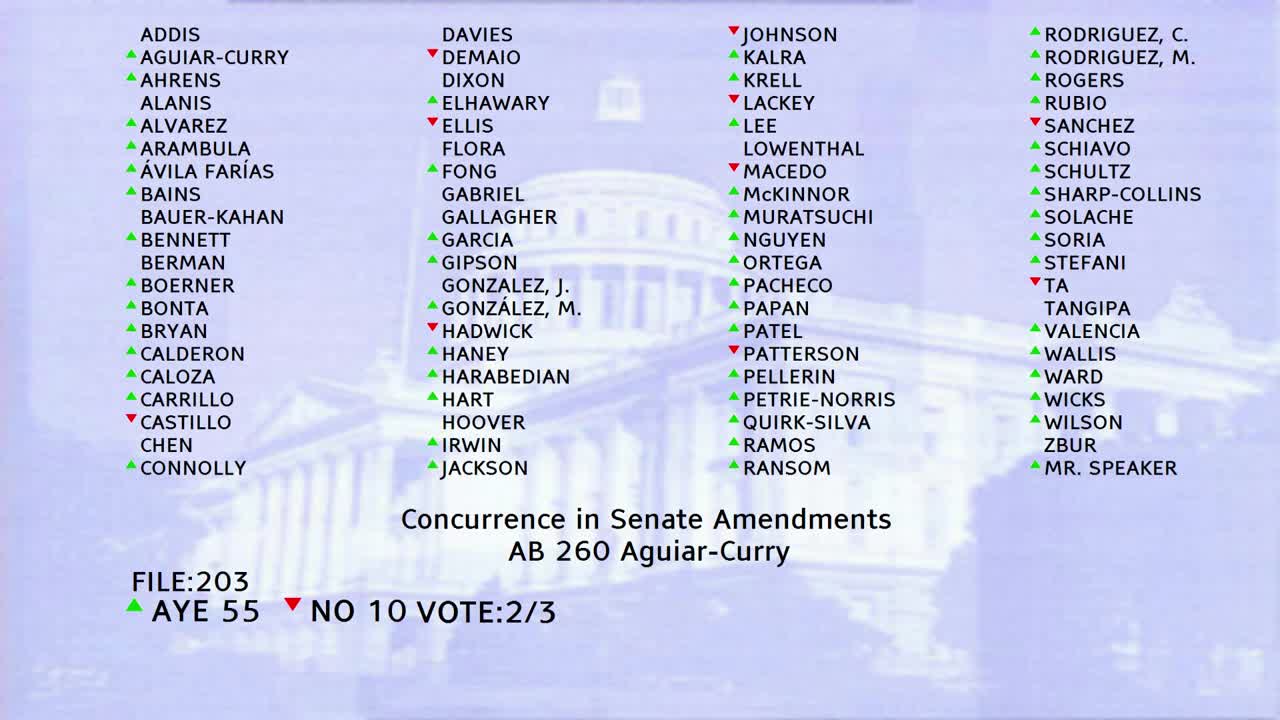 51SEC
Assembly Floor
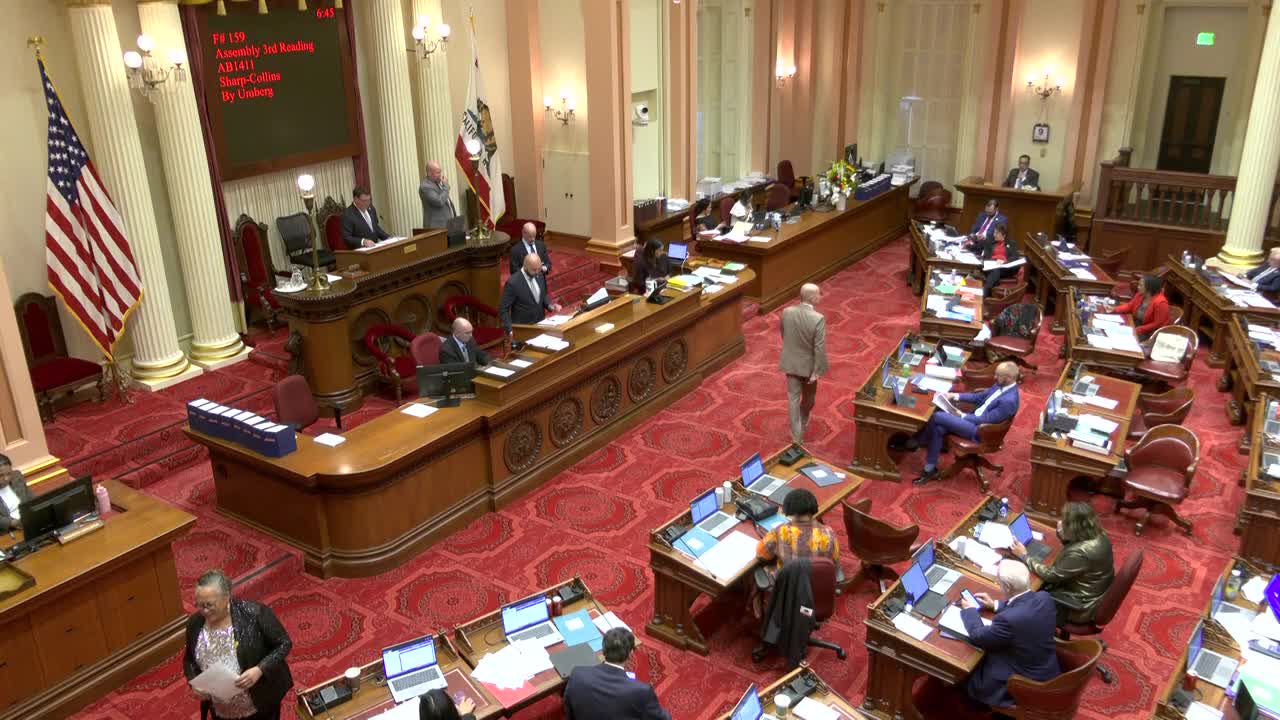 2MIN
Senate Floor
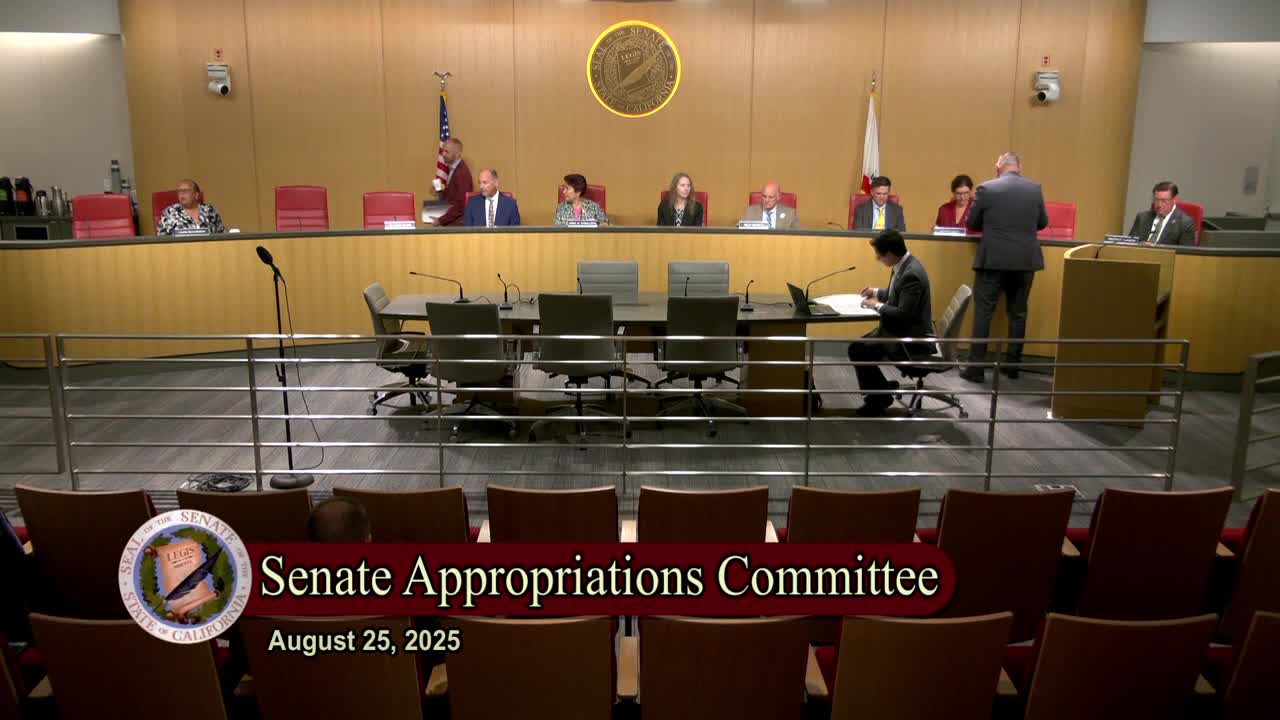 1MIN
Senate Standing Committee on Appropriations
 26MIN
Senate Standing Committee on Agriculture
 10MIN
Senate Standing Committee on Natural Resources and Water
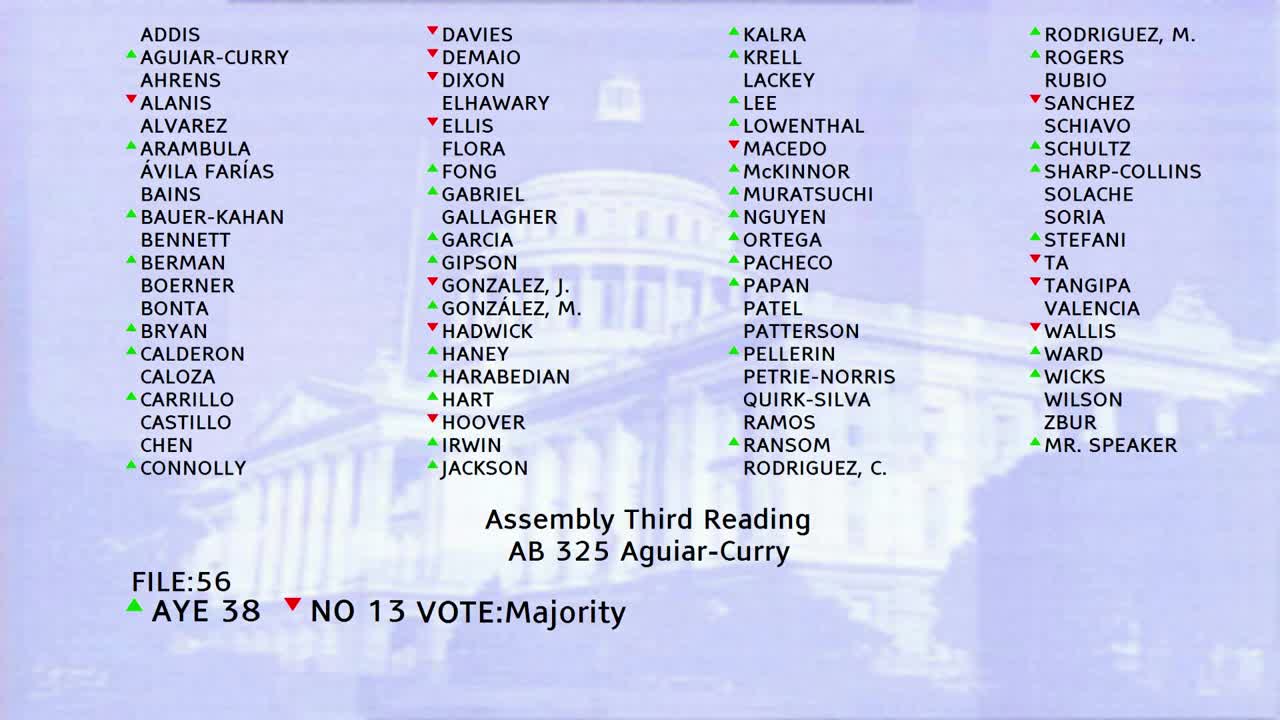 3MIN
Assembly Floor
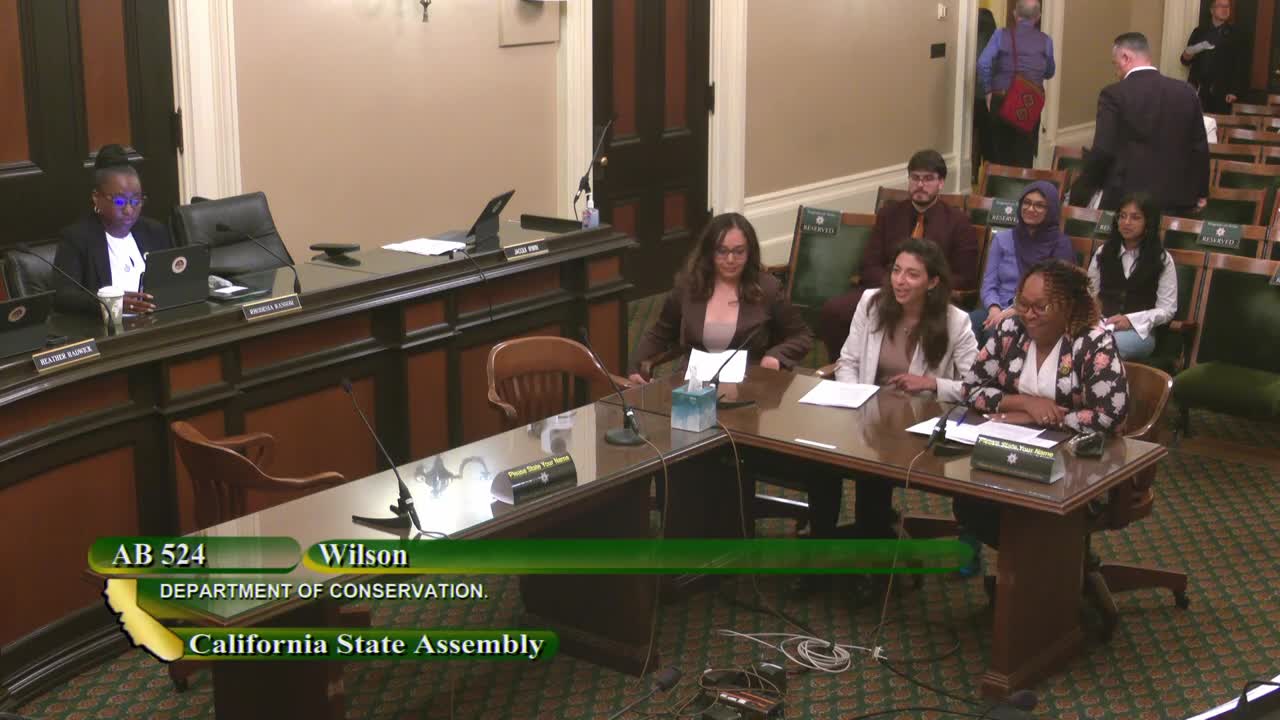 14MIN
Assembly Standing Committee on Agriculture
Bill Author