AB 539: Health care coverage: prior authorizations.
- Session Year: 2025-2026
- House: Assembly
- Latest Version Date: 2026-08-30
Current Status:
Failed
(2026-09-20: Vetoed by Governor.)
Introduced
In Committee
Awaiting First Chamber Vote
Passed First Chamber
In Committee
Awaiting Second Chamber Vote
Passed Second Chamber
Enacted
Existing law, the Knox-Keene Health Care Service Plan Act of 1975, provides for the licensure and regulation of health care service plans by the Department of Managed Health Care and makes a willful violation of the act a crime. Existing law provides for the regulation of health insurers by the Department of Insurance. Existing law provides that a health care service plan or a health insurer that authorizes a specific type of treatment by a health care provider shall not rescind or modify this authorization after the provider renders the health care service in good faith and pursuant to the authorization.
This bill would require an approved prior authorization for a health care service requested by an in-network provider to remain valid for at least one year from the date of approval, or the period requested by the treating provider if less than one year. Because a violation of the bill by a health care service plan would be a crime, the bill would impose a state-mandated local program.
The California Constitution requires the state to reimburse local agencies and school districts for certain costs mandated by the state. Statutory provisions establish procedures for making that reimbursement.
This bill would provide that no reimbursement is required by this act for a specified reason.
Existing law, the Knox-Keene Health Care Service Plan Act of 1975, provides for the licensure and regulation of health care service plans by the Department of Managed Health Care and makes a willful violation of the act a crime. Existing law provides for the regulation of health insurers by the Department of Insurance. Existing law provides that a health care service plan or a health insurer that authorizes a specific type of treatment by a health care provider shall not rescind or modify this authorization after the provider renders the health care service in good faith and pursuant to the authorization.
This bill would require an approved prior authorization for a health care service requested by an in-network provider to remain valid for at least one year from the date of approval, or the period required requested by the treating provider for the course of the prescribed treatment, not to exceed a period of at least one year from the date of approval, provider if less than one year. Because a violation of the bill by a health care service plan would be a crime, the bill would impose a state-mandated local program.
The California Constitution requires the state to reimburse local agencies and school districts for certain costs mandated by the state. Statutory provisions establish procedures for making that reimbursement.
This bill would provide that no reimbursement is required by this act for a specified reason.
Existing law, the Knox-Keene Health Care Service Plan Act of 1975, provides for the licensure and regulation of health care service plans by the Department of Managed Health Care and makes a willful violation of the act a crime. Existing law provides for the regulation of health insurers by the Department of Insurance. Existing law provides that a health care service plan or a health insurer that authorizes a specific type of treatment by a health care provider shall not rescind or modify this authorization after the provider renders the health care service in good faith and pursuant to the authorization.
This bill would require a an approved prior authorization for a health care service by a health care service plan or a health insurer requested by an in-network provider to remain valid for the period required by the treating provider for the course of the prescribed treatment, not to exceed a period of at least one year from the date of approval, or throughout the course of prescribed treatment, if less than one year. Because a violation of the bill by a health care service plan would be a crime, the bill would impose a state-mandated local program.
The California Constitution requires the state to reimburse local agencies and school districts for certain costs mandated by the state. Statutory provisions establish procedures for making that reimbursement.
This bill would provide that no reimbursement is required by this act for a specified reason.
Existing law, the Knox-Keene Health Care Service Plan Act of 1975, provides for the licensure and regulation of health care service plans by the Department of Managed Health Care and makes a willful violation of the act a crime. Existing law provides for the regulation of health insurers by the Department of Insurance. Existing law provides that a health care service plan or a health insurer that authorizes a specific type of treatment by a health care provider shall not rescind or modify this authorization after the provider renders the health care service in good faith and pursuant to the authorization.
This bill would require a prior authorization for a health care service by a health care service plan or a health insurer to remain valid for a period of at least one year from the date of approval. approval, or throughout the course of prescribed treatment, if less than one year. Because a violation of the bill by a health care service plan would be a crime, the bill would impose a state-mandated local program.
The California Constitution requires the state to reimburse local agencies and school districts for certain costs mandated by the state. Statutory provisions establish procedures for making that reimbursement.
This bill would provide that no reimbursement is required by this act for a specified reason.
Existing law, the Knox-Keene Health Care Service Plan Act of 1975, provides for the licensure and regulation of health care service plans by the Department of Managed Health Care and makes a willful violation of the act a crime. Existing law provides for the regulation of health insurers by the Department of Insurance. Existing law provides that a health care service plan or a health insurer that authorizes a specific type of treatment by a health care provider shall not rescind or modify this authorization after the provider renders the health care service in good faith and pursuant to the authorization.
This bill would require a prior authorization for a health care service by a health care service plan or a health insurer to remain valid for a period of at least one year from the date of approval. Because a violation of the bill by a health care service plan would be a crime, the bill would impose a state-mandated local program.
The California Constitution requires the state to reimburse local agencies and school districts for certain costs mandated by the state. Statutory provisions establish procedures for making that reimbursement.
This bill would provide that no reimbursement is required by this act for a specified reason.
(a)A health care service plan that authorizes a specific type of treatment by a provider shall not rescind or modify this authorization after the provider renders the health care service in good faith and pursuant to the authorization for any reason, including, but not limited to, the plans subsequent rescission, cancellation, or modification of the enrollees or subscribers contract or the plans subsequent determination that it did not make an accurate determination of the enrollees or subscribers eligibility. This section shall not be construed to expand or alter the benefits available to the enrollee or subscriber under a plan. The Legislature finds and declares that by adopting the amendments made to this section by Assembly Bill 1324 of the 200708 Regular Session it does not intend to instruct a court as to whether or not the amendments are existing law.
(b)An approved prior authorization for a health care service requested by an in-network provider shall remain valid for at least one year from the date of approval, or the period requested by the treating provider if less than one year. This does not prohibit a plan from authorizing a prior authorization period greater than one year.
(c)This section shall not be interpreted to permit a period of validity for an approved prior authorization request for a prescription drug that is longer than a validity period for that prescription drug established pursuant to state or federal law or regulation.
(d)The one-year validity period established in subdivision (b) does not apply if the enrollees coverage under the plan that issued the approval is terminated for any reason consistent with state or federal law. In these cases, the approval duration shall expire on the date of termination of the enrollees coverage under the plan that issued the approval, unless otherwise required by Section 1373.96 or any other applicable law.
SEC. 2.Section 796.04 of the Insurance Code is amended to read:796.04.(a)A health insurer that provides coverage for hospital, medical, or surgical expenses that authorizes a specific type of treatment for services covered under a policyholders contract or plan by a provider shall not rescind or modify this authorization after the provider renders the health care service in good faith and pursuant to the authorization for any reason, including, but not limited to, the insurers subsequent rescission, cancellation, or modification of the insureds or policyholders contract or the insurers subsequent determination that it did not make an accurate determination of the insureds eligibility. This section shall not be construed to expand or alter the benefits available or the terms and conditions of the contract as may be agreed upon between a policyholder, certificate holder, or trust, and the insurer. The Legislature finds and declares that by adopting the amendments made to this section by Assembly Bill 1324 of the 200708 Regular Session it does not intend to instruct a court as to whether or not the amendments are existing law.
(b)An approved prior authorization for a health care service requested by an in-network provider shall remain valid for at least one year from the date of approval, or the period requested by the treating provider if less than one year. This does not prohibit an insurer from authorizing a prior authorization period greater than one year.
(c)This section shall not be interpreted to permit a period of validity for an approved prior authorization request for a prescription drug that is longer than a validity period for that prescription drug established pursuant to state or federal law or regulation.
(d)The one-year validity period established in subdivision (b) does not apply if the insureds coverage under the insurer that issued the approval is terminated for any reason consistent with state or federal law. In these cases, the approval duration shall expire on the date of termination of the insureds coverage under the insurer that issued the approval, unless otherwise required by Section 10133.56 or any other applicable law.
SEC. 3.No reimbursement is required by this act pursuant to Section 6 of Article XIIIB of the California Constitution because the only costs that may be incurred by a local agency or school district will be incurred because this act creates a new crime or infraction, eliminates a crime or infraction, or changes the penalty for a crime or infraction, within the meaning of Section 17556 of the Government Code, or changes the definition of a crime within the meaning of Section 6 of Article XIIIB of the California Constitution.
(a)A health care service plan that authorizes a specific type of treatment by a provider shall not rescind or modify this authorization after the provider renders the health care service in good faith and pursuant to the authorization for any reason, including, but not limited to, the plans subsequent rescission, cancellation, or modification of the enrollees or subscribers contract or the plans subsequent determination that it did not make an accurate determination of the enrollees or subscribers eligibility. This section shall not be construed to expand or alter the benefits available to the enrollee or subscriber under a plan. The Legislature finds and declares that by adopting the amendments made to this section by Assembly Bill 1324 of the 200708 Regular Session it does not intend to instruct a court as to whether or not the amendments are existing law.
(b)An approved prior authorization for a health care service requested by an in-network provider shall remain valid for at least one year from the date of approval, or the period required requested by the treating provider for the course of the prescribed treatment, not to exceed a period of at least one year from the date of approval, provider if less than one year. This does not prohibit a plan from authorizing a prior authorization period greater than one year.
(c)This section shall not be interpreted to permit a period of validity for a medication an approved prior authorization request for a prescription drug that is longer than a validity period for that prescription drug established pursuant to state or federal law and or regulation.
(d)The one-year validity period established in subdivision (b) does not apply if the enrollee changes plans within the one year period. enrollees coverage under the plan that issued the approval is terminated for any reason consistent with state or federal law. In these cases, the approval duration shall expire on the date of termination of the enrollees coverage under the plan that issued the approval, unless otherwise required by Section 1373.96 or any other applicable law.
SEC. 2.Section 796.04 of the Insurance Code is amended to read:796.04.(a)A health insurer that provides coverage for hospital, medical, or surgical expenses that authorizes a specific type of treatment for services covered under a policyholders contract or plan by a provider shall not rescind or modify this authorization after the provider renders the health care service in good faith and pursuant to the authorization for any reason, including, but not limited to, the insurers subsequent rescission, cancellation, or modification of the insureds or policyholders contract or the insurers subsequent determination that it did not make an accurate determination of the insureds eligibility. This section shall not be construed to expand or alter the benefits available or the terms and conditions of the contract as may be agreed upon between a policyholder, certificate holder, or trust, and the insurer. The Legislature finds and declares that by adopting the amendments made to this section by Assembly Bill 1324 of the 200708 Regular Session it does not intend to instruct a court as to whether or not the amendments are existing law.
(b)An approved prior authorization for a health care service requested by an in-network provider shall remain valid for at least one year from the date of approval, or the period required requested by the treating provider for the course of the prescribed treatment, not to exceed a period of at least one year from the date of approval, provider if less than one year. This does not prohibit an insurer from authorizing a prior authorization period greater than one year.
(c)This section shall not be interpreted to permit a period of validity for a medication an approved prior authorization request for a prescription drug that is longer than a validity period for that prescription drug established pursuant to state or federal law and or regulation.
(d)The one-year validity period established in subdivision (b) does not apply if the insured changes insurers within the one year period. insureds coverage under the insurer that issued the approval is terminated for any reason consistent with state or federal law. In these cases, the approval duration shall expire on the date of termination of the insureds coverage under the insurer that issued the approval, unless otherwise required by Section 10133.56 or any other applicable law.
SEC. 3.No reimbursement is required by this act pursuant to Section 6 of Article XIIIB of the California Constitution because the only costs that may be incurred by a local agency or school district will be incurred because this act creates a new crime or infraction, eliminates a crime or infraction, or changes the penalty for a crime or infraction, within the meaning of Section 17556 of the Government Code, or changes the definition of a crime within the meaning of Section 6 of Article XIIIB of the California Constitution.
(a)A health care service plan that authorizes a specific type of treatment by a provider shall not rescind or modify this authorization after the provider renders the health care service in good faith and pursuant to the authorization for any reason, including, but not limited to, the plans subsequent rescission, cancellation, or modification of the enrollees or subscribers contract or the plans subsequent determination that it did not make an accurate determination of the enrollees or subscribers eligibility. This section shall not be construed to expand or alter the benefits available to the enrollee or subscriber under a plan. The Legislature finds and declares that by adopting the amendments made to this section by Assembly Bill 1324 of the 200708 Regular Session it does not intend to instruct a court as to whether or not the amendments are existing law.
(b)A An approved prior authorization for a health care service requested by an in-network provider shall remain valid for the period required by the treating provider for the course of the prescribed treatment, not to exceed a period of at least one year from the date of approval, or throughout the course of prescribed treatment, if less than one year.
(c)This section shall not be interpreted to permit a period of validity for a medication that is longer than a validity period established pursuant to state or federal law and regulation.
(d)The one-year validity period established in subdivision (b) does not apply if the enrollee changes plans within the one year period.
SEC. 2.Section 796.04 of the Insurance Code is amended to read:796.04.(a)A health insurer that provides coverage for hospital, medical, or surgical expenses that authorizes a specific type of treatment for services covered under a policyholders contract or plan by a provider shall not rescind or modify this authorization after the provider renders the health care service in good faith and pursuant to the authorization for any reason, including, but not limited to, the insurers subsequent rescission, cancellation, or modification of the insureds or policyholders contract or the insurers subsequent determination that it did not make an accurate determination of the insureds eligibility. This section shall not be construed to expand or alter the benefits available or the terms and conditions of the contract as may be agreed upon between a policyholder, certificate holder, or trust, and the insurer. The Legislature finds and declares that by adopting the amendments made to this section by Assembly Bill 1324 of the 200708 Regular Session it does not intend to instruct a court as to whether or not the amendments are existing law.
(b)A An approved prior authorization for a health care service requested by an in-network provider shall remain valid for the period required by the treating provider for the course of the prescribed treatment, not to exceed a period of at least one year from the date of approval, or throughout the course of prescribed treatment, if less than one year.
(c)This section shall not be interpreted to permit a period of validity for a medication that is longer than a validity period established pursuant to state or federal law and regulation.
(d)The one-year validity period established in subdivision (b) does not apply if the insured changes insurers within the one year period.
SEC. 3.No reimbursement is required by this act pursuant to Section 6 of Article XIIIB of the California Constitution because the only costs that may be incurred by a local agency or school district will be incurred because this act creates a new crime or infraction, eliminates a crime or infraction, or changes the penalty for a crime or infraction, within the meaning of Section 17556 of the Government Code, or changes the definition of a crime within the meaning of Section 6 of Article XIIIB of the California Constitution.
(a)A health care service plan that authorizes a specific type of treatment by a provider shall not rescind or modify this authorization after the provider renders the health care service in good faith and pursuant to the authorization for any reason, including, but not limited to, the plans subsequent rescission, cancellation, or modification of the enrollees or subscribers contract or the plans subsequent determination that it did not make an accurate determination of the enrollees or subscribers eligibility. This section shall not be construed to expand or alter the benefits available to the enrollee or subscriber under a plan. The Legislature finds and declares that by adopting the amendments made to this section by Assembly Bill 1324 of the 200708 Regular Session it does not intend to instruct a court as to whether or not the amendments are existing law.
(b)A prior authorization for a health care service shall remain valid for a period of at least one year from the date of approval. approval, or throughout the course of prescribed treatment, if less than one year.
SEC. 2.Section 796.04 of the Insurance Code is amended to read:796.04.(a)A health insurer that provides coverage for hospital, medical, or surgical expenses that authorizes a specific type of treatment for services covered under a policyholders contract or plan by a provider shall not rescind or modify this authorization after the provider renders the health care service in good faith and pursuant to the authorization for any reason, including, but not limited to, the insurers subsequent rescission, cancellation, or modification of the insureds or policyholders contract or the insurers subsequent determination that it did not make an accurate determination of the insureds eligibility. This section shall not be construed to expand or alter the benefits available or the terms and conditions of the contract as may be agreed upon between a policyholder, certificate holder, or trust, and the insurer. The Legislature finds and declares that by adopting the amendments made to this section by Assembly Bill 1324 of the 200708 Regular Session it does not intend to instruct a court as to whether or not the amendments are existing law.
(b)A prior authorization for a health care service shall remain valid for a period of at least one year from the date of approval. approval, or throughout the course of prescribed treatment, if less than one year.
SEC. 3.No reimbursement is required by this act pursuant to Section 6 of Article XIIIB of the California Constitution because the only costs that may be incurred by a local agency or school district will be incurred because this act creates a new crime or infraction, eliminates a crime or infraction, or changes the penalty for a crime or infraction, within the meaning of Section 17556 of the Government Code, or changes the definition of a crime within the meaning of Section 6 of Article XIIIB of the California Constitution.
(a)A health care service plan that authorizes a specific type of treatment by a provider shall not rescind or modify this authorization after the provider renders the health care service in good faith and pursuant to the authorization for any reason, including, but not limited to, the plans subsequent rescission, cancellation, or modification of the enrollees or subscribers contract or the plans subsequent determination that it did not make an accurate determination of the enrollees or subscribers eligibility. This section shall not be construed to expand or alter the benefits available to the enrollee or subscriber under a plan. The Legislature finds and declares that by adopting the amendments made to this section by Assembly Bill 1324 of the 200708 Regular Session it does not intend to instruct a court as to whether or not the amendments are existing law.
(b)A prior authorization for a health care service shall remain valid for a period of at least one year from the date of approval.
SEC. 2.Section 796.04 of the Insurance Code is amended to read:796.04.(a)A health insurer that provides coverage for hospital, medical, or surgical expenses that authorizes a specific type of treatment for services covered under a policyholders contract or plan by a provider shall not rescind or modify this authorization after the provider renders the health care service in good faith and pursuant to the authorization for any reason, including, but not limited to, the insurers subsequent rescission, cancellation, or modification of the insureds or policyholders contract or the insurers subsequent determination that it did not make an accurate determination of the insureds eligibility. This section shall not be construed to expand or alter the benefits available or the terms and conditions of the contract as may be agreed upon between a policyholder, certificate holder, or trust, and the insurer. The Legislature finds and declares that by adopting the amendments made to this section by Assembly Bill 1324 of the 200708 Regular Session it does not intend to instruct a court as to whether or not the amendments are existing law.
(b)A prior authorization for a health care service shall remain valid for a period of at least one year from the date of approval.
SEC. 3.No reimbursement is required by this act pursuant to Section 6 of Article XIIIB of the California Constitution because the only costs that may be incurred by a local agency or school district will be incurred because this act creates a new crime or infraction, eliminates a crime or infraction, or changes the penalty for a crime or infraction, within the meaning of Section 17556 of the Government Code, or changes the definition of a crime within the meaning of Section 6 of Article XIIIB of the California Constitution.
|
Date
|
Status
|
|---|---|
| Sep 20, 2026 | Vetoed by Governor. |
| Sep 3, 2026 | Enrolled and presented to the Governor at 4 p.m. |
| Aug 26, 2026 | Senate amendments concurred in. To Engrossing and Enrolling. (Ayes 64. Noes 4.). |
| Aug 26, 2026 | Senate amendments concurred in. To Engrossing and Enrolling. (Ayes 64. Noes 4. Page 6560.). |
| Aug 25, 2026 | In Assembly. Concurrence in Senate amendments pending. |
| Aug 25, 2026 | Read third time. Passed. Ordered to the Assembly. (Ayes 32. Noes 1. Page 5784.). |
| Aug 25, 2026 | Read third time. Passed. Ordered to the Assembly. (Ayes 31. Noes 0.). |
| Aug 24, 2026 | Read second time. Ordered to third reading. |
| Aug 21, 2026 | Read third time and amended. Ordered to second reading. |
| Aug 13, 2026 | Read second time. Ordered to third reading. |
| Aug 13, 2026 | From committee: Do pass. (Ayes 5. Noes 0.) (August 13). |
| Aug 3, 2026 | In committee: Referred to APPR. suspense file. |
| Jul 2, 2026 | From committee: Amend, and do pass as amended and re-refer to Com. on APPR. (Ayes 8. Noes 0.) (July 1). |
| Jul 2, 2026 | Read second time and amended. Re-referred to Com. on APPR. |
| Jun 23, 2025 | In committee: Set, second hearing. Hearing canceled at the request of author. |
| Jun 18, 2025 | In committee: Set, first hearing. Hearing canceled at the request of author. |
| May 21, 2025 | Referred to Com. on HEALTH. |
| May 13, 2025 | In Senate. Read first time. To Com. on RLS. for assignment. |
| May 12, 2025 | Read third time. Passed. Ordered to the Senate. (Ayes 64. Noes 2. Page 1518.) |
| May 8, 2025 | Read second time. Ordered to third reading. |
| May 7, 2025 | From committee: Do pass. (Ayes 11. Noes 0.) (May 7). |
| Apr 29, 2025 | Re-referred to Com. on APPR. |
| Apr 28, 2025 | Read second time and amended. |
| Apr 24, 2025 | From committee: Amend, and do pass as amended and re-refer to Com. on APPR. (Ayes 12. Noes 0.) (April 22). |
| Feb 24, 2025 | Referred to Com. on HEALTH. |
| Feb 12, 2025 | From printer. May be heard in committee March 14. |
| Feb 11, 2025 | Read first time. To print. |
|
Date
|
Description
|
Location
|
Votes
|
|
|---|---|---|---|---|
| Aug 26, 2026 | AB 539 Schiavo Concurrence in Senate Amendments | Assembly Floor |
Passed |
|
| Aug 25, 2026 | Assembly 3rd Reading AB539 Schiavo By Weber Pierson | Senate Floor |
Passed |
|
| Aug 13, 2026 | Do pass | Senate Standing Committee on Appropriations |
Passed |
|
| Aug 3, 2026 | Placed on suspense file | Senate Standing Committee on Appropriations |
Passed |
|
| Jul 1, 2026 | Do pass as amended, but first amend, and re-refer to the Committee on [Appropriations] | Senate Standing Committee on Health |
Passed |
|
| May 12, 2025 | AB 539 Schiavo Assembly Third Reading | Assembly Floor |
Passed |
|
| May 7, 2025 | Do pass. | Assembly Standing Committee on Appropriations |
Passed |
|
| Apr 22, 2025 | Do pass as amended and be re-referred to the Committee on [Appropriations] | Assembly Standing Committee on Health |
Passed |
This list shows positions taken on this bill by organizations on the date displayed, which is linked to the original source.
Positions by individuals are not included.
|
Organization
|
Position
|
Date
|
|---|---|---|
| Aids Healthcare Foundation | ** Against | |
| ALS Association | ** Support | |
| America'S Health Insurance Plans | ** Against | |
| America's Health Insurance Plans (unless amended) | ** Against | |
| America'S Physician Groups | ** Against | |
| America's Physician Groups (unless amended) | ** Against | |
| American Academy Of Pediatrics, California | ** Support | |
| American Diabetes Association | ** Support | |
| Association for Clinical Oncology | ** Support | |
| Association for Creatine Deficiencies | ** Support | |
| Association of California Health and Life Insurance Companies | ** Against | |
| Association of California Life & Health Insurance Companies (unless amended) | ** Against | |
| Association Of Northern California Oncologists | ** Support | |
| California Academy of Child and Adolescent Psychiatry | ** Support | |
| California Academy Of Family Physicians | ** Support | |
| California Academy of Preventive Medicine | ** Support | |
| California Association Of Health Plans | ** Against | |
| California Association Of Medical Product Suppliers | ** Support | |
| California Association Of Public Hospitals And Health Systems | ** Support | |
| California Chamber Of Commerce | ** Against | |
| California Chapter American College Of Cardiology | ** Support | |
| California Chronic Care Coalition | ** Support | |
| California Hospital Association | ** Support | |
| California Kidney Care Alliance | ** Support | |
| California Medical Association | ** Support | |
| California Orthopedic Association | ** Support | |
| California Podiatric Medical Association | ** Support | |
| California Radiological Society | ** Support | |
| California Retired Teachers Association | ** Support | |
| California Rheumatology Alliance | ** Support | |
| California Society Of Dermatology & Dermatologic Surgery | ** Support | |
| California Society Of Plastic Surgeons | ** Support | |
| California State Association of Psychiatrists | ** Support | |
| Children'S Specialty Care Coalition | ** Support | |
| Coalition of State Rheumatology Organizations | ** Support | |
| County of Santa Clara | ** Support | |
| Crohn’s and Colitis Foundation | ** Support | |
| CSN2A1 Foundation | ** Support | |
| Cure CMD | ** Support | |
| Fresenius Medical Care North America | ** Support | |
| Health Access California | ** Support | |
| Hemophilia Council Of California | ** Support | |
| Local Health Plans Of California | ** Against | |
| Local Health Plans of California (unless amended) | ** Against | |
| Medical Oncology Association Of Southern California | ** Support | |
| Mental Health America of California | ** Support | |
| National Adrenal Disease Foundation | ** Support | |
| National Infusion Center Association | ** Support | |
| National PKU Alliance | ** Support | |
| National Tay-Sachs & Allied Diseases Association | ** Support | |
| Oncology Nursing Society | ** Support | |
| One individual | ** Support | |
| Patients Rising | ** Support | |
| Physician Association of California | ** Support | |
| Planned Parenthood Affiliates Of California | ** Support | |
| Providence St. Joseph Health | ** Support | |
| Rare & Ready Coalition | ** Support | |
| Rasopathies Network | ** Support | |
| san francisco marin medical society | ** Support | |
| The Akari Foundation | ** Support | |
| U.S. Pain Foundation | ** Support | |
| Western Center on Law & Poverty, INC. | ** Support | |
| Western Health Advantage | ** Against |
GOVERNOR′S VETO
GV Bill Id:AB 539
Author:(Schiavo)
As Enrolled Ver:August 30, 2026
2/3 vote
SUMMARY
Requires a prior authorization for a health care service to remain valid for a period of at least one year from the date of approval or the period requested by the provider, if less than one year.
Senate Amendments
- Make clarifying changes to the one-year authorization period.
- State that this bill does not permit a period of validity for a prescription drug that is longer than the validity period for the prescription drug established pursuant to state or federal law or regulation.
- Clarify that the one-year authorization period does not apply if the enrollee or insured′s coverage is terminated for any reason.
Governor′s Veto Message
While I appreciate the author′s intent to reduce administrative burdens, this bill would apply prior authorizations too broadly, limiting health plans′ ability to reassess medical necessity as a member′s condition changes.
This could result in overutilization, inappropriate continuation of services, and unnecessary costs. The bill also conflicts with existing clinical guidelines and utilization management controls, undermining program integrity and flexibility to ensure that care remains appropriate for patients.
COMMENTS
Utilization review (UR) and utilization management (UM) are processes used by health plans to evaluate and manage the use of health care services. UR can occur prospectively, retrospectively, or concurrently and a plan can approve, modify, delay, or deny in whole or in part a request based on its medical necessity. Prior authorization is a UR technique used by health plans that requires patients to obtain approval of a service or medication before care is provided. Prior authorization is intended to allow plans to evaluate whether care that has been prescribed is medically necessary for purposes of coverage. Prior authorization is one type of UM tool that′s used by health plans, along with others such as concurrent review and step therapy, to control costs, limit unnecessary care, and evaluate safety and appropriateness of a service.
Overall impact of prior authorization. In 2023, the California Health Benefits Review Program (CHBRP) published a report to help the Legislature better understand the ways in which prior authorization is used in California. CHBRP noted that prior authorization is an imperfect instrument that′s utilized in a myriad of ways. This poses a challenge for policymakers, payers, patients, and providers since prior authorization is generally intended to decrease costs and waste, but it may also contribute to delays in treatment and additional barriers to care. Currently, evidence is limited as to the extent to which health insurance uses prior authorization and its impact on the performance of the health care system, patient access to appropriate care, and the health and financial interests of the general public. Despite the limited evidence, there is clear frustration from both patients and providers regarding prior authorization practices. According to CHBRP, complaints range from the time required to complete the initial authorization request and pursue denials, to delays in care, to a general lack of transparency regarding the process and criteria used to evaluate prior authorization requests. CHBRP further notes that people with disabilities, younger patients, African Americans, and people with lower incomes are more likely to report administrative burdens, including delays in care, due to prior authorization.
Cost impacts. One common reason prior authorization is used is to reduce and control health care spending. Total national health expenditures as a share of the gross domestic product have increased steadily over time. While the overall increase in health care spending can be largely attributed to increased cost of services and increased utilization, there is another important piece that drives both increased utilization and cost of services. Unnecessary medical care or wasteful health care spending, such as administrative complexities and fraud, are additional drivers. CHBRP cites recent study estimates that between 20% and 25% of all health care spending in the United States is a result of wasteful and unnecessary spending, as well as missed opportunities to provide appropriate care. Health plans and insurers operating in California responding to CHBRP′s query on areas of highest fraud and abuse noted that waste and abuse may occur more frequently when low-value or medically unnecessary care is delivered. Behavioral health, particularly applied behavioral analysis, was identified by health plans/insurers as a leading fraud risk.
Access to and utilization of care. Across state-regulated commercial plans and policies, 100% of enrollees are subject to some sort of prior authorization in their benefits. Plans reported that between 5% to 15% of all covered medical services and 16% to 25% of pharmacy services were subject to prior authorization. Evidence regarding whether prior authorization improves patient safety and ensures medically appropriate care is provided is mixed. Across studies reviewed by CHBRP, a sizable share of prior authorization denials were overturned upon appeal, ranging from 40% to 82% of denials being overturned. In instances when prior authorization is initially denied, a patient may need to pay out of pocket for services or may delay treatment due to lack of coverage. Much of the published literature regarding the impact of prior authorization focuses on prescription medications, finding that prior authorization requirements result in lower utilization of medications and decreases medication adherence.
Administrative burden. According to the American Medical Association (AMA), prior authorization leads to substantial administrative burdens for physicians, taking time away from direct patient care while costing practices money. AMA′s 2024 physician survey on prior authorization found that on average, physicians and their staff spend 13 hours each week completing prior authorizations and 40% of physicians have staff who work exclusively on prior authorization. One in three physicians reported that prior authorization requests are often or always denied and 93% reported that prior authorization leads to care delays for their patients. 89% of physicians reported that prior authorization somewhat or significantly increases physician burnout.
Antiquated systems. According to CHBRP, many aspects of prior authorization workflow still rely on the resource-intense use of paper forms, telephone calls, facsimile communications, and portal access. Contributing to the resource intense process is the type of technology (or lack of) used by providers and plans. Although many providers have transitioned to electronic health records (EHRs), for some providers, the cost to do so is prohibitive. Additionally, not all EHRs easily communicate with other EHRs, thereby still requiring a person to manually transfer information from one system to another. In light of these challenges, there are ongoing state and federal efforts to improve data sharing across health care entities to improve processes like prior authorization.
In January of 2024, the federal Centers for Medicare & Medicaid Services (CMS) released the CMS Interoperability and Prior Authorization Final Rule. This rule emphasizes the need to improve health information exchange to achieve appropriate and necessary access to health records for patients, healthcare providers, and payers. The rule also focuses on efforts to improve prior authorization processes through policies and technology, to help ensure that patients remain at the center of their own care. Impacted payers are required to implement certain provisions by January 1, 2026 and meet remaining requirements by January 1, 2027.
AB 133 (Committee on Budget), Chapter 143, Statutes of 2021, establishes the California Health and Human Services (CalHHS) Data Exchange Framework (DxF) and required CalHHS to finalize a data sharing agreement by July 1, 2022. The DxF defines the entities that will be subject to these new data exchange rules and sets forth a common set of terms, conditions, and obligations to support secure, real-time access to and exchange of health and social services information, in compliance with applicable federal, state, and local laws, regulations, and policies. DxF is not a new technology or centralized data repository, it is an agreement across health and human services systems and providers to share information safely. Many health care entities were required to participate beginning January 2024. Remaining entities are required to participate by January 2026.
According to the Author
While prior authorization delays and denials continue to climb, so too do the harms to patients. What′s worse is insurance companies are looking to artificial intelligence to speed up the denial process while suggesting it leads to positive patient experiences, and increased safety and affordability. The data is clear, insurers are using prior authorization to deny care and boost profits. This bill reduces health care administrative costs and speeds up patient access to care by extending the duration of an approved prior authorization by a health plan to one year. This approach will remove unnecessary bureaucratic delays, reduce the burden on physicians and patients, and help prevent lapses in vital life-saving care, especially for those with chronic illnesses, due to having to seek frequent approval for their care. This is one step that California can take to re-center patients, as opposed to health insurance profits, and reduce the harm caused by prior authorization delays.
Arguments in Support
The California Medical Association (CMA), sponsor of this bill, states that many conditions require ongoing treatment plans that benefit from strict adherence and recurring prior authorization requirements can lead to disruptions in care delivery and threaten a patient′s health. CMA shares that according to an AMA survey, 88% of physicians reported that prior authorizations interfere with continuity of care for patients and 78% of physicians reported that prior authorization can lead to treatment abandonment, inevitably leading patients to seek more expensive forms of care, including emergency room visits and even unexpected hospitalization. CMA continues that the current standard for an approved prior authorization request is about 60 to 90 days, which leads to physicians having to submit multiple requests for the same services, even when the treatment plan has not changed since the initial claim. Adding to the frustration of physicians and patients is that identical claims submitted weeks apart will have different outcomes, one that is approved while the other is denied. CMA argues that these arbitrary delays disrupt a patient′s treatment plan and interfere with continuity of care. CMA concludes that by extending the duration of approved prior authorizations to one year, this bill reduces inefficient administrative burdens on providers, addresses redundancies in the current approval process, and ensures that patients have access to the care they need without delays or interference from health plans.
Arguments in Opposition
The Association of California Health and Life Insurance Companies (ACLHIC) and the California Association of Health Plans (CAHP) are opposed to this bill, stating that a blanket one-year authorization period would undermine important safeguards that help ensure patient safety, care quality, and responsible use of health care resources. Additionally, ACLHIC and CAHP believe this bill will lead to higher costs from duplicative or low-value care, reduce follow-up and reassessment, and increase the risk of unnecessary or inappropriate services being delivered.
Various groups are opposed to this bill unless it is amended. The AIDS Healthcare Foundation indicates that a periodic review is helpful in assuring the overall maintenance and, when necessary, reassessment of the treatment plan, and the inconvenience and administrative burden of prior authorization is secondary to the quality of the patient′s care. America′s Physician Groups (APG) writes that this bill expands all authorizations for one year, regardless of type, patient safety implications, or impact on affordability in the health care system. APG argues that sound medical practice indicates that care authorizations should be tied to/limited to the patient′s eligibility, not a statutory timeline unaligned with the care needs of the patient. APG continues that authorizations that are not "unit specific," and creating a year-long authorization term would allow patients to render most services multiple times a year, even if the intent of the authorization was a single use. For example: if an MRI is approved, it is approved for one MRI, not 38 MRIs in the same year. APG believes this proposed expanded authorization is even more concerning and expensive when applied to medications, home health, and rehab/therapy, for which re-evaluation and reauthorization ensures the provider can monitor and re-evaluate the necessity, success and value of the continued authorization. The California Chamber of Commerce (Chamber) requests to add specificity that all prior authorization requests be submitted electronically to expedite and streamline all prior authorizations and provide clarity as to why the bill is necessary as this policy leads to safety concerns. The Chamber believes there should be no reason it takes a year for a patient to get in for an approved service or access to a prescription. The Local Health Plans of California believe this bill does not account for the many nuances that would necessitate shorter prior authorization durations, in particular as it relates to Medi-Cal where eligibility can change month to month.
FISCAL COMMENTS
According to the Senate Appropriations Committee, unknown ongoing costs in the Medi-Cal managed care program due to potential increases in the utilization of health care services; and unknown ongoing costs, potentially hundreds of thousands, for the Department of Health Care Services for state administration (General Fund and federal funds). The Department of Managed Health Care anticipates minor and absorbable costs for state administration. The California Department of Insurance estimates costs of $92,000 in 2026-27, $180,000 in 2027-28, and $146,000 in 2028-29 and ongoing thereafter for state administration (Insurance Fund).
VOTES
ASM HEALTH: 12-0-4
YES: Bonta, Addis, Aguiar-Curry, Rogers, Carrillo, Mark González, Krell, Patel, Celeste Rodriguez, Schiavo, Sharp-Collins, Stefani
ABS, ABST OR NV: Chen, Flora, Patterson, Sanchez
ASM APPROPRIATIONS: 11-0-4
YES: Wicks, Arambula, Calderon, Caloza, Elhawary, Fong, Mark González, Hart, Pacheco, Pellerin, Solache
ABS, ABST OR NV: Sanchez, Dixon, Ta, Tangipa
ASSEMBLY FLOOR: 64-2-13
YES: Addis, Aguiar-Curry, Ahrens, Alanis, Alvarez, Arambula, Ávila Farías, Bains, Bauer-Kahan, Bennett, Berman, Boerner, Bonta, Bryan, Calderon, Caloza, Carrillo, Chen, Connolly, Davies, Elhawary, Fong, Gabriel, Garcia, Gipson, Jeff Gonzalez, Mark González, Haney, Harabedian, Hart, Irwin, Jackson, Kalra, Krell, Lee, Lowenthal, McKinnor, Muratsuchi, Nguyen, Ortega, Pacheco, Papan, Patel, Pellerin, Petrie-Norris, Quirk-Silva, Ramos, Ransom, Celeste Rodriguez, Michelle Rodriguez, Rogers, Blanca Rubio, Schiavo, Schultz, Sharp-Collins, Solache, Soria, Valencia, Wallis, Ward, Wicks, Wilson, Zbur, Rivas
NO: DeMaio, Tangipa
ABS, ABST OR NV: Castillo, Dixon, Ellis, Flora, Gallagher, Hadwick, Hoover, Lackey, Macedo, Patterson, Sanchez, Stefani, Ta
SENATE FLOOR: 32-1-7
YES: Allen, Alvarado-Gil, Archuleta, Arreguín, Ashby, Becker, Blakespear, Cabaldon, Caballero, Cervantes, Cortese, Dahle, Durazo, Gonzalez, Grayson, Hurtado, Laird, Limón, McGuire, McNerney, Menjivar, Padilla, Pérez, Reyes, Richardson, Rubio, Smallwood-Cuevas, Stern, Umberg, Wahab, Weber Pierson, Wiener
NO: Jones
ABS, ABST OR NV: Choi, Grove, Niello, Ochoa Bogh, Seyarto, Strickland, Valladares
ASSEMBLY FLOOR: 64-4-11
YES: Addis, Aguiar-Curry, Ahrens, Alanis, Alvarez, Arambula, Ávila Farías, Bains, Bauer-Kahan, Bennett, Berman, Boerner, Bonta, Bryan, Calderon, Caloza, Carrillo, Connolly, Davies, Elhawary, Fong, Gabriel, Garcia, Gipson, Jeff Gonzalez, Mark González, Haney, Harabedian, Hart, Irwin, Jackson, Kalra, Krell, Lee, Lowenthal, McKinnor, Muratsuchi, Nguyen, Ortega, Pacheco, Papan, Patel, Pellerin, Petrie-Norris, Quirk-Silva, Ramos, Ransom, Celeste Rodriguez, Michelle Rodriguez, Rogers, Blanca Rubio, Schiavo, Schultz, Sharp-Collins, Solache, Soria, Stefani, Valencia, Wallis, Ward, Wicks, Wilson, Zbur, Rivas
NO: DeMaio, Johnson, Macedo, Tangipa
ABS, ABST OR NV: Castillo, Chen, Dixon, Ellis, Flora, Hadwick, Hoover, Lackey, Patterson, Sanchez, Ta
UPDATED
VERSION: August 30, 2026
CONSULTANT: Riana King / HEALTH / (916) 319-2097 FN: 0004601
CONCURRENCE IN SENATE AMENDMENTS
CSA1 Bill Id:AB 539
Author:(Schiavo)
As Amended Ver:August 21, 2026
Majority vote
SUMMARY
Requires a prior authorization for a health care service to remain valid for a period of at least one year from the date of approval or the period requested by the provider, if less than one year.
Senate Amendments
- Make clarifying changes to the one-year authorization period.
- State that this bill does not permit a period of validity for a prescription drug that is longer than the validity period for the prescription drug established pursuant to state or federal law or regulation.
- Clarify that the one-year authorization period does not apply if the enrollee or insured's coverage is terminated for any reason.
COMMENTS
Utilization review (UR) and utilization management (UM) are processes used by health plans to evaluate and manage the use of health care services. UR can occur prospectively, retrospectively, or concurrently and a plan can approve, modify, delay, or deny in whole or in part a request based on its medical necessity. Prior authorization is a UR technique used by health plans that requires patients to obtain approval of a service or medication before care is provided. Prior authorization is intended to allow plans to evaluate whether care that has been prescribed is medically necessary for purposes of coverage. Prior authorization is one type of UM tool that's used by health plans, along with others such as concurrent review and step therapy, to control costs, limit unnecessary care, and evaluate safety and appropriateness of a service.
Overall impact of prior authorization. In 2023, the California Health Benefits Review Program (CHBRP) published a report to help the Legislature better understand the ways in which prior authorization is used in California. CHBRP noted that prior authorization is an imperfect instrument that's utilized in a myriad of ways. This poses a challenge for policymakers, payers, patients, and providers since prior authorization is generally intended to decrease costs and waste, but it may also contribute to delays in treatment and additional barriers to care. Currently, evidence is limited as to the extent to which health insurance uses prior authorization and its impact on the performance of the health care system, patient access to appropriate care, and the health and financial interests of the general public. Despite the limited evidence, there is clear frustration from both patients and providers regarding prior authorization practices. According to CHBRP, complaints range from the time required to complete the initial authorization request and pursue denials, to delays in care, to a general lack of transparency regarding the process and criteria used to evaluate prior authorization requests. CHBRP further notes that people with disabilities, younger patients, African Americans, and people with lower incomes are more likely to report administrative burdens, including delays in care, due to prior authorization.
Cost impacts. One common reason prior authorization is used is to reduce and control health care spending. Total national health expenditures as a share of the gross domestic product have increased steadily over time. While the overall increase in health care spending can be largely attributed to increased cost of services and increased utilization, there is another important piece that drives both increased utilization and cost of services. Unnecessary medical care or wasteful health care spending, such as administrative complexities and fraud, are additional drivers. CHBRP cites recent study estimates that between 20% and 25% of all health care spending in the United States is a result of wasteful and unnecessary spending, as well as missed opportunities to provide appropriate care. Health plans and insurers operating in California responding to CHBRP's query on areas of highest fraud and abuse noted that waste and abuse may occur more frequently when low-value or medically unnecessary care is delivered. Behavioral health, particularly applied behavioral analysis, was identified by health plans/insurers as a leading fraud risk.
Access to and utilization of care. Across state-regulated commercial plans and policies, 100% of enrollees are subject to some sort of prior authorization in their benefits. Plans reported that between 5% to 15% of all covered medical services and 16% to 25% of pharmacy services were subject to prior authorization. Evidence regarding whether prior authorization improves patient safety and ensures medically appropriate care is provided is mixed. Across studies reviewed by CHBRP, a sizable share of prior authorization denials were overturned upon appeal, ranging from 40% to 82% of denials being overturned. In instances when prior authorization is initially denied, a patient may need to pay out of pocket for services or may delay treatment due to lack of coverage. Much of the published literature regarding the impact of prior authorization focuses on prescription medications, finding that prior authorization requirements result in lower utilization of medications and decreases medication adherence.
Administrative burden. According to the American Medical Association (AMA), prior authorization leads to substantial administrative burdens for physicians, taking time away from direct patient care while costing practices money. AMA's 2024 physician survey on prior authorization found that on average, physicians and their staff spend 13 hours each week completing prior authorizations and 40% of physicians have staff who work exclusively on prior authorization. One in three physicians reported that prior authorization requests are often or always denied and 93% reported that prior authorization leads to care delays for their patients. 89% of physicians reported that prior authorization somewhat or significantly increases physician burnout.
Antiquated systems. According to CHBRP, many aspects of prior authorization workflow still rely on the resource-intense use of paper forms, telephone calls, facsimile communications, and portal access. Contributing to the resource intense process is the type of technology (or lack of) used by providers and plans. Although many providers have transitioned to electronic health records (EHRs), for some providers, the cost to do so is prohibitive. Additionally, not all EHRs easily communicate with other EHRs, thereby still requiring a person to manually transfer information from one system to another. In light of these challenges, there are ongoing state and federal efforts to improve data sharing across health care entities to improve processes like prior authorization.
In January of 2024, the federal Centers for Medicare & Medicaid Services (CMS) released the CMS Interoperability and Prior Authorization Final Rule. This rule emphasizes the need to improve health information exchange to achieve appropriate and necessary access to health records for patients, healthcare providers, and payers. The rule also focuses on efforts to improve prior authorization processes through policies and technology, to help ensure that patients remain at the center of their own care. Impacted payers are required to implement certain provisions by January 1, 2026 and meet remaining requirements by January 1, 2027.
AB 133 (Committee on Budget), Chapter 143, Statutes of 2021, establishes the California Health and Human Services (CalHHS) Data Exchange Framework (DxF) and required CalHHS to finalize a data sharing agreement by July 1, 2022. The DxF defines the entities that will be subject to these new data exchange rules and sets forth a common set of terms, conditions, and obligations to support secure, real-time access to and exchange of health and social services information, in compliance with applicable federal, state, and local laws, regulations, and policies. DxF is not a new technology or centralized data repository, it is an agreement across health and human services systems and providers to share information safely. Many health care entities were required to participate beginning January 2024. Remaining entities are required to participate by January 2026.
According to the Author
While prior authorization delays and denials continue to climb, so too do the harms to patients. What's worse is insurance companies are looking to artificial intelligence to speed up the denial process while suggesting it leads to positive patient experiences, and increased safety and affordability. The data is clear, insurers are using prior authorization to deny care and boost profits. This bill reduces health care administrative costs and speeds up patient access to care by extending the duration of an approved prior authorization by a health plan to one year. This approach will remove unnecessary bureaucratic delays, reduce the burden on physicians and patients, and help prevent lapses in vital life-saving care, especially for those with chronic illnesses, due to having to seek frequent approval for their care. This is one step that California can take to re-center patients, as opposed to health insurance profits, and reduce the harm caused by prior authorization delays.
Arguments in Support
The California Medical Association (CMA), sponsor of this bill, states that many conditions require ongoing treatment plans that benefit from strict adherence and recurring prior authorization requirements can lead to disruptions in care delivery and threaten a patient's health. CMA shares that according to an AMA survey, 88% of physicians reported that prior authorizations interfere with continuity of care for patients and 78% of physicians reported that prior authorization can lead to treatment abandonment, inevitably leading patients to seek more expensive forms of care, including emergency room visits and even unexpected hospitalization. CMA continues that the current standard for an approved prior authorization request is about 60 to 90 days, which leads to physicians having to submit multiple requests for the same services, even when the treatment plan has not changed since the initial claim. Adding to the frustration of physicians and patients is that identical claims submitted weeks apart will have different outcomes, one that is approved while the other is denied. CMA argues that these arbitrary delays disrupt a patient's treatment plan and interfere with continuity of care. CMA concludes that by extending the duration of approved prior authorizations to one year, this bill reduces inefficient administrative burdens on providers, addresses redundancies in the current approval process, and ensures that patients have access to the care they need without delays or interference from health plans.
Arguments in Opposition
The Association of California Health and Life Insurance Companies (ACLHIC) and the California Association of Health Plans (CAHP) are opposed to this bill, stating that a blanket one-year authorization period would undermine important safeguards that help ensure patient safety, care quality, and responsible use of health care resources. Additionally, ACLHIC and CAHP believe this bill will lead to higher costs from duplicative or low-value care, reduce follow-up and reassessment, and increase the risk of unnecessary or inappropriate services being delivered.
Various groups are opposed to this bill unless it is amended. The AIDS Healthcare Foundation indicates that a periodic review is helpful in assuring the overall maintenance and, when necessary, reassessment of the treatment plan, and the inconvenience and administrative burden of prior authorization is secondary to the quality of the patient's care. America's Physician Groups (APG) writes that this bill expands all authorizations for one year, regardless of type, patient safety implications, or impact on affordability in the health care system. APG argues that sound medical practice indicates that care authorizations should be tied to/limited to the patient's eligibility, not a statutory timeline unaligned with the care needs of the patient. APG continues that authorizations that are not "unit specific," and creating a year-long authorization term would allow patients to render most services multiple times a year, even if the intent of the authorization was a single use. For example: if an MRI is approved, it is approved for one MRI, not 38 MRIs in the same year. APG believes this proposed expanded authorization is even more concerning and expensive when applied to medications, home health, and rehab/therapy, for which re-evaluation and reauthorization ensures the provider can monitor and re-evaluate the necessity, success and value of the continued authorization. The California Chamber of Commerce (Chamber) requests to add specificity that all prior authorization requests be submitted electronically to expedite and streamline all prior authorizations and provide clarity as to why the bill is necessary as this policy leads to safety concerns. The Chamber believes there should be no reason it takes a year for a patient to get in for an approved service or access to a prescription. The Local Health Plans of California believe this bill does not account for the many nuances that would necessitate shorter prior authorization durations, in particular as it relates to Medi-Cal where eligibility can change month to month.
FISCAL COMMENTS
According to the Senate Appropriations Committee, unknown ongoing costs in the Medi-Cal managed care program due to potential increases in the utilization of health care services; and unknown ongoing costs, potentially hundreds of thousands, for the Department of Health Care Services for state administration (General Fund and federal funds). The Department of Managed Health Care anticipates minor and absorbable costs for state administration. The California Department of Insurance estimates costs of $92,000 in 2026-27, $180,000 in 2027-28, and $146,000 in 2028-29 and ongoing thereafter for state administration (Insurance Fund).
VOTES:
ASM HEALTH: 12-0-4
YES: Bonta, Addis, Aguiar-Curry, Rogers, Carrillo, Mark González, Krell, Patel, Celeste Rodriguez, Schiavo, Sharp-Collins, Stefani
ABS, ABST OR NV: Chen, Flora, Patterson, Sanchez
ASM APPROPRIATIONS: 11-0-4
YES: Wicks, Arambula, Calderon, Caloza, Elhawary, Fong, Mark González, Hart, Pacheco, Pellerin, Solache
ABS, ABST OR NV: Sanchez, Dixon, Ta, Tangipa
ASSEMBLY FLOOR: 64-2-13
YES: Addis, Aguiar-Curry, Ahrens, Alanis, Alvarez, Arambula, Ávila Farías, Bains, Bauer-Kahan, Bennett, Berman, Boerner, Bonta, Bryan, Calderon, Caloza, Carrillo, Chen, Connolly, Davies, Elhawary, Fong, Gabriel, Garcia, Gipson, Jeff Gonzalez, Mark González, Haney, Harabedian, Hart, Irwin, Jackson, Kalra, Krell, Lee, Lowenthal, McKinnor, Muratsuchi, Nguyen, Ortega, Pacheco, Papan, Patel, Pellerin, Petrie-Norris, Quirk-Silva, Ramos, Ransom, Celeste Rodriguez, Michelle Rodriguez, Rogers, Blanca Rubio, Schiavo, Schultz, Sharp-Collins, Solache, Soria, Valencia, Wallis, Ward, Wicks, Wilson, Zbur, Rivas
NO: DeMaio, Tangipa
ABS, ABST OR NV: Castillo, Dixon, Ellis, Flora, Gallagher, Hadwick, Hoover, Lackey, Macedo, Patterson, Sanchez, Stefani, Ta
UPDATED
VERSION: July 2, 2026
CONSULTANT: Scott Bain / Riana King / HEALTH / (916) 319-2097 FN: 0004187
SENATE RULES COMMITTEE Office of Senate Floor Analyses (916) 651-4171 | AB 539 |
THIRD READING
Bill No: AB 539
Author: Schiavo (D)
Amended: 8/21/26 in Senate
Vote: 21
SENATE HEALTH COMMITTEE: 8-0, 7/1/26
AYES: Weber Pierson, Caballero, Durazo, Gonzalez, Menjivar, Padilla, Pérez, Smallwood-Cuevas
NO VOTE RECORDED: Valladares, Grove, Rubio
SENATE APPROPRIATIONS COMMITTEE: 5-0, 8/13/26
AYES: Cervantes, Cabaldon, Grayson, Richardson, Wahab
NO VOTE RECORDED: Seyarto, Dahle
ASSEMBLY FLOOR: 64-2, 5/12/25 - See last page for vote
SUBJECT: Health care coverage: prior authorizations
SOURCE: California Medical Association
California Chronic Care Coalition
DIGEST:
This bill requires a health plan’s or insurer’s approved prior authorization requested by an in-network provider to remain valid for at least one year from the date of approval, or the period requested by the treating provider, if less than one year.
Senate Floor Amendments of 8/21/26 clarify that a prior authorization shall be valid for at least one year from the date of approval, or the period requested by the treating provider, if less than one year. Indicate that this does not prohibit a plan or insurer from authorizing a prior authorization period greater than one year. Clarify the one-year validity period does not apply if the enrollee’s or insured’s coverage is terminated for any reason consistent with state or federal law. In such cases, the approval will expire on the date of termination, unless otherwise required by existing law, as specified, and make other clarifying changes.
ANALYSIS:
Existing law:
- Establishes the Department of Managed Health Care (DMHC) to regulate health plans under the Knox-Keene Health Care Services Plan Act of 1975; the California Department of Insurance (CDI) to regulate health and other insurers; and the Department of Health Care Services (DHCS) to administer the Medi-Cal program. [Health and Safety Code (HSC) §1340, et seq., and Insurance Code (INS) §106, et seq., and Welfare and Institutions Code (WIC) §14000, et seq]
- Establishes requirements for health plans and insurers that use an artificial intelligence (AI), algorithm, or other software tool for utilization review or utilization management functions, and prohibits the AI, algorithm, or other software tool from denying, delaying, or modifying health care services based in whole or in part on medical necessity. [HSC §1367.01 and INS §10123.135]
- Prohibits a health plan that authorizes a specific type of treatment by a provider from rescinding or modifying this authorization after the provider renders the health care service in good faith and pursuant to the authorization for any reason, including, but not limited to, the plan’s subsequent rescission, cancellation, or modification of the enrollee’s or subscriber’s contract or the plan’s subsequent determination that it did not make an accurate determination of the enrollee’s or subscriber’s eligibility. [HSC §1371.8 and INS §796.04]
- Excludes, from health plan or insurer prior authorization requirements, covered health care services that have been approved by the plan/insurer 90% or more times, as determined by DMHC or CDI after reporting and evaluation. Excludes outpatient drugs that are on tier three or tier four of a health plan or insurer’s formulary, drugs or devices recommended for a use different from what the federal Food and Drug Administration has cleared or approved, experimental or investigational services, services prescribed for novel applications, or services provided through an out-of-network provider. Sunsets on January 1, 2034. [HSC §1367.025 and INS §10133.52]
This bill:
- Requires an approved prior authorization requested by an in-network provider to remain valid for at least one year from the date of approval, or the period requested by the treating provider if less than one year. This does not prohibit a plan or insurer from authorizing a prior authorization period greater than one year.
- Indicates that this does not permit a period of validity for a prior authorization request for a prescription drug that is longer than a validity period for that prescription drug established pursuant to state or federal law or regulation.
- Excludes the applicability of the one-year validity period if the enrollee’s or insured’s coverage is terminated for any reason consistent with state or federal law. In these cases, the approval duration expires on the date of the termination of the coverage, unless otherwise required by law.
Background
Prior authorization. Prior authorization is a form of utilization review or utilization management. California law requires written policies and procedures that are consistent with criteria or guidelines and supported by clinical principles and processes. These policies and procedures must be filed with regulators, and disclosed, upon request, to providers, plans, and enrollees or insureds. In 2023, at the request of the Legislature, the California Health Benefits Review Program (CHBRP) conducted a survey of California-regulated plans and insurers and found overall, between 5% and 15% of all covered medical services, and between 16% and 25% of pharmacy benefits, were subject to prior authorization requirements. While there were significant differences among plans, some of the most frequently requested services and treatments were not necessarily the most expensive categories of treatments. Many under the medical benefit were services or treatment for ongoing care, such as behavioral health services and physical, occupational, or speech therapies. Some were rare or more expensive, but with low utilization rates.
Validity period of Authorization. CHBRP found, based on its survey results, that most prior authorization approvals remain valid for approximately six months or more before requiring recertification/approval. Responses ranged from four to six months to 12 to 24 months. CHBRP requested information from plans/insurers on whether prior authorization approvals for chronic or long-term conditions remain valid for longer periods of time. Plans either did not provide responses to this question or did not specifically have a policy separated out for these conditions.
SB 306 Process. Concerns about prior authorization’s effectiveness, administrative burden, and patient outcomes led the Legislature to pass SB 306 (Becker, Chapter 408, Statutes of 2025), which exempts health care services that have over 90% approval rates from prior authorization by health plans and insurers. In July 2026, plans and insurers will begin reporting information to their regulators about prior authorization approval rates. DMHC and CDI will publish a list of services that receive prior authorization approval at least 90% of the time, and beginning January 1, 2028, health plans and insurers will no longer require prior authorizations for those services. Regulators are also required to publish a report on the impact of the elimination of prior authorization, including data on prior authorization requests and determinations, the volume of covered health care services subjected to prior authorization, administrative costs, timely access to care, enrollee/insured health outcomes, and data on reinstatements of prior authorization.
Comments
According to the author:
While prior authorization delays and denials continue to climb, so too does the harm to patients. What’s worse, insurance companies are looking to AI to speed up the denial process while suggesting it leads to positive patient outcomes, and increased safety and affordability. The data is clear, insurers are using prior authorization to deny care and boost profits. Instead, this bill reduces health care administrative costs and speeds up patient care by extending the duration of an approved prior authorization by a health plan to one year or the duration of a physician’s prescribed treatment. This approach will remove unnecessary bureaucratic delays, reduce the burden on physicians and patients, and help prevent lapses in vital life-saving care, especially for those with chronic illnesses, due to having to seek frequent approval for their care. This is one step that California can take to re-center patients, as opposed to health insurance profits, and reduce the harm caused by prior authorization delays.
FISCAL EFFECT: Appropriation: No Fiscal Com.: Yes Local: Yes
According to the Senate Appropriations Committee, unknown ongoing costs in the Medi-Cal managed care program due to potential increases in the utilization of health care services; and unknown ongoing costs, potentially hundreds of thousands, for DHCS for state administration (General Fund and federal funds).
DMHC anticipates minor and absorbable costs for state administration.
CDI estimates costs of $92,000 in 2026-27, $180,000 in 2027-28, and $146,000 in 2028-29 and ongoing thereafter for state administration (Insurance Fund).
SUPPORT: (Verified 8/21/26)
California Medical Association (co-source)
California Chronic Care Coalition (co-source)
ALS Association
American Academy of Pediatrics, California
American Diabetes Association
Association for Clinical Oncology
Association for Creatine Deficiencies
Association of Northern California Oncologists
California Academy of Child and Adolescent Psychiatry
California Academy of Family Physicians
California Academy of Preventive Medicine
California Association of Medical Product Suppliers
California Association of Public Hospitals and Health Systems
California Chapter American College of Cardiology
California Hospital Association
California Kidney Care Alliance
California Orthopedic Association
California Podiatric Medical Association
California Radiological Society
California Retired Teachers Association
California Rheumatology Alliance
California Society of Dermatology & Dermatologic Surgery
California Society of Plastic Surgeons
California State Association of Psychiatrists
Children's Specialty Care Coalition
Coalition of State Rheumatology Organizations
County of Santa Clara
Crohn’s and Colitis Foundation
CSN2A1 Foundation
Cure CMD
Fresenius Medical Care North America
Health Access California
Hemophilia Council of California
Medical Oncology Association of Southern California
Mental Health America of California
National Adrenal Disease Foundation
National Infusion Center Association
National PKU Alliance
National Tay-Sachs & Allied Diseases Association
Oncology Nursing Society
Patients Rising
Physician Association of California
Planned Parenthood Affiliates of California
Providence St. Joseph Health
Rare & Ready Coalition
Rasopathies Network
San Francisco Marin Medical Society
The Akari Foundation
U.S. Pain Foundation
Western Center on Law & Poverty, Inc.
One individual
OPPOSITION: (Verified 8/21/26)
AIDS Healthcare Foundation
America's Health Insurance Plans
America's Physician Groups
Association of California Life & Health Insurance Companies
California Association of Health Plans
California Chamber of Commerce
Local Health Plans of California
Western Health Advantage
ARGUMENTS IN SUPPORT: According to this bill’s sponsor, the California Medical Association (CMA), this bill ensures that physicians do not have to resubmit the same claim for services, especially surgeries. CMA writes, “Many conditions require ongoing treatment plans that benefit from strict adherence. Recurring prior authorization requirements can lead to disruptions in care delivery and threaten a patient’s health. According to the American Medical Association survey, 88% of physicians said that prior authorizations interfere with continuity of care for patients. Even more troubling is that 78% of physicians reported that prior authorization can lead to treatment abandonment altogether, inevitably leading patients to seek more expensive forms of care, including emergency room visits and even unexpected hospitalization. The current standard for an approved prior authorization request is about 60 to 90 days. This standard leads to physicians having to submit multiple requests for the same services, even when the treatment plan has not changed since the initial claim. Adding to the frustration of physicians and patients is that identical claims submitted weeks apart will have different outcomes – one that is approved while the other is denied. These arbitrary delays disrupt a patient’s treatment plan and interfere with continuity of care.” The ALS Association writes “For individuals living with ALS, timely and consistent medical care is critical. ALS is a progressive neurodegenerative disease that leads to significant loss of mobility and independence. Patients require ongoing access to treatments, medications, and medical equipment to maintain their quality of life. However, the current prior authorization system forces patients and providers to repeatedly seek approval for the same necessary care, creating unnecessary delays and barriers that disrupt continuity of treatment.” The California Academy of Child and Adolescent Psychiatry writes, “Currently, providers, families, and patients can face disruptions in essential care when prior authorizations expire prematurely or are otherwise rescinded. This is especially concerning in the context of mental health treatment, where continuity of care is paramount for children and adolescents. For many patients, a break in coverage for medications, therapy sessions, or other crucial interventions can result in a relapse or a deterioration of mental health. By guaranteeing year-long validity, this bill helps eliminate repeated paperwork, administrative confusion, and needless gaps in treatment so that health care providers can focus on what matters most—caring for their patients.”
Support if amended. The California Optometric Association (COA) would like this bill to apply to specialized health plans and insurance policies because patients with chronic eye diseases such as glaucoma, diabetic retinopathy, and macular degeneration currently face interruptions that can lead to permanent vision loss. COA writes this would prevent patients with long-term eye conditions from having to repeatedly reapply for treatment approval, preventing dangerous treatment lapses. The California Chiropractic Association also requests this amendment.
ARGUMENTS IN OPPOSITION: Oppose unless amended. The AIDS Healthcare Foundation indicates that a periodic review is helpful in assuring the overall maintenance and, when necessary, reassessment of the treatment plan, and the inconvenience and administrative burden of prior authorization is secondary to the quality of the patient’s care. America’s Physician Groups (APG) writes that this bill “expands all authorizations for one year, regardless of type, patient safety implications, or impact on affordability in the health care system. Sound medical practice indicates that care authorizations should be tied to/limited to the patient’s eligibility, not a statutory timeline unaligned with the care needs of the patient. A reauthorization process allows for the re-evaluation of the necessity and value in continued authorization. Authorizations that are not "unit specific", creating a year-long authorization term would allow patients to render most services multiple times a year, even if the intent of the authorization was a single use. For example: if an MRI is approved, it is approved for one MRI, not 38 MRIs in the same year. In the opinion of our chief medical officers within APG member groups, this proposed expanded authorization is even more concerning and expensive when applied to medications, home health, and rehab/therapy, for which re-evaluation and reauthorization ensures the provider can monitor and re-evaluate the necessity, success and value of the continued authorization.” The Association of California Health and Life Insurance Companies (ACLHIC) and the California Association of Health Plans (CAHP) raise concerns that this bill will prolong the timeline for completing services, which could have significant negative impacts on the patient and their health. Additionally, ACLHIC and CAHP believe this bill will invite potential fraud, waste, and abuse and increase health care costs because of duplicative and low-value care. ACLHIC and CAHP have requested several amendments (see policy committee analysis).
The California Chamber of Commerce (Chamber) requests to add specificity that all prior authorization requests be submitted electronically to expedite and streamline all prior authorizations and provide clarity as to why the bill is necessary as this policy leads to safety concerns. The Chamber believes there should be no reason it takes a year for a patient to get in for an approved service or access to a prescription. The Local Health Plans of California (LHPC) believe this bill does not account for the many nuances that would necessitate shorter prior authorization durations, in particular as it relates to Medi-Cal where eligibility can change month to month.
ASSEMBLY FLOOR: 64-2, 5/12/25
AYES: Addis, Aguiar-Curry, Ahrens, Alanis, Alvarez, Arambula, Ávila Farías, Bains, Bauer-Kahan, Bennett, Berman, Boerner, Bonta, Bryan, Calderon, Caloza, Carrillo, Chen, Connolly, Davies, Elhawary, Fong, Gabriel, Garcia, Gipson, Jeff Gonzalez, Mark González, Haney, Harabedian, Hart, Irwin, Jackson, Kalra, Krell, Lee, Lowenthal, McKinnor, Muratsuchi, Nguyen, Ortega, Pacheco, Papan, Patel, Pellerin, Petrie-Norris, Quirk-Silva, Ramos, Ransom, Celeste Rodriguez, Michelle Rodriguez, Rogers, Blanca Rubio, Schiavo, Schultz, Sharp-Collins, Solache, Soria, Valencia, Wallis, Ward, Wicks, Wilson, Zbur, Rivas
NOES: DeMaio, Tangipa
NO VOTE RECORDED: Castillo, Dixon, Ellis, Flora, Gallagher, Hadwick, Hoover, Lackey, Macedo, Patterson, Sanchez, Stefani, Ta
Prepared by: Teri Boughton / HEALTH / (916) 651-4111
8/24/26 12:08:13
**** END ****
SENATE RULES COMMITTEE Office of Senate Floor Analyses (916) 651-4171 | AB 539 |
THIRD READING
Bill No: AB 539
Author: Schiavo (D)
Amended: 7/2/26 in Senate
Vote: 21
SENATE HEALTH COMMITTEE: 8-0, 7/1/26
AYES: Weber Pierson, Caballero, Durazo, Gonzalez, Menjivar, Padilla, Pérez, Smallwood-Cuevas
NO VOTE RECORDED: Valladares, Grove, Rubio
SENATE APPROPRIATIONS COMMITTEE: 5-0, 8/13/26
AYES: Cervantes, Cabaldon, Grayson, Richardson, Wahab
NO VOTE RECORDED: Seyarto, Dahle
ASSEMBLY FLOOR: 64-2, 5/12/25 - See last page for vote
SUBJECT: Health care coverage: prior authorizations
SOURCE: California Chronic Care Coalition
California Medical Association
DIGEST:
This bill requires a health plan’s or insurer’s approved prior authorization requested by an in-network provider to remain valid for the period required by the treating provider for the course of the prescribed treatment, not to exceed a period of at least one year from the date of approval, if less than one year.
ANALYSIS:
Existing law:
- Establishes the Department of Managed Health Care (DMHC) to regulate health plans under the Knox-Keene Health Care Services Plan Act of 1975; the California Department of Insurance (CDI) to regulate health and other insurers; and the Department of Health Care Services (DHCS) to administer the Medi-Cal program. [Health and Safety Code (HSC) §1340, et seq., and Insurance Code (INS) §106, et seq., and Welfare and Institutions Code (WIC) §14000, et seq]
- Requires health plans and insurers, and any contracted entity that performs utilization review or utilization management functions, prospectively, retrospectively, or concurrently, based on medical necessity requests to comply with specified requirements, including a decision within five business days of receiving reasonable information to make a decision, conducting retrospective review within 30 days and decisions associated with imminent and serious threat within 72 hours or sooner. [HSC §1367.01 and INS §10123.135]
- Establishes requirements for health plans and insurers that use an artificial intelligence (AI), algorithm, or other software tool for utilization review or utilization management functions, and prohibits the AI, algorithm, or other software tool from denying, delaying, or modifying health care services based in whole or in part on medical necessity. [HSC §1367.01 and INS §10123.135]
- Prohibits a health plan that authorizes a specific type of treatment by a provider from rescinding or modifying this authorization after the provider renders the health care service in good faith and pursuant to the authorization for any reason, including, but not limited to, the plan’s subsequent rescission, cancellation, or modification of the enrollee’s or subscriber’s contract or the plan’s subsequent determination that it did not make an accurate determination of the enrollee’s or subscriber’s eligibility. [HSC §1371.8 and INS §796.04]
- Excludes, from health plan or insurer prior authorization requirements, covered health care services that have been approved by the plan/insurer 90% or more times, as determined by DMHC or CDI after reporting and evaluation. Excludes outpatient drugs that are on tier three or tier four of a health plan or insurer’s formulary, drugs or devices recommended for a use different from what the federal Food and Drug Administration has cleared or approved, experimental or investigational services, services prescribed for novel applications, or services provided through an out-of-network provider. Sunsets on January 1, 2034. [HSC §1367.025 and INS §10133.52]
This bill:
- Requires an approved prior authorization requested by an in-network provider to remain valid for the period required by the treating provider for the course of the prescribed treatment, not to exceed a period of at least one year from the date of approval, if less than one year.
- Indicates that this does not permit a period of validity for a medication that is longer than a validity period established pursuant to state or federal law and regulation.
- Excludes the applicability of the one-year validity period if the enrollee/insured changes plans or policies within the one-year period.
Comments
According to the author:
While prior authorization delays and denials continue to climb, so too does the harm to patients. What’s worse, insurance companies are looking to AI to speed up the denial process while suggesting it leads to positive patient outcomes, and increased safety and affordability. The data is clear, insurers are using prior authorization to deny care and boost profits. Instead, this bill reduces health care administrative costs and speeds up patient care by extending the duration of an approved prior authorization by a health plan to one year or the duration of a physician’s prescribed treatment. This approach will remove unnecessary bureaucratic delays, reduce the burden on physicians and patients, and help prevent lapses in vital life-saving care, especially for those with chronic illnesses, due to having to seek frequent approval for their care. This is one step that California can take to re-center patients, as opposed to health insurance profits, and reduce the harm caused by prior authorization delays.
Background
Prior authorization. Prior authorization is a form of utilization review or utilization management. California law requires written policies and procedures that are consistent with criteria or guidelines and supported by clinical principles and processes. These policies and procedures must be filed with regulators, and disclosed, upon request, to providers, plans, and enrollees or insureds. In 2023, at the request of the Legislature, the California Health Benefits Review Program (CHBRP) conducted a survey of California-regulated plans and insurers and found overall, between 5% and 15% of all covered medical services, and between 16% and 25% of pharmacy benefits, were subject to prior authorization requirements. While there were significant differences among plans, some of the most frequently requested services and treatments were not necessarily the most expensive categories of treatments. Many under the medical benefit were services or treatment for ongoing care, such as behavioral health services and physical, occupational, or speech therapies. Some were rare or more expensive, but with low utilization rates.
Validity period of Authorization. CHBRP found, based on its survey results, that most prior authorization approvals remain valid for approximately six months or more before requiring recertification/approval. Responses ranged from four to six months to 12 to 24 months. CHBRP requested information from plans/insurers on whether prior authorization approvals for chronic or long-term conditions remain valid for longer periods of time. Plans either did not provide responses to this question or did not specifically have a policy separated out for these conditions.
SB 306 Process. Concerns about prior authorization’s effectiveness, administrative burden, and patient outcomes led the Legislature to pass SB 306 (Becker, Chapter 408, Statutes of 2025), which exempts health care services that have over 90% approval rates from prior authorization by health plans and insurers. In July 2026, plans and insurers will begin reporting information to their regulators about prior authorization approval rates. DMHC and CDI will publish a list of services that receive prior authorization approval at least 90% of the time, and beginning January 1, 2028, health plans and insurers will no longer require prior authorizations for those services. Regulators are also required to publish a report on the impact of the elimination of prior authorization, including data on prior authorization requests and determinations, the volume of covered health care services subjected to prior authorization, administrative costs, timely access to care, enrollee/insured health outcomes, and data on reinstatements of prior authorization.
Related/Prior Legislation
Prior legislation. SB 306 (Becker, Chapter 408, Statutes of 2025) excludes covered health care services that have been approved by the plan/insurer 90% or more times from health plan or insurer prior authorization requirements, as determined by DMHC or CDI after reporting and evaluation.
FISCAL EFFECT: Appropriation: No Fiscal Com.: Yes Local: Yes
According to the Senate Appropriations Committee, unknown ongoing costs in the Medi-Cal managed care program due to potential increases in the utilization of health care services; and unknown ongoing costs, potentially hundreds of thousands, for DHCS for state administration (General Fund and federal funds).
DMHC anticipates minor and absorbable costs for state administration.
CDI estimates costs of $92,000 in 2026-27, $180,000 in 2027-28, and $146,000 in 2028-29 and ongoing thereafter for state administration (Insurance Fund).
SUPPORT: (Verified 8/14/26)
California Medical Association (cosource)
California Chronic Care Coalition (cosource)
ALS Association
American Academy of Pediatrics, California
American Diabetes Association
Association for Clinical Oncology
Association for Creatine Deficiencies
Association of Northern California Oncologists
California Academy of Child and Adolescent Psychiatry
California Academy of Family Physicians
California Academy of Preventive Medicine
California Association of Medical Product Suppliers
California Association of Public Hospitals and Health Systems
California Chapter American College of Cardiology
California Hospital Association
California Kidney Care Alliance
California Orthopedic Association
California Podiatric Medical Association
California Radiological Society
California Retired Teachers Association
California Rheumatology Alliance
California Society of Dermatology & Dermatologic Surgery
California Society of Plastic Surgeons
California State Association of Psychiatrists
Children's Specialty Care Coalition
Coalition of State Rheumatology Organizations
County of Santa Clara
Crohn’s and Colitis Foundation
CSN2A1 Foundation
Cure CMD
Fresenius Medical Care North America
Health Access California
Hemophilia Council of California
Medical Oncology Association of Southern California
Mental Health America of California
National Adrenal Disease Foundation
National Infusion Center Association
National PKU Alliance
National Tay-Sachs & Allied Diseases Association
Oncology Nursing Society
Patients Rising
Physician Association of California
Planned Parenthood Affiliates of California
Providence St. Joseph Health
Rare & Ready Coalition
Rasopathies Network
San Francisco Marin Medical Society
The Akari Foundation
U.S. Pain Foundation
Western Center on Law & Poverty, Inc.
One individual
OPPOSITION: (Verified 8/14/26)
AIDS Healthcare Foundation
America's Health Insurance Plans
America's Physician Groups
Association of California Life & Health Insurance Companies
California Association of Health Plans
California Chamber of Commerce
Local Health Plans of California
ARGUMENTS IN SUPPORT: According to this bill’s sponsor, the California Medical Association (CMA), this bill ensures that physicians do not have to resubmit the same claim for services, especially surgeries. CMA writes, “Many conditions require ongoing treatment plans that benefit from strict adherence. Recurring prior authorization requirements can lead to disruptions in care delivery and threaten a patient’s health. According to the American Medical Association survey, 88% of physicians said that prior authorizations interfere with continuity of care for patients. Even more troubling is that 78% of physicians reported that prior authorization can lead to treatment abandonment altogether, inevitably leading patients to seek more expensive forms of care, including emergency room visits and even unexpected hospitalization. The current standard for an approved prior authorization request is about 60 to 90 days. This standard leads to physicians having to submit multiple requests for the same services, even when the treatment plan has not changed since the initial claim. Adding to the frustration of physicians and patients is that identical claims submitted weeks apart will have different outcomes – one that is approved while the other is denied. These arbitrary delays disrupt a patient’s treatment plan and interfere with continuity of care.” The ALS Association writes “For individuals living with ALS, timely and consistent medical care is critical. ALS is a progressive neurodegenerative disease that leads to significant loss of mobility and independence. Patients require ongoing access to treatments, medications, and medical equipment to maintain their quality of life. However, the current prior authorization system forces patients and providers to repeatedly seek approval for the same necessary care, creating unnecessary delays and barriers that disrupt continuity of treatment.” The California Academy of Child and Adolescent Psychiatry writes, “Currently, providers, families, and patients can face disruptions in essential care when prior authorizations expire prematurely or are otherwise rescinded. This is especially concerning in the context of mental health treatment, where continuity of care is paramount for children and adolescents. For many patients, a break in coverage for medications, therapy sessions, or other crucial interventions can result in a relapse or a deterioration of mental health. By guaranteeing year-long validity, this bill helps eliminate repeated paperwork, administrative confusion, and needless gaps in treatment so that health care providers can focus on what matters most—caring for their patients.”
Support if amended. The California Optometric Association (COA) would like this bill to apply to specialized health plans and insurance policies because patients with chronic eye diseases such as glaucoma, diabetic retinopathy, and macular degeneration currently face interruptions that can lead to permanent vision loss. COA writes this would prevent patients with long-term eye conditions from having to repeatedly reapply for treatment approval, preventing dangerous treatment lapses. The California Chiropractic Association also requests this amendment.
ARGUMENTS IN OPPOSITION: Oppose unless amended. The AIDS Healthcare Foundation indicates that a periodic review is helpful in assuring the overall maintenance and, when necessary, reassessment of the treatment plan, and the inconvenience and administrative burden of prior authorization is secondary to the quality of the patient’s care. America’s Physician Groups (APG) writes that this bill “expands all authorizations for one year, regardless of type, patient safety implications, or impact on affordability in the health care system. Sound medical practice indicates that care authorizations should be tied to/limited to the patient’s eligibility, not a statutory timeline unaligned with the care needs of the patient. A reauthorization process allows for the re-evaluation of the necessity and value in continued authorization. Authorizations that are not "unit specific", creating a year-long authorization term would allow patients to render most services multiple times a year, even if the intent of the authorization was a single use. For example: if an MRI is approved, it is approved for one MRI, not 38 MRIs in the same year. In the opinion of our chief medical officers within APG member groups, this proposed expanded authorization is even more concerning and expensive when applied to medications, home health, and rehab/therapy, for which re-evaluation and reauthorization ensures the provider can monitor and re-evaluate the necessity, success and value of the continued authorization.” The Association of California Health and Life Insurance Companies (ACLHIC) and the California Association of Health Plans (CAHP) raise concerns that this bill will prolong the timeline for completing services, which could have significant negative impacts on the patient and their health. Additionally, ACLHIC and CAHP believe this bill will invite potential fraud, waste, and abuse and increase health care costs because of duplicative and low-value care. ACLHIC and CAHP have requested several amendments (see policy committee analysis).
The California Chamber of Commerce (Chamber) requests to add specificity that all prior authorization requests be submitted electronically to expedite and streamline all prior authorizations and provide clarity as to why the bill is necessary as this policy leads to safety concerns. The Chamber believes there should be no reason it takes a year for a patient to get in for an approved service or access to a prescription. The Local Health Plans of California (LHPC) believe this bill does not account for the many nuances that would necessitate shorter prior authorization durations, in particular as it relates to Medi-Cal where eligibility can change month to month.
ASSEMBLY FLOOR: 64-2, 5/12/25
AYES: Addis, Aguiar-Curry, Ahrens, Alanis, Alvarez, Arambula, Ávila Farías, Bains, Bauer-Kahan, Bennett, Berman, Boerner, Bonta, Bryan, Calderon, Caloza, Carrillo, Chen, Connolly, Davies, Elhawary, Fong, Gabriel, Garcia, Gipson, Jeff Gonzalez, Mark González, Haney, Harabedian, Hart, Irwin, Jackson, Kalra, Krell, Lee, Lowenthal, McKinnor, Muratsuchi, Nguyen, Ortega, Pacheco, Papan, Patel, Pellerin, Petrie-Norris, Quirk-Silva, Ramos, Ransom, Celeste Rodriguez, Michelle Rodriguez, Rogers, Blanca Rubio, Schiavo, Schultz, Sharp-Collins, Solache, Soria, Valencia, Wallis, Ward, Wicks, Wilson, Zbur, Rivas
NOES: DeMaio, Tangipa
NO VOTE RECORDED: Castillo, Dixon, Ellis, Flora, Gallagher, Hadwick, Hoover, Lackey, Macedo, Patterson, Sanchez, Stefani, Ta
Prepared by: Teri Boughton / HEALTH / (916) 651-4111
8/14/26 11:03:35
SENATE COMMITTEE ON
Senator Sabrina Cervantes, Chair
2025 - 2026 Regular Session
AB 539 (Schiavo) - Health care coverage: prior authorizations
Version: | Policy Vote: |
Urgency: | Mandate: |
Hearing Date: | Consultant: |
Bill Summary:
AB 539 would require an approved prior authorization for a health care service requested by an in-network provider to remain valid for the period required by the treating provider for the course of the prescribed treatment, as specified.
Fiscal Impact:
- Unknown ongoing costs in the Medi-Cal managed care program due to potential increases in the utilization of health care services; and unknown ongoing costs, potentially hundreds of thousands, for the Department of Health Care Services (DHCS) for state administration (General Fund and federal funds).
- The Department of Managed Health Care (DMHC) anticipates minor and absorbable costs for state administration.
- The California Department of Insurance (CDI) estimates costs of $92,000 in 2026-27, $180,000 in 2027-28, and $146,000 in 2028-29 and ongoing thereafter for state administration (Insurance Fund).
Background:
Current law authorizes health plans and insurers to use prior authorization, which is a form of utilization review or utilization management, to determine whether to authorize, modify, or deny health care services. Utilization review can occur prospectively, retrospectively, or concurrently, and a health plan or insurer can approve, modify, delay or deny in whole or in part a request based on its medical necessity. California law requires written policies and procedures that are consistent with criteria or guidelines and supported by clinical principles and processes. These policies and procedures must be filed with regulators, and disclosed, upon request, to providers, plans, and enrollees or insureds. There are required timelines for health plans and insurers to respond to requests once medical information that is reasonably necessary to make the determination is provided. A health plan or insurer that authorizes a specific type of treatment by a provider cannot rescind or modify the authorization after the provider renders the health care service in good faith and pursuant to the authorization.
Current law requires the DMHC and CDI to publish a list of services that have a prior authorization approval rate of at least 90 percent by the health plan/insurer. By January 1, 2028, health plans and insurers must cease requiring prior authorizations for those services, with exceptions. These provisions sunset on January 1, 2034.
Proposed Law:
AB 539 would require an approved prior authorization for a health care service requested by an in-network provider to remain valid for the period required by the treating provider for the course of the prescribed treatment, not to exceed a period of at least one year from the date of approval, if less than one year.
-- END --
SENATE COMMITTEE ON HEALTH
Senator Akilah Weber Pierson, Chair
BILL NO: AB 539
AUTHOR: | Schiavo | ||
VERSION: | April 28, 2025 | ||
HEARING DATE: | July 1, 2026 | ||
CONSULTANT: | Teri Boughton | ||
SUBJECT: Health care coverage: prior authorizations
SUMMARY:
Requires a health plan’s or insurer’s prior authorization to remain valid for at least one year from the date of approval, or throughout the course of prescribed treatment, if less than one year.
Existing law:
- Establishes the Department of Managed Health Care (DMHC) to regulate health plans under the Knox-Keene Health Care Services Plan Act of 1975; the California Department of Insurance (CDI) to regulate health and other insurers; and, the Department of Health Care Services (DHCS) to administer the Medi-Cal program. [HSC §1340, et seq., INS §106, et seq., and WIC §14000, et seq.]
- Requires the criteria or guidelines used by health plans and insurers, or any entities with which plans or insurers contract for utilization review or utilization management functions, to determine whether to authorize, modify, or deny health care services to:
- Be developed with involvement from actively practicing health care providers;
- Be consistent with sound clinical principles and processes;
- Be evaluated, and updated if necessary, at least annually;
- If used as the basis of a decision to modify, delay, or deny services in a specified case review, be disclosed to the provider and the enrollee or insured in that specified case; and,
- Be available to the public upon request. [HSC §1363.5 and INS §10123.135]
- Requires health plans and insurers, and any contracted entity that performs utilization review or utilization management functions, prospectively, retrospectively, or concurrently, based on medical necessity requests to comply with specified requirements, including a decision within five business days of receiving reasonable information to make a decision, conducting retrospective review within 30 days and decisions associated with imminent and serious threat within 72 hours or sooner. [HSC §1367.01 and INS §10123.135]
- Prohibits any individual, other than a licensed physician or a licensed health care professional who is competent to evaluate the specific clinical issues involved in the health care services requested by the provider, from denying or modifying requests for authorization of services for an enrollee or insured for reasons of medical necessity. Requires the decision to be communicated to the provider within 24 hours of the decision, and the enrollee or insured (in writing) within two business days of the decision. In the case of concurrent review, prohibits discontinuance of care until the treating provider has been notified and has agreed to a care plan that is appropriate for the medical needs of the patient. [HSC §1367.01 and INS §10123.135]
- Establishes requirements for health plans and insurers that use an artificial intelligence (AI), algorithm, or other software tool for utilization review or utilization management functions, and prohibits the AI, algorithm, or other software tool from denying, delaying, or modifying health care services based in whole or in part on medical necessity. [HSC §1367.01 and INS §10123.135]
- Prohibits a health plan that authorizes a specific type of treatment by a provider from rescinding or modifying this authorization after the provider renders the health care service in good faith and pursuant to the authorization for any reason, including, but not limited to, the plan’s subsequent rescission, cancellation, or modification of the enrollee’s or subscriber’s contract or the plan’s subsequent determination that it did not make an accurate determination of the enrollee’s or subscriber’s eligibility. [HSC §1371.8 and INS §796.04]
- Excludes, from health plan or insurer prior authorization requirements, covered health care services that have been approved by the plan/insurer 90% or more times, as determined by DMHC or CDI after reporting and evaluation. Excludes outpatient drugs that are on tier three or tier four of a health plan or insurer’s formulary, drugs or devices recommended for a use different from what the federal Food and Drug Administration has cleared or approved, experimental or investigational services, services prescribed for novel applications, or services provided through an out-of-network provider. Sunsets on January 1, 2034. [HSC §1367.025 and INS §10133.52]
This bill: Requires a prior authorization to remain valid for at least one year from the date of approval, or throughout the course of prescribed treatment if less than one year.
FISCAL EFFECT:
According to the Assembly Appropriations Committee, minor and absorbable costs to DMHC and CDI.
PRIOR VOTES:
Assembly Floor: | 64 - 2 |
Assembly Appropriations Committee: | 11 - 0 |
Assembly Health Committee: | 12 - 0 |
COMMENTS:
- Author’s statement. According to the author, while prior authorization delays and denials continue to climb, so too does the harm to patients. What’s worse, insurance companies are looking to AI to speed up the denial process while suggesting it leads to positive patient outcomes, and increased safety and affordability. The data is clear, insurers are using prior authorization to deny care and boost profits. Instead, this bill reduces health care administrative costs and speeds up patient care by extending the duration of an approved prior authorization by a health plan to one year or the duration of a physician’s prescribed treatment. This approach will remove unnecessary bureaucratic delays, reduce the burden on physicians and patients, and help prevent lapses in vital life-saving care, especially for those with chronic illnesses, due to having to seek frequent approval for their care. This is one step that California can take to re-center patients, as opposed to health insurance profits, and reduce the harm caused by prior authorization delays.
- Prior authorization. Prior authorization is a form of utilization review or utilization management. California law requires written policies and procedures that are consistent with criteria or guidelines and supported by clinical principles and processes. These policies and procedures must be filed with regulators, and disclosed, upon request, to providers, plans, and enrollees or insureds. In 2023, at the request of the Legislature, the California Health Benefits Review Program (CHBRP) conducted a survey of California-regulated plans and insurers and found overall, between 5% and 15% of all covered medical services, and between 16% and 25% of pharmacy benefits, were subject to prior authorization requirements. While there were significant differences among plans, some of the most frequently requested services and treatments were not necessarily the most expensive categories of treatments. Many under the medical benefit were services or treatment for ongoing care, such as behavioral health services and physical, occupational, or speech therapies. Some were rare or more expensive, but with low utilization rates.
Most Frequently Requested Services as Reported by Plans/Insurers
Medical Benefit | Pharmacy Benefit |
Durable Medical Equipment | Adrenergic Medications (nerve stimulants) |
Imaging (i.e., magnetic resonance imaging, computed tomography) | Antimigraine Agents |
Behavioral Health Services | Diabetic Supplies |
Mental Health Services | Central Nervous System (CNS) Agents – Attention-deficit/hyperactivity disorder (ADHD) |
Therapy (physician therapy/occupational therapy, speech therapy) | Amphetamines |
Outpatient Surgical Procedures | Antiobesity Agents – Incretin mimetics (mimic natural hormones) |
Genetic Testing | Dermatological Agents |
Home Care Training, Family; per session | Lipid Agents |
Sleep Studies | Blood Glucose Regulators – Incretin mimetics |
Referral for Acupuncture | Anti-inflammatory Tumor Necrosis Factor Inhibitor |
Referral for Pediatrics | Opioid Analgesics |
Psychological Tests and Evaluation Services | Sleep Disorder Agents |
Referral for Psychiatry | Immunological Agents (for rheumatoid arthritis, psoriasis, atopic dermatitis, inflammatory bowel disease, etc.) |
Referral for Neurology | Hematopoietic (blood) Agents/modifiers |
Referral Pain Management | Sexual disorder Agents |
Referral Maxillofacial, Temporomandibular Joint Syndrome | Androgenic Agents |
Referral Plastic Surgery | Anticonvulsants |
Referral Cardiology | Antineoplastic (cancer drugs) |
Referral General Surgery | Gastrointestinal Agents |
Referral Radiation Therapy | Sodium-glucose Co-Transport 2 Inhibitors |
Evaluation and Management of Established Patient in an Office or Outpatient Location | Human Interleukin 12/23 Inhibitors, Monoclonal Antibody |
Gastrointestinal Endoscopy | Ophthalmic Agents |
Echocardiography Procedures | CNS Agents – Botulinum Toxin, Multiple Sclerosis Agents |
Referral Ophthalmology External | Local Anesthetics - Topical |
Referral Hematology Oncology External | Antivirals, HIV-Specific |
Referral Rheumatology External | Treatment for ADHC/Narcolepsy |
Non-compounded Foam Sclerotherapy | Respiratory Tract/pulmonary Agents |
Referral Family Practice | Topical Immunosuppressive Agents |
Referral Dermatology | Cardiovascular Agents |
Topical Antiandrogenic Agents (prostate cancer) |
CHBRP, October 11, 2023
- Validity period of Authorization. CHBRP found, based on its survey results, that most prior authorization approvals remain valid for approximately six months or more before requiring recertification/approval. Responses ranged from four to six months to 12 to 24 months. CHBRP requested information from plans/insurers on whether prior authorization approvals for chronic or long-term conditions remain valid for longer periods of time. Plans either did not provide responses to this question or did not specifically have a policy separated out for these conditions.
- SB 306 Process. Concerns about prior authorization’s effectiveness, administrative burden, and patient outcomes led the Legislature to pass SB 306 (Becker, Chapter 408, Statutes of 2025), which exempts health care services that have over 90% approval rates from prior authorization by health plans and insurers. In July 2026, plans and insurers will begin reporting information to their regulators about prior authorization approval rates. DMHC and CDI will publish a list of services that receive prior authorization approval at least 90% of the time, and beginning January 1, 2028, health plans and insurers will no longer require prior authorizations for those services. Regulators are also required to publish a report on the impact of the elimination of prior authorization, including data on prior authorization requests and determinations, the volume of covered health care services subjected to prior authorization, administrative costs, timely access to care, enrollee/insured health outcomes, and data on reinstatements of prior authorization.
- Related legislation. AB 1843 (Elhawary) would prohibit health plans and insurers from subjecting direct-acting antiviral drugs that are medically necessary for the treatment of hepatitis C to prior authorization. AB 1843 is set for hearing on August 3, 2026 in the Senate Appropriations Committee.
AB 1887 (Zbur) would require prior authorization or utilization review for prescription drugs prescribed for the treatment of a rare disease to be complete within 30 days of the initial request by a provider. Requires approval of the prescription if the 30-day timeline is not met due to an unresolved decision or dispute. Prohibits step therapy for prescription drugs for the treatment of a rare disease if the drug is prescribed by a specialist with expertise in the condition or disease being treated and the specialist has determined the drug is medically necessary, unless a biosimilar, interchangeable biologic or generic is available. AB 1887 is set for hearing on July 1, 2026 in this Committee..
- Prior legislation. SB 306 (Becker, Chapter 408, Statutes of 2025) excludes covered health care services that have been approved by the plan/insurer 90% or more times from health plan or insurer prior authorization requirements, as determined by DMHC or CDI after reporting and evaluation.
AB 512 (Harabedian of 2025) would have shortened the decision timeline for prior or concurrent authorization requests for health plans and health insurers to be no longer than three business days for standard requests, or 24 hours for urgent requests, if the request is made by electronic submission. AB 512 was vetoed by Governor Newsom, who stated, in part: “I strongly support the goal of improving the PA process. Accordingly, I recently signed SB 306 (Becker), which seeks to ensure that enrollees receive timely responses to requests for care by taking a holistic approach to improve the PA process… I am concerned that this bill's significantly shortened deadlines may inadvertently increase the number of denials and force health care plans to make critical decisions with incomplete or inaccurate information. I believe SB 306 is a more balanced approach to improve the PA system as a whole, alleviate burdens for providers, and improve patient outcomes in the long term.”.
AB 574 (Mark González) would have prohibited a health plan or insurer that provides coverage for physical therapy from requiring prior authorization for the initial 12 physical therapy treatments for a new episode of care. AB 574 was vetoed by Governor Newsom, who stated, in part: “Prior authorization, when applied appropriately, is a crucial tool for containing healthcare costs, protecting patients from unanticipated billing, and ensuring patients receive medically necessary care. Further, existing law requires health plans to provide appointments within a timely access minimum standard, even when prior authorization is required. I support the author's goals of improving the PA process and ensuring that enrollees receive timely responses to requests for physical therapy. To this end, I recently signed SB 306 (Becker), which provides a more comprehensive solution to improve the PA process. This new law will require health plans and health insurers to submit data to the California Department of Managed Health Care and the California Department of Insurance, respectively, regarding the types of health care services subject to PA requirements, and require the departments to analyze the data and then issue a list of services that should not be subject to a PA requirement. This approach strikes a reasonable balance that will lead to improved transparency in the PA system as a whole, alleviate burdens for providers, and ultimately enhance patient outcomes. It would be premature to establish limitations on the use of PA, as proposed by this bill, until SB 306 is fully implemented.”
SB 516 (Skinner of 2024) would have: required DMHC and CDI to issue instructions, including a standard reporting template, to health plans and insurers to report specified information, including all covered health care services, items, and supplies subject to prior authorization; required health plans and insurers to report that information to DMHC or CDI, and would have required DMHC and CDI to evaluate the reports received; required DMHC and CDI, after evaluating the reports, to identify and to publish a list of the most frequently approved or modified services, items, and supplies no longer subject to prior authorization, and how a health plan and insurers could reinstate prior authorization upon a showing of good cause; required DMHC and CDI, within four years of the end date of the prior authorization requirements, to publish a report of those requirements; and, exempted specialized health plans and insurers, except to the extent the plans provide or administer essential health benefits, health plans contracting with DHCS, or a nonprofit health plan with at least 3.5 million enrollees. SB 516 was not heard in the Assembly Health Committee.
SB 598 (Skinner of 2023) would have prohibited a health plan or health insurer from requiring a contracted health professional to complete or obtain a prior authorization for any covered services if the plan or insurer approved or would have approved at least 90% of the requests the health professional submitted in the most recent one-year contracted period. SB 598 was held on the Assembly Appropriations Committee suspense file.
SB 250 (Pan of 2022) would have prohibited a health plan or insurer from requiring, for a period of two years, a contracted health care provider to obtain prior authorization for any health care services if the health plan or insurer approved, or would have approved, at least 90% of the prior authorization requests that a provider submitted in the most recent one-year contracted period. SB 250 would have required a health plan or insurer to include physician representation in developing prior authorization criteria, provided that a physician has the right to have an appeal of a prior authorization decision conducted by a physician of the same or similar specialty, and prohibited a health plan or insurer from requiring a physician to file an appeal challenging an adverse result of a prior authorization request before filing an independent medical review. SB 250 was held on the Assembly Appropriations Committee suspense file.
- Support. According to this bill’s sponsor, the California Medical Association (CMA), this bill ensures that physicians do not have to resubmit the same claim for services, especially surgeries. CMA writes, “Many conditions require ongoing treatment plans that benefit from strict adherence. Recurring prior authorization requirements can lead to disruptions in care delivery and threaten a patient’s health. According to the American Medical Association survey, 88% of physicians said that prior authorizations interfere with continuity of care for patients. Even more troubling is that 78% of physicians reported that prior authorization can lead to treatment abandonment altogether, inevitably leading patients to seek more expensive forms of care, including emergency room visits and even unexpected hospitalization. The current standard for an approved prior authorization request is about 60 to 90 days. This standard leads to physicians having to submit multiple requests for the same services, even when the treatment plan has not changed since the initial claim. Adding to the frustration of physicians and patients is that identical claims submitted weeks apart will have different outcomes – one that is approved while the other is denied. These arbitrary delays disrupt a patient’s treatment plan and interfere with continuity of care.” The ALS Association writes
“For individuals living with ALS, timely and consistent medical care is critical. ALS is a progressive neurodegenerative disease that leads to significant loss of mobility and independence. Patients require ongoing access to treatments, medications, and medical equipment to maintain their quality of life. However, the current prior authorization system forces patients and providers to repeatedly seek approval for the same necessary care, creating unnecessary delays and barriers that disrupt continuity of treatment.” The California Academy of Child and Adolescent Psychiatry writes, “Currently, providers, families, and patients can face disruptions in essential care when prior authorizations expire prematurely or are otherwise rescinded. This is especially concerning in the context of mental health treatment, where continuity of care is paramount for children and adolescents. For many patients, a break in coverage for medications, therapy sessions, or other crucial interventions can result in a relapse or a deterioration of mental health. By guaranteeing year-long validity, this bill helps eliminate repeated paperwork, administrative confusion, and needless gaps in treatment so that health care providers can focus on what matters most—caring for their patients.” The California Association of Medical Product Suppliers (CAMPS) provides a hypothetical example where a patient with chronic obstructive pulmonary disease is stabilized on home oxygen therapy but delays in prior authorization renewal cause the patient’s condition to deteriorate and lead to an emergency department visit. Another example from CAMPS is a patient with type one diabetes who is stable on a continuous glucose monitoring system but a required renewal of prior authorization causes a delay that causes the patient to experience multiple hypoglycemic episodes, including one that results in an emergency room visit. CAMPS writes reducing administrative hurdles associated with prior authorization allows providers to deliver timely, appropriate care, improving outcomes for patients and reducing costs associated with preventable emergencies.
- Support if amended. The California Optometric Association (COA) would like this bill to apply to specialized health plans and insurance policies because patients with chronic eye diseases such as glaucoma, diabetic retinopathy, and macular degeneration currently face interruptions that can lead to permanent vision loss. COA writes this would prevent patients with long-term eye conditions from having to repeatedly reapply for treatment approval, preventing dangerous treatment lapses. The California Chiropractic Association also requests this amendment.
- Oppose unless amended. America’s Physician Groups (APG) writes that this bill “expands all authorizations for one year, regardless of type, patient safety implications, or impact on affordability in the health care system. Sound medical practice indicates that care authorizations should be tied to/limited to the patient’s eligibility, not a statutory timeline unaligned with the care needs of the patient. A reauthorization process allows for the re-evaluation of the necessity and value in continued authorization. Authorizations that are not "unit specific", creating a year-long authorization term would allow patients to render most services multiple times a year, even if the intent of the authorization was a single use. For example: if an MRI is approved, it is approved for one MRI, not 38 MRIs in the same year. In the opinion of our chief medical officers within APG member groups, this proposed expanded authorization is even more concerning and expensive when applied to medications, home health, and rehab/therapy, for which re-evaluation and reauthorization ensures the provider can monitor and re-evaluate the necessity, success and value of the continued authorization.” The Association of California Health and Life Insurance Companies (ACLHIC) and the California Association of Health Plans (CAHP) raise concerns that this bill will prolong the timeline for completing services, which could have significant negative impacts on the patient and their health. Additionally, ACLHIC and CAHP believe this bill will invite potential fraud, waste, and abuse and increase health care costs because of duplicative and low-value care. ACLHIC and CAHP have requested the following amendments:
- Electronic submissions: Mandate that all authorization requests be submitted electronically by providers. It is essential for providers to embrace electronic authorization for care technology to ensure a more efficient and transparent system for the patients we serve. This will also expedite the turnaround time for approvals.
- Clinically complete requests: Require authorizations subject to the proposed timelines to include all necessary information to make an appropriate determination.
- Limit the validity period to a maximum of six months. This would strike a better balance between administrative burdens and the need for timely clinical review.
- Limit the validity period to specific treatments/drugs for certain chronic conditions. If a longer validity period is deemed necessary, it should be narrowly tailored to specific long-term or chronic conditions where a stable treatment plan is anticipated.
- Exempt certain treatments and drugs. Services and medications with a high risk of inappropriate use, safety concerns (e.g., opioids, benzodiazepines), or those intended for single or limited use should be exempt from a mandated validity period.
- Expiration and timeline: Specify that the validity timeline is based on the expected course of treatment, or the clinically appropriate timeline associated with the service, and include a provision stating that once the authorized service is utilized, the authorization period ends. These changes to the bill would allow flexibility based on the specific medical needs of the patient and prevent misuse.
- Clarify the impact of eligibility termination. The bill must explicitly state that if a patient changes coverage, any existing prior authorization expires on the date of the change.
- Delayed implementation date: A later effective date will allow providers sufficient time to comply with electronic submission requirements.
The California Chamber of Commerce (Chamber) requests to add specificity that all prior authorization requests be submitted electronically to expedite and streamline all prior authorizations and provide clarity as to why the bill is necessary as this policy leads to safety concerns. The Chamber believes there should be no reason it takes a year for a patient to get in for an approved service or access to a prescription. The Local Health Plans of California (LHPC) believe this bill does not account for the many nuances that would necessitate shorter prior authorization durations, in particular as it relates to Medi-Cal where eligibility can change month to month. LHPC writes, “There may be a clinical indication to get treatment within a specified timeframe; for example, an IV antibiotic treatment after discharge from an acute care facility. Placement in a skilled nursing facility is another example of care authorized for a specific duration based on clinical indications. This bill would not allow for plans to place controls in those instances. Additionally, providers would not be prompted to perform necessary reassessments or re-evaluations of treatment plans. For example, a member may only need six weeks of home health services. If a home health authorization was valid for a full year, there would be nothing prompting the provider to reassess the need for continued use of home health at the six-week mark. This could potentially lead to waste and unnecessary or inappropriate utilization.”
- DMHC Technical Assistance. DMHC has raised safety and fiscal concerns and suggests the following to alleviate those concerns:
1371.8 (b) A prior authorization for a health care service shall remain valid for a period of at least one year from the date of approval or through the course of prescribed treatment, if less than one year, and if the following conditions are established in the request for authorization:
- The requested heath care service is not a prescription drug; and,
- The requested health care service is for treatment of enrollee’s serious chronic condition, as defined by Section 1373.96.
(c) Nothing in this section shall prohibit a plan from conducting utilization management, including but not limited to recission or modification of a prior authorization, in accordance with this chapter.
- CDI concerns. CDI indicates it would be more appropriate to add this bill language into the more updated and comprehensive utilization management statute found at 10123.135. This section includes the requirement for an insurer to develop policies and procedures for utilization management and submit these to the commissioner [10123.135(b)]. CDI suggests the following:
10123.135 In conducting utilization management for covered health care services and benefits for diagnosis, prevention, and treatment, a health insurer shall apply the criteria and guidelines set forth in the most recent versions of the treatment criteria developed by the nonprofit professional association for the relevant clinical specialty. If no criteria exists a health insurer must use generally accepted standards of care. A prior authorization for a health care service shall remain valid for a period of at least one year from the date of approval, so long as consistent with the applicable criteria and guidelines, or generally accepted standards of care.
In addition, CDI indicates it would be helpful to clarify whether the responsibility for fulfilling the service authorization remains with the original health insurer if the insured changes insurers during that timeframe or if a new authorization would be required if a change occurs prior to the end of the year. (The latter would be more consistent with the contract between insurer and insured, unless initiation of services has already occurred under the original insurer. In that case, continuity of care provisions may apply). CDI also raises a concern that such a long period of validity may be problematic if health status changes or the time frame allows for undue delay for fulfillment by a health care provider.
- Policy comment. The CHBRP prior authorization survey of plans indicates that there is range of validity periods from four, six, 12, and 24 months but most plans have a validity period of six or more months. As CDI and others mention, for some requests a long validity period may be inappropriate especially if health status changes, or a person delays treatment that would result in a better outcome if received earlier. As written, this bill applies broadly and may need to be narrowed for the best interest of the patient and to ensure valuable health care resources are not authorized when no longer needed.
- Amendments. The Chair requests the following amendments:
(b) An approved prior authorization for a health care service requested by an in-network provider shall remain valid for the period required by the treating provider for the course of the prescribed treatment not to exceed a period of at least one year from the date of approval, or throughout the course of prescribed treatment, if less than one year.
(c) Nothing in this section shall be interpreted to permit a period of validity for a medication that is longer than a validity period established pursuant to state or federal law and regulations.
(d) The one-year validity period established in subdivision (b) would not apply if the enrollee changes plans within the one year period.
SUPPORT AND OPPOSITION:
Support: California Medical Association (sponsor)
ALS Association
American Academy of Pediatrics, California
American Diabetes Association
Association for Clinical Oncology
Association for Creatine Deficiencies
Association of Northern California Oncologists
California Academy of Child and Adolescent Psychiatry
California Academy of Family Physicians
California Academy of Preventive Medicine
California Association of Medical Product Suppliers
California Association of Public Hospitals and Health Systems
California Chapter American College of Cardiology
California Chronic Care Coalition
California Hospital Association
California Kidney Care Alliance
California Orthopedic Association
California Podiatric Medical Association
California Radiological Society
California Retired Teachers Association
California Rheumatology Alliance
California Society of Dermatology & Dermatologic Surgery
California Society of Plastic Surgeons
California State Association of Psychiatrists
Children's Specialty Care Coalition
Coalition of State Rheumatology Organizations
County of Santa Clara
Crohn’s and Colitis Foundation
CSN2A1 Foundation
Cure CMD
Fresenius Medical Care North America
Health Access California
Hemophilia Council of California
Medical Oncology Association of Southern California
Mental Health America of California
National Adrenal Disease Foundation
National Infusion Center Association
National PKU Alliance
National Tay-Sachs & Allied Diseases Association
Patients Rising
Physician Association of California
Planned Parenthood Affiliates of California
Providence St. Joseph Health
Rare & Ready Coalition
Rasopathies Network
San Francisco Marin Medical Society
The Akari Foundation
U.S. Pain Foundation
Western Center on Law & Poverty, Inc.
One individual
Oppose: AIDS Healthcare Foundation (unless amended)
America's Health Insurance Plans (unless amended)
America's Physician Groups (unless amended)
Association of California Life & Health Insurance Companies (unless amended)
California Association of Health Plans (unless amended)
California Chamber of Commerce (unless amended)
Local Health Plans of California (unless amended)
-- END --
ASSEMBLY THIRD READING
ATR Bill Id:AB 539
Author:(Schiavo)
As Amended Ver:April 28, 2025
Majority vote
SUMMARY
Requires a prior authorization for a health care service to remain valid for a period of at least one year or throughout the course of the prescribed treatment, if less than one year.
Major Provisions
COMMENTS
Utilization review (UR) and utilization management (UM) are processes used by health plans to evaluate and manage the use of health care services. UR can occur prospectively, retrospectively, or concurrently and a plan can approve, modify, delay, or deny in whole or in part a request based on its medical necessity. Prior authorization is a UR technique used by health plans that requires patients to obtain approval of a service or medication before care is provided. Prior authorization is intended to allow plans to evaluate whether care that has been prescribed is medically necessary for purposes of coverage. Prior authorization is one type of UM tool that's used by health plans, along with others such as concurrent review and step therapy, to control costs, limit unnecessary care, and evaluate safety and appropriateness of a service.
Overall impact of prior authorization. In 2023, the California Health Benefits Review Program (CHBRP) published a report to help the Legislature better understand the ways in which prior authorization is used in California. CHBRP noted that prior authorization is an imperfect instrument that's utilized in a myriad of ways. This poses a challenge for policymakers, payers, patients, and providers since prior authorization is generally intended to decrease costs and waste, but it may also contribute to delays in treatment and additional barriers to care. Currently, evidence is limited as to the extent to which health insurance uses prior authorization and its impact on the performance of the health care system, patient access to appropriate care, and the health and financial interests of the general public. Despite the limited evidence, there is clear frustration from both patients and providers regarding prior authorization practices. According to CHBRP, complaints range from the time required to complete the initial authorization request and pursue denials, to delays in care, to a general lack of transparency regarding the process and criteria used to evaluate prior authorization requests. CHBRP further notes that people with disabilities, younger patients, African Americans, and people with lower incomes are more likely to report administrative burdens, including delays in care, due to prior authorization.
Cost impacts. One common reason prior authorization is used is to reduce and control health care spending. Total national health expenditures as a share of the gross domestic product have increased steadily over time. While the overall increase in health care spending can be largely attributed to increased cost of services and increased utilization, there is another important piece that drives both increased utilization and cost of services. Unnecessary medical care or wasteful health care spending, such as administrative complexities and fraud, are additional drivers. CHBRP cites recent study estimates that between 20% and 25% of all health care spending in the United States is a result of wasteful and unnecessary spending, as well as missed opportunities to provide appropriate care. Health plans and insurers operating in California responding to CHBRP's query on areas of highest fraud and abuse noted that waste and abuse may occur more frequently when low-value or medically unnecessary care is delivered. Behavioral health, particularly applied behavioral analysis, was identified by health plans/insurers as a leading fraud risk.
Access to and utilization of care. Across state-regulated commercial plans and policies, 100% of enrollees are subject to some sort of prior authorization in their benefits. Plans reported that between 5% to 15% of all covered medical services and 16% to 25% of pharmacy services were subject to prior authorization. Evidence regarding whether prior authorization improves patient safety and ensures medically appropriate care is provided is mixed. Across studies reviewed by CHBRP, a sizable share of prior authorization denials were overturned upon appeal, ranging from 40% to 82% of denials being overturned. In instances when prior authorization is initially denied, a patient may need to pay out of pocket for services or may delay treatment due to lack of coverage. Much of the published literature regarding the impact of prior authorization focuses on prescription medications, finding that prior authorization requirements result in lower utilization of medications and decreases medication adherence.
Administrative burden. According to the American Medical Association (AMA), prior authorization leads to substantial administrative burdens for physicians, taking time away from direct patient care while costing practices money. AMA's 2024 physician survey on prior authorization found that on average, physicians and their staff spend 13 hours each week completing prior authorizations and 40% of physicians have staff who work exclusively on prior authorization. One in three physicians reported that prior authorization requests are often or always denied and 93% reported that prior authorization leads to care delays for their patients. 89% of physicians reported that prior authorization somewhat or significantly increases physician burnout.
Antiquated systems. According to CHBRP, many aspects of prior authorization workflow still rely on the resource-intense use of paper forms, telephone calls, facsimile communications, and portal access. Contributing to the resource intense process is the type of technology (or lack of) used by providers and plans. Although many providers have transitioned to electronic health records (EHRs), for some providers, the cost to do so is prohibitive. Additionally, not all EHRs easily communicate with other EHRs, thereby still requiring a person to manually transfer information from one system to another. In light of these challenges, there are ongoing state and federal efforts to improve data sharing across health care entities to improve processes like prior authorization.
In January of 2024, the federal Centers for Medicare & Medicaid Services (CMS) released the CMS Interoperability and Prior Authorization Final Rule. This rule emphasizes the need to improve health information exchange to achieve appropriate and necessary access to health records for patients, healthcare providers, and payers. The rule also focuses on efforts to improve prior authorization processes through policies and technology, to help ensure that patients remain at the center of their own care. Impacted payers are required to implement certain provisions by January 1, 2026 and meet remaining requirements by January 1, 2027.
AB 133 (Committee on Budget), Chapter 143, Statutes of 2021, establishes the California Health and Human Services (CalHHS) Data Exchange Framework (DxF) and required CalHHS to finalize a data sharing agreement by July 1, 2022. The DxF defines the entities that will be subject to these new data exchange rules and sets forth a common set of terms, conditions, and obligations to support secure, real-time access to and exchange of health and social services information, in compliance with applicable federal, state, and local laws, regulations, and policies. DxF is not a new technology or centralized data repository, it is an agreement across health and human services systems and providers to share information safely. Many health care entities were required to participate beginning January 2024. Remaining entities are required to participate by January 2026.
According to the Author
While prior authorization delays and denials continue to climb, so too do the harms to patients. What's worse is insurance companies are looking to artificial intelligence to speed up the denial process while suggesting it leads to positive patient experiences, and increased safety and affordability. The data is clear, insurers are using prior authorization to deny care and boost profits. This bill reduces health care administrative costs and speeds up patient access to care by extending the duration of an approved prior authorization by a health plan to one year. This approach will remove unnecessary bureaucratic delays, reduce the burden on physicians and patients, and help prevent lapses in vital life-saving care, especially for those with chronic illnesses, due to having to seek frequent approval for their care. This is one step that California can take to re-center patients, as opposed to health insurance profits, and reduce the harm caused by prior authorization delays.
Arguments in Support
The California Medical Association (CMA), sponsor of this bill, states that many conditions require ongoing treatment plans that benefit from strict adherence and recurring prior authorization requirements can lead to disruptions in care delivery and threaten a patient's health. CMA shares that according to an AMA survey, 88% of physicians reported that prior authorizations interfere with continuity of care for patients and 78% of physicians reported that prior authorization can lead to treatment abandonment, inevitably leading patients to seek more expensive forms of care, including emergency room visits and even unexpected hospitalization. CMA continues that the current standard for an approved prior authorization request is about 60 to 90 days, which leads to physicians having to submit multiple requests for the same services, even when the treatment plan has not changed since the initial claim. Adding to the frustration of physicians and patients is that identical claims submitted weeks apart will have different outcomes, one that is approved while the other is denied. CMA argues that these arbitrary delays disrupt a patient's treatment plan and interfere with continuity of care. CMA concludes that by extending the duration of approved prior authorizations to one year, this bill reduces inefficient administrative burdens on providers, addresses redundancies in the current approval process, and ensures that patients have access to the care they need without delays or interference from health plans.
Arguments in Opposition
The California Association of Health Plans (CAHP) and Association of California Life and Health Insurance Companies (ACLHIC) are opposed to this bill unless it is amended. CAHP and ACLHIC state that while it is vitally important to maintain appropriate checks-and-balances in health care, it is equally important to embrace solutions. To address their concerns and ensure that this bill does not negatively impact patient care and the responsible use of health care resources, CAHP and ACLHIC recommend amendments to: mandate that all authorization requests be submitted electronically by providers, require authorizations to be clinically complete, limit the validity period to a maximum of six months, limit the validity period to specific treatments/drugs for certain chronic conditions, exempt certain treatments and drugs, specify that the validity timeline is based on the expected course of treatment or clinically appropriate timeline associated with the service, clarify the impact of eligibility termination, and delay the implementation date of the bill.
FISCAL COMMENTS
According to the Assembly Appropriations Committee, minor and absorbable costs to the Department of Managed Health Care and the Department of Insurance.
VOTES
ASM HEALTH: 12-0-4
YES: Bonta, Addis, Aguiar-Curry, Rogers, Carrillo, Mark González, Krell, Patel, Celeste Rodriguez, Schiavo, Sharp-Collins, Stefani
ABS, ABST OR NV: Chen, Flora, Patterson, Sanchez
ASM APPROPRIATIONS: 11-0-4
YES: Wicks, Arambula, Calderon, Caloza, Elhawary, Fong, Mark González, Hart, Pacheco, Pellerin, Solache
ABS, ABST OR NV: Sanchez, Dixon, Ta, Tangipa
UPDATED
VERSION: April 28, 2025
CONSULTANT: Riana King / HEALTH / (916) 319-2097 FN: 0000351
Date of Hearing: May 7, 2025
ASSEMBLY COMMITTEE ON APPROPRIATIONS
Buffy Wicks, Chair
ABPCA Bill Id:AB 539
Author:(Schiavo) – As Amended Ver:April 28, 2025
Policy Committee: | Health | Vote: | 12 - 0 |
|
| ||
|
|
Urgency: No State Mandated Local Program: Yes Reimbursable: No
SUMMARY:
This bill requires a prior authorization for a health care service by a health plan or health insurer to remain valid for at least one year or throughout the course of the prescribed treatment, if less than one year.
FISCAL EFFECT:
Minor and absorbable costs to the Department of Managed Health Care and the Department of Insurance.
COMMENTS:
- Purpose. This bill is sponsored by the California Medical Association. According to the author:
While prior authorization delays and denials continue to climb, so too do the harms to patients. The data is clear, insurers are using prior authorization to deny care and boost profits. Instead, AB 539 reduces health care administrative costs and speeds up patient care by extending the duration of an approved prior authorization by a health plan…to one year. This approach will remove unnecessary bureaucratic delays, reduce the burden on physicians and patients, and help prevent lapses in vital life-saving care, especially those with chronic illnesses, due to having to seek frequent approval for their care. This is one step that California can take to re-center patients, as opposed to health insurance profits, and reduce the harm caused by prior authorization delays.
- Background. In 2023, the California Health Benefits Review Program (CHBRP) published a report to help the Legislature better understand the ways in which prior authorization is used in California. CHBRP noted that prior authorization is generally intended to decrease costs and waste, but it may also contribute to delays in treatment and create additional barriers to care. Health plans and insurers commonly assert that prior authorization is also intended to ensure patient safety and appropriate use of treatments. Both patients and providers are clearly frustrated with prior authorization practices. According to CHBRP, complaints include the amount of time required to complete the initial authorization request and pursue denials, delays in care, and a general lack of transparency regarding the process and criteria used to evaluate prior authorization requests. CHBRP reported 40% to 82% of prior authorization denials were overturned, suggesting a high frequency of inappropriate denials. Such denials may delay treatment and, in the case of prescription medications, decrease patient adherence. CHBRP further notes people with disabilities, younger patients, African Americans, and people with lower incomes are more likely to report administrative burdens, including delays in care, due to prior authorization.
The American Medical Association (AMA) asserts prior authorization leads to substantial administrative burdens for physicians, taking time away from direct patient care while costing practices money. AMA’s 2024 physician survey found that on average, physicians and their staff spend 13 hours each week completing prior authorizations and 40% of physicians have staff who work exclusively on prior authorization. 89% of physicians reported that prior authorization somewhat or significantly increases physician burnout. - Related and Prior Legislation. Numerous bills currently under consideration, including AB 384 (Connolly), AB 510 (Addis), AB 512 (Harabedian), AB 574 (Mark González), AB 669 (Haney), and SB 306 (Becker) address prior authorization. Several bills introduced in previous legislative sessions attempted to make larger, more systematic changes, but were not enacted. These bills include SB 516 (Skinner) and SB 598 (Skinner), of the 2023-24 Legislative Session, and SB 250 (Pan) and AB 1880 (Arambula), of the 2021-22 Legislative Session.
Analysis Prepared by: Allegra Kim / APPR. / (916) 319-2081
Date of Hearing: April 22, 2025
ASSEMBLY COMMITTEE ON HEALTH
Mia Bonta, Chair
ABPCA Bill Id:AB 539
Author:(Schiavo) – As Introduced Ver:February 11, 2025
SUBJECT: Health care coverage: prior authorizations.
SUMMARY: Requires a prior authorization for a health care service to remain valid for a period of at least one year from the date of approval.
EXISTING LAW:
- Establishes the Department of Managed Health Care (DMHC) to regulate health plans under the Knox-Keene Health Care Service Plan Act of 1975 and the California Department of Insurance (CDI) to regulate health insurance under the Insurance Code. [Health and Safety Code (HSC) § 1340, et seq., Insurance Code (INS) § 106, et seq.]
- Requires the criteria or guidelines used by health plans and insurers, or any entities with which plans or insurers contract for utilization review (UR) or utilization management (UM) functions, to determine whether to authorize, modify, or deny health care services to:
- Be developed with involvement from actively practicing health care providers;
- Be consistent with sound clinical principles and processes;
- Be evaluated, and updated if necessary, at least annually;
- If used as the basis of a decision to modify, delay, or deny services in a specified case under review, be disclosed to the provider and the enrollee or insured in that specified case; and,
- Be available to the public upon request. [HSC § 1363.5 and INS § 10123.135]
- Requires health plans to demonstrate that medical decisions are rendered by qualified medical providers, unhindered by fiscal and administrative management. [HSC § 1367]
- Requires health plans and disability insurers and any contracted entity that performs UR or UM functions, prospectively, retrospectively, or concurrently, based on medical necessity requests to comply with specified requirements. [HSC § 1367.01 and INS § 10123.135]
FISCAL EFFECT: Unknown. This bill has not yet been analyzed by a fiscal committee.
COMMENTS:
- PURPOSE OF THIS BILL. According to the author, while prior authorization delays and denials continue to climb, so too do the harms to patients. What’s worse, the author continues, is insurance companies are looking to artificial intelligence to speed up the denial process while suggesting it leads to positive patient experiences, and increased safety and affordability. The author notes that the data is clear, insurers are using prior authorization to deny care and boost profits. The author continues this bill reduces health care administrative costs and speeds up patient access to care by extending the duration of an approved prior authorization by a health plan to one year. The author argues this approach will remove unnecessary bureaucratic delays, reduce the burden on physicians and patients, and help prevent lapses in vital life-saving care, especially for those with chronic illnesses, due to having to seek frequent approval for their care. The author concludes this is one step that California can take to re-center patients, as opposed to health insurance profits, and reduce the harm caused by prior authorization delays.
- BACKGROUND. UM and UR are processes used by health plans to evaluate and manage the use of health care services. UR can occur prospectively, retrospectively, or concurrently and a plan can approve, modify, delay, or deny in whole or in part a request based on its medical necessity. Prior authorization is a UR technique used by health plans that requires patients to obtain approval of a service or medication before care is provided. Prior authorization is intended to allow plans to evaluate whether care that has been prescribed is medically necessary for purposes of coverage. Prior authorization is one type of UM tool that’s used by health plans, along with others such as concurrent review and step therapy, to control costs, limit unnecessary care, and evaluate safety and appropriateness of a service.
- Overall impact of prior authorization. In 2023, the California Health Benefits Review Program (CHBRP) published a report to help the Legislature better understand the ways in which prior authorization is used in California. CHBRP noted that prior authorization is an imperfect instrument that’s utilized in a myriad of ways. This poses a challenge for policymakers, payers, patients, and providers since prior authorization is generally intended to decrease costs and waste, but it may also contribute to delays in treatment and additional barriers to care. Currently, evidence is limited as to the extent to which health insurance uses prior authorization and its impact on the performance of the health care system, patient access to appropriate care, and the health and financial interests of the general public. Despite the limited evidence, there is clear frustration from both patients and providers regarding prior authorization practices. According to CHBRP, complaints range from the time required to complete the initial authorization request and pursue denials, to delays in care, to a general lack of transparency regarding the process and criteria used to evaluate prior authorization requests. CHBRP further notes that people with disabilities, younger patients, African Americans, and people with lower incomes are more likely to report administrative burdens, including delays in care, due to prior authorization.
- Cost impacts. One common reason prior authorization is used is to reduce and control health care spending. Total national health expenditures as a share of the gross domestic product have increased steadily over time. While the overall increase in health care spending can be largely attributed to increased cost of services and increased utilization, there is another important piece that drives both increased utilization and cost of services. Unnecessary medical care or wasteful health care spending, such as administrative complexities and fraud, are additional drivers. CHBRP cites recent study estimates that between 20% and 25% of all health care spending in the United States is a result of wasteful and unnecessary spending, as well as missed opportunities to provide appropriate care. Health plans and insurers operating in California responding to CHBRP’s query on areas of highest fraud and abuse noted that waste and abuse may occur more frequently when low-value or medically unnecessary care is delivered. Behavioral health, particularly applied behavioral analysis, was identified by health plans/insurers as a leading fraud risk.
- Access to and utilization of care. Across state-regulated commercial plans and policies, 100% of enrollees are subject to some sort of prior authorization in their benefits. Plans reported that between 5% to 15% of all covered medical services and 16% to 25% of pharmacy services were subject to prior authorization. Evidence regarding whether prior authorization improves patient safety and ensures medically appropriate care is provided is mixed. Across studies reviewed by CHBRP, a sizable share of prior authorization denials were overturned upon appeal, ranging from 40% to 82% of denials being overturned. In instances when prior authorization is initially denied, a patient may need to pay out of pocket for services or may delay treatment due to lack of coverage. Much of the published literature regarding the impact of prior authorization focuses on prescription medications, finding that prior authorization requirements result in lower utilization of medications and decreases medication adherence.
- Administrative burden. According to the American Medical Association (AMA), prior authorization leads to substantial administrative burdens for physicians, taking time away from direct patient care while costing practices money. AMA’s 2024 physician survey on prior authorization found that on average, physicians and their staff spend 13 hours each week completing prior authorizations and 40% of physicians have staff who work exclusively on prior authorization. One in three physicians reported that prior authorization requests are often or always denied and 93% reported that prior authorization leads to care delays for their patients. 89% of physicians reported that prior authorization somewhat or significantly increases physician burnout.
- Antiquated systems. According to CHBRP, many aspects of prior authorization workflow still rely on the resource-intense use of paper forms, telephone calls, facsimile communications, and portal access. Contributing to the resource intense process is the type of technology (or lack of) used by providers and plans. Although many providers have transitioned to electronic health records (EHRs), for some providers, the cost to do so is prohibitive. Additionally, not all EHRs easily communicate with other EHRs, thereby still requiring a person to manually transfer information from one system to another. In light of these challenges, there are ongoing state and federal efforts to improve data sharing across health care entities to improve processes like prior authorization.
In January of 2024, the federal Centers for Medicare & Medicaid Services (CMS) released the CMS Interoperability and Prior Authorization Final Rule. This rule emphasizes the need to improve health information exchange to achieve appropriate and necessary access to health records for patients, healthcare providers, and payers. The rule also focuses on efforts to improve prior authorization processes through policies and technology, to help ensure that patients remain at the center of their own care. Impacted payers are required to implement certain provisions by January 1, 2026 and meet remaining requirements by January 1, 2027.
AB 133 (Committee on Budget), Chapter 143, Statutes of 2021, establishes the California Health and Human Services (CalHHS) Data Exchange Framework (DxF) and required CalHHS to finalize a data sharing agreement by July 1, 2022. The DxF defines the entities that will be subject to these new data exchange rules and sets forth a common set of terms, conditions, and obligations to support secure, real-time access to and exchange of health and social services information, in compliance with applicable federal, state, and local laws, regulations, and policies. DxF is not a new technology or centralized data repository, it is an agreement across health and human services systems and providers to share information safely. Many health care entities were required to participate beginning January 2024. Remaining entities are required to participate by January 2026.
- SUPPORT. The California Medical Association (CMA), sponsor of this bill, states that many conditions require ongoing treatment plans that benefit from strict adherence and recurring prior authorization requirements can lead to disruptions in care delivery and threaten a patient’s health. CMA shares that according to an AMA survey, 88% of physicians reported that prior authorizations interfere with continuity of care for patients and 78% of physicians reported that prior authorization can lead to treatment abandonment, inevitably leading patients to seek more expensive forms of care, including emergency room visits and even unexpected hospitalization. CMA continues that the current standard for an approved prior authorization request is about 60 to 90 days, which leads to physicians having to submit multiple requests for the same services, even when the treatment plan has not changed since the initial claim. Adding to the frustration of physicians and patients is that identical claims submitted weeks apart will have different outcomes, one that is approved while the other is denied. CMA argues that these arbitrary delays disrupt a patient’s treatment plan and interfere with continuity of care. CMA concludes that by extending the duration of approved prior authorizations to one year, this bill reduces inefficient administrative burdens on providers, addresses redundancies in the current approval process, and ensures that patients have access to the care they need without delays or interference from health plans.
- OPPOSED UNLESS AMENDED. The California Association of Health Plans (CAHP) and Association of California Life and Health Insurance Companies (ACLHIC) are opposed to this bill unless it is amended. CAHP and ACLHIC state that while it is vitally important to maintain appropriate checks-and-balances in health care, it is equally important to embrace solutions. To address their concerns and ensure that this bill does not negatively impact patient care and the responsible use of health care resources, CAHP and ACLHIC recommend amendments to: mandate that all authorization requests be submitted electronically by providers, require authorizations to be clinically complete, limit the validity period to a maximum of six months, limit the validity period to specific treatments/drugs for certain chronic conditions, exempt certain treatments and drugs, specify that the validity timeline is based on the expected course of treatment or clinically appropriate timeline associated with the service, clarify the impact of eligibility termination, and delay the implementation date of the bill.
- RELATED LEGISLATION.
- AB 384 (Connolly) would prohibit a health plan, health insurer, or the Medi-Cal program, from requiring prior authorization for admission to medically necessary 24-hour care in inpatient settings for mental health and substance use disorders and for any medically necessary services provided while admitted for that care. AB 384 is currently pending in the Assembly Health Committee.
- AB 510 (Addis) would require, upon request, an appeal or grievance regarding a decision by a health plan or health insurer delaying, denying, or modifying a health care service based in whole or in part on medical necessity, to be reviewed by a peer physician or health care professional of the same or similar specialty as the requesting provider. AB 510 is currently pending in the Assembly Health Committee.
- AB 512 (Harabedian) would shorten the timeline for prior authorization requests to be no longer than 48 hours for standard requests or 24 hours for urgent requests. AB 512 is currently pending in the Assembly Health Committee.
- AB 574 (Mark González) would prohibit a health plan or health insurer from imposing prior authorization for the initial 12 treatment visits for a new episode of care for physical therapy (PT). Would require a PT provider to verify an individual’s coverage and disclose their share of the cost of care, as specified. Would require a PT provider to obtain written consent for costs that may not be covered by the individual’s plan, as specified. AB 574 is currently pending in the Assembly Health Committee.
- AB 669 (Haney) would prohibit concurrent or retrospective review of medical necessity for the first 28 days of in-network inpatient substance use disorder (SUD) stay. Would prohibit concurrent or retrospective review of medical necessity of in-network outpatient SUD visits. Would prohibit retrospective review of medical necessity for the first 28 days of in-network intensive outpatient or partial hospitalization SUD services, as specified. Would prohibit prior authorization for in-network coverage of medically necessary outpatient prescription drugs to treat SUD. AB 669 is currently pending in the Assembly Health Committee.
- SB 306 (Becker) would prohibit a health plan or health insurer, or an entity with which the plan or insurer contracts, from imposing prior authorization or prior notification for one calendar year on a covered service that was approved 90% or more of the time in the prior calendar year. SB 306 is currently pending in the Senate Health Committee.
- PREVIOUS LEGISLATION.
- SB 516 (Skinner) of 2024 would have required DMHC and CDI, by July 1, 2025, to issue instructions, including a standard reporting template, to health plans and insurers to report specified information, including all covered health care services, items, and supplies subject to prior authorization. SB 516 was not heard in the Assembly Health Committee.
- SB 598 (Skinner) of 2023 would have prohibited a health plan or insurer from requiring a contracted health professional to complete or obtain a prior authorization for any covered health care services if the plan or insurer approved or would have approved not less than 90% of the prior authorization requests they submitted in the most recent completed one-year contracted period. SB 598 was held on suspense in the Assembly Appropriations Committee.
- SB 250 (Pan) of 2022 was similar to SB 598 and was held on suspense in the Assembly Appropriations Committee.
- AB 1880 (Arambula) of 2022 would have required a health plan or insurer’s UM process to ensure that an appeal of a denial, is reviewed by a clinical peer, as specified. Would have defined clinical peer as a physician or other health professional who holds an unrestricted license or certification from any state and whose practice is in the same or a similar specialty as the medical condition, procedures, or treatment under review. AB 1880 was vetoed by Governor Newsom who stated in part:
“Health plans and health insurers should make every effort to streamline UM processes and reduce barriers to all medically necessary care. However, the bill's requirements, which are limited to denied authorizations for prescription drugs, are duplicative of California's existing IMR requirements, which provide enrollees, insureds, and their designated representatives with the opportunity to request an external review from an independent provider. I encourage the Legislature to pursue options that leverage existing requirements and resources, rather than creating duplicative new processes.”
- AB 1268 (Rodriguez) of 2019 would have required a health plan or health insurer, on or before July 1, 2020, and annually on July 1 thereafter, to report to the appropriate department the number of times in the preceding calendar year that it approved or denied each of the 30 health care services for which prospective review was most frequently requested. AB 1268 was held on suspense in the Assembly Appropriations Committee.
- PROPOSED AMENDMENTS. Short authorization periods can lead to disruptions in patient treatment and administrative burden for physicians. However, unnecessarily long authorization periods could lead to the overutilization of unnecessary care. Not all conditions will need a year of treatment, such as infections like strep throat or viruses like influenza. The committee may wish to amend this bill to specify that a prior authorization is valid for one year or throughout the course of prescribed treatment, if that is less than one year.
- POLICY COMMENT. This committee is reviewing a number of bills aiming to address the problems that current UR and UM processes create in terms of access to care and physician burden. The volume of bills introduced on the topic demonstrate the level of Legislative determination to improve UR and UM processes for Californians. However, there is a divide on how to best approach such improvements. Some bills aim to address UR and UM processes through systemic level changes such as speeding up processing times, reducing the overall volume of services that require prior authorization, or extending authorization periods. Others aim to tackle problems at a more individual level by removing or altering UM and UR processes for specific services or conditions. While there is a clear need and desire for progress on improving the UR and UM experience, the Legislature will need to consider what the best approach is for all Californians. Altering structural processes? Or removing barriers for priority services and conditions?
REGISTERED SUPPORT / OPPOSITION:
Support
California Medical Association (sponsor)
ALS Association
American Diabetes Association
Association for Clinical Oncology
Association of Northern California Oncologists
California Academy of Child and Adolescent Psychiatry
California Chapter American College of Cardiology
California Chronic Care Coalition
California Orthopedic Association
California Podiatric Medical Association
California Radiological Society
California Retired Teachers Association
California Rheumatology Alliance
California Society of Plastic Surgeons
California State Association of Psychiatrists
Children's Specialty Care Coalition
Crohn’s and Colitis Foundation
Hemophilia Council of California
Medical Oncology Association of Southern California
Mental Health America of California
U.S. Pain Foundation
Western Center on Law & Poverty
Opposition
None on file
Analysis Prepared by: Riana King / HEALTH / (916) 319-2097
Discussed in Hearing
 57SEC
Assembly Floor
 2MIN
Senate Floor
 19MIN
Senate Standing Committee on Health
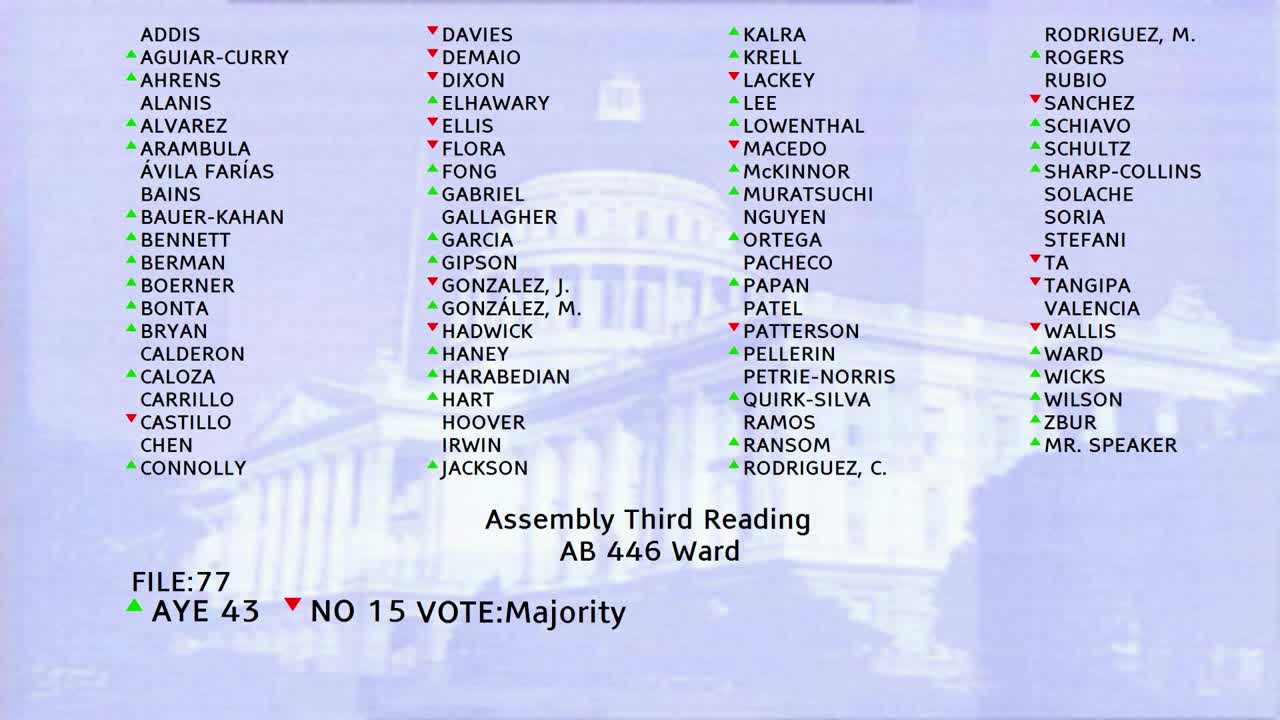 1MIN
Assembly Floor
 2MIN
Assembly Standing Committee on Appropriations
 22MIN
Assembly Standing Committee on Health
Bill Author

Bill Co-Author(s):