AB 560: Special education: resource specialists: special classes.
- Session Year: 2025-2026
- House: Assembly
- Latest Version Date: 2025-10-10
Current Status:
Passed
(2025-10-10: Chaptered by Secretary of State - Chapter 560, Statutes of 2025.)
Introduced
In Committee
Awaiting First Chamber Vote
Passed First Chamber
In Committee
Awaiting Second Chamber Vote
Passed Second Chamber
Enacted
(1)Existing law requires local educational agencies, as defined, to identify, locate, and assess individuals with exceptional needs and to provide those pupils with a free appropriate public education in the least restrictive environment, with special education and related services as reflected in an individualized education program. Existing law requires each special education local plan area to ensure that a continuum of program options is available to meet the needs of individuals with exceptional needs for special education and related services, as required by federal law. Existing law requires the continuum of program options to include, among other options, a resource specialist program, designated instruction and services, and special classes, as provided.
Existing law requires the resource specialist program to provide, among other things, monitoring of pupil progress on a regular basis, participation in the review and revision of individualized education programs, as appropriate, and referral of pupils who do not demonstrate appropriate progress to the individualized education program team. Existing law requires caseloads for resource specialists to be stated in specified local policies and in accordance with regulations established by the State Board of Education, and prohibits a resource specialist from having a caseload that exceeds 28 pupils.
This bill would require local educational agencies to take all reasonable steps to distribute the workload associated with initial assessments across all resource specialists employed by the local educational agency in an equal manner, unless otherwise collectively bargained. By imposing additional duties on local officials, the bill would impose a state-mandated local program.
(2)Existing law requires special classes that serve pupils with similar and more intensive educational needs to be available, and authorizes special classes to enroll pupils only when the nature or severity of the disability of the individual with exceptional needs is such that education in the regular classes with the use of supplementary aids and services, including curriculum modification and behavioral support, cannot be achieved satisfactorily.
This bill would require the Superintendent of Public Instruction, on or before July 1, 2027, to recommend a maximum adult-to-pupil staffing ratio for those special classes, as provided, and to post the recommendation on the departments internet website. The bill would require the Superintendent to report their recommendations to the appropriate policy and fiscal committees of the Legislature and the state board on or before April 1, 2027, as specified.
(3)The California Constitution requires the state to reimburse local agencies and school districts for certain costs mandated by the state. Statutory provisions establish procedures for making that reimbursement.
This bill would provide that, if the Commission on State Mandates determines that the bill contains costs mandated by the state, reimbursement for those costs shall be made pursuant to the statutory provisions noted above.
(1)Existing law requires local educational agencies, as defined, to identify, locate, and assess individuals with exceptional needs and to provide those pupils with a free appropriate public education in the least restrictive environment, with special education and related services as reflected in an individualized education program. Existing law requires each special education local plan area to ensure that a continuum of program options is available to meet the needs of individuals with exceptional needs for special education and related services, as required by federal law. Existing law requires the continuum of program options to include, among other options, a resource specialist program, designated instruction and services, and special classes, as provided.
Existing law requires the resource specialist program to provide, among other things, monitoring of pupil progress on a regular basis, participation in the review and revision of individualized education programs, as appropriate, and referral of pupils who do not demonstrate appropriate progress to the individualized education program team. Existing law requires caseloads for resource specialists to be stated in specified local policies and in accordance with regulations established by the State Board of Education, and prohibits a resource specialist from having a caseload that exceeds 28 pupils.
This bill would require local educational agencies to take all reasonable steps to distribute the workload associated with initial assessments across all resource specialists employed by the local educational agency in an equal manner, unless otherwise collectively bargained. By imposing additional duties on local officials, the bill would impose a state-mandated local program.
(2)Existing law requires special classes that serve pupils with similar and more intensive educational needs to be available, and authorizes special classes to enroll pupils only when the nature or severity of the disability of the individual with exceptional needs is such that education in the regular classes with the use of supplementary aids and services, including curriculum modification and behavioral support, cannot be achieved satisfactorily.
This bill would require the Superintendent of Public Instruction, on or before July 1, 2027, to establish recommend a maximum recommended adult-to-pupil staffing ratio for those special classes, as provided, and to post the recommendation on the departments internet website. The bill would require the Superintendent to report their recommendations to the appropriate policy and fiscal committees of the Legislature and the state board on or before April 1, 2027, as specified.
(3)The California Constitution requires the state to reimburse local agencies and school districts for certain costs mandated by the state. Statutory provisions establish procedures for making that reimbursement.
This bill would provide that, if the Commission on State Mandates determines that the bill contains costs mandated by the state, reimbursement for those costs shall be made pursuant to the statutory provisions noted above.
(1)Existing law requires local educational agencies, as defined, to identify, locate, and assess individuals with exceptional needs and to provide those pupils with a free appropriate public education in the least restrictive environment, with special education and related services as reflected in an individualized education program. Existing law requires each special education local plan area to ensure that a continuum of program options is available to meet the needs of individuals with exceptional needs for special education and related services, as required by federal law. Existing law requires the continuum of program options to include, among other options, a resource specialist program, designated instruction and services, and special classes, as provided.
Existing law requires the resource specialist program to provide, among other things, monitoring of pupil progress on a regular basis, participation in the review and revision of individualized education programs, as appropriate, and referral of pupils who do not demonstrate appropriate progress to the individualized education program team. Existing law requires caseloads for resource specialists to be stated in specified local policies and in accordance with regulations established by the State Board of Education, and prohibits a resource specialist from having a caseload that exceeds 28 pupils.
This bill would require local educational agencies to take all reasonable steps to distribute the workload associated with initial assessments across all resource specialists employed by the local educational agency in an equal manner, unless otherwise collectively bargained. By imposing additional duties on local officials, the bill would impose a state-mandated local program.
(2)Existing law requires special classes that serve pupils with similar and more intensive educational needs to be available, and authorizes special classes to enroll pupils only when the nature or severity of the disability of the individual with exceptional needs is such that education in the regular classes with the use of supplementary aids and services, including curriculum modification and behavioral support, cannot be achieved satisfactorily.
This bill would require the Superintendent of Public Instruction, on or before July 1, 2027, to establish a maximum recommended adult-to-pupil staffing ratio for those special classes, as provided, and to post the recommendation on the departments internet website. The bill would require the Superintendent to report their recommendations to the appropriate policy and fiscal committees of the Legislature and the state board on or before April 1, 2027, as specified.
(3)The California Constitution requires the state to reimburse local agencies and school districts for certain costs mandated by the state. Statutory provisions establish procedures for making that reimbursement.
This bill would provide that, if the Commission on State Mandates determines that the bill contains costs mandated by the state, reimbursement for those costs shall be made pursuant to the statutory provisions noted above.
(1)Existing law requires local educational agencies agencies, as defined, to identify, locate, and assess individuals with exceptional needs and to provide those pupils with a free appropriate public education in the least restrictive environment, with special education and related services as reflected in an individualized education program. Existing law requires each special education local plan area to ensure that a continuum of program options is available to meet the needs of individuals with exceptional needs for special education and related services, as required by federal law. Existing law requires the continuum of program options to include, among other options, a resource specialist program, designated instruction and services, and special classes, as provided.
This bill would require each public agency, on or before July 1, 2026, to establish a Special Education Team at the beginning of the school year at each schoolsite, as provided. The bill would require the Special Education Team to, among other things, hold at least one meeting per month for specified purposes, meet at least 2 times per year to focus on inclusive practices, as provided, and develop an annual calendar for individualized education program planning meetings. By imposing additional duties on local officials, the bill would impose a state-mandated local program.(2)Existing
Existing law requires the resource specialist program to provide, among other things, monitoring of pupil progress on a regular basis, participation in the review and revision of individualized education programs, as appropriate, and referral of pupils who do not demonstrate appropriate progress to the individualized education program team. Existing law requires caseloads for resource specialists to be stated in specified local policies and in accordance with regulations established by the State Board of Education, and prohibits a resource specialist from having a caseload that exceeds 28 pupils. Existing law prohibits the average caseload for language, speech, and hearing specialists in special education local plan areas from exceeding 55 cases, unless the local plan specifies a higher average caseload and the reasons for the greater average caseload.
This bill, commencing July 1, 2026, would require the resource specialist program to include conducting initial assessments and would instead prohibit a resource specialist from having a caseload that exceeds 20 pupils, including initial assessments. The bill, commencing July 1, 2026, would repeal the average caseload limit of 55 for language, speech, and hearing specialists and would instead establish various caseload limits for designated instruction and related services, as specified. By imposing additional duties on local officials, the bill would impose a state-mandated local program.This bill would require local educational agencies to take all reasonable steps to distribute the workload associated with initial assessments across all resource specialists employed by the local educational agency in an equal manner, unless otherwise collectively bargained. By imposing additional duties on local officials, the bill would impose a state-mandated local program.
(3)(2)Existing law requires special classes that serve pupils with similar and more intensive educational needs to be available, and authorizes special classes to enroll pupils only when the nature or severity of the disability of the individual with exceptional needs is such that education in the regular classes with the use of supplementary aids and services, including curriculum modification and behavioral support, cannot be achieved satisfactorily.
This bill, commencing July 1, 2026, would establish pupil-to-credentialed teacher class size ratios for certain pupils in special classes, as specified. To the extent the bill would impose additional duties on local officials, the bill would impose a state-mandated local program.This bill would require the Superintendent of Public Instruction, on or before July 1, 2027, to establish a maximum recommended adult-to-pupil staffing ratio for those special classes, as provided, and to post the recommendation on the departments internet website. The bill would require the Superintendent to report their recommendations to the appropriate policy and fiscal committees of the Legislature and the state board on or before April 1, 2027, as specified.
(4)(3)The California Constitution requires the state to reimburse local agencies and school districts for certain costs mandated by the state. Statutory provisions establish procedures for making that reimbursement.
This bill would provide that, if the Commission on State Mandates determines that the bill contains costs mandated by the state, reimbursement for those costs shall be made pursuant to the statutory provisions noted above.
(1)Existing law requires local educational agencies to identify, locate, and assess individuals with exceptional needs and to provide those pupils with a free appropriate public education in the least restrictive environment, with special education and related services as reflected in an individualized education program. Existing law requires each special education local plan area to ensure that a continuum of program options is available to meet the needs of individuals with exceptional needs for special education and related services, as required by federal law. Existing law requires the continuum of program options to include, among other options, a resource specialist program, designated instruction and services, and special classes, as provided.
This bill would require each public agency, on or before July 1, 2026, to establish a Special Education Team at the beginning of the school year at each schoolsite, as provided. The bill would require the Special Education Team to, among other things, hold at least one meeting per month for specified purposes, meet at least 2 times per year to focus on inclusive practices, as provided, and develop an annual calendar for individualized education program planning meetings. By imposing additional duties on local officials, the bill would impose a state-mandated local program.
(2)Existing law requires the resource specialist program to provide, among other things, monitoring of pupil progress on a regular basis, participation in the review and revision of individualized education programs, as appropriate, and referral of pupils who do not demonstrate appropriate progress to the individualized education program team. Existing law requires caseloads for resource specialists to be stated in specified local policies and in accordance with regulations established by the State Board of Education, and prohibits a resource specialist from having a caseload that exceeds 28 pupils. Existing law prohibits the average caseload for language, speech, and hearing specialists in special education local plan areas from exceeding 55 cases, unless the local plan specifies a higher average caseload and the reasons for the greater average caseload.
This bill, commencing July 1, 2026, would require the resource specialist program to include conducting initial assessments and would instead prohibit a resource specialist from having a caseload that exceeds 20 pupils, including initial assessments. The bill, commencing July 1, 2026, would repeal the average caseload limit of 55 for language, speech, and hearing specialists and would instead establish various caseload limits for designated instruction and related services, as specified. By imposing additional duties on local officials, the bill would impose a state-mandated local program.
(3)Existing law requires special classes that serve pupils with similar and more intensive educational needs to be available, and authorizes special classes to enroll pupils only when the nature or severity of the disability of the individual with exceptional needs is such that education in the regular classes with the use of supplementary aids and services, including curriculum modification and behavioral support, cannot be achieved satisfactorily.
This bill, commencing July 1, 2026, would establish pupil-to-credentialed teacher class size ratios for certain pupils in special classes, as specified. To the extent the bill would impose additional duties on local officials, the bill would impose a state-mandated local program.
(4)The California Constitution requires the state to reimburse local agencies and school districts for certain costs mandated by the state. Statutory provisions establish procedures for making that reimbursement.
This bill would provide that, if the Commission on State Mandates determines that the bill contains costs mandated by the state, reimbursement for those costs shall be made pursuant to the statutory provisions noted above.
Existing law expresses legislative findings and declarations regarding the rights of individuals with exceptional needs and the Master Plan for Special Education.This bill would make nonsubstantive changes to that provision.Existing law expresses legislative findings and declarations regarding the rights of individuals with exceptional needs and the Master Plan for Special Education.
This bill would make nonsubstantive changes to that provision.
(a)The resource specialist program shall provide, but not be limited to, all of the following:
(1)Provision for a resource specialist or specialists who shall provide instruction and services for those pupils whose needs have been identified in an individualized education program developed by the individualized education program team and who are assigned to regular classroom teachers for a majority of a schoolday.
(2)Provision of information and assistance to individuals with exceptional needs and their parents.
(3)Provision of consultation, resource information, and material regarding individuals with exceptional needs to their parents and to regular staff members.
(4)Coordination of special education services with the regular school programs for each individual with exceptional needs enrolled in the resource specialist program.
(5)Monitoring of pupil progress on a regular basis, participation in the review and revision of individualized education programs, as appropriate, and referral of pupils who do not demonstrate appropriate progress to the individualized education program team.
(6)Emphasis at the secondary school level on academic achievement, career and vocational development, and preparation for adult life.
(b)The resource specialist program shall be under the direction of a resource specialist who is a credentialed special education teacher, or who has a clinical services credential with a special class authorization, who has had three or more years of teaching experience, including both regular and special education teaching experience, as defined by rules and regulations of the Commission on Teacher Credentialing, and who has demonstrated the competencies for a resource specialist, as established by the Commission on Teacher Credentialing.
(c)Caseloads for resource specialists shall be stated in the local policies developed pursuant to Section 56195.8 and in accordance with regulations established by the board. A resource specialist shall not have a caseload that exceeds 28 pupils.
(d)Resource specialists shall not simultaneously be assigned to serve as resource specialists and to teach regular classes.
(e)Resource specialists shall not enroll a pupil for a majority of a schoolday without approval by the pupils individualized education program team.
(f)At least 80 percent of the resource specialists within a local plan shall be provided with an instructional aide.
(g)Local educational agencies shall take all reasonable steps to distribute the workload associated with initial assessments across all resource specialists employed by the local educational agency in an equal manner, unless otherwise collectively bargained.
SEC. 2.Section 56364.3 is added to the Education Code, to read:56364.3.(a)On or before July 1, 2027, the Superintendent shall recommend a maximum adult-to-pupil staffing ratio for special classes authorized pursuant to Section 56364.2 for pupils 3 to 22 years of age, inclusive, and post the recommendation on the departments internet website.
(b)In making the recommendation required pursuant to subdivision (a), the Superintendent shall do all of the following:
(1)(A)Consult with all of the following individuals:
(i)Current credentialed education specialists teaching in a special class setting. A majority of the individuals consulted pursuant to this paragraph shall meet this requirement.
(ii)Administrators and chief business officials serving at schoolsites, school districts, county offices of education, and special education local plan areas.
(iii)Paraprofessionals serving in special class settings.
(iv)Parents of pupils with exceptional needs who are served in special class settings.
(B)The individuals consulted pursuant to subparagraph (A) shall represent the states geographic diversity, including, but not limited to, rural, urban, and high-need regions.
(2)Consult with researchers and representatives with expertise in inclusive practices and advocates focused on equity and disability rights.
(3)Consider all of the following:
(A)The varying needs of pupils, including pupils with mild to moderate support needs and pupils with extensive support needs.
(B)The varying needs of pupils by age.
(C)The types of school settings, including preschools, elementary schools, secondary schools, and nonpublic schools.
(D)Existing practices among local educational agencies.
(E)Other states adult-to-pupil ratios for special classes.
(F)Other constraints, including, but not limited to, workforce and facility needs, and conditions in small and rural local educational agencies.
(G)The effects on the education of pupils with disabilities in the least restrictive environment, as required by the federal Individuals with Disabilities Education Act (20 U.S.C. Sec. 1400 et seq.).
(H)Determining appropriate staffing ratios to enhance pupil outcomes in accordance with the principles of the federal Individuals with Disabilities Education Act (20 U.S.C. Sec. 1400 et seq.) and state law.
(I)The supports needed for general education and special education educators to succeed in implementing inclusive models.
(c)Notwithstanding Section 10231.5 of the Government Code, the Superintendent shall report their recommendations to the appropriate policy and fiscal committees of the Legislature and the state board on or before April 1, 2027, consistent with the requirements of Section 9795 of the Government Code.
SEC. 3.If the Commission on State Mandates determines that this act contains costs mandated by the state, reimbursement to local agencies and school districts for those costs shall be made pursuant to Part 7 (commencing with Section 17500) of Division 4 of Title 2 of the Government Code.
(a)The resource specialist program shall provide, but not be limited to, all of the following:
(1)Provision for a resource specialist or specialists who shall provide instruction and services for those pupils whose needs have been identified in an individualized education program developed by the individualized education program team and who are assigned to regular classroom teachers for a majority of a schoolday.
(2)Provision of information and assistance to individuals with exceptional needs and their parents.
(3)Provision of consultation, resource information, and material regarding individuals with exceptional needs to their parents and to regular staff members.
(4)Coordination of special education services with the regular school programs for each individual with exceptional needs enrolled in the resource specialist program.
(5)Monitoring of pupil progress on a regular basis, participation in the review and revision of individualized education programs, as appropriate, and referral of pupils who do not demonstrate appropriate progress to the individualized education program team.
(6)Emphasis at the secondary school level on academic achievement, career and vocational development, and preparation for adult life.
(b)The resource specialist program shall be under the direction of a resource specialist who is a credentialed special education teacher, or who has a clinical services credential with a special class authorization, who has had three or more years of teaching experience, including both regular and special education teaching experience, as defined by rules and regulations of the Commission on Teacher Credentialing, and who has demonstrated the competencies for a resource specialist, as established by the Commission on Teacher Credentialing.
(c)Caseloads for resource specialists shall be stated in the local policies developed pursuant to Section 56195.8 and in accordance with regulations established by the board. A resource specialist shall not have a caseload that exceeds 28 pupils.
(d)Resource specialists shall not simultaneously be assigned to serve as resource specialists and to teach regular classes.
(e)Resource specialists shall not enroll a pupil for a majority of a schoolday without approval by the pupils individualized education program team.
(f)At least 80 percent of the resource specialists within a local plan shall be provided with an instructional aide.
(g)Local educational agencies shall take all reasonable steps to distribute the workload associated with initial assessments across all resource specialists employed by the local educational agency in an equal manner, unless otherwise collectively bargained.
SEC. 2.Section 56364.3 is added to the Education Code, to read:56364.3.(a)On or before July 1, 2027, the Superintendent shall establish recommend a maximum recommended adult-to-pupil staffing ratio for special classes authorized pursuant to Section 56364.2 for pupils 3 to 22 years of age, inclusive, and post the recommendation on the departments internet website.
(b)In establishing making the recommendation required pursuant to subdivision (a), the Superintendent shall do all of the following:
(1)(A)Consult with all of the following individuals:
(i)Current credentialed education specialists teaching in a special class setting. A majority of the individuals consulted pursuant to this paragraph shall meet this requirement.
(ii)Administrators and chief business officials serving at schoolsites, school districts, county offices of education, and special education local plan areas.
(iii)Paraprofessionals serving in special class settings.
(iv)Parents of pupils with exceptional needs who are served in special class settings.
(B)The individuals consulted pursuant to subparagraph (A) shall represent the states geographic diversity, including, but not limited to, rural, urban, and high-need regions.
(2)Consult with researchers and representatives with expertise in inclusive practices and advocates focused on equity and disability rights.
(3)Consider all of the following:
(A)The varying needs of pupils, including pupils with mild to moderate support needs and pupils with extensive support needs.
(B)The varying needs of pupils by age.
(C)The types of school settings, including preschools, elementary schools, secondary schools, and nonpublic schools.
(D)Existing practices among local educational agencies.
(E)Other states adult-to-pupil ratios for special classes.
(F)Other constraints, including, but not limited to, workforce and facility needs, and conditions in small and rural local educational agencies.
(G)The effects on the education of pupils with disabilities in the least restrictive environment, as required by the federal Individuals with Disabilities Education Act (20 U.S.C. Sec. 1400 et seq.).
(H)Determining appropriate staffing ratios to enhance pupil outcomes in accordance with the principles of the federal Individuals with Disabilities Education Act (20 U.S.C. Sec. 1400 et seq.) and state law.
(I)The supports needed for general education and special education educators to succeed in implementing inclusive models.
(c)Notwithstanding Section 10231.5 of the Government Code, the Superintendent shall report their recommendations to the appropriate policy and fiscal committees of the Legislature and the state board on or before April 1, 2027, consistent with the requirements of Section 9795 of the Government Code.
SEC. 3.If the Commission on State Mandates determines that this act contains costs mandated by the state, reimbursement to local agencies and school districts for those costs shall be made pursuant to Part 7 (commencing with Section 17500) of Division 4 of Title 2 of the Government Code.
(a)The resource specialist program shall provide, but not be limited to, all of the following:
(1)Provision for a resource specialist or specialists who shall provide instruction and services for those pupils whose needs have been identified in an individualized education program developed by the individualized education program team and who are assigned to regular classroom teachers for a majority of a schoolday.
(2)Provision of information and assistance to individuals with exceptional needs and their parents.
(3)Provision of consultation, resource information, and material regarding individuals with exceptional needs to their parents and to regular staff members.
(4)Coordination of special education services with the regular school programs for each individual with exceptional needs enrolled in the resource specialist program.
(5)Monitoring of pupil progress on a regular basis, participation in the review and revision of individualized education programs, as appropriate, and referral of pupils who do not demonstrate appropriate progress to the individualized education program team.
(6)Emphasis at the secondary school level on academic achievement, career and vocational development, and preparation for adult life.
(b)The resource specialist program shall be under the direction of a resource specialist who is a credentialed special education teacher, or who has a clinical services credential with a special class authorization, who has had three or more years of teaching experience, including both regular and special education teaching experience, as defined by rules and regulations of the Commission on Teacher Credentialing, and who has demonstrated the competencies for a resource specialist, as established by the Commission on Teacher Credentialing.
(c)Caseloads for resource specialists shall be stated in the local policies developed pursuant to Section 56195.8 and in accordance with regulations established by the board. No A resource specialist shall not have a caseload that exceeds 28 pupils.
(d)Resource specialists shall not simultaneously be assigned to serve as resource specialists and to teach regular classes.
(e)Resource specialists shall not enroll a pupil for a majority of a schoolday without approval by the pupils individualized education program team.
(f)At least 80 percent of the resource specialists within a local plan shall be provided with an instructional aide.
(g)Local educational agencies shall take all reasonable steps to distribute the workload associated with initial assessments across all resource specialists employed by the local educational agency in an equal manner, unless otherwise collectively bargained.
SEC. 2.Section 56364.3 is added to the Education Code, to read:56364.3.(a)On or before July 1, 2027, the Superintendent shall establish a maximum recommended adult-to-pupil staffing ratio for special classes authorized pursuant to Section 56364.2 for pupils 3 to 22 years of age, inclusive, and post the recommendation on the departments internet website.
(b)In establishing the recommendation required pursuant to subdivision (a), the Superintendent shall do both all of the following:
(1)(A)Consult with all of the following individuals:
(A)(i)Current credentialed education specialists teaching in a special class setting. A majority of the individuals consulted pursuant to this paragraph shall meet this requirement.
(B)(ii)Administrators and chief business officials serving at schoolsites, school districts, county offices of education, and special education local plan areas.
(C)(iii)Paraprofessionals serving in special class settings.
(D)(iv)Parents of pupils with exceptional needs who are served in special class settings.
(B)The individuals consulted pursuant to subparagraph (A) shall represent the states geographic diversity, including, but not limited to, rural, urban, and high-need regions.
(2)Consult with researchers and representatives with expertise in inclusive practices and advocates focused on equity and disability rights.
(2)(3)Consider all of the following:
(A)The varying needs of pupils, including pupils with mild to moderate support needs and pupils with extensive support needs.
(B)The varying needs of pupils by age.
(C)The types of school settings, including preschools, elementary schools, secondary schools, and nonpublic schools.
(D)Existing practices among local educational agencies.
(E)Other states adult-to-pupil ratios for special classes.
(F)Other constraints, including, but not limited to, workforce and facility needs, and conditions in small and rural local educational agencies.
(G)The effects on the education of pupils with disabilities in the least restrictive environment, as required by the federal Individuals with Disabilities Education Act (20 U.S.C. Sec. 1400 et seq.).
(H)Determining appropriate staffing ratios to enhance pupil outcomes in accordance with the principles of the federal Individuals with Disabilities Education Act (20 U.S.C. Sec. 1400 et seq.) and state law.
(I)The supports needed for general and special educators to succeed in implementing inclusive models.
(c)Notwithstanding Section 10231.5 of the Government Code, the Superintendent shall report their recommendations to the appropriate policy and fiscal committees of the Legislature and the state board on or before April 1, 2027, consistent with the requirements of Section 9795 of the Government Code.
SEC. 3.If the Commission on State Mandates determines that this act contains costs mandated by the state, reimbursement to local agencies and school districts for those costs shall be made pursuant to Part 7 (commencing with Section 17500) of Division 4 of Title 2 of the Government Code.
(a)The resource specialist program shall provide, but not be limited to, all of the following:
(1)Provision for a resource specialist or specialists who shall provide instruction and services for those pupils whose needs have been identified in an individualized education program developed by the individualized education program team and who are assigned to regular classroom teachers for a majority of a schoolday.
(2)Provision of information and assistance to individuals with exceptional needs and their parents.
(3)Provision of consultation, resource information, and material regarding individuals with exceptional needs to their parents and to regular staff members.
(4)Coordination of special education services with the regular school programs for each individual with exceptional needs enrolled in the resource specialist program.
(5)Monitoring of pupil progress on a regular basis, participation in the review and revision of individualized education programs, as appropriate, and referral of pupils who do not demonstrate appropriate progress to the individualized education program team.
(6)Emphasis at the secondary school level on academic achievement, career and vocational development, and preparation for adult life.
(b)The resource specialist program shall be under the direction of a resource specialist who is a credentialed special education teacher, or who has a clinical services credential with a special class authorization, who has had three or more years of teaching experience, including both regular and special education teaching experience, as defined by rules and regulations of the Commission on Teacher Credentialing, and who has demonstrated the competencies for a resource specialist, as established by the Commission on Teacher Credentialing.
(c)Caseloads for resource specialists shall be stated in the local policies developed pursuant to Section 56195.8 and in accordance with regulations established by the board. No resource specialist shall have a caseload which that exceeds 28 pupils.
(d)Resource specialists shall not simultaneously be assigned to serve as resource specialists and to teach regular classes.
(e)Resource specialists shall not enroll a pupil for a majority of a schoolday without approval by the pupils individualized education program team.
(f)At least 80 percent of the resource specialists within a local plan shall be provided with an instructional aide.
(g)This section shall become inoperative on July 1, 2026, and, as of January 1, 2027, is repealed.(g)Local educational agencies shall take all reasonable steps to distribute the workload associated with initial assessments across all resource specialists employed by the local educational agency in an equal manner, unless otherwise collectively bargained.
SEC. 2.Section 56362 is added to the Education Code, to read:56362.(a)The resource specialist program shall provide, but not be limited to, all of the following:(1)Provision for a resource specialist or specialists who shall provide instruction and services for those pupils whose needs have been identified in an individualized education program developed by the individualized education program team and who are assigned to regular classroom teachers for a majority of a schoolday.(2)Provision of information and assistance to individuals with exceptional needs and their parents.(3)Provision of consultation, resource information, and material regarding individuals with exceptional needs to their parents and to regular staff members.(4)Coordination of special education services with the regular school programs for each individual with exceptional needs enrolled in the resource specialist program.(5)Monitoring of pupil progress on a regular basis, participation in the review and revision of individualized education programs, as appropriate, and referral of pupils who do not demonstrate appropriate progress to the individualized education program team.(6)Emphasis at the secondary school level on academic achievement, career and vocational development, and preparation for adult life.(7)Conducting initial assessments.(b)The resource specialist program shall be under the direction of a resource specialist who is a credentialed special education teacher, or who has a clinical services credential with a special class authorization, who has had three or more years of teaching experience, including both regular and special education teaching experience, as defined by rules and regulations of the Commission on Teacher Credentialing, and who has demonstrated the competencies for a resource specialist, as established by the Commission on Teacher Credentialing.(c)Caseloads for resource specialists shall be stated in the local policies developed pursuant to Section 56195.8 and in accordance with regulations established by the board. A resource specialist shall not have a caseload that exceeds 20 pupils, including initial assessments.(d)Resource specialists shall not simultaneously be assigned to serve as resource specialists and to teach regular classes.(e)Resource specialists shall not enroll a pupil for a majority of a schoolday without approval by the pupils individualized education program team.(f)At least 80 percent of the resource specialists within a local plan shall be provided with an instructional aide.(g)This section shall become operative on July 1, 2026.SEC. 3.Section 56363.3 of the Education Code is amended to read:56363.3.(a)The average caseload for language, speech, and hearing specialists in special education local plan areas shall not exceed 55 cases, unless the local plan specifies a higher average caseload and the reasons for the greater average caseload.(b)This section shall become inoperative on July 1, 2026, and, as of January 1, 2027, is repealed.SEC. 4.Section 56363.3 is added to the Education Code, to read:56363.3.(a)Notwithstanding any other law, the following designated instruction and related services and caseload limits shall apply to a public agency:(1)For speech and language specialists, as follows:(A)For early education services pursuant to Chapter 4.4 (commencing with Section 56425), not more than 15 pupils.(B)For early education services pursuant to Chapter 4.45 (commencing with Section 56440), not more than 25 pupils.(C)For pupils in transitional kindergarten, kindergarten, or any of grades 1 to 12, inclusive, not more than 40 pupils.(2)For adapted physical education, not more than 45 pupils.(3)For psychological services, as follows:(A)For assessment caseload, including gifted and talented education, not more than 45 pupils.(B)For counseling, not more than 22 pupils.(4)For hearing itinerant, not more than 12 pupils.(5)For orientation and mobility, not more than 12 pupils.(6)For inclusion specialists, not more than 10 pupils.(b)This section shall become operative on July 1, 2026.SEC. 5.Section 56364 is added to the Education Code, to read:56364.(a)On or before July 1, 2026, each public agency shall establish a Special Education Team at the beginning of the school year at each schoolsite composed of a site administrator and all schoolsite special education unit members, including support members.(b)Each Special Education Team shall hold at least one meeting per month for purposes of discussing updates within the special education unit, conducting logistical planning as it relates to scheduling individualized education program meetings, and reviewing the progress of individual pupils with an individualized education program.(c)(1)Each Special Education Team shall meet at least two times per year to focus on inclusive practices, to be known as inclusive practice meetings, which may count a monthly Special Education Team meeting for purposes of subdivision (b). The inclusive practice meetings shall include at least one general education teacher, selected by the schoolsites credentialed employees, and shall include planning for all of the following:(A)The distribution of any individualized education program summary documents to all general education teachers.(B)The placement of pupils with an individualized education program for the master schedule planning.(C)The inclusion of pupils with an individualized education program in activities, including, but not limited to, field trips and assemblies.(2)The first inclusive practice meeting shall be held within the first month of the school year and the second meeting shall be held from March 1 to May 1, inclusive.(d)Each Special Education Team shall develop an annual calendar for individualized education program planning meetings. To the extent possible, individualized education program planning meetings shall be scheduled by considering the schedules and needs of pupils, teachers, other staff, and parents or legal guardians.SEC. 6.Section 56364.2 of the Education Code is amended to read:56364.2.(a)Special classes that serve pupils with similar and more intensive educational needs shall be available. The special classes may enroll pupils only when the nature or severity of the disability of the individual with exceptional needs is such that education in the regular classes with the use of supplementary aids and services, including curriculum modification and behavioral support, cannot be achieved satisfactorily. These requirements also apply to separate schooling, or other removal of individuals with exceptional needs from the regular educational environment.(b)In providing or arranging for the provision of activities, each public agency shall ensure that each individual with exceptional needs participates in those activities with nondisabled pupils to the maximum extent appropriate to the needs of the individual with exceptional needs, including nonacademic and extracurricular services and activities. Special classes shall meet standards adopted by the board.(c)(1)Notwithstanding any other law, commencing July 1, 2026, special classes pursuant to this section shall comply with the following pupil-to-credentialed teacher class size ratios:(A)For special classes serving pupils younger than five years of age:(i)For intensive, 6 to 1.(ii)For nonintensive, 10 to 1.(B)For special classes serving pupils 5 years of age to 22 years of age, inclusive:(i)For autism, 6 to 1.(ii)For moderate-severe, 8 to 1.(iii)For mild-moderate, 10 to 1.(iv)For blended, 12 to 1.(v)For emotionally disturbed, 6 to 1.(vi)For low incidence, as follows:(I)For hard-of-hearing or deaf, 8 to 1.(II)For low vision and blind: 8 to 1.(III)For deaf and blind: 6 to 1.(IV)For orthopedically challenged: 8 to 1.(2)The ratios prescribed in paragraph (1) shall apply to all pupils for whom ongoing direct service or consultation is provided, including identified pupils with an individualized educational program and nonidentified pupils, and shall be enforced on a per-class basis.(d)This section shall only apply to special education local plan areas that have had a revised local plan approved pursuant to Section 56836.03.SEC. 7.Section 56441.7 of the Education Code is amended to read:56441.7.(a)(1)The maximum caseload for a speech and language specialist providing services exclusively to individuals with exceptional needs, between the ages of three and five years, inclusive, as defined in Section 56441.11 or 56026, shall not exceed a count of 40.(2)Paragraph (1) shall not apply on and after July 1, 2026, and as of that date the maximum caseload shall be as prescribed pursuant to Section 56363.3.(b)The superintendent shall issue caseload guidelines or proposed regulations to local educational agencies for individuals with exceptional needs between the ages of three and five years, inclusive, by January 1, 1988.SEC. 2.Section 56364.3 is added to the Education Code, to read:56364.3.(a)On or before July 1, 2027, the Superintendent shall establish a maximum recommended adult-to-pupil staffing ratio for special classes authorized pursuant to Section 56364.2 for pupils 3 to 22 years of age, inclusive, and post the recommendation on the departments internet website.
(b)In establishing the recommendation required pursuant to subdivision (a), the Superintendent shall do both of the following:
(1)Consult with all of the following individuals:
(A)Current credentialed education specialists teaching in a special class setting. A majority of the individuals consulted pursuant to this paragraph shall meet this requirement.
(B)Administrators serving at schoolsites, school districts, county offices of education, and special education local plan areas.
(C)Paraprofessionals serving in special class settings.
(D)Parents of pupils with exceptional needs who are served in special class settings.
(2)Consider all of the following:
(A)The varying needs of pupils, including pupils with mild to moderate support needs and pupils with extensive support needs.
(B)The varying needs of pupils by age.
(C)The types of school settings, including preschools, elementary schools, secondary schools, and nonpublic schools.
(D)Existing practices among local educational agencies.
(E)Other states adult-to-pupil ratios for special classes.
(F)Other constraints, including, but not limited to, workforce and facility needs, and conditions in small and rural local educational agencies.
(G)The effects on the education of pupils with disabilities in the least restrictive environment, as required by the federal Individuals with Disabilities Education Act (20 U.S.C. Sec. 1400 et seq.).
(c)Notwithstanding Section 10231.5 of the Government Code, the Superintendent shall report their recommendations to the appropriate policy and fiscal committees of the Legislature and the state board on or before April 1, 2027, consistent with the requirements of Section 9795 of the Government Code.
SEC. 8.SEC. 3.If the Commission on State Mandates determines that this act contains costs mandated by the state, reimbursement to local agencies and school districts for those costs shall be made pursuant to Part 7 (commencing with Section 17500) of Division 4 of Title 2 of the Government Code.
(a)The resource specialist program shall provide, but not be limited to, all of the following:
(1)Provision for a resource specialist or specialists who shall provide instruction and services for those pupils whose needs have been identified in an individualized education program developed by the individualized education program team and who are assigned to regular classroom teachers for a majority of a schoolday.
(2)Provision of information and assistance to individuals with exceptional needs and their parents.
(3)Provision of consultation, resource information, and material regarding individuals with exceptional needs to their parents and to regular staff members.
(4)Coordination of special education services with the regular school programs for each individual with exceptional needs enrolled in the resource specialist program.
(5)Monitoring of pupil progress on a regular basis, participation in the review and revision of individualized education programs, as appropriate, and referral of pupils who do not demonstrate appropriate progress to the individualized education program team.
(6)Emphasis at the secondary school level on academic achievement, career and vocational development, and preparation for adult life.
(b)The resource specialist program shall be under the direction of a resource specialist who is a credentialed special education teacher, or who has a clinical services credential with a special class authorization, who has had three or more years of teaching experience, including both regular and special education teaching experience, as defined by rules and regulations of the Commission on Teacher Credentialing, and who has demonstrated the competencies for a resource specialist, as established by the Commission on Teacher Credentialing.
(c)Caseloads for resource specialists shall be stated in the local policies developed pursuant to Section 56195.8 and in accordance with regulations established by the board. No resource specialist shall have a caseload which exceeds 28 pupils.
(d)Resource specialists shall not simultaneously be assigned to serve as resource specialists and to teach regular classes.
(e)Resource specialists shall not enroll a pupil for a majority of a schoolday without approval by the pupils individualized education program team.
(f)At least 80 percent of the resource specialists within a local plan shall be provided with an instructional aide.
(g)This section shall become inoperative on July 1, 2026, and, as of January 1, 2027, is repealed.
SEC. 2.Section 56362 is added to the Education Code, to read:56362.(a)The resource specialist program shall provide, but not be limited to, all of the following:
(1)Provision for a resource specialist or specialists who shall provide instruction and services for those pupils whose needs have been identified in an individualized education program developed by the individualized education program team and who are assigned to regular classroom teachers for a majority of a schoolday.
(2)Provision of information and assistance to individuals with exceptional needs and their parents.
(3)Provision of consultation, resource information, and material regarding individuals with exceptional needs to their parents and to regular staff members.
(4)Coordination of special education services with the regular school programs for each individual with exceptional needs enrolled in the resource specialist program.
(5)Monitoring of pupil progress on a regular basis, participation in the review and revision of individualized education programs, as appropriate, and referral of pupils who do not demonstrate appropriate progress to the individualized education program team.
(6)Emphasis at the secondary school level on academic achievement, career and vocational development, and preparation for adult life.
(7)Conducting initial assessments.
(b)The resource specialist program shall be under the direction of a resource specialist who is a credentialed special education teacher, or who has a clinical services credential with a special class authorization, who has had three or more years of teaching experience, including both regular and special education teaching experience, as defined by rules and regulations of the Commission on Teacher Credentialing, and who has demonstrated the competencies for a resource specialist, as established by the Commission on Teacher Credentialing.
(c)Caseloads for resource specialists shall be stated in the local policies developed pursuant to Section 56195.8 and in accordance with regulations established by the board. A resource specialist shall not have a caseload that exceeds 20 pupils, including initial assessments.
(d)Resource specialists shall not simultaneously be assigned to serve as resource specialists and to teach regular classes.
(e)Resource specialists shall not enroll a pupil for a majority of a schoolday without approval by the pupils individualized education program team.
(f)At least 80 percent of the resource specialists within a local plan shall be provided with an instructional aide.
(g)This section shall become operative on July 1, 2026.
SEC. 3.Section 56363.3 of the Education Code is amended to read:56363.3.(a)The average caseload for language, speech, and hearing specialists in special education local plan areas shall not exceed 55 cases, unless the local plan specifies a higher average caseload and the reasons for the greater average caseload.
(b)This section shall become inoperative on July 1, 2026, and, as of January 1, 2027, is repealed.
SEC. 4.Section 56363.3 is added to the Education Code, to read:56363.3.(a)Notwithstanding any other law, the following designated instruction and related services and caseload limits shall apply to a public agency:
(1)For speech and language specialists, as follows:
(A)For early education services pursuant to Chapter 4.4 (commencing with Section 56425), not more than 15 pupils.
(B)For early education services pursuant to Chapter 4.45 (commencing with Section 56440), not more than 25 pupils.
(C)For pupils in transitional kindergarten, kindergarten, or any of grades 1 to 12, inclusive, not more than 40 pupils.
(2)For adapted physical education, not more than 45 pupils.
(3)For psychological services, as follows:
(A)For assessment caseload, including gifted and talented education, not more than 45 pupils.
(B)For counseling, not more than 22 pupils.
(4)For hearing itinerant, not more than 12 pupils.
(5)For orientation and mobility, not more than 12 pupils.
(6)For inclusion specialists, not more than 10 pupils.
(b)This section shall become operative on July 1, 2026.
SEC. 5.Section 56364 is added to the Education Code, to read:56364.(a)On or before July 1, 2026, each public agency shall establish a Special Education Team at the beginning of the school year at each schoolsite composed of a site administrator and all schoolsite special education unit members, including support members.
(b)Each Special Education Team shall hold at least one meeting per month for purposes of discussing updates within the special education unit, conducting logistical planning as it relates to scheduling individualized education program meetings, and reviewing the progress of individual pupils with an individualized education program.
(c)(1)Each Special Education Team shall meet at least two times per year to focus on inclusive practices, to be known as inclusive practice meetings, which may count a monthly Special Education Team meeting for purposes of subdivision (b). The inclusive practice meetings shall include at least one general education teacher, selected by the schoolsites credentialed employees, and shall include planning for all of the following:
(A)The distribution of any individualized education program summary documents to all general education teachers.
(B)The placement of pupils with an individualized education program for the master schedule planning.
(C)The inclusion of pupils with an individualized education program in activities, including, but not limited to, field trips and assemblies.
(2)The first inclusive practice meeting shall be held within the first month of the school year and the second meeting shall be held from March 1 to May 1, inclusive.
(d)Each Special Education Team shall develop an annual calendar for individualized education program planning meetings. To the extent possible, individualized education program planning meetings shall be scheduled by considering the schedules and needs of pupils, teachers, other staff, and parents or legal guardians.
SEC. 6.Section 56364.2 of the Education Code is amended to read:56364.2.(a)Special classes that serve pupils with similar and more intensive educational needs shall be available. The special classes may enroll pupils only when the nature or severity of the disability of the individual with exceptional needs is such that education in the regular classes with the use of supplementary aids and services, including curriculum modification and behavioral support, cannot be achieved satisfactorily. These requirements also apply to separate schooling, or other removal of individuals with exceptional needs from the regular educational environment.
(b)In providing or arranging for the provision of activities, each public agency shall ensure that each individual with exceptional needs participates in those activities with nondisabled pupils to the maximum extent appropriate to the needs of the individual with exceptional needs, including nonacademic and extracurricular services and activities. Special classes shall meet standards adopted by the board.
(c)(1)Notwithstanding any other law, commencing July 1, 2026, special classes pursuant to this section shall comply with the following pupil-to-credentialed teacher class size ratios:
(A)For special classes serving pupils younger than five years of age:
(i)For intensive, 6 to 1.
(ii)For nonintensive, 10 to 1.
(B)For special classes serving pupils 5 years of age to 22 years of age, inclusive:
(i)For autism, 6 to 1.
(ii)For moderate-severe, 8 to 1.
(iii)For mild-moderate, 10 to 1.
(iv)For blended, 12 to 1.
(v)For emotionally disturbed, 6 to 1.
(vi)For low incidence, as follows:
(I)For hard-of-hearing or deaf, 8 to 1.
(II)For low vision and blind: 8 to 1.
(III)For deaf and blind: 6 to 1.
(IV)For orthopedically challenged: 8 to 1.
(2)The ratios prescribed in paragraph (1) shall apply to all pupils for whom ongoing direct service or consultation is provided, including identified pupils with an individualized educational program and nonidentified pupils, and shall be enforced on a per-class basis.
(c)(d)This section shall only apply to special education local plan areas that have had a revised local plan approved pursuant to Section 56836.03.
SEC. 7.Section 56441.7 of the Education Code is amended to read:56441.7.(a)(1)The maximum caseload for a speech and language specialist providing services exclusively to individuals with exceptional needs, between the ages of three and five years, inclusive, as defined in Section 56441.11 or 56026, shall not exceed a count of 40.
(2)Paragraph (1) shall not apply on and after July 1, 2026, and as of that date the maximum caseload shall be as prescribed pursuant to Section 56363.3.
(b)The superintendent shall issue caseload guidelines or proposed regulations to local educational agencies for individuals with exceptional needs between the ages of three and five years, inclusive, by January 1, 1988.
SEC. 8.If the Commission on State Mandates determines that this act contains costs mandated by the state, reimbursement to local agencies and school districts for those costs shall be made pursuant to Part 7 (commencing with Section 17500) of Division 4 of Title 2 of the Government Code.
SECTION 1.Section 56000 of the Education Code is amended to read:56000.(a)The Legislature finds and declares that all individuals with exceptional needs have a right to participate in free appropriate public education and special educational instruction and services for these persons are needed in order to ensure the right to an appropriate educational opportunity to meet their unique needs.(b)The Legislature further finds and declares that special education is an integral part of the total public education system and provides education in a manner that promotes maximum interaction between children or youth with disabilities and children or youth who are not disabled, in a manner that is appropriate to the needs of both.(c)The Legislature further finds and declares that special education provides a full continuum of program options, including instruction conducted in the classroom, in the home, in hospitals and institutions, and in other settings, and instruction in physical education, to meet the educational and service needs in the least restrictive environment.(d)It is the intent of the Legislature to unify and improve special education programs in California under the flexible program design of the Master Plan for Special Education. It is the further intent of the Legislature to ensure that all individuals with exceptional needs are provided their rights to appropriate programs and services that are designed to meet their unique needs under the federal Individuals with Disabilities Education Act (20 U.S.C. Sec. 1400 et seq.).(e)It is the further intent of the Legislature that this part does not abrogate any rights provided to individuals with exceptional needs and their parents or guardians under the federal Individuals with Disabilities Education Act (20 U.S.C. Sec. 1400 et seq.). It is also the intent of the Legislature that this part does not set a higher standard of educating individuals with exceptional needs than that established by Congress under the Individuals with Disabilities Education Act (20 U.S.C. Sec. 1400 et seq.).(f)It is the further intent of the Legislature that the Master Plan for Special Education provide an educational opportunity for individuals with exceptional needs that is equal to or better than that provided prior to the implementation of programs under this part, including, but not limited to, those provided to individuals previously served in a development center for handicapped pupils.(g)It is the intent of the Legislature that the restructuring of special education programs as set forth in the Master Plan for Special Education be implemented in accordance with this part by all school districts and county offices of education.(a)The Legislature finds and declares that all individuals with exceptional needs have a right to participate in free appropriate public education and special educational instruction and services for these persons are needed in order to ensure the right to an appropriate educational opportunity to meet their unique needs.
(b)The Legislature further finds and declares that special education is an integral part of the total public education system and provides education in a manner that promotes maximum interaction between children or youth with disabilities and children or youth who are not disabled, in a manner that is appropriate to the needs of both.
(c)The Legislature further finds and declares that special education provides a full continuum of program options, including instruction conducted in the classroom, in the home, in hospitals and institutions, and in other settings, and instruction in physical education, to meet the educational and service needs in the least restrictive environment.
(d)It is the intent of the Legislature to unify and improve special education programs in California under the flexible program design of the Master Plan for Special Education. It is the further intent of the Legislature to ensure that all individuals with exceptional needs are provided their rights to appropriate programs and services which that are designed to meet their unique needs under the federal Individuals with Disabilities Education Act (20 U.S.C. Sec. 1400 et seq.).
(e)It is the further intent of the Legislature that this part does not abrogate any rights provided to individuals with exceptional needs and their parents or guardians under the federal Individuals with Disabilities Education Act (20 U.S.C. Sec. 1400 et seq.). It is also the intent of the Legislature that this part does not set a higher standard of educating individuals with exceptional needs than that established by Congress under the Individuals with Disabilities Education Act (20 U.S.C. Sec. 1400 et seq.).
(f)It is the further intent of the Legislature that the Master Plan for Special Education provide an educational opportunity for individuals with exceptional needs that is equal to or better than that provided prior to the implementation of programs under this part, including, but not limited to, those provided to individuals previously served in a development center for handicapped pupils.
(g)It is the intent of the Legislature that the restructuring of special education programs as set forth in the Master Plan for Special Education be implemented in accordance with this part by all school districts and county offices. offices of education.
|
Date
|
Status
|
|---|---|
| Oct 10, 2025 | Chaptered by Secretary of State - Chapter 560, Statutes of 2025. |
| Oct 10, 2025 | Approved by the Governor. |
| Sep 16, 2025 | Enrolled and presented to the Governor at 2 p.m. |
| Sep 9, 2025 | Senate amendments concurred in. To Engrossing and Enrolling. (Ayes 79. Noes 0. Page 3108.). |
| Sep 8, 2025 | In Assembly. Concurrence in Senate amendments pending. |
| Sep 8, 2025 | Read third time. Passed. Ordered to the Assembly. (Ayes 36. Noes 0. Page 2617.). |
| Sep 2, 2025 | Read second time. Ordered to third reading. |
| Aug 29, 2025 | Read second time and amended. Ordered returned to second reading. |
| Aug 29, 2025 | From committee: Amend, and do pass as amended. (Ayes 6. Noes 1.) (August 29). |
| Aug 18, 2025 | In committee: Referred to suspense file. |
| Jul 9, 2025 | From committee: Do pass and re-refer to Com. on APPR. (Ayes 7. Noes 0.) (July 9). Re-referred to Com. on APPR. |
| Jun 30, 2025 | From committee chair, with author's amendments: Amend, and re-refer to committee. Read second time, amended, and re-referred to Com. on ED. |
| Jun 11, 2025 | Referred to Com. on ED. |
| Jun 3, 2025 | In Senate. Read first time. To Com. on RLS. for assignment. |
| Jun 2, 2025 | Read third time. Passed. Ordered to the Senate. (Ayes 79. Noes 0. Page 1837.) |
| May 27, 2025 | Read second time. Ordered to third reading. |
| May 23, 2025 | From committee: Do pass. (Ayes 14. Noes 0.) (May 23). |
| May 14, 2025 | In committee: Set, first hearing. Referred to suspense file. |
| May 1, 2025 | From committee: Do pass and re-refer to Com. on APPR. (Ayes 9. Noes 0.) (April 30). Re-referred to Com. on APPR. |
| Apr 22, 2025 | Re-referred to Com. on ED. |
| Apr 21, 2025 | From committee chair, with author's amendments: Amend, and re-refer to Com. on ED. Read second time and amended. |
| Mar 25, 2025 | Re-referred to Com. on ED. |
| Mar 24, 2025 | Referred to Com. on ED. |
| Mar 24, 2025 | From committee chair, with author's amendments: Amend, and re-refer to Com. on ED. Read second time and amended. |
| Feb 13, 2025 | From printer. May be heard in committee March 15. |
| Feb 12, 2025 | Read first time. To print. |
|
Date
|
Description
|
Location
|
Votes
|
|
|---|---|---|---|---|
| Sep 9, 2025 | AB 560 Addis Concurrence in Senate Amendments | Assembly Floor |
Passed |
|
| Sep 8, 2025 | Assembly 3rd Reading AB560 Addis et al. By Cortese | Senate Floor |
Passed |
|
| Aug 29, 2025 | Do pass as amended | Senate Standing Committee on Appropriations |
Passed |
|
| Aug 18, 2025 | Placed on suspense file | Senate Standing Committee on Appropriations |
Passed |
|
| Jul 9, 2025 | Do pass, but first be re-referred to the Committee on [Appropriations] | Senate Standing Committee on Education |
Passed |
|
| Jun 2, 2025 | AB 560 Addis Assembly Third Reading | Assembly Floor |
Passed |
|
| May 23, 2025 | Do pass. | Assembly Standing Committee on Appropriations |
Passed |
|
| Apr 30, 2025 | Do pass and be re-referred to the Committee on [Appropriations] | Assembly Standing Committee on Education |
Passed |
This list shows positions taken on this bill by organizations on the date displayed, which is linked to the original source.
Positions by individuals are not included.
|
Organization
|
Position
|
Date
|
|---|---|---|
| California Federation Of Teachers | ** Support | |
| California School Employees Association | ** Support | |
| California State Council of Service Employees International Union | ** Support | |
| California State PTA | ** Support | |
| California Teachers Association (Co-Source) | ** Support | |
| Easterseals Northern California | ** Support | |
| Pangea's Civic Youth Activists | ** Support | |
| San Francisco Unified School District | ** Support | |
| Small School Districts Association | ** Against |
CONCURRENCE IN SENATE AMENDMENTS
CSA1 Bill Id:AB 560
Author:(Addis)
As Amended Ver:August 29, 2025
Majority vote
SUMMARY
Requires the Superintendent of Public Instruction (SPI), on or before July 1, 2027, to recommend a maximum adult-to-student staffing ratio for special day classes for students with disabilities ages three to 22, and requires local educational agencies (LEAs) and charter schools to take all reasonable steps to distribute workload associated with initial assessments across all resource specialists.
Senate Amendments
- Add chief business officials, researchers and representatives with expertise in inclusive practices, and advocates focused on equity and disability rights, to the list of individuals with whom the SPI would be required to consult, and requires that the individuals consulted represent the state's geographic diversity, including, but not limited to, rural, urban, and high-need regions.
- Requires the SPI to consider, in making this recommendation:
- Determining appropriate staffing ratios to enhance pupil outcomes in accordance with the principles of the federal Individuals with Disabilities Education Act (IDEA) and state law; and
- The supports needed for general and special educators to succeed in implementing inclusive models.
COMMENTS
Initial assessments conducted by RSP teachers. This bill requires LEAs to take all reasonable steps to distribute workload associated with initial assessments across all resource specialists employed by the LEA in an equal manner, unless otherwise collectively bargained.
Current law establishes a caseload limit of 28 students for resource specialists. Additionally, resource specialists conduct initial assessments to determine whether students qualify for special education services. As initial assessments are not included in the caseload limit under current law, the distribution of this workload is typically determined through collective bargaining. One school district's contract, for example, entitles resource specialists to up to eight hours of additional compensation per initial assessment conducted.
Adult-to-student ratios in special day classes. This bill requires, on or before July 1, 2027, the SPI to establish maximum recommended adult-to-student staffing ratios for special day classes for students ages three to 22, and to post this recommendation on the CDE website.
This bill also requires the SPI to take numerous factors into consideration when making this recommendation, including the varying needs of students depending upon their support needs, their ages, and instructional settings, as well as constraints such as workforce and facility needs, and conditions in small and rural LEAs. Finally, the SPI would have to take into account the effects of this policy on the education of students in inclusive settings.
Current law authorizes school districts to place students in special day classes that serve students with similar and more intensive educational needs, only when the nature or severity of the disability of the individual with exceptional needs is such that education in the regular classes with the use of supplementary aids and services, including curriculum modification and behavioral support, cannot be achieved satisfactorily.
Unlike for grades K-3, there is no class size or adult-to-student recommended ratio for special day classes. Each LEA or SELPA sets limits through collective bargaining. For example, one SELPA's plan lists ratios ranging from 1:10 for classes serving students with mild to moderate support needs, to 1:3 for classes serving students with extensive support needs. When certain total enrollments are reached, the process of opening a new class is explored. For preschool special day classes, a ratio of 1:5 is required, pursuant to existing law.
It is unclear how many states have adult-to-student ratio requirements for special day classes, but New York state regulations establish a maximum class size of 15 students, or 12 students in a state-operated or state-supported school, with specified exceptions.
According to the Author
"Assembly Bill 560, the Supporting California's Special Educators Act, ensures that students with diverse learning needs receive the individualized attention they deserve, as well as fostering an environment that supports our educators. Smaller class sizes will help enhance the quality of education for students, improve educational outcomes, and reduce the strain on our educational workforce. AB 560 will have a profoundly positive impact on both special educators and the students they serve."
Arguments in Support
The California Federation of Teachers writes, "The ability of our members to properly serve [students with IEPs is] often limited by underfunding, understaffing, and an overall unwillingness of our education infrastructure to treat the needs of exceptional students with the respect they deserve. We have heard countless stories of special day classes—those focusing solely on special education students—being eliminated, students with relatively severe disabilities being placed in crowded general education environments that clearly violate IEPs, and other harmful outcomes that at best limit the ability of these students to learn and at worst jeopardize their safety.
Our members who conduct initial assessments of students who may benefit from an IEP also report that this critically important—but very time-consuming—work is often not factored into their existing work load, forcing them into the impossible position into somehow doing multiple jobs at once at the expense of their own mental and even physical health. This highly concerning state of affairs also harms the student's right to an adequate IEP and further degrades educational quality. It also goes without saying that this situation contributes to burnout and severely complicates our ability to recruit and retain these essential workers.
AB 560 (Addis) approaches this problem by directing the California Department of Education to implement special day class size limits that would, if implemented, guarantee adequate attention to exceptional students and a reasonable workload for workers. Not only will this present a major step toward the quality of education the students deserve, it's also critically important for their safety and mental well-being."
Arguments in Opposition
The Small School Districts Association writes, "While we recognize the critical importance of providing high-quality educational environments for students with disabilities, we are concerned that even a "recommended" ratio—absent a formal mandate—could result in serious unintended consequences for local school districts, particularly those in small or rural communities. As we have seen with other state-issued "guidance," such recommendations often become de facto mandates, cited in collective bargaining negotiations as minimum acceptable staffing levels. This can place immense fiscal and operational strain on small and/or rural school districts with limited resources and unique circumstances.
AB 560 implicitly assumes a uniform solution for districts of all sizes and settings. However, the educational landscape across California is extraordinarily diverse. A staffing recommendation that may be appropriate in a large, urban district is often ill-suited to the realities of rural and remote communities. Small districts face challenges such as geographic isolation, small candidate pools, and fluctuating enrollment—all of which make rigid staffing benchmarks both impractical and financially unsustainable.
California has long championed the principle of local control, entrusting educators and school leaders to make decisions that best meet the needs of their communities. AB 560 moves in the opposite direction. By elevating a standardized staffing ratio—regardless of how it is labeled—it risks diminishing the ability of local leaders to make context-specific decisions in the best interest of their students. Local boards, administrators, and educators are best positioned to determine appropriate staffing levels based on the resources, programs, and student populations in their districts."
FISCAL COMMENTS
According to the Senate Appropriations Committee:
- The California Department of Education (CDE) estimates General Fund costs of $546,000 for 3.0 positions to investigate the anticipated increase in complaints to the department, and additional one-time General Fund costs of $350,000 to convene the workgroup to make recommendations. The estimate for the workgroup is based on previous efforts undertaken by CDE, including the workgroup established by the 2020 Budget Act to examine and propose alternate pathways to a high school diploma and the IEP Workgroup, also established by the 2020 Budget Act, which was tasked with designing a statewide IEP template.
- To the extent that the workgroup recommends staffing ratios for special classes that result in smaller class sizes for LEAs, this bill could result in additional, unknown Proposition 98 General Fund costs pressures for those LEAs to implement smaller class sizes. The associated costs would vary by LEA as they would depend on several factors, such as their existing staffing levels and availability of classrooms and infrastructure needs. It is unclear if these activities would constitute a reimbursable mandate.
VOTES:
ASM EDUCATION: 9-0-0
YES: Muratsuchi, Hoover, Addis, Alvarez, Bonta, Castillo, Garcia, Lowenthal, Patel
ASM APPROPRIATIONS: 14-0-1
YES: Wicks, Arambula, Calderon, Caloza, Dixon, Elhawary, Fong, Mark González, Hart, Pacheco, Pellerin, Solache, Ta, Tangipa
ABS, ABST OR NV: Sanchez
ASSEMBLY FLOOR: 79-0-0
YES: Addis, Aguiar-Curry, Ahrens, Alanis, Alvarez, Arambula, Ávila Farías, Bains, Bauer‑Kahan, Bennett, Berman, Boerner, Bonta, Bryan, Calderon, Caloza, Carrillo, Castillo, Chen, Connolly, Davies, DeMaio, Dixon, Elhawary, Ellis, Flora, Fong, Gabriel, Gallagher, Garcia, Gipson, Jeff Gonzalez, Mark González, Hadwick, Haney, Harabedian, Hart, Hoover, Irwin, Jackson, Kalra, Krell, Lackey, Lee, Lowenthal, Macedo, McKinnor, Muratsuchi, Nguyen, Ortega, Pacheco, Papan, Patel, Patterson, Pellerin, Petrie-Norris, Quirk-Silva, Ramos, Ransom, Celeste Rodriguez, Michelle Rodriguez, Rogers, Blanca Rubio, Sanchez, Schiavo, Schultz, Sharp-Collins, Solache, Soria, Stefani, Ta, Tangipa, Valencia, Wallis, Ward, Wicks, Wilson, Zbur, Rivas
UPDATED
VERSION: August 29, 2025
CONSULTANT: Tanya Lieberman / ED. / (916) 319-2087 FN: 0001867
SENATE RULES COMMITTEE Office of Senate Floor Analyses (916) 651-1520 Fax: (916) 327-4478 | AB 560 |
THIRD READING
Bill No: AB 560
Author: Addis (D), et al.
Amended: 8/29/25 in Senate
Vote: 21
SENATE EDUCATION COMMITTEE: 7-0, 7/9/25
AYES: Pérez, Ochoa Bogh, Cabaldon, Choi, Cortese, Gonzalez, Laird
SENATE APPROPRIATIONS COMMITTEE: 6-1, 8/29/25
AYES: Caballero, Seyarto, Cabaldon, Grayson, Richardson, Wahab
NOES: Dahle
ASSEMBLY FLOOR: 79-0, 6/2/25 - See last page for vote
SUBJECT: Special education: resource specialists: special classes
SOURCE: California Teachers Association
CFT - A Union of Educators & Classified Professionals
DIGEST:
This bill requires the Superintendent of Public Instruction (SPI), on or before July 1, 2027, to recommend a maximum adult-to-pupil staffing ratio for special classes serving students with disabilities ages 3 to 22, and requires local educational agencies (LEAs) to take all reasonable steps to equitably distribute the workload associated with initial special education assessments among all resource specialists, unless otherwise collectively bargained.
ANALYSIS:
Existing law:
- Establishes the federal Individuals with Disabilities Education Act (IDEA), which ensures that students with disabilities receive a free appropriate public education (FAPE) in the least restrictive environment. (20 United States Code (U.S.C.) § 1400 et seq.)
- Authorizes school districts to place students in special classes only when the nature or severity of the student’s disability precludes satisfactory education in a regular class with supplementary aids and services. (Education Code (EC) § 56364.2)
- Requires caseloads for Resource Support Program (RSP) teachers to be limited to 28 students, and prohibits RSP teachers from enrolling a student for a majority of the school day without individualized education program (IEP) team approval. (EC § 56362)
This bill:
1) Requires LEAs to take all reasonable steps to distribute the workload associated with initial special education assessments equally among all resource specialists employed by the LEA, unless otherwise collectively bargained.
2) Requires the SPI, on or before July 1, 2027, to recommend and post on the California Department of Education (CDE) website a maximum adult-to-pupil staffing ratio for special classes (special day classes) serving students with disabilities ages 3 to 22.
3) Requires the SPI, in establishing the recommended ratio, to:
a) Consult with a wide range of stakeholders, including education specialists, administrators, paraprofessionals, and parents—with a majority of consultees being current special class teachers—and ensure representation from geographically and demographically diverse communities.
b) Consult with researchers and disability rights advocates with expertise in inclusive practices.
c) Consider factors such as student support needs (mild to moderate vs. extensive), age ranges, educational settings (preschool, elementary, secondary, nonpublic schools), LEA practices, national models, workforce and facility constraints, conditions in small and rural LEAs, and the impact of staffing on inclusive education under the federal IDEA.
4) Requires the SPI to submit a report with their recommendations to the appropriate policy and fiscal committees of the Legislature and the State Board of Education by April 1, 2027.
Comments
- Need for this bill. According to the author, “Assembly Bill 560, the Supporting California’s Special Educators Act, ensures that students with diverse learning needs receive the individualized attention they deserve, as well as fostering an environment that supports our educators. Smaller class sizes will help enhance the quality of education for students, improve educational outcomes, and reduce the strain on our educational workforce. AB 560 will have a profoundly positive impact on both special educators and the students they serve.”
- Assessment workload is not accounted for in caseload limits. Resource specialists play a critical role in determining whether a student qualifies for special education services through initial assessments. These evaluations can be time-intensive and high-stakes, yet current law only limits instructional caseloads and does not address this additional workload. In practice, some districts offer supplemental compensation or rely on informal distribution practices, but implementation varies widely. By requiring LEAs to take reasonable steps to equitably distribute assessment duties, this bill seeks to create a more manageable and consistent workload across specialists, reducing burnout and ensuring timely assessments for students.
- Special class staffing varies widely, with no statewide guidance. Unlike general education classrooms, which have statutory caps or recommended ratios in the early grades, there is no statewide class size or adult-to-student ratio guidance for special day classes serving students with disabilities. Staffing ratios in these settings are typically determined locally and vary significantly by district, disability type, and setting. Some Special Education Local Plan Areas (SELPAs) set internal targets, but these may not reflect research-based recommendations or be responsive to broader inclusion goals. The absence of state guidance can result in overcrowded classes, inconsistent supports, and a misalignment between program design and student needs.
- A data-informed recommendation, not a mandate. Rather than establishing mandatory caps, this bill directs the SPI to develop a recommended staffing ratio for special classes, informed by consultation with educators, administrators, parents, and researchers. The required considerations—including the needs of students with varying disabilities, different age groups, and diverse instructional settings—reflect an understanding that “one size fits all” guidance may not be appropriate in special education. A recommendation, rather than a mandate, provides a research-informed benchmark for local decision-making without limiting LEA flexibility.
- Supporting inclusion through appropriate staffing. The bill appropriately links special class staffing ratios to federal requirements for education in the least restrictive environment (LRE). Research shows that successful inclusion depends not only on placing students with disabilities in general education classrooms, but on equipping educators with adequate adult support. Understaffed special classes can lead to inappropriate placements, as LEAs may lack the resources to support students in inclusive settings. By considering inclusive practices and educator support as part of the ratio-setting process, this bill underscores the interdependence of staffing adequacy and meaningful access to the general curriculum.
FISCAL EFFECT: Appropriation: No Fiscal Com.: Yes Local: Yes
According to the Senate Appropriations Committee:
- The California Department of Education (CDE) estimates General Fund costs of $546,000 for 3.0 positions to investigate the anticipated increase in complaints to the department, and additional one-time General Fund costs of $350,000 to convene the workgroup to make recommendations. The estimate for the workgroup is based on previous efforts undertaken by CDE, including the workgroup established by the 2020 Budget Act to examine and propose alternate pathways to a high school diploma and the IEP Workgroup, also established by the 2020 Budget Act, which was tasked with designing a statewide IEP template.
- To the extent that the workgroup recommends staffing ratios for special classes that result in smaller class sizes for LEAs, this bill could result in additional, unknown Proposition 98 General Fund costs pressures for those LEAs to implement smaller class sizes. The associated costs would vary by LEA as they would depend on several factors, such as their existing staffing levels and availability of classrooms and infrastructure needs. It is unclear if these activities would constitute a reimbursable mandate.
SUPPORT: (Verified 8/29/25)
California Teachers Association (Co-Source)
CFT - A Union of Educators & Classified Professionals (Co-Source)
California School Employees Association
California State Council of Service Employees International Union
California State PTA
Easterseals Northern California
Pangea's Civic Youth Activists
San Francisco Unified School District
OPPOSITION: (Verified 8/29/25)
Small School Districts Association
ASSEMBLY FLOOR: 79-0, 6/2/25
AYES: Addis, Aguiar-Curry, Ahrens, Alanis, Alvarez, Arambula, Ávila Farías, Bains, Bauer-Kahan, Bennett, Berman, Boerner, Bonta, Bryan, Calderon, Caloza, Carrillo, Castillo, Chen, Connolly, Davies, DeMaio, Dixon, Elhawary, Ellis, Flora, Fong, Gabriel, Gallagher, Garcia, Gipson, Jeff Gonzalez, Mark González, Hadwick, Haney, Harabedian, Hart, Hoover, Irwin, Jackson, Kalra, Krell, Lackey, Lee, Lowenthal, Macedo, McKinnor, Muratsuchi, Nguyen, Ortega, Pacheco, Papan, Patel, Patterson, Pellerin, Petrie-Norris, Quirk-Silva, Ramos, Ransom, Celeste Rodriguez, Michelle Rodriguez, Rogers, Blanca Rubio, Sanchez, Schiavo, Schultz, Sharp-Collins, Solache, Soria, Stefani, Ta, Tangipa, Valencia, Wallis, Ward, Wicks, Wilson, Zbur, Rivas
Prepared by: Ian Johnson / ED. / (916) 651-4105
9/2/25 17:59:55
**** END ****
SENATE COMMITTEE ON APPROPRIATIONS
Senator Anna Caballero, Chair
2025 - 2026 Regular Session
AB 560 (Addis) - Special education: resource specialists: special classes
Version: June 30, 2025 | Policy Vote: ED. 7 - 0 |
Urgency: No | Mandate: Yes |
Hearing Date: August 29, 2025 | Consultant: Lenin Del Castillo |
Bill Summary:
This bill requires the Superintendent of Public Instruction (SPI), on or before July 1, 2027, to establish a maximum recommended adult-to-pupil staffing ratio for special classes serving students with disabilities ages 3 to 22. This bill also requires local educational agencies (LEAs) to take all reasonable steps to equitably distribute the workload associated with initial special education assessments among all resource specialists, unless otherwise collectively bargained.
*********** ANALYSIS ADDENDUM – SUSPENSE FILE ***********
The following information is revised to reflect amendments
adopted by the committee on August 29, 2025
Fiscal Impact:
- The California Department of Education (CDE) estimates General Fund costs of $546,000 for 3.0 positions to investigate the anticipated increase in complaints to the department, and additional one-time General Fund costs of $350,000 to convene the workgroup to make recommendations. The estimate for the workgroup is based on previous efforts undertaken by CDE, including the workgroup established by the 2020 Budget Act to examine and propose alternate pathways to a high school diploma and the IEP Workgroup, also established by the 2020 Budget Act, which was tasked with designing a statewide IEP template.
- To the extent that the workgroup recommends staffing ratios for special classes that result in smaller class sizes for LEAs, this bill could result in additional, unknown Proposition 98 General Fund costs pressures for those LEAs to implement smaller class sizes. The associated costs would vary by LEA as they would depend on several factors, such as their existing staffing levels and availability of classrooms and infrastructure needs. It is unclear if these activities would constitute a reimbursable mandate.
Author Amendments:
Require the SPI to recommend, rather than establish, the maximum adult-to-pupil staffing ratio for special education classes, as specified.
-- END --
SENATE COMMITTEE ON APPROPRIATIONS
Senator Anna Caballero, Chair
2025 - 2026 Regular Session
AB 560 (Addis) - Special education: resource specialists: special classes
Version: June 30, 2025 | Policy Vote: ED. 7 - 0 |
Urgency: No | Mandate: Yes |
Hearing Date: August 18, 2025 | Consultant: Lenin Del Castillo |
Bill Summary:
This bill requires the Superintendent of Public Instruction (SPI), on or before July 1, 2027, to establish a maximum recommended adult-to-pupil staffing ratio for special classes serving students with disabilities ages 3 to 22. This bill also requires local educational agencies (LEAs) to take all reasonable steps to equitably distribute the workload associated with initial special education assessments among all resource specialists, unless otherwise collectively bargained.
Fiscal Impact:
- The California Department of Education (CDE) estimates General Fund costs of $546,000 for 3.0 positions to investigate the anticipated increase in complaints to the department, and additional one-time General Fund costs of $350,000 to convene the workgroup to make recommendations. The estimate for the workgroup is based on previous efforts undertaken by CDE, including the workgroup established by the 2020 Budget Act to examine and propose alternate pathways to a high school diploma and the IEP Workgroup, also established by the 2020 Budget Act, which was tasked with designing a statewide IEP template.
- To the extent that the workgroup recommends staffing ratios for special classes that result in smaller class sizes for LEAs, this bill could result in additional, unknown Proposition 98 General Fund costs pressures for those LEAs to implement smaller class sizes. The associated costs would vary by LEA as they would depend on several factors, such as their existing staffing levels and availability of classrooms and infrastructure needs. It is unclear if these activities would constitute a reimbursable mandate.
Background:
Existing law establishes the federal Individuals with Disabilities Education Act (IDEA), which ensures that students with disabilities receive a free appropriate public education (FAPE) in the least restrictive environment.
Existing law authorizes school districts to place students in special classes only when the nature or severity of the student’s disability precludes satisfactory education in a regular class with supplementary aids and services.
Proposed Law:
This bill requires LEAs to take all reasonable steps to distribute the workload associated with initial special education assessments equally among all resource specialists employed by the LEA, unless otherwise collectively bargained.
This bill requires the SPI, on or before July 1, 2027, to establish and post on CDE’s website a maximum recommended adult-to-pupil staffing ratio for special classes (special day classes) serving students with disabilities ages 3 to 22.
This bill requires the SPI, in establishing the recommended ratio, to do the following:
- Consult with a wide range of stakeholders, including education specialists, administrators, paraprofessionals, and parents, with a majority of consultees being current special class teachers and ensure representation from geographically and demographically diverse communities.
- Consult with researchers and disability rights advocates with expertise in inclusive practices.
- Consider factors such as student support needs (mild to moderate vs. extensive), age ranges, educational settings (preschool, elementary, secondary, nonpublic schools), LEA practices, national models, workforce and facility constraints, conditions in small and rural LEAs, and the impact of staffing on inclusive education under the federal IDEA.
This bill requires the SPI to submit a report with their recommendations to the appropriate policy and fiscal committees of the Legislature and the State Board of Education by April 1, 2027.
Staff Comments:
Currently, there is no statewide class size or adult-to-student ratio guidance for special day classes serving students with disabilities which is different from general education classrooms which have statutory caps or recommended ratios in the early grades. Staffing ratios in special education settings are typically determined locally and vary significantly by district, disability type, and setting. Some Special Education Local Plan Areas (SELPAs) set internal targets, but these may not reflect research-based recommendations or be responsive to broader inclusion goals. This bill directs the SPI to develop a recommended staffing ratio for special classes, informed by consultation with educators, administrators, parents, and researchers. It would also require the SPI to consider the needs of students with varying disabilities, different age groups, and diverse instructional settings. According to the author, “Assembly Bill 560, the Supporting California’s Special Educators Act, ensures that students with diverse learning needs receive the individualized attention they deserve, as well as fostering an environment that supports our educators. Smaller class sizes will help enhance the quality of education for students, improve educational outcomes, and reduce the strain on our educational workforce. AB 560 will have a profoundly positive impact on both special educators and the students they serve.”
-- END --
SENATE COMMITTEE ON EDUCATION
Senator Sasha Renée Pérez, Chair
2025 - 2026 Regular
Bill No: AB 560 Hearing Date: July 9, 2025
Author: | |||
Version: | June 30, 2025 | ||
Urgency: | No | Fiscal: | Yes |
Consultant: | Ian Johnson | ||
Subject: Special education: resource specialists: special classes.
SUMMARY
This bill requires the Superintendent of Public Instruction (SPI), on or before July 1, 2027, to establish a maximum recommended adult-to-pupil staffing ratio for special classes serving students with disabilities ages 3 to 22, and requires local educational agencies (LEAs) to take all reasonable steps to equitably distribute the workload associated with initial special education assessments among all resource specialists, unless otherwise collectively bargained.
BACKGROUND
Existing law:
- Establishes the federal Individuals with Disabilities Education Act (IDEA), which ensures that students with disabilities receive a free appropriate public education (FAPE) in the least restrictive environment. (20 U.S.C. § 1400 et seq.)
- Authorizes school districts to place students in special classes only when the nature or severity of the student’s disability precludes satisfactory education in a regular class with supplementary aids and services. (Education Code (EC) § 56364.2)
- Requires caseloads for Resource Support Program (RSP) teachers to be limited to 28 students, and prohibits RSP teachers from enrolling a student for a majority of the school day without individualized education program (IEP) team approval. (EC § 56362)
ANALYSIS
This bill:
- Requires LEAs to take all reasonable steps to distribute the workload associated with initial special education assessments equally among all resource specialists employed by the LEA, unless otherwise collectively bargained.
- Requires the SPI, on or before July 1, 2027, to establish and post on the California Department of Education (CDE) website a maximum recommended adult-to-pupil staffing ratio for special classes (special day classes) serving students with disabilities ages 3 to 22.
- Requires the SPI, in establishing the recommended ratio, to:
- Consult with a wide range of stakeholders, including education specialists, administrators, paraprofessionals, and parents—with a majority of consultees being current special class teachers—and ensure representation from geographically and demographically diverse communities.
- Consult with researchers and disability rights advocates with expertise in inclusive practices.
- Consider factors such as student support needs (mild to moderate vs. extensive), age ranges, educational settings (preschool, elementary, secondary, nonpublic schools), LEA practices, national models, workforce and facility constraints, conditions in small and rural LEAs, and the impact of staffing on inclusive education under the federal IDEA.
- Requires the SPI to submit a report with their recommendations to the appropriate policy and fiscal committees of the Legislature and the State Board of Education by April 1, 2027.
STAFF COMMENTS
- Need for the bill. According to the author, “Assembly Bill 560, the Supporting California’s Special Educators Act, ensures that students with diverse learning needs receive the individualized attention they deserve, as well as fostering an environment that supports our educators. Smaller class sizes will help enhance the quality of education for students, improve educational outcomes, and reduce the strain on our educational workforce. AB 560 will have a profoundly positive impact on both special educators and the students they serve.”
- Assessment workload is not accounted for in caseload limits. Resource specialists play a critical role in determining whether a student qualifies for special education services through initial assessments. These evaluations can be time-intensive and high-stakes, yet current law only limits instructional caseloads and does not address this additional workload. In practice, some districts offer supplemental compensation or rely on informal distribution practices, but implementation varies widely. By requiring LEAs to take reasonable steps to equitably distribute assessment duties, this bill seeks to create a more manageable and consistent workload across specialists, reducing burnout and ensuring timely assessments for students.
- Special class staffing varies widely, with no statewide guidance. Unlike general education classrooms, which have statutory caps or recommended ratios in the early grades, there is no statewide class size or adult-to-student ratio guidance for special day classes serving students with disabilities. Staffing ratios in these settings are typically determined locally and vary significantly by district, disability type, and setting. Some Special Education Local Plan Areas (SELPAs) set internal targets, but these may not reflect research-based recommendations or be responsive to broader inclusion goals. The absence of state guidance can result in overcrowded classes, inconsistent supports, and a misalignment between program design and student needs.
- A data-informed recommendation, not a mandate. Rather than establishing mandatory caps, this bill directs the SPI to develop a recommended staffing ratio for special classes, informed by consultation with educators, administrators, parents, and researchers. The required considerations—including the needs of students with varying disabilities, different age groups, and diverse instructional settings—reflect an understanding that “one size fits all” guidance may not be appropriate in special education. A recommendation, rather than a mandate, provides a research-informed benchmark for local decision-making without limiting LEA flexibility.
- Supporting inclusion through appropriate staffing. The bill appropriately links special class staffing ratios to federal requirements for education in the least restrictive environment (LRE). Research shows that successful inclusion depends not only on placing students with disabilities in general education classrooms, but on equipping educators with adequate adult support. Understaffed special classes can lead to inappropriate placements, as LEAs may lack the resources to support students in inclusive settings. By considering inclusive practices and educator support as part of the ratio-setting process, this bill underscores the interdependence of staffing adequacy and meaningful access to the general curriculum.
SUPPORT
California Teachers Association (co-sponsor)
CFT - A Union of Educators & Classified Professionals, AFT, AFL-CIO (co-sponsor)
California State Council of Service Employees International Union
California State PTA
San Francisco Unified School District
1 Individual
OPPOSITION
Small School Districts Association
-- END --
ASSEMBLY THIRD READING
ATR Bill Id:AB 560
Author:(Addis)
As Amended Ver:April 21, 2025
Majority vote
SUMMARY
Requires the Superintendent of Public Instruction (SPI), on or before July 1, 2027, to establish maximum recommended adult-to-student staffing ratios for special day classes for students with disabilities ages three to 22, and requires local educational agencies (LEAs) and charter schools to take all reasonable steps to distribute workload associated with initial assessments across all resource specialists.
Major Provisions
- Requires LEAs to take all reasonable steps to distribute workload associated with initial assessments across all resource specialists employed by the LEA in an equal manner, unless otherwise collectively bargained.
- Requires, on or before July 1, 2027, the SPI to establish a maximum recommended adult to student staffing ratios for special day classes for students ages 3 to 22, and post this recommendation on the California Department of Education (CDE) website.
- Requires the SPI, in establishing this recommendation, to:
- Consult with the following individuals:
- Current credentialed education specialists teaching in a special class setting. Requires that a majority of the individuals consulted meet this requirement;
- Administrators serving at school sites, school districts, county office of education (COE), and special education local plan areas (SELPAs);
- Paraprofessionals serving in special class settings; and
- Parents of students with exceptional needs who are served in special class settings.
- Consider the following:
- Varying needs of students, including students with mild to moderate support needs and students with extensive support needs;
- Varying needs of students by age;
- Types of school setting, including preschool, elementary, secondary schools, and nonpublic schools;
- Existing practices among LEAs;
- Other state's adult to student ratios for special classes;
- Constraints such as workforce and facility needs, and conditions in small and rural LEAs; and
- Effects on education of students with disabilities in the least restrictive environment, as required by the Individuals with Disabilities Education Act.
- Requires the SPI to report their recommendations to the appropriate policy and fiscal Committees of the Legislature, and the State Board of Education (SBE), by April 1, 2027.
COMMENTS
Initial assessments conducted by RSP teachers. This bill requires LEAs to take all reasonable steps to distribute workload associated with initial assessments across all resource specialists employed by the LEA in an equal manner, unless otherwise collectively bargained.
Current law establishes a caseload limit of 28 students for resource specialists. Additionally, resource specialists conduct initial assessments to determine whether students qualify for special education services. As initial assessments are not included in the caseload limit under current law, the distribution of this workload is typically determined through collective bargaining. One school district's contract, for example, entitles resource specialists to up to eight hours of additional compensation per initial assessment conducted.
Adult-to-student ratios in special day classes. This bill requires, on or before July 1, 2027, the SPI to establish maximum recommended adult-to-student staffing ratios for special day classes for students ages three to 22, and to post this recommendation on the CDE website.
This bill also requires the SPI to take numerous factors into consideration when making this recommendation, including the varying needs of students depending upon their support needs, their ages, and instructional settings, as well as constraints such as workforce and facility needs, and conditions in small and rural LEAs. Finally, the SPI would have to take into account the effects of this policy on the education of students in inclusive settings.
Current law authorizes school districts to place students in special day classes that serve students with similar and more intensive educational needs, only when the nature or severity of the disability of the individual with exceptional needs is such that education in the regular classes with the use of supplementary aids and services, including curriculum modification and behavioral support, cannot be achieved satisfactorily.
Unlike for grades K-3, there is no class size or adult-to-student recommended ratio for special day classes. Each LEA or SELPA sets limits through collective bargaining. For example, one SELPA's plan lists ratios ranging from 1:10 for classes serving students with mild to moderate support needs, to 1:3 for classes serving students with extensive support needs. When certain total enrollments are reached, the process of opening a new class is explored. For preschool special day classes, a ratio of 1:5 is required, pursuant to existing law.
It is unclear how many states have adult-to-student ratio requirements for special day classes, but New York state regulations establish a maximum class size of 15 students, or 12 students in a state-operated or state-supported school, with specified exceptions.
According to the Author
According to the author "Assembly Bill 560, the Supporting California's Special Educators Act, ensures that students with diverse learning needs receive the individualized attention they deserve, as well as fostering an environment that supports our educators. Smaller class sizes will help enhance the quality of education for students, improve educational outcomes, and reduce the strain on our educational workforce. AB 560 will have a profoundly positive impact on both special educators and the students they serve."
Arguments in Support
The California Federation of Teachers writes, "The ability of our members to properly serve [students with IEPs is] often limited by underfunding, understaffing, and an overall unwillingness of our education infrastructure to treat the needs of exceptional students with the respect they deserve. We have heard countless stories of special day classes—those focusing solely on special education students—being eliminated, students with relatively severe disabilities being placed in crowded general education environments that clearly violate IEPs, and other harmful outcomes that at best limit the ability of these students to learn and at worst jeopardize their safety.
Our members who conduct initial assessments of students who may benefit from an IEP also report that this critically important—but very time-consuming—work is often not factored into their existing work load, forcing them into the impossible position into somehow doing multiple jobs at once at the expense of their own mental and even physical health. This highly concerning state of affairs also harms the student's right to an adequate IEP and further degrades educational quality. It also goes without saying that this situation contributes to burnout and severely complicates our ability to recruit and retain these essential workers.
AB 560 (Addis) approaches this problem by directing the California Department of Education to implement special day class size limits that would, if implemented, guarantee adequate attention to exceptional students and a reasonable workload for workers. Not only will this present a major step toward the quality of education the students deserve, it's also critically important for their safety and mental well-being."
Arguments in Opposition
None on file
FISCAL COMMENTS
According to the Assembly Appropriations Committee, one-time General Fund costs of approximately $300,000 for the CDE to establish and publish maximum recommended adult-to-pupil staffing ratios for special day classes.
VOTES
ASM EDUCATION: 9-0-0
YES: Muratsuchi, Hoover, Addis, Alvarez, Bonta, Castillo, Garcia, Lowenthal, Patel
ASM APPROPRIATIONS: 14-0-1
YES: Wicks, Arambula, Calderon, Caloza, Dixon, Elhawary, Fong, Mark González, Hart, Pacheco, Pellerin, Solache, Ta, Tangipa
ABS, ABST OR NV: Sanchez
UPDATED
VERSION: April 21, 2025
CONSULTANT: Tanya Lieberman / ED. / (916) 319-2087 FN: 0000590
Date of Hearing: May 14, 2025
ASSEMBLY COMMITTEE ON APPROPRIATIONS
Buffy Wicks, Chair
ABPCA Bill Id:AB 560
Author:(Addis) – As Amended Ver:April 21, 2025
Policy Committee: | Education | Vote: | 9 - 0 |
|
| ||
|
|
Urgency: No State Mandated Local Program: Yes Reimbursable: Yes
SUMMARY:
This bill requires a local educational agency (LEA) to take all reasonable steps to distribute the workload associated with initial assessments across all resource specialists in an equal manner and requires the Superintendent of Public Instruction (SPI) to establish, on or before July 1, 2027, a maximum recommended adult-to-pupil staffing ratio for special day classes for pupils three to 22 years old and post the recommendation on the California Department of California’s (CDE) internet website.
FISCAL EFFECT:
One-time General Fund costs of approximately $300,000 for the CDE to establish and publish maximum recommended adult-to-pupil staffing ratios for special day classes.
COMMENTS:
- Purpose. According to the author:
Assembly Bill 560, the Supporting California’s Special Educators Act, ensures that students with diverse learning needs receive the individualized attention they deserve, as well as fostering an environment that supports our educators. Smaller class sizes will help enhance the quality of education for students, improve educational outcomes, and reduce the strain on our educational workforce. AB 560 will have a profoundly positive impact on both special educators and the students they serve.
- Background. Initial Assessments Conducted by Resource Specialist Program Teachers. Current law establishes a caseload limit of 28 students for resource specialists. Additionally, resource specialists conduct initial assessments to determine whether students qualify for special education services. The caseload limit under current law does not contemplate initial assessment workload, therefore the distribution of this workload is typically determined through collective bargaining. One school district’s contract, for example, entitles resource specialists to up to eight hours of additional compensation per initial assessment conducted.
This bill requires LEAs to take all reasonable steps to distribute workload associated with initial assessments across all resource specialists employed by the LEA in an equal manner, unless otherwise collectively bargained.
Adult-to-pupil Ratios in Special Day Classes. Current law authorizes school districts to place a students in special day classes that serve students with similar and more intensive educational needs than other students only when the nature or severity of the student’s disability is such that it precludes satisfactory education in the regular classes with the use of supplementary aids and services, including curriculum modification and behavioral support.
Unlike for kindergarten through third grade, there is no class size or adult-to-pupil ratio recommended for special day classes. Each LEA or Special Education Local Plan Area (SELPA) sets limits through collective bargaining. For example, one SELPA’s plan lists ratios ranging from 1:10 for classes serving students with mild to moderate support needs, to 1:3 for classes serving students with extensive support needs. When certain total enrollments are reached, the process of opening a new class is explored. For preschool special day classes, a ratio of 1:5 is required, pursuant to existing law.
This bill requires, on or before July 1, 2027, the SPI to establish a maximum recommended adult-to-student staffing ratio for special day classes for students ages three to 22, and post this recommendation on the CDE website.
Analysis Prepared by: Aaron Heredia / APPR. / (916) 319-2081
Date of Hearing: April 30, 2025
ASSEMBLY COMMITTEE ON EDUCATION
Al Muratsuchi, Chair
ABPCA Bill Id:AB 560 (
Author:Addis) – As Amended Ver:April 21, 2025
SUBJECT: Special education: Special Education Teams: resource specialists: special classes
SUMMARY: Requires the Superintendent of Public Instruction (SPI) on or before July,1 2027, to establish a maximum recommended adult-to-student staffing ratio for special day classes for students with disabilities ages 3 to 22, and requires local educational agencies (LEAs) and charter schools to take all reasonable steps to distribute workload associated with initial assessments across all resource specialists. Specifically, this bill:
- Requires LEAs to take all reasonable steps to distribute workload associated with initial assessments across all resource specialists employed by the LEA in an equal manner, unless otherwise collectively bargained.
- Requires, on or before July 1, 2027, the SPI to establish a maximum recommended adult to student staffing ratio for special day classes for students ages 3 to 22, and post this recommendation on the California Department of Education (CDE) website.
- Requires the SPI, in establishing this recommendation, to:
- Consult with the following individuals:
- Current credentialed education specialists teaching in a special class setting. Requires that a majority of the individuals consulted meet this requirement;
- Administrators serving at school sites, school districts, county office of education (COE), and special education local plan areas (SELPAs);
- Paraprofessionals serving in special class settings; and
- Parents of students with exceptional needs who are served in special class settings.
- Consider the following:
- Varying needs of students, including students with mild to moderate support needs and students with extensive support needs;
- Varying needs of students by age;
- Types of school setting, including preschool, elementary, secondary schools, and nonpublic schools;
- Existing practices among LEAs;
- Other state’s adult to student ratios for special classes;
- Constraints such as workforce and facility needs, and conditions in small and rural LEAs; and
- Effects on education of students with disabilities in the least restrictive environment, as required by the Individuals with Disabilities Education Act.
- Requires the SPI to report their recommendations to the appropriate policy and fiscal Committees of the Legislature, and the State Board of Education (SBE), by April 1, 2027.
EXISTING LAW:
- In federal law, establishes the IDEA, in order to ensure that all children with disabilities have a free appropriate public education (FAPE) that emphasizes special education and related services designed to meet their unique needs and prepare them for further education, employment, and independent living, among other purposes. (20 U.S.C. Section 1400)
- Requires that, in accordance with federal law, each public agency ensure the following to address the least restrictive environment for individuals with exceptional needs such that:
- To the maximum extent appropriate, individuals with exceptional needs, including children in public or private institutions or other care facilities, are educated with children who are nondisabled; and
- Special classes, separate schooling, or other removal of individuals with exceptional needs from the regular educational environment occurs only if the nature or severity of the disability is such that education in the regular classes with the use of supplementary aids and services cannot be achieved satisfactorily. (20 U.S.C. Section 1412)
- In federal law, the Rehabilitation Act of 1973, prohibits an individual with a disability, as defined, from, solely by reason of his or her disability, being excluded from the participation in, being denied the benefits of, or being subjected to discrimination under any program or activity receiving federal financial assistance. (29 U.S.C. Section 794)
- Requires that caseloads for resource specialists be stated in local policies and in accordance with regulations established by the SBE, and prohibits a resource specialist from having a caseload that exceeds 20 students. (Education Code (EC) 56362)
- Prohibits the average caseload for language, speech, and hearing specialists in SELPAs from exceeding 55 cases, unless the local plan specifies a higher average caseload and the reasons for the greater average caseload. (EC 56363.3)
- Authorizes special classes that serve students with similar and more intensive educational needs. States that the special classes may enroll students only when the nature or severity of the disability of the individual with exceptional needs is such that education in the regular classes with the use of supplementary aids and services, including curriculum modification and behavioral support, cannot be achieved satisfactorily. These requirements also apply to separate schooling, or other removal of individuals with exceptional needs from the regular educational environment. (EC 56364.2)
- Requires the allowable new building area for the purpose of providing special classes and resource specialist program (RSP) facilities to be negotiated and approved, with any necessary assistance to be provided by the Special Education Division of the CDE. Also requires the square footage allowances to be computed within the maximum square footage as set forth in a specified schedule. (EC 17047)
FISCAL EFFECT: This bill has been keyed a possible state-mandated local program by the Office of Legislative Counsel.
COMMENTS:
Need for the bill. According to the author “Assembly Bill 560, the Supporting California’s Special Educators Act, ensures that students with diverse learning needs receive the individualized attention they deserve, as well as fostering an environment that supports our educators. Smaller class sizes will help enhance the quality of education for students, improve educational outcomes, and reduce the strain on our educational workforce. AB 560 will have a profoundly positive impact on both special educators and the students they serve.”
Initial assessments conducted by RSP teachers. This bill requires LEAs to take all reasonable steps to distribute workload associated with initial assessments across all resource specialists employed by the LEA in an equal manner, unless otherwise collectively bargained.
Current law establishes a caseload limit of 28 students for resource specialists. Additionally, resource specialists conduct initial assessments to determine whether students qualify for special education services. As initial assessments are not included in the caseload limit under current law, the distribution of this workload is typically determined through collective bargaining. One school district’s contract, for example, entitles resource specialists to up to eight hours of additional compensation per initial assessment conducted.
Adult-to-student ratios in special day classes. This bill requires, on or before July 1, 2027, the SPI to establish a maximum recommended adult-to-student staffing ratio for special day classes for students ages 3 to 22, and post this recommendation on the CDE website.
This bill also requires the SPI to take numerous factors into consideration when making this recommendation, including the varying needs of students depending upon their support needs, their ages, and instructional settings, as well as constraints such as workforce and facility needs, and conditions in small and rural LEAs. Finally, the SPI would have to take into account the effects of this policy on the education of students in inclusive settings.
Current law authorizes school districts to place students in special day classes that serve students with similar and more intensive educational needs, only when the nature or severity of the disability of the individual with exceptional needs is such that education in the regular classes with the use of supplementary aids and services, including curriculum modification and behavioral support, cannot be achieved satisfactorily.
Unlike for grades K-3, there is no class size or adult-to-student recommended ratio for special day classes. Each LEA or SELPA sets limits through collective bargaining. For example, one SELPA’s plan lists ratios ranging from 1:10 for classes serving students with mild to moderate support needs, to 1:3 for classes serving students with extensive support needs. When certain total enrollments are reached, the process of opening a new class is explored. For preschool special day classes, a ratio of 1:5 is required, pursuant to existing law.
Special Day Class | Grade | Loading |
Specific Learning | All | 12 |
Mildly Intellectually | All | 12 |
Severe Disorder | All | 10 |
Deaf and Hard of | All | 10 |
Visually Impaired | All | 10 |
Orthopedically and | All | 12 |
Autistic | All | 6 |
Severely Emotion- | All | 6 |
Severely Intellectually Disabled | Elem. | 12 |
Developmentally Disabled | All | 10 |
Deaf-Blind/Multi | All | 5 |
It is unclear how many states have adult-to-student ratio requirements for special day classes, but New York state regulations establish a maximum class size of 15 students, or 12 students in a state-operated or state-supported school, with specified exceptions.
Current school facilities law establishes loading standards for special day classes. Current law establishes, for purposes of the School Facility Program, loading standards for special day classes, as shown in the chart on this page. These standards do not govern actual enrollment in special day classes, and may or may represent appropriate class sizes for instructional purposes. The Committee may wish to consider the need to review this provision of law to ensure that it does not serve as an impediment to ensuring that students are educated in the LRE.
Arguments in support. The California Federation of Teachers writes, “The ability of our members to properly serve [students with IEPs is] often limited by underfunding, understaffing, and an overall unwillingness of our education infrastructure to treat the needs of exceptional students with the respect they deserve. We have heard countless stories of special day classes—those focusing solely on special education students—being eliminated, students with relatively severe disabilities being placed in crowded general education environments that clearly violate IEPs, and other harmful outcomes that at best limit the ability of these students to learn and at worst jeopardize their safety.
Our members who conduct initial assessments of students who may benefit from an IEP also report that this critically important—but very time-consuming—work is often not factored into their existing work load, forcing them into the impossible position into somehow doing multiple jobs at once at the expense of their own mental and even physical health. This highly concerning state of affairs also harms the student’s right to an adequate IEP and further degrades educational quality. It also goes without saying that this situation contributes to burnout and severely complicates our ability to recruit and retain these essential workers.
AB 560 (Addis) approaches this problem by directing the California Department of Education to implement special day class size limits that would, if implemented, guarantee adequate attention to exceptional students and a reasonable workload for workers. Not only will this present a major step toward the quality of education the students deserve, it’s also critically important for their safety and mental well-being.”
REGISTERED SUPPORT / OPPOSITION:
Support
California Teachers Association
California Federation of Teachers
48 individuals
Opposition
None on file
Analysis Prepared by: Tanya Lieberman / ED. / (916) 319-2087
Discussed in Hearing
 42SEC
Assembly Floor
 2MIN
Senate Floor
 29SEC
Senate Standing Committee on Appropriations
 19MIN
Senate Standing Committee on Education
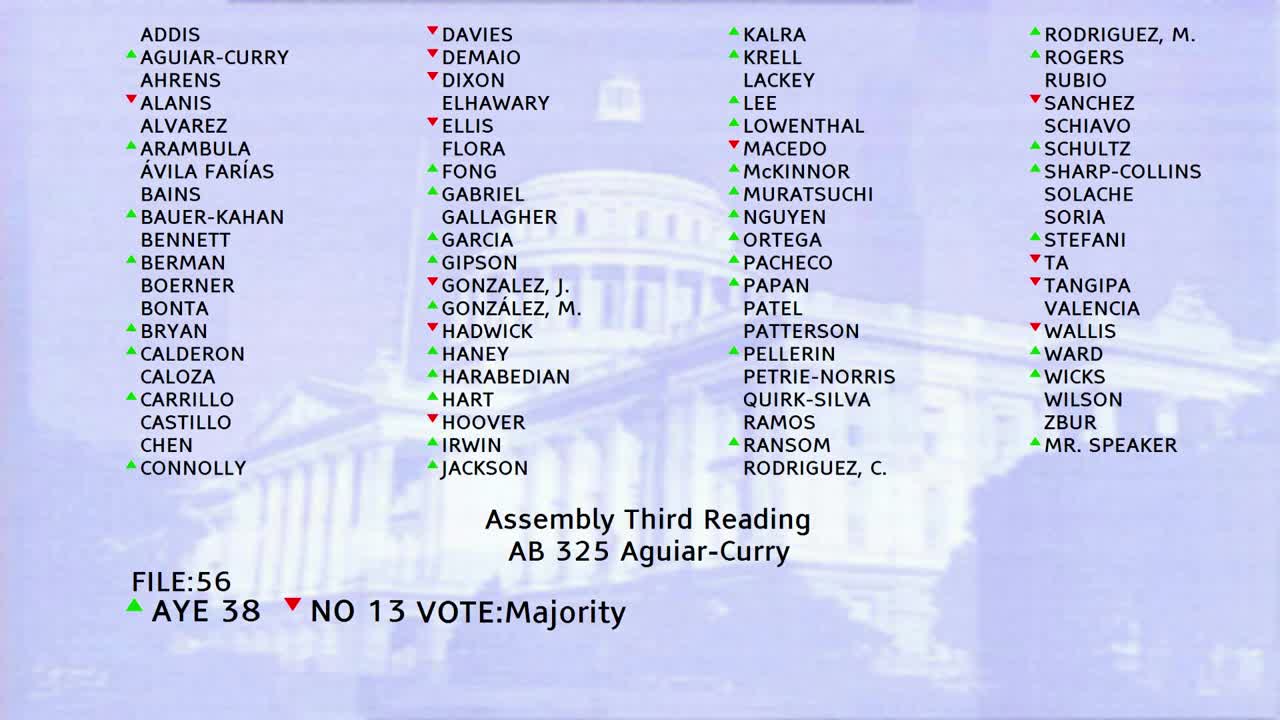 58SEC
Assembly Floor
 13MIN
Assembly Standing Committee on Education
Bill Author