AB 564: Cannabis: excise tax: rate increase suspension: report.
- Session Year: 2025-2026
- House: Assembly
- Latest Version Date: 2025-09-22
Current Status:
Passed
(2025-09-22: Chaptered by Secretary of State - Chapter 127, Statutes of 2025.)
Introduced
In Committee
Awaiting First Chamber Vote
Passed First Chamber
In Committee
Awaiting Second Chamber Vote
Passed Second Chamber
Enacted
Existing law, the Control, Regulate and Tax Adult Use of Marijuana Act (AUMA), an initiative measure, authorizes a person who obtains a state license under AUMA to engage in commercial adult-use cannabis activity pursuant to that license and applicable local ordinances. The Medicinal and Adult-Use Cannabis Regulation and Safety Act (MAUCRSA), among other things, consolidates the licensure and regulation of commercial medicinal and adult-use cannabis activities and establishes the Department of Cannabis Control (DCC) within the Business, Consumer Services, and Housing Agency to administer the act.
Existing law, the Cannabis Tax Law, imposes an excise tax upon purchasers of cannabis or cannabis products sold in this state at the rate of 15% of the gross receipts of any retail sale by a cannabis retailer, and, as enacted by AUMA, imposed a cultivation tax on all harvested cannabis that entered the commercial market, as specified. Chapter 56 of the Statutes of 2022 (AB 195) amended AUMA to, among other things, discontinue the imposition of the cultivation tax on July 1, 2022. AB 195, beginning in the 202526 fiscal year and every 2 years thereafter, requires the California Department of Tax and Fee Administration (CDTFA) to adjust the cannabis excise tax rate by a percentage that will generate an amount of revenue that would have been collected pursuant to the cultivation tax imposed prior to its discontinuation, as specified, not to exceed 19% of the gross receipts of retail sale. Pursuant to that law, the department increased the cannabis excise tax rate to 19% for the 202526 fiscal year.
This bill would revise the above-described provisions governing the cannabis excise tax rate. Specifically, the bill, for the period from July 1, 2025, to September 30, 2025, inclusive, would retain the existing cannabis excise tax rate of 19%. For the period from October 1, 2025, to June 30, 2028, inclusive, the bill would decrease the excise tax rate to 15%. Beginning in the 202829 fiscal year and every 2 years thereafter, the bill would require the department to adjust the cannabis excise tax rate by a percentage that will generate an amount of revenue that would have been collected pursuant to the cultivation tax imposed prior to its discontinuation, as specified, not to exceed 19%. The bill would also require the DCC, in consultation with the CDTFA and the Legislative Analysts Office, on or before October 1, 2027, to submit a report to the Legislature that analyzes, among other things, the current and future effect of the Cannabis Tax Law on the regulated cannabis market and recommends options for changes to the Cannabis Tax Law to accomplish the intent of AUMA.
Existing law requires any bill authorizing a new tax expenditure to contain, among other things, specific goals that the tax expenditure will achieve, detailed performance indicators, and data collection requirements.
This bill also would include additional information required for any bill authorizing a new tax expenditure.
This bill would take effect immediately as a tax levy.
Existing law, the Control, Regulate and Tax Adult Use of Marijuana Act (AUMA), an initiative measure, authorizes a person who obtains a state license under AUMA to engage in commercial adult-use cannabis activity pursuant to that license and applicable local ordinances. The Medicinal and Adult-Use Cannabis Regulation and Safety Act (MAUCRSA), among other things, consolidates the licensure and regulation of commercial medicinal and adult-use cannabis activities and establishes the Department of Cannabis Control (DCC) within the Business, Consumer Services, and Housing Agency to administer the act.
Existing law, the Cannabis Tax Law, imposes an excise tax upon purchasers of cannabis or cannabis products sold in this state at the rate of 15% of the gross receipts of any retail sale by a cannabis retailer, and, as enacted by AUMA, imposed a cultivation tax on all harvested cannabis that entered the commercial market, as specified. Chapter 56 of the Statutes of 2022 (AB 195) amended AUMA to, among other things, discontinue the imposition of the cultivation tax on July 1, 2022. AB 195, beginning in the 202526 fiscal year and every 2 years thereafter, requires the California Department of Tax and Fee Administration (CDTFA) to adjust the cannabis excise tax rate by a percentage that will generate an amount of revenue that would have been collected pursuant to the cultivation tax imposed prior to its discontinuation, as specified, not to exceed 19% of the gross receipts of retail sale. Pursuant to that law, the department increased the cannabis excise tax rate to 19% for the 202526 fiscal year.
This bill would revise the above-described provisions governing the cannabis excise tax rate. Specifically, the bill, for the period from July 1, 2025, to September 30, 2025, inclusive, would retain the existing cannabis excise tax rate of 19%. For the period from October 1, 2025, to June 30, 2028, inclusive, the bill would decrease the excise tax rate to 15%. Beginning in the 202829 fiscal year and every 2 years thereafter, the bill would require the department to adjust the cannabis excise tax rate by a percentage that will generate an amount of revenue that would have been collected pursuant to the cultivation tax imposed prior to its discontinuation, as specified, not to exceed 19%. The bill would also require the DCC, in consultation with the CDTFA and the Legislative Analysts Office, on or before October 1, 2027, to submit a report to the Legislature that analyzes, among other things, the current and future effect of the Cannabis Tax Law on the regulated cannabis market and recommends options for changes to the Cannabis Tax Law to accomplish the intent of AUMA.
Existing law requires any bill authorizing a new tax expenditure to contain, among other things, specific goals that the tax expenditure will achieve, detailed performance indicators, and data collection requirements.
This bill also would include additional information required for any bill authorizing a new tax expenditure.
This bill would take effect immediately as a tax levy.
Existing law, the Control, Regulate and Tax Adult Use of Marijuana Act (AUMA), an initiative measure, authorizes a person who obtains a state license under AUMA to engage in commercial adult-use cannabis activity pursuant to that license and applicable local ordinances. The Medicinal and Adult-Use Cannabis Regulation and Safety Act (MAUCRSA), among other things, consolidates the licensure and regulation of commercial medicinal and adult-use cannabis activities and establishes the Department of Cannabis Control (DCC) within the Business, Consumer Services, and Housing Agency to administer the act.
Existing law, the Cannabis Tax Law, imposes an excise tax upon purchasers of cannabis or cannabis products sold in this state at the rate of 15% of the gross receipts of any retail sale by a cannabis retailer, and, as enacted by AUMA, imposed a cultivation tax on all harvested cannabis that entered the commercial market, as specified. Chapter 56 of the Statutes of 2022 (AB 195) amended AUMA to, among other things, discontinue the imposition of the cultivation tax on July 1, 2022. AB 195, beginning in the 202526 fiscal year and every 2 years thereafter, requires the California Department of Tax and Fee Administration (CDTFA) to adjust the cannabis excise tax rate by a percentage that will generate an amount of revenue that would have been collected pursuant to the cultivation tax imposed prior to its discontinuation, as specified, not to exceed 19% of the gross receipts of retail sale. Pursuant to that law, the department increased the cannabis excise tax rate to 19% for the 202526 fiscal year.
This bill would revise the above-described provisions governing the cannabis excise tax rate. Specifically, the bill, for the period from July 1, 2025, to September 30, 2025, inclusive, would retain the existing cannabis excise tax rate of 19%. For the period from October 1, 2025, to June 30, 2028, inclusive, the bill would decrease the excise tax rate to 15%. Beginning in the 202829 fiscal year and every 2 years thereafter, the bill would require the department to adjust the cannabis excise tax rate by a percentage that will generate an amount of revenue that would have been collected pursuant to the cultivation tax imposed prior to its discontinuation, as specified, not to exceed 19%. The bill would also require the DCC, in consultation with the CDTFA and the Legislative Analysts Office, on or before October 1, 2027, to submit a report to the Legislature that analyzes, among other things, the current and future effect of the Cannabis Tax Law on the regulated cannabis market and recommends options for changes to the Cannabis Tax Law to accomplish the intent of AUMA.
Existing law requires any bill authorizing a new tax expenditure to contain, among other things, specific goals that the tax expenditure will achieve, detailed performance indicators, and data collection requirements.
This bill also would include additional information required for any bill authorizing a new tax expenditure.
This bill would take effect immediately as a tax levy.
Existing law, the Control, Regulate and Tax Adult Use of Marijuana Act (AUMA), an initiative measure, authorizes a person who obtains a state license under AUMA to engage in commercial adult-use cannabis activity pursuant to that license and applicable local ordinances. The Medicinal and Adult-Use Cannabis Regulation and Safety Act (MAUCRSA), among other things, consolidates the licensure and regulation of commercial medicinal and adult-use cannabis activities. activities and establishes the Department of Cannabis Control (DCC) within the Business, Consumer Services, and Housing Agency to administer the act.
Existing law, the Cannabis Tax Law, imposes an excise tax upon purchasers of cannabis or cannabis products sold in this state at the rate of 15% of the gross receipts of any retail sale by a cannabis retailer, and, as enacted by AUMA, imposed a cultivation tax on all harvested cannabis that entered the commercial market, as specified. Chapter 56 of the Statutes of 2022 (AB 195) amended AUMA to, among other things, discontinue the imposition of the cultivation tax on July 1, 2022. AB 195, beginning in the 202526 fiscal year and every 2 years thereafter, requires the California Department of Tax and Fee Administration (CDTFA) to adjust the cannabis excise tax rate by a percentage that will generate an amount of revenue that would have been collected pursuant to the cultivation tax imposed prior to its discontinuation, as specified, not to exceed 19% of the gross receipts of retail sale. Pursuant to that law, the department increased the cannabis excise tax rate to 19% for the 202526 fiscal year.
This bill would revise the above-described provisions governing the cannabis excise tax rate. Specifically, the bill would, bill, for the period from July 1, 2025, to September 30, inclusive, 2025, inclusive, would retain the existing cannabis excise tax rate of 19%. For the period from October 1, 2025, to June 30, inclusive, 2030, 2028, inclusive, the bill would decrease the excise tax rate to 15%. Beginning in the 203031 202829 fiscal year and every 2 years thereafter, the bill would require the department to adjust the cannabis excise tax rate by a percentage that will generate an amount of revenue that would have been collected pursuant to the cultivation tax imposed prior to its discontinuation, as specified, not to exceed 19%. The bill would also require the DCC, in consultation with the CDTFA and the Legislative Analysts Office, on or before October 1, 2027, to submit a report to the Legislature that analyzes, among other things, the current and future effect of the Cannabis Tax Law on the regulated cannabis market and recommends options for changes to the Cannabis Tax Law to accomplish the intent of AUMA.
Existing law requires any bill authorizing a new tax expenditure to contain, among other things, specific goals that the tax expenditure will achieve, detailed performance indicators, and data collection requirements.
This bill also would include additional information required for any bill authorizing a new tax expenditure.
This bill would take effect immediately as a tax levy.
Existing law, the Control, Regulate and Tax Adult Use of Marijuana Act (AUMA), an initiative measure, authorizes a person who obtains a state license under AUMA to engage in commercial adult-use cannabis activity pursuant to that license and applicable local ordinances. The Medicinal and Adult-Use Cannabis Regulation and Safety Act (MAUCRSA), among other things, consolidates the licensure and regulation of commercial medicinal and adult-use cannabis activities.
Existing law, the Cannabis Tax Law, imposes an excise tax upon purchasers of cannabis or cannabis products sold in this state at the rate of 15% of the gross receipts of any retail sale by a cannabis retailer, and, as enacted by AUMA, imposed a cultivation tax on all harvested cannabis that entered the commercial market, as specified. Chapter 56 of the Statutes of 2022 (AB 195) amended AUMA to, among other things, discontinue the imposition of the cultivation tax on July 1, 2022. AB 195, beginning in the 202526 fiscal year and every 2 years thereafter, requires the California Department of Tax and Fee Administration to adjust the cannabis excise tax rate by a percentage that will generate an amount of revenue that would have been collected pursuant to the cultivation tax imposed prior to its discontinuation, as specified, not to exceed 19% of the gross receipts of retail sale. Pursuant to that law, the department increased the cannabis excise tax rate to 19% for the 202526 fiscal year.
This bill would delay the requirement that the department adjust the cannabis excise tax rate, as described above, to the 203031 fiscal year. revise the above-described provisions governing the cannabis excise tax rate. Specifically, the bill would, for the period from July 1, 2025, to September 30, inclusive, 2025, retain the existing cannabis excise tax rate of 19%. For the period from October 1, 2025, to June 30, inclusive, 2030, the bill would decrease the excise tax rate to 15%. Beginning in the 203031 fiscal year and every 2 years thereafter, the bill would require the department to adjust the cannabis excise tax rate by a percentage that will generate an amount of revenue that would have been collected pursuant to the cultivation tax imposed prior to its discontinuation, as specified, not to exceed 19%.
Existing law requires any bill authorizing a new tax expenditure to contain, among other things, specific goals that the tax expenditure will achieve, detailed performance indicators, and data collection requirements.
This bill also would include additional information required for any bill authorizing a new tax expenditure.
This bill would take effect immediately as a tax levy.
Existing law, the Control, Regulate and Tax Adult Use of Marijuana Act (AUMA), an initiative measure, authorizes a person who obtains a state license under AUMA to engage in commercial adult-use cannabis activity pursuant to that license and applicable local ordinances. The Medicinal and Adult-Use Cannabis Regulation and Safety Act (MAUCRSA), among other things, consolidates the licensure and regulation of commercial medicinal and adult-use cannabis activities.
Existing law, the Cannabis Tax Law, imposes an excise tax upon purchasers of cannabis or cannabis products sold in this state at the rate of 15% of the gross receipts of any retail sale by a cannabis retailer, and, as enacted by AUMA, imposed a cultivation tax on all harvested cannabis that entered the commercial market, as specified. Chapter 56 of the Statutes of 2022 (AB 195) amended AUMA to, among other things, discontinue the imposition of the cultivation tax on July 1, 2022. AB 195, beginning in the 202526 fiscal year and every 2 years thereafter, requires the California Department of Tax and Fee Administration to adjust the cannabis excise tax rate by a percentage that will generate an amount of revenue that would have been collected pursuant to the cultivation tax imposed prior to its discontinuation, as specified, not to exceed 19% of the gross receipts of retail sale.
This bill would repeal delay the requirement that the department adjust the cannabis excise tax rate, as described above, thereby retaining the existing cannabis excise tax rate of 15% of the gross receipts of any retail sale by a cannabis retailer, as provided. to the 203031 fiscal year.
Existing law requires any bill authorizing a new tax expenditure to contain, among other things, specific goals that the tax expenditure will achieve, detailed performance indicators, and data collection requirements.
This bill also would include additional information required for any bill authorizing a new tax expenditure.
This bill would take effect immediately as a tax levy.
Existing law, the Control, Regulate and Tax Adult Use of Marijuana Act (AUMA), an initiative measure, authorizes a person who obtains a state license under AUMA to engage in commercial adult-use cannabis activity pursuant to that license and applicable local ordinances. The Medicinal and Adult-Use Cannabis Regulation and Safety Act (MAUCRSA), among other things, consolidates the licensure and regulation of commercial medicinal and adult-use cannabis activities.
Existing law, the Cannabis Tax Law, imposes an excise tax upon purchasers of cannabis or cannabis products sold in this state at the rate of 15% of the gross receipts of any retail sale by a cannabis retailer, and, as enacted by AUMA, imposed a cultivation tax on all harvested cannabis that entered the commercial market, as specified. Chapter 56 of the Statutes of 2022 (AB 195) amended AUMA to, among other things, discontinue the imposition of the cultivation tax on July 1, 2022. AB 195, beginning in the 202526 fiscal year and every 2 years thereafter, requires the California Department of Tax and Fee Administration to adjust the cannabis excise tax rate by a percentage that will generate an amount of revenue that would have been collected pursuant to the cultivation tax imposed prior to its discontinuation, as specified, not to exceed 19% of the gross receipts of retail sale.
This bill would repeal the requirement that the department adjust the cannabis excise tax rate, as described above, thereby retaining the existing cannabis excise tax rate of 15% of the gross receipts of any retail sale by a cannabis retailer, as provided.
This bill would take effect immediately as a tax levy.
(a)(1)Effective on and after January 1, 2023, a cannabis excise tax shall be imposed upon purchasers of cannabis or cannabis products sold in this state at 15 percent of the gross receipts of any retail sale by a cannabis retailer.
(2)Notwithstanding paragraph (1), on and after July 1, 2025, and before October 1, 2025, the cannabis excise tax rate imposed in paragraph (1) shall be 19 percent of the gross receipts of any retail sale by a cannabis retailer as determined by the department, in consultation with the Department of Finance, pursuant to this section, as added by Section 22 of Chapter 56 of the Statutes of 2022.
(3)For the 202829 fiscal year and every two years thereafter, the department, in consultation with the Department of Finance, shall, on or before May 1 of the fiscal year immediately preceding the applicable fiscal year, adjust the cannabis excise tax rate upon purchasers of cannabis or cannabis products imposed in paragraph (1) by the additional percentage of the gross receipts of any retail sale by a cannabis retailer that the department estimates will generate an amount of revenue equivalent to the amount that would have been collected in the previous fiscal year pursuant to the weight-based cultivation tax imposed under Section 34012 as it read on June 29, 2022. In no case shall the cannabis excise tax exceed 19 percent of the gross receipts of retail sale. The department shall round the rate calculated under this subdivision to the nearest one-quarter of 1 percent. The adjusted rate shall become operative the following July 1.
(4)On or before May 1, 2028, and each May 1 every two years thereafter, the department, in consultation with the Department of Finance, shall estimate the amount of revenue that would have been collected in the previous fiscal year pursuant to the weight-based cultivation tax imposed under Section 34012 as it read on June 29, 2022. The department shall estimate this amount by projecting the revenue from weight-based cultivation taxes that would have been collected in the previous calendar year based on information available to the department, including, but not limited to, information in the track and trace system required pursuant to Chapter 6.5 (commencing with Section 26067) of Division 10 of the Business and Professions Code, or any implementing regulations, as a percentage of gross receipts from the retail sale of cannabis and cannabis products by cannabis retailers in the previous calendar year.
(b)A purchasers liability for the cannabis excise tax is not extinguished until the cannabis excise tax has been paid to this state, except that an invoice, receipt, or other document from a cannabis retailer given to the purchaser pursuant to this section is sufficient to relieve the purchaser from further liability for the tax to which the invoice, receipt, or other document refers.
(c)A cannabis retailer shall be responsible for collecting the cannabis excise tax from the purchaser and remitting that tax to the department in accordance with this division.
(d)The cannabis retailer shall provide each purchaser with an invoice, receipt, or other document that separately states the cannabis excise tax.
(e)The cannabis excise tax imposed by this section shall be in addition to the sales and use tax imposed by the state and local governments.
(f)Gross receipts from the sale of cannabis or cannabis products for purposes of assessing the sales and use taxes under Part 1 (commencing with Section 6001) shall include the tax levied pursuant to this section.
(g)Cannabis or cannabis products shall not be sold to a purchaser unless the cannabis excise tax imposed by this section has been paid by the purchaser at the time of sale.
(h)This section shall not be construed to impose a cannabis excise tax upon medicinal cannabis, or medicinal cannabis product, donated for no consideration to a medicinal cannabis patient pursuant to Section 26071 of the Business and Professions Code.
(i)(1)This section shall not be construed to impose a cannabis excise tax upon cannabis or cannabis products designated as a trade sample pursuant to Section 26153.1 of the Business and Professions Code.
(2)A person licensed under Division 10 (commencing with Section 26000) of the Business and Professions Code that sells cannabis or cannabis products designated as a trade sample pursuant to Section 26153.1 of the Business and Professions Code shall be liable for the cannabis excise tax imposed by this section as if the person were a cannabis retailer at the time of sale.
SEC. 2.(a)For purposes of complying with Section 41 of the Revenue and Taxation Code, as it pertains to the reduction of the cannabis excise tax rate allowed pursuant to Section 34011.2 of the Revenue and Taxation Code as amended by this act, the Legislature finds and declares both of the following:
(1)The specific goal of the cannabis excise tax rate reduction is to provide immediate tax relief to the cannabis industry.
(2)The efficacy of this goal may be measured by the Legislature by the amount of gain or loss in cannabis excise tax revenues resulting from the cannabis excise tax rate reduction allowed by this act.
(b)On or before June 1, 2027, and annually thereafter, the California Department of Tax and Fee Administration shall submit a report to the Legislature, in compliance with Section 9795 of the Government Code, detailing the estimated amount of gain or loss in cannabis excise tax revenues resulting from the cannabis excise tax rate reduction allowed by this act.
(c)This section shall remain in effect only until January 1, 2029, and as of that date is repealed.
SEC. 3.(a)On or before October 1, 2027, the Department of Cannabis Control, in consultation with the California Department of Tax and Fee Administration and the Legislative Analysts Office, shall submit a report to the Legislature, in compliance with Section 9795 of the Government Code, that does all of the following:
(1)Analyzes the current and future effect of the Cannabis Tax Law (Part 14.5 (commencing with Section 34010) of Division 2 of the Revenue and Taxation Code) on the regulated cannabis market and its competitive position against the illicit cannabis market.
(2)Assesses the capacity for the Cannabis Tax Law (Part 14.5 (commencing with Section 34010) of Division 2 of the Revenue and Taxation Code) to generate revenue to restore the environment, fund youth treatment and prevention, and support community investment and law enforcement, consistent with Section 3 of the Control, Regulate and Tax Adult Use of Marijuana Act.
(3)Recommends options for changes to the Cannabis Tax Law (Part 14.5 (commencing with Section 34010) of Division 2 of the Revenue and Taxation Code) to accomplish the intent of the Control, Regulate and Tax Adult Use of Marijuana Act, including revenue effects, administrative feasibility, consistency with the purposes of the act, and impact on the regulated and illicit cannabis markets.
(b)The California Department of Tax and Fee Administration shall share information and data with the department to the extent necessary to complete the report required by subdivision (a).
(c)This section shall remain in effect only until January 1, 2029, and as of that date is repealed.
SEC. 4.This act provides for a tax levy within the meaning of Article IV of the California Constitution and shall go into immediate effect.
(a)(1)Effective on and after January 1, 2023, a cannabis excise tax shall be imposed upon purchasers of cannabis or cannabis products sold in this state at 15 percent of the gross receipts of any retail sale by a cannabis retailer.
(2)Notwithstanding paragraph (1), on and after July 1, 2025, and before October 1, 2025, the cannabis excise tax rate imposed in paragraph (1) shall be 19 percent of the gross receipts of any retail sale by a cannabis retailer as determined by the department, in consultation with the Department of Finance, pursuant to this section, as added by Section 22 of Chapter 56 of the Statutes of 2022.
(3)For the 202829 fiscal year and every two years thereafter, the department, in consultation with the Department of Finance, shall, on or before May 1 of the fiscal year immediately preceding the applicable fiscal year, adjust the cannabis excise tax rate upon purchasers of cannabis or cannabis products imposed in paragraph (1) by the additional percentage of the gross receipts of any retail sale by a cannabis retailer that the department estimates will generate an amount of revenue equivalent to the amount that would have been collected in the previous fiscal year pursuant to the weight-based cultivation tax imposed under Section 34012 as it read on June 29, 2022. In no case shall the cannabis excise tax exceed 19 percent of the gross receipts of retail sale. The department shall round the rate calculated under this subdivision to the nearest one-quarter of 1 percent. The adjusted rate shall become operative the following July 1.
(4)On or before May 1, 2028, and each May 1 every two years thereafter, the department, in consultation with the Department of Finance, shall estimate the amount of revenue that would have been collected in the previous fiscal year pursuant to the weight-based cultivation tax imposed under Section 34012 as it read on June 29, 2022. The department shall estimate this amount by projecting the revenue from weight-based cultivation taxes that would have been collected in the previous calendar year based on information available to the department, including, but not limited to, information in the track and trace system required pursuant to Chapter 6.5 (commencing with Section 26067) of Division 10 of the Business and Professions Code, or any implementing regulations, as a percentage of gross receipts from the retail sale of cannabis and cannabis products by cannabis retailers in the previous calendar year.
(b)A purchasers liability for the cannabis excise tax is not extinguished until the cannabis excise tax has been paid to this state, except that an invoice, receipt, or other document from a cannabis retailer given to the purchaser pursuant to this section is sufficient to relieve the purchaser from further liability for the tax to which the invoice, receipt, or other document refers.
(c)A cannabis retailer shall be responsible for collecting the cannabis excise tax from the purchaser and remitting that tax to the department in accordance with this division.
(d)The cannabis retailer shall provide each purchaser with an invoice, receipt, or other document that separately states the cannabis excise tax.
(e)The cannabis excise tax imposed by this section shall be in addition to the sales and use tax imposed by the state and local governments.
(f)Gross receipts from the sale of cannabis or cannabis products for purposes of assessing the sales and use taxes under Part 1 (commencing with Section 6001) shall include the tax levied pursuant to this section.
(g)Cannabis or cannabis products shall not be sold to a purchaser unless the cannabis excise tax imposed by this section has been paid by the purchaser at the time of sale.
(h)This section shall not be construed to impose a cannabis excise tax upon medicinal cannabis, or medicinal cannabis product, donated for no consideration to a medicinal cannabis patient pursuant to Section 26071 of the Business and Professions Code.
(i)(1)This section shall not be construed to impose a cannabis excise tax upon cannabis or cannabis products designated as a trade sample pursuant to Section 26153.1 of the Business and Professions Code.
(2)A person licensed under Division 10 (commencing with Section 26000) of the Business and Professions Code that sells cannabis or cannabis products designated as a trade sample pursuant to Section 26153.1 of the Business and Professions Code shall be liable for the cannabis excise tax imposed by this section as if the person were a cannabis retailer at the time of sale.
SEC. 2.(a)For purposes of complying with Section 41 of the Revenue and Taxation Code, as it pertains to the reduction of the cannabis excise tax rate allowed pursuant to Section 34011.2 of the Revenue and Taxation Code as amended by this act, the Legislature finds and declares both of the following:
(1)The specific goal of the cannabis excise tax rate reduction is to provide immediate tax relief to the cannabis industry.
(2)The efficacy of this goal may be measured by the Legislature by the amount of gain or loss in cannabis excise tax revenues resulting from the cannabis excise tax rate reduction allowed by this act.
(b)On or before June 1, 2027, and annually thereafter, the California Department of Tax and Fee Administration shall submit a report to the Legislature, in compliance with Section 9795 of the Government Code, detailing the estimated amount of gain or loss in cannabis excise tax revenues resulting from the cannabis excise tax rate reduction allowed by this act.
(c)This section shall remain in effect only until January 1, 2029, and as of that date is repealed.
SEC. 3.(a)On or before October 1, 2027, the Department of Cannabis Control, in consultation with the California Department of Tax and Fee Administration and the Legislative Analysts Office, shall submit a report to the Legislature, in compliance with Section 9795 of the Government Code, that does all of the following:
(1)Analyzes the current and future effect of the Cannabis Tax Law (Part 14.5 (commencing with Section 34010) of Division 2 of the Revenue and Taxation Code) on the regulated cannabis market and its competitive position against the illicit cannabis market.
(2)Assesses the capacity for the Cannabis Tax Law (Part 14.5 (commencing with Section 34010) of Division 2 of the Revenue and Taxation Code) to generate revenue to restore the environment, fund youth treatment and prevention, and support community investment and law enforcement, consistent with Section 3 of the Control, Regulate and Tax Adult Use of Marijuana Act.
(3)Recommends options for changes to the Cannabis Tax Law (Part 14.5 (commencing with Section 34010) of Division 2 of the Revenue and Taxation Code) to accomplish the intent of the Control, Regulate and Tax Adult Use of Marijuana Act, including revenue effects, administrative feasibility, consistency with the purposes of the act, and impact on the regulated and illicit cannabis markets.
(b)The California Department of Tax and Fee Administration shall share information and data with the department to the extent necessary to complete the report required by subdivision (a).
(c)This section shall remain in effect only until January 1, 2029, and as of that date is repealed.
SEC. 4.This act provides for a tax levy within the meaning of Article IV of the California Constitution and shall go into immediate effect.
(a)(1)Effective on and after January 1, 2023, a cannabis excise tax shall be imposed upon purchasers of cannabis or cannabis products sold in this state at 15 percent of the gross receipts of any retail sale by a cannabis retailer.
(2)Notwithstanding paragraph (1), on and after July 1, 2025, and before October 1, 2025, the cannabis excise tax rate imposed in paragraph (1) shall be 19 percent of the gross receipts of any retail sale by a cannabis retailer as determined by the department, in consultation with the Department of Finance, pursuant to this section, as added by Section 22 of Chapter 56 of the Statutes of 2022.
(3)For the 202829 fiscal year and every two years thereafter, the department, in consultation with the Department of Finance, shall, on or before May 1 of the fiscal year immediately preceding the applicable fiscal year, adjust the cannabis excise tax rate upon purchasers of cannabis or cannabis products imposed in paragraph (1) by the additional percentage of the gross receipts of any retail sale by a cannabis retailer that the department estimates will generate an amount of revenue equivalent to the amount that would have been collected in the previous fiscal year pursuant to the weight-based cultivation tax imposed under Section 34012 as it read on June 29, 2022. In no case shall the cannabis excise tax exceed 19 percent of the gross receipts of retail sale. The department shall round the rate calculated under this subdivision to the nearest one-quarter of 1 percent. The adjusted rate shall become operative the following July 1.
(4)On or before May 1, 2028, and each May 1 every two years thereafter, the department, in consultation with the Department of Finance, shall estimate the amount of revenue that would have been collected in the previous fiscal year pursuant to the weight-based cultivation tax imposed under Section 34012 as it read on June 29, 2022. The department shall estimate this amount by projecting the revenue from weight-based cultivation taxes that would have been collected in the previous calendar year based on information available to the department, including, but not limited to, information in the track and trace system required pursuant to Chapter 6.5 (commencing with Section 26067) of Division 10 of the Business and Professions Code, or any implementing regulations, as a percentage of gross receipts from the retail sale of cannabis and cannabis products by cannabis retailers in the previous calendar year.
(b)A purchasers liability for the cannabis excise tax is not extinguished until the cannabis excise tax has been paid to this state, except that an invoice, receipt, or other document from a cannabis retailer given to the purchaser pursuant to this section is sufficient to relieve the purchaser from further liability for the tax to which the invoice, receipt, or other document refers.
(c)A cannabis retailer shall be responsible for collecting the cannabis excise tax from the purchaser and remitting that tax to the department in accordance with this division.
(d)The cannabis retailer shall provide each purchaser with an invoice, receipt, or other document that separately states the cannabis excise tax.
(e)The cannabis excise tax imposed by this section shall be in addition to the sales and use tax imposed by the state and local governments.
(f)Gross receipts from the sale of cannabis or cannabis products for purposes of assessing the sales and use taxes under Part 1 (commencing with Section 6001) shall include the tax levied pursuant to this section.
(g)Cannabis or cannabis products shall not be sold to a purchaser unless the cannabis excise tax imposed by this section has been paid by the purchaser at the time of sale.
(h)This section shall not be construed to impose a cannabis excise tax upon medicinal cannabis, or medicinal cannabis product, donated for no consideration to a medicinal cannabis patient pursuant to Section 26071 of the Business and Professions Code.
(i)(1)This section shall not be construed to impose a cannabis excise tax upon cannabis or cannabis products designated as a trade sample pursuant to Section 26153.1 of the Business and Professions Code.
(2)A person licensed under Division 10 (commencing with Section 26000) of the Business and Professions Code that sells cannabis or cannabis products designated as a trade sample pursuant to Section 26153.1 of the Business and Professions Code shall be liable for the cannabis excise tax imposed by this section as if the person were a cannabis retailer at the time of sale.
SEC. 2.(a)For purposes of complying with Section 41 of the Revenue and Taxation Code, as it pertains to the reduction of the cannabis excise tax rate allowed pursuant to Section 34011.2 of the Revenue and Taxation Code as amended by this act, the Legislature finds and declares both of the following:
(1)The specific goal of the cannabis excise tax rate reduction is to provide immediate tax relief to the cannabis industry.
(2)The efficacy of this goal may be measured by the Legislature by the amount of gain or loss in cannabis excise tax revenues resulting from the cannabis excise tax rate reduction allowed by this act.
(b)On or before June 1, 2027, and annually thereafter, the California Department of Tax and Fee Administration shall submit a report to the Legislature, in compliance with Section 9795 of the Government Code, detailing the estimated amount of gain or loss in cannabis excise tax revenues resulting from the cannabis excise tax rate reduction allowed by this act.
(c)This section shall remain in effect only until January 1, 2029, and as of that date is repealed.
SEC. 3.(a)On or before October 1, 2027, the Department of Cannabis Control, in consultation with the California Department of Tax and Fee Administration and the Legislative Analysts Office, shall submit a report to the Legislature, in compliance with Section 9795 of the Government Code, that does all of the following:
(1)Analyzes the current and future effect of the Cannabis Tax Law (Part 14.5 (commencing with Section 34010) of Division 2 of the Revenue and Taxation Code) on the regulated cannabis market and its competitive position against the illicit cannabis market.
(2)Assesses the capacity for the Cannabis Tax Law (Part 14.5 (commencing with Section 34010) of Division 2 of the Revenue and Taxation Code) to generate revenue to restore the environment, fund youth treatment and prevention, and support community investment and law enforcement, consistent with Section 3 of the Control, Regulate and Tax Adult Use of Marijuana Act.
(3)Recommends options for changes to the Cannabis Tax Law (Part 14.5 (commencing with Section 34010) of Division 2 of the Revenue and Taxation Code) to accomplish the intent of the Control, Regulate and Tax Adult Use of Marijuana Act, including revenue effects, administrative feasibility, consistency with the purposes of the act, and impact on the regulated and illicit cannabis markets.
(b)The California Department of Tax and Fee Administration shall share information and data with the department to the extent necessary to complete the report required by subdivision (a).
(c)This section shall remain in effect only until January 1, 2029, and as of that date is repealed.
SEC. 4.This act provides for a tax levy within the meaning of Article IV of the California Constitution and shall go into immediate effect.
(a)(1)Effective on and after January 1, 2023, a cannabis excise tax shall be imposed upon purchasers of cannabis or cannabis products sold in this state at 15 percent of the gross receipts of any retail sale by a cannabis retailer.
(2)Notwithstanding paragraph (1), on and after July 1, 2025, and before October 1, 2025, the cannabis excise tax rate imposed in paragraph (1) shall be 19 percent of the gross receipts of any retail sale by a cannabis retailer as determined by the department, in consultation with the Department of Finance, pursuant to this section section, as added by Section 22 of Chapter 56 of the Statutes of 2022.
(3)For the 203031 202829 fiscal year and every two years thereafter, the department, in consultation with the Department of Finance, shall, on or before May 1 of the fiscal year immediately preceding the applicable fiscal year, adjust the cannabis excise tax rate upon purchasers of cannabis or cannabis products imposed in paragraph (1) by the additional percentage of the gross receipts of any retail sale by a cannabis retailer that the department estimates will generate an amount of revenue equivalent to the amount that would have been collected in the previous fiscal year pursuant to the weight-based cultivation tax imposed under Section 34012 as it read on June 29, 2022. In no case shall the cannabis excise tax exceed 19 percent of the gross receipts of retail sale. The department shall round the rate calculated under this subdivision to the nearest one-quarter of 1 percent. The adjusted rate shall become operative the following July 1.
(4)On or before May 1, 2030, 2028, and each May 1 every two years thereafter, the department, in consultation with the Department of Finance, shall estimate the amount of revenue that would have been collected in the previous fiscal year pursuant to the weight-based cultivation tax imposed under Section 34012 as it read on June 29, 2022. The department shall estimate this amount by projecting the revenue from weight-based cultivation taxes that would have been collected in the previous calendar year based on information available to the department, including, but not limited to, information in the track and trace system required pursuant to Chapter 6.5 (commencing with Section 26067) of Division 10 of the Business and Professions Code, or any implementing regulations, as a percentage of gross receipts from the retail sale of cannabis and cannabis products by cannabis retailers in the previous calendar year.
(b)A purchasers liability for the cannabis excise tax is not extinguished until the cannabis excise tax has been paid to this state, except that an invoice, receipt, or other document from a cannabis retailer given to the purchaser pursuant to this section is sufficient to relieve the purchaser from further liability for the tax to which the invoice, receipt, or other document refers.
(c)A cannabis retailer shall be responsible for collecting the cannabis excise tax from the purchaser and remitting that tax to the department in accordance with this division.
(d)The cannabis retailer shall provide each purchaser with an invoice, receipt, or other document that separately states the cannabis excise tax.
(e)The cannabis excise tax imposed by this section shall be in addition to the sales and use tax imposed by the state and local governments.
(f)Gross receipts from the sale of cannabis or cannabis products for purposes of assessing the sales and use taxes under Part 1 (commencing with Section 6001) shall include the tax levied pursuant to this section.
(g)Cannabis or cannabis products shall not be sold to a purchaser unless the cannabis excise tax imposed by this section has been paid by the purchaser at the time of sale.
(h)This section shall not be construed to impose a cannabis excise tax upon medicinal cannabis, or medicinal cannabis product, donated for no consideration to a medicinal cannabis patient pursuant to Section 26071 of the Business and Professions Code.
(i)(1)This section shall not be construed to impose a cannabis excise tax upon cannabis or cannabis products designated as a trade sample pursuant to Section 26153.1 of the Business and Professions Code.
(2)A person licensed under Division 10 (commencing with Section 26000) of the Business and Professions Code that sells cannabis or cannabis products designated as a trade sample pursuant to Section 26153.1 of the Business and Professions Code shall be liable for the cannabis excise tax imposed by this section as if the person were a cannabis retailer at the time of sale.
SEC. 2.(a)For purposes of complying with Section 41 of the Revenue and Taxation Code, as it pertains to the reduction of the cannabis excise tax rate allowed pursuant to Section 34011.2 of the Revenue and Taxation Code as amended by this act, the Legislature finds and declares the following:
(1)The specific goal of the cannabis excise tax rate reduction is to provide immediate tax relief to the cannabis industry.
(2)The efficacy of this goal may be measured by the Legislature by the amount of gain or loss in cannabis excise tax revenues resulting from the cannabis excise tax rate reduction allowed by this act.
(b)On or before June 1, 2027, and annually thereafter, the California Department of Tax and Fee Administration shall submit a report to the Legislature, in compliance with Section 9795 of the Government Code, detailing the estimated amount of gain or loss in cannabis excise tax revenues resulting from the cannabis excise tax rate reduction allowed by this act.
(c)This section shall remain in effect only until January 1, 2031, 2029, and as of that date is repealed.
SEC. 3.(a)On or before October 1, 2027, the Department of Cannabis Control, in consultation with the California Department of Tax and Fee Administration and the Legislative Analysts Office, shall submit a report to the Legislature, in compliance with Section 9795 of the Government Code, that does all of the following:
(1)Analyzes the current and future effect of the Cannabis Tax Law (Part 14.5 (commencing with Section 34010) of Division 2 of the Revenue and Taxation Code) on the regulated cannabis market and its competitive position against the illicit cannabis market.
(2)Assesses the capacity for the Cannabis Tax Law (Part 14.5 (commencing with Section 34010) of Division 2 of the Revenue and Taxation Code) to generate revenue to restore the environment, fund youth treatment and prevention, and support community investment and law enforcement, consistent with Section 3 of the Control, Regulate and Tax Adult Use of Marijuana Act.
(3)Recommends options for changes to the Cannabis Tax Law (Part 14.5 (commencing with Section 34010) of Division 2 of the Revenue and Taxation Code) to accomplish the intent of the Control, Regulate and Tax Adult Use of Marijuana Act, including revenue effects, administrative feasibility, consistency with the purposes of the act, and impact on the regulated and illicit cannabis markets.
(b)The California Department of Tax and Fee Administration shall share information and data with the department to the extent necessary to complete the report required by subdivision (a).
(c)This section shall remain in effect only until January 1, 2029, and as of that date is repealed.
SEC. 3.SEC. 4.This act provides for a tax levy within the meaning of Article IV of the California Constitution and shall go into immediate effect.
(a)(1)Effective on and after January 1, 2023, a cannabis excise tax shall be imposed upon purchasers of cannabis or cannabis products sold in this state at 15 percent of the gross receipts of any retail sale by a cannabis retailer.
(2)Notwithstanding paragraph (1), on and after July 1, 2025, and before October 1, 2025, the cannabis excise tax rate imposed in paragraph (1) shall be 19 percent of the gross receipts of any retail sale by a cannabis retailer as determined by the department, in consultation with the Department of Finance, pursuant to this section as added by Section 22 of Chapter 56 of the Statutes of 2022.
(2)(3)For the 203031 fiscal year and every two years thereafter, the department, in consultation with the Department of Finance, shall, on or before May 1 of the fiscal year immediately preceding the applicable fiscal year, adjust the cannabis excise tax rate upon purchasers of cannabis or cannabis products imposed in paragraph (1) by the additional percentage of the gross receipts of any retail sale by a cannabis retailer that the department estimates will generate an amount of revenue equivalent to the amount that would have been collected in the previous fiscal year pursuant to the weight-based cultivation tax imposed under Section 34012 as it read on July 1, 2022. June 29, 2022. In no case shall the cannabis excise tax exceed 19 percent of the gross receipts of retail sale. The department shall round the rate calculated under this subdivision to the nearest one-quarter of 1 percent. The adjusted rate shall become operative the following July 1.
(3)(4)On or before May 1, 2030, and each May 1 every two years thereafter, the department, in consultation with the Department of Finance, shall estimate the amount of revenue that would have been collected in the previous fiscal year pursuant to the weight-based cultivation tax imposed under Section 34012 as it read on July 1, 2022. June 29, 2022. The department shall estimate this amount by projecting the revenue from weight-based cultivation taxes that would have been collected in the previous calendar year based on information available to the department, including, but not limited to, information in the track and trace system required pursuant to Chapter 6.5 (commencing with Section 26067) of Division 10 of the Business and Professions Code, or any implementing regulations, as a percentage of gross receipts from the retail sale of cannabis and cannabis products by cannabis retailers in the previous calendar year.
(b)A purchasers liability for the cannabis excise tax is not extinguished until the cannabis excise tax has been paid to this state, except that an invoice, receipt, or other document from a cannabis retailer given to the purchaser pursuant to this section is sufficient to relieve the purchaser from further liability for the tax to which the invoice, receipt, or other document refers.
(c)A cannabis retailer shall be responsible for collecting the cannabis excise tax from the purchaser and remitting that tax to the department in accordance with this division.
(d)The cannabis retailer shall provide each purchaser with an invoice, receipt, or other document that separately states the cannabis excise tax.
(e)The cannabis excise tax imposed by this section shall be in addition to the sales and use tax imposed by the state and local governments.
(f)Gross receipts from the sale of cannabis or cannabis products for purposes of assessing the sales and use taxes under Part 1 (commencing with Section 6001) shall include the tax levied pursuant to this section.
(g)Cannabis or cannabis products shall not be sold to a purchaser unless the cannabis excise tax imposed by this section has been paid by the purchaser at the time of sale.
(h)This section shall not be construed to impose a cannabis excise tax upon medicinal cannabis, or medicinal cannabis product, donated for no consideration to a medicinal cannabis patient pursuant to Section 26071 of the Business and Professions Code.
(i)(1)This section shall not be construed to impose a cannabis excise tax upon cannabis or cannabis products designated as a trade sample pursuant to Section 26153.1 of the Business and Professions Code.
(2)A person licensed under Division 10 (commencing with Section 26000) of the Business and Professions Code that sells cannabis or cannabis products designated as a trade sample pursuant to Section 26153.1 of the Business and Professions Code shall be liable for the cannabis excise tax imposed by this section as if the person were a cannabis retailer at the time of sale.
SEC. 2.(a)For purposes of complying with Section 41 of the Revenue and Taxation Code, as it pertains to the reduction of the cannabis excise tax rate allowed pursuant to Section 34011.2 of the Revenue and Taxation Code as amended by this act, the Legislature finds and declares the following:
(1)The specific goal of the cannabis excise tax rate reduction is to provide immediate tax relief to the cannabis industry.
(2)The efficacy of this goal may be measured by the Legislature by the amount of gain or loss in cannabis excise tax revenues resulting from the cannabis excise tax rate reduction allowed by this act.
(b)On or before December 1, 2026, June 1, 2027, and annually thereafter, the California Department of Tax and Fee Administration shall submit a report to the Legislature, in compliance with Section 9795 of the Revenue and Taxation Government Code, detailing the estimated amount of gain or loss in cannabis excise tax revenues resulting from the cannabis excise tax rate reduction allowed by this act.
(c)This section shall remain in effect only until January 1, 2031, and as of that date is repealed.
SEC. 3.This act provides for a tax levy within the meaning of Article IV of the California Constitution and shall go into immediate effect.
(a)(1)Effective on and after January 1, 2023, a cannabis excise tax shall be imposed upon purchasers of cannabis or cannabis products sold in this state at 15 percent of the gross receipts of any retail sale by a cannabis retailer.
(2)For the 203031 fiscal year and every two years thereafter, the department, in consultation with the Department of Finance, shall, on or before May 1 of the fiscal year immediately preceding the applicable fiscal year, adjust the cannabis excise tax rate upon purchasers of cannabis or cannabis products imposed in paragraph (1) by the additional percentage of the gross receipts of any retail sale by a cannabis retailer that the department estimates will generate an amount of revenue equivalent to the amount that would have been collected in the previous fiscal year pursuant to the weight-based cultivation tax imposed under Section 34012 as it read on July 1, 2022. In no case shall the cannabis excise tax exceed 19 percent of the gross receipts of retail sale. The department shall round the rate calculated under this subdivision to the nearest one-quarter of 1 percent. The adjusted rate shall become operative the following July 1.
(3)On or before May 1, 2030, and each May 1 every two years thereafter, the department, in consultation with the Department of Finance, shall estimate the amount of revenue that would have been collected in the previous fiscal year pursuant to the weight-based cultivation tax imposed under Section 34012 as it read on July 1, 2022. The department shall estimate this amount by projecting the revenue from weight-based cultivation taxes that would have been collected in the previous calendar year based on information available to the department, including, but not limited to, information in the track and trace system required pursuant to Chapter 6.5 (commencing with Section 26067) of Division 10 of the Business and Professions Code, or any implementing regulations, as a percentage of gross receipts from the retail sale of cannabis and cannabis products by cannabis retailers in the previous calendar year.
(b)A purchasers liability for the cannabis excise tax is not extinguished until the cannabis excise tax has been paid to this state, except that an invoice, receipt, or other document from a cannabis retailer given to the purchaser pursuant to this section is sufficient to relieve the purchaser from further liability for the tax to which the invoice, receipt, or other document refers.
(c)A cannabis retailer shall be responsible for collecting the cannabis excise tax from the purchaser and remitting that tax to the department in accordance with this division.
(d)The cannabis retailer shall provide each purchaser with an invoice, receipt, or other document that separately states the cannabis excise tax.
(e)The cannabis excise tax imposed by this section shall be in addition to the sales and use tax imposed by the state and local governments.
(f)Gross receipts from the sale of cannabis or cannabis products for purposes of assessing the sales and use taxes under Part 1 (commencing with Section 6001) shall include the tax levied pursuant to this section.
(g)Cannabis or cannabis products shall not be sold to a purchaser unless the cannabis excise tax imposed by this section has been paid by the purchaser at the time of sale.
(h)This section shall not be construed to impose a cannabis excise tax upon medicinal cannabis, or medicinal cannabis product, donated for no consideration to a medicinal cannabis patient pursuant to Section 26071 of the Business and Professions Code.
(i)(1)This section shall not be construed to impose a cannabis excise tax upon cannabis or cannabis products designated as a trade sample pursuant to Section 26153.1 of the Business and Professions Code.
(2)A person licensed under Division 10 (commencing with Section 26000) of the Business and Professions Code that sells cannabis or cannabis products designated as a trade sample pursuant to Section 26153.1 of the Business and Professions Code shall be liable for the cannabis excise tax imposed by this section as if the person were a cannabis retailer at the time of sale.
SEC. 2.(a)For purposes of complying with Section 41 of the Revenue and Taxation Code, as it pertains to the reduction of the cannabis excise tax rate allowed pursuant to Section 34011.2 of the Revenue and Taxation Code as amended by this act, the Legislature finds and declares the following:
(1)The specific goal of the cannabis excise tax rate reduction is to provide immediate tax relief to the cannabis industry.
(2)The efficacy of this goal may be measured by the Legislature by the amount of gain or loss in cannabis excise tax revenues resulting from the cannabis excise tax rate reduction allowed by this act.
(b)On or before December 1, 2026, and annually thereafter, the California Department of Tax and Fee Administration shall submit a report to the Legislature, in compliance with Section 9795 of the Revenue and Taxation Code, detailing the amount of gain or loss in cannabis excise tax revenues resulting from the cannabis excise tax rate reduction allowed by this act.
(c)This section shall remain in effect only until January 1, 2031, and as of that date is repealed.
SEC. 2.SEC. 3.This act provides for a tax levy within the meaning of Article IV of the California Constitution and shall go into immediate effect.
(a)(1)Effective on and after January 1, 2023, a cannabis excise tax shall be imposed upon purchasers of cannabis or cannabis products sold in this state at 15 percent of the gross receipts of any retail sale by a cannabis retailer.
(2)For the 202526 fiscal year and every two years thereafter, the department, in consultation with the Department of Finance, shall on or before May 1 of the fiscal year immediately preceding the applicable fiscal year, adjust the cannabis excise tax rate upon purchasers of cannabis or cannabis products imposed in paragraph (1) by the additional percentage of the gross receipts of any retail sale by a cannabis retailer that the department estimates will generate an amount of revenue equivalent to the amount that would have been collected in the previous fiscal year pursuant to the weight-based cultivation tax imposed under Section 34012 as it read on the date before the effective date of the act adding this section. In no case shall the cannabis excise tax exceed 19 percent of the gross receipts of retail sale. The department shall round the rate calculated under this subdivision to the nearest one-quarter of 1 percent. The adjusted rate shall become operative the following July 1.(3)On or before May 1, 2025, and each May 1 every two years thereafter, the department, in consultation with the Department of Finance, shall estimate the amount of revenue that would have been collected in the previous fiscal year pursuant to the weight-based cultivation tax imposed under Section 34012 as it read on the date before the effective date of the act adding this section. The department shall estimate this amount by projecting the revenue from weight-based cultivation taxes that would have been collected in the previous calendar year based on information available to the department, including, but not limited to, information in the track and trace system required pursuant to Chapter 6.5 (commencing with Section 26067) of Division 10 of the Business and Professions Code, or any implementing regulations, as a percentage of gross receipts from the retail sale of cannabis and cannabis products by cannabis retailers in the previous calendar year.(b)A purchasers liability for the cannabis excise tax is not extinguished until the cannabis excise tax has been paid to this state, except that an invoice, receipt, or other document from a cannabis retailer given to the purchaser pursuant to this section is sufficient to relieve the purchaser from further liability for the tax to which the invoice, receipt, or other document refers.
(c)A cannabis retailer shall be responsible for collecting the cannabis excise tax from the purchaser and remitting that tax to the department in accordance with this division.
(d)The cannabis retailer shall provide each purchaser with an invoice, receipt, or other document that separately states the cannabis excise tax.
(e)The cannabis excise tax imposed by this section shall be in addition to the sales and use tax imposed by the state and local governments.
(f)Gross receipts from the sale of cannabis or cannabis products for purposes of assessing the sales and use taxes under Part 1 (commencing with Section 6001) shall include the tax levied pursuant to this section.
(g)Cannabis or cannabis products shall not be sold to a purchaser unless the cannabis excise tax imposed by this section has been paid by the purchaser at the time of sale.
(h)This section shall not be construed to impose a cannabis excise tax upon medicinal cannabis, or medicinal cannabis product, donated for no consideration to a medicinal cannabis patient pursuant to Section 26071 of the Business and Professions Code.
(i)(1)This section shall not be construed to impose a cannabis excise tax upon cannabis or cannabis products designated as a trade sample pursuant to Section 26153.1 of the Business and Professions Code.
(2)A person licensed under Division 10 (commencing with Section 26000) of the Business and Professions Code that sells cannabis or cannabis products designated as a trade sample pursuant to Section 26153.1 of the Business and Professions Code shall be liable for the cannabis excise tax imposed by this section as if the person were a cannabis retailer at the time of sale.
(j)This section shall become operative on January 1, 2023.SEC. 2.This act provides for a tax levy within the meaning of Article IV of the California Constitution and shall go into immediate effect.
|
Date
|
Status
|
|---|---|
| Sep 22, 2025 | Chaptered by Secretary of State - Chapter 127, Statutes of 2025. |
| Sep 22, 2025 | Approved by the Governor. |
| Sep 17, 2025 | Enrolled and presented to the Governor at 3:30 p.m. |
| Sep 11, 2025 | Senate amendments concurred in. To Engrossing and Enrolling. (Ayes 76. Noes 0. Page 3294.). |
| Sep 10, 2025 | In Assembly. Concurrence in Senate amendments pending. |
| Sep 10, 2025 | Read third time. Passed. Ordered to the Assembly. (Ayes 39. Noes 1. Page 2809.). |
| Sep 8, 2025 | Read second time. Ordered to third reading. |
| Sep 5, 2025 | Read third time and amended. Ordered to second reading. |
| Sep 3, 2025 | Read second time. Ordered to third reading. |
| Sep 2, 2025 | Read second time and amended. Ordered returned to second reading. |
| Sep 2, 2025 | From committee: Amend, and do pass as amended. (Ayes 7. Noes 0.) . |
| Aug 18, 2025 | In committee: Referred to suspense file. |
| Jul 10, 2025 | Read second time and amended. Re-referred to Com. on APPR. |
| Jul 9, 2025 | From committee: Amend, and do pass as amended and re-refer to Com. on APPR. (Ayes 5. Noes 0.) (July 9). |
| Jun 11, 2025 | Referred to Com. on REV. & TAX. |
| Jun 3, 2025 | In Senate. Read first time. To Com. on RLS. for assignment. |
| Jun 2, 2025 | Read third time. Passed. Ordered to the Senate. (Ayes 74. Noes 0. Page 1842.) |
| May 27, 2025 | Read second time. Ordered to third reading. |
| May 23, 2025 | From committee: Do pass. (Ayes 13. Noes 0.) (May 23). |
| May 14, 2025 | In committee: Set, first hearing. Referred to suspense file. |
| May 8, 2025 | Re-referred to Com. on APPR. |
| May 7, 2025 | Read second time and amended. |
| May 6, 2025 | From committee: Amend, and do pass as amended and re-refer to Com. on APPR. (Ayes 6. Noes 0.) (May 5). |
| May 5, 2025 | In committee: Set, first hearing. Referred to REV. & TAX. suspense file. |
| Apr 22, 2025 | From committee: Do pass and re-refer to Com. on REV. & TAX. (Ayes 14. Noes 0.) (April 22). Re-referred to Com. on REV. & TAX. |
| Mar 10, 2025 | Re-referred to Coms. on B. & P. and REV. & TAX. pursuant to Assembly Rule 96. |
| Feb 24, 2025 | Referred to Coms. on REV. & TAX. and B. & P. |
| Feb 13, 2025 | From printer. May be heard in committee March 15. |
| Feb 12, 2025 | Read first time. To print. |
|
Date
|
Description
|
Location
|
Votes
|
|
|---|---|---|---|---|
| Sep 11, 2025 | AB 564 Haney Concurrence in Senate Amendments | Assembly Floor |
Passed |
|
| Sep 10, 2025 | Assembly 3rd Reading AB564 Haney et al. By Cabaldon | Senate Floor |
Passed |
|
| Aug 29, 2025 | Do pass as amended | Senate Standing Committee on Appropriations |
Passed |
|
| Aug 18, 2025 | Placed on suspense file | Senate Standing Committee on Appropriations |
Passed |
|
| Jul 9, 2025 | Do pass as amended, but first amend, and re-refer to the Committee on [Appropriations] | Senate Standing Committee on Revenue and Taxation |
Passed |
|
| Jun 2, 2025 | AB 564 Haney Assembly Third Reading | Assembly Floor |
Passed |
|
| May 23, 2025 | Do pass. | Assembly Standing Committee on Appropriations |
Passed |
|
| May 5, 2025 | Do pass as amended and be re-referred to the Committee on [Appropriations] | Assembly Standing Committee on Revenue and Taxation |
Passed |
|
| Apr 22, 2025 | Do pass and be re-referred to the Committee on [Revenue and Taxation] | Assembly Standing Committee on Business and Professions |
Passed |
This list shows positions taken on this bill by organizations on the date displayed, which is linked to the original source.
Positions by individuals are not included.
|
Organization
|
Position
|
Date
|
|---|---|---|
| Excelbis Lab | ** Support | |
| 4th Second | ** Against | |
| Alliance for Boys & Men of Color | ** Against | |
| Americans for Safe Access | ** Support | |
| Arts for Healing and Justice Network | ** Against | |
| ASHE | ** Support | |
| Asian Refugees United | ** Against | |
| Back to the Start | ** Against | |
| Baduwa’t Watershed Council | ** Against | |
| Big Sur Farmers Association | ** Support | |
| Big Valley Band of Pomo Indians | ** Against | |
| Breakthrough Sacramento | ** Against | |
| Bud Technology | ** Support | |
| CactusToClouds Institute | ** Against | |
| Calexico Wellness Center | ** Against | |
| California Alliance for Youth and Community Justice | ** Against | |
| California Alliance Of Child And Family Services | ** Against | |
| California Cannabis Industry Association | ** Support | |
| California Cannabis Operators Association | ** Support | |
| California Health Collaborative | ** Against | |
| California Minority Alliance | ** Support | |
| California Native Plant Society | ** Against | |
| California NORML | ** Support | |
| CALIFORNIA PRIMARY CARE ASSOCIATION ADVOCATES | ** Against | |
| California School-Based Health Alliance | ** Against | |
| California State Parks Foundation | ** Against | |
| California Statewide Law Enforcement Association | ** Support | |
| California Trout | ** Against | |
| Calpride | ** Against | |
| Cambodian Family, The | ** Against | |
| Cambodian Family; the | ** Against | |
| Cannabis Distribution Association | ** Support | |
| Cannabis for Conservation | ** Against | |
| Cannabiz Consulting Group | ** Support | |
| Cannacraft, INC. | ** Support | |
| Catalyst Cannabis Co. | ** Support | |
| Center for Empowering Refugees and Immigrants | ** Against | |
| Centro del Pueblo Indigena Migrante | ** Against | |
| Centro del Pueblo Movimiento Indigena Migrante | ** Against | |
| Child Action, Inc. | ** Against | |
| City Ministry Network | ** Against | |
| City of Long Beach | ** Support | |
| City Of Nevada City | ** Support | |
| City of Placerville | ** Support | |
| City Of Sacramento | ** Support | |
| Club Stride Inc. | ** Against | |
| Coachella valley cannabis alliance network | ** Support | |
| Coastal Defenders | ** Against | |
| Communities United for Restorative Youth Justice | ** Against | |
| Community Agency For Resources Advocacy And Services | ** Against | |
| Concrete Development, INC. | ** Against | |
| Connected to Lead | ** Against | |
| Core 6 | ** Against | |
| Cornbread Hemp | ** Support | |
| County Of Alameda | ** Support | |
| County of Humboldt | ** Support | |
| County of Mendocino County | ** Support | |
| County of Nevada | ** Support | |
| County of Santa Barbara | ** Support | |
| County of Sonoma | ** Support | |
| CROP Project | ** Against | |
| Crop Project; the | ** Against | |
| Dope Sugar La Cienega | ** Support | |
| Early Edge California | ** Against | |
| East Bay Asian Youth Center | ** Against | |
| El Sol Neighborhood Educational Center | ** Against | |
| Embarc | ** Support | |
| Emerald Sky | ** Support | |
| Endangered Habitats League | ** Against | |
| Environmental Protection Information Center | ** Against | |
| EPIC | ** Against | |
| Equity Trade, Inc. | ** Support | |
| EXCELBIS LAB | ** Support | |
| Expanded Learning Alliance | ** Against | |
| ExpandLA | ** Against | |
| Four Star Distribution & Delivery, LLC | ** Support | |
| Four Star Manufacturing, LLC | ** Support | |
| Freedom 4 Youth | ** Against | |
| Fresh Lifelines for Youth | ** Against | |
| Friends of Harbors, Beaches and Parks | ** Against | |
| Friends of the Eel River | ** Against | |
| Friends of the Inyo | ** Against | |
| FundCanna | ** Support | |
| Future Leaders Of America | ** Against | |
| Gateway Mountain Center | ** Against | |
| Getting It Right from the Start | ** Against | |
| Girls Club of Los Angeles | ** Against | |
| Gold Process, LLC | ** Support | |
| Good Farmers Great Neighbors | ** Support | |
| Gorilla RX Wellness | ** Support | |
| GRACE Institute - End Child Poverty in California | ** Against | |
| Green Mart Dispensary | ** Support | |
| Healthy California | ** Against | |
| Healthy Vallejo Community Support Services, Inc. | ** Against | |
| Helpline Youth Counseling | ** Against | |
| Helpline Youth Counseling, INC. | ** Against | |
| Hermosa Coalition for Drug Free Kids | ** Against | |
| Hessel Farmers Grange | ** Support | |
| Highlands Dispensary | ** Support | |
| Highstar Distribution, LLC | ** Support | |
| Highstar Manufacturing, LLC | ** Support | |
| Highstar, LLC | ** Support | |
| Hills for Everyone | ** Against | |
| Hmong Innovating Politics | ** Against | |
| Humboldt County Growers Alliance | ** Support | |
| Humboldt Waterkeeper | ** Against | |
| Indigenous Justice | ** Against | |
| Institute for Public Strategies | ** Against | |
| JP Squared Consulting, LLC | ** Support | |
| JWC Deliveries | ** Support | |
| Kiva Confections | ** Support | |
| Klamath Forest Alliance | ** Against | |
| Kno’Qoti Native Wellness Inc. | ** Against | |
| Latino Coalition for a Healthy California | ** Against | |
| Latino Health Access | ** Against | |
| LeafLink | ** Support | |
| Legacy La | ** Against | |
| LGBTQ Center OC | ** Against | |
| LGBTQ Center Orange County | ** Against | |
| Lily of The Valley Emmanuel Church of Jesus Christ | ** Against | |
| Long Beach Collective Association | ** Support | |
| Los Angeles County Rethinking Access to Marijuana | ** Against | |
| Los Angeles Neighborhood Land Trust | ** Against | |
| Los Angeles Trust for Children's Health, The | ** Against | |
| Los Angeles Trust for Children’s Health; the | ** Against | |
| Marin Residents for Public Health Cannabis Policies | ** Against | |
| Mckinleyville Family Resource Center | ** Against | |
| Mendocino Cannabis Alliance | ** Support | |
| Mental Health California | ** Against | |
| Merced Lao Family Community Inc. | ** Against | |
| Merced Lao Family Community, Inc. | ** Against | |
| Mid-City CAN | ** Against | |
| Mid-City Community Action Network | ** Against | |
| Mojave Desert Land Trust | ** Against | |
| Monarch Technologies | ** Support | |
| Monarch Technologies, Inc. | ** Support | |
| Movimiento Indigena Migrante | ** Against | |
| My Green Network | ** Support | |
| National Council on Alcoholism and Drug Dependence of East San Gabriel and Pomona Valleys | ** Against | |
| Native Dads Network | ** Against | |
| Native Sisters Circle | ** Against | |
| NATURE CONSERVANCY; THE | ** Against | |
| Nevada County Cannabis Alliance | ** Support | |
| Nevada, City of | ** Support | |
| NorCal Phoenix | ** Support | |
| NorCal Phoenix, Inc. | ** Support | |
| Normal Consulting Group | ** Support | |
| North Country Pharms | ** Support | |
| NUG, INC. | ** Support | |
| One individual | ** Against | |
| Oracles of Truth | ** Against | |
| Orange County Board of Supervisors - Supervisor Vicente Sarmiento | ** Support | |
| Origins Council | ** Support | |
| Pacific Forest Trust | ** Against | |
| Pacific Stone | ** Support | |
| Parent Voices California | ** Against | |
| Pax Labs | ** Support | |
| Pax Labs, Inc. | ** Support | |
| People Reaching Out Youth & Families | ** Against | |
| Phire | ** Support | |
| Planning And Conservation League | ** Against | |
| Prevention Institute | ** Against | |
| Pro Youth and Families | ** Against | |
| PRO Youth Families | ** Against | |
| Project Optimism | ** Against | |
| Project Optimism, Inc. | ** Against | |
| Proof Operations | ** Support | |
| Proof Operations, Inc. | ** Support | |
| Raizes Collective | ** Against | |
| Resilience Orange County | ** Against | |
| Resources Legacy Fund | ** Against | |
| River Partners | ** Against | |
| RYSE Youth Center | ** Against | |
| Sacramento Area Congregations Together | ** Against | |
| Sacramento LGBT Community Center | ** Against | |
| Sacramento Metro Chamber of Commerce | ** Support | |
| Sacramento Youth Center | ** Against | |
| Safe Passages | ** Against | |
| Safe Place For Youth | ** Against | |
| San Diego Regional Chamber Of Commerce | ** Support | |
| San Francisco Cannabis Retailers Alliance | ** Support | |
| Say San Diego | ** Against | |
| Showing Up for Racial Justice Santa Cruz County | ** Against | |
| Social Advocates for Youth, San Diego | ** Against | |
| Social Equity Los Angeles | ** Support | |
| Solful | ** Support | |
| Somos Mayfair | ** Against | |
| Sonoma County Cannabis Alliance | ** Support | |
| Sonoma County Democratic Party | ** Support | |
| Sonoma Land Trust | ** Against | |
| Source LGBT+ Center; the | ** Against | |
| South Coast Safe Access | ** Support | |
| Southwest California Legislative Council | ** Support | |
| SPARC | ** Support | |
| Stiiizy | ** Support | |
| STRONG AGRONOMY MANAGEMENT | ** Support | |
| Strong Agronomy Management, Inc. | ** Support | |
| Syndicate Lancaster; the | ** Support | |
| Tahoe Youth And Family Services | ** Against | |
| Tarzana Treatment Center, Inc. | ** Against | |
| Tarzana Treatment Centers, Inc. | ** Against | |
| The Cambodian Family | ** Against | |
| The Hill SF | ** Support | |
| Three Trees | ** Support | |
| Three Trees Delivery | ** Support | |
| Thriving Families California | ** Against | |
| Tree Talk | ** Support | |
| Tri County Chamber Alliance | ** Support | |
| Trinity County Agricultural Alliance | ** Support | |
| Trinity County Agriculture Alliance | ** Support | |
| Trojan Cannabis Network | ** Support | |
| Trout Unlimited | ** Against | |
| True North Organizing Network | ** Against | |
| Two individuals | ** Support | |
| UFCW - Western States Council | ** Support | |
| UFCW Local 1167 | ** Support | |
| Underground Grit | ** Against | |
| United Cannabis Business Association | ** Support | |
| Urban Peace Movement | ** Against | |
| Urban Strategies Council | ** Against | |
| Verde Plus | ** Support | |
| VETERANS ALLIANCE OF ORANGE COUNTY | ** Support | |
| Wall Las Memorias Project; the | ** Against | |
| Watershed Research & Training Center | ** Against | |
| Watershed Research and Training Center | ** Against | |
| Waymakers | ** Against | |
| WeedMaps | ** Support | |
| West Coast Cure | ** Support | |
| Youth Alliance | ** Against | |
| Youth Forward | ** Against | |
| Youth Leadership Institute | ** Against | |
| Youth Transforming Justice | ** Against | |
| Youth Will | ** Against |
CONCURRENCE IN SENATE AMENDMENTS
CSA1 Bill Id:AB 564
Author:(Haney)
As Amended Ver:September 5, 2025
Majority vote
SUMMARY
Reduces the cannabis excise tax rate from 19% to 15% beginning October 1, 2025 and until May 1, 2028.
Senate Amendments
- Reduce the cannabis excise tax rate to 15%, beginning on October 1, 2025, and until May 1, 2028.
- Change the existing requirement that the California Department of Tax and Fee Administration (CDTFA) adjust the cannabis excise tax rate on or before May 1 every two fiscal years (FYs) to begin in the 2028-29 FY, rather than 2025-26 FY.
- Change, from May 1, 2025, to May 1, 2028, the deadline for the requirement that the CDTFA report to the Legislature the estimated amount of cannabis cultivation tax revenues that would have been collected prior to the cannabis cultivation tax's repeal.
- Require the CDTFA, for the purposes of complying with Revenue and Taxation Code Section 41, to report the estimated amount of gain or loss in cannabis excise tax revenues resulting from this bill's provisions, and find and declare that the specific goal of this bill's reduction is to provide immediate tax relief to the cannabis industry, which may be measured by the revenue gain or loss information required to be submitted by the CDTFA.
- Require the Department of Cannabis Control (DCC), in consultation with the CDTFA and Legislative Analyst's Office, to submit a report to the Legislature containing certain information about the cannabis market, and recommendations for changes to the Cannabis Tax Law. This reporting requirement is repealed as of January 1, 2029.
COMMENTS
- Cannabis market outlook report: In January of this year, ERA Economics, an agricultural and resources economics consultancy, prepared a report for the DCC, the California Cannabis Market Outlook 2024 Report (CCMO Report). The CCMO Report evaluated the overall state of the cannabis market in California, examining the supply and demand of cannabis, cannabis business licenses, and the illicit market.
The CCMO Report describes the fluctuation in demand, supply, and price of cannabis. Cannabis prices peaked in the third quarter of 2021 and have been declining since. "This downward trend is driven entirely by prices – quantity sold, in terms of flower weight, and units of edibles and vape cartridges, has continued to increase."
Contrary to arguments made by the cannabis industry, the legal market is not failing. The report states:
The total value of retail sales in the licensed market is down, leading some to conclude that the licensed market is failing or shrinking. The total volume of retail sales for nearly all product categories is up. That is, the decrease in the total dollar amount of retail sales is driven by lower prices, not less production to a contraction in the licensed market. The licensed market is continuing to grow.
Wholesale cannabis flower prices "dropped dramatically from the peak in 2020" resulting in "financial stress on cultivation and other cannabis businesses."
- Contextual factors and wholesale prices: The CCMO Report did not examine the cause of wholesale price decreases. Rather, the report simply noted the trend and underscored that the legal market is expanding in the aggregate. Given this, one might reasonably ask what factors led to drastic decreases in prices that undercut potential revenue gains from the increase in legal product sold. While a full examination of factors is beyond the scope of this analysis, two critical factors likely impacted cannabis prices. The first was the COVID-19 pandemic. Amidst ongoing stay-at-home orders and work from home accommodations, many Californians lacked the ability to engage in recreational activities beyond their home. An article published in the National Library of Medicine finds that "qualitative data revealed that increases in cannabis and alcohol use were largely attributed to changes in employment and staying at home resulting in fewer impediments and boredom."
The second was the modification to cannabis taxes. The cultivation tax, as a flat amount tax, put downward pressures on cannabis production. Cultivators would have to pay the tax on the amount of cannabis grown no matter the sale price of the cannabis. When the state suspended the cultivation tax, the state removed this disincentive to grow.
In combination, the increased demand due to pandemic conditions and the suspension of the cultivation tax incentivized cultivators to produce greater amounts of cannabis. The data presented in the CCMO Report regarding the decline in the wholesale price of cannabis coincides with the tapering off of COVID-19 restrictions, though the report does not make a determination one way or the other to this effect. One might reasonably conclude that the decrease in wholesale cannabis prices is a correction to the lower, but still increasing, mean growth of the legal market.
- Complicating factors in success of the legal cannabis industry: Turning to the text of Prop. 64 itself, more complicating factors regarding the success of the legal cannabis industry arise. Prop. 64 gave wide leeway to local jurisdictions regarding cannabis legalization and taxation. This has led to a patchwork implementation of the cannabis regulatory system throughout California. Thus, those jurisdictions that choose to legalize and tax cannabis receive tax revenues that may then go toward combating the illicit market. These enforcement actions increase costs for illegal market participants. One might reasonably question whether reducing taxes would have any significant impact on the illicit market given whole swathes of the state do not engage in the legal cannabis system, a problem that this bill does not address.
Moreover, the wide authority of local jurisdictions to enact taxes on cannabis has resulted in compounding taxes. A compounding tax is one in which the underlying taxable amount includes amounts of taxes levied elsewhere in the supply chain. In other words, Prop. 64 allowed locals to apply a tax on a tax, a principle that generally counters sound tax policy. This, however, was authorized by Prop. 64 and was ostensibly a factor in garnering approval of the initiative in areas of the state that generally opposed legalization of cannabis. Thus, lowering the tax rate at the state level still does not alleviate the fundamental issue of the compounding taxation authorized in Prop. 64.
- Bearing the burden: Prop. 64 prescribed that two types of taxes be imposed on cannabis as opponents note. When the Legislature modified the imposition of cannabis taxes, it effectively cut the taxes of the cannabis industry and backfilled these losses with other revenues. The Legislature required that the percentage rate increase to the cannabis excise tax that occurred in July of this year must be sufficient to cover the lost revenue from the suspension of the cultivation tax, and limited the cumulative rate to no more than 19%. Absent this maximum rate restriction, the rate would have increased to approximately 19.6% to fully compensate for lost cultivation tax revenues. Losses resulting from reductions in cannabis taxes generally cause reductions in funding to childcare, environmental, tribal resource, and law enforcement programs; these entities likely bear the majority, if not the entirety, of the loss.
According to the Author
In 2024, active cannabis licenses decreased by 18% and retail sales value decreased by 4.4%, all while the illicit market retained its stronghold over consumers seeking more economic options. California's cannabis industry is in dire economic straits, with sales revenues declining since 2021 and many licensees shutting their doors or on the verge of closure[.] Only 40% of cannabis consumed in California comes from the legally licensed marketplace according to the [Department of Cannabis Control] (DCC). Consumer demand for cannabis is highly elastic depending on price. California has just half the cannabis sales per capita of other states with lower taxes (Oregon, Michigan, Missouri). If California were on par in per capita sales with states like Michigan, it would be generating $13 billion in annual sales, and the state would be collecting substantially more tax revenue. Preventing a tax increase will keep the legal market from becoming even less competitive with illegal legacy marketers and prevent further closures and bankruptcies in the legal industry.
Arguments in Support
The California Cannabis Industry Association, writing in support of this bill, states, in part:
Since legalization, California's cannabis industry has created hundreds of thousands of jobs, from farming to retail sales, and is a major industry for entire regions of the state. But the cannabis industry in California has been deeply impacted by a history of high taxation, leaving room for the illegal market to thrive while small business owners and operators struggle to stay alive. At the same time, states like Michigan have seen significant growth in their industries due to lower taxes and friendlier policies.
Just last year, Michigan surpassed the once-dominant California cannabis market, outperforming California's sales by seven million units and over $200 more in per capita sales. If California were on par in per capita sales with Michigan, it would be generating $13 billion in annual sales, and the state would be collecting substantially more tax revenue. Instead, the taxable sales for cannabis in 2024 was just $4.6 billion – far short of its potential.
Taxes as high as 45% in some areas of California have suffocated California's infant legal cannabis industry before it had a chance to develop into a strong, sustainable economy and culture. The legal cannabis industry needs a lifeline to ensure that the industry is able to survive and support hundreds of thousands of workers. Allowing the legal cannabis industry to regain its foothold is a simple way to bring more revenue to our economy and combat the illegal market.
Arguments in Opposition
A coalition of childcare, tribal, and environmental advocates, writing in opposition to this bill, states, in part:
When voters approved Proposition 64, they were explicitly promised that hundreds of millions of dollars annually of Cannabis Excise Tax and Cultivation Tax revenues would be permanently dedicated for the Tier 3 programs, to protect children, youth and the environment. This revenue is a significant funding source for childcare for low-income families, youth substance use prevention programs, environmental remediation including restoration of watersheds damaged by cannabis cultivation, and law enforcement programs.
Many of our organizations refrained from opposing the 2022 cultivation tax only because an agreement was reached, and it was clearly required in law under AB 195, that a compensatory adjustment of the excise tax of up to 19% to maintain revenue neutrality would be implemented this year. Even with that adjustment it is unclear if it will fully compensate the loss of the cultivation tax […] If the Legislature fails to uphold the promise made in AB 195, in our estimate, between $145 to 182 million dollars annually for Tier 3 childcare, youth, environmental, and law enforcement program or other needed investments would be lost.
FISCAL COMMENTS
According to the Senate Committee on Appropriations the CDTFA indicates that this bill would result in reduced cannabis excise revenues of $135 million in 2025-26, and $180 million in 2027-28 (Cannabis Tax Fund). Additionally, the estimated sales and use tax revenue loss for 2025-26 would be $11.7 million, $5.2 million of which would come from the General Fund. Furthermore, the estimated sales and use tax revenue loss for 2027-28 would be $13.3 million, $6.6 million of which would come from the General Fund. The department would incur administrative costs of $145,000 in 2025-26 and $4,000 in 2026-27 to implement the provisions of the bill (Cannabis Tax Fund).
VOTES:
ASM BUSINESS AND PROFESSIONS: 14-0-4
YES: Berman, Flora, Ahrens, Alanis, Bauer-Kahan, Caloza, Chen, Elhawary, Haney, Krell, Lowenthal, Macedo, Nguyen, Pellerin
ABS, ABST OR NV: Bains, Hadwick, Irwin, Jackson
ASM REVENUE AND TAXATION: 6-0-1
YES: Gipson, Carrillo, DeMaio, Garcia, McKinnor, Quirk-Silva
ABS, ABST OR NV: Ta
ASM APPROPRIATIONS: 13-0-2
YES: Wicks, Arambula, Calderon, Caloza, Dixon, Elhawary, Fong, Mark González, Hart, Pacheco, Pellerin, Solache, Tangipa
ABS, ABST OR NV: Sanchez, Ta
ASSEMBLY FLOOR: 74-0-5
YES: Addis, Aguiar-Curry, Ahrens, Alanis, Alvarez, Arambula, Ávila Farías, Bauer-Kahan, Bennett, Berman, Boerner, Bonta, Bryan, Calderon, Caloza, Carrillo, Castillo, Chen, Connolly, Davies, DeMaio, Dixon, Elhawary, Ellis, Flora, Fong, Gabriel, Gallagher, Garcia, Gipson, Jeff Gonzalez, Mark González, Haney, Harabedian, Hart, Hoover, Jackson, Kalra, Krell, Lackey, Lee, Lowenthal, Macedo, McKinnor, Muratsuchi, Nguyen, Ortega, Pacheco, Papan, Patel, Patterson, Pellerin, Petrie-Norris, Quirk-Silva, Ramos, Ransom, Michelle Rodriguez, Rogers, Blanca Rubio, Sanchez, Schiavo, Schultz, Sharp-Collins, Solache, Soria, Stefani, Tangipa, Valencia, Wallis, Ward, Wicks, Wilson, Zbur, Rivas
ABS, ABST OR NV: Bains, Hadwick, Irwin, Celeste Rodriguez, Ta
UPDATED
VERSION: September 5, 2025
CONSULTANT: Harrison Bowlby / REV. & TAX. / (916) 319-2098 FN: 0002007
SENATE RULES COMMITTEE Office of Senate Floor Analyses (916) 651-1520 Fax: (916) 327-4478 | AB 564 |
THIRD READING
Bill No: AB 564
Author: Haney (D)
Amended: 9/5/25 in Senate
Vote: 21
SENATE REVENUE AND TAXATION COMMITTEE: 5-0, 7/9/25
AYES: McNerney, Valladares, Ashby, Grayson, Umberg
SENATE APPROPRIATIONS COMMITTEE: 7-0, 8/29/25
AYES: Caballero, Seyarto, Cabaldon, Dahle, Grayson, Richardson, Wahab
ASSEMBLY FLOOR: 74-0, 6/2/25 - See last page for vote
SUBJECT: Cannabis: excise tax: rate increase suspension: report
SOURCE: UFCW - Western States Council; Big Sur Farmers Association; Hessel Farmers Grange; Humboldt County Growers Alliance; Mendocino Cannabis Alliance; Origins Council; Sonoma County Cannabis Alliance; Trinity County Agriculture Alliance
DIGEST:
This bill delays the 4% increase in the Cannabis Excise Tax rate from the 2025-26 fiscal year to the 2028-29 fiscal year, effective October 1, 2025.
Senate Floor Amendments of 9/5/25 (1) make a grammatical change, and (3) add a principal co-author and a co-author.
ANALYSIS:
Existing law:
- Enacts the Compassionate Use Act of 1996 (CUA). Under CUA, qualified patients with specified illnesses, and their primary caregivers, cannot be prosecuted for possessing or cultivating medical cannabis upon the written or oral recommendation or approval of an attending physician (Proposition 215, 1996).
- Enacts the Control, Regulate and Tax Adult Use of Marijuana Act, which legalized commercial adult-use cannabis for adults age 21 and older (Proposition 64, 2016). Among other provisions, the Act:
- Allows for the licensure and regulation of both commercial adult-use and medicinal use cannabis activities by various state agencies.
- Imposes on a customer who purchases cannabis or cannabis products in the state the cannabis excise tax, which is equal to 15% of the gross receipts of any cannabis or cannabis products retail sale.
- Imposes the cultivation tax on cannabis cultivators, which applies to all harvested cannabis at the following rates for 2022:
- $10.08 per dry-weight ounce of cannabis flower.
- $3 per dry-weight ounce of cannabis leaves.
- $1.41 per ounce of fresh cannabis plant.
- Requires the California Department of Tax and Fee Administration (CDTFA) to administer both taxes, and annually adjust the above cultivation tax rates for inflation.
- Requires the cannabis excise tax be included in the sales and use tax base for retail sales of non-medicinal cannabis.
- Specifically exempts retail sales of cannabis and cannabis products for medicinal use from the sales and use tax when a patient or primary caregiver provides his or her identification card and a valid government issued identification card.
- Allocates revenues from these taxes to the Cannabis Tax Fund, with the highest priority to fund costs incurred by the state agencies implementing Proposition 64, including CDTFA, and the Department of Cannabis Control (DCC), among others.
- Sets aside $10 million annually from the Cannabis Tax Fund for public universities’ various cannabis research efforts, and $3 billion annually for the California Highway Patrol to establish protocols for determining if someone is operating a vehicle while impaired.
- Allocates up to $50 million from the Cannabis Tax Fund for the Governor’s Office of Business and Economic Development and other agencies to administer a community reinvestment grants program, and $2 million to the University of California San Diego Center for medical cannabis research.
- After the above priorities are met, allocates remaining funds from the Cannabis Tax Fund (also known as “Tier Three”) in the following way:
- 60% of the remaining revenues are deposited into the Youth Education, Prevention, Early Intervention and Treatment Account.
- 20% are deposited in the Environmental Restoration and Protection Account.
- 20% going to the State and Local Government Law Enforcement Account.
- Allows the Governor to determine how the remaining funds are allocated within each share; however, beginning January 1, 2028, permits the Legislature by majority vote to allocate funds to purposes other than those listed above, but only to further its purposes, and only so long as the amount of funds to accounts in fiscal year 2027–2028 is not reduced.
- Enacts reforms to cannabis taxation generally, including several changes to the Cannabis Tax Law AB 195 (Committee on Budget, Chapter 56, Statutes of 2022), including to:
- Suspend the cultivation tax effective July 1, 2022.
- Shift the point of collection of the excise tax from the distributor to the retailer.
- Maintain the previous excise tax rate at 15% until July 1, 2025, at which point CDTFA must adjust the excise tax every two years by a rate, not to exceed 19%, that would generate an amount of revenue equivalent to what would have been collected from the cultivation tax.
- Allow equity retailers who have received an equity fee waiver from the Department of Cannabis Control to retain 20% of the excise tax they collect, which is set to expire at the end of 2025.
- Permit cannabis equity operators to claim tax credits of up to $10,000 beginning in the 2023 taxable year, ending after the 2027 taxable year, for a program total of $20 million.
- Allow qualified cannabis employers to claim tax credits of up to $250,000 beginning in the 2023 taxable year, ending after the 2027 taxable year, for a program total of $20 million.
- Set a baseline for Tier Three funding of $670 million, backstopped with a General Fund appropriation of $150 million in case revenues fall short of the baseline.
- Applies the sales and use tax to retail sales of non-medicinal cannabis, which is collected by the retailer and remitted to CDTFA.
- Allows local agencies that permit cannabis businesses in their jurisdictions to impose local cannabis taxes to generate local revenues.
- Enacts the Medicinal and Adult-Use Cannabis Regulation and Safety Act (MAUCRSA) to provide for a comprehensive regulatory framework for the cultivation, distribution, transport, storage, manufacturing, processing, and sale of medicinal and adult-use cannabis.
- Establishes the Department of Cannabis Control (DCC) within the Business, Consumer Services, and Housing Agency for purposes of administering and enforcing MAUCRSA.
This bill:
- Changes from the 2025-26 fiscal year to the 2028-29 fiscal year AB 195’s mechanism to increase the Cannabis Excise Tax rate by a rate that will generate an amount of revenue equivalent to the amount that would have been collected in the previous fiscal year, had the now suspended cultivation tax been effective.
- Provides that the above change is effective commencing October 1, 2025.
- Makes conforming changes.
- Makes legislative findings and declarations to comply with Section 41 of the Revenue and Taxation Code, including:
- States that its specific goal in reducing the cannabis excise tax rate is to provide immediate tax relief to the cannabis industry.
- States that its performance indicator is the amount of gain or loss in cannabis excise tax revenues resulting from the bill’s excise tax rate reduction.
- Directs CDTFA to submit a report to the Legislature detailing the amount of gain or loss in cannabis excise tax revenues resulting from the cannabis excise tax rate reduction on or before December 1, 2026, and annually thereafter.
- Directs DCC, in consultation with the CDTFA and the Legislative Analyst’s Office (LAO), to submit a report to the Legislature, that:
- Analyzes the current and future effect of the Cannabis Tax Law on the regulated cannabis market and its competitive position against the illicit cannabis market.
- Assesses the capacity for the Cannabis Tax Law to generate revenue to restore the environment, fund youth treatment and prevention, and support community investment and law enforcement, consistent with Section 3 of the Control, Regulate and Tax Adult Use of Marijuana Act.
- Recommends options for changes to the Cannabis Tax Law to accomplish the intent of the Control, Regulate and Tax Adult Use of Marijuana Act, including revenue effects, administrative feasibility, consistency with the purposes of the Act, and impact on the regulated and illicit cannabis markets.
- Directs CDTFA to share information and data as necessary for DCC to complete the report.
- Repeals the reporting requirement on January 1, 2029.
- Takes effect immediately as a tax levy.
Background
Cannabis Taxation. For many years, cannabis industry representatives have argued that combined state and local taxes on cannabis has placed it at a competitive disadvantage to the unregulated illicit market. The representatives added that the cultivation tax specifically pushes cannabis farmers into the unregulated market.
In response, the Legislature comprehensively reformed cannabis taxation with AB 195. As noted above, AB 195 maintained the previous excise tax rate at 15% until July 1, 2025, at which point CDTFA must adjust the excise tax every two years by a rate, not to exceed 19%, that would generate an amount of revenue equivalent to what would have been collected from the cultivation tax. Earlier this year, CDTFA stated that AB 195’s required adjustment triggers the full 4% increase to 19%, which took effect on July 1, 2025. Retailers will complete returns reflecting the higher rate, which are due the last day of the month following the third quarter.
In recent years, cannabis tax revenues have been prone to large swings from one quarter to the next, making them much harder to forecast than the state’s other major revenue sources. Starting in the middle of 2021, excise tax revenues peaked at $177 million in the third quarter of 2021, then began the first of six straight quarters of decline, with a low of $128 million in the fourth quarter of 2022. Revenues rebounded in 2023, exceeding $160 million in three of four quarters, before sharply falling again to $140 million in the first quarter of 2025.
AB 195 also set a baseline for Tier Three funding of $670 million annually, backstopped with a General Fund appropriation of $150 million in case revenues fell short of the baseline. However, the entire backstop was exhausted in the 2023-24 fiscal year, and no further backfill provided, so Tier Three funding fell well below the amount set in AB 195. The LAO projects cannabis tax revenue of $594 million in 2024-25, and projects this will increase to $732 million in 2025-26 due to AB 195’s 4% excise tax rate increase.
AB 195 would reset the Cannabis Excise Tax Rate from 19% to 15%, effective October 1, 2025. Supporters and opponents disagree regarding whether AB 195’s rate reduction would generate more or less revenue for the Cannabis Tax Fund.
Governor’s Proposed 2025-265 Budget. In response to the insolvency of the Cannabis Control Fund, the Governor’s Proposed Budget for 2025-26 included a proposal to shift $71 million in Cannabis Tax Funds to fund enforcement of the illicit cannabis market. As a result, current license fees won’t need to be increased to cover the insolvency, but some of the programs funded by the Cannabis Tax Fund will likely receive less revenue. The Legislature enacted the Governor’s Proposal.
FISCAL EFFECT: Appropriation: No Fiscal Com.: Yes Local: No
According to the Senate Appropriations Committee:
- The California Department of Tax and Fee Administration (CDTFA) indicates that this bill would result in reduced cannabis excise revenues of $135 million in 2025-26, and $180 million in 2027-28 (Cannabis Tax Fund). Additionally, the estimated sales and use tax revenue loss for 2025-26 would be $11.7 million, $5.2 million of which would come from the General Fund. Furthermore, the estimated sales and use tax revenue loss for 2027-28 would be $13.3 million, $6.6 million of which would come from the General Fund. The department would incur administrative costs of $145,000 in 2025-26 and $4,000 in 2026-27 to implement the provisions of the bill (Cannabis Tax Fund).
SUPPORT: (Verified 9/5/25)
UFCW - Western States Council (Source)
Big Sur Farmers Association (Co-Source)
Hessel Farmers Grange (Co-Source)
Humboldt County Growers Alliance (Co-Source)
Mendocino Cannabis Alliance (Co-Source)
Origins Council (Co-Source)
Sonoma County Cannabis Alliance (Co-Source)
Trinity County Agriculture Alliance (Co-Source)
Orange County Board of Supervisors - Supervisor Vicente Sarmiento
Americans for Safe Access
ASHE
Bud Technology
California Cannabis Industry Association
California Cannabis Operators Association
California Minority Alliance
California NORML
California Statewide Law Enforcement Association
Cannabis Distribution Association
Cannabiz Consulting Group
Cannacraft, Inc.
Catalyst Cannabis Co.
City of Long Beach
City of Nevada City
City of Placerville
City of Sacramento
Coachella Valley Cannabis Alliance Network
Cornbread Hemp
County of Alameda
County of Humboldt
County of Mendocino County
County of Nevada
County of Santa Barbara
County of Sonoma
Dope Sugar La Cienega
Embarc
Emerald Sky
Equity Trade, Inc.
Excelbis Lab
Four Star Distribution & Delivery, LLC
Four Star Manufacturing, LLC
FundCanna
Gold Process, LLC
Good Farmers Great Neighbors
Gorilla Rx Wellness
Green Mart Dispensary
Highlands Dispensary
Highstar Distribution, LLC
Highstar Manufacturing, LLC
Highstar, LLC
JP Squared Consulting, LLC
JWC Deliveries
Kiva Confections
LeafLink
Long Beach Collective Association
Monarch Technologies, Inc.
My Green Network
Nevada County Cannabis Alliance
NorCal Phoenix, Inc.
Normal Consulting Group
North Country Pharms
Nug, Inc.
Pacific Stone
Pax Labs, Inc.
Phire
Proof Operations, Inc.
Sacramento Metro Chamber of Commerce
San Diego Regional Chamber of Commerce
San Francisco Cannabis Retailers Alliance
Social Equity Los Angeles
Solful
Sonoma County Democratic Party
South Coast Safe Access
Southwest California Legislative Council
SPARC
Stiiizy
Strong Agronomy Management, Inc.
Syndicate Lancaster; the
The Hill SF
Three Trees
Three Trees Delivery
Tree Talk
Tri County Chamber Alliance
Trojan Cannabis Network
UFCW Local 1167
United Cannabis Business Association
Verde Plus
Veterans Alliance of Orange County
Weedmaps
West Coast Cure
Two Individuals
OPPOSITION: (Verified 9/5/25)
4th Second
Alliance for Boys & Men of Color
Arts for Healing and Justice Network
Asian Refugees United
Back to the Start
Baduwa’t Watershed Council
Big Valley Band of Pomo Indians
Breakthrough Sacramento
CactusToCloud Institute
Calexico Wellness Center
California Alliance for Youth and Community Justice
California Alliance of Child and Family Services
California Health Collaborative
California Native Plant Society
California Primary Care Association Advocates
California School-Based Health Alliance
California State Parks Foundation
California Trout
CalPride
Cambodian Family; the
Cannabis for Conservation
Center for Empowering Refugees and Immigrants
Centro Del Pueblo Movimiento Indigena Migrante
Child Action, Inc.
City Ministry Network
Club Stride, Inc.
Coastal Defenders
Communities United for Restorative Youth Justice
Community Agency for Resources, Advocacy and Services
Concrete Development, Inc.
Connected to Lead
Core 6
Crop Project; the
Early Edge California
East Bay Asian Youth Center
El Sol Neighborhood Educational Center
Endangered Habitats League
Environmental Protection Information Center
Expanded Learning Alliance
Freedom 4 Youth
Fresh Lifelines for Youth
Friends of Harbors, Beaches and Parks
Friends of the Eel River
Friends of the Inyo
Future Leaders of America
Gateway Mountain Center
Getting It Right From the Start
Girls Club of Los Angeles
Grace Institute - End Child Poverty in California
Healthy Vallejo Community Support Services, Inc.
Helpline Youth Counseling, Inc.
Hermosa Coalition for Drug-free Kids
Hills for Everyone
Hmong Innovating Politics
Humboldt Waterkeeper
Indigenous Justice
Institute for Public Strategies
Klamath Forest Alliance
Kno’Qoti Native Wellness, Inc.
Latino Coalition for a Healthy California
Latino Health Access
Legacy LA
LGBTQ Center Orange County
Lily of the Valley Emmanuel Church of Jesus Christ
Los Angeles County Rethinking Access to Marijuana
Los Angeles Neighborhood Land Trust
Los Angeles Trust for Children’s Health; the
Marin Residents for Public Health Cannabis Policies
McKinleyville Family Resource Center
Mental Health California
Merced Lao Family Community, Inc.
Mid-City Community Action Network
Mojave Desert Land Trust
National Council on Alcoholism and Drug Dependence of East San Gabriel and Pomona Valleys
Native Dad’s Network
Native Sisters Circle
Nature Conservancy; the
Oracles of Truth
Pacific Forest Trust
Parent Voices California
People Reaching Out Youth & Families
Planning and Conservation League
Prevention Institute
Project Optimism
Raizes Collective
Resilience Orange County
Resources Legacy Fund
River Partners
RYSE Youth Center
Sacramento Area Congregations Together
Sacramento LGBT Community Center
Sacramento Youth Center
Safe Passages
Safe Place for Youth
Showing Up for Racial Justice Santa Cruz County
Social Advocates for Youth, San Diego
Somos Mayfair
Sonoma Land Trust
Source LGBT+ Center; the
Tahoe Youth and Family Services
Tarzana Treatment Centers, Inc.
Thriving Families California
Trout Unlimited
True North Organizing Network
Underground GRIT
Urban Peace Movement
Urban Strategies Council
Wall Las Memorias Project; the
Watershed Research & Training Center
Waymakers
Youth Alliance
Youth Forward
Youth Leadership Institute
Youth Transforming Justice
Youth Will
One Individual
ARGUMENTS IN SUPPORT: According to the author, “AB 564 provides tax relief to California’s struggling cannabis industry and will help California maintain its position as the heart of America’s cannabis economy and culture. The legal cannabis industry in California is being crushed by taxes, fees, and other regulation compliance costs, driving licensed cannabis businesses out of the market. Fully licensed, legal businesses in California capture just 40% of the state’s entire market, while the underground illicit market accounts for 60% of the overall market. That means California is missing out on millions in lost potential revenue from illicit, untaxed sales. Starting July 1, 2025, California increased the excise tax rate from 15% to 19%, an overall 25% tax hike for an already-struggling and overtaxed industry. AB 564 will reestablish the 15% excise tax, allowing the legal cannabis industry to regain its foothold.”
ARGUMENTS IN OPPOSITION: According to a coalition of several groups, “When voters approved Proposition 64, they dedicated significant cannabis excise tax and cultivation tax revenues for the Tier 3 programs. These revenues are a significant funding source for childcare for low-income families, youth substance use prevention programs, environmental remediation including restoration of watersheds damaged by cannabis cultivation, and law enforcement programs. Many of our groups worked on the Proposition 64 Tier 3 language and want to ensure the provisions of law and promises made to date are upheld. If the promise made in AB 195 is not kept, according to CDTFA, California will lose at least $180 million per year for childcare, youth, and environmental programs. This directly translates into thousands fewer childcare slots for low-income children, fewer youth benefitting from substance abuse prevention programs, continuing environmental degradation of our watersheds, and other less action by law enforcement against the illegal industry.”
ASSEMBLY FLOOR: 74-0, 6/2/25
AYES: Addis, Aguiar-Curry, Ahrens, Alanis, Alvarez, Arambula, Ávila Farías, Bauer-Kahan, Bennett, Berman, Boerner, Bonta, Bryan, Calderon, Caloza, Carrillo, Castillo, Chen, Connolly, Davies, DeMaio, Dixon, Elhawary, Ellis, Flora, Fong, Gabriel, Gallagher, Garcia, Gipson, Jeff Gonzalez, Mark González, Haney, Harabedian, Hart, Hoover, Jackson, Kalra, Krell, Lackey, Lee, Lowenthal, Macedo, McKinnor, Muratsuchi, Nguyen, Ortega, Pacheco, Papan, Patel, Patterson, Pellerin, Petrie-Norris, Quirk-Silva, Ramos, Ransom, Michelle Rodriguez, Rogers, Blanca Rubio, Sanchez, Schiavo, Schultz, Sharp-Collins, Solache, Soria, Stefani, Tangipa, Valencia, Wallis, Ward, Wicks, Wilson, Zbur, Rivas
NO VOTE RECORDED: Bains, Hadwick, Irwin, Celeste Rodriguez, Ta
Prepared by: Colin Grinnell / REV. & TAX. / (916) 651-4117
9/8/25 21:16:21
**** END ****
SENATE RULES COMMITTEE Office of Senate Floor Analyses (916) 651-1520 Fax: (916) 327-4478 | AB 564 |
THIRD READING
Bill No: AB 564
Author: Haney (D)
Amended: 9/2/25 in Senate
Vote: 21
SENATE REVENUE AND TAXATION COMMITTEE: 5-0, 7/9/25
AYES: McNerney, Valladares, Ashby, Grayson, Umberg
SENATE APPROPRIATIONS COMMITTEE: 7-0, 8/29/25
AYES: Caballero, Seyarto, Cabaldon, Dahle, Grayson, Richardson, Wahab
ASSEMBLY FLOOR: 74-0, 6/2/25 - See last page for vote
SUBJECT: Cannabis: excise tax: rate increase suspension: report
SOURCE: UFCW - Western States Council; Big Sur Farmers Association; Hessel Farmers Grange; Humboldt County Growers Alliance; Mendocino Cannabis Alliance; Origins Council; Sonoma County Cannabis Alliance; Trinity County Agriculture Alliance
DIGEST:
This bill delays the effective period of the 4% increase in the Cannabis Excise Tax rate from the 2025-26 fiscal year to the 2030-31 fiscal year, effective October 1, 2025.
ANALYSIS:
Existing law:
- Enacts the Compassionate Use Act of 1996 (CUA). Under CUA, qualified patients with specified illnesses, and their primary caregivers, cannot be prosecuted for possessing or cultivating medical cannabis upon the written or oral recommendation or approval of an attending physician (Proposition 215, 1996).
- Enacts the Control, Regulate and Tax Adult Use of Marijuana Act, which legalized commercial adult-use cannabis for adults age 21 and older (Proposition 64, 2016). Among other provisions, the Act:
- Allows for the licensure and regulation of both commercial adult-use and medicinal use cannabis activities by various state agencies.
- Imposes on a customer who purchases cannabis or cannabis products in the state the cannabis excise tax, which is equal to 15% of the gross receipts of any cannabis or cannabis products retail sale.
- Imposes the cultivation tax on cannabis cultivators, which applies to all harvested cannabis at the following rates for 2022:
- $10.08 per dry-weight ounce of cannabis flower.
- $3 per dry-weight ounce of cannabis leaves.
- $1.41 per ounce of fresh cannabis plant.
- Requires the California Department of Tax and Fee Administration (CDTFA) to administer both taxes, and annually adjust the above cultivation tax rates for inflation.
- Requires the cannabis excise tax be included in the sales and use tax base for retail sales of non-medicinal cannabis.
- Specifically exempts retail sales of cannabis and cannabis products for medicinal use from the sales and use tax when a patient or primary caregiver provides his or her identification card and a valid government issued identification card.
- Allocates revenues from these taxes to the Cannabis Tax Fund, with the highest priority to fund costs incurred by state agencies implementing Proposition 64, including CDTFA, and the Department of Cannabis Control (DCC), among others.
- Sets aside $10 million annually from the Cannabis Tax Fund to public universities for various cannabis research efforts, and $3 billion to the California Highway Patrol to establish protocols for determining if someone is operating a vehicle while impaired.
- Allocates up to $50 million from the Cannabis Tax Fund for the Governor’s Office of Business and Economic Development and other agencies to administer a community reinvestment grants program, and $2 million to the University of California San Diego Center for medical cannabis research.
- After the above priorities are met, allocates remaining funds from the Cannabis Tax Fund (also known as “Tier Three”) in the following way:
- 60% of the remaining revenues are deposited into the Youth Education, Prevention, Early Intervention and Treatment Account.
- 20% are deposited in the Environmental Restoration and Protection Account.
- 20% going to the State and Local Government Law Enforcement Account.
- Allows the Governor to determine how the remaining funds are allocated within each share; however, beginning January 1, 2028, permits the Legislature by majority vote to allocate funds to purposes other than those listed above, but only to further its purposes, and only so long as the amount of funds to accounts in fiscal year 2027–2028 is not reduced.
- Enacts reforms to cannabis taxation generally, including several changes to the Cannabis Tax Law (AB 195, Committee on Budget, Chapter 56, Statutes of 2022), including to:
- Suspend the cultivation tax effective July 1, 2022.
- Shift the point of collection of the excise tax from the distributor to the retailer.
- Maintain the previous excise tax rate at 15% until July 1, 2025, at which point CDTFA must adjust the excise tax every two years by a rate, not to exceed 19%, that would generate an amount of revenue equivalent to what would have been collected from the cultivation tax.
- Allow equity retailers who have received an equity fee waiver from the Department of Cannabis Control to retain 20% of the excise tax they collect, which is set to expire at the end of 2025.
- Permit cannabis equity operators to claim tax credits of up to $10,000 beginning in the 2023 taxable year, ending after the 2027 taxable year, for a program total of $20 million.
- Allow qualified cannabis employers to claim tax credits of up to $250,000 beginning in the 2023 taxable year, ending after the 2027 taxable year, for a program total of $20 million.
- Set a baseline for Tier Three funding of $670 million, backstopped with a General Fund appropriation of $150 million in case revenues fell short of the baseline
- Applies the sales and use tax to retail sales of non-medicinal cannabis, which is collected by the retailer and remitted to CDTFA.
- Allows local agencies that permit cannabis businesses in their jurisdictions to impose local cannabis taxes to generate local revenues.
- Enacts the Medicinal and Adult-Use Cannabis Regulation and Safety Act (MAUCRSA) to provide for a comprehensive regulatory framework for the cultivation, distribution, transport, storage, manufacturing, processing, and sale of medicinal and adult-use cannabis.
- Establishes the DCC within the Business, Consumer Services, and Housing Agency for purposes of administering and enforcing MAUCRSA.
This bill:
- Changes from the 2025-26 fiscal year to the 2028-29 fiscal year AB 195’s mechanism to increase the Cannabis Excise Tax rate by a rate that will generate an amount of revenue equivalent to the amount that would have been collected in the previous fiscal year, had the now suspended cultivation tax been effective.
- Provides that the above change is effective commencing October 1, 2025.
- Makes conforming changes.
- Makes legislative findings and declarations to comply with Section 41 of the Revenue and Taxation Code, including:
- States that its specific goal in reducing the cannabis excise tax rate is to provide immediate tax relief to the cannabis industry.
- States that its performance indicator is the amount of gain or loss in cannabis excise tax revenues resulting from the bill’s excise tax rate reduction.
- Directs CDTFA to submit a report to the Legislature detailing the amount of gain or loss in cannabis excise tax revenues resulting from the cannabis excise tax rate reduction on or before December 1, 2026, and annually thereafter.
- Directs DCC, in consultation with the CDTFA and the Legislative Analyst’s Office (LAO), to submit a report to the Legislature, that:
- Analyzes the current and future effect of the Cannabis Tax Law on the regulated cannabis market and its competitive position against the illicit cannabis market.
- Assesses the capacity for the Cannabis Tax Law to generate revenue to restore the environment, fund youth treatment and prevention, and support community investment and law enforcement, consistent with Section 3 of the Control, Regulate and Tax Adult Use of Marijuana Act.
- Recommends options for changes to the Cannabis Tax Law to accomplish the intent of the Control, Regulate and Tax Adult Use of Marijuana Act, including revenue effects, administrative feasibility, consistency with the purposes of the Act, and impact on the regulated and illicit cannabis markets.
- Directs CDTFA to share information and data as necessary for DCCC to complete the report.
- Repeals the reporting requirement on January 1, 2029.
- Takes effect immediately as a tax levy.
Background
Cannabis Taxation. For many years, cannabis industry representatives have argued that combined state and local taxes on cannabis has placed it at a competitive disadvantage to the unregulated illicit market. The representatives added that the cultivation tax specifically pushes cannabis farmers into the unregulated market.
In response, the Legislature comprehensively reformed cannabis taxation with AB 195. As noted above, AB 195 maintained the previous excise tax rate at 15% until July 1, 2025, at which point CDTFA must adjust the excise tax every two years by a rate, not to exceed 19%, that would generate an amount of revenue equivalent to what would have been collected from the cultivation tax. Earlier this year, CDTFA stated that AB 195’s required adjustment triggers the full 4% increase to 19%, which took effect on July 1, 2025. Retailers will complete returns reflecting the higher rate, which are due the last day of the month following the third quarter.
In recent years, cannabis tax revenues have been prone to large swings from one quarter to the next, making them much harder to forecast than the state’s other major revenue sources. Starting in the middle of 2021, excise tax revenues peaked at $177 million in the third quarter of 2021, then began the first of six straight quarters of decline, with a low of $128 million in the fourth quarter of 2022. Revenues rebounded in 2023, exceeding $160 million in three of four quarters, before sharply falling again to $140 million in the first quarter of 2025.
AB 195 also set a baseline for Tier Three funding of $670 million annually, backstopped with a General Fund appropriation of $150 million in case revenues fell short of the baseline. However, the entire backstop was exhausted in the 2023-24 fiscal year, and no further backfill provided, so Tier Three funding fell well below the amount set in AB 195. The LAO projects cannabis tax revenue of $594 million in 2024-25, and projects this will increase to $732 million in 2025-26 due to AB 195’s 4% excise tax rate increase.
AB 195 would reset the Cannabis Excise Tax Rate from 19% to 15%, effective October 1, 2025. Supporters and opponents disagree regarding whether AB 195’s rate reduction would generate more or less revenue for the Cannabis Tax Fund.
Governor’s Proposed 2025-265 Budget. In response to the insolvency of the Cannabis Control Fund, the Governor’s Proposed Budget for 2025-26 included a proposal to shift $71 million in Cannabis Tax Funds to fund enforcement of the illicit cannabis market. As a result, current license fees won’t need to be increased to cover the insolvency, but some of the programs funded by the Cannabis Tax Fund will likely receive less revenue. The Legislature enacted the Governor’s Proposal.
FISCAL EFFECT: Appropriation: No Fiscal Com.: Yes Local: No
According to the Senate Appropriations Committee:
- The California Department of Tax and Fee Administration (CDTFA) indicates that this bill would result in reduced cannabis excise revenues of $135 million in 2025-26, and $180 million in 2027-28 (Cannabis Tax Fund). Additionally, the estimated sales and use tax revenue loss for 2025-26 would be $11.7 million, $5.2 million of which would come from the General Fund. Furthermore, the estimated sales and use tax revenue loss for 2027-28 would be $13.3 million, $6.6 million of which would come from the General Fund. The department would incur administrative costs of $145,000 in 2025-26 and $4,000 in 2026-27 to implement the provisions of the bill (Cannabis Tax Fund).
SUPPORT: (Verified 9/2/25)
UFCW - Western States Council (Source)
Big Sur Farmers Association (Co-Source)
Hessel Farmers Grange (Co-Source)
Humboldt County Growers Alliance (Co-Source)
Mendocino Cannabis Alliance (Co-Source)
Origins Council (Co-Source)
Sonoma County Cannabis Alliance (Co-Source)
Trinity County Agriculture Alliance (Co-Source)
Americans for Safe Access
ASHE
Bud Technology
California Cannabis Industry Association
California Cannabis Operators Association
California Minority Alliance
California NORML
California Statewide Law Enforcement Association
Cannabis Distribution Association
Cannabiz Consulting Group
Cannacraft, Inc.
Catalyst Cannabis Co.
City of Long Beach
City of Nevada City
City of Placerville
City of Sacramento
Coachella Valley Cannabis Alliance Network
Cornbread Hemp
County of Alameda
County of Humboldt
County of Mendocino County
County of Nevada
County of Santa Barbara
County of Sonoma
Dope Sugar La Cienega
Embarc
Emerald Sky
Equity Trade, Inc.
Excelbis Lab
Four Star Distribution & Delivery, LLC
Four Star Manufacturing, LLC
FundCanna
Gold Process, LLC
Good Farmers Great Neighbors
Gorilla Rx Wellness
Green Mart Dispensary
Highlands Dispensary
Highstar Distribution, LLC
Highstar Manufacturing, LLC
Highstar, LLC
JP Squared Consulting, LLC
JWC Deliveries
Kiva Confections
LeafLink
Long Beach Collective Association
Monarch Technologies, Inc.
My Green Network
Nevada County Cannabis Alliance
NorCal Phoenix, Inc.
Normal Consulting Group
North Country Pharms
Nug, Inc.
Orange County Board of Supervisors - Supervisor Vicente Sarmiento
Pacific Stone
Pax Labs, Inc.
Phire
Proof Operations, Inc.
Sacramento Metro Chamber of Commerce
San Diego Regional Chamber of Commerce
San Francisco Cannabis Retailers Alliance
Social Equity Los Angeles
Solful
Sonoma County Democratic Party
South Coast Safe Access
Southwest California Legislative Council
SPARC
Stiiizy
Strong Agronomy Management, Inc.
Syndicate Lancaster; the
The Hill SF
Three Trees
Three Trees Delivery
Tree Talk
Tri County Chamber Alliance
Trojan Cannabis Network
UFCW Local 1167
United Cannabis Business Association
Verde Plus
Veterans Alliance of Orange County
Weedmaps
West Coast Cure
Two Individuals
OPPOSITION: (Verified 9/2/25)
4th Second
Alliance for Boys & Men of Color
Arts for Healing and Justice Network
Asian Refugees United
Back to the Start
Baduwa’t Watershed Council
Big Valley Band of Pomo Indians
Breakthrough Sacramento
CactusToCloud Institute
Calexico Wellness Center
California Alliance for Youth and Community Justice
California Alliance of Child and Family Services
California Health Collaborative
California Native Plant Society
California Primary Care Association Advocates
California School-Based Health Alliance
California State Parks Foundation
California Trout
CalPride
Cambodian Family; the
Cannabis for Conservation
Center for Empowering Refugees and Immigrants
Centro Del Pueblo Movimiento Indigena Migrante
Child Action, Inc.
City Ministry Network
Club Stride, Inc.
Coastal Defenders
Communities United for Restorative Youth Justice
Community Agency for Resources, Advocacy and Services
Concrete Development, Inc.
Connected to Lead
Core 6
Crop Project; the
Early Edge California
East Bay Asian Youth Center
El Sol Neighborhood Educational Center
Endangered Habitats League
Environmental Protection Information Center
Expanded Learning Alliance
Freedom 4 Youth
Fresh Lifelines for Youth
Friends of Harbors, Beaches and Parks
Friends of the Eel River
Friends of the Inyo
Future Leaders of America
Gateway Mountain Center
Getting It Right From the Start
Girls Club of Los Angeles
Grace Institute - End Child Poverty in California
Healthy Vallejo Community Support Services, Inc.
Helpline Youth Counseling, Inc.
Hermosa Coalition for Drug-free Kids
Hills for Everyone
Hmong Innovating Politics
Humboldt Waterkeeper
Indigenous Justice
Institute for Public Strategies
Klamath Forest Alliance
Kno’Qoti Native Wellness, Inc.
Latino Coalition for a Healthy California
Latino Health Access
Legacy LA
LGBTQ Center Orange County
Lily of the Valley Emmanuel Church of Jesus Christ
Los Angeles County Rethinking Access to Marijuana
Los Angeles Neighborhood Land Trust
Los Angeles Trust for Children’s Health; the
Marin Residents for Public Health Cannabis Policies
McKinleyville Family Resource Center
Mental Health California
Merced Lao Family Community, Inc.
Mid-City Community Action Network
Mojave Desert Land Trust
National Council on Alcoholism and Drug Dependence of East San Gabriel and Pomona Valleys
Native Dad’s Network
Native Sisters Circle
Nature Conservancy; the
Oracles of Truth
Pacific Forest Trust
Parent Voices California
People Reaching Out Youth & Families
Planning and Conservation League
Prevention Institute
Project Optimism
Raizes Collective
Resilience Orange County
Resources Legacy Fund
River Partners
RYSE Youth Center
Sacramento Area Congregations Together
Sacramento LGBT Community Center
Sacramento Youth Center
Safe Passages
Safe Place for Youth
Showing Up for Racial Justice Santa Cruz County
Social Advocates for Youth, San Diego
Somos Mayfair
Sonoma Land Trust
Source LGBT+ Center; the
Tahoe Youth and Family Services
Tarzana Treatment Centers, Inc.
Thriving Families California
Trout Unlimited
True North Organizing Network
Underground GRIT
Urban Peace Movement
Urban Strategies Council
Wall Las Memorias Project; the
Watershed Research & Training Center
Waymakers
Youth Alliance
Youth Forward
Youth Leadership Institute
Youth Transforming Justice
Youth Will
One Individual
ARGUMENTS IN SUPPORT: According to the author, “AB 564 provides tax relief to California’s struggling cannabis industry and will help California maintain its position as the heart of America’s cannabis economy and culture. The legal cannabis industry in California is being crushed by taxes, fees, and other regulation compliance costs, driving licensed cannabis businesses out of the market. Fully licensed, legal businesses in California capture just 40% of the state’s entire market, while the underground illicit market accounts for 60% of the overall market. That means California is missing out on millions in lost potential revenue from illicit, untaxed sales. Starting July 1, 2025, California increased the excise tax rate from 15% to 19%, an overall 25% tax hike for an already-struggling and overtaxed industry. AB 564 will reestablish the 15% excise tax, allowing the legal cannabis industry to regain its foothold.”
ARGUMENTS IN OPPOSITION: According to a coalition of several groups, “When voters approved Proposition 64, they dedicated significant cannabis excise tax and cultivation tax revenues for the Tier 3 programs. These revenues are a significant funding source for childcare for low-income families, youth substance use prevention programs, environmental remediation including restoration of watersheds damaged by cannabis cultivation, and law enforcement programs. Many of our groups worked on the Proposition 64 Tier 3 language and want to ensure the provisions of law and promises made to date are upheld. If the promise made in AB 195 is not kept, according to CDTFA, California will lose at least $180 million per year for childcare, youth, and environmental programs. This directly translates into thousands fewer childcare slots for low-income children, fewer youth benefitting from substance abuse prevention programs, continuing environmental degradation of our watersheds, and other less action by law enforcement against the illegal industry.”
ASSEMBLY FLOOR: 74-0, 6/2/25
AYES: Addis, Aguiar-Curry, Ahrens, Alanis, Alvarez, Arambula, Ávila Farías, Bauer-Kahan, Bennett, Berman, Boerner, Bonta, Bryan, Calderon, Caloza, Carrillo, Castillo, Chen, Connolly, Davies, DeMaio, Dixon, Elhawary, Ellis, Flora, Fong, Gabriel, Gallagher, Garcia, Gipson, Jeff Gonzalez, Mark González, Haney, Harabedian, Hart, Hoover, Jackson, Kalra, Krell, Lackey, Lee, Lowenthal, Macedo, McKinnor, Muratsuchi, Nguyen, Ortega, Pacheco, Papan, Patel, Patterson, Pellerin, Petrie-Norris, Quirk-Silva, Ramos, Ransom, Michelle Rodriguez, Rogers, Blanca Rubio, Sanchez, Schiavo, Schultz, Sharp-Collins, Solache, Soria, Stefani, Tangipa, Valencia, Wallis, Ward, Wicks, Wilson, Zbur, Rivas
NO VOTE RECORDED: Bains, Hadwick, Irwin, Celeste Rodriguez, Ta
Prepared by: Colin Grinnell / REV. & TAX. / (916) 651-4117
9/3/25 18:31:23
**** END ****
SENATE COMMITTEE ON APPROPRIATIONS
Senator Anna Caballero, Chair
2025 - 2026 Regular Session
AB 564 (Haney) - Cannabis: excise tax: rate increase repeal
Version: July 10, 2025 | Policy Vote: REV. & TAX. 5 - 0 |
Urgency: No | Mandate: No |
Hearing Date: August 29, 2025 | Consultant: Robert Ingenito |
Bill Summary:
AB 564 would make specified changes to the Cannabis Excise Tax rate.
*********** ANALYSIS ADDENDUM – SUSPENSE FILE ***********
The following information is revised to reflect amendments
adopted by the committee on August 29, 2025
Fiscal Impact:
The California Department of Tax and Fee Administration (CDTFA) indicates that this bill would result in reduced cannabis excise revenues of $135 million in 2025-26, and $180 million in 2027-28 (Cannabis Tax Fund). Additionally, the estimated sales and use tax revenue loss for 2025-26 would be $11.7 million, $5.2 million of which would come from the General Fund. Additionally, the estimated sales and use tax revenue loss for 2027-28 would be $13.3 million, $6.6 million of which would come from the General Fund. The department would incur administrative costs of $145,000 in 2025-26 and $4,000 in 2026-27 to implement the provisions of the bill (Cannabis Tax Fund).
Committee Amendments:
- Modify the period, from October 1, 2025 to June 30, 2028, when the excise tax is decreased to 15 percent.
- Require the Department of Cannabis Control, in consultation with CDTFA, to report to the Legislature by October 1, 2027 with a plan to reform cannabis taxes specifically examining adjustment to address the loss of revenue resulting from the excise tax rate reduction.
-- END --
SENATE COMMITTEE ON
Senator Anna Caballero, Chair
2025 - 2026 Regular Session
AB 564 (Haney) - Cannabis: excise tax: rate increase repeal
Version: | Policy Vote: |
Urgency: | Mandate: |
Hearing Date: | Consultant: |
Bill Summary:
AB 564 would make specified changes to the Cannabis Excise Tax Rate.
Fiscal Impact:
The California Department of Tax and Fee Administration (CDTFA) indicates that this bill would result in reduced cannabis excise revenues of $135 million in 2025-26 (Cannabis Tax Fund, see Staff Comments). Additionally, the estimated sales and use tax revenue loss for 2025-26 would be $11.7 million, $5.2 million of which would come from the General Fund. The department would incur administrative costs of $145,000 in 2025-26 and $4,000 in 2026-27 to implement the provisions of the bill (Cannabis Tax Fund).
Background:
Current law (AB 195, Assembly Budget Committee, 2022) suspended the cannabis cultivation tax and required CDTFA to adjust the cannabis excise tax to generate revenue that would have been collected pursuant to the cultivation tax. Starting July 1, 2025, AB 195 required the State to increase the excise tax rate, from 15 percent to an amount that CDTFA estimates will generate the same amount of revenue that would have been collected in the previous fiscal year had the weight–based cultivation tax not been suspended, capped at 19 percent. Earlier this year, CDTFA stated that AB 195’s required adjustment triggers the full 4 percentage-point increase.
Revenues derived from cannabis taxation are deposited into the Cannabis Tax Fund and allocated according to a schedule specified in Proposition 64 that prioritizes reimbursement of costs incurred by implementing state agencies, including CDTFA and the Department of Cannabis Control (DCC). After these disbursements, Proposition 64 requires the revenues be allocated as follows, in descending order of priority: (1) $10 million to public universities for research activities, (2) $3 million to the California Highway Patrol for establishing protocols to determine cannabis impairment while operating a vehicle, (3) $50 million to the Governor's Office of Business and Economic Development to establish a community reinvestments program, and (4) $2 million to the University of California San Diego Center for Medicinal Cannabis Research to enhance the pharmacological applications and impact of cannabis.
Any remaining revenues are allocated such that 60 percent are deposited into the Youth Education, Prevention, Early Intervention and Treatment Account, 20 percent into the Environmental Restoration and Protection Account, and 20 percent into the State and Local Government Enforcement Account. The Legislature, beginning on July 1, 2028, has the authority to allocate funds for purposes other than those stipulated in the measure by a majority vote, but only if (1) the changes further the purpose of the measure, and (2) the amount of funds to each account are not reduced from their 2027-28 levels.
State law imposes the sales tax on every retailer “engaged in business in this state” that sells tangible personal property, and requires them (1) to register with the CDTFA, and (2) to remit taxes collected from purchasers to CDTFA. Sales tax applies whenever a retail sale occurs, which is generally any sale other than one for resale in the regular course of business. Prop. 64 specifically exempts retail sales of cannabis and cannabis products for medicinal use from the sales and use tax when a patient or primary caregiver provides their identification card and a valid government issued identification card. However, sales and use tax applies to all other retail sales of cannabis, which is collected by the retailer and remitted to CDTFA, and includes the cannabis excise tax in the tax base.
Local agencies do not apply their own separate taxes to other items subject to state excise taxes, such as alcohol, tobacco, and electronic cigarettes, among others. However, many local agencies that permit cannabis businesses in their jurisdictions impose local cannabis taxes, as permitted by Proposition. 64. These taxes vary, but can often be business license or retail taxes measured by gross receipts, in addition to other taxes based on per square foot of area used for cultivation. Local agencies have imposed license taxes measured by gross receipts at several points along the production chain, such as cultivation, distribution, and retail, which can cause a cascade effect as each point on the chain embeds the tax in the price paid at the next point. The Legislative Analyst’s Office (LAO) estimated in 2019 that local taxes in California are equivalent to a 14 percent tax on retail cannabis sales. Last year, the Legislature excluded the amount of any cannabis excise tax or sales and use tax from the definition of gross receipts for purposes of local cannabis taxes (SB 1059, Bradford).
Proposed Law:
This bill would do the following:
- For the period July 1, 2025, to September 30, 2025, retain the existing cannabis excise tax rate of 19 percent.
- For the period from October 1, 2025, to June 30, 2030, decrease the excise tax rate to 15 percent.
- Beginning in the 2030–31 and every two years thereafter, require CDTFA to adjust the cannabis excise tax rate by a percentage that will generate an amount of revenue that would have been collected pursuant to the cultivation tax imposed prior to its discontinuation, as specified, not to exceed 19 percent.
Related Legislation:
- AB 195 (Committee on Budget, Chapter 56, Statutes of 2022), discontinued the imposition of the cultivation tax as of July 1, 2022, and on January 1, 2023, imposed the cannabis excise tax on purchasers of cannabis or cannabis products sold in this state at the rate of 15 percent of the gross receipts of any retail sale by a cannabis retailer. For the 2025–26 fiscal year and every two years thereafter, AB 195 required CDTFA, on or before May 1 of the immediately preceding fiscal year, to adjust the cannabis excise tax rate by a percentage that will generate an amount of revenue that would have been collected in the previous fiscal year from the cultivation tax had that tax not been discontinued. The bill also prohibited the adjusted cannabis excise tax rate from exceeding 19 percent of the gross receipts of the retail sale by a cannabis retailer.
- AB 1872 (Committee on Budget, Chapter 93, Statutes of 2020) prohibited CDTFA from increasing the mark-up amount for purposes of the cannabis excise tax beginning on and after the operative date of the bill and before July 1, 2021, and prohibited an inflation adjustment to the cultivation tax rates that were imposed in the 2021 calendar year unless the inflation rate was less than zero.
- SB 94 (Committee on Budget and Fiscal Review, Chapter 27, Statutes of 2017), among other things, required: (1) the cannabis excise tax to be measured by the average market price, as defined, of the retail sale, instead of by the gross receipts of the retail sale; (2) distributors to collect and remit the taxes, as specified; and (3) distributors, instead of retailers and cultivators, to obtain permits from CDTFA. Additionally, this bill defined “enters the commercial market” and other terms for the purposes of the cannabis cultivation and excise taxes.
- AB 3248 (Essayli, 2024) would have reduced the cannabis excise tax rate from 15 percent to 5 percent. This bill died in the Assembly Business and Professions Committee.
- SB 1281 (Bradford, 2022), among other things, would have decreased the cannabis excise tax rate from 15 percent to 5 percent. The bill died in the Assembly Revenue and Taxation Committee.
- Proposition 64 (2016), approved by the voters as an initiative measure at the November 8, 2016, statewide general election, legalized marijuana use by adults 21 and older, regulated nonmedical marijuana, and imposed an excise tax amounting to 15 percent of the gross receipts of any retail sale of marijuana and marijuana products on and after January 1, 2018, and a marijuana cultivation tax on all harvested marijuana that enters the commercial market on and after January 1, 2018, at the rates of $9.25 per dry-weight ounce of flowers and $2.75 per dry-weight ounce of leaves.
Staff Comments:
Using internal data, an October 1, 2025 start date, and the Department of Finance’s current economic forecast, CDTFA has estimated that a.4.6 percentage-point increase in the cannabis excise tax rate would generate similar revenue in 2025-26 to what would have been collected from the cultivation tax program. However, as noted above, the adjusted cannabis tax rate may not exceed 19 percent. Thus, CDTFA (1) assumes a current-law excise tax rate of 19 percent for 2025-26, and (2) estimates the resulting Cannabis Tax Fund revenue loss from this bill for that particular fiscal year would be $135 million (plus the aforementioned decline in sales and use tax revenue). CDTFA’s 2025-26 estimate suggests that the Cannabis Tax Fund revenue loss on annualized basis would be $180 million. Thus, compared to current law and assuming key market variables such as price and demand stay unchanged, CDTFA’s methodology would result in reduced Cannabis Tax Fund revenues of $720 million for the period 2026-27 through 2030-31 (plus commensurate declines in sales and use tax revenue).
To the extent that this bill’s lowering of the excise tax rate to 15 percent induces individuals to make their near-term cannabis purchases within the State’s regulated market (instead of the underground economy), the revenue losses resulting from the bill would be lower than the department’s estimate.
-- END --
ASSEMBLY THIRD READING
ATR Bill Id:AB 564
Author:(Haney)
As Amended Ver:May 7, 2025
Majority vote. Tax Levy
SUMMARY
Postpones the rate increase under the Cannabis Tax Law scheduled for July 1, 2025 to July 1, 2030.
Major Provisions
COMMENTS
- Cannabis market outlook report: In January of this year, ERA Economics, an agricultural and resources economics consultancy, prepared a report for the DCC, the California Cannabis Market Outlook 2024 Report (CCMO Report). The CCMO Report evaluated the overall state of the cannabis market in California, examining the supply and demand of cannabis, cannabis business licenses, and the illicit market.
The CCMO report describes the fluctuation in demand, supply, and price of cannabis. Cannabis prices peaked in the third quarter of 2021 and have been declining since. "This downward trend is driven entirely by prices – quantity sold, in terms of flower weight, and units of edibles and vape cartridges, has continued to increase."
Contrary to arguments made by the cannabis industry, the legal market is not failing. The report states:
The total value of retail sales in the licensed market is down, leading some to conclude that the licensed market is failing or shrinking. The total volume of retail sales for nearly all product categories is up. That is, the decrease in the total dollar amount of retail sales is driven by lower prices, not less production to a contraction in the licensed market. The licensed market is continuing to grow.
Wholesale cannabis flower prices "dropped dramatically from the peak in 2020" resulting in "financial stress on cultivation and other cannabis businesses."
- Contextual factors and wholesale prices: The CCMO Report did not examine the cause of wholesale price decreases. Rather, the report simply noted the trend and underscored that the legal market is expanding in the aggregate. Given this, one might reasonably ask what factors led to drastic decreases in prices that undercut potential revenue gains from the increase in legal product sold. While a full examination of factors is beyond the scope of this analysis, two critical factors likely impacted cannabis prices. The first was the COVID-19 pandemic. Amidst ongoing stay-at-home orders and work from home accommodations, many Californians lacked the ability to engage in recreational activities beyond their home. An article published in the National Library of Medicine finds that "qualitative data revealed that increases in cannabis and alcohol use were largely attributed to changes in employment and staying at home resulting in fewer impediments and boredom." '
The second was the modification to cannabis taxes. The cultivation tax, as a flat amount tax, put downward pressures on cannabis production. Cultivators would have to pay the tax on the amount of cannabis grown no matter the sale price of the cannabis. When the state suspended the cultivation tax, the state removed this disincentive to grow.
In combination, the increased demand due to pandemic conditions and the suspension of the cultivation tax incentivized cultivators to produce greater amounts of cannabis. The data presented in the CCMO Report regarding the decline in the wholesale price of cannabis coincides with the tapering off of COVID-19 restrictions, though the report does not make a determination one way or the other to this effect. One might reasonably conclude that the decrease in wholesale cannabis prices is a correction to the lower, but still increasing, mean growth of the legal market.
- Complicating factors in success of the legal cannabis industry: Turning to the text of Prop. 64 itself, more complicating factors regarding the success of the legal cannabis industry arise. Prop. 64 gave wide leeway to local jurisdictions regarding cannabis legalization and taxation. This has led to a patchwork implementation of the cannabis regulatory system throughout California. Thus, those jurisdictions that choose to legalize and tax cannabis receive tax revenues that may then go toward combating the illicit market. These enforcement actions increase costs for illegal market participants. One might reasonably question whether reducing taxes would have any significant impact on the illicit market given whole swathes of the state do not engage in the legal cannabis system, a problem that this bill does not address.
Moreover, the wide authority of local jurisdictions to enact taxes on cannabis has resulted in compounding taxes. A compounding tax is one in which the underlying taxable amount includes amounts of taxes levied elsewhere in the supply chain. In other words, Prop. 64 allowed locals to apply a tax on a tax, a principle that generally counters sound tax policy. This, however, was authorized by Prop. 64 and was ostensibly a factor in garnering approval of the initiative in areas of the state that generally opposed legalization of cannabis. Thus, lowering the tax rate at the state level still does not alleviate the fundamental issue of the compounding taxation authorized in Prop. 64.
- Constitutionality concerns: Writing in a legal memo submitted to this Committee, the counsel for proponents of Prop. 64 during its circulation and consideration question the constitutionality of the change proposed by this bill. The memo, presented by Olson, Remcho, LLP, notes that this bill likely would be an amendment to Prop. 64, thus requiring this bill to further the intent and purposes of the initiative to remain constitutional. The initiative balances its purposes among three somewhat conflicting objectives; namely, comprehensively regulating nonmedical cannabis, reducing the illicit market, and providing sufficient funding for certain activities. Thus, while this bill may promote certain intents and purposes, it also arguably undermines others. Repealing the scheduled rate increase to the cannabis excise tax, as this bill proposes, could be subject to legal challenge.
- Bearing the burden: Prop. 64 prescribed two types of taxes be imposed on cannabis as opponents note. When the Legislature modified the imposition of cannabis taxes, it effectively cut the taxes of the cannabis industry and backfilled these losses with other revenues. While the upcoming percentage rate increase to the cannabis excise tax must be sufficient to cover the lost revenue from the suspension of the cultivation tax, the increase is limited to 19%. Absent this restriction, the rate would increase to approximately 19.6% to fully compensate for lost cultivation tax revenues. Losses resulting from reductions in cannabis taxes generally cause reductions in funding to childcare, environmental, tribal resource and law enforcement programs; these entities likely bear the majority, if not the entirety, of the loss.
According to the Author
The author has submitted the following statement in support of this bill:
In 2024, active cannabis licenses decreased by 18% and retail sales value decreased by 4.4%, all while the illicit market retained its stronghold over consumers seeking more economic options. California's cannabis industry is in dire economic straits, with sales revenues declining since 2021 and many licensees shutting their doors or on the verge of closure[.] Only 40% of cannabis consumed in California comes from the legally licensed marketplace according to the [Department of Cannabis Control] (DCC). Consumer demand for cannabis is highly elastic depending on price. California has just half the cannabis sales per capita of other states with lower taxes (Oregon, Michigan, Missouri). If California were on par in per capita sales with states like Michigan, it would be generating $13 billion in annual sales, and the state would be collecting substantially more tax revenue. Preventing a tax increase will keep the legal market from becoming even less competitive with illegal legacy marketers and prevent further closures and bankruptcies in the legal industry.
Arguments in Support
The California Cannabis Industry Association, writing in support of this bill, states, in part:
Since legalization, California's cannabis industry has created hundreds of thousands of jobs, from farming to retail sales, and is a major industry for entire regions of the state. But the cannabis industry in California has been deeply impacted by a history of high taxation, leaving room for the illegal market to thrive while small business owners and operators struggle to stay alive. At the same time, states like Michigan have seen significant growth in their industries due to lower taxes and friendlier policies.
Just last year, Michigan surpassed the once-dominant California cannabis market, outperforming California's sales by seven million units and over $200 more in per capita sales. If California were on par in per capita sales with Michigan, it would be generating $13 billion in annual sales, and the state would be collecting substantially more tax revenue. Instead, the taxable sales for cannabis in 2024 was just $4.6 billion – far short of its potential.
Taxes as high as 45% in some areas of California have suffocated California's infant legal cannabis industry before it had a chance to develop into a strong, sustainable economy and culture. The legal cannabis industry needs a lifeline to ensure that the industry is able to survive and support hundreds of thousands of workers. Allowing the legal cannabis industry to regain its foothold is a simple way to bring more revenue to our economy and combat the illegal market.
Arguments in Opposition
A coalition of childcare, tribal, and environmental advocates, writing in opposition to this bill, states, in part;
When voters approved Proposition 64, they were explicitly promised that hundreds of millions of dollars annually of Cannabis Excise Tax and Cultivation Tax revenues would be permanently dedicated for the Tier 3 programs, to protect children, youth and the environment. This revenue is a significant funding source for childcare for low-income families, youth substance use prevention programs, environmental remediation including restoration of watersheds damaged by cannabis cultivation, and law enforcement programs.
Many of our organizations refrained from opposing the 2022 cultivation tax only because an agreement was reached, and it was clearly required in law under AB 195, that a compensatory adjustment of the excise tax of up to 19% to maintain revenue neutrality would be implemented this year. Even with that adjustment it is unclear if it will fully compensate the loss of the cultivation tax […] If the Legislature fails to uphold the promise made in AB 195, in our estimate, between $145 to 182 million dollars annually for Tier 3 childcare, youth, environmental, and law enforcement program or other needed investments would be lost.
FISCAL COMMENTS
The California Department of Tax and Fee Administration (CDTFA) estimates annual revenue losses of $179.5 million until FY 2030-31 (Cannabis Tax Fund).
VOTES
ASM BUSINESS AND PROFESSIONS: 14-0-4
YES: Berman, Flora, Ahrens, Alanis, Bauer-Kahan, Caloza, Chen, Elhawary, Haney, Krell, Lowenthal, Macedo, Nguyen, Pellerin
ABS, ABST OR NV: Bains, Hadwick, Irwin, Jackson
ASM REVENUE AND TAXATION: 6-0-1
YES: Gipson, Carrillo, DeMaio, Garcia, McKinnor, Quirk-Silva
ABS, ABST OR NV: Ta
ASM APPROPRIATIONS: 13-0-2
YES: Wicks, Arambula, Calderon, Caloza, Dixon, Elhawary, Fong, Mark González, Hart, Pacheco, Pellerin, Solache, Tangipa
ABS, ABST OR NV: Sanchez, Ta
UPDATED
VERSION: May 7, 2025
CONSULTANT: Harrison Bowlby / REV. & TAX. / (916) 319-2098 FN: 0000803
Date of Hearing: May 14, 2025
ASSEMBLY COMMITTEE ON APPROPRIATIONS
Buffy Wicks, Chair
ABPCA Bill Id:AB 564
Author:(Haney) – As Amended Ver:May 7, 2025
Policy Committee: | Business and Professions | Vote: | 14 - 0 |
Revenue and Taxation | 6 - 0 | ||
|
|
Urgency: No State Mandated Local Program: No Reimbursable: No
SUMMARY:
This bill delays, until the 2030-31 fiscal year (FY), the requirement that the Department of Cannabis Control (DCC) adjust the cannabis excise tax on purchasers of cannabis or cannabis products.
FISCAL EFFECT:
The California Department of Tax and Fee Administration (CDTFA) estimates annual revenue losses of $179.5 million until FY 2030-31 (Cannabis Tax Fund).
COMMENTS:
- Purpose. The sponsors of this bill are California National Organization for Reform of Marijuana Laws, United Food and Commercial Workers – Western States Division (UFCW), California Cannabis Industry Association, California Cannabis Operators Association, United Cannabis Business Association, and Origins Council. According to the author:
AB 564 provides tax relief to California’s struggling cannabis industry and will help California maintain its position as the heart of America’s cannabis economy and culture. The legal cannabis industry in California is being crushed by taxes, fees, and other regulation compliance costs, driving licensed cannabis businesses out of the market. Fully licensed, legal businesses in California capture just 40% of the state’s entire market, while the underground illicit market accounts for 60% of the overall market. That means California is missing out on millions in lost potential revenue from illicit, untaxed sales.
- Background. Cannabis Excise Tax. AB 195 (Committee on Budget), Chapter 56, Statutes of 2022, suspended the cannabis cultivation tax and required CDTFA to adjust the cannabis excise tax to generate revenue that would have been collected pursuant to the cultivation tax. Starting July 1, 2025, AB 195 required the state to increase the excise tax rate, from 15% to an amount that CDTFA estimates will generate the amount of revenue that would have been collected in the previous FY if weight–based cultivation tax had not been suspended, capped at 19%.
Cannabis Tax Revenue Allocations. Revenues derived from cannabis taxation are deposited into the Cannabis Tax Fund and allocated according to a schedule specified in Proposition 64 that prioritizes reimbursement of costs incurred by implementing state agencies, including CDTFA and DCC. After these disbursements, Proposition 64 requires the revenues be allocated as follows, in descending order of priority:- $10 million to public universities for research activities.
- $3 million to the California Highway Patrol for establishing protocols to determine cannabis impairment while operating a vehicle.
- $50 million to the Governor's Office of Business and Economic Development to establish a community reinvestments program.
- $2 million to the University of California San Diego Center for Medicinal Cannabis Research to enhance the pharmacological applications and impact of cannabis.
- $10 million to public universities for research activities.
After these allocations, the remaining revenues are allocated such that 60% are deposited into the Youth Education, Prevention, Early Intervention and Treatment Account, 20% into the Environmental Restoration and Protection Account, and 20% into the State and Local Government Enforcement Account. These final three categories are also referred to as "Tier 3 entities". The Legislature, beginning on July 1, 2028, has the authority to allocate funds for purposes other than those stipulated in the measure by a majority vote, but only if the changes further the purpose of the measure and the amount of funds to each account are not reduced from their FY 2027-28 levels.
- Opposition. A coalition of children’s and environmental advocates opposes this bill, arguing it will reduce funding by $145 million to $182 million annually for childcare, youth substance abuse prevention, environmental restoration, and law enforcement programs benefitting every district. The coalition contends AB 195 represented an agreement to relieve the tax burden on cannabis cultivators, but return to revenue neutrality in 2026 by adjusting the cannabis excise tax to up to 19%, and this bill reneges on the AB 195 deal.
In addition, the counsel for proponents of Proposition 64 during its circulation and consideration question the constitutionality of the change proposed by this bill. The Proposition 64 proponents’ memo, presented by Olson, Remcho, LLP, notes this bill likely would be an amendment to Proposition 64, thus requiring this bill to further the intent and purposes of the initiative to remain constitutional.
Analysis Prepared by: Allegra Kim / APPR. / (916) 319-2081
Date of Hearing: May 5, 2025
ASSEMBLY COMMITTEE ON REVENUE AND TAXATION
Mike Gipson, Chair
ABPCA Bill Id:AB 564 (
Author:Haney) – As Introduced Ver:February 12, 2025
Majority vote. Tax levy. Fiscal committee.
SUBJECT: Cannabis: excise tax: rate increase repeal
SUMMARY: Repeals the rate increase under the Cannabis Tax Law scheduled for July 1, 2025, and the biennial rate adjustment thereafter.
EXISTING LAW:
- Enacts the Medicinal and Adult-Use Cannabis Regulation and Safety Act (MAUCRSA) to implement and consolidate Proposition (Prop.) 64, the Control, Regulate, and Tax Adult Use of Marijuana Act, which authorized the licensure and regulation of commercial adult-use cannabis, and the Medical Marijuana Regulation and Safety Act (MMRSA), which established a regulatory framework for the cultivation, manufacture, distribution, sale, and product safety of medicinal-use cannabis. (Business and Professions Code (B&PC) Section 26000 et seq.)
- Enacts the Cannabis Tax Law, which imposes a cannabis excise tax on purchaser of cannabis or cannabis products at a rate of 15% on the "gross receipts" of any retail sale by a cannabis retailer, who is responsible for collecting and remitting that tax. The California Department of Tax and Fee Administration (CDTFA) must raise the cannabis excise tax rate by the percentage necessary to offset the revenue loss attributed to the suspension of the cannabis cultivation tax on July 1, 2025, and biennially thereafter. (R&TC Section 34010 et seq.)
FISCAL EFFECT: The CDTFA estimates an annual revenue loss of $179.5 million, if this bill becomes operative on or before July 1, 2025. The 2025-26 fiscal year (FY) revenue loss would decrease to $134.6 million if this bill became operative on October 1, 2025.
COMMENTS:
- The author has provided the following statement in support of this bill:
In 2024, active cannabis licenses decreased by 18% and retail sales value decreased by 4.4%, all while the illicit market retained its stronghold over consumers seeking more economic options. California's cannabis industry is in dire economic straits, with sales revenues declining since 2021 and many licensees shutting their doors or on the verge of closure[.] Only 40% of cannabis consumed in California comes from the legally licensed marketplace according to the [Department of Cannabis Control] (DCC). Consumer demand for cannabis is highly elastic depending on price. California has just half the cannabis sales per capita of other states with lower taxes (Oregon, Michigan, Missouri). If California were on par in per capita sales with states like Michigan, it would be generating $13 billion in annual sales, and the state would be collecting substantially more tax revenue. Preventing a tax increase will keep the legal market from becoming even less competitive with illegal legacy marketers and prevent further closures and bankruptcies in the legal industry.
- The California Cannabis Industry Association, writing in support of this bill, states, in part:
Since legalization, California's cannabis industry has created hundreds of thousands of jobs, from farming to retail sales, and is a major industry for entire regions of the state. But the cannabis industry in California has been deeply impacted by a history of high taxation, leaving room for the illegal market to thrive while small business owners and operators struggle to stay alive. At the same time, states like Michigan have seen significant growth in their industries due to lower taxes and friendlier policies.
Just last year, Michigan surpassed the once-dominant California cannabis market, outperforming California's sales by 7 million units and over $200 more in per capita sales. If California were on par in per capita sales with Michigan, it would be generating $13 billion in annual sales, and the state would be collecting substantially more tax revenue. Instead, the taxable sales for cannabis in 2024 was just $4.6 billion – far short of its potential.
Taxes as high as 45% in some areas of California have suffocated California's infant legal cannabis industry before it had a chance to develop into a strong, sustainable economy and culture. The legal cannabis industry needs a lifeline to ensure that the industry is able to survive and support hundreds of thousands of workers. Allowing the legal cannabis industry to regain its foothold is a simple way to bring more revenue to our economy and combat the illegal market.
- Writing in opposition to this bill, a coalition of childcare, health, environmental, and tribal advocates state, in part:
When voters approved Proposition 64, they were explicitly promised that hundreds of millions of dollars annually of Cannabis Excise Tax and Cultivation Tax revenues would be permanently dedicated for the Tier 3 programs, to protect children, youth and the environment. This revenue is a significant funding source for childcare for low-income families, youth substance use prevention programs, environmental remediation including restoration of watersheds damaged by cannabis cultivation, and law enforcement programs.
Many of our organizations refrained from opposing the 2022 cultivation tax only because an agreement was reached, and it was clearly required in law under AB 195, that a compensatory adjustment of the excise tax of up to 19% to maintain revenue neutrality would be implemented this year. Even with that adjustment it is unclear if it will fully compensate the loss of the cultivation tax […] If the Legislature fails to uphold the promise made in AB 195, in our estimate, between $145 to 182 million dollars annually for Tier 3 childcare, youth, environmental, and law enforcement program or other needed investments would be lost.
- Committee Staff Comments:
- Federal cannabis treatment: Federally, cannabis is classified as a Schedule I drug under the Controlled Substances Act (CSA). The CSA distinguishes between different types of drugs and classifies them according to their medical use, potential for abuse, and safety or dependence liability. The schedules range from 1 to 5 in decreasing severity, with Schedule 1 drugs defined as having no currently accepted medical use and a high potential for abuse. Cannabis, termed marijuana in federal statute, is classified as a Schedule 1 drug under the CSA.
- State cannabis regulation: In 2015, the Legislature enacted the MMRSA, commencing the regulation of cannabis at the state level. The MMRSA was composed of numerous proposals that regulated the cultivation, manufacturing, transportation, distribution, sale, and product safety of medicinal-use cannabis, and subsequently renamed to the Medical Cannabis Regulation and Safety Act.
In November 2016, California voters approved Prop. 64, which legalized adult-use cannabis for people 21 years of age or older. Prop. 64 provided for the licensure and regulation of commercial adult-use cannabis and medicinal-use cannabis by various state agencies and permitted local jurisdictions to apply additional taxes and regulate cannabis businesses through local zoning, land-use requirements, and business license requirements. The initiative provided a mechanism for the Legislature to amend certain provisions by a 2/3 vote, but only so long as the amendments further the purposes and intents of the proposition. The initiative listed a series of various intents, but, in the aggregate, Prop. 64 had three overarching goals:
- Remove nonmedical cannabis from the illicit market;
- Create a comprehensive regulatory structure that prevents access by minors; and,
- Protect public safety, public health, and the environment.
To implement Prop. 64, the Legislature enacted the MAUCRSA in June 2017. MAUCRSA integrated the licensing and regulation of adult-use and medicinal-use cannabis activities. Enacted by SB 94 (Committee on Budget and Fiscal Review), Chapter 27, Statutes of 2017, MAUCRSA replaced references to "marijuana" with "cannabis" in existing law. Subsequently, in 2021, the Legislature consolidated the various state agencies responsible for administering the licensure and regulation of cannabis into the DCC by authorizing AB 141 (Committee on Budget), Chapter 70, Statutes of 2021.
- Modifications to cannabis taxes: When Prop. 64 was enacted, it imposed two taxes on cannabis businesses. The first was the cultivation tax, which was a flat tax on the weight of cannabis with rates based on the form of cannabis. Thus, each pound of cannabis was charged a flat dollar amount of tax regardless of wholesale cannabis prices. This led to cultivators experiencing pressures from a cost and revenue perspective. Cultivators had to pay the flat amount of tax regardless of the price movement of cannabis[1].
The second was the cannabis excise tax, which imposed a 15% excise tax on the gross receipts from the sale of cannabis or cannabis products. Subsequently, the Legislature modified the imposition of these taxes in 2022, by suspending the cannabis cultivation tax and requiring a rate increase of the cannabis excise tax beginning July 1, 2025. The percentage increase in the cannabis excise tax rate was to be calculated based on the amount of forgone revenue resulting from the suspension of the cannabis cultivation tax, but capped at 19%.
- Funding priorities: Revenues derived from cannabis taxation are deposited into the Cannabis Tax Fund and allocated according to a stipulated schedule in Prop. 64. This schedule prioritizes reimbursement of costs incurred by implementing state agencies, including the CDTFA and the DCC. After these disbursements, Prop. 64 requires that revenues be allocated as follows, and in descending order of priority:
- $10 million to public universities for research activities;
- $3 million to the California Highway Patrol for establishing protocols to determine cannabis impairment while operating a vehicle;
- $50 million to the Governor's Office of Business and Economic Development to establish a Community Reinvestments program; and,
- $2 million to the University of California San Diego Center for Medicinal Cannabis Research to enhance the pharmacological applications and impact of cannabis.
After these allocations, the remaining revenues are allocated such that 60% are deposited into the Youth Education, Prevention, Early Intervention and Treatment Account, 20% into the Environmental Restoration and Protection Account, and 20% into the State and Local Government Enforcement Account. These final three categories are also referred to as "Tier 3 entities". The Governor has discretion regarding the percentage allocation of revenues within each account. Under Prop. 64, the Legislature, beginning on July 1, 2028, has the authority to allocate funds for purposes other than those stipulated in the measure by a majority vote, but only if the changes further the purpose of the measure and the amount of funds to each account are not reduced from their 2027-28 FY levels.
- Cannabis market outlook report: In January of this year, ERA Economics, an agricultural and resources economics consultancy, prepared a report for the DCC, the California Cannabis Market Outlook 2024 Report (CCMO Report). The CCMO Report evaluated the overall state of the cannabis market in California, examining the supply and demand of cannabis, cannabis business licenses, and the illicit market.
The CCMO report describes the fluctuation in demand, supply, and price of cannabis. Cannabis prices peaked in the third quarter of 2021 and have been declining since. "This downward trend is driven entirely by prices – quantity sold, in terms of flower weight, and units of edibles and vape cartridges, has continued to increase."[2]
Contrary to arguments made by the cannabis industry, the legal market is not failing. The report states:
The total value of retail sales in the licensed market is down, leading some to conclude that the licensed market is failing or shrinking. The total volume of retail sales for nearly all product categories is up. That is, the decrease in the total dollar amount of retail sales is driven by lower prices, not less production to a contraction in the licensed market. The licensed market is continuing to grow[3].
Wholesale cannabis flower prices "dropped dramatically from the peak in 2020" resulting in "financial stress on cultivation and other cannabis businesses."[4]
The above noted stress to cannabis businesses has resulted in some decrease to license holders. As the author notes, active cannabis business licenses has decreased. This averaged decrease does not provide sufficient context. The CCMO Report evaluated market entries and exits, along with active business holders. The report notes that active business licenses is an insufficient indicator in and of itself as some licensees may hold multiple types of licenses. This is particularly true for cultivators, which had some of the largest decrease in active license holders. The CCMO Report notes, however, that conversions represent a significant portion of the decrease in cultivation licenses[5].
The report does state that active business licenses are a better representation for other types of license holders, such as retailers or manufacturers. Yet, when examining the decrease in active business licenses here, the decrease may be less than claimed. Through the start of 2024, retail licenses had been steadily increasing, but saw a small decrease in 2024. This decrease was mainly driven by non-storefront retailers, which dropped by 25% from a peak of about 300; storefront retailer licenses decreased by only 1%, from a peak of more than 1,200, over the same period[6].
- Contextual factors and wholesale prices: The CCMO Report did not examine the cause of wholesale price decreases. Rather, the report simply noted the trend and underscored that the legal market is expanding in the aggregate. Given this, one might reasonably ask what factors led to drastic decreases in prices that undercut potential revenue gains from the increase in legal product sold. While a full examination of factors is beyond the scope of this analysis, two critical factors likely impacted cannabis prices. The first was the COVID-19 pandemic. Amidst ongoing stay-at-home orders and work from home accommodations, many Californians lacked the ability to engage in recreational activities beyond their home. An article published in the National Library of Medicine finds that "qualitative data revealed that increases in cannabis and alcohol use were largely attributed to changes in employment and staying at home resulting in fewer impediments and boredom."
The second was the modification to cannabis taxes. The cultivation tax, as a flat amount tax, put downward pressures on cannabis production. Cultivators would have to pay the tax on the amount of cannabis grown no matter the sale price of the cannabis. When the state suspended the cultivation tax, the state removed this disincentive to grow.
In combination, the increased demand due to pandemic conditions and the suspension of the cultivation tax incentivized cultivators to produce greater amounts of cannabis. The data presented in the CCMO Report regarding the decline in the wholesale price of cannabis coincides with the tapering off of COVID-19 restrictions, though the report does not make a determination one way or the other to this effect. One might reasonably conclude that the decrease in wholesale cannabis prices is a correction to the lower, but still increasing, mean growth of the legal market.
- Complicating factors in success of the legal cannabis industry: Turning to the text of Prop. 64 itself, more complicating factors regarding the success of the legal cannabis industry arise. Prop. 64 gave wide leeway to local jurisdictions regarding cannabis legalization and taxation. This has led to a patchwork implementation of the cannabis regulatory system throughout California. Thus, those jurisdictions that choose to legalize and tax cannabis receive tax revenues that may then go toward combating the illicit market. These enforcement actions increase costs for illegal market participants. One might reasonably question whether reducing taxes would have any significant impact on the illicit market given whole swathes of the state do not engage in the legal cannabis system, a problem that this bill does not address.
Moreover, the wide authority of local jurisdictions to enact taxes on cannabis has resulted in compounding taxes. A compounding tax is one in which the underlying taxable amount includes amounts of taxes levied elsewhere in the supply chain. In other words, Prop. 64 allowed locals to apply a tax on a tax, a principle that generally counters sound tax policy. This, however, was authorized by Prop. 64 and was ostensibly a factor in garnering approval of the initiative in areas of the state that generally opposed legalization of cannabis. Thus, lowering the tax rate at the state level still does not alleviate the fundamental issue of the compounding taxation authorized in Prop. 64.
Finally, cannabis remains illegal at the federal level. As the CCMO Report notes, "as long as interstate trade remains federally illegal, licensed market participants are at a competitive disadvantage relative to illicit market participants who distribute across state borders."[7] Lowering the cannabis excise tax rate would likely not impact this phenomenon, as exemplified by the CCMO Report's finding that cannabis prices amongst various states that have legalized the good generally trend together even after California provided a tax cut by suspending the cultivation tax.
- Constitutionality concerns: Writing in a legal memo submitted to this Committee, the counsel for proponents of Prop. 64 during its circulation and consideration question the constitutionality of the change proposed by this bill. The memo, presented by Olson, Remcho, LLP, notes that this bill likely would be an amendment to Prop. 64, thus requiring this bill to further the intent and purposes of the initiative to remain constitutional. As noted previously, the initiative balances its purposes among three somewhat conflicting objectives; namely, comprehensively regulating nonmedical cannabis, reducing the illicit market, and providing sufficient funding for certain activities. Thus, while this bill may promote certain intents and purposes, it also arguably undermines others.
Additionally, when the Legislature does have the authority to modify Tier 3 entity allocations, the Legislature must ensure that revenues do not fall below certain thresholds. When the Legislature suspended the cultivation tax, it scheduled a rate increase to the cannabis excise tax acknowledging this fundamental requirement and backfilled the reduced revenues with other funds.
Repealing the scheduled rate increase to the cannabis excise tax, as this bill proposes, could be subject to legal challenge.
- Bearing the burden: Prop. 64 prescribed two types of taxes be imposed on cannabis as opponents note. When the Legislature modified the imposition of cannabis taxes, it effectively cut the taxes of the cannabis industry and backfilled these losses with other revenues. While the upcoming percentage rate increase to the cannabis excise tax must be sufficient to cover the lost revenue from the suspension of the cultivation tax, the increase is limited to 19%. Absent this restriction, the rate would increase to approximately 19.6% to fully compensate for lost cultivation tax revenues. Losses resulting from reductions in cannabis taxes generally cause reductions in funding to Tier 3 entities; these entities likely bear the majority, if not the entirety, of the loss.
- What is a "tax expenditure"? Existing law provides various credits, deductions, exclusions, and exemptions for particular taxpayer groups. In the late 1960s, U.S. Treasury officials began arguing that these features of the tax law should be referred to as "expenditures" since they are generally enacted to accomplish some governmental purpose and there is a determinable cost associated with each (in the form of foregone revenues).
As the Department of Finance notes in its annual Tax Expenditure Report, there are several key differences between tax expenditures and direct expenditures. First, tax expenditures are typically reviewed less frequently than direct expenditures. Second, there is generally no control over the amount of revenue losses associated with any given tax expenditure. Finally, it should also be noted that, once enacted, it takes a two-thirds vote to rescind an existing tax expenditure absent a sunset date. This effectively results in a "one-way ratchet" whereby tax expenditures can be conferred by majority vote, but cannot be rescinded, irrespective of their efficacy or cost, without a supermajority vote. This bill repeals the cannabis excise tax rate adjustment scheduled for July 1, 2025, thereby qualifying as a tax expenditure.
- Committee's tax expenditure policy: SB 1335 (Leno), Chapter 845, Statutes of 2014, added R&TC Section 41, which recognized that the Legislature should apply the same level of review used for government spending programs to tax credits introduced on or after January 1, 2015. AB 263 (Burke), Chapter 743, Statutes of 2019, extended the requirements in R&TC Section 41 to all tax expenditure measures under the Personal Income Tax Law, the Corporation Tax Law, and the Sales and Use Tax Law introduced on or after January 1, 2020. While existing statute does not apply to tax expenditures under the Cannabis Tax Law, this Committee's policy requires application of R&TC Section 41 to all tax expenditures. A tax expenditure proposal must outline specific goals, purposes, and objectives that the tax expenditure will achieve, along with detailed performance indicators for the Legislature to use when measuring whether the tax expenditure meets those stated goals, purposes, and objectives. In addition to the R&TC Section 41 requirements, this Committee's policy also requires that all tax expenditure proposals contain an appropriate sunset provision to be eligible for a vote. Sunsets are required because eliminating a tax expenditure generally requires a 2/3 vote. These requirements must be satisfied before a bill can receive a vote in this Committee. This bill does not comply with this Committee's policy on tax expenditures.
- Related legislation:
- AB 8 (Aguiar-Curry) would integrate concentrated cannabinoids derived from industrial hemp into the existing cannabis regulatory system, and would lower the cannabis excise tax rate to 15% beginning on January 1, 2028. AB 8 is pending a hearing by the Assembly Committee on Appropriations.
- AB 1397 (Flora) would amend the Sherman Food, Drug, and Cosmetic Law to allow hemp manufacturers to produce and sell low-dose hemp drinks, as restricted, and impose an excise tax on the gross receipts of any retail sale of those drinks. AB 1397 is pending a hearing by the Committee on Business and Professions.
- Previous legislation:
- AB 195 (Committee on Budget), Chapter 56, Statutes of 2022, among other provisions, suspended the cultivation tax; required the CDTFA to estimate the forgone revenues resulting from the suspension of the cultivation tax; and required, on July 1, 2025, the cannabis excise tax rate to increase by the percentage necessary to offset the forgone cultivation tax revenues
- SB 94 (Committee on Budget and Fiscal Review), Chapter 27, Statutes of 2017, reconciled the regulation, licensing, and enforcement of legal medical and recreational cannabis, thereby enacting MAUCRSA.
REGISTERED SUPPORT / OPPOSITION:
Support
Americans for Safe Access
Big Sur Farmers Association
California Cannabis Industry Association
California Cannabis Operators Association
California Minority Alliance
California NORML
Coachella Valley Cannabis Alliance Network
Embarc
Emerald Sky
Good Farmers, Great Neighbors
Hessel Farmers Grange
Highlands Dispensary
Humboldt County Growers Alliance
Humboldt, County of
KIVA Confections
Long Beach Collective Association
Mendocino Cannabis Alliance
Monarch Technologies, Inc.
Nevada, City of
Nevada, County of
Norcal Phoenix, Inc.
Origins Council
Pax Labs, Inc.
Proof Operations, Inc.
San Diego Regional Chamber of Commerce
San Francisco Cannabis Alliance
San Francisco Cannabis Retailers Alliance
Social Equity Los Angeles
Sonoma County Cannabis Alliance
Sparc
Strong Agronomy Management, Inc.
Three Trees
Tri County Chamber Alliance
Trinity County Agricultural Alliance
United Cannabis Business Association
Opposition
Alliance for Boys and Men of Color
Arts for Healing and Justice Network
Asian Refugees United
Back to the Start
Big Valley Band of Pomo Indians
Breakthrough Sacramento
CactusToCloud Institute
Cal Alliance of Child Family Services
Calexico Wellness Center
California Alliance for Youth and Community Justice
California Health Collaborative
California Native Plant Society
California School-Based Health Alliance
California State Parks Foundation
California Trout
CalPride
Cambodian Family, The
Center for Empowering Refugees and Immigrants
Centro Del Pueblo Movimiento Indigena Migrante
Child Action, Inc.
City Ministry Network
Club Stride, Inc.
Communities United for Restorative Youth Justice
Connected to Lead
Core 6
East Bay Asian Youth Center
El Sol Neighborhood Education Center
Endangered Habitats League
Environmental Protection Information Center
ExpandLA
Freedom 4 Youth
Fresh Lifelines for Youth
Friends of Harbors, Beaches, and Parks
Friends of the Eel River
Friends of the Inyo
Future Leaders of America
Gateway Mountain Center
Getting It Right from the Start
Girls Club of Los Angeles
Grace Institute, End Child Poverty in California
Healthy California
Healthy Vallejo Community Support Services, Inc.
Helpline Youth Counseling
Hermosa Coalition for Drug-Free Kids
Hills for Everyone
Hmong Innovating Politics
Indigenous Justice
Institute for Public Strategies
Klamath Forest Alliance
Kno'Qoti native Wellness Inc.
Latino Health Access
Legacy LA
LGBTQ Center OC
Lily of the Valley Emmanuel Church of Jesus Christ
Los Angeles Neighborhood Land Trust
Los Angeles Trust for Children's Health, The
Marin Residents for Public Health Cannabis Policies
Mental Health California
Merced Lao Family Community, Inc.
Mid-City CAN
Mojave Desert Land Trust
National Council on Alcoholism and Drug Dependence of east San Gabriel and Pomona Valleys
Native Dads Network
Native Sisters Circle
Pacific Forest Trust
Parent Voices California
Planning and Conservation League
Prevention Institute
Project Optimism
PRO Youth Families
Raizes Collective
Resilience Orange County
Resources Legacy Fund
River Partners
RYSE Youth Center
Sacramento Area Congregations Together
Sacramento LGBT Community Center
Sacramento Youth Center
Safe Passages
Safe Place for Youth
SAY San Diego
Showing Up for Racial Justice Santa Cruz County
Somos Mayfair
Sonoma Land Trust
Source LGBT+ Center, The
Tahoe Youth and Family Services
Tarzana Treatment Center, Inc.
Thriving Families California
Trout Unlimited
Underground GRIT
Urban Peace Movement
Urban Strategies Council
Wall Las Memorias, The
Watershed Research and Training Center
Waymakers
Youth Alliance
Youth Forward
Youth Leadership Institute
Youth Transforming Justice
Youth Will
4th Second
Analysis Prepared by: Harrison Bowlby / REV. & TAX. / (916) 319-2098
For example, if the flat amount of cultivation tax was $1.00 per pound of dried flower and that pound is selling for $10, then the effective cultivation tax rate is 10%. If that price per pound fell to $8, a cannabis cultivator would still owe $1 in cultivation tax on that pound, which is an effective rate of 12.5%. Conversely, tax liabilities resulting from a flat percentage tax on the gross receipts from the retail sale of cannabis mirrors movements in cannabis prices. ↑
ERA Economics, "CCMO, 2024 Report," published January, 2025, page 45. ↑
Id., page 10. ↑
Id., page 10. ↑
Id., page 52. ↑
Id., Page 55. ↑
Id., page 70. ↑
Date of Hearing:
ASSEMBLY COMMITTEE ON BUSINESS AND PROFESSIONS
Marc Berman, Chair
ABPCA Bill Id:AB 564
Author:(Haney) – As Introduced Ver:February 12, 2025
NOTE: This bill is double referred and if passed by this Committee will be re-referred to the Assembly Committee on Revenue and Taxation.
SUBJECT: Cannabis: excise tax: rate increase repeal.
SUMMARY: Repeals language requiring the California Department of Tax and Fee Administration (CDTFA) to increase the cannabis excise tax rate to compensate for the estimated revenue lost as a result of the suspension of the cannabis cultivation tax.
EXISTING LAW:
- Enacts the Medicinal and Adult-Use Cannabis Regulation and Safety Act (MAUCRSA) to provide for a comprehensive regulatory framework for the cultivation, distribution, transport, storage, manufacturing, processing, and sale of medicinal and adult-use cannabis. (Business and Professions Code (BPC) §§ 26000 et seq.)
- Establishes the Department of Cannabis Control (DCC) within the Business, Consumer Services, and Housing Agency (previously established as the Bureau of Cannabis Control, the Bureau of Marijuana Control, the Bureau of Medical Cannabis Regulation, and the Bureau of Medical Marijuana Regulation), for purposes of administering and enforcing MAUCRSA. (BPC § 26010)
- Requires the DCC to provide waivers and deferrals for application fees, licensing fees, and renewal fees for equity applicants and other specified licensees. (BPC § 26249)
- Establishes the Cannabis Tax Law. (Revenue and Tax Code (RTC) §§ 34010 et seq.)
- Provides the CDTFA with responsibility for administering and collecting taxes on cannabis businesses. (RTC § 34013)
- Imposes a cannabis excise tax upon purchasers of cannabis or cannabis products sold in California at 15 percent of the gross receipts of any retail sale by a cannabis retailer, effective January 1, 2023. (RTC § 34011.2(a)(1))
- Imposes a cultivation tax on all harvested cannabis that enters the commercial market at a rate of $9.25 per dry-weight ounce for cannabis flowers and $2.75 per dry-weight ounce for cannabis leaves; suspends the imposition of this tax effective July 1, 2022. (RTC § 34012)
- Beginning in Fiscal Year 2025-26 and every two years thereafter, requires the CDTFA, in consultation with the Department of Finance, to adjust the cannabis excise tax rate by the additional percentage that the CDTFA estimates will generate an amount of revenue equivalent to the amount that would have been collected in the previous fiscal year if the cultivation tax had not been suspended, to a maximum total rate of no more than 19 percent of the gross receipts of retail sale, rounded to the nearest one-quarter of 1 percent and in effect the following July 1. (RTC § 34011.2(a)(2))
- On or before May 1, 2025, and each May 1 every two years thereafter, requires the CDTFA, in consultation with the Department of Finance, to estimate the amount of revenue that would have been collected in the previous fiscal year pursuant to the cultivation tax had it not been suspended. (RTC § 34011.2(a)(3))
- Requires each cannabis retailer is to collect the cannabis excise tax from the purchaser and remit that tax to the CDTFA. (RTC § 34011.2(c))
- Provides that the cannabis excise tax is in addition to the sales and use tax imposed by the state and local governments. (RTC § 34011.2(e))
- Prohibits the sale of cannabis or cannabis products unless the cannabis excise tax has been paid by the purchaser at the time of sale. (RTC § 34011.2(g))
- Until December 31, 2025, authorizes a licensed cannabis retailer that has received approval from the DCC for a fee waiver to retain vender compensation in an amount equal to 20 percent of the cannabis excise tax. (RTC § 34011.1)
- Provides that the cannabis excise tax collected by a cannabis retailer, and any amount not returned to the purchaser that is not tax but was collected from the purchaser under the representation by the cannabis retailer that it was tax, constitutes debt owed by the cannabis retailer to the state. (RTC § 34012.3)
- Provides for the administration and collection of cannabis taxes by the CDTFA. (RTC § 34013)
- Requires the cannabis excise tax to be paid to the CDTFA quarterly on or before the last day of the month following each quarterly period of three months. (RTC § 34015)
- Establishes the California Cannabis Tax Fund (Tax Fund) in the State Treasury wherein cannabis tax revenues are deposited. (RTC § 34018)
- Specifies that money in the Tax Fund shall be disbursed by the Controller in the following order of funding priority:
- Funds sufficient to reimburse departments for any reasonable costs incurred through the implementation of the state’s cannabis laws that are not otherwise reimbursed.
- $10 million to a public university in California annually to research and evaluate the implementation and effect of the state’s cannabis laws, including the impact of legal cannabis on public health; the public safety implications of legal cannabis; the effectiveness of certain drug treatment programs; whether additional antitrust protections are needed in the recreational cannabis market; the economic impacts of the state’s cannabis laws; and how to best tax cannabis based on potency, and the structure and function of licensed cannabis businesses; among other topics of study.
- $3 million to the Department of the California Highway Patrol (CHP) annually to establish and adopt protocols to determine whether a driver is operating a vehicle while impaired by the use of cannabis.
- $10 million beginning with the 2018-19 fiscal year, then increasing by $10 million each year until reaching $50 million annually, to GO-Biz to award community reinvestments grants to local health departments and at least 50 percent to qualified community-based nonprofit organizations to support job placement, mental health treatment, substance use disorder treatment, system navigation services, legal services to address barriers to reentry, and linkages to medical care for communities disproportionately affected by past federal and state drug policies.
- $2 million annually to the University of California, San Diego Center for Medicinal Cannabis Research to further its objectives.
- Remaining funds deposited into sub-trust accounts as follows:
- 60 percent into the Youth Education, Prevention, Early Intervention and Treatment Account, disbursed to the Department of Health Care Services (DHCS) for programs for youth that are designed to educate about and to prevent substance use disorders and to prevent harm from substance use. The programs shall emphasize accurate education, effective prevention, early intervention, school retention, and timely treatment services for youth, their families, and their caregivers.
- 20 percent into the Environmental Restoration and Protection Account, disbursed to the Department of Fish and Wildlife (CDFW) and the Department of Parks and Recreation to fund activities related to the natural resources and wildlife implications of legal cannabis.
- 20 percent into the State and Local Government Law Enforcement Account, disbursed to the CHP to fund education regarding cannabis-impaired driving and to the Board of State and Community Corrections (BSCC) to award grants to local law enforcement to address the public health and safety implications of locally legalized cannabis.
- (RTC § 34019)
- Prohibits the Legislature from changing the cannabis tax revenue funding allocations before July 1, 2028. (RTC § 34019(h))
- Requires the Controller to additionally disburse, to the extent available, an amount necessary to enable funds disbursed to the sub-trust accounts to be equal to the 2020–21 fiscal year baseline. (RTC § 34019.01)
- Requires the DCC, in consultation with the CDTFA and the Department of Finance, to submit a report to the Legislature on the condition and health of the cannabis industry in the state, including the health of the Cannabis Tax Fund, any future projections of Cannabis Tax Fund revenues, and the impacts of the suspension of the cultivation tax, including whether that suspension resulted in a decrease in retail cannabis prices or increased participation in the legal cannabis market. (RTC § 34020.1)
- Provides that state cannabis are in addition to any other tax imposed by a city, county, or city and county. (RTC § 34021)
THIS BILL:
- Requires the cannabis excise tax rate to remain at 15 percent of the gross receipts of any retail sale by a cannabis retailer by repealing language requiring the CDTFA to increase the excise tax to a rate of up to 19 percent, as necessary to replace revenue lost due to the suspension of the cannabis cultivation tax.
- Correspondingly repeals requirements on the CDTFA to biannually estimate the amount of revenue that would have been collected from the suspended cannabis cultivation tax for purposes of the repealed tax rate adjustment.
- Makes additional technical changes.
FISCAL EFFECT: Unknown; this bill is keyed fiscal by the Legislative Counsel.
COMMENTS:
Purpose. This bill is co-sponsored by California NORML, United Food and Commercial Workers Western States Council, California Cannabis Industry Association, California Cannabis Operators Association, United Cannabis Business Association, and Origins Council. According to the author:
AB 564 provides tax relief to California’s struggling cannabis industry and will help California maintain its position as the heart of America’s cannabis economy and culture. The legal cannabis industry in California is being crushed by taxes, fees, and other regulation compliance costs, driving licensed cannabis businesses out of the market. Fully licensed, legal businesses in California capture just 40% of the state’s entire market, while the underground illicit market accounts for 60% of the overall market. That means California is missing out on millions in lost potential revenue from illicit, untaxed sales. Starting July 1, 2025, California is required by law to increase the excise tax rate from 15% to 19%, an overall 25% tax hike for an already-struggling and overtaxed industry. AB 564 will suspend the cannabis excise tax increase from 15% to 19%, allowing the legal cannabis industry to regain its foothold.
Background.
Brief History of Cannabis Regulation in California. Consumption of cannabis was first made lawful in California in 1996 when voters approved Proposition 215, or the Compassionate Use Act. Proposition 215 protected qualified patients and caregivers from prosecution relating to the possession and cultivation of cannabis for medicinal purposes, if recommended by a physician. This regulatory scheme was further refined by SB 420 (Vasconcellos) in 2003, which established the state’s Medical Marijuana Program. After several years of lawful cannabis cultivation and consumption under state law, a lack of a uniform regulatory framework led to persistent problems across the state. Cannabis’s continued illegality under the federal Controlled Substances Act, which classifies cannabis as a Schedule I drug ineligible for prescription, generated periodic enforcement activities by the United States Department of Justice. Threat of action by the federal government created persistent apprehension within California’s cannabis community.
A document issued by the United States Attorney General in 2013 known as the “Cole Memorandum” indicated that the existence of a strong and effective state regulatory system, and a cannabis operation’s compliance with such a system, could allay the threat of federal enforcement interests. Federal prosecutors were urged under the memorandum to review cannabis cases on a case-by-case basis and consider whether a cannabis operation was in compliance with a strong and effective state regulatory system prior to prosecution. The memorandum was followed by Congress’s passage of the Rohrabacher-Farr amendment, which prohibits the United States Department of Justice from interceding in state efforts to implement medicinal cannabis.
After several prior attempts to improve the state’s regulation of cannabis, the Legislature passed a package of bills collectively referred to as the Medical Marijuana Regulation and Safety Act—subsequently retitled the Medical Cannabis Regulation and Safety Act (MCRSA)—in 2015. MCRSA established, for the first time, a comprehensive statewide licensing and regulatory framework for the cultivation, manufacture, transportation, testing, distribution, and sale of medicinal cannabis. While entrusting state agencies to promulgate extensive regulations governing the implementation of the state’s cannabis laws, MCRSA fully preserved local control. Under MCRSA, local governments could establish their own ordinances to regulate medicinal cannabis activity. Local jurisdictions could also choose to ban cannabis establishments altogether.
Not long after the Legislature enacted MCRSA, California voters approved Proposition 64, the Adult Use of Marijuana Act (AUMA), in 2016. The passage of the AUMA legalized cannabis for non-medicinal use by adults in a private residence or licensed business; allowed adults 21 and over to possess and give away up to approximately one ounce of cannabis and up to eight grams of cannabis concentrate; and permitted the personal cultivation of up to six plants. The proponents of the AUMA sought to make use of much of the regulatory framework and authorities set out by MCRSA while making a few notable changes to the structure still being implemented.
In the spring of 2017, SB 94 (Committee on Budget and Fiscal Review) was passed to reconcile the distinct systems for the regulation, licensing, and enforcement of legal cannabis that had been established under the respective authorities of MCRSA and the AUMA. The single consolidated system established by the bill—known as the Medicinal and Adult-Use Cannabis Regulation and Safety Act (MAUCRSA)—created a unified series of cannabis laws. On January 16, 2019, the state’s three cannabis licensing authorities—the Bureau of Cannabis Control, the California Department of Food and Agriculture, and the California Department of Public Health—officially announced that the Office of Administrative Law had approved final cannabis regulations promulgated by the three agencies respectively.
In early 2021, the Department of Finance released trailer bill language to create a new Department with centralized authority for cannabis licensing and enforcement activities. This new department was created through a consolidation of the three prior licensing authorities’ cannabis programs. As of July 1, 2021, the DCC has been the single entity responsible for administering and enforcing the majority of MAUCRSA. New regulations went into effect on January 1, 2023 to effectuate the organizational consolidation and make other changes to cannabis regulation.
Cannabis Taxation under Proposition 64. The AUMA, and subsequently MAUCRSA, imposed a 15 percent excise tax on sales of cannabis and imposed a tax on cannabis cultivation at a rate of $9.25 per dry-weight ounce of cannabis flowers and $2.75 per dry-weight ounce of cannabis leaves that are harvested and brought to market. These taxes are distinct from state sales and use taxes, which apply to recreational cannabis, as well as any taxes imposed by local governments. One of the principal arguments made by the proponents of Proposition 64 was that legalizing cannabis would result in significant tax revenue for use by state and local governments.
Excise tax and cultivation tax revenues are deposited into a special fund referred to as the California Cannabis Tax Fund and are then allocated for a variety of purposes in order of priority. First, expenditures incurred by state agencies responsible for implementing cannabis laws are to be paid for through the Tax Fund. This includes reasonable costs incurred by the CDTFA for administering and collecting the taxes, not to exceed 4 percent of revenue; reasonable costs incurred by the DCC for licensing and enforcement programs; reasonable costs incurred by the CDFW, the State Water Resources Control Board, and the Department of Pesticide Regulation for carrying out their environmental protection duties under the state’s cannabis laws; and other state agencies. Allocations to reimburse these state entities shall only be made to the extent the entities are not otherwise reimbursed for their costs.
After reimbursement, Tax Fund revenue is next allocated to fund a series of specific programs designated under Proposition 64. These programs are provided with precise amounts of funding totaling $25 million, appropriated annually until the 2028-29 fiscal year. This includes $10 million to a public university to research and evaluate the implementation and effect of legal cannabis and make recommendations to the Legislature and Governor regarding possible changes to the law; $3 million to the CHP to establish and adopt protocols to determine whether a driver is operating a vehicle while impaired; $10 million to GO-Biz, which subsequently increases by an additional $10 million each fiscal year until reaching a total disbursement of $50 million annually beginning in the 2022-23 fiscal year, to administer a community reinvestments grants program; and $2 million to the University of California San Diego Center for Medicinal Cannabis Research to further the objectives of the center, including the enhanced understanding of the efficacy and adverse effects of cannabis as a pharmacological agent.
After each of the above allocations have been made, totaling $25 million, any remaining revenue in the Tax Fund is divided into sub-trust accounts as follows:
- 60 percent of the remaining revenue is deposited in the Youth Education, Prevention, Early Intervention and Treatment Account, and disbursed by the Controller to the DHCS for programs for youth that are designed to educate about and to prevent substance use disorders and to prevent harm from substance use.
- 20 percent of the remaining revenue is deposited in the Environmental Restoration and Protection Account, and disbursed by the Controller as follows:
- To the CDFW and the Department of Parks and Recreation for the cleanup, remediation, and restoration of environmental damage in watersheds affected by cannabis cultivation and related activities including, but not limited to, damage that occurred prior to enactment of Proposition 64, and to support local partnerships for this purpose. The CDFW and the Department of Parks and Recreation may distribute a portion of the funds they receive through grants.
- To the CDFW and the Department of Parks and Recreation for the stewardship and operation of state-owned wildlife habitat areas and state park units in a manner that discourages and prevents the illegal cultivation, production, sale, and use of cannabis and cannabis products on public lands, and to facilitate the investigation, enforcement, and prosecution of illegal cultivation, production, sale, and use of cannabis or cannabis products on public lands.
- To the CDFW to assist in funding the watershed enforcement program and multiagency taskforce to facilitate the investigation, enforcement, and prosecution of these offenses and to ensure the reduction of adverse impacts of cannabis cultivation, production, sale, and use on fish and wildlife habitats throughout the state.
- 20 percent of the remaining revenue is deposited in the State and Local Government Law Enforcement Account and disbursed by the Controller as follows:
- To the CHP for conducting training programs for detecting, testing and enforcing laws against driving under the influence of alcohol and other drugs, including driving under the influence of cannabis.
- To the CHP to fund internal programs and grants to qualified nonprofit organizations and local governments for education, prevention, and enforcement of laws related to driving under the influence of alcohol and other drugs, including cannabis; programs that help enforce traffic laws, educate the public in traffic safety, provide varied and effective means of reducing fatalities, injuries, and economic losses from collisions; and for the purchase of equipment related to enforcement of laws related to driving under the influence of alcohol and other drugs, including cannabis.
- To the BSCC for making grants to local governments to assist with law enforcement, fire protection, or other local programs addressing public health and safety associated with the implementation of Proposition 64; the BSCC is prohibited from making grants to local governments which have banned the cultivation or retail sale of cannabis.
- The Department of Finance shall determine the allocation of revenues between the agencies; provided, however, beginning in the 2022–23 fiscal year the amount allocated to CHP for training programs shall not be less than $10 million annually and the amount allocated to the CHP for grants shall not be less than $40 million.
Initial Efforts to Reform State Cannabis Taxation. In its original analysis of Proposition 64, the Legislative Analyst’s Office (LAO) stated that the initiative’s fiscal effects were “subject to significant uncertainty.” However, the LAO suggested in the Proposition 64 voter guide that over time, the legal sale of legalized cannabis could result in state and local tax revenues the LAO said “could eventually range from the high hundreds of millions of dollars to over $1 billion annually.” However, early tax revenues collected following the implementation of the AUMA signaled that Proposition 64’s promise of substantial tax revenue was not to be immediately fulfilled. The Governor’s Budget Summary for the 2018-19 fiscal year stated that “cannabis excise taxes are expected to generate $175 million in 2017-18 and $643 million in 2018-19.” The January 10, 2019 release of the Governor’s Proposed Budget predicted that approximately $355 million in excise tax revenue would be collected by the end of the fiscal year–nearly half of what was originally anticipated.
This situation was not unique to California. For example, Massachusetts officials projected $63 million in tax revenue for the first year of that state’s cannabis legalization, but as of March 1, the state had collected only $5.9 million. Advocates for California’s legal cannabis industry attributed the lackluster tax revenues on larger struggles for licensed operators to thrive under the requirements of MAUCRSA. Many specifically pointed out that the rate of taxation itself was part of the problem, as products sold on the illicit market were able to be priced much lower than products in the legal market.
Given that fewer businesses initially entered the newly licensed cannabis industry than anticipated and many jurisdictions still banned cannabis locally, the illicit market posed a significant challenge to the success of MAUCRSA. Multiple bills were subsequently introduced to lower the state’s excise tax and suspend the cultivation tax, including bills championed by the original authors of MCRSA. Supporters of these bills argued that because the high tax rate on cannabis businesses is a leading cause for this slow industry growth, a tax levy would ultimately lead to a larger scale of taxable activity and thus greater revenue.
Supporters of tax reform pointed to how when the State of Washington first legalized cannabis, it initially had higher tax rates; when that state lowered their rate and simplified their system, the state eventually began generating greater revenue. New Frontier Data provided estimates for an earlier iteration of this bill that “a 4 percent reduction in the state excise tax would expect to see an increase in legal participation by 119,000 consumers, generating an estimated additional $278 million in retail revenue.” However, it was pointed out that the State of Washington was not a perfect allegory for California—originally, Initiative 502 in that state levied a 25 percent tax on cannabis at three separate points in the supply chain: a 25 percent tax on producer sales to processors, another 25 percent tax on processor sales to retailers, and a third 25 percent tax on retailer sales to customers. The change made in Washington was to replace this three-tiered system of taxation with a single 37 percent tax on final sales of cannabis. Not only was this a much more significant reform to the state’s legal scheme for cannabis, but both the resulting excise tax rate of 37 percent remained much higher than California’s 15 percent rate.
It was also noted that state-level taxes on the cultivation and sale of cannabis in California represent only a portion of the overall effective tax rate for any given cannabis operation. Under Proposition 64 and MAUCRSA, local governments are permitted to levy their own taxes on a cannabis business, and many jurisdictions have imposed additional taxes that greatly exceed the assessments adjusted by this bill. For example, the County of Monterey imposed its own cultivation tax of $15 per square foot. The City of Berkeley cut its local excise tax on cannabis sales from 10 percent to 5 percent. In 2017, the City of Campbell approved a measure to impose an initial tax of 7 percent on cannabis businesses that could be raised through local ordinance to a tax rate as high as 15 percent.
Between 2018 and 2022, multiple pieces of legislation attempted to reform the state’s taxation of cannabis, but none were successful, with the majority of bills failing to pass either the Assembly Committee on Revenue and Taxation or the Assembly Committee on Appropriations. Concerns were raised about the potential short-term impact on cannabis tax revenue that would be caused by a tax cut; the State of California had transferred $135 million in General Fund loans to the Cannabis Control Fund, which needed to be paid back. Additionally, the 2019 Governor’s proposed budget summary stated that “the Administration is deferring allocations for Proposition 64 programs until the May Revision, when more updated revenue data will be available.”
In December 2019, the LAO released a report to the Legislature titled: How High? Adjusting California’s Cannabis Taxes. This report, required as part of Proposition 64, was aimed at making recommendations for adjustments to the state’s cannabis tax rate to achieve three goals: (1) undercutting illicit market prices, (2) ensuring sufficient revenues are generated to fund the types of programs designated by the measure, and (3) discouraging youth use. The report went over several different types of taxation, ultimately recommending that the state adopt a potency-based tax or tiered ad valorem cannabis tax. The LAO acknowledged that the Legislature was unlikely to enact the scale of reform recommended in the report, and stated: “If the Legislature decides not to adopt a potency-based or tiered ad valorem cannabis tax, we nevertheless recommend that the Legislature eliminate the cultivation tax. In this case, we recommend that the Legislature set the retail excise tax rate somewhere in the range of 15 percent to 20 percent depending on its policy preferences.”
Enacted Cannabis Tax Reforms. On January 10, 2022, Governor Gavin Newsom announced his proposed 2022-23 Budget. The budget summary provided an update on cannabis tax allocations and the continued funding of programs under the DCC. The Budget summary then stated that “further, the Administration supports cannabis tax reform and plans to work with the Legislature to make modifications to California’s cannabis tax policy to help stabilize the market; better support California’s small licensed operators; and strengthen compliance with state law.” This announcement was made as several legislators had introduced their own bills to reform the state’s cannabis tax laws.
While there appeared to be early consensus around the need to suspend (or zero out) the state’s cultivation tax, there was significant disagreement among stakeholders regarding what reforms should be enacted to the imposition of the state’s excise tax. One frequently cited issue was that MAUCRSA required taxes to be collected at the point of distribution, not sale, requiring the tax to be imposed against the “average market price of any retail sale.” The CDTFA was then required to “mark up” the average price of cannabis at retail, resulting in uncertainty and volatility in the effective impact of taxation. There were numerous discussions about whether to shift tax collection to the point of sale, with some representatives of labor opposing that change.
Another point of contention was about the impact that a reduction of state cannabis taxes would have on programs funded through revenues from those taxes. Advocates for programs focused on child care and for youth prevention, as well as advocates for environmental clean-up programs, formally opposed proposals to reduce the taxes that funded those programs. Other stakeholders weighed in with strong legal opinions that changes to cannabis taxes specified in the AUMA would violate Proposition 64, which gave the Legislature only limited authority to amend provisions of the initiative relating to taxation that would result in a reduction of Tax Fund allocations.
Over the next several months, the Governor’s office convened several meetings with numerous stakeholders. Language was then drafted as part of the budget process to effectuate the agreement reached between the Administration and the Legislature. The resulting trailer bill, enacted as part of the Budget Act of 2022, ultimately made a series of changes to the imposition and collection of cannabis taxes. Specifically, Assembly Bill 195 (Committee on Budget) suspended the state’s cultivation tax, effective July 1, 2022. The trailer bill maintained the 15 percent cannabis excise tax, as required by Proposition 64, until June 30, 2025; however, the trailer bill moved collection of that tax from the distributor to the point-of-sale, thus eliminating the need for CDTFA to assess an estimated “mark up” for purposes of excise tax collection.
The trailer bill required the CDTFA to adjust the excise tax every two years by a rate that would generate an amount of revenue equivalent to what would have been collected from the cultivation tax. Finally, the trailer bill also set a baseline of new cannabis tax revenue for Allocation 3 entities (those entities that use cannabis revenues to operate youth programs related to substance use education, prevention, and treatment, environmental programs, and law enforcement) at $670 million in 2022-23, 2023-24, and 2024-25, which may be satisfied with tax revenues, or General Fund backfill if needed. The Budget Act of 2022 set aside $150 million General Fund to backfill any lost revenue.
Condition and Health of the Industry. In addition to effectuating statutory changes to streamline and simplify the state’s cannabis tax structure, the 2022-23 Budget Act required the DCC, in consultation with the CDTFA and the Department of Finance, to submit a report to the Legislature on the condition and health of the cannabis industry in the state. The language specifically required the report to include information on the health of the Tax Fund and any future projections of Tax Fund revenues. The DCC was further required to report on the impacts of the suspension of the cultivation tax, including whether that suspension resulted in a decrease in retail cannabis prices or increased participation in the legal cannabis market.
The DCC formally submitted its report to the Legislature on March 3, 2025. The full report included a lengthy analysis and executive summary prepared by ERA Economics, a firm that provides economic consulting services, as part of its report titled California Cannabis Market Outlook. This analysis was accompanied by a supplemental report prepared by the DCC to meet the specific requirements of statute. Both reports were presented and discussed in a joint informational hearing held by the Assembly Committee on Business and Professions and the Senate Committee on Business, Professions, and Economic Development on March 11, 2025.
According to the DCC’s report, cannabis tax revenue historically began to rise as businesses became licensed under MAUCRSA in 2018 and continued throughout 2019. During the pandemic, cannabis tax revenues saw a temporary surge, peaking at over $800 million in Fiscal Year 2021-22. This tax revenue surge has since subsided, and tax revenues have decreased closer to pre-pandemic levels due to a variety of factors, including lower retail sales prices. Currently, the Governor’s Budget projects that cannabis tax revenues will be $762 million in Fiscal Year 2025-26, approximately six percent lower than the peak revenues seen in Fiscal Year 2021-22. This figure includes the Vendor Compensation Program for equity retailers and reflects the assumption that the cannabis excise tax rate will increase to 19 percent as of July 1, 2025.
The longer report from ERA Economics discussed the impact of the recently enacted reforms of the taxation scheme for cannabis, including a finding that suspending the cultivation tax helped to lower costs for licensed businesses. The economist report explained that “economic analysis finds that market intermediaries and consumers are likely the main beneficiaries from eliminating the cultivation tax.” While the economist report did not opine on whether the Legislature should prevent the anticipated increase to the excise tax rate from occurring, it did generally recommend efforts to lower the total effective tax rate on cannabis sales, including potential reforms at the local level.
Future Action on Cannabis Tax Scheme. In anticipation of a potential increase in the cannabis excise tax rate effective July 1, 2025, cannabis stakeholders have collectively voiced concerns that this adjustment could exacerbate existing challenges faced by legal operators who already struggle to compete with the illicit market while complying with myriad regulatory requirements. This bill would propose to freeze the tax rate at 15 percent by repealing the language requiring the CDTFA to increase the rate up to 19 percent to compensate for the revenue that would have been collected through the cannabis cultivation tax, which remains suspended. However, because there is currently no agreement to appropriate funding to backfill that revenue from another source, this would mean a reduction in funding allocations from the Cannabis Tax Fund to youth programs, environmental programs, and law enforcement. These programs are arguably already suffering financial imperilment due to the draconian cuts to grant programs currently being implemented federally by the Trump Administration. While the Legislature contemplates the appropriate course of policy for cannabis taxation through the language proposed in this bill, a broader conversation is also likely to occur through the budget process.
Current Related Legislation. AB 8 (Aguiar-Curry) would, among various other provisions, revert any increases to the 15 percent cannabis excise tax rate beginning January 1, 2028, at which time cannabis products derived from industrial hemp would also be subjected to that excise tax. This bill is pending in this committee.
AB 1397 (Flora) would impose a low-dose hemp drink excise tax at 10 percent of the gross receipts of any retail sale of low-dose hemp drinks. This bill is pending in this committee.
Prior Related Legislation. AB 3248 (Essayli) of 2024 would have reduced the cannabis excise tax from 15 percent to 5 percent. This bill died in this committee without a hearing.
AB 195 (Committee on Budget), Chapter 56, Statutes of 2022 suspended the cannabis cultivation tax, shifted collection of the cannabis excise tax from the distributor to point-of-sale, and required the CDTFA to increase the cannabis excise tax up to 19 percent to compensate for revenue lost from suspension of the cultivation tax.
AB 2506 (Quirk/Lackey) of 2022 would have eliminated the cannabis cultivation tax and increased the excise tax by an amount necessary to compensate for any loss of revenue. This bill died in this committee without a hearing.
AB 2792 (Rubio/Garcia) of 2022 would have reduced the rate of the cannabis excise tax to 8 percent and made additional reforms. This bill died in this committee without a hearing.
AB 1948 (Bonta) of 2020 would have reduced the cannabis excise tax to 11 percent and suspended the cannabis cultivation tax. This bill died in the Assembly Committee on Revenue and Taxation.
AB 286 (Bonta) of 2019 would have reduced the cannabis excise tax to 11 percent and suspended the cannabis cultivation tax. This bill was held on suspense in the Assembly Committee on Appropriations.
AB 3157 (Lackey) of 2018 would have reduced the cannabis excise tax to 11 percent and suspended the cannabis cultivation tax. This bill was held on suspense in the Assembly Committee on Appropriations.
SB 94 (Committee on Budget and Fiscal Review), Chapter 27, Statutes of 2017 combined AUMA and MCRSA into a unified system for the regulation of cannabis, MAUCRSA.
ARGUMENTS IN SUPPORT:
The California Cannabis Operators Association (CaCOA), a co-sponsor of this bill, writes in support: “The planned excise tax increase will only worsen these outcomes, accelerating the downward spiral and deepening the industry’s crisis. As the financial strain mounts, the collapse of California’s once-thriving cannabis sector is taking a devastating human toll.” CaCOA further argues that “raising taxes on legal products will drive more consumers away from the regulated market and toward illegal shops, websites, and delivery services where products are sold at a fraction of the price and remain untested, unsafe, and untaxed.” CaCOA concludes that “AB 564 sends a clear message that California is committed to supporting a legal cannabis framework that works for legal businesses, consumers, and the state’s economy.”
The United Food and Commercial Workers Western States Council (UFCW), also a co-sponsor of this bill, writes in support: “When it comes to a vigorous legal cannabis market offering quality jobs, opportunities for entrepreneurs, and safe products, California is falling behind. Last year Michigan out-performed California’s sales. If California’s market was comparable to Michigan’s, our cannabis industry would be generating $13 billion in annual sales instead of merely $4.6 billion.” UFCW further writes: “Against this backdrop, it makes sense to press a pause button on the looming tax increase so that, in part, California can hopefully move more dramatically to curb the spreading unlawful market and protect over 5,000 union jobs that support our members and communities.”
ARGUMENTS IN OPPOSITION:
A coalition of 98 organizations including Youth Forward, Getting it Right from the Start, Child Action, Inc., and other nonprofit groups write collectively in opposition to this bill: “If the promise made in AB 195 is not kept, we risk losing at least $150 million per year for childcare, youth, and environmental programs. This translates into thousands fewer childcare slots for low-income children, fewer youth benefitting from substance abuse prevention programs, continuing environmental degradation of our watersheds, and other harms.” The coalition further argues that “unless it results in revenue neutrality, the elimination of the Cannabis Cultivation Tax is legally vulnerable because: (1) It alters the allocation of funding to Tier 3 programs by eliminating one of the two key revenue streams that fund the Tier 3 allocations; and (2) It would be inconsistent with the voter’s intent expressly stated in Proposition 64’s text to provide significant funding to Tier 3 programs. We urge you to not support gutting funding for childcare, youth, and environmental programs for the sake of increasing profits for the cannabis industry.”
Indigenous Justice, a nonprofit providing services to Tribal communities, writes in opposition to this bill: “Furthermore, the State of California has made commitments to repair the harms caused to Indigenous Communities, as outlined in the 2019 Executive Order N-15-19. Repealing the excise tax increase would undermine these commitments and strip critical funding from Tribal-focused grants that support cultural revitalization, land restoration, youth substance use prevention, sacred site access, and Tribal youth leadership development.” Indigenous Justice further writes: “The cannabis industry must be held accountable for its role in exacerbating public health crises and environmental destruction in Tribal territories. Maintaining the excise tax rate increase is a necessary step toward equitable reparations and the protection of our future generations.”
POLICY ISSUE(S) FOR CONSIDERATION:
Uncertain Legality. As efforts have persisted to reform the cannabis tax structure, questions have been raised as to what types of reforms would be deemed legally permissible. Language in Proposition 64 expressly prohibits the Legislature from changing how money in the Cannabis Tax Fund is allocated prior to July 1, 2028. Beginning on that date, the Legislature will be authorized to change those allocations by majority vote to further the purposes of Proposition 64. However, Proposition 64 prohibits any changes to the allocations from resulting in a reduction of funds to GO-Biz or the sub-accounts from the amount allocated to each account in the 2027-28 fiscal year. These provisions of Proposition 64 have been interpreted by some stakeholders as legally prohibiting any reduction of the excise tax that would result in a reduction of tax revenue for purposes of the programs funded through that revenue under MAUCRSA.
REGISTERED SUPPORT:
California Cannabis Industry Association (Co-Sponsor)
California Cannabis Operators Association (Co-Sponsor)
California NORML (Co-Sponsor)
Origins Council (Co-Sponsor)
UFCW – Western States Council (Co-Sponsor)
United Cannabis Business Association (Co-Sponsor)
Americans for Safe Access
Big Sur Farmers Association
California Minority Alliance
City of Nevada City
City of Placerville
Coachella Valley Cannabis Alliance Network
County of Humboldt
Embarc
Emerald Sky
Good Farmers Great Neighbors
Hessel Farmers Grange
Humboldt County Growers Alliance
Kiva Confections
Long Beach Collective Association
Mendocino Cannabis Alliance
Monarch Technologies
Nevada County Cannabis Alliance
NorCal Phoenix
Pacific Stone
PAX Labs
Proof Operations
San Francisco Cannabis Alliance
San Francisco Cannabis Retailers Alliance
Social Equity Los Angeles
Sonoma County Cannabis Alliance
SPARC
Stiiizy
Strong Agronomy Management
Three Trees
Trinity County Agriculture Alliance
REGISTERED OPPOSITION:
4th Second
Alliance for Boys and Men of Color
Arts for Healing and Justice Network
Asian Refugees United
Back to the Start
Big Valley Band of Pomo Indians
Breakthrough Sacramento
CactusToCloud Institute
Cal Alliance of Child and Family Services
CalPride
Calexico Wellness Center
California Alliance for Youth and Community Justice
California Health Collaborative
California Native Plant Society
California School-Based Health Alliance
California State Parks Foundation
California Trout
The Cambodian Family
Center for Empowering Refugees and Immigrants
Centro del Pueblo Indigena Migrante
Child Action, Inc.
City Ministry Network
Club Stride Inc.
Coastal Defenders
Communities United for Restorative Youth Justice
Connected to Lead
Core 6
CROP Project
East Bay Asian Youth Center
El Sol Neighborhood Educational Center
Endangered Habitats League
EPIC (Environmental Protection Information Center)
ExpandLA
Freedom 4 Youth
Fresh Lifelines for Youth
Friends of Harbors, Beaches and Parks
Friends of the Eel River
Friends of the Inyo
Future Leaders of America
Gateway Mountain Center
Getting It Right from the Start
Girls Club of Los Angeles
Grace Institute – End Child Poverty in CA
Healthy Vallejo Community Support Services, Inc.
Helpline Youth Counseling
Hermosa Coalition for Drug-Free Kids
Hills for Everyone
Hmong Innovating Politics
Indigenous Justice
Institute for Public Strategies
Klamath Forest Alliance
Kno’Qoti Native Wellness Inc.
Latino Coalition for a Healthy California
Latino Health Access
Legacy LA
Lily of the Valley Emmanuel Church of Jesus Christ
Los Angeles Neighborhood Land Trust
The Los Angeles Trust for Children’s Health
Marin Residents for Public Health Cannabis Policies
Merced Lao Family Community Inc.
Mental Health California
Mid-City CAN
Mojave Desert Land Trust
Movimiento Indigena Migrante
National Council on Alcoholism and Drug Dependence of East San Gabriel and Pomona Valleys
Native Dads Network
Native Sisters Circle
Pacific Forest Trust
Parent Voices California
Planning and Conservation League
Prevention Institute
PRO Youth and Families
Project Optimism, Inc.
Raizes Collective
Resilience Orange County
Resources Legacy Fund
River Partners
RYSE Youth Center
Sacramento Area Congregations Together
Sacramento LGBT Community Center
Sacramento Youth Center
Safe Passages
Safe Place for Youth
Santa Cruz County Showing Up for Racial Justice
SAY San Diego
Somos Mayfair
Sonoma Land Trust
The Source LGBT+Center
Tarzana Treatment Center Inc.
Tahoe Youth and Family Services
Trout Unlimited
True North Organizing Network
Underground GRIT
Urban Peace Movement
Watershed Research & Training Center
Waymakers
The Wall Las Memorias
Youth Alliance
Youth Forward
Youth Leadership Institute
Youth Transforming Justice
Youth Will
Analysis Prepared by: Robert Sumner / B. & P. / (916) 319-3301
Discussed in Hearing
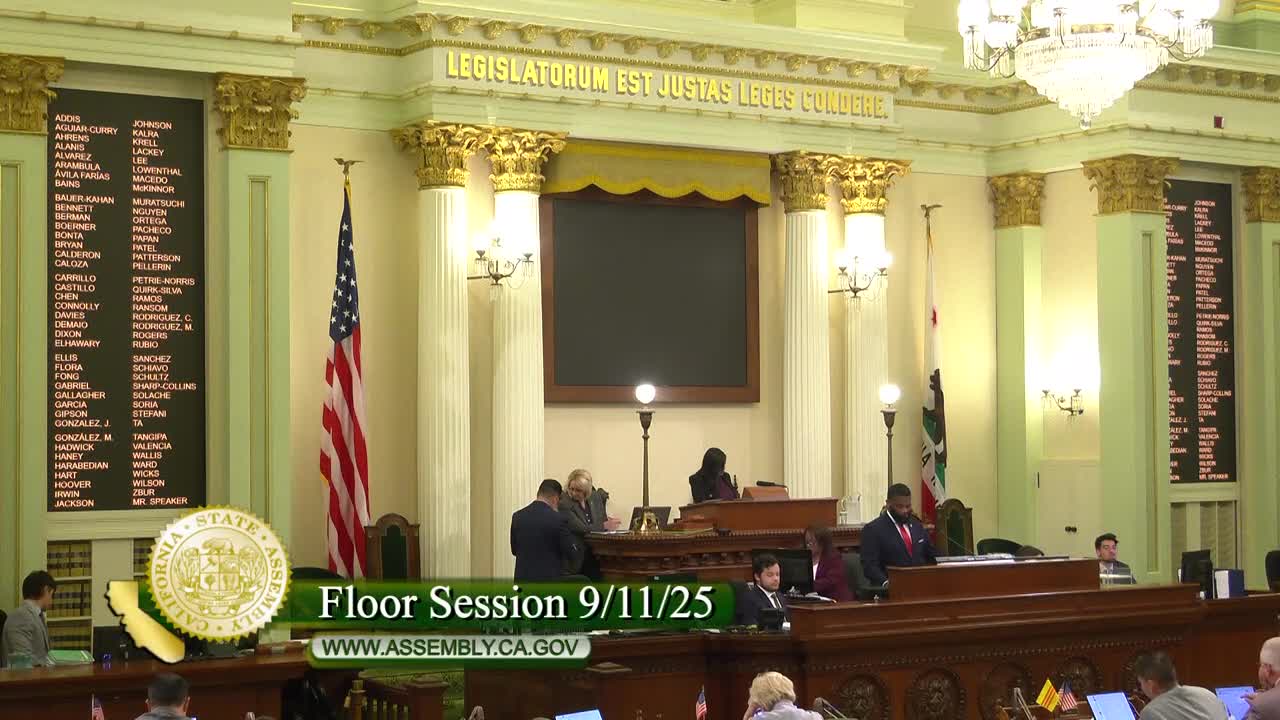 1MIN
Assembly Floor
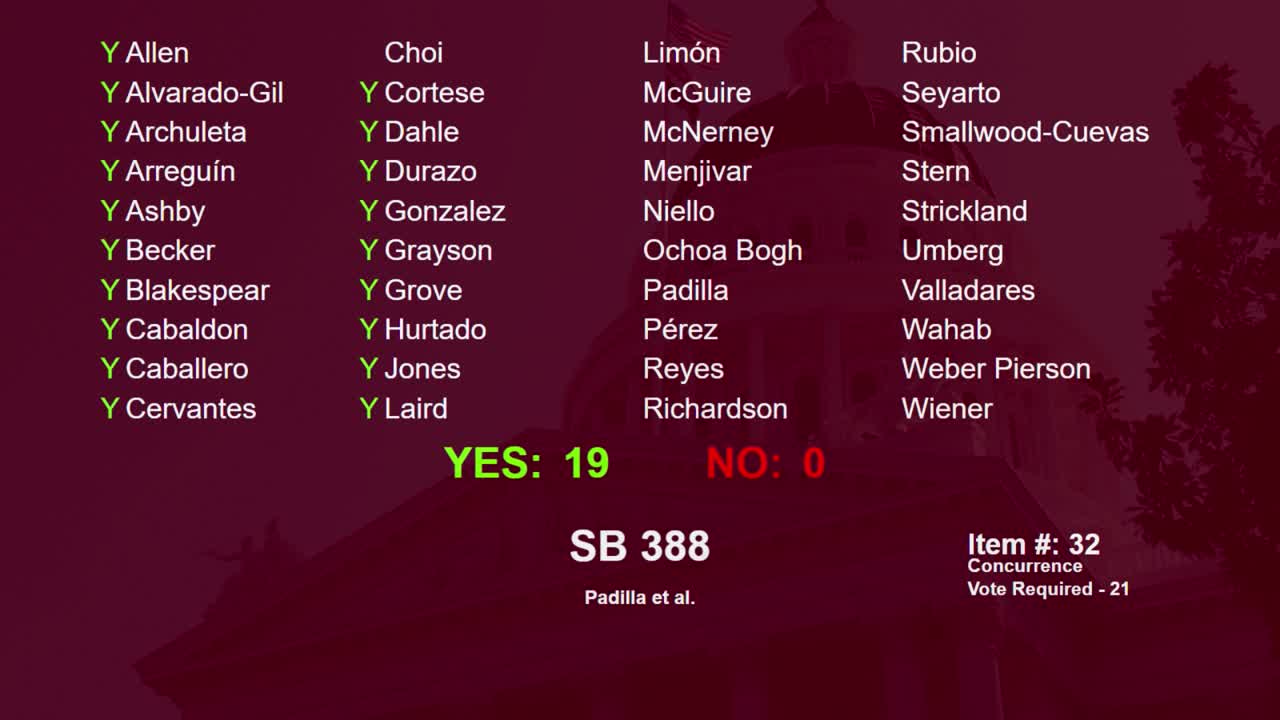 4MIN
Senate Floor
 54MIN
Senate Standing Committee on Revenue and Taxation
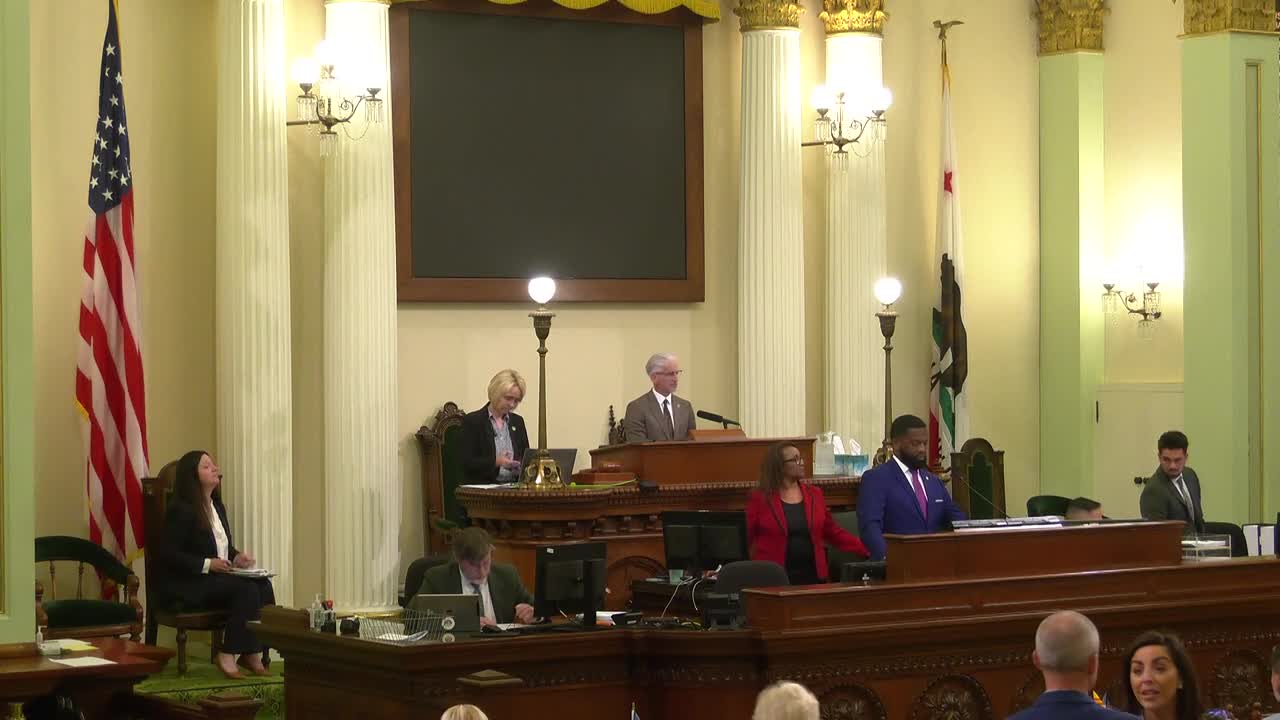 2MIN
Assembly Floor
 19MIN
Assembly Standing Committee on Revenue and Taxation
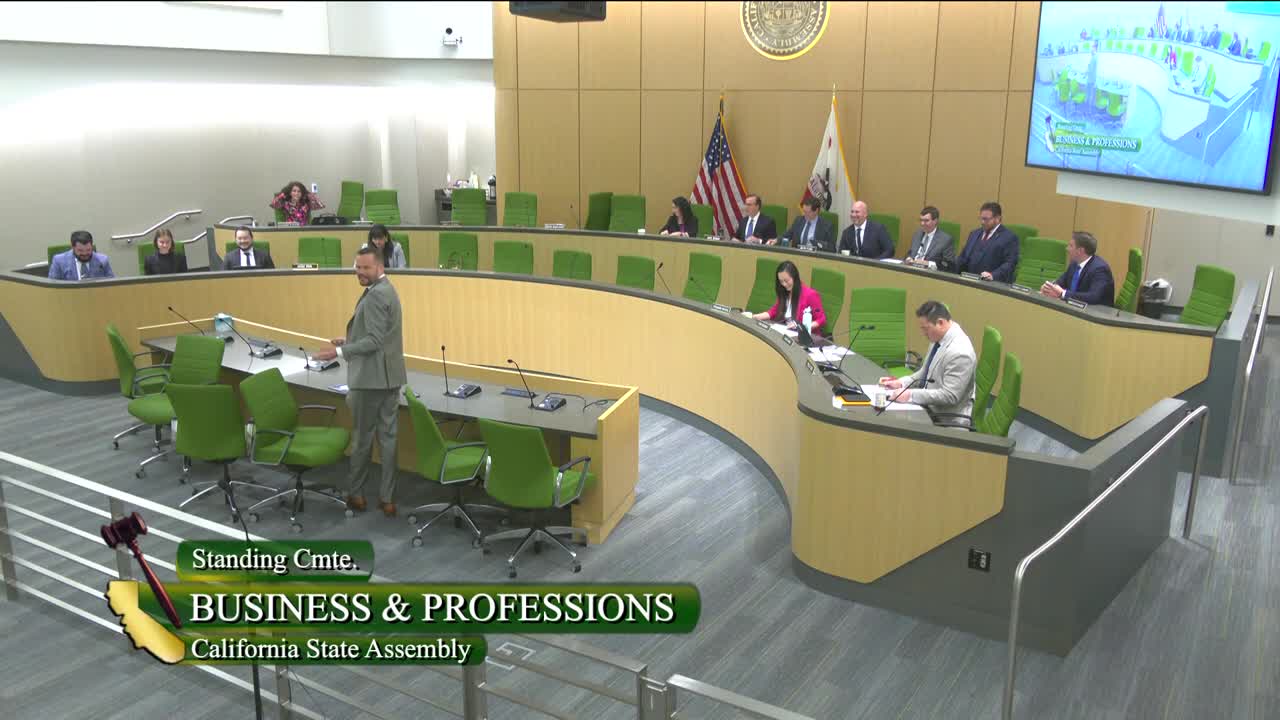 27MIN
Assembly Standing Committee on Business and Professions
Bill Author