AB 572: Criminal procedure: interrogations.
- Session Year: 2025-2026
- House: Assembly
- Latest Version Date: 2025-10-13
Current Status:
Passed
(2025-10-13: Chaptered by Secretary of State - Chapter 697, Statutes of 2025.)
Introduced
In Committee
Awaiting First Chamber Vote
Passed First Chamber
In Committee
Awaiting Second Chamber Vote
Passed Second Chamber
Enacted
Existing law prohibits the prosecuting attorney, attorney for the defendant, or investigator for either the prosecution or the defendant from interviewing, questioning, or speaking to a victim or witness whose name has been disclosed pursuant to existing law without first clearly identifying themselves and identifying the full name of the agency by whom they are employed, and identifying whether they represent, or have been retained by, the prosecution or the defendant. Under existing law, if an interview takes place in person, the party is also required to show the victim or witness a business card, official badge, or other form of official identification before commencing the interview or questioning.
This bill would require a peace officer, as defined, or a prosecuting attorney, before any initial formal interview of an immediate family member of a person who has been killed or seriously injured by a peace officer, to clearly identify themselves and if the interview takes place in person, to show identification, to inform the person of the status of their family member, to inform the person that they are conducting a formal interview for the purposes of an investigation, as specified, and to inform the person that they have a choice to come to the station for the formal interview if they are asked to go and can have a trusted support person with them. The bill would provide that its provisions do not apply if the immediate family member is under custodial interrogation, as specified, or if the delay would result in the loss or destruction of evidence or pose an imminent threat to public safety. By increasing duties on local law enforcement, this bill would impose a state-mandated local program.
The California Constitution requires the state to reimburse local agencies and school districts for certain costs mandated by the state. Statutory provisions establish procedures for making that reimbursement.
This bill would provide that, if the Commission on State Mandates determines that the bill contains costs mandated by the state, reimbursement for those costs shall be made pursuant to the statutory provisions noted above.
Existing law prohibits the prosecuting attorney, attorney for the defendant, or investigator for either the prosecution or the defendant from interviewing, questioning, or speaking to a victim or witness whose name has been disclosed pursuant to existing law without first clearly identifying themself themselves and identifying the full name of the agency by whom they are employed, and identifying whether they represent, or have been retained by, the prosecution or the defendant. Under existing law, if an interview takes place in person, the party is also required to show the victim or witness a business card, official badge, or other form of official identification before commencing the interview or questioning.
This bill would require a peace officer, as defined, or a prosecuting attorney, prior to interviewing before any initial formal interview of an immediate family member of a person who has been killed or seriously injured by a peace officer, to clearly identify themself themselves and if the interview takes place in person, to show identification, and to inform the person of specified information, including the status of their family member, that the person can consult with an attorney or trusted support person, and that the investigation that they are conducting may involve the culpability of the family member who was killed or injured. to inform the person that they are conducting a formal interview for the purposes of an investigation, as specified, and to inform the person that they have a choice to come to the station for the formal interview if they are asked to go and can have a trusted support person with them. The bill would provide that its provisions do not apply if the immediate family member is under custodial interrogation, as specified. specified, or if the delay would result in the loss or destruction of evidence or pose an imminent threat to public safety. By increasing duties on local law enforcement, this bill would impose a state-mandated local program.
The California Constitution requires the state to reimburse local agencies and school districts for certain costs mandated by the state. Statutory provisions establish procedures for making that reimbursement.
This bill would provide that, if the Commission on State Mandates determines that the bill contains costs mandated by the state, reimbursement for those costs shall be made pursuant to the statutory provisions noted above.
Existing law prohibits the prosecuting attorney, attorney for the defendant, or investigator for either the prosecution or the defendant from interviewing, questioning, or speaking to a victim or witness whose name has been disclosed pursuant to existing law without first clearly identifying themself and identifying the full name of the agency by whom they are employed, and identifying whether they represent, or have been retained by, the prosecution or the defendant. Under existing law, if an interview takes place in person, the party is also required to show the victim or witness a business card, official badge, or other form of official identification before commencing the interview or questioning.
This bill would require a peace officer, as defined, or a prosecuting attorney, prior to interviewing an immediate family member of a person who has been killed or seriously injured by a peace officer, to clearly identify themself and if the interview takes place in person, to show identification, and to inform the person of specified information, including the status of their family member, that the person can consult with an attorney or trusted support person, and that the investigation that they are conducting may involve the culpability of the family member who was killed or injured. The bill would provide that its provisions do not apply if the immediate family member is under custodial interrogation, as specified. By increasing duties on local law enforcement, this bill would impose a state-mandated local program.
The California Constitution requires the state to reimburse local agencies and school districts for certain costs mandated by the state. Statutory provisions establish procedures for making that reimbursement.
This bill would provide that, if the Commission on State Mandates determines that the bill contains costs mandated by the state, reimbursement for those costs shall be made pursuant to the statutory provisions noted above.
Existing law prohibits the prosecuting attorney, attorney for the defendant, or investigator for either the prosecution or the defendant from interviewing, questioning, or speaking to a victim or witness whose name has been disclosed pursuant to existing law without first clearly identifying themself and identifying the full name of the agency by whom they are employed, and identifying whether they represent, or have been retained by, the prosecution or the defendant. Under existing law, if an interview takes place in person, the party is also required to show the victim or witness a business card, official badge, or other form of official identification before commencing the interview or questioning.
This bill would require a peace officer, as defined, or a prosecuting attorney, or an investigator for the prosecution, prior to interviewing an immediate family member of a person who has been killed or seriously injured by a peace officer, to clearly identify themself and if the interview takes place in person, to show identification, and to inform the person of specified information, including the status of their family member, that the person can consult with an attorney or trusted support person, and that the investigation that the officer, attorney, or investigator is they are conducting may involve the culpability of the family member who was killed or injured. By increasing duties on local law enforcement, this bill would impose a state-mandated local program.
The California Constitution requires the state to reimburse local agencies and school districts for certain costs mandated by the state. Statutory provisions establish procedures for making that reimbursement.
This bill would provide that, if the Commission on State Mandates determines that the bill contains costs mandated by the state, reimbursement for those costs shall be made pursuant to the statutory provisions noted above.
Existing law prohibits the prosecuting attorney, attorney for the defendant, or investigator for either the prosecution or the defendant from interviewing, questioning, or speaking to a victim or witness whose name has been disclosed pursuant to existing law without first clearly identifying themself and identifying the full name of the agency by whom they are employed, and identifying whether they represent, or have been retained by, the prosecution or the defendant. Under existing law, if an interview takes place in person, the party is also required to show the victim or witness a business card, official badge, or other form of official identification before commencing the interview or questioning.
This bill would require a peace officer, as defined, a prosecuting attorney, or an investigator for the prosecution, prior to interviewing an immediate family member of a person who has been killed or seriously injured by a peace officer, to clearly identify themself and if the interview takes place in person, to show identification, and to inform the person of specified information, including the status of their family member, that the person can consult with an attorney or trusted support person, and that the investigation that the officer, attorney, or investigator is conducting may involve the culpability of the family member who was killed or injured. By increasing duties on local law enforcement, this bill would impose a state-mandated local program.
The California Constitution requires the state to reimburse local agencies and school districts for certain costs mandated by the state. Statutory provisions establish procedures for making that reimbursement.
This bill would provide that, if the Commission on State Mandates determines that the bill contains costs mandated by the state, reimbursement for those costs shall be made pursuant to the statutory provisions noted above.
(a)(1)On or before January 1, 2027, every law enforcement and prosecutorial agency shall maintain a policy requiring a peace officer or prosecuting attorney who initiates a formal interview to gather evidence related to a law enforcement incident resulting in a persons death or serious bodily injury caused by a peace officer to adhere to the requirements in paragraph (2).
(2)Before any initial formal interview with an immediate family member of the person killed or seriously injured, or upon confirming the relationship as an immediate family member, the peace officer or prosecuting attorney shall:
(A)Clearly identify themselves by providing their full name and the name of the agency by which they are employed. If the interview takes place in person, they shall also display a business card, official badge, or other form of official identification.
(B)Inform the person of the status of their family member, if known, including whether the family member has been killed or seriously injured by law enforcement.
(C)Inform the person that they are conducting a formal interview for the purposes of an investigation that may or may not involve an assessment of the conduct of the person that was killed or injured.
(D)Inform the person that they can have a trusted support person with them. If the family member is asked to go to a station for a formal interview, inform the family member that they have a choice to come to the station and can have a trusted support person with them.
(b)No peace officer or prosecuting attorney shall employ threats or deception, including knowingly using false information, fabricated evidence, or misleading statements, to coerce an interview or when conducting any interview subject to this section.
(c)Subdivision (a) shall not apply under the following circumstances:
(1)When a reasonable officer believes that delay would result in the loss or destruction of evidence or pose an imminent threat to public safety.
(2)When the immediate family member has received advisements substantially equivalent to those required by this section or under Miranda v. Arizona (1966) 384 U.S. 436.
(d)For purposes of this section, the following terms shall apply:
(1)Formal means an interview conducted in person or via secure remote communication, including, but not limited to, video or audio conferencing, designed to elicit specific, material information about an incident and documented through written, audio, or video records.
(2)Immediate family member means a person known by the officer at the time of the interview to be a spouse, parent, grandparent, brother, sister, or child or grandchild related by blood, marriage, or adoption of the person who was killed or injured.
(3)Law enforcement agency means any department or agency of the state or any local government, special district, or other political subdivision thereof that employs any peace officer, as described in Chapter 4.5 (commencing with Section 830) of Title 3 of Part 2 of the Penal Code.
(4)Prosecutorial agency means a district attorney, city attorney, or other governmental entity responsible for the prosecution of crimes.
(5)Serious bodily injury has the same meaning as in paragraph (4) of subdivision (f) of Section 243 of the Penal Code.
(6)Support person means an individual selected by the immediate family member to provide moral and emotional support, provided the support person is not a percipient witness to or person of interest or suspect in the incident involving the individual who was killed or seriously injured by police. No certification, training, or other special qualification is required for an individual to act as a support person.
SEC. 2.If the Commission on State Mandates determines that this act contains costs mandated by the state, reimbursement to local agencies and school districts for those costs shall be made pursuant to Part 7 (commencing with Section 17500) of Division 4 of Title 2 of the Government Code.
SECTION 1.Section 13654 is added to the Penal Code, to read:13654.(a)A peace officer, as defined in Chapter 4.5 (commencing with Section 830) of Title 3 of Part 2, or a prosecuting attorney, prior to commencing any interview, questioning, or interrogation by law enforcement, regardless of whether they are in a police station, with an immediate family member of a person who has been killed or seriously injured by a peace officer, shall do all of the following:(1)Clearly identify themself, identifying the full name of the agency by whom they are employed. If the interview takes place in person, the party shall also show the person a business card, official badge, or other form of official identification.(2)Inform the person of the status of their family member, including whether the family member has been killed or seriously injured by law enforcement.(3)Inform the person that they can consult with an attorney or trusted support person, they are not required to speak with officers, and they are not required to go to the police station.(4)Inform the person that they are conducting an investigation and that the investigation may or may not involve the culpability of the person that was killed or injured.(b)For purposes of this section, immediate family member means the spouse, domestic partner, parent, guardian, grandparent, aunt, uncle, brother, sister, and children or grandchildren who are related by blood, marriage, or adoption, of the person who was killed or seriously injured by a peace officer.(c)This section does not apply to an immediate family member of a person who has been killed or seriously injured by a peace officer if that immediate family member is under a custodial interrogation that requires the immediate family member to be given the warnings required by Miranda v. Arizona (1966) 384 U.S. 436.(d)For the purposes of this section, seriously injured means a person has suffered serious bodily injury, as defined in Section 243.SEC. 2.If the Commission on State Mandates determines that this act contains costs mandated by the state, reimbursement to local agencies and school districts for those costs shall be made pursuant to Part 7 (commencing with Section 17500) of Division 4 of Title 2 of the Government Code.(a)A peace officer, as defined in Chapter 4.5 (commencing with Section 830) of Title 3 of Part 2, or a prosecuting attorney, prior to commencing any interview, questioning, or interrogation by law enforcement, regardless of whether they are in a police station, with an immediate family member of a person who has been killed or seriously injured by a peace officer, shall do all of the following:
(1)Clearly identify themself, identifying the full name of the agency by whom they are employed. If the interview takes place in person, the party shall also show the person a business card, official badge, or other form of official identification.
(2)Inform the person of the status of their family member, including whether the family member has been killed or seriously injured by law enforcement.
(3)Inform the person that they can consult with an attorney or trusted support person, they are not required to speak with officers, and they are not required to go to the police station.
(4)Inform the person that they are conducting an investigation and that the investigation may or may not involve the culpability of the person that was killed or injured.
(b)For purposes of this section, immediate family family member means the victims spouse, domestic partner, parent, guardian, grandparent, aunt, uncle, brother, sister, and children or grandchildren who are related by blood, marriage, or adoption. adoption, of the person who was killed or seriously injured by a peace officer.
(c)This section does not apply to an immediate family member of a person who has been killed or seriously injured by a peace officer if that immediate family member is under a custodial interrogation that requires the immediate family member to be given the warnings required by Miranda v. Arizona (1966) 384 U.S. 436.
(d)For the purposes of this section, seriously injured means a person has suffered serious bodily injury, as defined in Section 243.
SEC. 2.If the Commission on State Mandates determines that this act contains costs mandated by the state, reimbursement to local agencies and school districts for those costs shall be made pursuant to Part 7 (commencing with Section 17500) of Division 4 of Title 2 of the Government Code.
(a)A peace officer, as defined in Chapter 4.5 (commencing with Section 830) of Title 3 of Part 2, or a prosecuting attorney, or an investigator for the prosecution, prior to commencing any interview, questioning, or interrogation by law enforcement, regardless of whether they are in a police station, with an immediate family member of a person who has been killed or seriously injured by a peace officer, shall do all of the following:
(1)Clearly identify themself, identifying the full name of the agency by whom they are employed, and identifying whether they represent, or have been retained by, the prosecution. employed. If the interview takes place in person, the party shall also show the person a business card, official badge, or other form of official identification.
(2)Inform the person of the status of their family member, including whether the family member has been killed or seriously injured by law enforcement.
(3)Inform the person that they can consult with an attorney or trusted support person, they are not required to speak with officers, and they are not required to go to the police station.
(4)Inform the person that they are conducting an investigation and that the investigation may or may not involve the culpability of the person that was killed or injured.
(b)For purposes of this section, immediate family means the victims spouse, domestic partner, parent, guardian, grandparent, aunt, uncle, brother, sister, and children or grandchildren who are related by blood, marriage, or adoption.
SEC. 2.If the Commission on State Mandates determines that this act contains costs mandated by the state, reimbursement to local agencies and school districts for those costs shall be made pursuant to Part 7 (commencing with Section 17500) of Division 4 of Title 2 of the Government Code.
REVISIONS: HeadingLine 2.(a)A peace officer, as defined in Chapter 4.5 (commencing with Section 830) of Title 3 of Part 2, a prosecuting attorney, or an investigator for the prosecution, prior to commencing any interview, questioning, or interrogation by law enforcement, regardless of whether they are in a police station, with an immediate family member of a person who has been killed or seriously injured by a peace officer, shall do all of the following:
(1)Clearly identify themself, identifying the full name of the agency by whom they are employed, and identifying whether they represent, or have been retained by, the prosecution. If the interview takes place in person, the party shall also show the person a business card, official badge, or other form of official identification.
(2)Inform the person of the status of their family member, including whether the family member has been killed or seriously injured by law enforcement.
(3)Inform the person that they can consult with an attorney or trusted support person, they are not required to speak with officers, and they are not required to go to the police station.
(4)Inform the person that they are conducting an investigation and that the investigation may involve the culpability of the person that was killed or injured.
(b)For purposes of this section, immediate family means the victims spouse, domestic partner, parent, guardian, grandparent, aunt, uncle, brother, sister, and children or grandchildren who are related by blood, marriage, or adoption.
SEC. 2.If the Commission on State Mandates determines that this act contains costs mandated by the state, reimbursement to local agencies and school districts for those costs shall be made pursuant to Part 7 (commencing with Section 17500) of Division 4 of Title 2 of the Government Code.
|
Date
|
Status
|
|---|---|
| Oct 13, 2025 | Chaptered by Secretary of State - Chapter 697, Statutes of 2025. |
| Oct 13, 2025 | Approved by the Governor. |
| Sep 24, 2025 | Enrolled and presented to the Governor at 3 p.m. |
| Sep 13, 2025 | Senate amendments concurred in. To Engrossing and Enrolling. (Ayes 42. Noes 22. Page 3464.). |
| Sep 13, 2025 | Joint Rules 61(a)(14) and 51(a)(4) suspended. (Ayes 59. Noes 20. Page 3413.) |
| Sep 12, 2025 | In Assembly. Concurrence in Senate amendments pending. |
| Sep 12, 2025 | Read third time. Passed. Ordered to the Assembly. (Ayes 22. Noes 10. Page 2995.). |
| Sep 8, 2025 | Read second time. Ordered to third reading. |
| Sep 5, 2025 | Read third time and amended. Ordered to second reading. |
| Aug 20, 2025 | Read second time. Ordered to third reading. |
| Aug 19, 2025 | From committee: Be ordered to second reading pursuant to Senate Rule 28.8. |
| Jul 8, 2025 | From committee: Do pass and re-refer to Com. on APPR. (Ayes 5. Noes 1.) (July 8). Re-referred to Com. on APPR. |
| Jun 18, 2025 | Referred to Com. on PUB. S. |
| Jun 5, 2025 | In Senate. Read first time. To Com. on RLS. for assignment. |
| Jun 4, 2025 | Read third time. Passed. Ordered to the Senate. (Ayes 44. Noes 22. Page 2081.) |
| May 8, 2025 | Read third time and amended. Ordered to third reading. (Page 1493.) |
| May 8, 2025 | Read third time and amended. Ordered to third reading. |
| Apr 10, 2025 | Read second time. Ordered to third reading. |
| Apr 9, 2025 | From committee: Do pass. (Ayes 10. Noes 4.) (April 9). |
| Apr 9, 2025 | Coauthors revised. |
| Mar 28, 2025 | Re-referred to Com. on APPR. |
| Mar 27, 2025 | Read second time and amended. |
| Mar 26, 2025 | From committee: Amend, and do pass as amended and re-refer to Com. on APPR. (Ayes 5. Noes 2.) (March 25). |
| Feb 24, 2025 | Referred to Com. on PUB. S. |
| Feb 13, 2025 | From printer. May be heard in committee March 15. |
| Feb 12, 2025 | Read first time. To print. |
|
Date
|
Description
|
Location
|
Votes
|
|
|---|---|---|---|---|
| Sep 13, 2025 | AB 572 Kalra Concurrence in Senate Amendments | Assembly Floor |
Passed |
|
| Sep 12, 2025 | Assembly 3rd Reading AB572 Kalra et al. By Cortese | Senate Floor |
Passed |
|
| Jul 8, 2025 | Do pass, but first be re-referred to the Committee on [Appropriations] | Senate Standing Committee on Public Safety |
Passed |
|
| Jun 4, 2025 | AB 572 Kalra Assembly Third Reading | Assembly Floor |
Passed |
|
| Apr 9, 2025 | Do pass. | Assembly Standing Committee on Appropriations |
Passed |
|
| Mar 25, 2025 | Do pass as amended and be re-referred to the Committee on [Appropriations] | Assembly Standing Committee on Public Safety |
Passed |
This list shows positions taken on this bill by organizations on the date displayed, which is linked to the original source.
Positions by individuals are not included.
|
Organization
|
Position
|
Date
|
|---|---|---|
| Aclu California Action | ** Support | |
| Arcadia Police Officers' Association | ** Against | |
| Asian Law Alliance | ** Support | |
| Association For Los Angeles Deputy Sheriffs | ** Against | |
| Brea Police Association | ** Against | |
| Burbank Police Officers' Association | ** Against | |
| California Alliance for Youth and Community Justice | ** Support | |
| California Association of School Police Chiefs | ** Against | |
| California Attorneys For Criminal Justice | ** Support | |
| California Civil Liberties Advocacy | ** Support | |
| California Coalition for Women Prisoners | ** Support | |
| California Coalition of School Safety Professionals | ** Against | |
| California District Attorneys Association | ** Against | |
| California Immigrant Policy Center | ** Support | |
| California Narcotic Officers' Association | ** Against | |
| California Peace Officers Association | ** Against | |
| California Police Chiefs Association | ** Against | |
| California Public Defenders Association | ** Support | |
| California Reserve Peace Officers Association | ** Against | |
| California State Sheriffs' Association | ** Against | |
| Californians for Safety and Justice | ** Support | |
| Californians for Safety and Justice (co-source) | ** Support | |
| Californians United for a Responsible Budget | ** Support | |
| Check the Sheriff | ** Support | |
| CLAREMONT POLICE OFFICERS ASSOCIATION | ** Against | |
| Coalition for Justice and Accountability | ** Support | |
| Communities United for Restorative Youth Justice | ** Support | |
| Congregations Organized for Prophetic Engagement | ** Support | |
| Corona Police Officers Association | ** Against | |
| Courage California | ** Support | |
| Culver City Police Officer Association | ** Against | |
| Ella Baker Center For Human Rights | ** Support | |
| Families Demanding Justice | ** Support | |
| Felony Murder Elimination Project | ** Support | |
| Fresh Lifelines for Youth | ** Support | |
| Friends Committee On Legislation Of California | ** Support | |
| Fullerton Police Officers' Association | ** Against | |
| Initiate Justice | ** Support | |
| Initiate Justice Action | ** Support | |
| Justice2jobs Coalition | ** Support | |
| LA Defensa | ** Support | |
| Law Enforcement Action Partnership | ** Support | |
| Legal Services for Prisoners with Children | ** Support | |
| Los Angeles County District Attorney'S Office | ** Against | |
| Los Angeles County Sheriff'S Department | ** Against | |
| Los Angeles Professional Peace Officers Association | ** Against | |
| Los Angeles School Police Management Association | ** Against | |
| los angeles school police officers association | ** Against | |
| Matlin Legal | ** Support | |
| Murrieta Police Officers' Association | ** Against | |
| Newport Beach Police Association | ** Against | |
| Oakland Privacy | ** Support | |
| pacifica social justice | ** Support | |
| Palos Verdes Police Officers Association | ** Against | |
| Pangea Legal Services | ** Support | |
| Peace and Justice Law Center | ** Support | |
| Peace Officers Research Association Of California | ** Against | |
| PLACER COUNTY DEPUTY SHERIFFS ASSOCIATION | ** Against | |
| Pomona Police Officers' Association | ** Against | |
| Restoring Hope California | ** Support | |
| Reuniting Families Contra Costa | ** Support | |
| RIVERSIDE POLICE OFFICERS ASSOCIATION | ** Against | |
| Riverside Sheriffs' Association | ** Against | |
| Rubicon Programs | ** Support | |
| Ryse Center | ** Support | |
| San Diego County District Attorney's Office | ** Against | |
| San Francisco Public Defender | ** Support | |
| San Jose Peace and Justice Center | ** Support | |
| Santa Ana Police Officers Association | ** Against | |
| Showing Up for Racial Justice Santa Clara County | ** Support | |
| Silicon Valley De-Bug | ** Support | |
| Sister Warriors Freedom Coalition | ** Support | |
| Smart Justice California | ** Support | |
| Starting Over Inc. | ** Support | |
| Starting Over Strong | ** Support | |
| The W. Haywood Burns Institute | ** Support | |
| Ujima Adult and Family Serivces | ** Support | |
| United Families for Justice | ** Support | |
| Urban Peace Movement | ** Support | |
| Vera Institute Of Justice | ** Support | |
| Vietunity South Bay | ** Support | |
| Voices of Strength | ** Support | |
| Youth United for Community Action | ** Support |
CONCURRENCE IN SENATE AMENDMENTS
CSA1 Bill Id:AB 572
Author:(Kalra)
As Amended Ver:September 5, 2025
Majority vote
SUMMARY
Requires a law enforcement and prosecutorial agency to maintain a policy requiring a peace officer or prosecuting attorney to take specified actions before any initial formal interview with an immediate family member of the person killed or seriously injured by a peace officer.
Senate Amendments
- Delete the prior version of the bill, and instead provide the following:
- Requires, on or before January 1, 2027, every law enforcement and prosecutorial agency to maintain a policy requiring a peace officer or prosecuting attorney who initiates a formal interview to gather evidence related to a law enforcement incident resulting in a person′s death or serious bodily injury caused by a peace officer to adhere to the following:
- Requires a peace officer or prosecuting attorney before any initial formal interview with an immediate family member of the person killed or seriously injured, or upon confirming the relationship as an immediate family member, to do the following:
- Clearly identify themselves by providing their full name and the name of the agency by which they are employed, and if the interview takes place in person, they shall also display a business card, official badge, or other form of official identification.
- Inform the person of the status of their family member, if known, including whether the family member has been killed or seriously injured by law enforcement.
- Inform the person that they are conducting a formal interview for the purposes of an investigation that may or may not involve an assessment of the conduct of the person that was killed or injured.
- Inform the person that they can have a trusted support person with them, and if the family member is asked to go to a station for a formal interview, inform the family member that they have a choice to come to the station and can have a trusted support person with them.
- Requires a peace officer or prosecuting attorney before any initial formal interview with an immediate family member of the person killed or seriously injured, or upon confirming the relationship as an immediate family member, to do the following:
- Specifies that the above requirements do not apply in the following circumstances:
- When a reasonable officer believes that delay would result in the loss or destruction of evidence or pose an imminent threat to public safety.
- When the immediate family member has received advisements substantially equivalent to those required by this section or under Miranda v. Arizona (1966) 384 U.S. 436.
- Prohibits a peace officer or prosecuting attorney from employing threats or deception, including knowingly using false information, fabricated evidence, or misleading statements, to coerce an interview or when conducting any interview subject to this bill.
- Defines the following terms:
- ″Formal″ means an interview conducted in person or via secure remote communication, including, but not limited to, video or audio conferencing, designed to elicit specific, material information about an incident and documented through written, audio, or video records.
- ″Immediate family member″ means a person known by the officer at the time of the interview to be a spouse, parent, grandparent, brother, sister, or child or grandchild related by blood, marriage, or adoption of the person who was killed or injured.
- ″Law enforcement agency″ means any department or agency of the state or any local government, special district, or other political subdivision thereof that employs any peace officer, as specified.
- ″Prosecutorial agency″ means a district attorney, city attorney, or other governmental entity responsible for the prosecution of crimes.
- ″Serious bodily injury″ means, a serious impairment of physical condition, including, but not limited to, the following: loss of consciousness; concussion; bone fracture; protracted loss or impairment of function of any bodily member or organ; a wound requiring extensive suturing; and serious disfigurement.
- ″Support person″ means an individual selected by the immediate family member to provide moral and emotional support, provided the support person is not a percipient witness to or person of interest or suspect in the incident involving the individual who was killed or seriously injured by police. No certification, training, or other special qualification is required for an individual to act as a support person.
- Requires, on or before January 1, 2027, every law enforcement and prosecutorial agency to maintain a policy requiring a peace officer or prosecuting attorney who initiates a formal interview to gather evidence related to a law enforcement incident resulting in a person′s death or serious bodily injury caused by a peace officer to adhere to the following:
COMMENTS
- As passed by the Assembly: This bill required specified law enforcement officers, prior to interviewing an immediate family member of a person who has been killed or seriously injured by a peace officer, to inform that person that their family member has been killed or seriously injured.
Major Provisions:
- Required a peace officer or prosecuting attorney, prior to commencing any interview, questioning, or interrogation by law enforcement, regardless of whether they are in a police station, with an immediate family member of a person who has been killed or seriously injured by a peace officer, to do the following:
- Clearly identify themself, identifying the full name of the agency by whom they are employed. If the interview takes place in person, the party shall also show the person a business card, official badge, or other form of official identification.
- Inform the person of the status of their family member, including whether the family member has been killed or seriously injured by law enforcement.
- Inform the person that they can consult with an attorney or trusted support person, they are not required to speak with officers, and they are not required to go to the police station.
- Inform the person that they are conducting an investigation and that the investigation may or may not involve the culpability of the person that was killed or injured.
- Made this bill inapplicable to an immediate family member of a person who has been killed or seriously injured by a peace officer if that immediate family member is under a custodial interrogation that requires the immediate family member to be given the warnings required by Miranda v. Arizona (1966) 384 U.S. 436.
- Defined ″immediate family″ to mean the spouse, domestic partner, parent, guardian, grandparent, aunt, uncle, brother, sister, and children or grandchildren who are related by blood, marriage, or adoption, of the person who was killed or seriously injured by a peace officer.
- Defined ″seriously injured″ as a serious bodily injury, which is a serious impairment of physical condition, including, but not limited to, the following: loss of consciousness; concussion; bone fracture; protracted loss or impairment of function of any bodily member or organ; a wound requiring extensive suturing; and serious disfigurement.
According to the Author
″The relatives of individuals affected by police violence have a reasonable expectation of transparency and information about the circumstances surrounding their loved ones′ welfare without encountering deceiving and threatening information. The coercive methods law enforcement officers use to interrogate family members of the victim not only inflict harm upon the victim and their family, but also erode trust in law enforcement. AB 572 will provide family members with information that could protect them from a coercive interrogation when they are at their most vulnerable.″
Arguments in Support
According to the California Public Defenders Association, ″CPDA has a long-standing history of advocating for police transparency, accountability, and accessibility. We have supported numerous pieces of legislation aimed at ensuring community access to information about law enforcement and policing. Over the last five years, we have proudly supported specific efforts by members of the California Legislature to put police policies and procedures online (SB 978 (Bradford), [Chapter 978, Statutes of 2018] increase transparency of some police disciplinary records (SB 1421 (Skinner) [Chapter 988, Statutes of 2018] and SB 16 (Skinner) [Chapter 402, Statutes of 2021] and to create a commission to investigate and decertify police officers who commit misconduct SB 2 (Bradford) [Chapter 409, Statutes of 2021].
″AB 572 would require a peace officer, a prosecuting attorney, or an investigator for the prosecution, prior to interviewing an immediate family member of a person who has been killed or seriously injured by a peace officer, to clearly identify themself, if the interview takes place in person, to show identification, and to state specified information, including that the family member has the right to ask about the status of their family member prior to answering questions, has the right to remain silent, and before speaking with the interviewer, can consult with a trusted person and can have that person with them while they speak to the interviewer.
″AB 572 provides more transparency and accountability by providing members of the community information about whether the person attempting to interview them is a member of the prosecution, or law enforcement or someone else entirely, as well as their purpose in conducting the interview. People who have lost a loved one are understandably emotionally distraught and often confused about what is happening and should be provided clear information about whom the person is who is asking questions of them. AB 572 will provide some clarity about the purpose of the inquiry being made by law enforcement.
″An individual who has lost a loved one will be more willing to cooperate and aid the police in its investigation knowing the purpose of the questioning. It will help to foster more trusting relationships between the community and law enforcement by providing some assurance that a person is not misrepresenting themselves. Advising members of the public with this most basic information takes little time and energy and it will aid law enforcement in obtaining accurate and reliable information that may be used to further their investigative efforts.″
Arguments in Opposition
According to the Peace Officers Research Association of California, ″PORAC is deeply concerned that AB 572 will impede the pursuit of truth and justice by hindering the ability of investigators to gather accurate information from immediate family members of individuals involved in deadly force or serious injury incidents involving peace officers. By requiring these warnings and creating opportunities for family members to consult with attorneys before providing statements, AB 572 will result in witnesses declining to provide immediate interviews or statements, thereby inviting legal obstruction and the withholding of crucial information. Investigators rely on prompt interviews to capture spontaneous, detailed accounts before narratives solidify and external influences intervene to prevent the disclosure of or misrepresentation of critical details involving the actions of the suspect and the officer leading up to the shooting. For example, after consulting with a lawyer, a spouse who feared her husband would stab her may refuse to disclose her husband was wielding a knife or downplay her fear he would stab her.
″The prompt questioning of witness family members best serves the public by providing investigators with more truthful, accurate, and complete statements. First, fresh memories are more reliable. Statements obtained closer to the event reduce the risk of memory distortion or loss. Consultation with an attorney may result in significant delay, degrading their ability to vividly recall details like the officer and the suspect′s actions prior to the shooting, the sequence of events, or environmental factors.
″Second, consultation with a lawyer will result in strategic framing tailored to legal strategies (e.g., minimizing the suspect′s culpability to support a wrongful death claim). Attorneys may encourage selective recall aligned with civil litigation goals rather than a comprehensive account. For example, a sibling might initially recall the suspect reaching for a weapon but, post-attorney, focus only on the officer′s actions, skewing their statement. Witnesses do not need a Miranda-like warning because they have no risk of self-incrimination or criminal exposure.
″Statements obtained contemporaneously are inherently more reliable because the emotional state of the witness can enhance the recall of vivid details and reduce the risk of deception, for similar reasons to the excited utterances exception to hearsay. An emotional outpouring often leads to unfiltered statements, potentially revealing details they′d later suppress or alter after legal advice.
″In high-profile cases, family members might face pressure from activists, the media, other family members, or civil rights lawyers to align with a false narrative to maximize the recovery on meritless claims. Prompt interviews might reflect raw emotion, but delayed ones after counsel could balance personal truth with external influences.
″In addition, this bill is predicated on the false notion that family members are inherently vulnerable and require special protections to prevent coercion. In reality, family members are often the individuals with the most direct knowledge of the deceased or injured person′s state of mind, potential threats they posed, and relevant circumstances surrounding the incident. Preventing investigators from obtaining truthful statements from these individuals before they can be coached or advised to remain silent undermines the pursuit of justice.″
FISCAL COMMENTS
According to the Assembly Appropriations Committee, ″Likely minimal, potentially reimbursable workload costs for peace officers to provide the required information before interviews. General Fund costs will depend on whether the Commission on State Mandates determines these duties constitute a reimbursable state mandate.″
VOTES:
ASM PUBLIC SAFETY: 5-2-2
YES: Schultz, Mark González, Haney, Harabedian, Sharp-Collins
NO: Alanis, Lackey
ABS, ABST OR NV: Nguyen, Ramos
ASM APPROPRIATIONS: 10-4-1
YES: Wicks, Arambula, Calderon, Caloza, Elhawary, Fong, Mark González, Hart, Pacheco, Solache
NO: Sanchez, Dixon, Hadwick, Ta
ABS, ABST OR NV: Pellerin
ASSEMBLY FLOOR: 44-22-13
YES: Addis, Aguiar-Curry, Ahrens, Alvarez, Arambula, Bauer-Kahan, Bennett, Berman, Boerner, Bonta, Bryan, Caloza, Carrillo, Connolly, Elhawary, Fong, Garcia, Mark González, Haney, Harabedian, Hart, Jackson, Kalra, Lee, Lowenthal, McKinnor, Ortega, Papan, Patel, Pellerin, Quirk-Silva, Ransom, Celeste Rodriguez, Rogers, Schiavo, Schultz, Sharp-Collins, Solache, Valencia, Ward, Wicks, Wilson, Zbur, Rivas
NO: Alanis, Ávila Farías, Castillo, Chen, Davies, DeMaio, Dixon, Ellis, Flora, Gallagher, Jeff Gonzalez, Hadwick, Hoover, Irwin, Lackey, Macedo, Patterson, Petrie-Norris, Sanchez, Ta, Tangipa, Wallis
ABS, ABST OR NV: Bains, Calderon, Gabriel, Gipson, Krell, Muratsuchi, Nguyen, Pacheco, Ramos, Michelle Rodriguez, Blanca Rubio, Soria, Stefani
UPDATED
VERSION: September 5, 2025
CONSULTANT: Andrew Ironside / Ilan Zur / PUB. S. / (916) 319-3744 FN: 0002116
SENATE RULES COMMITTEE Office of Senate Floor Analyses (916) 651-1520 Fax: (916) 327-4478 | AB 572 |
THIRD READING
Bill No: AB 572
Author: Kalra (D), et al.
Amended: 9/5/25 in Senate
Vote: 21
SENATE PUBLIC SAFETY COMMITTEE: 5-1, 7/8/25
AYES: Arreguín, Caballero, Gonzalez, Pérez, Wiener
NOES: Seyarto
SENATE APPROPRIATIONS COMMITTEE: Senate Rule 28.8
ASSEMBLY FLOOR: 44-22, 6/4/25 - See last page for vote
SUBJECT: Criminal procedure: interrogations
SOURCE: Californians for Safety and Justice and Silicon Valley De-Bug
DIGEST:
This bill requires law enforcement officers to identify themselves and provide specified information prior to interviewing, questioning, or interrogating the family member of person who has been killed or seriously injured by an officer.
Senate floor amendments of 9/5/2025 (1) require a law enforcement agency to maintain a policy by January 1, 2027; (2) modify the requirements currently included in the bill; (3) create exemptions for when an officer believes evidence would be destroyed or lost or there is an imminent threat to public safety; (4) define specified terms; and (5) move the provisions from the Penal Code to the Government Code.
ANALYSIS:
Existing Law:
- Requires a state prosecutor to investigate incidents involving officer-involved use of force resulting in the death of an unarmed civilian, and incidents involving a shooting by a peace officer that results in the death of a civilian if the civilian was unarmed or if there is a reasonable dispute as to whether the person was armed. (Government Code (Gov. Code), § 12525.3, subd. (b)(1) & (2).)
- Provides that, if criminal charges against the involved officer are found to be warranted, the state prosecutor shall initiate and prosecute a criminal action against the officer. (Gov. Code, § 12525.3, subd. (b)(2)(C).)
- Requires the Commission on Peace Officers Standard and Training to establish the Robert Presley Institute of Criminal Investigation (ICI) which makes available to criminal investigators of California’s law enforcement agencies an advanced training program to meet the needs of working investigators in specialty assignments, such as arson, auto theft, homicide, and narcotics. (Penal Code (Pen. Code), § 13519.9, subd. (a).)
- Requires the ICI to provide an array of investigation training, including core instruction in matters common to all investigative activities, advanced instruction through foundation specialty courses in the various investigative specialties, and completion of a variety of elective courses pertaining to investigation. (Pen. Code, § 13519.9, subd. (b).)
- Provides that during the custodial interrogation of a minor 17 years of age or younger relating to the commission of a misdemeanor or felony, a law enforcement officer shall not employ threats, physical harm, deception, or psychologically manipulative interrogation tactics, as specified. (Welfare and Institutions Code (Welfare and Institutions Code (Welf. & Inst. Code), § 625.7.)
- Requires law enforcement to furnish written notice to victims of domestic violence at the scene with information on victims’ rights and resources. (Pen. Code, § 13701.)
- Requires, upon the initial interaction with a sexual assault victim, a law enforcement officer to provide the victim with a card explaining the rights of sexual assault victims, including that they do not need to participate in the criminal justice system. (Pen. Code, § 680.2, subd. (a).)
- States that whenever there has been a crime committed against a victim, the law enforcement officer assigned to the case may provide the victim of the crime with a “Victim’s Rights Card,” as specified. (Pen. Code, § 679.08, subd. (a).)
- Requires every law enforcement agency investigating a criminal act and every agency prosecuting a criminal act, at the time of initial contact with a crime victim, during follow-up investigation, or as soon as deemed appropriate by investigating officers or prosecuting attorneys, to provide to each victim a “Marsy Rights” card, which states the rights of crime victims described in the California Constitution. (Pen. Code, § 679.026, subd. (c)(1).)
This bill:
- Requires, beginning January 1, 2027, every law enforcement and prosecutorial agency to have a policy for when law enforcement initiates a formal interview to gather evidence related to a law enforcement incident resulting in a person’s death or serious bodily injury.
- States that the policy must adhere to the following requirements before any initial formal interview with an immediate family member of the person killed or seriously injured, or upon confirming the relationship as an immediate family member:
- Clearly identify themselves and provide the full name of the agency by whom they are employed. If the interview takes place in person, the officer or prosecutor shall also show the person a business card, official badge, or other form of official identification;
- Inform the person of the status of their family member, if known, including whether the family member has been killed or seriously injured;
- Inform the person that they are conducting a formal interview for purposes of an investigation and that the investigation may or may not involve an assessment of the conduct of the person that was killed or injured;
- Inform the person that they can have a trusted support person present who can also accompany them if they are asked to go to the police station for a formal interview.
- Prohibiting the use of threats or deception, as specified.
- Exempts the following circumstances from these requirements:
- When a reasonable officer believes that delay would result in the loss or destruction of evidence or pose an imminent threat to public safety; and,
- When an immediate family member has received advisements substantially equivalent to Miranda warnings.
- Defines various terms for the purposes of these provisions.
Background
According to a 2023 Los Angeles Times report:
For years, law enforcement agencies across California have been trained to quickly question family members after a police killing in order to collect information that, among other things, is used to protect the involved officers and their department, an investigation by the Los Angeles Times and the Investigative Reporting Program at UC Berkeley’s Graduate School of Journalism has found.
Police and prosecutors routinely incorporate the information into disparaging accounts about the people who have been killed that help justify the killings, bolster the department’s defense against civil suits and reduce the amount of money families receive in settlements and jury verdicts, according to police reports, court records and interviews with families and their attorneys.
The Times and the Investigative Reporting Program documented 20 instances of the practice by 15 law enforcement agencies across the state since 2008. Attorneys specializing in police misconduct lawsuits say those cases are just a fraction of what they describe as a routine practice.
(B. Howey, After police killings, families are kept in the dark and grilled for information, L.A. Times, Mar. 28, 2023) <After police killings, California families often kept in the dark - Los Angeles Times (latimes.com) [last visited July 1, 2025].)
In an effort to prevent this interview technique, this bill would require a peace officer or prosecutor to provide immediate family members of a person killed or seriously injured by law enforcement of certain information, including the identification of the interviewer; the status of the family member, and advisements that they can consult with an attorney or support person, that they are not required to speak with the interviewer or go to the police station, and that the investigation that they are conducting may or may not involve the culpability of their family member.
In this respect, some of the admonitions are similar to the information provided to victims of certain crimes. However, it is unclear what remedy, if any, there is if the investigating officer or prosecutor does not give the advisement.
FISCAL EFFECT: Appropriation: No Fiscal Com.: Yes Local: Yes
SUPPORT: (Verified 9/5/25)
Californians for Safety and Justice and Silicon Valley De-Bug (Source)
ACLU California Action
Asian Law Alliance
California Alliance for Youth and Community Justice
California Attorneys for Criminal Justice
California Immigrant Policy Center
California Public Defenders Association
Californians for Safety and Justice
Californians United for a Responsible Budget
Congregations Organized for Prophetic Engagement
Ella Baker Center for Human Right
Felony Murder Elimination Project
Friends Committee on Legislation of California
Initiate Justice
Initiate Justice Action
Justice2jobs Coalition
LA Defensa
Law Enforcement Action Partnership
Oakland Privacy
Pangea Legal Services
Rubicon Programs
Showing Up for Racial Justice Santa Clara County
Silicon Valley De-bug
Sister Warriors Freedom Coalition
Smart Justice California
Starting Over INC.
Starting Over Strong
The W. Haywood Burns Institute
Ujima Adult and Family Services
United Families for Justice
Vera Institute of Justice
Youth United for Community Action
OPPOSITION: (Verified 9/5/25)
Arcadia Police Officers' Association
Association for Los Angeles Deputy Sheriffs
Brea Police Association
Burbank Police Officers' Association
California Association of School Police Chiefs
California Coalition of School Safety Professionals
California District Attorneys Association
California Narcotic Officers' Association
California Peace Officers Association
California Police Chiefs Association
California Reserve Peace Officers Association
Claremont Police Officers Association
Corona Police Officers Association
Culver City Police Officers' Association
Fullerton Police Officers' Association
Los Angeles County District Attorney's Office
Los Angeles County Sheriff's Department
Los Angeles Professional Peace Officers Association
Los Angeles School Police Management Association
Los Angeles School Police Officers Association
Murrieta Police Officers' Association
Newport Beach Police Association
Palos Verdes Police Officers Association
Peace Officers Research Association of California
Placer County Deputy Sheriffs' Association
Pomona Police Officers' Association
Riverside Police Officers Association
Riverside Sheriffs' Association
San Diego County District Attorney's Office
ARGUMENTS IN SUPPORT: According to Californians for Safety and Justice, a co-sponsor of this bill:
In the aftermath of incidents involving police violence, families of the victim are often approached by law enforcement authorities under the guise of an “interview,” but not officially taken into custody. Sometimes they are told to go to the police precinct for questioning where law enforcement can withhold information about the state of their loved one and the incident. While the family member is distressed and worried for their loved one, law enforcement officers have used this opportunity to coerce information about the victim’s past in order to paint a narrative about the victim or build a case against them. Such tactics not only inflict harm upon the victim and their family but also erode trust in law enforcement. The relatives of individuals affected by police violence have a reasonable expectation to transparency about the circumstances surrounding their loved ones', without being manipulated in the process.
Californians for Safety and Justice is proud to co-sponsor AB 3021 because it will empower families of victims to exercise their rights in interactions with law enforcement when they are at their most vulnerable.
ARGUMENTS IN OPPOSITION: According to the California Police Chiefs Association:
While we empathize for individuals in such situations, the rigid and absolute requirements set by AB 572 fail to consider practical applications in a myriad of different scenarios that make this bill unworkable.
CPCA and our members place an extremely high value on transparency and communication, especially in light of incidents involving the death or serious injury to a member of the public. In such instances, we expect our officers to approach family members with sensitivity, honesty, and respect. We maintain these expectations regardless of our opposition to AB 572.
Unfortunately, AB 572 presents several very real issues, including a lack account for situations where family members may be implicated or involved in a crime, potential liability may be found, or when officers have incomplete information about the incident or the relationships of those involved. We also feel this type of requirements is better situated within department policies, not set as an absolute requirement in the Penal Code where criminal penalties result from a violation.
ASSEMBLY FLOOR: 44-22, 6/4/25
AYES: Addis, Aguiar-Curry, Ahrens, Alvarez, Arambula, Bauer-Kahan, Bennett, Berman, Boerner, Bonta, Bryan, Caloza, Carrillo, Connolly, Elhawary, Fong, Garcia, Mark González, Haney, Harabedian, Hart, Jackson, Kalra, Lee, Lowenthal, McKinnor, Ortega, Papan, Patel, Pellerin, Quirk-Silva, Ransom, Celeste Rodriguez, Rogers, Schiavo, Schultz, Sharp-Collins, Solache, Valencia, Ward, Wicks, Wilson, Zbur, Rivas
NOES: Alanis, Ávila Farías, Castillo, Chen, Davies, DeMaio, Dixon, Ellis, Flora, Gallagher, Jeff Gonzalez, Hadwick, Hoover, Irwin, Lackey, Macedo, Patterson, Petrie-Norris, Sanchez, Ta, Tangipa, Wallis
NO VOTE RECORDED: Bains, Calderon, Gabriel, Gipson, Krell, Muratsuchi, Nguyen, Pacheco, Ramos, Michelle Rodriguez, Blanca Rubio, Soria, Stefani
Prepared by: Sandy Uribe / PUB. S. /
9/8/25 21:16:22
**** END ****
SENATE RULES COMMITTEE Office of Senate Floor Analyses (916) 651-1520 Fax: (916) 327-4478 | AB 572 |
THIRD READING
Bill No: AB 572
Author: Kalra (D), et al.
Amended: 5/8/25 in Assembly
Vote: 21
SENATE PUBLIC SAFETY COMMITTEE: 5-1, 7/8/25
AYES: Arreguín, Caballero, Gonzalez, Pérez, Wiener
NOES: Seyarto
SENATE APPROPRIATIONS COMMITTEE: Senate Rule 28.8
ASSEMBLY FLOOR: 44-22, 6/4/25 - See last page for vote
SUBJECT: Criminal procedure: interrogations
SOURCE: Californians for Safety and Justice and Silicon Valley De-Bug
DIGEST:
This bill requires law enforcement officers to identify themselves and provide specified information prior to interviewing, questioning, or interrogating the family member of person who has been killed or seriously injured by an officer.
ANALYSIS:
Existing Law:
- Requires a state prosecutor to investigate incidents involving officer-involved use of force resulting in the death of an unarmed civilian, and incidents involving a shooting by a peace officer that results in the death of a civilian if the civilian was unarmed or if there is a reasonable dispute as to whether the person was armed. (Government Code (Gov. Code), § 12525.3, subd. (b)(1) & (2).)
- Provides that, if criminal charges against the involved officer are found to be warranted, the state prosecutor shall initiate and prosecute a criminal action against the officer. (Gov. Code, § 12525.3, subd. (b)(2)(C).)
- Requires the Commission on Peace Officers Standard and Training to establish the Robert Presley Institute of Criminal Investigation (ICI) which makes available to criminal investigators of California’s law enforcement agencies an advanced training program to meet the needs of working investigators in specialty assignments, such as arson, auto theft, homicide, and narcotics. (Penal Code (Pen. Code), § 13519.9, subd. (a).)
- Requires the ICI to provide an array of investigation training, including core instruction in matters common to all investigative activities, advanced instruction through foundation specialty courses in the various investigative specialties, and completion of a variety of elective courses pertaining to investigation. (Pen. Code, § 13519.9, subd. (b).)
- Provides that during the custodial interrogation of a minor 17 years of age or younger relating to the commission of a misdemeanor or felony, a law enforcement officer shall not employ threats, physical harm, deception, or psychologically manipulative interrogation tactics, as specified. (Welfare and Institutions Code (Welfare and Institutions Code (Welf. & Inst. Code), § 625.7.)
- Requires law enforcement to furnish written notice to victims of domestic violence at the scene with information on victims’ rights and resources. (Pen. Code, § 13701.)
- Requires, upon the initial interaction with a sexual assault victim, a law enforcement officer to provide the victim with a card explaining the rights of sexual assault victims, including that they do not need to participate in the criminal justice system. (Pen. Code, § 680.2, subd. (a).)
- States that whenever there has been a crime committed against a victim, the law enforcement officer assigned to the case may provide the victim of the crime with a “Victim’s Rights Card,” as specified. (Pen. Code, § 679.08, subd. (a).)
- Requires every law enforcement agency investigating a criminal act and every agency prosecuting a criminal act, at the time of initial contact with a crime victim, during follow-up investigation, or as soon as deemed appropriate by investigating officers or prosecuting attorneys, to provide to each victim a “Marsy Rights” card, which states the rights of crime victims described in the California Constitution. (Pen. Code, § 679.026, subd. (c)(1).)
This Bill:
- Provides that prior to commencing any interview, questioning or interrogation with an immediate family member of a person who has been killed or seriously injured by a peace officer, regardless of whether it occurs in a police station, a peace officer or prosecutor shall do the following:
- Clearly identify themselves and provide the full name of the agency by whom they are employed. If the interview takes place in person, the officer or prosecutor shall also show the person a business card, official badge, or other form of official identification;
- Inform the person of the status of their family member, including whether the family member has been killed or seriously injured;
- Inform the person that they are conducting an investigation and that the investigation may or may not involve the culpability of the person that was killed or injured;
- Inform the person that they can consult with an attorney or trusted support person, that they are not required to speak with the investigator, and that they are not required to go to the police station.
- Defines “immediate family member” as “the spouse, domestic partner, parent, guardian, grandparent, aunt, uncle, brother, sister, and children or grandchildren who are related by blood, marriage, or adoption, of the person who was killed or seriously injured by a peace officer.”
- States that these requirements do not apply to an immediate family member who is under a custodial interrogation requiring Miranda warnings.
Background
According to a 2023 Los Angeles Times report:
For years, law enforcement agencies across California have been trained to quickly question family members after a police killing in order to collect information that, among other things, is used to protect the involved officers and their department, an investigation by the Los Angeles Times and the Investigative Reporting Program at UC Berkeley’s Graduate School of Journalism has found.
Police and prosecutors routinely incorporate the information into disparaging accounts about the people who have been killed that help justify the killings, bolster the department’s defense against civil suits and reduce the amount of money families receive in settlements and jury verdicts, according to police reports, court records and interviews with families and their attorneys.
The Times and the Investigative Reporting Program documented 20 instances of the practice by 15 law enforcement agencies across the state since 2008. Attorneys specializing in police misconduct lawsuits say those cases are just a fraction of what they describe as a routine practice.
(B. Howey, After police killings, families are kept in the dark and grilled for information, L.A. Times, Mar. 28, 2023) <After police killings, California families often kept in the dark - Los Angeles Times (latimes.com) [last visited July 1, 2025].)
In an effort to prevent this interview technique, this bill would require a peace officer or prosecutor to provide immediate family members of a person killed or seriously injured by law enforcement of certain information, including the identification of the interviewer; the status of the family member, and advisements that they can consult with an attorney or support person, that they are not required to speak with the interviewer or go to the police station, and that the investigation that they are conducting may or may not involve the culpability of their family member.
In this respect, some of the admonitions are similar to the information provided to victims of certain crimes. However, it is unclear what remedy, if any, there is if the investigating officer or prosecutor does not give the advisement.
FISCAL EFFECT: Appropriation: No Fiscal Com.: Yes Local: Yes
SUPPORT: (Verified 8/18/25)
Californians for Safety and Justice (co-source)
Silicon Valley De-bug (co-source)
ACLU California Action
Asian Law Alliance
California Alliance for Youth and Community Justice
California Attorneys for Criminal Justice
California Immigrant Policy Center
California Public Defenders Association
Californians United for a Responsible Budget
Congregations Organized for Prophetic Engagement
Ella Baker Center for Human Right
Felony Murder Elimination Project
Friends Committee on Legislation of California
Initiate Justice
Initiate Justice Action
Justice2jobs Coalition
LA Defensa
Law Enforcement Action Partnership
Oakland Privacy
Pangea Legal Services
Rubicon Programs
Showing Up for Racial Justice Santa Clara County
Sister Warriors Freedom Coalition
Smart Justice California, a Project of Tides Advocacy
Starting Over INC.
Starting Over Strong
The W. Haywood Burns Institute
Ujima Adult and Family Serivces
United Families for Justice
Vera Institute of Justice
Youth United for Community Action
OPPOSITION: (Verified 8/18/25)
Arcadia Police Officers' Association
Association for Los Angeles Deputy Sheriffs
Brea Police Association
Burbank Police Officers' Association
California Association of School Police Chiefs
California Coalition of School Safety Professionals
California District Attorneys Association
California Narcotic Officers' Association
California Peace Officers Association
California Police Chiefs Association
California Reserve Peace Officers Association
Claremont Police Officers Association
Corona Police Officers Association
Culver City Police Officers' Association
Fullerton Police Officers' Association
Los Angeles County District Attorney's Office
Los Angeles County Sheriff's Department
Los Angeles Professional Peace Officers Association
Los Angeles School Police Management Association
Los Angeles School Police Officers Association
Murrieta Police Officers' Association
Newport Beach Police Association
Palos Verdes Police Officers Association
Peace Officers Research Association of California
Placer County Deputy Sheriffs' Assocation
Pomona Police Officers' Association
Riverside Police Officers Association
Riverside Sheriffs' Association
San Diego County District Attorney's Office
ARGUMENTS IN SUPPORT: According to Californians for Safety and Justice, a co-sponsor of this bill:
In the aftermath of incidents involving police violence, families of the victim are often approached by law enforcement authorities under the guise of an “interview,” but not officially taken into custody. Sometimes they are told to go to the police precinct for questioning where law enforcement can withhold information about the state of their loved one and the incident. While the family member is distressed and worried for their loved one, law enforcement officers have used this opportunity to coerce information about the victim’s past in order to paint a narrative about the victim or build a case against them. Such tactics not only inflict harm upon the victim and their family but also erode trust in law enforcement. The relatives of individuals affected by police violence have a reasonable expectation to transparency about the circumstances surrounding their loved ones', without being manipulated in the process.
Californians for Safety and Justice is proud to co-sponsor AB 3021 because it will empower families of victims to exercise their rights in interactions with law enforcement when they are at their most vulnerable.
ARGUMENTS IN OPPOSITION: According to the California Police Chiefs Association:
While we empathize for individuals in such situations, the rigid and absolute requirements set by AB 572 fail to consider practical applications in a myriad of different scenarios that make this bill unworkable.
CPCA and our members place an extremely high value on transparency and communication, especially in light of incidents involving the death or serious injury to a member of the public. In such instances, we expect our officers to approach family members with sensitivity, honesty, and respect. We maintain these expectations regardless of our opposition to AB 572.
Unfortunately, AB 572 presents several very real issues, including a lack account for situations where family members may be implicated or involved in a crime, potential liability may be found, or when officers have incomplete information about the incident or the relationships of those involved. We also feel this type of requirements is better situated within department policies, not set as an absolute requirement in the Penal Code where criminal penalties result from a violation.
ASSEMBLY FLOOR: 44-22, 6/4/25
AYES: Addis, Aguiar-Curry, Ahrens, Alvarez, Arambula, Bauer-Kahan, Bennett, Berman, Boerner, Bonta, Bryan, Caloza, Carrillo, Connolly, Elhawary, Fong, Garcia, Mark González, Haney, Harabedian, Hart, Jackson, Kalra, Lee, Lowenthal, McKinnor, Ortega, Papan, Patel, Pellerin, Quirk-Silva, Ransom, Celeste Rodriguez, Rogers, Schiavo, Schultz, Sharp-Collins, Solache, Valencia, Ward, Wicks, Wilson, Zbur, Rivas
NOES: Alanis, Ávila Farías, Castillo, Chen, Davies, DeMaio, Dixon, Ellis, Flora, Gallagher, Jeff Gonzalez, Hadwick, Hoover, Irwin, Lackey, Macedo, Patterson, Petrie-Norris, Sanchez, Ta, Tangipa, Wallis
NO VOTE RECORDED: Bains, Calderon, Gabriel, Gipson, Krell, Muratsuchi, Nguyen, Pacheco, Ramos, Michelle Rodriguez, Blanca Rubio, Soria, Stefani
Prepared by: Sandy Uribe / PUB. S. /
8/20/25 23:11:18
**** END ****
ASSEMBLY THIRD READING
ATR Bill Id:AB 572
Author:(Kalra)
As Amended Ver:May 8, 2025
Majority vote
SUMMARY
Requires specified law enforcement officers, prior to interviewing an immediate family member of a person who has been killed or seriously injured by a peace officer, to inform that person that their family member has been killed or seriously injured.
Major Provisions
- Requires a peace officer or prosecuting attorney, prior to commencing any interview, questioning, or interrogation by law enforcement, regardless of whether they are in a police station, with an immediate family member of a person who has been killed or seriously injured by a peace officer, to do the following:
- Clearly identify themself, identifying the full name of the agency by whom they are employed. If the interview takes place in person, the party shall also show the person a business card, official badge, or other form of official identification.
- Inform the person of the status of their family member, including whether the family member has been killed or seriously injured by law enforcement.
- Inform the person that they can consult with an attorney or trusted support person, they are not required to speak with officers, and they are not required to go to the police station.
- Inform the person that they are conducting an investigation and that the investigation may or may not involve the culpability of the person that was killed or injured.
- Makes this bill inapplicable to an immediate family member of a person who has been killed or seriously injured by a peace officer if that immediate family member is under a custodial interrogation that requires the immediate family member to be given the warnings required by Miranda v. Arizona (1966) 384 U.S. 436.
- Defines "immediate family" to mean the spouse, domestic partner, parent, guardian, grandparent, aunt, uncle, brother, sister, and children or grandchildren who are related by blood, marriage, or adoption, of the person who was killed or seriously injured by a peace officer.
- Defines "seriously injured" as a serious bodily injury, which is a serious impairment of physical condition, including, but not limited to, the following: loss of consciousness; concussion; bone fracture; protracted loss or impairment of function of any bodily member or organ; a wound requiring extensive suturing; and serious disfigurement.
COMMENTS
Effect of this Bill: This bill seeks to prevent law enforcement from misleading family members of persons who have been killed by law enforcement for the purposes of securing advantageous information about the deceased family member. It proposes to require a peace officer or prosecuting attorney, prior to interviewing an immediate family member of a person who has been killed or seriously injured by an officer, to inform that person that their family member has been killed or seriously injured. Specifically, prior to commencing any interview, questioning or interrogation, of such an immediate family member, such a law enforcement officer would be required to: 1) clearly identify themselves and their employing agency; 2) inform the person of the status of their family member, including whether the family member has been killed or seriously injured by law enforcement; 3) inform the person that they can consult with an attorney or trusted support person, they are not required to speak with officers, and they are not required to go to the police station; and 4) inform the person that they are conducting an investigation, which may or may not involve the culpability of the person that was killed or injured. This bill would not apply if the immediate family member of a person who has been killed or seriously injured by a peace officer, is subject to custodial interrogation.
According to the Author
"The relatives of individuals affected by police violence have a reasonable expectation of transparency and information about the circumstances surrounding their loved ones' welfare without encountering deceiving and threatening information. The coercive methods law enforcement officers use to interrogate family members of the victim not only inflict harm upon the victim and their family, but also erode trust in law enforcement. AB 572 will provide family members with information that could protect them from a coercive interrogation when they are at their most vulnerable."
Arguments in Support
According to the California Public Defenders Association, "CPDA has a long-standing history of advocating for police transparency, accountability, and accessibility. We have supported numerous pieces of legislation aimed at ensuring community access to information about law enforcement and policing. Over the last five years, we have proudly supported specific efforts by members of the California Legislature to put police policies and procedures online (SB 978 (Bradford), [Chapter 978, Statutes of 2018] increase transparency of some police disciplinary records (SB 1421 (Skinner) [Chapter 988, Statutes of 2018] and SB 16 (Skinner) [Chapter 402, Statutes of 2021] and to create a commission to investigate and decertify police officers who commit misconduct SB 2 (Bradford) [Chapter 409, Statutes of 2021].
"AB 572 would require a peace officer, a prosecuting attorney, or an investigator for the prosecution, prior to interviewing an immediate family member of a person who has been killed or seriously injured by a peace officer, to clearly identify themself, if the interview takes place in person, to show identification, and to state specified information, including that the family member has the right to ask about the status of their family member prior to answering questions, has the right to remain silent, and before speaking with the interviewer, can consult with a trusted person and can have that person with them while they speak to the interviewer.
"AB 572 provides more transparency and accountability by providing members of the community information about whether the person attempting to interview them is a member of the prosecution, or law enforcement or someone else entirely, as well as their purpose in conducting the interview. People who have lost a loved one are understandably emotionally distraught and often confused about what is happening and should be provided clear information about whom the person is who is asking questions of them. AB 572 will provide some clarity about the purpose of the inquiry being made by law enforcement.
"An individual who has lost a loved one will be more willing to cooperate and aid the police in its investigation knowing the purpose of the questioning. It will help to foster more trusting relationships between the community and law enforcement by providing some assurance that a person is not misrepresenting themselves. Advising members of the public with this most basic information takes little time and energy and it will aid law enforcement in obtaining accurate and reliable information that may be used to further their investigative efforts."
Arguments in Opposition
According to the Peace Officers Research Association of California, "PORAC is deeply concerned that AB 572 will impede the pursuit of truth and justice by hindering the ability of investigators to gather accurate information from immediate family members of individuals involved in deadly force or serious injury incidents involving peace officers. By requiring these warnings and creating opportunities for family members to consult with attorneys before providing statements, AB 572 will result in witnesses declining to provide immediate interviews or statements, thereby inviting legal obstruction and the withholding of crucial information. Investigators rely on prompt interviews to capture spontaneous, detailed accounts before narratives solidify and external influences intervene to prevent the disclosure of or misrepresentation of critical details involving the actions of the suspect and the officer leading up to the shooting. For example, after consulting with a lawyer, a spouse who feared her husband would stab her may refuse to disclose her husband was wielding a knife or downplay her fear he would stab her.
"The prompt questioning of witness family members best serves the public by providing investigators with more truthful, accurate, and complete statements. First, fresh memories are more reliable. Statements obtained closer to the event reduce the risk of memory distortion or loss. Consultation with an attorney may result in significant delay, degrading their ability to vividly recall details like the officer and the suspect's actions prior to the shooting, the sequence of events, or environmental factors.
"Second, consultation with a lawyer will result in strategic framing tailored to legal strategies (e.g., minimizing the suspect's culpability to support a wrongful death claim). Attorneys may encourage selective recall aligned with civil litigation goals rather than a comprehensive account. For example, a sibling might initially recall the suspect reaching for a weapon but, post-attorney, focus only on the officer's actions, skewing their statement. Witnesses do not need a Miranda-like warning because they have no risk of self-incrimination or criminal exposure.
"Statements obtained contemporaneously are inherently more reliable because the emotional state of the witness can enhance the recall of vivid details and reduce the risk of deception, for similar reasons to the excited utterances exception to hearsay. An emotional outpouring often leads to unfiltered statements, potentially revealing details they'd later suppress or alter after legal advice.
"In high-profile cases, family members might face pressure from activists, the media, other family members, or civil rights lawyers to align with a false narrative to maximize the recovery on meritless claims. Prompt interviews might reflect raw emotion, but delayed ones after counsel could balance personal truth with external influences.
"In addition, this bill is predicated on the false notion that family members are inherently vulnerable and require special protections to prevent coercion. In reality, family members are often the individuals with the most direct knowledge of the deceased or injured person's state of mind, potential threats they posed, and relevant circumstances surrounding the incident. Preventing investigators from obtaining truthful statements from these individuals before they can be coached or advised to remain silent undermines the pursuit of justice."
FISCAL COMMENTS
According to the Assembly Appropriations Committee, "Likely minimal, potentially reimbursable workload costs for peace officers to provide the required information before interviews. General Fund costs will depend on whether the Commission on State Mandates determines these duties constitute a reimbursable state mandate."
VOTES
ASM PUBLIC SAFETY: 5-2-2
YES: Schultz, Mark González, Haney, Harabedian, Sharp-Collins
NO: Alanis, Lackey
ABS, ABST OR NV: Nguyen, Ramos
ASM APPROPRIATIONS: 10-4-1
YES: Wicks, Arambula, Calderon, Caloza, Elhawary, Fong, Mark González, Hart, Pacheco, Solache
NO: Sanchez, Dixon, Hadwick, Ta
ABS, ABST OR NV: Pellerin
UPDATED
VERSION: May 8, 2025
CONSULTANT: Ilan Zur / PUB. S. / (916) 319-3744 FN: 0000378
ASSEMBLY THIRD READING
ATR Bill Id:AB 572
Author:(Kalra)
As Amended Ver:March 27, 2025
Majority vote
SUMMARY
Requires specified law enforcement officers, prior to interviewing an immediate family member of a person who has been killed or seriously injured by a peace officer, to inform that person that their family member has been killed or seriously injured.
Major Provisions
- Requires a peace officer or prosecuting attorney, prior to commencing any interview, questioning, or interrogation by law enforcement, regardless of whether they are in a police station, with an immediate family member of a person who has been killed or seriously injured by a peace officer, to do the following:
- Clearly identify themself, identifying the full name of the agency by whom they are employed. If the interview takes place in person, the party shall also show the person a business card, official badge, or other form of official identification.
- Inform the person of the status of their family member, including whether the family member has been killed or seriously injured by law enforcement.
- Inform the person that they can consult with an attorney or trusted support person, they are not required to speak with officers, and they are not required to go to the police station.
- Inform the person that they are conducting an investigation and that the investigation may or may not involve the culpability of the person that was killed or injured.
- Defines "immediate family" to mean the victim's spouse, domestic partner, parent, guardian, grandparent, aunt, uncle, brother, sister, and children or grandchildren who are related by blood, marriage, or adoption.
COMMENTS
Effect of this Bill: This bill seeks to prevent law enforcement from misleading family members of persons who have been killed by law enforcement for the purposes of securing advantageous information about the deceased family member. It proposes to require a peace officer or prosecuting attorney, prior to interviewing an immediate family member of a person who has been killed or seriously injured by an officer, to inform that person that their family member has been killed or seriously injured. Specifically, prior to commencing any interview, questioning or interrogation, of such an immediate family member, such a law enforcement officer would be required to: 1) clearly identify themselves and their employing agency; 2) inform the person of the status of their family member, including whether the family member has been killed or seriously injured by law enforcement; 3) inform the person that they can consult with an attorney or trusted support person, they are not required to speak with officers, and they are not required to go to the police station; and 4) inform the person that they are conducting an investigation, which may or may not involve the culpability of the person that was killed or injured.
According to the Author
"The relatives of individuals affected by police violence have a reasonable expectation of transparency and information about the circumstances surrounding their loved ones' welfare without encountering deceiving and threatening information. The coercive methods law enforcement officers use to interrogate family members of the victim not only inflict harm upon the victim and their family, but also erode trust in law enforcement. AB 572 will provide family members with information that could protect them from a coercive interrogation when they are at their most vulnerable."
Arguments in Support
According to the California Public Defenders Association, "CPDA has a long-standing history of advocating for police transparency, accountability, and accessibility. We have supported numerous pieces of legislation aimed at ensuring community access to information about law enforcement and policing. Over the last five years, we have proudly supported specific efforts by members of the California Legislature to put police policies and procedures online (SB 978 (Bradford), [Chapter 978, Statutes of 2018] increase transparency of some police disciplinary records (SB 1421 (Skinner) [Chapter 988, Statutes of 2018] and SB 16 (Skinner) [Chapter 402, Statutes of 2021] and to create a commission to investigate and decertify police officers who commit misconduct SB 2 (Bradford) [Chapter 409, Statutes of 2021].
"AB 572 would require a peace officer, a prosecuting attorney, or an investigator for the prosecution, prior to interviewing an immediate family member of a person who has been killed or seriously injured by a peace officer, to clearly identify themself, if the interview takes place in person, to show identification, and to state specified information, including that the family member has the right to ask about the status of their family member prior to answering questions, has the right to remain silent, and before speaking with the interviewer, can consult with a trusted person and can have that person with them while they speak to the interviewer.
"AB 572 provides more transparency and accountability by providing members of the community information about whether the person attempting to interview them is a member of the prosecution, or law enforcement or someone else entirely, as well as their purpose in conducting the interview. People who have lost a loved one are understandably emotionally distraught and often confused about what is happening and should be provided clear information about whom the person is who is asking questions of them. AB 572 will provide some clarity about the purpose of the inquiry being made by law enforcement.
"An individual who has lost a loved one will be more willing to cooperate and aid the police in its investigation knowing the purpose of the questioning. It will help to foster more trusting relationships between the community and law enforcement by providing some assurance that a person is not misrepresenting themselves. Advising members of the public with this most basic information takes little time and energy and it will aid law enforcement in obtaining accurate and reliable information that may be used to further their investigative efforts."
Arguments in Opposition
According to the Peace Officers Research Association of California, "PORAC is deeply concerned that AB 572 will impede the pursuit of truth and justice by hindering the ability of investigators to gather accurate information from immediate family members of individuals involved in deadly force or serious injury incidents involving peace officers. By requiring these warnings and creating opportunities for family members to consult with attorneys before providing statements, AB 572 will result in witnesses declining to provide immediate interviews or statements, thereby inviting legal obstruction and the withholding of crucial information. Investigators rely on prompt interviews to capture spontaneous, detailed accounts before narratives solidify and external influences intervene to prevent the disclosure of or misrepresentation of critical details involving the actions of the suspect and the officer leading up to the shooting. For example, after consulting with a lawyer, a spouse who feared her husband would stab her may refuse to disclose her husband was wielding a knife or downplay her fear he would stab her.
"The prompt questioning of witness family members best serves the public by providing investigators with more truthful, accurate, and complete statements. First, fresh memories are more reliable. Statements obtained closer to the event reduce the risk of memory distortion or loss. Consultation with an attorney may result in significant delay, degrading their ability to vividly recall details like the officer and the suspect's actions prior to the shooting, the sequence of events, or environmental factors.
"Second, consultation with a lawyer will result in strategic framing tailored to legal strategies (e.g., minimizing the suspect's culpability to support a wrongful death claim). Attorneys may encourage selective recall aligned with civil litigation goals rather than a comprehensive account. For example, a sibling might initially recall the suspect reaching for a weapon but, post-attorney, focus only on the officer's actions, skewing their statement. Witnesses do not need a Miranda-like warning because they have no risk of self-incrimination or criminal exposure.
"Statements obtained contemporaneously are inherently more reliable because the emotional state of the witness can enhance the recall of vivid details and reduce the risk of deception, for similar reasons to the excited utterances exception to hearsay. An emotional outpouring often leads to unfiltered statements, potentially revealing details they'd later suppress or alter after legal advice.
"In high-profile cases, family members might face pressure from activists, the media, other family members, or civil rights lawyers to align with a false narrative to maximize the recovery on meritless claims. Prompt interviews might reflect raw emotion, but delayed ones after counsel could balance personal truth with external influences.
"In addition, this bill is predicated on the false notion that family members are inherently vulnerable and require special protections to prevent coercion. In reality, family members are often the individuals with the most direct knowledge of the deceased or injured person's state of mind, potential threats they posed, and relevant circumstances surrounding the incident. Preventing investigators from obtaining truthful statements from these individuals before they can be coached or advised to remain silent undermines the pursuit of justice."
FISCAL COMMENTS
According to the Assembly Appropriations Committee, "Likely minimal, potentially reimbursable workload costs for peace officers to provide the required information before interviews. General Fund costs will depend on whether the Commission on State Mandates determines these duties constitute a reimbursable state mandate."
VOTES
ASM PUBLIC SAFETY: 5-2-2
YES: Schultz, Mark González, Haney, Harabedian, Sharp-Collins
NO: Alanis, Lackey
ABS, ABST OR NV: Nguyen, Ramos
ASM APPROPRIATIONS: 10-4-1
YES: Wicks, Arambula, Calderon, Caloza, Elhawary, Fong, Mark González, Hart, Pacheco, Solache
NO: Sanchez, Dixon, Hadwick, Ta
ABS, ABST OR NV: Pellerin
UPDATED
VERSION: March 27, 2025
CONSULTANT: Ilan Zur / PUB. S. / (916) 319-3744 FN: 0000220
Date of Hearing: April 9, 2025
ASSEMBLY COMMITTEE ON APPROPRIATIONS
Buffy Wicks, Chair
ABPCA Bill Id:AB 572
Author:(Kalra) – As Amended Ver:March 27, 2025
Policy Committee: | Public Safety | Vote: | 5 - 2 |
|
| ||
|
|
Urgency: No State Mandated Local Program: Yes Reimbursable: Yes
SUMMARY:
This bill requires a peace officer or prosecutor to provide specified information to a person whose family member was killed or seriously injured by a peace officer before interviewing, questioning, or interrogating the person.
Specifically, this bill requires a peace officer or prosecutor to do all the following before interviewing a person whose family member was killed or seriously injured by a peace officer:
- Clearly identify themselves and their employing agency.
- Inform the person of their family member’s status, including whether the family member has been killed or seriously injured by law enforcement.
- Inform the person they may consult with an attorney or trusted support person, they are not required to speak with officers, and they are not required to go to the police station.
- Inform the person that they are conducting an investigation and that the investigation may or may not involve the culpability of the person’s family member who was killed or injured.
FISCAL EFFECT:
Likely minimal, potentially reimbursable workload costs for peace officers to provide the required information before interviews. General Fund costs will depend on whether the Commission on State Mandates determines these duties constitute a reimbursable state mandate.
COMMENTS:
- Purpose. According to the author:
The relatives of individuals affected by police violence have a reasonable expectation of transparency and information about the circumstances surrounding their loved ones’ welfare without encountering deceiving and threatening information. The coercive methods law enforcement officers use to interrogate family members of the victim not only inflict harm upon the victim and their family, but also erode trust in law enforcement. AB 572 will provide family members with information that could protect them from a coercive interrogation when they are at their most vulnerable.
- Background. Despite the passage of policing reforms and oversight measures in recent years, officer-involved shootings and other police use-of-force incidents continue to occur in California. Generally, these incidents are investigated by law enforcement agencies and prosecutors, who collect evidence and witness testimony to determine what happened and whether anyone is liable for the incident. During an investigation, officers and prosecutors often interview friends and family members of the person killed or injured by police.
This bill requires a peace officer or prosecutor to provide specified information to the family member of a person who was injured or killed by police violence before interviewing, questioning, or interrogating the family member. The bill requires sharing basic information about the status of the injured person, the family member’s rights, and the identity and professional affiliation of the person seeking to interview the family member.
- Support and Opposition. Multiple family members of people who were killed by law enforcement support the bill, along with criminal justice reform organizations. One family member wrote:
I am forever devastated by the brutal way my brother was taken from us by the San Diego Sheriff’s Office. After they murdered him, they didn’t even have the decency to inform our family of his status when they arrived on scene. Instead, they withheld critical information about the incident and left us in the dark, scrambling for answers while they controlled the narrative…Families who lose a loved one to law enforcement deserve transparency and respect, not coercion, lies, or intimidation. This bill would help protect families like mine from being retraumatized and used by the same system that took someone we love.
Several law enforcement associations oppose the bill, including the California State Sheriffs’ Association, which writes:
Statutorily mandating that law enforcement first provide certain information to family members will undoubtedly impede investigations and could hinder law enforcement’s ability to quickly and accurately ascertain information relevant and vital to an investigation. Telling a person they do not have to speak to law enforcement creates an adversarial situation from the beginning since it arguably implies that it may be best for the questioned person to withhold information.
- Prior Legislation. AB 3021 (Kalra), of the 2023-24 Legislative Session, was substantially similar to this bill. AB 3021 died on the Senate inactive file.
Analysis Prepared by: Annika Carlson / APPR. / (916) 319-2081
Date of Hearing: March 25, 2025
Counsel: Ilan Zur
ASSEMBLY COMMITTEE ON
Nick Schultz, Chair
ABPCA Bill Id:
Author:() – As Ver:
Updated
As Proposed To Be Amended in Committee
SUMMARY:
Requires specified law enforcement officers, prior to interviewing an immediate family member of a person who has been killed or seriously injured by a peace officer, to inform that person that their family member has been killed or seriously injured. Specifically, this bill:
- Requires a peace officer or prosecuting attorney, prior to commencing any interview, questioning, or interrogation by law enforcement, regardless of whether they are in a police station, with an immediate family member of a person who has been killed or seriously injured by a peace officer, to do the following:
- Clearly identify themself, identifying the full name of the agency by whom they are employed. If the interview takes place in person, the party shall also show the person a business card, official badge, or other form of official identification.
- Inform the person of the status of their family member, including whether the family member has been killed or seriously injured by law enforcement.
- Inform the person that they can consult with an attorney or trusted support person, they are not required to speak with officers, and they are not required to go to the police station.
- Inform the person that they are conducting an investigation and that the investigation may or may not involve the culpability of the person that was killed or injured.
- Defines “immediate family” to mean the victim’s spouse, domestic partner, parent, guardian, grandparent, aunt, uncle, brother, sister, and children or grandchildren who are related by blood, marriage, or adoption.
EXISTING LAW:
- Provides that, to the extent that such privilege exists under the Constitution of the United States or the State of California, a person has a privilege to refuse to disclose any matter that may tend to incriminate them. (Evid. Code, § 940.)
- Requires all peace officers to complete an introductory course of training prescribed by the Commission on Peace Officers Standards and Training (“POST”), demonstrated by passage of an appropriate examination developed by POST. (Pen. Code, § 832, subd. (a).)
- Requires the Robert Presley Institute of Criminal Investigation to provide an array of investigation training, including core instruction in matters common to all investigative activities, advanced instruction through foundation specialty courses in the various investigative specialties, and completion of a variety of elective courses pertaining to investigation. (Pen. Code § 13519.9, subd. (b).)
- Requires a state prosecutor to investigate incidents of officer-involved shootings resulting in the death of an unarmed civilian. (Gov. Code, § 12525.3, subd. (b)(1).)
- Requires law enforcement to provide certain information to victims of domestic violence and sexual assault, including information about their rights and available services. (Pen. Code, §§ 680.2, subd. (a), 13701, subds. (c)(9).)
- Requires each department or agency that employs peace officers to make a record of any investigations of misconduct involving a peace officer in the officer’s general personnel file or a separate file designated by the department or agency. (Pen. Code, § 832.12, subd. (a).)
- Requires every person employed as a peace officer to immediately report all uses of force by the officer to the officer’s department or agency. (Pen. Code, § 832.13.)
- States that except as specified, peace officer or custodial officer personnel records maintained by any state or local agency pursuant to citizens' complaints against personnel are confidential and shall not be disclosed in any criminal or civil proceeding except by discovery, among other exemptions (Pen. Code, § 832.7(a).)
- Provides that peace officer or custodial records maintained by their agencies shall not be confidential and shall be made available for public inspection pursuant to the CPRA. These include:
- A record relating to the report, investigation, or findings of:
- An incident involving the discharge of a firearm at a person by a peace officer;
- An incident in which the use of force by a peace officer against a person resulted in death, or in great bodily injury;
- A sustained finding involving a complaint that alleges unreasonable or excessive force; or
- A sustained finding that an officer failed to intervene against another officer using force that is clearly unreasonable or excessive.
- Any record relating to an incident in which a sustained finding was made by a law enforcement or oversight agency that a peace officer engaged in sexual assault, as specified;
- Any record relating to an incident in which a sustained finding was made by a law enforcement or oversight agency involving dishonesty by a peace officer or custodial officer directly relating to the reporting, investigation, or prosecution of a crime, or directly relating to the reporting of, or investigation of misconduct by, another peace officer or custodial officer, as specified;
- Any record relating to an incident in which a sustained finding was made by a law enforcement or oversight agency that a peace officer or custodial officer engaged in conduct involving prejudice or discrimination, as specified; and
- Any record relating to an incident in which a sustained finding was made by a law enforcement or oversight agency that the peace officer made an unlawful arrest or conducted an unlawful search. (Pen. Code, § 832.7(b)(1)(A)-(E))
- A record relating to the report, investigation, or findings of:
- Requires any agency employing a peace officer to report to POST any complaint, charge, or allegation of conduct against a peace officer that could render that officer subject to suspension or revocation of certification, within 10 days of the event. (Pen. Code § 13510.9, subd. (a).)
- Specifies circumstances under which a peace officer shall have their certification revoked, and when a peace officer may have their certification suspended or revoked based on termination for cause or serious misconduct. (Pen. Code § 13510.9)
FISCAL EFFECT:
Unknown
COMMENTS:
- Author's Statement: According to the author, "The relatives of individuals affected by police violence have a reasonable expectation of transparency and information about the circumstances surrounding their loved ones’ welfare without encountering deceiving and threatening information. The coercive methods law enforcement officers use to interrogate family members of the victim not only inflict harm upon the victim and their family, but also erode trust in law enforcement. AB 572 will provide family members with information that could protect them from a coercive interrogation when they are at their most vulnerable.”
- Effect of this Bill: AB 572 seeks to prevent law enforcement from misleading family members of persons who have been killed by law enforcement for the purposes of securing advantageous information about the deceased family member. It proposes to require a peace officer or prosecuting attorney, prior to interviewing an immediate family member of a person who has been killed or seriously injured by an officer, to inform that person that their family member has been killed or seriously injured. Specifically, prior to commencing any interview, questioning or interrogation, of such an immediate family member, such a law enforcement officer would be required to: 1) clearly identify themselves and their employing agency; 2) inform the person of the status of their family member, including whether the family member has been killed or seriously injured by law enforcement; 3) inform the person that they can consult with an attorney or trusted support person, they are not required to speak with officers, and they are not required to go to the police station; and 4) inform the person that they are conducting an investigation, which may or may not involve the culpability of the person that was killed or injured.
- Need for this Bill: Recent reports indicate that many law enforcement agencies in California have been trained, in the aftermath of a police-involved killing, to immediately question family members of the deceased and refrain from disclosing that such a person was killed, prior to the family members finding out about the death of their deceased family member.[1] This enables law enforcement to secure information (including advantageous and potentially incriminating information) about the deceased person, as family members may be less willing to share information with law enforcement upon finding out that law enforcement killed their family member. Incriminating information (e.g. history of drug use, propensity for violence, mental health issues) gained during such interviews can assist law enforcement agencies in defending against future civil suits pertaining to the death of that person, and ultimately lower potential settlement amounts associated with police-involved killings.[2]
According to a recent Los Angeles Times report:
For years, law enforcement agencies across California have been trained to quickly question family members after a police killing in order to collect information that, among other things, is used to protect the involved officers and their department, an investigation by the Los Angeles Times and the Investigative Reporting Program at UC Berkeley’s Graduate School of Journalism has found.
Police and prosecutors routinely incorporate the information into disparaging accounts about the people who have been killed that help justify the killings, bolster the department’s defense against civil suits and reduce the amount of money families receive in settlements and jury verdicts, according to police reports, court records and interviews with families and their attorneys.
The Times and the Investigative Reporting Program documented 20 instances of the practice by 15 law enforcement agencies across the state since 2008. Attorneys specializing in police misconduct lawsuits say those cases are just a fraction of what they describe as a routine practice.[3]
In one example - a teenager suffering from mental health issues stabbed his father. While his father was being transported to a hospital, the teenager was shot by police. That same night, detectives went to the hospital and asked the father numerous questions, which led to the father disclosing information about his son’s use of drugs, lack of impulse control, and suicidal thinking. The officer’s never disclosed that his son was already dead, and only after the detectives left did the father find out about his son’s death.[4]
In another example - a 19 year old women with bipolar disorder was shot and killed by the police, who alleged the black drill she was holding looked like a gun. Just two hours after the shooting, detectives interviewed her father in an interrogation room, seeking information about her mental health. Her father was under the impression she was being treated in a hospital, and didn’t find out about her death until 27 minutes into the interview.[5]
Other reports shine light on an opposite, although just as concerning practice; law enforcement falsely informing family members of suspects that their loved one has been killed, for the purposes of securing a guilty confession.[6] For example, one man was being interrogated by police about his father, who had been missing. The police suspected the son had killed his father. Hours into the interrogation the detectives told the son that his father had been found dead. The son repeatedly claimed innocence, before eventually falsely confessing to the crime after several more hours of interrogation. The son subsequently attempted to hang himself. The catch – hours later the the father was located alive and well.[7] While this example is distinct from incidents of law enforcement refraining to disclose to a person that their family member has been killed, it supports the author’s concern that there is a pattern of law enforcement misleading people about the health of their family members, when they are most vulnerable, for the purposes of securing advantageous information.
Should there be limits on the extent to which law enforcement can mislead someone about the health and wellbeing of a family member who has been killed or seriously injured by police?
- Maintaining Consistency With Miranda Warnings and Peace Officer Investigation Obligations: The author may wish to make some clarifying changes to avoid overlap with the constitutionally required admonitions that law enforcement are required to give before interrogating certain suspects, and ensure law enforcement can still arrest and detain suspects of crimes when necessary.
For background, “Miranda warnings” are a series of admonitions that generally must be given by police prior to interrogating a suspect of a crime. The purpose of Miranda warnings is to advise people that have been arrested of their constitutional right against self-incrimination. They are the product of the landmark U.S. Supreme Court decision Miranda v. Arizona (1966) 384 U.S. 436. In deciding that case, the Supreme Court imposed specific, constitutional requirements pertaining to the advice an officer must provide prior to engaging in a custodial interrogation and held that statements taken without such warnings are inadmissible against the defendant in a criminal case. (Miranda v. Arizona (1966) 384 U.S. 436.) The Court summarized its decision as follows:
[T]he prosecution may not use statements, whether exculpatory or inculpatory, stemming from custodial interrogation of the defendant unless it demonstrates the use of procedural safeguards effective to secure the privilege against self-incrimination. By custodial interrogation, we mean questioning initiated by law enforcement officers after a person has been taken into custody or otherwise deprived of his freedom of action in any significant way. As for the procedural safeguards to be employed, unless other fully effective means are devised to inform accused persons of their right of silence and to assure a continuous opportunity to exercise it, the following measures are required. Prior to any questioning, the person must be warned that he has a right to remain silent, that any statement he does make may be used as evidence against him, and that he has a right to the presence of an attorney, either retained or appointed. The defendant may waive effectuation of these rights, provided the waiver is made voluntarily, knowingly and intelligently. If, however, he indicates in any manner and at any stage of the process that he wishes to consult with an attorney before speaking there can be no questioning. Likewise, if the individual is alone and indicates in any manner that he does not wish to be interrogated, the police may not question him. The mere fact that he may have answered some questions or volunteered some statements on his own does not deprive him of the right to refrain from answering any further inquiries until he has consulted with an attorney and thereafter consents to be questioned. (Id. at 444-45.)
In sum, Miranda warnings are meant to inform people who are in custody of their constitutional right not to be a witness against themselves. Police are not required to speak a specific set of words but generally must convey that the person has the rights enumerated above. Notably, law enforcement need only give Miranda warnings to people “taken into custody or otherwise deprived of [their] freedom of action in any significant way”—i.e. people seized for questioning about a crime. (Miranda v. Arizona (1966) 384 U.S. 436, 444-45.) Such warnings are not required to be given to, among others, witnesses of crime, the family members of a defendant, or family members of a person killed by a peace officer.
In order to avoid confusing the obligations of this bill with Miranda warnings, and to ensure police can still make lawful arrests when needed, the author may wish to clarify that certain requirements of this bill do not apply if the family member is under arrest or subject to custodial interrogation. This is most applicable to the requirements that an officer inform a person whose immediate family member has been killed or seriously injured that they can consult with an attorney or trusted support person, they are not required to speak with officers, and they are not required to go to the police station, as well as the requirement that officers inform a family member that they are conducting an investigation that may or may not involve the culpability of the person who was killed or injured.
It is reasonable for police to inform immediate family members of persons who have been killed by police that they are not required to go to a police station in cases where that family member is not under arrest. On the other hand, if that family member is under arrest, or otherwise subject to custodial interrogation because they are a suspect, then requiring police to tell them that they do not need to go to a police station would be inaccurate. For example, say the police are pursuing two brothers who allegedly committed a murder. One is shot and killed by police, and the other, the police follow to an apartment. Upon detaining the surviving brother at the apartment with plans to arrest and take him to a police station, AB 572 could be interpreted to require the police to inform the brother that he is not required to go to the police station. Such a statement would be contradictory in scenarios such as this, where law enforcement would be well within their right to arrest him and take him to a police station. Similarly, in cases where an immediate family member of a person killed by the police is taken into custody for interrogation, the requirement to issue Miranda warnings will be triggered.
Further, requiring a family member that they are conducting an investigation that may or may not involve the culpability of the person that was killed or injured, may not be applicable if an officer is not in fact conducting an investigation. And if that family member is a suspect, as discussed above, making such a statement could interfere with law enforcement investigatory efforts.
- Additional Considerations: The author may wish to clarify certain terms and provisions of this bill.
First, the author may wish to define what it means to be “seriously injured.” Definitions elsewhere in the Penal Code may be informative. For example, “great bodily injury” is defined elsewhere as “a significant or substantial physical injury? (Pen. Code, § 12022.7(f)(1).) Alternatively, “serious bodily injury” is defined as “a serious impairment of physical condition, including, but not limited to, the following: loss of consciousness; concussion; bone fracture; protracted loss or impairment of function of any bodily member or organ; a wound requiring extensive suturing; and serious disfigurement.” (Pen. Code, § 243(f)(4).)
Second, the author may wish to further define what is encompassed by the requirement that a law enforcement officer inform the person “of the status” of their family member. This could be interpreted to apply only to whether that family member has been killed or seriously injured. Alternatively, it could be interpreted to require additional disclosure of information such as the family member’s location, type of injuries, and whether they are in custody.
- Argument in Support: According to the California Public Defenders Association, “CPDA has a long-standing history of advocating for police transparency, accountability, and accessibility. We have supported numerous pieces of legislation aimed at ensuring community access to information about law enforcement and policing. Over the last 5 years, we have proudly supported specific efforts by members of the California Legislature to put police policies and procedures online (SB 978 (Bradford), increase transparency of some police disciplinary records (SB 1421 (Skinner) and SB 16 (Skinner)) and to create a commission to investigate and decertify police officers who commit misconduct (SB 2 (Bradford.))
“AB 572 would require a peace officer, a prosecuting attorney, or an investigator for the prosecution, prior to interviewing an immediate family member of a person who has been killed or seriously injured by a peace officer, to clearly identify themself, if the interview takes place in person, to show identification, and to state specified information, including that the family member has the right to ask about the status of their family member prior to answering questions, has the right to remain silent, and before speaking with the interviewer, can consult with a trusted person and can have that person with them while they speak to the interviewer.
“AB 572 provides more transparency and accountability by providing members of the community information about whether the person attempting to interview them is a member of the prosecution, or law enforcement or someone else entirely, as well as their purpose in conducting the interview. People who have lost a loved one are understandably emotionally distraught and often confused about what is happening and should be provided clear information about whom the person is who is asking questions of them. AB 572 will provide some clarity about the purpose of the inquiry being made by law enforcement.
“An individual who has lost a loved one will be more willing to cooperate and aid the police in its investigation knowing the purpose of the questioning. It will help to foster more trusting relationships between the community and law enforcement by providing some assurance that a person is not misrepresenting themselves. Advising members of the public with this most basic information takes little time and energy and it will aid law enforcement in obtaining accurate and reliable information that may be used to further their investigative efforts.”
- Argument in Opposition: According to the Peace Officers Research Association of California, “PORAC is deeply concerned that AB 572 will impede the pursuit of truth and justice by hindering the ability of investigators to gather accurate information from immediate family members of individuals involved in deadly force or serious injury incidents involving peace officers. By requiring these warnings and creating opportunities for family members to consult with attorneys before providing statements, AB 572 will result in witnesses declining to provide immediate interviews or statements, thereby inviting legal obstruction and the withholding of crucial information. Investigators rely on prompt interviews to capture spontaneous, detailed accounts before narratives solidify and external influences intervene to prevent the disclosure of or misrepresentation of critical details involving the actions of the suspect and the officer leading up to the shooting. For example, after consulting with a lawyer, a spouse who feared her husband would stab her may refuse to disclose her husband was wielding a knife or downplay her fear he would stab her.
“The prompt questioning of witness family members best serves the public by providing investigators with more truthful, accurate, and complete statements. First, fresh memories are more reliable. Statements obtained closer to the event reduce the risk of memory distortion or loss. Consultation with an attorney may result in significant delay, degrading their ability to vividly recall details like the officer and the suspect's actions prior to the shooting, the sequence of events, or environmental factors.
“Second, consultation with a lawyer will result in strategic framing tailored to legal strategies (e.g., minimizing the suspect's culpability to support a wrongful death claim). Attorneys may encourage selective recall aligned with civil litigation goals rather than a comprehensive account. For example, a sibling might initially recall the suspect reaching for a weapon but, post-attorney, focus only on the officer's actions, skewing their statement. Witnesses do not need a Miranda-like warning because they have no risk of self-incrimination or criminal exposure.
“Statements obtained contemporaneously are inherently more reliable because the emotional state of the witness can enhance the recall of vivid details and reduce the risk of deception, for similar reasons to the excited utterances exception to hearsay. An emotional outpouring often leads to unfiltered statements, potentially revealing details they'd later suppress or alter after legal advice.
“In high-profile cases, family members might face pressure from activists, the media, other family members, or civil rights lawyers to align with a false narrative to maximize the recovery on meritless claims. Prompt interviews might reflect raw emotion, but delayed ones after counsel could balance personal truth with external influences.
“In addition, this bill is predicated on the false notion that family members are inherently vulnerable and require special protections to prevent coercion. In reality, family members are often the individuals with the most direct knowledge of the deceased or injured person's state of mind, potential threats they posed, and relevant circumstances surrounding the incident. Preventing investigators from obtaining truthful statements from these individuals before they can be coached or advised to remain silent undermines the pursuit of justice.”
- Related Legislation:
- AB 1388 (Bryan), would prohibit a law enforcement agency from entering into a settlement agreement with a peace officer who has a pending complaint of misconduct with a term that requires the law enforcement agency to keep the misconduct confidential. AB 1388 is pending a hearing in this committee.
- AB 1178 (Pacheco), would additionally require a law enforcement agency to redact records of specified sworn officers working an undercover assignment, all sworn personnel attached to a federal or state task force, and members of a law enforcement agency who received verified death threats to themselves or their families within the last ten years because of their law enforcement employment. AB 1178 is pending referral to a policy committee.
- Prior Legislation:
- AB 3021 (Kalra), of the 2023-2024 Legislative Session, would have established procedures that law enforcement must follow prior to interviewing, questioning, or interrogating the family member of person who has been killed or seriously injured by a peace officer. AB 3021 was ordered to the Senate inactive file.
- SB 494 (Dodd), of the 2021-2022 Legislative Session, would have required POST to develop and implement a course of instruction for law enforcement officers in the use of advanced interpersonal communication skills, and the use of science-based interviewing. SB 494 was vetoed by the Governor.
- AB 1506 (McCarty), Chapter 326, Statutes of 2020, requires a state prosecutor to conduct an investigation of any officer-involved shooting that resulted in the death of an unarmed civilian, as specified.
- SB 203 (Bradford), Chapter 355, Statutes of 2020, requires that, prior to any custodial interrogation and before the waiver of any Miranda rights, a youth of 17 years or younger must consult with legal counsel in person, by telephone, or by video conference.
- AB 332 (Skinner) Chapter 172, Statutes of 2019, required POST to submit a report to the Legislature and Governor with specified data relating to students' completion of the basic training course for peace officers and the availability of remedial training and retesting when a student fails to complete a course.
- SB 395 (Lara) Chapter 681, Statutes of 2017 requires that a youth 15 years of age or younger consult with legal counsel in person, by telephone, or by video conference prior to a custodial interrogation and before waiving any of the above-specified rights.
- SB 1052 (Lara), of the 2015-2016 Legislative Session, would have required that a youth under the age of 18 consult with counsel prior to a custodial interrogation and before waiving any specified rights. SB 1052 was vetoed by Governor Brown.
- AB 1329 (Epple) Chapter 43, Statutes of 1994 established the Robert Presley Institute of Criminal Investigation in statute.
REGISTERED SUPPORT / OPPOSITION:
Support
ACLU California Action
Asian Law Alliance
California Alliance for Youth and Community Justice
California Civil Liberties Advocacy
California Coalition for Women Prisoners
California for Safety and Justice
California Public Defenders Association (CPDA)
Californians United for A Responsible Budget
Check the Sheriff
Coalition for Justice and Accountability
Communities United for Restorative Youth Justice (CURYJ)
Courage California
Ella Baker Center for Human Rights
Families Demanding Justice
Felony Murder Elimination Project
Fresh Lifelines for Youth
Initiate Justice
Initiate Justice Action
Justice2jobs Coalition
LA Defensa
Legal Services for Prisoners With Children
Matlin Legal
Oakland Privacy
Pacifica Social Justice
Peace and Justice Law Center
Restoring Hope California
Reuniting Families Contra Costa
Rubicon Programs
Ryse Center
San Francisco Public Defender
San Jose Peace and Justice Center
Silicon Valley De-bug
Silicon Valley Debug
Sister Warriors Freedom Coalition
Smart Justice California, a Project of Tides Advocacy
The W. Haywood Burns Institute
Urban Peace Movement
Vera Institute of Justice
Vietunity South Bay
Voices of Strength
Youth United for Community Action (YUCA)
Oppose
Arcadia Police Officers' Association
Association for Los Angeles Deputy Sheriffs (ALADS)
Brea Police Association
Burbank Police Officers' Association
California Association of School Police Chiefs
California Coalition of School Safety Professionals
California District Attorneys Association
California Narcotic Officers' Association
California Police Chiefs Association
California Reserve Peace Officers Association
California State Sheriffs' Association
Claremont Police Officers Association
Culver City Police Officers' Association
Fullerton Police Officers' Association
Los Angeles School Police Management Association
Los Angeles School Police Officers Association
Murrieta Police Officers' Association
Newport Beach Police Association
Palos Verdes Police Officers Association
Peace Officers Research Association of California (PORAC)
Placer County Deputy Sheriffs' Association
Pomona Police Officers' Association
Riverside Police Officers Association
Riverside Sheriffs' Association
San Diego County District Attorney's Office
Santa Ana Police Officers Association
Analysis Prepared by:
Howey, After police killings, families are kept in the dark and grilled for information, L.A. Times (Mar. 28, 2023), available at: https://www.latimes.com/california/story/2023-03-28/police-shootings-california-families-grilled-information ↑
Ibid. ↑
Ibid. ↑
Ibid. ↑
Ibid. ↑
Chabria and Garrison, Cops lie to suspects during interrogations. Should detectives stick to the truth? L.A. Times (Dec. 23, 2024), available at: https://www.latimes.com/california/story/2024-12-23/cops-lie-to-suspects-during-interrogations-should-detectives-stick-to-the-truth ↑
Ibid. ↑
Discussed in Hearing
 2MIN
Assembly Floor
 3MIN
Senate Floor
 19MIN
Senate Standing Committee on Public Safety
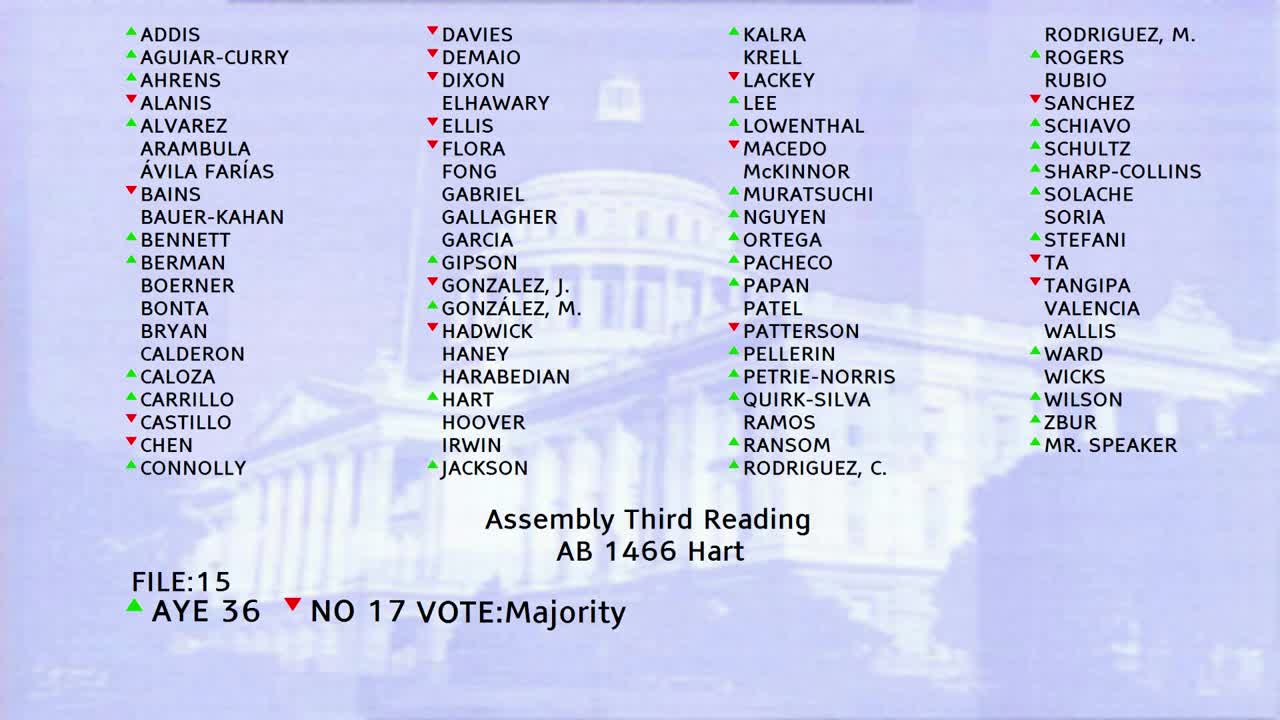 2MIN
Assembly Floor
 9MIN
Assembly Standing Committee on Appropriations
 30MIN
Assembly Standing Committee on Public Safety
Bill Author