AB 573: Cigarette and tobacco products: licensing and enforcement.
- Session Year: 2025-2026
- House: Assembly
- Latest Version Date: 2025-10-03
Current Status:
Passed
(2025-10-03: Chaptered by Secretary of State - Chapter 269, Statutes of 2025.)
Introduced
In Committee
Awaiting First Chamber Vote
Passed First Chamber
In Committee
Awaiting Second Chamber Vote
Passed Second Chamber
Enacted
What does this bill do?
The bill raises the annual tobacco retailer license fee from $265 to $450 per retail location and allows the California Department of Tax and Fee Administration to increase fees up to $600 to cover enforcement costs, affecting businesses that sell tobacco at retail. It also requires the Legislative Analyst to report to the Legislature in 2027 and 2029 on tobacco retailer enforcement (with state agencies’ cooperation) and clarifies definitions and penalty rules for flavored tobacco products and wholesalers.
The summary is provided by generative AI which can make mistakes. For original language, please view the details in the table below.
The Cigarette and Tobacco Products Licensing Act of 2003 requires the California Department of Tax and Fee Administration to administer a statewide program to license manufacturers, distributers, and retailers of cigarettes and tobacco products.
The act requires a retailer to have in place and maintain a license to engage in the sale of cigarettes or tobacco products. The act requires a $265 fee to be submitted with the application for the license. Existing law requires every retailer to file an application for renewal of the license accompanied by a $265 fee per retail location.
This bill would make conforming changes to the provisions describing the application process for the license described above and recast that license as a retailer license. The bill would require each application for a retailer license filed on or after July 1, 2026, to be accompanied by a fee of $450 per retail location. The bill would increase the fee for renewal of a retailer license to $450 for renewal applications filed on or after July 1, 2026. The bill would authorize the department to adjust application and renewal fees applicable after July 1, 2026, to an amount not exceeding $600 per retail location to maintain the Cigarette and Tobacco Products Compliance Fund at a level that is no more than necessary to cover the reasonable costs of the department to administer the act.
The act requires a retailer who sells tobacco products that are exempt from taxation under the Cigarette and Tobacco Products Tax Law to pay a fee of $265 for the issuance or renewal of a license.
This bill would recast that license as a retailer license and make other conforming changes. The bill would require each application for a retailer license filed on or after July 1, 2026, to be accompanied by a fee of $450 per retail location. The bill would increase the fee for renewal of a retailer license to $450 for renewal applications filed on or after July 1, 2026. The bill would authorize the department to adjust application and renewal fees applicable after July 1, 2026, to an amount not exceeding $600 per retail location to maintain the Cigarette and Tobacco Products Compliance Fund at a level that is no more than necessary to cover the reasonable costs of the department to administer the act.
This bill would require the Legislative Analyst, on or before December 1, 2027, and again on or before December 1, 2029, to prepare and submit reports to the Legislature on the tobacco retailer enforcement landscape, including enforcement of Californias flavor, youth access, taxation, and licensing laws. The bill would require specified state agencies to cooperate with the Legislative Analyst in the preparation and production of the report. The bill would repeal those reporting requirements on January 1, 2034.
Chapter 849 of the Statutes of 2024 (AB 3218) revised the Cigarette and Tobacco Products Licensing Act of 2003 by, among other things, authorizing the department or a law enforcement agency to seize illegal flavored tobacco products or tobacco product flavor enhancers that a wholesaler or retailer possesses, stores, owns, or sold, as specified. Existing law further requires the department to impose on the wholesaler or retailer a specified civil penalty per individual package of flavored tobacco product or tobacco product flavor enhancer. Existing law defines package for purposes of the penalty provision applicable to retailers.
This bill would define flavored tobacco product and tobacco product flavor enhancer for these purposes and would add the same definition of package for purposes of the penalty provision applicable to wholesalers.
Chapter 462 of the Statutes of 2024 (SB 1230), among other things, added a provision to the Cigarette and Tobacco Products Licensing Act of 2003 similar to the above-described provision relating to the seizure of a retailers products added by AB 3218. Specifically, SB 1230 authorizes the department to seize illegal flavored tobacco products or tobacco product flavor enhancers if the department discovers that a retailer sells, offers for sale, or possesses with the intent to sell or offer for sale, those products, and deems the seized products as forfeited.
This bill would repeal the above-described provision added by SB 1230.
Existing constitutional provisions require that a statute that limits the right of access to the meetings of public bodies or the writings of public officials and agencies be adopted with findings demonstrating the interest protected by the limitation and the need for protecting that interest.
This bill would make legislative findings to that effect.
The Cigarette and Tobacco Products Licensing Act of 2003 requires the California Department of Tax and Fee Administration to administer a statewide program to license manufacturers, distributers, and retailers of cigarettes and tobacco products.
The act requires a retailer to have in place and maintain a license to engage in the sale of cigarettes or tobacco products. The act requires a $265 fee to be submitted with the application for the license. Existing law requires every retailer to file an application for renewal of the license accompanied by a $265 fee per retail location.
This bill would make conforming changes to the provisions describing the application process for the license described above and recast that license as a retailer license. The bill would require each application for a retailer license filed on or after July 1, 2026, to be accompanied by a fee of $450 per retail location. The bill would increase the fee for renewal of a retailer license to $450 for renewal applications filed on or after July 1, 2026. The bill would authorize the department to adjust application and renewal fees applicable after July 1, 2026, to an amount not exceeding $600 per retail location to maintain the Cigarette and Tobacco Products Compliance Fund at a level that is no more than necessary to cover the reasonable costs of the department to administer the act.
The act requires a retailer who sells tobacco products that are exempt from taxation under the Cigarette and Tobacco Products Tax Law to pay a fee of $265 for the issuance or renewal of a license.
This bill would recast that license as a retailer license and make other conforming changes. The bill would require each application for a retailer license filed on or after July 1, 2026, to be accompanied by a fee of $450 per retail location. The bill would increase the fee for renewal of a retailer license to $450 for renewal applications filed on or after July 1, 2026. The bill would authorize the department to adjust application and renewal fees applicable after July 1, 2026, to an amount not exceeding $600 per retail location to maintain the Cigarette and Tobacco Products Compliance Fund at a level that is no more than necessary to cover the reasonable costs of the department to administer the act.
This bill would require the Legislative Analyst, on or before December 1, 2027, and again on or before December 1, 2029, in collaboration with specified agencies, to prepare and submit reports to the Legislature on the adequacy of funding for the cigarette and tobacco products retailer licensing program and the rate of inspection of cigarette and tobacco products retailers. tobacco retailer enforcement landscape, including enforcement of Californias flavor, youth access, taxation, and licensing laws. The bill would require specified state agencies to cooperate with the Legislative Analyst in the preparation and production of the report. The bill would repeal those reporting requirements on January 1, 2034.
Chapter 849 of the Statutes of 2024 (AB 3218) revised the Cigarette and Tobacco Products Licensing Act of 2003 by, among other things, authorizing the department or a law enforcement agency to seize illegal flavored tobacco products or tobacco product flavor enhancers that a wholesaler or retailer possesses, stores, owns, or sold, as specified. Existing law further requires the department to impose on the wholesaler or retailer a specified civil penalty per individual package of flavored tobacco product or tobacco product flavor enhancer. Existing law defines package for purposes of the penalty provision applicable to retailers.
This bill would define flavored tobacco product and tobacco product flavor enhancer for these purposes and would add the same definition of package for purposes of the penalty provision applicable to wholesalers.
Chapter 462 of the Statutes of 2024 (SB 1230), among other things, added a provision to the Cigarette and Tobacco Products Licensing Act of 2003 similar to the above-described provision relating to the seizure of a retailers products added by AB 3218. Specifically, SB 1230 authorizes the department to seize illegal flavored tobacco products or tobacco product flavor enhancers if the department discovers that a retailer sells, offers for sale, or possesses with the intent to sell or offer for sale, those products, and deems the seized products as forfeited.
This bill would repeal the above-described provision added by SB 1230.
Existing constitutional provisions require that a statute that limits the right of access to the meetings of public bodies or the writings of public officials and agencies be adopted with findings demonstrating the interest protected by the limitation and the need for protecting that interest.
This bill would make legislative findings to that effect.
The Cigarette and Tobacco Products Licensing Act of 2003 requires the California Department of Tax and Fee Administration to administer a statewide program to license manufacturers, distributers, and retailers of cigarettes and tobacco products. The
The act requires a retailer to have in place and maintain a license to engage in the sale of cigarettes or tobacco products. The act requires a $265 fee to be submitted with the application for the license. Existing law requires every retailer to file an application for renewal of the license accompanied by a $265 fee per retail location.
This bill would make conforming changes to the provisions describing the application process for the license described above and recast that license as a retailer license. The bill would require each application for a retailer license filed on or after July 1, 2026, to be accompanied by a fee of $450 per retail location. The bill would increase the fee for renewal of a retailer license to $450 for renewal applications filed on or after July 1, 2026. The bill would authorize the department to adjust application and renewal fees applicable after July 1, 2026, to an amount not exceeding $600 per retail location to maintain the Cigarette and Tobacco Products Compliance Fund at a level that is no more than necessary to cover the reasonable costs of the department to administer the act.
The act requires a retailer who sells tobacco products that are exempt from taxation under the Cigarette and Tobacco Products Tax Law to pay a fee of $265 for the issuance or renewal of a license.
This bill would instead require a retailer to pay a fee to cover the reasonable regulatory costs of the department, not to exceed $600, for the issuance or renewal of a license to sell those tobacco products. The recast that license as a retailer license and make other conforming changes. The bill would require each application for a retailer license filed on or after July 1, 2026, to be accompanied by a fee of $450 per retail location. The bill would increase the fee for renewal of a retailer license to $450 for renewal applications filed on or after July 1, 2026. The bill would authorize the department to adjust application and renewal fees applicable after July 1, 2026, to an amount not exceeding $600 per retail location to maintain the Cigarette and Tobacco Products Compliance Fund at a level that is no more than necessary to cover the reasonable costs of the department to administer the act.
This bill would require the Legislative Analyst, on or before December 1, 2027, and again on or before December 1, 2029, in collaboration with specified agencies, to prepare and submit reports to the Legislature on the adequacy of funding for the tobacco cigarette and tobacco products retailer licensing program and the rate of inspection of cigarette and tobacco products retailers. The bill would repeal those reporting requirements on January 1, 2034.
Chapter 849 of the Statutes of 2024 (AB 3218) revised the Cigarette and Tobacco Products Licensing Act of 2003 by, among other things, authorizing the department or a law enforcement agency to seize illegal flavored tobacco products or tobacco product flavor enhancers that a wholesaler or retailer possesses, stores, owns, or sold, as specified. Existing law further requires the department to impose on the wholesaler or retailer a specified civil penalty per individual package of flavored tobacco product or tobacco product flavor enhancer. Existing law defines package for purposes of the penalty provision applicable to retailers.
This bill would add the same definition of package for purposes of the penalty provision applicable to wholesalers.
Chapter 462 of the Statutes of 2024 (SB 1230), among other things, added a provision to the Cigarette and Tobacco Products Licensing Act of 2003 similar to the above-described provision relating to the seizure of a retailers products added by AB 3218. Specifically, SB 1230 authorizes the department to seize illegal flavored tobacco products or tobacco product flavor enhancers if the department discovers that a retailer sells, offers for sale, or possesses with the intent to sell or offer for sale, those products, and deems the seized products as forfeited.
This bill would repeal the above-described provision added by SB 1230.
Existing constitutional provisions require that a statute that limits the right of access to the meetings of public bodies or the writings of public officials and agencies be adopted with findings demonstrating the interest protected by the limitation and the need for protecting that interest.
This bill would make legislative findings to that effect.
The Cigarette and Tobacco Products Licensing Act of 2003 requires the California Department of Tax and Fee Administration to administer a statewide program to license manufacturers, distributers, and retailers of cigarettes and tobacco products. The act requires a retailer who sells tobacco products that are exempt from taxation under the Cigarette and Tobacco Products Tax Law to pay a fee of $265 for the issuance or renewal of a license.
This bill would instead require a retailer to pay a fee to cover the reasonable regulatory costs of the department, not to exceed $600, for the issuance or renewal of a license to sell those tobacco products. The bill would require the Legislative Analyst, on or before December 1, 2027, and again on or before December 1, 2029, in collaboration with specified agencies, to prepare and submit reports to the Legislature on the adequacy of funding for the tobacco retailer licensing program and the rate of inspection of retailers. The bill would repeal those reporting requirements on January 1, 2034.
Chapter 849 of the Statutes of 2024 (AB 3218) revised the Cigarette and Tobacco Products Licensing Act of 2003 by, among other things, authorizing the department or a law enforcement agency to seize illegal flavored tobacco products or tobacco product flavor enhancers that a wholesaler or retailer possesses, stores, owns, or sold, as specified. Existing law further requires the department to impose on the wholesaler or retailer a specified civil penalty per individual package of flavored tobacco product or tobacco product flavor enhancer. Existing law defines package for purposes of the penalty provision applicable to retailers.
This bill would add the same definition of package for purposes of the penalty provision applicable to wholesalers.
Chapter 462 of the Statutes of 2024 (SB 1230), among other things, added a provision to the Cigarette and Tobacco Products Licensing Act of 2003 similar to the above-described provision relating to the seizure of a retailers products added by AB 3218. Specifically, SB 1230 authorizes the department to seize illegal flavored tobacco products or tobacco product flavor enhancers if the department discovers that a retailer sells, offers for sale, or possesses with the intent to sell or offer for sale, those products, and deems the seized products as forfeited.
This bill would repeal the above-described provision added by SB 1230.
Existing constitutional provisions require that a statute that limits the right of access to the meetings of public bodies or the writings of public officials and agencies be adopted with findings demonstrating the interest protected by the limitation and the need for protecting that interest.
This bill would make legislative findings to that effect.
Existing law requires a retailer to maintain and have in place a license to engage in the sale of cigarettes or tobacco products. Existing law requires the retailer to obtain a separate license for each retail location and display the license in a manner visible to the public. Existing law requires the retailer to submit a fee of $265 with their application for a license.This bill would make technical, nonsubstantive changes to those provisions.Existing law requires a retailer to maintain and have in place a license to engage in the sale of cigarettes or tobacco products. Existing law requires the retailer to obtain a separate license for each retail location and display the license in a manner visible to the public. Existing law requires the retailer to submit a fee of $265 with their application for a license.
This bill would make technical, nonsubstantive changes to those provisions.
The Legislature finds and declares all of the following:
(a)As state agencies ramp up efforts to enforce Californias flavored tobacco laws, the scale and frequency of enforcement activities is critical. As of September 2024, prohibited flavored e-cigarettes comprised 39.8 percent of total e-cigarette sales in California.
(b)While the proportion of California youth and young adult tobacco users who report that it is easy to access flavored tobacco products in retail stores has declined since implementation of the ban, over 70 percent still believe it is easy to access these products. Nearly 90 percent of California high school e-cigarette users report using flavored e-cigarettes.
(c)In 2024, California tobacco retailers still sold tobacco to underage buyers at a rate of 18.9 percent. Regular compliance inspections are proven to reduce youth access to tobacco products.
(d)The California Department of Tax and Fee Administration (CDTFA) issues, administers, and enforces the states tobacco retailer license program. There are about 30,000 licensed tobacco retailers in California.
(e)The fee for the tobacco retailer license is $265 per year. This fee is unchanged since 2016. The passage of Californias law banning the sale of most flavored tobacco products resulted in a significant increase in seizure costs that have drastically affected the total number of inspections the CDTFA is able to complete.
(f)Currently, the CDTFA inspects fewer than 15 percent of the retailers annually and violations have risen, since passage of the ban on sale of flavored tobacco products, from 2 percent of retailers inspected to 14 percent. This means that retailers are only likely to be inspected once every eight years, while violations are on the rise.
(g)Increasing the tobacco retailer fee would ensure that more retailers are inspected annually by the CDTFA and would bolster compliance with the state flavored tobacco licensing and tax laws, and the Stop Tobacco Access to Kids Enforcement Act.
SEC. 2.Section 22971 of the Business and Professions Code is amended to read:22971.For purposes of this division, the following terms shall have the following meanings:
(a)Brand family has the same meaning as that term is defined in paragraph (2) of subdivision (a) of Section 30165.1 of the Revenue and Taxation Code.
(b)Cigarette means a cigarette as defined in Section 30003 of the Revenue and Taxation Code.
(c)(1)Control or controlling means possession, direct or indirect, of the power:
(A)To vote 25 percent or more of any class of the voting securities issued by a person.
(B)To direct or cause the direction of the management and policies of a person, whether through the ownership of voting securities, by contract, other than a commercial contract for goods or nonmanagement services, or as otherwise provided; however, no individual shall be deemed to control a person solely on account of being a director, officer, or employee of that person.
(2)For purposes of subparagraph (B) of paragraph (1), a person who, directly or indirectly, owns, controls, holds, with the power to vote, or holds proxies representing 10 percent or more of the then outstanding voting securities issued by another person, is presumed to control that other person.
(3)For purposes of this division, the department may determine whether a person in fact controls another person.
(d)Department means the California Department of Tax and Fee Administration.
(e)Display for sale means the placement of cigarettes or tobacco products in a vending machine or in retail stock for the purpose of selling or gifting the cigarettes or tobacco products. For purposes of this definition, the clear and easily visible display of cigarettes or tobacco products shall create a rebuttable presumption that either were displayed for sale.
(f)Distributor means a distributor as defined in Section 30011 of the Revenue and Taxation Code.
(g)Flavored tobacco product has the same meaning as that term is defined in Section 104559.5 of the Health and Safety Code.
(h)Gifting means any transfer of title or possession without consideration, exchange, or barter, in any manner or by any means, of cigarettes or tobacco products that have been purchased for resale under a license issued pursuant to this division if the transfer occurs while the license is suspended or after the effective date of its revocation.
(i)Importer means an importer as defined in Section 30019 of the Revenue and Taxation Code.
(j)Law enforcement agency means a sheriff, a police department, or a city, county, or city and county agency or department designated by the governing body of that agency to enforce this chapter or to enforce local smoking and tobacco ordinances and regulations.
(k)License means a license issued by the department pursuant to this division.
(l)Licensee means a person holding a license issued by the department pursuant to this division.
(m)Local lead agency means an agency designated as a local lead agency pursuant to Section 104400 of the Health and Safety Code.
(n)Manufacturer means a manufacturer of cigarettes or tobacco products sold in this state.
(o)Notice or notification means, unless as otherwise provided, the written notice or notification provided to a licensee by the department by either actual delivery to the licensee or by first-class mail addressed to the licensee at the address on the license.
(p)Package of cigarettes means a package as defined in Section 30015 of the Revenue and Taxation Code.
(q)Person means a person as defined in Section 30010 of the Revenue and Taxation Code.
(r)Retailer means a person who engages in this state in the sale of cigarettes or tobacco products directly to the public from a retail location. Retailer includes a person who operates vending machines from which cigarettes or tobacco products are sold in this state.
(s)Retail location means both of the following:
(1)Any building from which cigarettes or tobacco products are sold at retail.
(2)A vending machine.
(t)Sale or sold means a sale as defined in Section 30006 of the Revenue and Taxation Code.
(u)Tobacco product flavor enhancer has the same meaning as that term is defined in Section 104559.5 of the Health and Safety Code.
(v)Tobacco products means tobacco products as defined in subdivision (b) of Section 30121 and subdivision (b) of Section 30131.1 of the Revenue and Taxation Code.
(w)Unstamped package of cigarettes means a package of cigarettes that does not bear a tax stamp as required under Part 13 (commencing with Section 30001) of Division 2 of the Revenue and Taxation Code, including a package of cigarettes that bears a tax stamp of another state or taxing jurisdiction, a package of cigarettes that bears a counterfeit tax stamp, or a stamped or unstamped package of cigarettes that is marked Not for sale in the United States.
(x)Wholesaler means a wholesaler as defined in Section 30016 of the Revenue and Taxation Code.
SEC. 3.Section 22971.7 of the Business and Professions Code is amended to read:22971.7.(a)For the purposes of this chapter, except as provided in subdivision (b), and notwithstanding subdivision (v) of Section 22971, a tobacco product includes a product or device as defined in subdivision (d) of Section 22950.5.
(b)This section does not apply to subdivision (b) of Section 22974.3.
(c)This section shall be operative on January 1, 2017.
SEC. 4.Section 22973 of the Business and Professions Code is amended to read:22973.(a)An application for a retailer license, as defined in Section 22972, shall be filed in a form and manner prescribed by the department and shall include the following:
(1)The name, address, and telephone number of the applicant.
(2)The business name, address, and telephone number of each retail location. For applicants who control more than one retail location, an address for receipt of correspondence or notices from the department, such as a headquarters or corporate office of the retailer, shall also be included on the application and listed on the license. Citations issued to licensees shall be forwarded to all addressees on the license.
(3)A statement by the applicant affirming that the applicant has not been convicted of a felony and has not violated and will not violate or cause or permit to be violated any of the provisions of this division or any rule of the department applicable to the applicant or pertaining to the manufacture, sale, or distribution of cigarettes or tobacco products. If the applicant is unable to affirm this statement, the application shall contain a statement by the applicant of the nature of any violation or the reasons that will prevent the applicant from complying with the requirements with respect to the statement.
(4)If any other licenses or permits have been issued by the department or the Department of Alcoholic Beverage Control to the applicant, the license or permit number of those licenses or permits then in effect.
(5)A statement by the applicant that the contents of the application are complete, true, and correct. Any person who signs a statement pursuant to this subdivision that asserts the truth of any material matter that they know to be false is guilty of a misdemeanor punishable by imprisonment of up to one year in the county jail, or a fine of not more than one thousand dollars ($1,000), or both the imprisonment and the fine.
(6)The signature of the applicant.
(7)Any other information the department may require.
(b)The department may investigate to determine the truthfulness and completeness of the information provided in the application. The department may issue a retailer license without further investigation to an applicant for a retail location if the applicant holds a valid license from the Department of Alcoholic Beverage Control for that same location.
(c)The department shall provide electronic means for applicants to download and submit applications.
(d)(1)Each application for a retailer license filed on or after June 9, 2016, and before July 1, 2026, shall be accompanied with a fee of two hundred sixty-five dollars ($265) per retail location. An applicant that owns or controls more than one retail location shall obtain a separate license for each retail location, but may submit a single application for those licenses with an application license fee of two hundred sixty-five dollars ($265) per location. The fee shall be for the period provided in subdivision (d) of Section 22972 and shall not be prorated.
(2)Each application for a retailer license filed on or after July 1, 2026, shall be accompanied with a fee of four hundred fifty dollars ($450) per retail location and shall not be prorated.
(e)Every retailer shall file an application for renewal of the retailer license in the form and manner prescribed by the department and shall be accompanied with the applicable fee, as follows:
(1)Each application for renewal of the retailer license filed on or after January 1, 2017, and before July 1, 2026, shall be accompanied with a fee of two hundred sixty-five dollars ($265) per retail location.
(2)Each application for renewal of the retailer license filed on or after July 1, 2026, shall be accompanied with a fee of four hundred fifty dollars ($450) per retail location.
(f)The department may, by regulation, adjust the license application fee amount set forth in paragraph (2) of subdivision (d) and the renewal license fee amount set forth in paragraph (2) of subdivision (e) to an amount not to exceed six hundred dollars ($600) per retail location to maintain the Cigarette and Tobacco Products Compliance Fund at a level that is no more than necessary to cover the reasonable costs of the department to administer this division.
SEC. 5.Section 22973.3 of the Business and Professions Code is amended to read:22973.3.(a)Notwithstanding any other law, an application for a retailer license, as defined in Section 22972, for the sale of a tobacco product, as defined in paragraph (1) of subdivision (d) of Section 22950.5, that is not subject to a tax imposed by the Cigarette and Tobacco Products Tax Law pursuant to Part 13 (commencing with Section 30001) of Division 2 of the Revenue and Taxation Code shall be filed in a form and manner prescribed by the department and shall include the following:
(1)The name, address, and telephone number of the applicant.
(2)The business name, address, and telephone number of each retail location. For applicants who control more than one retail location, an address for receipt of correspondence or notices from the department, such as a headquarters or corporate office of the retailer, shall also be included on the application and listed on the license. Citations issued to licensees shall be forwarded to all addressees on the license.
(3)A statement by the applicant affirming that the applicant has not been convicted of a felony and has not violated and will not violate or cause or permit to be violated any of the provisions of this division or any rule of the department applicable to the applicant or pertaining to the manufacture, sale, or distribution of cigarettes or tobacco products. If the applicant is unable to affirm this statement, the application shall contain a statement by the applicant of the nature of any violation or the reasons that will prevent the applicant from complying with the requirements with respect to the statement.
(4)If any other licenses or permits have been issued by the department or the Department of Alcoholic Beverage Control to the applicant, the license or permit number of those licenses or permits then in effect.
(5)A statement by the applicant that the contents of the application are complete, true, and correct. Any person who signs a statement pursuant to this subdivision that asserts the truth of any material matter that they know to be false is guilty of a misdemeanor punishable by imprisonment of up to one year in a county jail, or a fine of not more than one thousand dollars ($1,000), or both the imprisonment and the fine.
(6)The signature of the applicant.
(7)Any other information the department may require.
(b)The department may investigate to determine the truthfulness and completeness of the information provided in the application. The department may issue a retailer license without further investigation to an applicant for a retail location if the applicant holds a valid license from the Department of Alcoholic Beverage Control for that same location.
(c)The department shall provide electronic means for applicants to download and submit applications.
(d)(1)Each application for a retailer license filed on or after January 1, 2017, and before July 1, 2026, shall be accompanied with a fee of two hundred sixty-five dollars ($265) per retail location. An applicant that owns or controls more than one retail location shall obtain a separate license and shall pay a separate fee for each retail location, but may submit a single application for those retailer licenses with an application license fee of two hundred sixty-five dollars ($265) per retail location. The fee per retail location shall be for the period provided in subdivision (d) of Section 22972 and shall not be prorated.
(2)Each application for a retailer license filed on or after July 1, 2026, shall be accompanied with a fee of four hundred fifty dollars ($450) per retail location and shall not be prorated.
(e)(1)Every retailer shall file an application for renewal of the retailer license in the form and manner prescribed by the department and shall be accompanied with the applicable fee, as follows:
(2)Each application for renewal of the retailer license filed on or after January 1, 2017, and before July 1, 2026, shall be accompanied with a fee of two hundred sixty-five dollars ($265) per retail location.
(3)Each application for renewal of the retailer license filed on or after July 1, 2026, shall be accompanied with a fee of four hundred fifty dollars ($450) per retail location.
(f)The department may, by regulation, adjust the application license fee amount set forth in paragraph (2) of subdivision (d) and the renewal license fee amount set forth in paragraph (3) of subdivision (e) to an amount not to exceed six hundred dollars ($600) per retail location to maintain the Cigarette and Tobacco Products Compliance Fund at a level that is no more than necessary to cover the reasonable costs of the department to administer this division.
(g)(1)The department shall report back to the Legislature no later than January 1, 2019, regarding the adequacy of funding for the Cigarette and Tobacco Products Licensing Act of 2003 with regard to tobacco products for which a license is required by this section. The report shall include data and recommendations about whether the annual licensing fee funding levels are set at an appropriate level to maintain an effective enforcement program.
(2)The report required by paragraph (1) shall be submitted in compliance with Section 9795 of the Government Code.
(h)(1)This section applies to a retailer who sells a tobacco product, as defined in subdivision (d) of Section 22950.5, that is not subject to a tax imposed by the Cigarette and Tobacco Products Tax Law pursuant to Part 13 (commencing with Section 30001) of Division 2 of the Revenue and Taxation Code, and who does not already possess a valid retailer license to sell cigarettes or tobacco products issued pursuant to Section 22972.
(2)A retailer that possesses a valid retailer license to sell cigarettes and tobacco products issued pursuant to Section 22972 may also sell under that license a tobacco product, as defined in subdivision (d) of Section 22950.5, that is not subject to a tax imposed by the Cigarette and Tobacco Products Tax Law pursuant to Part 13 (commencing with Section 30001) of Division 2 of the Revenue and Taxation Code.
SEC. 6.Section 22973.4 is added to the Business and Professions Code, to read:22973.4.(a)On or before December 1, 2027, and again on or before December 1, 2029, the Legislative Analyst shall prepare and submit a report to the Legislature on the tobacco retailer enforcement landscape, including enforcement of Californias flavor, youth access, taxation, and licensing laws. The California Department of Tax and Fee Administration and the State Department of Public Health, including the Office of Youth Tobacco Enforcement, shall cooperate with the Legislative Analyst in the preparation and production of the report. To the extent information is available, the report shall include, but not be limited to:
(1)Strategies and tools to bolster coordination and efficiency between state and federal agencies and local authorities regarding enforcement of all tobacco laws and to ensure state compliance with the federal Synar regulations requiring no more than a 20 percent retailer violation rate for tobacco sales to youth and young adults under 21 years of age.
(2)Data and recommendations about whether the annual licensing fees are set at appropriate levels to maintain an effective licensing program and an adequate rate of inspection of retailers and attain a reasonable reduction in the availability of flavored tobacco products and tobacco product flavor enhancers.
(3)Costs for transport, storage, and disposal of hazardous waste, universal waste, and other waste arising from seizures of tobacco products.
(4)An evaluation of whether prior violations of analogous federal and local laws regarding the sale of tobacco products to minors should be considered when considering escalating penalties for violations of state laws regarding the sale of tobacco products to minors.
(5)Data and recommendations about the enforcement of youth access and flavor restriction laws performed by the Office of Youth Tobacco Enforcement, including whether funding is at appropriate levels to maintain an adequate rate of inspection of retailers and to attain a reasonable reduction in the availability of flavored tobacco products.
(b)To prepare the reports required by this section, the Legislative Analyst may request information from any state or local agency involved in enforcement of laws regulating cigarette and tobacco products retailers.
(c)The reports required by this section shall be submitted in compliance with Section 9795 of the Government Code and shall not include any personally identifiable information.
(d)Pursuant to Section 10231.5 of the Government Code, this section shall become inoperative on December 1, 2033, and is repealed on January 1, 2034.
SEC. 7.Section 22974.1 of the Business and Professions Code is repealed.SEC. 8.Section 22978.3 of the Business and Professions Code is amended to read:22978.3.(a)(1)Notwithstanding any other provision of this division, upon discovery by the department or a law enforcement agency that a wholesaler possesses, stores, or owns flavored tobacco products or tobacco product flavor enhancers, or has made a sale of flavored tobacco products or tobacco product flavor enhancers in violation of Section 104559.1 of the Health and Safety Code, the department or the law enforcement agency may seize the flavored tobacco products or tobacco product flavor enhancers possessed, stored, owned, or sold by the wholesaler.
(2)Any flavored tobacco products or tobacco product flavor enhancers seized by a law enforcement agency shall be delivered to the department, or its designee, within 30 days, unless the seized flavored tobacco products or tobacco product flavor enhancers will be destroyed by that law enforcement agency, or unless the seized flavored tobacco products or tobacco product flavor enhancers are otherwise required to be used as evidence in an administrative, criminal, or civil proceeding, or as part of an ongoing law enforcement operation. Any flavored tobacco products or tobacco product flavor enhancers seized by the department or delivered to the department by a law enforcement agency shall be deemed forfeited to the state and the department shall comply with procedures set forth in Chapter 7.5 (commencing with Section 30435) of Part 13 of Division 2 of the Revenue and Taxation Code.
(b)(1)In addition to seizure and forfeiture of the flavored tobacco products or tobacco product flavor enhancers described in subdivision (a), the department shall impose a civil penalty upon the wholesaler equal to fifty dollars ($50) per individual package of flavored tobacco product or tobacco product flavor enhancer seized or delivered to the department by a law enforcement agency regardless of the authority used by the law enforcement agency to seize the flavored tobacco product or tobacco product flavor enhancer. The department shall impose the civil penalty in accordance with the procedures applicable to the civil penalty authorized in Section 22978.7.
(2)In the case of a second seizure and forfeiture of flavored tobacco products or tobacco product flavor enhancers made pursuant to subdivision (a), the department shall suspend the license of the wholesaler in accordance with the procedures set forth in Section 22980.3.
(3)In the case of a third seizure and forfeiture of flavored tobacco products or tobacco product flavor enhancers made pursuant to subdivision (a), the department shall revoke the license of the wholesaler in accordance with the procedures set forth in Section 22980.3.
(4)Civil penalties collected pursuant to this section shall be deposited into the Cigarette and Tobacco Products Compliance Fund created pursuant to Section 22990.
(5)For purposes of paragraph (1), package means the individual packet, box, or other container of flavored tobacco products or tobacco product flavor enhancers that are normally sold or intended to be sold at retail. Package does not include containers that contain smaller packaging units of flavored tobacco products or tobacco product flavor enhancers, including, but not limited to, cartons, cases, bales, or boxes.
(c)Upon discovery by the department that a distributor, wholesaler, or other person has made a sale in violation of Section 104559.1 of the Health and Safety Code, and, for wholesalers, if neither the department nor a law enforcement agency seized flavored tobacco products or tobacco product flavor enhancers from the wholesaler pursuant to subdivision (a), all of the following shall apply:
(1)Upon a first offense, the department shall issue a warning notice to the distributor, wholesaler, or other person.
(2)Upon a second offense, the department shall suspend the license of the distributor, wholesaler, or person in accordance with the procedures set forth in Section 22980.3.
(3)Upon a third offense, the department shall revoke the license of the distributor, wholesaler, or other person in accordance with the procedures set forth in Section 22980.3.
(d)The appeals procedures applicable to Section 22978.7 shall apply to the warning notice, suspension, and revocation actions taken by the department pursuant to this section.
SEC. 9.Section 22980.2 of the Business and Professions Code is amended to read:22980.2.(a)A person or entity that engages in the business of selling cigarettes or tobacco products in this state either without a valid license or after a license has been suspended or revoked, and each officer of any corporation that so engages in this business, is guilty of a misdemeanor punishable as provided in Section 22981.
(b)Each day after notification by the board or by a law enforcement agency that a manufacturer, wholesaler, distributor, importer, retailer, or any other person required to be licensed under this division offers cigarette and tobacco products for sale or exchange without a valid license for the location from which they are offered for sale shall constitute a separate violation.
(c)Continued sales or gifting of cigarettes and tobacco products either without a valid license or after a notification of suspension or revocation shall constitute a violation punishable as provided in Section 22981, and shall result in the seizure of all cigarettes and tobacco products in the possession of the person by the board or a law enforcement agency. Any cigarettes and tobacco products seized by the board or by a law enforcement agency shall be deemed forfeited.
(d)For the purposes of this section, notwithstanding subdivision (v) of Section 22971, tobacco products includes a product or device as defined in subdivision (d) of Section 22950.5.
(e)This section shall be operative on January 1, 2017.
SEC. 10.The Legislature finds and declares that Section 6 of this act, which adds and repeals Section 22973.4 of the Business and Professions Code, imposes a limitation on the publics right of access to the meetings of public bodies or the writings of public officials and agencies within the meaning of Section 3 of Article I of the California Constitution. Pursuant to that constitutional provision, the Legislature makes the following findings to demonstrate the interest protected by this limitation and the need for protecting that interest:
This act strikes a balance between reporting essential information to the Legislature to ensure adequate funding for the cigarette and tobacco product retailer licensing program while protecting the privacy of individuals.
The Legislature finds and declares all of the following:
(a)As state agencies ramp up efforts to enforce Californias flavored tobacco laws, the scale and frequency of enforcement activities is critical. As of September 2024, prohibited flavored e-cigarettes comprised 39.8 percent of total e-cigarette sales in California.
(b)While the proportion of California youth and young adult tobacco users who report that it is easy to access flavored tobacco products in retail stores has declined since implementation of the ban, over 70 percent still believe it is easy to access these products. Nearly 90 percent of California high school e-cigarette users report using flavored e-cigarettes.
(c)In 2024, California tobacco retailers still sold tobacco to underage buyers at a rate of 18.9 percent. Regular compliance inspections are proven to reduce youth access to tobacco products.
(d)The California Department of Tax and Fee Administration (CDTFA) issues, administers, and enforces the states tobacco retailer license program. There are about 30,000 licensed tobacco retailers in California.
(e)The fee for the tobacco retailer license is $265 per year. This fee is unchanged since 2016. The passage of Californias law banning the sale of most flavored tobacco products resulted in a significant increase in seizure costs that have drastically affected the total number of inspections the CDTFA is able to complete.
(f)Currently, the CDTFA inspects fewer than 15 percent of the retailers annually and violations have risen, since passage of the ban on sale of flavored tobacco products, from 2 percent of retailers inspected to 14 percent. This means that retailers are only likely to be inspected once every eight years, while violations are on the rise.
(g)Increasing the tobacco retailer fee would ensure that more retailers are inspected annually by the CDTFA and would bolster compliance with the state flavored tobacco licensing and tax laws, and the Stop Tobacco Access to Kids Enforcement Act.
SEC. 2.Section 22971 of the Business and Professions Code is amended to read:22971.For purposes of this division, the following terms shall have the following meanings:
(a)Brand family has the same meaning as that term is defined in paragraph (2) of subdivision (a) of Section 30165.1 of the Revenue and Taxation Code.
(b)Cigarette means a cigarette as defined in Section 30003 of the Revenue and Taxation Code.
(c)(1)Control or controlling means possession, direct or indirect, of the power:
(A)To vote 25 percent or more of any class of the voting securities issued by a person.
(B)To direct or cause the direction of the management and policies of a person, whether through the ownership of voting securities, by contract, other than a commercial contract for goods or nonmanagement services, or as otherwise provided; however, no individual shall be deemed to control a person solely on account of being a director, officer, or employee of that person.
(2)For purposes of subparagraph (B) of paragraph (1), a person who, directly or indirectly, owns, controls, holds, with the power to vote, or holds proxies representing 10 percent or more of the then outstanding voting securities issued by another person, is presumed to control that other person.
(3)For purposes of this division, the department may determine whether a person in fact controls another person.
(d)Department means the California Department of Tax and Fee Administration.
(e)Display for sale means the placement of cigarettes or tobacco products in a vending machine or in retail stock for the purpose of selling or gifting the cigarettes or tobacco products. For purposes of this definition, the clear and easily visible display of cigarettes or tobacco products shall create a rebuttable presumption that either were displayed for sale.
(f)Distributor means a distributor as defined in Section 30011 of the Revenue and Taxation Code.
(g)Flavored tobacco product has the same meaning as that term is defined in Section 104559.5 of the Health and Safety Code.
(g)(h)Gifting means any transfer of title or possession without consideration, exchange, or barter, in any manner or by any means, of cigarettes or tobacco products that have been purchased for resale under a license issued pursuant to this division if the transfer occurs while the license is suspended or after the effective date of its revocation.
(h)(i)Importer means an importer as defined in Section 30019 of the Revenue and Taxation Code.
(i)(j)Law enforcement agency means a sheriff, a police department, or a city, county, or city and county agency or department designated by the governing body of that agency to enforce this chapter or to enforce local smoking and tobacco ordinances and regulations.
(j)(k)License means a license issued by the department pursuant to this division.
(k)(l)Licensee means a person holding a license issued by the department pursuant to this division.
(l)(m)Local lead agency means an agency designated as a local lead agency pursuant to Section 104400 of the Health and Safety Code.
(m)(n)Manufacturer means a manufacturer of cigarettes or tobacco products sold in this state.
(n)(o)Notice or notification means, unless as otherwise provided, the written notice or notification provided to a licensee by the department by either actual delivery to the licensee or by first-class mail addressed to the licensee at the address on the license.
(o)(p)Package of cigarettes means a package as defined in Section 30015 of the Revenue and Taxation Code.
(p)(q)Person means a person as defined in Section 30010 of the Revenue and Taxation Code.
(q)(r)Retailer means a person who engages in this state in the sale of cigarettes or tobacco products directly to the public from a retail location. Retailer includes a person who operates vending machines from which cigarettes or tobacco products are sold in this state.
(r)(s)Retail location means both of the following:
(1)Any building from which cigarettes or tobacco products are sold at retail.
(2)A vending machine.
(s)(t)Sale or sold means a sale as defined in Section 30006 of the Revenue and Taxation Code.
(u)Tobacco product flavor enhancer has the same meaning as that term is defined in Section 104559.5 of the Health and Safety Code.
(t)(v)Tobacco products means tobacco products as defined in subdivision (b) of Section 30121 and subdivision (b) of Section 30131.1 of the Revenue and Taxation Code.
(u)(w)Unstamped package of cigarettes means a package of cigarettes that does not bear a tax stamp as required under Part 13 (commencing with Section 30001) of Division 2 of the Revenue and Taxation Code, including a package of cigarettes that bears a tax stamp of another state or taxing jurisdiction, a package of cigarettes that bears a counterfeit tax stamp, or a stamped or unstamped package of cigarettes that is marked Not for sale in the United States.
(v)(x)Wholesaler means a wholesaler as defined in Section 30016 of the Revenue and Taxation Code.
SEC. 3.Section 22971.7 of the Business and Professions Code is amended to read:22971.7.(a)For the purposes of this chapter, except as provided in subdivision (b), and notwithstanding subdivision (s) (v) of Section 22971, a tobacco product includes a product or device as defined in subdivision (d) of Section 22950.5.
(b)This section does not apply to subdivision (b) of Section 22974.3.
(c)This section shall be operative on January 1, 2017.
SEC. 2.SEC. 4.Section 22973 of the Business and Professions Code is amended to read:22973.(a)An application for a retailer license, as defined in Section 22972, shall be filed in a form and manner prescribed by the department and shall include the following:
(1)The name, address, and telephone number of the applicant.
(2)The business name, address, and telephone number of each retail location. For applicants who control more than one retail location, an address for receipt of correspondence or notices from the department, such as a headquarters or corporate office of the retailer, shall also be included on the application and listed on the license. Citations issued to licensees shall be forwarded to all addressees on the license.
(3)A statement by the applicant affirming that the applicant has not been convicted of a felony and has not violated and will not violate or cause or permit to be violated any of the provisions of this division or any rule of the department applicable to the applicant or pertaining to the manufacture, sale, or distribution of cigarettes or tobacco products. If the applicant is unable to affirm this statement, the application shall contain a statement by the applicant of the nature of any violation or the reasons that will prevent the applicant from complying with the requirements with respect to the statement.
(4)If any other licenses or permits have been issued by the department or the Department of Alcoholic Beverage Control to the applicant, the license or permit number of those licenses or permits then in effect.
(5)A statement by the applicant that the contents of the application are complete, true, and correct. Any person who signs a statement pursuant to this subdivision that asserts the truth of any material matter that they know to be false is guilty of a misdemeanor punishable by imprisonment of up to one year in the county jail, or a fine of not more than one thousand dollars ($1,000), or both the imprisonment and the fine.
(6)The signature of the applicant.
(7)Any other information the department may require.
(b)The department may investigate to determine the truthfulness and completeness of the information provided in the application. The department may issue a retailer license without further investigation to an applicant for a retail location if the applicant holds a valid license from the Department of Alcoholic Beverage Control for that same location.
(c)The department shall provide electronic means for applicants to download and submit applications.
(d)(1)Each application for a retailer license filed on or after June 9, 2016, and before July 1, 2026, shall be accompanied with a fee of two hundred sixty-five dollars ($265) per retail location. An applicant that owns or controls more than one retail location shall obtain a separate license for each retail location, but may submit a single application for those licenses with an application license fee of two hundred sixty-five dollars ($265) per location. The fee shall be for the period provided in subdivision (d) of Section 22972 and shall not be prorated.
(2)Each application for a retailer license filed on or after July 1, 2026, shall be accompanied with a fee of four hundred fifty dollars ($450) per retail location and shall not be prorated.
(e)Every retailer shall file an application for renewal of the retailer license in the form and manner prescribed by the department and shall be accompanied with the applicable fee, as follows:
(1)Each application for renewal of the retailer license filed on or after January 1, 2017, and before July 1, 2026, shall be accompanied with a fee of two hundred sixty-five dollars ($265) per retail location.
(2)Each application for renewal of the retailer license filed on or after July 1, 2026, shall be accompanied with a fee of four hundred fifty dollars ($450) per retail location.
(f)The department may, by regulation, adjust the license application fee amount set forth in paragraph (2) of subdivision (d) and the renewal license fee amount set forth in paragraph (2) of subdivision (e) to an amount not to exceed six hundred dollars ($600) per retail location to maintain the Cigarette and Tobacco Products Compliance Fund at a level that is no more than necessary to cover the reasonable costs of the department to administer this division.
SEC. 3.SEC. 5.Section 22973.3 of the Business and Professions Code is amended to read:22973.3.(a)Notwithstanding any other law, an application for a retailer license, as defined in Section 22972, for the sale of a tobacco product, as defined in paragraph (1) of subdivision (d) of Section 22950.5, that is not subject to a tax imposed by the Cigarette and Tobacco Products Tax Law pursuant to Part 13 (commencing with Section 30001) of Division 2 of the Revenue and Taxation Code shall be filed in a form and manner prescribed by the department and shall include the following:
(1)The name, address, and telephone number of the applicant.
(2)The business name, address, and telephone number of each retail location. For applicants who control more than one retail location, an address for receipt of correspondence or notices from the department, such as a headquarters or corporate office of the retailer, shall also be included on the application and listed on the license. Citations issued to licensees shall be forwarded to all addressees on the license.
(3)A statement by the applicant affirming that the applicant has not been convicted of a felony and has not violated and will not violate or cause or permit to be violated any of the provisions of this division or any rule of the department applicable to the applicant or pertaining to the manufacture, sale, or distribution of cigarettes or tobacco products. If the applicant is unable to affirm this statement, the application shall contain a statement by the applicant of the nature of any violation or the reasons that will prevent the applicant from complying with the requirements with respect to the statement.
(4)If any other licenses or permits have been issued by the department or the Department of Alcoholic Beverage Control to the applicant, the license or permit number of those licenses or permits then in effect.
(5)A statement by the applicant that the contents of the application are complete, true, and correct. Any person who signs a statement pursuant to this subdivision that asserts the truth of any material matter that they know to be false is guilty of a misdemeanor punishable by imprisonment of up to one year in a county jail, or a fine of not more than one thousand dollars ($1,000), or both the imprisonment and the fine.
(6)The signature of the applicant.
(7)Any other information the department may require.
(b)The department may investigate to determine the truthfulness and completeness of the information provided in the application. The department may issue a retailer license without further investigation to an applicant for a retail location if the applicant holds a valid license from the Department of Alcoholic Beverage Control for that same location.
(c)The department shall provide electronic means for applicants to download and submit applications.
(d)(1)Each application for a retailer license filed on or after January 1, 2017, and before July 1, 2026, shall be accompanied with a fee of two hundred sixty-five dollars ($265) per retail location. An applicant that owns or controls more than one retail location shall obtain a separate license and shall pay a separate fee for each retail location, but may submit a single application for those retailer licenses with an application license fee of two hundred sixty-five dollars ($265) per retail location. The fee per retail location shall be for the period provided in subdivision (d) of Section 22972 and shall not be prorated.
(2)Each application for a retailer license filed on or after July 1, 2026, shall be accompanied with a fee of four hundred fifty dollars ($450) per retail location and shall not be prorated.
(e)(1)Every retailer shall file an application for renewal of the retailer license in the form and manner prescribed by the department and shall be accompanied with the applicable fee, as follows:
(2)Each application for renewal of the retailer license filed on or after January 1, 2017, and before July 1, 2026, shall be accompanied with a fee of two hundred sixty-five dollars ($265) per retail location.
(3)Each application for renewal of the retailer license filed on or after July 1, 2026, shall be accompanied with a fee of four hundred fifty dollars ($450) per retail location.
(f)The department may, by regulation, adjust the application license fee amount set forth in paragraph (2) of subdivision (d) and the renewal license fee amount set forth in paragraph (3) of subdivision (e) to an amount not to exceed six hundred dollars ($600) per retail location to maintain the Cigarette and Tobacco Products Compliance Fund at a level that is no more than necessary to cover the reasonable costs of the department to administer this division.
(g)(1)The department shall report back to the Legislature no later than January 1, 2019, regarding the adequacy of funding for the Cigarette and Tobacco Products Licensing Act of 2003 with regard to tobacco products for which a license is required by this section. The report shall include data and recommendations about whether the annual licensing fee funding levels are set at an appropriate level to maintain an effective enforcement program.
(2)The report required by paragraph (1) shall be submitted in compliance with Section 9795 of the Government Code.
(h)(1)This section applies to a retailer who sells a tobacco product, as defined in subdivision (d) of Section 22950.5, that is not subject to a tax imposed by the Cigarette and Tobacco Products Tax Law pursuant to Part 13 (commencing with Section 30001) of Division 2 of the Revenue and Taxation Code, and who does not already possess a valid retailer license to sell cigarettes or tobacco products issued pursuant to Section 22972.
(2)A retailer that possesses a valid retailer license to sell cigarettes and tobacco products issued pursuant to Section 22972 may also sell under that license a tobacco product, as defined in subdivision (d) of Section 22950.5, that is not subject to a tax imposed by the Cigarette and Tobacco Products Tax Law pursuant to Part 13 (commencing with Section 30001) of Division 2 of the Revenue and Taxation Code.
SEC. 4.SEC. 6.Section 22973.4 is added to the Business and Professions Code, to read:22973.4.(a)On or before December 1, 2027, and again on or before December 1, 2029, the Legislative Analyst, in collaboration with the California Department of Tax and Fee Administration and the State Department of Public Health, including, but not limited to, the Office of Youth Tobacco Enforcement, Analyst shall prepare and submit a report to the Legislature on the adequacy of funding for the cigarette and tobacco products retailer licensing program and the rate of inspection of cigarette and tobacco products retailers. the tobacco retailer enforcement landscape, including enforcement of Californias flavor, youth access, taxation, and licensing laws. The California Department of Tax and Fee Administration and the State Department of Public Health, including the Office of Youth Tobacco Enforcement, shall cooperate with the Legislative Analyst in the preparation and production of the report. To the extent data information is available, the report shall include, but not be limited to:
(1)Strategies and tools to bolster coordination and efficiency between state and federal agencies and local authorities regarding enforcement of all tobacco laws and to ensure state compliance with the federal Synar regulations requiring no more than a 20 percent retailer violation rate for tobacco sales to youth and young adults under 21 years of age.
(2)Data and recommendations about whether the annual licensing fees are set at appropriate levels to maintain an effective licensing and enforcement program and an adequate rate of inspection of retailers and attain a reasonable reduction in the availability of flavored tobacco products and tobacco product flavor enhancers.
(3)Costs for transport, storage, and disposal of hazardous waste, universal waste, and other waste arising from seizures of tobacco products.
(4)An evaluation of whether prior violations of analogous federal and local laws regarding the sale of tobacco products to minors should be considered when considering escalating penalties for violations of state laws regarding the sale of tobacco products to minors.
(5)Data and recommendations about the enforcement of youth access and flavor restriction laws performed by the Office of Youth Tobacco Enforcement, including whether funding is at appropriate levels to maintain an adequate rate of inspection of retailers and to attain a reasonable reduction in the availability of flavored tobacco products.
(b)To prepare the reports required by this section, the Legislative Analyst may request information from any state or local agency involved in enforcement of laws regulating cigarette and tobacco products retailers.
(c)The reports required by this section shall be submitted in compliance with Section 9795 of the Government Code and shall not include any personally identifiable information.
(d)Pursuant to Section 10231.5 of the Government Code, this section shall become inoperative on December 1, 2033, and is repealed on January 1, 2034.
SEC. 5.SEC. 7.Section 22974.1 of the Business and Professions Code is repealed.SEC. 6.SEC. 8.Section 22978.3 of the Business and Professions Code is amended to read:22978.3.(a)(1)Notwithstanding any other provision of this division, upon discovery by the department or a law enforcement agency that a wholesaler possesses, stores, or owns flavored tobacco products or tobacco product flavor enhancers, or has made a sale of flavored tobacco products or tobacco product flavor enhancers in violation of Section 104559.1 of the Health and Safety Code, the department or the law enforcement agency may seize the flavored tobacco products or tobacco product flavor enhancers possessed, stored, owned, or sold by the wholesaler.
(2)Any flavored tobacco products or tobacco product flavor enhancers seized by a law enforcement agency shall be delivered to the department, or its designee, within 30 days, unless the seized flavored tobacco products or tobacco product flavor enhancers will be destroyed by that law enforcement agency, or unless the seized flavored tobacco products or tobacco product flavor enhancers are otherwise required to be used as evidence in an administrative, criminal, or civil proceeding, or as part of an ongoing law enforcement operation. Any flavored tobacco products or tobacco product flavor enhancers seized by the department or delivered to the department by a law enforcement agency shall be deemed forfeited to the state and the department shall comply with procedures set forth in Chapter 7.5 (commencing with Section 30435) of Part 13 of Division 2 of the Revenue and Taxation Code.
(b)(1)In addition to seizure and forfeiture of the flavored tobacco products or tobacco product flavor enhancers described in subdivision (a), the department shall impose a civil penalty upon the wholesaler equal to fifty dollars ($50) per individual package of flavored tobacco product or tobacco product flavor enhancer seized or delivered to the department by a law enforcement agency regardless of the authority used by the law enforcement agency to seize the flavored tobacco product or tobacco product flavor enhancer. The department shall impose the civil penalty in accordance with the procedures applicable to the civil penalty authorized in Section 22978.7.
(2)In the case of a second seizure and forfeiture of flavored tobacco products or tobacco product flavor enhancers made pursuant to subdivision (a), the department shall suspend the license of the wholesaler in accordance with the procedures set forth in Section 22980.3.
(3)In the case of a third seizure and forfeiture of flavored tobacco products or tobacco product flavor enhancers made pursuant to subdivision (a), the department shall revoke the license of the wholesaler in accordance with the procedures set forth in Section 22980.3.
(4)Civil penalties collected pursuant to this section shall be deposited into the Cigarette and Tobacco Products Compliance Fund created pursuant to Section 22990.
(5)For purposes of paragraph (1), package means the individual packet, box, or other container of flavored tobacco products or tobacco product flavor enhancers that are normally sold or intended to be sold at retail. Package does not include containers that contain smaller packaging units of flavored tobacco products or tobacco product flavor enhancers, including, but not limited to, cartons, cases, bales, or boxes.
(c)Upon discovery by the department that a distributor, wholesaler, or other person has made a sale in violation of Section 104559.1 of the Health and Safety Code, and, for wholesalers, if neither the department nor a law enforcement agency seized flavored tobacco products or tobacco product flavor enhancers from the wholesaler pursuant to subdivision (a), all of the following shall apply:
(1)Upon a first offense, the department shall issue a warning notice to the distributor, wholesaler, or other person.
(2)Upon a second offense, the department shall suspend the license of the distributor, wholesaler, or person in accordance with the procedures set forth in Section 22980.3.
(3)Upon a third offense, the department shall revoke the license of the distributor, wholesaler, or other person in accordance with the procedures set forth in Section 22980.3.
(d)The appeals procedures applicable to Section 22978.7 shall apply to the warning notice, suspension, and revocation actions taken by the department pursuant to this section.
SEC. 9.Section 22980.2 of the Business and Professions Code is amended to read:22980.2.(a)A person or entity that engages in the business of selling cigarettes or tobacco products in this state either without a valid license or after a license has been suspended or revoked, and each officer of any corporation that so engages in this business, is guilty of a misdemeanor punishable as provided in Section 22981.
(b)Each day after notification by the board or by a law enforcement agency that a manufacturer, wholesaler, distributor, importer, retailer, or any other person required to be licensed under this division offers cigarette and tobacco products for sale or exchange without a valid license for the location from which they are offered for sale shall constitute a separate violation.
(c)Continued sales or gifting of cigarettes and tobacco products either without a valid license or after a notification of suspension or revocation shall constitute a violation punishable as provided in Section 22981, and shall result in the seizure of all cigarettes and tobacco products in the possession of the person by the board or a law enforcement agency. Any cigarettes and tobacco products seized by the board or by a law enforcement agency shall be deemed forfeited.
(d)For the purposes of this section, notwithstanding subdivision (s) (v) of Section 22971, tobacco products includes a product or device as defined in subdivision (d) of Section 22950.5.
(e)This section shall be operative on January 1, 2017.
SEC. 7.SEC. 10.The Legislature finds and declares that Section 4 6 of this act, which adds and repeals Section 22973.4 of the Business and Professions Code, imposes a limitation on the publics right of access to the meetings of public bodies or the writings of public officials and agencies within the meaning of Section 3 of Article I of the California Constitution. Pursuant to that constitutional provision, the Legislature makes the following findings to demonstrate the interest protected by this limitation and the need for protecting that interest:
This act strikes a balance between reporting essential information to the Legislature to ensure adequate funding for the cigarette and tobacco product retailer licensing program while protecting the privacy of individuals.
The Legislature finds and declares all of the following:
(a)As state agencies ramp up efforts to enforce Californias flavored tobacco laws, the scale and frequency of enforcement activities is critical. As of September 2024, prohibited flavored e-cigarettes comprised 39.8 percent of total e-cigarette sales in California.
(b)While the proportion of California youth and young adult tobacco users who report that it is easy to access flavored tobacco products in retail stores has declined since implementation of the ban, over 70 percent still believe it is easy to access these products. Nearly 90 percent of California high school e-cigarette users report using flavored e-cigarettes.
(c)In 2024, California tobacco retailers still sold tobacco to underage buyers at a rate of 18.9 percent. Regular compliance inspections are proven to reduce youth access to tobacco products.
(d)The California Department of Tax and Fee Administration (CDTFA) issues, administers, and enforces the states tobacco retailer license program. There are about 30,000 licensed tobacco retailers in California.
(e)The fee for the tobacco retailer license is $265 per year. This fee is unchanged since 2016. The passage of Californias law banning the sale of most flavored tobacco products resulted in a significant increase in seizure costs that have drastically affected the total number of inspections the CDTFA is able to complete.
(f)Currently Currently, the CDTFA inspects fewer than 15 percent of the retailers annually and violations have risen, since passage of the ban on sale of flavored tobacco products, from 2 percent of retailers inspected to 14 percent. This means that retailers are only likely to be inspected once every eight years, while violations are on the rise.
(g)Increasing the tobacco retailer fee would ensure that more retailers are inspected annually by the CDTFA and would bolster compliance with the state flavored tobacco licensing and tax laws, and the Stop Tobacco Access to Kids Enforcement Act.
SEC. 2.Section 22973 of the Business and Professions Code is amended to read:22973.(a)An application for a license retailer license, as defined in Section 22972, shall be filed on or before April 15, 2004, on a form prescribed by the board in a form and manner prescribed by the department and shall include the following:
(1)The name, address, and telephone number of the applicant.
(2)The business name, address, and telephone number of each retail location. For applicants who control more than one retail location, an address for receipt of correspondence or notices from the board, department, such as a headquarters or corporate office of the retailer, shall also be included on the application and listed on the license. Citations issued to licensees shall be forwarded to all addressees on the license.
(3)A statement by the applicant affirming that the applicant has not been convicted of a felony and has not violated and will not violate or cause or permit to be violated any of the provisions of this division or any rule of the board department applicable to the applicant or pertaining to the manufacture, sale, or distribution of cigarettes or tobacco products. If the applicant is unable to affirm this statement, the application shall contain a statement by the applicant of the nature of any violation or the reasons that will prevent the applicant from complying with the requirements with respect to the statement.
(4)If any other licenses or permits have been issued by the board department or the Department of Alcoholic Beverage Control to the applicant, the license or permit number of those licenses or permits then in effect.
(5)A statement by the applicant that the contents of the application are complete, true, and correct. Any person who signs a statement pursuant to this subdivision that asserts the truth of any material matter that he or she knows they know to be false is guilty of a misdemeanor punishable by imprisonment of up to one year in the county jail, or a fine of not more than one thousand dollars ($1,000), or both the imprisonment and the fine.
(6)The signature of the applicant.
(7)Any other information the board department may require.
(b)The board department may investigate to determine the truthfulness and completeness of the information provided in the application. The board department may issue a retailer license without further investigation to an applicant for a retail location if the applicant holds a valid license from the Department of Alcoholic Beverage Control for that same location.
(c)The board department shall provide electronic means for applicants to download and submit applications.
(d)A fee of two hundred sixty-five dollars ($265) shall be submitted with each application. (1)Each application for a retailer license filed on or after June 9, 2016, and before July 1, 2026, shall be accompanied with a fee of two hundred sixty-five dollars ($265) per retail location. An applicant that owns or controls more than one retail location shall obtain a separate license for each retail location, but may submit a single application for those licenses with an application license fee of two hundred sixty-five dollars ($265) per location. The fee shall be for the period provided in subdivision (d) of Section 22972 and shall not be prorated.
(2)Each application for a retailer license filed on or after July 1, 2026, shall be accompanied with a fee of four hundred fifty dollars ($450) per retail location and shall not be prorated.
(e)Beginning on and after January 1, 2017, every Every retailer shall file an application for renewal of the license prescribed in Section 22972, accompanied with a fee of two hundred sixty-five dollars ($265) per retail location, in the form and manner prescribed by the board. retailer license in the form and manner prescribed by the department and shall be accompanied with the applicable fee, as follows:
(1)Each application for renewal of the retailer license filed on or after January 1, 2017, and before July 1, 2026, shall be accompanied with a fee of two hundred sixty-five dollars ($265) per retail location.
(2)Each application for renewal of the retailer license filed on or after July 1, 2026, shall be accompanied with a fee of four hundred fifty dollars ($450) per retail location.
(f)The department may, by regulation, adjust the license application fee amount set forth in paragraph (2) of subdivision (d) and the renewal license fee amount set forth in paragraph (2) of subdivision (e) to an amount not to exceed six hundred dollars ($600) per retail location to maintain the Cigarette and Tobacco Products Compliance Fund at a level that is no more than necessary to cover the reasonable costs of the department to administer this division.
SEC. 2. SEC. 3.Section 22973.3 of the Business and Professions Code is amended to read:22973.3.(a)Notwithstanding any other law, an application for a license retailer license, as defined in Section 22972, for the sale of a tobacco product, as defined in paragraph (1) of subdivision (d) of Section 22950.5, that is not subject to a tax imposed by the Cigarette and Tobacco Products Tax Law pursuant to Part 13 (commencing with Section 30001) of Division 2 of the Revenue and Taxation Code shall be filed on in a form and manner prescribed by the board department and shall include the following:
(1)The name, address, and telephone number of the applicant.
(2)The business name, address, and telephone number of each retail location. For applicants who control more than one retail location, an address for receipt of correspondence or notices from the board, department, such as a headquarters or corporate office of the retailer, shall also be included on the application and listed on the license. Citations issued to licensees shall be forwarded to all addressees on the license.
(3)A statement by the applicant affirming that the applicant has not been convicted of a felony and has not violated and will not violate or cause or permit to be violated any of the provisions of this division or any rule of the board department applicable to the applicant or pertaining to the manufacture, sale, or distribution of cigarettes or tobacco products. If the applicant is unable to affirm this statement, the application shall contain a statement by the applicant of the nature of any violation or the reasons that will prevent the applicant from complying with the requirements with respect to the statement.
(4)If any other licenses or permits have been issued by the board department or the Department of Alcoholic Beverage Control to the applicant, the license or permit number of those licenses or permits then in effect.
(5)A statement by the applicant that the contents of the application are complete, true, and correct. Any person who signs a statement pursuant to this subdivision that asserts the truth of any material matter that they know to be false is guilty of a misdemeanor punishable by imprisonment of up to one year in a county jail, or a fine of not more than one thousand dollars ($1,000), or both the imprisonment and the fine.
(6)The signature of the applicant.
(7)Any other information the board department may require.
(b)The board department may investigate to determine the truthfulness and completeness of the information provided in the application. The board department may issue a retailer license without further investigation to an applicant for a retail location if the applicant holds a valid license from the Department of Alcoholic Beverage Control for that same location.
(c)The board department shall provide electronic means for applicants to download and submit applications.
(d)A fee to cover the reasonable regulatory costs of the board, not to exceed six hundred dollars ($600), as provided by the board by regulation, shall be submitted with each application for the issuance or renewal of a license. (1)Each application for a retailer license filed on or after January 1, 2017, and before July 1, 2026, shall be accompanied with a fee of two hundred sixty-five dollars ($265) per retail location. An applicant that owns or controls more than one retail location shall obtain a separate license and shall pay a separate fee for each retail location, but may submit a single application for those licenses. The fee retailer licenses with an application license fee of two hundred sixty-five dollars ($265) per retail location. The fee per retail location shall be for the period provided in subdivision (d) of Section 22972 and shall not be prorated.
(2)Each application for a retailer license filed on or after July 1, 2026, shall be accompanied with a fee of four hundred fifty dollars ($450) per retail location and shall not be prorated.
(e)(1)Every retailer shall file an application for renewal of its license, accompanied with fees specified in subdivision (d) in the form and manner prescribed by the board. the retailer license in the form and manner prescribed by the department and shall be accompanied with the applicable fee, as follows:
(2)Each application for renewal of the retailer license filed on or after January 1, 2017, and before July 1, 2026, shall be accompanied with a fee of two hundred sixty-five dollars ($265) per retail location.
(3)Each application for renewal of the retailer license filed on or after July 1, 2026, shall be accompanied with a fee of four hundred fifty dollars ($450) per retail location.
(f)The department may, by regulation, adjust the application license fee amount set forth in paragraph (2) of subdivision (d) and the renewal license fee amount set forth in paragraph (3) of subdivision (e) to an amount not to exceed six hundred dollars ($600) per retail location to maintain the Cigarette and Tobacco Products Compliance Fund at a level that is no more than necessary to cover the reasonable costs of the department to administer this division.
(f)(g)(1)The board department shall report back to the Legislature no later than January 1, 2019, regarding the adequacy of funding for the Cigarette and Tobacco Products Licensing Act of 2003 with regard to tobacco products for which a license is required by this section. The report shall include data and recommendations about whether the annual licensing fee funding levels are set at an appropriate level to maintain an effective enforcement program.
(2)The report required by paragraph (1) shall be submitted in compliance with Section 9795 of the Government Code.
(g)(h)(1)This section applies to a retailer who sells a tobacco product, as defined in subdivision (d) of Section 22950.5, that is not subject to a tax imposed by the Cigarette and Tobacco Products Tax Law pursuant to Part 13 (commencing with Section 30001) of Division 2 of the Revenue and Taxation Code, and who does not already possess a valid retailer license to sell cigarettes or tobacco products issued pursuant to Section 22972.
(2)A retailer that possesses a valid retailer license to sell cigarettes and tobacco products issued pursuant to Section 22972 may also sell under that license a tobacco product, as defined in subdivision (d) of Section 22950.5, that is not subject to a tax imposed by the Cigarette and Tobacco Products Tax Law pursuant to Part 13 (commencing with Section 30001) of Division 2 of the Revenue and Taxation Code.
SEC. 3. SEC. 4.Section 22973.4 is added to the Business and Professions Code, to read:22973.4.(a)On or before December 1, 2027, and again on or before December 1, 2029, the Legislative Analyst, in collaboration with the California Department of Tax and Fee Administration and the State Department of Public Health, including, but not limited to, the Office of Youth Tobacco Enforcement, shall prepare and submit a report to the Legislature on the adequacy of funding for the cigarette and tobacco products retailer licensing program and the rate of inspection of cigarette and tobacco products retailers. To the extent data is available, the report shall include, but not be limited to:
(1)Strategies and tools to bolster coordination and efficiency between state and federal agencies and local authorities regarding enforcement of all tobacco laws and to ensure state compliance with the federal Synar regulations requiring no more than a 20 percent retailer violation rate. rate for tobacco sales to youth and young adults under 21 years of age.
(2)Data and recommendations about whether the annual licensing fees are set at appropriate levels to maintain an effective licensing and enforcement program and attain a reasonable reduction in the availability of flavored tobacco products. products and tobacco product flavor enhancers.
(3)Costs for transport, storage, and disposal of hazardous waste, universal waste, and other waste arising from seizures of tobacco products.
(4)An evaluation of whether prior violations of analogous federal and local laws regarding the sale of tobacco products to minors should be considered when considering escalating penalties for violations of state laws regarding the sale of tobacco products to minors.
(b)To prepare the reports required by this section, the Legislative Analyst may request information from any state or local agency involved in enforcement of laws regulating cigarette and tobacco products retailers.
(c)The reports required by this section shall be submitted in compliance with Section 9795 of the Government Code and shall not include any personally identifiable information.
(d)Pursuant to Section 10231.5 of the Government Code, this section shall become inoperative on December 1, 2033, and is repealed on January 1, 2034.
SEC. 4. SEC. 5.Section 22974.1 of the Business and Professions Code is repealed.SEC. 5. SEC. 6.Section 22978.3 of the Business and Professions Code is amended to read:22978.3.(a)(1)Notwithstanding any other provision of this division, upon discovery by the department or a law enforcement agency that a wholesaler possesses, stores, or owns flavored tobacco products or tobacco product flavor enhancers, or has made a sale of flavored tobacco products or tobacco product flavor enhancers in violation of Section 104559.1 of the Health and Safety Code, the department or the law enforcement agency may seize the flavored tobacco products or tobacco product flavor enhancers possessed, stored, owned, or sold by the wholesaler.
(2)Any flavored tobacco products or tobacco product flavor enhancers seized by a law enforcement agency shall be delivered to the department, or its designee, within 30 days, unless the seized flavored tobacco products or tobacco product flavor enhancers will be destroyed by that law enforcement agency, or unless the seized flavored tobacco products or tobacco product flavor enhancers are otherwise required to be used as evidence in an administrative, criminal, or civil proceeding, or as part of an ongoing law enforcement operation. Any flavored tobacco products or tobacco product flavor enhancers seized by the department or delivered to the department by a law enforcement agency shall be deemed forfeited to the state and the department shall comply with procedures set forth in Chapter 7.5 (commencing with Section 30435) of Part 13 of Division 2 of the Revenue and Taxation Code.
(b)(1)In addition to seizure and forfeiture of the flavored tobacco products or tobacco product flavor enhancers described in subdivision (a), the department shall impose a civil penalty upon the wholesaler equal to fifty dollars ($50) per individual package of flavored tobacco product or tobacco product flavor enhancer seized or delivered to the department by a law enforcement agency regardless of the authority used by the law enforcement agency to seize the flavored tobacco product or tobacco product flavor enhancer. The department shall impose the civil penalty in accordance with the procedures applicable to the civil penalty authorized in Section 22978.7.
(2)In the case of a second seizure and forfeiture of flavored tobacco products or tobacco product flavor enhancers made pursuant to subdivision (a), the department shall suspend the license of the wholesaler in accordance with the procedures set forth in Section 22980.3.
(3)In the case of a third seizure and forfeiture of flavored tobacco products or tobacco product flavor enhancers made pursuant to subdivision (a), the department shall revoke the license of the wholesaler in accordance with the procedures set forth in Section 22980.3.
(4)Civil penalties collected pursuant to this section shall be deposited into the Cigarette and Tobacco Products Compliance Fund created pursuant to Section 22990.
(5)For purposes of paragraph (1), package means the individual packet, box, or other container of flavored tobacco products or tobacco product flavor enhancers that are normally sold or intended to be sold at retail. Package does not include containers that contain smaller packaging units of flavored tobacco products or tobacco product flavor enhancers, including, but not limited to, cartons, cases, bales, or boxes.
(c)Upon discovery by the department that a distributor, wholesaler, or other person has made a sale in violation of Section 104559.1 of the Health and Safety Code, and, for wholesalers, if neither the department nor a law enforcement agency seized flavored tobacco products or tobacco product flavor enhancers from the wholesaler pursuant to subdivision (a), all of the following shall apply:
(1)Upon a first offense, the department shall issue a warning notice to the distributor, wholesaler, or other person.
(2)Upon a second offense, the department shall suspend the license of the distributor, wholesaler, or person in accordance with the procedures set forth in Section 22980.3.
(3)Upon a third offense, the department shall revoke the license of the distributor, wholesaler, or other person in accordance with the procedures set forth in Section 22980.3.
(d)The appeals procedures applicable to Section 22978.7 shall apply to the warning notice, suspension, and revocation actions taken by the department pursuant to this section.
SEC. 6. SEC. 7.The Legislature finds and declares that Section 3 4 of this act, which adds and repeals Section 22973.4 to of the Business and Professions Code, imposes a limitation on the publics right of access to the meetings of public bodies or the writings of public officials and agencies within the meaning of Section 3 of Article I of the California Constitution. Pursuant to that constitutional provision, the Legislature makes the following findings to demonstrate the interest protected by this limitation and the need for protecting that interest:
This act strikes a balance between reporting essential information to the Legislature to ensure adequate funding for the cigarette and tobacco product retailer licensing program while protecting the privacy of individuals.
The Legislature finds and declares all of the following:
(a)As state agencies ramp up efforts to enforce Californias flavored tobacco laws, the scale and frequency of enforcement activities is critical. As of September 2024, prohibited flavored e-cigarettes comprised 39.8 percent of total e-cigarette sales in California.
(b)While the proportion of California youth and young adult tobacco users who report that it is easy to access flavored tobacco products in retail stores has declined since implementation of the ban, over 70 percent still believe it is easy to access these products. Nearly 90 percent of California high school e-cigarette users report using flavored e-cigarettes.
(c)In 2024, California tobacco retailers still sold tobacco to underage buyers at a rate of 18.9 percent. Regular compliance inspections are proven to reduce youth access to tobacco products.
(d)The California Department of Tax and Fee Administration (CDTFA) issues, administers, and enforces the states tobacco retailer license program. There are about 30,000 licensed tobacco retailers in California.
(e)The fee for the tobacco retailer license is $265 per year. This fee is unchanged since 2016. The passage of Californias law banning the sale of most flavored tobacco products resulted in a significant increase in seizure costs that have drastically affected the total number of inspections the CDTFA is able to complete.
(f)Currently the CDTFA inspects fewer than 15 percent of the retailers annually and violations have risen, since passage of the ban on sale of flavored tobacco products, from 2 percent of retailers inspected to 14 percent. This means that retailers are only likely to be inspected once every eight years, while violations are on the rise.
(g)Increasing the tobacco retailer fee would ensure that more retailers are inspected annually by the CDTFA and would bolster compliance with the state flavored tobacco licensing and tax laws, and the Stop Tobacco Access to Kids Enforcement Act.
SECTION 1.SEC. 2.Section 22973.3 of the Business and Professions Code is amended to read:22973.3.(a)Notwithstanding any other law, an application for a license for the sale of a tobacco product, as defined in subdivision (d) of Section 22950.5, that is not subject to a tax imposed by the Cigarette and Tobacco Products Tax Law pursuant to Part 13 (commencing with Section 30001) of Division 2 of the Revenue and Taxation Code shall be filed on a form prescribed by the board and shall include the following:
(1)The name, address, and telephone number of the applicant.
(2)The business name, address, and telephone number of each retail location. For applicants who control more than one retail location, an address for receipt of correspondence or notices from the board, such as a headquarters or corporate office of the retailer, shall also be included on the application and listed on the license. Citations issued to licensees shall be forwarded to all addressees on the license.
(3)A statement by the applicant affirming that the applicant has not been convicted of a felony and has not violated and will not violate or cause or permit to be violated any of the provisions of this division or any rule of the board applicable to the applicant or pertaining to the manufacture, sale, or distribution of cigarettes or tobacco products. If the applicant is unable to affirm this statement, the application shall contain a statement by the applicant of the nature of any violation or the reasons that will prevent the applicant from complying with the requirements with respect to the statement.
(4)If any other licenses or permits have been issued by the board or the Department of Alcoholic Beverage Control to the applicant, the license or permit number of those licenses or permits then in effect.
(5)A statement by the applicant that the contents of the application are complete, true, and correct. Any person who signs a statement pursuant to this subdivision that asserts the truth of any material matter that they know to be false is guilty of a misdemeanor punishable by imprisonment of up to one year in a county jail, or a fine of not more than one thousand dollars ($1,000), or both the imprisonment and the fine.
(6)The signature of the applicant.
(7)Any other information the board may require.
(b)The board may investigate to determine the truthfulness and completeness of the information provided in the application. The board may issue a license without further investigation to an applicant for a retail location if the applicant holds a valid license from the Department of Alcoholic Beverage Control for that same location.
(c)The board shall provide electronic means for applicants to download and submit applications.
(d)A fee of two hundred sixty-five dollars ($265) to cover the reasonable regulatory costs of the board, not to exceed six hundred dollars ($600), as provided by the board by regulation, shall be submitted with each application. application for the issuance or renewal of a license. An applicant that owns or controls more than one retail location shall obtain a separate license and shall pay a separate fee for each retail location, but may submit a single application for those licenses with an application license fee of two hundred sixty-five dollars ($265) per location. licenses. The fee shall be for the period provided in subdivision (d) of Section 22972 and shall not be prorated.
(e)Every retailer shall file an application for renewal of its license, accompanied with a fee of two hundred sixty-five dollars ($265) per retail location fees specified in subdivision (d) in the form and manner prescribed by the board.
(f)(1)The board shall report back to the Legislature no later than January 1, 2019, regarding the adequacy of funding for the Cigarette and Tobacco Products Licensing Act of 2003 with regard to tobacco products for which a license is required by this section. The report shall include data and recommendations about whether the annual licensing fee funding levels are set at an appropriate level to maintain an effective enforcement program.
(2)The report required by paragraph (1) shall be submitted in compliance with Section 9795 of the Government Code.
(g)(1)This section applies to a retailer who sells a tobacco product, as defined in subdivision (d) of Section 22950.5, that is not subject to a tax imposed by the Cigarette and Tobacco Products Tax Law pursuant to Part 13 (commencing with Section 30001) of Division 2 of the Revenue and Taxation Code, and who does not already possess a valid license to sell cigarettes or tobacco products issued pursuant to Section 22972.
(2)A retailer that possesses a valid license to sell cigarettes and tobacco products issued pursuant to Section 22972 may also sell under that license a tobacco product, as defined in subdivision (d) of Section 22950.5, that is not subject to a tax imposed by the Cigarette and Tobacco Products Tax Law pursuant to Part 13 (commencing with Section 30001) of Division 2 of the Revenue and Taxation Code.
SEC. 3.Section 22973.4 is added to the Business and Professions Code, to read:22973.4.(a)On or before December 1, 2027, and again on or before December 1, 2029, the Legislative Analyst, in collaboration with the California Department of Tax and Fee Administration and the State Department of Public Health, including, but not limited to, the Office of Youth Tobacco Enforcement, shall prepare and submit a report to the Legislature on the adequacy of funding for the tobacco retailer licensing program and the rate of inspection of retailers. To the extent data is available, the report shall include, but not be limited to:
(1)Strategies and tools to bolster coordination and efficiency between state and federal agencies and local authorities regarding enforcement of all tobacco laws and to ensure state compliance with the federal Synar regulations requiring no more than a 20 percent retailer violation rate.
(2)Data and recommendations about whether the annual licensing fees are set at appropriate levels to maintain an effective licensing and enforcement program and attain a reasonable reduction in the availability of flavored tobacco products.
(3)Costs for transport, storage, and disposal of hazardous waste, universal waste, and other waste arising from seizures of tobacco products.
(4)An evaluation of whether prior violations of analogous federal and local laws regarding the sale of tobacco products to minors should be considered when considering escalating penalties for violations of state laws regarding the sale of tobacco products to minors.
(b)To prepare the reports required by this section, the Legislative Analyst may request information from any state or local agency involved in enforcement of laws regulating retailers.
(c)The reports required by this section shall be submitted in compliance with Section 9795 of the Government Code and shall not include any personally identifiable information.
(d)Pursuant to Section 10231.5 of the Government Code, this section shall become inoperative on December 1, 2033, and is repealed on January 1, 2034.
SEC. 4.Section 22974.1 of the Business and Professions Code is repealed.22974.1.(a)Notwithstanding any other law, if the department discovers that a retailer, or any of the tobacco retailers agents or employees, sell, offer for sale or possess with the intent to sell or offer for sale, a flavored tobacco product or tobacco product flavor enhancer, in violation of Section 104559.5 of the Health and Safety Code, the department may seize those flavored tobacco products or tobacco product flavor enhancers at the retail location or any other persons location. Any flavored tobacco products or tobacco product flavor enhancers seized by the department shall be deemed forfeited and the department shall comply with the procedures set forth in Chapter 7.5 (commencing with Section 30435) of Part 13 of Division 2 of the Revenue and Taxation Code.(b)For purposes of this section, flavored tobacco product and tobacco product flavor enhancer shall have the same meaning as the terms are defined in Section 104559.5 of the Health and Safety Code.SEC. 5.Section 22978.3 of the Business and Professions Code is amended to read:22978.3.(a)(1)Notwithstanding any other provision of this division, upon discovery by the department or a law enforcement agency that a wholesaler possesses, stores, or owns flavored tobacco products or tobacco product flavor enhancers, or has made a sale of flavored tobacco products or tobacco product flavor enhancers in violation of Section 104559.1 of the Health and Safety Code, the department or the law enforcement agency may seize the flavored tobacco products or tobacco product flavor enhancers possessed, stored, owned, or sold by the wholesaler.
(2)Any flavored tobacco products or tobacco product flavor enhancers seized by a law enforcement agency shall be delivered to the department, or its designee, within 30 days, unless the seized flavored tobacco products or tobacco product flavor enhancers will be destroyed by that law enforcement agency, or unless the seized flavored tobacco products or tobacco product flavor enhancers are otherwise required to be used as evidence in an administrative, criminal, or civil proceeding, or as part of an ongoing law enforcement operation. Any flavored tobacco products or tobacco product flavor enhancers seized by the department or delivered to the department by a law enforcement agency shall be deemed forfeited to the state and the department shall comply with procedures set forth in Chapter 7.5 (commencing with Section 30435) of Part 13 of Division 2 of the Revenue and Taxation Code.
(b)(1)In addition to seizure and forfeiture of the flavored tobacco products or tobacco product flavor enhancers described in subdivision (a), the department shall impose a civil penalty upon the wholesaler equal to fifty dollars ($50) per individual package of flavored tobacco product or tobacco product flavor enhancer seized or delivered to the department by a law enforcement agency regardless of the authority used by the law enforcement agency to seize the flavored tobacco product or tobacco product flavor enhancer. The department shall impose the civil penalty in accordance with the procedures applicable to the civil penalty authorized in Section 22978.7.
(2)In the case of a second seizure and forfeiture of flavored tobacco products or tobacco product flavor enhancers made pursuant to subdivision (a), the department shall suspend the license of the wholesaler in accordance with the procedures set forth in Section 22980.3.
(3)In the case of a third seizure and forfeiture of flavored tobacco products or tobacco product flavor enhancers made pursuant to subdivision (a), the department shall revoke the license of the wholesaler in accordance with the procedures set forth in Section 22980.3.
(4)Civil penalties collected pursuant to this section shall be deposited into the Cigarette and Tobacco Products Compliance Fund created pursuant to Section 22990.
(5)For purposes of paragraph (1), package means the individual packet, box, or other container of flavored tobacco products or tobacco product flavor enhancers that are normally sold or intended to be sold at retail. Package does not include containers that contain smaller packaging units of flavored tobacco products or tobacco product flavor enhancers, including, but not limited to, cartons, cases, bales, or boxes.
(c)Upon discovery by the department that a distributor, wholesaler, or other person has made a sale in violation of Section 104559.1 of the Health and Safety Code, and, for wholesalers, if neither the department nor a law enforcement agency seized flavored tobacco products or tobacco product flavor enhancers from the wholesaler pursuant to subdivision (a), all of the following shall apply:
(1)Upon a first offense, the department shall issue a warning notice to the distributor, wholesaler, or other person.
(2)Upon a second offense, the department shall suspend the license of the distributor, wholesaler, or person in accordance with the procedures set forth in Section 22980.3.
(3)Upon a third offense, the department shall revoke the license of the distributor, wholesaler, or other person in accordance with the procedures set forth in Section 22980.3.
(d)The appeals procedures applicable to Section 22978.7 shall apply to the warning notice, suspension, and revocation actions taken by the department pursuant to this section.
SEC. 6.The Legislature finds and declares that Section 3 of this act, which adds Section 22973.4 to the Business and Professions Code, imposes a limitation on the publics right of access to the meetings of public bodies or the writings of public officials and agencies within the meaning of Section 3 of Article I of the California Constitution. Pursuant to that constitutional provision, the Legislature makes the following findings to demonstrate the interest protected by this limitation and the need for protecting that interest:
This act strikes a balance between reporting essential information to the Legislature to ensure adequate funding for the cigarette and tobacco product retailer licensing program while protecting the privacy of individuals.
REVISIONS: HeadingLine 2.(a)Notwithstanding any other law, an application for a license for the sale of a tobacco product, as defined in subdivision (d) of Section 22950.5, that is not subject to a tax imposed by the Cigarette and Tobacco Products Tax Law pursuant to Part 13 (commencing with Section 30001) of Division 2 of the Revenue and Taxation Code shall be filed on a form prescribed by the board and shall include the following:
(1)The name, address, and telephone number of the applicant.
(2)The business name, address, and telephone number of each retail location. For applicants who control more than one retail location, an address for receipt of correspondence or notices from the board, such as a headquarters or corporate office of the retailer, shall also be included on the application and listed on the license. Citations issued to licensees shall be forwarded to all addressees on the license.
(3)A statement by the applicant affirming that the applicant has not been convicted of a felony and has not violated and will not violate or cause or permit to be violated any of the provisions of this division or any rule of the board applicable to the applicant or pertaining to the manufacture, sale, or distribution of cigarettes or tobacco products. If the applicant is unable to affirm this statement, the application shall contain a statement by the applicant of the nature of any violation or the reasons that will prevent the applicant from complying with the requirements with respect to the statement.
(4)If any other licenses or permits have been issued by the board or the Department of Alcoholic Beverage Control to the applicant, the license or permit number of those licenses or permits then in effect.
(5)A statement by the applicant that the contents of the application are complete, true, and correct. Any person who signs a statement pursuant to this subdivision that asserts the truth of any material matter that he or she knows they know to be false is guilty of a misdemeanor punishable by imprisonment of up to one year in a county jail, or a fine of not more than one thousand dollars ($1,000), or both the imprisonment and the fine.
(6)The signature of the applicant.
(7)Any other information the board may require.
(b)The board may investigate to determine the truthfulness and completeness of the information provided in the application. The board may issue a license without further investigation to an applicant for a retail location if the applicant holds a valid license from the Department of Alcoholic Beverage Control for that same location.
(c)The board shall provide electronic means for applicants to download and submit applications.
(d)A fee of two hundred sixty-five dollars ($265) shall be submitted with each application. An applicant that owns or controls more than one retail location shall obtain a separate license for each retail location, but may submit a single application for those licenses with an application license fee of two hundred sixty-five dollars ($265) per location. The fee shall be for the period provided in subdivision (d) of Section 22972 and shall not be prorated.
(e)Every retailer shall file an application for renewal of its license, accompanied with a fee of two hundred sixty-five dollars ($265) per retail location in the form and manner prescribed by the board.
(f)(1)The board shall report back to the Legislature no later than January 1, 2019, regarding the adequacy of funding for the Cigarette and Tobacco Products Licensing Act of 2003 with regard to tobacco products for which a license is required by this section. The report shall include data and recommendations about whether the annual licensing fee funding levels are set at an appropriate level to maintain an effective enforcement program.
(2)The report required by paragraph (1) shall be submitted in compliance with Section 9795 of the Government Code.
(g)(1)This section applies to a retailer who sells a tobacco product, as defined in subdivision (d) of Section 22950.5, that is not subject to a tax imposed by the Cigarette and Tobacco Products Tax Law pursuant to Part 13 (commencing with Section 30001) of Division 2 of the Revenue and Taxation Code, and who does not already possess a valid license to sell cigarettes or tobacco products issued pursuant to Section 22972.
(2)A retailer that possesses a valid license to sell cigarettes and tobacco products issued pursuant to Section 22972 may also sell under that license a tobacco product, as defined in subdivision (d) of Section 22950.5, that is not subject to a tax imposed by the Cigarette and Tobacco Products Tax Law pursuant to Part 13 (commencing with Section 30001) of Division 2 of the Revenue and Taxation Code.
(h)This section shall become operative January 1, 2017.|
Date
|
Status
|
|---|---|
| Oct 3, 2025 | Chaptered by Secretary of State - Chapter 269, Statutes of 2025. |
| Oct 3, 2025 | Approved by the Governor. |
| Sep 22, 2025 | Enrolled and presented to the Governor at 3 p.m. |
| Sep 10, 2025 | Senate amendments concurred in. To Engrossing and Enrolling. (Ayes 62. Noes 1. Page 3198.). |
| Sep 9, 2025 | In Assembly. Concurrence in Senate amendments pending. |
| Sep 9, 2025 | Read third time. Passed. Ordered to the Assembly. (Ayes 33. Noes 0. Page 2735.). |
| Sep 8, 2025 | Read second time. Ordered to third reading. |
| Sep 4, 2025 | Read third time and amended. Ordered to second reading. |
| Aug 29, 2025 | Read second time. Ordered to third reading. |
| Aug 29, 2025 | From committee: Do pass. (Ayes 5. Noes 0.) (August 29). |
| Aug 18, 2025 | In committee: Referred to suspense file. |
| Jul 9, 2025 | From committee: Do pass and re-refer to Com. on APPR. (Ayes 4. Noes 0.) (July 9). Re-referred to Com. on APPR. |
| Jul 3, 2025 | From committee chair, with author's amendments: Amend, and re-refer to committee. Read second time, amended, and re-referred to Com. on REV. & TAX. |
| Jul 3, 2025 | From committee: Do pass and re-refer to Com. on REV. & TAX. (Ayes 9. Noes 0.) (July 2). Re-referred to Com. on REV. & TAX. |
| Jun 18, 2025 | Referred to Coms. on HEALTH and REV. & TAX. |
| Jun 4, 2025 | In Senate. Read first time. To Com. on RLS. for assignment. |
| Jun 3, 2025 | Read third time. Passed. Ordered to the Senate. (Ayes 63. Noes 1. Page 1973.) |
| May 27, 2025 | Read second time. Ordered to third reading. |
| May 23, 2025 | From committee: Do pass. (Ayes 11. Noes 0.) (May 23). |
| Apr 30, 2025 | In committee: Set, first hearing. Referred to suspense file. |
| Apr 23, 2025 | From committee: Do pass and re-refer to Com. on APPR. (Ayes 13. Noes 0.) (April 22). Re-referred to Com. on APPR. |
| Apr 23, 2025 | Coauthors revised. |
| Apr 1, 2025 | Re-referred to Com. on HEALTH. |
| Mar 28, 2025 | Referred to Coms. on HEALTH and JUD. |
| Mar 28, 2025 | From committee chair, with author's amendments: Amend, and re-refer to Com. on HEALTH. Read second time and amended. |
| Feb 13, 2025 | From printer. May be heard in committee March 15. |
| Feb 12, 2025 | Read first time. To print. |
|
Date
|
Description
|
Location
|
Votes
|
|
|---|---|---|---|---|
| Sep 10, 2025 | AB 573 Rogers Concurrence in Senate Amendments | Assembly Floor |
Passed |
|
| Sep 9, 2025 | Assembly 3rd Reading AB573 Rogers et al. By Rubio | Senate Floor |
Passed |
|
| Aug 29, 2025 | Do pass | Senate Standing Committee on Appropriations |
Passed |
|
| Aug 18, 2025 | Placed on suspense file | Senate Standing Committee on Appropriations |
Passed |
|
| Jul 9, 2025 | Do pass, but first be re-referred to the Committee on [Appropriations] | Senate Standing Committee on Revenue and Taxation |
Passed |
|
| Jul 2, 2025 | Do pass, but first be re-referred to the Committee on [Revenue and Taxation] | Senate Standing Committee on Health |
Passed |
|
| Jun 3, 2025 | AB 573 Rogers Assembly Third Reading | Assembly Floor |
Passed |
|
| May 23, 2025 | Do pass. | Assembly Standing Committee on Appropriations |
Passed |
|
| Apr 22, 2025 | Do pass and be re-referred to the Committee on [Appropriations] | Assembly Standing Committee on Health |
Passed |
This list shows positions taken on this bill by organizations on the date displayed, which is linked to the original source.
Positions by individuals are not included.
|
Organization
|
Position
|
Date
|
|---|---|---|
| American Cancer Society Cancer Action Network | ** Support | |
| American Heart Association | ** Support | |
| American Lung Association | ** Support | |
| Campaign for Tobacco-Free Kids | ** Support | |
| Solano County Democratic Central Committee | ** Support | |
| Tobacco Education and Research Oversight Committee | ** Support |
CONCURRENCE IN SENATE AMENDMENTS
CSA1 Bill Id:AB 573
Author:(Rogers)
As Amended Ver:September 04, 2025
Majority vote
SUMMARY
Requires a tobacco retailer to pay a fee to cover the reasonable regulatory costs of the California Department of Tax and Fee Administration (CDTFA), not to exceed $600, for the issuance or renewal of a license to sell those tobacco products. Requires the Legislative Analyst (LAO), on or before December 1, 2027, and again on or before December 1, 2029, in collaboration with specified agencies, to prepare and submit reports to the Legislature on the adequacy of funding for the tobacco retailer licensing program and the rate of inspection of retailers. Repeals those reporting requirements on January 1, 2034.
Senate Amendments
- Set the fee to apply for a license to sell tobacco products at $450 on or after July 1, 2026;
- Authorize CDTFA to adjust through regulations both application and renewal fees after July 1, 2026 to an amount not exceeding $600 per retail location;
- Specify that the LAO report include information regarding the tobacco retailer enforcement landscape, including enforcement of California's flavor, youth access, taxation, and licensing laws; and,
- Make other technical and conforming changes.
COMMENTS
Background. In 2022, California voters upheld the state law, SB 793 (Hill), Chapter 34, Statutes of 2020, which prohibits a tobacco retailer, or any of the tobacco retailer's agents or employees, from selling, offering for sale, or possessing with the intent to sell or offer for sale, most flavored tobacco products including flavored e-cigarettes and menthol cigarettes, as well as tobacco product flavor enhancers in retail locations. The following year, Governor Newsom signed into law AB 935 (Connolly), Chapter 135, Statutes of 2023, which strengthens the enforcement of the flavored tobacco retail law and broadening the definition of a retail location. In 2024, SB 1230 (Rubio), Chapter 462, Statutes of 2024 was signed into law. This bill increased STAKE Act penalties for retailers who sell to minors and strengthened CDTFA's enforcement authority by allowing them to seize illegal flavored tobacco products found during inspections. Last year, Governor Newsom signed AB 3218 (Wood), Chapter 849, Statutes of 2024, which required the creation of the Unflavored Tobacco List by the California Attorney General to clearly define which products are legally allowed to be sold by retailers, wholesalers, distributors and delivery sellers in California. The law also updates existing definitions in law and increases penalties on retailers who possess or sell illegal flavored tobacco products. The CDTFA is responsible for ensuring that tobacco retailers comply with the state's tobacco excise tax and licensing laws. CDTFA was recently given additional authority to seize illegal flavored tobacco products.
Youth and flavored tobacco products. A 2024 study by the Centers for Disease Control and Prevention found that, among middle school and high school students who currently use e-cigarettes, nearly 9 in 10 use flavored e-cigarettes. Illegal flavored e-cigarettes still comprise 39.8% of total e-cigarette sales in California. Disposable e-cigarettes represent 90.9% of sales of prohibited flavored e-cigarettes in California. In 2024, California tobacco retailers still sold tobacco to underage buyers at a rate of 18.9%. In addition to CDTFA, the Office of Youth Enforcement in the Department of Public Health (DPH), the Department of Justice, and local entities all play a role in enforcing the flavored tobacco law and restricting youth access. However, there is currently no systemic cooperation amongst the various enforcement agencies. This bill requires LAO to complete a study of the tobacco retailer enforcement landscape and make recommendations for better coordination among the enforcing agencies, as well as an appropriate fee to ensure maximum compliance by all of California's retailers.
Demographics of tobacco use. African-American youth and young adults have significantly lower prevalence of cigarette smoking than Hispanics and whites, and although the prevalence of cigarette smoking among African-American and white adults is the same, African-Americans smoke fewer cigarettes per day. On average, African-Americans initiate smoking at a later age compared to whites; however, they are more likely to die from smoking-related diseases than whites. American Indian/Alaska Native youth and adults have the highest prevalence of cigarette smoking among all racial/ethnic groups in the U.S, however, it is important to note that some American Indians use tobacco for ceremonial, religious, or medicinal purposes. Regional variations in cigarette smoking exist among American Indians/Alaska Natives, with lower prevalence in the Southwest and higher prevalence in the Northern Plains and Alaska.
Hispanic/Latin adults generally have lower prevalence of cigarette smoking and other tobacco use than other racial/ethnic groups, with the exception of Asian-Americans. However, prevalence varies among sub-groups within the Hispanic population. For example, 50% of Cuban men and more than 35% of Cuban women report smoking 20 or more cigarettes per day, and Mexican men and women are less likely than other Hispanic/Latinx groups to report that they smoke 20 or more cigarettes per day. Although Asian-Americans, Native-Hawaiians, and Pacific-Islanders are often combined together as one group in survey data due to smaller numbers of the individual groups surveyed, they are actually three distinct groups. Cigarette smoking among Asian- American/Pacific-Islander adults is lower than other racial ethnic groups, however, prevalence among Asian sub-groups varies and can be higher than that of the general population.
Like many other minority groups, the LGBTQ+ community has been the target of tobacco industry marketing for several decades. As a result, smoking rates are disproportionately higher among LGBTQ+ individuals than the general population. About one in four LGBTQ+ adults smoke cigarettes compared with about one in six heterosexual/straight adults. More than twice as many LGBTQ+ students report having smoked a cigarette before the age of 13 compared to heterosexual students.
Tobacco harms. Cigarette smoking causes more than 480,000 deaths each year in the United States (U.S.), or nearly one in five deaths. Smoking causes more deaths each year than the following causes combined: Human immunodeficiency virus, illegal drug use, alcohol use, motor vehicle injuries, and firearm-related incidents. More than 10 times as many U.S. citizens have died prematurely from cigarette smoking than have died in all the wars fought by the United States. Smoking causes about 90% (or nine out of 10) of all lung cancer deaths. More women die from lung cancer each year than from breast cancer. Smoking causes about 80% (or eight out of 10) of all deaths from chronic obstructive pulmonary disease. Cigarette smoking increases the risk for death from all causes in men and women. In California, smoking-related health care costs $13.29 billion per year and smoking-related losses in productivity totals $10.35 billion per year.
Flavored tobacco ban enforcement and funding. There are approximately 30,000 tobacco retailers in California. Currently CDTFA inspects about 3,300 a year (11% of tobacco retailers). According to CDTFA absent additional funding of the state tobacco license, those inspection numbers will continue to decline. Effective January 1, 2025, AB 3218 (Wood), Chapter 849, Statutes of 2024 and SB 1230 (Rubio), Chapter 462, Statutes of 2024 enacts the Unflavored Tobacco Product List and includes enforcement authority for flavored tobacco products and tobacco product flavor enhancers. To address the workload associated with the passage of AB 3218 and SB 1230, CDTFA is requesting $3.5 million in 2025-26 from the Cigarette and Tobacco Products Compliance Fund (Compliance Fund), for the implementation and ongoing administration of the Cigarette and Tobacco Products Licensing Program. Once CDTFA evaluates the actual impact resulting from the legislation, particularly regarding enforcement, CDTFA will recommend and request the necessary resources such as fee adjustments and additional spending authority. At this point, CDTFA states it has identified workload costs of $3.3 million in 2024-25, $5.5 million in fiscal year 2025-26 and 2026-27, and $3.1 million in 2027-28 and ongoing from the Compliance Fund. Resources for implementation work of $3.3 million in 2024-25 and $2 million in 2025-26, will be absorbed by CDTFA, thereby reducing the request for the identified workload costs. As per CDTFA's analysis of AB 3218, lower than expected penalty revenues may create pressure to increase licensing fees or obtain other General Fund support. This bill will address that issue.
According to the Author
Despite recent efforts by the Legislature to pass comprehensive laws banning access to flavored tobacco products, these products are still getting into the hands of young people at an alarmingly high rate. Even though they are illegal, flavored e-cigarettes still comprise almost 40% of total e-cigarette sales in California. In 2024, 18.9% of California tobacco retailers still sold tobacco to underage buyers. Nationwide, 90% of middle school and high school e-cigarette users report preferring flavored products. Clearly, more must be done to bring retailers into compliance with the law and protect young people from getting hooked on tobacco products. The author states that CDTFA is tasked with enforcing the flavored tobacco ban on the retail level, but they have limited resources and only inspect about 11% of retailers every year. This bill provides CDTFA with more funding to maintain and enhance tobacco enforcement operations by increasing the state tobacco retailer license annual fee from $265 to $450.
Arguments in Support
The American Cancer Society Cancer Action Network, the American Heart Association, American Lung Association, and the Campaign for Tobacco-Free Kids are the co-sponsors of this bill, and were cosponsors of SB 793 (Hill), which restricts the sale of flavored tobacco products. However, like any law, it can only be effective if fully enforced, and this will provide necessary funding to maintain CDTFA's flavored tobacco product seizure and enforcement operations.
The co-sponsors point to the fact that CDTFA is currently only able to visit 11% of tobacco retailers each year. Without additional funding of the state tobacco license, those inspection numbers will continue to decline. The co-sponsors argue that despite implementation of SB 793 in December 2022, flavored illegal tobacco products, especially flavored e-cigarettes, still remain on store shelves and illegal flavored e-cigarettes make up nearly 40% of total e-cigarette sales in California.
Arguments in Opposition
None.
FISCAL COMMENTS
According to the Senate Appropriations Committee:
- CDTFA estimates costs of $179,000 in 2025-26, $74,000 in 2026-27, and $14,000 in 2027-28 and ongoing thereafter for state administration (Cigarette and Tobacco Products Compliance Fund). CDTFA also estimates an increase of approximately $5.5 million in retailer licensing fee revenues in 2026-27 due to the fee increase from $265 to $450.
- The LAO's funding comes from the Legislature's budget, which is capped by Proposition 140 (1990). Thus, to the extent the LAO would be required to perform the duties required by the bill, less resources would be available for other LAO workload.
- The California Department of Public Health (CDPH) anticipates minor and absorbable costs.
VOTES:
ASM HEALTH: 13-0-3
YES: Bonta, Addis, Aguiar-Curry, Rogers, Carrillo, Flora, Mark González, Krell, Patel, Celeste Rodriguez, Schiavo, Sharp-Collins, Stefani
ABS, ABST OR NV: Chen, Patterson, Sanchez
ASM APPROPRIATIONS: 11-0-4
YES: Wicks, Arambula, Calderon, Caloza, Elhawary, Fong, Mark González, Hart, Pacheco, Pellerin, Solache
ABS, ABST OR NV: Sanchez, Dixon, Ta, Tangipa
ASSEMBLY FLOOR: 63-1-15
YES: Addis, Aguiar-Curry, Ahrens, Alanis, Alvarez, Arambula, Ávila Farías, Bains, Bauer-Kahan, Bennett, Berman, Boerner, Bonta, Bryan, Calderon, Caloza, Carrillo, Connolly, Davies, Elhawary, Flora, Fong, Gabriel, Garcia, Gipson, Mark González, Haney, Harabedian, Hart, Irwin, Jackson, Kalra, Krell, Lee, Lowenthal, McKinnor, Muratsuchi, Nguyen, Ortega, Pacheco, Papan, Patel, Pellerin, Petrie-Norris, Quirk-Silva, Ramos, Ransom, Celeste Rodriguez, Michelle Rodriguez, Rogers, Blanca Rubio, Schiavo, Schultz, Sharp-Collins, Solache, Soria, Stefani, Valencia, Ward, Wicks, Wilson, Zbur, Rivas
NO: DeMaio
ABS, ABST OR NV: Castillo, Chen, Dixon, Ellis, Gallagher, Jeff Gonzalez, Hadwick, Hoover, Lackey, Macedo, Patterson, Sanchez, Ta, Tangipa, Wallis
UPDATED
VERSION: September 04, 2025
CONSULTANT: Lara Flynn / HEALTH / (916) 319-2097 FN: 0001880
SENATE RULES COMMITTEE Office of Senate Floor Analyses (916) 651-1520 Fax: (916) 327-4478 | AB 573 |
THIRD READING
Bill No: AB 573
Author: Rogers (D), et al.
Amended: 9/4/25 in Senate
Vote: 21
SENATE HEALTH COMMITTEE: 9-0, 7/2/25
AYES: Menjivar, Durazo, Gonzalez, Limón, Padilla, Richardson, Rubio, Weber Pierson, Wiener
NO VOTE RECORDED: Valladares, Grove
SENATE REVENUE AND TAXATION COMMITTEE: 4-0, 7/9/25
AYES: McNerney, Ashby, Grayson, Umberg
NO VOTE RECORDED: Valladares
SENATE APPROPRIATIONS COMMITTEE: 5-0, 8/29/25
AYES: Caballero, Cabaldon, Grayson, Richardson, Wahab
NO VOTE RECORDED: Seyarto, Dahle
ASSEMBLY FLOOR: 63-1, 6/3/25 - See last page for vote
SUBJECT: Cigarette and tobacco products: licensing and enforcement
SOURCE: American Cancer Society Cancer Action Network
American Heart Association
American Lung Association
Campaign for Tobacco Free Kids
DIGEST:
This bill (1) increases the fee for a license to sell tobacco products in the state for each separate license in order to provide additional resources for increased enforcement of tobacco law; and (2) Requires the Legislative Analyst’s Office (LAO) to report to the Legislature information about the states enforcement activities and how they could be bolstered.
Senate Floor Amendments of 9/4/2025 are technical assistance from the Department of Tax and Fee Administration (CDTFA) and the Department of Public Health (CDPH), revise the components of the LAO reports to include such things as enforcement of the state’s flavored tobacco ban, youth access, and licensing laws, as well as such recommendations as an adequate rate of the inspection of retailers.
These amendments also refer to definitions of terms found in other sections of existing law.
ANALYSIS:
Existing law:
- Requires CDPH, in order to prevent tobacco-related diseases and diminish tobacco use, to establish a program to reduce tobacco use in California by conducting health education interventions and behavior change programs at the state level, in the community, and other non-school settings. Requires CDPH to conduct statewide surveillance of tobacco-related behaviors, knowledge, and attitudes, and evaluate its local and state tobacco control programs. [Health and Safety Code (HSC) §104375]
- Establishes the Cigarette and Tobacco Products Licensing Act of 2003, which requires retailers, wholesalers, and distributors to be licensed to sell cigarettes or tobacco products. Authorizes any peace officer, or CDTFA employee granted limited peace officer status, upon presenting appropriate credentials, to conduct inspections. [Business and Professions Code (BPC) §22970, et seq.]
- Requires a fee of $265 to be submitted with each application for a license to sell a tobacco product. [BPC §22973.3(d)]
- Requires the California Attorney General (AG) to establish and maintain on its website a list of tobacco product brand styles that lack a characterizing flavor, known as the “Unflavored Tobacco List” (UTL). Requires any “brand style” not on the UTL to be deemed a flavored tobacco product. Defines “brand style” as a style of tobacco product within a brand that is differentiated from other styles of that brand by weight, volume, size, Universal Product Code, Stock Keeping Unit, nicotine content, characterizing flavor, logo, symbol, motto, labeling, marketing, materials, packaging, or other indicia of product identification. [HSC §104559.1(a)(g)(m)(s)(1)]
- Prohibits a tobacco retailer, or any of the tobacco retailer’s agents or employees, from selling, offering for sale, or possessing with the intent to sell or offer for sale a flavored tobacco product or a tobacco product flavor enhancer. Provides there is a rebuttable presumption that a tobacco product is a flavored tobacco product if a manufacturer or any of the manufacturer’s agents or employees, in the course of their agency or employment, has made a statement or claim directed to consumers or to the public that the tobacco product has or produces a “characterizing flavor.” [HSC §104559.5(b)]
- Defines “flavored tobacco product” as any tobacco product that contains a constituent that imparts a characterizing flavor, including any tobacco product, other than loose-leaf tobacco, a premium cigar, or a shisha tobacco product, that is not listed on the UTL. [HSC §104559.5(a)(6)]
- Defines “characterizing flavor” as a distinguishable taste or aroma, or both, other than the taste or aroma of tobacco, imparted by a tobacco product or any byproduct produced by the tobacco product, including, but not limited to, tastes or aromas relating to any fruit, vanilla, chocolate, honey, candy, cocoa, dessert, alcoholic beverage, menthol, mint, wintergreen, herb, or spice. Prohibits a tobacco product from being determined to have a characterizing flavor solely because of the use of additives or flavorings, or the provision of ingredient information, but rather for the presence of a distinguishable taste or aroma, or both, that constitutes a characterizing flavor. [HSC §104559.5(a)(1)]
- Permits CDTFA to seize flavored tobacco products or tobacco product flavor enhancers at a retail location or any other person’s location, if it discovers that a retailer, or any of the tobacco retailer’s agents or employees, sell, offer for sale, or possess with the intent to sell or offer for sale those products. [BPC §22974.1 and §22974.2(a)(1)]
- Requires CDTFA to impose a civil penalty upon a wholesaler equal to $50 per individual “package” of flavored tobacco product or tobacco product flavor enhancer seized or delivered to CDTFA by a law enforcement agency, regardless of the authority used by the law enforcement agency to seize the those products. [BPC §22974.2(b)(1)]
- Authorizes a CDTFA employee, upon presentation of the appropriate identification and credentials, to enter into, and conduct an inspection of any building, facility, site, or place for which there is evidence of either the evasion of the taxes imposed, or the failure to comply with the requirements of the Master Settlement Agreement (reached in 1998 between major tobacco companies and the attorneys general of 46 states, plus the District of Columbia and five U.S. territories). [RTC §30435]
- Provides that certain tobacco products, upon seizure by CDTFA, be forfeited to the state. Requires specified property forfeited to the state to be sold by CDTFA at public auction, except for cigarettes or tobacco products, which are required to be destroyed. [RTC §30436 and §30449]
This bill:
- Requires each application for a retailer license filed on or after June 9, 2016, and before July 1, 2026, to be accompanied with a fee of $265 per retail location, and each application for a retailer license filed on or after July 1, 2026, to be accompanied with a fee of $450 per retail location.
- Permits CDTFA by regulation to adjust the license application fee amount not to exceed six hundred dollars ($600) per retail location to cover the reasonable regulatory costs to CDTFA.
- Requires, by December 1, 2027, and again by December 1, 2029, the Legislative Analyst, in collaboration with CDTFA and CDPH, including the Office of Youth Tobacco Enforcement, to prepare and submit a report to the Legislature on the tobacco retailer enforcement landscape, such as enforcement of the flavored tobacco ban, youth access, and licensing laws. Permits the LAO to request information from any state or local agency involved in enforcement of laws regulating retailers. Repeals this report requirement on January 1, 2034. Requires, to the extent information is available, the report to include, but not be limited to:
- Strategies and tools to bolster coordination and efficiency between state and federal agencies and local authorities regarding enforcement of all tobacco laws and to ensure state compliance with the federal Synar regulations requiring no more than a 20% retailer violation rate;
- Data and recommendations about whether the annual licensing fees are set at appropriate levels to maintain an effective licensing and an adequate rate of inspection of retailers, and attain a reasonable reduction in the availability of flavored tobacco products;
- Costs for transport, storage, and disposal of hazardous waste, universal waste, and other waste arising from seizures of tobacco products;
- An evaluation of whether prior violations of analogous federal and local laws regarding the sale of tobacco products to minors should be considered when considering escalating penalties for violations of state laws regarding the sale of tobacco products to minors; and,
- Data and recommendations about the enforcement of youth access and flavor restriction laws performed by the Office of Youth Tobacco Enforcement within CDPH to maintain an adequate rate of inspection and attain reduction in the availability of flavored tobacco products.
- Defines “package,” for purposes of the civil penalty in 5) above of existing law, as the individual packet, box, or other container of flavored tobacco products or tobacco product flavor enhancers that are normally sold or intended to be sold at retail. “Package” does not include containers that contain smaller packaging units of flavored tobacco products or tobacco product flavor enhancers, including, but not limited to, cartons, cases, bales, or boxes.
- Deletes duplicative provisions in existing law that give CDTFA authority to seize flavored tobacco products or tobacco product flavor enhancers at a retail location or any other person’s location.
- Refers to definitions of terms found in other sections of existing law.
Comments
According to the author of this bill:
Despite recent efforts by the Legislature to ban access to flavored tobacco products, they are still getting into the hands of young people at an alarmingly high rate. More must be done to bring retailers into compliance with the law and protect young people from getting hooked on tobacco products. CDTFA is tasked with enforcing the flavored tobacco ban on the retail level but they have limited resources. This bill provides CDTFA with more funding to maintain and enhance tobacco enforcement operations. Currently, CDTFA relies on an annual allocation from the Cigarette and Tobacco Products Compliance Fund and a portion of its own budget to fund enforcement activities. Providing more funding will provide a reliable funding source from which CDTFA can build out inspection and enforcement operations. The study required in this bill on the enforcement of tobacco laws among local, state, and federal agencies serves to make recommendations for greater collaboration and efficiency. This will help guide future policy efforts to eliminate access to these dangerous and addictive products.
Background
According to the Centers for Disease Control and Prevention website, cigarette smoking remains the leading cause of preventable disease and death in the United States. Cigarette smoking kills more than 480,000 Americans each year and cost more than $600 billion in 2018; including more than $240 billion in health care spending and nearly $372 billion in lost productivity, (the 2018 figures being the most up to date on CDC’s website last revised October 2024). In 2022, an estimated 11.6% (28.8 million, also the most current data available) of U.S. adults currently smoked cigarettes, which is defined as smoking ≥100 cigarettes during a lifetime and now smoking cigarettes either every day or some days. Smoking causes more deaths each year than the following causes combined: HIV, illegal drug use, alcohol use, motor vehicle injuries, and firearm-related incidents. More than ten times as many U.S. citizens have died prematurely from cigarette smoking than have died in all the wars fought by the U.S. Smoking causes about 90% of all lung cancer deaths, from which more women die each year than from breast cancer. Smoking causes about 80% of all deaths from chronic obstructive pulmonary disease. Cigarette smoking increases the risk for death from all causes in men and women.
In California, smoking-related health care costs $13.29 billion per year and smoking-related losses in productivity totals $10.35 billion per year. In 2023, 10.0% of middle and high school students reported current tobacco product use. From 2022 to 2023, current e-cigarette use among high school students declined from 14.1% to 10.0%. E-cigarettes remained the most commonly used tobacco product among youths. Among middle school and high school students who currently use e-cigarettes, 25.2% used e-cigarettes daily, and 89.4% used flavored e-cigarettes.
California’s flavored tobacco ban. SB 793 (Hill et al, Chapter 34, Statutes of 2020) prohibits a tobacco retailer, or any of its agents or employees, from selling, offering for sale, or possessing with the intent to sell or offer for sale, a flavored tobacco product or a tobacco product flavor enhancer. SB 793 exempts the sale of hookah water pipes and flavored shisha tobacco products, pipe tobacco, and premium cigars from the prohibition. Fueled by kid friendly flavors like cotton candy and bubblegum, 3.6 million more middle and high school students started using e-cigarettes in 2018. The rates of teen e-cigarette use continued to rise in 2019 with the overwhelming majority of youth citing use of popular fruit and menthol or mint flavors, and there are now 5.3 million young Americans who use e-cigarettes regularly. SB 793 also included menthol flavor, which was excluded from the original U.S. Food and Drug Administration (FDA) ban. Advocates for the inclusion of menthol cigarettes in the flavored tobacco ban regularly cited that unless action was taken an estimated 1.6 million African Americans alive today, who are now under the age of 18, would become regular smokers, and about 500,000 of those would die prematurely from a tobacco-related disease. Immediately after the passage of SB 793, the tobacco industry qualified a referendum for the ballot asking the voters to decide whether or not SB 793 should take effect, and enforcement of the ban was halted pending the November 8, 2022 election. The ballot measure, Proposition 31, was approved and SB 793 was upheld. The next day, R.J. Reynolds, the maker of Newport menthol cigarettes and top-selling vaping products filed a federal lawsuit challenging California’s ban on flavored tobacco. In December 2022, the Supreme Court refused to block the law, clearing the way for the ban to take effect the following week. A subsequent challenge was submitted by R.J. Reynolds, but in January 2024, the U.S. Supreme Court declined to hear it.
Effect of local tobacco bans and preliminary effect of statewide ban. In an economic impact analysis project by the University of California, San Francisco submitted to CDPH on September 17, 2024, data from April 28, 2018, to December 31, 2022—before the statewide ban through SB 793 was upheld—drawn from more than 3,000 California stores with state-of-the-art quasi-experimental methods that can reliably estimate the effects of the local policies, they found that flavored tobacco sales restrictions in 109 California cities led to a substantial decrease in the sale of all tobacco products by 8.4% on average, with a notable 27.7% reduction in flavored tobacco sales. While there was some substitution towards unflavored tobacco products (3.7% increase), it did not compensate for the decline in flavored tobacco sales. Moreover, there was no increase in tobacco product sales in nearby border areas, on average. Tobacco retailers did not experience a detectable decline in the sale of non-tobacco products. First-in-the-nation policies that banned the sale of all tobacco products in Beverly Hills and Manhattan Beach resulted in cessation of tobacco sales in sample stores within six months, demonstrating high compliance rates with the policies. The analysis reveals the policies did not lead to significant cross-border shopping, indicating the policies curtailed local sales without displacing it to neighboring areas. There were no significant impacts on sales of non-tobacco products in Beverly Hills but a not statistically significant decrease in sales in Manhattan Beach, alleviating concerns about potential negative economic impacts on local retailers while also highlighting the potential variation in impacts of these policies across cities.
In another study comparing youth use of flavored tobacco before the statewide ban and immediately after, the authors—who were comprised of employees or contractors of CDPH—note that shortly following the statewide flavored tobacco ban, adolescent use of flavored cigarettes, cigars, and smokeless tobacco declined, but flavored e-cigarette use was unchanged. The authors conclude more time for implementation and enforcement may be needed to see full policy impact.
While these studies cite declines in flavored tobacco use following the statewide ban, the statistics do not incorporate data that shows, as the author and sponsors of this bill cite, despite the statewide flavor ban, illegal flavored e-cigarettes still comprise 39.8% of total e-cigarette sales in California; disposable e-cigarettes represent 90.9% of sales of prohibited flavored e-cigarettes in California; and, in 2024, California tobacco retailers still sold tobacco to underage buyers at a rate of 18.9%.
FISCAL EFFECT: Appropriation: No Fiscal Com.: Yes Local: No
According to the Senate Appropriations Committee:
- The California Department of Tax and Fee Administration (CDTFA) estimates costs of $179,000 in 2025-26, $74,000 in 2026-27, and $14,000 in 2027-28 and ongoing thereafter for state administration (Cigarette and Tobacco Products Compliance Fund).
- The CDTFA estimates an increase of approximately $5.5 million in retailer licensing fee revenues in 2026-27 due to the fee increase from $265 to $450.
- The Legislative Analyst’s Office’s (LAO’s) funding comes from the Legislature’s budget, which is capped by Proposition 140 (1990). Thus, to the extent the LAO would be required to perform the duties required by the bill, less resources would be available for other LAO workload.
- The California Department of Public Health (CDPH) anticipates minor and absorbable costs.
SUPPORT: (Verified 9/4/25)
American Cancer Society Cancer Action Network (co-source)
American Heart Association (co-source)
American Lung Association (co-source)
Campaign for Tobacco Free Kids (co-source)
Solano County Democratic Central Committee
Tobacco Education and Research Oversight Committee
OPPOSITION: (Verified 9/4/25)
None received
ARGUMENTS IN SUPPORT: The American Cancer Society Cancer Action Network, American Heart Association, American Lung Association, and Campaign for Tobacco-Free Kids, as cosponsors, and other supporters state the legislation that implemented the flavored tobacco ban is critical to reducing youth tobacco use, since eight out of ten youth who have ever used tobacco started with a flavored product. However, like any law, it can only be effective if fully enforced, and this bill provides necessary funding to maintain CDTFA’s flavored tobacco product seizure and enforcement operations. Despite the flavored tobacco ban, illegal flavored e-cigarettes make up nearly 40% of total e-cigarette sales in California, and in 2024, California tobacco retailers sold tobacco to underage buyers at a rate of 18.9%. Supporters state that recently enacted laws requiring the UTL and giving CDTFA authority to seize and destroy flavored tobacco products strengthen enforcement of the law. However, CDTFA is currently only able to visit 11% of tobacco retailers each year. Without additional funding from the state tobacco license, those inspection numbers will continue to decline. Therefore, this bill increases the tobacco retailer license annual fee to up-to $600 (from the current $265) to sustain the compliance program and provide CDTFA with more resources to remove illegal tobacco products from the market. The bill also commissions a study that would bring much-needed clarity to California’s tobacco law enforcement landscape, as well as make recommendations on how to improve coordination and efficiency among California’s various tobacco enforcement agencies.
ASSEMBLY FLOOR: 63-1, 6/3/25
AYES: Addis, Aguiar-Curry, Ahrens, Alanis, Alvarez, Arambula, Ávila Farías, Bains, Bauer-Kahan, Bennett, Berman, Boerner, Bonta, Bryan, Calderon, Caloza, Carrillo, Connolly, Davies, Elhawary, Flora, Fong, Gabriel, Garcia, Gipson, Mark González, Haney, Harabedian, Hart, Irwin, Jackson, Kalra, Krell, Lee, Lowenthal, McKinnor, Muratsuchi, Nguyen, Ortega, Pacheco, Papan, Patel, Pellerin, Petrie-Norris, Quirk-Silva, Ramos, Ransom, Celeste Rodriguez, Michelle Rodriguez, Rogers, Blanca Rubio, Schiavo, Schultz, Sharp-Collins, Solache, Soria, Stefani, Valencia, Ward, Wicks, Wilson, Zbur, Rivas
NOES: DeMaio
NO VOTE RECORDED: Castillo, Chen, Dixon, Ellis, Gallagher, Jeff Gonzalez, Hadwick, Hoover, Lackey, Macedo, Patterson, Sanchez, Ta, Tangipa, Wallis
Prepared by: Reyes Diaz / HEALTH / (916) 651-4111
9/8/25 21:16:23
**** END ****
SENATE RULES COMMITTEE Office of Senate Floor Analyses (916) 651-1520 Fax: (916) 327-4478 | AB 573 |
THIRD READING
Bill No: AB 573
Author: Rogers (D), et al.
Amended: 7/3/25 in Senate
Vote: 21
SENATE HEALTH COMMITTEE: 9-0, 7/2/25
AYES: Menjivar, Durazo, Gonzalez, Limón, Padilla, Richardson, Rubio, Weber Pierson, Wiener
NO VOTE RECORDED: Valladares, Grove
SENATE REVENUE AND TAXATION COMMITTEE: 4-0, 7/9/25
AYES: McNerney, Ashby, Grayson, Umberg
NO VOTE RECORDED: Valladares
SENATE APPROPRIATIONS COMMITTEE: 5-0, 8/29/25
AYES: Caballero, Cabaldon, Grayson, Richardson, Wahab
NO VOTE RECORDED: Seyarto, Dahle
ASSEMBLY FLOOR: 63-1, 6/3/25 - See last page for vote
SUBJECT: Cigarette and tobacco products: licensing and enforcement
SOURCE: American Cancer Society Cancer Action Network (co-source)
American Heart Association (co-source)
American Lung Association (co-source)
Campaign for Tobacco Free Kids (co-source)
DIGEST:
This bill (1) increases the fee for a license to sell tobacco products in the state for each separate license in order to provide additional resources for increased enforcement of tobacco law. (2) Requires the Legislative Analyst to report to the Legislature information about the states enforcement activities and how they could be bolstered.
ANALYSIS:
Existing law:
- Requires the California Department of Public Health (CDPH), in order to prevent tobacco-related diseases and diminish tobacco use, to establish a program to reduce tobacco use in California by conducting health education interventions and behavior change programs at the state level, in the community, and other non-school settings. Requires CDPH to conduct statewide surveillance of tobacco-related behaviors, knowledge, and attitudes, and evaluate its local and state tobacco control programs. [Health and Safety Code (HSC) §104375]
- Establishes the Cigarette and Tobacco Products Licensing Act of 2003, which requires retailers, wholesalers, and distributors to be licensed to sell cigarettes or tobacco products. Authorizes any peace officer, or California Department of Tax and Fee Administration (CDTFA) employee granted limited peace officer status, upon presenting appropriate credentials, to conduct inspections. [Business and Professions Code (BPC) §22970, et seq.]
- Requires a fee of $265 to be submitted with each application for a license to sell a tobacco product. [BPC §22973.3(d)]
- Requires the California Attorney General (AG) to establish and maintain on its website a list of tobacco product brand styles that lack a characterizing flavor, known as the “Unflavored Tobacco List” (UTL). Requires any “brand style” not on the UTL to be deemed a flavored tobacco product. Defines “brand style” as a style of tobacco product within a brand that is differentiated from other styles of that brand by weight, volume, size, Universal Product Code, Stock Keeping Unit, nicotine content, characterizing flavor, logo, symbol, motto, labeling, marketing, materials, packaging, or other indicia of product identification. [HSC §104559.1(a)(g)(m)(s)(1)]
- Prohibits a tobacco retailer, or any of the tobacco retailer’s agents or employees, from selling, offering for sale, or possessing with the intent to sell or offer for sale a flavored tobacco product or a tobacco product flavor enhancer. Provides there is a rebuttable presumption that a tobacco product is a flavored tobacco product if a manufacturer or any of the manufacturer’s agents or employees, in the course of their agency or employment, has made a statement or claim directed to consumers or to the public that the tobacco product has or produces a “characterizing flavor.” [HSC §104559.5(b)]
- Defines “flavored tobacco product” as any tobacco product that contains a constituent that imparts a characterizing flavor, including any tobacco product, other than loose-leaf tobacco, a premium cigar, or a shisha tobacco product, that is not listed on the UTL. [HSC §104559.5(a)(6)]
- Defines “characterizing flavor” as a distinguishable taste or aroma, or both, other than the taste or aroma of tobacco, imparted by a tobacco product or any byproduct produced by the tobacco product, including, but not limited to, tastes or aromas relating to any fruit, vanilla, chocolate, honey, candy, cocoa, dessert, alcoholic beverage, menthol, mint, wintergreen, herb, or spice. Prohibits a tobacco product from being determined to have a characterizing flavor solely because of the use of additives or flavorings, or the provision of ingredient information, but rather for the presence of a distinguishable taste or aroma, or both, that constitutes a characterizing flavor. [HSC §104559.5(a)(1)]
- Permits CDTFA to seize flavored tobacco products or tobacco product flavor enhancers at a retail location or any other person’s location, if it discovers that a retailer, or any of the tobacco retailer’s agents or employees, sell, offer for sale, or possess with the intent to sell or offer for sale those products. [BPC §22974.1 and §22974.2(a)(1)]
- Requires CDTFA to impose a civil penalty upon a wholesaler equal to $50 per individual “package” of flavored tobacco product or tobacco product flavor enhancer seized or delivered to CDTFA by a law enforcement agency, regardless of the authority used by the law enforcement agency to seize the those products. [BPC §22974.2(b)(1)]
- Authorizes a CDTFA employee, upon presentation of the appropriate identification and credentials, to enter into, and conduct an inspection of any building, facility, site, or place for which there is evidence of either the evasion of the taxes imposed, or the failure to comply with the requirements of the Master Settlement Agreement (reached in 1998 between major tobacco companies and the attorneys general of 46 states, plus the District of Columbia and five U.S. territories). [RTC §30435]
- Provides that certain tobacco products, upon seizure by CDTFA, be forfeited to the state. Requires specified property forfeited to the state to be sold by CDTFA at public auction, except for cigarettes or tobacco products, which are required to be destroyed. [RTC §30436 and §30449]
This bill:
- Requires each application for a retailer license filed on or after June 9, 2016, and before July 1, 2026, to be accompanied with a fee of $265 per retail location, and each application for a retailer license filed on or after July 1, 2026, to be accompanied with a fee of $450 per retail location.
- Permits CDTFA by regulation to adjust the license application fee amount not to exceed six hundred dollars ($600) per retail location to cover the reasonable regulatory costs to CDTFA.
- Requires, by December 1, 2027, and again by December 1, 2029, the Legislative Analyst, in collaboration with CDTFA and CDPH, including the Office of Youth Tobacco Enforcement, to prepare and submit a report to the Legislature on the adequacy of funding for the tobacco retailer licensing program and the rate of inspection of retailers. Permits the Legislative Analyst to request information from any state or local agency involved in enforcement of laws regulating retailers. Repeals this report requirement on January 1, 2034. Requires, to the extent data is available, the report to include, but not be limited to:
- Strategies and tools to bolster coordination and efficiency between state and federal agencies and local authorities regarding enforcement of all tobacco laws and to ensure state compliance with the federal Synar regulations requiring no more than a 20% retailer violation rate;
- Data and recommendations about whether the annual licensing fees are set at appropriate levels to maintain an effective licensing and enforcement program, and attain a reasonable reduction in the availability of flavored tobacco products;
- Costs for transport, storage, and disposal of hazardous waste, universal waste, and other waste arising from seizures of tobacco products; and,
- An evaluation of whether prior violations of analogous federal and local laws regarding the sale of tobacco products to minors should be considered when considering escalating penalties for violations of state laws regarding the sale of tobacco products to minors.
- Defines “package,” for purposes of the civil penalty in 5) above of existing law, as the individual packet, box, or other container of flavored tobacco products or tobacco product flavor enhancers that are normally sold or intended to be sold at retail. “Package” does not include containers that contain smaller packaging units of flavored tobacco products or tobacco product flavor enhancers, including, but not limited to, cartons, cases, bales, or boxes.
- Deletes duplicative provisions in existing law that give CDTFA authority to seize flavored tobacco products or tobacco product flavor enhancers at a retail location or any other person’s location.
Comments
According to the author of this bill:
Despite recent efforts by the Legislature to ban access to flavored tobacco products, they are still getting into the hands of young people at an alarmingly high rate. More must be done to bring retailers into compliance with the law and protect young people from getting hooked on tobacco products. CDTFA is tasked with enforcing the flavored tobacco ban on the retail level but they have limited resources. This bill provides CDTFA with more funding to maintain and enhance tobacco enforcement operations. Currently, CDTFA relies on an annual allocation from the Cigarette and Tobacco Products Compliance Fund and a portion of its own budget to fund enforcement activities. Providing more funding will provide a reliable funding source from which CDTFA can build out inspection and enforcement operations. The study required in this bill on the enforcement of tobacco laws among local, state, and federal agencies serves to make recommendations for greater collaboration and efficiency. This will help guide future policy efforts to eliminate access to these dangerous and addictive products.
Background
According to the Centers for Disease Control and Prevention website, cigarette smoking remains the leading cause of preventable disease and death in the United States. Cigarette smoking kills more than 480,000 Americans each year and cost more than $600 billion in 2018; including more than $240 billion in health care spending and nearly $372 billion in lost productivity, (the 2018 figures being the most up to date on CDC’s website last revised October 2024). In 2022, an estimated 11.6% (28.8 million, also the most current data available) of U.S. adults currently smoked cigarettes, which is defined as smoking ≥100 cigarettes during a lifetime and now smoking cigarettes either every day or some days. Smoking causes more deaths each year than the following causes combined: HIV, illegal drug use, alcohol use, motor vehicle injuries, and firearm-related incidents. More than ten times as many U.S. citizens have died prematurely from cigarette smoking than have died in all the wars fought by the U.S. Smoking causes about 90% of all lung cancer deaths, from which more women die each year than from breast cancer. Smoking causes about 80% of all deaths from chronic obstructive pulmonary disease. Cigarette smoking increases the risk for death from all causes in men and women.
In California, smoking-related health care costs $13.29 billion per year and smoking-related losses in productivity totals $10.35 billion per year. In 2023, 10.0% of middle and high school students reported current tobacco product use. From 2022 to 2023, current e-cigarette use among high school students declined from 14.1% to 10.0%. E-cigarettes remained the most commonly used tobacco product among youths. Among middle school and high school students who currently use e-cigarettes, 25.2% used e-cigarettes daily, and 89.4% used flavored e-cigarettes.
California’s flavored tobacco ban. SB 793 (Hill et al, Chapter 34, Statutes of 2020) prohibits a tobacco retailer, or any of its agents or employees, from selling, offering for sale, or possessing with the intent to sell or offer for sale, a flavored tobacco product or a tobacco product flavor enhancer. SB 793 exempts the sale of hookah water pipes and flavored shisha tobacco products, pipe tobacco, and premium cigars from the prohibition. Fueled by kid friendly flavors like cotton candy and bubblegum, 3.6 million more middle and high school students started using e-cigarettes in 2018. The rates of teen e-cigarette use continued to rise in 2019 with the overwhelming majority of youth citing use of popular fruit and menthol or mint flavors, and there are now 5.3 million young Americans who use e-cigarettes regularly. SB 793 also included menthol flavor, which was excluded from the original U.S. Food and Drug Administration (FDA) ban. Advocates for the inclusion of menthol cigarettes in the flavored tobacco ban regularly cited that unless action was taken an estimated 1.6 million African Americans alive today, who are now under the age of 18, would become regular smokers, and about 500,000 of those would die prematurely from a tobacco-related disease. Immediately after the passage of SB 793, the tobacco industry qualified a referendum for the ballot asking the voters to decide whether or not SB 793 should take effect, and enforcement of the ban was halted pending the November 8, 2022 election. The ballot measure, Proposition 31, was approved and SB 793 was upheld. The next day, R.J. Reynolds, the maker of Newport menthol cigarettes and top-selling vaping products filed a federal lawsuit challenging California’s ban on flavored tobacco. In December 2022, the Supreme Court refused to block the law, clearing the way for the ban to take effect the following week. A subsequent challenge was submitted by R.J. Reynolds, but in January 2024, the U.S. Supreme Court declined to hear it.
Effect of local tobacco bans and preliminary effect of statewide ban. In an economic impact analysis project by the University of California, San Francisco submitted to CDPH on September 17, 2024, data from April 28, 2018, to December 31, 2022—before the statewide ban through SB 793 was upheld—drawn from more than 3,000 California stores with state-of-the-art quasi-experimental methods that can reliably estimate the effects of the local policies, they found that flavored tobacco sales restrictions in 109 California cities led to a substantial decrease in the sale of all tobacco products by 8.4% on average, with a notable 27.7% reduction in flavored tobacco sales. While there was some substitution towards unflavored tobacco products (3.7% increase), it did not compensate for the decline in flavored tobacco sales. Moreover, there was no increase in tobacco product sales in nearby border areas, on average. Tobacco retailers did not experience a detectable decline in the sale of non-tobacco products. First-in-the-nation policies that banned the sale of all tobacco products in Beverly Hills and Manhattan Beach resulted in cessation of tobacco sales in sample stores within six months, demonstrating high compliance rates with the policies. The analysis reveals the policies did not lead to significant cross-border shopping, indicating the policies curtailed local sales without displacing it to neighboring areas. There were no significant impacts on sales of non-tobacco products in Beverly Hills but a not statistically significant decrease in sales in Manhattan Beach, alleviating concerns about potential negative economic impacts on local retailers while also highlighting the potential variation in impacts of these policies across cities.
In another study comparing youth use of flavored tobacco before the statewide ban and immediately after, the authors—who were comprised of employees or contractors of CDPH—note that shortly following the statewide flavored tobacco ban, adolescent use of flavored cigarettes, cigars, and smokeless tobacco declined, but flavored e-cigarette use was unchanged. The authors conclude more time for implementation and enforcement may be needed to see full policy impact.
While these studies cite declines in flavored tobacco use following the statewide ban, the statistics do not incorporate data that shows, as the author and sponsors of this bill cite, despite the statewide flavor ban, illegal flavored e-cigarettes still comprise 39.8% of total e-cigarette sales in California; disposable e-cigarettes represent 90.9% of sales of prohibited flavored e-cigarettes in California; and, in 2024, California tobacco retailers still sold tobacco to underage buyers at a rate of 18.9%.
FISCAL EFFECT: Appropriation: No Fiscal Com.: Yes Local: No
According to the Senate Appropriations Committee:
- The California Department of Tax and Fee Administration (CDTFA) estimates costs of $179,000 in 2025-26, $74,000 in 2026-27, and $14,000 in 2027-28 and ongoing thereafter for state administration (Cigarette and Tobacco Products Compliance Fund).
- The CDTFA estimates an increase of approximately $5.5 million in retailer licensing fee revenues in 2026-27 due to the fee increase from $265 to $450.
- The Legislative Analyst’s Office’s (LAO’s) funding comes from the Legislature’s budget, which is capped by Proposition 140 (1990). Thus, to the extent the LAO would be required to perform the duties required by the bill, less resources would be available for other LAO workload.
- The California Department of Public Health (CDPH) anticipates minor and absorbable costs.
SUPPORT: (Verified 8/29/2025)
American Cancer Society Cancer Action Network (co-source)
American Heart Association (co-source)
American Lung Association (co-source)
Campaign for Tobacco Free Kids (co-source)
Solano County Democratic Central Committee
Tobacco Education and Research Oversight Committee
OPPOSITION: (Verified 8/29/2025)
None received
ARGUMENTS IN SUPPORT: The American Cancer Society Cancer Action Network, American Heart Association, American Lung Association, and Campaign for Tobacco-Free Kids, as cosponsors, and other supporters state the legislation that implemented the flavored tobacco ban is critical to reducing youth tobacco use, since eight out of ten youth who have ever used tobacco started with a flavored product. However, like any law, it can only be effective if fully enforced, and this bill provides necessary funding to maintain CDTFA’s flavored tobacco product seizure and enforcement operations. Despite the flavored tobacco ban, illegal flavored e-cigarettes make up nearly 40% of total e-cigarette sales in California, and in 2024, California tobacco retailers sold tobacco to underage buyers at a rate of 18.9%. Supporters state that recently enacted laws requiring the UTL and giving CDTFA authority to seize and destroy flavored tobacco products strengthen enforcement of the law. However, CDTFA is currently only able to visit 11% of tobacco retailers each year. Without additional funding from the state tobacco license, those inspection numbers will continue to decline. Therefore, this bill increases the tobacco retailer license annual fee to up-to $600 (from the current $265) to sustain the compliance program and provide CDTFA with more resources to remove illegal tobacco products from the market. The bill also commissions a study that would bring much-needed clarity to California’s tobacco law enforcement landscape, as well as make recommendations on how to improve coordination and efficiency among California’s various tobacco enforcement agencies.
ASSEMBLY FLOOR: 63-1, 6/3/25
AYES: Addis, Aguiar-Curry, Ahrens, Alanis, Alvarez, Arambula, Ávila Farías, Bains, Bauer-Kahan, Bennett, Berman, Boerner, Bonta, Bryan, Calderon, Caloza, Carrillo, Connolly, Davies, Elhawary, Flora, Fong, Gabriel, Garcia, Gipson, Mark González, Haney, Harabedian, Hart, Irwin, Jackson, Kalra, Krell, Lee, Lowenthal, McKinnor, Muratsuchi, Nguyen, Ortega, Pacheco, Papan, Patel, Pellerin, Petrie-Norris, Quirk-Silva, Ramos, Ransom, Celeste Rodriguez, Michelle Rodriguez, Rogers, Blanca Rubio, Schiavo, Schultz, Sharp-Collins, Solache, Soria, Stefani, Valencia, Ward, Wicks, Wilson, Zbur, Rivas
NOES: DeMaio
NO VOTE RECORDED: Castillo, Chen, Dixon, Ellis, Gallagher, Jeff Gonzalez, Hadwick, Hoover, Lackey, Macedo, Patterson, Sanchez, Ta, Tangipa, Wallis
Prepared by: Reyes Diaz / HEALTH / (916) 651-4111
8/30/25 12:18:50
**** END ****
SENATE COMMITTEE ON APPROPRIATIONS
Senator Anna Caballero, Chair
2025 - 2026 Regular Session
AB 573 (Rogers) - Cigarette and tobacco products: licensing and enforcement
Version: July 3, 2025 | Policy Vote: HEALTH 9 - 0, REV. & TAX. 4 - 0 |
Urgency: No | Mandate: No |
Hearing Date: August 18, 2025 | Consultant: Agnes Lee |
Bill Summary:
AB 573 would increase the fee for a license to sell a cigarette or tobacco product.
Fiscal Impact:
- The California Department of Tax and Fee Administration (CDTFA) estimates costs of $179,000 in 2025-26, $74,000 in 2026-27, and $14,000 in 2027-28 and ongoing thereafter for state administration (Cigarette and Tobacco Products Compliance Fund).
- The CDTFA estimates an increase of approximately $5.5 million in retailer licensing fee revenues in 2026-27 due to the fee increase from $265 to $450.
- The Legislative Analyst’s Office’s (LAO’s) funding comes from the Legislature’s budget, which is capped by Proposition 140 (1990). Thus, to the extent the LAO would be required to perform the duties required by the bill, less resources would be available for other LAO workload.
- The California Department of Public Health (CDPH) anticipates minor and absorbable costs.
Background:
Current law establishes the Cigarette and Tobacco Products Licensing Act, which requires retailers, wholesalers, and distributors to be licensed to sell cigarette or tobacco products. The act authorizes any peace officer, or CDTFA employee granted limited peace officer status, upon presenting appropriate credentials, to conduct inspections. For retailers, there are two kinds of licenses: one for those who sell tobacco products subject to the Cigarette and Tobacco Products Tax, and one for those whose products are not subject to that tax. Licenses are valid for one year and must be renewed annually. Current law requires a fee of $265 to be submitted with each application or renewal for a license. Fee revenues are deposited into the Cigarette and Tobacco Products Compliance Fund for administration and enforcement of the Cigarette and Tobacco Products Licensing Act.
Current law also prohibits a tobacco retailer, or any of the tobacco retailer’s agents or employees, from selling, offering for sale, or possessing with the intent to sell or offer for sale a flavored tobacco product or a tobacco product flavor enhancer. The law authorizes CDTFA or a law enforcement agency to seize the flavored tobacco products or tobacco product flavor enhancers possessed, stored, owned, or sold by the wholesaler upon discovery of violations. The law requires CDTFA to impose a civil penalty upon a wholesaler equal to $50 per individual “package” of flavored tobacco product or tobacco product flavor enhancer seized or delivered to CDTFA by a law enforcement agency. Civil penalties collected are deposited into the Cigarette and Tobacco Products Compliance Fund.
Proposed Law:
Specific provisions of the bill would:
- Increase the application and renewal fee for a retailer license to sell a tobacco product, filed on or after July 1, 2026, to $450 per retail location.
- Authorize CDTFA, by regulation, to adjust the $450 license application and renewal fee to an amount not to exceed $600 per retail location to maintain the Cigarette and Tobacco Products Compliance Fund at a level that is no more than necessary to cover the reasonable costs of the department for administration.
- Require, on or before December 1, 2027, and again on or before December 1, 2029, the Legislative Analyst, in collaboration with the CDTFA and the CDPH, to prepare and submit a report to the Legislature on the adequacy of funding for the cigarette and tobacco products retailer licensing program and the rate of inspection of cigarette and tobacco products retailers.
- Provide a definition for “package,” for purposes of the existing $50 civil penalty upon a wholesaler per individual “package” of flavored tobacco product or tobacco product flavor enhancer seized or delivered to CDTFA.
-- END --
SENATE COMMITTEE ON REVENUE AND TAXATION
Senator Jerry McNerney, Chair
2025 - 2026 Regular
Bill No: | AB 573 | Hearing Date: | 7/9/25 |
Author: | Rogers | Tax Levy: | No |
Version: | 7/3/25 Amended | Fiscal: | Yes |
Consultant: | Grinnell | ||
Cigarette and tobacco products: licensing and enforcement
Increases fees for new or renewed retail licenses under the Cigarette and Tobacco Products Licensing Act from $265 to $450, as of July 1, 2026, and up to $600 by regulation.
Background
Tobacco Products Licensing. In 2003, the Cigarette and Tobacco Products Licensing Act (AB 71, Horton, 2003) required the Board of Equalization (BOE) to license manufacturers, distributors, wholesalers, importers, and retailers of cigarette or tobacco products who are engaged in business in California. In 2017, the Legislature enacted AB 102 (Committee on Budget), which transferred duties, powers, and responsibilities related to the administration of taxes and fees from BOE to the California Department of Tax and Fee Administration (CDTFA). CDTFA also administers the Cigarette and Tobacco Products Tax.
Under the Licensing Act, retailers, distributors, manufacturers, wholesalers, and importers must have and maintain a license. For retailers, there are two kinds of licenses: one for those who sell tobacco products subject to the Cigarette and Tobacco Products Tax, and one for those whose products are not subject to that tax, such as retailers of electronic delivery devices not containing or sold with nicotine and certain accessories, such as zero-nicotine vaporized liquids. Licenses are valid for one year and must be renewed annually. Applicants for licenses must include a $265 license fee per application, which also applies to license renewals. Retailers must pay the $265 for each location.
Funds from license fees, along with penalties and fines, are deposited into the Cigarette and Tobacco Products License Fund, which funds CDTFA’s compliance efforts. CDTFA’s compliance efforts include regular inspections of retailer, wholesaler, and distributor businesses selling cigarettes and tobacco products to ensure these businesses comply with cigarette and tobacco products tax and licensing laws.
Approximately 29,000 cigarette and tobacco product retail locations are licensed to sell cigarettes and tobacco products in California. CDTFA annually conducts about 3,318 inspections of licensed cigarette and tobacco product retailers to ensure compliance with the Licensing Act and applicable tax laws. When CDTFA discovers that a retailer, or any of its agents or employees, sells or offers to sell unstamped cigarette packages, it can seize the packages. (Similar authority exists for CDTFA to seize cannabis products under specified circumstances.) When seized, the law treats the products as forfeited to the state.
When CDTFA seizes illegal or unstamped tobacco products, it must either sell at public auction or destroy any property seized and forfeited to the state. However, CDTFA must destroy, and cannot sell, any of the following:
- Cigarettes and tobacco products that are non-compliant with the Master Settlement Agreement.
- Unstamped cigarettes and untaxed tobacco products.
- Any cigarettes or tobacco products in possession of a person who continues to sell or gift those products without a valid license or after a notification of suspension or revocation of their license.
Flavored Tobacco Ban. In 2020, the Legislature prohibited the sale of most flavored tobacco products, including flavored e-cigarettes and menthol cigarettes, as well as tobacco product flavor enhancers, in retail locations, including stores and vending machines (SB 793, Hill). Voters upheld the ban in a referendum measure (Proposition 31, 2022). SB 793 provided that violations were punishable as infractions, with a fine of $250 per violation. The Legislature subsequently enacted three bills to enforce the ban, among other compliance measures.
- AB 935 (Connolly, 2024) made violations of the ban enforceable by the California Department of Public Health (CDPH) and other enforcing agencies through the imposition of civil penalties. AB 935 also required CDTFA, upon notification by CDPH, to impose a $250 civil penalty and suspend or revoke a retailer’s cigarette and tobacco products license.
- AB 3218 (Wood, 2024) requires the California Attorney General to establish and maintain on its website a list of tobacco product brand styles that lack a characterizing flavor, known as the “Unflavored Tobacco List,” and deemed a product not on the list a flavored tobacco product for purposes of the ban. AB 3218 also allowed CDTFA or a law enforcement agency to seize flavored tobacco products from the retailer or wholesaler, issue civil penalties, and suspend or revoke tobacco products licenses.
- SB 1230 (Rubio) contained similar authority for CDTFA to seize products.
Funding CDTFA compliance efforts. As noted above, CDTFA enforcement of the Cigarette and Tobacco Products Licensing Act is funded by license fees, along with penalties and fines. In recent years, the Fund received around $10.6 million annually in revenues. CDTFA expenditures were $9.1 million in 2021-22, but increased to around $12.5 million in 2022-23 and 2023-24. As a result, the Fund balance declined to $7.1 million in 2023-24 from its historic level of around $10.6 million. CDTFA indicates that the Compliance Fund fully reimbursed those costs through 2025-26, but carry-over balances are decreasing, and future costs could render the Fund insolvent.
In its Budget Change Proposal for the 2025-Budget to implement AB 3218 and SB 1230, CDTFA identified workload costs of $3.3 million in 2024-25, $5.5 million in fiscal year 2025-26 and 2026-27, and $3.1 million in 2027-28 and ongoing, mostly due to increased costs incurred destroying seized products. While AB 3218 allows for a penalty per individual package, it is unclear how much revenue the penalty will generate. Additionally, while CDTFA will know upon whom to impose a penalty if it seized the product, other entities enforcing the ban may not let CDTFA know when seizing products subject to the ban so they can impose the penalty. As a result, any additional penalty revenue may not keep pace with the costs incurred to destroy the seized products.
Public health groups want to increase the license fee paid by licensees under the Cigarette and Tobacco Products Licensing Act to ensure CDTFA has sufficient enforcement resources.
Proposed Law
Assembly Bill 573 increases the current licensee fee for tobacco licenses under the Cigarette and Tobacco Products Licensing Act from $265 to $450, for new or renewed licenses applied for on or after July 1, 2026. The bill then permits CDTFA to further increase the license fee by regulation to an amount necessary to maintain the Compliance Fund at a level that is no more than necessary to cover its reasonable costs, and not to exceed $600.
The measure also directs the Legislative Analyst’s Office to submit a report to the Legislature on the adequacy of funding for the cigarette and tobacco products licensing program and the rate of retail inspections that includes the following information:
- Strategies and tools to bolster coordination and efficiency between state and federal agencies and local authorities regarding enforcement of all tobacco laws, and to ensure state compliance with the federal Synar regulations requiring no more than a 20 percent retailer violation rate for sales to youth and young adults under the age of 21.
- Data and recommendations about whether the annual licensing fees are set at appropriate levels to maintain an effective licensing and enforcement program and attain a reasonable reduction in the availability of flavored tobacco products and flavor enhancers.
- Costs for transport, storage, and disposal of hazardous waste, universal waste, and other waste arising from seizures of tobacco products.
- An evaluation of whether prior violations of analogous federal and local laws regarding the sale of tobacco products to minors should be considered, when considering escalating penalties for violations of state laws regarding the sale of tobacco products to minors.
The measure strikes a redundant part of law allowing CDTFA to seize products prohibited under the Flavored Tobacco Ban, and adds a definition of “package.” The measure also makes technical and conforming changes, as well as legislative findings and declarations supporting its purposes.
State Revenue Impact
According to CDTFA, “CDTFA cannot estimate the revenue impact of the bill since a retailer license fee amount is not set in the bill.”
Comments
1. Purpose of the bill. According to the author, “Despite recent efforts by the Legislature to pass comprehensive laws banning access to flavored tobacco products, these products are still getting into the hands of young people at an alarmingly high rate. Even though they are illegal, flavored e-cigarettes still comprise almost 40% of total e-cigarette sales in California. In 2024, 18.9% of California tobacco retailers still sold tobacco to underage buyers. Nationwide, 90% of middle school and high school e-cigarette users report preferring flavored products. Clearly, more must be done to bring retailers into compliance with the law and protect young people from getting hooked on tobacco products. The California Department of Tax and Fee Administration (CDTFA) is tasked with enforcing the flavored tobacco ban on the retail level but they have limited resources and only inspect about 11% of retailers every year. AB 573 provides CDTFA with more funding to maintain and enhance tobacco enforcement operations by increasing the state tobacco retailer license annual fee from $265 to $450 as of July 1, 2026, and potentially up to $600 after that. Currently, CDTFA relies on an annual allocation from the Cigarette and Tobacco Products Compliance Fund and a portion of its own budget to fund enforcement activities. Providing more funding from the retail license fee will provide a reliable funding source from which CDTFA can build out inspection and enforcement operations. AB 573 also commissions a study on the enforcement of tobacco laws amongst local, state and federal agencies and make recommendations for greater collaboration and efficiency. This will help guide future policy efforts to eliminate access to these dangerous and addictive products.
2. Sure, but will it work? In recent years, CDTFA’s number of inspections has declined, as has the number of citations issued. However, its citation rate and seizure rate per inspection have grown substantially, which it attributes to focusing on retailers who are more likely to be out of compliance. The Legislative Analyst’s Office states that CDTFA has struggled to fill tobacco enforcement positions provided under its existing appropriations. In 2018-19, the tax program had 75.6 filled positions, and the licensing program had 64.3 filled positions. In 2023-24, these programs had 53.2 and 41.9 filled positions, respectively. CDTFA indicates the decline is partially due to the struggle to find qualified employees to perform enforcement actions in person. As a result, while AB 573 will likely generate revenue to fund enforcement, it may not change CDTFA’s human resources challenge.
3. Step by step. As amended, AB 573 increases the fee for a tobacco or cigarette products retailer set in statute from $265 to $450 as of July 1, 2026. After that, CDTFA can increase the fee by regulation up to $600, so long as the amount is necessary to maintain the Compliance Fund at a level that is no more than necessary to cover its reasonable costs. As such, AB 573 enacts a one-time license fee increase, with the potential for others in the future (to the extent CDTFA completes the regulatory process to demonstrate the Fund balance cannot cover its reasonable costs). Additionally, should the higher license fee generate funds that exceed amounts necessary to fund compliance, there is no mechanism in the bill to adjust fees below the amount of $450 set in statute by AB 573.
4. Smoke ‘em if you got ‘em. AB 573 seeks to adequately fund CDTFA enforcement for cigarette and tobacco products before the compliance fund’s balance declines into insolvency. However, the state’s cannabis control fund is already there, with a different approach taken to funding enforcement: The Governor’s Proposed Budget for 2025-26 included a proposal to shift $71 million in Cannabis Tax Funds to fund enforcement against the illicit cannabis market. As a result, current license fees will not need to be increased to cover the insolvency, but some of the programs funded by the Cannabis Tax Fund will likely receive less revenue. AB 573’s approach for cigarette and tobacco product retailers differs by directing CDTFA to increase license fees. While the illicit cannabis market is a far larger share than the illegal tobacco market, and the cannabis excise tax rate increased by 4% on July 1st, the Committee may wish to consider under which circumstances licensees should fund increased enforcement costs.
5. Incoming! The Senate Committee on Health approved AB 573 by a vote of 9 to 0 on July 2, 2025. The Committee on Revenue & Taxation is considering the measure as the Committee of second reference.
Assembly Actions
Assembly Health Committee: 13-0
Assembly Appropriations Committee: 11-0
Assembly Floor: 63-1
Support and Opposition
(7/3/25)
Support: American Cancer Society Cancer Action Network, Inc.
American Heart Association
American Lung Association of California
Campaign for Tobacco Free Kids
Solano County Democratic Central Committee
Tobacco Education and Research Oversight Committee
Opposition: None received.
-- END --
ASSEMBLY THIRD READING
ATR Bill Id:AB 573
Author:(Rogers)
As Amended Ver:March 28, 2025
Majority vote
SUMMARY
Requires a tobacco retailer to pay a fee to cover the reasonable regulatory costs of the California Department of Tax and Fee Administration (CDTFA), not to exceed $600, for the issuance or renewal of a license to sell those tobacco products. Requires the Legislative Analyst (LAO), on or before December 1, 2027, and again on or before December 1, 2029, in collaboration with specified agencies, to prepare and submit reports to the Legislature on the adequacy of funding for the tobacco retailer licensing program and the rate of inspection of retailers. Repeals those reporting requirements on January 1, 2034.
Major Provisions
COMMENTS
Background. In 2022, California voters upheld the state law, SB 793 (Hill), Chapter 34, Statutes of 2020, which prohibits a tobacco retailer, or any of the tobacco retailer's agents or employees, from selling, offering for sale, or possessing with the intent to sell or offer for sale, most flavored tobacco products including flavored e-cigarettes and menthol cigarettes, as well as tobacco product flavor enhancers in retail locations. The following year, Governor Newsom signed into law AB 935 (Connolly), Chapter 135, Statutes of 2023, which strengthens the enforcement of the flavored tobacco retail law and broadening the definition of a retail location. In 2024, SB 1230 (Rubio), Chapter 462, Statutes of 2024 was signed into law. This bill increased STAKE Act penalties for retailers who sell to minors and strengthened CDTFA's enforcement authority by allowing them to seize illegal flavored tobacco products found during inspections. Last year, Governor Newsom signed AB 3218 (Wood), Chapter 849, Statutes of 2024, which required the creation of the Unflavored Tobacco List by the California Attorney General to clearly define which products are legally allowed to be sold by retailers, wholesalers, distributors and delivery sellers in California. The law also updates existing definitions in law and increases penalties on retailers who possess or sell illegal flavored tobacco products. The CDTFA is responsible for ensuring that tobacco retailers comply with the state's tobacco excise tax and licensing laws. CDTFA was recently given additional authority to seize illegal flavored tobacco products.
Youth and flavored tobacco products. A 2024 study by the Centers for Disease Control and Prevention found that, among middle school and high school students who currently use e-cigarettes, nearly 9 in 10 use flavored e-cigarettes. Illegal flavored e-cigarettes still comprise 39.8% of total e-cigarette sales in California. Disposable e-cigarettes represent 90.9% of sales of prohibited flavored e-cigarettes in California. In 2024, California tobacco retailers still sold tobacco to underage buyers at a rate of 18.9%.
In addition to CDTFA, the Office of Youth Enforcement in the Department of Public Health (DPH), the Department of Justice, and local entities all play a role in enforcing the flavored tobacco law and restricting youth access. However, there is currently no systemic cooperation amongst the various enforcement agencies. This bill requires LAO to complete a study of the tobacco retailer enforcement landscape and make recommendations for better coordination among the enforcing agencies, as well as an appropriate fee to ensure maximum compliance by all of California's retailers.
Demographics of tobacco use. African-American youth and young adults have significantly lower prevalence of cigarette smoking than Hispanics and whites, and although the prevalence of cigarette smoking among African-American and white adults is the same, African-Americans smoke fewer cigarettes per day. On average, African-Americans initiate smoking at a later age compared to whites; however, they are more likely to die from smoking-related diseases than whites.
American Indian/Alaska Native youth and adults have the highest prevalence of cigarette smoking among all racial/ethnic groups in the U.S, however, it is important to note that some American Indians use tobacco for ceremonial, religious, or medicinal purposes. Regional variations in cigarette smoking exist among American Indians/Alaska Natives, with lower prevalence in the Southwest and higher prevalence in the Northern Plains and Alaska.
Hispanic/Latin adults generally have lower prevalence of cigarette smoking and other tobacco use than other racial/ethnic groups, with the exception of Asian-Americans. However, prevalence varies among sub-groups within the Hispanic population. For example, 50% of Cuban men and more than 35% of Cuban women report smoking 20 or more cigarettes per day, and Mexican men and women are less likely than other Hispanic/Latinx groups to report that they smoke 20 or more cigarettes per day.
Although Asian-Americans, Native-Hawaiians, and Pacific-Islanders are often combined together as one group in survey data due to smaller numbers of the individual groups surveyed, they are actually three distinct groups. Cigarette smoking among Asian- American/Pacific-Islander adults is lower than other racial ethnic groups, however, prevalence among Asian sub-groups varies and can be higher than that of the general population.
Like many other minority groups, the LGBTQ+ community has been the target of tobacco industry marketing for several decades. As a result, smoking rates are disproportionately higher among LGBTQ+ individuals than the general population. About one in four LGBTQ+ adults smoke cigarettes compared with about one in six heterosexual/straight adults. More than twice as many LGBTQ+ students report having smoked a cigarette before the age of 13 compared to heterosexual students.
Tobacco harms. Cigarette smoking causes more than 480,000 deaths each year in the United States (U.S.), or nearly one in five deaths. Smoking causes more deaths each year than the following causes combined: Human immunodeficiency virus, illegal drug use, alcohol use, motor vehicle injuries, and firearm-related incidents. More than 10 times as many U.S. citizens have died prematurely from cigarette smoking than have died in all the wars fought by the United States. Smoking causes about 90% (or nine out of 10) of all lung cancer deaths. More women die from lung cancer each year than from breast cancer. Smoking causes about 80% (or eight out of 10) of all deaths from chronic obstructive pulmonary disease. Cigarette smoking increases the risk for death from all causes in men and women. In California, smoking-related health care costs $13.29 billion per year and smoking-related losses in productivity totals $10.35 billion per year.
Flavored tobacco ban enforcement and funding. There are approximately 30,000 tobacco retailers in California. Currently CDTFA inspects about 3,300 a year (11% of tobacco retailers). According to CDTFA absent additional funding of the state tobacco license, those inspection numbers will continue to decline.
Effective January 1, 2025, AB 3218 (Wood), Chapter 849, Statutes of 2024 and SB 1230 (Rubio), Chapter 462, Statutes of 2024 enacts the Unflavored Tobacco Product List and includes enforcement authority for flavored tobacco products and tobacco product flavor enhancers. To address the workload associated with the passage of AB 3218 and SB 1230, CDTFA is requesting $3.5 million in 2025-26 from the Cigarette and Tobacco Products Compliance Fund (Compliance Fund), for the implementation and ongoing administration of the Cigarette and Tobacco Products Licensing Program. Once CDTFA evaluates the actual impact resulting from the legislation, particularly regarding enforcement, CDTFA will recommend and request the necessary resources such as fee adjustments and additional spending authority. At this point, CDTFA states it has identified workload costs of $3.3 million in 2024-25, $5.5 million in fiscal year 2025-26 and 2026-27, and $3.1 million in 2027-28 and ongoing from the Compliance Fund. Resources for implementation work of $3.3 million in 2024-25 and $2 million in 2025-26, will be absorbed by CDTFA, thereby reducing the request for the identified workload costs. As per CDTFA's analysis of AB 3218, lower than expected penalty revenues may create pressure to increase licensing fees or obtain other General Fund support. This bill will address that issue.
According to the Author
Despite recent efforts by the Legislature to pass comprehensive laws banning access to flavored tobacco products, these products are still getting into the hands of young people at an alarmingly high rate. Even though they are illegal, flavored e-cigarettes still comprise almost 40% of total e-cigarette sales in California. In 2024, 18.9% of California tobacco retailers still sold tobacco to underage buyers. Nationwide, 90% of middle school and high school e-cigarette users report preferring flavored products. Clearly, more must be done to bring retailers into compliance with the law and protect young people from getting hooked on tobacco products. The author states that CDTFA is tasked with enforcing the flavored tobacco ban on the retail level, but they have limited resources and only inspect about 11% of retailers every year. This bill provides CDTFA with more funding to maintain and enhance tobacco enforcement operations by increasing the state tobacco retailer license annual fee from $265 to $600. Currently, CDTFA relies on an annual allocation from the Cigarette and Tobacco Products Compliance Fund and a portion of its own budget to fund enforcement activities.
Arguments in Support
The American Cancer Society Cancer Action Network, the American Heart Association, American Lung Association, and the Campaign for Tobacco-Free Kids are the co-sponsors of this bill, and were cosponsors of SB 793 (Hill), which restricts the sale of flavored tobacco products. The co-sponsors note that SB 793 is critical to reducing youth tobacco use since eight out of 10 youth who have ever used tobacco started with a flavored product. However, like any law, it can only be effective if fully enforced, and this will provide necessary funding to maintain CDTFA's flavored tobacco product seizure and enforcement operations.
The co-sponsors point to the fact that last year, the Governor signed AB 3218 and SB 1230, which strengthen enforcement of the flavored tobacco law. AB 3218 requires the Attorney General to establish a list of unflavored tobacco products to simplify enforcement of the flavor ban. Both AB 3218 and SB 1230 authorize CDTFA to seize and destroy flavored tobacco products discovered during existing inspections of locations where tobacco products are sold. CDTFA is currently only able to visit 11% of tobacco retailers each year. Without additional funding of the state tobacco license, those inspection numbers will continue to decline. The co-sponsors argue that despite implementation of SB 793 in December 2022, flavored illegal tobacco products, especially flavored e-cigarettes, still remain on store shelves and illegal flavored e-cigarettes make up nearly 40% of total e-cigarette sales in California. The co-sponsors conclude that this bill provides CDTFA with more resources to sustain current flavored tobacco product seizure and enforcement operations and enhance the agency's ability to identify bad actors who repeatedly sell illegal products.
Arguments in Opposition
None.
FISCAL COMMENTS
According to the Assembly Appropriations Committee:
CDTFA was unable to provide an estimate of revenues, as the license fee to be set by regulation is not yet known. In a Budget Change Proposal requesting funds for enforcement of AB 3218 (Wood), Chapter 849, Statutes of 2024, and SB 1230 (Rubio), Chapter 462, Statutes of 2024, CDTFA indicates it estimates annual additional workload costs between $3.1 million and $5.5 million in the current and next several fiscal years and ongoing. Once CDTFA evaluates the actual impact resulting from the legislation, particularly regarding enforcement, CDTFA will recommend and request the necessary resources, including fee adjustments (Cigarette and Tobacco Products Compliance Fund).
According to the LAO, the cost of the report requirement is absorbable. However, each report displaces other work, and when the reporting requirements become numerous, the LAO could incur additional costs, which would require additional funds from the Legislature.
DPH would incur costs of an unknown, but likely absorbable, amount to collaborate with the LAO and CDTFA to prepare the required reports.
VOTES
ASM HEALTH: 13-0-3
YES: Bonta, Addis, Aguiar-Curry, Rogers, Carrillo, Flora, Mark González, Krell, Patel, Celeste Rodriguez, Schiavo, Sharp-Collins, Stefani
ABS, ABST OR NV: Chen, Patterson, Sanchez
ASM APPROPRIATIONS: 11-0-4
YES: Wicks, Arambula, Calderon, Caloza, Elhawary, Fong, Mark González, Hart, Pacheco, Pellerin, Solache
ABS, ABST OR NV: Sanchez, Dixon, Ta, Tangipa
UPDATED
VERSION: March 28, 2025
CONSULTANT: Lara Flynn / HEALTH / (916) 319-2097 FN: 0000880
Date of Hearing: April 30, 2025
ASSEMBLY COMMITTEE ON APPROPRIATIONS
Buffy Wicks, Chair
ABPCA Bill Id:AB 573
Author:(Rogers) – As Amended Ver:March 28, 2025
Policy Committee: | Health | Vote: | 13 - 0 |
|
| ||
|
|
Urgency: No State Mandated Local Program: No Reimbursable: No
SUMMARY:
This bill changes, from $265 to an amount to cover reasonable regulatory costs, not to exceed $600, the application fee a tobacco retailer must pay for a tobacco sales license. The bill also requires the Legislative Analyst (LAO) to prepare and submit reports to the Legislature on the adequacy of funding for the tobacco retailer licensing program and the rate of inspection of retailers.
Specifically, this bill:
- Requires a tobacco retailer to submit a fee, to cover the reasonable regulatory costs of the California Department of Tax and Fee Administration (CDTFA), not to exceed $600, with each application for the issuance or renewal of a license. Requires an applicant that owns or controls more than one retail location to pay a separate fee for each location.
- Requires the LAO, on or before December 1, 2027, and again on or before December 1, 2029, in collaboration with CDTFA and the California Department of Public Health (CDPH), to prepare and submit a report to the Legislature on the adequacy of funding for the tobacco retailer licensing program and the rate of inspection of retailers. Requires, to the extent data is available, the report to include:
- Strategies and tools to bolster coordination and efficiency between state and federal agencies and local authorities regarding enforcement of all tobacco laws and to ensure state compliance with specified federal regulations.
- Data and recommendations about whether the annual licensing fees are at appropriate levels to maintain an effective licensing and enforcement program and attain a reasonable reduction in the availability of flavored tobacco products.
- Costs for transport, storage, and disposal of hazardous waste, universal waste, and other waste arising from seizures of tobacco products.
- An evaluation of whether prior violations of analogous federal and local laws regarding the sale of tobacco products to minors should be considered when considering escalating penalties for violations of state laws.
- Repeals the provisions of this bill on January 1, 2034.
- Defines “package” to mean the individual packet, box, or other container of flavored tobacco products or tobacco product flavor enhancers that are normally sold or intended to be sold at retail, and does not include containers that contain smaller packaging units of flavored tobacco products or tobacco product flavor enhancers, including, but not limited to, cartons, cases, bales, or boxes.
FISCAL EFFECT:
CDTFA was unable to provide an estimate of revenues, as the license fee to be set by regulation is not yet known. In a Budget Change Proposal requesting funds for enforcement of AB 3218 (Wood), Chapter 849, Statutes of 2024, and SB 1230 (Rubio), Chapter 462, Statutes of 2024, CDTFA indicates it estimates annual additional workload costs between $3.1 million and $5.5 million in the current and next several fiscal years and ongoing. Once CDTFA evaluates the actual impact resulting from the legislation, particularly regarding enforcement, CDTFA will recommend and request the necessary resources, including fee adjustments (Cigarette and Tobacco Products Compliance Fund).
According to the LAO, the cost of the report requirement is absorbable. However, each report displaces other work, and when the reporting requirements become numerous, the LAO could incur additional costs, which would require additional funds from the Legislature.
CDPH would incur costs of an unknown, but likely absorbable, amount to collaborate with the LAO and CDTFA to prepare the required reports.
COMMENTS:
Purpose. This bill is sponsored by the American Cancer Society Cancer Action Network, American Heart Association, American Lung Association, and the Campaign for Tobacco-Free Kids. According to the author:
Despite recent efforts by the Legislature to pass comprehensive laws banning access to flavored tobacco products, these products are still getting into the hands of young people at an alarmingly high rate. Even though they are illegal, flavored e-cigarettes still comprise almost 40% of total e-cigarette sales in California. In 2024, 18.9% of California tobacco retailers still sold tobacco to underage buyers, [who] report preferring flavored products…[CDTFA] is tasked with enforcing the flavored tobacco ban on the retail level but they have limited resources and only inspect about 11% of retailers every year. [This bill] provides CDTFA with more funding to maintain and enhance tobacco enforcement operations…Currently, CDTFA relies on an annual allocation from the Cigarette and Tobacco Products Compliance Fund and a portion of its own budget to fund enforcement activities. Providing more funding from the retail license fee will provide a reliable funding source from which CDTFA can build out inspection and enforcement operations.
Analysis Prepared by: Allegra Kim / APPR. / (916) 319-2081
Date of Hearing: April 22, 2025
ASSEMBLY COMMITTEE ON HEALTH
Mia Bonta, Chair
ABPCA Bill Id:AB 573
Author:(Rogers) – As Amended Ver:March 28, 2025
SUBJECT: Cigarette and tobacco products: licensing and enforcement.
SUMMARY: Requires a tobacco retailer to pay a fee to cover the reasonable regulatory costs of the California Department of Tax and Fee Administration (CDTFA), not to exceed $600, for the issuance or renewal of a license to sell those tobacco products. Requires the Legislative Analyst (LAO), on or before December 1, 2027, and again on or before December 1, 2029, in collaboration with specified agencies, to prepare and submit reports to the Legislature on the adequacy of funding for the tobacco retailer licensing program and the rate of inspection of retailers. Repeals those reporting requirements on January 1, 2034. Specifically, this bill:
- Requires a tobacco retailer to submit a fee, to cover the reasonable regulatory costs of CDTFA, not to exceed $600, with each application for the issuance or renewal of a license. Requires an applicant that owns or controls more than one retail location to pay a separate fee for each location.
- Requires the LAO, on or before December 1, 2027, and again on or before December 1, 2029, in collaboration with the CDTFA and the Department of Public Health (DPH), including, but not limited to, the Office of Youth Tobacco Enforcement, to prepare and submit a report to the Legislature on the adequacy of funding for the tobacco retailer licensing program and the rate of inspection of retailers. Requires, to the extent data is available, the report to include, but not be limited to:
- Strategies and tools to bolster coordination and efficiency between state and federal agencies and local authorities regarding enforcement of all tobacco laws and to ensure state compliance with the federal Synar regulations requiring no more than a 20% retailer violation rate;
- Data and recommendations about whether the annual licensing fees are set at appropriate levels to maintain an effective licensing and enforcement program and attain a reasonable reduction in the availability of flavored tobacco products;
- Costs for transport, storage, and disposal of hazardous waste, universal waste, and other waste arising from seizures of tobacco products; and,
- An evaluation of whether prior violations of analogous federal and local laws regarding the sale of tobacco products to minors should be considered when considering escalating penalties for violations of state laws regarding the sale of tobacco products to minors.
- Authorizes the LAO, to prepare the reports required by this bill, to request information from any state or local agency involved in enforcement of laws regulating retailers.
- Requires the reports required by this bill to be submitted in compliance with existing law, and to not include any personally identifiable information. Makes this provision inoperative on December 1, 2033, and repealed on January 1, 2034.
- Repeals a duplicative provision of code that authorizes CDTFA to seize illegal flavored tobacco products or tobacco product flavor enhancers if CDTFA discovers that a retailer sells, offers for sale, or possesses with the intent to sell or offer for sale, those products, and deems the seized products as forfeited.
- Defines “package” to mean the individual packet, box, or other container of flavored tobacco products or tobacco product flavor enhancers that are normally sold or intended to be sold at retail. “Package” does not include containers that contain smaller packaging units of flavored tobacco products or tobacco product flavor enhancers, including, but not limited to, cartons, cases, bales, or boxes.
- Makes the following findings and declarations:
- As state agencies ramp up efforts to enforce California’s flavored tobacco laws, the scale and frequency of enforcement activities is critical. As of September 2024, prohibited flavored e-cigarettes comprised 39.8% of total e-cigarette sales in California;
- While the proportion of California youth and young adult tobacco users who report that it is easy to access flavored tobacco products in retail stores has declined since implementation of the ban, over 70% still believe it is easy to access these products. Nearly 90% of California high school e-cigarette users report using flavored e-cigarettes; and,
- In 2024, California tobacco retailers still sold tobacco to underage buyers at a rate of 18.9%. Regular compliance inspections are proven to reduce youth access to tobacco products.
- That this bill strikes a balance between reporting essential information to the Legislature to ensure adequate funding for the cigarette and tobacco product retailer licensing program while protecting the privacy of individuals.
EXISTING LAW:
- Establishes DPH to protect the public's health and help shape positive health outcomes for individuals, families and communities. Establishes the California Tobacco Control Branch within DPH, which leads statewide and local health programs, services and activities that promote a tobacco free environment. [Health and Safety Code (HSC) § 131056]
- Requires CDTFA, under the Cigarette and Tobacco Products Licensing Act, to administer a statewide program to license cigarette and tobacco product manufacturers, importers, distributors, wholesalers, and retailers. Prohibits selling tobacco products without a valid license, and makes violations punishable as a misdemeanor. Retailers are required to obtain a separate license for each retail location that sells cigarettes and tobacco products and pay to an annual license fee. [Business and Professions Code (BCP) § 22970 et seq.]
- Requires DPH to establish and develop a program to reduce the availability of “tobacco products,” as defined, to persons under 21 years of age through authorized enforcement activities, as specified, pursuant to the Stop Tobacco Access to Kids Enforcement Act (STAKE Act). [BCP § 22952]
- Requires all persons engaging in the retail sale of tobacco products to check the identification of tobacco purchasers, to establish the age of the purchaser, if the purchaser reasonably appears to be under 21. [BPC § 22956]
- Permits an enforcing agency, as specified, to assess civil penalties against any person, firm, or corporation that sells, gives, or in any way furnishes to another person who is under 21 any tobacco product, instrument, or paraphernalia that is designed for the smoking or ingestion of tobacco products, as specified, ranging from $400 to $6,000 for a first, second, third, fourth, or fifth violation within a five-year period. [BPC § 22958]
- Permits an enforcing agency to assess civil penalties against any person, firm, or corporation that sells, gives, or in any way furnishes to another person who is under 21, except for military personnel 18 years of age or older, any tobacco product, instrument, or paraphernalia that is designed for the smoking or ingestion of tobacco products ranging from $400 to $6,000 for a first, second, third, fourth, or fifth violation within a five-year period. [BPC § 22958]
- Prohibits a tobacco retailer, or any of the tobacco retailer’s agents or employees, from selling, offering for sale, or possessing with the intent to sell or offer for sale, a “flavored tobacco product,” as defined, or a “tobacco product flavor enhancer,” and authorizes an enforcing agency (DPH, the California Attorney General, or a local law enforcement agency) to assess civil penalties against any person or entity that violates this provision. [HSC § 104559.5]
- Requires DPH, in addition to the civil penalties in 6) above, upon the assessment of a civil penalty for the third, fourth, or fifth violation, to notify CDTFA of the violation. Requires CDTFA to assess a civil penalty of $250 and suspend or revoke a retailer’s license. [Ibid.]
- Defines “flavored tobacco product” as any tobacco product that contains a constituent that imparts a characterizing flavor. Defines “tobacco product flavor enhancer” as a product designed, manufactured, produced, marketed, or sold to produce a characterizing flavor when added to a tobacco product. [Ibid.]
- Defines “characterizing flavor” to mean a distinguishable taste or aroma, or both, other than the taste or aroma of tobacco, imparted by a tobacco product or any byproduct produced by the tobacco product. Includes, but are not limited to, tastes or aromas relating to any fruit, vanilla, chocolate, honey, candy, cocoa, dessert, alcoholic beverage, menthol, mint, wintergreen, herb, or spice. Prohibits a tobacco product from being determined to have a characterizing flavor solely because of the use of additives or flavorings or the provision of ingredient information and instead, it is the presence of a distinguishable taste or aroma, or both, that constitutes a characterizing flavor.
FISCAL EFFECT: Unknown. This bill has not yet been analyzed by a fiscal committee.
COMMENTS:
- PURPOSE OF THIS BILL. According to the author, despite recent efforts by the Legislature to pass comprehensive laws banning access to flavored tobacco products, these products are still getting into the hands of young people at an alarmingly high rate. Even though they are illegal, flavored e-cigarettes still comprise almost 40% of total e-cigarette sales in California. In 2024, 18.9% of California tobacco retailers still sold tobacco to underage buyers. Nationwide, 90% of middle school and high school e-cigarette users report preferring flavored products. Clearly, more must be done to bring retailers into compliance with the law and protect young people from getting hooked on tobacco products. The author states that CDTFA is tasked with enforcing the flavored tobacco ban on the retail level, but they have limited resources and only inspect about 11% of retailers every year. This bill provides CDTFA with more funding to maintain and enhance tobacco enforcement operations by increasing the state tobacco retailer license annual fee from $265 to $600. Currently, CDTFA relies on an annual allocation from the Cigarette and Tobacco Products Compliance Fund and a portion of its own budget to fund enforcement activities. Providing more funding from the retail license fee will provide a reliable funding source from which CDTFA can build out inspection and enforcement operations. This bill also commissions a study on the enforcement of tobacco laws amongst local, state and federal agencies to make recommendations for greater collaboration and efficiency. The author concludes that this will help guide future policy efforts to eliminate access to these dangerous and addictive products.
- BACKGROUND. In 2022, California voters upheld the state law, SB 793 (Hill), Chapter 34, Statutes of 2020, which prohibits a tobacco retailer, or any of the tobacco retailer’s agents or employees, from selling, offering for sale, or possessing with the intent to sell or offer for sale, most flavored tobacco products including flavored e-cigarettes and menthol cigarettes, as well as tobacco product flavor enhancers in retail locations. The following year, Governor Newsom signed into law AB 935 (Connolly), Chapter 135, Statutes of 2023, which strengthens the enforcement of the flavored tobacco retail law and broadening the definition of a retail location. In 2024, SB 1230 (Rubio), Chapter 462, Statutes of 2024 was signed into law. This bill increased STAKE Act penalties for retailers who sell to minors and strengthened CDTFA’s enforcement authority by allowing them to seize illegal flavored tobacco products found during inspections. Last year, Governor Newsom signed AB 3218 (Wood), Chapter 849, Statutes of 2024, which required the creation of the Unflavored Tobacco List by the California Attorney General to clearly define which products are legally allowed to be sold by retailers, wholesalers, distributors and delivery sellers in California. The law also updates existing definitions in law and increases penalties on retailers who possess or sell illegal flavored tobacco products.
The CDTFA is responsible for ensuring that tobacco retailers comply with the state’s tobacco excise tax and licensing laws. CDTFA was recently given additional authority to seize illegal flavored tobacco products.
- Youth and flavored tobacco products. A 2024 study by the Centers for Disease Control and Prevention found that, among middle school and high school students who currently use e-cigarettes, nearly 9 in 10 use flavored e-cigarettes. Illegal flavored e-cigarettes still comprise 39.8% of total e-cigarette sales in California. Disposable e-cigarettes represent 90.9% of sales of prohibited flavored e-cigarettes in California. In 2024, California tobacco retailers still sold tobacco to underage buyers at a rate of 18.9%.
In addition to CDTFA, the Office of Youth Enforcement in DPH, the Department of Justice and local entities all play a role in enforcing the flavored tobacco law and restricting youth access. However, there is currently no systemic cooperation
amongst the various enforcement agencies. This bill requires LAO to complete a study of the tobacco retailer enforcement landscape and make recommendations for better coordination among the enforcing agencies, as well as an appropriate fee to ensure maximum compliance by all of California’s retailers.
- Demographics of tobacco use. African-American youth and young adults have significantly lower prevalence of cigarette smoking than Hispanics and whites, and although the prevalence of cigarette smoking among African-American and white adults is the same, African-Americans smoke fewer cigarettes per day. On average, African- Americans initiate smoking at a later age compared to whites; however, they are more likely to die from smoking-related diseases than whites.
American Indian/Alaska Native youth and adults have the highest prevalence of cigarette smoking among all racial/ethnic groups in the U.S, however, it is important to note that some American Indians use tobacco for ceremonial, religious, or medicinal purposes. Regional variations in cigarette smoking exist among American Indians/Alaska Natives, with lower prevalence in the Southwest and higher prevalence in the Northern Plains and Alaska.
Hispanic/Latin adults generally have lower prevalence of cigarette smoking and other tobacco use than other racial/ethnic groups, with the exception of Asian-Americans. However, prevalence varies among sub-groups within the Hispanic population. For example, 50% of Cuban men and more than 35% of Cuban women report smoking 20 or more cigarettes per day, and Mexican men and women are less likely than other Hispanic/Latinx groups to report that they smoke 20 or more cigarettes per day.
Although Asian-Americans, Native-Hawaiians, and Pacific-Islanders are often combined together as one group in survey data due to smaller numbers of the individual groups surveyed, they are actually three distinct groups. Cigarette smoking among Asian- American/Pacific-Islander adults is lower than other racial ethnic groups, however, prevalence among Asian sub-groups varies and can be higher than that of the general population.
Like many other minority groups, the LGBTQ+ community has been the target of tobacco industry marketing for several decades. As a result, smoking rates are disproportionately higher among LGBTQ+ individuals than the general population. About one in four LGBTQ+ adults smoke cigarettes compared with about one in six heterosexual/straight adults. More than twice as many LGBTQ+ students report having smoked a cigarette before the age of 13 compared to heterosexual students.
- Tobacco harms. Cigarette smoking causes more than 480,000 deaths each year in the United States (U.S.), or nearly one in five deaths. Smoking causes more deaths each year than the following causes combined: Human immunodeficiency virus, illegal drug use, alcohol use, motor vehicle injuries, and firearm-related incidents. More than 10 times as many U.S. citizens have died prematurely from cigarette smoking than have died in all the wars fought by the United States. Smoking causes about 90% (or nine out of 10) of all lung cancer deaths. More women die from lung cancer each year than from breast cancer. Smoking causes about 80% (or eight out of 10) of all deaths from chronic obstructive pulmonary disease. Cigarette smoking increases the risk for death from all causes in men and women. In California, smoking-related health care costs $13.29 billion per year and smoking-related losses in productivity totals $10.35 billion per year.
- Flavored tobacco ban enforcement and funding. There are approximately 30,000 tobacco retailers in California. Currently CDTFA inspects about 3,300 a year (11% of tobacco retailers). According to CDTFA absent additional funding of the state tobacco license, those inspection numbers will continue to decline.
Effective January 1, 2025, AB 3218 (Wood), Chapter 849, Statutes of 2024 and SB 1230 (Rubio), Chapter 462, Statutes of 2024 enacts the Unflavored Tobacco Product List and includes enforcement authority for flavored tobacco products and tobacco product flavor enhancers. To address the workload associated with the passage of AB 3218 and SB 1230, CDTFA is requesting $3.5 million in 2025-26 from the Cigarette and Tobacco Products Compliance Fund (Compliance Fund), for the implementation and ongoing administration of the Cigarette and Tobacco Products Licensing Program. Once CDTFA evaluates the actual impact resulting from the legislation, particularly regarding enforcement, CDTFA will recommend and request the necessary resources such as fee adjustments and additional spending authority. At this point, CDTFA states it has identified workload costs of $3.3 million in 2024-25, $5.5 million in fiscal year 2025-26 and 2026-27, and $3.1 million in 2027-28 and ongoing from the Compliance Fund. Resources for implementation work of $3.3 million in 2024-25 and $2 million in 2025-26, will be absorbed by CDTFA, thereby reducing the request for the identified workload costs. As per CDTFA’s analysis of AB 3218, lower than expected penalty revenues may create pressure to increase licensing fees or obtain other General Fund support. This bill will address that issue.
- SUPPORT. The American Cancer Society Cancer Action Network, the American Heart Association, American Lung Association, and the Campaign for Tobacco-Free Kids are the co-sponsors of this bill, and were cosponsors of SB 793 (Hill), which restricts the sale of flavored tobacco products. The co-sponsors note that SB 793 is critical to reducing youth tobacco use since eight out of 10 youth who have ever used tobacco started with a flavored product. However, like any law, it can only be effective if fully enforced, and this will provide necessary funding to maintain CDTFA’s flavored tobacco product seizure and enforcement operations.
The co-sponsors point to the fact that last year, the Governor signed AB 3218 and SB 1230, which strengthen enforcement of the flavored tobacco law. AB 3218 requires the Attorney General to establish a list of unflavored tobacco products to simplify enforcement of the flavor ban. Both AB 3218 and SB 1230 authorize CDTFA to seize and destroy flavored tobacco products discovered during existing inspections of locations where tobacco products are sold. CDTFA is currently only able to visit 11% of tobacco retailers each year. Without additional funding of the state tobacco license, those inspection numbers will continue to decline. This bill will increase the state tobacco retailer license annual fee to $600 to sustain the compliance program and provide CDTFA with more resources to remove illegal tobacco products from the market. The bill will also commission a study that would bring much-needed clarity to California’s tobacco law enforcement landscape and make recommendations on how to improve coordination and efficiency amongst California’s various tobacco enforcement agencies.
The co-sponsors argue that despite implementation of SB 793 in December 2022, flavored illegal tobacco products, especially flavored e-cigarettes, still remain on store shelves and illegal flavored e-cigarettes make up nearly 40% of total e-cigarette sales in California. The co-sponsors conclude that this bill provides CDTFA with more resources to sustain current flavored tobacco product seizure and enforcement operations and enhance the agency’s ability to identify bad actors who repeatedly sell illegal products.
- PREVIOUS LEGISLATION.
- AB 3218 requires the California Attorney General (AG) to establish and maintain on its website a list of tobacco product brand styles that lack a characterizing flavor, known as the “Unflavored Tobacco List” (UTL). Requires any brand style not on the UTL to be deemed a flavored tobacco product. Permits the AG to deny inclusion of a tobacco product on the UTL.
- SB 1230 enacts the Strengthen Tobacco Oversight Programs and Seize Illegal Tobacco Products Act, which increases civil penalties on retailers who violate the STAKE Act, and authorizes the CDTFA to seize flavored tobacco products or tobacco product flavor enhancers that violate the flavored tobacco products ban.
- SB 793 prohibits a tobacco retailer, or any of its agents or employees from selling, offering for sale, or possessing with the intent to sell or offer for sale, a flavored tobacco product or a tobacco product flavor enhancer. Exempts from this prohibition the sale of Hookah water pipes and flavored shisha tobacco products, pipe tobacco, and premium cigars.
REGISTERED SUPPORT / OPPOSITION:
Support
American Cancer Society Cancer Action Network Inc. (co-sponsor)
American Heart Association (co-sponsor)
American Lung Association of California (co-sponsor)
Campaign for Tobacco Free Kids (co-sponsor)
Opposition
None on file
Analysis Prepared by: Lara Flynn / HEALTH / (916) 319-2097
Discussed in Hearing
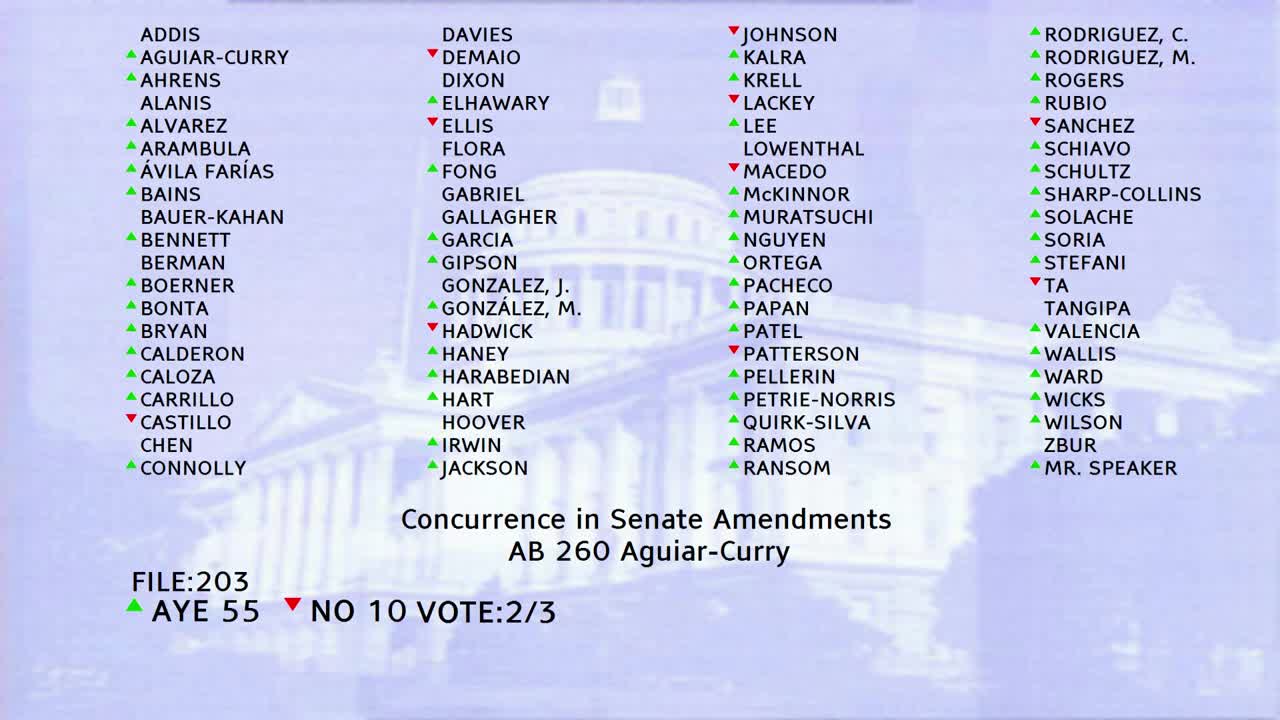 40SEC
Assembly Floor
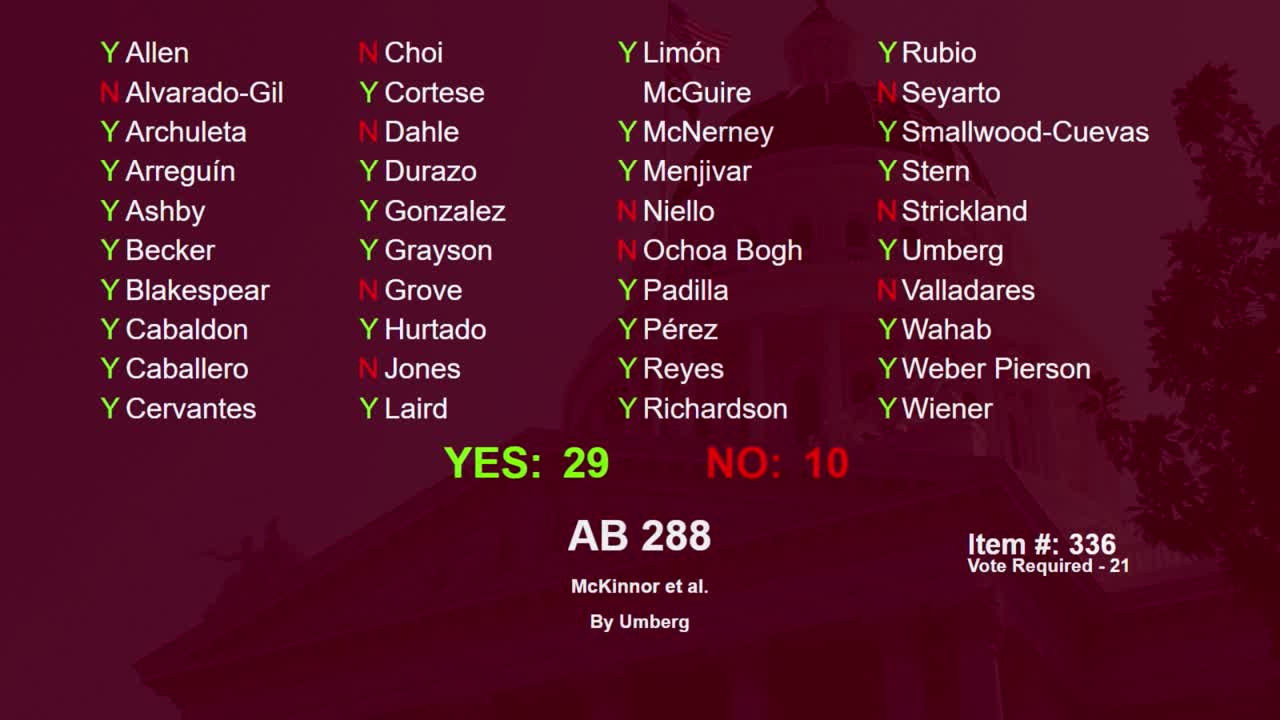 2MIN
Senate Floor
 1MIN
Senate Standing Committee on Appropriations
 5MIN
Senate Standing Committee on Revenue and Taxation
 7MIN
Senate Standing Committee on Health
 1MIN
Assembly Floor
 5MIN
Assembly Standing Committee on Health
Bill Author

Bill Co-Author(s):