AB 587: Student Aid Commission: membership.
- Session Year: 2025-2026
- House: Assembly
- Latest Version Date: 2025-10-10
Current Status:
Passed
(2025-10-10: Chaptered by Secretary of State - Chapter 561, Statutes of 2025.)
Introduced
In Committee
Awaiting First Chamber Vote
Passed First Chamber
In Committee
Awaiting Second Chamber Vote
Passed Second Chamber
Enacted
What does this bill do?
This bill changes the 15-member Student Aid Commission by replacing one public member seat with a member who has knowledge or experience accessing educational benefits for military veterans. The change adds veteran education-benefits expertise to the body that oversees state student financial aid.
The summary is provided by generative AI which can make mistakes. For original language, please view the details in the table below.
Existing law establishes the 15-member Student Aid Commission, with prescribed membership, including 3 public members, as the primary state agency for the administration of state-authorized student financial aid programs available to students attending all segments of postsecondary education.
This bill would, on the date that a public members term expires, replace one of the public members with a member who has knowledge, expertise, or experience in accessing the educational benefits available to veterans of the Armed Forces of the United States.
Existing law establishes the 15-member Student Aid Commission, with prescribed membership, including 3 public members, as the primary state agency for the administration of state-authorized student financial aid programs available to students attending all segments of postsecondary education.
This bill would, on the date that a public members term expires, replace one of the public members with a member who is a veteran has knowledge, expertise, or experience in accessing the educational benefits available to veterans of the Armed Forces of the United States and represents the veteran community. States.
Existing law establishes the 15-member Student Aid Commission, with prescribed membership, including 3 public members, as the primary state agency for the administration of state-authorized student financial aid programs available to students attending all segments of postsecondary education.
This bill would increase the membership of the commission to 16 by adding one representative appointed by the Department of Veterans Affairs who is an active duty member of the Armed Forces of the United States, the California National Guard, or a reserve component of the Armed Forces of the United States, or would, on the date that a public members term expires, replace one of the public members with a member who is a veteran of the Armed Forces of the United States. States and represents the veteran community.
Existing law establishes the 15-member Student Aid Commission, with prescribed membership, as the primary state agency for the administration of state-authorized student financial aid programs available to students attending all segments of postsecondary education.
This bill would increase the membership of the commission to 16 by adding one representative appointed by the Department of Veterans Affairs who is an active duty member of the Armed Forces of the United States, the California National Guard, or a reserve component of the Armed Forces of the United States, or is a veteran of the Armed Forces of the United States.
The California Constitution provides that the University of California constitutes a public trust administered by the Regents of the University of California, a corporation in the form of a board, with full powers of organization and government, subject to legislative control only for specified purposes.This bill would request the University of California to reduce, before the 202829 fiscal year, the annual amount of funds expended on administrative costs by at least 10% below the annual amount of funds expended on administrative costs in the 202526 fiscal year.The California Constitution provides that the University of California constitutes a public trust administered by the Regents of the University of California, a corporation in the form of a board, with full powers of organization and government, subject to legislative control only for specified purposes.
This bill would request the University of California to reduce, before the 202829 fiscal year, the annual amount of funds expended on administrative costs by at least 10% below the annual amount of funds expended on administrative costs in the 202526 fiscal year.
The Student Aid Commission shall be composed of the following 15 members:
(a)One representative from public, proprietary, or nonprofit postsecondary schools located in California.
(b)One representative from a California independent college or university.
(c)One representative each from the University of California, the California State University, and the California Community Colleges.
(d)Two members each of whom shall be a student enrolled in a California postsecondary educational institution at the time of appointment, and shall be enrolled in a California postsecondary educational institution for the duration of the term. A student member who graduates from an institution with no more than six months of the student members term remaining shall be permitted to serve for the remainder of the term.
(e)(1)Three public members. This paragraph shall become inoperative on the date that a public members term expires.
(2)Two public members and one member who has knowledge, expertise, or experience in accessing the educational benefits available to veterans of the Armed Forces of the United States. This paragraph shall become operative on the date that a public members term expires.
(f)One representative from a California secondary school.
(g)Two representatives appointed by the Senate Rules Committee.
(h)Two representatives appointed by the Speaker of the Assembly.
The Student Aid Commission shall be composed of the following 15 members:
(a)One representative from public, proprietary, or nonprofit postsecondary schools located in California.
(b)One representative from a California independent college or university.
(c)One representative each from the University of California, the California State University, and the California Community Colleges.
(d)Two members each of whom shall be a student enrolled in a California postsecondary educational institution at the time of appointment, and shall be enrolled in a California postsecondary educational institution for the duration of the term. A student member who graduates from an institution with no more than six months of the student members term remaining shall be permitted to serve for the remainder of the term.
(e)(1)Three public members. This paragraph shall become inoperative on the date that a public members term expires.
(2)Two public members and one member who is a veteran has knowledge, expertise, or experience in accessing the educational benefits available to veterans of the Armed Forces of the United States and represents the veteran community. States. This paragraph shall become operative on the date that a public members term expires.
(f)One representative from a California secondary school.
(g)Two representatives appointed by the Senate Rules Committee.
(h)Two representatives appointed by the Speaker of the Assembly.
The Student Aid Commission shall be composed of the following 16 15 members:
(a)One representative from public, proprietary, or nonprofit postsecondary schools located in California.
(b)One representative from a California independent college or university.
(c)One representative each from the University of California, the California State University, and the California Community Colleges.
(d)Two members each of whom shall be a student enrolled in a California postsecondary educational institution at the time of appointment, and shall be enrolled in a California postsecondary educational institution for the duration of the term. A student member who graduates from an institution with no more than six months of the student members term remaining shall be permitted to serve for the remainder of the term.
(e)(1)Three public members. This paragraph shall become inoperative on the date that a public members term expires.
(2)Two public members and one member who is a veteran of the Armed Forces of the United States and represents the veteran community. This paragraph shall become operative on the date that a public members term expires.
(f)One representative from a California secondary school.
(g)Two representatives appointed by the Senate Rules Committee.
(h)Two representatives appointed by the Speaker of the Assembly.
(i)One representative appointed by the Department of Veterans Affairs who is an active duty member of the Armed Forces of the United States, the California National Guard, or a reserve component of the Armed Forces of the United States, or is a veteran of the Armed Forces of the United States.The Student Aid Commission shall be composed of the following 15 16 members:
(a)One representative from public, proprietary, or nonprofit postsecondary schools located in California.
(b)One representative from a California independent college or university.
(c)One representative each from the University of California, the California State University, and the California Community Colleges.
(d)Two members each of whom shall be a student enrolled in a California postsecondary educational institution at the time of appointment, and shall be enrolled in a California postsecondary educational institution for the duration of the term. A student member who graduates from an institution with no more than six months of his or her the student members term remaining shall be permitted to serve for the remainder of the term.
(e)Three public members.
(f)One representative from a California secondary school.
(g)Two representatives appointed by the Senate Rules Committee.
(h)Two representatives appointed by the Speaker of the Assembly.
(i)One representative appointed by the Department of Veterans Affairs who is an active duty member of the Armed Forces of the United States, the California National Guard, or a reserve component of the Armed Forces of the United States, or is a veteran of the Armed Forces of the United States.
SECTION 1.Article 3.8 (commencing with Section 92628) is added to Chapter 6 of Part 57 of Division 9 of Title 3 of the Education Code, to read:3.8.Administrative Expenditures: Reduction92628.Notwithstanding any other law, the University of California is requested to reduce, before the 202829 fiscal year, the annual amount of funds expended on administrative costs by at least 10 percent below the annual amount of funds expended on administrative costs in the 202526 fiscal year.Notwithstanding any other law, the University of California is requested to reduce, before the 202829 fiscal year, the annual amount of funds expended on administrative costs by at least 10 percent below the annual amount of funds expended on administrative costs in the 202526 fiscal year.
|
Date
|
Status
|
|---|---|
| Oct 10, 2025 | Chaptered by Secretary of State - Chapter 561, Statutes of 2025. |
| Oct 10, 2025 | Approved by the Governor. |
| Sep 24, 2025 | Enrolled and presented to the Governor at 3 p.m. |
| Sep 12, 2025 | Senate amendments concurred in. To Engrossing and Enrolling. (Ayes 79. Noes 0. Page 3396.). |
| Sep 10, 2025 | In Assembly. Concurrence in Senate amendments pending. |
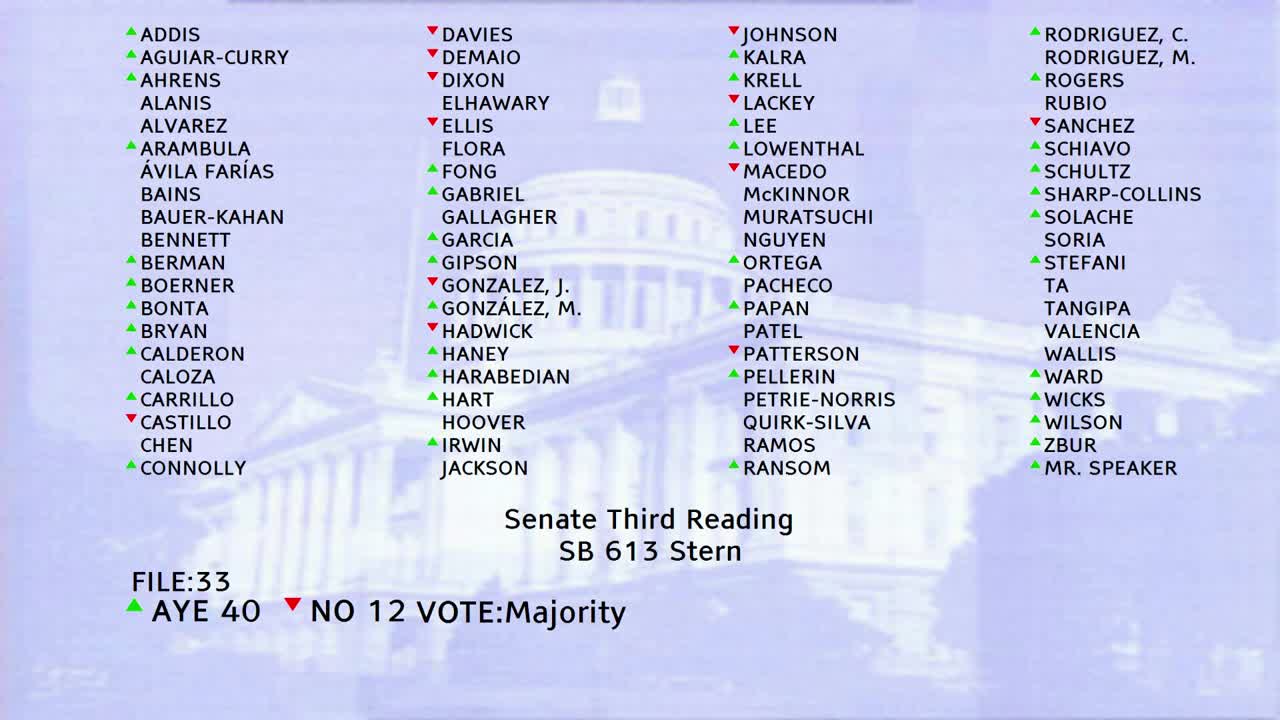
| Sep 10, 2025 | Read third time. Passed. Ordered to the Assembly. (Ayes 40. Noes 0. Page 2796.). |
| Sep 4, 2025 | Read second time. Ordered to third reading. |
| Sep 3, 2025 | Read third time and amended. Ordered to second reading. |
| Aug 25, 2025 | Ordered to third reading. |
| Aug 25, 2025 | From Consent Calendar. |
| Aug 20, 2025 | Read second time. Ordered to Consent Calendar. |
| Aug 19, 2025 | From committee: Be ordered to second reading file pursuant to Senate Rule 28.8 and ordered to Consent Calendar. |
| Jul 15, 2025 | From committee: Do pass and re-refer to Com. on APPR. with recommendation: To Consent Calendar. (Ayes 5. Noes 0.) (July 14). Re-referred to Com. on APPR. |
| Jun 18, 2025 | From committee: Do pass and re-refer to Com. on M. & V.A. (Ayes 6. Noes 0.) (June 18). Re-referred to Com. on M. & V.A. |
| Jun 4, 2025 | Referred to Coms. on ED. and M. & V.A. |
| May 23, 2025 | In Senate. Read first time. To Com. on RLS. for assignment. |
| May 23, 2025 | Read third time. Passed. Ordered to the Senate. (Ayes 72. Noes 0. Page 1648.) |
| May 8, 2025 | Read second time. Ordered to third reading. |
| May 7, 2025 | Read second time and amended pursuant to Assembly Rule 69. |
| May 7, 2025 | From committee: Do pass. (Ayes 15. Noes 0.) (May 7). |
| Apr 23, 2025 | From committee: Do pass and re-refer to Com. on APPR. (Ayes 10. Noes 0.) (April 22). Re-referred to Com. on APPR. |
| Feb 28, 2025 | Re-referred to Com. on HIGHER ED. |
| Feb 27, 2025 | From committee chair, with author's amendments: Amend, and re-refer to Com. on HIGHER ED. Read second time and amended. |
| Feb 24, 2025 | Referred to Com. on HIGHER ED. |
| Feb 13, 2025 | From printer. May be heard in committee March 15. |
| Feb 12, 2025 | Read first time. To print. |
|
Date
|
Description
|
Location
|
Votes
|
|
|---|---|---|---|---|
| Sep 12, 2025 | AB 587 Davies Concurrence in Senate Amendments | Assembly Floor |
Passed |
|
| Sep 10, 2025 | Assembly 3rd Reading AB587 Davies By Seyarto | Senate Floor |
Passed |
|
| Jul 14, 2025 | Do pass, but first be re-referred to the Committee on [Appropriations] with the recommendation: To Consent Calendar | Senate Standing Committee on Military and Veterans Affairs |
Passed |
|
| Jun 18, 2025 | Do pass, but first be re-referred to the Committee on [Military and Veterans Affairs] | Senate Standing Committee on Education |
Passed |
|
| May 23, 2025 | AB 587 Davies Assembly Third Reading | Assembly Floor |
Passed |
|
| May 7, 2025 | Do pass. | Assembly Standing Committee on Appropriations |
Passed |
|
| Apr 22, 2025 | Do pass and be re-referred to the Committee on [Appropriations] | Assembly Standing Committee on Higher Education |
Passed |
This list shows positions taken on this bill by organizations on the date displayed, which is linked to the original source.
Positions by individuals are not included.
|
Organization
|
Position
|
Date
|
|---|---|---|
| American Legion-Department of California | ** Support | |
| AMVETS-Department of California | ** Support | |
| California Association Of Christian Colleges And Universities | ** Support | |
| California State Commanders Veterans Council | ** Support | |
| Military Officers Association of America-California Council of Chapters | ** Support | |
| Vietnam Veterans of America-California State Council | ** Support |
CONCURRENCE IN SENATE AMENDMENTS
CSA1 Bill Id:AB 587
Author:(Davies)
As Amended Ver:September 3, 2025
Majority vote
SUMMARY
Recasts the public membership of the California Student Aid Commission (CSAC) to require one of the three public members to have knowledge, expertise, or experience in accessing the educational benefits available to veterans of the Armed Forces of the United States.
Senate Amendments
Specify that upon the expiration of one of three public members of CSAC, one public member must have knowledge, expertise, or experience in accessing the educational benefits available to veterans of the Armed Forces of the United States.
COMMENTS
Population of Active Military Personnel and Veterans in California. According to Military OneSource, a U.S. Department of Defense (DOD) website that provides resources on active-duty, National Guard, and Reserve service members, as of 2023 (most recent data available), there are over 4.4 million individuals who make up the total DOD force community, including over two million (45.7%) DOD military personnel, and over 2.4 million (54.3%) DOD force family members.
According to World Population Review, as of 2022, California had 158,754 active military personnel. Further, as of August 2022 (the most recent data available), according to the National Center for Veterans Analysis and Statistics (housed within the U.S. Department of Veterans Affairs), California is home over 1.4 million veterans; making California home for the second largest number of veterans (Texas being home to the most number of veterans).
Military Affiliated Students in Public Postsecondary Education in California. Based on a compilation of data sets from the State's public postsecondary education institutions, the California Community Colleges (CCC), the California State University (CSU), and the University of California (UC), over 75 thousand military affiliated students are enrolled in one of the institutions.
Military affiliated students includes actively serving military personnel, veterans, and dependents.
According to CSAC, using 2024 data, 20,346 military personnel and veterans applied for a Cal Grant (the State's financial aid award); 5,979 were eligible for a Cal Grant, and 3,348 actually drew down on their award and received funding.
While these numbers appear to be low in comparison to the number of military affiliated students matriculating at the CCC, CSU, and UC, many seek to cover the costs of their collegiate experience drawing down on the GI Bill.
Current composition of CSAC. Since 1990, the Commission has had 15-members, comprised of 11 commissioners (members) appointed by the Governor representing five members from the various higher education segments, three members from the general public, two student members, and one member from the secondary schools.
The graph below, from CSAC, depicts the current membership of CSAC:
Upon the date a general public member's term expires, this measure will replace one of the three general public member slots, with that of an individual who has knowledge, expertise, or experience in accessing the educational benefits available to veterans of the Armed Forces of the United States.
According to the Author
According to the author, "the California Student Aid Commission is a testament of our State's commitment to creating opportunities for upward social mobility. It is in that spirit that we should continue looking for ways to innovate in order to best serve all of California's students. Our veterans offer a unique perspective on their experiences traversing the financial aid system, to further improve these systems in California."
Further, the author contends that, "there is not however a representative of the military community on the commission. This group has needs that can't always be met by civilians. This is exacerbated since a large portion of this group is also first generation (about 62% according to the VA [Department of Veterans Affairs]), making navigating the financial aid field even more difficult. By adding a veteran to the commission we can 'use' their lived experiences navigating these systems to further improve them for all students."
Lastly, the author states that, "this bill will help to strengthen the veteran community's voice in California's financial aid process. CSAC currently manages certain veteran award programs, namely the California Military Department GI Bill Award Program. By including a member of the military community into the commission they can utilize their lived experiences navigating these programs to help further improve the system."
Arguments in Support
The following entities, the American Legion-Department of California, the AMVETS-Department of California, the California State Commanders Veterans Council, the Military Officers Association of America-California Council of Chapters, and the Vietnam Veterans of America-California State Council (entities), in their letter of support stated that, "education is crucial for veterans as it helps them transition to civilian life, enhances their job prospects, and provides opportunities for career advancement. The Commission is the principal state agency responsible for administering financial aid programs for students attending public and private universities, colleges, and vocational schools in California with the mission of making higher education financially accessible to all Californians. Veterans need a seat at this table!"
Further, the entities state that, "many veterans entered the military directly after high school and upon discharge the majority are in the position of reentering civilian life in their mid-twenties or mid-thirties. This leaves them at a disadvantage when seeking to pursue higher education programs. Many have families and may be adjusting to multiple relocations because of the various duty stations they were assigned to. Some veterans have disabilities from injuries (physical and/or mental) received during their military service. They also do not have the direct-from-high school to college transition and support structure that traditional students enjoy. Because of the unique circumstances of this population seeking higher education or vocational training, it is essential that there be a representative on the commission familiar with the challenges faced by veterans."
Arguments in Opposition
None on file.
FISCAL COMMENTS
According to the Senate Committee on Appropriations, pursuant to Senate Rule 28.8, negligible state costs.
VOTES:
ASM HIGHER EDUCATION: 10-0-0
YES: Fong, DeMaio, Boerner, Jeff Gonzalez, Jackson, Muratsuchi, Patel, Celeste Rodriguez, Sharp-Collins, Tangipa
ASM APPROPRIATIONS: 15-0-0
YES: Wicks, Sanchez, Arambula, Calderon, Caloza, Dixon, Elhawary, Fong, Mark González, Hart, Pacheco, Pellerin, Solache, Ta, Tangipa
ASSEMBLY FLOOR: 72-0-7
YES: Addis, Aguiar-Curry, Ahrens, Alanis, Alvarez, Arambula, Ávila Farías, Bains, Bauer‑Kahan, Bennett, Berman, Boerner, Bonta, Calderon, Caloza, Carrillo, Castillo, Connolly, Davies, DeMaio, Dixon, Elhawary, Ellis, Flora, Fong, Gabriel, Gallagher, Garcia, Gipson, Jeff Gonzalez, Mark González, Hadwick, Haney, Harabedian, Hart, Hoover, Irwin, Jackson, Kalra, Krell, Lackey, Lowenthal, Macedo, McKinnor, Muratsuchi, Ortega, Pacheco, Papan, Patel, Patterson, Pellerin, Petrie-Norris, Quirk-Silva, Ramos, Ransom, Celeste Rodriguez, Michelle Rodriguez, Rogers, Blanca Rubio, Schiavo, Schultz, Solache, Soria, Stefani, Ta, Tangipa, Valencia, Wallis, Ward, Wilson, Zbur, Rivas
ABS, ABST OR NV: Bryan, Chen, Lee, Nguyen, Sanchez, Sharp-Collins, Wicks
UPDATED
VERSION: September 3, 2025
CONSULTANT: Jeanice Warden / HIGHER ED. / (916) 319-3960 FN: 0001929
SENATE RULES COMMITTEE Office of Senate Floor Analyses (916) 651-1520 Fax: (916) 327-4478 | AB 587 |
THIRD READING
Bill No: AB 587
Author: Davies (R)
Amended: 9/3/25 in Senate
Vote: 21
SENATE EDUCATION COMMITTEE: 6-0, 6/18/25
AYES: Pérez, Ochoa Bogh, Choi, Cortese, Laird, Limón
NO VOTE RECORDED: Cabaldon
SENATE MILITARY & VETERANS COMMITTEE: 5-0, 7/14/25
AYES: Archuleta, Grove, McNerney, Menjivar, Umberg
SENATE APPROPRIATIONS COMMITTEE: Senate Rule 28.8
ASSEMBLY FLOOR: 72-0, 5/23/25 - See last page for vote
SUBJECT: Student Aid Commission: membership
SOURCE: Author
DIGEST:
This bill recasts the public membership of the California Student Aid Commission (CSAC) to require one of the three public members to be a veteran.
Senate Floor Amendments of 9/3/25 change the veteran slot to instead be for a person who “has knowledge, expertise, or experience in accessing the educational benefits available to veterans.” The amendment also strikes reference to the veteran slot representing the veteran community.
ANALYSIS:
Existing law:
- Establishes CSAC and provides that it is to be composed of the following 15 members:
- One representative from public, proprietary, or nonprofit postsecondary schools located in California.
- One representative from a California independent college or university.
- One representative each from the University of California, the California State University, and the California Community Colleges.
- Two members, each of whom shall be a student enrolled in a California postsecondary educational institution at the time of appointment, and shall be enrolled in a California postsecondary educational institution for the duration of the term. A student member who graduates from an institution with no more than six months of his or her term remaining shall be permitted to serve for the remainder of the term.
- Three public members.
- One representative from a California secondary school.
- Two representatives appointed by the Senate Rules Committee.
- Two representatives appointed by the Speaker of the Assembly. (Education Code (EC) § 69510)
- One representative from public, proprietary, or nonprofit postsecondary schools located in California.
- Requires that each member of CSAC, other than a student member and a member appointed by the Speaker of the Assembly, have a four-year term. Requires that members appointed by the Speaker of the Assembly serve at the pleasure of the Speaker. (EC § 69511)
This bill:
- Recasts the public membership of CSAC, from three public members to two public members and one member who has knowledge, expertise, or experience in accessing the educational benefits available to veterans.
- Makes this change operative on the date that a public member’s term expires.
Comments
Need for this bill. According to the author, “The California Student Aid Commission is a testament of our State’s commitment to creating opportunities for upward social mobility. It is in that spirit that we should continue looking for ways to innovate in order to best serve all of California’s students. Our veterans can offer a unique perspective on their experiences traversing the financial aid system, to further improve these systems in California.”
Current composition of CSAC. Since 1990, CSAC has had 15 members, comprised of 11 commissioners appointed by the Governor representing five members from the various higher education segments, three members from the general public, two student members, and one member from the secondary schools. The chart below depicts the current membership of CSAC:
Related/Prior Legislation
AB 320 (Lee, 2023) would have expanded CSAC to include two additional student board members. The bill was referred to but not heard by the Senate Education Committee.
AB 2363 (Ta, 2024) would have added a fourth public member to CSAC, bringing the total membership to 16. The bill was referred to the Assembly Higher Education Committee but was not heard.
FISCAL EFFECT: Appropriation: No Fiscal Com.: Yes Local: No
SUPPORT: (Verified 9/3/25)
American Legion, Department of California
AMVETS, Department of California
California Association of Christian Colleges and Universities
California State Commanders Veterans Council
Military Officers Association of America, California Council of Chapters
Vietnam Veterans of America, California State Council
OPPOSITION: (Verified 9/3/25)
None received
ASSEMBLY FLOOR: 72-0, 5/23/25
AYES: Addis, Aguiar-Curry, Ahrens, Alanis, Alvarez, Arambula, Ávila Farías, Bains, Bauer-Kahan, Bennett, Berman, Boerner, Bonta, Calderon, Caloza, Carrillo, Castillo, Connolly, Davies, DeMaio, Dixon, Elhawary, Ellis, Flora, Fong, Gabriel, Gallagher, Garcia, Gipson, Jeff Gonzalez, Mark González, Hadwick, Haney, Harabedian, Hart, Hoover, Irwin, Jackson, Kalra, Krell, Lackey, Lowenthal, Macedo, McKinnor, Muratsuchi, Ortega, Pacheco, Papan, Patel, Patterson, Pellerin, Petrie-Norris, Quirk-Silva, Ramos, Ransom, Celeste Rodriguez, Michelle Rodriguez, Rogers, Blanca Rubio, Schiavo, Schultz, Solache, Soria, Stefani, Ta, Tangipa, Valencia, Wallis, Ward, Wilson, Zbur, Rivas
NO VOTE RECORDED: Bryan, Chen, Lee, Nguyen, Sanchez, Sharp-Collins, Wicks
Prepared by: Lynn Lorber / ED. / (916) 651-4105
9/6/25 10:30:09
**** END ****
SENATE RULES COMMITTEE Office of Senate Floor Analyses (916) 651-1520 Fax: (916) 327-4478 | AB 587 |
THIRD READING
Bill No: AB 587
Author: Davies (R)
Amended: 5/7/25 in Assembly
Vote: 21
SENATE EDUCATION COMMITTEE: 6-0, 6/18/25
AYES: Pérez, Ochoa Bogh, Choi, Cortese, Laird, Limón
NO VOTE RECORDED: Cabaldon
SENATE MILITARY & VETERANS COMMITTEE: 5-0, 7/14/25
AYES: Archuleta, Grove, McNerney, Menjivar, Umberg
SENATE APPROPRIATIONS COMMITTEE: Senate Rule 28.8
ASSEMBLY FLOOR: 72-0, 5/23/25 - See last page for vote
SUBJECT: Student Aid Commission: membership
SOURCE: Author
DIGEST:
This bill recasts the public membership of the California Student Aid Commission (CSAC) to require one of the three public members to be a veteran.
ANALYSIS:
Existing law:
- Establishes CSAC and provides that it is to be composed of the following 15 members:
- One representative from public, proprietary, or nonprofit postsecondary schools located in California.
- One representative from a California independent college or university.
- One representative each from the University of California, the California State University, and the California Community Colleges.
- Two members, each of whom shall be a student enrolled in a California postsecondary educational institution at the time of appointment, and shall be enrolled in a California postsecondary educational institution for the duration of the term. A student member who graduates from an institution with no more than six months of his or her term remaining shall be permitted to serve for the remainder of the term.
- Three public members.
- One representative from a California secondary school.
- Two representatives appointed by the Senate Rules Committee.
- Two representatives appointed by the Speaker of the Assembly. (Education Code (EC) § 69510)
- One representative from public, proprietary, or nonprofit postsecondary schools located in California.
- Requires that each member of CSAC, other than a student member and a member appointed by the Speaker of the Assembly, have a four-year term. Requires that members appointed by the Speaker of the Assembly serve at the pleasure of the Speaker. (EC § 69511)
This bill:
- Recasts the public membership of CSAC, from three public members to two public members and one member who is a veteran of the Armed Forces of the United States and represents the veteran community.
- Makes this change operative on the date that a public member’s term expires.
Comments
Need for this bill. According to the author, “The California Student Aid Commission is a testament of our State’s commitment to creating opportunities for upward social mobility. It is in that spirit that we should continue looking for ways to innovate in order to best serve all of California’s students. Our veterans can offer a unique perspective on their experiences traversing the financial aid system, to further improve these systems in California.”
Current composition of CSAC. Since 1990, CSAC has had 15 members, comprised of 11 commissioners appointed by the Governor representing five members from the various higher education segments, three members from the general public, two student members, and one member from the secondary schools. The chart below depicts the current membership of CSAC:
Related/Prior Legislation
AB 320 (Lee, 2023) would have expanded CSAC to include two additional student board members. AB 320 was referred to but not heard by the Senate Education Committee.
AB 2363 (Ta, 2024) would have added a fourth public member to CSAC, bringing the total membership to 16. AB 2363 was referred to the Assembly Higher Education Committee but was not heard.
FISCAL EFFECT: Appropriation: No Fiscal Com.: Yes Local: No
SUPPORT: (Verified 8/18/25)
American Legion, Department of California
Amvets, Department of California
California Association of Christian Colleges and Universities
California State Commanders Veterans Council
Military Officers Association of America, California Council of Chapters
Vietnam Veterans of America, California State Council
OPPOSITION: (Verified 8/18/25)
None received
ASSEMBLY FLOOR: 72-0, 5/23/25
AYES: Addis, Aguiar-Curry, Ahrens, Alanis, Alvarez, Arambula, Ávila Farías, Bains, Bauer-Kahan, Bennett, Berman, Boerner, Bonta, Calderon, Caloza, Carrillo, Castillo, Connolly, Davies, DeMaio, Dixon, Elhawary, Ellis, Flora, Fong, Gabriel, Gallagher, Garcia, Gipson, Jeff Gonzalez, Mark González, Hadwick, Haney, Harabedian, Hart, Hoover, Irwin, Jackson, Kalra, Krell, Lackey, Lowenthal, Macedo, McKinnor, Muratsuchi, Ortega, Pacheco, Papan, Patel, Patterson, Pellerin, Petrie-Norris, Quirk-Silva, Ramos, Ransom, Celeste Rodriguez, Michelle Rodriguez, Rogers, Blanca Rubio, Schiavo, Schultz, Solache, Soria, Stefani, Ta, Tangipa, Valencia, Wallis, Ward, Wilson, Zbur, Rivas
NO VOTE RECORDED: Bryan, Chen, Lee, Nguyen, Sanchez, Sharp-Collins, Wicks
Prepared by: Lynn Lorber / ED. / (916) 651-4105
8/25/25 16:37:31
**** END ****
SENATE RULES COMMITTEE Office of Senate Floor Analyses (916) 651-1520 Fax: (916) 327-4478 | AB 587 |
CONSENT
Bill No: AB 587
Author: Davies (R)
Amended: 5/7/25 in Assembly
Vote: 21
SENATE EDUCATION COMMITTEE: 6-0, 6/18/25
AYES: Pérez, Ochoa Bogh, Choi, Cortese, Laird, Limón
NO VOTE RECORDED: Cabaldon
SENATE MILITARY & VETERANS COMMITTEE: 5-0, 7/14/25
AYES: Archuleta, Grove, McNerney, Menjivar, Umberg
SENATE APPROPRIATIONS COMMITTEE: Senate Rule 28.8
ASSEMBLY FLOOR: 72-0, 5/23/25 - See last page for vote
SUBJECT: Student Aid Commission: membership
SOURCE: Author
DIGEST:
This bill recasts the public membership of the California Student Aid Commission (CSAC) to require one of the three public members to be a veteran.
ANALYSIS:
Existing law:
- Establishes CSAC and provides that it is to be composed of the following 15 members:
- One representative from public, proprietary, or nonprofit postsecondary schools located in California.
- One representative from a California independent college or university.
- One representative each from the University of California, the California State University, and the California Community Colleges.
- Two members, each of whom shall be a student enrolled in a California postsecondary educational institution at the time of appointment, and shall be enrolled in a California postsecondary educational institution for the duration of the term. A student member who graduates from an institution with no more than six months of his or her term remaining shall be permitted to serve for the remainder of the term.
- Three public members.
- One representative from a California secondary school.
- Two representatives appointed by the Senate Rules Committee.
- Two representatives appointed by the Speaker of the Assembly. (Education Code (EC) § 69510)
- One representative from public, proprietary, or nonprofit postsecondary schools located in California.
- Requires that each member of CSAC, other than a student member and a member appointed by the Speaker of the Assembly, have a four-year term. Requires that members appointed by the Speaker of the Assembly serve at the pleasure of the Speaker. (EC § 69511)
This bill:
- Recasts the public membership of CSAC, from three public members to two public members and one member who is a veteran of the Armed Forces of the United States and represents the veteran community.
- Makes this change operative on the date that a public member’s term expires.
Comments
Need for this bill. According to the author, “The California Student Aid Commission is a testament of our State’s commitment to creating opportunities for upward social mobility. It is in that spirit that we should continue looking for ways to innovate in order to best serve all of California’s students. Our veterans can offer a unique perspective on their experiences traversing the financial aid system, to further improve these systems in California.”
Current composition of CSAC. Since 1990, CSAC has had 15 members, comprised of 11 commissioners appointed by the Governor representing five members from the various higher education segments, three members from the general public, two student members, and one member from the secondary schools. The chart below depicts the current membership of CSAC:
Related/Prior Legislation
AB 320 (Lee, 2023) would have expanded CSAC to include two additional student board members. AB 320 was referred to but not heard by the Senate Education Committee.
AB 2363 (Ta, 2024) would have added a fourth public member to CSAC, bringing the total membership to 16. AB 2363 was referred to the Assembly Higher Education Committee but was not heard.
FISCAL EFFECT: Appropriation: No Fiscal Com.: Yes Local: No
SUPPORT: (Verified 8/18/25)
American Legion, Department of California
Amvets, Department of California
California Association of Christian Colleges and Universities
California State Commanders Veterans Council
Military Officers Association of America, California Council of Chapters
Vietnam Veterans of America, California State Council
OPPOSITION: (Verified 8/18/25)
None received
ASSEMBLY FLOOR: 72-0, 5/23/25
AYES: Addis, Aguiar-Curry, Ahrens, Alanis, Alvarez, Arambula, Ávila Farías, Bains, Bauer-Kahan, Bennett, Berman, Boerner, Bonta, Calderon, Caloza, Carrillo, Castillo, Connolly, Davies, DeMaio, Dixon, Elhawary, Ellis, Flora, Fong, Gabriel, Gallagher, Garcia, Gipson, Jeff Gonzalez, Mark González, Hadwick, Haney, Harabedian, Hart, Hoover, Irwin, Jackson, Kalra, Krell, Lackey, Lowenthal, Macedo, McKinnor, Muratsuchi, Ortega, Pacheco, Papan, Patel, Patterson, Pellerin, Petrie-Norris, Quirk-Silva, Ramos, Ransom, Celeste Rodriguez, Michelle Rodriguez, Rogers, Blanca Rubio, Schiavo, Schultz, Solache, Soria, Stefani, Ta, Tangipa, Valencia, Wallis, Ward, Wilson, Zbur, Rivas
NO VOTE RECORDED: Bryan, Chen, Lee, Nguyen, Sanchez, Sharp-Collins, Wicks
Prepared by: Lynn Lorber / ED. / (916) 651-4105
8/21/25 16:45:30
**** END ****
SENATE COMMITTEE ON MILITARY AND VETERANS AFFAIRS
Senator Bob Archuleta, Chair
2025 - 2026 Regular
Bill No: AB 587 Hearing Date: 7/14/25
Author: | Davies | ||
Version: | 5/7/25 Amended | ||
Urgency: | No | Fiscal: | Yes |
Consultant: | Jenny Callison | ||
Subject: Student Aid Commission: membership
DESCRIPTION
Summary:
Replaces one of the public members of the Student Aid Commission, on the date that member’s term expires, with a member who is a veteran of the Armed Forces of the United States and represents the veterans community.
Existing law:
- Establishes the California Student Aid Commission (CSAC) and provides that it is to be composed of the following 15 members:
- One representative from public, proprietary, or nonprofit postsecondary schools located in California.
- One representative from a California independent college or university.
- One representative each from the University of California (UC), the California State University CSU), and the California Community Colleges (CCC).
- Two members, each of whom shall be a student enrolled in a California postsecondary educational institution at the time of appointment, and shall be enrolled in a California postsecondary educational institution for the duration of the term. A student member who graduates from an institution with no more than six months of his or her term remaining shall be permitted to serve for the remainder of the term.
- Three public members.
- One representative from a California secondary school.
- Two representatives appointed by the Senate Rules Committee.
- Two representatives appointed by the Speaker of the Assembly. (Education Code (EC) § 69510)
- Requires that each member of CSAC, other than a student member and a member appointed by the Speaker of the Assembly, have a four-year term. Requires that members appointed by the Speaker of the Assembly serve at the pleasure of the Speaker. (EC § 69511)
- Requires the commission to do all of the following:
- Report, on or before April 1 of each year, statistical data examining the impact and effectiveness of state-funded programs. The commission shall utilize common criteria in determining the impact of these programs, and shall have the authority to obtain any data from postsecondary educational institutions necessary for the reports. To the extent practicable, this report shall specifically note the number and the demographic characteristics of the students who qualify for a Cal Grant award based on obtaining high school graduation or its equivalent pursuant to paragraph (2) of subdivision (d) of Section 69433.9.
- Collect and disseminate data concerning the financial resources and needs of students and potential students, and the scope and impact of existing state, federal, and institutional student aid programs.
- Report, on or before April 1 of each year, the aggregate financial need of individuals seeking access to postsecondary education and the degree to which current student aid programs meet this legitimate financial need.
- Develop and report annually the distribution of funds and awards among income groups, ethnic groups, grade point average levels, and postsecondary education segments.
- Prepare and disseminate information regarding the criteria utilized in distributing available student aid funds.
- Be authorized to expend funds for the purpose of disseminating information about all institutional, state, and federal student aid programs to potential applicants. This distribution of information shall primarily focus on potential applicants with the greatest financial need.
- In the event that the Financial Aid Shopping Sheet developed by the United States Department of Education is no longer available, develop, in consultation with the Bureau for Private Postsecondary Education, a similar form that a postsecondary educational institution subject to the requirements of either Section 66021.3 or 94912.5 shall use. The form shall provide students and their families with information including, but not necessarily limited to, grant and scholarship opportunities and net costs associated with attendance at an institution.
This bill:
- Changes the public membership of CSAC, from three public members to two public members and one member who is a veteran of the Armed Forces of the United States and represents the veteran community.
- Makes this change operative on the date that a public member’s term expires.
BACKGROUND
The California Student Aid Commission works toward a California that invests in education opportunity, fosters an active, effective, citizenry, and provides a higher quality of social and economic life for its citizens. The CSAC offers a variety of services with the mission of making education beyond high school financially accessible to all Californians.
California is home to 75,000+ students affiliated with the military community. Members of the military and veterans community experience unique struggles that are difficult for people who have not served to relate to and advocate for.
- ~80,000 members of the military community attending CCC
- ~18,000 members of military community attending CSUs
- >2,000 members of the military community attend the UCs
(Members of the military community include veterans, active duty members, and dependents)
COMMENT
Veterans experience unique barriers enrolling and completing college. These include:
- Cultural Adjustment: Veterans often struggle with adapting to the less structured environment of college campuses, which contrasts sharply with the hierarchical, mission-driven military culture. This can lead to feelings of isolation or disconnection from peers who lack shared experiences.
- Identity Shift: Moving from a military identity to a student one can be challenging, especially for those who feel their service is undervalued or misunderstood in academic settings.
- Complex GI Bill Processes: Navigating the Post-9/11 GI Bill or other benefits can be confusing due to bureaucratic delays, inconsistent information, or issues with certification. Some veterans are unaware of the full extent of their benefits or how to apply them.
- Financial Instability: While the GI Bill covers tuition and provides a housing allowance, it may not cover all costs (e.g., books, childcare, or living expenses during non-academic periods). Veterans with families or those in high-cost areas may struggle.
- Credit Transfer Issues: Military training and experience often don’t translate into college credits, forcing veterans to start from scratch or take additional courses, delaying enrollment or increasing costs.
- PTSD and Mental Health: Many veterans deal with post-traumatic stress disorder (PTSD), anxiety, or depression, which can deter them from pursuing higher education due to fear of academic failure or social stigma.
- Physical Disabilities: Service-related injuries may require accommodations that some colleges are ill-equipped to provide, discouraging enrollment.
- Family Obligations: Veterans with spouses or children may prioritize family needs over academics, especially if childcare or financial stability is an issue.
- Relocation Challenges: Frequent moves (common for military families) can disrupt academic progress, especially if credits do not transfer between institutions.
According to the author: “The California Student Aid Commission is a testament of our State’s commitment to creating opportunities for upward social mobility. It is in that spirit that we should continue looking for ways to innovate in order to best serve all of California’s students. Our veterans can offer a unique perspective on their experiences traversing the financial aid system, to further improve these systems in California.”
POSITIONS
Sponsor: Author.
Support: American Legion, Department of California
AMVETs, Department of California
California Association of Christian Colleges and Universities
California State Commanders Veterans Council
Military Officers Association of America, California Council of Chapters
Vietnam Veterans of America, California State Council
Oppose: None on File.
-- END --
SENATE COMMITTEE ON EDUCATION
Senator Sasha Renée Pérez, Chair
2025 - 2026 Regular
Bill No: AB 587 Hearing Date: June 18, 2025
Author: | |||
Version: | May 7, 2025 | ||
Urgency: | No | Fiscal: | Yes |
Consultant: | Lynn Lorber | ||
Subject: Student Aid Commission: membership.
NOTE: This bill has been referred to the Committees on Education and Military and Veterans Affairs. A “do pass” motion should include referral to the Committee on Military and Veterans Affairs.
SUMMARY
This bill recasts the public membership of the California Student Aid Commission (CSAC) to require one of the three public members to be a veteran.
BACKGROUND
Existing law:
- Establishes CSAC and provides that it is to be composed of the following 15 members:
- One representative from public, proprietary, or nonprofit postsecondary schools located in California.
- One representative from a California independent college or university.
- One representative each from the University of California, the California State University, and the California Community Colleges.
- Two members, each of whom shall be a student enrolled in a California postsecondary educational institution at the time of appointment, and shall be enrolled in a California postsecondary educational institution for the duration of the term. A student member who graduates from an institution with no more than six months of his or her term remaining shall be permitted to serve for the remainder of the term.
- Three public members.
- One representative from a California secondary school.
- Two representatives appointed by the Senate Rules Committee.
- Two representatives appointed by the Speaker of the Assembly. (Education Code (EC) § 69510)
- One representative from public, proprietary, or nonprofit postsecondary schools located in California.
- Requires that each member of CSAC, other than a student member and a member appointed by the Speaker of the Assembly, have a four-year term. Requires that members appointed by the Speaker of the Assembly serve at the pleasure of the Speaker. (EC § 69511)
ANALYSIS
This bill:
- Recasts the public membership of CSAC, from three public members to two public members and one member who is a veteran of the Armed Forces of the United States and represents the veteran community.
- Makes this change operative on the date that a public member’s term expires.
STAFF COMMENTS - Need for the bill. According to the author, “The California Student Aid Commission is a testament of our State’s commitment to creating opportunities for upward social mobility. It is in that spirit that we should continue looking for ways to innovate in order to best serve all of California’s students. Our veterans can offer a unique perspective on their experiences traversing the financial aid system, to further improve these systems in California.”
- Current composition of CSAC. Since 1990, CSAC has had 15 members, comprised of 11 commissioners appointed by the Governor representing five members from the various higher education segments, three members from the general public, two student members, and one member from the secondary schools. The chart below depicts the current membership of CSAC:
- Prior legislation.
AB 320 (Lee, 2023) would have expanded CSAC to include two additional student board members. AB 320 was referred to but not heard by the Senate Education Committee.
AB 2363 (Ta, 2024) would have added a fourth public member to CSAC, bringing the total membership to 16. AB 2363 was referred to the Assembly Higher Education Committee but was not heard.
SUPPORT
California Association of Christian Colleges and Universities
OPPOSITION
None received
-- END --
ASSEMBLY THIRD READING
ATR Bill Id:AB 587
Author:(Davies)
As Amended Ver:May 7, 2025
Majority vote
SUMMARY
Changes the composition of the California Student Aid Commission (CSAC) membership, but does not increase the number of members on CSAC.
Major Provisions
- Stipulates that, on the date a public member of CSAC's term expires, instead of three public members, there will be two public members and one member who is a veteran of the Armed Forces of the United States and represents the veteran community.
- Makes technical changes to existing law.
COMMENTS
Population of Active Military Personnel and Veterans in California. According to Military OneSource, a U.S. Department of Defense (DOD) website that provides resources on active-duty, National Guard, and Reserve service members, as of 2023 (most recent data available), there are over 4.4 million individuals who make up the total DOD force community, including over 2 million (45.7%) DOD military personnel, and over 2.4 million (54.3%) DOD force family members.
According to World Population Review, as of 2022, California had 158,754 active military personnel. Further, as of August 2022 (the most recent data available), according to the National Center for Veterans Analysis and Statistics (housed within the U.S. Department of Veterans Affairs), California is home over 1.4 million veterans; making California home for the second largest number of veterans (Texas being home to the most number of veterans).
Military Affiliated Students in Public Postsecondary Education in California. Based on a compilation of data sets from the State's public postsecondary education institutions, the California Community Colleges (CCC), the California State University (CSU), and the University of California (UC), over 75,000 military affiliated students are enrolled in one of the institutions.
Military affiliated students includes actively serving military personnel, veterans, and dependents.
According to CSAC, using 2024 data, 20,346 military personnel and veterans applied for a Cal Grant (the State's financial aid award); 5,979 were eligible for a Cal Grant, and 3,348 actually drew down on their award and received funding.
While these numbers appear to be low in comparison to the number of military affiliated students matriculating at the CCC, CSU, and UC, many seek to cover the costs of their collegiate experience drawing down on the GI Bill.
Current composition of CSAC. Since 1990, the Commission has had 15-members, comprised of 11 commissioners (members) appointed by the Governor representing five members from the various higher education segments, three members from the general public, two student members, and one member from the secondary schools.
The graph below, from CSAC, depicts the current membership of CSAC:
Upon the date a general public member's term expires, this measure will replace one of the three general public member slots, with that of a veteran of the Armed Forces of the United States who represents the veteran community.
According to the Author
According to the author, "the California Student Aid Commission is a testament of our State's commitment to creating opportunities for upward social mobility. It is in that spirit that we should continue looking for ways to innovate in order to best serve all of California's students. Our veterans offer a unique perspective on their experiences traversing the financial aid system, to further improve these systems in California."
Further, the author contends that, "there is not however a representative of the military community on the commission. This group has needs that can't always be met by civilians. This is exacerbated since a large portion of this group is also first generation (about 62% according to the VA [Department of Veterans Affairs]), making navigating the financial aid field even more difficult. By adding a veteran to the commission we can 'use' their lived experiences navigating these systems to further improve them for all students."
Lastly, the author states that, "this bill will help to strengthen the veteran community's voice in California's financial aid process. CSAC currently manages certain veteran award programs, namely the California Military Department GI Bill Award Program. By including a member of the military community into the commission they can utilize their lived experiences navigating these programs to help further improve the system."
Arguments in Support
The following entities, the American Legion-Department of California, the AMVETS-Department of California, the California State Commanders Veterans Council, the Military Officers Association of America-California Council of Chapters, and the Vietnam Veterans of America-California State Council (entities), in their letter of support stated that, "education is crucial for veterans as it helps them transition to civilian life, enhances their job prospects, and provides opportunities for career advancement. The Commission is the principal state agency responsible for administering financial aid programs for students attending public and private universities, colleges, and vocational schools in California with the mission of making higher education financially accessible to all Californians. Veterans need a seat at this table!"
Further, the entities state that, "many veterans entered the military directly after high school and upon discharge the majority are in the position of reentering civilian life in their mid-twenties or mid-thirties. This leaves them at a disadvantage when seeking to pursue higher education programs. Many have families and may be adjusting to multiple relocations because of the various duty stations they were assigned to. Some veterans have disabilities from injuries (physical and/or mental) received during their military service. They also do not have the direct-from-high school to college transition and support structure that traditional students enjoy. Because of the unique circumstances of this population seeking higher education or vocational training, it is essential that there be a representative on the commission familiar with the challenges faced by veterans."
Arguments in Opposition
None on file.
FISCAL COMMENTS
According to the Assembly Committee on Appropriations, ongoing annual General Fund costs of approximately $4,000 to $8,000 to CSAC to provide travel, operational, and per diem stipends to one additional commissioner established by this bill, depending on the commissioner's geographic proximity to Sacramento.
To note, as amended on May 7, 2025, this measure no longer increases the number of CSAC members.
VOTES
ASM HIGHER EDUCATION: 10-0-0
YES: Fong, DeMaio, Boerner, Jeff Gonzalez, Jackson, Muratsuchi, Patel, Celeste Rodriguez, Sharp-Collins, Tangipa
ASM APPROPRIATIONS: 15-0-0
YES: Wicks, Sanchez, Arambula, Calderon, Caloza, Dixon, Elhawary, Fong, Mark González, Hart, Pacheco, Pellerin, Solache, Ta, Tangipa
UPDATED
VERSION: May 7, 2025
CONSULTANT: Jeanice Warden / HIGHER ED. / (916) 319-3960 FN: 0000362
Date of Hearing: May 7, 2025
ASSEMBLY COMMITTEE ON APPROPRIATIONS
Buffy Wicks, Chair
ABPCA Bill Id:AB 587
Author:(Davies) – As Amended Ver:February 27, 2025
Policy Committee: | Higher Education | Vote: | 10 - 0 |
|
| ||
|
|
Urgency: No State Mandated Local Program: No Reimbursable: No
SUMMARY:
This bill expands the California Student Aid Commission (CSAC) membership to include an active duty, reserve, or veteran member of the United States Armed Forces appointed by the California Department of Veterans Affairs (CalVet).
FISCAL EFFECT:
Ongoing annual General Fund costs of approximately $4,000 to $8,000 to CSAC to provide travel, operational, and per diem stipends to one additional commissioner established by this bill, depending on the commissioner’s geographic proximity to Sacramento.
COMMENTS:
- Purpose. According to the author:
This bill will help to strengthen the veteran community's voice in California’s financial aid process. CSAC currently manages certain veteran award programs, namely the California Military Department GI Bill Award Program. By including a member of the military community into the commission they can utilize their lived experiences navigating these programs to help further improve the system.
- Background. According to CSAC, of the 20,346 military personnel and veterans who applied for a Cal Grant (the state’s financial aid award), 5,979 were eligible, and 3,348 drew down on their award and received funding in 2024.
Since 1990, the CSAC includes 15-members, including five members from the various higher education segments, three members from the general public, two student members, and one member from the secondary schools. This bill authorizes CalVet to appoint a representative to CSAC who is an active duty member of the armed forces of the United States, the California National Guard, or a reserve component of the armed forces of the United States, or a veteran of the Armed Forces of the United States.
Analysis Prepared by: Aaron Heredia / APPR. / (916) 319-2081
Date of Hearing: April 22, 2025
ASSEMBLY COMMITTEE ON HIGHER EDUCATION
Mike Fong, Chair
ABPCA Bill Id:AB 587 (
Author:Davies) – As Amended Ver:February 27, 2025
SUBJECT: Student Aid Commission: membership.
SUMMARY: Increases the California Student Aid Commission (CSAC) membership from 15 to 16, by adding one representative appointed by the California Department of Veterans Affairs (CalVet) who is an active duty member of the Armed Forces of the United States, the California National Guard, or a reserve component of the Armed Forces of the United States, or is a veteran of the Armed Forces of the United States. And makes technical changes to existing law.
EXISTING LAW:
- Establishes the CSAC for the purpose of administering specified student financial aid programs. Specifies that the CSAC must be composed of the following 15 members:
- One representative from public, proprietary, or nonprofit postsecondary schools located in California;
- One representative from a California independent college or university;
- One representative each from the University of California (UC), the California State University (CSU), and the California Community Colleges (CCC);
- Two members each of whom must be a student enrolled in a California postsecondary educational institution at the time of appointment, and must be enrolled in a California postsecondary educational institution for the duration of the term. A student member who graduates from an institution with no more than six months of their term remaining must be permitted to serve for the remainder of the term;
- Three public members;
- One representative from a California secondary school;
- Two representatives appointed by the Senate Rules Committee; and,
- Two representatives appointed by the Speaker of the Assembly.
- Appointments to CSAC as enumerated above in (1)(a-f) inclusive, must be made by the Governor, subject to confirmation by the California State Senate.
- Stipulates that members, except student members and members appointed by the Speaker of the Assembly, have four-year terms. Student members have a term of two academic years. Members appointed by the Assembly Speaker serve at the pleasure of the Speaker of the Assembly.
- Requires each member of CSAC to receive a stipend of $100, as specified. Specifies that if a student member is not the recipient of a Cal Grant award, the member’s institution of higher education, as specified, must waive the student member’s tuition, up to the maximum award amount for that institution for the entire duration of the student member’s term of office (Education Code (EC) Section 69510, et seq.).
- Stipulates that there is in the state government CalVet (Military and Veterans Code (MVC) Section 63).
- Provides that CalVet succeeds to, and is vested with, the duties, powers, purposes, responsibilities, and jurisdiction of the Department of Military and Veterans’ Affairs, the Division of Veterans’ Welfare, the Veterans’ Welfare Board, the California Veterans’ Commission, the Division of Veterans’ Homes, the Board of Directors of the Veterans’ Home of California, and the Board of Directors of the Woman’s Relief Corps Home of California and of the officers and employees of that department (MVC Section 70).
FISCAL EFFECT: Unknown
COMMENTS: Purpose of the measure. According to the author, “the California Student Aid Commission is a testament of our State’s commitment to creating opportunities for upward social mobility. It is in that spirit that we should continue looking for ways to innovate in order to best serve all of California’s students. Our veterans offer a unique perspective on their experiences traversing the financial aid system, to further improve these systems in California.”
Further, the author contends that, “there is not however a representative of the military community on the commission. This group has needs that can’t always be met by civilians. This is exacerbated since a large portion of this group is also first generation (about 62% according to the VA [Department of Veterans Affairs]), making navigating the financial aid field even more difficult. By adding a veteran to the commission we can ‘use’ their lived experiences navigating these systems to further improve them for all students.”
Lastly, the author states that, “this bill will help to strengthen the veteran community's voice in California’s financial aid process. CSAC currently manages certain veteran award programs, namely the California Military Department GI Bill Award Program. By including a member of the military community into the commission they can utilize their lived experiences navigating these programs to help further improve the system.”
Population of Active Military Personnel and Veterans in California. According to Military OneSource, a U.S. Department of Defense (DOD) website that provides resources on active-duty, National Guard, and Reserve service members, as of 2023 (most recent data available), there are over 4.4 million individuals who make up the total DOD force community, including over 2 million (45.7%) DOD military personnel, and over 2.4 million (54.3%) DOD force family members.
According to World Population Review, as of 2022, California had 158,754 active military personnel. Further, as of August 2022 (the most recent data available), according to the National Center for Veterans Analysis and Statistics (housed within the U.S. Department of Veterans Affairs), California is home over 1.4 million veterans; making California home for the second largest number of veterans (Texas being home to the most number of veterans).
Military Affiliated Students in Public Postsecondary Education in California. Committee Staff understands, based on a compilation of data sets from the state’s public postsecondary education institutions (CCC, CSU, and the UC) that over 75 thousand military affiliated students are enrolled in one of the institutions.
Military affiliated students includes actively serving military personnel, veterans, and dependents.
According to CSAC, using 2024 data, 20,346 military personnel and veterans applied for a Cal Grant (the State’s financial aid award); 5,979 were eligible for a Cal Grant, and 3,348 actually drew down on their award and received funding.
Committee Staff understands that while these numbers appear to be low in comparison to the number of military affiliated students matriculating at the CCC, CSU, and UC, many seek to cover the costs of their collegiate experience drawing down on the GI Bill.
Current composition of CSAC. Since 1990, the Commission has had 15-members, comprised of 11 commissioners appointed by the Governor representing five members from the various higher education segments, three members from the general public, two student members, and one member from the secondary schools.
The graph below, from CSAC, depicts the current membership of CSAC:
Committee comments. Pursuant to existing law, the Governor appoints the majority of the membership of CSAC. Committee Staff understands that the appointments of the Governor, in part, are based on recommendations of various stakeholders.
As currently drafted, this measure authorizes the CalVet to appoint a member to CSAC, who is an active duty member of the Armed Forces of the United States, the California National Guard, or a reserve component of the Armed Forces of the United States, or is a veteran of the Armed Forces of the United States.
It is presently unclear, why CalVet would have the final authority to appoint this member, thus changing the appointment process.
Moving forward, the author may wish to authorize CalVet to provide the Governor nominees for the membership position, with the Governor appointing the member, pending confirmation by the Senate.
Further, Committee Staff understands that most governing bodies in the state have an odd number, in part, to ensure voting is not deadlocked. If the intent of the author is to have the voice of military affiliated personnel on CSAC, moving forward, the author may wish to work with CSAC and appropriate stakeholders in order to consider having the military affiliated individual placed in one of the three general public positions or reducing the general public representation to two and military affiliated personnel explicitly listed as one of the 15 Commissioners.
Prior legislation. AB 2363 (Ta) of the 2023-24 Legislative Session, which was not pursued by the author and subsequently held by this Committee, would have added a fourth public member to CSAC, bringing the total membership to 16.
REGISTERED SUPPORT / OPPOSITION:
Support
None on file.
Opposition
None on file.
Analysis Prepared by: Jeanice Warden / HIGHER ED. / (916) 319-3960
Bill Author

Bill Co-Author(s):