AB 628: Hiring of real property: dwellings: untenantability.
- Session Year: 2025-2026
- House: Assembly
- Latest Version Date: 2025-10-06
Current Status:
Passed
(2025-10-06: Chaptered by Secretary of State - Chapter 342, Statutes of 2025.)
Introduced
In Committee
Awaiting First Chamber Vote
Passed First Chamber
In Committee
Awaiting Second Chamber Vote
Passed Second Chamber
Enacted
Existing law requires that any building with a dwelling unit maintain certain characteristics in order to be tenantable, including the maintenance of adequate heating and hot water systems that conform to the standard of quality set by applicable law.
This bill would add a stove and refrigerator that are maintained in good working order and are capable of safely generating heat for cooking purposes and capable of safely storing food, respectively, to the list of characteristics required for the dwelling unit to be tenantable for leases entered into, amended, or extended on or after January 1, 2026. The bill would require a landlord to repair or replace a stove or refrigerator that is subject to recall by the manufacturer or a public entity within 30 days of receiving notice that the stove or refrigerator is subject to recall. The bill would also authorize a tenant and landlord to mutually agree when the lease is signed if the tenant chooses to provide and maintain their own refrigerator, subject to certain conditions. The bill would prohibit the application of these new requirements for certain types of dwelling units, including permanent supportive housing, as defined.
Existing law authorizes a tenant to repair dilapidations rendering their premises untenantable if the landlord has neglected to repair those dilapidations, subject to certain conditions, or vacate the premises, as specified.
This bill would provide that the above-described requirement on a landlord to repair or replace a recalled stove or refrigerator does not prohibit a tenant from exercising any remedy authorized as described above.
Existing law requires that any building with a dwelling unit maintain certain characteristics in order to be tenantable, including the maintenance of adequate heating and hot water systems that conform to the standard of quality set by applicable law.
This bill would add a stove and refrigerator that are maintained in good working order and are capable of safely generating heat for cooking purposes and capable of safely storing food, respectively, to the list of characteristics required for the dwelling unit to be tenantable for leases entered into, amended, or extended on or after January 1, 2026. The bill would require a landlord to repair or replace a stove or refrigerator that is subject to recall by the manufacturer or a public entity within 30 days of receiving notice that the stove or refrigerator is subject to recall. The bill would prohibit the application of these new requirements for certain types of dwelling units, including permanent supportive housing, as defined.
Existing law authorizes a tenant to repair dilapidations rendering their premises untenantable if the landlord has neglected to repair those dilapidations, subject to certain conditions, or vacate the premises, as specified.
This bill would provide that the above-described requirement on a landlord to repair or replace a recalled stove or refrigerator does not prohibit a tenant from exercising any remedy authorized as described above.
Existing law requires that any building with a dwelling unit maintain certain characteristics in order to be tenantable, including the maintenance of adequate heating and hot water systems that conform to the standard of quality set by applicable law.
This bill would add a stove and refrigerator that were purchased within the last 10 years and are maintained in good working order and are capable of safely generating heat for cooking purposes and capable of safely storing food, respectively, to the list of characteristics required for the dwelling unit to be tenantable for leases entered into, amended, or extended on or after January 1, 2026. The bill would prohibit the application of these new requirements for certain types of dwelling units, including permanent supportive housing, as defined.
Existing law requires that any building with a dwelling unit maintain certain characteristics in order to be tenantable, including the maintenance of adequate heating and hot water systems that conform to the standard of quality set by applicable law.
This bill would add a stove and refrigerator that were purchased within the last 10 years and maintained in good working order to the list of characteristics required for the dwelling unit to be tenantable for leases entered into, amended, or extended on or after January 1, 2026.
(a)A dwelling shall be deemed untenantable for purposes of Section 1941 if it substantially lacks any of the following affirmative standard characteristics or is a residential unit described in Section 17920.3 or 17920.10 of the Health and Safety Code:
(1)Effective waterproofing and weather protection of roof and exterior walls, including unbroken windows and doors.
(2)Plumbing or gas facilities that conformed to applicable law in effect at the time of installation, maintained in good working order.
(3)A water supply approved under applicable law that is under the control of the tenant, capable of producing hot and cold running water, or a system that is under the control of the landlord, that produces hot and cold running water, furnished to appropriate fixtures, and connected to a sewage disposal system approved under applicable law.
(4)Heating facilities that conformed with applicable law at the time of installation, maintained in good working order.
(5)Electrical lighting, with wiring and electrical equipment that conformed with applicable law at the time of installation, maintained in good working order.
(6)Building, grounds, and appurtenances at the time of the commencement of the lease or rental agreement, and all areas under control of the landlord, kept in every part clean, sanitary, and free from all accumulations of debris, filth, rubbish, garbage, rodents, and vermin.
(7)An adequate number of appropriate receptacles for garbage and rubbish, in clean condition and good repair at the time of the commencement of the lease or rental agreement, with the landlord providing appropriate serviceable receptacles thereafter and being responsible for the clean condition and good repair of the receptacles under their control.
(8)Floors, stairways, and railings maintained in good repair.
(9)A locking mail receptacle for each residential unit in a residential hotel, as required by Section 17958.3 of the Health and Safety Code. This subdivision shall become operative on July 1, 2008.
(10)Except as provided in subdivision (b), a stove that is maintained in good working order and capable of safely generating heat for cooking purposes. A stove that is subject to a recall by the manufacturer or a public entity is not capable of safely generating heat for cooking purposes. This paragraph shall only apply to a lease entered into, amended, or extended on or after January 1, 2026.
(11)(A)Except as provided in subdivision (b) and subparagraph (B), a refrigerator that is maintained in good working order and capable of safely storing food. A refrigerator that is subject to recall by the manufacturer or a public entity is not capable of safely storing food.
(B)A tenant and landlord may mutually agree when the lease is signed if the tenant chooses to provide and maintain their own refrigerator, provided that all of the following apply:
(i)The lease contains a statement in substantially the following form:
Under state law, the landlord is required to provide a refrigerator in good working order in your unit. By checking this box, you acknowledge that you have asked to bring your own refrigerator and that you are responsible for keeping that refrigerator in working order.
(ii)The lease provides that the tenant may, with 30 days written notice, inform the landlord that they no longer wish to keep their own refrigerator in the unit, and that at the end of the 30-day notice period, the landlord shall install a refrigerator in good working order in the unit.
(iii)A landlord shall not condition a tenancy upon the tenant providing their own refrigerator.
(iv)The landlord shall not be responsible for the maintenance of a refrigerator provided by the tenant.
(C)This paragraph shall only apply to a lease entered into, amended, or extended on or after January 1, 2026.
(b)The characteristics described in paragraphs (10) and (11) of subdivision (a) shall not apply to any of the following:
(1)Permanent supportive housing, as that term is defined in paragraph (2) of subdivision (c) of Section 8698.4 of the Government Code.
(2)A single-room occupancy unit that provides living and sleeping space for the exclusive use of the occupant, including those in which occupants share food preparation facilities with occupants.
(3)A unit in a residential hotel, as that term is defined in paragraph (1) of subdivision (b) of Section 50519 of the Health and Safety Code.
(4)A dwelling unit within a housing facility that offers shared or communal kitchen spaces to its residents, including a dwelling unit within an assisted living facility.
(c)(1)A landlord shall repair or replace a stove or refrigerator that is subject to recall by the manufacturer or a public entity, as described in paragraphs (10) and (11) of subdivision (a), within 30 days of receiving notice that the stove or refrigerator is subject to recall.
(2)Nothing in this subdivision shall be construed to prohibit a tenant from exercising any remedy authorized under Section 1942.
(d)Nothing in this section shall be interpreted to prohibit a tenant or owner of rental properties from qualifying for a utility energy savings assistance program, or any other program assistance, for heating or hot water system repairs or replacement, or a combination of heating and hot water system repairs or replacements, that would achieve energy savings.
(a)A dwelling shall be deemed untenantable for purposes of Section 1941 if it substantially lacks any of the following affirmative standard characteristics or is a residential unit described in Section 17920.3 or 17920.10 of the Health and Safety Code:
(1)Effective waterproofing and weather protection of roof and exterior walls, including unbroken windows and doors.
(2)Plumbing or gas facilities that conformed to applicable law in effect at the time of installation, maintained in good working order.
(3)A water supply approved under applicable law that is under the control of the tenant, capable of producing hot and cold running water, or a system that is under the control of the landlord, that produces hot and cold running water, furnished to appropriate fixtures, and connected to a sewage disposal system approved under applicable law.
(4)Heating facilities that conformed with applicable law at the time of installation, maintained in good working order.
(5)Electrical lighting, with wiring and electrical equipment that conformed with applicable law at the time of installation, maintained in good working order.
(6)Building, grounds, and appurtenances at the time of the commencement of the lease or rental agreement, and all areas under control of the landlord, kept in every part clean, sanitary, and free from all accumulations of debris, filth, rubbish, garbage, rodents, and vermin.
(7)An adequate number of appropriate receptacles for garbage and rubbish, in clean condition and good repair at the time of the commencement of the lease or rental agreement, with the landlord providing appropriate serviceable receptacles thereafter and being responsible for the clean condition and good repair of the receptacles under their control.
(8)Floors, stairways, and railings maintained in good repair.
(9)A locking mail receptacle for each residential unit in a residential hotel, as required by Section 17958.3 of the Health and Safety Code. This subdivision shall become operative on July 1, 2008.
(10)Except as provided in subdivision (b), a stove that is maintained in good working order and capable of safely generating heat for cooking purposes. A stove that is subject to a recall by the manufacturer or a public entity is not capable of safely generating heat for cooking purposes. This paragraph shall only apply to a lease entered into, amended, or extended on or after January 1, 2026.
(11)(A)Except as provided in subdivision (b), (b) and subparagraph (B), a refrigerator that is maintained in good working order and capable of safely storing food. A refrigerator that is subject to recall by the manufacturer or a public entity is not capable of safely storing food. A
(B)A tenant and landlord may mutually agree when the lease is signed if the tenant chooses to provide and maintain their own refrigerator. The landlord is not responsible for the maintenance of a refrigerator provided by the tenant. This paragraph shall only apply to a lease entered into, amended, or extended on or after January 1, 2026. refrigerator, provided that all of the following apply:
(i)The lease contains a statement in substantially the following form:
Under state law, the landlord is required to provide a refrigerator in good working order in your unit. By checking this box, you acknowledge that you have asked to bring your own refrigerator and that you are responsible for keeping that refrigerator in working order.
(ii)The lease provides that the tenant may, with 30 days written notice, inform the landlord that they no longer wish to keep their own refrigerator in the unit, and that at the end of the 30-day notice period, the landlord shall install a refrigerator in good working order in the unit.
(iii)A landlord shall not condition a tenancy upon the tenant providing their own refrigerator.
(iv)The landlord shall not be responsible for the maintenance of a refrigerator provided by the tenant.
(C)This paragraph shall only apply to a lease entered into, amended, or extended on or after January 1, 2026.
(b)The characteristics described in paragraphs (10) and (11) of subdivision (a) shall not apply to any of the following:
(1)Permanent supportive housing, as that term is defined in paragraph (2) of subdivision (c) of Section 8698.4 of the Government Code.
(2)A single-room occupancy unit that provides living and sleeping space for the exclusive use of the occupant, including those in which occupants share food preparation facilities with occupants.
(3)A unit in a residential hotel, as that term is defined in paragraph (1) of subdivision (b) of Section 50519 of the Health and Safety Code.
(4)A dwelling unit within a housing facility that offers shared or communal kitchen spaces to its residents, including a dwelling unit within an assisted living facility.
(c)(1)A landlord shall repair or replace a stove or refrigerator that is subject to recall by the manufacturer or a public entity, as described in paragraphs (10) and (11) of subdivision (a), within 30 days of receiving notice that the stove or refrigerator is subject to recall.
(2)Nothing in this subdivision shall be construed to prohibit a tenant from exercising any remedy authorized under Section 1942.
(d)Nothing in this section shall be interpreted to prohibit a tenant or owner of rental properties from qualifying for a utility energy savings assistance program, or any other program assistance, for heating or hot water system repairs or replacement, or a combination of heating and hot water system repairs or replacements, that would achieve energy savings.
(a)A dwelling shall be deemed untenantable for purposes of Section 1941 if it substantially lacks any of the following affirmative standard characteristics or is a residential unit described in Section 17920.3 or 17920.10 of the Health and Safety Code:
(1)Effective waterproofing and weather protection of roof and exterior walls, including unbroken windows and doors.
(2)Plumbing or gas facilities that conformed to applicable law in effect at the time of installation, maintained in good working order.
(3)A water supply approved under applicable law that is under the control of the tenant, capable of producing hot and cold running water, or a system that is under the control of the landlord, that produces hot and cold running water, furnished to appropriate fixtures, and connected to a sewage disposal system approved under applicable law.
(4)Heating facilities that conformed with applicable law at the time of installation, maintained in good working order.
(5)Electrical lighting, with wiring and electrical equipment that conformed with applicable law at the time of installation, maintained in good working order.
(6)Building, grounds, and appurtenances at the time of the commencement of the lease or rental agreement, and all areas under control of the landlord, kept in every part clean, sanitary, and free from all accumulations of debris, filth, rubbish, garbage, rodents, and vermin.
(7)An adequate number of appropriate receptacles for garbage and rubbish, in clean condition and good repair at the time of the commencement of the lease or rental agreement, with the landlord providing appropriate serviceable receptacles thereafter and being responsible for the clean condition and good repair of the receptacles under their control.
(8)Floors, stairways, and railings maintained in good repair.
(9)A locking mail receptacle for each residential unit in a residential hotel, as required by Section 17958.3 of the Health and Safety Code. This subdivision shall become operative on July 1, 2008.
(10)Except as provided in subdivision (b), a stove that is maintained in good working order and capable of safely generating heat for cooking purposes. A stove that is subject to a recall by the manufacturer or a public entity is not capable of safely generating heat for cooking purposes. This paragraph shall only apply to a lease entered into, amended, or extended on or after January 1, 2026.
(11)Except as provided in subdivision (b), a refrigerator that is maintained in good working order and capable of safely storing food. A refrigerator that is subject to recall by the manufacturer or a public entity is not capable of safely storing food. A tenant shall notify the landlord and landlord may mutually agree when the lease is signed if the tenant chooses to provide and maintain their own refrigerator. The landlord is not responsible for the maintenance of a refrigerator provided by the tenant. This paragraph shall only apply to a lease entered into, amended, or extended on or after January 1, 2026.
(b)The characteristics described in paragraphs (10) and (11) of subdivision (a) shall not apply to any of the following:
(1)Permanent supportive housing, as that term is defined in paragraph (2) of subdivision (c) of Section 8698.4 of the Government Code.
(2)A single-room occupancy unit that provides living and sleeping space for the exclusive use of the occupant, including those in which occupants share food preparation facilities with occupants.
(3)A unit in a residential hotel, as that term is defined in paragraph (1) of subdivision (b) of Section 50519. 50519 of the Health and Safety Code.
(4)A dwelling unit within a housing facility that offers shared or communal kitchen spaces to its residents, including a dwelling unit within an assisted living facility.
(c)(1)A landlord shall repair or replace a stove or refrigerator that is subject to recall by the manufacturer or a public entity, as described in paragraphs (10) and (11) of subdivision (a), within 30 days of receiving notice that the stove or refrigerator is subject to recall.
(2)Nothing in this subdivision shall be construed to prohibit a tenant from exercising any remedy authorized under Section 1942.
(c)(d)Nothing in this section shall be interpreted to prohibit a tenant or owner of rental properties from qualifying for a utility energy savings assistance program, or any other program assistance, for heating or hot water system repairs or replacement, or a combination of heating and hot water system repairs or replacements, that would achieve energy savings.
(a)A dwelling shall be deemed untenantable for purposes of Section 1941 if it substantially lacks any of the following affirmative standard characteristics or is a residential unit described in Section 17920.3 or 17920.10 of the Health and Safety Code:
(1)Effective waterproofing and weather protection of roof and exterior walls, including unbroken windows and doors.
(2)Plumbing or gas facilities that conformed to applicable law in effect at the time of installation, maintained in good working order.
(3)A water supply approved under applicable law that is under the control of the tenant, capable of producing hot and cold running water, or a system that is under the control of the landlord, that produces hot and cold running water, furnished to appropriate fixtures, and connected to a sewage disposal system approved under applicable law.
(4)Heating facilities that conformed with applicable law at the time of installation, maintained in good working order.
(5)Electrical lighting, with wiring and electrical equipment that conformed with applicable law at the time of installation, maintained in good working order.
(6)Building, grounds, and appurtenances at the time of the commencement of the lease or rental agreement, and all areas under control of the landlord, kept in every part clean, sanitary, and free from all accumulations of debris, filth, rubbish, garbage, rodents, and vermin.
(7)An adequate number of appropriate receptacles for garbage and rubbish, in clean condition and good repair at the time of the commencement of the lease or rental agreement, with the landlord providing appropriate serviceable receptacles thereafter and being responsible for the clean condition and good repair of the receptacles under their control.
(8)Floors, stairways, and railings maintained in good repair.
(9)A locking mail receptacle for each residential unit in a residential hotel, as required by Section 17958.3 of the Health and Safety Code. This subdivision shall become operative on July 1, 2008.
(10)A stove and a refrigerator that were purchased within the last 10 years, Except as provided in subdivision (b), a stove that is maintained in good working order. order and capable of safely generating heat for cooking purposes. A stove that is subject to a recall by the manufacturer or a public entity is not capable of safely generating heat for cooking purposes. This paragraph shall only apply to a lease entered into, amended, or extended on or after January 1, 2026.
(11)Except as provided in subdivision (b), a refrigerator that is maintained in good working order and capable of safely storing food. A refrigerator that is subject to recall by the manufacturer or a public entity is not capable of safely storing food. A tenant shall notify the landlord when the lease is signed if the tenant chooses to provide and maintain their own refrigerator. The landlord is not responsible for the maintenance of a refrigerator provided by the tenant. This paragraph shall only apply to a lease entered into, amended, or extended on or after January 1, 2026.
(b)The characteristics described in paragraphs (10) and (11) of subdivision (a) shall not apply to any of the following:
(1)Permanent supportive housing, as that term is defined in paragraph (2) of subdivision (c) of Section 8698.4 of the Government Code.
(2)A single-room occupancy unit that provides living and sleeping space for the exclusive use of the occupant, including those in which occupants share food preparation facilities with occupants.
(3)A unit in a residential hotel, as that term is defined in paragraph (1) of subdivision (b) of Section 50519.
(4)A dwelling unit within a housing facility that offers shared or communal kitchen spaces to its residents, including a dwelling unit within an assisted living facility.
(b)(c)Nothing in this section shall be interpreted to prohibit a tenant or owner of rental properties from qualifying for a utility energy savings assistance program, or any other program assistance, for heating or hot water system repairs or replacement, or a combination of heating and hot water system repairs or replacements, that would achieve energy savings.
(a)A dwelling shall be deemed untenantable for purposes of Section 1941 if it substantially lacks any of the following affirmative standard characteristics or is a residential unit described in Section 17920.3 or 17920.10 of the Health and Safety Code:
(1)Effective waterproofing and weather protection of roof and exterior walls, including unbroken windows and doors.
(2)Plumbing or gas facilities that conformed to applicable law in effect at the time of installation, maintained in good working order.
(3)A water supply approved under applicable law that is under the control of the tenant, capable of producing hot and cold running water, or a system that is under the control of the landlord, that produces hot and cold running water, furnished to appropriate fixtures, and connected to a sewage disposal system approved under applicable law.
(4)Heating facilities that conformed with applicable law at the time of installation, maintained in good working order.
(5)Electrical lighting, with wiring and electrical equipment that conformed with applicable law at the time of installation, maintained in good working order.
(6)Building, grounds, and appurtenances at the time of the commencement of the lease or rental agreement, and all areas under control of the landlord, kept in every part clean, sanitary, and free from all accumulations of debris, filth, rubbish, garbage, rodents, and vermin.
(7)An adequate number of appropriate receptacles for garbage and rubbish, in clean condition and good repair at the time of the commencement of the lease or rental agreement, with the landlord providing appropriate serviceable receptacles thereafter and being responsible for the clean condition and good repair of the receptacles under his or her their control.
(8)Floors, stairways, and railings maintained in good repair.
(9)A locking mail receptacle for each residential unit in a residential hotel, as required by Section 17958.3 of the Health and Safety Code. This subdivision shall become operative on July 1, 2008.
(10)A stove and a refrigerator that were purchased within the last 10 years, maintained in good working order. This paragraph shall only apply to a lease entered into, amended, or extended on or after January 1, 2026.
(b)Nothing in this section shall be interpreted to prohibit a tenant or owner of rental properties from qualifying for a utility energy savings assistance program, or any other program assistance, for heating or hot water system repairs or replacement, or a combination of heating and hot water system repairs or replacements, that would achieve energy savings.
|
Date
|
Status
|
|---|---|
| Oct 6, 2025 | Chaptered by Secretary of State - Chapter 342, Statutes of 2025. |
| Oct 6, 2025 | Approved by the Governor. |
| Sep 23, 2025 | Enrolled and presented to the Governor at 4 p.m. |
| Sep 11, 2025 | Senate amendments concurred in. To Engrossing and Enrolling. (Ayes 49. Noes 17. Page 3296.). |
| Sep 10, 2025 | In Assembly. Concurrence in Senate amendments pending. |
| Sep 10, 2025 | Read third time. Passed. Ordered to the Assembly. (Ayes 25. Noes 11. Page 2810.). |
| Sep 8, 2025 | Read second time. Ordered to third reading. |
| Sep 5, 2025 | Read third time and amended. Ordered to second reading. |
| Jun 26, 2025 | Read second time. Ordered to third reading. |
| Jun 25, 2025 | From committee: Do pass. (Ayes 11. Noes 1.) (June 24). |
| Jun 12, 2025 | From committee chair, with author's amendments: Amend, and re-refer to committee. Read second time, amended, and re-referred to Com. on JUD. |
| May 7, 2025 | Referred to Com. on JUD. |
| Apr 7, 2025 | In Senate. Read first time. To Com. on RLS. for assignment. |
| Apr 7, 2025 | Read third time. Passed. Ordered to the Senate. (Ayes 52. Noes 10. Page 1032.) |
| Mar 28, 2025 | Read second time. Ordered to third reading. |
| Mar 27, 2025 | Read second time and amended. Ordered returned to second reading. |
| Mar 26, 2025 | From committee: Amend, and do pass as amended. (Ayes 9. Noes 1.) (March 25). |
| Mar 3, 2025 | Referred to Com. on JUD. |
| Feb 14, 2025 | From printer. May be heard in committee March 16. |
| Feb 13, 2025 | Read first time. To print. |
|
Date
|
Description
|
Location
|
Votes
|
|
|---|---|---|---|---|
| Sep 11, 2025 | AB 628 McKinnor Concurrence in Senate Amendments | Assembly Floor |
Passed |
|
| Sep 10, 2025 | Assembly 3rd Reading AB628 McKinnor By Wiener | Senate Floor |
Passed |
|
| Jun 24, 2025 | Do pass | Senate Standing Committee on Judiciary |
Passed |
|
| Apr 7, 2025 | AB 628 McKinnor Assembly Third Reading | Assembly Floor |
Passed |
|
| Mar 25, 2025 | Do pass as amended. | Assembly Standing Committee on Judiciary |
Passed |
This list shows positions taken on this bill by organizations on the date displayed, which is linked to the original source.
Positions by individuals are not included.
|
Organization
|
Position
|
Date
|
|---|---|---|
| Aids Healthcare Foundation | ** Support | |
| ALL HOME, A PROJECT OF TIDES CENTER | ** Support | |
| Apartment Association Of Orange County | ** Against | |
| California Apartment Association | ** Against | |
| California Association Of Realtors | ** Against | |
| California Democratic Party | ** Support | |
| California Democratic Renters Council | ** Support | |
| California Housing Consortium | ** Against | |
| California Rural Legal Assistance Foundation | ** Support | |
| City of West Hollywood | ** Support | |
| Coalition for Economic Survival | ** Support | |
| East Bay Rental Housing Association | ** Against | |
| Housing California | ** Support | |
| Southern California Rental Housing Association | ** Against |
CONCURRENCE IN SENATE AMENDMENTS
CSA1 Bill Id:AB 628
Author:(McKinnor)
As Amended Ver:September 5, 2025
Majority vote
SUMMARY
Requires a rental unit, for leases entered into, amended, or extended on or after January 1, 2026, to have a working stove and refrigerator, as specified, subject to certain exemptions, in order to be deemed tenantable (or habitable).
Major Provisions
- Provides that a dwelling shall be deemed untentantable, in relation to a landlord's duty to ensure that a building intended for human habitation is fit for occupancy, if it lacks either of the following:
- A stove that is maintained in good working order and capable of safely generating heat for cooking purposes. Specifies that a stove that is subject to a recall by the manufacturer or a public entity is not capable of safely generating heat for cooking purposes.
- A refrigerator that is maintained in good working order and capable of safely storing food. Specifies that a refrigerator that is subject to recall by the manufacturer or a public entity is not capable of safely storing food.
- Requires a landlord to repair or replace a strove or refrigerator that is subject to a recall, as specified.
- Permits a tenant and landlord to mutually agree, when the lease is signed, that the tenant opts to provide and maintain their own refrigerator, if certain conditions are met.
- Specifies that the requirements for a stove and refrigerator in good working order, as described above, do not apply to the following types of housing:
- "Permanent supportive housing" as defined in paragraph (2) of subdivision (c) of Section 8698.4 of the Government Code.
- Any single-room occupancy unit that provides living and sleeping space for the exclusive use of the occupant, but may require occupants to share food preparation facilities with others, or any unit in a "residential hotel" as defined in paragraph (1) of subdivision (b) of Section 50519 of the Health and Safety Code.
- A dwelling unit within a housing facility that offers shared or communal kitchen spaces to its residents, including a dwelling unit within an assisted living facility.
- Specifies that the additional requirements required by this bill only apply to a lease entered into, amended, or extended on or after January 1, 2026.
Senate Amendments
- Require landlord to repair or replace a stove or refrigerator that is subject to recall, as specified.
- Authorize a tenant and landlord to mutually agree when the lease is signed if the tenant chooses to provide and maintain their own refrigerator, subject to certain conditions.
COMMENTS
Although it appears that most landlords in California, as elsewhere, provide a stove and a refrigerator as a matter of course, they are not required to do so by law. Existing law only requires a rental unit, in order to be "tenantable" (or fit for human habitation) to provide and maintain, in safe and working order, such things as plumbing and gas facilities, heating and hot water systems, electrical lighting, and an adequate number of receptacles for garbage and rubbish. Most people expect a working stove and refrigerator in a rental unit, especially given that these basic necessities are difficult to move in and out of a dwelling. However, according to a 2022 article in the Los Angeles Times, it appears that not all landlords provide these basic appliances. (See e.g. Dillon, Liam, Why do so many L.A. apartments come without fridges? Inside the chilling mystery, Los Angeles Times, May 18, 2022.) It is unclear how widespread this problem is, or whether the purported conditions in Los Angeles are representative of the state.
This bill makes clear that working stoves and refrigerators are more than mere "amenities." It would do this by adding a safe and working stove and refrigerator to the list of things that existing law requires in order for a dwelling unit to be deemed "tenantable" and fit for human habitation. In addition, the bill would require a landlord to repair or replace a stove or refrigerator that is subject to recall, as specified. The bill would authorize a tenant and landlord to mutually agree when the lease is signed if the tenant chooses to provide and maintain their own refrigerator, subject to certain conditions.
The provisions of this bill would only apply to leases entered into, amended, or extended on or after January 1, 2026.
This bill creates exemptions that take account of rental units where a stove or refrigerator in each dwelling unit is not an expectation or is impractical. Specifically, the bill exempts facilities that provide single-room occupancy, including residential hotels, as defined in existing law. The bill also exempts other forms of housing – including "permanent supportive housing," as defined, and senior living facilities. Permanent supportive housing, typically provided to persons who have experienced homeless, and senior living facilities, do not always provide a kitchen or stove in individual dwelling units. In some cases, this may be for safety reasons; in other cases, it may be because the facilities offer shared dining rooms or communal kitchens.
According to the Author
According to the author, "California's rental housing affordability crisis has been exacerbated by outdated laws that do not consider basic household appliances a necessary part of a rental home. While many landlords do include a working refrigerator and stove in a residential lease, a growing number of rental properties are not, creating significant financial burdens on tenants seeking an affordable and safe place to live." The author points out that a "working stove and a working refrigerator are not luxuries - they are a necessary part of modern life." The author believes that by making these necessary appliances standard in rental units, "California can provide all of its residents with a safer, more affordable and more dignified place to call home."
Arguments in Support
The California Rural Legal Assistance Foundation writes in support:
Finding an affordable rental home in California is already extremely challenging for low-income renters. Making people pay more just to be able to store and cook food can mean the difference between finding a home or not. California has outdated laws that classify basic household appliances as "amenities" instead of a necessary part of a rental home, one of the few states that do so. While many landlords do include a working refrigerator and stove in a residential lease, a growing number do not, placing a significant financial burden on tenants seeking an affordable and safe place to live. A working stove and refrigerator are not luxuries, they are a necessary part of modern life. Most people would not consider a unit to be habitable without these things and the law should reflect that. AB 628 would make that important change.
Arguments in Opposition
The California Apartment Association (CAA) opposes AB 628 in light of recent amendments that "mandate specific lease language in the rental contract, identifying whether the refrigerator is provided by the owner or the tenant," and that "require the owner to accept a tenant's unilateral decision—upon 30 days' notice—to no longer provide their own refrigerator, obligating the owner to purchase and install one." CAA contends that the amendments "puts rental property owners at risk of noncompliance and unforeseen financial challenges. Requiring specific lease language exposes property owners to legal challenges whenever their rental contracts are deemed deficient, even when both parties understand and agree on the arrangement. This creates traps for well-meaning housing providers and invites disputes where none should exist, simply over semantic lease language. The amendment also gives tenants the unilateral right to change the arrangement after the rental contract begins. Landlords are not able to change the contract, so why should a tenant?"
FISCAL COMMENTS
None
VOTES:
ASM JUDICIARY: 9-1-2
YES: Kalra, Bauer-Kahan, Bryan, Connolly, Harabedian, Pacheco, Papan, Stefani, Zbur
NO: Essayli
ABS, ABST OR NV: Dixon, Sanchez
ASSEMBLY FLOOR: 54-10-15
YES: Addis, Aguiar-Curry, Ahrens, Alvarez, Arambula, Ávila Farías, Bennett, Berman, Boerner, Bonta, Bryan, Calderon, Caloza, Carrillo, Connolly, Elhawary, Fong, Garcia, Gipson, Mark González, Haney, Harabedian, Hart, Irwin, Jackson, Kalra, Krell, Lowenthal, McKinnor, Nguyen, Ortega, Pacheco, Papan, Patel, Pellerin, Petrie-Norris, Quirk-Silva, Ramos, Ransom, Celeste Rodriguez, Michelle Rodriguez, Rogers, Schiavo, Schultz, Sharp-Collins, Solache, Soria, Stefani, Valencia, Ward, Wicks, Wilson, Zbur, Rivas
NO: Davies, DeMaio, Dixon, Gallagher, Hadwick, Hoover, Lackey, Macedo, Patterson, Tangipa
ABS, ABST OR NV: Alanis, Bains, Bauer-Kahan, Castillo, Chen, Ellis, Flora, Gabriel, Jeff Gonzalez, Lee, Muratsuchi, Blanca Rubio, Sanchez, Ta, Wallis
UPDATED
VERSION: September 5, 2025
CONSULTANT: Tom Clark / JUD. / (916) 319-2334 FN: 0001844
SENATE RULES COMMITTEE Office of Senate Floor Analyses (916) 651-1520 Fax: (916) 327-4478 | AB 628 |
THIRD READING
Bill No: AB 628
Author: McKinnor (D)
Amended: 9/5/25 in Senate
Vote: 21
SENATE JUDICIARY COMMITTEE: 11-1, 6/24/25
AYES: Umberg, Allen, Arreguín, Ashby, Caballero, Durazo, Laird, Stern, Wahab, Weber Pierson, Wiener
NOES: Niello
NO VOTE RECORDED: Valladares
ASSEMBLY FLOOR: 54-10, 4/7/25 - See last page for vote
SUBJECT: Hiring of real property: dwellings: untenantability
SOURCE: Author
DIGEST:
This bill makes a dwelling that substantially lacks a stove or refrigerator that are maintained in good working order and capable of safely generating heat for cooking or safely storing food untenantable, as specified.
Senate Floor Amendments of 9/5/25 add the following requirements for when a tenant and a landlord may mutually agree when the lease is signed that the tenant will provide and maintain their own refrigerator: that the lease contains a specified statement that state law requires the landlord to provide a refrigerator in good working order; that the lease provides that a tenant may, with 30 days’ written notice, inform the landlord that they no longer wish to keep their refrigerator in the unit, and that the landlord must install a refrigerator in good working order at the end of that 30-day period; and that the landlord shall not condition a tenancy upon the tenant providing their own refrigerator.
ANALYSIS:
Existing law:
- Requires a lessor of a building intended for human occupation to put the building in a condition fit for occupation, and to repair all dilapidations that render it untenantable, except as specified. (Civil (Civ.) Code § 1941.)
- Specifies that a dwelling shall be deemed untenantable for these purposes if it substantially lacks any of the following characteristics:
- effective waterproofing and weather protection of roof and exterior walls, including unbroken windows and doors;
- plumbing or gas facilities that conform to applicable law in effect at the time of installation, maintained in good working order;
- a water supply approved under applicable law that is under the control of the tenant, capable of producing hot and cold running water, or a system that is under the control of the landlord, that produces hot and cold running water, furnished to appropriate fixtures, and connected to a sewage disposal system approved under applicable law;
- heating facilities that conform to applicable law at the time of installation, maintained in good working order;
- electrical lighting, with wiring and electrical equipment that conform to applicable law at the time of installation, maintained in good working order;
- building, grounds, and appurtenances at the time of the commencement of the lease or rental agreement, and all areas under control of the landlord, kept in every part clean, sanitary, and free from all accumulations of debris, filth, rubbish, garbage, rodents, and vermin;
- an adequate number of appropriate receptacles for garbage and rubbish, in clean condition and good repair at the time of the commencement of the lease or rental agreement, with the landlord providing appropriate serviceable receptacles thereafter and being responsible for the clean condition and good repair of the receptacles under their control;
- floors, stairways, and railings maintained in good repair; and
- a locking mail receptacle for each residential unit in a residential hotel, as specified. (Civ. Code § 1941.1.)
- Specifies that, notwithstanding the above, a landlord who leases a dwelling unit has no duty to repair a dilapidation if the tenant is in substantial violation of specified affirmative obligations, provided the tenant’s violation contributes substantially to the existence of the dilapidation or interferes substantially with the landlord’s obligation to keep the property tenantable. The affirmative obligations include:
- to keep the tenant’s premises clean and sanitary, as the condition of the premises permits;
- to dispose of all rubbish, garbage, and other waste in a clean and sanitary manner;
- to properly use and operate all electrical, gas, and plumbing fixtures, and to keep them as clean and sanitary as their condition permits;
- not to permit any person on their premises to willfully or wantonly destroy, deface, damage, or impair or remove any part of the structure or dwelling unit or the facilities, equipment, or appurtenances, or to do any of those things themselves; and
- to occupy the premises as their abode, utilizing the premises only for purposes for which it was designed or intended to be used. (Civ. Code § 1941.2.)
- Requires a landlord who leases a dwelling unit to do all of the following:
- install and maintain an operable dead bolt lock on each main swinging entry door of a dwelling unit. The dead bolt lock shall be installed in conformance with the manufacturer’s specifications and shall comply with applicable state and local codes, as specified;
- install and maintain operable window security or locking devices for windows that are designed to be opened, as specified;
- install locking mechanisms that comply with applicable fire and safety codes on the exterior doors that provide ingress or egress to common areas with access to dwelling units in multifamily developments. (Civ. Code § 1941.3(a).)
- Requires a landlord who leases a dwelling unit to install at least one usable telephone jack and to maintain inside telephone wiring in good working order, as specified, and to make any required repairs. (Civ. Code § 1941.4.)
- Provides that, if the landlord fails to repair dilapidation that renders the premises untenantable within a reasonable time of receiving notice of the dilapidation, the tenant may repair the dilapidation if the cost of such repairs does not require an expenditure more than one month’s rent of the premises, and may deduct the expenses of such repairs from the rent, or the tenant may vacate the premises and be discharged from further payment of rent or the performance of other conditions. Limits the availability of this remedy to a tenant to no more than twice in any 12-month period. (Civ. Code § 1942.)
- Prohibits a landlord of a residential property from collecting rent from the tenant, increasing the tenant’s rent, or initiating an eviction proceeding against the tenant if the property is untenantable or violates the Building Code or is deemed substandard, when a building code enforcement officer notifies the landlord of their duty to repair the dilapidation, 35 days have elapsed since that notice, and the dilapidations were not caused by the tenant. Specifies that a landlord who violates these provisions is liable to the tenant or lessee for actual damages and special damages between $100 and $5,000. (Civ. Code § 1942.4.)
- Specifies that, in any unlawful detainer action, a rebuttable presumption affecting the burden of producing evidence that the landlord has breached specified habitability requirements is created when: the property is untenantable, violates the Building Code, or is deemed substandard; an enforcement officer notifies the landlord of their obligation to repair the deficient conditions; the deficient conditions have existed without being abated for 60 days since the issuance of the notice; and the conditions were not caused by the tenant or lessee. (Civ. Code § 1942.3.)
- Provides that, in an unlawful detainer action, it is an affirmative defense against eviction for nonpayment of rent that a landlord failed to provide or maintain the premises to tenantable or habitable condition. (Green v. Superior Court of San Francisco (1974), 10 Cal. 3d 616, 637.)
This bill:
- Includes in the list of conditions that deem a dwelling that substantially lacks such conditions untenantable a stove that is maintained in good working order and capable of safely generating heat for cooking purposes. Specifies that a stove that is subject to a recall by the manufacturer or a public entity is not capable of safely generating heat for cooking purposes.
- Includes in the list of conditions that deem a dwelling that substantially lacks such conditions untenantable a refrigerator that is maintained in good working order and capable of safely storing food. Specifies that a refrigerator that is subject to a recall by the manufacturer or a public entity is not capable of safely storing food.
- Specifies that a tenant and a landlord may mutually agree when the lease is signed that the tenant will provide and maintain their own refrigerator, if the tenant chooses to provide and maintain their own refrigerator, if all of the following are met:
- the lease contains a statement in substantially the following form: “under state law, the landlord is required to provide a refrigerator in good working order in your unit. By checking this box, you acknowledge that you have asked to bring your own refrigerator and that you are responsible for keeping that refrigerator in working order;”
- the lease provides that the tenant may, with 30 days’ written notice, inform their landlord that they no longer wish to keep their own refrigerator in the unit, and that the landlord must then install a refrigerator in good working order in the unit at the end of the 30-day period;
- the landlord shall not condition a tenancy upon the tenant providing their own refrigerator;
- the landlord shall not be responsible for the maintenance of a refrigerator provided by the tenant.
- Specifies that the requirements of (1) and (2), above, only apply to a lease entered into, amended, or extended on or after January 1, 2026.
- Exempts from the requirements of (1) and (2), above: permanent supportive housing, as defined; a single-room occupancy unit that provides living and sleeping space for the exclusive use of the occupant; a unit in a residential hotel, as defined; and a dwelling unit within a housing facility that offers shared or communal kitchen spaces to its residents, including a dwelling unit within an assisted living facility.
- Specifies that a landlord must repair or replace a stove or refrigerator subject to a recall by the manufacturer or a public entity within 30 days of receiving notice that the stove or refrigerator is subject to a recall. Clarifies that this should not be construed to prohibit a tenant from exercising the existing remedies of repairing the dilapidation and deducting the costs from rent or vacating the premises.
FISCAL EFFECT: Appropriation: No Fiscal Com.: No Local: No
SUPPORT: (Verified 9/5/25)
Aids Healthcare Foundation
All Home, a Project of Tides Center
California Democratic Party
California Democratic Renters Council
California Rural Legal Assistance Foundation
City of West Hollywood
Coalition for Economic Survival
Housing California
OPPOSITION: (Verified 9/5/25)
Apartment Association of Orange County
California Association of Realtors
East Bay Rental Housing Association
Southern California Rental Housing Association
ARGUMENTS IN SUPPORT: According to All Home, which supports this bill:
While most Californians assume that appliances like a stove and refrigerator are standard in any rental unit, that is not guaranteed under current state law. In fact, some tenants—especially those in lower-income communities or older housing stock—are forced to furnish and maintain these critical appliances themselves, adding hidden costs to already unaffordable rents and compounding barriers to safe and healthy living conditions. A foundational part of housing stability is ensuring that housing is not only available but livable. AB 628 affirms that the ability to store and prepare food safely is a basic necessity—not a luxury.
This is especially troubling for the people we serve—residents with extremely low incomes who are disproportionately Black, Brown, disabled, or formerly unhoused. In the Bay Area, roughly one million residents with extremely low incomes are severely cost-burdened, meaning they spend more than 50 percent of their income on housing. Those who receive no housing assistance are paying an average of 76 percent of their income in rent. Requiring tenants to bear the cost of appliances that are essential to food security, health, and dignity undermines the very concept of habitability.
By explicitly including a functioning stove and refrigerator in the legal definition of “tenantable” housing, AB 628 updates California’s housing standards to reflect the realities of modern life and codifies what should already be considered the baseline for safe, humane housing. Just as state law requires adequate plumbing, lighting, and heating, it should also ensure that tenants can cook meals and store food in a way that promotes health and safety.
We appreciate that AB 628 also recognizes the practical limitations of certain housing types by exempting permanent supportive housing, senior living communities, and residential hotels that use communal kitchen arrangements. These thoughtful exemptions ensure the bill’s requirements are targeted, enforceable, and aligned with real-world housing models that serve specific populations.
As California continues its work to reduce homelessness, prevent displacement, and increase the supply of affordable housing, we must also ensure that the homes we are preserving, subsidizing, and building meet the basic expectations of habitability. AB 628 helps bring California’s rental housing standards in line with those goals.
ARGUMENTS IN OPPOSITION: According to the California Association of Realtors, which is opposed to AB 628:
AB 628 would allow disputes over appliance condition to serve as a basis for asserting a habitability violation, effectively creating a new legal defense in unlawful detainer proceedings. This could significantly complicate and delay the unlawful detainer process—even over minor or subjective disagreements about appliance functionality—leading to increased litigation, inconsistent enforcement, and heavier burdens on the courts. Such a change is particularly troubling because habitability violations carry significant legal consequences, including rent withholding, repair-and-deduct claims, and civil penalties. Expanding these provisions should be approached with extreme caution.
California already provides comprehensive habitability protections under Civil Code section 1941.1 and longstanding case law, ensuring that residential units meet essential health and safety standards. Refrigerators and stoves have never been part of that legal framework, and in practice, most landlords already provide these appliances voluntarily. If lack of access were a widespread or systemic issue, we would expect local jurisdictions with rent boards and robust tenant protections to have already adopted similar mandates—but they have not.
The bill also introduces vague and subjective enforcement challenges. In many dense, urban areas—such as San Francisco, Los Angeles, and coastal communities—efficiency units rely on compact appliances, such as mini-fridges or portable cooktops, due to space limitations or building code constraints. AB 628 could generate confusion and legal disputes over what constitutes a “working” or “adequate” appliance, exposing housing providers—especially small housing providers—to new liabilities, unclear regulatory expectations, and costly retrofitting obligations.
Even if a policy rationale exists for encouraging access to appliances, there is no justification for placing such a mandate within California’s habitability statute, which carries broad and serious legal implications. As with Civil Code section 1941.4, which mandates telephone wiring through a separate statutory requirement, a standalone provision could be crafted to support tenant access to appliances without disrupting the structure of California’s habitability and unlawful detainer laws.
ASSEMBLY FLOOR: 54-10, 4/7/25
AYES: Addis, Aguiar-Curry, Ahrens, Alvarez, Arambula, Ávila Farías, Bennett, Berman, Boerner, Bonta, Bryan, Calderon, Caloza, Carrillo, Connolly, Elhawary, Fong, Garcia, Gipson, Mark González, Haney, Harabedian, Hart, Irwin, Jackson, Kalra, Krell, Lowenthal, McKinnor, Nguyen, Ortega, Pacheco, Papan, Patel, Pellerin, Petrie-Norris, Quirk-Silva, Ramos, Ransom, Celeste Rodriguez, Michelle Rodriguez, Rogers, Schiavo, Schultz, Sharp-Collins, Solache, Soria, Stefani, Valencia, Ward, Wicks, Wilson, Zbur, Rivas
NOES: Davies, DeMaio, Dixon, Gallagher, Hadwick, Hoover, Lackey, Macedo, Patterson, Tangipa
NO VOTE RECORDED: Alanis, Bains, Bauer-Kahan, Castillo, Chen, Ellis, Flora, Gabriel, Jeff Gonzalez, Lee, Muratsuchi, Blanca Rubio, Sanchez, Ta, Wallis
Prepared by: Ian Dougherty / JUD. / (916) 651-4113
9/8/25 21:16:26
**** END ****
SENATE RULES COMMITTEE Office of Senate Floor Analyses (916) 651-1520 Fax: (916) 327-4478 | AB 628 |
THIRD READING
Bill No: AB 628
Author: McKinnor (D)
Amended: 6/12/25 in Senate
Vote: 21
SENATE JUDICIARY COMMITTEE: 11-1, 6/24/25
AYES: Umberg, Allen, Arreguín, Ashby, Caballero, Durazo, Laird, Stern, Wahab, Weber Pierson, Wiener
NOES: Niello
NO VOTE RECORDED: Valladares
ASSEMBLY FLOOR: 54-10, 4/7/25 - See last page for vote
SUBJECT: Hiring of real property: dwellings: untenantability
SOURCE: Author
DIGEST:
This bill makes a dwelling that substantially lacks a stove or refrigerator that are maintained in good working order and capable of safely generating heat for cooking or safely storing food untenantable, as specified.
ANALYSIS:
Existing law:
- Requires a lessor of a building intended for human occupation to put the building in a condition fit for occupation, and to repair all dilapidations that render it untenantable, except as specified. (Civil (Civ.) Code § 1941.)
- Specifies that a dwelling shall be deemed untenantable for these purposes if it substantially lacks any of the following characteristics:
- Effective waterproofing and weather protection of roof and exterior walls, including unbroken windows and doors;
- Plumbing or gas facilities that conform to applicable law in effect at the time of installation, maintained in good working order;
- A water supply approved under applicable law that is under the control of the tenant, capable of producing hot and cold running water, or a system that is under the control of the landlord, that produces hot and cold running water, furnished to appropriate fixtures, and connected to a sewage disposal system approved under applicable law;
- Heating facilities that conform to applicable law at the time of installation, maintained in good working order;
- Electrical lighting, with wiring and electrical equipment that conform to applicable law at the time of installation, maintained in good working order;
- Building, grounds, and appurtenances at the time of the commencement of the lease or rental agreement, and all areas under control of the landlord, kept in every part clean, sanitary, and free from all accumulations of debris, filth, rubbish, garbage, rodents, and vermin;
- An adequate number of appropriate receptacles for garbage and rubbish, in clean condition and good repair at the time of the commencement of the lease or rental agreement, with the landlord providing appropriate serviceable receptacles thereafter and being responsible for the clean condition and good repair of the receptacles under their control;
- Floors, stairways, and railings maintained in good repair; and
- A locking mail receptacle for each residential unit in a residential hotel, as specified. (Civ. Code § 1941.1.)
- Specifies that, notwithstanding the above, a landlord who leases a dwelling unit has no duty to repair a dilapidation if the tenant is in substantial violation of specified affirmative obligations, provided the tenant’s violation contributes substantially to the existence of the dilapidation or interferes substantially with the landlord’s obligation to keep the property tenantable. The affirmative obligations include:
- To keep the tenant’s premises clean and sanitary, as the condition of the premises permits;
- To dispose of all rubbish, garbage, and other waste in a clean and sanitary manner;
- To properly use and operate all electrical, gas, and plumbing fixtures, and to keep them as clean and sanitary as their condition permits;
- Not to permit any person on their premises to willfully or wantonly destroy, deface, damage, or impair or remove any part of the structure or dwelling unit or the facilities, equipment, or appurtenances, or to do any of those things themselves; and
- To occupy the premises as their abode, utilizing the premises only for purposes for which it was designed or intended to be used. (Civ. Code § 1941.2.)
- Requires a landlord who leases a dwelling unit to do all of the following:
- Install and maintain an operable dead bolt lock on each main swinging entry door of a dwelling unit. The dead bolt lock shall be installed in conformance with the manufacturer’s specifications and shall comply with applicable state and local codes, as specified;
- Install and maintain operable window security or locking devices for windows that are designed to be opened, as specified;
- Install locking mechanisms that comply with applicable fire and safety codes on the exterior doors that provide ingress or egress to common areas with access to dwelling units in multifamily developments. (Civ. Code § 1941.3(a).)
- Requires a landlord who leases a dwelling unit to install at least one usable telephone jack and to maintain inside telephone wiring in good working order, as specified, and to make any required repairs. (Civ. Code § 1941.4.)
- Provides that, if the landlord fails to repair dilapidation that renders the premises untenantable within a reasonable time of receiving notice of the dilapidation, the tenant may repair the dilapidation if the cost of such repairs does not require an expenditure more than one month’s rent of the premises, and may deduct the expenses of such repairs from the rent, or the tenant may vacate the premises and be discharged from further payment of rent or the performance of other conditions. Limits the availability of this remedy to a tenant to no more than twice in any 12-month period. (Civ. Code § 1942.)
- Prohibits a landlord of a residential property from collecting rent from the tenant, increasing the tenant’s rent, or initiating an eviction proceeding against the tenant if the property is untenantable or violates the Building Code or is deemed substandard, when a building code enforcement officer notifies the landlord of their duty to repair the dilapidation, 35 days have elapsed since that notice, and the dilapidations were not caused by the tenant. Specifies that a landlord who violates these provisions is liable to the tenant or lessee for actual damages and special damages between $100 and $5,000. (Civ. Code § 1942.4.)
- Specifies that, in any unlawful detainer action, a rebuttable presumption affecting the burden of producing evidence that the landlord has breached specified habitability requirements is created when: the property is untenantable, violates the Building Code, or is deemed substandard; an enforcement officer notifies the landlord of their obligation to repair the deficient conditions; the deficient conditions have existed without being abated for 60 days since the issuance of the notice; and the conditions were not caused by the tenant or lessee. (Civ. Code § 1942.3.)
- Provides that, in an unlawful detainer action, it is an affirmative defense against eviction for nonpayment of rent that a landlord failed to provide or maintain the premises to tenantable or habitable condition. (Green v. Superior Court of San Francisco (1974), 10 Cal. 3d 616, 637.)
This bill:
- Includes in the list of conditions that deem a dwelling that substantially lacks such conditions untenantable a stove that is maintained in good working order and capable of safely generating heat for cooking purposes. Specifies that a stove that is subject to a recall by the manufacturer or a public entity is not capable of safely generating heat for cooking purposes.
- Includes in the list of conditions that deem a dwelling that substantially lacks such conditions untenantable a refrigerator that is maintained in good working order and capable of safely storing food. Specifies that a refrigerator that is subject to a recall by the manufacturer or a public entity is not capable of safely storing food. Specifies that a tenant and a landlord may mutually agree when the lease is signed that the tenant will provide their own refrigerator, if the tenant chooses to provide and maintain their own refrigerator, and specifies that in such a scenario, the landlord is not responsible for the maintenance of the refrigerator.
- Specifies that the requirements of (1) and (2), above, only apply to a lease entered into, amended, or extended on or after January 1, 2026.
- Exempts from the requirements of (1) and (2), above: permanent supportive housing, as defined; a single-room occupancy unit that provides living and sleeping space for the exclusive use of the occupant; a unit in a residential hotel, as defined; and a dwelling unit within a housing facility that offers shared or communal kitchen spaces to its residents, including a dwelling unit within an assisted living facility.
- Specifies that a landlord must repair or replace a stove or refrigerator subject to a recall by the manufacturer or a public entity within 30 days of receiving notice that the stove or refrigerator is subject to a recall. Clarifies that this should not be construed to prohibit a tenant from exercising the existing remedies of repairing the dilapidation and deducting the costs from rent or vacating the premises.
FISCAL EFFECT: Appropriation: No Fiscal Com.: No Local: No
SUPPORT: (Verified 6/26/2025)
Aids Healthcare Foundation
All Home, a Project of Tides Center
California Rural Legal Assistance Foundation, Inc.
Housing California
OPPOSITION: (Verified 6/26/2025)
California Association of Realtors
ARGUMENTS IN SUPPORT:
According to All Home, which supports AB 628:
While most Californians assume that appliances like a stove and refrigerator are standard in any rental unit, that is not guaranteed under current state law. In fact, some tenants—especially those in lower-income communities or older housing stock—are forced to furnish and maintain these critical appliances themselves, adding hidden costs to already unaffordable rents and compounding barriers to safe and healthy living conditions. A foundational part of housing stability is ensuring that housing is not only available but livable. AB 628 affirms that the ability to store and prepare food safely is a basic necessity—not a luxury.
This is especially troubling for the people we serve—residents with extremely low incomes who are disproportionately Black, Brown, disabled, or formerly unhoused. In the Bay Area, roughly one million residents with extremely low incomes are severely cost-burdened, meaning they spend more than 50 percent of their income on housing. Those who receive no housing assistance are paying an average of 76 percent of their income in rent. Requiring tenants to bear the cost of appliances that are essential to food security, health, and dignity undermines the very concept of habitability.
By explicitly including a functioning stove and refrigerator in the legal definition of “tenantable” housing, AB 628 updates California’s housing standards to reflect the realities of modern life and codifies what should already be considered the baseline for safe, humane housing. Just as state law requires adequate plumbing, lighting, and heating, it should also ensure that tenants can cook meals and store food in a way that promotes health and safety.
We appreciate that AB 628 also recognizes the practical limitations of certain housing types by exempting permanent supportive housing, senior living communities, and residential hotels that use communal kitchen arrangements. These thoughtful exemptions ensure the bill’s requirements are targeted, enforceable, and aligned with real-world housing models that serve specific populations.
As California continues its work to reduce homelessness, prevent displacement, and increase the supply of affordable housing, we must also ensure that the homes we are preserving, subsidizing, and building meet the basic expectations of habitability. AB 628 helps bring California’s rental housing standards in line with those goals.
ARGUMENTS IN OPPOSITION:
According to the California Association of Realtors, which is opposed to AB 628:
AB 628 would allow disputes over appliance condition to serve as a basis for asserting a habitability violation, effectively creating a new legal defense in unlawful detainer proceedings. This could significantly complicate and delay the unlawful detainer process—even over minor or subjective disagreements about appliance functionality—leading to increased litigation, inconsistent enforcement, and heavier burdens on the courts. Such a change is particularly troubling because habitability violations carry significant legal consequences, including rent withholding, repair-and-deduct claims, and civil penalties. Expanding these provisions should be approached with extreme caution.
California already provides comprehensive habitability protections under Civil Code section 1941.1 and longstanding case law, ensuring that residential units meet essential health and safety standards. Refrigerators and stoves have never been part of that legal framework, and in practice, most landlords already provide these appliances voluntarily. If lack of access were a widespread or systemic issue, we would expect local jurisdictions with rent boards and robust tenant protections to have already adopted similar mandates—but they have not.
The bill also introduces vague and subjective enforcement challenges. In many dense, urban areas—such as San Francisco, Los Angeles, and coastal communities—efficiency units rely on compact appliances, such as mini-fridges or portable cooktops, due to space limitations or building code constraints. AB 628 could generate confusion and legal disputes over what constitutes a “working” or “adequate” appliance, exposing housing providers—especially small housing providers—to new liabilities, unclear regulatory expectations, and costly retrofitting obligations.
Even if a policy rationale exists for encouraging access to appliances, there is no justification for placing such a mandate within California’s habitability statute, which carries broad and serious legal implications. As with Civil Code section 1941.4, which mandates telephone wiring through a separate statutory requirement, a standalone provision could be crafted to support tenant access to appliances without disrupting the structure of California’s habitability and unlawful detainer laws.
ASSEMBLY FLOOR: 54-10, 4/7/25
AYES: Addis, Aguiar-Curry, Ahrens, Alvarez, Arambula, Ávila Farías, Bennett, Berman, Boerner, Bonta, Bryan, Calderon, Caloza, Carrillo, Connolly, Elhawary, Fong, Garcia, Gipson, Mark González, Haney, Harabedian, Hart, Irwin, Jackson, Kalra, Krell, Lowenthal, McKinnor, Nguyen, Ortega, Pacheco, Papan, Patel, Pellerin, Petrie-Norris, Quirk-Silva, Ramos, Ransom, Celeste Rodriguez, Michelle Rodriguez, Rogers, Schiavo, Schultz, Sharp-Collins, Solache, Soria, Stefani, Valencia, Ward, Wicks, Wilson, Zbur, Rivas
NOES: Davies, DeMaio, Dixon, Gallagher, Hadwick, Hoover, Lackey, Macedo, Patterson, Tangipa
NO VOTE RECORDED: Alanis, Bains, Bauer-Kahan, Castillo, Chen, Ellis, Flora, Gabriel, Jeff Gonzalez, Lee, Muratsuchi, Blanca Rubio, Sanchez, Ta, Wallis
Prepared by: Ian Dougherty / JUD. / (916) 651-4113
6/26/25 16:11:40
**** END ****
Senator Thomas Umberg, Chair
2025-2026 Regular Session
Bill No: AB 628 (Author:McKinnor)
Version: June 12, 2025
Hearing Date: June 24, 2025
Fiscal: No
Urgency: No
Consultant: ID
SUBJECT
Hiring of real property: dwellings: untenantability
DIGEST
This bill makes a dwelling that substantially lacks a stove or refrigerator that are maintained in good working order and capable of safely generating heat for cooking or safely storing food untenantable, as specified.
EXECUTIVE SUMMARY
Almost 17 million Californians rent their apartments or homes, accounting for about 44 percent of all individuals in the state. California is currently experiencing a housing crisis, in which there is tight competition for available rental units, rents are incredibly high, and many renters pay a large portion of their income toward rent. Due to this crisis, landlords can charge more and provide fewer amenities and still find willing tenants. While many landlords provide refrigerators and stoves, some, particularly in Southern California, do not. When a landlord does not provide a refrigerator or stove, it forces tenants to forego having such appliances, to buy and move in their own refrigerator, or to use an old refrigerator left by a former tenant. Obtaining a refrigerator as a tenant is no easy task, as refrigerators can cost hundreds of dollars and are not easy to transport. Additionally, not having access to a refrigerator or a stove can have a significant impact on a renter, as they would be without the ability to store or prepare perishable food. Relying on eating at restaurants instead of cooking or eating fresh food can be incredibly expensive, require travel, and is usually far less nutritious. While California law specifies the various requirements and conditions that a landlord must provide and maintain in order to rent out a residential property, it does not specify that a landlord must provide a stove or a refrigerator. AB 628 aims to correct this, by requiring a stove and refrigerator that is maintained in good working order in order for the dwelling to be considered tenantable, with exceptions. AB 628 is author-sponsored and supported by All Homes, the AIDS Healthcare Foundation, and a number of nonprofits. It is opposed by the California Association of Realtors.
PROPOSED CHANGES TO THE LAW
Existing law:
- Requires a lessor of a building intended for human occupation to put the building in a condition fit for occupation, and to repair all dilapidations that render it untenantable, except as specified. (Civ. Code § 1941.)
- Specifies that a dwelling shall be deemed untenantable for these purposes if it substantially lacks any of the following characteristics:
- effective waterproofing and weather protection of roof and exterior walls, including unbroken windows and doors;
- plumbing or gas facilities that conform to applicable law in effect at the time of installation, maintained in good working order;
- a water supply approved under applicable law that is under the control of the tenant, capable of producing hot and cold running water, or a system that is under the control of the landlord, that produces hot and cold running water, furnished to appropriate fixtures, and connected to a sewage disposal system approved under applicable law;
- heating facilities that conform to applicable law at the time of installation, maintained in good working order;
- electrical lighting, with wiring and electrical equipment that conform to applicable law at the time of installation, maintained in good working order;
- building, grounds, and appurtenances at the time of the commencement of the lease or rental agreement, and all areas under control of the landlord, kept in every part clean, sanitary, and free from all accumulations of debris, filth, rubbish, garbage, rodents, and vermin;
- an adequate number of appropriate receptacles for garbage and rubbish, in clean condition and good repair at the time of the commencement of the lease or rental agreement, with the landlord providing appropriate serviceable receptacles thereafter and being responsible for the clean condition and good repair of the receptacles under their control;
- floors, stairways, and railings maintained in good repair; and
- a locking mail receptacle for each residential unit in a residential hotel, as specified. (Civ. Code § 1941.1.)
- Specifies that, notwithstanding the above, a landlord who leases a dwelling unit has no duty to repair a dilapidation if the tenant is in substantial violation of specified affirmative obligations, provided the tenant’s violation contributes substantially to the existence of the dilapidation or interferes substantially with the landlord’s obligation to keep the property tenantable. The affirmative obligations include:
- to keep the tenant’s premises clean and sanitary, as the condition of the premises permits;
- to dispose of all rubbish, garbage, and other waste in a clean and sanitary manner;
- to properly use and operate all electrical, gas, and plumbing fixtures, and to keep them as clean and sanitary as their condition permits;
- not to permit any person on their premises to willfully or wantonly destroy, deface, damage, or impair or remove any part of the structure or dwelling unit or the facilities, equipment, or appurtenances, or to do any of those things themselves; and
- to occupy the premises as their abode, utilizing the premises only for purposes for which it was designed or intended to be used. (Civ. Code § 1941.2.)
- Requires a landlord who leases a dwelling unit to do all of the following:
- install and maintain an operable dead bolt lock on each main swinging entry door of a dwelling unit. The dead bolt lock shall be installed in conformance with the manufacturer’s specifications and shall comply with applicable state and local codes, as specified;
- install and maintain operable window security or locking devices for windows that are designed to be opened, as specified;
- install locking mechanisms that comply with applicable fire and safety codes on the exterior doors that provide ingress or egress to common areas with access to dwelling units in multifamily developments. (Civ. Code § 1941.3(a).)
- Requires a landlord who leases a dwelling unit to install at least one usable telephone jack and to maintain inside telephone wiring in good working order, as specified, and to make any required repairs. (Civ. Code § 1941.4.)
- Provides that, if the landlord fails to repair dilapidation that renders the premises untenantable within a reasonable time of receiving notice of the dilapidation, the tenant may repair the dilapidation if the cost of such repairs does not require an expenditure more than one month’s rent of the premises, and may deduct the expenses of such repairs from the rent, or the tenant may vacate the premises and be discharged from further payment of rent or the performance of other conditions. Limits the availability of this remedy to a tenant to no more than twice in any 12-month period. (Civ. Code § 1942.)
- Prohibits a landlord of a residential property from collecting rent from the tenant, increasing the tenant’s rent, or initiating an eviction proceeding against the tenant if the property is untenantable or violates the Building Code or is deemed substandard, when a building code enforcement officer notifies the landlord of their duty to repair the dilapidation, 35 days have elapsed since that notice, and the dilapidations were not caused by the tenant. Specifies that a landlord who violates these provisions is liable to the tenant or lessee for actual damages and special damages between $100 and $5,000. (Civ. Code § 1942.4.)
- Specifies that, in any unlawful detainer action, a rebuttable presumption affecting the burden of producing evidence that the landlord has breached specified habitability requirements is created when: the property is untenantable, violates the Building Code, or is deemed substandard; an enforcement officer notifies the landlord of their obligation to repair the deficient conditions; the deficient conditions have existed without being abated for 60 days since the issuance of the notice; and the conditions were not caused by the tenant or lessee. (Civ. Code § 1942.3.)
- Provides that, in an unlawful detainer action, it is an affirmative defense against eviction for nonpayment of rent that a landlord failed to provide or maintain the premises to tenantable or habitable condition. (Green v. Superior Court of San Francisco (1974), 10 Cal. 3d 616, 637.)
This bill:
- Includes in the list of conditions that deem a dwelling that substantially lacks such conditions untenantable a stove that is maintained in good working order and capable of safely generating heat for cooking purposes. Specifies that a stove that is subject to a recall by the manufacturer or a public entity is not capable of safely generating heat for cooking purposes.
- Includes in the list of conditions that deem a dwelling that substantially lacks such conditions untenantable a refrigerator that is maintained in good working order and capable of safely storing food. Specifies that a refrigerator that is subject to a recall by the manufacturer or a public entity is not capable of safely storing food. Specifies that a tenant and a landlord may mutually agree when the lease is signed that the tenant will provide their own refrigerator, if the tenant chooses to provide and maintain their own refrigerator, and specifies that in such a scenario, the landlord is not responsible for the maintenance of the refrigerator.
- Specifies that the requirements of (1) and (2), above, only apply to a lease entered into, amended, or extended on or after January 1, 2026.
- Exempts from the requirements of (1) and (2), above: permanent supportive housing, as defined; a single-room occupancy unit that provides living and sleeping space for the exclusive use of the occupant; a unit in a residential hotel, as defined; and a dwelling unit within a housing facility that offers shared or communal kitchen spaces to its residents, including a dwelling unit within an assisted living facility.
- Specifies that a landlord must repair or replace a stove or refrigerator subject to a recall by the manufacturer or a public entity within 30 days of receiving notice that the stove or refrigerator is subject to a recall. Clarifies that this should not be construed to prohibit a tenant from exercising the existing remedies of repairing the dilapidation and deducting the costs from rent or vacating the premises.
COMMENTS
- Author’s statement
According to the author:
California’s rental housing affordability crisis has been exacerbated by outdated laws that do not consider basic household appliances a necessary part of a rental home. While many landlords do include a working refrigerator and stove in a residential lease, a growing number of rental properties are not, creating significant financial burdens on tenants seeking an affordable and safe place to live.
AB 628 would require new leases on residential properties to include a refrigerator and stove in good working order.
A working stove and a working refrigerator are not luxuries - they are a necessary part of modern life. By making these necessary appliances standard in rental units, California can provide all of its residents with a safer, more affordable and more dignified place to call home.
- Many Californian renters lack basic cooking facilities
Almost 17 million Californians rent their apartments or homes, accounting for about 44 percent of all individuals in the state.[1] However, at the same time, California is experiencing a significant shortage in available housing. Some estimates suggest that the state currently has a shortfall of 1,283,734 affordable and available rental homes.[2] This combination of high demand and low supply has led California to have incredibly low rental vacancy rates, far below the national average and that of most states.[3] This tight supply has resulted in stiff competition for the available housing, and available affordable housing, that exists in California’s communities. Such tight competition plays to the benefit of landlords, who can charge more and provide fewer amenities and still find willing tenants. Thus, significant numbers of California renters pay a disproportionate amount of their income toward rent and struggle to make ends meet. In 2019, 51.8 percent of California renters were cost-burdened, in which their rent costs exceeded 30 percent of their household income, and 27.3 percent were severely cost-burdened, in which their rent costs exceeded 50 percent of their household income.[4]
Of the amenities that landlords often provide, while many landlords provide appliances like refrigerators and stoves, some, particularly in Southern California, do not. As the Los Angeles Times reports, many Los Angeles apartment landlords do not provide tenants with refrigerators, which ultimately forces tenants to buy and move in their own refrigerator, use an old refrigerator left by a former tenant, or even pay their landlord an extra fee to have a refrigerator.[5] That same report found that about a quarter of apartment listings in Southern California did not come with refrigerators, and that California has more apartments on the rental market that do not provide refrigerators than any other state. [6]
Obtaining a refrigerator as a tenant is no easy task. Refrigerators can cost hundreds of dollars, and weigh hundreds of pounds. Transporting and installing them can be difficult. If a tenant relies on the used refrigerator market, they may end up with a refrigerator that has considerable issues, or that only lasts a few months. Additionally, not having access to a refrigerator or a stove can have a significant impact on a renter, as they would be without the ability to store or prepare perishable food. Relying on eating at restaurants instead of cooking or eating fresh food can be incredibly expensive, require travel, and is usually far less nutritious. If a tenant has small children, the impact of not having access to basic food storage and cooking facilities could be even more dire. Some individuals also need refrigerators to store medication or breastmilk. And yet, California law does not require that landlords provide tenants with a refrigerator or stove.
- Tenantability and the implied warranty of habitability
Residential leases in California include a common law implied warranty of habitability. Green v. Superior Court of San Francisco (1974), 10 Cal. 3d 616, 637. This means that the landlord has a legal obligation to provide and maintain the leased premises in a certain condition sufficient for habitation. This implied warranty “does not require that a landlord ensure that leased premises [be in a] perfect, aesthetically pleasing condition, but it does mean that ‘bare living requirements’ must be maintained.” (Id.) Under Green, “substantial compliance with those applicable building and housing code standards which materially affect health and safety will suffice.” (Id.)
California law has further defined when leased premises are habitable. Civil Code Section 1941 requires that a landlord of residential property keep the property in a tenantable condition that is fit for occupation. (Civ. Code § 1941.) Civil Code Section 1941.1 further lists specific conditions that a residential property must have to be tenantable, which include: effective waterproofing and water protection of the roof and exterior walls; plumbing or gas facilities that are maintained in good working order; a water supply of hot and cold water that is connected to a sewage system; heating facilities maintained in good working order; electrical lighting with wiring and electrical equipment that is maintained in good working order; premises that are clean, sanitary, and free from debris, filth, rubbish, garbage, rodents, and vermin; clean and adequate receptacles for garbage and rubbish; floors, stairways, and railings maintained in good repair; and, for a residential hotel, a locking mail receptacle for each residence. (Civ. Code § 1941.1.)
In addition to these requirements, when a building is built or designated for housing, it must meet various standards in construction and safety to ensure it does not pose risks to its residents. These include standards contained within the Building Code, and include standards of sanitation, structural integrity, electrical wiring, plumbing, mechanical equipment, and fire hazards, among others. (Health & Saf. Code § 17920.3.) If a building does not meet the standards and the deficiency endangers the life, limb, health, property, safety, or welfare of the public or the occupants, it is considered substandard housing, and the deficiency must be corrected. In certain circumstances, the tenant may be required to temporarily vacate the premises so that the substandard condition can be remedied, and in such a case the landlord is required to pay the tenant relocation benefits to help them move. (Health & Saf. Code § 17975.1.)
When a landlord violates the implied warranty of habitability, fails to maintain the tenantability of the property, allows the property to become substandard pursuant to the building code, the tenant has a variety of remedies. If a landlord fails to repair a defect that makes the property untenantable after being notified of the defect, the tenant may repair the defect themselves and deduct the cost to do so from their rent, or may vacate the premises without being required to continue paying rent. (Civ. Code § 1942.) Furthermore, if a residential property is untenantable or violates the Building Code or is deemed substandard, a building code enforcement officer notifies the landlord of their duty to repair the dilapidation, 35 days have elapsed since that notice, and the dilapidations were not caused by the tenant, the landlord is prohibited from collecting rent from the tenant, increasing the tenant’s rent, or initiating an eviction proceeding against the tenant. (Civ. Code § 1942.4.) Lastly, a landlord’s breach of the warranty of habitability, or failure to maintain the premises in a tenantable condition, is a defense against eviction for a tenant.[7]
- AB 628 would require landlords, with exceptions, to provide tenants with refrigerators and stoves
AB 628 would add the provision of a refrigerator and stove to the requirements of tenantability. Specifically, it would require a landlord provide a stove that is maintained in good working order and capable of safely generating heat for cooking purposes, and would specify that a stove that is subject to a recall does not meet these requirements. In addition, it would require a landlord to provide a refrigerator that is maintained in good working order and capable of safely storing food, and would also specify that a refrigerator that is subject to a recall would not meet these requirements. When such a stove or refrigerator is subject to a recall, AB 628 would require the landlord repair or replace the stove or refrigerator within 30 days of receiving notice that the appliance is subject to a recall. These requirements would only apply to leases entered into, amended, or extended on or after January 1, 2026.
AB 628 includes a few exceptions. It would not apply to permanent supportive housing, a single-room occupancy unit, a unit in a residential hotel, or to a dwelling unit within a housing facility that offers shared or communal kitchen spaces to its residents, including a dwelling unit within an assisted living facility. A landlord also would not be required to provide a refrigerator, or maintain a refrigerator provided by the tenant, if the tenant and the landlord mutually agree at the time the lease is signed that the tenant will provide their own refrigerator.
Opposition may argue that AB 628 will increase the costs of housing and decrease supply. However, to the degree that a landlord incurs costs to comply with AB 628, the bill does not prevent the landlord from setting a higher starting rent or raising rents within the bounds of the law and the market. In addition, most landlords already provide stoves and refrigerators, and AB 628 includes carve-outs for housing where the landlord provides communal cooking facilities or where it would not make sense to require a landlord to provide stoves and refrigerators to every tenant.
The more fundamental question is whether the state should allow an unequal rental housing market where lower-income renters must rent units with inadequate cooking and food storage facilities, while wealthier tenants are able to afford apartments that do provide such facilities. In a tight rental market, lower-income tenants may have little choice. Stoves and refrigerators are essential for cooking at home, and the financial and nutritional benefits of cooking at home are significant. If the tenant does still wish to cook or store food in their home, they would have to bear the potentially-significant costs and effort required to obtain a refrigerator or mobile stove. Allowing a stratified rental market where lower-income renters are forced to bear such costs while higher-income renters are not would perpetuate in an incredibly unequal market that hurts low-income renters. AB 628, with reasonable limitations, would prevent this.
- Arguments in support
According to All Home, which supports AB 628:
While most Californians assume that appliances like a stove and refrigerator are standard in any rental unit, that is not guaranteed under current state law. In fact, some tenants—especially those in lower-income communities or older housing stock—are forced to furnish and maintain these critical appliances themselves, adding hidden costs to already unaffordable rents and compounding barriers to safe and healthy living conditions. A foundational part of housing stability is ensuring that housing is not only available but livable. AB 628 affirms that the ability to store and prepare food safely is a basic necessity—not a luxury.
This is especially troubling for the people we serve—residents with extremely low incomes who are disproportionately Black, Brown, disabled, or formerly unhoused. In the Bay Area, roughly one million residents with extremely low incomes are severely cost-burdened, meaning they spend more than 50 percent of their income on housing. Those who receive no housing assistance are paying an average of 76 percent of their income in rent. Requiring tenants to bear the cost of appliances that are essential to food security, health, and dignity undermines the very concept of habitability.
By explicitly including a functioning stove and refrigerator in the legal definition of “tenantable” housing, AB 628 updates California’s housing standards to reflect the realities of modern life and codifies what should already be considered the baseline for safe, humane housing. Just as state law requires adequate plumbing, lighting, and heating, it should also ensure that tenants can cook meals and store food in a way that promotes health and safety.
We appreciate that AB 628 also recognizes the practical limitations of certain housing types by exempting permanent supportive housing, senior living communities, and residential hotels that use communal kitchen arrangements. These thoughtful exemptions ensure the bill’s requirements are targeted, enforceable, and aligned with real-world housing models that serve specific populations.
As California continues its work to reduce homelessness, prevent displacement, and increase the supply of affordable housing, we must also ensure that the homes we are preserving, subsidizing, and building meet the basic expectations of habitability. AB 628 helps bring California’s rental housing standards in line with those goals.
According to the AIDS Healthcare Foundation, which also supports AB 628:
Unfortunately, current law does not require a working oven and refrigerator to be provided in a tenantable unit. As a result, it is all too common for landlords to rent apartments that do not include one or both appliances. It is notable that this situation is largely a California-only phenomenon. Landlords in other states, with or without an explicit law in place, are more likely to provide both appliances. In fact, according to the LA Times on May 18, 2022, single family housing landlord Invitation Homes does not provide refrigerators in its 12,000 California units, but it does provide refrigerators in all its rental houses in the other 11 states in which it operates.
It is reprehensible that landlords often refuse to provide these essential appliances. While the courts have defined appliances as ‘amenities,’ the average person would not view them as ‘amenities’ but as necessities. AB 628 acknowledges this status and requires working order ovens and refrigerators to be provided in a habitable rented housing unit.
- Arguments in opposition
According to the California Association of Realtors, which is opposed to AB 628:
AB 628 would allow disputes over appliance condition to serve as a basis for asserting a habitability violation, effectively creating a new legal defense in unlawful detainer proceedings. This could significantly complicate and delay the unlawful detainer process—even over minor or subjective disagreements about appliance functionality—leading to increased litigation, inconsistent enforcement, and heavier burdens on the courts. Such a change is particularly troubling because habitability violations carry significant legal consequences, including rent withholding, repair-and-deduct claims, and civil penalties. Expanding these provisions should be approached with extreme caution.
California already provides comprehensive habitability protections under Civil Code section 1941.1 and longstanding case law, ensuring that residential units meet essential health and safety standards. Refrigerators and stoves have never been part of that legal framework, and in practice, most landlords already provide these appliances voluntarily. If lack of access were a widespread or systemic issue, we would expect local jurisdictions with rent boards and robust tenant protections to have already adopted similar mandates—but they have not.
The bill also introduces vague and subjective enforcement challenges. In many dense, urban areas—such as San Francisco, Los Angeles, and coastal communities—efficiency units rely on compact appliances, such as mini-fridges or portable cooktops, due to space limitations or building code constraints. AB 628 could generate confusion and legal disputes over what constitutes a “working” or “adequate” appliance, exposing housing providers—especially small housing providers—to new liabilities, unclear regulatory expectations, and costly retrofitting obligations.
Even if a policy rationale exists for encouraging access to appliances, there is no justification for placing such a mandate within California’s habitability statute, which carries broad and serious legal implications. As with Civil Code section 1941.4, which mandates telephone wiring through a separate statutory requirement, a standalone provision could be crafted to support tenant access to appliances without disrupting the structure of California’s habitability and unlawful detainer laws.
SUPPORT
Aids Healthcare Foundation
All Home, a Project of Tides Center
California Rural Legal Assistance Foundation, Inc.
Housing California
OPPOSITION
California Association of Realtors
RELATED LEGISLATION
Pending Legislation:
SB 610 (Pérez, 2025) requires, among other provisions, a landlord of residential rental property to repair or remediate damage to the property sustained as a result of a disaster, and specifies that the presence of debris from a disaster shall be presumed to render the premises untenantable, as specified. SB 610 is currently pending before the Assembly Housing and Community Development Committee.
AB 1183 (Lowenthal, 2025) authorizes a landlord of residential property to have an inspection of dwelling be performed by a local housing authority to verify that the units are tenantable before the landlord makes the units available to rent. If the inspection showed no violations of the tenantability laws, AB 1183 creates a presumption that the dwelling unit meets the tenantability standards for an unspecified period of time, and provides landlords with a right to cure any tenantability violation upon notice by a tenant. AB 1183 is currently pending in the Assembly Judiciary Committee.
AB 632 (Hart, 2025) authorizes a local agency to file a certified copy of a final administrative order or decision regarding administrative fines or penalties for the violation of an ordinance or law, including the laws regarding tenantability and habitability, with the clerk of the superior court, and requires the clerk to enter judgment pursuant to that decision or order. It also authorizes a local agency to establish a procedure to collect these administrative fines or penalties by lien upon the parcel of land on which the violation occurred, as specified. AB 632 is currently pending before the Senate Local Government Committee.
Prior Legislation:
AB 2597 (Bloom, 2022) would have included cooling facilities or other means to maintain a safe maximum indoor air temperature, as specified, in the requirements for a dwelling to be tenantable and not substandard. AB 2597 died in the Senate Housing Committee.
AB 1124 (Skinner, Ch. 600, Stats. 2012) specified that the requirements for buildings with dwelling units to be tenantable may not be interpreted to prohibit a tenant or owner from qualifying for energy savings assistance programs for the repair or replacement of heating or hot water systems.
AB 607 (Brownley, Ch. 599, Stats. 2007) included the requirement that a residential hotel provide a locking mail receptacle for each residential unit in order to be tenantable.
AB 460 (Ortiz, Ch. 931, Stats. 2002) specified that a building that is substandard, including one that is substandard due to the presence of lead hazards, must be deemed untenantable. Made other changes to the state housing law regarding substandard housing and the presence of lead hazards.
PRIOR VOTES:
Assembly Floor (Ayes 54, Noes 10)
Assembly Judiciary Committee (Ayes 9, Noes 1)
**************
Monica Davalos et al, California’s 17 Million Renters Face Housing Instability and Inequity Before and After COVID-19, California Budget & Policy Center (Jan. 2021), available at https://calbudgetcenter.org/resources/renters-face-housing-instability-and-inequity-before-and-after-covid-19/. ↑
California Housing Partnership, “Housing Needs Dashboard,” Mar. 2024, available at https://chpc.net/housingneeds/. ↑
Alexa Mae Asperin, California has least amount of vacant housing in US, study shows, FOX 11 News (Aug. 21, 2023), available at https://www.foxla.com/news/california-vacant-housing-us-census-study; see also Federal Reserve Bank of St. Louis, Rental Vacancy Rate for California (accessed Jun. 3, 2024), available at https://fred.stlouisfed.org/series/CARVAC. ↑
Davalos supra note 1, p. 3. ↑
Liam Dillon, “Why do so many L.A. apartments come without fridges? Inside the chilling mystery,” Los Angeles Times (May 18, 2022), https://www.latimes.com/homeless-housing/story/2022-05-18/fridge-los-angeles-apartment-tenants. ↑
Id. ↑
See Green 10 Cal. 3d 637; Civ. Code § 1942.3; Code Civ. Procedure § 1174.2. ↑
ASSEMBLY THIRD READING
ATR Bill Id:AB 628
Author:(McKinnor)
As Amended Ver:March 27, 2025
Majority vote
SUMMARY
Requires a rental unit, for leases entered into, amended, or extended on or after January 1, 2026, to have a working stove and refrigerator, as specified, subject to certain exemptions, in order to be deemed tenantable (or habitable).
Major Provisions
- Provides that a dwelling shall be deemed untentantable, in relation to a landlord's duty to ensure that a building intended for human habitation is fit for occupancy, if it lacks either of the following:
- A stove that is maintained in good working order and capable of safely generating heat for cooking purposes. Specifies that a stove that is subject to a recall by the manufacturer or a public entity is not capable of safely generating heat for cooking purposes.
- A refrigerator that is maintained in good working order and capable of safely storing food. Specifies that a refrigerator that is subject to recall by the manufacturer or a public entity is not capable of safely storing food. Requires a tenant to notify the landlord when the lease is signed if the tenant chooses to provide and maintain their own refrigerator and specifies that the landlord is not responsible for the maintenance of a refrigerator provided by the tenant.
- Specifies that the requirements for a stove and refrigerator in good working order, as described above, do not apply to the following types of housing:
- "Permanent supportive housing" as defined in paragraph (2) of subdivision (c) of Section 8698.4 of the Government Code.
- Any single-room occupancy unit that provides living and sleeping space for the exclusive use of the occupant, but may require occupants to share food preparation facilities with others, or any unit in a "residential hotel" as defined in paragraph (1) of subdivision (b) of Section 50519 of the Health and Safety Code.
- A dwelling unit within a housing facility that offers shared or communal kitchen spaces to its residents, including a dwelling unit within an assisted living facility.
- Specifies that the additional requirements required by this bill only apply to a lease entered into, amended, or extended on or after January 1, 2026.
COMMENTS
Although it appears that most landlords in California, as elsewhere, provide a stove and a refrigerator as a matter of course, they are not required to do so by law. Existing law only requires a rental unit, in order to be "tenantable" (or fit for human habitation) to provide and maintain, in safe and working order, such things as plumbing and gas facilities, heating and hot water systems, electrical lighting, and an adequate number of receptacles for garbage and rubbish. Most people expect a working stove and refrigerator in a rental unit, especially given that these basic necessities are difficult to move in and out of a dwelling. However, according to a 2022 article in the Los Angeles Times, it appears that not all landlords provide these basic appliances. (See e.g. Dillon, Liam, Why do so many L.A. apartments come without fridges? Inside the chilling mystery, Los Angeles Times, May 18, 2022.) It is unclear how widespread this problem is, or whether the purported conditions in Los Angeles are representative of the state.
This bill makes clear that stoves and refrigerators are more than mere "amenities." It would do this by adding a safe and working stove and refrigerator to the list of things that existing law requires in order for a dwelling unit to be deemed "tenantable" and fit for human habitation. The bill would only apply to leases entered into, amended, or extended on or after January 1, 2026.
This bill creates exemptions that take account of rental units where a stove or refrigerator in each dwelling unit is not an expectation or is impractical. Specifically, the bill exempts facilities that provide single-room occupancy, including residential hotels, as defined in existing law. The bill also exempts other forms of housing – including "permanent supportive housing," as defined, and senior living facilities. Permanent supportive housing, typically provided to persons who have experienced homeless, and senior living facilities, do not always provide a kitchen or stove in individual dwelling units. In some cases, this may be for safety reasons; in other cases, it may be because the facilities offer shared dining rooms or communal kitchens.
According to the Author
According to the author, "California's rental housing affordability crisis has been exacerbated by outdated laws that do not consider basic household appliances a necessary part of a rental home. While many landlords do include a working refrigerator and stove in a residential lease, a growing number of rental properties are not, creating significant financial burdens on tenants seeking an affordable and safe place to live." The author points out that a "working stove and a working refrigerator are not luxuries - they are a necessary part of modern life." The author believes that by making these necessary appliances standard in rental units, "California can provide all of its residents with a safer, more affordable and more dignified place to call home."
Arguments in Support
The California Rural Legal Assistance Foundation writes in support:
Finding an affordable rental home in California is already extremely challenging for low-income renters. Making people pay more just to be able to store and cook food can mean the difference between finding a home or not. California has outdated laws that classify basic household appliances as "amenities" instead of a necessary part of a rental home, one of the few states that do so. While many landlords do include a working refrigerator and stove in a residential lease, a growing number do not, placing a significant financial burden on tenants seeking an affordable and safe place to live. A working stove and refrigerator are not luxuries, they are a necessary part of modern life. Most people would not consider a unit to be habitable without these things and the law should reflect that. AB 628 would make that important change.
Arguments in Opposition
The California Housing Consortium opposes AB 628, and Housing California, opposes the bill unless amended. However, both groups took this position on the bill as introduced, and their letters focused on the two features of the bill that were recently amended.
It is unclear if recent amendments remove this opposition, but the amendments appear to address all of the concerns raised in the opposition letters. For example, the California Housing Consortium, an advocate for low-income housing, argues that "requiring that each affordable housing unit have stoves and refrigerators purchased within the last 10 years would lead to significant waste of appliances in good working condition and could significantly drive up the cost of maintaining these units. Such a requirement would unnecessarily increase the cost of maintaining affordable housing units, which are challenging to build and preserve, and put the existing affordable housing stock at-risk. This could lead to a decrease in the availability of affordable housing options for low-income Californians." To the extent that the California Housing Consortium based its opposition on the requirement that the appliances be not more than 10 years old, the recent amendment should address that concern.
Housing California also expressed concern about the wastefulness of the ten-year requirement. However, they also argue that the bill should be amended to exempt certain kinds of housing. Specifically, they write that "some affordable housing units, namely permanent supportive housing units and single-room occupancy units serving the formerly homeless, have communal cooking facilities due to space constraints of older buildings and the safety of residents. It would be impractical, expensive, and unsafe to mandate the inclusion of stoves in these units." Recent amendments exempt these types of housing.
FISCAL COMMENTS
None
VOTES
ASM JUDICIARY: 9-1-2
YES: Kalra, Bauer-Kahan, Bryan, Connolly, Harabedian, Pacheco, Papan, Stefani, Zbur
NO: Essayli
ABS, ABST OR NV: Dixon, Sanchez
UPDATED
VERSION: March 27, 2025
CONSULTANT: Tom Clark / JUD. / (916) 319-2334 FN: 0000182
Date of Hearing: March 25, 2025
ASSEMBLY COMMITTEE ON JUDICIARY
Ash Kalra, Chair
ABPCA Bill Id:AB 628
Author:(McKinnor) – As Introduced Ver:February 13, 2025
As Proposed to be Amended
SUBJECT: Hiring of real property: dwellings: untenantability
KEY ISSUE: should a working stove and refrigerator be added to the list of characteristics that make a rental unit tenantable?
SYNOPSIS
Existing law requires that any building with a dwelling unit must maintain certain characteristics in order to be deemed tenantable (or habitable), including, among other things, the maintenance of electrical lighting, plumbing and gas facilities, adequate heating and hot water systems, and all in working order and in compliance with applicable law. This bill would add a safe and working stove and refrigerator, as specified, to the list of characteristics required to make a dwelling unit to be tenantable. The required elements added by this bill would only apply to leases entered into, amended, or extended on or after January 1, 2026.
As proposed to be amended in this Committee, the bill would create exemptions in order to take account of rental units where a stove or refrigerator in each dwelling unit is not an expectation or not practical. Specifically, the bill would exempt facilities that provide single-room occupancy, including residential hotels, as defined in existing law. The bill would also exempt other forms of housing, including forms of supportive housing that often offer shared or communal kitchens. The bill in print would have required the stove and refrigerator be no more than 10 years old, but the author has agreed to remove this time limit given that these appliances often last longer than 10 years and imposing this requirement could be wasteful and environmentally harmful.
The bill is supported by AIDS Health Care Foundation and California Rural Legal Assistance Foundation. It is either opposed, or opposed unless amended, by certain affordable and/or alternative housing advocates. The author will take amendments in Committee, and those amendments are reflected in the summary below and discussed in the analysis. While these amendments appear to address the opposition concerns, it is uncertain at the time of this writing if the amendments will remove all opposition.
SUMMARY: Requires a rental unit, for leases entered into, amended, or extended on or after January 1, 2026, to have a working stove and refrigerator, as specified, subject to certain exemptions, in order to be deemed tenantable (or habitable). Specifically, this bill:
- Provides that a dwelling shall be deemed untentantable, in relation to a landlord’s duty to ensure that a building intended for human habitation is fit for occupancy, if it lacks either of the following:
- A stove that is maintained in good working order and capable of safely generating heat for cooking purposes. Specifies that a stove that is subject to a recall by the manufacturer or a public entity is not capable of safely generating heat for cooking purposes.
- A refrigerator that is maintained in good working order and capable of safely storing food. Specifies that a refrigerator that is subject to recall by the manufacturer or a public entity is not capable of safely storing food. Requires a tenant to notify the landlord when the lease is signed if the tenant chooses to provide and maintain their own refrigerator and specifies that the landlord is not responsible for the maintenance of a refrigerator provided by the tenant.
- Specifies that the requirements for a stove and refrigerator in good working order, as described above, do not apply to the following types of housing:
- “Permanent supportive housing” as defined in paragraph (2) of subdivision (c) of Section 8698.4 of the Government Code.
- Any single-room occupancy unit that provides living and sleeping space for the exclusive use of the occupant, but may require occupants to share food preparation facilities with others, or any unit in a “residential hotel” as defined in paragraph (1) of subdivision (b) of Section 50519 of the Health and Safety Code.
- A dwelling unit within a housing facility that offers shared or communal kitchen spaces to its residents, including a dwelling unit within an assisted living facility.
- Specifies that the additional requirements required by this bill only apply to a lease entered into, amended, or extended on or after January 1, 2026.
EXISTING LAW:
- Requires a landlord who leases a dwelling unit to put the property into a condition fit for human occupation, and to repair all subsequent dilapidations thereof, which render it untenantable. Specifies that a dwelling shall be deemed untenantable for these purposes if it substantially lacks any of the following characteristics:
- Effective waterproofing and weather protection of roof and exterior walls, including unbroken windows and doors.
- Plumbing or gas facilities that conform to applicable law in effect at the time of installation, maintained in good working order.
- A water supply approved under applicable law that is under the control of the tenant, capable of producing hot and cold running water, or a system that is under the control of the landlord, that produces hot and cold running water, furnished to appropriate fixtures, and connected to a sewage disposal system approved under applicable law.
- Heating facilities that conform to applicable law at the time of installation, maintained in good working order.
- Electrical lighting, with wiring and electrical equipment that conform to applicable law at the time of installation, maintained in good working order.
- Building, grounds, and appurtenances at the time of the commencement of the lease or rental agreement, and all areas under control of the landlord, kept in every part clean, sanitary, and free from all accumulations of debris, filth, rubbish, garbage, rodents, and vermin.
- An adequate number of appropriate receptacles for garbage and rubbish, in clean condition and good repair at the time of the commencement of the lease or rental agreement, with the landlord providing appropriate serviceable receptacles thereafter and being responsible for the clean condition and good repair of the receptacles under his or her control.
- Floors, stairways, and railings maintained in good repair.
- A locking mail receptacle for each residential unit in a residential hotel, as specified. (Civil Code Section 1941 and1941.1.)
- Notwithstanding the above, a landlord who leases a dwelling unit has no duty to repair a dilapidation if the tenant is in substantial violation of specified affirmative obligations, provided the tenant’s violation contributes substantially to the existence of the dilapidation or interferes substantially with the landlord’s obligation to keep the property tenantable. (Civil Code Section 1941.2.)
- Provides that if the landlord violates 1) above the tenant may repair the same where the cost of such repairs does not require an expenditure more than one month’s rent of the premises and deduct the expenses of such repairs from the rent when due, or the tenant may vacate the premises, in which case the tenant shall be discharged from further payment of rent, or performance of other conditions as of the date of vacating the premises. Additionally, in an unlawful detainer action, after a default in the payment of rent, a tenant may raise the violation of 1) above as an affirmative defense.
- Requires a landlord who leases a dwelling unit to do all of the following:
- Install and maintain an operable dead bolt lock on each main swinging entry door of a dwelling unit. The dead bolt lock shall be installed in conformance with the manufacturer’s specifications and shall comply with applicable state and local codes, as specified.
- Install and maintain operable window security or locking devices for windows that are designed to be opened, as specified.
- Install locking mechanisms that comply with applicable fire and safety codes on the exterior doors that provide ingress or egress to common areas with access to dwelling units in multifamily developments. (Civil Code Section 1941.3(a).)
- Requires the landlord who leases a dwelling unit to install at least one usable telephone jack and to maintain inside telephone wiring in good working order, as specified, and make any required repairs. (Civil Code Section 1941.4.)
FISCAL EFFECT: As currently in print this bill is keyed non-fiscal.
COMMENTS: According to the author, “California’s rental housing affordability crisis has been exacerbated by outdated laws that do not consider basic household appliances a necessary part of a rental home. While many landlords do include a working refrigerator and stove in a residential lease, a growing number of rental properties are not, creating significant financial burdens on tenants seeking an affordable and safe place to live.” The author points out that a “working stove and a working refrigerator are not luxuries - they are a necessary part of modern life.” The author believes that by making these necessary appliances standard in rental units, “California can provide all of its residents with a safer, more affordable and more dignified place to call home.”
The problem and existing law. Although it appears that most landlords in California, as elsewhere, provide a stove and a refrigerator as a matter of course, they are not required to do so by law. Existing law only requires a rental unit, in order to be “tenantable” (or fit for human habitation) to provide and maintain, in safe and working order, such things as plumbing and gas facilities, heating and hot water systems, electrical lighting, and an adequate number of receptacles for garbage and rubbish. Most people expect a working stove and refrigerator in a rental unit, especially given that these basic necessities are difficult to move in and out of a dwelling. However, according to a 2022 article in the Los Angeles Times, it appears that not all landlords provide these basic appliances. (See e.g. Dillon, Liam, Why do so many L.A. apartments come without fridges? Inside the chilling mystery, Los Angeles Times, May 18, 2022.) It is unclear how widespread this problem is, or whether the purported conditions in Los Angeles are representative of the state. Whatever the case may be, this bill would make clear that stoves and refrigerators are more than mere “amenities.” It would do this by adding a safe and working stove and refrigerator to the list of things that existing law requires in order for a dwelling unit to be deemed “tenantable” and fit for human habitation. The bill would only apply to leases entered into, amended, or extended on or after January 1, 2026.
As proposed to be amended in this Committee, the bill would create exemptions that take account of rental units where a stove or refrigerator in each dwelling unit is not an expectation or is impractical. Specifically, the bill would exempt facilities that provide single-room occupancy, including residential hotels, as defined in existing law. The bill would also exempt other forms of housing – including “permanent supportive housing,” as defined, and senior living facilities. Permanent supportive housing, typically provided to persons who have experienced homeless, and senior living facilities, do not always provide a kitchen or stove in individual dwelling units. In some cases, this may be for safety reasons; in other cases, it may be because the facilities offer shared dining rooms or communal kitchens.
The bill in print would have required the stove and refrigerator be no more than 10 years old, but the author has agreed to remove this time limit given that these appliances often last longer than ten years, and to require that they be replaced when they are still in working order would be wasteful and environmentally harmful.
Proposed Author’s Amendments. The author will take the following amendments in this Committee. The amendments remove the requirement that the store and refrigerator must have been purchased in the last ten years, and instead simply requires that the appliances be safe, in working order, and not subject to a recall. The amendments also creates exemptions for single-room occupancy (SRO) and forms of supportive housing and senior living facilities that provide shared or communal kitchens.
Specifically, the amendments are as follows:
- On page 2 delete lines 35-38 and insert the following, and change subdivision letter accordingly:
(10) A stove is maintained in good working order and capable of safely generating heat for cooking purposes. A stove that is subject to a recall by the manufacturer or a public entity is not capable of safely generating heat for cooking purposes. This paragraph shall only apply to a lease entered into, amended, or extended on or after January 1, 2026.
(11) A refrigerator that is maintained in good working order and capable of safely storing food. A refrigerator that is subject to recall by the manufacturer or a public entity is not capable of safely storing food. A tenant shall notify the landlord when the lease is signed if the tenant chooses to provide and maintain their own refrigerator. The landlord is not responsible for the maintenance of a refrigerator provided by the tenant. This paragraph shall only apply to a lease entered into, amended, or extended on or after January 1, 2026.
(b) Paragraphs 10 and 11 of subdivision (a) shall not apply to any of the following:
(1) “Permanent supportive housing” as defined in paragraph (2) of subdivision (c) of Section 8698.4 of the Government Code.
(2) Any single-room occupancy unit that provides living and sleeping space for the exclusive use of the occupant, but may require occupants to share food preparation facilities with others, or any unit in a “residential hotel” as defined in paragraph (1) of subdivision (b) of Section 50519 of the Health and Safety Code.
(3) A dwelling unit within a housing facility that offers shared or communal kitchen spaces to its residents, including a dwelling unit within an assisted living facility.
ARGUMENTS IN SUPPORT: The California Rural Legal Assistance Foundation writes in support:
Finding an affordable rental home in California is already extremely challenging for low-income renters. Making people pay more just to be able to store and cook food can mean the difference between finding a home or not. California has outdated laws that classify basic household appliances as “amenities” instead of a necessary part of a rental home, one of the few states that do so. While many landlords do include a working refrigerator and stove in a residential lease, a growing number do not, placing a significant financial burden on tenants seeking an affordable and safe place to live. A working stove and refrigerator are not luxuries, they are a necessary part of modern life. Most people would not consider a unit to be habitable without these things and the law should reflect that. AB 628 would make that important change.
ARGUMENTS IN OPPOSITION (to pre-amended version of the bill): The California Housing Consortium opposes AB 628, and the California Housing Partnership Corporation and Housing California, in a joint letter, oppose the bill unless amended. However, all three groups took this position on the bill as introduced, and their letters focused on the two features of the bill that will be amended today.
It is unclear at the time of this writing if today’s amendments will remove this opposition, but the amendments appear to address all of the concerns raised in the opposition letters. For example, the California Housing Consortium, an advocate for low-income housing, argues that “requiring that each affordable housing unit have stoves and refrigerators purchased within the last 10 years would lead to significant waste of appliances in good working condition and could significantly drive up the cost of maintaining these units. Such a requirement would unnecessarily increase the cost of maintaining affordable housing units, which are challenging to build and preserve, and put the existing affordable housing stock at-risk. This could lead to a decrease in the availability of affordable housing options for low-income Californians.” To the extent that the California Housing Consortium based its opposition on the requirement that the appliances be not more than ten years old, the amendment taken today should address that concern.
The California Housing Partnership Corporation and the Housing California, in their joint letter, also expressed concern about the wastefulness of the ten-year requirement. However, they also argue that the bill should be amended to exempt certain kinds of housing. Specifically, they write that “some affordable housing units, namely permanent supportive housing units and single-room occupancy units serving the formerly homeless, have communal cooking facilities due to space constraints of older buildings and the safety of residents. It would be impractical, expensive, and unsafe to mandate the inclusion of stoves in these units.” The amendments taken exempt these types of housing.
REGISTERED SUPPORT / OPPOSITION:
Support
AIDS Healthcare Foundation
California Rural Legal Assistance Foundation
Opposition (to pre-amended version)
California Housing Consortium
California Housing Partnership Corporation (unless amended)
Housing California
Southern California Rental Housing Association
Analysis Prepared by: Tom Clark / JUD. / (916) 319-2334
Date of Hearing: March 25, 2025
ASSEMBLY COMMITTEE ON JUDICIARY
Ash Kalra, Chair
ABPCA Bill Id:AB 628
Author:(McKinnor) – As Introduced Ver:February 13, 2025
As Proposed to be Amended
SUBJECT: Hiring of real property: dwellings: untenantability
KEY ISSUE: should a working stove and refrigerator be added to the list of characteristics that make a rental unit tenantable?
SYNOPSIS
Existing law requires that any building with a dwelling unit must maintain certain characteristics in order to be deemed tenantable (or habitable), including, among other things, the maintenance of electrical lighting, plumbing and gas facilities, adequate heating and hot water systems, and all in working order and in compliance with applicable law. This bill would add a safe and working stove and refrigerator, as specified, to the list of characteristics required to make a dwelling unit to be tenantable. The required elements added by this bill would only apply to leases entered into, amended, or extended on or after January 1, 2026.
As proposed to be amended in this Committee, the bill would create exemptions in order to take account of rental units where a stove or refrigerator in each dwelling unit is not an expectation or not practical. Specifically, the bill would exempt facilities that provide single-room occupancy, including residential hotels, as defined in existing law. The bill would also exempt other forms of housing, including forms of supportive housing that often offer shared or communal kitchens. The bill in print would have required the stove and refrigerator be no more than 10 years old, but the author has agreed to remove this time limit given that these appliances often last longer than 10 years and imposing this requirement could be wasteful and environmentally harmful.
The bill is supported by AIDS Health Care Foundation and California Rural Legal Assistance Foundation. It is either opposed, or opposed unless amended, by certain affordable and/or alternative housing advocates. The author will take amendments in Committee, and those amendments are reflected in the summary below and discussed in the analysis. While these amendments appear to address the opposition concerns, it is uncertain at the time of this writing if the amendments will remove all opposition.
SUMMARY: Requires a rental unit, for leases entered into, amended, or extended on or after January 1, 2026, to have a working stove and refrigerator, as specified, subject to certain exemptions, in order to be deemed tenantable (or habitable). Specifically, this bill:
- Provides that a dwelling shall be deemed untentantable, in relation to a landlord’s duty to ensure that a building intended for human habitation is fit for occupancy, if it lacks either of the following:
- A stove that is maintained in good working order and capable of safely generating heat for cooking purposes. Specifies that a stove that is subject to a recall by the manufacturer or a public entity is not capable of safely generating heat for cooking purposes.
- A refrigerator that is maintained in good working order and capable of safely storing food. Specifies that a refrigerator that is subject to recall by the manufacturer or a public entity is not capable of safely storing food. Requires a tenant to notify the landlord when the lease is signed if the tenant chooses to provide and maintain their own refrigerator and specifies that the landlord is not responsible for the maintenance of a refrigerator provided by the tenant.
- Specifies that the requirements for a stove and refrigerator in good working order, as described above, do not apply to the following types of housing:
- “Permanent supportive housing” as defined in paragraph (2) of subdivision (c) of Section 8698.4 of the Government Code.
- Any single-room occupancy unit that provides living and sleeping space for the exclusive use of the occupant, but may require occupants to share food preparation facilities with others, or any unit in a “residential hotel” as defined in paragraph (1) of subdivision (b) of Section 50519 of the Health and Safety Code.
- A dwelling unit within a housing facility that offers shared or communal kitchen spaces to its residents, including a dwelling unit within an assisted living facility.
- Specifies that the additional requirements required by this bill only apply to a lease entered into, amended, or extended on or after January 1, 2026.
EXISTING LAW:
- Requires a landlord who leases a dwelling unit to put the property into a condition fit for human occupation, and to repair all subsequent dilapidations thereof, which render it untenantable. Specifies that a dwelling shall be deemed untenantable for these purposes if it substantially lacks any of the following characteristics:
- Effective waterproofing and weather protection of roof and exterior walls, including unbroken windows and doors.
- Plumbing or gas facilities that conform to applicable law in effect at the time of installation, maintained in good working order.
- A water supply approved under applicable law that is under the control of the tenant, capable of producing hot and cold running water, or a system that is under the control of the landlord, that produces hot and cold running water, furnished to appropriate fixtures, and connected to a sewage disposal system approved under applicable law.
- Heating facilities that conform to applicable law at the time of installation, maintained in good working order.
- Electrical lighting, with wiring and electrical equipment that conform to applicable law at the time of installation, maintained in good working order.
- Building, grounds, and appurtenances at the time of the commencement of the lease or rental agreement, and all areas under control of the landlord, kept in every part clean, sanitary, and free from all accumulations of debris, filth, rubbish, garbage, rodents, and vermin.
- An adequate number of appropriate receptacles for garbage and rubbish, in clean condition and good repair at the time of the commencement of the lease or rental agreement, with the landlord providing appropriate serviceable receptacles thereafter and being responsible for the clean condition and good repair of the receptacles under his or her control.
- Floors, stairways, and railings maintained in good repair.
- A locking mail receptacle for each residential unit in a residential hotel, as specified. (Civil Code Section 1941 and1941.1.)
- Notwithstanding the above, a landlord who leases a dwelling unit has no duty to repair a dilapidation if the tenant is in substantial violation of specified affirmative obligations, provided the tenant’s violation contributes substantially to the existence of the dilapidation or interferes substantially with the landlord’s obligation to keep the property tenantable. (Civil Code Section 1941.2.)
- Provides that if the landlord violates 1) above the tenant may repair the same where the cost of such repairs does not require an expenditure more than one month’s rent of the premises and deduct the expenses of such repairs from the rent when due, or the tenant may vacate the premises, in which case the tenant shall be discharged from further payment of rent, or performance of other conditions as of the date of vacating the premises. Additionally, in an unlawful detainer action, after a default in the payment of rent, a tenant may raise the violation of 1) above as an affirmative defense.
- Requires a landlord who leases a dwelling unit to do all of the following:
- Install and maintain an operable dead bolt lock on each main swinging entry door of a dwelling unit. The dead bolt lock shall be installed in conformance with the manufacturer’s specifications and shall comply with applicable state and local codes, as specified.
- Install and maintain operable window security or locking devices for windows that are designed to be opened, as specified.
- Install locking mechanisms that comply with applicable fire and safety codes on the exterior doors that provide ingress or egress to common areas with access to dwelling units in multifamily developments. (Civil Code Section 1941.3(a).)
- Requires the landlord who leases a dwelling unit to install at least one usable telephone jack and to maintain inside telephone wiring in good working order, as specified, and make any required repairs. (Civil Code Section 1941.4.)
FISCAL EFFECT: As currently in print this bill is keyed non-fiscal.
COMMENTS: According to the author, “California’s rental housing affordability crisis has been exacerbated by outdated laws that do not consider basic household appliances a necessary part of a rental home. While many landlords do include a working refrigerator and stove in a residential lease, a growing number of rental properties are not, creating significant financial burdens on tenants seeking an affordable and safe place to live.” The author points out that a “working stove and a working refrigerator are not luxuries - they are a necessary part of modern life.” The author believes that by making these necessary appliances standard in rental units, “California can provide all of its residents with a safer, more affordable and more dignified place to call home.”
The problem and existing law. Although it appears that most landlords in California, as elsewhere, provide a stove and a refrigerator as a matter of course, they are not required to do so by law. Existing law only requires a rental unit, in order to be “tenantable” (or fit for human habitation) to provide and maintain, in safe and working order, such things as plumbing and gas facilities, heating and hot water systems, electrical lighting, and an adequate number of receptacles for garbage and rubbish. Most people expect a working stove and refrigerator in a rental unit, especially given that these basic necessities are difficult to move in and out of a dwelling. However, according to a 2022 article in the Los Angeles Times, it appears that not all landlords provide these basic appliances. (See e.g. Dillon, Liam, Why do so many L.A. apartments come without fridges? Inside the chilling mystery, Los Angeles Times, May 18, 2022.) It is unclear how widespread this problem is, or whether the purported conditions in Los Angeles are representative of the state. Whatever the case may be, this bill would make clear that stoves and refrigerators are more than mere “amenities.” It would do this by adding a safe and working stove and refrigerator to the list of things that existing law requires in order for a dwelling unit to be deemed “tenantable” and fit for human habitation. The bill would only apply to leases entered into, amended, or extended on or after January 1, 2026.
As proposed to be amended in this Committee, the bill would create exemptions that take account of rental units where a stove or refrigerator in each dwelling unit is not an expectation or is impractical. Specifically, the bill would exempt facilities that provide single-room occupancy, including residential hotels, as defined in existing law. The bill would also exempt other forms of housing – including “permanent supportive housing,” as defined, and senior living facilities. Permanent supportive housing, typically provided to persons who have experienced homeless, and senior living facilities, do not always provide a kitchen or stove in individual dwelling units. In some cases, this may be for safety reasons; in other cases, it may be because the facilities offer shared dining rooms or communal kitchens.
The bill in print would have required the stove and refrigerator be no more than 10 years old, but the author has agreed to remove this time limit given that these appliances often last longer than ten years, and to require that they be replaced when they are still in working order would be wasteful and environmentally harmful.
Proposed Author’s Amendments. The author will take the following amendments in this Committee. The amendments remove the requirement that the store and refrigerator must have been purchased in the last ten years, and instead simply requires that the appliances be safe, in working order, and not subject to a recall. The amendments also creates exemptions for single-room occupancy (SRO) and forms of supportive housing and senior living facilities that provide shared or communal kitchens.
Specifically, the amendments are as follows:
- On page 2 delete lines 35-38 and insert the following, and change subdivision letter accordingly:
(10) A stove and a refrigerator that were purchased within the last 10 years, that is maintained in good working order and capable of safely generating heat for cooking purposes. A stove that is subject to a recall by the manufacturer or a public entity is not capable of safely generating heat for cooking purposes. This paragraph shall only apply to a lease entered into, amended, or extended on or after January 1, 2026.
(11) A refrigerator that is maintained in good working order and capable of safely storing food. A refrigerator that is subject to recall by the manufacturer or a public entity is not capable of safely storing food. A tenant shall notify the landlord when the lease is signed if the tenant chooses to provide and maintain their own refrigerator. The landlord is not responsible for the maintenance of a refrigerator provided by the tenant. This paragraph shall only apply to a lease entered into, amended, or extended on or after January 1, 2026.
(b) Paragraphs 10 and 11 of subdivision (a) shall not apply to any of the following:
(1) “Permanent supportive housing” as defined in paragraph (2) of subdivision (c) of Section 8698.4 of the Government Code.
(2) Any single-room occupancy unit that provides living and sleeping space for the exclusive use of the occupant, but may require occupants to share food preparation facilities with others, or any unit in a “residential hotel” as defined in paragraph (1) of subdivision (b) of Section 50519 of the Health and Safety Code.
(3) A dwelling unit within a housing facility that offers shared or communal kitchen spaces to its residents, including a dwelling unit within an assisted living facility.
ARGUMENTS IN SUPPORT: The California Rural Legal Assistance Foundation writes in support:
Finding an affordable rental home in California is already extremely challenging for low-income renters. Making people pay more just to be able to store and cook food can mean the difference between finding a home or not. California has outdated laws that classify basic household appliances as “amenities” instead of a necessary part of a rental home, one of the few states that do so. While many landlords do include a working refrigerator and stove in a residential lease, a growing number do not, placing a significant financial burden on tenants seeking an affordable and safe place to live. A working stove and refrigerator are not luxuries, they are a necessary part of modern life. Most people would not consider a unit to be habitable without these things and the law should reflect that. AB 628 would make that important change.
ARGUMENTS IN OPPOSITION (to pre-amended version of the bill): The California Housing Consortium opposes AB 628, and the California Housing Partnership Corporation and Housing California, in a joint letter, oppose the bill unless amended. However, all three groups took this position on the bill as introduced, and their letters focused on the two features of the bill that will be amended today.
It is unclear at the time of this writing if today’s amendments will remove this opposition, but the amendments appear to address all of the concerns raised in the opposition letters. For example, the California Housing Consortium, an advocate for low-income housing, argues that “requiring that each affordable housing unit have stoves and refrigerators purchased within the last 10 years would lead to significant waste of appliances in good working condition and could significantly drive up the cost of maintaining these units. Such a requirement would unnecessarily increase the cost of maintaining affordable housing units, which are challenging to build and preserve, and put the existing affordable housing stock at-risk. This could lead to a decrease in the availability of affordable housing options for low-income Californians.” To the extent that the California Housing Consortium based its opposition on the requirement that the appliances be not more than ten years old, the amendment taken today should address that concern.
The California Housing Partnership Corporation and the Housing California, in their joint letter, also expressed concern about the wastefulness of the ten-year requirement. However, they also argue that the bill should be amended to exempt certain kinds of housing. Specifically, they write that “some affordable housing units, namely permanent supportive housing units and single-room occupancy units serving the formerly homeless, have communal cooking facilities due to space constraints of older buildings and the safety of residents. It would be impractical, expensive, and unsafe to mandate the inclusion of stoves in these units.” The amendments taken exempt these types of housing.
REGISTERED SUPPORT / OPPOSITION:
Support
AIDS Healthcare Foundation
California Rural Legal Assistance Foundation
Opposition (to pre-amended version)
California Housing Consortium
California Housing Partnership Corporation (unless amended)
Housing California
Southern California Rental Housing Association
Analysis Prepared by: Tom Clark / JUD. / (916) 319-2334
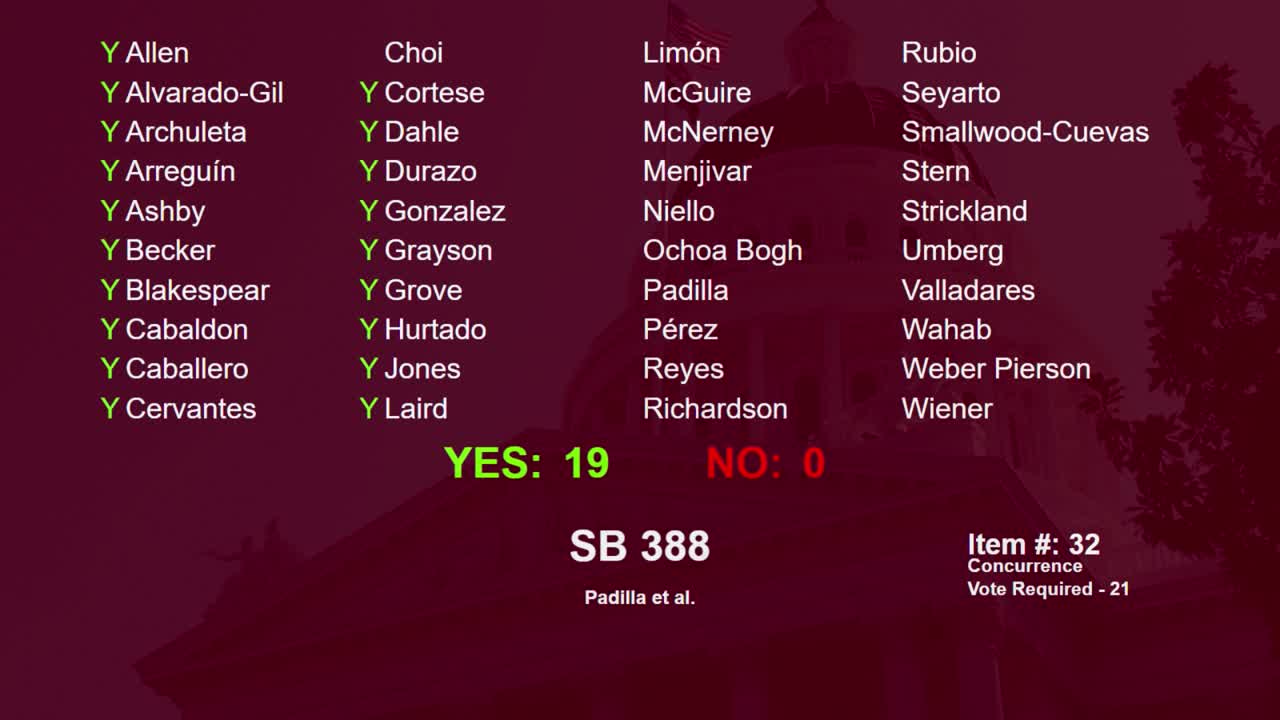
Bill Author

Bill Co-Author(s):