AB 708: California Youth Football Act: safety equipment.
- Session Year: 2025-2026
- House: Assembly
- Latest Version Date: 2026-09-28
Current Status:
Passed
(2026-09-28: Chaptered by Secretary of State - Chapter 732, Statutes of 2026.)
Introduced
In Committee
Awaiting First Chamber Vote
Passed First Chamber
In Committee
Awaiting Second Chamber Vote
Passed Second Chamber
Enacted
Existing law, the California Youth Football Act, requires a youth sports organization that conducts a tackle football program to comply with certain requirements, including, among other things, not conducting more than 2 full-contact practices per week during the preseason and regular season, not holding a full-contact practice during the off-season, and having each football helmet reconditioned and recertified every other year, as specified.
This bill would require a youth tackle football league, youth sports organization that conducts a tackle football program, or coach of a youth sports organization to allow youth tackle football participants to use safety equipment, including soft-shell add-ons on football helmets. The bill would authorize a court to grant injunctive relief to remedy a violation or threatened violation of this requirement, and would entitle a prevailing plaintiff who obtains injunctive relief to reasonable attorneys fees and costs.
This bill would prohibit the warranty or safety certification of a football helmet put into play on or after January 1, 2027, with a soft-shell add-on from being voided because of the use of the soft-shell add-on with the football helmet unless certain conditions are met.
The bill would state the intent of the Legislature to ensure that youth football organizations continue to have access to commercially available football helmets, including reconditioned football helmets, and that the attachment of a soft-shell helmet add-on does not, by itself, result in the loss of an otherwise applicable manufacturer warranty or certification designation.
Existing law, the California Youth Football Act, requires a youth sports organization that conducts a tackle football program to comply with certain requirements, including, among other things, not conducting more than 2 full-contact practices per week during the preseason and regular season, not holding a full-contact practice during the off-season, and having each football helmet reconditioned and recertified every other year, as specified.
This bill would require a youth tackle football league, youth sports organization that conducts a tackle football program, or coach of a youth sports organization to allow youth tackle football participants to use safety equipment, including soft-shelled soft-shell add-ons on football helmets. The bill would authorize a court to grant injunctive relief to remedy a violation or threatened violation of this requirement, and would entitle a prevailing plaintiff who obtains injunctive relief to reasonable attorneys fees and costs.
This bill would prohibit the warranty or safety certification of a football helmet put into play on or after January 1, 2027, with a soft-shell add-on from being voided because of the use of the soft-shell add-on with the football helmet unless certain conditions are met.
The bill would state the intent of the Legislature to ensure that youth football organizations continue to have access to commercially available football helmets, including reconditioned football helmets, and that the attachment of a soft-shell helmet add-on does not, by itself, result in the loss of an otherwise applicable manufacturer warranty or certification designation.
Existing law, the California Youth Football Act, requires a youth sports organization that conducts a tackle football program to comply with certain requirements, including, among other things, not conducting more than 2 full-contact practices per week during the preseason and regular season, not holding a full-contact practice during the off-season, and having each football helmet reconditioned and recertified every other year, as specified.
This bill would require a youth tackle football league, youth sports organization that conducts a tackle football program, or coach of a youth sports organization to allow youth tackle football participants to use safety equipment, including soft-shelled add-ons on football helmets. The bill would authorize a court, in addition to other remedies, court to grant injunctive relief to remedy a violation or threatened violation of this requirement. requirement, and would entitle a prevailing plaintiff who obtains injunctive relief to reasonable attorneys fees and costs.
Existing law, the California Youth Football Act, requires a youth sports organization that conducts a tackle football program to comply with certain requirements, including, among other things, not conducting more than 2 full-contact practices per week during the preseason and regular season, not holding a full-contact practice during the off-season, and having each football helmet reconditioned and recertified every other year, as specified.
This bill would require a youth tackle football league, youth sports organization that conducts a tackle football program, or coach of a youth sports organization to allow youth tackle football participants to use safety equipment, including soft-shelled add-ons on football helmets. The bill would authorize a court, in addition to other remedies, to grant injunctive relief to remedy a violation or threatened violation of this requirement.
It is the intent of the Legislature to ensure that youth football organizations continue to have access to commercially available football helmets, including reconditioned football helmets, and that the attachment of a soft-shell helmet add-on does not, by itself, result in the loss of an otherwise applicable manufacturer warranty or certification designation.
SEC. 2.Section 124241.2 is added to the Health and Safety Code, to read:124241.2.(a)(1)A youth tackle football league, youth sports organization that conducts a tackle football program, or coach of a youth sports organization shall allow youth tackle football participants to use safety equipment, including soft-shell add-ons on football helmets.
(2)A court may grant a temporary restraining order, preliminary injunction, or permanent injunction to remedy a violation or threatened violation of this subdivision.
(3)A prevailing plaintiff who obtains any remedy specified in paragraph (2) shall be entitled to an award of reasonable attorneys fees and costs.
(b)A warranty or safety certification of a football helmet put into play on or after January 1, 2027, with a soft-shell add-on shall not be voided because of the use of the soft-shell add-on unless both of the following conditions are met:
(1)The soft-shell add-on substantially damages the football helmet.
(2)The football helmet had a current manufacturer certification at the time immediately preceding the substantial damage to the football helmet.
It is the intent of the Legislature to ensure that youth football organizations continue to have access to commercially available football helmets, including reconditioned football helmets, and that the attachment of a soft-shell helmet add-on does not, by itself, result in the loss of an otherwise applicable manufacturer warranty or certification designation.
SECTION 1.SEC. 2.Section 124241.2 is added to the Health and Safety Code, to read:124241.2.(a)(1)A youth tackle football league, youth sports organization that conducts a tackle football program, or coach of a youth sports organization shall allow youth tackle football participants to use safety equipment, including soft-shelled soft-shell add-ons on football helmets.
(b)(2)A court may grant a temporary restraining order, preliminary injunction, or permanent injunction to remedy a violation or threatened violation of this section. subdivision.
(c)(3)A prevailing plaintiff who obtains any remedy specified in subdivision (b) paragraph (2) shall be entitled to an award of reasonable attorneys fees and costs.
(b)A warranty or safety certification of a football helmet put into play on or after January 1, 2027, with a soft-shell add-on shall not be voided because of the use of the soft-shell add-on unless both of the following conditions are met:
(1)The soft-shell add-on substantially damages the football helmet.
(2)The football helmet had a current manufacturer certification at the time immediately preceding the substantial damage to the football helmet.
(a)A youth tackle football league, youth sports organization that conducts a tackle football program, or coach of a youth sports organization shall allow youth tackle football participants to use safety equipment, including soft-shelled add-ons on football helmets.
(b)In addition to other remedies, a A court may grant a temporary restraining order, preliminary injunction, or permanent injunction to remedy a violation or threatened violation of this section.
(c)A prevailing plaintiff who obtains any remedy specified in subdivision (b) shall be entitled to an award of reasonable attorneys fees and costs.
(a)A youth tackle football league, youth sports organization that conducts a tackle football program, or coach of a youth sports organization shall allow youth tackle football participants to use safety equipment, including soft-shelled add-ons on football helmets.
(b)In addition to other remedies, a court may grant a temporary restraining order, preliminary injunction, or permanent injunction to remedy a violation or threatened violation of this section.
REVISIONS: HeadingLine 2.|
Date
|
Status
|
|---|---|
| Sep 28, 2026 | Chaptered by Secretary of State - Chapter 732, Statutes of 2026. |
| Sep 28, 2026 | Approved by the Governor. |
| Sep 3, 2026 | Enrolled and presented to the Governor at 4 p.m. |
| Aug 26, 2026 | Senate amendments concurred in. To Engrossing and Enrolling. (Ayes 79. Noes 0.). |
| Aug 26, 2026 | Senate amendments concurred in. To Engrossing and Enrolling. (Ayes 79. Noes 0. Page 6558.). |
| Aug 24, 2026 | In Assembly. Concurrence in Senate amendments pending. |
| Aug 24, 2026 | Read third time. Passed. Ordered to the Assembly. (Ayes 39. Noes 0.). |
| Aug 24, 2026 | Read third time. Passed. Ordered to the Assembly. (Ayes 39. Noes 0. Page 5705.). |
| Aug 17, 2026 | Read second time. Ordered to third reading. |
| Aug 13, 2026 | Read second time and amended. Ordered returned to second reading. |
| Aug 13, 2026 | From committee: Amend, and do pass as amended. (Ayes 7. Noes 0.) (August 13). |
| Jun 15, 2026 | In committee: Referred to APPR. suspense file. |
| Jun 15, 2026 | In committee: Referred to suspense file. |
| Jul 3, 2025 | In committee: Set, first hearing. Hearing canceled at the request of author. |
| Jun 25, 2025 | From committee: Do pass and re-refer to Com. on APPR. with recommendation: To Consent Calendar. (Ayes 12. Noes 0.) (June 24). Re-referred to Com. on APPR. |
| Jun 12, 2025 | From committee: Do pass and re-refer to Com. on JUD. with recommendation: To Consent Calendar. (Ayes 9. Noes 0.) (June 11). Re-referred to Com. on JUD. |
| May 7, 2025 | Referred to Coms. on HEALTH, JUD. and APPR. |
| Apr 3, 2025 | In Senate. Read first time. To Com. on RLS. for assignment. |
| Apr 3, 2025 | Read third time. Passed. Ordered to the Senate. (Ayes 74. Noes 0. Page 1004.) |
| Mar 28, 2025 | Read second time. Ordered to Consent Calendar. |
| Mar 27, 2025 | Read second time and amended. Ordered returned to second reading. |
| Mar 26, 2025 | From committee: Amend, and do pass as amended. To Consent Calendar. (Ayes 12. Noes 0.) (March 25). |
| Mar 18, 2025 | From committee: Do pass and re-refer to Com. on JUD. (Ayes 9. Noes 0.) (March 18). Re-referred to Com. on JUD. |
| Mar 18, 2025 | Coauthors revised. |
| Mar 3, 2025 | Referred to Coms. on A.,E.,S., & T. and JUD. |
| Feb 15, 2025 | From printer. May be heard in committee March 17. |
| Feb 14, 2025 | Read first time. To print. |
|
Date
|
Description
|
Location
|
Votes
|
|
|---|---|---|---|---|
| Aug 26, 2026 | AB 708 Valencia Concurrence in Senate Amendments | Assembly Floor |
Passed |
|
| Aug 24, 2026 | Assembly 3rd Reading AB708 Valencia et al. By Weber Pierson | Senate Floor |
Passed |
|
| Aug 13, 2026 | Do pass as amended | Senate Standing Committee on Appropriations |
Passed |
|
| Jun 15, 2026 | Placed on suspense file | Senate Standing Committee on Appropriations |
Passed |
|
| Jun 24, 2025 | Do pass, but first be re-referred to the Committee on [Appropriations] with the recommendation: To Consent Calendar | Senate Standing Committee on Judiciary |
Passed |
|
| Jun 11, 2025 | Do pass, but first be re-referred to the Committee on [Judiciary] with the recommendation: To Consent Calendar | Senate Standing Committee on Health |
Passed |
|
| Apr 3, 2025 | AB 708 Valencia Consent Calendar Second Day Regular Session | Assembly Floor |
Passed |
|
| Mar 25, 2025 | Do pass as amended. To Consent Calendar. | Assembly Standing Committee on Judiciary |
Passed |
|
| Mar 18, 2025 | Do pass and be re-referred to the Committee on [Judiciary] | Assembly Standing Committee on Arts, Entertainment, Sports, and Tourism |
Passed |
This list shows positions taken on this bill by organizations on the date displayed, which is linked to the original source.
Positions by individuals are not included.
|
Organization
|
Position
|
Date
|
|---|---|---|
| California Academy Of Family Physicians | ** Support | |
| California Association for Health, Physical Education, Recreation and Dance | ** Support | |
| California Medical Association | ** Support | |
| California Neurological Society | ** Support | |
| California Neurology Society | ** Support | |
| California Orthopaedic Association | ** Support | |
| California Youth Football Alliance | ** Support | |
| Concussion Legacy Foundation | ** Support | |
| Fullerton Pop Warner | ** Support | |
| Fullerton Pop Warner Football and Cheer | ** Support | |
| National Cheer Safety Foundation | ** Support | |
| Riddell | ** Against |
CONCURRENCE IN SENATE AMENDMENTS
CSA1 Bill Id:AB 708
Author:(Valencia)
As Amended Ver:August 13, 2026
Majority vote
SUMMARY
This bill requires youth tackle football leagues and coaches to allow youth tackle football participants to use safety equipment, including soft-shelled add-ons to football helmets. It permits a court to grant a restraining order or injunction to remedy a violation of this bill, and entitles plaintiffs to reasonable attorney's fees. The bill prohibits a warranty or safety certification of a football helmet put into play on or after January 1, 2027, with a soft-shell add-on, from being voided because of the use of the soft-shell add-on.
Senate Amendments
Senate amendments added that the use of a soft-shell add-on will not cause the warranty or safety certification of a football helmet to be voided, unless the soft-shell add-on substantially damages the helmet and the helmet had a current manufacturer certification immediately preceding that damage.
COMMENTS
Background. To address the growing concern associated with concussions in football, a company called Guardian Cap created a padded, soft-shelled outer layer that goes on the outside of the traditional hard helmets to add protection and reduce the severity of impacts. While the product was initially developed in 2010, it wasn't until 2020 that the National Football League (NFL) moved forward with on-the-field experimentation with the cap in practices. In March 2022, the NFL passed a mandate and began requiring offensive and defensive linemen, tight ends, and linebackers to wear Guardian Caps during every preseason practice between the start of training camp and the second preseason game. In 2024, the NFL expanded this mandate to include all positions, with the option for quarterback, kicker, and punter, and also began allowing the use of Guardian Caps for regular season in-game use. According to the Guardian Cap company, in the 2024 season, 19 NFL players from different teams wore Guardian Caps during games. Over the years, a number of different companies have developed soft-shell helmet covers, including the SAFR Football Helmet Cover, and GameBreaker.
Studies on the effectiveness of soft-shelled helmet covers are mixed. Prior to the mandate the NFL players used Guardian Caps during football practices, the NFL studied the product in laboratory tests, and found, on average, a 9% reduction in force impact compared to a helmet with the cover. According to an ESPN article from September 2021, the Guardian Cap company claims the reduction is up to 33% for high school players who are not as big and fast as NFL players. In a CNN article from September 25, 2024, the NFL saw about a 50% decrease in concussions in the positions that were mandated to use the Guardian Caps during practices, which is why the NFL extended the requirement to all positions during practices. However, the NFL did not release the data behind its claims, and some studies have not found a major impact. A University of Wisconsin study published in the British Journal of Sports Medicine in January of 2025, collected data on 2,610 athletes from 41 high schools across Wisconsin. In the study, there were 1,188 players who did not wear Guardian Caps and 1,451 players who wore them. While the caps were only worn during practice and not during games, there was no association with a reduction in concussions by players who wore the caps. Over the course of the study, there were 64 concussions that occurred during practice, and 33 of those were players who wore the Guardian Cap. On the other hand, Virginia Tech published a study in October of 2024 in Annals of Biomedical Engineering, where two different models of Guardian Caps, as well as the SAFR Helmet Cover, were put through repeated collision tests, According to these tests, the soft shell covers led to average reductions in linear accelerations between 3% and 8%, and rotational accelerations by 5% to 14% (in both cases, the best performing cover was the NFL version of the Guardian Cap, known as the Guardian NXT). According to the study, these reductions in linear and rotational accelerations would result in average decreases in concussion risk of between 15% and 34%.
Research on CTE and youth football. CTE is a neurodegenerative disease associated with exposure to contact and collision sports (CCS), including football, boxing, soccer, rugby, and ice hockey. Like most neurodegenerative diseases, CTE only can be definitively diagnosed by postmortem neuropathological examination, thus it is difficult to do definitive studies on the relationship between head injuries and sports given limited sample sizes. In short, researchers must be able to examine the brain of a deceased athlete and know the sports history or injury history of that individual. Also, because only brains of the deceased can be adequately analyzed, it is hard to determine the impact of recent changes to make the sport safer. Of the studies that do exist, there is cause for concern. One study published in the Annals of Neurology in October 2019 found that there was a strong dose-response relationship for the number of years of football played with CTE neuropathology, doubling odds of disease every 2.6 years and doubling odds of severe disease among those with CTE every 5.3 years. Another study published in the Annals of Neurology in April 2018, found that while a younger age of exposure to tackle football was not associated with CTE pathological severity, it did predict earlier neurobehavioral symptom onset. According to a study published in December 2018 in the Journal of Pediatrics, researchers from the University of Washington Medicine's Sports Health and Safety Institute and Seattle Children's Research Institute found concussion rates among football players ages five to 14 were higher than previously reported, with 5% sustaining a football-related concussion each season.
However, a narrative review of studies published in September 2021 in Frontiers in Neurology, found that although the literature on whether younger age of first exposure to tackle football is associated with later in life cognitive, neurobehavioral, or mental health problems in former NFL players is mixed, the largest study of retired NFL players suggested there was not a significant association between earlier age of first exposure to organized tackle football and worse subjectively experienced cognitive functioning, depression, or anxiety. Furthermore, no published studies of current athletes show a significant association between playing tackle football (or other CCS) before the age of 12 and cognitive, neurobehavioral, or mental health problems. All studies were judged to be at high overall risk of bias, indicating that more methodologically rigorous research is needed to understand whether there is an association between age of first exposure to CCS and later in life brain health. The accumulated research to date suggests that earlier age of first exposure to CCS is not associated with worse cognitive functioning or mental health in current high school athletes, current collegiate athletes, or middle-aged men who played high school football. The literature on former NFL players is mixed and does not, at present, clearly support the theory that exposure to tackle football before age 12 is associated with later in life cognitive impairment or mental health problems.
AAP statement on tackling in youth football. In November of 2015, the American Academy of Pediatrics (AAP) published a policy statement, Tackling in Youth Football. According to the AAP, there are approximately 250,000 youth football players age five to 15 years in Pop Warner leagues alone, and that the injuries sustained during football, especially to the head and neck, have been a topic of intense interest. More recently, AAP states that the cumulative effects of concussions and the potential for a cumulative effect of subconcussive blows to the head have been hypothesized as a causative risk factor for CTE. The recognition of these injuries and the potential for long term consequences have led some physicians to call for a reduction in the number of contact practices, a postponement of tackling until a certain age, and even a ban on high school football. AAP states that available data suggest that both the overall incidence and the severity of injuries sustained by younger football players are lower than those sustained by older players, though this finding is not universally consistent. Tackling is the most common player activity at the time of injury, and at the time of severe injury. AAP points out that delaying the age at which tackling is introduced to the game would likely decrease the risk of injuries for the age levels at which tackling would be prohibited. Once tackling is introduced, however, AAP states that athletes who have no previous experience with tackling would be exposed to collisions for the first time at an age at which speeds are faster, collision forces are greater, and injury risk is higher. AAP states that removing tackling from football altogether would likely lead to a decrease in the incidence of overall injuries, but it recognizes removing tackling from football would also lead to a fundamental change in the way the game is played.
A more recent study published by AAP in November 2019, found that while football had the highest overall incidence of concussions of the sports reviewed, nine other sports had a higher incidence of recurrent concussions, including baseball, wrestling, cheerleading, lacrosse, basketball, and soccer. The study noted that rates of football practice-related concussions and recurrent concussions across all sports have decreased.
According to the Author
"This bill safeguards parents' rights to decide on soft-shell helmet add-ons for their children in youth football leagues, allowing them to make informed decisions about player safety. Many parents consider soft-shell helmet add-ons essential for their child's safety, yet some youth football leagues impose restrictions that prevent their use. Young athletes are particularly vulnerable to cognitive impairments from repeated head impacts, making it critical to provide protective options. These add-ons have been shown to reduce concussion risk and are already utilized by the National Football League (NFL). At a critical stage of brain development, it is essential to protect young athletes' long-term well-being while upholding the integrity of the sport. This bill ensures that families have the freedom to equip their children with additional safety measures, aligning youth football protections with those used at the professional level in the NFL."
Arguments in Support
The California Youth Football Alliance states in support that it is essential to empower parents to make informed decisions about their child's protective equipment, and this bill provides families with the freedom to enhance safety measures without unnecessary restrictions that could limit advancements in protective gear. The California Orthopaedic Association states that Guardian Caps are a soft shell helmet designed to reduce impact, and may help reduce concussion risk to players. Given the risk to youth playing football, measures to improve safety deserve support. Fullerton Pop Warner states in support that this bill upholds parental choice and ensures that children in California can continue to participate in one of the state's most popular sports with the best available safety measures. The Concussion Legacy Foundation states that it does not believe that children should play tackle football before the age of 12 due to the risk of developing chronic traumatic encephalopathy, and notes that there is limited evidence that soft-shelled helmets have reduced the number of diagnosed concussions. However, if the state is going to allow children to play, the Concussion Legacy Foundation agrees that they should have the option to wear soft-shelled helmets.
Arguments in Opposition
Riddell, which states it is the leading manufacturer of football helmets and protective equipment, is opposed to this bill unless it is amended. Riddell states that it is concerned that this bill unintentionally promotes equipment solutions that are not supported by consistent scientific evidence and that are in direct conflict with established safety standards governing football protective equipment. According to Riddell, football helmets used in organized play in the United States must be certified to performance standards set by the National Operating Committee on Standards for Athletic Equipment (NOCSAE), and that certification is granted to a complete helmet system exactly as manufactured and tested, and not to individual components in isolation. Riddell states that soft shell caps added onto certified helmets create a "new uncertified model." Riddell cites a public statement from NOCSAE that included the following: "The addition of an item(s) to a helmet previously certified without those item(s) creates a new uncertified model. Whether the add-on product changes the performance or not, the helmet model with the add-on is no longer 'identical in every aspect' to the one originally certified." Riddell points out that the NOCSAE statement provided guidance for manufacturers of add-on products to achieve certification, and when that is done, the certification and responsibility for the helmet/third-party product combination would become theirs, not the helmet manufacturer. Riddell states that NOCSAE finalized a new youth football helmet standard in 2025, and that for small sizes, the helmet, including all accessories, attachments, and facemask, cannot exceed 3.5 lbs. A youth soft shell cap can weigh 7 ounces, and some helmets combined with a soft shell cap may not meet the new weight requirement. Riddell states that because decertification would be prohibited under this bill, parents would not know whether the helmet combination is in compliance with the new standard. Riddell states that this bill makes liability issues unclear, and that unless it is amended to ensure these soft-shell add-ons also pursue certification with helmet combinations, they must oppose this bill.
FISCAL COMMENTS
According to the Senate Committee on Appropriations the fiscal impact of this bill is unknown, with potential workload costs to the courts related to plaintffs seeking remedies under the bill (Trial Court Trust Fund, General Fund). While the courts are not funded on a workload basis, an increase in workload could result in delayed court services and would put pressure on the General Fund to increase the amount appropriated for trial court operations.
VOTES:
ASM ARTS, ENTERTAINMENT, SPORTS, AND TOURISM: 9-0-0
YES: Ward, Lackey, Elhawary, Jeff Gonzalez, McKinnor, Ortega, Quirk-Silva, Valencia, Zbur
ASM JUDICIARY: 12-0-0
YES: Kalra, Dixon, Bauer-Kahan, Bryan, Connolly, Essayli, Harabedian, Pacheco, Papan, Sanchez, Stefani, Zbur
ASSEMBLY FLOOR: 74-0-5
YES: Aguiar-Curry, Ahrens, Alanis, Alvarez, Arambula, Ávila Farías, Bains, Bauer-Kahan, Berman, Boerner, Bonta, Bryan, Calderon, Caloza, Castillo, Chen, Connolly, Davies, DeMaio, Dixon, Elhawary, Ellis, Flora, Fong, Gabriel, Gallagher, Garcia, Gipson, Jeff Gonzalez, Mark González, Hadwick, Haney, Harabedian, Hart, Hoover, Irwin, Jackson, Kalra, Krell, Lackey, Lee, Lowenthal, Macedo, McKinnor, Muratsuchi, Nguyen, Ortega, Pacheco, Papan, Patel, Patterson, Pellerin, Petrie-Norris, Quirk-Silva, Ramos, Ransom, Celeste Rodriguez, Michelle Rodriguez, Rogers, Blanca Rubio, Sanchez, Schiavo, Schultz, Sharp-Collins, Solache, Soria, Stefani, Ta, Tangipa, Valencia, Wallis, Ward, Zbur, Rivas
ABS, ABST OR NV: Addis, Bennett, Carrillo, Wicks, Wilson
SENATE FLOOR: 39-0-1
YES: Allen, Alvarado-Gil, Archuleta, Arreguín, Ashby, Becker, Blakespear, Cabaldon, Caballero, Cervantes, Choi, Cortese, Dahle, Durazo, Gonzalez, Grayson, Grove, Hurtado, Jones, Laird, Limón, McGuire, McNerney, Menjivar, Niello, Ochoa Bogh, Padilla, Pérez, Reyes, Richardson, Rubio, Seyarto, Smallwood-Cuevas, Stern, Umberg, Valladares, Wahab, Weber Pierson, Wiener
ABS, ABST OR NV: Strickland
UPDATED
VERSION: August 13, 2026
CONSULTANT: Brian V. Anderson, Jr. / A.,E.,S., & T. / (916) 319-3450 FN: 0004056
CONCURRENCE IN SENATE AMENDMENTS
CSA1 Bill Id:AB 708
Author:(Valencia)
As Amended Ver:August 13, 2026
Majority vote
SUMMARY
This bill requires youth tackle football leagues and coaches to allow youth tackle football participants to use safety equipment, including soft-shelled add-ons to football helmets. It permits a court to grant a restraining order or injunction to remedy a violation of this bill, and entitles plaintiffs to reasonable attorney's fees. The bill prohibits a warranty or safety certification of a football helmet put into play on or after January 1, 2027, with a soft-shell add-on, from being voided because of the use of the soft-shell add-on.
Senate Amendments
Senate amendments added that the use of a soft-shell add-on will not cause the warranty or safety certification of a football helmet to be voided, unless the soft-shell add-on substantially damages the helmet and the helmet had a current manufacturer certification immediately preceding that damage.
COMMENTS
Background. To address the growing concern associated with concussions in football, a company called Guardian Cap created a padded, soft-shelled outer layer that goes on the outside of the traditional hard helmets to add protection and reduce the severity of impacts. While the product was initially developed in 2010, it wasn't until 2020 that the National Football League (NFL) moved forward with on-the-field experimentation with the cap in practices. In March 2022, the NFL passed a mandate and began requiring offensive and defensive linemen, tight ends, and linebackers to wear Guardian Caps during every preseason practice between the start of training camp and the second preseason game. In 2024, the NFL expanded this mandate to include all positions, with the option for quarterback, kicker, and punter, and also began allowing the use of Guardian Caps for regular season in-game use. According to the Guardian Cap company, in the 2024 season, 19 NFL players from different teams wore Guardian Caps during games. Over the years, a number of different companies have developed soft-shell helmet covers, including the SAFR Football Helmet Cover, and GameBreaker.
Studies on the effectiveness of soft-shelled helmet covers are mixed. Prior to the mandate the NFL players used Guardian Caps during football practices, the NFL studied the product in laboratory tests, and found, on average, a 9% reduction in force impact compared to a helmet with the cover. According to an ESPN article from September 2021, the Guardian Cap company claims the reduction is up to 33% for high school players who are not as big and fast as NFL players. In a CNN article from September 25, 2024, the NFL saw about a 50% decrease in concussions in the positions that were mandated to use the Guardian Caps during practices, which is why the NFL extended the requirement to all positions during practices. However, the NFL did not release the data behind its claims, and some studies have not found a major impact. A University of Wisconsin study published in the British Journal of Sports Medicine in January of 2025, collected data on 2,610 athletes from 41 high schools across Wisconsin. In the study, there were 1,188 players who did not wear Guardian Caps and 1,451 players who wore them. While the caps were only worn during practice and not during games, there was no association with a reduction in concussions by players who wore the caps. Over the course of the study, there were 64 concussions that occurred during practice, and 33 of those were players who wore the Guardian Cap. On the other hand, Virginia Tech published a study in October of 2024 in Annals of Biomedical Engineering, where two different models of Guardian Caps, as well as the SAFR Helmet Cover, were put through repeated collision tests, According to these tests, the soft shell covers led to average reductions in linear accelerations between 3% and 8%, and rotational accelerations by 5% to 14% (in both cases, the best performing cover was the NFL version of the Guardian Cap, known as the Guardian NXT). According to the study, these reductions in linear and rotational accelerations would result in average decreases in concussion risk of between 15% and 34%.
Research on CTE and youth football. CTE is a neurodegenerative disease associated with exposure to contact and collision sports (CCS), including football, boxing, soccer, rugby, and ice hockey. Like most neurodegenerative diseases, CTE only can be definitively diagnosed by postmortem neuropathological examination, thus it is difficult to do definitive studies on the relationship between head injuries and sports given limited sample sizes. In short, researchers must be able to examine the brain of a deceased athlete and know the sports history or injury history of that individual. Also, because only brains of the deceased can be adequately analyzed, it is hard to determine the impact of recent changes to make the sport safer. Of the studies that do exist, there is cause for concern. One study published in the Annals of Neurology in October 2019 found that there was a strong dose-response relationship for the number of years of football played with CTE neuropathology, doubling odds of disease every 2.6 years and doubling odds of severe disease among those with CTE every 5.3 years. Another study published in the Annals of Neurology in April 2018, found that while a younger age of exposure to tackle football was not associated with CTE pathological severity, it did predict earlier neurobehavioral symptom onset. According to a study published in December 2018 in the Journal of Pediatrics, researchers from the University of Washington Medicine's Sports Health and Safety Institute and Seattle Children's Research Institute found concussion rates among football players ages five to 14 were higher than previously reported, with 5% sustaining a football-related concussion each season.
However, a narrative review of studies published in September 2021 in Frontiers in Neurology, found that although the literature on whether younger age of first exposure to tackle football is associated with later in life cognitive, neurobehavioral, or mental health problems in former NFL players is mixed, the largest study of retired NFL players suggested there was not a significant association between earlier age of first exposure to organized tackle football and worse subjectively experienced cognitive functioning, depression, or anxiety. Furthermore, no published studies of current athletes show a significant association between playing tackle football (or other CCS) before the age of 12 and cognitive, neurobehavioral, or mental health problems. All studies were judged to be at high overall risk of bias, indicating that more methodologically rigorous research is needed to understand whether there is an association between age of first exposure to CCS and later in life brain health. The accumulated research to date suggests that earlier age of first exposure to CCS is not associated with worse cognitive functioning or mental health in current high school athletes, current collegiate athletes, or middle-aged men who played high school football. The literature on former NFL players is mixed and does not, at present, clearly support the theory that exposure to tackle football before age 12 is associated with later in life cognitive impairment or mental health problems.
AAP statement on tackling in youth football. In November of 2015, the American Academy of Pediatrics (AAP) published a policy statement, Tackling in Youth Football. According to the AAP, there are approximately 250,000 youth football players age five to 15 years in Pop Warner leagues alone, and that the injuries sustained during football, especially to the head and neck, have been a topic of intense interest. More recently, AAP states that the cumulative effects of concussions and the potential for a cumulative effect of subconcussive blows to the head have been hypothesized as a causative risk factor for CTE. The recognition of these injuries and the potential for long term consequences have led some physicians to call for a reduction in the number of contact practices, a postponement of tackling until a certain age, and even a ban on high school football. AAP states that available data suggest that both the overall incidence and the severity of injuries sustained by younger football players are lower than those sustained by older players, though this finding is not universally consistent. Tackling is the most common player activity at the time of injury, and at the time of severe injury. AAP points out that delaying the age at which tackling is introduced to the game would likely decrease the risk of injuries for the age levels at which tackling would be prohibited. Once tackling is introduced, however, AAP states that athletes who have no previous experience with tackling would be exposed to collisions for the first time at an age at which speeds are faster, collision forces are greater, and injury risk is higher. AAP states that removing tackling from football altogether would likely lead to a decrease in the incidence of overall injuries, but it recognizes removing tackling from football would also lead to a fundamental change in the way the game is played.
A more recent study published by AAP in November 2019, found that while football had the highest overall incidence of concussions of the sports reviewed, nine other sports had a higher incidence of recurrent concussions, including baseball, wrestling, cheerleading, lacrosse, basketball, and soccer. The study noted that rates of football practice-related concussions and recurrent concussions across all sports have decreased.
According to the Author
"This bill safeguards parents' rights to decide on soft-shell helmet add-ons for their children in youth football leagues, allowing them to make informed decisions about player safety. Many parents consider soft-shell helmet add-ons essential for their child's safety, yet some youth football leagues impose restrictions that prevent their use. Young athletes are particularly vulnerable to cognitive impairments from repeated head impacts, making it critical to provide protective options. These add-ons have been shown to reduce concussion risk and are already utilized by the National Football League (NFL). At a critical stage of brain development, it is essential to protect young athletes' long-term well-being while upholding the integrity of the sport. This bill ensures that families have the freedom to equip their children with additional safety measures, aligning youth football protections with those used at the professional level in the NFL."
Arguments in Support
The California Youth Football Alliance states in support that it is essential to empower parents to make informed decisions about their child's protective equipment, and this bill provides families with the freedom to enhance safety measures without unnecessary restrictions that could limit advancements in protective gear. The California Orthopaedic Association states that Guardian Caps are a soft shell helmet designed to reduce impact, and may help reduce concussion risk to players. Given the risk to youth playing football, measures to improve safety deserve support. Fullerton Pop Warner states in support that this bill upholds parental choice and ensures that children in California can continue to participate in one of the state's most popular sports with the best available safety measures. The Concussion Legacy Foundation states that it does not believe that children should play tackle football before the age of 12 due to the risk of developing chronic traumatic encephalopathy, and notes that there is limited evidence that soft-shelled helmets have reduced the number of diagnosed concussions. However, if the state is going to allow children to play, the Concussion Legacy Foundation agrees that they should have the option to wear soft-shelled helmets.
Arguments in Opposition
Riddell, which states it is the leading manufacturer of football helmets and protective equipment, is opposed to this bill unless it is amended. Riddell states that it is concerned that this bill unintentionally promotes equipment solutions that are not supported by consistent scientific evidence and that are in direct conflict with established safety standards governing football protective equipment. According to Riddell, football helmets used in organized play in the United States must be certified to performance standards set by the National Operating Committee on Standards for Athletic Equipment (NOCSAE), and that certification is granted to a complete helmet system exactly as manufactured and tested, and not to individual components in isolation. Riddell states that soft shell caps added onto certified helmets create a "new uncertified model." Riddell cites a public statement from NOCSAE that included the following: "The addition of an item(s) to a helmet previously certified without those item(s) creates a new uncertified model. Whether the add-on product changes the performance or not, the helmet model with the add-on is no longer 'identical in every aspect' to the one originally certified." Riddell points out that the NOCSAE statement provided guidance for manufacturers of add-on products to achieve certification, and when that is done, the certification and responsibility for the helmet/third-party product combination would become theirs, not the helmet manufacturer. Riddell states that NOCSAE finalized a new youth football helmet standard in 2025, and that for small sizes, the helmet, including all accessories, attachments, and facemask, cannot exceed 3.5 lbs. A youth soft shell cap can weigh 7 ounces, and some helmets combined with a soft shell cap may not meet the new weight requirement. Riddell states that because decertification would be prohibited under this bill, parents would not know whether the helmet combination is in compliance with the new standard. Riddell states that this bill makes liability issues unclear, and that unless it is amended to ensure these soft-shell add-ons also pursue certification with helmet combinations, they must oppose this bill.
FISCAL COMMENTS
According to the Senate Committee on Appropriations the fiscal impact of this bill is unknown, with potential workload costs to the courts related to plaintffs seeking remedies under the bill (Trial Court Trust Fund, General Fund). While the courts are not funded on a workload basis, an increase in workload could result in delayed court services and would put pressure on the General Fund to increase the amount appropriated for trial court operations.
VOTES:
ASM ARTS, ENTERTAINMENT, SPORTS, AND TOURISM: 9-0-0
YES: Ward, Lackey, Elhawary, Jeff Gonzalez, McKinnor, Ortega, Quirk-Silva, Valencia, Zbur
ASM JUDICIARY: 12-0-0
YES: Kalra, Dixon, Bauer-Kahan, Bryan, Connolly, Essayli, Harabedian, Pacheco, Papan, Sanchez, Stefani, Zbur
ASSEMBLY FLOOR: 74-0-5
YES: Aguiar-Curry, Ahrens, Alanis, Alvarez, Arambula, Ávila Farías, Bains, Bauer-Kahan, Berman, Boerner, Bonta, Bryan, Calderon, Caloza, Castillo, Chen, Connolly, Davies, DeMaio, Dixon, Elhawary, Ellis, Flora, Fong, Gabriel, Gallagher, Garcia, Gipson, Jeff Gonzalez, Mark González, Hadwick, Haney, Harabedian, Hart, Hoover, Irwin, Jackson, Kalra, Krell, Lackey, Lee, Lowenthal, Macedo, McKinnor, Muratsuchi, Nguyen, Ortega, Pacheco, Papan, Patel, Patterson, Pellerin, Petrie-Norris, Quirk-Silva, Ramos, Ransom, Celeste Rodriguez, Michelle Rodriguez, Rogers, Blanca Rubio, Sanchez, Schiavo, Schultz, Sharp-Collins, Solache, Soria, Stefani, Ta, Tangipa, Valencia, Wallis, Ward, Zbur, Rivas
ABS, ABST OR NV: Addis, Bennett, Carrillo, Wicks, Wilson
UPDATED
VERSION: August 13, 2026
CONSULTANT: Brian V. Anderson, Jr. / A.,E.,S., & T. / (916) 319-3450 FN: 0004056
SENATE RULES COMMITTEE Office of Senate Floor Analyses (916) 651-1520 Fax: (916) 327-4478 | AB 708 |
THIRD READING
Bill No: AB 708
Author: Valencia (D), et al.
Amended: 8/13/26 in Senate
Vote: 21
SENATE HEALTH COMMITTEE: 9-0, 6/11/25
AYES: Menjivar, Valladares, Durazo, Grove, Limón, Padilla, Richardson, Rubio, Wiener
NO VOTE RECORDED: Gonzalez, Weber Pierson
SENATE JUDICIARY COMMITTEE: 12-0, 6/24/25
AYES: Umberg, Niello, Allen, Arreguín, Ashby, Caballero, Durazo, Laird, Stern, Wahab, Weber Pierson, Wiener
NO VOTE RECORDED: Valladares
SENATE APPROPRIATIONS COMMITTEE: 7-0, 8/13/26
AYES: Cervantes, Seyarto, Cabaldon, Dahle, Grayson, Richardson, Wahab
ASSEMBLY FLOOR: 74-0, 4/3/25 (Consent) - See last page for vote
SUBJECT: California Youth Football Act: safety equipment
SOURCE: Author
DIGEST:
This bill requires a youth tackle football league and coaches to allow youth tackle football participants to use safety equipment, including soft-shelled add-ons to football helmets. Permits a court to grant a restraining order or injunction to remedy a violation of this bill, and entitles plaintiffs to reasonable attorney’s fees. Prohibits a warranty or safety certification of a football helmet put into play on or after January 1, 2027, with a soft-shell add-on, from being voided because of the use of the soft-shell add-on.
ANALYSIS:
Existing law:
- Defines a “youth sports organization” as an organization, business, nonprofit entity, or a local governmental agency that sponsors or conducts amateur sports competitions, training, camps, or clubs in which persons 17 years of age or younger participate. [Health & Safety Code (HSC) §124235 (b)(4)]
- Requires a youth sports organization to comply with certain requirements related to athletes suspected of sustaining a concussion or head injury, or who has passed out or fainted, including removal from the athletic activity and a prohibition on returning until he or she is evaluated by a licensed health care provider. Requires youth sports organizations to give both a concussion and head injury information sheet, and a sudden cardiac arrest information sheet, to each athlete on an annual basis. [HSC §124235]
- Requires each coach, administrator, and referee, umpire, or other game official of the youth sports organization to successfully complete concussion and head injury and sudden cardiac arrest prevention education at least once, either online or in person, before supervising an athlete in an activity of the youth sports organization. [HSC §124235(a)(5)]
- Requires “sudden cardiac arrest prevention education and educational materials” and a “sudden cardiac arrest information sheet” to include, at a minimum, information relating to cardiac conditions and their potential consequences, the signs and symptoms of sudden cardiac arrest, best practices for removal of an athlete from an athletic activity after fainting or a suspected cardiac condition is observed, steps for returning an athlete to activity, and what to do in the event of a cardiac emergency, which includes calling 911, performing hands-only CPR, and using an automated external defibrillator (AED) if it is available. [HSC §124235(b)(3)]
- Establishes the California Youth Football Act, which establishes additional requirements on youth sports organizations that conduct a tackle football program, including requiring a minimum of one certified emergency medical technician, state-licensed paramedic, or higher-level medical professional to be present during all games, and requiring coaches to annually receive first aid, CPR, and AED certification. [HSC §124240, et seq. and §124241(h) and (i)]
- Requires, as part of the California Youth Football Act, that at least one independent nonrostered individual, appointed by the youth sports organization, to be present at all practice locations, and requires the individual to hold current certifications in first aid, CPR, AED, and concussion protocols. [HSC §124241(j)]
- Establishes the Navaeh Youth Sports Safety Act to require a youth sports organization that elects to offer an athletic program to ensure, by January 1, 2027, that its athletes have access to an AED during any official practice or match. [HSC §124238.5]
This bill:
- Requires a youth tackle football league, youth sports organization that conducts a tackle football program, or a coach of a youth sports organization to allow youth tackle football participants to use safety equipment, including soft-shell add-ons to football helmets.
- Permits a court to grant a restraining order, preliminary injunction, or permanent injunction to remedy a violation or threatened violation of this bill.
- Requires a prevailing plaintiff who obtains any remedy in 2) above, to be entitled to an award of reasonable attorney’s fees and costs.
- Prohibits a warranty or safety certification of a football helmet put into play on or after January 1, 2027, with a soft-shell add-on, from being voided because of the use of the soft-shell add-on unless both of the following conditions are met:
- The soft-shell add-on substantially damages the football helmet; and,
- The football helmet had a current manufacturer certification at the time immediately preceding the substantial damage to the football helmet.
- States the intent of the Legislature to ensure that youth football organizations continue to have access to commercially available football helmets, including reconditioned football helmets, and that the attachment of a soft-shell helmet add-on does not, by itself, result in the loss of an otherwise applicable manufacturer warranty or certification designation.
Comments
According to the author of this bill:
This bill safeguards parents’ rights to decide on soft-shell helmet add-ons for their children in youth football leagues, allowing them to make informed decisions about player safety. Many parents consider soft-shell helmet add-ons essential for their child’s safety, yet some youth football leagues impose restrictions that prevent their use. Young athletes are particularly vulnerable to cognitive impairments from repeated head impacts, making it critical to provide protective options. These add-ons have been shown to reduce concussion risk and are already utilized by the National Football League (NFL). At a critical stage of brain development, it is essential to protect young athletes’ long-term well-being while upholding the integrity of the sport. This bill ensures that families have the freedom to equip their children with additional safety measures, aligning youth football protections with those used at the professional level in the NFL.
Opposition. Riddell, which states it is the leading manufacturer of football helmets and protective equipment, is opposed to this bill unless it is amended. Riddell states that it is concerned that this bill unintentionally promotes equipment solutions that are not supported by consistent scientific evidence and that are in direct conflict with established safety standards governing football protective equipment. According to Riddell, football helmets used in organized play in the United States must be certified to performance standards set by the National Operating Committee on Standards for Athletic Equipment (NOCSAE), and that certification is granted to a complete helmet system exactly as manufactured and tested, and not to individual components in isolation. Riddell states that soft shell caps added onto certified helmets create a “new uncertified model.” Riddell cites a public statement from NOCSAE that included the following: “The addition of an item(s) to a helmet previously certified without those item(s) creates a new uncertified model. Whether the add-on product changes the performance or not, the helmet model with the add-on is no longer ‘identical in every aspect’ to the one originally certified.” Riddell points out that the NOCSAE statement provided guidance for manufacturers of add-on products to achieve certification, and when that is done, the certification and responsibility for the helmet/third-party product combination would become theirs, not the helmet manufacturer. Riddell states that NOCSAE finalized a new youth football helmet standard in 2025, and that for small sizes, the helmet, including all accessories, attachments, and facemask, cannot exceed 3.5 lbs. A youth soft shell cap can weigh 7 ounces, and some helmets combined with a soft shell cap may not meet the new weight requirement. Riddell states that because decertification would be prohibited under this bill, parents would not know whether the helmet combination is in compliance with the new standard. Riddell states that this bill makes liability issues unclear, and that unless it is amended to ensure these soft-shell add-ons also pursue certification with helmet combinations, they must oppose this bill.
Background
What are soft-shelled add-ons for football helmets? To address the growing concern associated with concussions in football, a company called Guardian Cap created a padded, soft-shelled outer layer that goes on the outside of the traditional hard helmets to add protection and reduce the severity of impacts. While the product was initially developed in 2010, it wasn’t until 2020 that the NFL moved forward with on-the-field experimentation with the cap in practices. In March 2022, the NFL passed a mandate and began requiring offensive and defensive linemen, tight ends, and linebackers to wear Guardian Caps during every preseason practice between the start of training camp and the second preseason game. In 2024, the NFL expanded this mandate to include all positions, with the option for quarterback, kicker, and punter, and also began allowing the use of Guardian Caps for regular season in-game use. According to the Guardian Cap company, in the 2024 season, 19 NFL players from different teams wore Guardian Caps during games. Over the years, a number of different companies have developed soft-shell helmet covers, including the SAFR Football Helmet Cover, and GameBreaker.
Studies on the effectiveness of soft-shelled helmet covers are mixed. Prior to the mandate the NFL players used Guardian Caps during football practices, the NFL studied the product in laboratory tests, and found, on average, a 9% reduction in force impact compared to a helmet with the cover. According to an ESPN article from September 2021, the Guardian Cap company claims the reduction is up to 33% for high school players who are not as big and fast as NFL players. In a CNN article from September 25, 2024, the NFL saw about a 50% decrease in concussions in the positions that were mandated to use the Guardian Caps during practices, which is why the NFL extended the requirement to all positions during practices. However, the NFL did not release the data behind its claims, and some studies have not found a major impact. A University of Wisconsin study published in the British Journal of Sports Medicine in January of 2025, collected data on 2,610 athletes from 41 high schools across Wisconsin. In the study, there were 1,188 players who did not wear Guardian Caps and 1,451 players who wore them. While the caps were only worn during practice and not during games, there was no association with a reduction in concussions by players who wore the caps. Over the course of the study, there were 64 concussions that occurred during practice, and 33 of those were players who wore the Guardian Cap. On the other hand, Virginia Tech published a study in October of 2024 in Annals of Biomedical Engineering, where two different models of Guardian Caps, as well as the SAFR Helmet Cover, were put through repeated collision tests, According to these tests, the soft shell covers led to average reductions in linear accelerations between 3% and 8%, and rotational accelerations by 5% to 14% (in both cases, the best performing cover was the NFL version of the Guardian Cap, known as the Guardian NXT). According to the study, these reductions in linear and rotational accelerations would result in average decreases in concussion risk of between 15% and 34%.
Research on CTE and youth football. CTE is a neurodegenerative disease associated with exposure to contact and collision sports (CCS), including football, boxing, soccer, rugby, and ice hockey. Like most neurodegenerative diseases, CTE only can be definitively diagnosed by postmortem neuropathological examination, thus it is difficult to do definitive studies on the relationship between head injuries and sports given limited sample sizes. In short, researchers must be able to examine the brain of a deceased athlete and know the sports history or injury history of that individual. Also, because only brains of the deceased can be adequately analyzed, it is hard to determine the impact of recent changes to make the sport safer. Of the studies that do exist, there is cause for concern. One study published in the Annals of Neurology in October 2019 found that there was a strong dose-response relationship for the number of years of football played with CTE neuropathology, doubling odds of disease every 2.6 years and doubling odds of severe disease among those with CTE every 5.3 years. Another study published in the Annals of Neurology in April 2018, found that while a younger age of exposure to tackle football was not associated with CTE pathological severity, it did predict earlier neurobehavioral symptom onset. According to a study published in December 2018 in the Journal of Pediatrics, researchers from the University of Washington Medicine’s Sports Health and Safety Institute and Seattle Children’s Research Institute found concussion rates among football players ages five to 14 were higher than previously reported, with 5% sustaining a football-related concussion each season.
However, a narrative review of studies published in September 2021 in Frontiers in Neurology, found that although the literature on whether younger age of first exposure to tackle football is associated with later in life cognitive, neurobehavioral, or mental health problems in former NFL players is mixed, the largest study of retired NFL players suggested there was not a significant association between earlier age of first exposure to organized tackle football and worse subjectively experienced cognitive functioning, depression, or anxiety. Furthermore, no published studies of current athletes show a significant association between playing tackle football (or other CCS) before the age of 12 and cognitive, neurobehavioral, or mental health problems. All studies were judged to be at high overall risk of bias, indicating that more methodologically rigorous research is needed to understand whether there is an association between age of first exposure to CCS and later in life brain health. The accumulated research to date suggests that earlier age of first exposure to CCS is not associated with worse cognitive functioning or mental health in current high school athletes, current collegiate athletes, or middle-aged men who played high school football. The literature on former NFL players is mixed and does not, at present, clearly support the theory that exposure to tackle football before age 12 is associated with later in life cognitive impairment or mental health problems.
AAP statement on tackling in youth football. In November of 2015, the American Academy of Pediatrics (AAP) published a policy statement, Tackling in Youth Football. According to the AAP, there are approximately 250,000 youth football players age five to 15 years in Pop Warner leagues alone, and that the injuries sustained during football, especially to the head and neck, have been a topic of intense interest. More recently, AAP states that the cumulative effects of concussions and the potential for a cumulative effect of subconcussive blows to the head have been hypothesized as a causative risk factor for CTE. The recognition of these injuries and the potential for long term consequences have led some physicians to call for a reduction in the number of contact practices, a postponement of tackling until a certain age, and even a ban on high school football. AAP states that available data suggest that both the overall incidence and the severity of injuries sustained by younger football players are lower than those sustained by older players, though this finding is not universally consistent. Tackling is the most common player activity at the time of injury, and at the time of severe injury. AAP points out that delaying the age at which tackling is introduced to the game would likely decrease the risk of injuries for the age levels at which tackling would be prohibited. Once tackling is introduced, however, AAP states that athletes who have no previous experience with tackling would be exposed to collisions for the first time at an age at which speeds are faster, collision forces are greater, and injury risk is higher. AAP states that removing tackling from football altogether would likely lead to a decrease in the incidence of overall injuries, but it recognizes removing tackling from football would also lead to a fundamental change in the way the game is played.
A more recent study published by AAP in November 2019, found that while football had the highest overall incidence of concussions of the sports reviewed, nine other sports had a higher incidence of recurrent concussions, including baseball, wrestling, cheerleading, lacrosse, basketball, and soccer. The study noted that rates of football practice-related concussions and recurrent concussions across all sports have decreased.
Related/Prior Legislation
AB 3047 (McCarty of 2024) would have required the California Surgeon General to convene a Commission on Chronic Traumatic Encephalopathy (CTE) and Youth Football to investigate issues related to the risks of brain injury associated with participation in youth football, and issue recommendations on the minimum age for tackle football and best practices for minimizing the risk of concussion and CTE. AB 3047 was held on the Senate Appropriations Committee suspense file.
AB 734 (McCarty of 2023), would have prohibited youth tackle football leagues, and youth sports organizations that conduct tackle football programs, from allowing the participation of any person younger than six years of age. AB 734 was not taken up on the Assembly Floor.
AB 1467 (Alanis, Chapter 24, Statutes of 2023) enacts the Navaeh Youth Sports Safety Act to require a youth sports organization that elects to offer an athletic program to ensure that by January 1, 2027, its athletes have access to an AED during any official practice or match.
AB 1348 (McCarty of 2022) was substantially similar to AB 3047 of 2024. AB 1348 was vetoed by Governor Newsom who stated in his veto message, referring to the relatively recent passage of AB 1 below, “The effectiveness of these recently implemented safety measures has not been sufficiently assessed. More research is needed to better understand current safety measures and the risks. Furthermore, this bill would require more than $2 million to implement, which was not accounted for in the budget.”
AB 1 (Cooper, Chapter 158, Statutes of 2019) enacts the California Youth Football Act, which establishes certain requirements on youth football, including limiting full-contact practices to 30 minutes per day, and no more than two days per week, and requires an EMT or higher-level medical professional to be present during all games, and one independent non-rostered individual to be present at all practice locations with the authority to evaluate and remove any youth tackle football participant from practice who exhibits an injury.
FISCAL EFFECT: Appropriation: No Fiscal Com.: No Local: No
According to the Senate Appropriations Committee, unknown, potential workload costs to the courts related to plaintiffs seeking remedies under the bill (Trial Court Trust Fund, General Fund). While the courts are not funded on a workload basis, an increase in workload could result in delayed court services and would put pressure on the General Fund to increase the amount appropriated for trial court operations.
SUPPORT: (Verified 8/17/26)
California Academy of Family Physicians
California Association for Health, Physical Education, Recreation and Dance
California Medical Association
California Neurology Society
California Orthopedic Association
California Youth Football Alliance
Concussion Legacy Foundation
Fullerton Pop Warner Football and Cheer
National Cheer Safety Foundation
OPPOSITION: (Verified 8/17/26)
Riddell
ARGUMENTS IN SUPPORT: The California Youth Football Alliance states in support that it is essential to empower parents to make informed decisions about their child’s protective equipment, and this bill provides families with the freedom to enhance safety measures without unnecessary restrictions that could limit advancements in protective gear. The California Orthopaedic Association states that Guardian Caps are a soft shell helmet designed to reduce impact, and may help reduce concussion risk to players. Given the risk to youth playing football, measures to improve safety deserve support. Fullerton Pop Warner states in support that this bill upholds parental choice and ensures that children in California can continue to participate in one of the state’s most popular sports with the best available safety measures. The Concussion Legacy Foundation states that it does not believe that children should play tackle football before the age of 12 due to the risk of developing chronic traumatic encephalopathy, and notes that there is limited evidence that soft-shelled helmets have reduced the number of diagnosed concussions. However, if the state is going to allow children to play, the Concussion Legacy Foundation agrees that they should have the option to wear soft-shelled helmets.
ASSEMBLY FLOOR: 74-0, 4/3/25
AYES: Aguiar-Curry, Ahrens, Alanis, Alvarez, Arambula, Ávila Farías, Bains, Bauer-Kahan, Berman, Boerner, Bonta, Bryan, Calderon, Caloza, Castillo, Chen, Connolly, Davies, DeMaio, Dixon, Elhawary, Ellis, Flora, Fong, Gabriel, Gallagher, Garcia, Gipson, Jeff Gonzalez, Mark González, Hadwick, Haney, Harabedian, Hart, Hoover, Irwin, Jackson, Kalra, Krell, Lackey, Lee, Lowenthal, Macedo, McKinnor, Muratsuchi, Nguyen, Ortega, Pacheco, Papan, Patel, Patterson, Pellerin, Petrie-Norris, Quirk-Silva, Ramos, Ransom, Celeste Rodriguez, Michelle Rodriguez, Rogers, Blanca Rubio, Sanchez, Schiavo, Schultz, Sharp-Collins, Solache, Soria, Stefani, Ta, Tangipa, Valencia, Wallis, Ward, Zbur, Rivas
NO VOTE RECORDED: Addis, Bennett, Carrillo, Wicks, Wilson
Prepared by: Vincent Marchand/ HEALTH/ (916) 651-4111
8/17/26 11:37:53
**** END ****
SENATE COMMITTEE ON
Senator Sabrina Cervantes, Chair
2025 - 2026 Regular Session
AB 708 (Valencia) - California Youth Football Act: safety equipment
Version: | Policy Vote: |
Urgency: | Mandate: |
Hearing Date: | Consultant: |
Bill Summary:
AB 708 would require a youth tackle football league, youth sports organization that conducts a tackle football program, or coach of a youth sports organization to allow youth tackle football participants to use safety equipment, as specified.
*********** ANALYSIS ADDENDUM – SUSPENSE FILE ***********
The following information is revised to reflect amendments
adopted by the committee on August 13, 2026
Fiscal Impact:
Unknown, potential workload costs to the courts related to plaintffs seeking remedies under the bill (Trial Court Trust Fund, General Fund). While the courts are not funded on a workload basis, an increase in workload could result in delayed court services and would put pressure on the General Fund to increase the amount appropriated for trial court operations.
Author Amendments:
Add legislative intent language and provide that a warranty or safety certification of a football helmet put into play on or after January 1, 2027, with a soft-shell add-on cannot be voided because of the use of the soft-shell add-on unless specified conditions are met.
-- END --
SENATE COMMITTEE ON
Senator Anna Caballero, Chair
2025 - 2026 Regular Session
AB 708 (Valencia) - California Youth Football Act: safety equipment
Version: | Policy Vote: |
Urgency: | Mandate: |
Hearing Date: June 15, 2026 | Consultant: |
Bill Summary:
AB 708 would require a youth tackle football league, youth sports organization that conducts a tackle football program, or coach of a youth sports organization to allow youth tackle football participants to use safety equipment, as specified.
Fiscal Impact:
Unknown, potential workload costs to the courts related to plaintffs seeking remedies under the bill (Trial Court Trust Fund, General Fund). While the courts are not funded on a workload basis, an increase in workload could result in delayed court services and would put pressure on the General Fund to increase the amount appropriated for trial court operations.
Background:
Under the California Youth Football Act, a youth sports organization that conducts a tackle football program must comply with all of the following requirements:
- A tackle football team cannot conduct more than two full-contact practices per week during the preseason and regular season.
- A tackle football team cannot hold a full-contact practice during the off-season.
- The full-contact portion of a practice cannot exceed 30 minutes in any single day.
- A coach must annually receive a tackling and blocking certification from a nationally recognized program that emphasizes shoulder tackling, safe contact and blocking drills, and techniques designed to minimize the risk during contact by removing the involvement of youth tackle football participant’s head from all tackling and blocking techniques.
- Each youth tackle football administrator, coach, and referee must annually complete specified education and training.
- Each parent or guardian of a youth tackle football participant must receive concussion and head injury information, as specified.
- Each football helmet must be reconditioned and recertified every other year, unless stated otherwise by the manufacturer.
- A minimum of one certified emergency medical technician, state-licensed paramedic, or higher-level licensed medical professional must be present during all preseason, regular season, and postseason games.
- A coach must annually receive first aid, cardiopulmonary resuscitation, and automated external defibrillator certification.
- At least one independent nonrostered individual, appointed by the youth sports organization, must be present at all practice locations. The individual must hold current and active certification in first aid, cardiopulmonary resuscitation, automated external defibrillator, and concussion protocols. The individual must have the authority to evaluate and remove any youth tackle football participant from practice who exhibits an injury, including, but not limited to, symptoms of a concussion or other head injury.
- Safety equipment must be inspected before every full-contact practice or game to ensure that all youth tackle football participants are properly equipped.
- Removal of a youth tackle football participant for injury must comply with specified protocols.
- Each youth tackle football participant must complete a minimum of 10 hours of noncontact practice at the beginning of each season for the purpose of conditioning, acclimating to safety equipment, and progressing to the introduction of full-contact practice. During this noncontact practice, the youth tackle football participants cannot wear any pads, and must only wear helmets if required to do so by the coaches.
- A youth sports organization must annually provide a declaration to its youth tackle football league stating that it is in compliance with these provisions.
Proposed Law:
Specific provisions of the bill would:
- Require a youth tackle football league, youth sports organization that conducts a tackle football program, or coach of a youth sports organization to allow youth tackle football participants to use safety equipment, including soft-shelled add-ons on football helmets.
- Provide that a court may grant a temporary restraining order, preliminary injunction, or permanent injunction to remedy a violation or threatened violation of this provision; and provide that a prevailing plaintiff who obtains a remedy must be entitled to an award of reasonable attorney’s fees and costs.
-- END --
Senator Thomas Umberg, Chair
2025-2026 Regular Session
Bill No: AB 708 (Author:Valencia)
Version: March 27, 2025
Hearing Date: June 24, 2025
Fiscal: No
Urgency: No
Consultant: AM
SUBJECT
California Youth Football Act: safety equipment
DIGEST
This bill requires a youth tackle football league, youth sports organization that conducts a tackle football program, or coach of a youth sports organization to allow youth tackle football participants to use safety equipment, including soft-shelled add-ons on football helmets. The bill authorizes a court to grant a temporary restraining order, preliminary injunction, or permanent injunction to remedy a violation or threatened violation, and provides that a prevailing plaintiff is entitled to an award of reasonable attorney’s fees and costs.
EXECUTIVE SUMMARY
There is a growing body of research surrounding the potential dangers of contact sports and concussions, as well as public interest around this issue due largely to the National Football Leagues’s (NFL) $1 billion settlement of concussion-related lawsuits. After years of testing and research, the NFL has mandated the use of soft-shell helmet covers during post- and pre-season games. According to the author, some California youth football organizations ban or prohibit the use of soft shell caps even when parents prefer their child use this safety equipment. This bill seeks to ensure that youth tackle football players can use similar protective equipment.
The bill is author-sponsored. The bill is supported by the California Academy of Family Physicians, the California Medical Association, the California Neurology Society, the California Orthopedic Association, the Concussion Legacy Foundation, and the National Cheer Safety Foundation. The Committee did not receive any timely opposition. This bill passed the Senate Health Committee with a vote of 9 to 0.
PROPOSED CHANGES TO THE LAW
Existing law:
- Establishes the Youth Football Act to provide statewide safety standards for youth football. (Health and Saf. Code §§ 124240 et seq.)
- Requires a youth sports organization that conducts a tackle football program to comply with all of the following requirements:
- a tackle football team cannot conduct more than two full-contact practices per week during the preseason and regular season;
- a tackle football team cannot hold a full-contact practice during the off-season;
- the full-contact portion of a practice cannot exceed 30 minutes in any single day;
- all coaches must receive a tackling and blocking certification from a nationally recognized program that emphasizes shoulder tackling, safe contact and blocking drills, and techniques designed to minimize the risk during contact by removing the involvement of youth tackle football participant’s head from all tackling and blocking techniques;
- all coaches, administrators, and referees must annually complete concussion protocol training, review an opioid use fact sheet, and receive training related to heat-related illnesses;
- all coaches receive first aid, cardiopulmonary resuscitation, and automated external defibrillator (AED) certification;
- each parent or guardian must be provided information related to concussions and opioid use;
- all football helmets must be reconditioned and recertified every other year, unless stated otherwise by the manufacturer;
- a minimum of one certified emergency medical technician, state-licensed paramedic, or higher-level licensed medical professional is present during all preseason, regular season, and postseason games;
- at least one independent nonrostered individual, appointed by the youth sports organization, is present at all practice locations;
- all safety equipment is inspected before every game; and
- all youth tackle football participants complete a minimum of 10 hours of noncontact practice at the beginning of each season for the purpose of conditioning, acclimating to safety equipment, and progressing to the introduction of full-contact practice. (Health and Saf. Code § 124241.)
- Provides that nothing in 2), above, prohibits any youth sports organization or youth tackle football league from adopting and enforcing rules intended to provide a higher standard of safety for youth tackle football participants than those set forth in statute. (Health and Saf. Code § 124243.)
- Enacts the Navaeh Youth Sports Safety Act to require a youth sports organization that elects to offer an athletic program to ensure that by January 1, 2027, its athletes have access to an AED during any official practice or match. (Health & Saf. Code §§ 124238 et seq.)
- Provides that an injunction is a writ or order requiring a person to refrain from a particular act. (Code of Civ. Proc. § 525.)
- Provides that an injunction is to be granted in certain circumstances, including when it appears by the complaint that the plaintiff is entitled to the relief demanded, and the relief, or any part thereof, consists in restraining the commission or continuance of the act complained of, either for a limited period or perpetually. (Code of Civ. Proc. § 526(a).)
- Authorizes a preliminary injunction to be granted at any time before judgment upon a verified complaint, or upon affidavits if the complaint in the one case, or the affidavits in the other, show satisfactorily that sufficient grounds exist therefor, except that no preliminary injunction can be granted without notice to the opposing party. (Code of Civ. Proc. § 527(a).)
- Permits a temporary restraining order or a preliminary injunction, or both, to be granted in a class action, in which one or more of the parties sues or defends for the benefit of numerous parties upon the same grounds as in other actions, whether or not the class has been certified. (Id. at subd. (b).)
This bill:
- Requires a youth tackle football league, youth sports organization that conducts a tackle football program, or coach of a youth sports organization to allow youth tackle football participants to use safety equipment, including soft-shelled add-ons on football helmets.
- Authorizes a court to grant a temporary restraining order, preliminary injunction, or permanent injunction to remedy a violation or threatened violation of 1), above.
- Provides that a prevailing plaintiff who obtains a temporary restraining order, preliminary injunction, or permanent injunction to remedy a violation or threatened violation of 1), above, is entitled to an award of reasonable attorney’s fees and costs.
COMMENTS
- Stated need for the bill
The author writes:
AB 708 safeguards parents’ rights to decide on soft-shell helmet add-ons for their children in youth football leagues, allowing them to make informed decisions about player safety. At a critical stage of brain development, it is essential to protect young athletes’ long-term well-being while upholding the integrity of the sport. This bill ensures that families have the freedom to equip their children with additional safety measures, aligning youth football protections with those used at the professional level in the National Football League.
- Chronic Traumatic Encephalopathy (CTE)
Over the past twenty years or so, research has demonstrated a link between repeated impacts of the head with a risk of Chronic Traumatic Encephalopathy (CTE). The Senate Health Committee states that “CTE is a neurodegenerative disease associated with exposure to contact and collision sports (CCS), including football, boxing, soccer, rugby, and ice hockey. Like most neurodegenerative diseases, CTE only can be definitively diagnosed by postmortem neuropathological examination, thus it is difficult to do definitive studies on the relationship between head injuries and sports given limited sample sizes.”[1]
The public has become more aware of CTE and its causes in the wake of the NFL’s $1 billion settlement of concussion-related lawsuits.[2] Because of this, the Legislature passed AB 1 (Cooper, Ch. 158, Stats. 2019), which enacted the California Youth Football Act to provide statewide safety standards for youth football organizations. According to the Senate Health Committee:
In March 2022, the NFL passed a mandate and began requiring offensive and defensive linemen, tight ends, and linebackers to wear Guardian Caps during every preseason practice between the start of training camp and the second preseason game. In 2024, the NFL expanded this mandate to include all positions, with the option for quarterback, kicker, and punter, and also began allowing the use of Guardian Caps for regular season in-game use. According to the Guardian Cap company, in the 2024 season, 19 NFL players from different teams wore Guardian Caps during games. Over the years, a number of different companies have developed soft-shell helmet covers, including the SAFR Football Helmet Cover, and GameBreaker.[3]
Some organizations may be banning the use of these add-on soft-shell caps due to the fact that the addition of them to the helmet may alter the warranty of the helmets. For example, in 2013 the Colorado High School Activities Associations banned the use of Guardian Caps or other add-ons to helmets over fears of voiding any legal defense against helmet manufacturers for potential injuries.[4] The National Operating Committee on Standards for Athletic Equipment (NOCSAE) released a statement in 2024 regarding add-on helmet products stating:
Products designed to be added to a football helmet are being marketed and sold; some are intended to measure impacts, while others are expressly marketed as improving a helmet’s performance. Some products claim the ability to protect against concussions. Regardless of the truth of such claims, the addition of those products to a certified helmet changes the model, by definition, under the NOCSAE standards.[5]
This bill seeks to prohibit youth tackle football organizations from banning the use of safety equipment. The bill provides a mechanism for parents or guardians to seek injunctive relief to remedy a violation of this prohibition or threatened violation of this prohibition. As it can be costly to bring such a suit, the bill provides that a prevailing plaintiff is entitled to reasonable attorney’s fees and costs.
- Statements in support
The California Medical Association (CMA), a supporter of the bill, writes:
CMA supports increased awareness and education on traumatic brain injuries among those participating in at risk sports, such as tackle football. Allowing and encouraging the use of safety equipment while engaging in these activities is a common-sense approach to reduce risks. No youth tackle football program should prohibit young players from wearing protective gear designed to keep them safe and this bill will end this concerning practice.
SUPPORT
California Academy of Family Physicians
California Medical Association
California Neurology Society
California Orthopedic Association
Concussion Legacy Foundation
National Cheer Safety Foundation
OPPOSITION
None received
RELATED LEGISLATION
Pending Legislation: None known.
Prior Legislation:
AB 3047 (McCarty, 2024) would have required the California Surgeon General to convene a Commission on Chronic Traumatic Encephalopathy (CTE) and Youth Football to investigate issues related to the risks of brain injury associated with participation in youth football, and issue recommendations on the minimum age for tackle football and best practices for minimizing the risk of concussion and CTE. AB 3047 was held in the Senate Appropriations Committee.
AB 734 (McCarty, 2023), would have prohibited youth tackle football leagues, and youth sports organizations that conduct tackle football programs, from allowing the participation of any person younger than six years of age. AB 734 was not taken up on the Assembly Floor.
AB 1467 (Alanis, Ch. 24, Stats. 2023) enacted the Navaeh Youth Sports Safety Act to require a youth sports organization that elects to offer an athletic program to ensure that by January 1, 2027, its athletes have access to an AED during any official practice or match.
AB 1348 (McCarty, 2022) was substantially similar to AB 3047 of 2024. AB 1348 was vetoed by Governor Newsom who stated in his veto message that “[t]he effectiveness of these recently implemented safety measures [AB 1 below] has not been sufficiently assessed. More research is needed to better understand current safety measures and the risks. Furthermore, this bill would require more than $2 million to implement, which was not accounted for in the budget.”
AB 1 (Cooper, Ch. 158, Stats. 2019) enacted the California Youth Football Act.
PRIOR VOTES
Senate Health Committee ( Ayes 9, Noes 0)
Assembly Floor (Ayes 74, Noes 0)
Assembly Judiciary Committee (Ayes 12, Noes 0)
Assembly Arts, Entertainment, Sports, and Tourism Committee (Ayes 9, Noes 0)
**************
Sen. Health Comm. analysis of AB 708 (2025-26 reg. sess.) as amended Mar. 27, 2025 at p. 3. ↑
Lawrence Hurley, Supreme Court ends fight over $1 billion NFL concussion deal, Reuters, (Dec. 12, 2016), available at https://www.reuters.com/article/business/healthcare-pharmaceuticals/supreme-court-ends-fight-over-1-billion-nfl-concussion-deal-idUSKBN1411O0/. ↑
Sen. Health Comm. analysis of AB 708 (2025-26 reg. sess.) as amended Mar. 27, 2025 at pp. 2-3. ↑
Adrian Dater, Guardian Cap: controversial ruling may mean end to use in Colorado, the Denver Post, (updated Apr. 29, 2016.), available at https://www.denverpost.com/2013/07/31/guardian-cap-controversial-ruling-may-mean-end-to-use-in-colorado/. ↑
Certification to NOCSAE Standards and Add-on Helmet Products, NOCSAE, (May 22, 2024), available at https://nocsae.org/certification-to-nocsae-standards-and-add-on-helmet-products-2/#. ↑
SENATE COMMITTEE ON HEALTH
Senator Caroline Menjivar, Chair
BILL NO: AB 708
AUTHOR: | Valencia | ||
VERSION: | March 27, 2025 | ||
HEARING DATE: | June 11, 2025 | ||
CONSULTANT: | Vincent Marchand | ||
SUBJECT: California Youth Football Act: safety equipment
SUMMARY:
Requires a youth tackle football league and coaches to allow youth tackle football participants to use safety equipment, including soft-shelled add-ons to football helmets. Permits a court to grant a restraining order or injunction to remedy a violation of this bill, and entitles plaintiffs to reasonable attorney’s fees.
Existing law:
- Defines a “youth sports organization” as an organization, business, nonprofit entity, or a local governmental agency that sponsors or conducts amateur sports competitions, training, camps, or clubs in which persons 17 years of age or younger participate. [HSC §124235 (b)(4)]
- Requires a youth sports organization to comply with certain requirements related to athletes suspected of sustaining a concussion or head injury, or who has passed out or fainted, including removal from the athletic activity and a prohibition on returning until he or she is evaluated by a licensed health care provider. Requires youth sports organizations to give both a concussion and head injury information sheet, and a sudden cardiac arrest information sheet, to each athlete on an annual basis. [HSC §124235]
- Requires each coach, administrator, and referee, umpire, or other game official of the youth sports organization to successfully complete concussion and head injury and sudden cardiac arrest prevention education at least once, either online or in person, before supervising an athlete in an activity of the youth sports organization. [HSC §124235(a)(5)]
- Requires “sudden cardiac arrest prevention education and educational materials” and a “sudden cardiac arrest information sheet” to include, at a minimum, information relating to cardiac conditions and their potential consequences, the signs and symptoms of sudden cardiac arrest, best practices for removal of an athlete from an athletic activity after fainting or a suspected cardiac condition is observed, steps for returning an athlete to activity, and what to do in the event of a cardiac emergency, which includes calling 911, performing hands-only CPR, and using an AED if it is available. [HSC §124235(b)(3)]
- Establishes the California Youth Football Act, which establishes additional requirements on youth sports organizations that conduct a tackle football program, including requiring a minimum of one certified emergency medical technician, state-licensed paramedic, or higher-level medical professional to be present during all games, and requiring coaches to annually receive first aid, CPR, and AED certification. [HSC §124240, et seq. and §124241(h) and (i)]
- Requires, as part of the California Youth Football Act, that at least one independent nonrostered individual, appointed by the youth sports organization, to be present at all practice locations, and requires the individual to hold current certifications in first aid, CPR, AED, and concussion protocols. [HSC §124241(j)]
- Establishes the Navaeh Youth Sports Safety Act to require a youth sports organization that elects to offer an athletic program to ensure, by January 1, 2027, that its athletes have access to an AED during any official practice or match. [HSC §124238.5]
This bill:
- Requires a youth tackle football league, youth sports organization that conducts a tackle football program, or a coach of a youth sports organization to allow youth tackle football participants to use safety equipment, including soft-shelled add-ons to football helmets.
- Permits a court to grant a restraining order, preliminary injunction, or permanent injunction to remedy a violation or threatened violation of this bill.
- Requires a prevailing plaintiff who obtains any remedy in 2) above, to be entitled to an award of reasonable attorney’s fees and costs.
FISCAL EFFECT:
This bill is keyed non-fiscal.
PRIOR VOTES:
Assembly Floor: | 74 – 0 | |
Assembly Judiciary Committee: Assembly Arts, Entertainment, Sports, and Tourism Committee: | 12 – 0
9 – 0
|
COMMENTS:
- Author’s statement. According to the author, this bill safeguards parents’ rights to decide on soft-shell helmet add-ons for their children in youth football leagues, allowing them to make informed decisions about player safety. Many parents consider soft-shell helmet add-ons essential for their child’s safety, yet some youth football leagues impose restrictions that prevent their use. Young athletes are particularly vulnerable to cognitive impairments from repeated head impacts, making it critical to provide protective options. These add-ons have been shown to reduce concussion risk and are already utilized by the National Football League (NFL). At a critical stage of brain development, it is essential to protect young athletes’ long-term well-being while upholding the integrity of the sport. This bill ensures that families have the freedom to equip their children with additional safety measures, aligning youth football protections with those used at the professional level in the NFL.
- What are soft-shelled add-ons for football helmets? To address the growing concern associated with concussions in football, a company called Guardian Cap created a padded, soft-shelled outer layer that goes on the outside of the traditional hard helmets to add protection and reduce the severity of impacts. While the product was initially developed in 2010, it wasn’t until 2020 that the NFL moved forward with on-the-field experimentation with the cap in practices. In March 2022, the NFL passed a mandate and began requiring offensive and defensive linemen, tight ends, and linebackers to wear Guardian Caps during every preseason practice between the start of training camp and the second preseason game. In 2024, the NFL expanded this mandate to include all positions, with the option for quarterback, kicker, and punter, and also began allowing the use of Guardian Caps for regular season in-game use. According to the Guardian Cap company, in the 2024 season, 19 NFL players from different teams wore Guardian Caps during games. Over the years, a number of different companies have developed soft-shell helmet covers, including the SAFR Football Helmet Cover, and GameBreaker.
- Studies on the effectiveness of soft-shelled helmet covers are mixed. Prior to the mandate the NFL players used Guardian Caps during football practices, the NFL studied the product in laboratory tests, and found, on average, a 9% reduction in force impact compared to a helmet with the cover. According to an ESPN article from September 2021, the Guardian Cap company claims the reduction is up to 33% for high school players who are not as big and fast as NFL players. In a CNN article from September 25, 2024, the NFL saw about a 50% decrease in concussions in the positions that were mandated to use the Guardian Caps during practices, which is why the NFL extended the requirement to all positions during practices. However, the NFL did not release the data behind its claims, and some studies have not found a major impact. A University of Wisconsin study published in the British Journal of Sports Medicine in January of 2025, collected data on 2,610 athletes from 41 high schools across Wisconsin. In the study, there were 1,188 players who did not wear Guardian Caps and 1,451 players who wore them. While the caps were only worn during practice and not during games, there was no association with a reduction in concussions by players who wore the caps. Over the course of the study, there were 64 concussions that occurred during practice, and 33 of those were players who wore the Guardian Cap. On the other hand, Virginia Tech published a study in October of 2024 in Annals of Biomedical Engineering, where two different models of Guardian Caps, as well as the SAFR Helmet Cover, were put through repeated collision tests, According to these tests, the soft shell covers led to average reductions in linear accelerations between 3% and 8%, and rotational accelerations by 5% to 14% (in both cases, the best performing cover was the NFL version of the Guardian Cap, known as the Guardian NXT). According to the study, these reductions in linear and rotational accelerations would result in average decreases in concussion risk of between 15% and 34%.
- Research on CTE and youth football. CTE is a neurodegenerative disease associated with exposure to contact and collision sports (CCS), including football, boxing, soccer, rugby, and ice hockey. Like most neurodegenerative diseases, CTE only can be definitively diagnosed by postmortem neuropathological examination, thus it is difficult to do definitive studies on the relationship between head injuries and sports given limited sample sizes. In short, researchers must be able to examine the brain of a deceased athlete and know the sports history or injury history of that individual. Also, because only brains of the deceased can be adequately analyzed, it is hard to determine the impact of recent changes to make the sport safer. Of the studies that do exist, there is cause for concern. One study published in the Annals of Neurology in October 2019 found that there was a strong dose-response relationship for the number of years of football played with CTE neuropathology, doubling odds of disease every 2.6 years and doubling odds of severe disease among those with CTE every 5.3 years. Another study published in the Annals of Neurology in April 2018, found that while a younger age of exposure to tackle football was not associated with CTE pathological severity, it did predict earlier neurobehavioral symptom onset. According to a study published in December 2018 in the Journal of Pediatrics, researchers from the University of Washington Medicine’s Sports Health and Safety Institute and Seattle Children’s Research Institute found concussion rates among football players ages five to 14 were higher than previously reported, with 5% sustaining a football-related concussion each season.
However, a narrative review of studies published in September 2021 in Frontiers in Neurology, found that although the literature on whether younger age of first exposure to tackle football is associated with later in life cognitive, neurobehavioral, or mental health problems in former NFL players is mixed, the largest study of retired NFL players suggested there was not a significant association between earlier age of first exposure to organized tackle football and worse subjectively experienced cognitive functioning, depression, or anxiety. Furthermore, no published studies of current athletes show a significant association between playing tackle football (or other CCS) before the age of 12 and cognitive, neurobehavioral, or mental health problems. All studies were judged to be at high overall risk of bias, indicating that more methodologically rigorous research is needed to understand whether there is an association between age of first exposure to CCS and later in life brain health. The accumulated research to date suggests that earlier age of first exposure to CCS is not associated with worse cognitive functioning or mental health in current high school athletes, current collegiate athletes, or middle-aged men who played high school football. The literature on former NFL players is mixed and does not, at present, clearly support the theory that exposure to tackle football before age 12 is associated with later in life cognitive impairment or mental health problems. - AAP statement on tackling in youth football. In November of 2015, the American Academy of Pediatrics (AAP) published a policy statement, Tackling in Youth Football. According to the AAP, there are approximately 250,000 youth football players age five to 15 years in Pop Warner leagues alone, and that the injuries sustained during football, especially to the head and neck, have been a topic of intense interest. More recently, AAP states that the cumulative effects of concussions and the potential for a cumulative effect of subconcussive blows to the head have been hypothesized as a causative risk factor for CTE. The recognition of these injuries and the potential for long term consequences have led some physicians to call for a reduction in the number of contact practices, a postponement of tackling until a certain age, and even a ban on high school football. AAP states that available data suggest that both the overall incidence and the severity of injuries sustained by younger football players are lower than those sustained by older players, though this finding is not universally consistent. Tackling is the most common player activity at the time of injury, and at the time of severe injury. AAP points out that delaying the age at which tackling is introduced to the game would likely decrease the risk of injuries for the age levels at which tackling would be prohibited. Once tackling is introduced, however, AAP states that athletes who have no previous experience with tackling would be exposed to collisions for the first time at an age at which speeds are faster, collision forces are greater, and injury risk is higher. AAP states that removing tackling from football altogether would likely lead to a decrease in the incidence of overall injuries, but it recognizes removing tackling from football would also lead to a fundamental change in the way the game is played.
A more recent study published by AAP in November 2019, found that while football had the highest overall incidence of concussions of the sports reviewed, nine other sports had a higher incidence of recurrent concussions, including baseball, wrestling, cheerleading, lacrosse, basketball, and soccer. The study noted that rates of football practice-related concussions and recurrent concussions across all sports have decreased. - Double referral. This bill is double referred. Should it pass this Committee, it will be referred to the Senate Judiciary Committee.
- Related legislation. AB 310 (Alanis) revises the Navaeh Youth Sports Safety Act, which was passed in 2024 and will require youth sports organizations to have access to an AED during any official practice or match beginning on January 1, 2027, by requiring youth sports organizations to also ensure that its coaches are certified to perform CPR and operate an AED and that there is a written and well-practiced cardiac emergency response plan, as specified. AB 310 is pending in this Committee.
- Prior legislation. AB 3047 (McCarty of 2024) would have required the California Surgeon General to convene a Commission on Chronic Traumatic Encephalopathy (CTE) and Youth Football to investigate issues related to the risks of brain injury associated with participation in youth football, and issue recommendations on the minimum age for tackle football and best practices for minimizing the risk of concussion and CTE. AB 3047 was held on the Senate Appropriations Committee suspense file.
AB 734 (McCarty of 2023), would have prohibited youth tackle football leagues, and youth sports organizations that conduct tackle football programs, from allowing the participation of any person younger than six years of age. AB 734 was not taken up on the Assembly Floor.
AB 1467 (Alanis, chapter 24, Statutes of 2023) enacts the Navaeh Youth Sports Safety Act to require a youth sports organization that elects to offer an athletic program to ensure that by January 1, 2027, its athletes have access to an AED during any official practice or match.
AB 1348 (McCarty of 2022) was substantially similar to AB 3047 of 2024. AB 1348 was vetoed by Governor Newsom who stated in his veto message, referring to the relatively recent passage of AB 1 below, “The effectiveness of these recently implemented safety measures has not been sufficiently assessed. More research is needed to better understand current safety measures and the risks. Furthermore, this bill would require more than $2 million to implement, which was not accounted for in the budget.”
AB 1 (Cooper, Chapter 158, Statutes of 2019) enacts the California Youth Football Act, which establishes certain requirements on youth football, including limiting full-contact practices to 30 minutes per day, and no more than two days per week, and requires an EMT or higher-level medical professional to be present during all games, and one independent non-rostered individual to be present at all practice locations with the authority to evaluate and remove any youth tackle football participant from practice who exhibits an injury. - Support. The California Youth Football Alliance states in support that it is essential to empower parents to make informed decisions about their child’s protective equipment, and this bill provides families with the freedom to enhance safety measures without unnecessary restrictions that could limit advancements in protective gear. The California Orthopaedic Association states that Guardian Caps are a soft shell helmet designed to reduce impact, and may help reduce concussion risk to players. Given the risk to youth playing football, measures to improve safety deserve support. Fullerton Pop Warner states in support that this bill upholds parental choice and ensures that children in California can continue to participate in one of the state’s most popular sports with the best available safety measures. The Concussion Legacy Foundation states that it does not believe that children should play tackle football before the age of 12 due to the risk of developing chronic traumatic encephalopathy, and notes that there is limited evidence that soft-shelled helmets have reduced the number of diagnosed concussions. However, if the state is going to allow children to play, the Concussion Legacy Foundation agrees that they should have the option to wear soft-shelled helmets.
SUPPORT AND OPPOSITION:
Support: California Medical Association
California Neurology Society
California Orthopedic Association
California Youth Football Alliance
Concussion Legacy Foundation
Fullerton Pop Warner Football and Cheer
National Cheer Safety Foundation
Oppose: None received
-- END --
Date of Hearing: March 25, 2025
ASSEMBLY COMMITTEE ON JUDICIARY
Ash Kalra, Chair
ABPCA Bill Id:AB 708
Author:(Valencia) – As Introduced Ver:February 14, 2025
PROPOSED CONSENT (As Proposed to be Amended)
SUBJECT: California Youth Football Act: safety equipment
KEY ISSUE: should youth football leagues be required to allow athletes to use safety equipment, including soft shell helmet caps?
SYNOPSIS
A growing body of scientific research is demonstrating the dangers of contact sports, especially as it relates to an increased risk of developing traumatic brain injuries. As the nation’s most popular contact sport, the National Football League has spent millions of dollars researching improvements to field equipment to make football players safer. One such innovation is the addition of a “soft shell” to the outside of football helmets. Recognizing that these so-called “guardian caps” can significantly reduce injury risk, the caps are now mandated for use at National Football League practices and have been embraced by concerned parents of youth football players. Nonetheless, some youth football organizations in California have banned the use of these caps by players.
This bill would prohibit a youth football organization from prohibiting safety equipment, including soft shell caps, if a player’s parent wishes for their child to use the equipment. The bill authorizes injunctive relief to compel non-compliant football leagues to permit the use of soft shell helmets. Finally, proposed amendments authorize a prevailing plaintiff to recoup attorney’s fees and costs.
This author-sponsored measure is supported by a coalition of youth sports leagues and medical professionals. The proponents highlight the significant safety benefit of soft shell caps and note that preventing head injuries in youth players significantly reduces the longer-term risk of developing brain injuries from contact sports. This noncontroversial bill has no known opposition, and was previously heard and unanimously approved by the Committee on Arts, Entertainment, Sports, and Tourism.
SUMMARY: Prohibits youth football leagues from banning the use of specified safety equipment, including “soft shell” helmet covers. Specifically, this bill:
- Requires that a youth tackle football league, youth sports organization that conducts a tackle football program, or coach of a youth sports organization allow youth tackle football participants to use safety equipment, including soft-shelled add-ons on football helmets.
- Provides that a court may grant a temporary restraining order, preliminary injunction, or permanent injunction to remedy a violation or threatened violation of 1).
- Provides that any plaintiff successfully obtaining a remedy specified in 2) be entitled to reasonable attorney’s costs and fees.
EXISTING LAW:
- Establishes the Youth Football Act to provide statewide safety standards for youth sports organizations. (Health and Safety Code Section 124240 et seq.)
- Requires, commencing January 1, 2021, a youth sports organization that conducts a tackle football program to comply with all of the following requirements:
- A tackle football team cannot conduct more than two full-contact practices per week during the preseason and regular season;
- A tackle football team cannot hold a full-contact practice during the off-season;
- The full-contact portion of a practice cannot exceed 30 minutes in any single day;
- All coaches must receive a tackling and blocking certification from a nationally recognized program that emphasizes shoulder tackling, safe contact and blocking drills, and techniques designed to minimize the risk during contact by removing the involvement of youth tackle football participant’s head from all tackling and blocking techniques;
- All coaches, administrators, and referees must annually complete concussion protocol training, review an opioid use fact sheet, and receive training related to heat-related illnesses;
- All coaches receive first aid, cardiopulmonary resuscitation, and automated external defibrillator certification;
- Each parent or guardian must be provided information related to concussions and opioid use;
- All football helmets must be reconditioned and recertified every other year, unless stated otherwise by the manufacturer;
- A minimum of one certified emergency medical technician, state-licensed paramedic, or higher-level licensed medical professional is present during all preseason, regular season, and postseason games;
- At least one independent nonrostered individual, appointed by the youth sports organization, is present at all practice locations;
- All safety equipment is inspected before every game; and
- All youth tackle football participants complete a minimum of 10 hours of noncontact practice at the beginning of each season for the purpose of conditioning, acclimating to safety equipment, and progressing to the introduction of full-contact practice. (Health and Safety Code Section 124241.)
- Provides that noting in 2) prohibits any youth sports organization or youth tackle football league from adopting and enforcing rules intended to provide a higher standard of safety for youth tackle football participants than set for in statute. (Health and Safety Code Section 124243.)
- Provides that an injunction is a writ or order requiring a person to refrain from a particular act. (Code of Civil Procedure Section 525.)
- Provides that an injunction is to be granted in the following circumstances:
- When it appears by the complaint that the plaintiff is entitled to the relief demanded, and the relief, or any part thereof, consists in restraining the commission or continuance of the act complained of, either for a limited period or perpetually;
- When it appears by the complaint or affidavits that the commission or continuance of some act during the litigation would produce waste, or great or irreparable injury, to a party to the action;
- When it appears, during the litigation, that a party to the action is doing, or threatens, or is about to do, or is procuring or suffering to be done, some act in violation of the rights of another party to the action respecting the subject of the action, and tending to render the judgment ineffectual;
- When pecuniary compensation would not afford adequate relief;
- Where it would be extremely difficult to ascertain the amount of compensation which would afford adequate relief;
- Where the restraint is necessary to prevent a multiplicity of judicial proceedings; and
- Where the obligation arises from a trust. (Code of Civil Procedure Section 526 (a).)
- Provides that a preliminary injunction may be granted at any time before judgment upon a verified complaint, or upon affidavits if the complaint in the one case, or the affidavits in the other, show satisfactorily that sufficient grounds exist therefor, except that no preliminary injunction can be granted without notice to the opposing party. (Code of Civil Procedure Section 527 (a).)
- Permits a temporary restraining order or a preliminary injunction, or both, to be granted in a class action, in which one or more of the parties sues or defends for the benefit of numerous parties upon the same grounds as in other actions, whether or not the class has been certified. (Code of Civil Procedure Section 527 (b).)
FISCAL EFFECT: As currently in print this bill is keyed non-fiscal.
COMMENTS: In the past two decades, a growing body of evidence links repeated head impacts with a significant risk of developing chronic traumatic encephalopathy, or CTE. According to the Cleveland Clinic, CTE is a brain disorder impacting how the various cognitive regions of the brain communicate with one another. (https://my.clevelandclinic.org/health/diseases/17686-chronic-traumatic-encephalopathy-cte.) Research suggests that contact sport athletes are particularly at risk for developing CTE and that the disease may develop even if an athlete does not have a history of concussions. (Ibid.) Seeking to lower CTE risks in young athletes, youth sports are moving away from full contact practices in an attempt to lessen the risk of developing CTE. In California, formal guidelines to protect youth athletes from injuries, including CTE, were adopted in 2019 with the passage of the California Youth Football Act. (AB 1 (Cooper) Chap. 158, Stats. 2019.)
In addition to reducing non-essential contact during practices, technological improvements to sports safety equipment are lessening the risk of developing CTE. One such technology is the use of “soft shell” helmet covers, sometimes referred to as guardian helmets, at all levels of competitive football. This measure seek to ensure that any child whose parent wishes them to use a soft shell helmet is allowed to do so, regardless of any individual football league policy. In support of this bill, the author states:
AB 708 safeguards parents’ rights to decide on soft-shell helmet add-ons for their children in youth football leagues, allowing them to make informed decisions about player safety. At a critical stage of brain development, it is essential to protect young athletes’ long-term well-being while upholding the integrity of the sport. This bill ensures that families have the freedom to equip their children with additional safety measures, aligning youth football protections with those used at the professional level in the National Football League.
A growing awareness of the harms of traumatic brain injuries, including CTE, is spurring new safety measures in competitive football. In the early 2010s, a string of suicides by high-profile retired professional football players prompted a growing public awareness of the risks of CTE from high contact sports. According to the Boston University’s Chronic Traumatic Encephalopathy Center, the national leader in CTE research, repeated brain trauma triggers progressive degeneration of the brain tissue, including the build-up of an abnormal protein called tau in a unique pattern. This brain degeneration can cause symptoms that include “memory loss, confusion, impaired judgment, impulse control problems, aggression, depression, suicidality, parkinsonism, and eventually progressive dementia.” (https://www.bu.edu/cte/about/frequently-asked-questions/.)
As research into CTE has grown, it is becoming clear that repeated head impacts, including relatively low-level contact, can significantly increase the risk of developing CTE. In the wake of lawsuits by several former National Football League (NFL) players with CTE, as well as studies suggesting that almost one third of retired NFL players have some symptoms of CTE (Becky Sullivan, A third of former NFL players surveyed believe they have CTE, researchers find, National Public Radio (Sept. 3, 2024), available at: https://www.npr.org/2024/09/23/nx-s1-5121019/nfl-players-cte-survey.), the NFL has been a leading research participant in the development of equipment to protect athletes against CTE. In addition to a new generation of football helmets, “guardian caps” or soft shell helmet covers are now in common use as a tool to make football practices safer.
Guardian caps have been proven to reduce the impact of a collision to the head by upwards of 33 percent and lowered concussions by over 50 percent. (Turron Davenport, Guardian Caps on helmets? Why NFL players have mixed feelings, ESPN (Sept. 8, 2024) available at: https://www.espn.com/nfl/story/_/id/40964843/swag-safety-nfl-players-guardian-caps.) Accordingly, the NFL mandated the cap’s use for linemen and linebackers in all practices starting in 2022. The league also allowed any player to wear the cap during regular and post season games. (Ibid.) By 2024, several prominent NFL players were wearing guardian caps in regular season games including Indianapolis Colts running back Jonathan Taylor and New England safety Jabrill Peppers.
Despite the acceptance of these helmet caps by the NFL, some youth football leagues in California are prohibiting their use by young players. Some of this reluctance may come from manufacturers’ warnings about the additional weight (most caps weigh less than a pound) and how it may alter head movement during tackles. However, given the cap’s ability to reduce traumatic brain injuries, many parents are clamoring for their children to be able to utilize guardian caps in youth football.
This bill recognizes parental choice and the safety improvements of guardian caps. Understanding that many parents want to provide the greatest level of protection for their children playing youth football, this bill prohibits all youth football leagues in the state from banning the use of soft shell guardian caps on helmets. The bill authorizes parents to enforce the statute by seeking injunctive relief or a restraining order in court. Finally, the measure permits parents who are forced to file suit to enforce the bill with the ability to recover attorney’s costs and fees.
Proposed amendments clarify the remedies provided in this bill and authorize attorney’s fees. The bill currently in print provides clear guidance to the court that remedies for parents suing a football league include injunctions to permit a helmet use and restraining orders seeking to stop league punishment for helmet use. The bill however, also permits the recovery of “other remedies.” In conversations with the author, it is clear, and reasonable given that most youth sports league are largely volunteer run enterprises, that the author does not want monetary damages to accompany the bill. Accordingly, the author is proposing to clarify the remedy portion of the bill to limit the remedies to restraining orders and injunctions only. Accordingly, subdivision (b) of the proposed Health and Safety Code Section 124241.2 will now read:
(b) In addition to other remedies, a A court may grant a temporary restraining order, preliminary injunction, or permanent injunction to remedy a violation or threatened violation of this section.
Additionally, given that many parents may not have the financial means to hire an attorney to meaningfully enforce this bill, the author is proposing automatic attorney fee recovery for parents who prevail against a youth sports league. To effectuate this goal, a new subdivision (c) will be added to the proposed Health and Safety Code Section 124241.2 to read:
(c) A prevailing plaintiff who obtains any remedy specified in (b) shall be entitled to an award of reasonable attorney’s fees and costs
ARGUMENTS IN SUPPORT: This bill is supported by a coalition of youth sports organizations and several medical organizations. In support of the bill, the California Youth Football Alliance writes:
Youth tackle football is an integral part of communities across California, offering young athletes valuable lessons in teamwork, discipline, and perseverance. As an organization dedicated to the safety and well-being of our young athletes, we believe it is essential to empower parents with the ability to make informed decisions about their child’s protective equipment. AB 708 provides families with the freedom to enhance safety measures without unnecessary restrictions that could limit advancements in protective gear.
AB 708 aligns with our mission to promote player safety while preserving the integrity and accessibility of youth tackle football.
REGISTERED SUPPORT / OPPOSITION:
Support
California Neurological Society
California Orthopedic Association
California Youth Football Alliance
Concussion Legacy Foundation
Fullerton Pop Warner Football and Cheer
National Cheer Safety Foundation
Opposition
None on file
Analysis Prepared by: Nicholas Liedtke / JUD. / (916) 319-2334
Date of Hearing:
ASSEMBLY COMMITTEE ON ARTS, ENTERTAINMENT, SPORTS, AND TOURISM
Christopher M. Ward, Chair
ABPCA Bill Id:AB 708 (
Author:Valencia) – As Introduced Ver:February 14, 2025
SUBJECT: California Youth Football Act: safety equipment
SUMMARY: This bill would require youth tackle football leagues, and youth sports organizations that conduct tackle football programs, to allow participants to use safety equipment, including soft-shelled add-ons on football helmets.
Specifically, this bill:
- Requires youth tackle football leagues, youth sports organization that conducts tackle football programs, and coaches of a youth sports organizations, to allow youth tackle football participants to use safety equipment, including soft-shelled add-ons on football helmets.
- Allows a court to grant a temporary restraining order, preliminary injunction, or permanent injunction to remedy a violation or threatened violation of this section.
EXISTING LAW:
- Defines “youth sports organization” as an organization, business, or nonprofit entity that sponsors or conducts amateur sports competition, training, camps, clinics, practices, or clubs. (Health and Safety Code (HSC) Section 124240(b)(10))
- Defines “youth tackle football league” as the organization that groups together youth sports organizations that conduct youth tackle football, administers rules, and sets game schedules. It may or may not be associated with a national organization. (HSC 124240(b)(11))
- Requires a youth sports organization to comply with certain requirements related to athletes suspected of sustaining a concussion or head injury, including removal from the athletic activity and a prohibition on returning until he or she is evaluated by a licensed health care provider. (HSC 124235(a)(1)(A))
- Requires youth sports organizations to give a concussion and head injury information sheet to each athlete on a yearly basis. (HSC 124235(a)(3)(A))
- Requires a youth sports organization to offer concussion and head injury education, or related educational materials, to each coach and administrator of the youth sports organization, and requires each coach and administrator to successfully complete this education at least once, either online or in person, before supervising an athlete. (HSC 124235(a)(4)-(5)(A))
- Requires a youth football team coach to annually receive a tackling and blocking certification from a nationally recognized program that emphasizes shoulder tackling, safe contact and blocking drills, and techniques designed to minimize the risk during contact by removing the involvement of a participant’s head from all tackling and blocking techniques. (HSC 124241(d))
- Requires each youth tackle football administrator, coach, and referee to annually complete all of the following: (HSC 124241(e)(1)-(3))
- The concussion and head injury education required under existing law for coaches and administrators of a youth sports organization;
- The Opioid Factsheet for Patients that existing law requires to be given to each athlete in a youth sports organization; and,
- Training in the basic understanding of the signs, symptoms, and appropriate responses to heat-related illness.
- Requires each parent or guardian of a youth tackle football participant to receive the concussion and head injury information for that athlete, and the Opioid Factsheet for Patients. (HSC 124241(f))
- Requires each football helmet to be reconditioned and recertified every other year, unless stated otherwise by the manufacturer. Restricts the entities who can perform the reconditioning and recertification to only those entities licensed by the National Operating Committee on Standards for Athletic Equipment. Every reconditioned and recertified helmet must display a clearly recognizable mark or notice in the helmet indicating the month and year of the last certification. (HSC 124241(g))
- Requires at least one independent non-rostered individual, appointed by the youth sports organization, to be present at all practice locations. Requires the individual to hold current and active certification in first aid, cardiopulmonary resuscitation (CPR), AED, and concussion protocols. Requires the individual to have the authority to evaluate and remove any youth tackle football participant from practice who exhibits an injury, including, but not limited to, symptoms of concussion or other head injury. (HSC 124241(j))
- Requires safety equipment to be inspected before every full-contact practice or game to ensure that all youth tackle football participants are properly equipped. (HSC 124241(k))
- Requires a youth sports organization to annually provide a declaration to its youth tackle football league stating that it is in compliance with this article and to either post the declaration on its internet website or provide the declaration to all youth tackle football participants within its youth sports organization. (HSC 124241(n))
- Requires a youth tackle football league, on and after January 1, 2021, to retain de-identified information for the tracking of youth sports injuries. Requires this information to include the type of injury, the medical treatment received by the youth tackle football participant, and return to play protocols followed by the participant. (HSC 124242 (b))
- States that nothing in this article, known as the California Youth Safety Act, shall prohibit any youth sports organization or youth tackle football league from adopting and enforcing rules intended to provide a higher standard of safety for youth tackle football participants than the requirements established under this article. (HSC 124243)
FISCAL EFFECT: None. This measure has been keyed non-fiscal by the Legislative Counsel.
COMMENTS:
- Author’s statement. According to the author, “AB 708 safeguards parents’ rights to decide on soft-shell helmet add-ons for their children in youth football leagues, allowing them to make informed decisions about player safety. At a critical stage of brain development, it is essential to protect young athletes’ long-term well-being while upholding the integrity of the sport. This bill ensures that families have the freedom to equip their children with additional safety measures, aligning youth football protections with those used at the professional level in the National Football League (NFL).”
- Background. On October 3, 2023, this committee held an informational hearing on improving athlete safety in youth tackle football. The committee heard from a number of experts, including Dr. Chris Nowinski, the CEO and co-founder of the Concussion Legacy Foundation; Dr. David Camarillo, an associate professor of bioengineering, mechanical engineering, and neurosurgery at Stanford University; and Dr. Stella Legarda, the president of the California Neurology Society. In addition, the committee received testimony from representatives of the California Youth Football Alliance about the current safety measures put in place with the signing of AB 1 by former Assemblymember Jim Cooper in 2019, as well as former players and family members impacted by CTE and head injuries.
Research to-date suggests that CTE is caused in part by repeated traumatic brain injuries, including concussions, and repeated hits to the head, called sub-concussive head impacts. Symptoms can include difficulty thinking, impulsive behavior, depression or apathy, short-term memory loss, emotional instability, substance abuse, suicidal thoughts or behavior, and difficulty planning or carrying out tasks. The disease often gets worse over time similar to Alzheimer's Syndrome and dementia. Most documented cases have occurred in athletes involved in contact sports such as football, wrestling, ice hockey, rugby, and soccer, as well as striking-based combat sports like boxing and mixed martial arts.
The exact amount of trauma required for the condition to occur is unknown, and a definitive diagnosis can only occur posthumously during autopsy. There is no specific treatment for the disease. There is no known cause for why some people develop CTE, but not others. There is also no proven association with the number of head injuries, the severity of head injury, or the duration of time an athlete is exposed to potential head injury. CTE has been found in teenagers, young adults, and middle aged persons.
- The California Youth Football Act. California has instituted various laws which require concussion prevention and coaches training in both schools and in youth sports, including requirements that schools must have concussion and return to play protocols for all sports. AB 1 (Cooper) of 2019, established the California Youth Football Act, which based on the standards proposed by AAP established a comprehensive safety scheme for youth tackle football including, among other things; not conducting more than two full-contact practices per week during the preseason and regular season; not holding a full-contact practice during the off-season; having coaches receive a tackling and blocking certification; having designated personnel annually complete specified concussion and head injury education, a specified factsheet related to opioids, and designated training relating to heat-related illness, as defined; meeting specified requirements relating to safety equipment; having a licensed medical professional present during games, as specified; having coaches receive first aid, cardiopulmonary resuscitation, and automated external defibrillator certification; and inspecting safety equipment.
The provision of the California Youth Football Act took effect on January 1, 2021. It is important to note that the Act requires leagues and organizations to retain information for the tracking of youth sports injuries, but no statewide organization is currently gathering that information. Additionally, the Act specifically does not prohibit any youth sports organization or youth tackle football league from adopting and enforcing rules providing a higher level of safety than the requirements of the Act.
- Soft-shelled football helmet add-ons. Soft-shelled helmet add-ons are designed to enhance player safety by providing an extra layer of padding on the exterior of traditional hard-shell helmets. These add-ons, such as the Guardian Cap, are made of foam and other shock-absorbing materials which reduce the force of impacts during practices, scrimmages, and non-contact drills.
The technology was first introduced in the NFL in 2015 and has since undergone extensive testing through simulated impacts and on-field evaluations. Based on these findings, the NFL gradually expanded its use, ultimately approving them for optional wear during regular-season games beginning with the 2024 season.
Research from Virginia Tech shows that soft helmet covers help absorb hits in football. They reduce the force of impact by about 5% and twisting motion on the head by about 9%, making concussions about 25% less likely. This means these add-ons can make the game safer for players.
Certain youth football leagues have prohibited players from wearing soft-shelled helmet add-ons. Youth football league officials cite helmet manufacturers' guidance, which do not recommend them, as the primary reason for the ban. The manufacturers’ concern is that, despite the minimal additional weight (~0.7 lbs), these add-ons could alter head dynamics and increase the risk of concussions in young athletes.
In leagues that have prohibited these add-ons, some officials have imposed strict penalties, including suspensions for coaches and fines for teams that allow players to wear them. These measures have sparked significant backlash from parents, who are increasingly voicing their concerns over what they see as unnecessary restrictions on player safety.
- Policy considerations. Similar legislation is currently being considered by the Rhode Island and West Virginia state legislatures. The legislation from both states would require all students participating at the interscholastic league level to wear an impact-reducing soft-shell helmet cover at all times while participating in football games and practices during any time in which a traditional football helmet would be used. The West Virginia legislation would allow this requirement to become permissive should grant funding for the purchase of the soft-shell helmet cover be unavailable.
- Arguments in support. According to Fullerton Pop Warner in support, “Many parents view soft-shelled helmet add-ons as crucial safety equipment, yet some leagues are preventing youth athletes from wearing them by imposing restrictions. Research from Virginia Tech demonstrates that soft-shelled helmet add-ons reduce impact forces and lower concussion risks. During a time when children’s brains are developing, it is important to ensure their future well-being and long-term success are protected, while also respecting the fundamentals of football. Additionally, the National Football League utilizes these add-ons at the highest levels of the sport.”
- Double-referral. If the bill is passed out of this committee, it will be re-referred to the Assembly Committee on Judiciary.
- Prior and related legislation.
- AB 749 (McKinnor) of the current legislative session would enact legislation relating to a study to evaluate the creation of a California Department of Youth Sports. This bill is pending referral to an Assembly policy committee.
- AB 734 (McCarty), would have prohibited youth tackle football leagues, and youth sports organizations that conduct tackle football programs, from allowing the participation of any person younger than 12 years of age. The bill failed passage on Assembly 3rd Reading.
- AB 2127 (Cooley), Chapter 165, Statutes of 2014, limited interscholastic football teams to two full-contact football practices per week during preseason and regular season, prohibited the full-contact portion of a practice from exceeding 90 minutes in any single day, and completely prohibit full-contact practice during the off-season. The bill also required a student-athlete who has suffered a concussion or head injury to complete a graduated return-to-play protocol of at least seven days.
- AB 2007 (McCarty), Chapter 516, Statutes of 2016, requires a concussion and head injury information sheet to be signed and returned by the athlete and athlete’s parent or guardian before an athlete begins practice or competition in one of 27 sports offered by youth sports organizations, and proscribes return to play protocols for concussed athletes.
- AB 2108 (McCarty) from 2018 would have prohibited any person who is not at least 12 years of age from playing tackle football with a youth sports organization. The bill was withdrawn by the author prior to its hearing in the Assembly Arts, Entertainment, Sports, and Tourism Committee.
- AB 1 (Cooper), Chapter 158, Statutes of 2019, established the California Youth Football Act, with the purpose of establishing comprehensive safety measures for youth tackle football. Provisions of the bill included limits on the number of full contact practices per week, the amount of time per practice that can be full contact, specify the training programs that must be completed by coaches and administrators on tackling and blocking as well as concussion and head injury education, and regulate equipment inspections and recertification.
- AB 379 (Maienschein), Chapter 174, Statutes of 2019, deleted the specified designation of 27 sports from the definition of youth sports organizations, expanding the scope of the definition to any amateur sports competitions, training, camps, or clubs in which persons 17 years of age or younger participate. The bill added requirements to youth sports organizations for specified protocols relating to sudden cardiac arrest prevention, similar to the concussion protocols required by AB 2007 (McCarty) in 2016.
- AB 2300 (Cooper), Chapter 49, Statutes of 2020, revised the California Youth Football Act to delete the ability of an emergency medical technician or paramedic to “evaluate” youth tackle football participants, and instead specified that an emergency medical technician or paramedic has the authority to provide prehospital emergency medical care or rescue services consistent with their certification or license.
- AB 1348 (McCarty) from 2022 would have required the Surgeon General to convene a Commission on CTE and Youth Football to investigate issues related to the risks of brain injury associated with participation in youth football, and to provide recommendations to the Governor and Legislature on strategies to reduce this risk, including the minimum appropriate age for participation in youth tackle football. The bill was vetoed by Governor Newsom, who stated that the effectiveness of the California Youth Football Act, which took effect in January 2021, had not been sufficiently assessed and that more research is needed to better understand current safety measures and the risks.
REGISTERED SUPPORT / OPPOSITION:
Support
California Neurology Society
California Youth Football Alliance
Concussion Legacy Foundation
Opposition
There is no opposition on file.
Analysis Prepared by: Brian V. Anderson, Jr. / A.,E.,S., & T. / (916) 319-3450
Discussed in Hearing
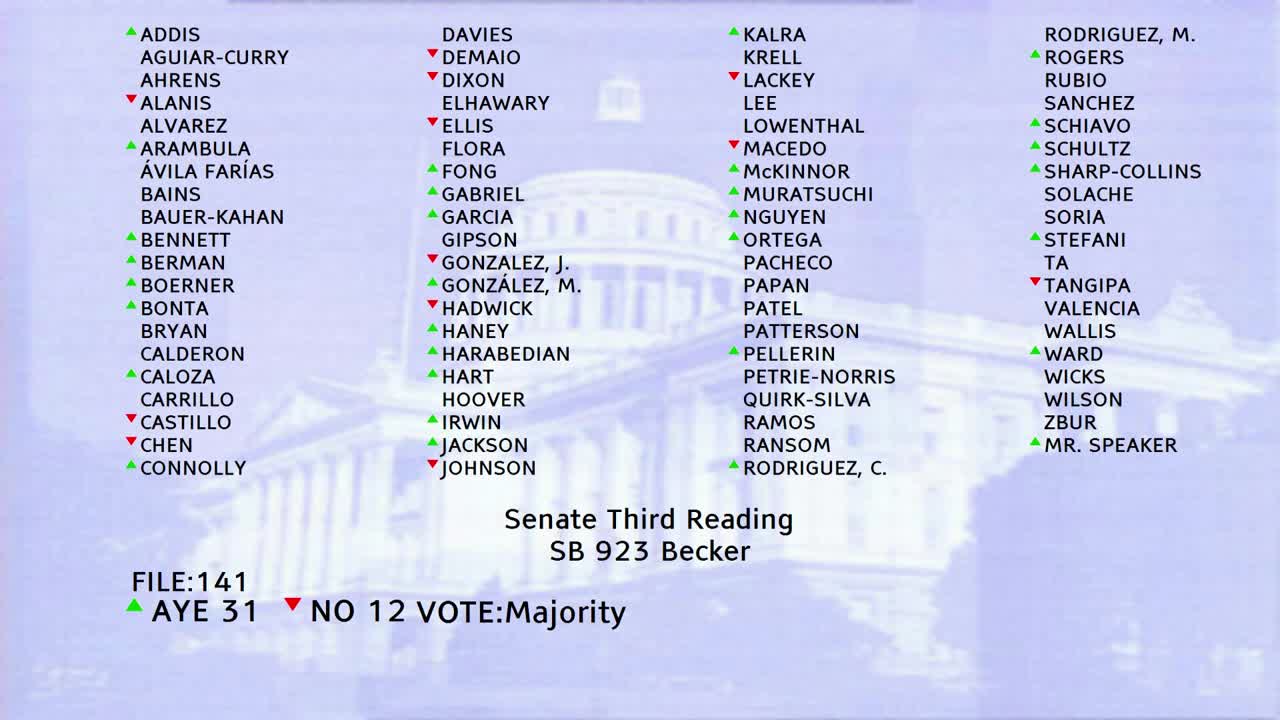 38SEC
Assembly Floor
 2MIN
Senate Floor
 6MIN
Assembly Standing Committee on Arts, Entertainment, Sports, and Tourism
Bill Author