AB 741: Department of Justice: child abuse reporting.
- Session Year: 2025-2026
- House: Assembly
- Latest Version Date: 2025-10-11
Current Status:
Passed
(2025-10-11: Chaptered by Secretary of State - Chapter 619, Statutes of 2025.)
Introduced
In Committee
Awaiting First Chamber Vote
Passed First Chamber
In Committee
Awaiting Second Chamber Vote
Passed Second Chamber
Enacted
Existing law requires the Department of Justice to maintain an index of all reports of child abuse and severe neglect submitted by an agency mandated to make those reports. Existing law requires the department to make relevant information contained in the index available to specified law enforcement agencies, county welfare departments, and other agencies that are conducting a child abuse investigation.
Existing law authorizes a designated Court Appointed Special Advocate (CASA) program to submit fingerprint images and related information of employment and volunteer candidates to the department for the purpose of obtaining information as to the existence and nature of a record of a child abuse investigation contained in the Child Abuse Central Index, state- or federal-level convictions, or state- or federal-level arrests for which the department establishes that the applicant was released on bail or on their own recognizance pending trial. Existing law requires the department to charge a fee sufficient to cover the cost of processing the requests for federal-level criminal offender record information and prohibits the department from charging a fee for state-level criminal offender record information.
This bill would instead require a CASA program to submit fingerprint images and related information of employment and volunteer candidates to the department for the purpose of conducting a state and federal criminal history background check. The bill would require the department to monitor the Child Abuse Central Index and notify the CASA program if a record of a child abuse investigation involving a CASA employee or volunteer is added to that index. The bill would impose notification and review requirements on a CASA program to request that the department remove the notification for an individual who is no longer employed by or volunteering with the CASA program, as specified. The bill would require the department to terminate notification for an individual upon receipt of that request. The bill would authorize the department to increase its fee for a CASA employment and volunteer candidate to cover the cost of processing those subsequent notifications.
Existing law requires the Department of Justice (department) to maintain an index of all reports of child abuse and severe neglect submitted by agencies an agency mandated to make those reports. Existing law requires the department to make relevant information contained in the index available to specified law enforcement agencies, county welfare departments, and other agencies that are conducting a child abuse investigation.
Existing law authorizes a designated Court Appointed Special Advocate (CASA) program to submit fingerprint images and related information of employment and volunteer candidates to the department for the purpose of obtaining information as to the existence and nature of a record of a child abuse investigations investigation contained in the Child Abuse Central Index, state- or federal-level convictions, or state- or federal-level arrests for which the department establishes that the applicant was released on bail or on their own recognizance pending trial. Existing law requires the department to charge a fee sufficient to cover the cost of processing the requests for federal-level criminal offender record information and prohibits the department from charging a fee for state-level criminal offender record information.
This bill would require the department to monitor the Child Abuse Central Index and notify the CASA program if a record of a child abuse investigation involving a CASA employee or volunteer is added to that index. The bill would impose notification and review requirements on a CASA program to request that the department remove the notification for an individual who is no longer employed by or volunteering with the CASA program, as specified. The bill would require the department to terminate notification for an individual upon receipt of that request. The bill would authorize the department to increase its fee for a CASA employment and volunteer candidate to cover the cost of processing those subsequent notifications.
Existing law requires the Department of Justice (department) to maintain an index of all reports of child abuse and severe neglect submitted by agencies mandated to make those reports. Existing law requires the department to make relevant information contained in the index available to specified law enforcement agencies, county welfare departments, and other agencies that are conducting a child abuse investigation.
Existing law authorizes a designated Court Appointed Special Advocate (CASA) program to submit fingerprint images and related information of employment and volunteer candidates to the department for the purpose of obtaining information as to the existence and nature of a record of child abuse investigations contained in the Child Abuse Central Index, state- or federal-level convictions, or state- or federal-level arrests for which the department establishes that the applicant was released on bail or on their own recognizance pending trial. Existing law requires the department to charge a fee sufficient to cover the cost of processing the requests for federal-level criminal offender record information and prohibits the department from charging a fee for state-level criminal offender record information.
This bill would require the department to monitor the Child Abuse Central Index and notify the CASA program if a record of a child abuse investigation involving a CASA employee or volunteer is added to that index. The bill would authorize the department to increase its fee for a CASA employment and volunteer candidate to cover the cost of processing those subsequent notifications.
(a)A designated Court Appointed Special Advocate (CASA) program shall submit to the Department of Justice fingerprint images and related information of employment and volunteer candidates for the purpose of conducting a state and federal criminal history background check, pursuant to subdivision (u) of Section 11105, and obtaining information as to the existence and nature of a record of a child abuse investigation contained in the Child Abuse Central Index.
(b)When requesting state-level criminal offender record information pursuant to this section, the designated CASA program shall request a subsequent arrest notification, pursuant to Section 11105.2, for all employment and volunteer candidates.
(c)(1)The department shall monitor the Child Abuse Central Index and notify the CASA program if a record of a child abuse investigation involving a CASA employee or volunteer is subsequently added to the Child Abuse Central Index.
(2)(A)If a CASA program knows that an individual for whom notification is requested is no longer in a position for which notification is authorized, the CASA program shall immediately notify the department to terminate notification for that individual.
(B)The department shall terminate notification for the individual upon receipt of the notification required in subparagraph (A).
(3)Not less than every six months, a CASA program shall verify that each individual for whom notification has not been terminated is still in a position with the program for which notification is authorized.
(4)If a CASA program receives a subsequent notification for an individual unknown to the CASA program or for whom the CASA program terminated notification, it shall immediately inform the department that the individual is unknown to the CASA program or that it terminated the notification request for the individual.
(d)The department shall provide a state- and federal-level response pursuant to subdivision (p) of Section 11105.
(e)(1)The department shall charge a fee sufficient to cover the cost of processing the requests for federal-level criminal offender record information.
(2)The department shall not charge a fee for state-level criminal offender record information.
(3)The department may increase its fee for a CASA employment and volunteer candidate sufficient to cover the cost of processing subsequent notifications of a child abuse investigation from the Child Abuse Central Index.
(f)For purposes of this section:
(1)A designated CASA program is a local court-appointed special advocate program as described in Chapter 1 (commencing with Section 100) of Part 1 of Division 2 of the Welfare and Institutions Code.
(2)There shall be only one designated CASA program in each California county.
(a)A designated Court Appointed Special Advocate (CASA) program may shall submit to the Department of Justice fingerprint images and related information of employment and volunteer candidates for the purpose of conducting a state and federal criminal history background check, pursuant to subdivision (u) of Section 11105, and obtaining information as to the existence and nature of a record of a child abuse investigation contained in the Child Abuse Central Index, state- or federal-level convictions, or state- or federal-level arrests for which the department establishes that the applicant was released on bail or on their own recognizance pending trial. A request for federal-level criminal offender record information received by the department pursuant to this section shall be forwarded to the Federal Bureau of Investigation by the department. Index.
(b)When requesting state-level criminal offender record information pursuant to this section, the designated CASA program shall request a subsequent arrest notification, pursuant to Section 11105.2, for all employment and volunteer candidates.
(c)(1)The department shall monitor the Child Abuse Central Index and notify the CASA program if a record of a child abuse investigation involving a CASA employee or volunteer is subsequently added to the Child Abuse Central Index.
(2)(A)If a CASA program knows that an individual for whom notification is requested is no longer in a position for which notification is authorized, the CASA program shall immediately notify the department to terminate notification for that individual.
(B)The department shall terminate notification for the individual upon receipt of the notification required in subparagraph (A).
(3)Not less than every six months, a CASA program shall verify that each individual for whom notification has not been terminated is still in a position with the program for which notification is authorized.
(4)If a CASA program receives a subsequent notification for an individual unknown to the CASA program or for whom the CASA program terminated notification, it shall immediately return the notification to the department and inform the department that the individual is unknown to the CASA program or that it terminated the notification request for the individual.
(d)The department shall respond to the designated CASA program with information as delineated in provide a state- and federal-level response pursuant to subdivision (p) of Section 11105.
(e)(1)The department shall charge a fee sufficient to cover the cost of processing the requests for federal-level criminal offender record information.
(2)The department shall not charge a fee for state-level criminal offender record information.
(3)The department may increase its fee for a CASA employment and volunteer candidate sufficient to cover the cost of processing subsequent notifications of a child abuse investigations investigation from the Child Abuse Central Index.
(f)For purposes of this section, a section:
(1)A designated CASA program is a local court-appointed special advocate program that has adopted and adheres to the guidelines established by the Judicial Council and that has been designated by the local presiding juvenile court judge to recruit, screen, select, train, supervise, and support lay volunteers to be appointed by the court to help define the best interests of a child in juvenile court dependency and wardship proceedings. For purposes of this section, there as described in Chapter 1 (commencing with Section 100) of Part 1 of Division 2 of the Welfare and Institutions Code.
(2)There shall be only one designated CASA program in each California county.
(a)A designated Court Appointed Special Advocate (CASA) program may submit to the Department of Justice fingerprint images and related information of employment and volunteer candidates for the purpose of obtaining information as to the existence and nature of a record of a child abuse investigations investigation contained in the Child Abuse Central Index, state- or federal-level convictions, or state- or federal-level arrests for which the department establishes that the applicant was released on bail or on their own recognizance pending trial. A request for federal-level criminal offender record information received by the department pursuant to this section shall be forwarded to the Federal Bureau of Investigation by the department.
(b)When requesting state-level criminal offender record information pursuant to this section, the designated CASA program shall request a subsequent arrest notification, pursuant to Section 11105.2, for all employment and volunteer candidates.
(c)(1)The department shall monitor the Child Abuse Central Index and notify the CASA program if a record of a child abuse investigation involving a CASA employee or volunteer is subsequently added to the Child Abuse Central Index.
(2)(A)If a CASA program knows that an individual for whom notification is requested is no longer in a position for which notification is authorized, the CASA program shall immediately notify the department to terminate notification for that individual.
(B)The department shall terminate notification for the individual upon receipt of the notification required in subparagraph (A).
(3)Not less than every six months, a CASA program shall verify that each individual for whom notification has not been terminated is still in a position with the program for which notification is authorized.
(4)If a CASA program receives a subsequent notification for an individual unknown to the CASA program or for whom the CASA program terminated notification, it shall immediately return the notification to the department and inform the department that the individual is unknown to the CASA program or that it terminated the notification request for the individual.
(d)The department shall respond to the designated CASA program with information as delineated in subdivision (p) of Section 11105.
(e)(1)The department shall charge a fee sufficient to cover the cost of processing the requests for federal-level criminal offender record information.
(2)The department shall not charge a fee for state-level criminal offender record information.
(3)The department may increase its fee for a CASA employment and volunteer candidate sufficient to cover the cost of processing subsequent notifications of child abuse investigations from the Child Abuse Central Index.
(f)For purposes of this section, a designated CASA program is a local court-appointed special advocate program that has adopted and adheres to the guidelines established by the Judicial Council and which that has been designated by the local presiding juvenile court judge to recruit, screen, select, train, supervise, and support lay volunteers to be appointed by the court to help define the best interests of children a child in juvenile court dependency and wardship proceedings. For purposes of this section, there shall be only one designated CASA program in each California county.
(a)A designated Court Appointed Special Advocate (CASA) program may submit to the Department of Justice fingerprint images and related information of employment and volunteer candidates for the purpose of obtaining information as to the existence and nature of any a record of child abuse investigations contained in the Child Abuse Central Index, state- or federal-level convictions, or state- or federal-level arrests for which the department establishes that the applicant was released on bail or on his or her their own recognizance pending trial. Requests A request for federal-level criminal offender record information received by the department pursuant to this section shall be forwarded to the Federal Bureau of Investigation by the department.
(b)When requesting state-level criminal offender record information pursuant to this section, the designated CASA program shall request a subsequent arrest notification, pursuant to Section 11105.2, for all employment and volunteer candidates.
(c)The department shall monitor the Child Abuse Central Index and notify the CASA program if a record of a child abuse investigation involving a CASA employee or volunteer is subsequently added to the Child Abuse Central Index.
(c)(d)The department shall respond to the designated CASA program with information as delineated in subdivision (p) of Section 11105.
(d)(e)(1)The department shall charge a fee sufficient to cover the cost of processing the requests for federal-level criminal offender record information.
(2)The department shall not charge a fee for state-level criminal offender record information.
(3)The department may increase its fee for a CASA employment and volunteer candidate sufficient to cover the cost of processing subsequent notifications of child abuse investigations from the Child Abuse Central Index.
(e)(f)For purposes of this section, a designated CASA program is a local court-appointed special advocate program that has adopted and adheres to the guidelines established by the Judicial Council and which has been designated by the local presiding juvenile court judge to recruit, screen, select, train, supervise, and support lay volunteers to be appointed by the court to help define the best interests of children in juvenile court dependency and wardship proceedings. For purposes of this section, there shall be only one designated CASA program in each California county.
|
Date
|
Status
|
|---|---|
| Oct 11, 2025 | Chaptered by Secretary of State - Chapter 619, Statutes of 2025. |
| Oct 11, 2025 | Approved by the Governor. |
| Sep 24, 2025 | Enrolled and presented to the Governor at 3 p.m. |
| Sep 13, 2025 | Senate amendments concurred in. To Engrossing and Enrolling. (Ayes 79. Noes 0. Page 3454.). |
| Sep 13, 2025 | Joint Rules 61(a)(14) and 51(a)(4) suspended. (Ayes 59. Noes 20. Page 3413.) |
| Sep 12, 2025 | In Assembly. Concurrence in Senate amendments pending. |
| Sep 11, 2025 | Read third time. Passed. Ordered to the Assembly. (Ayes 40. Noes 0. Page 2884.). |
| Jul 15, 2025 | Read second time. Ordered to third reading. |
| Jul 14, 2025 | Read third time and amended. Ordered to second reading. |
| Jul 14, 2025 | Ordered to third reading. |
| Jul 14, 2025 | Action rescinded whereby the bill was read third time, passed, and to Assembly. |
| Jun 30, 2025 | In Senate. Held at Desk. |
| Jun 30, 2025 | Ordered to the Senate. |
| Jun 27, 2025 | In Assembly. Concurrence in Senate amendments pending. |
| Jun 27, 2025 | Read third time. Passed. Ordered to the Assembly. (Ayes 38. Noes 0. Page 1809.). |
| Jun 24, 2025 | Read second time. Ordered to Consent Calendar. |
| Jun 23, 2025 | From committee: Be ordered to second reading file pursuant to Senate Rule 28.8 and ordered to Consent Calendar. |
| Jun 11, 2025 | Read second time and amended. Re-referred to Com. on APPR. |
| Jun 10, 2025 | From committee: Amend, and do pass as amended and re-refer to Com. on APPR. with recommendation: To Consent Calendar. (Ayes 6. Noes 0.) (June 10). |
| May 7, 2025 | Referred to Com. on PUB. S. |
| Apr 24, 2025 | In Senate. Read first time. To Com. on RLS. for assignment. |
| Apr 24, 2025 | Read third time. Passed. Ordered to the Senate. (Ayes 75. Noes 0. Page 1279.) |
| Apr 10, 2025 | Read second time. Ordered to Consent Calendar. |
| Apr 9, 2025 | From committee: Do pass. To Consent Calendar. (Ayes 14. Noes 0.) (April 9). |
| Mar 26, 2025 | From committee: Do pass and re-refer to Com. on APPR. with recommendation: To Consent Calendar. (Ayes 9. Noes 0.) (March 25). Re-referred to Com. on APPR. |
| Mar 3, 2025 | Referred to Com. on PUB. S. |
| Feb 19, 2025 | From printer. May be heard in committee March 21. |
| Feb 18, 2025 | Read first time. To print. |
|
Date
|
Description
|
Location
|
Votes
|
|
|---|---|---|---|---|
| Sep 13, 2025 | AB 741 Ransom Concurrence in Senate Amendments | Assembly Floor |
Passed |
|
| Sep 11, 2025 | Assembly 3rd Reading AB741 Ransom By Ashby | Senate Floor |
Passed |
|
| Jun 27, 2025 | Consent Calendar 2nd AB741 Ransom | Senate Floor |
Passed |
|
| Jun 10, 2025 | Do pass as amended, but first amend, and re-refer to the Committee on [Appropriations] with the recommendation: To Consent Calendar | Senate Standing Committee on Public Safety |
Passed |
|
| Apr 24, 2025 | AB 741 Ransom Consent Calendar Second Day Regular Session | Assembly Floor |
Passed |
|
| Apr 9, 2025 | Do pass. To Consent Calendar. | Assembly Standing Committee on Appropriations |
Passed |
|
| Mar 25, 2025 | Do pass and be re-referred to the Committee on [Appropriations] with recommendation: To Consent Calendar | Assembly Standing Committee on Public Safety |
Passed |
This list shows positions taken on this bill by organizations on the date displayed, which is linked to the original source.
Positions by individuals are not included.
|
Organization
|
Position
|
Date
|
|---|---|---|
| California Court Appointed Special Advocate (CASA) Association | ** Support | |
| Judicial Council of California | ** Support |
CONCURRENCE IN SENATE AMENDMENTS
CSA1 Bill Id:AB 741
Author:(Ransom)
As Amended Ver:July 14, 2025
Majority vote
SUMMARY
Requires the Department of Justice (DOJ) to monitor the Child Abuse Central Index (CACI) and notify the Court Appointed Special Advocate (CASA) program if a child abuse investigation record involving a CASA employee or volunteer is added to the CACI, and allows the DOJ to increase the fee for a CASA candidate's state and federal criminal history background check, as specified, sufficient to cover the cost of processing subsequent child abuse investigation notifications from the CACI.
Senate Amendments
- Mandates, instead of allows, a designated CASA program to submit fingerprint images and related information of employment and volunteer candidates for the purpose for conducting state and federal background checks.
- Eliminates the existing requirement that CASA obtain state or federal level convictions, or state or federal level arrests for which the DOJ establishes that the applicant was released on bail or on their own recognizance pending trial. Requests for federal level criminal offender record information received by the DOJ shall be forwarded to the Federal Bureau of Investigation by the DOJ.
- Requires a CASA program to notify DOJ to terminate notification for a specific individual if the CASA program knows that the individual is no longer in a position for which notification is required and mandates DOJ thereafter terminate notification.
- States that not less than every six months, a CASA program must verify that each individual for whom notification has not been terminated is still in a position with the CASA program.
- Mandates if a CASA program receives a subsequent notification for an individual unknown to the CASA program or for whom the CASA program terminated notification, it shall immediately inform the DOJ that the individual is unknown to the CASA program or that it terminated the notification request for the individual.
- Eliminates from the existing definition of designated CASA program, as specified, a program that as adopted and adheres to the guidelines established by the Judicial Council and which has been designated by the local presiding juvenile court judge to recruit, screen, select, train, supervise, and support lay volunteers to be appointed by the court to help define the best interests of children in juvenile court dependency and wardship proceedings.
COMMENTS
As passed by the Assembly: This bill required the Department of Justice (DOJ) to monitor the Child Abuse Central Index (CACI) and notify the Court Appointed Special Advocate (CASA) program if a child abuse investigation record involving a CASA employee or volunteer is added to the CACI, and allows the DOJ to increase the fee for a CASA candidate's criminal history information sufficient to cover the cost of processing subsequent child abuse investigation notifications from the CACI.
According to the Author
"Currently, California's Child Abuse Central Index (CACI) does not provide subsequent screening notices of potential wrongdoing to any agency other than the Department of Social Services. Thus, all personnel associated with a CASA program must be re-fingerprinted every four years to ensure that they can continue their work with children. This procedure delays vital information that could be used by a CASA program to prevent harm to a child if a volunteer or staff member is alleged to have hurt a child. Further, it is a financial expense and an administrative burden to the local CASA programs.
"In California, local CASA programs receive notices from the Department of Justice, the FBI, and the Department of Motor Vehicles of any changes in the background screening results of any volunteer (CASA and Board Member) and staff member. Often called the "rap back," these notices allow the CASA program to immediately investigate the suitability of any volunteer or staff member to continue working with children.
"However, currently local programs do not receive such notices from the California Child Abuse Central Index (CACI). In fact, California Penal Code Section 11170 restricts the receipt of subsequent responses for CACI information to the California Department of Social Services only, thus leaving CASA programs without this crucial safeguard.
"The safety, protection, and well-being of children in foster care is paramount, and thus it is imperative to extend subsequent notices for CACI information to CASA programs in California. Primarily, this change will enhance child safety, but it will also reduce the financial and administrative burdens on the 44 local CASA programs serving California courts. By taking these steps, we can further strengthen the state's commitment to safeguarding these most vulnerable individuals: the children and youth in California's foster care system."
Arguments in Support
According to the California Court Appointed Special Advocate (CASA) Association "California's 44 CASA programs serve as a critical safety net for children in foster care, ensuring that they have a dedicated advocate to support their best interests. Before serving, all CASA volunteers, Board members, and staff undergo rigorous background checks, including fingerprinting through the Department of Justice, the FBI, and CACI. However, unlike other screening agencies, CACI does not provide CASA programs with subsequent notification of new entries related to child abuse allegations, which creates an unnecessary gap in child protection.
"Currently, CASA programs must re-fingerprint every staff member, Board member, and volunteer every four years to ensure they remain eligible to work with children. This process:
- Delays critical information that could be used to protect children from potential harm.
- Imposes financial and administrative burdens on CASA programs and state agencies processing nearly 10,000 background checks on a rotating basis.
- Creates an avoidable gap in safety measures, as CASA programs do not receive ongoing alerts from CACI, unlike other screening entities.
"AB 741 proposes a simple but impactful solution: amending the California Penal Code to allow CASA programs to receive subsequent notices from CACI. This change aligns with existing practices for background check notifications and ensures CASA programs can act swiftly if a volunteer or staff member is implicated in a child abuse allegation."
Arguments in Opposition
None submitted.
FISCAL COMMENTS
According to the Assembly Appropriations Committee, "No significant costs to DOJ. The bill allows DOJ to increase the fee it collects from each CASA applicant to cover its costs for making additional notifications required by the bill, and DOJ reports no significant costs."
VOTES:
ASM PUBLIC SAFETY: 9-0-0
YES: Schultz, Alanis, Mark González, Haney, Harabedian, Lackey, Nguyen, Ramos, Sharp-Collins
ASM APPROPRIATIONS: 14-0-1
YES: Wicks, Sanchez, Arambula, Calderon, Caloza, Dixon, Elhawary, Fong, Mark González, Hadwick, Hart, Pacheco, Solache, Ta
ABS, ABST OR NV: Pellerin
ASSEMBLY FLOOR: 75-0-4
YES: Addis, Aguiar-Curry, Ahrens, Alanis, Alvarez, Arambula, Ávila Farías, Bains, Bauer-Kahan, Bennett, Berman, Boerner, Bonta, Bryan, Calderon, Caloza, Carrillo, Castillo, Connolly, Davies, DeMaio, Dixon, Elhawary, Ellis, Flora, Fong, Gabriel, Garcia, Gipson, Jeff Gonzalez, Mark González, Hadwick, Haney, Hart, Hoover, Irwin, Jackson, Kalra, Krell, Lee, Lowenthal, Macedo, McKinnor, Muratsuchi, Nguyen, Ortega, Pacheco, Papan, Patel, Patterson, Pellerin, Petrie-Norris, Quirk-Silva, Ramos, Ransom, Celeste Rodriguez, Michelle Rodriguez, Rogers, Blanca Rubio, Sanchez, Schiavo, Schultz, Sharp-Collins, Solache, Soria, Stefani, Ta, Tangipa, Valencia, Wallis, Ward, Wicks, Wilson, Zbur, Rivas
ABS, ABST OR NV: Chen, Gallagher, Harabedian, Lackey
SENATE FLOOR: 38-0-2
YES: Allen, Alvarado-Gil, Archuleta, Arreguín, Ashby, Becker, Blakespear, Cabaldon, Caballero, Cervantes, Choi, Cortese, Dahle, Durazo, Gonzalez, Grayson, Grove, Hurtado, Laird, Limón, McGuire, McNerney, Menjivar, Niello, Ochoa Bogh, Padilla, Pérez, Richardson, Rubio, Seyarto, Smallwood-Cuevas, Stern, Strickland, Umberg, Valladares, Wahab, Weber Pierson, Wiener
ABS, ABST OR NV: Jones, Reyes
UPDATED
VERSION: July 14, 2025
CONSULTANT: Kimberly Horiuchi / PUB. S. / (916) 319-3744 FN: 0002063
SENATE RULES COMMITTEE Office of Senate Floor Analyses (916) 651-1520 Fax: (916) 327-4478 | AB 741 |
THIRD READING
Bill No: AB 741
Author: Ransom (D)
Amended: 7/14/25 in Senate
Vote: 21
SENATE PUBLIC SAFETY COMMITTEE: 6-0, 6/10/25
AYES: Arreguín, Seyarto, Caballero, Cortese, Pérez, Wiener
SENATE APPROPRIATIONS COMMITTEE: Senate Rule 28.8
SENATE FLOOR: 38-0, 6/27/25 (Consent)
AYES: Allen, Alvarado-Gil, Archuleta, Arreguín, Ashby, Becker, Blakespear, Cabaldon, Caballero, Cervantes, Choi, Cortese, Dahle, Durazo, Gonzalez, Grayson, Grove, Hurtado, Laird, Limón, McGuire, McNerney, Menjivar, Niello, Ochoa Bogh, Padilla, Pérez, Richardson, Rubio, Seyarto, Smallwood-Cuevas, Stern, Strickland, Umberg, Valladares, Wahab, Weber Pierson, Wiener
NO VOTE RECORDED: Jones, Reyes
ASSEMBLY FLOOR: 75-0, 4/24/25 (Consent) - See last page for vote
SUBJECT: Department of Justice: child abuse reporting
SOURCE: California Court Appointed Special Advocate Association
DIGEST:
This bill requires the Department of Justice (DOJ) monitor the Child Abuse Central Index (CACI) and notify the Court Appointed Special Advocate (CASA) program if a child abuse investigation record involving a CASA employee or volunteer is submitted.
Senate Floor Amendments of 7/10/25 fix the statutory language to allow the CASA program to continue receiving state and federal level criminal history information from the DOJ; revise the definition of a CASA program; and delete the requirement that CASA return an erroneous notification to the department.
ANALYSIS:
Existing law:
- Requires specified local agencies to send the DOJ reports of every case of child abuse or severe neglect that they investigate and determine to be substantiated. (Penal (Pen.) Code, § 11169, subd. (a).)
- Directs the DOJ to maintain an index, referred to as the CACI, of all substantiated reports of child abuse and neglect submitted as specified. (Pen. Code § 11170, subds. (a)(1) & (a)(3).)
- States that the CACI shall be continually updated by the DOJ and shall not contain any reports that are determined to be not substantiated. (Pen. Code, § 11170, subd. (a).)
- Requires DOJ to disclose information contained in the CACI to multiple identified parties for purposes of child abuse investigation, licensing, and employment applications for positions that have interaction with children, including prosecutors, a law enforcement agencies, county welfare departments, tribal agencies, and county probation departments, the State Department of Social Services, and county licensing agencies. (Pen. Code, § 11170, subd. (b).)
- Requires DOJ to make information contained in the CACI available to a CASA program that is conducting a background investigation of an applicant seeking employment with the program or a volunteer position. (Pen. Code, § 11170, subds. (b)(5).)
- Defines a CASA program as a local court-appointed special advocate program that has adopted and adheres to the guidelines established by the Judicial Council and which has been designated by the local presiding juvenile court judge to recruit, screen, select, train, supervise, and support lay volunteers to be appointed by the court to help define the best interests of children in juvenile court dependency and wardship proceedings. (Pen. Code, § 11105.04, subd. (e).)
- Provides that a CASA program may submit to the DOJ fingerprint images and related information of employment and volunteer candidates for the purpose of obtaining information as to the existence and nature of:
- Any record of child abuse investigations contained in the CACI;
- State or federal level convictions; or,
- State or federal level arrests for which the DOJ establishes that the applicant was released on bail or on their own recognizance pending trial. (Pen. Code, § 11105.04, subd. (a).)
- States that when requesting state-level criminal offender record information, the designated CASA program shall request subsequent arrest notification for all employment and volunteer candidates. (Pen. Code, § 11105.04, subd. (b).)
- Requires the DOJ to charge a fee sufficient to cover the cost of processing the requests for federal level criminal offender record information, but prohibits DOJ from charging a fee for state level criminal offender record information. (Pen. Code, § 11105.04, subd. (d)(1-2).)
This bill:
- Requires the DOJ to monitor the CACI and notify the CASA program if a child abuse investigation record involving a CASA employee or volunteer is added to the CACI.
- States that if a CASA program knows that an individual for whom notification is requested is no longer in a position for which notification is authorized, the CASA program shall immediately notify the department to terminate notification for that individual, and DOJ shall terminate notification for that individual.
- Requires a CASA program to verify, not less than every six months, that each individual for whom notification has not been terminated is still in a position with the program for which notification is authorized.
- States that if a CASA program receives a subsequent notification for an individual unknown to the CASA program or for whom the CASA program terminated notification, it shall immediately inform DOJ that the individual is unknown to the CASA program or that it terminated the notification request for the individual.
- Allows the DOJ to increase the fee for a CASA candidate’s criminal history information sufficient to cover the cost of processing subsequent child abuse investigation notifications from the CACI.
- Defines a CASA program.
- Makes technical changes to the provisions authorizing DOJ to provide state and federal criminal history background check information to a CASA program.
Background
A CASA program is a local court-appointed special advocate program that has adopted and adheres to the guidelines established by the Judicial Council, and which has been designated by the local presiding juvenile court judge to recruit, screen, select, train, supervise, and support lay volunteers to be appointed by the court to help define the best interests of children in juvenile court dependency and wardship proceedings. (Pen. Code, § 11105.04, subd. (e).)
According to the California CASA Website, the “California Court Appointed Special Advocate Association ensures that children & youth in the foster care system have a voice and the services they need for a stable future.” “A CASA volunteer, or Court Appointed Special Advocate, works one-on-one with a foster youth, advocating for their best interest. Having a stable relationship with a supportive adult can help children who have experienced abuse and neglect do well, even when they have faced significant trauma and hardship.” (https://www.californiacasa.org/ [as of 6/1/25].)
Under existing law, the DOJ is already required to provide information included in the CACI to a CASA program which is conducting a background check on a job applicant or volunteer. (Pen. Code, § 11170, subd. (b).) This bill would require that DOJ proactively monitor CACI and subsequently notify CASA programs if a person is added to the CACI index after they are hired or are working as a volunteer. This bill allows DOJ to increase its fee to cover associated costs.
FISCAL EFFECT: Appropriation: No Fiscal Com.: Yes Local: No
SUPPORT: (Verified 7/10/25)
California Court Appointed Special Advocate Association
Judicial Council of California
OPPOSITION: (Verified 7/10/25)
None received
ARGUMENTS IN SUPPORT: According to the California Court Appointed Special Advocate Association:
Currently, CASA programs must re-fingerprint every staff member, Board member, and volunteer every four years to ensure they remain eligible to work with children. This process:
• Delays critical information that could be used to protect children from
potential harm.
• Imposes financial and administrative burdens on CASA programs and state
agencies processing nearly 10,000 background checks on a rotating basis.
• Creates an avoidable gap in safety measures, as CASA programs do not
receive ongoing alerts from CACI, unlike other screening entities.
AB 741 proposes a simple but impactful solution: amending the California Penal Code to allow CASA programs to receive subsequent notices from CACI. This change aligns with existing practices for background check notifications and ensures CASA programs can act swiftly if a volunteer or staff member is implicated in a child abuse allegation.
By granting CASA programs access to subsequent CACI notifications, AB 741 strengthens California’s commitment to protecting foster youth and allows CASA programs to continue their vital work without unnecessary administrative barriers.
ASSEMBLY FLOOR: 75-0, 4/24/25
AYES: Addis, Aguiar-Curry, Ahrens, Alanis, Alvarez, Arambula, Ávila Farías, Bains, Bauer-Kahan, Bennett, Berman, Boerner, Bonta, Bryan, Calderon, Caloza, Carrillo, Castillo, Connolly, Davies, DeMaio, Dixon, Elhawary, Ellis, Flora, Fong, Gabriel, Garcia, Gipson, Jeff Gonzalez, Mark González, Hadwick, Haney, Hart, Hoover, Irwin, Jackson, Kalra, Krell, Lee, Lowenthal, Macedo, McKinnor, Muratsuchi, Nguyen, Ortega, Pacheco, Papan, Patel, Patterson, Pellerin, Petrie-Norris, Quirk-Silva, Ramos, Ransom, Celeste Rodriguez, Michelle Rodriguez, Rogers, Blanca Rubio, Sanchez, Schiavo, Schultz, Sharp-Collins, Solache, Soria, Stefani, Ta, Tangipa, Valencia, Wallis, Ward, Wicks, Wilson, Zbur, Rivas
NO VOTE RECORDED: Chen, Gallagher, Harabedian, Lackey
Prepared by: Sandy Uribe / PUB. S. /
7/15/25 16:21:43
CONCURRENCE IN SENATE AMENDMENTS
CSA1 Bill Id:AB 741
Author:(Ransom)
As Amended Ver:June 11, 2025
Majority vote
SUMMARY
Requires the Department of Justice (DOJ) to monitor the Child Abuse Central Index (CACI) and notify the Court Appointed Special Advocate (CASA) program if a child abuse investigation record involving a CASA employee or volunteer is added to the CACI, and allows the DOJ to increase the fee for a CASA candidate's criminal history information sufficient to cover the cost of processing subsequent child abuse investigation notifications from the CACI.
Senate Amendments
- Requires a CASA program to notify DOJ to terminate notification for a specific individual if the CASA program knows that the individual is no longer in a position for which notification is required and mandates DOJ thereafter terminate notification.
- States that not less than every six months, a CASA program must verify that each individual for whom notification has not been terminated is still in a position with the CASA program.
- Mandates if a CASA program receives a subsequent notification for an individual unknown to the CASA program or for whom the CASA program terminated notification, it shall immediately return the notification to the DOJ and inform the DOJ that the individual is unknown to the CASA program or that it terminated the notification request for the individual.
COMMENTS
According to the Author
"Currently, California's Child Abuse Central Index (CACI) does not provide subsequent screening notices of potential wrongdoing to any agency other than the Department of Social Services. Thus, all personnel associated with a CASA program must be re-fingerprinted every four years to ensure that they can continue their work with children. This procedure delays vital information that could be used by a CASA program to prevent harm to a child if a volunteer or staff member is alleged to have hurt a child. Further, it is a financial expense and an administrative burden to the local CASA programs.
"In California, local CASA programs receive notices from the Department of Justice, the FBI, and the Department of Motor Vehicles of any changes in the background screening results of any volunteer (CASA and Board Member) and staff member. Often called the "rap back," these notices allow the CASA program to immediately investigate the suitability of any volunteer or staff member to continue working with children.
"However, currently local programs do not receive such notices from the California Child Abuse Central Index (CACI). In fact, California Penal Code Section 11170 restricts the receipt of subsequent responses for CACI information to the California Department of Social Services only, thus leaving CASA programs without this crucial safeguard.
"The safety, protection, and well-being of children in foster care is paramount, and thus it is imperative to extend subsequent notices for CACI information to CASA programs in California. Primarily, this change will enhance child safety, but it will also reduce the financial and administrative burdens on the 44 local CASA programs serving California courts. By taking these steps, we can further strengthen the state's commitment to safeguarding these most vulnerable individuals: the children and youth in California's foster care system."
Arguments in Support
According to the California Court Appointed Special Advocate (CASA) Association "California's 44 CASA programs serve as a critical safety net for children in foster care, ensuring that they have a dedicated advocate to support their best interests. Before serving, all CASA volunteers, Board members, and staff undergo rigorous background checks, including fingerprinting through the Department of Justice, the FBI, and CACI. However, unlike other screening agencies, CACI does not provide CASA programs with subsequent notification of new entries related to child abuse allegations, which creates an unnecessary gap in child protection.
"Currently, CASA programs must re-fingerprint every staff member, Board member, and volunteer every four years to ensure they remain eligible to work with children. This process:
- Delays critical information that could be used to protect children from potential harm.
- Imposes financial and administrative burdens on CASA programs and state agencies processing nearly 10,000 background checks on a rotating basis.
- Creates an avoidable gap in safety measures, as CASA programs do not receive ongoing alerts from CACI, unlike other screening entities.
"AB 741 proposes a simple but impactful solution: amending the California Penal Code to allow CASA programs to receive subsequent notices from CACI. This change aligns with existing practices for background check notifications and ensures CASA programs can act swiftly if a volunteer or staff member is implicated in a child abuse allegation."
Arguments in Opposition
None submitted.
FISCAL COMMENTS
According to the Assembly Appropriations Committee, "No significant costs to DOJ. The bill allows DOJ to increase the fee it collects from each CASA applicant to cover its costs for making additional notifications required by the bill, and DOJ reports no significant costs."
VOTES:
ASM PUBLIC SAFETY: 9-0-0
YES: Schultz, Alanis, Mark González, Haney, Harabedian, Lackey, Nguyen, Ramos, Sharp-Collins
ASM APPROPRIATIONS: 14-0-1
YES: Wicks, Sanchez, Arambula, Calderon, Caloza, Dixon, Elhawary, Fong, Mark González, Hadwick, Hart, Pacheco, Solache, Ta
ABS, ABST OR NV: Pellerin
ASSEMBLY FLOOR: 75-0-4
YES: Addis, Aguiar-Curry, Ahrens, Alanis, Alvarez, Arambula, Ávila Farías, Bains, Bauer-Kahan, Bennett, Berman, Boerner, Bonta, Bryan, Calderon, Caloza, Carrillo, Castillo, Connolly, Davies, DeMaio, Dixon, Elhawary, Ellis, Flora, Fong, Gabriel, Garcia, Gipson, Jeff Gonzalez, Mark González, Hadwick, Haney, Hart, Hoover, Irwin, Jackson, Kalra, Krell, Lee, Lowenthal, Macedo, McKinnor, Muratsuchi, Nguyen, Ortega, Pacheco, Papan, Patel, Patterson, Pellerin, Petrie-Norris, Quirk-Silva, Ramos, Ransom, Celeste Rodriguez, Michelle Rodriguez, Rogers, Blanca Rubio, Sanchez, Schiavo, Schultz, Sharp-Collins, Solache, Soria, Stefani, Ta, Tangipa, Valencia, Wallis, Ward, Wicks, Wilson, Zbur, Rivas
ABS, ABST OR NV: Chen, Gallagher, Harabedian, Lackey
SENATE FLOOR: 38-0-2
YES: Allen, Alvarado-Gil, Archuleta, Arreguín, Ashby, Becker, Blakespear, Cabaldon, Caballero, Cervantes, Choi, Cortese, Dahle, Durazo, Gonzalez, Grayson, Grove, Hurtado, Laird, Limón, McGuire, McNerney, Menjivar, Niello, Ochoa Bogh, Padilla, Pérez, Richardson, Rubio, Seyarto, Smallwood-Cuevas, Stern, Strickland, Umberg, Valladares, Wahab, Weber Pierson, Wiener
ABS, ABST OR NV: Jones, Reyes
UPDATED
VERSION: June 11, 2025
CONSULTANT: Kimberly Horiuchi / PUB. S. / (916) 319-3744 FN: 0001048
SENATE RULES COMMITTEE Office of Senate Floor Analyses (916) 651-1520 Fax: (916) 327-4478 | AB 741 |
CONSENT
Bill No: AB 741
Author: Ransom (D)
Amended: 6/11/25 in Senate
Vote: 21
SENATE PUBLIC SAFETY COMMITTEE: 6-0, 6/10/25
AYES: Arreguín, Seyarto, Caballero, Cortese, Pérez, Wiener
SENATE APPROPRIATIONS COMMITTEE: Senate Rule 28.8
ASSEMBLY FLOOR: 75-0, 4/24/25 (Consent) - See last page for vote
SUBJECT: Department of Justice: child abuse reporting
SOURCE: California Court Appointed Special Advocate Association
DIGEST:
This bill requires the Department of Justice (DOJ) monitor the Child Abuse Central Index (CACI) and notify the Court Appointed Special Advocate (CASA) program if a child abuse investigation record involving a CASA employee or volunteer is submitted.
ANALYSIS:
Existing law:
- Requires specified local agencies to send the DOJ reports of every case of child abuse or severe neglect that they investigate and determine to be substantiated. (Penal (Pen.) Code, § 11169, Subdivision (subd.) (a).)
- Directs the DOJ to maintain an index, referred to as the CACI, of all substantiated reports of child abuse and neglect submitted as specified. (Pen. Code § 11170, subds. (a)(1) & (a)(3).)
- States that the CACI shall be continually updated by the DOJ and shall not contain any reports that are determined to be not substantiated. (Pen. Code, § 11170, subd. (a).)
- Requires DOJ to disclose information contained in the CACI to multiple identified parties for purposes of child abuse investigation, licensing, and employment applications for positions that have interaction with children, including prosecutors, a law enforcement agencies, county welfare departments, tribal agencies, and county probation departments, the State Department of Social Services, and county licensing agencies. (Pen. Code, § 11170, subd. (b).)
- Requires DOJ to make information contained in the CACI available to a CASA program that is conducting a background investigation of an applicant seeking employment with the program or a volunteer position. (Pen. Code, § 11170, subds. (b)(5).)
- Defines a CASA program as a local court-appointed special advocate program that has adopted and adheres to the guidelines established by the Judicial Council and which has been designated by the local presiding juvenile court judge to recruit, screen, select, train, supervise, and support lay volunteers to be appointed by the court to help define the best interests of children in juvenile court dependency and wardship proceedings. (Pen. Code, § 11105.04, subd. (e).)
- Provides that a CASA program may submit to the DOJ fingerprint images and related information of employment and volunteer candidates for the purpose of obtaining information as to the existence and nature of:
- Any record of child abuse investigations contained in the CACI;
- State or federal level convictions; or,
- State or federal level arrests for which the DOJ establishes that the applicant was released on bail or on their own recognizance pending trial. (Pen. Code, § 11105.04, subd. (a).)
- States that when requesting state-level criminal offender record information, the designated CASA program shall request subsequent arrest notification for all employment and volunteer candidates. (Pen. Code, § 11105.04, subd. (b).)
- Requires the DOJ to charge a fee sufficient to cover the cost of processing the requests for federal level criminal offender record information, but prohibits DOJ from charging a fee for state level criminal offender record information. (Pen. Code, § 11105.04, subd. (d)(1-2).)
This bill:
- Requires the DOJ to monitor the CACI and notify the CASA program if a child abuse investigation record involving a CASA employee or volunteer is added to the CACI.
- States that if a CASA program knows that an individual for whom notification is requested is no longer in a position for which notification is authorized, the CASA program shall immediately notify the department to terminate notification for that individual, and DOJ shall terminate notification for that individual.
- Requires a CASA program to verify, not less than every six months, that each individual for whom notification has not been terminated is still in a position with the program for which notification is authorized.
- States that if a CASA program receives a subsequent notification for an individual unknown to the CASA program or for whom the CASA program terminated notification, it shall immediately return the notification to the DOJ and inform them that the individual is unknown to the CASA program or that it terminated the notification request for the individual.
- Allows the DOJ to increase the fee for a CASA candidate’s criminal history information sufficient to cover the cost of processing subsequent child abuse investigation notifications from the CACI.
Background
A CASA program is a local court-appointed special advocate program that has adopted and adheres to the guidelines established by the Judicial Council, and which has been designated by the local presiding juvenile court judge to recruit, screen, select, train, supervise, and support lay volunteers to be appointed by the court to help define the best interests of children in juvenile court dependency and wardship proceedings. (Pen. Code, § 11105.04, subd. (e).)
According to the California CASA Website, the “California Court Appointed Special Advocate Association ensures that children & youth in the foster care system have a voice and the services they need for a stable future.” “A CASA volunteer, or Court Appointed Special Advocate, works one-on-one with a foster youth, advocating for their best interest. Having a stable relationship with a supportive adult can help children who have experienced abuse and neglect do well, even when they have faced significant trauma and hardship.” (https://www.californiacasa.org/ [as of 6/1/25].)
Under existing law, the DOJ is already required to provide information included in the CACI to a CASA program which is conducting a background check on a job applicant or volunteer. (Pen. Code, § 11170, subd. (b).) This bill would require that DOJ proactively monitor CACI and subsequently notify CASA programs if a person is added to the CACI index after they are hired or are working as a volunteer. This bill allows DOJ to increase its fee to cover associated costs.
FISCAL EFFECT: Appropriation: No Fiscal Com.: Yes Local: No
SUPPORT: (Verified 6/23/25)
California Court Appointed Special Advocate Association (Source)
Judicial Council of California
OPPOSITION: (Verified 6/23/25)
None received
ARGUMENT IN SUPPORT:
According to the California Court Appointed Special Advocate Association:
Currently, CASA programs must re-fingerprint every staff member, Board member, and volunteer every four years to ensure they remain eligible to work with children. This process:
• Delays critical information that could be used to protect children from
potential harm.
• Imposes financial and administrative burdens on CASA programs and state
agencies processing nearly 10,000 background checks on a rotating basis.
• Creates an avoidable gap in safety measures, as CASA programs do not
receive ongoing alerts from CACI, unlike other screening entities.
AB 741 proposes a simple but impactful solution: amending the California Penal Code to allow CASA programs to receive subsequent notices from CACI. This change aligns with existing practices for background check notifications and ensures CASA programs can act swiftly if a volunteer or staff member is implicated in a child abuse allegation.
By granting CASA programs access to subsequent CACI notifications, AB 741 strengthens California’s commitment to protecting foster youth and allows CASA programs to continue their vital work without unnecessary administrative barriers.
ASSEMBLY FLOOR: 75-0, 4/24/25
AYES: Addis, Aguiar-Curry, Ahrens, Alanis, Alvarez, Arambula, Ávila Farías, Bains, Bauer-Kahan, Bennett, Berman, Boerner, Bonta, Bryan, Calderon, Caloza, Carrillo, Castillo, Connolly, Davies, DeMaio, Dixon, Elhawary, Ellis, Flora, Fong, Gabriel, Garcia, Gipson, Jeff Gonzalez, Mark González, Hadwick, Haney, Hart, Hoover, Irwin, Jackson, Kalra, Krell, Lee, Lowenthal, Macedo, McKinnor, Muratsuchi, Nguyen, Ortega, Pacheco, Papan, Patel, Patterson, Pellerin, Petrie-Norris, Quirk-Silva, Ramos, Ransom, Celeste Rodriguez, Michelle Rodriguez, Rogers, Blanca Rubio, Sanchez, Schiavo, Schultz, Sharp-Collins, Solache, Soria, Stefani, Ta, Tangipa, Valencia, Wallis, Ward, Wicks, Wilson, Zbur, Rivas
NO VOTE RECORDED: Chen, Gallagher, Harabedian, Lackey
Prepared by: Sandy Uribe / PUB. S. /
6/26/25 9:03:01
**** END ****
SENATE COMMITTEE ON PUBLIC SAFETY
Senator Jesse Arreguín, Chair
2025 - 2026 Regular
Bill No: AB 741 Hearing Date: June 10, 2025
Author: | Ransom | ||
Version: | February 18, 2025 | ||
Urgency: | No | Fiscal: | Yes |
Consultant: | SU | ||
Subject: Department of Justice: child abuse reporting
HISTORY
Source: California Court Appointed Special Advocate Association
Prior Legislation: AB 1544 (Lackey), not heard in Senate Public Safety, 2023
AB 1450 (Lackey), failed passage in Senate Public Safety, 2019
AB 2005 (Santiago), vetoed, 2018
AB 1911 (Lackey), failed passage in Assembly Public Safety, 2018
AB 717 (Ammiano), Ch. 468, Stats. of 2011
Support: Judicial Council of California
Opposition: None known
Assembly Floor Vote: 75 - 0
PURPOSE
The purpose of this bill is to have the Department of Justice (DOJ) monitor the Child Abuse Central Index (CACI) and notify the Court Appointed Special Advocate (CASA) program if a child abuse investigation record involving a CASA employee or volunteer is submitted.
Existing law requires specified local agencies to send the DOJ reports of every case of child abuse or severe neglect that they investigate and determine to be substantiated. (Pen. Code, § 11169, subd. (a).)
Existing law directs the DOJ to maintain an index, referred to as the CACI, of all substantiated reports of child abuse and neglect submitted as specified. (Pen. Code § 11170, subds. (a)(1) & (a)(3).)
Existing law states that the CACI shall be continually updated by the DOJ and shall not contain any reports that are determined to be not substantiated. (Pen. Code, § 11170, subd. (a).)
Existing law requires DOJ to disclose information contained in the CACI to multiple identified parties for purposes of child abuse investigation, licensing, and employment applications for positions that have interaction with children, including prosecutors, a law enforcement agencies, county welfare departments, tribal agencies, and county probation departments, the State Department of Social Services, and county licensing agencies. (Pen. Code, § 11170, subd. (b).)
Existing law requires DOJ to make information contained in the CACI available to a CASA program that is conducting a background investigation of an applicant seeking employment with the program or a volunteer position. (Pen. Code, § 11170, subds. (b)(5).)
Existing law defines a CASA program as a local court-appointed special advocate program that has adopted and adheres to the guidelines established by the Judicial Council and which has been designated by the local presiding juvenile court judge to recruit, screen, select, train, supervise, and support lay volunteers to be appointed by the court to help define the best interests of children in juvenile court dependency and wardship proceedings. (Pen. Code, § 11105.04, subd. (e).)
Existing law provides that a CASA program may submit to the DOJ fingerprint images and related information of employment and volunteer candidates for the purpose of obtaining information as to the existence and nature of:
- Any record of child abuse investigations contained in the CACI;
- State or federal level convictions; or,
- State or federal level arrests for which the DOJ establishes that the applicant was released on bail or on their own recognizance pending trial. (Pen. Code, § 11105.04, subd. (a).)
Existing law states that when requesting state-level criminal offender record information, the designated CASA program shall request subsequent arrest notification for all employment and volunteer candidates. (Pen. Code, § 11105.04, subd. (b).)
Existing law requires the DOJ to charge a fee sufficient to cover the cost of processing the requests for federal level criminal offender record information, but prohibits DOJ from charging a fee for state level criminal offender record information. (Pen. Code, § 11105.04, subd. (d)(1-2).)
This bill requires the DOJ to monitor the CACI and notify the CASA program if a child abuse investigation record involving a CASA employee or volunteer is added to the CACI.
This bill allows the DOJ to increase the fee for a CASA candidate’s criminal history information sufficient to cover the cost of processing subsequent child abuse investigation notifications from the CACI.
COMMENTS
- Need for This Bill
According to the author:
The safety, protection, and well-being of children in foster care is paramount, and thus it is imperative to extend subsequent notices for CACI information to CASA programs in California. Primarily, this change will enhance child safety, but it will also reduce the financial and administrative burdens on the 44 local CASA programs serving California courts. By taking these steps, we can further strengthen the state’s commitment to safeguarding these most vulnerable individuals: the children and youth in California’s foster care system.
- Court Appointed Special Advocate (CASA) Program
A CASA program is a local court-appointed special advocate program that has adopted and adheres to the guidelines established by the Judicial Council, and which has been designated by the local presiding juvenile court judge to recruit, screen, select, train, supervise, and support lay volunteers to be appointed by the court to help define the best interests of children in juvenile court dependency and wardship proceedings. (Pen. Code, § 11105.04, subd. (e).)
According to the California CASA Website, the “California Court Appointed Special Advocate Association ensures that children & youth in the foster care system have a voice and the services they need for a stable future.” “A CASA volunteer, or Court Appointed Special Advocate, works one-on-one with a foster youth, advocating for their best interest. Having a stable relationship with a supportive adult can help children who have experienced abuse and neglect do well, even when they have faced significant trauma and hardship.” (https://www.californiacasa.org/ [as of 6/1/25].)
- Child Abuse Central Index (CACI)
The CACI was created in 1965 as a centralized system for collecting reports of suspected child abuse. This is not an index of persons who necessarily have been convicted of any crime; it is an index of persons against whom reports of child abuse or neglect have been made, investigated, and determined by the reporting agency (local welfare departments and law enforcement) to meet the requirements for inclusion, according to standards that have changed over the years.
Access to CACI initially was limited to official investigations of open child abuse cases, but in 1986 the Legislature expanded access to allow the Department of Social Services (DSS) to use the information for conducting background checks on applications for licenses, adoptions, and employment in child care and related services positions.
DOJ provides the following summary of CACI on its website:
The Attorney General administers the Child Abuse Central Index (CACI), which was created by the Legislature in 1965 as a tool for state and local agencies to help protect the health and safety of California's children…
Investigated reports of child abuse are forwarded to the CACI. These reports contain information related to substantiated cases of physical abuse, sexual abuse, mental/emotional abuse, and/or severe neglect of a child.
The information in the Index is available to aid law enforcement investigations, prosecutions, and to provide notification of new child abuse investigation reports involving the same suspects and/or victims. Information also is provided to designated social welfare agencies to help screen applicants for licensing or employment in child care facilities and foster homes, and to aid in background checks for other possible child placements, and adoptions. Dissemination of CACI information is restricted and controlled by statute.
Information on file in the Child Abuse Central Index include:
- Names and personal descriptors of the suspects and victims listed on reports;
- Reporting agency that investigated the incident;
- The name and/or number assigned to the case by the investigating agency; and
- Type(s) of abuse investigated.
It is important to note that the effectiveness of the index is only as good as the quality of the information reported. Each agency that submits a report of substantiated child abuse or severe neglect is responsible for the accuracy, completeness and retention of the original reports. The CACI serves as a “pointer” back to the original submitting agency. (See <http://oag.ca.gov/childabuse> [as of 5/16/25].)
DOJ is not authorized to remove suspect records from CACI unless requested by the original reporting agency. (https://oag.ca.gov/childabuse/selfinquiry [as of 5/16/25].)
CACI was previously fraught with problems and the subject of extensive litigation. In Humphries v. Los Angeles County (9th Cir. 2009) 554 F.3d 1170, the Ninth Circuit held that an erroneous listing of parents who were accused of child abuse on the CACI without notice and an opportunity to be heard would violate the parents' due process rights. Specifically,"[t]he lack of any meaningful, guaranteed procedural safeguards before the initial placement on CACI combined with the lack of any effective process for removal from CACI violates the [parents'] due process rights." (Id. at 1200.) The court ruled that, "California must promptly notify a suspected child abuser that his name is on the CACI and provide 'some kind of hearing' by which he can challenge his inclusion." (Id. at 1201.)
Following the Humphries decision, the Legislature made significant changes to the program to establish some procedural safeguards. (See AB 717 (Ammiano), Chapter 468, Statutes of 2011.) First, the standard for the inclusion of report on CACI was changed from “determined not to be unfounded” to “determined to be substantiated.” Second, persons listed on the CACI were given the right to a hearing to challenge the listing. Third, police and sheriffs’ departments were barred from forwarding reports to CACI. In addition to these statutory changes, a settlement decision in Gomez v. Saenz established due process requirements regarding reports of abuse submitted to CACI by social service agencies. These requirements resulted in the adoption of the Department of Social Services regulations now applicable when child welfare agencies submit reports onto CACI.
It should be noted, that although the California Department of Justice also maintains criminal history information for individuals, CACI listings are separate and not part of a person’s criminal history, because as noted above, CACI is an index of allegations, not of convictions. The entities with whom DOJ can share information regarding inclusion in the CACI is regulated by statute and includes: state law enforcement agencies, county welfare departments, tribal agencies, or probation departments conducting child abuse investigations; the Department of Social Services and county licensing agencies; child death review teams; investigative agencies or probation departments responsible for child placements; organizations hiring for jobs or volunteer roles that will involve direct contact with children, such as school staff, workers in day care centers or crisis nurseries, and others. (Pen. Code, § 11170, subd. (b).)
Under existing law, the DOJ is already required to provide information included in the CACI to a CASA program which is conducting a background check on a job applicant or volunteer. (Pen. Code, § 11170, subd. (b).) This bill would require that DOJ proactively monitor CACI and subsequently notify CASA programs if a person is added to the CACI index after they are hired or are working as a volunteer. This bill allows DOJ to increase its fee to cover associated costs.
While the safety of the children being served through CASA programs is imperative, should guardrails be in place to prevent sharing of information with CASA when the subject is no longer affiliated with the program? If the individual is no longer employed by, or volunteering with, a CASA program, the program should not be privy to this information. In a similar context, with regards to obtaining subsequent arrest information (not CACI information) for persons employed by, or volunteering with, youth organizations, any youth organization that requests subsequent arrest notification must immediately notify DOJ to terminate that that service when they know that the individual for whom the service is requested is no longer in their former position. The organization is also required to verify, not less than every six months, whether the person is still affiliated. And when the organization does receive subsequent arrest information for an individual either unknown to them, or no longer affiliated, the organization is required to immediately return that information to the DOJ. (See Pen. Code, § 11105.3, subd. (j).)
Should similar requirements be put in place for CASA programs for the trade-off of obtaining subsequent CACI information without having to request it from DOJ?
- Argument in Support
According to the Judicial Council,
AB 741 would aid CASA programs in ensuring that their employees and volunteers can safely fulfill their court appointed duties. A CASA is a trained volunteer appointed by a judicial officer to provide advocacy for a child who is under the jurisdiction of the juvenile court. CASA volunteers serve as the “eyes and ears” of the judge for children in foster care. Volunteers spend time with children, monitor needed services, and provide child-focused recommendations to the court based on the best interest of the children they serve. Currently, there are 45 CASA programs providing services to the local superior courts in 52 of California’s 58 counties with approximately 11,000 active CASA volunteers serving 13,000 children and youth statewide.
While CASA programs currently receive notices from the Department of Justice, the FBI, and the Department of Motor Vehicles of any changes in the background screening results of any volunteer or employee, they do not get subsequent notices from California’s Child Abuse Central Index which includes reports of substantiated child abuse investigations. As a result, all CASA volunteer and employees must be re-fingerprinted every four years to ensure that they can continue their work with children. This procedure delays vital information that could be used by a CASA program to prevent harm to a child if a volunteer or staff member is alleged to have hurt a child. Further, it is a financial expense and an administrative burden to the local CASA programs. AB 741 would remedy this gap by authorizing ongoing CACI notifications to CASA programs to ensure that they have the information they need to protect the children they serve.
CASA volunteers play a vital role in ensuring that juvenile courts have comprehensive information about the needs and status of the children and youth that they are appointed to serve. AB 741 will support the juvenile courts in ensuring that these volunteers pose no danger to the children that they serve and thus enhance the quality of the court appointed service.
– END –
Date of Hearing: April 9, 2025
ASSEMBLY COMMITTEE ON APPROPRIATIONS
Buffy Wicks, Chair
ABPCA Bill Id:AB 741
Author:(Ransom) – As Introduced Ver:February 18, 2025
Policy Committee: | Public Safety | Vote: | 9 - 0 |
|
| ||
|
|
Urgency: No State Mandated Local Program: No Reimbursable: No
SUMMARY:
This bill requires the Department of Justice (DOJ) to monitor the Child Abuse Central Index (CACI) and notify the Court Appointed Special Advocate (CASA) program if a record of a child abuse investigation involving a CASA employee or volunteer is added to the CACI.
FISCAL EFFECT:
No significant costs to DOJ. The bill allows DOJ to increase the fee it collects from each CASA applicant to cover its costs for making additional notifications required by the bill, and DOJ reports no significant costs.
COMMENTS:
- Purpose. According to the author:
Currently, California’s Child Abuse Central Index (CACI) does not provide subsequent screening notices of potential wrongdoing to any agency other than the Department of Social Services…Primarily, this change will enhance child safety, but it will also reduce the financial and administrative burdens on the 44 local CASA programs serving California courts. By taking these steps, we can further strengthen the state’s commitment to safeguarding these most vulnerable individuals: the children and youth in California’s foster care system.
- Background. The CACI is a database that contains reports of suspected child abuse. It is an index of people against whom reports of child abuse or neglect have been made, investigated, and determined by the reporting agency to meet the requirements for inclusion in the database. However, a person whose information is contained in the CACI has not necessarily been convicted of any crime. The CACI is maintained by DOJ but contains reports from other agencies, like local welfare agencies and local law enforcement agencies.
CASA is a program that provides legal assistance to children in dependency proceedings, including children in foster care. In California, CASA submits a background check to DOJ for each person who applies to work or volunteer with the program. DOJ checks whether a CASA applicant has any records in the CACI and conducts a federal and a state criminal background check, and reports the results to CASA. DOJ is entitled to charge a fee to cover its costs for conducting a CASA applicant’s federal criminal background check.
This bill requires DOJ to monitor the CACI for reports of suspected child abuse or neglect related to CASA applicants for whom DOJ previously completed a background check. If DOJ finds a CACI report related to a CASA applicant, the bill requires DOJ to notify CASA. The bill authorizes DOJ to increase its background check fee for CASA applicants to cover its costs for the additional notifications.
Analysis Prepared by: Annika Carlson / APPR. / (916) 319-2081
Date of Hearing:
Counsel: Kimberly Horiuchi
ASSEMBLY COMMITTEE ON PUBLIC SAFETY
Nick Schultz, Chair
ABPCA Bill Id:AB 741
Author:(Ransom) – As Introduced Ver:February 18, 2025
SUMMARY:
Requires the Department of Justice (DOJ) to monitor the Child Abuse Central Index (CACI) and notify the Court Appointed Special Advocate (CASA) program if a child abuse investigation record involving a CASA employee or volunteer is added to the CACI, and allows the DOJ to increase the fee for a CASA candidate’s criminal history information sufficient to cover the cost of processing subsequent child abuse investigation notifications from the CACI.
EXISTING LAW:
- Requires the DOJ to maintain an index of all reports of child abuse and severe neglect submitted in every case of known or suspected child abuse or severe neglect that is determined to be substantiated, as specified. (Pen. Code, § 11170, subd. (a).)
- States the index shall be continually updated by the DOJ and shall not contain any reports that are determined to be not substantiated. (Pen. Code, § 11170, subd. (a).)
- Mandates the agency make information about substantiated allegations of child abuse or severe neglect available to the reporting health care practitioner who is treating a person reported as a possible victim of known or suspected child abuse. (Pen. Code, § 11170, subd. (b)(1).)
- Provides that a designated CASA program may submit to the DOJ fingerprint images and related information of employment and volunteer candidates for the purpose of obtaining information as to the existence and nature of any record of child abuse investigations contained in the CACI, state- or federal-level convictions, or state- or federal-level arrests for which the DOJ establishes that the applicant was released on bail or on their own recognizance pending trial. (Pen. Code, § 11105.04, subd. (a).)
- States when requesting state-level criminal offender record information, as specified, the designated CASA program shall request subsequent arrest notification for all employment and volunteer candidates. (Pen. Code, § 11105.04, subd. (b).)
- Requires DOJ to charge a fee sufficient to cover the cost of processing the requests for federal-level criminal offender record information, but states DOJ shall not charge a fee for state-level criminal offender record information. (Pen. Code, § 11105.04, subd. (d)(1-2).)
- States that a designated CASA program is a local court-appointed special advocate program that has adopted and adheres to the guidelines established by the Judicial Council and which has been designated by the local presiding juvenile court judge to recruit, screen, select, train, supervise, and support lay volunteers to be appointed by the court to help define the best interests of children in juvenile court dependency and wardship proceedings. (Pen. Code, § 11105.04, subd. (e).)
FISCAL EFFECT:
Unknown
COMMENTS:
- Author's Statement: According to the author, “Currently, California’s Child Abuse Central Index (CACI) does not provide subsequent screening notices of potential wrongdoing to any agency other than the Department of Social Services. Thus, all personnel associated with a CASA program must be re-fingerprinted every four years to ensure that they can continue their work with children. This procedure delays vital information that could be used by a CASA program to prevent harm to a child if a volunteer or staff member is alleged to have hurt a child. Further, it is a financial expense and an administrative burden to the local CASA programs.
“In California, local CASA programs receive notices from the Department of Justice, the FBI, and the Department of Motor Vehicles of any changes in the background screening results of any volunteer (CASA and Board Member) and staff member. Often called the “rap back,” these notices allow the CASA program to immediately investigate the suitability of any volunteer or staff member to continue working with children.
“However, currently local programs do not receive such notices from the California Child Abuse Central Index (CACI). In fact, California Penal Code §11170 restricts the receipt of subsequent responses for CACI information to the California Department of Social Services only, thus leaving CASA programs without this crucial safeguard.
“The safety, protection, and well-being of children in foster care is paramount, and thus it is imperative to extend subsequent notices for CACI information to CASA programs in California. Primarily, this change will enhance child safety, but it will also reduce the financial and administrative burdens on the 44 local CASA programs serving California courts. By taking these steps, we can further strengthen the state’s commitment to safeguarding these most vulnerable individuals: the children and youth in California’s foster care system.”
- CASA Program: The CASA program offers assistance to children in dependency proceedings, including foster care. According to the California CASA website, CASA, is a national volunteer movement that began in 1976. Its founder, City of Seattle Superior Court Judge David Soukup, decided “he couldn’t endure any more sleepless nights worrying about the lifelong impact his decisions had on abused and neglected children.”[1] At that time, children in foster care didn’t receive the same representation in court as parents. According to Judge Soukup, in an Los Angeles Times interview:
“In criminal and civil cases, even though there were always many different points of view, you walked out of the courthouse at the end of the day and you said, 'I've done my best; I can live with this decision,' he explains. But when you're involved with a child and you're trying to decide what to do to facilitate that child's growth into a mature and happy adult, you don't feel like you have sufficient information to allow you to make the right decision. You wonder, 'Do I really know everything I should? Have I really been told all of the different things? Is this really right?’”[2]
Implemented in Seattle in 1977, the CASA program provided 110 trained CASA volunteers for 498 children in that first year. National recognition and grants resulted in the replication of the Seattle CASA program in courts across the country.
On April 22, 1985, President Ronald Reagan presented the National CASA Association with the President's Volunteer Action Award for “outstanding volunteer contribution, demonstrating accomplishment through voluntary action.” In August of 1989, the American Bar Association officially endorsed the use of CASA volunteers to work with attorneys to speak for abused and neglected children in court.
In July of 1990, the U.S. Congress authorized the expansion of CASA with the passage of the Victims of Child Abuse Act of 1990 (Pub. L. 101-647), so that a court-appointed special advocate shall be available to every victim of child abuse or neglect in the United States that needs such an advocate. The U.S. Advisory Board on Child Abuse and Neglect included utilization of CASA and Guardian ad Litum (GAL) volunteers among critical first steps recommended to bring the “national emergency” of child abuse and neglect in America today under control.[3]
The National CASA Association represents nearly 1,000 CASA and GAL programs in 49 states and the District of Columbia -- recruiting, screening, training and supporting 98,000 volunteers to represent the best interests of abused and neglected children in the courtroom and other settings. CASA and GAL are required to undergo criminal background checks before being employed as an advocate or volunteering with the CASA program. This bill would require that DOJ also update CASA and GAL programs if a person is added to the CACI index after they are hired or are working as a volunteer. The changes proposed in this bill seem to makes sense given that CASA and GAL work closely with children in the Family Court environment.
- CACI: The CACI was created in 1965 as a centralized system for collecting reports of suspected child abuse. This is not an index of people who have been convicted of any crime; it is an index of persons against whom reports of child abuse or neglect have been made, investigated, and determined by the reporting agency (local welfare departments and law enforcement) to meet the requirements for inclusion, according to standards that have changed over the years.
Access to CACI was initially only available to officials investigating open child abuse cases, but in 1986 the Legislature expanded access to allow the Department of Social Services (DSS) to use the information for conducting background checks on applications for licenses, adoptions, and employment in child care and related services positions. The Attorney General administers the CACI as a tool for state and local agencies to help protect the health and safety of California's children.
“Each year, child abuse investigations are reported to the CACI. These reports pertain to investigations of alleged physical abuse, sexual abuse, mental/emotional abuse, and/or severe neglect of a child. The reports are submitted by county welfare and probation departments. The information in the Index is available to aid law enforcement investigations, prosecutions, and to provide notification of new child abuse investigation reports involving the same suspects and/or victims. Information also is provided to designated social welfare agencies to help screen applicants for licensing or employment in child care facilities and foster homes, and to aid in background checks for other possible child placements, and adoptions.[4]
Information on file in the CACI include: Names and personal descriptors of the suspects and victims listed on reports; reporting agency that investigated the incident; the name and/or number assigned to the case by the investigating agency; type(s) of abuse investigated; and the findings that are substantiated.
It is important to note that the effectiveness of the CACI is only as good as the quality of the information reported. Each reporting agency is required by law to forward to the DOJ a report of every child abuse incident it investigates, unless the incident is determined to be unfounded or general neglect. Each reporting agency is responsible for the accuracy, completeness and retention of the original reports. The CACI serves as a “pointer” back to the original submitting agency.
- Prior CACI Legislation and Litigation: In 1963, the Legislature began requiring physicians to report suspected child abuse. (See Smith v. M.D. (2003) 105 Cal.App.4th 1169 [discussing evolution of child abuse detection laws].) Two years later, the Legislature expanded the reporting scheme to require that instances of suspected abuse and neglect be referred to a central registry maintained by DOJ. In the early 1980s, the Legislature revised the then-existing laws and enacted the Child Abuse and Neglect Reporting Act (CANRA), which created the current version of the CACI. These revisions did not require that listed individuals be notified of the listing, nor were individuals even able to determine whether they were listed in the CACI.
In Burt v. County of Orange (2004) 120 Cal.App.4th 273, the Court of Appeal held that a CACI listing implicates an individual's state constitutional right to familial and informational privacy, thus entitling the person to due process before a person may be listed. (Id. at pp. 284-285.) Although the CACI does not explicitly grant a hearing for a listed individual to challenge placement on the CACI, the statutory scheme contained an implicit right to a hearing. (Id. at p. 285.) The court declined to provide guidance on what procedures that hearing should include. The court merely stated that the county social services agency was required to afford a listed individual a "reasonable" opportunity to be heard. (Id. at p. 286.)
In Humphries v. Los Angeles County (9th Cir. 2009) 554 F.3d 1170, 1200, the Ninth Circuit held that an erroneous listing of parents who were accused of child abuse on the CACI without notice and an opportunity to be heard would violate the parents' due process rights. Specifically, “[t]he lack of any meaningful, guaranteed procedural safeguards before the initial placement on CACI combined with the lack of any effective process for removal from CACI violates the [parents'] due process rights.” (Id.) The court ruled that, “California must promptly notify a suspected child abuser that his name is on the CACI and provide 'some kind of hearing' by which he can challenge his inclusion.” (Id. at 1201.)
In 2011, the Legislature amended the Child Abuse and Neglect Reporting Act (CANRA) to provide for a hearing to seek removal from the CACI. (See AB 717 (Ammiano), Chapter 468, Statutes of 2011.) The same legislation also limited the reports of abuse and neglect for inclusion in CACI to substantiated reports. Inconclusive and unfounded reports were removed.
- Department of Social Services Reporting: Department of Social Services (DSS) child welfare staff will submit the names of perpetrators from “substantiated” referrals of abuse and/or neglect to the DOJ for inclusion in the CACI. Staff will further inform those persons that their name has been submitted for listing on the CACI, and provide them with information on the process to grieve/contest the listing. In response to the settlement in Gomez v. Saenz[5], all child welfare departments in California notify individuals of their listing on the CACI, give individuals the right to grieve the listing, and provide grievance hearings for those who challenge the listing.
Pursuant to the Gomez v. Saenz settlement, when submitting a person’s name for listing on the CACI, DSS is also required to provide the person (by mail) with three forms – the completed Notice of Child Abuse Central Index Listing, the Request for Grievance Hearing, and the Grievance Procedures for Challenging Reference to the Child Abuse Central Index.[6]
If an individual requests a grievance hearing, there are strict procedures. For example, the hearing must occur within 10 business days, and no later than 60 calendar days from the request for a hearing. The complaining party is entitled to have an attorney or other representative assist him or her at the hearing. The grievance hearing officer must be a person not directly involved in the decision or in the investigation that is the subject of the hearing; nor can a coworker or direct supervisor of persons involved in making the finding be the hearing officer. The complaining party and his or her representatives must be permitted to examine all records and relevant evidence. The complaining party is entitled to a witness list. All testimony must be given under oath or affirmation. The proceedings must be audio recorded as part of the official administrative record. There must be a written decision, and the complainant may challenge that decision by means of a writ of mandate.[7]
- Argument in Support: According to the California Court Appointed Special Advocate (CASA) Association “California’s 44 CASA programs serve as a critical safety net for children in foster care, ensuring that they have a dedicated advocate to support their best interests. Before serving, all CASA volunteers, Board members, and staff undergo rigorous background checks, including fingerprinting through the Department of Justice, the FBI, and CACI. However, unlike other screening agencies, CACI does not provide CASA programs with subsequent notification of new entries related to child abuse allegations, which creates an unnecessary gap in child protection.
“Currently, CASA programs must re-fingerprint every staff member, Board member, and volunteer every four years to ensure they remain eligible to work with children. This process:
- Delays critical information that could be used to protect children from potential harm.
- Imposes financial and administrative burdens on CASA programs and state agencies processing nearly 10,000 background checks on a rotating basis.
- Creates an avoidable gap in safety measures, as CASA programs do not receive ongoing alerts from CACI, unlike other screening entities.
“AB 741 proposes a simple but impactful solution: amending the California Penal Code to allow CASA programs to receive subsequent notices from CACI. This change aligns with existing practices for background check notifications and ensures CASA programs can act swiftly if a volunteer or staff member is implicated in a child abuse allegation.”
- Argument in Opposition: None on file.
- Prior Legislation: AB 1450 (Lackey), of the 2019-20 Legislative Session, would have allowed a police or sheriff’s department receiving a report of known or suspected child abuse or severe neglect to forward any such reports that are investigated and determined to be substantiated to the DOJ for inclusion in the CACI. AB 1450 failed passage in the Senate Committee on Public Safety.
REGISTERED SUPPORT / OPPOSITION:
Support
California Court Appointed Special Advocate Association
Opposition
None on file.
Analysis Prepared by:
Kimberly Horiuchi / PUB. S. / (916) 319-3744
https://www.californiacasa.org/our-mission ↑
https://nationalcasagal.org/about-us/history/ ↑
https://nationalcasagal.org/our-work/the-casa-gal-model/#:~:text=Court%20Appointed%20Special%20Advocate%C2%AE%20(CASA)%20and%20guardian,home%20and%20have%20the%20opportunity%20to%20thrive. ↑
See https://oag.ca.gov/childabuse, last visited March 12, 2025. ↑
In 2007, Amelia Gomez filed suit against DOJ and DSS in the Los Angeles Superior Court violation of her due process rights by including her on the CACI without notice or an opportunity to be heard. Before the Humphrey case was ruled on, the Los Angeles Superior Court issued an order for DSS to implement due process regulations for those already on the list. ↑
http://www.cdss.ca.gov/cdssweb/entres/forms/English/SOC833.pdf ↑
https://www.cdss.ca.gov/ord/entres/getinfo/pdf/d050803f.pdf ↑
Discussed in Hearing
View Older Hearings
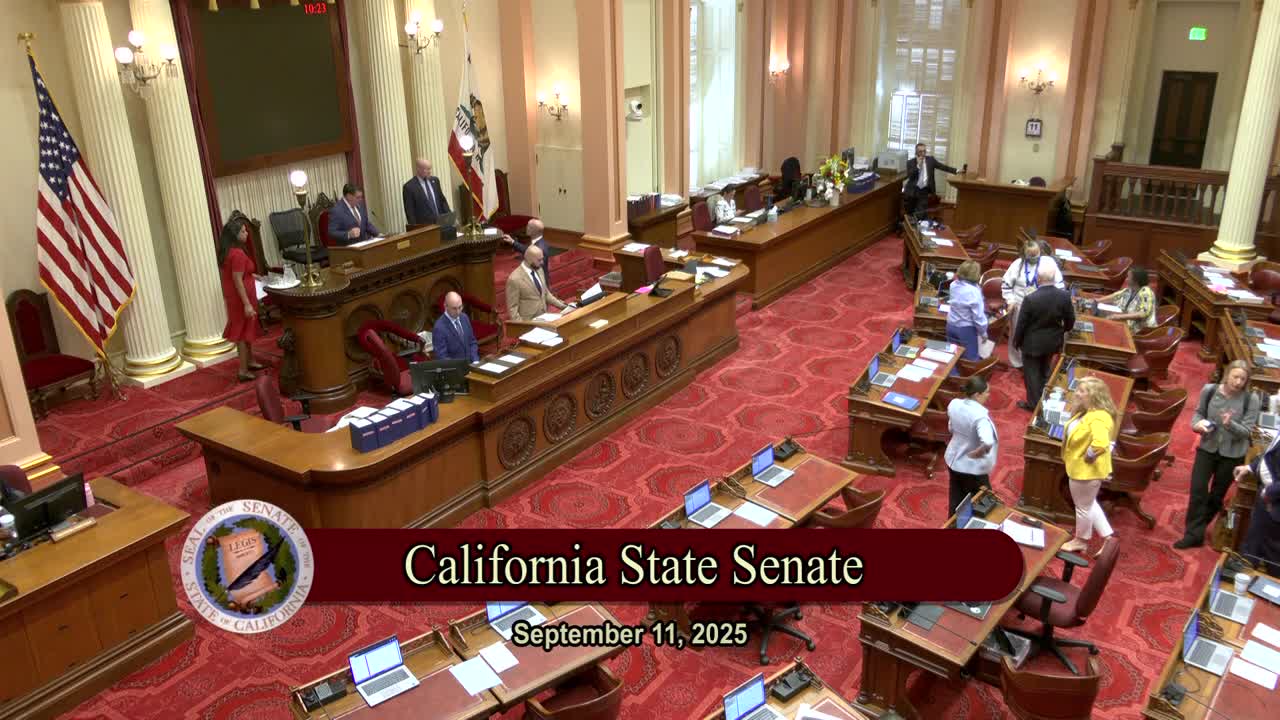
Bill Author

Bill Co-Author(s):