AB 749: Youth Sports for All Act.
- Session Year: 2025-2026
- House: Assembly
- Latest Version Date: 2025-10-13
Current Status:
Passed
(2025-10-13: Chaptered by Secretary of State - Chapter 705, Statutes of 2025.)
Introduced
In Committee
Awaiting First Chamber Vote
Passed First Chamber
In Committee
Awaiting Second Chamber Vote
Passed Second Chamber
Enacted
Existing law provides various programs for youth and adolescent health, including requiring a youth sports organization that elects to offer an athletic program to ensure athletes have access to an automated external defibrillator during official practice and regulating youth football. Existing law also authorizes a community youth athletic program to request state and federal level criminal history information for volunteer or hired coach candidates.
This bill, the Youth Sports for All Act, would require the State Public Health Officer to establish and convene the Blue Ribbon Commission on the Development of a California Department of Youth Sports or an Equivalent Centralized Entity to conduct a comprehensive study on the need for and feasibility of creating a centralized entity charged with supporting and regulating youth sports, as provided, on or before July 1, 2026, or 6 months after implementation commences as described below, whichever is later. The bill would require the commission to submit the study to the Legislature and the Governor on or before January 1, 2028, or 2 years after implementation commences, whichever is later. The bill would make implementation of its provisions contingent upon an appropriation by the Legislature or upon the State Department of Public Health obtaining sufficient funds from federal, nonprofit, or private sources.
This bill would create the Youth Sports Blue Ribbon Commission Fund in the State Treasury and would authorize moneys in the account to be expended by the department, upon appropriation by the Legislature, for purposes of the commission. The bill would create the Youth Sports Blue Ribbon Commission Special Fund Subaccount within the fund for the receipt and deposit of the aforementioned federal, nonprofit, or private moneys, and would continuously appropriate moneys in the subaccount to the department for purposes of the commission, thereby making an appropriation.
This bill would repeal its provisions on January 1, 2033.
Existing law provides various programs for youth and adolescent health, including requiring a youth sports organization that elects to offer an athletic program to ensure athletes have access to an automated external defibrillator during official practice and regulating youth football. Existing law also authorizes a community youth athletic program to request state and federal level criminal history information for volunteer or hired coach candidates.
This bill, the Youth Sports for All Act, would require the Secretary of California Health and Human Services and other relevant agencies or departments as determined by the secretary, to, on or before March 1, 2026, State Public Health Officer to establish and convene the Blue Ribbon Commission on the Development of a California Department of Youth Sports or an Equivalent Centralized Entity to conduct a comprehensive study on the need for and feasibility of creating a centralized entity charged with supporting and regulating youth sports, as provided. provided, on or before July 1, 2026, or 6 months after implementation commences as described below, whichever is later. The bill would require the commission to submit the study to the Legislature and the Governor on or before January 1, 2027, or one year 2028, or 2 years after implementation commences, whichever is later. The bill would make implementation of its provisions contingent upon an appropriation by the Legislature or upon the California Health and Human Services Agency State Department of Public Health obtaining sufficient funds from federal, nonprofit, or private sources.
This bill would create the Youth Sports Blue Ribbon Commission Fund in the State Treasury and would authorize moneys in the account to be expended by the agency, department, upon appropriation by the Legislature, for purposes of the commission. The bill would create the Youth Sports Blue Ribbon Commission Special Fund Subaccount within the fund for the receipt and deposit of the aforementioned federal, nonprofit, or private moneys, and would continuously appropriate moneys in the subaccount to the agency department for purposes of the commission, thereby making an appropriation.
This bill would repeal its provisions on January 1, 2030. 2033.
Existing law provides various programs for youth and adolescent health, including requiring a youth sports organization that elects to offer an athletic program to ensure athletes have access to an automated external defibrillator during official practice and regulating youth football. Existing law also authorizes a community youth athletic program to request state and federal level criminal history information for volunteer or hired coach candidates.
This bill, the Youth Sports for All Act, would require the Secretary of California Health and Human Services and other relevant agencies or departments as determined by the Secretary, secretary, to, on or before March 1, 2026, establish and convene the Blue Ribbon Commission on the Development of a California Department of Youth Sports or an Equivalent Centralized Entity to conduct a comprehensive study on the need for and feasibility of creating a centralized entity charged with supporting and regulating youth sports, as provided. The bill would require the commission to, on or before January 1, 2027, to submit the study to the Legislature and the Governor. Governor on or before January 1, 2027, or one year after implementation commences, whichever is later. The bill would make implementation of its provisions contingent upon an appropriation by the Legislature or upon the California Health and Human Services Agency obtaining sufficient funds from federal, nonprofit, or private sources. The
This bill would create the Youth Sports Blue Ribbon Commission Fund in the State Treasury and would authorize moneys in the account to be expended by the agency, upon appropriation by the Legislature, for purposes of the commission. The bill would create the Youth Sports Blue Ribbon Commission Special Fund Subaccount within the fund for the receipt and deposit of the aforementioned federal, nonprofit, or private moneys, and would continuously appropriate moneys in the subaccount to the agency for purposes of the commission, thereby making an appropriation. The
This bill would repeal its provisions on January 1, 2029. 2030.
Existing law provides various programs for youth and adolescent health, including requiring a youth sports organization that elects to offer an athletic program to ensure athletes have access to an automated external defibrillator during official practice and regulating youth football. Existing law also authorizes a community youth athletic program to request state and federal level criminal history information for volunteer or hired coach candidates.
This bill, the Youth Sports for All Act, would require the Secretary of California Health and Human Services and other relevant agencies or departments as determined by the Secretary, to, on or before March 1, 2026, establish and convene the Blue Ribbon Commission on the Development of a California Department of Youth Sports or an Equivalent Centralized Entity to conduct a comprehensive study on the need for and feasibility of creating a centralized entity charged with supporting and regulating youth sports, as provided. The bill would require the commission to, on or before January 1, 2027, submit the study to the Legislature and the Governor. The bill would make its provisions contingent upon an appropriation by the Legislature or upon the California Health and Human Services Agency obtaining sufficient funds from federal, non-profit, nonprofit, or private sources. The bill would create the Youth Sports Blue Ribbon Commission Fund in the State Treasury and would authorize moneys in the account to be expended by the agency, upon appropriation by the Legislature, for purposes of the commission. The bill would create the Youth Sports Blue Ribbon Commission Special Fund Subaccount within the fund for the receipt and deposit of the aforementioned federal, nonprofit, or private moneys, and would continuously appropriate moneys in the subaccount to the agency for purposes of the commission, thereby making an appropriation. The bill would repeal its provisions on January 1, 2029.
Existing law provides various programs for youth and adolescent health, including requiring a youth sports organization that elects to offer an athletic program to ensure athletes have access to an automated external defibrillator during official practice and regulating youth football. Existing law also authorizes a community youth athletic program to request state and federal level criminal history information for volunteer or hired coach candidates.
This bill bill, the Youth Sports for All Act, would require the Secretary of California Health and Human Services, in consultation with the State Department of Education, the Superintendent of Public Instruction, Services and other relevant agencies or departments as determined by the Secretary, to, on or before March 1, 2026, establish and convene the Blue Ribbon Commission on the Development of a California Department of Youth Sports or an Equivalent Centralized Entity to conduct a comprehensive study on the need for and feasibility of creating a centralized entity charged with supporting and regulating youth sports, as provided. The bill would require the commission to, on or before January 1, 2027, submit the study to the Legislature and the Governor. The bill would make its provisions contingent upon an appropriation by the Legislature or upon the California Health and Human Services Agency obtaining sufficient funds from federal, non-profit, or private sources. The bill would repeal its provisions on January 1, 2029.Existing law authorizes public and private secondary schools to participate in interscholastic sports, and authorizes schools to enter into associations or consortia to enact and enforce rules relating to eligibility for, and participation in, these activities. Existing law recognizes the California Interscholastic Federation to be a voluntary organization that consists of school and school-related personnel with responsibility for administering interscholastic athletic activities in secondary schools.
This bill would state the intent of the Legislature to enact subsequent legislation relating to a study to evaluate the creation of a California Department of Youth Sports. require the Secretary of California Health and Human Services, in consultation with the State Department of Education, the Superintendent of Public Instruction, and other relevant agencies or departments as determined by the Secretary, to, on or before March 1, 2026, establish and convene the Blue Ribbon Commission on the Development of a California Department of Youth Sports or an Equivalent Centralized Entity to conduct a comprehensive study on the need for and feasibility of creating a centralized entity charged with supporting and regulating youth sports, as provided. The bill would require the commission to, on or before January 1, 2027, submit the study to the Legislature and the Governor. The bill would repeal its provisions on January 1, 2029.Existing law authorizes public and private secondary schools to participate in interscholastic sports, and authorizes schools to enter into associations or consortia to enact and enforce rules relating to eligibility for, and participation in, these activities. Existing law recognizes the California Interscholastic Federation to be a voluntary organization that consists of school and school-related personnel with responsibility for administering interscholastic athletic activities in secondary schools.
This bill would state the intent of the Legislature to enact subsequent legislation relating to a study to evaluate the creation of a California Department of Youth Sports.
The Legislature finds and declares all of the following:
(a)The lack of standards and certification for coaching in youth sports have resulted in an unregulated youth sports coaching landscape. There is currently no state-level standardization or required certification for coaches, leading to inconsistency in training, safety, and quality in youth sports.
(b)The unregulated coaching landscape poses health and safety risks. Untrained or poorly trained coaches may not be equipped to handle the needs of diverse youth, promote positive sports experiences, and ensure safety.
(c)The fragmented community youth sports system is currently made up of disjointed networks with no single unified system to coordinate or oversee community-based youth sports across regions or organizations, creating inefficiencies and inconsistencies in quality.
(d)This fragmented system has resulted in the duplication of efforts. Multiple organizations work in overlapping areas, causing confusion and misallocation of resources.
(e)The inadequate funding of community-based sports fails to meet the growing demand for quality sports and fitness opportunities, particularly when considering the physical and mental health benefits of organized activity.
(f)The pay-to-play model for youth sports has become increasingly exclusionary, driven by a win-at-all-cost mentality that is creating undue stress and anxiety for participants and encouraging overspecialization at an early age, increasing injury risk. In addition, excessive travel, fees, and equipment costs create financial barriers for many families, leaving millions of children unable to participate in organized youth sports.
(g)Youth sports provide numerous benefits, including improved physical and mental health, academic success, and social development. They provide the opportunity to develop resilience and teamwork as well as other social skills that help make youth athletes life ready. Despite these benefits, participation rates vary significantly across racial and socioeconomic lines.
(h)The 2024 Play Equity Report, commissioned by the LA84 Foundation, highlights stark disparities, with Black and Latino youth participation in structured sports as low as 47 percent and 45 percent, respectively, compared to 59 percent for White youth. Barriers include cost, lack of facilities, and limited programming in underserved communities.
(i)A centralized entity, such as a California department or commission of youth sports, can be an essential entity for creating an integrated, equitable, and sustainable framework for youth sports. Through coordinated efforts, updated standards, investment, and a focus on reducing financial barriers, California can ensure all children have the opportunity to access and engage in sports and experience its lifelong physical, mental, and academic benefits.
(j)Models from other countries, where sports ministries successfully coordinate national sports policies, provide valuable examples.
(k)A centralized entity could address inequities by promoting inclusive, accessible, and affordable youth sports programs and coaching education.
SEC. 2.Article 2.8 (commencing with Section 124250) is added to Chapter 4 of Part 2 of Division 106 of the Health and Safety Code, to read:2.8.Youth Sports for All Act124250.This article shall be known, and may be cited, as the Youth Sports for All Act.
124251.For purposes of this article, the following definitions apply:
(a)Centralized entity means a department, commission, board, council, or their equivalent.
(b)Commission means the Blue Ribbon Commission on the Development of a California Department of Youth Sports or an Equivalent Centralized Entity established and convened pursuant to subdivision (a) of Section 124252.
(c)Department means the State Department of Public Health.
(d)Youth sports has the same meaning as youth sports organization as defined in Section 124235.
124252.(a)(1)The State Public Health Officer shall, on or before July 1, 2026, or six months after implementation of this article commences pursuant to subdivision (a) of Section 124256, whichever is later, establish and convene the Blue Ribbon Commission on the Development of a California Department of Youth Sports or an Equivalent Centralized Entity to conduct a comprehensive study to review the need for and feasibility of creating a centralized entity charged with supporting and regulating youth sports.
(2)The commission shall be composed of all of the following:
(A)The State Public Health Officer or their designee.
(B)Ten members appointed by the Governor.
(C)Three members appointed by the Senate Committee on Rules.
(D)Three members appointed by the Speaker of the Assembly.
(3)Each member appointed pursuant to paragraph (2) shall have expertise in one or more of the following areas:
(A)Convening state, local, and national organizations focused on addressing barriers in youth sports.
(B)Designing and implementing equitable strategies and programs to expand youth access to sports and play, including by providing technical assistance.
(C)Community-based youth development, including youth sports, play, physical activity, mental health, training, and coaching.
(D)Californians with disabilities, including adaptive youth sports programs.
(E)Publicly operated youth sports programs.
(F)Academic or research-informed knowledge of youth sports, youth development, physical education, or equivalent fields of study.
(G)Playing or supporting youth sports, including athletes and parents.
(H)Being a member of or representing an equity-focused organization that works with an impacted community whose lived experience with youth sports will inform the work of the commission.
(4)In making appointments to the commission, the appointing authorities shall take into consideration the diversity of the state so that the commissions composition reflects the communities of California.
(b)The commission shall be cochaired by both of the following:
(1)The State Public Health Officer or their designee.
(2)An appointed member selected by the members of the commission.
(c)The commission shall meet at least quarterly and keep official records of their proceedings. The commissions meetings shall be open to the public.
(d)The members of the commission shall serve without compensation, but shall be reimbursed for necessary traveling and other expenses incurred in performing their duties and responsibilities.
124254.(a)The commission shall conduct a study of issues in youth sports that includes all of the following:
(1)An assessment of the need and potential for a centralized entity to improve access to and involvement in sports for all youth, regardless of race, sex, sexual orientation, gender identity, disability, income, or geographic location, that addresses issues in youth sports, including, but not limited to, all of the following:
(A)Disparities in youth sports programming quality and availability.
(B)How to foster a safe, supportive, and inclusive environment for youth sports.
(C)How to increase and integrate regular physical activity and sports into the daily lives of youth, including, but not limited to, through after school programs and community-based organizations.
(D)How to implement statewide coaching certification requirements to ensure quality training for all coaches in youth sports.
(E)How to improve training and strategies for youth development, safety protocols, equity and inclusion, and sport-specific knowledge across the youth sports landscape.
(F)How to update and promote practices and safety protocols, including support for diverse forms of physical activity to increase equity and access to youth sports and play.
(G)How to better integrate structured sports and team-building activities into the daily lives of youth.
(H)How to create a mechanism for sustainable and adequate state investment in youth sports to improve accessibility, infrastructure, and overall quality.
(I)How to increase state investment in the expansion of accessible, free, or low-cost after school and community-based youth sports programs that complement academic and recreational goals.
(J)How to create a mechanism for state and local funding initiatives that reduce or eliminate financial barriers to youth sports participation.
(2)An evaluation of and recommendations for the duties, powers, and responsibilities of a centralized entity, including, but not limited to, all of the following:
(A)A determination of the appropriate levels of oversight of relevant laws and regulations, including safety and licensing requirements for coaches and staff of youth sports.
(B)A determination of which youth sports would benefit from support and regulation from a centralized entity.
(C)Development and administration of statewide licensing and safety requirements.
(D)Development and administration of statewide youth sports access and quality standards.
(E)Development of strategies and best practices to improve access and equity to competitive and noncompetitive youth sports and play.
(F)Coordination of relevant state, local, and federal entities to improve access and equity in youth sports programs, including sharing best practices and resources.
(G)Identifying duplication of efforts and inefficiencies among state and local entities and youth sports programs.
(H)Identifying data gaps and development of data collection and reporting requirements.
(3)A review of and recommendations for both of the following:
(A)The costs of creating and sustaining a centralized entity.
(B)Potential funding sources, including state, federal, private, and philanthropic sources.
(b)In conducting the study, the commission shall analyze models of centralized entities in other states and countries that are charged with supporting and regulating youth sports.
(c)The department may enter into a contract with an external entity, including an institution of higher education or a nonprofit organization with relevant expertise, to conduct the study required by this section.
(d)Before finalizing the study and before submission pursuant to subdivision (e), the commission shall publically present the study and provide an opportunity for public feedback.
(e)(1)The commission shall submit the study conducted pursuant to this section to the Legislature and the Governor on or before January 1, 2028, or two years after implementation of this article commences pursuant to subdivision (a) of Section 124256, whichever is later.
(2)A report to be submitted to the Legislature pursuant to paragraph (1) shall be submitted in compliance with Section 9795 of the Government Code.
124256.(a)The implementation of this article is contingent upon either of the following:
(1)An appropriation for its purposes in the annual Budget Act or another statute.
(2)Sufficient funds being obtained by the department from federal, nonprofit, or private sources for the purposes of implementing this article.
(b)The department may use funds from federal, nonprofit, or private sources to augment an appropriation made to implement this article.
(c)(1)The Youth Sports Blue Ribbon Commission Fund is hereby created in the State Treasury for the receipt and deposit of the moneys specified in paragraph (1) of subdivision (a). Moneys in the fund may be expended by the department, upon appropriation by the Legislature, for the purposes of implementing this article.
(2)The Youth Sports Blue Ribbon Commission Special Fund Subaccount is hereby created, in the Youth Sports Blue Ribbon Commission Fund, for the receipt and deposit of only federal, nonprofit, or private moneys, as specified in paragraph (2) of subdivision (a) and in subdivision (b). Notwithstanding Section 13340 of the Government Code, moneys in the subaccount are hereby continuously appropriated without regard to fiscal years to, and may be expended by, the department for the purposes of implementing this article.
(d)This article shall remain in effect only until January 1, 2033, and as of that date is repealed.
The Legislature finds and declares all of the following:
(a)The lack of standards and certification for coaching in youth sports have resulted in an unregulated youth sports coaching landscape. There is currently no state-level standardization or required certification for coaches, leading to inconsistency in training, safety, and quality in youth sports.
(b)The unregulated coaching landscape poses health and safety risks. Untrained or poorly trained coaches may not be equipped to handle the needs of diverse youth, promote positive sports experiences, and ensure safety.
(c)The fragmented community youth sports system is currently made up of disjointed networks with no single unified system to coordinate or oversee community-based youth sports across regions or organizations, creating inefficiencies and inconsistencies in quality.
(d)This fragmented system has resulted in the duplication of efforts. Multiple organizations work in overlapping areas, causing confusion and misallocation of resources.
(e)The inadequate funding of community-based sports fails to meet the growing demand for quality sports and fitness opportunities, particularly when considering the physical and mental health benefits of organized activity.
(f)The pay-to-play model for youth sports has become increasingly exclusionary, driven by a win-at-all-cost mentality that is creating undue stress and anxiety for participants and encouraging overspecialization at an early age, increasing injury risk. In addition, excessive travel, fees, and equipment costs create financial barriers for many families, leaving millions of children unable to participate in organized youth sports.
(g)Youth sports provide numerous benefits, including improved physical and mental health, academic success, and social development. They provide the opportunity to develop resilience and teamwork as well as other social skills that help make youth athletes life ready. Despite these benefits, participation rates vary significantly across racial and socioeconomic lines.
(h)The 2024 Play Equity Report, commissioned by the LA84 Foundation, highlights stark disparities, with Black and Latino youth participation in structured sports as low as 47 percent and 45 percent, respectively, compared to 59 percent for White youth. Barriers include cost, lack of facilities, and limited programming in underserved communities.
(i)A centralized entity, such as a California department or commission of youth sports, can be an essential entity for creating an integrated, equitable, and sustainable framework for youth sports. Through coordinated efforts, updated standards, investment, and a focus on reducing financial barriers, California can ensure all children have the opportunity to access and engage in sports and experience its lifelong physical, mental, and academic benefits.
(j)Models from other countries, where sports ministries successfully coordinate national sports policies, provide valuable examples.
(k)A centralized entity could address inequities by promoting inclusive, accessible, and affordable youth sports programs and coaching education.
SEC. 2.Article 2.8 (commencing with Section 124250) is added to Chapter 4 of Part 2 of Division 106 of the Health and Safety Code, to read:2.8.Youth Sports for All Act124250.This article shall be known, and may be cited, as the Youth Sports for All Act.
124251.For purposes of this article, the following definitions apply:
(a)Centralized entity means a department, commission, board, council, or their equivalent.
(b)Commission means the Blue Ribbon Commission on the Development of a California Department of Youth Sports or an Equivalent Centralized Entity established and convened pursuant to subdivision (a) of Section 124252.
(c)Department means the State Department of Public Health.
(c)(d)Youth sports has the same meaning as youth sports organization as defined in Section 124235.
124252.(a)(1)The Secretary of California Health and Human Services and other relevant agencies or departments as determined by the secretary, State Public Health Officer shall, on or before March 1, 2026, July 1, 2026, or six months after implementation of this article commences pursuant to subdivision (a) of Section 124256, whichever is later, establish and convene the Blue Ribbon Commission on the Development of a California Department of Youth Sports or an Equivalent Centralized Entity to conduct a comprehensive study to review the need for and feasibility of creating a centralized entity charged with supporting and regulating youth sports.
(2)The commission shall be composed of all of the following:
(A)The Secretary of California Health and Human Services or the secretarys State Public Health Officer or their designee.
(B)Ten members appointed by the Governor.
(C)Three members appointed by the Senate Committee on Rules.
(D)Three members appointed by the Speaker of the Assembly.
(3)Each member appointed pursuant to paragraph (2) shall have expertise in one or more of the following areas:
(A)Convening state, local, and national organizations focused on addressing barriers in youth sports.
(B)Designing and implementing equitable strategies and programs to expand youth access to sports and play, including by providing technical assistance.
(C)Community-based youth development, including youth sports, play, physical activity, mental health, training, and coaching.
(D)Californians with disabilities, including adaptive youth sports programs.
(E)Publicly operated youth sports programs.
(F)Academic or research-informed knowledge of youth sports, youth development, physical education, or equivalent fields of study.
(G)Playing or supporting youth sports, including athletes and parents.
(H)Being a member of or representing an equity-focused organization that works with an impacted community whose lived experience with youth sports will inform the work of the commission.
(4)In making appointments to the commission, the appointing authorities shall take into consideration the diversity of the state so that the commissions composition reflects the communities of California.
(b)The commission shall be cochaired by both of the following:
(1)The Secretary of California Health and Human Services or the secretarys State Public Health Officer or their designee.
(2)An appointed member selected by the members of the commission.
(c)The commission shall meet at least quarterly and keep official records of their proceedings. The commissions meetings shall be open to the public.
(d)The members of the commission shall serve without compensation, but shall be reimbursed for necessary traveling and other expenses incurred in performing their duties and responsibilities.
124254.(a)The commission shall conduct a study of issues in youth sports that includes all of the following:
(1)An assessment of the need and potential for a centralized entity to improve access to and involvement in sports for all youth, regardless of race, sex, sexual orientation, gender identity, disability, income, or geographic location, that addresses issues in youth sports, including, but not limited to, all of the following:
(A)Disparities in youth sports programming quality and availability.
(B)How to foster a safe, supportive, and inclusive environment for youth sports.
(C)How to increase and integrate regular physical activity and sports into the daily lives of youth, including, but not limited to, through after school programs and community-based organizations.
(D)How to implement statewide coaching certification requirements to ensure quality training for all coaches in youth sports.
(E)How to improve training and strategies for youth development, safety protocols, equity and inclusion, and sport-specific knowledge across the youth sports landscape.
(F)How to update and promote practices and safety protocols, including support for diverse forms of physical activity to increase equity and access to youth sports and play.
(G)How to better integrate structured sports and team-building activities into the daily lives of youth.
(H)How to create a mechanism for sustainable and adequate state investment in youth sports to improve accessibility, infrastructure, and overall quality.
(I)How to increase state investment in the expansion of accessible, free, or low-cost after school and community-based youth sports programs that complement academic and recreational goals.
(J)How to create a mechanism for state and local funding initiatives that reduce or eliminate financial barriers to youth sports participation.
(2)An evaluation of and recommendations for the duties, powers, and responsibilities of a centralized entity, including, but not limited to, all of the following:
(A)A determination of the appropriate levels of oversight of relevant laws and regulations, including safety and licensing requirements for coaches and staff of youth sports.
(B)A determination of which youth sports would benefit from support and regulation from a centralized entity.
(C)Development and administration of statewide licensing and safety requirements.
(D)Development and administration of statewide youth sports access and quality standards.
(E)Development of strategies and best practices to improve access and equity to competitive and noncompetitive youth sports and play.
(F)Coordination of relevant state, local, and federal entities to improve access and equity in youth sports programs, including sharing best practices and resources.
(G)Identifying duplication of efforts and inefficiencies among state and local entities and youth sports programs.
(H)Identifying data gaps and development of data collection and reporting requirements.
(3)A review of and recommendations for both of the following:
(A)The costs of creating and sustaining a centralized entity.
(B)Potential funding sources, including state, federal, private, and philanthropic sources.
(b)In conducting the study, the commission shall analyze models of centralized entities in other states and countries that are charged with supporting and regulating youth sports.
(c)The California Health and Human Services Agency department may enter into a contract with an external entity, including an institution of higher education or a nonprofit organization with relevant expertise, to conduct the study required by this section.
(d)Before finalizing the study and before submission pursuant to subdivision (e), the commission shall publically present the study and provide an opportunity for public feedback.
(e)(1)The commission shall submit the study conducted pursuant to this section to the Legislature and the Governor on or before January 1, 2027, or one year 2028, or two years after implementation of this article commences pursuant to subdivision (a) of Section 124256, whichever is later.
(2)A report to be submitted to the Legislature pursuant to paragraph (1) shall be submitted in compliance with Section 9795 of the Government Code.
124256.(a)The implementation of this article is contingent upon either of the following:
(1)An appropriation for its purposes in the annual Budget Act or another statute.
(2)Sufficient funds being obtained by the California Health and Human Services Agency department from federal, nonprofit, or private sources for the purposes of implementing this article.
(b)The California Health and Human Services Agency department may use funds from federal, nonprofit, or private sources to augment an appropriation made to implement this article.
(c)(1)The Youth Sports Blue Ribbon Commission Fund is hereby created in the State Treasury for the receipt and deposit of the moneys specified in paragraph (1) of subdivision (a). Moneys in the fund may be expended by the California Health and Human Services Agency, department, upon appropriation by the Legislature, for the purposes of implementing this article.
(2)The Youth Sports Blue Ribbon Commission Special Fund Subaccount is hereby created, in the Youth Sports Blue Ribbon Commission Fund, for the receipt and deposit of only federal, nonprofit, or private moneys, as specified in paragraph (2) of subdivision (a) and in subdivision (b). Notwithstanding Section 13340 of the Government Code, moneys in the subaccount are hereby continuously appropriated without regard to fiscal years to, and may be expended by, the California Health and Human Services Agency department for the purposes of implementing this article.
(d)This article shall remain in effect only until January 1, 2030, 2033, and as of that date is repealed.
The Legislature finds and declares all of the following:
(a)The lack of standards and certification for coaching in youth sports have resulted in an unregulated youth sports coaching landscape. There is currently no state-level standardization or required certification for coaches, leading to inconsistency in training, safety, and quality in youth sports.
(b)The unregulated coaching landscape poses health and safety risks. Untrained or poorly trained coaches may not be equipped to handle the needs of diverse youth, promote positive sports experiences, and ensure safety.
(c)The fragmented community youth sports system is currently made up of disjointed networks with no single unified system to coordinate or oversee community-based youth sports across regions or organizations, creating inefficiencies and inconsistencies in quality.
(d)This fragmented system has resulted in the duplication of efforts. Multiple organizations work in overlapping areas, causing confusion and misallocation of resources.
(e)The inadequate funding of community-based sports fails to meet the growing demand for quality sports and fitness opportunities, particularly when considering the physical and mental health benefits of organized activity.
(f)The pay-to-play model for youth sports has become increasingly exclusionary, driven by a win-at-all-cost mentality that is creating undue stress and anxiety for participants and encouraging overspecialization at an early age, increasing injury risk. In addition, excessive travel, fees, and equipment costs create financial barriers for many families, leaving millions of children unable to participate in organized youth sports.
(g)Youth sports provide numerous benefits, including improved physical and mental health, academic success, and social development. They provide the opportunity to develop resilience and teamwork as well as other social skills that help make youth athletes life ready. Despite these benefits, participation rates vary significantly across racial and socioeconomic lines.
(h)The 2024 Play Equity Report, commissioned by the LA84 Foundation, highlights stark disparities, with Black and Latino youth participation in structured sports as low as 47 percent and 45 percent, respectively, compared to 59 percent for White youth. Barriers include cost, lack of facilities, and limited programming in underserved communities.
(i)A centralized entity, such as a California department or commission of youth sports, can be an essential entity for creating an integrated, equitable, and sustainable framework for youth sports. Through coordinated efforts, updated standards, investment, and a focus on reducing financial barriers, California can ensure all children have the opportunity to access and engage in sports and experience its lifelong physical, mental, and academic benefits.
(j)Models from other countries, where sports ministries successfully coordinate national sports policies, provide valuable examples.
(k)A centralized entity could address inequities by promoting inclusive, accessible, and affordable youth sports programs and coaching education.
SEC. 2.Article 2.8 (commencing with Section 124250) is added to Chapter 4 of Part 2 of Division 106 of the Health and Safety Code, to read:2.8.Youth Sports for All Act124250.This article shall be known, and may be cited, as the Youth Sports for All Act.
124251.For purposes of this article, the following definitions apply:
(a)Centralized entity means a department, commission, board, council, or their equivalent.
(b)Commission means the Blue Ribbon Commission on the Development of a California Department of Youth Sports or an Equivalent Centralized Entity established and convened pursuant to subdivision (a) of Section 124252.
(c)Youth sports has the same meaning as youth sports organization as defined in Section 124235.
124252.(a)(1)The Secretary of California Health and Human Services and other relevant agencies or departments as determined by the secretary, shall, on or before March 1, 2026, establish and convene the Blue Ribbon Commission on the Development of a California Department of Youth Sports or an Equivalent Centralized Entity to conduct a comprehensive study to review the need for and feasibility of creating a centralized entity charged with supporting and regulating youth sports.
(2)The commission shall be composed of all of the following:
(A)Seven members appointed by the California Health and Human Services Agency, as follows:(i)One member who represents a statewide parents association.(ii)One member who represents youth athletes.(iii)One member from an institution of higher education with relevant academic knowledge of youth sports, youth development, physical education, or equivalent fields of study.(iv)One member from an organization with relevant expertise in youth mental health.(v)One member from an organization that represents publicly funded youth sports programs.(vi)One member from a community-based, sports-based youth development program.(vii)One member who represents a statewide organization that advocates for Californians with disabilities.(B)One member appointed by the Governors Advisory Council on Physical Fitness and Mental Well-Being.(C)One member appointed by the Governor.(D)One member appointed by the Play Equity Fund.(E)One member appointed by the Positive Coaching Alliance.(F)One member appointed by Playworks.(G)One member appointed by Center for Healing and Justice Through Sport.(H)One member appointed by the California Interscholastic Federation.(I)One member appointed by a statewide organization that represents municipalities and local governments that operate youth sports.(J)One or more additional members appointed by the California Health and Human Services Agency as needed to support the work of the commission.(A)The Secretary of California Health and Human Services or the secretarys designee.
(B)Ten members appointed by the Governor.
(C)Three members appointed by the Senate Committee on Rules.
(D)Three members appointed by the Speaker of the Assembly.
(3)Each member appointed pursuant to paragraph (2) shall have expertise in one or more of the following areas:
(A)Convening state, local, and national organizations focused on addressing barriers in youth sports.
(B)Designing and implementing equitable strategies and programs to expand youth access to sports and play, including by providing technical assistance.
(C)Community-based youth development, including youth sports, play, physical activity, mental health, training, and coaching.
(D)Californians with disabilities, including adaptive youth sports programs.
(E)Publicly operated youth sports programs.
(F)Academic or research-informed knowledge of youth sports, youth development, physical education, or equivalent fields of study.
(G)Playing or supporting youth sports, including athletes and parents.
(H)Being a member of or representing an equity-focused organization that works with an impacted community whose lived experience with youth sports will inform the work of the commission.
(4)In making appointments to the commission, the appointing authorities shall take into consideration the diversity of the state so that the commissions composition reflects the communities of California.
(b)The commission shall be cochaired by one of the members appointed by the agency pursuant to subparagraph (A) of paragraph (2) subdivision (a) and the member appointed by the Play Equity Fund pursuant to subparagraph (E) of paragraph (2) subdivision (a). both of the following:
(1)The Secretary of California Health and Human Services or the secretarys designee.
(2)An appointed member selected by the members of the commission.
(c)The commission shall meet at least quarterly and keep official records of their proceedings. The commissions meetings shall be open to the public.
(d)The members of the commission shall serve without compensation, but shall be reimbursed for necessary traveling and other expenses incurred in performing their duties and responsibilities.
124254.(a)The commission shall conduct a study of issues in youth sports that includes all of the following:
(1)An assessment of the need and potential for a centralized entity to improve access to and involvement in sports for all youth, regardless of race, sex, sexual orientation, gender identity, disability, income, or geographic location, that addresses issues in youth sports, including, but not limited to, all of the following:
(A)Disparities in youth sports programming quality and availability.
(B)How to foster a safe, supportive, and inclusive environment for youth sports.
(C)How to increase and integrate regular physical activity and sports into the daily lives of youth, including, but not limited to, through after school programs and community-based organizations.
(D)How to implement statewide coaching certification requirements to ensure quality training for all coaches in youth sports.
(E)How to improve training and strategies for youth development, safety protocols, equity and inclusion, and sport-specific knowledge across the youth sports landscape.
(F)How to update and promote practices and safety protocols, including support for diverse forms of physical activity to increase equity and access to youth sports and play.
(G)How to better integrate structured sports and team-building activities into the daily lives of youth.
(H)How to create a mechanism for sustainable and adequate state investment in youth sports to improve accessibility, infrastructure, and overall quality.
(I)How to increase state investment in the expansion of accessible, free, or low-cost after school and community-based youth sports programs that complement academic and recreational goals.
(J)How to create a mechanism for state and local funding initiatives that reduce or eliminate financial barriers to youth sports participation.
(2)An evaluation of and recommendations for the duties, powers, and responsibilities of a centralized entity, including, but not limited to, all of the following:
(A)A determination of the appropriate levels of oversight of relevant laws and regulations, including safety and licensing requirements for coaches and staff of youth sports.
(B)A determination of which youth sports would benefit from support and regulation from a centralized entity.
(C)Development and administration of statewide licensing and safety requirements.
(D)Development and administration of statewide youth sports access and quality standards.
(E)Development of strategies and best practices to improve access and equity to competitive and noncompetitive youth sports and play.
(F)Coordination of relevant state, local, and federal entities to improve access and equity in youth sports programs, including sharing best practices and resources.
(G)Identifying duplication of efforts and inefficiencies among state and local entities and youth sports programs.
(H)Identifying data gaps and development of data collection and reporting requirements.
(3)A review of and recommendations for both of the following:
(A)The costs of creating and sustaining a centralized entity.
(B)Potential funding sources, including state, federal, private, and philanthropic sources.
(b)In conducting the study, the commission shall analyze models of centralized entities in other states and countries that are charged with supporting and regulating youth sports.
(c)The California Health and Human Services Agency may enter into a contract with an external entity, including an institution of higher education or a nonprofit organization with relevant expertise, to conduct the study required by this section.
(d)Before finalizing the study and before submission pursuant to subdivision (e), the commission shall publically present the study and provide an opportunity for public feedback.
(e)(1)The commission shall, on or before January 1, 2027, shall submit the study conducted pursuant to this section to the Legislature and the Governor. Governor on or before January 1, 2027, or one year after implementation of this article commences pursuant to subdivision (a) of Section 124256, whichever is later.
(2)A report to be submitted to the Legislature pursuant to paragraph (1) shall be submitted in compliance with Section 9795 of the Government Code.
124256.(a)The implementation of this article is contingent upon either of the following:
(1)An appropriation for its purposes in the annual Budget Act or another statute.
(2)Sufficient funds being obtained by the California Health and Human Services Agency from federal, nonprofit, or private sources for the purposes of implementing this article.
(b)The California Health and Human Services Agency may use funds from federal, nonprofit, or private sources to augment an appropriation made to implement this article.
(c)(1)The Youth Sports Blue Ribbon Commission Fund is hereby created in the State Treasury for the receipt and deposit of the moneys specified in paragraph (1) of subdivision (a). Moneys in the fund may be expended by the California Health and Human Services Agency, upon appropriation by the Legislature, for the purposes of implementing this article.
(2)The Youth Sports Blue Ribbon Commission Special Fund Subaccount is hereby created, in the Youth Sports Blue Ribbon Commission Fund, for the receipt and deposit of only federal, nonprofit, or private moneys, as specified in paragraph (2) of subdivision (a) and in subdivision (b). Notwithstanding Section 13340 of the Government Code, moneys in the subaccount are hereby continuously appropriated without regard to fiscal years to, and may be expended by, the California Health and Human Services Agency for the purposes of implementing this article.
(d)This article shall remain in effect only until January 1, 2029, 2030, and as of that date is repealed.
The Legislature finds and declares all of the following:
(a)The lack of standards and certification for coaching in youth sports have resulted in an unregulated youth sports coaching landscape. There is currently no state-level standardization or required certification for coaches, leading to inconsistency in training, safety, and quality in youth sports.
(b)The unregulated coaching landscape poses health and safety risks. Untrained or poorly trained coaches may not be equipped to handle the needs of diverse youth, promote positive sports experiences, and ensure safety.
(c)The fragmented community youth sports system is currently made up of disjointed networks with no single unified system to coordinate or oversee community-based youth sports across regions or organizations, creating inefficiencies and inconsistencies in quality.
(d)This fragmented system has resulted in the duplication of efforts. Multiple organizations work in overlapping areas, causing confusion and misallocation of resources.
(e)The inadequate funding of community-based sports fails to meet the growing demand for quality sports and fitness opportunities, particularly when considering the physical and mental health benefits of organized activity.
(f)The pay-to-play model for youth sports has become increasingly exclusionary, driven by a win-at-all-cost mentality that is creating undue stress and anxiety for participants and encouraging overspecialization at an early age, increasing injury risk. In addition, excessive travel, fees, and equipment costs create financial barriers for many families, leaving millions of children unable to participate in organized youth sports.
(g)Youth sports provide numerous benefits, including improved physical and mental health, academic success, and social development. They provide the opportunity to develop resilience and teamwork as well as other social skills that help make youth athletes life ready. Despite these benefits, participation rates vary significantly across racial and socioeconomic lines.
(h)The 2024 Play Equity Report, commissioned by the LA84 Foundation, highlights stark disparities, with Black and Latino youth participation in structured sports as low as 47 percent and 45 percent, respectively, compared to 59 percent for White youth. Barriers include cost, lack of facilities, and limited programming in underserved communities.
(i)A centralized entity, such as a California department or commission of youth sports, can be an essential entity for creating an integrated, equitable, and sustainable framework for youth sports. Through coordinated efforts, updated standards, investment, and a focus on reducing financial barriers, California can ensure all children have the opportunity to access and engage in sports and experience its lifelong physical, mental, and academic benefits.
(j)Models from other countries, where sports ministries successfully coordinate national sports policies, provide valuable examples.
(k)A centralized entity could address inequities by promoting inclusive, accessible, and affordable youth sports programs and coaching education.
SEC. 2.Article 2.8 (commencing with Section 124250) is added to Chapter 4 of Part 2 of Division 106 of the Health and Safety Code, to read:2.8.YOUTH SPORTS FOR ALL ACT Youth Sports for All Act124250.This article shall be known, and may be cited, as the Youth Sports for All Act.
124251.For purposes of this article, the following definitions apply:
(a)Centralized entity means a department, commission, board, council, or their equivalent.
(b)Commission means the Blue Ribbon Commission on the Development of a California Department of Youth Sports or an Equivalent Centralized Entity established and convened pursuant to subdivision (a) of Section 124252.
(c)Youth sports has the same meaning as youth sports organization as defined in Section 124235.
124252.(a)(1)The Secretary of California Health and Human Services and other relevant agencies or departments as determined by the secretary, shall, on or before March 1, 2026, establish and convene the Blue Ribbon Commission on the Development of a California Department of Youth Sports or an Equivalent Centralized Entity to conduct a comprehensive study to review the need for and feasibility of creating a centralized entity charged with supporting and regulating youth sports.
(2)The commission shall be composed of all of the following:
(A)Seven members appointed by the California Health and Human Services Agency, as follows:
(i)One member who represents a statewide parents association.
(ii)One member who represents youth athletes.
(iii)One member from an institution of higher education with relevant academic knowledge of youth sports, youth development, physical education, or equivalent fields of study.
(iv)One member from an organization with relevant expertise in youth mental health.
(v)One member from an organization that represents publicly funded youth sports programs.
(vi)One member from a community-based, sports-based youth development program.
(vii)One member who represents a statewide organization that advocates for Californians with disabilities.
(B)One member appointed by the Governors Advisory Council on Physical Fitness and Mental Well-Being.
(C)One member appointed by the Governor.
(D)One member appointed by the Play Equity Fund.
(E)One member appointed by the Positive Coaching Alliance.
(F)One member appointed by Playworks.
(G)One member appointed by Center for Healing and Justice Through Sport.
(H)One member appointed by the California Interscholastic Federation.
(I)One member appointed by a statewide organization that represents municipalities and local governments that operate youth sports.
(J)One or more additional members appointed by the California Health and Human Services Agency as needed to support the work of the commission.
(b)The commission shall be cochaired by one of the members appointed by the agency pursuant to subparagraph (A) of paragraph (2) subdivision (a) and the member appointed by the Play Equity Fund pursuant to subparagraph (E) of paragraph (2) subdivision (a).
124254.(a)The commission shall conduct a study of issues in youth sports that includes all of the following:
(1)An assessment of the need and potential for a centralized entity to improve access to and involvement in sports for all youth, regardless of race, income, or geographic location, that addresses issues in youth sports, including, but not limited to, all of the following:
(A)Disparities in youth sports programming quality and availability.
(B)How to foster a safe, supportive, and inclusive environment for youth sports.
(C)How to increase and integrate regular physical activity and sports into the daily lives of youth, including, but not limited to, through after school programs and community-based organizations.
(D)How to implement statewide coaching certification requirements to ensure quality training for all coaches in youth sports.
(E)How to improve training and strategies for youth development, safety protocols, equity and inclusion, and sport-specific knowledge across the youth sports landscape.
(F)How to update and promote practices and safety protocols, including support for diverse forms of physical activity to increase equity and access to youth sports and play.
(G)How to better integrate structured sports and team-building activities into the daily lives of youth.
(H)How to create a mechanism for sustainable and adequate state investment in youth sports to improve accessibility, infrastructure, and overall quality.
(I)How to increase state investment in the expansion of accessible, free, or low-cost after school and community-based youth sports programs that complement academic and recreational goals.
(J)How to create a mechanism for state and local funding initiatives that reduce or eliminate financial barriers to youth sports participation.
(2)An evaluation of and recommendations for the duties, powers, and responsibilities of a centralized entity, including, but not limited to, all of the following:
(A)A determination of the appropriate levels of oversight of relevant laws and regulations, including safety and licensing requirements for coaches and staff of youth sports.
(B)A determination of which youth sports would benefit from support and regulation from a centralized entity.
(C)Development and administration of statewide licensing and safety requirements.
(D)Development and administration of statewide youth sports access and quality standards.
(E)Development of strategies and best practices to improve access and equity to competitive and noncompetitive youth sports and play.
(F)Coordination of relevant state, local, and federal entities to improve access and equity in youth sports programs, including sharing best practices and resources.
(G)Identifying duplication of efforts and inefficiencies among state and local entities and youth sports programs.
(H)Identifying data gaps and development of data collection and reporting requirements.
(3)A review of and recommendations for both of the following:
(A)The costs of creating and sustaining a centralized entity.
(B)Potential funding sources, including state, federal, private, and philanthropic sources.
(b)In conducting the study, the commission shall analyze models of centralized entities in other states and countries that are charged with supporting and regulating youth sports.
(c)The California Health and Human Services Agency may enter into a contract with an external entity, including an institution of higher education or a nonprofit organization with relevant expertise, to conduct the study required by this section.
(d)Before finalizing the study and before submission pursuant to subdivision (e), the commission shall publically present the study and provide an opportunity for public feedback.
(e)(1)The commission shall, on or before January 1, 2027, submit the study conducted pursuant to this section to the Legislature and the Governor.
(2)A report to be submitted to the Legislature pursuant to paragraph (1) shall be submitted in compliance with Section 9795 of the Government Code.
124256.(a)The implementation of this article is contingent upon either of the following:
(1)An appropriation for its purposes in the annual Budget Act or another statute.
(2)Sufficient funds being obtained by the California Health and Human Services Agency from federal, non-profit, nonprofit, or private sources for the purposes of implementing this article.
(b)The California Health and Human Services Agency may use funds from federal, non-profit, nonprofit, or private sources to augment an appropriation made to implement this article.
(c)(1)The Youth Sports Blue Ribbon Commission Fund is hereby created in the State Treasury for the receipt and deposit of the moneys specified in paragraph (1) of subdivision (a). Moneys in the fund may be expended by the California Health and Human Services Agency, upon appropriation by the Legislature, for the purposes of implementing this article.
(2)The Youth Sports Blue Ribbon Commission Special Fund Subaccount is hereby created, in the Youth Sports Blue Ribbon Commission Fund, for the receipt and deposit of only federal, nonprofit, or private moneys, as specified in paragraph (2) of subdivision (a) and in subdivision (b). Notwithstanding Section 13340 of the Government Code, moneys in the subaccount are hereby continuously appropriated without regard to fiscal years to, and may be expended by, the California Health and Human Services Agency for the purposes of implementing this article.
(c)(d)This article shall remain in effect only until January 1, 2029, and as of that date is repealed.
The Legislature finds and declares all of the following:
(a)The lack of standards and certification for coaching in youth sports have resulted in an unregulated youth sports coaching landscape. There is currently no state-level standardization or required certification for coaches, leading to inconsistency in training, safety, and quality in youth sports.
(b)The unregulated coaching landscape poses health and safety risks. Untrained or poorly trained coaches may not be equipped to handle the needs of diverse youth, promote positive sports experiences, and ensure safety.
(c)The fragmented community youth sports system is currently made up of disjointed networks with no single unified system to coordinate or oversee community-based youth sports across regions or organizations, creating inefficiencies and inconsistencies in quality.
(d)This fragmented system has resulted in the duplication of efforts. Multiple organizations work in overlapping areas, causing confusion and misallocation of resources.
(e)The Physical Education Model Content Standards for California Public Schools last updated in 2006, do not reflect current physical education practices or adequately address the broad needs of todays youth. Updated standards will support schools and sports programs to improve their structure for childrens physical development, mental health, and overall well-being.(f)Updating the physical education model content standards is especially critical when considering the diversity of student needs due to disabilities, adverse childhood experiences, and cultural considerations. (g)(e)The inadequate funding of school-based and community-based sports fails to meet the growing demand for quality sports and fitness opportunities, particularly when considering the physical and mental health benefits of organized activity.
(h)School-based physical education and after school programs are underfunded and recess is often cut short or underfunded. (i)(f)The pay-to-play model for youth sports has become increasingly exclusionary, driven by a win-at-all-cost mentality that is creating undue stress and anxiety for participants and encouraging overspecialization at an early age, increasing injury risk. In addition, excessive travel, fees, and equipment costs create financial barriers for many families, leaving millions of children unable to participate in organized youth sports.
(j)(g)Youth sports provide numerous benefits, including improved physical and mental health, academic success, and social development. They provide the opportunity to develop resilience and teamwork as well as other social skills that help make youth athletes life ready. Despite these benefits, participation rates vary significantly across racial and socioeconomic lines.
(k)(h)The 2024 Play Equity Report, commissioned by the LA84 Foundation, highlights stark disparities, with Black and Latino youth participation in structured sports as low as 47 percent and 45 percent, respectively, compared to 59 percent for White youth. Barriers include cost, lack of facilities, and limited programming in underserved communities.
(l)(i)A centralized entity, such as a California department or commission of youth sports, can be an essential entity for creating an integrated, equitable, and sustainable framework for youth sports. Through coordinated efforts, updated standards, investment, and a focus on reducing financial barriers, California can ensure all children have the opportunity to access and engage in sports and experience its lifelong physical, mental, and academic benefits.
(m)(j)Models from other countries, where sports ministries successfully coordinate national sports policies, provide valuable examples.
(n)(k)A centralized entity could address inequities by promoting inclusive, accessible, and affordable youth sports programs and coaching education.
SEC. 2.Article 2.8 (commencing with Section 124250) is added to Chapter 4 of Part 2 of Division 106 of the Health and Safety Code, to read:2.8.YOUTH SPORTS FOR ALL ACT124250.This article shall be known, and may be cited, as the Youth Sports for All Act.
124251.For purposes of this article, the following definitions apply:
(a)Centralized entity means a department, commission, board, council, or their equivalent.
(b)Commission means the Blue Ribbon Commission on the Development of a California Department of Youth Sports or an Equivalent Centralized Entity established and convened pursuant to subdivision (a) of Section 124252.
(c)Youth sports has the same meaning as youth sports organization as defined in Section 124235.
124252.(a)(1)The Secretary of California Health and Human Services, in consultation with the State Department of Education, the Superintendent of Public Instruction, Services and other relevant agencies or departments as determined by the Secretary, secretary, shall, on or before March 1, 2026, establish and convene the Blue Ribbon Commission on the Development of a California Department of Youth Sports or an Equivalent Centralized Entity to conduct a comprehensive study to review the need for and feasibility of creating a centralized entity charged with supporting and regulating youth sports.
(2)The commission shall be composed of all of the following:
(A)10 Seven members appointed by the California Health and Human Services Agency, as follows:
(i)One member who represents a statewide teachers association.(ii)One member who represents a statewide administrators association.(iii)(i)One member who represents a statewide parents association.
(iv)(ii)One member who represents youth athletes.
(v)(iii)One member from an institution of higher education with relevant academic knowledge of youth sports, youth development, physical education, or equivalent fields of study.
(vi)(iv)One member from an organization with relevant expertise in youth mental health.
(vii)(v)One member from an organization that represents publicly funded youth sports programs.
(viii)(vi)One member from a community-based, sports-based youth development program.
(ix)One member with relevant experience providing instruction in physical education.(x)One additional member.(B)One member appointed by the State Department of Education.(C)(vii)One member who represents a statewide organization that advocates for Californians with disabilities.
(B)One member appointed by the Governors Advisory Council on Physical Fitness and Mental Well-Being.
(D)(C)One member appointed by the Governor.
(E)(D)One member appointed by the Play Equity Fund.
(F)(E)One member appointed by the Positive Coaching Alliance.
(G)(F)One member appointed by Playworks.
(H)(G)One member appointed by Center for Healing and Justice Through Sport.
(I)(H)One member appointed by the California Interscholastic Federation.
(J)(I)One member appointed by a statewide organization that represents municipalities and local governments that operate youth sports.
(K)(J)One or more additional members appointed by the California Health and Human Services Agency as needed to support the work of the commission.
(b)The commission shall be cochaired by one of the members appointed by the agency pursuant to subparagraph (A) of paragraph (2) subdivision (a) and the member appointed by the Play Equity Fund pursuant to subparagraph (E) of paragraph (2) subdivision (a).
124254.(a)The commission shall conduct a study of issues in youth sports that includes all of the following:
(1)An assessment of the need and potential for a centralized entity to improve access to and involvement in sports for all youth, regardless of race, income, or geographic location, that addresses issues in youth sports, including, but not limited to, all of the following:
(A)Disparities in youth sports programming quality and availability.
(B)How to foster a safe, supportive, and inclusive environment for youth sports.
(C)How to increase and integrate regular physical activity and sports into elementary and secondary education through schoolday programming, the daily lives of youth, including, but not limited to, through after school programs, programs and community-based organizations.
(D)How to implement statewide coaching certification requirements to ensure quality training for all coaches in youth sports.
(E)How to update curriculum frameworks to include improve training and strategies for youth development, safety protocols, equity and inclusion, and sport-specific knowledge. knowledge across the youth sports landscape.
(F)How to update the current physical education model content standards and frameworks to ensure that they reflect best educational and promote practices and safety guidelines, and include protocols, including support for diverse forms of physical activity to increase equity and access to youth sports and play.
(G)How to better integrate structured sports and team-building activities into physical education curricula. the daily lives of youth.
(H)How to create a mechanism for sustainable and adequate state investment in school-based physical education programs and recess and after school youth sports to improve accessibility, infrastructure, and overall quality.
(I)How to increase state investment in the expansion of accessible, free, or low-cost after school and community-based youth sports programs that complement academic and recreational goals.
(J)How to create a mechanism for state and local funding initiatives that reduce or eliminate financial barriers to youth sports participation.
(2)An evaluation of and recommendations for the duties, powers, and responsibilities of a centralized entity, including, but not limited to, all of the following:
(A)A determination of the appropriate levels of oversight of relevant laws and regulations, including safety and licensing requirements for coaches and staff of youth sports.
(B)A determination of which youth sports would benefit from support and regulation from a centralized entity.
(C)Development and administration of statewide licensing and safety requirements.
(D)Development and administration of statewide youth sports access and quality standards.
(E)Development of strategies and best practices to improve access and equity to competitive and noncompetitive youth sports and play.
(F)Coordination of relevant state state, local, and federal entities to improve access and equity in youth sports programs, including updating physical education model content standards, frameworks, and curricula. sharing best practices and resources.
(G)Identifying duplication of efforts and inefficiencies among state and local entities and youth sports programs.
(H)Identifying data gaps and development of data collection and reporting requirements.
(3)A review of and recommendations for both of the following:
(A)The costs of creating and sustaining a centralized entity.
(B)Potential funding sources, including state, federal, private, and philanthropic sources.
(b)In conducting the study, the commission shall analyze models of centralized entities in other states and countries that are charged with supporting and regulating youth sports.
(c)The California Health and Human Services Agency may enter into a contract with an external entity, including an institution of higher education or a nonprofit organization with relevant expertise, to conduct the study required by this section.
(d)Before finalizing the study and before submission pursuant to subdivision (e), the commission shall publically present the study and provide an opportunity for public feedback.
(e)(1)The commission shall, on or before January 1, 2027, submit the study conducted pursuant to this section to the Legislature and the Governor.
(2)A report to be submitted to the Legislature pursuant to paragraph (1) shall be submitted in compliance with Section 9795 of the Government Code.
124256.(a)The implementation of this article is contingent upon an either of the following:
(1)An appropriation for its purposes in the annual Budget Act or another statute.
(2)Sufficient funds being obtained by the California Health and Human Services Agency from federal, non-profit, or private sources for the purposes of implementing this article.
(b)The California Health and Human Services Agency may use funds from federal, non-profit, or private sources to augment an appropriation made to implement this article.
(b)(c)This article shall remain in effect only until January 1, 2029, and as of that date is repealed.
REVISIONS: HeadingLines 1 and 2.The Legislature finds and declares all of the following:
(a)The lack of standards and certification for coaching in youth sports have resulted in an unregulated youth sports coaching landscape. There is currently no state-level standardization or required certification for coaches, leading to inconsistency in training, safety, and quality in youth sports.
(b)The unregulated coaching landscape poses health and safety risks. Untrained or poorly trained coaches may not be equipped to handle the needs of diverse youth, promote positive sports experiences, and ensure safety.
(c)The fragmented community youth sports system is currently made up of disjointed networks with no single unified system to coordinate or oversee community-based youth sports across regions or organizations, creating inefficiencies and inconsistencies in quality.
(d)This fragmented system has resulted in the duplication of efforts. Multiple organizations work in overlapping areas, causing confusion and misallocation of resources.
(e)The Physical Education Model Content Standards for California Public Schools last updated in 2006, do not reflect current physical education practices or adequately address the broad needs of todays youth. Updated standards will support schools and sports programs to improve their structure for childrens physical development, mental health, and overall well-being.
(f)Updating the physical education model content standards is especially critical when considering the diversity of student needs due to disabilities, adverse childhood experiences, and cultural considerations.
(g)The inadequate funding of school-based and community-based sports fails to meet the growing demand for quality sports and fitness opportunities, particularly when considering the physical and mental health benefits of organized activity.
(h)School-based physical education and after school programs are underfunded and recess is often cut short or underfunded.
(i)The pay-to-play model for youth sports has become increasingly exclusionary, driven by a win-at-all-cost mentality that is creating undue stress and anxiety for participants and encouraging overspecialization at an early age, increasing injury risk. In addition, excessive travel, fees, and equipment costs create financial barriers for many families, leaving millions of children unable to participate in organized youth sports.
(j)Youth sports provide numerous benefits, including improved physical and mental health, academic success, and social development. They provide the opportunity to develop resilience and teamwork as well as other social skills that help make youth athletes life ready. Despite these benefits, participation rates vary significantly across racial and socioeconomic lines.
(k)The 2024 Play Equity Report, commissioned by the LA84 Foundation, highlights stark disparities, with Black and Latino youth participation in structured sports as low as 47 percent and 45 percent, respectively, compared to 59 percent for White youth. Barriers include cost, lack of facilities, and limited programming in underserved communities.
(l)A centralized entity, such as a California department or commission of youth sports, can be an essential entity for creating an integrated, equitable, and sustainable framework for youth sports. Through coordinated efforts, updated standards, investment, and a focus on reducing financial barriers, California can ensure all children have the opportunity to access and engage in sports and experience its lifelong physical, mental, and academic benefits.
(m)Models from other countries, where sports ministries successfully coordinate national sports policies, provide valuable examples.
(n)A centralized entity could address inequities by promoting inclusive, accessible, and affordable youth sports programs and coaching education.
SEC. 2.Article 2.8 (commencing with Section 124250) is added to Chapter 4 of Part 2 of Division 106 of the Health and Safety Code, to read:2.8.YOUTH SPORTS FOR ALL ACT124250.This article shall be known, and may be cited, as the Youth Sports for All Act.
124251.For purposes of this article, the following definitions apply:
(a)Centralized entity means a department, commission, board, council, or their equivalent.
(b)Commission means the Blue Ribbon Commission on the Development of a California Department of Youth Sports or an Equivalent Centralized Entity established and convened pursuant to subdivision (a) of Section 124252.
(c)Youth sports has the same meaning as youth sports organization as defined in Section 124235.
124252.(a)(1)The Secretary of California Health and Human Services, in consultation with the State Department of Education, the Superintendent of Public Instruction, and other relevant agencies or departments as determined by the Secretary, shall, on or before March 1, 2026, establish and convene the Blue Ribbon Commission on the Development of a California Department of Youth Sports or an Equivalent Centralized Entity to conduct a comprehensive study to review the need for and feasibility of creating a centralized entity charged with supporting and regulating youth sports.
(2)The commission shall be composed of all of the following:
(A)10 members appointed by the California Health and Human Services Agency, as follows:
(i)One member who represents a statewide teachers association.
(ii)One member who represents a statewide administrators association.
(iii)One member who represents a statewide parents association.
(iv)One member who represents youth athletes.
(v)One member from an institution of higher education with relevant academic knowledge of youth sports, youth development, physical education, or equivalent fields of study.
(vi)One member from an organization with relevant expertise in youth mental health.
(vii)One member from an organization that represents publicly funded youth sports programs.
(viii)One member from a community-based, sports-based youth development program.
(ix)One member with relevant experience providing instruction in physical education.
(x)One additional member.
(B)One member appointed by the State Department of Education.
(C)One member appointed by the Governors Advisory Council on Physical Fitness and Mental Well-Being.
(D)One member appointed by the Governor.
(E)One member appointed by the Play Equity Fund.
(F)One member appointed by the Positive Coaching Alliance.
(G)One member appointed by Playworks.
(H)One member appointed by Center for Healing and Justice Through Sport.
(I)One member appointed by the California Interscholastic Federation.
(J)One member appointed by a statewide organization that represents municipalities and local governments that operate youth sports.
(K)One or more additional members appointed by the California Health and Human Services Agency as needed to support the work of the commission.
(b)The commission shall be cochaired by one of the members appointed by the agency pursuant to subparagraph (A) of paragraph (2) subdivision (a) and the member appointed by the Play Equity Fund pursuant to subparagraph (E) of paragraph (2) subdivision (a).
124254.(a)The commission shall conduct a study of issues in youth sports that includes all of the following:
(1)An assessment of the need and potential for a centralized entity to improve access to and involvement in sports for all youth, regardless of race, income, or geographic location, that addresses issues in youth sports, including, but not limited to, all of the following:
(A)Disparities in youth sports programming quality and availability.
(B)How to foster a safe, supportive, and inclusive environment for youth sports.
(C)How to integrate physical activity and sports into elementary and secondary education through schoolday programming, after school programs, and community-based organizations.
(D)How to implement statewide coaching certification requirements to ensure quality training for all coaches in youth sports.
(E)How to update curriculum frameworks to include youth development, safety protocols, equity and inclusion, and sport-specific knowledge.
(F)How to update the current physical education model content standards and frameworks to ensure that they reflect best educational practices and safety guidelines, and include diverse forms of physical activity to increase equity and access to youth sports and play.
(G)How to better integrate structured sports and team-building activities into physical education curricula.
(H)How to create a mechanism for sustainable and adequate state investment in school-based physical education programs and recess and after school youth sports to improve accessibility, infrastructure, and overall quality.
(I)How to increase state investment in the expansion of accessible, free, or low-cost after school and community-based youth sports programs that complement academic and recreational goals.
(J)How to create a mechanism for state and local funding initiatives that reduce or eliminate financial barriers to youth sports participation.
(2)An evaluation of and recommendations for the duties, powers, and responsibilities of a centralized entity, including, but not limited to, all of the following:
(A)A determination of the appropriate levels of oversight of relevant laws and regulations, including safety and licensing requirements for coaches and staff of youth sports.
(B)A determination of which youth sports would benefit from support and regulation from a centralized entity.
(C)Development and administration of statewide licensing and safety requirements.
(D)Development and administration of statewide youth sports access and quality standards.
(E)Development of strategies and best practices to improve access and equity to competitive and noncompetitive youth sports and play.
(F)Coordination of relevant state and federal entities to improve access and equity in youth sports programs, including updating physical education model content standards, frameworks, and curricula.
(G)Identifying duplication of efforts and inefficiencies among state and local entities and youth sports programs.
(H)Identifying data gaps and development of data collection and reporting requirements.
(3)A review of and recommendations for both of the following:
(A)The costs of creating and sustaining a centralized entity.
(B)Potential funding sources, including state, federal, private, and philanthropic sources.
(b)In conducting the study, the commission shall analyze models of centralized entities in other states and countries that are charged with supporting and regulating youth sports.
(c)The California Health and Human Services Agency may enter into a contract with an external entity, including an institution of higher education or a nonprofit organization with relevant expertise, to conduct the study required by this section.
(d)Before finalizing the study and before submission pursuant to subdivision (e), the commission shall publically present the study and provide an opportunity for public feedback.
(e)(1)The commission shall, on or before January 1, 2027, submit the study conducted pursuant to this section to the Legislature and the Governor.
(2)A report to be submitted to the Legislature pursuant to paragraph (1) shall be submitted in compliance with Section 9795 of the Government Code.
124256.(a)The implementation of this article is contingent upon an appropriation for its purposes in the annual Budget Act or another statute.
(b)This article shall remain in effect only until January 1, 2029, and as of that date is repealed.
SECTION 1.It is the intent of the Legislature to enact subsequent legislation relating to a study to evaluate the creation of a California Department of Youth Sports.It is the intent of the Legislature to enact subsequent legislation relating to a study to evaluate the creation of a California Department of Youth Sports.
|
Date
|
Status
|
|---|---|
| Oct 13, 2025 | Chaptered by Secretary of State - Chapter 705, Statutes of 2025. |
| Oct 13, 2025 | Approved by the Governor. |
| Sep 22, 2025 | Enrolled and presented to the Governor at 3 p.m. |
| Sep 10, 2025 | Senate amendments concurred in. To Engrossing and Enrolling. (Ayes 61. Noes 7. Page 3249.). |
| Sep 8, 2025 | In Assembly. Concurrence in Senate amendments pending. |
| Sep 8, 2025 | Read third time. Passed. Ordered to the Assembly. (Ayes 29. Noes 10. Page 2593.). |
| Sep 3, 2025 | Read second time. Ordered to third reading. |
| Sep 2, 2025 | Read third time and amended. Ordered to second reading. |
| Aug 29, 2025 | Read second time. Ordered to third reading. |
| Aug 29, 2025 | From committee: Do pass. (Ayes 5. Noes 2.) (August 29). |
| Aug 18, 2025 | In committee: Referred to suspense file. |
| Jul 14, 2025 | Read second time and amended. Re-referred to Com. on APPR. |
| Jul 10, 2025 | From committee: Amend, and do pass as amended and re-refer to Com. on APPR. (Ayes 9. Noes 2.) (July 9). |
| Jun 11, 2025 | Referred to Com. on HEALTH. |
| Jun 3, 2025 | In Senate. Read first time. To Com. on RLS. for assignment. |
| Jun 2, 2025 | Read third time. Passed. Ordered to the Senate. (Ayes 62. Noes 3. Page 1906.) |
| May 27, 2025 | Read second time. Ordered to third reading. |
| May 23, 2025 | Read second time and amended. Ordered returned to second reading. |
| May 23, 2025 | From committee: Amend, and do pass as amended. (Ayes 11. Noes 0.) (May 23). |
| May 23, 2025 | Assembly Rule 63 suspended. (Ayes 51. Noes 16. Page 1644.) |
| May 7, 2025 | In committee: Set, first hearing. Referred to APPR. suspense file. |
| Apr 22, 2025 | From committee: Do pass and re-refer to Com. on APPR. (Ayes 7. Noes 0.) (April 22). Re-referred to Com. on APPR. |
| Apr 22, 2025 | Coauthors revised. |
| Apr 1, 2025 | Re-referred to Com. on A.,E.,S., & T. |
| Mar 28, 2025 | From committee chair, with author's amendments: Amend, and re-refer to Com. on A.,E.,S., & T. Read second time and amended. |
| Mar 18, 2025 | Re-referred to Com. on A.,E.,S., & T. |
| Mar 17, 2025 | Referred to Coms. on A.,E.,S., & T. and ED. |
| Mar 17, 2025 | From committee chair, with author's amendments: Amend, and re-refer to Com. on A.,E.,S., & T. Read second time and amended. |
| Feb 19, 2025 | From printer. May be heard in committee March 21. |
| Feb 18, 2025 | Read first time. To print. |
|
Date
|
Description
|
Location
|
Votes
|
|
|---|---|---|---|---|
| Sep 10, 2025 | AB 749 McKinnor Concurrence in Senate Amendments | Assembly Floor |
Passed |
|
| Sep 8, 2025 | Assembly 3rd Reading AB749 McKinnor et al. By Durazo | Senate Floor |
Passed |
|
| Aug 29, 2025 | Do pass | Senate Standing Committee on Appropriations |
Passed |
|
| Aug 18, 2025 | Placed on suspense file | Senate Standing Committee on Appropriations |
Passed |
|
| Jul 9, 2025 | Do pass as amended, but first amend, and re-refer to the Committee on [Appropriations] | Senate Standing Committee on Health |
Passed |
|
| Jun 2, 2025 | AB 749 McKinnor Assembly Third Reading | Assembly Floor |
Passed |
|
| May 23, 2025 | Do pass as amended. | Assembly Standing Committee on Appropriations |
Passed |
|
| Apr 22, 2025 | Do pass and be re-referred to the Committee on [Appropriations] | Assembly Standing Committee on Arts, Entertainment, Sports, and Tourism |
Passed |
This list shows positions taken on this bill by organizations on the date displayed, which is linked to the original source.
Positions by individuals are not included.
|
Organization
|
Position
|
Date
|
|---|---|---|
| Accelerated Results Coaching | ** Support | |
| Access Youth Academy | ** Support | |
| Angel City FC | ** Support | |
| Antelope Valley Partners for Health | ** Support | |
| ANTS Sports | ** Support | |
| Ball for Life Oakland | ** Support | |
| Beat the Streets Los Angeles | ** Support | |
| BOSS Inc. | ** Support | |
| Boyle Heights Wolfpack Football & Cheer | ** Support | |
| Boyle Heights Youth Football and Cheer | ** Support | |
| Boys & Girls Clubs of Carson | ** Support | |
| Boys & Girls Clubs of The Los Angeles Harbor | ** Support | |
| Boys & Girls Clubs of West San Gabriel Valley & Eastside | ** Support | |
| Business of Student Success | ** Support | |
| California Afterschool Network | ** Support | |
| California Association For Health, Physical Education, Recreation & Dance | ** Support | |
| California State PTA | ** Support | |
| Center for Healing & Justice Through Sport | ** Support | |
| Center for Healing and Justice Through Sport | ** Support | |
| Change the Tune | ** Support | |
| City Of San Diego | ** Support | |
| City of San Diego Councilmember Henry L Foster III | ** Support | |
| Coaching Kapwa Sports Consultants | ** Support | |
| Disability Rights California | ** Support | |
| ELLA Sports Foundation | ** Support | |
| Empowering Leadership in Latina Athletes | ** Support | |
| Eric Paredes Save a Life Foundation | ** Support | |
| Football for Her | ** Support | |
| Girls INC. Of Alameda County | ** Support | |
| Harlem Lacrosse - Los Angeles | ** Support | |
| Harlem Lacrosse, Los Angeles | ** Support | |
| Hollenbeck Police Activities League | ** Support | |
| Home Field Advantage | ** Support | |
| KEEN LA | ** Support | |
| Kids Enjoy Exercise Now LA | ** Support | |
| Kinflow | ** Support | |
| KinFlow, Inc. | ** Support | |
| Kuul Play | ** Support | |
| Los Angeles Dodgers | ** Support | |
| Los Angeles Rams | ** Support | |
| Los Angeles Sparks | ** Support | |
| My Yute Soccer | ** Support | |
| Natasha Watley Foundation | ** Support | |
| Nike | ** Support | |
| Oakland Genesis | ** Support | |
| Oakland Girls Softball League | ** Support | |
| Oakland Roots and Soul Sports Club | ** Support | |
| P1440 Foundation | ** Support | |
| Play Equity Fund | ** Support | |
| Playworks | ** Support | |
| Pools of Hope | ** Support | |
| Positive Coaching Alliance | ** Support | |
| Professor Hannah Thompson | ** Support | |
| Proyecto Pastoral | ** Support | |
| Rainbow Labs | ** Support | |
| Rose Bowl Aquatics Center | ** Support | |
| Russell Westbrook Why Not? Foundation | ** Support | |
| Southern California Tennis Association | ** Support | |
| Sports & Social Change | ** Support | |
| Sports and Social Change | ** Support | |
| Street Soccer USA | ** Support | |
| Two individuals | ** Support | |
| USC Schwarzenegger Institute | ** Support | |
| USTA Southern California/ Southern California Tennis Association | ** Support | |
| Woodcraft Rangers | ** Support | |
| YMCA of Metropolitan Los Angeles | ** Support |
CONCURRENCE IN SENATE AMENDMENTS
CSA1 Bill Id:AB 749
Author:(McKinnor and Quirk-Silva)
As Amended Ver:September 2, 2025
Majority vote
SUMMARY
AB 749 requires the State Public Health Officer to convene a Blue Ribbon Commission on the development of a California Department of Youth Sports, with specified members, to conduct a study on the need for a centralized entity charge with supporting and regulating.
Senate Amendments
Senate amendments redirect responsibility for the commission from the Secretary of the California Health and Human Services Agency to the State Public Health Officer in the California Department of Public Health (CDPH), allow additional time for the commission to complete its required report, and other conforming changes.
COMMENTS
Background. While the Department of Education oversees physical education requirements and athletics in California schools, outside of the schools, no state entity currently regulates youth sports. State law in the area is spotty and largely related to specific safety issues such as safety protocols around head injuries, training regarding sudden cardiac arrest, and regulation of tackle football. In other contexts, sports facilities themselves are regulated, particularly swimming pools, again to ensure safety. CDPH does have a Nutrition and Physical Activity Branch within its Center for Healthy Families to address nutrition security and physical activity through statewide, regional, and local programs and partnerships with an emphasis on communities that experience the greatest health disparities. Through funding provided by the U.S. Department of Agriculture Supplemental Nutrition Assistance Program-Education and the U.S. Centers for Disease Control and Prevention (CDC), the branch's annual budget is approximately $81 million, of which approximately $55 million is dedicated to local projects across the state. In addition to funding local programs, the branch manages a statewide social marketing campaign, implements state level nutrition and physical activity policy strategies, and supports the Governor's Advisory Council on Physical Fitness and Mental Well-Being.
The Governor’s Advisory Council on Physical Fitness and Mental Well-Being (Council) was created by the Governor in June 2021 in response to changes in health behaviors brought about by the COVID-19 pandemic. The Council was funded in the 2022-2023 budget with a one-time investment of $10 million to be available until June 30, 2025, $7.5 million of which was spent. The remaining $2.5 million was reappropriated to continue the work of the Council.
The Council's goals are as follows:
- Promote evidence-based, daily mindfulness and breathwork practices for youth and families, especially at schools.
- Promote all types of physical activity for youth and families with a focus on daily movement, skill development and play, especially at schools.
- Reimagine a more positive and inclusive sports and fitness culture for California youth and families to bolster health, community and belonging for all Californians.
The Council started an initiative "Move Your Body, Calm Your Mind" to provide guidance and resources on physical activity and mental well-being, increase awareness about the benefits of movement, sport, nutrition, and overall mental wellness; encourage intergenerational physical fitness activities, promote equitable access to outdoor and physical activities for underserved communities; and facilitate collaboration among federal, state, and local agencies, education, business and industry, and others. Among the activities of the initiative is an effort to train 25,000 coaches across California in positive youth coaching by the end of 2025.
Gaps in access to youth sports. The LA84 Foundation published a 2024 report on play equity in California with several key findings related to youth physical activity and access to sports based on quantitative and qualitative surveys of households with school-aged children. The report found that a majority of California youth are less active than they should be according to the CDC’s recommendation that youth engage in at least 60 minutes of physical activity each day, with ten percent of youth who are "never" active and only 39% of youth having daily physical education at school. The rates of physical activity are lowest for Latinas and Black females, Latino youth in general, youth with disabilities, youth with annual household incomes below $50,000 and youth in the Inland Empire. The only subgroups with the majority meeting the CDC’s guidelines is youth in households with incomes of at least $100,000 and White male youth. The study did find that access to organized sports and structured play has the potential to increase levels of regular physical activity but that parents identified cost as a key barrier to accessing youth sports. The study also found support for increased state funding for sports.
According to the Author
"The current youth sports landscape is highly fragmented and unfair. Existing practices, pay-to-play models, a lack of facilities, the absence of statewide coaching and safety standards, hyper-competitive leagues, and inaccessible community-based programs deny every child the opportunity to reap the lifelong benefits of youth sports participation which include positive socioemotional development, community cohesion, mental and physical health, academic success, and overall healthier and stronger communities. This bill is a crucial first step towards engaging with experts on the establishment of a centralized entity charged with improving access, involvement, and the sustainability of youth sports across California leading to healthier and more resilient youth, young adults, and communities."
Arguments in Support
Sponsor, the Play Equity Fund, and many supporters write that the current landscape remains highly fragmented and unfair. The pay-to-play models, lack of facilities, the absence of coaching standards, and inaccessible community sports programs deny children the opportunity to achieve wellness, academic success, and positive socioemotional development. While two out of three children in California are not meeting CDC standards for daily physical activity, 915,000 youth in California have a current diagnosis of anxiety, behavioral or conduct problems, depression or other mental health conditions. They state that addressing the current youth sports landscape is crucial, as research has consistently shown that sports participation and physical activity lead to improved physical health, mental health, and more resilient adolescents and young adults.
Arguments in Opposition
None on file.
FISCAL COMMENTS
According to the Senate Committee on Appropriations, this bill has unknown one-time General Fund costs, potentially hundreds of thousands to low millions, for CHHS (now CDPH) to convene the commission and conduct the study.
VOTES:
ASM ARTS, ENTERTAINMENT, SPORTS, AND TOURISM: 7-0-2
YES: Ward, Elhawary, McKinnor, Ortega, Quirk-Silva, Valencia, Zbur
ABS, ABST OR NV: Lackey, Jeff Gonzalez
ASM APPROPRIATIONS: 11-0-4
YES: Wicks, Arambula, Calderon, Caloza, Elhawary, Fong, Mark González, Hart, Pacheco, Pellerin, Solache
ABS, ABST OR NV: Sanchez, Dixon, Ta, Tangipa
ASSEMBLY FLOOR: 62-3-14
YES: Addis, Aguiar-Curry, Ahrens, Alvarez, Arambula, Ávila Farías, Bains, Bauer-Kahan, Bennett, Berman, Boerner, Bonta, Bryan, Calderon, Caloza, Carrillo, Chen, Connolly, Davies, Elhawary, Fong, Gabriel, Garcia, Gipson, Mark González, Haney, Harabedian, Hart, Irwin, Jackson, Kalra, Krell, Lee, Lowenthal, McKinnor, Muratsuchi, Nguyen, Ortega, Pacheco, Papan, Patel, Pellerin, Petrie-Norris, Quirk-Silva, Ramos, Ransom, Celeste Rodriguez, Michelle Rodriguez, Rogers, Blanca Rubio, Schiavo, Schultz, Sharp-Collins, Solache, Soria, Stefani, Valencia, Ward, Wicks, Wilson, Zbur, Rivas
NO: DeMaio, Gallagher, Patterson
ABS, ABST OR NV: Alanis, Castillo, Dixon, Ellis, Flora, Jeff Gonzalez, Hadwick, Hoover, Lackey, Macedo, Sanchez, Ta, Tangipa, Wallis
UPDATED
VERSION: September 2, 2025
CONSULTANT: Brian V. Anderson, Jr. / A.,E.,S., & T. / (916) 319-3450 FN: 0001884
SENATE RULES COMMITTEE Office of Senate Floor Analyses (916) 651-1520 Fax: (916) 327-4478 | AB 749 |
THIRD READING
Bill No: AB 749
Author: McKinnor (D) and Quirk-Silva (D), et al.
Amended: 9/2/25 in Senate
Vote: 21
SENATE HEALTH COMMITTEE: 9-2, 7/9/25
AYES: Menjivar, Durazo, Gonzalez, Limón, Padilla, Richardson, Rubio, Weber Pierson, Wiener
NOES: Valladares, Grove
SENATE APPROPRIATIONS COMMITTEE: 5-2, 8/29/25
AYES: Caballero, Cabaldon, Grayson, Richardson, Wahab
NOES: Seyarto, Dahle
ASSEMBLY FLOOR: 62-3, 6/2/25 - See last page for vote
SUBJECT: Youth Sports for All Act
SOURCE: Play Equity Fund
DIGEST:
This bill requires the State Public Health Officer to convene a Blue Ribbon Commission on the development of a California Department of Youth Sports, with specified members, to conduct a study on the need for a centralized entity charge with supporting and regulating.
Senate Floor Amendments of 9/2/25 redirect responsibility for the commission from the Secretary of the California Health and Human Services Agency to the State Public Health Officer in the Department of Public Health, allow additional time for the commission to complete its required report, and other conforming changes.
ANALYSIS:
Existing law:
- Establishes the California Department of Public Health (CDPH), directed by a state Public Health Officer, to be vested with all the duties, powers, purposes, functions, responsibilities, and jurisdiction as they relate to public health and licensing of health facilities, as specified. Authorizes the department to perform specified activities relating to the protection, preservation, and advancement of public health. [Health and Safety Code (HSC) §131050 and §131085]
- Defines a “youth sports organization” as an organization, business, nonprofit entity, or a local governmental agency that sponsors or conducts amateur sports competitions, training, camps, or clubs in which persons 17 years of age or younger participate. [HSC §124235]
- Requires a youth sports organization to comply with certain requirements related to athletes suspected of sustaining a concussion or head injury, or who has passed out or fainted, including removal from the athletic activity and a prohibition on returning until he or she is evaluated by a licensed health care provider. Requires youth sports organizations to give both a concussion and head injury information sheet, and a sudden cardiac arrest information sheet, to each athlete on an annual basis. [HSC §124235]
- Requires each coach, administrator, and referee, umpire, or other game official of the youth sports organization to successfully complete concussion and head injury and sudden cardiac arrest prevention education at least once, either online or in person, before supervising an athlete in an activity of the youth sports organization. [HSC §124235]
- Establishes the California Youth Football Act, which establishes additional requirements on youth sports organizations that conduct a tackle football program, including requiring a minimum of one certified emergency medical technician, state-licensed paramedic, or higher-level medical professional to be present during all games, and requiring coaches to annually receive first aid, CPR, and automated external defibrillator (AED) certification. [HSC §124240 and §124241]
- Prohibits local governmental entities from discriminating on the basis of sex or gender in the operation, conduct, or administration of community youth athletics programs or in the allocation of parks and recreational facilities that enable or support these programs and includes specified factors to determine whether discrimination exists. [Government Code (GOV) § 53080.]
This bill:
- Requires the CDPH State Public Health Officer to establish and convene a Blue Ribbon Commission (commission) on the development of a California Department of Youth Sports or an equivalent centralized entity to conduct a comprehensive study to review the need for and feasibility of creating a centralized entity charged with supporting and regulating youth sports by July 1, 2026 or six months after the implementation of this bill pursuant to the appropriation made in 10) below, whichever is later.
- Requires the commission to be composed of the following:
- The State Public Health Officer or their designee;
- Ten members appointed by the Governor;
- Three members appointed by the Senate Committee on Rules; and,
- Three members appointed by the Speaker of the Assembly.
- Requires the appointing authorities to take into consideration the diversity of the state so that the commission’s composition reflects the communities of California and requires each member appointed in 2) above to have expertise in one or more of the following areas:
- Convening state, local, and national organizations focused on addressing barriers in youth sports;
- Designing and implementing equitable strategies and programs to expand youth access to sports and play, including by providing technical assistance;
- Community-based youth development, including youth sports, play, physical activity, mental health, training, and coaching;
- Californians with disabilities, including adaptive youth sports programs;
- Publicly operated youth sports programs;
- Academic or research-informed knowledge of youth sports, youth development, physical education, or equivalent fields of study;
- Playing or supporting youth sports, including athletes and parents; and,
- Being a member of or representing an equity-focused organization that works with an impacted community whose lived experience with youth sports will inform the work of the commission.
- Requires the commission to be cochaired by the State Public Health Officer or their designee and an appointed member selected by members of the commission.
- Requires the commission to meet quarterly in meetings open to the public. Requires commissioners to serve without compensation except for necessary traveling and other expenses incurred in performing their duties.
- Requires the commission to conduct a study of the following youth sports issues:
- An assessment of the need for a centralized entity to improve access to and involvement in sports for all youth, regardless of race, sex, sexual orientation, gender identity, disability, income, or geographic location that addresses specified issues such as disparities in programming quality and availability; safety protocols; inclusivity; increasing sports and activities in daily life of youth; statewide coaching certification requirements and training; a mechanism for state investment in youth sports; potential state and local funding initiatives to reduce or eliminate financial barriers to youth sports participation;
- An evaluation of and recommendations for the duties, powers, and responsibilities of a centralized entity that includes specified information related to appropriate levels of oversight via law or regulation of safety and licensing requirements for coaches and staff; determine which youth sports benefit from support and regulation from a centralized entity; development and administration of licensing and safety requirements and access and quality standards; strategies to improve access and equity; coordination with relevant state, local, and federal entities; avoiding duplication of efforts among entities; and identifying gaps in data and developing data collection and reporting requirements; and,
- A review and recommendations regarding the costs of creating and sustaining a centralized entity and potential funding sources including federal, state, private, and philanthropic sources.
- Requires the study to also include analyses of models of centralized youth sports entities in other states and countries.
- Authorizes CDPH to contract with an external entity such as an institution of higher education or nonprofit organization to conduct the study.
- Requires the commission to publically present the study and provide opportunity for public feedback and to submit the study to the Legislation and the Governor by January 1, 2028 or two years after the implementation pursuant to 10) below, whichever is later.
- Conditions implementation of this bill upon an appropriation in the annual Budget Act or another statute or CDPH having obtained sufficient funds from federal, nonprofit, or private sources to augment an appropriation made to implement this bill.
- Creates the Youth Sports Blue Ribbon Commission Fund in the State Treasury and the Youth Sports Blue Ribbon Commission Special Fund Subaccount for the receipt and deposit of the funds, continuously appropriates this funding without regard to fiscal year, and permits the funding to be expended by CDPH to implement this bill.
- Sunsets this bill on January 1, 2033.
- States legislative findings regarding unregulated coaching in youth sports, fragmentation and lack of coordination among youth sports organizations, disparities in access to youth sports, dangers of the pay-to-play model, and the need for a centralized entity at the state level to address inequities and promote inclusive, accessible, and affordable youth sports programs and coaching education.
Comments
According to the author of this bill:
The current youth sports landscape is highly fragmented and unfair. Existing practices, pay-to-play models, a lack of facilities, the absence of statewide coaching and safety standards, hyper-competitive leagues, and inaccessible community-based programs deny every child the opportunity to reap the lifelong benefits of youth sports participation which include positive socioemotional development, community cohesion, mental and physical health, academic success, and overall healthier and stronger communities. This bill is a crucial first step towards engaging with experts on the establishment of a centralized entity charged with improving access, involvement, and the sustainability of youth sports across California leading to healthier and more resilient youth, young adults, and communities.
Background
State policy involving youth sports. While the Department of Education oversees physical education requirements and athletics in California schools, outside of the schools, no state entity currently regulates youth sports. State law in the area is spotty and largely related to specific safety issues such as safety protocols around head injuries, training regarding sudden cardiac arrest, and regulation of tackle football. In other contexts, sports facilities themselves are regulated, particularly swimming pools, again to ensure safety. CDPH does have a Nutrition and Physical Activity Branch within its Center for Healthy Families to address nutrition security and physical activity through statewide, regional, and local programs and partnerships with an emphasis on communities that experience the greatest health disparities. Through funding provided by the U.S. Department of Agriculture Supplemental Nutrition Assistance Program-Education and the U.S. Centers for Disease Control and Prevention (CDC), the branch’s annual budget is approximately $81 million, of which approximately $55 million is dedicated to local projects across the state. In addition to funding local programs, the branch manages a statewide social marketing campaign, implements state level nutrition and physical activity policy strategies, and supports the Governor’s Advisory Council on Physical Fitness and Mental Well-Being.
The Governor’s Advisory Council on Physical Fitness and Mental Well-Being (Council) was created by the Governor in June 2021 in response to changes in health behaviors brought about by the COVID-19 pandemic. The Council was funded in the 2022-2023 budget with a one-time investment of $10 million to be available until June 30, 2025, $7.5 million of which was spent. The remaining $2.5 million was reappropriated to continue the work of the Council. The Council’s goals are as follows: a) promote evidence-based, daily mindfulness and breathwork practices for youth and families, especially at schools; b) promote all types of physical activity for youth and families with a focus on daily movement, skill development and play, especially at schools; and, c) reimagine a more positive and inclusive sports and fitness culture for California youth and families to bolster health, community and belonging for all Californians. The Council started an initiative “Move Your Body, Calm Your Mind” to provide guidance and resources on physical activity and mental well-being, increase awareness about the benefits of movement, sport, nutrition, and overall mental wellness, encourage intergenerational physical fitness activities, promote equitable access to outdoor and physical activities for underserved communities, and facilitate collaboration among federal, state, and local agencies, education, business and industry, and others. Among the activities of the initiative is an effort to train 25,000 coaches across California in positive youth coaching by the end of 2025.
Gaps in access to youth sports. The LA84 Foundation published a 2024 report on play equity in California with several key findings related to youth physical activity and access to sports based on quantitative and qualitative surveys of households with school-aged children. The report found that a majority of California youth are less active than they should be according to the CDC’s recommendation that youth engage in at least 60 minutes of physical activity each day, with ten percent of youth who are “never” active and only 39% of youth having daily physical education at school. The rates of physical activity are lowest for Latinas and Black females, Latino youth in general, youth with disabilities, youth with annual household incomes below $50,000 and youth in the Inland Empire. The only subgroups with the majority meeting the CDC’s guidelines is youth in households with incomes of at least $100,000 and White male youth. The study did find that access to organized sports and structured play has the potential to increase levels of regular physical activity but that parents identified cost as a key barrier to accessing youth sports. The study also found support for increased state funding for sports.
FISCAL EFFECT: Appropriation: Yes Fiscal Com.: Yes Local: No
According to the Senate Appropriations Committee, this bill has unknown one-time General Fund costs, potentially hundreds of thousands to low millions, for CHHS (now CDPH) to convene the commission and conduct the study.
SUPPORT: (Verified 9/2/25)
Play Equity Fund (source)
Accelerated Results Coaching
Access Youth Academy
Angel City FC
Antelope Valley Partners for Health
ANTS Sports
Ball for Life Oakland
Beat the Streets Los Angeles
Boyle Heights Youth Football and Cheer
Boys & Girls Clubs of Carson
Boys & Girls Clubs of the Los Angeles Harbor
Boys & Girls Clubs of West San Gabriel Valley & Eastside
Business of Student Success
California Afterschool Network
California Association for Health, Physical Education, Recreation & Dance
California State PTA
Center for Healing and Justice Through Sport
Change the Tune
City of San Diego
Disability Rights California
Empowering Leadership in Latina Athletes
Eric Paredes Save a Life Foundation
Football for Her
Girls Inc. of Alameda County
Harlem Lacrosse - Los Angeles
Hollenbeck Police Activities League
Home Field Advantage
Kids Enjoy Exercise Now LA
KinFlow, Inc.
Kuul Play
Los Angeles Dodgers
Los Angeles Rams
Los Angeles Sparks
My Yute Soccer
Natasha Watley Foundation
Nike
Oakland Genesis
Oakland Girls Softball League
Oakland Roots and Soul Sports Club
P1440 Foundation
Playworks
Pools of Hope
Positive Coaching Alliance
Rainbow Labs
Rose Bowl Aquatics Center
Russell Westbrook Why Not? Foundation
Southern California Tennis Association
Sports and Social Change
Street Soccer USA
USC Schwarzenegger Institute
Woodcraft Rangers
YMCA of Metropolitan Los Angeles
Two individuals
OPPOSITION: (Verified 9/2/25)
None received
ARGUMENTS IN SUPPORT: Sponsor, the Play Equity Fund, and many supporters write that the current landscape remains highly fragmented and unfair. The pay-to-play models, lack of facilities, the absence of coaching standards, and inaccessible community sports programs deny children the opportunity to achieve wellness, academic success, and positive socioemotional development. While two out of three children in California are not meeting CDC standards for daily physical activity, 915,000 youth in California have a current diagnosis of anxiety, behavioral or conduct problems, depression or other mental health conditions. They state that addressing the current youth sports landscape is crucial, as research has consistently shown that sports participation and physical activity lead to improved physical health, mental health, and more resilient adolescents and young adults.
ASSEMBLY FLOOR: 62-3, 6/2/25
AYES: Addis, Aguiar-Curry, Ahrens, Alvarez, Arambula, Ávila Farías, Bains, Bauer-Kahan, Bennett, Berman, Boerner, Bonta, Bryan, Calderon, Caloza, Carrillo, Chen, Connolly, Davies, Elhawary, Fong, Gabriel, Garcia, Gipson, Mark González, Haney, Harabedian, Hart, Irwin, Jackson, Kalra, Krell, Lee, Lowenthal, McKinnor, Muratsuchi, Nguyen, Ortega, Pacheco, Papan, Patel, Pellerin, Petrie-Norris, Quirk-Silva, Ramos, Ransom, Celeste Rodriguez, Michelle Rodriguez, Rogers, Blanca Rubio, Schiavo, Schultz, Sharp-Collins, Solache, Soria, Stefani, Valencia, Ward, Wicks, Wilson, Zbur, Rivas
NOES: DeMaio, Gallagher, Patterson
NO VOTE RECORDED: Alanis, Castillo, Dixon, Ellis, Flora, Jeff Gonzalez, Hadwick, Hoover, Lackey, Macedo, Sanchez, Ta, Tangipa, Wallis
Prepared by: Jen Flory / HEALTH / (916) 651-4111
9/3/25 18:31:25
**** END ****
SENATE RULES COMMITTEE Office of Senate Floor Analyses (916) 651-1520 Fax: (916) 327-4478 | AB 749 |
THIRD READING
Bill No: AB 749
Author: McKinnor (D) and Quirk-Silva (D), et al.
Amended: 7/14/25 in Senate
Vote: 21
SENATE HEALTH COMMITTEE: 9-2, 7/9/25
AYES: Menjivar, Durazo, Gonzalez, Limón, Padilla, Richardson, Rubio, Weber Pierson, Wiener
NOES: Valladares, Grove
SENATE APPROPRIATIONS COMMITTEE: 5-2, 8/29/25
AYES: Caballero, Cabaldon, Grayson, Richardson, Wahab
NOES: Seyarto, Dahle
ASSEMBLY FLOOR: 62-3, 6/2/25 - See last page for vote
SUBJECT: Youth Sports for All Act
SOURCE: Play Equity Fund
DIGEST:
This bill requires the Secretary of the California Health and Human Services Agency to convene a Blue Ribbon Commission on the development of a California Department of Youth Sports, with specified members, to conduct a study on the need for a centralized entity charge with supporting and regulating.
ANALYSIS:
Existing law:
- Establishes the California Health and Human Services Agency (CHHS), which consists of the following departments and offices: Aging, Child Support Services, Community Services and Development, Developmental Services, Health Care Access and Information, Health Care Services, Managed Health Care (DMHC), Public Health (CDPH), Rehabilitation, Social Services (CDSS), State Hospitals, the Center for Data Insights and Innovation, the Emergency Medical Services Authority, the Office of Technology and Solutions Integration, the Office of Law Enforcement Support, the Office of the Surgeon General, the Office of Youth and Community Restoration, and the State Council on Developmental Disabilities. [Government Code [GOV] §12803 and §12806]
- Establishes the California Department of Public Health (CDPH), directed by a state Public Health Officer, to be vested with all the duties, powers, purposes, functions, responsibilities, and jurisdiction as they relate to public health and licensing of health facilities, as specified. Authorizes the department to perform specified activities relating to the protection, preservation, and advancement of public health. [Health and Safety Code [HSC] §131050 and §131085]
- Defines a “youth sports organization” as an organization, business, nonprofit entity, or a local governmental agency that sponsors or conducts amateur sports competitions, training, camps, or clubs in which persons 17 years of age or younger participate. [HSC §124235]
- Requires a youth sports organization to comply with certain requirements related to athletes suspected of sustaining a concussion or head injury, or who has passed out or fainted, including removal from the athletic activity and a prohibition on returning until he or she is evaluated by a licensed health care provider. Requires youth sports organizations to give both a concussion and head injury information sheet, and a sudden cardiac arrest information sheet, to each athlete on an annual basis. [HSC §124235]
- Requires each coach, administrator, and referee, umpire, or other game official of the youth sports organization to successfully complete concussion and head injury and sudden cardiac arrest prevention education at least once, either online or in person, before supervising an athlete in an activity of the youth sports organization. [HSC §124235]
- Establishes the California Youth Football Act, which establishes additional requirements on youth sports organizations that conduct a tackle football program, including requiring a minimum of one certified emergency medical technician, state-licensed paramedic, or higher-level medical professional to be present during all games, and requiring coaches to annually receive first aid, CPR, and automated external defibrillator (AED) certification. [HSC §124240 and §124241]
- Prohibits local governmental entities from discriminating on the basis of sex or gender in the operation, conduct, or administration of community youth athletics programs or in the allocation of parks and recreational facilities that enable or support these programs and includes specified factors to determine whether discrimination exists. [GOV § 53080.]
This bill:
- Requires the CHHS Secretary and other relevant agencies or departments as determined by the Secretary to establish and convene a Blue Ribbon Commission (commission) on the development of a California Department of Youth Sports or an equivalent centralized entity to conduct a comprehensive study to review the need for and feasibility of creating a centralized entity charged with supporting and regulating youth sports.
- Requires the commission to be composed of the following:
- The CHHS Secretary or the Secretary’s designee;
- Ten members appointed by the Governor;
- Three members appointed by the Senate Committee on Rules; and,
- Three members appointed by the Speaker of the Assembly.
- Requires the appointing authorities to take into consideration the diversity of the state so that the commission’s composition reflects the communities of California and requires each member appointed in 2) above to have expertise in one or more of the following areas:
- Convening state, local, and national organizations focused on addressing barriers in youth sports;
- Designing and implementing equitable strategies and programs to expand youth access to sports and play, including by providing technical assistance;
- Community-based youth development, including youth sports, play, physical activity, mental health, training, and coaching;
- Californians with disabilities, including adaptive youth sports programs;
- Publicly operated youth sports programs;
- Academic or research-informed knowledge of youth sports, youth development, physical education, or equivalent fields of study;
- Playing or supporting youth sports, including athletes and parents; and,
- Being a member of or representing an equity-focused organization that works with an impacted community whose lived experience with youth sports will inform the work of the commission.
- Requires the commission to be cochaired by the CHHS Secretary or designee and an appointed member selected by members of the commission.
- Requires the commission to meet quarterly in meetings open to the public. Requires commissioners to serve without compensation except for necessary traveling and other expenses incurred in performing their duties.
- Requires the commission to conduct a study of the following youth sports issues:
- An assessment of the need for a centralized entity to improve access to and involvement in sports for all youth, regardless of race, sex, sexual orientation, gender identity, disability, income, or geographic location that addresses specified issues such as disparities in programming quality and availability; safety protocols; inclusivity; increasing sports and activities in daily life of youth; statewide coaching certification requirements and training; a mechanism for state investment in youth sports; potential state and local funding initiatives to reduce or eliminate financial barriers to youth sports participation;
- An evaluation of and recommendations for the duties, powers, and responsibilities of a centralized entity that includes specified information related to appropriate levels of oversight via law or regulation of safety and licensing requirements for coaches and staff; determine which youth sports benefit from support and regulation from a centralized entity; development and administration of licensing and safety requirements and access and quality standards; strategies to improve access and equity; coordination with relevant state, local, and federal entities; avoiding duplication of efforts among entities; and identifying gaps in data and developing data collection and reporting requirements; and,
- A review and recommendations regarding the costs of creating and sustaining a centralized entity and potential funding sources including federal, state, private, and philanthropic sources.
- Requires the study to also include analyses of models of centralized youth sports entities in other states and countries.
- Authorizes CHHS to contract with an external entity such as an institution of higher education or nonprofit organization to conduct the study.
- Requires the commission to publically present the study and provide opportunity for public feedback and to submit the study to the Legislation and the Governor by January 1, 2027 or one year after the implementation pursuant to 10) below.
- Conditions implementation of this bill upon an appropriation in the annual Budget Act or another statute or CHHS having obtained sufficient funds from federal, nonprofit, or private sources to augment an appropriation made to implement this bill.
- Creates the Youth Sports Blue Ribbon Commission Fund in the State Treasury and the Youth Sports Blue Ribbon Commission Special Fund Subaccount for the receipt and deposit of the funds, continuously appropriates this funding without regard to fiscal year, and permits the funding to be expended by CHHS to implement this bill.
- Sunsets this bill on January 1, 2030.
- States legislative findings regarding unregulated coaching in youth sports, fragmentation and lack of coordination among youth sports organizations, disparities in access to youth sports, dangers of the pay-to-play model, and the need for a centralized entity at the state level to address inequities and promote inclusive, accessible, and affordable youth sports programs and coaching education.
Comments
According to the author of this bill:
The current youth sports landscape is highly fragmented and unfair. Existing practices, pay-to-play models, a lack of facilities, the absence of statewide coaching and safety standards, hyper-competitive leagues, and inaccessible community-based programs deny every child the opportunity to reap the lifelong benefits of youth sports participation which include positive socioemotional development, community cohesion, mental and physical health, academic success, and overall healthier and stronger communities. This bill is a crucial first step towards engaging with experts on the establishment of a centralized entity charged with improving access, involvement, and the sustainability of youth sports across California leading to healthier and more resilient youth, young adults, and communities.
Background
State policy involving youth sports. While the Department of Education oversees physical education requirements and athletics in California schools, outside of the schools, no state entity currently regulates youth sports. State law in the area is spotty and largely related to specific safety issues such as safety protocols around head injuries, training regarding sudden cardiac arrest, and regulation of tackle football. In other contexts, sports facilities themselves are regulated, particularly swimming pools, again to ensure safety. CDPH does have a Nutrition and Physical Activity Branch within its Center for Healthy Families to address nutrition security and physical activity through statewide, regional, and local programs and partnerships with an emphasis on communities that experience the greatest health disparities. Through funding provided by the U.S. Department of Agriculture Supplemental Nutrition Assistance Program-Education and the U.S. Centers for Disease Control and Prevention (CDC), the branch’s annual budget is approximately $81 million, of which approximately $55 million is dedicated to local projects across the state. In addition to funding local programs, the branch manages a statewide social marketing campaign, implements state level nutrition and physical activity policy strategies, and supports the Governor’s Advisory Council on Physical Fitness and Mental Well-Being.
The Governor’s Advisory Council on Physical Fitness and Mental Well-Being (Council) was created by the Governor in June 2021 in response to changes in health behaviors brought about by the COVID-19 pandemic. The Council was funded in the 2022-2023 budget with a one-time investment of $10 million to be available until June 30, 2025, $7.5 million of which was spent. The remaining $2.5 million was reappropriated to continue the work of the Council. The Council’s goals are as follows: a) promote evidence-based, daily mindfulness and breathwork practices for youth and families, especially at schools; b) promote all types of physical activity for youth and families with a focus on daily movement, skill development and play, especially at schools; and, c) reimagine a more positive and inclusive sports and fitness culture for California youth and families to bolster health, community and belonging for all Californians. The Council started an initiative “Move Your Body, Calm Your Mind” to provide guidance and resources on physical activity and mental well-being, increase awareness about the benefits of movement, sport, nutrition, and overall mental wellness, encourage intergenerational physical fitness activities, promote equitable access to outdoor and physical activities for underserved communities, and facilitate collaboration among federal, state, and local agencies, education, business and industry, and others. Among the activities of the initiative is an effort to train 25,000 coaches across California in positive youth coaching by the end of 2025.
Gaps in access to youth sports. The LA84 Foundation published a 2024 report on play equity in California with several key findings related to youth physical activity and access to sports based on quantitative and qualitative surveys of households with school-aged children. The report found that a majority of California youth are less active than they should be according to the CDC’s recommendation that youth engage in at least 60 minutes of physical activity each day, with ten percent of youth who are “never” active and only 39% of youth having daily physical education at school. The rates of physical activity are lowest for Latinas and Black females, Latino youth in general, youth with disabilities, youth with annual household incomes below $50,000 and youth in the Inland Empire. The only subgroups with the majority meeting the CDC’s guidelines is youth in households with incomes of at least $100,000 and White male youth. The study did find that access to organized sports and structured play has the potential to increase levels of regular physical activity but that parents identified cost as a key barrier to accessing youth sports. The study also found support for increased state funding for sports.
FISCAL EFFECT: Appropriation: Yes Fiscal Com.: Yes Local: No
According to the Senate Appropriations Committee, this bill has unknown one-time General Fund costs, potentially hundreds of thousands to low millions, for the CHHS to convene the commission and conduct the study.
SUPPORT: (Verified 8/29/2025)
Play Equity Fund (source)
Accelerated Results Coaching
Access Youth Academy
Angel City FC
Antelope Valley Partners for Health
ANTS Sports
Ball for Life Oakland
Beat the Streets Los Angeles
Boyle Heights Youth Football and Cheer
Boys & Girls Clubs of Carson
Boys & Girls Clubs of the Los Angeles Harbor
Boys & Girls Clubs of West San Gabriel Valley & Eastside
Business of Student Success
California Afterschool Network
California Association for Health, Physical Education, Recreation & Dance
California State PTA
Center for Healing and Justice Through Sport
Change the Tune
City of San Diego
Disability Rights California
Empowering Leadership in Latina Athletes
Eric Paredes Save a Life Foundation
Football for Her
Girls Inc. of Alameda County
Harlem Lacrosse - Los Angeles
Hollenbeck Police Activities League
Home Field Advantage
Kids Enjoy Exercise Now LA
KinFlow, Inc.
Kuul Play
Los Angeles Dodgers
Los Angeles Rams
Los Angeles Sparks
My Yute Soccer
Natasha Watley Foundation
Nike
Oakland Genesis
Oakland Girls Softball League
Oakland Roots and Soul Sports Club
P1440 Foundation
Playworks
Pools of Hope
Positive Coaching Alliance
Rainbow Labs
Rose Bowl Aquatics Center
Russell Westbrook Why Not? Foundation
Southern California Tennis Association
Sports and Social Change
Street Soccer USA
USC Schwarzenegger Institute
Woodcraft Rangers
YMCA of Metropolitan Los Angeles
Two individuals
OPPOSITION: (Verified 8/29/2025)
None received
ARGUMENTS IN SUPPORT: Sponsor, the Play Equity Fund, and many supporters write that the current landscape remains highly fragmented and unfair. The pay-to-play models, lack of facilities, the absence of coaching standards, and inaccessible community sports programs deny children the opportunity to achieve wellness, academic success, and positive socioemotional development. While two out of three children in California are not meeting CDC standards for daily physical activity, 915,000 youth in California have a current diagnosis of anxiety, behavioral or conduct problems, depression or other mental health conditions. They state that addressing the current youth sports landscape is crucial, as research has consistently shown that sports participation and physical activity lead to improved physical health, mental health, and more resilient adolescents and young adults.
ASSEMBLY FLOOR: 62-3, 6/2/25
AYES: Addis, Aguiar-Curry, Ahrens, Alvarez, Arambula, Ávila Farías, Bains, Bauer-Kahan, Bennett, Berman, Boerner, Bonta, Bryan, Calderon, Caloza, Carrillo, Chen, Connolly, Davies, Elhawary, Fong, Gabriel, Garcia, Gipson, Mark González, Haney, Harabedian, Hart, Irwin, Jackson, Kalra, Krell, Lee, Lowenthal, McKinnor, Muratsuchi, Nguyen, Ortega, Pacheco, Papan, Patel, Pellerin, Petrie-Norris, Quirk-Silva, Ramos, Ransom, Celeste Rodriguez, Michelle Rodriguez, Rogers, Blanca Rubio, Schiavo, Schultz, Sharp-Collins, Solache, Soria, Stefani, Valencia, Ward, Wicks, Wilson, Zbur, Rivas
NOES: DeMaio, Gallagher, Patterson
NO VOTE RECORDED: Alanis, Castillo, Dixon, Ellis, Flora, Jeff Gonzalez, Hadwick, Hoover, Lackey, Macedo, Sanchez, Ta, Tangipa, Wallis
Prepared by: Jen Flory / HEALTH / (916) 651-4111
8/29/25 20:53:01
**** END ****
SENATE COMMITTEE ON
Senator Anna Caballero, Chair
2025 - 2026 Regular Session
AB 749 (McKinnor) - Youth Sports for All Act
Version: | Policy Vote: |
Urgency: | Mandate: |
Hearing Date: | Consultant: |
Bill Summary:
AB 749 would require the Secretary of California Health and Human Services to establish and convene the Blue Ribbon Commission on the Development of a California Department of Youth Sports.
Fiscal Impact:
Unknown one-time General Fund costs, potentially hundreds of thousands to low millions, for the California Health and Human Services Agency to convene the commission and conduct the study.
Background:
Current law defines “youth sports organization” to mean “an organization, business, nonprofit entity, or a local governmental agency that sponsors or conducts amateur sports competitions, training, camps, or clubs in which persons 17 years of age or younger participate.” A youth sports organization that elects to offer an athletic program must comply with all of the following:
- An athlete who is suspected of sustaining a concussion or other head injury, or who has passed out or fainted, in an athletic activity must be immediately removed from the athletic activity for the remainder of the day, and cannot be permitted to return to any athletic activity until the athlete is evaluated by a licensed healthcare provider; the athlete cannot be permitted to return to athletic activity until the athlete receives written clearance to return to athletic activity from a licensed healthcare provider; if the licensed healthcare provider determines that the athlete sustained a concussion or other head injury, the athlete must also complete a graduated return-to-play protocol of no less than seven days in duration under the supervision of a licensed healthcare provider; and if the licensed healthcare provider suspects that the athlete has a cardiac condition that puts the athlete at risk for sudden cardiac arrest or other heart-related issues, the athlete must remain under the care of the licensed healthcare provider to pursue followup testing until the athlete is cleared to play.
- If an athlete who is 17 years of age or younger has been removed from athletic activity due to a suspected concussion or due to fainting or another suspected cardiac condition, the youth sports organization must notify a parent or guardian of that athlete of the time and date of the injury, the symptoms observed, and any treatment provided to that athlete for the injury.
- On a yearly basis, the youth sports organization must give both a concussion and head injury and a sudden cardiac arrest information sheet to each athlete. The information sheet must be signed by the athlete and/or parent or guardian, as specified.
- On a yearly basis, the youth sports organization must offer concussion and head injury and sudden cardiac arrest prevention education, or related educational materials, or both, to each coach, administrator, and referee, umpire, or other game official of the youth sports organization.
- The youth sports organization must require both of the following:
- Each coach, administrator, and referee, umpire, or other game official of the youth sports organization must be required to successfully complete the concussion and head injury and sudden cardiac arrest prevention education offered at least once, either online or in person, before supervising an athlete in an activity of the youth sports organization.
- The youth sports organization must post related information, as specified, online, or provide educational materials to athletes and parents, or both.
- The youth sports organization must identify both of the following:
- Procedures to ensure compliance with the requirements for providing concussion and head injury and sudden cardiac arrest prevention education and a concussion and head injury and sudden cardiac arrest prevention information sheet.
- Procedures to ensure compliance with the athlete removal provisions and the return-to-play protocol.
- Annually give the Opioid Factsheet for Patients published by the Centers for Disease Control and Prevention to each athlete. The athlete and, if the athlete is 17 years of age or younger, the athlete’s parent or guardian must sign a document acknowledging receipt of the Opioid Factsheet for Patients and return that document to the youth sports organization before the athlete initiates practice or competition.
- Commencing January 1, 2027, ensure that its athletes have access to an automated external defibrillator (AED) during any official practice or match. If an AED is administered during an applicable medical circumstance, the AED must be administered by a medical professional, coach, or other person designated by the youth sports organization, who holds AED certification and who complies with any other qualifications required pursuant to federal and state law applicable to the use of an AED.
Current law also imposes requirements on a youth sports organization that conducts a tackle football program. For purposes of youth tackle football programs, a “youth sports organization” is defined as “an organization, business, or nonprofit entity that sponsors or conducts amateur sports competition, training, camps, clinics, practices, or clubs.”
Proposed Law:
Specific provisions of the bill would:
- Require the Secretary of California Health and Human Services and other relevant agencies or departments as determined by the secretary, to, on or before March 1, 2026, establish and convene the Blue Ribbon Commission on the Development of a California Department of Youth Sports or an Equivalent Centralized Entity to conduct a comprehensive study to review the need for and feasibility of creating a centralized entity charged with supporting and regulating youth sports.
- Specify the membership of the commission.
- Specify components of the study.
- Authorize the California Health and Human Services Agency to enter into a contract with an external entity, including an institution of higher education or a nonprofit organization with relevant expertise, to conduct the study.
- Require the commission to submit the study to the Legislature and the Governor; and require the commission, before finalizing the study and before submission to the Legislature and the Governor, to publically present the study and provide an opportunity for public feedback.
- Require that implementation is contingent upon either of the following:
- An appropriation for its purposes in the annual Budget Act or another statute.
- Sufficient funds being obtained by the California Health and Human Services Agency from federal, nonprofit, or private sources for the purposes of implementation.
- Authorize the California Health and Human Services Agency to use funds from federal, nonprofit, or private sources to augment an appropriation made to implement the bill’s provisions.
- Create the Youth Sports Blue Ribbon Commission Fund and provide that moneys in the fund may be expended by the California Health and Human Services Agency, upon appropriation by the Legislature, for the purposes of implementing the bill’s provisions.
- Create the Youth Sports Blue Ribbon Commission Special Fund Subaccount in the Youth Sports Blue Ribbon Commission Fund, for the receipt and deposit of only federal, nonprofit, or private moneys; and provide that moneys in the subaccount are continuously appropriated without regard to fiscal years to, and may be expended by, the California Health and Human Services Agency for the purposes of implementing the bill’s provisions.
- Repeal the bill’s provisions on January 1, 2030.
-- END --
SENATE COMMITTEE ON HEALTH
Senator Caroline Menjivar, Chair
BILL NO: AB 749
AUTHOR: | McKinnor, Quirk-Silva | ||
VERSION: | May 23, 2025 | ||
HEARING DATE: | July 9, 2025 | ||
CONSULTANT: | Jen Flory | ||
SUBJECT: Youth Sports for All Act
SUMMARY:
Requires the Secretary of the California Health and Human Services Agency to convene a Blue Ribbon Commission on the development of a California Department of Youth Sports, with specified members, to conduct a study on the need for a centralized entity charge with supporting and regulating youth sports in California by January 1, 2027.
Existing law:
- Establishes the California Health and Human Services Agency (CHHS), which consists of the following departments and offices (hereinafter “departments”): Aging, Child Support Services, Community Services and Development, Developmental Services, Health Care Access and Information, Health Care Services, Managed Health Care (DMHC), Public Health (CDPH), Rehabilitation, Social Services (CDSS), State Hospitals, the Center for Data Insights and Innovation, the Emergency Medical Services Authority, the Office of Technology and Solutions Integration, the Office of Law Enforcement Support, the Office of the Surgeon General, the Office of Youth and Community Restoration, and the State Council on Developmental Disabilities. [GOV §12803 and §12806]
- Establishes the California Department of Public Health (CDPH), directed by a state Public Health Officer, to be vested with all the duties, powers, purposes, functions, responsibilities, and jurisdiction as they relate to public health and licensing of health facilities, as specified. Authorizes the department to perform specified activities relating to the protection, preservation, and advancement of public health. [HSC §131050 and §131085]
- Defines a “youth sports organization” as an organization, business, nonprofit entity, or a local governmental agency that sponsors or conducts amateur sports competitions, training, camps, or clubs in which persons 17 years of age or younger participate. [HSC §124235]
- Requires a youth sports organization to comply with certain requirements related to athletes suspected of sustaining a concussion or head injury, or who has passed out or fainted, including removal from the athletic activity and a prohibition on returning until he or she is evaluated by a licensed health care provider. Requires youth sports organizations to give both a concussion and head injury information sheet, and a sudden cardiac arrest information sheet, to each athlete on an annual basis. [HSC §124235]
- Requires each coach, administrator, and referee, umpire, or other game official of the youth sports organization to successfully complete concussion and head injury and sudden cardiac arrest prevention education at least once, either online or in person, before supervising an athlete in an activity of the youth sports organization. [HSC §124235]
- Establishes the California Youth Football Act, which establishes additional requirements on youth sports organizations that conduct a tackle football program, including requiring a minimum of one certified emergency medical technician, state-licensed paramedic, or higher-level medical professional to be present during all games, and requiring coaches to annually receive first aid, CPR, and automated external defibrillator (AED) certification. [HSC §124240 and §124241]
- Prohibits local governmental entities from discriminating on the basis of sex or gender in the operation, conduct, or administration of community youth athletics programs or in the allocation of parks and recreational facilities that enable or support these programs and includes specified factors to determine whether discrimination exists. [GOV § 53080.]
This bill:
- Requires the CHHS Secretary and other relevant agencies or departments as determined by the Secretary to establish and convene a Blue Ribbon Commission (commission) on the development of a California Department of Youth Sports or an equivalent centralized entity to conduct a comprehensive study to review the need for and feasibility of creating a centralized entity charged with supporting and regulating youth sports.
- Requires the commission to be composed of the following:
- Seven members appointed by CHHS representing: a statewide parents association; youth athletes; an institution of higher education with relevant academic knowledge of youth sports, youth development, physical education, or equivalent fields of study; an organization with relevant expertise in youth mental health; an organization representing publicly funded youth sports programs; a statewide organization that advocates for Californians with disabilities;
- One member appointed by the Governor’s Advisory Council on Physical Fitness and Mental Well-Being;
- One member appointed by the Governor;
- Five members appointed by one of each of the following organizations: Play Equity Fund; Positive Coaching Alliance; Playworks; Center for Healing and Justice Through Sport; California Interscholastic Federation;
- One member appointed by a statewide organization that represents municipalities and local governments that operate youth sports; and,
- One or more additional members appointed by CHHS as needed to support the work of the commission.
- Requires the commission to be cochaired by one of the members appointed by CHHS in 2a) above and the member appointed by the Play Equity Fund.
- Requires the commission to conduct a study of the following youth sports issues:
- An assessment of the need for a centralized entity to improve access to and involvement in sports for all youth, regardless of race, income, or geographic location that addresses specified issues such as disparities in programming quality and availability; safety protocols; inclusivity; increasing sports and activities in daily life of youth; statewide coaching certification requirements and training; a mechanism for state investment in youth sports; potential state and local funding initiatives to reduce or eliminate financial barriers to youth sports participation;
- An evaluation of and recommendations for the duties, powers, and responsibilities of a centralized entity that includes specified information related to appropriate levels of oversight via law or regulation of safety and licensing requirements for coaches and staff; determine which youth sports benefit from support and regulation from a centralized entity; development and administration of licensing and safety requirements and access and quality standards; strategies to improve access and equity; coordination with relevant state, local, and federal entities; avoiding duplication of efforts among entities; and identifying gaps in data and developing data collection and reporting requirements; and,
- A review and recommendations regarding the costs of creating and sustaining a centralized entity and potential funding sources including federal, state, private, and philanthropic sources.
- Requires the study to also include analyses of models of centralized youth sports entities in other states and countries.
- Authorizes CHHS to contract with an external entity such as an institution of higher education or nonprofit organization to conduct the study.
- Requires the commission to publically present the study and provide opportunity for public feedback and to submit the study to the Legislation and the Governor by January 1, 2027.
- Conditions implementation of this bill upon an appropriation in the annual Budget Act or another statute or CHHS having obtained sufficient funds from federal, nonprofit, or private sources to augment an appropriation made to implement this bill.
- Creates the Youth Sports Blue Ribbon Commission Fund in the State Treasury and the Youth Sports Blue Ribbon Commission Special Fund Subaccount for the receipt and deposit of the funds, continuously appropriates this funding without regard to fiscal year, and permits the funding to be expended by CHHS to implement this bill.
- Sunsets this bill on January 1, 2029.
- States legislative findings regarding unregulated coaching in youth sports, fragmentation and lack of coordination among youth sports organizations, disparities in access to youth sports, dangers of the pay-to-play model, and the need for a centralized entity at the state level to address inequities and promote inclusive, accessible, and affordable youth sports programs and coaching education.
FISCAL EFFECT:
According to the Assembly Appropriations Committee: Annual costs of approximately $580,000 for fiscal years 2026-27 through 2028-29 to the California Department of Public Health (CDPH) to hire a full-time position and acquire two contracts to complete the feasibility analysis and assist with commission meetings. Costs are to CDPH as the Secretary of CHHS would likely need to delegate its responsibilities.
PRIOR VOTES:
Assembly Floor: | 62 - 3 |
Assembly Appropriations Committee: | 11 - 0 |
Assembly Arts, Entertainment, Sports and Tourism Committee: | 7 - 0 |
COMMENTS:
- Author’s statement. According to the author, the current youth sports landscape is highly fragmented and unfair. Existing practices, pay-to-play models, a lack of facilities, the absence of statewide coaching and safety standards, hyper-competitive leagues, and inaccessible community-based programs deny every child the opportunity to reap the lifelong benefits of youth sports participation which include positive socioemotional development, community cohesion, mental and physical health, academic success, and overall healthier and stronger communities. This bill is a crucial first step towards engaging with experts on the establishment of a centralized entity charged with improving access, involvement, and the sustainability of youth sports across California leading to healthier and more resilient youth, young adults, and communities.
- State policy involving youth sports. While the Department of Education oversees physical education requirements and athletics in California schools, outside of the schools, no state entity currently regulates youth sports. State law in the area is spotty and largely related to specific safety issues such as safety protocols around head injuries, training regarding sudden cardiac arrest, and regulation of tackle football. In other contexts, sports facilities themselves are regulated, particularly swimming pools, again to ensure safety. CDPH does have a Nutrition and Physical Activity Branch within its Center for Healthy Families to address nutrition security and physical activity through statewide, regional, and local programs and partnerships with an emphasis on communities that experience the greatest health disparities. Through funding provided by the U.S. Department of Agriculture Supplemental Nutrition Assistance Program-Education and the U.S. Centers for Disease Control and Prevention (CDC), the branch’s annual budget is approximately $81 million, of which approximately $55 million is dedicated to local projects across the state. In addition to funding local programs, the branch manages a statewide social marketing campaign, implements state level nutrition and physical activity policy strategies, and supports the Governor’s Advisory Council on Physical Fitness and Mental Well-Being.
The Governor’s Advisory Council on Physical Fitness and Mental Well-Being (Council) was created by the Governor in June 2021 in response to changes in health behaviors brought about by the COVID-19 pandemic. The Council was funded in the 2022-2023 budget with a one-time investment of $10 million to be available until June 30, 2025, $7.5 million of which was spent. The remaining $2.5 million was reappropriated to continue the work of the Council. The Council’s goals are as follows: a) promote evidence-based, daily mindfulness and breathwork practices for youth and families, especially at schools; b) promote all types of physical activity for youth and families with a focus on daily movement, skill development and play, especially at schools; and, c) reimagine a more positive and inclusive sports and fitness culture for California youth and families to bolster health, community and belonging for all Californians. The Council started an initiative “Move Your Body, Calm Your Mind” to provide guidance and resources on physical activity and mental well-being, increase awareness about the benefits of movement, sport, nutrition, and overall mental wellness, encourage intergenerational physical fitness activities, promote equitable access to outdoor and physical activities for underserved communities, and facilitate collaboration among federal, state, and local agencies, education, business and industry, and others. Among the activities of the initiative is an effort to train 25,000 coaches across California in positive youth coaching by the end of 2025.
- Gaps in access to youth sports. The LA84 Foundation published a 2024 report on play equity in California with several key findings related to youth physical activity and access to sports based on quantitative and qualitative surveys of households with school-aged children. The report found that a majority of California youth are less active than they should be according to the CDC’s recommendation that youth engage in at least 60 minutes of physical activity each day, with ten percent of youth who are “never” active and only 39% of youth having daily physical education at school. The rates of physical activity are lowest for Latinas and Black females, Latino youth in general, youth with disabilities, youth with annual household incomes below $50,000 and youth in the Inland Empire. The only subgroups with the majority meeting the CDC’s guidelines is youth in households with incomes of at least $100,000 and White male youth. The study did find that access to organized sports and structured play has the potential to increase levels of regular physical activity but that parents identified cost as a key barrier to accessing youth sports. The study also found support for increased state funding for sports.
- Related legislation. AB 932 (Irwin) would extend state law prohibiting sex or gender discrimination in youth athletics to local educational agencies and school and recreation facilities and resources. AB 932 is set for hearing on July 16, 2025 in the Senate Education Committee.
AB 310 (Alanis) would delay the implementation of a requirement that youth sports organizations ensure their athletes have access to an AED during any official practice or match by one year. Requires youth sports organizations to ensure their coaches are certified to perform CPR and operate an AED, and have a written cardiac emergency response plan, beginning January 1, 2028. AB 310 is pending on the Senate Floor.
AB 387 (Alanis) requires that any public or private local facility with a permanent sports infrastructure used for youth sports program to procure and maintain the AED and ensure the youth sports organization has access to it. Additionally, at other locations that are not a public or private local facility with a permanent sports infrastructure, the youth sports organization would only be required to ensure access to an AED when an AED already exists at that location. AB 387 is set for hearing on July 9, 2025 in this Committee.
AB 708 (Valencia) would require a youth sports organization conducting a tackle football program to allow participants to use safety equipment, including soft shelled add-ons on football helmets and would authorize a court to grant injunctive relief and attorney’s fees and costs to prevailing plaintiffs seeking to remedy violations of this bill. AB 708 is pending in the Senate Appropriations Committee.
- Prior legislation. AB 1467 (Alanis, Chapter 24, Statutes of 2023) requires a youth sports organization that elects to offer an athletic program to ensure that by January 1, 2027, its athletes have access to an AED during any official practice or match.
AB 1 (Cooper, Chapter 158, Statutes of 2019) enacts the California Youth Football Act, which establishes certain requirements on youth football, including limiting full-contact practices to 30 minutes per day, and no more than two days per week, and requires an EMT or higher-level medical professional to be present during all games, and one independent non-rostered individual to be present at all practice locations with the authority to evaluate and remove any youth tackle football participant from practice who exhibits an injury.
SB 1397 (Hill, Chapter 1014, Statutes of 2018) extends the requirement that buildings constructed after January 1, 2017 have an AED on the premises, to apply this requirement to existing buildings that undergo a significant modification on or after January 1, 2020.
AB 2009 (Maienschein, Chapter 646, Statutes of 2018) requires a school district or charter school that elects to offer any interscholastic athletic program to ensure that there is a written emergency action plan in place, and to acquire at least one AED for each school.
SB 287 (Hueso, Chapter 449, Statutes of 2015), requires certain buildings with capacities of 200 persons or greater, as specified, constructed on or after January 1, 2017, to have an AED on the premises. - Support. Sponsor, the Play Equity Fund, and many supporters write that the current landscape remains highly fragmented and unfair. The pay-to-play models, lack of facilities, the absence of coaching standards, and inaccessible community sports programs deny children the opportunity to achieve wellness, academic success, and positive socioemotional development. While two out of three children in California are not meeting CDC standards for daily physical activity, 915,000 youth in California have a current diagnosis of anxiety, behavioral or conduct problems, depression or other mental health conditions. They state that addressing the current youth sports landscape is crucial, as research has consistently shown that sports participation and physical activity lead to improved physical health, mental health, and more resilient adolescents and young adults.
- Policy comment. While a commission focused on increasing quality and equity with regards to youth sports may be warranted, the proposed make-up of the commission is highly prescriptive, with specific organizations who must select members or co-chair the commission named explicitly. There is also no room for the Legislature to select members. This puts private organizations in the role of making decisions for the government. The author may want to consider other ways that organizations with expertise in youth sports equity and quality, including the sponsors, may be included in the work of the commission. Additionally, in the language regarding the goal of improving access to youth sports across demographics, the author should consider adding sex, sexual orientation, gender identity, and disability status to the list, which currently includes race, income, or geographic location.
SUPPORT AND OPPOSITION:
Support: Play Equity Fund (sponsor)
Accelerated Results Coaching
Access Youth Academy
Angel City FC
Antelope Valley Partners for Health
ANTS Sports
Ball for Life Oakland
Beat the Streets Los Angeles
Boyle Heights Youth Football and Cheer
Boys & Girls Clubs of Carson
Boys & Girls Clubs of the Los Angeles Harbor
Boys & Girls Clubs of West San Gabriel Valley & Eastside
Business of Student Success
California Afterschool Network
California Association for Health, Physical Education, Recreation & Dance
California State PTA
Center for Healing and Justice Through Sport
Change the Tune
City of San Diego
Disability Rights California
Empowering Leadership in Latina Athletes
Eric Paredes Save a Life Foundation
Football for Her
Girls Inc. of Alameda County
Harlem Lacrosse - Los Angeles
Hollenbeck Police Activities League
Home Field Advantage
Kids Enjoy Exercise Now LA
KinFlow, Inc.
Kuul Play
Los Angeles Dodgers
Los Angeles Rams
Los Angeles Sparks
My Yute Soccer
Natasha Watley Foundation
Nike
Oakland Genesis
Oakland Girls Softball League
Oakland Roots and Soul Sports Club
P1440 Foundation
Playworks
Pools of Hope
Positive Coaching Alliance
Rainbow Labs
Rose Bowl Aquatics Center
Russell Westbrook Why Not? Foundation
Southern California Tennis Association
Sports and Social Change
Street Soccer USA
USC Schwarzenegger Institute
Woodcraft Rangers
YMCA of Metropolitan Los Angeles
Two individuals
Oppose: None received
-- END --
ASSEMBLY THIRD READING
ATR Bill Id:AB 749
Author:(McKinnor and Quirk-Silva)
As Amended Ver:May 23, 2025
Majority vote
SUMMARY
This bill would require the Secretary of California Health and Human Services (CHHS) to establish and convene a Blue Ribbon Commission on the Development of a California Department of Youth Sports or an Equivalent Centralized Entity to conduct a comprehensive study on the need for and feasibility of creating a centralized entity charged with supporting and regulating youth sports.
Major Provisions
- Requires the Secretary of CHSS, and other relevant agencies or departments as determined by the secretary, to establish and convene a commission on the Development of a California Department of Youth Sports or an Equivalent Centralized Entity, on or before March 1, 2026.
- Establishes the composition of the commission, which includes a minimum of 16 individuals, with at least eight appointed by CHHS, one appointed by the Governor, one appointed by the Governor's Advisory Council on Physical Fitness and Mental Well-Being, and the remaining six appointees from various statewide organizations that operate youth sports
- Requires the commission to conduct a study of youth sports, which must be provided to the Legislature and the Governor by January 1, 2027, including the following:
- An assessment of the need and potential for a centralized entity to improve access to, and involvement in, sports for all youth, regardless of race, income, or geographic location.
- An evaluation of and recommendations for the duties, powers, and responsibilities of a centralized entity.
- A review of, and recommendations for, the costs of creating and sustaining a centralized entity, as well as potential funding including state, federal, private, and philanthropic sources.
- Establishes the Youth Sport Blue Ribbon Commission Fund in the State Treasury, and a subaccount to deposit either a General Fund appropriation or funding from other sources, including federal, nonprofit, or private moneys.
COMMENTS
Background. California is set to host numerous major sporting events in the coming years, including the NBA All-Star Game (2026), Super Bowl LX (2026), Super Bowl LXI (2027), the FIFA World Cup (2026), and the 2028 Olympic and Paralympic Games. As California prepares to become the center of the sports and tourism world, the state must examine the status of youth sports throughout the state to ensure that all youth are accessing the powerful benefits of sports, play, and physical activity.
In California, children are experiencing unprecedented health and mental health challenges with limited resources to cope and build resilience. Twelve percent of children in California have a current diagnosis of anxiety, behavioral or conduct problems, depression or other mental health conditions. Adverse Childhood Experiences (ACEs) affect nearly two million children in California across socioeconomic lines, putting them at risk for health, behavioral, and learning problems. Mental health disorders contribute an enormous burden on the health and well-being of individuals, families, and society, and have an estimated annual cost of $247 billion. Additionally, 17% (estimated 6.8 million) of California youth ages 6 to 17 are obese. Finally, the average time spent each day on screens for non-educational reasons is now 5 1/2 hours for tweens and 8 1/2 hours for teens. More screen time can be associated with more severe symptoms of depression, anxiety, inattention and aggression.
Structured sports and physical activities are essential in combating these issues, promoting physical health, enhancing mental well-being, building connections, and fostering life skills such as social-emotional learning. A recent study out of the University of Chicago has also found that school sports participation was significantly associated with academic achievement, positive body-image perceptions, and self-esteem. Despite the demonstrated power of sports participation to change youth trajectories, quality programming and well-trained coaches with a basic understanding of youth development competencies are lacking in youth sports. The current landscape of youth sports denies every child the opportunity to achieve wellness, academic success, and positive socioemotional development. The decline of structured school-based sports programs, and a pay-to-play community youth sports system is leaving millions of young people on the sidelines or out of the game completely.
The lack of physical activity and access to structured sports disproportionately impacts low-income, youth of color. In addition, important gaps in access to sport and play are most acute for Latinas, Black/African American females, youth with disabilities, and those with annual family incomes of less than $50,000. Importantly, parents strongly support greater investment in ensuring all youth have opportunities to engage in sports, play and physical activity. There are various positive efforts to promote access to physical activity for California's youth; however, the state lacks a centralized entity and a sustainable framework to ensure fair access to quality sports and physical activity for all children.
Establishing a California Youth Sports Commission or Department would address critical issues affecting youth health and development. Furthermore, AB749 will begin the path forward to ensuring California is a model for the country and broader international community. While the United States does not have a youth sports department or governing entity, a vast majority of countries around the world do. This presents an opportunity for California to lead the nation by demonstrating a commitment to fairness, equality, and positive youth development through the unifying experience of sports.
According to the Author
"The current youth sports landscape is highly fragmented and unfair. Existing practices, pay-to-play models, a lack of facilities, the absence of statewide coaching and safety standards, hyper-competitive leagues, and inaccessible community-based programs deny every child the opportunity to reap the lifelong benefits of youth sports participation which include positive socioemotional development, community cohesion, mental and physical health, academic success, and overall healthier and stronger communities. AB 749 is a crucial first step towards engaging with experts on the establishment of a centralized entity charged with improving access, involvement, and the sustainability of youth sports across California' leading to healthier and more resilient youth, young adults, and communities."
Arguments in Support
According to the sponsor of the bill, the Play Equity Fund, in support, "Despite our organization's unwavering commitment to ensuring every child has access to quality youth sports and play experiences, the current landscape remains highly fragmented and unfair. The pay-to-play models, lack of facilities, the absence of coaching standards, and inaccessible community sports programs deny every child the opportunity to achieve wellness, academic success, and positive socioemotional development.
"AB 749 requires the California Health and Human Services Agency to establish a Blue-Ribbon Commission to examine the current landscape of youth sports and make recommendations for establishing a centralized entity to ensure fair access to quality sports for all youth in California. Addressing the current youth sports landscape is crucial as research has consistently shown that sports participation and physical activity lead to improved physical health, mental health, and more resilient adolescents and young adults."
Arguments in Opposition
None on file.
FISCAL COMMENTS
According to the Assembly Appropriations Committee: Annual costs of approximately $580,000 for fiscal years 2026-27 through 2028-29 to the California Department of Public Health (CDPH) to hire a full-time position and acquire two contracts to complete the feasibility analysis and assist with commission meetings. Costs are to CDPH as the Secretary of CHHS would likely need to delegate its responsibilities.
VOTES
ASM ARTS, ENTERTAINMENT, SPORTS, AND TOURISM: 7-0-2
YES: Ward, Elhawary, McKinnor, Ortega, Quirk-Silva, Valencia, Zbur
ABS, ABST OR NV: Lackey, Jeff Gonzalez
ASM APPROPRIATIONS: 11-0-4
YES: Wicks, Arambula, Calderon, Caloza, Elhawary, Fong, Mark González, Hart, Pacheco, Pellerin, Solache
ABS, ABST OR NV: Sanchez, Dixon, Ta, Tangipa
UPDATED
VERSION: May 23, 2025
CONSULTANT: Brian V. Anderson, Jr. / A.,E.,S., & T. / (916) 319-3450 FN: 0000922
Date of Hearing: May 7, 2025
ASSEMBLY COMMITTEE ON APPROPRIATIONS
Buffy Wicks, Chair
ABPCA Bill Id:AB 749
Author:(McKinnor) – As Amended Ver:March 28, 2025
Policy Committee: | Arts, Entertainment, Sports, and Tourism | Vote: | 7 - 0 |
|
| ||
|
|
Urgency: No State Mandated Local Program: No Reimbursable: No
SUMMARY:
This bill creates the Blue Ribbon Commission on the Development of a California Department of Youth Sports under the jurisdiction of the Secretary of California Health and Human Services (CHHS) and requires, on or before March 1, 2026, the commission convene and conduct a comprehensive study, contingent upon funding, to review the need for and feasibility of creating a centralized entity charged with supporting and regulating youth sports.
Specifically, this bill prescribes the commission membership include 16 representatives with expertise relevant to areas such as youth sports, youth development, youth mental health, youth coaching, and California Interscholastic Federation (CIF) competition, among others. The bill requires the study conducted include an assessment of the need and potential for a centralized entity to improve access to and involvement in sports for all youth of all backgrounds and address issues such as disparities in access to quality programs, improving training, safety, and equity and inclusion protocols, and increasing more state investment in youth sports. The bill requires the commission to, on or before January 1, 2027, submit the study to the Legislature and the Governor. The bill’s requirements are contingent upon funding either from an appropriation or the CHHS may use federal, non-profit, or private sources of funding to carry out the requirements.
FISCAL EFFECT:
Annual costs of approximately $580,000 for fiscal years 2026-27 through 2028-29 to the California Department of Public Health (CDPH) to hire a full-time position and acquire two contracts to complete the feasibility analysis and assist with commission meetings. Costs are to CDPH as the Secretary of CHHS would likely need to delegate its responsibilities.
COMMENTS:
- Purpose. According to the author:
The current youth sports landscape is highly fragmented and unfair. Existing practices, pay-to-play models, a lack of facilities, the absence of statewide coaching and safety standards, hyper-competitive leagues, and inaccessible community-based programs deny every child the opportunity to reap the lifelong benefits of youth sports participation which include positive socioemotional development, community cohesion, mental and physical health, academic success, and overall healthier and stronger communities. AB 749 is a crucial first step towards engaging with experts on the establishment of a centralized entity charged with improving access, involvement, and the sustainability of youth sports across California’ leading to healthier and more resilient youth, young adults, and communities.
- Background. Research finds that 12% of children in California have a diagnosis of anxiety, behavioral or conduct problems, depression, or other mental health conditions. Adverse Childhood Experiences (ACEs) affect nearly two million children in California across socioeconomic lines, putting them at risk for health, behavioral, and learning problems. Mental health disorders contribute an enormous burden on the health and well-being of individuals, families, and society, and have an estimated annual cost of $247 billion. Additionally, 17% (approximately 6.8 million) of California youth ages six to 17 are obese. Finally, the average time spent each day on screens for non-educational reasons is now 5.5 hours for tweens and 8.5 hours for teens. More screen time correlates with more severe symptoms of depression, anxiety, inattention and aggression.
The lack of physical activity and access to structured sports disproportionately impacts low-income youth of color. In addition, according to the Play Equity Fund, important gaps in access to sport and play are most acute for Latinas, Black/African American females, youth with disabilities, and those with annual family incomes of less than $50,000. Importantly, parents strongly support greater investment in ensuring all youth have opportunities to engage in sports, play and physical activity. There are various positive efforts to promote access to physical activity for California’s youth; however, the state does not have a centralized entity or framework responsible for ensuring fair access to quality sports and physical activity for all children.
This bill tasks the CHHS Secretary to convene a commission to determine how to address these issues and make recommendations for the creation of a centralized entity responsible for supporting and regulating youth sports.
Analysis Prepared by: Aaron Heredia / APPR. / (916) 319-2081
Date of Hearing: April 22, 2025
ASSEMBLY COMMITTEE ON ARTS, ENTERTAINMENT, SPORTS, AND TOURISM
Christopher M. Ward, Chair
ABPCA Bill Id:AB 749 (
Author:McKinnor) – As Amended Ver:March 28, 2025
SUBJECT: Youth Sports for All Act
SUMMARY: This bill would require the Secretary of Health and Human Services (HHS) to establish and convene a Blue Ribbon Commission on the Development of a California Department of Youth Sports or an Equivalent Centralized Entity to conduct a comprehensive study on the need for and feasibility of creating a centralized entity charged with supporting and regulating youth sports.
Specifically, this bill:
- Requires the Secretary of HSS, and other relevant agencies or departments as determined by the secretary, to establish and convene a commission on the Development of a California Department of Youth Sports or an Equivalent Centralized Entity, on or before March 1, 2026.
- Establishes the composition of the commission, which includes a minimum of 16 individuals, with at least eight appointed by HHS, one appointed by the Governor, one appointed by the Governor’s Advisory Council on Physical Fitness and Mental Well-Being, and the remaining six appointees from various statewide organizations that operate youth sports
- Requires the commission to conduct a study of youth sports, which must be provided to the Legislature and the Governor by January 1, 2027, including the following:
- An assessment of the need and potential for a centralized entity to improve access to, and involvement in, sports for all youth, regardless of race, income, or geographic location.
- An evaluation of and recommendations for the duties, powers, and responsibilities of a centralized entity.
- A review of, and recommendations for, the costs of creating and sustaining a centralized entity, as well as potential funding including state, federal, private, and philanthropic sources.
EXISTING LAW:
- Defines “youth sports organization” as an organization, business, nonprofit entity, or a local governmental agency that sponsors or conducts amateur sports competitions, training, camps, or clubs in which persons 17 years of age or younger participate. (Health and Safety Code (HSC) section 124235)
- Requires a youth sports organization to comply with certain requirements related to athletes suspected of sustaining a concussion or head injury, or who has passed out or fainted, including removal from the athletic activity and a prohibition on returning until he or she is evaluated by a licensed health care provider. Requires youth sports organizations to give both a concussion and head injury information sheet, and a sudden cardiac arrest information sheet, to each athlete on an annual basis. (HSC 124235)
- Requires each coach, administrator, and referee, umpire, or other game official of the youth sports organization to successfully complete concussion and head injury and sudden cardiac arrest prevention education at least once, either online or in person, before supervising an athlete in an activity of the youth sports organization. (HSC 124235(a)(5))
- Requires “sudden cardiac arrest prevention education and educational materials” and a “sudden cardiac arrest information sheet” to include, at a minimum, information relating to cardiac conditions and their potential consequences, the signs and symptoms of sudden cardiac arrest, best practices for removal of an athlete from an athletic activity after fainting or a suspected cardiac condition is observed, steps for returning an athlete to activity, and what to do in the event of a cardiac emergency, which includes calling 911, performing hands-only CPR, and using an AED if it is available. (HSC 124235(b)(3))
- Establishes the California Youth Football Act, which establishes additional requirements on youth sports organizations that conduct a tackle football program, including requiring a minimum of one certified emergency medical technician, state-licensed paramedic, or higher-level medical professional to be present during all games, and requiring coaches to annually receive first aid, CPR, and AED certification. (HSC 124240-124241(h) and (i))
- Requires, as part of the California Youth Football Act, that at least one independent nonrostered individual, appointed by the youth sports organization, to be present at all practice locations, and requires the individual to hold current certifications in first aid, CPR, AED, and concussion protocols. (HSC 124241(j))
- Requires a school district or charter school that offers any interscholastic athletic program to acquire at least one AED for each school that participates in the program, and encourages the school district or charter school to ensure that the AED is available for the purpose of rendering emergency care or treatment within a recommended three to five minutes of sudden cardiac arrest to pupils, spectators, and any other individuals in attendance at the program’s on-campus activities or events, and to ensure that the AED is available to athletic trainers and coaches and authorized persons at these activities or events. (Education Code (EDC) section 35179.6)
- Requires a person or entity that acquires an AED to comply with all regulations governing the placement of an AED, notify an agent of the local emergency medical services agency of the existence, location, and type of AED acquired, ensure that the AED is maintained and tested according to the operation and maintenance guidelines of the manufacturer, ensure that the AED is tested at least biannually and after each use, ensure that an inspection is made of all AEDs on the premises at least every 90 days for potential issues related to the operability of the device, and ensure that records of the maintenance and testing are maintained. (HSC 1797.196)
- Exempts a person or entity that acquires an AED for emergency use from liability for any civil damages resulting from the use of the AED if the person or entity has complied with the requirements in 8) above. (Civil Code (CIV) section 1714.21(d))
- Exempts any person who, in good faith and not for compensation, renders emergency care or treatment by use of an AED at the scene of an emergency from being liable for any civil damages resulting from any acts or omissions in rendering the emergency care. (CIV 1714.21(b))
FISCAL EFFECT: Unknown. This measure has been keyed fiscal by the Legislative Counsel.
COMMENTS:
- Author’s statement. According to the author, “The current youth sports landscape is highly fragmented and unfair. Existing practices, pay-to-play models, a lack of facilities, the absence of statewide coaching and safety standards, hyper-competitive leagues, and inaccessible community-based programs deny every child the opportunity to reap the lifelong benefits of youth sports participation which include positive socioemotional development, community cohesion, mental and physical health, academic success, and overall healthier and stronger communities. AB 749 is a crucial first step towards engaging with experts on the establishment of a centralized entity charged with improving access, involvement, and the sustainability of youth sports across California’ leading to healthier and more resilient youth, young adults, and communities.”
- Background. California is set to host numerous major sporting events in the coming years, including the NBA All-Star Game (2026), Super Bowl LX (2026), Super Bowl LXI (2027), the FIFA World Cup (2026), and the 2028 Olympic and Paralympic Games. As California prepares to become the center of the sports and tourism world, the state must examine the status of youth sports throughout the state to ensure that all youth are accessing the powerful benefits of sports, play, and physical activity.
In California, children are experiencing unprecedented health and mental health challenges with limited resources to cope and build resilience. Twelve percent of children in California have a current diagnosis of anxiety, behavioral or conduct problems, depression or other mental health conditions. Adverse Childhood Experiences (ACEs) affect nearly two million children in California across socioeconomic lines, putting them at risk for health, behavioral, and learning problems. Mental health disorders contribute an enormous burden on the health and well-being of individuals, families, and society, and have an estimated annual cost of $247 billion. Additionally, 17% (estimated 6.8 million) of California youth ages 6 to 17 are obese. Finally, the average time spent each day on screens for non-educational reasons is now 5 1/2 hours for tweens and 8 1/2 hours for teens. More screen time can be associated with more severe symptoms of depression, anxiety, inattention and aggression.
Structured sports and physical activities are essential in combating these issues, promoting physical health, enhancing mental well-being, building connections, and fostering life skills such as social-emotional learning. A recent study out of the University of Chicago has also found that school sports participation was significantly associated with academic achievement, positive body-image perceptions, and self-esteem. Despite the demonstrated power of sports participation to change youth trajectories, quality programming and well-trained coaches with a basic understanding of youth development competencies are lacking in youth sports. The current landscape of youth sports denies every child the opportunity to achieve wellness, academic success, and positive socioemotional development. The decline of structured school-based sports programs, and a pay-to-play community youth sports system is leaving millions of young people on the sidelines or out of the game completely.
The lack of physical activity and access to structured sports disproportionately impacts low-income, youth of color. In addition, important gaps in access to sport and play are most acute for Latinas, Black/African American females, youth with disabilities, and those with annual family incomes of less than $50,000. Importantly, parents strongly support greater investment in ensuring all youth have opportunities to engage in sports, play and physical activity. There are various positive efforts to promote access to physical activity for California’s youth; however, the state lacks a centralized entity and a sustainable framework to ensure fair access to quality sports and physical activity for all children.
Establishing a California Youth Sports Commission or Department would address critical issues affecting youth health and development. Furthermore, AB749 will begin the path forward to ensuring California is a model for the country and broader international community. While the United States does not have a youth sports department or governing entity, a vast majority of countries around the world do. This presents an opportunity for California to lead the nation by demonstrating a commitment to fairness, equality, and positive youth development through the unifying experience of sports.
- Arguments in support. According to the sponsor of the bill, the Play Equity Fund, in support, “Despite our organization’s unwavering commitment to ensuring every child has access to quality youth sports and play experiences, the current landscape remains highly fragmented and unfair. The pay-to-play models, lack of facilities, the absence of coaching standards, and inaccessible community sports programs deny every child the opportunity to achieve wellness, academic success, and positive socioemotional development.
“AB 749 requires the California Health and Human Services Agency to establish a Blue-Ribbon Commission to examine the current landscape of youth sports and make recommendations for establishing a centralized entity to ensure fair access to quality sports for all youth in California. Addressing the current youth sports landscape is crucial as research has consistently shown that sports participation and physical activity lead to improved physical health, mental health, and more resilient adolescents and young adults.”
- Amendments and policy considerations. Over the years, this Committee has been referred a number of bills that aim to improve the safety of athletes at various levels of competition. This has included legislation requiring coaches and instructors to receive training on CPR, first aid, recognizing the symptoms of heat stroke, and operated an automated external defibrillator (AED), as well as requiring the rehearsal of emergency action plans and how to handle sudden cardiac arrest of a participant.
California law mandates strict protocols to protect youth athletes from head injuries. Any youth sports organization operating on school grounds or in connection with schools must adopt concussion and head injury policies. Athletes suspected of sustaining a concussion must be removed from play and cannot return without medical clearance from a licensed healthcare provider. Further, AB 1 from 2019 established specific safety requirements for youth tackle football programs, including limiting full-contact practices to 30 minutes per day and no more than twice a week, as well as requiring annual physical evaluations for all participants to detect potential health risks.
During the committee’s information hearing focused on the safety of youth tackle football in 2023, it was pointed out by panelists that in many instances there is not an oversight entity where parents and participants could report issues to about coaches or leagues failing to follow guidelines established in California law. A centralized entity could improve the coordination of resources, improve accessibility, and standardize best practices to ensure all youth can benefit from the physical, mental, and academic advantages of sports participation and regular physical activity.
- Prior and related legislation:
- AB 310 (Alanis), of 2025, requires youth sports organizations to ensure that its coaches are certified to perform CPR and operate an AED, and that there is a written and well-practiced cardiac emergency response plan. This bill is in the Senate awaiting referral to a policy committee.
- AB 1467 (Alanis), Chapter 24, Statutes of 2023 Requires a youth sports organization that elects to offer an athletic program to ensure that by January 1, 2027, its athletes have access to an automated external defibrillator (AED) during any official practice or match.
- AB 1 (Cooper), Chapter 158, Statutes of 2019, enacts the California Youth Football Act, which establishes certain requirements on youth football. This includes limiting full-contact practices to 30 minutes per day, and no more than two days per week, and requires an EMT or higher-level medical professional to be present during all games. Additionally, one independent non-rostered individual must be present at all practice locations with the authority to evaluate and remove any youth tackle football participant from practice who exhibits an injury.
- AB 379 (Mainschein), Chapter 174, Statutes of 2019, adds “an athlete who has passed out or fainted” to existing law that prohibits an athlete from returning to athletic activity until being evaluated and cleared by a health care provider. Requires the athlete, if the health care provider suspects that the athlete has a cardiac condition that puts the athlete at risk for sudden cardiac arrest or other heart-related issues, to remain under the care of the healthcare provider to pursue follow-up testing until the athlete is cleared to play.
- AB 2007 (McCarty), Chapter 516, Statutes of 2016, requires amateur youth sports organizations to adopt concussion treatment and recognition protocols similar to those in existing law for student athletes in 27 designated sports, as specified. Would also require youth sports organizations to develop return-to-play protocols, and provide yearly concussion and head injury information sheets and education, as provided.
REGISTERED SUPPORT / OPPOSITION:
Support
Play Equity Fund (Sponsor)
Accelerated Results Coaching
Access Youth Academy
Angel City FC
Antelope Valley Partners for Health
Beat the Streets Los Angeles
BOSS Inc. (Business of Student Success)
Boyle Heights Wolfpack Football & Cheer
Boys & Girls Club of Carson
Boys & Girls Clubs of West San Gabriel Valley & Eastside
California Association for Health, Physical Education, Recreation & Dance
Center for Healing & Justice Through Sport
Change the Tune
City of San Diego Councilmember Henry L Foster III
Coaching Kapwa Sports Consultants
ELLA Sports Foundation (Empowering Leadership in Latina Athletes)
Eric Paredes Save a Life Foundation
Girls INC. Of Alameda County
Harlem Lacrosse, Los Angeles
Hollenbeck Police Activities League
Home Field Advantage
KEEN LA (Kids Enjoy Exercise Now)
Kinflow
Los Angeles Rams
Los Angeles Sparks
My Yute Soccer
Natasha Watley Foundation
Nike INC.
Oakland Genesis
Oakland Roots and Soul Sports Club
P1440 Foundation
Playworks
Pools of Hope
Positive Coaching Alliance
Professor Hannah Thompson (UC Berkeley School of Public Health)
Proyecto Pastoral
Rainbow Labs
Rose Bowl Aquatics Center
Sports & Social Change
Street Soccer USA
USC Schwarzenegger Institute
USTA Southern California/ Southern California Tennis Association
Woodcraft Rangers
YMCA of Metropolitan Los Angeles
Opposition
No opposition on file.
Analysis Prepared by: Brian V. Anderson, Jr. / A.,E.,S., & T. / (916) 319-3450

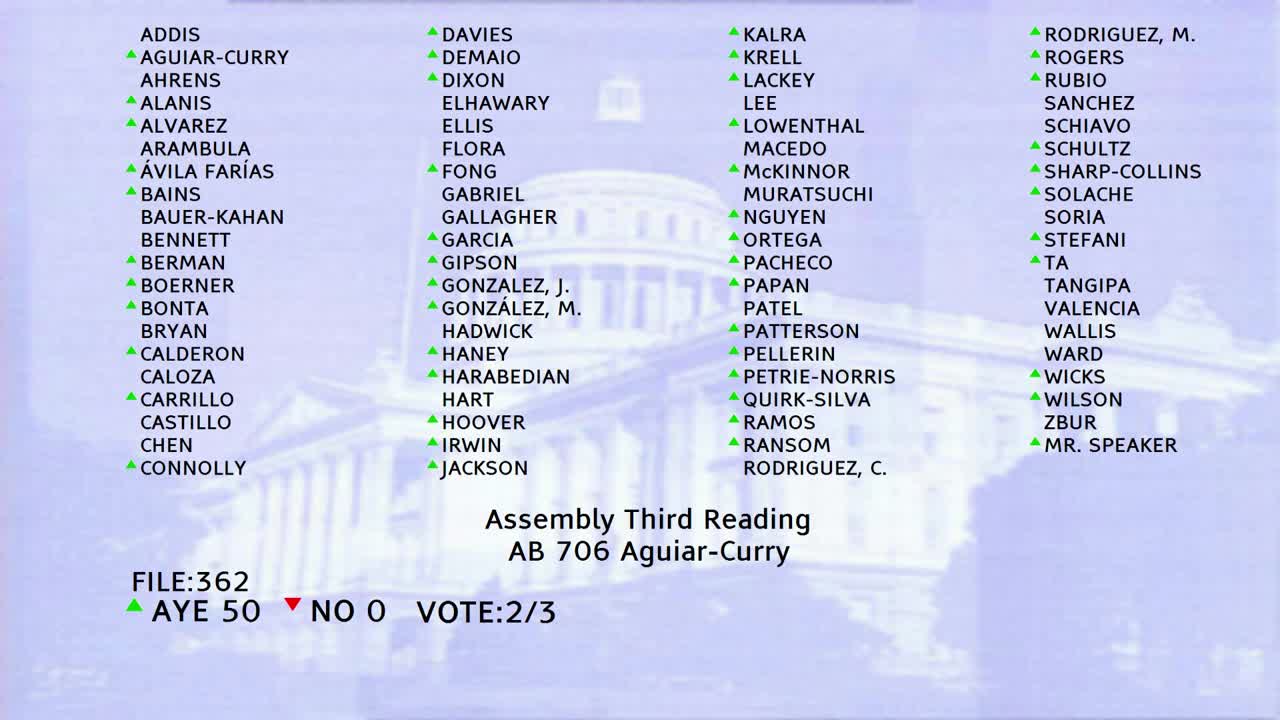
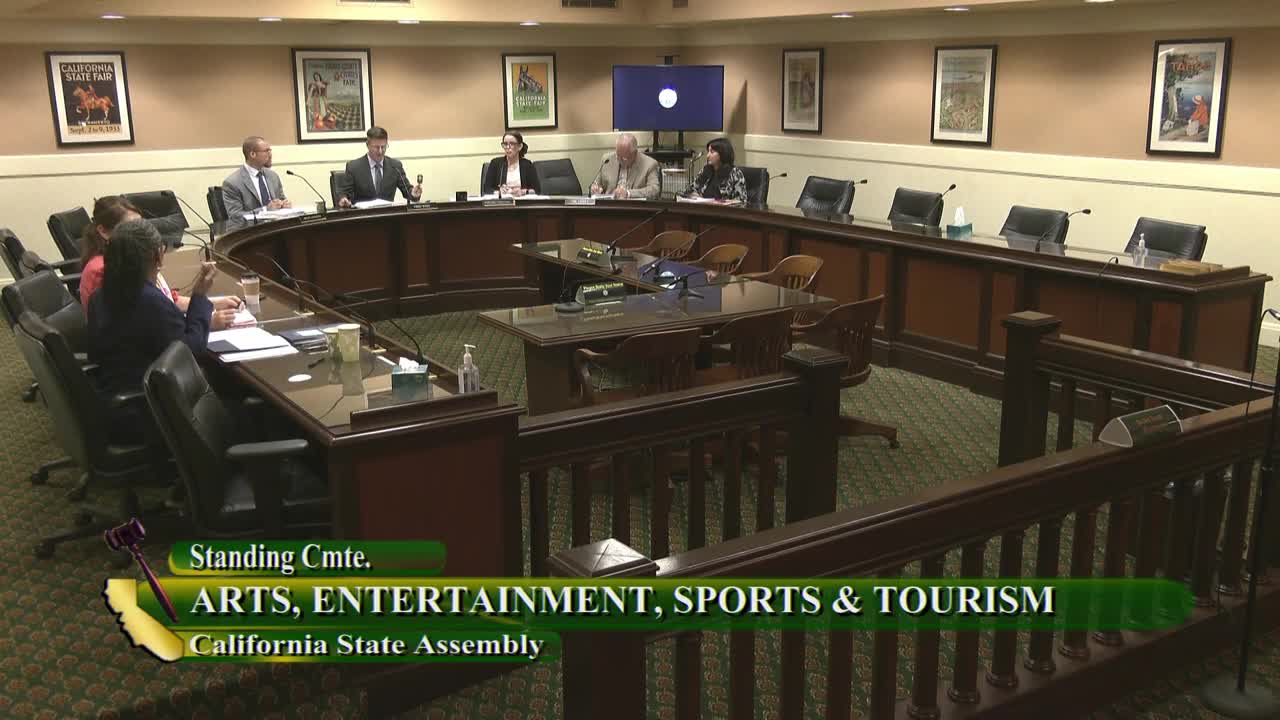


Bill Co-Author(s):