AB 779: Child welfare services: domestic violence consultant pilot program.
- Session Year: 2025-2026
- House: Assembly
- Latest Version Date: 2025-10-06
Current Status:
Passed
(2025-10-06: Chaptered by Secretary of State - Chapter 381, Statutes of 2025.)
Introduced
In Committee
Awaiting First Chamber Vote
Passed First Chamber
In Committee
Awaiting Second Chamber Vote
Passed Second Chamber
Enacted
Existing law requires the state, through the State Department of Social Services and county welfare departments, to establish and support a public system of statewide child welfare services, which is defined to mean public social services that are directed toward the accomplishment of specified purposes, including protecting and promoting the welfare of all children and preventing the unnecessary separation of children from their families.
This bill would authorize a county child welfare agency to establish a 3-year pilot program in which the county partners with a domestic violence consultant from a domestic violence victim service organization to offer support and guidance to county social workers in addressing the complex dynamics of families who are potentially experiencing both domestic violence and child maltreatment in order to enhance the social workers knowledge of domestic violence and their ability to apply that knowledge to their work with parent survivors and their children through tailored engagement and intervention strategies. The bill would require a domestic violence consultant under the program to assist county social workers by providing education on domestic violence-related dynamics and services and discussing complicating factors and protective measures, as specified, among other things. The bill would require a county that implements the pilot program to conduct a comprehensive evaluation of the pilot program and report its findings to the Legislature on or before October 31, 2031. The bill would require a participating county to seek the input of the State Department of Social Services and stakeholders, including people with lived experience with domestic violence and child welfare, in the design and implementation of the evaluation.
Existing law requires the state, through the State Department of Social Services and county welfare departments, to establish and support a public system of statewide child welfare services, which is defined to mean public social services that are directed toward the accomplishment of specified purposes, including protecting and promoting the welfare of all children and preventing the unnecessary separation of children from their families.
This bill would authorize a county child welfare agency to establish a 5-year 3-year pilot program in which the county partners with a domestic violence consultant from a domestic violence victim service organization to offer support and guidance to county social workers in addressing the complex dynamics of families who are potentially experiencing both domestic violence and child maltreatment in order to enhance the social workers knowledge of domestic violence and their ability to apply that knowledge to their work with parent survivors and their children through tailored engagement and intervention strategies. The bill would require a domestic violence consultant under the program to assist county social workers by providing education on domestic violence-related dynamics and services and discussing complicating factors and protective measures, as specified, among other things. The bill would require a county that implements the pilot program to conduct a comprehensive evaluation of the pilot program and report its findings to the Legislature on or before October 31, 2031. The bill would require a participating county to seek the input of the State Department of Social Services and stakeholders, including people with lived experience with domestic violence and child welfare, in the design and implementation of the evaluation.
Existing law requires the state, through the State Department of Social Services and county welfare departments, to establish and support a public system of statewide child welfare services, which is defined to mean public social services that are directed toward the accomplishment of specified purposes, including protecting and promoting the welfare of all children and preventing the unnecessary separation of children from their families.
This bill would authorize the a county child welfare agency in the County of Los Angeles to establish a 5-year pilot program in which the county partners with a domestic violence consultant from a community-based organization domestic violence victim service organization to offer support and guidance to county social workers in addressing the complex dynamics of families who are potentially experiencing both domestic violence and child maltreatment in order to enhance the social workers knowledge of domestic violence and their ability to apply that knowledge to their work with parent survivors and their children through tailored engagement and intervention strategies. The bill would require a domestic violence consultant under the program to assist county social workers by providing education on domestic violence-related dynamics and services and discussing complicating factors and protective measures, as specified, among other things. The bill would require the County of Los Angeles, if it a county that implements the pilot program, program to conduct a comprehensive evaluation of the pilot program and report its findings to the Legislature on or before October 31, 2031. The bill would require a participating county to seek the input of the State Department of Social Services and stakeholders, including people with lived experience with domestic violence and child welfare, in the design and implementation of the evaluation.
Existing law requires the state, through the State Department of Social Services and county welfare departments, to establish and support a public system of statewide child welfare services, which is defined to mean public social services that are directed toward the accomplishment of specified purposes, including protecting and promoting the welfare of all children and preventing the unnecessary separation of children from their families.
This bill would authorize a the county child welfare agency in the County of Los Angeles to establish a 5-year pilot program in which the county employs partners with a domestic violence consultant from a community-based organization to offer support and guidance to county social workers in addressing the complex dynamics of families who are potentially experiencing both domestic violence and child maltreatment in order to enhance the social workers knowledge of domestic violence and their ability to apply that knowledge to their work with parent survivors and their children through tailored engagement and intervention strategies. The bill would require a domestic violence consultant under the program to assist county social workers by providing education on domestic violence-related dynamics and services and discussing complicating factors and protective measures, as specified, among other things. The bill would require the County of Los Angeles, if it implements the pilot program, to conduct a comprehensive evaluation of the pilot program and report its findings to the Legislature on or before October 31, 2031.
Existing law requires the state, through the State Department of Social Services and county welfare departments, to establish and support a public system of statewide child welfare services, which is defined to mean public social services that are directed toward the accomplishment of specified purposes, including protecting and promoting the welfare of all children and preventing the unnecessary separation of children from their families.
This bill would authorize a county child welfare agency to establish a pilot program in which the county employs a domestic violence consultant to offer support and guidance to county social workers in addressing the complex dynamics of families who are potentially experiencing both domestic violence and child maltreatment in order to enhance the social workers knowledge of domestic violence and their ability to apply that knowledge to their work with parent survivors and their children through tailored engagement and intervention strategies. The bill would require a domestic violence consultant under the program to assist county social workers by providing education on domestic violence-related dynamics and services and discussing complicating factors and protective measures, as specified, among other things.
(a)A county child welfare agency may establish a three-year pilot program in which the county partners with a domestic violence consultant from a domestic violence victim service organization, as defined in Section 1037.1 of the Evidence Code, to offer support and guidance to county social workers in addressing the complex dynamics of families who are potentially experiencing both domestic violence and child maltreatment in order to enhance the social workers knowledge of domestic violence and their ability to apply that knowledge to their work with parent survivors and their children through tailored engagement and intervention strategies. The consultant shall be a qualified domestic violence counselor, as defined in Section 1037.1 of the Evidence Code.
(b)Under the pilot program, the domestic violence consultant shall assist county social workers by doing, at a minimum, all of the following:
(1)Provide education on domestic violence-related dynamics and services.
(2)Discuss complicating factors, including, but not limited to, children witnessing or experiencing violence during domestic violence incidents, homelessness, and substance and alcohol use.
(3)Discuss protective measures, including, but not limited to, implementing safety plans or restraining orders to protect parent survivors and their children, and child removal from homes affected by domestic violence.
(4)Offer recommendations for accessing resources for families.
(5)Navigate law enforcement responses to reports of domestic violence.
(c)The domestic violence consultant may also provide direct support to parent survivors by facilitating shelter access, referring their children to therapy, and providing information on other resources.
(d)(1)If a county implements the pilot program pursuant to this section, the county shall conduct a comprehensive evaluation of the pilot program and report its findings to the Legislature on or before October 31, 2031. A participating county shall seek the input of the State Department of Social Services and stakeholders, including people with lived experience with domestic violence and child welfare, in the design and implementation of the evaluation. The report shall include, but not be limited to, all of the following:
(A)Data on each instance when safety plans or restraining orders were implemented in homes affected by domestic violence and the outcomes for each family utilizing protective measures.
(B)Data on the recommendations provided to families who were identified as needing to access resources and the outcomes of their use.
(C)Data on law enforcement responses to each report of domestic violence.
(2)A report to be submitted pursuant to paragraph (1) shall be submitted in compliance with Section 9795 of the Government Code.
(e)This section shall remain in effect only until January 1, 2032, and as of that date is repealed.
(a)A county child welfare agency may establish a five-year three-year pilot program in which the county partners with a domestic violence consultant from a domestic violence victim service organization, as defined in Section 1037.1 of the Evidence Code, to offer support and guidance to county social workers in addressing the complex dynamics of families who are potentially experiencing both domestic violence and child maltreatment in order to enhance the social workers knowledge of domestic violence and their ability to apply that knowledge to their work with parent survivors and their children through tailored engagement and intervention strategies. The consultant shall be a qualified domestic violence counselor, as defined in Section 1037.1 of the Evidence Code.
(b)Under the pilot program, the domestic violence consultant shall assist county social workers by doing, at a minimum, all of the following:
(1)Provide education on domestic violence-related dynamics and services.
(2)Discuss complicating factors, including, but not limited to, children witnessing or experiencing violence during domestic violence incidents, homelessness, and substance and alcohol use.
(3)Discuss protective measures, including, but not limited to, implementing safety plans or restraining orders to protect parent survivors and their children, and child removal from homes affected by domestic violence.
(4)Offer recommendations for accessing resources for families.
(5)Navigate law enforcement responses to reports of domestic violence.
(c)The domestic violence consultant may also provide direct support to parent survivors by facilitating shelter access, referring their children to therapy, and providing information on other resources.
(d)(1)If a county implements the pilot program pursuant to this section, the county shall conduct a comprehensive evaluation of the pilot program and report its findings to the Legislature on or before October 31, 2031. A participating county shall seek the input of the State Department of Social Services and stakeholders, including people with lived experience with domestic violence and child welfare, in the design and implementation of the evaluation. The report shall include, but not be limited to, all of the following:
(A)Data on each instance when safety plans or restraining orders were implemented in homes affected by domestic violence and the outcomes for each family utilizing protective measures.
(B)Data on the recommendations provided to families who were identified as needing to access resources and the outcomes of their use.
(C)Data on law enforcement responses to each report of domestic violence.
(2)A report to be submitted pursuant to paragraph (1) shall be submitted in compliance with Section 9795 of the Government Code.
(e)This section shall remain in effect only until January 1, 2032, and as of that date is repealed.
(a)The A county child welfare agency of the County of Los Angeles may establish a five-year pilot program in which the county partners with a domestic violence consultant from a community-based organization domestic violence victim service organization, as defined in Section 1037.1 of the Evidence Code, to offer support and guidance to county social workers in addressing the complex dynamics of families who are potentially experiencing both domestic violence and child maltreatment in order to enhance the social workers knowledge of domestic violence and their ability to apply that knowledge to their work with parent survivors and their children through tailored engagement and intervention strategies. The consultant shall be a qualified domestic violence counselor, as defined in Section 1037.1 of the Evidence Code.
(b)Under the pilot program, the domestic violence consultant shall assist county social workers by doing, at a minimum, all of the following:
(1)Provide education on domestic violence-related dynamics and services.
(2)Discuss complicating factors, including, but not limited to, children witnessing or experiencing violence during domestic violence incidents, homelessness, and substance and alcohol use.
(3)Discuss protective measures, including, but not limited to, implementing safety plans or restraining orders to protect parent survivors and their children, and child removal from homes affected by domestic violence.
(4)Offer recommendations for accessing resources for families.
(5)Navigate law enforcement responses to reports of domestic violence.
(c)The domestic violence consultant may also provide direct support to parent survivors by facilitating shelter access, referring their children to therapy, and providing information on other resources.
(d)(1)If the County of Los Angeles a county implements the pilot program pursuant to this section, the county shall conduct a comprehensive evaluation of the pilot program and report its findings to the Legislature on or before October 31, 2031. A participating county shall seek the input of the State Department of Social Services and stakeholders, including people with lived experience with domestic violence and child welfare, in the design and implementation of the evaluation. The report shall include, but not be limited to, all of the following:
(A)Data on each instance when safety plans or restraining orders were implemented in homes affected by domestic violence and the outcomes for each family utilizing protective measures.
(B)Data on the recommendations provided to families who were identified as needing to access resources and the outcomes of their use.
(C)Data on law enforcement responses to each report of domestic violence.
(2)A report to be submitted pursuant to paragraph (1) shall be submitted in compliance with Section 9795 of the Government Code.
(e)This section shall remain in effect only until January 1, 2032, and as of that date is repealed.
(a)A The county child welfare agency of the County of Los Angeles may establish a five-year pilot program in which the county employs partners with a domestic violence consultant from a community-based organization to offer support and guidance to county social workers in addressing the complex dynamics of families who are potentially experiencing both domestic violence and child maltreatment in order to enhance the social workers knowledge of domestic violence and their ability to apply that knowledge to their work with parent survivors and their children through tailored engagement and intervention strategies.
(b)Under the pilot program, the domestic violence consultant shall assist county social workers by doing, at a minimum, all of the following:
(1)Provide education on domestic violence-related dynamics and services.
(2)Discuss complicating factors, including, but not limited to, children witnessing or experiencing violence during domestic violence incidents, homelessness, and substance and alcohol use.
(3)Discuss protective measures, including, but not limited to, implementing safety plans or restraining orders to protect parent survivors and their children, and child removal from homes affected by domestic violence.
(4)Offer recommendations for accessing resources for families.
(5)Navigate law enforcement responses to reports of domestic violence.
(c)The domestic violence consultant may also provide direct support to parent survivors by facilitating shelter access, referring their children to therapy, and providing information on other resources.
(d)(1)If the County of Los Angeles implements the pilot program pursuant to this section, the county shall conduct a comprehensive evaluation of the pilot program and report its findings to the Legislature on or before October 31, 2031.
(2)A report to be submitted pursuant to paragraph (1) shall be submitted in compliance with Section 9795 of the Government Code.
(e)This section shall remain in effect only until January 1, 2032, and as of that date is repealed.
(a)A county child welfare agency may establish a pilot program in which the county employs a domestic violence consultant to offer support and guidance to county social workers in addressing the complex dynamics of families who are potentially experiencing both domestic violence and child maltreatment in order to enhance the social workers knowledge of domestic violence and their ability to apply that knowledge to their work with parent survivors and their children through tailored engagement and intervention strategies.
(b)Under the pilot program, the domestic violence consultant shall assist county social workers by doing, at a minimum, all of the following:
(1)Provide education on domestic violence-related dynamics and services.
(2)Discuss complicating factors, including, but not limited to, children witnessing or experiencing violence during domestic violence incidents, homelessness, and substance and alcohol use.
(3)Discuss protective measures, including, but not limited to, implementing safety plans or restraining orders to protect parent survivors and their children, and child removal from homes affected by domestic violence.
(4)Offer recommendations for accessing resources for families.
(5)Navigate law enforcement responses to reports of domestic violence.
(c)The domestic violence consultant may also provide direct support to parent survivors by facilitating shelter access, referring their children to therapy, and providing information on other resources.
|
Date
|
Status
|
|---|---|
| Oct 6, 2025 | Chaptered by Secretary of State - Chapter 381, Statutes of 2025. |
| Oct 6, 2025 | Approved by the Governor. |
| Sep 24, 2025 | Enrolled and presented to the Governor at 3 p.m. |
| Sep 12, 2025 | Senate amendments concurred in. To Engrossing and Enrolling. (Ayes 79. Noes 0. Page 3395.). |
| Sep 4, 2025 | In Assembly. Concurrence in Senate amendments pending. |
| Sep 4, 2025 | Read third time. Passed. Ordered to the Assembly. (Ayes 39. Noes 0. Page 2501.). |
| Jul 15, 2025 | Read second time. Ordered to third reading. |
| Jul 14, 2025 | From committee: Be ordered to second reading pursuant to Senate Rule 28.8. |
| Jul 1, 2025 | From committee: Do pass and re-refer to Com. on APPR. (Ayes 5. Noes 0.) (June 30). Re-referred to Com. on APPR. |
| Jun 11, 2025 | From committee chair, with author's amendments: Amend, and re-refer to committee. Read second time, amended, and re-referred to Com. on HUMAN S. |
| Jun 4, 2025 | Referred to Com. on HUMAN S. |
| May 23, 2025 | In Senate. Read first time. To Com. on RLS. for assignment. |
| May 23, 2025 | Read third time. Passed. Ordered to the Senate. (Ayes 73. Noes 0. Page 1652.) |
| May 15, 2025 | Read second time. Ordered to third reading. |
| May 14, 2025 | From committee: Do pass. (Ayes 15. Noes 0.) (May 14). |
| May 6, 2025 | Re-referred to Com. on APPR. pursuant to Joint Rule 10.5. |
| May 6, 2025 | Read second time. Ordered to third reading. |
| May 5, 2025 | Read second time and amended. Ordered returned to second reading. |
| May 1, 2025 | From committee: Amend, and do pass as amended. (Ayes 6. Noes 0.) (May 1). |
| Mar 13, 2025 | Re-referred to Com. on HUM. S. |
| Mar 12, 2025 | From committee chair, with author's amendments: Amend, and re-refer to Com. on HUM. S. Read second time and amended. |
| Mar 3, 2025 | Referred to Com. on HUM. S. |
| Feb 19, 2025 | From printer. May be heard in committee March 21. |
| Feb 18, 2025 | Read first time. To print. |
|
Date
|
Description
|
Location
|
Votes
|
|
|---|---|---|---|---|
| Sep 12, 2025 | AB 779 Lackey Concurrence in Senate Amendments | Assembly Floor |
Passed |
|
| Sep 4, 2025 | Assembly 3rd Reading AB779 Lackey et al. By Valladares | Senate Floor |
Passed |
|
| Jun 30, 2025 | Do pass, but first be re-referred to the Committee on [Appropriations] | Senate Standing Committee on Human Services |
Passed |
|
| May 23, 2025 | AB 779 Lackey Assembly Third Reading | Assembly Floor |
Passed |
|
| May 14, 2025 | Do pass. | Assembly Standing Committee on Appropriations |
Passed |
|
| May 1, 2025 | Do pass as amended. | Assembly Standing Committee on Human Services |
Passed |
This list shows positions taken on this bill by organizations on the date displayed, which is linked to the original source.
Positions by individuals are not included.
|
Organization
|
Position
|
Date
|
|---|---|---|
| All for Kids | ** Support | |
| California Alliance Of Child And Family Services | ** Support | |
| County of Los Angeles Board of Supervisors | ** Support | |
| County Welfare Directors Association of California | ** Support | |
| One Private Citizen | ** Support |
CONCURRENCE IN SENATE AMENDMENTS
CSA1 Bill Id:AB 779
Author:(Lackey)
As Amended Ver:June 11, 2025
Majority vote
SUMMARY
Authorizes counties to establish a three-year pilot program in which the county partners with a domestic violence consultant from a domestic violence victim service organization to offer support and guidance to county social workers in addressing the complex dynamics of families who are potentially experiencing both domestic violence and child maltreatment. Requires participating counties to seek the input of the California Department of Social Services (CDSS) in the design and implementation of the evaluation of the pilot program.
Senate Amendments
Reduce the duration of the pilot program from five years to three years.
COMMENTS
Background: Local Domestic Violence Consultant Program. The provisions of this bill expand the locally operated Antelope Valley Domestic Violence Consultant Program to apply to additional regional child welfare offices across the state as a pilot program. The original program partnered the Los Angeles (LA) Department of Child and Family Services (DCFS) offices with local domestic violence service providers to ensure that families experiencing domestic violence receive specialized, trauma-informed support.
Based on the success of this local program, this bill seeks to improve outcomes for children and families who are experiencing domestic violence in California by ensuring child welfare workers have specialized domestic violence consultants to guide interventions, provide trauma-informed services, and help keep families safely together when possible. Survivors would gain better access to shelters, legal protections, and support services, while their children would receive improved stability, and protections as well. The author is seeking to address systemic gaps in the child welfare system, by enhancing the capacity of social workers to respond to domestic violence in a way that prioritizes family stability and well-being.
The University of California, Los Angeles (UCLA) Pritzker Center launched a pilot study in 2023 in partnership with Valley Oasis, a community-based organization, and Lancaster DCFS as a response to findings from a 2020 report that examined the intersection of domestic violence and the child welfare system in LA County. The pilot study was conducted to respond to recommendations in the 2020 report.
The study focused on the Antelope Valley in part due to emergency room visits prompted by domestic violence being highest in the Antelope Valley compared to other parts of LA County from 2010-2014 (LA Domestic Violence Council, 2020). According to the report, strained service systems struggled to provide timely services to families experiencing domestic violence and the child welfare system in the Antelope Valley. The study showed that survivors of domestic violence struggled against numerous barriers in child welfare cases, including complex trauma, isolation in navigation, power dynamics, lack of differentiation, racial bias, secondary traumatic stress, financial strain, housing shortages, limited resources/transit, and service gaps for children. However, the study showed that collaboration between child welfare staff and domestic violence service providers improved support for parent survivors and their children.
Training resulted in significant knowledge gains about domestic violence, and consultation improved the application of domestic violence knowledge and intervention strategies.
Among the recommendations provided by the UCLA Pritzker Center was the recommendation to enhance and scale collaborative efforts by fostering an ongoing partnership between Lancaster DCFS and Valley Oasis, and strategically scale similar collaborations throughout LA County to maximize impact.
Parent survivors of domestic violence are often expected to navigate their cases and complex systems alone and child welfare staff can unintentionally reproduce patterns of power and control. This bill would authorize any county to establish a three-year pilot program to partner with a domestic violence consultant from a domestic violence victim service organization to offer support and guidance to county social workers in addressing the complex dynamics of families who are potentially experiencing both domestic violence and child maltreatment in order to enhance the social worker's knowledge of domestic violence and their ability to apply that knowledge to their work with parent survivors and their children through tailored engagement and intervention strategies.
Failure to Protect. The current definition of abuse/neglect contains a ″failure to protect″ provision that states a child could be a dependent of the court if the child has suffered, or there is a substantial risk that the child will suffer, serious physical harm or illness, as a result of the failure or inability of their parent to adequately supervise or protect the child, or the willful or negligent failure of the child’s parent to adequately supervise or protect the child from the conduct of the custodian with whom the child has been left, or by the willful or negligent failure of the parent or guardian to provide the child with adequate food, clothing, shelter, or medical treatment, or by the inability of the parent or guardian to provide regular care for the child due to the parent's or guardian's mental illness, developmental disability, or substance abuse.
″Failure to protect″ statutes insinuate the survivor is the problem, according to a May 2021 UCLA Pritzker Center report, while shifting the burden away from the person who creates the harm to account for the violence in the relationship. In a UCLA Pritzker Center survey, 88% of respondents strongly agreed or agreed that survivors of domestic violence who stay with the person who perpetrates the harm may risk losing custody of their children due to ″failure to protect.″ The study notes that in conversations with survivor advocates and lawyers, they highlighted the ways in which child neglect framed as failure to protect faults the survivor and fails to acknowledge the barriers a survivor must overcome to leave a domestic violence situation. There is a myriad of personal, cultural, financial, and social obstacles that inhibit a victim's ability to leave their perpetrator. Some of these obstacles include fear of retaliation, lack of economic resources, immigration concerns, language barriers which prevent access to supportive services, isolation forced by the person who is controlling the survivor and thus a lack of a support network, and hope that one’s partner will change. As noted in the report, a victim's perceived ″inaction″ is often the result of a calculation to maximize both the safety of the child and victim.
This bill would address the complexities of these issues by requiring the domestic violence consultant to assist social workers in discussing protective measures such as implementing safety plans or restraining orders as a way to protect parent survivors and their children, and to prevent child removal from homes affected by domestic violence.
Equity Implications: The provisions of this bill seek to address inequities in the child welfare system by improving accessibility to specialized domestic violence services for those experiencing domestic violence and their children. Currently, survivors may face allegations of neglect due to abusive conditions imposed by another household member, often leading to child removals that cause further trauma. The UCLA Pritzker study stated that parent survivors from marginalized communities face additional challenges due to racial bias. While it is sometimes necessary to remove a child, finding ways to support and give resources to families to help them stay together is critical to the intent of the Legislature to maintain the continuity of the family unit and ensure the preservation and strengthening of the child's family ties.
According to the Author
″[This bill] is a step toward ensuring that survivors of domestic violence and their children receive the support they need to stay safe and together. Too often, survivors are unfairly penalized by the child welfare system when they are already in vulnerable situations. By expanding the Antelope Valley's successful Domestic Violence Consultant Program, we can provide specialized guidance to child welfare workers, prevent unnecessary family separations, and connect survivors to life-saving resources.″
Arguments in Support
According to the California Alliance of Child and Family Services, ″The goal of the partnership is to develop proactive intervention strategies to enhance social worker’s knowledge of domestic violence and their skillset to apply those principles to the services they provide to parent survivors and their children.″
Arguments in Opposition
No opposition on file.
FISCAL COMMENTS
According to the Senate Appropriations Committee, pursuant to Senate Rule 28.8, the June 11, 2025, version of this bill would result in negligible state costs.
VOTES:
ASM HUMAN SERVICES: 6-0-1
YES: Lee, Castillo, Calderon, Elhawary, Celeste Rodriguez, Tangipa
ABS, ABST OR NV: Jackson
ASM APPROPRIATIONS: 15-0-0
YES: Wicks, Sanchez, Arambula, Calderon, Caloza, Dixon, Elhawary, Fong, Mark González, Hart, Pacheco, Pellerin, Solache, Ta, Tangipa
ASSEMBLY FLOOR: 73-0-6
YES: Addis, Aguiar-Curry, Ahrens, Alanis, Alvarez, Arambula, Ávila Farías, Bains, Bauer-Kahan, Bennett, Berman, Boerner, Bonta, Calderon, Caloza, Carrillo, Castillo, Connolly, Davies, DeMaio, Dixon, Elhawary, Ellis, Flora, Fong, Gabriel, Gallagher, Garcia, Gipson, Jeff Gonzalez, Mark González, Hadwick, Haney, Harabedian, Hart, Hoover, Irwin, Jackson, Kalra, Krell, Lackey, Lee, Lowenthal, Macedo, McKinnor, Muratsuchi, Ortega, Pacheco, Papan, Patel, Patterson, Pellerin, Petrie-Norris, Quirk-Silva, Ramos, Ransom, Celeste Rodriguez, Michelle Rodriguez, Rogers, Blanca Rubio, Schiavo, Schultz, Solache, Soria, Stefani, Ta, Tangipa, Valencia, Wallis, Ward, Wilson, Zbur, Rivas
ABS, ABST OR NV: Bryan, Chen, Nguyen, Sanchez, Sharp-Collins, Wicks
SENATE FLOOR: 39-0-1
YES: Allen, Alvarado-Gil, Archuleta, Arreguín, Ashby, Becker, Blakespear, Cabaldon, Caballero, Cervantes, Choi, Cortese, Dahle, Durazo, Gonzalez, Grayson, Grove, Hurtado, Jones, Laird, Limón, McGuire, McNerney, Menjivar, Niello, Ochoa Bogh, Padilla, Pérez, Richardson, Rubio, Seyarto, Smallwood-Cuevas, Stern, Strickland, Umberg, Valladares, Wahab, Weber Pierson, Wiener
ABS, ABST OR NV: Reyes
UPDATED
VERSION: June 11, 2025
CONSULTANT: Jessica Langtry / HUM. S. / (916) 319-2089 FN: 0001690
SENATE RULES COMMITTEE Office of Senate Floor Analyses (916) 651-1520 Fax: (916) 327-4478 | AB 779 |
THIRD READING
Bill No: AB 779
Author: Lackey (R), et al.
Amended: 6/11/25 in Senate
Vote: 21
SENATE HUMAN SERVICES COMMITTEE: 5-0, 6/30/25
AYES: Arreguín, Ochoa Bogh, Becker, Limón, Pérez
SENATE APPROPRIATIONS COMMITTEE: Senate Rule 28.8
ASSEMBLY FLOOR: 73-0, 5/23/25 - See last page for vote
SUBJECT: Child welfare services: domestic violence consultant pilot program
SOURCE: Author
DIGEST:
This bill (1) allows a county child welfare agency to establish a three-year pilot program in which the county partners with a domestic violence consultant from a domestic violence victim service organization to offer support and guidance to county social workers and direct support to parent survivors. (2) Requires counties that establish such a program to conduct a comprehensive evaluation of the pilot program and report its findings to the Legislature on or before October 31, 2031.
ANALYSIS:
Existing Law:
- Establishes a system of juvenile dependency for children for specific reasons, and designates that a child who meets certain criteria is within the jurisdiction of the juvenile court and may be adjudged as a dependent child of the court, as specified. (Welfare and Institutions Code (WIC) § 300 et seq.)
- Defines “domestic violence counselor” as a person who is employed by a domestic violence victim service organization, as defined, whether financially compensated or not, for the purpose of rendering advice or assistance to victims of domestic violence and who has at least 40 hours of training, as specified. (Evidence Code § 1037.1)
- Defines “domestic violence victim service organization” to mean either of the following:
- A nongovernmental organization or entity that provides shelter, programs, or services to victims of domestic violence and their children, including, but not limited to, either of the following:
- Domestic violence shelter-based programs.
- Other programs with the primary mission to provide services to victims of domestic violence whether or not that program exists in an agency that provides additional services.
- Programs on the campus of a public or private institution of higher education with the primary mission to provide support or advocacy services to victims of domestic violence. (Evidence Code § 1037.1)
- A nongovernmental organization or entity that provides shelter, programs, or services to victims of domestic violence and their children, including, but not limited to, either of the following:
This Bill:
- Allows a county child welfare agency to establish a three-year pilot program in which the county partners with a domestic violence consultant from a domestic violence victim service organization, to offer support and guidance to county social workers in addressing the complex dynamics of families who are potentially experiencing both domestic violence and child maltreatment in order to enhance the social worker’s knowledge of domestic violence and their ability to apply that knowledge to their work with parent survivors and their children through tailored engagement and intervention strategies.
- Provides that under the pilot program, the domestic violence consultant shall assist county social workers by doing, at a minimum, all of the following:
- Provide education on domestic violence-related dynamics and services.
- Discuss complicating factors, including, but not limited to, children witnessing or experiencing violence during domestic violence incidents, homelessness, and substance and alcohol use.
- Discuss protective measures, including, but not limited to, implementing safety plans or restraining orders to protect parent survivors and their children, and child removal from homes affected by domestic violence.
- Offer recommendations for accessing resources for families.
- Navigate law enforcement responses to reports of domestic violence.
- Provides that the domestic violence consultant may also provide direct support to parent survivors by facilitating shelter access, referring their children to therapy, and providing information on other resources.
- Provides that if a county implements the pilot program, the county shall conduct a comprehensive evaluation of the pilot program and report its findings to the Legislature on or before October 31, 2031.
- Requires a participating county to seek the input of the California Department of Social Services (CDSS) and stakeholders, including people with lived experience with domestic violence and child welfare, in the design and implementation of the evaluation.
- Requires the report to include, but not be limited to, all of the following:
- Data on each instance when safety plans or restraining orders were implemented in homes affected by domestic violence and the outcomes for each family utilizing protective measures.
- Data on the recommendations provided to families who were identified as needing to access resources and the outcomes of their use.
- Data on law enforcement responses to each report of domestic violence.
- Repeals this section as of January 1, 2032.
Comments
According to the author, “AB 779 addresses systemic gaps in the child welfare system and improves outcomes for families by establishing a three-year pilot program for counties to partner with domestic violence service providers to offer support and guidance to social workers handling cases involving both abuse and child maltreatment. Enhancing the child welfare system’s capacity to respond to domestic violence effectively is vital to ensuring the safety, well-being, and long-term stability of both children and their families.”
Child Welfare Services (CWS). The CWS system is an essential component of the state’s safety net. Social workers in each county who receive reports of abuse or neglect, investigate and resolve those reports. When a case is substantiated, a family is either provided with services to ensure a child’s well-being and avoid court involvement, or a child is removed and placed into foster care. In 2024, the state’s child welfare agencies received 417,513 reports of abuse or neglect. Of these, 46,457 reports contained allegations that were substantiated and 17,390 children were removed from their homes and placed into foster care via the CWS system.
After the county child welfare department becomes involved with families, approximately 12 months of services are provided to children who are able to remain safely in their home while the family receives services. This is considered family preservation services and the child does not come under the jurisdiction of the juvenile dependency court during this time. If it is determined that a child cannot remain in the home, even with family preservation and support services, the child comes under the jurisdiction of the county’s juvenile dependency court while the family is served by a CWS system social worker.
If it is determined that a child cannot remain in the home, even with family preservation and support services, the child comes under the jurisdiction of the county’s juvenile dependency court while the family is served by a CWS system social worker. This system seeks to ensure the safety and protection of these children, and where possible, preserve and strengthen families through visitation and family reunification. It is the state’s goal to reunify a foster child or youth with their biological family whenever possible.
Generally, if a child cannot be safely returned home after the time allotted for reunification services ends, the court terminates the parental rights of the child’s parents. The child’s case plan then focuses on permanency services, in an effort to connect the child to a permanent placement through adoption or guardianship. If an adoption or guardianship is not established, a child may remain in long-term foster care. The child is always supposed to be placed in the most family like setting, with short-term residential treatment programs used only as necessary to provide intensive services. A child remains eligible for services for the length of their time in the child welfare system, time limits relate to the provision of services to the child’s parents.
In some circumstances, existing law allows the court to not provide reunification services at all, and parental rights are terminated without the opportunity for reunification. These circumstances include, but are not limited to, the following examples: when the whereabouts of the parent are unknown; when the parent is suffering from a mental disability, as provided, that renders the parent incapable of utilizing those services; when the parent caused the death of another child through abuse or neglect; after a finding of sever sexual abuse; when the parent has been convicted of a violent felony, as provided; and in some instances where a prior child of the parent became a dependent of the court and was unable to reunify.
Antelope Valley Program to Address Domestic Violence in Dependency Cases. Domestic violence is incredibly prevalent in dependency cases. In 2020, over 50% of the 38,618 open cases in Los Angeles County had past or current concerns of domestic violence identified by caseworkers. It is not only perpetrators of domestic violence that find their children brought into the dependency system. Victims of domestic violence also may have their children removed under a failure to protect finding.
The University of California Los Angeles (UCLA) Pritzker Center for Strengthening Children and Families (Pritzker Center) unites a multidisciplinary network across the UCLA campus and throughout Los Angeles County to identify strategies to reduce the need for foster care while supporting equitable reform to the child welfare center. This bill is built upon a collaboration which began in 2020 between the Pritzker Center and stakeholders in Los Angeles County and a subsequent report that explored the role of domestic violence in the child welfare system. From this work, a collaboration[1] between Valley Oasis and the Los Angeles County Department of Children and Family Services Lancaster Regional Office began. Their study began in the Antelope Valley in January 2023 with a focus on documenting the experience of parent survivors of domestic violence, domestic violence service providers, and child welfare staff; developing a collaborative response to these experiences; and evaluating the interventions implemented. The study found that survivors of domestic violence struggle with numerous barriers in child welfare cases, including:
- Complex Trauma – Parent survivors of domestic violence often experience trauma, leading to pervasive fear and mistrust.
- Isolation in Navigation – parent survivors of domestic violence are often expected to navigate their cases and complex systems alone.
- Power Dynamics – child welfare staff can unintentionally reproduce patterns of power and control.
- Lack of Differentiation – domestic violence and high-conflict relationships are often treated as the same, leading to inadequate responses to unique situations.
- Racial Bias – parent survivors from marginalized communities face additional challenges due to racial bias.
- Secondary Traumatic Stress – child welfare workers and service providers may experience secondary traumatic stress which can impact their ability to provide effective assistance.
The study found that collaboration between child welfare staff and domestic violence service providers improved support for parent survivors and their children. Numerous recommendations were made in the report, including: enhance and scale collaborative efforts; refine domestic violence referrals; advance organizational culture change; strengthen responses to secondary traumatic stress; address financial barriers for survivors; enhance emergency housing safety and increase capacity; and invigorate domestic violence programming. This bill seeks to build on this program by allowing a county child welfare agency to establish a three-year pilot program based on this collaboration and study.
Related/Prior Legislation:
SB 537 (Rubio, 2022) would have required CDSS to convene a workgroup to examine, and produce a report on, the intersection of the child welfare system and domestic violence and the impacts of child welfare policy on families experiencing domestic violence. This bill was placed on the Senate Inactive File.
AB 2030 (Limon, Chapter 485, Statutes of 2018) requires CDSS to include, in certain public social services application and redetermination forms, questions regarding the need for accommodation related to disability or domestic violence.
AB 557 (Rubio, Chapter 691, Statutes of 2017) made the California Work Opportunity and Responsibility to Kids (CalWORKs) homeless assistance benefits available to applicants who are past or present victims of domestic violence, as specified, and makes other changes to the CalWORKs program specific to victims of domestic violence. AB 557 also required CDSS to report annually to the Legislature data on welfare-to-work recipients who have been identified as potential victims of domestic violence.
FISCAL EFFECT: Appropriation: No Fiscal Com.: Yes Local: No
SUPPORT: (Verified 7/15/25)
All for Kids
California Alliance of Child and Family Services
County of Los Angeles Board of Supervisors
County Welfare Directors Association of California
OPPOSITION: (Verified 7/15/25)
None received
ASSEMBLY FLOOR: 73-0, 5/23/25
AYES: Addis, Aguiar-Curry, Ahrens, Alanis, Alvarez, Arambula, Ávila Farías, Bains, Bauer-Kahan, Bennett, Berman, Boerner, Bonta, Calderon, Caloza, Carrillo, Castillo, Connolly, Davies, DeMaio, Dixon, Elhawary, Ellis, Flora, Fong, Gabriel, Gallagher, Garcia, Gipson, Jeff Gonzalez, Mark González, Hadwick, Haney, Harabedian, Hart, Hoover, Irwin, Jackson, Kalra, Krell, Lackey, Lee, Lowenthal, Macedo, McKinnor, Muratsuchi, Ortega, Pacheco, Papan, Patel, Patterson, Pellerin, Petrie-Norris, Quirk-Silva, Ramos, Ransom, Celeste Rodriguez, Michelle Rodriguez, Rogers, Blanca Rubio, Schiavo, Schultz, Solache, Soria, Stefani, Ta, Tangipa, Valencia, Wallis, Ward, Wilson, Zbur, Rivas
NO VOTE RECORDED: Bryan, Chen, Nguyen, Sanchez, Sharp-Collins, Wicks
Prepared by: Heather Hopkins / HUMAN S. / (916) 651-1524
7/15/25 16:21:43
**** END ****
https://pritzkercenter.ucla.edu/collaborative-reform-in-child-welfare-for-families-experiencing-dv/ ↑
SENATE COMMITTEE ON HUMAN SERVICES
Senator Arreguín, Chair
2025 - 2026 Regular
Bill No: | AB 779 | ||
Author: | Lackey | ||
Version: | June 11, 2025 | Hearing Date: | June 30, 2025 |
Urgency: | No | Fiscal: | Yes |
Consultant: | Heather Hopkins | ||
Subject: Child welfare services: domestic violence consultant pilot program
SUMMARY
This bill allows a county child welfare agency to establish a three-year pilot program in which the county partners with a domestic violence consultant from a domestic violence victim service organization to offer support and guidance to county social workers and direct support to parent survivors. Requires counties that establish such a program to conduct a comprehensive evaluation of the pilot program and report its findings to the Legislature on or before October 31, 2031.
ABSTRACT
Existing Law:
- Establishes a system of juvenile dependency for children for specific reasons, and designates that a child who meets certain criteria is within the jurisdiction of the juvenile court and may be adjudged as a dependent child of the court, as specified. (Welfare and Institutions Code (WIC) 300 et seq.)
- Defines “domestic violence counselor” as a person who is employed by a domestic violence victim service organization, as defined, whether financially compensated or not, for the purpose of rendering advice or assistance to victims of domestic violence and who has at least 40 hours of training, as specified. (Evidence Code 1037.1)
- Defines “domestic violence victim service organization” to mean either of the following:
- A nongovernmental organization or entity that provides shelter, programs, or services to victims of domestic violence and their children, including, but not limited to, either of the following:
- Domestic violence shelter-based programs.
- Other programs with the primary mission to provide services to victims of domestic violence whether or not that program exists in an agency that provides additional services.
- Programs on the campus of a public or private institution of higher education with the primary mission to provide support or advocacy services to victims of domestic violence. (Evidence Code 1037.1)
- A nongovernmental organization or entity that provides shelter, programs, or services to victims of domestic violence and their children, including, but not limited to, either of the following:
This Bill:
- Allows a county child welfare agency to establish a three-year pilot program in which the county partners with a domestic violence consultant from a domestic violence victim service organization, to offer support and guidance to county social workers in addressing the complex dynamics of families who are potentially experiencing both domestic violence and child maltreatment in order to enhance the social worker’s knowledge of domestic violence and their ability to apply that knowledge to their work with parent survivors and their children through tailored engagement and intervention strategies.
- Provides that under the pilot program, the domestic violence consultant shall assist county social workers by doing, at a minimum, all of the following:
- Provide education on domestic violence-related dynamics and services.
- Discuss complicating factors, including, but not limited to, children witnessing or experiencing violence during domestic violence incidents, homelessness, and substance and alcohol use.
- Discuss protective measures, including, but not limited to, implementing safety plans or restraining orders to protect parent survivors and their children, and child removal from homes affected by domestic violence.
- Offer recommendations for accessing resources for families.
- Navigate law enforcement responses to reports of domestic violence.
- Provides that the domestic violence consultant may also provide direct support to parent survivors by facilitating shelter access, referring their children to therapy, and providing information on other resources.
- Provides that if a county implements the pilot program, the county shall conduct a comprehensive evaluation of the pilot program and report its findings to the Legislature on or before October 31, 2031.
- Requires a participating county to seek the input of the California Department of Social Services (CDSS) and stakeholders, including people with lived experience with domestic violence and child welfare, in the design and implementation of the evaluation.
- Requires the report to include, but not be limited to, all of the following:
- Data on each instance when safety plans or restraining orders were implemented in homes affected by domestic violence and the outcomes for each family utilizing protective measures.
- Data on the recommendations provided to families who were identified as needing to access resources and the outcomes of their use.
- Data on law enforcement responses to each report of domestic violence.
- Repeals this section as of January 1, 2032.
FISCAL IMPACT
According to the Assembly Appropriations Committee analysis:
- “CDSS anticipates negligible costs to the department. The program is optional for counties and, therefore, CDSS has no oversight function or program obligations, other than as a consultant in a county’s design of its program evaluation.
- “Local costs to any county that opts to establish a five-year pilot would be borne by the county and are not reimbursable by the state.”
BACKGROUND AND DISCUSSION
Purpose of the Bill:
According to the author, “AB 779 addresses systemic gaps in the child welfare system and improves outcomes for families by establishing a three-year pilot program for counties to partner with domestic violence service providers to offer support and guidance to social workers handling cases involving both abuse and child maltreatment. Enhancing the child welfare system’s capacity to respond to domestic violence effectively is vital to ensuring the safety, well-being, and long-term stability of both children and their families.”
Child Welfare Services (CWS)
The CWS system is an essential component of the state’s safety net. Social workers in each county who receive reports of abuse or neglect, investigate and resolve those reports. When a case is substantiated, a family is either provided with services to ensure a child’s well-being and avoid court involvement, or a child is removed and placed into foster care. In 2024, the state’s child welfare agencies received 417,513 reports of abuse or neglect. Of these, 46,457 reports contained allegations that were substantiated and 17,390 children were removed from their homes and placed into foster care via the CWS system.
After the county child welfare department becomes involved with families, approximately 12 months of services are provided to children who are able to remain safely in their home while the family receives services. This is considered family preservation services and the child does not come under the jurisdiction of the juvenile dependency court during this time. If it is determined that a child cannot remain in the home, even with family preservation and support services, the child comes under the jurisdiction of the county’s juvenile dependency court while the family is served by a CWS system social worker.
If it is determined that a child cannot remain in the home, even with family preservation and support services, the child comes under the jurisdiction of the county’s juvenile dependency court while the family is served by a CWS system social worker. This system seeks to ensure the safety and protection of these children, and where possible, preserve and strengthen families through visitation and family reunification. It is the state’s goal to reunify a foster child or youth with their biological family whenever possible.
Generally, if a child cannot be safely returned home after the time allotted for reunification services ends, the court terminates the parental rights of the child’s parents. The child’s case plan then focuses on permanency services, in an effort to connect the child to a permanent placement through adoption or guardianship. If an adoption or guardianship is not established, a child may remain in long-term foster care. The child is always supposed to be placed in the most family like setting, with short-term residential treatment programs used only as necessary to provide intensive services. A child remains eligible for services for the length of their time in the child welfare system, time limits relate to the provision of services to the child’s parents.
In some circumstances, existing law allows the court to not provide reunification services at all, and parental rights are terminated without the opportunity for reunification. These circumstances include, but are not limited to, the following examples: when the whereabouts of the parent are unknown; when the parent is suffering from a mental disability, as provided, that renders the parent incapable of utilizing those services; when the parent caused the death of another child through abuse or neglect; after a finding of sever sexual abuse; when the parent has been convicted of a violent felony, as provided; and in some instances where a prior child of the parent became a dependent of the court and was unable to reunify.
Antelope Valley Program to Address Domestic Violence in Dependency Cases
Domestic violence is incredibly prevalent in dependency cases. In 2020, over 50% of the 38,618 open cases in Los Angeles County had past or current concerns of domestic violence identified by caseworkers. It is not only perpetrators of domestic violence that find their children brought into the dependency system. Victims of domestic violence also may have their children removed under a failure to protect finding.
The UCLA Pritzker Center for Strengthening Children and Families (Pritzker Center) unites a multidisciplinary network across the UCLA campus and throughout Los Angeles County to identify strategies to reduce the need for foster care while supporting equitable reform to the child welfare center. This bill is built upon a collaboration which began in 2020 between the Pritzker Center and stakeholders in Los Angeles County and a subsequent report that explored the role of domestic violence in the child welfare system. From this work, a collaboration[1] between Valley Oasis and the Los Angeles County Department of Children and Family Services Lancaster Regional Office began. Their study began in the Antelope Valley in January 2023 with a focus on documenting the experience of parent survivors of domestic violence, domestic violence service providers, and child welfare staff; developing a collaborative response to these experiences; and evaluating the interventions implemented. The study found that survivors of domestic violence struggle with numerous barriers in child welfare cases, including:
- Complex Trauma – Parent survivors of domestic violence often experience trauma, leading to pervasive fear and mistrust.
- Isolation in Navigation – parent survivors of domestic violence are often expected to navigate their cases and complex systems alone.
- Power Dynamics – child welfare staff can unintentionally reproduce patterns of power and control.
- Lack of Differentiation – domestic violence and high-conflict relationships are often treated as the same, leading to inadequate responses to unique situations.
- Racial Bias – parent survivors from marginalized communities face additional challenges due to racial bias.
- Secondary Traumatic Stress – child welfare workers and service providers may experience secondary traumatic stress which can impact their ability to provide effective assistance.
The study found that collaboration between child welfare staff and domestic violence service providers improved support for parent survivors and their children. Numerous recommendations were made in the report, including: enhance and scale collaborative efforts; refine domestic violence referrals; advance organizational culture change; strengthen responses to secondary traumatic stress; address financial barriers for survivors; enhance emergency housing safety and increase capacity; and invigorate domestic violence programming. This bill seeks to build on this program by allowing a county child welfare agency to establish a three-year pilot program based on this collaboration and study.
Related/Prior Legislation:
SB 537 (Rubio, 2022) would have required CDSS to convene a workgroup to examine, and produce a report on, the intersection of the child welfare system and domestic violence and the impacts of child welfare policy on families experiencing domestic violence. This bill was placed on the Senate Inactive File.
AB 2030 (Limon, Chapter 485, Statutes of 2018) requires CDSS to include, in certain public social services application and redetermination forms, questions regarding the need for accommodation related to disability or domestic violence.
AB 557 (Rubio, Chapter 691, Statutes of 2017) made the California Work Opportunity and Responsibility to Kids (CalWORKs) homeless assistance benefits available to applicants who are past or present victims of DV, as specified, and makes other changes to the CalWORKs program specific to victims of domestic violence. AB 557 also required CDSS to report annually to the Legislature data on welfare-to-work recipients who have been identified as potential victims of domestic violence.
COMMENTS
This bill seeks to encourage counties and domestic violence victim service organizations to collaborate to offer support and guidance for domestic violence survivors. This would build upon the work outlined in the Pritzker Center study, which found that collaboration between these entities can improve support for parent survivors and children, who often experience complex trauma and isolation. The hope is that building on the success of the Antelope Valley program can improve outcomes for children and parents experiencing domestic violence who are in the CWS system.
PRIOR VOTES
| |
Assembly Floor: | 73 - 0 |
Assembly Appropriations Committee: | 15 - 0 |
Assembly Human Services Committee: | 6 - 0 |
POSITIONS
Support:
All for Kids
County of Los Angeles Board of Supervisors
County Welfare Directors Association of California
Oppose:
None received
-- END --
https://pritzkercenter.ucla.edu/collaborative-reform-in-child-welfare-for-families-experiencing-dv/ ↑
ASSEMBLY THIRD READING
ATR Bill Id:AB 779
Author:(Lackey)
As Amended Ver:May 5, 2025
Majority vote
SUMMARY
Authorizes counties to establish a five-year pilot program in which the county partners with a domestic violence consultant from a domestic violence victim service organization to offer support and guidance to county social workers in addressing the complex dynamics of families who are potentially experiencing both domestic violence and child maltreatment. Requires participating counties to seek the input of the California Department of Social Services (CDSS) in the design and implementation of the evaluation of the pilot program.
Major Provisions
- Authorizes the pilot program to enhance the social worker's knowledge of domestic violence and their ability to apply that knowledge to their work with parent survivors and their children through tailored engagement and intervention strategies and requires the domestic violence consultant, who is required to be a qualified domestic violence counselor, to assist county social workers by doing, at a minimum, all of the following:
- Provide education on domestic violence-related dynamics and services;
- Discuss complicating factors, including, but not limited to, children witnessing or experiencing violence during domestic violence incidents, homelessness, and substance and alcohol use;
- Discuss protective measures, including, but not limited to, implementing safety plans or restraining orders to protect parent survivors and their children, and child removal from homes affected by domestic violence;
- Offer recommendations for accessing resources for families; and,
- Navigate law enforcement responses to reports of domestic violence.
- Clarifies a "domestic violence victim service organization" means a person who is employed by a domestic violence victim service organization whether financially compensated or not, for the purpose of rendering advice or assistance to victims of domestic violence and who has at least 40 hours of specified training, as defined in existing law.
- States that a "domestic violence counselor" means a person who is employed by a domestic violence victim service organization whether financially compensated or not, for the purpose of rendering advice or assistance to victims of domestic violence and who has at least 40 hours of training as specified in existing law.
- Permits the domestic violence consultant to also provide direct support to parent survivors by facilitating shelter access, referring their children to therapy, and providing information on other resources.
- Requires, if a county implements the pilot program, the county to conduct a comprehensive evaluation of the pilot program and report its findings to the Legislature on or before October 31, 2031.
- Requires participating counties to seek the input of CDSS and stakeholders, including people with lived experience with domestic violence and child welfare, in the design and implementation of the evaluation.
- Requires the report to include, but not be limited to, all of the following:
- Data on each instance when safety plans or restraining orders were implemented in homes affected by domestic violence and the outcomes for each family utilizing protective measures;
- Data on the recommendations provided to families who were identified as needing to access resources and the outcomes of their use; and,
- Data on law enforcement responses to each report of domestic violence.
- Sunsets these provisions on January 1, 2032.
COMMENTS
Background: Local Domestic Violence Consultant Program. The provisions of this bill expand the locally operated Antelope Valley Domestic Violence Consultant Program to apply to additional regional child welfare offices across the state as a pilot program. The original program partnered the Los Angeles (LA) Department of Child and Family Services (DCFS) offices with local domestic violence service providers to ensure that families experiencing domestic violence receive specialized, trauma-informed support.
Based on the success of this local program, this bill seeks to improve outcomes for children and families who are experiencing domestic violence in California by ensuring child welfare workers have specialized domestic violence consultants to guide interventions, provide trauma-informed services, and help keep families safely together when possible. Survivors would gain better access to shelters, legal protections, and support services, while their children would receive improved stability, and protections as well. The author is seeking to address systemic gaps in the child welfare system, by enhancing the capacity of social workers to respond to domestic violence in a way that prioritizes family stability and well-being.
The University of California, Los Angeles (UCLA) Pritzker Center launched a pilot study in 2023 in partnership with Valley Oasis, a community-based organization, and Lancaster DCFS as a response to findings from a 2020 report that examined the intersection of domestic violence and the child welfare system in LA County. The pilot study was conducted to respond to recommendations in the 2020 report.
The study focused on the Antelope Valley in part due to emergency room visits prompted by domestic violence being highest in the Antelope Valley compared to other parts of LA County from 2010-2014 (LA Domestic Violence Council, 2020). According to the report, strained service systems struggled to provide timely services to families experiencing domestic violence and the child welfare system in the Antelope Valley. The study showed that survivors of domestic violence struggled against numerous barriers in child welfare cases, including complex trauma, isolation in navigation, power dynamics, lack of differentiation, racial bias, secondary traumatic stress, financial strain, housing shortages, limited resources/transit, and service gaps for children. However, the study showed that collaboration between child welfare staff and domestic violence service providers improved support for parent survivors and their children.
Training resulted in significant knowledge gains about domestic violence, and consultation improved the application of domestic violence knowledge and intervention strategies.
Among the recommendations provided by the UCLA Pritzker Center was the recommendation to enhance and scale collaborative efforts by fostering an ongoing partnership between Lancaster DCFS and Valley Oasis, and strategically scale similar collaborations throughout LA County to maximize impact.
Parent survivors of domestic violence are often expected to navigate their cases and complex systems alone and child welfare staff can unintentionally reproduce patterns of power and control. This bill would authorize any county to establish a five-year pilot program to partner with a domestic violence consultant from a domestic violence victim service organization to offer support and guidance to county social workers in addressing the complex dynamics of families who are potentially experiencing both domestic violence and child maltreatment in order to enhance the social worker's knowledge of domestic violence and their ability to apply that knowledge to their work with parent survivors and their children through tailored engagement and intervention strategies.
Failure to Protect. The current definition of abuse/neglect contains a "failure to protect" provision that states a child could be a dependent of the court if the child has suffered, or there is a substantial risk that the child will suffer, serious physical harm or illness, as a result of the failure or inability of their parent to adequately supervise or protect the child, or the willful or negligent failure of the child’s parent to adequately supervise or protect the child from the conduct of the custodian with whom the child has been left, or by the willful or negligent failure of the parent or guardian to provide the child with adequate food, clothing, shelter, or medical treatment, or by the inability of the parent or guardian to provide regular care for the child due to the parent's or guardian's mental illness, developmental disability, or substance abuse.
"Failure to protect" statutes insinuate the survivor is the problem, according to a May 2021 UCLA Pritzker Center report, while shifting the burden away from the person who creates the harm to account for the violence in the relationship. In a UCLA Pritzker Center survey, 88% of respondents strongly agreed or agreed that survivors of domestic violence who stay with the person who perpetrates the harm may risk losing custody of their children due to "failure to protect." The study notes that in conversations with survivor advocates and lawyers, they highlighted the ways in which child neglect framed as failure to protect faults the survivor and fails to acknowledge the barriers a survivor must overcome to leave a domestic violence situation. There is a myriad of personal, cultural, financial, and social obstacles that inhibit a victim's ability to leave their perpetrator. Some of these obstacles include fear of retaliation, lack of economic resources, immigration concerns, language barriers which prevent access to supportive services, isolation forced by the person who is controlling the survivor and thus a lack of a support network, and hope that one’s partner will change. As noted in the report, a victim's perceived "inaction" is often the result of a calculation to maximize both the safety of the child and victim.
This bill would address the complexities of these issues by requiring the domestic violence consultant to assist social workers in discussing protective measures such as implementing safety plans or restraining orders as a way to protect parent survivors and their children, and to prevent child removal from homes affected by domestic violence.
Equity Implications: The provisions of this bill seek to address inequities in the child welfare system by improving accessibility to specialized domestic violence services for those experiencing domestic violence and their children. Currently, survivors may face allegations of neglect due to abusive conditions imposed by another household member, often leading to child removals that cause further trauma. The UCLA Pritzker study stated that parent survivors from marginalized communities face additional challenges due to racial bias. While it is sometimes necessary to remove a child, finding ways to support and give resources to families to help them stay together is critical to the intent of the Legislature to maintain the continuity of the family unit and ensure the preservation and strengthening of the child's family ties.
According to the Author
"[This bill] is a step toward ensuring that survivors of domestic violence and their children receive the support they need to stay safe and together. Too often, survivors are unfairly penalized by the child welfare system when they are already in vulnerable situations. By expanding the Antelope Valley's successful Domestic Violence Consultant Program, we can provide specialized guidance to child welfare workers, prevent unnecessary family separations, and connect survivors to life-saving resources."
Arguments in Support
According to the LA County Board of Supervisors, supporters of the bill, "[this bill] would enable the County to replicate its successful 2023 Domestic Violence Consultant Program (DVCP), previously piloted in the Lancaster office in collaboration with the UCLA Pritzker Center and Valley Oasis. Though the original program has since concluded, it demonstrated the value of embedding domestic violence consultants in child welfare cases. The initiative resulted in stronger family engagement, improved outcomes, and more trauma-informed, family-centered services through reciprocal training and collaboration between DCFS and community partners."
Arguments in Opposition
None on file.
FISCAL COMMENTS
According to the Assembly Appropriations Committee on May 14, 2025:
- CDSS anticipates negligible costs to the department. The program is optional for counties and, therefore, CDSS has no oversight function or program obligations, other than as a consultant in a county's design of its program evaluation.
- Local costs to any county that opts to establish a five-year pilot would be borne by the county and are not reimbursable by the state.
VOTES
ASM HUMAN SERVICES: 6-0-1
YES: Lee, Castillo, Calderon, Elhawary, Celeste Rodriguez, Tangipa
ABS, ABST OR NV: Jackson
ASM APPROPRIATIONS: 15-0-0
YES: Wicks, Sanchez, Arambula, Calderon, Caloza, Dixon, Elhawary, Fong, Mark González, Hart, Pacheco, Pellerin, Solache, Ta, Tangipa
UPDATED
VERSION: May 5, 2025
CONSULTANT: Jessica Langtry / HUM. S. / (916) 319-2089 FN: 0000452
Date of Hearing: May 14, 2025
ASSEMBLY COMMITTEE ON APPROPRIATIONS
Buffy Wicks, Chair
ABPCA Bill Id:AB 779
Author:(Lackey) – As Amended Ver:May 5, 2025
Policy Committee: | Human Services | Vote: | 6 - 0 |
|
| ||
|
|
Urgency: No State Mandated Local Program: No Reimbursable: No
SUMMARY:
This bill authorizes a county child welfare agency to establish a five-year pilot program in partnership with a domestic violence consultant to offer support and guidance to county social workers in addressing the complex dynamics of families who are potentially experiencing both domestic violence and child maltreatment.
Specifically, this bill:
- Authorizes a county child welfare agency to establish a five-year pilot program in which the county partners with a domestic violence consultant to offer support and guidance to county social workers and to enhance a social worker’s knowledge of domestic violence and their ability to apply that knowledge to their work through tailored engagement and intervention strategies. Requires the domestic violence consultant to be domestic violence counselor, as defined.
- Requires the domestic violence consultant to assist county social workers, at a minimum, by providing education on domestic violence-related dynamics and services, discussing complicating factors and protective measures, offering recommendations for accessing resources for families, and navigating law enforcement responses to reports of domestic violence.
- Permits the domestic violence consultant to also provide direct support to parent survivors by facilitating shelter access, referring their children to therapy, and providing information on other resources.
- If a county implements the pilot program, requires the county to conduct a comprehensive evaluation of the pilot program and report its findings to the Legislature by October 31, 2031. Requires a participating county to seek the input of the California Department of Social Services (CDSS) and stakeholders, including people with lived experience with domestic violence and child welfare, in the design and implementation of the evaluation. Requires the report to include data on outcomes, recommendations and law enforcement responses, as specified.
- Sunsets these provisions on January 1, 2032.
FISCAL EFFECT:
- CDSS anticipates negligible costs to the department. The program is optional for counties and, therefore, CDSS has no oversight function or program obligations, other than as a consultant in a county’s design of its program evaluation.
- Local costs to any county that opts to establish a five-year pilot would be borne by the county and are not reimbursable by the state.
COMMENTS:
- Purpose. According to the author:
[This bill] is a step toward ensuring that survivors of domestic violence and their children receive the support they need to stay safe and together. Too often, survivors are unfairly penalized by the child welfare system when they are already in vulnerable situations. By expanding the Antelope Valley's successful Domestic Violence Consultant Program, we can provide specialized guidance to child welfare workers, prevent unnecessary family separations, and connect survivors to life-saving resources.
- Background. The University of California, Los Angeles (UCLA) Pritzker Center launched a pilot study in 2023 in partnership with Valley Oasis and the Department of Child and Family Services (DCFS) Lancaster as a response to findings from a 2020 report that examined the intersection of domestic violence and the child welfare system in LA County.
The study focused on the Antelope Valley in part due to emergency room visits prompted by high domestic violence rates from 2010 to 2014 in the Antelope Valley compared to other parts of LA County. According to the report, strained service systems struggled to provide timely services to families experiencing domestic violence and the child welfare system. The study showed that survivors of domestic violence struggled against numerous barriers in child welfare cases, including complex trauma, isolation in navigation, power dynamics, lack of differentiation, racial bias, secondary traumatic stress, financial strain, housing shortages, limited resources and transit, and service gaps for children.
The study also showed that collaboration between child welfare staff and domestic violence service providers improved support for parent survivors and their children. Training resulted in significant knowledge gains about domestic violence, and consultation improved the application of domestic violence knowledge and intervention strategies.
One of the recommendations provided by the UCLA Pritzker Center was to enhance and scale collaborative efforts by fostering an ongoing partnership between DCFS Lancaster and Valley Oasis, and strategically scale similar collaborations throughout LA County to maximize impact.
As introduced, this bill established a five-year pilot program in LA County to implement the report’s recommendation. The bill was amended by the Assembly Human Services Committee to instead apply statewide. The bill now authorizes any county to establish such a pilot program.
Analysis Prepared by: Jennifer Swenson / APPR. / (916) 319-2081
Date of Hearing: May 1, 2025
ASSEMBLY COMMITTEE ON HUMAN SERVICES
Alex Lee, Chair
ABPCA Bill Id:AB 779 (
Author:Lackey) – As Amended Ver:March 12, 2025
SUBJECT: Child welfare services: domestic violence consultant pilot program
SUMMARY: Authorizes the County of Los Angeles (LA County) to establish a five-year pilot program in which the county partners with a domestic violence consultant from a community-based organization (CBO) to offer support and guidance to county social workers in addressing the complex dynamics of families who are potentially experiencing both domestic violence and child maltreatment. Specifically, this bill:
- Authorizes the pilot program to enhance the social worker’s knowledge of domestic violence and their ability to apply that knowledge to their work with parent survivors and their children through tailored engagement and intervention strategies and requires the domestic violence consultant to assist county social workers by doing, at a minimum, all of the following:
- Provide education on domestic violence-related dynamics and services;
- Discuss complicating factors, including, but not limited to, children witnessing or experiencing violence during domestic violence incidents, homelessness, and substance and alcohol use;
- Discuss protective measures, including, but not limited to, implementing safety plans or restraining orders to protect parent survivors and their children, and child removal from homes affected by domestic violence;
- Offer recommendations for accessing resources for families; and,
- Navigate law enforcement responses to reports of domestic violence.
- Permits the domestic violence consultant to also provide direct support to parent survivors by facilitating shelter access, referring their children to therapy, and providing information on other resources.
- Requires, if LA County implements the pilot program, the county to conduct a comprehensive evaluation of the pilot program and report its findings to the Legislature on or before October 31, 2031.
- Sunsets these provisions on January 1, 2032.
EXISTING LAW:
- Makes the following legislative findings and declarations: that there is a present and growing need to develop innovative strategies and services to ameliorate and reduce the trauma of domestic violence. There are hundreds of thousands of persons in California who are regularly abused. In many cases, the acts of domestic violence lead to the death of one of the involved parties. Victims of domestic violence come from all socioeconomic classes and ethnic groups, though it is the poor who suffer most from domestic violence, since they have no immediate access to private counseling and shelter for themselves and their children. Children, even when they are not physically assaulted, very often suffer deep and lasting emotional effects. (Welfare and Institutions Code [WIC] § 18290)
- Defines “domestic violence” to mean abuse committed against an adult or a minor who is a spouse, former spouse, cohabitant, former cohabitant, or person with whom the suspect has had a child, or is having or has had a dating or engagement relationship. (WIC § 18291(a))
- Defines a “domestic violence counselor” to mean a person who is employed by a domestic violence victim service organization, as defined, whether financially compensated or not, for the purpose of rendering advice or assistance to victims of domestic violence and who has at least 40 hours of training, as specified in 4) below. (Evidence Code [EVID] § 1037.1(a)(1))
- Requires the 40 hours of training to be supervised by an individual who qualifies as a counselor, as described in 3) above, and who has at least one year of experience counseling domestic violence victims for the domestic violence victim service organization. Requires the training to include, but need not be limited to, the following areas: history of domestic violence, civil and criminal law as it relates to domestic violence, the domestic violence victim-counselor privilege and other laws that protect the confidentiality of victim records and information, societal attitudes towards domestic violence, peer counseling techniques, housing, public assistance and other financial resources available to meet the financial needs of domestic violence victims, and referral services available to domestic violence victims. (EVID § 1037.1(a)(2))
- Defines “domestic violence victim service organization” means either of the following:
- A nongovernmental organization or entity that provides shelter, programs, or services to victims of domestic violence and their children, including, but not limited to, either of the following: domestic violence shelter-based programs, as described; or, other programs with the primary mission to provide services to victims of domestic violence whether or not that program exists in an agency that provides additional services; and,
- Programs on the campus of a public or private institution of higher education with the primary mission to provide support or advocacy services to victims of domestic violence. (EVID § 1037.1(b))
- States that a child who comes within any of the following descriptions is within the jurisdiction of the juvenile court, which may adjudge that person to be a dependent child of the court: the child has suffered, or there is a substantial risk that the child will suffer, serious physical harm or illness, as a result of the failure or inability of a parent to adequately supervise or protect the child, or the willful or negligent failure of the child’s parent to adequately supervise or protect the child from the conduct of the custodian with whom the child has been left, or by the willful or negligent failure of the parent or guardian to provide the child with adequate food, clothing, shelter, or medical treatment, or by the inability of the parent or guardian to provide regular care for the child due to the parent’s or guardian’s mental illness, developmental disability, or substance abuse. A child shall not be found to be a person described by this subdivision solely due to the lack of an emergency shelter for the family. (WIC § 300(b))
FISCAL EFFECT: This bill has been keyed non-fiscal by the Legislative Counsel.
COMMENTS:
Background: Local Domestic Violence Consultant Program. The provisions of this bill expand the locally operated Antelope Valley Domestic Violence Consultant Program to apply to additional regional child welfare offices across LA County as a pilot program. This program partnered LA Department of Child and Family Services (DCFS) offices with local domestic violence service providers to ensure that families experiencing domestic violence receive specialized, trauma-informed support.
Based on the success of this local program, this bill seeks to improve outcomes for children and families who are experiencing domestic violence by ensuring child welfare workers have specialized domestic violence consultants to guide interventions, provide trauma-informed services, and help keep families safely together when possible. Survivors would gain better access to shelters, legal protections, and support services, while their children would receive improved stability, and protections as well. The author is seeking to address systemic gaps in the child welfare system, by enhancing the capacity of social workers to respond to domestic violence in a way that prioritizes family stability and well-being.
The University of California, Los Angeles (UCLA) Pritzker Center launched a pilot study in 2023 in partnership with Valley Oasis and DCFS Lancaster as a response to findings from a 2020 report that examined the intersection of domestic violence and the child welfare system in LA County. The pilot study was conducted to respond to recommendations in the 2020 report.
The study focused on the Antelope Valley in part due to emergency room visits prompted by domestic violence being highest in the Antelope Valley compared to other parts of LA County from 2010-2014 (LA Domestic Violence Council, 2020). According to the report, strained service systems struggled to provide timely services to families experiencing domestic violence and the child welfare system in the Antelope Valley. The study showed that survivors of domestic violence struggled against numerous barriers in child welfare cases, including complex trauma, isolation in navigation, power dynamics, lack of differentiation, racial bias, secondary traumatic stress, financial strain, housing shortages, limited resources/transit, and service gaps for children. However, the study showed that collaboration between child welfare staff and domestic violence service providers improved support for parent survivors and their children.
Training resulted in significant knowledge gains about domestic violence, and consultation improved the application of domestic violence knowledge and intervention strategies.
Among the recommendations provided by the UCLA Pritzker Center was the recommendation to enhance and scale collaborative efforts by fostering an ongoing partnership between DCFS Lancaster and Valley Oasis, and strategically scale similar collaborations throughout LA County to maximize impact.
Parent survivors of domestic violence are often expected to navigate their cases and complex systems alone and child welfare staff can unintentionally reproduce patterns of power and control. This bill would establish a five-year pilot program in LA County to partner with a domestic violence consultant from a CBO to offer support and guidance to county social workers in addressing the complex dynamics of families who are potentially experiencing both domestic violence and child maltreatment in order to enhance the social worker’s knowledge of domestic violence and their ability to apply that knowledge to their work with parent survivors and their children through tailored engagement and intervention strategies.
Failure to Protect. The current definition of abuse/neglect contains a “failure to protect” provision that states a child could be a dependent of the court if the child has suffered, or there is a substantial risk that the child will suffer, serious physical harm or illness, as a result of the failure or inability of their parent to adequately supervise or protect the child, or the willful or negligent failure of the child’s parent to adequately supervise or protect the child from the conduct of the custodian with whom the child has been left, or by the willful or negligent failure of the parent or guardian to provide the child with adequate food, clothing, shelter, or medical treatment, or by the inability of the parent or guardian to provide regular care for the child due to the parent’s or guardian’s mental illness, developmental disability, or substance abuse.
“Failure to protect” statutes insinuate the survivor is the problem, according to a May 2021 UCLA Pritzker Center report, while shifting the burden away from the person who creates the harm to account for the violence in the relationship. In a UCLA Pritzker Center survey, 88% of respondents strongly agreed or agreed that survivors of domestic violence who stay with the person who perpetrates the harm may risk losing custody of their children due to “failure to protect.” The study notes that in conversations with survivor advocates and lawyers, they highlighted the ways in which child neglect framed as failure to protect faults the survivor and fails to acknowledge the barriers a survivor must overcome to leave a domestic violence situation. There is a myriad of personal, cultural, financial, and social obstacles that inhibit a victim’s ability to leave their perpetrator. Some of these obstacles include fear of retaliation, lack of economic resources, immigration concerns, language barriers which prevent access to supportive services, isolation forced by the person who is controlling the survivor and thus a lack of a support network, and hope that one’s partner will change. As noted in the report, a victim’s perceived “inaction” is often the result of a calculation to maximize both the safety of the child and victim.
This bill would address the complexities of these issues by requiring the domestic violence consultant to assist social workers in discussing protective measures such as implementing safety plans or restraining orders as a way to protect parent survivors and their children, and to prevent child removal from homes affected by domestic violence.
Author’s Statement: According to the Author, “[This bill] is a step toward ensuring that survivors of domestic violence and their children receive the support they need to stay safe and together. Too often, survivors are unfairly penalized by the child welfare system when they are already in vulnerable situations. By expanding the Antelope Valley's successful Domestic Violence Consultant Program, we can provide specialized guidance to child welfare workers, prevent unnecessary family separations, and connect survivors to life-saving resources.”
Equity Implications: The provisions of this bill seek to address inequities in the child welfare system by improving accessibility to specialized domestic violence services for those experiencing domestic violence and their children. Currently, survivors may face allegations of neglect due to abusive conditions imposed by another household member, often leading to child removals that cause further trauma. While it is sometimes necessary to remove a child, finding ways to support and give resources to families to help them stay together is critical. The UCLA Pritzker study stated that, parent survivors from marginalized communities face additional challenges due to racial bias.
Policy Considerations: This bill limits the pilot program to just LA County, which operates one of the largest child welfare systems in the country. However, domestic violence plays a role in every county in our state and has impacts on child welfare-involved families. Additionally, the local program on which this pilot is based has been extensively studied and reported on by the UCLA Pritzker Center and has demonstrated positive outcomes as a result.
Should this bill move forward, the Author may wish to consider broadening this pilot to apply to all counties who wish to participate.
This bill requires counties to partner with a domestic violence consultant from a CBO, which are broad criteria.
Should this bill move forward, the Author may wish to consider requiring the domestic violence consultant to be from a domestic violence victim service organization, as defined in existing law, as well as defining that the consultant shall also meet specified qualifications.
This bill requires LA County to submit a report to the Legislature based on a comprehensive evaluation of the pilot program, but does not enumerate the data points required or how that evaluation will be conducted.
Should this bill move forward, the Author may wish to consider requiring each participating county to submit a report to the Legislature based on the comprehensive evaluation and seek the input of stakeholders in the design and implementation of the evaluation.
Proposed Committee Amendments: The Committee proposes amendments to address policy considerations stated above to do the following:
On page 2, in line 3, strike out “The” and insert: A
On page 2, in lines 3 and 4, strike out “of the County of Los Angeles”
On page 2, in line 6, strike out “community-based organization” and insert: domestic violence victim service organization, as defined in Section 1037.1 of the Evidence Code,
On page 2, in line 13, after the period insert: The consultant shall be a qualified domestic violence counselor, as defined in Section 1037.1 of the Evidence Code.
On page 3, in line 5, strike out “the County of Los Angeles” and insert: a county
On page 3, in line 8, after “2031.” insert: A participating county shall seek the input of the State Department of Social Services and stakeholders, including people with lived experience with domestic violence and child welfare, in the design and implementation of the evaluation. The report shall include, but not be limited to, all of the following:
(A) Data on each instance when safety plans or restraining orders were implemented in homes affected by domestic violence and the outcomes for each family utilizing protective measures.
(B) Data on the recommendations provided to families who were identified as needing to access resources and the outcomes of their use.
(C) Data on law enforcement responses to each report of domestic violence.
REGISTERED SUPPORT / OPPOSITION:
Support
All for Kids
County of Los Angeles Board of Supervisors
One private citizen
Opposition
None on file.
Analysis Prepared by: Jessica Langtry / HUM. S. / (916) 319-2089
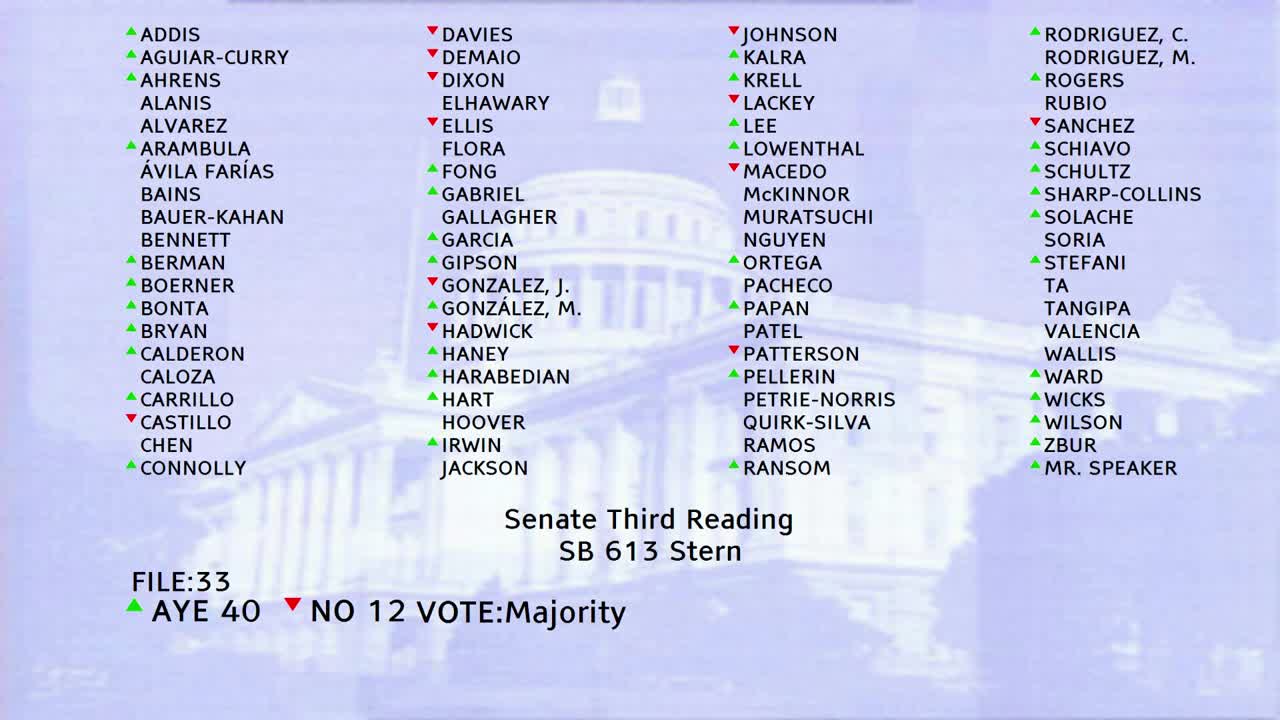
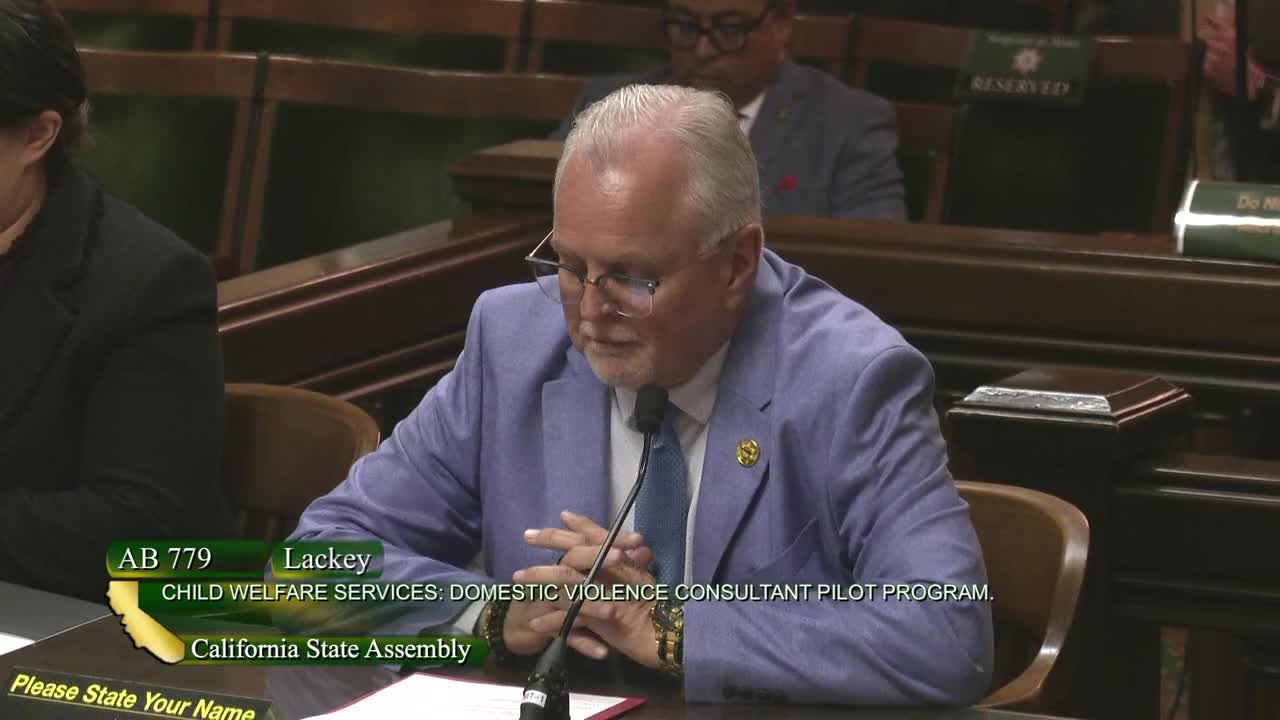
Bill Author

Bill Co-Author(s):
