AB 889: Prevailing wage: per diem wages.
- Session Year: 2025-2026
- House: Assembly
- Latest Version Date: 2025-10-11
Current Status:
Passed
(2025-10-11: Chaptered by Secretary of State - Chapter 626, Statutes of 2025.)
Introduced
In Committee
Awaiting First Chamber Vote
Passed First Chamber
In Committee
Awaiting Second Chamber Vote
Passed Second Chamber
Enacted
Existing law requires workers employed on public works to be paid not less than the general prevailing rate of per diem wages for work of a similar character in the locality that the public work is performed, as prescribed, unless an exception applies. Existing law requires the Director of the Department of Industrial Relations to determine the general prevailing rate of per diem wages for work of a similar character in the locality in which the public work is to be performed.
Under existing law, per diem wages include certain employer payments made pursuant to a collective bargaining agreement or for a program or committee established under the federal Labor Management Cooperation Act of 1978, as specified. Existing law provides that these payments are a credit against the obligation to pay the general prevailing rate of per diem wages.
Existing law requires the credit for employer payments to be computed on an annualized basis where the employer seeks credit for employer payments that are higher for public works projects than for private construction performed by the same employer, except under certain circumstances, including a determination by the director that annualization would not serve the purposes of the provisions relating to public works projects.
This bill would remove that exception and revoke annualization exemptions authorized by the director prior to January 1, 2026. The bill would authorize an employer to take full credit for the hourly amounts contributed to defined contribution pension plans that provide for both immediate participation and essentially immediate vesting even if the employer contributes at a lower rate or does not make contributions to private construction. The bill would require the employer to prove that the credit for employer payments was calculated properly. The bill would authorize the Labor Commissioner to deny the employer credit for employment payments if the employer does not produce payment records.
The bill would make related findings and declarations.
Existing law requires workers employed on public works to be paid not less than the general prevailing rate of per diem wages for work of a similar character in the locality that the public work is performed, as prescribed, unless an exception applies. Existing law requires the Director of the Department of Industrial Relations to determine the general prevailing rate of per diem wages for work of a similar character in the locality in which the public work is to be performed.
Under existing law, per diem wages include certain employer payments made pursuant to a collective bargaining agreement or for a program or committee established under the federal Labor Management Cooperation Act of 1978, as specified. Existing law provides that these payments are a credit against the obligation to pay the general prevailing rate of per diem wages.
Existing law requires the credit for employer payments to be computed on an annualized basis where the employer seeks credit for employer payments that are higher for public works projects than for private construction performed by the same employer, except under certain circumstances, including a determination by the director that annualization would not serve the purposes of the provisions relating to public works projects.
This bill would remove that exception and revoke annualization exemptions authorized by the director prior to January 1, 2026. The bill would authorize an employer to take full credit for the hourly amounts contributed to defined contribution pension plans that provide for both immediate participation and essentially immediate vesting even if the employer contributes at a lower rate or does not make contributions to private construction. The bill would require the employer to prove that the credit for employer payments was calculated properly. The bill would authorize the Labor Commissioner to deny the employer credit for employment payments if the employer does not produce payment records.
The bill would make related findings and declarations.
Existing law requires workers employed on public works to be paid not less than the general prevailing rate of per diem wages for work of a similar character in the locality that the public work is performed, as prescribed, unless an exception applies. Existing law requires the Director of the Department of Industrial Relations to determine the general prevailing rate of per diem wages for work of a similar character in the locality in which the public work is to be performed.
Under existing law, per diem wages include certain employer payments made pursuant to a collective bargaining agreement or for a program or committee established under the federal Labor Management Cooperation Act of 1978, as specified. Existing law provides that these payments are a credit against the obligation to pay the general prevailing rate of per diem wages.
Existing law requires the credit for employer payments to be computed on an annualized basis where the employer seeks credit for employer payments that are higher for public works projects than for private construction performed by the same employer, except under certain circumstances, including a determination by the director that annualization would not serve the purposes of the provisions relating to public works projects.
This bill would remove that exception and revoke annualization exemptions authorized by the director prior to January 1, 2026. The bill would authorize an employer to take full credit for the hourly amounts contributed to defined contribution pension plans that provide for both immediate participation and essentially immediate vesting even if the employer contributes at a lower rate or does not make contributions to private construction. The bill would require the employer to prove that the credit for employer payments was calculated properly. The bill would authorize the Labor Commissioner to deny the employer credit for employment payments if the employer does not produce payment records. The bill would apply the January 1, 2023, edition of the United States Department of Labor Field Operations Handbook to address prevailing wage fringe benefit credit issues not addressed by California statutes or regulations.
The bill would make related findings and declarations.
Existing law requires workers employed on public works to be paid not less than the general prevailing rate of per diem wages for work of a similar character in the locality that the public work is performed, as prescribed, unless an exception applies. Existing law requires the Director of the Department of Industrial Relations to determine the general prevailing rate of per diem wages for work of a similar character in the locality in which the public work is to be performed.
Under existing law, per diem wages include certain employer payments made pursuant to a collective bargaining agreement or for a program or committee established under the federal Labor Management Cooperation Act of 1978, as specified. Existing law provides that these payments are a credit against the obligation to pay the general prevailing rate of per diem wages.
Existing law requires the credit for employer payments to be computed on an annualized basis where the employer seeks credit for employer payments that are higher for public works projects than for private construction performed by the same employer, except under certain circumstances, including a determination by the director that annualization would not serve the purposes of the provisions relating to public works projects.
This bill would remove that exception and revoke annualization exemptions authorized by the director prior to January 1, 2026. The bill would authorize an employer to take full credit for the hourly amounts contributed to defined contribution pension plans that provide for both immediate participation and immediate vesting even if the employer contributes at a lower rate or does not make contributions to private construction. The bill would require the employer to prove that the credit for employer payments was calculated properly. The bill would authorize the Labor Commissioner to deny the employer credit for employment payments if the employer does not produce payment records. The bill would apply the January 1, 2023, edition of the United States Department of Labor Field Operations Handbook to address prevailing wage fringe benefit credit issues not addressed by California statutes or regulations.
The bill would make related findings and declarations.
The Legislature finds and declares the following:
(a)Annualization is a principle adopted by the federal Department of Labor in enforcing the Davis-Bacon Act for crediting contributions made to fringe benefit plans based on effective rate of contributions for all hours worked during a year by an employee on both public (Davis-Bacon) and private projects.
(b)The annualization principle requires that when converting an employers fringe benefit contribution into an hourly amount, the amount of employer payments must be divided by the total number of hours worked in a year on all projects, public and private, not just the number of hours worked during that year on public projects.
(c)The annualization rule prevents a contractor from using the prevailing wage work as the disproportionate or exclusive source of funding for benefits. Contractors are not required to provide benefits on a prevailing wage job nor are they required to make benefit payments on private jobs. However, if a contractor chooses to provide fringe benefits on prevailing wage jobs, it must undertake a proper annualization calculation.
(d)The calculation must be done on a yearly basis, the reason for the term annualization. Since plan benefit years vary, any consistent 12-month period may be used.
(e)The calculation must be done separately for every individual worker as employer-provided benefits and hours worked may vary.
(f)It is the intent of this bill to update and clarify the state public works annualization process.
SEC. 2.Section 1773.1 of the Labor Code is amended to read:1773.1.(a)Per diem wages, as the term is used in this chapter or in any other statute applicable to public works, includes employer payments for the following:
(1)Health and welfare.
(2)Pension.
(3)Vacation.
(4)Travel.
(5)Subsistence.
(6)Apprenticeship or other training programs authorized by Section 3093, to the extent that the cost of training is reasonably related to the amount of the contributions.
(7)Worker protection and assistance programs or committees established under the federal Labor Management Cooperation Act of 1978 (29 U.S.C. Sec. 175a), to the extent that the activities of the programs or committees are directed to the monitoring and enforcement of laws related to public works.
(8)Industry advancement and collective bargaining agreements administrative fees, provided that these payments are made pursuant to a collective bargaining agreement to which the employer is obligated.
(9)Other purposes similar to those specified in paragraphs (1) to (5), inclusive; or other purposes similar to those specified in paragraphs (6) to (8), inclusive, if the payments are made pursuant to a collective bargaining agreement to which the employer is obligated.
(b)Employer payments include all of the following:
(1)The rate of contribution irrevocably made by the employer to a trustee or third person pursuant to a plan, fund, or program.
(2)The rate of actual costs to the employer reasonably anticipated in providing benefits to workers pursuant to an enforceable commitment to carry out a financially responsible plan or program communicated in writing to the workers affected.
(3)Payments to the California Apprenticeship Council pursuant to Section 1777.5.
(c)Employer payments are a credit against the obligation to pay the general prevailing rate of per diem wages. However, credit shall not be granted for benefits required to be provided by other state or federal law, for payments made to monitor and enforce laws related to public works if those payments are not made to a program or committee established under the federal Labor Management Cooperation Act of 1978 (29 U.S.C. Sec. 175a), or for payments for industry advancement and collective bargaining agreement administrative fees if those payments are not made pursuant to a collective bargaining agreement to which the employer is obligated. Credits for employer payments also shall not reduce the obligation to pay the hourly straight time or overtime wages found to be prevailing. However, an increased employer payment contribution that results in a lower hourly straight time or overtime wage shall not be considered a violation of the applicable prevailing wage determination if all of the following conditions are met:
(1)The increased employer payment is made pursuant to criteria set forth in a collective bargaining agreement.
(2)The basic hourly rate and increased employer payment are no less than the general prevailing rate of per diem wages and the general prevailing rate for holiday and overtime work in the directors general prevailing wage determination.
(3)The employer payment contribution is irrevocable unless made in error.
(d)An employer may take credit for an employer payment specified in subdivision (b), even if contributions are not made, or costs are not paid, during the same pay period for which credit is taken, if the employer regularly makes the contributions, or regularly pays the costs, for the plan, fund, or program on no less than a quarterly basis.
(e)(1)The credit for employer payments shall be computed on an annualized basis when the employer seeks credit for employer payments that are higher for public works projects than for private construction performed by the same employer, unless one or more of the following circumstances exist:
(A)The employer has an enforceable obligation to make the higher rate of payments on future private construction performed by the employer.
(B)The higher rate of payments is required by a project labor agreement.
(C)The payments are made to the California Apprenticeship Council pursuant to Section 1777.5.
(2)Paragraph (1) shall apply to all employer payments not made directly to the worker, regardless of whether any contributions are made or benefits are provided with respect to private construction, with the exception of contributions to defined contribution pension plans that provide for both immediate participation and essentially immediate vesting. An employer may take full credit for the hourly amounts contributed to those defined contribution pension plans for public works projects even if the employer contributes at a lower rate or does not make contributions to private construction. For purposes of this section, essentially immediate vesting means the benefit vests within the first 500 hours worked.
(3)The employer shall have the burden of demonstrating that the credit for employer payments was properly calculated pursuant to this subdivision. The employer shall, upon the request of the Labor Commissioner, produce records of employee hours and employer payments on private construction sufficient for the Labor Commissioner to verify that the credit for employer payments was properly calculated on an annualized basis pursuant to this subdivision. The Labor Commissioner may deny the employer credit for the employer payments if those records are not produced.
(f)Any exemptions to the annualization requirements of subdivision (e) issued by the director prior to January 1, 2026, are revoked.
(g)(1)For the purpose of determining those per diem wages for contracts, the representative of any craft, classification, or type of worker needed to execute contracts shall file with the Department of Industrial Relations fully executed copies of the collective bargaining agreements for the particular craft, classification, or type of work involved. The collective bargaining agreements shall be filed after their execution and thereafter may be taken into consideration pursuant to Section 1773 whenever they are filed 30 days prior to the call for bids. If the collective bargaining agreement has not been formalized, a typescript of the final draft may be filed temporarily, accompanied by a statement under penalty of perjury as to its effective date.
(2)When a copy of the collective bargaining agreement has previously been filed, fully executed copies of all modifications and extensions of the agreement that affect per diem wages or holidays shall be filed.
(3)The failure to comply with filing requirements of this subdivision shall not be grounds for setting aside a prevailing wage determination if the information taken into consideration is correct.
The Legislature finds and declares the following:
(a)Annualization is a principle adopted by the federal Department of Labor in enforcing the Davis-Bacon Act for crediting contributions made to fringe benefit plans based on effective rate of contributions for all hours worked during a year by an employee on both public (Davis-Bacon) and private projects.
(b)The annualization principle requires that when converting an employers fringe benefit contribution into an hourly amount, the amount of employer payments must be divided by the total number of hours worked in a year on all projects, public and private, not just the number of hours worked during that year on public projects.
(c)The annualization rule prevents a contractor from using the prevailing wage work as the disproportionate or exclusive source of funding for benefits. Contractors are not required to provide benefits on a prevailing wage job nor are they required to make benefit payments on private jobs. However, if a contractor chooses to provide fringe benefits on prevailing wage jobs, it must undertake a proper annualization calculation.
(d)The calculation must be done on a yearly basis, the reason for the term annualization. Since plan benefit years vary, any consistent 12-month period may be used.
(e)The calculation must be done separately for every individual worker as employer-provided benefits and hours worked may vary.
(f)It is the intent of this bill to update and clarify the state public works annualization process.
SEC. 2.Section 1773.1 of the Labor Code is amended to read:1773.1.(a)Per diem wages, as the term is used in this chapter or in any other statute applicable to public works, includes employer payments for the following:
(1)Health and welfare.
(2)Pension.
(3)Vacation.
(4)Travel.
(5)Subsistence.
(6)Apprenticeship or other training programs authorized by Section 3093, to the extent that the cost of training is reasonably related to the amount of the contributions.
(7)Worker protection and assistance programs or committees established under the federal Labor Management Cooperation Act of 1978 (29 U.S.C. Sec. 175a), to the extent that the activities of the programs or committees are directed to the monitoring and enforcement of laws related to public works.
(8)Industry advancement and collective bargaining agreements administrative fees, provided that these payments are made pursuant to a collective bargaining agreement to which the employer is obligated.
(9)Other purposes similar to those specified in paragraphs (1) to (5), inclusive; or other purposes similar to those specified in paragraphs (6) to (8), inclusive, if the payments are made pursuant to a collective bargaining agreement to which the employer is obligated.
(b)Employer payments include all of the following:
(1)The rate of contribution irrevocably made by the employer to a trustee or third person pursuant to a plan, fund, or program.
(2)The rate of actual costs to the employer reasonably anticipated in providing benefits to workers pursuant to an enforceable commitment to carry out a financially responsible plan or program communicated in writing to the workers affected.
(3)Payments to the California Apprenticeship Council pursuant to Section 1777.5.
(c)Employer payments are a credit against the obligation to pay the general prevailing rate of per diem wages. However, credit shall not be granted for benefits required to be provided by other state or federal law, for payments made to monitor and enforce laws related to public works if those payments are not made to a program or committee established under the federal Labor Management Cooperation Act of 1978 (29 U.S.C. Sec. 175a), or for payments for industry advancement and collective bargaining agreement administrative fees if those payments are not made pursuant to a collective bargaining agreement to which the employer is obligated. Credits for employer payments also shall not reduce the obligation to pay the hourly straight time or overtime wages found to be prevailing. However, an increased employer payment contribution that results in a lower hourly straight time or overtime wage shall not be considered a violation of the applicable prevailing wage determination if all of the following conditions are met:
(1)The increased employer payment is made pursuant to criteria set forth in a collective bargaining agreement.
(2)The basic hourly rate and increased employer payment are no less than the general prevailing rate of per diem wages and the general prevailing rate for holiday and overtime work in the directors general prevailing wage determination.
(3)The employer payment contribution is irrevocable unless made in error.
(d)An employer may take credit for an employer payment specified in subdivision (b), even if contributions are not made, or costs are not paid, during the same pay period for which credit is taken, if the employer regularly makes the contributions, or regularly pays the costs, for the plan, fund, or program on no less than a quarterly basis.
(e)(1)The credit for employer payments shall be computed on an annualized basis when the employer seeks credit for employer payments that are higher for public works projects than for private construction performed by the same employer, unless one or more of the following circumstances exist:
(A)The employer has an enforceable obligation to make the higher rate of payments on future private construction performed by the employer.
(B)The higher rate of payments is required by a project labor agreement.
(C)The payments are made to the California Apprenticeship Council pursuant to Section 1777.5.
(2)Paragraph (1) shall apply to all employer payments not made directly to the worker, regardless of whether any contributions are made or benefits are provided with respect to private construction, with the exception of contributions to defined contribution pension plans that provide for both immediate participation and essentially immediate vesting. An employer may take full credit for the hourly amounts contributed to those defined contribution pension plans for public works projects even if the employer contributes at a lower rate or does not make contributions to private construction. For purposes of this section, essentially immediate vesting means the benefit vests within the first 500 hours worked.
(3)The employer shall have the burden of demonstrating that the credit for employer payments was properly calculated pursuant to this subdivision. The employer shall, upon the request of the Labor Commissioner, produce records of employee hours and employer payments on private construction sufficient for the Labor Commissioner to verify that the credit for employer payments was properly calculated on an annualized basis pursuant to this subdivision. The Labor Commissioner may deny the employer credit for the employer payments if those records are not produced.
(f)Any exemptions to the annualization requirements of subdivision (e) issued by the director prior to January 1, 2026, are revoked.
(g)(1)For the purpose of determining those per diem wages for contracts, the representative of any craft, classification, or type of worker needed to execute contracts shall file with the Department of Industrial Relations fully executed copies of the collective bargaining agreements for the particular craft, classification, or type of work involved. The collective bargaining agreements shall be filed after their execution and thereafter may be taken into consideration pursuant to Section 1773 whenever they are filed 30 days prior to the call for bids. If the collective bargaining agreement has not been formalized, a typescript of the final draft may be filed temporarily, accompanied by a statement under penalty of perjury as to its effective date.
(2)When a copy of the collective bargaining agreement has previously been filed, fully executed copies of all modifications and extensions of the agreement that affect per diem wages or holidays shall be filed.
(3)The failure to comply with filing requirements of this subdivision shall not be grounds for setting aside a prevailing wage determination if the information taken into consideration is correct.
The Legislature finds and declares the following:
(a)Annualization is a principle adopted by the federal Department of Labor in enforcing the Davis-Bacon Act for crediting contributions made to fringe benefit plans based on effective rate of contributions for all hours worked during a year by an employee on both public (Davis-Bacon) and private projects.
(b)The annualization principle requires that when converting an employers fringe benefit contribution into an hourly amount, the amount of employer payments must be divided by the total number of hours worked in a year on all projects, public and private, not just the number of hours worked during that year on public projects.
(c)The annualization rule prevents a contractor from using the prevailing wage work as the disproportionate or exclusive source of funding for benefits. Contractors are not required to provide benefits on a prevailing wage job nor are they required to make benefit payments on private jobs. However, if a contractor chooses to provide fringe benefits on prevailing wage jobs, it must undertake a proper annualization calculation.
(d)The calculation must be done on a yearly basis, the reason for the term annualization. Since plan benefit years vary, any consistent 12-month period may be used.
(e)The calculation must be done separately for every individual worker as employer-provided benefits and hours worked may vary.
(f)It is the intent of this bill to update and clarify the state public works annualization process.
SEC. 2.Section 1773.1 of the Labor Code is amended to read:1773.1.(a)Per diem wages, as the term is used in this chapter or in any other statute applicable to public works, includes employer payments for the following:
(1)Health and welfare.
(2)Pension.
(3)Vacation.
(4)Travel.
(5)Subsistence.
(6)Apprenticeship or other training programs authorized by Section 3093, to the extent that the cost of training is reasonably related to the amount of the contributions.
(7)Worker protection and assistance programs or committees established under the federal Labor Management Cooperation Act of 1978 (29 U.S.C. Sec. 175a), to the extent that the activities of the programs or committees are directed to the monitoring and enforcement of laws related to public works.
(8)Industry advancement and collective bargaining agreements administrative fees, provided that these payments are made pursuant to a collective bargaining agreement to which the employer is obligated.
(9)Other purposes similar to those specified in paragraphs (1) to (5), inclusive; or other purposes similar to those specified in paragraphs (6) to (8), inclusive, if the payments are made pursuant to a collective bargaining agreement to which the employer is obligated.
(b)Employer payments include all of the following:
(1)The rate of contribution irrevocably made by the employer to a trustee or third person pursuant to a plan, fund, or program.
(2)The rate of actual costs to the employer reasonably anticipated in providing benefits to workers pursuant to an enforceable commitment to carry out a financially responsible plan or program communicated in writing to the workers affected.
(3)Payments to the California Apprenticeship Council pursuant to Section 1777.5.
(c)Employer payments are a credit against the obligation to pay the general prevailing rate of per diem wages. However, credit shall not be granted for benefits required to be provided by other state or federal law, for payments made to monitor and enforce laws related to public works if those payments are not made to a program or committee established under the federal Labor Management Cooperation Act of 1978 (29 U.S.C. Sec. 175a), or for payments for industry advancement and collective bargaining agreement administrative fees if those payments are not made pursuant to a collective bargaining agreement to which the employer is obligated. Credits for employer payments also shall not reduce the obligation to pay the hourly straight time or overtime wages found to be prevailing. However, an increased employer payment contribution that results in a lower hourly straight time or overtime wage shall not be considered a violation of the applicable prevailing wage determination if all of the following conditions are met:
(1)The increased employer payment is made pursuant to criteria set forth in a collective bargaining agreement.
(2)The basic hourly rate and increased employer payment are no less than the general prevailing rate of per diem wages and the general prevailing rate for holiday and overtime work in the directors general prevailing wage determination.
(3)The employer payment contribution is irrevocable unless made in error.
(d)An employer may take credit for an employer payment specified in subdivision (b), even if contributions are not made, or costs are not paid, during the same pay period for which credit is taken, if the employer regularly makes the contributions, or regularly pays the costs, for the plan, fund, or program on no less than a quarterly basis.
(e)(1)The credit for employer payments shall be computed on an annualized basis when the employer seeks credit for employer payments that are higher for public works projects than for private construction performed by the same employer, unless one or more of the following circumstances exist:
(A)The employer has an enforceable obligation to make the higher rate of payments on future private construction performed by the employer.
(B)The higher rate of payments is required by a project labor agreement.
(C)The payments are made to the California Apprenticeship Council pursuant to Section 1777.5.
(2)Paragraph (1) shall apply to all employer payments not made directly to the worker, regardless of whether any contributions are made or benefits are provided with respect to private construction, with the exception of contributions to defined contribution pension plans that provide for both immediate participation and essentially immediate vesting. An employer may take full credit for the hourly amounts contributed to those defined contribution pension plans for public works projects even if the employer contributes at a lower rate or does not make contributions to private construction. For purposes of this section, essentially immediate vesting means the benefit vests within the first 500 hours worked.
(3)The employer shall have the burden of demonstrating that the credit for employer payments was properly calculated pursuant to this subdivision. The employer shall, upon the request of the Labor Commissioner, produce records of employee hours and employer payments on private construction sufficient for the Labor Commissioner to verify that the credit for employer payments was properly calculated on an annualized basis pursuant to this subdivision. The Labor Commissioner may deny the employer credit for the employer payments if those records are not produced.
(f)Any exemptions to the annualization requirements of subdivision (e) issued by the director prior to January 1, 2026, are revoked.
(g)(1)For the purpose of determining those per diem wages for contracts, the representative of any craft, classification, or type of worker needed to execute contracts shall file with the Department of Industrial Relations fully executed copies of the collective bargaining agreements for the particular craft, classification, or type of work involved. The collective bargaining agreements shall be filed after their execution and thereafter may be taken into consideration pursuant to Section 1773 whenever they are filed 30 days prior to the call for bids. If the collective bargaining agreement has not been formalized, a typescript of the final draft may be filed temporarily, accompanied by a statement under penalty of perjury as to its effective date.
(2)When a copy of the collective bargaining agreement has previously been filed, fully executed copies of all modifications and extensions of the agreement that affect per diem wages or holidays shall be filed.
(3)The failure to comply with filing requirements of this subdivision shall not be grounds for setting aside a prevailing wage determination if the information taken into consideration is correct.
(h)Prevailing wage fringe benefit credit issues not addressed by California statutes or regulations shall be governed by the January 1, 2023, version of the United States Department of Labor Field Operations Handbook.The Legislature finds and declares the following:
(a)Annualization is a principle adopted by the federal Department of Labor in enforcing the Davis-Bacon Act for crediting contributions made to fringe benefit plans based on effective rate of contributions for all hours worked during a year by an employee on both public (Davis-Bacon) and private projects.
(b)The annualization principle requires that when converting an employers fringe benefit contribution into an hourly amount, the amount of employer payments must be divided by the total number of hours worked in a year on all projects, public and private, not just the number of hours worked during that year on public projects.
(c)The annualization rule prevents a contractor from using the prevailing wage work as the disproportionate or exclusive source of funding for benefits. Contractors are not required to provide benefits on a prevailing wage job nor are they required to make benefit payments on private jobs. However, if a contractor chooses to provide fringe benefits on prevailing wage jobs, it must undertake a proper annualization calculation.
(d)The calculation must be done on a yearly basis, the reason for the term annualization. Since plan benefit years vary, any consistent 12-month period may be used.
(e)The calculation must be done separately for every individual worker as employer-provided benefits and hours worked may vary.
(f)It is the intent of this bill to update and clarify the state public works annualization process.
SEC. 2.Section 1773.1 of the Labor Code is amended to read:1773.1.(a)Per diem wages, as the term is used in this chapter or in any other statute applicable to public works, includes employer payments for the following:
(1)Health and welfare.
(2)Pension.
(3)Vacation.
(4)Travel.
(5)Subsistence.
(6)Apprenticeship or other training programs authorized by Section 3093, to the extent that the cost of training is reasonably related to the amount of the contributions.
(7)Worker protection and assistance programs or committees established under the federal Labor Management Cooperation Act of 1978 (29 U.S.C. Sec. 175a), to the extent that the activities of the programs or committees are directed to the monitoring and enforcement of laws related to public works.
(8)Industry advancement and collective bargaining agreements administrative fees, provided that these payments are made pursuant to a collective bargaining agreement to which the employer is obligated.
(9)Other purposes similar to those specified in paragraphs (1) to (5), inclusive; or other purposes similar to those specified in paragraphs (6) to (8), inclusive, if the payments are made pursuant to a collective bargaining agreement to which the employer is obligated.
(b)Employer payments include all of the following:
(1)The rate of contribution irrevocably made by the employer to a trustee or third person pursuant to a plan, fund, or program.
(2)The rate of actual costs to the employer reasonably anticipated in providing benefits to workers pursuant to an enforceable commitment to carry out a financially responsible plan or program communicated in writing to the workers affected.
(3)Payments to the California Apprenticeship Council pursuant to Section 1777.5.
(c)Employer payments are a credit against the obligation to pay the general prevailing rate of per diem wages. However, credit shall not be granted for benefits required to be provided by other state or federal law, for payments made to monitor and enforce laws related to public works if those payments are not made to a program or committee established under the federal Labor Management Cooperation Act of 1978 (29 U.S.C. Sec. 175a), or for payments for industry advancement and collective bargaining agreement administrative fees if those payments are not made pursuant to a collective bargaining agreement to which the employer is obligated. Credits for employer payments also shall not reduce the obligation to pay the hourly straight time or overtime wages found to be prevailing. However, an increased employer payment contribution that results in a lower hourly straight time or overtime wage shall not be considered a violation of the applicable prevailing wage determination if all of the following conditions are met:
(1)The increased employer payment is made pursuant to criteria set forth in a collective bargaining agreement.
(2)The basic hourly rate and increased employer payment are no less than the general prevailing rate of per diem wages and the general prevailing rate for holiday and overtime work in the directors general prevailing wage determination.
(3)The employer payment contribution is irrevocable unless made in error.
(d)An employer may take credit for an employer payment specified in subdivision (b), even if contributions are not made, or costs are not paid, during the same pay period for which credit is taken, if the employer regularly makes the contributions, or regularly pays the costs, for the plan, fund, or program on no less than a quarterly basis.
(e)(1)The credit for employer payments shall be computed on an annualized basis when the employer seeks credit for employer payments that are higher for public works projects than for private construction performed by the same employer, unless one or more of the following occur: circumstances exist:
(1)(A)The employer has an enforceable obligation to make the higher rate of payments on future private construction performed by the employer.
(2)(B)The higher rate of payments is required by a project labor agreement.
(3)(C)The payments are made to the California Apprenticeship Council pursuant to Section 1777.5.
(4)The director determines that annualization would not serve the purposes of this chapter.(2)Paragraph (1) shall apply to all employer payments not made directly to the worker, regardless of whether any contributions are made or benefits are provided with respect to private construction, with the exception of contributions to defined contribution pension plans that provide for both immediate participation and immediate vesting. An employer may take full credit for the hourly amounts contributed to those defined contribution pension plans for public works projects even if the employer contributes at a lower rate or does not make contributions to private construction.
(3)The employer shall have the burden of demonstrating that the credit for employer payments was properly calculated pursuant to this subdivision. The employer shall, upon the request of the Labor Commissioner, produce records of employee hours and employer payments on private construction sufficient for the Labor Commissioner to verify that the credit for employer payments was properly calculated on an annualized basis pursuant to this subdivision. The Labor Commissioner may deny the employer credit for the employer payments if those records are not produced.
(f)Any exemptions to the annualization requirements of subdivision (e) issued by the director prior to January 1, 2026, are revoked.
(f)(g)(1)For the purpose of determining those per diem wages for contracts, the representative of any craft, classification, or type of worker needed to execute contracts shall file with the Department of Industrial Relations fully executed copies of the collective bargaining agreements for the particular craft, classification, or type of work involved. The collective bargaining agreements shall be filed after their execution and thereafter may be taken into consideration pursuant to Section 1773 whenever they are filed 30 days prior to the call for bids. If the collective bargaining agreement has not been formalized, a typescript of the final draft may be filed temporarily, accompanied by a statement under penalty of perjury as to its effective date.
(2)When a copy of the collective bargaining agreement has previously been filed, fully executed copies of all modifications and extensions of the agreement that affect per diem wages or holidays shall be filed.
(3)The failure to comply with filing requirements of this subdivision shall not be grounds for setting aside a prevailing wage determination if the information taken into consideration is correct.
(h)Prevailing wage fringe benefit credit issues not addressed by California statutes or regulations shall be governed by the January 1, 2023, version of the United States Department of Labor Field Operations Handbook.
|
Date
|
Status
|
|---|---|
| Oct 11, 2025 | Chaptered by Secretary of State - Chapter 626, Statutes of 2025. |
| Oct 11, 2025 | Approved by the Governor. |
| Sep 24, 2025 | Enrolled and presented to the Governor at 3 p.m. |
| Sep 13, 2025 | Senate amendments concurred in. To Engrossing and Enrolling. (Ayes 77. Noes 1. Page 3449.). |
| Sep 13, 2025 | Joint Rules 61(a)(14) and 51(a)(4) suspended. (Ayes 59. Noes 20. Page 3413.) |
| Sep 10, 2025 | In Assembly. Concurrence in Senate amendments pending. |
| Sep 10, 2025 | Read third time. Passed. Ordered to the Assembly. (Ayes 36. Noes 0. Page 2812.). |
| Sep 8, 2025 | Read second time. Ordered to third reading. |
| Sep 5, 2025 | Read third time and amended. Ordered to second reading. |
| Aug 20, 2025 | Read second time. Ordered to third reading. |
| Aug 19, 2025 | From committee: Be ordered to second reading pursuant to Senate Rule 28.8. |
| Jul 9, 2025 | From committee: Do pass and re-refer to Com. on APPR. (Ayes 4. Noes 0.) (July 9). Re-referred to Com. on APPR. |
| Jun 12, 2025 | In committee: Set, second hearing. Hearing canceled at the request of author. |
| Jun 11, 2025 | In committee: Set, first hearing. Hearing canceled at the request of author. |
| May 21, 2025 | Referred to Com. on L., P.E. & R. |
| May 8, 2025 | In Senate. Read first time. To Com. on RLS. for assignment. |
| May 8, 2025 | Read third time. Passed. Ordered to the Senate. (Ayes 69. Noes 0. Page 1486.) |
| May 1, 2025 | Read second time. Ordered to Consent Calendar. |
| Apr 30, 2025 | From committee: Do pass. To Consent Calendar. (Ayes 14. Noes 0.) (April 30). |
| Apr 3, 2025 | From committee: Do pass and re-refer to Com. on APPR. with recommendation: To Consent Calendar. (Ayes 7. Noes 0.) (April 2). Re-referred to Com. on APPR. |
| Mar 3, 2025 | Referred to Com. on L. & E. |
| Feb 20, 2025 | From printer. May be heard in committee March 22. |
| Feb 19, 2025 | Read first time. To print. |
|
Date
|
Description
|
Location
|
Votes
|
|
|---|---|---|---|---|
| Sep 13, 2025 | AB 889 Hadwick Concurrence in Senate Amendments | Assembly Floor |
Passed |
|
| Sep 10, 2025 | Assembly 3rd Reading AB889 Hadwick et al. By Limón | Senate Floor |
Passed |
|
| Jul 9, 2025 | Do pass, but first be re-referred to the Committee on [Appropriations] | Senate Standing Committee on Labor, Public Employment and Retirement |
Passed |
|
| May 8, 2025 | AB 889 Hadwick Consent Calendar Second Day Regular Session | Assembly Floor |
Passed |
|
| Apr 30, 2025 | Do pass. To Consent Calendar. | Assembly Standing Committee on Appropriations |
Passed |
|
| Apr 2, 2025 | Do pass and be re-referred to the Committee on [Appropriations] with recommendation: To Consent Calendar | Assembly Standing Committee on Labor and Employment |
Passed |
This list shows positions taken on this bill by organizations on the date displayed, which is linked to the original source.
Positions by individuals are not included.
|
Organization
|
Position
|
Date
|
|---|---|---|
| Associated Builders And Contractors Of California | ** Against | |
| Associated General Contractors, San Diego Chapter | ** Against | |
| California Legislative Conference Of Plumbing, Heating & Piping Industry | ** Support | |
| California State Association Of Electrical Workers | ** Support | |
| California State Pipe Trades Council | ** Support | |
| California-Nevada Conference Of Operating Engineers | ** Support | |
| District Council of Iron Workers | ** Support | |
| International Union of Painters and Allied Trades, District Council 16 | ** Support | |
| National Electrical Contractors Association | ** Support | |
| Northern California Allied Trades | ** Support | |
| Southern California Glass Management Association | ** Support | |
| State Building & Construction Trades Council Of California | ** Support | |
| United Contractors | ** Support | |
| Wall and Ceiling Alliance | ** Support | |
| Western Electrical Contractors Association | ** Against | |
| Western Painting and Coating Contractors Association | ** Support | |
| Western States Council Sheet Metal, Air, Rail And Transportation | ** Support | |
| Western Wall And Ceiling Contractors Association | ** Support |
CONCURRENCE IN SENATE AMENDMENTS
CSA1 Bill Id:AB 889
Author:(Hadwick, et al.)
As Amended Ver:September 05, 2025
Majority vote
SUMMARY
Makes changes to the annualization rule of fringe benefits for work on both public and private construction projects by requiring annualization to apply to all employer payments not made directly to the worker and by eliminating the exemption that the director of the Department of Industrial Relations (DIR) has determined that annualization would not further the purposes of the law.
Senate Amendments
- Clarify that employers can take full credit for hourly amounts contributed to defined contribution pension plans for public works projects that provide for both immediate participation and essentially immediate vesting even if the employer contributes at a lower rate or does not make contributions to private construction.
- Define "essentially immediate vesting" to mean the benefit vests within the first 500 hours worked.
- Remove the provision stating that prevailing wage fringe benefit credit issues not addressed by California law shall be governed by the January 1, 2023, version of the U.S. Department of Labor Field Operations Handbook.
COMMENTS
See the Committee Policy Analysis.
According to the Author
According to the author, "As the cost of living rises, workers in California deserve fair compensation, but the current system of fringe benefit regulations and enforcement inefficiency allows for wage theft. AB 889 addresses these issues by clarifying regulations and streamlining enforcement. This bill ensures that workers are paid fairly and that contractors are held accountable, creating a more efficient, transparent system for enforcing prevailing wage law."
Arguments in Support
The California-Nevada Conference of Operating Engineers and the District Council of Iron Workers, sponsors of the bill, state, "In an effort to ensure clarity in statute and to prevent workers on public works projects from experiencing fringe benefit fraud, AB 889 (Hadwick) would conform State law with federal Department of Labor rules on annualization and provide clarity with respect to the type of contributions made. Specifically, the bill would specify that annualization calculations must be made for all employer payments that are not directly made to a worker, regardless of whether the employer provides benefits on private construction projects.
The bill would additionally revoke previous exemptions from annualization requirements and clarify that employers must be capable of demonstrating that the hourly credit they are taking for employee fringe benefit payments was properly calculated. Further, the bill would authorize the labor commissioner to deny employer fringe benefit credits for failure to provide proof of accurate calculations."
Arguments in Opposition
The Western Electrical Contractors Association is opposed and states, "AB 889 revises existing public works law regarding the calculation of wage credits for employer payments to employee fringe benefits for meeting prevailing wage requirements. As drafted, AB 889 will have several adverse effects:
- It routes vitally needed workforce development funds from apprenticeship programs, preparing tomorrow's workforce, to state bureaucrats.
- It prohibits the director of DIR from making determinations about the annualization of benefit payments without a reason.
- It arbitrarily revokes any exemptions to annualization requirements issued by the director before January 1, 2026."
FISCAL COMMENTS
According to the Senate Appropriations Committee,
Pursuant to Senate Rule 28.8, negligible state costs.
VOTES:
ASM LABOR AND EMPLOYMENT: 7-0-0
YES: Ortega, Flora, Chen, Elhawary, Kalra, Lee, Ward
ASM APPROPRIATIONS: 14-0-1
YES: Wicks, Sanchez, Arambula, Calderon, Caloza, Dixon, Elhawary, Fong, Mark González, Hart, Pacheco, Solache, Ta, Alanis
ABS, ABST OR NV: Pellerin
ASSEMBLY FLOOR: 69-0-10
YES: Addis, Aguiar-Curry, Ahrens, Alanis, Alvarez, Ávila Farías, Bains, Bauer-Kahan, Bennett, Berman, Bonta, Bryan, Calderon, Caloza, Castillo, Chen, Connolly, Davies, DeMaio, Dixon, Elhawary, Ellis, Fong, Gabriel, Garcia, Gipson, Mark González, Hadwick, Haney, Harabedian, Hart, Hoover, Jackson, Kalra, Krell, Lackey, Lee, Lowenthal, Macedo, McKinnor, Muratsuchi, Nguyen, Ortega, Pacheco, Papan, Patel, Patterson, Pellerin, Petrie-Norris, Quirk-Silva, Ramos, Ransom, Michelle Rodriguez, Rogers, Blanca Rubio, Schiavo, Schultz, Sharp-Collins, Solache, Soria, Stefani, Ta, Tangipa, Valencia, Ward, Wicks, Wilson, Zbur, Rivas
ABS, ABST OR NV: Arambula, Boerner, Carrillo, Flora, Gallagher, Jeff Gonzalez, Irwin, Celeste Rodriguez, Sanchez, Wallis
UPDATED
VERSION: September 05, 2025
CONSULTANT: Megan Lane / L. & E. / (916) 319-2091 FN: 0001902
SENATE RULES COMMITTEE Office of Senate Floor Analyses (916) 651-1520 Fax: (916) 327-4478 | AB 889 |
THIRD READING
Bill No: AB 889
Author: Hadwick (R)
Amended: 9/5/25 in Senate
Vote: 21
SENATE LABOR, PUB. EMP. & RET. COMMITTEE: 4-0, 7/9/25
AYES: Smallwood-Cuevas, Cortese, Durazo, Laird
NO VOTE RECORDED: Strickland
SENATE APPROPRIATIONS COMMITTEE: Senate Rule 28.8
ASSEMBLY FLOOR: 69-0, 5/8/25 (Consent) - See last page for vote
SUBJECT: Prevailing wage: per diem wages
SOURCE: California-Nevada Conference of Operating Engineers
District Council of Iron Workers
DIGEST:
This bill makes several changes to the annualization requirement for fringe benefits on both public and private construction projects. AB 889 (1) requires employers to annualize all employer payments not made directly to the worker, except as specified; (2) voids any exemptions to the annualization requirement issued by the Director of the Department of Industrial Relations (DIR) prior to January 1, 2026 and revokes the Director’s ability to issue exemptions in the future; and (3) requires employers to, upon request of the Labor Commissioner, produce records sufficient to verify that they adhered to the annualization requirement.
Senate Floor Amendments of 9/5/25 1) clarify that employer contributions to defined contribution pension plans that provide for both immediate participation and “essentially” immediate vesting are exempt from annualization requirements; 2) define “essentially immediate vesting;” and 3) strike a requirement to refer to the January 1, 2023 version of the United States Department of Labor Field Operations Handbook when prevailing wage fringe benefit credit issues not addressed by California statutes or regulations arise.
ANALYSIS:
Existing federal law:
- Establishes the Davis-Bacon and Related Acts (DBRA), applicable to contractors and subcontractors performing work on federally-funded or assisted contracts in excess of $2,000 for the construction, alteration, or repair of public buildings or public works. DBRA contractors and subcontractors must pay their laborers and mechanics employed under the contract no less than the local prevailing wages and fringe benefits for corresponding work on similar projects in the area. (40 United States Code (U.S.C.) §3141)
- Specifies that the DBRA prevailing wage is the combination of the basic hourly wage rate and any fringe benefits rate listed for a specific classification of workers in the applicable Davis-Bacon wage determination. The contractor’s prevailing wage obligation may be met by either paying each laborer and mechanic the applicable prevailing wage entirely as cash wages or by a combination of cash wages and employer-provided bona fide fringe benefits. (40 U.S.C. §3141)
- Requires contractors, except under limited circumstances, to annualize their fringe benefit contributions or costs to determine the hourly credit that may be claimed towards their prevailing wage obligation. (29 Code of Federal Regulations (C.F.R.) §5.25(c))
- Provides that contributions to defined contribution pension plans are excepted from the annualization requirement if the plan is not continuous in nature, does not compensate both non-DBRA and DBRA-covered work, and provides for both immediate participation and essentially immediate vesting. (29 C.F.R. §5.25(c))
- Requires contractors to annualize the costs of contributions to apprenticeship programs registered with the Department of Labor’s Employment and Training Administration, Office of Apprenticeship (OA), or with a state apprenticeship agency recognized by the OA to determine the amount of hourly credit that can be claimed. A contractor may only take credit for amounts reasonably related to the costs of the apprenticeship benefits actually provided to the contractor’s employees. (29 C.F.R. §5.29)
Existing state law:
- Establishes within the DIR the Division of Labor Standards Enforcement under the direction of the Labor Commissioner (LC), and empowers the LC to ensure a just day’s pay in every work place and to promote justice through robust enforcement of labor laws. (Labor Code §79-107)
- Defines “per diem wages,” as it relates to public works, to include employer payments for the following:
- Health and welfare.
- Pension.
- Vacation.
- Travel.
- Subsistence.
- Apprenticeship or other training programs, as specified, to the extent that the cost of training is reasonably related to the amount of the contributions.
- Worker protection and assistance programs or committees established under the federal Labor Management Cooperation Act of 1978 (29 U.S.C. Sec. 175a), as specified.
- Industry advancement and collective bargaining agreements administrative fees, provided that these payments are made pursuant to a collective bargaining agreement to which the employer is obligated.
- Other purposes similar to those specified above. (Labor Code §1773.1(a))
- Defines employer payments for purposes of annualization to mean:
a) The rate of contribution irrevocably made by the employer to a trustee or third person pursuant to a plan, fund, or program.
b) The rate of actual costs to the employer reasonably anticipated in providing benefits to workers pursuant to an enforceable commitment to carry out a financially responsible plan or program communicated in writing to the workers affected.
c) Payments to the California Apprenticeship Council by contractors employing journeymen or apprentices that are equal to the prevailing amount of apprenticeship training contributions in the area of the public works site as determined by the director of DIR (Director). (Labor Code §1773.1(b))
- Provides that employer payments are a credit against the obligation to pay the general prevailing rate of per diem wages. Credits for employer payments shall not reduce the obligation to pay the hourly straight time or overtime wages found to be prevailing. However, an increased employer payment contribution that results in a lower hourly straight time or overtime wage shall not be considered a violation of the applicable prevailing wage determination if specified conditions are met. (Labor Code §1773.1(c))
- Requires the credit for employer payments to be computed on an annualized basis when an employer seeks credit for employer payments that are higher for public works projects than for private construction performed by the same employer, unless one or more of the following occur:
- The employer has an enforceable obligation to make the higher rate of payments on future private construction performed by the employer
- The higher rate of payments is required by a project labor agreement.
- The payments are made to the California Apprenticeship Council by contractors employing journeymen or apprentices that are equal to the prevailing amount of apprenticeship training contributions in the area of the public works site as determined by the director.
- The Director determines that annualization would not serve the purposes of this chapter. (Labor Code §1773.1)
- Provides that a contractor to whom a contract is awarded, who, in performing any of the work under the contract, employs journeymen or apprentices in any apprenticeable craft or trade shall contribute to the California Apprenticeship Council (CAC) the same amount that the Director determines is the prevailing amount of apprenticeship training contributions in the area of the public works site. A contractor may take as a credit for payments to the CAC any amounts paid by the contractor to an approved apprenticeship program that can supply apprentices to the site of the public works project. The contractor may add the amount of the contributions in computing his or her bid for the contract. (Labor Code §1777.5(m)(1))
This bill:
- Makes various finding and declarations regarding annualization.
- Requires all employer payments, not made directly to the worker, to be computed on an annualized basis, regardless of whether any contributions are made or benefits are provided with respect to private construction, with the exception of contributions to defined contribution pension plans that provide for both immediate participation and immediate vesting.
- Specifies that an employer may take full credit for the hourly amounts contributed to defined contribution pension plans that provide for both immediate participation and essentially immediate vesting, even if the employer contributes at a lower rate or does not make contributions for private construction.
- Defines “essentially immediate vesting” as the benefit vests within the first 500 hours worked.
- Removes the ability for the Director to issue exemptions from the annualization requirement if the Director determine that annualization does not further the purpose of public works law.
- Provides that an employer has the burden of demonstrating that the credit for employer payments was properly calculated.
- Requires an employer to, upon request of the LC, produce records of employee hours and employer payments on private construction sufficient for the LC to verify that the credit for employer payments was properly calculated on an annualized basis.
- Authorizes the LC to deny an employer credit for employer payments if the records in 7), above, are not produced.
- Revokes any exemptions to the annualization requirements of these provisions issued by the Director prior to January 1, 2026.
Background
The prevailing wage in both federal and California law consists of two parts, 1) the basic hourly rate of pay; and 2) employer payments for fringe benefits, such as health insurance, vacation, and pension contributions, among others. Employers receive a credit towards the prevailing wage rate in exchange for providing specified fringe benefits. With few exceptions, this credit must be annualized. Annualization is generally necessary for computing the fringe benefit credit when a contractor employs workers on both public works and private projects. To annualize the per hour cost of providing a benefit, a contractor must divide the total cost of the fringe benefit by the total number of hours worked on both public and private work. This requirement prevents contractors from subsidizing private projects with public funding and it ensures workers are paid actual prevailing wages on public projects by preventing contractors from taking credit against the required prevailing wage for expenses not actually associated with the covered work.
Davis-Bacon and Related Acts (DBRA) Annualization Requirements. The DBRA and federal regulations exempt contributions to defined benefit pension plans from the annualization requirement as long as the plan is not continuous in nature, does not compensate both non-DBRA and DBRA-covered work, and provides for both immediate participation and vesting. Immediate vesting means the benefit vests within the first 500 hours worked. Additionally, employers can request an exemption from the annualization requirement for other benefits that meet both of the following conditions:
- The benefit provided is not continuous in nature.
- The benefit does not compensate both private work and DBRA-covered work. A benefit does not compensate both private and DBRA-covered work if any benefits attributable to periods of private work are wholly paid for by compensation for private work.
The DBRA and federal regulations allow employers to take credit for payments to apprenticeship programs registered with the Department of Labor’s Employment and Training Administration, OA, or with a State Apprenticeship Agency recognized by the OA. Unlike credits for contributions to defined benefit pension plans, credits for apprenticeship programs must be annualized. An employer may only take credit for amounts reasonably related to the costs of the apprenticeship benefits actually provided to their employees. Benefits include instruction, books, tools and other materials.
California Annualization Requirements. Section 1773.1 of the Labor Code outlines California’s annualization rules. State law requires credit for employer payments to be computed on an annualized basis when an employer seeks credit for payments that are higher for public works projects than for private construction. There are four exemptions from this requirement:
- The employer has an enforceable obligation to make the higher rate of payments on future private construction performed by the employer.
- The higher rate of payments is required by a project labor agreement.
- The payments are made to the California Apprenticeship Council pursuant to Section 1777.5 of the Labor Code.
- The Director determines that annualization would not serve the purposes of public works law.
In the decades since the above-mentioned exemptions were codified, DIR has issued contradictory public guidelines, private rulings, and enforcement decisions regarding what benefit payments are exempt from annualization. For example, the Labor Code only explicitly exempts payments made to the California Apprenticeship Council, but DIR’s Public Works Manual (Manual) extends this exemption to payments made to approved apprenticeship programs. Complicating matters, the Manual states that for enforcement purposes, DIR follows federal enforcement guidelines. However, any exemption for payments for apprenticeship programs is inconsistent with federal guidelines.
AB 889 (Hadwick 2025). AB 889 makes the following changes to state law in an effort to clarify which fringe benefits are subject to annualization:
- Require employers to annualize all employer payments not made directly to the worker, except as specified.
- Exempt employer contributions to defined contribution pension plans that provide for both immediate participation and essentially immediate vesting. This change mostly conforms state law to the DBRA and federal regulations.[1]
- Require an employer to, upon request of the LC, produce records of employee hours and employer payments on private construction sufficient for the LC to verify that the credit for employer payments was properly calculated on an annualized basis.
- Authorize the LC to deny an employer credit if the employer does not produce the requested records.
- Void any exemptions to the annualization requirement issued by the Director prior to January 1, 2026 and revoke the Director’s ability to issue exemptions in the future.
Related/Prior Legislation
AB 2182 (Haney) of 2023 would have made several changes to California’s public works law. Among other things, AB 2182 contained annualization provisions nearly identical to AB 889. These provisions were later amended out of the bill before its final vote in the Legislature. Governor Newsom vetoed this bill.
FISCAL EFFECT: Appropriation: No Fiscal Com.: Yes Local: No
SUPPORT: (Verified 9/4/25)
California-Nevada Conference of Operating Engineers (Source)
District Council of Iron Workers (Source)
California Legislative Conference of Plumbing, Heating & Piping Industry
California State Association of Electrical Workers
California State Pipe Trades Council
International Union of Painters and Allied Trades, District Council 16
National Electrical Contractors Association
Northern California Allied Trades
Southern California Glass Management Association
State Building & Construction Trades Council of California
United Contractors
Wall and Ceiling Alliance
Western Painting and Coating Contractors Association
Western States Council Sheet Metal, Air, Rail and Transportation
Western Wall and Ceiling Contractors Association
OPPOSITION: (Verified 9/4/25)
Associated Builders and Contractors of California
Associated General Contractors, San Diego Chapter
Western Electrical Contractors Association
ARGUMENTS IN SUPPORT:
The sponsors of this bill, the California-Nevada Conference of Operating Engineers and the District Council of Iron Workers, argue:
“Annualization is a principle adopted by the federal Department of Labor in enforcing the Davis-Bacon Act for crediting contributions made to fringe benefit plans based on the effective rate of contributions for all hours worked during a year by an employee on both public construction projects and private construction. The annualization principle requires that when converting an employer’s fringe benefit contribution into an hourly amount, the amount of employer payments must be divided by the total number of hours worked in a year on all projects, public and private, not just the number of hours worked during that year on public projects.
Simply put, the annualization rule prevents a contractor from using prevailing wage work as the disproportionate or exclusive source of funding for benefits…
Under a state law passed in 2000 (AB 1646, Steinberg, Ch. 954, Statutes of 2000), contractors must use the annualization rule to calculate the hourly value of their paid fringe benefits, however, the Department of Industrial Relations (DIR) has yet to issue conforming regulations on annualization. Instead, DIR has issued public guidelines, private rulings, and enforcement decisions; actions that have sometimes contradicted each other dependent on the administration overseeing DIR and have at times also conflicted with federal prevailing wage rules. Legislation is needed to ensure the States annualization process is clearly codified and contractors are aware of their obligation to ‘annualize’ their fringe benefit contributions.
In an effort to ensure clarity in statute and to prevent workers on public works projects from experiencing fringe benefit fraud, AB 889 (Hadwick) would conform State law with federal Department of Labor rules on annualization and provide clarity with respect to the type of contributions made. Specifically, the bill would specify that annualization calculations must be made for all employer payments that are not directly made to a worker, regardless of whether the employer provides benefits on private construction projects.
The bill would additionally revoke previous exemptions from annualization requirements and clarify that employers must be capable of demonstrating that the hourly credit they are taking for employee fringe benefit payments was properly calculated. Further, the bill would authorize the labor commissioner to deny employer fringe benefit credits for failure to provide proof of accurate calculations.”
ARGUMENTS IN OPPOSITION:
The Western Electrical Contractors Association argues:
“AB 889 revises existing public works law regarding the calculation of wage credits for employer payments to employee fringe benefits for meeting prevailing wage requirements. As drafted, AB 889 will have several adverse effects:
- It routes vitally needed workforce development funds from apprenticeship programs, preparing tomorrow’s workforce, to state bureaucrats.
- It prohibits the director of DIR from making determinations about the annualization of benefit payments without a reason.
- It arbitrarily revokes any exemptions to annualization requirements issued by the director before January 1, 2026.
WECA and its contractor members agree with the author and the bill sponsors that all construction workers are entitled to promised pay and benefits. More specifically, in the public works arena, workers should be protected by robust enforcement of prevailing works law by the Division of Labor Standards Enforcement.
However, the author hasn’t offered compelling evidence that a ‘lack of clarity [in existing law] has weakened enforcement, enabling underpayment schemes through excessive fringe benefit credits to become more widespread.’
Worse, WECA believes that this bill introduces ambiguity into the labor code, which will jeopardize the ability of some state-approved apprenticeship programs to collect the training contributions they rely on to train apprentices.”
ASSEMBLY FLOOR: 69-0, 5/8/25
AYES: Addis, Aguiar-Curry, Ahrens, Alanis, Alvarez, Ávila Farías, Bains, Bauer-Kahan, Bennett, Berman, Bonta, Bryan, Calderon, Caloza, Castillo, Chen, Connolly, Davies, DeMaio, Dixon, Elhawary, Ellis, Fong, Gabriel, Garcia, Gipson, Mark González, Hadwick, Haney, Harabedian, Hart, Hoover, Jackson, Kalra, Krell, Lackey, Lee, Lowenthal, Macedo, McKinnor, Muratsuchi, Nguyen, Ortega, Pacheco, Papan, Patel, Patterson, Pellerin, Petrie-Norris, Quirk-Silva, Ramos, Ransom, Michelle Rodriguez, Rogers, Blanca Rubio, Schiavo, Schultz, Sharp-Collins, Solache, Soria, Stefani, Ta, Tangipa, Valencia, Ward, Wicks, Wilson, Zbur, Rivas
NO VOTE RECORDED: Arambula, Boerner, Carrillo, Flora, Gallagher, Jeff Gonzalez, Irwin, Celeste Rodriguez, Sanchez, Wallis
Prepared by: Emma Bruce / L., P.E. & R. / (916) 651-1556
9/8/25 21:26:40
**** END ****
AB 889 would maintain the existing exemption from annualization requirements for payments to the California Apprenticeship Council. This exemption is unique to California as the DBRA and federal regulations require all employers to annualize payments to apprenticeship programs. ↑
SENATE RULES COMMITTEE Office of Senate Floor Analyses (916) 651-1520 Fax: (916) 327-4478 | AB 889 |
THIRD READING
Bill No: AB 889
Author: Hadwick (R)
Introduced: 2/19/25
Vote: 21
SENATE LABOR, PUB. EMP. & RET. COMMITTEE: 4-0, 7/9/25
AYES: Smallwood-Cuevas, Cortese, Durazo, Laird
NO VOTE RECORDED: Strickland
ASSEMBLY FLOOR: 69-0, 5/8/25 (Consent) - See last page for vote
SUBJECT: Prevailing wage: per diem wages
SOURCE: California-Nevada Conference of Operating Engineers
District Council of Iron Workers
DIGEST:
This bill makes several changes to the annualization requirement for fringe benefits on both public and private construction projects. AB 889 (1) requires employers to annualize all employer payments not made directly to the worker, except as specified; (2) voids any exemptions to the annualization requirement issued by the Director of the Department of Industrial Relations (DIR) prior to January 1, 2026 and revokes the Director’s ability to issue exemptions in the future; and (3) requires employers to, upon request of the Labor Commissioner, produce records sufficient to verify that they adhered to the annualization requirement.
ANALYSIS:
Existing federal law:
- Establishes the Davis-Bacon and Related Acts (DBRA), applicable to contractors and subcontractors performing work on federally-funded or assisted contracts in excess of $2,000 for the construction, alteration, or repair of public buildings or public works. DBRA contractors and subcontractors must pay their laborers and mechanics employed under the contract no less than the local prevailing wages and fringe benefits for corresponding work on similar projects in the area. (40 United States Code (U.S.C.) §3141)
- Specifies that the DBRA prevailing wage is the combination of the basic hourly wage rate and any fringe benefits rate listed for a specific classification of workers in the applicable Davis-Bacon wage determination. The contractor’s prevailing wage obligation may be met by either paying each laborer and mechanic the applicable prevailing wage entirely as cash wages or by a combination of cash wages and employer-provided bona fide fringe benefits. (40 U.S.C. §3141)
- Requires contractors, except under limited circumstances, to annualize their fringe benefit contributions or costs to determine the hourly credit that may be claimed towards their prevailing wage obligation. (29 Code of Federal Regulations (C.F.R.) §5.25(c))
- Provides that contributions to defined contribution pension plans are excepted from the annualization requirement if the plan is not continuous in nature, does not compensate both non-DBRA and DBRA-covered work, and provides for both immediate participation and essentially immediate vesting. (29 C.F.R. §5.25(c))
- Requires contractors to annualize the costs of contributions to apprenticeship programs registered with the Department of Labor’s Employment and Training Administration, Office of Apprenticeship (OA), or with a state apprenticeship agency recognized by the OA to determine the amount of hourly credit that can be claimed. A contractor may only take credit for amounts reasonably related to the costs of the apprenticeship benefits actually provided to the contractor’s employees. (29 C.F.R. §5.29)
Existing state law:
- Establishes within the DIR the Division of Labor Standards Enforcement under the direction of the Labor Commissioner (LC), and empowers the LC to ensure a just day’s pay in every work place and to promote justice through robust enforcement of labor laws. (Labor Code §79-107)
- Defines “per diem wages,” as it relates to public works, to include employer payments for the following:
- Health and welfare.
- Pension.
- Vacation.
- Travel.
- Subsistence.
- Apprenticeship or other training programs, as specified, to the extent that the cost of training is reasonably related to the amount of the contributions.
- Worker protection and assistance programs or committees established under the federal Labor Management Cooperation Act of 1978 (29 U.S.C. Sec. 175a), as specified.
- Industry advancement and collective bargaining agreements administrative fees, provided that these payments are made pursuant to a collective bargaining agreement to which the employer is obligated.
- Other purposes similar to those specified above. (Labor Code §1773.1(a))
- Defines employer payments for purposes of annualization to mean:
a) The rate of contribution irrevocably made by the employer to a trustee or third person pursuant to a plan, fund, or program.
b) The rate of actual costs to the employer reasonably anticipated in providing benefits to workers pursuant to an enforceable commitment to carry out a financially responsible plan or program communicated in writing to the workers affected.
c) Payments to the California Apprenticeship Council by contractors employing journeymen or apprentices that are equal to the prevailing amount of apprenticeship training contributions in the area of the public works site as determined by the director of DIR (Director). (Labor Code §1773.1(b))
- Provides that employer payments are a credit against the obligation to pay the general prevailing rate of per diem wages. Credits for employer payments shall not reduce the obligation to pay the hourly straight time or overtime wages found to be prevailing. However, an increased employer payment contribution that results in a lower hourly straight time or overtime wage shall not be considered a violation of the applicable prevailing wage determination if specified conditions are met. (Labor Code §1773.1(c))
- Requires the credit for employer payments to be computed on an annualized basis when an employer seeks credit for employer payments that are higher for public works projects than for private construction performed by the same employer, unless one or more of the following occur:
- The employer has an enforceable obligation to make the higher rate of payments on future private construction performed by the employer
- The higher rate of payments is required by a project labor agreement.
- The payments are made to the California Apprenticeship Council by contractors employing journeymen or apprentices that are equal to the prevailing amount of apprenticeship training contributions in the area of the public works site as determined by the director.
- The Director determines that annualization would not serve the purposes of this chapter. (Labor Code §1773.1€)
- Provides that a contractor to whom a contract is awarded, who, in performing any of the work under the contract, employs journeymen or apprentices in any apprenticeable craft or trade shall contribute to the California Apprenticeship Council (CAC) the same amount that the Director determines is the prevailing amount of apprenticeship training contributions in the area of the public works site. A contractor may take as a credit for payments to the CAC any amounts paid by the contractor to an approved apprenticeship program that can supply apprentices to the site of the public works project. The contractor may add the amount of the contributions in computing his or her bid for the contract. (Labor Code §1777.5(m)(1))
This bill:
- Makes various finding and declarations regarding annualization.
- Requires all employer payments not made directly to the worker to be computed on an annualized basis, regardless of whether any contributions are made or benefits are provided with respect to private construction, with the exception of contributions to defined contribution pension plans that provide for both immediate participation and immediate vesting.
- Specifies that an employer may take full credit for the hourly amounts contributed to defined contribution pension plans for public works projects even if the employer contributes at a lower rate or does not make contributions for private construction.
- Removes the ability for the Director to issue exemptions from the annualization requirement if the Director determine that annualization does not further the purpose of public works law.
- States that an employer has the burden of demonstrating that the credit for employer payments was properly calculated.
- Requires an employer to, upon request of the LC, produce records of employee hours and employer payments on private construction sufficient for the LC to verify that the credit for employer payments was properly calculated on an annualized basis.
- Authorizes the LC to deny an employer credit for employer payments if the records in 5), above, are not produced.
- Revokes any exemptions to the annualization requirements of these provisions issued by the Director prior to January 1, 2026.
- Requires prevailing wage fringe benefit credit issues not addressed by California statutes or regulations to be governed by the version of the United States Department of Labor Field Operations Handbook in effect on January 1, 2023.
Background
The prevailing wage in both federal and California law consists of two parts, 1) the basic hourly rate of pay; and 2) employer payments for fringe benefits, such as health insurance, vacation, and pension contributions, among others. Employers receive a credit towards the prevailing wage rate in exchange for providing specified fringe benefits. With few exceptions, this credit must be annualized. Annualization is generally necessary for computing the fringe benefit credit when a contractor employs workers on both public works and private projects. To annualize the per hour cost of providing a benefit, a contractor must divide the total cost of the fringe benefit by the total number of hours worked on both public and private work. This requirement prevents contractors from subsidizing private projects with public funding and it ensures workers are paid actual prevailing wages on public projects by preventing contractors from taking credit against the required prevailing wage for expenses not actually associated with the covered work.
Davis-Bacon and Related Acts (DBRA) Annualization Requirements. The DBRA and federal regulations exempt contributions to defined benefit pension plans from the annualization requirement as long as the plan is not continuous in nature, does not compensate both non-DBRA and DBRA-covered work, and provides for both immediate participation and vesting. Immediate vesting means the benefit vests within the first 500 hours worked. Additionally, employers can request an exemption from the annualization requirement for other benefits that meet both of the following conditions:
- The benefit provided is not continuous in nature.
- The benefit does not compensate both private work and DBRA-covered work. A benefit does not compensate both private and DBRA-covered work if any benefits attributable to periods of private work are wholly paid for by compensation for private work.
The DBRA and federal regulations allow employers to take credit for payments to apprenticeship programs registered with the Department of Labor’s Employment and Training Administration, Office of Apprenticeship (OA), or with a State Apprenticeship Agency recognized by the OA. Unlike credits for contributions to defined benefit pension plans, credits for apprenticeship programs must be annualized. An employer may only take credit for amounts reasonably related to the costs of the apprenticeship benefits actually provided to their employees. Benefits include instruction, books, tools and other materials.
California Annualization Requirements. Section 1773.1 of the Labor Code outlines California’s annualization rules. State law requires credit for employer payments to be computed on an annualized basis when an employer seeks credit for payments that are higher for public works projects than for private construction. There are four exemptions from this requirement:
- The employer has an enforceable obligation to make the higher rate of payments on future private construction performed by the employer.
- The higher rate of payments is required by a project labor agreement.
- The payments are made to the California Apprenticeship Council pursuant to Section 1777.5 of the Labor Code.
- The Director determines that annualization would not serve the purposes of public works law.
In the decades since the above-mentioned exemptions were codified, DIR has issued contradictory public guidelines, private rulings, and enforcement decisions regarding what benefit payments are exempt from annualization. For example, the Labor Code only explicitly exempts payments made to the California Apprenticeship Council, but DIR’s Public Works Manual (Manual) extends this exemption to payments made to approved apprenticeship programs. Complicating matters, the Manual states that for enforcement purposes, DIR follows federal enforcement guidelines. However, any exemption for payments for apprenticeship programs is inconsistent with federal guidelines.
AB 889 (Hadwick 2025) AB 889 would make the following changes to state law in an effort to clarify which fringe benefits are subject to annualization:
- Require employers to annualize all employer payments not made directly to the worker, except as specified.
- Exempt employer contributions to defined contribution pension plans that provide for both immediate participation and immediate vesting. This change mostly conforms state law to the DBRA and federal regulations.[1]
- Require an employer to, upon request of the LC, produce records of employee hours and employer payments on private construction sufficient for the LC to verify that the credit for employer payments was properly calculated on an annualized basis.
- Authorize the LC to deny an employer credit for employer payments if the requested records are not produced.
- Void any exemptions to the annualization requirement issued by the Director prior to January 1, 2026 and revoke the Director’s ability to issue exemptions in the future.
Related/Prior Legislation
AB 2182 (Haney) of 2023 would have made several changes to California’s public works law. Among other things, AB 2182 contained annualization provisions nearly identical to AB 889. These provisions were later amended out of the bill before its final vote in the Legislature. Governor Newsom vetoed this bill.
FISCAL EFFECT: Appropriation: No Fiscal Com.: Yes Local: No
Senate Rule 28.8
SUPPORT: (Verified 8/18/25)
California-Nevada Conference of Operating Engineers (Source)
District Council of Iron Workers (Source)
California Legislative Conference of Plumbing, Heating & Piping Industry
California State Association of Electrical Workers
California State Pipe Trades Council
International Union of Painters and Allied Trades, District Council 16
National Electrical Contractors Association
Northern California Allied Trades
Southern California Glass Management Association
State Building & Construction Trades Council of California
United Contractors
Wall and Ceiling Alliance
Western Painting and Coating Contractors Association
Western States Council Sheet Metal, Air, Rail and Transportation
Western Wall and Ceiling Contractors Association
OPPOSITION: (Verified 8/18/25)
Associated Builders and Contractors of California
Associated General Contractors, San Diego Chapter
Western Electrical Contractors Association
ARGUMENTS IN SUPPORT: The sponsors of this bill, the California-Nevada Conference of Operating Engineers and the District Council of Iron Workers, argue:
“Annualization is a principle adopted by the federal Department of Labor in enforcing the Davis-Bacon Act for crediting contributions made to fringe benefit plans based on the effective rate of contributions for all hours worked during a year by an employee on both public construction projects and private construction. The annualization principle requires that when converting an employer’s fringe benefit contribution into an hourly amount, the amount of employer payments must be divided by the total number of hours worked in a year on all projects, public and private, not just the number of hours worked during that year on public projects.
Simply put, the annualization rule prevents a contractor from using prevailing wage work as the disproportionate or exclusive source of funding for benefits…
Under a state law passed in 2000 (AB 1646, Steinberg, Ch. 954, Statutes of 2000), contractors must use the annualization rule to calculate the hourly value of their paid fringe benefits, however, the Department of Industrial Relations (DIR) has yet to issue conforming regulations on annualization. Instead, DIR has issued public guidelines, private rulings, and enforcement decisions; actions that have sometimes contradicted each other dependent on the administration overseeing DIR and have at times also conflicted with federal prevailing wage rules. Legislation is needed to ensure the States annualization process is clearly codified and contractors are aware of their obligation to ‘annualize’ their fringe benefit contributions.
In an effort to ensure clarity in statute and to prevent workers on public works projects from experiencing fringe benefit fraud, AB 889 (Hadwick) would conform State law with federal Department of Labor rules on annualization and provide clarity with respect to the type of contributions made. Specifically, the bill would specify that annualization calculations must be made for all employer payments that are not directly made to a worker, regardless of whether the employer provides benefits on private construction projects.
The bill would additionally revoke previous exemptions from annualization requirements and clarify that employers must be capable of demonstrating that the hourly credit they are taking for employee fringe benefit payments was properly calculated. Further, the bill would authorize the labor commissioner to deny employer fringe benefit credits for failure to provide proof of accurate calculations.”
ARGUMENTS IN OPPOSITION: The Western Electrical Contractors Association argues:
“AB 889 revises existing public works law regarding the calculation of wage credits for employer payments to employee fringe benefits for meeting prevailing wage requirements. As drafted, AB 889 will have several adverse effects:
- It routes vitally needed workforce development funds from apprenticeship programs, preparing tomorrow’s workforce, to state bureaucrats.
- It prohibits the director of DIR from making determinations about the annualization of benefit payments without a reason.
- It arbitrarily revokes any exemptions to annualization requirements issued by the director before January 1, 2026.
WECA and its contractor members agree with the author and the bill sponsors that all construction workers are entitled to promised pay and benefits. More specifically, in the public works arena, workers should be protected by robust enforcement of prevailing works law by the Division of Labor Standards Enforcement.
However, the author hasn’t offered compelling evidence that a ‘lack of clarity [in existing law] has weakened enforcement, enabling underpayment schemes through excessive fringe benefit credits to become more widespread.’
Worse, WECA believes that this bill introduces ambiguity into the labor code, which will jeopardize the ability of some state-approved apprenticeship programs to collect the training contributions they rely on to train apprentices.”
ASSEMBLY FLOOR: 69-0, 5/8/25
AYES: Addis, Aguiar-Curry, Ahrens, Alanis, Alvarez, Ávila Farías, Bains, Bauer-Kahan, Bennett, Berman, Bonta, Bryan, Calderon, Caloza, Castillo, Chen, Connolly, Davies, DeMaio, Dixon, Elhawary, Ellis, Fong, Gabriel, Garcia, Gipson, Mark González, Hadwick, Haney, Harabedian, Hart, Hoover, Jackson, Kalra, Krell, Lackey, Lee, Lowenthal, Macedo, McKinnor, Muratsuchi, Nguyen, Ortega, Pacheco, Papan, Patel, Patterson, Pellerin, Petrie-Norris, Quirk-Silva, Ramos, Ransom, Michelle Rodriguez, Rogers, Blanca Rubio, Schiavo, Schultz, Sharp-Collins, Solache, Soria, Stefani, Ta, Tangipa, Valencia, Ward, Wicks, Wilson, Zbur, Rivas
NO VOTE RECORDED: Arambula, Boerner, Carrillo, Flora, Gallagher, Jeff Gonzalez, Irwin, Celeste Rodriguez, Sanchez, Wallis
Prepared by: Emma Bruce / L., P.E. & R. / (916) 651-1556
8/20/25 23:22:50
**** END ****
AB 889 would maintain the existing exemption from annualization requirements for payments to the California Apprenticeship Council. This exemption is unique to California as the DBRA and federal regulations require all employers to annualize payments to apprenticeship programs. ↑
SENATE COMMITTEE ON LABOR, PUBLIC EMPLOYMENT AND RETIREMENT
Senator Lola Smallwood-Cuevas, Chair
2025 - 2026 Regular
Bill No: AB 889 Hearing Date: July 9, 2025
Author: | Hadwick | ||
Version: | February 19, 2025 | ||
Urgency: | No | Fiscal: | Yes |
Consultant: | Emma Bruce | ||
SUBJECT: Prevailing wage: per diem wages
KEY ISSUE
This bill makes several changes to the annualization requirement for fringe benefits on both public and private construction projects. AB 889 would, among other things, 1) require employers to annualize all employer payments not made directly to the worker, except as specified; 2) void any exemptions to the annualization requirement issued by the Director of the Department of Industrial Relations prior to January 1, 2026 and revoke the Director’s ability to issue exemptions in the future; and 3) require employers to, upon request of the Labor Commissioner, produce records sufficient to verify that they adhered to the annualization requirement.
ANALYSIS
Existing federal law:
- Establishes the Davis-Bacon and Related Acts (DBRA), applicable to contractors and subcontractors performing work on federally-funded or assisted contracts in excess of $2,000 for the construction, alteration, or repair of public buildings or public works. DBRA contractors and subcontractors must pay their laborers and mechanics employed under the contract no less than the local prevailing wages and fringe benefits for corresponding work on similar projects in the area. (40 U.S.C. §3141)
- Specifies that the DBRA prevailing wage is the combination of the basic hourly wage rate and any fringe benefits rate listed for a specific classification of workers in the applicable Davis-Bacon wage determination. The contractor’s prevailing wage obligation may be met by either paying each laborer and mechanic the applicable prevailing wage entirely as cash wages or by a combination of cash wages and employer-provided bona fide fringe benefits. (40 U.S.C. §3141)
- Requires contractors, except under limited circumstances, to annualize their fringe benefit contributions or costs to determine the hourly credit that may be claimed towards their prevailing wage obligation. (29 C.F.R. §5.25(c))
- Provides that contributions to defined contribution pension plans are excepted from the annualization requirement if the plan is not continuous in nature, does not compensate both non-DBRA and DBRA-covered work, and provides for both immediate participation and essentially immediate vesting. (29 C.F.R. §5.25(c))
- Requires contractors to annualize the costs of contributions to apprenticeship programs registered with the Department of Labor’s Employment and Training Administration, Office of Apprenticeship (OA), or with a state apprenticeship agency recognized by the OA to determine the amount of hourly credit that can be claimed. A contractor may only take credit for amounts reasonably related to the costs of the apprenticeship benefits actually provided to the contractor’s employees. (29 C.F.R. §5.29)
Existing state law:
- Establishes within the Department of Industrial Relations (DIR) the Division of Labor Standards Enforcement under the direction of the Labor Commissioner (LC), and empowers the LC to ensure a just day’s pay in every work place and to promote justice through robust enforcement of labor laws. (Labor Code §79-107)
- Defines “per diem wages,” as it relates to public works, to include employer payments for the following:
- Health and welfare.
- Pension.
- Vacation.
- Travel.
- Subsistence.
- Apprenticeship or other training programs, as specified, to the extent that the cost of training is reasonably related to the amount of the contributions.
- Worker protection and assistance programs or committees established under the federal Labor Management Cooperation Act of 1978 (29 U.S.C. Sec. 175a), as specified.
- Industry advancement and collective bargaining agreements administrative fees, provided that these payments are made pursuant to a collective bargaining agreement to which the employer is obligated.
- Other purposes similar to those specified above.
(Labor Code §1773.1(a))
- Defines employer payments for purposes of annualization to mean:
a. The rate of contribution irrevocably made by the employer to a trustee or third person pursuant to a plan, fund, or program.
b. The rate of actual costs to the employer reasonably anticipated in providing benefits to workers pursuant to an enforceable commitment to carry out a financially responsible plan or program communicated in writing to the workers affected.
c. Payments to the California Apprenticeship Council by contractors employing journeymen or apprentices that are equal to the prevailing amount of apprenticeship training contributions in the area of the public works site as determined by the director of DIR (Director).
(Labor Code §1773.1(b))
- Provides that employer payments are a credit against the obligation to pay the general prevailing rate of per diem wages. Credits for employer payments shall not reduce the obligation to pay the hourly straight time or overtime wages found to be prevailing. However, an increased employer payment contribution that results in a lower hourly straight time or overtime wage shall not be considered a violation of the applicable prevailing wage determination if specified conditions are met. (Labor Code §1773.1(c))
- Requires the credit for employer payments to be computed on an annualized basis when an employer seeks credit for employer payments that are higher for public works projects than for private construction performed by the same employer, unless one or more of the following occur:
- The employer has an enforceable obligation to make the higher rate of payments on future private construction performed by the employer
- The higher rate of payments is required by a project labor agreement.
- The payments are made to the California Apprenticeship Council by contractors employing journeymen or apprentices that are equal to the prevailing amount of apprenticeship training contributions in the area of the public works site as determined by the director.
- The Director determines that annualization would not serve the purposes of this chapter.
(Labor Code §1773.1(e))
- Provides that a contractor to whom a contract is awarded, who, in performing any of the work under the contract, employs journeymen or apprentices in any apprenticeable craft or trade shall contribute to the California Apprenticeship Council (CAC) the same amount that the Director determines is the prevailing amount of apprenticeship training contributions in the area of the public works site. A contractor may take as a credit for payments to the CAC any amounts paid by the contractor to an approved apprenticeship program that can supply apprentices to the site of the public works project. The contractor may add the amount of the contributions in computing his or her bid for the contract. (Labor Code §1777.5(m)(1))
This bill:
- Makes various finding and declarations regarding annualization, including:
- Annualization is a principle adopted by the federal Department of Labor in enforcing the Davis-Bacon Act for crediting contributions made to fringe benefit plans based on effective rate of contributions for all hours worked during a year by an employee on both public (Davis-Bacon) and private projects.
- The annualization principle requires that, when converting an employer’s fringe benefit contribution into an hourly amount, the amount of employer payments must be divided by the total number of hours worked in a year on all projects, public and private, not just the number of hours worked during that year on public projects.
- The annualization rule prevents a contractor from using the prevailing wage work as the disproportionate or exclusive source of funding for benefits. Contractors are not required to provide benefits on a prevailing wage job nor are they required to make benefit payments on private jobs. However, if a contractor chooses to provide fringe benefits on prevailing wage jobs, it must undertake a proper annualization calculation.
- Requires all employer payments not made directly to the worker to be computed on an annualized basis, regardless of whether any contributions are made or benefits are provided with respect to private construction, with the exception of contributions to defined contribution pension plans that provide for both immediate participation and immediate vesting.
- Specifies that an employer may take full credit for the hourly amounts contributed to defined contribution pension plans for public works projects even if the employer contributes at a lower rate or does not make contributions for private construction.
- Removes the ability for the Director to issue exemptions from the annualization requirement if the Director determine that annualization does not further the purpose of public works law.
- States that an employer has the burden of demonstrating that the credit for employer payments was properly calculated.
- Requires an employer to, upon request of the LC, produce records of employee hours and employer payments on private construction sufficient for the LC to verify that the credit for employer payments was properly calculated on an annualized basis.
- Authorizes the LC to deny an employer credit for employer payments if the records in 5), above, are not produced.
- Revokes any exemptions to the annualization requirements of these provisions issued by the Director prior to January 1, 2026.
- Requires prevailing wage fringe benefit credit issues not addressed by California statutes or regulations to be governed by the version of the United States Department of Labor Field Operations Handbook in effect on January 1, 2023.
COMMENTS
1. Background:
The prevailing wage in both federal and California law consists of two parts, 1) the basic hourly rate of pay; and 2) employer payments for fringe benefits, such as health insurance, vacation, and pension contributions, among others. Employers receive a credit towards the prevailing wage rate in exchange for providing specified fringe benefits. With few exceptions, this credit must be annualized. Annualization is generally necessary for computing the fringe benefit credit when a contractor employs workers on both public works and private projects. To annualize the per hour cost of providing a benefit, a contractor must divide the total cost of the fringe benefit by the total number of hours worked on both public and private work. This requirement prevents contractors from subsidizing private projects with public funding and it ensures workers are paid actual prevailing wages on public projects by preventing contractors from taking credit against the required prevailing wage for expenses not actually associated with the covered work.
Davis-Bacon and Related Acts (DBRA) Annualization Requirements
The DBRA and federal regulations exempt contributions to defined benefit pension plans from the annualization requirement as long as the plan is not continuous in nature, does not compensate both non-DBRA and DBRA-covered work, and provides for both immediate participation and vesting. Immediate vesting means the benefit vests within the first 500 hours worked. Additionally, employers can request an exemption from the annualization requirement for other benefits that meet both of the following conditions:
- The benefit provided is not continuous in nature.
- The benefit does not compensate both private work and DBRA-covered work. A benefit does not compensate both private and DBRA-covered work if any benefits attributable to periods of private work are wholly paid for by compensation for private work.
The DBRA and federal regulations allow employers to take credit for payments to apprenticeship programs registered with the Department of Labor’s Employment and Training Administration, Office of Apprenticeship (OA), or with a State Apprenticeship Agency recognized by the OA. Unlike credits for contributions to defined benefit pension plans, credits for apprenticeship programs must be annualized. An employer may only take credit for amounts reasonably related to the costs of the apprenticeship benefits actually provided to their employees. Benefits include instruction, books, tools and other materials.
California Annualization Requirements
Section 1773.1 of the Labor Code outlines California’s annualization rules. State law requires credit for employer payments to be computed on an annualized basis when an employer seeks credit for payments that are higher for public works projects than for private construction. There are four exemptions from this requirement:
- The employer has an enforceable obligation to make the higher rate of payments on future private construction performed by the employer.
- The higher rate of payments is required by a project labor agreement.
- The payments are made to the California Apprenticeship Council pursuant to Section 1777.5 of the Labor Code.
- The Director determines that annualization would not serve the purposes of public works law.
In the decades since the above-mentioned exemptions were codified, DIR has issued contradictory public guidelines, private rulings, and enforcement decisions regarding what benefit payments are exempt from annualization. For example, the Labor Code only explicitly exempts payments made to the California Apprenticeship Council, but DIR’s Public Works Manual (Manual) extends this exemption to payments made to approved apprenticeship programs. Complicating matters, the Manual states that for enforcement purposes, DIR follows federal enforcement guidelines. However, any exemption for payments for apprenticeship programs is inconsistent with federal guidelines.
AB 889 (Hadwick, 2025)
AB 889 would make the following changes to state law in an effort to clarify which fringe benefits are subject to annualization:
- Require employers to annualize all employer payments not made directly to the worker, except as specified.
- Exempt employer contributions to defined contribution pension plans that provide for both immediate participation and immediate vesting. This change conforms state law with the DBRA and federal regulations.[1]
- Require an employer to, upon request of the LC, produce records of employee hours and employer payments on private construction sufficient for the LC to verify that the credit for employer payments was properly calculated on an annualized basis.
- Authorize the LC to deny an employer credit for employer payments if the requested records are not produced.
- Void any exemptions to the annualization requirement issued by the Director prior to January 1, 2026 and revoke the Director’s ability to issue exemptions in the future.
2. Need for this bill?
According to the author:
“Since the advent of annualization in the year 2000, DIR has issued public guidelines, private rulings, and enforcement decisions, actions that have sometimes contradicted each other dependent on the administration overseeing the Department and have at times also conflicted with federal prevailing wage rules. Legislation is needed to ensure the States annualization process is clearly codified, aligned with the rules of the US Department of Labor, and that contractors are aware of their obligation to ‘annualize’ their fringe benefit contributions.
Simply put, AB 889 (Hadwick) seeks to prevent workers on public works projects from experiencing fringe benefit fraud by updating the States annualization law and conforming it to the most recent US Department of Labor rules on annualization…
By providing these changes, AB 889 (Hadwick) will bring clarity to contractors, joint labor management committees, and the Department of Industrial Relations, which will enhance the States’ ability to detect fringe benefit fraud (wage theft).”
3. Proponent Arguments:
The sponsors of the measure, the California-Nevada Conference of Operating Engineers and the District Council of Iron Workers, argue:
“Annualization is a principle adopted by the federal Department of Labor in enforcing the Davis-Bacon Act for crediting contributions made to fringe benefit plans based on the effective rate of contributions for all hours worked during a year by an employee on both public construction projects and private construction. The annualization principle requires that when converting an employer’s fringe benefit contribution into an hourly amount, the amount of employer payments must be divided by the total number of hours worked in a year on all projects, public and private, not just the number of hours worked during that year on public projects.
Simply put, the annualization rule prevents a contractor from using prevailing wage work as the disproportionate or exclusive source of funding for benefits…
Under a state law passed in 2000 (AB 1646, Steinberg, Ch. 954, Statutes of 2000), contractors must use the annualization rule to calculate the hourly value of their paid fringe benefits, however, the Department of Industrial Relations (DIR) has yet to issue conforming regulations on annualization. Instead, DIR has issued public guidelines, private rulings, and enforcement decisions; actions that have sometimes contradicted each other dependent on the administration overseeing DIR and have at times also conflicted with federal prevailing wage rules. Legislation is needed to ensure the States annualization process is clearly codified and contractors are aware of their obligation to ‘annualize’ their fringe benefit contributions.
In an effort to ensure clarity in statute and to prevent workers on public works projects from experiencing fringe benefit fraud, AB 889 (Hadwick) would conform State law with federal Department of Labor rules on annualization and provide clarity with respect to the type of contributions made. Specifically, the bill would specify that annualization calculations must be made for all employer payments that are not directly made to a worker, regardless of whether the employer provides benefits on private construction projects.
The bill would additionally revoke previous exemptions from annualization requirements and clarify that employers must be capable of demonstrating that the hourly credit they are taking for employee fringe benefit payments was properly calculated. Further, the bill would authorize the labor commissioner to deny employer fringe benefit credits for failure to provide proof of accurate calculations.”
4. Opponent Arguments:
The Western Electrical Contractors Association argues:
“WECA and its contractor members agree with the author and the bill sponsors that all construction workers are entitled to promised pay and benefits. More specifically, in the public works arena, workers should be protected by robust enforcement of prevailing works law by the Division of Labor Standards Enforcement.
However, we haven’t seen compelling evidence that a ‘lack of clarity [in existing law] has weakened enforcement, enabling underpayment schemes through excessive fringe benefit credits to become more widespread.’
Worse, WECA believes that this bill introduces ambiguity into the labor code that could jeopardize the ability of some state-approved apprenticeship programs to collect the training contributions they rely upon to train apprentices.
The ambiguity is created by the new language in §1773.1 (e) (2) and (3), and exacerbated by the revocation of annualization determinations of DIR prior to January 1, 2026.
To ensure all registered apprenticeship programs may continue to receive their vitally needed training contributions, a simple fix would be to amend §1773.1 (e) (1) (C) as below:
(C) The payments are made to the California Apprenticeship Council pursuant to Section 1777.5.
This simple change leaves the bill intact with essential worker protections, while ensuring that registered apprenticeship programs continue to be eligible to receive employer training contributions, which are established by collective bargaining agreements and vary from $0.45 to $2.25 per hour, controlled by §1777.5…
WECA, as a Merit Shop Employer Association, is committed to a fair and equal approach to contracting. Their members believe in rewarding employees based on performance and encouraging them to reach their highest level of achievement. Contracts should be awarded based on safety, quality, and value, regardless of labor affiliation.”
5. Prior Legislation:
AB 2182 (Haney, 2023, Vetoed) would have made several changes to California’s public works law. Among other things, AB 2182 contained annualization provisions nearly identical to AB 889. These provisions were later amended out of the bill before its final vote in the Legislature. Governor Newsom vetoed this bill.
SUPPORT
California-Nevada Conference of Operating Engineers (Co-sponsor)
District Council of Iron Workers (Co-sponsor)
California Legislative Conference of Plumbing, Heating & Piping Industry
California State Association of Electrical Workers
California State Pipe Trades Council
International Union of Painters and Allied Trades, District Council 16
National Electrical Contractors Association
Northern California Allied Trades
Southern California Glass Management Association
State Building & Construction Trades Council of California
United Contractors
Wall and Ceiling Alliance
Western Painting and Coating Contractors Association
Western States Council Sheet Metal, Air, Rail and Transportation
Western Wall and Ceiling Contractors Association
OPPOSITION
Associated Builders and Contractors of California
Associated General Contractors of America, San Diego Chapter
Western Electrical Contractors Association
-- END --
AB 889 would maintain the existing exemption from annualization requirements for payments to the California Apprenticeship Council. This exemption is unique to California as the DBRA and federal regulations require all employers to annualize payments to apprenticeship programs. ↑
Date of Hearing: April 30, 2025
ASSEMBLY COMMITTEE ON APPROPRIATIONS
Buffy Wicks, Chair
ABPCA Bill Id:AB 889
Author:(Hadwick) – As Introduced Ver:February 19, 2025
Policy Committee: | Labor and Employment | Vote: | 7 - 0 |
|
| ||
|
|
Urgency: No State Mandated Local Program: No Reimbursable: No
SUMMARY:
This bill revises public works law regarding how the wage credit for employer payments to employee fringe benefits is calculated for purposes of meeting prevailing wage requirements.
Specifically, this bill:
- Provides that the annualization of fringe benefits requirement under public works law applies to all employer payments, regardless of whether a contribution is made or benefits are provided for work on a private construction project, except for a contribution to a defined pension plan that provides for immediate participation and vesting.
- Provides that the employer has the burden of demonstrating that the credit for employer payments to employee fringe benefits is properly calculated and requires the employer to produce, upon request, records of employee hours and employer payments on private construction to the Labor Commissioner (LC) to verify an accurate calculation.
- Authorizes the LC to deny the employer credit for payments made if the requested records are not produced.
- Revokes all exemptions to the annualization requirement issued prior to January 1, 2026, by the Department of Industrial Relations (DIR) director.
- Requires a fringe benefit credit issue not addressed by California law be governed by the January 1, 2023, version of the U.S. Department of Labor Field Operations Handbook.
FISCAL EFFECT:
Likely minor and absorbable costs to the LC. The LC does not anticipate a significant increase in credit calculation complaints as a result of this bill, but may need additional staff resources if a measurable increase occurs.
COMMENTS:
- Purpose. According to the author:
As the cost of living rises, workers in California deserve fair compensation, but the current system of fringe benefit regulations and enforcement inefficiency allows for wage theft. AB 889 addresses these issues by clarifying regulations and streamlining enforcement. This bill ensures that workers are paid fairly and that contractors are held accountable, creating a more efficient, transparent system for enforcing prevailing wage law.
This bill is sponsored by the California-Nevada Conference of Operating Engineers and District Council of Iron Workers and supported by other labor organizations and union-signatory contractor associations.
- Annualization of Fringe Benefits. Fringe benefits are non-cash compensation offered by an employer to an employee. Such benefits may include health insurance, paid time off, or retirement plans, outside of an employee’s regular salary or wages, and may qualify as per diem wages credited against an employer’s obligation to pay prevailing wage. Public works law generally requires the wage credit for employer fringe benefit payments be computed on an annualized basis when the employer seeks credit for pay that is higher on a public works project than on a private construction performed by the same employer. To annualize the per-hour cost of providing a benefit, a contractor must divide the total cost of the fringe benefit by the total number of hours worked on both public and private work. Annualization prevents a contractor from subsidizing private projects with public funding, as benefits are continuous during both public and private projects, and ensures workers are paid actual prevailing wages by preventing a contractor from taking credit against the required prevailing wage for expenses not actually associated with that work.
As noted in the Assembly Labor and Employment Committee’s analysis of this bill:
DIR, through a series of inconsistent rulings, guidelines, and enforcement decisions on the application of annualization, has found employer contributions to apprenticeship or training programs, defined contribution plans, health savings accounts, and industry advancement funds to be exempted from the requirement.
This bill revokes annualization exemptions authorized by the DIR director prior to January 1, 2026, provides that annualization generally applies to all employer payments not made directly to the worker, and otherwise conforms state rules to federal guidelines. This bill also puts the burden on the employer to prove the proper calculation of the employer’s credit and allows the LC to deny an employer credit if records requested to verify payments are not produced, which would then require the employer to pay additional cash compensation to an employee to meet prevailing wage requirements.
- Prior Legislation. AB 2182 (Haney), of the 2023-24 Legislative Session, would have made various changes to public works law and included provisions similar to this bill, until the August 23, 2024, amendments to AB 2182 removed those provisions. AB 2182 was vetoed by Governor Newsom.
Analysis Prepared by: Irene Ho / APPR. / (916) 319-2081
Date of Hearing: April 2, 2025
ASSEMBLY COMMITTEE ON LABOR AND EMPLOYMENT
Liz Ortega, Chair
ABPCA Bill Id:AB 889 (
Author:Hadwick) – As Introduced Ver:February 19, 2025
SUBJECT: Prevailing wage: per diem wages
SUMMARY: Makes changes to the annualization rule of fringe benefits for work on both public and private construction projects by requiring annualization to apply to all employer payments not made directly to the worker and by eliminating the exemption that the director of the Department of Industrial Relations (DIR) has determined that annualization would not further the purposes of the law. Specifically, this bill:
- Makes findings and declarations regarding the policy behind requiring annualization of fringe benefit contributions for hours worked on both public and private projects.
- Removes as an exemption from the annualization of fringe benefits requirement, a determination by the director that annualization would not serve the purposes of the law.
- Provides that the requirement in (2) above applies to all employer payments not made directly to the worker, regardless of whether any contributions are made or benefits are provided with respect to private construction, with the exception of contributions to defined contribution pension plans that provide for both immediate participation and immediate vesting. An employer may take full credit for the hourly amounts contributed to those defined contribution pension plans for public works projects even if the employer contributes at a lower rate or does not make contributions to private construction.
- States that the employer shall have the burden of demonstrating that the credit for employer payments was properly calculated pursuant to this bill. The employer shall, upon the request of the Labor Commissioner (LC), produce records of employee hours and employer payments on private construction sufficient for the LC to verify that the credit for employer payments was properly calculated on an annualized basis.
- Authorizes the LC to deny the employer credit for the employer payments if the records in (4) above are not produced.
- Revokes any exemptions to the annualization requirements in (2)-(4) above issued by the director prior to January 1, 2026.
- Requires any prevailing wage fringe benefit credit issues not addressed by California statutes or regulations to be governed by the January 1, 2023, version of the U.S. Department of Labor Field Operations Handbook.
EXISTING LAW:
State Law
- Defines per diem wages, in the context of public works, to include employer payments for the following:
- Health and welfare.
- Pension.
- Vacation.
- Travel.
- Subsistence.
- Apprenticeship or other training programs, as specified, to the extent that the cost of training is reasonably related to the amount of the contributions.
- Worker protection and assistance programs or committees established under the federal Labor Management Cooperation Act of 1978 (29 U.S.C. Sec. 175a), as specified.
- Industry advancement and collective bargaining agreements administrative fees, provided that these payments are made pursuant to a collective bargaining agreement to which the employer is obligated.
- Other purposes similar to those specified above. Labor Code §1773.1. et seq.
- Defines employer payments for purposes of annualization to mean:
- The rate of contribution irrevocably made by the employer to a trustee or third person pursuant to a plan, fund, or program.
- The rate of actual costs to the employer reasonably anticipated in providing benefits to workers pursuant to an enforceable commitment to carry out a financially responsible plan or program communicated in writing to the workers affected.
- Payments to the California Apprenticeship Council by contractors employing journeymen or apprentices that are equal to the prevailing amount of apprenticeship training contributions in the area of the public works site as determined by the director. Labor Code §1773.1(b).
- Provides that employer payments are a credit against the obligation to pay the general prevailing rate of per diem wages. Credits for employer payments shall not reduce the obligation to pay the hourly straight time or overtime wages found to be prevailing. However, an increased employer payment contribution that results in a lower hourly straight time or overtime wage shall not be considered a violation of the applicable prevailing wage determination if specified conditions are met. Labor Code §1773.1(c).
- Provides that the credit for employer payments shall be computed on an annualized basis when the employer seeks credit for employer payments that are higher for public works projects than for private construction performed by the same employer, unless one or more of the following occur:
- The employer has an enforceable obligation to make the higher rate of payments on future private construction performed by the employer.
- The higher rate of payments is required by a project labor agreement.
- The payments are made to the California Apprenticeship Council by contractors employing journeymen or apprentices that are equal to the prevailing amount of apprenticeship training contributions in the area of the public works site as determined by the director.
- The director determines that annualization would not serve the purposes of this chapter. Labor Code §1773.1(e).
Federal Law
- Establishes the Davis-Bacon and Related Acts (DBRA), applicable to contractors and subcontractors performing on federally funded or assisted contracts in excess of $2,000, to ensure that contractors and subcontractors pay their laborers and mechanics employed under the contract no less than the locally prevailing wages. (40 U.S.C. 3141.)
Federal Guidelines
- States that, on occasion, a contractor or subcontractor may offset the annual cost of a particular fringe benefit by converting such costs to an hourly cash equivalent. For example, the hourly cash equivalent may be determined by dividing the cost of the fringe benefit by the total number of working hours (DBRA and non-covered) to which the cost is attributable.
- Total hours worked by employees must be used as a divisor to determine the rate of contribution per hour, since employees may work on both DBRA and non-government work during the year and employers are prohibited from using contributions made for nongovernment work to discharge or offset their obligations on DBRA work. (U.S. Department of Labor Field Operations Handbook, Section 15f12(b)).
FISCAL EFFECT: Unknown
COMMENTS: The principle of annualization is used for fringe benefit calculations for construction work on both the state and federal level. Information from the bill sponsor explains, “the U.S. DOL originally applied annualization to health insurance plans in the 1970s, and shortly thereafter applied the rule to other fringe benefit plans, such as apprenticeship and training plans, vacation plans, and most pension plans…In 2000, annualization was added to California state law.” Under the annualization principle, the contractor must divide the total amount they contributed for a benefit by the total number of hours worked over a consistent period of time. The total number of hours worked includes work performed on both public and private projects. This calculation is done for every worker and on an annual basis.
This bill seeks, among other things, to provide clarity in state law on which fringe benefits are subject to the annualization rule. For example, as provided in background information to the committee, DIR, through a series of inconsistent rulings, guidelines, and enforcement decisions on the application of annualization, has found employer contributions to apprenticeship or training programs, defined contribution plans, health savings accounts, and industry advancement funds to be exempted from the requirement. This measure would provide that these exemptions are revoked as of January 1, 2026.
According to the author, “As the cost of living rises, workers in California deserve fair compensation, but the current system of fringe benefit regulations and enforcement inefficiency allows for wage theft. AB 889 addresses these issues by clarifying regulations and streamlining enforcement. This bill ensures that workers are paid fairly and that contractors are held accountable, creating a more efficient, transparent system for enforcing prevailing wage law.”
The author further states that “AB 889 will promote equity solutions and maximize benefits for underserved and marginalized communities by helping to ensure that contractors are not over-valuing their fringe benefit payments to workers as a way to pay less than the prevailing wage. This change will assist in ensuring that all workers are being paid the appropriate prevailing wage rate.”
Arguments in Support
The California-Nevada Conference of Operating Engineers and the District Council of Iron Workers, sponsors of the bill, state, “In an effort to ensure clarity in statute and to prevent workers on public works projects from experiencing fringe benefit fraud, AB 889 (Hadwick) would conform State law with federal Department of Labor rules on annualization and provide clarity with respect to the type of contributions made. Specifically, the bill would specify that annualization calculations must be made for all employer payments that are not directly made to a worker, regardless of whether the employer provides benefits on private construction projects.
The bill would additionally revoke previous exemptions from annualization requirements and clarify that employers must be capable of demonstrating that the hourly credit they are taking for employee fringe benefit payments was properly calculated. Further, the bill would authorize the labor commissioner to deny employer fringe benefit credits for failure to provide proof of accurate calculations.”
Arguments in Opposition
None on file.
Prior Legislation
AB 2182 (Haney) of 2024 contained similar provisions to eliminate exemptions to annualization and was vetoed by Governor Newsom.
REGISTERED SUPPORT / OPPOSITION:
Support
District Council of Iron Workers (Co-Sponsor)
International Union of Operating Engineers, Cal-Nevada Conference (Co-Sponsor)
California State Association of Electrical Workers
California State Pipe Trades Council
State Building & Construction Trades Council of California
Western States Council Sheet Metal, Air, Rail and Transportation
Opposition
None on file.
Analysis Prepared by: Megan Lane / L. & E. /
Discussed in Hearing
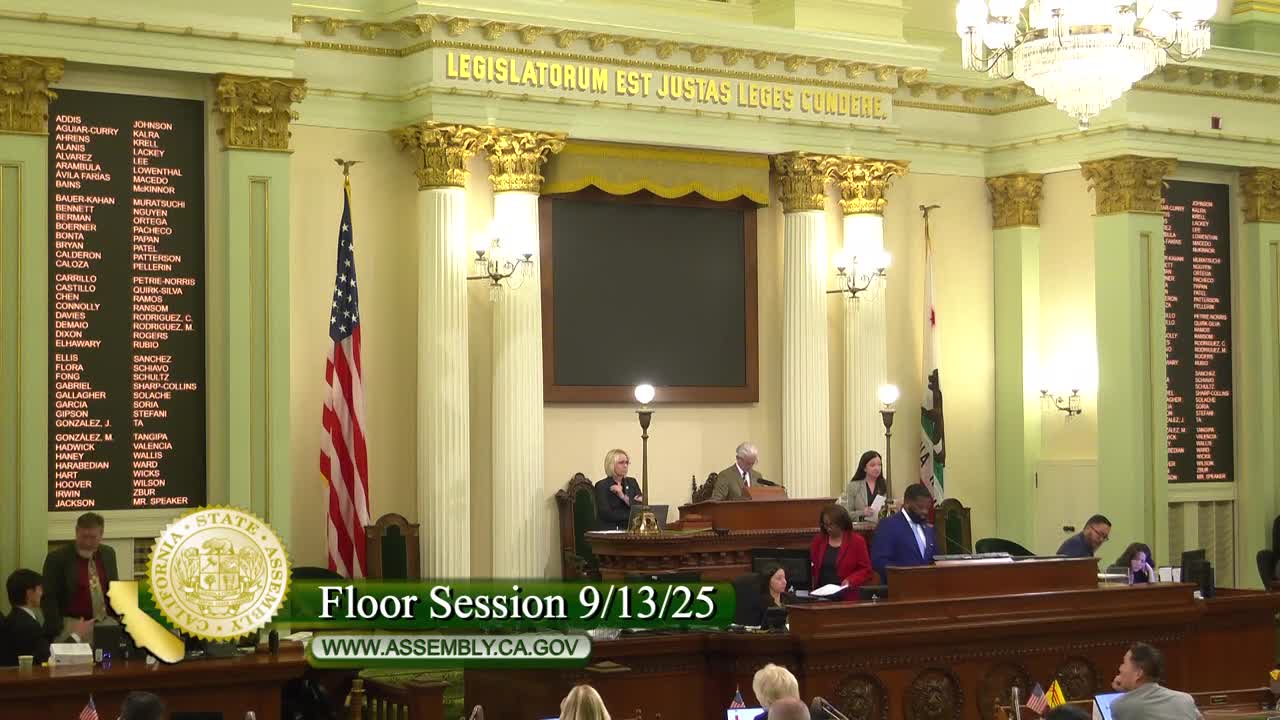 1MIN
Assembly Floor
 1MIN
Senate Floor
 16MIN