AB 935: State agencies: complaints: demographic data.
- Session Year: 2025-2026
- House: Assembly
- Latest Version Date: 2025-10-13
Current Status:
Passed
(2025-10-13: Chaptered by Secretary of State - Chapter 717, Statutes of 2025.)
Introduced
In Committee
Awaiting First Chamber Vote
Passed First Chamber
In Committee
Awaiting Second Chamber Vote
Passed Second Chamber
Enacted
What does this bill do?
The bill requires the State Department of Education and the California Civil Rights Department to collect demographic and case information from people who file complaints about unlawful discrimination, harassment, intimidation, or bullying and to publish annual, deidentified summary reports on their websites. Collected details include the complainant’s self‑identified protected group (for example, race, gender, or sexual orientation), complaint description, actions taken, timelines, and final outcome, but the underlying data must remain confidential and summaries cannot include personally identifying information.
The summary is provided by generative AI which can make mistakes. For original language, please view the details in the table below.
(1)Existing law requires the Superintendent of Public Instruction to establish and implement a system of complaint processing, known as the Uniform Complaint Procedures, for specified educational programs, and requires the State Department of Education to review those regulations pertaining to uniform complaint procedures for specified types of complaints, including those that allege unlawful discrimination, harassment, intimidation, or bullying against any protected group, as provided. Existing law requires the department to, on or before March 31, 2019, commence rulemaking proceedings to revise those regulations, as necessary, to conform to specified provisions.
Beginning July 1, 2026, this bill would require, upon receipt by the department of a complaint subject to the Uniform Complaint Procedures that alleges unlawful discrimination, harassment, intimidation, or bullying, the Superintendent to collect specified information, including, among other things, a description of the complaint received. The bill would require the Superintendent to create and post on the departments internet website a summary report of the data described above.
(2)Existing law, the California Fair Employment and Housing Act, among other things, establishes the Civil Rights Department and authorizes it to receive, investigate, conciliate, mediate, and prosecute complaints alleging various civil rights violations, including violations of provisions regarding individuals with disabilities.
Existing law, the Lesbian, Gay, Bisexual, Transgender, and Intersex Disparities Reduction Act, requires the Civil Rights Department, among other specified state entities, in the course of collecting demographic data directly or by contract as to the ancestry or ethnic origin of Californians, to collect voluntary self-identification information pertaining to sexual orientation, gender identity, and variations in sex characteristics/intersex status, as specified.
Existing law, the California Public Records Act, generally requires public records to be open for inspection by the public. Existing law provides numerous exceptions to this requirement.
This bill would require the Civil Rights Department to collect, for a complaint received, certain demographic information, including the ethnicity, race, and gender of the individual submitting the complaint, and certain information related to the complaint. The bill would require the department, commencing July 1, 2027, to publish a summary report no later than October 1 of each year of the compiled information for the preceding calendar year on its internet website.
This bill would require, for any information or data acquired pursuant to the bills provisions, that information or data to be confidential and protected from public disclosure, including disclosure pursuant to the California Public Records Act, except that the information may be disclosable pursuant to that act to the same extent as the underlying complaint. The bill would also prohibit the above-described summary reports, dashboards, and transmitted data from containing any personally identifying information about any individual. The bill would require information in the summary reports, dashboards, and transmitted data to be sufficiently deidentified to prevent the identification of the individuals involved in a complaint.
(3)Existing constitutional provisions require that a statute that limits the right of access to the meetings of public bodies or the writings of public officials and agencies be adopted with findings demonstrating the interest protected by the limitation and the need for protecting that interest.
This bill would make legislative findings to that effect.
(1)Existing law requires the Superintendent of Public Instruction to establish and implement a system of complaint processing, known as the Uniform Complaint Procedures, for specified educational programs, and requires the State Department of Education to review those regulations pertaining to uniform complaint procedures for specified types of complaints, including those that allege unlawful discrimination, harassment, intimidation, or bullying against any protected group, as provided. Existing law requires the department to, on or before March 31, 2019, commence rulemaking proceedings to revise those regulations, as necessary, to conform to specified provisions.
Beginning July 1, 2026, this bill would require, upon receipt of a complaint subject to the Uniform Complaint Procedures that alleges unlawful discrimination, harassment, intimidation, or bullying received by the department, the Superintendent to collect specified information, including, among other things, a description of the complaint received. The bill would require the Superintendent to create and post on the departments internet website a summary report of the data described above.
(2)Existing law, the California Fair Employment and Housing Act, among other things, establishes the Civil Rights Department and authorizes it to receive, investigate, conciliate, mediate, and prosecute complaints alleging various civil rights violations, including violations of provisions regarding individuals with disabilities.
Existing law, the Lesbian, Gay, Bisexual, Transgender, and Intersex Disparities Reduction Act, requires the Civil Rights Department, among other specified state entities, in the course of collecting demographic data directly or by contract as to the ancestry or ethnic origin of Californians, to collect voluntary self-identification information pertaining to sexual orientation, gender identity, and variations in sex characteristics/intersex status, as specified.
(3)Existing law, the California Public Records Act, generally requires public records to be open for inspection by the public. Existing law provides numerous exceptions to this requirement.
This bill would require the Civil Rights Department to collect, for a complaint received, certain demographic information, including the ethnicity, race, and gender of the individual submitting the complaint, and certain information related to the complaint. The bill would require the department, commencing July 1, 2027, to publish a summary report no later than October 1 of each year of the compiled information for the preceding calendar year on its internet website.
This bill would require, for any information or data acquired pursuant to the bills provisions, that information or data to be confidential and protected from public disclosure, including disclosure pursuant to the California Public Records Act, except that the information may be disclosable pursuant to that act to the same extent as the underlying complaint. The bill would also prohibit the above-described summary reports, dashboards, and transmitted data from containing any personally identifying information about any individual. The bill would require information in the summary reports, dashboards, and transmitted data to be sufficiently deidentified to prevent the identification of the individuals involved in a complaint.
(4)Existing constitutional provisions require that a statute that limits the right of access to the meetings of public bodies or the writings of public officials and agencies be adopted with findings demonstrating the interest protected by the limitation and the need for protecting that interest.
This bill would make legislative findings to that effect.
(1)Existing law requires the Superintendent of Public Instruction to establish and implement a system of complaint processing, known as the Uniform Complaint Procedures, for specified educational programs, and requires the State Department of Education to review those regulations pertaining to uniform complaint procedures for specified types of complaints, including those that allege unlawful discrimination, harassment, intimidation, or bullying against any protected group, as provided. Existing law requires the department to, on or before March 31, 2019, commence rulemaking proceedings to revise those regulations, as necessary, to conform to specified provisions.
Beginning July 1, 2026, this bill would require, upon receipt of a complaint subject to the Uniform Complaint Procedures that alleges unlawful discrimination, harassment, intimidation, or bullying received by the department, the Superintendent to collect specified information, including, among other things, a description of the complaint received. The bill would require the Superintendent to create and post on the departments internet website a summary report of the data described above.
(2)Existing law, the California Fair Employment and Housing Act, among other things, establishes the Civil Rights Department and authorizes it to receive, investigate, conciliate, mediate, and prosecute complaints alleging various civil rights violations, including violations of provisions regarding individuals with disabilities.
Existing law, the Lesbian, Gay, Bisexual, Transgender, and Intersex Disparities Reduction Act, requires the Civil Rights Department, among other specified state entities, in the course of collecting demographic data directly or by contract as to the ancestry or ethnic origin of Californians, to collect voluntary self-identification information pertaining to sexual orientation, gender identity, and variations in sex characteristics/intersex status, as specified.
(3)Existing law, the California Public Records Act, generally requires public records to be open for inspection by the public. Existing law provides numerous exceptions to this requirement.
This bill would require the Civil Rights Department to collect, for a complaint received, certain demographic information, including the ethnicity, race, and gender of the individual submitting the complaint, and certain information related to the complaint, including, among other things, a description of the complaint received. complaint. The bill would require the department department, commencing July 1, 2027, to publish a summary report no later than October 1 of each year of the compiled information for the preceding calendar year on its internet website.
This bill would require, for any information or data acquired pursuant to the bills provisions, that information or data to be confidential and protected from public disclosure, including disclosure pursuant to the California Public Records Act, except that the information may be disclosable pursuant to that act to the same extent as the underlying complaint. The bill would also prohibit the above-described summary reports, dashboards, and transmitted data from containing any personally identifying information about any individual. The bill would require information in the summary reports, dashboards, and transmitted data to be sufficiently deidentified to prevent the identification of the individuals involved in a complaint.
(4)Existing constitutional provisions require that a statute that limits the right of access to the meetings of public bodies or the writings of public officials and agencies be adopted with findings demonstrating the interest protected by the limitation and the need for protecting that interest.
This bill would make legislative findings to that effect.
(1)Existing law requires the Superintendent of Public Instruction to establish and implement a system of complaint processing, known as the Uniform Complaint Procedures, for specified educational programs, and requires the State Department of Education to review those regulations pertaining to uniform complaint procedures for specified types of complaints, including those that allege unlawful discrimination, harassment, intimidation, or bullying against any protected group, as provided. Existing law requires the department to, on or before March 31, 2019, commence rulemaking proceedings to revise those regulations, as necessary, to conform to specified provisions.
Beginning July 1, 2026, this bill would require, upon receipt of a complaint subject to the Uniform Complaint Procedures that alleges unlawful discrimination, harassment, intimidation, or bullying received by the department, the Superintendent to collect specified information, including, among other things, a description of the complaint received. The bill would require the Superintendent to create and post on the departments internet website a summary report of the data described above and provide a copy of the report to the Bureau for Descendants of American Slavery, which would be established as provided by SB 518 of the 202526 Regular Session of the Legislature, and require the bureau to create and publish a dashboard that allows the public to view the data. above.
(2)Existing law, the California Fair Employment and Housing Act, among other things, establishes the Civil Rights Department and authorizes it to receive, investigate, conciliate, mediate, and prosecute complaints alleging various civil rights violations, including violations of provisions regarding individuals with disabilities.
Existing law, the Lesbian, Gay, Bisexual, Transgender, and Intersex Disparities Reduction Act, requires the Civil Rights Department, among other specified state entities, in the course of collecting demographic data directly or by contract as to the ancestry or ethnic origin of Californians, to collect voluntary self-identification information pertaining to sexual orientation, gender identity, and variations in sex characteristics/intersex status, as specified.
(3)Existing law, the California Public Records Act, generally requires public records to be open for inspection by the public. Existing law provides numerous exceptions to this requirement.
This bill would require the Civil Rights Department to collect, for a complaint received, certain demographic information, including the ethnicity, race, and gender of the individual submitting the complaint, and certain information related to the complaint, including, among other things, a description of the complaint received. The bill would require the department to publish a summary report of the compiled information on its internet website and to transmit the data to the Bureau for Descendants of American Slavery for creation and publication of dashboards, as specified. website.
This bill would require, for any information or data acquired pursuant to the bills provisions, that information or data to be confidential and protected from public disclosure, including disclosure pursuant to the California Public Records Act, except that the information may be disclosable pursuant to that act to the same extent as the underlying complaint. The bill would also prohibit the above-described summary reports, dashboards, and transmitted data from containing any personally identifying information about any individual. The bill would require information in the summary reports, dashboards, and transmitted data to be sufficiently deidentified to prevent the identification of the individuals involved in a complaint.
(4)Existing constitutional provisions require that a statute that limits the right of access to the meetings of public bodies or the writings of public officials and agencies be adopted with findings demonstrating the interest protected by the limitation and the need for protecting that interest.
This bill would make legislative findings to that effect.
(1)Existing law requires the Superintendent of Public Instruction to establish and implement a system of complaint processing, known as the Uniform Complaint Procedures, for specified educational programs, and requires the State Department of Education to review those regulations pertaining to uniform complaint procedures for specified types of complaints, including those that allege unlawful discrimination, harassment, intimidation, or bullying against any protected group, as provided. Existing law requires the department to, on or before March 31, 2019, commence rulemaking proceedings to revise those regulations, as necessary, to conform to specified provisions.
Beginning July 1, 2026, this bill would require, upon receipt of a complaint subject to the Uniform Complaint Procedures that alleges unlawful discrimination, harassment, intimidation, or bullying received by the department, the Superintendent to collect specified information, including, among other things, a description of the complaint received. The bill would require the Superintendent to create and post on the departments internet website a summary report of the data described above and provide a copy of the report to the Bureau for Descendants of American Slavery, which would be established as provided by SB 518 of the 202526 Regular Session of the Legislature, and require the bureau to create and publish a dashboard that allows the public to view the data.
(2)Existing law, the California Fair Employment and Housing Act, among other things, establishes the Civil Rights Department and authorizes it to receive, investigate, conciliate, mediate, and prosecute complaints alleging various civil rights violations, including violations of provisions regarding individuals with disabilities.
Existing law, the Lesbian, Gay, Bisexual, Transgender, and Intersex Disparities Reduction Act, requires the Civil Rights Department, among other specified state entities, in the course of collecting demographic data directly or by contract as to the ancestry or ethnic origin of Californians, to collect voluntary self-identification information pertaining to sexual orientation, gender identity, and variations in sex characteristics/intersex status, as specified.
(3)Existing law, the California Public Records Act, generally requires public records to be open for inspection by the public. Existing law provides numerous exceptions to this requirement.
This bill would require the Civil Rights Department to collect, for a complaint received, certain demographic information, including, including the ethnicity, race, and gender of the individual submitting the complaint, and certain information related to the complaint, including, among other things, a description of the complaint received. The bill would require the department to publish a summary report of the compiled information on its internet website and to transmit the data to the Bureau for Descendants of American Slavery for creation and publication of dashboards, as specified.
This bill would require, for any information or data acquired pursuant to the bills provisions, that information or data to be confidential and protected from public disclosure, including disclosure pursuant to the California Public Records Act, except that the information may be disclosable pursuant to that act to the same extent as the underlying complaint. The bill would also prohibit the above-described summary reports, dashboards, and transmitted data from containing any personally identifying information about any individual. The bill would require information in the summary reports, dashboards, and transmitted data to be sufficiently deidentified to prevent the identification of the individuals involved in a complaint.
(3)(4)Existing constitutional provisions require that a statute that limits the right of access to the meetings of public bodies or the writings of public officials and agencies be adopted with findings demonstrating the interest protected by the limitation and the need for protecting that interest.
This bill would make legislative findings to that effect.
(1)Existing law requires the Superintendent of Public Instruction to establish and implement a system of complaint processing, known as the Uniform Complaint Procedures, for specified educational programs, and requires the State Department of Education to review those regulations pertaining to uniform complaint procedures for specified types of complaints, including those that allege unlawful discrimination, harassment, intimidation, or bullying against any protected group, as provided. Existing law requires the department to, on or before March 31, 2019, commence rulemaking proceedings to revise those regulations, as necessary, to conform to specified provisions.
Beginning July 1, 2026, this bill would require, upon receipt of a complaint subject to the Uniform Complaint Procedures that alleges unlawful discrimination, harassment, intimidation, or bullying received by the department, the Superintendent to collect specified information, including, among other things, a description of the complaint received. The bill would require the Superintendent to create and post on the departments internet website a summary report of the data described above and provide a copy of the report to the Bureau for Descendants of American Slavery, which would be established as provided by SB 518 of the 202526 Regular Session of the Legislature, and require the bureau to create and publish a dashboard that allows the public to view the data.
Existing(2)Existing law, the California Fair Employment and Housing Act, among other things, establishes the Civil Rights Department and authorizes it to receive, investigate, conciliate, mediate, and prosecute complaints alleging various civil rights violations, including violations of provisions regarding individuals with disabilities.
Existing law requires the Superintendent of Public Instruction to establish and implement a system of complaint processing, known as the Uniform Complaint Procedures, for specified educational programs, and requires the State Department of Education to review those regulations pertaining to uniform complaint procedures for specified types of complaints, including those that allege unlawful discrimination, harassment, intimidation, or bullying against any protected group, as provided. Existing law requires the department to, on or before March 31, 2019, commence rulemaking proceedings to revise those regulations, as necessary, to conform to specified provisions.Existing law, the Lesbian, Gay, Bisexual, Transgender, and Intersex Disparities Reduction Act, requires the Civil Rights Department, among other specified state entities, in the course of collecting demographic data directly or by contract as to the ancestry or ethnic origin of Californians, to collect voluntary self-identification information pertaining to sexual orientation, gender identity, and variations in sex characteristics/intersex status, as specified.
This bill would require the Civil Rights Department and the State Department of Education and the Superintendent of Public Instruction to collect, for a complaint received, certain demographic information, including, ethnicity, race, and gender of the individual submitting the complaint, and certain information related to the complaint, including, among other things, a description of the complaint received. The bill would require those state agencies the department to publish the compiled information on their its internet websites website and to transmit the data to the Bureau for Descendants of American Slavery, which would be established as provided by SB 518 of the 202526 Regular Session of the Legislature, Slavery for creation and publication of dashboards, as specified.
Existing(3)Existing constitutional provisions require that a statute that limits the right of access to the meetings of public bodies or the writings of public officials and agencies be adopted with findings demonstrating the interest protected by the limitation and the need for protecting that interest.
This bill would make legislative findings to that effect.
Existing law, the California Fair Employment and Housing Act, among other things, establishes the Civil Rights Department and authorizes it to receive, investigate, conciliate, mediate, and prosecute complaints alleging various civil rights violations, including violations of provisions regarding individuals with disabilities.
Existing law requires the Superintendent of Public Instruction to establish and implement a system of complaint processing, known as the Uniform Complaint Procedures, for specified educational programs, and requires the State Department of Education to review those regulations pertaining to uniform complaint procedures for specified types of complaints, including those that allege unlawful discrimination, harassment, intimidation, or bullying against any protected group, as provided. Existing law requires the department to, on or before March 31, 2019, commence rulemaking proceedings to revise those regulations, as necessary, to conform to specified provisions.
Existing law, the Lesbian, Gay, Bisexual, Transgender, and Intersex Disparities Reduction Act, requires the Civil Rights Department, among other specified state entities, in the course of collecting demographic data directly or by contract as to the ancestry or ethnic origin of Californians, to collect voluntary self-identification information pertaining to sexual orientation, gender identity, and variations in sex characteristics/intersex status, as specified.
This bill would require the Civil Rights Department and the State Department of Education and the Superintendent of Public Instruction to collect, for a complaint received, certain demographic information, including, ethnicity, race, and gender of the individual submitting the complaint, and certain information related to the complaint, including, among other things, a description of the complaint received. The bill would require those state agencies to publish the compiled information on their internet websites and to transmit the data to the Bureau for Descendants of American Slavery, which would be established as provided by SB 518 of the 202526 Regular Session of the Legislature, for creation and publication of dashboards, as specified.
Existing constitutional provisions require that a statute that limits the right of access to the meetings of public bodies or the writings of public officials and agencies be adopted with findings demonstrating the interest protected by the limitation and the need for protecting that interest.
This bill would make legislative findings to that effect.
Existing law prohibits the inclusion of any question relative to an applicants race in any application blank or form required to be filled in and submitted by an applicant to any department, board, commission, officer, agent, or employee of this state. Existing law provides that any person who violates this provision is guilty of a misdemeanor.This bill would make nonsubstantive changes to those provisions.Existing law prohibits the inclusion of any question relative to an applicants race in any application blank or form required to be filled in and submitted by an applicant to any department, board, commission, officer, agent, or employee of this state. Existing law provides that any person who violates this provision is guilty of a misdemeanor.
This bill would make nonsubstantive changes to those provisions.
(a)(1)Beginning July 1, 2026, upon receipt of a complaint that alleges unlawful discrimination, harassment, intimidation, or bullying received by the department pursuant to subparagraph (F) of paragraph (1) of subdivision (a) of Section 33315, the Superintendent shall collect all of the following information:
(A)The self-identified protected group of the complainant, if voluntarily provided.
(B)A description of the complaint received.
(C)Any action taken by the department in response to the complaint and the timeline for that action.
(D)The disposition of the complaint.
(2)The data collected pursuant to paragraph (1) shall be confidential and protected from public disclosure, including disclosure pursuant to the California Public Records Act (Division 10 (commencing with Section 7920.000) of Title 1 of the Government Code), except that the information may be disclosable pursuant to that act to the same extent as the underlying complaint.
(b)(1)Beginning July 1, 2027, and annually thereafter, the department shall create and post on the departments internet website a summary report of the information collected pursuant to subdivision (a).
(2)The summary report shall not contain any personally identifying information about any individual, and the information in the report shall be sufficiently deidentified to prevent the identification of the individuals involved in the complaint.
(c)The collection, publication, and transmission of data required by this section shall comply with all applicable state and federal privacy laws.
SEC. 2.Section 8310.10 is added to the Government Code, to read:8310.10.(a)For purposes of this section, department means the Civil Rights Department.
(b)(1)For a complaint received by the department, the department shall collect the following information:
(A)Demographic data relative to ethnicity, race, gender, and other critical demographic information from the individual submitting the complaint collected in compliance with all applicable state and federal laws, to the extent it is reported by the complainant.
(B)Any final action taken by the department in response to the complaint received and the timeline between the date the complaint was filed with the department and the final action taken by the department.
(2)The information collected pursuant to paragraph (1) shall be confidential and protected from public disclosure, including disclosure pursuant to the California Public Records Act (Division 10 (commencing with Section 7920.000) of Title 1), except that the information may be disclosable pursuant to that act to the same extent as the underlying complaint.
(c)(1)Commencing July 1, 2027, no later than October 1 of each year, the department shall create and post on the departments internet website a summary report of the information collected for the preceding calendar year pursuant to subdivision (b).
(2)The summary report shall not contain any personally identifying information about any individual, and the department may take any action to ensure that the information in the report is sufficiently deidentified to prevent the identification of the individuals involved in the complaint and that the report complies with all state and federal laws.
(d)The collection, publication, and transmission of data required by this section shall comply with all applicable state and federal privacy laws.
SEC. 3.The Legislature finds and declares that Sections 1 and 2 of this act, which add Section 33315.5 to the Education Code, and add Section 8310.10 to the Government Code, impose a limitation on the publics right of access to the meetings of public bodies or the writings of public officials and agencies within the meaning of Section 3 of Article I of the California Constitution. Pursuant to that constitutional provision, the Legislature makes the following findings to demonstrate the interest protected by this limitation and the need for protecting that interest:
In order to protect the privacy of California residents, while also gathering and publicizing useful demographic data, it is necessary that personal identifying information remain confidential.
(a)(1)Beginning July 1, 2026, upon receipt of a complaint that alleges unlawful discrimination, harassment, intimidation, or bullying received by the department pursuant to subparagraph (F) of paragraph (1) of subdivision (a) of Section 33315, the Superintendent shall collect all of the following information:
(A)The self-identified protected group of the complainant, if voluntarily provided.
(B)A description of the complaint received.
(C)Any action taken by the department in response to the complaint and the timeline for that action.
(D)The disposition of the complaint.
(2)The data collected pursuant to paragraph (1) shall be confidential and protected from public disclosure, including disclosure pursuant to the California Public Records Act (Division 10 (commencing with Section 7920.000) of Title 1 of the Government Code), except that the information may be disclosable pursuant to that act to the same extent as the underlying complaint.
(b)(1)Beginning July 1, 2027, and annually thereafter, the department shall create and post on the departments internet website a summary report of the information collected pursuant to subdivision (a).
(2)The summary report shall not contain any personally identifying information about any individual, and the information in the report shall be sufficiently deidentified to prevent the identification of the individuals involved in the complaint.
(c)The collection, publication, and transmission of data required by this section shall comply with all applicable state and federal privacy laws.
SEC. 2.Section 8310.10 is added to the Government Code, to read:8310.10.(a)For purposes of this section, department means the Civil Rights Department.
(b)(1)For a complaint received by the department, the department shall collect the following information:
(A)Demographic data relative to ethnicity, race, gender, and other critical demographic information from the individual submitting the complaint collected in compliance with all applicable state and federal laws. laws, to the extent it is reported by the complainant.
(B)Any final action taken by the department in response to the complaint received and the timeline between the date the complaint was filed with the department and the final action taken by the department.
(2)The information collected pursuant to paragraph (1) shall be confidential and protected from public disclosure, including disclosure pursuant to the California Public Records Act (Division 10 (commencing with Section 7920.000) of Title 1), except that the information may be disclosable pursuant to that act to the same extent as the underlying complaint.
(c)(1)Commencing July 1, 2027, no later than October 1 of each year, the department shall create and post on the departments internet website a summary report of the information collected for the preceding calendar year pursuant to subdivision (b).
(2)The summary report shall not contain any personally identifying information about any individual, and the department may take any action to ensure that the information in the report is sufficiently deidentified to prevent the identification of the individuals involved in the complaint and that the report complies with all state and federal laws.
(d)The collection, publication, and transmission of data required by this section shall comply with all applicable state and federal privacy laws.
SEC. 3.The Legislature finds and declares that Sections 1 and 2 of this act, which add Section 33315.5 to the Education Code, and add Section 8310.10 to the Government Code, impose a limitation on the publics right of access to the meetings of public bodies or the writings of public officials and agencies within the meaning of Section 3 of Article I of the California Constitution. Pursuant to that constitutional provision, the Legislature makes the following findings to demonstrate the interest protected by this limitation and the need for protecting that interest:
In order to protect the privacy of California residents, while also gathering and publicizing useful demographic data, it is necessary that personal identifying information remain confidential.
(a)(1)Beginning July 1, 2026, upon receipt of a complaint that alleges unlawful discrimination, harassment, intimidation, or bullying received by the department pursuant to subparagraph (F) of paragraph (1) of subdivision (a) of Section 33315, the Superintendent shall collect all of the following information:
(A)The self-identified protected group of the complainant, if voluntarily provided.
(B)A description of the complaint received.
(C)Any action taken by the department in response to the complaint and the timeline for that action.
(D)The disposition of the complaint.
(2)The data collected pursuant to paragraph (1) shall be confidential and protected from public disclosure, including disclosure pursuant to the California Public Records Act (Division 10 (commencing with Section 7920.000) of Title 1 of the Government Code), except that the information may be disclosable pursuant to that act to the same extent as the underlying complaint.
(b)(1)Beginning July 1, 2027, and annually thereafter, the department shall create and post on the departments internet website a summary report of the information collected pursuant to subdivision (a).
(2)The summary report shall not contain any personally identifying information about any individual, and the information in the report shall be sufficiently deidentified to prevent the identification of the individuals involved in the complaint.
(c)The collection, publication, and transmission of data required by this section shall comply with all applicable state and federal privacy laws.
SEC. 2.Section 8310.10 is added to the Government Code, to read:8310.10.(a)For purposes of this section, department means the Civil Rights Department.
(b)(1)For a complaint received by the department, the department shall collect all of the following information:
(A)Demographic data relative to ethnicity, race, gender, age, and other critical demographic information from the individual submitting the complaint collected in compliance with all applicable state and federal laws.
(B)A description of the complaint received. (C)(B)Any final action taken by the department in response to the complaint received and the timeline for that action, including whether the department filed a lawsuit in the complainants name or issued a right-to-sue letter. between the date the complaint was filed with the department and the final action taken by the department.
(2)The information collected pursuant to paragraph (1) shall be confidential and protected from public disclosure, including disclosure pursuant to the California Public Records Act (Division 10 (commencing with Section 7920.000) of Title 1), except that the information may be disclosable pursuant to that act to the same extent as the underlying complaint.
(c)(1)The Commencing July 1, 2027, no later than October 1 of each year, the department shall create and post on the departments internet website a summary report of the information collected for the preceding calendar year pursuant to subdivision (b).
(2)The summary report shall not contain any personally identifying information about any individual, and the department may take any action to ensure that the information in the report shall be is sufficiently deidentified to prevent the identification of the individuals involved in the complaint. complaint and that the report complies with all state and federal laws.
(d)The collection, publication, and transmission of data required by this section shall comply with all applicable state and federal privacy laws.
SEC. 3.The Legislature finds and declares that Sections 1 and 2 of this act, which add Section 33315.5 to the Education Code, and add Section 8310.10 to the Government Code, impose a limitation on the publics right of access to the meetings of public bodies or the writings of public officials and agencies within the meaning of Section 3 of Article I of the California Constitution. Pursuant to that constitutional provision, the Legislature makes the following findings to demonstrate the interest protected by this limitation and the need for protecting that interest:
In order to protect the privacy of California residents, while also gathering and publicizing useful demographic data, it is necessary that personal identifying information remain confidential.
(a)(1)Beginning July 1, 2026, upon receipt of a complaint that alleges unlawful discrimination, harassment, intimidation, or bullying received by the department pursuant to subparagraph (F) of paragraph (1) of subdivision (a) of Section 33315, the Superintendent shall collect all of the following information:
(A)The self-identified protected group of the complainant, if voluntarily provided.
(B)A description of the complaint received.
(C)Any action taken by the department in response to the complaint and the timeline for that action.
(D)The disposition of the complaint.
(2)The data collected pursuant to paragraph (1) shall be confidential and protected from public disclosure, including disclosure pursuant to the California Public Records Act (Division 10 (commencing with Section 7920.000) of Title 1 of the Government Code), except that the information may be disclosable pursuant to that act to the same extent as the underlying complaint.
(b)(1)Beginning July 1, 2027, and annually thereafter, the department shall create and post on the departments internet website a summary report of the information collected pursuant to subdivision (a) and provide a copy of the report to the Bureau for Descendants of American Slavery. (a).
(2)The summary report shall not contain any personally identifying information about any individual, and the information in the report shall be sufficiently deidentified to prevent the identification of the individuals involved in the complaint.
(c)(1)The Bureau for Descendants of American Slavery shall create and publish a dashboard that allows the public to view the data in the report required by subdivision (b).(2)The dashboard described in this subdivision shall not include any personally identifying information about any individual, and the information in the report shall be sufficiently deidentified to prevent the identification of the individuals involved in a complaint. (d)(c)The collection, publication, and transmission of data required by this section shall comply with all applicable state and federal privacy laws.
SEC. 2.Section 8310.10 is added to the Government Code, to read:8310.10.(a)For purposes of this section, department means the Civil Rights Department.
(b)(1)For a complaint received by the department, the department shall collect all of the following information:
(A)Demographic data relative to ethnicity, race, gender, age, and other critical demographic information from the individual submitting the complaint collected in compliance with all applicable state and federal laws.
(B)A description of the complaint received.
(C)Any action taken by the department in response to the complaint received and the timeline for that action, including whether the department filed a lawsuit in the complainants name or issued a right-to-sue letter.
(2)The information collected pursuant to paragraph (1) shall be confidential and protected from public disclosure, including disclosure pursuant to the California Public Records Act (Division 10 (commencing with Section 7920.000) of Title 1), except that the information may be disclosable pursuant to that act to the same extent as the underlying complaint.
(c)(1)The department shall create and post on the departments internet website a summary report of the information collected pursuant to subdivision (b) and provide a copy of the report to the Bureau for Descendants of American Slavery. (b).
(2)The summary report shall not contain any personally identifying information about any individual, and the information in the report shall be sufficiently deidentified to prevent the identification of the individuals involved in the complaint.
(d)(1)(A)The department shall transmit the data described in subdivision (b) to the Bureau for Descendants of American Slavery, and the Bureau for Descendants of American Slavery shall create and publish a dashboard that allows the public to view the data in the report required pursuant to subdivision (c).(B)The data transmitted by the department shall not contain any personally identifying information about any individual, and the information in the report shall be sufficiently deidentified to prevent the identification of the individuals involved in a complaint.(2)(A)The Bureau for Descendants of American Slavery shall create and publish dashboards that allow the public to view the collected data.(B)The dashboard described in this subdivision shall not include any personally identifying information about any individual, and the information in the report shall be sufficiently deidentified to prevent the identification of the individuals involved in a complaint.(e)(d)The collection, publication, and transmission of data required by this section shall comply with all applicable state and federal privacy laws.
SEC. 3.The Legislature finds and declares that Sections 1 and 2 of this act, which add Section 33315.5 to the Education Code, and add Section 8310.10 to the Government Code, impose a limitation on the publics right of access to the meetings of public bodies or the writings of public officials and agencies within the meaning of Section 3 of Article I of the California Constitution. Pursuant to that constitutional provision, the Legislature makes the following findings to demonstrate the interest protected by this limitation and the need for protecting that interest:
In order to protect the privacy of California residents, while also gathering and publicizing useful demographic data, it is necessary that personal identifying information remain confidential.
(a)(1)Beginning July 1, 2026, upon receipt of a complaint that alleges unlawful discrimination, harassment, intimidation, or bullying received by the department pursuant to subparagraph (F) of paragraph (1) of subdivision (a) of Section 33315, the Superintendent shall collect all of the following information:
(1)(A)The self-identified protected group of the complainant, if voluntarily provided.
(2)(B)A description of the complaint received.
(3)(C)Any action taken by the department in response to the complaint and the timeline for that action.
(4)(D)The disposition of the complaint.
(2)The data collected pursuant to paragraph (1) shall be confidential and protected from public disclosure, including disclosure pursuant to the California Public Records Act (Division 10 (commencing with Section 7920.000) of Title 1 of the Government Code), except that the information may be disclosable pursuant to that act to the same extent as the underlying complaint.
(b)(1)Beginning July 1, 2027, and annually thereafter, the department shall create and post on the departments internet website a summary report of the information collected pursuant to subdivision (a) and provide a copy of the report to the Bureau for Descendants of American Slavery.
(2)The summary report shall not contain any personally identifying information about any individual, and the information in the report shall be sufficiently deidentified to prevent the identification of the individuals involved in the complaint.
(2)(c)(1)The Bureau for Descendants of American Slavery shall create and publish a dashboard that allows the public to view the data in the report required by paragraph (1). subdivision (b).
(3)(2)The summary report and the dashboard described in this subdivision shall not include the any personally identifiable information of any complainant. identifying information about any individual, and the information in the report shall be sufficiently deidentified to prevent the identification of the individuals involved in a complaint.
(c)(d)The collection, publication, and transmission of data required by this section shall comply with all applicable state and federal privacy laws.
SEC. 2.Section 8310.10 is added to the Government Code, to read:8310.10.(a)For purposes of this section, department means the Civil Rights Department.
(b)(1)For a complaint received by the department, the department shall collect all of the following information:
(1)(A)Demographic data relative to ethnicity, race, gender, age, and other critical demographic information from the individual submitting the complaint collected in compliance with all applicable state and federal laws.
(2)(B)A description of the complaint received.
(3)(C)Any action taken by the department in response to the complaint received and the timeline for that action. action, including whether the department filed a lawsuit in the complainants name or issued a right-to-sue letter.
(4)The disposition of the complaint.(2)The information collected pursuant to paragraph (1) shall be confidential and protected from public disclosure, including disclosure pursuant to the California Public Records Act (Division 10 (commencing with Section 7920.000) of Title 1), except that the information may be disclosable pursuant to that act to the same extent as the underlying complaint.
(c)(1)The department shall publish the data described in subdivision (b) on its internet website, except for personal identifying information, which shall be deemed confidential. create and post on the departments internet website a summary report of the information collected pursuant to subdivision (b) and provide a copy of the report to the Bureau for Descendants of American Slavery.
(2)The summary report shall not contain any personally identifying information about any individual, and the information in the report shall be sufficiently deidentified to prevent the identification of the individuals involved in the complaint.
(2)(d)(1)(A)The department shall transmit the data described in subdivision (b) to the Bureau for Descendants of American Slavery who shall create and publish dashboards that allow the public to view the collected data, except for personal identifying information, which shall be deemed confidential. Slavery, and the Bureau for Descendants of American Slavery shall create and publish a dashboard that allows the public to view the data in the report required pursuant to subdivision (c).
(B)The data transmitted by the department shall not contain any personally identifying information about any individual, and the information in the report shall be sufficiently deidentified to prevent the identification of the individuals involved in a complaint.
(2)(A)The Bureau for Descendants of American Slavery shall create and publish dashboards that allow the public to view the collected data.
(B)The dashboard described in this subdivision shall not include any personally identifying information about any individual, and the information in the report shall be sufficiently deidentified to prevent the identification of the individuals involved in a complaint.
(3)(e)The publication collection, publication, and transmission of data described in paragraphs (1) and (2) required by this section shall comply with all applicable state and federal privacy laws.
SEC. 3.The Legislature finds and declares that Section Sections 1 and 2 of this act, which adds add Section 33315.5 to the Education Code, and add Section 8310.10 to the Government Code, imposes impose a limitation on the publics right of access to the meetings of public bodies or the writings of public officials and agencies within the meaning of Section 3 of Article I of the California Constitution. Pursuant to that constitutional provision, the Legislature makes the following findings to demonstrate the interest protected by this limitation and the need for protecting that interest:
In order to protect the privacy of California residents, while also gathering and publicizing useful demographic data, it is necessary that personal identifying information remain confidential.
(a)Beginning July 1, 2026, upon receipt of a complaint that alleges unlawful discrimination, harassment, intimidation, or bullying received by the department pursuant to subparagraph (F) of paragraph (1) of subdivision (a) of Section 33315, the Superintendent shall collect all of the following information:
(1)The self-identified protected group of the complainant, if voluntarily provided.
(2)A description of the complaint received.
(3)Any action taken by the department in response to the complaint and the timeline for that action.
(4)The disposition of the complaint.
(b)(1)Beginning July 1, 2027, and annually thereafter, the department shall create and post on the departments internet website a summary report of the information collected pursuant to subdivision (a) and provide a copy of the report to the Bureau for Descendants of American Slavery.
(2)The Bureau for Descendants of American Slavery shall create and publish a dashboard that allows the public to view the data in the report required by paragraph (1).
(3)The summary report and the dashboard described in this subdivision shall not include the personally identifiable information of any complainant.
(c)The collection, publication, and transmission of data required by this section shall comply with all applicable state and federal privacy laws.
SECTION 1.SEC. 2.Section 8310.10 is added to the Government Code, to read:8310.10.(a)For purposes of this section, state entity means either of the following: department means the Civil Rights Department.(1)The Civil Rights Department.(2)The State Department of Education and the Superintendent of Public Instruction.(b)For a complaint received by a state entity, the state entity the department, the department shall collect all of the following information:(1)Demographic data relative to ethnicity, race, gender, age, and other critical demographic information from the individual submitting the complaint collected in compliance with all applicable state and federal laws.
(2)A description of the complaint received.
(3)Any action taken by the entity department in response to the complaint received and the timeline for that action.
(4)The disposition of the complaint.
(c)(1)A state entity The department shall publish the data described in subdivision (b) on their its internet websites, website, except for personal identifying information, which shall be deemed confidential.(2)A state entity The department shall transmit the data described in subdivision (b) to the Bureau for Descendants of American Slavery who shall create and publish dashboards that allow the public to view the collected data, except for personal identifying information, which shall be deemed confidential.
(3)The publication and transmission of data described in paragraphs (1) and (2) shall comply with all applicable state and federal laws.
SEC. 2.SEC. 3.The Legislature finds and declares that Section 1 2 of this act, which adds Section 8310.10 to the Government Code, imposes a limitation on the publics right of access to the meetings of public bodies or the writings of public officials and agencies within the meaning of Section 3 of Article I of the California Constitution. Pursuant to that constitutional provision, the Legislature makes the following findings to demonstrate the interest protected by this limitation and the need for protecting that interest:
In order to protect the privacy of California residents, while also gathering and publicizing useful demographic data, it is necessary that personal identifying information remain confidential.
(a)For purposes of this section, state entity means either of the following:
(1)The Civil Rights Department.
(2)The State Department of Education and the Superintendent of Public Instruction.
(b)For a complaint received by a state entity, the state entity shall collect all of the following information:
(1)Demographic data relative to ethnicity, race, gender, age, and other critical demographic information from the individual submitting the complaint collected in compliance with all applicable state and federal laws.
(2)A description of the complaint received.
(3)Any action taken by the entity in response to the complaint received and the timeline for that action.
(4)The disposition of the complaint.
(c)(1)A state entity shall publish the data described in subdivision (b) on their internet websites, except for personal identifying information, which shall be deemed confidential.
(2)A state entity shall transmit the data described in subdivision (b) to the Bureau for Descendants of American Slavery who shall create and publish dashboards that allow the public to view the collected data, except for personal identifying information, which shall be deemed confidential.
(3)The publication and transmission of data described in paragraphs (1) and (2) shall comply with all applicable state and federal laws.
SEC. 2.The Legislature finds and declares that Section 1 of this act, which adds Section 8310.10 to the Government Code, imposes a limitation on the publics right of access to the meetings of public bodies or the writings of public officials and agencies within the meaning of Section 3 of Article I of the California Constitution. Pursuant to that constitutional provision, the Legislature makes the following findings to demonstrate the interest protected by this limitation and the need for protecting that interest:
In order to protect the privacy of California residents, while also gathering and publicizing useful demographic data, it is necessary that personal identifying information remain confidential.
SECTION 1.Section 8310 of the Government Code is amended to read:8310.(a)The inclusion of any question relative to an applicants race, sex, marital status, or religion in any application blank or form required to be filled in and submitted by an applicant to any department, board, commission, officer, agent, or employee of this state is prohibited.(b)Any person who violates this section is guilty of a misdemeanor.(c)Notwithstanding subdivision (a), subsequent to employment, gender and marital status data may be obtained and maintained for research and statistical purposes when safeguards preventing misuse of the information exist, as approved by the State Fair Employment Practice Commission, except that in no event shall any notation, entry, or record of such data be made on papers or records relating to such employment application.(a)The inclusion of any question relative to an applicants race, sex, marital status, or religion in any application blank or form required to be filled in and submitted by an applicant to any department, board, commission, officer, agent, or employee of this state is prohibited.
Any(b)Any person who violates this section is guilty of a misdemeanor.
Notwithstanding the provisions of this section,(c)Notwithstanding subdivision (a), subsequent to employment, gender and marital status data may be obtained and maintained for research and statistical purposes when safeguards preventing misuse of the information exist, as approved by the State Fair Employment Practice Commission, except that in no event shall any notation, entry, or record of such data be made on papers or records relating to such employment application.
|
Date
|
Status
|
|---|---|
| Oct 13, 2025 | Chaptered by Secretary of State - Chapter 717, Statutes of 2025. |
| Oct 13, 2025 | Approved by the Governor. |
| Sep 22, 2025 | Enrolled and presented to the Governor at 3 p.m. |
| Sep 10, 2025 | Senate amendments concurred in. To Engrossing and Enrolling. (Ayes 62. Noes 12. Page 3202.). |
| Sep 9, 2025 | In Assembly. Concurrence in Senate amendments pending. |
| Sep 9, 2025 | Read third time. Passed. Ordered to the Assembly. (Ayes 30. Noes 9. Page 2728.). |
| Sep 8, 2025 | Read second time. Ordered to third reading. |
| Sep 5, 2025 | Read second time and amended. Ordered returned to second reading. |
| Sep 4, 2025 | Read third time and amended. Ordered to second reading. |
| Sep 2, 2025 | Read second time. Ordered to third reading. |
| Aug 29, 2025 | Read second time and amended. Ordered returned to second reading. |
| Aug 29, 2025 | From committee: Amend, and do pass as amended. (Ayes 5. Noes 2.) (August 29). |
| Aug 18, 2025 | In committee: Referred to suspense file. |
| Jul 17, 2025 | From committee: Do pass and re-refer to Com. on APPR. (Ayes 5. Noes 1.) (July 16). Re-referred to Com. on APPR. |
| Jul 3, 2025 | Read second time and amended. Re-referred to Com. on ED. |
| Jul 2, 2025 | From committee: Amend, and do pass as amended and re-refer to Com. on ED. (Ayes 11. Noes 1.) (July 1). |
| Jun 18, 2025 | Referred to Coms. on JUD. and ED. |
| Jun 4, 2025 | In Senate. Read first time. To Com. on RLS. for assignment. |
| Jun 3, 2025 | Read third time. Passed. Ordered to the Senate. (Ayes 62. Noes 10. Page 1984.) |
| May 27, 2025 | Read second time. Ordered to third reading. |
| May 23, 2025 | From committee: Do pass. (Ayes 11. Noes 2.) (May 23). |
| May 14, 2025 | In committee: Set, first hearing. Referred to APPR. suspense file. |
| May 6, 2025 | Re-referred to Com. on APPR. |
| May 5, 2025 | Read second time and amended. |
| May 1, 2025 | From committee: Amend, and do pass as amended and re-refer to Com. on APPR. (Ayes 7. Noes 0.) (April 30). |
| Apr 8, 2025 | From committee: Do pass and re-refer to Com. on ED. (Ayes 9. Noes 1.) (April 8). Re-referred to Com. on ED. |
| Mar 25, 2025 | Re-referred to Com. on JUD. |
| Mar 24, 2025 | Referred to Coms. on JUD. and ED. |
| Mar 24, 2025 | From committee chair, with author's amendments: Amend, and re-refer to Com. on JUD. Read second time and amended. |
| Feb 20, 2025 | From printer. May be heard in committee March 22. |
| Feb 19, 2025 | Read first time. To print. |
|
Date
|
Description
|
Location
|
Votes
|
|
|---|---|---|---|---|
| Sep 10, 2025 | AB 935 Ransom Concurrence in Senate Amendments | Assembly Floor |
Passed |
|
| Sep 9, 2025 | Assembly 3rd Reading AB935 Ransom et al. By Weber Pierson | Senate Floor |
Passed |
|
| Aug 29, 2025 | Do pass as amended | Senate Standing Committee on Appropriations |
Passed |
|
| Aug 18, 2025 | Placed on suspense file | Senate Standing Committee on Appropriations |
Passed |
|
| Jul 16, 2025 | Do pass, but first be re-referred to the Committee on [Appropriations] | Senate Standing Committee on Education |
Passed |
|
| Jul 1, 2025 | Do pass as amended, but first amend, and re-refer to the Committee on [Education] | Senate Standing Committee on Judiciary |
Passed |
|
| Jun 3, 2025 | AB 935 Ransom Assembly Third Reading | Assembly Floor |
Passed |
|
| May 23, 2025 | Do pass. | Assembly Standing Committee on Appropriations |
Passed |
|
| Apr 30, 2025 | Do pass as amended and be re-referred to the Committee on [Appropriations] | Assembly Standing Committee on Education |
Passed |
|
| Apr 8, 2025 | Do pass and be re-referred to the Committee on [Education] | Assembly Standing Committee on Judiciary |
Passed |
This list shows positions taken on this bill by organizations on the date displayed, which is linked to the original source.
Positions by individuals are not included.
|
Organization
|
Position
|
Date
|
|---|---|---|
| Board of Supervisors for the City and County of San Francisco | ** Support | |
| California-Hawaii State Conference Of The Naacp | ** Support |
CONCURRENCE IN SENATE AMENDMENTS
CSA1 Bill Id:AB 935
Author:(Ransom)
As Amended Ver:September 5, 2025
Majority vote
SUMMARY
Requires the California Civil Rights Department to collect, publish, and transmit demographic information, as specified.
Major Provisions
- Requires the California Civil Rights Department (CRD) to collect, for every complaint received, the following information:
- Demographic data relative to ethnicity, race, gender, age, and other critical demographic information from the complainant, to the extent that it is reported in the complaint.
- A description of the complaint received.
- Any action taken by CRD in response to the complaint and the timeline for that action.
- The disposition of the complaint.
- Requires, commencing July 1, 2027, CRD to publish a summary report of the data described in 1) on their internet website, except for personal identifying information, which shall be deemed confidential. Specifies that the summary report of data collected must be published no later than October 1 of each year.
- Specifies that any publication or transmission of data described above shall be done in manner that complies with state and federal law.
- Makes constitutionally required legislative findings for a statute that limits the right of access to the meetings of public bodies or the writings of public officials and agencies.
Senate Amendments
- Delete provisions that require reporting to the Bureau for Descendants of American Slavery as proposed to be established by SB 518.
- Specify the dates for publishing of collected data.
- Specify that CRD only needs to collect demographic data to the extent that it is reported in the complaint.
COMMENTS
AB 3121 (Weber) Chapter 319, Statutes of 2020 created the Task Force to Study and Develop Reparations Proposals for African Americans (Task Force). The legislation required the Task Force to gather and synthesize the documentary evidence of slavery and its ongoing legacy in California, develop ways to educate Californians about its findings, and recommend appropriate remedies in a report to the Legislature. The more than 1000-page Task Force report meticulously details both the past and continuing legacy of California laws and policy designed to prevent African Americans in California from enjoying the full benefits of their personhood and citizenship. (California Reparations Report (Report), ″Executive Summary,″ p. 48.) The first 13 chapters of the Report identify a breathtaking range of laws and policies that have harmed African Americans over the course of our history: enslavement, racial terror, political disfranchisement, housing segregation, separate and unequal education, employment discrimination, and an unjust legal system that has led to unconscionable rates of incarceration for Black Californians. The concluding parts of the Report recommend specific policies for California, starting with a formal apology and acknowledgment of wrongs done by the state. Because ″apologies alone are inadequate reparations for victims,″ the Report made concrete policy recommendations designed to provide true reparations for the documented harms. As the Report stresses on more than one occasion, the harms inflicted ″have not been incidental or accidental,″ but were often the intentional result of ″an all-encompassing web of discriminatory laws, regulations, and policies enacted by government.″ Therefore, addressing these wrongs will require changes in existing laws and the disruption of institutionalized patterns of racism. Before institutionalized patterns of racism can be disrupted, however, they must first be identified and documented.
This bill would contribute to that effort by requiring California's Civil Rights Department, upon receiving a complaint, to gather data relevant to the complainant's race, gender, age, and ″other critical demographic information.″ According to the author, the data collected will help identify trends in civil rights violations, which in turn will help the state develop more effective, targeted, and data-driven policies. Presumably ″other critical demographic information″ refers to the other ″protected characteristics″ listed in FEHA and the civil rights statutes enforced by CRD.
The bill would also require CRD to post this information annually, in an anonymized form, on its website. Thus, while the posted data will allow the public to identify aggregate numbers and patterns, it will keep any personal identifying information confidential.
According to the Author
According to the author, AB 935 will foster greater transparency within California's state agencies. ″By requiring the collection and publication of anonymized demographic data,″ the author contends, ″this bill ensures that the voices of historically marginalized communities, including descendants of American slavery, are heard and represented. This data-driven approach allows California's Civil Rights Department . . . to identify trends in civil rights violations, and allows policymakers to craft more targeted, effective data-based solutions to support historically marginalized communities.″
Arguments in Support
The California-Hawaii State Conference of the NAACP writes that ″AB 935 takes a critical step toward strengthening California’s civil rights infrastructure by requiring the Civil Rights Department and the California Department of Education to collect and publish anonymized demographic data—including race, ethnicity, and gender—from individuals submitting complaints. In addition to this demographic data, the bill mandates the disclosure of complaint descriptions, actions taken, and outcomes, all while protecting the personal privacy of individuals involved.″
Arguments in Opposition
None on file
FISCAL COMMENTS
According to the Senate Appropriations Committee, the fiscal impact is as follows:
- CRD anticipates requesting $650,000 in FY 2026-2027 and ongoing for its data collection, data management, and reporting obligations under this bill. This includes resources for data analyst positions, and technology related to data cleaning and software licenses, among other costs. In addition, CRD anticipates an increase in inquiries to its Contact Center and an increase in Public Records Act requests. If AB 935 results in a significant increase in inquiries and requests to CRD, then CRD would require additional resources and program staff to handle the increased workload.
- Costs (General Fund) to CDE, possibly in the hundreds of thousands to low millions of dollars annually for data collection, data management, and reporting to the Bureau.
VOTES:
ASM JUDICIARY: 9-1-2
YES: Kalra, Wicks, Bryan, Connolly, Harabedian, Pacheco, Papan, Stefani, Zbur
NO: Tangipa
ABS, ABST OR NV: Dixon, Sanchez
ASM EDUCATION: 7-0-2
YES: Muratsuchi, Addis, Alvarez, Bonta, Garcia, Lowenthal, Patel
ABS, ABST OR NV: Hoover, Castillo
ASM APPROPRIATIONS: 11-2-2
YES: Wicks, Arambula, Calderon, Caloza, Elhawary, Fong, Mark González, Hart, Pacheco, Pellerin, Solache
NO: Dixon, Tangipa
ABS, ABST OR NV: Sanchez, Ta
ASSEMBLY FLOOR: 62-10-7
YES: Addis, Aguiar-Curry, Ahrens, Alanis, Alvarez, Arambula, Ávila Farías, Bains, Bauer-Kahan, Bennett, Berman, Boerner, Bonta, Bryan, Calderon, Caloza, Carrillo, Connolly, Elhawary, Fong, Gabriel, Garcia, Gipson, Mark González, Haney, Harabedian, Hart, Irwin, Jackson, Kalra, Krell, Lee, Lowenthal, McKinnor, Muratsuchi, Nguyen, Ortega, Pacheco, Papan, Patel, Pellerin, Petrie-Norris, Quirk-Silva, Ramos, Ransom, Celeste Rodriguez, Michelle Rodriguez, Rogers, Blanca Rubio, Schiavo, Schultz, Sharp-Collins, Solache, Soria, Stefani, Valencia, Wallis, Ward, Wicks, Wilson, Zbur, Rivas
NO: Davies, DeMaio, Dixon, Ellis, Gallagher, Hadwick, Macedo, Patterson, Sanchez, Tangipa
ABS, ABST OR NV: Castillo, Chen, Flora, Jeff Gonzalez, Hoover, Lackey, Ta
UPDATED
VERSION: July 3, 2025
CONSULTANT: Tom Clark / JUD. / (916) 319-2334 FN: 0001848
SENATE RULES COMMITTEE Office of Senate Floor Analyses (916) 651-1520 Fax: (916) 327-4478 | AB 935 |
THIRD READING
Bill No: AB 935
Author: Ransom (D), et al.
Amended: 9/5/25 in Senate
Vote: 21
SENATE JUDICIARY COMMITTEE: 11-1, 7/1/25
AYES: Umberg, Allen, Arreguín, Ashby, Caballero, Durazo, Laird, Stern, Wahab, Weber Pierson, Wiener
NOES: Niello
NO VOTE RECORDED: Valladares
SENATE EDUCATION COMMITTEE: 5-1, 7/16/25
AYES: Pérez, Cabaldon, Cortese, Gonzalez, Laird
NOES: Ochoa Bogh
NO VOTE RECORDED: Choi
SENATE APPROPRIATIONS COMMITTEE: 5-2, 8/29/25
AYES: Caballero, Cabaldon, Grayson, Richardson, Wahab
NOES: Seyarto, Dahle
ASSEMBLY FLOOR: 62-10, 6/3/25 - See last page for vote
SUBJECT: State agencies: complaints: demographic data
SOURCE: Author
DIGEST:
This bill requires the Superintendent of Public Instruction and the Civil Rights Department (CRD) to collect and, beginning in 2027, publish specified information relating to complaints of prohibited discrimination.
Senate Floor Amendments of 9/5/25 clarify that the CRD is required to collect demographic information relating to discrimination complaints only to the extent the complainant reported such demographic information.
Senate Floor Amendments of 9/4/25 incorporate technical assistance from CRD.
ANALYSIS:
Existing law:
- Provides that it is the policy of the State of California to afford all persons in public schools, regardless of their disability, gender, gender identity, gender expression, nationality, race or ethnicity, religion, sexual orientation, or any other characteristic contained in the definition of hate crimes in Penal Code section 422.55, including immigration status, equal rights, and opportunities in the educational institutions of the state, and that no person shall be subjected to discrimination on these enumerated bases in any program or activity conducted by an educational institution that receives, or benefits from, state financial assistance, or enrolls pupils who receive state student financial aid. (Ed. Code, §§ 200, 220.)
- Requires the Superintendent to establish and implement a system of complaint processing, known as Uniform Complaint Procedures, for processing specified types of educational complaints, including the filing of complaints that allege unlawful discrimination, harassment, intimidation, or bullying against any protected group identified under 1) and 3), or on the basis of a person’s association with a person or group with one or more of these actual or perceived characteristics, in any program or activity conducted by an educational institution that is funded directly by, or that receives or benefits from, any state financial assistance. (Ed. Code, § 33315.)
- Establishes the CRD, which, among other things, receives, investigates, conciliates, mediates, and prosecutes complaints alleging a violation of specified laws, including:
- The Unruh Civil Rights Act (Civ. Code, § 51);
- The Ralph Civil Rights Act (Civ. Code § 51.7);
- Statutes protecting the rights of individuals with disabilities and medical conditions (Civ. Code, §§ 54-54.2);
- Statutes prohibiting discrimination on the basis of specified characteristics in programs and activities conducted or operated by the state, or receiving financial assistance from the state, including in education. (Ed. Code, §§ 200, 220; Gov. Code, § 11135); and
- The Fair Employment and Housing Act (FEHA) (Gov. Code, tit. 2, div. 3, pt. 2.8, ch. 6, §§ 12940 et seq.). (Gov. Code, § 12930.)
Former state law established the Task Force to develop reparations proposals for African Americans, with special consideration for African Americans who are descended from persons enslaved in the United States, and provided that the Task Force statutes would remain in effect until July 1, 2023, and as of that date be repealed. (former Gov. Code, §§ 8301-8301.7, repealed by Gov. Code § 8301.7.)
This bill:
- Requires the Superintendent, beginning July 1, 2026, upon receipt of a complaint that alleges unlawful discrimination, harassment, intimidation, or bullying received by the Department of Education (DOE) to collect all of the following information:
- The self-identified protected group of the complainant, if voluntarily provided.
- A description of the complaint received.
- Any action taken by the DOE in response to the complaint and the timeline for that action.
- The disposition of the complaint.
- Requires the DOE, beginning July 1, 2027, and annually thereafter, to create and post on the DOE’s website a summary report of the information collected pursuant to 1).
- The summary report shall not include the personally identifiable information of any complainant and shall be sufficiently deidentified to prevent the identification of the individuals identified in the complaint.
- The collection, publication, and transmission of data described in 1)-2) shall comply with all applicable state and federal privacy laws.
- Requires the CRD to collect all of the following information in a complaint received by the CRD:
- Demographic data relative to the ethnicity, race, gender, and other demographic information from the individual submitting the complaint in compliance with all applicable state and federal laws, to the extent it is reported by the complainant.
- Any final action taken by the CRD in response to the complaint received and the timeline between the date the complaint was filed with the CRD and the final action taken by the CRD.
- The disposition of the complaint.
- Requires the CRD, beginning July 1, 2027, to publish the data described in 3) on its website, except for personal identifying information, which shall be deemed confidential.
- The summary report shall not include the personally identifiable information of any complainant and shall be sufficiently deidentified to prevent the identification of the individuals identified in the complaint.
- Provides that the publication and transmission of data described in 3) and 4) shall comply with all applicable state and federal laws.
Comments
Current law requires the Superintendent of Public Instruction (Superintendent), the Department of Education (DOE) and the Civil Rights Department (CRD) to collect complaints of allegations of prohibited discrimination, including harassment, intimidation, or bullying, on the basis of the victim’s protected characteristic(s).
This bill is intended to implement one of the recommendations of the Task Force to Study and Develop Reparation Proposals for African Americans by providing more transparency into the complaints of discrimination filed with the DOE and CRD and their resolution. Specifically, this bill requires the Superintendent and the CRD to collect, and the DOE and the CRD to publish specified information relating to discrimination complaints received by the respective entities.
FISCAL EFFECT: Appropriation: No Fiscal Com.: Yes Local: No
According to the Senate Appropriations Committee, the fiscal impact is as follows:
- CRD anticipates requesting $650,000 in FY 2026-2027 and ongoing for its data collection, data management, and reporting obligations under this bill. This includes resources for data analyst positions, and technology related to data cleaning and software licenses, among other costs. In addition, CRD anticipates an increase in inquiries to its Contact Center and an increase in Public Records Act requests. If AB 935 results in a significant increase in inquiries and requests to CRD, then CRD would require additional resources and program staff to handle the increased workload.
- Costs (General Fund) to CDE, possibly in the hundreds of thousands to low millions of dollars annually for data collection, data management, and reporting to the Bureau.
SUPPORT: (Verified 9/5/25)
Board of Supervisors of the City and County of San Francisco
NAACP California-Hawai’i State Conference
OPPOSITION: (Verified 9/5/25)
None received
ARGUMENTS IN SUPPORT: NAACP California-Hawai’i State Conference:
AB 935 takes a critical step toward strengthening California’s civil rights infrastructure by requiring the Civil Rights Department and the California Department of Education to collect and publish anonymized demographic data—including race, ethnicity, and gender—from individuals submitting complaints. In addition to this demographic data, the bill mandates the disclosure of complaint descriptions, actions taken, and outcomes, all while protecting the personal privacy of individuals involved.
This bill builds on California’s legacy of civil rights protections, such as the Unruh Civil Rights Act and the Fair Employment and Housing Act, by modernizing how we track and respond to acts of discrimination. It also reinforces the importance of fairness in our public school systems through alignment with the Uniform Complaint Procedures that address harassment and bullying. These provisions are especially important for our youth, who must be able to learn in environments free from prejudice and harm.
ASSEMBLY FLOOR: 62-10, 6/3/25
AYES: Addis, Aguiar-Curry, Ahrens, Alanis, Alvarez, Arambula, Ávila Farías, Bains, Bauer-Kahan, Bennett, Berman, Boerner, Bonta, Bryan, Calderon, Caloza, Carrillo, Connolly, Elhawary, Fong, Gabriel, Garcia, Gipson, Mark González, Haney, Harabedian, Hart, Irwin, Jackson, Kalra, Krell, Lee, Lowenthal, McKinnor, Muratsuchi, Nguyen, Ortega, Pacheco, Papan, Patel, Pellerin, Petrie-Norris, Quirk-Silva, Ramos, Ransom, Celeste Rodriguez, Michelle Rodriguez, Rogers, Blanca Rubio, Schiavo, Schultz, Sharp-Collins, Solache, Soria, Stefani, Valencia, Wallis, Ward, Wicks, Wilson, Zbur, Rivas
NOES: Davies, DeMaio, Dixon, Ellis, Gallagher, Hadwick, Macedo, Patterson, Sanchez, Tangipa
NO VOTE RECORDED: Castillo, Chen, Flora, Jeff Gonzalez, Hoover, Lackey, Ta
Prepared by: Allison Whitt Meredith / JUD. / (916) 651-4113
9/8/25 21:26:42
**** END ****
SENATE RULES COMMITTEE Office of Senate Floor Analyses (916) 651-1520 Fax: (916) 327-4478 | AB 935 |
THIRD READING
Bill No: AB 935
Author: Ransom (D), et al.
Amended: 8/29/25 in Senate
Vote: 21
SENATE JUDICIARY COMMITTEE: 11-1, 7/1/25
AYES: Umberg, Allen, Arreguín, Ashby, Caballero, Durazo, Laird, Stern, Wahab, Weber Pierson, Wiener
NOES: Niello
NO VOTE RECORDED: Valladares
SENATE EDUCATION COMMITTEE: 5-1, 7/16/25
AYES: Pérez, Cabaldon, Cortese, Gonzalez, Laird
NOES: Ochoa Bogh
NO VOTE RECORDED: Choi
SENATE APPROPRIATIONS COMMITTEE: 5-2, 8/29/25
AYES: Caballero, Cabaldon, Grayson, Richardson, Wahab
NOES: Seyarto, Dahle
ASSEMBLY FLOOR: 62-10, 6/3/25 - See last page for vote
SUBJECT: State agencies: complaints: demographic data
SOURCE: Author
DIGEST:
This bill requires, beginning July 1, 2026, the Superintendent of Public Instruction and the Civil Rights Department (CRD) to collect and publish specified information relating to complaints of prohibited discrimination,
ANALYSIS:
Existing law:
- Provides that it is the policy of the State of California to afford all persons in public schools, regardless of their disability, gender, gender identity, gender expression, nationality, race or ethnicity, religion, sexual orientation, or any other characteristic contained in the definition of hate crimes in Penal Code section 422.55, including immigration status, equal rights, and opportunities in the educational institutions of the state, and that no person shall be subjected to discrimination on these enumerated bases in any program or activity conducted by an educational institution that receives, or benefits from, state financial assistance, or enrolls pupils who receive state student financial aid. (Ed. Code, §§ 200, 220.)
- Requires the Superintendent to establish and implement a system of complaint processing, known as Uniform Complaint Procedures, for processing specified types of educational complaints, including the filing of complaints that allege unlawful discrimination, harassment, intimidation, or bullying against any protected group identified under 1) and 3), or on the basis of a person’s association with a person or group with one or more of these actual or perceived characteristics, in any program or activity conducted by an educational institution that is funded directly by, or that receives or benefits from, any state financial assistance. (Ed. Code, § 33315.)
- Establishes the CRD, which, among other things, receives, investigates, conciliates, mediates, and prosecutes complaints alleging a violation of specified laws, including:
- The Unruh Civil Rights Act (Civ. Code, § 51);
- The Ralph Civil Rights Act (Civ. Code § 51.7);
- Statutes protecting the rights of individuals with disabilities and medical conditions (Civ. Code, §§ 54-54.2);
- Statutes prohibiting discrimination on the basis of specified characteristics in programs and activities conducted or operated by the state, or receiving financial assistance from the state, including in education. (Ed. Code, §§ 200, 220; Gov. Code, § 11135); and
- The Fair Employment and Housing Act (FEHA) (Gov. Code, tit. 2, div. 3, pt. 2.8, ch. 6, §§ 12940 et seq.). (Gov. Code, § 12930.)
Former state law established the Task Force to develop reparations proposals for African Americans, with special consideration for African Americans who are descended from persons enslaved in the United States, and provided that the Task Force statutes would remain in effect until July 1, 2023, and as of that date be repealed. (former Gov. Code, §§ 8301-8301.7, repealed by Gov. Code § 8301.7.)
This bill:
- Requires the Superintendent, beginning July 1, 2026, upon receipt of a complaint that alleges unlawful discrimination, harassment, intimidation, or bullying received by the Department of Education (DOE) to collect all of the following information:
- The self-identified protected group of the complainant, if voluntarily provided.
- A description of the complaint received.
- Any action taken by the DOE in response to the complaint and the timeline for that action.
- The disposition of the complaint.
- Requires the DOE, beginning July 1, 2027, and annually thereafter, to create and post on the DOE’s website a summary report of the information collected pursuant to 1).
- The summary report shall not include the personally identifiable information of any complainant and shall be sufficiently deidentified to prevent the identification of the individuals identified in the complaint.
- The collection, publication, and transmission of data described in 1)-2) shall comply with all applicable state and federal privacy laws.
- Requires the CRD to collect all of the following information in a complaint received by the CRD:
- Demographic data relative to the ethnicity, race, gender, age, and other demographic information from the individual submitting the complaint in compliance with all applicable state and federal laws.
- A description of the complaint received.
- Any action taken by the CRD in response to the complaint received and the timeline for that action.
- The disposition of the complaint.
- Requires the CRD to publish the data described in 3) on its website, except for personal identifying information, which shall be deemed confidential.
- The summary report shall not include the personally identifiable information of any complainant and shall be sufficiently deidentified to prevent the identification of the individuals identified in the complaint.
- Provides that the publication and transmission of data described in 3) and 4) shall comply with all applicable state and federal laws.
Comments
Current law requires the Superintendent of Public Instruction (Superintendent), the Department of Education (DOE) and the Civil Rights Department (CRD) to collect complaints of allegations of prohibited discrimination, including harassment, intimidation, or bullying, on the basis of the victim’s protected characteristic(s).
This bill is intended to implement one of the recommendations of the Task Force to Study and Develop Reparation Proposals for African Americans by providing more transparency into the complaints of discrimination filed with the DOE and CRD and their resolution. Specifically, this bill requires the Superintendent and the CRD to collect, and the DOE and the CRD to publish specified information relating to complaints received.
FISCAL EFFECT: Appropriation: No Fiscal Com.: Yes Local: No
According to the Senate Appropriations Committee, the fiscal impact is as follows:
- CRD anticipates requesting $650,000 in FY 2026-2027 and ongoing for its data collection, data management, and reporting obligations under this bill. This includes resources for data analyst positions, and technology related to data cleaning and software licenses, among other costs. In addition, CRD anticipates an increase in inquiries to its Contact Center and an increase in Public Records Act requests. If AB 935 results in a significant increase in inquiries and requests to CRD, then CRD would require additional resources and program staff to handle the increased workload.
- Costs (General Fund) to CDE, possibly in the hundreds of thousands to low millions of dollars annually for data collection, data management, and reporting to the Bureau.
SUPPORT: (Verified 8/29/25)
Board of Supervisors of the City and County of San Francisco
NAACP California-Hawai’i State Conference
OPPOSITION: (Verified 8/29/25)
None received
ARGUMENTS IN SUPPORT: NAACP California-Hawai’i State Conference:
AB 935 takes a critical step toward strengthening California’s civil rights infrastructure by requiring the Civil Rights Department and the California Department of Education to collect and publish anonymized demographic data—including race, ethnicity, and gender—from individuals submitting complaints. In addition to this demographic data, the bill mandates the disclosure of complaint descriptions, actions taken, and outcomes, all while protecting the personal privacy of individuals involved.
This bill builds on California’s legacy of civil rights protections, such as the Unruh Civil Rights Act and the Fair Employment and Housing Act, by modernizing how we track and respond to acts of discrimination. It also reinforces the importance of fairness in our public school systems through alignment with the Uniform Complaint Procedures that address harassment and bullying. These provisions are especially important for our youth, who must be able to learn in environments free from prejudice and harm.
ASSEMBLY FLOOR: 62-10, 6/3/25
AYES: Addis, Aguiar-Curry, Ahrens, Alanis, Alvarez, Arambula, Ávila Farías, Bains, Bauer-Kahan, Bennett, Berman, Boerner, Bonta, Bryan, Calderon, Caloza, Carrillo, Connolly, Elhawary, Fong, Gabriel, Garcia, Gipson, Mark González, Haney, Harabedian, Hart, Irwin, Jackson, Kalra, Krell, Lee, Lowenthal, McKinnor, Muratsuchi, Nguyen, Ortega, Pacheco, Papan, Patel, Pellerin, Petrie-Norris, Quirk-Silva, Ramos, Ransom, Celeste Rodriguez, Michelle Rodriguez, Rogers, Blanca Rubio, Schiavo, Schultz, Sharp-Collins, Solache, Soria, Stefani, Valencia, Wallis, Ward, Wicks, Wilson, Zbur, Rivas
NOES: Davies, DeMaio, Dixon, Ellis, Gallagher, Hadwick, Macedo, Patterson, Sanchez, Tangipa
NO VOTE RECORDED: Castillo, Chen, Flora, Jeff Gonzalez, Hoover, Lackey, Ta
Prepared by: Allison Whitt Meredith / JUD. / (916) 651-4113
9/2/25 18:08:43
**** END ****
SENATE COMMITTEE ON
Senator Anna Caballero, Chair
2025 - 2026 Regular Session
AB 935 (Ransom) - State agencies: complaints: demographic data
Version: | Policy Vote: |
Urgency: | Mandate: |
Hearing Date: | Consultant: |
Bill Summary:
Requires the Superintendent of Public Instruction (SPI) and the Civil Rights Department (CRD) to collect and publish information about complaints of prohibited discrimination.
*********** ANALYSIS ADDENDUM – SUSPENSE FILE ***********
The following information is revised to reflect amendments
adopted by the committee on August 29, 2025
Fiscal Impact:
- CRD anticipates requesting $650,000 in FY 2026-2027 and ongoing for its data collection, data management, and reporting obligations under this bill. This includes resources for data analyst positions, and technology related to data cleaning and software licenses, among other costs. In addition, CRD anticipates an increase in inquiries to its Contact Center and an increase in Public Records Act requests. If AB 935 results in a significant increase in inquiries and requests to CRD, then CRD would require additional resources and program staff to handle the increased workload.
- Costs (General Fund) to CDE, possibly in the hundreds of thousands to low millions of dollars annually for data collection, data management, and reporting to the Bureau.
Author Amendments:
- Add coauthors.
- Strike provisions requiring the SPI and CRD to provide information to the Bureau for Descendants of American Slavery.
- Strike provisions requiring the Bureau for Descendants of American Slavery to create and publish a dashboard.
-- END --
SENATE COMMITTEE ON APPROPRIATIONS
Senator Anna Caballero, Chair
2025 - 2026 Regular Session
AB 935 (Ransom) - State agencies: complaints: demographic data
Version: July 3, 2025 | Policy Vote: JUD. 11 - 1, ED. 5 - 1 |
Urgency: No | Mandate: No |
Hearing Date: August 18, 2025 | Consultant: Liah Burnley |
Bill Summary:
AB 935 requires the Superintendent of Public Instruction (SPI) and the Civil Rights Department (CRD) to collect and publish information about complaints of prohibited discrimination, and to provide that information to the yet-to-be-established Bureau for Descendants of American Slavery (Bureau) for publication on a public dashboard to be created by the Bureau.
Fiscal Impact:
- CRD anticipates requesting $650,000 in FY 2026-2027 and ongoing for its data collection, data management, and reporting obligations under this bill. This includes resources for data analyst positions, and technology related to data cleaning and software licenses, among other costs. In addition, CRD anticipates an increase in inquiries to its Contact Center and an increase in Public Records Act requests. If AB 935 results in a significant increase in inquiries and requests to CRD, then CRD would require additional resources and program staff to handle the increased workload.
- Costs (General Fund) to CDE, possibly in the hundreds of thousands to low millions of dollars annually for data collection, data management, and reporting to the Bureau.
- Costs (General Fund) of an unknown but likely significant amount to the Bureau to receive data reported from CRD and CDE and create and publish the required dashboards. Costs to the Bureau, which does not yet exist, may include staffing, IT infrastructure or contracting, and overhead expenses.
Background:
The Task Force to Study and Develop Reparation Proposals for African Americans issued its final report in 2023, titled “The California Reparations Report.” This bill implements one of the report’s recommendations relative to state agency transparency.
Proposed Law:
- Beginning July 1, 2026, upon receipt of a complaint that alleges unlawful discrimination, harassment, intimidation, or bullying received by CDE the Superintendent shall collect all of the following information:
- The self-identified protected group of the complainant, if voluntarily provided;
- A description of the complaint received;
- Any action taken by the department in response to the complaint and the timeline for that action; and,
- The disposition of the complaint.
- Requires, beginning July 1, 2027, and annually thereafter, CDE to create and post on its website a summary report of the information collected and provide a copy of the report to the Bureau for Descendants of American Slavery. The summary report shall not contain any personally identifying information about any individual, and the information in the report shall be sufficiently deidentified to prevent the identification of the individuals involved in the complaint.
- Requires the Bureau for Descendants of American Slavery to create and publish a dashboard that allows the public to view the data in the report. The dashboard described in this subdivision shall not include any personally identifying information about any individual, and the information in the report shall be sufficiently deidentified to prevent the identification of the individuals involved in a complaint.
- Requires, for a complaint received by CRD, CRD to collect all of the following information:
- Demographic data relative to ethnicity, race, gender, age, and other critical demographic information from the individual submitting the complaint collected in compliance with all applicable state and federal laws;
- A description of the complaint received; and,
- Any action taken by the department in response to the complaint received and the timeline for that action, including whether the department filed a lawsuit in the complainant’s name or issued a right-to-sue letter.
- Requires CRD to create and post on its website a summary report of the information collected provide a copy of the report to the Bureau for Descendants of American Slavery. The summary report shall not contain any personally identifying information about any individual, and the information in the report shall be sufficiently deidentified to prevent the identification of the individuals involved in the complaint.
- Provides that CRD shall transmit the data to the Bureau for Descendants of American Slavery, and the Bureau for Descendants of American Slavery shall create and publish a dashboard that allows the public to view the data in the report. The data transmitted by CRD shall not contain any personally identifying information about any individual, and the information in the report shall be sufficiently deidentified to prevent the identification of the individuals involved in a complaint.
- Requires the Bureau for Descendants of American Slavery to create and publish dashboards that allow the public to view the collected data. The dashboard shall not include any personally identifying information about any individual, and the information in the report shall be sufficiently deidentified to prevent the identification of the individuals involved in a complaint.
Related Legislation:
SB 518 (Weber Pierson, 2025) establishes the Bureau for Descendants of American Slavery with the Department of Justice. SB 518 is pending in the Assembly Appropriations Committee.
-- END --
SENATE COMMITTEE ON EDUCATION
Senator Sasha Renée Pérez, Chair
2025 - 2026 Regular
Bill No: AB 935 Hearing Date: July 16, 2025
Author: | |||
Version: | July 3, 2025 | ||
Urgency: | No | Fiscal: | Yes |
Consultant: | Lynn Lorber | ||
Subject: State agencies: complaints: demographic data.
SUMMARY
This bill requires the Superintendent of Public Instruction (SPI) and the state’s Civil Rights Department (CRD) to collect and publish information relating to complaints of prohibited discrimination, and to provide that information to the yet-to-be-established Bureau for Descendants of American Slavery (Bureau) for publication on a public dashboard to be created by the Bureau.
BACKGROUND
Existing law:
- States that it is the policy of the State of California to afford all persons in public schools, regardless of their disability, gender, gender identity, gender expression, nationality, race or ethnicity, religion, sexual orientation, or any other characteristic that is contained in the definition of hate crimes set forth in Section 422.55 of the Penal Code, including immigration status, equal rights, and opportunities in the educational institutions of the state. The purpose is to prohibit acts that are contrary to that policy and to provide remedies that will eliminate these discriminatory acts, including discrimination not just because of one protected trait, but also because of the combination of two or more protected bases. (Education Code (EC) § 200)
- Prohibits any person from being subjected to discrimination on the basis of disability, gender, gender identity, gender expression, nationality, race or ethnicity, religion, sexual orientation, or any other characteristic that is contained in the definition of hate crimes set forth in Section 422.55 of the Penal Code, including immigration status, in any program or activity conducted by an educational institution that receives, or benefits from, state financial assistance, or enrolls students who receive state student financial aid. (EC § 220)
- Requires the SPI to establish and implement a system of complaint processing, known as the Uniform Complaint Procedures (UCP), but only for specified educational programs. (EC § 33315)
- Authorizes complaints through the UCP that allege unlawful discrimination, harassment, intimidation, or bullying against any protected group, including any actual or perceived characteristic, or on the basis of a person’s association with a person or group with one or more of these actual or perceived characteristics, in any program or activity conducted by an educational institution that is funded directly by, or that receives or benefits from, any state financial assistance. (EC § 33315)
- Establishes the CRD, which, among other things, receives, investigates, conciliates, mediates, and prosecutes complaints alleging a violation of specified laws, including:
- The Unruh Civil Rights Act;
- The Ralph Civil Rights Act;
- Statutes in the Civil Code that protect the rights of individuals with disabilities and medical conditions;
- Statutes in the Government Code and Education Code prohibiting discrimination on the basis of specified characteristics in programs and activities conducted or operated by the state, or receiving financial assistance from the state, including in education; and,
- The Fair Employment and Housing Act. (GOV § 12930)
- The Unruh Civil Rights Act;
- Former statutes established the Task Force to Study and Develop Reparations Proposals for African Americans, to develop reparations proposals for African Americans, with special consideration for African Americans who are descended from persons enslaved in the United States, and provided that the Task Force statutes would remain in effect until July 1, 2023, and as of that date be repealed. (former GOV § 8301-8301.7, repealed by GOV § 8301.7)
ANALYSIS
This bill:
SPI and California Department of Education (CDE)
- Requires the SPI, beginning July 1, 2026, upon receipt of a complaint that alleges unlawful discrimination, harassment, intimidation, or bullying received by CDE through the UCP, to collect all of the following information:
- The self-identified protected group of the complainant, if voluntarily provided.
- A description of the complaint received.
- Any action taken by CDE in response to the complaint and the timeline for that action.
- The disposition of the complaint.
- The self-identified protected group of the complainant, if voluntarily provided.
- Requires CDE, beginning July 1, 2027, and annually thereafter, to create and post on its website a summary report of the information collected.
- Requires CDE to provide a copy of the report to the Bureau.
CRD
- Requires the CRD to collect all of the following information for a complaint it receives:
- Demographic data relative to ethnicity, race, gender, age, and other critical demographic information from the individual submitting the complaint collected in compliance with all applicable state and federal laws.
- A description of the complaint received.
- Any action taken by the CRD in response to the complaint received, and the timeline for that action, including whether the CRD filed a lawsuit in the complainant’s name or issued a right-to-sue letter.
- Demographic data relative to ethnicity, race, gender, age, and other critical demographic information from the individual submitting the complaint collected in compliance with all applicable state and federal laws.
- Requires the CRD to create and post on its website a summary report of the information collected pursuant to # 3.
- Requires the CRD to provide a copy of the report, and transmit the data described in # 3, to the Bureau.
Bureau
- Requires the Bureau to create and publish a dashboard that allows the public to view the data in the reports produced by CDE and CRD, and the data transmitted to the Bureau by the CRD.
- Prohibits the dashboard from including any personally identifying information about any individual, and requires the information in the report to be sufficiently de-identified to prevent the identification of the individuals involved in a complaint.
General provisions
- Requires the collected data to be confidential and protected from public disclosure, including disclosure pursuant to the California Public Records Act, except that the information may be disclosable pursuant to that act to the same extent as the underlying complaint.
- Prohibits the summary reports produced by CDE and the CRD, the data transmitted by the CRD, and the Bureau’s dashboard, from containing any personally identifying information about any individual, and requires the information in the report to be sufficiently de-identified to prevent the identification of the individuals involved in the complaint.
- Requires the collection, publication, and transmission of data required by this bill to comply with all applicable state and federal privacy laws.
- Requires the collection, publication, and transmission of data required by this bill to comply with all applicable state and federal privacy laws.
STAFF COMMENTS
- Need for the bill. According to the author, “AB 935 represents an important step toward fostering greater transparency within California’s state agencies. By requiring the collection and publication of anonymized demographic data, this bill ensures that the voices of historically marginalized communities, including descendants of American slavery, are heard and represented. This data-driven approach allows California’s Civil Rights Department and Department of Education to identify trends in civil rights violations, and allows policymakers to craft more targeted, effective data-based solutions to support historically marginalized communities. Based on the findings of the California Reparations Report, AB 935 presents an opportunity for California’s state agencies to identify racial biases and demographic trends when individuals report violations of their civil rights. In uncertain times, it is more important now than ever to ensure that we document these issues and make well-informed decisions to protect Californians.”
- Task Force report. The Task Force to Study and Develop Reparation Proposals for African Americans issued its final report in 2023, titled “The California Reparations Report.” This bill implements one of the report’s recommendations relative to state agency transparency. https://oag.ca.gov/system/files/media/full-ca-reparations.pdf
- Information about complaints of discrimination. Existing law already requires CDE and the CRD to collect certain information about complaints of allegations of prohibited discrimination, including harassment, intimidation, or bullying, on the basis of protected characteristics. Beyond the data currently collected, this bill requires CDE to additionally collect information on the self-identified protected group of the complainant that is voluntarily provided. According to the author’s office, CRD already collects all of the data specified in this bill.
Committee staff notes:- The federal Office of Civil Rights collects and publishes information about reported incidents of harassment or bullying; specifically, the various types of incidents and the percentage of racial groups (among other characteristics) targeted in those incidents.
- The data to be collected and reported as required by this bill would not be limited to complaints of discrimination against African Americans; it covers complaints of all types of discrimination.
- The federal Office of Civil Rights collects and publishes information about reported incidents of harassment or bullying; specifically, the various types of incidents and the percentage of racial groups (among other characteristics) targeted in those incidents.
The Senate Judiciary Committee’s analysis notes, “it is worth noting that this bill does not appear to be pose any constitutional issues, including issues relating to Proposition 209.[1] The collection of data concerning members of protected classes does not run afoul of equal protection principles or Proposition 209, provided that the program does not discriminate against, or grant a preference to, a particular group.[2] Here, the Superintendent, CRD, and Bureau are tasked with collecting and publishing data relating to all protected classes, and the bill does not require any action be taken on the basis of the reported data, so there are no obvious problems with Proposition 209 or equal protection principles.”
- Related legislation.
SB 518 (Weber Pierson, 2025) establishes the Bureau for Descendants of American Slavery with the Department of Justice. SB 518 is pending in the Assembly Appropriations Committee.
SUPPORT
California-Hawaii State Conference of the NAACP
OPPOSITION
None received
-- END --
Senator Thomas Umberg, Chair
2025-2026 Regular Session
Bill No: AB 935 (Author:Ransom)
Version: May 5, 2025
Hearing Date: July 1, 2025
Fiscal: Yes
Urgency: No
Consultant: AWM
SUBJECT
State agencies: complaints: demographic data
DIGEST
This bill requires specified state entities to collect and publish information relating to complaints of prohibited discrimination, and to transmit that information to the to-be-established Bureau of Descendants of American Slavery (Bureau) for publication on a public dashboard created by the Bureau.
EXECUTIVE SUMMARY
Current law requires the Superintendent of Public Instruction (Superintendent), the Department of Education (DOE) and the Civil Rights Department (CRD) to collect complaints of allegations of prohibited discrimination, including harassment, intimidation, or bullying, on the basis of the victim’s protected characteristic(s).
This bill is intended to implement one of the recommendations of the Task Force to Study and Develop Reparation Proposals for African Americans (Task Force) by providing more transparency into the complaints of discrimination filed with the DOE and CRD and their resolution. Specifically, the bill requires the Superintendent and the CRD to collect, and the DOE and the CRD to publish specified information relating to complaints received, and also requires the DOE and CRD to transmit that data to the Bureau. The Bureau will then publish the data on publicly available dashboards. The author has agreed to minor amendments to enhance the privacy protections for the individuals involved in the complaints.
This bill is sponsored by the author. The Committee has not received timely opposition to this bill. If this Committee passes this bill, it will be referred to the Senate Education Committee.
PROPOSED CHANGES TO THE LAW
Existing law:
- Provides that it is the policy of the State of California to afford all persons in public schools, regardless of their disability, gender, gender identity, gender expression, nationality, race or ethnicity, religion, sexual orientation, or any other characteristic contained in the definition of hate crimes in Penal Code section 422.55, including immigration status, equal rights, and opportunities in the educational institutions of the state, and that no person shall be subjected to discrimination on these enumerated bases in any program or activity conducted by an educational institution that receives, or benefits from, state financial assistance, or enrolls pupils who receive state student financial aid. (Ed. Code, §§ 200, 220.)
- Requires the Superintendent to establish and implement a system of complaint processing, known as Uniform Complaint Procedures, for processing specified types of educational complaints, including the filing of complaints that allege unlawful discrimination, harassment, intimidation, or bullying against any protected group identified under 1) and 3), or on the basis of a person’s association with a person or group with one or more of these actual or perceived characteristics, in any program or activity conducted by an educational institution that is funded directly by, or that receives or benefits from, any state financial assistance. (Ed. Code, § 33315.)
- Establishes the CRD, which, among other things, receives, investigates, conciliates, mediates, and prosecutes complaints alleging a violation of specified laws, including:
- The Unruh Civil Rights Act (Civ. Code, § 51);
- The Ralph Civil Rights Act (Civ. Code § 51.7);
- Statutes protecting the rights of individuals with disabilities and medical conditions (Civ. Code, §§ 54-54.2);
- Statutes prohibiting discrimination on the basis of specified characteristics in programs and activities conducted or operated by the state, or receiving financial assistance from the state, including in education. (Ed. Code, §§ 200, 220; Gov. Code, § 11135); and
- The Fair Employment and Housing Act (FEHA) (Gov. Code, tit. 2, div. 3, pt. 2.8, ch. 6, §§ 12940 et seq.). (Gov. Code, § 12930.)
Former state law established the Task Force to develop reparations proposals for African Americans, with special consideration for African Americans who are descended from persons enslaved in the United States, and provided that the Task Force statutes would remain in effect until July 1, 2023, and as of that date be repealed. (former Gov. Code, §§ 8301-8301.7, repealed by Gov. Code § 8301.7.)
This bill:
- Requires the Superintendent, beginning July 1, 2026, upon receipt of a complaint that alleges unlawful discrimination, harassment, intimidation, or bullying received by the Department of Education (DOE) to collect all of the following information:
- The self-identified protected group of the complainant, if voluntarily provided.
- A description of the complaint received.
- Any action taken by the DOE in response to the complaint and the timeline for that action.
- The disposition of the complaint.
- Requires the DOE, beginning July 1, 2027, and annually thereafter, to create and post on the DOE’s website a summary report of the information collected pursuant to 1) and provide a copy of the report to the Bureau.
- Requires the Bureau to create and publish a public dashboard that allows the public to view the data in the report required by 2).
- The summary report and the dashboard shall not include the personally identifiable information of any complainant.
- The collection, publication, and transmission of data described in 1)-3) shall comply with all applicable state and federal privacy laws.
- Requires the CRD to collect all of the following information in a complaint received by the CRD:
- Demographic data relative to the ethnicity, race, gender, age, and other demographic information from the individual submitting the complaint in compliance with all applicable state and federal laws.
- A description of the complaint received.
- Any action taken by the CRD in response to the complaint received and the timeline for that action.
- The disposition of the complaint.
- Requires the CRD to publish the data described in 4) on its website, except for personal identifying information, which shall be deemed confidential.
- Requires the CRD to transmit the data described in 4) to the Bureau, which shall create and publish dashboards that allow the public to view the collected data, except for personal identifying information, which shall be deemed confidential.
- Provides that the publication and transmission of data described in 5) and 6) shall comply with all applicable state and federal laws.
COMMENTS
- Author’s comment
According to the author:
AB 935 represents an important step toward fostering greater transparency within California’s state agencies. By requiring the collection and publication of anonymized demographic data, this bill ensures that the voices of historically marginalized communities, including descendants of American slavery, are heard and represented. This data-driven approach allows California’s Civil Rights Department and Department of Education to identify trends in civil rights violations, and allows policymakers to craft more targeted, effective data-based solutions to support historically marginalized communities. Based on the findings of the California Reparations Report, AB 935 presents an opportunity for California’s state agencies to identify racial biases and demographic trends when individuals report violations of their civil rights. In uncertain times, it is more important now than ever to ensure that we document these issues and make well-informed decisions to protect Californians.
2. The Task Force’s report and recommendations
In 2020, the Legislature enacted AB 3121 (Weber, Ch. 319, Stats. 2020), which created the first-in-the-nation Task Force to explore options for providing reparations to African Americans, and particularly the descendants of enslaved persons, in recognition of California’s role in the heinous institution of slavery and the post-abolition perpetuation of racist institutions.[1] The Task Force released an interim report on June 1, 2022, which provided the Task Force’s preliminary findings regarding the ongoing and compounding harms caused by federal, state, and local governments from slavery and the “ ‘badges and incidents of slavery’ ” that continued to be imposed on African Americans long after slavery was formally abolished.[2] The report notes that, because “the effects of slavery infected every aspect of American society over the last 400 years…it is nearly impossible to identify every ‘badge and incident of slavery,’ to include every piece of evidence, or describe every harm done to African Americans.”[3]
On June 29, 2023, the Task Force issued its final report to the California Legislature, known as the California Reparations Report.[4] The California Reparations Report incorporates and updates the interim report and recommends appropriate remedies, including compensation, for African Americans as recompense for the State’s gross human rights violations against African Americans and their descendants.[5] The California Reparations Report explains:
[T]he harms inflicted upon African Americans have not been incidental or accidental—they have been by design. They are the result of an all-encompassing web of discriminatory laws, regulations, and policies enacted by government. These laws and policies have enabled government officials and private individuals and entities to perpetuate the legacy of slavery by subjecting African Americans as a group to discrimination, exclusion, neglect, and violence in every facet of American life. And there has been no comprehensive effort to disrupt and dismantle institutionalized racism, stop the harm, and redress the specific injuries caused to descendants and the larger African American community.[6]
The Task Force developed its recommendations for reparations taking into account this willful infliction of harm and applying international standards and principles for the remedy of wrongs and injuries caused by a government.[7]
One of the Task Force’s recommendations is for the Legislature to require the DOE and the CRD “to collect anonymized data for all complaints transmitted to each respective agency,” and that these data be both published on the departments’ websites and transmitted to the entity established to implement the Task Force’s recommendations “to create and publish dashboards that allow the public to view the collected data.”[8] The recommendation arises from the significant concerns raised “about responsiveness and transparency related to the treatment and dispositions of complaints from African Americans raising civil rights concerns.”[9]
3. This bill requires the Superintendent, the DOE, the CRD, and the Bureau to collect and publish information relating to discrimination-related complaints
Current law already requires the DOE and the CRD to collect complaints of allegations of prohibited discrimination, including harassment, intimidation, or bullying, on the basis of the victim’s protected characteristic(s).[10] This bill implements one of the Task Force’s recommendations by providing greater transparency into the complaints received and their resolutions.
First, the bill requires the Superintendent and the CRD to collect the discrimination-related complaints received by their respective departments and publish specified information relating to the complaints on their departments’ websites.
Second, the DOE and the CRD must transmit their collected data—the Superintendent’s in the form of a summary report—to the Bureau.[11] The Bureau will, in turn, create and publish dashboards that allow the public to view the data. The bill includes certain privacy protections for the data at the department and the Bureau level; the author has agreed to additional amendments, set forth in Comment 4, below, to bolster those protections.
Although the Committee has not received any opposition to this bill, it is worth noting that this bill does not appear to be pose any constitutional issues, including issues relating to Proposition 209.[12] The collection of data concerning members of protected classes does not run afoul of equal protection principles or Proposition 209, provided that the program does not discriminate against, or grant a preference to, a particular group.[13] Here, the Superintendent, CRD, and Bureau are tasked with collecting and publishing data relating to all protected classes, and the bill does not require any action be taken on the basis of the reported data, so there are no obvious problems with Proposition 209 or equal protection principles.
4. Amendments
As noted above, the author has agreed to amend the bill to strengthen the privacy protections for persons included in complaints collected by the Superintended and CRD and in information submitted to the Bureau. The amendments also rearrange some of the ordering of the provisions while leaving the substance intact. The amendments are set forth below, subject to any nonsubstantive amendments the Office of Legislative Counsel may make.
Amendment 1
In Section 1 of the bill, add a “(1)” after “(a)” and relabel paragraphs (1)-(4) as subparagraphs (A)-(D).
Amendment 2
On page 3, between lines 19 and 20, insert:
(2) The summary report shall not contain any personally identifying information about any individual and the information in the report shall be sufficiently deidentified to prevent the identification of the individuals involved in a complaint.
Amendment 3
On page 3, in line 20, change “(2)” to “(c)(1)”.
Amendment 4
On page 3, modify lines 23 through 25 to read as follows:
(2) The dashboard described in this subdivision shall not include any personally identifying information about any individual and the information in the report shall be sufficiently deidentified to prevent the identification of the individuals involved in a complaint.
Amendment 5
On page 4, in line 1, change “(c)” to “(d)”
Amendment 6
On page 4, in line 13, add “(1)” after “(b)”
Amendment 7
On page 4, in line 27, after “action” insert “, including whether the department filed a lawsuit or issued a right-to-sue notice”
Amendment 8
On page 4, delete line 23 and insert “(2) The information collected pursuant to paragraph (1) shall be confidential and protected from disclosure to the same extent as the underlying complaints.”
Amendment 9
On page 4, modify lines 24-27 to read:
(c) (1) The department shall create and post on the department’s internet website a summary report of the information collected pursuant to subdivision (b) and provide a copy of the report to the Bureau for Descendants of American Slavery.
Amendment 10
On page 4, between lines 27 and 28, insert:
(2) The summary report shall not contain any personal identifying information of any person identified in a complaint and shall be sufficiently deidentified to prevent the identification of the individuals involved in a complaint.
Amendment 11
On page 4, in line 28, change “(2)” to “(d)(1)(A)”
Amendment 12
On page 4, in line 30 after “Slavery” insert
and the Bureau for Descendants of American Slavery shall create and publish a dashboard that allows the public to view the data in the report required in paragraph (1).
(B) The data transmitted by the department shall not contain any personally identifying information about any individual and the information in the report shall be sufficiently deidentified to prevent the identification of the individuals involved in a complaint.
(2) (A) The Bureau for Descendants of American Slavery
Amendment 13
After the insertion in Amendment 12, delete “who”
Amendment 14
On page 4, delete line 31 after “data” and all of line 32.
Amendment 15
On page 4, between lines 32 and 33, insert
(B) The dashboard described in this paragraph shall not include any personally identifying information about any individual in the report and the information shall be sufficiently deidentified to prevent the identification of the individuals involved in a complaint.
Amendment 16
On page 4, delete lines 33 through 35 and insert:
(e) The collection, publication, and transmission of data described in paragraphs (1) and (2) shall comply with all applicable state and federal privacy laws.
SUPPORT
None received
OPPOSITION
None received
RELATED LEGISLATION
Pending legislation:
SB 518 (Weber Pierson, 2025) establishes the Bureau for Descendants of American Slavery. SB 518 is pending before the Assembly Judiciary Committee.
AB 822 (Elhawary, 2025) extends the sunset on the Commission on the State of Hate until January 1, 2031. AB 822 is pending before this Committee and is set to be heard on the same date as this bill.
Prior legislation:
SB 1403 (Bradford, 2024) would have established the California Freedmen Affairs Agency which would, among other things, implement and oversee the implementation of the recommendations of the Task Force. SB 1403 died on the Assembly Floor.
SB 1134 (Smallwood-Cuevas, Ch. 779, Stats. 2024) clarified that the antidiscrimination provisions in the Education Code and FEHA include discrimination on the basis of a combination of two or more protected characteristics, i.e., intersectional discrimination.
SB 490 (Bradford, 2024) would have established the California Freedmen Affairs Agency which would, among other things, implement and oversee the implementation of the recommendations of the Task Force. SB 490 died in the Assembly Judiciary Committee.
AB 3121 (Weber, Ch. 319, Stats. 2020) established the Task Force and its mission, with a sunset date of July 1, 2023.
AB 818 (Committee on Budget, Ch. 32, Stats. 2018) among other things, required the Superintendent to establish and implement the Uniform Complaint Procedures system for, among other things, filing complaints that allege unlawful discrimination, harassment, intimidation, or bullying against any protected group, as specified.
PRIOR VOTES:
Assembly Floor (Ayes 62, Noes 10)
Assembly Appropriations Committee (Ayes 11, Noes 2)
Assembly Education Committee (Ayes 7, Noes 0)
Assembly Judiciary Committee (Ayes 9, Noes 1)
**************
HR 40 (Pressley, 119th Cong., 2025-2026), a federal bill to create a federal commission to study the effects of slavery and discrimination on African Americans and devise reparations proposals, is pending before the House Committee on Judiciary. The bill has been introduced every year since 1989. ↑
California Task Force to Study and Develop Reparation Proposals for African Americans, Interim Report (June 1, 2022), available at https://oag.ca.gov/ab3121/reports. All links in this analysis are current as of June 26, 2025. ↑
Id. at p. 5. ↑
See generally California Reparations Report (2023), available at https://oag.ca.gov/ab3121/report. ↑
Id. at p. 4. ↑
Id. at p. 48. ↑
Id. at p. 512. ↑
Id. at p. 662. ↑
Ibid. ↑
Ed. Code, § 33315; Gov. Code, § 12930. ↑
SB 518 (Weber Pierson, 2025) establishes the Bureau. SB 518 is pending before the Assembly Judiciary Committee. ↑
See Cal. Const., art. I, § 31 (Prop. 209, as approved by voters, Gen. Elec. (Nov. 5, 1996)). ↑
E.g., Connerly v. State Personnel Bd. (2011) 92 Cal.App.4th 16, 46-47. ↑
ASSEMBLY THIRD READING
ATR Bill Id:AB 935
Author:(Ransom)
As Amended Ver:May 5, 2025
Majority vote
SUMMARY
Requires the California Civil Rights Department to collect, publish, and transmit demographic information, as specified.
Major Provisions
- Requires the California Civil Rights Department (CRD) to collect, for every complaint received, the following information:
- Demographic data relative to ethnicity, race, gender, age, and other critical demographic information from the complainant.
- A description of the complaint received.
- Any action taken by CRD in response to the complaint and the timeline for that action.
- The disposition of the complaint.
- Requires CRD to publish the data described in 1) on their internet website, except for personal identifying information, which shall be deemed confidential.
- Requires CRD to transmit the data described in 1) to the Bureau for Descendants of American Slavery who shall create and publish dashboards that allow the public to view the collected data, except for personal identifying information, which shall be deemed confidential.
- Specifies that any publication or transmission of data described above shall be done in manner that complies with state and federal law.
- Makes constitutionally required legislative findings for a statute that limits the right of access to the meetings of public bodies or the writings of public officials and agencies.
COMMENTS
AB 3121 (Weber) Chapter 319, Statutes of 2020 created the Task Force to Study and Develop Reparations Proposals for African Americans (Task Force). The legislation required the Task Force to gather and synthesize the documentary evidence of slavery and its ongoing legacy in California, develop ways to educate Californians about its findings, and recommend appropriate remedies in a report to the Legislature. The more than 1000-page Task Force report meticulously details both the past and continuing legacy of California laws and policy designed to prevent African Americans in California from enjoying the full benefits of their personhood and citizenship. (California Reparations Report (Report), "Executive Summary," p. 48.) The first 13 chapters of the Report identify a breathtaking range of laws and policies that have harmed African Americans over the course of our history: enslavement, racial terror, political disfranchisement, housing segregation, separate and unequal education, employment discrimination, and an unjust legal system that has led to unconscionable rates of incarceration for Black Californians. The concluding parts of the Report recommend specific policies for California, starting with a formal apology and acknowledgment of wrongs done by the state. Because "apologies alone are inadequate reparations for victims," the Report made concrete policy recommendations designed to provide true reparations for the documented harms. As the Report stresses on more than one occasion, the harms inflicted "have not been incidental or accidental," but were often the intentional result of "an all-encompassing web of discriminatory laws, regulations, and policies enacted by government." Therefore, addressing these wrongs will require changes in existing laws and the disruption of institutionalized patterns of racism. Before institutionalized patterns of racism can be disrupted, however, they must first be identified and documented.
This bill would contribute to that effort by requiring California's Civil Rights Department, upon receiving a complaint, to gather data relevant to the complainant's race, gender, age, and "other critical demographic information." According to the author, the data collected will help identify trends in civil rights violations, which in turn will help the state develop more effective, targeted, and data-driven policies. Presumably "other critical demographic information" refers to the other "protected characteristics" listed in FEHA and the civil rights statutes enforced by CRD.
The bill would also require CRD to post this information, in an anonymized form, on its website. Thus, while the posted data will allow the public to identify aggregate numbers and patterns, it will keep any personal identifying information confidential. Finally, the bill would require CRD to transmit the data to the Bureau for Descendants of American Slavery, an entity that will be created if pending SB 518 (Weber Pierson) of the current legislative session becomes law.
The role of the Bureau for Descendants of American Slavery. As noted above, in addition to requiring the state entities to post anonymized demographic data on its website, this bill also requires the entities to transmit the data to the Bureau for Descendants of American Slavery, an agency that would be created if SB 518 (Weber Pierson) becomes law. The bill would require the Bureau to create and publish "dashboards" that allow the public to view the data. However, it is not entirely clear how anonymized demographic data of complainants will help the Bureau carry out its legislative duties. The primary duty of the Bureau, according to the text of SB 518, is to "determine how an individual's status as a descendant [of American slavery] shall be confirmed," since proof of that status will be a qualifying criteria for any reparation benefits the state may eventually offer. Another goal of the Bureau will be to identify available state property and research instances of racially-motivated eminent domain, for purposes of compensating victims and descendants thereof. It is unclear how complaints filed with the CRD and educational entities will aid the Bureau in those tasks. To be sure, the data collected may be useful for documenting the broader need for reparations, but it appears to have little to do with the tasks assigned to the proposed Bureau, as set forth in SB 518. It is also unclear how the anonymized data published on the Bureau's website will differ from the anonymized data published on the state entities' websites.
According to the Author
According to the author, AB 935 will foster greater transparency within California's state agencies. "By requiring the collection and publication of anonymized demographic data," the author contends, "this bill ensures that the voices of historically marginalized communities, including descendants of American slavery, are heard and represented. This data-driven approach allows California's Civil Rights Department . . . to identify trends in civil rights violations, and allows policymakers to craft more targeted, effective data-based solutions to support historically marginalized communities."
Arguments in Support
None on file
Arguments in Opposition
None on file
FISCAL COMMENTS
According to the Assembly Appropriations Committee:
- Costs (General Fund) to CRD, likely in the hundreds of thousands of dollars annually ongoing. CRD anticipates annual costs of approximately $650,000 beginning in fiscal year 2026-27 for the data collection, data management, and reporting obligations added by this bill. CRD also anticipates an increase in public inquiries and Public Records Act requests; if the increase is significant, CRD may need funding for additional staffing to handle the workload.
- Costs (General Fund) to CDE, possibly in the hundreds of thousands to low millions of dollars annually for data collection, data management, and reporting to the Bureau.
- Costs (General Fund) of an unknown but likely significant amount to the Bureau to receive data reported from CRD and CDE and create and publish the required dashboards. As described below, the Bureau does not yet exist. The Bureau's costs under this bill may include staffing, IT infrastructure or contracting, and overhead expenses.
VOTES
ASM JUDICIARY: 9-1-2
YES: Kalra, Wicks, Bryan, Connolly, Harabedian, Pacheco, Papan, Stefani, Zbur
NO: Tangipa
ABS, ABST OR NV: Dixon, Sanchez
ASM EDUCATION: 7-0-2
YES: Muratsuchi, Addis, Alvarez, Bonta, Garcia, Lowenthal, Patel
ABS, ABST OR NV: Hoover, Castillo
ASM APPROPRIATIONS: 11-2-2
YES: Wicks, Arambula, Calderon, Caloza, Elhawary, Fong, Mark González, Hart, Pacheco, Pellerin, Solache
NO: Dixon, Tangipa
ABS, ABST OR NV: Sanchez, Ta
UPDATED
VERSION: May 5, 2025
CONSULTANT: Tom Clark / JUD. / (916) 319-2334 FN: 0000520
Date of Hearing: May 14, 2025
ASSEMBLY COMMITTEE ON APPROPRIATIONS
Buffy Wicks, Chair
ABPCA Bill Id:AB 935
Author:(Ransom) – As Amended Ver:May 5, 2025
Policy Committee: | Judiciary | Vote: | 9 - 1 |
Education | 7 - 0 | ||
|
|
Urgency: No State Mandated Local Program: No Reimbursable: No
SUMMARY:
This bill requires the Civil Rights Department (CRD) and the California Department of Education (CDE) to collect information about complaints of unlawful discrimination submitted to each department, publish related data, and report related information to the Bureau for Descendants of American Slavery (Bureau). The bill also requires the Bureau to publish dashboards that allow the public to view the data.
FISCAL EFFECT:
- Costs (General Fund) to CRD, likely in the hundreds of thousands of dollars annually ongoing. CRD anticipates annual costs of approximately $650,000 beginning in fiscal year 2026-27 for the data collection, data management, and reporting obligations added by this bill. CRD also anticipates an increase in public inquiries and Public Records Act requests; if the increase is significant, CRD may need funding for additional staffing to handle the workload.
- Costs (General Fund) to CDE, possibly in the hundreds of thousands to low millions of dollars annually for data collection, data management, and reporting to the Bureau.
- Costs (General Fund) of an unknown but likely significant amount to the Bureau to receive data reported from CRD and CDE and create and publish the required dashboards. As described below, the Bureau does not yet exist. The Bureau’s costs under this bill may include staffing, IT infrastructure or contracting, and overhead expenses.
COMMENTS:
- Purpose. According to the author:
By requiring the collection and publication of anonymized demographic data, this bill ensures that the voices of historically marginalized communities, including descendants of American slavery, are heard and represented. This data-driven approach allows California’s Civil Rights Department and the CDE to identify trends in civil rights violations, and allows policymakers to craft more targeted, effective data-based solutions to support historically marginalized communities.
- Background. AB 3121 (Weber), Chapter 319, Statutes of 2020, established the Task Force to Study and Develop Reparation Proposals for African Americans, with a Special Consideration for African Americans Who are Descendants of Persons Enslaved in the United States (“Task Force”) to explore options for providing reparations to African Americans, and particularly the descendants of enslaved persons, in recognition of California’s role in slavery and the post-abolition perpetuation of racist institutions. In June 2023, the Task Force issued its final report to the Legislature. The report includes detailed information about the horrors of slavery, the ongoing harms experienced by African Americans as a result of slavery, and the Task Force’s reparations proposals. The Task Force’s reparations proposals include a number of specific policy recommendations that relate to racial terror, political disenfranchisement, separate and unequal education, and racism in environment and infrastructure, among other topics.
This bill requires CRD and CDE to collect information about complaints submitted to each department, including a complainant’s demographic information, a description of the complaint, action taken by the receiving department, and the disposition of the complaint. The bill requires the Bureau to publish anonymized data from each department in online dashboards.
- Related Legislation. SB 518 (Weber Pierson) creates the Bureau within the Department of Justice and requires the Bureau to, among other things, establish a mission statement consistent with the recommendations of the Task Force and determine how to confirm a person’s status as a descendant of American slavery. SB 518 is pending in the Senate Appropriations Committee.
Analysis Prepared by: Annika Carlson / APPR. / (916) 319-2081
Date of Hearing: April 30, 2025
ASSEMBLY COMMITTEE ON EDUCATION
Al Muratsuchi, Chair
ABPCA Bill Id:AB 935 (
Author:Ransom) – As Amended Ver:March 24, 2025
[Note: This bill was double referred to the Assembly Judiciary Committee and was heard by that Committee as it relates to issues under its jurisdiction.]
SUBJECT: State agencies: demographics
SUMMARY: Requires California’s Civil Rights Department, the California Department of Education (CDE), and the Superintendent of Public Instruction (SPI), upon receiving a complaint, to gather data relevant to the complainant’s race, gender, age, and other critical demographic information; to post this information, in an anonymized form, on their websites; and to transmit the data to the Bureau for Descendants of American Slavery, an entity that will be created if pending SB 518 (Weber Pierson) of the 2025-26 Session becomes law. Specifically, this bill:
- Requires the California Civil Rights Department, the CDE, and the SPI (state entities) to collect, for every complaint received, the following information:
- Demographic data relative to ethnicity, race, gender, age, and other critical demographic information from the complainant;
- A description of the complaint received;
- Any action taken by the state entities in response to the complaint and the timeline for that action; and
- The disposition of the complaint.
- Requires the state entities to publish the data described in 1) on their website, except for personal identifying information, which is to be deemed confidential.
- Requires the state entities to transmit the data described in 1) to the Bureau for Descendants of American Slavery who will create and publish dashboards that allow the public to view the collected data, except for personal identifying information deemed confidential.
- Specifies that any publication or transmission of data described above be done in a manner that complies with state and federal law.
- Makes constitutionally required legislative findings for a statute that limits the right of access to the meetings of public bodies or the writings of public officials and agencies.
EXISTING LAW:
- Establishes the Civil Rights Department within the California Fair Employment and Housing Act (FEHA) and authorizes it to receive complaints alleging violations of the FEHA and other civil rights statutes, including the Unruh Civil Rights Act and the Ralph Civil Rights Act. (Government Code (GOV) 12901)
- Prohibits discrimination on the basis of disability, gender, gender identity, gender expression, nationality, race or ethnicity, religion, sexual orientation, or any other characteristic that is contained in the definition of hate crimes set forth in the Penal Code in any program or activity conducted by an educational institution that receives, or benefits from, state financial assistance or enrolls pupils who receive state student financial aid. (Education Code (EC) 220)
- Establishes the Safe Place to Learn Act, which requires the CDE to assess whether local educational agencies (LEAs) have adopted a policy prohibiting discrimination, harassment, intimidation, and bullying based on specified characteristics, and established a process for receiving and investigating complaints of discrimination, harassment, intimidation and bullying based on those characteristics. (EC 234.1)
- Requires the SPI to establish a system for processing complaints, known as the Uniform Complaint Procedures (UCPs), for specified educational programs, and requires the CDE to review those procedures for specified types of complaints, including allegations of unlawful discrimination, harassment, intimidation, or bullying against any protected group. (EC 33315.)
- Requires the Department of Human Resources when collecting demographic data as to the ancestry or ethnic origin of persons hired into state employment, to include the following additional collection categories and tabulations for Black or African American groups, including, but not limited to, all of the following:
- African Americans who are descendants of persons who were enslaved in the United States;
- Blacks who are not descendants of persons who were enslaved in the United States, including, but not limited to, African Blacks, Caribbean Blacks, and other Blacks; and
- Unknown or choose not to identify. (GOV 8310.6.)
- Requires the Civil Rights Department, pursuant to the Lesbian, Gay, Bisexual, Transgender, and Intersex Disparities Reduction Act, when in the course of collecting demographic data, as specified, to collect voluntary self-identification information pertaining to sexual orientation, gender identity, and variations in sex characteristics, as specified. (GOV 8310.8.)
FISCAL EFFECT: Unknown
COMMENTS:
Need for the bill. According to the author, “AB 935 represents an important step toward fostering greater transparency within California’s state agencies. By requiring the collection and publication of anonymized demographic data, this bill ensures that the voices of historically marginalized communities, including descendants of American slavery, are heard and represented. This data-driven approach allows California’s Civil Rights Department and the CDE to identify trends in civil rights violations, and allows policymakers to craft more targeted, effective data-based solutions to support historically marginalized communities. Based on the findings of the California Reparations Report, AB 935 presents an opportunity for California’s state agencies to identify racial biases and demographic trends when individuals report violations of their civil rights. In uncertain times, it is more important now than ever to ensure that we document these issues and make well-informed decisions to protect Californians.
By improving existing complaint procedures and creating accountability and transparency in the process of complaint management and resolution, students in the aforementioned groups will benefit from a higher degree of visibility in this process, and vital information about demographic trends, which serve the end-goal of promoting equity and social justice in school settings, will be recorded and assessed for further Dashboard improvement.”
Key provisions of this bill. AB 935 as it relates to education, requires the SPI to collect specified demographic information, including race and ethnicity, when reviewing UCPs and to post de-identified information on its website, as well as transmitting it to the Bureau for Descendants of American Slavery. Presumably, this could shed light on incidences of disproportionate discipline practices in schools.
Disproportionality in exclusionary discipline. The disproportionate incidence of suspensions and expulsions among certain populations of students, including African American students, has gained nationwide attention in recent years. A 2018 report by the U.S. Government Accountability Office (GAO), K-12 Education: Discipline Disparities for Black Students, Boys, and Students with Disabilities, found that black students, boys, and students with disabilities were disproportionately disciplined in K-12 schools, based upon an analysis of the Civil Rights Data Collection (CRDC).
A 2024 GAO report found that Black girls faced more and harsher forms of discipline than other girls and had the highest rates of exclusionary discipline, such as suspensions and expulsions. According to GAO’s analysis of the most recent U. S. Department of Education (USDOE) data before the pandemic, in school year 2017–18, Black girls comprised 15% of all girls in public schools but received almost half of suspensions and expulsions. Further, GAO’s analysis of the school year 2017–18 infractions or behavior data showed that Black girls received harsher punishments than White girls even when the infractions that prompted disciplinary action were similar.
Research suggests that harsh discipline practices and the over-policing of students of color that occurs in many schools have undermined the creation of safe and inclusive learning environments. Disproportionalities in suspension and expulsion rates between students of color and their white peers appear as early as preschool and continue through the K-12th grades. Black youth often receive harsher punishments for minor offenses and are more than twice as likely as white students to receive a referral to law enforcement or be subject to a school-related arrest. (Learning Policy Institute (LPI), March 2021).
One study, Educational and Criminal Justice Outcomes 12 Years After School Suspension (Rosenbaum, 2018), notes that “school suspensions aim to obtain better behavior from the punished student and maintain school norms by removing students. Suspension removes disruptive students from schools temporarily and may improve school climate by reducing peer influences to engage in deviant behavior.” The study goes on to note that a body of research has found that suspended students are more likely to:
- Engage in antisocial behavior;
- Have involvement with the criminal justice system;
- Be arrested both during the month of suspension and within a year of suspension; and
- Use marijuana and tobacco.
The study also cites various longitudinal research findings, including:
- Youth suspended in ninth grade were less likely to graduate high school, graduate on time, and enroll in postsecondary education; and
- Twelve years after suspension, suspended youth were less likely to have earned degrees or high school diplomas and were more likely to have been arrested or be on probation.
The GAO report review of research on the topic of disproportionate disciplinary actions suggests that “implicit bias on the part of teachers and staff may cause them to judge students’ behaviors differently based on the students’ race and sex. Teachers and staff sometimes have discretion to make case-by-case decisions about whether to discipline, and the form of discipline to impose in response to student behaviors, such as disobedience, defiance, and classroom disruption.” (GAO, 2018)
Research on student behavior, race, and discipline has found no evidence that African American overrepresentation in school suspension is due to higher rates of misbehavior. African American students were referred more often for behaviors that seemed to require more subjective judgment on the part of the person making the referral (e.g., disrespect, excessive noise, threatening behavior, and loitering). (Losen, 2011)
Some researchers conclude that “suspensions may act more as a reinforcer than a punisher for inappropriate behavior. Other research raises doubts as to whether harsh school discipline has a deterrent value. Frequent use of suspension alone has no measureable positive deterrent or academic benefit to either the students who are suspended or to non-suspended students.” (Losen, 2011). The American Academy of Pediatrics states, “Without the services of trained professionals, such as pediatricians, mental health professionals, and school counselors, and without a parent at home during the day, students with out-of-school suspensions and expulsions are far more likely to commit crimes.” One researcher notes that the school-to-prison pipeline literature suggests inequalities in school disciplinary practices may go on to produce inequalities in arrest prevalence and that it may be possible to close the racial gap in arrest if it were possible to close the racial gap in school discipline. (Barnes, 2018)
A meta-analysis of 40 primary studies examined the relationship between exclusionary discipline and delinquent outcomes, including school misconduct/infractions, antisocial behavior, involvement with the justice system, and risky behaviors. Authors found that exclusionary discipline is an important and meaningful predictor of increased delinquency across subgroups. (Gerlinger, 2021)
UCPs provide a means to pursue complaints at schools. State law and regulation establish the UCP process for the filing, investigation, and resolution of complaints regarding alleged violations by a local agency of federal or state law or regulations governing educational programs. Each LEA is required to investigate complaints alleging failure to comply with applicable state and federal laws and regulations and/or alleging discrimination, harassment, intimidation or bullying and seek to resolve those complaints in accordance with the policies and procedures of the governing board.
Federal and state laws and regulations specify which programs and activities lie within the scope of UCPs. For the 2024-25 school year, the following programs and activities are subject to the UCP:
- Accommodations for Pregnant and Parenting Pupils;
- Adult Education;
- After School Education and Safety;
- Agricultural Career Technical Education;
- Career Technical and Technical Education and Career Technical and Technical Training Programs;
- Child Care and Development Programs;
- Compensatory Education;
- Consolidated Categorical Aid Programs;
- Course Periods without Educational Content;
- Discrimination, harassment, intimidation, or bullying against any protected group as identified including any actual or perceived characteristic in any program or activity conducted by an educational institution that is funded directly by, or that receives or benefits from, any state financial assistance;
- Educational and graduation requirements for pupils in foster care, pupils who are homeless, pupils from military families, pupils formerly in Juvenile Court now enrolled in a school district, pupils who are migratory, and pupils participating in a newcomer program;
- Every Student Succeeds Act;
- Instructional Materials and Curriculum: Diversity;
- Local Control and Accountability Plans;
- Migrant Education;
- Physical Education Instructional Minutes;
- Pupil Fees;
- Reasonable Accommodations to a Lactating Pupil;
- Regional Occupational Centers and Programs;
- School Plans for Student Achievement;
- Schoolsite Councils;
- State Preschool;
- Instructional materials;
- Emergency or urgent facility conditions that pose a threat to the health and safety of pupils or staff;
- Teacher vacancy or misassignments;
- State Preschool Health and Safety Issues in LEAs Exempt from Licensing; and
- And any other state or federal educational program the State Superintendent of Public Instruction (SSPI) or designee deems appropriate.
UCP complaints may be appealed to the CDE. An individual has the right to appeal to the CDE seeking review of an LEA Investigation Report issued in response to a UCP that was filed with the LEA if they believe the report is incorrect as a matter of law. The appeal must be filed within 30 days and must specify the basis for the appeal, including at least one of the following:
- The LEA failed to follow its complaint procedures;
- Relative to the allegations of the complaint, the LEA Investigation Report lacks material findings of fact necessary to reach a conclusion of law;
- The material findings of fact in the LEA Investigation Report are not supported by substantial evidence;
- The legal conclusion in the LEA Investigation Report is inconsistent with the law; and/or
- In a case where the LEA found noncompliance, the corrective actions failed to provide a proper remedy.
The most recent report to the Legislature on the UCPs received by the CDE identifies 92 complaints and appeals in five UCP programs, 63 of these were categorized as Education Equity complaints alleging discrimination, harassment, intimidation, and bullying on the basis of a protected class.
The Committee may wish to consider whether it is appropriate to require the collection of demographic data, as required by this bill, for all types of UCP complaints received by the CDE, given the broad scope of programs and services included within the UCP purview. The Committee may also wish to consider the value of the data to be reported as the complaints received by the CDE represent only those issues that could not be resolved at the local level, so they are not representative of all UCPs filed with LEAs.
Recommendations of the Reparations Task Force. AB 3121 (Chap. 319, Stats. 2020) created the Task Force to Study and Develop Reparations Proposals for African Americans. The legislation required the task force to gather and synthesize the documentary evidence of slavery and its ongoing legacy in California, develop ways to educate Californians about its findings and recommend appropriate remedies in a report to the Legislature. The more than 1000-page Task Force report meticulously details both the past and continuing legacy of California laws and policies designed to prevent African Americans in California from enjoying the full benefits of their personhood and citizenship.
The first 13 chapters of the Report identify a range of laws and policies that have harmed African Americans over the course of our history: enslavement, racial terror, political disfranchisement, housing segregation, separate and unequal education, employment discrimination, and an unjust legal system that has led to unconscionable rates of incarceration for Black Californians. The concluding parts of the Report recommend specific policies for California, starting with a formal apology and acknowledgment of wrongs done by the state. Because “apologies alone are inadequate reparations for victims,” the Report made concrete policy recommendations designed to provide true reparations for the documented harms. As the Report stresses on more than one occasion, the harms inflicted “have not been incidental or accidental,” but were often the intentional result of “an all-encompassing web of discriminatory laws, regulations, and policies enacted by government.” Therefore, addressing these wrongs will require changes in existing laws and the disruption of institutionalized patterns of racism. Before institutionalized patterns of racism can be disrupted, however, they must first be identified and documented.
The role of the Bureau for Descendants of American Slavery. As noted above, in addition to requiring the state entities to post anonymized demographic data on its website, this bill also requires the entities to transmit the data to the Bureau for Descendants of American Slavery, an agency that would be created if SB 518 (Weber Pierson) becomes law. The bill would require the Bureau to create and publish “dashboards” that allow the public to view the data. The primary duty of the Bureau, according to the text of SB 518, is to “determine how an individual’s status as a descendant of American slavery shall be confirmed,” since proof of that status will be a qualifying criteria for any reparation benefits the state may eventually offer.
Recommended Committee Amendments. Staff recommends that the bill be amended as follows:
- Remove the education provisions from the Government Code and place in the Education Code.
- Limit the requirement for the CDE to collect, post, and transmit specified demographic data only to Education Equity UCP complaints related to discrimination and harassment.
- Require the SPI to submit a report to the Bureau for Descendants of Slavery annually.
- Require the collection of demographic data to be that of the characteristics identified in Section 220 and for this data to be included only when voluntarily self-identified.
- Require the data to be collected beginning July 1, 2026 and for the report to be provided and posted beginning July 1, 2027.
Related legislation. SB 518 (Weber Pierson) of the 2025-26 Session would establish the Bureau for Descendants of American Slavery within state government; would require the bureau to determine how an individual’s status as a descendant would be confirmed; would require proof of an individual’s descendant status to be a qualifying criterion for benefits authorized by the state for descendants; and would require the bureau to establish a Genealogy Division, a Property Reclamation Division, and Education and Outreach Division, and a Legal Affairs Division.
SB 957 (Wiener) Chapter 868, Statutes of 2024 requires, rather than permits, the California Department of Public Health (CDPH) to collect demographic data, including sexual orientation, gender identity, and variations in sex characteristics/intersex status (SOGISC), and intersexuality data, from third parties on any forms or electronic data systems, unless prohibited by federal or state law. Adds SOGISC to the information reported for the purpose of statewide or local immunization information systems. Requires CDPH to prepare an annual report concerning SOGISC data.
AB 1984 (Weber) Chapter 368, Statutes of 2024, requires, commencing with the 2026-27 school year, LEAs to provide to the CDE data on student transfers due to disciplinary reasons, and the CDE to publish the information on their website. Requires the CDE, when providing guidance on its website about reducing disproportionate discipline of pupil subgroups in schools, to advise LEAs against the use of transfers to avoid reporting suspensions and expulsions.
SB 189 (Committee on Budget and Fiscal Review) Chapter 48, Statutes of 2022, requires the Department of Human Services, when collecting data on the race or ethnicity of state employees, to categorize African Americans as African-Americans who are descendants of persons who were enslaved in the United States, Blacks who are not descendants of persons who were enslaved in the United States, or persons who “choose not to identity.”
AB 3121 (Weber) Chapter 319, Statutes of 2020, establishes an eight-member task force to study the issue of reparations for African Americans; propose ways to educate the California public about its findings; make recommendations on the forms that reparations might take; and submit a report of its findings to the Legislature.
REGISTERED SUPPORT / OPPOSITION:
Support
None on file
Opposition
None on file
Analysis Prepared by: Debbie Look / ED. / (916) 319-2087
Date of Hearing: April 8, 2025
ASSEMBLY COMMITTEE ON JUDICIARY
Ash Kalra, Chair
ABPCA Bill Id:AB 935
Author:(Ransom) – As Amended Ver:March 24, 2025
SUBJECT: State agencies: demographics
KEY ISSUE: should certain state entities be required to collect demographic information on complaints received, publish the information, and transmit the information to the Bureau for Descendants of American Slavery?
SYNOPSIS
This bill requires California’s Civil Rights Department, Department of Education, and Superintendent of Public Instruction (state entities), upon receiving a complaint, to gather data relevant to the complainant’s race, gender, age, and “other critical demographic information.” The bill would require these state entities to post this information, in an anonymized form, on their websites. Finally, the bill would require the entities to transmit the data to the Bureau for Descendants of American Slavery, an entity that will be created if pending SB 518 (Weber Pierson) becomes law. According to the author, the bill will help the state identify patterns in civil rights violations which in turn will help the state develop more effective, targeted, and data driven policies.
This author-sponsored bill is part of the Legislative Black Caucus package that, collectively, seeks to implement the recommendations of the Reparations Task Force, in part by first undertaking the preliminary steps of data collection. There is no registered support or opposition at the time of this writing. If the bill passes out of this Committee, it will be referred to the Assembly Education Committee.
SUMMARY: Requires certain state entities to collect, publish, and transmit demographic information, as specified. Specifically, this bill:
- Requires the California Civil Rights Department, the California Department of Education, and the California Superintendent of Public Instruction (state entities) to collect, for every complaint received, the following information:
- Demographic data relative to ethnicity, race, gender, age, and other critical demographic information from the complainant.
- A description of the complaint received.
- Any action taken by the state entities in response to the complaint and the timeline for that action.
- The disposition of the complaint.
- Requires the state entities to publish the data described in 1) on their internet website, except for personal identifying information, which shall be deemed confidential.
- Requires the state entities to transmit the data described in 1) to the Bureau for Descendants of American Slavery who shall create and publish dashboards that allow the public to view the collected data, except for personal identifying information, which shall be deemed confidential.
- Specifies that any publication or transmission of data described above shall be done in manner that complies with state and federal law.
- Makes constitutionally required legislative findings for a statute that limits the right of access to the meetings of public bodies or the writings of public officials and agencies.
EXISTING LAW:
- Establishes the Civil Rights Department within the California Fair Employment and Housing Act and authorizes it to receive complaints alleging violations of the FEHA and other civil rights statutes, including the Unruh Civil Rights Act and the Ralph Civil Rights Act. (Government Code Section 12901 et seq.)
- Requires the Superintendent of Public Instruction to establish a system for processing complaints, known as the Uniform Complaint Procedures, for specified educational programs, and requires the Department of Education to review those procedures for specified types of complaints, including allegations of unlawful discrimination, harassment, intimidation, or bullying against any protected group. (Education Code Section 33315.)
- Requires the Department of Human Resources when collecting demographic data as to the ancestry or ethnic origin of persons hired into state employment, to include the following additional collection categories and tabulations for Black or African American groups, including, but not limited to, all of the following:
- African Americans who are descendants of persons who were enslaved in the United States.
- Blacks who are not descendants of persons who were enslaved in the United States, including, but not limited to, African Blacks, Caribbean Blacks, and other Blacks.
- Unknown or choose not to identify. (Government Code Section 8310.6.)
- Requires the Civil Rights Department, pursuant to the Lesbian, Gay, Bisexual, Transgender, and Intersex Disparities Reduction Act, when in the course of collecting demographic data, as specified, to collect voluntary self-identification information pertaining to sexual orientation, gender identity, and variations in sex characteristics, as specified. (Government Code Section 8310.8.)
FISCAL EFFECT: As currently in print this bill is keyed fiscal.
COMMENTS: According to the author, AB 935 will foster greater transparency within California’s state agencies. “By requiring the collection and publication of anonymized demographic data,” the author contends, “this bill ensures that the voices of historically marginalized communities, including descendants of American slavery, are heard and represented. This data-driven approach allows California’s Civil Rights Department and Department of Education to identify trends in civil rights violations, and allows policymakers to craft more targeted, effective data-based solutions to support historically marginalized communities.”
Recommendations of the Reparations Task Force. AB 3121 (Chap. 319, Stats. 2020) created the Task Force to Study and Develop Reparations Proposals for African Americans (Task Force). The legislation required the Task Force to gather and synthesize the documentary evidence of slavery and its ongoing legacy in California, develop ways to educate Californians about its findings, and recommend appropriate remedies in a report to the Legislature. The more than 1000-page Task Force report meticulously details both the past and continuing legacy of California laws and policy designed to prevent African Americans in California from enjoying the full benefits of their personhood and citizenship. (California Reparations Report (Report), “Executive Summary,” p. 48.) The first 13 chapters of the Report identify a breathtaking range of laws and policies that have harmed African Americans over the course of our history: enslavement, racial terror, political disfranchisement, housing segregation, separate and unequal education, employment discrimination, and an unjust legal system that has led to unconscionable rates of incarceration for Black Californians. The concluding parts of the Report recommend specific policies for California, starting with a formal apology and acknowledgment of wrongs done by the state. Because “apologies alone are inadequate reparations for victims,” the Report made concrete policy recommendations designed to provide true reparations for the documented harms. As the Report stresses on more than one occasion, the harms inflicted “have not been incidental or accidental,” but were often the intentional result of “an all-encompassing web of discriminatory laws, regulations, and policies enacted by government.” Therefore, addressing these wrongs will require changes in existing laws and the disruption of institutionalized patterns of racism. Before institutionalized patterns of racism can be disrupted, however, they must first be identified and documented.
This bill would contribute to that effort by requiring California’s Civil Rights Department, Department of Education, and Superintendent of Public Instruction (state entities), upon receiving a complaint, to gather data relevant to the complainant’s race, gender, age, and “other critical demographic information.” According to the author, the data collected will help identify trends in civil rights violations, which in turn will help the state develop more effective, targeted, and data-driven policies. Presumably “other critical demographic information” refers to the other “protected characteristics” listed in FEHA, the Education Code, and the civil rights statutes. If the bill passes out of this Committee, the author may wish to consider whether a more precise list of demographic variables, similar to those found in existing statutes, should be included in this bill. Alternatively, the author could incorporate those lists by cross-reference to the other statutes, such as Government Code Section 12955, Education Code 220, or Civil Code Section 51.
The bill would also require each of the three state entities singled out in this bill to post this information, in an anonymized form, on their websites. Thus, while the posted data will allow the public to identify aggregate numbers and patterns, it will keep any personal identifying information confidential. Finally, the bill would require the entities to transmit the data to the Bureau for Descendants of American Slavery, an entity that will be created if pending SB 518 (Weber Pierson) becomes law.
Other agencies that hear complaints and existing data collection practices. It is not entirely clear why the bill imposes data collection requirements on only the Civil Rights Department (CRD), the Department of Education, and the Superintendent of Public Instruction. To be sure, as the state’s principal civil rights enforcer, CRD seems an obvious choice. Educational agencies also make sense. As the author’s background material notes, studies have suggested that school districts in California disproportionately suspend, expel, and transfer students of color, particularly Black students. However, inequities exist throughout the many private and public institutions of our society, and many other state agencies receive complaints that could reveal patterns of discrimination. To cite a few examples: the California Department of Consumer Affairs and the Department of Justice receive consumer complaints on business practices; the California Department of Social Services receives complaints about public assistance programs; the California Labor Commissioner receives complaints about wage and hour violations. A demographic analysis of the complaints filed with these agencies might also show patterns of discrimination.
In addition, just as other agencies receive complaints about discrimination, it appears that state entities, including at least one singled out by this bill, already collect the demographic information required by this bill. For example, the CRD intake form already necessarily requires the complainant to identify the protected characteristic that is the subject of their claim and permits the complainant to provide additional demographic information which, the form expressly notes, is “optional and is used only for statistical purposes.” (The intake form is accessible at https://calcivilrights.ca.gov.) This form suggests that CRD already collects demographic data and conducts some form of statistical analysis with it. This is not to suggest that the bill is duplicative of existing practice, but it does raise questions about how this bill will interact with existing practices. Presumably, if the broader demographic information collected by CRD is currently at the option of the complainant, that would continue under this bill.
Other recent legislation requiring agencies to collect demographic data expressly make it optional for the person interacting with the agency. For example, pursuant to the Lesbian, Gay, Bisexual, Transgender, and Intersex Disparities Reduction Act, CRD is required to “collect voluntary self-identification information pertaining to sexual orientation, gender identity, and variations in sex characteristics.” (Government Code Section 8310.8, emphasis added.) Similarly, SB 189 (Chap. 48, Stats. 2022) required the Department of Human Services, when collecting data on the race or ethnicity of state employees, to categorize African Americans as African-Americans who are descendants of persons who were enslaved in the United States, Blacks who are not descendants of persons who were enslaved in the United States, or persons who “choose not to identity.” (Government Code Section 8310.6.)
If the bill passes out of this Committee, the author may wish to clarify that the complainant is not required to provide any information beyond that which is necessary for the purpose of processing their complaint. As with the existing CRD intake form, the entities could request the complainants to provide this information and disclose to them how the data will be used.
The role of the Bureau for Descendants of American Slavery. As noted above, in addition to requiring the state entities to post anonymized demographic data on its website, this bill also requires the entities to transmit the data to the Bureau for Descendants of American Slavery, an agency that would be created if SB 518 (Weber Pierson) becomes law. The bill would require the Bureau to create and publish “dashboards” that allow the public to view the data. However, it is not entirely clear how anonymized demographic data of complainants will help the Bureau carry out its legislative duties. The primary duty of the Bureau, according to the text of SB 518, is to “determine how an individual’s status as a descendant [of American slavery] shall be confirmed,” since proof of that status will be a qualifying criteria for any reparation benefits the state may eventually offer. Another goal of the Bureau will be to identify available state property and research instances of racially-motivated eminent domain, for purposes of compensating victims and descendants thereof. It is unclear to the Committee how complaints filed with the CRD and educational entities will aid the Bureau in those tasks. To be sure, the data collected may be useful for documenting the broader need for reparations, but it appears to have little to do with the tasks assigned to the proposed Bureau, as set forth in SB 518. It is also unclear how the anonymized data published on the Bureau’s website will differ from the anonymized data published on the state entities’ websites.
REGISTERED SUPPORT / OPPOSITION:
Support
None on file
Opposition
None on file
Analysis Prepared by: Tom Clark / JUD. / (916) 319-2334
Discussed in Hearing
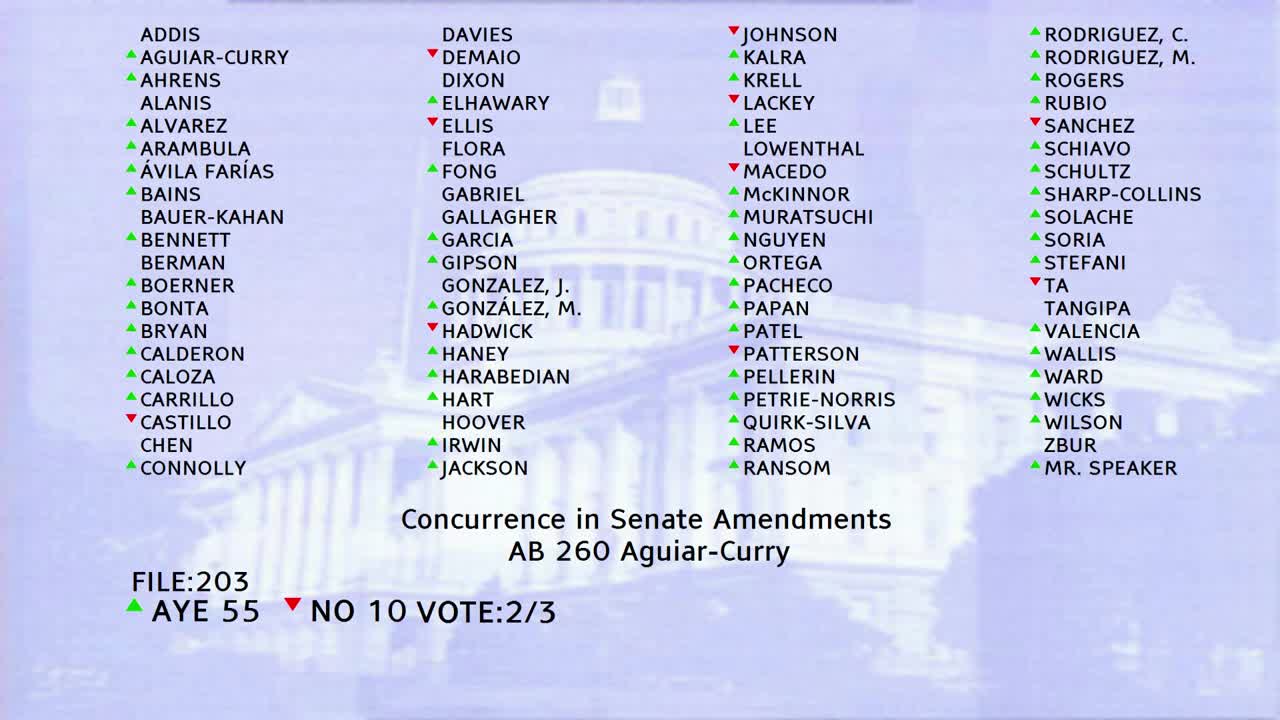 1MIN
Assembly Floor
 3MIN
Senate Floor
 27SEC
Senate Standing Committee on Appropriations
 7MIN
Senate Standing Committee on Education
 5MIN
Senate Standing Committee on Judiciary
 2MIN
Assembly Floor
 4MIN
Assembly Standing Committee on Education
 4MIN