AB 978: Department of Transportation and local agencies: streets and highways: recycled materials.
- Session Year: 2025-2026
- House: Assembly
- Latest Version Date: 2025-10-07
Current Status:
Passed
(2025-10-07: Chaptered by Secretary of State - Chapter 443, Statutes of 2025.)
Introduced
In Committee
Awaiting First Chamber Vote
Passed First Chamber
In Committee
Awaiting Second Chamber Vote
Passed Second Chamber
Enacted
What does this bill do?
The bill requires local agencies that manage streets and highways (except special districts, cities under 25,000 people, and counties under 100,000 people) to use specifications allowing recycled materials at levels no lower than the State Department of Transportation’s standards for recycled base and subbase, reclaimed asphalt, and recycled concrete materials. If a local agency says those recycled levels aren’t feasible, a company bidding to supply materials can request the agency’s reason and the agency must email an explanation. Local agencies may also allow higher recycled content than the state standard.
The summary is provided by generative AI which can make mistakes. For original language, please view the details in the table below.
The California Integrated Waste Management Act of 1989 requires the Director of Transportation, upon consultation with the Department of Resources Recycling and Recovery, to review and modify all bid specifications relating to the purchase of paving materials, and base, subbase, and pervious backfill materials, using recycled materials. Existing law requires the specifications to be based on standards developed by the Department of Transportation for recycled paving materials and for recycled base, subbase, and pervious backfill materials.
Existing law requires a local agency that has jurisdiction over a street or highway, to the extent feasible and cost effective, to apply standard specifications that allow for the use of recycled materials in streets and highways, except as provided. Existing law requires, until January 1, 2027, those standard specifications to allow recycled materials at or above the level allowed in the Department of Transportations standard specifications that went into effect on October 22, 2018, for specified materials.
This bill would indefinitely require a local agencys standard specifications to allow recycled materials at a level no less than the level allowed in the departments specifications for those specified materials. If a local agencys standard specifications do not allow for the use of recycled materials at a level that is equal to or greater than the level allowed in the departments standard specifications on the basis that the use of those recycled materials at those levels is not feasible, the bill would authorize a person bidding on a contract to supply materials subject to those specifications to request the local agency to provide the reason for that determination upon request and would require the local agency to respond to that request, as specified. By increasing the duties of local agencies, the bill would impose a state-mandated local program.
Existing law requires the Department of Transportation and a local agency that has jurisdiction over a street or highway, to the extent feasible and cost effective, to use advanced technologies and material recycling techniques that reduce the cost of maintaining and rehabilitating streets and highways and that exhibit reduced levels of greenhouse gas emissions through material choice and construction method.
This bill would eliminate this requirement.
The California Constitution requires the state to reimburse local agencies and school districts for certain costs mandated by the state. Statutory provisions establish procedures for making that reimbursement.
This bill would provide that, if the Commission on State Mandates determines that the bill contains costs mandated by the state, reimbursement for those costs shall be made pursuant to the statutory provisions noted above.
The California Integrated Waste Management Act of 1989 requires the Director of Transportation, upon consultation with the Department of Resources Recycling and Recovery, to review and modify all bid specifications relating to the purchase of paving materials and base, subbase, and pervious backfill materials using certain recycled materials. Existing law requires the specifications to be based on standards developed by the Department of Transportation for recycled paving materials and for recycled base, subbase, and pervious backfill materials.
Existing law requires a local agency that has jurisdiction over a street or highway, to the extent feasible and cost effective, to apply standard specifications that allow for the use of recycled materials in streets and highways, except as provided. Existing law requires, until January 1, 2027, those standard specifications to allow recycled materials at or above the level allowed in the departments standard specifications that went into effect on October 22, 2018, for specified materials.
This bill would indefinitely require a local governments agencys standard specifications to allow recycled materials at a level no less than the level allowed in the departments specifications for those specified materials. If a local agencys standard specifications do not allow for the use of recycled materials at a level that is equal to or greater than the level allowed in the departments standard specifications on the basis that the use of those recycled materials at those levels is not feasible, the bill would require authorize a person bidding on a contract to supply materials subject to those specifications to request the local agency to provide the reason for that determination upon request. request and would require the local agency to respond to that request, as specified. By increasing the duties of local agencies, the bill would impose a state-mandated local program.
Existing law requires the Department of Transportation and a local agency that has jurisdiction over a street or highway, to the extent feasible and cost effective, to use advanced technologies and material recycling techniques that reduce the cost of maintaining and rehabilitating streets and highways and that exhibit reduced levels of greenhouse gas emissions through material choice and construction method.
This bill would eliminate this requirement.
The California Constitution requires the state to reimburse local agencies and school districts for certain costs mandated by the state. Statutory provisions establish procedures for making that reimbursement.
This bill would provide that, if the Commission on State Mandates determines that the bill contains costs mandated by the state, reimbursement for those costs shall be made pursuant to the statutory provisions noted above.
The California Integrated Waste Management Act of 1989 requires the Director of Transportation, upon consultation with the Department of Resources Recycling and Recovery, to review and modify all bid specifications relating to the purchase of paving materials and base, subbase, and pervious backfill materials using certain recycled materials. Existing law requires the specifications to be based on standards developed by the Department of Transportation for recycled paving materials and for recycled base, subbase, and pervious backfill materials.
Existing law requires a local agency that has jurisdiction over a street or highway, to the extent feasible and cost effective, to apply standard specifications that allow for the use of recycled materials in streets and highways, except as provided. Existing law requires, until January 1, 2027, those standard specifications to allow recycled materials at or above the level allowed in the departments standard specifications that went into effect on October 22, 2018, for specified materials.
This bill would eliminate the feasibility and cost-effectiveness provision described above and would indefinitely require a local governments standard specifications to allow recycled materials at a level no less than the level allowed in the departments specifications for those specified materials. If a local agencys standard specifications do not allow for the use of recycled materials at a level that is equal to or greater than the level allowed in the departments standard specifications on the basis that the use of those recycled materials at those levels is not feasible, the bill would require the local agency to provide the reason for that determination upon request. By increasing the duties of local agencies, the bill would impose a state-mandated local program.
Existing law requires the Department of Transportation and a local agency that has jurisdiction over a street or highway, to the extent feasible and cost effective, to use advanced technologies and material recycling techniques that reduce the cost of maintaining and rehabilitating streets and highways and that exhibit reduced levels of greenhouse gas emissions through material choice and construction method.
This bill would eliminate this requirement.
The California Constitution requires the state to reimburse local agencies and school districts for certain costs mandated by the state. Statutory provisions establish procedures for making that reimbursement.
This bill would provide that, if the Commission on State Mandates determines that the bill contains costs mandated by the state, reimbursement for those costs shall be made pursuant to the statutory provisions noted above.
The California Integrated Waste Management Act of 1989 requires the Director of Transportation, upon consultation with the Department of Resources Recycling and Recovery, to review and modify all bid specifications relating to the purchase of paving materials and base, subbase, and pervious backfill materials using certain recycled materials. Existing law requires the specifications to be based on standards developed by the Department of Transportation for recycled paving materials and for recycled base, subbase, and pervious backfill materials.
Existing law requires a local agency that has jurisdiction over a street or highway, to the extent feasible and cost effective, to apply standard specifications that allow for the use of recycled materials in streets and highways, except as provided. Existing law requires, until January 1, 2027, those standard specifications to allow recycled materials at or above the level allowed in the departments standard specifications that went into effect on October 22, 2018, for specified materials.
This bill would eliminate the feasibility and cost-effectiveness provision described above and would indefinitely require a local governments standard specifications to allow recycled materials at a level no less than the level allowed in the departments specifications for those specified materials. By increasing the duties of local agencies, the bill would impose a state-mandated local program.
Existing law requires the Department of Transportation and a local agency that has jurisdiction over a street or highway, to the extent feasible and cost effective, to use advanced technologies and material recycling techniques that reduce the cost of maintaining and rehabilitating streets and highways and that exhibit reduced levels of greenhouse gas emissions through material choice and construction method.
This bill would eliminate this requirement.
The California Constitution requires the state to reimburse local agencies and school districts for certain costs mandated by the state. Statutory provisions establish procedures for making that reimbursement.
This bill would provide that, if the Commission on State Mandates determines that the bill contains costs mandated by the state, reimbursement for those costs shall be made pursuant to the statutory provisions noted above.
(a)A local agency that has jurisdiction over a street or highway shall, to the extent feasible and cost effective, apply standard specifications that allow for the use of recycled materials in streets and highways.
(b)The standard specifications described in subdivision (a) shall allow recycled materials at a level no less than the level allowed in the departments standard specifications, as those standard specifications may be amended or updated from time to time, for all of the following:
(1)Recycled base and subbase materials as set forth in Sections 25-1.02 and 26-1.02 of the departments standard specifications.
(2)Reclaimed asphalt pavement and other materials in asphalt as set forth in Section 39-2.02B of the departments standard specifications.
(3)Reclaimed aggregate, fly ash, returned plastic concrete, and other materials in concrete as set forth in Sections 90-1.02, 90-2.02, and 90-9 of the departments standard specifications.
(c)If a local agencys standard specifications do not allow for the use of recycled materials at a level that is equal to or greater than the level allowed in the departments standard specifications, as described in subdivision (b), on the basis that the use of those recycled materials at those levels is not feasible, a person bidding on a contract advertised by the local agency to supply materials subject to those specifications may request the local agency to provide the reason for that determination. The local agency shall provide the reason for that determination via email correspondence to the persons official point of contact specified in the request.
(d)This section does not prohibit a local agency that has jurisdiction over a street or highway from exceeding the maximum level allowed in the departments standard specifications for the use of materials described in subdivision (b).
(e)For purposes of this section, the following definitions apply:
(1)Department means the Department of Transportation.
(2)Local agency that has jurisdiction over a street or highway does not include any special district, any city whose population, according to the most recent census, is equal to or less than 25,000 people, or any county whose population, according to the most recent census, is equal to or less than 100,000 people.
SEC. 2.If the Commission on State Mandates determines that this act contains costs mandated by the state, reimbursement to local agencies and school districts for those costs shall be made pursuant to Part 7 (commencing with Section 17500) of Division 4 of Title 2 of the Government Code.
(a)A local agency that has jurisdiction over a street or highway shall, to the extent feasible and cost effective, apply standard specifications that allow for the use of recycled materials in streets and highways.
(b)If a local agencys standard specifications do not allow for the use of recycled materials at a level that is equal to or greater than the level allowed in the departments standard specifications, as described in subdivision (c), on the basis that the use of those recycled materials at those levels is not feasible, the local agency shall provide the reason for that determination upon request.(c)(b)The standard specifications described in subdivision (a) shall allow recycled materials at a level no less than the level allowed in the departments standard specifications, as those standard specifications may be amended or updated from time to time, for all of the following:
(1)Recycled base and subbase materials as set forth in Sections 25-1.02 and 26-1.02 of the departments standard specifications.
(2)Reclaimed asphalt pavement and other materials in asphalt as set forth in Section 39-2.02B of the departments standard specifications.
(3)Reclaimed aggregate, fly ash, returned plastic concrete, and other materials in concrete as set forth in Sections 90-1.02, 90-2.02, and 90-9 of the departments standard specifications.
(c)If a local agencys standard specifications do not allow for the use of recycled materials at a level that is equal to or greater than the level allowed in the departments standard specifications, as described in subdivision (b), on the basis that the use of those recycled materials at those levels is not feasible, a person bidding on a contract advertised by the local agency to supply materials subject to those specifications may request the local agency to provide the reason for that determination. The local agency shall provide the reason for that determination via email correspondence to the persons official point of contact specified in the request.
(d)This section does not prohibit a local agency that has jurisdiction over a street or highway from exceeding the maximum level allowed in the departments standard specifications for the use of materials described in subdivision (c). (b).
(e)For purposes of this section, the following definitions apply:
(1)Department means the Department of Transportation.
(2)Local agency that has jurisdiction over a street or highway does not include any special district, any city whose population, according to the most recent census, is equal to or less than 25,000 people, or any county whose population, according to the most recent census, is equal to or less than 100,000 people.
SEC. 2.If the Commission on State Mandates determines that this act contains costs mandated by the state, reimbursement to local agencies and school districts for those costs shall be made pursuant to Part 7 (commencing with Section 17500) of Division 4 of Title 2 of the Government Code.
(a)A local agency that has jurisdiction over a street or highway shall shall, to the extent feasible and cost effective, apply standard specifications that allow for the use of recycled materials in streets and highways.
(b)If a local agencys standard specifications do not allow for the use of recycled materials at a level that is equal to or greater than the level allowed in the departments standard specifications, as described in subdivision (c), on the basis that the use of those recycled materials at those levels is not feasible, the local agency shall provide the reason for that determination upon request.
(b)(c)The standard specifications described in subdivision (a) shall allow recycled materials at a level no less than the level allowed in the departments standard specifications, as those standard specifications may be amended or updated from time to time, for all of the following:
(1)Recycled base and subbase materials as set forth in Sections 25-1.02 and 26-1.02 of the departments standard specifications.
(2)Reclaimed asphalt pavement and other materials in asphalt as set forth in Section 39-2.02B of the departments standard specifications.
(3)Reclaimed aggregate, fly ash, returned plastic concrete, and other materials in concrete as set forth in Sections 90-1.02, 90-2.02, and 90-9 of the departments standard specifications.
(c)(d)This section does not prohibit a local agency that has jurisdiction over a street or highway from exceeding the maximum level allowed in the departments standard specifications for the use of materials described in subdivision (b). (c).
(d)(e)For purposes of this section, the following definitions apply:
(1)Department means the Department of Transportation.
(2)Local agency that has jurisdiction over a street or highway does not include any special district, any city whose population, according to the most recent census, is equal to or less than 25,000 people, or any county whose population, according to the most recent census, is equal to or less than 100,000 people.
SEC. 2.If the Commission on State Mandates determines that this act contains costs mandated by the state, reimbursement to local agencies and school districts for those costs shall be made pursuant to Part 7 (commencing with Section 17500) of Division 4 of Title 2 of the Government Code.
(a)A local agency that has jurisdiction over a street or highway shall, to the extent feasible and cost effective, shall apply standard specifications that allow for the use of recycled materials in streets and highways.
(c)Beginning January 1, 2024, and until January 1, 2027, the(b)The standard specifications described in subdivision (b) (a) shall allow recycled materials at or above the a level no less than the level allowed in the departments standard specifications that went into effect on October 22, 2018, specifications, as those standard specifications may be amended or updated from time to time, for all of the following:
(1)Recycled base and subbase materials as set forth in Sections 25-1.02 and 26-1.02 of the departments standard specifications.
(2)Reclaimed asphalt pavement and other materials in asphalt as set forth in Section 39-2.02B of the departments standard specifications.
(3)Reclaimed aggregate, fly ash, returned plastic concrete, and other materials in concrete as set forth in Sections 90-1.02, 90-2.02, and 90-9 of the departments standard specifications.
(c)This section does not prohibit a local agency that has jurisdiction over a street or highway from exceeding the maximum level allowed in the departments standard specifications for the use of materials described in subdivision (b).
(d)For purposes of this section, the following definitions apply:
(1)Department means the Department of Transportation.
(2)Local agency that has jurisdiction over a street or highway does not include any special district, any city whose population, according to the most recent census, is equal to or less than 25,000 people, or any county whose population, according to the most recent census, is equal to or less than 100,000 people.
SEC. 2.If the Commission on State Mandates determines that this act contains costs mandated by the state, reimbursement to local agencies and school districts for those costs shall be made pursuant to Part 7 (commencing with Section 17500) of Division 4 of Title 2 of the Government Code.
|
Date
|
Status
|
|---|---|
| Oct 7, 2025 | Chaptered by Secretary of State - Chapter 443, Statutes of 2025. |
| Oct 7, 2025 | Approved by the Governor. |
| Sep 24, 2025 | Enrolled and presented to the Governor at 3 p.m. |
| Sep 12, 2025 | Senate amendments concurred in. To Engrossing and Enrolling. (Ayes 79. Noes 0. Page 3396.). |
| Sep 9, 2025 | In Assembly. Concurrence in Senate amendments pending. |
| Sep 9, 2025 | Read third time. Passed. Ordered to the Assembly. (Ayes 40. Noes 0. Page 2657.). |
| Jul 8, 2025 | Read second time. Ordered to third reading. |
| Jul 7, 2025 | From committee: Be ordered to second reading pursuant to Senate Rule 28.8. |
| Jul 1, 2025 | From committee chair, with author's amendments: Amend, and re-refer to committee. Read second time, amended, and re-referred to Com. on APPR. |
| Jun 23, 2025 | In committee: Set, first hearing. Hearing canceled at the request of author. |
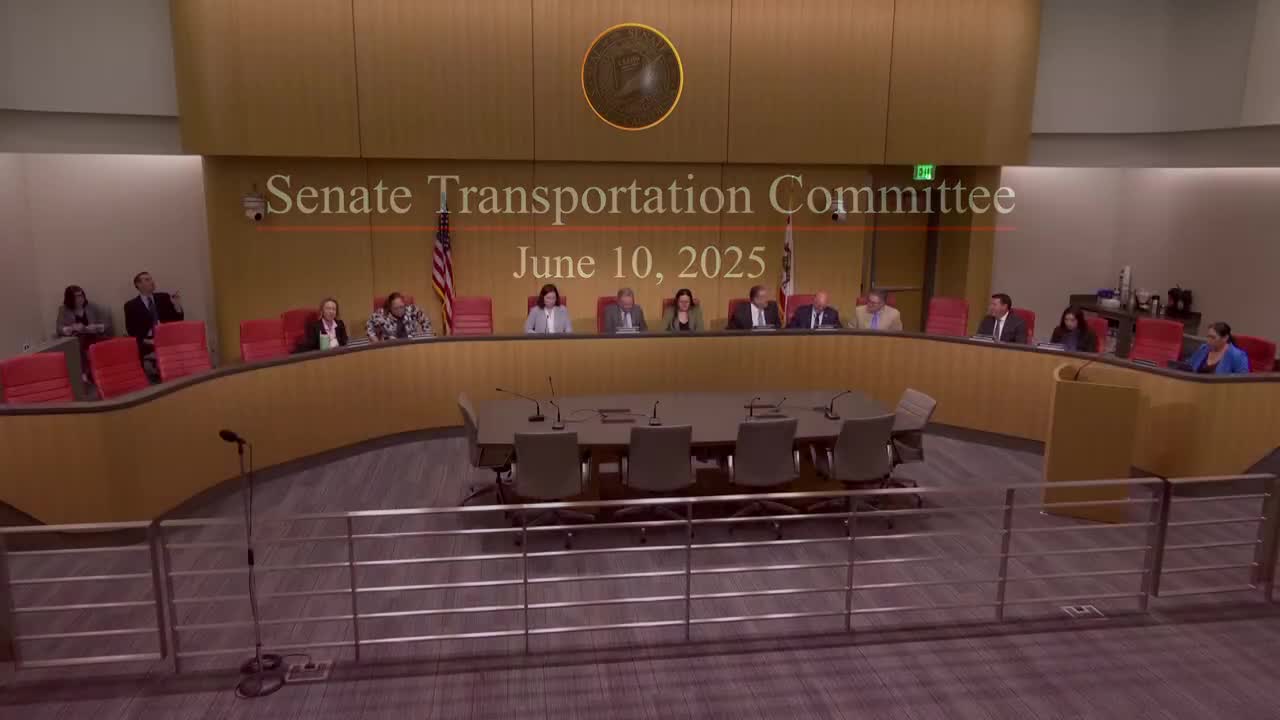
| Jun 10, 2025 | From committee: Do pass and re-refer to Com. on APPR. (Ayes 13. Noes 0.) (June 10). Re-referred to Com. on APPR. |
| May 21, 2025 | Referred to Com. on TRANS. |
| May 8, 2025 | In Senate. Read first time. To Com. on RLS. for assignment. |
| May 8, 2025 | Read third time. Passed. Ordered to the Senate. (Ayes 69. Noes 0. Page 1486.) |
| May 1, 2025 | Read second time. Ordered to Consent Calendar. |
| Apr 30, 2025 | From committee: Do pass. To Consent Calendar. (Ayes 14. Noes 0.) (April 30). |
| Apr 8, 2025 | From committee: Do pass and re-refer to Com. on APPR. with recommendation: To Consent Calendar. (Ayes 16. Noes 0.) (April 7). Re-referred to Com. on APPR. |
| Apr 2, 2025 | Re-referred to Com. on TRANS. |
| Apr 1, 2025 | From committee chair, with author's amendments: Amend, and re-refer to Com. on TRANS. Read second time and amended. |
| Mar 10, 2025 | Referred to Com. on TRANS. |
| Feb 21, 2025 | From printer. May be heard in committee March 23. |
| Feb 20, 2025 | Read first time. To print. |
|
Date
|
Description
|
Location
|
Votes
|
|
|---|---|---|---|---|
| Sep 12, 2025 | AB 978 Hoover Concurrence in Senate Amendments | Assembly Floor |
Passed |
|
| Sep 9, 2025 | Assembly 3rd Reading AB978 Hoover By Strickland | Senate Floor |
Passed |
|
| Jun 10, 2025 | Do pass, but first be re-referred to the Committee on [Appropriations] | Senate Standing Committee on Transportation |
Passed |
|
| May 8, 2025 | AB 978 Hoover Consent Calendar Second Day Regular Session | Assembly Floor |
Passed |
|
| Apr 30, 2025 | Do pass. To Consent Calendar. | Assembly Standing Committee on Appropriations |
Passed |
|
| Apr 7, 2025 | Do pass and be re-referred to the Committee on [Appropriations] with recommendation: To Consent Calendar | Assembly Standing Committee on Transportation |
Passed |
This list shows positions taken on this bill by organizations on the date displayed, which is linked to the original source.
Positions by individuals are not included.
|
Organization
|
Position
|
Date
|
|---|---|---|
| Associated General Contractors, California Chapters | ** Support | |
| CALIFORNIA CONSTRUCTION & INDUSTRIAL MATERIALS ASSOCIATION | ** Support | |
| Granite Construction | ** Support | |
| Southern California Contractors Association | ** Support |
CONCURRENCE IN SENATE AMENDMENTS
CSA1 Bill Id:AB 978
Author:(Hoover)
As Amended Ver:July 1, 2025
Majority vote
SUMMARY
Updates existing requirements for local agencies' use of recycled materials in streets and highways.
Senate Amendments
- Allows a person bidding on a contract to supply recycled materials subject to specifications, to request the local agency provide a reason for determination via email correspondence.
COMMENTS
In California, there are approximately 350,000 miles of roads, 87% of which local governments such as cities and counties operate and maintain. Extensive design, engineering, and analysis goes into determining which types of materials to use in pavement. In 2017, Caltrans projects used more than one million cubic yards of concrete, which involved approximately 325,000 tons of Portland cement, more than four million tons of hot mix asphalt, and one million cubic yard of aggregate.
According to Caltrans' 2015 Concrete Pavement Guide, factors that contribute to optimum pavement use and design include: climatic effects, applied traffic loads, and subgrade quality. This means temperature, precipitation, freeze-thaw cycles, accurate estimations of traffic flow, and uniform support from underlying structural layers of the road are among the pillars of reliable pavement use and design. The quality of materials determine layer thickness and capacity. Accurate characterization of each pavement structure layer's condition and structural capacity is critical to design and performance, especially when it comes to maintenance and rehabilitation strategies. Cracking, erosion, poor durability, curling, and warping can occur on pavement without the correct materials and design.
Caltrans maintains the Pavement Standard Plans and Specifications (PSPS), which are documents that implement the standards, policies, and best practices for pavements on California highways. PSPS contain the standard requirements for bidding, constructing, and administering Caltrans' contracts. Caltrans' Pavement Program also maintains non-standard plans and specifications (NSSPs) for special circumstances.
This bill requires cities and counties, as specified, and when feasible and cost effective, to adhere to certain PSPS specifications for recycled construction materials in road base, pavement, and minor concrete applications when designing and maintaining pavement.
Recycled materials in pavement: According to the Department of Resources Recycling and Recovery construction and demolition materials make up approximately 29% of California's disposed waste stream, or approximately 11.6 million tons. Asphalt and concrete represent over 977,000 tons of disposal, or around 2.4%. This material, produced through road rehabilitation, maintenance, and demolition, is itself a source of recycled aggregate that can serve as new road base and subbase, the weight-bearing foundations of a road.
Aggregate consists of hard, graduated fragments of inert mineral materials, including sand, gravel, crushed stone, slag, rock dust, or powder; inert solid waste is concrete, asphalt, dirt, brick, and other rubble. Recycled aggregate is produced by crushing concrete, and sometimes asphalt, to reclaim the aggregate. Asphalt refers to the bituminous substance used to bind aggregate together to make asphalt concrete (AC). RAP is used AC pavement that has been processed. Recycled asphalt concrete is the product of mixing RAP with new aggregates, asphalt and/or recycling agent. A recycling agent is used to soften and rejuvenate the existing asphalt pavement.
According to Caltrans' Greenhouse Gas (GHG) Emissions and Mitigation Report 2020, the most promising additional GHG reduction opportunity for Caltrans for asphalt pavements appears to be a greater use of RAP. For concrete pavements, the greatest additional GHG reduction opportunity appears to be greater use of supplemental cementitious materials. However, the net effect of different pavement options is complex and often dependent on the project context. For example, RAP may not be advantageous if the recycled material is not locally sourced.
The National Asphalt Paving Association notes that use of RAP reduced carbon dioxide (CO2) emissions by 2.4 million metric tons in 2019 nationwide. The National Center for Asphalt Technology reports that RAP at 25% of the asphalt mix reduces CO2 emissions by 10-11%, and RAP at 40% reduces CO2 emissions by 16-18%, compared to use of virgin materials. A U.S. EPA study on asphalt shingles in pavement found a 6-14% reduction of CO2, when reclaimed asphalt shingles are added to an asphalt mix, depending on different proportions. A study conducted by Climate Earth on the Environmental Impacts of Recycled Plastic Concrete shows that recycling plastic concrete results in a 15.3% reduction in carbon footprint and 16.2% reduction in embodied energy.
Locals and recycled pavement: SB 1 (Beall), Chapter 5, Statutes of 2017 provides additional funding to address deferred maintenance on the state highway system and local streets and roads. Caltrans and cities and counties are encouraged to use advanced technologies and material recycling techniques where possible and cost effective when maintaining and rehabilitating the streets and highways with monies from the RMRA.
According to the 2023 California Statewide Local Streets and Roads Needs Assessment, sponsored by the League of California Cities, California State Association of Counties, Regional Transportation Planning Agencies, and the Rural Counties Task Force, the impact of sustainable paving technologies such as cold-in-place recycling have construction cost savings of 28% compared to conventional treatments and as much as 26% savings for full-depth reclamation. Since 2012, the number of agencies that employ some form of recycling has more than doubled, and this trend is expected to continue.
This bill maintains and extends existing requirements for locals to use the minimum state standards for recycled material, to the extent feasible and cost effective. If these standards cannot be met, this bill requires the local agency to provide an explanation, upon request.
According to the Author
"As California continues to adopt sustainable and cost-saving practices, we must encourage local agencies to do the same. Technological advances with reclaimed (recycled) asphalt pavement (RAP) offer us the opportunity to produce cost-effective and reliable roads. Public and private roadwork jobs use recycled materials with notable success. AB 978 brings local agencies in line with state and national trends as we pursue progress in sustainability."
Arguments in Support
Granite Construction writes, "Granite Construction is pleased to Sponsor and "support" AB 978 by Assemblymember Hoover, which builds on existing law and would require a local agency that has jurisdiction over a street or highway to allow for the use of recycled materials in road paving projects. It does not require the agency to use these recycled materials; it merely limits the agency's ability to reject a bid that proposes to use recycled materials."
Arguments in Opposition
None on file.
FISCAL COMMENTS
According to the Senate Committee on Appropriations:
"Negligible state costs pursuant to Senate Rule 28.8"
VOTES:
ASM TRANSPORTATION: 16-0-0
YES: Wilson, Davies, Aguiar-Curry, Ahrens, Carrillo, Harabedian, Hart, Hoover, Jackson, Lackey, Lowenthal, Macedo, Papan, Ransom, Rogers, Ward
ASM APPROPRIATIONS: 14-0-1
YES: Wicks, Sanchez, Arambula, Calderon, Caloza, Dixon, Elhawary, Fong, Mark González, Hart, Pacheco, Solache, Ta, Alanis
ABS, ABST OR NV: Pellerin
ASSEMBLY FLOOR: 69-0-10
YES: Addis, Aguiar-Curry, Ahrens, Alanis, Alvarez, Ávila Farías, Bains, Bauer-Kahan, Bennett, Berman, Bonta, Bryan, Calderon, Caloza, Castillo, Chen, Connolly, Davies, DeMaio, Dixon, Elhawary, Ellis, Fong, Gabriel, Garcia, Gipson, Mark González, Hadwick, Haney, Harabedian, Hart, Hoover, Jackson, Kalra, Krell, Lackey, Lee, Lowenthal, Macedo, McKinnor, Muratsuchi, Nguyen, Ortega, Pacheco, Papan, Patel, Patterson, Pellerin, Petrie-Norris, Quirk‑Silva, Ramos, Ransom, Michelle Rodriguez, Rogers, Blanca Rubio, Schiavo, Schultz, Sharp-Collins, Solache, Soria, Stefani, Ta, Tangipa, Valencia, Ward, Wicks, Wilson, Zbur, Rivas
ABS, ABST OR NV: Arambula, Boerner, Carrillo, Flora, Gallagher, Jeff Gonzalez, Irwin, Celeste Rodriguez, Sanchez, Wallis
UPDATED
VERSION: July 1, 2025
CONSULTANT: Julia Kingsley / TRANS. / (916) 319-2093 FN: 0001947
SENATE RULES COMMITTEE Office of Senate Floor Analyses (916) 651-1520 Fax: (916) 327-4478 | AB 978 |
THIRD READING
Bill No: AB 978
Author: Hoover (R)
Amended: 7/1/25 in Senate
Vote: 21
SENATE TRANSPORTATION COMMITTEE: 13-0, 6/10/25
AYES: Cortese, Strickland, Arreguín, Blakespear, Cervantes, Dahle, Grayson, Limón, Menjivar, Richardson, Seyarto, Umberg, Valladares
NO VOTE RECORDED: Archuleta, Gonzalez
SENATE APPROPRIATIONS COMMITTEE: Senate Rule 28.8
ASSEMBLY FLOOR: 69-0, 5/8/25 (Consent) - See last page for vote
SUBJECT: Department of Transportation and local agencies: streets and highways: recycled materials
SOURCE: Author
DIGEST:
This bill changes recycled material’s requirements for local agencies as they pertain to streets and highways, as specified.
ANALYSIS:
Existing law:
- Requires the Department of Transportation (Caltrans) and a local agency that has jurisdiction over a street or highway, to the extent feasible and cost effective, to use advanced technologies and material recycling techniques that reduce the cost of maintaining and rehabilitating streets and highways and that exhibit reduced levels of greenhouse gases.
- Requires beginning January 1, 2024, that local agencies who have jurisdiction over a street or highway, to the extent feasible and cost effective, to apply standard specifications that allow for the use of recycled materials in streets and highways.
- Requires beginning January 1, 2024, and until January 1, 2027, the standard specifications for recycled materials must be at or above the level allowed in the Caltrans’ standard specifications that went into effect on October 22, 2018, for the use of recycled materials including: recycled base and subbase materials, reclaimed asphalt pavement and other materials in asphalt, reclaimed aggregate, fly ash, returned plastic concrete, and other materials in concrete.
- Further exempts any special district or city whose population, according to the most recent census, is equal to or less than 25,000 people, or any county whose population, according to the most recent census, is equal to or less than 100,000 people.
- Establishes Caltrans and provides that it has full possession and control of all state highways, property, and rights in property acquired for state highway purposes, construct all state highways.
- Encourages Caltrans and cities and counties to use advanced technologies and material recycling techniques, where possible and cost effective, when maintaining and rehabilitating the streets and highways with monies from the Road Maintenance and Rehabilitation Account.
This bill:
- Requires, indefinitely a local government’s standard specifications to allow recycled materials at a level no less than the level allowed in Caltrans’ specifications, to the extent feasible and cost effective.
- Provides that if a local agency determines it is not feasible to utilize the equivalent level of recycled materials as provided in Caltrans’ specifications, the local agency is required to provide a response, as specified, upon request of a bidder, in regards to the reasoning behind that determination.
- Specifies a local agency may exceed the maximum level of Caltrans’ specifications of recycled base and subbase, reclaimed asphalt concrete (RAP), and reclaimed aggregate, fly ash, and returned plastic concrete.
Comments
- Purpose of this bill. According to the author, “As California continues to adopt sustainable and cost-saving practices, we must encourage local agencies to do the same. Technological advances with reclaimed (recycled) asphalt pavement (RAP) offer us the opportunity to produce cost-effective and reliable roads. Public and private roadwork jobs use recycled materials with notable success. AB 978 helps bring local agencies in line with state and national trends as we pursue progress in sustainability.”
- What are recycled materials in pavement? Aggregate consists of hard, graduated fragments of inert mineral materials, including sand, gravel, crushed stone, slag, rock dust, or powder; inert solid waste is concrete, asphalt, dirt, brick, and other rubble. Recycled aggregate is produced by crushing concrete, and sometimes asphalt, to reclaim the aggregate. Asphalt refers to the bituminous substance used to bind aggregate together to make asphalt concrete (AC). RAP is used AC pavement that has been processed. Recycled asphalt concrete is the product of mixing RAP with new aggregates, asphalt and/or recycling agent. A recycling agent is used to soften and rejuvenate the existing asphalt pavement. Lastly, RAP can be processed through hot recycling, cold recycling, or in-place recycling depending on the method used to reclaim and reuse the material.
- Recycled and Reused. California policy has long supported recycling and reuse of pavement as it reduces waste and potentially provides greater economic benefits than using new material. In 2012, AB 812 (Ma, Chapter 230, Statutes of 2012) was passed encouraging Caltrans to use up to 40% of recycled asphalt. In 2014 legislation was passed requiring local governments to adopt Caltrans recycled material standards unless they publicly articulated why they could not. In 2017 SB 1 (Beall, Chapter 5, Statutes of 2017), the Road Repair and Accountability Act, required the use of material recycling where cost effective and feasible. Most recently, AB 2953 (Salas, Chapter 872, Statues of 2022), requires certain local agencies to apply standard specifications for the use of recycled materials on their streets and highways that are at or above Caltrans’ specification levels to the extent feasible and cost effective. This measure, AB 978, aims to build off and make modifications to the provisions enacted in AB 2953 in 2022.
- Caltrans’ specifications. Caltrans’ “Pavement Standard Specifications” sets the standards, policies, and best practices for pavement construction and maintenance on California highways. The specifications cover material requirements, construction methods, and quality assurance measures for a number of pavement types. Specifically for purposes of this measure, Division Five, “Surfacing and Bases,” outline the requirements for RAP use in asphalt mixtures including, but not limited to, material composition, processing methods, and performance criteria.
- Local entities. The primary purpose of this bill is to require local governments to adopt Caltrans recycled material standards in the areas of base / subbase materials, asphalt pavement, and aggregates. Over the years, as a variety of measures have been introduced and / or enacted on this policy matter, local entities have stressed that a “one-size-fits-all” approach could potentially negatively impact local government’s ability to cost effectively deliver public works projects. Specifically, the issue for local governments is their large variation in size, geography, and local conditions. What might be suitable in metropolitan Los Angeles with year-round temperate weather and access to many contractors might be a bad fit for a smaller community with more extreme weather, different traffic conditions and fewer contractors with lesser capabilities. Hence some flexibility for local governments is warranted. In order to provide this flexibility while still making strides towards sustainability goals, this measure allows local governments to provide a reason / justification for not utilizing recycled materials at levels specified in Caltrans’ specifications.
FISCAL EFFECT: Appropriation: No Fiscal Com.: Yes Local: Yes
SUPPORT: (Verified 7/7/25)
Granite Construction Company (sponsor)
Associated General Contractors, California Chapters
California Construction & Industrial Materials Association
Southern California Contractors Association
OPPOSITION: (Verified 7/7/25)
None received
ASSEMBLY FLOOR: 69-0, 5/8/25
AYES: Addis, Aguiar-Curry, Ahrens, Alanis, Alvarez, Ávila Farías, Bains, Bauer-Kahan, Bennett, Berman, Bonta, Bryan, Calderon, Caloza, Castillo, Chen, Connolly, Davies, DeMaio, Dixon, Elhawary, Ellis, Fong, Gabriel, Garcia, Gipson, Mark González, Hadwick, Haney, Harabedian, Hart, Hoover, Jackson, Kalra, Krell, Lackey, Lee, Lowenthal, Macedo, McKinnor, Muratsuchi, Nguyen, Ortega, Pacheco, Papan, Patel, Patterson, Pellerin, Petrie-Norris, Quirk-Silva, Ramos, Ransom, Michelle Rodriguez, Rogers, Blanca Rubio, Schiavo, Schultz, Sharp-Collins, Solache, Soria, Stefani, Ta, Tangipa, Valencia, Ward, Wicks, Wilson, Zbur, Rivas
NO VOTE RECORDED: Arambula, Boerner, Carrillo, Flora, Gallagher, Jeff Gonzalez, Irwin, Celeste Rodriguez, Sanchez, Wallis
Prepared by: Manny Leon / TRANS. / (916) 651-4121
7/8/25 16:38:48
**** END ****
SENATE COMMITTEE ON TRANSPORTATION
Senator Dave Cortese, Chair
2025 - 2026 Regular
Bill No: AB 978 Hearing Date: 6/10/2025
Author: | Hoover | ||
Version: | 4/1/2025 Amended | ||
Urgency: | No | Fiscal: | Yes |
Consultant: | Manny Leon | ||
SUBJECT: Department of Transportation and local agencies: streets and highways: recycled materials
DIGEST: This bill changes recycled material’s requirements for local agencies as they pertain to streets and highways, as specified.
ANALYSIS:
Existing law:
- Requires the Department of Transportation (Caltrans) and a local agency that has jurisdiction over a street or highway, to the extent feasible and cost effective, to use advanced technologies and material recycling techniques that reduce the cost of maintaining and rehabilitating streets and highways and that exhibit reduced levels of greenhouse gases.
- Beginning January 1, 2024, requires local agencies who have jurisdiction over a street or highway, to the extent feasible and cost effective, to apply standard specifications that allow for the use of recycled materials in streets and highways.
- Beginning January 1, 2024, and until January 1, 2027, the standard specifications required for recycled materials must be at or above the level allowed in the Caltrans’ standard specifications that went into effect on October 22, 2018, for the use of recycled materials including: recycled base and subbase materials, reclaimed asphalt pavement and other materials in asphalt, reclaimed aggregate, fly ash, returned plastic concrete, and other materials in concrete.
- Further exempts any special district or city whose population, according to the most recent census, is equal to or less than 25,000 people, or any county whose population, according to the most recent census, is equal to or less than 100,000 people.
- Establishes Caltrans and provides that it has full possession and control of all state highways, property, and rights in property acquired for state highway purposes, construct all state highways.
- Encourages Caltrans and cities and counties to use advanced technologies and material recycling techniques, where possible and cost effective, when maintaining and rehabilitating the streets and highways with monies from the Road Maintenance and Rehabilitation Account.
This bill:
- Indefinitely requires a local government’s standard specifications to allow recycled materials at a level no less than the level allowed in Caltrans’ specifications, to the extent feasible and cost effective.
- Requires a local agency to provide the reason for a determination, upon request, if the local agency’s standard specifications do not allow for the use of recycled materials at a level that is equal to or greater than the level allowed in Caltrans’ standard specifications.
- Specifies a local agency may exceed the maximum level of Caltrans’ specifications of recycled base and subbase, reclaimed asphalt concrete (RAP), and reclaimed aggregate, fly ash, and returned plastic concrete.
COMMENTS:
- Purpose of the bill. According to the author, “As California continues to adopt sustainable and cost-saving practices, we must encourage local agencies to do the same. Technological advances with reclaimed (recycled) asphalt pavement (RAP) offer us the opportunity to produce cost-effective and reliable roads. Public and private roadwork jobs use recycled materials with notable success. AB 978 helps bring local agencies in line with state and national trends as we pursue progress in sustainability.”
- What are recycled materials in pavement? Aggregate consists of hard, graduated fragments of inert mineral materials, including sand, gravel, crushed stone, slag, rock dust, or powder; inert solid waste is concrete, asphalt, dirt, brick, and other rubble. Recycled aggregate is produced by crushing concrete, and sometimes asphalt, to reclaim the aggregate. Asphalt refers to the bituminous substance used to bind aggregate together to make asphalt concrete (AC). RAP is used AC pavement that has been processed. Recycled asphalt concrete is the product of mixing RAP with new aggregates, asphalt and/or recycling agent. A recycling agent is used to soften and rejuvenate the existing asphalt pavement. Lastly, RAP can be processed through hot recycling, cold recycling, or in-place recycling depending on the method used to reclaim and reuse the material.
- Recycled and Reused. California policy has long supported recycling and reuse of pavement as it reduces waste and potentially provides greater economic benefits than using new material. In 2012, AB 812 was passed encouraging Caltrans to use up to 40% of recycled asphalt. In 2014 legislation was passed requiring local governments to adopt Caltrans recycled material standards unless they publicly articulated why they could not. In 2017 SB 1, the Road Repair and Accountability Act, required the use of material recycling where cost effective and feasible. Most recently, AB 2953 (Salas, Chapter 872, Statues of 2022), requires certain local agencies to apply standard specifications for the use of recycled materials on their streets and highways that are at or above Caltrans’ specification levels to the extent feasible and cost effective. This measure, AB 978, aims to build off and make modifications to the provisions enacted in AB 2953 in 2022.
- Caltrans’ specifications. Caltrans’ “Pavement Standard Specifications” sets the standards, policies, and best practices for pavement construction and maintenance on California highways. The specifications cover material requirements, construction methods, and quality assurance measures for a number of pavement types. Specifically for purposes of this measure, Division Five, “Surfacing and Bases,” outline the requirements for RAP use in asphalt mixtures including, but not limited to, material composition, processing methods, and performance criteria.
- Local entities. The primary purpose of the bill is to require local governments to adopt Caltrans recycled material standards in the areas of base / subbase materials, asphalt pavement, and aggregates. Over the years, as a variety of measures have been introduced and / or enacted on this policy matter, local entities have stressed that a “one-size-fits-all” approach could potentially negatively impact local government’s ability to cost effectively deliver public works projects. Specifically, the issue for local governments is their large variation in size, geography, and local conditions. What might be suitable in metropolitan Los Angeles with year-round temperate weather and access to many contractors might be a bad fit for a smaller community with more extreme weather, different traffic conditions and fewer contractors with lesser capabilities. Hence some flexibility for local governments is warranted. In order to provide this flexibility while still making strides towards sustainability goals, this measure allows local governments to provide a reason / justification for not utilizing recycled materials at levels specified in Caltrans’ specifications.
Related/previous Legislation:
AB 2953 (Salas, Chapter 872, Statutes of 2022) – Requires local agencies to apply standard specifications for the use of recycled materials in streets and highways that are at or above the level allowed in the Caltrans specifications, to the extent feasible and cost effective, as specified.
AB 1035 (Salas of 2021) – Would have required Caltrans, cities, and counties that have jurisdiction over a street or highway to apply standard specifications that allow for the use of recycled materials when feasible and cost effective. This bill was vetoed by Governor Newsom, October 8th, 2021.
SB 1227 (Skinner of 2020) – Would have required cities and counties to allow the use of recycled materials in road maintenance and rehabilitation in order to be eligible for SB 1 funds. This bill was held by the author in Senate Transportation Committee in light of the COVID-19 pandemic.
SB 1238 (Hueso of 2020) – Would have required Caltrans to conduct a study to assess the feasibility, cost effectiveness, and life-cycle environmental benefits of including recycled plastics in asphalt used as paving materials, and, depending on the findings, authorizes Caltrans to develop specifications for the use of recycled plastics in asphalt. This bill died in Assembly Transportation Committee.
SB 1 (Beall, Chapter 5, Statutes of 2017) – Increases several taxes and fees to raise the equivalent of roughly $52.4 billion over ten years in new transportation revenues and makes adjustments for inflation every year; directs the funding to be used towards deferred maintenance on the state highways and local streets and roads, and to improve the state's trade corridors, transit, and active transportation facilities.
AB 812 (Ma, Chapter 230, Statutes of 2012) – Authorized Caltrans to establish specifications for the use of up to 40% reclaimed asphalt pavement for hot asphalt mixes on or before January 1, 2014.
FISCAL EFFECT: Appropriation: Fiscal Com.: Local:
POSITIONS: (Communicated to the committee before noon on Wednesday,
June 4, 2025.)
SUPPORT:
Granite Construction Company
OPPOSITION:
None received
-- END --
Date of Hearing: April 30, 2025
ASSEMBLY COMMITTEE ON APPROPRIATIONS
Buffy Wicks, Chair
ABPCA Bill Id:AB 978
Author:(Hoover) – As Amended Ver:April 1, 2025
Policy Committee: | Transportation | Vote: | 16 - 0 |
|
| ||
|
|
Urgency: No State Mandated Local Program: Yes Reimbursable: No
SUMMARY:
This bill makes permanent the requirement in existing law that a local agency that has jurisdiction over a street or highway, to the extent feasible and cost effective, apply standard specifications that allow for the use of recycled materials in streets and highways at a level no less than the level allowed in the Department of Transportation’s (Caltrans’) standard specifications. The bill further provides that if a local agency’s standard specifications do not allow for the use of recycled materials at the level allowed in Caltrans’ standard specifications because doing so is infeasible, then the local agency must provide the reason for that determination upon request.
The bill specifies that the law does not prohibit a local agency that has jurisdiction over a street or highway from exceeding the maximum level of use of recycled materials allowed in Caltrans’ standard specifications.
FISCAL EFFECT:
No state costs.
COMMENTS:
- Background. Caltrans maintains, and regularly updates, what it calls “Pavement Standard Plans and Specifications,” which Caltrans describes as “the documents that implement the standards, policies, and best practices for pavements on California highways.” Among those documents are standards that specify the policies and best practices regarding the use of recycled materials in road base and subbase, asphalt and concrete.
State law and policy encourage the use of recycled materials in the state’s streets and roadways. Specifically, existing state law requires any local agency that has jurisdiction over a street or highway to apply standard specifications that allow for the use of recycled materials in streets and highways, to the extent doing so is feasible and cost effective. In addition, the law requires, until January 1, 2027, a local agency’s standard specifications allow recycled materials at a level no less than he level allowed in Caltrans’ standard specifications (meaning, Caltrans’ “Pavement Standard Plans and Specifications”) that went into effect on October 22, 2018.
The author intends this bill to increase the use of recycled materials in the state’s roadways, asserting “Technological advances with reclaimed (recycled) asphalt pavement (RAP) offer us the opportunity to produce cost-effective and reliable roads.” Granite Construction, the sponsor of this bill, describes the use of recycled materials in roadways, and the resulting benefits, as follows:
When a road is being primed for paving, typically the top 2-3 inches are ground down, removed, and the “waste product” is trucked to a landfill site. However, if a local government project allows for it, this discarded product can be reused and reconstituted into warm asphalt mix with great success, creating a paving product known in the industry as reclaimed asphalt pavement or “RAP.” By reusing the rock, sand, and oil in the old pavement, the use of RAP decreases greenhouse gas emissions, puts fewer trucks on the road, reduces project costs, uses less virgin oil in production, extends the life of existing quarries, and gives old asphalt a “second life” by being repurposed… Use of RAP in asphalt paving is an effective way to lower greenhouse gas emissions from the construction of transportation systems. It has been used for decades, and based on the use of hundreds of millions of ton of high-RAP asphalt across the US and especially Europe, it has proven to be an easy and effective way for cities, counties, states and companies like Granite to meet GHG reduction initiatives.
However, Granite goes on to observe that use of RAP in California lags its use in other states and countries, and complains that, in some instances, local government representatives “actively rejected the concept of using RAP, as they argued that they would prefer to stick to ‘the way we’ve been doing it for the last two decades.’” Granite asserts this bill does not requires the use of RAP in paving projects; rather, Granite notes, the bill “tries to level the playing field by arguing that a local government should not be able to prejudice a job bid because it proposes using up to the current Caltrans specification for RAP content.”
While several statewide representatives of local governments opposed a prior version of this bill, the author has since amended the bill and there is now no opposition registered to it.
- Prior Legislation. The Legislature has considered several bills that did not become law that addressed the use of RAP. Finally, in 2022, the Legislature passed AB 2953 (Salas), Chapter 872, Statutes of 2022, to (a) require a local government, beginning January 1, 2024, apply standard specifications that allow for the use of recycled materials in streets and highways, to the extent doing so is feasible and cost effective, and (b) further require, until January 1, 2027, those standard specifications allow recycled materials at or above the level allowed in Caltrans standard specifications that went into effect on October 22, 2018.
Analysis Prepared by: Jay Dickenson / APPR. / (916) 319-2081
Date of Hearing: April 7, 2025
ASSEMBLY COMMITTEE ON TRANSPORTATION
Lori D. Wilson, Chair
ABPCA Bill Id:AB 978 (
Author:Hoover) – As Amended Ver:April 1, 2025
SUBJECT: Department of Transportation and local agencies: streets and highways: recycled materials
SUMMARY: Updates existing requirements for local agencies’ use of recycled materials in streets and highways. Specifically, this bill:
- Indefinitely requires a local government’s standard specifications to allow recycled materials at a level no less than the level allowed in the Department of Transportation’s (Caltrans) specifications, to the extent feasible and cost effective.
- Requires a local agency to provide the reason for a determination, upon request, if the local agency’s standard specifications do not allow for the use of recycled materials at a level that is equal to or greater than the level allowed in Caltrans’ standard specifications.
- Specifies a local agency may exceed the maximum level of Caltrans’ specifications of recycled base and subbase, reclaimed asphalt concrete (RAP), and reclaimed aggregate, fly ash, and returned plastic concrete.
EXISTING LAW:
- Requires Caltrans and a local agency that has jurisdiction over a street or highway, to the extent feasible and cost effective, to use advanced technologies and material recycling techniques that reduce the cost of maintaining and rehabilitating streets and highways and that exhibit reduced levels of greenhouse. (Public Resources Code Section (PRC) 42704.6)
- Beginning January 1, 2024, requires local agencies who have jurisdiction over a street or highway, to the extent feasible and cost effective, to apply standard specifications that allow for the use of recycled materials in streets and highways. (PRC 42704.6)
- Beginning January 1, 2024, and until January 1, 2027, the standard specifications required for recycled materials must be at or above the level allowed in the Caltrans’ standard specifications that went into effect on October 22, 2018, for the use of recycled materials including: recycled base and subbase materials, reclaimed asphalt pavement and other materials in asphalt, reclaimed aggregate, fly ash, returned plastic concrete, and other materials in concrete. (PRC 42704.6)
- Exempts any special district or city whose population, according to the most recent census, is equal to or less than 25,000 people, or any county whose population, according to the most recent census, is equal to or less than 100,000 people. (PRC 42704.6)
- Establishes Caltrans and provides that it has full possession and control of all state highways and property and rights in property acquired for state highway purposes, construct all state highways. (Streets and Highways Code Section (SHC) 90)
- Encourages Caltrans and cities and counties to use advanced technologies and material recycling techniques, where possible and cost effective when maintaining and rehabilitating the streets and highways with monies from the Road Maintenance and Rehabilitation Account (RMRA). (SHC 2030)
FISCAL EFFECT: Unknown
COMMENTS: In California, there are approximately 350,000 miles of roads, 87% of which local governments such as cities and counties operate and maintain. Extensive design, engineering, and analysis goes into determining which types of materials to use in pavement. In 2017, Caltrans projects used more than 1 million cubic yards of concrete, which involved approximately 325,000 tons of Portland cement, more than 4 million tons of hot mix asphalt, and 1 million cubic yard of aggregate.
According to Caltrans’ 2015 Concrete Pavement Guide, factors that contribute to optimum pavement use and design include: climatic effects, applied traffic loads, and subgrade quality. This means temperature, precipitation, freeze-thaw cycles, accurate estimations of traffic flow, and uniform support from underlying structural layers of the road are among the pillars of reliable pavement use and design. The quality of materials determine layer thickness and capacity. Accurate characterization of each pavement structure layer’s condition and structural capacity is critical to design and performance, especially when it comes to maintenance and rehabilitation strategies. Cracking, erosion, poor durability, curling, and warping can occur on pavement without the correct materials and design.
Caltrans maintains the Pavement Standard Plans and Specifications (PSPS), which are documents that implement the standards, policies, and best practices for pavements on California highways. PSPS contain the standard requirements for bidding, constructing, and administering Caltrans’ contracts. Caltrans' Pavement Program also maintains non-standard plans and specifications (NSSPs) for special circumstances.
This bill requires cities and counties, as specified, and when feasible and cost effective, to adhere to certain PSPS specifications for recycled construction materials in road base, pavement, and minor concrete applications when designing and maintaining pavement. Material specifications included in this bill are as follows:
Caltrans Pavement Standard Plans and Specifications | Description |
Recycled base and subbase materials (PSPS Sections 25-1.02 and 26-1.02) | Specific amounts of broken stone, crushed gravel, natural rough surfaced gravel, sand, reclaimed processed asphalt concrete. Specification includes how to properly test the material. |
RAP and other materials in asphalt (PSPS Section 39-2.02B) | Includes specifications for producing and placing hot mix asphalt, including the binder methods, testing strategies, and content percentages. |
Reclaimed aggregate, fly ash, returned plastic concrete, and other materials in concrete (PSPS Sections 90-1.02, 90-2.02, and 90-9) | Requires concrete for pavement to adhere to shrinkage limitations; Requires cementitious materials type and brand to be on the Authorized Material List (includes blended cement, rice hull ash, and type II or V Portland cement); authorizes use of incorporating returned plastic concrete (RPC) into concrete (excess concrete that is returned to a concrete plant in a plastic state and that has not attained initial set). |
Recycled materials in pavement: According to the Department of Resources Recycling and Recovery construction and demolition materials make up approximately 29% of California's disposed waste stream, or approximately 11.6 million tons. Asphalt and concrete represent over 977,000 tons of disposal, or around 2.4%. This material, produced through road rehabilitation, maintenance, and demolition, is itself a source of recycled aggregate that can serve as new road base and subbase, the weight-bearing foundations of a road.
Aggregate consists of hard, graduated fragments of inert mineral materials, including sand, gravel, crushed stone, slag, rock dust, or powder; inert solid waste is concrete, asphalt, dirt, brick, and other rubble. Recycled aggregate is produced by crushing concrete, and sometimes asphalt, to reclaim the aggregate. Asphalt refers to the bituminous substance used to bind aggregate together to make asphalt concrete (AC). RAP is used AC pavement that has been processed. Recycled asphalt concrete is the product of mixing RAP with new aggregates, asphalt and/or recycling agent. A recycling agent is used to soften and rejuvenate the existing asphalt pavement.
According to Caltrans’ Greenhouse Gas (GHG) Emissions and Mitigation Report 2020, the most promising additional GHG reduction opportunity for Caltrans for asphalt pavements appears to be a greater use of RAP. For concrete pavements, the greatest additional GHG reduction opportunity appears to be greater use of supplemental cementitious materials. However, the net effect of different pavement options is complex and often dependent on the project context. For example, RAP may not be advantageous if the recycled material is not locally sourced.
The National Asphalt Paving Association notes that use of RAP reduced carbon dioxide (CO2) emissions by 2.4 million metric tons in 2019 nationwide. The National Center for Asphalt Technology reports that RAP at 25% of the asphalt mix reduces CO2 emissions by 10-11%, and RAP at 40% reduces CO2 emissions by 16-18%, compared to use of virgin materials. A U.S. EPA study on asphalt shingles in pavement found a 6-14% reduction of CO2, when reclaimed asphalt shingles are added to an asphalt mix, depending on different proportions. A study conducted by Climate Earth on the Environmental Impacts of Recycled Plastic Concrete shows that recycling plastic concrete results in a 15.3% reduction in carbon footprint and 16.2% reduction in embodied energy.
Locals and recycled pavement: SB 1 (Beall), Chapter 5, Statutes of 2017 provides additional funding to address deferred maintenance on the state highway system and local streets and roads. Caltrans and cities and counties are encouraged to use advanced technologies and material recycling techniques where possible and cost effective when maintaining and rehabilitating the streets and highways with monies from the RMRA.
According to the 2023 California Statewide Local Streets and Roads Needs Assessment, sponsored by the League of California Cities, California State Association of Counties, Regional Transportation Planning Agencies, and the Rural Counties Task Force, the impact of sustainable paving technologies such as cold-in-place recycling have construction cost savings of 28% compared to conventional treatments and as much as 26% savings for full-depth reclamation. Since 2012, the number of agencies that employ some form of recycling has more than doubled, and this trend is expected to continue.
This bill maintains and extends existing requirements for locals to use the minimum state standards for recycled material, to the extent feasible and cost effective. If these standards cannot be met, this bill requires the local agency to provide an explanation, upon request.
According to the author, “As California continues to adopt sustainable and cost-saving practices, we must encourage local agencies to do the same. Technological advances with reclaimed (recycled) asphalt pavement (RAP) offer us the opportunity to produce cost-effective and reliable roads. Public and private roadwork jobs use recycled materials with notable success. AB 978 brings local agencies in line with state and national trends as we pursue progress in sustainability.”
In support, Granite Construction writes, “Granite Construction is pleased to Sponsor and “support” AB 978 by Assemblymember Hoover, which builds on existing law and would require a local agency that has jurisdiction over a street or highway to allow for the use of recycled materials in road paving projects. It does not require the agency to use these recycled materials; it merely limits the agency’s ability to reject a bid that proposes to use recycled materials.”
Previous legislation. AB 2953 (Salas), Chapter 872, Statutes of 2022 requires local agencies to apply standard specifications for the use of recycled materials in streets and highways that are at or above the level allowed in the Department of Transportation (Caltrans) specifications, to the extent feasible and cost effective, as specified.
AB 1035 (Salas of 2021) would have required Caltrans, cities, and counties that have jurisdiction over a street or highway to apply standard specifications that allow for the use of recycled materials when feasible and cost effective. This bill was vetoed by Governor Newsom, October 8th, 2021.
SB 1227 (Skinner of 2020) would have required cities and counties to allow the use of recycled materials in road maintenance and rehabilitation in order to be eligible for SB 1 funds. This bill was held by the author in Senate Transportation Committee in light of the COVID-19 pandemic.
SB 1238 (Hueso of 2020) would have required Caltrans to conduct a study to assess the feasibility, cost effectiveness, and life-cycle environmental benefits of including recycled plastics in asphalt used as paving materials, and, depending on the findings, authorizes Caltrans to develop specifications for the use of recycled plastics in asphalt. This bill died in Assembly Transportation Committee.
SB 1 (Beall), Chapter 5, Statutes of 2017 increases several taxes and fees to raise the equivalent of roughly $52.4 billion over ten years in new transportation revenues and makes adjustments for inflation every year; directs the funding to be used towards deferred maintenance on the state highways and local streets and roads, and to improve the state's trade corridors, transit, and active transportation facilities
AB 2355 (Levine), Chapter 609, Statutes of 2014 requires by January 1, 2017, local agencies to adopt Caltrans standards on the use of recycled materials or to discuss why the standards are not being adopted at a public hearing.
AB 812 (Ma), Chapter 230, Statutes of 2012 authorizes Caltrans to establish specifications for the use of up to 40% reclaimed asphalt pavement for hot asphalt mixes on or before January 1, 2014.
AB 341 (Chesbro), Chapter 476, Statutes of 2011 establishes a state policy goal that 75% of solid waste generated be diverted from landfill disposal by 2020; requires a commercial waste generator to arrange for recycling services; and, requires local governments to implement commercial solid waste recycling programs designed to divert solid waste from businesses.
SB 1016 (Wiggins), Chapter 343, Statutes of 2008 requires that state agencies track how much waste they generate, and establish a target for recycling or diverting waste.
SB 420 (Simitian), Chapter 392, Statutes of 2006 expands the application of recycled-content requirements for road paving projects to all paving construction and repair projects.
AB 338 (Levine), Chapter 709, Statutes of 2005 requires Caltrans to make use of a specific weight of crumb rubber per metric ton of the total amount of asphalt paving materials it uses each year.
AB 574 (Wolk), Chapter 693, Statutes of 2005 encourages the use of recycled concrete. Defines “recycled concrete,” authorizes recycled concrete to be used if a user has been informed the concrete may contain recycled materials, and prohibits recycled concrete from being sold to Caltrans or the Department of General Services only when specifically requested by the department.
AB 939 (Sher), Chapter 1095, Statutes of 1989 mandates a reduction of waste being disposed: jurisdictions were required to meet diversion goals of 25% by 1995 and 50% by the year 2000. Establishes an integrated framework for program implementation, solid waste planning, and solid waste facility and landfill compliance.
REGISTERED SUPPORT / OPPOSITION:
Support
Granite Construction Company (sponsor)
Opposition
None on file
Analysis Prepared by: Julia Kingsley / TRANS. / (916) 319-2093
Discussed in Hearing
View Older Hearings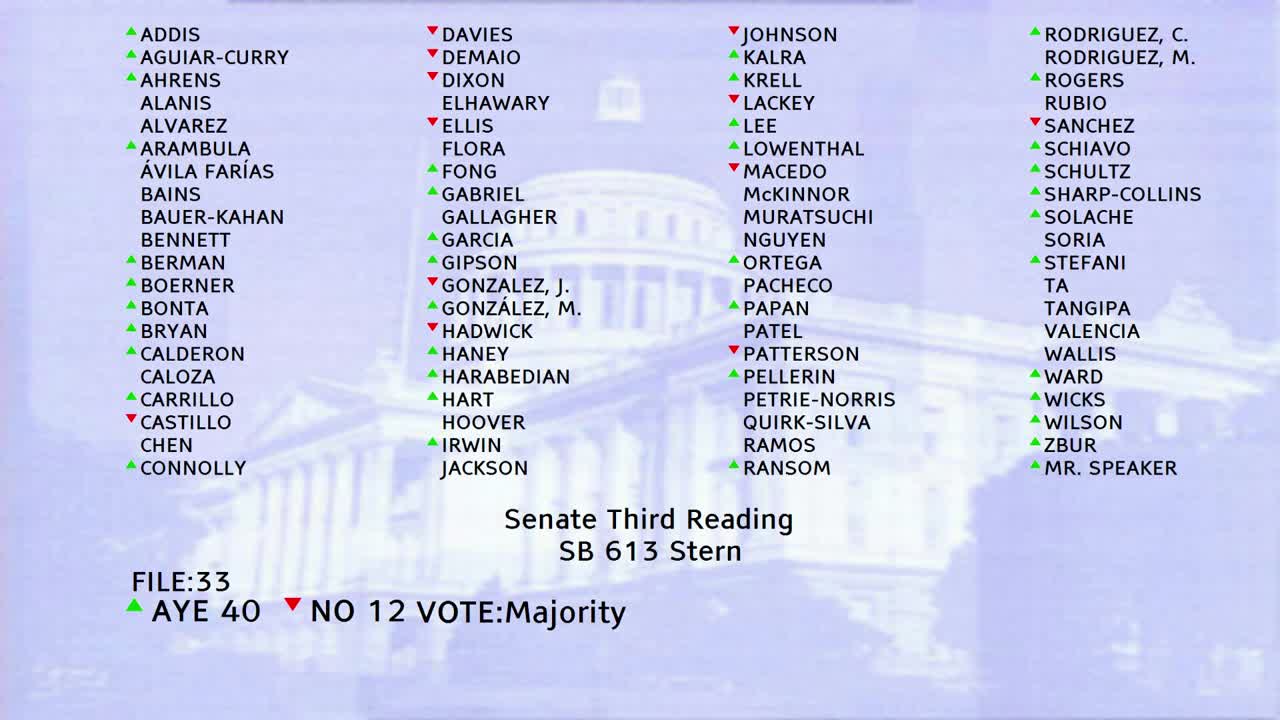
Bill Author

Bill Co-Author(s):