ACR 208: California Native American Day and the California Indian Cultural Awareness Conference.
- Session Year: 2025-2026
- House: Assembly
- Latest Version Date: 2026-08-10
Current Status:
Passed
(2026-08-10: Chaptered by Secretary of State - Res. Chapter 157, Statutes of 2026.)
Introduced
In Committee
Awaiting First Chamber Vote
Passed First Chamber
In Committee
Awaiting Second Chamber Vote
Passed Second Chamber
Enacted
This measure would recognize the importance of California Native American Day, celebrated this year on September 25, 2026, and the annual California Indian Cultural Awareness Conference, to the enhancement of awareness of California Indian culture.
This measure would recognize the importance of California Native American Day, celebrated this year on September 25, 2026, and the annual California Indian Cultural Awareness Conference, to the enhancement of awareness of California Indian culture.
This measure would recognize the importance of California Native American Day, celebrated this year on September 25, 2026, and the annual California Indian Cultural Awareness Conference, to the enhancement of awareness of California Indian culture.
WHEREAS, More Native Americans call California home and the state includes more federally recognized Indian tribes than any other state in the United States of America; and
WHEREAS, The cultural and governmental contributions of the Native people of California have shaped the course of the state throughout history; and
WHEREAS, California designates the fourth Friday of every September as Native American Day; and
WHEREAS, California Native American Day is celebrated in this state by tribes and communities across the state, and is a day for educators of California to teach factual California Indian history in schools; and
WHEREAS, California Indian tribes are committed to continued contribution to the educational curricula provided by the state and believe in providing new and improved educational resources about the varied cultural histories of, and governance models used by, California Native Americans; and
WHEREAS, One notable example of the preservation and teaching of that varied cultural history is Robert Levi, a Torres Martinez Desert Cahuilla Indian from the Torres Martinez Indian Reservation, who was instrumental in retaining and teaching Desert Cahuilla bird songs to connect all with ancient knowledge of the world and tell the story of how the ancestors came to the homelands; and
WHEREAS, Significant legislation has been passed in both houses and signed into law by Governor Gavin Newsom since 2018, such as Assembly Bill 2022 (2021), an act prohibiting the use of a racist and misogynistic slur for geographic features and place names in the State of California, and Assembly Bill 338 (2021), an act replacing a monument on the State Capitol grounds with a monument created with the input of local tribal nations; and
WHEREAS, Significant legislation has been passed to increase collaboration between tribes and local agencies, including Assembly Bill 1703 (2021), commonly referred to as the California Indian Education Act, encouraging local educational agencies to collaborate with tribes local to their area on Native American studies, Assembly Bill 1284 (2024), an act authorizing the Natural Resources Agency to enter into cogovernance and comanagement agreements with federally recognized tribes to manage shared natural resources, Assembly Bill 977 (2025), an act that requires the California State University system, in consultation with Native American tribes, to develop a policy for the purpose of reburial of Native American human remains, and Assembly Bill 1369 (2025), an act prohibiting schools from barring students from displaying traditional tribal regalia as part of their adornment in any school-related events and ceremonies; and
WHEREAS, Significant legislation has been passed to address the crisis of missing and murdered indigenous people, including Assembly Bill 1314 (2022), an act establishing the Feather Alert, a notification system for missing or murdered indigenous people; Assembly Bill 2108 (2024), an act refining the notification practices of the foster care system when youth go missing; and Assembly Bill 2348 (2024), an act making the process for requesting a Feather Alert much easier for families when loved ones go missing; and
WHEREAS, 2025 marked the third annual Missing and Murdered Indigenous People Candlelight Vigil on the Capitol grounds in recognition of the crisis that plagues the tribal community within this state and to remember those who have been lost; and
WHEREAS, In 2025, California held its second National Native American Heritage Month Parade at the Capitol Mall, celebrating the diverse cultures and people from the different tribal communities across California; and
WHEREAS, In 2025, California held its second California Indian Cultural Education Day at the Capitol grounds where students learned about tribal culture through active participation with California tribes; and
WHEREAS, This is the eighth California Native American Day since Governor Gavin Newsom issued an executive order apologizing for the historical wrongs tolerated, encouraged, subsidized, and committed by state actors against California Native Americans; and
WHEREAS, We can never undo the wrongs inflicted on the people who have lived on this land that we now call home, but we can work together to build bridges, tell the truth about Californias past, and begin to heal deep wounds; and
WHEREAS, The Governor has also called for a California Truth and Healing Council to hear testimony and clarify the historical record on the relationship between the state and California Native Americans; and
WHEREAS, The California Indian Cultural Awareness Conference will be held concurrently with California Native American Day and will assist educators by providing new educational resources regarding the rich and varied lives of the California Indian Nations; now, therefore, be it
Resolved by the Assembly of the State of California, the Senate thereof concurring, That the Legislature recognizes the importance of California Native American Day, celebrated this year on September 25, 2026, and the annual California Indian Cultural Awareness Conference, to the enhancement of awareness of California Indian culture; and be it further
Resolved, That the Chief Clerk of the Assembly transmit copies of this resolution to the author for appropriate distribution.
|
Date
|
Status
|
|---|---|
| Aug 10, 2026 | Chaptered by Secretary of State - Res. Chapter 157, Statutes of 2026. |
| Aug 10, 2026 | Enrolled and filed with the Secretary of State at 2 p.m. |
| Aug 3, 2026 | In Assembly. Ordered to Engrossing and Enrolling. |
| Aug 3, 2026 | Adopted and to Assembly. (Ayes 36. Noes 0. Page 5246.) |
| Aug 3, 2026 | Adopted and to Assembly. (Ayes 36. Noes 0.) |
| Aug 3, 2026 | In Senate. Held at Desk. |
| Aug 3, 2026 | Unanimous consent granted to take up without reference to file. |
| Aug 3, 2026 | Adopted and to Senate. |
| Aug 3, 2026 | Adopted and to Senate. (Page 6025.) |
| Aug 3, 2026 | Coauthors revised. |
| Jun 29, 2026 | From committee: Be adopted. Ordered to Third Reading. (Ayes 8. Noes 0.) (June 29). |
| May 26, 2026 | Referred to Com. on RLS. |
| May 19, 2026 | From printer. |
| May 18, 2026 | Introduced. To print. |
|
Date
|
Description
|
Location
|
Votes
|
|
|---|---|---|---|---|
| Aug 3, 2026 | W/O REF. TO FILE ACR208 Ramos By Limón | Senate Floor |
Passed |
|
| Jun 29, 2026 | Be adopted. To third reading. | Assembly Standing Committee on Rules |
Passed |
This list shows positions taken on this bill by organizations on the date displayed, which is linked to the original source.
Positions by individuals are not included.
SENATE RULES COMMITTEE Office of Senate Floor Analyses (916) 651-4171 | ACR 208 |
THIRD READING
Bill No: ACR 208
Author: Ramos (D)
Introduced: 5/18/26
Vote: 21
ASSEMBLY FLOOR: 8/3/26 – Roll call not available.
SUBJECT: California Native American Day and the California Indian Cultural Awareness Conference
SOURCE: Author
DIGEST:
This resolution recognizes the importance of California Native American Day, celebrated this year on September 25, 2026, and the annual California Indian Cultural Awareness Conference, to the enhancement of awareness of California Indian culture.
ANALYSIS: This resolution makes the following legislative findings:
- More Native Americans call California home and the state includes more federally recognized Indian tribes than any other state in the United States of America.
- California designates the fourth Friday of every September as Native American Day. California Native American Day is celebrated in this state by tribes and communities across the state, and is a day for educators of California to teach factual California Indian history in schools.
- California Indian tribes are committed to continued contribution to the educational curricula provided by the state and believe in providing new and improved educational resources about the varied cultural histories of, and governance models used by, California Native Americans.
- This is the eighth California Native American Day since Governor Gavin Newsom issued an executive order apologizing for the historical wrongs tolerated, encouraged, subsidized, and committed by state actors against California Native Americans.
- We can never undo the wrongs inflicted on the people who have lived on this land that we now call home, but we can work together to build bridges, tell the truth about California’s past, and begin to heal deep wounds.
This resolution recognizes the importance of California Native American Day, celebrated this year on September 25, 2026, and the annual California Indian Cultural Awareness Conference, to the enhancement of awareness of California Indian culture.
Related/Prior Legislation
ACR 102 (Ramos, Resolution Chapter 191, Statutes of 2025)
ACR 140 (Ramos, Resolution Chapter 166, Statutes of 2024)
ACR 17 (Ramos, Resolution Chapter 164, Statutes of 2023)
FISCAL EFFECT: Appropriation: No Fiscal Com.: No Local: No
SUPPORT: (Verified 8/3/26)
None received
OPPOSITION: (Verified 8/3/26)
None received
Prepared by: Hunter Flynn / SFA / (916) 651-4171
8/3/26 14:05:34
**** END ****
ASSEMBLY THIRD READING
ATR Bill Id:ACR 208
Author:(Ramos)
As Introduced Ver:May 18, 2026
Majority vote
SUMMARY
Recognizes the importance of California Native American Day, celebrated this year on September 25, 2026, and the annual California Indian Cultural Awareness Conference, to the enhancement of awareness of California Indian culture.
Major Provisions
- More Native Americans call California home and the state includes more federally recognized Indian tribes than any other state in the United States. The cultural and governmental contributions of the Native people of California have shaped the course of the state throughout history.
- California designates the fourth Friday of every September as Native American Day. California Native American Day is celebrated in this state by tribes and communities across the state and is a day for educators of California to teach factual California Indian history in schools.
- California Indian tribes are committed to continued contribution to the educational curricula provided by the state and believe in providing new and improved educational resources about the varied cultural histories of, and governance models used by, California Native Americans.
- This is the eighth California Native American Day since Governor Gavin Newsom issued an executive order apologizing for the historical wrongs tolerated, encouraged, subsidized, and committed by state actors against California Native Americans.
- Significant legislation signed into law since 2018, includes: Assembly Bill 338 (Ramos) Chapter 280, Statutes of 2021, an act replacing a monument on the State Capitol grounds with a monument created with the input of local tribal nations; Assembly Bill 1703 (Ramos) Chapter 477, Statutes of 2022, commonly referred to as the California Indian Education Act; Assembly Bill 1314 (Ramos) Chapter 476, Statutes of 2022, an act establishing the Feather Alert, a notification system for missing or murdered indigenous people; Assembly Bill 2022 (Ramos, Christina Garcia) Chapter 479, Statutes of 2022, an act prohibiting the use of a racist and misogynistic slur for geographic features and place names in the State of California; Assembly Bill 1284 (Ramos) Chapter 657, Statutes of 2024, an act authorizing the Natural Resources Agency to enter into co-governance and co-management agreements with federally recognized tribes to manage shared natural resources; Assembly Bill 2108 (Ramos) Chapter 660, Statutes of 2024, an act refining the notification practices of the foster care system when youth go missing; Assembly Bill 2348 (Ramos) Chapter 661, Statutes of 2024, an act making the process for requesting a Feather Alert much easier for families when loved ones go missing; Assembly Bill 977 (Ramos) Chapter 131, Statutes of 2025, an act that requires the California State University system, in consultation with Native American tribes, to develop a policy for the purpose of reburial of Native American human remains; and, Assembly Bill 1369 (Ramos) Chapter 133, Statutes of 2025, an act prohibiting schools from barring students from displaying traditional tribal regalia as part of their adornment in any school-related events and ceremonies.
- We can never undo the wrongs inflicted on the people who have lived on this land that we now call home, but we can work together to build bridges, tell the truth about California's past, and begin to heal deep wounds.
- The Governor has also called for a Truth and Healing Council to hear testimony and clarify the historical record on the relationship between the state and California Native Americans.
- The California Indian Cultural Awareness Conference will be held concurrently with California Native American Day, and will assist educators by providing new educational resources regarding the rich and varied lives of the California Indian Nations.
COMMENTS
According to the Author
ACR 208 celebrates California Native American Day, which will be observed on September 25 this year. This day honors the rich history, traditions, and cultures of California's First People. This resolution recognizes their lasting contributions and encourages all Californians to learn more about the original stewards of these lands we all call home.
Arguments in Support
None on file
Arguments in Opposition
None on file
FISCAL COMMENTS
No fiscal impact. This resolution is keyed non-fiscal by Legislative Counsel.
VOTES
ASM RULES: 8-0-1
YES: Pacheco, Dixon, Garcia, Mark González, Irwin, Ta, Michelle Rodriguez, Sanchez
ABS, ABST OR NV: Zbur
UPDATED
VERSION: May 18, 2026
CONSULTANT: Michael Erke / RLS. / (916) 319-2800 FN: 0003265
Date of Hearing: June 29, 2026
ASSEMBLY COMMITTEE ON RULES
Blanca Pacheco, Chair
ABPCA Bill Id:ACR 208 (
Author:Ramos) – As Introduced Ver:May 18, 2026
SUBJECT: California Native American Day and the California Indian Cultural Awareness Conference.
SUMMARY: Recognizes the importance of California Native American Day, celebrated this year on September 25, 2026, and the annual California Indian Cultural Awareness Conference, to the enhancement of awareness of California Indian culture. Specifically, this resolution makes the following legislative findings:
- More Native Americans call California home and the state includes more federally recognized Indian tribes than any other state in the United States. The cultural and governmental contributions of the Native people of California have shaped the course of the state throughout history.
- California designates the fourth Friday of every September as Native American Day. California Native American Day is celebrated in this state by tribes and communities across the state and is a day for educators of California to teach factual California Indian history in schools.
- California Indian tribes are committed to continued contribution to the educational curricula provided by the state and believe in providing new and improved educational resources about the varied cultural histories of, and governance models used by, California Native Americans.
- This is the eighth California Native American Day since Governor Gavin Newsom issued an executive order apologizing for the historical wrongs tolerated, encouraged, subsidized, and committed by state actors against California Native Americans.
- Significant legislation signed into law since 2018, includes: Assembly Bill 338 (2021), an act replacing a monument on the State Capitol grounds with a monument created with the input of local tribal nations; Assembly Bill 1703 (2021), commonly referred to as the California Indian Education Act; Assembly Bill 1314 (2022), an act establishing the Feather Alert, a notification system for missing or murdered indigenous people; Assembly Bill 2022 (2022), an act prohibiting the use of a racist and misogynistic slur for geographic features and place names in the State of California; Assembly Bill 1284 (2024), an act authorizing the Natural Resources Agency to enter into co-governance and co-management agreements with federally recognized tribes to manage shared natural resources; Assembly Bill 2108 (2024), an act refining the notification practices of the foster care system when youth go missing; Assembly Bill 2348 (2024), an act making the process for requesting a Feather Alert much easier for families when loved ones go missing; Assembly Bill 977 (2025), an act that requires the California State University system, in consultation with Native American tribes, to develop a policy for the purpose of reburial of Native American human remains; and, Assembly Bill 1369 (2025), an act prohibiting schools from barring students from displaying traditional tribal regalia as part of their adornment in any school-related events and ceremonies.
- We can never undo the wrongs inflicted on the people who have lived on this land that we now call home, but we can work together to build bridges, tell the truth about California’s past, and begin to heal deep wounds.
- The Governor has also called for a Truth and Healing Council to hear testimony and clarify the historical record on the relationship between the state and California Native Americans.
- The California Indian Cultural Awareness Conference will be held concurrently with California Native American Day, and will assist educators by providing new educational resources regarding the rich and varied lives of the California Indian Nations.
FISCAL EFFECT: This resolution is keyed non-fiscal by Legislative Counsel.
REGISTERED SUPPORT / OPPOSITION:
Support
None on file
Opposition
None on file
Analysis Prepared by: Michael Erke / RLS. / (916) 319-2800
Discussed in Hearing
View Older Hearings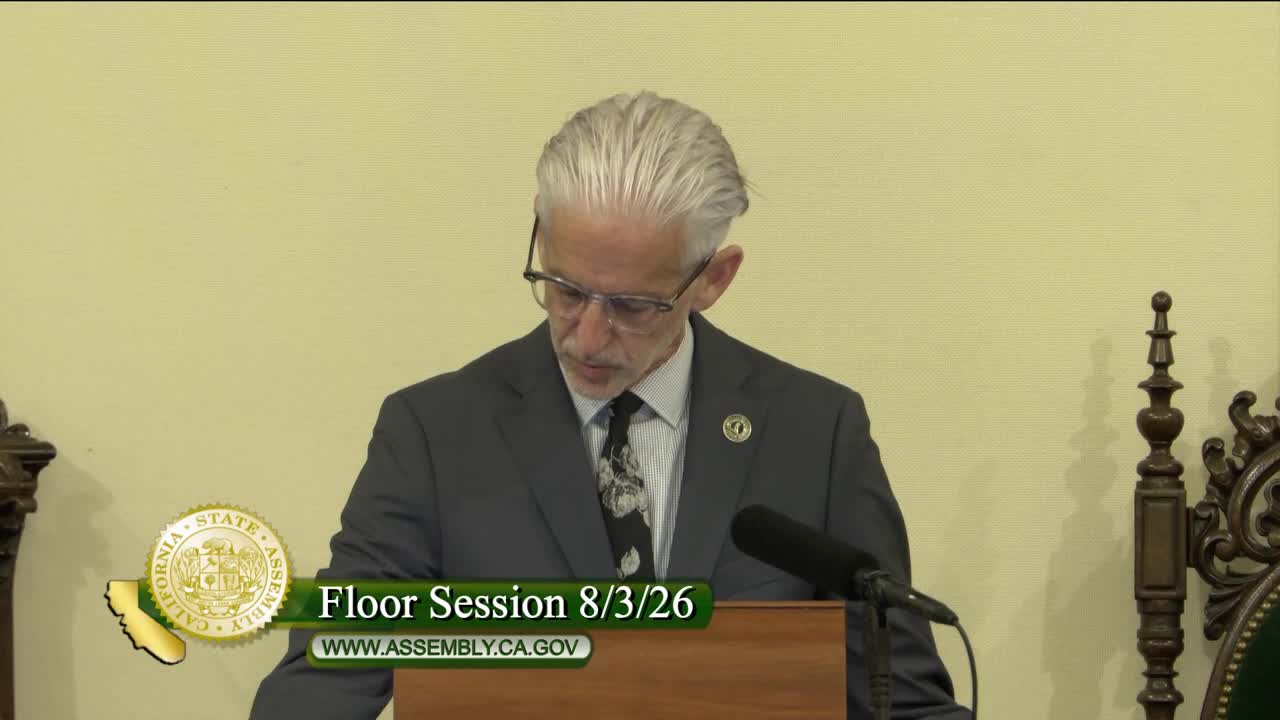
Bill Author

Bill Co-Author(s):