AJR 9: National parks: federal funding.
- Session Year: 2025-2026
- House: Assembly
- Latest Version Date: 2026-08-25
Current Status:
Passed
(2026-08-25: Chaptered by Secretary of State - Res. Chapter 209, Statutes of 2026.)
Introduced
In Committee
Awaiting First Chamber Vote
Passed First Chamber
In Committee
Awaiting Second Chamber Vote
Passed Second Chamber
Enacted
This measure would urge the President of the United States and Congress of the United States to immediately restore full and consistent funding and staffing for the National Park Service.
This measure would urge the President of the United States and Congress of the United States to immediately restore full and consistent funding and staffing for the National Park Service.
This measure would urge the President of the United States and Congress of the United States to immediately restore full and consistent funding and staffing for the National Park Service.
This measure would urge the President of the United States and Congress of the United States to immediately restore full and consistent funding and staffing for the National Park Service.
This measure would urge the President of the United States and Congress of the United States to immediately restore full and consistent funding and staffing for the National Park Service.
WHEREAS, In 1864, Abraham Lincoln signed the Yosemite Grant Act, setting aside parkland in California for public use and preservation; and
WHEREAS, California is home to nine of the nations most iconic national parks: Channel Islands, Death Valley, Joshua Tree, Kings Canyon, Lassen Volcanic, Pinnacles, Redwood, Sequoia, and Yosemite, which preserve the states unique natural beauty, biodiversity, and cultural heritage; and
WHEREAS, The National Park Service manages national historical parks, national monuments, national seashores, and national recreation areas throughout California, all constituting units of the National Park System and enjoyed by millions of visitors; and
WHEREAS, National park units in California attract millions of visitors annually, contributing significantly to the states economy and fostering appreciation for outdoor recreation and environmental stewardship; and
WHEREAS, In 2023, 36,200,000 park visitors spent an estimated $3,200,000,000 in local gateway regions while visiting National Park Service lands in California, supporting a total of 39,700 jobs, $2,000,000,000 in labor income, and $5,100,000,000 in economic output in the California economy; and
WHEREAS, Recent federal personnel decisions have included the firing of over 1,000 National Park Service employees, including park rangers, a hiring freeze on vacant positions, and the planned closure of park offices, significantly diminishing critical services and operations; and
WHEREAS, These decisions have led to the reduction of park hours, the closure of essential facilities, and the inability to adequately address resource management, wildfire prevention, and visitor safety, as demonstrated by camping reservations being delayed in Yosemite due to staffing shortages; and
WHEREAS, The federal administrations reduction in force initiatives could lead to additional cuts that may result in a 30-percent total reduction in funding for National Park Service staffing; and
WHEREAS, The federal administration and Congress have recently proposed transferring public lands, including lands within the National Park System, out of federal ownership; and
WHEREAS, Fully funding and staffing the National Park Service is essential to restoring park operations, addressing the maintenance backlog, and ensuring the long-term sustainability and accessibility of national parks; and
WHEREAS, The Public Lands in Public Hands Act (H.R. No. 718, 119th Cong., 1st Sess. (2025).) would prohibit the Secretary of the Interior and the Secretary of Agriculture from transferring certain federal lands; and
WHEREAS, The Public Lands Workforce Stability Act (H.R. No. 8523, 119th Cong., 2d Sess. (2026).) would prohibit any reduction in force or involuntary separation at the United States Department of the Interior and the United States Forest Service; and
WHEREAS, Investing in national parks aligns with Californias leadership in sustainability, conservation, and innovation, serving as a model for environmental responsibility nationwide; now, therefore, be it
Resolved by the Assembly and the Senate of the State of California, jointly, That the Legislature urges the President of the United States and Congress of the United States to immediately restore full and consistent funding and staffing for the National Park Service, including the restoration of positions to protect and enhance the nations irreplaceable natural and cultural heritage; and be it further
Resolved, That the Legislature urges the California delegation in the Congress of the United States to cosponsor the Public Lands in Public Hands Act (H.R. No. 718, 119th Cong., 1st Sess. (2025).) and the Public Lands Workforce Stability Act (H.R. No. 8523, 119th Cong., 2d Sess. (2026).); and be it further
Resolved, That the Legislature supports the rehiring of park rangers and staff, enhancement of visitor services, and the continued preservation and protection of Californias and the nations treasured landscapes; and be it further
Resolved, That the Chief Clerk of the Assembly transmit copies of this resolution to the President of the United States, the Vice President of the United States, the Speaker of the United States House of Representatives, the Majority Leader of the United States Senate, each Senator and Representative from California in the Congress of the United States, and to the author for appropriate distribution.
WHEREAS, In 1864, Abraham Lincoln signed the Yosemite Grant Act, setting aside parkland in California for public use and preservation; and
WHEREAS, California is home to nine of the nations most iconic national parks: Channel Islands, Death Valley, Joshua Tree, Kings Canyon, Lassen Volcanic, Pinnacles, Redwood, Sequoia, and Yosemite, which preserve the states unique natural beauty, biodiversity, and cultural heritage; and
WHEREAS, The National Park Service manages national historical parks, national monuments, national seashores, and national recreation areas throughout California, all constituting units of the National Park System and enjoyed by millions of visitors; and
WHEREAS, National park units in California attract millions of visitors annually, contributing significantly to the states economy and fostering appreciation for outdoor recreation and environmental stewardship; and
WHEREAS, In 2023, 36,200,000 park visitors spent an estimated $3,200,000,000 in local gateway regions while visiting National Park Service lands in California, supporting a total of 39,700 jobs, $2,000,000,000 in labor income, and $5,100,000,000 in economic output in the California economy; and
WHEREAS, Recent federal personnel decisions have included the firing of over 1,000 National Park Service employees, including park rangers, a hiring freeze on vacant positions, and the planned closure of park offices, significantly diminishing critical services and operations; and
WHEREAS, These decisions have led to the reduction of park hours, the closure of essential facilities, and the inability to adequately address resource management, wildfire prevention, and visitor safety, as demonstrated by camping reservations being delayed in Yosemite due to staffing shortages; and
WHEREAS, The federal administrations proposed reduction in force initiative initiatives could lead to additional cuts that may result in a 30-percent total reduction in funding for National Park Service staffing; and
WHEREAS, The federal administration and Congress have recently proposed transferring public lands, including lands within the National Park System, out of federal ownership; and
WHEREAS, Fully funding and staffing the National Park Service is essential to restoring park operations, addressing the maintenance backlog, and ensuring the long-term sustainability and accessibility of national parks; and
WHEREAS, The Public Lands in Public Hands Act (H.R. No. 718, 119th Cong., 1st Sess. (2025).) would prohibit the Secretary of the Interior and the Secretary of Agriculture from transferring certain federal lands; and
WHEREAS, The Public Lands Workforce Stability Act (H.R. No. 8523, 119th Cong., 2d Sess. (2026).) would prohibit any reduction in force or involuntary separation at the United States Department of the Interior and the United States Forest Service; and
WHEREAS, Investing in national parks aligns with Californias leadership in sustainability, conservation, and innovation, serving as a model for environmental responsibility nationwide; now, therefore, be it
Resolved by the Assembly and the Senate of the State of California, jointly, That the Legislature urges the President of the United States and Congress of the United States to immediately restore full and consistent funding and staffing for the National Park Service, including the restoration of positions to protect and enhance the nations irreplaceable natural and cultural heritage; and be it further
Resolved, That the Legislature urges the California delegation in the Congress of the United States to cosponsor the Public Lands in Public Hands Act (H.R. No. 718, 119th Cong., 1st Sess. (2025).) and the Public Lands Workforce Stability Act (H.R. No. 8523, 119th Cong., 2d Sess. (2026).); and be it further
Resolved, That the Legislature supports the rehiring of park rangers and staff, enhancement of visitor services, and the continued preservation and protection of Californias and the nations treasured landscapes; and be it further
Resolved, That the Chief Clerk of the Assembly transmit copies of this resolution to the President of the United States, the Vice President of the United States, the Speaker of the United States House of Representatives, the Majority Leader of the United States Senate, each Senator and Representative from California in the Congress of the United States, and to the author for appropriate distribution.
WHEREAS, In 1864, Abraham Lincoln signed the Yosemite Grant Act, setting aside parkland in California for public use and preservation; and
WHEREAS, California is home to nine of the nations most iconic national parks: Channel Islands, Death Valley, Joshua Tree, Kings Canyon, Lassen Volcanic, Pinnacles, Redwood, Sequoia, and Yosemite, which preserve the states unique natural beauty, biodiversity, and cultural heritage; and
WHEREAS, The National Park Service manages national historical parks, national monuments, national seashores, and national recreation areas throughout California, all constituting units of the National Park System and enjoyed by millions of visitors; and
WHEREAS, National park sites units in California attract millions of visitors annually, contributing significantly to the states economy and fostering appreciation for outdoor recreation and environmental stewardship; and
WHEREAS, In 2023, 36,200,000 park visitors spent an estimated $3,200,000,000 in local gateway regions while visiting National Park Service lands in California, supporting a total of 39,700 jobs, $2,000,000,000 in labor income, and $5,100,000,000 in economic output in the California economy; and
WHEREAS, Recent federal personnel decisions have included the firing of over 1,000 National Park Service employees, including park rangers, a hiring freeze on vacant positions, and the planned closure of park offices, significantly diminishing critical services and operations; and
WHEREAS, These decisions have led to the reduction of park hours, the closure of essential facilities, and the inability to adequately address resource management, wildfire prevention, and visitor safety, as demonstrated by camping reservations being suspended delayed in Yosemite due to staffing shortages; and
WHEREAS, The federal administrations proposed reduction in force initiative could lead to a 30-percent cut in additional cuts that may result in a 30-percent total reduction in funding for National Park Service staffing; and
WHEREAS, Fully funding and staffing the National Park Service is essential to reversing these challenges, restoring park operations, addressing the maintenance backlog, and ensuring the long-term sustainability and accessibility of national parks; and
WHEREAS, Investing in national parks aligns with Californias leadership in sustainability, conservation, and innovation, serving as a model for environmental responsibility nationwide; now, therefore, be it
Resolved by the Assembly and the Senate of the State of California, jointly, That the Legislature urges the President of the United States and Congress of the United States to immediately restore full and consistent funding and staffing for the National Park Service, including the restoration of positions to protect and enhance the nations irreplaceable natural and cultural heritage; and be it further
Resolved, That the Legislature supports the rehiring of park rangers and staff, enhancement of visitor services, and the continued preservation and protection of Californias and the nations treasured landscapes; and be it further
Resolved, That the Chief Clerk of the Assembly transmit copies of this resolution to the President of the United States, the Vice President of the United States, the Speaker of the United States House of Representatives, the Majority Leader of the United States Senate, each Senator and Representative from California in the Congress of the United States, and to the author for appropriate distribution.
WHEREAS, In 1864, Abraham Lincoln signed the Yosemite Grant Act, setting aside parkland in California for public use and preservation; and
WHEREAS, California is home to nine of the nations most iconic national parks: Channel Islands, Death Valley, Joshua Tree, Kings Canyon, Lassen Volcanic, Pinnacles, Redwood, Sequoia, and Yosemite, which preserve the states unique natural beauty, biodiversity, and cultural heritage; and
WHEREAS, The National Park Service manages historical parks, national monuments, national seashores, and recreation areas throughout California, all constituting units of the National Park System and enjoyed by millions of visitors; and
WHEREAS, National park sites in California attract millions of visitors annually, contributing significantly to the states economy and fostering appreciation for outdoor recreation and environmental stewardship; and
WHEREAS, In 2023, 36,200,000 park visitors spent an estimated $3,200,000,000 in local gateway regions while visiting National Park Service lands in California, supporting a total of 39,700 jobs, $2,000,000,000 in labor income, and $5,100,000,000 in economic output in the California economy; and
WHEREAS, Recent federal personnel decisions have included the firing of over 1,000 National Park Service employees, including park rangers, a hiring freeze on vacant positions, and the planned closure of park offices, significantly diminishing critical services and operations; and
WHEREAS, These decisions have led to the reduction of park hours, the closure of essential facilities, and the inability to adequately address resource management, wildfire prevention, and visitor safety, as demonstrated by camping reservations being suspended in Yosemite due to staffing shortages; and
WHEREAS, The federal administrations proposed reduction in force initiative could lead to a 30-percent cut in National Park Service staffing; and
WHEREAS, Fully funding and staffing the National Park Service is essential to reversing these challenges, addressing the maintenance backlog, and ensuring the long-term sustainability and accessibility of national parks; and
WHEREAS, Investing in national parks aligns with Californias leadership in sustainability, conservation, and innovation, serving as a model for environmental responsibility nationwide; now, therefore, be it
Resolved by the Assembly and the Senate of the State of California, jointly, That the Legislature urges the President of the United States and Congress of the United States to immediately restore full and consistent funding and staffing for the National Park Service, including the restoration of positions to protect and enhance the nations irreplaceable natural and cultural heritage; and be it further
Resolved, That the Legislature supports the rehiring of park rangers and staff, enhancement of visitor services, and the continued preservation and protection of Californias and the nations treasured landscapes; and be it further
Resolved, That the Chief Clerk of the Assembly transmit copies of this resolution to the President of the United States, the Vice President of the United States, the Speaker of the United States House of Representatives, the Majority Leader of the United States Senate, each Senator and Representative from California in the Congress of the United States, and to the author for appropriate distribution.
|
Date
|
Status
|
|---|---|
| Aug 25, 2026 | Chaptered by Secretary of State - Res. Chapter 209, Statutes of 2026. |
| Aug 25, 2026 | Enrolled and filed with the Secretary of State at 3 p.m. |
| Aug 19, 2026 | Senate amendments concurred in. To Engrossing and Enrolling. (Ayes 78. Noes 0.). |
| Aug 19, 2026 | Senate amendments concurred in. To Engrossing and Enrolling. (Ayes 78. Noes 0. Page 6243.). |
| Aug 13, 2026 | In Assembly. Concurrence in Senate amendments pending. |
| Aug 13, 2026 | Adopted and to Assembly. (Ayes 35. Noes 0.) |
| Aug 13, 2026 | Adopted and to Assembly. (Ayes 35. Noes 0. Page 5355.) |
| Aug 10, 2026 | Read second time. Ordered to third reading. |
| Aug 6, 2026 | Read second time and amended. Ordered returned to second reading. |
| Aug 6, 2026 | Ordered to second reading. |
| Aug 6, 2026 | From inactive file. |
| Sep 13, 2025 | Ordered to inactive file at the request of Senator Grayson. |
| Jul 16, 2025 | From committee: Be adopted. Ordered to Third Reading. (Ayes 7. Noes 0.) (July 16). |
| Jul 9, 2025 | Re-referred to Com. on N.R. & W. |
| Jul 1, 2025 | In Senate. To Com. on RLS. |
| Jun 30, 2025 | Coauthors revised. |
| Jun 30, 2025 | Adopted and to Senate. (Ayes 76. Noes 0. Page 2367.) |
| Jun 19, 2025 | Ordered to third reading. |
| Jun 19, 2025 | From Consent Calendar. |
| Jun 17, 2025 | From committee: Be adopted. To Consent Calendar. (Ayes 10. Noes 0.) (June 17). |
| Jun 13, 2025 | Re-referred to Com. on W. P., & W. |
| Jun 12, 2025 | From committee chair, with author's amendments: Amend, and re-refer to Com. on W. P., & W. Amended. |
| Apr 28, 2025 | Referred to Com. on W. P., & W. |
| Apr 4, 2025 | From printer. |
| Apr 3, 2025 | Introduced. To print. |
|
Date
|
Description
|
Location
|
Votes
|
|
|---|---|---|---|---|
| Aug 19, 2026 | AJR 9 Wallis Concurrence in Senate Amendments | Assembly Floor |
Passed |
|
| Aug 13, 2026 | Assembly 3rd Reading AJR9 Wallis et al. By Laird | Senate Floor |
Passed |
|
| Jul 16, 2025 | Be adopted. Ordered to third reading | Senate Standing Committee on Natural Resources and Water |
Passed |
|
| Jun 30, 2025 | AJR 9 Wallis Assembly Third Reading | Assembly Floor |
Passed |
|
| Jun 17, 2025 | Be adopted. To Consent Calendar. | Assembly Standing Committee on Water, Parks, and Wildlife |
Passed |
This list shows positions taken on this bill by organizations on the date displayed, which is linked to the original source.
Positions by individuals are not included.
CONCURRENCE IN SENATE AMENDMENTS
CSA1 Bill Id:AJR 9
Author:(Wallis)
As Amended Ver:August 6, 2026
Majority vote
SUMMARY
Urges the President and Congress to immediately restore full and consistent funding and staffing for the National Park Service (NPS) and makes findings regarding the iconic nature of the state's national parks, the popularity of these parks, and the impact of reducing the NPS workforce on the local economy, NPS employees, and park visitors.
Senate Amendments
- Add additional clauses regarding the proposal of the federal administration and of Congress to transfer public lands out of federal ownership and the protections provided by the Public Lands in Public Hands Act and the Public Lands Workforce Stability Act.
- Urge the California delegation in the Congress of the United States to cosponsor the Public Lands in Public Hands Act and the Public Lands Workforce Stability Act.
COMMENTS
"National parks are the best idea we ever had. Absolutely American, absolutely democratic, they reflect us at our best rather than our worst."
– Wallace Stegner, novelist, environmentalist, historian
California is home to more national parks and more park units (e.g., National Monuments, National Historic Sites, National Recreation Areas, National Preserves) than any other state, and includes some of the nation's most iconic national parks: Channel Islands, Death Valley, Joshua Tree, Kings Canyon, Lassen Volcanic, Pinnacles, Redwood, Sequoia, and Yosemite. Yosemite and Joshua Tree are consistently some of the most visited national parks nationwide. Although not a national park, Golden Gate National Recreation Area is one of the most visited NPS properties; in 2024, it received 17,187,508 visitors—more than any other NPS property in the nation. Because of the bounty of natural beauty, national parks in California also generate more economic output, across all categories (i.e., visitor spending, jobs, labor income, and value added) than any other state, according to the 2023 NPS Visitor Spending Effects Report.
On January 20, 2025, President Trump ordered a freeze on hiring federal employees (which has recently been extended through July 15, 2025). Although this hiring freeze later exempted 5,000 seasonal employees (which was later extended by memo to 7,700 employees), 1,000 NPS employees were fired. Although federal judges in California and Maryland ordered the administration to reinstate more than 16,000 probationary employees across six agencies, including the Interior, the U.S. Supreme Court swiftly blocked the ruling.
Despite this uncertainty, the Secretary of the Interior, Doug Burgum, ordered on April 3, 2025, that all national parks and national historic sites to remain open "for the benefit and enjoyment of the American people and to ensure that [NPS] will provide the best customer service experience for all visitors" unless a closure or reduction in hours is approved by the NPS director and assistant secretary for Fish and Wildlife and Parks. On April 4, 2025 (one day after the order to remain open), employees across the Department of the Interior were offered buyouts or early retirement. In addition, the Trump Administration has reportedly asked the NPS, among other agencies, to develop a plan for a 30% reduction in payroll.
All of this is expected to leave national parks understaffed. The National Park Conservation Association notes that, "In just over three months, the Trump administration has pushed out nearly 13% of the National Park Service's workforce, triggering a full-blown staffing crisis." National parks across the country have already altered available programming and reduced park unit accessibility in response to this hiring whiplash. Additionally, there are concerns that the lack of NPS staffing will result in degraded natural resources. National park units have already implemented many staff-saving measures, including: the delay of Yosemite's entrance reservation system, the discontinuation of all ranger tours at Sequoia and Kings Canyon National Parks, and the cancellation of guided cave tours at Carlsbad Caverns.
On May 2, 2025, the Trump Administration released its budget plan for 2026, which recommends reducing the NPS budget by over $1 billion, including reducing the operations budget by $900 million and the construction budget by $73 million.
According to the Author
"[This resolution] calls for the urgent restoration of full and consistent funding for [NPS] by the federal government. California's national parks are more than scenic landscapes; they are vital economic engines, historical treasures, and environmental sanctuaries that enrich the lives of millions. From Joshua Tree National Park to Yosemite, these parks contribute billions to our economy, support thousands of jobs, and promote conservation, recreation, and education.
Yet, recent federal funding cuts, staffing reductions, and hiring freezes have severely undermined park operations, limiting access, endangering visitor safety, and delaying critical maintenance. These challenges threaten not only the integrity of our parks but also the communities that rely on them for economic stability.
By urging federal action, [this resolution] reaffirms California's commitment to safeguarding these cherished natural spaces. It calls upon Congress and the President to make national park funding a priority, ensuring that these public lands remain accessible, well-maintained, and properly staffed. Protecting our parks is an investment in our future—one that upholds environmental stewardship, supports local economies, and preserves the legacy of America's great outdoors for generations to come."
Arguments in Support
None on file.
Arguments in Opposition
None on file.
FISCAL COMMENTS
This bill is keyed non-fiscal and has no fiscal impact.
VOTES:
ASM WATER, PARKS, AND WILDLIFE: 10-0-3
YES: Papan, Jeff Gonzalez, Bains, Bennett, Boerner, Caloza, Hart, Celeste Rodriguez, Rogers, Tangipa
ABS, ABST OR NV: Alvarez, Ávila Farías, Macedo
ASSEMBLY FLOOR: 76-0-3
YES: Addis, Aguiar-Curry, Ahrens, Alanis, Alvarez, Arambula, Ávila Farías, Bains, Bauer-Kahan, Bennett, Berman, Boerner, Bonta, Bryan, Calderon, Caloza, Carrillo, Castillo, Chen, Connolly, Davies, DeMaio, Dixon, Elhawary, Flora, Fong, Gabriel, Gallagher, Garcia, Gipson, Jeff Gonzalez, Mark González, Hadwick, Haney, Harabedian, Hart, Hoover, Irwin, Jackson, Kalra, Krell, Lackey, Lee, Lowenthal, Macedo, McKinnor, Muratsuchi, Nguyen, Pacheco, Papan, Patel, Patterson, Pellerin, Petrie-Norris, Ramos, Ransom, Celeste Rodriguez, Michelle Rodriguez, Rogers, Blanca Rubio, Sanchez, Schiavo, Schultz, Sharp-Collins, Solache, Soria, Stefani, Ta, Tangipa, Valencia, Wallis, Ward, Wicks, Wilson, Zbur, Rivas
ABS, ABST OR NV: Ellis, Ortega, Quirk-Silva
SENATE FLOOR: 36-0-4
YES: Allen, Archuleta, Arreguín, Ashby, Blakespear, Cabaldon, Caballero, Cervantes, Choi, Cortese, Dahle, Durazo, Gonzalez, Grayson, Grove, Hurtado, Jones, Laird, Limón, McGuire, McNerney, Menjivar, Niello, Ochoa Bogh, Padilla, Reyes, Richardson, Rubio, Seyarto, Smallwood-Cuevas, Stern, Strickland, Umberg, Valladares, Wahab, Wiener
ABS, ABST OR NV: Alvarado-Gil, Becker, Pérez, Weber Pierson
UPDATED
VERSION: August 6, 2026
CONSULTANT: Stephanie Mitchell / W., P., & W. / (916) 319-2096 FN: 0003644
SENATE RULES COMMITTEE Office of Senate Floor Analyses (916) 651-1520 Fax: (916) 327-4478 | AJR 9 |
THIRD READING
Bill No: AJR 9
Author: Wallis (R), et al.
Amended: 8/6/26 in Senate
Vote: 21
SENATE NATURAL RES. & WATER COMMITTEE: 7-0, 7/16/25
AYES: Limón, Seyarto, Allen, Grove, Hurtado, Laird, Stern
ASSEMBLY FLOOR: 76-0, 6/30/25 - See last page for vote
SUBJECT: National parks: federal funding
SOURCE: Author
DIGEST:
This resolution urges the President and Congress to restore full and consistent funding and staffing for the National Park Service and support two specific pieces of legislation. It also makes findings regarding the iconic nature of the state’s national parks, the popularity of these parks, and the impact reducing the National Park Service workforce will have on the local economy, National Park Service employees, and park visitors.
Senate floor amendments of 8/6/26 urge California’s congressional delegation to support the Public Lands in Public Hands Act (H.R. No. 718, 119th Cong., 1st Sess. (2025).) and the Public Lands Workforce Stability Act (H.R. No. 8523,
119th Cong., 2d Sess. (2026).).
ANALYSIS:
Existing law:
- Provides the purpose of national parks is to conserve and to provide for the enjoyment of the scenery, natural and historic objects, and wildlife in the National Park System (System) in such manner and by such means as will leave them unimpaired for the enjoyment of future generations (54 United States Code § 100101).
- Declares that national parks, though distinct in character, are united through their interrelated purposes and resources into one System as cumulative expressions of a single national heritage.
- Declares that individually and collectively, national parks derive increased national dignity and recognition of their superb environmental quality through their inclusion, in one System, preserved and managed for the benefit and inspiration of all the people of the United States.
- Reaffirms that the protection, management, and administration of the System shall be conducted in light of the high public value and integrity of the System and shall not be exercised in derogation of the values and purposes for which the System has been established, except as directly and specifically provided by Congress.
- Declares that national parks, though distinct in character, are united through their interrelated purposes and resources into one System as cumulative expressions of a single national heritage.
- Declares it is a national policy to preserve for public use historic sites, buildings, and objects of national significance for the inspiration and benefit of the people of the United States (54 United States Code §320101).
This resolution:
- Resolves that the Legislature urges the President of the United States and Congress of the United States to immediately restore full and consistent funding and staffing for the National Park Service, including the restoration of positions to protect and enhance the nation’s irreplaceable natural and cultural heritage;
- Resolves that the Legislature supports the rehiring of park rangers and staff, enhancement of visitor services, and the continued preservation and protection of California’s and the nation’s treasured landscapes;
- Urges members of California’s congressional delegation to co-sponsor the Public Lands in Public Hands Act (H.R. No. 718, 119th Cong., 1st Sess. (2025).) and the Public Lands Workforce Stability Act (H.R. No. 8523, 119th Cong., 2d Sess. (2026).); and
- Resolves that the Chief Clerk of the Assembly transmit copies of the resolution to the President of the United States, the Vice President of the United States, the Speaker of the United States House of Representatives, the Majority Leader of the United States Senate, each Senator and Representative from California in the Congress of the United States, and to the author for appropriate distribution.
Background
National Parks. In 1916, President Woodrow Wilson signed the National Park System Organic Act (Organic Act) which established National Park Service (NPS) under the Department of the Interior in law. The Organic Act provided leadership and organization to operate the 14 national parks and 21 national monuments already under the supervision of the Department of Interior. Notably, the Organic Act declares that national parks be “preserved and managed for the benefit and inspiration of all the people of the United States.”
The mission of NPS is “to conserve the scenery and the natural and historic objects and the wildlife therein and to provide for the enjoyment of the same in such manner and by such means as will leave them unimpaired for the enjoyment of future generations.”
Ten years earlier, President Theodore Roosevelt had signed the Antiquities Act, which grants the president the authority to proclaim and reserve historic landmarks and structures as “national monuments.” Nearly a quarter of NPS park units originated in whole or in part from the Antiquities Act.
National parks in California. California is home to more national parks and more park units (e.g., National Monuments, National Historic Sites, National Recreation Areas, National Preserves, National Seashores) than any other state, and includes some of the nation’s most iconic national parks: Channel Islands, Death Valley, Joshua Tree, Lassen Volcanic, Pinnacles, Redwood, Sequoia and Kings Canyon, and Yosemite. Because of the bounty of natural beauty, national parks in California also generate more economic output, across all categories (i.e., visitor spending, jobs, labor income, and value added) than any other state, according to the 2023 NPS Visitor Spending Effects Report.
The first 100 days and beyond. On January 20, 2025, President Trump ordered a freeze on hiring federal employees (which was later extended through October 15, 2025). Although this hiring freeze later exempted 5,000 seasonal employees (which was later extended by memo to 7,700 employees), 1,000 NPS employees were fired. Although federal judges in California and Maryland ordered the administration to reinstate more than 16,000 probationary employees across six agencies, including the Department of the Interior, the U.S. Supreme Court blocked the ruling.
Despite this uncertainty, the Secretary of the Interior, Doug Burgum, ordered on April 3, 2025, that “to ensure visitor access and satisfaction, any closures or reductions to operating hours, seasons, or any visitor services (including trails and campgrounds), in whole or in part, must be reviewed by the NPS Director and the Assistant Secretary for Fish and Wildlife and Parks prior to any reduction action by the individual park units.” On April 4, 2025 (one day after the order to remain open), employees across the Department of the Interior were offered buyouts or early retirement.
All of this is expected to leave national parks understaffed. The National Park Conservation Association notes that, “In just over three months, the Trump administration has pushed out nearly 13% of the National Park Service’s workforce, triggering a full-blown staffing crisis.” National parks across the country have already altered available programming and reduced park accessibility in response to the reductions. Many people and groups are also concerned the lack of NPS staffing will result in degraded natural resources. National park units have already implemented many staff-saving measures, including: delaying Yosemite’s entrance reservation system, discontinuing all ranger tours at Sequoia and Kings Canyon National Parks, and cancelling guided cave tours at Carlsbad Caverns, just to name a few.
On July 3, 2025, the House of Representatives approved H.R. 1, which rescinded $267 million of previously committed funding to support conservation and resilience in parks and on federal lands and to hire NPS employees.
That same day, President Trump signed an Executive Order increasing fees for foreign tourists visiting national parks.
FISCAL EFFECT: Appropriation: No Fiscal Com.: No Local: No
SUPPORT: (Verified 8/5/26)
None received
OPPOSITION: (Verified 8/5/26)
None received
ARGUMENTS IN SUPPORT: According to the author, “Assembly Joint Resolution 9 calls for the urgent restoration of full and consistent funding for the National Park Service by the federal government. California’s national parks are more than scenic landscapes; they are vital economic engines, historical treasures, and environmental sanctuaries that enrich the lives of millions. From Joshua Tree National Park to Yosemite, these parks contribute billions to our economy, support thousands of jobs, and promote conservation, recreation, and education.
“Yet, recent federal funding cuts, staffing reductions, and hiring freezes have severely undermined park operations, limiting access, endangering visitor safety, and delaying critical maintenance. These challenges threaten not only the integrity of our parks but also the communities that rely on them for economic stability.
“By urging federal action, AJR 9 reaffirms California’s commitment to safeguarding these cherished natural spaces. It calls upon Congress and the President to make national park funding a priority, ensuring that these public lands remain accessible, well-maintained, and properly staffed. Protecting our parks is an investment in our future—one that upholds environmental stewardship, supports local economies, and preserves the legacy of America’s great outdoors for generations to come.”
ASSEMBLY FLOOR: 76-0, 6/30/25
AYES: Addis, Aguiar-Curry, Ahrens, Alanis, Alvarez, Arambula, Ávila Farías, Bains, Bauer-Kahan, Bennett, Berman, Boerner, Bonta, Bryan, Calderon, Caloza, Carrillo, Castillo, Chen, Connolly, Davies, DeMaio, Dixon, Elhawary, Flora, Fong, Gabriel, Gallagher, Garcia, Gipson, Jeff Gonzalez, Mark González, Hadwick, Haney, Harabedian, Hart, Hoover, Irwin, Jackson, Kalra, Krell, Lackey, Lee, Lowenthal, Macedo, McKinnor, Muratsuchi, Nguyen, Pacheco, Papan, Patel, Patterson, Pellerin, Petrie-Norris, Ramos, Ransom, Celeste Rodriguez, Michelle Rodriguez, Rogers, Blanca Rubio, Sanchez, Schiavo, Schultz, Sharp-Collins, Solache, Soria, Stefani, Ta, Tangipa, Valencia, Wallis, Ward, Wicks, Wilson, Zbur, Rivas
NO VOTE RECORDED: Ellis, Ortega, Quirk-Silva
Prepared by: Evan Goldberg / N.R. & W. / (916) 651-4116
8/10/26 17:31:26
**** END ****
SENATE RULES COMMITTEE Office of Senate Floor Analyses (916) 651-1520 Fax: (916) 327-4478 | AJR 9 |
THIRD READING
Bill No: AJR 9
Author: Wallis (R), et al.
Amended: 6/12/25 in Assembly
Vote: 21
SENATE NATURAL RES. & WATER COMMITTEE: 7-0, 7/16/25
AYES: Limón, Seyarto, Allen, Grove, Hurtado, Laird, Stern
ASSEMBLY FLOOR: 76-0, 6/30/25 - See last page for vote
SUBJECT: National parks: federal funding
SOURCE: Author
DIGEST:
This resolution urges the President and Congress to immediately restore full and consistent funding and staffing for the National Park Service and makes findings regarding the iconic nature of the state’s national parks, the popularity of these parks, and the impact of reducing the National Park Service workforce on the local economy, National Park Service employees, and park visitors.
ANALYSIS:
Existing law:
- Provides that the purpose of national parks is to conserve and to provide for the enjoyment of the scenery, natural and historic objects, and wildlife in the National Park System (System) in such manner and by such means as will leave them unimpaired for the enjoyment of future generations (54 United States Code § 100101).
- Declares that national parks, though distinct in character, are united through their interrelated purposes and resources into one System as cumulative expressions of a single national heritage.
- Declares that individually and collectively, national parks derive increased national dignity and recognition of their superb environmental quality through their inclusion, in one System, preserved and managed for the benefit and inspiration of all the people of the United States.
- Reaffirms that the protection, management, and administration of the System shall be conducted in light of the high public value and integrity of the System and shall not be exercised in derogation of the values and purposes for which the System has been established, except as directly and specifically provided by Congress.
- Declares that national parks, though distinct in character, are united through their interrelated purposes and resources into one System as cumulative expressions of a single national heritage.
- Declares that it is a national policy to preserve for public use historic sites, buildings, and objects of national significance for the inspiration and benefit of the people of the United States (54 United States Code §320101).
This resolution:
- Resolves that the Legislature urges the President of the United States and Congress of the United States to immediately restore full and consistent funding and staffing for the National Park Service, including the restoration of positions to protect and enhance the nation’s irreplaceable natural and cultural heritage;
- Resolves that the Legislature supports the rehiring of park rangers and staff, enhancement of visitor services, and the continued preservation and protection of California’s and the nation’s treasured landscapes; and
- Resolves that the Chief Clerk of the Assembly transmit copies of the resolution to the President of the United States, the Vice President of the United States, the Speaker of the United States House of Representatives, the Majority Leader of the United States Senate, each Senator and Representative from California in the Congress of the United States, and to the author for appropriate distribution.
Background
National Parks. In 1916, President Woodrow Wilson signed the National Park System Organic Act (Organic Act) which established National Park Service (NPS) under the Department of the Interior in law. The Organic Act provided leadership and organization to operate the 14 national parks and 21 national monuments already under the supervision of the Department of Interior. Notably, the Organic Act declares that national parks be “preserved and managed for the benefit and inspiration of all the people of the United States.”
The mission of NPS is “to conserve the scenery and the natural and historic objects and the wild life therein and to provide for the enjoyment of the same in such manner and by such means as will leave them unimpaired for the enjoyment of future generations.”
Ten years earlier, President Theodore Roosevelt had signed the Antiquities Act, which grants the president the authority to proclaim and reserve historic landmarks and structures as “national monuments.” Nearly a quarter of NPS park units originated in whole or in part from the Antiquities Act.
National parks in California. California is home to more national parks and more park units (e.g., National Monuments, National Historic Sites, National Recreation Areas, National Preserves, National Seashores) than any other state, and includes some of the nation’s most iconic national parks: Channel Islands, Death Valley, Joshua Tree, Lassen Volcanic, Pinnacles, Redwood, Sequoia and Kings Canyon, and Yosemite. Yosemite and Joshua Tree are consistently some of the most visited national parks nationwide. Although not a national park, Golden Gate National Recreation Area is one of the most visited NPS properties; in 2024, it received 17,187,508 visitors—more than any other NPS property in the nation. Because of the bounty of natural beauty, national parks in California also generate more economic output, across all categories (i.e., visitor spending, jobs, labor income, and value added) than any other state, according to the 2023 NPS Visitor Spending Effects Report.
The first 100 days and beyond. On January 20, 2025, President Trump ordered a freeze on hiring federal employees (which has recently been extended through October 15, 2025). Although this hiring freeze later exempted 5,000 seasonal employees (which was later extended by memo to 7,700 employees), 1,000 NPS employees were fired. Although federal judges in California and Maryland ordered the administration to reinstate more than 16,000 probationary employees across six agencies, including the Department of the Interior, the U.S. Supreme Court blocked the ruling.
Despite this uncertainty, the Secretary of the Interior, Doug Burgum, ordered on April 3, 2025, that “to ensure visitor access and satisfaction, any closures or reductions to operating hours, seasons, or any visitor services (including trails and campgrounds), in whole or in part, must be reviewed by the NPS Director and the Assistant Secretary for Fish and Wildlife and Parks prior to any reduction action by the individual park units.” On April 4, 2025 (one day after the order to remain open), employees across the Department of the Interior were offered buyouts or early retirement. In addition, the Trump Administration has reportedly asked the NPS, among other agencies, to develop a plan for a 30% reduction in payroll.
All of this is expected to leave national parks understaffed. The National Park Conservation Association notes that, “In just over three months, the Trump administration has pushed out nearly 13% of the National Park Service’s workforce, triggering a full-blown staffing crisis.” National parks across the country have already altered available programming and reduced park unit accessibility in response to this hiring whiplash. Additionally, there are concerns that the lack of NPS staffing will result in degraded natural resources. National park units have already implemented many staff-saving measures, including: the delay of Yosemite’s entrance reservation system, the discontinuation of all ranger tours at Sequoia and Kings Canyon National Parks, and the cancellation of guided cave tours at Carlsbad Caverns, just to name a few.
On July 3, 2025, the House of Representatives approved H.R. 1, which includes a rescission of $267 million of previously committed funding to support conservation and resilience in parks and on federal lands and to hire NPS employees.
That same day, President Trump signed an Executive Order increasing fees for foreign tourists visiting national parks.
Comments
Need for this bill. According to the author, “Assembly Joint Resolution 9 calls for the urgent restoration of full and consistent funding for the National Park Service by the federal government. California’s national parks are more than scenic landscapes; they are vital economic engines, historical treasures, and environmental sanctuaries that enrich the lives of millions. From Joshua Tree National Park to Yosemite, these parks contribute billions to our economy, support thousands of jobs, and promote conservation, recreation, and education.
“Yet, recent federal funding cuts, staffing reductions, and hiring freezes have severely undermined park operations, limiting access, endangering visitor safety, and delaying critical maintenance. These challenges threaten not only the integrity of our parks but also the communities that rely on them for economic stability.
“By urging federal action, AJR 9 reaffirms California’s commitment to safeguarding these cherished natural spaces. It calls upon Congress and the President to make national park funding a priority, ensuring that these public lands remain accessible, well-maintained, and properly staffed. Protecting our parks is an investment in our future—one that upholds environmental stewardship, supports local economies, and preserves the legacy of America’s great outdoors for generations to come.”
FISCAL EFFECT: Appropriation: No Fiscal Com.: No Local: No
SUPPORT: (Verified 7/16/25)
None received
OPPOSITION: (Verified 7/16/25)
None received
ASSEMBLY FLOOR: 76-0, 6/30/25
AYES: Addis, Aguiar-Curry, Ahrens, Alanis, Alvarez, Arambula, Ávila Farías, Bains, Bauer-Kahan, Bennett, Berman, Boerner, Bonta, Bryan, Calderon, Caloza, Carrillo, Castillo, Chen, Connolly, Davies, DeMaio, Dixon, Elhawary, Flora, Fong, Gabriel, Gallagher, Garcia, Gipson, Jeff Gonzalez, Mark González, Hadwick, Haney, Harabedian, Hart, Hoover, Irwin, Jackson, Kalra, Krell, Lackey, Lee, Lowenthal, Macedo, McKinnor, Muratsuchi, Nguyen, Pacheco, Papan, Patel, Patterson, Pellerin, Petrie-Norris, Ramos, Ransom, Celeste Rodriguez, Michelle Rodriguez, Rogers, Blanca Rubio, Sanchez, Schiavo, Schultz, Sharp-Collins, Solache, Soria, Stefani, Ta, Tangipa, Valencia, Wallis, Ward, Wicks, Wilson, Zbur, Rivas
NO VOTE RECORDED: Ellis, Ortega, Quirk-Silva
Prepared by: Genevieve Wong / N.R. & W. / (916) 651-4116
7/16/25 16:22:54
**** END ****
SENATE COMMITTEE ON NATURAL RESOURCES AND WATER
Senator Monique Limón, Chair
2025 - 2026 Regular
Bill No: AJR Hearing Date: July 16, 2025
Author: | Wallis | ||
Version: | June 12, 2025 Amended | ||
Urgency: |
| Fiscal: | No |
Consultant: | Genevieve Wong | ||
Subject: National parks: federal funding
SUMMARY
This resolution would urge the President and Congress to immediately restore full and consistent funding and staffing for the National Park Service and makes findings regarding the iconic nature of the state’s national parks, the popularity of these parks, and the impact of reducing the National Park Service workforce on the local economy, National Park Service employees, and park visitors.
BACKGROUND AND EXISTING LAW
National Parks. In 1916, President Woodrow Wilson signed the National Park System Organic Act (Organic Act) which established National Park Service (NPS) under the Department of the Interior in law. The Organic Act provided leadership and organization to operate the 14 national parks and 21 national monuments already under the supervision of the Department of Interior. Notably, the Organic Act declares that national parks be “preserved and managed for the benefit and inspiration of all the people of the United States.”
The mission of NPS is “to conserve the scenery and the natural and historic objects and the wild life therein and to provide for the enjoyment of the same in such manner and by such means as will leave them unimpaired for the enjoyment of future generations.”
Ten years earlier, President Theodore Roosevelt had signed the Antiquities Act, which grants the president the authority to proclaim and reserve historic landmarks and structures as “national monuments.” Nearly a quarter of NPS park units originated in whole or in part from the Antiquities Act.
National parks in California. California is home to more national parks and more park units (e.g., National Monuments, National Historic Sites, National Recreation Areas, National Preserves, National Seashores) than any other state, and includes some of the nation’s most iconic national parks: Channel Islands, Death Valley, Joshua Tree, Lassen Volcanic, Pinnacles, Redwood, Sequoia and Kings Canyon, and Yosemite. Yosemite and Joshua Tree are consistently some of the most visited national parks nationwide. Although not a national park, Golden Gate National Recreation Area is one of the most visited NPS properties; in 2024, it received 17,187,508 visitors—more than any other NPS property in the nation. Because of the bounty of natural beauty, national parks in California also generate more economic output, across all categories (i.e., visitor spending, jobs, labor income, and value added) than any other state, according to the 2023 NPS Visitor Spending Effects Report.
The first 100 days and beyond. On January 20, 2025, President Trump ordered a freeze on hiring federal employees (which has recently been extended through October 15, 2025). Although this hiring freeze later exempted 5,000 seasonal employees (which was later extended by memo to 7,700 employees), 1,000 NPS employees were fired. Although federal judges in California and Maryland ordered the administration to reinstate more than 16,000 probationary employees across six agencies, including the Department of the Interior, the U.S. Supreme Court blocked the ruling.
Despite this uncertainty, the Secretary of the Interior, Doug Burgum, ordered on April 3, 2025, that “to ensure visitor access and satisfaction, any closures or reductions to operating hours, seasons, or any visitor services (including trails and campgrounds), in whole or in part, must be reviewed by the NPS Director and the Assistant Secretary for Fish and Wildlife and Parks prior to any reduction action by the individual park units.” On April 4, 2025 (one day after the order to remain open), employees across the Department of the Interior were offered buyouts or early retirement. In addition, the Trump Administration has reportedly asked the NPS, among other agencies, to develop a plan for a 30% reduction in payroll.
All of this is expected to leave national parks understaffed. The National Park Conservation Association notes that, “In just over three months, the Trump administration has pushed out nearly 13% of the National Park Service’s workforce, triggering a full-blown staffing crisis.” National parks across the country have already altered available programming and reduced park unit accessibility in response to this hiring whiplash. Additionally, there are concerns that the lack of NPS staffing will result in degraded natural resources. National park units have already implemented many staff-saving measures, including: the delay of Yosemite’s entrance reservation system, the discontinuation of all ranger tours at Sequoia and Kings Canyon National Parks, and the cancellation of guided cave tours at Carlsbad Caverns, just to name a few.
On July 3, 2025, the House of Representatives approved H.R. 1, which includes a rescission of $267 million of previously committed funding to support conservation and resilience in parks and on federal lands and to hire NPS employees.
That same day, President Trump signed an Executive Order increasing fees for foreign tourists visiting national parks.
Existing law:
- Provides that the purpose of national parks is to conserve and to provide for the enjoyment of the scenery, natural and historic objects, and wildlife in the National Park System (System) in such manner and by such means as will leave them unimpaired for the enjoyment of future generations (54 United States Code § 100101).
- Declares that national parks, though distinct in character, are united through their interrelated purposes and resources into one System as cumulative expressions of a single national heritage.
- Declares that individually and collectively, national parks derive increased national dignity and recognition of their superb environmental quality through their inclusion, in one System, preserved and managed for the benefit and inspiration of all the people of the United States.
- Reaffirms that the protection, management, and administration of the System shall be conducted in light of the high public value and integrity of the System and shall not be exercised in derogation of the values and purposes for which the System has been established, except as directly and specifically provided by Congress.
- Declares that national parks, though distinct in character, are united through their interrelated purposes and resources into one System as cumulative expressions of a single national heritage.
- Declares that it is a national policy to preserve for public use historic sites, buildings, and objects of national significance for the inspiration and benefit of the people of the United States (54 United States Code §320101).
PROPOSED LAW
This resolution would:
- Resolve that the Legislature urges the President of the United States and Congress of the United States to immediately restore full and consistent funding and staffing for the National Park Service, including the restoration of positions to protect and enhance the nation’s irreplaceable natural and cultural heritage;
- Resolve that the Legislature supports the rehiring of park rangers and staff, enhancement of visitor services, and the continued preservation and protection of California’s and the nation’s treasured landscapes; and
- Resolve that the Chief Clerk of the Assembly transmit copies of the resolution to the President of the United States, the Vice President of the United States, the Speaker of the United States House of Representatives, the Majority Leader of the United States Senate, each Senator and Representative from California in the Congress of the United States, and to the author for appropriate distribution.
ARGUMENTS IN SUPPORT
According to the author, “Assembly Joint Resolution 9 calls for the urgent restoration of full and consistent funding for the National Park Service by the federal government. California’s national parks are more than scenic landscapes; they are vital economic engines, historical treasures, and environmental sanctuaries that enrich the lives of millions. From Joshua Tree National Park to Yosemite, these parks contribute billions to our economy, support thousands of jobs, and promote conservation, recreation, and education.
“Yet, recent federal funding cuts, staffing reductions, and hiring freezes have severely undermined park operations, limiting access, endangering visitor safety, and delaying critical maintenance. These challenges threaten not only the integrity of our parks but also the communities that rely on them for economic stability.
“By urging federal action, AJR 9 reaffirms California’s commitment to safeguarding these cherished natural spaces. It calls upon Congress and the President to make national park funding a priority, ensuring that these public lands remain accessible, well-maintained, and properly staffed. Protecting our parks is an investment in our future—one that upholds environmental stewardship, supports local economies, and preserves the legacy of America’s great outdoors for generations to come.”
ARGUMENTS IN OPPOSITION
None received
COMMENTS
The cuts are deep. Cuts to federal funding impact much more than the ability of NPS to maintain parks. Not only can the inability to adequately maintain and protect parks have permanent impacts on the preservation of parks for future generations, but it also affects the local economies and can create safety issues for visitors. If popular parks such as Joshua Tree or Yosemite are not able to be adequately maintained, or have enough staff to provide an enjoyable experience, people will be less inclined to visit. This can have a ripple effect on the surrounding communities that rely on those visitors for business. Further, ensuring adequate staffing ensures the safety of visitors. For example, in Joshua Tree and Death Valley National Parks, especially during the hotter months, visitors may suffer from heat-related illnesses while visiting. But with less staff available to protect visitors, the risk of an incident occurring increases.
Related federal legislation
S.949 (Kelly) of 2025, referred to as the “Protect our Parks Act of 2025,” requires the Secretary of the Interior to ensure all units of the System are fully staffed to ensure visitor safety and enjoyment and to protect natural and cultural resources at units of the System; ensure all maintenance staff positions at NPS are filled; and reinstate any individual who was involuntarily removed or terminated from employment with NPS. S.949 has been referred to the U.S. Senate Committee on Energy and Natural Resources.
Related state legislation
SJR 16 (Padilla), Res. Chapter 208, Statutes of 2024, urges the President to use the Antiquities Act of 1906 to establish the Chuckwalla, Joshua Tree, and Kw’tsán National Monuments.
SJR 17 (Allen), Res. Chapter 209, Statutes of 2024, urges the President to use the Antiquities Act of 1906 to establish the Sáttítla National Monument.
AJR 23 (Bigelow), Res. Chapter 210, Statutes of 2017, strongly encourages Congress to support the NPS Legacy Act of 2017 (S. 751 and H.R. 2584) to create a reliable, predictable stream of resources to address deferred maintenance needs in the System
SUPPORT
None Received
OPPOSITION
None Received
-- END --
ASSEMBLY THIRD READING
ATR Bill Id:AJR 9
Author:(Wallis)
As Amended Ver:June 12, 2025
Majority vote
SUMMARY
Urges the President and Congress to immediately restore full and consistent funding and staffing for the National Park Service (NPS) and makes findings regarding the iconic nature of the state's national parks, the popularity of these parks, and the impact of reducing the NPS workforce on the local economy, NPS employees, and park visitors.
Major Provisions
COMMENTS
"National parks are the best idea we ever had. Absolutely American, absolutely democratic, they reflect us at our best rather than our worst."
– Wallace Stegner, novelist, environmentalist, historian
California is home to more national parks and more park units (e.g., National Monuments, National Historic Sites, National Recreation Areas, National Preserves) than any other state, and includes some of the nation's most iconic national parks: Channel Islands, Death Valley, Joshua Tree, Kings Canyon, Lassen Volcanic, Pinnacles, Redwood, Sequoia, and Yosemite. Yosemite and Joshua Tree are consistently some of the most visited national parks nationwide. Although not a national park, Golden Gate National Recreation Area is one of the most visited NPS properties; in 2024, it received 17,187,508 visitors—more than any other NPS property in the nation. Because of the bounty of natural beauty, national parks in California also generate more economic output, across all categories (i.e., visitor spending, jobs, labor income, and value added) than any other state, according to the 2023 NPS Visitor Spending Effects Report.
On January 20, 2025, President Trump ordered a freeze on hiring federal employees (which has recently been extended through July 15, 2025). Although this hiring freeze later exempted 5,000 seasonal employees (which was later extended by memo to 7,700 employees), 1,000 NPS employees were fired. Although federal judges in California and Maryland ordered the administration to reinstate more than 16,000 probationary employees across six agencies, including the Interior, the U.S. Supreme Court swiftly blocked the ruling.
Despite this uncertainty, the Secretary of the Interior, Doug Burgum, ordered on April 3, 2025, that all national parks and national historic sites to remain open "for the benefit and enjoyment of the American people and to ensure that [NPS] will provide the best customer service experience for all visitors" unless a closure or reduction in hours is approved by the NPS director and assistant secretary for Fish and Wildlife and Parks. On April 4, 2025 (one day after the order to remain open), employees across the Department of the Interior were offered buyouts or early retirement. In addition, the Trump Administration has reportedly asked the NPS, among other agencies, to develop a plan for a 30% reduction in payroll.
All of this is expected to leave national parks understaffed. The National Park Conservation Association notes that, "In just over three months, the Trump administration has pushed out nearly 13% of the National Park Service's workforce, triggering a full-blown staffing crisis." National parks across the country have already altered available programming and reduced park unit accessibility in response to this hiring whiplash. Additionally, there are concerns that the lack of NPS staffing will result in degraded natural resources. National park units have already implemented many staff-saving measures, including: the delay of Yosemite's entrance reservation system, the discontinuation of all ranger tours at Sequoia and Kings Canyon National Parks, and the cancellation of guided cave tours at Carlsbad Caverns.
On May 2, 2025, the Trump Administration released its budget plan for 2026, which recommends reducing the NPS budget by over $1 billion, including reducing the operations budget by $900 million and the construction budget by $73 million.
According to the Author
"[This resolution] calls for the urgent restoration of full and consistent funding for [NPS] by the federal government. California's national parks are more than scenic landscapes; they are vital economic engines, historical treasures, and environmental sanctuaries that enrich the lives of millions. From Joshua Tree National Park to Yosemite, these parks contribute billions to our economy, support thousands of jobs, and promote conservation, recreation, and education.
Yet, recent federal funding cuts, staffing reductions, and hiring freezes have severely undermined park operations, limiting access, endangering visitor safety, and delaying critical maintenance. These challenges threaten not only the integrity of our parks but also the communities that rely on them for economic stability.
By urging federal action, [this resolution] reaffirms California's commitment to safeguarding these cherished natural spaces. It calls upon Congress and the President to make national park funding a priority, ensuring that these public lands remain accessible, well-maintained, and properly staffed. Protecting our parks is an investment in our future—one that upholds environmental stewardship, supports local economies, and preserves the legacy of America's great outdoors for generations to come."
Arguments in Support
None on file.
Arguments in Opposition
None on file.
FISCAL COMMENTS
This bill is keyed non-fiscal and has no fiscal impact
VOTES
ASM WATER, PARKS, AND WILDLIFE: 10-0-3
YES: Papan, Jeff Gonzalez, Bains, Bennett, Boerner, Caloza, Hart, Celeste Rodriguez, Rogers, Tangipa
ABS, ABST OR NV: Alvarez, Ávila Farías, Macedo
UPDATED
VERSION: June 12, 2025
CONSULTANT: Stephanie Mitchell / W., P., & W. / (916) 319-2096 FN: 0000986
Date of Hearing: June 17, 2025
ASSEMBLY COMMITTEE ON WATER, PARKS, AND WILDLIFE
Diane Papan, Chair
ABPCA Bill Id:AJR 9 (
Author:Wallis) – As Amended Ver:June 12, 2025
SUBJECT: National parks: federal funding
SUMMARY: Urges the President and Congress to immediately restore full and consistent funding and staffing for the National Park Service (NPS) and makes findings regarding the iconic nature of the state’s national parks, the popularity of these parks, and the impact of reducing the NPS workforce on the local economy, NPS employees, and park visitors.
EXISTING LAW:
- Provides that the purpose of national parks is to conserve and to provide for the enjoyment of the scenery, natural and historic objects, and wildlife in the National Park System (System) in such manner and by such means as will leave them unimpaired for the enjoyment of future generations (54 United States Code § 100101).
- Declares that national parks, though distinct in character, are united through their interrelated purposes and resources into one System as cumulative expressions of a single national heritage;
- Declares that individually and collectively, national parks derive increased national dignity and recognition of their superb environmental quality through their inclusion, in one System, preserved and managed for the benefit and inspiration of all the people of the United States.
- Reaffirms that the protection, management, and administration of the System shall be conducted in light of the high public value and integrity of the System and shall not be exercised in derogation of the values and purposes for which the System has been established, except as directly and specifically provided by Congress.
- Declares that it is a national policy to preserve for public use historic sites, buildings, and objects of national significance for the inspiration and benefit of the people of the United States (54 United States Code § 320101).
FISCAL EFFECT: Unknown. This resolution is keyed non-fiscal.
COMMENTS:
- Purpose of this bill. According to the author, "[This resolution] calls for the urgent restoration of full and consistent funding for [NPS] by the federal government. California’s national parks are more than scenic landscapes; they are vital economic engines, historical treasures, and environmental sanctuaries that enrich the lives of millions. From Joshua Tree National Park to Yosemite, these parks contribute billions to our economy, support thousands of jobs, and promote conservation, recreation, and education.
Yet, recent federal funding cuts, staffing reductions, and hiring freezes have severely undermined park operations, limiting access, endangering visitor safety, and delaying critical maintenance. These challenges threaten not only the integrity of our parks but also the communities that rely on them for economic stability.
By urging federal action, [this resolution] reaffirms California’s commitment to safeguarding these cherished natural spaces. It calls upon Congress and the President to make national park funding a priority, ensuring that these public lands remain accessible, well-maintained, and properly staffed. Protecting our parks is an investment in our future—one that upholds environmental stewardship, supports local economies, and preserves the legacy of America’s great outdoors for generations to come.”
- Background. In 1916, President Woodrow Wilson signed the National Park System Organic Act (Organic Act) which established NPS under the Department of the Interior in law. The Organic Act provided leadership and organization to operate the 14 national parks and 21 national monuments already under the supervision of the Department of Interior. Notably, the Organic Act declares that national parks be “preserved and managed for the benefit and inspiration of all the people of the United States.”
Ten years earlier, President Theodore Roosevelt had signed the Antiquities Act, which grants the president the authority to proclaim and reserve historic landmarks and structures as “national monuments.” Nearly a quarter of NPS park units originated in whole or in part from the Antiquities Act.
“National parks are the best idea we ever had. Absolutely American, absolutely democratic, they reflect us at our best rather than our worst.”
– Wallace Stegner, novelist, environmentalist, historian
National parks in California. California is home to more national parks and more park units (e.g., National Monuments, National Historic Sites, National Recreation Areas, National Preserves) than any other state, and includes some of the nation’s most iconic national parks: Channel Islands, Death Valley, Joshua Tree, Kings Canyon, Lassen Volcanic, Pinnacles, Redwood, Sequoia, and Yosemite. Yosemite and Joshua Tree are consistently some of the most visited national parks nationwide. Although not a national park, Golden Gate National Recreation Area is one of the most visited NPS properties; in 2024, it received 17,187,508 visitors—more than any other NPS property in the nation. Because of the bounty of natural beauty, national parks in California also generate more economic output, across all categories (i.e., visitor spending, jobs, labor income, and value added) than any other state, according to the 2023 NPS Visitor Spending Effects Report.
The first 100 days and beyond. On January 20, 2025, President Trump ordered a freeze on hiring federal employees (which has recently been extended through July 15, 2025). Although this hiring freeze later exempted 5,000 seasonal employees (which was later extended by memo to 7,700 employees), 1,000 NPS employees were fired. Although federal judges in California and Maryland ordered the administration to reinstate more than 16,000 probationary employees across six agencies, including the Interior, the U.S. Supreme Court swiftly blocked the ruling.
Despite this uncertainty, the Secretary of the Interior, Doug Burgum, ordered on April 3, 2025, that all national parks and national historic sites to remain open “for the benefit and enjoyment of the American people and to ensure that [NPS] will provide the best customer service experience for all visitors” unless a closure or reduction in hours is approved by the NPS director and assistant secretary for Fish and Wildlife and Parks. On April 4, 2025 (one day after the order to remain open), employees across the Department of the Interior were offered buyouts or early retirement. In addition, the Trump Administration has reportedly asked the NPS, among other agencies, to develop a plan for a 30% reduction in payroll.
All of this is expected to leave national parks understaffed. The National Park Conservation Association notes that, “In just over three months, the Trump administration has pushed out nearly 13% of the National Park Service’s workforce, triggering a full-blown staffing crisis.” National parks across the country have already altered available programming and reduced park unit accessibility in response to this hiring whiplash. Additionally, there are concerns that the lack of NPS staffing will result in degraded natural resources. National park units have already implemented many staff-saving measures, including: the delay of Yosemite’s entrance reservation system, the discontinuation of all ranger tours at Sequoia and Kings Canyon National Parks, and the cancellation of guided cave tours at Carlsbad Caverns, just to name a few.
On May 2, 2025, the Trump Administration released its budget plan for 2026, which recommends reducing the NPS budget by over $1 billion, including reducing the operations budget by $900 million and the construction budget by $73 million.
- Related legislation. S.949 (Kelly) of 2025, referred to as the “Protect our Parks Act of 2025,” requires the Secretary of the Interior to ensure all units of the System are fully staffed to ensure visitor safety and enjoyment and to protect natural and cultural resources at units of the System; ensure all maintenance staff positions at NPS are filled; and reinstate any individual who was involuntarily removed or terminated from employment with NPS. S949 has been referred to the U.S. Senate Committee on Energy and Natural Resources.
SJR 16 (Padilla), Res. Chapter 208, Statutes of 2024, urges the President to use the Antiquities Act of 1906 to establish the Chuckwalla, Joshua Tree, and Kw’tsán National Monuments.
SJR 17 (Allen), Res. Chapter 209, Statutes of 2024, urges the President to use the Antiquities Act of 1906 to establish the Sáttítla National Monument.
AJR 23 (Bigelow), Res. Chapter 210, Statutes of 2017, strongly encourages Congress to support the NPS Legacy Act of 2017 (S. 751 and H.R. 2584) to create a reliable, predictable stream of resources to address deferred maintenance needs in the System.
REGISTERED SUPPORT / OPPOSITION:
Support
None on file
Opposition
None on file
Analysis Prepared by: Stephanie Mitchell / W., P., & W. / (916) 319-2096
Date of Hearing: April 29, 2025
ASSEMBLY COMMITTEE ON WATER, PARKS, AND WILDLIFE
Diane Papan, Chair
ABPCA Bill Id:AJR 9 (
Author:Wallis) – As Introduced Ver:April 3, 2025
SUBJECT: National parks: federal funding
SUMMARY: Urges the President and Congress to immediately restore full and consistent funding and staffing for the National Park Service (NPS) and makes findings regarding the iconic nature of the state’s national parks, the popularity of these parks, and the impact of reducing the NPS workforce on the local economy, NPS employees, and park visitors.
EXISTING LAW:
- Provides that the purpose of national parks is to conserve and to provide for the enjoyment of the scenery, natural and historic objects, and wildlife in the National Park System (System) in such manner and by such means as will leave them unimpaired for the enjoyment of future generations (54 United States Code § 100101).
- Declares that national parks, though distinct in character, are united through their interrelated purposes and resources into one System as cumulative expressions of a single national heritage;
- Declares that individually and collectively, national parks derive increased national dignity and recognition of their superb environmental quality through their inclusion, in one System, preserved and managed for the benefit and inspiration of all the people of the United States.
- Reaffirms that the protection, management, and administration of the System shall be conducted in light of the high public value and integrity of the System and shall not be exercised in derogation of the values and purposes for which the System has been established, except as directly and specifically provided by Congress.
- Declares that it is a national policy to preserve for public use historic sites, buildings, and objects of national significance for the inspiration and benefit of the people of the United States (54 United States Code § 320101).
FISCAL EFFECT: Unknown. This resolution is keyed non-fiscal.
COMMENTS:
- Purpose of this bill. According to the author, "[This resolution] calls for the urgent restoration of full and consistent funding for [NPS] by the federal government. California’s national parks are more than scenic landscapes; they are vital economic engines, historical treasures, and environmental sanctuaries that enrich the lives of millions. From Joshua Tree National Park to Yosemite, these parks contribute billions to our economy, support thousands of jobs, and promote conservation, recreation, and education.
Yet, recent federal funding cuts, staffing reductions, and hiring freezes have severely undermined park operations, limiting access, endangering visitor safety, and delaying critical maintenance. These challenges threaten not only the integrity of our parks but also the communities that rely on them for economic stability.
By urging federal action, [this resolution] reaffirms California’s commitment to safeguarding these cherished natural spaces. It calls upon Congress and the President to make national park funding a priority, ensuring that these public lands remain accessible, well-maintained, and properly staffed. Protecting our parks is an investment in our future—one that upholds environmental stewardship, supports local economies, and preserves the legacy of America’s great outdoors for generations to come.”
- Background. In 1916, President Woodrow Wilson signed the National Park System Organic Act (Organic Act) which established NPS under the Department of the Interior in law. The Organic Act provided leadership and organization to operate the 14 national parks and 21 national monuments already under the supervision of the Department of Interior. Notably, the Organic Act declares that national parks be “preserved and managed for the benefit and inspiration of all the people of the United States.”
Ten years earlier, President Theodore Roosevelt had signed the Antiquities Act, which grants the president the authority to proclaim and reserve historic landmarks and structures as “national monuments.” Nearly a quarter of NPS park units originated in whole or in part from the Antiquities Act.
“National parks are the best idea we ever had. Absolutely American, absolutely democratic, they reflect us at our best rather than our worst.”
– Wallace Stegner, novelist, environmentalist, historian
National parks in California. California is home to more national parks and more park units (e.g., National Monuments, National Historic Sites, National Recreation Areas, National Preserves) than any other state, and includes some of the nation’s most iconic national parks: Channel Islands, Death Valley, Joshua Tree, Kings Canyon, Lassen Volcanic, Pinnacles, Redwood, Sequoia, and Yosemite. Yosemite and Joshua Tree are consistently some of the most visited national parks nationwide. Although not a national park, Golden Gate National Recreation Area is one of the most visited NPS properties; in 2024, it received 17,187,508 visitors—more than any other NPS property in the nation. Because of the bounty of natural beauty, national parks in California also generate more economic output, across all categories (i.e., visitor spending, jobs, labor income, and value added) than any other state, according to the 2023 NPS Visitor Spending Effects Report.
The first 100 days. On January 20, 2025, President Trump ordered a freeze on hiring federal employees (which has recently been extended through July 15, 2025). Although this hiring freeze later exempted 5,000 seasonal employees, which was later extended by memo to 7,700 employees, 1,000 NPS employees were fired. Although federal judges in California and Maryland ordered the administration to reinstate more than 16,000 probationary employees across six agencies, including the Interior, the U.S. Supreme Court swiftly blocked the ruling.
Despite this uncertainty, the Secretary of the Interior, Doug Burgum, ordered on April 3, 2025, that all national parks and national historic sites to remain open “for the benefit and enjoyment of the American people and to ensure that [NPS] will provide the best customer service experience for all visitors” unless a closure or reduction in hours is approved by the NPS director and assistant secretary for Fish and Wildlife and Parks. On April 4, 2025 (one day after the order to remain open), employees across the Department of the Interior were offered buyouts or early retirement. In addition, the Trump Administration has reportedly asked the NPS, among other agencies, to develop a plan for a 30% reduction in payroll.
All of this is expected to leave national parks understaffed. The National Park Conservation Association notes that, “In just over three months, the Trump administration has pushed out nearly 13% of the National Park Service’s workforce, triggering a full-blown staffing crisis.” National parks across the country have already altered available programming and reduced park unit accessibility in response to this hiring whiplash. Additionally, there are concerns that the lack of NPS staffing will result in degraded natural resources. National park units have already implemented many staff saving measures, including: the delay of Yosemite’s entrance reservation system, the discontinuation of all ranger tours at Sequoia and Kings Canyon National Parks, and the cancellation of guided cave tours at Carlsbad Caverns, just to name a few.
- Proposed committee amendments. To improve clarity the author may wish to consider the following amendments to these statements:
WHEREAS, The National Park Service manages national historical parks, national monuments, national seashores, and national recreation areas throughout California, all constituting units of the National Park System and enjoyed by millions of visitors; and
WHEREAS, National park sites units in California attract millions of visitors annually, contributing significantly to the state’s economy and fostering appreciation for outdoor recreation and environmental stewardship; and
[…]
WHEREAS, These decisions have led to the reduction of park hours, the closure of essential facilities, and the inability to adequately address resource management, wildfire prevention, and visitor safety, as demonstrated by camping reservations being delayed suspended in Yosemite due to staffing shortages; and
WHEREAS, The federal administration’s proposed “reduction in force” initiative could lead to additional cuts that may result in 30-percent total reduction in funding a 30-percent cut in National Park Service staffing; and
WHEREAS, Fully funding and staffing the National Park Service is essential to restoring park operations reversing these challenges, addressing the maintenance backlog, and ensuring the long-term sustainability and accessibility of national parks; and
- Related legislation. S.949 (Kelly) of 2025, referred to as the “Protect our Parks Act of 2025,” requires the Secretary of the Interior to ensure all units of the System are fully staffed to ensure visitor safety and enjoyment and to protect natural and cultural resources at units of the System; ensure all maintenance staff positions at NPS are filled; and reinstate any individual who were involuntarily removed or terminated from employment with NPS. S949 has been referred to the U.S. Senate Committee on Energy and Natural Resources.
SJR 16 (Padilla), Res. Chapter 208, Statutes of 2024, urges the President to use the Antiquities Act of 1906 to establish the Chuckwalla, Joshua Tree, and Kw’tsán National Monuments.
SJR 17 (Allen), Res. Chapter 209, Statutes of 2024, urges the President to use the Antiquities Act of 1906 to establish the Sáttítla National Monument.
AJR 23 (Bigelow), Res. Chapter 210, Statutes of 2017, strongly encourages Congress to support the NPS Legacy Act of 2017 (S. 751 and H.R. 2584) to create a reliable, predictable stream of resources to address deferred maintenance needs in America’s National Park System.
REGISTERED SUPPORT / OPPOSITION:
Support
None on file
Opposition
None on file
Analysis Prepared by: Stephanie Mitchell / W., P., & W. / (916) 319-2096
Discussed in Hearing
 54SEC
Assembly Floor
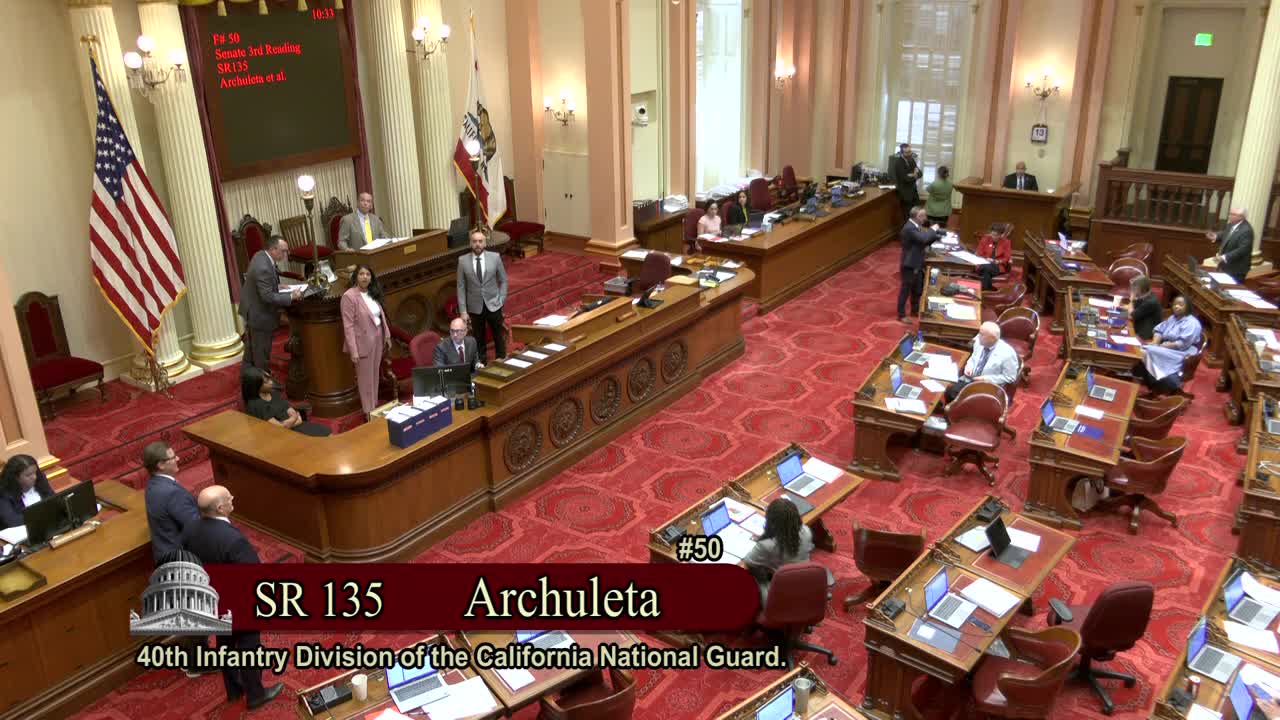 2MIN
Senate Floor
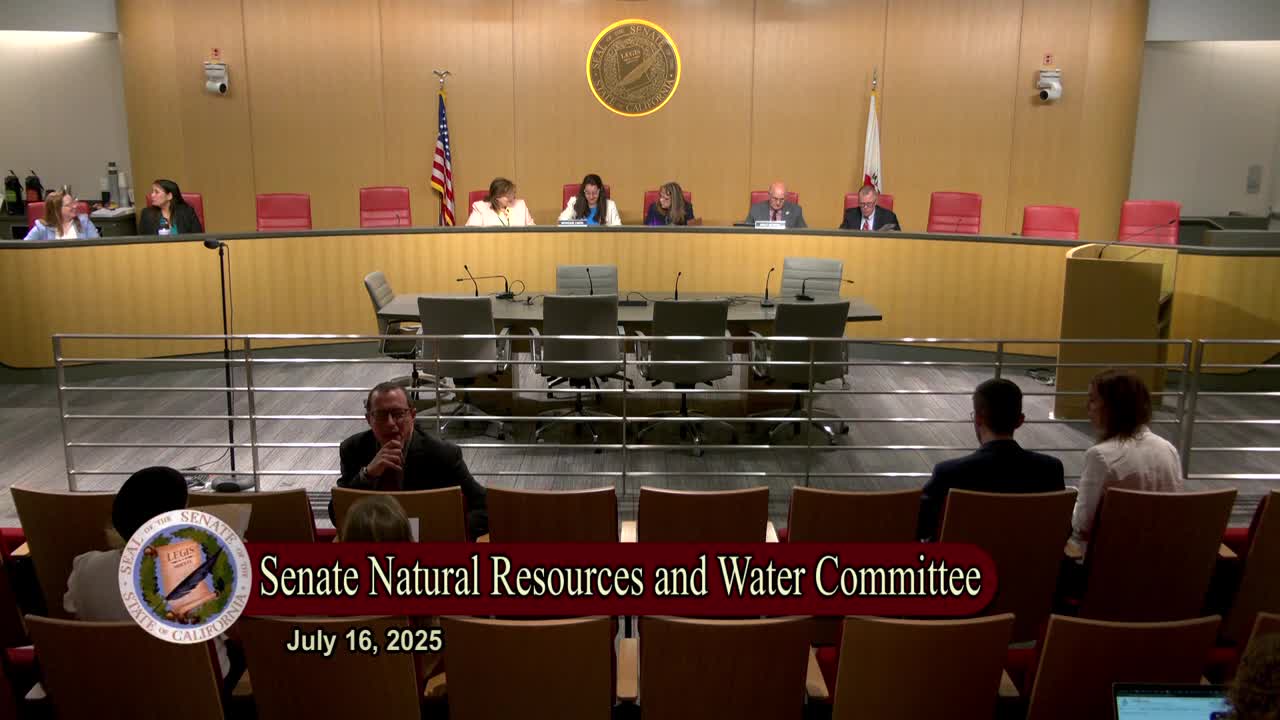 4MIN
Senate Standing Committee on Natural Resources and Water
 13MIN
Assembly Floor
Bill Author

Bill Co-Author(s):