SB 1191: Communications: universal service programs.
- Session Year: 2025-2026
- House: Senate
- Latest Version Date: 2026-09-27
Current Status:
Passed
(2026-09-27: Chaptered by Secretary of State. Chapter 683, Statutes of 2026.)
Introduced
In Committee
Awaiting First Chamber Vote
Passed First Chamber
In Committee
Awaiting Second Chamber Vote
Passed Second Chamber
Enacted
What does this bill do?
This bill extends two California universal service programs—the CHCF‑A program that helps small rural telephone companies and the CHCF‑B program for carriers serving high‑cost areas—until January 1, 2033. It keeps the Public Utilities Commission’s duty to provide rate support so those companies can cover costs, promote broadband in rural areas, and keep customer rates fair and reasonably comparable to urban rates.
The summary is provided by generative AI which can make mistakes. For original language, please view the details in the table below.
Existing law authorizes the Public Utilities Commission to supervise and regulate every public utility in the state, including telephone corporations, and to fix just and reasonable rates and charges for public utilities. Existing law establishes the states 6 universal service funds in the State Treasury, including the California High-Cost Fund-A Administrative Committee Fund (CHCF-A) and the California High-Cost Fund-B Administrative Committee Fund (CHCF-B), and provides that moneys in each of the states universal service funds are the proceeds of rates and are held in trust for the benefit of ratepayers and to compensate telephone corporations for their costs of providing universal service. Moneys in the funds may only be expended to accomplish specified telecommunications universal service programs, upon appropriation in the annual Budget Act or upon supplemental appropriation. Existing law, the CHCF-A program, until January 1, 2028, requires the commission to develop, implement, and maintain a suitable program to establish a fair and equitable local rate structure aided by universal service rate support to small independent telephone corporations that serve rural areas and are subject to rate-of-return regulation by the commission. Existing law, the CHCF-B program, until January 1, 2028, requires the commission to develop, implement, and maintain a suitable, competitively neutral, and broad-based program to establish a fair and equitable local rate support structure aided by universal service rate support to telephone corporations serving areas where the cost of providing services exceeds rates charged by providers, as determined by the commission.
This bill would extend the CHCF-A program and CHCF-B program requirements to January 1, 2033.
Under existing law, a violation of the Public Utilities Act or an order, decision, rule, direction, demand, or requirement of the commission is a crime.
Because the CHCF-A program and CHCF-B program, which would be extended under the provisions of this bill, are part of the act, and a violation of a commission action implementing the programs requirements would be a crime, the bill would impose a state-mandated local program.
The California Constitution requires the state to reimburse local agencies and school districts for certain costs mandated by the state. Statutory provisions establish procedures for making that reimbursement.
This bill would provide that no reimbursement is required by this act for a specified reason.
This bill would declare that it is to take effect immediately as an urgency statute.
Existing law authorizes the Public Utilities Commission to supervise and regulate every public utility in the state, including telephone corporations, and to fix just and reasonable rates and charges for public utilities. Existing law establishes the states 6 universal service funds in the State Treasury, including the California High-Cost Fund-A Administrative Committee Fund (CHCF-A) and the California High-Cost Fund-B Administrative Committee Fund (CHCF-B), and provides that moneys in each of the states universal service funds are the proceeds of rates and are held in trust for the benefit of ratepayers and to compensate telephone corporations for their costs of providing universal service. Moneys in the funds may only be expended to accomplish specified telecommunications universal service programs, upon appropriation in the annual Budget Act or upon supplemental appropriation. Existing law, the CHCF-A program, until January 1, 2028, requires the commission to develop, implement, and maintain a suitable program to establish a fair and equitable local rate structure aided by universal service rate support to small independent telephone corporations that serve rural areas and are subject to rate-of-return regulation by the commission. Existing law, the CHCF-B program, until January 1, 2028, requires the commission to develop, implement, and maintain a suitable, competitively neutral, and broad-based program to establish a fair and equitable local rate support structure aided by universal service rate support to telephone corporations serving areas where the cost of providing services exceeds rates charged by providers, as determined by the commission.
This bill would extend the CHCF-A program and CHCF-B program requirements to January 1, 2033.
Under existing law, a violation of the Public Utilities Act or an order, decision, rule, direction, demand, or requirement of the commission is a crime.
Because the CHCF-A program and CHCF-B program, which would extended under the provisions of this bill, are part of the act, and a violation of a commission action implementing the programs requirements would be a crime, the bill would impose a state-mandated local program.
The California Constitution requires the state to reimburse local agencies and school districts for certain costs mandated by the state. Statutory provisions establish procedures for making that reimbursement.
This bill would provide that no reimbursement is required by this act for a specified reason.
This bill would declare that it is to take effect immediately as an urgency statute.
(a)The commission shall exercise its regulatory authority to maintain the California High-Cost Fund-A Administrative Committee Fund program (CHCF-A program) to provide universal service rate support to small independent telephone corporations in amounts sufficient to meet the revenue requirements established by the commission through rate-of-return regulation in furtherance of the states universal service commitment to the continued affordability and widespread availability of safe, reliable, high-quality communications services in rural areas of the state.
(b)For purposes of this section, all of the following terms have the following meanings:
(1)Carrier of last resort means a telephone corporation that is required to fulfill all reasonable requests for service within its service territory.
(2)Rate base means the value of a telephone corporations plant and equipment that is reasonably necessary to provide regulated voice services and access to advanced services, and upon which the telephone corporation is entitled to a fair opportunity to earn a reasonable rate of return.
(3)Rate design means the mix of end user rates, high-cost support, and other revenue sources that are targeted to provide a fair opportunity to meet the revenue requirement of the telephone corporation.
(4)Rate-of-return regulation means a regulatory structure whereby the commission establishes a telephone corporations revenue requirement, and then fashions a rate design to provide the company a fair opportunity to meet the revenue requirement.
(5)Revenue requirement means the amount that is necessary for a telephone corporation to recover its reasonable expenses and tax liabilities and earn a reasonable rate of return on its rate base.
(6)Small independent telephone corporations are rural incumbent local exchange carriers subject to commission regulation.
(c)In administering the CHCF-A program the commission shall do all of the following:
(1)Continue to set rates to be charged by the small independent telephone corporations in accordance with Sections 451, 454, 455, and 728.
(2)Employ rate-of-return regulation to determine a small independent telephone corporations revenue requirement in a manner that provides revenues and earnings sufficient to allow the telephone corporation to deliver safe, reliable, high-quality voice communication service and fulfill its obligations as a carrier of last resort in its service territory, and to afford the telephone corporation a fair opportunity to earn a reasonable return on its investments, attract capital for investment on reasonable terms, and ensure the financial integrity of the telephone corporation.
(3)Ensure that rates charged to customers of small independent telephone corporations are just and reasonable and are reasonably comparable to rates charged to customers of urban telephone corporations.
(4)Provide universal service rate support from the CHCF-A program to small independent telephone corporations in an amount sufficient to supply the portion of the revenue requirement that cannot reasonably be provided by the customers of each small independent telephone corporation after receipt of federal universal service rate support.
(5)Promote customer access to advanced services and deployment of broadband-capable facilities in rural areas that is reasonably comparable to that in urban areas, consistent with national communications policy.
(6)Include all reasonable investments necessary to provide for the delivery of high-quality voice communication services and the deployment of broadband-capable facilities in the rate base of small independent telephone corporations.
(7)Ensure that support is not excessive so that the burden on all contributors to the CHCF-A program is limited.
(d)In order to participate in the CHCF-A program, a small independent telephone corporation shall meet all of the following requirements:
(1)Be subject to rate-of-return regulation.
(2)Be subject to the commissions regulation of telephone corporations pursuant to this division.
(3)Be a carrier of last resort in their service territory.
(4)Qualify as a rural telephone company under federal law (47 U.S.C. Sec. 153(44)).
(e)Upon request from the commission, a small independent telephone corporation that receives support from the CHCF-A program shall provide information regarding revenues derived from the provision of unregulated internet access service by that corporation or its affiliate within that corporations telephone service territory. The commission shall treat as confidential any information provided pursuant to this subdivision.
(f)The commission shall structure the CHCF-A program so that any charge imposed to promote the goals of universal service reasonably equals the value of the benefits of universal service to contributing entities and their subscribers.
(g)This section shall remain in effect only until January 1, 2033, and as of that date is repealed.
SEC. 2.Section 276.5 of the Public Utilities Code is amended to read:276.5.(a)The commission shall develop, implement, and maintain a suitable, competitively neutral, and broad-based program to establish a fair and equitable local rate support structure aided by universal service rate support to telephone corporations serving areas where the cost of providing services exceeds rates charged by providers, as determined by the commission. The program shall be known, and may be cited, as the California High-Cost Fund-B Administrative Committee Fund program or CHCF-B program. The purpose of the program shall be to promote the goals of universal telephone service and to reduce any disparity in the rates charged by those companies. Except as otherwise explicitly provided, this subdivision does not limit the manner in which the commission collects and disburses funds, and does not limit the manner in which it may include or exclude the revenue of contributing entities in structuring the program.
(b)The commission shall structure the CHCF-B program so that any charge imposed to promote the goals of universal service reasonably equals the value of the benefits of universal service to contributing entities and their subscribers.
(c)The commission shall investigate reducing the level of universal service rate support, or elimination of universal service rate support in service areas with demonstrated competition.
(d)This section shall remain in effect only until January 1, 2033, and as of that date is repealed.
SEC. 3.No reimbursement is required by this act pursuant to Section 6 of Article XIIIB of the California Constitution because the only costs that may be incurred by a local agency or school district will be incurred because this act creates a new crime or infraction, eliminates a crime or infraction, or changes the penalty for a crime or infraction, within the meaning of Section 17556 of the Government Code, or changes the definition of a crime within the meaning of Section 6 of Article XIIIB of the California Constitution.
SEC. 4.This act is an urgency statute necessary for the immediate preservation of the public peace, health, or safety within the meaning of Article IV of the California Constitution and shall go into immediate effect. The facts constituting the necessity are:
To ensure that the Public Utilities Commission has sufficient lead time to incorporate the Legislatures direction regarding these universal service programs in its proposed budget to the Department of Finance for fiscal year 2027-2028, it is necessary for this act to take effect immediately.
(a)The commission shall exercise its regulatory authority to maintain the California High-Cost Fund-A Administrative Committee Fund program (CHCF-A program) to provide universal service rate support to small independent telephone corporations in amounts sufficient to meet the revenue requirements established by the commission through rate-of-return regulation in furtherance of the states universal service commitment to the continued affordability and widespread availability of safe, reliable, high-quality communications services in rural areas of the state.
(b)For purposes of this section, all of the following terms have the following meanings:
(1)Carrier of last resort means a telephone corporation that is required to fulfill all reasonable requests for service within its service territory.
(2)Rate base means the value of a telephone corporations plant and equipment that is reasonably necessary to provide regulated voice services and access to advanced services, and upon which the telephone corporation is entitled to a fair opportunity to earn a reasonable rate of return.
(3)Rate design means the mix of end user rates, high-cost support, and other revenue sources that are targeted to provide a fair opportunity to meet the revenue requirement of the telephone corporation.
(4)Rate-of-return regulation means a regulatory structure whereby the commission establishes a telephone corporations revenue requirement, and then fashions a rate design to provide the company a fair opportunity to meet the revenue requirement.
(5)Revenue requirement means the amount that is necessary for a telephone corporation to recover its reasonable expenses and tax liabilities and earn a reasonable rate of return on its rate base.
(6)Small independent telephone corporations are rural incumbent local exchange carriers subject to commission regulation.
(c)In administering the CHCF-A program the commission shall do all of the following:
(1)Continue to set rates to be charged by the small independent telephone corporations in accordance with Sections 451, 454, 455, and 728.
(2)Employ rate-of-return regulation to determine a small independent telephone corporations revenue requirement in a manner that provides revenues and earnings sufficient to allow the telephone corporation to deliver safe, reliable, high-quality voice communication service and fulfill its obligations as a carrier of last resort in its service territory, and to afford the telephone corporation a fair opportunity to earn a reasonable return on its investments, attract capital for investment on reasonable terms, and ensure the financial integrity of the telephone corporation.
(3)Ensure that rates charged to customers of small independent telephone corporations are just and reasonable and are reasonably comparable to rates charged to customers of urban telephone corporations.
(4)Provide universal service rate support from the CHCF-A program to small independent telephone corporations in an amount sufficient to supply the portion of the revenue requirement that cannot reasonably be provided by the customers of each small independent telephone corporation after receipt of federal universal service rate support.
(5)Promote customer access to advanced services and deployment of broadband-capable facilities in rural areas that is reasonably comparable to that in urban areas, consistent with national communications policy.
(6)Include all reasonable investments necessary to provide for the delivery of high-quality voice communication services and the deployment of broadband-capable facilities in the rate base of small independent telephone corporations.
(7)Ensure that support is not excessive so that the burden on all contributors to the CHCF-A program is limited.
(d)In order to participate in the CHCF-A program, a small independent telephone corporation shall meet all of the following requirements:
(1)Be subject to rate-of-return regulation.
(2)Be subject to the commissions regulation of telephone corporations pursuant to this division.
(3)Be a carrier of last resort in their service territory.
(4)Qualify as a rural telephone company under federal law (47 U.S.C. Sec. 153(44)).
(e)Upon request from the commission, a small independent telephone corporation that receives support from the CHCF-A program shall provide information regarding revenues derived from the provision of unregulated internet access service by that corporation or its affiliate within that corporations telephone service territory. The commission shall treat as confidential any information provided pursuant to this subdivision.
(f)The commission shall structure the CHCF-A program so that any charge imposed to promote the goals of universal service reasonably equals the value of the benefits of universal service to contributing entities and their subscribers.
(g)This section shall remain in effect only until January 1, 2033, and as of that date is repealed.
SEC. 2.Section 276.5 of the Public Utilities Code is amended to read:276.5.(a)The commission shall develop, implement, and maintain a suitable, competitively neutral, and broad-based program to establish a fair and equitable local rate support structure aided by universal service rate support to telephone corporations serving areas where the cost of providing services exceeds rates charged by providers, as determined by the commission. The program shall be known, and may be cited, as the California High-Cost Fund-B Administrative Committee Fund program or CHCF-B program. The purpose of the program shall be to promote the goals of universal telephone service and to reduce any disparity in the rates charged by those companies. Except as otherwise explicitly provided, this subdivision does not limit the manner in which the commission collects and disburses funds, and does not limit the manner in which it may include or exclude the revenue of contributing entities in structuring the program.
(b)The commission shall structure the CHCF-B program so that any charge imposed to promote the goals of universal service reasonably equals the value of the benefits of universal service to contributing entities and their subscribers.
(c)The commission shall investigate reducing the level of universal service rate support, or elimination of universal service rate support in service areas with demonstrated competition.
(d)This section shall remain in effect only until January 1, 2033, and as of that date is repealed.
SEC. 3.No reimbursement is required by this act pursuant to Section 6 of Article XIIIB of the California Constitution because the only costs that may be incurred by a local agency or school district will be incurred because this act creates a new crime or infraction, eliminates a crime or infraction, or changes the penalty for a crime or infraction, within the meaning of Section 17556 of the Government Code, or changes the definition of a crime within the meaning of Section 6 of Article XIIIB of the California Constitution.
SEC. 4.This act is an urgency statute necessary for the immediate preservation of the public peace, health, or safety within the meaning of Article IV of the California Constitution and shall go into immediate effect. The facts constituting the necessity are:
To ensure that the Public Utilities Commission has sufficient lead time to incorporate the Legislatures direction regarding these universal service program programs in its proposed budget to the Department of Finance for fiscal year 2027-2028, it is necessary for this act to take effect immediately.
(a)The commission shall exercise its regulatory authority to maintain the California High-Cost Fund-A Administrative Committee Fund program (CHCF-A program) to provide universal service rate support to small independent telephone corporations in amounts sufficient to meet the revenue requirements established by the commission through rate-of-return regulation in furtherance of the states universal service commitment to the continued affordability and widespread availability of safe, reliable, high-quality communications services in rural areas of the state.
(b)For purposes of this section, all of the following terms have the following meanings:
(1)Carrier of last resort means a telephone corporation that is required to fulfill all reasonable requests for service within its service territory.
(2)Rate base means the value of a telephone corporations plant and equipment that is reasonably necessary to provide regulated voice services and access to advanced services, and upon which the telephone corporation is entitled to a fair opportunity to earn a reasonable rate of return.
(3)Rate design means the mix of end user rates, high-cost support, and other revenue sources that are targeted to provide a fair opportunity to meet the revenue requirement of the telephone corporation.
(4)Rate-of-return regulation means a regulatory structure whereby the commission establishes a telephone corporations revenue requirement, and then fashions a rate design to provide the company a fair opportunity to meet the revenue requirement.
(5)Revenue requirement means the amount that is necessary for a telephone corporation to recover its reasonable expenses and tax liabilities and earn a reasonable rate of return on its rate base.
(6)Small independent telephone corporations are rural incumbent local exchange carriers subject to commission regulation.
(c)In administering the CHCF-A program the commission shall do all of the following:
(1)Continue to set rates to be charged by the small independent telephone corporations in accordance with Sections 451, 454, 455, and 728.
(2)Employ rate-of-return regulation to determine a small independent telephone corporations revenue requirement in a manner that provides revenues and earnings sufficient to allow the telephone corporation to deliver safe, reliable, high-quality voice communication service and fulfill its obligations as a carrier of last resort in its service territory, and to afford the telephone corporation a fair opportunity to earn a reasonable return on its investments, attract capital for investment on reasonable terms, and ensure the financial integrity of the telephone corporation.
(3)Ensure that rates charged to customers of small independent telephone corporations are just and reasonable and are reasonably comparable to rates charged to customers of urban telephone corporations.
(4)Provide universal service rate support from the CHCF-A program to small independent telephone corporations in an amount sufficient to supply the portion of the revenue requirement that cannot reasonably be provided by the customers of each small independent telephone corporation after receipt of federal universal service rate support.
(5)Promote customer access to advanced services and deployment of broadband-capable facilities in rural areas that is reasonably comparable to that in urban areas, consistent with national communications policy.
(6)Include all reasonable investments necessary to provide for the delivery of high-quality voice communication services and the deployment of broadband-capable facilities in the rate base of small independent telephone corporations.
(7)Ensure that support is not excessive so that the burden on all contributors to the CHCF-A program is limited.
(d)In order to participate in the CHCF-A program, a small independent telephone corporation shall meet all of the following requirements:
(1)Be subject to rate-of-return regulation.
(2)Be subject to the commissions regulation of telephone corporations pursuant to this division.
(3)Be a carrier of last resort in their service territory.
(4)Qualify as a rural telephone company under federal law (47 U.S.C. Sec. 153(44)).
(e)Upon request from the commission, a small independent telephone corporation that receives support from the CHCF-A program shall provide information regarding revenues derived from the provision of unregulated internet access service by that corporation or its affiliate within that corporations telephone service territory. The commission shall treat as confidential any information provided pursuant to this subdivision.
(f)The commission shall structure the CHCF-A program so that any charge imposed to promote the goals of universal service reasonably equals the value of the benefits of universal service to contributing entities and their subscribers.
(g)This section shall remain in effect only until January 1, 2028, 2033, and as of that date is repealed.
SEC. 2.Section 276.5 of the Public Utilities Code is amended to read:276.5.(a)The commission shall develop, implement, and maintain a suitable, competitively neutral, and broad-based program to establish a fair and equitable local rate support structure aided by universal service rate support to telephone corporations serving areas where the cost of providing services exceeds rates charged by providers, as determined by the commission. The program shall be known, and may be cited, as the California High-Cost Fund-B Administrative Committee Fund program or CHCF-B program. The purpose of the program shall be to promote the goals of universal telephone service and to reduce any disparity in the rates charged by those companies. Except as otherwise explicitly provided, this subdivision does not limit the manner in which the commission collects and disburses funds, and does not limit the manner in which it may include or exclude the revenue of contributing entities in structuring the program.
(b)The commission shall structure the CHCF-B program so that any charge imposed to promote the goals of universal service reasonably equals the value of the benefits of universal service to contributing entities and their subscribers.
(c)The commission shall investigate reducing the level of universal service rate support, or elimination of universal service rate support in service areas with demonstrated competition.
(d)This section shall remain in effect only until January 1, 2028, 2033, and as of that date is repealed.
SEC. 3.No reimbursement is required by this act pursuant to Section 6 of Article XIIIB of the California Constitution because the only costs that may be incurred by a local agency or school district will be incurred because this act creates a new crime or infraction, eliminates a crime or infraction, or changes the penalty for a crime or infraction, within the meaning of Section 17556 of the Government Code, or changes the definition of a crime within the meaning of Section 6 of Article XIIIB of the California Constitution.
SEC. 4.This act is an urgency statute necessary for the immediate preservation of the public peace, health, or safety within the meaning of Article IV of the California Constitution and shall go into immediate effect. The facts constituting the necessity are:
To ensure that the Public Utilities Commission has sufficient lead time to incorporate the Legislatures direction regarding these universal service program in its proposed budget to the Department of Finance for fiscal year 2027-2028, it is necessary for this act to take effect immediately.
|
Date
|
Status
|
|---|---|
| Sep 27, 2026 | Chaptered by Secretary of State. Chapter 683, Statutes of 2026. |
| Sep 27, 2026 | Approved by the Governor. |
| Aug 28, 2026 | Enrolled and presented to the Governor at 4 p.m. |
| Aug 24, 2026 | Assembly amendments concurred in. (Ayes 40. Noes 0.) Ordered to engrossing and enrolling. |
| Aug 24, 2026 | Assembly amendments concurred in. (Ayes 40. Noes 0. Page 5690.) Ordered to engrossing and enrolling. |
| Aug 20, 2026 | In Senate. Concurrence in Assembly amendments pending. |
| Aug 20, 2026 | Read third time. Urgency clause adopted. Passed. (Ayes 72. Noes 0. Page 6302.) Ordered to the Senate. |
| Aug 20, 2026 | Read third time. Urgency clause adopted. Passed. Ordered to the Senate. |
| Aug 13, 2026 | Read second time. Ordered to third reading. |
| Aug 13, 2026 | From committee: Do pass. (Ayes 14. Noes 0.) (August 13). |
| Aug 13, 2026 | Assembly Rule 63 suspended. |
| Aug 5, 2026 | August 5 set for first hearing. Placed on suspense file. |
| Jul 2, 2026 | From committee: Do pass and re-refer to Com. on APPR. (Ayes 9. Noes 0.) (July 1). Re-referred to Com. on APPR. |
| Jun 8, 2026 | From committee with author's amendments. Read second time and amended. Re-referred to Com. on C. & C. |
| Jun 1, 2026 | Referred to Com. on C. & C. |
| May 22, 2026 | In Assembly. Read first time. Held at Desk. |
| May 22, 2026 | Read third time. Urgency clause adopted. Passed. (Ayes 33. Noes 0.) Ordered to the Assembly. |
| May 22, 2026 | Read third time. Urgency clause adopted. Passed. (Ayes 33. Noes 0. Page 4419.) Ordered to the Assembly. |
| May 20, 2026 | Ordered to special consent calendar. |
| May 14, 2026 | Read second time. Ordered to third reading. |
| May 14, 2026 | From committee: Do pass. (Ayes 7. Noes 0.) (May 14). |
| May 14, 2026 | From committee: Do pass. (Ayes 7. Noes 0. Page 4268.) (May 14). |
| May 8, 2026 | Set for hearing May 14. |
| Apr 20, 2026 | April 20 hearing: Placed on APPR. suspense file. |
| Apr 10, 2026 | Set for hearing April 20. |
| Apr 7, 2026 | From committee: Do pass and re-refer to Com. on APPR. (Ayes 15. Noes 0.) (April 7). Re-referred to Com. on APPR. |
| Apr 7, 2026 | From committee: Do pass and re-refer to Com. on APPR. (Ayes 15. Noes 0. Page 3756.) (April 7). Re-referred to Com. on APPR. |
| Mar 25, 2026 | Set for hearing April 7. |
| Mar 4, 2026 | Referred to Com. on E., U & C. |
| Feb 20, 2026 | From printer. May be acted upon on or after March 22. |
| Feb 19, 2026 | Introduced. Read first time. To Com. on RLS. for assignment. To print. |
|
Date
|
Description
|
Location
|
Votes
|
|
|---|---|---|---|---|
| Aug 24, 2026 | Unfinished Business SB1191 Ochoa Bogh et al. Urgency Clause Concurrence | Senate Floor |
Passed |
|
| Aug 20, 2026 | SB 1191 Ochoa Bogh Third Reading Urgency By Hadwick | Assembly Floor |
Passed |
|
| Aug 13, 2026 | Do pass. | Assembly Standing Committee on Appropriations |
Passed |
|
| Jul 1, 2026 | Do pass and be re-referred to the Committee on [Appropriations] | Assembly Standing Committee on Communications and Conveyance |
Passed |
|
| May 22, 2026 | Special Consent SB1191 Ochoa Bogh et al. Urgency Clause | Senate Floor |
Passed |
|
| May 14, 2026 | Do pass | Senate Standing Committee on Appropriations |
Passed |
|
| Apr 20, 2026 | Placed on suspense file | Senate Standing Committee on Appropriations |
Passed |
|
| Apr 7, 2026 | Do pass, but first be re-referred to the Committee on [Appropriations] | Senate Standing Committee on Energy, Utilities and Communications |
Passed |
This list shows positions taken on this bill by organizations on the date displayed, which is linked to the original source.
Positions by individuals are not included.
|
Organization
|
Position
|
Date
|
|---|---|---|
| California Communications Association | ** Support | |
| California Independent Telephone Companies | ** Support | |
| Rural County Representatives of California | ** Support | |
| USTelecom - the Broadband Association | ** Support |
SENATE RULES COMMITTEE Office of Senate Floor Analyses (916) 651-4171 | SB 1191 |
UNFINISHED BUSINESS
Bill No: SB 1191
Author: Ochoa Bogh (R), et al.
Amended: 6/8/26
Vote: 27 - Urgency
SENATE ENERGY, U. & C. COMMITTEE: 15-0, 4/7/26
AYES: Allen, Ochoa Bogh, Archuleta, Arreguín, Becker, Caballero, Gonzalez, Hurtado, McNerney, Reyes, Richardson, Rubio, Stern, Strickland, Wahab
NO VOTE RECORDED: Dahle, Grove
SENATE APPROPRIATIONS COMMITTEE: 7-0, 5/14/26
AYES: Cervantes, Seyarto, Cabaldon, Dahle, Grayson, Richardson, Wahab
SENATE FLOOR: 33-0, 5/22/26
AYES: Archuleta, Arreguín, Ashby, Blakespear, Cabaldon, Caballero, Cervantes, Choi, Cortese, Dahle, Durazo, Gonzalez, Grayson, Grove, Jones, Laird, Limón, McGuire, McNerney, Menjivar, Ochoa Bogh, Pérez, Reyes, Richardson, Rubio, Seyarto, Smallwood-Cuevas, Strickland, Umberg, Valladares, Wahab, Weber Pierson, Wiener
NO VOTE RECORDED: Allen, Alvarado-Gil, Becker, Hurtado, Niello, Padilla, Stern
ASSEMBLY FLOOR: 72-0, 8/20/26 - See last page for vote
SUBJECT: Communications: universal service programs
SOURCE: California Communications Association
California Independent Telephone Companies
DIGEST:
This bill extends the operation of the California High-Cost Funds (CHCF-A and CHCF-B) from January 1, 2028, to January 1, 2033.
Assembly Amendments
make technical, non-substantive changes and add a co-author.
ANALYSIS:
Existing law:
- Establishes the following Universal Service Funds at the California Public Utilities Commission (CPUC) to support the state’s universal telecommunications service goals:
- California High-Cost Fund – A
- California High-Cost Fund – B
- The Universal Lifeline Telephone Service Trust Administrative Committee Fund
- Deaf and Disabled Telecommunications Program
- California Teleconnect Fund
- California Advanced Services Fund (Public Utilities Code §270)
- Separately establishes each of the Universal Service Funds and requires revenues collected for each fund to be deposited into their respective accounts based on a schedule specified by the CPUC. Existing law clarifies that moneys collected for each of the universal service programs can only be used to fund the program for which those moneys were collected. Existing law prohibits the use of moneys collected for any universal service program for any purpose other than the program for which the funds were collected and the administrative costs of that program. (Public Utilities Code §§275, 276, 277, 278, 280, 281)
- Establishes the basis for which the CPUC must assess telecommunication surcharges that fund universal service programs. Under existing law, these surcharges apply to both traditional telephone lines and Voice over Internet Protocol (VoIP) counted as 9-1-1 access lines, as specified. (Public Utilities Code §285)
- Establishes the CHCF-A program to provide support to small independent telephone companies in rural, high-cost areas of the state to ensure residents’ access to affordable telecommunications services in these communities. Existing law requires the CPUC to regulate the rates of telephone corporations receiving CHCF-A subsidies, and it requires the CPUC to use subsidies from the CHCF-A fund to cover those reasonable costs that A-Fund cannot recover through rates. (Public Utilities Code §275 and §275.6)
- Establishes the CHCF-B program to provide support to large telecommunications “Carriers of Last Resort” in high-cost areas of the state to ensure residents’ access to basic telephone services. (Public Utilities Code §276 and §276.5)
- Authorizes the CPUC to administer a surcharge to fund the CHCF-A and CHCF-B. (Public Utilities Code §§275-276.5)
- Sunsets the CHCF-A and B programs on January 1, 2028. (Public Utilities Code §§275-276.5)
This bill extends the sunset date on the CHCF-A and CHCF-B programs from January 1, 2028, to January 1, 2033.
Background
A brief history of California’s High- Cost telecommunications programs. The CHCF-A and CHCF-B are two of California’s six universal service programs. Collectively, the universal service programs are established by statute to ensure that all Californians have access to affordable, high-quality telecommunications services. The CPUC established California’s High-Cost Fund in 1988 through AB 1466 (N. Waters, Chapter 755, Statutes of 1987), which required the CPUC to develop a program to reduce telephone rate disparities between small independent telephone companies serving rural areas and companies serving urban areas. The High-Cost Fund subsidized small to mid-sized telephone companies serving rural and small metropolitan communities through subsidies administered by Pacific Bell. Until 1995, local telephone service was generally provided through one telephone utility in each service territory. In 1995, the CPUC issued a decision opening California’s local telephone exchanges to competition between companies. In 1996, the CPUC issued a decision modifying the High-Cost Fund to address increased competition between different types of carriers in local exchange markets. These modifications included splitting the High-Cost Fund into the CHCF-A and CHCF-B programs.
In addition to establishing these two different programs, the CPUC’s decision also relieved Pacific Bell of its administrative duties for the High-Cost Fund by making the CPUC the administrator of the CHCF-A and CHCF-B. Since the creation of the CHCF-A and CHCF-B, the Legislature has regularly extended the operation of the High-Cost Funds. This bill extends the existing sunset from January 1, 2028, to January 1, 2033.
CHCF-A. Under existing law, the CHCF-A program provides rate support to small independent telephone corporations. This rate assistance is intended to ensure that residents in rural communities can access telecommunications services at rates comparable to those for similar services in urban areas. Rural telecommunications rates can significantly exceed urban rates due to higher infrastructure costs and a lack of economies of scale. CHCF-A companies are generally rate-regulated carriers of last resort (COLRs) who must provide telephone service to any customer in their service territory requesting service. These companies tend to also operate in some of the highest fire threat rural communities where little competition exists because few competitive carriers have opted to expand service to these locations.
CHCF-B. The CHCF-B program provides subsidies to large telecommunications companies that provide basic telephone services as COLRs in high-cost areas. Like the CHCF-A program, these subsidies are intended to keep telephone rates in high-cost areas of the state comparable to rates charged in urban areas. Unlike companies in the CHCF-A program, the large providers in the CHCF-B program are not rate-regulated by the CPUC and generally operate in areas of the state where some degree of telecommunications competition exists.
Status of High-Cost Fund Surcharge Revenue. California’s high-cost funds are financed by a surcharge on in-state telecommunications services. This bill extends the CPUC’s authority to collect those surcharges; however, this extension does not necessarily mean that consumers will inherently pay both surcharges. In 2021, the Legislature passed a package of bills to improve funding for telecommunications services, including broadband deployment. These bills also updated the surcharge mechanism funding universal service programs to ensure that these programs retained adequate funding as consumers increasingly migrate towards wireless and internet-based communications. On April 1, 2023, the CPUC established a single surcharge on each access line to fund all the universal service programs. In August 2025, the CPUC set the universal service fund surcharge at 90 cents per access line per month. Each universal service program comprises a different portion of this monthly charge. In recent years, the CPUC has declined to collect surcharge revenue for the CHCF-B program due to ongoing surpluses for this program. The revenue needed for the CHCF-A fund is largely determined by rates established in the small telephone corporations’ general rate cases. CHCF-A subsidies have remained relatively stable and have not risen with the rate of inflation. The most recent annual report on the small independent telephone corporations’ use of the CHCF-A subsidies shows that between 2019 and 2022, these companies’ draw from the CHCF-A fund declined slightly.
Related/Prior Legislation
SB 857 (Hueso, Chapter 706, Statutes of 2022) extended the operation of the CHCF-A and B programs from January 1, 2023, to January 1, 2028.
SB 4 (Gonzalez, Chapter 671, Statutes of 2021) and AB 14 (Aguiar-Curry, Chapter 658, Statutes of 2021) made various changes to update and extend the operation of the California Advanced Services Fund to 2032, including updating the mechanism for collecting surcharges funding universal service programs to include VoIP lines.
AB 1959 (Wood, Chapter 256, Statutes of 2018) extended the operation of the CHCF-A and B programs from January 1, 2019, to January 1, 2023.
SB 1364 (Fuller, Chapter 520, Statutes of 2014) extended the operation of the CHCF-A and B programs from January 1, 2015, to January 1, 2019.
SB 3 (Padilla, Chapter 695, Statutes of 2011) extended the operation of the CHCF-A and B programs from January 1, 2012, to January 1, 2015.
FISCAL EFFECT: Appropriation: No Fiscal Com.: Yes Local: Yes
According to the Assembly Appropriations Committee, this bill results in ongoing annual costs, through 2033 at least, for the CPUC to continue to administer the high-cost fund programs. The CPUC reports it dedicates two regulatory analysts to the programs, at a combined annal cost of $419,000 (California High-Cost Fund A and California High-Cost Fund B).
SUPPORT: (Verified 8/20/26)
California Communications Association (co-source)
California Independent Telephone Companies (co-source)
Rural County Representatives of California
USTelecom - the Broadband Association
OPPOSITION: (Verified 8/20/26)
None received
ARGUMENTS IN SUPPORT: According to the author:
SB 1191 continues California’s commitment to universal service by extending its High-Cost Fund programs to ensure rural communities have access to reliable and affordable telecommunications services. Without the support of these funds, rural residents would find it very difficult to cover the high cost of delivering telecommunications services in remote, rugged and sparsely populated areas of the state. SB 1191 will help keep rural communities connected to the network and the essential services it provides, like 911 and reverse 911, by keeping telecommunication services affordable.
ASSEMBLY FLOOR: 72-0, 8/20/26
AYES: Addis, Aguiar-Curry, Ahrens, Alanis, Alvarez, Arambula, Ávila Farías, Bains, Bauer-Kahan, Bennett, Berman, Boerner, Bonta, Bryan, Calderon, Caloza, Carrillo, Castillo, Connolly, Davies, Dixon, Elhawary, Ellis, Flora, Fong, Gabriel, Garcia, Gipson, Jeff Gonzalez, Mark González, Hadwick, Haney, Harabedian, Hart, Hoover, Irwin, Johnson, Kalra, Krell, Lackey, Lowenthal, McKinnor, Muratsuchi, Nguyen, Ortega, Pacheco, Papan, Patel, Patterson, Pellerin, Petrie-Norris, Quirk-Silva, Ramos, Ransom, Celeste Rodriguez, Michelle Rodriguez, Rogers, Blanca Rubio, Schiavo, Schultz, Sharp-Collins, Solache, Soria, Stefani, Tangipa, Valencia, Wallis, Ward, Wicks, Wilson, Zbur, Rivas
NO VOTE RECORDED: Chen, DeMaio, Jackson, Lee, Macedo, Sanchez, Ta
Prepared by: Sarah Smith / E., U. & C. / (916) 651-4107
8/20/26 13:51:46
**** END ****
SENATE THIRD READING
STR Bill Id:SB 1191
Author:(Ochoa Bogh)
As Amended Ver:June 8, 2026
2/3 vote. Urgency
SUMMARY
This bill would extend the California High-Cost Fund A and B program requirements to January 1, 2033.
Major Provisions
Provides that this bill is an urgency measure, to ensure that the Public Utilities Commission has sufficient lead time to incorporate the Legislature's direction regarding these universal service programs in its proposed budget to the Department of Finance for fiscal year 2027-2028.
COMMENTS
- This bill is a simple program extension. Under existing law the California High Cost Fund A and B programs would otherwise expire as of January 1, 2028. This bill extends the sunset an additional five years to January 1, 2033. This bill makes no other programmatic changes to the administrative requirements or eligibility.
However, as more consumers begin to move away from legacy copper networks to advanced fiber-optic based networks that support high-speed broadband, it is reasonable to consider whether future modifications to these programs could better support increased access to and continued maintenance of modern broadband networks instead of legacy copper networks. Certainly, such a change would require further contemplation of tradeoffs that is not addressed by this narrow bill, but could be addressed through a more robust regulatory process at the direction of the Legislature.
These types of more robust policy conversations are already beginning at the state and federal level. For example, just recently in May the Federal Communications Commission issued a Notice of Proposed Rulemaking to modernize the federal high-cost program, in the interest of ensuring that "high-cost support is targeting areas where it is needed" in a more "efficient and effective" mechanism. Additionally, at the state level, in March 2026 the CPUC issued a draft resolution that proposed, in part, that the CPUC should explore changes to the CHCF-B programs. The draft resolution was later rescinded for procedural reasons, and potentially, opposition from some stakeholders, because it proposed suspending rate cases for small independent telephone companies. Additionally, a Staff Report published in the Carrier of Last Resort proceeding also suggests the CPUC consider revising the CHCF-B program.
- California High-Cost Fund (CHCF)-A Overview. The CHCF-A program is established to provide rate support subsidies to small independent telephone corporations in amounts sufficient to meet the revenue requirements established by the commission through rate-of-return regulation. The subsidies are intended to support the state’s universal service commitment to affordability and widespread availability of safe, reliable, high-quality communications services in rural areas of the state. As implemented, the subsidies minimize the telephone rate disparities between high-cost rural areas and metropolitan areas to keep rates affordable in areas with lower population densities. The program fund currently supports 13 eligible small independent telephone companies that collectively serve about 40,000 customers. The size of the small companies range from a couple hundred to up to about 12,500 customers. The program budget in Fiscal Year 2025-2026 was $49.5 million. The program is funded through a portion of the flat-rate $0.90-cent per month surcharge on each telephone access line in the state, which supports various programs including the CHCF-A. As of August 1, 2025, the share of the surcharge attributable to the CHCF-A program is $0.03-cents per line per month.
- CHCF-B Overview. The CHCF-B program is established to provide subsidies to carriers of last resort (COLRs) for providing basic local telephone service to residential customers in high-cost areas. Those are currently served by AT&T California, Frontier California, Inc., which recently was acquired by Verizon Communications, and Citizens Telecommunications Company of California. The purpose of the subsidies is to keep basic telephone service affordable and to meet the Commission's universal service goal. The CPUC defines high-cost areas of state as those in which the cost to the COLR to provide service is $36 or more per telephone line. The program budget for Fiscal Year 2025-2026 is $22.5 million. The program is funded through a portion of the flat-rate surcharge on each telephone access line in the state, which supports various programs including the CHCF-B. As of August 1, 2025, the CPUC is not collecting new revenue to support the CHCF-B program because of existing surpluses, and the rate of collection is set at zero cents per month.
According to the Author
"SB 1191 continues California's commitment to universal service by extending its High-Cost Fund programs to ensure rural communities have access to reliable and affordable telecommunications services. Without the support of these funds, rural residents would find it very difficult to cover the high cost of delivering telecommunications services in remote, rugged and sparsely populated areas of the state. SB 1191 will help keep rural communities connected to the network and the essential services it provides, like 911 and reverse 911, by keeping telecommunication services affordable."
Arguments in Support
These two state universal service programs ensure that affordable and reliable telephone service remains available in rural, high-cost areas of the state.
Arguments in Opposition
None on file.
FISCAL COMMENTS
According to the Assembly Appropriations Committee this bill results in ongoing annual costs, through 2033 at least, for the CPUC to continue to administer the high-cost fund programs. The CPUC reports it dedicates two regulatory analysts to the programs, at a combined annal cost of $419,000 (California High-Cost Fund A and California High-Cost Fund B).
VOTES
SENATE FLOOR: 33-0-7
YES: Archuleta, Arreguín, Ashby, Blakespear, Cabaldon, Caballero, Cervantes, Choi, Cortese, Dahle, Durazo, Gonzalez, Grayson, Grove, Jones, Laird, Limón, McGuire, McNerney, Menjivar, Ochoa Bogh, Pérez, Reyes, Richardson, Rubio, Seyarto, Smallwood-Cuevas, Strickland, Umberg, Valladares, Wahab, Weber Pierson, Wiener
ABS, ABST OR NV: Allen, Alvarado-Gil, Becker, Hurtado, Niello, Padilla, Stern
ASM COMMUNICATIONS AND CONVEYANCE: 9-0-0
YES: Boerner, Hoover, Bonta, Caloza, Castillo, Krell, Lowenthal, Rogers, Blanca Rubio
ASM APPROPRIATIONS: 14-0-1
YES: Wicks, Hoover, Arambula, Calderon, Caloza, Dixon, Fong, Mark González, Krell, Pacheco, Pellerin, Sharp-Collins, Solache, Tangipa
ABS, ABST OR NV: Ta
UPDATED
VERSION: June 8, 2026
CONSULTANT: Emilio Perez / C. & C. / (916) 319-2637 FN: 0003473
Date of Hearing: August 5, 2026
ASSEMBLY COMMITTEE ON APPROPRIATIONS
Buffy Wicks, Chair
SBPCA Bill Id:SB 1191
Author:(Ochoa Bogh) – As Amended Ver:June 8, 2026
Policy Committee: | Communications and Conveyance | Vote: | 9 - 0 |
|
| ||
|
|
Urgency: Yes State Mandated Local Program: Yes Reimbursable: No
SUMMARY:
This bill extends the California High-Cost Fund A and B programs (CHCF-A and CHCF-B) by five years, from January 1, 2028, to January 1, 2033.
FISCAL EFFECT:
This bill results in ongoing annual costs, through 2033 at least, for the CPUC to continue to administer the high-cost fund programs. The CPUC reports it dedicates two regulatory analysts to the programs, at a combined annal cost of $419,000 (California High-Cost Fund A and California High-Cost Fund B).
COMMENTS:
Statute establishes a number of programs to further the goal of universal telephone service, that is, high-quality basic telephone service at affordable rates to the greatest number of people. Two such programs are CHCF-A and CHCF-B. Each program is funded from a portion of a CPUC-approved flat-rate charge on each telephone access line in the state. In the case of the CHCF-A program, the portion is $0.03 per line, whereas the CHCF-B program portion is $0.00 in recognition of a substantial unexpended program fund balance.
Though the programs vary in their specifics, each provides subsidies to telecommunications companies that provide telecommunications service in areas of the state that are expensive to service—generally, areas that are sparsely populated and feature rugged terrain or that lack competition. Statute also declares funding for the CHCF-A program to be critical to public health and safety. This is because, according to statute, such funding pays for maintenance of universal public telephone service throughout the state.
According to the CPUC, in fiscal year 2025-26, the CHCF-A program supported 40,838 lines in remote, rural areas of the state at a total program cost of $49.5 million. The average monthly CHCF-A subsidy was $57.90 per line. The CPUC also reports the CHCF-B, during fiscal year 2025-26, supported 30,780 lines at a total program cost of $22.5 million to subsidize lines that each cost more than $36 to service. The average monthly CHCF-B subsidy was $13.32 per line.
The Legislature has repeatedly extended both programs over the years. There is no opposition registered against this bill.
Analysis Prepared by: Jay Dickenson / APPR. / (916) 319-2081
Date of Hearing: July 1, 2026
ASSEMBLY COMMITTEE ON COMMUNICATIONS AND CONVEYANCE
Tasha Boerner, Chair
SBPCA Bill Id:SB 1191
Author:(Ochoa Bogh) – As Amended Ver:June 8, 2026
SENATE VOTE: 33-0
SUBJECT: Communications: universal service programs
SUMMARY: This bill would extend the California High-Cost Fund A and B program requirements to January 1, 2033. Specifically, this bill:
- Provides that this bill is an urgency measure, to ensure that the Public Utilities Commission has sufficient lead time to incorporate the Legislature’s direction regarding these universal service programs in its proposed budget to the Department of Finance for fiscal year 2027-2028.
EXISTING LAW:
- Establishes the California High-Cost Fund (CHCF) A program, under the adminstration of the California Public Utilities Commission (CPUC), to provide universal service rate support to small independent telephone corporations in furtherance of the state’s universal service commitment to the continued affordability and widespread availability of safe, reliable, high-quality communications services in rural areas of the state. (Public Utilities Code (PUC) § 275.6(a))
- Requires that in order to participate in the CHCF-A program, a small independent telephone corporation shall meet all of the following requirements (PUC § 275.6(d)):
- Be subject to rate-of-return regulation.
- Be subject to the commission’s regulation of telephone corporations pursuant to this division.
- Be a carrier of last resort in their service territory.
- Qualify as a rural telephone company under federal law (47 U.S.C. Sec. 153(44)).
- Establishes that the program shall remain in effect only until January 1, 2028. (PUC 275.6(g))
- Authorizes the CPUC to collect a surcharge to fund the CHCF-A program, and establishes an adminstrarive committee to oversee implementation of the program. (PUC § 275)
- Establishes the California High-Cost Fund (CHCF) B program, under the adminstration of the CPUC, to reduce any disparity in the rates charged by telephone corporations serving areas where the cost of providing services exceeds rates charged by other providers, as provided. (PUC § 276.5 (a))
- Establishes that program shall remain in effect only until January 1, 2028. (PUC § 276.5(d))
- Authorizes the CPUC to collect a surcharge to fund the CHCF-B program, and establishes an advisory committee to oversee implementation of the program. (PUC § 276)
FISCAL EFFECT: According to the Senate Appropriations Committee, this bill would likely result in ongoing revenues and expenditures in the tens of millions of dollars to continue the programs.
COMMENTS:
- Author’s statement. “SB 1191 continues California’s commitment to universal service by extending its High-Cost Fund programs to ensure rural communities have access to reliable and affordable telecommunications services. Without the support of these funds, rural residents would find it very difficult to cover the high cost of delivering telecommunications services in remote, rugged and sparsely populated areas of the state. SB 1191 will help keep rural communities connected to the network and the essential services it provides, like 911 and reverse 911, by keeping telecommunication services affordable.”
- CHCF-A Overview. The CHCF-A program is established to provide rate support subsidies to small independent telephone corporations in amounts sufficient to meet the revenue requirements established by the commission through rate-of-return regulation. The subsidies are intended to support the state’s universal service commitment to affordability and widespread availability of safe, reliable, high-quality communications services in rural areas of the state. As implemented, the subsidies minimize the telephone rate disparities between high-cost rural areas and metropolitan areas to keep rates affordable in areas with lower population densities. The program fund currently supports 13 eligible small independent telephone companies that collectively serve about 40,000 customers. The size of the small companies range from a couple hundred to up to about 12,500 customers. The program budget in Fiscal Year 2025-2026 was $49.5 million. The program is funded through a portion of the flat-rate $0.90-cent per month surcharge on each telephone access line in the state, which supports various programs including the CHCF-A. As of August 1, 2025, the share of the surcharge attributable to the CHCF-A program is $0.03-cents per line per month.
- CHCF-B Overview. The CHCF-B program is established to provide subsidies to carriers of last resort (COLRs) for providing basic local telephone service to residential customers in high-cost areas. Those are currently served by AT&T California, Frontier California, Inc., which recently was acquired by Verizon Communications, and Citizens Telecommunications Company of California. The purpose of the subsidies is to keep basic telephone service affordable and to meet the Commission’s universal service goal. The CPUC defines high-cost areas of state as those in which the cost to the COLR to provide service is $36 or more per telephone line. The program budget for Fiscal Year 2025-2026 is $22.5 million. The program is funded through a portion of the flat-rate surcharge on each telephone access line in the state, which supports various programs including the CHCF-B. As of August 1, 2025, the CPUC is not collecting new revenue to support the CHCF-B program because of existing surpluses, and the rate of collection is set at zero cents per month.
- Would further modifications to the CHCF program be reasonable? Public policies in California have supported universal service to telecommunications services, including voice and broadband, through programs like Lifeline and CHCF for decades. The public’s interest in universally available, affordable, and reliable telecommunications is enduring despite changes to technologies those services are accessible over. Accordingly, this bill proposes to continue that history through the CHCF programs by extending the sunsets without any other policy changes. However, as more consumers begin to move away from legacy copper networks to advanced fiber-optic based networks that support high-speed broadband, it is reasonable to consider whether future modifications to these programs could better support increased access to and continued maintenance of modern broadband networks instead of legacy copper networks. Certainly, such a change would require further contemplation of tradeoffs that is not addressed by this narrow bill, but could be addressed through a more robust regulatory process at the direction of the Legislature.
These conversations are already beginning at the state and federal level. For example, just recently in May the Federal Communications Commission issued a Notice of Proposed Rulemaking to modernize the federal high-cost program, in the interest of ensuring that “high-cost support is targeting areas where it is needed” in a more “efficient and effective” mechanism.[1] Additionally, at the state level, in March 2026 the CPUC issued a draft resolution that proposed, in part, that the CPUC should explore changes to the CHCF-B programs[2]. The draft resolution was later rescinded for procedural reasons, and potentially opposition from some stakeholders because it proposed suspending rate cases for small independent telephone companies. Additionally, a Staff Report published in the Carrier of Last Resort proceeding also suggest the CPUC consider revising the CHCF-B program.[3]
- Similar/related legislation.
- SB 857 (Hueso, 2022) extended the CHCF-A and B programs from January 1, 2023, to January 1, 2028.
REGISTERED SUPPORT / OPPOSITION:
Support
California Independent Telephone Companies
Rural County Representatives of California (RCRC)
Opposition
None on file.
Analysis Prepared by: Emilio Perez / C. & C. / (916) 319-2637
Federal Communications Commission. May 2026. Notice of Propose Rulemaking of High-Cost Program. https://www.fcc.gov/document/fcc-proposes-modernization-high-cost-program-0 ↑
California Public Utilities Commission. March 2026. Draft Resolution T-17908. https://docs.cpuc.ca.gov/PublishedDocs/Published/G000/M601/K965/601965392.PDF ↑
California Public Utilities Commission. December 2025. Carrier of Last Resort and Network Modernization Staff Report (R. 24-06-012). At page 49. https://docs.cpuc.ca.gov/PublishedDocs/Efile/G000/M591/K255/591255757.PDF ↑
SENATE RULES COMMITTEE Office of Senate Floor Analyses (916) 651-4171 | SB 1191 |
THIRD READING
Bill No: SB 1191
Author: Ochoa Bogh (R), et al.
Introduced: 2/19/26
Vote: 27 - Urgency
SENATE ENERGY, U. & C. COMMITTEE: 15-0, 4/7/26
AYES: Allen, Ochoa Bogh, Archuleta, Arreguín, Becker, Caballero, Gonzalez, Hurtado, McNerney, Reyes, Richardson, Rubio, Stern, Strickland, Wahab
NO VOTE RECORDED: Dahle, Grove
SENATE APPROPRIATIONS COMMITTEE: 7-0, 5/14/26
AYES: Cervantes, Seyarto, Cabaldon, Dahle, Grayson, Richardson, Wahab
SUBJECT: Communications: universal service programs
SOURCE: California Communications Association
California Independent Telephone Companies
DIGEST:
This bill extends the operation of the California High-Cost Funds (CHCF-A and CHCF-B) from January 1, 2028, to January 1, 2033.
ANALYSIS:
Existing law:
- Establishes the following Universal Service Funds at the California Public Utilities Commission (CPUC) to support the state’s universal telecommunications service goals:
- California High-Cost Fund – A
- California High-Cost Fund – B
- The Universal Lifeline Telephone Service Trust Administrative Committee Fund
- Deaf and Disabled Telecommunications Program
- California Teleconnect Fund
- California Advanced Services Fund (Public Utilities Code §270)
- Separately establishes each of the Universal Service Funds and requires revenues collected for each fund to be deposited into their respective accounts based on a schedule specified by the CPUC. Existing law clarifies that moneys collected for each of the universal service programs can only be used to fund the program for which those moneys were collected. Existing law prohibits the use of moneys collected for any universal service program for any purpose other than the program for which the funds were collected and the administrative costs of that program. (Public Utilities Code §§275, 276, 277, 278, 280, 281)
- Establishes the basis for which the CPUC must assess telecommunication surcharges that fund universal service programs. Under existing law, these surcharges apply to both traditional telephone lines and Voice over Internet Protocol (VoIP) counted as 9-1-1 access lines, as specified. (Public Utilities Code §285)
- Establishes the CHCF-A program to provide support to small independent telephone companies in rural, high-cost areas of the state to ensure residents’ access to affordable telecommunications services in these communities. Existing law requires the CPUC to regulate the rates of telephone corporations receiving CHCF-A subsidies, and it requires the CPUC to use subsidies from the CHCF-A fund to cover those reasonable costs that A-Fund cannot recover through rates. (Public Utilities Code §275 and §275.6)
- Establishes the CHCF-B program to provide support to large telecommunications “Carriers of Last Resort” in high-cost areas of the state to ensure residents’ access to basic telephone services. (Public Utilities Code §276 and §276.5)
- Authorizes the CPUC to administer a surcharge to fund the CHCF-A and CHCF-B. (Public Utilities Code §§275-276.5)
- Sunsets the CHCF-A and B programs on January 1, 2028. (Public Utilities Code §§275-276.5)
This bill extends the sunset date on the CHCF-A and CHCF-B programs from January 1, 2028, to January 1, 2033.
Background
A brief history of California’s High- Cost telecommunications programs. The CHCF-A and CHCF-B are two of California’s six universal service programs. Collectively, the universal service programs are established by statute to ensure that all Californians have access to affordable, high-quality telecommunications services. The CPUC established California’s High-Cost Fund in 1988 through AB 1466 (N. Waters, Chapter 755, Statutes of 1987), which required the CPUC to develop a program to reduce telephone rate disparities between small independent telephone companies serving rural areas and companies serving urban areas. The High-Cost Fund subsidized small to mid-sized telephone companies serving rural and small metropolitan communities through subsidies administered by Pacific Bell. Until 1995, local telephone service was generally provided through one telephone utility in each service territory. In 1995, the CPUC issued a decision opening California’s local telephone exchanges to competition between companies. In 1996, the CPUC issued a decision modifying the High-Cost Fund to address increased competition between different types of carriers in local exchange markets. These modifications included splitting the High-Cost Fund into the CHCF-A and CHCF-B programs.
In addition to establishing these two different programs, the CPUC’s decision also relieved Pacific Bell of its administrative duties for the High-Cost Fund by making the CPUC the administrator of the CHCF-A and CHCF-B. Since the creation of the CHCF-A and CHCF-B, the Legislature has regularly extended the operation of the High-Cost Funds. This bill would extend the existing sunset from January 1, 2028, to January 1, 2033.
CHCF-A. Under existing law, the CHCF-A program provides rate support to small independent telephone corporations. This rate assistance is intended to ensure that residents in rural communities can access telecommunications services at rates comparable to those for similar services in urban areas. Rural telecommunications rates can significantly exceed urban rates due to higher infrastructure costs and a lack of economies of scale. CHCF-A companies are generally rate-regulated carriers of last resort (COLRs) who must provide telephone service to any customer in their service territory requesting service. These companies tend to also operate in some of the highest fire threat rural communities where little competition exists because few competitive carriers have opted to expand service to these locations.
CHCF-B. The CHCF-B program provides subsidies to large telecommunications companies that provide basic telephone services as COLRs in high-cost areas. Like the CHCF-A program, these subsidies are intended to keep telephone rates in high-cost areas of the state comparable to rates charged in urban areas. Unlike companies in the CHCF-A program, the large providers in the CHCF-B program are not rate-regulated by the CPUC and generally operate in areas of the state where some degree of telecommunications competition exists.
Status of High-Cost Fund Surcharge Revenue. California’s high-cost funds are financed by a surcharge on in-state telecommunications services. This bill would extend the CPUC’s authority to collect those surcharges; however, this extension does not necessarily mean that consumers will inherently pay both surcharges. In 2021, the Legislature passed a package of bills to improve funding for telecommunications services, including broadband deployment. These bills also updated the surcharge mechanism funding universal service programs to ensure that these programs retained adequate funding as consumers increasingly migrate towards wireless and internet-based communications. On April 1, 2023, the CPUC established a single surcharge on each access line to fund all the universal service programs. In August 2025, the CPUC set the universal service fund surcharge at 90 cents per access line per month. Each universal service program comprises a different portion of this monthly charge. In recent years, the CPUC has declined to collect surcharge revenue for the CHCF-B program due to ongoing surpluses for this program. The revenue needed for the CHCF-A fund is largely determined by rates established in the small telephone corporations’ general rate cases. CHCF-A subsidies have remained relatively stable and have not risen with the rate of inflation. The most recent annual report on the small independent telephone corporations’ use of the CHCF-A subsidies shows that between 2019 and 2022, these companies’ draw from the CHCF-A fund declined slightly.
Related/Prior Legislation
SB 857 (Hueso, Chapter 706, Statutes of 2022) extended the operation of the CHCF-A and B programs from January 1, 2023, to January 1, 2028.
SB 4 (Gonzalez, Chapter 671, Statutes of 2021) and AB 14 (Aguiar-Curry, Chapter 658, Statutes of 2021) made various changes to update and extend the operation of the California Advanced Services Fund to 2032, including updating the mechanism for collecting surcharges funding universal service programs to include VoIP lines.
AB 1959 (Wood, Chapter 256, Statutes of 2018) extended the operation of the CHCF-A and B programs from January 1, 2019, to January 1, 2023.
SB 1364 (Fuller, Chapter 520, Statutes of 2014) extended the operation of the CHCF-A and B programs from January 1, 2015, to January 1, 2019.
SB 3 (Padilla, Chapter 695, Statutes of 2011) extended the operation of the CHCF-A and B programs from January 1, 2012, to January 1, 2015.
FISCAL EFFECT: Appropriation: No Fiscal Com.: Yes Local: Yes
According to the Senate Appropriations Committee:
- Unknown ongoing revenue to the California High Cost Fund-A (CHCFA) likely in the tens of millions of dollars annually, from the CHCF-A telecommunications customer surcharge, to be expended each year by the California Public Utilities Commission (CPUC) to support small rural telephone companies.
- Ongoing expenditures from the California High Cost Fund-B (CHCFB), likely in the low tens of millions of dollars, to be expended by the CPUC to support telecommunication companies providing service in high-cost areas.
- Unknown potential costs to the state as a customer of telecommunications services who pays the CHCF-A and CHCF-B surcharges.
SUPPORT: (Verified 5/14/26)
California Communications Association (Co-source)
California Independent Telephone Companies (Co-source)
Rural County Representatives of California
USTelecom - the Broadband Association
OPPOSITION: (Verified 5/14/26)
None received
ARGUMENTS IN SUPPORT: According to the author:
SB 1191 continues California’s commitment to universal service by extending its High-Cost Fund programs to ensure rural communities have access to reliable and affordable telecommunications services. Without the support of these funds, rural residents would find it very difficult to cover the high cost of delivering telecommunications services in remote, rugged and sparsely populated areas of the state. SB 1191 will help keep rural communities connected to the network and the essential services it provides, like 911 and reverse 911, by keeping telecommunication services affordable.
Prepared by: Sarah Smith / E., U. & C. / (916) 651-4107
5/16/26 10:42:00
**** END ****
SENATE COMMITTEE ON
Senator Sabrina Cervantes, Chair
2025 - 2026 Regular Session
SB 1191 (Ochoa Bogh) - Communications: universal service programs
Version: | Policy Vote: |
Urgency: | Mandate: |
Hearing Date: | Consultant: |
Bill Summary:
This bill would extend the operation of the California High-Cost Funds (CHCF-A and CHCF-B) by five years from January 1, 2028, to January 1, 2033.
Fiscal Impact:
- Unknown ongoing revenue to the California High Cost Fund-A (CHCFA) likely in the tens of millions of dollars annually, from the CHCF-A telecommunications customer surcharge, to be expended each year by the California Public Utilities Commission (CPUC) to support small rural telephone companies.
- Ongoing expenditures from the California High Cost Fund-B (CHCFB), likely in the low tens of millions of dollars, to be expended by the CPUC to support telecommunication companies providing service in high-cost areas.
- Unknown potential costs to the state as a customer of telecommunications services who pays the CHCF-A and CHCF-B surcharges.
Background:
The CHCF-A and CHCF-B are two of several programs that comprise California’s Universal Service Programs, which are aimed at ensuring that all Californians have access to affordable, high-quality telecommunications services. The CPUC established California’s High Cost Fund in 1988 pursuant to AB 1466 (N. Waters, Chapter 755, Statutes of 1987), which required the CPUC to develop a program to reduce telephone rate disparities between small independent telephone companies serving rural areas and companies serving urban areas. The High Cost Fund subsidized small to mid-sized telephone companies serving rural and small metropolitan communities through subsidies administered by Pacific Bell. Until 1995, local telephone service was generally provided through one telephone utility in each service territory. In 1995, the CPUC issued a decision opening California’s local telephone exchanges to competition between companies. In 1996, The CPUC issued a decision modifying the High Cost Fund to address increased competition between different types of carriers in local exchange markets. These modifications included splitting the High Cost Fund into the CHCF-A and CHCF-B programs.
The CHCF-A supports small, rate-regulated telephone corporations that operate in high-cost rural areas of the state where few other telecommunications providers offer services. The CHCF-B supports larger companies that operate as Carriers of Last Resort (COLRs), which have an obligation to provide basic telephone services in other high-cost communities. In addition to establishing these two different programs, the CPUC’s decision also relieved Pacific Bell of its administrative duties for the High Cost Fund by making the CPUC the administrator of the CHCF-A and CHCF-B. Since the creation of the CHCF-A and CHCF-B, the Legislature has regularly extended the operation of the High Cost Funds. This bill would extend the existing sunset by five years to January 1, 2033.
Proposed Law:
This bill would extend the operation of the California High-Cost Funds (CHCF-A and CHCF-B) by five years from January 1, 2028, to January 1, 2033.
Related Legislation:
SB 857 (Hueso, Chapter 706, Statutes of 2022) extended the operation of the CHCF-A and B programs from January 1, 2023, to January 1, 2028.
SB 4 (Gonzalez, Chapter 671, Statutes of 2021) and AB 14 (Aguiar-Curry, Chapter 658, Statutes of 2021) made various changes to update and extend the operation of the California Advanced Services Fund to 2032, including updating the mechanism for collecting surcharges funding universal service programs to include VoIP lines.
AB 1959 (Wood, Chapter 256, Statutes of 2018) extended the operation of the CHCF-A and B programs from January 1, 2019, to January 1, 2023.
SB 1364 (Fuller, Chapter 520, Statutes of 2014) extended the operation of the CHCF-A and B programs from January 1, 2015, to January 1, 2019.
SB 3 (Padilla, Chapter 695, Statutes of 2011) extended the operation of the CHCF-A and B programs from January 1, 2012, to January 1, 2015.
-- END --
SENATE COMMITTEE ON ENERGY, UTILITIES AND COMMUNICATIONS
Senator Benjamin Allen, Chair
2025 - 2026 Regular
Bill No: Hearing Date: 4/7/2026
Author: | |||
Version: | Introduced | ||
Urgency: | Fiscal: | ||
Consultant: | |||
SUBJECT:
DIGEST: This bill extends the operation of the California High-Cost Funds (CHCF-A and CHCF-B) from January 1, 2028, to January 1, 2033.
ANALYSIS:
Existing law:
- Establishes the following Universal Service Funds at the California Public Utilities Commission (CPUC) to support the state’s universal telecommunications service goals:
- California High-Cost Fund – A
- California High-Cost Fund – B
- The Universal Lifeline Telephone Service Trust Administrative Committee Fund
- Deaf and Disabled Telecommunications Program
- California Teleconnect Fund
- California Advanced Services Fund (Public Utilities Code §270)
- Separately establishes each of the Universal Service Funds and requires revenues collected for each fund to be deposited into their respective accounts based on a schedule specified by the CPUC. Existing law clarifies that moneys collected for each of the universal service programs can only be used to fund the program for which those moneys were collected. Existing law prohibits the use of moneys collected for any universal service program for any purpose other than the program for which the funds were collected and the administrative costs of that program. (Public Utilities Code §§275, 276, 277, 278, 280, 281)
- Establishes the basis for which the CPUC must assess telecommunication surcharges that fund universal service programs. Under existing law, these surcharges apply to both traditional telephone lines and Voice over Internet Protocol (VoIP) counted as 9-1-1 access lines, as specified. (Public Utilities Code §285)
- Establishes the CHCF-A program to provide support to small independent telephone companies in rural, high-cost areas of the state to ensure residents’ access to affordable telecommunications services in these communities. Existing law requires the CPUC to regulate the rates of telephone corporations receiving CHCF-A subsidies, and it requires the CPUC to use subsidies from the CHCF-A fund to cover those reasonable costs that A-Fund cannot recover through rates. (Public Utilities Code §275 and §275.6)
- Establishes the CHCF-B program to provide support to large telecommunications “Carriers of Last Resort” in high-cost areas of the state to ensure residents’ access to basic telephone services. (Public Utilities Code §276 and §276.5)
- Authorizes the CPUC to administer a surcharge to fund the CHCF-A and CHCF-B. (Public Utilities Code §§275-276.5)
- Sunsets the CHCF-A and B programs on January 1, 2028. (Public Utilities Code §§275-276.5)
This bill extends the sunset date on the CHCF-A and CHCF-B programs from January 1, 2028, to January 1, 2033.
Background
A brief history of California’s High- Cost telecommunications programs. The CHCF-A and CHCF-B are two of California’s six universal service programs. Collectively, the universal service programs are established by statute to ensure that all Californians have access to affordable, high-quality telecommunications services. The CPUC established California’s High-Cost Fund in 1988 through AB 1466 (N. Waters, Chapter 755, Statutes of 1987), which required the CPUC to develop a program to reduce telephone rate disparities between small independent telephone companies serving rural areas and companies serving urban areas. The High-Cost Fund subsidized small to mid-sized telephone companies serving rural and small metropolitan communities through subsidies administered by Pacific Bell. Until 1995, local telephone service was generally provided through one telephone utility in each service territory. In 1995, the CPUC issued a decision opening California’s local telephone exchanges to competition between companies. In 1996, the CPUC issued a decision modifying the High-Cost Fund to address increased competition between different types of carriers in local exchange markets. These modifications included splitting the High-Cost Fund into the CHCF-A and CHCF-B programs.
In addition to establishing these two different programs, the CPUC’s decision also relieved Pacific Bell of its administrative duties for the High-Cost Fund by making the CPUC the administrator of the CHCF-A and CHCF-B. Since the creation of the CHCF-A and CHCF-B, the Legislature has regularly extended the operation of the High-Cost Funds. This bill would extend the existing sunset from January 1, 2028, to January 1, 2033.
CHCF-A. Under existing law, the CHCF-A program provides rate support to small independent telephone corporations. This rate assistance is intended to ensure that residents in rural communities can access telecommunications services at rates comparable to those for similar services in urban areas. Rural telecommunications rates can significantly exceed urban rates due to higher infrastructure costs and a lack of economies of scale. CHCF-A companies are generally rate-regulated carriers of last resort (COLRs) who must provide telephone service to any customer in their service territory requesting service. These companies tend to also operate in some of the highest fire threat rural communities where little competition exists because few competitive carriers have opted to expand service to these locations.
CHCF-B. The CHCF-B program provides subsidies to large telecommunications companies that provide basic telephone services as COLRs in high-cost areas. Like the CHCF-A program, these subsidies are intended to keep telephone rates in high-cost areas of the state comparable to rates charged in urban areas. Unlike companies in the CHCF-A program, the large providers in the CHCF-B program are not rate-regulated by the CPUC and generally operate in areas of the state where some degree of telecommunications competition exists.
Status of High-Cost Fund Surcharge Revenue. California’s high-cost funds are financed by a surcharge on in-state telecommunications services. This bill would extend the CPUC’s authority to collect those surcharges; however, this extension does not necessarily mean that consumers will inherently pay both surcharges. In 2021, the Legislature passed a package of bills to improve funding for telecommunications services, including broadband deployment. These bills also updated the surcharge mechanism funding universal service programs to ensure that these programs retained adequate funding as consumers increasingly migrate towards wireless and internet-based communications. On April 1, 2023, the CPUC established a single surcharge on each access line to fund all the universal service programs. In August 2025, the CPUC set the universal service fund surcharge at 90 cents per access line per month. Each universal service program comprises a different portion of this monthly charge. In recent years, the CPUC has declined to collect surcharge revenue for the CHCF-B program due to ongoing surpluses for this program. The revenue needed for the CHCF-A fund is largely determined by rates established in the small telephone corporations’ general rate cases. CHCF-A subsidies have remained relatively stable and have not risen with the rate of inflation. The most recent annual report on the small independent telephone corporations’ use of the CHCF-A subsidies shows that between 2019 and 2022, these companies’ draw from the CHCF-A fund declined slightly.
Prior/Related Legislation
SB 857 (Hueso, Chapter 706, Statutes of 2022) extended the operation of the CHCF-A and B programs from January 1, 2023, to January 1, 2028.
SB 4 (Gonzalez, Chapter 671, Statutes of 2021) and AB 14 (Aguiar-Curry, Chapter 658, Statutes of 2021) made various changes to update and extend the operation of the California Advanced Services Fund to 2032, including updating the mechanism for collecting surcharges funding universal service programs to include VoIP lines.
AB 1959 (Wood, Chapter 256, Statutes of 2018) extended the operation of the CHCF-A and B programs from January 1, 2019, to January 1, 2023.
SB 1364 (Fuller, Chapter 520, Statutes of 2014) extended the operation of the CHCF-A and B programs from January 1, 2015, to January 1, 2019.
SB 3 (Padilla, Chapter 695, Statutes of 2011) extended the operation of the CHCF-A and B programs from January 1, 2012, to January 1, 2015.
FISCAL EFFECT: Appropriation: Fiscal Com.: Local:
SUPPORT:
California Communications Association (Co-Sponsor)
California Independent Telephone Companies (Co-Sponsor)
Rural County Representatives of California
USTelecom - the Broadband Association
OPPOSITION:
None received
ARGUMENTS IN SUPPORT: According to the author:
SB 1191 continues California’s commitment to universal service by extending its High-Cost Fund programs to ensure rural communities have access to reliable and affordable telecommunications services. Without the support of these funds, rural residents would find it very difficult to cover the high cost of delivering telecommunications services in remote, rugged and sparsely populated areas of the state. SB 1191 will help keep rural communities connected to the network and the essential services it provides, like 911 and reverse 911, by keeping telecommunication services affordable.
-- END --
Discussed in Hearing
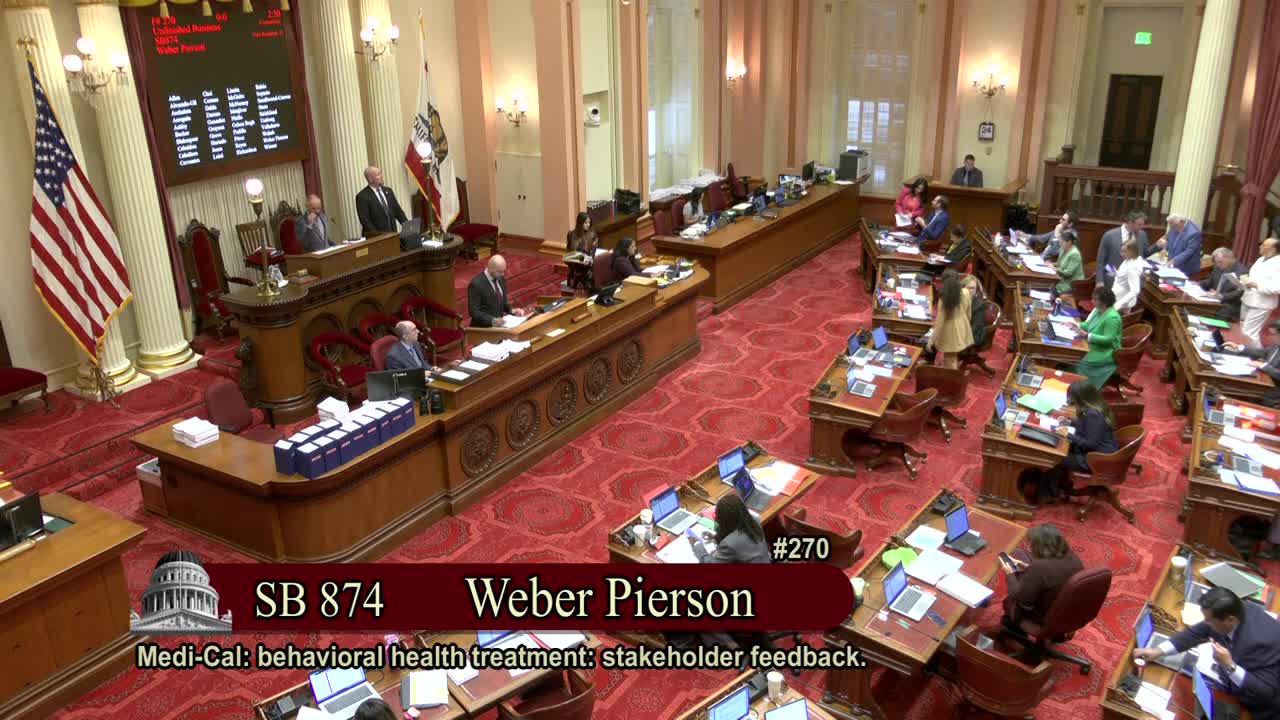 2MIN
Senate Floor
 1MIN
Assembly Floor
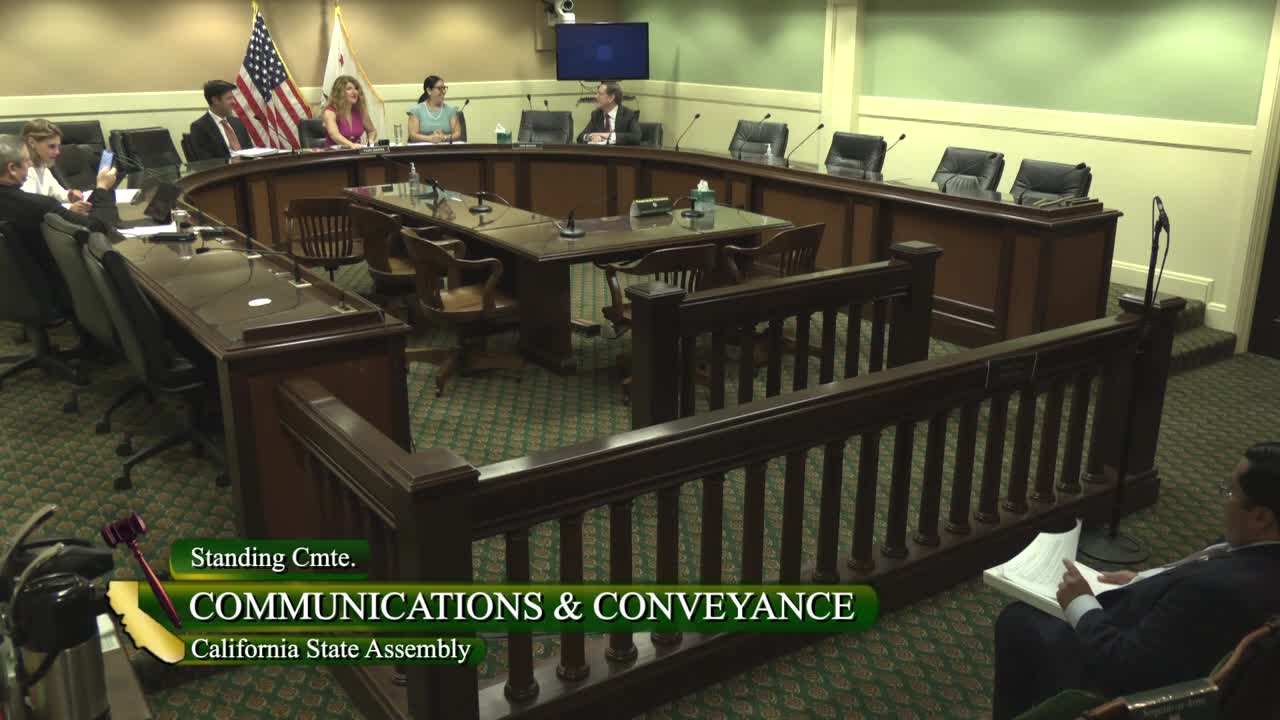 8MIN
Assembly Standing Committee on Communications and Conveyance
 8MIN
Senate Standing Committee on Energy, Utilities and Communications
Bill Author