SB 1272: Local ordinances: administrative fines or penalties.
- Session Year: 2025-2026
- House: Senate
- Latest Version Date: 2026-08-30
Current Status:
In Progress
(2026-09-20: In Senate. Consideration of Governor's veto pending.)
Introduced
In Committee
Awaiting First Chamber Vote
Passed First Chamber
In Committee
Awaiting Second Chamber Vote
Passed Second Chamber
Enacted
What does this bill do?
The bill requires cities and counties to give owners of owner‑occupied homes with up to four units at least six months to fix non‑urgent building, plumbing, electrical, or similar structural or zoning violations before imposing administrative fines, if the current owner files a sworn affidavit saying they did not cause and did not know about the violation and it was not disclosed when they bought the property. It also requires an automatic six‑month extension if the owner shows a good‑faith effort to correct the issue, allows local agencies to grant further extensions without charging an extension fee, and excludes cases involving unlicensed commercial cannabis activity, habitability or substandard‑building laws, and many fire‑safety rules.
The summary is provided by generative AI which can make mistakes. For original language, please view the details in the table below.
Existing law authorizes the legislative body of a local agency, as defined, to, by ordinance, make any violation of an ordinance subject to an administrative fine or penalty. Existing law requires a local agency to set forth, by ordinance, the administrative procedures that govern the imposition, enforcement, collection, and administrative review of those administrative fines or penalties.
Existing law requires the administrative procedures to provide for a reasonable period of time, as specified in the ordinance, for a person responsible for a continuing violation to correct or otherwise remedy the violation prior to the imposition of administrative fines or penalties, when the violation pertains to building, plumbing, electrical, or other similar structural or zoning issues, that do not create an immediate danger to health or safety.
This bill would require, for any violation pertaining to building, plumbing, electrical, or other similar structural or zoning issues, that do not create an immediate danger to health or safety, of any ordinance enacted by the local agency, the reasonable period of time to correct or otherwise remedy the violation to be no less than 6 months if certain conditions are met, including that the property involved is an owner-occupied residential property containing 4 units or less and the current owner of the property submits a sworn affidavit that the current owner was not responsible for any action that caused the violation and that the current owner had no knowledge of the violation at the time the owner took title to the property. These provisions would not apply to an administrative fine or penalty imposed for a violation of various laws, regulations, and ordinances, as specified. By requiring a sworn affidavit, the bill would expand the crime of perjury, thereby imposing a state-mandated local program.
The bill would require a local agency to extend the reasonable period of time described above by an additional 6 months upon a showing by the current owner of a good faith effort to correct or otherwise remedy the violation, and would authorize the agency to extend the reasonable period of time beyond that extension in its discretion, as specified.
The bill would include findings that changes proposed by this bill address a matter of statewide concern rather than a municipal affair and, therefore, apply to all cities, including charter cities.
The California Constitution requires the state to reimburse local agencies and school districts for certain costs mandated by the state. Statutory provisions establish procedures for making that reimbursement.
This bill would provide that no reimbursement is required by this act for a specified reason.
Existing law authorizes the legislative body of a local agency, as defined, to, by ordinance, make any violation of an ordinance subject to an administrative fine or penalty. Existing law requires a local agency to set forth, by ordinance, the administrative procedures that govern the imposition, enforcement, collection, and administrative review of those administrative fines or penalties.
Existing law requires the administrative procedures to provide for a reasonable period of time, as specified in the ordinance, for a person responsible for a continuing violation to correct or otherwise remedy the violation prior to the imposition of administrative fines or penalties, when the violation pertains to building, plumbing, electrical, or other similar structural or zoning issues, that do not create an immediate danger to health or safety.
This bill would prohibit the imposition of an administrative fine or penalty as described above require, for any violation pertaining to building, plumbing, electrical, or other similar structural or zoning issues, that do not create an immediate danger to health or safety, of any ordinance enacted by the local agency agency, the reasonable period of time to correct or otherwise remedy the violation to be no less than 6 months if certain conditions are met, including that the property involved in the violation is a residential property that is owner occupied. The bill would make conforming changes to the remedy provision. current owner of the property submits a sworn affidavit that the current owner was not responsible for any action that caused the violation and that the current owner had no knowledge of the violation at the time the owner took title to the property. By requiring a sworn affidavit, the bill would expand the crime of perjury, thereby imposing a state-mandated local program.
The bill would require a local agency to extend the reasonable period of time described above by an additional 6 months upon a showing by the current owner of a good faith effort to correct or otherwise remedy the violation, and would authorize the agency to extend the reasonable period of time beyond that extension in its discretion, as specified.
The bill would include findings that changes proposed by this bill address a matter of statewide concern rather than a municipal affair and, therefore, apply to all cities, including charter cities.
The California Constitution requires the state to reimburse local agencies and school districts for certain costs mandated by the state. Statutory provisions establish procedures for making that reimbursement.
This bill would provide that no reimbursement is required by this act for a specified reason.
Existing law authorizes the legislative body of a local agency, as defined, to, by ordinance, make any violation of an ordinance subject to an administrative fine or penalty. Existing law requires a local agency to set forth, by ordinance, the administrative procedures that govern the imposition, enforcement, collection, and administrative review of those administrative fines or penalties.
Existing law requires the administrative procedures to provide for a reasonable period of time, as specified in the ordinance, for a person responsible for a continuing violation to correct or otherwise remedy the violation prior to the imposition of administrative fines or penalties, when the violation pertains to building, plumbing, electrical, or other similar structural or zoning issues, that do not create an immediate danger to health or safety.
This bill would prohibit the imposition of an administrative fine or penalty as described above for any violation pertaining to building, plumbing, electrical, or other similar structural or zoning issues, that do not create an immediate danger to health or safety, of any ordinance enacted by the local agency if certain conditions are met, including that the property involved in the violation is a residential property that is owner occupied. The bill would make conforming changes to the remedy provision.
The bill would include findings that changes proposed by this bill address a matter of statewide concern rather than a municipal affair and, therefore, apply to all cities, including charter cities.
Existing law authorizes the creation of community revitalization and investment authorities, as specified, to carry out a community revitalization plan within a community revitalization and investment area. Existing law, for purposes of those provisions, defines plan area to mean territory included within a community revitalization and investment area.This bill would make a nonsubstantive change to that provision.Existing law authorizes the creation of community revitalization and investment authorities, as specified, to carry out a community revitalization plan within a community revitalization and investment area. Existing law, for purposes of those provisions, defines plan area to mean territory included within a community revitalization and investment area.
This bill would make a nonsubstantive change to that provision.
(a)(1)The legislative body of a local agency, as the term local agency is defined in Section 54951, may by ordinance make any violation of any ordinance enacted by the local agency subject to an administrative fine or penalty. The local agency shall set forth by ordinance the administrative procedures that shall govern the imposition, enforcement, collection, and administrative review by the local agency of those administrative fines or penalties. Where the violation would otherwise be an infraction, the administrative fine or penalty shall not exceed the maximum fine or penalty amounts for infractions set forth in Section 25132 and subdivision (b) of Section 36900.
(2)(A)(i)The administrative procedures set forth by ordinance adopted by the local agency pursuant to this subdivision shall provide for a reasonable period of time, as specified in the ordinance, for a person responsible for a continuing violation to correct or otherwise remedy the violation prior to the imposition of administrative fines or penalties, when the violation pertains to building, plumbing, electrical, or other similar structural or zoning issues, that do not create an immediate danger to health or safety.
(ii)(I)For any violation pertaining to building, plumbing, electrical, or other similar structural or zoning issues, that do not create an immediate danger to health or safety, of any ordinance enacted by the local agency, the reasonable period of time to correct or otherwise remedy the violation shall be no less than six months if all of the following conditions are met:
(ia)The property involved in the violation is an owner-occupied residential property containing only four units or less.
(ib)The current owner of the property submits a sworn affidavit that the current owner was not responsible for any action that caused the violation and that the current owner had no knowledge of the violation at the time the owner took title to the property.
(ic)The current owner of the property provides evidence that the violation was not disclosed in a transfer disclosure statement pursuant to Article 1.5 (commencing with Section 1102) of Chapter 2 of Title 4 of Part 4 of Division 2 of the Civil Code.
(II)A local agency shall extend the reasonable period of time described in subclause (I) by an additional six months upon a showing by the current owner of a good faith effort to correct or otherwise remedy the violation, and may extend the reasonable period of time beyond the extension provided by this subclause in its discretion. The local agency shall not impose an administrative fee associated with a request for an extension pursuant to this subclause.
(III)This clause shall not apply to an administrative fine or penalty that is imposed for a violation of any of the following:
(ia)Any law, regulation, or local ordinance regulating or prohibiting the cultivating, manufacturing, producing, processing, preparing, storing, providing, donating, selling, delivering, or distributing of cannabis or cannabis products, including, but not limited to, an ordinance adopted pursuant to Section 26200 of the Business and Professions Code.
(ib)The State Housing Law, Part 1.5 (commencing with Section 17910) of Division 13 of the Health and Safety Code, and regulations or ordinances adopted pursuant to that part, if the violation results in the building being substandard as described in Section 17920.3 of the Health and Safety Code.
(ic)Any law, regulation, or local ordinance that ensures the habitability of rental housing, including, but not limited to, a violation under any law, regulation, or local ordinance that would also be a violation of Section 1941.1 of the Civil Code.
(id)Any of the following laws or regulations relating to fire hazards:
(Ia)Chapter 2 (commencing with Section 4251) and Chapter 3 (commencing with Section 4291) of Part 2 of Division 4 of the Public Resources Code.
(Ib)Chapter 6.8 (commencing with Section 51175) of Part 1 of Division 1.
(Ic)Part 2 (commencing with Section 12500) of Division 11 of the Health and Safety Code.
(Id)Part 2 (commencing with Section 13100) of Division 12 of the Health and Safety Code.
(Ie)Section R337 of the California Residential Code (Part 2.5 of Title 24 of the California Code of Regulations).
(If)Parts II, IV, and V of the California Fire Code (Part 9 of Title 24 of the California Code of Regulations).
(Ig)Chapter 12-7A of the California Referenced Standards Code (Part 12 of Title 24 of the California Code of Regulations).
(ie)Any regulations adopted pursuant to the laws in sub-subclause (id).
(if)Any local ordinances implementing the laws or regulations in sub-subclause (id) or establishing substantially similar requirements for any lands, structures, or activities.
(B)Notwithstanding subparagraph (A), the ordinance adopted by the local agency pursuant to this subdivision may declare commercial cannabis activity undertaken without a license as required by Division 10 (commencing with Section 26000) of the Business and Professions Code to be a public nuisance and provide for the immediate imposition of administrative fines or penalties for the violation of local zoning restrictions or building, plumbing, electrical, or other similar structural, or health and safety requirements if the violation exists as a result of, or to facilitate, the unlicensed cultivation, manufacturing, processing, distribution, or retail sale of cannabis for which a license is required. This subparagraph shall not be construed to apply to cannabis cultivation or activity that is lawfully undertaken pursuant to Section 11362.1 or 11362.5 of the Health and Safety Code, to commercial cannabis activity undertaken pursuant to a license under Division 10 (commencing with Section 26000) of the Business and Professions Code and applicable state regulations, or to a person exempt from licensure pursuant to Section 26033 of the Business and Professions Code.
(C)If a local agency adopts an ordinance that provides for the immediate imposition of administrative fines or penalties as allowed in subparagraph (B), that ordinance may impose the administrative fines and penalties upon the property owner and upon each owner of the occupant business entity engaging in unlicensed commercial cannabis activity and may hold them jointly and severally liable for the administrative fines and penalties.
(D)Administrative fines or penalties that are immediately imposed pursuant to an ordinance adopted under subparagraph (B) shall not exceed one thousand dollars ($1,000) per violation and shall not exceed ten thousand dollars ($10,000) per day. This subparagraph shall not be construed to limit the immediate imposition of larger fines that are otherwise authorized by applicable law and shall not be construed to limit administrative fines or penalties that are imposed after notice and a reasonable time to correct pursuant to subparagraph (A).
(E)An ordinance adopted pursuant to subparagraph (B) shall provide for a reasonable period of time for the correction or remedy of the violation prior to the imposition of administrative fines or penalties as required in subparagraph (A) if all of the following are true:
(i)A tenant is in possession of the property that is the subject of the administrative action.
(ii)The rental property owner or agent can provide evidence that the rental or lease agreement prohibits the commercial cannabis activity.
(iii)The rental property owner or agent did not know the tenant was engaging in unlicensed commercial cannabis activity for which a license was required and no complaint, property inspection, or other information caused the rental property owner or agent to have actual notice of the unlicensed commercial cannabis activity.
(F)A local agency that passes an ordinance pursuant to subparagraph (B) may refer cases involving unlicensed commercial cannabis activity to the Attorney General to undertake civil enforcement action pursuant to Chapter 5 (commencing with Section 17200) of Part 2 of Division 7 of, or Section 26038 of, the Business and Professions Code or any other applicable law.
(b)(1)Notwithstanding Section 1094.5 or 1094.6 of the Code of Civil Procedure, within 20 days after service of the final administrative order or decision of the local agency is made pursuant to an ordinance enacted in accordance with this section regarding the imposition, enforcement, or collection of the administrative fines or penalties, a person contesting that final administrative order or decision may seek review by filing an appeal to be heard by the superior court, where the same shall be heard de novo, except that the contents of the local agencys file in the case shall be received in evidence. A proceeding under this subdivision is a limited civil case. A copy of the document or instrument of the local agency providing notice of the violation and imposition of the administrative fine or penalty shall be admitted into evidence as prima facie evidence of the facts stated therein. A copy of the notice of appeal shall be served in person or by first-class mail upon the local agency by the contestant.
(2)The fee for filing the notice of appeal shall be as specified in Section 70615. The court shall request that the local agencys file on the case be forwarded to the court, to be received within 15 days of the request. The court shall retain the fee specified in Section 70615 regardless of the outcome of the appeal. If the court finds in favor of the contestant, the amount of the fee shall be reimbursed to the contestant by the local agency. Any deposit of the fine or penalty shall be refunded by the local agency in accordance with the judgment of the court.
(3)The conduct of the appeal under this section is a subordinate judicial duty that may be performed by traffic trial commissioners and other subordinate judicial officials at the direction of the presiding judge of the court.
(c)If no notice of appeal of the local agencys final administrative order or decision is filed within the period set forth in this section, the order or decision shall be deemed confirmed.
(d)If the fine or penalty has not been deposited and the decision of the court is against the contestant, the local agency may proceed to collect the penalty pursuant to the procedures set forth in its ordinance.
SEC. 2.The Legislature finds and declares that keeping costs predictable for homeowners to address the states growing affordability challenges is a matter of statewide concern and is not a municipal affair as that term is used in Section 5 of Article XI of the California Constitution. Therefore, Section 1 of this act amending Section 53069.4 of the Government Code applies to all cities, including charter cities.
SEC. 3.No reimbursement is required by this act pursuant to Section 6 of Article XIIIB of the California Constitution because the only costs that may be incurred by a local agency or school district will be incurred because this act creates a new crime or infraction, eliminates a crime or infraction, or changes the penalty for a crime or infraction, within the meaning of Section 17556 of the Government Code, or changes the definition of a crime within the meaning of Section 6 of Article XIIIB of the California Constitution.
(a)(1)The legislative body of a local agency, as the term local agency is defined in Section 54951, may by ordinance make any violation of any ordinance enacted by the local agency subject to an administrative fine or penalty. The local agency shall set forth by ordinance the administrative procedures that shall govern the imposition, enforcement, collection, and administrative review by the local agency of those administrative fines or penalties. Where the violation would otherwise be an infraction, the administrative fine or penalty shall not exceed the maximum fine or penalty amounts for infractions set forth in Section 25132 and subdivision (b) of Section 36900.
(2)(A)(i)The administrative procedures set forth by ordinance adopted by the local agency pursuant to this subdivision shall provide for a reasonable period of time, as specified in the ordinance, for a person responsible for a continuing violation to correct or otherwise remedy the violation prior to the imposition of administrative fines or penalties, when the violation pertains to building, plumbing, electrical, or other similar structural or zoning issues, that do not create an immediate danger to health or safety.
(ii)(I)For any violation pertaining to building, plumbing, electrical, or other similar structural or zoning issues, that do not create an immediate danger to health or safety, of any ordinance enacted by the local agency, the reasonable period of time to correct or otherwise remedy the violation shall be no less than six months if all of the following conditions are met:
(ia)The property involved in the violation is a residential property that is owner occupied. an owner-occupied residential property containing only four units or less.
(ib)The current owner of the property submits a sworn affidavit that the current owner was not responsible for any action that caused the violation and that the current owner had no knowledge of the violation at the time the owner took title to the property.
(ic)The current owner of the property provides evidence that the violation was not disclosed in a transfer disclosure statement pursuant to Article 1.5 (commencing with Section 1102) of Chapter 2 of Title 4 of Part 4 of Division 2 of the Civil Code.
(II)A local agency shall extend the reasonable period of time described in subclause (I) by an additional six months upon a showing by the current owner of a good faith effort to correct or otherwise remedy the violation, and may extend the reasonable period of time beyond the extension provided by this subclause in its discretion. The local agency shall not impose an administrative fee associated with a request for an extension pursuant to this subclause.
(III)This clause shall not apply to an administrative fine or penalty that is imposed for a violation of any of the following:
(ia)Any law, regulation, or local ordinance regulating or prohibiting the cultivating, manufacturing, producing, processing, preparing, storing, providing, donating, selling, delivering, or distributing of cannabis or cannabis products, including, but not limited to, an ordinance adopted pursuant to Section 26200 of the Business and Professions Code.
(ib)The State Housing Law, Part 1.5 (commencing with Section 17910) of Division 13 of the Health and Safety Code, and regulations or ordinances adopted pursuant to that part, if the violation results in the building being substandard as described in Section 17920.3 of the Health and Safety Code.
(ic)Any law, regulation, or local ordinance that ensures the habitability of rental housing, including, but not limited to, a violation under any law, regulation, or local ordinance that would also be a violation of Section 1941.1 of the Civil Code.
(id)Any of the following laws or regulations relating to fire hazards:
(Ia)Chapter 2 (commencing with Section 4251) and Chapter 3 (commencing with Section 4291) of Part 2 of Division 4 of the Public Resources Code.
(Ib)Chapter 6.8 (commencing with Section 51175) of Part 1 of Division 1.
(Ic)Part 2 (commencing with Section 12500) of Division 11 of the Health and Safety Code.
(Id)Part 2 (commencing with Section 13100) of Division 12 of the Health and Safety Code.
(Ie)Section R337 of the California Residential Code (Part 2.5 of Title 24 of the California Code of Regulations).
(If)Parts II, IV, and V of the California Fire Code (Part 9 of Title 24 of the California Code of Regulations).
(Ig)Chapter 12-7A of the California Referenced Standards Code (Part 12 of Title 24 of the California Code of Regulations).
(ie)Any regulations adopted pursuant to the laws in sub-subclause (id).
(if)Any local ordinances implementing the laws or regulations in sub-subclause (id) or establishing substantially similar requirements for any lands, structures, or activities.
(B)Notwithstanding subparagraph (A), the ordinance adopted by the local agency pursuant to this subdivision may declare commercial cannabis activity undertaken without a license as required by Division 10 (commencing with Section 26000) of the Business and Professions Code to be a public nuisance and provide for the immediate imposition of administrative fines or penalties for the violation of local zoning restrictions or building, plumbing, electrical, or other similar structural, or health and safety requirements if the violation exists as a result of, or to facilitate, the unlicensed cultivation, manufacturing, processing, distribution, or retail sale of cannabis for which a license is required. This subparagraph shall not be construed to apply to cannabis cultivation or activity that is lawfully undertaken pursuant to Section 11362.1 or 11362.5 of the Health and Safety Code, to commercial cannabis activity undertaken pursuant to a license under Division 10 (commencing with Section 26000) of the Business and Professions Code and applicable state regulations, or to a person exempt from licensure pursuant to Section 26033 of the Business and Professions Code.
(C)If a local agency adopts an ordinance that provides for the immediate imposition of administrative fines or penalties as allowed in subparagraph (B), that ordinance may impose the administrative fines and penalties upon the property owner and upon each owner of the occupant business entity engaging in unlicensed commercial cannabis activity and may hold them jointly and severally liable for the administrative fines and penalties.
(D)Administrative fines or penalties that are immediately imposed pursuant to an ordinance adopted under subparagraph (B) shall not exceed one thousand dollars ($1,000) per violation and shall not exceed ten thousand dollars ($10,000) per day. This subparagraph shall not be construed to limit the immediate imposition of larger fines that are otherwise authorized by applicable law and shall not be construed to limit administrative fines or penalties that are imposed after notice and a reasonable time to correct pursuant to subparagraph (A).
(E)An ordinance adopted pursuant to subparagraph (B) shall provide for a reasonable period of time for the correction or remedy of the violation prior to the imposition of administrative fines or penalties as required in subparagraph (A) if all of the following are true:
(i)A tenant is in possession of the property that is the subject of the administrative action.
(ii)The rental property owner or agent can provide evidence that the rental or lease agreement prohibits the commercial cannabis activity.
(iii)The rental property owner or agent did not know the tenant was engaging in unlicensed commercial cannabis activity for which a license was required and no complaint, property inspection, or other information caused the rental property owner or agent to have actual notice of the unlicensed commercial cannabis activity.
(F)A local agency that passes an ordinance pursuant to subparagraph (B) may refer cases involving unlicensed commercial cannabis activity to the Attorney General to undertake civil enforcement action pursuant to Chapter 5 (commencing with Section 17200) of Part 2 of Division 7 of, or Section 26038 of, the Business and Professions Code or any other applicable law.
(b)(1)Notwithstanding Section 1094.5 or 1094.6 of the Code of Civil Procedure, within 20 days after service of the final administrative order or decision of the local agency is made pursuant to an ordinance enacted in accordance with this section regarding the imposition, enforcement, or collection of the administrative fines or penalties, a person contesting that final administrative order or decision may seek review by filing an appeal to be heard by the superior court, where the same shall be heard de novo, except that the contents of the local agencys file in the case shall be received in evidence. A proceeding under this subdivision is a limited civil case. A copy of the document or instrument of the local agency providing notice of the violation and imposition of the administrative fine or penalty shall be admitted into evidence as prima facie evidence of the facts stated therein. A copy of the notice of appeal shall be served in person or by first-class mail upon the local agency by the contestant.
(2)The fee for filing the notice of appeal shall be as specified in Section 70615. The court shall request that the local agencys file on the case be forwarded to the court, to be received within 15 days of the request. The court shall retain the fee specified in Section 70615 regardless of the outcome of the appeal. If the court finds in favor of the contestant, the amount of the fee shall be reimbursed to the contestant by the local agency. Any deposit of the fine or penalty shall be refunded by the local agency in accordance with the judgment of the court.
(3)The conduct of the appeal under this section is a subordinate judicial duty that may be performed by traffic trial commissioners and other subordinate judicial officials at the direction of the presiding judge of the court.
(c)If no notice of appeal of the local agencys final administrative order or decision is filed within the period set forth in this section, the order or decision shall be deemed confirmed.
(d)If the fine or penalty has not been deposited and the decision of the court is against the contestant, the local agency may proceed to collect the penalty pursuant to the procedures set forth in its ordinance.
SEC. 2.The Legislature finds and declares that keeping costs predictable for homeowners to address the states growing affordability challenges is a matter of statewide concern and is not a municipal affair as that term is used in Section 5 of Article XI of the California Constitution. Therefore, Section 1 of this act amending Section 53069.4 of the Government Code applies to all cities, including charter cities.
SEC. 3.No reimbursement is required by this act pursuant to Section 6 of Article XIIIB of the California Constitution because the only costs that may be incurred by a local agency or school district will be incurred because this act creates a new crime or infraction, eliminates a crime or infraction, or changes the penalty for a crime or infraction, within the meaning of Section 17556 of the Government Code, or changes the definition of a crime within the meaning of Section 6 of Article XIIIB of the California Constitution.
REVISIONS: HeadingLine 2.(a)(1)(A)The legislative body of a local agency, as the term local agency is defined in Section 54951, may by ordinance make any violation, other than a violation described in subparagraph (B), violation of any ordinance enacted by the local agency subject to an administrative fine or penalty. The local agency shall set forth by ordinance the administrative procedures that shall govern the imposition, enforcement, collection, and administrative review by the local agency of those administrative fines or penalties. Where the violation would otherwise be an infraction, the administrative fine or penalty shall not exceed the maximum fine or penalty amounts for infractions set forth in Section 25132 and subdivision (b) of Section 36900.
(B)Notwithstanding subparagraph (A) or any other law, any violation pertaining to building, plumbing, electrical, or other similar structural or zoning issues, that do not create an immediate danger to health or safety, of any ordinance enacted by the local agency shall not be subject to an administrative fine or penalty as described in subparagraph (A) if all of the following conditions are met:(i)The property involved in the violation is a residential property that is owner occupied.(ii)The previous owner of the property undertook the violation prior to the sale of the property to the current owner.(iii)The violation was not disclosed in a transfer disclosure statement pursuant to Article 1.5 (commencing with Section 1102) of Chapter 2 of Title 4 of Part 4 of Division 2 of the Civil Code.(2)(A)(i)The administrative procedures set forth by ordinance adopted by the local agency pursuant to this subdivision shall provide for a reasonable period of time, as specified in the ordinance, for a person responsible for a continuing violation to correct or otherwise remedy the violation prior to the imposition of administrative fines or penalties, when the violation pertains to building, plumbing, electrical, or other similar structural or zoning issues, that do not create an immediate danger to health or safety, and the conditions specified in subparagraph (B) of paragraph (1) are not met. safety.
(ii)(I)For any violation pertaining to building, plumbing, electrical, or other similar structural or zoning issues, that do not create an immediate danger to health or safety, of any ordinance enacted by the local agency, the reasonable period of time to correct or otherwise remedy the violation shall be no less than six months if all of the following conditions are met:
(ia)The property involved in the violation is a residential property that is owner occupied.
(ib)The current owner of the property submits a sworn affidavit that the current owner was not responsible for any action that caused the violation and that the current owner had no knowledge of the violation at the time the owner took title to the property.
(ic)The current owner of the property provides evidence that the violation was not disclosed in a transfer disclosure statement pursuant to Article 1.5 (commencing with Section 1102) of Chapter 2 of Title 4 of Part 4 of Division 2 of the Civil Code.
(II)A local agency shall extend the reasonable period of time described in subclause (I) by an additional six months upon a showing by the current owner of a good faith effort to correct or otherwise remedy the violation, and may extend the reasonable period of time beyond the extension provided by this subclause in its discretion. The local agency shall not impose an administrative fee associated with a request for an extension pursuant to this subclause.
(B)Notwithstanding subparagraph (A), the ordinance adopted by the local agency pursuant to this subdivision may declare commercial cannabis activity undertaken without a license as required by Division 10 (commencing with Section 26000) of the Business and Professions Code to be a public nuisance and provide for the immediate imposition of administrative fines or penalties for the violation of local zoning restrictions or building, plumbing, electrical, or other similar structural, or health and safety requirements if the violation exists as a result of, or to facilitate, the unlicensed cultivation, manufacturing, processing, distribution, or retail sale of cannabis for which a license is required. This subparagraph shall not be construed to apply to cannabis cultivation or activity that is lawfully undertaken pursuant to Section 11362.1 or 11362.5 of the Health and Safety Code, to commercial cannabis activity undertaken pursuant to a license under Division 10 (commencing with Section 26000) of the Business and Professions Code and applicable state regulations, or to a person exempt from licensure pursuant to Section 26033 of the Business and Professions Code.
(C)If a local agency adopts an ordinance that provides for the immediate imposition of administrative fines or penalties as allowed in subparagraph (B), that ordinance may impose the administrative fines and penalties upon the property owner and upon each owner of the occupant business entity engaging in unlicensed commercial cannabis activity and may hold them jointly and severally liable for the administrative fines and penalties.
(D)Administrative fines or penalties that are immediately imposed pursuant to an ordinance adopted under subparagraph (B) shall not exceed one thousand dollars ($1,000) per violation and shall not exceed ten thousand dollars ($10,000) per day. This subparagraph shall not be construed to limit the immediate imposition of larger fines that are otherwise authorized by applicable law and shall not be construed to limit administrative fines or penalties that are imposed after notice and a reasonable time to correct pursuant to subparagraph (A).
(E)An ordinance adopted pursuant to subparagraph (B) shall provide for a reasonable period of time for the correction or remedy of the violation prior to the imposition of administrative fines or penalties as required in subparagraph (A) if all of the following are true:
(i)A tenant is in possession of the property that is the subject of the administrative action.
(ii)The rental property owner or agent can provide evidence that the rental or lease agreement prohibits the commercial cannabis activity.
(iii)The rental property owner or agent did not know the tenant was engaging in unlicensed commercial cannabis activity for which a license was required and no complaint, property inspection, or other information caused the rental property owner or agent to have actual notice of the unlicensed commercial cannabis activity.
(F)A local agency that passes an ordinance pursuant to subparagraph (B) may refer cases involving unlicensed commercial cannabis activity to the Attorney General to undertake civil enforcement action pursuant to Chapter 5 (commencing with Section 17200) of Part 2 of Division 7 of, or Section 26038 of, the Business and Professions Code or any other applicable law.
(b)(1)Notwithstanding Section 1094.5 or 1094.6 of the Code of Civil Procedure, within 20 days after service of the final administrative order or decision of the local agency is made pursuant to an ordinance enacted in accordance with this section regarding the imposition, enforcement, or collection of the administrative fines or penalties, a person contesting that final administrative order or decision may seek review by filing an appeal to be heard by the superior court, where the same shall be heard de novo, except that the contents of the local agencys file in the case shall be received in evidence. A proceeding under this subdivision is a limited civil case. A copy of the document or instrument of the local agency providing notice of the violation and imposition of the administrative fine or penalty shall be admitted into evidence as prima facie evidence of the facts stated therein. A copy of the notice of appeal shall be served in person or by first-class mail upon the local agency by the contestant.
(2)The fee for filing the notice of appeal shall be as specified in Section 70615. The court shall request that the local agencys file on the case be forwarded to the court, to be received within 15 days of the request. The court shall retain the fee specified in Section 70615 regardless of the outcome of the appeal. If the court finds in favor of the contestant, the amount of the fee shall be reimbursed to the contestant by the local agency. Any deposit of the fine or penalty shall be refunded by the local agency in accordance with the judgment of the court.
(3)The conduct of the appeal under this section is a subordinate judicial duty that may be performed by traffic trial commissioners and other subordinate judicial officials at the direction of the presiding judge of the court.
(c)If no notice of appeal of the local agencys final administrative order or decision is filed within the period set forth in this section, the order or decision shall be deemed confirmed.
(d)If the fine or penalty has not been deposited and the decision of the court is against the contestant, the local agency may proceed to collect the penalty pursuant to the procedures set forth in its ordinance.
SEC. 2.The Legislature finds and declares that keeping costs predictable for homeowners to address the states growing affordability challenges is a matter of statewide concern and is not a municipal affair as that term is used in Section 5 of Article XI of the California Constitution. Therefore, Section 1 of this act amending Section 53069.4 of the Government Code applies to all cities, including charter cities.
SEC. 3.No reimbursement is required by this act pursuant to Section 6 of Article XIIIB of the California Constitution because the only costs that may be incurred by a local agency or school district will be incurred because this act creates a new crime or infraction, eliminates a crime or infraction, or changes the penalty for a crime or infraction, within the meaning of Section 17556 of the Government Code, or changes the definition of a crime within the meaning of Section 6 of Article XIIIB of the California Constitution.
(a)(1)(A)The legislative body of a local agency, as the term local agency is defined in Section 54951, may by ordinance make any violation violation, other than a violation described in subparagraph (B), of any ordinance enacted by the local agency subject to an administrative fine or penalty. The local agency shall set forth by ordinance the administrative procedures that shall govern the imposition, enforcement, collection, and administrative review by the local agency of those administrative fines or penalties. Where the violation would otherwise be an infraction, the administrative fine or penalty shall not exceed the maximum fine or penalty amounts for infractions set forth in Section 25132 and subdivision (b) of Section 36900.
(B)Notwithstanding subparagraph (A) or any other law, any violation pertaining to building, plumbing, electrical, or other similar structural or zoning issues, that do not create an immediate danger to health or safety, of any ordinance enacted by the local agency shall not be subject to an administrative fine or penalty as described in subparagraph (A) if all of the following conditions are met:
(i)The property involved in the violation is a residential property that is owner occupied.
(ii)The previous owner of the property undertook the violation prior to the sale of the property to the current owner.
(iii)The violation was not disclosed in a transfer disclosure statement pursuant to Article 1.5 (commencing with Section 1102) of Chapter 2 of Title 4 of Part 4 of Division 2 of the Civil Code.
(2)(A)The administrative procedures set forth by ordinance adopted by the local agency pursuant to this subdivision shall provide for a reasonable period of time, as specified in the ordinance, for a person responsible for a continuing violation to correct or otherwise remedy the violation prior to the imposition of administrative fines or penalties, when the violation pertains to building, plumbing, electrical, or other similar structural or zoning issues, that do not create an immediate danger to health or safety. safety, and the conditions specified in subparagraph (B) of paragraph (1) are not met.
(B)Notwithstanding subparagraph (A), the ordinance adopted by the local agency pursuant to this subdivision may declare commercial cannabis activity undertaken without a license as required by Division 10 (commencing with Section 26000) of the Business and Professions Code to be a public nuisance and provide for the immediate imposition of administrative fines or penalties for the violation of local zoning restrictions or building, plumbing, electrical, or other similar structural, or health and safety requirements if the violation exists as a result of, or to facilitate, the unlicensed cultivation, manufacturing, processing, distribution, or retail sale of cannabis for which a license is required. This subparagraph shall not be construed to apply to cannabis cultivation or activity that is lawfully undertaken pursuant to Section 11362.1 or 11362.5 of the Health and Safety Code, to commercial cannabis activity undertaken pursuant to a license under Division 10 (commencing with Section 26000) of the Business and Professions Code and applicable state regulations, or to a person exempt from licensure pursuant to Section 26033 of the Business and Professions Code.
(C)If a local agency adopts an ordinance that provides for the immediate imposition of administrative fines or penalties as allowed in subparagraph (B), that ordinance may impose the administrative fines and penalties upon the property owner and upon each owner of the occupant business entity engaging in unlicensed commercial cannabis activity and may hold them jointly and severally liable for the administrative fines and penalties.
(D)Administrative fines or penalties that are immediately imposed pursuant to an ordinance adopted under subparagraph (B) shall not exceed one thousand dollars ($1,000) per violation and shall not exceed ten thousand dollars ($10,000) per day. This subparagraph shall not be construed to limit the immediate imposition of larger fines that are otherwise authorized by applicable law and shall not be construed to limit administrative fines or penalties that are imposed after notice and a reasonable time to correct pursuant to subparagraph (A).
(E)An ordinance adopted pursuant to subparagraph (B) shall provide for a reasonable period of time for the correction or remedy of the violation prior to the imposition of administrative fines or penalties as required in subparagraph (A) if all of the following are true:
(i)A tenant is in possession of the property that is the subject of the administrative action.
(ii)The rental property owner or agent can provide evidence that the rental or lease agreement prohibits the commercial cannabis activity.
(iii)The rental property owner or agent did not know the tenant was engaging in unlicensed commercial cannabis activity for which a license was required and no complaint, property inspection, or other information caused the rental property owner or agent to have actual notice of the unlicensed commercial cannabis activity.
(F)A local agency that passes an ordinance pursuant to subparagraph (B) may refer cases involving unlicensed commercial cannabis activity to the Attorney General to undertake civil enforcement action pursuant to Chapter 5 (commencing with Section 17200) of Part 2 of Division 7 of, or Section 26038 of, the Business and Professions Code or any other applicable law.
(b)(1)Notwithstanding Section 1094.5 or 1094.6 of the Code of Civil Procedure, within 20 days after service of the final administrative order or decision of the local agency is made pursuant to an ordinance enacted in accordance with this section regarding the imposition, enforcement, or collection of the administrative fines or penalties, a person contesting that final administrative order or decision may seek review by filing an appeal to be heard by the superior court, where the same shall be heard de novo, except that the contents of the local agencys file in the case shall be received in evidence. A proceeding under this subdivision is a limited civil case. A copy of the document or instrument of the local agency providing notice of the violation and imposition of the administrative fine or penalty shall be admitted into evidence as prima facie evidence of the facts stated therein. A copy of the notice of appeal shall be served in person or by first-class mail upon the local agency by the contestant.
(2)The fee for filing the notice of appeal shall be as specified in Section 70615. The court shall request that the local agencys file on the case be forwarded to the court, to be received within 15 days of the request. The court shall retain the fee specified in Section 70615 regardless of the outcome of the appeal. If the court finds in favor of the contestant, the amount of the fee shall be reimbursed to the contestant by the local agency. Any deposit of the fine or penalty shall be refunded by the local agency in accordance with the judgment of the court.
(3)The conduct of the appeal under this section is a subordinate judicial duty that may be performed by traffic trial commissioners and other subordinate judicial officials at the direction of the presiding judge of the court.
(c)If no notice of appeal of the local agencys final administrative order or decision is filed within the period set forth in this section, the order or decision shall be deemed confirmed.
(d)If the fine or penalty has not been deposited and the decision of the court is against the contestant, the local agency may proceed to collect the penalty pursuant to the procedures set forth in its ordinance.
SEC. 2.The Legislature finds and declares that keeping costs predictable for homeowners to address the states growing affordability challenges is a matter of statewide concern and is not a municipal affair as that term is used in Section 5 of Article XI of the California Constitution. Therefore, Section 1 of this act amending Section 53069.4 of the Government Code applies to all cities, including charter cities.
SECTION 1.Section 62000 of the Government Code is amended to read:62000.As used in this division, the following terms have the following meanings:(a)Authority means the Community Revitalization and Investment Authority created pursuant to this division.(b)Plan means a community revitalization and investment plan and shall be deemed to be the plan described in Section 16 of Article XVI of the California Constitution.(c)Plan area means the territory included within a community revitalization and investment area.(d)Revitalization project means a physical improvement to real property funded by the authority.As used in this division, the following terms have the following meanings:
(a)Authority means the Community Revitalization and Investment Authority created pursuant to this division.
(b)Plan means a community revitalization and investment plan and shall be deemed to be the plan described in Section 16 of Article XVI of the California Constitution.
(c)Plan area means the territory included within a community revitalization and investment area.
(d)Revitalization project means a physical improvement to real property funded by the authority.
|
Date
|
Status
|
|---|---|
| Sep 20, 2026 | In Senate. Consideration of Governor's veto pending. |
| Sep 20, 2026 | Vetoed by the Governor. |
| Sep 3, 2026 | Enrolled and presented to the Governor at 3 p.m. |
| Aug 27, 2026 | Assembly amendments concurred in. (Ayes 40. Noes 0.) Ordered to engrossing and enrolling. |
| Aug 27, 2026 | Assembly amendments concurred in. (Ayes 40. Noes 0. Page 5953.) Ordered to engrossing and enrolling. |
| Aug 24, 2026 | In Senate. Concurrence in Assembly amendments pending. |
| Aug 24, 2026 | Read third time. Passed. (Ayes 67. Noes 3. Page 6376.) Ordered to the Senate. |
| Aug 24, 2026 | Read third time. Passed. Ordered to the Senate. |
| Aug 6, 2026 | Read second time. Ordered to third reading. |
| Aug 5, 2026 | From committee: Do pass. (Ayes 13. Noes 1.) (August 5). |
| Aug 5, 2026 | Coauthors revised. |
| Jun 23, 2026 | Read second time and amended. Re-referred to Com. on APPR. |
| Jun 22, 2026 | From committee: Do pass as amended and re-refer to Com. on APPR. (Ayes 10. Noes 0.) (June 17). |
| May 26, 2026 | Referred to Com. on L. GOV. |
| May 20, 2026 | In Assembly. Read first time. Held at Desk. |
| May 19, 2026 | Read third time. Passed. (Ayes 35. Noes 1.) Ordered to the Assembly. |
| May 19, 2026 | Read third time. Passed. (Ayes 35. Noes 1. Page 4339.) Ordered to the Assembly. |
| May 12, 2026 | Read second time. Ordered to third reading. |
| May 11, 2026 | From committee: Be ordered to second reading pursuant to Senate Rule 28.8. |
| May 5, 2026 | Set for hearing May 11. |
| May 4, 2026 | Re-referred to Com. on APPR. pursuant to Joint Rule 10.5. |
| Apr 30, 2026 | Read second time and amended. Ordered to third reading. |
| Apr 29, 2026 | From committee: Do pass as amended. (Ayes 5. Noes 0.) (April 29). |
| Apr 29, 2026 | From committee: Do pass as amended. (Ayes 5. Noes 0. Page 4095.) (April 29). |
| Apr 9, 2026 | Set for hearing April 29. |
| Apr 8, 2026 | Re-referred to Com. on L. GOV. |
| Mar 23, 2026 | From committee with author's amendments. Read second time and amended. Re-referred to Com. on RLS. |
| Mar 4, 2026 | Referred to Com. on RLS. |
| Feb 23, 2026 | Read first time. |
| Feb 23, 2026 | From printer. May be acted upon on or after March 23. |
| Feb 20, 2026 | Introduced. To Com. on RLS. for assignment. To print. |
|
Date
|
Description
|
Location
|
Votes
|
|
|---|---|---|---|---|
| Aug 27, 2026 | Unfinished Business SB1272 Menjivar et al. Concurrence | Senate Floor |
Passed |
|
| Aug 24, 2026 | SB 1272 Menjivar Senate Third Reading By Stefani | Assembly Floor |
Passed |
|
| Aug 5, 2026 | Do pass. | Assembly Standing Committee on Appropriations |
Passed |
|
| Jun 17, 2026 | Do pass as amended and be re-referred to the Committee on [Appropriations] | Assembly Standing Committee on Local Government |
Passed |
|
| May 19, 2026 | Senate 3rd Reading SB1272 Menjivar | Senate Floor |
Passed |
|
| Apr 29, 2026 | Do pass as amended | Senate Standing Committee on Local Government |
Passed |
This list shows positions taken on this bill by organizations on the date displayed, which is linked to the original source.
Positions by individuals are not included.
|
Organization
|
Position
|
Date
|
|---|---|---|
| California Apartment Association | ** Support | |
| California Association Of Code Enforcement Officers | ** Against | |
| California State Association Of Counties | ** Against | |
| City of Bakersfield | ** Against | |
| City of Pico Rivera | ** Against | |
| City of Pico Rivera (prior version) | ** Against | |
| City of Thousand Oaks | ** Against | |
| County of Solano | ** Against | |
| Rural County Representatives of California | ** Against | |
| Solano County Board of Supervisors (prior version) | ** Against | |
| Willdan Group, Inc. | ** Against |
SENATE RULES COMMITTEE Office of Senate Floor Analyses (916) 651-4171 | SB 1272 |
VETO
Bill No: SB 1272
Author: Menjivar (D), et al.
Enrolled: 8/30/26
Vote: 27
SENATE LOCAL GOVERNMENT COMMITTEE: 5-0, 4/29/26
AYES: Durazo, Arreguín, Ashby, Cervantes, Laird
NO VOTE RECORDED: Choi, Seyarto
SENATE APPROPRIATIONS COMMITTEE: Senate Rule 28.8
SENATE FLOOR: 35-1, 5/19/26
AYES: Allen, Alvarado-Gil, Archuleta, Arreguín, Ashby, Becker, Blakespear, Caballero, Cervantes, Choi, Cortese, Durazo, Gonzalez, Grayson, Grove, Hurtado, Laird, Limón, McGuire, McNerney, Menjivar, Ochoa Bogh, Padilla, Pérez, Reyes, Richardson, Rubio, Smallwood-Cuevas, Stern, Strickland, Umberg, Valladares, Wahab, Weber Pierson, Wiener
NOES: Seyarto
NO VOTE RECORDED: Cabaldon, Dahle, Jones, Niello
SENATE FLOOR: 40-0, 8/27/26
AYES: Allen, Alvarado-Gil, Archuleta, Arreguín, Ashby, Becker, Blakespear, Cabaldon, Caballero, Cervantes, Choi, Cortese, Dahle, Durazo, Gonzalez, Grayson, Grove, Hurtado, Jones, Laird, Limón, McGuire, McNerney, Menjivar, Niello, Ochoa Bogh, Padilla, Pérez, Reyes, Richardson, Rubio, Seyarto, Smallwood-Cuevas, Stern, Strickland, Umberg, Valladares, Wahab, Weber Pierson, Wiener
ASSEMBLY FLOOR: 67-3, 8/24/26 - See last page for vote
SUBJECT: Local ordinances: administrative fines or penalties
SOURCE: Author
DIGEST:
This bill specifies that the reasonable period of time to correct or otherwise remedy a violation of building or zoning codes, as specified, to be no less than 6 months if certain conditions are met.
ANALYSIS:
Existing law:
- Prohibits, under the United States and California Constitutions, governments from impairing property rights without due process of law.
- Allows counties and cities to adopt and enforce ordinances that regulate local health, safety, peace, and welfare.
- Defines a nuisance as anything that is injurious to health, indecent or offensive to the senses, obstructs the free use of property, or unlawfully obstructs free passage.
- Allows counties and cities to adopt ordinances that establish local procedures for abating nuisances (AB 2593, Veysey, 1965) and to recover abatement costs, including administrative costs, by using a special assessment, abatement lien, or both.
- Allows, as an alternative to civil and criminal enforcement mechanisms, a local agency’s legislative body to make any violation of any of its ordinances subject to an administrative fine or penalty (SB 814 (Alquist, Chapter 898, Statutes of 1995)).
- Provides that a violation of a local ordinance is a misdemeanor, unless by ordinance it is made an infraction. In general, an ordinance violation that a local agency makes an infraction is punishable by:
- A fine not more than $100 for a first violation;
- A fine not more than $200 for a second violation of the same ordinance within one year; and
- A fine not more than $500 for each additional violation of the same ordinance within one year.
- Allows higher fines for violations of building and safety codes:
- A fine not more than $130 for a first violation;
- A fine not more than $700 for a second violation of the same ordinance within one year;
- A fine not more than $1,300 for each additional violation of the same ordinance within one year; and
- A fine not exceeding $2,500 for each additional violation of the same ordinance within two years of the first violation if the property is a commercial property that has an existing building at the time of the violation, and the violation is due to failure by the owner to remove visible refuse or failure to prohibit unauthorized use of the property.
- Allows cities and counties to also impose fines and penalties through civil or criminal proceedings. These fines and penalties are limited to $1,000 per violation and six months in prison.
- Requires a local agency that imposes administrative fines or penalties to adopt an ordinance specifying the administrative procedures that govern the imposition, enforcement, collection, and administrative review of those fines or penalties.
- Requires the administrative procedures to grant a reasonable time to remedy a continuing violation before the imposition of administrative fines or penalties when the violation pertains to building, plumbing, electrical, or other similar structural and zoning issues that do not create an immediate danger to health or safety.
This bill:
- Provides that for any violation pertaining to building, plumbing, electrical, or other similar structural or zoning issues, that do not create an immediate danger to health or safety, of any ordinance enacted by the local agency, the reasonable period of time to correct or otherwise remedy the violation shall be no less than six months if all of the following conditions are met:
- The property involved in the violation is an owner-occupied residential property containing only four units or fewer.
- The current owner of the property submits a sworn affidavit that the current owner was not responsible for any action that caused the violation and that the current owner had no knowledge of the violation at the time the owner took title to the property.
- The current owner of the property provides evidence that the violation was not disclosed in a transfer disclosure statement (TDS), as defined in existing law
- Requires a local agency to extend the reasonable period of by an additional six months upon a showing by the current owner of a good faith effort to correct or otherwise remedy the violation, and allows the local agency to extend the reasonable period of time further at its discretion.
- Prohibits a local agency from imposing an administrative fee associated with a request for an extension pursuant to this bill.
- Provides that this bill does not apply to an administrative fine or penalty that is imposed for a violation of any of the following:
- Cannabis laws;
- State Housing Law, as specified;
- Any law that regulates or ensures that habitability of rental housing, as specified;
- Specified state or local laws or regulations related to fire hazards;
- Applies this bill to charter cities and includes findings and declarations to support its purposes.
Background
Real estate transactions. When an owner sells a single-family residential property, they generally must provide the buyer with certain disclosures that outline the conditions and issues with the property of which the seller is aware. Many of these disclosures are made on the Real Estate Transfer Disclosure Statement (TDS), including any known significant defects in the insulation, roof, foundation, plumbing, and electrical systems, among others. The TDS also includes an extensive questionnaire relating to specific dangers or issues known about the property.
In addition to the disclosures included in the TDS, state law requires other disclosures and notices. A seller must disclose to a potential buyer whether the property is located in a designated high or very high fire hazard severity zone and must provide a natural hazard disclosure statement disclosing whether the property is located in various disaster areas.
Buyers may conduct additional due diligence measures, such as hiring a home inspector, scouring property records, and purchasing title insurance, to ensure that they fully understand the condition of the property that they are purchasing—and the liabilities that might come with it.
However, issues are not always discovered through this process. This means that sometimes buyers of property find out later that unpermitted work occurred on a property when code enforcement knocks on their door. In one circumstance, the County of Humboldt fined a couple $1 million for an unpermitted structure constructed by a prior owner that the county alleged was used for cannabis cultivation.[1] The author wants to help property owners that unwittingly purchased properties with building or zoning code violations.
Comments
Purpose of this bill. According to the author, “Keeping costs predictable for homeowners to address the state’s growing affordability challenges is a matter of statewide concern. Homeowners are currently being unfairly penalized for actions taken by the previous homeowner on their property that do not pose an immediate danger to anyone’s health or safety. And on top of this, even when the homeowner wants to do the right thing and fix the violation, they face additional financial pressure from the administrative fees and penalties imposed by localities. SB 1272, Curbing Abusive Sanctions on Homeowners (CASH) Act, seeks to provide some relief to homeowners.”
Caveat emptor. The process of buying a home involves many steps to ensure that they are not saddled with unexpected property conditions. Because local governments can prosecute the current property owners for previous violations, the current structure adds an incentive to thoroughly vet properties for building and zoning code violations. This serves a broader public purpose: local officials enact these laws for the benefit of the community. For example, a recent San Francisco Chronicle article highlighted a circumstance where a buyer purchased a single family home that had been illegally converted from a fourplex by a previous owner, resulting in the loss of three relatively affordable housing units.[2] The City of San Francisco required the current owner to fix the violations. SB 1272 grants a longer period of time to homeowners who unknowingly purchase a property with a zoning code violation additional time to bring their property into compliance than they might otherwise have, and waives fees for extensions. However, this bill may not address the root problem, which is unscrupulous sellers failing to disclose illegal construction. A better remedy may be to strengthen disclosure requirements for sellers or remedies for buyers who find out that they purchased a property with an undisclosed condition.
FISCAL EFFECT: Appropriation: No Fiscal Com.: Yes Local: Yes
According to the Assembly Appropriations Committee:
- No state costs. One-time and ongoing administrative and legal costs, as well as foregone penalty revenue, to impacted cities and counties of an unknown but potentially significant amount depending on the jurisdiction. Because it is optional for a local agency to make a violation of a local ordinance subject to an administrative fine or penalty, any associated costs or revenue losses are not reimbursable by the state.
SUPPORT: (Verified 9/28/26)
California Apartment Association
OPPOSITION: (Verified 9/28/26)
California Association of Code Enforcement Officers
California State Association of Counties
City of Bakersfield
City of Pico Rivera
City of Thousand Oaks
County of Solano
Rural County Representatives of California
Willdan Group, INC.
GOVERNOR'S VETO MESSAGE:
I am returning Senate Bill 1272 without my signature.
This bill would specify that the reasonable period of time to correct a violation related to building, plumbing, electrical, or other similar structural or zoning issues that do not create an immediate danger to health or safety is no less than six months. This measure would also require a local agency to extend this period by another six months upon a showing of a good-faith effort to correct or remedy the violation.
I am sympathetic to the author's goal of giving new property owners ample time to fix problems undisclosed by the sellers. However, local officials should retain discretion in how they carry out code enforcement. This measure would tie their hands with a one-size-fits-all approach, leading to increased local government costs and unnecessary delays.
For these reasons, I cannot sign this bill.
ASSEMBLY FLOOR: 67-3, 8/24/26
AYES: Addis, Aguiar-Curry, Ahrens, Alanis, Alvarez, Arambula, Ávila Farías, Bains, Bauer-Kahan, Bennett, Berman, Boerner, Bonta, Bryan, Calderon, Caloza, Carrillo, Castillo, Connolly, Davies, DeMaio, Elhawary, Flora, Fong, Gabriel, Garcia, Gipson, Jeff Gonzalez, Mark González, Haney, Harabedian, Hart, Hoover, Irwin, Jackson, Krell, Lee, Lowenthal, Nguyen, Ortega, Pacheco, Papan, Patel, Patterson, Pellerin, Petrie-Norris, Quirk-Silva, Ramos, Ransom, Celeste Rodriguez, Michelle Rodriguez, Rogers, Blanca Rubio, Sanchez, Schiavo, Schultz, Sharp-Collins, Solache, Stefani, Ta, Valencia, Wallis, Ward, Wicks, Wilson, Zbur, Rivas
NOES: Dixon, Ellis, Johnson
NO VOTE RECORDED: Chen, Hadwick, Kalra, Lackey, Macedo, McKinnor, Muratsuchi, Soria, Tangipa
Prepared by: Anton Favorini-Csorba / L. GOV. / (916) 651-4119
10/2/26 11:29:03
**** END ****
SENATE RULES COMMITTEE Office of Senate Floor Analyses (916) 651-4171 | SB 1272 |
UNFINISHED BUSINESS
Bill No: SB 1272
Author: Menjivar (D), et al.
Amended: 6/23/26
Vote: 21
SENATE LOCAL GOVERNMENT COMMITTEE: 5-0, 4/29/26
AYES: Durazo, Arreguín, Ashby, Cervantes, Laird
NO VOTE RECORDED: Choi, Seyarto
SENATE APPROPRIATIONS COMMITTEE: Senate Rule 28.8
SENATE FLOOR: 35-1, 5/19/26
AYES: Allen, Alvarado-Gil, Archuleta, Arreguín, Ashby, Becker, Blakespear, Caballero, Cervantes, Choi, Cortese, Durazo, Gonzalez, Grayson, Grove, Hurtado, Laird, Limón, McGuire, McNerney, Menjivar, Ochoa Bogh, Padilla, Pérez, Reyes, Richardson, Rubio, Smallwood-Cuevas, Stern, Strickland, Umberg, Valladares, Wahab, Weber Pierson, Wiener
NOES: Seyarto
NO VOTE RECORDED: Cabaldon, Dahle, Jones, Niello
ASSEMBLY FLOOR: Passed, 8/24/26
SUBJECT: Local ordinances: administrative fines or penalties
SOURCE: Author
DIGEST:
This bill specifies that the reasonable period of time to correct or otherwise remedy a violation of building or zoning codes, as specified, to be no less than 6 months if certain conditions are met.
Assembly Amendments
exclude certain types of violations from this bill’s requirements.
ANALYSIS:
Existing law:
- Prohibits, under the United States and California Constitutions, governments from impairing property rights without due process of law.
- Allows counties and cities to adopt and enforce ordinances that regulate local health, safety, peace, and welfare.
- Defines a nuisance as anything that is injurious to health, indecent or offensive to the senses, obstructs the free use of property, or unlawfully obstructs free passage.
- Allows counties and cities to adopt ordinances that establish local procedures for abating nuisances (AB 2593, Veysey, 1965) and to recover abatement costs, including administrative costs, by using a special assessment, abatement lien, or both.
- Allows, as an alternative to civil and criminal enforcement mechanisms, a local agency’s legislative body to make any violation of any of its ordinances subject to an administrative fine or penalty (SB 814 (Alquist, Chapter 898, Statutes of 1995)).
- Provides that a violation of a local ordinance is a misdemeanor, unless by ordinance it is made an infraction. In general, an ordinance violation that a local agency makes an infraction is punishable by:
- A fine not more than $100 for a first violation;
- A fine not more than $200 for a second violation of the same ordinance within one year; and
- A fine not more than $500 for each additional violation of the same ordinance within one year.
- Allows higher fines for violations of building and safety codes:
- A fine not more than $130 for a first violation;
- A fine not more than $700 for a second violation of the same ordinance within one year;
- A fine not more than $1,300 for each additional violation of the same ordinance within one year; and
- A fine not exceeding $2,500 for each additional violation of the same ordinance within two years of the first violation if the property is a commercial property that has an existing building at the time of the violation, and the violation is due to failure by the owner to remove visible refuse or failure to prohibit unauthorized use of the property.
- Allows cities and counties to also impose fines and penalties through civil or criminal proceedings. These fines and penalties are limited to $1,000 per violation and six months in prison.
- Requires a local agency that imposes administrative fines or penalties to adopt an ordinance specifying the administrative procedures that govern the imposition, enforcement, collection, and administrative review of those fines or penalties.
- Requires the administrative procedures to grant a reasonable time to remedy a continuing violation before the imposition of administrative fines or penalties when the violation pertains to building, plumbing, electrical, or other similar structural and zoning issues that do not create an immediate danger to health or safety.
This bill:
- Provides that for any violation pertaining to building, plumbing, electrical, or other similar structural or zoning issues, that do not create an immediate danger to health or safety, of any ordinance enacted by the local agency, the reasonable period of time to correct or otherwise remedy the violation shall be no less than six months if all of the following conditions are met:
- The property involved in the violation is an owner-occupied residential property containing only four units or fewer.
- The current owner of the property submits a sworn affidavit that the current owner was not responsible for any action that caused the violation and that the current owner had no knowledge of the violation at the time the owner took title to the property.
- The current owner of the property provides evidence that the violation was not disclosed in a transfer disclosure statement (TDS), as defined in existing law
- Requires a local agency to extend the reasonable period of by an additional six months upon a showing by the current owner of a good faith effort to correct or otherwise remedy the violation, and allows the local agency to extend the reasonable period of time further at its discretion.
- Prohibits a local agency from imposing an administrative fee associated with a request for an extension pursuant to this bill.
- Provides that this bill does not apply to an administrative fine or penalty that is imposed for a violation of any of the following:
- Cannabis laws;
- State Housing Law, as specified;
- Any law that regulates or ensures that habitability of rental housing, as specified;
- Specified state or local laws or regulations related to fire hazards;
- Applies this bill to charter cities and includes findings and declarations to support its purposes.
Background
Real estate transactions. When an owner sells a single-family residential property, they generally must provide the buyer with certain disclosures that outline the conditions and issues with the property of which the seller is aware. Many of these disclosures are made on the Real Estate Transfer Disclosure Statement (TDS), including any known significant defects in the insulation, roof, foundation, plumbing, and electrical systems, among others. The TDS also includes an extensive questionnaire relating to specific dangers or issues known about the property.
In addition to the disclosures included in the TDS, state law requires other disclosures and notices. A seller must disclose to a potential buyer whether the property is located in a designated high or very high fire hazard severity zone and must provide a natural hazard disclosure statement disclosing whether the property is located in various disaster areas.
Buyers may conduct additional due diligence measures, such as hiring a home inspector, scouring property records, and purchasing title insurance, to ensure that they fully understand the condition of the property that they are purchasing—and the liabilities that might come with it.
However, issues are not always discovered through this process. This means that sometimes buyers of property find out later that unpermitted work occurred on a property when code enforcement knocks on their door. In one circumstance, the County of Humboldt fined a couple $1 million for an unpermitted structure constructed by a prior owner that the county alleged was used for cannabis cultivation.[1] The author wants to help property owners that unwittingly purchased properties with building or zoning code violations.
Comments
Purpose of this bill. According to the author, “Keeping costs predictable for homeowners to address the state’s growing affordability challenges is a matter of statewide concern. Homeowners are currently being unfairly penalized for actions taken by the previous homeowner on their property that do not pose an immediate danger to anyone’s health or safety. And on top of this, even when the homeowner wants to do the right thing and fix the violation, they face additional financial pressure from the administrative fees and penalties imposed by localities. SB 1272, Curbing Abusive Sanctions on Homeowners (CASH) Act, seeks to provide some relief to homeowners.”
Caveat emptor. The process of buying a home involves many steps to ensure that they are not saddled with unexpected property conditions. Because local governments can prosecute the current property owners for previous violations, the current structure adds an incentive to thoroughly vet properties for building and zoning code violations. This serves a broader public purpose: local officials enact these laws for the benefit of the community. For example, a recent San Francisco Chronicle article highlighted a circumstance where a buyer purchased a single family home that had been illegally converted from a fourplex by a previous owner, resulting in the loss of three relatively affordable housing units.[2] The City of San Francisco required the current owner to fix the violations. SB 1272 grants a longer period of time to homeowners who unknowingly purchase a property with a zoning code violation additional time to bring their property into compliance than they might otherwise have, and waives fees for extensions. However, this bill may not address the root problem, which is unscrupulous sellers failing to disclose illegal construction. A better remedy may be to strengthen disclosure requirements for sellers or remedies for buyers who find out that they purchased a property with an undisclosed condition.
FISCAL EFFECT: Appropriation: No Fiscal Com.: Yes Local: Yes
According to the Assembly Appropriations Committee:
- No state costs. One-time and ongoing administrative and legal costs, as well as foregone penalty revenue, to impacted cities and counties of an unknown but potentially significant amount depending on the jurisdiction. Because it is optional for a local agency to make a violation of a local ordinance subject to an administrative fine or penalty, any associated costs or revenue losses are not reimbursable by the state.
SUPPORT: (Verified 8/24/26)
California Apartment Association
OPPOSITION: (Verified 8/24/26)
California Association of Code Enforcement Officers
California State Association of Counties
City of Bakersfield
City of Pico Rivera
City of Thousand Oaks
County of Solano
Rural County Representatives of California
Willdan Group, INC.
Prepared by: Anton Favorini-Csorba / L. GOV. / (916) 651-4119
8/24/26 16:22:24
**** END ****
SENATE THIRD READING
STR Bill Id:SB 1272
Author:(Menjivar)
As Amended Ver:June 23, 2026
Majority vote
SUMMARY
Provides that the reasonable period of time for a property owner to correct or otherwise remedy a violation of structural or zoning issues that do not create an immediate danger to health or safety on owner-occupied residential properties containing four units or less shall be no less than six months, and up to 12 months, if certain conditions are met.
Major Provisions
- Provides, for any violation pertaining to building, plumbing, electrical, or other similar structural or zoning issues, that do not create an immediate danger to health or safety, of any ordinance enacted by a local agency, the reasonable period of time to correct or otherwise remedy the violation shall be no less than six months if all of the following conditions are met:
- The property involved in the violation is an owner-occupied residential property containing only four units or less.
- The current owner of the property submits a sworn affidavit that the current owner was not responsible for any action that caused the violation and that the current owner had no knowledge of the violation at the time the owner took title to the property.
- The current owner of the property provides evidence that the violation was not disclosed in a transfer disclosure statement pursuant to existing law governing required disclosures upon the transfer of residential property, as specified.
- Requires a local agency to extend the reasonable period of time described above by an additional six months upon a showing by the current owner of a good faith effort to correct or otherwise remedy the violation, and allows the local agency to extend this reasonable period of time in its discretion. The local agency shall not impose an administrative fee associated with a request for an extension pursuant to this provision.
- Prohibits the above provisions from applying to an administrative fine or penalty imposed for a violation of the State Housing Law, any law, regulation, or local ordinance regarding cannabis or that ensures the habitability of rental housing, or specified laws, regulations, or implementing local ordinances relating to fire hazards, as specified.
- Finds and declares that keeping costs predictable for homeowners to address the state's growing affordability challenges is a matter of statewide concern and is not a municipal affair as that term is used in Section 5 of Article XI of the California Constitution. Therefore, this bill applies to all cities, including charter cities.
COMMENTS
The California Constitution and existing law allow counties and cities to adopt and enforce ordinances that regulate local health, safety, peace, and welfare of their communities. As an alternative to the judicial process, existing law allows a local agency to impose an administrative fine or penalty for a local ordinance violation by adopting an ordinance specifying the administrative procedures governing the imposition, enforcement, collection, and administrative review of the fines or penalties.
Existing law requires a local agency to a grant a "reasonable period of time" for the person responsible for a continuing violation to remedy the violation before the local agency may impose fines or penalties when the violation pertains to building, plumbing, electrical, or other similar structural and zoning issues that do not create an immediate danger to health or safety. What signifies a "reasonable period of time" is left to the discretion of the local agency and varies by jurisdiction.
Existing law requires a property owner, when selling a single-family residential property, to disclose to the buyer conditions and issues with the property of which the seller is aware. Many of these disclosures are provided on the real estate transfer disclosure statement, including any known significant defects in the insulation, roof, foundation, plumbing, and electrical systems, among others. In addition, a buyer may conduct additional due diligence measures, such as hiring a home inspector, reviewing property records, and purchasing title insurance.
According to the Author
"Keeping costs predictable for homeowners to address the state's growing affordability challenges is a matter of statewide concern. Homeowners are currently being unfairly penalized for actions taken by the previous homeowner on their property that do not pose an immediate danger to anyone's health or safety. And on top of this, even when the homeowner wants to do the right thing and fix the violation, they face additional financial pressure from the administrative fees and penalties imposed by localities. SB 1272, Curbing Abusive Sanctions on Homeowners (CASH) Act, seeks to provide some relief to homeowners."
Arguments in Support
The California Apartment Association (CAA) writes, "As you correctly noted, 'keeping costs predictable for homeowners to address the state's growing affordability challenges is a matter of statewide concern. Homeowners are currently being unfairly penalized for actions taken by the previous homeowner on their property that do not pose an immediate danger to anyone's health or safety.' Many owners live in their homes, duplexes, and triplexes. SB 1272 will provide a helpful solution for owners who want to do the right thing and fix the violation they face even though they were not responsible for its cause."
Arguments in Opposition
The California Association of Code Enforcement Officers, the Rural County Representatives of California, and the California State Association of Counties write, "California law already requires local agencies to provide property owners a reasonable period to remedy violations before fines are imposed. SB 1272 would layer an additional state-mandated delay of up to 12 months on top of those existing protections — an unnecessary burden that undermines timely compliance and erodes the effectiveness of local enforcement programs…
"SB 1272 also misassigns responsibility. By conditioning its protections on the absence of a transfer disclosure statement, the bill effectively places enforcement burdens on local agencies for a seller's failure to disclose and a buyer's failure to perform due diligence. Agencies denied administrative tools will have no practical alternative but to pursue costly civil or criminal enforcement to compel compliance — an outcome that is neither sustainable nor in the public interest."
FISCAL COMMENTS
According to the Assembly Appropriations Committee:
No state costs. One-time and ongoing administrative and legal costs, as well as foregone penalty revenue, to impacted cities and counties of an unknown but potentially significant amount depending on the jurisdiction. Because it is optional for a local agency to make a violation of a local ordinance subject to an administrative fine or penalty, any associated costs or revenue losses are not reimbursable by the state.
VOTES
SENATE FLOOR: 35-1-4
YES: Allen, Alvarado-Gil, Archuleta, Arreguín, Ashby, Becker, Blakespear, Caballero, Cervantes, Choi, Cortese, Durazo, Gonzalez, Grayson, Grove, Hurtado, Laird, Limón, McGuire, McNerney, Menjivar, Ochoa Bogh, Padilla, Pérez, Reyes, Richardson, Rubio, Smallwood-Cuevas, Stern, Strickland, Umberg, Valladares, Wahab, Weber Pierson, Wiener
NO: Seyarto
ABS, ABST OR NV: Cabaldon, Dahle, Jones, Niello
ASM LOCAL GOVERNMENT: 10-0-0
YES: Carrillo, Ta, Alanis, Pacheco, Fong, Ransom, Blanca Rubio, Stefani, Ward, Wilson
ASM APPROPRIATIONS: 13-1-1
YES: Wicks, Hoover, Arambula, Calderon, Caloza, Fong, Mark González, Krell, Pacheco, Pellerin, Sharp-Collins, Solache, Ta
NO: Dixon
ABS, ABST OR NV: Tangipa
UPDATED
VERSION: June 23, 2026
CONSULTANT: Angela Mapp / L. GOV. / (916) 319-3958 FN: 0003337
Date of Hearing: August 5, 2026
ASSEMBLY COMMITTEE ON APPROPRIATIONS
Buffy Wicks, Chair
SBPCA Bill Id:SB 1272
Author:(Menjivar) – As Amended Ver:June 23, 2026
Policy Committee: | Local Government | Vote: | 10 - 0 |
|
| ||
|
|
Urgency: No State Mandated Local Program: Yes Reimbursable: No
SUMMARY:
This bill provides that the “reasonable period of time” for an owner of an owner-occupied residential property to correct or otherwise remedy a local ordinance structural or zoning violation that does not create an immediate danger to health or safety is no less than six months, if the current property owner is not responsible for the cause of the violation.
Specifically, this bill:
- For any violation of a local ordinance pertaining to building, plumbing, electrical, or other similar structural or zoning issues that does not create an immediate danger to health or safety, specifies the reasonable period of time to correct or otherwise remedy the violation is no less than six months if all of the following conditions are met:
- The property is an owner-occupied residential property containing four units or less.
- The current property owner submits a sworn affidavit they are not responsible for any action that caused the violation and had no knowledge of the violation at the time they took title to the property.
- The current property owner provides evidence the violation was not disclosed in a transfer disclosure statement pursuant to existing law governing required disclosures upon the transfer of residential property, as specified.
- Requires a local agency to extend the reasonable period of time described above by an additional six months if the current owner shows a good faith effort to correct or otherwise remedy the violation, allows the local agency to provide a further extension in its discretion.
- Prohibits a local agency from imposing an administrative fee associated with a request for an extension pursuant to item 2, above.
- Prohibits the above provisions from applying to an administrative fine or penalty imposed for a violation of the State Housing Law, any law, regulation, or local ordinance regarding cannabis or that ensures the habitability of rental housing, or specified laws, regulations, or implementing local ordinances relating to fire hazards.
FISCAL EFFECT:
No state costs. One-time and ongoing administrative and legal costs, as well as foregone penalty revenue, to impacted cities and counties of an unknown but potentially significant amount depending on the jurisdiction. Because it is optional for a local agency to make a violation of a local ordinance subject to an administrative fine or penalty, any associated costs or revenue losses are not reimbursable by the state.
COMMENTS:
- Purpose. According to the author:
Keeping costs predictable for homeowners to address the state’s growing affordability challenges is a matter of statewide concern. Homeowners are currently being unfairly penalized for actions taken by the previous homeowner on their property that do not pose an immediate danger to anyone’s health or safety. And on top of this, even when the homeowner wants to do the right thing and fix the violation, they face additional financial pressure from the administrative fees and penalties imposed by localities. [This bill] seeks to provide some relief to homeowners.
This bill is supported by the California Apartment Association.
- Background. The California Constitution and existing law allow counties and cities to adopt and enforce ordinances that regulate local health, safety, peace, and welfare of their communities. As an alternative to the judicial process, existing law allows a local agency to impose an administrative fine or penalty for a local ordinance violation by adopting an ordinance specifying the administrative procedures governing the imposition, enforcement, collection, and administrative review of the fines or penalties.
Existing law requires a local agency to a grant a “reasonable period of time” for the person responsible for a continuing violation to remedy the violation before the local agency may impose fines or penalties when the violation pertains to building, plumbing, electrical, or other similar structural and zoning issues that do not create an immediate danger to health or safety. What signifies a “reasonable period of time” is left to the discretion of the local agency and varies by jurisdiction.
Existing law requires a property owner, when selling a single-family residential property, to disclose to the buyer conditions and issues with the property of which the seller is aware. Many of these disclosures are provided on the real estate transfer disclosure statement, including any known significant defects in the insulation, roof, foundation, plumbing, and electrical systems, among others. In addition, a buyer may conduct additional due diligence measures, such as hiring a home inspector, reviewing property records, and purchasing title insurance.
This bill provides that the “reasonable period of time” for a residential homeowner to remedy a structural or zoning violation is no less than six months, if the property owner did not cause the violation and provides evidence the condition was not disclosed when they took title to the property.
- Opposition. The California Association of Code Enforcement Officers, the California State Association of Counties, the Rural County Representatives of California, and other local jurisdictions are opposed, asserting that delaying the imposition of penalties erodes the effectiveness of local enforcement, making it more cumbersome and costly while reducing a jurisdiction’s ability to promptly address community concerns. They further assert the bill mis-assigns responsibility by conditioning its protections on the absence of a transfer disclosure statement, which “effectively places enforcement burdens on local agencies for a seller's failure to disclose and a buyer's failure to perform due diligence.” They believe non-disclosure issues in real estate transactions are “properly addressed through real estate and consumer protection law — not by restricting the enforcement tools that protect public health and safety.”
Analysis Prepared by: Jennifer Swenson / APPR. / (916) 319-2081
Date of Hearing: June 17, 2026
ASSEMBLY COMMITTEE ON LOCAL GOVERNMENT
Juan Carrillo, Chair
SBPCA Bill Id:SB 1272
Author:(Menjivar) – As Amended Ver:April 30, 2026
SENATE VOTE: 35-1
SUBJECT: Local ordinances: administrative fines or penalties
SUMMARY: Provides that the reasonable period of time for a property owner to correct or otherwise remedy a violation of structural or zoning issues that do not create an immediate danger to health or safety on owner-occupied residential properties shall be no less than six months, and up to 12 months, if certain conditions are met. Specifically, this bill:
- Provides, for any violation pertaining to building, plumbing, electrical, or other similar structural or zoning issues, that do not create an immediate danger to health or safety, of any ordinance enacted by a local agency, the reasonable period of time to correct or otherwise remedy the violation shall be no less than six months if all of the following conditions are met:
- The property involved in the violation is a residential property that is owner occupied.
- The current owner of the property submits a sworn affidavit that the current owner was not responsible for any action that caused the violation and that the current owner had no knowledge of the violation at the time the owner took title to the property.
- The current owner of the property provides evidence that the violation was not disclosed in a transfer disclosure statement pursuant to existing law governing required disclosures upon the transfer of residential property, as specified.
- Requires a local agency to extend the reasonable period of time described in 1), above, by an additional six months upon a showing by the current owner of a good faith effort to correct or otherwise remedy the violation, and allows the local agency to extend the reasonable period of time beyond the extension provided by this provision in its discretion. The local agency shall not impose an administrative fee associated with a request for an extension pursuant to this provision.
- Finds and declares that keeping costs predictable for homeowners to address the state’s growing affordability challenges is a matter of statewide concern and is not a municipal affair as that term is used in Section 5 of Article XI of the California Constitution. Therefore, this bill applies to all cities, including charter cities.
- Provides that no reimbursement is required by this bill pursuant to Section 6 of Article XIII B of the California Constitution because the only costs that may be incurred by a local agency or school district will be incurred because this act creates a new crime or infraction, eliminates a crime or infraction, or changes the penalty for a crime or infraction, or changes the definition of a crime, as specified.
FISCAL EFFECT: According to the Senate Appropriations Committee, pursuant to Senate Rule 28.8, negligible state costs.
COMMENTS:
- Author’s Statement. According to the author, “Keeping costs predictable for homeowners to address the state’s growing affordability challenges is a matter of statewide concern. Homeowners are currently being unfairly penalized for actions taken by the previous homeowner on their property that do not pose an immediate danger to anyone’s health or safety. And on top of this, even when the homeowner wants to do the right thing and fix the violation, they face additional financial pressure from the administrative fees and penalties imposed by localities. SB 1272, Curbing Abusive Sanctions on Homeowners (CASH) Act, seeks to provide some relief to homeowners.”
- Background. A county or city may make and enforce within its limits all local, police, sanitary, and other ordinances and regulations not in conflict with general laws. This “police power” provides the right to adopt and enforce zoning regulations, as long as they do not conflict with state laws.
Current law allows counties and cities to establish ordinances, and makes violations of ordinances misdemeanors, unless the county or city makes them infractions. The violation of an ordinance may be prosecuted by county or city authorities in the name of the people of the State of California, or redressed by civil action. Current law outlines the following fine structure for ordinance violations, and for building and safety code violations, that are determined to be infractions:
Number of violations within specified time periods | Amount of fine for ordinance violations that are infractions | Amount of fine for building and safety code violations that are infractions |
First violation | Fine does not exceed $100 | Fine does not exceed $130 |
Second violation within one year of first violation | Fine does not exceed $200 | Fine does not exceed $700 |
Third violation within one year of first violation | Fine does not exceed $500 | Fine does not exceed $1,300 |
For building and safety code violations that are infractions, the fine can be increased to $2,500 for each additional violation of the same ordinance within two years of the first violation, if the property is a commercial property that has an existing building at the time of the violation and the violation is due to failure by the owner to remove visible refuse or failure to prohibit unauthorized use of the property.
The law also includes additional provisions for violations of event permits and short-term rental ordinances that are infractions and violations of ordinances regulating activities related to cannabis, as well as a process for granting a hardship waiver in specified instances where the fine would impose an undue financial burden on the responsible party.
- Administrative Alternative. As an alternative to the court process, a local agency can make any violation of any of its ordinances subject to an administrative fine or penalty. This provision was enacted in 1995 to relieve the courts of some of these cases and offer local governments a faster, easier, and less costly means of pursuing remedies for ordinance violations.
In order to make an ordinance violation subject to an administrative fine or penalty, the local agency must adopt an ordinance specifying the administrative procedures that govern the imposition, enforcement, collection, and administrative review of the fines or penalties. A person may appeal such fines or penalties in superior court within 20 days after service of a final administrative order or decision. Local agencies must pursue a civil court proceeding to collect fines and penalties that are not secured via the administrative process.
Current law requires these administrative procedures to grant a person responsible for a continuing violation a reasonable time to remedy the violation before the local agency may impose fines or penalties when the violation pertains to building, plumbing, electrical, or other similar structural and zoning issues that do not create an immediate danger to health or safety. This “reasonable time” period is at the discretion of the local agency and varies from jurisdiction to jurisdiction.
- Real Estate Transactions. When an owner sells a single-family residential property, they generally must provide the buyer with certain disclosures that outline the conditions and issues with the property of which the seller is aware. Many of these disclosures are made on the Real Estate Transfer Disclosure Statement (TDS), including any known significant defects in the insulation, roof, foundation, plumbing, and electrical systems, among others. The TDS also includes an extensive questionnaire relating to specific dangers or issues known about the property.
In addition to the disclosures included in the TDS, state law requires other disclosures and notices. A seller must disclose to a potential buyer whether the property is located in a designated high or very high fire hazard severity zone and must provide a natural hazard disclosure statement disclosing whether the property is located in various disaster areas. Buyers may conduct additional due diligence measures, such as hiring a home inspector, reviewing property records, and purchasing title insurance, to ensure that they fully understand the condition of the property that they are purchasing and the liabilities that might come with it.
However, issues are not always discovered through this process. Sometimes buyers of property discover later that unpermitted work occurred on their newly-purchased property before they bought it. For example, the County of Humboldt fined a couple $1 million for an unpermitted structure constructed by a prior owner that the county alleged was used for cannabis cultivation.[1] In another case, a recent San Francisco Chronicle article reported a circumstance where a buyer purchased a single family home that had been illegally converted from a fourplex by a previous owner, resulting in the loss of three relatively affordable housing units.[2]
- Bill Summary. This bill provides that, for any violation pertaining to building, plumbing, electrical, or other similar structural or zoning issues that do not create an immediate danger to health or safety, of any ordinance enacted by the local agency, the reasonable period of time to correct or otherwise remedy the violation shall be no less than six months if all of the following conditions are met:
- The property involved in the violation is a residential property that is owner-occupied.
- The current owner of the property submits a sworn affidavit that the current owner was not responsible for any action that caused the violation and that the current owner had no knowledge of the violation at the time the owner took title to the property.
- The current owner of the property provides evidence that the violation was not disclosed in TDS.
This bill requires a local agency to extend the reasonable period by an additional six months upon a showing by the current owner of a good faith effort to correct or otherwise remedy the violation, and allows the local agency to extend the reasonable period of time further at its discretion. A local agency cannot impose an administrative fee associated with a request for an extension pursuant to this bill. This bill applies to all cities, including charter cities.
This bill is sponsored by the author.
- Policy Considerations. The committee may wish to consider the following:
This bill attempts to strike a balance between two objectives: holding harmless new home-owners who discover that they are responsible for conditions on their property that they were unaware before the purchase; and, the need for local agencies to enforce laws designed to ensure health and safety of residential properties and the people who live in or near them. As written, the bill is relatively broad in its approach to the former. It applies to any violation pertaining to building, plumbing, electrical, or other similar structural or zoning issues, that do not create an immediate danger to health or safety, of any ordinance enacted by the local agency for residential property that is owner-occupied. The committee may wish to consider if this bill strikes an appropriate balance, or if it would be prudent to narrow the application of the bill.
- Committee Amendments. The committee may wish to consider amending this bill as follows:
- Specify that the bill applies to an owner-occupied residential property containing only four units or less.
- Specify that the bill does not apply to an administrative fine or penalty that is imposed for a violation of any of the following:
- Any law, regulation, or local ordinance regulating or prohibiting the cultivating, manufacturing, producing, processing, preparing, storing, providing, donating, selling, delivering, or distributing of cannabis or cannabis products, including, but not limited to, an ordinance adopted pursuant to Section 26200 of the Business and Professions Code.
- The State Housing Law (Part 1.5 (commencing with Section 17910) of Division 13 of the Health and Safety Code) and regulations or ordinances adopted pursuant to that part, if the violation results in the building being substandard as described in Section 17920.3 of the Health and Safety Code.
- Any law, regulation, or local ordinance that ensures the habitability of rental housing, including, but not limited to, any law, regulation, or local ordinance that would also be a violation of Section 1941.1 of the Civil Code.
- Any of the following laws or regulations relating to fire hazards:
- Chapter 2 (commencing with Section 4251) and Chapter 3 (commencing with Section 4291) of Part 2 of Division 4 of the Public Resources Code (laws pertaining to the protection of hazardous fire areas and mountainous, forest-, brush- and grass-covered lands).
- Chapter 6.8 (commencing with Section 51175) of Part 1 of Division 1 (laws pertaining to moderate, high, and very high fire hazard severity zones).
- Part 2 (commencing with Section 12500) of Division 11 of the Health and Safety Code (State Fireworks Law).
- Part 2 (commencing with Section 13100) of Division 12 of the Health and Safety Code (laws pertaining to fire protection).
- Section R337 of the California Residential Code (Part 2.5 of Title 24 of the California Code of Regulations) [regulations governing the materials and construction methods required to protect homes in designated wildland-urban interface (WUI) fire areas].
- Parts II, IV, and V of the California Fire Code (Part 9 of Title 24 of the California Code of Regulations) (regulations for life-safety and property protection mandates).
- Chapter 12-7A of the California Referenced Standards Code (Part 12 of Title 24 of the California Code of Regulations) (regulations governing State Fire Marshal testing standards for materials and construction methods used to protect buildings in the WUI).
- Any regulations adopted pursuant to the laws or regulations relating to fire hazards outlined above.
- Any local ordinances implementing the laws or regulations relating to fire hazards as outlined above, or establishing substantially similar requirements for any lands, structures, or activities.
- Previous Legislation. AB 632 (Hart) of 2025 would have allowed a local agency, upon the exhaustion of administrative and judicial appeals and specified noticing procedures, to obtain a final judgment and impose liens to enforce administrative fines and penalties for violations of specified cannabis laws, housing laws, and fire hazard laws. AB 632 was vetoed with the following message:
“I recognize the challenges local governments face in enforcing code violations for illegal cannabis grows, which is why I signed AB 1684 (Maienschein, Chapter 477, Statutes of 2023) to strengthen local penalty and enforcement authority for unlicensed cannabis activity. However, I am concerned about expanding local authority to place liens on private property. Balancing the due process rights of homeowners with a local government's authority to levy nuisance abatement fines is crucial. I believe existing law strikes the right balance. For these reasons, I cannot sign this bill.”
SB 757 (Richardson) of 2025 would have allowed, until January 1, 2035, counties and cities to collect fines for specified violations related to nuisance abatement using a nuisance abatement lien or a special assessment. SB 757 was vetoed with the following message:
“I appreciate the author's intent to provide local agencies with additional tools to efficiently enforce health and safety violations. However, I am concerned about this bill's expansion of local authority. Balancing the due process rights of homeowners with a local government's authority to levy nuisance abatement fines is crucial. I believe existing law, which mandates judicial approval for imposing a lien for unpaid fines, effectively achieves this balance. For this reason, I cannot sign this bill.”
AB 491 (Wallis) of 2024 would have made several similar changes to a local agency’s ability to collect administrative fines or penalties. AB 491 was held in the Senate Judiciary Committee.
AB 1448 (Wallis), Chapter 843, Statutes of 2023, originally contained several provisions similar to AB 491, including provisions removing a petition for a writ of mandate to challenge cannabis violations, allowing local agencies to collect specified civil penalties as administrative penalties, and granting the ability to use a special assessment lien to collect fines and penalties. These provisions were removed from the bill, leaving only changes that redirected some civil penalties to local treasuries when a local prosecutor brings an action for unlicensed cannabis activity.
AB 1684 (Maienschein), Chapter 477, Statutes of 2023, expanded upon AB 2164 to also include the unlicensed manufacturing, processing, distribution, or retail sale of cannabis.
AB 2164 (Cooley), Chapter 316, Statutes of 2018 allowed local agencies, via ordinance, to immediately impose administrative fines or penalties for the violation of building, plumbing, electrical, or other similar structural, health and safety, or zoning requirements if the violation exists as a result of, or to facilitate, the illegal cultivation of cannabis.
SB 1416 (McGuire) of 2018 would have allowed cities and counties to recover fines through nuisance abatement liens and special assessments until January 1, 2024. SB 1416 was vetoed with the following message:
“I am returning Senate Bill 1416 without my signature. This bill allows, until January 1, 2024, cities and counties to recover fines related to nuisance abatement through liens and special assessments. I vetoed a similar bill in 2011 because I was concerned that allowing local governments to collect fines by assessing them against an owner's property reduced important due process protections. My thoughts on the matter have not changed.”
AB 345 (Ridley-Thomas) of 2017 would have expanded nuisance abatement liens and special assessments to include administrative penalties, and would have increased the maximum administrative fines for violations of city building codes and safety standards. AB 345 was subsequently amended for an unrelated purpose.
AB 129 (Beall) of 2011 would have allowed local governments to use special assessments for unpaid fines or penalties after following specified procedures. AB 129 was vetoed with the following message:
“I am returning Assembly Bill 129 without my signature. At a time when property owners are struggling to pay their mortgages, this bill would weaken the due process requirements for local building departments to obtain property liens. Local governments already have a fair process in place, and I see no reason to change it.”
AB 2317 (Saldana) of 2010 would have allowed local governments to use nuisance abatement liens and special assessments to collect administrative penalties, with a sunset date of January 1, 2014. AB 2317 was vetoed with the following message:
“I am returning Assembly Bill 2317 without my signature. It is important that the due process rights of homeowners are balanced against a local government's right to collect a nuisance abatement fine. The current system that requires a local government to seek judicial approval to impose a lien properly balances these opposing interests. For this reason I am unable to sign this bill.”
- Arguments in Support. The California Apartment Association (CAA) writes, “As you correctly noted, ‘keeping costs predictable for homeowners to address the state’s growing affordability challenges is a matter of statewide concern. Homeowners are currently being unfairly penalized for actions taken by the previous homeowner on their property that do not pose an immediate danger to anyone’s health or safety.’ Many owners live in their homes, duplexes, and triplexes. SB 1272 will provide a helpful solution for owners who want to do the right thing and fix the violation they face even though they were not responsible for its cause.”
- Arguments in Opposition. The California Association of Code Enforcement Officers, the Rural County Representatives of California, and the California State Association of Counties, opposed to a prior version of this bill, wrote, “…The primary goal of code enforcement is achieving compliance with laws that safeguard residents. Local agencies rely on a range of enforcement tools—including administrative fines and penalties—to ensure the timely correction of violations that may pose serious risks. These violations often include unsafe structures, fire hazards, inadequate sanitation, and unsafe drinking water. Even when a violation does not present an immediate threat, delaying or excusing compliance allows conditions to deteriorate, ultimately jeopardizing community health and safety…
“We appreciate the goal of fairness in the homebuying process; however, issues related to disclosure are more appropriately addressed through real estate and consumer protection laws, rather than by weakening essential public safety enforcement tools.”
REGISTERED SUPPORT / OPPOSITION:
Support
California Apartment Association
Opposition
California Association of Code Enforcement Officers (prior version)
California State Association of Counties (prior version)
City of Pico Rivera (prior version)
Rural County Representatives of California (RCRC) (prior version)
Solano County Board of Supervisors (prior version)
Analysis Prepared by: Angela Mapp / L. GOV. / (916) 319-3958
SENATE RULES COMMITTEE Office of Senate Floor Analyses (916) 651-4171 | SB 1272 |
THIRD READING
Bill No: SB 1272
Author: Menjivar (D)
Amended: 4/30/26
Vote: 21
SENATE LOCAL GOVERNMENT COMMITTEE: 5-0, 4/29/26
AYES: Durazo, Arreguín, Ashby, Cervantes, Laird
NO VOTE RECORDED: Choi, Seyarto
SENATE APPROPRIATIONS COMMITTEE: Senate Rule 28.8
SUBJECT: Local ordinances: administrative fines or penalties
SOURCE: Author
DIGEST:
This bill specifies that the reasonable period of time to correct or otherwise remedy a violation of building or zoning codes to be no less than 6 months if certain conditions are met.
ANALYSIS:
Existing law:
- Prohibits, under the United States and California Constitutions, governments from impairing property rights without due process of law.
- Allows counties and cities to adopt and enforce ordinances that regulate local health, safety, peace, and welfare.
- Defines a nuisance as anything that is injurious to health, indecent or offensive to the senses, obstructs the free use of property, or unlawfully obstructs free passage.
- Allows counties and cities to adopt ordinances that establish local procedures for abating nuisances (AB 2593, Veysey, 1965) and to recover abatement costs, including administrative costs, by using a special assessment, abatement lien, or both.
- Allows, as an alternative to civil and criminal enforcement mechanisms, a local agency’s legislative body to make any violation of any of its ordinances subject to an administrative fine or penalty (SB 814 (Alquist, Chapter 898, Statutes of 1995)).
- Provides that a violation of a local ordinance is a misdemeanor, unless by ordinance it is made an infraction. In general, an ordinance violation that a local agency makes an infraction is punishable by:
- A fine not more than $100 for a first violation;
- A fine not more than $200 for a second violation of the same ordinance within one year; and
- A fine not more than $500 for each additional violation of the same ordinance within one year.
- Allows higher fines for violations of building and safety codes:
- A fine not more than $130 for a first violation;
- A fine not more than $700 for a second violation of the same ordinance within one year;
- A fine not more than $1,300 for each additional violation of the same ordinance within one year; and
- A fine not exceeding $2,500 for each additional violation of the same ordinance within two years of the first violation if the property is a commercial property that has an existing building at the time of the violation, and the violation is due to failure by the owner to remove visible refuse or failure to prohibit unauthorized use of the property.
- Allows cities and counties to also impose fines and penalties through civil or criminal proceedings. These fines and penalties are limited to $1,000 per violation and six months in prison.
- Requires a local agency that imposes administrative fines or penalties to adopt an ordinance specifying the administrative procedures that govern the imposition, enforcement, collection, and administrative review of those fines or penalties.
- Requires the administrative procedures to grant a reasonable time to remedy a continuing violation before the imposition of administrative fines or penalties when the violation pertains to building, plumbing, electrical, or other similar structural and zoning issues that do not create an immediate danger to health or safety.
This bill:
- Provides that for any violation pertaining to building, plumbing, electrical, or other similar structural or zoning issues, that do not create an immediate danger to health or safety, of any ordinance enacted by the local agency, the reasonable period of time to correct or otherwise remedy the violation shall be no less than six months if all of the following conditions are met:
- The property involved in the violation is a residential property that is owner occupied.
- The current owner of the property submits a sworn affidavit that the current owner was not responsible for any action that caused the violation and that the current owner had no knowledge of the violation at the time the owner took title to the property.
- The current owner of the property provides evidence that the violation was not disclosed in a transfer disclosure statement (TDS), as defined in existing law
- Requires a local agency to extend the reasonable period of by an additional six months upon a showing by the current owner of a good faith effort to correct or otherwise remedy the violation, and allows the local agency to extend the reasonable period of time further at its discretion.
- Prohibits a local agency from imposing an administrative fee associated with a request for an extension pursuant to this bill.
- Applies this bill to charter cities and includes findings and declarations to support its purposes.
Background
Real estate transactions. When an owner sells a single-family residential property, they generally must provide the buyer with certain disclosures that outline the conditions and issues with the property of which the seller is aware. Many of these disclosures are made on the Real Estate Transfer Disclosure Statement (TDS), including any known significant defects in the insulation, roof, foundation, plumbing, and electrical systems, among others. The TDS also includes an extensive questionnaire relating to specific dangers or issues known about the property.
In addition to the disclosures included in the TDS, state law requires other disclosures and notices. A seller must disclose to a potential buyer whether the property is located in a designated high or very high fire hazard severity zone and must provide a natural hazard disclosure statement disclosing whether the property is located in various disaster areas.
Buyers may conduct additional due diligence measures, such as hiring a home inspector, scouring property records, and purchasing title insurance, to ensure that they fully understand the condition of the property that they are purchasing—and the liabilities that might come with it.
However, issues are not always discovered through this process. This means that sometimes buyers of property find out later that unpermitted work occurred on a property when code enforcement knocks on their door. In one circumstance, the County of Humboldt fined a couple $1 million for an unpermitted structure constructed by a prior owner that the county alleged was used for cannabis cultivation.[1] The author wants to help property owners that unwittingly purchased properties with building or zoning code violations.
Comments
- Purpose of this bill. According to the author, “Keeping costs predictable for homeowners to address the state’s growing affordability challenges is a matter of statewide concern. Homeowners are currently being unfairly penalized for actions taken by the previous homeowner on their property that do not pose an immediate danger to anyone’s health or safety. And on top of this, even when the homeowner wants to do the right thing and fix the violation, they face additional financial pressure from the administrative fees and penalties imposed by localities. SB 1272, Curbing Abusive Sanctions on Homeowners (CASH) Act, seeks to provide some relief to homeowners.”
- Caveat emptor. The process of buying a home involves many steps to ensure that they are not saddled with unexpected property conditions. Because local governments can prosecute the current property owners for previous violations, the current structure adds an incentive to thoroughly vet properties for building and zoning code violations. This serves a broader public purpose: local officials enact these laws for the benefit of the community. For example, a recent San Francisco Chronicle article highlighted a circumstance where a buyer purchased a single family home that had been illegally converted from a fourplex by a previous owner, resulting in the loss of three relatively affordable housing units.[2] The City of San Francisco required the current owner to fix the violations. SB 1272 grants a longer period of time to homeowners who unknowingly purchase a property with a zoning code violation additional time to bring their property into compliance than they might otherwise have, and waives fees for extensions. However, this bill may not address the root problem, which is unscrupulous sellers failing to disclose illegal construction. A better remedy may be to strengthen disclosure requirements for sellers or remedies for buyers who find out that they purchased a property with an undisclosed condition.
FISCAL EFFECT: Appropriation: No Fiscal Com.: Yes Local: Yes
SUPPORT: (Verified 5/13/26)
None received relevant to this version of the bill
OPPOSITION: (Verified 5/13/26)
None received relevant to this version of the bill
Prepared by: Anton Favorini-Csorba / L. GOV. / (916) 651-4119
5/13/26 16:28:04
**** END ****
SENATE COMMITTEE ON LOCAL GOVERNMENT
Senator María Elena Durazo, Chair
2025 - 2026 Regular
Bill No: | SB 1272 | Hearing Date: | 4/29/26 |
Author: | Menjivar | Fiscal: | No |
Version: | 3/23/26 | Consultant: | Favorini-Csorba |
Local ordinances: administrative fines or penalties
Prohibits a local agency from issuing an administrative fine or penalty for a building or zoning code violation that does not create an immediate danger to health or safety if the current owner was not responsible for the violation.
Background
The United States and California Constitutions prohibit governments from impairing property rights without due process of law. The California Constitution also allows counties and cities to adopt and enforce ordinances that regulate local health, safety, peace, and welfare. Specifically, a city or county may make and enforce within its limits all local, police, sanitary, and other ordinances and regulations not in conflict with general laws. This “police power” provides the right to adopt and enforce zoning and other regulations for the welfare of their citizens, as long as they do not conflict with state laws.
Local penalties for ordinance violations. As an alternative to civil and criminal enforcement mechanisms, a local agency’s legislative body can make any violation of any of its ordinances subject to an administrative fine or penalty (SB 814, Alquist, 1995). The local agency must adopt an ordinance specifying the administrative procedures that govern the imposition, enforcement, collection, and administrative review of the fines or penalties. The administrative procedures must grant a reasonable time to remedy a continuing violation before the imposition of administrative fines or penalties, when the violation pertains to building, plumbing, electrical, or other similar structural and zoning issues that do not create an immediate danger to health or safety.
When a local agency imposes an administrative fine or penalty, the person must exhaust all available administrative remedies first before taking the matter to superior court. How the administrative appeals process operates varies, but appeals of building code violations must be heard by either an appeals board or the governing body of the local agency.
Under state law, a violation of a local ordinance is a misdemeanor unless a local ordinance makes it an infraction. In general, every ordinance violation that is an infraction is punishable by:
- A fine not exceeding $100 for a first violation;
- A fine not exceeding $200 for a second violation of the same ordinance within one year; and
- A fine not exceeding $500 for each additional violation of the same ordinance within one year.
A violation of local building and safety codes that is an infraction is punishable by higher fines of:
- A fine not exceeding $130 for a first violation;
- A fine not exceeding $700 for a second violation of the same ordinance within one year; and
- A fine not exceeding $1,300 for each additional violation of the same ordinance within one year.
Cities and counties may also impose fines and penalties through civil or criminal proceedings. These fines and penalties are limited to $1,000 per violation and six months in prison.
Real estate transactions. When an owner sells a single-family residential property, they generally must provide the buyer with certain disclosures that outline the conditions and issues with the property of which the seller is aware. Many of these disclosures are made on the Real Estate Transfer Disclosure Statement (TDS), including any known significant defects in the insulation, roof, foundation, plumbing, and electrical systems, among others. The TDS also includes an extensive questionnaire relating to specific dangers or issues known about the property.
In addition to the disclosures included in the TDS, state law requires other disclosures and notices. A seller must disclose to a potential buyer whether the property is located in a designated high or very high FHSZ and must provide a natural hazard disclosure statement disclosing whether the property is located in various disaster areas.
Buyers may conduct additional due diligence measures, such as hiring a home inspector, scouring property records, and purchasing title insurance, to ensure that they fully understand the condition of the property that they are purchasing—and the liabilities that might come with it.
However, issues are not always discovered through this process. This means that sometimes buyers of property find out later that unpermitted work occurred on a property when code enforcement knocks on their door. In one circumstance, the County of Humboldt fined a couple $1 million for an unpermitted structure constructed by a prior owner that the county alleged was used for cannabis cultivation.[1] The author wants to help property owners that unwittingly purchased properties with building or zoning code violations.
Proposed Law
Senate Bill 1272 prohibits a local agency from issuing an administrative fine or penalty for a building or zoning code violation that does not create an immediate danger to health or safety if:
- The property involved in the violation is an owner-occupied residential property;
- The previous owner undertook the violation; and
- The violation was not disclosed in a TDS.
The bill makes conforming changes.
Comments
1. Purpose of the bill. According to the author, “Keeping costs predictable for homeowners to address the state’s growing affordability challenges is a matter of statewide concern. Homeowners are currently being unfairly penalized for actions taken by the previous homeowner on their property that do not pose an immediate danger to anyone’s health or safety. And on top of this, even when the homeowner wants to do the right thing and fix the violation, they face additional financial pressure from the administrative fees and penalties imposed by localities. SB 1272, Curbing Abusive Sanctions on Homeowners (CASH) Act, seeks to provide some relief to homeowners.”
2. Caveat emptor. The process of buying a home involves many steps to ensure that they are not saddled with unexpected property conditions. Because local governments can prosecute the current property owners for previous violations, the current structure adds an incentive to thoroughly vet properties for building and zoning code violations. This serves a broader public purpose: local officials enact these laws for the benefit of the community. For example, a recent San Francisco Chronicle article highlighted a circumstance where a buyer purchased a single family home that had been illegally converted from a fourplex by a previous owner, resulting in the loss of three relatively affordable housing units.[2] The City of San Francisco required the current owner to fix the violations.
SB 1272 repeals the ability of local agencies to administratively impose fines for building and zoning code violations for owner-occupied homes where the violation was done by a previous owner. This may allow buyers to look the other way, rather than fully investigating the condition of a prospective property, since they could no longer be subject to fines for any violations discovered after they take ownership. It could also encourage property owners to make illegal modifications and then quickly sell their property, claiming ignorance regarding whether a permit was necessary. It may also have the unintended effect of requiring code enforcement to pursue even harsher penalties authorized under existing law, such as jail time, to ensure compliance with building and zoning codes. Finally, local agencies don’t have the ability to track down the previous owner and, even if they could, it can be difficult to prove that the prior owner was in fact responsible. If the issue is unscrupulous sellers failing to disclose illegal modifications to a building, a better remedy may be to strengthen disclosure requirements or remedies for buyers who find out that they purchased a property with an undisclosed condition.
3. Help me help you. The purpose of code enforcement is to ensure that properties are maintained in accordance with all applicable laws. While cases of overzealous code enforcement have occurred, local agencies generally prefer to work with property owners to remedy violations and use the prospect of fines to ensure speedy resolution. Local agencies that want to use the administrative fine authority in law must grant the property owner a reasonable period of time, as specified in their local ordinance, to fix the violation before imposing fines. Local ordinances vary, but often grant between 10 days and a month to make the necessary fixes. For more significant violations, this may be too short of a period of time to identify the necessary funds, vet contractors, and complete the work. To align with the intent to assist property owners who did not commit the violation while preserving the integrity of building and zoning codes, the Committee may wish to consider amending SB 1272 to delete the provision prohibiting administrative fines and instead require local agencies, in circumstances where the current owner was unaware of a prior owner’s violation, to grant at least 6 months to cure the violation, extended to at least 12 months upon showing of a good faith effort to comply, before assessing fines or penalties.
4. Let’s be clear. SB 1272 intends to help owners that had no idea they were harboring a violation on their property. However, the bill as drafted misses some details to ensure that it furthers this intent. The Committee may wish to consider the following clarifying amendments:
- SB 1272 assumes that if it wasn’t disclosed on the TDS, then the buyer had no knowledge of the violation. However, a buyer may identify issues through other means, such as inspections performed by a home inspector. To ensure that the owner truly had no knowledge of the violation, the Committee may wish to consider amending SB 1272 to require the current owner of the property to submit a sworn affidavit that they were not responsible for the violation and had no knowledge of the violation.
- SB 1272 requires as a condition of blocking the fees that the violation was not contained in the TDS, but a local agency does not automatically have access to the TDS. To ensure that the local agency has access to the requisite information, the Committee may wish to consider amending SB 1272 to require the current owner to provide evidence that the violation was not disclosed on the TDS.
5. Charter city. The California Constitution allows cities that adopt charters to control their own “municipal affairs.” In all other matters, charter cities must follow the general, statewide laws. Because the Constitution doesn’t define “municipal affairs,” the courts determine whether a topic is a municipal affair or whether it’s an issue of statewide concern. SB 1272 says that it applies to all cities, including charter cities. To support this assertion, the bill includes a legislative finding and declaration that keeping costs predictable for homeowners to address the state’s growing affordability challenges is a matter of statewide concern.
Support and Opposition
(4/24/2026)
Support: None Submitted
Opposition: California Association of Code Enforcement Officers
California State Association of Counties
Rural County Representatives of California
Solano County Board of Supervisors
-- END --
Discussed in Hearing
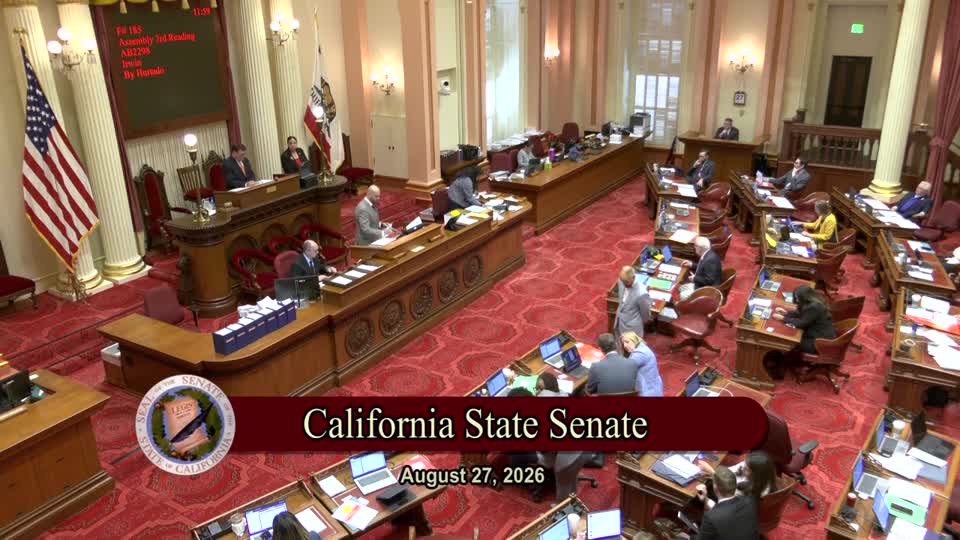 2MIN
Senate Floor
 1MIN
Assembly Floor
 8MIN
Assembly Standing Committee on Appropriations
 16MIN
Assembly Standing Committee on Local Government
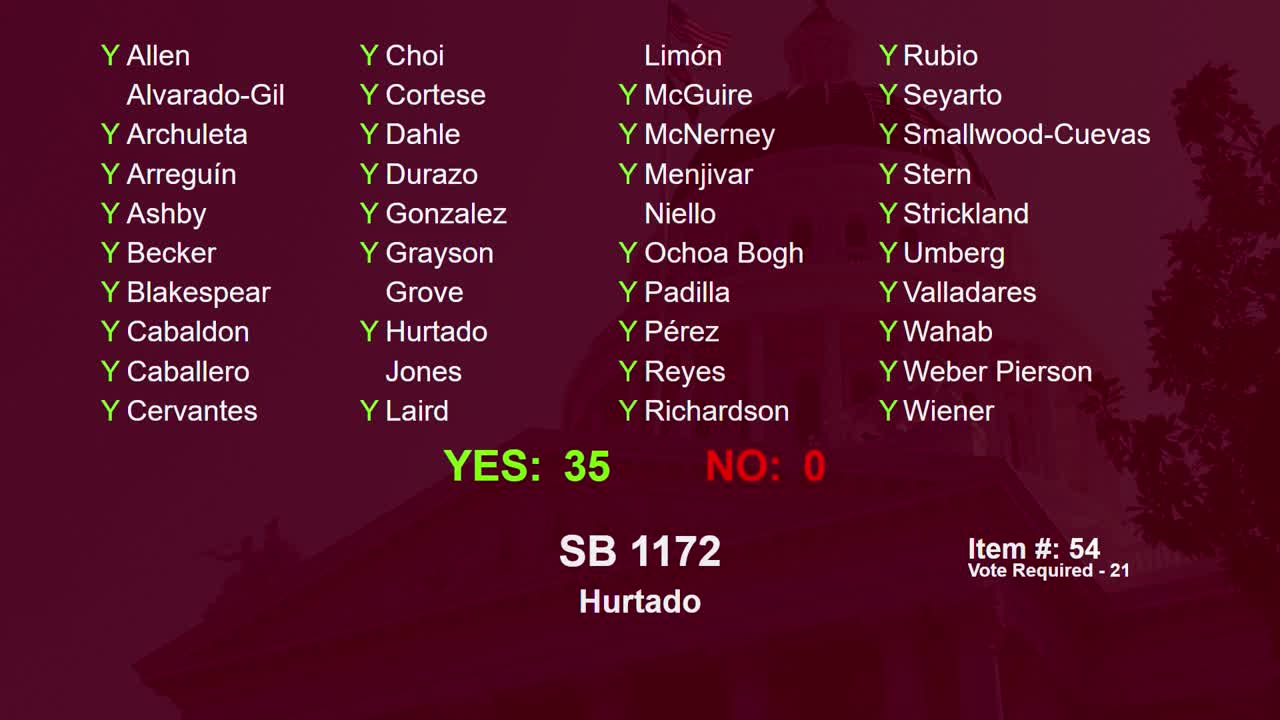 3MIN
Senate Floor
 6MIN
Senate Standing Committee on Local Government
Bill Author

Bill Co-Author(s):
